

Defense & Security
New Yemen, New Gulf
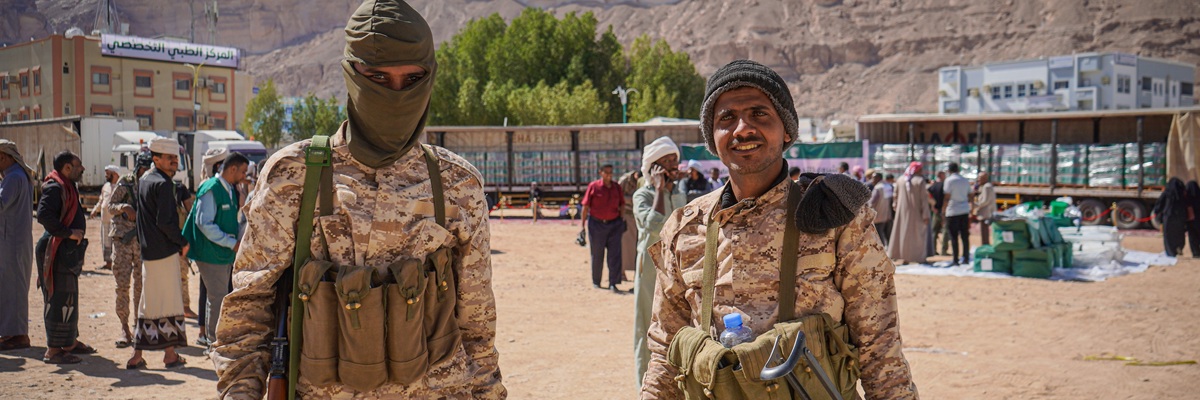
Image Source : Shutterstock
Subscribe to our weekly newsletters for free
If you want to subscribe to World & New World Newsletter, please enter
your e-mail


 Provider of in-depth & balanced analysis on hot issues around the world
Defense & Security
Image Source : Shutterstock
First Published in: Feb.05,2026
Feb.23, 2026
Share Article


Amid the dramatic developments in the Yemeni civil war around the turn of the year, the regional power configuration between Saudi Arabia and the United Arab Emirates (UAE) has been fundamentally reshaped. The military offensive by Emirati-supported separatists and the counterstrike by the Yemeni government allied with Saudi Arabia are more than just another chapter in the war — they have caused the long-simmering tensions between the two Gulf monarchies to boil over. For the first time, the deep-rooted animosity between Riyadh and Abu Dhabi has come to the surface. This confrontation also makes a new round of conflicts in the Gulf more likely and raises fundamental questions about stability in the Middle East, a region where the Gulf states were once seen as guarantors of security. A new phase of Gulf politics could be emerging, with two opposing poles within the Gulf Cooperation Council (GCC) pursuing divergent regional visions through different coalitions. The break in the former Saudi-UAE alliance will also have consequences for European foreign policy in the Middle East, which has historically relied on both protagonists as anchors of stability.
The rapid offensive in Yemen’s eastern province of Hadramaut came as a shock to Saudi Arabia and to the Yemeni government closely aligned with the Kingdom. The Southern Transitional Council (STC) – Yemeni separatists backed by the UAE – seized not only the oil-rich Hadramaut but also other regions in eastern Yemen within a few days. In the transitional capital Aden, the militia took over the presidential palace of the internationally recognized government – which the STC formally belongs to, but from which it has always sought to separate in pursuit of an independent state on the territory of the former South Yemen (until 1990). When the Yemeni government’s president, temporarily based in Aden, fled to Saudi Arabia, the STC’s dream of an independent state seemed within reach. Shortly afterward, the STC’s campaign dissolved like a mirage. The military advance had not only shifted the dynamics of Yemen’s twelve-year civil war but also threatened to alter the balance between regional power Saudi Arabia and its Emirati neighbor, both of which have been external actors in Yemen for over a decade. After years of restraint in the Yemeni conflict, the kingdom took a surprising stance against the STC: Saudi fighter jets first bombed a weapons shipment from the Emirati city of Fujairah at the STC-controlled port of Mukalla. Then the Yemeni government, with Saudi air support, launched a counteroffensive that led to the dissolution of the STC, the flight of its leader Aidarous Al-Zubaidi, and the withdrawal of Emirati troops from Yemen. These dramatic events over the turn of the year mark not just a new twist in Yemen’s convoluted civil war but also reveal deeper rifts between two key Gulf states, whose engagement – from Sudan to Gaza, Syria to Somalia – remains a major driver of regional stability (or instability). Less than five years ago, the Gulf Cooperation Council (GCC), an alliance of Saudi Arabia, the UAE, and their four neighboring monarchies on the Arabian Peninsula, was paralyzed by a dispute with the Emirate of Qatar. Is the Gulf now heading toward another conflict between fraternal states?
Although Saudi Arabia and the United Arab Emirates intervened together in 2015 against the Houthi militia in the Yemeni civil war, the two Gulf powers had different and sometimes opposing priorities from the start. These differences repeatedly caused tensions and were often only mitigated through careful diplomatic maneuvering. Saudi Arabia views the war as a geostrategic threat on its doorstep. The kingdom shares a 1,300-kilometer porous land border with its southern neighbor. Access from Saudi ports on the Red Sea to the Indian Ocean passes through a narrow maritime bottleneck, the Bab al-Mandeb Strait, just off the Yemeni coast. Even before the Houthis took Sanaa in 2014, they—part of Iran-led “Axis of Resistance”—had launched attacks on Saudi territory. In light of these multiple threats on its southern flank, Saudi Arabia responded not only with military intervention but also with direct control over the Yemeni government—illustrated by the fact that from 2016 to 2022, former President Abd Rabbo Mansour Hadi carried out most of his duties from Riyadh rather than Aden. Although Abu Dhabi also perceived the Houthi threat, the UAE was less directly affected by Yemeni instability due to the geographic distance. This allowed the Emirates to focus on their strategic ambitions, especially controlling key ports and territories along the Gulf of Aden, the southern Red Sea, and the Socotra archipelago. To secure these zones of influence along international trade routes, the UAE relied on non-state actors of all kinds rather than the Yemeni government. These proxies, such as the STC founded in 2017 with Emirati support, not only fought the Houthis but also pursued their own specific interests. Deeply rooted internal Yemeni affairs thus intertwined with the UAE’s strategic actions. In addition, the UAE—the most powerful counterweight to extremism and political Islam in the region—prioritized fighting Yemen’s branch of Al-Qaeda and marginalizing the local branch of the Muslim Brotherhood, the Islah party, which was part of the Hadi government. Up to 2021, the STC’s main achievements were driving Islah out of Socotra and the southern provinces of Abyan and Shabwa. This gap between control and fear, ambition and power, continued to widen, forcing Saudi Arabia to make repeated diplomatic concessions to its Emirati partner. Riyadh mediated power-sharing agreements with the STC in 2019 and 2022, which even led to President Hadi’s resignation. Nevertheless, Saudi-Emirati differences escalated further, reaching a climax in late 2025 in Hadramaut. This oil-rich province in southeastern Yemen, with a 700-kilometer border with Saudi Arabia and serving as a strategic rear base, had long been divided between inland areas controlled by a Riyadh-backed coalition and coastal zones with the strategic port of Mukalla dominated by UAE-aligned forces. When a Riyadh-supported tribal coalition took control of the province’s largest oil field at the end of November, the STC struck back, first seizing the provincial town of Seiyun in the interior and, a few days later, the neighboring Al-Mahra region bordering Oman.
What might appear to be a new chapter in the civil war in Yemen is actually a facet of a complex regional game, marked by competing power claims and divergent political visions between Saudi Arabia and the United Arab Emirates (UAE). Not only in Yemen but beyond the borders of this southernmost state of the Arabian Peninsula, the foreign policies of the two Gulf powers are no longer complementary but often directly contradictory. The Kingdom acts in a conservative, cautious manner focused on the state. According to Riyadh, only the existence of a strong central state, with uncontested sovereignty over its territory, can guarantee stability. This approach is applied without compromise, particularly in its immediate neighborhood. Saudi Arabia thus supports not only the Yemeni government but also state structures in Syria, Lebanon, or Egypt, providing aid, equipment, and guidance. Riyadh also tolerates repressive or fragile regimes, as evidenced by its support for the Somali government in Mogadishu or General Abdulfattah Al-Burhan in Sudan. Furthermore, after years of ultimately unsuccessful confrontations with regional rivals such as Iran or Qatar in the late 2010s, Saudi Arabia is now trying to avoid getting involved in the conflicts and entanglements of its neighbors’ wars as much as possible. From ending the Qatar crisis in 2021 to the ceasefire with the Houthi militia in 2022 and the restoration of diplomatic relations with Tehran in 2023, Riyadh has sought de-escalation with its rivals and a disengagement from regional conflicts — in order to stabilize its neighborhood and secure the degree of regional calm it requires for the ambitious economic reform agenda to which the Kingdom has committed itself through 2030. The UAE’s regional strategy, on the other hand, seems to be the direct counter-model to Saudi centrism and de-escalation. From Mukalla to Berbera, and up to Benghazi, the UAE has created a "string of pearls" consisting of ports and zones of influence, relying on a network of non-state armed actors in contexts of weak states along the coasts of the Red Sea and the Mediterranean. Behind this "string of pearls" lie lucrative economic interests, such as access to gold mines in Sudan or Chad, as well as fertile land and strategic African markets. These areas also offer the UAE strategic depth and a pool of troops that can be deployed as mercenaries in other regional conflicts. Whereas the Emirati and Saudi approaches previously complemented each other, for example during the ousting of Mohammed Morsi in Egypt in 2013, the intervention in Yemen in 2015, the Qatar blockade in 2017, or even in Sudan until 2021, Abu Dhabi’s opportunism now disrupts Riyadh’s state-centric approach. The UAE continues to arm the Rapid Support Forces (RSF), engaged since 2023 against General Al-Burhan, supported by Saudi Arabia in the Sudanese civil war, while the extension of Emirati influence in Somalia has fueled separatism in Somaliland. In both cases, Emirati action weakens the central state and destabilizes the immediate neighborhood of the Kingdom, as is currently happening in Yemen. A guiding principle of the Emirati regional strategy is often the fight against political Islam, a struggle that, if necessary, is also waged with the help of non-state armed actors such as the RSF. The Kingdom, too, takes a critical view of the Muslim Brotherhood and other Islamist actors. However, the Saudi doctrine of a strong state relies on established regimes even when they include Islamist forces, as Riyadh’s support for Burhan in Sudan and for the Islah party in Yemen demonstrates. As a result, there is now little overlap left between what were once largely aligned regional approaches of the Gulf’s key powers, Saudi Arabia and the UAE.
Israel’s actions in the region, and the Gulf states’ handling of them, have also played a significant role in accelerating the shift in political relations between Riyadh and Abu Dhabi. Prior to the brutal Hamas attack on October 7, 2023, Saudi Arabia had been close to normalizing relations with Israel. In the two years since, however, the trajectory has reversed. Israel’s war in Gaza and its broader regional operations — especially its attack on Qatar in September 2025 — have contributed to a reversion in Riyadh to its traditional position vis-à-vis Israel and to a growing perception within the Kingdom that the current Israeli government is substantially destabilizing the region. In contrast, the UAE upheld its normalized relationship with Israel established under the January 2020 Abraham Accords. While Abu Dhabi has repeatedly condemned Israel’s actions in the Gaza Strip and shares the wider Gulf concern about the destabilizing impact of Israel’s regional military reach, its relatively even-handed approach toward Israel, its clear departure from the positions of other Gulf states on numerous disputes within the Israeli–Palestinian conflict, and the targeted expansion of economic cooperation between the Emirates and Israel since the Gaza ceasefire have, from Saudi Arabia’s strategic perspective, nourished the perception of a supposed “Emirati–Israeli axis.” The reciprocal recognition of Israel and the Emirati-backed Somaliland in December 2025 further cemented this view in Riyadh. The factor of Israel also played a role in Yemen. Shortly after the Houthi militia began its campaign against Israel and civilian shipping in the Red Sea in 2023, reports indicated that the Southern Transitional Council (STC) expressed its willingness to support Israel in the event of a potential Israeli counter-response. STC leader Al-Zubaidi also repeatedly expressed openness to the possibility of an independent South Yemen, controlled by the STC, joining the Abraham Accords. In the regional context, the consecutive events of the STC’s military campaign and Israel’s normalization with Somaliland led to growing concerns in Riyadh that a southern flank on the Arabian Peninsula, controlled by rivals, could strategically challenge the Kingdom, particularly along the opposite coast of the Gulf of Aden.
As unusual as the Saudi counterreaction was, the Emirati concession is just as remarkable. Just before New Year's Eve 2025, Saudi bombings marked the beginning of a ground offensive by the Yemeni army and the Homeland Shield Forces, trained by the Kingdom. Within ten days, this combined effort not only reversed the recent territorial gains of the STC (Southern Transitional Council), but also led to the recapture of the previously STC-controlled transitional capital of Aden. Not only did the separatists dissolve afterward, but the Emiratis also complied with Saudi demands by withdrawing their remaining troops from the Yemeni southern coast and vacating their base on Socotra Island. Riyadh's first direct intervention against the proxies of its smaller neighbor caused Abu Dhabi's ten-year project in Yemen to collapse like a house of cards. Looking at Yemen, it is now clear that only one foreign power has the upper hand in Aden. This new position of power means that Riyad must now ensure stability in government-controlled areas, strengthen the anti-Houthi coalition, and push the internationally recognized leadership to provide services to its citizens. Moreover, the Kingdom will have to deal with separatist movements, which, despite the dissolution of the STC, continue to enjoy broad support. In this regard, the planned dialogue with representatives from various factions in the south, scheduled for February, will be a litmus test. Although Riyad, as a hesitant hegemon in recent years, tried to escape the deadlocked war in Yemen, the Kingdom is now fully back with responsibility. Replacing the previous Emirati support networks, which were crucial both militarily and economically, is no easy task. Beyond Yemen, the main question now is whether the publicly aired rift between Riyad and Abu Dhabi will challenge the unity of the GCC (Gulf Cooperation Council) states and provide a preview of future conflicts in the Gulf region. An increasing hypernationalism in both countries, particularly in Saudi Arabia, which has led to public mudslinging on social media and smear campaigns in state-affiliated newspapers, will be hard to contain through diplomatic damage control. However, it is not certain that this atmosphere of animosity will affect leadership figures in the power apparatus in Riyad and Abu Dhabi. In the short term, the Emirati-Saudi rift is leading to a clearer division among the fragile neighboring states in the Gulf region. The government in Aden declared in December that its defense agreement with the UAE was null and void, while Mogadishu also annulled all bilateral agreements with Abu Dhabi in January. The military rulers in Sudan had already suspended their diplomatic relations with the UAE in May 2025. However, it is unlikely that this division between states aligned with Riyad and those favorable to the Emiratis will spill over into the GCC or evolve into a regional crisis of the magnitude of the Qatar blockade. A full-scale bilateral conflict would cause too much damage to both countries, not least because of their close trade relations and Saudi Arabia’s reliance on billions of dollars in investments from the UAE and Dubai’s port infrastructure for its exports. Nevertheless, it appears that the era of joint Saudi-Emirati alliances, as seen in the 2010s, is likely over. Instead, Abu Dhabi and Riyad will probably act in opposing coalitions going forward. For example, Saudi Arabia and Turkey are increasingly finding themselves on the same side of regional issues, as evidenced by their support for the governments of Syria, Sudan, and Somalia. Similarly, the Saudi partnership with Pakistan, with which a bilateral defense pact was signed in September 2025, will gain relative importance in the future. The UAE, on the other hand, will continue to strengthen its relations with Israel and further expand security cooperation with India. However, most of these non-Arab states, such as India, Pakistan, and Turkey, will likely be unwilling to risk their (sometimes newly regained) relations with both countries and will seek to remain neutral wherever possible. Germany and Europe now face significant challenges due to the new status quo in the Gulf. Both Riyad and Abu Dhabi hold particular importance as anchors of stability in a volatile region, due to their economic weight, good relations with (almost) all sides, and political influence in neighboring countries. The growing rivalry between these Gulf powers not only destabilizes their relationship with each other but also means that two key European partners are no longer working in unison, and bilateral misunderstandings or confrontations can lead to crossing red lines and military escalation beyond the Arabian Peninsula. A fragmentation of the Middle East along the Riyad-Abu Dhabi fault line is not in Germany's interest, nor does a political rift within the Gulf Cooperation Council make strengthening the strategic partnership between the GCC and the EU any easier. Moreover, the turbulent events of recent weeks once again highlight the limits of European influence on the ground: Without real levers of power on the Arabian Peninsula and with minimal political attention to conflicts in seemingly unimportant countries like Yemen, neither Berlin nor Brussels were relevant (mediating) actors in the recent conflict. Instead, Europe must stand by as a mere spectator to the strategic shifts in the Gulf, even though these developments will ultimately have implications for its own interests.
First published in :
Konrad Adenauer Stiftung (KAS)



Silence and shadows: The West’s Quiet Stance on Gaza’s Agony
What’s Driving Pakistan-Afghanistan War? Islamabad’s Never-Ending Cycle of Insecurity

Polycrisis in the Indo-Pacific Demands a Stronger Anzac Alliance
‘Destruction is not the same as political success’: US bombing of Iran shows little evidence of endgame strategy
Unlock articles by signing up or logging in.
Become a member for unrestricted reading!