Subscribe to our weekly newsletters for free

Subscribe to an email

If you want to subscribe to World & New World Newsletter, please enter
your e-mail

Defense & Security
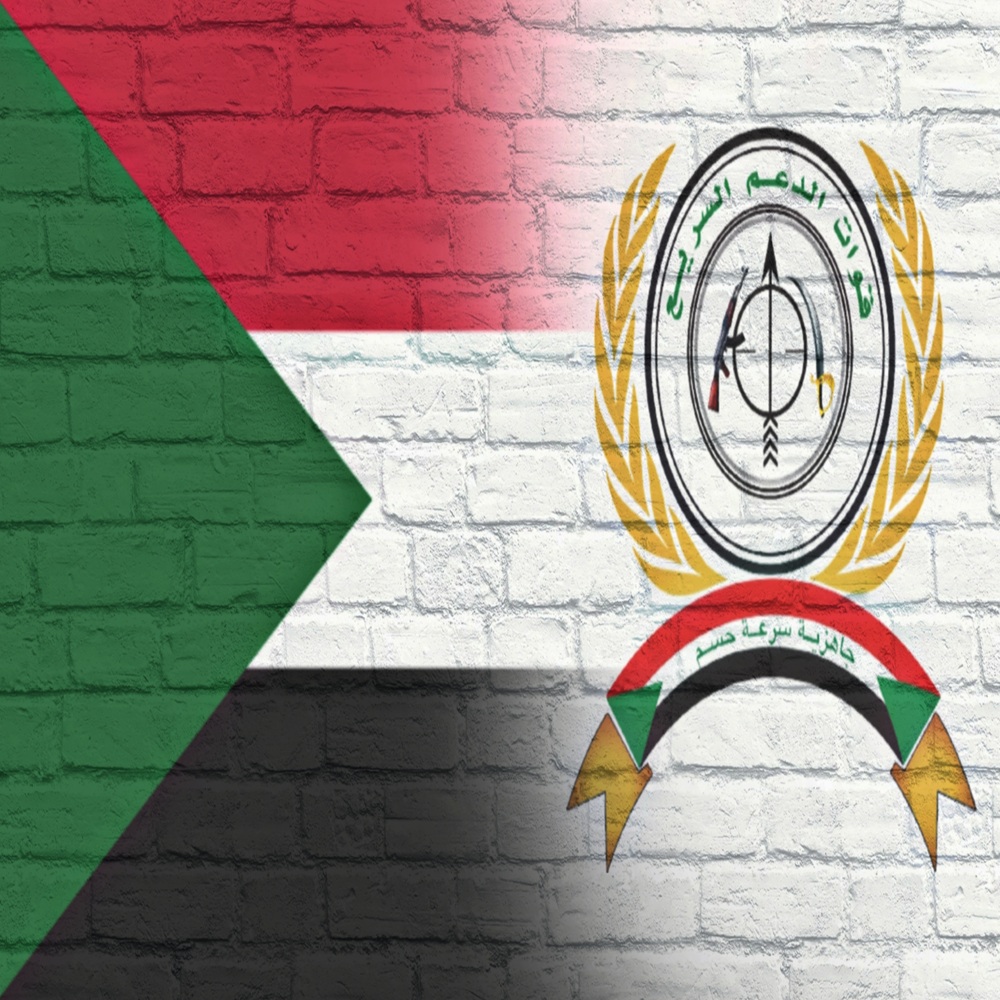
Concept of military conflict with soldier statues and waving national flag of Sudan. Illustration of coup idea. Two guards defending the symbol of country against red wall. 3D Illustration

Brief History of Modern Sudan: A Nation Plagued by Power Struggles, Ethnic Violence and Civil War

by Darshit Thakar

When we hear the word Pyramids, the first country to come to our mind is mostly Egypt and its marvelous Pyramids of Giza. But there is one country down south known as Sudan which has significantly more pyramids when compared to Egypt, albeit smaller in size compared to Egyptian pyramids. This country is marred with power struggles, civil war and genocide because of multiple reasons including geographic, social, historical and economic reasons. Since April 2023, the country has been going through its brutal third civil war. Origin of Modern Sudan The history of modern Sudan can be traced back to the beginning of the 19th century. In the year 1820, the Governor of Ottoman-Egypt Muhammad Ali-Pasha sent his army to conquer Sudan and from 1821–1885 it was ruled by the Ottoman-Egyptian rulers. In 1881, Muhammad Ahmad launched a revolt against the Egyptians and established the Mahdist State, which ruled Sudan between 1885–1899. Later, when the British conquered Egypt during the Scramble for Africa, they also conquered Sudan and both countries came under British jurisdiction. Sudan got independence from the British in 1956 after several anti-colonial movements. North–South Civil War Sudan has till now fought two civil wars and is currently fighting its third civil war. The seeds of the first and second civil wars can be traced back to British colonial rule of Sudan. When the British took control over Sudan, they found that the northern and southern regions of Sudan were culturally diverse. Their so-called aim was to preserve the southern culture from the north, and they developed certain policies collectively referred to as the British Southern Policy. Under these policies, the southern provinces (Upper Nile, Equatoria and Bahr al-Ghazal) were closed off to northerners, except for those on government business. Greek, Syrian and Jewish traders were encouraged to open businesses in the south. The Arabic language, lifestyle and even names were discouraged. Christian missionaries were encouraged while at the same time Muslim proselytizing was banned. Source: New York Times The result of these policies wasn’t good; the southerners lagged behind northerners in every aspect from education to economic development. Northerners tended to view southerners as backward and uncivilized. In 1946, the British reversed their policy and began to reintegrate the south with the north. By this time, anti-colonial movements had taken a strong hold in the north and were asking for British withdrawal. Negotiations for the transition to independence largely bypassed the south. Mistrust in the northern government increased when, in 1954, the newly elected transitional government, dominated by the north, began the process of “Sudanization” of government institutions. A total of 800 posts were vacated by the British but only six went to southerners. Although the root cause was that the southerners to some extent lacked the required qualifications to fill these posts — and it was because of the British Southern Policy — the southerners viewed this as domination and discrimination by the north. Tensions were already high, but they escalated in 1955, just prior to Sudan's declaration of independence. Southern soldiers in the Sudanese army stationed in Torit mutinied against their northern commanders. The immediate cause was the transfer of these southern units to the north, which was seen as a move towards further domination and suppression by the northern government. Although the Torit mutiny was quickly suppressed, it sparked widespread unrest across the south. All hell broke loose in 1958 when the elected government of Sudan was overthrown by Brigadier General Ibrahim Abboud. It was under his regime that the tense situation in the south blew into an outright civil war. It was an assumption in the north that the North–South problem could be solved by assimilating the southerners, who were predominantly non-Arab Christians and animists, with Arab-Islamic influence in the north. Abboud, being a dictator, took it to the extreme: he banned Sunday holidays in the south, prohibited religious gathering outside churches, expelled missionaries from the south, and eventually the situation became dire. He was overthrown in 1964 and civilian rule returned to Sudan, but it didn’t last long, and in 1969 there was a coup by Gaafar Muhammad al-Nimeiri and he became the new dictator. By the time the armed conflict ended in stalemate in 1972, anywhere from 500,000 to 1 million people had been killed. The Addis Ababa Agreement brought an end to the conflict; this treaty established the Southern Sudan Autonomous Region, which gave southerners some degree of autonomy. The Addis Ababa Agreement couldn't bring lasting peace and within a decade of signing the agreement a second civil war broke out and oil played a crucial role in it. Oil was discovered in Sudan in 1959, but the north had negligible amounts of oil; most oil fields were in the south. Al-Nimeiri wanted to take control of those fields. In order to achieve this objective, he used certain tactics. In January 1982, Nimeiri announced that a referendum would be held in the south on the decentralization issue, but only in Equatoria Province. Some southern politicians immediately viewed this plan as an effort to divide the south and claimed that the plan was contrary to the 1972 autonomy agreement. These politicians were arrested on charges of forming an illegal political organization. In response to this, the separatist group Anya-nya II started attacking police stations and army barracks. There was also the Bor Mutiny in which the southern soldiers refused to leave and move to the northern garrison as part of the government’s rotating policy. These southerners threatened to fire against the newly arrived northern soldiers. On September 8, 1983, sharia, or Islamic law, went into effect in Sudan. The penal code was amended to conform to the precepts of the Qur՚ān. Some offenses, such as theft, were punished by amputation, while alcohol and gambling were prohibited. The south, with its varied religious traditions, strongly opposed the Islamization of Sudan. However, with two-thirds of Sudan’s land and population in Arab-Muslim possession, the north controlled the country. In 1984, Nimeiri proclaimed a state of emergency because of increasing rebel attacks from different rebel groups as these attacks were threatening his regime. His policies had negative impacts on Sudan, and, in 1985, he was ousted from power by General Abdel Rahman Swar al-Dahab in a bloodless coup. Later on, General Abdel Rahman relinquished his power and gave it to the democratically elected government of Prime Minister Sadiq al-Mahdi. In May 1986, the new Khartoum government led by Prime Minister Sadiq al-Mahdi and the Sudan People’s Liberation Army (SPLA) led by Col. John Garang met for negotiations to end the conflicts. In February 1989, a peace plan was approved by the al-Mahdi government, but later in that year Omar Hassan Ahmad al-Bashir came to power by overthrowing Prime Minister Sadiq al-Mahdi. Al-Bashir’s regime dissolved the parliament and banned political parties. The SPLA, initially seeking a unified “New Sudan” with secular governance, later shifted toward secession mostly because of al-Bashir’s policy. The second war lasted until 2005, marking it infamously as the longest civil war in modern history. A 2005 peace agreement ended the conflict and the 2011 referendum ultimately led to South Sudan's independence. It is estimated that 1 to 2.5 million lives were lost during Sudan’s second civil war. While both the Civil wars were fought on the North-South Muslim-Christian divide, there were also numerous ethnic groups who were caught during these wars. In South Sudan, communities such as Dinka, Nuer, Shilluk and Bari held their own grievances rooted in exclusion, land and resources. In the North, groups like Fur, Masalit and Zaghawa in the Darfur region; the Nuba people in South Kordofan and the Beja in the East have their own patterns of neglect. Even though religion played an important role, but we can't rule out the importance of ethnicity in these brutal conflicts. Source: BBC & Instagram/Geopolitical Futures The Darfur Genocide — A Dark Chapter in Sudan's History Darfur is a province in the western part of Sudan. During the second civil war, Darfuri rebels launched attacks on Sudanese government military targets. The Sudanese government assumed that Black African people- Fur, Maselit and Zaghawa in Darfur had supported these rebels and they reacted by arming militias — the Janjaweed — to attack those same innocent people. The Janjaweed militias were brutal; they used “scorched earth” tactics to target those Black people. The results were catastrophic: thousands of people were murdered, and millions were forced to flee their homes. When refugees from Darfur were interviewed, they said that after government air raids on villages, the Janjaweed used to attack their village, slaughter men, rape women and steal whatever they found. In July 2004, the US Congress declared atrocities in Darfur to be genocide and in July 2010, the International Criminal Court (ICC) issued indictments against then President al-Bashir. In 2014, these same Janjaweed militias were incorporated into the paramilitary forces known as the Rapid Support Forces. It is estimated approximately 200,000 people were killed and more than 2 million displaced during the Darfur Genocide. Third Civil War Omar al-Bashir ruled as dictator of Sudan up until 2019, when he was overthrown by a coup jointly organized by the Rapid Support Forces (RSF) and the Sudanese Armed Forces (SAF). RSF is the most powerful paramilitary group formed during Bashir's regime. The roots of RSF can be traced back to the Janjaweed militia which committed the heinous Darfur genocide. With support from Bashir, RSF was organized and it was employed as border security guard, mercenaries to fight wars in Yemen, to suppress any civil protest or rebellion rising against him, and most importantly it acted as a counterweight to SAF. Bashir was a dictator and a military officer; he knew that his regime was also threatened by a military coup. In 2019, there were civilian protests against the dictatorial regime of al-Bashir. Contrary to al-Bashir’s belief, RSF didn't protect him and with SAF organized a coup and overthrew his government. They established a transitional government and a new constitution. SAF’s General Abdel Fattah al-Burhan led the transitional government while RSF’s General Mohamed Hamdan Dagalo, better known as “Hemedti”, was appointed as Deputy. Abdalla Hamdok, an economist and development expert, was chosen as Prime Minister. Hamdok tried to fix Sudan's problems, but al-Burhan and Hemedti orchestrated a coup against him in October 2021. But there were protests, the IMF and World Bank paused funding, so Hamdok was reinstated back in power in November 2021. But it was short-lived; he resigned again in February 2022 because the terms of reinstating were predatory for civilian leaders. With his resignation, Burhan and Hemedti, two strongman leaders, were left to transit Sudan into a democratic nation. Negotiations culminated in a December 2022 deal; it laid the groundwork for a two-year transition to civilian leadership and national elections. There were protests because of the timeline and it was brutally cracked down as you expect from a strongman. A major sticking point emerged: there was a proposition in the deal that RSF would be incorporated into SAF. The suspicions were that both generals wanted to hang on to their positions of power, unwilling to lose wealth and influence. As months passed, the power struggle between both of them increased and it stalled the country's transition efforts. On April 15, 2023, everything went loose as a series of explosions shook Khartoum, along with heavy gunfire. SAF and RSF leadership accused each other of firing first. The involvement of foreign powers in this conflict has worsened the situation. It is believed that RSF has strong backing of UAE and Libyan strongman General Khalifa Haftar, while SAF has strong backing of Egypt and to some extent Iran. RSF controls almost the western half of Sudan including the Darfur region and controls the gold mines of the region. This gold is allegedly smuggled into the UAE and sold throughout the world. SAF controls most of the north and east part of Sudan including Sudan's capital Khartoum. Several NGOs, including Human Rights Watch, have documented evidence of numerous mass atrocities committed throughout the conflict prompting accusations of ethnic cleansing and war crimes. Humanitarian access remains a crucial concern for many international actors, including the United States, which called on the UN Security Council to authorize aid deliveries through Chad. The situation has been grim since war broke out. As of November 2025, nearly twelve million people have been forcibly displaced, according to the UN refugee agency. More than 7.2 million of them are internally displaced within Sudan, while over 4.2 million are refugees, asylum seekers or “returnees” who have fled or returned to neighboring countries. The number of people killed in the conflict is unknown due to restricted media access, but researchers’ estimates vary between 20,000 and 150,000 fatalities. In early November 2025, the RSF announced it had agreed to a humanitarian truce proposed by the US, the United Arab Emirates (UAE), Saudi Arabia and Egypt. However, the army said it would be wary of agreeing to a truce, accusing the RSF of not respecting ceasefires. UN health chief Tedros Adhanom Ghebreyesus has also lamented that there is less global interest in the conflict in Sudan, and other recent conflicts in Africa, compared to crises elsewhere in the world. As of late November 2025, both parties are still waging war and millions of innocent Sudanese are suffering.  Conclusion Sudan as a nation-state was a colonial product; its leaders couldn't build stable institutions; they weren't able to properly define the idea of Sudanese nationalism. All of these led to power struggles, political instability, civil war and the fracturing of the nation into two parts. They could learn from countries of Asia; they were once colonies of European powers. Many of them were able to address the same problems which Sudanese politicians couldn’t. Those countries defined the idea of nationalism, built strong institutions and in turn it brought political stability and economic prosperity. Lasting peace can only happen in Sudan once stable institutions are formed; until then, Sudan will be stuck in this vicious cycle. Sources BBC News. Sudan conflict explainer. https://www.bbc.com/news/articles/cjel2nn22z9o BlackPast.org. First Sudanese Civil War (1955–1972). https://blackpast.org/global-african-history/first-sudanese-civil-war-1955-1972/ BlackPast.org. Second Sudanese Civil War (1983–2005). https://blackpast.org/global-african-history/second-sudanese-civil-war-1983-2005/ Council on Foreign Relations. Power struggle in Sudan: Global Conflict Tracker. https://www.cfr.org/global-conflict-tracker/conflict/power-struggle-sudan Council on Foreign Relations. To what extent is Sudan’s humanitarian crisis escalating? https://www.cfr.org/in-brief/what-extent-sudans-humanitarian-crisis EBSCO Research Starters. First Sudanese Civil War erupts. https://www.ebsco.com/research-starters/history/first-sudanese-civil-war-erupts EBSCO Research Starters. Sudanese Civil War resumes. https://www.ebsco.com/research-starters/history/sudanese-civil-war-resumes Holocaust Memorial Day Trust. Darfur genocide. https://hmd.org.uk/learn-about-the-holocaust-and-genocides/darfur/genocide/ World History Edu. Major facts about the Second Sudanese Civil War. https://worldhistoryedu.com/history-major-facts-about-the-second-sudanese-civil-war-1983-2005/ World History Edu. History of the First Sudanese War: How and when did it erupt? https://worldhistoryedu.com/history-of-first-sudanese-war-how-and-when-did-it-erupt/

Energy & Economics
Automated AI industry robot and robotic arms assembly in factory production. Concept of artificial intelligence for industrial revolution and automation manufacturing process NLP

Seven emerging technologies shaping the future of sustainability and innovation

by World & New World Journal

Introduction Technological innovation is accelerating at an unprecedented pace, reshaping how societies generate energy, transport people and goods, produce food, fight disease, and explore space. Across multiple sectors, groundbreaking solutions are emerging in response to global challenges such as climate change, public health threats, energy insecurity, and resource scarcity. This article examines seven transformative technologies — from wireless electric-vehicle charging roads and regenerative ocean farming to graphene applications and disease-eliminating robots — each demonstrating how science and engineering are redefining sustainability, resilience, and human capability in the 21st century. 1. Wireless Electric Vehicles Charging Roads Electric Vehicles (EVs) have become key technology to decarbonise road transport, a sector that accounts for over 15% of global energy-related emissions. The increase of their sales globally exceeded 17 million in 2024, and it is forecasted to surpass the 20 million units by 2025. (IEA, 2025) Source: IEA analysis based on country submissions and data from the European Automobile Manufacturers Association (ACEA), European Alternative Fuels Observatory (EAFO), EV Volumes and Marklines. Despite this growth, several concerns continue to slow down their widespread adoption. Limited charging infrastructure, battery-related autonomy issues, high purchase costs, slow charging times, and the environmental impact of the battery productions remain major obstacle. The broader EV industry, however, is actively developing new technologies to overcome these challenges. (Automotive Technology, 2025) In this context, one of the most pressing challenges is energy supply – specifically, the need for better batteries and more accessible charging points. To address this bottleneck, a promising new trend has emerged: wireless roads capable of charging EVs while they drive. This technology could fundamentally transform the charging experience and significantly reduce dependence on stationary chargers. The idea is simple, a system that supplies power to EVs while driving, using embedded inductive coils (wireless charging) or conductive rails on the road, in other words a dynamic or in-motion charging on the road. In fact, this technology already exists and there are several examples worth mentioning: - South Korea: introduced in 2013, the first road-powered electric vehicle network, in which electrical cables were buried below the surface and wirelessly transfer energy to the electric vehicles via magnetic resonance. An electrified road has the advantage of eliminating the plug-in infrastructure and vehicles usually require a smaller battery, reducing weight and energy consumption. In 2009, KAIST introduced the OLEV (online electric vehicle), a type of EV that uses wireless dynamic charging through inductive coils embedded in the road. The OLEV public transport buses were later used in the 2013 first electric road in the city of Gumi, which consisted of a network of 24 km, by 2015 the number of OLEV buses increased to 12 (Anthony, 2013) and another bus line was launched in Sejong that same year. (SKinno News, 2021)- Sweden: a 1.6 km road linking Stockholm Arlanda airport to a logistic site outside the capital city was a pilot project achieved in 2016. (The Guardian, 2018), (Carbonaro, 2022) However, the Swedish government didn’t stop there and by 2020 they built a wireless road for heavy trucks and buses in the island city of Visby, and they are planning to expand it to the 13-mile E20 highway – logistic hub between Hallsberg and Örebro – and even have a plan of further 3,000 km of electric roads in Sweden by 2035. (Min, 2023), (Dow, 203)- USA: a quarter mile (400 m) section of road through the Corktown area of Detroit was changed to a wireless electric road. Electreon was the company in charge of the project. (Paris, 2024), (6abc Philadelphia, 2025)- France, Norway and China: Electreon – a leading provider of wireless charging solutions for EVs – has partnered and gained projects for wireless highways in France – a section of the A10 highway (Electric Vehicle Charging & Infrastructure, 2023) –, Norway – evaluation of wireless charging for AtB’s BRT routes in Trøndelag (Foster, Electreon to install the first wireless electric road in Norway, 2023) – and China – not wireless but in an 1.8 km electrified highway in Zhuzhou. (Foster, China demonstrates electrified highway, 2023) While all these examples show a “tendency” to switch into wireless roads, it is important to highlight three points to keep that are decisive and have slowed down the transition: in first place, these wireless roads are being targeted mainly for freight trucks and buses, the second point is the initial cost of the infrastructure is high and third point is the technology that should be added to the EVs. 2. Fire Suppression Using Sound Waves Seth Robertson and Viet Tran, engineering students from George Mason University in Virginia designed a fire extinguisher that uses sound waves to put out flames. Their device emits low-frequency sound waves that disrupt the conditions necessary for a fire to sustain itself, meaning that no foam, powder, chemicals or water are needed to extinguish a fire, just sound. In order to understand how it can be possible to extinguish fire with sound it is necessary to remember that a fire needs heat, fuel and oxygen to survive, if one of these elements does not appears, there is no fire, under this principle, Robertson and Tran’s prototype uses sounds to separate the oxygen from the flame, as a result, the fire extinguish. The interesting part is that the sound must have the right frequency, specifically between 30 to 60 Hz – low frequency sounds. The sound waves will act as pressure waves moving the air molecules back and forth, and in the right frequency, the movement will disrupt the flames’ structure, separating the oxygen molecules and the fire will simply die out with the lack of these molecules. Potential applications include small kitchen fires or small fires, while unfortunately, large-scale structural or wildland fires still remain a challenge, mostly due to the environmental factors, like wind, air density and flame intensity, that can be a hurdle in uncontrolled environments. Moreover, the generation of low-frequency sound waves powerful enough to suppress fires requires a significant amount of energy. Nonetheless, an early prototype consists of an amplifier to generate low-frequency sound and a collimator to focus the sound waves directly on the fire, and as mentioned before, one limitation is that specialized equipment is required to produce the high-pressure sound waves. Still, research has been carried out recently and it is expected that this technology could be a non-destructive and less damaging method for firefighters soon. https://www.youtube.com/watch?v=uPVQMZ4ikvM 3. Regenerative Ocean Farming Regenerative ocean farming is a climate-friendly model of aquaculture where seaweed and/or shellfish are grown in a way that requires no freshwater, feed or fertilizer, as the crops naturally filter nutrients from the water and capture carbon and nitrogen. This farming model can benefit coastal ecosystems and communities by increasing food security, creating jobs, improving water quality, protecting coastlines, supporting ocean justice (Urban Ocean Lab, 2023) and most importantly, mitigating climate change. Ocean farming can rely on a polyculture system – cultivate a mix of shellfish and seaweeds – or just a single species system. While the climate conditions determine the species to grow, it does not affect the system itself. The system follows a vertical layer farming way, in which farms use ropes that extend vertically from the surface to the seabed, in addition to the use of different levels and cages for scallops, oysters or clams, for example, as shown in Figure 2. Other species like kelp, abalone, purple sea urchins or sea cucumbers can also be harvested. Figure 2: Ocean farming diagram. Source: Urban Ocean Lab The big advantage is the maximization of the ocean space, producing more food in a smaller footprint, in addition to the use of the benefits of the species – seaweed and shellfishes – which are both natural filters that help to clean the water and absorb excess nutrients, combating ocean acidification and reducing marine pollution (Hassan, 2024) naturally. Moreover, the versatility of these species allows them to use them in other areas, such as biofuels, soil fertilizers, animal feed or cosmetics and not only for human food. Around the world, there are several projects that have adopted this methodology (Hassan, 2024): 1. GreenWave (USA): increased biodiversity by 50%, reduced nitrogen level in water by 20% and created sustainable job opportunities for locals.2. Ocean’s Halo (Ireland): annual harvest of 500 tons of kelp, creation of 20 jobs in rural areas and carbon footprint reduction by 30%3. Kitasaku Marine (Japan): Nori production increased by 25%, coastal water quality improved by 15% and local support of 50 locals.4. Catalina Sea Ranch (USA): harvested 1 million pounds of mussels annually, increased local biodiversity by 20% and created 10 new jobs.5. Blue Ventures (Madagascar): harvested 146 tonnes of red seaweed, plus they have created a sea cucumber market with a value of $18,000 and 700 farmers have been trained to farm in the ocean. (Blue Ventures Conservation, 2015)6. Havhøst (Ocean Harvest) (Denmark): they are growing seaweed, mussels and the European flat oyster in 30 communities along the Danish coast. In addition, they focus on educational activities to introduce ocean farming to more people. (Waycott, 2022) Overall ocean farming creates a positive environmental impact; it provides a sustainable food source and economic opportunities for the local people and the industry. Of course it faces challenges, but it has become a way to mitigate climate change and protect the ocean. 4. Wave Energy Generators There are two types of waves. Surface waves are generated by a combination of wind passing over the sea’s surface raising up water and gravity pulling it back down. In a technical way, warm air rises and expands, creating areas of low pressure compared to places with cooler air. Air then moves from high-pressure areas to low-pressure areas. This movement of air is wind and when it rushes across the surface of the Earth it creates waves in oceans. (Lumley, 2025) On the other hand, underwater waves are sound waves produced by earthquakes or volcanic eruptions; these waves travel by compressing and expanding the water. (Kadri, 2025) In both cases temperature variations and other factors can affect the nature of the waves. For instance, wave energy or wave power harnesses the ocean’s waves to generate energy by converting a wave’s kinetic energy into electricity. Wave power is a form of renewable and sustainable energy which has potential cost benefits over solar and wind but faces technological challenges limiting its large-scale adoption in electricity generation and water desalination. (Lumley, 2025) The nature of the waves makes wave energy the world’s largest source of energy with a potential of annual global production of 29,500 TWh, according to the Intergovernmental Panel on Climate Change (IPCC, 2012). In addition, it works well in tandem with other renewables such as wind. (Ocean Energy Europe, s.f.) In terms of technology itself, wave energy has relied on the next devices: 1. Point absorbers: floating buoys that capture the vertical movement of waves, which then is harnessed through a cable anchored to the seabed. The vertical movement of the waves is subsequently transformed into electricity via converters (alternators, generators or hydraulic systems). These are usually mounted on the seabed in shallower water and are connected to the floating buoys.2. Oscillating water columns (OWCs): a partially submerged, hollow structure connected to an air turbine through a chamber. These devices use the rise and fall of the waves to compress air, the air is forced to move back and forth in the chamber and creates a strong air flow that powers the turbine, generating electricity.3. Overtopping devices: a floating structure made of segments linked together, which lifts up and down with the waves. These devices harness wave energy by allowing waves to flow into a reservoir, which then releases the water through turbines to generate electricity. Design, flow dimensions, turbine efficiency and structural elements influence their efficiency. Source: BKV Energy Despite its huge potential and considering it as a clean energy source with no GHG emissions, the main concern related to wave energy is the marine life affectation – including habitat alteration, noise pollution or collision risks for marine life. On the other hand, high costs, complex design, maintenance and technological constraints also have become a problem, still, the potential of this continuous energy is huge compared to the more limited wind energy, for example. (Lumley, 2025) Despite all that, there are some active projects being developed in different parts of the world, for example: Azura Wave Power (tested in Hawaii), Anaconda WEC (UK’s prototype), CalWave (in California), CETO (tested in Australia and expected to be tested in Spain too), Crestwing (tested in Denmark), HiWave-5 (Swedish-based tested in Portugal), the Wave Energy Program (in India) or the Ocean Grazer WEC (developed in The Netherlands), among many others. (Wikipedia, 2019) 5. SpinLaunch SpinLaunch is a spaceflight technology development company working on mass accelerator technology to move payloads to space. This innovative space company is known for their Meridian Space and their Suborbital Accelerator. The Meridian Space is a low-cost, highly differentiated LEO satellite communications constellation which offers speed, reliability and flexibility (SpinLaunch, 2025). The company has partnered, and investments have been achieved in order to launch 280 satellites (Berger, 2025) as part of their satellite constellation, which will satisfy the needs in any area needed such as maritime, national security, communications, corporate networks, aviation, military, etc. The highlight of these satellites is their mass that is only 70 kg, and its facility to be launched in one or two rockets. On the other hand, SpinLaunch is aiming to build a kinetic launch system that uses centrifugal force instead of traditional rockets and spins a rocket around at speeds up to 4700 mph (7,500 km/h) before sending it upward toward space. At 60 km or so altitude, the rocket would ignite its engines to achieve orbital velocity. To achieve this, they have built a Suborbital Accelerator prototype, in Spaceport America, New Mexico. This prototype is a 33-meter vacuum chamber that can launch payloads from 800 to 5000 mph. Several tests have already been carried out, being the 10th the latest on September 27th, 2025. (Young, 2025) SpinLaunch hopes to have a 100-meter Orbital Lauch system by 2026. The engineering behind these systems is as follows: both systems are circular accelerators, powered by an electric drive that uses a mechanical arm to sling payloads around in circles to reach incredibly high speeds of up to 5,000 mph. They then release the payload through a launch tube and spaceward. (Young, 2025) The company claims that their method is cheaper as it eliminates 70% of the fuel compared to the traditional rocket launch, in addition, the infrastructure is less, and it is more environmentally friendly than the traditional methods. However, the limitations are seen in the payload weight (no more than 400 kg per payload) and their resistance (payloads must be able to withstand up to 10,000 G’s of force during the centrifugal acceleration process) Source: SpinLaunch. 6. Disease-Eliminating Robots “Disease-eliminating robots” encompass a diverse set of robotic and AI-driven systems designed to prevent, monitor, and treat infectious diseases while minimizing human exposure to risk. These technologies operate at multiple scales — from environmental disinfection in hospitals to microscopic interventions inside the human body. Environmental disinfection robots are among the most established applications. Devices such as Xenex and UVD Robots utilize pulsed ultraviolet (UV-C) light to destroy viral and bacterial DNA, effectively sterilizing hospital rooms within minutes (UVD Robots, 2023; Xenex, 2024). Others deploy vaporized hydrogen peroxide (VHP) to disinfect enclosed environments like train carriages and operating rooms (WHO, 2022). These systems substantially reduce hospital-acquired infections (HAIs) and cross-contamination risks. In medical and clinical settings, robotics contribute to precision and safety. Surgical robots such as Intuitive Surgical’s da Vinci and Ion platforms enable minimally invasive operations with reduced infection risk and faster recovery times (Intuitive Surgical, 2024). At the microscopic level, nanorobots are under development for targeted drug delivery, capable of navigating the bloodstream to deliver chemotherapy agents directly to tumor sites, thereby minimizing systemic side effects (Lee et al., 2023). Meanwhile, biofilm-removing microbots are being engineered to eradicate bacterial colonies on medical implants and dental surfaces (Kim et al., 2022). Automated systems are also emerging for precise injections, such as intravitreal therapies for ocular diseases, helping reduce clinician workload and human error (Zhou et al., 2024). Beyond clinical contexts, robots support public health surveillance and disease prevention. Prototypes like MIT’s “Luigi” sewage-sampling robot autonomously collect wastewater data to monitor community-level infections and anticipate outbreaks (MIT News, 2025). In precision agriculture, AI-guided robotic systems detect infected crops early, controlling plant disease spread and protecting global food security (FAO, 2023). Collectively, these robotic systems demonstrate the increasing convergence of automation, biotechnology, and artificial intelligence in safeguarding human and environmental health. By taking on tasks that are dangerous, repetitive, or biologically hazardous, disease-eliminating robots represent a pivotal advancement in the global strategy for infectious disease control and public health resilience. 7. Graphene Graphene is the world’s thinnest material, consisting in a single layer of carbon atoms arranged in a hexagonal honeycomb lattice. Despite its thinnest it is stronger than steel and diamond. In addition, graphene is flexible, transparent, conductive, light, selectively permeable and a 2D material. In summary it is a versatile material with many different applications and that has gained attention since its isolation in 2004 by Russian and Nobel prize scientists Andre Geim and Konstantin Nocoselov. (Larousserie, 2013) The characteristics of graphene make them an important player in the energy, construction, health and electronics sectors. In a deeper analysis, its high conductivity is valuable for battery life, autonomy and energy efficiency. Its lightness is suitable for manufacturing drone batteries, which reduce their weight, and the drone’s weight too. Graphene’s transparency and flexibility could be used in screen devices including cell phones, televisions or vehicles – Samsung already produced a flat screen with graphene electrodes. In addition, its high resistance and excellent heat and electric conductivity make them valuable for the light industry. Other sectors that are beneficial from graphene include the construction and manufacturing sector. For example, adding 1 g of graphene to 5 kg of cement increases the strength of the latter by 35%. Another example refers to Ford Motor Co., that is adding 0.5% of graphene to increase their plastic strength by 20%. (Wyss, 2022) Graphene has become a promising material, and it has been studied and tested to be used as a replacement or equivalent of silicon in microelectronics. It has been used in sports, like tennis rackets made by Head or in electric cars concepts like BASF and Daimler-Benz Smart Forvision. Bluestone Global Tech partnered with mobile phone manufacturers for the first graphene-based touchscreen to be launched in China. (Larousserie, 2013) Paint with graphene for a better thermal regulation in houses; bones, prosthesis, hearing aids or even diagnosis of diseases could also rely on graphene. (Repsol, 2025) Nowadays, its costs are high, but the graphene is going through a moment of intense academic research that surely in some years will end up with even more promising results and applications. Conclusion Together, these seven emerging technologies form a powerful snapshot of the future. Their diversity — spanning transportation, renewable energy, aquaculture, aerospace, robotics, and advanced materials — reflects the multi-sectoral nature of today’s global challenges. Yet they share a common purpose: to create more sustainable, efficient, and resilient systems capable of supporting a rapidly changing world. Wireless charging roads challenge the limits of mobility; ocean farming and wave energy reimagine how we use marine ecosystems; SpinLaunch and graphene redefine what is physically possible; and disease-eliminating robots transform public health. These innovations are still evolving, but they show that the solutions to some of humanity’s most pressing problems already exist — they simply need investment, scaling, and political will. By embracing these technologies and continuing to pursue scientific discovery, societies can accelerate the transition toward a cleaner energy future, safer communities, healthier ecosystems, and a more equitable and technologically advanced world. References 6abc Philadelphia. (2025, Juky 11). Electric vehicle tech: The rise of wireless charging roads. Retrieved from YouTube: https://www.youtube.com/watch?v=9NzJO67JIUE Abing, H. (n.d.). The Sonic Fire Extinguisher That’s Changing Firefighting. Retrieved from Rareform Audio: https://www.rareformaudio.com/blog/sonic-fire-extinguisher-sound-waves Anthony, S. (2013, August 6). World's first road-powered electric vehicle network switches on in South Korea. Retrieved from ExtremeTech: https://www.extremetech.com/cars/163171-worlds-first-road-powered-electric-vehicle-network-switches-on-in-south-korea Automotive Technology. (2025). What Are the Biggest Challenges Facing Electric Vehicle Adoption Today? Retrieved from Automotive Technology: https://www.automotive-technology.com/articles/what-are-the-biggest-challenges-facing-electric-vehicle-adoption-today BBC Earth. (2023, March 3). Are Underwater Farms the Future of Food? | Our Frozen Planet | BBC Earth. Retrieved from YouTube: https://www.youtube.com/watch?v=93nk2xIRcbk&t=11s Berger, E. (2025, April 4). SpinLaunch—yes, the centrifuge rocket company—is making a hard pivot to satellites. Retrieved from Ars Technica: https://arstechnica.com/space/2025/04/spinlaunch-yes-the-centrifuge-rocket-company-is-making-a-hard-pivot-to-satellites/ Blue Ventures Conservation. (2015). Community-based aquaculture. Pioneering viable alternatives to fishing. Retrieved from Blue Ventures: https://blueventures.org/wp-content/uploads/2021/03/BV-Aquaculture-Factsheet-2015.pdf Carbonaro, G. (2022, June 24). Wireless charging for electric cars is already here - but the technology isn’t for everybody yet. Retrieved from euro news: https://www.euronews.com/next/2022/06/24/wireless-charging-roads-for-electric-cars-ev-technology-is-here-fiat-stellantis Dow, C. (203, May 16). Sweden will build the world's first EV charging road. Retrieved from TopGear: https://www.topgear.com/car-news/electric/sweden-will-build-worlds-first-ev-charging-road Electric Vehicle Charging & Infrastructure. (2023, July 20). Electreon, together with Vinci, wins tender for first wireless electric road in France. Retrieved from Electric Vehicle Charging & Infrastructure: https://www.evcandi.com/news/electreon-together-vinci-wins-tender-first-wireless-electric-road-france Ellen MacArthur Foundation. (2024, March 20). 3D Ocean Farming | Transforming tradition. Retrieved from YouTube: https://www.youtube.com/watch?v=6PqvHaaL6EQ&t=225s Emergent Team. (n.d.). Using Sound Waves to Put Out Fire: The Story of Two George Mason University Students. Retrieved from Emergent: https://www.emergent.tech/blog/sound-waves-to-put-out-fire FAO. (2023). AI and Robotics in Precision Agriculture: Combating Plant Diseases. Foster, J. (2023, March 29). China demonstrates electrified highway. Retrieved from Electric Vehicle Charging & Infrastructure: https://www.evcandi.com/news/china-demonstrates-electrified-highway Foster, J. (2023, June 28). Electreon to install the first wireless electric road in Norway. Retrieved from Electric Vehicle Charging & Infrastructure: https://www.evcandi.com/news/electreon-install-first-wireless-electric-road-norway George Mason University. (2015, February 6). Pump Up the Bass to Douse a Blaze: Mason Students' Invention Fights Fires. Retrieved from YouTube: https://www.youtube.com/watch?v=uPVQMZ4ikvM Greenwave. (2025). Regenerative Ocean Farming. Retrieved from Greenwave: https://www.greenwave.org/our-model Hassan, T. (2024, October 15). Vertical Ocean Farming. Retrieved from AgriNext Conference: https://agrinextcon.com/vertical-ocean-farming-sustainable-and-shellfish/ IEA. (2025). Electric Vehicles. Retrieved from IEA: https://www.iea.org/energy-system/transport/electric-vehicles Intuitive Surgical. (2024). da Vinci and Ion Robotic Systems Overview. IPCC. (2012). Renewable Energy Sources and Climate Change Mitigation. Retrieved from IPCC: https://www.ipcc.ch/site/assets/uploads/2018/03/SRREN_Full_Report-1.pdf Kadri, U. (2025, April 7). Wave energy’s huge potential could finally be unlocked by the power of sound – new research. Retrieved from The Conversation: https://theconversation.com/wave-energys-huge-potential-could-finally-be-unlocked-by-the-power-of-sound-new-research-253422 Kim, J. et al. (2022). “Microbotic Eradication of Biofilms on Medical Implants.” Nature Biomedical Engineering, 6(11), 1215–1226. Larousserie, D. (2013, November 22). Graphene - the new wonder material. Retrieved from The Guardian: https://www.theguardian.com/science/2013/nov/26/graphene-molecule-potential-wonder-material Lee, S. et al. (2023). “Nanorobotic Drug Delivery Systems for Cancer Therapy.” Science Advances, 9(4), eabq1234. Lumley, G. (2025, March). What Is Wave Power? Retrieved from BKV Energy: https://bkvenergy.com/learning-center/what-is-wave-energy/ MIT News. (2025). “Luigi: A Robot for Wastewater Epidemiology.” Min, R. (2023, July 06). Sweden is building the world's first permanent electrified road for EVs to charge while driving. Retrieved from euro news: https://www.euronews.com/next/2023/05/09/sweden-is-building-the-worlds-first-permanent-electrified-road-for-evs NOAA. (n.d.). 3D Ocean Farming. Retrieved from NOAA: https://oceantoday.noaa.gov/fullmoon-3doceanfarming/welcome.html Ocean Energy Europe. (n.d.). Wave energy. Retrieved from Ocean Energy Europe: https://www.oceanenergy-europe.eu/ocean-energy/wave-energy/#:~:text=Wave%20energy%20technology Paris, M. (2024, January 31). Wireless charging: The roads where electric vehicles never need to plug in. Retrieved from BBC: https://www.bbc.com/future/article/20240130-wireless-charging-the-roads-where-electric-vehicles-never-need-to-plug-in Porter, A. (2024, June 20). What is Aquaculture? An Overview of Sustainable Ocean Farming. Retrieved from PBS: https://www.pbs.org/articles/a-guide-to-hope-in-the-water-and-aquaculture Repsol. (2025). An innovative and revolutionary material. Retrieved from Repsol: https://www.repsol.com/en/energy-move-forward/innovation/graphene/index.cshtml SKinno News. (2021, July 8). Charging while driving – electrified road for electric vehicles. Retrieved from SKinno News: https://skinnonews.com/global/archives/6253 SpinLaunch. (2025). Pioneering The Next Generation of Satellite Broadband. Retrieved from SpinLaunch: https://www.spinlaunch.com/meridianspace The Guardian. (2018, April 12). World's first electrified road for charging vehicles opens in Sweden. Retrieved from The Guardian: https://www.theguardian.com/environment/2018/apr/12/worlds-first-electrified-road-for-charging-vehicles-opens-in-sweden Urban Ocean Lab. (2023, November). What is Regenerative Ocean Farming? Retrieved from Urban Ocean Lab: https://urbanoceanlab.org/resource/regenerative-ocean-farming-factsheet UVD Robots. (2023). Next-Generation UV-C Disinfection Systems for Hospitals. Waycott, B. (2022, January 10). Regenerative ocean farming is trending, but can it be a successful business model? Retrieved from Global Seafood Alliance: https://www.globalseafood.org/advocate/regenerative-ocean-farming-is-trending-but-can-it-be-a-successful-business-model/ WHO. (2022). Guidelines on Hydrogen Peroxide Disinfection in Healthcare Settings. Wikipedia. (2019, June). List of wave power projects. Retrieved from Wikipedia: https://en.wikipedia.org/wiki/List_of_wave_power_projects Wyss, K. (2022, November 29). Graphene is a proven supermaterial, but manufacturing the versatile form of carbon at usable scales remains a challenge. Retrieved from The Conversation: https://theconversation.com/graphene-is-a-proven-supermaterial-but-manufacturing-the-versatile-form-of-carbon-at-usable-scales-remains-a-challenge-194238 Xenex. (2024). LightStrike Germ-Zapping Robot: Clinical Outcomes and Use Cases. Young, C. (2025, October 18). SpinLaunch just catapulted a NASA payload into the sky for the first time. Retrieved from Interesting Engineering: https://interestingengineering.com/innovation/spinlaunch-catapulted-a-nasa-payload Zhou, Y. et al. (2024). “Automated Injection Robots for Ophthalmic Care.” Frontiers in Medical Robotics, 5(2), 45–57.

Defense & Security
Lima, Peru - August 12, 2012: Seizure of drug or cocaine cargo in a truck with international destination. Packages filled with cocaine and the fight against drug trafficking.

Drug trafficking as a transnational system of power: origins, evolution, and perspectives

by World & New World Journal

Drug trafficking is the illegal trade, in large quantities, of drugs or narcotics (RAE, 2025). However, while this definition is accurate, it is insufficient to describe the complexity of a global phenomenon that transcends borders and involves the production, purchase, and distribution of illicit substances. Drug trafficking has developed hand in hand with global trade and interconnection (Saldaña, 2024). In other words, the evolution of drug trafficking is closely linked to globalization, which has strengthened the logistical, technological, and financial networks that enable its expansion. Therefore, more than isolated crime, drug trafficking must be understood as a transnational system of power that feeds on globalization itself. Drug Trafficking as a Transnational System of Power Drug trafficking is described by some authors as a profoundly complex transnational phenomenon resulting from globalization (Luna Galván, Thanh Luong, & Astolfi, 2021). This phenomenon involves and connects global networks of production, logistics, financing, and consumption, all made possible by economic interdependence, information technologies, and established global logistical routes. These authors analyze drug trafficking from a multidimensional perspective, identifying seven interrelated spheres that sustain this activity: the economic (money laundering and investment diversification), institutional (corruption and institutional capture), organizational (organized criminal networks and advanced logistics), social (presence in territories with state vacuums and community legitimization), technological (use of cryptomarkets, encryption, and innovation), geopolitical (route adaptability and resilience against state policies), and cultural (narratives and subcultures that normalize illicit practices) (Luna Galván, Thanh Luong, & Astolfi, 2021). These dimensions form a web of relationships in which criminal groups not only control the flow of drugs but also influence economic and political structures. As Interpol (n.d.) warns, this global network undermines and erodes the political and economic stability of the countries involved, while also fostering corruption and generating irreversible social and health effects. Furthermore, drug trafficking is intertwined with other crimes — such as money laundering, corruption, human trafficking, and arms smuggling — thus forming a globalized criminal ecosystem, a global issue and a national security concern for nations worldwide. Origins and historical context There are records of the use of entheogenic drugs for ritual or medicinal purposes in Mesoamerican cultures — such as the Olmecs, Zapotecs, Mayas, and Aztecs (Carod Artal, 2011) — as well as in Peru (Bussmann & Douglas, 2006), the Amazon region, and even today among the Wixárika culture in Mexico (Haro Luna, 2023). Likewise, there was widespread and diverse drug use among the ancient Greeks and Romans, including substances such as mandrake, henbane, belladonna, cannabis, and opium, among others (Pérez González, 2024). However, modern drug trafficking can trace its origins to the First Opium War (1839–1842) between the Chinese Empire (Qing Dynasty) and the British Empire, marking the first international conflict directly linked to the drug trade. During the second half of the 19th century and the early 20th century, several drugs —such as heroin, cocaine, cannabis, and amphetamines — made their debut in the pharmaceutical field, being used in medicines and therapeutic remedies (López-Muñoz & Álamo González, 2020). This period is considered the pharmaceutical revolution, characterized by the emergence of researchers, research centers, and major discoveries in the field. During that time, the term “drug” began to be associated with “addiction.” The pharmaceutical revolution had its epicenter in Germany; however, it was the British and Americans who promoted its expansion (Luna-Fabritius, 2015) and contributed to the normalization of psychoactive substance consumption. Military promotion, use and dependence Armed conflicts — from the U.S. Civil War (1861–1865) to the First World War (1914–1918) — played a key role in spreading and promoting the military use of psychoactive substances. For instance, stimulants such as alcohol, cocaine, amphetamines, and methamphetamines were used to combat sleep, reduce fatigue, boost energy, and strengthen courage, while depressants like opium, morphine, and marijuana were used to relieve combat stress and mitigate war trauma (Marco, 2019). The dependence that developed led to a process of expansion among the civilian population, which entered a period of mass experimentation that often resulted in substance abuse and chemical dependency (Courtwright, 2001). In response, the first restrictive laws emerged, particularly in the United States (López-Muñoz & Álamo González, 2020). However, the high demand for certain substances, such as opium, gave rise to the search for markets capable of meeting that demand. Thus, Mexico — influenced by Chinese immigration that introduced the habit of smoking opium in the country — became, by the 1940s, the epicenter of poppy cultivation and opium processing in the region known as the Golden Triangle (Sinaloa, Durango, and Chihuahua). It became the main supplier for drug markets in the United States and other parts of the continent, at times providing up to 90% of the demand during periods of shortage (Sosa, 2025). Even during World War II (1939–1945) — when the traditional supply of heroin and morphine to Europe was disrupted — Mexico strengthened its role in the illicit trade by providing smoking opium and processed morphine or heroin. These developments, alongside the implementation of opiate regulations in Mexico, helped consolidate and structure Mexican drug trafficking, which has persisted for more than sixty years (Sosa, 2025). Social expansion and regulatory restrictions The end of World War II brought stricter restrictions and regulations, but that did not prevent socio-cultural movements such as the hippie movement (in the 1960s) from adopting the use of marijuana, hashish, LSD, and hallucinogenic mushrooms (Kiss, 2025) without facing severe repercussions. That same hippie movement — which promoted pacifism and opposed the Vietnam War (1955–1975) — in one way or another encouraged drug use among young people. Moreover, the demand for substances by returning veterans led to the internationalization of drug markets, fostering, for example, the heroin trade from Southeast Asia (Laos, Myanmar, and Thailand) (Saldaña, 2024). The Nixon administration and the US “War on Drugs” The dependency became so severe that it was considered a public health emergency in the United States. On June 18, 1971, Richard Nixon declared the “War on Drugs” at an international level, labeling drug trafficking as “public enemy number one” (Plant & Singer, 2022). Nixon’s strategy combined international intervention with increased spending on treatment and stricter measures against drug trafficking and consumption (Encyclopedia.com, n.d.), along with the creation of the Drug Enforcement Administration (DEA) in 1973. Although the War on Drugs was officially declared in 1971, it had a precedent in 1969 with the failed Operation Intercept, whose goal was to combat marijuana trafficking across the U.S.–Mexico border (M. Brecher, 1972). As part of his international strategy, Nixon launched several operations such as Operation Condor with Mexico (1975 and 1978), Operation Stopgap in Florida (1977), and Operation Fulminante, carried out by Colombian President Julio César Turbay in 1979. Most of these efforts were aimed at combating marijuana trafficking. The results were mixed, but the consequences were significant, as drug traffickers resisted and adapted — giving rise to a more active and violent generation and marking the consolidation of modern drug trafficking. The Consolidation of Modern Drug Trafficking: Colombia and Reagan Era. During the 1980s and 1990s, drug trafficking evolved into a highly organized industry. Figures such as Félix Gallardo [1], Amado Carrillo Fuentes [2], Pablo Escobar [3], Carlos Lehder [4], Griselda Blanco [5], Rafael Caro Quintero [6], and later Joaquín “El Chapo” Guzmán Loera [7], among others (Wikipedia, 2025), symbolized the growing power of the cartels in Colombia and Mexico. During this period, criminal organizations consolidated their operations, and the profits from drug trafficking fueled violence and corruption. Moreover, the struggle for power — not only in Mexico, Colombia, Peru, or the United States but also in other regions of Latin America — and the competition for markets led to greater sophistication, as well as the construction of infrastructure and distribution networks. Pablo Escobar’s famous phrase, “plata o plomo” (“silver or lead”), reflects the immense power and influence that drug traffickers wield, even over governments and authorities. Colombia, through the Cali and Medellín cartels, dominated the production and export of cocaine via a triangulation network that connected through Mexico or the Caribbean, with the final destination being the United States, where the Reagan administration (1981–1989) intensified the War on Drugs, focusing on criminal repression rather than public health. The Reagan’s War on Drugs was characterized for setting aggressive policies and legislative changes in the 1980s which increased the law enforcement and the punishment, as a consequence the prison penalties for drug crimes skyrocketed from 50,000 in 1980 to more than 400,000 by 1997 (HISTORY.com Editors 2017) Mexican cartels consolidation and Mexico’s transition to a consumer nation Around the same time, on the international arena, following the fragmentation of the Guadalajara Cartel in the 1980s, the emergence of new Mexican cartels — the Sinaloa Cartel, Gulf Cartel, Tijuana Cartel, and Juárez Cartel — combined with the downfall of Colombia’s Cali and Medellín cartels in the mid-1990s, catapulted Mexican cartels into prominence. They seized control of trafficking routes and diversified their operations, thus consolidating their role in the global drug market. Later, the September 11, 2001, attacks altered U.S. security policy, affecting border transit, increasing security measures, and tightening inspections along the southern border with Mexico (Rudolph, 2023) — one of the main drug distribution routes into the United States. Although some studies suggest that U.S. security policies at land ports of entry had only marginal pre- and post-9/11 effects (Ramírez Partida, 2014), in reality, these measures significantly impacted Mexico more than the US. Mexico transitioned from being primarily a producer, distributor, and transit country for drugs to also becoming a consumer nation. In 2002, more than 260,000 people were reported to use cocaine, whereas today the number exceeds 1.7 million addicts, according to data from the federal Secretariat of Public Security (Alzaga, 2010). Likewise, the ENCODAT 2016–2017 survey shows that the percentage of Mexican adolescents who had consumed some type of drug increased from 1.6% in 2001 to 6.4% in 2016 (REDIM, 2025). By disrupting one of the main drug distribution routes to the United States, the situation led to drugs being redistributed and sold within Mexican territory. This, combined with the country’s social and economic conditions, facilitated the recruitment of young people by organized crime groups (Becerra-Acosta, 2010) for the domestic distribution of drugs. Mexico and the Contemporary War on Drug Trafficking The escalation of violence caused by the power struggle among Mexican cartels became so critical that President Felipe Calderón (2006–2012) declared an open war against organized crime on December 10, 2006 (Herrera Beltrán, 2006). His strategy involved deploying the armed forces throughout Mexican territory, as well as obtaining financial aid, training, and intelligence through the Mérida Initiative from the United States to support the fight against drug trafficking and organized crime in Mexico and Central America (Embassy of the United States in Mexico, 2011). His successor, Enrique Peña Nieto (2012–2018), shifted the focus toward prevention and civil protection, although he continued the militarization process and the transformation of police institutions (BBC News, 2012). The strategies of Calderón and Peña Nieto — often grouped together — while questioned and criticized (Morales Oyarvide, 2011), achieved significant arrests, including figures such as “La Barbie,” “La Tuta,” “El Menchito,” “El Chapo,” “El Marro,” and “El Ratón.” They also eliminated key figures like Arturo Beltrán Leyva, Ignacio Coronel Villarreal, Antonio Cárdenas Guillén, Heriberto Lazcano Lazcano, and Nazario Moreno González. Later, during the presidency of Andrés Manuel López Obrador (2018–2024), the strategy shifted once again toward a stance of “hugs, not bullets,” showing clear signs of passivity that allowed cartel expansion (Fernández-Montesino, 2025). His successor, Claudia Sheinbaum (2024–2030), on the other hand, has navigated both internal and external pressures (particularly from the United States), seeking to balance intelligence, coordination, and attention to structural causes (Pardo, 2024), although continued militarization suggests a hybrid strategy remains in place. Fentanyl and synthetic drugs: The future of drug trafficking The president of the International Narcotics Control Board (INCB), Jallal Toufiq, said that “the illicit drug industry represents a major global public health threat with potentially disastrous consequences for humankind.” In addition, the 2024 INCB Annual Report found that illicit synthetic drugs are spreading and consumption is increasing, moreover, these could overtake some plant-based drugs in the future. (International Narcotics Control Board 2025) The press release before mentioned also points out that Africa, Middle East, East and Southeast Asia and the Pacific drug markets are increasing, while production in Central America, Peru, Colombia and the Caribbean keeps on developing. On the other hand, the opioid crisis (fentanyl) remains a serious problem for North America and the cocaine keeps affecting Europe with a spillover Africa. (International Narcotics Control Board 2025). The fentanyl crisis in North America is well documented. Data show an increase of 540% in overdose deaths between 2013 and 2016 (Katz 2017), with 20,100 deaths in the USA, while by 2023, the number increase to 72,776 deaths (USA Facts 2025). On the other hand, Canada has reported 53,821 deaths between January 2016 and March 2025 (Government of Canada 2025), while Mexico reported only 114 deaths from 2013 to 2023 (Observatorio Mexicano de Salud Mental y Adicciones 2024). These figures reveal not only the unequal regional impact of the synthetic opioid crisis but also the ongoing adaptation of organized crime networks that sustain and expand these markets. Evolution and Diversification of Organized Crime The phenomenon of adaptation, evolution, and diversification of new illicit markets is not an isolated issue. Experts such as Farah & Zeballos (2025) describe this in their framework Waves of Transnational Crime (COT). The first wave is represented by Pablo Escobar and the Medellín Cartel, pioneers in moving tons of cocaine to the U.S. market through Caribbean routes. The second wave is represented by the Cali Cartel, which perfected the model and expanded trafficking routes through Central America and Mexico — still focusing on one product (cocaine) for one main market (the United States). The third wave is characterized by the criminalization of criminal structures, the use of armed groups (such as the FARC in Colombia), and the use of illicit production and trafficking as instruments of state policy, with clear effects on public policy functioning. At this stage, there is product diversification, with the main market remaining the U.S., but expansion reaching Europe (Farah & Zeballos, 2025). Finally, the fourth wave — the current stage — is defined by total diversification, a shift toward synthetic drugs, and global expansion, involving extra-regional groups (Italian, Turkish, Albanian, and Japanese mafias), where many operations function “under government protection.” This fourth wave offers clear examples of collusion between criminal and political spheres, which is not new. However, the arrest of Genaro García Luna (Secretary of Public Security under Calderón), the links between high-profile Mexican politicians and money laundering or fuel trafficking (Unidad de Investigación Aplicada de MCCI, 2025), and even Trump’s statements claiming that “Mexico is largely governed by cartels” (DW, 2025) reveal a reality in which drug trafficking and criminal organizations are no longer merely producers and distributors of illicit substances. Today, they possess the power and capacity to establish parallel governance systems, exercise territorial control, infiltrate institutions and local economies, and even replace core state functions (Farah & Zeballos, 2025). Future Perspectives and Challenges Currently, drug trafficking and organized crime represent structural threats. It is well known and widely studied what drug trafficking means for public security and health, but it has now also become a threat to politics, democracy, and the rule of law. With divided opinions, many analysts argue that the war on drugs has failed — in addition to being costly and, in many cases, counterproductive (Thomson, 2016). Punitive strategies have generated more violence without truly addressing the social causes behind the phenomenon (Morales Oyarvide, 2011). In this context, a paradigm shift is necessary: drug trafficking should not be approached solely as a security issue, but also as a public health and social development problem. Drug use has been a historical constant, and its total eradication is unrealistic. The key lies in harm-reduction policies, international cooperation, and inclusive economic development. Moreover, organized crime demonstrates adaptive resilience, making its eradication difficult — especially given that its operational capacities are so diversified, it maintains alliances with groups worldwide, and globalization and new technologies continually help it reinvent itself. Furthermore, even political and economic tensions among the United States, Mexico, Canada, and China are now intertwined with the trade of synthetic drugs — particularly fentanyl —, revealing the geopolitical magnitude of the problem (Pierson, 2024). Conclusion In summary, drug trafficking has ceased to be a marginal activity and has become a transnational structure capable of influencing politics, the economy, and society. Its persistence can be explained not only by the profitability of the business but also by social inequality, institutional corruption, and sustained global demand. History demonstrates that repression has not eradicated the problem but rather transformed it. Today, it is essential to rethink drug policies from a comprehensive approach that integrates security, public health, education, and international cooperation. Only through a multidimensional strategy will it be possible to contain a phenomenon that — more than an illicit economy — constitutes a global form of parallel governance that challenges the very foundations of the modern state. Notes[1] Miguel Ángel Félix Gallardo, also known as “El Jefe de Jefes” (“The Boss of Bosses”), “El Padrino” (“The Godfather”), or “The Drug Czar”, was one of the founders of the Guadalajara Cartel. [2] Amado Carrillo Fuentes, known as “El Señor de los Cielos” (“The Lord of the Skies”), was the former leader of the Juárez Cartel. [3] Pablo Escobar was the founder and former leader of the Medellín Cartel. [4] Carlos Lehder was the co-founder of the Medellín Cartel. [5] Griselda Blanco, known as “The Black Widow,” “The Cocaine Queen,” or “La Patrona” (“The Boss”), was a founder of the Medellín Cartel. [6] Rafael Caro Quintero, known as “El Narco de Narcos” (“The Drug Lord of Drug Lords”), was one of the founders of the Guadalajara Cartel. [7] Joaquín Guzmán Loera, known as “El Chapo,” was the former leader of the Sinaloa Cartel. ReferencesAlzaga, Ignacio. 2010. Creció mercado de droga por blindaje en frontera. 23 de Enero. https://web.archive.org/web/20100328122522/http://impreso.milenio.com/node/8707705.BBC News. 2012. México: el plan de Peña Nieto contra el narcotráfico. 18 de Diciembre. https://www.bbc.com/mundo/noticias/2012/12/121218_mexico_pena_nieto_estrategia_seguridad_narcotrafico_jg.Becerra-Acosta, Juan P. 2010. Los ninis jodidos y el narco tentador…. 16 de Agosto. https://web.archive.org/web/20100819043827/http://impreso.milenio.com/node/8816494.Bussmann, Rainer W., y Sharon Douglas. 2006. «Traditional medicinal plant use in Northern Peru: tracking two thousand years of healing culture.» Journal of Ethnobiology and Ethnomedicine 47. doi:https://doi.org/10.1186/1746-4269-2-47.Carod Artal, Francisco Javier. 2011. «Alucinógenos en las culturas precolombinas mesoamericanas.» Neurología 30 (1): 42-49. doi:https://doi.org/10.1016/j.nrl.2011.07.003.Courtwright, David. 2001. «Forces of Habit. Drugs and the Making of the Modern World.» Editado por Cambridge. (Harvard University Press).DW. 2025. Trump dice que México está "gobernado por los carteles". 19 de Febrero. https://www.dw.com/es/trump-dice-que-m%C3%A9xico-est%C3%A1-gobernado-por-los-carteles/a-71666187.Embajada de los Estados Unidos en México. 2011. Iniciativa Mérida. 22 de Junio. http://spanish.mexico.usembassy.gov/es/temas-bilaterales/mexico-y-eu-de-un-vistazo/iniciativa-merida.html.Encyclopedia.com. s.f. President Nixon Declares "War" on Drugs. https://www.encyclopedia.com/science/medical-magazines/president-nixon-declares-war-drugs?utm_source=chatgpt.com.Farah, Douglas, y Pablo Zeballos. 2025. ¿Por qué el crimen organizado es cada vez más grave en América Latina? 19 de Septiembre. https://latinoamerica21.com/es/por-que-el-crimen-organizado-es-cada-vez-mas-grave-en-america-latina/.Fernández-Montesino, Federico Aznar. 2025. México y la guerra contra el narcotráfico. 20 de Mayo. https://www.defensa.gob.es/documents/2073105/2564257/Mexico_2025_dieeea36.pdf/1d38d679-f529-7d1e-130c-71a71cf0447c?t=1747593702946.Government of Canada. 2025. Opioid- and Stimulant-related Harms in Canada. 23 de September. Último acceso: 5 de November de 2025. https://health-infobase.canada.ca/substance-related-harms/opioids-stimulants/.Haro Luna, Mara Ximena. 2023. Los hongos en la cultura wixárika. https://arqueologiamexicana.mx/mexico-antiguo/los-hongos-en-la-cultura-wixarika.Herrera Beltrán, Claudia. 2006. El gobierno se declara en guerra contra el hampa; inicia acciones en Michoacán. 12 de Diciembre. https://www.jornada.com.mx/2006/12/12/index.php?section=politica&article=014n1pol.HISTORY.com Editors. 2017. Just Say No. 31 de May. Último acceso: 5 de November de 2025. https://www.history.com/articles/just-say-no.International Narcotics Control Board. 2025. Press release: The deadly proliferation of synthetic drugs is a major threat to public health and is reshaping illicit drug markets, says the International Narcotics Control Board. 4 de March. Último acceso: 5 de November de 2025. https://www.incb.org/incb/en/news/press-releases/2025/the-deadly-proliferation-of-synthetic-drugs-is-a-major-threat-to-public-health-and-is-reshaping-illicit-drugs-markets--says-the-international-narcotics-control-board.html#:~:text=In%20its%202024%20Annu.Interpol. s.f. Tráfico de drogas. https://www.interpol.int/es/Delitos/Trafico-de-drogas.Katz, Josh. 2017. The First Count of Fentanyl Deaths in 2016: Up 540% in Three Years. 2 de September. Último acceso: 5 de November de 2025. https://www.nytimes.com/interactive/2017/09/02/upshot/fentanyl-drug-overdose-deaths.html?smid=tw-nytimes&smtyp=cur.Kiss, Teresa. 2025. Movimiento hippie. 18 de Octubre. https://concepto.de/movimiento-hippie/.López-Muñoz, Francisco, y Cecilio Álamo González. 2020. Cómo la heroína, la cocaína y otras drogas comenzaron siendo medicamentos saludables. 25 de June. https://theconversation.com/como-la-heroina-la-cocaina-y-otras-drogas-comenzaron-siendo-medicamentos-saludables-140222.Luna Galván, Mauricio, Hai Thanh Luong, y Elisa Astolfi. 2021. «El narcotráfico como crimen organizado: comprendiendo el fenómeno desde la perspectiva trasnacional y multidimensional.» Revista De Relaciones Internacionales, Estrategia y Seguridad 199-214. doi:https://doi.org/10.18359/ries.5412.Luna-Fabritius, Adriana. 2015. «Modernidad y drogas desde una perspectiva histórica.» Revista mexicana de ciencias políticas y sociales 60 (225). https://www.scielo.org.mx/scielo.php?script=sci_arttext&pid=S0185-19182015000300021.M. Brecher, Edward. 1972. Chapter 59. The 1969 marijuana shortage and "Operation Intercept". https://www.druglibrary.org/Schaffer/library/studies/cu/CU59.html.Marco, Jorge. 2019. Cocaína, opio y morfina: cómo se usaron las drogas en las grandes guerras del siglo XX. 7 de Diciembre. https://www.bbc.com/mundo/noticias-50687669.Morales Oyarvide, César. 2011. El fracaso de una estrategia: una crítica a la guerra contra el narcotráfico en México, sus justificaciones y efectos. Enero-Febrero. https://nuso.org/articulo/el-fracaso-de-una-estrategia-una-critica-a-la-guerra-contra-el-narcotrafico-en-mexico-sus-justificaciones-y-efectos/.Observatorio Mexicano de Salud Mental y Adicciones. 2024. Informe de la demanda y oferta de fentanilo en México: generalidades y situación actual. Abril. Último acceso: 2025 de November de 2025. https://www.gob.mx/cms/uploads/attachment/file/910633/Informe_Fentanilo_abril_2024.pdf.Pardo, Daniel. 2024. Cómo es el plan de seguridad que Claudia Sheinbaum anunció en plena crisis de violencia en México. 8 de Octubre. https://www.bbc.com/mundo/articles/c1wn59xe91wo.Peréz González, Jordi. 2024. Del opio al cannabis. Drogas en Grecia y Roma, una peligrosa adicción de plebeyos y emperadores. 19 de Enero. https://historia.nationalgeographic.com.es/a/drogas-grecia-roma-peligrosa-adiccion-plebeyos-emperadores_14533.Pierson, David. 2024. El fentanilo tiene otro auge, ahora como arma diplomática de Donald Trump contra China. 26 de Noviembre. https://www.nytimes.com/es/2024/11/26/espanol/mundo/fentanilo-china-trump.html.Plant, Michael, y Peter Singer. 2022. Why drugs should be not only decriminalised, but fully legalised. August. https://www.newstatesman.com/ideas/2022/08/drugs-should-be-decriminalised-legalised.Ramírez Partida, Héctor R. 2014. «Post-9/11 U.S. Homeland Security Policy Changes and Challenges: A Policy Impact Assessment of the Mexican Front.» Norteamérica 9 (1). https://www.scielo.org.mx/scielo.php?script=sci_arttext&pid=S1870-35502014000100002.Real Academia Española. 2025. narcotráfico. https://www.rae.es/diccionario-estudiante/narcotr%C3%A1fico.REDIM. 2025. Consumo de alcohol, tabaco y drogas en la infancia y adolescencia en México (2023). 16 de Mayo. https://blog.derechosinfancia.org.mx/2025/05/16/consumo-de-alcohol-tabaco-y-drogas-en-la-infancia-y-adolescencia-en-mexico-2023/.Rudolph, Joseph R. 2023. 9/11 and U.S. immigration policy. https://www.ebsco.com/research-starters/law/911-and-us-immigration-policy.Saldaña, Eduardo. 2024. ¿Qué es el narcotráfico? 2024 de Febrero. https://elordenmundial.com/que-es-narcotrafico/.Sosa, Fabián. 2025. La llegada del opio a México, la historia que dio inicio al narcotráfico en el país. 2 de Agosto. https://www.infobae.com/mexico/2025/08/02/la-llegada-del-opio-a-mexico-la-historia-que-dio-inicio-al-narcotrafico-en-el-pais/#:~:text=Su%20aparici%C3%B3n%20en%20M%C3%A9xico%20se,utilizada%20para%20tratar%20sus%20heridas.Thomson, Stéphanie. 2016. Los expertos opinan: la guerra contra las drogas ha sido un fracaso. ¿Es hora de legalizarlas? 7 de Diciembre. https://es.weforum.org/stories/2016/12/los-expertos-opinan-la-guerra-contra-las-drogas-ha-sido-un-fracaso-es-hora-de-la-legalizacion/.Unidad de Investigación Aplicada de MCCI. 2025. Huachicol Fiscal. https://contralacorrupcion.mx/anuario-de-la-corrupcion-2025-gobierno-de-sheinbaum/huachicol-fiscal-corrupcion-mexico/.USA Facts. 2025. Are fentanyl overdose deaths rising in the US? 25 de October. Último acceso: 5 de November de 2025. https://usafacts.org/articles/are-fentanyl-overdose-deaths-rising-in-the-us/.Wikipedia. 2025.

Defense & Security
illustration of the conflict that occurred in Sudan

Peace in Sudan? 3 reasons why mediation hasn’t worked so far

by Samir Ramzy

Sudan has been embroiled in a civil war between the army and the paramilitary Rapid Support Forces since April 2023, sparked by a power struggle between the two parties. The war has displaced more than 14 million people. Over half the population of about 50 million is facing acute levels of hunger. Several mediation initiatives have been launched since the start of the war, with limited success. The African Union has also been unable to get the main warring parties to agree to a permanent ceasefire. The four countries leading the main peace mediation effort (known as the Quad) are the US, Egypt, Saudi Arabia and the United Arab Emirates. They issued a joint statement in September 2025, calling for a ceasefire in Sudan and offering a roadmap to end the internal conflict. I’ve been researching Sudan for over a decade, and in my view, these countries’ capacity to deliver a final political settlement for Sudan is severely constrained. The prospects for peace rest on the resolution of three factors: • the sharp differences between the Sudanese army and the Quad over who should participate in post-war politics• a widening rift between the main protagonists in the war on the terms of ending it• internal divisions within the Quad – particularly between Egypt, the UAE and Saudi Arabia – over how to balance support for the army, curb Islamist influence and manage competing regional interests. The Quad’s plan called for an immediate ceasefire, a three-month humanitarian truce and an inclusive political process to resolve disputes within nine months. The statement was initially welcomed by the Rapid Support Forces and Sudan’s army leaders. However, follow-up meetings between the Quad and representatives of the warring parties have failed to translate any of these proposals into action. Meanwhile, the paramilitary troops and their allies captured the city of El-Fasher in North Darfur after a bloody 500-day siege. This was the army’s last major stronghold in Darfur. Darfur encompasses nearly 20% of Sudan’s territory. It borders Libya, Chad and the Central African Republic. The capture has fuelled concerns of a de facto partition of the country in the western region. Against this backdrop, the Quad’s latest initiative seems unlikely to achieve more than a fragile ceasefire. The obstacles Efforts to broker peace in Sudan are hindered by three key challenges. 1. Diverging agendas between the Quad and the Sudanese army Despite broad similarities between the Quad’s roadmap and a proposal the army submitted in March 2025 to the United Nations, key differences remain. The core disagreement lies in the design of the political process to follow the ceasefire. The Quad insists that Islamist factions should be excluded from consultations over fears that these factions have close ties to terrorist groups and Iran. The army’s proposal, by contrast, opposes the exclusion of any party. The military leadership has alliances with elements of the former Islamic Movement. Its fighters still help stabilise the army’s frontlines. 2. A widening gap between the army and Rapid Support Forces on the terms of ending the war The army’s roadmap implicitly allows the paramilitary troops to remain in parts of Darfur for up to nine months, provided that local authorities consent. However, it also requires the withdrawal of the group from El-Fasher and North Kordofan. The Rapid Support Forces’ behaviour on the ground reveals a very different mindset. Rather than preparing to withdraw, the group has expanded militarily in North Kordofan and intensified its drone attacks on Khartoum and other regions. At its core, the dispute reflects conflicting end goals. The paramilitary group seeks to enter negotiations as an equal to the army. It wants a comprehensive restructuring of the armed forces. The army insists that it should be the only unit that supervises any reform of Sudan’s military institutions – the very issue that triggered the outbreak of war in 2023. 3. Internal divisions within the Quad The Quad’s own cohesion has been undermined by internal rifts that have derailed several meetings. The most visible divide lies between Egypt and the UAE. Cairo leans towards the army, seeing it as the guarantor of Sudan’s state institutions against collapse. Abu Dhabi prioritises dismantling the influence of Islamist leaders as the main precondition for peace. Saudi Arabia is wary of Emirati involvement, especially since the Sudanese army has repeatedly rejected UAE mediation and the Rapid Support Forces has attacked Egyptian policy towards Sudan. Washington has tried to manage these tensions by limiting direct mediation roles for Egypt, Saudi Arabia and the UAE while keeping them within the broader negotiation framework. These nations have significant leverage over the warring factions. How Sudan got here Sudan’s fragile transition began after the ousting of long-time ruler Omar al-Bashir in 2019. An uneasy power-sharing arrangement between the army and civilian leaders collapsed in 2021 when army chief Abdel Fattah al-Burhan and Rapid Support Forces leader Mohamed Hamdan Dagalo, known as Hemedti, jointly seized control in a coup. Their alliance fractured two years later and sparked the 2023 civil war. Despite international pressure, neither side has given in or gained a decisive advantage since. The conflict has been devastating for Sudan’s population of 50 million. Death toll reports since the start of the war have varied between 20,000 and 150,000 people. The country is facing the world’s worst displacement crisis, and health and education systems have collapsed. Further, more than 12 million girls and women, and an increasing number of men, are at risk of sexual violence. Is breakthrough still possible? Despite existing divisions, shifting dynamics on the ground could still produce a limited breakthrough. The worst scenario for the military would be the paramilitary group’s renewed advance into territories it had been pushed out of. That prospect might push army leaders to accept a preliminary ceasefire. This would allow the army to regroup and consolidate existing positions without conceding ground politically. For the Rapid Support Forces, the calculation is different. After spending more than 18 months battling to capture El-Fasher, the group recognises that advancing further towards the capital would come at a high human and political cost. A temporary truce, therefore, could allow it to entrench its governance structures in Darfur and strengthen its military presence there. In this sense, a short-term ceasefire remains the most practical outcome for both sides. Washington’s eagerness to secure conflict-ending deals is likely to push the Quad towards this scenario. But a final political settlement in Sudan remains distant. For now, the most any diplomatic initiative can achieve is to pause the fighting, not to end the war, as it remains difficult to bridge the political gaps between Sudanese powers. 

Diplomacy
NEW YORK, USA - JUNE 21 2013 - United Nations security council hall headquartered in New York City, in a complex designed by architect Niemeyer open to public.

The UN in crisis: Justice without power, power without justice

by Francisco Edinson Bolvaran Dalleto

Abstract The United Nations (UN), eighty years after its creation, faces a structural crisis that reveals the tension between justice and power. This essay examines how the design of the Security Council, with its veto power, perpetuates an unequal order inherited from 1945 and limits the effectiveness of the collective security system. Through theoretical perspectives — Morgenthau, Schmitt, Habermas, Falk, and Strange — it is shown that international law remains subordinated to power interests, that proclaimed universality masks hegemonies, and that global economic dynamics lie beyond institutional reach. Cases such as Kosovo, Libya, Gaza, and Myanmar illustrate the paralysis and delegitimization of the Responsibility to Protect. Considering this scenario, two paths emerge: reforming multilateralism with limits on the veto and greater representativeness or resigning to a fragmented order. The conclusion is clear: without adaptation, the UN will become a symbolic forum, making chronic its inability to respond to current challenges. Dag Hammarskjöld, the second Secretary-General of the UN, warned: “The United Nations was not created to take us to heaven, but to save us from hell.” [1] Eighty years after its founding, that promise seems to falter in the face of multiple wars, such as those in Gaza, Ukraine, Sudan, or Myanmar, among many others, with a sense of ineffectiveness, loss of prestige, and collective impotence being perceived: does the UN no longer fulfill the role it once assumed? At first glance, blame falls solely on the nature of the institution itself. But the root of the problem seems to lie not only in New York, but also in the main capitals of the world. The UN is nothing more than what States allow it to be. Its effectiveness depends on the will of those who comprise it; and the uncomfortable truth is that the great powers prefer to limit its scope rather than cede parcels of sovereignty. As John Rawls pointed out, a just international system requires that peoples accept common principles of justice. [2] Today, by contrast, it is a constant that collective interest systematically gives way to particular interest. The Security Council is the most evident symbol of this contradiction. It remains anchored in post-war logic, with five permanent members clinging to the privilege of the veto. That power, already met with skepticism in San Francisco in 1945, turned into a tool of paralysis. As Canada denounced in 2022, the veto is “as anachronistic as it is undemocratic” and has prevented responses to atrocities. [3] Aristotle said that “justice is equality, but only for equals.” [4] In the UN, the Assembly proclaims sovereign equality, while the Council denies it in practice: some States remain “more equal” than others. The UN Charter articulates its backbone in a few luminous rules: the prohibition of the use of force (Art. 2.4), non-intervention in internal affairs (Art. 2.7), and, as a counterbalance, the collective security system of Chapter VII (Arts. 39–42), which grants the Security Council the authority to determine threats to peace and authorize coercive measures. In parallel, Art. 51 preserves the right of self-defense against an “armed attack.” [5] This normative triangle — prohibition, collective security, defense — is the promise of a world governed by law and not by force, but it must be put into practice. In the 1990s, a dilemma arose: what to do when a State massacres its own population or is unable to prevent it? The political-legal response was the Responsibility to Protect (R2P), affirmed at the 2005 World Summit (paras. 138–139). [6] Its architecture is sequential: (I) each State has the primary responsibility to protect its population against genocide, war crimes, ethnic cleansing, and crimes against humanity; (II) the international community must help States fulfill that responsibility; and (III) if a State manifestly fails, the international community, through the Security Council, may adopt collective measures — preferably peaceful ones; as a last resort, coercive — case by case and in accordance with the Charter. Properly understood, R2P is not a license to intervene; it is a duty to protect framed within International Law. The historical record shows both its necessity and its perverse effects. Kosovo (1999) inaugurated, without authorization from the Council, the narrative of “humanitarian intervention,” based on a supposed “legitimate illegality.” [7] The precedent left a dangerous standard: humanitarian purposes invoked to circumvent the hard core of the Charter. Libya (2011) seemed to be the “ideal case” of R2P: the Council authorized “all necessary measures” to protect civilians. [8] However, the shift toward regime change eroded the trust of Russia and China, which since then have blocked robust resolutions on Syria, hollowing out the effectiveness of R2P. [9] The lesson is bitter: when protection is perceived as a vehicle of hegemony, the norm is delegitimized, and the veto becomes reflexive. Gaza and Myanmar display the other face of paralysis. In Gaza, the Council’s inability to impose sustainable ceasefires — despite patterns of hostilities that massively impact the civilian population — has shifted the debate to the General Assembly and the International Court of Justice through interstate actions and provisional measures. [10] In Myanmar, the genocide of the Rohingya mobilized condemnations, sanctions, and proceedings before the International Court of Justice (hereinafter, ICJ), [11] but did not trigger a coercive response from the Council. R2P exists on paper; its implementation is captive to the veto. Thus, the “right to have rights” that Arendt spoke of still depends on geopolitics. [12] History teaches that international law has always been strained by force. Rousseau warned that the strong seek to transform their power into law. [13] That is what the winners of 1945 did by crystallizing their hegemony in the Charter. And so, what Kant dreamed of as perpetual peace remains chained to an unequal order. [14] The UN, more than a republic of law, still seems a field of power. That fragility has opened space for alternatives. The BRICS, for example, have emerged as a heterogeneous bloc that combines the cohesion of historically homogeneous powers such as China and Russia with the diversity of India, Brazil, and South Africa. Paradoxically, their strength lies in articulating that heterogeneity against a common enemy: the concentration of power in the Security Council. [15] In a multipolar world, heterogeneity ceases to be a weakness and becomes a driver of plurality and resistance. The UN crisis is not only about security; it is also economic and distributive. The universalist promise of the Charter (Arts. 1.3 and 55–56, on cooperation for development) coexists with a global financial architecture whose heart beats outside the UN: the IMF and World Bank, designed in Bretton Woods, project a structural power — in Susan Strange’s terms — that conditions public policies, access to liquidity, and investment capacity. [16] The sovereign equality proclaimed in New York becomes blurred when the asymmetry of weighted voting in financial institutions (and the conditionality of credit) makes some States more “equal” than others. This is not a recent claim. Since the 1960s, the United Nations Conference on Trade and Development and, later, the Declaration on a New International Economic Order (1974), sought to correct structural problems such as the deterioration of terms of trade and the dependence between “center” and “periphery” countries, as Prebisch had pointed out. [17] However, the results were limited: ECOSOC lacks teeth, UNDP mobilizes cooperation but fails to change the rules of the system, and the 2030 Agenda sets important goals but without mandatory enforcement mechanisms. [18] The pandemic and the climate crisis have further worsened these inequalities, highlighting problems such as over-indebtedness, the insufficiency in the reallocation of Special Drawing Rights (SDRs), and climate financing that often arrives late and under unsuitable conditions. In this scenario, the New Development Bank of the BRICS emerges, seeking to open a path toward greater financial autonomy for developing countries. [19] International economic justice is the reverse side of collective security. Without fiscal space or technological transfer, the Global South remains trapped between development promises and adjustment demands. The UN has political legitimacy to outline a Global Economic Council (as proposed by the Stiglitz Commission in 2009) [20] to coordinate debt, international taxation, and global public goods, but it currently lacks normative muscle. The result is fragmentation: fiscal minilateralism, climate clubs, and value chains that distribute risks to the South and rents to the North. The solution does not lie simply in “more aid,” but in prudent rules such as: (I) a multilateral debt restructuring mechanism under UN auspices; [21] (II) effective international taxation on intangibles and the digital economy; [22] (III) binding compliance with the loss and damage fund in climate matters; [23] and (IV) a reform of quotas in IFIs that reflects the real weight of emerging economies. [24] Without constitutionalizing — even gradually — this economic agenda, sovereign equality will remain an empty liturgy and the discontent of the Global South a political fuel that erodes the UN from within. The truth is that the United Nations of 1945 no longer responds to the challenges of 2025. As the president of Brazil recently said: “The UN of 1945 is worth nothing in 2023.” [25] If States do not recover the founding spirit — placing collective interest above particular ones — the organization will remain prisoner of the veto and the will of a few. The question, then, is not whether the UN works, but whether States really want it to work. Taking the above into account, this essay will analyze the UN crisis from three complementary dimensions. First, the theoretical and philosophical framework that allows us to understand the tension between power and law will be addressed, showing how different authors highlight the structural roots of this contradiction. Second, historical episodes and current examples will be reviewed to illustrate the paralysis and democratic deficit of the organization. Finally, possible scenarios for the future will be projected, engaging in the exercise of evaluating the minimum reforms that could revitalize multilateralism in contrast to the alternative of critical global fragmentation. Considering all together, the argument is that the UN finds itself trapped between justice without power and power without justice, and that its survival depends on its ability to adapt to an international order radically different from that of 1945. I. The contradiction between power and law: Hans Morgenthau and political realism To understand the paralysis of the UN, it is useful to turn to Hans Morgenthau, a pioneer of realism in international relations. In his work “Politics Among Nations” (1948), he warned that the international order is always mediated by the balance of power and that legal norms only survive to the extent that they coincide with the interests of powerful States. [26] His idea is provocative: international law is not an autonomous order, but a language that powers use so long as it does not contradict their strategic objectives. Applied to the UN, this analysis is clear: the institution reflects less universal ethical commitment and more correlation of historical forces. The Security Council is not a neutral body, but the mirror of the hegemony of 1945, crystallized in Article 27 of the Charter, which enshrines the right of veto. The supposed universality of the UN is subordinated to a mechanism designed precisely to ensure that no action contrary to the superpowers could be imposed. Contemporary critiques confirm Morgenthau’s intuition. When Russia vetoes resolutions on Ukraine, [27] or the United States does the same regarding Gaza, [28] it becomes evident that international justice is suspended in the name of geopolitics. The legal is subordinated to the political. In this sense, the UN crisis is not an accident, but the logical consequence of its design, and what Morgenthau pointed out seventy years ago remains valid: as long as there is no coincidence between law and power, international norms will remain fragile. Political realism helps explain why the UN fails when it is most needed. States continue to act according to their national interests, even when this contradicts the international norms they themselves have subscribed to. The Security Council has become a space where powers project their strategies of influence, blocking collective actions whenever these affect their geopolitical priorities. The war in Ukraine, the invasion of Iraq in 2003, and the inaction in the face of the Rwandan genocide show that international law is applied selectively, reinforcing the idea that rules are valid only when they do not interfere with the power of the strongest. This pattern evidently erodes the legitimacy of the UN in the eyes of societies, because it generates the perception that the organization is incapable of representing the collective interest and, instead, merely reflects the correlation of forces of each historical moment. II. Carl Schmitt and the Myth of Universal Order Another voice that resonates is that of Carl Schmitt, who in “The Nomos of the Earth” (1950) argued that every international legal order arises from a founding political decision, that is, an act of power. [29] For Schmitt, there is no “universal law” that imposes itself; what is presented as universal is, in reality, the crystallization of a particular domain. The UN perfectly embodies this diagnosis. The founding discourse of San Francisco in 1945 spoke of “we the peoples of the United Nations,” [30] but in reality the Charter was written under the predominance of the winners of the Second World War. What was presented as a universal order of peace and security was, in fact, the codification of the Allied hegemony. Schmitt helps explain why the UN has never escaped that original logic. Although the General Assembly proclaims sovereign equality in Article 2 of the Charter, the structure of the Council reproduces the privilege of a few. [31] The international law of the UN appears, in Schmittian terms, as a “nomos” imposed by the winners, not as a true universal community. The consequence is a legitimate deficit that has persisted until today and explains much of the perception of ineffectiveness. The original structure of the UN perpetuates an unequal design that remains in force. The veto privilege is not only a defensive mechanism for the winners of the Second World War, but it has also functioned as a lock — one without keys — that prevents any real evolution of the system. Over eight decades, demands for reform have clashed with the resistance of those who benefit from keeping the rules intact. The contradiction is evident: developing States, which today represent the majority in the General Assembly, lack effective power in the most important decisions on international security. The gap between the universalist discourse of sovereign equality and the hierarchical practice of the Council undermines the credibility of the multilateral order. As long as this tension persists, the UN will hardly be able to become the space of global governance that the world requires more urgently than ever in the 21st century. III. Habermas and the Need for a Deliberative Community In contrast to this pessimism, Jürgen Habermas offers a different perspective. In “The Inclusion of the Other” (1996) and in later essays, he proposed moving toward a “constitutionalization of international law,” understood as the creation of a global normative space in which decisions are not based on force, but on rational deliberation. [32] From this perspective, the UN would be an imperfect embryo of a community of world citizens. The impact of this idea is enormous: it suggests that, beyond current deadlocks, the UN embodies the possibility of transforming power relations into processes of public deliberation. Article 1 of the Charter, which speaks of “maintaining international peace and security” and of “promoting friendly relations among nations,” can be read not only as a political mandate but also as a normative ideal of cosmopolitan coexistence. [33] Criticism of Habermas is evident: his proposal errs on the side of idealism in a world where national security interests remain paramount. However, his contribution is valuable because it allows us to think of the UN not only as a paralyzed body but also as a field of normative struggle. The problem is not only the strength of the vetoes but also the lack of will to transform that space into a true deliberative forum. [34] Thinking of the UN as a deliberative community requires recognizing that its current procedures do not guarantee authentic dialogue. Debate in the General Assembly is often reduced to formal statements, while crucial decisions, as everyone knows, are taken in restricted circles. The lack of effective mechanisms for the participation of non-state actors, such as regional organizations or civil society, further limits the inclusive character of the institution. Genuine deliberation should open spaces where multiple voices can influence decision-making processes, not only through speeches but by building binding consensus. However, the most powerful States fear losing control over the international agenda, which generates a vicious circle: an elitist governance system is maintained that protects privileges, but at the cost of sacrificing legitimacy and effectiveness. Thus, the promise of a deliberative order is reduced to a normative horizon that has not yet been realized. IV. Richard Falk and the Global Democratic Deficit A more recent contribution comes from Richard Falk, jurist and former UN rapporteur, who has insisted on the “democratic deficit” of the international order. In his view, the UN suffers from a structural contradiction: while the Charter proclaims the sovereignty of peoples, in practice it concentrates power in a small club of States. [35] This not only limits its effectiveness but also erodes its legitimacy in the eyes of the peoples of the world. The case of Palestine is emblematic. The General Assembly has repeatedly recognized the right of the Palestinian people to self-determination, but the veto in the Council blocks any effective measure. [36] Falk interprets this as evidence that the UN operates under a “democracy of States” but not under a “democracy of peoples.” The impact is devastating: millions of people perceive the organization not as a guarantor of rights, but as an accomplice to inequality. This leads us to a brief analysis of the International Criminal Court (ICC), born from the Rome Statute (1998), which promised a civilizational breakthrough: that the most serious crimes (“which affect the international community as a whole”) would not go unpunished. [37] Its design is cautious: complementarity (it acts only if the State is unwilling or unable), restricted jurisdiction (genocide, crimes against humanity, war crimes, and — with limits — aggression), and jurisdiction based on territory, nationality, or referral by the Security Council. The two major milestones of the Council — referrals of Darfur (2005) and Libya (2011) —demonstrated both the potential and the limits. There were procedural advances and arrest warrants, but also contested operative clauses and very little cooperation for arrests. [38] The implicit message to the Global South was ambiguous: justice is universal, but its activation depends on the map of alliances in the Council. At the same time, key powers are not parties to the Statute (United States, China, Russia) and yet influence when the Court acts. The result fuels the argument of “winners’ justice” that several African foreign ministries have raised. The Court has tried to rebalance its map: investigations in Afghanistan, Palestine, and Ukraine, as well as arrest warrants against high-ranking authorities in cases of aggression or serious international crimes, have partly disproved the idea of a one-sided persecution. But the Achilles’ heel persists: without State cooperation, there are no executions of warrants; without the Council, there is no activation in key contexts; with the Council, there is a veto. In addition, Article 16 of the Statute allows the Council to suspend investigations for 12 renewable months, a political valve that subordinates the judicial to the geopolitical. [39] Integrating Falk’s critique into this essay makes it possible to highlight that the UN crisis is not only institutional but also democratic. Article 1.2 of the Charter proclaims respect for the principle of equal rights and the self-determination of peoples, but this ideal becomes empty when the veto power systematically contradicts it. [40] The democratic deficit of the UN is not limited to the Security Council but runs through the entirety of its institutional architecture. Developing countries have little influence on global economic governance, despite being the most affected by decisions on debt, trade, or climate financing. Unequal representation in bodies such as the IMF and the World Bank, together with dependence on international cooperation, reproduces relations of subordination that contradict the principles of equality and self-determination. Moreover, world citizenship lacks a real channel of influence: peoples see their demands diluted in state structures that do not always — or almost never — reflect their needs. This divorce between peoples and States turns the UN into an incomplete democracy, where the most vulnerable collective subjects fail to make their voices heard. Overcoming this limitation is essential to restoring the legitimacy of multilateralism. V. Susan Strange and the Geopolitics of the Economy Finally, Susan Strange adds another dimension: the economic one. In “The Retreat of the State” (1996), she argued that power in the contemporary world does not reside only in States, but also in transnational forces — financial markets, corporations, technologies — that escape institutional control. [41] The UN, designed in 1945 under the logic of sovereign States, lacks instruments to govern this new scenario. The impact is evident. While the Security Council is paralyzed in debates over traditional wars, global crises such as climate change, pandemics, or the regulation of artificial intelligence show that real power has shifted toward non-state actors. [42] Strange warns that if international institutions do not adapt to this reality, they risk becoming irrelevant. In this sense, the UN faces not only a problem of veto or representativeness, but also a historical mismatch: it was designed for a world of States and conventional wars, but today we live in a world of transnational interdependencies. The Charter, in its Article 2.7, continues to emphasize non-interference in the internal affairs of States, but this clause seems insufficient to govern global threats that transcend borders. [43] And it is vitally important to note that the global threats of the 21st century do not fit the traditional paradigm of interstate wars that has been preconceived. Challenges such as climate change, pandemics, and technological revolutions pose risks that no State can face alone. However, the UN lacks effective mechanisms to coordinate global responses in these areas. The fragmentation of climate governance, competition for vaccines during the pandemic, and the absence of clear rules to regulate large digital corporations illustrate the magnitude of the challenge. In this context, state sovereignty proves insufficient, and the principle of non-interference becomes obsolete. If the UN does not develop innovative instruments that integrate transnational actors and strengthen multilateral cooperation, it risks becoming a merely declarative forum, incapable of offering concrete solutions to the problems that most affect contemporary humanity — and it is important that these critiques be heard before it is too late. VI. Current Scenarios All the above opens up a momentous dilemma of our time: either we reform multilateralism so that law contains “force,” or we normalize “exception” forever. [44]Scenario A: A minimal but sufficient cosmopolitan reform. A critical group of States —supported by civil society and epistemic communities — agrees to self-limit the veto in situations of mass atrocities (ACT-type codes of conduct), promotes the expansion of the Council with some permanent presence of the Global South (India, Brazil, Germany, Japan, and one African seat, probably South Africa), and strengthens “Uniting for Peace” mechanisms to circumvent blockages. [45] The ICJ gains centrality with advisory opinions politically bound by prior compliance commitments, the ICC ensures interstate cooperation through regional agreements, and the UN creates a rapid civil deployment capacity for the protection of civilians, minimal cybersecurity, and climate response. [46] In the economic sphere, a Global Economic Council emerges within the orbit of the UN to coordinate debt, climate, and international taxation with common standards. [47] Scenario B: Ordered fragmentation of anarchy. Blockages become chronic. Security shifts to ad hoc coalitions and minilateralisms (NATO Plus, QUAD, expanded BRICS), economic governance is decided in restricted membership forums, and the UN remains a symbolic forum without decision-making capacity. [48] Exception becomes the rule: “preventive interventions,” widespread unilateral sanctions, proliferation of private military companies, opaque cyber-operations, and a data ecology controlled by a few platforms. [49] International law endures as a language, but its social force dissipates; incentives push toward strategic autonomy and legal security by blocs. In other words, the future of the UN will depend on its ability to balance justice and force in an international environment marked by multipolarity. I insist that one possible path is to advance toward gradual reforms that strengthen transparency, broaden the representativeness of the Council, and grant greater autonomy to the General Assembly and judicial bodies. Another, far more radical, is the consolidation of parallel mechanisms that de facto replace the role of the UN through regional alliances, ad hoc coalitions, and alternative economic forums. Both paths involve risks: reform may stagnate in the lowest common denominator, while fragmentation may deepen inequalities and conflicts. However, what seems clear is that maintaining the status quo will only prolong paralysis and further weaken the legitimacy of the multilateral system. The choice between reform or irrelevance will, ultimately, be the decisive dilemma of the 21st century. I believe that three milestones will indicate where we are headed: (1) effective adoption of commitments to abstain from vetoes in the face of mass atrocities; (2) funded and operational implementation of the climate loss and damage mechanism; (3) cooperation with the ICC in politically sensitive cases, without ad hoc exceptions. [50] VII. Conclusion: Between Disillusionment and Hope The UN marks eighty years caught in Pascal’s dilemma: “force without justice is tyranny, justice without force is mockery.” [51] The diagnosis is clear: the Security Council has turned justice into a mockery, while the great powers have exercised force without legitimacy. [52] The result is a weakened organization, incapable of responding to the most urgent tragedies of our time. However, it would be a mistake to fall into absolute cynicism. Despite its evident limitations and alongside all that has been mentioned, the UN remains the only forum where 193 States engage in dialogue, the only space where there exists even a minimal notion of common international law. [53] Its crisis should not lead us to abandon it, but rather to radically rethink it. Perhaps the path lies in what Habermas calls a “constitutionalization of international law,” as previously proposed, or in a profound reform of the Security Council that democratizes the use of force. [54] History teaches that institutions survive if they manage to adapt. [55] If the UN does not, it will be relegated to the status of a giant that humanity needs but that is paralyzed, a symbol of a past that no longer responds to the challenges of the present. [56] But if States recover something of the founding spirit of 1945, perhaps it can still save us from hell, even if it never takes us to heaven. [57] VIII. References [1] Dag Hammarskjöld. Hammarskjöld. Citado en Brian Urquhart. New York: Alfred A. Knopf, 1972.[2] John Rawls. The Law of Peoples. Cambridge, MA: Harvard University Press, 1999.[3] Permanent Mission of Canada to the United Nations. Statement on the Veto. UN General Assembly, 26 April 2022.[4] Aristóteles. Política. Traducido por Antonio Gómez Robledo. México: UNAM, 2000.[5] Naciones Unidas. Carta de las Naciones Unidas. San Francisco: Naciones Unidas, 26 de junio de 1945.[6] Naciones Unidas. World Summit Outcome Document. A/RES/60/1, 24 October 2005.[7] Jean-Jacques Rousseau. The Social Contract. New York: Penguin, 1968.[8] Immanuel Kant. Perpetual Peace: A Philosophical Sketch. 1795; repr., Indianapolis: Hackett, 2003.[9] Oliver Stuenkel. The BRICS and the Future of Global Order. Lanham: Lexington Books, 2015.[10] Susan Strange. States and Markets. London: Pinter, 1988. 11. Hedley Bull. The Anarchical Society: A Study of Order in World Politics. New York: Columbia University Press, 1977.[12] Kenneth Waltz. Theory of International Politics. Reading, MA: Addison-Wesley, 1979.[13] Martha Finnemore. National Interests in International Society. Ithaca: Cornell University Press, 1996.[14] Alexander Wendt. Social Theory of International Politics. Cambridge: Cambridge University Press, 1999.[15] Francis Fukuyama. The End of History and the Last Man. New York: Free Press, 1992.[16] Samuel Huntington. The Clash of Civilizations and the Remaking of World Order. New York: Simon & Schuster, 1996.[17] Joseph Nye. Soft Power: The Means to Success in World Politics. New York: Public Affairs, 2004.[18] Joseph Nye. The Future of Power. New York: Public Affairs, 2011.[19] Robert Keohane y Joseph Nye. Power and Interdependence. Boston: Little, Brown, 1977.[20] Robert Keohane. After Hegemony: Cooperation and Discord in the World Political Economy. Princeton: Princeton University Press, 1984.[21] Stephen Krasner. Structural Conflict: The Third World Against Global Liberalism. Berkeley: University of California Press, 1985.[22] Robert Cox. “Social Forces, States and World Orders: Beyond International Relations Theory.” Millennium: Journal of International Studies 10, no. 2 (1981): 126–55.[23] Robert Cox. Production, Power, and World Order: Social Forces in the Making of History. New York: Columbia University Press, 1987.[24] Charles Kindleberger. The World in Depression, 1929–1939. Berkeley: University of California Press, 1973.[25] John Ikenberry. After Victory: Institutions, Strategic Restraint, and the Rebuilding of Order after Major Wars. Princeton: Princeton University Press, 2001.[26] John Ikenberry. Liberal Leviathan: The Origins, Crisis, and Transformation of the American World Order. Princeton: Princeton University Press, 2011.[27] Paul Kennedy. The Rise and Fall of the Great Powers. New York: Random House, 1987.[28] Michael Doyle. Ways of War and Peace: Realism, Liberalism, and Socialism. New York: W. W. Norton, 1997.[29] Charles Beitz. Political Theory and International Relations. Princeton: Princeton University Press, 1979.[30] Andrew Moravcsik. “Taking Preferences Seriously: A Liberal Theory of International Politics.” International Organization 51, no. 4 (1997): 513–53[31] Peter Katzenstein, ed. The Culture of National Security: Norms and Identity in World Politics. New York: Columbia University Press, 1996.[32] Friedrich Kratochwil. Rules, Norms, and Decisions: On the Conditions of Practical and Legal Reasoning in International Relations and Domestic Affairs. Cambridge: Cambridge University Press, 1989.[33] Nicholas Onuf. World of Our Making: Rules and Rule in Social Theory and International Relations. Columbia: University of South Carolina Press, 1989.[34] Christian Reus-Smit. The Moral Purpose of the State: Culture, Social Identity, and Institutional Rationality in International Relations. Princeton: Princeton University Press, 1999.[35] Martha Finnemore y Kathryn Sikkink. “International Norm Dynamics and Political Change.” International Organization 52, no. 4 (1998): 887–917.[36] Michael Barnett y Martha Finnemore. Rules for the World: International Organizations in Global Politics. Ithaca: Cornell University Press, 2004.[37] Ian Hurd. After Anarchy: Legitimacy and Power in the United Nations Security Council. Princeton: Princeton University Press, 2007.[38] Allen Buchanan y Robert Keohane. “The Legitimacy of Global Governance Institutions.” Ethics & International Affairs 20, no. 4 (2006): 405–37.[39] Thomas Franck. The Power of Legitimacy among Nations. New York: Oxford University Press, 1990.[40] David Held. Democracy and the Global Order: From the Modern State to Cosmopolitan Governance. Stanford: Stanford University Press, 1995.[41] Ian Hurd. After Anarchy: Legitimacy and Power in the United Nations Security Council. Princeton: Princeton University Press, 2007.[42] Permanent Mission of Canada to the United Nations. Statement on the Veto. UN General Assembly, 26 April 2022.[43] Oliver Stuenkel. The BRICS and the Future of Global Order. Lanham: Lexington Books, 2015.[44] Naciones Unidas. World Summit Outcome Document. A/RES/60/1, 24 October 2005.[45] Corte Internacional de Justicia. Advisory Opinions. La Haya: CIJ, varios años.[46] Naciones Unidas. Report of the High-level Panel on Threats, Challenges and Change. A/59/565, 2 December 2004.[47] Samuel Huntington. The Clash of Civilizations and the Remaking of World Order. New York: Simon & Schuster, 1996.[48] Robert Keohane. After Hegemony: Cooperation and Discord in the World Political Economy. Princeton: Princeton University Press, 1984.[49] Thomas Franck. The Power of Legitimacy among Nations. New York: Oxford University Press, 1990.[50] Joseph Nye. The Future of Power. New York: Public Affairs, 2011.[51] Blaise Pascal. Pensées. París: Éditions Garnier, 1976.[52] Brian Urquhart. Hammarskjöld. New York: Alfred A. Knopf, 1972.[53] Naciones Unidas. Charter of the United Nations. San Francisco: Naciones Unidas, 1945.[54] Jürgen Habermas. The Postnational Constellation: Political Essays. Cambridge, MA: MIT Press, 2001.[55] John Ikenberry. Liberal Leviathan: The Origins, Crisis, and Transformation of the American World Order. Princeton: Princeton University Press, 2011.[56] Paul Kennedy. The Rise and Fall of the Great Powers. New York: Random House, 1987.[57] David Held. Democracy and the Global Order: From the Modern State to Cosmopolitan Governance. Stanford: Stanford University Press, 1995.

Energy & Economics
Glass world bank building. Financial concept. Golden inscription bank. Banking. 3D render.

Closing the global financing gap in social protection: A World Bank perspective

by Iffath Sharif

Universal social protection coverage is off-track Time and time again we see the importance of universal social protection. It is a first line of defense to avoid deepening poverty in crises and helps overcome systemic poverty by empowering people to become economically self-reliant and invest in themselves and their children. Still over 3.4 billion people live without social protection coverage (International Labour Organization (ILO), 2021)1 and most of them live in low-income countries (LICs) and lower-middle-income countries (LMICs). Social protection spending relative to gross domestic product (GDP) is 4.5 times lower in LICs than in high-income countries, with little change from a decade ago. Moreover, globally, only about 25% of financing goes for the poorest 20% of the population (Tesliuc et al., 2025). Low coverage and stagnant financing stand in stark contrast to increasing risks that disproportionately affect people living in poverty, including from climate change and growing conflict and fragility. For uncovered households, the impact of any single shock can mean having to skip meals, sell off valuable assets, and pull children out of school, all with lifelong impacts. To accelerate progress against these challenges, the World Bank has set an ambitious new target to extend social protection coverage to an additional half a billion extremely poor and vulnerable people by 2030. Achieving this goal will require collective action to address the global fiscal deficit in social protection spending. Financing reform to double down on our social protection coverage Reaching half a billion people with social protection will entail continuing to work with over 70 governments, leveraging our knowledge and learning through building new evidence, facilitating cross-country peer-to-peer exchange, and close collaboration with development partners. There will also be a need to make meaningful use of the World Bank’s existing social protection financing of US$29 billion to continue investments in digital delivery systems to make spending in social protection more efficient. Such foundational investments can help to leverage labor market and fiscal reforms and complementary financing to reach our goal. Five specific actions could increase social protection financing to reach more people. Improve effectiveness of current social protection spending A top priority is to ensure that existing social protection budget resources are spent effectively. We must redouble efforts to ensure that resources reach those who need them most, and investing in delivery systems that improve the quality and cost-effectiveness of services. There is strong potential for existing social protection funding to make substantial gains against poverty. For emerging and developing economies (EDEs) with extreme poverty headcount below 10%, improved pro-poor targeting of existing social assistance budgets could virtually eliminate extreme poverty in these countries. And even in LICs and LMICs with extreme poverty rates from 20% to 80%, existing budgets could significantly decrease the total income shortfalls of the poorest 20% of the population. As of 2022, the income shortfall of the extreme poor in EDEs was estimated at US$163 billion (in USD 2017 purchasing power parity [PPP]). Improving the efficiency of existing social assistance spending to technically and politically feasible levels could reduce this shortfall to US$120 billion (Tesliuc et al., 2025). With increasing fiscal constraints, prioritizing high return investment is more important now than ever. Government-led Economic Inclusion (EI) programs are one such option, with long-run benefits that significantly outweigh initial costs. Niger’s EI program demonstrated a benefit-cost ratio of 127% 18 months after implementation, while in Zambia, the program costs break even with their returns in just 12 months. Assuming sustained impacts, both Niger and Zambia show positive returns on investment, at 73% and 36%, respectively (Bossuroy et al., 2022; Botea et al., 2023). How benefits reach people matters too. Digitalization of delivery systems, for example, can improve the efficiency of existing spending. In Liberia, the cash transfer program struggled with physical cash payments that took around 17 days on average and cost nearly US$8 per transfer. Now, the introduction of mobile payment has reduced delivery costs to US$2.5 per transfer and reduced the timeframe for delivery of missed payments substantially (Tesliuc et al., 2025). Prioritize progressive spending, and realize climate benefits in the process Globally, generalized subsidies on fossil fuels, agriculture, and fisheries exceed US$7 trillion (roughly 8% of global GDP); they are regressive, inefficient, expensive, and environmentally unsound (Arze del Granado et al., 2012; Damania et al., 2023). In the Middle East and North Africa, those subsidies are over five times higher than spending on cash transfers and twice as high as social assistance (Ridao-Cano et al., 2023). Redirecting inefficient fuel subsidies to social protection using dynamic and digital social registries could lead to more effective and better-targeted benefits. This also has the advantage of discouraging fossil fuel usage, thereby contributing to national and global climate goals. Egypt showcases the potential impacts of successful subsidy reform. One year after beginning to phase out fuel subsidies, the government used the resources saved to double the health budget, increase education spending by 30%, and launch a new national cash transfer program. The cash transfer program, Takaful and Karama, now reaches almost 20% of the population with targeted and effective assistance (El Enbaby et al., 2022). Continued investment in digital systems by Egypt helped to scale up this support, ensuring that those in need receive resources and services directly while minimizing wasteful expenditure on fuel subsidies. Increase the domestic tax base for social protection spending When efficiency gains and reallocation are insufficient, countries can enact appropriate tax reforms to increase domestic revenues toward adequate social protection coverage. Policy recommendations include broadening the tax base through appropriate tax reforms including a thorough fiscal incidence analysis, enhancing the progressiveness and effectiveness of the tax system, and supporting domestic revenue mobilization (World Bank, 2022). Bolivia, Botswana, Mongolia, and Zambia increased their revenue base with new taxes on natural resources that were earmarked for social protection and Brazil did likewise with a tax on financial transactions (Bierbaum and Schmitt, 2022). Efforts to increase domestic resources to broaden social protection coverage also require ringfencing progressive public spending. Social protection programs often face fierce competition across different government priorities for limited resources. Fiscal reforms therefore must come with the political will to prioritize social protection budget allocations. Citizen engagement can help: with support from United Nations International Children's Emergency Fund (UNICEF) and ILO, Mozambique adopted Social Action Budget Briefs to monitor social protection budget allocations against national strategic objectives (Bierbaum and Schmitt, 2022). Demonstrate impact to leverage climate financing Already the World Bank has investments of almost US$21 billion across 91 social protection programs with activities that help poor people respond better to the risks of climate change. We must continue to demonstrate how social protection supports poor and vulnerable people in adapting to climate change. In Ethiopia, the Productive Safety Net Program (PSNP) public works activities have reduced surface run-off, increased water infiltration, raised groundwater levels, enhanced spring yields, and increased stream base flows and vegetation coverage. Furthermore, by leveraging economic inclusion activities, the PSNP program has led to positive environmental impacts and promoted livelihood diversification and enhanced productivity, thereby decreasing people’s vulnerability to climate change. And we must continue to build the evidence that pre-emptive social protection investments and strengthening social protection systems are the best response to future shocks and crises – improving outcomes for people and the effectiveness of financing. In Pakistan, the Benazir Income Support Program (BISP), the country’s largest government-led cash transfer program, was scaled-up to provide 2.8 million families with roughly US$100 within a week of the 2022 floods. Rapid action was possible by leveraging information from the disaster risk management authorities linked to the geocoded data in the national social registry. Leverage partnerships for more effective collective action For LICs and fragility, conflict, and violence (FCV)-affected countries in particular, international support will continue to play an important role to complement efficiency gains and domestic spending. High fragmentation in donor financing calls for increased coordination in aid delivery (Watkins et al., 2024). By 2030, an estimated 59% of poor people worldwide will be concentrated in FCV-affected countries (World Bank, 2024) and humanitarian interventions play a critical role in saving lives in these settings. However, the lack of predictability and sustainability often misses opportunities to build resilience, human capital, and productivity effectively. Somalia, Ethiopia, and Yemen, among others, offer encouraging examples of collaboration in supporting and working through existing country systems (Al-Ahmadi and De Silva, 2018). In Somalia, humanitarian financing dwarfs development aid: US$1.1 billion and US$869 million, respectively, in 2018. The Somalia Baxnaano Program aims to align humanitarian and development efforts by supporting national social protection systems. Through partnership with the government, the British Foreign, Commonwealth & Development Office (FCDO), UNICEF, World Food Programme (WFP), and the World Bank, the program reached 181,000 households with cash transfers in 2021 and provided 100,000 households with emergency transfers in response to concurrent shocks in 2020 (Al-Ahmadi and Zampaglione, 2022). Countries at all income levels will benefit from promoting a larger role for the private and financial sectors to increase available financing. One option we are exploring in that context is the potential of innovative financing mechanisms, such as impact bonds, sovereign wealth funds, debt swaps, and Payment for Ecosystem Services (PES) (Watkins et al., 2024). Coordination on the knowledge agenda will be crucial to make the most effective use of available resources. We must leverage, share, and coordinate analysis, evidence, data, technical assistance, and implementation support across national stakeholders and international partners. It is critical that we work together to build the evidence base for effective social protection at the global, national, regional, and local levels, scaling up what works, and reforming what does not. Financing reform for shared prosperity There is no one-size-fits-all solution to the massive social protection financing challenge. We need to carefully analyze how to make the best use of scarce social protection resources, whether at the global, national, or local level. We also need to leverage more resources – both domestically and through partners and the private sector – to invest in social protection responses to the permacrises that we face, with climate and fragility high among these challenges. Partnerships, knowledge sharing, and collaboration are key to learning, scaling up and expanding what works and improving what does not. Overall, strengthening and expanding social protection systems are critical as we work together to end extreme poverty on a livable planet. FootnotesDisclaimer The findings, interpretations, and conclusions expressed in this paper are entirely those of the authors. They do not necessarily represent the views of the World Bank, its executive directors, or the governments they represent.1. The estimated population of the 144 World Bank client countries is 6.8 billion.ReferencesAl-Ahmadi AA, De Silva S (2018) Delivering social protection in the midst of conflict and crisis: The case of Yemen. Social protection and jobs discussion paper, no. 1801. Washington, DC: World Bank. Available at: http://hdl.handle.net/10986/30608License:CCBY3.0IGOAl-Ahmadi AA, Zampaglione G (2022) From protracted humanitarian relief to state-led social safety net system: Somalia Baxnaano Program. Social protection and jobs discussion paper, no. 2201. Washington, DC: World Bank. Available at: http://hdl.handle.net/10986/36864License:CCBY3.0IGOArze del Granado FJ, Coady D, Gillingham R (2012) The unequal benefits of fuel subsidies: A review of evidence for developing countries. World Development 40(11): 2234–2248.Bierbaum M, Schmitt V (2022) Investing more in universal social protection. Filling the financing gap through domestic resource mobilization and international support and coordination. Working paper no. 44. International Labour Organization (ILO). Available at: https://www.ilo.org/publications/investing-more-universal-social-protection-filling-financing-gap-throughBossuroy T, Goldstein M, Karimou B, et al. (2022) Tackling psychosocial and capital constraints to alleviate poverty. Nature 605: 291–297. Available at: https://doi.org/10.1038/s41586-022-04647-8Botea I, Brudevold-Newman A, Goldstein M, et al. (2023) Supporting women’s livelihoods at scale: Evidence from a nationwide multi-faceted program. SSRN scholarly paper. Rochester NY. Available at: https://papers.ssrn.com/abstract=4560552Damania R, Balseca VE, De Fontaubert C, et al. (2023) Detox Development: Repurposing Environmentally Harmful Subsidies (English). Washington, DC: World Bank Group. http://documents.worldbank.org/curated/en/099061523102097591/P1753450ec9e820830aba2067262dab24bfEl Enbaby H, Elsabbagh D, Gilligan D, et al. (2022) Impact evaluation report: Egypt’s Takaful cash transfer program. IFPRI ENA regional working paper no. 40. Available at: https://ebrary.ifpri.org/utils/getfile/collection/p15738coll2/id/136395/filename/136607.pdfInternational Labour Organization (ILO) (2021) World Social Protection Report 2020-22. Available at: https://www.ilo.org/resource/news/more-4-billion-people-still-lack-any-social-protection-ilo-report-findsRidao-Cano C, Moosa D, Pallares-Miralles M, et al. (2023) Built to Include: Reimagining Social Protection in the Middle East and North Africa. Washington, DC: World Bank. Available at: http://hdl.handle.net/10986/40227Tesliuc ED, Rodriguez A, Claudia P, Rigolini J (2025) State of Social Protection Report 2025: The 2-Billion-Person Challenge. Washington D.C.: World Bank Group.Watkins K, Nwajiaku-Dahou K, Kovach H (2024) Financing the fight against poverty and hunger – Mobilising resources for a Sustainable Development Goal reset. ODI report, ODI, London, 24 July.World Bank (2022) Charting a Course Towards Universal Social Protection: Resilience, Equity, and Opportunity for All. Washington, DC: World Bank Group. Available at: http://hdl.handle.net/10986/38031World Bank (2024) The Great Reversal: Prospects, Risks, and Policies in International Development Association (IDA) Countries. Washington, DC: World Bank Group.

Diplomacy
24.01.2023 - Foto oficial da VII Cúpula da CELAC (52647149569)

Confederation of Latin American and Caribbean Nations as a strategy for integration with Asia and Africa

by Isaac Elías González Matute

Abstract This article analyzes the challenges and threats to global peace and stability, derived from the unipolar geopolitical vision of the United States and the application of the so-called “Donroe Doctrine”, promoted during the Trump administration and characterized by the “Maximum Pressure” strategy promoted by the America First Policy Institute. Through a methodology of documentary review of primary and secondary sources, together with a prospective analysis of risk trends, the strategic and leading role of CELAC in the defense of the interests of Latin America and the Caribbean is dimensioned, highlighting how this organization opens opportunities to strengthen trade relations with Asia and Africa, contributing to the construction of a multipolar world order by promoting initiatives such as China's Belt and Road as an alternative mechanism to the global economic war of the United States and its “US-CUM” project, framed in its foreign policy based on national security interests. Introduction 21st-century geopolitics has undoubtedly been characterized by strong pragmatism in the exercise of states’ foreign policy, balancing between two visions — specifically between the Unipolar Geopolitical Vision and the Multipolar Geopolitical Vision — which have categorized the praxis of international relations of the so-called Global North and Global South, respectively; a context that clearly shows a fervent struggle for political control of resources and for hegemony, where the United States competes for global supremacy with emerging poles of power such as Russia and China. Given the current international scenario, it becomes increasingly imperative to identify and understand both the needs and the challenges for the planet’s sustainable development, from a global perspective in all areas (economic, political, social, geographic, cultural, environmental, and military). In this regard, the present research prospectively analyzes the administration of President Donald Trump as part of the multidimensional threats that the U.S. represents not only for Latin America and the Caribbean but also for Africa and Asia, considering the impact of current U.S. foreign policy both on the American continent and for Africa and Asia. All of this is with a view to highlighting, through debate, the importance of rethinking CELAC as an international organization that systematically advances in a transition process from “Community” to “Confederation,” as an intergovernmental entity with the capacity to confront the threats of a unipolar geopolitical vision foreign policy, and in line with the goals established as development projects under the so-called “CELAC 360 Vision” [1], aligned with the Sustainable Development Goals (SDGs) of the 2030 Agenda, adopted by the United Nations (UN). Regarding the referred geopolitical transition, it is worth noting, as Guendel (2024) states: “The rising multipolarity will provoke, starting from this first decade of the 21st century, the emergence of historical events that mark the reaction to the expansion of Western geopolitical power to those old regions that were under another geopolitical influence. Among the most notable events, we must consider the processes of de-dollarization of the world economy, the war in Ukraine, the tension in the Taiwan Strait, and, of course, the war in Palestine. Under this reference, it is possible to characterize the current international geopolitical scenario as a moment of transition between the previous form of unipolar power and the new multipolar relations (123) [2]. Building on the above, the current geopolitical transition is a systemic process sustained by the multipolarity of international relations, driven by the struggle for power and the quest for economic dominance in both domestic and international markets. This has given rise to a growing trend in states’ foreign policy toward the construction of a multipolar world, where territorial governance over strategic resources forms part of the necessary geopolitical counterweight in regional dialogue, cooperation, and integration to face the challenges of the present century. The changes in the world order require Latin America and the Caribbean, Africa, and Asia to promote an idea of continental unity, framed within an anti-imperialist mindset, allowing progress toward Latin American, African, and Asian continentalism, compatible with the multipolar geopolitical vision, under the sustainable development approach put forward through the BRICS. Regarding this last international actor, Guendel (2024) notes: “In the development of a new phase of the globalization process after the end of the Cold War — what was geopolitically a new scenario for consolidating unipolar power relations — new lateral actors emerged, the so-called BRICS, which, by proposing alternative ways of thinking and economic relations favorable to Third World countries, would foster the emergence of a new global geopolitical scenario of multipolar relations (123). According to this scenario, the trend toward multipolarity in international relations —strengthened by globalization and technological advancements — will allow for the consolidation of a multipolar world, though not without first becoming a causal factor of various conflicts and challenges on a global scale, specifically in all spheres of power (economic, political, social, geographic, cultural, environmental, and military). Hence the importance of formulating a strategy for regional integration of Latin America, Asia, and Africa that aligns with global sustainable development plans — such as China’s Belt and Road Initiative — which, combined with the BRICS, constitute two fundamental pillars in strengthening the multipolar world. However, this will also accentuate the differences in geopolitical interests between the strategic agenda of the Global North (led by the U.S. through the G7) and that of the Global South (BRICS countries) regarding the projected economic growth of each. Having this in mind, the present research aims to analyze the challenges and threats to global peace and stability as a consequence of the U.S. unipolar geopolitical vision and the application of the so-called “Donroe Doctrine,” promoted by President Donald Trump and the policies advanced by his main think tank, the America First Policy Institute (AFPI), characterized by the “Maximum Pressure.” Development U.S.: Foreign policy oriented toward a new global fundamentalism The new White House administration, under the presidency of Donald Trump, challenges the so-called conservative Establishment [3] in the U.S., and according to Myriam Corte (2018), in her article on “Analysis of the U.S. ‘Establishment’” [4], the following statement is mentioned: “The residence of the current president is the site that houses political power, but at the same time reflects migratory power, since it is a construction built in the 18th century by African slaves, based on Irish architecture. As for the cabinet, it is made up of wealthy white men, who are responsible for administering power, but in the current administration some members have been accused of domestic abuse and misogynistic practices; therefore, it is important to identify whether Trump represents that old, conservative, and rigid establishment, or if there is any change” (1). According to what has been stated, there is undoubtedly a perception of a different stance associated with the “Deep State” Establishment in the U.S., with relevant structural changes that have a strong impact on both domestic and foreign policy. An example of this, according to Myriam Corte (2018), is represented in the very fact that: “Another variant is the Bible study group that was formed in the White House, as well as the group of fellows made up of 147 young people between the ages of 21 and 29, with a characteristic profile: all are wealthy individuals, among them the son of the president of the World Bank, who represent the new generation that will inherit power…” (1). In this context, the U.S.’s status as a major power revolves around a scenario of geopolitical conflict, even prioritizing its national interests over those of its main strategic allies, as a consequence of the systemic deterioration of its hegemony vis-à-vis Russia and China. This has generated hostile political actions as strategies to justify its territorial ambitions, in an attempt to counter the exponential growth of the BRIC and the crisis this represents for the global dollar system. A clear example of some hostile political actions is reflected in what happened with its European (NATO) partners recently, as well as with Canada, Mexico, and Greenland, becoming part of the geopolitical pragmatism promoted by the Donald Trump administration. Now, in direct relation to the unipolar geopolitical vision that characterizes U.S. foreign policy, it oscillates between defending the interests of the conservative Establishment and the postulates and ideals promoted by the AFPI [5], which maintain a clear influence in the conduct of U.S. foreign policy, acting as a think tank. Regarding this matter related to the influence of AFPI in the Donald Trump administration, it is worth mentioning some aspects associated with the practice of U.S. foreign policy for a better understanding of its current dynamics, which revolve around a new global fundamentalism with a marked unipolar geopolitical vision. Among them, we have the following: New global fundamentalism against the conservative national security establishment The AFPI serves as the main think tank for the Trump administration, according to Seibt (2024), who in his article “The America First Policy Institute, a discreet ‘combat’ machine for Donald Trump” [6], states the following: “America First” is often associated solely with Donald Trump’s isolationism. But behind the scenes, it is also linked to an ultra-conservative think tank with growing influence, the America First Policy Institute (AFPI)” (1); a fact that justifies the appointments made before and after Donald Trump’s swearing-in as President of the U.S., as he has been using an increasingly influential group in high-level decisions, subtly and systematically modifying changes in strategic agendas from the so-called “Deep State,” starting from what Seibt (2024) also refers to: “…the election of Brooke Rollins marks the consecration of AFPI’s influence, of which she is president, and which has been described by the New York Times as ‘a group as influential as it is little known’ in the orbit of Trumpism… Brooke Rollins is not the only person from AFPI that Donald Trump has chosen for his future government. Linda McMahon, chosen to be Secretary of Education, is the director of this think tank. And let us not forget Pam Bondi, who has been called to replace the too-controversial Matt Gaetz as Attorney General, and who oversees all the legal matters of the America First Policy Institute” (para. 5). In this context, there is clear evidence of AFPI’s influence within the Trump administration; therefore, to understand where the unipolar geopolitical vision recently adopted by the U.S. is headed — together with its prospective analysis — it is necessary to understand, from the very foundations of AFPI, how this organization envisions the path of what it calls, from a supremacist perspective, “America First.” To this end, it is enough to review the main AFPI website [7], where both its vision and analysis of what the U.S. should be, as well as how it should approach the exercise of foreign policy, are broken down and organized — with a curious detail that sets it apart: placing the interests of the American people above the interests of the conservative National Security establishment, stimulating the need to create a nation different from what they consider a “theoretical United States.” As AFPI (2025) states and describes: The Center for American Security at the America First Policy Institute defends Americans rather than a “theoretical United States” imagined by Washington’s national security establishment. The exercise of American power requires a clear justification, and an “America First” approach ensures that such power is used for the benefit of Americans. To promote this objective, the Center seeks to ensure the rigorous advancement of policies that constitute an authentically American alternative to the increasingly obsolete orthodoxy of Washington’s foreign and defense policy… (para. 2). As outlined, AFPI both promotes and warns about the exercise of power, prioritizing U.S. interests, as long as these remain distant from what it considers the “obsolete orthodoxy of foreign policy” that has characterized the U.S. for decades and centuries. In this sense, the likelihood increases of perceiving the presence or formation of a different establishment in the U.S., one that rivals the Anglo-Saxon conservatism rooted since the nation’s very founding. Domestically, the perception of a new global fundamentalism in U.S. foreign policy grows — one with an even more marked unipolar geopolitical vision of an imperialist nature — based on what AFPI (2025) doctrinally dictates in terms of foreign policy: The phrase “America First” refers to an approach rooted in the awareness of the United States’ unique role in the world and its unparalleled ability to do the most for others when its people are strong, secure, and prosperous. It means that any commitment of American lives or dollars abroad must bring concrete benefits to the American people. Every investment of U.S. resources must generate a substantial security benefit (para. 3). From this, it is possible to infer the direction of the U.S. strategic agenda under the current administration and doctrinally supported by AFPI as its main think tank. However, the deep changes that are occurring — both inside and outside the U.S. — and how the global economic and financial situation fluctuates because of these changes, in a certain way, compel major economies to reconsider new mechanisms for economic and financial coordination and cooperation. This includes strengthening regional integration frameworks that allow them to navigate the ongoing process of reconfiguring the current world order, laying the groundwork for the construction of a multipolar world. Proxy Control of Global Territorial Governance, Backed by the “Donroe Doctrine” The exercise of current U.S. foreign policy, characterized by a unipolar geopolitical vision under the new Trump administration, is the result of the application of a doctrine carefully designed and reformulated from its dogmas, supported by a strong religious fundamentalism and associated with racial supremacism; wherein the U.S. seeks to perpetuate its global hegemony by returning to its original imperialist character. All of this turns the exercise of U.S. power toward National Security, but with a practical approach different from the so-called “obsolete orthodoxy of conservative foreign policy.” As AFPI (2021) has emphasized since its founding: Religious freedom is a fundamental human right guaranteed not only in the Constitution of the United States but also in Article 18 of the United Nations Universal Declaration of Human Rights. It is a natural right inherent to all of humanity (para. 3). With the above, at first glance, AFPI appears to delineate its religious fundamentalism, oriented toward the promotion of a new global fundamentalism through the exercise of foreign policy that justifies its actions in favor of U.S. supremacist interests, in line with what AFPI (2021) reiterates as its mission on its platform: AFPI exists to promote policies that prioritize the American people. Our guiding principles are freedom, free enterprise, national greatness, U.S. military superiority, foreign policy engagement in the interest of the United States, and the primacy of American workers, families, and communities in all we do (para. 1). To this, we must add the disposition — regarding national security — of driving U.S. supremacism through the application of Hard Power [8], economic warfare, and the increased implementation of Unilateral Coercive Measures (UCMs) against any country that contravenes U.S. interests, by perpetuating interventionist policy in all spheres of power (economic, political, social, geographic, cultural, environmental, and military). An example of the above is referred to by AFPI (2025) on its website [9], as follows: The American victories in World War II and the Cold War established our country as “the last best hope for man on Earth.” The cause of freedom everywhere in the world depends on a strong United States. With our country secure, we can, with greater confidence, promote American security abroad. U.S. security is exemplified by a strong military, fair trade agreements, alliances that are equitable, aggressors who are isolated, and those who harm us, destroyed. The AFPI views American security abroad as a prerequisite for peace at home: always putting American interests first. This includes moving away from endless and unnecessary wars to rebuild the homeland, while also understanding our indispensable role in maintaining a peaceful world… (para. 4). With a brief reading of the above, it is possible to see at first glance the practical description of current U.S. foreign policy, starting from the fact of recent attempts to end the Ukrainian conflict; however, skepticism when addressing both the geopolitical feasibility and the reliability of the proposals made by the Trump administration reveals a hidden objective, particularly associated with proxy control of global territorial governance through hostile policies and the use of the government itself as a weapon. An example of this is the stimulation of a trade war by the U.S. against Canada, Mexico, and the European Union (NATO allies), all with the aim of establishing as a rule the use of Hard Power for political persuasion over strategic resources — an example of this being the recent (and forcibly) signed rare earths agreement by Ukraine — in favor of the United States. U.S.-CUM, a New Nation-State and Persuasive Technology: Utopia or Global Geopolitical Threat? Geopolitical changes in the 21st century are advancing in parallel with technology, the economy, and global energy interdependence. For this reason, the use of Persuasive Technologies [10], through various media and information channels, plays a fundamental role in creating opinion frameworks and the mass manipulation of perceptions on a global scale. In other words, in the Era of Disinformation, technology is the primary tool, stemming from the communication needs of modern society. In this regard, Tusa et al. (2019) state the following: “…fake news has always existed. What is happening now is a greater emergence on open and free access platforms, which causes this type of information to grow exponentially in a matter of seconds. Therefore, fake news creates a wave of disinformation, a fact that motivates academia and civil society to counter it, to achieve the return of good journalism and truthful information” (20). [11] In this context, current disinformation processes respond to pre-established objectives by power poles linked to fluctuating geoeconomic interests in the world order, in which the Global North with a unipolar geopolitical vision and the Global South with a multipolar geopolitical vision are in open confrontation. In relation to this, Valton (2022) points out: “…economic globalization, finance, and the development of new technologies have opened spaces for the new geoeconomy. Thus, geoeconomy as part of the process of change plays an essential role that affects international relations, with an impact on international trade, global markets, and conflicts in the quest for capital accumulation. Geopolitical interests are closely linked to the economic gains of major capitalist powers and transnational corporations in their eagerness to increase their revenues, maintain and expand their area of influence in other regions, at the expense of the indiscriminate exploitation of the natural resources of underdeveloped countries, with high poverty rates and environmental damage” (2). [12] Now, considering the unipolar geopolitical vision of U.S. foreign policy and the doctrinal influence of the AFPI in the new Trump administration, there is a curious growing communication campaign on different digital platforms, specifically associated with persuasive technologies, that fosters the perception of the creation of a new State called U.S.-CUM. While this corresponds to a very subtle disinformation campaign and somewhat utopian in nature, it is nonetheless surprising that, in the facts and actions of the new White House administration, they have not stopped flirting with certain ideas related to the mentioned State in question.   To be more specific, the U.S.-CUM is a utopian idea of a territorial expansion of the current United States, adding the territorial spaces of Canada and Mexico with the goal of increasing the economic, political, financial, and military capacities of the U.S., to counter emerging powers and prevent the consolidation of a multipolar world. An example of this can be found in some posts made on the Reddit platform, a social network popular among the U.S. population, similar to Instagram, X, TikTok, and Facebook, among others. The U.S.-CUM utopia has now moved from a mere concept to a possible threat to global geopolitics, the moment the foreign policy of the Trump administration suggests the possibility of territorially adding Canada, turning it into the 51st state of the United States. Colvin (2025), in his AP article titled “Trump says he is serious about making Canada the 51st U.S. state,” refers to the following: President Donald Trump said he was serious about wanting Canada to become the 51st state of the United States in an interview aired Sunday during the Super Bowl pregame show… The United States is not subsidizing Canada. Americans purchase products from the resource-rich nation, including raw materials such as oil. Although the goods trade deficit has grown in recent years to $72 billion in 2023, it largely reflects U.S. imports of Canadian energy… (paras. 1-4). [13] In relation to the same policy undertaken with Canada, the Trump administration began a very dangerous strategy against its territorial neighbors, with the following actions: declaring Mexican drug cartels as terrorist groups (knowing how the U.S. has manipulated the concept of terrorism to justify military interventions), implementing migrant deportation policies, waging a fight against fentanyl, and additionally launching a tariff war with both Mexico and Canada. It has also reiterated its intention to annex Greenland, accompanied by threats of tariffs and a trade war against Denmark and other EU countries, including undermining the existence of NATO. All the above is carried out under the close advice and influence of the AFPI, clearly reflected in its supremacist doctrinal positions and aspirations to create a large imperialist nation. An example of these ambitions has been openly published by various international media outlets, including the news channel FRANCE24. In this outlet, Blandón (2025) refers to the following: During a meeting with NATO Secretary General Mark Rutte, U.S. President Donald Trump reiterated that control of Greenland is necessary to improve international security, while once again confirming his interest in annexing this territory… Outgoing Greenland Prime Minister Mute Egede responded on the social network Facebook: “The U.S. president has once again raised the idea of annexing us. Enough is enough!”, and added that he will call on the leaders of all parties to convince them to prevent it… (paras. 1, 2).   In other words, it is appropriate to infer that the direction and intentionality of the foreign policy of the new Trump administration is aimed at territorial expansionism and the promotion of proxy control of global territorial governance, supported by the “Donroe Doctrine” and enhanced through the use and development of Persuasive Technology, aligned with a global strategic agenda (influenced by the AFPI), which seeks to counter the strengthening of a multipolar world and perpetuate U.S. imperialist hegemony under a global supremacy fundamentalism. CELAC as a Geopolitical Counterweight to the Real Threat of the U.S. and Its New Imperialist Format for Hegemonic Survival The Community of Latin American and Caribbean States (CELAC), as an intergovernmental organization, currently acquires strategic value for the entire continent and its sustainable development, within the framework of creating new mechanisms for coordination, cooperation, and regional integration with Africa and Asia — especially China — through the Belt and Road Initiative, considering the entire current geopolitical context where markets play a predominant role in defining internal policies and in directly influencing the strategic agendas of each nation's foreign policy, according to constantly changing global challenges, heightened by the stance adopted by the Global North, led by the U.S., against the Global South, led by BRICS countries. Once the real threat posed by the U.S. has been identified — based on the unipolar geopolitical vision that has characterized the exercise of its foreign policy — this is compounded by the supremacist trend in implementing Unilateral Coercive Measures (UCMs) [14] against free and independent nations that, upholding the principle of self-determination, do not submit to or share the interests of the Anglo-Saxon establishment, promoted by the new U.S. administration. Now then, conducting a prospective analysis of how and on what grounds the U.S. sustains and describes its current hegemonic behavior, it is possible to predict, with certain elements and data, what its courses of action will be — courses that Latin America and the Caribbean, as well as Africa and Asia (especially China), should consider. Among these, the following stand out: Territorial Expansion of the U.S. Trade War The current trade war declared between the U.S., Canada, and Mexico — initially through the reciprocal imposition of tariffs — considering the influence of the AFPI as a U.S. Think Tank, is clearly perceived as territorial expansion, in search of proxy control over territorial governance previously mentioned, of all strategic resources in Latin America and the Caribbean. This comes because of the fiscal, economic, and financial weakening the U.S. is experiencing through the increase of public debt, which is practically unsustainable. In this sense, the actions taken by the Trump administration in appointing certain cabinet positions can be understood to some extent. However, it is curious and at the same time causal that many appointments obey and are related — directly and indirectly — to the training of officials associated with and linked to the AFPI, as part of its strategic objective. An example of this are the words of Colonel Robert Wilkie, co-chair of the Center for American Security, member of the AFPI, quoted by King (2025) in his press article titled “AFPI Welcomes President Trump’s Renewal of the American Dream”, where the following was stated, making direct reference to peace through strength: President Trump proclaimed that America is back, which means our Armed Forces are back: the greatest force for peace in the history of the world. He has restored the highest combat standards so that our soldiers fight, win, and return home to their loved ones as soon as possible. President Trump has restored the place of honor our warriors hold in the hearts and minds of the American people. He has restored America’s deterrent power and told the world that the most powerful words in the language are: “I am an American citizen.” Our borders are stronger, our seas safer, and every wrongdoer knows that the eagle is watching them. (para. 6) The above statement does not set aside its imperialist and supremacist character, denoting the philosophical and doctrinal thinking deeply rooted in the officials who hold government functions at all decision-making levels, promoting pro-U.S. policies that disrespect international law and encourage the establishment of a rules-based world order, with full disregard for the international rule of law. This is, in fact, a very complex and dangerous geopolitical situation, which threatens not only the self-determination of peoples, but also the ability to advance in areas of coordination, cooperation, and integration to achieve the Sustainable Development Goals (SDGs) adopted in the United Nations 2030 Agenda, to which CELAC countries adhere through the implementation of development plans seeking mutual benefit. Now then, the world order is in permanent change, with a tendency toward the consolidation of a multipolar world because of the crisis of capitalism and the Anglo-Saxon economic model represented in the Bretton Woods System. This situation favors the opening of new mechanisms supported by the multipolarity of international relations, depending on the behavior of the world economy, as a result of the policies of both the U.S. and emerging powers—especially the BRICS countries. However, it is precisely the economic pulse that will redefine the hostile actions of the U.S. in defense of its global hegemonic power, equally and in parallel influenced by the energy capacities of the world powers in conflict — an element that is preponderant in geopolitical influence. An example in this chapter is Russia’s advantage in gas and oil during the Ukrainian conflict. The exponential economic growth of the BRICS compared to the G7 is the clearest expression of the multilateral influence trend of member countries, in line with the multipolarity of international relations, where the geopolitical positioning of both the Global North (G7) and the Global South (BRICS) can be clearly observed. This economic and financial disparity accelerates the weakening of the Bretton Woods System and, consequently, the collapse of the dollar system within the Anglo-Saxon economic model, leading to the loss of hegemonic influence of the Global North countries — especially the U.S. as its main exponent. Other data are relevant when conducting a prospective analysis, with the aim of identifying growth and sustainable development opportunities, as well as understanding the challenges to achieving strategic objectives for comprehensive development by nations. Among the data to consider in the prospective analysis, we have the following chart, associated with excessive global consumption in the 21st century compared to the 20th century:   According to the chart on excessive global consumption, in only six years of progress into the 21st century, modern society has exceeded more than half of what it consumed in the 20th century, with a 75% increase above the average recorded over the last 100 years — a truly alarming percentage with a tendency to increase, as a consequence of economic activity, technological advancement, and the increase of armed conflicts worldwide. Within this context, the U.S. will increasingly seek to influence countries that significantly represent an economic interest in terms of territory, population density, manufacturing and industrial capacity, and geographic position. Through proxy control of territorial governance, it will aim to increase its hegemonic capacity in the economic and financial spheres against its main geopolitical rivals in the struggle for global supremacy — namely Russia and China — whose multipolar geopolitical vision entirely rivals the unipolar geopolitical vision of U.S. foreign policy. Given this scenario, CELAC presents a fundamental characteristic that allows it to move forward as a geopolitical counterweight to the U.S., broken down as follows:Territorial extension: all member countries together cover an enormous territorial space rich in strategic resources, with common areas of influence and mutual interest for sustainable development. Shared future, based on history, language, customs, and other cultural expressions that strengthen Latin American and Caribbean identity, which can be leveraged in the processes of regional consultation, cooperation, and integration with Africa and Asia. The increase in the hostile trend of U.S. foreign policy worldwide will require greater effort from CELAC to advance in consolidating full regional integration. However, the current progress of the intergovernmental organization has been limited to certain and specific areas, namely the economic, cultural, social, and political spheres of its members. Transition toward the Confederation of Latin American and Caribbean States as a strategy for geopolitical counterbalance and sustainable development For CELAC to consolidate itself as a geopolitical counterweight to U.S. hegemonic ambitions in the region, it must be grounded in the exercise of a foreign policy with a multipolar geopolitical vision, compatible with the mutual sustainable development interests of the Global South. In this regard, Palacio de Oteyza (2004), in his essay "The Imperial Image of the New International Order: Is This Political Realism?" states the following: “The second realistic image of the international order, partially compatible with the geoeconomic image, consists of a return to a traditional multipolar system of balance of power, but with a decisive weight given to the military factor. The multipolar system is characterized by the absence of a hegemon and a flexibility of alliances among the great powers, aimed at restraining any potential challenger” [13]. In this context, the geopolitical counterweight that CELAC needs to confront the U.S.’s hegemonic ambitions in the region — and even globally — is regional integration in other areas not currently contemplated by the Community of Nations due to its nature. That is, increasing integration in the military, geographic, and social spheres through the transition toward a confederation of nations would enhance international relations capabilities, contributing to the adoption of deterrent measures for the prevention of armed conflicts and even facilitating its integration into other centers of power with a multipolar geopolitical vision, such as the Association of Southeast Asian Nations (ASEAN), to further strengthen relations with both Russia and China and their respective sustainable development plans. Economic opening and new formulas for regional integration with Africa and Asia An economic opening is the result of the globalization process, the advancement of new technologies, and the effects of the exercise of states’ foreign policies in accordance with their interests and the geopolitical vision they adopt, for geopolitical analysis that enables the identification of risks, threats, and opportunities in the international arena. That said, within the framework of regional integration, CELAC must also prioritize investment sectors for the establishment of common development interests among CELAC, Africa, and Asia. One of the most notable current realities is the fact that the Global South’s economy began systematically, setting challenges and then experiencing growth in less time compared to the growth of the G20, led by the U.S., with China taking the lead according to the percentage value recorded in 2024. In this scenario, CELAC, by reconsidering its transition toward a Confederation of Latin American and Caribbean States, would allow for greater autonomy in its integration into the global architecture implied by the strengthening and consolidation of the BRICS at the global level as an alternative system to the Bretton Woods System. In doing so, advances toward strengthening regional integration — embedded within a new multipolar world, with the combined capabilities of the Global South — can become, more than a reality, a necessity to confront the real threats posed by the U.S., serving as a geopolitical counterweight and a tool for insertion into the multipolar world through continental alliances between Latin America and the Caribbean, with Africa and Asia. Conclusions It was possible to assess the leading role of CELAC and its strategic nature in defending the regional interests of Latin America and the Caribbean, opening a world of opportunities in trade relations with Asia and Africa for the construction of a multipolar world through the promotion of China’s Belt and Road Initiative as an alternative mechanism to confront the U.S. economic war on a global scale and its project to create the so-called “U.S.-CUM”, as part of its foreign policy based on its national security interests. In this regard, in an environment of geopolitical changes and international crisis, as part of the transition process toward the consolidation of a multipolar world, CELAC can promote or drive significant advances aimed at the creation of a Confederation of Latin American and Caribbean Nations (CONLAC) as part of a strategy for integration with Asia and Africa, considering the multipolar geopolitical vision shared by the Global South, where the concept of shared development represents a key point for international dialogue and cooperation — specifically in the economic, social, political, geographic, cultural, environmental, and military spheres. All of this would serve to act as a geopolitical counterweight to the threats and global challenges promoted by the U.S., in the exercise of its unipolar geopolitical vision in foreign policy, of an imperialist, hegemonic, and supremacist nature. Notes [1] Fuente: https://celacinternational.org/projects/[2] Revista Comunicación. Año 45, vol. 33, núm. 1, enero-junio 2024 (pp. 120-133). Fuente: https:// www.scielo.sa.cr/scielo.php?script=sci_arttext&pid=S1659-38202024000100120[3] Conjunto de personas, instituciones y entidades influyentes en la sociedad o en un campo determinado, que procuran mantener y controlar el orden establecido. Fuente: https://dpej.rae. es/lema/establishment[4] https://gaceta.politicas.unam.mx/index.php/poder-estadounidense/[5] https://americafirstpolicy.com/issues/security/national-security-defense[6] https://www.france24.com/es/ee-uu-y-canad%C3%A1/20241126-el-america-first-policy-institute-una-discreta-m%C3%A1quina-de-combate-de-donald-trump[7] https://americafirstpolicy.com/centers/center-for-american-security[8] El poder duro se da cuando un país utiliza medios militares y económicos para influir en el comportamiento o los intereses de otras entidades políticas. Es una forma de poder político a menudo agresiva, es decir, que utiliza la coerción. Su eficacia es máxima cuando una entidad política la impone a otra de menor poder militar o económico. Fuente: https://www. jagranjosh.com/general-knowledge/what-isthe-difference-between-hard-power-and-softpower-1608095574-1[9] https://americafirstpolicy.com/centers/center-for-american-security[10] La tecnología persuasiva está concebida para permitir que los usuarios voluntariamente cambien sus actitudes o comportamientos por medio de la persuasión y la influencia social. Al igual que la tecnología de control, utiliza actuadores y un algoritmo de influencia para ofrecerle información eficaz al usuario. Fuente: https://osha.europa.eu/es/tools-and-resources/eu-osha-thesaurus/term/70213i#:~:text=Context:,ofrecerle%20informaci%C3%B3n%20eficaz%20al%20usuario[11] https://revistas.usfq.edu.ec/index.php/perdebate/article/view/1550/2661[12] Fuente: https://www.cipi.cu/wp-content/uploads/2022/09/1-elaynevalton.pdf[13] https://apnews.com/article/trump-canadagolfo-america-super-bowl-bret-baier-musk-cc8848639493d44770e60e4d125e5a62[14] Medidas Coercitivas Unilaterales.[15] Revista CIDOB d’Afers Internacionals, núm. 64, p. 7-28 References Colvin, J. (2025, 9 de febrero). Trump dice que habla en serio al afirmar que Canadá sea el estado 51 de EEUU. AP News. https://apnews.com/article/trump-canada-golfo-america-super-bowl-bret-baier-musk-cc8848639493d44770e60e4d125e5a62Corte, M. (2018, 7 de mayo). Análisis del ‘establishment’ estadounidense. Gaceta UNAM. https://gaceta.politicas.unam.mx/index.php/poder-estadounidense/Guendel Angulo, H. (2024). Escenarios de transición: De la geopolítica mundial unipolar a la multipolar. Revista Comunicación On-line. https://www.scielo.sa.cr/scielo.php?script=sci_arttext&pid=S1659-38202024000100120Palacio de Oteyza, V. (2003). La imagen imperial del nuevo orden internacional: ¿es esto realismo político? Revista CIDOB d’Afers Internacionals, (64), 7-28. https://www.cidob.org/publicaciones/la-imagen-imperial-del-nuevo-orden-internacional-es-esto-realismo-politicoSeibt, S. (2024, 26 de noviembre). El America First Policy Institute, una discreta máquina de "combate" de Donald Trump. France24. https://www.france24.com/es/ee-uu-y-canad%C3%A1/20241126-el-america-first-policy-institute-una-discreta-m%C3%A1quina-de-combate-de-donald-trumpTusa, F., & Durán, M. B. (2019). La era de la desinformación y de las noticias falsas en el ambiente político ecuatoriano de transición. Perdebate. https://revistas.usfq.edu.ec/index.php/perdebate/article/view/1550/2661Valton Legrá, E. (2022). La geopolítica de la tecnología: una visión sistémica. CIPI. https://www.cipi.cu/wp-content/uploads/2022/09/1-elaynevalton.pdfZelada Castedo, A. (2005). Perspectiva histórica del proceso de integración latinoamericana. Revista Ciencia y Cultura, (17), 113-120. Universidad Católica Boliviana San Pablo, La Paz, Bolivia.

Energy & Economics
Amsterdam, The Netherlands - Thursday, August 27, 2020 - Photo of early edition book, Adam Smith The Wealth of Nations

The Relationship Between Energy and Capital: Insights from The Wealth of Nations

by Simon Mair

Abstract To deliver low-carbon transitions, we must understand the dynamics of capital. To this end, I develop a theory of energy-capital relations by reading Adam Smith’s The Wealth of Nations from an energy-analysis perspective. I argue that, for Smith, capital is any resource used to support production with the intention of generating profits through market exchange. In The Wealth of Nations, capital enables access to new sources of energy and increases energy efficiency. This theory of energy-capital relations explains trends seen in historical energy data: because it is profit driven, capital does not save energy, it redirects it to new uses. This suggests that low-carbon investment can only enable a low-carbon transition if coupled to a systematic challenge to the profit drive.JEL Classification: B12, O44, P18, Q43, Q57Keywordseconomic growth, low-carbon transitions, Adam Smith, history of economic thought, capital, energy, capitalism 1. Introduction: Energy, Capital and Low-Carbon Transitions Under Capitalism To date, the green rhetoric of states and companies has not led to meaningful reductions in carbon emissions. In absolute terms, annual global carbon emissions from fossil fuels increased from ~6 gigatons of carbon per year in 1990 to ~10 gigatons of carbon per year in 2022 (Friedlingstein et al. 2023). Carbon emissions are largely driven by the energy system that supports the capitalist economy, and there is no evidence that this is decarbonizing at the global scale. In 2020, fossil fuels accounted for around 80 percent of total world energy supply, the same figure as in 1990 (IEA 2022). In 2022 carbon emissions from fossil fuels accounted for around 90 percent of total global carbon emissions, up from 80 percent in 1990 (Friedlingstein et al. 2023). Carbon emissions from energy and industrial processes hit an all-time high in 2023 (IEA 2024). To change this increasingly dire picture, it is essential that we understand the economic drivers of emissions, and what economic changes are needed to reverse current trends. There is disagreement over the extent and nature of economic change needed to facilitate a low-carbon energy transition. Radical economists agree that the global reliance on fossil fuels will require going beyond market-based solutions (Li 2011; Pianta and Lucchese 2020; Pollin 2019). But this still leaves us with a broad spectrum of options (Chester 2014). Can a low-carbon transition be implemented within a broadly capitalist framework if it is guided by an interventionist industrial strategy (Pollin 2015)? Or does it require changes to fundamental capitalist dynamics (Davis 2019; Riley 2023)? To cast new light on these debates, I take a step back from the immediate issues and take a history of economic thought approach. To this end, I explore the relationship between capital and energy in Adam Smith’s (1975) The Wealth of Nations. I use the resulting view of energy-capital relations to put forward an explanation of how energy use has developed under capitalism, and to explain why a low-carbon transition is unlikely without addressing core capitalist dynamics. The decision to develop the analysis of energy-capital relations from The Wealth of Nations is grounded in the more general epistemological claim that returning to older works of economic theory is a useful way to conduct economic analysis. Blaug (1990) reminds us that all current economic theory is built from seldom read historical texts, and historians of economic thought have argued that revisiting these texts offers the opportunity to uncover new ways of interpreting key ideas, providing theoretical context that may have been forgotten (Bögenhold 2021; Schumpeter 1954). Additionally, actively engaging with historical thought presents the possibility for moments of creativity as old and new ideas are brought together. For example, Mair, Druckman, and Jackson (2020) use an analysis of economic ideas in utopian texts from the twelfth to nineteenth centuries to develop a vision of work in a post-growth future, and Stratford (2020, 2023) develops a theory of rents and resource extraction grounded in an analysis of the historical evolution of the concept of rent. The general approach of critical engagement with history of thought is perhaps best developed in the Marxist literature, where a substantive body of work draws on Marx’s writings to critically explore environment-economy relationships (e.g., Malm 2016; Moore 2017; Pirgmaier 2021; Saitō 2022). On the other hand, relatively little attention has been paid to Adam Smith in the context of ecological or environmental economic analysis. Most recent interest in Smith’s environmental thought has come from environmental historians (see Steeds 2024 for a review). However, Steeds (2024), building on Jonsson (2014), has made the case for reading Smith as an ecological economist, arguing that Smith shares core ontological precepts of the discipline—notably that it is the environment that underpins all economic activity. Smith (1975) is particularly relevant to debates about low-carbon transitions because The Wealth of Nations is the starting point for an interpretation of capital theory that has become widely used in energy-economy analyses. Capital theory itself has a long and storied history, with analysts giving it a variety of characteristics (Cannan 1921; Kurz 1990; Mair 2022). Contemporary economic analyses of energy generally use a physical concept of capital. A common position for economists who focus on energy is that energy is important because energy use and capital are “quantity complements”: all else equal, when capital increases the energy used in production increases (Elkomy, Mair, and Jackson 2020; Finn 2000; Sakai et al. 2019). Conceived of as “representative machinery,” capital is seen as the physical stuff that channels energy use into production (Keen, Ayres, and Standish 2019: 41). Or as Daly (1968: 397) puts it, “physical capital is essentially matter that is capable of trapping energy and channeling it to human purposes.” This physical conception has its roots in the dominant interpretation of capital from The Wealth of Nations. Prior to The Wealth of Nations, capital was a predominantly monetary construct, but historians of economic thought argue that after The Wealth of Nations, capital is taken to be predominantly physical (Hodgson 2014; Schumpeter 1954). However, I argue that Smith’s view of capital is actually a long way from the almost purely physical views seen in much energy-economy work. Rather, Smith’s view of capital is proto-Marxist. As Evensky (2005: 141) puts it, “Whether or not it was from Smith that Marx developed his notion of capital as self-expanding value, the outlines of that conception were certainly available to him in Smith.” From Smith’s perspective, capital is defined primarily as a socio-physical construct (Blaug 1990; Evensky 2005; Meek 1954). Capital sometimes has physical forms, which enables it to interact with flows of energy, but these are always conditioned by the social dynamics of profit and exchange. Making a direct connection to energy requires reading Smith from the contemporary perspective of energy-economy analysis as developed by the subdisciplines of ecological, biophysical, and exergy economics (Brockway et al. 2019; Jackson 1996; Keen, Ayres, and Standish 2019; Smil 2017a). This is because, as a construct, “capital” pre-dates “energy,” and Smith was writing before the first recorded use of the term energy as we would understand it today (by physicist Thomas Young in 1807, see: Frontali 2014). So although work into energy—particularly among ecological economists and their forerunners in energy systems analysis (Cleveland et al. 1984; Odum 1973; Sakai et al. 2019)—uses a concept of capital that has its roots in an interpretation of Smith’s capital theory, explicit links are missing in Smith’s text. Despite this, Steeds (2024) argues that Smith’s analysis of agriculture shows an understanding of what contemporary analysts would call energy, a theme I develop here focusing on Smith’s conceptualization of capital. The rest of this article is structured as follows. In section 2, I set out an interpretation of Smith’s capital theory from The Wealth of Nations that emphasizes the way it sees physical elements of capital as defined by social forces. In section 3, I outline the ways that energy fits into Smith’s theory of capital. This is the first contribution of the article, as I make novel links between Smith’s capital theory and contemporary energy-economy analysis. In section 4, I apply this interpretation of energy-capital relations to the historical evolution of energy use under capitalism, and the question of low-carbon transitions. This is the second contribution of the article, as I argue that Smith’s capital theory highlights the importance of the social context of energy systems. Specifically, it provides compelling explanations for the phenomenon of “energy additions”—where past “transitions” under capitalism have been associated with the overall growth of energy use (York and Bell 2019). This implies that the challenge of a low-carbon transition is not only investment in low-carbon energy systems but in challenging the logic of capitalism such that low-carbon energy can replace, rather than add to, the use of high-carbon energy. 2. Capital as a Socio-physical Construct in The Wealth of Nations Interpretations of Smith’s capital theory generally emphasize its physical aspects (e.g., Cannan 1921; Hodgson 2014; Schumpeter 1954). These readings focus on Smith’s initial description of capital as a subset of the accumulation of the physical outputs of production (in Smith’s terminology “stock” [cf. Smith 1975: 279]), and the skills and abilities of workers (Smith 1975: 282). The focus on physical aspects of Smith’s capital theory makes sense from a history of ideas perspective. The physical aspects of Smith’s capital stand in contrast with earlier definitions that were primarily monetary (Hodgson 2014). There is also an intellectual lineage that can be traced in Smith’s views on capital, principally through Smith’s relationship with the French Physiocratic school whose own economic analysis emphasized physical flows (Meek 1954; Schumpeter 1954). However, the fact that Smith introduced a new role for physical goods within a broader concept of capital does not imply that Smith’s theory of capital was purely physical (Robinson 1962). Rather, Smith views capital as the accumulated monetary and physical resources that are brought into production to generate a profit. To see this, let us look first at Smith’s view of circulating capital. Smith splits capital into two forms, circulating and fixed, and he is explicit that circulating capital has both monetary and physical forms. For Smith, circulating capital is defined by the fact that to turn a profit from it, its owner must give it up in exchange for something else. Consequently, circulating capital takes multiple forms: it is the money that will be used to pay wages to a worker, the product produced by that worker, the money realized at the point of sale of the product, and the commodities purchased using the money realized. As Smith (1975: 279) puts it, circulating capital is continually going from the capitalist “in one shape, and returning to him in another. . . it is only by means of such circulation. . . that it can yield him any profit.” Circulating capital is a process of purchasing and selling resources, often with a monetary form, in order to make more money (Evensky 2005). Circulating capital has different forms (some physical, some not) at different points in its circulation, but it is consistently capital. Even when capital takes on its physical form, for Smith it is the underlying social dynamics of exchange and profit that define it as capital. In his opening to book 2, Smith argues that capital is an emergent property of exchange-based economies (Smith 1975: 276). In a society with no division of labor, he argues, people are self-sufficient, and there is very little exchange. But once you have a division of labor, you get exchange because each worker uses their labor to produce a subset of the goods needed to live. Other workers use their labor to produce a different subset of goods. The two then trade with one another to ensure all their needs are met. Drawing on the work of the Physiocrats, Smith then observes that production takes time (Schumpeter 1954). Consequently, in a market system, the purchasing of goods from other people “cannot be made till such time as the produce of his own labor has not only been completed, but sold” (Smith 1975: 276). This means that in either a monetary or barter economy, there has to be a stock of physical goods previously accumulated in order to enable work to happen before the products of that work have been sold (or are available for barter). For Smith, these goods are a form of capital. In this sense, capital can be physical commodities—but physical commodities accumulated in order to support exchange. For Smith, profits are also an essential part of the definition of capital (Meek 1954). Whether fixed or circulating, physical or monetary, what makes something capital is the desire of the capitalist to earn money from it (e.g., Smith 1975: 281, 332). Smith’s theory of profit is scattered through The Wealth of Nations and is not entirely comprehensive (Blaug 1990; Christensen 1979). However, Smith does identify a construct called profits with some core tendencies that are sufficient to group him in the classical approach to profit as surplus and deduction (Hirsch 2021; Kurz 1990; Meek 1977). For Smith, surplus is primarily derived from the value that labor adds to raw materials. This value then goes to pay the wages of the worker and other costs of production, one of which is “the profits of their employer” (Smith 1975: 66). So, Smith’s theory of profit is deductive. Profit is the money capitalists attempt to gain back from production after all costs—including wages—have been accounted for (Meek 1977). An important addition here is that the profit drive for Smith is speculative: capitalists bring capital to support production because they “expect” to generate more money (Smith 1975: 279, 332)—it is not guaranteed. The attempt to gain profit is because capitalists use this as their income (cf. Smith 1975: 69, 279). This attempt is central to the dynamics of capital because profit is the “sole motive” that a capitalist has for bringing their resources into the exchange cycle of the economy (Smith 1975: 374). To summarize, for Smith, capital is the accumulated resources (whether physical or monetary) brought to bear in support of exchange-based production, the ultimate aim of which is to provide the owner of capital with an income (profits). Consequently, it is not correct to view Smith’s capital theory as purely or even predominantly physical. Rather Smith’s capital is a socio-physical construct. This interpretation is not a refutation of other readings that emphasize the physical aspect of Smith’s theory. The physical elements are present, are important, and are relevant to our discussion of energy. However, the underlying premise is always that these physical elements are defined by social relations of profits and exchange. This analysis fits with readings of Smith that see his capital theory as proto-Marxist because of the way it frames capital in terms of social relations (Hodgson 2014; Pack 2013; Tsoulfidis and Paitaridis 2012). But it strongly cautions away from discussions of capital that abstract from these social relations in ways that leave capital as purely physical things. As with Marx (2013), when Smith talks about capital as physical things, his focus is on the way the physical interacts with social relations. 3. How Does Energy Fit into Smith’s Capital Theory? Having sketched an interpretation of Smith’s capital theory focusing on the interplay of profit, exchange dynamics, and monetary and physical resources, we can turn to the question of how energy fits into Smith’s capital theory. In this section, I draw on energy-economy analysis to suggest two key ways in which energy might fit into Smith’s capital theory: 1. Capital is used to bring new energy sources into production.2. Capital is used to make existing energy flows more efficient. 3.1. Accessing new energy sources For Smith, one of the key ways that capitalists aim to generate profits from capital is by using it to increase labor productivity (in Smith’s terms “abridging” labor, see: Smith 1975: 17, 282). Here we have a link to energy-economy analysis, where labor productivity is often described in terms of substituting human labor for other forms of energy—since the industrial revolution this has typically happened through some form of fossil fuel–powered machinery (Smil 2017a). Smith discusses machinery in a number of places across The Wealth of Nations. Indeed, Kurz (2010: 1188) writes that one of Smith’s key growth mechanisms is the replacement of “labor power by machine power.” In chapter 11 of book 1 of The Wealth of Nations (Smith 1975: 263), Smith discusses how cloth production in Italy was made more productive than in England by employing wind and water mills in the former, while the latter treaded it by foot. This is the same example pointed to by energy scientist Vaclav Smil (2017a), who argues that the introduction of waterwheels into industrial production were a source of substantive labor productivity growth. Energy-analysis allows us to say why the wind and water is more productive than the treading. Energy provides a variety of functions, known as “energy services,” which are essential for production processes (Grubler et al. 2012). These are intuitive when put in the context of everyday experiences: achieving a comfortable temperature in an office or workplace requires thermal energy. Transporting goods or people requires kinetic energy. In the case of cloth production, the fulling process requires kinetic energy to manipulate the fibers of the cloth. To deliver energy services, energy sources go through a series of transformations, known as the conversion chain (Brockway et al. 2019; Grubler et al. 2012). Energy is accessible to us through different carriers—known as primary energy sources (such as food, oil, or gas). In most use cases primary energy sources are then converted into other forms before delivering their service (Smil 2017b). This conversion is done by “conversion technologies.” Muscles are a “technology” that can be used to convert the chemical energy in food into mechanical energy. Oil or solar energy may be converted into electricity. Different economic processes may use multiple forms of energy with energy from multiple carriers requiring transformation multiple times. From the perspective of increasing labor productivity, what is important is having energy available to do “useful” work (meaning provide the specific energy services that serve the interests of the system) (Brockway et al. 2019). The more energy available to do useful work, the more economic activity can be carried out per person. One way to increase the amount of useful energy available is by adding new primary energy sources to the system. This process often requires new conversion processes that enable the energy in the primary energy sources to be accessed and converted into energy services. In the case of cloth production, the introduction of wind or water mills is an example of capital taking the form of a new conversion technology that enables access to a different primary energy source (Smil 2017b). In the human-powered treading process, solar energy is converted into chemical energy through the agricultural system. The chemical energy in food products acts as the primary energy source. People then eat this food, converting it to mechanical energy that manipulates the cloth as they tread it under foot. On the other hand, a wind or water mill introduces a new conversion technology that enables access to the energy available in wind and water by converting it into mechanical energy. Note that this process is not only about energy efficiency. Wind and water mills are typically more energy efficient than human-power, but just as crucially they are more powerful: they bring a greater quantity of energy into the process of cloth production (Smil 2017b). The importance of scale is seen across energy-economy analysis. Hall and Klitgaard (2012: 117) draw on Polyani’s (1944) substantive definition of an economy to argue that all economic activity is the application of work to transform natural resources into goods and services. In the past, most of the work of transformation was done through muscle-power, but today muscle-power is a much smaller proportion of total work carried out because of the development of machinery that allows us to supplement our muscles with the “‘large muscles’ of fossil fuels.” 3.2. Increasing energy efficiency There are places in The Wealth of Nations where we might hypothesize about energy efficiency gains explicitly. For instance, Smith tells an apocryphal tale involving a child and a fire engine, presented as an example of innovation leading to labor productivity growth. Smith writes that in the earliest fire engines a boy would be employed to open and shut different valves, until one such boy finds a way to connect the valves such that they “open and shut without his assistance” (Smith 1975: 20). Such an innovation adjusts capital in order to enable it to convert more of the primary energy source into useful energy. Prior to the boy’s innovation, the system required two primary energy inputs: the fossil energy to power the machine, and the food energy to power the boy. Once the boy innovates, the primary energy associated with his action is removed from the process and the machine uses only the fossil energy, thus increasing its overall energy efficiency. But machinery is not the only way in which humans’ access and turn energy flows toward growth of the economy in Smith’s capital theory. Smith considers the useful abilities of workers to be a form of capital and here we can see another place where energy efficiency may fit into Smiths capital theory. When defining the useful abilities of workers Smith refers to dexterity: the skills and abilities acquired by workers through the repetition and simplification of tasks. When defining dexterity Smith talks about it in terms of efficiency gains. For example, a worker specializing in the production of nails will become more skilled in their production, and hence more efficient (Smith 1975: 18). But nowhere does Smith imply that an increase in dexterity is miraculous. And although it is intimately bound up with social organization through the division of labor, we can see how energy may fit into the process. Specifically, the increase in dexterity can be understood as partly a function of the fact that energy flows are being used more efficiently. Workers learn the best way to stir the fire, to heat iron and shape the head of the nail. An increase in the skill of a worker enables them to use energy more efficiently. In this way, more efficient use of energy flows can be seen as one of the ways that the division of labor enables increases in productivity. 3.3. Summary of the energy-capital relation in The Wealth of Nations Smith views capital as the monetary and physical resources that are brought by capitalists into exchange processes with the intention of generating an income for themselves. Smith, like Marx, is clear that all production ultimately rests on inputs from the natural environment, so it is not surprising that in The Wealth of Nations we found examples of a subset of capital that generates profits by changing the way energy is used in production processes. Specifically, I presented two mechanisms that can be identified in The Wealth of Nations: bringing new energy sources into the economy (the transition from human power to wind and waterpower in the fulling process), and being made more energy efficient (through machinery innovations and specialization of labor). We can now apply this interpretation of Smith’s energy-capital theory to the question of low-carbon transitions. The examples I have elaborated support Steeds (2024: 35) notion that Smith has an “intuitive” understanding of energy. Some of the critical functions of Smith’s conception of capital can be explained in terms of how it mediates our relationship to energy. In this way, Smith’s reading is close to more modern accounts of the role of energy (Keen, Ayres, and Standish 2019, Sakai et al. 2019). But what differentiates Smith’s from these accounts is an explicit emphasis on the social context in which energy is used by capital. Some accounts of the energy-economy relationship effectively, or explicitly, reduce production to energy use. In Smith’s account by contrast, energy use is framed and shaped by social forces. Recalling Smith’s core understanding of capital from section 2, it is clear that energy is being harnessed by capital in an attempt to generate profits within a market process. In other words, in a capitalist economy where most production follows the logic of capital, the major driver of energy use will be the attempt to generate incomes for the owners of capital. This insight, though simple, is often overlooked and has profound implications for a low-carbon transition. 4. A Smithian Analysis of Low-Carbon Transitions Under Capitalism In this section, I apply the insights from the reading of Smith’s capital theory to historical data on energy use under capitalism. I argue that the theory provides a simple and compelling explanation for the constant expansion of energy use as new forms of energy have been added to the mix. Capitalists seek to use energy to grow their profits; therefore, they invest in efficiency measures or new energy sources in order to increase the total energy available to them. Energy is never saved in the sense of not being used. Rather, it is made available to new profit-seeking ventures. Across both mainstream and radical interventions into low-carbon transition debates, there is often a focus on the investment needed to grow low-carbon and energy efficiency programs (e.g., Hrnčić et al. 2021; Pollin 2015, 2019; Qadir et al. 2021). The central argument in these works is that low-carbon transitions require substantial but not unreasonable levels of investment in low-carbon energy and energy efficiency programs. Approaching this from the perspective of energy-capital relations developed in this article, we are looking at the need to transition capital from one conversion technology to another. Today, much capital takes the form of conversion technologies designed to access the energy in fossil fuels. For a low-carbon economy we need capital to take the form of conversion technologies that can access energy in wind, solar, or other low-carbon forms. It is tempting to think about this in terms of the transition described by Smith from labor power to wind power in the fulling process. However, there is a fundamental difference between the transition from one energy source to another as developed in The Wealth of Nations, and that needed in the low-carbon transition. Historically, transitions between dominant energy sources under capitalism have been consistent with Smith’s argument that capital is only motivated by the desire for profit. Past energy transitions under capitalism have been driven by a search for greater profits enabled by the new energy sources, not by pro-social or pro-ecological values. For example, Malm (2016) argues that the English transition from wood to water was driven by the desire of capitalists to concentrate and better control their workforce, simultaneously reducing losses from theft, making workers more efficient, and bringing a greater scale of energy into the production process. The consequence of the consistent searching for profits in capitalist energy transitions is that we have very few examples of energy sources declining under capitalism at the macro-scale. Under capitalism, energy transitions are better described as energy additions (York and Bell 2019). In recent decades, there has been a remarkable growth in the use of low-carbon energy sources, but at no point in this period has energy production from fossil fuels decreased (figure 1; Malanima 2022). Indeed, looking at the evolution of 9 categories of primary energy sources since 1820 (figure 1), only fodder has seen a prolonged decrease under capitalism. For instance, in absolute terms, energy from coal overtakes fuelwood as the largest primary energy carrier in the late 1800s. But after this point the energy supplied by fuelwood continues to grow. Even in the case of fodder, although it has been in decline for approximately sixty years it still provided more than twice as much energy in 2020 than it did in 1820. Looking specifically at low-carbon fuels, the charts for renewables and nuclear energy show dramatic spikes and rapid growth. But these spikes do not coincide with declines in any other fuel source, and the International Energy Agency (IEA 2023a, 2023b) reports that 2022 was an all-time high for coal production, and forecasts record oil production in 2024.   Figure 2 depicts global energy efficiency, the scale of global production, and the total primary energy use 1820–2018. Energy efficiency of the global capitalist economy has improved drastically over the two-hundred-year period covered: in 2018, producing one unit of output took only 40 percent of the energy it would have taken in 1820. But as energy efficiency has grown, so has total energy use and total output, and these changes dwarf the gains in energy efficiency. In 2018, 41 times as much energy was used as in 1820, while global production grew by 2 orders of magnitude over the same period.   From the lens of our interpretation of Smith’s capital theory, the constant expansion of fossil fuel use alongside renewables and energy efficiency gains is not surprising. The purpose of capital development and deployment in our Smithian lens is to increase income for capitalists by facilitating exchange. So, we would expect capitalists to invest in capital that enables them to access new sources of energy, like renewables, in order to bring a greater scale and quantity of energy into production. But we would also expect them to continue to invest in fossil fuels for the same reasons. More energy means more production means more profit. Likewise, we would expect capitalists to use their capital to increase energy efficiency: this reduces their costs. But we would also expect capitalists to take subsequent energy savings and use them to increase production further. As energy is used more efficiently in any given process, more energy is available to be used elsewhere in the economy or, as new energy sources are brought into production, the old sources are made available for new processes (Garrett 2014; Sakai et al. 2019; York and Bell 2019). As long as the capitalist appetite for greater incomes is present, they will seek to direct energy “savings” into new or expanded forms of production. The practical implication of this theoretical analysis is that investment in low-carbon energy sources and energy efficiency measures—no matter how bold the proposals—will not succeed without a change to the social dynamics of capitalist production. Achieving a low-carbon transition therefore requires the formidable task of coupling a large and sustained investment program in renewables and energy efficiency with a challenge to the structural logic of capital. This requires wide-ranging shifts within capitalist economies to build low-carbon energy infrastructure and develop ways of producing that disrupt the constant profit chasing of capital. The former is required to ensure action can begin now, while the latter is needed to ensure that low-carbon investments do not simply continue to expand the energy base of capitalist production. Elaborating on such possibilities is beyond the scope of this article. However, there are research programs that seek to understand alternatives to profit-driven capitalist production, notably work in post-capitalism and the post-growth/degrowth literatures that identify noncapitalist logics of production (Gibson-Graham 2014; Colombo, Bailey, and Gomes, 2024; Mair 2024; Vandeventer, Lloveras, and Warnaby 2024). A useful future direction for research lies in asking how such non-capitalist modes of production might be scaled and applied to the global energy system. 5. Conclusion In this article I have used a history of economic thought approach to analyze the relationship between energy and capital. Rereading The Wealth of Nations, I argued that Smith’s theory of capital is fundamentally socio-physical. Smith views capital as any accumulated resource that is used to support the exchange cycle of the market economy with the expectation that this will return a profit for the owner of the resource. Based on this reading, I argued that there are two ways in which energy might enter into Adam Smith’s capital theory: (1) capital is used to bring new energy sources into production; and (2) capital is used to make existing energy flows more efficient. Using this view of energy-capital relations, we can explain the major trends in historical energy-capital relations under capitalism. Over the last two hundred years, energy use has grown continuously, and the incorporation of new primary energy sources has not systematically led to reductions in older primary energy sources. This is consistent with the idea that capital is used to bring new energy sources into production. Investment in renewables is what we would expect: renewable energy technology allows capitalists to access new primary energy sources. They use this to generate more profits. They continue to invest in fossil fuel technology for the same reasons. Over the last two hundred years, there have been substantive gains in energy efficiency, and these have not led to reductions in energy use. This is consistent with the idea that capital is used to make energy use more efficient. The motivation of capitalists to make energy more efficient is to be more profitable. They then take energy savings from energy efficiency gains and use these to increase production, in an attempt to make more profits. The implication of this analysis is that investment in low-carbon technology and energy efficiency is the (relatively!) easy part of achieving a low-carbon transition. These dynamics are fundamentally compatible with the logics of capital. The barrier to achieving a low-carbon transition is that as long as this investment takes the form of “capital” (i.e., it chases profits and supports exchange processes), then it is unlikely that investment in renewables or energy efficiency programs will reduce energy use from fossil fuels. To achieve a low-carbon transition we must invest in low-carbon technology and energy efficiency, while simultaneously developing new organizational forms that challenge the capitalist dynamics of expansion and accumulation. AcknowledgmentsI would like to thank Christiane Heisse, Don Goldstein, and Robert McMaster, for their careful reviews and Enid Arvidson for her editorial work, all of which greatly improved the article. I would like to thank participants of the workshops Economic Theory for the Anthropocene (organized by the Centre for the Understanding of Sustainable Prosperity and the University of Surrey Institute for Advanced Studies) and The Political Economy of Capitalism (organized by the Institute for New Economic Thinking Young Scholar Initiative working groups on the Economics of Innovation and Economic History). Particular thanks to Richard Douglas, Angela Druckman, Ben Gallant, Elena Hofferberth, Tim Jackson, Andy Jarvis, Mary O’Sullivan, and Elke Pirgmaier for fruitful discussions. I would like to thank the Marxist Internet Archive for making The Wealth of Nations freely available.Declaration of Conflicting InterestsThe author declared no potential conflicts of interest with respect to the research, authorship, and/or publication of this article.FundingThe author disclosed receipt of the following financial support for the research, authorship, and/or publication of this article: This work was partly funded by the Economic and Social Research Council through the Centre for the Understanding of Sustainability, grant no. ES/M010163/1.ORCID iDSimon Mair https://orcid.org/0000-0001-5143-8668Note1 The full sources for the Maddison Project Database are Abad and Van Zanden (2016); Álvarez-Nogal and De La Escosura (2013); Baffigi (2011); Barro and Ursúa (2008); Bassino et al. (2019); Bértola et al. (2012); Bértola (2016); Broadberry et al. (2015); Broadberry, Custodis, and Gupta (2015); Broadberry, Guan, and Li (2018); Buyst (2011); Cha et al. (2022); Chilosi and Ciccarelli (2021); De Corso (2013); de la Escosura (2009); Díaz-Bahamonde, Lüders, and Wagner (2007); Eloranta, Voutilainen, and Nummela (2016); Fourie and Van Zanden (2013); Fukao et al. (2015); Fukao, Ma, and Yuan (2007); Gregory (2004); Grytten (2015); Herranz-Loncán and Peres-Cajías (2016); Ivanov (2008); Kostelenos et al. (2007); Krantz (2017); Malanima (2011); Malinowski and van Zanden (2017); Markevich and Harrison (2011); Milanovic (2011); Pamuk and Shatzmiller (2011); Pamuk (2006); Prados De la Escosura (2017); Ridolfi (2017); Santamaría (2005); Scheidel and Friesen (2009); Schön and Krantz (2016); Shah (2017); Smits, Horlings, and Van Zanden (2000); Stohr (2016); Sugimoto (2011); Van Zanden (2012); Van Zanden and Van Leeuwen (2012); Ward and Devereux (2012); Wu (2013); Xu et al. (2017).ReferencesAbad Leticia Arroyo, Luiten Jan, Zanden Van. 2016. Growth under extractive institutions? Latin American per capita GDP in colonial times. The Journal of Economic History 76 (4): 1182–215. Álvarez-Nogal Carlos, Prados De La Escosura Leandro. 2013. The rise and fall of Spain (1270–1850). The Economic History Review 66 (1): 1–37. Baffigi Alberto. 2011. Italian National Accounts, 1861-2011. Economic History Working Paper no. 18. Rome: Bank of Italy. https://www.bancaditalia.it/pubblicazioni/quaderni-storia/2011-0018/index.html?com.dotmarketing.htmlpage.language=1. Barro Robert J., Ursúa José F. 2008. Macroeconomic Crises Since 1870. NBER Working Paper no. 13940. Cambridge, MA: National Bureau of Economic Research. https://www.nber.org/papers/w13940 Bassino Jean-Pascal, Broadberry Stephen, Fukao Kyoji, Gupta Bishnupriya, Takashima Masanori. 2019. Japan and the great divergence, 730–1874. Explorations in Economic History 72: 1–22. Bértola Luis. 2016. El PIB per cápita de Uruguay 1870–2015: Una Reconstrucción. Programa de Historia Económica y Social Unidad Multidisciplinaria Working Paper no. 48. Montevideo, Uruguay: Universidad de la República. Accessed at https://www.colibri.udelar.edu.uy/jspui/handle/20.500.12008/27146.Bértola Luis, Antonio Ocampo José, Bértola Luis, Antonio Ocampo José. 2012. The Economic Development of Latin America Since Independence. Initiative for Policy Dialogue. Oxford: Oxford University Press. Blaug Mark. 1990. Economic Theory in Retrospect. Cambridge: Cambridge University Press.Bögenhold Dieter. 2021. History of economic thought as an analytic tool: Why past intellectual ideas must be acknowledged as lighthouses for the future. In Neglected Links in Economics and Society: Inequality, Organization, Work and Economic Methodology, ed. Dieter Bögenhold, 161–80. Cham, Switzerland: Springer International. Broadberry Stephen, Campbell Bruce M. S., Klein Alexander, Overton Mark, Van Leeuwen Bas. 2015. British Economic Growth, 1270–1870. Cambridge: Cambridge University Press.Broadberry Stephen, Custodis Johann, Gupta Bishnupriya. 2015. India and the great divergence: An Anglo-Indian comparison of GDP per capita, 1600–1871. Explorations in Economic History 55: 58–75. Broadberry Stephen, Guan Hanhui, Daokui Li David. 2018. China, Europe, and the great divergence: A study in historical national accounting, 980–1850. The Journal of Economic History 78 (4): 955–1000. Brockway Paul, Sorrell Stephen, Foxon Timothy, Miller Jack. 2019. Exergy economics—New insights into energy consumption and economic growth. In Transitions in Energy Efficiency and Demand: The Emergence, Diffusion, and Impact of Low-Carbon Innovation, eds. Kirsten E. H., Debbie Hopkins Jenkins, 133–55. Abingdon, UK: Routledge.Buyst Erik. 2011. Towards estimates of long-term growth in the southern low countries, ca. 1500–1846. Results presented at the Conference on Quantifying Long Run Economic Development, Venice, March 22–24.Cannan Edwin. 1921. Early history of the term capital. The Quarterly Journal of Economics 35 (3): 469–81 Cha Myung Soo, Nyeon Kim Nak, Park Ki-Joo, Park Yitaek. 2022. Historical Statistics of Korea. Singapore: Springer. Chester Lynne. 2014. To change or reform capitalism: Addressing the ecological crisis. Review of Radical Political Economics 46 (3): 406–12. Chilosi David, Ciccarelli Carlo. 2021. Southern and Northern Italy in the Great Divergence: New Perspectives from the Occupational Structure. Bank of Italy Economic History Working Paper no. 47. Rochester, NY: SSRN-Elsevier. https://ssrn.com/abstract=3852318.Christensen Paul P. 1979. Sraffian themes in Adam Smith’s theory. Journal of Post Keynesian Economics 2 (1): 94–109. Cleveland Cutler, Costanza Robert, Hall Charles, Kaufmann Ralph. 1984. Energy and the US economy: A biophysical perspective. Science 225 (4665): 890–97. Colombo Laura, Bailey Adrian, Gomes Marcus. 2024. Scaling in a post-growth era: Learning from Social Agricultural Cooperatives. Organization 31 (6): 907–28. Daly Herman. 1968. On economics as a life science. Journal of Political Economy 76 (3): 392–406. Davis Ann E. 2019. Salvation or commodification? The role of money and markets in global ecological preservation. Review of Radical Political Economics 51 (4): 536–43. De Corso Giuseppe. 2013. Venezuelan economic growth from the conservative oligarchy to the Bolivarian revolution (1830–2012). Revista de Historia Económica [Journal of Iberian and Latin American Economic History] 31 (3): 321–57.de la Escosura Leandro Prados. 2009. Lost decades? Economic performance in post-independence Latin America. Journal of Latin American Studies 41 (2): 279–307. Díaz-Bahamonde José, Lüders Rolf, Wagner Gert. 2007. Economía Chilena 1810–2000. Producto Total y Sectorial. Una Nueva Mirada. Working Paper no. 315. Santiago: Pontificia Universidad Católica de Chile. https://econpapers.repec.org/paper/ioedoctra/315.htm.Elkomy Shimaa, Mair Simon, Jackson Tim. 2020. Energy and Productivity: A Review of the Literature. CUSP Working Paper no. 21. Guildford, UK: Centre for the Understanding of Sustainable Prosperity. https://cusp.ac.uk/wp-content/uploads/pp-energy-report.pdf#ppem.Eloranta Jari, Miikka Voutilainen, Nummela Ilkka. 2016. Estimating Finnish Economic Growth Before 1860. Rochester, NY: SSRN-Elsevier. https://dx.doi.org/10.2139/ssrn.4706862.Evensky Jerry. 2005. Adam Smith’s Moral Philosophy. Cambridge: Cambridge University Press. Finn Mary. 2000. Perfect competition and the effects of energy price increases on economic activity. Journal of Money, Credit and Banking 32 (3): 400–16. Fourie Johan, Luiten Jan, Zanden Van. 2013. GDP in the Dutch Cape Colony: The national accounts of a slave-based society. South African Journal of Economics 81 (4): 467–90. Friedlingstein Pierre, O’Sullivan Michael, Jones Matthew W., Andrew Robbie M., Bakker Dorothee, Hauck Judith, Landschützer Peter, Le Quéré Corinne, Luijkx Ingrid T., Peters Glen. 2023. Global carbon budget 2023. Earth System Science Data 15 (12): 5301–69. Frontali Clara. 2014. History of physical terms: “Energy.” Physics Education 49 (5): 564. Fukao Kyoji, Bassino Jean-Pascal, Makino Tatsuji, Paprzycki Ralph, Settsu Tokihiko, Takashima Masanori, Tokui Joji. 2015. Regional Inequality and Industrial Structure in Japan: 1874–2008. Tokyo: Maruzen.Fukao Kyoji, Ma Debin, Yuan Tangjun. 2007. Real GDP in pre-war East Asia: A 1934–36 benchmark purchasing power parity comparison with the US. Review of Income and Wealth 53 (3): 503–37. Garrett Tim. 2014. Long-run evolution of the global economy: 1. Physical basis. Earth’s Future 2 (3): 127–51. Gibson-Graham J. K. 2014. Being the revolution, or, how to live in a “more-than-capitalist” world threatened with extinction. Rethinking Marxism 26 (1): 76–94. Gregory Paul R. 2004. Russian National Income, 1885–1913. Cambridge: Cambridge University Press.Grubler Arnulf, Johansson Thomas, Muncada Luis, Nakicenovic Nebojsa, Pachauri Shonali, Riahi Keywan, Rogner Hans-Holger, Strupeit Lars. 2012. Global Energy Assessment: Toward a Sustainable Future. Cambridge: Cambridge University Press and IIASA.Grytten Ola Honningdal. 2015. Norwegian Gross Domestic Product by Industry 1830–1930. Norges Bank Working Paper no. 19/2015. Rochester, NY: SSRN-Elsevier. https://papers.ssrn.com/abstract=2714378.Hall Charles, Klitgaard Kent. 2012. Energy and the Wealth of Nations: Understanding the Biophysical Economy. New York: Springer. Herranz-Loncán Alfonso, Alejandro Peres-Cajías José. 2016. Tracing the reversal of fortune in the Americas: Bolivian GDP per capita since the mid-nineteenth century. Cliometrica 10 (1): 99–128. Hirsch Roni. 2021. Risk and trouble: Adam Smith on profit and the protagonists of capitalism. American Journal of Political Science 65 (1): 166–79. Hodgson Geoffrey. 2014. What is capital? Economists and sociologists have changed its meaning: Should it be changed back? Cambridge Journal of Economics 38 (5): 1063–86. Hrnčić Boris, Pfeifer Antun, Jurić Filip, Duić Neven, Ivanović Vladan, Vušanović Igor. 2021. Different investment dynamics in energy transition towards a 100% renewable energy system. Energy 237: 121526. IEA (International Energy Agency). 2022. World Energy Statistics and Balances—Data Product. Paris: International Energy Agency. https://www.iea.org/data-and-statistics/data-product/world-energy-statistics-and-balances.IEA (International Energy Agency).2023a. Global Coal Demand Set to Remain at Record Levels in 2023—News. Paris: International Energy Agency. https://www.iea.org/news/global-coal-demand-set-to-remain-at-record-levels-in-2023.IEA (International Energy Agency). 2023b. Oil Market Report—October 2023—Analysis. Paris: International Energy Agency. https://www.iea.org/reports/oil-market-report-october-2023.IEA (International Energy Agency). 2024. CO2 Emissions in 2023. Paris: International Energy Agency. https://www.iea.org/reports/co2-emissions-in-2023.Ivanov Martin. 2008. Understanding economic and social developments in the periphery: Bulgarian national income 1892–1924. East Central Europe 34–35 (1–2): 219–44. Jackson Tim. 1996. Material Concerns: Pollution, Profit and Quality of Life. Abingdon, UK: Routledge. Jonsson Fredrik Albritton. 2014. Adam Smith in the forest. In The Social Lives of Forests, eds. Hecht Susanna B., Morrison Kathleen D., Padoch Christine, 45–54. Chicago, IL: University of Chicago Press. Keen Steve, Ayres Robert, Standish Russell. 2019. A note on the role of energy in production. Ecological Economics 157: 40–46. Kostelenos Georgios, Vasiliou Dimitrios, Kounaris Euua, Petmezas Socrates, Sfakianakis Michail. 2007. Gross Domestic Product 1830-1939. Sources of Economic History of Modern Greece, Quantitative Data and Statistical Series 1830–1939. Athens: Historical Archive of the National Bank of Greece and Centre for Planning and Economic Research. https://www.rug.nl/ggdc/historicaldevelopment/maddison/releases/maddison-project-database-2020.Krantz Olle. 2017. Swedish GDP 1300–1560: A Tentative Estimate. Lund Papers in Economic History no. 152. Lund: Lund University, Department of Economic History. https://ideas.repec.org//p/hhs/luekhi/0152.html.Kurz Heinz. 1990. Debates in capital theory. In Capital Theory, eds. John Eatwell, Milgate Murray, Newman Peter, 79–93. London: Palgrave Macmillan. Kurz Heinz. 2010 Technical progress, capital accumulation and income distribution in classical economics: Adam Smith, David Ricardo, and Karl Marx. The European Journal of the History of Economic Thought 17 (5): 1183–222. Li Minqi. 2011. The 21st century crisis: Climate catastrophe or socialism. Review of Radical Political Economics 43 (3): 289–301. Mair Simon. 2022. Writing our way to sustainable economies? How academic sustainability writing engages with capitalism. Environment and Planning A: Economy and Space 54 (7): 1460–74. Mair Simon. 2024. Language, climate change, and cities beyond capitalism. Journal of City Climate Policy and Economy 2 (2): 171–88. Mair Simon, Druckman Angela, Jackson Tim. 2020. A tale of two utopias: Work in a post-growth world. Ecological Economics 173. Malanima Paolo. 2011. The long decline of a leading economy: GDP in central and northern Italy, 1300–1913. European Review of Economic History 15 (2). 169–219. Malanima Paolo. 2022. World Energy Consumption: A Database 1820–2020. Cambridge, MA: Harvard University. https://histecon.fas.harvard.edu/energyhistory/DATABASE%20World%20Energy%20Consumption(MALANIMA).pdf.Malinowski Mikołaj, van Zanden Jan Luiten. 2017. Income and its distribution in preindustrial Poland. Cliometrica 11 (3): 375–404. Malm Andreas. 2016. Fossil Capital: The Rise of Steam Power and the Roots of Global Warming. New York: Verso.Markevich Andrei, Harrison Mark. 2011. Great war, civil war, and recovery: Russia’s national income, 1913 to 1928. The Journal of Economic History 71 (3): 672–703. Marx Karl. 2013. Capital: A Critical Analysis of Capitalist Production. Hertfordshire, UK: Wordsworth.Meek Ronald. 1954. Adam Smith and the classical concept of profit. Scottish Journal of Political Economy 1 (2): 138–53. Meek Ronald. 1977. Smith, Marx, and After: Ten Essays in the Development of Economic Thought. London: Chapman and Hall. Milanovic Branko. 2011. Maddison Project Database: Estimates Provided to the Maddison-Project. https://www.rug.nl/ggdc/historicaldevelopment/maddison/releases/maddison-project-database-2020.Moore Jason. 2017. The Capitalocene, part 1: On the nature and origins of our ecological crisis. The Journal of Peasant Studies. 44 (3): 594–630. Odum Howard. 1973. Energy, ecology, and economics. Ambio 2 (6): 220–27.Pack Spencer. 2013. Adam Smith and Marx. In The Oxford Handbook of Adam Smith, eds. Christopher Berry, Pia Paganelli Maria, Smith Craig, 523–538. Oxford: Oxford University Press.Pamuk Şevket. 2006. Estimating economic growth in the Middle East since 1820. The Journal of Economic History 66 (3): 809–28. Pamuk Şevket, Shatzmiller Maya. 2011. Real Wages and GDP per Capita in the Medieval Islamic Middle East in Comparative Perspective, 700–1500. Presented at the 9th Conference of the European Historical Economics Society, Dublin, September 2–3.Pianta Mario, Lucchese Matteo. 2020. Rethinking the European green deal: An industrial policy for a just transition in Europe. Review of Radical Political Economics 52 (4): 633–41. Pirgmaier Elke. 2021. The value of value theory for ecological economics. Ecological Economics 179. Polanyi Karl. 1944. The Great Transformation. Boston: Beacon Press.Pollin Robert. 2015. Greening the Global Economy. Cambridge, MA: MIT Press. Pollin Robert. 2019. Advancing a viable global climate stabilization project: Degrowth versus the Green New Deal. Review of Radical Political Economics 51 (2): 311–19. Prados De la Escosura Leandro. 2017. Spanish Economic Growth, 1850–2015. Basingstoke, UK: Springer Nature. Qadir Sikandar Abdul, Al-Motairi Hessah, Tahir Furqan, Al-Fagih Luluwah. 2021. Incentives and strategies for financing the renewable energy transition: A review. Energy Reports 7: 3590–606. Ridolfi Leonardo. 2017. The French economy in the Longue Durée: A study on real wages, working days and economic performance from Louis IX to the revolution (1250–1789). European Review of Economic History 21 (4): 437–8. Riley Dylan. 2023. Drowning in deposits. NLR Sidecar. https://newleftreview.org/sidecar/posts/drowning-in-deposits.Robinson Joan. 1962. Economic Philosophy. London: Penguin.Saitō Kōhei. 2022. Marx in the Anthropocene: Towards the Idea of Degrowth Communism. Cambridge: Cambridge University Press.Sakai Marco, Brockway Paul, Barrett John, Taylor Paul. 2019. Thermodynamic efficiency gains and their role as a key “engine of economic growth.” Energies 12 (1): 110. Santamaría Antonio. 2005. Las Cuentas Nacionales de Cuba, 1690–2005. Unpublished manuscript. Madrid: Centro de Estudios Históricos and Centro Superior de Investigaciones Científicas. https://www.rug.nl/ggdc/historicaldevelopment/maddison/releases/maddison-project-database-2020.Scheidel Walter, Friesen Steven. 2009. The size of the economy and the distribution of income in the Roman empire. The Journal of Roman Studies 99: 61–91. Schön Lennart, Krantz Olle. 2016. New Swedish Historical National Accounts Since the 16th Century in Constant and Current Prices. Lund Papers in Economic History, General Issues, No. 140. Lund, Sweden: Lund University, Department of Economic History. https://lucris.lub.lu.se/ws/files/5872822/8228142.pdf.Schumpeter Joseph. 1954. History of Economic Analysis. Abingdon, UK: Taylor and Francis.Shah Sultan Nazrin. 2017. Charting the Economy: Early 20th Century Malaya and Contemporary Malaysian Contrasts. Oxford: Oxford University Press South East Asia.Smil Vaclav. 2017a. Energy and Civilization: A History. Cambridge, MA: MIT Press. Smil Vaclav. 2017b. Energy Transitions: Global and National Perspectives, 2nd edition. Santa Barbara, CA: Praeger.Smith Adam. 1975. The Glasgow Edition of the Works and Correspondence of Adam Smith volume 2: An Inquiry into the Nature and Causes of the Wealth of Nations, ed. William Todd. Online: Oxford Scholarly Editions. https://www-oxfordscholarlyeditions-com.libproxy.york.ac.uk/display/10.1093/actrade/9780199269570.book.1/actrade-9780199269570-work-1.Smits Jan-Pieter, Horlings Edwin, van Zanden Jan Luiten. 2000. The Measurement of Gross National Product and Its Components, 1800–1913. Growth and Development Centre Monograph Series no. 5. Groningen, the Netherlands: Groningen University. https://www.rug.nl/ggdc/docs/mono5.pdf.Steeds Leo. 2024. Adam Smith as ecological economist. In Environment and Ecology in the History of Economic Thought, ed. Vitor Schincariol, 29–48. Abingdon, UK: Routledge. Stohr Christian. 2016. Trading Gains: New Estimates of Swiss GDP, 1851–2008. Economic History Working Paper no. 245/2016. London: London School of Economics and Political Science, Economic History Department. https://eprints.lse.ac.uk/67032/Stratford Beth. 2020. The threat of rent extraction in a resource-constrained future. Ecological Economics 169: 106524. Stratford Beth. 2023. Rival definitions of economic rent: Historical origins and normative implications. New Political Economy 28 (3): 347–62. Sugimoto Ichiro. 2011. Economic Growth of Singapore in the Twentieth Century: Historical GDP Estimates and Empirical Investigations. Singapore: World Scientific. Tsoulfidis Lefteris, Paitaridis Dimitris. 2012. Revisiting Adam Smith’s theory of the falling rate of profit. International Journal of Social Economics 39 (5): 304–13. Van Zanden, Luiten Jan. 2012. Economic Growth in Java 1815–1939: The Reconstruction of the Historical National Accounts of a Colonial Economy. Unpublished Maddison-Project Working Paper no. WP 3. Groningen, the Netherlands: Groningen University. https://www.rug.nl/ggdc/historicaldevelopment/maddison/releases/maddison-project-database-2020.Van Zanden, Luiten Jan, Van Leeuwen Bas. 2012. Persistent but not consistent: The growth of national income in Holland 1347–1807. Explorations in Economic History 49 (2): 119–30. Vandeventer James Scott, Lloveras Javier, Warnaby Gary. 2024. The transformative potential of everyday life: Shared space, togetherness, and everyday degrowth in housing. Housing, Theory and Society 41 (1): 69–88. Ward Marianne, Devereux John. 2012. The road not taken: Pre-revolutionary Cuban living standards in comparative perspective. The Journal of Economic History 72 (1): 104–32. Wu Harry X. 2013. China’s Growth and Productivity Performance Debate Revisited—Accounting for China’s Sources of Growth with a New Data Set. New York: The Conference Board. https://www.conference-board.org/publications/publicationdetail.cfm?publicationid=2690.Xu Yi, Shi Zhihong, van Leeuwen Bas, Ni Yuping, Zhang Zipeng, Ma Ye. 2017. Chinese national income, ca. 1661–1933. Australian Economic History Review 57 (3): 368–93. York Richard, Elizabeth Bell Shannon. 2019. Energy transitions or additions? Why a transition from fossil fuels requires more than the growth of renewable energy. Energy Research & Social Science 51: 40–43. 

Diplomacy
Chinese flag near port. Arrows of cranes from sea harbor. Deliveries to port of China. Deliveries of goods from PRC. Maritime logistics in China. Import of Chinese goods by sea. Export at China

Harbors of Power: How China’s African Ports Are Shaping India’s Ocean Strategy

by Amit Kumar Singh

A new maritime chessboard is emerging across the Indian Ocean. Over the past decade, China has transformed several African ports into strategic outposts. What began as trade-focused infrastructure under the Belt and Road Initiative has evolved into a network of dual-use facilities with both commercial and military potential. At the forefront is Djibouti, where China established its first overseas military base in 2017, located just a few miles from the US Camp Lemonnier. Positioned at the Bab el-Mandeb Strait, a chokepoint through which nearly ten percent of global oil flows, the base grants Beijing critical surveillance and logistical capabilities. Since its establishment, the base has supported PLA Navy operations, including anti-piracy missions and amphibious training exercises, signalling a shift toward power projection. Further south, Tanzania’s Bagamoyo Port and Kenya’s Lamu Port underscore China’s ambitions across the western Indian Ocean. Though Bagamoyo was suspended in 2019 amid sovereignty concerns, the project’s blueprint remains an ongoing strategic ambition for Beijing. China’s strategic ports in Africa: from commerce to control  China’s port investments along Africa’s eastern seaboard are part of a broader plan to embed influence at key maritime chokepoints. The Djibouti base enables far-seas naval operations and intelligence reach. Kenya’s Lamu Port, while not Chinese-controlled, holds strategic potential as a future logistics hub aligned with Beijing’s maritime ambitions. Other reports suggest interest in Equatorial Guinea’s Bata Port, Sudan’s Port Sudan, and Mozambique’s Nacala, indicating a westward expansion of China’s Indian Ocean footprint. These ports offer China access to vital transit routes and reinforce its capacity to sustain long-range naval deployments. The combination of civilian infrastructure with military potential—known as dual-use facilities—grants the PLA Navy flexibility in both peacetime and contingency operations. This growing footprint represents a subtle yet steady attempt to lock in strategic leverage across one of the world’s busiest maritime corridors. Together, these facilities provide China with a triangulated presence across the Red Sea, Horn of Africa, and Mozambique Channel—impacting vital Indian trade and energy routes. They also provide Beijing with the means to gather maritime intelligence, secure sea lines of communication, and possibly influence regional political calculations. India’s ocean strategy: recalibrating amid encirclement  India’s response is strategic and distributed. Under the SAGAR (Security and Growth for All in the Region) doctrine, India promotes inclusive maritime development and regional stability. Rather than build permanent bases, India pursues access agreements. It is upgrading Agalega Island (Mauritius), maintaining interest in Seychelles’ Assumption Island, and enjoying naval access to Oman’s Duqm Port. Since 2017, mission-based deployments have ensured near-continuous presence in the Gulf of Aden. These deployments allow the Indian Navy to maintain a forward presence in key hotspots while avoiding the political baggage of foreign bases. They also improve responsiveness to humanitarian assistance and disaster relief operations, anti-piracy missions, and regional crises. For example, during the 2023 Sudan crisis, the Indian Navy swiftly launched Operation Kaveri to evacuate over 3,800 Indian and foreign nationals. Similarly, India’s proactive anti-piracy patrols in the Gulf of Aden have ensured the safe passage of thousands of merchant vessels over the past decade. This mobile posture reinforces India’s reputation as a reliable first responder in the region. India also prioritises multilateral cooperation. It hosts the Milan naval exercise and participates in engagements like IBSAMAR (with Brazil and South Africa) and La Pérouse (with Quad plus navies). Coordination with France has deepened, with joint patrols near Réunion Island under a logistics agreement. Such engagements are not only tactical, they are political statements of alignment and trust. They underscore India’s growing capability to coordinate complex maritime missions and signal its intention to lead from within regional frameworks rather than dominate them. In 2023, India launched an expanded outreach through its Information Fusion Centre, Indian Ocean Region (IFC-IOR), collaborating with East African coastal states on maritime domain awareness, hydrography, and port call diplomacy. The IFC-IOR serves as a hub for sharing real-time data, boosting early warning capacity, and deterring illegal maritime activities such as trafficking, Illegal, Unreported and Unregulated (IUU) fishing, and piracy. While China’s approach emphasises large-scale infrastructure development, India is constructing a maritime presence that places greater emphasis on trust-building, transparency, and regional alignment. In a space increasingly shaped by port politics, India’s focus on utility over ubiquity signals a long-term commitment to maritime stability. Indo-African Arc: diplomatic realignment  India’s diplomatic vision is evolving into an Indo-African maritime arc. The Asia-Africa Growth Corridor (AAGC), co-developed with Japan, aims to offer transparent, locally owned alternatives to China’s model. Though still aspirational, it signals India’s strategic intentions. India’s engagement in the Indian Ocean Rim Association (IORA) further anchors its presence through initiatives on disaster relief, fisheries, climate resilience, and blue economy development. India’s hydrographic cooperation with Kenya—through naval surveys, nautical chart hand‑over, and personnel training—as well as similar support for EEZ surveillance in Tanzania, all reinforce a partnership‑driven maritime presence. In Madagascar, Comoros, and Mozambique, Indian assistance in capacity building and climate adaptation has strengthened India’s maritime diplomacy by projecting it as a credible development partner Beyond government initiatives, India’s increasing outreach through Track 1.5 and Track 2 dialogues demonstrates a broader understanding of strategic influence. Narratives of South-South cooperation, shared colonial histories, and inclusive development resonate deeply across African coastal nations. India’s strategy diverges from China’s in both intent and execution. While Beijing favours physical infrastructure, India offers capacity building and cooperative frameworks. This appeals to regional states increasingly wary of debt diplomacy. The emphasis on skill-sharing, maritime governance, and local ownership reflects India’s confidence in a more horizontal model of engagement. Should India opt for counterbalance or coexistence? As China deepens its Indian Ocean presence, India must remain agile. It is not matching China port-for-port but building coalitions, enhancing indigenous capability, and advancing a maritime order rooted in rules and reciprocity. Strategic cooperation with France, the US, Japan, and Australia—including the India-France-Australia trilateral—widens India’s operational theatre without hard alignments. Domestically, initiatives like Make in India and institutions like the Naval Innovation and Indigenization Organisation foster autonomy and modernisation. These reforms enhance India’s ability to sustain blue water operations and reduce dependency on foreign suppliers. Strategic horizons beyond the harbor  The evolving maritime landscape in the western Indian Ocean is more than a competition over ports; it is a contest over norms, access, and the architecture of regional security. China’s approach, anchored in infrastructural assertiveness and long-term presence, represents a significant shift in Indian Ocean geopolitics. India, in contrast, is building a decentralised yet durable framework of partnerships, access agreements, and institutional trust. India’s strategy is not merely reactionary; it is rooted in its vision of a free, open, and inclusive maritime space. By blending strategic realism with normative commitment, India offers coastal African states and island nations an alternative that emphasises sovereignty, sustainability, and shared development. This layered maritime engagement, ensures that India remains a credible and constructive player in the region. In the long run, strategic patience may prove more effective than infrastructural ambition. While China’s port-led strategy seeks control through presence, India is cultivating influence through principles. As regional nations assert agency and seek balanced partnerships, India’s maritime model could become not only preferable but indispensable. Moreover, the Indian Ocean’s future will not be determined solely by naval strength or economic muscle, but by who can foster the most resilient and inclusive partnerships. The contest is as much about ideas as it is about assets. India’s model, grounded in cooperation rather than coercion, is increasingly well-suited to the aspirations of coastal African nations navigating a multipolar maritime environment. If the Indian Ocean is to remain a space of peace, prosperity, and pluralism, it will require leadership anchored in legitimacy and cooperation. In choosing that path, India may well secure more than maritime advantage-it may shape the very character of the Indo-African seascape for decades to come. Dr Amit Kumar Singh is a researcher in International Relations with core specialisation in India’s foreign policy, Indo-Pacific studies, maritime security and geopolitics. This article is published under a Creative Commons License and may be republished with attribution.

Energy & Economics
Los Angeles, CA USA - May 23 2025 : Donald Trump on Climate Change, Drill Baby Drill

The temporal logic of Trump II’s climate denialism

by Heikki Patomäki

In a landmark advisory opinion, the International Court of Justice (ICJ) ruled on 23 July 2025 that all UN member states have legal obligations under international law to address climate change, which the court described as an existential threat to life on Earth. Powerful countries too must be held responsible for their current emissions and past inaction. Possibly in anticipation of such a ruling, Chris Wright, the US Secretary of Energy and former chief executive of Liberty Energy (an oilfield services company), published an article in The Economist a week earlier, arguing that “climate change is a by-product of progress, not an existential crisis”. Whereas the ICJ relied primarily on the IPCC reports, “which participants agree constitute the best available science on the causes, nature and consequences of climate change”, Wright’s view is based on a particular temporal logic.  According to the IPCC reports, most greenhouse gases come from burning fossil fuels, with additional emissions from agriculture, deforestation, industry, and waste. They drive global warming, which is projected to reach 1.5°C between 2021 and 2040, with 2°C likely to follow. Even 1.5°C is not considered safe for most nations, communities, and ecosystems, and according to IPCC, only deep, rapid, and sustained emission cuts can slow warming and reduce the escalating risks and damages. The 2024 state of the climate report, published in BioScience, presents even more worrying assessments. Among other things, the report cites surveys indicating that nearly 80% of these scientists anticipate global temperatures increasing by at least 2.5°C above preindustrial levels by the end of the century, and nearly half of them foresee a rise of at least 3°C.  Wright’s article suggests that the issue of amplifying doubt about climate change may have little to do with engagement with science but rather reflects a deeper temporal logic. This logic is rooted in a Whiggish account of progress to date, a resistance to the reality of the future and the desire for nostalgic restoration. I will explain these elements one by one. The first tier: Whiggism Wright disagrees with most scientific anticipations. His views are likely representative not only of the Trump II administration but also of conservative right-wing populism more generally. It is difficult to understand their climate denialism without an analysis of their views on time and temporality. The most important question concerns the reality of the future. At the first level, Wright provides a kind of textbook example of Whig history, portraying progress as linear, inevitable, and driven by liberal values. Herbert Butterfield introduced the idea of Whig history in his influential 1931 book The Whig Interpretation of History as a critique of a specific way of writing history that he regarded as flawed and intellectually dishonest. Focusing on inevitable progress distorts historical analysis by promoting simplified cause-and-effect reasoning and selective storytelling, emphasising present-day evaluation (and glorification) over understanding the real causes of historical change. In a Whiggish manner, Wright claims that the last 200 years have seen two big changes to the human condition: “human liberty” and affordable energy. As a result of these two things, life expectancy has nearly doubled, and the percentage of people living in extreme poverty has dropped from 90% to 10%. However, Wright’s argumentation is based on non-contextual and, in that sense, timeless representations of the world, despite its “progressivism”.  For example, consider the claim that extreme poverty has dropped from 90% to 10%. It is based on using a fixed dollar threshold, such as USD 2 per day, to measure poverty over 200 years. This is misleading because most people in the 19th century lived in largely non-monetised economies where subsistence needs were met outside of market exchange, and monetary income was minimal or irrelevant. These metrics also obscure shifting and context-bound definitions of basic needs; rely on incomplete historical data; and ignore the role of colonial dispossession and structural inequality in shaping global poverty. While it is true that life expectancy has doubled, largely due to improvements in hygiene and healthcare, the idea that extreme poverty has plummeted from 90% to under 10% also ignores the fact that the global population has grown eightfold, affecting the entire Earth system with devastating ecological and geological consequences. It further ignores that the rise in life expectancy and poverty reduction has come not only from liberalism or economic growth more generally but from ethical and political struggles and public health interventions. Often, these struggles have been fought in the name of socialism and won despite capitalist incentives, market mechanisms, and related political forces. The second tier: blockism At a deeper level, Wright’s views seem to presuppose what Roy Bhaskar calls “blockism”: the postulation of a simultaneous conjunctive totality of all events. This may sound abstract, but it has been a common assumption among many 20th-century physicists and philosophers that the universe forms a static, closed totality. This view stems from an atomist ontology, where individuals are seen as abstract, events follow regular patterns, time is viewed as spatial, and laws that can be expressed mathematically are considered reversible.  In such a conception, time appears as just another “spatial” dimension. According to the block universe model, the past, present, and future all exist equally and tenselessly. The universe is imagined as a four-dimensional geometric object, like a “block” of spacetime. Time is not something that “flows” or “passes”; instead, all moments are spatially extended points in a timeless whole. Blockism suggests that change and becoming are not truly real but are simply parts of our subjective experience.  The real challenge is to reconcile Whiggism and blockism. Wright is not a theorist and might not need to worry about the coherence of his ideas, but the issue is that Whiggism assumes movement, direction, and a normatively positive evolution of change, whereas the block universe denies real temporality: there is no becoming, no novelty, no agency – only timeless existence. Some versions of the block universe attempt to preserve development by proposing that the block grows. The “block” expands as new events are added to reality, but in this view, the present defines the upper boundary of the block, and the future is not truly real. This appears to be consistent with what Wright says about climate change. Everything he has to say about global warming is limited to one short paragraph: We will treat climate change as what it is: not an existential crisis but a real, physical phenomenon that is a by-product of progress. Yes, atmospheric CO2 has increased over time – but so has life expectancy. Billions of people have been lifted out of poverty. Modern medicine, telecommunications and global transportation became possible. I am willing to take the modest negative trade-off for this legacy of human advancement. From the ICJ’s perspective, this interpretation is dreadful, as the current impacts of climate change are already at odds with the rights of many groups of people. It also exhibits basic injustice, as many of the groups that suffer the most from these impacts have done next to nothing to cause the problem. However, here I am mostly concerned with the temporality of Wright’s claims. This temporality is a combination of Whiggism and blockism: so far, history has exhibited progress, but time and processes stop here, in our present moment. The third tier: nostalgia Wright’s view of time is not limited to an ultimately incoherent combination of Whiggism and blockism. There is also more than a mere hint of nostalgia. This is evident in the appeal of a Golden Age at the outset of his article: I am honoured to advance President Donald Trump’s policy of bettering lives through unleashing a golden age of energy dominance – both at home and around the world. The appeal to the Golden Age somewhat contradicts Whiggism. From a nostalgic perspective, it seems that society has been on a downward trajectory instead of progressing. In other words, regression must be possible. Within an overall Whiggish narrative, one can blame certain actors, such as the Democrats in the US political context, for causing moral and political decline.  A nationalist narrative of a “golden age” and a return to a better past (“making us great again”) is essentially connected to the denial of planetary-scale problems, such as climate change, that would clearly require novel global responses. Climate change from a real-time perspective By merging Whiggism with a block-universe ontology (either static or growing), one ends up with a pseudo-historicism that speaks of “progress” while erasing real time. In a way, such a view “performs change” through a highly selective historical narrative, while denying the ontological preconditions of real change. Real change – emergence, transformation, causation – requires a temporal ontology, where the future is real though not yet fully determined. Thus, there is no mention of global emissions that have continued to rise, their delayed effects, feedback loops, or emergent risks given multiple processes of intertwined changes. Are the basic IPCC models based on real historical time? IPCC models often treat the climate system as a bounded system with internally consistent and deterministic dynamics. The IPCC relies on modelling and uses Bayesian methods to assess uncertainties in climate projections. Bayesian statistics involve updating the probability of a hypothesis as more evidence becomes available, based on prior knowledge (priors) and new data (likelihoods). Such an approach tends to be conservative (based on moving averages, for example) and assumes the quantifiability of uncertainty. It may also convey illusory precision, especially when the underlying models or data are uncertain or incomplete. The IPCC models nonetheless indicate – in contrast to Wright – that the future is real, though the future is approached in a somewhat cautious and deterministic manner. However, many climate scientists go beyond the IPCC consensus by assuming that global heating may reach 2.5 °C or even above 3 °C degree warming by the end of the century.  From a critical scientific realist viewpoint, even such anticipations may be too circumspect. Assuming exponential growth (involving cascading events etc.) and given that recent data shows a rise from 1.0°C to 1.5°C in just 15 years (actual data taken on an annual basis, not moving averages), and using this as a basis for anticipating the future, we seem likely to reach the 2 °C mark in the 2040s and the 3 °C mark in the 2060s.  The plausibility of anticipations depends significantly on how the real openness of the future is treated. Anticipations are reflexive and can shape the future. Real time and historical change involves human freedom and ethics. The evolving universe, where time is real, is stratified, processual, and open-ended. Time involves genuine processes, real possibilities, agency, and emergent structures. Such characteristics indicate that the future is not predetermined but can be shaped by transformative agency.  To sum up, from a real historical time perspective, Wright’s combination of Whiggism, blockism, and nostalgia is a recipe for reactionary politics. Glorifying the present, thinking in a timeless way, and longing for a golden age of the past can play a major role in bringing about a dystopian planetary future.