Subscribe to our weekly newsletters for free

Subscribe to an email

If you want to subscribe to World & New World Newsletter, please enter
your e-mail

Defense & Security
Istanbul, Turkey - February, 24, 2022: Ukraine, Russia, NATO flag ripped paper grunge background. Abstract Ukraine Russia politics conflicts, war concept texture background.

NATO and the Russian Federation in Ukraine: The ongoing struggle

by Javier Fernando Luchetti

한국어로 읽기 Leer en español In Deutsch lesen Gap اقرأ بالعربية Lire en français Читать на русском Introduction For some international analysts, the invasion by Vladimir Putin, President of the Russian Federation, into the Republic of Ukraine, led by Volodymyr Zelensky, on February 24, 2022, was a surprise. This offensive was meant to conquer Kyiv, the capital of Ukraine, and Kharkiv, the second-largest city in the country. However, the war that was expected to be quick and low-cost in terms of human lives, with an aura of liberation from the "neo-Nazi government" and the "Ukrainian oligarchy," turned into a much slower and bloodier conflict than the Kremlin anticipated. It is important to clarify that in 2014, the Russian Federation annexed the Crimean Peninsula, which was part of the territory of Ukraine. Shortly after, pro-Russian rebels from the Donetsk and Luhansk regions, supported by Moscow, began a popular uprising, leading to a civil war against Ukrainian troops. In 2019, when pro-Western President Volodymyr Zelensky came to power, clashes between both sides intensified. In February, before the invasion, Putin signed decrees recognizing the republics of Donetsk and Luhansk in eastern Ukraine as independent states, accusing the United States (U.S.) and the North Atlantic Treaty Organization (NATO) of expanding eastward into Europe, pushing Ukraine’s membership in NATO, and threatening Russia's sovereignty and territorial integrity. During the first week of the war, the Ukrainian president ordered a general military mobilization to defend Ukrainian territory from the Russian advance, while both the U.S. and its European Union (EU) allies announced political and economic sanctions (energy, transport, finance) against the Russian Federation and the expulsion of Russian banks from the SWIFT system, the Society for Worldwide Interbank Financial Telecommunication, which includes over 11,000 financial institutions from over 200 countries. This system, based in Brussels, Belgium, was created to facilitate fast and secure cross-border payments and relies on confidentiality, validity, and accessibility of information from participating members. Western multinationals sold their assets in Russia and canceled any partnerships with Russian firms. These measures took Putin by surprise, although thanks to his alliance with China for the sale of gas and oil, he was able to navigate the blockade. Price hikes hurt Russian workers, who saw their income decrease due to rising prices for essential goods. As stalled negotiations continued between the Russians and Ukrainians, Russian troops halted due to Ukrainian resistance, which received weapons and supplies from NATO. This work provides a brief description and analysis of the factors that led to the Russian Federation’s invasion of the Republic of Ukraine and its economic and political consequences for both countries, as well as the role of the U.S. and NATO in the conflict. This invasion is simply a continuation of the longstanding conflict between both countries, especially since the first decade of the 21st century due to territorial and geopolitical issues involving NATO, the Russian Federation, and the Republic of Ukraine. In this regard, NATO expanded eastward after the dissolution of the Union of Soviet Socialist Republics (USSR), despite Putin’s warnings. 1. A crisis that began before 2022 In March 2014, a referendum against the opinion of Kyiv was held in Crimea and the autonomous city of Sevastopol, in which pro-Russian inhabitants, who were the majority, decided to join the Russian Federation. This referendum was not accepted by Ukraine, the U.S., and the EU, thus, Moscow incorporated Crimea into its territory, claiming that the peninsula had always been part of Russia. Meanwhile, in April, pro-Russian paramilitary groups took the regions of Donetsk and Luhansk, which are adjacent to Russia, with supplies and weapons from Moscow. By May, referendums in Donetsk and Luhansk declared the regions as independent republics, although they did not want to join the Russian Federation. The Minsk I Agreement, signed in 2014 between Russia and Ukraine under the auspices of the Organization for Security and Cooperation in Europe (OSCE), established a roadmap to end the civil conflict and normalize the status of both regions. It aimed for a permanent ceasefire, decentralization of power, the release of hostages, border monitoring with Russia, elections, improved health conditions, and the withdrawal of foreign fighters. The Minsk II agreement, signed in 2015, called for an immediate ceasefire, the withdrawal of heavy weapons from both sides, pension payments to residents, the establishment of a sanitary zone, elections, prisoner exchanges, and the granting of autonomy to the region, allowing Ukraine to recover the border areas with Russia. Both agreements failed, and fighting resumed. Putin consistently claimed that Ukraine had no intention of implementing the agreements and had only signed them due to military losses, while for the U.S. and its allies, Putin always intended to recognize the independence of both regions, betting on the failure of the negotiations. 2. The Russian Federation and the Republic of Ukraine: The war between both countries Putin had warned months earlier that Western powers, led by the United States, should negotiate with him over the expansion of NATO eastward, which was affecting Russia’s security. Putin demanded that Ukraine not be forced to join NATO, arguing that such a move would not provide any security guarantees for Russia. However, the invasion was not unexpected, as weeks before there had been satellite images showing the deployment of Russian troops and armored vehicles: "Russia had also announced, albeit inconsistently and unclearly, that it would adopt ‘technical-military’ measures against Ukraine if its demands for security guarantees and neutrality regarding the Atlantic Alliance were not accepted" (Sanahuja, 2022, 42). Ukraine’s incorporation into NATO would mean that biological, nuclear, and chemical weapons could be stationed there, something the Russians deemed unjustified since the Warsaw Pact had disappeared in 1991 with the dissolution of the USSR. What the Russian Federation sought, as the world’s second-largest military power, was to prevent missiles from pointing at its territory from Ukraine due to NATO’s expansion and U.S. militaristic intentions. The Russian Federation, as one of the key international actors, even as a state strategically involved across multiple continents, felt cornered and overwhelmed in its strategic interests. The Russians sought NATO guarantees to prevent further expansion and desired security at the old geopolitical style for their borders: "On other economic and strategic issues, the Russian state continues to control its vital areas. Corporations controlling hydrocarbons, aerospace, and infrastructure, among others, are state-owned" (Zamora, 2022). On the other hand, Russian nationalism, which considered Ukraine and Russia to be sister nations, has served as a justification for the invasion. Early in the century, Putin was closer to Western positions, but after seeing that his concerns about NATO’s expansion were ignored, he turned to Russian nationalism, seeking to create a ‘hinterland’ in the old Tsarist style, denying Ukraine’s status as an independent state and instead treating it as a historical product allied with Russia. Another reason for Putin to invade Ukraine was to defend the two “people's republics” in the Donbas region: Donetsk and Luhansk. The Russian Federation recognized both regions as "sovereign states" because they had never been granted autonomy. From Putin’s perspective, the invasion was based on the United Nations Charter, which stated that a country under a "genocide" by its government should receive help, as was happening in the two “sovereign states.” According to his view, the measures taken by the Russian Federation were related to Ukraine’s political indecision in controlling the paramilitary militias that were attacking the two independent republics. Due to the failure of the Minsk agreements, Russia was forced to intervene. Following this reasoning, before the Russian intervention, the U.S. and its allies had begun providing significant amounts of modern weapons, not only to rearm the Ukrainian military forces but also to give them the ability to invade Donbas. The Ukrainian army, along with intelligence services trained by the U.S. Central Intelligence Agency (CIA), constituted a risk for the pro-Russian population in Donbas, so despite Western warnings, the Russian Federation was compelled to intervene. To summarize, in the first phase, Moscow's objectives were to overthrow the “neo-Nazi” government of Kyiv (although this objective was sidelined later due to Ukrainian resistance and Western sanctions), prevent Ukraine from joining NATO to avoid missiles close to its borders, defend the pro-Russian population of Donbas, secure recognition of Russian sovereignty over Crimea, and finally declare the independence of the republics of Luhansk and Donetsk, or, as happened later, hold referendums to annex these regions to the Russian Federation. However, the United Nations General Assembly thought differently from the Russian leader and approved in March the resolution 2022, A/RES/ES-11/1, for humanitarian aid in Ukraine, condemning “in the strongest terms the aggression committed by the Russian Federation against Ukraine” (article 2), demanding “that the Russian Federation immediately cease the use of force against Ukraine” (article 3), and calling for “the immediate, complete, and unconditional withdrawal of all Russian military forces from the territory of Ukraine within its internationally recognized borders” (article 4). At the same time, while reinforcing the military front, the Russian Federation economically cut gas supplies to Western European countries. What the war demonstrated was the adaptability of the Ukrainian military to fight under unfavorable conditions, using elastic attacks in different places with help from terrain knowledge, spies, and satellite images and drones provided by the U.S. and its allies. The U.S. aid approved by the government of Joseph Robinette Biden Jr. until 2023 reached 40 billion dollars through the Lend-Lease Act for the Defense of Democracy in Ukraine. (Sanahuja, 2022). On the contrary, on the Russian side, the underestimation of the resistance of Ukrainian armed forces, the "Special Military Operation," was compounded by the underestimation of Ukrainian national sentiment, combined with planning problems, tactical issues, supply and logistics challenges, and the low morale of soldiers who did not want to fight against Ukrainians, despite the Kremlin’s calls to battle the "oligarch and neo-Nazi cliques" running Kyiv’s government. Furthermore, ignoring the warnings from the West and Kyiv, Putin announced the annexation of the territories of Donetsk, Luhansk, Kherson, and Zaporizhzhia, after the results of the referendums showed over 95% support for annexation to the Russian Federation. In response to the annexation, Ukrainian President Zelensky officially requested Ukraine's membership in NATO. This confirmed the definitive cutoff of gas supplies to Europe, causing concern in industries across various countries, especially in small and medium-sized enterprises. 3. The United States, NATO, and China Currently, China and India are the leading buyers of Russian gas, even more so than all of Europe, with discounts granted by the Russians. This demonstrates that the world is no longer unipolar, but multipolar, with the decline of Europe and the economic rise of the People's Republic of China (PRC) and India. While the U.S. leads militarily and is economically stronger than Russia, it is less powerful than the PRC. Therefore, attacking a Chinese ally with nuclear weapons is weakening the PRC, which does not possess many nuclear weapons itself. The U.S. helped the disintegration of the USSR, and now it also seeks the disintegration of the Russian Federation, or at least a regime change, distancing Putin from power and ensuring that the new government is more friendly with the West. This is despite the initial intention of Putin during his first term to join NATO, a request that was denied, and the Russian help (accepting the installation of U.S. bases in Central Asian countries) that the U.S. received when it invaded Afghanistan, when both countries had the same enemies (the Taliban and Al-Qaeda). Although the Russian Federation has not been able to freely use its dollar reserves, as part of them were held in Western countries, it has also benefited from the rise in gas and oil prices, which it continued to export, particularly to the PRC, which has not joined the sanctions. These price hikes not only disrupted the global economy, generating inflation in NATO countries but also increased the prices of minerals and energy, harming capitalist countries and, paradoxically, benefiting the Russians as they sell these commodities. The Russian economy has resisted more than expected, and the ruble, which depreciated at the beginning of the conflict, has recovered. Those who suffered the consequences of the sanctions were the Europeans who import gas and oil. For the U.S. and its allies, the next enemy to defeat is China, as, according to them, global problems require global solutions. Additionally, China has been criticized for not sanctioning and condemning the Russian Federation. The Russian Federation is considered a threat to peace by NATO because it seeks, through coercion and annexation, to establish a sphere of influence and direct control with conventional and cyber means, destabilizing Eastern and Southern European countries. If there was any semblance of autonomy by European countries towards the U.S., the crisis has shattered those efforts. Before the crisis, the U.S. complained that Europeans were not doing enough to maintain the alliance, specifically by increasing the percentage of Gross Domestic Product (GDP) dedicated to defense. The Ukrainian situation has placed them under the U.S. wing, and that autonomy has vanished for the time being. With the election of Donald Trump as president, the situation in Ukraine enters a new phase. Although the Ukrainian president has stated that technical teams have been formed to address the issue of the war with the Russians, there is still no set date for a meeting. Trump also pointed out that Putin is destroying Russia after years of war, generating inflation and economic problems due to the lack of an agreement to end the conflict, although he did not provide specifics on a potential meeting with the Russian president. Trump has encountered a war whose resolution is clearly more complicated than he initially believed. However, from the Russian side, President Putin stated, “we listen to your statements about the need to do everything possible to avoid a Third World War. Of course, we welcome that spirit and congratulate the elected president of the U.S. on his inauguration,” which could be interpreted as an approach to the new administration (Infobae, 2025). The U.S. president, during his presidential campaign had announced that he would end the war in 24 hours, but then the deadline was extended to 100 days. However, now he is seeking a meeting with his Russian counterpart in the coming months, which has proven that the solution to the Russo-Ukrainian war is more complicated than it seemed. Trump has also threatened new sanctions on the Russian Federation if it does not sit at the negotiation table. He has also mentioned that he expects Chinese help to pressure Moscow to seek an end to the conflict. In summary, the U.S. president is more interested in solving internal issues like Latin American migration at the Mexican border than in addressing a war that has lasted almost three years. Final Comments The Republic of Ukraine has been used by Western powers to curb the anti-unipolar stance of the Russian Federation. To maintain Western predominance, the U.S. and allied countries have launched a struggle against the Russians, but through Ukraine, cooperating militarily, politically, and economically. The security policy developed by the U.S. in recent years has shown, on one hand, the growing military power with the maintenance of bases worldwide, from which they can attack or at least influence various countries to defend their interests. On the other hand, the use of this policy has led to the decline of the U.S. economy in the face of competition with the PRC, which has not only increased its GDP but also its productivity, foreign investments, and technological development. In other words, today, Russia is the main opponent, an ally of China, and later, it will be China. The U.S. foreign policy, which sought Ukraine’s membership in NATO, has led Putin to intervene militarily in an invasion in which he believed he would be received as a liberator but encountered fierce nationalist resistance, despite calling the Ukrainian leaders "neo-Nazis." The Russian response to NATO’s eastward expansion is related to security concerns. But they also point to the injustice committed by Western countries. According to the Russians, while they were sanctioned for the invasion of Ukraine, the U.S. was not sanctioned when it invaded Iraq, nor was NATO when it intervened in Libya. The U.S. considered the invasion as an attack on the international order and on American supremacy in the European continent, which is why they are intervening in Ukraine — to attack an invading power that seeks to recover its geopolitical role at both the regional and global levels, as it had during the USSR era. The outcome of the war remains uncertain, as the Ukrainians have invaded and occupied a large part of the Russian region of Kursk, where they have taken towns and prisoners to use as bargaining chips in future negotiations with Russia, while the destruction of infrastructure and the death toll continue to rise. References 1. -Infobae. (2022). Putin vuelve a jugar la carta nuclear y llama a falsos referendos para anexionar cuatro provincias de Ucrania. Buenos Aires. 21 de septiembre. https://www.infobae.com/america/mundo/2022/09/21/putin-vuelve-a-jugar-la-carta-nuclear-y-llama-a-falsos-referendos-para-anexionar-cuatro-provincias-de-ucrania/2. -Infobae. (2022). Vladimir Putin anunció la anexión de las regiones ucranianas de Donetsk, Luhansk, Kherson y Zaporizhzhia. Buenos Aires. 30 de septiembre. https://www.infobae.com/america/mundo/2022/09/30/vladimir-putin-anuncio-la-anexion-de-las-regiones-ucranianas-donetsk-luhansk-kherson-y-zaporizhzhia/3. -Infobae. (2025). Trump dijo que Vladimir Putin está “destruyendo a Rusia” por no buscar un acuerdo de paz con Ucrania. Buenos Aires, 21 de enero. https://www.infobae.com/estados-unidos/2025/01/21/trump-dijo-que-vladimir-putin-esta-destruyendo-a-rusia-por-no-buscar-un-acuerdo-de-paz-con-ucrania/4. -Luchetti, J. (2022). El papel de la Federación Rusa y Estados Unidos en la guerra ruso-ucraniana. 2° Congreso Regional de Relaciones Internacionales “(Re) Pensar las Relaciones Internacionales en un mundo en transformación”. Tandil. 28, 29 y 30 de Septiembre.5. -Luchetti, J. (2022). Rusia y la OTAN en Ucrania: la lucha por la supremacía en un país del viejo continente. XV Congreso Nacional y VIII Internacional sobre Democracia “¿Hacia un nuevo escenario internacional? Redistribución del poder, territorios y ciberespacio en disputa en un mundo inestable”. En, C. Pinillos (comp.). Memorias del XV Congreso Nacional y VIII Internacional sobre Democracia. Rosario. Universidad Nacional del Rosario, Facultad de Ciencia Política y Relaciones Internacionales, pp. 1098-1127. https://rephip.unr.edu.ar/handle/2133/260936. -Naciones Unidas. (2022). Asamblea General. Resolución A/RES/ES-11/1. Agresión contra Ucrania. New York. https://documents.un.org/doc/undoc/gen/n22/293/40/pdf/n2229340.pdf7. -Sanahuja, J. (2022). Guerras del interregno: la invasión rusa de Ucrania y el cambio de época europeo y global. Anuario CEIPAZ 2021-2022 Cambio de época y coyuntura crítica en la sociedad global. Madrid. Centro de Educación e Investigación para la paz, pp. 41-71. https://ceipaz.org/wp-content/uploads/2022/07/3.JoseAntonioSanahuja.pdf8. -Zamora, A. (2022). La multipolaridad contra el Imperialismo y la izquierda extraviada. Buenos Aires. Abril. https://observatoriocrisis.com/2022/04/23/la-multipolaridad-contra-el-imperialismo-y-al-izquierda-extraviada/

Defense & Security
Main img

China targeted by the Turkestan Islamic Party

by Johann C. Fuhrmann

한국어로 읽기 Leer en español In Deutsch lesen Gap اقرأ بالعربية Lire en français Читать на русском What is behind the threats of Uyghur Islamists from Damascus? It has long been known that the foreign militant Islamists fighting in Syria include Uyghurs from northwest China. After the fall of the Assad regime, the Turkestan Islamic Party (TIP) issued a clear threat to China in December 2024. In a propaganda video, a masked spokesperson for the group declared: "Here in Syria, we are fighting for Allah in all cities, and we will do the same in Urumqi, Aqsu and Kashi." These cities are located in the Chinese region of Xinjiang, which the Islamist fighters refer to as "East Turkestan". This message marks an escalation in the propaganda of the TIP, which has been active in Syria for over a decade. It not only highlights its involvement in the fighting in the Syrian civil war but also emphasizes its goal of taking the conflict to China. But how serious is this threat really, and what challenges does it pose for Beijing? The controversial role of the TIP China observer Wolfgang Hirn is one of the few German-language authors to have dealt intensively with the latest developments in the Turkistan Islamic Party (TIP). "The party was founded in the 1990s. Its aim was to establish an Islamic state in Xinjiang and Central Asia. It had its bases in Afghanistan and Pakistan and was mainly recruited from Uyghurs who wanted to leave Xinjiang or had to leave due to Chinese persecution," explains Hirn.1 The Uyghur jihadists of the TIP pursue the goal of forcibly achieving the secession of the Uyghur Autonomous Region of Xinjiang from the People's Republic of China and establishing an Islamic Republic of East Turkestan. While the TIP was primarily active in Afghanistan and Pakistan in the early years, it later increasingly expanded its activities to Syria. There it allied itself with other Islamist alliances of various militias, such as Hayat Tahrir al-Sham (HTS). Many of the Uyghur fighters and their families sought refuge in the Syrian rebel stronghold of Idlib. "The Chinese government does not use the name TIP, but ETIM (East Turkestan Islamic Movement). It serves as a kind of collective term for all militant Uyghurs. The reason for this is probably that ETIM was listed as a terrorist organization by the USA between 2002 and 2020, which lent legitimacy to the official Chinese interpretation. The United Nations also has ETIM on a corresponding list," reports Björn Alpermann from the University of Würzburg on the LinkedIn platform.2 Background: ETIM was added to the US terror list as part of then US President George W. Bush's efforts to gain China as an ally in the US-led "War on Terror". Designated as a "terrorist organization" on this exclusion list, ETIM members and supporters were banned from entering the US.3 However, ETIM was removed from the US terror list again "because there has been no credible evidence for more than a decade that ETIM continues to exist", the US State Department announced in July 2020.4 Under pressure from the US and China, ETIM was also added to the UN Security Council's sanctions list in 2002, on which it is still listed. "China regularly blames the ETIM, also known as the Turkestan Islamic Party, for attacks and uses the group to justify its crackdown in the predominantly Muslim region of Xinjiang," Deutsche Welle reported in 2020.5 "Human rights groups estimate that hundreds of thousands of Uyghurs, Kazakhs, Hui or members of other minorities in Xinjiang have been sent to re-education camps. China rejects the accusations and speaks of training centers," according to SPIEGEL.6 Beijing claims that the TIP was responsible for terrorist attacks in China between 2008 and 2015, including knife attacks in public places, car bombs and suicide attacks.7 But how strong is the TIP today and what role does it play? "The TIP has always maintained good relations with the HTS and has often acted as a mediator in disputes between the HTS and other rebel groups. It was once described on Syrian television as HTS's favorite ally. The TIP troops took part in many battles alongside the HTS, for example in the liberation of Latakia, Hama and Aleppo. They are considered to be well organized and experienced. The size of the force varies," reports Wolfgang Hirn.8 In 2017, the Syrian ambassador to China at the time, Imad Moustapha, stated that there were up to 5,000 Uyghur fighters in Syria.9 However, experts estimate the number to be lower and assume that there are between 1,500 and 4,500 fighters.10 Media: Irritated reactions from China At the end of last year, the TIP intensified its propaganda activities and published numerous images of its leaders posing with their uniformed troops and showing them fighting in Syria. On December 13, 2024, The Telegraph then published a video on YouTube that deals with the history of the TIP and shows various excerpts from its propaganda videos, accompanied by epochal music. To date, the four-minute video has had more than 2.6 million views.11 The South China Morning Post reacted with unusual irritation to this reporting. In an opinion piece, columnist Alex Lo described The Telegraph's video as a "documentary-like clip" that was "practically an advertisement for the TIP", while repeating all the Western anti-China narratives "as if to justify the group's promised terrorism against Chinese. "12 Thus, "the Western-constructed genocide in Xinjiang (...) also serves as a practical justification for the militant group". The extensive dissemination of the video only led to "the Chinese having to raise the alleged TIP threat at the United Nations. "13 However, this is a grotesque claim: in New York on 17 December 2024, Geng Shuang, China's Deputy Permanent Representative to the United Nations, had only made a rather coarse statement. In New York on December 17, 2024, Geng Shuang, China's Deputy Permanent Representative to the United Nations, merely made a rather sober statement, emphasizing that "Syrian territory must not be used to support terrorism or threaten the security of other countries. "14 The fight against the TIP was repeatedly described by Beijing's Foreign Ministry as "China's core concern in the fight against terrorism".15 Ultimately, Alex Lo's text should probably be understood as an - apparently rather emotional - appeal to "the West" not to portray or regard the TIP fighters as freedom fighters. Outlook: Strategic risks for Beijing "After the victory over Assad in Syria, the question arises as to whether the TIP fighters will remain in the region and organize their fight against China from there," says Wolfgang Hirn.16 So far, however, the TIP, which has been active in Syria for some time, has not been able to organize attacks in China from Syria. In addition to the geographical distance, the strict security precautions in China also play a role, making travel for such fighters very risky. Terrorism experts nevertheless see dangers, particularly from "online activities that lead to radicalization in China but could be organized from Syria. "17 "I sympathize with them, but their fight against China is not ours," Syria's new strongman Ahmed al-Sharaa, leader of the Islamist HTS, recently said about his stance on the TIP.18 Nevertheless, the Uyghur fighters are apparently becoming increasingly powerful within Syria: Meanwhile, recent media reports that members of the TIP have been given high-ranking positions within the Syrian army are causing new concern in China. It is reported that Abdulaziz Dawood Khudaberdi, the commander of the TIP forces in Syria, has been appointed brigadier general.19 Two other Uyghur fighters are said to have been given the rank of colonel. However, a possible return of the TIP to its previous areas of retreat in Afghanistan and Pakistan is also likely to cause headaches for those in power in Beijing, as Afghanistan and Pakistan have become safe havens for terrorist groups such as ISIS-K, Tehrik-i-Taliban Pakistan (TTP) and the Balochistan Liberation Army (BLA) in recent years, writes Yang Xiaotong from the Chinese think tank Grandview Institution in the Asia Times.20 The proximity to China's western borders and the weak control by the Taliban government in Afghanistan and the central government in Pakistan are exacerbating the situation. One thing is clear: China's investment in infrastructure projects and the sending of thousands of workers abroad, particularly to Pakistan, increase the country's vulnerability. In recent years, the number of attacks on Chinese citizens and assets has risen significantly, especially in Pakistan. Beijing suspects that these attacks are organized in collaboration between the TIP and ISIS, al-Qaeda and the BLA in order to undermine Chinese interests and investments.21 "Should battle-hardened TIP militants return to Pakistan and join forces with the TTP, BLA and other groups, it would pose a serious threat to China's strategic interests as its flagship project - the Belt and Road Initiative - runs through the country (...). The likelihood of this scenario has increased exponentially," warns Yang Xiaotong. The TIP is "still officially part of the global al-Qaeda network and, unlike HTS, has never broken away from al-Qaeda," explains terrorism expert Hans-Jakob Schindler from the Counter Extremism Project. "The fact that HTS accepts TIP in its coalition is one of the main arguments that call into question the ideological orientation of HTS. "22 There is no question that the future of TIP is closely linked to Syria's uncertain prospects. Information The text of this work is licensed under the terms of "Creative Commons Attribution-ShareAlike 4.0 International", CC BY-SA 4.0 (available at: https://creativecommons.org/licenses/by-sa/4.0/legalcode.de) References 1 Hirn, Wolfgang 2025: What is the Turkistan Islamic Party and what are its plans?: https://www.chinahirn.de/2025/01/05/politik-i-xinjiang-i-was-ist-die-turkistanislamic-party-und-was-hat-sie-vor/, last access: 12.01.2025.  2 Alpermann, Björn 2025: Post on LinkedIn from 8.01.2025, available at: Link to the post by Björn Aplermann https://www.linkedin.com/posts/bj%C3%B6rn-alpermann-1873b38_turkistan-islamic-party-uses-video-from-syria-activity-7282380785922281472-cNKy/?utm_source=share&utm_medium=member_desktop3 DW 2020: US removes China-condemned group from terror list, available at: https://www.dw.com/en/us-removes-separatist-group-condemned-by-china-fromterror-list/a-55527586, last access: 12.01.2025.   4 Ebd. 5 Ebd.6 SPIEGEL 2021: EU extends sanctions against China, available at:  https://www.spiegel.de/ausland/uiguren-eu-verlaengert-sanktionen-gegen-china-umein-jahr-a-e45ffbf6-7727-4052-8512-eb01a958f781, last access: 12.01.2025.  7 Yang Xiaotong 2024: China has cause to be terrified of rebel-run Syria, available at: https://asiatimes.com/2024/12/china-has-cause-to-be-terrified-of-rebel-run-syria/, last access: 12.01.2025. 8 Hirn, Wolfgang 2025.  9 Yang Xiaotong 2024. 10 Hirn, Wolfgang 2025.  11 The Telegraph 2024: Uyghur fighters in Syria vow to come for China next, available at: https://youtu.be/8DRzaZiI8_Q?si=kYaGco2aEk6bw5vx, last access 12.01.2025.  12 Alex Lo 2024: Is Turkestan Islamic Party a foreign proxy force to destabilise Xinjiang?, SCMP, available at:  https://www.scmp.com/opinion/article/3291565/turkestanislamic-party-foreign-proxy-force-destabilisexinjiang?module=perpetual_scroll_0&pgtype=article, last access 12.01.2025.  13 Ebd.  14 Zhao Ziwen 2024: Syria-Xinjiang link: China warns leaders in Damascus not to threaten security elsewhere, available at: https://www.scmp.com/news/china/diplomacy/article/3291393/syria-xinjiang-link-chinawarns-leaders-damascus-not-threaten-securityelsewhere?module=inline&pgtype=article, last access: 12.01.2025.  15 Global Times 2024: Combating ETIM is China's core concern in counter-terrorism and shared responsibility of intl community, available at: https://www.globaltimes.cn/page/202402/1306930.shtml, last access: 12.01.2025.  Combating ETIM is China's core concern in counter-terrorism and shared responsibility of intl community: FM, available at: https://www.globaltimes.cn/page/202402/1306930.shtml, last access: 12.01.2025.  16 Hirn, Wolfgang 2025.  17 Hauberg, Sven 2025: Allies of Syria's new rulers set their sights on China, available at:  https://www.fr.de/politik/verbuendete-von-syriens-neuenmachthabern-nehmen-china-ins-visier-zr-93509789.html, last access: 12.01.2025. 18 See also: Hauberg, Sven 2025.  19 SCMP 2025: Syria appoints foreign Islamist fighters, including Uygurs, to military: sources, available at: https://www.scmp.com/news/world/middle-east/article/3292859/syriaappoints-foreign-islamist-fighters-including-uygurs-militarysources?module=top_story&pgtype=subsection?module=inline&pgtype=article , last access: 12.01.2025.  20 Yang Xiaotong 2024. 21 Ebd.  22 Hauberg, Sven 2025.

Defense & Security
Meeting of NATO Ministers of Defence during a two-day meeting of the alliance's Defence Ministers at the NATO Headquarters in Brussels, Belgium on February 14, 2023.

Where is the transatlantic relationship heading?

by Florentino Portero

한국어로 읽기 Leer en español In Deutsch lesen Gap اقرأ بالعربية Lire en français Читать на русском The social dimension of the Alliance The North Atlantic Treaty Organization, the organization created by the signatory states of the Washington Treaty to achieve the goals set by the Alliance, is an institution characteristic of the democratic realm, where governments depend on their respective public opinions when trying to establish a security policy. The people matter – and this is something we must keep in mind – when reflecting on their future. The simplest and most logical answer to the question posed in the title of this conference, the one that responds to common sense, is wherever its member states want. And this is the core of the problem. Do the allies have a common vision? Do they share interests as they did in 1949? Do they still believe they are a community united by their commitment to democracy? Is it reasonable to consider that they form a “collective defense system”? Without clearly answering these questions, it becomes very difficult to move forward with this analysis. We would be venturing into speculative territory. On the other hand, we cannot ignore reality, and this leads us to acknowledge that it is unlikely we will receive clear answers due to a set of considerations characteristic of the present time. The first refers to the lack of reliability of the State because of the high fragmentation of public opinion. Globalization and the Digital Revolution are causing social and economic changes that have led the population to distrust their political elites. Traditional parties are disappearing or losing seats, while new political forces emerge, questioning many of the paradigms we have been working with for years. The societies of the member states no longer have as clear a sense of the purpose of the Alliance as they did a decade ago, because there is confusion about what the actual risks, challenges, and threats they face are. The second is the absence of prominent figures with the authority to exercise leadership at the heads of the allied governments. We cannot ignore that in times of uncertainty, leadership is more necessary than ever, because in its absence, it becomes extremely difficult to shape a sufficiently common position among the citizens. The third is the empirical realization that the Alliance has not been able to manage the crises in Afghanistan and Ukraine in a competent and professional manner. In the first case, the European allies decided to activate Article 5 of the Washington Treaty even though it wasn’t necessary, but wanting to show their solidarity with the state that had guaranteed their security for decades. However, on the battlefield, the vast majority shield themselves behind their ‘rules of engagement’ to avoid complicated situations. The goal was to comply with the United States more than to commit to victory. For its part, the United States was unable to maintain consistent objectives and strategy over time, which led to a humiliating defeat. What was the point of the waste of lives and money if, in the end, the same people returned to power? What was the point of the Alliance's technological superiority if it was defeated by poorly armed militias? In the second case, we have observed that despite the obvious incompetence of its armed forces, its limited capabilities, and its dire economic situation, Russia has managed to consolidate its control over a significant portion of Ukrainian territory and continues to advance. For the average citizen, it is incomprehensible that, having committed ourselves to reclaim all Ukrainian sovereign territory and being much wealthier, our strategy has led Ukraine to the unfortunate situation it finds itself in. Why didn’t we offer them the weapons they needed from the very beginning? Why have we deprived them of the victory we formally committed to? The fourth is a derivative of the previous one. In this context, does it make sense for the citizen to trust the Alliance? Isn’t it understandable that they try to seek refuge within the national framework and fear that the Alliance, in the hands of unqualified people, will drag them into scenarios that are not critical to their lives? Whether we like it or not, the citizen's distrust in NATO is as justified as their intuition that only NATO can guarantee their security, which includes both their freedom and their well-being. What is the Alliance today? In circumstances as complex as those we are currently experiencing, it is virtually impossible for an organization composed of thirty-two member states to be a community committed to the defense and promotion of democracy. The mere reference to Turkey, Hungary, or Spain is proof of how far there are nations within it that are heading in a different direction. The evolution of European political systems points to a worsening of the situation rather than the exceptional nature of the mentioned cases. The community, as well as the idea that it constitutes a "collective defense system," falls within the realm of aspirations. The Alliance has been a “collective defense system,” and I have no doubt that there are allies who continue to act consistently with this idea. However, putting aside formalities, I believe that when assessing the transatlantic relationship, we must focus on its strict condition as an alliance. NATO is an asset that no one wants to lose, even though in its current state, it leaves much to be desired. Its strength does not lie in the common perception of the threat, the solidarity of its members, the available capabilities, or in sharing a strategy, which is clearly nonexistent. What makes its members want to keep it alive is the accumulated legacy after 75 years of shared experiences and the deep sense of insecurity in the face of the dual realization of a world undergoing profound change and poorly prepared national defenses from any point of view. Outside the Alliance, it’s even colder. NATO provides us with a starting point to try to react collectively, knowing that, in reality, except for the United States, no member state has the critical size to act as a "strategic actor." We have a history, an institutional framework, civilian and military bodies, doctrines, resources... that allow us to try to adapt without having to start from scratch. The European Perspective In recent years, the European states that are members of the Alliance have experienced the contrast between the claim that the European Union should assume the role of a "strategic actor" and the harsh, relentless reality of its impotence to effectively and competently address the crises in the Middle East and Ukraine. In parallel, they have shifted from contempt for the United States, due to its erratic foreign policy and its inability to successfully complete its foreign initiatives, to seeking shelter once again under its military strength, considering the evidence of their own inability to understand international politics and act accordingly. It seems beyond doubt that the dynamics of the European integration process are heading towards the establishment of a federation. The transfer of sovereignty represented by the single currency was a milestone, marking the creation of "political Europe" through the Maastricht Treaty. Gradually, we are moving toward a single fiscal policy, with banking union, European monetary fund... ultimately towards the consolidation of an economic and monetary policy. Such significant common economic interests demand both a shared legal framework and a unified foreign policy. However, the factor of time plays a fundamental role. The passing of generations has allowed us to make progress, overcoming nationalist prejudices. Despite the formidable progress made, which is easily reflected in the recognition by young people that we live in a common cultural environment, the reality is that we are still far from forming what Miguel Herrero y Rodríguez de Miñón referred to decades ago as a "European people." One thing is to delegate certain public policies to European institutions, and another, undoubtedly very different, is the exercise of actions that are characteristically sovereign. History and geography matter, and we must acknowledge that we have not yet formed that continental identity that would allow us to credibly face the formidable challenge of establishing a common foreign policy. The advantages of planning together and having the same capabilities are obvious, but above all, what matters is its viability. The Union is still not in a position to replace American leadership. This humbling realization transforms into a flow of energy in favor of the Alliance, assuming as inevitable the implementation of changes that allow it to adapt to a new international environment. For years, we have been aware that the Washington Treaty, and especially its Article 5, are anachronistic. The emergence of new domains – space, cyber, and cognitive – and the development of hybrid strategies challenge some of its foundations. Even so, we try to adapt without facing a reform of the treaty, in an exercise of understandable but risky caution. We are aware that the European theater is no longer the same as it was in 1949, that globalization and the "competition among great powers" in the race to win the "Digital Revolution" have shaped a considerably different scenario that we must integrate into, but we feel dizzy at the thought of leaving our own geographic zone, when we are not even in a position to effectively address our own problems. The American Perspective Since the creation of the United States, American society has lived with the contradiction between its isolationist vocation and its dependence on foreign trade. It fears becoming involved in the affairs of others at a high cost. However, the commercial dimension of its economy demands freedom of navigation, legal security, access to raw materials, and the ability to penetrate other markets, conditions that lead to an international role. From the First and Second World Wars, they learned that it was impossible to turn their back on what was happening in other countries, that they had to commit to international security, trying to establish an order that would guarantee their national interests. After years of involvement in international conflicts that seemed to have no end, isolationist and nationalist sentiment has grown, as a classic pendulum effect. In this context, it is understandable that the public debate openly questions its presence in the Atlantic Alliance. Is NATO a guarantee of the security of the United States? In the years immediately preceding the Madrid Summit, it was evident that the Alliance lacked a threat to unite it, a strategy to guide its steps, and capabilities that would allow it to carry out combined activities. It should therefore come as no surprise that since the second term of the Bush Administration, statements from senior officials have been warning of the dangerous drift of the Organization or threatening its withdrawal. There has been much talk about the low defense spending by many of the European allies. It is evident that without investment, there is no modernization, and without it, there is a technological disconnect that prevents the joint action of the armed forces of the different member states. However, what is truly concerning is what this implies in terms of abuse and disregard towards the United States. Hence, the heated reactions we receive from the other side. It is indecent that we spend on welfare, reaching levels that are unattainable for the average American, while we let them bear the cost of our security, both in economic terms and in human lives. As grave as, or even more than, the lack of investment is the absence of a shared vision and strategy, but it is understandable that the debate has focused on investment, an instrumental element. For European allies, increasing defense spending under the current economic circumstances will be as difficult as it is painful, but it will not be any less difficult or painful to reach an agreement that gives meaning to NATO's existence in the coming years. One of the few consensuses in the Capitol is to consider China as its main rival, around which all its economic, foreign, and defense policies revolve. In the Strategic Concept approved in Madrid, we can read that China is a “systemic challenge” for all of us. What policy have we derived from this categorical statement? Is there an Atlantic vision on this? It is hard to imagine that the Alliance can have a future if the states on both sides of the Atlantic do not reach a common position on how to engage with the great Asian power. In the same document, we find the statement that Russia is a “threat,” which does not align with statements from American leaders of both parties, though more from the Republican side than the Democratic one. It is neither acceptable nor responsible that, after the approval of such an important document, just two and a half years later, the United States acts as if the problem is not theirs. Putting formal aspects aside, is Russia a threat to the United States? To what extent does the behavior of the Moscow government in Eastern Europe affect U.S. national interests? Does it make sense for the United States to get involved in the war in Ukraine? Was Biden's behavior a reflection of a Cold War veteran, detached from the international circumstances of today? The establishment of the Atlantic Alliance was not the result of U.S. leaders in the early postwar years being convinced that the Soviet Union posed a threat to their national interests. On the contrary, they were fully aware that it did not. What concerned them was the extreme weakness of the European states, ravaged by a brutal war, the absence of a democratic culture, the high risk of totalitarian currents feeding off misery and uncertainty, and leading the Old Continent to a Third World War. European governments felt Soviet pressure. The area occupied by the Red Army was experiencing the extermination of representative institutions, Germany was torn between neutrality and partition, communist parties were gaining parliamentary positions in significant countries like France and Italy, supported by the prestige earned in the Resistance. For U.S. analysts, the European perception of the Soviet threat was exaggerated, but its effects could be concerning. The United States chose to engage in European reconstruction to prevent its drift towards fragmentation and totalitarianism, as the consequences of this drift could directly affect their national interests. They established a comprehensive strategy based on two pillars, the Marshall Plan and the Atlantic Alliance. NATO has been and continues to be an instrument to guarantee cohesion and democracy on the Old Continent. The second Trump administration must resolve the tension between the isolationist demand of the citizenry, the need to create jobs on domestic soil through the erection of tariff barriers, the necessity of securing supply and distribution chains, and the consolidation of alliances or understandings between different regional blocs in response to Chinese initiatives. It is a set of contradictory actions wrapped in the populist demagoguery characteristic of our time, but which will require decisions in times marked by a succession of crises. Time for decisions An organization inhabited by officials does not need meaning to continue functioning. From 9 AM to 5 PM, qualified staff will move papers from one office to another, showcasing their professionalism and operational efficiency. However, it is important not to confuse NATO with the Alliance. The latter does need meaning, which is now in question. Whether we like it or not, the coming years will be crucial for its future. We will witness how the decisions made regarding a set of circumstances and debates will ultimately determine it, as well as the link between the two shores of the Atlantic. As happened at its origin, that link will go far beyond security, which is instrumental in consolidating that community which was the original aspiration and is now marked by its absence. The war in Ukraine is undoubtedly the central issue in the transatlantic relationship, as it brings to the negotiation table many of the fundamental issues that question its very existence. We are facing a continental conflict that arises after a Russian diplomatic attempt to reach an agreement on a new balance of power. Moscow's proposal demanded the withdrawal of U.S. units from areas bordering its territory and the removal of its nuclear weapons stationed in the Old Continent. Putin’s government felt threatened by NATO and the European Union's eastward expansion and demanded compensation. When it was not granted, it launched its third campaign on Ukraine and its fifth on territories that were once part of the Soviet Union. This is not a campaign that can be understood in a bilateral Russia-Ukraine logic, but rather as part of an effort by a revived Russian imperialism to reconstitute its historical sphere of influence. This invasion is not the first, and unless the Alliance acts wisely, it will not be the last. The role played by the Europeans has been disappointing. Their response to previous aggressions – Moldova, Georgia, Crimea, and Donbas – was the perfect example of how supposedly educated elites learn nothing from history. The French, Germans, and Italians collectively made the same mistakes as Chamberlain in Munich, thinking that the aggressor would be satisfied by acknowledging their right to aggression, when, in reality, they were encouraging them to proceed and prepare for new expansionist ventures. This attitude provoked the logical irritation and distrust in the Slavic-Scandinavian space, which was never deceived by the ongoing process under the Russian government. These powers refused to believe U.S. intelligence warnings about Russia's willingness to invade and reacted too late and poorly. All this, combined with the old problem of lack of investment in defense, made European armed forces ineffective and their industry powerless in responding to a demand for military capabilities in a short period of time. If the Europeans do not take their defense seriously, if they have become accustomed to parasitizing U.S. leadership, the frustration of their elites with their European allies is understandable. The Biden administration tried to use the Ukraine War to reconstitute the Alliance, but the strategy of attrition applied, renouncing victory out of fear of its political and military consequences, has led to a very high number of Ukrainian casualties and to public fatigue, which, following the Russian plan, is pushing through new political formations from both the right and the left to reach an unfeasible understanding with Russia at Ukraine’s expense. In the new international scenario, characterized by competition among great powers to achieve technological hegemony within the framework of the Digital Revolution, the United States needs Europe as much as Europe needs the United States. Russia does not pose a direct threat to U.S. interests, but it has become a vassal of China and an instrument of Beijing to weaken the cohesion of the Western bloc. The Trump administration must not fall into the temptation of turning its back on its allies, no matter how irresponsible and incompetent they may be, as this would cede ground to the rival. An even more protectionist policy could push European states, if not the Union itself, to seek alternative markets in China. A policy of greater withdrawal would encourage both division among continental powers and the pursuit of a middle ground between the two superpowers. What is at stake is much more than tariffs or investment in defense. What we will decide soon is whether we are a community or not, whether we face the challenges of a new era together, or if we choose separation. Within the framework of the Atlantic Alliance, the United States has valuable allies, particularly the United Kingdom and the Slavic and Scandinavian blocs. Attempting to find a diplomatic solution to the Ukraine War could mean a victory for Russia by recognizing its right to alter Europe's borders by force, and the loss of trust from these allies, who are aware that even Trump would have fallen into the Munich trap, and despite his brash rhetoric, he would have ended up playing Chamberlain’s role. This would be a grave mistake for the United States, which, on the contrary, should rely on these countries to contain Russian expansionism and send a very clear message to Beijing about its commitment to updating and maintaining the cohesion of the Western community. Such an update would require allies, this time for real, to commit to defense investment and be prepared to use their capabilities when necessary. The Alliance needs a strategy. The concept approved in Madrid was merely the political framework to develop it. It is up to the Trump administration to lead its development in order to ultimately agree on what to do about the "Russian threat" and the "systemic challenge" posed by China. The Middle East crisis is unfolding in a scenario defined by two fronts established after years of diplomatic work: the "Abraham Accords" and the Axis of Resistance. Hamas’ aggression towards Israel has materialized in a harsh military campaign in the Gaza Strip, which has severely damaged the political and military capabilities of the Islamist group, and has extended to Lebanon, where Hezbollah is also suffering a heavy blow. In addition, Iran has seen its defense industry, anti-aircraft artillery systems, and, more limitedly, its nuclear network has suffered significant damage, while its intelligence system has been humiliated and degraded. In this context, despite the damage suffered by the Gazan population, the block formed by the Abraham Accords has remained cohesive, aware of Hamas' blackmail and the cost of yielding to it. On the other hand, Europe has presented itself as divided, lacking a strategic vision, not understanding that this was not a problem between Israelis and Palestinians, but an instrumental conflict aimed at undermining the regimes of Arab countries not aligned with the Axis of Resistance. Its criticism of Israel for the effects of its military campaign on the Gazan population consciously ignored both Hamas’ responsibility in turning them into human shields and the cost that accepting Hamas' blackmail would have had for all of us — Arabs, Israelis, and Europeans — if the campaign had not continued. How is it possible that we have so easily forgotten how the Axis powers were defeated? What would have happened in Europe during WWII if we had followed the European Union's demands during the Gaza War? The Middle East is a critical space for the Atlantic Alliance. It is understandable that the United States is frustrated with many of its European allies who, once again, have acted in a frivolous and irresponsible manner, unable to think in strategic terms. Israel has long chosen to turn its back on Europe, in response to a behavior it associates with a new form of anti-Semitism. The Arab bloc appreciates the European sensitivity to the suffering of the Gazan or Lebanese people, but it seeks security under the umbrella of the United States and Israel in the face of the Axis of Resistance, which poses a challenge of internal subversion, asymmetric warfare, and nuclear threat. A renewed Alliance needs to establish a strategy for the MENA region focused on containing Islamism and consolidating moderate regimes. China and Russia are taking advantage of the instability to infiltrate and hinder our missions. For them, instability on our southern front is a strategic objective, one that would fuel migration and insecurity, and with them, division within the Alliance and the Union. The Arab-Israeli bloc distrusts the United States due to its inability to maintain a strategy over time and does not rely on the Europeans. Only a firm stance from the Alliance in favor of this group of countries and against the Axis of Resistance could overcome this situation and guarantee both the cohesion of the Alliance and its authority in the region. The circumstances that led to the creation of the Alliance are behind us. They are history. However, today the Alliance is more necessary than ever. The circumstances have changed, but the community of values and interests remains the same, even though not everyone may understand this. Dissolving this community would be a grave mistake that would only benefit those powers whose goal is nothing more than to "revise" our legacy. Reviving it will not be easy. It will require political awareness and high-level diplomacy. Challenges that are impossible to achieve without leadership that matches the times. 

Defense & Security
Greenland for sale? asks a Donald Trump doll, Denmark, January 10, 2025

4 reasons why the US might want to buy Greenland – if it were for sale, which it isn’t

by Scott L. Montgomery

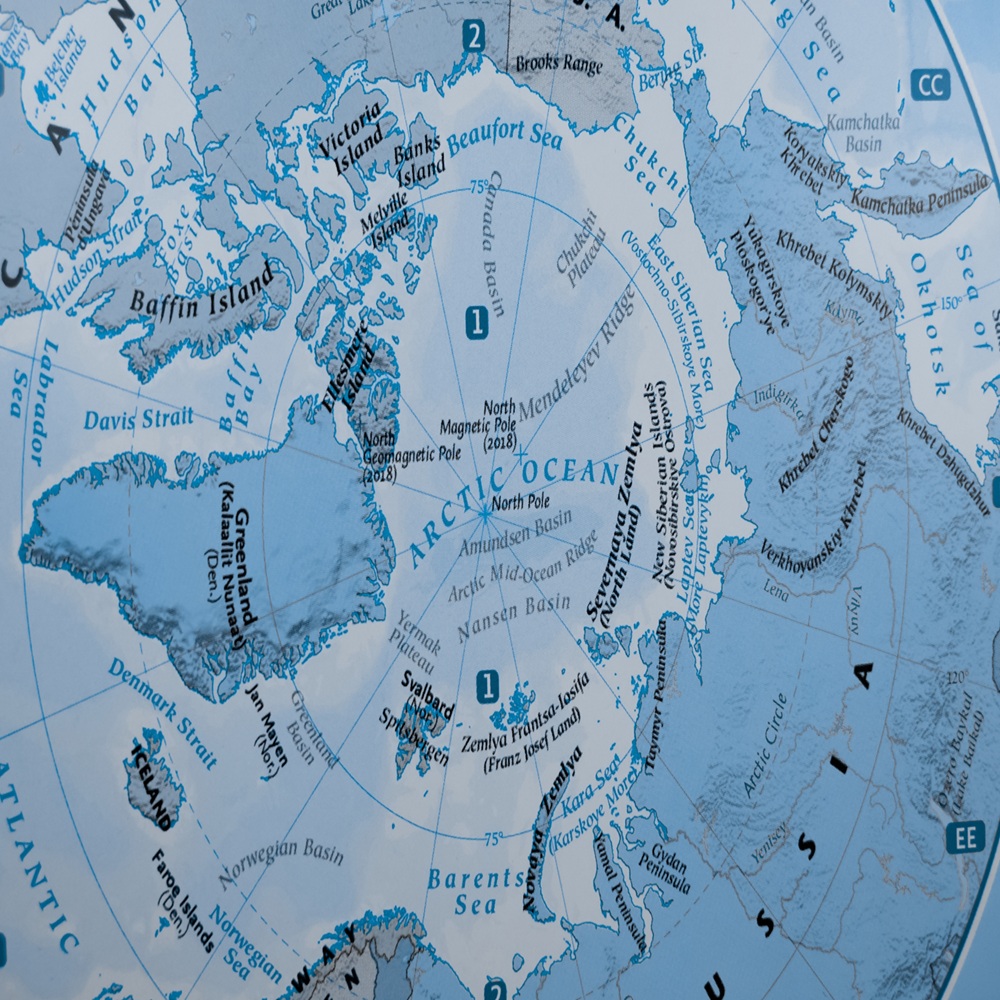
한국어로 읽기 Leer en español In Deutsch lesen Gap اقرأ بالعربية Lire en français Читать на русском President-elect Donald Trump has sparked diplomatic controversy by suggesting the U.S. needs to acquire Greenland for reasons of “national security” and refusing to definitively rule out using military force to do so. Greenland, a self-governing Danish territory, “is not for sale,” said Denmark’s prime minister, Mette Frederiksen. Trump’s interest in Greenland is not new. He first expressed interest in the territory in 2019, but it never developed into any action. Whether or not Trump has actual plans this time around to advance any attempt in Washington to own Greenland is far from clear. But given the incoming president’s repeated statements and invocation of national security, it’s worth considering what strategic value Greenland might actually have from the perspective of the U.S.’s geopolitical priorities. As a scholar of geopolitical conflicts involving natural resources and the Arctic, I believe Greenland’s value from an international political perspective can be viewed in terms of four fundamental areas: minerals, military presence, Arctic geopolitics and the territory’s potential independence. A matter of minerals Greenland’s most valuable natural resources lie with its vast mineral wealth, which holds real potential to advance its economy. Identified deposits include precious metals such as gold and platinum, a number of base metals – zinc, iron, copper, nickel, cobalt and uranium – and rare earth elements, including neodymium, dysprosium and praseodymium. A detailed 2023 summary published by the Geologic Survey of Denmark and Greenland suggests new deposits will be found with the continued retreat of the Greenland Ice Sheet. Greenland’s rare earth resources are particularly significant. These elements are essential not only to battery, solar and wind technology but also to military applications. If fully developed, the Kvanefjeld – or Kuannersuit in Greenlandic – uranium and rare earth deposit would place Greenland among the top producers worldwide. During the 2010s, Greenland’s leaders encouraged interest from outside mining firms, including leading Chinese companies, before finally granting a lease to the Australian company Energy Transition Minerals (formerly Greenland Minerals Ltd). When China’s Shenghe Resources took a major share in Energy Transition Minerals, it raised red flags for Denmark, the European Union and the U.S., which felt China was seeking to expand its global dominance of the rare earth market while reducing Europe’s own potential supply. The issue was put to rest in 2021 when Greenland’s parliament banned all uranium mining, killing further development of Kvanefjeld for the time being. That same year saw the government also prohibit any further oil and gas activity. Predictably, a majority of mining companies have subsequently steered clear of Greenland due to perceived concern of any investment being jeopardized by future political decisions. Fears of China abroad China’s interest in Greenland stretches back at least a decade. In 2015, Greenland Minister of Finance and Interior Vittus Qujaukitsoq visited China to discuss possible investment in mining, hydropower, port and other infrastructure projects. One firm, China Communications Construction Company, bid to build two airports, one in the capital, Nuuk, the other in Ilulissat. Another Chinese firm, General Nice Group, offered to purchase an abandoned Danish naval base in northeastern Greenland, while the Chinese Academy of Sciences asked to build a permanent research center and a satellite ground station near Nuuk. None of this sat well with the first Trump administration, which put pressure on Denmark to convince Greenland’s government that a significant, official Chinese presence on the island was unwanted. The Danes and Greenlanders complied, rebuffing Chinese attempts to invest in Greenland-based projects. The Trump administration, in particular, viewed China’s interest in Greenland as having hidden commercial and military motives, concerns that continued under the Biden administration in its recent lobbying of another Australian mining firm not to sell any of its Greenland assets to Chinese companies. Long-standing US interest The U.S. has had a long-standing security interest in Greenland dating from 1946, when it offered Denmark US$100 million in gold bullion for it. The Danes politely but firmly declined, with their foreign minister saying he didn’t feel “we owe them the whole island.” In the early 1950s, the U.S built Thule Air Force Base 750 miles (about 1,200 kilometers) north of the Arctic Circle. Originally a missile early warning and radio communications site, it was transferred to the newly formed U.S. Space Force in 2020 and renamed Pituffik Space Base in 2023.   The northernmost military facility of the U.S., Pituffik has updated radar and tracking capabilities to provide missile warning, defense and space surveillance, and satellite command missions. While it also supports scientific research focused on the Arctic, the base is intended to increase military capabilities in the Arctic region for both the U.S. and its allies. The base has the ability to track shipping as well as air and satellite positions, giving it both real and symbolic importance to American strategic interests in the Arctic. As a result, much of the U.S. foreign policy establishment, not just those in Trump’s orbit, view any notable Chinese presence in Greenland, whether temporary or permanent, with concern. Geopolitics of the Arctic Greenland is geographically situated between the Northern Sea Route and the Northwest Passage, two Arctic shipping routes whose importance is growing as sea ice shrinks. By around 2050, a Transpolar Sea Route is likely to open through the central Arctic Ocean, passing Greenland’s eastern shores. Furthermore, the island is the basis of Denmark’s sovereignty claim to the North Pole – rivaled by claims by Russia and Canada. While international law recognizes no national sovereignty in international waters, that has done little to end the diplomatic tug-of-war over the pole. The matter is far from trivial: Sovereignty would give a country access to potentially significant oil, gas and rare earth resources, as well as superior scientific and military access to the future Transpolar Sea Route. Yet, this dispute over ownership of the North Pole is only one part of the geopolitical struggle for offshore territory in the region. Russia’s growing militarization of its enormous coastal area has been countered by NATO military exercises in northern Scandinavia, while China’s own moves into the Arctic, aided by Moscow, has seen the launch of several research stations supported by icebreakers and agreements for research and commercial projects. China’s government has also asserted it has rights in the region, for navigation, fishing, overflight, investment in oil and gas projects, and more. Greenland for Greenlanders? All of these factors help decipher the realities involved in the U.S.-Denmark-Greenland relationship. Despite Trump’s words, I believe it is extremely unlikely he would actually use U.S. military force to take Greenland, and it’s an open question whether he would use coercive economic policies in the form of tariffs against Denmark to give him leverage in negotiating a purchase of Greenland. Yet while Trump and other foreign policy outsiders view Greenland through an external strategic and economic lens, the island is home to nearly 60,000 people – 90% of them indigenous Inuit – many of whom treat the designs of foreign nations on their territory with skepticism. Indeed, in 2008, Greenland voted to pursue nationhood. The island receives an annual subsidy of 500 million euros ($513 million) from Denmark, and to further economic independence, it has sought foreign investment. Interest from China has accompanied Greenland’s moves toward independence, backed by Beijing’s strategy to be an Arctic player. The thinking in Beijing may be that an independent Greenland will be less shackled to NATO and the European Union, and as such, more open to investment from further afield. Ironically, Trump’s recent comments have the potential of achieving something very different than their aim by encouraging Greenland’s prime minister, Mute Egede, to propose a referendum in 2025 on full independence. “It is now time for our country to take the next step,” he said. “We must work to remove … the shackles of colonialism.”

Defense & Security
Panoramic view of Tokyo and Japanese flag, Japan

Japan on the path to strategic autonomy

by Javier Fernández Aparicio

한국어로 읽기 Leer en español In Deutsch lesen Gap اقرأ بالعربية Lire en français Читать на русском Abstract: Japan is going through a difficult domestic political period that coincides with the demands of the enormous geopolitical challenges posed by the threat posed by the increased assertiveness of China and Russia in the region, coupled with the risk of North Korea's nuclear programme. Uncertainty over the immediate future of the security relationship with the United States, which was tightened under former Prime Minister Fumio Kishida, also leads Japan to a dilemma regarding its own deterrence capabilities, as reliance on such an alliance may become another risk factor in the event that the United States reformulates it. Therefore, the search for Japan's own strategic autonomy is becoming increasingly important, firstly by accelerating remilitarisation that includes possibilities beyond strict self-defence and, as a second pillar, by seeking to create a mutual security organisation with other countries in the region to act as a deterrent to China, Russia and North Korea, bringing together the various bilateral and multinational treaties to which Japan is a party. Introduction The 27 October elections have left Japan in a complicated political situation. The ruling Liberal Democratic Party (LDP) won and remains the most represented party in the Diet, with 191 seats, but together with its current partner, the Komeito, the governing coalition fell far short of the 233 needed for a majority. Nevertheless, the current prime minister, Shigeru Ishiba, can continue to hold office and the punishment of the LDP seems to be read in a domestic context and not because of dissent over security and the country's external projection. Japan's stability is key to the region, so it seems unlikely that any government that is formed will affect the main lines of defence policy, as the concern remains an increasingly assertive China and the attitude of other actors such as Russia and North Korea. The main opposition Constitutional Democratic Party won 148 seats, 52 more than in the last election, but if we look at its election manifesto, on foreign policy it opts to align itself with the strategic concept of a secure and open Indo-Pacific, while on defence the question is whether to continue to rely on the alliance with the US, which has approximately 50,000 troops in the country, or whether Japan should be able to have sufficient deterrent capabilities of its own .1 On 1 October, Shigeru Ishiba took over as prime minister from his party colleague and prime minister from 2021, Fumio Kishida, worn down by several corruption cases. On October 4, Ishiba announced some of his foreign policy priorities: the design of a mutual security organisation, an "Asian NATO" with several Indo-Pacific countries and greater reciprocity in the alliance with the United States, although this does not mean a questioning of this. 2 All this in a regional context where Japan's perception of its security being threatened was growing, given that a few days earlier a Chinese aircraft carrier had passed through the waters between the Japanese islands of Yonaguni and Iriomote, coming within 24 miles of Japanese territory. For decades, Japan has been perhaps the main Pacific ally of its former World War II enemy, the United States, and this, coupled with its own geopolitical position, translates into remilitarisation, a dynamic of confrontation with China and the search for allies beyond the US, both in the region itself and further afield, in Europe, for example. With Ishida it seems that there will be some continuity with Kishida's policy, although both belong to the same party, the Liberal Democratic Party (LDP), which has been governing Japan for a decade, although their sensibilities and political paths are different, while some unknowns remain in the immediate future, such as China's own position with the increasingly belligerent discourse from Japan or the future of the close alliance with the United States depending on the tenant in the White House from next year, after the elections on 1 November: continuity or rupture if the United States demands a change in Japan's defence policy, pushing it towards greater spending and thus increasing strategic autonomy? Japan's socio-economic and political turbulence Sigheru Ishiba was appointed prime minister due to corruption cases in the Fushida government, including some dealings in various contracts within the defence industry. Since 2017, laws have been tightened to prosecute bribery of officials, which has an impact on the awarding of contracts and tenders for public works. Since 2021, the year of his appointment as prime minister, Fumio Kishida's career has been punctuated by various scandals, starting with the scenario surrounding the assassination of former Prime Minister Shinzo Abe in the summer of 2022, which brought to light the party's links to the controversial religious organisation of the Unification Church, also known as the Moon Sect, to which his assassin belonged. As early as 2023, the case of the blackmailing of senior party officials, including Kishida himself, caused his popular approval rating to fall to less than 15 percent, and after sacking senior officials and ministers, he decided last August to step down and make way for another candidate, who would end up being Ishiba .3 Sigheru Ishiba is a veteran politician known for his loquacity who has been ostracised within the LDP for his criticism of its leaders, for example in 2014 against Shinzo Abe for his reinterpretation of Article 9 of the Japanese Constitution that prohibited the country from rearming. After several unsuccessful attempts to lead the LDP, Ishiba was a minor parliamentarian, but what was crucial in his rise to prime minister was that he embodied the image of a fighter against corruption, which is also considered a burden in Japan's current complex economic situation. Although it is the fourth largest economic power, in 2023 Germany overtook Japan as the world's third largest economy and also has a trade deficit of around 2 billion euros, as the country is totally dependent on resources such as oil and gas, suffering from rising prices and obstacles in supply chains in the Indo-Pacific, for example, with the Houthi threat in the Red Sea 4.  Another sensitive issue is demographics. Japan has an ageing society, where 30% of its 125 million inhabitants are over 65, the highest rate in the world, while the birth rate is very low, with an average of 1.3 children per woman, according to World Bank figures 5 . This has consequences such as a shrinking domestic market, as older people are reluctant to put their savings at stake, plus the danger of not being able to meet labour needs in some sectors, including defence needs, precisely at a time when there is a desire to increase manpower. Technology and robotisation have been alleviating this situation of the need for demographic renewal, but doubts lurk in the very near future, especially in one of the countries with the most restrictive immigration legislation in the world. Redoubling security threats: China, Russia and North Korea  Japan's historic territorial disputes with China over the Senkaku/Diaoyu Islands in the South China Sea and with Russia over the Kuril/Chishima Islands have been compounded by a heightened threat perception of these two formidable giants, while North Korean ballistic missile tests have added to the escalating tension. As the 2024 Defence White Paper has made clear, Japan's approximately 16,000 kilometres of coastline along its four main islands, which means that no point in the country is more than 150 kilometres from the sea, means that Japanese military doctrine regards its defences as definitive battle sites. Moreover, the straits separating these islands greatly restrict a rapid transfer of forces, and this is compounded by the mountainous barriers that similarly prevent rapid deployment of troops. 6  The paper notes that China is modernising and expanding its military by leaps and bounds, while Russian manoeuvres in the Kuriles have involved not only naval exercises but also the deployment of coastal missile and air defence systems. On 18 September, the Chinese aircraft carrier Liaoning passed through the waters between the islands of Yonaguni and Iriomote, the first ship of its kind, while it is common for fighter jets and other vessels to invade Japanese airspace or territorial waters 7. Similarly, an anti-Japanese sentiment is beginning to emerge in China that is rooted in cultural and historical elements and embedded in the diplomatic sphere. In addition to Beijing's reminders that both exports and imports between the two countries are key to their respective economies, and that any ban or stricter regulation could alter them, there are also Chinese diplomatic protests over issues such as the sending of a Japanese warship to the Taiwan Strait on 25 September, an unprecedented action, albeit in the framework of collaboration with other countries such as Australia and New Zealand, which took part in joint manoeuvres in the area, dubbed "freedom of navigation exercises"8.  Finally, several Japanese companies based in China are willing to relocate their staff after xenophobic attacks, including the fatal stabbing of a child in Shenzhen on 18 September 9. On social media, many posts from China claim that Japanese schools create spies and label them as "new colonies" in reference to the Japanese occupation of Manchuria in 1932-1945. In these China-Japan frictions, destabilising actions are also observed within the so-called grey zone. A report has identified a disinformation network in China that promotes a supposed independence movement in Okinawa, where there are also calls for an end to the US presence on the island, which is home to more than 25,000 troops in the largest base on Japanese territory.  Violations of Japanese air or maritime sovereignty have also recently come from Russia. On 23 September, a serious incident occurred when a Russian military aircraft violated Japanese airspace north of Rebun Island in Hokkaido Prefecture and was intercepted by a Japanese aircraft, which threw flares that hit its fuselage 10. It is also noteworthy that since the summer of 2019 and on an annual basis, a joint fleet of Chinese and Russian warships have been carrying out joint manoeuvres in the space between the seas of Japan and Okhotsk, while Russia has also announced the installation of new missile platforms in the Kuriles, which is seen as an increased threat to Japan.11  For its part, North Korea and its ballistic missile tests continue to be a risk for Japan, as it seems to have become one of the main targets of such tests, given that these projectiles tend to land in Japanese sovereign waters. Recently, Prime Minister Ishiba has pushed the diplomatic option by proposing to the regime in Pyongyang to set up liaison offices in both countries to settle any disputes, including the fate of Japanese citizens abducted in the 1970s and 1980s. This proposal includes an end to missile testing in exchange for Japanese investment in North Korean projects, another sign that Tokyo is beginning to seek its own solutions to problems previously settled within the broad framework of the alliance with the United States.12  Rethinking the alliance with the United States?  It should be remembered that all of Japan's military activity and capabilities are strictly limited to a defensive character, restricting the Japanese Self-Defence Forces' overseas deployments and mission to humanitarian cover. However, the dependence on the United States in this foreign projection is quite evident and goes beyond legal limitations. Article 9 of the 1946 Constitution regulates the use of force in Japan to self-defence. Prior to the reforms during Shinzo Abe's term in office (2012-2020), the 1951 Japan-US Status of Forces Agreement (SOFA), which is still in force, even with revisions, allows in Articles V and VI for a US presence on Japanese territory, which covers the 50,000 US military personnel stationed at bases throughout the country, especially on the island of Okinawa, up to a maximum of 100,000. 13 But guidelines signed in 1978, also in force, stipulated the possibility of Japanese participation in foreign military operations if vital sea lanes for the country were under attack, such as protection for ships under the US flag of war or carrying Japanese nationals, as well as direct assistance to the US in the event of an attack on its mainland, for example by intercepting missiles overflying Japan. 14 When Abe was prime minister in 2015, the Diet passed two bills, the first allowing Japanese forces to operate abroad for humanitarian reasons or in the case of situations that "threaten Japan's existence", and the second removing restrictions that prevented action in collective self-defence, i.e. it can use its armed forces to defend an ally under attack and no longer just the United States. This opened the door for Japan to join military alliances. Two years later, in 2017, it became a founding member of the Quadrilateral Security Dialogue (QUAD), although this alliance between the United States, India, Australia and Japan is not, stricto sensu, a coalition with military powers, this same year they agreed to greater involvement in this regard with joint maritime patrols in the waters of the Indo-Pacific from 2025. 15 Some media refer to QUAD as a germ of "NATO in the Indo-Pacific".  With regard to NATO itself, Kishida participated as an observer in the meeting of the heads of state of the member states in Madrid in June 2022, the first Japanese leader to do so in history. Recall that, in the strategic concept agreed during that meeting, China already appeared as a systemic threat in the concept, an issue of vital strategic importance to Japan. Kishida also attended the NATO summit in Vilnius in July 2023, and was the first Japanese leader in history to deliver a speech from a non-coalition partner country: "We welcome the increased interest and engagement in the IndoPacific by our Euro-Atlantic partners"16. Japan is part of the AP4, the NATO AsiaPacific Partners, i.e. NATO's four Indo-Pacific partners along with South Korea, Australia and New Zealand.  In December 2022, the Kishida government updated three important defence documents, the National Security Strategy, the National Defence Strategy and the Defence Strengthening Programme, which ultimately authorised the government, for example, to acquire long-range missile platforms in a controversial decision, as it contradicts the premise of not acquiring offensive weapons. It was justified by Japan's new strategic concept of deterrence and anticipatory defence in the earlier "Three Pillars of Defence" documents, which include improving its security architecture with new equipment such as these missiles, strengthening the alliance with the United States and increasing cooperation with international partners. 17 The so-called 'Spirit of Camp David' 18 , the meeting at President Biden's summer residence in August 2023 between President Biden, Kishida and South Korean President Yoon Suk-yeol, further integrated Japan into the US defence architecture in the Pacific, adding a key player to the alliance in South Korea, with whom Japan had hitherto had a complicated relationship stemming from a traumatic common history, and the germ of a trilateral military alliance was even raised, effectively including the possible transfer of certain deterrent technology vis-à-vis China, Russia and North Korea, such as nuclear weapons, something that had already come up at the G7 meeting in Hiroshima in May 2023, no less, although Kishida flatly denied this possibility. However, in 2017 it was the then Diet deputy and now prime minister, Shigeru Ishiba, who raised this possibility as a real option for Japan, although the then defence minister immediately rejected it 19. Now Ishiba and part of the Japanese political spectrum seem to advocate a certain distancing from dependence on the US, without disavowing bilateral agreements, but advocating initiatives such as having Japanese forces on US soil, the joint use of military bases in Okinawa, and making Japan's defence less dependent on US policy for the region.  When in doubt, open the fan and increase the force.  Last January, Kishida and his foreign and defence ministers travelled to Washington to meet with their US counterparts. There, a new step in Japan's strategic thinking was revealed when it was announced that Japan intends to increase defence spending by almost 60 per cent over five years, abandoning the 1 per cent of GDP budget cap. Beyond a reading in terms of sustaining the alliance with the United States, the fact is that we are witnessing a revision of the country's defence strategy unprecedented since World War II: doubling defence spending means giving Japan its own autonomy in this area, without depending on third parties and with the agreement of the United States 20.  Japan perceives that the US will remain the global power for the foreseeable future, but may become less so in the medium to distant future, posing a threat to Japan's defence credibility, especially in the face of Chinese assertiveness in the adjacent seas. To counter this risk, one avenue could be a security alliance with other countries in the Indo-Pacific region, such as Australia, India or the Association of Southeast Asian Nations (ASEAN) countries. In fact, there are already some bilateral agreements that allow Japanese warships to call at various ports, carry out joint manoeuvres or increase the capacity of maritime agencies to improve patrolling, with Japan supplying patrol boats, coastguard vessels and aircraft 21. However, these security agreements are not only encouraged with Indo-Pacific states, but also with more distant actors with many interests in the region, such as the Europeans, where defence exchanges, joint exercises and contracts in the Japanese defence industry are also increasingly common, either bilaterally with countries such as the United Kingdom, Italy, Germany and Spain, or through recent agreements with the European Union 22.  On security issues, Ishiba has also raised the need to create a mutual defence organisation for the Pacific area that would be similar to NATO for the Atlantic, with both sharing a reference to China as a systemic rival. Thus, there is speculation about a new Basic Law on Japan's Security Policy that would authorise participation in a multinational military alliance. The way forward could be to bring together existing alliances such as the bilateral Japan-US alliance, others such as those already mentioned with South Korea and the US, as well as multinational alliances such as ANZUS (Australia-New Zealand-US Security Treaty), AUKUS (a partnership between Australia, the UK and the US) and above all QUAD, which would have a principle of "collective self-defence" and expand the number of its partners.23  The narrative gaining traction in Japan is that only such a defensive alliance can deter China, Russia or North Korea from future war moves in the region. Clearly, such a proposal would involve an in-depth debate ranging from the position of a crucial power that would be the key to the success or failure of such an alliance, such as India, to the status and position of Taiwan, to the sharing of units, equipment and technology, such as nuclear, as well as the projection of the US partnership itself, On the contrary, it would be an essential part of this new organisation, from the Japanese point of view, a definitive element of deterrence, but in balance and on an equal footing with the rest of the partners, such as Japan itself. 24 Further evidence of this new Japanese perception is the acquisition of deterrence capabilities of its own, within a range of sophisticated military equipment such as longrange counter-attack missiles, designed in principle to repel a perceived adversary's attack from a distance. The country appears to be preparing not only to defend itself at home, but to anticipate its defence abroad. Other key changes in this regard include the creation of a permanent joint operational headquarters for the Self-Defence Forces, the transfer of authority over Japan's Coast Guard to the Ministry of Defence in the event of conflict, the strengthening of cyber defence and a new commitment to increase intelligence capabilities, vital for a hypothetical confrontation with China or Russia in the grey zone. 25  Conclusions: another uncertain future comes from the United States.  The key to Japan's 'Pacific NATO' project also reflects another uncertainty, that of the immediate future of US foreign policy towards the region. After the good feeling with the Biden Administration, there is some uncertainty and unease in Japan if Donald Trump returns to the White House in 2025, and a term has become popular, "MoshiTora", something akin to "What if Donald Trump wins?" ("Tora" is the beginning of Trump's name translated in Japanese as "Torampu") 26 . This could mean changes in relations between the two countries on the economy - what about tariffs - and security, as well as bilateral defence treaties. During 2017-2021, the Trump administration questioned the value of some of these treaties, especially the costs to the US treasury, insisting that NATO countries and others, such as South Korea and Japan, should pay for them and threatening to withdraw US forces. In Japan in particular, then Prime Minister Abe tried to maintain the status quo despite some of Trump's rudeness and arrogant treatment of the country. Indeed, Trump's time in office can be seen as Japan's discovery of the risks of gambling everything on the US alliance and the beginning of a discourse, like Ishida's, advocating greater autonomy in security and defence 27. However, on the campaign trail, Trump himself has hinted that he will pursue a policy of close alliance with Japan and South Korea in the Indo-Pacific, with China in his sights. 28 Also at stake in the US presidential election is the future of US financial and military assistance to Ukraine in its ongoing war with Russia. In line with the previous point and reducing spending in scenarios considered onerous and not vital to US security, a withdrawal of such assistance to Ukraine could be interpreted globally as an indication of what might happen in other areas such as the Indo-Pacific, where Japan could be in a dangerous situation if there were a partial or total US withdrawal, as it would coincide with the process of remilitarisation, without clear regional security alliances and with the certain possibility that both China and Russia would redouble their threats to the country. There are two issues close to Japan that may discern which path the new US administration will take in the region. The first is North Korea, since it should be remembered that in 2019 Trump pushed for talks with Kim Jong-Un to reach an agreement on controlling and curbing the Asian country's nuclear capabilities, although in the end no agreement was reached. The truth is that he did so without including Japan in the negotiations, when it is the main country in the region affected by this threat and North Korean ballistic tests. Secondly, the situation in neighbouring Taiwan. If the United States were to relax its hitherto resolute support for the island in the face of alleged Chinese aggression, how could this be interpreted by Japan, especially when it is committed to this vision? A certain consensus seems to be flourishing in the country at the strategic level: to achieve full security autonomy that demonstrates its own deterrence capabilities. This seems to be the way forward in the short and medium term.  [1] "Contribution to global peace and prosperity", The Constitutional Democratic Party of Japan. Basic Policies. Available at: Basic Policies - The Constitutional Democratic Party of Japan (cdp-japan.jp) (accessed 29/10/2024). [2] WARD, Robert. "Tough challenges ahead for Japan's new prime minister", The International Institute for Strategic Studies. 1 October 2024. Available at: Tough challenges ahead for Japan's new prime minister (iiss.org) (accessed 30/10/2024). [3] KHALIL, Shaimaa. "Japan's embattled PM had a cruel summer - it ends with his exit", BBC. 15 August 2024. Available at: Japan: Prime Minister Fumio Kishida's cruel summer ends with his exit (bbc.com) (accessed 30/10/2024). [4] "Japan reports current account deficit of nearly $2 billion in September", ABC. 17 October 2024. Available at: Japan reports current account deficit of nearly $2 billion in September (abc.es) (accessed 30/10/2024). [5] "Total population of Japan", World Bank Data. Available at: Population, total - Japan | Data (bancomundial.org) (accessed 30/10/2024). [6] CONTE DE LOS RÍOS, Augusto. Japan presents its new Defence White Paper. IEEE Opinion Paper 92/2024. Available at: https://www.ieee.es/Galerias/fichero/docs_opinion/2024/DIEEEO92_2024_AUGCON_Japon.pdf and/or bie3 link (accessed 30/10/2024). [7] "China's Liaoning aircraft carrier sails for the first time in waters adjacent to Japan", International Press. 21 September 2024. Available in: Chinese aircraft carrier "Liaoning" sails for first time in waters adjacent to Japan - International Press - Noticias de Japón en español (accessed 30/10/2024). [8] KOSUKE, Takahashi. "In Historic First, Japan Sends Naval Ship Through the Taiwan Strait", The Diplomat. 26 September 2024. Available at: In Historic First, Japan Sends Naval Ship Through the Taiwan Strait - The Diplomat (accessed 30/10/2024). [9] "Japanese child stabbed in Shenzhen: new attack with a nationalist matrix", Asianews. 18 August 2024. Available at: CHINA - JAPAN Japanese boy stabbed in Shenzen: new attack of nationalist matrix (asianews.it) (accessed 30/10/2024). [10] JHONSON, Jesse. "Japan fighters fire flares after Russian military plane enters airspace", The Japan Times. 23 September 2024. Available at: Japan fighters fire flares after Russian military plane enters airspace - The Japan Times (accessed 30/10/2024). [11] "Russian and Chinese warships practice missile firing at Ocean-2024, RIA reports", Reuters. 16 September 2024. Available at: Russian and Chinese warships practice missile firing at Ocean-2024, RIA reports | Reuters (accessed 30/10/2024). [12] CLARK, Gregory. "Breaking the deadlock in Japan-North Korean relations", Pearls and Irritations. 28 October 2024. Available at: Breaking the deadlock in Japan-North Korean relations - Pearls and Irritations (johnmenadue.com) (accessed 30/10/2024). [13] LLANDRÉS, Borja. "Japan and the US: 60 years of alliance", Article30. Available at: Japón y EE. UU., 60 años de alianza - Artículo30 (articulo30.org) (accessed 1/11/2024). [14] "The guidelines for Japan-US Defence Cooperation", Ministry of Defence of Japan. 27 November 1978. Available at: 19781127.pdf (accessed 1/11/2024). [15] "Fact Sheet: 2024 Quad Leaders' Summit", The White House. 21 September 2024. Available at: Fact Sheet: 2024 Quad Leaders' Summit | The White House (accessed 1/11/2024). [16] "Taking the Japan-NATO Partnership to New Heights for World Peace", Government of Japan, 25 August 2023. Available at: Taking the Japan-NATO Partnership to New Heights for World Peace | The Government of Japan - JapanGov - (accessed 1/11/2024). [17] TSUNEO, Watanabe. "What's New in Japan's Three Strategic Documents", Center for Strategic & International Studies CSIS. 13 February 2023. Available at: What's New in Japan's Three Strategic Documents (accessed 1/11/2024). [18] "The Spirit of Camp David: Joint Statement of Japan, the Republic of Korea, and the United States", The White House. 18 August 2023. Available at: The Spirit of Camp David: Joint Statement of Japan, the Republic of Korea, and the United States | The White House (accessed 1/11/2024). [19] DEACON, John T. & SOLINGEN, Etel. "Japan's nuclear weapon dilemma growing more acute", The Asia Times. 1 June 2023. Available at: Japan's nuclear weapon dilemma growing more acute - Asia Times (accessed 1/11/2024). [20] SHALAL, Andrea & BRUNNSTROM, David. "EU.S. strongly committed to Japan defense, Biden tells Kishida, hails military boost", Reuters. 14 January 2023. Available at: U.S. strongly committed to Japan defense, Biden tells Kishida, hails military boost | Reuters (accessed 1/11/2024). [21] "Japan's Two Big Decisions in Foreign and Security Policy", Government of Japan. 20 February 2023. Available at: Japan's Two Big Decisions in Foreign and Security Policy | The Government of Japan - JapanGov - (accessed 1/11/2024). [22] DOMÍNGUEZ, Gabriel & TANG, Francis. "Japan, EU launch defence and security tie-up amid mutual China concerns", The Japan Times. 1 November 2024. Available at: Japan, EU launch defense and security tie-up amid mutual China concerns - The Japan Times (accessed 1/11/2024). [23] "Shigeru Ishiba on Japan's New Security Era: The Future of Japan's Foreign Policy", Hudson Institute. 25 September 2024. Available at: Shigeru Ishiba on Japan's New Security Era: The Future of Japan's Foreign Policy | Hudson Institute (accessed 1/11/2024). [24] ESTEBAN, Mario. "Shigeru Ishiba y la nueva política de defensa japonesa: más allá de una OTAN asiática", Real Instituto Elcano. 2 October 2024. Available at: Shigeru Ishiba y la nueva política de defensa japonesa: más allá de una OTAN asiática - Real Instituto Elcano (accessed 1/11/2024). [25] Data taken from "Japan country overview", Janes. 29 October 2024. Available at: Janes: Japan (accessed 1/11/2024). [26] "'Moshi-Tora' speculates on how Trump's election might impact Japan's economy", Japan Today. 7 March 2024. Available at: 'Moshi-Tora' speculates on how Trump's election might impact Japan's economy - Japan Today (accessed 1/11/2024). [27] O'SHEA, Paul & MASLOW, Sebastian. "Making the alliance even greater: (Mis-)managing U.S.-Japan relations in the age of Trump", Asian Security, 17(2). Pp. 195-215. Available at: https://doi.org/10.1080/14799855.2020.1838486 (accessed 1/11/2024). [28] HUNNICUTT, Trevor et ali. "Trump will encourage Japan, South Korea ties, allies tell foreign officials", Reuters. 29 June 2024. Available at: Exclusive: Trump will encourage Japan, South Korea ties, allies tell foreign officials | Reuters (accessed 1/11/2024). .

Defense & Security
The leaders of the Association of Southeast Asian Nations (ASEAN) pose for a family picture doing the signature

Sea of Cooperation: New Opportunities for the Development of China - ASEAN Relations

by Andrei Gubin

한국어로 읽기 Leer en español In Deutsch lesen Gap اقرأ بالعربية Lire en français Читать на русском Sea of Cooperation: New Opportunities for the Development of China — ASEAN RelationsSoutheast Asia (SEA) is gaining increasing importance with the changing global order. The region is once again experiencing a period of competition between the “great powers”. During the Cold War some countries managed to stay out of the Soviet-American confrontation, but today, integration into economic, technological, and humanitarian exchanges forces members of the Association of Southeast Asian Nations (ASEAN) to reshape their foreign policy in line with the prioritization of partnerships with various centers of power. SEA has significant economic growth potential, making cooperation beneficial and conflicts costly. Despite the tempting logic of harsh realism in contemporary geopolitical conditions, there remains space in this region for the traditions of idealism and complex interdependence as prerequisites for peaceful coexistence.When Profit Matters More than ClaimsThe ASEAN Summit-2024, held in October in Vientiane, clearly became a platform for a multidimensional dialogue between the “Great East Asian” countries, including India. Almost all participants tried to avoid raising contentious issues; in particular, the new Prime Minister of Japan, Shigeru Ishiba, emphasized Japan’s investments in Southeast Asian countries and avoided discussions about the possibility of forming an “Asian NATO”. Similar ideas about freedom from confrontations and unilateral attempts to change the balance of power were expressed by the President of South Korea, Yoon Suk Yeol. Narendra Modi focused on enhancing multilateral cooperation between Asian states in the fields of information technology, pharmaceuticals, and infrastructure modernization, which would help accelerate the recovery of production and distribution chains after the COVID-19 pandemic. Chairman of the State Council of China, Li Keqiang, firmly pointed to “external forces” as the main culprits of disrupting regional order.According to him, China is ready to work with each ASEAN country in the interest of establishing a common market and achieving sustainable development. The Prime Minister stated that China and Southeast Asian countries are opening up to each other, and this process inevitably contributes to mutual prosperity, which will have a positive impact on the entire world. Notably, in 2023, the trade turnover between China and ASEAN countries exceeded 900 billion USD for the second consecutive year, and has nearly doubled over the past 10 years. The greatest activity is observed in developing relations with Vietnam and Malaysia, which together account for 230 and 191 billion USD, respectively. This means that today, Southeast Asian countries are collectively a more important partner for Beijing (in terms of volume) than the United States or the European Union.It is not surprising that at the events within the framework of the ASEAN Summit, including numerous bilateral meetings, the focus was on mutually beneficial cooperation, including issues related to further removing barriers and optimizing transport routes. Li Keqiang's statement at the 27th China-ASEAN Summit regarding the update of the Free Trade Agreement with the Association highlights the clear dominance of the economic component of cooperation over security issues, ideological differences, and other disagreements. Of course, there are opinions that Laos, in its capacity as chair, deliberately separated political issues from economic ones, but what is wrong with that?Only Philippine President F. Marcos Jr. was left alone, accusing the Chinese Coast Guard of reckless and unjustified pressure in the «exclusive economic zone». This is despite the fact that in July, an agreement was reached allowing the Philippines to deliver supplies to the “Sierra Madre” ship, which had been intentionally grounded 10 years ago at the Ayungin Shoal as a forward post for a Marine Corps unit.Professionally and SafelyToday, the South China Sea (SCS) is home to some of the busiest maritime communication routes. At least 500,000 vessels pass through the region each year, accounting for approximately 40% of global cargo traffic, and more than a million civilian flights cross the airspace above the sea annually. This high intensity of exchanges increases the importance of ensuring the safety of transport amidst unresolved disputes over the delimitation of the exclusive economic zone, the ownership of parts of the Spratly and Paracel Islands, and the escalation of US-China geopolitical tensions in the Asia-Pacific region. Formally, the multilateral dispute over the islands and maritime areas between ASEAN member states and China remains unresolved.In September, the Beijing-based South China Sea Strategic Situation Probing Initiative published a report on the situation in the region. The authors of the document note that in recent years, the United States has pursued an offensive strategy to contain China, primarily using the “instability factor” in the South China Sea to escalate the multilateral dispute and fuel anti-China sentiments. Washington has also encouraged territorial claims by ASEAN countries against China, based on its own interpretation of the United Nations Convention on the Law of the Sea and the concept of a “rules-based order”. So far, these flare-ups of claims against Beijing, which are sometimes accompanied by incidents between coast guard vessels, have not resulted in significant disruptions to freedom of navigation and air traffic. Moreover, China notes that the majority of the contacts have been “professional and safe”. Undoubtedly, in the event of increased tensions—such as more active actions by the air force, navy, and coast guards of various countries toward Chinese aircraft and vessels—logistical routes would need to be reorganized, which could lead to significant losses not only for China but for the entire regional economy. However, despite attempts by the US and its allies to assign special geopolitical significance to the situation in Southeast Asia, the situation remains manageable. As a result, Beijing still believes that peaceful resolution is possible.China Daily cites the opinion of specialists from the China Institute of International Studies (CIIS), who believe that, in terms of ensuring the stability of international trade flows, freedom of navigation in the South China Sea is not under threat. However, in the military dimension, instability is growing, primarily due to excessive US interference.[1] The Institute argues that American activities, which involve sending military ships and aircraft to demonstrate power, only provoke disputes over sovereignty and borders. Such actions create a dangerous misconception among the leadership of several countries that Washington will intervene if necessary to contain China's expansion, thus assisting in resolving the dispute through pressure. The demonization and constant condemnation of China have already negatively affected bilateral relations with the Philippines, Vietnam, Indonesia, Malaysia, and Singapore, which requires significant diplomatic efforts from the Chinese leadership to normalize relations.Military activity is noticeably increasing in Southeast Asia, involving both regional and non-regional states. In addition to the United States, countries such as Japan, Australia, and European NATO members — Germany, France, the United Kingdom, and the Netherlands — are also becoming involved. In total, the US Navy conducts over 1,600 ship hours annually in the region, with at least 3,000 additional ship hours contributed by auxiliary forces. In the airspace above the South China Sea, approximately 30,000 sorties by combat aircraft and helicopters were recorded in 2023, a third of which involved non-regional states, with no fewer than 7,800 sorties conducted by the US Navy, Air Force, and Marine Corps.At CIIS, it is believed that through military actions, Washington is “inflating” its own importance in ensuring freedom of navigation, despite the fact that the US has no merit in this — China itself does not hinder shipping and views patrol and training missions from other countries with understanding. However, joint coast guard exercises between the two most outspoken opponents of China's activities in the South China Sea (the Philippines and Vietnam), as well as “ASEAN-wide” naval maneuvers, initiated by Indonesia, have attracted the attention of the PLA command. The main troublemaker in the region, according to Beijing, is the United States, which effectively ignores the “rules” it established for the safe passage of ships, vessels, and aircraft, constantly maintaining a military presence in the region where the greatest threat actually comes from US military forces. These actions are seen as an attempt to maintain hegemony in the face of “strategic retreat” and to push regional countries away from expanding cooperation with China by artificially creating an unsettled atmosphere and undermining multilateral confidence-building measures.The Chinese leadership's course of separating trade, economic, and investment cooperation from territorial disputes is generally understood by Malaysia, Indonesia, Brunei, and Singapore, which claim parts of the Spratly Islands. However, it has also become a target for criticism from radical circles in these countries, clearly incited by Washington. As negotiations have shown, China and Southeast Asian countries are capable of independently developing mutually acceptable rules of action in the South China Sea, based on international law principles and taking into account each other's interests and concerns. The main idea is to establish direct dialogue in any disputed situation, maintain a constant consultation mechanism, preserve constructive negotiations, and adhere to the principle of peaceful resolution.ASEAN countries clearly do not want confrontation with Beijing, but they are in urgent need of a reliable system for peacefully managing any activities in the waters and on the continental shelf, which still needs to be developed together, ensuring guarantees of unhindered access for exploitation. Peace and cooperation in the South China Sea are inseparable, and collective responsibility for security will invariably contribute to the development of multidimensional ties, further increase trade volume, and lead to the emergence of the Sea of Cooperation on the world map.Reference1. Jiang, Chenglong. South China Sea disputes still ‘manageable’. China Daily. September 28-29, 2024. P. 2.

Defense & Security
Chiang Kai-shek Memorial Hall,Taipei City,Taiwan,October 10, 2021:Military parade on Taiwan National Day

Boys Do Not Dream of War: The Impacts of Extending Compulsory Military Service on Levels of Patriotism in Taiwan

by Shelby Tang

한국어로 읽기 Leer en español In Deutsch lesen Gap اقرأ بالعربية Lire en français Читать на русском No mother wants to say goodbye to their child. However, with the looming threat of an attack from China, this fear threatens to become a reality for many Taiwanese mothers. There has been widespread speculation that People’s Republic of China (PRC) President Xi Jinping (習近平) has directed the People’s Liberation Army (PLA) to be prepared to invade the island by 2027. Amid such predictions, Taiwan has completed numerous actions to increase its capabilities to resist a Chinese attack. Arguably, the island’s most notable single measure—and the most politically controversial—has been the extension of conscripted service for young men from four months to one year of training and military duty. [1]   Current Party Stances  When then-President Tsai Ing-wen (蔡英文) announced the extension of conscripted service in December 2022, public opinion was divided regarding the presidential decision. In the January 2024 presidential election, the three contenders differed on their proposed policies for housing and economic issues, as well as relations with China, but all three—Lai Ching-te (賴清德) of the ruling Democratic Progressive Party (DPP, 民進黨), Hou Yu-ih (侯友宜) of the Kuomintang (KMT, 國民黨), and Ko Wen-je (柯文哲) of the Taiwan People’s Party (TPP, (台民黨)—supported expanding conscripted military service. According to Dr. Shen Ming-shih (沈明室), acting deputy chief executive of the Institute of National Defense and Security Research (INDSR, 國防安全研究院), a government funded think-tank in Taipei, the rare agreement reached by the three men reflects how the issue involves national security interests that transcend party politics.  In Taiwan, the conscription age is 18; however, deferments for higher education are very common. All males must serve in the military by age 36, when they can retire from the reserves. Conscription length has varied throughout administrations. It used to last between two and three years, until being shortened to one year in 2008. This was further cut to four months in 2012 under KMT President Ma Ying-jeou (馬英九), who came to power in 2008 and followed a policy of pursuing warmer ties with China. In the years that followed, Taiwan’s conscripted service system has been widely criticized by commentators both inside Taiwan and abroad as ineffective in providing for Taiwan’s defense, leading the Tsai Administration to implement the one-year program.  Public Opinion and the Impacts of Conscription  Former conscripts have frequently expressed disappointment with their training and equipment. In a study conducted in September 2023, participants regarded military service as “useless” and a “waste of time.” Citing as evidence the lack of equipment and the long permitted periods of leisure time, past participants have complained about the military training camps. One participant who trained in the Taiwanese military between 2023 and 2024 stated that “I just sat under the AC with my phone, they [military personnel] didn’t train us with any specific weapons because they said to not waste bullets, so my friends and I just sat on a field most of the time.” The researchers similarly conducted an interview with Jack Huang, a 30 year old male who completed his four months of service over two semester breaks in university. According to this news report, Huang “felt [that] his shooting practice was outdated, like a holdover from the 1950s, and did not see how it would help him in modern warfare.”   These examples support what Dr. Su Tzu-yun (蘇紫雲), a research fellow and director of INDSR has found: namely, that psychological defense and troop morale are the top concerns regarding Taiwan’s ability to defend itself. If troop morale and confidence are down, how is a sovereign island supposed to maintain its basic defense capacity against China?   Polling data and public sentiment reflect a mix of opinions regarding the conscription extension. According to a survey by the National Chengchi University (國立政治大學), 58 percent of Taiwanese citizens support the extension of conscription to one year, viewing it as a necessary measure for national defense. However, 35 percent oppose the extension, citing particular concerns about its impact on young mens’ educational and career prospects. This division in opinion is evident across different demographics, with younger generations expressing more resistance to the policy compared to older generations.  There is indeed research that points to a one year conscription policy as being an impediment to educational and job prospects. In 2015, The IZA Journal of Labor Economics published a study on the long-term effects of peace-time military conscription on educational attainment and earnings in the Netherlands. Researchers found that compulsory military service decreased the proportion of Dutch university graduates by 1.5 percentage points (from a baseline of 12.3 per cent). Furthermore, the study found that being a conscript diminished the likelihood of earning a university degree by about four percentage points. The impact of military service on wages is also detrimental and long-term. The research concluded that “approximately 18 years after military service, we still find a negative effect of 3 to 4 per cent.” This quantifies some of the negative economic impacts of prolonged military conscription.   Flexibility in Service and Better Compensation for Conscripted Soldiers  Amid public reservations about the new policy, Taiwan’s government has implemented measures aimed to provide benefits after conscription. These include considering service time when calculating future benefits, and providing “flexible” educational options to facilitate the move into the economy for all conscripts. The Taipei Times reported in June 2023 that the Ministry of Education (教育部) has implemented a “3+1” program in which conscripts can complete college in three years and military duty in one year, allowing them to graduate alongside those who do not have to serve. To do this, institutions must raise the limit on the amount of credits that draftee students may obtain each semester. They should also provide summer courses and allow drafted individuals to attend classes at other universities. However, some have criticized the program: for example, KMT members of the legislature have stated that it would jeopardize students’ educational rights, and that conscripts would be “burning the candle at both ends” by balancing studies and conscription.  Conscription programs have also traditionally been known for the very low levels of pay given to junior conscripts—another point that has made the service period unpopular. The return to one-year service is part of a package of conscription reforms that includes increased pay for conscripted soldiers, in which the monthly compensation for a private will increase from NTD $6,510 to NTD $26,307 (USD $203 to USD $850)—still not a huge sum, but a four-fold increase over the standard pay level of the past.  Personal Interviews with Taiwanese Americans Affected by the Conscription Policy   Another issue of concern regarding conscription may be identified in the current attitudes of future Taiwanese-Americans conscripts residing in Taiwan. To investigate the trend, the author conducted a limited study in Taiwan in May 2024, in which interviews were conducted with five teen participants who have to serve upon turning 18. [2] In the interviews, the participants were asked about their views towards the policy. For the first subject pool, four of the five teen participants (Teens 1, 3, 4, and 5) stated that period of the prolonged military service caused concerns regarding future career plans. This concern contributed to a decrease in national pride and connection to their Taiwanese identity. For example, when asked about his opinion regarding the conscription policy, Teen 3 stated in his interview, “Especially because the job market is so tight right now… Having to serve would make getting a job harder. I know I’m supposed to be mad at China, but I’m mad at Taiwan.”   This correlates to the fluctuation of public confidence in Taiwan’s military, according to data found by NCCU’s Election Study Center. In September of 2021, about 58 percent of respondents were confident or very confident in the military’s ability to defend Taiwan. However, confidence dropped to 54 percent in March 2022 and to 43 percent in March 2023—possibly due in part to negative news and cognitive warfare. Cognitive warfare and negative news covers many areas: ranging from naval exercises in the waters surrounding Taiwan and military aviation flights that steadily advance closer to Taiwan’s airspace, to bans of Taiwanese agricultural products, and the use of fringe political parties employed to spread pro-CCP (and anti-American) narratives.  Another theme commonly cited as a reason for their decreased level of patriotism was the effect of military service on plans for higher education. Three out of the five teen participants (Teens 1, 3, and 4) stated that the prolonged military service caused concerns regarding future education plans. This concern contributed to a decrease in national pride and connection to their Taiwanese identity. For example, when asked about his opinion regarding the conscription policy, Teen 1 stated in his interview, “I’m just trying to live my life and go off to college abroad and never have to think about this problem or Taiwan ever again.” The frustration expressed corresponds to a decrease in patriotic connection: as Teen 4 stated in his interview, “I don’t like it. It inconveniences me and my plans for college. Plus, Taiwan doesn’t have anything to offer to my education.”   In a second subject pool, four parent participants (Parents 2, 3, 4, and 5) stated that the prolonged military service for boys born after 2005 caused concerns regarding future career plans. Many parent participants believed that prolonged service duration would harm a child’s employment opportunities, and cause them to lose valuable work experience. For example, Parent 2 stated in their interview, “We have to think about what the youth needs. A one-year training with weapons they will never be able to use or use well in their entire life is useless and bad for job prospects. I am disappointed in Taiwan and perhaps even a bit ashamed of my country.”    Many parent participants believed that prolonged service duration would harm a child’s educational development and cause them to lose valuable academic learning. This connects to March 2023 research in the publication Voice Tank, which found that “respondents’ confidence had dropped, for the first time below 50 percent (to 43 percent), and the proportion of those not confident exceeded that of those confident. While such a drop could be attributed to various factors and may only be temporary, we think it may be a result of cognitive warfare and negative news coverage of the ROC armed forces.” [3] This links to Parent 4’s questioning of Taiwan, asking, “What is wrong with Taiwan? Don’t they understand our future generation needs to study abroad for a better chance?” Parent 4 believes that the government is directly hindering her son’s academic development and future by implementing the policy, a reason for her declining level of patriotism.  Conclusion  The prolonged military conscription for males born after 2005 has caused clashing public opinions—and a decline in patriotic sentiment for Taiwanese Americans currently residing in Taiwan, including future conscripts and their parents. The ruling DPP must consider the unforeseen impacts of its policy amid the looming Chinese threat. It becomes imperative for the ruling party to acknowledge that while conscription may appear on the surface to be cost-effective, simple budgetary accounting does not consider the potentially high opportunity cost that young people face when forced to serve, leading to long-term earnings losses and educational disruptions. These factors combine to reduce national income and economic growth. Additionally, for Taiwanese Americans and expatriates, conscription does little to foster unity; instead, it risks further weakening the relationship between overseas citizens and the state, whose voices still influence Taiwan’s future.  The main point: The prolonged military conscription for boys born after 2005 has caused public controversy and a decline in patriotism for Taiwanese Americans currently residing in Taiwan, including future conscripts and their parents. The ruling Democratic Progressive Party must consider the unforeseen impacts of its policy amid the looming Chinese threat.  References  [1] For previous discussions of the issues surrounding the extension of service to one year, see: John Dotson, “Taiwan’s ‘Military Force Restructuring Plan’ and the Extension of Conscripted Military Service,” Global Taiwan Brief, February 8, 2023, https://globaltaiwan.org/2023/02/taiwan-military-force-restructuring-plan-and-the-extension-of-conscripted-military-service/; and John Dotson, “Taiwan Initiates Its New One-Year Military Conscription Program,” Global Taiwan Brief, February 7, 2024, https://globaltaiwan.org/2024/02/taiwan-initiates-its-new-one-year-military-conscription-program/.  [2] The research was conducted for a duration of one year, under the supervision of Dr. Irish Farley. The study utilized a two-part, mixed methods approach that surveyed boys between of 14 and 17 living in Taiwan who are eligible for military conscription upon turning of age; followed by small group interviews with the teen participants, and parents of boys aged 14 through 17 living in Taiwan.  [3] For example, a report in Nihon Keizai Shimbun in February 2023 claimed that 90 percent of retired Taiwanese spies have worked with China. In early March, soldiers stationed in Kinmen defected to Xiamen, which led to the circulation of negative news about Taiwan’s military. See: Lee, Kuan-chen, Christina Chen, and Ying-Hsuan Chen. 2024. “Core Public Attitudes toward Defense and Security in Taiwan.” Taiwan Politics, January 2024, https://doi.org/10.58570/WRON8266. 

Defense & Security
Harris and Trump presidential election 2024. Word cloud showing their political key issues.

The Armageddon Agenda: Kamala Harris, Donald Trump, and the Race to Oblivion

by Michael T. Klare

한국어로 읽기 Leer en español In Deutsch lesen Gap اقرأ بالعربية Lire en français Читать на русском The next president of the US will face various challenges that divide the nation, including a nuclear defense policy. The next president of the United States, whether Kamala Harris or Donald Trump, will face many contentious domestic issues that have long divided this country, including abortion rights, immigration, racial discord, and economic inequality. In the foreign policy realm, she or he will face vexing decisions over Ukraine, Israel/Gaza, and China/Taiwan. But one issue that few of us are even thinking about could pose a far greater quandary for the next president and even deeper peril for the rest of us: nuclear weapons policy. Consider this: For the past three decades, we’ve been living through a period in which the risk of nuclear war has been far lower than at any time since the Nuclear Age began — so low, in fact, that the danger of such a holocaust has been largely invisible to most people. The collapse of the Soviet Union and the signing of agreements that substantially reduced the U.S. and Russian nuclear stockpiles eliminated the most extreme risk of thermonuclear conflict, allowing us to push thoughts of nuclear Armageddon aside (and focus on other worries). But those quiescent days should now be considered over. Relations among the major powers have deteriorated in recent years and progress on disarmament has stalled. The United States and Russia are, in fact, upgrading their nuclear arsenals with new and more powerful weapons, while China — previously an outlier in the nuclear threat equation — has begun a major expansion of its own arsenal. The altered nuclear equation is also evident in the renewed talk of possible nuclear weapons use by leaders of the major nuclear-armed powers. Such public discussion largely ceased after the Cuban Missile Crisis of 1962, when it became evident that any thermonuclear exchange between the U.S. and the Soviet Union would result in their mutual annihilation. However, that fear has diminished in recent years and we’re again hearing talk of nuclear weapons use. Since ordering the invasion of Ukraine, Russian President Vladimir Putin has repeatedly threatened to employ nuclear munitions in response to unspecified future actions of the U.S. and NATO in support of Ukrainian forces. Citing those threats, along with China’s growing military might, US Congress has authorized a program to develop more “lower-yield” nuclear munitions supposedly meant (however madly) to provide a president with further “options” in the event of a future regional conflict with Russia or China. Thanks to those events and related developments, the world is now closer to an actual nuclear conflagration than at any time since the end of the Cold War. And while popular anxiety about a nuclear exchange may have diminished, keep in mind that the explosive power of existing arsenals has not. Imagine this, for instance: even a “limited” nuclear war — involving the use of just a dozen or so of the hundreds of intercontinental ballistic missiles (ICBMs) possessed by China, Russia, and the United States — would cause enough planetary destruction to ensure civilization’s collapse and the death of billions of people. And consider all of that as just the backdrop against which the next president will undoubtedly face fateful decisions regarding the production and possible use of such weaponry, whether in the bilateral nuclear relationship between the U.S. and Russia or the trilateral one that incorporates China. The U.S.-Russia Nuclear Equation  The first nuclear quandary facing the next president has an actual timeline. In approximately 500 days, on February 5th, 2026, the New Strategic Arms Reduction Treaty (New START), the last remaining nuclear accord between the U.S. and Russia limiting the size of their arsenals, will expire. That treaty, signed in 2010, limits each side to a maximum of 1,550 deployed strategic nuclear warheads along with 700 delivery systems, whether ICBMs, submarine-launched ballistic missiles (SLBMs), or nuclear-capable heavy bombers. (That treaty only covers strategic warheads, or those intended for attacks on each other’s homeland; it does not include the potentially devastating stockpiles of “tactical” nuclear munitions possessed by the two countries that are intended for use in regional conflicts.) At present, the treaty is on life support. On February 21st, 2023, Vladimir Putin ominously announced that Russia had “suspended” its formal participation in New START, although claiming it would continue to abide by its warhead and delivery limits as long as the U.S. did so. The Biden administration then agreed that it, too, would continue to abide by the treaty limits. It has also signaled to Moscow that it’s willing to discuss the terms of a replacement treaty for New START when that agreement expires in 2026. The Russians have, however, declined to engage in such conversations as long as the U.S. continues its military support for Ukraine. Accordingly, among the first major decisions the next president has to make in January 2025 will be what stance to take regarding the future status of New START (or its replacement). With the treaty’s extinction barely more than a year away, little time will remain for careful deliberation as a new administration chooses among several potentially fateful and contentious possibilities. Its first option, of course, would be to preserve the status quo, agreeing that the U.S. will abide by that treaty’s numerical limits as long as Russia does, even in the absence of a treaty obliging it to do so. Count on one thing, though: such a decision would almost certainly be challenged and tested by nuclear hawks in both Washington and Moscow. Of course, President Harris or Trump could decide to launch a diplomatic drive to persuade Moscow to agree to a new version of New START, a distinctly demanding undertaking, given the time remaining. Ideally, such an agreement would entail further reductions in the U.S. and Russian strategic arsenals or at least include caps on the number of tactical weapons on each side. And remember, even if such an agreement were indeed to be reached, it would also require Senate approval and undoubtedly encounter fierce resistance from the hawkish members of that body. Despite such obstacles, this probably represents the best possible outcome imaginable. The worst — and yet most likely — would be a decision to abandon the New START limits and begin adding yet more weapons to the American nuclear arsenal, reversing a bipartisan arms control policy that goes back to the administration of President Richard Nixon. Sadly, there are too many members of Congress who favor just such a shift and are already proposing measures to initiate it. In June, for example, in its version of the National Defense Authorization Act for fiscal year 2025, the Senate Armed Services Committee instructed the Department of Defense to begin devising plans for an increase in the number of deployed ICBMs from 400 of the existing Minuteman-IIIs to 450 of its replacement, the future Sentinel ICBM. The House Armed Services Committee version of that measure does not contain that provision but includes separate plans for ICBM force expansion. (The consolidated text of the bill has yet to be finalized.) Should the U.S. and/or Russia abandon the New START limits and begin adding to its atomic arsenal after February 5th, 2026, a new nuclear arms race would almost certainly be ignited, with no foreseeable limits. No matter which side announced such a move first, the other would undoubtedly feel compelled to follow suit and so, for the first time since the Nixon era, both nuclear powers would be expanding rather than reducing their deployed nuclear forces — only increasing, of course, the potential for mutual annihilation. And if Cold War history is any guide, such an arms-building contest would result in increased suspicion and hostility, adding a greater danger of nuclear escalation to any crisis that might arise between them. The Three-Way Arms Race  Scary as that might prove, a two-way nuclear arms race isn’t the greatest peril we face. After all, should Moscow and Washington prove unable to agree on a successor to New START and begin expanding their arsenals, any trilateral nuclear agreement including China that might slow that country’s present nuclear buildup becomes essentially unimaginable. Ever since it acquired nuclear weapons in 1964, the People’s Republic of China (PRC) pursued a minimalist stance when it came to deploying such weaponry, insisting that it would never initiate a nuclear conflict but would only use nuclear weapons in a second-strike retaliatory fashion following a nuclear attack on the PRC. In accordance with that policy, China long maintained a relatively small arsenal, only 200 or so nuclear warheads and a small fleet of ICBMs and SLBMs. In the past few years, however, China has launched a significant nuclear build-up, adding another 300 warheads and producing more missiles and missile-launching silos — all while insisting its no-first-use policy remains unchanged and that it is only maintaining a retaliatory force to deter potential aggression by other nuclear-armed states. Some Western analysts believe that Xi Jinping, China’s nationalistic and authoritarian leader, considers a larger arsenal necessary to boost his country’s status in a highly competitive, multipolar world. Others argue that China fears improvements in U.S. defensive capabilities, especially the installation of anti-ballistic missile systems, that could endanger its relatively small retaliatory force and so rob it of a deterrent to any future American first strike. Given the Chinese construction of several hundred new missile silos, Pentagon analysts contend that the country plans to deploy as many as 1,000 nuclear warheads by 2030 and 1,500 by 2035 — roughly equivalent to deployed Russian and American stockpiles under the New START guidelines. At present, there is no way to confirm such predictions, which are based on extrapolations from the recent growth of the Chinese arsenal from perhaps 200 to 500 warheads. Nonetheless, many Washington officials, especially in the Republican Party, have begun to argue that, given such a buildup, the New START limits must be abandoned in 2026 and yet more weapons added to the deployed U.S. nuclear stockpile to counter both Russia and China. As Franklin Miller of the Washington-based Scowcroft Group and a former director of nuclear targeting in the office of the secretary of defense put it, “Deterring China and Russia simultaneously [requires] an increased level of U.S. strategic warheads.” Miller was one of 12 members of the Congressional Commission on the Strategic Posture of the United States, a bipartisan group convened in 2022 to reconsider America’s nuclear policies in light of China’s growing arsenal, Putin’s nuclear threats, and other developments. In its final October 2023 report, that commission recommended numerous alterations and additions to the American arsenal, including installing multiple warheads (instead of single ones) on the Sentinel missiles being built to replace the Minuteman ICBM and increasing the number of B-21 nuclear bombers and Columbia-class ballistic-missile submarines to be produced under the Pentagon’s $1.5 trillion nuclear “modernization” program. The Biden administration has yet to endorse the recommendations in that report. It has, however, signaled that it’s considering the steps a future administration might take to address an expanded Chinese arsenal. In March, the White House approved a new version of a top-secret document, the Nuclear Employment Guidance, which for the first time reportedly focused as much on countering China as Russia. According to the few public comments made by administration officials about that document, it, too, sets out contingency plans for increasing the number of deployed strategic weapons in the years ahead if Russia breaks out of the current New START limits and no arms restraints have been negotiated with China. “We have begun exploring options to increase future launcher capacity or additional deployed warheads on the land, sea, and air legs [of the nuclear delivery “triad” of ICBMs, SLBMs, and bombers] that could offer national leadership increased flexibility, if desired, and executed,” said acting Assistant Secretary of Defense Policy Vipin Narang on August 1st. While none of those options are likely to be implemented in President Biden’s remaining months, the next administration will be confronted with distinctly ominous decisions about the future composition of that already monstrous nuclear arsenal. Whether it is kept as is or expanded, the one option you won’t hear much about in Washington is finding ways to reduce it. And count on one thing: even a decision simply to preserve the status quo in the context of today’s increasingly antagonistic international environment poses an increased risk of nuclear conflict. Any decision to expand it, along with comparable moves by Russia and China, will undoubtedly create an even greater risk of instability and potentially suicidal nuclear escalation. The Need for Citizen Advocacy  For many of us, nuclear weapons policy seems like a difficult issue that should be left to the experts. This wasn’t always so. During the Cold War years, nuclear war seemed like an ever-present possibility and millions of Americans familiarized themselves with nuclear issues, participating in ban-the-bomb protests or the Nuclear Weapons Freeze Campaign of the 1980s. But with the Cold War’s end and a diminished sense of nuclear doom, most of us turned to other issues and concerns. Yet the nuclear danger is growing rapidly and so decisions regarding the U.S. arsenal could have life-or-death repercussions on a global scale. And one thing should be made clear: adding more weapons to the U.S. arsenal will not make us one bit safer. Given the invulnerability of this country’s missile-bearing nuclear submarines and the multitude of other weapons in our nuclear arsenal, no foreign leader could conceivably mount a first strike on this country and not expect catastrophic retaliation, which in turn would devastate the planet. Acquiring more nuclear weapons would not alter any of this in the slightest. All it could possibly do is add to international tensions and increase the risk of global annihilation. As Daryl Kimball, executive director of the Arms Control Association, a nonpartisan research and advocacy outfit, put it recently: “Significant increases in the U.S. deployed nuclear arsenal would undermine mutual and global security by making the existing balance of nuclear terror more unpredictable and would set into motion a counterproductive, costly action-reaction cycle of nuclear competition.” A decision to pursue such a reckless path could occur just months from now. In early 2025, the next president, whether Kamala Harris or Donald Trump, will be making critical decisions regarding the future of the New START Treaty and the composition of the U.S. nuclear arsenal. Given the vital stakes involved, such decisions should not be left to the president and a small coterie of her or his close advisers. Rather, it should be the concern of every citizen, ensuring vigorous debate on alternative options, including steps aimed at reducing and eventually eliminating the world’s nuclear arsenals. Without such public advocacy, we face the very real danger that, for the first time since the atomic bombings of Hiroshima and Nagasaki in August 1945, nuclear weapons will again be detonated on this planet, with billions of us finding ourselves in almost unimaginable peril. The article was translated and licensed under CC BY-SA 3.0 ES (Atribución-CompartirIgual 3.0 España).

Defense & Security
American nuclear button concept. USA missile launches from its underground silo launch facility, 3D rendering

Revision of US Nuclear Operational Guidelines

by Kim Tae-Woo

한국어로 읽기Leer en españolIn Deutsch lesen Gap اقرأ بالعربيةLire en françaisЧитать на русском Kim Tae-woo, former head of the Institute for Unification Studies Today, I would like to tell you that the US nuclear strategy is changing . As President Biden’s term draws to a close, the US is changing its nuclear weapons operational guidelines. President Biden , like President Obama, originally argued for a reduction in the role of nuclear weapons. That is why, when he took office as president in 2020, he advocated for sole purpose nuclear use and no first use (NFU). ‘Sole purpose nuclear use’ means that the US will only use nuclear weapons when it is directly attacked by nuclear weapons, and NFU is an abbreviation for ‘No First Use’, which means that it will not use nuclear weapons before its adversary. When a president changes, the US publishes a strategy document called the ‘Nuclear Posture Review (NPR)’, which declares its nuclear strategy and nuclear operational policies to the outside world. Allies were concerned that if President Biden included such content in the NPR, they would distrust the nuclear umbrella provided by the US. Perhaps conscious of these concerns, the 2022 NPR did not include such content, but President Biden’s nuclear philosophy was reflected throughout the strategy book. As a result, the United States decided to stop developing submarine-launched nuclear cruise missiles (SLCM-N) and retire the B83-1 (1.2 mt) missile, an aircraft-delivered nuclear weapon. The Biden administration has changed. In March, it ordered the US military to create nuclear operational guidelines to prepare for a situation in which China, Russia, and North Korea cooperate to launch a nuclear attack on the US, and approved the newly created guidelines. At the same time, it also ordered the development of necessary new weapons and the modernization of the nuclear operational system. In June, the director of the White House National Security Council (NSC)’s nonproliferation office also said, “If the nuclear threat from China, Russia, and North Korea increases, the US will also increase its deployed nuclear weapons,” and hinted at the possibility that “nuclear weapons can be used in conventional warfare.” This is a reversal of President Biden’s policy of giving up preemptive nuclear use. In this way, President Biden is adopting new nuclear operational guidelines and nuclear doctrine while changing his previous position with less than a year left in his term. The reason for this change in the US nuclear doctrine is that he is taking the nuclear arms buildup of China, Russia, and North Korea very seriously in the new Cold War situation, and the strategic focus on the North Korean nuclear issue is changing from ‘North Korea’s nuclear abandonment’ to ‘prevention of nuclear use.’ Although the sensitive parts of the newly created nuclear weapons operational guidelines have not been made public, it is known that they contain explicit concerns about China’s nuclear arms buildup. The guidelines are based on the US Department of Defense’s estimate that China’s nuclear weapons will increase to 1,000 by 2030 and 1,500 by 2035, and are intended to prepare for the possibility that China could threaten the US by cooperating with Russia and North Korea on nuclear weapons. The same goes for North Korea. In March, the US, through the NSC and experts, mentioned the need for “interim steps” that are a step back from the goal of “denuclearization,” and said, “We are willing to talk to North Korea unconditionally for negotiations.” The terms “denuclearization of North Korea” and “CVID,” or “complete, verifiable, and irreversible denuclearization of North Korea,” disappeared from the platforms of the US Democratic and Republican parties announced ahead of the November presidential election. North Korea may say that “the US has recognized our possession of nuclear weapons,” but that is a misinterpretation. It does not mean accepting, or tolerating, North Korea’s nuclear weapons, but rather recognizing, and is trying to lower the nuclear threat through dialogue, recognizing that North Korea has no intention of giving up its nuclear weapons immediately, but responding strongly if North Korea refuses. As such, the nuclear issue is now reaching a dead end. As the military closeness and nuclear cooperation between China, Russia, and North Korea intensifies, it is ultimately triggering a response from the US. Naturally, South Korea cannot just keep watching. In Korea, civic groups are currently conducting a campaign to collect 10 million signatures calling for nuclear armament, but it is unclear how much this movement will change national policy in the future. If this trend continues, there may be countermoves in Japan and Taiwan as well. It is difficult to understand why North Korea should really increase its nuclear weapons and strengthen its military power with drones and artillery, even though food shortages are starting again, the youth are opposing the one-party dictatorship, and the elite are increasingly defecting to seek freedom. “Copyright © 1998-2023, RFA. Used with the permission of Radio Free Asia, 2025 M St. NW, Suite 300, Washington, D.C. 20036. https://www.rfa.org.”

Defense & Security
japan,australia,usa and india friendship against china.Quad plus countries flags Quad plus countries flags over china flag.Quad plus countries. Quadrilateral Security Dialogue.

Trump II and US Nuclear Assurances in the Indo-Pacific

by Liviu Horovitz , Elisabeth Suh

한국어로 읽기Leer en españolIn Deutsch lesen Gap اقرأ بالعربيةLire en françaisЧитать на русском Why Australia, Japan, and South Korea Have Other Concerns While heated debates in Europe have focused on how to respond if Donald J. Trump is re-elected to the White House, discussions in Australia, Japan, and South Korea reveal a greater sense of confidence in Washington’s commitments. The fear that the United States would withdraw its nuclear assurances is much less pronounced in the Indo-Pacific than in Europe. This serenity appears primarily grounded in a shared understanding that a bipartisan consensus is driving the US commitment to contain China’s rise – a goal that requires reliable allies across the Pacific. At the same time, US allies want to maintain the regional status quo and are willing to support Washing­ton’s efforts. Trump’s potential return does little to change these structural incen­tives. Instead, Pacific allies fear challenges to the East Asian regional order, challenges that are also relevant for Europe’s security and prosperity. European and Pacific US allies share similar concerns about a potential second Trump administration: allies everywhere fear that Trump would once again pursue a trans­actional approach to US foreign policy. Disputes between allies would play out in public, unsettling domestic populations, delighting adversaries, and endangering the perceived credibility of the common defence policy. Given Trump’s penchant for cosying up to autocrats, both European and Pacific allies worry that Washington will either trade away key shared interests to extract questionable concessions from dictators or, if negotiations fail (again), that Trump will drag them into unwanted conflicts. However, beyond these shared concerns, policymakers in Canberra, Seoul, and Tokyo seem to be more confident. They believe they know how to manage Trump’s ego and can offer him lucrative deals. Furthermore, they assume that a second Trump adminis­tration will remain engaged in the Western Pacific, necessitating the presence of reli­able partners to maintain influence and contain China. These assumptions do not lead to fewer concerns, but to less fundamental concerns in trans-Pacific relations. However, European allies express fear that Trump may seek to undermine or even ter­minate NATO, which would result in the withdrawal of US nuclear assurances. Even in South Korea, public debate about its own nuclear weapons is primarily focused on the perceived threat from North Korea, rather than on concerns within the alliance. It is primarily the changed regional bal­ance of power and China’s ambitions that worry the trans-Pacific allies. On the one hand, the extensive competition between the US and China gives rise to the expectation that Washington will remain engaged and that the security relationship and extended nuclear deterrent in the Pacific will remain stable. On the other hand, this com­petition demonstrates to Pacific allies that the actions of the current and subsequent US administrations will have a decisive impact on the evolution of the balance of power and the regional constellation in the decades to come. There is therefore concern that a transactional second Trump adminis­tration could undermine protracted joint efforts to maintain order, laying the ground­work for eventual Chinese dominance in this strategically important region. A changing military balance of power Regional and global economic, political, and technological developments are shift­ing the balance of power in the Asia-Pacific region in very different ways than in Europe. After all, the starting position is completely different: Russia’s economy is only one-tenth the size of the EU’s, and Europe lacks political resolve and operational military capabilities rather than resources per se. The critical questions are whether the United States would defend Europe in a geographically limited crisis, whether the Western European nations would go to war for their Eastern European allies, and whether the current forces are adequate to deter or repel Russian aggression. In contrast, China’s economy is almost two and a half times larger than the com­bined economies of Australia, Japan, and South Korea – a difference that roughly mirrors the disparity in military spending. While Europeans have consciously delegated their security to Washington, US allies in the Western Pacific have limited options for developing their own conventional capa­bilities to counterbalance China. Hence, the US allies are primarily concerned with China’s determination to re­shape regional dynamics. Under Xi Jinping, Beijing has pursued a more confrontational foreign policy designed to advance China’s regional interests and diminish, if not eliminate, US influence across the Pacific. China has proved willing to underpin its combative diplomacy through both costly economic measures and the rapid modernisation of its armed forces. It is still assumed that the US will continue to play the lead­ing military role for the time being, as Washington retains superiority in conventional and nuclear capabilities as well as in many other areas. However, China is rapidly catching up and asserting its regional claims, making it increasingly difficult for the United States to effectively project power so far from its own shores. This is why allies fear that China could dominate the Asia-Pacific region in future. Against this backdrop, many see Taiwan’s future as the harbinger of the region’s pos­sible development. If Beijing were to con­trol this central component of the first island chain, it would gain both military and political leverage over the East and South China Seas – both of which are stra­tegically important. To signal its resolve, Beijing frequently conducts demonstrations of military power such as in the airspace separating the mainland from Taiwan. The trans-Pacific allies suspect that China could (soon) leverage both conventional and nuclear capabilities to present them with a fait accompli, thus gaining control over Taipei before the US could intervene. This would also damage Washington’s credibility as the guardian of regional order. Whether Beijing would indeed wage war against the United States over Taiwan, or whether it merely seeks to alter the military balance of power by exposing Washington, Taipei, and regional US allies to unacceptable escala­tion risks remains unclear – but the very fact that China keeps its intentions ambigu­ous raises worst-case fears. Nuclear threats In recent years, Beijing has been engaged in a major expansion of its nuclear arsenal. According to US forecasts, China could double the number of its nuclear warheads from the current estimate of 500 nuclear warheads by 2030. While Russia and the United States would still dwarf China’s nuclear forces numerically, Beijing appears to be aiming for the same qualitative league of strategic nuclear weapons systems as possessed by Washington and Moscow. The exact motives behind China’s nuclear build-up remain controversial. Yet the types of weapons and the pace of their development suggest that Beijing would at least like to weaken Washington’s escalation dominance in a crisis. Such developments could theo­retically strengthen the mutual nuclear deterrent between China and the US. On the one hand, it could reduce the risk of a global war. On the other hand, for Washing­ton’s Pacific allies this means that their protective power could no longer credibly threaten nuclear escalation and effectively deter Beijing. As a result, they would be outgunned in a conventional war with China. North Korea’s foreign policy, coupled with its nuclear build-up is a further cause for concern. According to estimates, Pyong­yang could currently have 90 nuclear war­heads at most at its disposal. However, it has significantly diversified its delivery systems. North Korea emphasizes a nuclear doctrine with which it could drive a wedge between the Pacific allies by threatening South Korea with tactical nuclear strikes and the US with strategic nuclear strikes. In addition, Washington and its allies perceive North Korea’s threshold for using nuclear weapons to be very low, as they assume that Pyongyang is also trying to deter con­ventional attacks in this way. Finally, the policy changes Moscow has implemented are intensifying regional con­cerns with respect to the future behaviour of China and North Korea. Russia maintains important military facilities in North-East Asia, militarises the Kuril Islands, and con­ducts strategic air and naval patrols with China across the Western Pacific. Moscow’s focus, however, is clearly on Europe. Never­theless, Australia, Japan, and South Korea fear the concrete consequences of Russia’s cooperation with Beijing and Pyongyang. It is clear that this cooperation fuels Moscow’s war in Ukraine. In the worst-case scenario, closer military cooperation could result in more coordination and opportunistic be­haviour to exploit each other’s conflicts or challenge the US and its allies with addi­tional crises. What is more likely, however, is not a trilateral front, but a triangular dy­namic that remains susceptible to mistrust, power calculations, and priority setting by the respective rulers – and which can none­theless boost existing challenges to regional security and non-proliferation. Moreover, the outcome of Moscow’s on­going war of aggression in Ukraine could set risky precedents for revisionist agendas in East Asia. At this point, China and North Korea could learn from Russia’s nuclear rhetoric how allies can be unsettled and deterred from going “too far” in supporting Ukraine. Converging interests and (radical) alternatives The challenges in the Asia-Pacific region could have a more serious impact on the regional and global order than the conflicts in Europe. They are therefore already influ­encing the balance of interests and thus the room for manoeuvre of the actors involved. First, there is a bipartisan consensus in Washington that American influence in the Pacific must be preserved. Most see the larger Indo-Pacific as the strategic centre of gravity, perceive US influence in the region as key to sustaining America’s preeminent position in international relations, and conclude that containing China is a must. Thus, even in a highly partisan political environment, the status of Taiwan and its treaty alliances with Australia, Japan, and South Korea remain essentially of unques­tioned importance to the United States. Second, Washington needs its allies in the Western Pacific. As the military gap with China narrows, the US military must rely on the critical bases, logistical support, and complementary capabilities of regional allies. Consequently, Australia, Japan and South Korea host significant US military forces, facilitating rapid deployment and sustained operations in the region. The US is not only seeking to strengthen bilateral security cooperation and can also work with Australia and Japan as indispensable partners for regional formats – such as the Quad that includes India – to pool resources to contain Beijing’s ambitions. Conversely, given China’s considerable economic power, any attempt to constrain its technological or financial capabilities requires wide-ranging cooperation. It is thus unsurprising that the Biden adminis­tration has actively sought to garner sup­port across the Indo-Pacific region to foster economic partnerships, supply chain resili­ence, technology transfers and research collaborations. Third, allies in the Western Pacific are prepared to contribute to more effective military action. Many European govern­ments, on the other hand, take US security measures for granted and are reluctant to divert funds from social and other purposes to their armed forces. Australia, Japan, and South Korea each have extensive trade rela­tions with China, having tied their prosper­ity to Beijing. To ensure that this beneficial balance can be maintained, Canberra, Tokyo, and Seoul have reliably invested in allied deterrence and defence. Australia and South Korea have done and continue to do so, even under governments that are more sceptical about relations with Washington. Fourth, although US allies in the Western Pacific greatly benefit from the current strategic arrangements, they have alter­native (even if not attractive) options avail­able – and Washington is acutely aware of this reality. On the one hand, policymakers in Washington suspect that if mistrust of US commitment were to reach an intoler­able level, its Pacific allies might decide to bandwagon with China. As Australia has no territorial dispute with Beijing, and Japan and South Korea have only one limited territorial dispute respectively with China, their concerns are more economic and po­liti­cal in nature. A different regional archi­tecture, though significantly less attractive, would not directly threaten their funda­mental interests and, therefore, would probably be tolerable. On the other hand, Japan and South Korea have the technical capabilities and sufficiently limited regional institutional ties – in Seoul also significant domestic political support – to constrain China’s coercive capabilities by acquiring their own nuclear weapons. In the absence of US reassurance, they could combine the two alternatives and side with Beijing from behind their own nuclear shield. Given these four fundamentals, there is relative confidence in Canberra, Tokyo, and Seoul that the US will continue with its secu­rity architecture in – and therefore with its extended nuclear deterrent for – the Western Pacific, whether or not Donald Trump wins the 2024 presidential election. Moreover, both Trump and his supporters have repeatedly struck a confrontational tone toward China, emphasising their wil­lingness to increase US power projection through military means. Counter-balancing by the United States and its allies Amid a shifting politico-military landscape and aligned US and allied interests in pre­serving the status quo, a concerted effort to counterbalance China’s military expansion is evident. These efforts are extremely ex­pensive. The sunk costs of this effort strongly suggest to all concerned that, regardless of who occupies the White House, the major strategic question facing the future admin­is­tration will likely be how to effectively con­tain China while both maintaining stra­tegic deterrence against Russia and avoiding the escalation of potential crises. For now, the United States seems to pursue a four-pronged strategy that involves developing additional nuclear capabilities, building up conventional options, enhancing allies’ capabilities, and expanding security co­operation. First, planners and pundits in Washington are assessing how to make better use of US nuclear options. While a major nuclear modernisation effort is underway, a grow­ing number of experts and politicians have concluded that the US arsenal needs to be expanded. In addition, the legislative branch has been pushing the Pentagon to pursue additional nuclear options, such as a nuclear-armed cruise missile (SLCM-N). The Trump administration already called for this in 2018 and would likely continue to pursue it, if it returns to power. More­over, some in the hawkish Republican camp are even calling for the first use of such low-yield nuclear weapons to be con­sidered in order to offset China’s operational advantages and prevent an invasion of Taiwan – but it is unclear how much weight such voices could carry in a second Trump term. Second, and more importantly, the US government is building up its conventional capabilities. Although many Democrats criticised the Trump administration’s 2019 decision to abandon the legal prohibition on deploying intermediate-range missiles, the Biden administration has pursued this same course. As a result, US armed forces will soon be deploying such missile systems to their European and Pacific bases; a planned relocation to the US base in Wies­baden was recently announced. For Asia, it has already been announced that the Dark Eagle hypersonic system will be fielded on Guam. In order to equalise the conventional balance of power with China, however, the various other US medium-range systems would have to be stationed on allies’ terri­tory. Given the high probability that Beijing would respond with harsh economic retalia­tion, it remains unclear whether – or under what conditions – Canberra, Tokyo, or Seoul would agree to such deployments. Third, the US government has been work­ing with its allies in the region to im­prove their own military capabilities. First, Australia, Japan, and South Korea continue to develop their national capabilities, par­ticularly where long-range strike capabilities and strategic naval assets are concerned. Sec­ond, the US government seeks to strengthen its allies’ early warning and missile defence capabilities. It is especially relevant that Washington appears to have shifted its posi­tion to weigh deterrence challenges more heavily than proliferation concerns. Indicative of this is the unprecedented technology transfer involved in providing Australia with stealthy nuclear-powered submarines. This transfer requires an un­paralleled level of verification to make it transparent that Canberra does not divert some of the highly enriched uranium needed for submarine propulsion to build its own nuclear weapons. Another example is the US decision from 2021 to lift all restrictions that had long been placed on South Korea’s missile development programs. Equally important is the widespread sale of Toma­hawk cruise missiles in recent years, includ­ing to Australia and Japan. Finally, while bilateral alliances with Washington continue to be characterised by patron-client relationships, Washington appears committed to empowering regional powers not only by helping enhance their capabilities, but also by expanding security cooperation and allies’ roles therein. For instance, the Biden administration wants Japanese shipyards to regularly overhaul US warships, which allows for their constant presence in East Asia. It also upgraded bi­lateral consultations which carve out a South Korean role in US nuclear operations. Further, it is pursuing technology transfers in advanced military capabilities that will buttress Australia’s strategic reach. Although these alliance initiatives bear the hall­marks of the Biden administration, they fit the “burden-sharing while preserving influ­ence” mantra. This tactic characterised Trump’s term in office and is currently aspired to by broad segments of the Repub­lican Party. Thus, while officials and experts in Australia, Japan, and South Korea expect communication and coordination mishaps, procedural quibbles, funding challenges, and implementation delays, these individ­uals strongly believe that bipartisan US sup­port for these measures will remain strong. Nevertheless, concerns abound Although some of Trump’s domestic sup­porters would welcome any reduction in US commitments abroad, a second adminis­tration would have to face the reality that abandoning extended nuclear deterrence remains fundamentally at odds with its primary goals. Abandoned by their long-time protector and facing massive threats, former allies would likely seek to appease China, and could acquire nuclear arsenals independently. Such developments would run counter to the interests of any US ad­ministration, including a Trump White House. Fears of nuclear abandonment are therefore not the dominant concern, leav­ing plenty of room for allies’ other worries. The Pacific allies invest relatively heavily in national and joint deterrence, and defence. But they are also worried about Trump’s penchant for pressuring allies to make con­cessions. Most in Seoul, for example, expect at least a repeat of the tough cost-sharing negotiations of the first term. Trump and his supporters have been vocal about demand­ing increased financial contributions from Seoul for the US troops stationed on the Korean Peninsula, frequently coupled with threats to withdraw some or all of those forces, references to the trade imbalance, and downplaying the threats posed by North Korea. Congressional support ensures the presence of US soldiers, but the White House has considerable leeway in determin­ing the size and mandate of these deployments – and many expect Trump to use security commitments to extract economic concessions from allies. Conversely, some in Canberra and Tokyo worry that a Trump administration would seek to renegotiate various military procurement agreements to shore up US financial gains – but few believe that existing agreements would be revoked in the course of such disputes. Another fear in Australia, Japan, and South Korea is that a second Trump admin­istration will reduce or abandon the Biden White House’s various regional security cooperation initiatives and want all rela­tions to again go through Washington first. On the one hand, Trump and his advisers may be pleased with the burden-sharing benefits associated with these new forms of cooperation and continue to pursue them. On the other hand, a GOP-led administration might seek a return to the traditional centralising “hub-and-spokes” system in order to exert more control over allies. The allies therefore fear that without US leader­ship, these intergovernmental initiatives are likely to stagnate, and competition among protégés for the attention of the common patron will be reignited. This might apply particularly to the very practical, but politi­cally sensitive, trilateral partnership be­tween Japan, South Korea and the United States. Less pronounced than the aforemen­tioned fears are concerns about Trump’s “deal-making” tendencies, such as being abandoned in a costly crisis or entangled in a regional conflict. Ambiguity surrounding Trump’s policies vis-à-vis China, North Korea and Russia reflect general uncertainties about future developments in Europe and East Asia as well as Trump-specific inconsistencies. With regard to China, most expect confrontational security and eco­nomic policies, while a few fear that Trump will seek a grand bargain with Xi. Trump has kept his stance on the status of Taiwan ambiguous: he could either reject all sup­port for Taiwan or, if faced with Chinese intransigence, decide to explicitly commit to defending Taipei. While the former would expose US allies to potential Chinese coercion, the latter could lead to an open military conflict with Beijing – and many allies do not trust Trump’s resolve in such a crisis. Regarding North Korea, most hope that Trump’s failed summitry with Kim Jong Un served as a sufficient lesson. How­ever, some worry he may seek to prove that personal relationships facilitate agreements that would otherwise be difficult to achieve. For example, he could again try to persuade Kim Jong Un to stop his nuclear build-up by offering economic incentives (thus effec­tively breaking sanctions). As a quid pro quo for Seoul, Trump could go so far as to quietly accept South Korean nuclear pro­liferation. Finally, concerning Russia, many fear that Trump might propose a deal to Putin to freeze the conflict in Ukraine, an approach from which Xi could draw con­clusions for revisionism in East Asia. Implications for Europe As Trump is prone to miscalculations and erratic behaviour, caution is required when trying to predict his future policy after re-election. Nevertheless, it is important to understand why Australia, Japan, and South Korea are less concerned about US nuclear assurances. Three conclusions can be drawn from this analysis for Europe. First, even if Trump is re-elected, fundamental changes in Washington’s relations with its Pacific allies are unlikely – which is good news for Europe. For one thing, European economic success depends on the absence of open conflict between China and the US. For another, stable relations in the Asia-Pacific are indirectly a boon to NATO, since US security provision in Europe is heavily dependent upon the success of its more important commitments across the Pacific. Nevertheless, considerable uncertainties remain due to structural challenges as well as Trump’s political agenda and per­sonal idiosyncrasies. However, the pressure from Washington on Europe to adapt its China policy is likely to increase under a second Trump administration, especially as it is likely to be almost exclusively com­posed of China hardliners (China hawks). Second, in the face of these risks, Europeans should recognise that Washington and the Pacific allies will expect economic-political rather than military contributions from Europe. It would therefore be advan­tageous if European governments could use their weight within the global economic system to support the US in containing China’s military expansion. If Europe now helps to influence Beijing’s technological and financial capabilities, it could imply European willingness to impose sanctions on China in the event of war. This would also send a strong signal against revisionism in East Asia. Given Trump’s unpredictability, steps that seem costly today may prove worthwhile in retrospect if regional stability in Asia is severely damaged. Last but not least, one valuable lesson can be gleaned from understanding why US allies in Asia hold more optimistic expec­tations about a potential second Trump administration. Ultimately, the source of their optimism lies in Washington’s depend­ence on its allies and their readiness to take on greater responsibility. Arguably, this particular equation is primarily a result of exogenous factors – such as the region’s strategic importance und China’s ambitions. But it should also now be clear to Europe’s decision-makers, experts and public that the more they invest in their own capabil­ities to influence regional security policy, the less they will have to worry about Washington’s vacillations. Dr Liviu Horovitz and Elisabeth Suh are researchers in the International Security Research Division. This paper is published as part of the Strategic Threat Analysis and Nuclear (Dis-)Order (STAND) project.