

Energy & Economics
International Cooperation Between China and Africa: The New Silk Road.
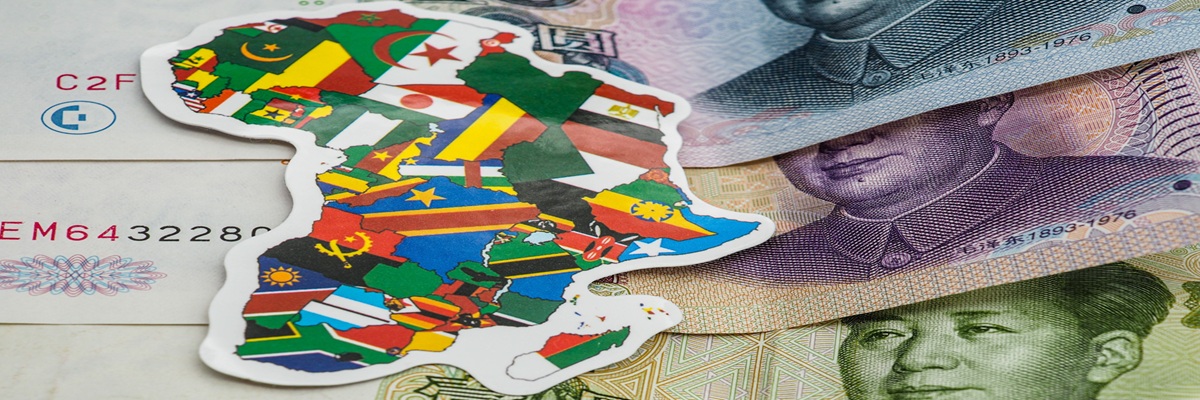
Image Source : Shutterstock
Subscribe to our weekly newsletters for free
If you want to subscribe to World & New World Newsletter, please enter
your e-mail


 Provider of in-depth & balanced analysis on hot issues around the world
Energy & Economics
Image Source : Shutterstock
First Published in: Jan.12,2026
Jan.12, 2026
Share Article


The relationship between China and Africa has become one of the most influential geopolitical dynamics of the 21st century. For China, Africa represents a strategic source of raw materials, an emerging market of 1.4 billion people, and a key partner for strengthening its political influence within international organizations. For Africa, China has represented an alternative to traditional Western financing, capable of offering infrastructure, investment, and trade openness without explicit political conditions. However, this relationship has also generated debates regarding economic dependency, debt risks, and the real balance between mutual benefit and power.
From a realist perspective, China’s engagement can be interpreted as a strategy to strengthen state power, secure energy resources, increase its influence vis-à-vis the United States, and promote international recognition of the People’s Republic of China over Taiwan.
2.2 Core–Periphery TheoryFollowing Wallerstein, the China–Africa relationship reflects a core–periphery dynamic: China, as an industrialized country with high technological capacity, occupies the core, while African states, as exporters of raw materials, occupy the periphery. However, China seeks to project a narrative of mutual benefit in order to differentiate itself from former European colonial powers.
2.3 Power Transition TheoryChina’s rise demonstrates how an emerging power can alter the international system. Examples include Deng Xiaoping’s economic opening (1978), accelerated industrialization, and strategic global integration through the Belt and Road Initiative (BRI).
The formal relationship was consolidated in the 1960s, but it was significantly strengthened in the 21st century through mechanisms such as the Forum on China–Africa Cooperation (FOCAC), established in 2000. This period has been characterized by billions of dollars in foreign direct investment and the integration of African ports into the New Silk Road. Africa came to view China as a non-colonial partner, while China found diplomatic support that enabled it to occupy China’s seat at the United Nations in 1971 as the “legitimate China.”
From a realist perspective, the volume of China’s trade and investment in Africa does not respond solely to economic dynamics, but rather to a deliberate strategy of accumulating structural power. Secured access to oil, critical minerals, and strategic metals is essential for sustaining China’s industrial growth and reducing its vulnerability to external disruptions, particularly in a context of systemic competition with the United States. Likewise, from a core–periphery perspective, the composition of bilateral trade reproduces classic patterns of unequal exchange, in which Africa continues to export primary goods with low value added while importing manufactured goods and technology. Although China discursively distances itself from European colonialism, the data suggest that the structure of exchange maintains asymmetries that may limit the autonomous industrial development of the African continent.
4.1 Bilateral TradeTrade between China and Africa reached USD 282 billion in 2023, making China the continent’s largest trading partner. African exports to China consist of approximately 70% oil, minerals, and metals. China primarily exports machinery, textiles, electronics, and vehicles.
4.2 Investment and Infrastructure ProjectsBetween 2013 and 2023, China financed more than 10,000 km of railways, 100,000 km of roads, and over 100 ports in Africa. China is responsible for approximately 31% of total infrastructure investment on the continent.
4.3 DebtAfrica’s debt to China amounts to approximately USD 73 billion. In countries such as Angola and Kenya, Chinese debt accounts for more than 20% of their total external debt.
The cases of Ethiopia, Kenya, Angola, and Zambia demonstrate that China’s cooperation is not homogeneous, but rather strategically differentiated according to each country’s geopolitical and economic importance. Ethiopia, as Africa’s diplomatic hub and host of the African Union, is key to China’s political projection on the continent. Kenya and Angola stand out for their logistical and energy value, respectively, while Zambia illustrates the financial limits of this model of cooperation. From the perspective of interdependence theory, these relationships generate mutual benefits, but in an asymmetric manner: China diversifies trade routes, secures resources, and expands its influence, while African countries obtain infrastructure, often at the cost of increased financial vulnerability. In this sense, Africa is not merely a passive recipient, but a central space in the architecture of China’s global rise.
5.1 Ethiopia: A Symbol of CooperationEthiopia is one of China’s main allies in Africa. The Addis Ababa–Djibouti railway represents an investment of approximately USD 4 billion, almost entirely financed by China. In 2022, Ethiopia exported more than USD 200 million in agricultural and mineral products to China.
5.2 Kenya: Infrastructure and DebtThe Mombasa–Nairobi railway, valued at approximately USD 3.6 billion, is the most expensive infrastructure project in Kenya’s history. Kenya owes China around USD 6.3 billion, equivalent to nearly 20% of its external debt.
5.3 Angola: Oil as CollateralAngola is one of China’s main oil suppliers. A significant portion of Angola’s debt to China is repaid through oil shipments, creating a form of structural dependency.
5.4 Zambia: Risk of Over-IndebtednessZambia was the first African country to fall into default in the post-pandemic period. China is its principal bilateral creditor, with more than USD 6 billion in outstanding loans.
Africa’s incorporation into the Belt and Road Initiative (BRI) should be understood as an extension of China’s broader project to reconfigure the international system. Maritime and port corridors in East Africa not only facilitate trade, but also reduce China’s dependence on routes controlled by Western powers, thereby strengthening its strategic autonomy. East Africa is central to the maritime expansion of the BRI. It offers strategic ports in Djibouti, Kenya, Tanzania, and South Africa, as well as new maritime corridors that allow China to connect Asia with the Red Sea and the Mediterranean. For African countries, this integration represents greater commercial connectivity, access to modern infrastructure, and regional logistical opportunities. From the perspective of power transition theory, the BRI in Africa constitutes a key instrument through which China consolidates its position as an emerging global power, gradually displacing the traditional influence of Europe and the United States on the continent. For Africa, this integration offers opportunities for connectivity and development, while simultaneously reinforcing its centrality as a space of global geopolitical competition.
China is accused of using large-scale loans to obtain strategic influence, as illustrated by the case of the Hambantota Port in Sri Lanka, although it lies outside the African continent. Similar concerns exist in Kenya regarding the port of Mombasa. Accusations of “debt-trap diplomacy” must be analyzed beyond normative discourse. While not all cases confirm a deliberate strategy of financial domination, the concentration of debt in a single creditor limits the room for maneuver of African states, especially in times of crisis. From a structural perspective, debt becomes a mechanism of indirect influence that can translate into political concessions, preferential access to resources, or diplomatic alignments favorable to China in international forums. Nevertheless, it is also true that responsibility lies partly with African governments, whose negotiation capacity and strategic planning are decisive in avoiding scenarios of prolonged dependency.
7.2 Lack of TransparencyLoan contracts may include confidentiality clauses, resource-backed guarantees, and high penalties for renegotiation.
7.3 Long-Term DependencyFor fragile states, the concentration of debt in a single creditor limits political and economic autonomy over the long term.
7.4 China’s PositionChina rejects these accusations and maintains that it has renegotiated and forgiven billions of dollars in debt. It argues that its loans are long-term, carry moderate interest rates, and that its cooperation is based on “mutual benefit” rather than imposition.
The China–Africa relationship is complex, strategic, and multidimensional. It presents significant opportunities for African development, but also poses risks related to debt, economic dependency, and political influence. The challenge for Africa is to negotiate from a stronger position, diversify its partners, and ensure that agreements with China translate into sustainable long-term development. The core–periphery relationship between China and Africa constitutes one of the most relevant axes of the contemporary international system. Through trade, investment, infrastructure, and financing, China has consolidated itself as a central actor in African development while simultaneously strengthening its global projection as an emerging power. For African countries, this relationship offers real opportunities for growth, modernization, and integration into the global economy. However, these benefits will only be sustainable if accompanied by national strategies aimed at productive diversification, financial transparency, and collective negotiation vis-à-vis external actors. Looking toward the future of the international system, China–Africa cooperation reflects a transition toward a more multipolar order, in which emerging powers challenge traditional structures of power. Africa, far from being a peripheral actor, is emerging as a decisive space in the redefinition of global balances. The central challenge will be to transform this centrality into autonomy and sustainable development, avoiding the reproduction of old dependencies under renewed narratives.
- Castro, G. (2022). EL ASCENSO DE CHINA Y LAS TEORÍAS VERTICALES DE RELACIONES INTERNACIONALES: CONTRASTANDO LAS LECCIONES DE LAS TEORÍAS DE LA TRANSICIÓN DE PODER Y DEL CICLO DE PODER. Revista Uruguaya de Ciencia Política, 19(1), 185–206. http://www.scielo.edu.uy/scielo.php?pid=S1688-499X2010000100008&script=sci_arttext&tlng=en - Deutsche Welle (www.dw.com). (s. f.). China se apodera de Europa, Parte 1. DW.COM. Recuperado 2 de marzo de 2022, de https://www.dw.com/es/china-se-apodera-de-europa-la-nueva-ruta-de-la-seda-parte-1/a-56125389#:%7E:text=La%20Nueva%20Ruta%20de%20la%20Seda%20es%20el,de%20ferrocarril%20y%20carreteras%20en%20todo%20el%20mundo. - Gil, A. (2020, 15 abril). La teoría del Centro Periferia - Mapas de. El Orden Mundial - EOM. Recuperado 6 de abril de 2022, de https://elordenmundial.com/mapas-y-graficos/la-teoria-del-centro-periferia/#:%7E:text=Esta%20teor%C3%ADa%20viene%20a%20decir,que%20podemos%20ver%20hoy%20d%C3%ADa - Gonzalez Aspiazu, I. (2016, septiembre). La ayuda para el desarrollo de China en África. ¿Una alternativa a las relaciones de cooperación tradicionales? Universidad Complutense de Madrid Facultad de Ciencias Políticas y Sociología. Recuperado 2 de marzo de 2022, de https://eprints.ucm.es/id/eprint/48098/1/21-2017-12-21-CT09_Iratxe%20Gonazalez.pdf - Iraxte González Aspiazu (2016). La ayuda para el desarrollo de China en África. ¿Una alternativa a las relaciones de cooperación tradicionales?. Cuadernos de Trabajo. Universidad Complutense de Madrid. https://eprints.ucm.es/id/eprint/48098/1/21-2017-12-21-CT09_Iratxe%20Gonazalez.pdf - Lechini, G. T. (2013). China en África: discurso seductor, intenciones dudosas. Ministerio de Relaciones Exteriores de la República Popular China. (2021, 1 diciembre). La VIII Conferencia Ministerial del FOCAC ha sido un éxito rotundo. Recuperado 2 de marzo de 2022, de https://www.fmprc.gov.cn/esp/zxxx/202112/t20211202_10461234.html - Moral, P. (2019, 31 agosto). China en África: del beneficio mutuo a la hegemonía de Pekín. El Orden Mundial - EOM. Recuperado 6 de abril de 2022, de https://elordenmundial.com/china-en-africa/
First published in :
World & New World Journal

If the US carries out military strikes against Iran, what will happen to global oil supply and global oil price?
International North-South Transport Corridor: Geopolitical Implications and the Future of European Trade

Why has the German economy underperformed and fallen behind?
The Belt and Road boomed in 2025
Unlock articles by signing up or logging in.
Become a member for unrestricted reading!