

Energy & Economics
Egypt after Mubarak: From Political Turmoil to Sustainable Development

Image Source : Shutterstock
Subscribe to our weekly newsletters for free
If you want to subscribe to World & New World Newsletter, please enter
your e-mail


 Provider of in-depth & balanced analysis on hot issues around the world
Energy & Economics
Image Source : Shutterstock
First Published in: Jan.21,2026
Feb.09, 2026
Share Article


On January 25, 2011, thousands of Egyptians took to the streets in mass demonstrations demanding freedom, social justice, and the resignation of President Hosni Mubarak, who had held office since 1981. Just 18 days later, on February 11, 2011, newly appointed Vice President of the Arab Republic of Egypt Omar Suleiman announced on state television that Mubarak was stepping down as president and transferring power to the Supreme Council of the Armed Forces. Hundreds of thousands of Egyptians took to the streets to celebrate the victory of the revolution and the beginning of a new chapter in the country's history. However, within months, the general euphoria gave way to the realization that the "new republic" faced serious political and economic challenges. The dramatic events of early 2011 marked the beginning of a long, complex, and at times painful process, the consequences of which can still be seen today. As the fifteenth anniversary of the revolution approaches, Egypt has managed to maintain internal stability and demonstrate sustainable economic growth, but at the same time, the country faces several complex internal and external challenges in politics, economics, security, and other areas.
Having taken the reins of power in February 2011, the Military Council immediately declared itself no alternative to a civilian government, and by late June 2012, power was transferred to the first president elected since the revolution, Mohamed Morsi, a candidate of the Freedom and Justice Party, the political wing of the Muslim Brotherhood*. Having received 51.73% of the vote in the second round of the presidential election, Morsi narrowly defeated the last Mubarak-era prime minister, Ahmed Shafik, and became the first president in modern Egypt without a military background. However, the now-deceased Morsi, who came to embody the rise and fall of political Islam in Egypt, was not destined to remain in power for long. Just a year later, on July 3, 2013, he was ousted by Defense Minister Abdel Fattah el-Sisi amid mass demonstrations. Supporters of the Muslim Brotherhood* considered the incident a military coup, while el-Sisi, who later became president, repeatedly repeated that the army intervened only after mass demonstrations against Morsi. Morsi's ouster provoked diametrically opposed reactions among regional players. While Saudi Arabia and the UAE quickly became key external donors and allies of the new Egyptian authorities, relations with Qatar and Turkey (the main sponsors of Islamic political movements in the Middle East) deteriorated sharply. Relations with the United States, Egypt's key ally since the 1979 peace treaty with Israel, also cooled somewhat. Following the dispersal of a Muslim Brotherhood* protest in Cairo in August 2013, then-US President Barack Obama canceled joint US-Egyptian military exercises, declaring that traditional cooperation could not continue as usual. The allocation of $1.3 billion in annual US military aid has repeatedly become a subject of political bargaining.
Against this backdrop, Egypt has moved toward some rapprochement with Moscow. Since 2014, el-Sisi, first as Defense Minister and then as President, has made a series of visits to Russia, attending two celebrations marking the anniversaries of Victory over Nazi Germany in 2015 and 2025. Furthermore, el-Sisi participated in two Russia-Africa summits in Sochi in 2019 and St. Petersburg in 2023, and attended the BRICS summit in Kazan in October 2024. In December 2025, the second Russia-Africa ministerial conference was held in Cairo, with the participation of Russian Foreign Minister Sergey Lavrov, with whom el-Sisi met. However, relations with Russia were seriously tested by the terrorist attack on board a Kogalymavia (DBA Metrojet) Airbus A321 on October 31, 2015, en route from Sharm el-Sheikh to St. Petersburg. As a result of the incident, Russia completely suspended direct air service to Egypt for several years, dealing a painful blow to the country's tourism sector. Meanwhile, Egyptian authorities steadfastly refused to classify the incident as a terrorist attack, hold those responsible for negligence accountable, or provide appropriate compensation to the families of the victims. Nevertheless, the positive dynamics in Russian-Egyptian relations have now been fully restored. According to the Association of Tour Operators of Russia (ATOR), Egypt has once again become one of the top five most popular foreign destinations for Russians, behind Turkey, China, and the UAE, having welcomed over 1.4 million Russian tourists in the first nine months of 2025, a 36.8% increase compared to the same period in 2024. By effectively exporting Egyptian services to the Russian market, tourism offsets the imbalance in the two countries' trade balance, which traditionally skews heavily in Russia's favor. Furthermore, Russia contributes to the food security of Egypt, the world's largest wheat importer, accounting for over 60% of its total imports. Egypt, in turn, is also actively increasing its agricultural exports to Russia — oranges, mangoes, and other Egyptian origin agricultural products are increasingly found on the shelves of Russian retail chains. The flagship project of Russian-Egyptian cooperation is, without a doubt, the construction of the first nuclear power plant, El Dabaa, in the Matrouh Governorate on the Mediterranean Sea, which is being carried out by the Russian state corporation Rosatom. In terms of scale, this project is often compared to the Aswan High Dam, built with Soviet support in the 1960s.
Gradually, el-Sisi succeeded in restoring allied relations with the United States. "My favorite dictator," Trump described el-Sisi during his first term. Following the summit in the Saudi city of al-Ula in early 2021, which marked the restoration of relations between Saudi Arabia, the UAE, and Bahrain, on the one hand, and Qatar, on the other, Cairo followed its Arabian partners in quickly restoring relations with Doha. In November 2022, photos of a meeting between el-Sisi, Emir of Qatar Tamim bin Hamad Al Thani, and Turkish President Recep Tayyip Erdoğan during the opening ceremony of the FIFA World Cup in Doha circulated around the Arab world. This trilateral meeting marked the starting point for the normalization of relations between Cairo and Ankara. Regarding relations with Israel, el-Sisi continued the unpopular rapprochement, openly praising the success of the Egyptian-Israeli peace model. EgyptAir's national carrier began flying to Tel Aviv under its official livery, rather than under the brand of its subsidiary Air Sinai, as it had previously. However, the national carrier's direct flights to Israel were suspended in October 2023 amid the escalation between Israel and the Palestinian movement Hamas in the Gaza Strip. In the energy sector, Egypt is actively purchasing natural gas from Israel's Leviathan field offshore the Mediterranean.
In terms of domestic policy, el-Sisi has managed to significantly consolidate power in recent years. In 2019, Egypt held a referendum on constitutional amendments allowing el-Sisi to remain in power until 2030. el-Sisi has positioned himself as a leader who successfully confronts domestic and external challenges. Under his leadership, major national projects have been implemented, including the expansion of the Suez Canal, the construction of a new administrative capital, and the country's first nuclear power plant. Following the purge of the Muslim Brotherhood leadership, Egyptian authorities have moved to tighten control over the most influential media outlets. Recent years have seen the rise of the media holding company United Media Services, which is believed to be affiliated with the General Intelligence Service. Founded in 2016, the company has now grown into one of the largest media giants in the Arab world, encompassing over 40 subsidiaries, including approximately 15 television channels.
Post-revolutionary Egypt faced several economic challenges amid political instability and a deteriorating security situation. To secure new IMF loan tranches, el-Sisi implemented a series of unpopular measures that Mubarak had resisted, including a gradual increase in fuel and electricity prices. In 2024, a decision was made to quadruple the price of even subsidized bread, a staple food for the poor. Given the importance of subsidized flatbread in the diet of the poor, Egyptian authorities had resisted raising the price for three decades, which stood at just five piastres (about 0.1 cents at the current exchange rate). However, even constant IMF tranches and financial assistance from the Gulf monarchies failed to help Egypt avoid a deep economic crisis amid declining tourism revenues, a population explosion, and a high degree of dependence on external factors. Following the outbreak of the war in the Gaza Strip in October 2023, the economic situation was exacerbated by regular shelling of ships in the Red Sea by Yemeni Houthis, which led to a more than halving of Suez Canal revenues. According to Egyptian Foreign Minister Badr Abdel Ati, Egypt's total losses from shelling of ships in the Red Sea as of October 2025 amounted to $9 billion. Amid constant political and economic turmoil, the Egyptian pound was gradually devalued from 5.6 pounds per dollar in 2010 to 47 pounds per dollar by early 2026. At its peak, the US currency exceeded 50 pounds per dollar. The discovery of new large gas fields (particularly the Zohr field offshore the Mediterranean) allowed Egypt to increase its liquefied natural gas (LNG) imports to 3.5 million tons by 2019. However, amid a population explosion and growing local consumption, this positive effect quickly faded, and by 2023, Egypt had abandoned gas exports during the peak summer season and transitioned to a model that combines exports and imports depending on seasonality. In advance of peak consumption during the hot summer season, in early 2026, Egypt signed a memorandum of understanding to purchase 24 LNG cargoes from Qatar. Despite significant challenges, a significant influx of investment from Gulf countries (particularly the UAE and Saudi Arabia) is helping to keep the Egyptian economy afloat. Qatar has also steadily increased investment in the Egyptian economy in recent years. The main sources of income for the Egyptian economy are exports, tourism, the Suez Canal, and remittances from Egyptians abroad. According to the World Bank, Egypt consistently ranks among the top ten countries in the world by this last indicator. And according to the Central Bank of Egypt, in the first 11 months of 2025, Egyptians transferred $37.5 billion to their homeland, a 42.5% increase compared to the same period in 2024. According to the World Bank, Egypt has demonstrated steady economic growth year after year, measured by nominal GDP, which amounted to approximately $389 billion by the end of 2024. The country consistently ranks among the fifty largest economies in the world. Based on GDP at purchasing power parity (PPP), the picture looks even more optimistic — Egypt is among the world's twenty largest economies. However, constant natural population growth negates the potential positive impact of economic growth on well-being. Per capita GDP by the end of 2024 was only approximately $3,300 (158th place in the world). Social inequality remains a separate and acute socioeconomic challenge for Egypt. According to official data, 29% of Egyptians live below the poverty line. Meanwhile, according to the international consulting firm Henley & Partners, Egypt is home to 14,800 dollar millionaires, 49 individuals with a net worth exceeding $100 million, and 7 billionaires. Given the discrepancy between macroeconomic indicators and per capita well-being, demographics pose a distinct challenge for Egypt. Thus, Egypt's population grew from 91 million in 2011 to 118 million in 2025 (13th in the world and first among Arab countries), posing a serious challenge to social infrastructure, healthcare, education, and the labor market. However, according to the Ministry of Health, a slight slowdown in population growth and a decline in the fertility rate from 3.5 children per woman in 2014 to 2.41 in 2024 are expected recently.
In terms of security, Egypt remains hostage to a number of destabilizing external factors, such as hotbeds of tension along virtually its entire border amid the de facto split of Libya and Sudan, as well as dubious prospects for sustainable peace in the Gaza Strip. In developing its foreign policy stance in the region, Egypt is forced to perform diplomatic feats, balancing its own interests with the often-conflicting interests of key partners in the Gulf and the United States. However, it should be acknowledged that Trump's ceasefire initiative in Gaza allowed Cairo to strengthen its status as a key mediator in the Middle East at the Sharm El Sheikh Peace Summit last November, where Trump, el-Sisi, Al Thani, and Erdogan signed a peace agreement on the Gaza Strip. A separate and serious external challenge for Egypt remains the Blue Nile Renaissance Dam, commissioned by Ethiopia, which threatens to deplete the country's water resources. However, abundant rainfall in Africa in recent years has mitigated this issue and even led to floods in Sudan in 2025. *** The main outcome of the 15 years since the Egyptian revolution of 2011 is the restoration of a political system in which the army and security forces act as the de facto guarantors of statehood. Egypt has demonstrated a high level of political resilience compared to other countries engulfed by the events of the Arab Spring, such as Libya, Syria, and Yemen. In the economic and security spheres, Egypt remains vulnerable to external factors that directly impact Suez Canal revenues, tourism, and foreign investment. Despite steady nominal GDP growth, the past 15 years have not led to an improvement in the overall well-being of the population. However, Egypt has succeeded in developing infrastructure and new cities, as well as in implementing major national projects such as the new administrative capital and the El Dabaa Nuclear Power Plant, which could become drivers of economic growth and further development in the medium term. The declining birth rate creates the preconditions for eliminating the imbalance in the ratio of the working-age to non-working-age population, which will also contribute to balanced growth in the long term. In the absence of major internal and external shocks, Egypt can be expected to enter a trajectory of sustainable growth and consolidate its status as a key political and economic player in the region.
* The organization was recognized as terrorist in Russia by a decision of the Supreme Court.First published in :
Russian International Affairs Council (RIAC)

Invited professor of the School of Asian Studies of HSE University
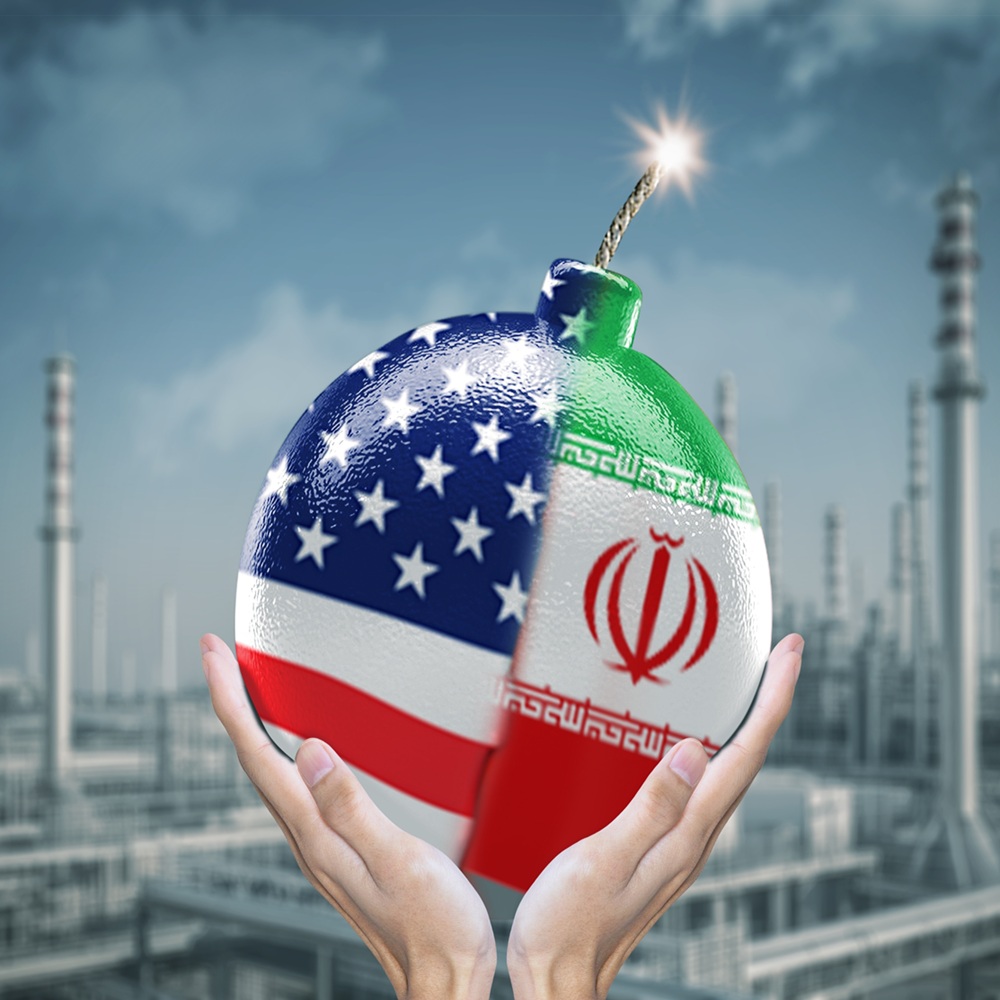
If the US carries out military strikes against Iran, what will happen to global oil supply and global oil price?
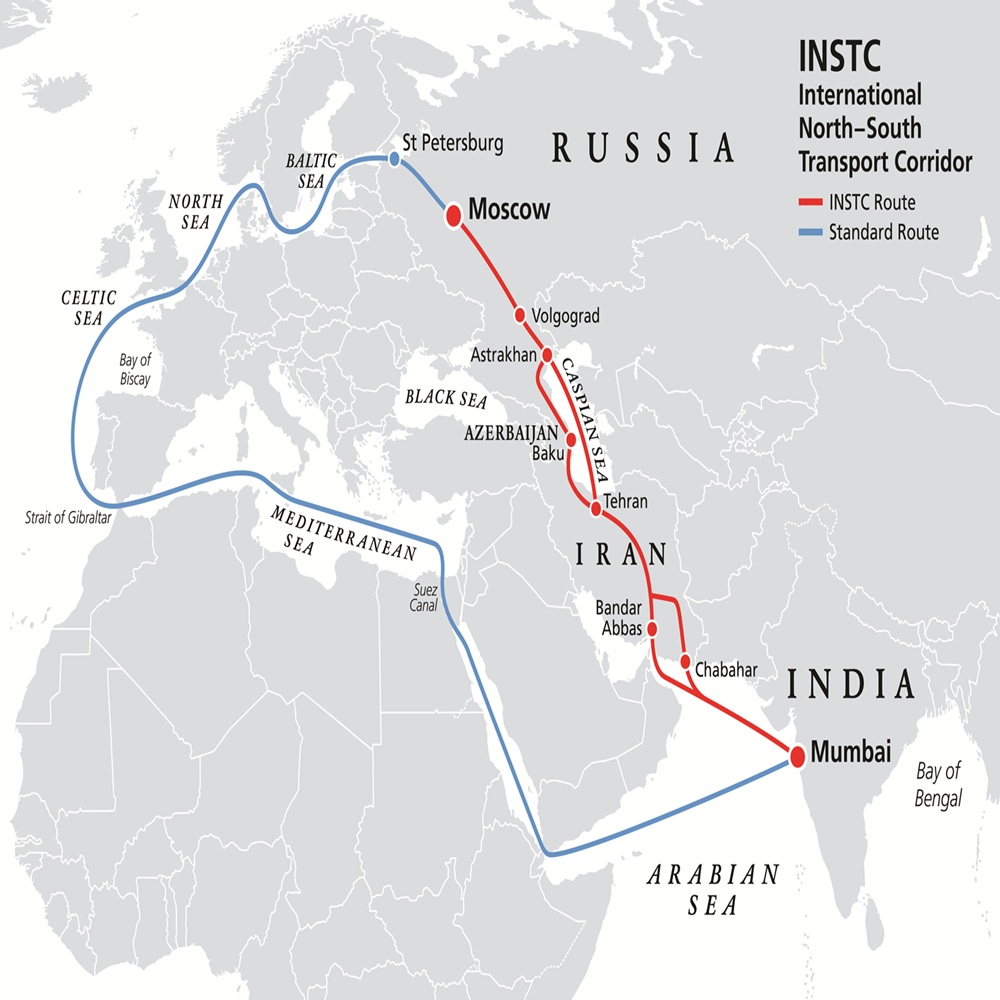
International North-South Transport Corridor: Geopolitical Implications and the Future of European Trade
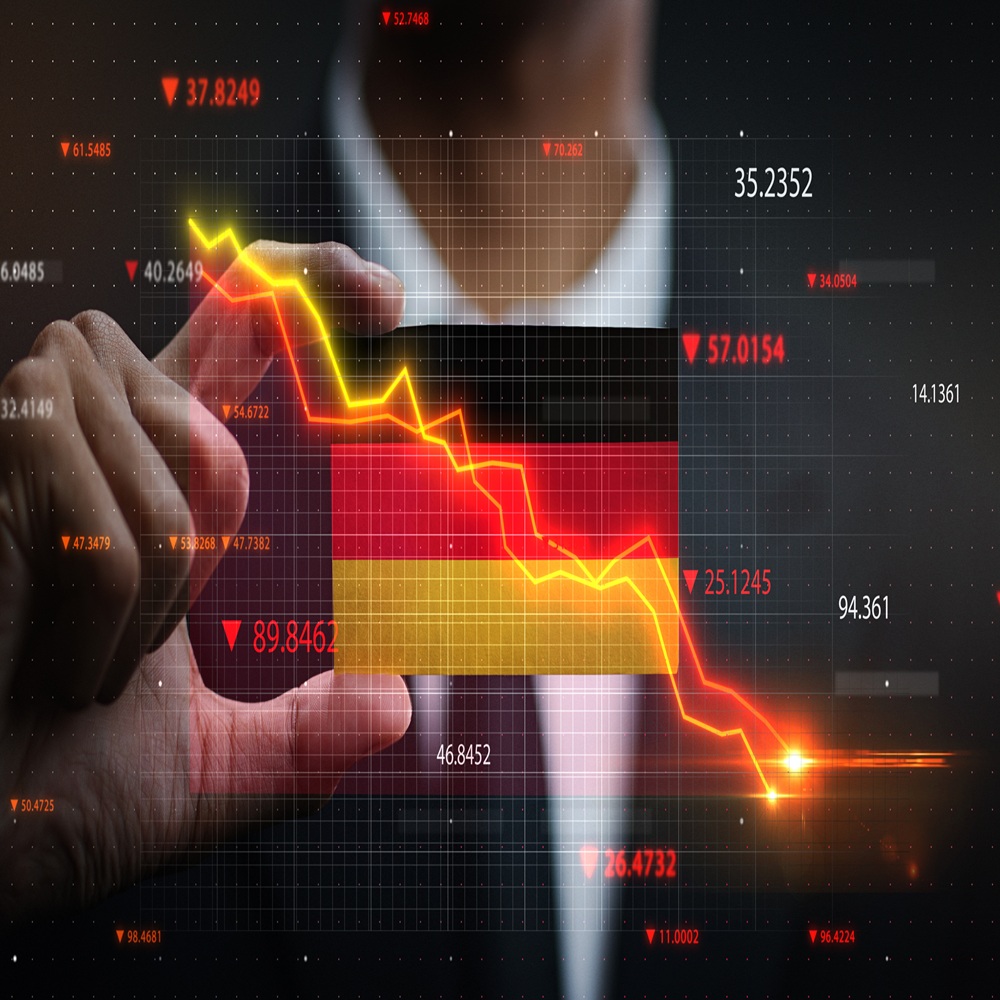
Why has the German economy underperformed and fallen behind?
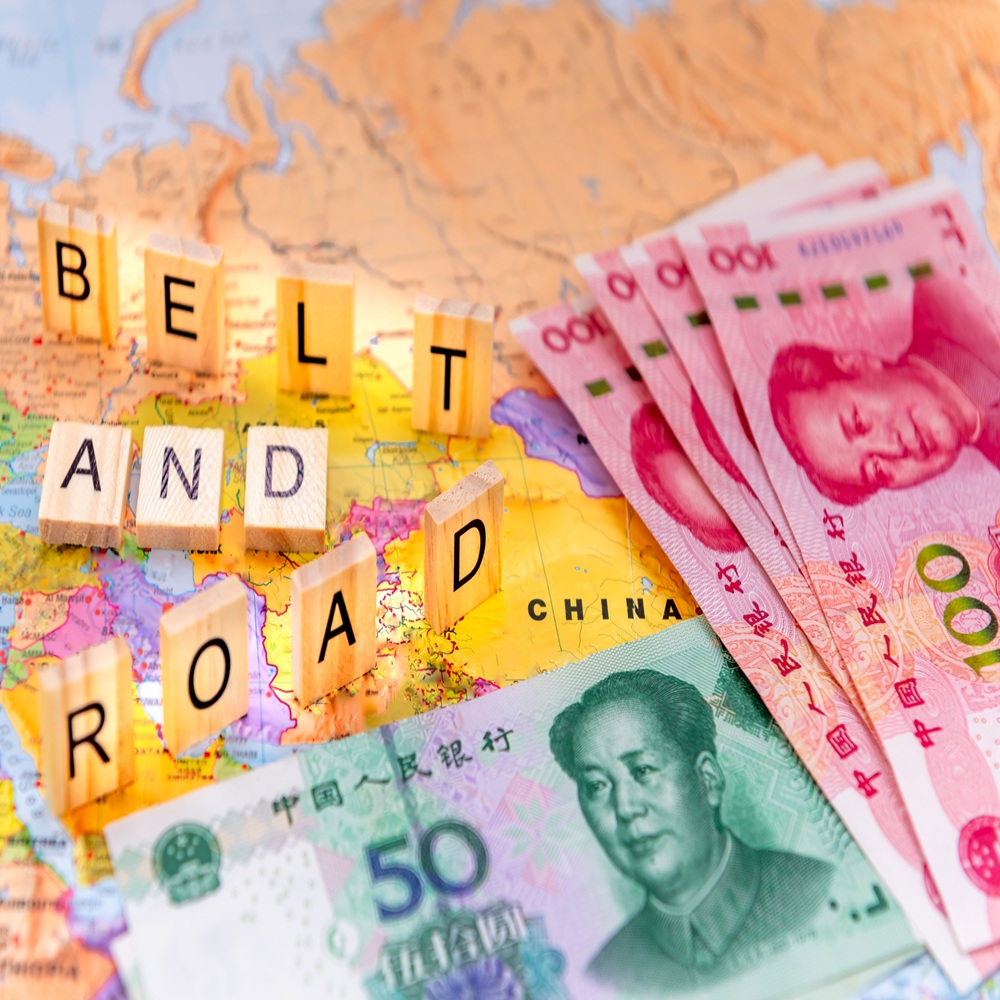
The Belt and Road boomed in 2025
Unlock articles by signing up or logging in.
Become a member for unrestricted reading!