

Diplomacy
Structural corruption and fragile democracies: the Latin American vicious circle
Image Source : Pixabay
Subscribe to our weekly newsletters for free
If you want to subscribe to World & New World Newsletter, please enter
your e-mail


 Provider of in-depth & balanced analysis on hot issues around the world
Diplomacy
Image Source : Pixabay
First Published in: Feb.05,2026
Feb.16, 2026
Share Article


Corruption is a constant in most Latin American countries. Regardless of ideology and party alternation, corruption has remained persistent across much of the region and, in many cases, has even increased. Between 2014 and 2024, only five countries in the region—Uruguay, Costa Rica, Colombia, Argentina, and the Dominican Republic—registered an improvement in Transparency International’s Corruption Perceptions Index. In Paraguay the index shows no variation, while in the remaining 14 countries the perception of corruption increased. Large-scale abuse of power by senior government officials, the public bureaucracy, and major private corporations contributes to undermining citizens’ trust in their representatives and in democratic institutions as a whole.
Corruption in Latin America takes multiple forms and manifests itself at different levels of political, economic, and social life. In its most visible and highest-impact expression are large corruption schemes involving top state authorities and major private companies. Cases such as that of the construction firm Odebrecht, whose illicit practices spread to several countries in the region and came to light between 2014 and 2016, revealed the existence of transnational networks of bribery and illegal political financing. Similarly, scandals such as the “Mensalão” and Operation “Lava Jato” in Brazil exposed the depth of these schemes and their ability to cut across governments and political parties, seriously compromising the credibility of democratic institutions. One of the most sensitive areas in which this dynamic is expressed is the financing of electoral campaigns. The lack of clear regulations, transparency, and effective oversight has turned political financing into a privileged gateway for corruption. As a result, electoral processes tend to produce governments constrained by private interests that, once in power, seek to recoup their investment through legislative favors, budgetary allocations, or regulatory decisions, thereby weakening democratic representation. However, corruption is not limited to these major scandals. It also manifests itself in everyday practices that directly affect the relationship between citizens and the state. The payment of bribes to access public services, expedite procedures, or exercise rights that should be universally guaranteed contributes to normalizing illegality and steadily erodes trust in public institutions. At the same time, corruption in Latin America transcends the state sphere and extends into the private sector. Tax evasion, consumer fraud, and other fraudulent practices are frequent and generate serious social costs. In addition, the advance of drug trafficking has deepened these dynamics, promoting corruption at different levels of the state and society and reinforcing a vicious circle that undermines legality and institutional legitimacy.
Although corruption is not exclusive to the political sphere, when it involves politicians, members of governments, or public officials, its impact on the loss of legitimacy of democratic institutions among the population is greater. The persistence of high levels of corruption in the state is an indicator of significant failures in control mechanisms among state institutions—that is, in so-called inter-institutional accountability, a fundamental dimension for the proper functioning of liberal representative democracy. Without oversight bodies and institutions with effective capacity to investigate and punish corruption, the quality of democracy is seriously affected. The fragility or inefficiency of oversight institutions and bodies is also reflected in insufficient sanctions, delays in institutional timelines for applying the corresponding penalties, and, in many cases, their complete absence. This undoubtedly contributes to a sense of impunity and serves as an incentive for the repetition of corrupt practices. The persistence of corruption, and the difficulties in imposing exemplary and effective punishment on those responsible, has influenced the loss of citizens’ trust in traditional political parties and leaderships, and even in the democratic system itself, boosting electoral support for populist parties and leaders. At the beginning of the century these had a left-wing profile (the so-called twenty-first-century socialism), but today they assume a clear far-right profile. These are movements and leaders critical not only of traditional political elites but also, to varying degrees, of traditional democratic institutions—especially institutions of political oversight and accountability, such as the judiciary, prosecutors’ offices, and audit bodies, among others. These populist parties and leaders come to power, in most cases, with promises to put an end to the corruption inherited from “traditional politics.” Nevertheless, once in government they tend to dismantle or co-opt oversight bodies and institutions. Examples of this were the governments of Morales in Bolivia, or the government of former president Bolsonaro in Brazil. The latter dismantled the existing network of anti-corruption bodies because, according to him, there was no corruption in his government. With the co-optation or limitation of oversight institutions and bodies, populist governments face fewer obstacles to engaging in corrupt practices. And in the context of an eroded democratic regime, institutions find it more difficult to punish those responsible.
Societies marked by social and economic inequality are more vulnerable to corruption, and at the same time corruption increases those very inequalities. It is no coincidence that Latin America is considered the most unequal region in the world: according to Oxfam’s report for Latin America and the Caribbean Wealth Unchecked, Democracy at Risk. Why Latin America and the Caribbean Need a New Fiscal Pact, the top 1% of the population concentrates around 45% of regional wealth, in a context of persistently high levels of corruption. Corruption deepens inequality because it gives the corrupt greater capacity to influence government decisions and changes in legislation for their own benefit. This leads to democracies captured by particular interests and with less efficient outcomes for the population as a whole, which in turn contributes to weakening trust in democracy as a system capable of meeting, at least in basic terms, citizens’ needs and expectations. The other side of this phenomenon is the case of Uruguay. The Latin American country with the lowest perception of corruption, according to Transparency International, is also the one with the lowest level of inequality in the region and the only full democracy in Latin America, according to The Economist index. It is also, together with Argentina, one of the two countries with the highest support for democracy in the region: 70% of Uruguayans express support for democracy, compared with a regional average of 52%, according to Latinobarómetro. The corollary seems clear, though undoubtedly difficult to implement: reducing corruption requires strengthening oversight institutions and bodies, accompanied by a reduction in social inequality.
First published in :
Latinoamérica21 (L21)

Political scientist. Professor at the State University of Northern Fluminense – UENF (Brazil). PhD in Political Science from the University of Rio de Janeiro Research Institute – IUPERJ (currently IESP/UERJ). Postdoctoral degree at the Ibero-American Institute of the University of Salamanca.
Beyond Borders: Türkiye’s Growing Footprint in the Western Indo-Pacific Amid Global Instability
Opinion – As Israel Pushes for Annexation, Is There Hope for Palestinians?
Sudan’s latest peace plan: what’s in it and does it stand a chance?
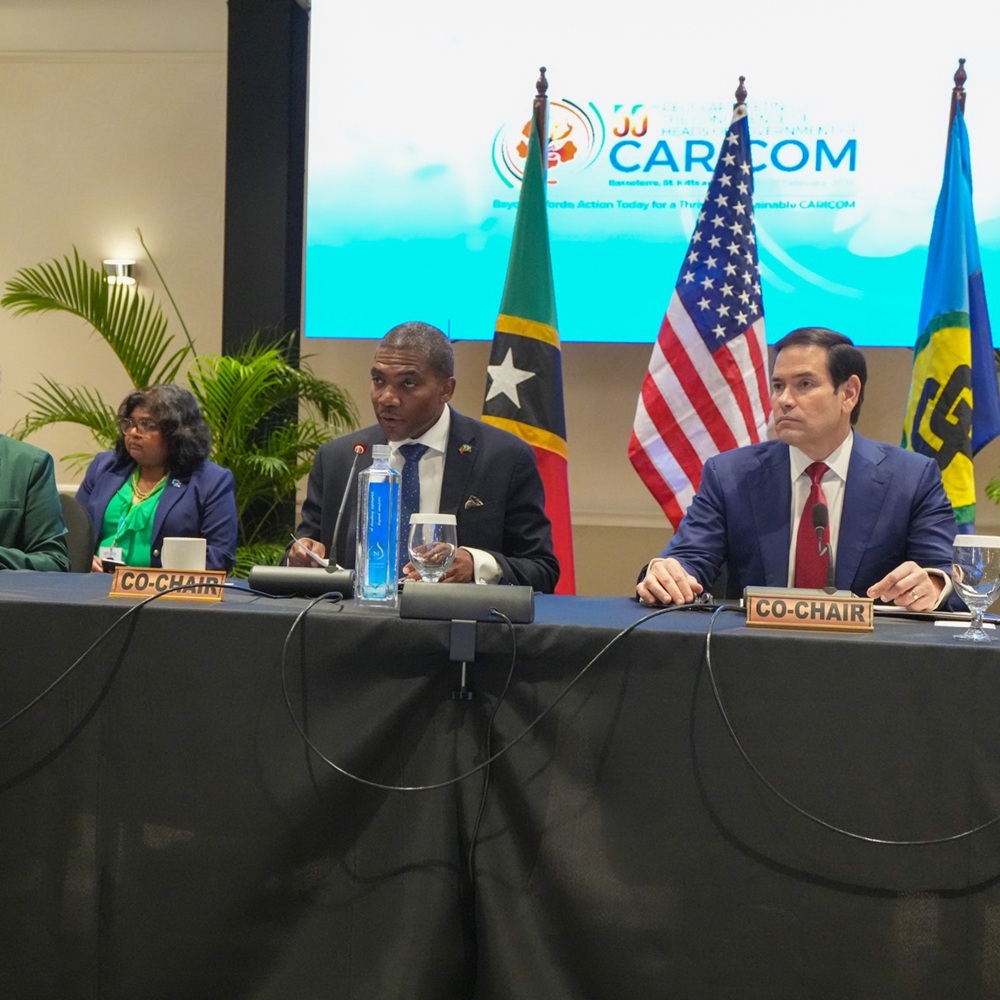
Secretary of State Marco Rubio at the 50th Regular Meeting of the Conference of CARICOM Heads of Government
Unlock articles by signing up or logging in.
Become a member for unrestricted reading!