

Energy & Economics
Why has the German economy underperformed and fallen behind?
Image Source : Shutterstock
Subscribe to our weekly newsletters for free
If you want to subscribe to World & New World Newsletter, please enter
your e-mail


 Provider of in-depth & balanced analysis on hot issues around the world
Energy & Economics
Image Source : Shutterstock
First Published in: Mar.09,2026
Mar.09, 2026
Share Article


As Figure 1 shows, Germany’s share of world GDP has declined from 6.99% in 1980 to 2.89% in 2025. Germany, which had been considered to be Europe’s economic powerhouse in previous decades, became the worst-performing major economy in 2023 with a 0.9% contraction, followed by another 0.5% contraction in 2024, leading to a recession. Several economists and business figures expressed concerns that Germany’s economic downturn could cause the country to reclaim its reputation as the “sick man of Europe” from the 1990s. [1] Economists argue that the German economy was in a permanent crisis mode, while the Handelsblatt Research Institute declared that it was in its “greatest crisis in post-war history” after projecting a third consecutive year of recession in 2025. [2]
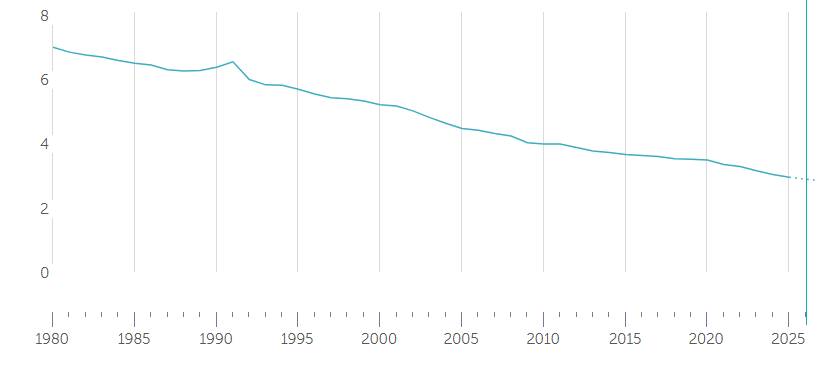
Figure 1: Germany’s share of world GDP (based on PPP)
As Figure 2 shows, GDP in the United Kingdom in Q3 2025 was 5.2% above its pre-pandemic level of Q4 2019. This compares with Euro-zone GDP being 6.5% higher, with GDP in Germany up by 0.1% (the lowest among G7 economies). The United States has the highest GDP growth among G7 economies over this period at 13.3% (as of Q2 2025).
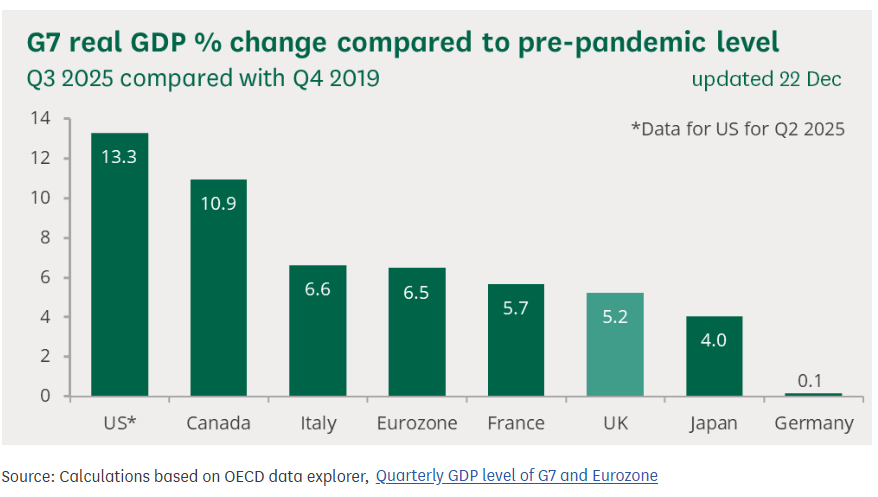
Figure 2: G7 nations’ GDP growth (source: OECD)
With this information in background, this paper explores why the German economy has underperformed and fallen behind. This paper first describes the current economic situation of Germany and explains why the German economy has failed.
The German economy has been sluggish. As Figure 3 shows, the average GDP growth rate in Germany during the 2013-2023 period was only 1.1%. And Germany experienced a 0.9% contraction in 2023 and a 0.5% contraction in 2024.
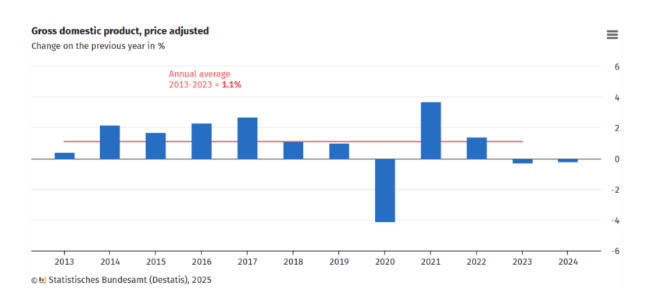
Figure 3: Average GDP growth rate in Germany, 2013-2024
In addition, as Figure 4 shows, the unemployment rate in Germany has recently increased following the Ukraine war. The unemployment rate dropped from 6.2% in January 2016 to 5% in January 2020, but then it rose following the Ukraine war in 2022. Unemployment rate increased from 5% in March 2022 to 5.6% in March 2023 and 6.3 % in December 2025.
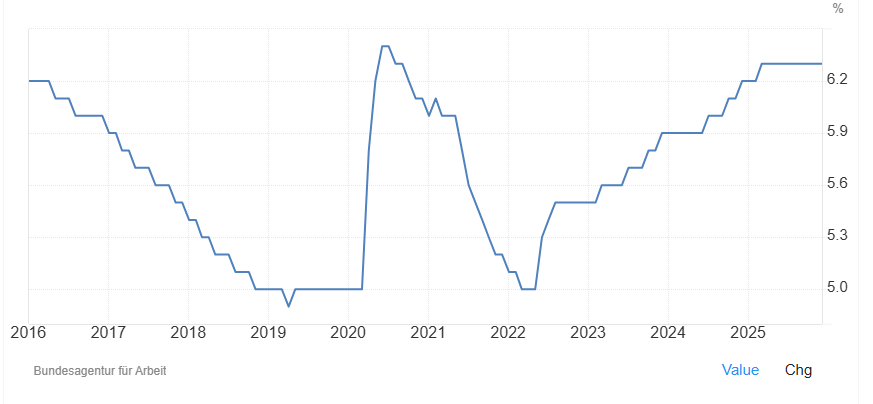
Figure 4: Unemployment rate in Germany, 2016-2025 (source: Bundesagentur für Arbeit)
Rising energy prices have been a main factor causing serious problems for the German economy. As Figure 5 shows, gasoline price in Germany has increased following the Ukraine war. Gasoline price in Germany averaged 1.73 USD/Liter from 1995 until 2025, but it reached an all-time high of 2.36 USD/Liter in May 2022. Gasoline price declined to 2.05 USD/Liter in December 2025, but it is still higher compared to the previous decade.
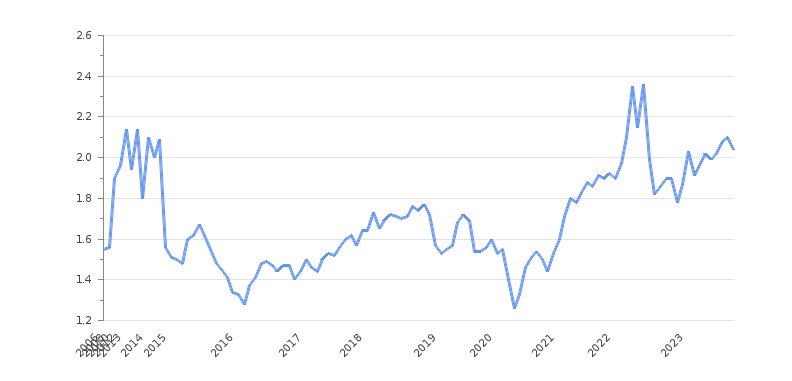
Figure 5: Gasoline price in Germany (source: Trading Economics)
Moreover, fiscal imbalance has been a big problem for Germany. As Figure 6 shows, consolidated fiscal balance in Germany recorded a huge deficit in the 2020s. The deficit recorded $49,542 billion in January 2023 and $46,923 billion in September 2025, compared with an average of $13,425 billion from March 1991 to September 2025.
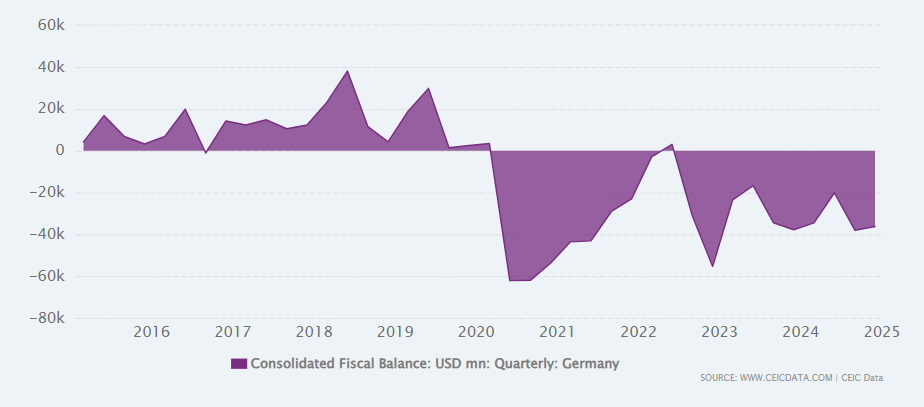
Figure 6: Germany’s consolidated fiscal balance (source: CEIC Data)
As a result, as Figure 7 shows, the German government’s debt as a % of GDP significantly increased in the 2020s. The German government’s debt reached an all-time high of 81% in December 2010 and then declined until 2019, but it started to increase from 2020. The German government’s debt as a % of GDP increased to 65.2% in October 2022.
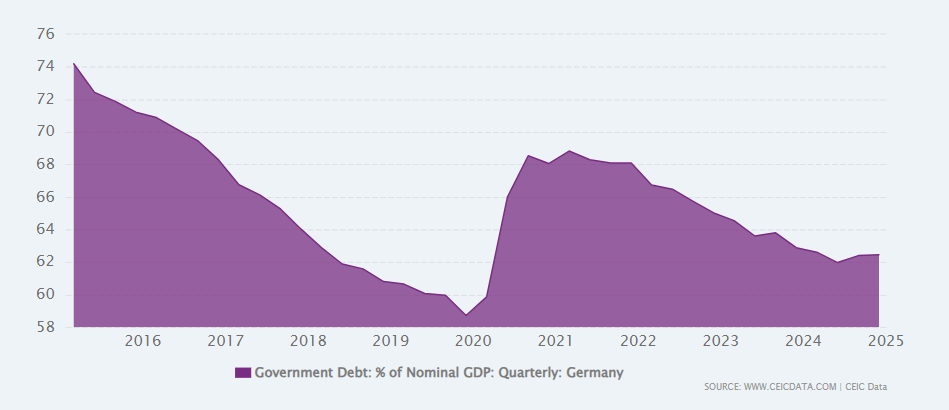
Figure 7: Government debt in Germany: % of GDP (source: CEIC Data)
Investment is a key to economic growth in every country. As Figure 8 shows, overall private investment in Germany has declined in the 2020s, particularly during the period of 2022-2024 after the Ukraine War. In addition, as Figure 9 shows, total government net investment in Germany has declined in the 2020s.
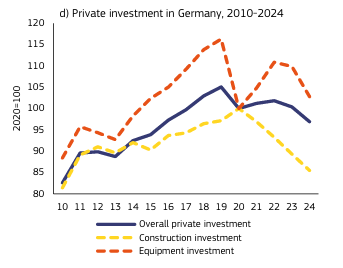
Figure 8: Private investment in Germany, 2010-2024 (Source: ECB, Eurostat, Destatis and European Commission calculations)
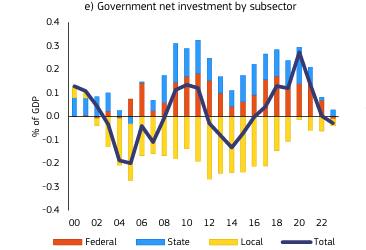
Figure 9: Government net investment in Germany, 2010-2024 (Source: ECB, Eurostat, Destatis and European Commission calculations)
Reflecting Germany’s recent sluggish economy, as Figure 10 shows, the German manufacturing industry’s business expectation has been negative over the period of 2022-2025 after the Ukraine war.
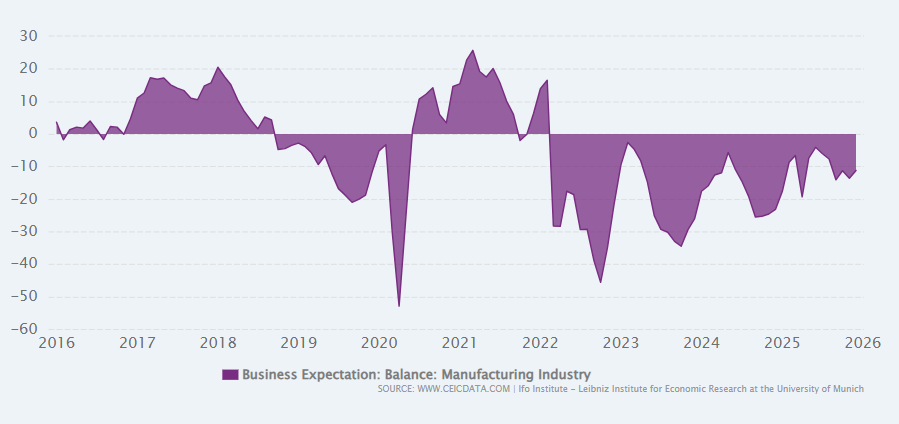
Figure 10: German manufacturing industry’s business expectation
Why has the German economy failed? Germany’s economic decline can be attributed to multiple factors. The first factor is the energy crisis or energy policy in Germany. Economists cited Germany’s overreliance on cheap Russian gas as one of many primary factors for Germany’s economic stagnation. Prior to Russia’s invasion of Ukraine, as Figure 11 shows, 56% of Russia’s gas exports went to Germany. This caused German industry and the broader economy to become dependent on cheap Russian energy.
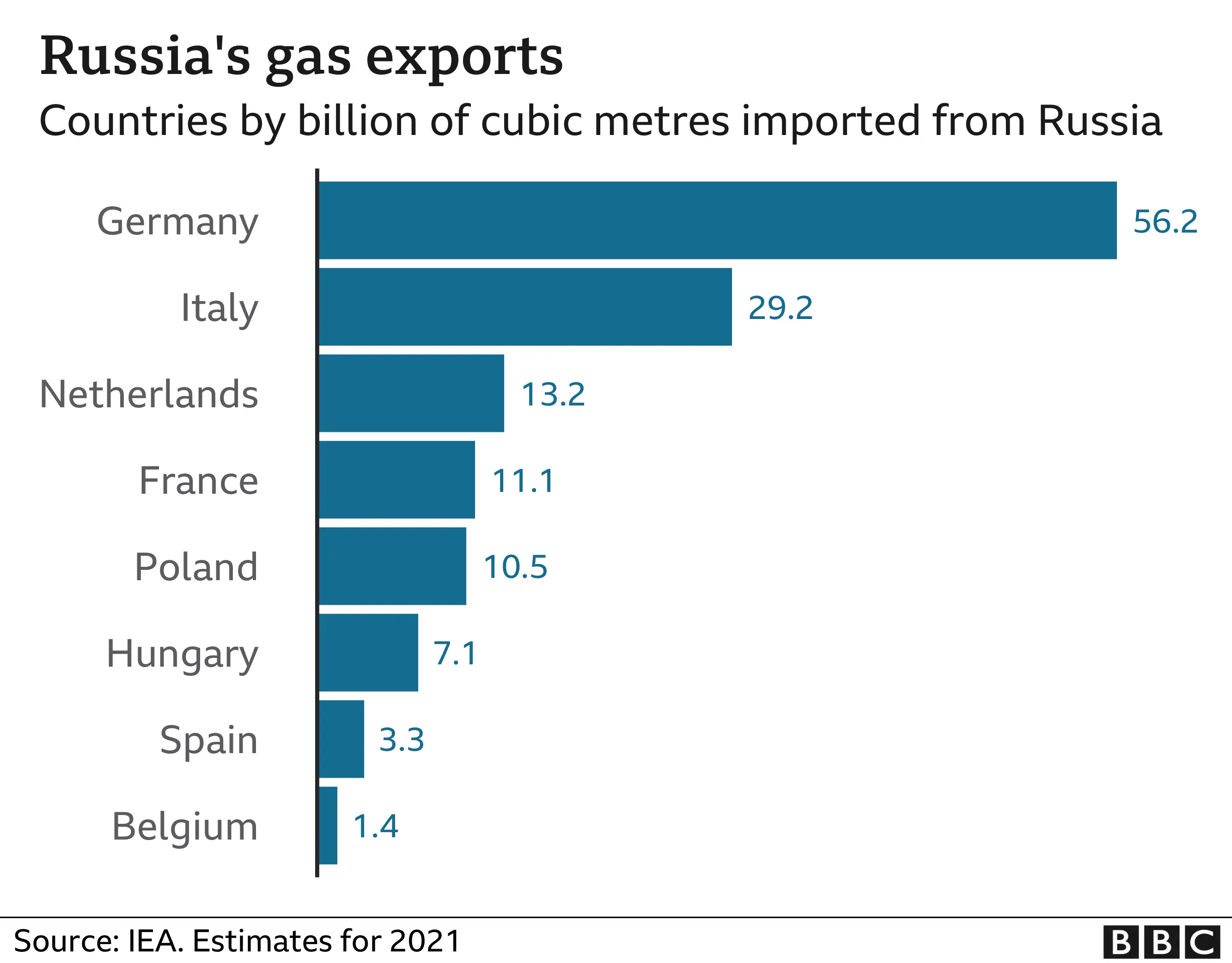
Figure 11: Russia’s gas exports in 2021
Germany’s phasing out of its established network of nuclear power, a process initiated and led by the Greens and ultimately enforced by the second Merkel government, increased Germany’s dependency on Russian energy. The German government’s decision to phase out its nuclear power was influenced by the high-profile Fukushima nuclear accident in 2011. Until March 2011, Germany obtained one-quarter of its electricity from nuclear energy, using 17 reactors. The following gap after phasing out of its established network of nuclear power was primarily filled by Russian natural gas, inadvertently increasing dependency on Russian energy.
Despite early leadership in renewable energy adoption, Germany’s transition has been hampered by antiquated bureaucratic obstacles, complicated and slow processes for approving projects for renewable energy, and local resistance to infrastructure projects, each discouraging further investment in renewable sectors. As of 2024, renewable sources accounted for just over 52% of the country’s electricity supply, insufficient to meet industrial demands.
Germany’s dependency on Russian gas became a vulnerability following the Ukraine War in 2022. The abrupt disruption of Russian energy forced Germany to rapidly diversify its energy sources, leading to a 32.6% reduction in gas imports by 2023. The subsequent sanctions against Russia and supply disruptions led to a 32% increase in Germany’s energy prices, contributing to economic instability and decline.
As Figure 12 shows, energy consumer price in Germany skyrocketed in the 2020s following the Ukraine War. Energy consumer price in Germany increased 32% in September 2022 compared to the previous year.
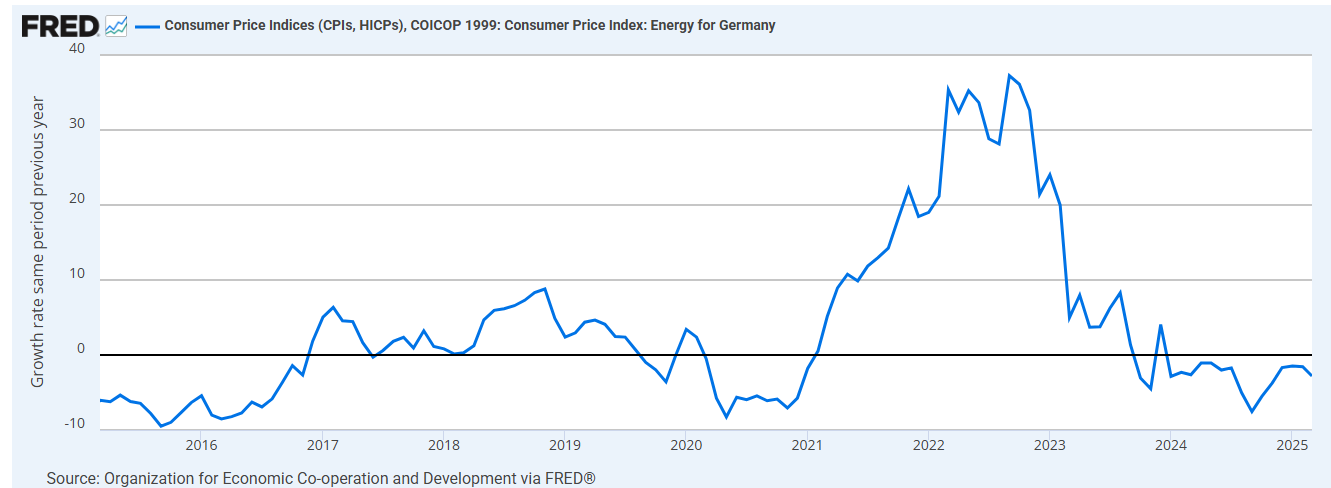
Figure 12: Energy consumer price in Germany (source: OECD)
Although energy consumer price in Germany significantly dropped in 2024 and has stabilized afterwards, the damage to industrial competitiveness has been lasting. Energy-intensive industries such as chemicals and metals have shrunk, forcing businesses to either cut production or relocate abroad, thereby contributing to economic decline.
The second factor related to the sluggish economy of Germany is the under-development of the tech industry in Germany. Some experts argued that Germany’s economic troubles were partly due to its slow adaptation to technological advancements and shifting to low-productivity sectors, contributing to declining productivity. [3]
This issue is about Germany’s insufficient investment in new technologies (computers, artificial intelligence (AI), software, etc.) and the low level of spending on research and development (R&D), compared to other advanced countries such as the US. When we compare OECD countries, we see that these two components have a strong influence on productivity differences between countries. The econometric estimate leads to the following effects: a 1-point increase in the rate of investment in new technologies leads to a 0.8 point increase per year in productivity gains. In a similar way, a 1 point increase in GDP for R&D expenditure leads to a 0.9 point increase per year in productivity gains. [4]
As Figure 13 shows, gross domestic spending on R&D as a % of GDP in Germany in 2023 was higher than in many EU countries, but lower than in its Western rivals such as the US, Israel, Japan, Taiwan, South Korea, Sweden, and Switzerland.
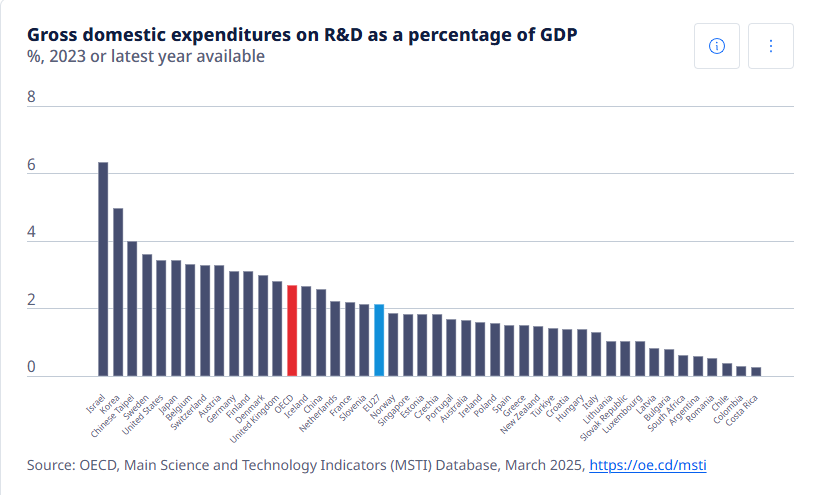
Figure 13: Gross domestic spending on R&D as a % of GDP, 2023
Moreover, weak investment in public infrastructure and digitalization has further weakened Germany’s IT sectors. As Figure 14 shows, Germany has long underinvested in public infrastructure, ranking near the bottom among advanced economies in public investment levels.
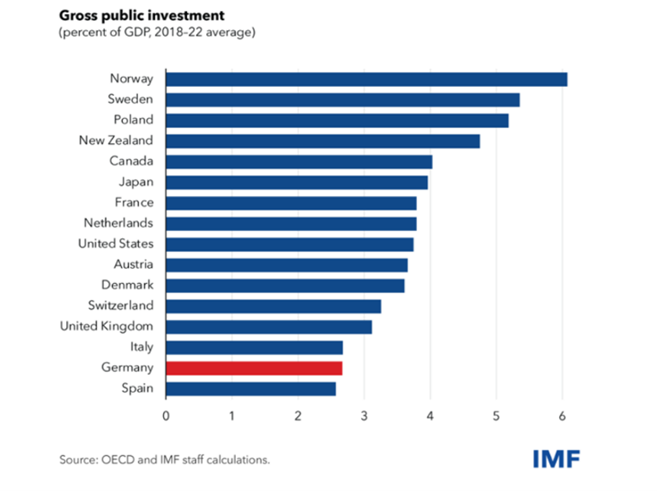
Figure 14: gross public investment in OECD countries, 2018-2022 (source: IMF)
As a result, as Figure 15 shows, there are no German tech firms among the global top 10 most valuable unicorns. The US and China lead the category of global tech unicorns.
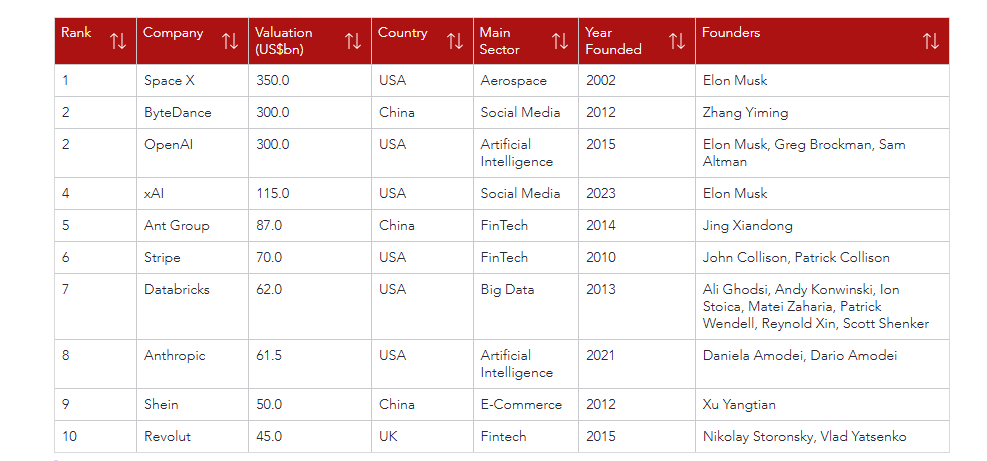
Figure 15: Global top 10 Unicorns (source: https://www.hurun.co.uk/hurun-global-unicorn-index-2025#:~:text=In%20contrast%20to%20the%20UK's,the%20US%20and%20China%2C%20including
The third factor related to the sluggish economy of Germany is the demographics. As Figure 16 shows, the working-age population in Germany has declined, while old people over 65 have significantly increased.
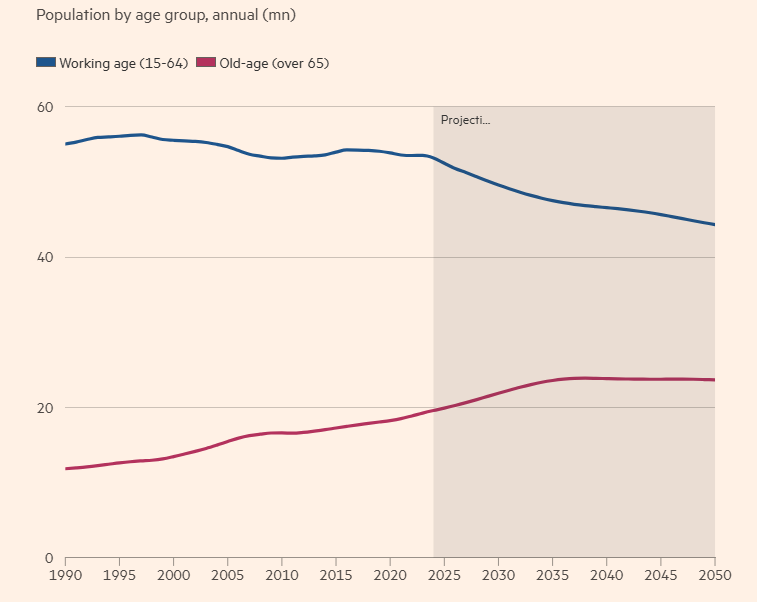
Figure 16: Age group in Germany (source: UN, World Population Prospects & Financial Times)
The IMF posited that the fundamental structural challenges for Germany are accelerating population aging. The country’s working-age population, which had been declining over the three decades, was projected to decline sharply as baby boomers retired. As Figure 17 shows, Germany’s working-age population growth is the lowest among G7 countries. This demographic shift in Germany is expected to decrease GDP per capita, further hinder productivity growth, and cause increased demand for healthcare, potentially forcing workers to go into healthcare away from other sectors.
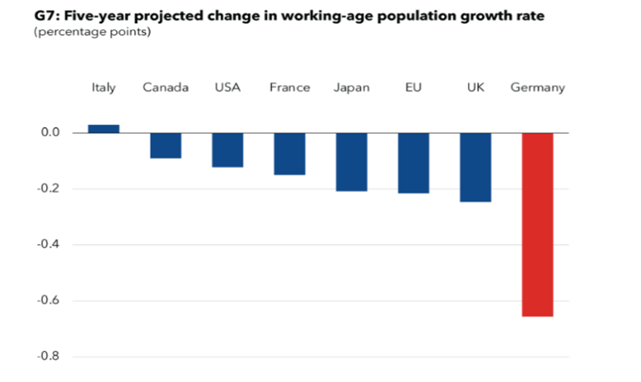
Figure 17: Working-age population growth, G7 economies (source: IMF)
Under this circumstance, shorter working hours increasingly constrain Germany’s labor supply, thereby reducing economic growth. As Figure 18 shows, employees in Germany work shorter hours on average than in any other OECD country.
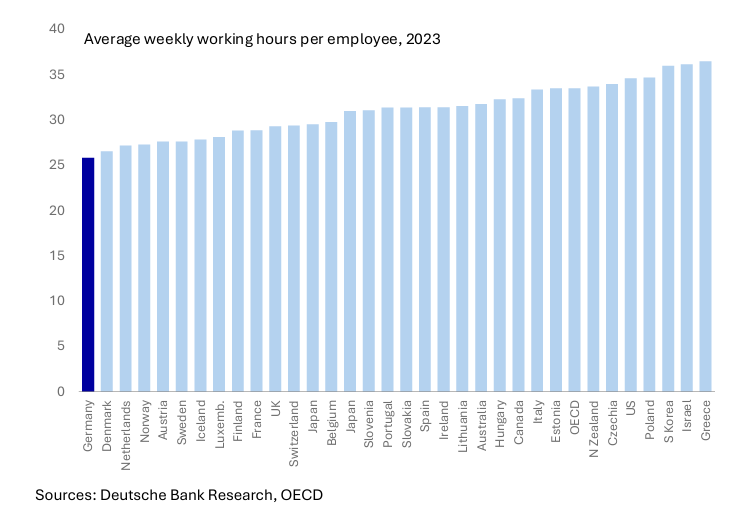
Figure 18: Employees in Germany work shorter hours on average than in any other OECD country
Another issue related to the demographics is the size of the welfare state in Germany. As Figure 19 shows, Germany’s public social spending has expanded and is now at record level. As Figure 20 shows, Germany spent around 30% of its GDP on welfare and social benefits in 2024, placing it among the largest welfare states in Europe, as well as in the world.
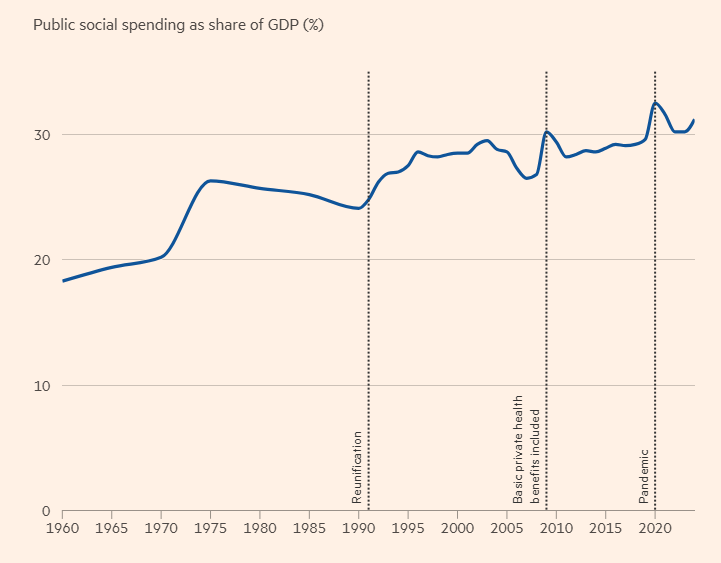
Figure 19: German social welfare spending is at record levels, excluding the Covid-19 pandemic (source: OECD, Financial Times)
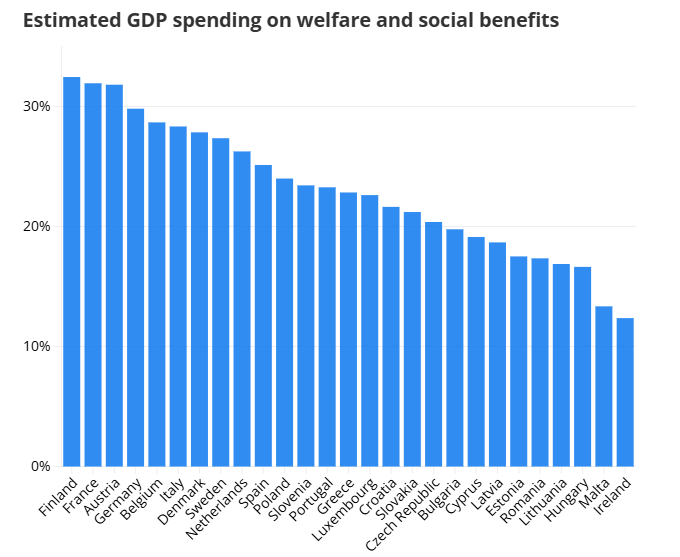
Figure 20: Welfare and social spending as a % of GDP in 2024 (Source: Eurostat (2024)
Gwartney, Holcombe and Lawson (1998) showed empirically that as the size of general government spending has almost doubled on average in OECD countries from 1960 to 1996, their real GDP growth rates have dropped by almost two thirds on average (see Figure 21). According to them, as public social spending goes up, GDP growth goes down.
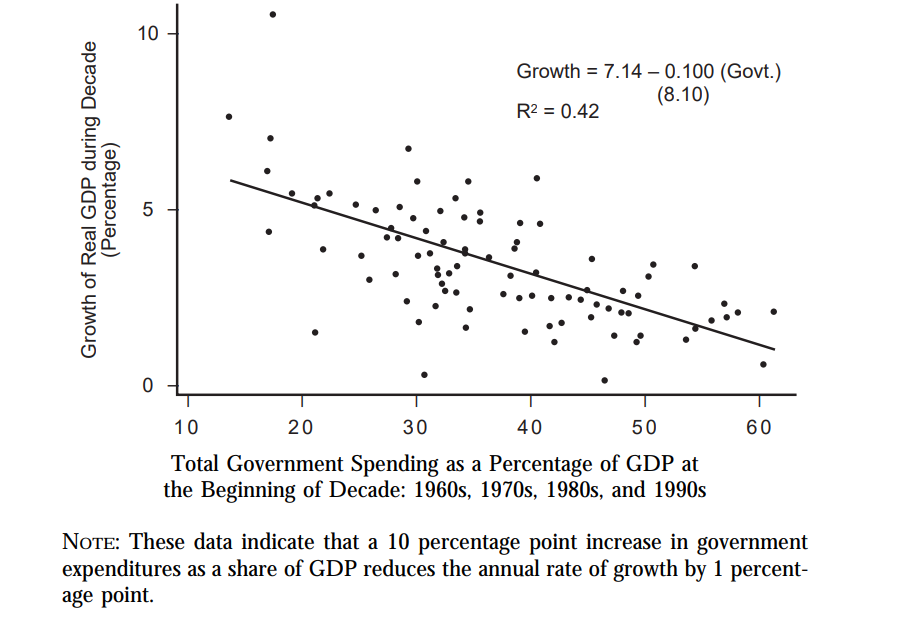
Figure 21: High government spending reduces growth
Moreover, any increase in welfare costs automatically leads to an increase in non-wage labor costs for employers. Under German law, employers are obliged to cover half of their employees’ insurance contributions. Since the end of the Covid-19 pandemic, as Figure 22 shows, non-wage labor costs have risen at a faster rate than total wages, eating into companies’ profits and reducing the room for wage increases, thereby lowering economic growth.
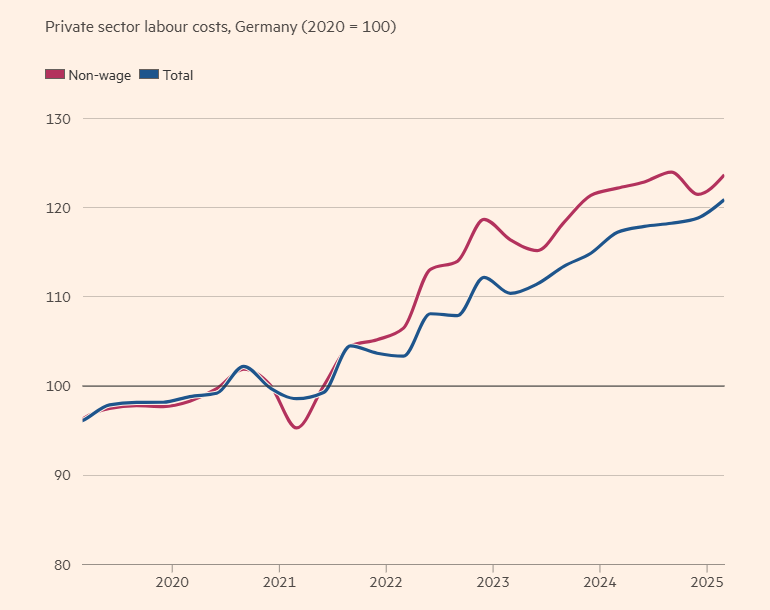
Figure 22: Costs other than wages have started to make up a greater share of employers’ labor spending (source: Bundesbank & Financial Times)
The fourth factor related to the sluggish economy of Germany is exports. Exports have been a driving force for Germany for a long time, but the year-on-year (YoY) exports growth rate indicates a decline over the 2023-25 period after the Ukraine War, as Figure 23 shows.
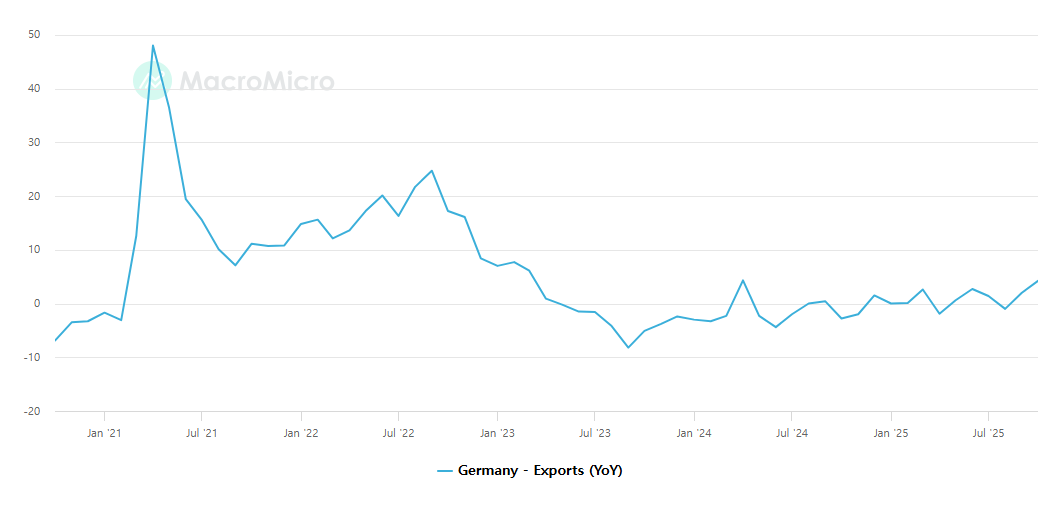
Figure 23: Year-on-year (YoY) exports growth rate in Germany (source: MacroMicro)
In addition, German export performance against global competitors has not been so good, as Figure 24 shows. It was so bad in the 2020s.
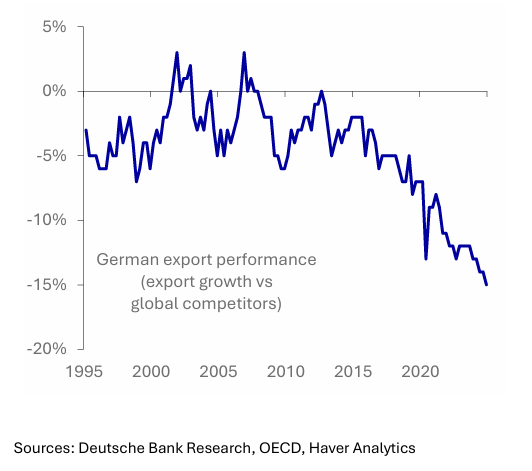
Figure 24: Germany’s export performance against global competitors (source: Deutsche Bank Research & OECD)
This paper showed that the German economy has been in big trouble with sluggish economic growth. This paper explained that the failure of the German economy can be attributed to an energy crisis, as well as underdevelopment of tech industry, a shrinking working-age population and shortest working hours of employees, a large size of welfare state, and sluggish exports.
[1] Germany, which had been considered to be Europe’s economic powerhouse in prior decades, became the worst-performing global major economy in 2023 with a 0.9% contraction, followed by further 0.5% contraction in 2024 leading to recession. [2] Partington, Richard (15 January 2024). "Germany on track for two-year recession as economy shrinks in 2023". The Guardian. [3] Fletcher, Kevin; Kemp, Harri; Sher, Galen (27 March 2024). "Germany's Real Challenges are Aging, Underinvestment, and Too Much Red Tape". International Monetary Fund. [4] https://www.polytechnique-insights.com/en/columns/economy/economy-why-europe-is-falling-behind-the-usa/
First published in :
World & New World Journal


If the US carries out military strikes against Iran, what will happen to global oil supply and global oil price?
International North-South Transport Corridor: Geopolitical Implications and the Future of European Trade
The Belt and Road boomed in 2025

The record gold price reflects a deeper problem than recent global instability
Unlock articles by signing up or logging in.
Become a member for unrestricted reading!