Subscribe to our weekly newsletters for free

Subscribe to an email

If you want to subscribe to World & New World Newsletter, please enter
your e-mail

Defense & Security
Australia, New Zealand, United States Security Treaty (ANZUS or ANZUS Treaty)

Smooth sailing or choppy waters for Australia, NZ and the US in the Pacific?

by Anna Powles , Joanne Wallis

Last week’s announcement that US President Joe Biden would not travel to Papua New Guinea to meet with Pacific Islands Forum leaders was met with disappointment. Expectations were high: the White House had labelled the visit ‘historic’—it would have been the first time a sitting US president visited a Pacific island country—and claimed it would further reinforce the ‘critical partnership’ between the US and the Pacific islands. The meeting was a follow-up to the first-ever US–Pacific Island Country Summit held in Washington last September. But as far as sequels go, this one was a fizzer. Biden’s planned visit was looking shaky even before news of its cancellation, with controversary following leaks about the proposed US–PNG defence cooperation agreement. But the PIF leaders went ahead with their meeting, and the decision by New Zealand Prime Minister Chris Hipkins to attend, despite neither Biden nor Australian Prime Minister Anthony Albanese going, sent a strong signal to the Pacific of New Zealand’s commitment to the region. The Australian government has missed an opportunity to send a clear message that Australia shows up in the Pacific even when its larger alliance partner, the US, doesn’t. This brings us to the challenges facing Australia and New Zealand. In response to geopolitical shifts in the region and more broadly, Australia, New Zealand and the US have individually, and in cooperation with each other, sought to enhance their relationships with Pacific island countries and deepen their involvement in the region. However, as we argue in our new ASPI report, released today, cooperation between the three partners faces several challenges—and raises questions for Australia and New Zealand. Despite the rhetoric—at times tokenistic—from the three partners about respecting Pacific agency, ambitions and activism, genuine change requires the kind of mindset shift that may prove challenging, particularly for the US. For example, the Partners in the Blue Pacific initiative reflects outdated modes of thinking about the power dynamics underpinning the three nations’ activities in the Pacific. There are limits to the assumed leadership of Australia, New Zealand and the US, as the Solomon Islands – China security agreement highlighted. China, and others, are here to stay. Pacific island countries have options—and alternatives—to their status quo relationships. As unwelcome as Australia, New Zealand and the US may find China’s presence in the region, they need to plan for how they will work alongside a range of partners in the Pacific. This isn’t about accommodation, necessarily, but nor is it about constraint when Pacific island countries pursue their own interests. It’s becoming harder for the three partners to balance their interests and values while at the same time attempting to reconcile broader strategic interests with Pacific priorities. Australia, New Zealand and the US pride themselves on being liberal democratic nations committed to upholding human rights and the international rules-based order. But respect for those values is being tested by their perceived need to advance their strategic interests. Controversy over the AUKUS partnership raises questions about how closely the partners want to relate to each other in the Pacific islands region. Differences among Australia, New Zealand and the US mean that, in some instances, they may wish to carefully consider risks to their reputations and to their individual relationships with Pacific island countries. This includes New Zealand’s stance on nuclear issues, as well as Australia’s and New Zealand’s abilities, as members of the Pacific Islands Forum, to act as a constraining influence on US ambitions in the Pacific when they cut across collective Pacific interests. The US needs to appreciate that Australia and New Zealand are bound to the Pacific through geography, history, constitutional relationships and, increasingly, identity. The challenges we outline in our report are not insurmountable. But how Australia, New Zealand and the US partner with the Pacific—and with each other—matters deeply. These considerations take conventional responses to strategic competition in the region beyond the binary reaction to China as the destabilising actor, and demand that the three partners reflect on their own contributions to peace and security. We therefore recommend that, when seeking to enhance their engagement in the region and work together, Australia, New Zealand, and the US should ensure that Pacific priorities direct activity, not their own. It’s important for the partners to ensure that their initiatives don’t undermine or supplant existing regional frameworks but instead expand on established mechanisms. And, importantly, Australia, New Zealand and the US must avoid competing with one another and instead cooperate more closely, where appropriate, to pool their collective strengths. Biden’s reason for skipping both the Pacific Islands Forum leaders’ meeting in PNG and the Quad summit in Sydney are well understood: the US domestic debt crisis took priority. But it has reminded the Pacific island countries—and Australia and New Zealand—that, despite its protestations, the US has yet to prove that it is a reliable and consistent partner to the Pacific. It should also serve as a reminder to Australia, New Zealand and the US that the time and opportunities they have to build trust and demonstrate their reliability to their Pacific partners are not limitless.

Defense & Security
Solomon Islands

Russia and China co-ordinate on disinformation in Solomon Islands elections

by Albert Zhang , Adam Ziogas

한국어로 읽기 Leer en español In Deutsch lesen Gap اقرأ بالعربية Lire en français Читать на русском Moscow and Beijing likely worked together to sow disinformation globally that was propagated locally by political parties in the lead-up to Solomon Islands’ national and provincial elections on 17 April 2024. Both countries’ propaganda systems accused the United States, without evidence, of using its foreign aid and networks across the country to interfere in voting and of preparing to foment riots and orchestrate regime change in response to an unsatisfactory election result. This campaign adds to a growing body of evidence showing that China’s and Russia’s ‘no limits’ partnership extends to coordinating their disinformation campaigns in the Indo-Pacific. The narratives haven’t gained widespread attention or media coverage in Solomon Islands. Australia, the United States and other Pacific partners should nonetheless be concerned, as Russia and China can be expected to learn from this campaign and will likely use the lessons to further improve their influence operations in the region. Individually, China and Russia are adept and expert at pushing disinformation to disrupt other nations but, by coordinating their efforts, they have a force-multiplier effect. The campaign consisted of an alleged ‘leaked’ letter, articles published on authoritarian state-controlled media outlets and a fringe journal publication, which were then shared and amplified on social media platforms. A fortnight before election day, an unknown author by the name of Richard Anderson published an explosive article in CovertAction Magazine alleging that the US was seeking regime change in Solomon Islands. The US-based magazine was co-founded in 1978 by the late Philip Agee, a former CIA officer who after his retirement became a vocal critic of the agency and of US policy and had reported links with Soviet and Cuban intelligence. The magazine was set up ‘on the initiative of the KGB’, the Soviet Union’s main intelligence agency, according to a book by KGB defector Vasili Mitrokhin and British intelligence historian Christopher Andrew. Anderson had no previous history of writing for CovertAction Magazine. A week after that article was published, Russian state-controlled media agency Sputnik further fuelled the allegations, writing that the US was ‘plotting [an] electoral coup’. This article cited an anonymous source who had ‘intimate familiarity’ with the activities of USAID, the main United States foreign aid and international development agency. This mirrored how Anderson is described in his CovertAction Magazine bio, though Sputnik’s article did not explicitly mention him or his article. Sputnik’s claims were amplified four days later by the Chinese state-controlled tabloid newspaper the Global Times, which did directly reference Anderson’s article and has the potential to legitimise these narratives to an audience the Chinese Communist Party (CCP) is actively targeting. During the same period, a poorly fabricated letter from an unconfirmed (and potentially non-existent) IFES project consultant was circulated among Solomon Islanders by an unknown source claiming that the US was seeking a ‘democratic transition by violent means in necessary circumstances.’ The text in this letter mirrored language used by Sputnik’s alleged anonymous source. Figure 1: Paragraph from Sputnik article (top) and a screenshot of the alleged IFES letter (bottom).     To be clear, there is no evidence that the US, or any other country, is supporting violent riots or interfering in Solomon Islands. Ann Marie Yastishock, US Ambassador to Papua New Guinea, Solomon Islands, and Vanuatu, has strongly refuted these allegations. This is not the first time the CCP-controlled media has spread disinformation in Solomon Islands or accused the US of seeking to instigate riots in the country. Following the 2021 Honiara riots, the CCP falsely accused Australia, the US and Taiwan of organising the riots, fomenting unrest and discrediting the relationship between Solomon Islands and China. In contrast, Russian media outlets also covered the 2021 Honiara riots but didn’t promote any explicit accusations of US or foreign interference. This time, China and Russia have been in lockstep. In the lead-up to the April elections, Russian state media was more direct and damning in its reporting with the release of Sputnik’s original article and in the subsequent coordination and dissemination of false narratives alongside Chinese state media. While Sputnik published only one follow-up article to the initial investigation, China’s Global Times was more prolific and varied, with six articles alleging US meddling in Solomon Islands. Of these six articles, four explicitly referenced Sputnik’s claims and two referenced US influence operations in more general terms. The indications of Russia-China propaganda coordination in this campaign were further supported by China’s Ministry of Foreign Affairs (MFA) post on 19 April 2024 titled ‘The Hypocrisy and Facts of the United States Foreign Aid’. The post on their website claims the US is giving aid to Solomon Islands, among other countries, only because it sees it as a political threat. This was the first article ever published by the MFA to smear USAID. Moscow, however, has consistently campaigned against USAID since it ejected the US agency from Russia in 2012 for ‘meddling in politics’. Russian media has pushed a consistent narrative that the organisation is a US imperialist tool of regime change, accusing it of fomenting civil unrest and coup attempts as far afield as Belarus, Cuba, Georgia and Mexico. However, this latest attack against USAID appears to be the first where Russia’s narratives are working to the benefit of CCP interests. It’s been clear since at least 2018 that Russian and Chinese state media are converging on media narratives that serve their governments’ strategic and political interests. According to leaked documents from Russian state broadcaster VGTRK, Russian and Chinese propaganda entities also signed an agreement to ‘further cooperate in the field of information exchange, promoting objective, comprehensive and accurate coverage of the most important world events’. While previous ASPI research has demonstrated Russian and Chinese state-coordinated narratives on the Russia-Ukraine conflict, the repeated re-airing of Sputnik’s conspiratorial claims of interference in Solomon Islands’ elections in Global Times articles indicates this propaganda cooperation is now a global initiative. There was also some evidence of amplification by inauthentic accounts on social media of these narratives, but they were limited and it is unclear whether they were state linked. For example, one X account with the handle @jv79628 shared the original Sputnik investigation. The account posts links almost exclusively from Sputnik, Global Times, Australian website Pearls and Irritations and videos with artificial intelligence-generated voices from the pro-CCP YouTube channel Chinese Revival, which may be linked to the Shadow Play network previously uncovered by ASPI. Other accounts sharing the original Sputnik report, such as @de22580171, pose as pro-Russian US citizens. They share articles mostly from Sputnik or Russia Today. At the time of publication of this report, Russia’s and China’s state media articles, and the accusations contained in them, have had minimal reach into online Pacific communities. In the public Solomon Islands Facebook groups ASPI viewed, online discourse remains more focussed on the emergence of new coalitions and the election of a new Prime Minister than on discussion of foreign influence or interference. According to Meta’s social monitoring tool, CrowdTangle, none of the articles from the Global Times have been shared in open and public Solomon Islands Facebook groups. However, Sputnik’s first article may have been more successful in reinforcing anti-Western sentiments in outgoing Prime Minister Manasseh Sogavare’s O.U.R. Party, who are strong contenders to be part of the coalition that forms the next government. That article was posted on the O.U.R. Party Solomon Islands Facebook page, which is run by the party, on 10 April. It was reshared to several public Facebook groups in Solomon Islands, including news aggregation sites and local island forum pages. This is significant because it is the first time a news article has been posted on the O.U.R. Party Solomon Islands Facebook page, which typically shares positive images of the party’s activities and political campaigns. As of 1 May 2024, the post (below) has had over 180 interactions, which is higher than the average number of interactions a typical post has on this page. Figure 2: Screenshot of Sputnik article posted in O.U.R Party Solomon Islands Facebook page.     Sogavare, a founding member of the O.U.R. Party, has made similar remarks about ‘foreign forces’ previously. According to an article published in the Solomon Star, when US Ambassador Yastishock visited Solomon Islands in late March to present her letter of credentials to Governor-General John Oti, Sogavare claimed foreign forces were ‘intervening in the national general election’ and ‘may fund some political parties and plan to stage another riot during the election to disrupt the electoral process and undermine social stability’. Despite the low online interaction so far, the barrage of US regime change allegations lays the foundation for future narratives that may resurface if Solomon Islands experiences future unrest. Beijing and Moscow can be expected to learn from these disinformation efforts, leaving the US, Australia and their Pacific partners no room for complacency about the threat the regimes pose, nor the need for effective strategic communication. The Russian and Chinese governments are seeking to destabilise the Pacific’s information environment by using disinformation campaigns and influence operations to undermine traditional partnerships. In this digital age, leaders of governments and civil society across the region need to consistently confront and counter baseless lies pushed by authoritarian state media, such as accusations that the governments of Australia and the US are instigating riots. If they fail to do so, partnerships with, and trust in, democratic countries are at risk of deteriorating, which can reduce the development benefits provided to Pacific Island Countries by Western partners. Australia, the US, and other close Pacific partners, such as Japan, New Zealand and the European Union, must take a stronger stance against false and misleading information that is starting to circulate in the region as a result of authoritarian state-backed disinformation campaigns. These nations must also better support and encourage local media and governments to take further steps to identify and combat false information online. This includes providing more training packages and opportunities for dialogue on media-government communication procedures to tackle disinformation and misinformation. Countering the effects of disinformation requires ongoing efforts to call out false statements, educate the public, and build country-wide resilience in the information environment. Greater transparency and public awareness campaigns from the region’s partners can also help to ‘prebunk’—or anticipate and delegitimise—disinformation and alleviate concerns about malign activity.

Defense & Security
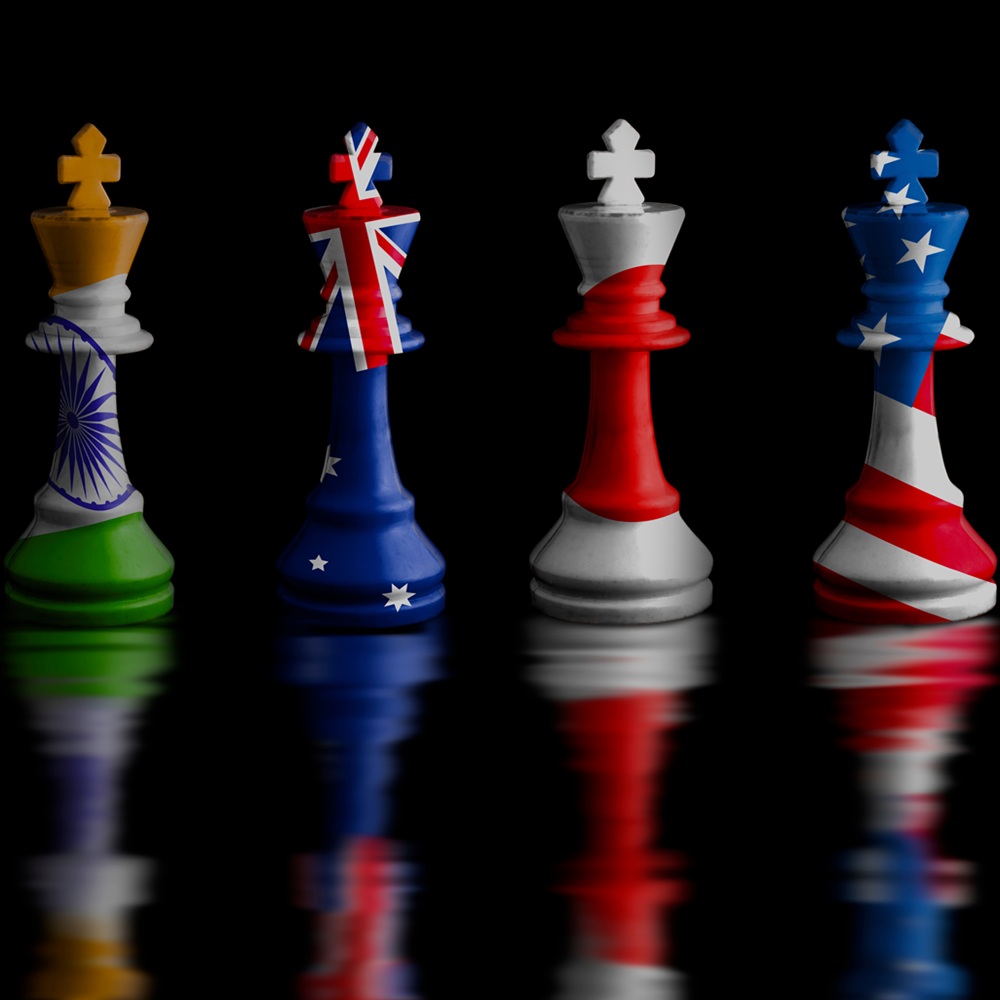
japan,australia,usa and india Quad plus countries flags. chess king.

Will QUAD change the security architecture in the Indo-Pacific?

by Jan Senkyr

한국어로 읽기 Leer en español In Deutsch lesen Gap اقرأ بالعربية Lire en français Читать на русском Security dialog among like-minded countries in the Indo-Pacific The Quadrilateral Security Dialogue (QUAD) was founded in 2007 by the USA, Japan, Australia, and India to promote a rules-based order in the Indo-Pacific, secure freedom of navigation and balance the growing influence of China. After a temporary dissolution, QUAD was revived in 2017. Since then, there have been regular meetings of heads of state and government and foreign ministers, which have led to concrete working groups in areas such as maritime security, modern technologies, infrastructure, climate change, health, space, and cyber security. QUAD has made considerable progress, including the provision of COVID-19 vaccines, decarbonization initiatives, the promotion of renewable energy and programs to improve maritime surveillance and digital infrastructure. QUAD is not a formal alliance, but an informal forum without a mutual defense commitment. Germany and the EU should strengthen bilateral partnerships with the QUAD states to promote common goals such as maritime security, infrastructure development and climate protection and offer a sustainable alternative to the Chinese Belt and Road Initiative. Will QUAD change the security architecture in the Indo-Pacific? Founded in 2007 as an informal alliance by the USA, Japan, Australia and India, the Quadrilateral Security Dialogue (QUAD) has proven its worth as a platform for regional security cooperation in the Indo-Pacific, despite difficulties and interim dissolution. The original motivation for QUAD was the increasing concern about China's growing influence in the Indo-Pacific and the challenges to the rules-based order in the region. In recent years, cooperation in the QUAD has deepened and includes issues such as maritime security, maintaining free shipping lanes, the fight against terrorism and the promotion of sustainable economic development. Securing a free and open Indo-Pacific - in which all countries can act sovereignly and free from coercion - is a central concern of QUAD. The beginnings of cooperation between the four countries can be traced back to 20041. In response to the devastating Boxing Day tsunami in 2004, which killed over 230,000 people2, the USA, Australia, India, and Japan spontaneously formed an ad hoc grouping to pool and coordinate their resources and capacities for emergency relief in the disaster areas. The grouping disbanded after the end of the reconstruction aid in January 2005, but the positive outcome of the cooperation proved to be viable for the future and opened the way for further initiatives towards closer cooperation between the four Indo-Pacific states.3 First foundation and dissolution of QUAD It was the then Japanese Prime Minister Shinzo Abe who, as part of his new foreign and defense policy, called for a value-based dialogue between Japan, India, Australia, the USA, and other like-minded countries on common interests in the Indo-Pacific at the end of 2006. On May 25, 2007, representatives of the four countries met officially for the first time at an informal Quadrilateral Security Dialogue (QUAD) on the sidelines of the ASEAN summit in Manila.4 In September 2007, the maritime military exercise "Malabar" in the Indian Ocean, which had previously only been held bilaterally between the USA and India, was expanded to include participants from Japan, Australia and Singapore. This led to strong reactions from China, which sent official protest notes to the governments of the participating countries. Beijing portrayed QUAD as an anti-China initiative, while critics described the grouping as the nucleus of a future "Asian NATO "5. China's harsh criticism of the QUAD initiative and political changes in some of the four participating countries led to the Quadrilateral Security Dialogue being dissolved after a brief time. Australia, where there was a change of government in December 2007, wanted to avoid a confrontation with its most important trading partner China and therefore announced its withdrawal from QUAD in February 2008. In Japan, the most important promoter of QUAD, Shinzo Abe, was forced to resign as Prime Minister at the end of 2007 after losing the elections. There was also increasing criticism of the purpose of QUAD in India and the USA, so that in 2008 the four countries ceased their activities in the direction of quadrilateral security cooperation.6 However, taking China into consideration did not lead to the hoped-for easing of tensions. On the contrary: China's massive military build-up, its territorial claims in the South China Sea and East China Sea, its threatening gestures towards Taiwan and the use of economic pressure to achieve foreign policy goals7 have further increased geopolitical tensions in the region. In the meantime, contacts and cooperation between the four QUAD states have continued and intensified at bilateral and minilateral level. In 2011, the first meeting at the level of state secretaries took place between the governments of Japan, India, and the USA. A similar trilateral cooperation meeting was established in 2015 between Japan, India, and Australia. India and the United States signed a Communications Compatibility and Security Agreement (COMCASA) in 2015 and a Logistics Exchange Memorandum of Agreement (LEMOA) in 2016.8 These agreements are a prerequisite for the interoperability of the armed forces of both countries. Since October 2015, Japan has been a regular participant in the annual naval exercise "Malabar" alongside India and the USA. And in 2017, Indian armed forces took part in the Australian naval exercise AUSINDEX for the first time, and two years later also in the air force exercise Pitch Black. Australia has been involved in the Malabar exercises again since 2020.9 Revival of the QUAD Shinzo Abe, who returned to the office of Japanese Prime Minister in 2012, put the concept of a quadrilateral security alliance (Democratic Security Diamond) in the Indo-Pacific back on the political agenda. He succeeded in convincing the new US President Donald Trump of the idea, leading to the first meeting of high-ranking representatives from the USA, Japan, India, and Australia on the sidelines of the ASEAN summit in Manila in the Philippines in November 2017. The QUAD was revived.10 In June 2018, representatives of the four countries met on the sidelines of an ASEAN meeting in Singapore and again in November of the same year at the East Asia Summit, also in Singapore. On May 31, 2018, the first official meeting of the foreign ministers of the four QUAD states finally took place on the sidelines of the UN General Assembly in New York. Since then, the four foreign ministers have met once a year to discuss regional strategic challenges and priorities.11 The Biden administration has upgraded the Quadrilateral Dialogue to an important instrument for the implementation of its Indo-Pacific policy. On March 12, 2021, the first summit of QUAD heads of state and government took place, still in virtual form due to the Covid-19 pandemic. As a result of the summit, a joint final declaration, The Spirit of the QUAD,12 was published, which lists the key objectives and principles of the quadripartite dialog. On September 24, 2021, the QUAD heads of government met in person for the first time in Washington. Six permanent working groups were formed to deal with the policy areas of health, climate change and clean energy, critical and modern technologies, infrastructure, space, and cybersecurity.13 On March 4, 2022, the four heads of government of the QUAD states convened for a virtual summit to discuss the impact of Russia's war of aggression on Ukraine and to reaffirm the commitment of the four dialog partners to the Indo-Pacific region. The fourth QUAD Leaders’ Summit took place in Tokyo on May 24, 2022. The follow-up meeting planned for May 2023 in Sydney was canceled as US President Biden had to remain in Washington due to the domestic budget crisis. Instead, the heads of state and government met on May 20, 2023, on the sidelines of the G7 summit in Hiroshima. Prior to this, the foreign ministers of the QUAD met in India in March, where it was decided to establish a working group on combating terrorism.14 In 2024, there was one meeting at foreign minister level (July 29 in Tokyo, Japan) and one summit meeting of QUAD leaders (September 21, 2024, in Wilmington, USA). On September 20, 2024, one day before the summit in Wilmington, a bipartisan group of representatives and senators, the QUAD Caucus, was formed in the US Congress to promote cooperation between the USA and the other QUAD members (Japan, India, and Australia). In doing so, Congress is underlining the bipartisan recognition of the strategic importance of the Indo-Pacific for the USA and strengthening the institutional anchoring of the QUAD partnership in the US political system.15 What concrete results has QUAD achieved since its revival in 2017? The six QUAD working groups established in 2021 cover the most important policy areas of quadrilateral cooperation: 1. Health Security Following the outbreak of the COVID-19 pandemic, the QUAD Group committed to producing one billion vaccine doses by the end of 2022 and making them available to countries in the Indo-Pacific. The USA, Japan and Australia supported the expansion of production capacities for coronavirus vaccines in India. Together, the four QUAD members donated over 400 million vaccine doses to Indo-Pacific countries in 2021 and 2022 and almost 800 million worldwide. In addition, the group of four supported the COVAX initiative with 5.6 billion US dollars. In September 2024, the "QUAD Cancer Moonshot" initiative was announced, which aims to reduce the number of cancer deaths in the Indo-Pacific, particularly through measures to prevent and treat uterine cancer16. 2. Climate Change The countries of the Indo-Pacific are particularly affected by climate change. The QUAD agenda aims to accelerate decarbonization, promote renewable energy and protect the maritime environment in the Indo-Pacific. This includes the expansion of clean hydrogen technologies, climate information services and early warning systems as well as the diversification of supply chains. 3 Critical and Emerging Technologies The QUAD countries are committed to the responsible and safe use of technologies such as artificial intelligence, quantum computing and 5G. Specifically, for example, the establishment of an Open Radio Access Network (RAN) in Palau, Micronesia, is being promoted, which will later be extended to other Pacific island states. 4. Space All four QUAD nations have their own space programs, which are linked by a large number of bilateral and minilateral cooperation projects. The Indo-Pacific Partnership for Maritime Domain Awareness (IPMDA) initiative, launched in 2022, aims to strengthen maritime security and transparency in the Indo-Pacific. It will provide countries in the region with real-time maritime surveillance information, primarily data from satellites, sensors, and other surveillance technologies. This will enable small and medium-sized coastal states in the Indo-Pacific to gain a better overview of maritime activities in their exclusive economic zones, such as illegal fishing, smuggling and piracy. 5. Cyber Security In 2022, the QUAD Cybersecurity Partnership was established to combat threats from cybercrime and state-sponsored attacks. The partnership is divided into four sectors, with each member of QUAD taking the lead in one sector to address cyber vulnerabilities. The sectors include critical infrastructure protection, supply chain resilience, skills training, and software security standards.17 6. Infrastructure QUAD countries are promoting the development of sustainable port infrastructure and announcing major investments in submarine cable projects to improve digital connectivity in the Indo-Pacific. In 2022, the goal was set to invest up to USD 50 billion in infrastructure projects in the region within five years. Launched in 2023, the QUAD Infrastructure Fellowship will provide over 1,800 fellowships, exchanges and other program opportunities for government officials and infrastructure professionals in the region to share best practices in infrastructure management. Outside of these six main themes, the QUAD group also collaborates in other areas: The QUAD Fellowship Program provides scholarships for master's and doctoral students in the fields of mathematics, computer science, natural sciences and technology (STEM) in the US, and since 2024, applicants from the ten ASEAN countries have also been admitted18. The Counterterrorism Working Group was founded in 2023. Other areas of cooperation mentioned in the QUAD plans are sustainable, transparent, and fair lending and financing practices, nuclear stability, and critical minerals. Conclusion The Quadrilateral Security Dialogue QUAD has proven to be a stable and effective security policy dialog platform in recent years. QUAD has the potential to transform the security architecture in the Indo-Pacific by creating a strategic balance in the face of challenges such as China's rising power and territorial expansion. The QUAD promotes cooperation between the US, India, Japan, and Australia, the four most influential democracies in the region. Cooperation is based on shared values such as freedom of navigation, territorial integrity, and adherence to international rules. QUAD is not a formal security alliance, there is no mutual defense commitment. It is a flexible, informal coalition forum that focuses on a wide range of issues, including broader security, the economy, infrastructure, technology, and climate change. QUAD has no institutional structures. There are annual summits of heads of state and government and foreign ministers, and the decisions of the summits are implemented by the state apparatuses of the member countries. The naval exercise "Malabar" is not an official part of QUAD but serves as a platform to strengthen military interoperability and is seen as an operational extension of QUAD's security objectives, particularly in the maritime domain. India plays a special role in the Quadrilateral Security Dialogue. It contributes not only its geographical and geopolitical importance in the Indo-Pacific, but also a perspective characterized by strategic autonomy and multipolar diplomacy. India is regarded as an important representative of the so-called Global South and is seen as a counterweight to China in this group of states.19 On the other hand, India avoids presenting QUAD as an explicitly anti-Chinese alliance in order to avoid putting too much strain on its own sensitive relationship with China. The EU and Germany should adopt a strategically balanced position towards QUAD that considers both the geopolitical realities in the Indo-Pacific and their own economic and security interests. The EU and Germany share with the QUAD states the goal of preserving a rules-based order, particularly regarding international maritime law (UNCLOS). To exert greater influence on the region, Germany and the EU should strengthen bilateral partnerships with the QUAD states to promote common interests such as infrastructure development, new and critical technologies, climate protection and maritime security. Joint infrastructure development projects in the Indo-Pacific could offer a sustainable alternative to the Chinese Belt and Road Initiative (BRI). Information This publication of the Konrad-Adenauer-Stiftung e. V. is for information purposes only. It may not be used by political parties or by campaigners or campaign helpers for the purpose of election advertising. This applies to federal, state, and local elections as well as elections to the European Parliament. The text of this work is licensed under the terms of "Creative Commons Attribution-ShareAlike 4.0 international", CC BY-SA 4.0 (available at: https://creativecommons.org/licenses/by-sa/4.0/legalcode.de) References 1 Madan, Tanvi, „The Rise, the Fall and the Rebirth of QUAD”, War on the Rocks, 16. November 2017, https://warontherocks.com/2017/11/rise-fall-rebirth-quad/2 Earthquake in the Indian Ocean 2004, https://de.wikipedia.org/wiki/Erdbeben_im_Indischen_Ozean_2004  3 Madan, Tanvi, „The Rise, the Fall and the Rebirth of QUAD”, War on the Rocks, 16. November 2017, https://warontherocks.com/2017/11/rise-fall-rebirth-quad/ 4 Buchan, Patrick Gerard, and Rimland, Benjamin, „Defining the Diamond: The Past, Present, and Future of the Quadrilateral Dialogue”, CSIS Briefs, 16. March 2020, https://www.csis.org/analysis/defining-diamond-past-presentand-future-quadrilateral-security-dialogue5 Madan, Tanvi, „The Rise, the Fall and the Rebirth of QUAD”, War on the Rocks, 16. November 2017, https://warontherocks.com/2017/11/rise-fall-rebirth-quad/  6 Buchan, Patrick Gerard, and Rimland, Benjamin, „Defining the Diamond: The Past, Present, and Future of the Quadrilateral Dialogue”, CSIS Briefs, 16. March 2020, https://www.csis.org/analysis/defining-diamond-past-presentand-future-quadrilateral-security-dialogue 7 Feigenbaum, Eva A., „Is Coercion the New Normal in China’s Economic Statecraft?”, MarcoPolo, Paulson Institute, 25. Juli 2017, https://macropolo.org/analysis/is-coercion-the-new-normal-in-chinas-economic-statecraft/?rp=m  8 Panda, Jagannath, „India and the ‘Quad Plus’ Dialogue”, 12. June 2020, RUSI, https://www.rusi.org/explore-our-research/publications/commentary/india-and-quad-plus-dialogue 9 Parker, Jennifer, „Not just another naval exercise: Malabar’s vital messaging”, 10. August 2023, The Strategist, ASPI, https://www.aspistrategist.org.au/not-just-another-naval-exercise-malabars-vital-messaging/ 10 Buchan, Patrick Gerard, and Rimland, Benjamin, „Defining the Diamond: The Past, Present, and Future of the Quadrilateral Dialogue”, CSIS Briefs, 16. March 2020, https://www.csis.org/analysis/defining-diamond-past-presentand-future-quadrilateral-security-dialogue 11 Samir Saran, Satu Limaye, Vivek Mishra, Lilah Connell, Amy Namur, Robin McCoy, and Aryan D’Rozario, East-West Center, „Two Decades of the QUAD: Diplomacy & Cooperation in the Indopacific”, 14. June 2024,  https://www.eastwestcenter.org/publications/two-decades-quad-diplomacy-cooperation-indo-pacific/  12 The White House, 12. March 2021, Quad Leaders’ Joint Statement: „The Spirit of the QUAD”, https://www.whitehouse.gov/briefing-room/statements-releases/2021/03/12/quad-leaders-joint-statement-the-spirit-of-the-quad/ 13 Department of Foreign Affairs and Trade, Australian Government, „The QUAD”, last visit 02.12.2024, in https://www.dfat.gov.au/international-relations/regional-architecture/quad 14 Ebd. 15 U.S. Representative Ami Bera, M.D. (D-CA), Press Release, 20. September 2024, https://bera.house.gov/news/documentsingle.aspx?DocumentID=400409 16 Samir Saran, Satu Limaye, Vivek Mishra, Lilah Connell, Amy Namur, Robin McCoy, and Aryan D’Rozario, East-West Center, „Two Decades of the QUAD: Diplomacy & Cooperation in the Indopacific”, 14. June 2024, https://www.eastwestcenter.org/publications/two-decades-quad-diplomacy-cooperation-indo-pacific/ 17 Ebd. 18 Bundesministerium für Bildung und Forschung, Kooperation international, „QUAD-Fellowship-Programm auf ASEAN-Staaten ausgeweitet“, zuletzt gelesen am 02.12.2024 in https://www.kooperation-international.de/aktuelles/nachrichten/detail/info/quad-fellowship-programm-auf-asean-staaten-ausgeweitet  19 Heiduk, Felix; Wirth, Christian: „The Quadrilateral Security Dialogue (QUAD) between Australia, India, Japan and the USA “, SWP-Aktuell, Nr. 35, June 2023, https://www.swp-berlin.org/10.18449/2023A35/ 

Defense & Security
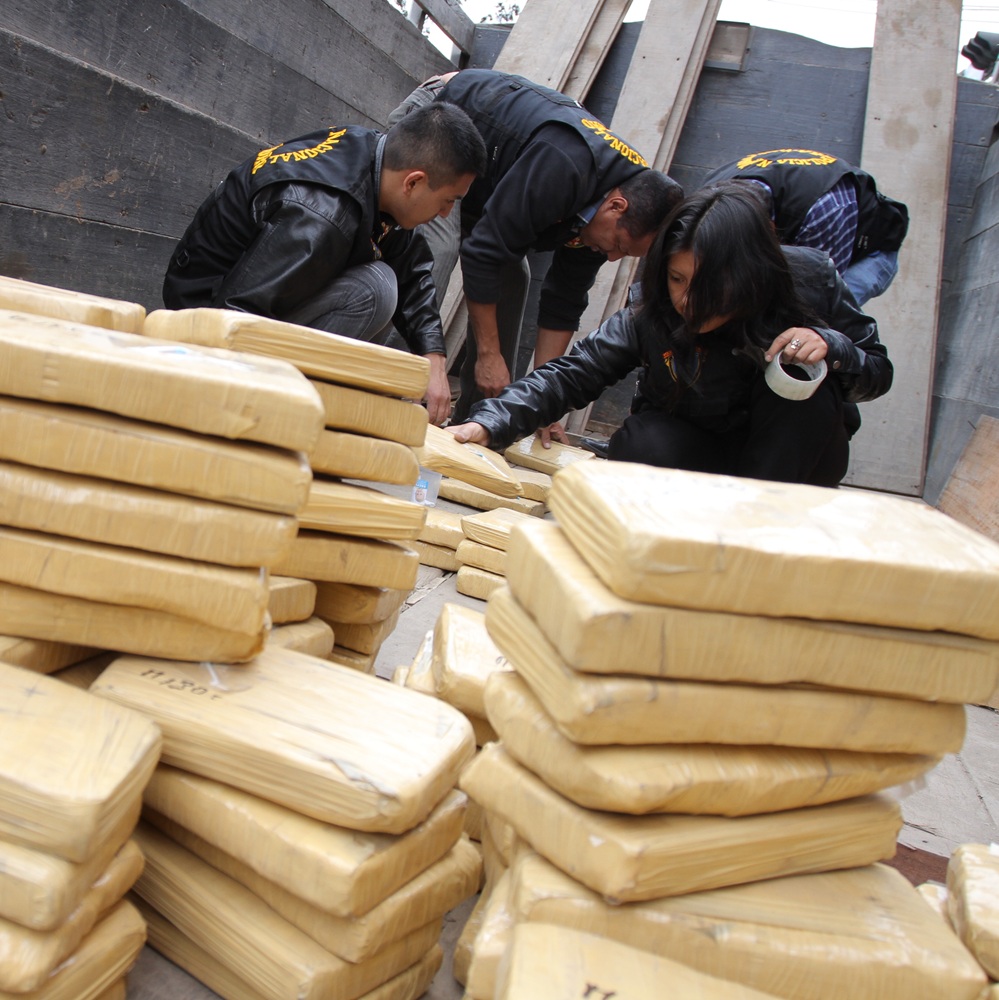
Lima, Peru - August 12, 2012: Seizure of drug or cocaine cargo in a truck with international destination. Packages filled with cocaine and the fight against drug trafficking.

Drug trafficking as a transnational system of power: origins, evolution, and perspectives

by World & New World Journal

Drug trafficking is the illegal trade, in large quantities, of drugs or narcotics (RAE, 2025). However, while this definition is accurate, it is insufficient to describe the complexity of a global phenomenon that transcends borders and involves the production, purchase, and distribution of illicit substances. Drug trafficking has developed hand in hand with global trade and interconnection (Saldaña, 2024). In other words, the evolution of drug trafficking is closely linked to globalization, which has strengthened the logistical, technological, and financial networks that enable its expansion. Therefore, more than isolated crime, drug trafficking must be understood as a transnational system of power that feeds on globalization itself. Drug Trafficking as a Transnational System of Power Drug trafficking is described by some authors as a profoundly complex transnational phenomenon resulting from globalization (Luna Galván, Thanh Luong, & Astolfi, 2021). This phenomenon involves and connects global networks of production, logistics, financing, and consumption, all made possible by economic interdependence, information technologies, and established global logistical routes. These authors analyze drug trafficking from a multidimensional perspective, identifying seven interrelated spheres that sustain this activity: the economic (money laundering and investment diversification), institutional (corruption and institutional capture), organizational (organized criminal networks and advanced logistics), social (presence in territories with state vacuums and community legitimization), technological (use of cryptomarkets, encryption, and innovation), geopolitical (route adaptability and resilience against state policies), and cultural (narratives and subcultures that normalize illicit practices) (Luna Galván, Thanh Luong, & Astolfi, 2021). These dimensions form a web of relationships in which criminal groups not only control the flow of drugs but also influence economic and political structures. As Interpol (n.d.) warns, this global network undermines and erodes the political and economic stability of the countries involved, while also fostering corruption and generating irreversible social and health effects. Furthermore, drug trafficking is intertwined with other crimes — such as money laundering, corruption, human trafficking, and arms smuggling — thus forming a globalized criminal ecosystem, a global issue and a national security concern for nations worldwide. Origins and historical context There are records of the use of entheogenic drugs for ritual or medicinal purposes in Mesoamerican cultures — such as the Olmecs, Zapotecs, Mayas, and Aztecs (Carod Artal, 2011) — as well as in Peru (Bussmann & Douglas, 2006), the Amazon region, and even today among the Wixárika culture in Mexico (Haro Luna, 2023). Likewise, there was widespread and diverse drug use among the ancient Greeks and Romans, including substances such as mandrake, henbane, belladonna, cannabis, and opium, among others (Pérez González, 2024). However, modern drug trafficking can trace its origins to the First Opium War (1839–1842) between the Chinese Empire (Qing Dynasty) and the British Empire, marking the first international conflict directly linked to the drug trade. During the second half of the 19th century and the early 20th century, several drugs —such as heroin, cocaine, cannabis, and amphetamines — made their debut in the pharmaceutical field, being used in medicines and therapeutic remedies (López-Muñoz & Álamo González, 2020). This period is considered the pharmaceutical revolution, characterized by the emergence of researchers, research centers, and major discoveries in the field. During that time, the term “drug” began to be associated with “addiction.” The pharmaceutical revolution had its epicenter in Germany; however, it was the British and Americans who promoted its expansion (Luna-Fabritius, 2015) and contributed to the normalization of psychoactive substance consumption. Military promotion, use and dependence Armed conflicts — from the U.S. Civil War (1861–1865) to the First World War (1914–1918) — played a key role in spreading and promoting the military use of psychoactive substances. For instance, stimulants such as alcohol, cocaine, amphetamines, and methamphetamines were used to combat sleep, reduce fatigue, boost energy, and strengthen courage, while depressants like opium, morphine, and marijuana were used to relieve combat stress and mitigate war trauma (Marco, 2019). The dependence that developed led to a process of expansion among the civilian population, which entered a period of mass experimentation that often resulted in substance abuse and chemical dependency (Courtwright, 2001). In response, the first restrictive laws emerged, particularly in the United States (López-Muñoz & Álamo González, 2020). However, the high demand for certain substances, such as opium, gave rise to the search for markets capable of meeting that demand. Thus, Mexico — influenced by Chinese immigration that introduced the habit of smoking opium in the country — became, by the 1940s, the epicenter of poppy cultivation and opium processing in the region known as the Golden Triangle (Sinaloa, Durango, and Chihuahua). It became the main supplier for drug markets in the United States and other parts of the continent, at times providing up to 90% of the demand during periods of shortage (Sosa, 2025). Even during World War II (1939–1945) — when the traditional supply of heroin and morphine to Europe was disrupted — Mexico strengthened its role in the illicit trade by providing smoking opium and processed morphine or heroin. These developments, alongside the implementation of opiate regulations in Mexico, helped consolidate and structure Mexican drug trafficking, which has persisted for more than sixty years (Sosa, 2025). Social expansion and regulatory restrictions The end of World War II brought stricter restrictions and regulations, but that did not prevent socio-cultural movements such as the hippie movement (in the 1960s) from adopting the use of marijuana, hashish, LSD, and hallucinogenic mushrooms (Kiss, 2025) without facing severe repercussions. That same hippie movement — which promoted pacifism and opposed the Vietnam War (1955–1975) — in one way or another encouraged drug use among young people. Moreover, the demand for substances by returning veterans led to the internationalization of drug markets, fostering, for example, the heroin trade from Southeast Asia (Laos, Myanmar, and Thailand) (Saldaña, 2024). The Nixon administration and the US “War on Drugs” The dependency became so severe that it was considered a public health emergency in the United States. On June 18, 1971, Richard Nixon declared the “War on Drugs” at an international level, labeling drug trafficking as “public enemy number one” (Plant & Singer, 2022). Nixon’s strategy combined international intervention with increased spending on treatment and stricter measures against drug trafficking and consumption (Encyclopedia.com, n.d.), along with the creation of the Drug Enforcement Administration (DEA) in 1973. Although the War on Drugs was officially declared in 1971, it had a precedent in 1969 with the failed Operation Intercept, whose goal was to combat marijuana trafficking across the U.S.–Mexico border (M. Brecher, 1972). As part of his international strategy, Nixon launched several operations such as Operation Condor with Mexico (1975 and 1978), Operation Stopgap in Florida (1977), and Operation Fulminante, carried out by Colombian President Julio César Turbay in 1979. Most of these efforts were aimed at combating marijuana trafficking. The results were mixed, but the consequences were significant, as drug traffickers resisted and adapted — giving rise to a more active and violent generation and marking the consolidation of modern drug trafficking. The Consolidation of Modern Drug Trafficking: Colombia and Reagan Era. During the 1980s and 1990s, drug trafficking evolved into a highly organized industry. Figures such as Félix Gallardo [1], Amado Carrillo Fuentes [2], Pablo Escobar [3], Carlos Lehder [4], Griselda Blanco [5], Rafael Caro Quintero [6], and later Joaquín “El Chapo” Guzmán Loera [7], among others (Wikipedia, 2025), symbolized the growing power of the cartels in Colombia and Mexico. During this period, criminal organizations consolidated their operations, and the profits from drug trafficking fueled violence and corruption. Moreover, the struggle for power — not only in Mexico, Colombia, Peru, or the United States but also in other regions of Latin America — and the competition for markets led to greater sophistication, as well as the construction of infrastructure and distribution networks. Pablo Escobar’s famous phrase, “plata o plomo” (“silver or lead”), reflects the immense power and influence that drug traffickers wield, even over governments and authorities. Colombia, through the Cali and Medellín cartels, dominated the production and export of cocaine via a triangulation network that connected through Mexico or the Caribbean, with the final destination being the United States, where the Reagan administration (1981–1989) intensified the War on Drugs, focusing on criminal repression rather than public health. The Reagan’s War on Drugs was characterized for setting aggressive policies and legislative changes in the 1980s which increased the law enforcement and the punishment, as a consequence the prison penalties for drug crimes skyrocketed from 50,000 in 1980 to more than 400,000 by 1997 (HISTORY.com Editors 2017) Mexican cartels consolidation and Mexico’s transition to a consumer nation Around the same time, on the international arena, following the fragmentation of the Guadalajara Cartel in the 1980s, the emergence of new Mexican cartels — the Sinaloa Cartel, Gulf Cartel, Tijuana Cartel, and Juárez Cartel — combined with the downfall of Colombia’s Cali and Medellín cartels in the mid-1990s, catapulted Mexican cartels into prominence. They seized control of trafficking routes and diversified their operations, thus consolidating their role in the global drug market. Later, the September 11, 2001, attacks altered U.S. security policy, affecting border transit, increasing security measures, and tightening inspections along the southern border with Mexico (Rudolph, 2023) — one of the main drug distribution routes into the United States. Although some studies suggest that U.S. security policies at land ports of entry had only marginal pre- and post-9/11 effects (Ramírez Partida, 2014), in reality, these measures significantly impacted Mexico more than the US. Mexico transitioned from being primarily a producer, distributor, and transit country for drugs to also becoming a consumer nation. In 2002, more than 260,000 people were reported to use cocaine, whereas today the number exceeds 1.7 million addicts, according to data from the federal Secretariat of Public Security (Alzaga, 2010). Likewise, the ENCODAT 2016–2017 survey shows that the percentage of Mexican adolescents who had consumed some type of drug increased from 1.6% in 2001 to 6.4% in 2016 (REDIM, 2025). By disrupting one of the main drug distribution routes to the United States, the situation led to drugs being redistributed and sold within Mexican territory. This, combined with the country’s social and economic conditions, facilitated the recruitment of young people by organized crime groups (Becerra-Acosta, 2010) for the domestic distribution of drugs. Mexico and the Contemporary War on Drug Trafficking The escalation of violence caused by the power struggle among Mexican cartels became so critical that President Felipe Calderón (2006–2012) declared an open war against organized crime on December 10, 2006 (Herrera Beltrán, 2006). His strategy involved deploying the armed forces throughout Mexican territory, as well as obtaining financial aid, training, and intelligence through the Mérida Initiative from the United States to support the fight against drug trafficking and organized crime in Mexico and Central America (Embassy of the United States in Mexico, 2011). His successor, Enrique Peña Nieto (2012–2018), shifted the focus toward prevention and civil protection, although he continued the militarization process and the transformation of police institutions (BBC News, 2012). The strategies of Calderón and Peña Nieto — often grouped together — while questioned and criticized (Morales Oyarvide, 2011), achieved significant arrests, including figures such as “La Barbie,” “La Tuta,” “El Menchito,” “El Chapo,” “El Marro,” and “El Ratón.” They also eliminated key figures like Arturo Beltrán Leyva, Ignacio Coronel Villarreal, Antonio Cárdenas Guillén, Heriberto Lazcano Lazcano, and Nazario Moreno González. Later, during the presidency of Andrés Manuel López Obrador (2018–2024), the strategy shifted once again toward a stance of “hugs, not bullets,” showing clear signs of passivity that allowed cartel expansion (Fernández-Montesino, 2025). His successor, Claudia Sheinbaum (2024–2030), on the other hand, has navigated both internal and external pressures (particularly from the United States), seeking to balance intelligence, coordination, and attention to structural causes (Pardo, 2024), although continued militarization suggests a hybrid strategy remains in place. Fentanyl and synthetic drugs: The future of drug trafficking The president of the International Narcotics Control Board (INCB), Jallal Toufiq, said that “the illicit drug industry represents a major global public health threat with potentially disastrous consequences for humankind.” In addition, the 2024 INCB Annual Report found that illicit synthetic drugs are spreading and consumption is increasing, moreover, these could overtake some plant-based drugs in the future. (International Narcotics Control Board 2025) The press release before mentioned also points out that Africa, Middle East, East and Southeast Asia and the Pacific drug markets are increasing, while production in Central America, Peru, Colombia and the Caribbean keeps on developing. On the other hand, the opioid crisis (fentanyl) remains a serious problem for North America and the cocaine keeps affecting Europe with a spillover Africa. (International Narcotics Control Board 2025). The fentanyl crisis in North America is well documented. Data show an increase of 540% in overdose deaths between 2013 and 2016 (Katz 2017), with 20,100 deaths in the USA, while by 2023, the number increase to 72,776 deaths (USA Facts 2025). On the other hand, Canada has reported 53,821 deaths between January 2016 and March 2025 (Government of Canada 2025), while Mexico reported only 114 deaths from 2013 to 2023 (Observatorio Mexicano de Salud Mental y Adicciones 2024). These figures reveal not only the unequal regional impact of the synthetic opioid crisis but also the ongoing adaptation of organized crime networks that sustain and expand these markets. Evolution and Diversification of Organized Crime The phenomenon of adaptation, evolution, and diversification of new illicit markets is not an isolated issue. Experts such as Farah & Zeballos (2025) describe this in their framework Waves of Transnational Crime (COT). The first wave is represented by Pablo Escobar and the Medellín Cartel, pioneers in moving tons of cocaine to the U.S. market through Caribbean routes. The second wave is represented by the Cali Cartel, which perfected the model and expanded trafficking routes through Central America and Mexico — still focusing on one product (cocaine) for one main market (the United States). The third wave is characterized by the criminalization of criminal structures, the use of armed groups (such as the FARC in Colombia), and the use of illicit production and trafficking as instruments of state policy, with clear effects on public policy functioning. At this stage, there is product diversification, with the main market remaining the U.S., but expansion reaching Europe (Farah & Zeballos, 2025). Finally, the fourth wave — the current stage — is defined by total diversification, a shift toward synthetic drugs, and global expansion, involving extra-regional groups (Italian, Turkish, Albanian, and Japanese mafias), where many operations function “under government protection.” This fourth wave offers clear examples of collusion between criminal and political spheres, which is not new. However, the arrest of Genaro García Luna (Secretary of Public Security under Calderón), the links between high-profile Mexican politicians and money laundering or fuel trafficking (Unidad de Investigación Aplicada de MCCI, 2025), and even Trump’s statements claiming that “Mexico is largely governed by cartels” (DW, 2025) reveal a reality in which drug trafficking and criminal organizations are no longer merely producers and distributors of illicit substances. Today, they possess the power and capacity to establish parallel governance systems, exercise territorial control, infiltrate institutions and local economies, and even replace core state functions (Farah & Zeballos, 2025). Future Perspectives and Challenges Currently, drug trafficking and organized crime represent structural threats. It is well known and widely studied what drug trafficking means for public security and health, but it has now also become a threat to politics, democracy, and the rule of law. With divided opinions, many analysts argue that the war on drugs has failed — in addition to being costly and, in many cases, counterproductive (Thomson, 2016). Punitive strategies have generated more violence without truly addressing the social causes behind the phenomenon (Morales Oyarvide, 2011). In this context, a paradigm shift is necessary: drug trafficking should not be approached solely as a security issue, but also as a public health and social development problem. Drug use has been a historical constant, and its total eradication is unrealistic. The key lies in harm-reduction policies, international cooperation, and inclusive economic development. Moreover, organized crime demonstrates adaptive resilience, making its eradication difficult — especially given that its operational capacities are so diversified, it maintains alliances with groups worldwide, and globalization and new technologies continually help it reinvent itself. Furthermore, even political and economic tensions among the United States, Mexico, Canada, and China are now intertwined with the trade of synthetic drugs — particularly fentanyl —, revealing the geopolitical magnitude of the problem (Pierson, 2024). Conclusion In summary, drug trafficking has ceased to be a marginal activity and has become a transnational structure capable of influencing politics, the economy, and society. Its persistence can be explained not only by the profitability of the business but also by social inequality, institutional corruption, and sustained global demand. History demonstrates that repression has not eradicated the problem but rather transformed it. Today, it is essential to rethink drug policies from a comprehensive approach that integrates security, public health, education, and international cooperation. Only through a multidimensional strategy will it be possible to contain a phenomenon that — more than an illicit economy — constitutes a global form of parallel governance that challenges the very foundations of the modern state. Notes[1] Miguel Ángel Félix Gallardo, also known as “El Jefe de Jefes” (“The Boss of Bosses”), “El Padrino” (“The Godfather”), or “The Drug Czar”, was one of the founders of the Guadalajara Cartel. [2] Amado Carrillo Fuentes, known as “El Señor de los Cielos” (“The Lord of the Skies”), was the former leader of the Juárez Cartel. [3] Pablo Escobar was the founder and former leader of the Medellín Cartel. [4] Carlos Lehder was the co-founder of the Medellín Cartel. [5] Griselda Blanco, known as “The Black Widow,” “The Cocaine Queen,” or “La Patrona” (“The Boss”), was a founder of the Medellín Cartel. [6] Rafael Caro Quintero, known as “El Narco de Narcos” (“The Drug Lord of Drug Lords”), was one of the founders of the Guadalajara Cartel. [7] Joaquín Guzmán Loera, known as “El Chapo,” was the former leader of the Sinaloa Cartel. ReferencesAlzaga, Ignacio. 2010. Creció mercado de droga por blindaje en frontera. 23 de Enero. https://web.archive.org/web/20100328122522/http://impreso.milenio.com/node/8707705.BBC News. 2012. México: el plan de Peña Nieto contra el narcotráfico. 18 de Diciembre. https://www.bbc.com/mundo/noticias/2012/12/121218_mexico_pena_nieto_estrategia_seguridad_narcotrafico_jg.Becerra-Acosta, Juan P. 2010. Los ninis jodidos y el narco tentador…. 16 de Agosto. https://web.archive.org/web/20100819043827/http://impreso.milenio.com/node/8816494.Bussmann, Rainer W., y Sharon Douglas. 2006. «Traditional medicinal plant use in Northern Peru: tracking two thousand years of healing culture.» Journal of Ethnobiology and Ethnomedicine 47. doi:https://doi.org/10.1186/1746-4269-2-47.Carod Artal, Francisco Javier. 2011. «Alucinógenos en las culturas precolombinas mesoamericanas.» Neurología 30 (1): 42-49. doi:https://doi.org/10.1016/j.nrl.2011.07.003.Courtwright, David. 2001. «Forces of Habit. Drugs and the Making of the Modern World.» Editado por Cambridge. (Harvard University Press).DW. 2025. Trump dice que México está "gobernado por los carteles". 19 de Febrero. https://www.dw.com/es/trump-dice-que-m%C3%A9xico-est%C3%A1-gobernado-por-los-carteles/a-71666187.Embajada de los Estados Unidos en México. 2011. Iniciativa Mérida. 22 de Junio. http://spanish.mexico.usembassy.gov/es/temas-bilaterales/mexico-y-eu-de-un-vistazo/iniciativa-merida.html.Encyclopedia.com. s.f. President Nixon Declares "War" on Drugs. https://www.encyclopedia.com/science/medical-magazines/president-nixon-declares-war-drugs?utm_source=chatgpt.com.Farah, Douglas, y Pablo Zeballos. 2025. ¿Por qué el crimen organizado es cada vez más grave en América Latina? 19 de Septiembre. https://latinoamerica21.com/es/por-que-el-crimen-organizado-es-cada-vez-mas-grave-en-america-latina/.Fernández-Montesino, Federico Aznar. 2025. México y la guerra contra el narcotráfico. 20 de Mayo. https://www.defensa.gob.es/documents/2073105/2564257/Mexico_2025_dieeea36.pdf/1d38d679-f529-7d1e-130c-71a71cf0447c?t=1747593702946.Government of Canada. 2025. Opioid- and Stimulant-related Harms in Canada. 23 de September. Último acceso: 5 de November de 2025. https://health-infobase.canada.ca/substance-related-harms/opioids-stimulants/.Haro Luna, Mara Ximena. 2023. Los hongos en la cultura wixárika. https://arqueologiamexicana.mx/mexico-antiguo/los-hongos-en-la-cultura-wixarika.Herrera Beltrán, Claudia. 2006. El gobierno se declara en guerra contra el hampa; inicia acciones en Michoacán. 12 de Diciembre. https://www.jornada.com.mx/2006/12/12/index.php?section=politica&article=014n1pol.HISTORY.com Editors. 2017. Just Say No. 31 de May. Último acceso: 5 de November de 2025. https://www.history.com/articles/just-say-no.International Narcotics Control Board. 2025. Press release: The deadly proliferation of synthetic drugs is a major threat to public health and is reshaping illicit drug markets, says the International Narcotics Control Board. 4 de March. Último acceso: 5 de November de 2025. https://www.incb.org/incb/en/news/press-releases/2025/the-deadly-proliferation-of-synthetic-drugs-is-a-major-threat-to-public-health-and-is-reshaping-illicit-drugs-markets--says-the-international-narcotics-control-board.html#:~:text=In%20its%202024%20Annu.Interpol. s.f. Tráfico de drogas. https://www.interpol.int/es/Delitos/Trafico-de-drogas.Katz, Josh. 2017. The First Count of Fentanyl Deaths in 2016: Up 540% in Three Years. 2 de September. Último acceso: 5 de November de 2025. https://www.nytimes.com/interactive/2017/09/02/upshot/fentanyl-drug-overdose-deaths.html?smid=tw-nytimes&smtyp=cur.Kiss, Teresa. 2025. Movimiento hippie. 18 de Octubre. https://concepto.de/movimiento-hippie/.López-Muñoz, Francisco, y Cecilio Álamo González. 2020. Cómo la heroína, la cocaína y otras drogas comenzaron siendo medicamentos saludables. 25 de June. https://theconversation.com/como-la-heroina-la-cocaina-y-otras-drogas-comenzaron-siendo-medicamentos-saludables-140222.Luna Galván, Mauricio, Hai Thanh Luong, y Elisa Astolfi. 2021. «El narcotráfico como crimen organizado: comprendiendo el fenómeno desde la perspectiva trasnacional y multidimensional.» Revista De Relaciones Internacionales, Estrategia y Seguridad 199-214. doi:https://doi.org/10.18359/ries.5412.Luna-Fabritius, Adriana. 2015. «Modernidad y drogas desde una perspectiva histórica.» Revista mexicana de ciencias políticas y sociales 60 (225). https://www.scielo.org.mx/scielo.php?script=sci_arttext&pid=S0185-19182015000300021.M. Brecher, Edward. 1972. Chapter 59. The 1969 marijuana shortage and "Operation Intercept". https://www.druglibrary.org/Schaffer/library/studies/cu/CU59.html.Marco, Jorge. 2019. Cocaína, opio y morfina: cómo se usaron las drogas en las grandes guerras del siglo XX. 7 de Diciembre. https://www.bbc.com/mundo/noticias-50687669.Morales Oyarvide, César. 2011. El fracaso de una estrategia: una crítica a la guerra contra el narcotráfico en México, sus justificaciones y efectos. Enero-Febrero. https://nuso.org/articulo/el-fracaso-de-una-estrategia-una-critica-a-la-guerra-contra-el-narcotrafico-en-mexico-sus-justificaciones-y-efectos/.Observatorio Mexicano de Salud Mental y Adicciones. 2024. Informe de la demanda y oferta de fentanilo en México: generalidades y situación actual. Abril. Último acceso: 2025 de November de 2025. https://www.gob.mx/cms/uploads/attachment/file/910633/Informe_Fentanilo_abril_2024.pdf.Pardo, Daniel. 2024. Cómo es el plan de seguridad que Claudia Sheinbaum anunció en plena crisis de violencia en México. 8 de Octubre. https://www.bbc.com/mundo/articles/c1wn59xe91wo.Peréz González, Jordi. 2024. Del opio al cannabis. Drogas en Grecia y Roma, una peligrosa adicción de plebeyos y emperadores. 19 de Enero. https://historia.nationalgeographic.com.es/a/drogas-grecia-roma-peligrosa-adiccion-plebeyos-emperadores_14533.Pierson, David. 2024. El fentanilo tiene otro auge, ahora como arma diplomática de Donald Trump contra China. 26 de Noviembre. https://www.nytimes.com/es/2024/11/26/espanol/mundo/fentanilo-china-trump.html.Plant, Michael, y Peter Singer. 2022. Why drugs should be not only decriminalised, but fully legalised. August. https://www.newstatesman.com/ideas/2022/08/drugs-should-be-decriminalised-legalised.Ramírez Partida, Héctor R. 2014. «Post-9/11 U.S. Homeland Security Policy Changes and Challenges: A Policy Impact Assessment of the Mexican Front.» Norteamérica 9 (1). https://www.scielo.org.mx/scielo.php?script=sci_arttext&pid=S1870-35502014000100002.Real Academia Española. 2025. narcotráfico. https://www.rae.es/diccionario-estudiante/narcotr%C3%A1fico.REDIM. 2025. Consumo de alcohol, tabaco y drogas en la infancia y adolescencia en México (2023). 16 de Mayo. https://blog.derechosinfancia.org.mx/2025/05/16/consumo-de-alcohol-tabaco-y-drogas-en-la-infancia-y-adolescencia-en-mexico-2023/.Rudolph, Joseph R. 2023. 9/11 and U.S. immigration policy. https://www.ebsco.com/research-starters/law/911-and-us-immigration-policy.Saldaña, Eduardo. 2024. ¿Qué es el narcotráfico? 2024 de Febrero. https://elordenmundial.com/que-es-narcotrafico/.Sosa, Fabián. 2025. La llegada del opio a México, la historia que dio inicio al narcotráfico en el país. 2 de Agosto. https://www.infobae.com/mexico/2025/08/02/la-llegada-del-opio-a-mexico-la-historia-que-dio-inicio-al-narcotrafico-en-el-pais/#:~:text=Su%20aparici%C3%B3n%20en%20M%C3%A9xico%20se,utilizada%20para%20tratar%20sus%20heridas.Thomson, Stéphanie. 2016. Los expertos opinan: la guerra contra las drogas ha sido un fracaso. ¿Es hora de legalizarlas? 7 de Diciembre. https://es.weforum.org/stories/2016/12/los-expertos-opinan-la-guerra-contra-las-drogas-ha-sido-un-fracaso-es-hora-de-la-legalizacion/.Unidad de Investigación Aplicada de MCCI. 2025. Huachicol Fiscal. https://contralacorrupcion.mx/anuario-de-la-corrupcion-2025-gobierno-de-sheinbaum/huachicol-fiscal-corrupcion-mexico/.USA Facts. 2025. Are fentanyl overdose deaths rising in the US? 25 de October. Último acceso: 5 de November de 2025. https://usafacts.org/articles/are-fentanyl-overdose-deaths-rising-in-the-us/.Wikipedia. 2025.