Subscribe to our weekly newsletters for free

Subscribe to an email

If you want to subscribe to World & New World Newsletter, please enter
your e-mail

Defense & Security
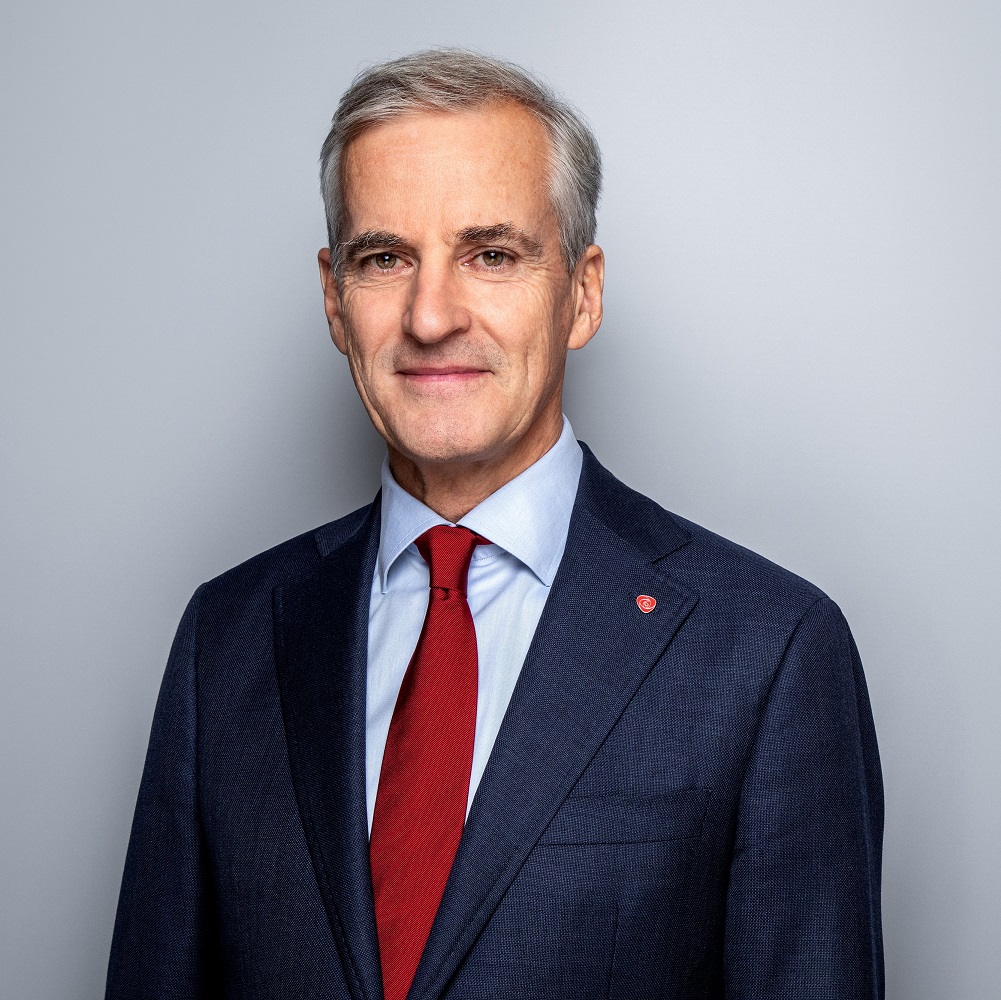
Prime Minister of Norway Jonas Gahr Støre

Norway Prime Minister Jonas Gahr Støre's Speech on board the USS Gerald R. Ford

by Jonas Gahr Støre

Ambassador, Admiral, Excellencies, friends, It is a great honour to welcome the USS Gerald R. Ford and its crew to Norway and to Oslo. This is a historical event, nothing less. – A show of force. But just as important: A show of friendship – and a show of trust. And it is great to be back on the Ford! – Because I have been here before. Actually, I landed on the Ford outside Norfolk, Virginia last September. I experienced how it was to land – but even more memorable was to take off, being catapulted off the ship – I am still recovering. Today, we came by boat. – It is more relaxed, if I may say so. It is very good to be back. I would like to thank you for this extraordinary U.S. hospitality, we can all feel it, thank you, Captain for the superb Friday evening entertainment. Stepping onto the ship once again, on the Norwegian side of the Atlantic Ocean, reminds me of the obvious fact: The ocean does not divide us. It unites us. And the ocean, as we can see, is a gateway, a waterway, that makes us to what we are – we are neighbours and close friends across the Atlantic.  The Ford flies a battle flag which shows the compass rose. – This is an important tool, for centuries, and a powerful symbol – for staying on the right course. Navigating the Oslo fjord is no easy thing, and on your very first overseas visit I believe it proves that you master the tool – the compass, although – probably, the pilots also helped. Your skilled sailors have anchored the ship on a spot which is significant in many ways in my country. Because the Oslo Fjord tells an important part of the history of Norway: Merchants and rulers came this way, landed near Akershus Castle, which defended the city for centuries from invasions from outside. The famous explorer Roald Amundsen – whose name is, as you know, on the frigate – started his South Pole expedition from exactly where we are now, just ashore here. The Nazi German occupants came this way in 1940 – however, they struggled a lot more to get through the narrow parts of the fjord. The Norwegian king returned from his exile in Great Britain in 1945 on HMS Norfolk by this waterway. – War and peace. Shortly after, NATO was founded. Our two nations – founding fathers of NATO – are close allies, and – as you reminded, Admiral – the U.S. Navy is particularly important to Norwegian security. The U.S. Marine Corps equipment, stored in Mid-Norway, is proof of that commitment. The Norwegian Armed Forces appreciates, in numerous contexts, the opportunity to train with U.S. women and men in uniform. – And that is what we will do in the coming days, and we look forward to it. Well planned, joint exercises are essential. This is not new. It is about continuity. We know. Our neighbours know. And our allies know.  The USS Gerald R. Ford is now anchored in the heart of the five Nordic countries – coastwise towards the Atlantic Ocean. This region will now form the new northern flank of NATO – with Finland, its newest member – and just pending the acceptance of Sweden. So – a new security policy map is in the making. For the first time in centuries the Nordic countries will belong to the same security alliance, being U.S. partners and partners of a strong alliance for stability and peace.  Admiral, You are not just navigating a large ship; you are navigating a significant political and diplomatic tool: the U.S. at sea. This ship has the ability to enhance stability and security wherever you sail, whatever waters you travel. You demonstrate the U.S. commitment to NATO and to transatlantic security. To our security. For that we are truly grateful. Against the backdrop of the ongoing war in Ukraine, this is – to put it short – more important than ever. So, dear friends, on this beautiful Friday afternoon, we should be reminded that there have been dire times, wars in Europe, and we should prepare to avoid dire times in the future. Immediately after the attack on Pearl Harbour in December 1941, President Roosevelt wired Prime Minister Churchill the following words: “Today we are all in the same boat (…) and it is a ship which will not and cannot be sunk.”  A truly transatlantic message – and from this our transatlantic alliance emerged. Democracies decided on standing together. Like then, we are in the same boat – and in a big one this time, and it feels safe. So, friends, Welcome to Norway, welcome to Oslo. Welcome to come training with us. I wish you and your fantastic crew of this ship an excellent stay. You have been well received in Oslo. You are our friends. I wish you a good onward voyage. Thank you very much for your attention.

Diplomacy
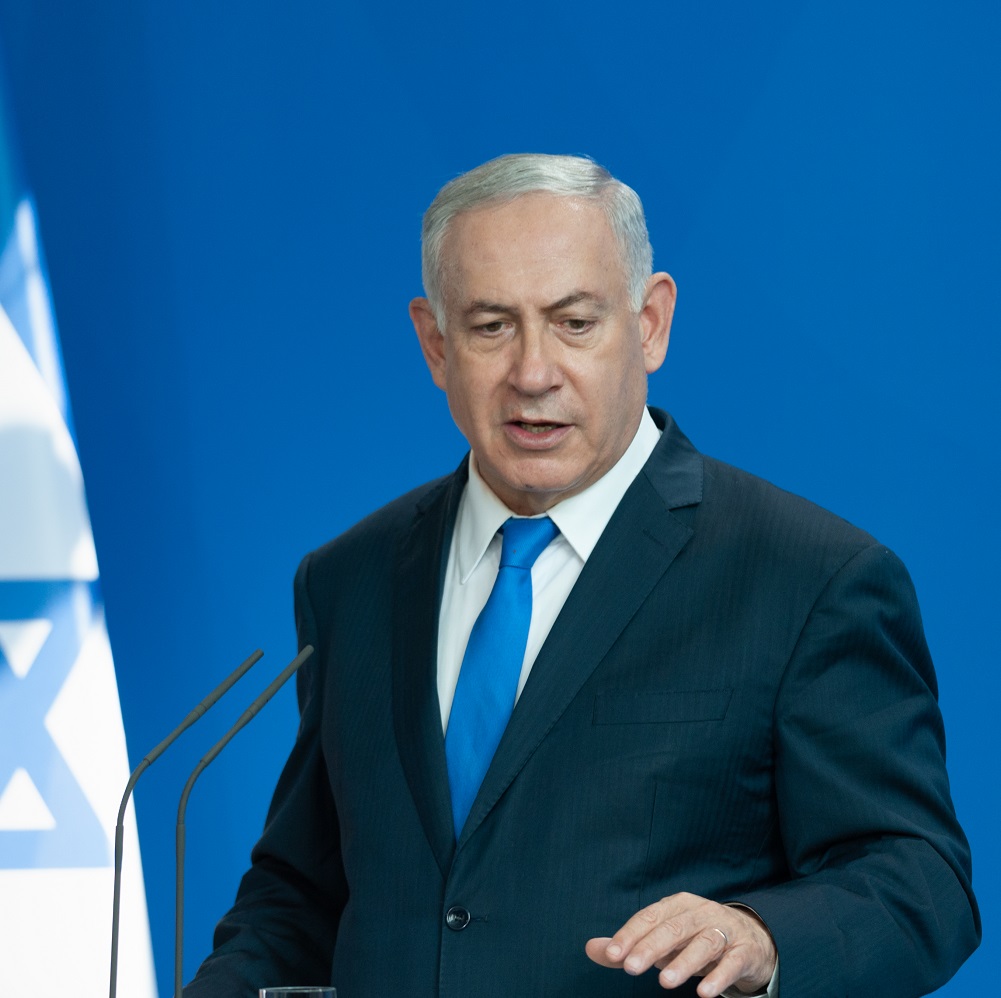
Prime Minister of Israel Benjamin Netanyahu

PM Netanyahu's Remarks at an Event for US Independence Day at the Israel Museum in Jerusalem

by Benjamin Netanyahu

President Herzog, Mrs. Herzog, Ambassador Nides and Virginia,and Taylor, and Taylor's boyfriend,Senator Rick Scott,Speaker of the Knesset,Mayor of Jerusalem,and so many dear friends, Tom, you started your words by remembering an evocative moment, when you were 14 years old in Ein haShofet. Well, somewhat younger than that, I had an evocative moment right here, on this hill top. It was barren. There was no Israel Museum. There was the Monastery of the Cross, olive trees. A barren hilltop except one tree, a balut tree. And we, the Jerusalem kids, would band in the valley and we would try to reach, undetected, to the top, to the tree. Reach the target. I say that because right now, well, last night, Israeli soldiers tried to reach, undetected, the most legitimate target on the planet: people who would annihilate our country. And because this Fourth of July in this extraordinary place falls on an extraordinary moment, Ladies and gentlemen, on behalf of the Government and citizens of Israel, I wish to send my warmest greetings to President Biden and the American people as we join in celebrating their Independence Day. And as Prime Minister, I wish to express my deep appreciation and gratitude for America's enduring support for Israel. For 75 years, the United States has been our irreplaceable and indispensable ally. Irreplaceable. Indispensable. Eleven minutes after our birth, and at vital junctures throughout our history, America has provided Israel with moral and political backing against those committed to wiping us out, to wiping out the one and only Jewish state. No less important, for nearly half a century, America has given generous military assistance to Israel, helping provide us with the tools, the tools we need to defend ourselves by ourselves. Decade after decade, our two countries have moved closer together. I'm proud to say that today, security cooperation has never been better, intelligence sharing has never been deeper and our alliance has never been stronger. I have long said that Israel has no better ally than America, and I say to you, America has no better ally than Israel. I'm confident that Israel's importance to the United States will become even clearer in the years ahead, as we work together not only to protect our common security, but also to develop the most advanced technologies that will reshape the 21st century. They will decide who leads the world. And Israel is America's vital partner in that effort. Ladies and Gentlemen, on July Fourth, all democratic countries should remember that the decisive event that ensured the rise of freedom in modern times, has been the rise of the United States of America. Time and again, America defeated the forces of totalitarianism and terror. Yet we should also remember a basic truth: Freedom is precious, and it's never free. It often requires firm and decisive action against those seeking to spread terror and imperil free societies. I remember that truth every Fourth of July, because that is the day my brother Yoni fell, commanding the rescue force at Entebbe. Today, on the eve of another Fourth of July, Israel's soldiers, once again, find themselves fighting forces of terror. Late last night, the IDF launched a comprehensive action against terrorist strongholds in Jenin. In recent months, Jenin has become a safe haven for terrorists. From that safe haven, terrorists perpetrated savage attacks, murdering Israeli civilians, men, women and children, as many children as they could find. As I speak, our troops our battling the terrorists with unyielding resolve and fortitude, while doing everything, everything, to avoid civilian casualties. I have no doubt that as Israel exercises its inherent right of self-defense, the United States will stand firmly by our side. And I also believe that in the months ahead, Israel and America will work closely together to thwart the danger posed by Iran and seize the opportunity to expand the circle of peace. Ladies and gentlemen, tonight is also an opportunity to thank outgoing US Ambassador Tom Nides for his service and for his friendship towards Israel. Thank you Tom. During your tenure here, you've demonstrated that your support for Israel comes both from the head and from the heart. On a personal level, I will say I'll miss your candor, your wit, your humour and your friendship. No matter what you do, what you decide to do in the next chapter of your life, know that Israel will always be your home away from home. And as you've said many times, quoting President Biden, we are mishpuche. So on behalf of your Israeli family, let me wish you a happy Independence Day. Happy Independence Day America.  God bless America and God bless our valued and unshakable alliance. 

Diplomacy
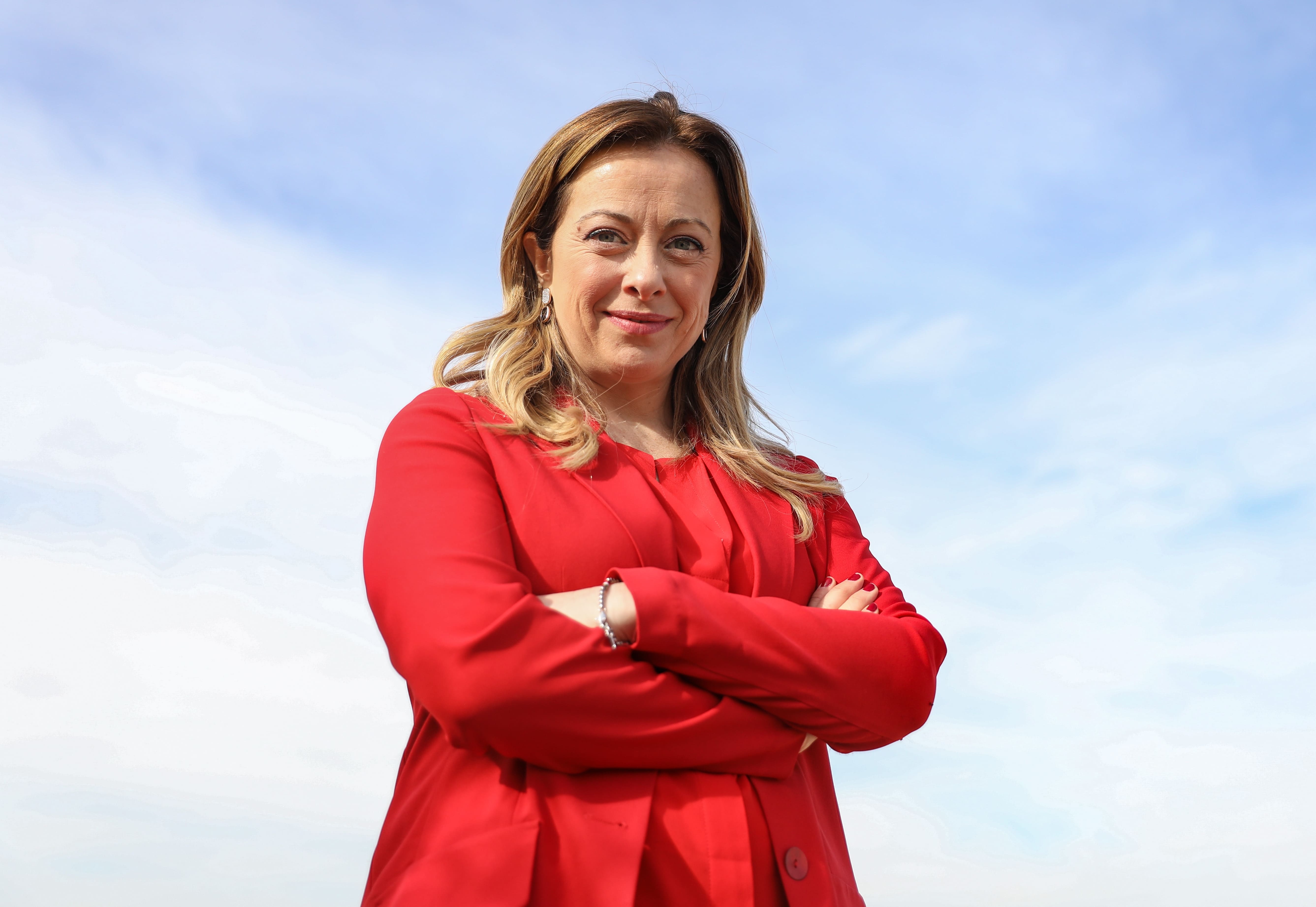
Prime Minister of Italy Giorgia Meloni

President Meloni’s press statement with Speaker of the United States House of Representatives Kevin McCarthy

by Giorgia Meloni

Good morning.  I want to thank Speaker Kevin McCarthy, my friend Speaker Kevin McCarthy, for this occasion he gave me. I want to say that I’m very glad to be here in the heart of the American democracy and in the place that Thomas Jefferson, at the time Secretary of State of President George Washington, wanted to call Capitol Hill to commemorate the famous Temple of Giove on the Capitoline Hill, il Campidoglio - one of the seven hills of Rome. And I say it for it is another sign of the incredibly strong ties between Italy and the United States, ties that have become even deeper in recent times after the Russian war of aggression against Ukraine. More than ever, in this international juncture, our relations are essential. More than ever, we must be able to rely one on the other. Today we had the occasion to exchange views on many international issues, from the war in Ukraine and its effects worldwide, in particular regarding food security, to the stabilisation and development in the Mediterranean area, moreover in Africa, the Indo-Pacific, and Italy’s next Presidency of the G7. I was glad to have this debate with representatives of Congress because it gives me a complete picture of the foreign policy landscape from representatives elected by the American people. I’ve been in politics for most of my life and I’ve been a member of parliament for many, many years, so I perfectly know the importance of parliaments in democracies. That’s why I’m so grateful to Speaker Kevin McCarthy, whom I had the pleasure to meet already in Rome a few months ago, and to the representatives I met today, for the time they wanted to spend with me.  And last but not least, I’m happy to be here in a place decorated by these wonderful frescoes of Costantino Brumidi, another Italian, for this place represents and sums up also the stories of all the Italian-Americans who, with their lives, with their efforts, with their dreams, with their creativity, contributed to strengthening the bonds between our two peoples and contributed to make this democracy the great democracy it is. So, I want to say that I’m proud of these Italians, I’m proud of your grandfather too, Kevin, and I really want to thank them for the contribution they brought to the history and the culture and the identity of this nation. Many of them are today representatives and that shows the role Italy has had for the history of the United States, and that is one reason more to continue strengthening our relations, our cooperation, our friendship, particularly in this tough world, in this tough situation.  Many things are changing around us, but there is something others didn’t expect that we should perfectly prove: that the Western world is united and wants to defend the world based on rules, for without a world based on international law, we would live in a world of chaos, in which who is militarily stronger thinks he can invade his neighbour. That’s not the world we want to live in; we want to live in a world in which we can respect sovereignty and freedom. Thank you very much.

Diplomacy
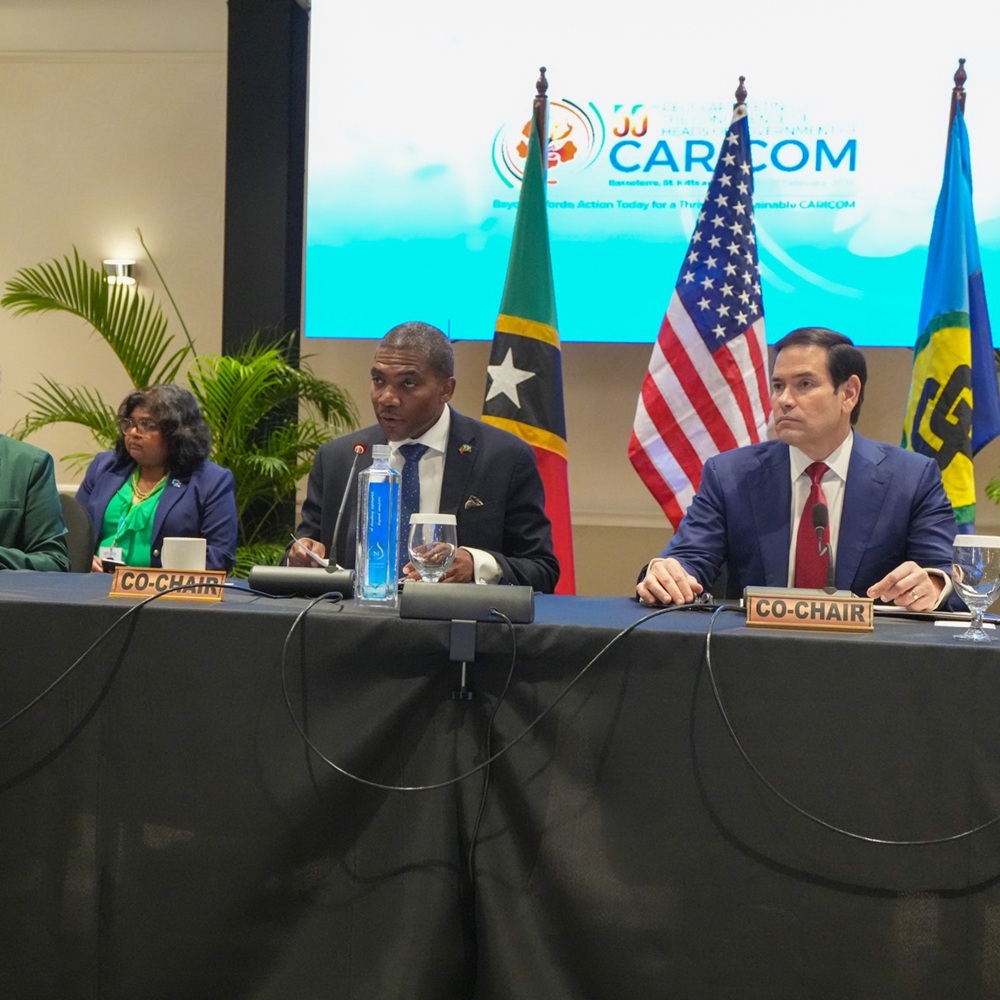
Secretary Marco Rubio participates in a CARICOM Heads of Government meeting in Basseterre, Saint Kitts and Nevis, February 25, 2026. (Official State Department photo by Freddie Everett)

Secretary of State Marco Rubio at the 50th Regular Meeting of the Conference of CARICOM Heads of Government

by Marco Rubio

SECRETARY RUBIO: Well, thank you for allowing me to come. As you can imagine, last night we had the State of the Union; it was two hours, the speech, and then we got on a plane and came here. And when I told my colleagues I needed to come here to Saint Kitts and Nevis on a work trip, they were like, “Oh, sure, you’re going on a work trip.” (Laughter.) But in fact it is, with our important partners, allies, and friends from the region, and I want to thank you for giving me this small opportunity to share some time with you and to be a part of this gathering. I don’t know when the last time – you said 10 years ago was the last time all the members were together, or the last time a secretary of state joined you? MODERATOR: They told me 10 years ago. That is what I am told. SECRETARY RUBIO: I was hoping it had been some 30 years since a secretary of state came. (Laughter.) Anyway, I’m happy to be here. This is – in many ways, the Caribbean Basin is home for me, having grown up and lived almost the entirety of my life in Miami, and during my career in the United States Senate followed very carefully the issues that impact this region. And I am very happy to be in an administration that’s giving priority to the Western Hemisphere after largely being ignored for a very long time. There’s extraordinary opportunities. We share two things: We share common opportunities, and we share some common challenges. And that’s what we hope to confront. I want to start out by saying that I’m also happy to be part of an administration that is not constrained by outdated orthodoxy, outdated boilerplate platitudes about partnerships and the like. We are interested in rebuilding and constructing a new dynamic in this Western Hemisphere in which we partner with all of you on the issues we share in common. I won’t go long. I don’t want to go long, but I want to touch upon a few of those because I think they’re important and they impact the broader Americas. The first is the one I’ve shared with many of you individually and will share with you again now: We believe that perhaps the most urgent security threat in the region – that includes us, but obviously all of you – is the threat of these transnational criminal organizations, many of you – many of whom have funding and power that rival if not exceed that of many of the nation-states that they threaten. We recognize that it is an interlocked challenge that comes from a broader perspective. Number one, they’re obviously fueled by narcotrafficking and other illicit means. Oftentimes, those drugs and the proceeds from those drugs – those drugs are destined for the United States, but the proceeds from those drugs, the money they’re ultimately making, is being made in the streets of our country. This is a danger in the countries that they transit, and it’s ultimately a danger to the national security of the United States. We’ve also watched with alarm at the level of armament that these groups have. We recognize that many of these groups are buying weaponry from the United States, and that we are committed and continue to work very hard with our law enforcement agencies to shut that down. I hope you have seen, both in the case of Haiti but in other dynamics, that we have not shied away, not just from designating groups for what they are – these are terroristic organizations – but even individuals who are responsible for being supportive of them. We’ve also gone after them, and this is something that we have as a shared dynamic. We have a long history of working together on responding to these challenges, but I think our cooperation will have to grow even deeper and our commitment to it will have to grow even stronger because these groups grow stronger. I point you only to something not in the Caribbean Basin, but nonetheless indicative of what we’re – the challenges that we’re facing here, and that is the role that these drug cartels have established for themselves in Mexico. I’m not sure if you’ve seen some of the imagery of these groups after their leader was killed, but they’re out there with full military gear, military weaponry, armed transports – very dangerous. And it is something that we need to address collectively and together. The second thing is there are extraordinary opportunities for economic advancement, to work together on issues like energy. Energy is critical for the future; it’s critical for every economy in order to prosper. Many of the countries represented here today have energy resources that I know you seek to explore responsibly, safely, but in a way that generates wealth and prosperity for your people and your countries, and we want to be your partner in that regard. So that’s another area of – that hopefully we can cooperate on very closely together. And I would add to that that part of the dynamics there is some of the regional – some of the regional opportunities that are occurring. Irrespective of how some of you may have individually felt about our operations and our policy towards Venezuela, I will tell you this, and I will tell you this without any apology or without any apprehension: Venezuela is better off today than it was eight weeks ago. The progress being made there is substantial, and there’s a long ways to go. But the new interim authorities, led by Delcy Rodríguez, have done things that eight or nine weeks ago would have been unimaginable. They have released political prisoners; they have closed Helicoide, which is their most infamous prison of all. They are, for the first time in a long time, generating oil revenue that’s going to the benefit of their people, using those funds not just to make payroll for government services but to purchase medical equipment that’s necessary for their system. There’s a long ways to go, and we’re committed to making it work. We have opened – reopened our embassy in Caracas, where we have an excellent chargé who’s on the ground, along with other government officials, and we intend to continue to build on that. Now, we believe strongly – and I think all of you would share this view – that ultimately, in order for them to take the next step to truly develop that country and to truly benefit from that country’s riches for the benefit of their people, they will need the legitimacy of democratic – fair, democratic elections. But our initial priority in the aftermath of Maduro’s capture was to ensure that there wasn’t instability, that there wasn’t mass migration, that there wasn’t spillover violence, and we believe we have achieved that. Now we are in the process from going from that phase of stability to a phase of recovery. That country needs to recover from a lot of things, including deep, internal fractures, but also some dysfunction that existed in their economic systems. I say all this to you because ultimately we do believe that a prosperous, free Venezuela who’s governed by a legitimate government who has the interests of their people in mind could also be an extraordinary partner and asset to many of the countries represented here today in terms of energy needs and the like, and also one less source of instability in the region. So we expect to work very closely with all of you on that topic as well to the extent possible, and I think it’s related to the topic of security that I highlighted. The third point is just the broader stability of the region. We want the region to be seen. And I include the region of the southern United States, which we know is part of the Caribbean Basin. We want it to be a place that is attractive for inbound investment. Many of you have taken on the – and done a tremendous job of seeking to diversify your economies and continue to seek ways to diversify your economies. To the extent that there are opportunities for American businesses or American investors to be a part of that, we want to facilitate that. We want to be a part of making that happen. Here’s the bottom line: the stronger, the safer, the more prosperous, and the more secure that all of your counties are, the stronger, safer, more secure, and prosperous the United States is going to be. We view our security, our prosperity, our stability to be intricately tied to yours and we are going to evidence in the actions we’re prepared to take and in the priority that we want to give this our intent to follow through on it, which is why I’m here today, which is why I wanted to come here today and interact with all of you collectively and a few of you individually in the time that’s permitted to me. So I want to thank you for this opportunity to address you. I hope that my presence here today serves as a real-world demonstration of our commitment to being your partner, to – I don’t even want to call it resetting relations because it’s really not about a reset. I mean, we have longstanding ties to each of you bilaterally and all of you collectively, but reinvigorating our relationships because we have a lot in common to work on, both opportunities and challenges, and the United States is committed to doing that. And certainly over the next three years and I remain in this post, it will be personal priority to me. It will be one that I will be personally engaged in and it’s one that I hope to leave for my successor, whoever that may be, a very strong and stable relationship that they can continue to build upon as well. So I want to thank you for this opportunity to address you and to join you here today in this gathering. (Applause.)