Subscribe to our weekly newsletters for free

Subscribe to an email

If you want to subscribe to World & New World Newsletter, please enter
your e-mail

Defense & Security
Keir Starmer (Prime Minister, United Kingdom of Great Britiain and Northern Ireland) about

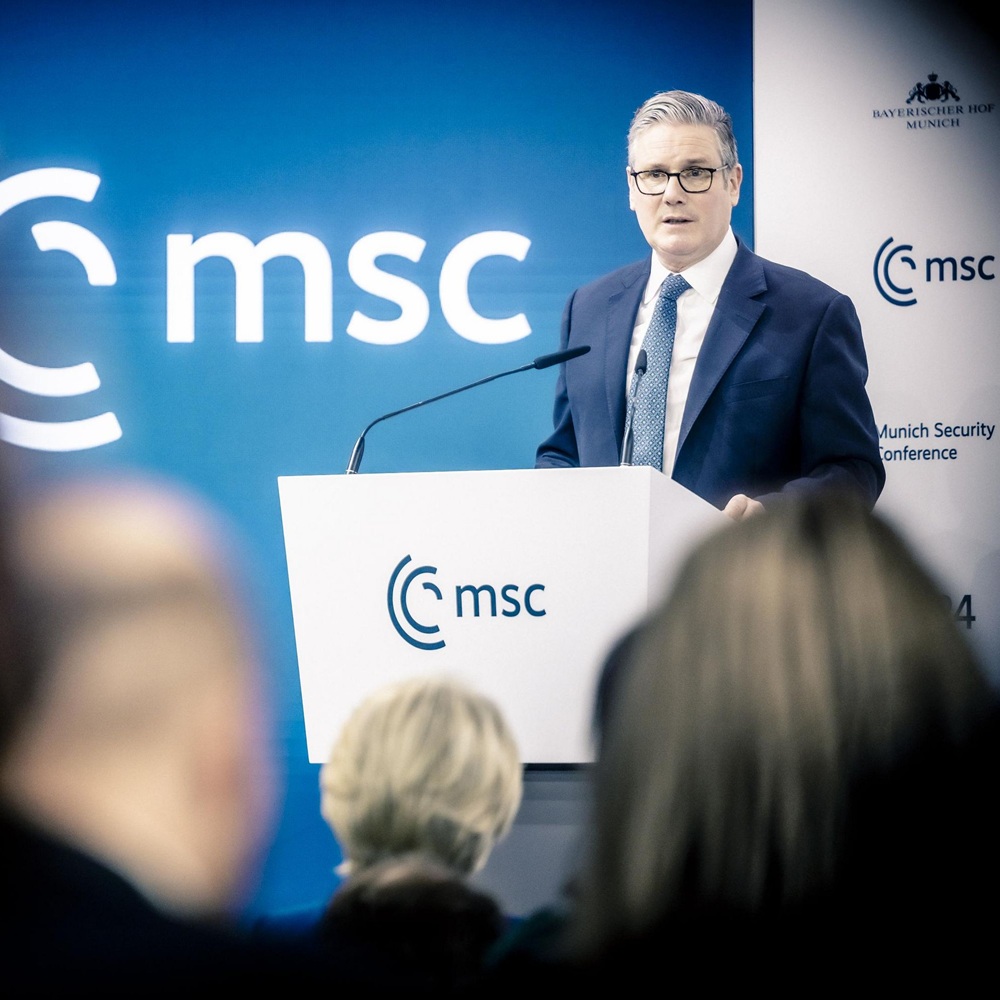
Prime Minister Keir Starmer gave a speech during the Munich Security Conference

by Keir Starmer

Prime Minister Keir Starmer gave a speech during the Munich Security Conference For many years, for most people in the United Kingdom, war has been remote. Something that concerns us deeply, but which happens far off. But now we feel the solidity of peace, the very ground of peace now softening under our feet. It is the job of leaders to be ahead of these seismic shifts. Yet that is against the grain of history. Time and again, leaders have looked the other way, only re-arming when disaster is upon them. This time, it must be different. Because all of the warning signs are there. Russia has proved its appetite for aggression, bringing terrible suffering to the Ukrainian people. Its hyper-threats extend across our continent, not just threatening our security, but tearing at our social order. Collaborating with populists to undermine our values. Using disinformation to sow division. Using cyber-attacks and sabotage to disrupt our lives and deepening the cost-of-living crisis. It is true that Russia has made a huge strategic blunder in Ukraine, and the Russian casualties number well over a million. But even as the war goes on, Russia is re-arming, reconstituting their armed forces, an industrial base. NATO has warned that Russia could be ready to use military force against the Alliance by the end of this decade. In the event of a peace deal in Ukraine, which we are all working hard to achieve, Russia’s re-armament would only accelerate. The wider danger to Europe would not end there. It would increase. So, we must answer this threat in full. At the outset, it is important to be prepared. We do not seek conflict. Our objective is lasting peace, a return to strategic stability, and the rule of law. And in the face of these threats, there is only one viable option. Now, to break the convention of a house of speeches, we are not at a crossroads. The road ahead is straight and it is clear. We must build our hard power, because that is the currency of the age. We must be able to deter aggression. And yes, if necessary, we must be ready to fight. To do whatever it takes to protect our people, our values, and our way of life. And as Europe, we must stand on our own two feet. And that means being bold. It means putting away petty politics and short-term concerns. It means acting together to build a stronger Europe and a more European NATO, underpinned by deeper links between the UK and the EU, across defence, industry, tech, politics, and the wider economy. Because these are the foundations on which our security and prosperity will rest. This is how we will build a better future for our continent. True to the vibrant, free, diverse societies that we represent, showing that people who look different to each other can live peacefully together. But this isn’t against the tenor of our times. Rather, it’s what makes us strong, as we’re prepared to defend it with everything that we have. And we are not the Britain of the Brexit years anymore. Because we know that in a dangerous world, we would not take control by turning in. We would surrender. And I won’t let that happen. That’s why I devote time as Prime Minister to Britain’s leadership on the world stage. And that’s why I’m here today. Because I am clear, there is no British security without Europe, and no European security without Britain. That is the lesson of history and is today’s reality as well. So together we must rise to this moment. We must spend more, deliver more, and coordinate more. And crucially, we must do this with the United States. The US remains an indispensable power. Its contribution to European security over 80 years is unparalleled. And so is our gratitude. At the same time, we recognise that things are changing. The US National Security Strategy spells out that Europe must take primary responsibility for its own defence. That is the new law. Now, there have been a series of thoughtful interventions about what this means, including the argument that we’re at a moment of rupture. Now, I would agree that the world has changed fundamentally, and that we must find new ways to uphold our values and the rule of law. But in responding to that, we must not disregard everything that has sustained us for the last 80 years. That could be a moment of destruction. And instead, I believe, we must make this as a moment of creation. Instead of a moment of rupture, we must make it one of radical renewal. So, rather than pretending that we can simply replace all US capabilities, we should focus on diversifying and decreasing some dependencies. We should deliver generational investment that moves us from over-dependence to interdependence. I’m talking about a vision of European security and greater European autonomy. It does not herald US withdrawal, but answers the call for more burden-sharing in Europe and remake the ties that have served us so well. Because we know the value of our own power. The nature of our power is at the core of human decision. It achieved something that leaders have been trying to do for centuries. From Westphalia to the Congress of Vienna to Versailles. After centuries of conflict, the founders of NATO finally united our continents in peace and security. Our militaries, that once faced each other on the battlefield, now stand side-by-side, pledged to each other’s defence. It is a shield over our heads every single day. And whilst some on the extremes of our politics chip away at this alliance, we defend it. I am proud that my party fought for NATO’s creation. While our then Foreign Secretary Ernest Bevin called it a spiritual union of the West. And we’ve shown our fidelity to that idea, asserting each other’s sovereignty, as we did on Greenland. And crucially, coming to each other’s aid under Article 5. We fought together in Afghanistan, at terrible cost to many in my country and across many allied countries. And so, I say to all NATO members, our commitment to Article 5 is as profound now as ever. And be in no doubt, if called on, the UK would come to your aid today. Instead, we must move forward together to create a more European NATO. As I see it, Europe is a sleeping giant. Our economies dwarf Russia more than ten times over. We have huge defence capabilities, yet too often this adds up to less than the sum of its parts. Fragmented industrial planning and procurement have led to gaps in some areas, and massive duplication in others. Europe has over 20 types of frigate, and 10 types of fighter jet. We have over 10 types of main battle tanks, whilst the US has one. It’s wildly inefficient, and it harms our collective security. The US security umbrella has allowed these bad habits to develop. But now we must break them. And we have shown that we can coordinate in great effect, as was just set out. Supporting Ukraine in a way that Putin never really imagined. Creating the Coalition of the Willing, which now covers almost all of Europe, as well as Canada and our friends in the Asia-Pacific. And going further in our support, with the UK announcing over £500 million this week for more air defence for the Ukrainian people. To meet the wider threat, it is clear that we are going to have to spend more faster. And we have shown our collective intent in this regard as well. With the historic agreement to increase spending to 5% on security and defence. And we are prepared to explore innovative solutions. So, we are stepping up work with like-minded allies on options for a collective approach to defence financing, to help accelerate this vital investment. And as we increase spending, we must use it to its full potential. We must come together to integrate our capabilities on spending and procurement and build a joint European defence industry. I welcome the steps that we have taken so far, which could allow us to participate in the £90 billion Euro loan to Ukraine. I hope we can work together like this going forward. Because, look, the logic of defence is solidarity and collective effort, not market access. In a crisis, our citizens expect us to be ready. So, we need to deliver a step change in collaboration. And I am proud of the work we are already doing together. Delivering cutting-edge drones with Ukraine. Developing next-generation long-range missiles with Germany, Italy and France. Working with our JEF allies to protect our northern flank. Doubling our deployment of British commandos in the Arctic. Taking control of NATO’s Atlantic and Northern Command in Norfolk, Virginia. And transforming our Royal Navy by striking the biggest warship deal in British history with Norway. We are building a fleet of warships to hunt Russian submarines and protect undersea infrastructure. We want to replicate this level of collaboration with other allies across the High North and the Baltics. And I can announce today that the UK will deploy our Carrier Strike Group to the North Atlantic and the High North this year led by HMS Prince of Wales, operating alongside the US, Canada and other NATO allies in a powerful show of our commitment to Euro-Atlantic security. That is also why we are enhancing our nuclear cooperation with France. For decades the UK has been the only nuclear power in Europe to commit its deterrent to protect all NATO members. But now any adversary must know that in a crisis they could be confronted by our combined strength. It shows beyond doubt how vital it is that we work together. So, we must also look at what more we can do with the EU. We must go beyond the historic steps that we took at last year’s UK-EU summit to build the formidable productive power and innovative strength that we need. British companies already account for over a quarter of the continent’s defence industrial base. They are a job-creating, community-building machine employing around 239,000 people across the UK, including in Wales, where this month we’re launching the first of five regional defence-grade deals. We want to bring our leadership in defence, tech and AI together with Europe to multiply our strengths and build a shared industrial base across our continent which could turbocharge our defence production. That requires leadership. To drive greater coherence and coordination across Europe. That is what we’re doing with Germany and France in the E3, working closely with EU partners, particularly Italy and Poland as well as with Norway, Canada and Turkey. So, my message today is the United Kingdom is ready. We see the imperative. We see the urgency. We want to work together to lead a generational shift in defence industrial cooperation. Now this includes looking again at closer economic alignment. We are already aligned with the single market in some areas to drive down the prices of food and energy. We are trusted partners. And as the Chancellor of the Exchequer said this week, deeper economic integration is in all of our interests. So, we must look at where we can move closer to the single market in other sectors as well where that would work for both sides. The prize here is greater security. Stronger growth for the United Kingdom and the EU, which will fuel increased defence spending and the chance to place the UK at the centre of a wave of European industrial renewal. I understand the politics very well. It will mean trade-offs. But the status quo is not fit for purpose. And to me there is no question where the national interest lies. I will always fight for what’s best for my country. I started today talking about avoiding mistakes of the past like delaying action or fragmenting our efforts. But there is something else. In the 1930s, leaders were too slow to level with the public about the fundamental shift in mindset that was required. So, we must work harder today to build consent for the decisions we must take to keep us safe. Because if we don’t, the peddlers of easy answers are ready on the extremes of left and right and they will offer their solutions instead. It’s striking that the different ends of the spectrum share so much. Soft on Russia. Weak on NATO. If not outright opposed. And determined to sacrifice the relationship we need on the altar of their ideology. The future they offer is one of division and then capitulation. The lamps would go out across Europe once again. But we will not let that happen. If we believe in our values, in democracy, liberty and the rule of law. This is the moment to stand up and to fight for them. That is why we must work together. And show that by taking responsibility for our own security, we will help our people look forward. Not with fear, but with determination. And with hope. Thank you very much. Contenido bajo licencia Open Governement Licence v3.0 [https://www.nationalarchives.gov.uk/doc/open-government-licence/version/3/] UK Prime Minister’s Office. GOV.UK. Web.
Energy & Economics
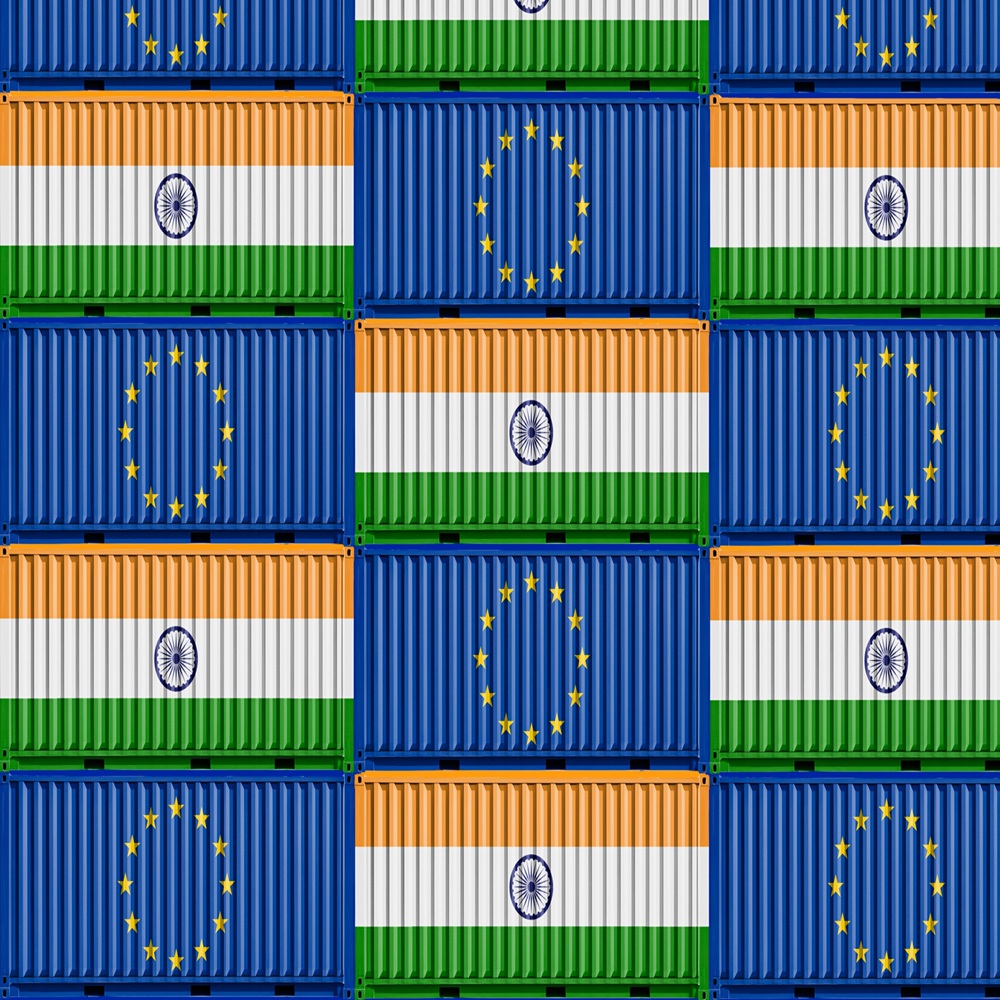
Cargo container with Eu and India flag. Concept of business and trade between Eu and India

Press statement by President António Costa following the EU-India summit

by António Costa

Thank you dear Prime Minister Modi, for welcoming us on this special occasion. We were privileged yesterday to be your Chief Guests for the Republic Day celebrations, such an impressive display of India’s capabilities and diversity. Today is a historic moment. We are opening a new chapter in our relations – on trade, on security, on people to people ties. I am the President of the European Council, but I am also an overseas Indian citizen. Then, as you can imagine, for me, it has a special meaning. I am very proud of my roots in Goa, where my father’s family came from. The connection between Europe and India is something personal to me. Also, because we conclude today our trade negotiations, we relaunched at the Leaders’ meeting that I had the pleasure to host, in May 2021, in my previous capacity. Our summit sends a clear message to the world: at a time when the global order is being fundamentally reshaped, the European Union and India stand together as strategic and reliable partners. Today, we are taking our partnership to the next level. As the two largest democracies in the world, we are working hand in hand: • to deliver concrete benefits for our citizens; and • to shape a resilient global order that underpins peace and stability, economic growth, and sustainable development. I would like to share three messages. First: the European Union and India must work together towards our shared prosperity and security. India is the world's fastest-growing major economy. Trade has flowed between our two continents for centuries. Trade is a crucial geopolitical stabilizer. And a fundamental source of economic growth. Trade agreements reinforce rules-based economic order and promote shared prosperity. That’s why today’s Free Trade Agreement is of historic importance. One of the most ambitious agreements ever concluded. Creating a market of two billion people. In a multipolar world, the European Union and India are working together to grow spheres of shared prosperity. But prosperity does not exist without security: • strengthening our cooperation to better protect our citizens and our shared interests; • working together to counter the full range of security threats we face, in the Indo-Pacific, in Europe and around the world; • reaching a new level of strategic trust between us. That is the significance of our agreement on a Security and Defence Partnership. The first such overarching defence and security framework between India and the European Union. And the first step towards even more ambitious cooperation in the future. This brings me to my second message: as the world's largest democracies and champions of multilateralism, the European Union and India share the responsibility of upholding international law, with the United Nations Charter at its core. Earlier this morning, we had the opportunity to pay tribute to Mahatma Gandhi. And I reflected upon his words which still hold true today: “Peace will not come out of a clash of arms but out of justice lived and done by unarmed nations in the face of odds.” Our summit reaffirmed our commitment to supporting efforts towards a comprehensive, just and lasting peace in Ukraine. One that fully respects Ukraine’s independence, sovereignty and territorial integrity. This is a key moment. We are supporting all efforts to reach a just and sustainable peace. Ukraine has shown its readiness, including at the cost of difficult compromises. I know, dear Prime Minister, that we can count on you to help create the conditions for peace, through dialogue and diplomacy. And this is my final message: together we must show leadership on global issues. Cooperation between the European Union and India will help shape a more balanced, resilient, and inclusive global order. Just two examples: I am proud of the commitments we are making for greater cooperation on clean energy, green transition, and climate resilience. And our collaboration through the Global Gateway and on the India–Middle East–Europe Economic Corridor is decisive for global connectivity. By implementing the ambitious Joint Comprehensive Strategic Agenda towards 2030, we will align our priorities with concrete actions for the next five years: delivering real benefits to our citizens. Today, we have tangible progress and set an example of cooperative leadership on global issues. With: • our Free Trade Agreement; • our Security and Defence Partnership; and • our Joint Strategic Agenda for 2030. These outcomes are a crucial milestone on a longer path. We look forward to continuing the journey. Together, as always. Thank you very much. Press statement by President António Costa following the EU–India Summit, 27 January 2026. © European Union / Council of the EU. Reproduced with permission; original meaning preserved.

Defense & Security
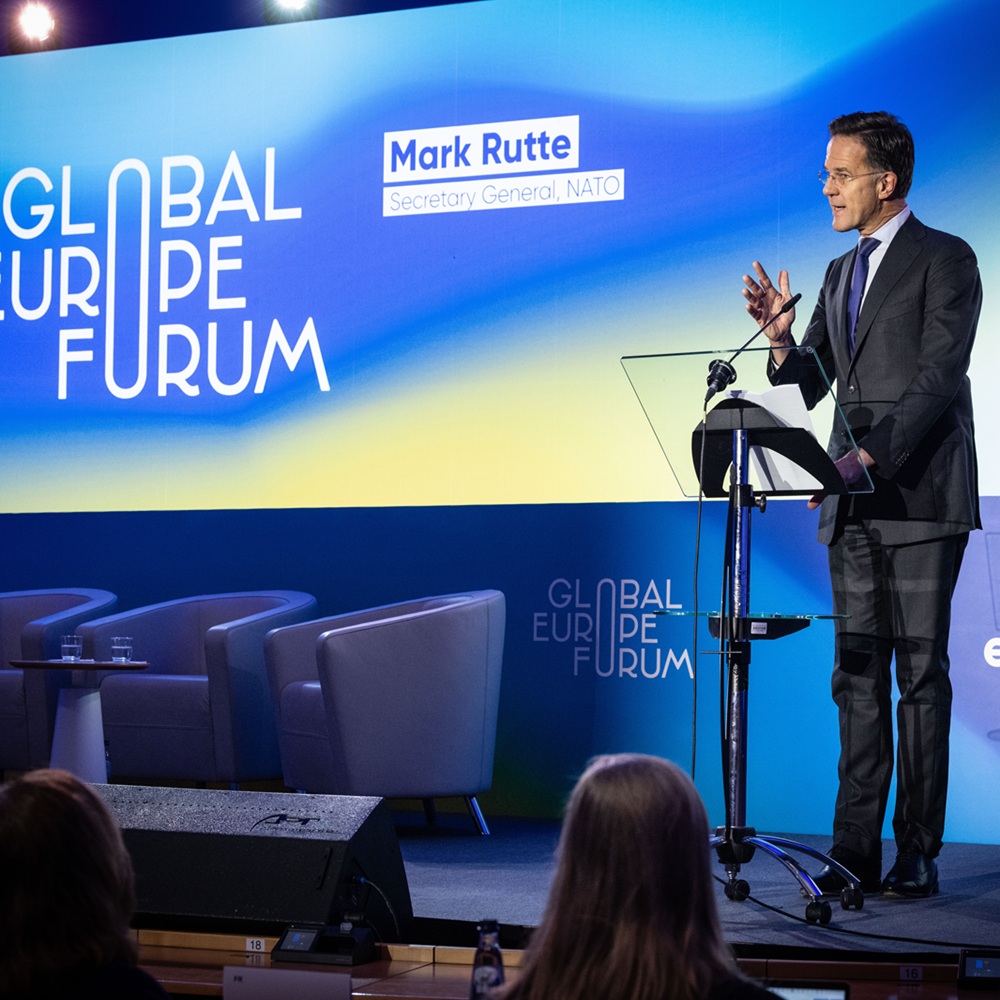
NATO Secretary General Mark Rutte addresses the Renew Europe Global Europe Forum 2026 at the European Parliament

Keynote address by NATO Secretary General Mark Rutte at the Renew Europe Global Europe Forum 2026

by Mark Rutte

Great to be here and to see so many people I know so well. And of course, Teri, who will lead us later in the debate. And of course, you, Madam President, dear Valérie, thank you for your very warm welcome. And let me start by saying that it is always a pleasure to be on this side of town, to be at the European Parliament. This is my first public speaking engagement this year, and it is very meaningful to have this conversation with you – with the members of parliament. At the NATO Summit in The Hague last summer, we decided to make our deterrence and defence a priority. We agreed a plan, as you know, to invest 5% of GDP annually in defence by 2035 – with 3.5% on core defence, and 1.5% on defence- and security-related issues. Yes, that is a lot of money, but it is what is required to build our armed forces and buy the capabilities those forces need to protect us. And here we are talking about battle tanks, fighter jets, ships, long range missiles, and ammunition, but also artificial intelligence, cyber-defence, space capabilities, and of course, much more. In The Hague, we also agreed to speed up defence production and innovation. And this is of course about re-energising our industries across Europe and North America so that they step up supply. There are certainly business opportunities for our industries. But it’s more than that: there are real benefits for all of us. Because when supply goes up, the result is more security, more economic growth, and also many more jobs – the defence dividend. The defence dividend is real. I know – and you all know – that getting to this famous 5% and accelerating production requires hard work and tough decisions from all of us – all our nations and all your constituents. But we need to do it. And we need to do it basically for two reasons. One, because the security situation demands it. We need to be honest: the dangers we face are real, and the dangers we face are lasting. Russia remains our most significant threat. Putin’s war machine is churning out military equipment around the clock. And Moscow is testing us through cyber-attacks, sabotage and more. And there is no reason to believe Russia’s pattern of aggressive and reckless actions will change any time soon. On the contrary, Russia is seeking long-term confrontation. And it is not alone. Russia is working with China, with Iran, and North Korea. And these countries fuel Moscow’s war against Ukraine. And together, they are attempting to undermine our stability and security. At the same time, the threat from terrorism persists, and instability remains rampant in NATO’s southern neighbourhood. The second reason why we need to deliver on the 5% is that the time when we conveniently let the United States carry the burden for our security is over. The US is absolutely committed to NATO. But this commitment comes with a clear and long-standing expectation: that Europe and Canada take more responsibility for their own security. And I believe that is only fair. So 5% must be the direction of travel. There’s basically no time to waste. Ensuring Allies step up and speed up efforts on defence will remain my – and NATO’s – absolute priority as we prepare for the next Summit, which will take place in Ankara, in Türkiye, in July. Then Ukraine, which clearly is still a huge priority. Because, as we all know, our security is inextricably linked to Ukraine’s security. Just last week, I was at the Coalition of the Willing meeting in Paris, where leaders discussed how we can support and secure the future for Ukraine. It was a constructive meeting, where we had concrete discussions on robust security guarantees for Ukraine, and where Europe and the US affirmed their readiness to provide such guarantees to secure Ukraine after a peace deal with Russia. Meanwhile, NATO continues to support Ukraine every day, and we do that in various ways, including through the PURL initiative, which supplies vital US equipment, including air defence – which is particularly vital these days – for Ukraine to protect its people and hold the front line, paid for by Allies. Regardless of when this war ends, our support to Ukraine will continue to be important to ensure a lasting peace. After all, the Ukrainian Armed Forces will remain the first line of defence. Supporting Ukraine and keeping our own people safe is not a job that NATO does alone. It is a team effort. And the European Union is an essential player. The partnership between NATO and the EU is growing stronger every day. And that is exactly what we need. Because, when we combine our strength, of NATO and the EU, we can more effectively tackle the many challenges we face. And as you know, 23 nations, members of the EU, are also Allies in NATO. And working together, we keep Ukraine strong today and able to defend itself against any aggression in the future. And working together, we can produce more defence capabilities, and we can produce them faster. We can innovate better and outsmart our competitors. Now is not the time to go alone. And it’s not the time to create barriers between us that would increase costs, complicate production, and hamper innovation. Instead, we need to leverage our respective strengths even more. NATO is strong at standard setting and capability targets that are informed by our defence plans. NATO has a strong command and control force structure. And the European Union has all the tools of the internal market at its disposal, and of course the convening power to bring together the Member States in the EU, so to make sure that the money is there to invest in defence. So, we complement each other. And yes, it is undeniable that Russia, China, North Korea, and Iran are aligning more and more. And they’re challenging us. But they are only starting to understand what partnership really means. We are miles ahead. We can build on decades of friendship between our organisations and between our nations on both sides of the Atlantic. And we can build on growing partnerships with countries around the world. And that is an incredible advantage. Let’s ensure we retain it. I’ll certainly play my part. And I count on you – and I know I can – to play yours. So, thank you very much, and I look forward to our discussions.

Energy & Economics
Press Conference by European Commission President Ursula von der LEYEN and Mario DRAGHI on the Report on the Future of EU Competitiveness in Brussels, Belgium on September 9, 2024.

Press statement by President von der Leyen on the occasion of the Mercosur leaders' meeting

by Ursula von der Leyen

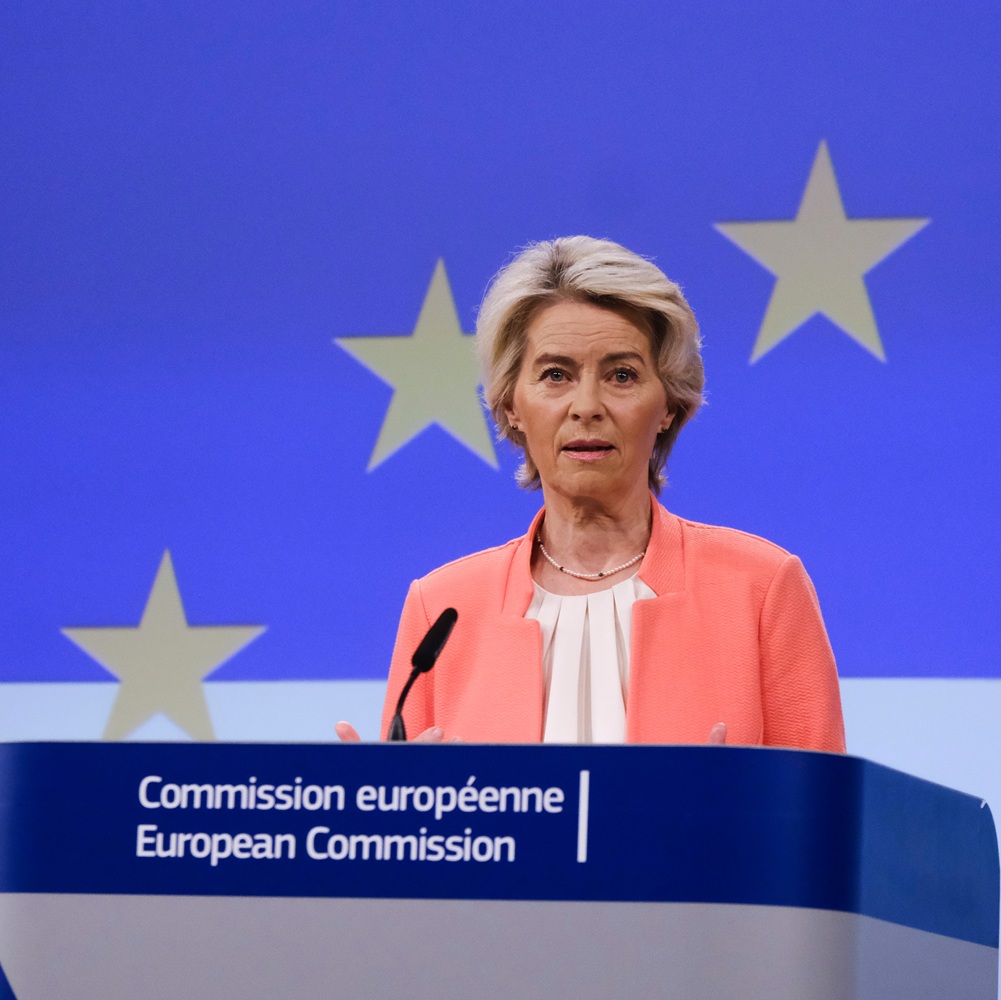
Leer en español In Deutsch lesen Gap اقرأ بالعربية Lire en français Читать на русском Ladies and Gentlemen, Today marks a truly historic milestone. Let me begin by thanking the Chief Negotiators for their dedication and determination. They worked tirelessly, over many years, for an ambitious and balanced agreement – and they succeeded. The bond between Europe and the Mercosur countries is truly one of the strongest in the world. It is a bond anchored in trust, enriched by a shared heritage, that spans centuries of mutual learning and growth. In fact, exactly 30 years ago, in 1994, my predecessor Jacques Delors stood here in Montevideo. He met with your father, dear Luis, who was then President of Uruguay. Together they shared a bold vision. A vision of deeper integration, not only within Europe and Mercosur, but also between them. Today, in Montevideo, we are turning that vision into reality. We are strengthening this unique partnership as never before. And in doing so, we are sending a clear and powerful message to the world. First, in an increasingly confrontational world, we demonstrate that democracies can rely on each other. This agreement is not just an economic opportunity, it is a political necessity. We are like-minded partners. We both believe that openness and cooperation are the true engines of progress and prosperity. I know that strong winds are blowing in the opposite direction – towards isolation and fragmentation. But this agreement is our clear response. We stand together on the global stage, as partners. Second, we are sending a message to our people and businesses in our regions: This agreement was designed with your interests at heart. It is made to work for you. It means: more jobs – and good jobs – more choices and better prices. The European Union and Mercosur create one of the largest trade and investment partnerships the world has ever seen. We are taking barriers down and we are allowing investments in. We are forming a market of over 700 million consumers. This partnership will strengthen entire value chains; it will develop strategic industries; it will support innovation; and it will create jobs and values, on both sides of the Atlantic. Third, we are showing the world that trade can – and must – be guided by values. Trade agreements are more than economic frameworks. They are a way to build communities of shared values. The EU-Mercosur agreement reflects our steadfast commitment to the Paris Agreement and to the fight against deforestation. President Lula's efforts to protect the Amazon are welcome and necessary. But preserving the Amazon is a shared responsibility of all humanity. This agreement ensures that investments respect Mercosur's extraordinary yet fragile natural heritage. My fourth message is that, economically, this is a win-win agreement. Europe is already a leading investment and trade partner for Mercosur. So you know how we do business together. We are focused on fairness and mutual respect. EU-Mercosur will bring meaningful benefits to consumers and businesses, on both sides. It will facilitate European investments in strategic industries across all Mercosur countries: like sustainable mining, renewable energy and sustainable forest products, just to name a few. It will also make it easier to invest in sectors that directly impact the people's daily lives. For example, expanding the electricity grid to rural and remote areas and advancing digitalisation across the region. Finally, let me address my fellow Europeans: This agreement is a win for Europe. 60,000 companies are exporting to Mercosur today – 30,000 of them are small and medium-sized enterprises. They benefit from reduced tariffs, simpler customs procedures and preferential access to some critical raw materials. This will create huge business opportunities. To our farmers: We have heard you, listened to your concerns and we are acting on them. This agreement includes robust safeguards to protect your livelihoods. EU-Mercosur is the biggest agreement ever, when it comes to the protection of EU food and drinks products. The agreement protects 350 EU geographical indications. In addition, our European health and food standards remain untouchable. This is the reality – the reality of an agreement that will save EU companies EUR 4 billion worth of export duties per year while expanding our markets and opening new opportunities for growth and jobs on both sides. I want to thank President Lacalle Pou for hosting this Summit and for bringing us together in Montevideo. This is a good day for Mercosur, a good day for Europe and a landmark moment for our shared future. A whole generation dedicated their effort, vision and determination to bring this agreement to life. Now, it is our turn to honour that legacy. Let us ensure that this agreement delivers on its promises and serves the generations to come. Thank you very much.

Defense & Security
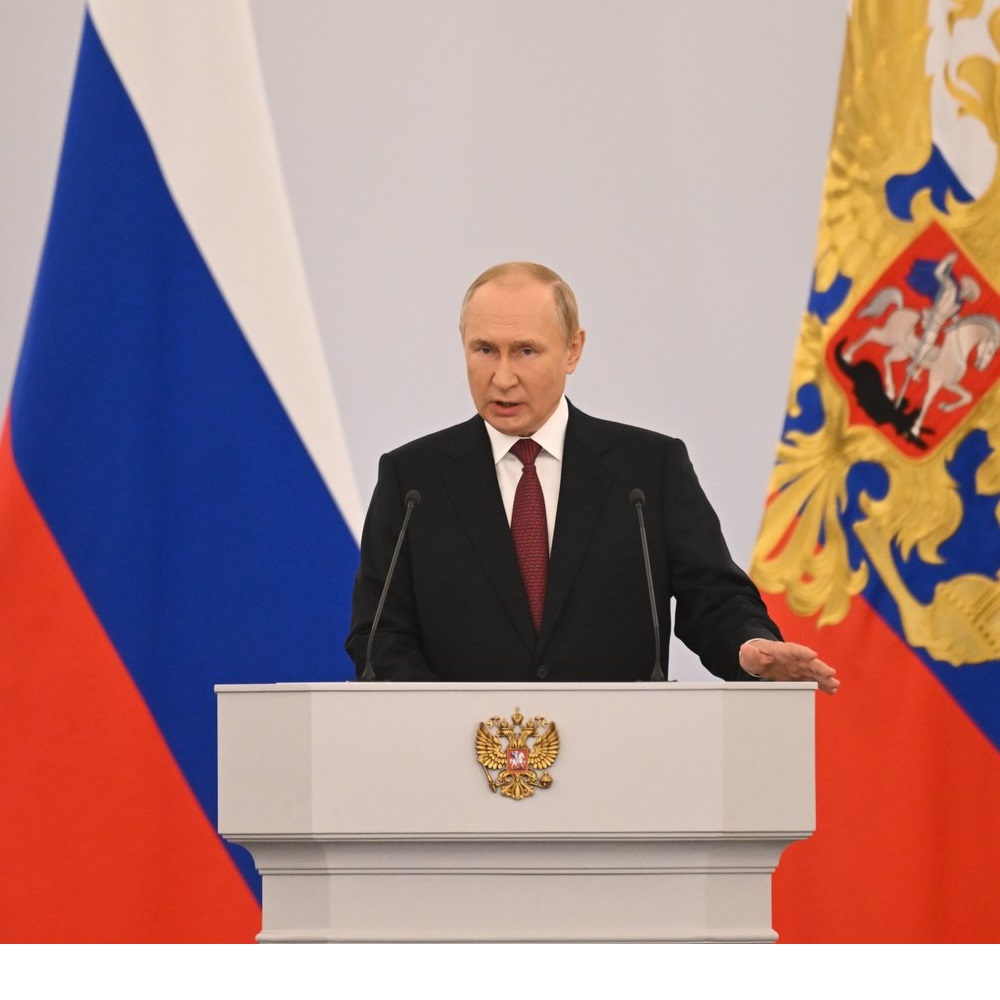
8 November 2022 Vladimir Putin during a speech at the ceremony of signing agreements on the annexation of the DPR, LPR, Zaporozhye, and Kherson regions to Russia. Attribution to: Council.gov.ru (http://council.gov.ru/events/news/138807/)

Statement by the President of the Russian Federation

by Vladimir Putin

한국어로 읽기 Leer en español In Deutsch lesen Gap اقرأ بالعربية Lire en français Читать на русском President of Russia Vladimir Putin: I would like to inform the military personnel of the Russian Federation Armed Forces, citizens of our country, our friends across the globe, and those who persist in the illusion that a strategic defeat can be inflicted upon Russia, about the events taking place today in the zone of the special military operation, specifically following the attacks by Western long-range weapons against our territory.The escalation of the conflict in Ukraine, instigated by the West, continues with the United States and its NATO allies previously announcing that they authorise the use of their long-range high-precision weapons for strikes inside the Russian Federation. Experts are well aware, and the Russian side has repeatedly highlighted it, that the use of such weapons is not possible without the direct involvement of military experts from the manufacturing nations.On November 19, six ATACMS tactical ballistic missiles produced by the United States, and on November 21, during a combined missile assault involving British Storm Shadow systems and HIMARS systems produced by the US, attacked military facilities inside the Russian Federation in the Bryansk and Kursk regions. From that point onward, as we have repeatedly emphasised in prior communications, the regional conflict in Ukraine provoked by the West has assumed elements of a global nature. Our air defence systems successfully counteracted these incursions, preventing the enemy from achieving their apparent objectives.The fire at the ammunition depot in the Bryansk Region, caused by the debris of ATACMS missiles, was extinguished without casualties or significant damage. In the Kursk Region, the attack targeted one of the command posts of our group North. Regrettably, the attack and the subsequent air defence battle resulted in casualties, both fatalities and injuries, among the perimeter security units and servicing staff. However, the command and operational staff of the control centre suffered no casualties and continues to manage effectively the operations of our forces to eliminate and push enemy units out of the Kursk Region.I wish to underscore once again that the use by the enemy of such weapons cannot affect the course of combat operations in the special military operation zone. Our forces are making successful advances along the entire line of contact, and all objectives we have set will be accomplished.In response to the deployment of American and British long-range weapons, on November 21, the Russian Armed Forces delivered a combined strike on a facility within Ukraine’s defence industrial complex. In field conditions, we also carried out tests of one of Russia’s latest medium-range missile systems – in this case, carrying a non-nuclear hypersonic ballistic missile that our engineers named Oreshnik. The tests were successful, achieving the intended objective of the launch. In the city of Dnepropetrovsk, Ukraine, one of the largest and most famous industrial complexes from the Soviet Union era, which continues to produce missiles and other armaments, was hit.We are developing intermediate-range and shorter-range missiles in response to US plans to produce and deploy intermediate-range and shorter-range missiles in Europe and the Asia-Pacific region. We believe that the United States made a mistake by unilaterally destroying the INF Treaty in 2019 under a far-fetched pretext. Today, the United States is not only producing such equipment, but, as we can see, it has worked out ways to deploy its advanced missile systems to different regions of the world, including Europe, during training exercises for its troops. Moreover, in the course of these exercises, they are conducting training for using them.As a reminder, Russia has voluntarily and unilaterally committed not to deploy intermediate-range and shorter-range missiles until US weapons of this kind appear in any region of the world.To reiterate, we are conducting combat tests of the Oreshnik missile system in response to NATO’s aggressive actions against Russia. Our decision on further deployment of intermediate-range and shorter-range missiles will depend on the actions of the United States and its satellites.We will determine the targets during further tests of our advanced missile systems based on the threats to the security of the Russian Federation. We consider ourselves entitled to use our weapons against military facilities of those countries that allow to use their weapons against our facilities, and in case of an escalation of aggressive actions, we will respond decisively and in mirror-like manner. I recommend that the ruling elites of the countries that are hatching plans to use their military contingents against Russia seriously consider this.It goes without saying that when choosing, if necessary and as a retaliatory measure, targets to be hit by systems such as Oreshnik on Ukrainian territory, we will in advance suggest that civilians and citizens of friendly countries residing in those areas leave danger zones. We will do so for humanitarian reasons, openly and publicly, without fear of counter-moves coming from the enemy, who will also be receiving this information.Why without fear? Because there are no means of countering such weapons today. Missiles attack targets at a speed of Mach 10, which is 2.5 to 3 kilometres per second. Air defence systems currently available in the world and missile defence systems being created by the Americans in Europe cannot intercept such missiles. It is impossible.I would like to emphasise once again that it was not Russia, but the United States that destroyed the international security system and, by continuing to fight, cling to its hegemony, they are pushing the whole world into a global conflict.We have always preferred and are ready now to resolve all disputes by peaceful means. But we are also ready for any turn of events.If anyone still doubts this, make no mistake: there will always be a response.

Diplomacy
Main img

Press statement on the occasion of the visit of French President Emmanuel Macron

by Luiz Inácio Lula da Silva

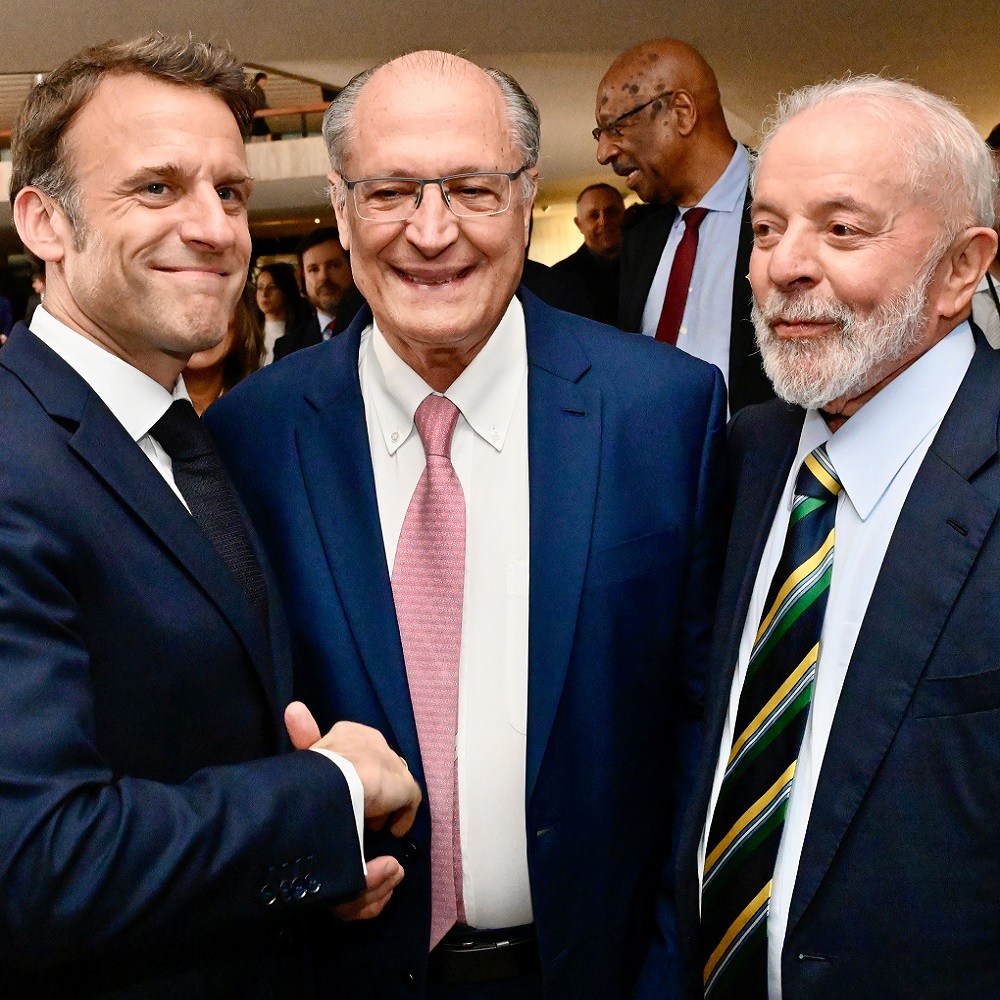
한국어로 읽기 Leer en español In Deutsch lesen Gap اقرأ بالعربية Lire en français Читать на русском Press statement on the occasion of the visit of French President Emmanuel Macron Full statement to the press by the President of the Republic, Luiz Inácio Lula da Silva, following the visit of French President Emmanuel Macron in Brasília (DF), on March 28, 2024 It is a great joy to reciprocate the hospitality with which my delegation and I were received in Paris when I participated in the Summit for a 'New Global Financial Pact' last June. Over the past three days, we have carried out an extensive agenda that included stops in Belém, home to COP30; Itaguaí, where we have Prosub; and now Brasília, for a State visit. This true marathon gives a sense of the breadth of the cooperation and friendship ties between France and Brazil. Among traditional powers, none are closer to Brazil than France. And among emerging powers, you tell me if any are closer to France than Brazil. In today's highly complex international landscape, the dialogue between our nations serves as a vital bridge connecting the Global South to the developed world, fostering efforts to overcome structural inequalities and achieve a more sustainable planet. Brazil and France are committed to collaborating in advancing a shared global vision through democratic dialogue. A vision grounded in the priority of production over unproductive finance, solidarity over selfishness, democracy over totalitarianism, and sustainability over predatory exploitation. President Macron was able to personally witness that our commitment to the environment is not merely rhetorical. In the past year, we have reduced illegal deforestation in the Amazon by 50%, and we aim to eliminate it entirely by 2030. As a symbol of the revitalization of our partnership, today we embraced a New Action Plan, broadening our collaboration into new arenas. These include financing the ecological and energy transition, advancing in bioeconomy, agriculture, public administration, digital issues, artificial intelligence, and reinforcing human rights and gender equality on our bilateral agenda. This range of topics is reflected in the more than 20 agreements we celebrate today. We discussed the success of the Brazil-France Economic Forum, held yesterday in São Paulo, which had not convened presentially since 2019. We explored ways to expand and diversify trade, which reached 8.4 billion dollars last year and has the potential to grow even further. France is the third-largest investor in Brazil, with a strong presence in sectors such as hospitality, energy, defense, and high technology, which generate employment and income in our country. I presented to President Macron the new investment opportunities in infrastructure and sustainability facilitated by the Growth Acceleration Program (Programa de Aceleração do Crescimento - PAC) and the Neoindustrialization Program. I presented our commitment to combating inequalities as the cornerstone of Brazil's G20 Presidency. Within this context, we are launching a Global Alliance Against Hunger and Poverty. As we mark the 80th anniversary of the Bretton Woods institutions this year, President Macron and I concur on the imperative for the G20 to send a clear message advocating for global governance reform and the reinforcement of multilateralism. We also agree that it is time for the super-rich to pay their fair share of taxes, in line with the proposal for fair and progressive international taxation that Brazil advocates within the G20. As strategic partners, we exchanged views on the major dilemmas facing humanity. Across the globe, democracy is under the shadow of extremism. The denial of politics and the dissemination of "hate speech" are growing and concerning. For this reason, Brazil joined, in 2023, the French initiative Partnership for Information and Democracy and will continue to work to promote and protect the circulation of reliable information. It is time to promote a truly multilateral debate on the governance of artificial intelligence. It is unacceptable for a new divide to emerge, segregating wealthy nations, possessors of this technology, from developing countries where basic internet access remains precarious. I reiterated to President Macron Brazil's unwavering belief in dialogue and the defense of peace. My administration will continue working diligently to ensure that Latin America and the Caribbean remain a conflict-free zone, where dialogue and international law prevail. The Security Council's paralysis in response to the conflicts in Ukraine and Gaza is both alarming and inexplicable. The arguments questioning the obligation to comply with the recent ceasefire directive in Gaza during the month of Ramadan once again undermine the authority of the Council. Discussing a world governed by rules that are not collectively agreed upon signifies a regression of centuries, reverting back to the law of the jungle. Brazil categorically condemns all forms of anti-Semitism and Islamophobia. We cannot permit religious intolerance to gain ground among us. Jews, Muslims, and Christians have always lived in perfect harmony in Brazil, contributing to the construction of the modern nation we see today. Dear friend Macron, the Strategic Partnership with France embodies our joint endeavor to modernize and invigorate our economies, prioritizing sustainability and upholding human rights. I am convinced that, even after three intense days, there is still much work ahead of us. The future holds countless possibilities for our countries to cooperate, develop, and create together I look forward to seeing you again soon at the G20 Summit in Rio de Janeiro. Thank you very much.

Diplomacy
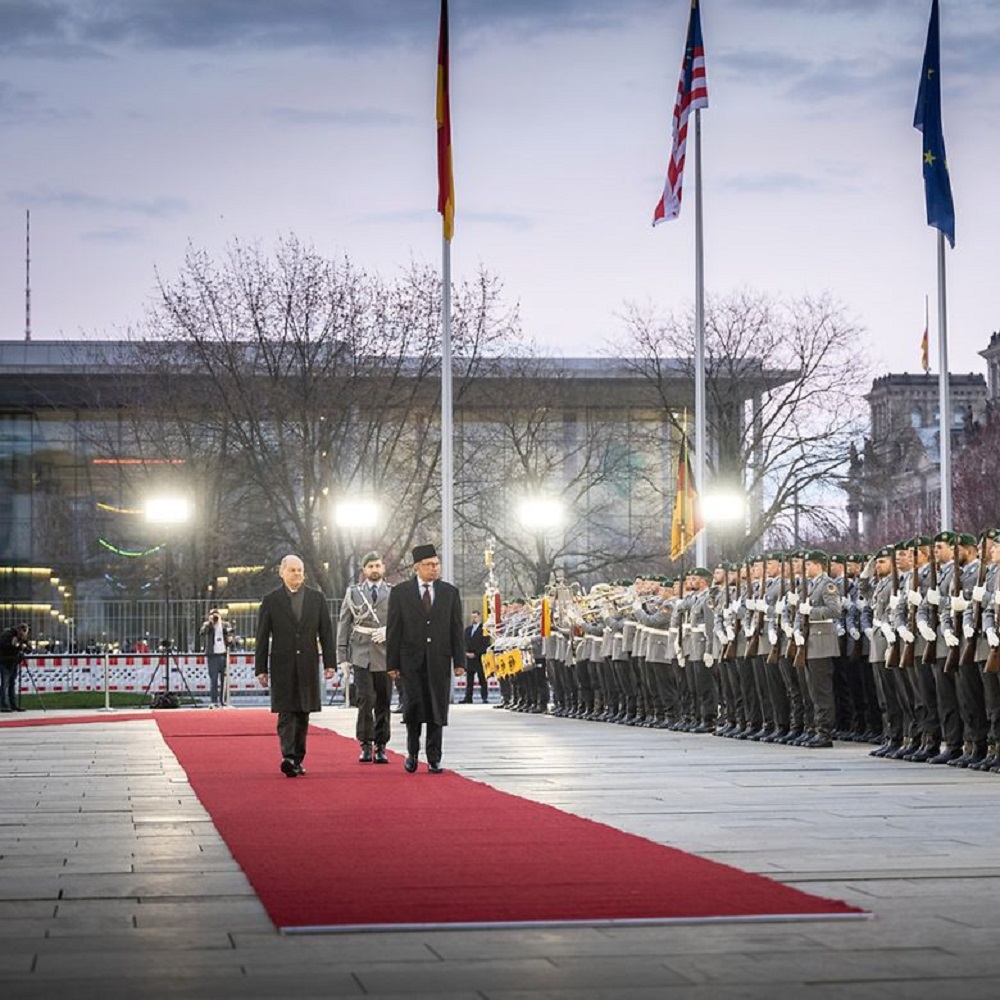
Chancellor Sholz and Prime Minister Ibrahim in Berlin

Press conference by Federal Chancellor Scholz and the Prime Minister of Malaysia, Anwar Ibrahim, on Monday, March 11, 2024 in Berlin - Wording

by Olaf Scholz , Anwar Ibrahim

BK Scholz: A warm welcome, Mr. Prime Minister! I am delighted to welcome you here to Germany for the first time. Your visit is a very special start to a Southeast Asia Week with several high-ranking visits from this important region of the world here in Berlin. The Indo-Pacific region is of great importance to Germany and the European Union. We therefore want to intensify political and economic cooperation. Germany already maintains close economic relations with the region. Malaysia is Germany's most important trading partner in ASEAN. This is of great importance because it is associated with many direct investments in the country, but also with all the economic exchange that results from this. We would like to further expand this partnership. Of course, this is particularly true with regard to the objective of further diversifying our economic relations with the whole world. We want to have good economic and political relations with many countries. We also want closer cooperation on climate protection and the expansion of renewable energies. We are therefore very pleased with Malaysia's announcement that it will stop building new coal-fired power plants and dramatically increase the share of renewable energies. We think this is very important. Malaysia and Germany are established democracies. We are both committed to multilateralism and compliance with international law. It is therefore also right that we deepen our security and defense cooperation. The defense ministries are already working on the necessary cooperation agreements. Of course, we also discussed developments in the Middle East, developments in Gaza and the situation following the Hamas attack on Israeli citizens. It is no secret that our perspective on the Middle East conflict is different to that of others. But that makes it all the more important to exchange views with each other. In any case, we agree that more humanitarian aid must reach Gaza. This is also our clear call to Israel, which has every right to defend itself against Hamas. We do not believe that a ground offensive on Rafah is right. An important step now would also be a ceasefire that lasts longer, preferably during Ramadan, which has now begun and during which we broke the fast together today. Such a ceasefire should help to ensure that the Israeli hostages are released and that, as I said, more humanitarian aid arrives in Gaza. We also have a very clear position on long-term development. Only a two-state solution can bring lasting peace, security and dignity for Israelis and Palestinians. That is why it is so important that we all work together to ensure that a good, peaceful perspective, a lasting common future is possible for Israelis and Palestinians, who coexist well in the two states. Of course, the world is marked by many other conflicts and wars, especially the dramatic war that Russia has started against Ukraine. It is a terrible war with unbelievable casualties. Russia, too, has already sacrificed many, many lives for the Russian president's imperialist mania for conquest. This is against all human reason. That is why we both condemn the Russian war of aggression. It is important to emphasize this once again. The Indo-Pacific is of great importance for the future development of the world. Of course, this also applies to all the economic development and development of the countries there. I therefore welcome the efforts of Malaysia and the ASEAN states to settle disputes peacefully and to find ways to ensure that this becomes typical of everything that has to be decided there. Any escalation must be avoided at all costs. Peace and stability must always and everywhere be maintained on the basis of international law. This applies in particular to the freedom of the sea routes and compliance with the UN Convention on the Law of the Sea. That is why the ongoing negotiations on the Code of Conduct are so important. Thank you once again for coming to Berlin on the first day of Ramadan, at least for our location. We broke the fast together earlier. For me, this is a good sign of peaceful coexistence and solidarity. I see it as something very special. Ramadan Kareem! PM Anwar: Thank you very much, Mr. Chancellor, dear Olaf! Thank you for your wonderful hospitality and for bringing us together today to break the fast! Germany is of course one of our most important partners in Europe. We have seen a huge increase in trade and investment. We can see that major investments have been made. We have visited Siemens. Infineon is a big investor in Malaysia and is showing its confidence in the country and the system here. There are many other examples of companies operating in Malaysia. Of course, my aim is always to expand bilateral relations in the areas of trade and investment and also to benefit from your experience, both in the field of technology and in environmental and climate protection issues. We have set ourselves clear goals for the energy transition. We have drawn up an action plan that is also in line with your policy. Renewable energy, ammonia, green hydrogen - we are pursuing these very actively. Fortunately, Malaysia is also a hub within ASEAN for these renewable energies and technologies. We welcome the German interest in this, also with regard to new investments in the renewable energy sector and with a view to climate change. We have of course discussed this cooperation on this occasion and I am pleased with the Chancellor's willingness to tackle many of these issues. Sometimes we have small differences of view, but it really shows the trust we have in each other. As far as the war in Gaza is concerned, we agree that the fighting must stop. We need a ceasefire immediately. We also need humanitarian aid for the people of Palestine, especially in Gaza. Of course we recognize the concern about the events of 7 October. We also call on Europeans, and Germany in particular, to recognize that there have been 40 years of atrocities, looting, dispossession of Palestinians. Let us now look forward together! I agree with the Chancellor on what he said about the two-state solution. It will ensure peace for both countries. Together we can ensure that there is economic cooperation and progress for the people in the region. We have also positioned ourselves with regard to the war in Ukraine. We have taken a very clear stance against aggression, against efforts to conquer. This applies to every country and, of course, also to Russian aggression in Ukraine. We want a peaceful solution to the conflict. Because this conflict has an impact on trade and economic development as far away as Asia. We have a peaceful region. ASEAN is currently the fastest growing economic area in the world, precisely because it is so peaceful - apart from the issue in Myanmar, but that is contained within Myanmar. The conflict has not spread to the region, although there are of course refugee movements. Within ASEAN, we have jointly agreed on a five-point consensus and the parameters by which the issue can be resolved. The ASEAN countries have agreed that Laos, Malaysia and Indonesia would like to lead the troika together and resolve the conflict with Myanmar. Then there are other issues such as the South China Sea and China. I assured the Chancellor that we are getting along well with China. We have not seen any difficult incidents, but of course we see ourselves as an absolutely independent country. We are of course a small country, but we stand up for our right to cooperate with many countries to ensure that the people of Malaysia also benefit from these mechanisms and from cooperation with other countries. Once again, Mr. Chancellor, thank you very much for this meeting. I am very impressed by your insight, by your analysis of the situation. It is very impressive to see what a big country like Germany is doing, and it was also good to share some of our concerns. I am pleased with the good cooperation. It's not just about trade and investment, it's also about the overall development of bilateral relations in all areas. I also told the Chancellor that the study of Goethe is gaining interest in Malaysia. Questions from JournalistsQuestion: Mr. Prime Minister, can you tell us something about the progress of German investment in Malaysia and can you say something about the challenges for the government in the transition to renewable energy in Malaysia? Mr. Chancellor, in 2022 you spoke about the turning point in German foreign and security policy. But if you now look at ASEAN or Southeast Asia: How does Germany see Malaysia in terms of its bilateral importance, trade and also regional issues? PM Anwar: Within the European Union, Germany is our biggest trading partner. They have made large investments, up to 50 billion US dollars. I have already addressed Infineon and many other leading German companies and I have said in our discussions that we are very pleased that they have chosen Malaysia as an important hub, as a center of excellence, as a training center in the region and I look forward to further cooperation in this area. Of course, I also mentioned that education should be a priority. There are 1000 Malaysian students here in Germany and also several hundred German students in Malaysia. We are also very happy about that. We are working with many German companies to train people and strengthen cooperation. We have taken important steps in renewable energy. We are investing in solar energy, in green energy and in our renewable energy export capacity. There is now an undersea green energy cable to the new capital of Indonesia, another to Singapore, and another cable to the Malay Peninsula. You can also see from the fact that data centers and artificial intelligence are growing and thriving in the Malaysian region that this has great potential. BK Scholz: Thank you very much for the question. - First of all, the turning point lies in the Russian attack on Ukraine. This was the denunciation of an understanding that we have reached in the United Nations, in the whole world, namely that no borders are moved by force. But the Russian war of aggression is aimed at precisely that, namely to expand its own territory as a large country at the expense of its neighbor - with a terrible war. We cannot accept this - not in Europe and not anywhere else in the world. That is why it is right for us to support Ukraine and to do so in a very comprehensive manner. After the USA, Germany is the biggest supporter - both financially and in terms of arms supplies - and in Europe it is by far the country that is making the greatest efforts to help Ukraine defend itself. But this touches on an issue that is important for the whole world. Anyone who knows a little about the history of the world - and it is colorful and diverse - knows that if some political leader is sitting somewhere, leafing through history books and thinking about where borders used to be, then there will be war all over the world for many, many years. We must therefore return to the principle of accepting the borders as they are and not changing them by force. That is the basis for peace and security in the world. That is why we are also very clear on this together. For Germany, however, this does not mean that we lose sight of our own economic development, the development of Europe and the world. As you may already have noticed, it is particularly important for the government I lead and for me as Chancellor of Germany that we now make a major new attempt to rebuild relations between North and South and to ensure that we cooperate with each other on an equal footing in political terms, that we work together on the future of the world, but that we also do everything we can to ensure that the economic growth opportunities and potential of many regions in the world are exploited to the maximum. This is why economic cooperation between Europe and ASEAN, between Germany and ASEAN, between Germany and Malaysia plays such an important role, and we want to make progress in the areas we have just mentioned. Renewable energies are central to this. We know that: We need to increase the prosperity of people around the world. Billions of people want to enjoy a level of prosperity similar to that which has been possible for many in the countries of the North in recent years. If this is to succeed, it will only be possible if we do not damage the environment in the process, which is why the expansion of renewable energies is so important. New and interesting economic opportunities are also emerging, for example in the area of hydrogen/ammonia - this has been mentioned - because the industrial perspective of the future will depend on more electricity, which we need for economic processes - and this from renewable energies - and on hydrogen as a substitute for many processes for which we currently use gas, coal or oil. Driving this forward and creating prosperity together all over the world is a good thing. The fact that the German semiconductor industry and successful German companies in the electronics sector are investing so much in Malaysia is a good sign for our cooperation. We want to intensify this. Question: Thank you very much, Mr. Prime Minister. Your government supports Hamas and, unlike Western countries, has not described Hamas' attack on Israel as terrorism. In November you said that Hamas was not a terrorist organization. Do you stand by this assessment and are you not afraid that this position on Hamas could affect relations with countries like Germany? Mr. Chancellor, I have a question for you: Do you think that Malaysia's position on Hamas could damage bilateral relations between Germany and Malaysia? And if I may, one more question on Ukraine: Germany is still discussing the delivery of cruise missiles to Ukraine. The Foreign Minister said yesterday that a ring swap with the UK was an option, i.e. Germany sending Taurus cruise missiles to the UK and the UK then sending its Storm Shadow cruise missiles to Ukraine. Do you think this is also an option? PM Anwar: Our foreign policy position is very clear and has not changed. We are against colonialism, apartheid, ethnic cleansing and dispossession, no matter in which country it takes place, in Ukraine or in Gaza. We cannot simply erase or forget 40 years of atrocities and dispossession that have led to anger in the affected societies and also action after action. Our relations with Hamas concern the political wing of Hamas, and we will not apologize for that either. This cooperation has also helped to raise concerns about the hostages. We have no links with any military wings. I have already said that to my European colleagues and also in the US. But we have some different views. The Australian National Congress also recognized long before the Europeans or Americans that this apartheid policy must be abolished. That's why we have taken that position. We need to understand what the fundamental problem with this is. We cannot allow people to be plundered, to have their homes taken away from them. This has to be solved. Am I in favor of people, of children being killed? Absolutely not. No, nobody should do that. That is the consistency in our politics. But I am against this obsession, this narrative, as if the whole problem started on October 7 and would end then. It didn't start on October 7, and it won't end then either. It started 40 years ago and it's still going on today. Against this background, I am of the opinion - and I have also said this to the Chancellor - that we should now look to the future. We have a problem. Do we want to deal with history now, with the atrocities that have happened, or do we want to solve the problem now? Solving the problem now means: the fighting must stop, the killing must stop. Then the whole international community - Germany, Malaysia and all neighboring countries - can ensure that there is no more violence, from any group, against anyone - not against Muslims, Christians or Jews. People must be able to live in peace. Thank you very much. BK Scholz: I have already said it and I would like to repeat it again: Germany's position is clear. Israel has every right to defend itself against the terrorist attack by Hamas. We have always made that clear in recent days, weeks and months, and it remains so. Israel can rely on that. At the same time, we have clear positions on further developments, and these have already been stated. Let me say this once again: we want more humanitarian aid to reach Gaza. We want the hostages to be released, unconditionally. We want there to be no unnecessary victims. That is why we have said very clearly what forms of military warfare are compatible with international law and what we find difficult. I have spoken out on Rafah and on the need for a long-term peaceful perspective with a two-state solution that makes it possible for Palestinians in Gaza and the West Bank to live peacefully in a separate, self-governing state alongside Israel - as a democracy in the region, and where the citizens of Israel can also rely on us. That is the perspective we are working for and what is at stake now. That is why we are working - despite the different assessments of the specific issue - on a peaceful perspective, which is necessary. I would like to repeat what I have to say on the issue of supporting Ukraine in its defense. Germany is by far the country that is providing the most support for Ukraine - financially, but also in terms of arms deliveries. All in all, the deliveries to date and those promised amount to 28 billion euros and 30 billion dollars. That is a considerable sum. We have mobilized everything to ensure that Ukraine receives the necessary support from us - ammunition, artillery, tanks, air defence of various kinds, which is also highly efficient and very much appreciated. Our support is reliable and continuous. Ukraine knows this, and we hear time and again how much this great support is appreciated there. As far as the one weapon system is concerned, I am of the opinion that it cannot be used without control in view of its effect and the way in which it can be used, but that the involvement of German soldiers is not justifiable, not even from outside Ukraine. I have therefore said that I do not consider the deployment to be justifiable and that it is therefore not a question of direct or indirect involvement, but of us being clear on this specific issue. My clarity is there. It is my job as Chancellor, as head of government, to be precise here and not to raise any misleading expectations. And my answers are correspondingly clear. Question: Good afternoon, Excellencies! You both mentioned the situation in Gaza and said that we must look ahead to a two-state solution. But how much influence can this meeting have on a humanitarian ceasefire? PM Anwar: Germany is an important country in Europe and has established good relations with Israel, and we have somewhat better relations with Palestine, with the Palestinian Authority and also with the political Hamas. Other Arab countries and neighboring states of Palestine and Israel are doing what they can. We should also be a little more positive. It is of course a chaotic situation, an uncertain situation. There is no easy solution. The Palestinians have suffered a lot. The Netanyahu government has also been very clear in its stance. There is no easy solution. We have to stop the killing of innocent people on both sides, the killing of civilians. We now need a permanent ceasefire and, ultimately, a two-state solution. This is also possible if the international community has the courage and determination. I have said: sometimes you get really depressed when you have the feeling that this case has already been morally abandoned and that there is no real will from all countries to stop the war and find a solution. I am sure that the countries of the Middle East, the international community, Germany and the other parties involved want this peaceful solution. BK Scholz: We would all have liked the start of Ramadan to have been accompanied by a longer-lasting ceasefire, which would have been linked to the release of the hostages by Hamas and also to an increase in humanitarian aid reaching Gaza. Having said that, the aim now is to bring this about as soon as possible. I believe that would be very important for everyone and could also create prospects for further developments. That is what is at stake now. We are in agreement with the American government and the European Union in everything we do. Many people around the world are also trying to work in this direction - as we have heard here, but this also applies to neighboring countries. What we must prevent is an escalation of the war. We also warn against Iran or the Iranian proxies becoming more involved in this war than is already the case. This must be resolved soon. As I said, how this can be done is something that is very clear to me, to the European Union, to the USA and to many others, and it has also been mentioned here together. Question: Mr. Prime Minister, you said that history should be left behind. But for the Israeli hostages, October 7 is still the present, also for their families. Regarding the talks you are holding with the political leadership of Hamas: What are you talking about? How much hope do you have that these hostages will be released soon? Can you also say something about what you saw on October 7 and the fact that these hostages are still being held by this terrorist violence? Mr. Chancellor, you recently met the Pope, who has now caused controversy with his statements on the white flag, which Ukraine has taken to mean, as the Foreign Minister said, that the Church is behaving more or less as it did at the beginning of the 20th century, in other words that the Church did nothing against Nazi Germany at that time. How do you react to the Pope's statements? PM Anwar: Thank you. I have already made my opinion clear. You cannot simply overlook the atrocities of the last four decades, and you cannot find a solution by being so one-sided, by looking only at one particular issue and simply brushing aside 60 years of atrocities. The solution is not simply to release the hostages. Yes, the hostages should be released, but that is not the solution. We are a small player. We have good relations with Hamas. I have told the Chancellor that, yes, I too would like the hostages to be released. But is that the end of it, period? What about the settlements, the behavior of the settlers? No, it goes on every day. What about the expropriations, their rights, their land, their dignity, the men, the women, the children? Is that not the issue? Where is our humanity? Why is there this arrogance? Why is there this double standard between one ethnic group and another? Do they have different religions? Is it because of that? Why is there a problem? Yes, we want the rights of every single person to be recognized, regardless of whether they are Muslim, Jewish or Christian. I am very clear on that. But of course I cannot accept that the issue is focused on just one case, on one victim, and that the thousands of victims since 1947 are simply ignored. Is humanity not relevant? Is compassion not relevant? That is my point. Do I support any atrocities by anyone towards anyone? No. - Do I want hostages to be held? No. But you can't look at the narrative in such a one-sided way. You can ask if I disagree with some subgroups. But that's not the way to solve the issue. We have to be fair, just, and find an amicable solution that is just, that is fair. BK Scholz: Once again what I have already said: Germany has a special and good relationship with Israel. That is very important to us. That's why Israel can also rely on us. You have a clear position on what is necessary now. That includes the release of the hostages. That includes humanitarian aid. It includes the prospect of a two-state solution. I have already spoken about this, I just want to mention it again here. This is also important for us. We were very supportive of the founding of the state of Israel, and German policy will continue to develop along these lines. As far as the Russian war of aggression against Ukraine is concerned, Germany's position is very clear: Ukraine has the right to defend itself, and Ukraine can rely on us to support it in many, many ways. I have already said that we are very far ahead when it comes to the volume and quality of the arms supplies we have provided. That is also true. That is why, of course, I do not agree with the position quoted.

Energy & Economics
Italian Prime Minister Giorgia Meloni during her speech at COP28 for the High-Level Segment for Heads of State and Government.

President Meloni's speech during the COP28 High-Level Segment for Heads of State and Government

by Giorgia Meloni

Dear colleagues, Dear guests, This Summit, for which I thank the leadership of the United Arab Emirates, is a key moment in our efforts to contain global temperature rise to within 1.5°C. We have reached the first Global Stocktake, and while there are reasons to be optimistic, the goal remains far off. COP28 must be a turning point. We are called upon to set a clear direction and enact concrete actions – reasonable but concrete - such as tripling the world’s renewable energy generation capacity by 2030 and doubling the global rate of annual energy efficiency improvements, as also outlined by the Presidency. Italy is doing its part in the decarbonization process, and it does it in a pragmatic way, that means with a technology-neutral approach, free from unnecessary radicalism. My idea is that if we want to be effective, if we want environmental sustainability that does not compromise the economic and social sphere, what we must pursue is an ecological transition, and not an ideological one. We are gradually replacing coal-fired power generation with renewables, we have adopted a new Energy and Climate Plan, and we are investing resources and attention on biofuels, so much so that we are among the founders of the Global Biofuels Alliance. In the European context, we have charted a path to carbon neutrality by 2050 and to reduce emissions by at least 55 percent by 2030. But we are also committed to ensuring, through the EU "Fit for 55" program, a multi-sectoral approach that strengthens labor markets and mitigates the impact on our citizens. And this is an essential point, because if we think that the green transition can result in unbearable costs, particularly for the most vulnerable, we condemn it to failure. Italy intends to direct an extremely significant share of the Italian Climate Fund – whose overall endowment is 4 billion euro – to the African continent. Not, however, through a charitable approach, because Africa does not need charity. It needs to be put in the condition to compete on an equal footing, in order to grow and prosper thanks to the multitude of resources that the continent possesses. A cooperation between equals, rejecting paternalistic and predatory approaches. Energy is one of the cornerstones of the Mattei Plan for Africa, the cooperation and development plan on which Italy is working with great determination to build mutually beneficial partnerships and support the energy security of African and Mediterranean Nations. And we are also, in this way, working towards becoming a strategic hub for clean energy, by developing the necessary infrastructure and generation capacity, in our homeland and in the Mediterranean. After the Rome Conference on Development and Migration, two new financial instruments were established to address the root causes of migration, combat human traffickers, and guarantee the right not to emigrate. We will continue to support the Green Climate Fund also in the next cycle, and as I’ve already announced yesterday, we will contribute with 100 million euro to the new loss and damage fund, strongly pursued by the Emirates’ Presidency. And all these priorities will also be at the heart of Italy's G7 Presidency, in 2024. I want to thank, in conclusion, the Emirati Chair and Sultan Al Jaber and express my congratulations for a COP28 of absolute success. We are all aware, colleagues, that many of the efforts we are making today will likely produce visible results when many of us no longer have roles of responsibility. But doing it anyway – not for ourselves but for those who will come after us – defines the value of our leadership. As Warren Buffet wrote, "There is someone sitting in the shade today because someone else planted a tree long ago." Thank you.

Diplomacy
Austrian Paliament

Speech by Foreign Minister Alexander Schallenberg at the 241st session of the National Council on Hamas' terrorist attack on Israel

by Alexander Schallenberg

Dear Madam President Ladies and gentlemen of the House, Dear visitors in the gallery! I just want to say that I am grateful. Grateful for this unanimous decision in this House. This is a really important signal that also strengthens my position. We must never forget: October 7 really was a breach of civilization. In terms of its cruelty, it was a day that actually eclipsed everything. In a region that is not short of atrocities as it is. I will never forget when I received a phone call on that Saturday with the question: Mr. Federal Minister, how good are your stomach nerves? And I said yes, they are good. And then I was sent videos and photos that I knew were authentic. These pictures will never leave me again. The last time I saw something similar was in connection with the Daesh videos. The cruelty, the bloodlust, the dehumanization. And I am therefore very grateful that we have such a clear position here in Austria. I believe that each and every one of us is called upon to take a clear stance on terrorism - no matter where, no matter how. Murder is murder! You must not put something into context, because that means relativizing it. Never in the history of mankind has a conflict come out of the blue. There is always a prehistory for everything. Also for the Russian attack on Ukraine, which we have not put into context either. And of course international humanitarian law applies. But that is precisely the difference - and several MEPs have emphasized this - that Israel is a constitutional state, a pluralistic democracy. It is struggling, it is trying to find the right path. And MP Matznetter also said that we don't want to be in the IDF's shoes. Because it's almost an inhuman task to keep a cool head in such an emotionally charged situation. Yes, they drop leaflets. Yes, they warn. They call for evacuation. They try to keep civilian casualties to a minimum. And yes, we see what we have actually always known, that Hamas deliberately uses civilian facilities such as schools, refugee camps, hospitals and others for their command centers, tunnel entrances, to hide their weapons there. In other words, as a democracy, as a constitutional state in the fight against terrorism, one hand is always tied behind its back. But that is the right thing to do, it has to be that way. You can see from Israel that they are trying. Three points now have priority: The first point is to prevent a wildfire. This is still not averted. It could end up being a three-front war. We are of course keeping a very close eye on developments in northern Israel and in southern Lebanon with Hezbollah. But, and I would like to emphasize this in particular: Austria is not blind with one eye, we see with both eyes. This applies to the West Bank. And I have to say quite frankly: I consider the settler violence that we see in the West Bank to be intolerable. It is also a lack of solidarity. We are currently dealing with a situation in which the Israeli army is stretched to the limit. And then I think it's a lack of solidarity within Israeli society if some people think they can vent their anger, their emotions and set fire to the West Bank. That could lead to a third front. We have to be very clear about this. The second point is of course - as has already been mentioned several times - the unconditional release of the hostages. I had the opportunity to meet some of the survivors of October 7 here in Vienna last week. It really got under your skin. When you meet a father who tells you that he is actually almost relieved because his child is among the dead and not among the hostages, it's hard to imagine what that must mean for these people. We have to stay on it. This is a terrorist organization, there can be no ifs and buts. There can be no negotiations. They must release the hostages unconditionally. The third point - this is also important to me: I myself was one of the first ministers to put development cooperation with Palestine on hold and ordered an evaluation. We do not want to support Hamas. At the same time, however, we do not want the civilian population to suffer. That would again be fertile ground for the next extremism. We have therefore made EUR 2 million available for humanitarian aid via the Austrian Development Agency. A further EUR 6 million for the region - for Syria, Lebanon and Jordan - which of course run the risk of being destabilized. I think it is good that the European Union has quadrupled humanitarian aid. But, and we saw the European Commission's report on development cooperation a few days ago, I believe we must not be naive. In future, we in Austria will take a very close look at which partner organizations - whether in Gaza or Israel, Mali, Burkina Faso, Mozambique - we work with. What does it say on their websites? What does the umbrella organization in which they are affiliated say? Is there racism, is there anti-Semitism? Are there lines that we cannot support because of our values? This is also a lesson for me from the horrific incident on October 7. In future, we need to take a much closer look at exactly who we are helping and how. Thank you very much!

Defense & Security
Prime Minister of Finland Petteri Orpo

European Union to continue to support Ukraine over the long term

by Petteri Orpo

The European Union will continue to provide strong military, financial, economic, and diplomatic support and humanitarian assistance to Ukraine. The EU leaders decided on the matter on the closing day of the European Council held in Brussels on 26–27 October. Prime Minister Petteri Orpo represented Finland at the meeting. Prime Minister Orpo highlighted the importance of the EU’s pledge to provide security commitments to Ukraine in the future. “It is important that we reach an agreement quickly on the EU’s security commitments to Ukraine. We should be ready to make political decisions on the matter at the December European Council,” Orpo said. The EU leaders had already exchanged views on Russia’s war of aggression in Ukraine in a video discussion with Ukrainian President Volodymyr Zelenskyy on the first day of the Council. The EU will speed up the delivery of military support, such as missiles, ammunition, and air defence systems, to Ukraine. “We must strengthen the EU’s defence sector and reinforce the capacity of the European defence industry as quickly as possible. A strong EU also strengthens NATO and transatlantic cooperation,” said Prime Minister Orpo. Prime Minister Orpo also called for progress on the use of frozen Russian assets to support Ukraine. The Euro Summit held in connection with the European Council focused on the overall economic and financial situation and economic policy coordination. In Prime Minister Orpo’s view, the EU must be more competitive both internally and globally given the current geopolitical situation. “A well-functioning and competitive single market, for example in the service sector, plays a key role. Fair competition is an important factor in ensuring growth capacity. We must return to the normal State aid rules as soon as possible,” said Prime Minister Orpo. In its conclusions, the European Council emphasises the need to speed up work on developing digital services, clean technology, and clean energy production, transitioning towards a more circular economy and reducing the regulatory burden. “The EU must continue to be a global leader in the energy transition and clean technology solutions. I highlighted the potential of the bioeconomy and circular economy in renewing European industry. At the same time, we must reduce the regulatory burden on businesses,” Orpo emphasised. On the last day of the meeting, the EU leaders also held a strategic discussion on migration. Prime Minister Orpo stressed that migration is a common European challenge and called for long-term solutions. “We need to build well-functioning partnerships with countries of origin and transit. We must also be able to return people who do not have a legal right to reside in the European Union,” said Prime Minister Orpo. In their discussion on other items, the EU leaders condemned the recent terrorist attacks in Belgium and France, which killed and injured Swedish and French nationals. The discussion on external relations focused on the tensions between Kosovo and Serbia and between Armenia and Azerbaijan, and on the situation in the Sahel. The European Council also received an update on the preparations for the UN Climate Change Conference (COP28) in Dubai.