Subscribe to our weekly newsletters for free

Subscribe to an email

If you want to subscribe to World & New World Newsletter, please enter
your e-mail

Diplomacy
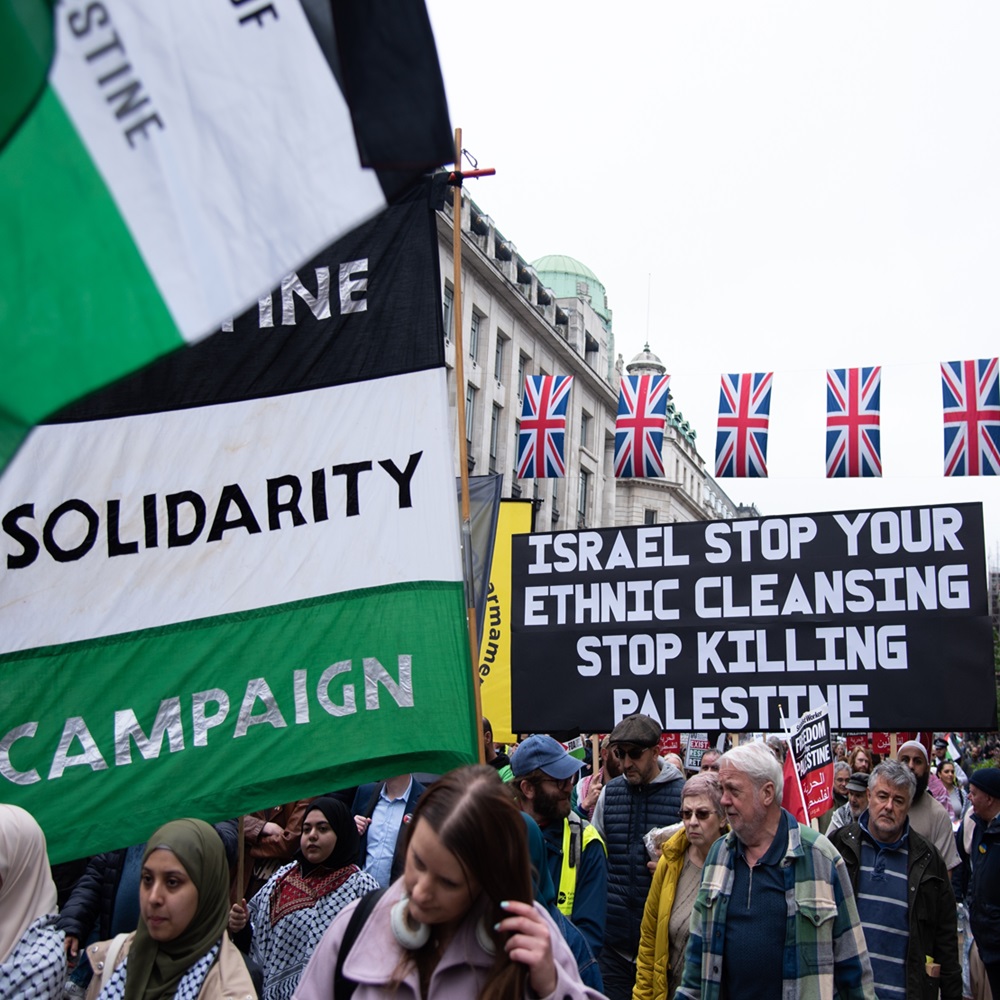
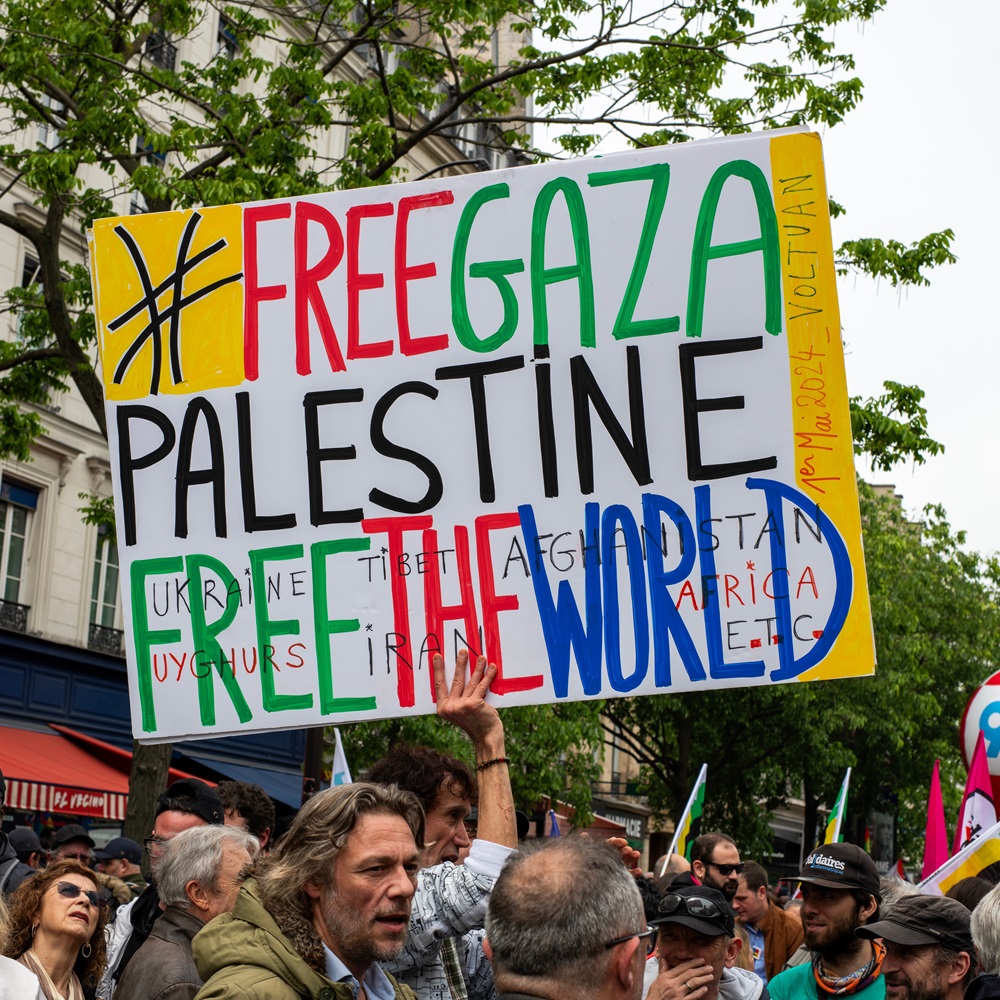
Munich, Germany - October 28: Participants in a peace demonstration - pro-Palestine in Munich on October 28, 2023

Palestine beyond recognition

by Gonzalo Peña Ascacíbar

한국어로 읽기Leer en españolIn Deutsch lesen Gap اقرأ بالعربيةLire en françaisЧитать на русском The announcement of Spain's recognition of the State of Palestine constitutes a significant step, but it is not accompanied by the adoption of other necessary measures for its effective consolidation. Already, 147 fully-fledged member states of the United Nations recognize the State of Palestine. With Norway's, Ireland's, and Spain's decisions, along with Slovenia's recent accession, three-quarters of the UN's 193 member states now uphold this commitment. Beyond the particular implications of this, it remains to be defined whether it will be accompanied by other necessary measures of broader scope to achieve full recognition and to act urgently for a permanent ceasefire, the end of Israeli occupation, and the massacre against the Palestinian people. According to the Ministry of Health, more than 37,000 people, including 12,000 children, have been killed in the Gaza Strip since the beginning of Israel's military offensive in early October last year. Among these actions are the reconsideration of diplomatic and trade relations with Israel, an arms embargo, support for South Africa's lawsuit in the International Court of Justice for the genocide in Gaza, and the involvement of the international community to effectively ensure a process of peace, security, and guarantees in the territory. The Dimension of Recognition May 28th, 2024. This was the day when the Council of Ministers approved the official recognition of the State of Palestine by Spain. This date also marked the change in the designation of Husni Abdel Wahed, who had been the representative of the Palestinian National Authority in Spain since March 2022, to now serve as the ambassador of the State of Palestine to Spain. "We are very grateful for a measure that holds significant political and legal importance in strengthening the bonds of brotherhood and friendship, where Spain is playing a crucial role in favor of a peaceful solution at a time when Israel is committing genocide with the support of the United States, Germany, and other countries," states Wahed, emphasizing the importance of opening a space of hope that recognizes the rights of the Palestinian people to live freely in their own state. The 1967 borderlines upon which this recognition is based, as well as its effectiveness, have been debated in recent days. According to Wahed, "If it were merely symbolic, Israel would not react with such hysteria, because they know this goes beyond symbolism and has practical effects because, when more countries join in recognizing Palestine, it constitutes pressure not only on Israel as the occupying power but also on its supporters, who are complicit in the genocide." The recognition itself is not the goal for the ambassador but rather a step on the path that needs to be continued. Ana Sánchez, member of the Solidarity Network Against the Occupation of Palestine, distinguishes in her assessment the dual nature of the measure as both a necessary but insufficient step, stating that "it does not meet the needs or guarantee the right to self-determination of the Palestinian people as a whole, nor will it have an impact on the daily lives of Palestinian individuals," for which she calls for more decisive measures against the apartheid and genocide being committed by Israel. It was September 2009 when the then Prime Minister of Spain, José Luis Rodríguez Zapatero, called for Palestinian recognition as a key element for peace in the Middle East in a speech at the United Nations headquarters. This commitment did not materialize until fifteen years later, about which, in addition to other related issues in the report, this media outlet sought to inquire from the current Secretary of State for Foreign and Global Affairs, Diego Martínez Belío. The response from the ministry's communication team was a refusal to grant an interview citing scheduling reasons. Regarding the delay in Palestinian recognition over time, Sánchez, from the RESCOP, recalls how governmental arguments pointed to the intention for recognition to be more coordinated with other EU member states, emphasizing the need to promote this process institutionally with the necessary conditions for effective implementation. On the other hand, Olga Rodríguez, a journalist specializing in international affairs and the Middle East, agrees with Sánchez on the positive direction of the recognition step, but also highlights that it comes late and is insufficient. This promise to recognize the Palestinian state by Spain "has not materialized until now due to political reasons and because there was no price to pay for not doing so." Rodríguez specifies in the historical and political context how not only did the trend of neglect towards Palestine continue, but also how the United States, first under Trump and then under Biden, pushed the Abraham Accords to formalize relations between several Arab countries and Israel as if the Palestinian issue did not exist. In fact, she recalls that when Hamas attacks occurred on October 7th, the United States had been promoting the signing of these agreements between Saudi Arabia and Israel for some time, following their signing by several Arab countries in recent years. According to her, the fundamental key lies in the fact that today the territory designated for the Palestinian state is not available to the Palestinian population because it has been illegally occupied by Israel since 1967, thereby violating several United Nations resolutions. "In recent years, especially in the last two decades, this occupation has tripled, and settlements in the West Bank and East Jerusalem have expanded with the connivance and support of Europe and the United States, major powers dominating the region, which have maintained their preferential economic and trade alliances with Israel," she adds. What additional measures can be taken? The United Nations General Assembly's 1947 partition plan allocated 54% of the territory of historic Palestine to the Israeli state and the remaining 46% to the Palestinian state, despite the Palestinian population being numerically larger than the Jewish population at that time. The Zionist conception of a Jewish state was tied to a Jewish majority, leading to an ethnic cleansing known as the Nakba, which resulted in the expulsion of 750,000 Palestinian people from their homes. Israel, through Plan Dalet, occupied new territories that were not allocated in that partition and used the wartime scenario to annex up to 78% of historic Palestine. Therefore, as Rodríguez mentions, when discussing the allocation of a future Palestinian state, we are only talking about 22% of historic Palestine, which is also filled with checkpoints, settlements, and under Israel's military dominance. "The essential thing is to end the Israeli occupation. This issue often gets overlooked, even when discussing the recognition of the Palestinian State and the so-called two-state solution. Everything must be based on a starting point, which is the end of the Israeli occupation and the withdrawal of troops from all Palestinian territory in the Gaza Strip, West Bank, and East Jerusalem", proposes Wahed. The Ambassador of the State of Palestine to Spain emphasizes that without Israeli withdrawal and the end of the occupation, Israel's apartheid regime against the Palestinian people will continue. "The question is how long will the international community continue to be, in many cases, complicit in this?". Francesca Albanese, Special Rapporteur on the human rights situation in the occupied Palestinian territory since 1967, recently published the report called "Anatomy of a Genocide," in which she concludes that Israel is committing the crime of genocide against the Palestinian population in Gaza by "causing serious bodily or mental harm to members of the group, deliberately inflicting on the group conditions of life calculated to bring about its physical destruction in whole or in part, and imposing measures intended to prevent births within the group." Both, she and 52 other UN experts and rapporteurs, have called for sanctions and arms embargoes on Israel following the shocking Israeli attack on the refugee camp in Rafah. From the Solidarity Network Against the Occupation of Palestine, Sánchez believes that recognizing a State while maintaining relations with the State attempting to eliminate it is a double standard. "It is very hypocritical to say that dignity and hope are recognized shortly after the heartbreaking images from Rafah, and that alongside this recognition, there is no arms embargo on Israel, no severing of diplomatic, economic, commercial, military, academic, and sports relations with those perpetrating such crimes. I do not find this policy very coherent." Despite the Minister of Foreign Affairs, European Union, and Cooperation, José Manuel Albares, stated that arms exports to Israel had been suspended since October 7th, military equipment worth over one million euros was exported from Spain to Israel in November and December 2023, according to a research conducted by the Centre Delàs. Sánchez reaffirms the above by arguing that Spain has not stopped buying or selling weapons to Israel, nor has it stopped allowing Spanish territory to be used as a transit space for weapons destined for the Zionist state. She demands more information and transparency regarding the role of the Rota base in recent months. "The demand for a military embargo is a historical request to the international community. This is not just about the current genocide in Gaza, but if Israel is capable of perpetrating this televised genocide, it's because they have been armed for decades," she explains. Rodríguez also agrees that without real pressure on Israel through political and economic measures at the level of nation-states, the European Union, and the United Nations, "nothing will change, as demonstrated by Israeli history in recent decades." Therefore, she contrasts the immediate mechanisms applied to Russia, while, except for some countries, there has been no suspension or rupture of diplomatic relations with Israel, protected by the United States and Europe. Furthermore, she highlights how these sanctions and arms embargoes have been requested for years because this did not start on October 7th, as Israel "has been violating international law, illegally occupying, implementing an apartheid system, torturing, killing, and discriminating for a long time." Therefore, she regrets that all this has continued to happen, even becoming more sophisticated, because nothing has been done due to geopolitical reasons, being in Europe and under its umbrella and within the American orbit, with all that this implies. "This is the impunity and the policy of Israeli fait accompli." Rodríguez believes there is a significant risk of collapse of the "fragile scaffolding" built upon the United Nations Charter and international law, as she considers that in recent months all red lines have been crossed with insults and breaches by Israel, but also with very concerning and serious challenges from the United States. She opines that the severity lies in transitioning to the law of the jungle, the law of the strongest, "at a time of devouring capitalism and resource depletion, where major powers will compete for the domination of wealth, with victory going to those who arrive first through war." Currently, there are two international courts investigating Israel. On one hand, there is the International Criminal Court's request for arrest warrants against Prime Minister Benjamin Netanyahu and Defense Minister Yoav Gallant. Meanwhile, on the other hand, there is the genocide complaint regarding Gaza that South Africa filed against Israel in the International Court of Justice, the most prominent judicial body of the United Nations. Regarding the latter, Spain has joined the proceedings but has not taken a position to support the lawsuit. In response, Sánchez sees the accountability processes in international courts as a positive development, but she adds that it is more of a political and diplomatic message rather than something that will have practical application with consequences on the ground. Therefore, the next consistent and coherent step should be the implementation of other measures such as an arms embargo against Israel. Finally, Rodríguez believes that the way Minister Albares presented the initiative has watered it down because he has insisted that they will not take sides. "We will have to see the statement of intervention in the procedure when they send the request, but he has made it clear that they do not support South Africa's complaint and that they will limit themselves to supporting the provisional measures issued by the Court for compliance by Israel." Therefore, she emphasizes that this will not have effective capacity unless it is accompanied by political actions that push to achieve that goal. Camping and Academicide In the realm of demanding actions to be carried out, the academic sphere is also involved. The University Network for Palestine, which is present in over forty public universities in Spain, advocates several demands to university leadership teams, the Conference of Rectors of Spanish Universities, and the Ministry of Science, Innovation, and Universities. Specifically, these five points: condemning the destruction of universities in Palestine, demand for an immediate ceasefire allowing necessary humanitarian interventions, severance of diplomatic relations with Israel, non-collaboration with companies involved in genocide, and allocation of economic resources for hosting students and academic staff in Palestine and for the reconstruction of universities in Gaza. In the face of Israel's daily normalization of genocide against the Palestinian people, student encampments at universities highlighted the unacceptability of these actions and the need to defend human rights. The effect of these encampments expanded like what happened in 2011 in the city squares during the 15M movement. Within the network's common framework, each encampment operates autonomously. Specifically, the encampment in Madrid was formed through a coalition of university groups that had previously worked on Palestine-related issues. From there, the encampment was convened, attracting people beyond its original coalition. Oriol Erausquin, a Sociology Ph.D. student at the Spanish National Research Council (CSIC) and the Complutense University of Madrid (UCM), who participated in the Palestine camp at the UCM, believes that the recognition, which has been promised on several occasions and could exert some pressure on Israel, "may seek to enhance the international projection of the Pedro Sánchez government, but the reality is that there is a genocide happening". Therefore, he asserts that it is essential to act with sanctions and an embargo on commercial activities with Israel, because "anything short of direct action on what is happening seems very limited, inadequate, and belated to us." The encampment in Madrid has directed its proposals to the public universities in Madrid. “We want to sit down with them and achieve agreements in a unified manner”, emphasizing the difficulty of this due to the refusal to negotiate by the Rectorate. “The pressure we are exerting, with some universities yielding to the demands and the international situation unfolding, may lead to the need to break a series of agreements that are whitewashing and legitimizing the Israeli regime, in addition to actively participating in its industry and war machinery”, Erausquin points out. So far, the universities in Madrid have not responded, while the universities of Barcelona, Seville, Jaén, Granada, Valencia, Salamanca, Cádiz, and Pablo de Olavide have fully embraced the points raised by the network and have suspended relations with Israeli institutions. In conjunction with the student block, the faculty has also mobilized. The Network of Teachers and Workers of Universities in the Community of Madrid for Palestine emerges within a broader national network that includes 44 universities across the country. Within this network, initiatives from faculty members of public universities in Madrid have arisen to unite and carry out more specific actions within the community since March of this year. These initiatives include organizing activities such as outdoor classes, roundtable discussions, and conferences that have enabled them to consolidate as a collective. One of their fundamental contributions is the quantification and visibility of what the term "academicide" entails. Through this, they seek to highlight the framework of the killings of over 230 teachers and 5,000 students in Palestine. Joan Pedro Carañana, a member of this network, explains that academicide consists of the systematic extermination of education and research: "It is scandalous that Israel has bombed all universities in Gaza, that it has killed thousands of people in the educational and scientific fields, and that more than 90,000 students cannot attend university." Academicide is therefore "a key vector of genocide that not only seeks to kill people associated with thought, but also to deprive an entire people of their right to knowledge, speech, and memory," he points out. Due to the difficulty in finding the people killed under the rubble, the number of victims will be higher than previously counted. The network considers various sources for this, such as the United Nations or Scholars Against the World in Palestine, among others. Additionally, according to the Palestinian Journalists Syndicate, at least 140 journalists have been killed since October 7th, 2023. Before that date, Carañana details how in January of the previous year, there were 902 crimes, violations, and punishments by Israeli occupation forces committed during 2022. "This is obviously about silencing the victim so they can't even protest and raise their voice to convey their point of view. It's part of the dehumanization that accompanies genocide," he concludes. The right to self-determination of the Palestinian people Netanyahu displayed a map at the United Nations Assembly two weeks before Hamas' attacks, showing Gaza, the West Bank, East Jerusalem, and the Golan Heights as part of Israel. In other words, he desires that territory, without Palestinians, as Rodríguez points out. Given the complexity of the so-called two-state solution, she recalls that some advocate for a more just and egalitarian idea of a single state with equality, rather than a state where rights are only for one ethnicity or religion. In fact, many Palestinian people who were expelled in 1948 and 1967 have the right, for whom the United Nations recognizes their right of return through a resolution to return to the homes they were born in, which were taken from them through the Absentees' Property Law. For Wahed, the self-determination of the Palestinian people is always present and is something they will not relinquish. "I want to remind you that this so-called two-state solution is not a Palestinian demand. It is a Western plan, initiated by George Bush, which was embraced as the solution by the international community. We have adopted it, but our original demand from Palestine is a democratic and secular state for all citizens." He adds that Palestinian people today live in a state where Israel occupies nearly 100% of historic Palestine, but with two systems: one of democracy for Jews and another of apartheid for Palestinians. That's why he argues that the issue goes beyond the Palestinian people and that it is necessary to invest in a culture of peace. He points out, for example, that in recent years, most of NATO countries have approved increasing military spending to at least 2% of GDP. The Palestinian ambassador to Spain suggests that part of this GDP should instead be allocated to promoting a culture of peace, as this is the solution to combating war with peace, poverty with investment in the future, or hunger by dedicating resources to combating climate change and land desertification. "This is the solution not only for Palestine but for all humanity." On the other hand, Carañana believes it would be worthwhile to pay attention to what the people of Palestine are saying, where they welcomed this recognition as a step forward but with the need to delve deeper and implement measures beyond this. The path, he estimates, involves discussing the borders of the recognized State and how the construction of that State will be made effective in a context of occupation by the Israeli army, in order to then, intensify pressure on Israel so that it is forced to agree to a ceasefire and promote a peace process. Recently, the Camp for Palestine in Madrid has decided to dismantle and leave the esplanade of the Complutense University where they were, but not before planting an olive tree for peace. They do this firmly believing that the struggle for human rights continues in other spaces, where, as Erausquin explains, they will have to mobilize all the strength that has been gathered to continue fighting for the Palestinian cause. Meanwhile, in the RESCOP, they emphasize the complexity of whether a Palestinian state with sovereignty can exist in the current situation. "The policy of fait accompli that Israel is developing in the occupied West Bank seriously questions whether this is indeed a process that has the minimum guarantees to succeed," declares Sánchez, highlighting that the present and future must be approached from a decolonial perspective in response to the colonial regime policies being carried out by Israel. To guarantee the right to self-determination of the Palestinian people, Sánchez believes that there must first be a process of accountability for those who have systematically violated the rights of the Palestinian people as a whole. "If we want negotiations to take place, the parties must be on equal footing because right now it's like placing someone who has been suffering abuses for decades against someone who is perpetrating them." Thus, he explains that there should be two processes: on one hand, Israel must face international courts to be judged for war crimes, apartheid, and genocide committed against the Palestinian population; on the other hand, the Palestinian population should be asked how they want to manage this process of self-determination, to avoid imposing a colonial framework that prevents people who have to decide their own destiny. Finally, Rodríguez reminds us that the self-determination of the Palestinian people is a right that has been overwhelmingly ratified through a resolution of the United Nations General Assembly. However, as she counters, the problem lies in the fact that the Israeli Parliament also recently voted overwhelmingly against the right to self-determination of the Palestinian people. This is a chamber where there are barely any parliamentary representatives advocating for peace and an end to Israel's violations of international law. "We must build everything to promote a culture of peace," emphasizes Rodríguez. This would encompass educational programs from childhood that are reinforced in high schools and universities, incorporating elements that emphasize peace culture and human rights. It also involves replacing in the media the promotion of war culture, which often receives awards, with peace culture. Additionally, she advocates for a modification of the voting and veto systems in the United Nations to achieve fairer mechanisms of mutual respect among states, replacing imposition with multilateralism. In essence, it is a long-term task for defending the Palestinian population and human rights that must be activated across multiple fields such as politics, social issues, media, and law. The article was translated and licensed under CC BY-SA 3.0 ES (Atribución-CompartirIgual 3.0 España).

Defense & Security
Shenzhen, Guangdong, China - Apr 27 2023: A China Coast Guard boat is cruising on the sea.

Philippines: Calming Tensions in the South China Sea

by International Crisis Group

한국어로 읽기Leer en españolIn Deutsch lesen Gap اقرأ بالعربيةLire en françaisЧитать на русском “This article was originally published here by the International Crisis Group”Tensions between China and the Philippines are increasing the risk of armed conflict in the South China Sea. In this excerpt from the Watch List 2024 – Spring Update, Crisis Group looks at how the EU can support regional diplomacy to mitigate maritime disputes. Rising maritime tensions between China and the Philippines have highlighted the risk of armed conflict in the South China Sea and the dangers it would pose to global trade. Several countries are implicated in the set of complex sovereignty disputes in the sea, which stem from rival claims to various features and the maritime entitlements they generate, but recent incidents involving Beijing and Manila have triggered the greatest concern. The Philippines controls nine outposts in the Spratlys, a contested group of land and maritime features at the heart of the South China Sea. A submerged reef known as Second Thomas Shoal has become a dangerous flashpoint, with Chinese boats continually trying to block Manila’s efforts to resupply the BRP Sierra Madre, a rusting ship housing a handful of soldiers that a former Philippine government purposely grounded in 1999 in a bid to assert sovereignty over the atoll. China, which also claims the shoal, first started interfering with these missions in 2014, but relations between the two countries in the maritime domain have never been as volatile as during the last seven months. Chinese boats have regularly rammed the Philippine supply vessels or doused them with water cannons, occasionally wounding the sailors on board. Manila has a Mutual Defence Treaty with Washington, making this burgeoning maritime dispute part of the geopolitical competition between the U.S and China. In effect, the South China Sea has become a zone where conflict risks are rife – and where Washington and Beijing could be drawn into direct confrontation. Considering these developments, the EU and its member states should: • Seek greater diplomatic engagement with both Beijing and Manila to keep tensions in check. They should also expand their diplomatic presence across South East Asia and, where relevant, establish reliable channels through which they could communicate with high-level authorities in China and other claimant states should disputes at sea escalate; • Work to promote respect for international law, particularly the law of the sea, as a source of neutral rules for dispute resolution and conflict prevention, for example by organising public events, roundtables and dialogues in Manila and elsewhere. While this measure may not bridge the divides between Manila and Beijing, it could at least help establish a level of mutual support and understanding among the other South China Sea claimant states; and • Strengthen coast guard cooperation with the Philippines, focusing on building capacity in areas such as environmental protection, safety and search-and-rescue procedures. Troubled Waters The sovereignty disputes that underpin the tensions between China and the Philippines in the South China Sea go back decades. But it was Beijing’s manoeuvres to take control of Mischief Reef (in the east of the Spratlys) from Manila in 1995 that altered the perceived balance of power between the two states and in the region, setting off the territorial dispute that has now taken a turn for the worse. China’s assertiveness in the sea has grown in the past few years, along with its military capabilities. The brewing territorial dispute made headlines in 2012 when Beijing in effect took control of Scarborough Shoal, an atoll 220km west of the Philippine mainland but within Manila’s exclusive economic zone (EEZ), after a maritime altercation. The incident prompted then-President Benigno Aquino to file a case challenging China’s territorial claims under the UN Convention on the Law of the Sea (UNCLOS). On 12 July 2016, the presiding arbitral tribunal ruled in favour of Manila, dismissing China’s claim to all the waters within its “nine-dash line”, which constitute almost the entire South China Sea. But it was a Pyrrhic victory. Beijing not only rejected the adjudication and the subsequent ruling, but it had also already undercut efforts to settle the dispute through legal channels by building and fortifying seven artificial islands in the Spratlys while the case was winding its way through the system. This move fundamentally changed the status quo, enabling Beijing to post permanent garrisons in the area for the first time. By many accounts, China has thus ensured itself control of the sea in any situation below the threshold of armed conflict. A short lull in the maritime dispute appeared to follow. After coming to power in 2016, Aquino’s successor, Rodrigo Duterte, pursued a pragmatic policy toward Beijing. Duterte downplayed the tribunal’s decision and cast sovereignty issues aside, hoping to benefit from Beijing’s economic largesse in exchange. Yet his ambitious gambit did not pay off. Tensions at sea continued in the form of regular standoffs between the country’s coast guard and Chinese vessels. Filipino fisherfolk struggled to reach their traditional fishing grounds, and Manila could not exploit the precious oil and gas reserves within its EEZ to which it is entitled under international law. In March 2021, Chinese ships massed around Whitsun Reef, an unoccupied feature in the sea, ringing alarm bells in Manila, where senior officials voiced public criticism of China’s behaviour for the first time in years. By the end of the Duterte administration, the Philippines had revived its ties with the U.S. and become more assertive still, filing several diplomatic protests with the Chinese government. Elected in 2022, President Ferdinand Marcos, Jr., Duterte’s successor, was initially disposed toward friendly relations with Beijing, but the relationship soured only a few months into his presidency. Although China remains the Philippines’ top trading partner, Marcos, Jr.’s meetings with President Xi Jinping did not achieve the desired results: Beijing neither agreed to make major new investments nor curtailed its “grey zone” tactics in the South China Sea, understood as coercive actions that remain below the threshold of armed conflict. These rebuffs have helped push Marcos, Jr. toward strengthening ties with Washington, and the Biden administration has, on several occasions, publicly committed that the countries’ Mutual Defence Treaty would be deemed triggered in the event of an armed attack on Philippine warships, aircraft or public vessels. In perhaps the most significant recent development, after a series of high-level visits by U.S. officials to Manila, the two countries agreed to scale up implementation of their Enhanced Defense Cooperation Agreement, which gives U.S. troops rotational expanded access to Philippine military bases, and which China perceives as a provocation, especially given these bases’ proximity not just to the South China Sea but also to Taiwan. Manila has also received defence and diplomatic support from a host of other countries, particularly Japan and Australia. Despite the dispute it has with Vietnam over parts of the South China Sea, it has engaged, more quietly, with Hanoi, and acquired maritime defence equipment from India, thus expanding its circle of partners. Joint naval exercises with various countries have included large-scale ones with the U.S. in April, which involved the deployment of missiles that can reach targets almost 1,600km away – something that was sure to draw Beijing’s attention – and took place just after Manila wound up its first-ever trilateral presidential summit with Washington and Tokyo. In the meantime, the Marcos, Jr. administration has pursued what it calls a “transparency initiative”, publicising information about maritime incidents by inviting journalists to join its coast guard ships or posting video recordings of events almost as they are happening. Dramatic footage of Chinese vessels blocking, ramming or attacking its resupply missions to Second Thomas Shoal with water cannons has generated widespread condemnation in the Philippines and abroad. Many consider these tactics to be bullying. For its part, and despite the 2016 ruling, Beijing asserts that Manila is intruding into its waters and maintains that it is demonstrating maximum restraint. China has also recently referred to a so-called gentleman’s agreement under former President Duterte that it says foresaw preserving a status quo in the South China Sea, with Manila ostensibly agreeing to supply only humanitarian goods and no construction materials to the BRP Sierra Madre; Manila denies that there was any such arrangement. Given the Philippines’ determination to continue resupplying its troops on the BRP Sierra Madre, Second Thomas Shoal will likely remain a flashpoint. Due to the constraints imposed at sea by the Chinese maritime militia and coast guard, Manila is starting to look into other means of provisioning its outpost, some of which are likely to irk Beijing even more, such as airdrops or closer U.S. naval escorts. In September 2023, a U.S. plane was in the shoal’s vicinity during a resupply mission, while a U.S. warship passed through waters nearby in December. But the shoal is not the only possible source of tension. Chinese vessels, both official and non-official, sail through many areas where Philippine fisherfolk traditionally work, while other features, such as Scarborough Shoal, are also points of friction. A large-scale encounter or accident at sea could be especially dangerous. Should a Filipino or Chinese national die during such a confrontation, it could stir nationalist sentiments in Manila and Beijing and heighten threat perceptions on both sides. In case of loss of life on the Philippine side, Manila would expect its U.S. ally to assist under the Mutual Defence Treaty, especially given the recent exchanges with Washington on that topic, although the U.S. has not said precisely how it would come to the Philippines’ aid. How such a dangerous situation would evolve depends in large part on Manila’s political decision to invoke the treaty and the choices Washington makes about how to fulfill its commitments. In principle, Beijing and Manila remain open to negotiations. But the bilateral consultative mechanism, a confidence-building measure designed in 2017 to manage maritime issues between the two countries, among other things, has generated no results of note. Meanwhile, efforts to create a Code of Conduct, which aims to reduce tensions at sea by setting up norms and rules between claimants and has been under discussion between China and the Association of Southeast Asian Nations (ASEAN) for over two decades, have stagnated. Why the Sea Matters The South China Sea is a vital waterway through which around one third of global shipping passes. Peace and stability in the sea are a prerequisite for safe trade and are demonstrably in the interest of the EU and its member states. At over 40 per cent, the share of the EU’s trade with the rest of the world transiting the sea is even higher than the global average. Instability in the area would deal a major blow to the European economy; even a slight disturbance of shipping routes could result in higher transport costs, shipping delays and acute product shortages. Should there be an escalation that pits China against the U.S. in a direct conflict, the consequences could be catastrophic and global. European positions toward South China Sea disputes have traditionally highlighted the importance of all parties respecting international law and the need for peaceful resolution, while being careful not to take sides. But over the last few years, China’s assertiveness and expanding military capabilities have driven a greater sense of urgency and something of a shift in European thinking. First, the EU and several of its member states have developed “Indo-Pacific” strategies, designed to guide and promote cooperation with countries throughout the region. Secondly, Brussels has increased its diplomatic support for the Philippine position following maritime altercations, offering supportive statements in December 2023 and March 2024. Brussels and several European capitals now back Manila in regularly underlining the importance of UNCLOS and maritime law in the South China Sea context. Meanwhile, Europe’s presence in the region is growing, if slowly and in part symbolically. In 2021, the EU appointed a special envoy for the Indo-Pacific for the first time, while European Commission President Ursula Von der Leyen visited Manila in July 2023, the first trip to the Philippines by someone holding that office and an opportunity to express, at the highest level, the EU’s readiness to strengthen cooperation with the government in maritime security, among other areas. A German frigate entered the South China Sea in 2021, and French and Italian ships made port calls in Manila in 2023. In March 2024, the EU and the Philippines agreed to resume negotiations over a free trade agreement, while a month later France announced talks regarding a Visiting Forces Agreement with the Philippines. While EU interest in the region is rising, European stances on the South China Sea are complex, with member states harbouring different views on maritime disputes in the region and, more broadly, on big-power competition. Some, such as France – which is the only EU member state to have overseas territories in the region (and which has significant EEZ interests there) – see themselves as having stakes higher than others and are keen to participate in the region’s discussions on security. Others, such as Greece and Hungary, are less concerned with maritime flare-ups so far away and tend to ascribe greater importance to maintaining good relations with Beijing. What the EU and Its Member States Can Do As the EU and its most powerful member states are drawn deeper into the South China Sea, they should raise their diplomatic game in the region – both to ensure awareness of mounting tensions and to look for ways to manage corresponding risks. As a practical matter, Brussels could leverage its status as an ASEAN Strategic Partner to seek more participation in that bloc’s security mechanisms and regional forums; the EU and member states could seek higher levels of engagement with regional powers such as Japan, Australia, and South Korea on matters concerning the South China Sea; and Europe could post more diplomats to the region, including permanent defence attachés who speak the language of naval diplomacy. Of particular importance will be maintaining strong lines of communication with Beijing, where Europe is seen as still having some distance from the U.S.-China strategic rivalry, which works to its diplomatic advantage. While to some extent this communication will be traditional bilateral statecraft, it may also mean looking for new opportunities and new channels for dialogue. For example, some member states could also seek to follow the precedent set by France and China in establishing a coordination and deconfliction mechanism between their militaries. Brussels should also continue raising the South China Sea in its engagement with Beijing as it did during the EU-China summit in 2023. Maintaining these channels will become both more difficult and more important if and when the EU and member states expand their operational presence in the region – for example, if they decide to establish a calibrated maritime presence in the South China Sea, as proposed by the EU envoy to the Indo-Pacific. Such a move is still deemed unlikely for now. As for public diplomacy, Brussels and EU member states should consider practical ways to promote principles of the law of the sea in the region, making the case that broader regional support for and adherence to these principles would provide neutral ground for peacefully avoiding and resolving disputes. While it is hard to see this approach appealing to Beijing, which has rebuffed the UNCLOS tribunal’s decision, there could still be benefits in forging closer cooperation among other claimant states. Convenings in Manila and other regional capitals could cover topics related to the continuing disputes but also to cross-cutting themes of regional interest such as fisheries. With negotiations over a regional Code of Conduct stuck, like-minded countries in the region could use these occasions to at least develop common positions on discrete issues that might be addressed by the Code or that could foster regional confidence-building in the South China Sea. Finally, in the realm of capacity building, European governments should continue to strengthen coast guard cooperation with South China Sea claimant states, helping them develop tools and protocols that might be used where appropriate to avoid confrontation and conflict. Since Aquino’s administration, Manila has tried to boost its coast guard capabilities. Given that many of the other claimant states’ vessels in the South China Sea are coast guard ships, and find themselves embroiled in maritime confrontations, a common approach on rules of engagement could help avoid misunderstandings at sea. Building on the EU’s integrated coast guard system, the EU could host or sponsor joint workshops to develop operating principles for the region’s law enforcement vessels and exchange best practices with Philippine authorities. Brussels could also fund agencies such as the UN Office on Drugs and Crime to strengthen coast guard expertise on issues such as environmental protection, safety and search-and-rescue procedures. European member states could also participate in joint activities with the Philippine and other ASEAN coast guards to strengthen fisheries control and maritime border protection and deter piracy or smuggling.

Diplomacy
Putin and Kim

Ukraine recap: Putin love-in with Kim Jong-un contrasts with western disarray over peace plan

by Jonathan Este

한국어로 읽기Leer en españolIn Deutsch lesen Gap اقرأ بالعربيةLire en françaisЧитать на русском Hotfoot from signing a security pact with North Korea on Wednesday, Vladimir Putin has popped up in Vietnam, another of the few remaining countries where the Russian president is still welcome (or doesn’t face arrest under the war crimes warrant issued by the International Criminal Court last year). Here he was congratulated by the president, To Lam, for his election victory earlier this year and for maintaining stability and continuity in Russia. Putin, meanwhile, made much of the Soviet Union’s historical support for the Vietnamese people’s struggle for independence and unity from the 1950s to the 1970s, referring, without a hint of irony, to Vietnam’s “heroic struggle against foreign invaders”. The visit has been billed as part of Putin’s strategy to promote a new “multipolar” world order, free from US control. But it should be noted that the pragmatic Vietnamese have already hosted Joe Biden and Xi Jinping over the past nine months. Hanoi’s “bamboo diplomacy” depends on the country being “actively neutral” – with one eye on China, Vietnam has also upgraded relations with the US, Australia and South Korea in recent times. So, while there will be plenty of expressions of goodwill from Vietnam’s leadership, they are less likely to commit to anything more concrete as things stand. North Korea knows little of such diplomatic niceties, though, and has fewer choices when it comes to its friends. Very little detail has emerged of the new pact with Russia, except that it would require each country to come to the aid of the other if attacked. But it’s likely that close to the top of the agenda would have been Russia’s military requirements. North Korea’s supplies of artillery and ammunition are thought to have been vital in helping Russia overcome the harsh sanctions imposed by the US as well as Beijing’s unwillingness to directly provide arms for the war in Ukraine. Kim, in turn, wants Russian know-how when it comes to sophisticated military tech as well as economic support when it comes to feeding his country’s starving population. But warm relations between the two countries is nothing new. Official pronouncements emphasised the “traditionally friendly and good” relations between Russia and North Korea “based on the glorious traditions of common history”. For Kim, writes Robert Barnes, a senior lecturer in history at York St John University, this is something of a family affair which harks back to the 1930s when the North Korean leader’s grandfather Kim Il-sung was a relatively unknown Korean communist leading a small guerrilla band fighting the Japanese in Manchuria. Kim spent much of the second world war in the Soviet Union, where he joined the Red Army and rose to the rank of major. After the conflict, he was handpicked by Stalin to lead the Korean Workers’ party and then North Korea when it was established in 1948. The Korean war which followed almost led to a nuclear confrontation between the Soviet Union and the west. Hopefully, concludes Barnes, nothing as dramatic will result from this latest iteration of the relationship between the two countries. But pariah states such as North Korea aren’t the only countries where Putin can command a degree of support, if the recent European parliamentary elections are any guide. As Natasha Lindstaedt notes here, the rise of the far right in EU member states such as Germany, France, Slovakia, Hungary, Romania and Bulgaria is throwing up an increasingly powerful group that stands in opposition to EU support for Ukraine. It may seem counterintuitive that such an avowed anti-fascist as Putin is courting extreme right organisations such as Germany’s Alternative for Deutschland party (AfD) or Hungary’s Fidesz party. But Lindstaedt believes that leaders such as Hungary’s Viktor Orbán have shown little concern for the institutions of democracy – as shown by Hungary’s adoption of a similar foreign agents’ law which acts to curtail press freedom and the work of NGOs. She concudes: “Putin is seen by the far right as a strong and conservative leader that can defend himself against the liberal west, which is trying to undermine these values.” The west, meanwhile, remains divided over the manner and extent of its support for Ukraine. The good news for Kyiv is that the recent G7 meeting in Puglia, southern Italy, ended in an in-principle agreement to use the US$3 billion (£2.36 billion) interest from US$350 billion of Russian assets frozen in the western banking system to underwrite a US$50 billion loan to Ukraine. But Gregory Stiles and Hugo Dobson, experts in international relations at the University of Sheffield, sound a cautionary note suggesting that the details of how this will work are likely to take months to agree. Meanwhile, they write, five of the seven leaders – US president Joe Biden, France’s Emmanuel Macron, Canada’s Justin Trudeau, the UK’s Rishi Sunak and Japan’s Fumio Kishida – all face elections this year which none of them are guaranteed to survive. And, to take just one example, if Biden loses in November to Donald Trump, the likelihood of this deal proceeding becomes significantly reduced. Summit on peace Many of these leaders went on to Switzerland at the weekend for the Summit on Peace in Ukraine. Stefan Wolff, an expert in international security at the University of Birmingham, was following proceedings and concludes that it’s hard to judge the meeting an unqualified success. Out of 160 countries and international organisations invited, only 92 attended. Biden was a no-show and Canada’s premier, Justin Trudeau, was the only G7 leader to stay for both days of the conference. The main problem, writes Wolff, was that the only peace plan on the table was that proposed some time ago by Ukraine’s president, Volodymyr Zelensky. This calls for the complete withdrawal of Russian troops from Ukraine, including Crimea, and the payment of reparations for rebuilding his country. Seven other peace plans, proposed by the likes of China (which also failed to send anyone), Brazil, Indonesia, Saudi Arabia, a group of African states led by South Africa and the Vatican were not discussed. Most of these call for a ceasefire, which is anathema to Kyiv and its backers in the US and UK, as it would accept, for the time being at least, Russia’s territorial gains on the ground, including the illegal annexation of Crimea in 2014. Putin, meanwhile, was trolling hard from the sidelines, releasing his terms for a ceasefire deal, which are for Ukraine to accept Russian annexation of Crimea and not just the land his troops currently occupy, but all of the four regions he annexed in September 2022. Putin’s column As previously noted here, a season of relative success on the battlefield, has left Putin in a bullish mood. It emerged recently that (despite being seriously disadvantaged by the war in Ukraine and the harsh western sanctions which have ensued) the boss of Russian energy giant plans to build an 80-metre column in St Petersburg to commemorate Peter the Great’s triumph in the great northern war, after which Russia declared itself to be an empire for the first time. As George Gilbert, an expert in Russian history at University of Southampton notes, anything honouring Peter the Great is a sure-fire way of buttering up the Russian president, who sees himself as a latter-day incarnation of the man who built his home town of St Petersburg, glossing over the fact that Peter saw his capital as a way of making Russia more of a west-facing country. Gilbert gives us some historical context about the conflict, in which Russia lined up alongside much of what would become Poland and Germany as well as Britain, by virtue of its king, George I, also being the ruler of Hanover. The key battle, he writes, was at Poltava, which is in the middle of what is now Ukraine, which involved defeating a crack regiment of Cossack cavalry, which you’d have to imagine is very much grist to Putin’s mill. One suspects, though, that it’s Peter the Great’s imperial achievements that Putin wants to emulate most of all.

Defense & Security
Hanoi Vietnam - Jan 30 2023: People go about daily life under Vietnamese flags in a narrow residential alleyway called Kham Thien Market in Hanoi, Vietnam.

Convergence in Vietnam, EU Interests a Harbinger of Indo-Pacific Order?

by Richard Ghiasy , Julie Yu-Wen Chen , Jagannath Panda

한국어로 읽기Leer en españolIn Deutsch lesen Gap اقرأ بالعربيةLire en françaisЧитать на русском In March and April, Vietnamese Foreign Minister Bui Thanh Son’s nearly back-to-back visits to the U.S. and China highlighted Vietnam’s increasing penchant for delicate diplomacy with major powers amid the U.S.-China strategic competition in the Indo-Pacific and Vietnam’s territorial tussles with China especially in the South China Sea (SCS), which Vietnam calls the East Sea. Much of the (perceived) disorder in the Indo-Pacific hails from the SCS, and one of Vietnam’s principal challenges is fostering order on its maritime borders. Therefore, Vietnam—historically distrustful of major powers—has been diversifying its relations by seeking security and defense ties with Indo-Pacific partners like the European Union (EU), India, and Japan, as well as with Russia, a country that poses an “existential threat” to the transatlantic allies. At the same time, Southeast Asia is battling disunity within the region for resolving disputes in the SCS, for instance. The regional multilateralism embodied by the Association of Southeast Asian Nations (ASEAN) seems to lack teeth even as China ‘controls’ some of its members using its financial and economic heft. So clearly, efforts beyond Vietnam’s “bamboo diplomacy” that deepen international solidarity are required. In a similar vein, Europe’s reluctant rapprochement with China in recent times amid the EU calling China a strategic challenge but continuing to look for economic engagement is reminiscent of Vietnam and much of Asia’s predicament vis-à-vis China. Moreover, like in Southeast Asia, not every member-country of the EU is embracing the Indo-Pacific construct, led by the U.S. Or even if a member does, like France or Germany, it does not spell the end of a productive relationship with China. Nonetheless, it is clear that the EU has started to take a greater interest in the growing geopolitical situation in the Indo-Pacific, even as the disunity over the extent of the Indo-Pacific priorities, including China, is as apparent. In such a scenario, is it possible for the EU and Vietnam, and by extension ASEAN, to have greater convergence, if not congruence, in their policies? Revisiting Vietnam’s Lack of an Indo-Pacific Tilt The Indo-Pacific, the maritime space and littoral between the western Indian and Pacific Oceans, has become the world’s most geopolitically critical region. In this region, much of the focus and debate among the EU’s more proactive members, such as France, the Netherlands, and Germany, is in response to Chinese unilateralism, trade dependency, and unchecked Sino-U.S. contestation. Several of these EU members have come to understand each other’s positions on the Indo-Pacific. Gradually, there is a realization that it is not just about what the EU and its members seek to accomplish in the region but just as much the perspectives and priorities of key Indo-Pacific resident actors—and their views on European strategies and contributions. Vietnam is one such country that is worthy of greater European strategic attention. Vietnam is known for its “bamboo diplomacy”—a reference to the bamboo plant’s strong roots, sturdy stems, and flexible branches—balancing ties with the two big powers, the U.S. and China. In the words of Foreign Minister Bui Thanh Son, Vietnam’s foreign policy caters to “independence, self-reliance, peace, friendship and cooperation, and multilateralization and diversification of external relations and proactive international integration.” However, Hanoi has never officially and fully embraced the term “Indo-Pacific” nor the U.S.-led Indo-Pacific construct although it does recognize that some aspects of the Free and Open Indo-Pacific tenet advocated by the U.S. and its allies are compatible with its national interests. For instance, the order in the Asia-Pacific, a term that Hanoi prefers to use, should be rule-based. This speaks to one of Vietnam’s most important foreign policy priorities: finding peace and stability in the SCS disputes with China and other claimants. However, the order that Vietnam seeks is in more than just the security domain. The goal of development has been the highest priority since Doi Moi (renovation) in 1986. Economic growth is considered the backbone of national security and regime legitimacy. Hanoi’s development of foreign relations can be said to be grounded in its national development experience, with the stress on economic priority leading to national stability and international standing. Vietnam chooses to engage in the Indo-Pacific construct on its terms. Vietnam and EU Convergence On both economic and security fronts, Vietnam and the EU can find converged interests that align closer to each other. Even as Hanoi has not officially adopted the term “Indo-Pacific,” the EU’s Indo-Pacific strategy, if implemented well, could address both Vietnam’s economic and security needs. Despite its security and military power limitations in the Indo-Pacific, the EU can still play a crucial role in effectively addressing these needs, which are vital for the EU’s strategic interests as well. The two already have a Framework Participation Agreement. Vietnam is also part of the EU’s Enhancing Security In and With Asia (ESIWA) project, which covers crisis management and cyber security. This also aligns with the EU’s Indo-Pacific Strategy, where Vietnam is considered a “solid” partner. Notably, both the EU and Vietnam face (potential) economic coercion from China. As China is now Vietnam’s largest trading partner, sudden trade restrictions hindering Vietnamese exports to China would dramatically hurt the Vietnamese economy. In this vein, Hanoi welcomed the EU-Vietnam Free Trade Agreement (EVFTA), hoping it would give opportunities to diversify its trading partners and thus mitigate the risks of economic coercion from China. On the other hand, the EU and its member-states are also trying to increase economic resilience by diversifying trading partners as they wrestle with economic overdependence on China. So, strategically, Brussels presents an excellent opportunity for Hanoi and vice versa. However, challenges remain. For example, all the EU member-states are still to ratify the Investment Protection Agreement signed along with the EVFTA. Even though this is usually a time-consuming procedure, the imperative to reap benefits as soon as possible has taken a setback amid a challenging geopolitical landscape. Nonetheless, the two sides are concerned about more than just traditional economic development; they are concerned about sustainable development and green transition. For instance, under the EU’s Global Gateway framework, the EU and Vietnam have signed the Just Energy Transition Partnership (JETP), which looks to provide a multi-projects credit facility worth €500 million. This is supposed to be the EU’s primary focus in Vietnam now. Yet, Hanoi’s cautious approach for fear of falling into any potential debt trap could stymie smooth cooperation. Projects involving vast sums of money, such as the JETP, are also practically challenging to push at the moment as officials are afraid to be the targets of the Communist Party of Vietnam’s anti-corruption campaigns. Vietnam would also be keen for ASEAN and the EU as blocs to reinvigorate multilateralism and shore up security cooperation, particularly in the SCS disputes. ASEAN states, in general, are looking to the EU as a non-threatening balancing power to reduce the impact of the China-U.S. strategic competition. Among the potential areas of cooperation between the EU and Vietnam within the ASEAN are regional climate action measures, food security, digitalization, and tech innovation. The two sides must also use their partnership to realize an ASEAN-EU FTA. EU as a Security Balancer? The EU and Vietnam also share their commitment to upholding the rules-based order—an essential component of security cooperation because of the region’s strategic importance. However, improving communication and understanding of maritime incidents more effectively is challenging. The SCS territorial conflict is simmering, particularly between China and the Philippines. In 2016, an arbitration tribunal constituted under the United Nations Convention on the Law of the Sea (UNCLOS) overwhelmingly ruled in favor of the Philippines, which China rejected. However, the ruling bolstered Vietnam’s claims, which were not openly welcomed by other ASEAN states besides the Philippines. In the absence of an agreement for a code of conduct (CoC) between China and ASEAN, which has been dragging on for years, China’s violations of international law in the SCS, including the latest against Vietnam in the Gulf of Tonkin, have increased. Against this scenario, Vietnam and the Philippines have signed maritime security deals. At the same time, Vietnam would be reluctant to do anything more drastic, such as support the Philippines in its attempt to draft a “separate” CoC for fear of Chinese retaliation. While Vietnam is less discussed in major global media than the Philippines on the issue, Hanoi is actively using diplomatic means to internationalize the problem, bringing in more players to address complex territorial disputes to safeguard its sovereignty and promote regional peace. In this context, winning the support of the EU and its member-states would be strategically important for Vietnam. The Vietnamese side can facilitate this by providing foreign entities, including the EU, with more transparent and timely information when incidents occur. Naturally, using a media strategy like the Philippines might sensationalize the issue, which might be different from what Hanoi prefers as it walks a tightrope to balance its complex relations with China. However, Hanoi can at least offer foreign diplomats transparent and detailed information in a timely fashion to help them verify and assess the situation on the ground. This will speed up the EU’s and other potential like-minded states’ response to sea incidents and foster ways forward for more multilaterally agreeable forms of modus vivendi in the South China Sea. Ultimately, such a modus should serve China too. EU No Longer a Bystander The EU’s recent stance on the SCS issue has been its respect for a rule-based order and freedom of navigation, strong opposition to unilateral actions, and supporting the ASEAN-led “effective, substantive and legally binding” CoC while mentioning China but not singling it out. This is a change from the EU’s pre-Indo-Pacific embrace when it was a more divided, neutral house. The EU’s heavy dependence on maritime trade through the SCS mandates that the EU can no longer stand as a bystander. However, ASEAN claimant states, particularly Vietnam, would perhaps expect a sharper or clearer position, which the EU has indeed been moving toward. For example, in March 2024, the EU released a statement expressing concerns about the incidents involving “repeated dangerous maneuvers” by the Chinese Coast Guard and Maritime Militia in the SCS. This tilts to the U.S. line, even as the U.S. has been more vocal in directly criticizing China on the SCS, by calling China’s claims “completely unlawful” even before the current events. One could argue that despite the U.S. and its allies having been vocal, this has yet to lead to a concrete resolution of the conflict. However, if the EU cannot send clear signals on the issue, the division among like-minded countries will be seen as weak and exploitable in China’s eyes. Importantly, this is true not just for the SCS disputes but also for China’s coercive activities in general. Therefore, given the convergent non-confrontational, inclusivity-, and economic interests-oriented attitudes of both Vietnam and the EU toward the Asia-Pacific/Indo-Pacific region, both sides are primed to embrace the other’s strategic outlook and up their game in the face of a challenging China and efforts to foster order.

Diplomacy
Rome, Italy - March 22, 2019: Xi Jinping, China's president, speaks as he attends an Italy-China business forum with Sergio Mattarella, Italy's president, at the Quirinale Palace in Rome.

Xi Jinping's "Civilization State" and Anti-Americanism in Europe

by Ihsan Yilmaz , Nicholas Morieson

한국어로 읽기Leer en españolIn Deutsch lesen Gap اقرأ بالعربيةLire en françaisЧитать на русском It is not surprising that China’s Xi Jinping should visit France, Europe’s second largest economy and one of the dominant nations within the European Union. But why should he visit comparatively small and economically less important nations such as Hungary or Serbia? The answer lies not merely in the economic opportunities such a visit may bring to all parties, but in the increasingly anti-American themed politics of the three nations, and their governments’ belief that the future of international politics is a multi-polar order dominated by “civilization states.” These two factors make China, which promises to free the world from American political, economic, and cultural dominance and establish a new multipolar order, an attractive partner for France, Serbia, and Hungary. Equally, it makes them attractive to China, which seeks to divide Europe and the United States, and build greater economic and political ties with European nations desirous of a “new” Europe free of American dominance. Xi portrays China as not merely a nation-state, but a continuation of Ancient Chinese culture merged with Marxism. Xi is adamant that China must draw on its civilizational heritage, and reject the values of Western civilization, which are not – he argues – universal, but indeed particular to the West and thus unsuitable for China. Xi’s remark that China “will work with France to deepen China-Europe mutually beneficial cooperation,” and that the two are “major forces in building a multipolar world, two big markets that promote globalization, and two great civilizations that advocate cultural diversity,” underlines this civilizational perspective on global politics. Civilizationism, as a construct, is thus a tool of liberation through which Xi will free China of non-indigenous values and ideas, and through which it will overcome the United States and make the Chinese nation Asia’s dominant power. The leaders of both China and France, despite their differences, are drawn together due to shared antipathy towards the United States, and their shared civilizational perspective on global affairs, a perspective intrinsically connected with their anti-American politics. Naturally, China and France do not share the same opinion of the United States. China views America as a rival; France views America, perhaps, as a perfidious ally forcing “Anglo-Saxon” culture upon an unwilling French people. Experts have noted the importance Emmanuel Macron places on rejuvenating what he calls European Civilization. Indeed, where right-wing populist Marine Le Pen calls for the protection of France’s Judeo-Christian yet secular civilization, Macron is moving beyond the nation-state paradigm and speaking of centralising power within the European Union in order to protect otherwise moribund European civilization. Macron is very concerned about the future of European civilization, and believes that it represents the best of humanity and must therefore protect its “humanist” values. For Macron, European civilization has many enemies. But perhaps the key enemy is the United States, which is an enemy precisely because it is an anti-civilizational power that defends the nation-state paradigm, insists that its values are universal, and desires a relatively weak Europe. Macron argued that Europeans should take inspiration from the “civilisational projects of Russia and Hungary” and what Macron called their “inspiring cultural, civilisational vitality.” He says European civilization is “humanist,” and that to survive it must reject the “Anglo-American model” which permits the private sector to gain enormous power over human life. This position, of course, also rejects the Chinese model, in which the government is given total control over human life. Hungary and Serbia Victor Orbán is drawn to Xi in much the same way as Macron: both believe the rise of civilization states, such as China, as ineluctable, and both believe that China’s rise provides an opportunity for their respective states – if not civilizations – to free themselves from Anglo-American norms. Although Orbán possesses a civilizational rejuvenation project, it is of an entirely different nature to Macron’s “humanist” plan for Europe. Orbán calls for the re-Christianization of Europe, and for the strengthening of the nation-state and its borders, and he speaks not so much of European civilization but of Judeo-Christian civilization. Orban says, “the US ought to permit illiberal states – such as Hungary – to determine their own futures rather than impose ‘universal values’ upon them in an effort to prevent war.” China’s rise comes at the expense of Orbán’s liberal democratic foes (i.e. Washington and Brussels), decreasing their ability to pressure Hungary to return to liberal democratic norms. Equally, because China is ruled by an authoritarian populist who has a civilizational perspective on international relations, the rise of China legitimises Orbán’s own authoritarianism and his civilizational rejuvenation project. It should come as no surprise that the date Xi chose to visit Serbia coincided with the 25th anniversary of the American-led NATO bombings of Belgrade’s Chinese embassy. The two nations have become increasingly close since the 2012 election victory of the governing populist Serbian Progressive Party (SNS), which sees China as both a source of economic growth and technological development, and also as a partner that is less likely to criticise Serbia’s refusal to sanction Russia, and its often socially conservative politics. Thus, President Aleksandar Vučić received Xi in Belgrade in a ceremony during which he promised the Chinese leader that he would receive in Serbia a degree of “reverence and love” not “found anywhere else.” He further promised that his government would only increase cooperation with Beijing, saying “the sky is the limit.” Xi authored an article in Serbia’s Politika news outlet noting that China and Serbia have similar positions on many important international and regional issues. In the piece, Xi is indirectly calling for Serbia to assist China in challenging US and Western dominance in the international sphere. Experts noted that “Serbia’s hosting of Xi is connected to broader efforts — notably by Moscow and Beijing — to challenge U.S. influence and potentially reshape the international order.” Conclusion Xi’s tour of France, Hungary, and Serbia demonstrates the growing influence of China in Europe. But it also tells us much about how some Europeans are responding to China’s rise as a self-styled civilizational power. This rise has inspired some European leaders to challenge US dominance in international politics and embrace the core values of “European civilization.” Many of Europe’s states thus may seek to emulate China, or help it rise and attempt to politically and economically benefit from it. Moreover, China’s rise seems to demonstrate how by rejecting normative Anglo-American (or more broadly Western) values, and embracing the traditional values and culture of one’s own civilization, these states can overcome American imperialism and cultural hegemony. Whether rejecting Western Anglo-American norms and embracing their own civilizational values can give these entire nations a shared purpose, and inspire reindustrialization, remains an unanswered question. Ihsan Yilmaz is a research professor of political science and international relations at Deakin University’s ADI (Alfred Deakin Institute for Citizenship and Globalisation). Previously, he worked at the Universities of Oxford and London.  Nicholas Morieson holds a Ph.D. in politics from the Australian Catholic University, Melbourne, and a Masters in International Relations from Monash University. He is the author of Religion and the Populist Radical Right: Christian Secularism and Populism in Western Europe, and a Research Fellow at the Alfred Deakin Institute for Citizenship and Globalisation.

Diplomacy
Pedro Sánchez

Spain recognizes the Palestinian state and reaffirms its friendship with Israel despite genocide in Gaza

by Redacción El Salto

한국어로 읽기Leer en españolIn Deutsch lesen Gap اقرأ بالعربيةLire en françaisЧитать на русском Although the gesture from Spain, Ireland, and Norway has been welcomed by Palestinian authorities, the past week has highlighted the Zionist determination to obliterate any possibility of a genuine Palestinian state. Pedro Sánchez announced early this morning what has been awaited since it was announced almost a week ago: the recognition of the Palestinian State, which, in the words of the Prime Minister, "must be a viable state, with the West Bank and Gaza connected by a corridor, with East Jerusalem as its capital, unified under the Government of the Palestinian National Authority," he stated. The president also sought to appease Zionist opposition and dispel accusations of supporting Hamas: "This is a decision that is not against anyone, least of all against Israel, a friendly people whom we respect and appreciate, and with whom we want to have the best possible relationship. This decision reflects our outright rejection of Hamas." The announcement of the recognition of the State of Palestine will be made, as the president communicated in the press conference, after it is approved today by the Council of Ministers. Meanwhile, the coalition government partner, ‘Sumar’, has welcomed this step, reminding that other actions are still necessary. "Arms embargo, suspension of diplomatic relations, supporting ICJ measures, and supporting the South African denunciation," have been enumerated in its X account. Today, May 28, 2024, was the date that Spain, Norway, and Ireland had marked on the agenda to take this diplomatic step in support of the Palestinian people. Ireland, for its part, will proceed with the recognition of the State of Palestine following a parliamentary debate to be held during the day. The decision taken by these three European countries, made public last Wednesday, May 22nd, joins them with the 144 countries that already recognized the State of Palestine within its 1967 borders, following the commitment to the coexistence of two sovereign states that can peacefully coexist, a principle underlying the Oslo Peace Accords of 1993, and which, however, three decades later, seem unrealistic given Israeli policies of colonization of the West Bank, isolation of Gaza, and appropriation of East Jerusalem, the territories that should compose an already disjointed Palestinian state. The Spanish recognition of Palestine as a state — a recurring commitment made by the PSOE that has taken time to materialize — coordinated with Ireland and Norway, implies that European countries, traditional allies of Israel, are joining what the Global South and colonized peoples had largely done decades ago. In Europe, Sweden took that step in 2014, many years after several countries in Eastern Europe recognized the Palestinian state in 1988, before the fall of the Berlin Wall. The former Czechoslovakia is a striking case; while the Czech Republic considers this recognition no longer valid, Slovakia reaffirms the decision made in the 1980s. Currently, Belgium, Malta, and Slovenia are other European states that have expressed their intention to recognize the Palestinian state, without specifying a specific date. For Israel, it is important that this trend does not spread. Zionist Foreign Minister, Israel Khan, wasted no time in attacking the Spanish government (again) on social media for its decision, accusing the prime minister of being complicit in "inciting the murder of the Jewish people and war crimes." The decision of the heads of government of Ireland, Norway, and Spain came after the United Nations General Assembly passed a resolution for the recognition of the Palestinian State, calling on the Security Council to accept Palestine as a full member after the US veto. The gesture of these three European countries has been welcomed by the Palestinian authorities, it responds to a historical demand, and contributes to put pressure on those countries that claim to advocate for the two-state solution but have not yet recognized Palestine as such. But beyond its symbolic value, for now, it doesn't seem likely to change the reality of the Palestinian people in Gaza, the West Bank, or East Jerusalem. In fact, Israel has punished Palestinians precisely after the decision of the three European countries: for example, by prohibiting the Spanish consulate in Jerusalem from assisting Palestinian individuals. On the other hand, the fact that most states recognize a Palestinian state has not translated into anything resembling its materialization: many of these states are also important allies of Israel, as emphasized by Sánchez himself this morning, recalling their closeness to the Zionist state. However, Israel, with its foreign minister at the forefront, has not ceased its attacks on Spain, Ireland, and Norway in the last week: in addition to recalling their ambassadors for consultations in the European states, there has been a constant response on social media, with videos accusing the three states of collaborating with Hamas. Meanwhile, violence against Gaza and the West Bank has intensified. Last Sunday, Israel attacked refugee camps in Rafah, leaving around fifty Palestinians dead and causing global outrage at the images of people burned alive, including children. It seems that in response to the symbolic gesture of recognizing Palestine, Israel continues with its plan to make a real Palestinian state impossible. In yesterday’s report (May 27th), the United Nations Office for the Coordination of Humanitarian Affairs (OCHA) pointed out that one million people have been forced to flee again, following Israel's ground invasion of Rafah on May 6th. Meanwhile, the Ministry of Health in Gaza has already reported over 36,000 deaths and more than 80,000 injuries, which, along with the missing persons, would account for 5% of the Strip's population. The United Nations has warned that it will take at least 80 years to rebuild Gaza. The fact that Israel is ravaging Palestine doesn't seem to concern the opposition as much as the worsening of bilateral relations with the Zionist state. While the leader of the opposition, Alberto Núñez Feijóo, stated yesterday that the government's decision "empowers" Hamas, Isabel Díaz Ayuso echoed a similar sentiment, saying, "They are calling for the extermination of Israel and are justifying what Hamas terrorism intends against that state. The offenses from the Government are continuous (...) The State [of Israel] will not respond with flowers," said the president of the Community of Madrid yesterday after the publication of a video released by Israel in which, with flamenco music in the background, it was reiterated that Hamas appreciates Spain's decision. But the recognition of the Palestinian state is not the only open front against the Zionist state: following the ICJ's order to halt the offensive against Gaza, the EU convened a meeting with Israel for the first time yesterday, and mentioned a tool that the EU has had from the beginning, the review of the preferential agreement between Brussels and the Zionist state. Meanwhile, civil society expands its mobilizations; yesterday, demonstrations condemning the bombings in Rafah took place worldwide, overflowing in cities like Paris. Meanwhile, the momentum continues from the encampments, which, as seen in yesterday's action at the Polytechnic University of Madrid, are bringing to light all the ties with Israel, achieving concrete victories, and exposing the extent of the economic interests and networks of influence that Israel has deployed in the university sphere. The article was translated and licensed under CC BY-SA 3.0 ES (Atribución-CompartirIgual 3.0 España).

Defense & Security
Angry bear against the background of the Russian flag

Boil the bear: The risky path in the face of Russian aggression

by Enrico Tomaselli

한국어로 읽기Leer en españolIn Deutsch lesen Gap اقرأ بالعربيةLire en françaisЧитать на русском According to the EU, Russia had set several red lines, but then allowed them to be crossed without reacting. Therefore, gradually increasing the temperature can be a good strategy... Whereas, throughout the first two years of NATO's war against Russia in Ukraine, the record of warmongering was almost equally shared between the US and the UK, more recently it has been attributed to Macron. The reasons are diverse, ranging from the great difficulty France is currently facing to the illusion of being able to take advantage of the German crisis to assume European leadership, including the political dwarfism of its president. But the underlying reason is that European leaders, almost unanimously, have essentially resigned themselves to carrying out the task left by the US: taking on the burden of the conflict in the East, supporting Kiev even beyond the last Ukrainian, if necessary. Also in this case, the reasons why Europeans have convinced themselves that they cannot escape this task are multiple. What matters is understanding how they believe they will do it, when they believe they will do it, and, obviously, if they really believe they can do it. Judging by how interventionist statements are intensifying, it seems that the timeline is not so distant; probably, in the European offices, they envision initiating an operational phase at least after the US elections, also to have a clearer idea of the White House's orientations and the timing of their public announcements. At the same time, the evolution on the battlefield does not seem very compatible with these optimistic forecasts: the arrival of good weather has already revitalized the Russian initiative along the entire front line, and the structural deficiencies of the Ukrainian army are evident. Events, therefore, could accelerate. Regarding the how, it seems quite clear that the idea is to boil the Russian bear like the proverbial frog. Step by step, counting on Moscow wanting to avoid an escalation, they will end up letting things happen without a strong response. In conclusion, it is believed that Russia had set several red lines, but then allowed them to be crossed without reacting. Therefore, gradually increasing the temperature can be a good strategy. Furthermore, the public discourse (the narrative used to prepare public opinion) is a mix of nonsense and half-truths, but reading them carefully, the design becomes clear. Macron puffs up his chest and makes aggressive statements, but then between Ukrainian requests and European readiness, the scheme emerges: start by training the Ukrainians in Ukraine (150,000 men...) so they are closer (and prepared) to the front [1]. After all, NATO countries have been training them for years, only the location changes... One imagines that such a debut would be more acceptable to European citizens, and that after all Moscow would not react beyond "strong protests." Then we'll see from there. Clearly, the weak point is the actual possibility of creating the design according to your own scheme. Firstly, the premise is that Russia behaves exactly as expected in Brussels, which, however, is not at all a fact. As always, caught up in their autism, European leaders do not listen, and even if they do, they do not understand. Here, in fact, we are beyond the light statements of Medvedev; when a diplomat like Lavrov clearly says that if Europeans want war they are prepared, it should not be taken lightly. Moreover, when Monti in turn says that "to build Europe" blood must be shed, he is simply more sincere and pragmatic than Macron. The problem, of course, is that a small-step scheme simply runs the risk of resulting in a series of useless steps. The critical problems of the Ukrainian army are basically three: lack of artillery ammunition, lack of personnel, lack of anti-missile and anti-aircraft systems. For the first one, Europeans are unable to remedy it. Even if the Russian industrial relative production did not grow (as it is happening) and remained at current levels, Europeans would take years and years to match it. As for the second one, the difficulties to solve it would be at least the same. Sending even 20-30,000 men would not have a decisive impact. Firstly, we would be talking about men with no real combat experience, let alone in a war of attrition like the one being fought. The logistic support would be very complicated, as the rear would have to be located in Poland and/or Romania, a thousand kilometers from the front. And anyway, even such a figure would amount to 5,000-6,000 men in combat. Irrelevant. It would be necessary to send at least 200 or 300 thousand men, practically the entire European NATO force, to have any impact. The Europeans could transfer almost all of their missile/anti-aircraft defense systems, leaving their respective countries almost defenseless, but this would also have a limited impact over time: the Russians would exploit the large quantities they have to saturate the defenses and destroy the batteries one after another (as Iran did with Israel). The only thing that could introduce an element of discontinuity would be the intervention of the air force. European fighter-bombers taking off from airfields outside of Ukraine, striking Russian rear areas. But this would inevitably bring the war to European soil, as it is clear that at that point the Russians would strike the departure air bases with their ballistic and hypersonic missiles. The same would happen if missile defense batteries from neighboring countries were used. Furthermore, if this level of intervention were to create problems for the Russian armed forces, it is virtually certain that at that point Moscow would resort to tactical nuclear weapons. Because for Russia, the risk of defeat in this war equates to an existential threat. And here Macron comes into play again, boldly promising the coverage of the French nuclear umbrella, the 'force de frappe'. Unfortunately, the comparison with the Russian Federation is ruthless, and the quantity of French nuclear weapons (as well as the aircraft carriers to deliver them to the target) is ridiculously smaller: At most, France can offer the shelter of a cocktail umbrella, and Moscow would turn Paris into a milkshake. Therefore, the European strategy of boiling the Russian bear slowly – though as stupid as a frog - cannot work. Gradualness simply runs the risk of exacting a very high price (in terms of casualties, wounded, destroyed weapon systems, etc.) without achieving any noteworthy result. On the other hand, an acceleration, by promptly engaging a significant force in combat, is practically equivalent to plunging Europe into a prolonged conflict, without equally managing to change the terms of the equation. Without direct intervention from the US, European countries alone are absolutely incapable of significantly engaging Russia [2]. But direct engagement is exactly what Washington shies away from, and they are very aware that once you put boots on the ground, there's no turning back, and the logic of war drags you deeper and deeper. Something they learned well from Vietnam, and they have never forgotten. Therefore, combat continues to present itself as a gamble. It's like having far fewer chips than your opponent and still betting everything without even holding a pair of twos in your hand. In all of this, of course, we have not taken into account at all the fact that there is no unified point of view - beyond the facade - among the different European capitals. Likely, there are countries - not only Hungary, or Slovakia, but also Germany and Italy... - that secretly hope for an immediate collapse of the Ukrainian army, to render any hypothesis of deploying their own forces useless. Although the scenario briefly described is very realistic, it is clear that there are those who believe that Europeans would have an excellent opportunity in a confrontation with Russia. That this is believed possible among political leaders, although dangerously disheartening, is also plausible; much worse is when it is supported by senior NATO military commanders, whose opinion cannot fail to influence political decisions. And quite a few generals, French, German, and from other countries, seem convinced that they can win the game (or perhaps just dream of a moment of glory, after a lifetime behind a desk or playing war games). [3] Certainly, what happens on the European chessboard also depends on what happens elsewhere, because this is a global game where everything is interconnected. The problem is that European leaders not only lack decision-making power, not even marginally, regarding this dimension, but they also completely lack global vision. The real one, of course, not the one that appears in the news. The coming months, therefore, will be full of consequences for the Europeans, but they will also be largely played as pawns, with their movements directed largely from outside, while the effects will be almost entirely at our expense. And it is clear that the interest of the US is to push the Europeans, but not NATO, to assume the risks and burdens of the conflict, which Washington would like to prolong indefinitely. [4] The inadequacy of leadership is another risk factor, in addition to the objectives. In this context, as we see, these leaders tend to curl up like a hedgehog; aware of their own weakness, both against the enemy they are confronting and their own citizens who do not wish to die for Kiev (not even for Washington), they are increasingly moving towards the militarization of public space, the restriction of democratic spaces, and an authoritarian shift. They wage war on the dissent of their citizens today so that they can wage war on Russia tomorrow. And if the European peoples lose this war, they will be dragged into another one, in which defeat could coincide with the extinction of European civilization as we have known it. Notes [1] According to The New York Times, due to the shortage of troops, the Kiev government has asked the US and NATO to "contribute to the training of 150,000 new recruits" within Ukraine so that they can be deployed to the front lines quicker. Obviously, this is a gigantic absurdity. However, these training camps should be located as far away from the front lines as possible to minimize the risk of being targeted (large troop concentrations are obviously an attractive target), and they would require adequate protection against air attacks; the risks and logistical efforts would far outweigh the minimal benefit of having recruits in training a little closer to the battle line. This is blatantly a ploy to bring NATO military personnel onto the ground. [2] A research done by the British newspaper 'The Daily Mail' established that in the event of an open conflict between NATO and Russia, NATO forces would not be sufficient. Although the strength of the Atlantic Alliance appears superior in numerical terms, this superiority is essentially due to the armed forces of the US, without which it significantly deteriorates. Additionally, the research does not consider, even marginally, factors such as industrial production, experience, combat capability, etc. [3] According to the commander of the combined armed forces of the Alliance in Europe, General Christopher Cavoli (USA), the Russian armed forces "lack the skills and capabilities to operate on the scale necessary to exploit any advances to gain a strategic advantage." [4] In this regard, a reputable American magazine like 'Foreign Affairs' has explicitly indicated this direction, and certainly not by chance. According to the FA, which is obviously closely aligned with the State Department, "European countries must do more [...] They should seriously consider deploying troops in Ukraine to provide logistical support and training, to protect Ukraine's borders and critical infrastructure, or even to defend Ukrainian cities. They must make it clear to Russia that Europe is willing to protect Ukraine's territorial sovereignty". After dismissing the idea that this could lead to World War III, the authors cunningly suggest that "a strictly non-combat mission would be easier to sell in most European capitals". However, they immediately stress that "Europe should consider a direct combat mission to help protect Ukrainian territory". In fact, "since European forces would operate outside the framework and territory of NATO, any losses would not trigger a response under Article 5 and would not involve the United States". And to reassure European leaders - to whom the message is clearly directed - they add: "At a certain point, European leaders must ignore Putin's threats, as they are nothing more than propaganda." The article was translated and licensed under CC BY-NC-SA 3.0 ES (Atribución-NoComercial-CompartirIgual 3.0 España).

Energy & Economics
SHENZHEN, CHINA - CIRCA NOVEMBER 2019: ZTE room at the High-Tech Fair China 2019 at Shenzhen Convention & Exhibition Center.

What should Europeans do about the U.S.-China Rivalry in key strategic technologies?

by Roberta Haar , Hengyi Yang

한국어로 읽기Leer en españolIn Deutsch lesen Gap اقرأ بالعربيةLire en françaisЧитать на русском In October 2023, the EU Commission identified four technology fields as critical: advanced semiconductors; artificial intelligence (AI); quantum, and; biotechnologies.[1] All four areas are greatly impacted by the U.S.-China rivalry in technology, making it essential for Europeans to understand the Sino-American competition. This article examines this rivalry from the Chinese and U.S. perspectives. It recounts their prevailing attitudes, which are shaped by recent events, and that, in turn, mold Chinese and American strategic approaches. From the Chinese policymakers’ perspective, its geo-technological competition with the U.S. is novel and passively learned. During Xi Jinping’s first term, the Chinese government still positioned technology under the economic-oriented strategy of innovation-driven development. This stance followed the idea that ‘science and technology constitute a primary productive force’ and the ‘peaceful development’ principles set during Deng Xiaoping’s era. However, around 2018, two sanctions incidents that targeted Chinese telecommunications giants shifted Chinese leaders’ understanding of tech strategy into the geopolitical context. The first sanction incident involved ZTE, China’s second-largest communications equipment manufacturer. In 2016, the Barack Obama administration accused ZTE of selling telecom equipment containing American chip technology to Iran, which violated U.S. sanctions. In 2017, ZTE pleaded guilty and paid a fine of $1.2 billion. However, in 2018, Trump’s government stated that ZTE did not comply with the settlement agreement, coupling previous sanctions with export controls on ZTE in April 2018. The second incident involved Meng Wanzhou, then Vice-Chairwoman and CFO of the Chinese telecommunications giant Huawei, who was arrested in Vancouver, Canada, during a layover in December 2018. Her detention was at the extradition request of the Trump administration, which levied charges related to alleged violations of U.S. sanctions against Iran. These included bank and wire fraud and outright violations of U.S. sanctions via a subsidiary called Skycom Tech, which allegedly concealed Huawei’s activities in Iran. The necessity of a strategic adjustment These two incidents caused an uproar in the Chinese media, followed by a surge in public patriotic sentiment. However, for the Chinese government, the impact and significance of the two cases were quite different. The essence of the ZTE case was commercial sanctions, which meant that ZTE violated business norms and deserved economic punishment. The official Chinese government stance was that ‘this is just an individual case of corporate violation.’ Despite this position, the fact that the government was actively involved nonetheless politicized the incident within China. It was Xi Jinping himself who negotiated with Trump to save ZTE from bankruptcy after which ZTE became a state-owned enterprise with absolute state control—a move that ultimately resulted in ZTE gaining a greater domestic market share than Huawei. At the international level, the top-level nature of negotiations prevented the ZTE incident from overly politicizing then-ongoing trade frictions between the U.S. and China. While the ZTE episode was resolved with little rancor, Chinese senior officials became concerned about the impact that the U.S. might have on China’s strategic technology companies.[2] In November 2018, Tan Tieniu, then Deputy Secretary-General of the Chinese Academy of Sciences, reported to China’s top leaders that they should learn from the ZTE incident. They should avoid overreliance on imports of core electronic components and chips, and they should not repeat mistakes made by ZTE. In the same month, Xi Jinping mentioned in a speech that ‘internationally, advanced technology and key technology is more and more difficult to obtain… forcing us to travel the road of self-reliance.’ Terms like technological security, technology ‘chokepoints’ (卡脖子), and core technologies in key fields (关键核心技术) began to appear frequently in Chinese official discourse. These reflected Chinese leadership’s views about the ZTE incident that were in turn shaping strategic thoughts on the geopolitical technology competition with the United States. It was the Meng Wanzhou incident at the end of 2018 that for Chinese leaders confirmed the necessity of a strategic adjustment. As in the ZTE case, Huawei was involved in a business violation that from the Chinese perspective should have resulted in corporate punishment. Instead, a personal arrest warrant was issued for Meng, thereby escalating a commercial sanction into a political and diplomatic incident. Le Yucheng, then Deputy Minister of Foreign Affairs, urgently summoned the U.S. and Canadian ambassadors to China and issued a stern protest. The Chinese government also arrested two Canadian citizens in China, sentencing one to 11 years in prison. The Chinese Ambassador to Canada wrote that the Meng Wanzhou case was a ‘premeditated political act in which the United States wields its regime power to hunt a Chinese high-tech company out of political consideration.’ Chinese Defensive Deterrence These two episodes shaped and reinforced Chinese leaders’ strategic thinking about its geopolitical technology competition with the U.S. The 14th Five-Year Plan issued by the CCP in 2020 proposed ‘making technological self-reliance’ a strategic goal. Soon all official documents established a new tone for China’s technology strategy based on self-reliance. Previously, China pursued a reassurance strategy, a strategy that showed goodwill towards the U.S. and the system it led. Thus, in theory, China had two strategic options: reassurance and/or deterrence. The former strategy involves showing friendliness towards the U.S. and its allies, thereby releasing tension, and maybe re-joining the U.S.-led system. A reassurance strategy allowed China more time for stable development—the logic of ‘keeping a low profile’ of the Deng Xiaoping era. The Xi Jinping government picked the second option, deterrence, which is to show strength or use countermeasures to reduce the likelihood of further U.S. trade or coercive action. To make a deterrence strategy work, however, Xi further believed China needed to gain strong capacity in key tech fields. Therefore, Xi first mobilized domestic R&D resources and tried to acquire advanced technologies before using diplomatic countermeasures. The core logic underlying this geopolitical technology strategy is one of ‘defensive deterrence.’ A typical example of this strategy in play concerns the semiconductor industry. Facing export controls on semiconductor equipment from the U.S., the Netherlands, and Japan, the Chinese government first increased R&D investment in the sector, trying to overcome ‘chokepoint’ technologies. As a result, China’s investment in semiconductor R&D grew from $10 billion in 2018 to $25 billion in 2022, an increase of 150%. At the same time, the Chinese government increased investment in the production of key raw materials (silicon, gallium nitride, etc.) and semiconductor production bases. It also guided industries upstream while also pushing for downstream integration through policies to improve and strengthen supply-chain security. Chinese policy also moved to increase international supply-chain dependence on China through its comparative advantages in the semiconductor industry (and even other industries) in a hedging move against the U.S. and its allies. For example, in the automotive chip sector, in the supply of vital raw materials, and in the semiconductor equipment markets, China sought to utilize its significant comparative advantages. In August 2023, the Chinese government announced export controls on gallium and germanium, two key materials for manufacturing semiconductors. China Seeking More Regulatory Power But in addition to responding to what was perceived as U.S. containment policies in the area of technology, China’s strategic use of technology followed another approach, one led by the Ministry of Foreign Affairs (MFA) and the Ministry of Industry and Information Technology (MIIT). This third approach sought more regulatory power, for example, in the areas of civilian AI where China has huge potential.[3] Starting in 2018, the Chinese government showed a strong determination to introduce and study AI ethics and technical standards.[4] Based on these domestic framework policies, various diplomatic initiatives, and standards proposals, the MFA and MIIT expanded China’s regulatory influence in the field of AI. For example, the MFA proposed the ‘Global Data Security Initiative’ in 2020 and the ‘Global Artificial Intelligence Governance Initiative’ in 2023. Minister Wang Yi explicitly stated ‘We hope to provide a blueprint for related international discussions and rule-making.’ The China Electronics Standardization Institute, affiliated with the MIIT, also actively participates in the formulation of international new technology standards. Selectively decoupling: U.S. Attitudes and Strategies When it comes to strategic technologies, the Joe Biden administration has generally maintained a stance toward China that aligns closely with the previous administration led by Donald J. Trump. This is especially the case concerning competitive technologies such as 5G/6G, the specialized processors designed to handle the computational demands of AI, quantum computing, and electric vehicles (EVs). Taking a page from U.S. President Ronald Reagan’s Cold War playbook of outspending the Soviet Union, president Biden initiated a $2.25 trillion infrastructure plan. This plan, not unlike China’s policy to increase domestic innovation and strength, allocated funds for sectors such as transportation, manufacturing, renewable energy, clean water, and high-speed broadband for both wired and wireless technologies. The justification for these investments, part of the Build Back Better Act (BBB) policy and later incorporated into the Inflation Reduction Act (IRA) and the Creating Helpful Incentives to Produce Semiconductors (CHIPS) and Science Act, was that they were a response to Xi Jinping’s ambitious goals of doubling China’s economy by 2035, intending to establish China as a global leader in biotechnology, green energy, and AI. In addition to a spending strategy to boost U.S. competitiveness in strategic technologies, the Biden administration continued with some of Trump’s punitive measures. For example, Biden maintained tariffs amounting to approximately $300 billion. He also continued action against Huawei, which has the potential to outcompete in 5G/6G mobile network technology. The Trump administration used the Bureau of Industry and Security to exclude Huawei from global semiconductor supply chains and it placed the company on the Commerce Department’s Entity List, thus requiring U.S. companies to obtain a license before exporting to Huawei. As discussed above, Trump’s executive branch also brought fraud allegations against Huawei’s Chief Financial Officer Meng. While Biden kept in place Trump-era prohibitions on sales of U.S. goods to companies like Huawei, as well as maintaining restrictions on exports of U.S. critical technology, he did quickly resolve the dispute over Meng. Within hours of the deal for her release, the two men caught up in the game of hostage diplomacy left China on a flight back to Canada. Highlighting the political nature of the incident, when Meng returned to China, senior local officials at the airport met her. Encourage Multilateralism to meet Global Challenges Along with strident measures, the Biden administration also sought a more nuanced stance. Indications that suggest a less hawkish approach to China include emphasizing a collaborative approach toward global challenges like climate change and future pandemics. Biden further pushed for engagement in high-level meetings with, for example, Secretary of State, Antony Blinken, and National Security Advisor, Jake Sullivan, who held talks with their Chinese counterparts, Yang Jiechi and Wang Yi, in Anchorage, Alaska, in March 2021. These talks were frostier than U.S. officials would have preferred but they got the two sides to engage in some dialogue. Similarly, Biden sought to engage with China in multilateral forums and organizations where both countries are members, such as the recent Asia-Pacific Economic Cooperation (APEC) forum that Biden hosted in November 2023. Even the choice of San Francisco as the venue was designed to be conciliatory as it has historic ties to Asia as well as a central role in global technology as the home of Silicon Valley. Still, one must keep in mind that in deciding on a strategy towards China, Biden must also contend with a Congress and public opinion that are growing increasingly skeptical of doing business with China, which they believe steals good jobs and sends balloons over American territory to spy on U.S. critical infrastructure. One primary shaper of U.S. attitudes towards China are the leaders of the House Select Committee on the Chinese Communist Party, Republican Representative Mike Gallagher and Democratic Representative Raja Krishnamoorthi, who lead one of the last bastions of functioning bipartisanship in Washington, D.C. With their many investigations, subpoenas, and policy recommendations, the House China Committee has become the ‘beating heart’ of U.S. Congressional policy, which, with regards to technology, argues for selectively decoupling from China for national security reasons.[5] A way forward Faced with the U.S.’ decoupling or blunting strategies and China’s defensive deterrence strategy, what steps might European nations take to navigate through the choppy, contentious waters of strategic technologies? Are there also steps that Europeans can take to mitigate the impact on their own strategic technology vulnerability? First, recognizing the pivotal role of technology in the rapidly digitizing global economy, Europeans need to stress that it is in the collective interest of everyone to establish institutions, norms, and policies for effective global governance. Rather than engaging in reactive geopolitical maneuvers resembling a chess game, these institutions could concentrate on constructing a more cooperative foundation for crucial technology sectors. Second, along with this recognition, efforts could be directed toward the development of future institutions, policies, and norms that set standards for next-generation and sensitive technologies. Such efforts should take into account initiatives already made by the Chinese and the Americans. Such efforts could also coincide with a third approach of encouraging the Biden administration to adopt a comprehensive multilateral approach. The U.S. needs to push for collaboration beyond issues such as climate change and economic inequality to encompass the intensely competitive areas in technology like those discussed in this article. For one, Europeans could point out that U.S. blunting strategies are simply not working and may even be backfiring by accelerating Chinese technological advances. In September 2023, Huawei released the Mate 60 Pro smartphone equipped with a 7nm domestic chip, revealing that China has overcome some hurdles that U.S. bans were designed to stymie.[6] Since no one knows how long China’s defensive deterrence strategy will hold (and shift to what Chinese leaders believe is a more offensive deterrence), nor whether Trump or someone as equally anti-multilateral as Trump will be (re)elected, Europeans have many incentives to encourage a softer engagement between China and the U.S. Changing the narrative is a fourth important recommendation. It is essential to recognize that the essence of the Sino-American technology competition is more about narrative construction than a description of the current situation. One indication of this is that both sides believe that the other side started what has been described as the ‘new Cold War.’[7] It does not help that both sides have engaged in behavior that supports the other side’s narrative with some hawkish actors employing similar bash-the-other tactics to gain political advantage.[8] Typically, the factual basis for technological competition is grounded in industrial competition, corporate rivalry, or intellectual property disputes. However, the high-tech relationship between China and the United States has been one of complementarity as well as rivalry. Both China and the United States, as well as European stakeholders, need to be careful of the narratives they espouse, lest they become a self-fulfilling prophecy. This work has been funded by the REMIT project, funded from the European Union’s Horizon Europe research and innovation programme under grant agreement No. 101094228 Footnotes [1] EU Commission Recommendation of 3.10.2023 on critical technology areas for the EU’s economic security for further risk assessment with Member States. [2] Gregory C. Allen. 2023. ‘China’s New Strategy for Waging the Microchip Tech War.’ csis.org, May 3. [3] Jing Cheng and Jinghan Zeng. 2023. ‘Shaping AI’s Future? China in Global AI Governance.’ Journal of Contemporary China 32(143): 794-810. [4] See White Paper on AI Standardization, a Guide to the Building of a National Standard Framework for New Generation AI, a report on Ethical Norms for New Generation AI, a White Paper on Trustworthy AI as well as other regulatory documents. [5] Robbie Gramer. 2023. ‘The Masterminds: Washington wants to get tough on China, and the leaders of the House China Committee are in the driver’s seat.’ foreignpolicy.com, November 27. [6] Weiwen Wang. (2023). ‘China Breaks Through 7nm Chip Technology, Has the China-U.S. Tech War Entered Phase 2.0?’ (中国突破7纳米芯片技术 中美科技战进入2.0阶段?). Lianhe Zaobao (联合早报), September 17. Retrieved from https://www.zaobao.com.sg/news/china/story20230917-1433739 [7] Patricia M. Kim, Matthew Turpin, Joseph S. Nye Jr., Jessica Chen Weiss, Eun A Jo, Ryan Hass, and Emilie Kimball. 2023. ‘Should the US pursue a new Cold War with China?’ Brookings.edu, September 1. [8] Roberta N. Haar. 2020. ‘Will China replace the U.S. as the world’s predominant power?’ Atlantisch Perspectief 44(3):9-13.

Diplomacy
PARIS, FRANCE - February 8, 2023: French President Emmanuel Macron welcomes Ukrainian President Volodymyr Zelensky with Chancellor Olaf Scholz at the Elysée Palace

The Impact of the War in Ukraine on the European Union

by Tomasz G. Grosse

한국어로 읽기Leer en españolIn Deutsch lesen Gap اقرأ بالعربيةLire en françaisЧитать на русском French and German credibility has reached new lows on the Ukraine issue, risking European security as each seeks to sure up political and geopolitical influence. Solidarity is weak, and arms corporations have proven influential in national decisions for EU integration on security matters. In the numerous crises that hit the European Union (EU) in the 21st century – the role of the so-called “integration engine,” as the French-German duopoly is called – was crucial. However, after Moscow’s aggression against Ukraine in 2022, both integration leaders from Western Europe receded into the background. The leaders of aid for fighting Ukraine were mainly the countries of NATO’s eastern flank, led by Poland and the Baltic states. Germany and France defended themselves against too radical sanctions imposed on Moscow, did not support Kiev, and did not want, among other things, either Ukraine’s accession to the EU nor to NATO. Why did Paris and Berlin distance themselves from Russian aggression in 2022, which violated European values and human rights and also threatened the EU itself? In short, the war hit various economic interests that France and Germany conducted with Vladimir Putin’s regime. An example of this was the expansion of Nord Stream, a gas pipeline through the Baltic Sea, after Putin’s first military aggression against eastern Ukraine in 2014. It is worth recalling that the entire climate transformation in the EU in its initial phase was based on cheap Russian gas. Economic ties were not the only reason for the strange behavior of Berlin and Paris in the face of Moscow’s aggression. Geopolitical considerations were even more important. The elites of Western Europe have traditionally, with minor interruptions, cooperated with Russia and considered it an important economic and political partner. The geopolitical goal of both Western European countries was to seek strategic autonomy from Washington and rapprochement with Moscow and Beijing. Historically, Central Eastern Europe has been treated as an area of influence of Berlin and Moscow, which they share or (less frequently) compete for. Before 2022, for Berlin, this sphere of influence included the Central European countries and the Baltic states; for Moscow, this included Belarus and Ukraine. This is why, among other things, Western Europe distanced itself from Moscow’s aggression in 2022. It did not want to spoil relations with Moscow. It also did not want to provoke even greater Russian aggression, fearing a full-scale war with NATO. Western Europe wanted to reach an agreement with Putin as quickly as possible and return to the previous economic and geopolitical arrangement. However, in 2024, there was a clear change in Western Europe’s position towards the war in Ukraine. First, Germany increased its financial and military assistance, although it continued to block the delivery to Kiev of the most modern weapons requested by President Volodymyr Zelensky. France and Germany increased the scope of sanctions imposed on Moscow, although they were still full of loopholes that allowed the Kremlin to avoid them. Meanwhile, Berlin and Paris unblocked their veto on Ukraine’s accession to the EU, nevertheless they continued to maintain their opposition to Kiev’s membership in NATO. Under the influence of both Western European countries, the EU’s financial and military assistance to Kiev increased. It was still too small in relation to Ukraine’s needs, and Brussels faced great problems and delays in fulfilling aid declarations. The most radicalized person was President Emmanuel Macron who announced in 2024 that he would send troops to Ukraine. In the same year, German politicians proposed that NATO troops should protect the sky over western Ukraine from the territory of Romania and Poland. What caused this radical turn in Berlin and Paris? First of all, it turned out that both countries were losing credibility in NATO and the EU, and thus political influence in Central Europe and Ukraine. What was no less dangerous – especially for German politicians – was the growing dissatisfaction with their attitude in the US. The Germans feared that Washington would lose trust in Berlin and focus on NATO’s eastern flank, mainly Warsaw. Furthermore, Germany and France believed less and less in renewing good relations with Moscow. They also had little hope that their “neutral attitude” could protect Europe from further aggression by Putin, including his attack on NATO and EU countries. At this point, both Western European countries launched a diplomatic offensive to introduce changes in the European Union. It was primarily about revising EU treaties to strengthen the political influence of the two largest countries in Western Europe. Therefore, it was proposed, among others, the abolition of voting based on unanimity in foreign and defense policy, which gave a decision-making advantage to the countries with the greatest voting power (Germany and France). In addition, efforts were made to strengthen the Common Security and Defense Policy (CSDP). The main goal was to increase the production of ammunition and weapons from EU funds. Typically, such actions were aimed at strengthening the potential of arms corporations in Western Europe, as well as limiting arms exports from outside the EU, including from the US and South Korea. It goes without saying that in the event of a real threat from the East, the EU should not limit the transportation of weapons from non-European allies, because Europe itself produces too little ammunition and weapons. Nevertheless, subsequent actions of the European Commission after 2022 clearly rewarded aid for German and French corporations, as well as restricting access to arms imports from outside the EU. These attempts to strengthen the strategic autonomy of the EU against Washington are short-sighted in the face of a real threat on the EU and NATO. Moreover, instead of primarily supporting coordination within NATO, France and Germany have sought to duplicate the structures of the North Atlantic Alliance, focusing on the expansion of EU’s rapid reaction forces (rather than NATO’s rapid reaction forces), which were much more modest in terms of numbers and equipment. In other words, their goals were political, not real defense. The idea was to strengthen Franco-German leadership in Europe, and this was to be achieved by supporting the development of EU structures in the area of security. All these aspirations to expand the CSDP could encounter serious obstacles in implementation. First, Germany and France often disagree on EU security considerations, particularly when it comes to their own national interests. For example, the French were disappointed with Germany’s decision to purchase the American F-35 multi-role fighter capable of carrying nuclear warheads. This affected plans to build a sixth-generation aircraft in cooperation between German, French, and Spanish corporations. Moreover, Berlin was developing its own anti-aircraft and anti-missile defense project in the EU (European Sky Shield Initiative), to which it did not invite the French, and even competed with their own European defense program (La défense aérienne du continent). Therefore, Macron criticized the German shield initiative, which he considered hasty and incomplete. Instead, he promoted a truly “European initiative,” where the French arms industry is the dominant force. Secondly, the actions of France and Germany in the field of defense have been delayed and ineffective. More than two years after the announcement of the famous Zeitenwende, the modernisation of the Bundeswehr, the federal government in Berlin managed to order only eighteen Leopard 2 tanks and twelve Panzerhaubitz 2000. Thirdly, it became increasingly clear early on that Germany and France were not ready to defend NATO’s eastern flank in solidarity, wanting rather to show initiative and leadership in order to maintain geopolitical influence in Europe. In terms of real security, their subsequent ideas were controversial. They were certainly beneficial to their arms corporations. For all these reasons, the credibility of Germany and France has been trending downwards on eastern EU security considerations. For the time being, it is difficult to predict whether the plans of Paris and Berlin will ultimately be implemented and whether cooperation within the CSDP will be strengthened. However, if this does not happen, it will paradoxically be a good solution for the security of the eastern flank. Efforts to defend it will be focused within NATO and, above all, located in the countries most at risk from Moscow’s aggression. This analysis is based on a recent article published by the Journal of International Affairs.

Energy & Economics
Chinese Yuan on the map of South America. Trade between China and Latin American countries, economy and investment

Ahead of the curve: Why the EU and US risk falling behind China in Latin America

by Ángel Melguizo , Margaret Myers

한국어로 읽기 Leer en español In Deutsch lesen Gap اقرأ بالعربية Lire en français Читать на русском As Beijing’s investment approach to Latin America focuses on industries of strategic importance, the EU and US will need to contend with growing Chinese competition China is pouring less foreign direct investment (FDI) into Latin America. But while this may seem like a sign of Beijing’s disinterest in the region, data suggests that Chinese companies are simply recalibrating, not retreating. In doing so, they are becoming important players in sectors key to Western interests: critical minerals, fintech, electric vehicles, and green energy. While the European Union and the United States have long been top investors in Latin America, increased competition with Chinese investment now jeopardises their interests in the Latin American industries that will become most crucial to the digital and green transitions. The number of Chinese projects in Latin America grew by 33 per cent from 2018-2023, compared with the previous five-year period of 2013-2017, even as the total value declined. In other words, Chinese companies are making more investments in the region but are pursuing smaller-scale projects on average. These investments are also more focused on what China calls “new infrastructure“ (新基建), a term which encompasses telecommunications, fintech, renewable energy, and other innovation-related industries. In 2022, 60 per cent of China’s investments were in these frontier sectors, a key economic priority for the country. Beijing also views smaller projects in these industries as incurring less operational and reputational risk, especially compared to some of the large-scale infrastructure investment projects often associated with the Belt and Road initiative. Like China, the investment priorities of the G7 grouping – particularly the US and the EU – are centring on critical minerals, fintech, electric vehicles, and green energy as they aim to grow and reinforce existing economic and political partnerships in Latin America. However, both the US and the EU risk falling short of China’s investment strategy in the region. The US has signalled want for greater economic engagement with the region, especially in sectors of strategic interest. However, to date, US efforts to compete with China remain largely focused on building US domestic capacity in these strategic sectors, even as some US companies, such as Intel, are increasingly focused on including regional partners in their supply chains. Some see opportunity for Latin America in Joe Biden’s landmark legislation, the Inflation Reduction Act (IRA), which is aimed at incentivising the energy transition while also de-risking critical supply chains. For example, certain countries in the region may benefit from preferential market access for their lithium or other key inputs to new energy and technology supply chains. However, the reach of the IRA – which remains a largely domestic policy – does not stretch as far as China’s current investment reshuffle. The Americas Act, announced by members of Congress in March could generate promising new investment opportunities for the region, as it encourages US companies and others to move their operations out of China, to which Latin America stands as a promising replacement. But Americas Act reshoring would primarily incentivise textiles and potentially medical equipment manufacturing, with less overall focus on the range of “new infrastructure” industries that China is prioritising. Chinese interests in information and communication technologies reveal a similar story. While the US has focused its policy on 5G equipment sales, China is undertaking a process of vertical integration in Latin American tech sectors that will dramatically boost its competitiveness. For instance, Chinese company Huawei is rapidly expanding its focus to include data centres, cloud computing, cybersecurity, and other services, especially in Argentina, Brazil, Chile, Colombia, Mexico, and Peru. (Computing accounted for a sizable 41 per cent of total Chinese information technology investment in the region between 2018 and the first half of 2023.) At the same time, Global Gateway, the EU’s proposal for a global investment initiative is yet to reach its potential in the region. Brussels is looking to be Latin America’s partner of choice by building local capacity for making batteries and final products like electric vehicles, as European Commission president Ursula von der Leyen noted last year. Yet even as the EU signals renewed commitment, China is becoming increasingly dominant in the electric vehicle market in Latin America and other regions. China surpassed the US in electric vehicle sales in 2023, with Chinese companies accounting for 45 per cent of total global sales and three times that of Germany’s. What is more, China has invested $11 billion in lithium extraction in the region since 2018, as part of a bid to control a third of global lithium-mine production capacity. Meanwhile the EU has secured some access to lithium as part of trade deals with Chile, alongside other nations, but this pales in comparison to what will be required to fuel the future of EU battery production. Latin America as a whole accounts for an estimated 60 per cent of the world’s lithium reserves. Based on its current levels of engagement in the region, the EU risks falling short of lithium, stalling its battery production and subsequently, its electric vehicle sales, just as China advances in this field. The window is closing for the EU, the US, and other partners looking to both maintain market share and compete with China in these Latin American industries, despite still-high rates of US and EU investment in and trade with the region. Indeed, US automakers increasingly see Chinese competition across the globe as an “extinction-level event.” Ensuring competitiveness in “new infrastructure” and related sectors will require a continuous commitment by partners to building and supporting project pipelines, and to delivering products and services at price points that can compete with China’s subsidised offerings. Both the EU and the US remain critical economic partners for Latin America and are contributing in ways that China is not. Still, complacency risks allowing China to take the lead in emerging industries in the region, some of which weigh heavily in the EU’s green and digital transformation. To protect their own future industries, the EU and the US need to first take a longer look at Latin America’s – especially as China vies for a dominant position.