

Diplomacy
Advancing Peace Between Israel and Palestine
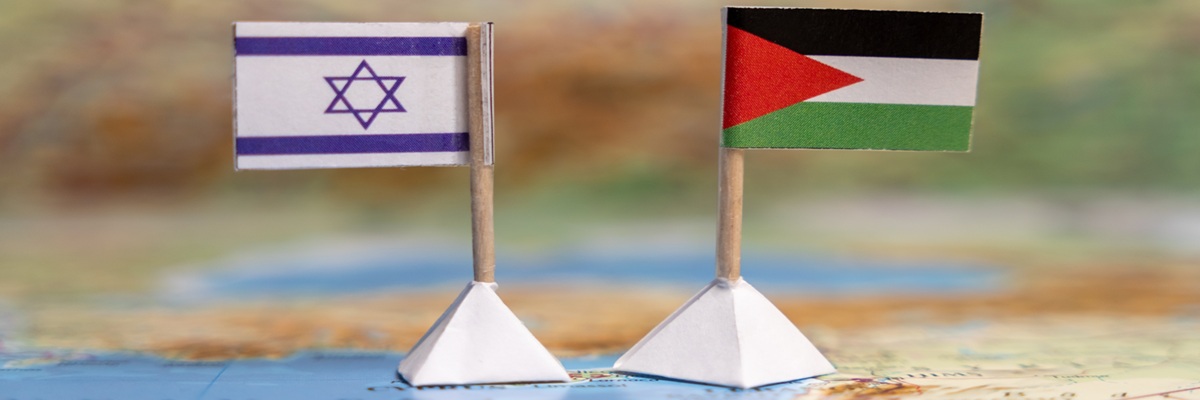
Image Source : Shutterstock
Subscribe to our weekly newsletters for free
If you want to subscribe to World & New World Newsletter, please enter
your e-mail


 Provider of in-depth & balanced analysis on hot issues around the world
Diplomacy
Image Source : Shutterstock
First Published in: Jan.12,2026
Jan.12, 2026
Share Article


The Israel-Hamas War has calmed down. The events that preceded it – including the October 7, 2023 Hamas attack against Israel and the taking of Israeli and other hostages – and that resulted from it will be remembered for decades to come, especially the dead and wounded, the trauma and pain, the destruction of dreams and property. If there is any lesson to be learnt, it is that better ways must be found to resolve conflict. There is deep concern now that the West Bank is increasingly reaching a critical point. The weak governing structure of the Palestinian Authority, the contraction of the Palestinian economy, settler violence, and much more are causing serious distress and instability. What is preventing conditions from spiraling out of control are Israel’s strict security measures and Palestinian fear that the West Bank will turn into Gaza, even though both regions are different. Years of diplomatic inertia have been counterproductive. The status quo is untenable. Much is at stake and indecision is costly for all concerned. Why continued conflict? Israelis and Palestinians have become victims of their own exclusive national narratives and are speaking past each other. Many on each side are unable to go beyond their zero-sum mentality. They selectively highlight the rightness of their own cause, accuse the other side of bad intentions or misconduct, and fail to realize how their own rhetoric and acts cause aggravating conditions. While the obstacles in the way of progress to peace are numerous and real – power imbalance between Israel and the Palestinians, one state reality with Israel dominant over the Palestinians, hardening of attitudes in Israel and Palestine, relative weakness of the Israeli and Palestinian peace camps, Israeli settler radicalization, Palestinian anti-normalization stance, terrorism – these must not delay or prevent the search for opportunities and positive outcomes. In this regard, simple facts present themselves. First, Israelis and Palestinians are neighbors forever. Their present and future are intertwined whether they choose this reality or not. Second, the longer Israelis and Palestinians wait to negotiate, the more complicated the issues become and the less room there will be for an agreeable peaceful solution. Third, the core issues that separate Israelis and Palestinians – borders, the separation wall, security, Israeli settlements, Palestinian refugees, Jerusalem, water – are well-known, thoroughly debated, and resolvable. The challenge is to initiate negotiations and negotiate in good faith. Fourth, Israelis and Palestinians have proved to be both incapable and unwilling to restart negotiations on their own. The United States thus must go beyond managing the Israeli-Palestinian conflict to taking the lead to resolve it. It is indispensable for the promotion and sustenance of peace negotiations, as was recently shown in the diplomatic intervention to stop the Israel-Hamas War. Fifth, the inclusion of regional and international actors becomes key as peace requires assurances, follow-up, and support to take root and grow. As Gershon Baskin argues, “Protracted conflicts in which there is little or no trust and confidence require external mechanisms to verify implementation of the agreements, to ensure compliance, and to offer external dispute resolution” (Baskin, 2025). The prerequisites for peacemaking (e.g., context and timing, leadership and political will, societal strength and resilience, process, and content and creativity) are known (Kurtzer, 2020). US diplomacy must be credible, intentional, sustained, and transformative. This comprises not only making peace a priority, but also acting accordingly. The situation on the ground must change. A realistic plan and process of peacemaking must be prioritized. Israelis and Palestinians must be held accountable for their actions and inactions. The vital policies of Arab countries that have signed the Abraham Accords (especially United Arab Emirates, Bahrain, and Morocco) and others that mediated (that is, United States, Egypt, Qatar, and Turkey) or attended the Gaza “peace conference” in October 2025 should impel them to motivate Palestinians to make hard decisions to end conflict and reach a peaceful settlement. Israel needs to reciprocate. Circumventing the Palestinian issue or wishing it away will not advance Israel’s strategic goals, especially in the long run. Initiating unilateral moves and thinking of the Palestinian issue as a security matter only without addressing its political and territorial dimensions will not enhance Israel’s defense. If anything, they will continue to rile the Palestinians, particularly the youth among them. The two-state solution, the official United States policy since 2002, has become increasingly less viable. This is at a time when 157 out of 193 Member States of the United Nations have already recognized the State of Palestine. On July 28-30, 2025, a High-level International Conference for the Peaceful Settlement of the Question of Palestine and the Implementation of the Two-State Solution was held at the United Nations. The conference, co-chaired by France and Saudi Arabia, committed “not only to reaffirm international consensus on the peaceful settlement of the question of Palestine but [also] to catalyze concrete, timebound and coordinated international action toward the implementation of the two-state solution” (United Nations, 2025a). Follow-up work took place on September 22, and the commitment was made to continue the implementation of the conference’s outcomes. The US’s plan (Trump, 2025) to demilitarize the Gaza Strip and to reconstruct it for the benefit of its inhabitants is a good start, and the plan’s “Phase 2” was even endorsed by United Nations Security Council Resolution 2803 on November 17, 2025 (United Nations, 2025b). However, resolving all aspects of the Gaza issue will take years. Meantime, it is essential for the US to take a leading role in endorsing again the two-state solution, as it is in the best national interest of Israel, Palestine, and the US. Moreover, the US can facilitate the solution by urging Israel and the Palestinians to seriously consider the idea of confederation, which adjusts or introduces important modifications to the two-state solution. While there have been more than a dozen confederation models over the years – with some specific only to Israel and Palestine and others that encompass Jordan as well – a main goal of confederation, according to the proponents of the Holy Land Confederation (me included), is not to totally separate the Palestinians from the Israelis living in the Holy Land, i.e., “divorce,” but to empower them to “cohabitate” in the two respective sovereign states (Holy Land Confederation, 2025). This cohabitation would allow for greater cooperation and movement between them. “If properly implemented, confederation would enable Palestinians to advance their search for freedom, independence, and statehood without being anti-Israel, and it would enable Israelis to have their security and wellbeing without being anti-Palestinian” (Beilin and Sarsar, 2022). The Gaza crisis must be solved. However, the deadlock in Israeli-Palestinian relations must be broken as well. If past negotiations are any indication, there is middle ground between the positions of Israel and Palestine. The US possesses the vital capabilities to move both parties to take the necessary political risks by compromising and engaging in unavoidable tradeoffs on the path to peace.
- Baskin, Gershon. (2025) “Monitoring agreements and verifying implementation.” October 18, https://gershonbaskin.substack.com/p/monitoring-agreements-and-verifying. - Beilin, Yossi and Sarsar, Saliba. (2022) “Israeli-Palestinian confederation is a way forward for peace.” The Jerusalem Post, February 17, https://www.jpost.com/opinion/article-696830. - Holy Land Confederation. (2025) “The Holy Land Confederation as a Facilitator for the Two-State Solution.” Institute for Cultural Diplomacy, https://www.culturaldiplomacy.org/index.php?en_hlc. - Kurtzer, Daniel C. (2020) “The Ingredients of Palestinian-Israeli Peacemaking.” Journal of South Asian and Middle Eastern Studies, Vol. 43, No. 3 (Spring): 5-16. - Trump, Donald J. [@RapidResponse47]. (2025, September 29). “President Donald J. Trump’s Comprehensive Plan to End the Gaza Conflict.” X. https://x.com/RapidResponse47/status/1972726021196562494. - United Nations. (2025a) “High-level International Conference for the Peaceful Settlement of the Question of Palestine and the Implementation of the Two-State Solution,” July 28-30, https://www.un.org/unispal/high-level-conference-two-state-solution-july2025/. - United Nations. (2025b) United Nations Security Council, November 17, https://docs.un.org/en/s/res/2803(2025).
First published in :
World & New World Journal

Saliba Sarsar, Ph.D., born and raised in Jerusalem, is Professor of Political Science at Monmouth University. His teaching and scholarly interests focus on world politics, the Middle East, Palestinian-Israeli affairs, and peacebuilding. He is the author of Jerusalem: The Home in Our Hearts and of Peacebuilding in Israel and Palestine.
Beyond Borders: Türkiye’s Growing Footprint in the Western Indo-Pacific Amid Global Instability
Opinion – As Israel Pushes for Annexation, Is There Hope for Palestinians?
Sudan’s latest peace plan: what’s in it and does it stand a chance?
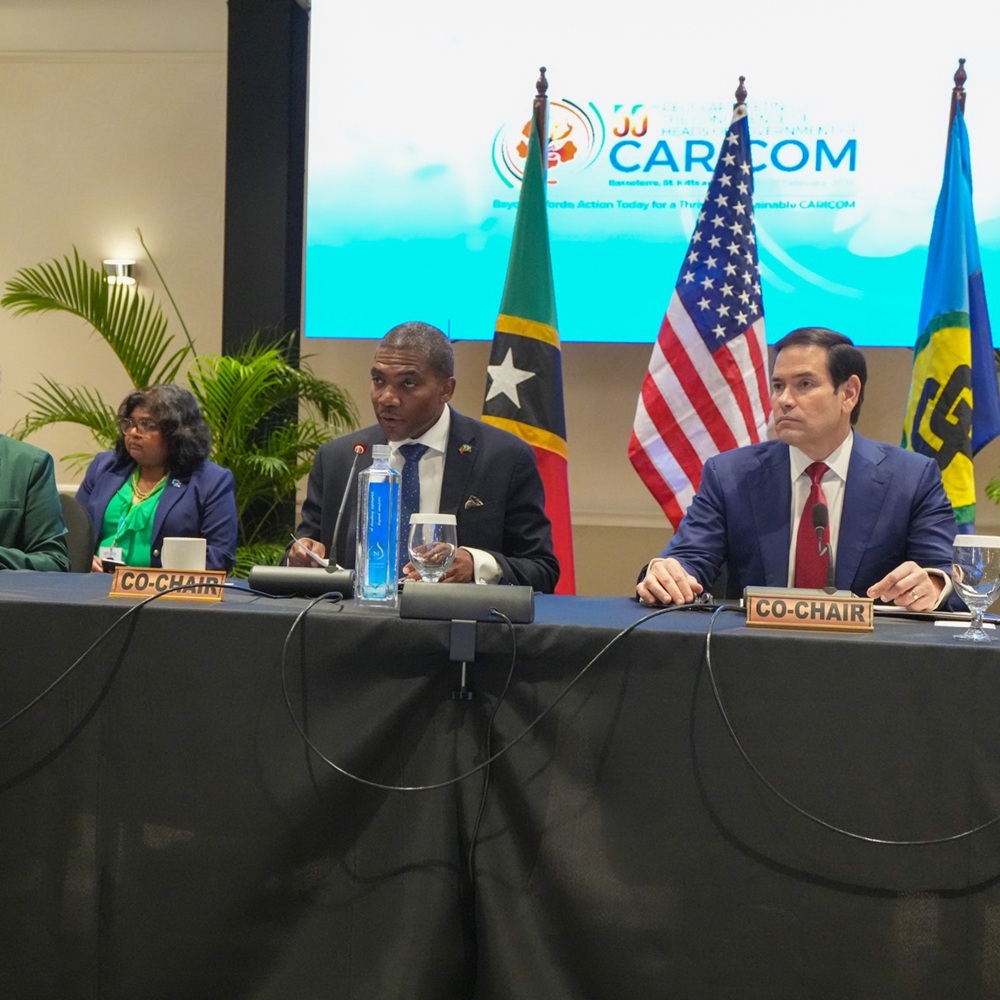
Secretary of State Marco Rubio at the 50th Regular Meeting of the Conference of CARICOM Heads of Government
Unlock articles by signing up or logging in.
Become a member for unrestricted reading!