

Diplomacy
From MAS to Reopening: Bolivia, International Relations, and Economic Prospects
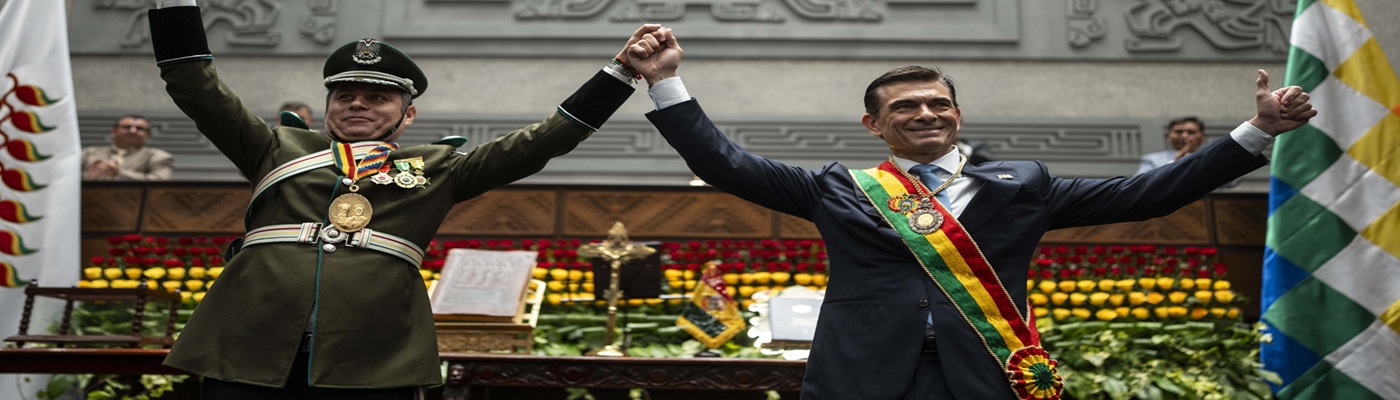
Image Source : Wikimedia Commons
Subscribe to our weekly newsletters for free
If you want to subscribe to World & New World Newsletter, please enter
your e-mail


 Provider of in-depth & balanced analysis on hot issues around the world
Diplomacy
Image Source : Wikimedia Commons
First Published in: Jan.19,2026
Jan.19, 2026
Share Article


Bolivia, an Andean country, historically battered by economic, social, and political tensions, has experienced one of its most decisive moments in recent decades. The victory of Rodrigo Paz, the Christian Democratic Party candidate, has brought an end to a political cycle lasting nearly 20 years, initiated by Evo Morales, which resulted in the hegemony of the Movement for Socialism (MAS). Paz's victory has not only changed Bolivia's course but also opens a new phase, signaling a clear shift to the right, a rearrangement of its international relations, and a rethinking of its foreign policy in a volatile American context.
To understand the magnitude of this change, it is necessary to look back. Since Evo Morales came to power in 2006, MAS consolidated itself as the dominant force in Bolivia, promoting a nationalist, statist agenda and strong state intervention in strategic sectors such as hydrocarbons and natural resources. Furthermore, during the MAS period, an anti-imperialist discourse marked Bolivia's foreign policy. In this tone, Bolivia aligned itself with left-wing governments in Latin America, notably Venezuela, Cuba, and Nicaragua, within the ALBA framework, and distanced itself significantly from Washington. However, after two decades in power, internal divisions and power struggles within MAS caused deep wear within the party and its supporters. Bolivia's economy faced its worst crisis in decades: a recession marked by a decline in gas production — a key source of fiscal income and exports for the country — high inflation levels, and a shortage of foreign currency that limited the functioning of the state apparatus. Faced with this scenario, and with a frustrated citizenry over economic and social management, the Bolivian electorate opted for a radical change in October 2025. Rodrigo Paz, a centrist politician with a pragmatic message, secured a surprising 54.5% of the votes in the second round, ultimately defeating rival candidate Jorge Quiroga, marking the end of almost two decades of MAS governments. Although Paz was considered a less significant candidate by polls and analysts, he comes from a more orthodox and moderate political tradition, and his rhetoric has been seemingly conciliatory toward social sectors. His father, Jaime Paz Zamora, was president of the country, and Paz has a solid political career, making him no stranger to the responsibilities of leadership. His campaign slogan, loosely translated as "capitalism for all," aimed to inspire some economic openness while still addressing the social demands traditionally favored by MAS.
Although it is referred to as a “shift to the right,” Bolivia’s reality is not monolithic. It could be more accurately described as a shift toward a pragmatic center-right, seeking to balance economic openness with the protection of certain social programs. MAS was defeated not so much due to a complete rejection of its ideological proposals, but because of an economic crisis that weakened and divided its political base and its dominant discourse. This nuance is key. Paz's victory was not solely due to a traditional conservative vote but also to the mobilization of sectors disillusioned by MAS's unmet promises. In this sense, his proposal positioned itself as a hybrid fusion: a moderate economic liberalization, while maintaining a minimal social protection network. However, although MAS has become an almost irrelevant opposition — receiving very low support and reduced to a symbolic presence in the first round — Paz's new government inherits a fragmented internal political landscape, which will require negotiating alliances with various legislative blocs in order to govern.
Bolivia's foreign policy over the past two decades was marked by its alignment with left-wing governments and regional movements such as ALBA, which included Venezuela, Cuba, Nicaragua, and other governments with anti-U.S. or at least skeptical stances toward Washington. Under Evo Morales, Bolivia strengthened ties with China, Iran, and Russia, diversifying alliances outside of the traditional Western bloc. With Paz’s victory, this framework seems to have been dismantled. The president-elect has been explicit in not inviting leaders from Cuba, Venezuela, or Nicaragua to his presidential inauguration, citing differences concerning democracy and governance. This gesture, although symbolic, signals a shift in foreign policy: moving away from pre-configured ideological positions and prioritizing relations based on democratic criteria and economic cooperation. Bolivia’s exit from the ALBA bloc and its suspension by the organization for “anti-Bolivarian and pro-imperialist behavior” reflects the diplomatic impact of this shift. Furthermore, the presence of leaders such as Javier Milei, president of Argentina, at Paz's inauguration ceremony consolidated Latin American representations more aligned with free-market economic policies and oriented toward cooperation with the United States and Europe. Another relevant factor is the relationship with traditional South American neighbors such as Brazil, Argentina, and Chile. Although political orientation may vary regionally, there is consensus on the need to strengthen trade and cooperation in infrastructure and energy, especially considering Bolivia’s economic challenges. Paz himself mentioned that Bolivia’s “cooperation” with its “five borders” — Argentina, Brazil, Chile, Paraguay, and Peru — “will be essential” for his new administration. He has even already held meetings and encounters with Boric (Chile), Milei (Argentina), and Noboa (Ecuador).
Perhaps the most symbolic and geopolitically significant element of Bolivia's new direction is the resumption of relations with the United States. Bilateral relations had been fractured since the expulsion of the U.S. ambassador in 2008 under Evo Morales’ presidency, following years of tensions over mutual accusations of interference and conspiracy. Paz's announcement to restore diplomatic ties and reopen the U.S. embassy in La Paz represents a drastic shift in approach. This reopening not only restores formal political dialogue but also opens opportunities for cooperation in trade, investment, and security — especially at a time when Bolivia faces currency problems, a fiscal deficit, and a fuel shortage. In addition, the United States and several Latin American countries issued a joint statement of support for Paz after the elections, emphasizing the willingness to collaborate in stabilizing the economy, strengthening democratic institutions, and boosting international investment. This relaunch is not without political conditions. Cooperation could focus on the fight against drug trafficking, corruption, and other transnational challenges, areas in which Washington has shown strategic interest. The involvement of agencies like the DEA and other security organizations could intensify once again. The DEA issue has been controversial, with both former presidents Evo Morales and Luis Arce expressing concerns, as they consider both the DEA and U.S. cooperation agencies to be conspirators, something the White House has always denied. The openness to cooperation with the United States may also have a tangible economic component: investment flows, access to international financing, and support for macroeconomic stabilization. Given the foreign currency crisis that has suffocated Bolivia, these relations could translate into crucial financial relief.
Another geopolitical axis that has changed drastically with the rise of Paz is his stance on Venezuela and its political crisis. Under the MAS, Bolivia historically maintained close ties with Nicolás Maduro’s regime, aligning itself with anti-imperialist rhetoric and supporting governments considered ideological allies. However, Paz has adopted a critical stance toward the Venezuelan government, especially after recent events — including the capture of Maduro by U.S. forces in January 2026. In his public statements, the Bolivian president has emphasized that the way out for Venezuela is to "respect the vote and democracy," positioning Bolivia alongside a narrative of democracy and institutionalism that contrasts with the country’s previous alignment with Chavismo. This approach places Bolivia on the opposite side of traditional left-wing governments in the region, such as Brazil under Luiz Inácio Lula da Silva, Gustavo Petro in Colombia, or Mexico under Claudia Sheinbaum, who have condemned the U.S. military intervention in Venezuela and called for peaceful solutions based on international law. In contrast, Paz has preferred to emphasize the importance of democracy as the guiding principle of Bolivia's foreign policy. The invitation to Venezuelan opposition leader María Corina Machado to the Bolivian inauguration also underscores this renewed focus on democracy and human rights, marking a clear break with La Paz's previous political ties to Caracas.
The new Bolivian phase faces enormous economic challenges. The transition to a more market-oriented model and the opportunities to attract foreign investment offer prospects for recovery, but they are not without risks. The country is dealing with high inflation, fuel shortages, a fiscal crisis, and an urgent need for foreign currency. In this context, the opening to the United States and international markets could boost key sectors like lithium, where Bolivia holds some of the world’s largest reserves. Bolivia's mining sector could also benefit from the country's opening. Cooperation with external investors, including Americans and European allies, could transform Bolivia’s productive capacity and position it as a strategic player in the global critical minerals supply chain. In fact, recently, the Inter-American Development Bank (IDB) visited Bolivia, and with a message to the nation, Paz announced “[…] 7 billion dollars for infrastructure works, employment, and labor, which we need so much in Bolivia.” At the same time, Paz’s government will need to carefully manage internal tensions. Social sectors traditionally aligned with MAS may feel displaced or fear the loss of social assistance programs, posing challenges for internal cohesion — a critical issue is the elimination of fuel subsidies. On the other hand, although the legislative situation is not as complicated, the need to form legislative alliances and engage in political dialogue will be crucial to avoid institutional conflicts that could weaken his ability to implement necessary economic reforms.
Rodrigo Paz’s victory not only symbolizes the end of MAS's dominance after nearly two decades, but it also represents a profound reconfiguration of Bolivia’s political, economic, and diplomatic course. This new chapter is characterized by pragmatism focused on the economy, a shift towards strategic relations with the United States and other Western partners, and a stance based on defending democracy in the face of regional crises such as the Venezuelan one. However, this path is not without internal tensions and structural challenges that could determine whether Bolivia manages to consolidate a sustainable development model or if social and political fractures reappear on the horizon. The country's contemporary history, in this sense, continues to be written with the uncertainty of whether this pragmatic center-right experiment will be a definitive solution or a prelude to new turns in the future. From a broader geopolitical perspective, Bolivia finds itself on a new hemispheric stage where the competition between the United States and China, as well as tensions between right-wing and left-wing governments in the region, shape the agenda. Paz's election can be seen as part of a broader trend in Latin America towards governments that prioritize macroeconomic stability, diplomatic pragmatism, and international cooperation beyond rigid ideological alignments.
Buenos Aires Times. (2025, November 11). Argentina's Javier Milei to attend new Bolivia president Rodigo Paz’s inauguration. Retrieved from Buenos Aires Times: https://www.batimes.com.ar/news/latin-america/argentinas-javier-milei-to-attend-new-bolivia-president-rodigo-pazs-inauguration.phtml?utm_source=chatgpt.com CiberCuba Editorial Team. (2025, October 21). The elected president of Bolivia will not invite Díaz-Canel, Maduro, or Ortega to the inauguration: “They are not democratic.”. Retrieved from CiberCuba: https://en.cibercuba.com/noticias/2025-10-21-u1-e207888-s27061-nid313318-presidente-electo-bolivia-invitara-diaz-canel-maduro?utm_source=chatgpt.com#google_vignette Flores, F. (2025, Octubre 21). Bolivia: Los desafíos del próximo gobierno de Rodrigo Paz. Retrieved from Latinoamérica21: https://latinoamerica21.com/es/bolivia-los-desafios-del-proximo-gobierno-de-rodrigo-paz/ Guevara Condore, M., & Pimentel Huerto, R. (2025, Octubre 27). Bolivia regresó a la derecha tras casi más de 20 años gobernado por el MAS y en medio de una crisis económica. Retrieved from La República: https://larepublica.pe/mundo/2025/10/19/bolivia-regreso-a-la-derecha-luego-de-mas-de-20-anos-gobernado-por-el-mas-y-en-medio-de-una-crisis-economica-1455609?utm_source=chatgpt.com Jara, R. (2025, Octubre 16). Segunda vuelta en Bolivia: País se prepara para dar un giro a la derecha tras dos décadas de dominio izquierdista. Retrieved from emol: https://www.emol.com/noticias/Internacional/2025/10/16/1180557/bolivia-segunda-vuelta-candidatos.html?utm_source=chatgpt.com Orlando Peralta, J. (2025, Noviembre 13). De lo ideológico a lo pragmático: se mueve el péndulo en Bolivia. Retrieved from Latinoamérica21: https://latinoamerica21.com/es/de-lo-ideologico-a-lo-pragmatico-se-mueve-el-pendulo-en-bolivia/ Romero Ballivian, S. (2025, Noviembre 24). Fin de ciclo: el MAS cede el poder tras veinte años de hegemonía en Bolivia. Retrieved from Latinoamérica21: https://latinoamerica21.com/es/fin-de-ciclo-el-mas-cede-el-poder-tras-veinte-anos-de-hegemonia-en-bolivia/ RTVE.es. (2025, Noviembre 09). Estados Unidos restablecerá las relaciones con Bolivia a nivel de embajadores, interrumpidas hace 17 años. Retrieved from RTVE.es: https://www.rtve.es/noticias/20251108/estados-unidos-restablecera-relaciones-con-bolivia-a-nivel-embajadores-interrumpidas-hace-17-anos/16807541.shtml#:~:text=Estados%20Unidos%20restablecer%C3%A1%20las%20relaciones%20a%20nivel%20de%20embajadores%20con,emb Stabroek News. (2025, October 20). Centrist Rodrigo Paz wins Bolivian presidency, ending nearly 20 years of leftist rule. Retrieved from Stabroek News: https://www.stabroeknews.com/2025/10/20/news/regional/centrist-rodrigo-paz-wins-bolivian-presidency-ending-nearly-20-years-of-leftist-rule/?utm_source=chatgpt.com urgente.bo. (2026, Enero 03). Bolivia expresa respaldo a Venezuela en medio de ataques de EE.UU. Retrieved from urgente.bo: https://www.urgente.bo/noticia/bolivia-expresa-respaldo-venezuela-en-medio-de-ataques-de-eeuu urgente.bo. (2026, Enero 12). Rodrigo Paz recibe la visita más importante; el Presidente del BID trae respaldo financiero. Retrieved from urgente.bo: https://www.urgente.bo/noticia/rodrigo-paz-recibe-la-visita-m%C3%A1s-importante-el-presidente-del-bid-trae-respaldo-financiero Velasco-Guachalla, X., & Hummel, C. (2025, October). Why Bolivia Voted for Change—And Continuity. Retrieved from Journal of Democracy: https://www.journalofdemocracy.org/online-exclusive/why-bolivia-voted-for-change-and-continuity/?utm_source=chatgpt.com Visión 360. (2026, Enero 03). Bolvia apoya la ruta iniciada en Venezuela "para recuperar la democracia". Retrieved from Visión 360: https://www.vision360.bo/noticias/2026/01/03/37852-bolivia-apoya-la-ruta-iniciada-en-venezuela-para-recuperar-la-democracia
First published in :
World & New World Journal

Beyond Borders: Türkiye’s Growing Footprint in the Western Indo-Pacific Amid Global Instability
Opinion – As Israel Pushes for Annexation, Is There Hope for Palestinians?
Sudan’s latest peace plan: what’s in it and does it stand a chance?
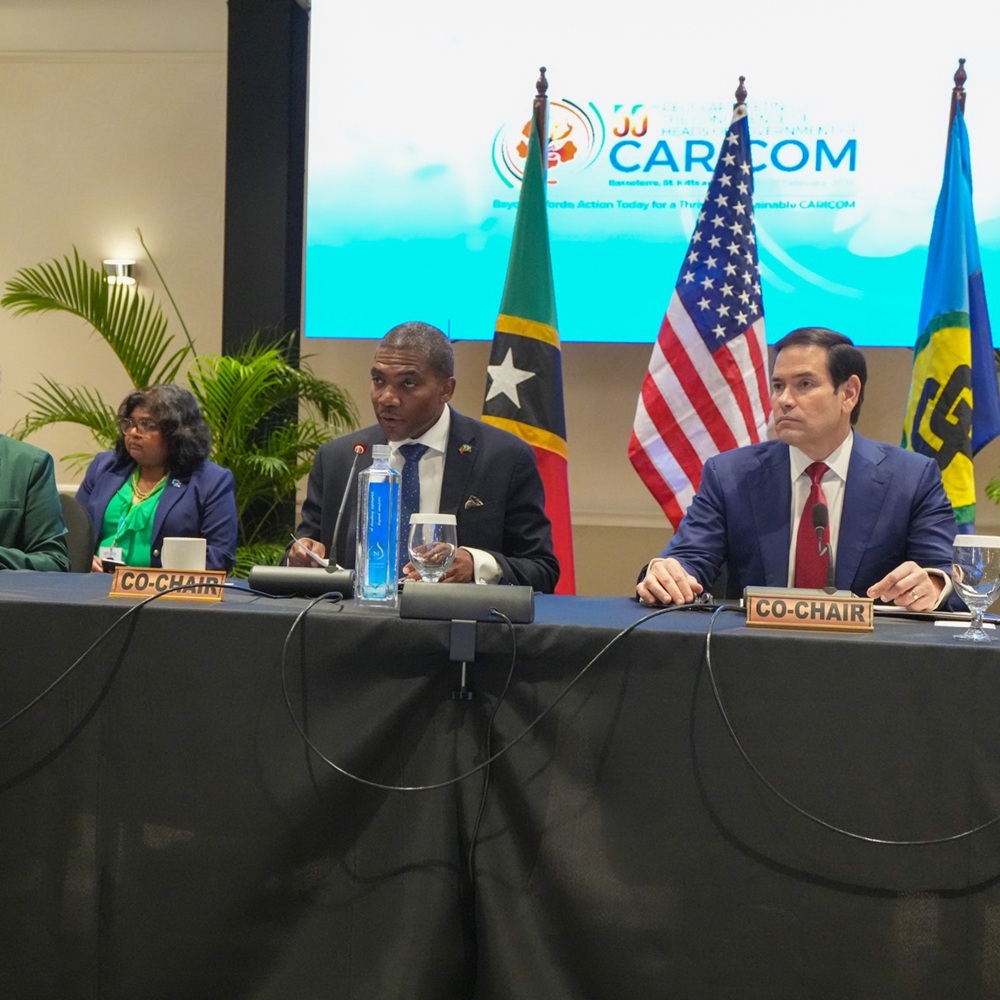
Secretary of State Marco Rubio at the 50th Regular Meeting of the Conference of CARICOM Heads of Government
Unlock articles by signing up or logging in.
Become a member for unrestricted reading!