

Diplomacy
Venezuela at a Critical Juncture (Part II): The Capture of Maduro and the Debate over Sovereignty, Intervention, and Power
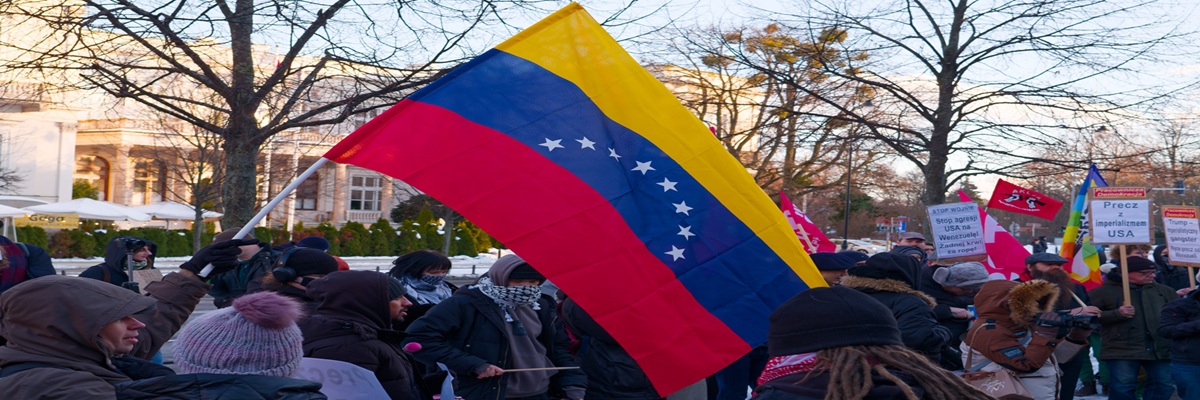
Image Source : Shutterstock
Subscribe to our weekly newsletters for free
If you want to subscribe to World & New World Newsletter, please enter
your e-mail


 Provider of in-depth & balanced analysis on hot issues around the world
Diplomacy
Image Source : Shutterstock
First Published in: Jan.12,2026
Jan.12, 2026
Share Article


The situation between the United States and Venezuela ended in 2025 with a total U.S. economic blockade and the “seizure” of a Venezuelan oil tanker. However, the situation changed dramatically when, on January 3, 2026, Nicolás Maduro was captured in Caracas by U.S. forces. Preceded by threats and sustained military and economic pressure on Venezuela, the President of the United States, Donald Trump, carried out an operation to capture and remove Maduro and his wife from Venezuela. The operation was surgical — lasting approximately two hours — and although successful, it also resulted in human losses (80 fatalities according to The New York Times — an unofficial figure — including 32 Cuban combatants confirmed by Havana) and damage to military infrastructure in Caracas, as well as in Miranda, Aragua, and La Guaira. As was already known, the U.S. government had classified Maduro as a member or leader of the Cartel of the Suns. In addition, a reward of $50,000 had been offered for his capture, and since 2020 the U.S. Attorney’s Office for the Southern District of New York had charged Maduro with drug trafficking and conspiracy to import cocaine into the United States. In this context, Maduro’s capture was followed by his transfer to New York, where he will face trial.
Following Maduro’s detention, Venezuela’s Supreme Tribunal of Justice ordered Vice President Delcy Rodríguez to assume the role of head of state due to Maduro’s “temporary” absence. After the U.S. attacks, Rodríguez spoke out strongly against what she called “foreign aggression,” describing Maduro’s capture as an “illegal and illegitimate kidnapping.” However, after being sworn in, she softened the tone of her statements and even invited the Trump administration to “work jointly on an agenda of cooperation, aimed at shared development, within the framework of international legality and to strengthen a lasting community coexistence.” Rodríguez likewise emphasized the principles of sovereignty and non-interference. All of this stems from the imperialist rhetoric of Trump and Rubio. Trump made it very clear that he will “govern” Venezuela “until we can achieve a safe, appropriate, and prudent transition.” Everything indicates that, although under the threat of “doing the right thing,” Trump plans to give Rodríguez an opportunity; if it does not work or if she fails to meet Trump’s expectations, the United States will intervene again. On the other hand, both Edmundo González — who on January 4 released a video declaring himself the “president of Venezuela” and calling for a “peaceful and clear” transition — and María Corina Machado have been practically sidelined by the U.S. government, citing a lack of internal support, referring to the fact that those who support them are “outside” Venezuela. On the social front, reactions have been mixed, ranging from celebrations over Maduro’s capture to demonstrations against U.S. interventionism. The current situation is very delicate: with Rodríguez’s appointment and no clear short-term roadmap — plus the threat of U.S. intervention and interference — and the snubbing of the opposition, Venezuela’s social reality appears not to have changed, nor is it likely to change much in the near future. However, Rodríguez’s stance — her invitation to the United States to work together, albeit under threat, practically placing oil and resources on a silver platter — could become the social fuel capable of generating real change in Venezuela in the near future.
The events in Venezuela took many by surprise, and international reactions were quick to follow. South Africa issued a press release stating that the actions of the United States constituted “a violation of the United Nations Charter,” and called on the UN Security Council to urgently address the situation. Indonesia also underscored the importance of “respect for international law and the principles of the United Nations Charter.” Similar statements were issued by Japan, India, South Korea, Malaysia, Pakistan, Thailand, Vietnam, New Zealand, and Australia. China’s Ministry of Foreign Affairs likewise emphasized the violation of “Venezuelan sovereignty and the threat posed to peace and security in Latin America and the Caribbean.” It also called for the release of Maduro and his wife. With a stronger tone, Iran condemned the U.S. attacks and likewise appealed to the United Nations. In a very similar vein, North Korea’s Ministry of Foreign Affairs also condemned the U.S. attack, denouncing acts of U.S. hegemony and calling on the international community to recognize the “catastrophic” situation in Venezuela and to denounce the United States’ “habitual acts of violating the sovereignty of other countries.” On the other hand, Israel’s Minister of Foreign Affairs, Gideon Sa’ar, posted on X: “Israel praises the United States operation, led by President Trump. […] Israel stands with the freedom-loving Venezuelan people, who have suffered under Maduro’s illegal tyranny. Israel celebrates the removal of the dictator […].” Prime Minister Benjamin Netanyahu stated that Israel supported the actions of the United States in Venezuela. In Europe, most countries supported the decision behind the actions of the United States, underscoring the illegitimacy of Maduro’s government and the importance of de-escalation and dialogue, always within the framework of international law. When asked about Maduro, Ukrainian President Volodymyr Zelensky responded that the United States “knows what to do now,” referring to dictators. Other countries such as Norway, Serbia, Slovenia, and Spain also expanded their criticism of the U.S. military operation, arguing that it was not in accordance with international law. On the opposite end of the spectrum, Belarus and Russia, in varying tones, condemned the U.S. attacks, describing them as “direct threats” to international peace and security. For his part, Slovak Prime Minister Robert Fico strongly criticized U.S. actions and the UN, emphasizing that “international law is not applied, military force is used without the consent of the UN Security Council, and whoever is big and powerful will do whatever serves their interests…” In the Americas, Mexico condemned and rejected the U.S. military intervention and urged the United States to adhere to international law. Honduras did the same, describing the capture of Maduro as an act of kidnapping. Cuba condemned the “criminal act,” calling it “state terrorism against the brave Venezuelan people and against our America.” Nicaragua also condemned the U.S. intervention and expressed its support for Delcy Rodríguez. Argentine President Javier Milei posted, “Freedom advances, long live freedom, damn it!” celebrating the capture of Maduro and his wife. In Bolivia, Rodrigo Paz also referred to freedom, stating that “the only way out for Venezuela is respect for the vote.” Ecuadorian President Daniel Noboa stated that “for all narco-Chavista criminals, their time has come. Their structure on the continent will completely collapse.” Paraguay and Peru also celebrated Maduro’s removal. In contrast, Brazilian President Luiz Inácio Lula da Silva condemned the attacks and Maduro’s capture, describing them as “very serious […] and extremely dangerous as precedents for the international community.” Chilean President Gabriel Boric also criticized the attacks and called for a peaceful resolution under international law, while President-elect Antonio Kast said that Maduro’s capture “is good news for the region.” Colombian President Gustavo Petro also rejected the “aggression against the sovereignty of Venezuela and Latin America,” while calling for a meeting at the UN and the OAS. Finally, Uruguay’s Ministry of Foreign Affairs also condemned the U.S. intervention in Venezuela and called for respect for the UN Charter. The UN, the OAS, and the EU also issued statements, using more cautious rhetoric and emphasizing respect for international law.
In Part I of the article, Venezuela’s significance in terms of oil, biodiversity, water resources, rare earths, and more was presented. Based on this, and as mentioned earlier, the attack on alleged drug boats and the fight against drug trafficking became a pretext to promote the new Donald Trump–Monroe Doctrine, the “Don-roe Doctrine / Monroe Doctrine 2.0.” In December 2025, the United States published its new National Security Strategy, which emphasizes and promotes the United States as the sole actor or hegemon in the Americas, making any foreign presence outside of the United States unwelcome. The results of the application of this doctrine were immediate — and there is more. It is not only Venezuela: the Trump administration — particularly Secretary of State Marco Rubio — has already set its sights on Cuba, in addition to repeatedly raising the possibility of carrying out military activities against drug trafficking in Mexico and Colombia, and more recently, engaging in a dispute with Denmark over strategically important Greenland.
The implications for Venezuela stemming from these events are profound. First, there is a crisis of legitimacy: although Delcy Rodríguez has assumed the presidency, Edmundo González has also raised his voice, leading to both internal and external questioning. Likewise, there are institutional challenges. In the end, only the head of the regime was removed; Maduro’s inner circle remains in power. Therefore, regardless of the change at the top, a transition toward a more democratic or stable system appears distant given the current conditions. This is independent of the existing social discontent — once again, the regime retains control, making a drastic change unlikely in the near term. Regarding the U.S. side, the Trump administration has been clear — and consistent with its foreign policy — in always prioritizing its national interests over those of any other country. The example is clear: by acting unilaterally and without adherence to international law, the United States has once again undermined the sovereignty of a state. The U.S. government could justify its actions in legal terms — Maduro is accused in the United States of drug trafficking and conspiracy — on health and security grounds — the Venezuelan regime facilitates drug trafficking into the United States — or even on geopolitical grounds — weakening an administration perceived as allied with rival powers and holding interests contrary to those of the United States. However, the validity of these arguments must be examined. Moreover, as Robert Fico pointed out, there was an absence of authorization from the UN Security Council or even from the U.S. Congress itself, which, for experts in the field, renders the operation legally unlawful. Ultimately, the debate remains open. Countries’ positions are divided, and, more importantly, this could become a dangerous precedent for national sovereignty and for the conduct of great powers toward independent states. There are also the potential consequences for the region: the act alters the balance of power in Latin America and redefines the narrative surrounding U.S. influence in the region. On the other hand, there is oil and what its control represents as a long-term strategic factor. Finally, there is the global tension over control and influence in regions — one in which Russia and China are far from pleased. Finally, Fico’s statements and the following quote from Mexican lawyer José Mario de la Garza are worth analyzing in order to understand the importance of international law and why we must live in a rules-based world — even if several reforms may be needed to improve it: “Overthrowing a dictator sounds morally right. No one mourns a tyrant. But international law was not built to protect the good, but to restrain the powerful. That is why it prohibits the use of force almost without exception: not because it ignores justice, but because it knows that if every country decides whom to ‘liberate’ at gunpoint, the world returns to the law of the strongest.”
@josemariodelagarza. (04 de January de 2026). @josemariodelagarza. Obtenido de Instagram: https://www.instagram.com/p/DTDmcSNgPmK/?hl=en&img_index=1 Caro, I. (05 de January de 2026). "Vengo con dolor, pero también con honor": Delcy Rodríguez juramenta como presidenta encargada de Venezuela tras la captura de Maduro. Obtenido de BBC News: https://www.bbc.com/mundo/articles/cd9exjjkvw8o Holcman, T. (05 de January de 2026). Maduro's rival in Venezuelan elections demands presidency, 'freedom to all political prisoners'. Obtenido de The Jerusalem Post: https://www.jpost.com/international/article-882323 Lozano, D. (05 de January de 2026). Delcy Rodríguez jura como presidenta de Venezuela "por Maduro y por Chávez". Obtenido de El Mundo: https://www.elmundo.es/internacional/2026/01/05/695be102fc6c8323518b45a0.html Muggah, R. (03 de January de 2026). 5 scenarios for a post-Maduro Venezuela — and what they could signal to the wider region. Obtenido de The Conversation: https://theconversation.com/5-scenarios-for-a-post-maduro-venezuela-and-what-they-could-signal-to-the-wider-region-272675 Página 12. (06 de Enero de 2026). Aseguran que son más de 80 los muertos tras el ataque de Estados Unidos a Venezuela. Obtenido de Página 12: https://www.pagina12.com.ar/2026/01/05/aseguran-que-son-mas-de-80-los-muertos-tras-el-ataque-de-estados-unidos-a-venezuela/ Reuters. (04 de January de 2026). Trump says U.S. will run Venezuela after U.S. captures Maduro. Obtenido de Reuters: https://www.reuters.com/world/americas/loud-noises-heard-venezuela-capital-southern-area-without-electricity-2026-01-03/ Urrejola, J. (06 de January de 2026). Venezuela tras Maduro: por qué el chavismo sigue en el poder. Obtenido de DW: https://www.dw.com/es/venezuela-tras-maduro-por-qu%C3%A9-el-chavismo-sigue-en-el-poder/a-75400562 Walia, G. (03 de January de 2026). Venezuela's President Nicholas Maduro captured by US forces: Where has he been taken? What we know so far. Obtenido de The Economic Times: https://economictimes.indiatimes.com/news/international/us/venezuelas-president-nicholas-maduro-captured-by-us-forces-where-has-he-been-taken-what-we-know-so-far-caracas/articleshow/126321249.cms?from=mdr "South Africa urges UN Security Council Session following unilateral military action in Venezuela" (Press release). Pretoria, South Africa: Department of International Relations and Cooperation. 3 January 2026. Archived from the original on 4 January 2026. Retrieved 4 January 2026. "Dirco slams US efforts to 'run' Venezuela". TimesLIVE. 3 January 2026. Retrieved 4 January 2026 "Foreign Ministry Spokesperson's Remarks on the U.S. Military Strikes on Venezuela" (Press release). Chinese Ministry of Foreign Affairs. 3 January 2026. Archived from the original on 4 January 2026. Retrieved 4 January 2026. "World reacts to US strikes on Venezuela". Reuters. 3 January 2026. Archived from the original on 3 January 2026. Retrieved 4 January 2026. 'Matter of deep concern': MEA reacts to US strikes on Venezuela; urges restraint, calls for dialogue". The Times of India. 4 January 2026. Retrieved 4 January 2026. "Iran strongly condemns US attack on Venezuela". Iran International. 3 January 2026. Archived from the original on 4 January 2026. Retrieved 4 January 2026. "Iran Condemns U.S. Attack on Venezuela". Foreign Policy. West Asia News Agency. 3 January 2026. Archived from the original on 3 January 2026. Retrieved 4 January 2026. Halpern, Sam (3 January 2026). "Israel commends US operation that led to capture of Venezuela's Maduro". The Jerusalem Post. Sa'ar, Gideon [@gidonsaar] (4 January 2026). "Israel commends the United States' operation, led by President Trump, which acted as the leader of the free world. At this historic moment, Israel stands alongside the freedom-loving Venezuelan people, who have suffered under Maduro's illegal tyranny. Israel welcomes the removal of the dictator who led a network of drugs and terror and hopes for the return of democracy to the country and for friendly relations between the states. The people of Venezuela deserve to exercise their democratic rights. South America deserves a future free from the axis of terror and drugs" (Tweet). Retrieved 4 January 2026 – via Twitter. "Netanyahu says Israel supports 'strong' US action in Venezuela". Al Arabiya English. 4 January 2026. Retrieved 4 January 2026. Sokolin, Anton (4 January 2026). "North Korea condemns the U.S.' military intervention in Venezuela". NK News. Retrieved 4 January 2026. "North Korea sends tough message to US after Venezuela attack, fires multiple ballistic missiles". Wion. Retrieved 4 January 2026. "Malaysia stands firm on UN principles, opposes foreign intervention in Venezuela". Malay Mail. 4 January 2026. Retrieved 4 January 2026. "Pakistan urges restraint, peaceful resolution in Venezuela". The Express Tribune. 4 January 2026. Retrieved 4 January 2026. "Thailand urges US to settle conflict with Venezuela peacefully". Bangkok Post. 4 January 2026. Retrieved 4 January 2026 "Vietnam deeply concerned about reports on situation in Venezuela: spokesperson". Vietnamlawmagazine.vn. 4 January 2026. Retrieved 5 January 2026. "Venezuela latest: Trump says US is going to 'run' Venezuela after capturing President Maduro". BBC News. 3 January 2026. "World reactions to US operation in Venezuela". Le Monde. 3 January 2026 "Sviluppi sulla situazione in Venezuela, nota di Palazzo Chigi". www.governo.it (in Italian). 3 January 2026. Retrieved 3 January 2026. "Statement from Minister Eide on the Situation in Venezuela". Ministry of Foreign Affairs (Norway). 3 January 2026. Retrieved 3 January 2026. "Russia Condemns U.S. Military Strikes Against Venezuela". The Moscow Times. 3 January 2025. Retrieved 3 January 2025. Vlasova, Svitlana; Stockwell, Billy (3 January 2026). "Russia reaffirms solidarity with Venezuela after "act of armed aggression" by US, calls for dialogue". CNN. Retrieved 4 January 2026. "Вучић: После акције у Венецуели јасно је да међународни правни поредак не функционише; сачуваћемо мир али својом снагом". Radio-Television of Serbia. 4 January 2025. Retrieved 4 January 2025. "Slovakian Prime Minister Fico condemns US attack". Yahoo News. 3 January 2026. Retrieved 4 January 2026. Fico, Robert (3 January 2026). "STATEMENT BY THE PRIME MINISTER OF THE SLOVAK REPUBLIC". Facebook (in Slovak). Archived from the original on 4 January 2026. Retrieved 4 January 2026. "Spain will not recognize US intervention in Venezuela, PM says". Reuters. 3 January 2026. Retrieved 3 January 2026. "Zelenskyy reacts to US operation in Venezuela and hints at Putin". RBC-Ukraine. 4 January 2025. "Starmer won't be drawn on whether US strikes on Venezuela broke international law". BBC News. 3 January 2026. "Cuba's president denounces strikes on Venezuela as a "criminal attack by the U.S."". CBS News. 3 January 2026. Retrieved 3 January 2026. Alvarez, Carolina (3 January 2026). "Honduran President condemns US "military aggression" and "kidnapping" of Nicolás Maduro". De Último Minuto. Retrieved 4 January 2026. "Mexico Says Venezuela Strikes Breach U.N. Charter, International Law". The Wall Street Journal. 3 January 2026. Retrieved 3 January 2026. "Gobierno de Nicaragua exige liberación de Nicolás Maduro y defiende soberanía de Venezuela". SwissInfo. 1 March 2026. Retrieved 4 January 2026. Godsell, Oscar (3 January 2026). "Prime Minister Anthony Albanese responds to US President Donald Trump's attack on Venezuela". Sky News. Retrieved 3 January 2026. "Venezuela attack: New Zealand 'concerned', expects everyone to follow international law – Winston Peters". RNZ. 4 January 2026. Archived from the original on 4 January 2026. Retrieved 4 January 2026. Romero, Juan (3 January 2026). "Intervención militar en Venezuela: así reaccionaron en América Latina a la operación militar de EE.UU. para extraer a Maduro y su mujer". Fobes (in Spanish). Retrieved 3 January 2026. "Rodrigo Paz dice que «salida para Venezuela es respetar el voto», tras captura de Maduro". SwissInfo. 5 January 2026. Retrieved 1 March 2026. Durães, Marina (3 January 2026). "Lula diz que ataques à Venezuela e prisão de Maduro são 'inaceitáveis'". UOL. Retrieved 3 January 2026 "World reacts to US bombing of Venezuela, 'capture' of Maduro". Al Jazeera. 3 January 2026. Retrieved 3 January 2026 "Kast califica la detención de Maduro como "una gran noticia para la región"". Diario y Radio Universidad Chile (in Spanish). 3 January 2026. Retrieved 3 January 2026. Taylor, Harry; Rogero, Tiago (3 January 2026). "Global outcry after US launches strikes on Venezuela and captures president". The Guardian. ISSN 0261-3077. Retrieved 3 January 2026. Pannell, Alfie; Glade, Jim. "Colombia braces with alarm after Maduro's removal in Venezuela by US". Al Jazeera. Retrieved 3 January 2026 Quilca Catacora, Mariana (3 January 2026). "José Jerí se pronuncia tras captura de Maduro y situación de venezolanos en Perú: "Daremos las facilidades para su regreso"". infobae (in European Spanish). Retrieved 3 January 2026. "Uruguay rechazó la intervención militar en Venezuela y llamo a buscar una "solución positiva"" [Uruguay rejected military intervention in Venezuela and called for a "positive solution".]. Ámbito Financiero (in Spanish). 3 January 2026. Retrieved 3 January 2026. "Statement attributable to the Spokesperson for the Secretary-General – on Venezuela | Secretary-General | United Nations". United Nations. 3 January 2026. Retrieved 3 January 2026. "US actions in Venezuela 'constitute a dangerous precedent': Guterres". Peace and Security. United Nations News. 3 January 2026. Archived from the original on 4 January 2026. Retrieved 4 January 2026 "Statement by OAS Secretary General Albert R. Ramdin on recent developments in Venezuela". Press Release E-001/26. Organization of American States. 3 January 2026. Hayden, Jones (3 January 2026). "EU urges respect for international law after US capture of Maduro". POLITICO. Retrieved 3 January 2026.
First published in :
World & New World Journal

Beyond Borders: Türkiye’s Growing Footprint in the Western Indo-Pacific Amid Global Instability
Opinion – As Israel Pushes for Annexation, Is There Hope for Palestinians?
Sudan’s latest peace plan: what’s in it and does it stand a chance?
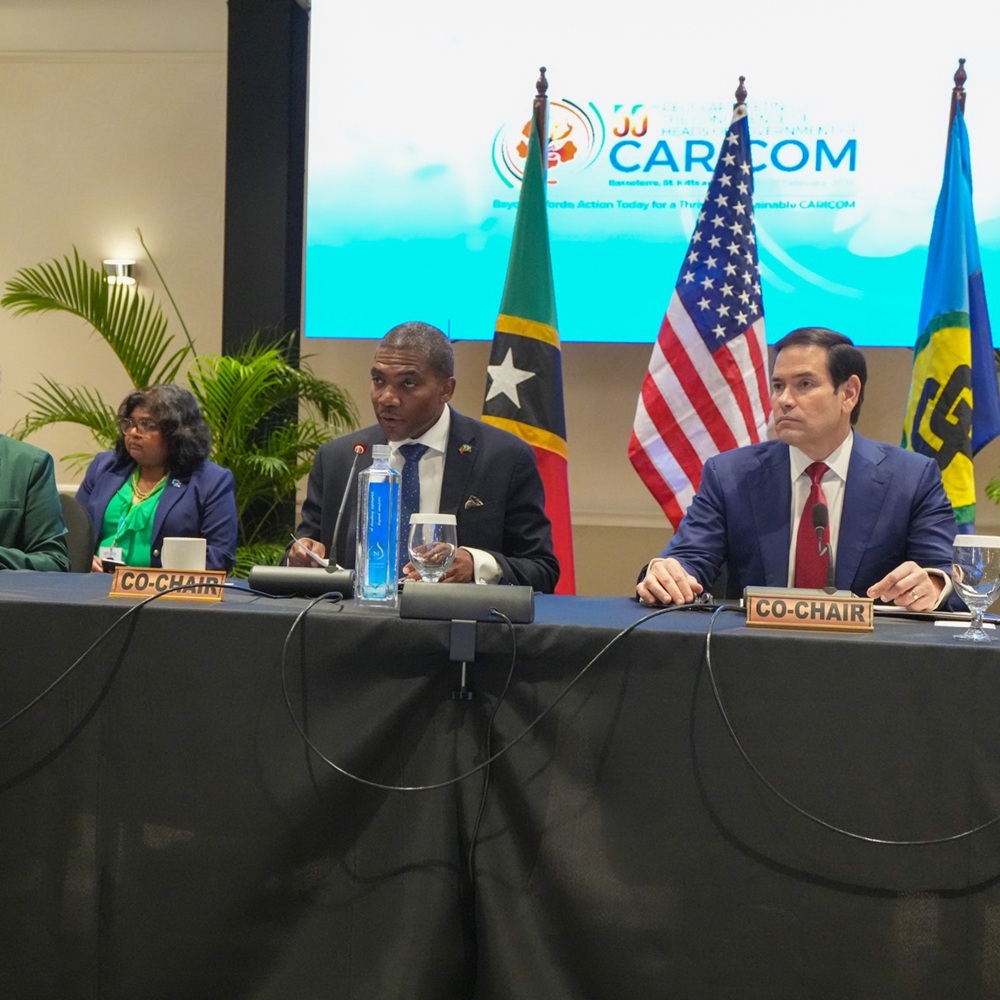
Secretary of State Marco Rubio at the 50th Regular Meeting of the Conference of CARICOM Heads of Government
Unlock articles by signing up or logging in.
Become a member for unrestricted reading!