Convergence in Vietnam, EU Interests a Harbinger of Indo-Pacific Order?
by Richard Ghiasy , Julie Yu-Wen Chen , Jagannath Panda
한국어로 읽기Leer en españolIn Deutsch lesen
Gap
اقرأ بالعربيةLire en françaisЧитать на русском
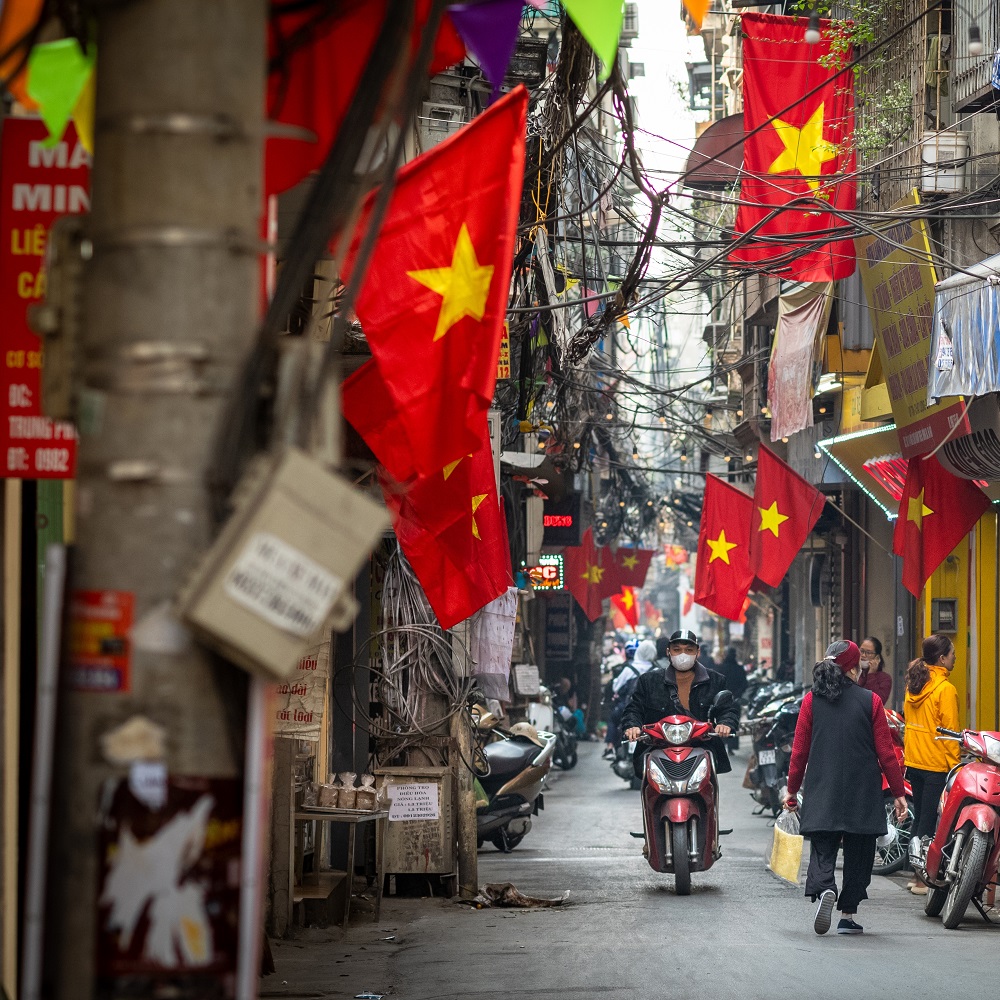
In March and April, Vietnamese Foreign Minister Bui Thanh Son’s nearly back-to-back visits to the U.S. and China highlighted Vietnam’s increasing penchant for delicate diplomacy with major powers amid the U.S.-China strategic competition in the Indo-Pacific and Vietnam’s territorial tussles with China especially in the South China Sea (SCS), which Vietnam calls the East Sea. Much of the (perceived) disorder in the Indo-Pacific hails from the SCS, and one of Vietnam’s principal challenges is fostering order on its maritime borders.
Therefore, Vietnam—historically distrustful of major powers—has been diversifying its relations by seeking security and defense ties with Indo-Pacific partners like the European Union (EU), India, and Japan, as well as with Russia, a country that poses an “existential threat” to the transatlantic allies. At the same time, Southeast Asia is battling disunity within the region for resolving disputes in the SCS, for instance. The regional multilateralism embodied by the Association of Southeast Asian Nations (ASEAN) seems to lack teeth even as China ‘controls’ some of its members using its financial and economic heft. So clearly, efforts beyond Vietnam’s “bamboo diplomacy” that deepen international solidarity are required.
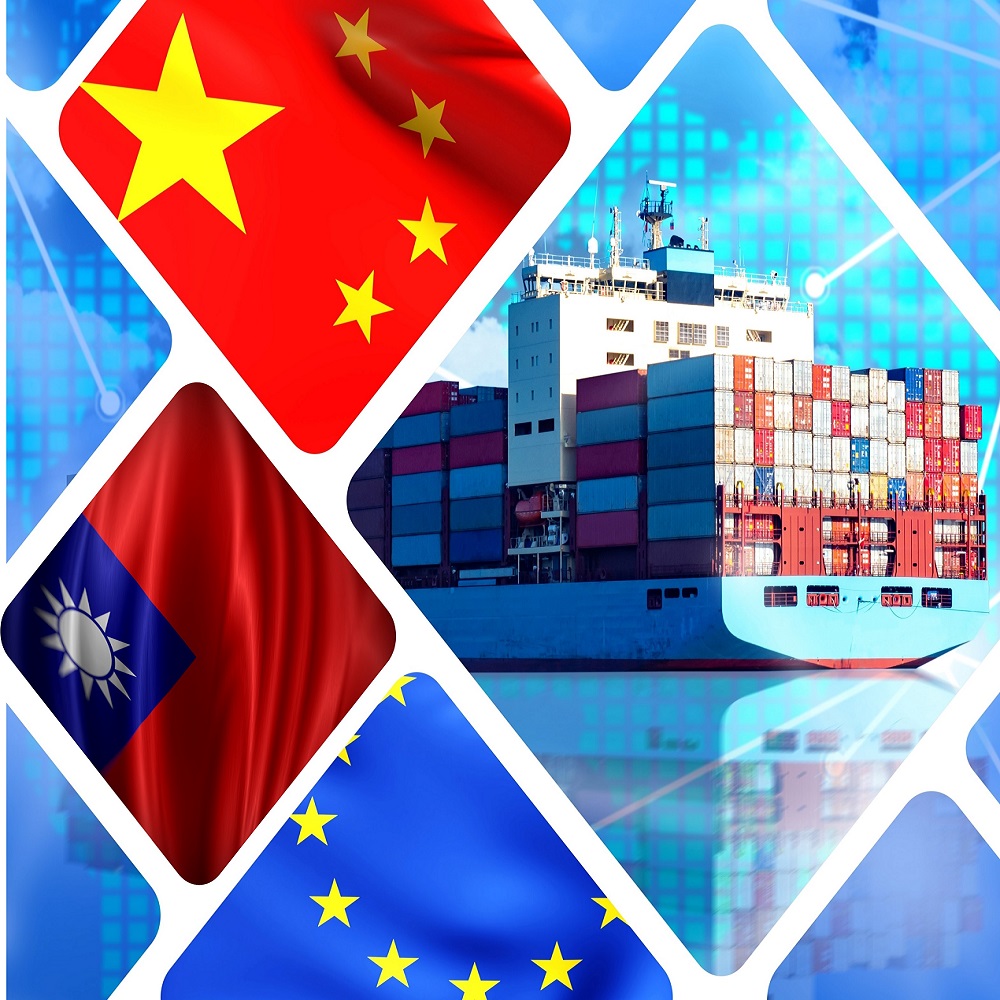
In a similar vein, Europe’s reluctant rapprochement with China in recent times amid the EU calling China a strategic challenge but continuing to look for economic engagement is reminiscent of Vietnam and much of Asia’s predicament vis-à-vis China. Moreover, like in Southeast Asia, not every member-country of the EU is embracing the Indo-Pacific construct, led by the U.S. Or even if a member does, like France or Germany, it does not spell the end of a productive relationship with China. Nonetheless, it is clear that the EU has started to take a greater interest in the growing geopolitical situation in the Indo-Pacific, even as the disunity over the extent of the Indo-Pacific priorities, including China, is as apparent.
In such a scenario, is it possible for the EU and Vietnam, and by extension ASEAN, to have greater convergence, if not congruence, in their policies?
Revisiting Vietnam’s Lack of an Indo-Pacific Tilt
The Indo-Pacific, the maritime space and littoral between the western Indian and Pacific Oceans, has become the world’s most geopolitically critical region. In this region, much of the focus and debate among the EU’s more proactive members, such as France, the Netherlands, and Germany, is in response to Chinese unilateralism, trade dependency, and unchecked Sino-U.S. contestation. Several of these EU members have come to understand each other’s positions on the Indo-Pacific. Gradually, there is a realization that it is not just about what the EU and its members seek to accomplish in the region but just as much the perspectives and priorities of key Indo-Pacific resident actors—and their views on European strategies and contributions.
Vietnam is one such country that is worthy of greater European strategic attention. Vietnam is known for its “bamboo diplomacy”—a reference to the bamboo plant’s strong roots, sturdy stems, and flexible branches—balancing ties with the two big powers, the U.S. and China. In the words of Foreign Minister Bui Thanh Son, Vietnam’s foreign policy caters to “independence, self-reliance, peace, friendship and cooperation, and multilateralization and diversification of external relations and proactive international integration.” However, Hanoi has never officially and fully embraced the term “Indo-Pacific” nor the U.S.-led Indo-Pacific construct although it does recognize that some aspects of the Free and Open Indo-Pacific tenet advocated by the U.S. and its allies are compatible with its national interests. For instance, the order in the Asia-Pacific, a term that Hanoi prefers to use, should be rule-based. This speaks to one of Vietnam’s most important foreign policy priorities: finding peace and stability in the SCS disputes with China and other claimants.
However, the order that Vietnam seeks is in more than just the security domain. The goal of development has been the highest priority since Doi Moi (renovation) in 1986. Economic growth is considered the backbone of national security and regime legitimacy. Hanoi’s development of foreign relations can be said to be grounded in its national development experience, with the stress on economic priority leading to national stability and international standing. Vietnam chooses to engage in the Indo-Pacific construct on its terms.
Vietnam and EU Convergence
On both economic and security fronts, Vietnam and the EU can find converged interests that align closer to each other. Even as Hanoi has not officially adopted the term “Indo-Pacific,” the EU’s Indo-Pacific strategy, if implemented well, could address both Vietnam’s economic and security needs. Despite its security and military power limitations in the Indo-Pacific, the EU can still play a crucial role in effectively addressing these needs, which are vital for the EU’s strategic interests as well.
The two already have a Framework Participation Agreement. Vietnam is also part of the EU’s Enhancing Security In and With Asia (ESIWA) project, which covers crisis management and cyber security. This also aligns with the EU’s Indo-Pacific Strategy, where Vietnam is considered a “solid” partner.
Notably, both the EU and Vietnam face (potential) economic coercion from China. As China is now Vietnam’s largest trading partner, sudden trade restrictions hindering Vietnamese exports to China would dramatically hurt the Vietnamese economy. In this vein, Hanoi welcomed the EU-Vietnam Free Trade Agreement (EVFTA), hoping it would give opportunities to diversify its trading partners and thus mitigate the risks of economic coercion from China.
On the other hand, the EU and its member-states are also trying to increase economic resilience by diversifying trading partners as they wrestle with economic overdependence on China. So, strategically, Brussels presents an excellent opportunity for Hanoi and vice versa. However, challenges remain. For example, all the EU member-states are still to ratify the Investment Protection Agreement signed along with the EVFTA. Even though this is usually a time-consuming procedure, the imperative to reap benefits as soon as possible has taken a setback amid a challenging geopolitical landscape.
Nonetheless, the two sides are concerned about more than just traditional economic development; they are concerned about sustainable development and green transition. For instance, under the EU’s Global Gateway framework, the EU and Vietnam have signed the Just Energy Transition Partnership (JETP), which looks to provide a multi-projects credit facility worth €500 million. This is supposed to be the EU’s primary focus in Vietnam now. Yet, Hanoi’s cautious approach for fear of falling into any potential debt trap could stymie smooth cooperation. Projects involving vast sums of money, such as the JETP, are also practically challenging to push at the moment as officials are afraid to be the targets of the Communist Party of Vietnam’s anti-corruption campaigns.
Vietnam would also be keen for ASEAN and the EU as blocs to reinvigorate multilateralism and shore up security cooperation, particularly in the SCS disputes. ASEAN states, in general, are looking to the EU as a non-threatening balancing power to reduce the impact of the China-U.S. strategic competition. Among the potential areas of cooperation between the EU and Vietnam within the ASEAN are regional climate action measures, food security, digitalization, and tech innovation. The two sides must also use their partnership to realize an ASEAN-EU FTA.
EU as a Security Balancer?
The EU and Vietnam also share their commitment to upholding the rules-based order—an essential component of security cooperation because of the region’s strategic importance. However, improving communication and understanding of maritime incidents more effectively is challenging. The SCS territorial conflict is simmering, particularly between China and the Philippines. In 2016, an arbitration tribunal constituted under the United Nations Convention on the Law of the Sea (UNCLOS) overwhelmingly ruled in favor of the Philippines, which China rejected. However, the ruling bolstered Vietnam’s claims, which were not openly welcomed by other ASEAN states besides the Philippines.
In the absence of an agreement for a code of conduct (CoC) between China and ASEAN, which has been dragging on for years, China’s violations of international law in the SCS, including the latest against Vietnam in the Gulf of Tonkin, have increased. Against this scenario, Vietnam and the Philippines have signed maritime security deals. At the same time, Vietnam would be reluctant to do anything more drastic, such as support the Philippines in its attempt to draft a “separate” CoC for fear of Chinese retaliation.
While Vietnam is less discussed in major global media than the Philippines on the issue, Hanoi is actively using diplomatic means to internationalize the problem, bringing in more players to address complex territorial disputes to safeguard its sovereignty and promote regional peace. In this context, winning the support of the EU and its member-states would be strategically important for Vietnam.
The Vietnamese side can facilitate this by providing foreign entities, including the EU, with more transparent and timely information when incidents occur. Naturally, using a media strategy like the Philippines might sensationalize the issue, which might be different from what Hanoi prefers as it walks a tightrope to balance its complex relations with China. However, Hanoi can at least offer foreign diplomats transparent and detailed information in a timely fashion to help them verify and assess the situation on the ground. This will speed up the EU’s and other potential like-minded states’ response to sea incidents and foster ways forward for more multilaterally agreeable forms of modus vivendi in the South China Sea. Ultimately, such a modus should serve China too.
EU No Longer a Bystander
The EU’s recent stance on the SCS issue has been its respect for a rule-based order and freedom of navigation, strong opposition to unilateral actions, and supporting the ASEAN-led “effective, substantive and legally binding” CoC while mentioning China but not singling it out. This is a change from the EU’s pre-Indo-Pacific embrace when it was a more divided, neutral house. The EU’s heavy dependence on maritime trade through the SCS mandates that the EU can no longer stand as a bystander. However, ASEAN claimant states, particularly Vietnam, would perhaps expect a sharper or clearer position, which the EU has indeed been moving toward.
For example, in March 2024, the EU released a statement expressing concerns about the incidents involving “repeated dangerous maneuvers” by the Chinese Coast Guard and Maritime Militia in the SCS. This tilts to the U.S. line, even as the U.S. has been more vocal in directly criticizing China on the SCS, by calling China’s claims “completely unlawful” even before the current events.
One could argue that despite the U.S. and its allies having been vocal, this has yet to lead to a concrete resolution of the conflict. However, if the EU cannot send clear signals on the issue, the division among like-minded countries will be seen as weak and exploitable in China’s eyes.
Importantly, this is true not just for the SCS disputes but also for China’s coercive activities in general. Therefore, given the convergent non-confrontational, inclusivity-, and economic interests-oriented attitudes of both Vietnam and the EU toward the Asia-Pacific/Indo-Pacific region, both sides are primed to embrace the other’s strategic outlook and up their game in the face of a challenging China and efforts to foster order.