Subscribe to our weekly newsletters for free

Subscribe to an email

If you want to subscribe to World & New World Newsletter, please enter
your e-mail

Defense & Security
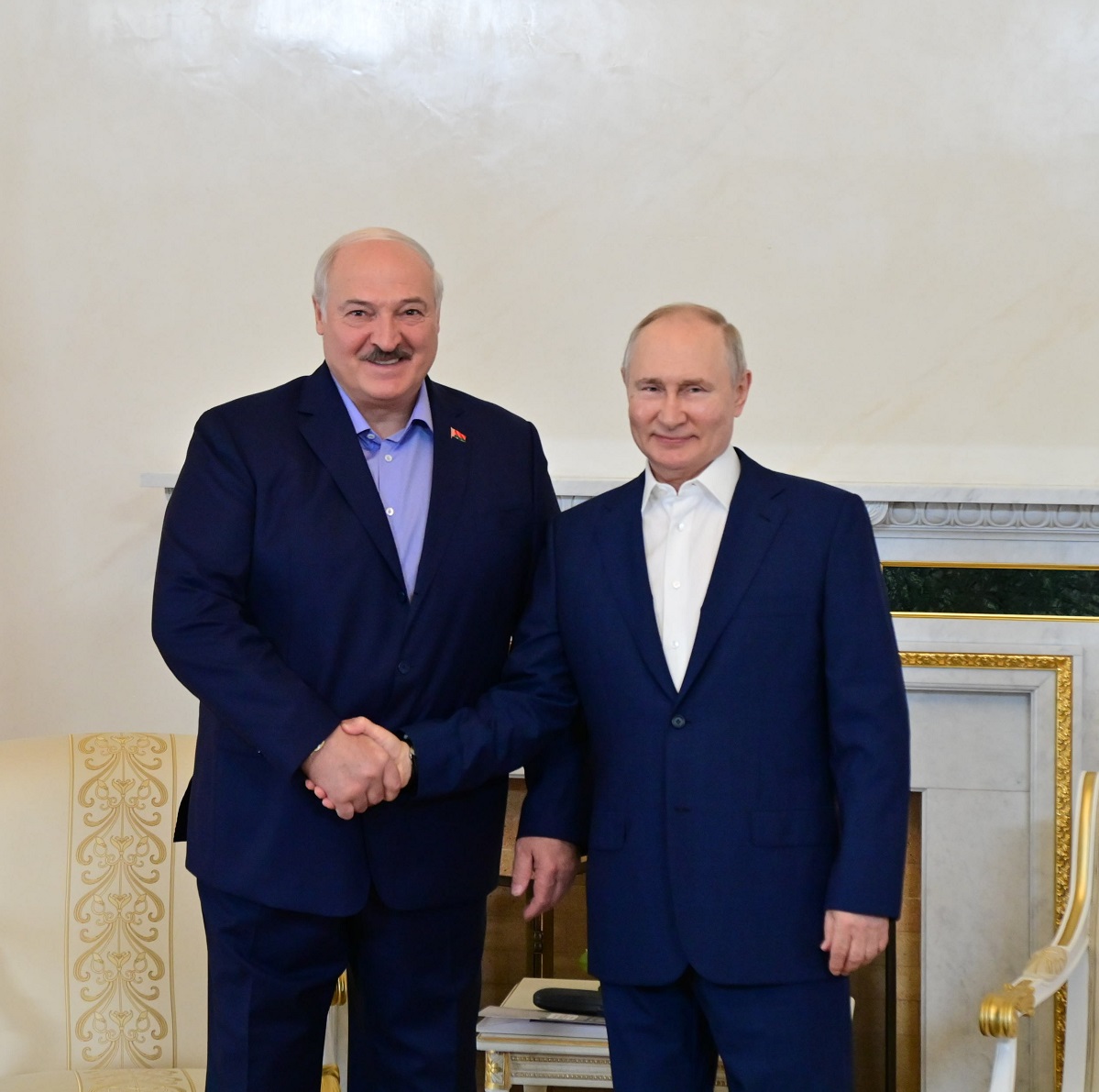
President of Belarus Aleksandr Lukashenko handshaking with President of Russia Vladimir Putin

Negotiations with Russian President Vladimir Putin

by Aleksandr Lukashenko

The meeting of the presidents of Belarus and Russia, Aleksandr Lukashenko and Vladimir Putin, took place in St. Petersburg on 23 July. The heads of state arrived at Konstantinovsky Palace together.  "Aleksandr Grigorievich, we are meeting today as agreed...", the Russian leader began the protocol part of the meeting. The Belarusian president remarked: "We agreed on the meeting six months ago."  "It's true. That's right. We agreed about this a long time ago," Vladimir Putin noted. “We are meeting in St. Petersburg today. The weather is good. It is a Sunday afternoon, but we always have something to talk about. At the beginning of the meeting, I would like to note that all our plans are being implemented, even at a better pace than we expected." The Russian leader noted the good state of the economies of the two countries, the expected economic growth by the end of the year: "I looked at the latest data. The Belarusian economy is expected to grow by 3.7% in 2023. These are the projected figures, but still. Our growth forecasts are a little lower. But this is a good indicator for us too. We expect the growth of more than 2%. Unemployment is low. In general, all the main indicators give us reason to believe that we will pass this year well and will have good growth." "Our plans in terms of the Union State are being fully implemented. We are moving confidently in all areas. Trade is growing. According to various sources, the data vary a little. According to our data, it is around $43.7 billion, if we speak in dollar terms. According to Belarusian statistics, it is almost $45 billion," the Russian president said. Aleksandr Lukashenko said that the cost of services provided should be into account too. "You are right," the Russian president concurred. The presidents also noted the successful operation of the Belarusian nuclear power plant. Its second unit has already been launched this year.  "We have made progress, satisfactory progress, to put it modestly. Of course, we will also talk about security issues in the region. I hope that today and tomorrow we will have the opportunity to discuss all this in an informal setting, in great detail," Vladimir Putin said. In his opening remarks, Aleksandr Lukashenko touched upon many issues, including the course of the special military operation, the lack of results of Ukraine’s counteroffensive, and NATO's military build-up in Poland. Another important topic is plans for the development of economic cooperation between Belarus and Russia. "We won't be able to do it in a day. Therefore, we will meet tomorrow. As far as I understand, you will find time for us to talk," the Belarusian president said addressing his counterpart. "Of course. I changed some of my plans. We can spend one and a half to two days," Vladimir Putin confirmed. "Great! We will settle these issues in a day and a half. Thank you for finding the time for the meeting we agreed six months ago. Therefore, there is nothing extraordinary here. We have been planning the meeting for a long time. When a need arises, we meet and discuss our tactical and strategic issues," the Belarusian head of state said. "As for the economy, I would like to suggest that our governments think through some kind of economic plan. The point is self-reliance. We will not kowtow to anyone. We have got brains. Resources are more than enough. We need a plan for the development of our Fatherland. As I say: two states, one Fatherland. We can do it. The main forces have been here, in Russia, since old times. It will be good if our governments come up with such a plan," the head of state said.  "Even if things are a little worse off, people will understand and support us. Because there will be the light at the end of the tunnel," the Belarusian leader said.  The countries have already begun to work in this direction, advancing cooperation in all areas, including in microelectronics, space, and agriculture. "We see good results everywhere. So we need to put everything together into a plan, appoint people in charge. Thus we will do our job strategically," the Belarusian president said. Aleksandr Lukashenko brought a map showing the deployment of Polish troops at the border of the Union State to a meeting with Russian President Vladimir Putin. The head of state noted that one of the Polish brigades is now deployed 40km away from Brest, another - about 100km away from Grodno. Aleksandr Lukashenko noted that there is no Ukrainian counteroffensive. "No, there is. It's just failed," the Russian president said. "It failed indeed. There are no results," the Belarusian leader confirmed. “What's next? They, as you said recently, have begun to engage Poland. They are making active use of mercenaries. I brought you a map showing the deployment of the Polish Armed Forces at the borders of the Union State, which you talked about. We see that they are setting the stage. One of the brigades has been deployed 40km away from Brest. They used to be 500km away, now the distance is 40km. We see it all. Another brigade has been deployed a little more than 100km away from Grodno. They have a division, but so far these are brigades. Poland opened a facility to repair Leopards on their territory. Rzeszow is becoming more active. The Americans are using its airfield to send hardware and so on.” The head of state noted the increased militarization of Poland, the deployment of significant forces to the borders of the Union State. "Naturally, Poland wants something in return. It's clear it will get money, weapons. This is understandable. But now there is a lot of talking ‘to admit Ukraine into NATO in parts’. You also noted this. What's behind it? This is a smokescreen," the president said. “Tear off western Ukraine. Under the guise of admission to NATO, so that the population is ok with that."    "They want to chop off western Ukraine and annex it to Poland. This is a payment to Poland for its active participation in this operation against the Russian army. The Americans support this," the Belarusian leader added. Belarusian President Aleksandr Lukashenko lauded the successes of the Russian army in the special military operation.  "Yesterday was a difficult day. This is according to our data. You will also share your opinion on this. It was a very difficult day. Fortunately, it ended well. According to our data, more than 15 Leopards [German-made tanks] and more than 20 Bradleys [US infantry fighting vehicles] were destroyed in one battle. This, I think, has never happened before," the head of state said.  “On the other side they used units fully equipped with foreign hardware," Vladimir Putin said. Aleksandr Lukashenko stressed that the destruction of such a number of hardware also testifies to the heavy losses of the Armed Forces of Ukraine: "We can estimate how many soldiers of the Armed Forces of Ukraine died considering the number of destroyed hardware. I know this because I served as an officer in the armored army back in the day. Therefore, I understand what it means to destroy so many infantry fighting vehicles and, most importantly, much vaunted Leopards.” The Belarusian president cited the U.S. estimates which indicate that the Armed Forces of Ukraine lost 26,000 soldiers since the start of the counteroffensive. "More," Vladimir Putin responded. "It's already more. Well, a week ago they estimated Ukraine’s irretrievable losses at over 26,000. From 4 June [from the launch of the counteroffensive]. I put their data down," the Belarusian president said. "Even more," the Russian leader said affirmatively.  Aleksandr Lukashenko continued: "Yesterday showed that this is the war against the entire NATO. They arm them; send a lot of mercenaries there. Yesterday was an important day because they made use of the main strategic reserves. This suggests that this thoughtless policy of throwing untrained people and mercenaries into hell will lead nowhere. During the meeting, Vladimir Putin noted that foreign mercenaries also suffer significant losses. "Huge losses. Because of their tactics," Aleksandr Lukashenko said.  "Because of their stupidity," the Russian leader replied. "They move in groups," the Belarusian president said. In turn, Vladimir Putin stressed that people of the countries whose governments are sending people to the war zone should also be aware of what is happening. "We will communicate this to the people so that they assess the actions of their rulers," he said. Belarusian President Aleksandr Lukashenko thanked the Russian president for the security guarantees to Belarus. "I would like to thank you. You are the first person in Russia who spoke about this openly and clearly. Aggression against Belarus will be like an attack on Russia. We take this into account in the construction of our Armed Forces," the head of state said during at the talks with Russian President Vladimir Putin in St. Petersburg. The presidents of Belarus and Russia toured the landmarks in Kronstadt after the official part of the talks in Konstantinovsky Palace. The heads of state first came to the Island of Forts Museum and Historical Park. There they were shown the main exhibit - the first Soviet nuclear submarine K-3 "Leninsky Komsomol". She was delivered to the Museum of Naval Glory in Kronstadt from Murmansk Oblast in the autumn of 2022. Another point of the joint informal program of the presidents was a visit to the Stavropegic St. Nicholas Naval Cathedral in Kronstadt, also known as the Naval Cathedral of St. Nicholas.

Defense & Security
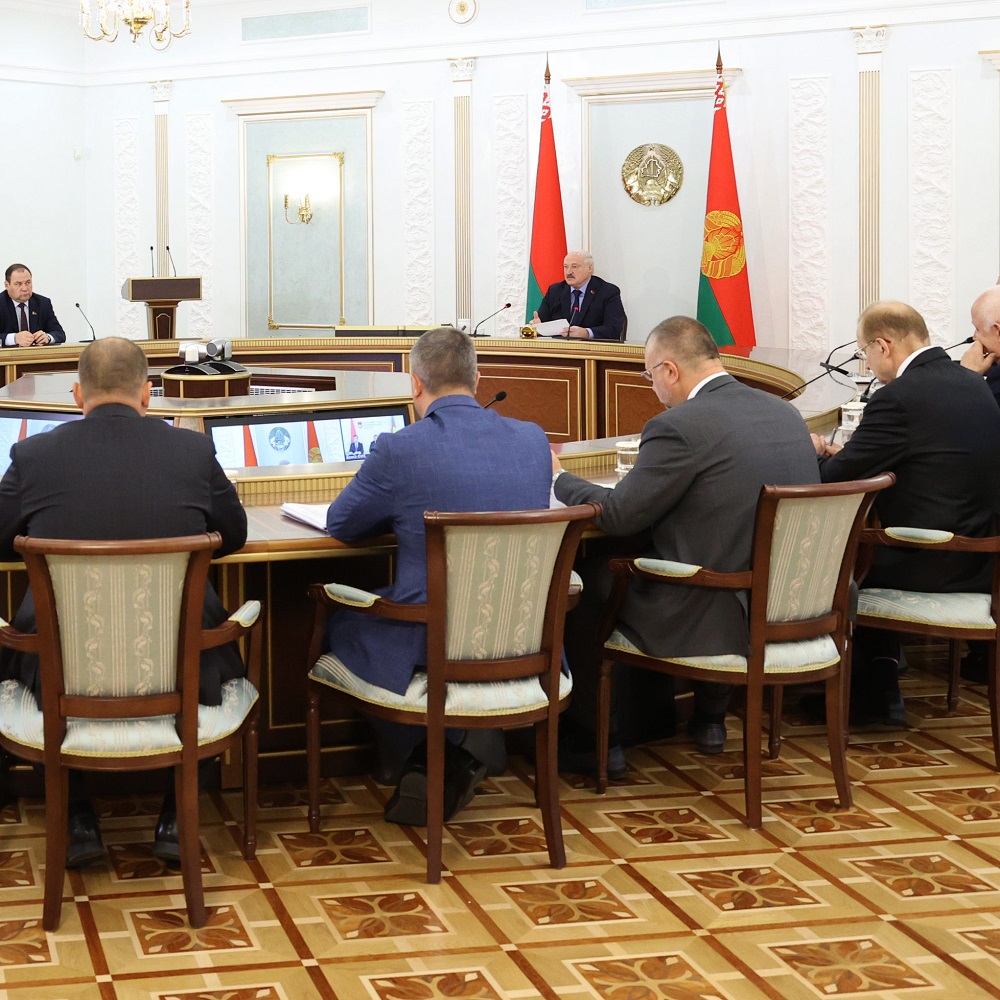
Aleksandr Lukashenko at Session of Belarus Security Council

Session of Belarus’ Security Council

by Aleksandr Lukashenko

Belarus President Aleksandr Lukashenko has convened the Security Council. A number of matters concerning efforts to ensure Belarus’ national security are on the agenda. Aleksandr Lukashenko said: “Due to the tense situation in the world and directly at our borders, due to the sanctions-fueled pressure we cannot be absolutely calm and confident in tomorrow. NATO countries persistently pursue an expansionist policy, build up military presence around Belarus, and constantly stage provocative exercises at our borders in addition to taking other actions. They have already gone so far that their military personnel violate the state border. Well, we will clarify it today.” The President went on saying: “They justify their actions by some threats that allegedly originate from Belarus’ territory. The leaders of Poland and the Baltic states accuse Belarus of some mythic aggressive intensions that we’ve never had and cannot have.” He stated that the leaders of these countries are also whipping up hysteria around the presence of personnel of the private military company (PMC) Wagner in Belarus’ territory. “They went as far as to demand their immediate withdrawal from Belarus. At the same time, they themselves are increasing military budgets, amassing large military formations at our border,” he noted. “Everything is simple: neither Poland, nor Lithuania nor other Baltic countries should have a single foreign military officer or soldier on their territory. Only in this case they have the right to protest against the presence of the military from other countries here. Otherwise, these are unreasonable and stupid demands (not even requests and proposals, but demands).” In addition to that, in April Warsaw announced its decision to suspend its Conventional Armed Forces in Europe Treaty obligations in relation to Belarus, though this is actually the last legally binding international document in the field of arms control. “This is already a dangerous step, and we should keep reminding Poland’s leadership about this - so that their decisions will not come back to hurt them,” the Belarusian leader said. “How should we respond to this? I’m not even talking about the training of our self-exiled opposition on their territory for a military coup in Belarus. I want to warn once again that we will not hesitate to respond. Though, credit where credit is due, our self-exiled opposition members in Poland, Lithuania and especially in Ukraine understand what for they are being used,” the President added. At the same time Aleksandr Lukashenko stated that Belarus is ready to restore good relations with its neighbors, who cannot be chosen as he says. “However, in response to all our messages we hear only accusations and threats. It means that they don’t need any normalization at all,” he pointed out. In confirmation of what was said and in order to rule out any insinuations, Belarus has invited Poland’s representatives to observe the Collective Security Treaty Organization exercise Combat Brotherhood 2023, which will begin in Brest Oblast on 1 September. In this context the head of state suggested looking into a number of matters relating to efforts to ensure national security.

Defense & Security
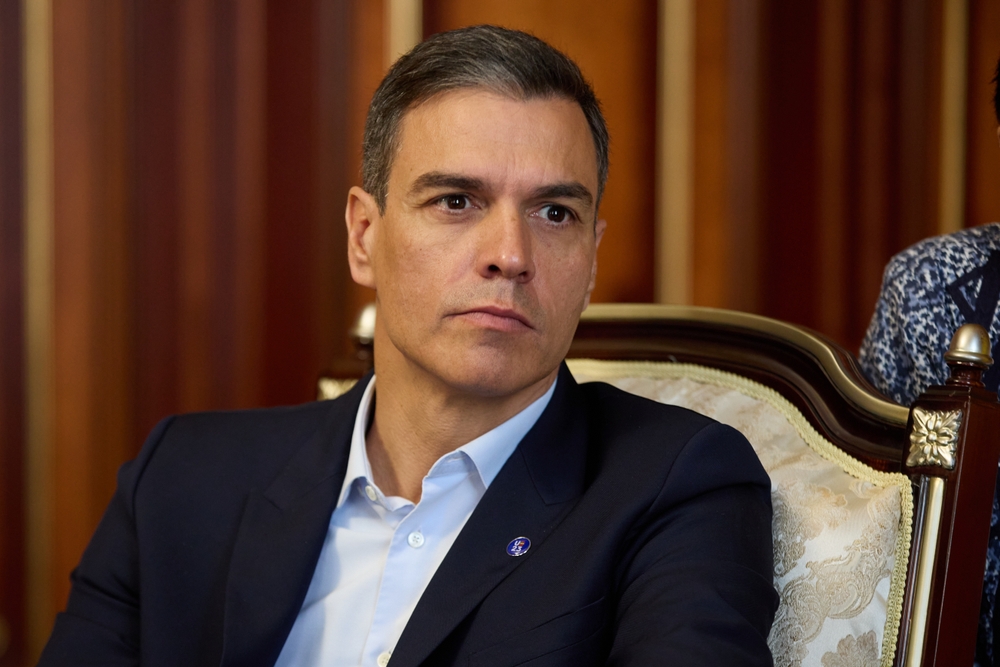
Pedro Sánchez Prime Minister of Spain

The president of the Spanish government, Pedro Sánchez, has delivered this speech in the Rada, the Ukrainian parliament

by Pedro Sánchez

Thank you very much.  Dear Mr. Speaker Stephanchuk, Distinguished Members of the Verjovna Rada,Excellencies, dear friends. I am very grateful to be here today, on this very special day for my country. Today, 1st July,  Spain assumes the great responsibility of becoming the rotating Presidency of the Council of the European Union for the next six months. And I wanted that the very first thing I did in my new capacity was to address the people of Ukraine through their Verjovna Rada. I wanted to tell you that we are and will be with you as long as it takes. I wanted to tell you that we will support Ukraine no matter the price to pay. That we will be with you in the achievement of your aspirations to be a free and sovereign  country that decides its own destiny as a member of the European family. In short, I am here to express the firm determination of Europeans and Europe to fight against the illegal, unjustifiable and unjustified Russian aggression to Ukraine. Once again, I have the honour to address all of you in this temple of Ukrainian democracy. My first address took place in February, on the first anniversary of Russia’s aggression against your sovereignty and territorial integrity. Things have changed since then. Today Ukraine is in the midst of the counter-offensive against an enemy that is showing signs of weakness. We have all seen the events of last week. They speak for themselves. And, if one side shows weakness, it is because in front of him there is someone who shows the opposite: determination. It's what I can see, right here, and right now: determination, strength and courage. What I can see is a whole country that refuses to be subjected and fights for its independence with immense dignity. I know the price to pay is enormous. Especially in human lives lost. Nothing I can say here today can comfort a family that has lost a daughter, a son, a mother, a father or a husband. Men and women who gave their lives defending a free and democratic Ukraine.  Still, I want to do it from the bottom of my heart on behalf of my country, Spain. A country that mourns with you. A country that condemns every Russian attack against Ukrainian civilians, like the one at Kramatorsk. Victoria Amelina, a Ukrainian writer was there. Severely injured, now fights for her life. Victoria was close to the front line, because she wanted to document the tragedy. She wanted to collect the memory of infamy. The lost heritage. The broken lives. The crimes committed. We need women Victoria Amelina, to write history. To tell the facts as they happened and preserve the memory of those who suffer this tragedy. Excellencies, dear friends, we do not forget that the European aspiration of the Ukrainian people was one of the excuses that triggered the Russian reaction and, in turn, the invasion. It was only fair to honour this aspiration by granting you the status of candidate to the European Union. No one deserves it more than you, than Ukraine. However, I know that this is not an easy process, especially with an ongoing war. To become a member state requires changes, reforms and sacrifices. Not long ago, Spain faced this challenge as a candidate country. But, let me tell you, that the process to become an European Union member taught us important lessons. One of them is that undertaking reforms has a value in itself. Reforms make your governance and your economy better, more modern and transparent. They bolster international confidence and proximity. They attract investment. And, in time, they will grant you access to our European Union. A Union, which is more than just the largest internal market in the world. Which is, above all, a community of values: human dignity, freedom, democracy, equality, the rule of law and respect for human rights. Last week, the European Commission made a positive assessment of Ukrainians, of Ukraine’s progress concerning the required reforms. I congratulate you for the progress made, especially thanks to the legislative work of this Rada, and I encourage you to keep up with it. It is worth the effort. Congratulations. And of course we will be eagerly awaiting the report of the European Commission in the fall, which will set the basis for the future. Excellencies, We want a just and lasting peace in Ukraine. Only Ukraine can set terms and times for peace negotiations. Other countries and regions are proposing peace plans. The involvement is much appreciated, but, at the same time, we cannot accept them entirely. This is a war of aggression, with an aggressor and a victim. They cannot be treated equally. And ignoring the rules should in no way be rewarded. That is why we support President Zelenski’s peace formula, which is respectful with International Law and the UN Charter. Ukraine is paying a heavy prize in terms of destruction of cities and infrastructure. So, we need to make sure that the country is rebuilt, thus creating the conditions for its growth and prosperity. And we have already started. Today, Spain has decided to dedicate another 55 million euros, including offering 51 M€ through the World Bank Group to help finance Small and Medium Enterprises in Ukraine, as well as 4 M€ to the UN Development Program to provide schools in Ukraine with green-friendly and resilient energy systems. Reconstruction will take time and investment in many sectors. Spain is committed to accompanying Ukraine in this process. There are some areas, such as the railway infrastructure, in which our companies have the know-how that can make the difference. The Spanish government will support finance the necessary investments to adapt and upgrade infrastructures and productive sectors in your country. Yet, we understand that reconstruction and prosperity will only arrive if real, long-term security is achieved. My friends, in my view, it is clear that we cannot rely on the promises made after the Cold War anymore. We have to adapt to a different security environment, one in which concepts like peace, sovereignty or territorial integrity can no longer be taken for granted. The aggression on Ukraine has shown us that they need to be effectively defended. Not just with words, but with facts. Therefore, we will need to rethink the security framework to ensure that your country, Ukraine, will be able to live free from aggression or intimidation. As the President said, we are approaching the NATO Summit in Vilnius, which will follow on the commitments we made last year, in Madrid, the capital of Spain. Spain supports enhancing the political participation of Ukraine through the creation of a NATO-Ukraine Council, where you will no longer be an invitee, but a member, a full member. We are also in favour of enhancing the practical cooperation, to continue to adapt your defence sector to NATO Standards. These are, my friends, big steps forward that will be further discussed during the upcoming NATO Summit in Vilnius. Spain will continue to do its part as well: we are delivering more Leopard tanks, armoured personnel carriers and a field hospital with surgical capacity. We also continue to reach out to other countries and continents, to explain what is really happening here in Ukraine, but also to listen to their concerns, especially those related to food and energy security or insecurity, in this case. Excellencies, Last February, before my trip to Kyiv, someone in Madrid, in my city, was  wondering about the Ukrainian’s state of mind and asked me: “Do you think they are afraid?”. When I came back, after the visit, I had a clear answer to this question and I told them: Look, they are not afraid. They are going to win. It will take them weeks, or months. It will take tears, blood and sweat, but Ukraine is going to win this war. And they asked me “Pedro, Pedro, why?, why?”. And I said, “Because there are two battles. One happens in the battlefield. The other happens in the mind, because it’s a battle of ideas. And that one, the Ukrainian people have already won it”. Ukraine has chosen democracy in the face of those who despise it. Ukraine has chosen openness and freedom, in the face of those who fear it. Ukraine has chosen to sit, and discuss, and vote, and change, and evolve, in the face of those who only believe in force and obedience. Ukraine has chosen to be independent, to move freely, to trade, to invest, to prosper, to have hope, in the face of those who still have delusional dreams about old empires. The Ukrainian people have chosen the European way. The Ukrainian people ARE, you are Europeans. And you are Europeans not only because of a geographical imperative. You are Europeans by moral and spiritual commitment. So, dear friends. During this years, I have learned many things about Ukraine. Even some Ukrainian words. For instance, I have learned that "Mriya" (emriya) means “dream” in English, we say in Spanish Sueño. That was the name of the largest plane in the world, located at the Hostomel airfield when it was destroyed by Russian troops in February 2022. That plane brought medical supplies during the pandemic or carried humanitarian aid in natural disasters. It was a symbol, a pride for Ukraine. They destroyed the symbol, but they couldn’t destroy the idea. Now, I have learnt that Ukrainian engineers are already working on the reconstruction of that giant of the skies. Let me tell you that you are not just rebuilding an airplane: you are rebuilding a dream. One day, that dream will cross the skies again. And from there, here on the ground, we will see a new Ukraine reborn from the ashes of destruction. That’s what you fight for. You fight for peace, for security and prosperity for your children. And every Ukrainian soldier knows it. Russian soldiers fight because they are scared they will be punished if they don’t. They ask themselves everyday “what are we doing here?”. You are united, you stand on the moral high ground. They even rebel, as we saw a few days ago. That’s why they cannot win and you cannot lose. I came here today to tell you that Europe is open to those who make the choice. The European Union was built to prevent new wars. We chose to get together, to be “united in diversity”, and that made us stronger. Europe is with you, and you are one with Europe. Mui Yevropa! [¡Somos Europa!] Slava Ukraini [¡Viva Ucrania!]

Defense & Security
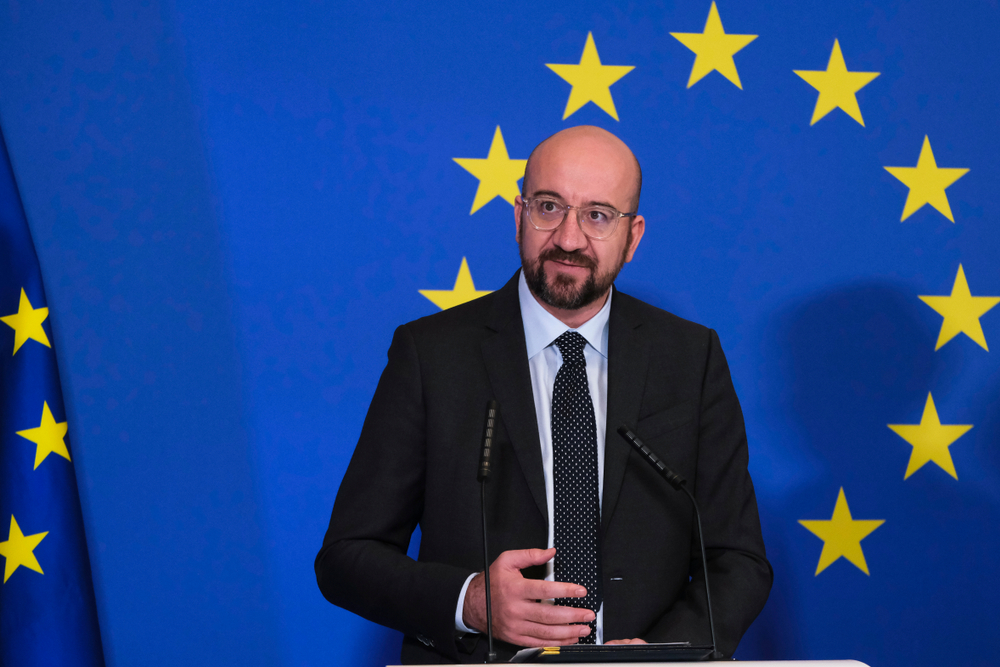
Charles Michel, President of the European Council

Video message of President Charles Michel for the Third Summit of the Crimea Platform

by Charles Michel

Dear President Zelenskyy, dear Ukrainian friends, Two years ago I represented the EU at the first international summit of the Crimea Platform. And I stated clearly that Ukraine’s territorial integrity must be fully restored. And this applied to Crimea and this applied to the region of Donetsk and Luhansk. And I stand by that today. Since Russia invaded your country, you have suffered nearly 550 days of death and destruction, and Crimea is being used as a strategic springboard to launch its brutal attacks. And last September, just like they did in Crimea, Russia tried to illegally annex Donetsk, Luhansk, Kherson and Zaporizhzhia, and this is again a cynical attempt to grab more land, to steal the identity of Ukrainian citizens, to abduct your children and to drive people from their homeland, like they are doing to the Tatars. I pay tribute to Mustafa Dzhemilev, the leader of the Crimean Tatar people, who travelled to Saudi Arabia with you, President Zelenskyy, in search of peace. Russia is perfecting the toolbox of terror and persecution that they applied in Crimea over nine long years, and they are now committing atrocities in cities and villages in the whole of Ukraine, many amounting to war crimes. The EU will continue to call for full accountability for these crimes, including for the crime of aggression, and will not recognise any illegal attempt to change the status of Ukraine’s territories, including the Autonomous Republic of Crimea and the city of Sevastopol, because respecting the sovereignty and territorial integrity of countries is a basic principle of the UN Charter and that’s why we support you, President Zelenskyy, and your peace formula based on these very principles. In Ukraine you are fighting for your freedom, you are fighting for your future and for your homeland, and in the EU we know you are also fighting for our common values. And that’s why we have imposed massive sanctions against Russia and that’s why we are supporting you with weapons and ammunition, and we will strengthen this support. We are also helping to meet your humanitarian needs, and we are determined to back your country with strong financial support. We stand with you in your fight for freedom, and we will stand with you as you rebuild your country. Our total support for Ukraine amounts to more than €76 billion. And we are preparing a multiannual financing plan of roughly €50 billion. Russia also continues to weaponise food, including by blockading and attacking your seaports. And this cruel Russian tactic hits the most vulnerable around the globe hardest. In the EU we continue to support the efforts of the United Nations and Turkey to get the Black Sea Grain Initiative back up running. And we are also strengthening our Solidarity Lanes through the EU to help get Ukrainian agricultural products to global markets. Ladies and gentlemen, this war is also a fight for your future, for your dream of a bright, democratic and more prosperous future within the EU. Last year Ukraine received EU candidate status. So your European Union future is no longer a question of if, it is a question of when. And later this year, the European Council will discuss the possibility of opening accession negotiations. And I am confident that the Ukrainian people and the leaders will rise to this historic moment. You can count on my personal support, you can count on the EU. We will stand by your side for as long as it takes. Slava Ukraini!

Defense & Security
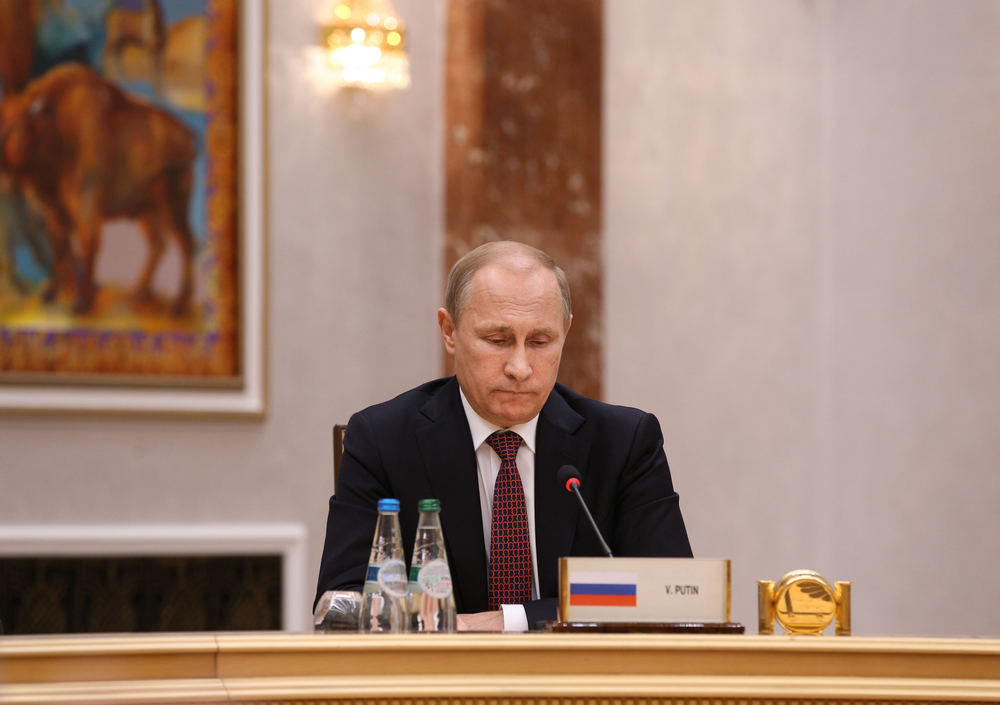
President of Russian Federation, Vladimir Putin

The United States, Europe, and Post-Putin Russia

by Mark N. Katz

Putin’s rule over Russia will come to an end at some point, but when it will end as well as what the policy preferences of his successors might be are uncertain. It would be in the interests of the United States and Europe to signal on what terms they would be willing to cooperate with a post-Russian leadership. Vladimir Putin has been the ruler of Russia since the turn of the century. He may remain in power through 2036, as the 2020 revision of the Russian constitution allows him to, or perhaps even longer. Then again, he may be ousted suddenly and surprisingly any day now, as the recent Wagner mutiny and the apparent lack of effective opposition to it within the Russian security services and public suggest is possible. Maybe he will decide not to run for re-election in 2024, though this does not seem likely. Sooner or later, though, Putin’s rule over Russia will come to an end. What is not at all certain, of course, is who will replace him and what sort of foreign policy the new leader will pursue. It would appear, though, that there are only a few possibilities. One is that Putin will be succeeded by someone just like him who will continue Moscow’s hostile policies toward Ukraine and the West in general. Another is that Putin will be replaced by someone within his circle that decides Moscow needs to cut its losses in Ukraine and rebuild good relations with the West both to revive Russia’s economy and to hedge against an increasingly powerful China. While this might seem unlikely, Russian and Soviet history are replete with examples of new autocratic leaders dramatically reversing key aspects of their predecessor’s policies. Yet another post-Putin possibility is an authoritarian leader who wants to cut Moscow’s losses in Ukraine but who sees the survival of both autocratic rule and even Russia’s territorial integrity as best served through increasing reliance on Chinese support and guidance. It is also possible that Putin’s rule will end as a result of the rise of democratic forces which want Russia to become part of the West and cooperate or join the EU or even NATO. For this scenario to occur, there would have to be a dramatic change of heart within the Russian security services about what is in Russia’s and their own interests. While this seems highly unlikely, there have been examples in other where military-backed autocratic rule gave way to democracy. Finally, whether Putin’s successor is autocratic or democratic, he or (much less likely) she may simply be weak as a result of having to deal with a compounding internal crisis resulting from Putin’s policies, including popular discontent over Russian casualties in Ukraine, economic decline, and secessionism in non-Russian or even Russian regions of the Russian Federation. What Can Europe and the United States Do? Russia’s post-Putin leadership and its policy preferences, whatever they may be, will have an enormous impact on Europe and the United States as well as other countries and regions of the world. But while obviously they hope to see Putin succeeded by a new leader who will end the war, withdraw from Ukraine, and improve Moscow’s ties with the West, Europe and the United States will have very little ability, if any, to affect the post-Putin transition — especially if the person who succeeds  him comes from within his inner circle. Putin has sought to rally Russian public support for his war in Ukraine through claiming that the West wants to bring about the breakup of Russia. Whether Putin himself actually believes this, there appears to be no possibility of changing his mind about the West being his implacable enemy. The United States and Europe, though, would do well to signal to whoever might succeed Putin that this is not the case. Specifically, Washington and Brussels should make clear how they would like to relate to post-Putin Russia. Such messaging should include the following points: Just as the United States and Europe support the territorial integrity of Ukraine, they also support the territorial integrity of Russia. The West has no interest in seeing the breakup of Russia. The United States and Europe will lift their economic sanctions on Russia (including those on Moscow’s exports of oil and gas) in response to Russian withdrawals from Ukrainian territory. The more occupied territory that Russia returns to Ukraine, the more Western economic sanctions against Russia will be lifted. While Europe and the United States would like to see Russia become a Western-style democracy, they acknowledge that whether it does so or not is an internal matter which Russians alone will determine. The United States and Europe are prepared to have normal relations with any type of Russian government — democratic or autocratic — which is willing to behave non-threateningly toward the West, Ukraine, and other former Soviet republics. While they respect the Russian government’s desire to continue cooperating closely with China, Western governments want Moscow to know that the United States, NATO, and the members of the Quadrilateral Security Dialogue (US, Japan, India, Australia) are willing to discuss common security concerns about China (which many Russians besides Putin have had) if and when the new Russian leadership wishes to discuss them. The articulation of these messages by the United States, Europe, and, regarding the last point, Quad governments, will not magically lead the Russian people, much less Putin’s inner circle, to oust Putin and embrace the West. Indeed, it is possible that a Putin loyalist successor will spurn them. But if the United States and Europe do not signal under what terms they would be willing to cooperate with a post-Putin leadership, then Washington and Brussels may reduce the chances that a post-Putin leadership will be willing to cooperate with the West.

Defense & Security
Karl Nehammer Chancellor of Austria

Nehammer sticks to his No to Schengen expansion

by Karl Nehammer

Work meeting with the German Chancellor Olaf Scholz in Salzburg "I am very pleased that for the first time in over 10 years a Chancellor of the Republic of Germany is back in Austria in an official capacity. We are not only neighbours, but also closely interwoven culturally or in matters of economic relations. If we look at our border regions, they are in fact no longer border regions, because people have long since overcome these borders in the realities of their lives - whether as business people or when starting a family. And so, we have grown together a bit," said Chancellor Karl Nehammer at a joint press conference with Olaf Scholz at the Mozarteum University in Salzburg. The German Chancellor made his first bilateral visit to Austria and was received with military honours. In addition to bilateral issues such as energy supply, the working meeting focused on the fight against irregular migration and border controls within the Schengen area. "The partnership with the Federal Republic of Germany is particularly important because we are very often allies in the question of how we want to shape European policy and further develop the EU, always bearing in mind that there may also be different interests. In addition to excellent economic relations, Germany is one of our most important partners in tourism. We therefore have many points of contact here," the chancellor noted. Strengthening security means gaining people's trust in the European project Politically and in terms of content, there are major challenges to be tackled together: on the one hand, the Russian Federation's war of aggression against Ukraine with all its consequences, and on the other hand, irregular migration. The two heads of government agreed that, in order to have efficient external border protection, we must be able to quickly return those who are not allowed to stay to their countries of origin. However, this also meant that stable and sustainable relations with the countries of origin had to be established and expanded and that prospects had to be created in these countries, the Chancellor said: "Germany and Austria are on the same side here. Because only if we have credible external border protection and fast and swift asylum procedures, and if we can ensure order and security within the European Union in an orderly manner, will we win people's trust in the European project." The topic of Schengen was also discussed. He said the chancellor presented the Austrian perspective and described how 112,000 asylum applications had been filed in Austria in 2022, 75 percent of which had been registered for the first time, even though the applicants had crossed an EU country. "In Austria, the numbers are decreasing, but at the same time they are increasing in Germany. We are a community of solidarity within the EU, so we care about the numbers. And as long as the current Schengen system does not work, as you can clearly see from the border controls from Germany to Austria, we need joint efforts in Europe to strengthen the external border protection. We will therefore stand by Germany when it comes to pushing forward the Commission's measures," Nehammer said. He said there were steps in the right direction, such as pilot projects at the Romanian and Bulgarian borders and an agreement with Tunisia, which the chancellor believes will be forward-looking. Securing energy supply for the future with green hydrogen from Africa But Germany is also an important partner in the question of energy security. This year, Austria had already managed to fill its own gas storage facilities to 90 percent in August, to secure its gas supply and thus to strengthen its independence from Russia, the Chancellor said happily. This had also been achieved with the help of Germany, which had helped to set up gas alternatives. Work is underway on connectivity between Austria and Germany in order to benefit from the liquefied natural gas terminals that have been built, which will subsequently play an important role in Austria's security of supply. Germany will continue to be an important partner for Austria in the future when it comes to bringing green hydrogen to Austria via a pipeline infrastructure. For example, he said, a southern corridor is specifically planned with Italy to bring green hydrogen from Africa via Italy to Austria and Germany. "These are the issues that move us for the future - with the aim of becoming more independent of fossil energy, establishing security of supply for the people and continuing to work to ensure that the good partnership and friendship between our two nations within the European Union is developed further," the chancellor concluded.

Defense & Security
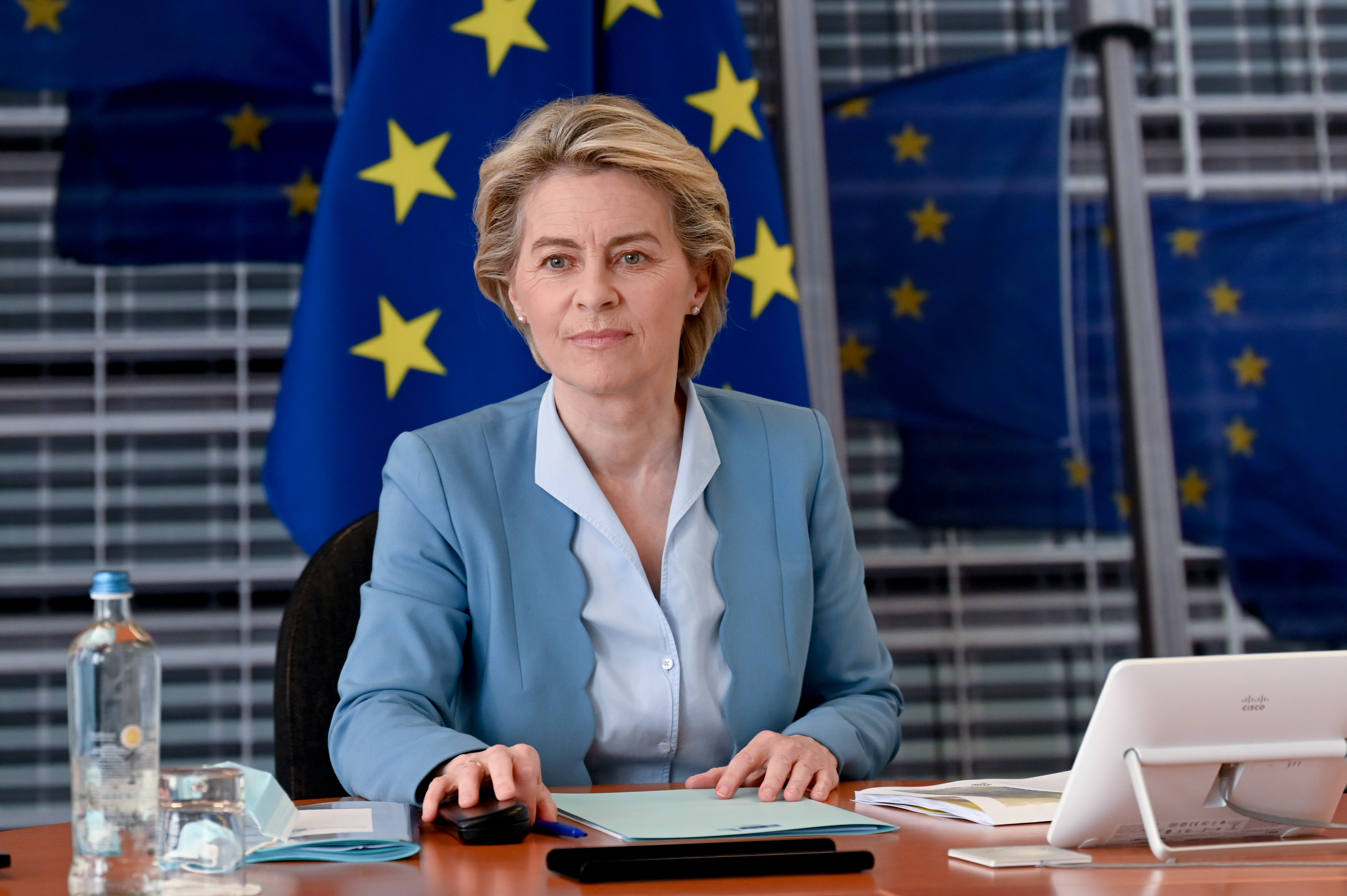
Ursula von der Leyen President of the European Commission

Keynote speech by President von der Leyen at the Philippines Business Forum

by Ursula Von der Leyen

Ladies and Gentlemen, It is very special for me to be in Manila and once again to experience first-hand the famous Filipino hospitality. Each time I visit, I am struck by the warmth, intelligence, and honesty of the people I meet. You make everyone feel at home, even 10,000 kilometres from home. While visiting your beautiful country, I have also learnt a proverb of yours. It says: ‘Be like a rice stalk: the more grain it bears, the lower it bows'. I believe a country's proverbs can tell a lot about its people.  And this proverb certainly describes the people of the Philippines: always humble, especially in success. Right now, the Philippines is booming. Thanks to your resilience, dynamism, and work ethic, your economy grew by close to 8% last year. You are among the fastest growing emerging markets. Your Development Plan, as outlined by President Marcos, is prioritising good governance, cutting red tape, and speeding up permitting for strategic investments, for example in renewables and semiconductors. Not only does this make the Philippines an even more attractive trade and investment destination for European firms, but Filipino companies are also beginning to thrive in the European market. IMI, for example, has expanded its micro-electronics business to become the 14th largest manufacturing solutions provider in Europe. Or consider the Philippine port-handling giant, ICTSI. It operates a container terminal in the Adriatic Sea, and recently signed another 30-year lease to operate a port in the Baltic. It is worth mentioning, as well, that there are around 50,000 Filipino sailors manning ships with European flags. You make trade happen. And you never boast about any of this. So allow me to begin by thanking all the Filipinos who are contributing every day to the friendship and economic partnership between Europe and the Philippines. These examples show that the ties between our countries are already strong. But the time has come to lift our partnership to the next level. Because we have much more in common than our geographic distance would suggest. I see three main fields where we share interests and values, and we are just made to work together. First of all, international security. Both the Philippines and Europe believe in a global order that is based on the principles of the UN Charter, such as the respect for every nation's sovereignty and territorial integrity. And this order is now threatened, in both our regions. Second, economic transformation. We are both modernising our economies, with a focus on the green and digital transitions. And in parallel, we are de-risking our trade and investment. Europe and the Philippines are natural economic partners more than ever before. And third, on democratic values. Because economic progress can only be coupled with social progress, for all people in our societies. Let me begin with security. The Philippines have helped build the rules-based global order, as a founding member of the United Nations, ASEAN, and the World Trade Organisation. And last year, you stood up to uphold the global order, when Russia sent its tanks into Ukraine. Both the European Union and the Philippines – along with over 140 countries – have clearly condemned Russia's war of aggression against a sovereign, independent member of the United Nations. And we Europeans will continue to support Ukraine and to uphold the UN Charter for as long as it takes. But another permanent member of the UN Security Council – China – has yet to assume fully its responsibility under the UN Charter to uphold the sovereignty and territorial integrity of Ukraine. This is happening against the backdrop of China's more assertive stance in your region. Europe has constantly called on China to respect the sovereign rights of states within their exclusive economic zones. China's show of military force in the South and East China Seas and in the Taiwan Strait directly affects the Philippines and our other partners in the region. But it could also have global repercussions. And any weakening of regional stability in Asia, the fastest-growing region in the world, affects global security, the free flow of trade, and our own interests in the region. So whether we talk about Ukraine or about the South China Sea, our security is connected. That is why the EU has been enhancing its engagement in the Indo-Pacific. We aim to promote a free and open Indo-Pacific, to reinforce respect of international law and address global challenges. With the Philippines, we are deepening our security partnership, particularly on maritime security and on cyber cooperation. And we want to do more.  Ladies and Gentlemen, We cannot choose our neighbours, but we can choose who we do business with, and on what terms. This leads me to my second point. We, Europeans, are clear-eyed when it comes to diversifying and de-risking our trade and investment. We made the mistake with Russia, thinking that we could manage our geopolitical differences through business. Before the full-scale invasion of Ukraine, Europe relied heavily on energy imports from Russia. When the Kremlin started the war, Russia tried to blackmail us with cutting its gas supplies. 80% in eight months. This triggered a severe energy crisis, but we withstood. We saved energy, we diversified to like-minded partners, and we invested massively in home-grown renewable energy. Today, we are stronger than before and more independent. And we have learnt our lesson. We will not make the same mistake again. When it comes to the key inputs needed for our competitiveness, such as critical raw materials, we should never rely on one single supplier. This is the core of our de-risking strategy. And I know that this is not only Europe's strategy. The Philippines, for instance, exports 90% of its nickel ore to China, instead of processing it inside the country to create more jobs and added value. But this can change. That is also why I am here in Manila today. The Philippines and the EU have a major opportunity to step up our partnership on both trade and investments. Let me focus on investments, first. Europe has just launched a plan for boosting infrastructure investments in strategic sectors in partner countries. It is called Global Gateway, and for ASEAN, we have put forward an investment package worth EUR 10 billion in public funds until 2027. But it is not only about the money. It is also about the method. European investments come with the highest environmental and labour standards, as well as with a strong focus on creating local value chains. Take the raw materials examples. Unlike other foreign investors, we do not want to invest only in the extraction of raw materials. We can also support you in building local capacity for processing, powered by new clean energy infrastructure. Global Gateway seeks to create good jobs right here because this also strengthens our supply lines. Global Gateway seeks to promote investments that move Filipino sectors up the value-chain. And we look forward to working with the Asia Development Bank, based right here in Manila.  You are experts in the region, and we share similar priorities.  So it is only natural that we work hand-in-hand. Moreover, the Philippines are a natural leader in digital innovation. The Philippine Venture Capital Report of 2023 observed an explosion of new activity in the country's start-up ecosystem. Your e-commerce market value increased by 33% in the last three years alone. The people of the Philippines are five years younger than the global average. So it is no surprise that your economy is so dynamic. The Philippines can become a new digital hub in the region. But as entrepreneurs everywhere, Filipino entrepreneurs need infrastructure investment. This is where Global Gateway can truly make a difference. And we are already working on the ground, or rather, in space. Together with the Philippines Space Agency, we are building the first earth observation system in Southeast Asia. In parallel, Nokia is investing in 5G infrastructure. Why does this matter to Filipino innovators? Because the European Copernicus satellites will be made available for space-based services here in the Philippines, like disaster risk management against typhoons, or satellite navigation, which is fundamental for aviation, drones, and autonomous driving. This is part of a larger digital economy package that we are finalising with the government. We are even exploring a possible extension of the new fibre submarine cable that will connect Europe to Japan via the Arctic. We would create a direct data connection between our regions to de-risk and open up new opportunities for both our economies. New investments could also lead the way for more trade between Europe and the Philippines. The EU is your fourth largest trading partner, accounting for nearly 8% of your trade. This is thanks to our current trade preferences scheme. But there is much untapped potential in our trade relationship. Let me give you an example: A few months ago, I was in South Korea. There I saw the impressive positive impact of the trade deal we have concluded. In a little over a decade, EU trade with Korea has more than doubled. This is what happens when you give people and business the opportunity to work across borders. New doors open for innovation. And the most important: People benefit. So let us make progress. Our trade agreements with Singapore and Vietnam are already delivering. And Europe wants to conclude free trade agreements with other ASEAN countries. I believe, like President Marcos, that the timing and conditions are right for us to solidify our bilateral trade relations. That is why we have taken the decision to relaunch our negotiations for a free trade agreement between the Philippines and the EU. Our teams will begin right away a scoping process to identify what we need to do to overcome any remaining gaps before we can get back to negotiating. This should take no more than a few months. Let us seize this window of opportunity, and make it work. Trade agreements today are about much more than eliminating tariffs and quotas. They are about shared commitments, values, and principles, including on human and labour rights. And this leads me to my last point. Our democracies – all of them – are work in progress. None of them is perfect. But they are all perfectible. Your new government has taken some important steps for human rights here in the Philippines. Each one of our democracies is different. But we all share the same universal values, and the same direction of travel. The path towards better democracies is one that we can and should walk together. Ladies and Gentlemen, The Philippines and the European Union may stand at the opposite sides of the world, but our destinies are linked more than ever before. We see it with geopolitics and climate change. We see it in the connection of our value chains. We have a similar outlook on the Indo-Pacific. And we have strong economic ties. Europe wants to be a trusted partner to the Philippines as it grows into its economic potential. We want to be partners who stand eye to eye. Partners who put people and their values first. Having met so many wonderful people here in the Philippines, who are proud of their country, hardworking, and humble, I am excited for what we can achieve together. I know you are proud of your Bayanihan spirit. And I really hope that we can build the same spirit of community between us, in Europe and the Philippines. Salamat, thank you very much and have a wonderful evening.

Defense & Security
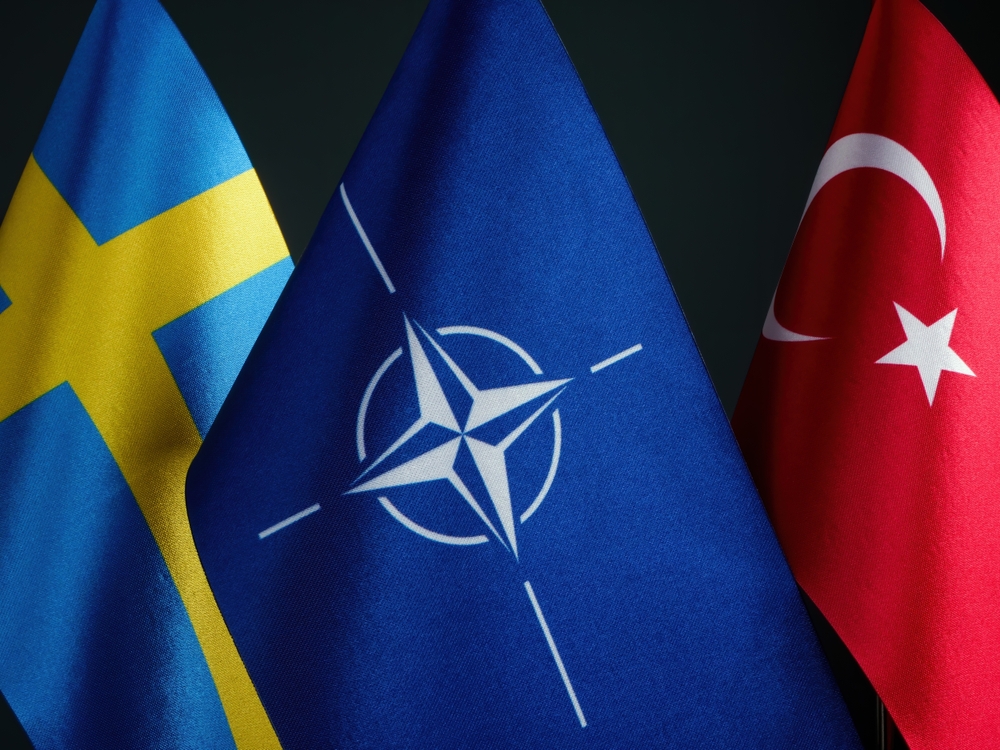
Flags of NATO SWeden and Türkiye, pointing that Sweden is waiting for Türkiye's approval

Sweden is joining Nato: what that means for the alliance and the war in Ukraine

by Simon Smith , Jordan Becker

In a surprise move, Turkey has ended its veto on Sweden joining Nato, thereby removing all the barriers to its membership of the military alliance. Hungary quickly followed suit and, as a result of the two countries’ support, a consensus was able to be reached at the 2023 Nato summit in Vilnius, Lithuania. Turkish president Recep Tayyip Erdoğan agreeing to support Sweden’s bid to join will be touted as one of the key achievements of the summit. Sweden submitted its formal application for membership in May 2022 alongside Finland, which was admitted into the alliance in April 2023. Sweden, though not a formal member, has had a very close relationship with Nato for almost 30 years, since joining the alliance’s Partnership for Peace programme in 1994. It has contributed to Nato missions. And as a member of the European Union and contributor to the bloc’s common security and defence policy, it has also worked closely with the vast majority of European Nato allies. In pursuing Nato membership, both Sweden and Finland have dramatically shifted their traditional policy of military non-alignment. A critical driver of this move was, clearly, Russia’s invasion of Ukraine in February 2022. It is also more evidence that Russian president Vladimir Putin has failed to achieve two of his own strategic objectives: weakening solidarity in the alliance and preventing further Nato enlargement towards Russia’s borders. Finland and Sweden’s accession is of significant operational importance to how Nato defends allied territory against Russian aggression. Integrating these two nations on its north flank (the Atlantic and European Arctic) will help to solidify plans for defending its Ukraine-adjacent centre (from the Baltic Sea to the Alps). This will ensure that Russia has to contend with powerful and interoperable military forces across its entire western border. Why Turkey lifted its vetoFor a few years now, Turkey’s relationship with Nato has been nuanced and strained. Turkey’s objections to Sweden’s accession were ostensibly connected to its concerns over Sweden’s policy towards the Kurdistan Workers’ Party, or PKK. Turkey has accused Sweden of hosting Kurdish militants. Nato has acknowledged this as a legitimate security concern and Sweden has made concessions as part of its journey towards Nato. The main material driver of the agreement, however, may always have been a carrot being dangled by the US. American president Joe Biden now appears to be moving forward with plans to transfer F-16 fighter jets to Turkey – a deal that appears to have been unlocked by Erdoğan’s changed stance on Sweden. But it is often the case that a host of surrounding deals and suggestions of deals can help facilitate movement at Nato. Everyone, including Turkey, now seems able to sell the developments as a win to their constituents back home. The ‘Nordic round’Sweden’s accession means all Nordic nations are now part of Nato. As well as being significant in operational and military terms, this enlargement has major political, strategic and defence planning implications. Although Finland and Sweden have been “virtual allies” for years, their formal accession means some changes in practice. Strategically, the two are now free to work seamlessly with the rest of the Nato allies to plan for collective defence. Integrating strategic plans is extremely valuable, particularly considering Finland’s massive border with Russia and Sweden’s possession of critical terrain like the Baltic Sea island of Gotland. This will increase strategic interoperability and coordination. Nato allies also open their defence planning books to one another in unprecedented ways. Finland and Sweden will now undergo bilateral (with Nato’s international secretariat) and multilateral (with all allies) examinations as part of the Nato defence planning process. They will also contribute to the strategic decisions that undergird that process. Their defence investments will also be scrutinised (and they will scrutinise the spending of other allies). Initial analysis suggests that while Finland and Sweden have lagged behind their Nordic neighbours’ increases in defence investment since 2014. Finland’s investment in defence leapt significantly leading up to and following its accession to Nato. While we may not know for months if the same is true of Sweden, we may expect similar increases on its part. Alliance norms and peer pressure are powerful. The expansion of Nato to include Sweden is a major step for all these reasons. But while anyone watching the Vilnius summit will naturally now be asking whether the shift changes the situation for Ukraine’s membership aspirations, an answer is unlikely to be on the near horizon. Any final decision on Ukraine being offered a membership action plan for the time being is a bridge too far, especially in the current context of an ongoing war with an outcome that, as yet, is unpredictable.

Defense & Security
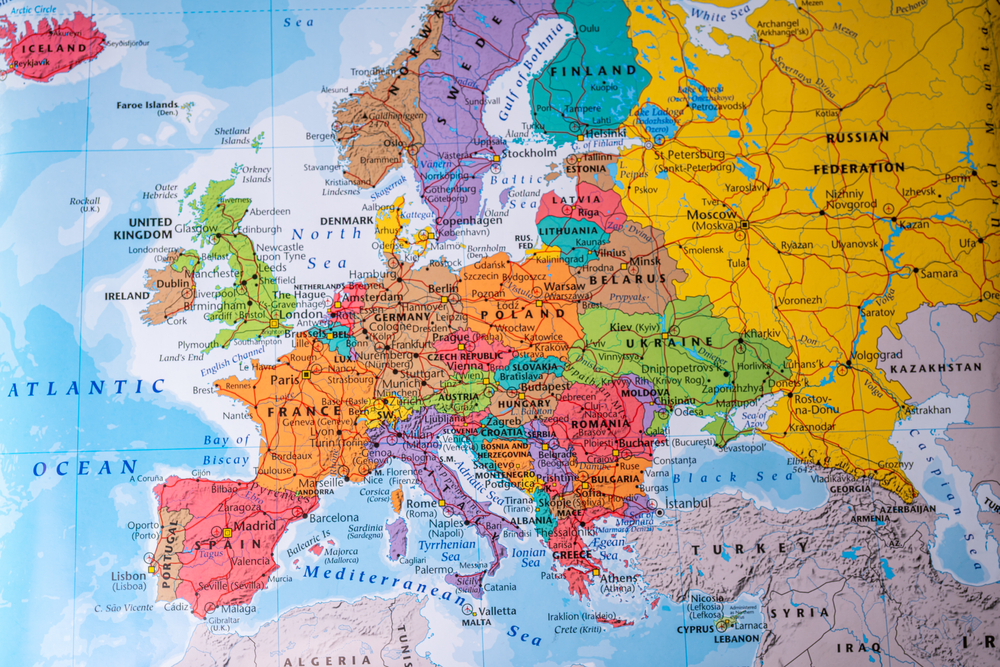
High detailed political map of Europe

Inside out: Europe’s accidental empire builders

by Dr. Roderick Parkes

In the late 19th century, geopolitical thought developed in two steps. First, individual European empires, anxious about their hold over the Eurasian and African land mass, began to codify competitive geostrategies based on their past struggles with one another. Second, the United States (US) took up the most relevant strand of this thinking, from the United Kingdom (UK), and reimagined itself as a global sea power, capable of spreading liberal maritime values such as free exchange worldwide.  These two generations of geopolitics have come home again, brought back to Europe by a well-meaning Joe Biden, the US President. When Biden chose Germany as his key geopolitical partner on the other side of the Atlantic, Europe inexorably began reconfiguring itself according to these two theories. Biden’s choice of Berlin as partner turned Central Europe into a captive fringe for Germany, which in turn spurred a liberal European seaboard to take shape, from the Baltics to Italy.  Biden’s fateful choiceAt the start of his presidency, Biden identified Germany as his key partner in a coming geoeconomic grudge-match with the People’s Republic of China (PRC). With his decision to lift Nord Stream II sanctions Biden was rewarding Europe’s biggest economy and most stable democracy. He was also signalling that Germany must finally take geopolitical responsibility after 30 years of free-riding.  Biden’s choice, logical and well-meaning, has triggered a chain reaction in Europe. Geopolitik is taboo in Germany. So how to respond when the guardian of the open international order pressures you to become geopolitical? The answer is by constitutional means – bind Germany into a federal European state by lifting the right of European Union (EU) governments to veto joint foreign policies. For officials in Berlin, this is the obvious way to harness German power in Europe – so obvious that it does not cross minds that others see things differently. Poles see things differently. They believe federalisation, far from harnessing German power, would cement German dominance of Europe. They do not fear a geopolitical Germany, just so long as it is their kind of geopolitical: they want a Germany that stands up to Russia. But until there is proof that Germany is ready to do so, why commit to federalisation?  The German Government responds by claiming its agenda to federalise EU decision-making is all about standing up to Russia – Olaf Scholz, the German Chancellor, wants assertively to enlarge the EU eastwards, and to do so he must first streamline policy making so that the EU still functions when the Moldovans or Montenegrins are sitting around the table. But the Poles say enlarge the EU first, before reforming it.  Poland wants a ‘geopolitical eastern enlargement’ not a process-driven one: the Polish Government wants to expand the EU quickly into the old ‘crunch zone’ between Russia and Western Europe to protect and reward the Ukrainians’ defence of European values. And it wants to do this before federalisation, to hedge against Berlin gaining power over common European decisions and putting EU enlargement on ice in deference to Moscow.  France, meanwhile, hears these conversations and fears that Germany is losing its recent Westbindung – that it is tilting back towards its historical centre of gravity in the East. This would mark the end of the EU as a Mediterranean project. Panicked by this prospect, the French propose a Europe of ‘concentric circles’. This is the notion of Emmanuel Macron, President of France, that an EU of 36 will have to be led by a sub-group of states. The original six western EU states would be at the political and economic core by dint of the fact that easterners like Poland are still not part of influential clubs like the eurozone.  Europeans unthinkingly establish a German empireThese countries are re-enacting historical fears. Geopolitical thinking is hard-wired into European strategic culture, and Germany, Poland and France fall easily into the tropes of late imperial anxiety. Poland fears again being in a crunch zone between Russian and German condominiums. France fears the loss of its old African sphere of influence. And Germany is afraid of others seeing Europe as its empire.  The tragedy of European geopolitics, moreover, is that it is built on historical fears that become self-fulfilling. Combined, these three ideas – ‘European federalisation’, ‘concentric circles’ and ‘geopolitical enlargement’ – formalise unfair political hierarchies in Europe and cement what all fear most – German dominance.  By federalising the EU, Berlin is unwittingly cementing its own position at the top of the European pecking order. It is constitutionalising Europe along very German lines.  The French are aware that Germany is cementing these power hierarchies, but they cling to the belief that they can benefit – that Paris and the original EU states will join Berlin in the inner circle of European affairs. But the French-German relationship has shattered, and Germany now sits alone in the inner circle. So when the French promote the notion of ‘concentric circles’ they legitimise only their own downgrade.  Tellingly, other founding EU members – Belgium, Luxembourg and Italy – are embracing life in the second tier. During the pandemic, when hit by German border closures, Italy teamed up with neighbouring Bavaria, Luxembourg with Rhineland Palatinate, Belgium with North Rhine Westphalia. These EU members now routinely behave as if they were themselves German Laender and the German federal order were Europe’s. As for Warsaw’s notion of ‘geopolitical enlargement’, it in effect relegates Poland and its closest partners to a third or fourth tier. Poland argues that reform of voting procedures should be delayed until after Ukraine and the nine other potential members have joined the EU – implying that new members will renounce their voting rights whilst the EU reforms. In so doing Poland is legitimising precisely what it has complained of for years – the way new states are treated as mute ‘policy-takers’ by Germany long after they join.  Poland’s idea of ‘geopolitical enlargement’ also risks relegating non-EU members like Britain and Norway to the political fringes even as they try to partner with the EU in Ukraine and Eastern Europe: Poland is trying to motivate Germany to enlarge the EU eastwards with the narrative about the need to compete with ‘third powers’ and contain their influence. But, unwittingly, this lumps Britain and Norway in with the PRC and Russia, making them interlopers in their own backyard.  Germany as change-brakerA Berlin-centric European order need not be oppressive for countries in its outer tiers, so long as Germany is responsive and shows moderation. But Scholz does not easily budge. His Germany is mired in angst about its manufacturing prowess, and has little room for others’ concerns. Berlin, faced with demands across Europe for German action and cash, is experiencing a kind of imperial fatigue. Officials not only speak of EU enlargement as a kind of overstretch. They describe the big dossiers in pessimistic, Malthusian terms – digital connectivity in terms of ‘shrinking space’, migration in terms of ‘global overpopulation’, climate transition as a ‘scramble for rare resources’.  This pessimistic Germany too often uses its centrality to protect and enforce the unsustainable European status quo. Instead of radically overhauling Europe’s energy infrastructure during the recent gas crisis, for instance, Berlin announced that it expected southern EU states to give Germany their gas stocks. The bottom line: give us your gas or we will give you our economic recession.  Germany, remember, did not undergo the usual pattern of de-industrialisation over the last 30 years. Instead, it kept its manufacturing sector afloat by squeezing value from Europe’s political and economic infrastructure. This is still the easiest option even if that infrastructure today has little to give. Its neighbours, however, are not yet ready to accept their fate as Germany’s captive fringe. Their fear that Scholz’s Berlin may be adopting a Germany First approach is triggering a remarkable reshuffling of alliances in Europe, as reformist states try to coalesce against Berlin. The Netherlands and France, historically at odds over economic policy, are teaming up. Even more surprisingly France and Poland, so angered by the German stance on nuclear power, are aligning on a cautious selection of strategic matters.  This possible shift of power away from Germany has somehow been missed. True, there has been a lot of talk about a shift of power eastwards in the EU, towards Central Europe, but most commentators agree that this will amount to little given Poland’s divisive domestic politics. Far more interesting and vital is the shift of power westwards, as Germany tries to rewire its critical infrastructure so that energy, investment capital and ideas flow into its ailing economy from the west, not east.  Simple geography makes seaboard states like the Netherlands or Italy access points for resources heading to Germany from the Americas and Africa.  Europe’s liberal seaboardEurope’s seaboard states are alive to the opportunities this shift creates. Italy has revived plans from the 1950s to become an energy hub between Africa and Europe. The British with their long coastline can act as a supplier of wind energy and a dock for liquid natural gas to Europe. The Dutch, having established their ports as a main disembarkation point for US troops and arms, can influence infrastructure decisions across the continent. Coastal states that until recently were split north-south are teaming up under a shared appreciation of their dynamic outward-looking approach. Italy has reportedly invited the Netherlands to ‘push’ it into deregulating its economy on a mutual job creation drive. The Netherlands has encouraged Italy’s highly-educated population to move northwards. Spain has hinted that Dutch farmers might relocate southwards. France and the UK are making available their finance hubs. The Baltics their technology.  These coastal states are, moreover, trying to offer a pontoon to Central and Eastern Europe, connecting it to the Atlantic seaboard. Britain, for instance, has already reached out to Nordic and Baltic states through the UK-led Joint Expeditionary Force, and there are discussions about bringing it to Poland and Ukraine. Germany, previously the superconnector at the heart of Europe, is allowing itself to be bypassed.A new sandbox for the sea powersImportantly, countries like Denmark or the Netherlands never viewed the EU in terms of state-building, as in Berlin, where each European crisis is an opportunity for deepening integration and ratcheting the EU forward towards federalisation. They treat it as a kind of sandbox or plug-in: the EU is a means of reinventing order in Europe, responding to big geopolitical shifts with a handy toolbox of markets and inventive governance.   Today the big geopolitical task is to protect states threatened by the rise of the PRC, and ensure mutual access to critical resources and investment capital. Many of those threatened are seaboard states in the Indo-Pacific. The EU has its role to play, and if it were true to this sandbox spirit, it would today be sacrificing sacred cows from the 1990s and raiding old EU projects like the Eurozone to combine cheap and reliable energy, foundational technology, pockets of investment capital and access to the best minds.  But if a German-led EU is not prepared to revive this inventive spirit and pick and mix across old projects – mixing the Capital Markets Union with Green industry and so on – these seaboard countries will use their own shared attributes to turn Europe inside-out.

Defense & Security
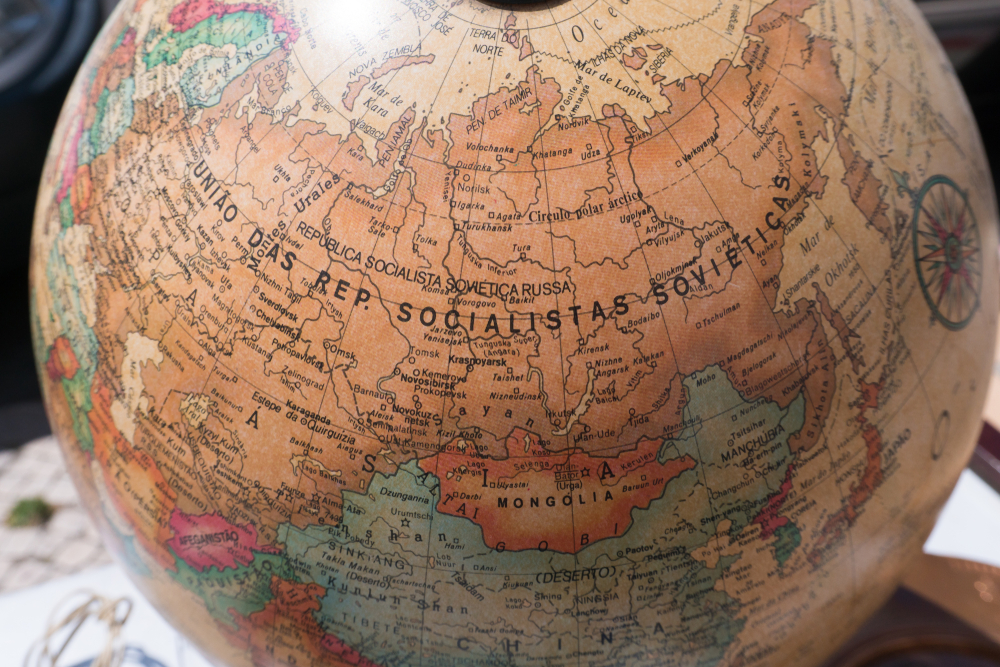
An old globe with USSR map

EUROPEAN SECURITY, EURASIAN CROSSROADS?

by Zachary Paikin , Christos Katsioulis

Keeping rules-based cooperation afloat on a war-torn continent  SUMMARYThe NATO summit in Vilnius taking place from 11 to 12 July 2023 marks another step towards deepening the relationship between Ukraine and the collective West. When paired with the EU’s reinvigorated enlargement process, there is a growing tendency to assume that Washington and Brussels can – or even must – set the terms of the European security order without input from Moscow. However, in a world of ‘mega-regions’ and competing visions of international order, cooperative security remains relevant if the EU wishes to salvage some degree of rules-based order in the space that connects Europe with Eurasia. As first steps in this direction, the EU should work to keep the OSCE operational, launch a limited dialogue with Belarus on arms control, and envision a future for the European Political Community that someday includes Russia. Two highly controversial issues are at the core of our assessment – the amendments to Article 66a concerning future electricity price crises and the resort to inframarginal revenue caps1. The significance of the imagery was unmistakable. In late March earlier this year, Chinese President Xi Jinping visited his counterpart Vladimir Putin in Moscow, at the same time as Japanese Prime Minister Fumio Kishida visited President Volodymyr Zelensky in Kyiv. Although lying at near-opposite ends of the Eurasian supercontinent, the leaders of Asia’s two largest economies visiting the belligerents of a European conflict served to illustrate just how integrated the security dynamics of the two theatres had become. Yet it was the Chinese leader, whose country had been the victim of Japanese imperialism in the twentieth century, who was showing off his strategic partnership with a country that had just a year earlier committed an act of unprovoked aggression against its neighbour, while Japan’s head of government demonstrated solidarity with the victim. That Beijing has doubled down on its entente with Moscow, despite the latter’s egregious violation of international law and norms, all in the name of anti-hegemonism, reveals the complex and shifting patterns of international order in today’s world. The increasing integration of the pan-Eurasian security space, when combined with a nuanced understanding of the contemporary (and mixed) foundations of the international order, reveals the extent to which Europe’s own security order will depend not only on the EU’s ability to demonstrate its own resilience, but also its ability to develop new tools and approaches that allow it to reach beyond its own normative orbit and into a more normatively diverse ‘Eurasian’ space. Contrary to the notion that Russia is ‘leaving’ Europe, only by conceiving of the European-Eurasian space from Lisbon to Vladivostok as a single, pan-European security system will the EU be able to manage the normative contestation and political diversity that characterise continental affairs. TWO MAJOR TRENDS The return of great power competition has come with tangible consequences on several policy fronts such as trade rules, supply chains, technological restrictions, access to critical minerals, and the future shape of globalisation more broadly. Its impact has also been felt domestically, with states both democratic and authoritarian attempting to shape the information space and contending with rising nationalist sentiment. But when one looks at the macro-level, two broad trends emerge – one geopolitical and one normative. GEOPOLITICS: THE RISE OF MEGA-REGIONSThe geopolitical trend – traditionally defined as lying at the intersection of power politics and geography – is the formation of ‘mega-regions’ in the Eastern Hemisphere – continental Eurasia and the maritime Indo-Pacific. While these spaces are too vast and diverse to constitute identifiable ‘regions’ in the usual sense of the term, their discursive appeal allows them to shape strategic debates irrespective of how integrated they are in economic or societal terms. Unlike the consolidation of the Western Hemisphere under a single hegemon, these mega-regions are polycentric, suggesting a complicated landscape to navigate. The IndoPacific theatre is characterised by a worsening Sino-American standoff, but also the persistence of varying degrees of non-alignment from important actors, such as India and ASEAN. The mega-region’s strategic importance to the EU flows not only from the sizeable proportion of trade that passes through the Indo-Pacific, but also the fact that EU Member States are facing the pressures of their growing security dependence on the United States, even as Washington’s focus has been clearly pivoting towards Asia for the last several years. The Eurasian theatre links Europe to Asia through growing trade links and connectivity, but also through strategic interactions, such as the Sino-Russian entente and Turkey’s links with Central Asia. Although China is already very much present in Europe in terms of technology, trade links and port ownership, questions surrounding a ceasefire and the reconstruction of Ukraine may also foretell a growing profile for Beijing in shaping Europe’s future security order. Although much will depend on the degree of US and EU acquiescence, China’s role may be limited to delineated financial contributions to the rebuilding of post-war Ukraine, or it may go so far as to include a direct role in keeping the guns silent. The latter, for example, could include a Chinese promise to exercise its influence over the Kremlin to forestall a reinvasion of Ukraine, in exchange for a Western commitment to dissuade Kyiv from retaking its lost territories militarily. Given Russia’s growing dependence on China, European security now appears indelibly imbued with Eurasian – and not just transatlantic or Euro-Atlantic – characteristics. On top of shared challenges and geographic phenomena, such as climate change and the opening up of Arctic maritime routes, political developments over the past several years have helped to weave the European and Asian strategic theatres increasingly into an interconnected security complex. Worsening relations between Russia and the West following the 2013-14 Euromaidan revolution accelerated Moscow’s already-declared ‘pivot to the East’, while its 2022 invasion of Ukraine has ensured that this pivot takes the form of growing dependence on China after Japan and South Korea imposed economic sanctions. China has therefore become an influential player in European security through its (theoretical) ability to influence strategic thinking in the Kremlin about the war’s endgame and contribute to Ukraine’s reconstruction once new security guarantees have been agreed. China’s growing maritime muscle also impacts EU interests not just on matters of trade but also in the realm of international law by calling into question the future shape of the global commons.An additional factor unifying the two theatres has been the European (and American) prioritisation of the Indo-Pacific, with the EU releasing its Indo-Pacific strategy five months prior to Russia’s invasion of Ukraine. This provided the political foundations for the EU to continue to place importance on enhancing its profile in the Indo-Pacific, even as war raged closer to home. And although many in Europe reject the binary ‘democracy vs. autocracy’ frame emphasised by the Biden administration, the proliferation of this rhetoric in Western decision-making circles since the war’s start has provided momentum for transatlantic allies to double down on their two-theatre focus.  NORMS: W(H)ITHER INTERNATIONAL ORDER?The normative trend concerns the increasing ability to distinguish between the different layers of international order that the EU inhabits. Debates on international order have often focused on the evolving distribution of power, with various analysts asserting that the world remains largely unipolar, is collapsing into bipolarity, or persists on its path towards multipolarity. But there remains the question of how to characterise terms such as the ‘liberal international order’ (LIO) or ‘rules-based international order’ (RBIO) within which this polarity operates.  Russia’s incursions into Ukraine in 2014 and Syria in 2015, followed by the rise of populism with the Brexit referendum and the election of Donald Trump in 2016, called the future of the LIO into question. This raised more fundamental questions over its actual breadth and reach – whether it was largely consigned to the West or truly global in scope, whether its focus was primarily on upholding multilateralism or whether it also had values-based components, and so on.  Given the nature of these events, it became evident that Western ‘leadership’ in setting the terms of the international order was a core component of the LIO as a concept. Russian actions in 2014-15 frontally challenged the notion that Washington and Brussels could unilaterally shape the norms of European security and ended the West’s post-Cold War monopoly on military interventions in the wider Middle East. Similarly, populism’s rise not only threatened the ideological hegemony of liberalism in Western societies, but also raised questions about whether the Anglo-American powers which have been preeminent for three centuries would remain invested in upholding an order they played a major role in creating. A definition of the LIO that incorporates all elements – proliferating institutions, liberal values, open trade, Western leadership, and transformative ambitions on a global scale – would reveal that the attempt to create a global LIO began in the early 1990s and had effectively failed by the time of the financial crisis and subsequent Great Recession of 2007-09. Given the American origins of that recession, the accepted legitimacy of the economic component of Western leadership became contested, eventually paving the way for the erosion of post-Cold War ‘hyper-globalism’. Western political leadership became more strongly contested after the 2011 NATO intervention in Libya, which some saw as exceeding its UN Security Council-issued mandate strictly to protect civilians, presaging Putin’s subsequent return to the Russian presidency in 2012.  Having failed to become synonymous with global order writ large, the LIO today appears largely constrained to the non-geographic West, today emphasising the defence of democracy rather than its spread. The present-day ‘democracy vs. autocracy’ binary expects that the former model will demonstrate its longevity and eventually win uncontested appeal among the rest of the world, which differs from active attempts to export it.  Despite its neutral-sounding description as the universally accepted global order based on the UN system, multilateral institutions and international law, the RBIO can also be difficult to pin down as a concept. In some conceptions, it has existed since 1945 and has relied upon Western leadership to sustain itself, whereas in others it remains something that still needs to be created in newly conceived and discursively contested strategic spaces such the ‘Indo-Pacific’.  For this reason, the RBIO has also been criticised in some corners for being deliberately opaque and labelled as a mere smokescreen for Western hegemony. At a minimum, one can acknowledge the existence of an RBIO based on a global commitment to the peaceful conduct of relations and resolution of disputes, respect for universally agreed canons of international law – including the basic tenets of the UN Charter – or mutually agreedupon processes. Ultimately, what the distinction between the LIO and RBIO reveals is that, in today’s world, order is plural: one should not speak of the international order as much as the existence of differentiated international orders. If one were to draw distinctions between orders across different policy areas, for example, one would see that both the United States and China support certain aspects of the contemporary global order while rejecting others. Neither is entirely a status quo power, but nor does either power hold a purely revisionist agenda.  The EU, for its part, has benefited enormously from a status quo in which a largely unipolar world, combined with a solid American security guarantee, negated the need to wrestle with the idea of fundamental change in the substance of international order. Although it must now debate the extent to which it can (or even should) embrace the ‘language of power’, this helps to explain why the EU – contrary to other leading actors – continues to defend both the LIO and RBIO. This European posture flows not only from the nature of the EU’s internal system and the commitments underpinning EU treaties, but also from the evolving shape of great power competition.  THE INTERSECTION OF NORMS AND GEOPOLITICS – AND ITS IMPLICATIONS FOR EUROPE In the normative realm, we are witnessing a fragmentation of order or, put differently, a ‘de-universalisation’ of norms. Rather than a single overarching global order to which all states pay fealty, an integrated global economy and global institutions provide merely a framework in which states litigate the shape of the international order and contest one another’s (possibly conflicting) normative visions.  By contrast, in the geopolitical realm, we observe the opposite phenomenon. While regional theatres have undoubtedly grown in importance, offering smaller actors a chance to shape international order alongside the great powers, these theatres are increasingly integrating themselves into a common system where actors from different regions figure into one another’s security perceptions. This dual process of simultaneous integration and disintegration raises the question of how to conceptualise the linkages between these megaregions and various orders.  Given the likely involvement of China (and perhaps India) in brokering a ceasefire and contributing to the reconstruction of Ukraine, alongside Japan’s cooperation on Ukraine with its Western partners through the G7, strategic calculations among the powers of the Indo-Pacific mega-region are having an impact on events in Europe. But in terms of hard security dynamics, the most direct linkage (or lack thereof) affecting the future of the European order lies in the nature of the relationship between the European and Eurasian spaces. Since Putin’s return to the Kremlin and his casting of Russia as a decidedly non-Western and non-liberal country, it has become common to assert that Russia was ‘leaving’ Europe. Given that the political and economic order on the European continent since the Treaty of Maastricht has been based on the centrality of the EU system, with other states pursuing greater or lesser degrees of alignment with EU norms and standards, to challenge those norms openly and blatantly was seemingly to deny one’s Europeanness. Russia’s subsequent ‘Greater Eurasia’ discourse further highlighted the notion that Moscow no longer sought to re-join Europe, as was its initial ambition after the end of the Cold War, but rather to create a new geopolitical space. This Eurasian space was either to be Russian-led, centred on the post-Soviet region and embodied by organisations such as the Eurasian Economic Union (EAEU) and the Collective Security Treaty Organisation (CSTO), or would take the form of a broader yet unspecified polycentric pan-Eurasian system from Lisbon to Shanghai with Russia serving as the EastWest bridge at its core. Efforts to bridge the Russian and Brussels-centric visions for continental order through some kind of interstitial linkages between the EU and EAEU floundered, both due to the customs union component of the EAEU and the EU’s effective insistence that Ukraine faced a binary choice between East and West.  But whether one defines Europe in the expansive sense from Lisbon to Vladivostok or not, the collapse of Russia-West relations does not presage the end of the need to conceive of the European and Eurasian regions as a single space. For one, there remain post-Soviet states that desire to build relations with the EU and do not wish to be entirely consigned to the Eurasian Heartland.  Moreover, the ‘pan-Turkic’ element of Turkey’s foreign policy has grown increasingly salient over recent years, offering the prospect of deeper strategic relations between NATO-member Turkey and CSTO-member Kazakhstan. Even when it comes to two adversarial military alliances, bridges are not entirely absent. Turkey and Serbia, in addition to the states of the South Caucasus, stand out as wanting to maintain relations with both Russia and the West.  Yet while the European and Eurasian security spaces are geographically adjacent, forging a conception of a single space between them is rendered more difficult when one considers the LIO-RBIO reference frame. Viewed through this lens, the EU and Russia come across as polar opposites, even in relative terms.  The United States remains, at least for now, committed to a revised version of an LIO centred on the promotion of liberal norms, the preservation of US primacy in the global order, and the maintenance of US leadership within the Western alliance structure. However, when it comes to the RBIO, Washington’s numerous post-Cold War transgressions of international rules and its selective application of normative discourses suggests that an attitude of ‘rules for thee but not for me’ continues to operate to some degree even under Democratic administrations.  China, for its part, is to a degree the mirror image of the US: Beijing rejects the hegemonism and liberal values that underpin the LIO but remains invested in multilateralism and open markets, even if its adherence to the rules has also been selective, such as in its efforts to create ‘facts on the ground’ in the South China Sea.  When it comes to the EU and Russia, the division is even more stark. The EU remains the world’s leading power committed to both the LIO and the RBIO; Russia decidedly rejects the LIO and, since its 2022 invasion of Ukraine, has run roughshod over internationally agreed rules and norms as well.  THE EU AT THE CROSSROADS OF EUROPE AND EURASIA The EU is being tested by rising geopolitical tensions in its neighbourhood, which bring ever more assertive challenges against the RBIO. By design, Brussels comes with inbuilt disadvantages in this contest.  In foreign and security policy, the EU is a peculiar beast. Common action still depends on unanimity among Member States, which cautiously limits the EU’s room for manoeuvre. Support for the Ukrainian army is a textbook example of this phenomenon. We have observed common steps to supply Kyiv with weapons through the European Peace Facility. But we have also seen Member States from across the continent emphasise their own priorities – sometimes coordinated, sometimes rather uncoordinated – such as debates over the provenance of military procurement schemes.  As a result, the sum of the EU’s parts occasionally seems to be smaller than all of them combined. The EU decision-making patchwork can at times be accelerated by crises, but under normal circumstances it is a rather time-consuming procedure. And if the war in Ukraine becomes the new normal and the hottest phase of hostilities comes to resemble mere embers, the crisis-like atmosphere often needed for bold decision-making may eventually fade away.  Moreover, although the EU’s dual commitment to the LIO and RBIO forms a core element of both its internal functioning and its international engagement, in recent years there have been some cracks in this picture, most notably when it comes to the domestic political record of Member States such as Poland or Hungary. The apparent hypocrisy or double standard contributes to the erosion of the LIO’s global appeal, while challenging the EU’s ability to advance its particular interpretation of the RBIO.  The EU and its Member States find themselves today confronted with a geopolitical and normative challenge in their neighbourhood. Russia’s invasion of Ukraine has led to a rapid disintegration of the Organisation for Security and Cooperation in Europe (OSCE) space into different grades of contestation. This brash disregard for previously agreed rules and principles, when coupled with the erosion of several arms control agreements meant to enhance confidence and predictability in the wider Euro-Atlantic security space, has challenged the very notion that a European security architecture still exists.  The repercussions of the war have led to a strengthening of NATO and a diminished Russian ability to order parts of its ‘near abroad’, prompting other actors to step in, such as Turkey in the Caucasus or China in Central Asia. Trade in the Eurasian space – between the EU and China – has also become more cumbersome by taking the huge landmass of Russia out of the equation and forcing a recalibration of trade routes. Thus, for the EU, the dynamic of integrating geopolitical theatres in Eurasia and the IndoPacific has posed three questions.  First, does the EU have a toolbox for its immediate neighbourhood suitable for managing the geopolitical and normative conflicts inherent to today’s multipolar world? Enlargement and integration offers still rely on the logic of countries adhering to European rules, as they are supposedly driven by their own interest to gain access to this attractive bloc. Therefore, the logic goes, they are likely willing to undergo a tedious scrutiny process and give up substantial parts of the exercise of their sovereignty.  The EU’s enlargement agenda undoubtedly presents the most developed form of normative power projection and has recently garnered new momentum in Ukraine, Moldova and the Western Balkans. These latest developments, coupled with Ukraine’s de facto integration into the Western political and security community, demonstrate the extent to which Russia’s normative proposition has largely failed, even in its historical sphere of geopolitical and cultural influence.  Nonetheless, China’s likely growing influence in European affairs, Russia’s continued determination (and, for now, ability) to wage war, and the normative pluralism inherent to Eurasia’s penetration of the European space all raise questions over whether the EU’s enlargement agenda alone can fill the chasm left by the collapse of the European security order. It also remains too early to gauge the impact of the EU’s more ‘geopolitical’ (less strictly defined) recent moves, such as collective military assistance to Ukraine and its efforts to reduce its dependence on Russian energy, on its ability to shape the panEuropean security system in line with its preferences. Simply put, the strengthened role of the EU within Europe should not encourage Brussels and Member State capitals to sit on their laurels.  Second, what can the EU offer on a global scale to compete in a normatively pluralistic world and encourage other actors to align with EU goals? To the surprise of many in Europe, major non-Western powers, including many leading democracies, have chosen to stay on the sidelines of the war and are trying to hedge their bets. Those that have chosen to advance peace plans, such as the African ten-point plan and the Indonesian proposal, have tended to emphasise the need for de-escalation over justice. Given the increasing salience of these plans from various corners of the ‘Global South’ for the war in Ukraine, this question is important not only for the EU’s global standing but also for the future of the European security order. Universal norms – such as those of the UN Charter, later developed and enshrined in OSCE documents – are being increasingly challenged in the European-Eurasian security space. And while recent events may have given the EU’s norm-setting ability in Europe a boost, the extent to which it can fully see its vision through in the absence of global support remains uncertain. While much of the continent may become more tightly integrated, these developments threaten to render the core principles of the wider regional security order aspirational at best, not unlike the Universal Declaration of Human Rights. Third, how autonomously from the US can the EU act? The war has highlighted once again European security dependence on the US. That brings with it implicit, and sometimes explicit, expectations on the US side for a more assertive European stance towards China along the lines of US policy. The EU’s ability to deal with Eurasia and the Indo-Pacific differently, and thus handle the challenges of Russia and China separately as some Member States would prefer, now runs into a US-backed integration dynamic of the European, Eurasian and Indo-Pacific spaces. Thus, the Eurasian theatre seems to have become a key laboratory for the new order of competing concepts, overlapping integration spaces and unclear mechanisms of how to deal with the inevitable tensions between antagonistic claims.  THREE RECOMMENDATIONS  On the normative front, the task of constructing a stable order in a culturally and politically diverse world is unlikely to be achieved through a renewed commitment to the LIO, given its hegemonic and ideological foundations. And on a continental scale, while the LIO model may provide the political conditionally necessary to expand the EU’s sphere of influence, the lesson of the post-Cold War era is that this sphere will not be able to encompass Russia fully.  The EU’s approach today has rather become premised on confronting Russia’s normative model, in place of integrating Russia into some kind of common pan-European space. In fact, although there is no current strategy for how to deal with a post-Putin Russia, it is difficult to imagine the country finding a place in either NATO or the EU, even if it eventually pivots back towards the West and becomes relatively more open and democratic.  Geographically, in the Indo-Pacific, the structural constraint of the US-China relationship will significantly shape the EU’s room for manoeuvre for the foreseeable future. Yet the situation in the European-Eurasian theatre is potentially more volatile. Although the transatlantic alliance’s structure of US leadership has once again become apparent over the course of the war, much can change if a new US president comes to office. Moreover, a European continent featuring a reinforced NATO and an increasingly nationalist and revanchist Russia risks becoming a recipe for another conflict not long after the dust settles on the current phase of hostilities in Ukraine. Simply put, waiting – potentially for decades – for Russia to transform itself before embarking on the task of salvaging what remains of the RBIO connecting Europe and Eurasia is not an option. While relations will not be repaired overnight and the conditions do not presently exist to reaffirm (or reconstitute) the core principles underpinning the continental order, the EU can take three relatively immediate steps to prevent worst-case scenarios from materialising.  First, the OSCE, which brings together 57 participating countries, is in danger of entering 2024 without a chair or a budget. The EU would be poorly positioned to advocate credibly for a strengthened global RBIO if Europe itself becomes a rare continent without an inclusive and pan-regional functioning RBIO of its own.  The collapse of the OSCE would not only eliminate the last major regional institution bringing Russia and the rest of Europe together, but would also put Central Asian countries in a more difficult position, removing from them a forum in which they can navigate between the European and Eurasian spaces.  If Estonia’s chairmanship is unable to proceed, EU Member States should be prepared to rally behind a compromise candidate which boasts links to both Europe and Eurasia. Kazakhstan presents a natural choice, offering the EU a chance to build on its recently activated strategic partnership with Astana. In consultation with Ottawa and Washington, they should also agree to commit emergency funding to keep the body afloat if necessary and consider institutionalising money for the OSCE budget in the next Multi-Annual Financial Framework. Although Member States already contribute more than two-thirds of the organisation’s main budget, such a move would demonstrate the EU’s collective commitment to upholding a continental RBIO that spans beyond its own borders – a necessity given the now-unavoidable intersection between the European space and the pluralistic Eurasian mega-region. Russia’s initial post-Cold War dream of a pan-European security order centred on the OSCE has been dashed. Instead, the body’s activities have increasingly centred on its humanitarian ‘basket’, focusing in large part on post-Soviet states. As NATO and the EU expanded to include Central Europe, Moscow became increasingly convinced that the OSCE had become a second-tier institution for supposedly second-rate countries, giving it an incentive to impede its functioning rather than strengthen its capacities.  Still, it is precisely because of the pluralistic nature of the Eurasian mega-region and the EU’s own need to navigate it through the framework of rules that Brussels should remain invested in the OSCE’s survival, however imperfect the institution may become. Recent European Council conclusions have laudably articulated the EU’s continued commitment to the OSCE, but there has yet to be an explicit recognition that to survive as a body where states can manage crises and discuss security challenges on the continent, the organisation’s de facto focus may need to narrow, even if its more wide-ranging activities do not completely hollow themselves out.  In short, an OSCE that resembles the leaner Conference on Security and Cooperation in Europe (CSCE) of preceding decades is better than no OSCE at all. The OSCE’s more ambitious policy agenda is partly a product of the era of a Westernising Russia – an era which has decidedly passed. To remain resilient, international institutions must adjust to changing circumstances. And in any event, there remain ample other formats through which EU Member States can pursue their normative agenda.  Second, the pan-European arms control architecture is now in tatters following the American and Russian withdrawals from the Open Skies Treaty, the demise of the Intermediate-Range Nuclear Forces (INF) Treaty, Russia’s suspension of its participation in New START, and its formal withdrawal from the Conventional Armed Forces in Europe (CFE) Treaty. These regimes will not be resurrected overnight. However, in an attempt to demonstrate a remaining semblance of independence from the Kremlin, Belarus has remained active in the surviving regimes and will likely retain its membership in the CFE Treaty. The EU’s position on the political legitimacy of Alexander Lukashenko aside, Minsk’s continued participation in arms control, combined with the delivery of Russian tactical nuclear weapons to Belarus, creates a plausible case for certain European officials, beginning at the Member State level, to enter into a dialogue with Minsk as a matter of continental security – even if only quietly at first. This dialogue could serve as a basis for incubating ideas on the extent to which a future continental arms control architecture should be based on existing or new mechanisms. With time, Member States could designate individuals at the European External Action Service to take this process forward if it begins to show signs of progress, ensuring that the perspectives exchanged reflect the security interests of the EU27 as a whole.  Given the degree of closeness between Minsk and Moscow, the ideas discussed could eventually filter into the Russian elite as well, thereby preserving a backchannel through which momentum for renewed arms control can be built, as well as attenuating the lack of information and confirmation bias which currently exacerbate the Russia-West security dilemma. It is worth remembering that while Russia has withdrawn from several arms control regimes as its relations with the West have deteriorated, Moscow has not rejected the usefulness of arms control in principle. Belarus would relish the opportunity undertake such a dialogue and minimally restore the East-West bridge status that it held until the 2020 protests. Russia, for its part, would have little to fear, given the current extent of Belarusian dependence on the Kremlin and the fact that EU political recognition of Lukashenko would not necessarily be forthcoming.  Finally, while the purpose of the newly formed European Political Community (EPC) is ostensibly to build a platform for pan-European cooperation without Russia, at this point it remains unclear the extent to which such a rationale for its existence will continue to be manifest once the hottest phase of the war has passed. Once the structure and focus of the body have been further consolidated, however, EPC leaders should hold discussions on a possible timeline and conditions under which Russia could be admitted as a participant. This could occur at an EPC summit in a non-EU and non-NATO country such as Serbia or Switzerland in 2025 – timed to coincide with the fiftieth anniversary of the Helsinki Final Act. While consensus among all participating states may not be reached, the mere act of deliberating this topic could spawn certain ideas which may eventually prove worthwhile and/or achievable. CONCLUSIONS The moves outlined above will not succeed where all parties over the past three decades have failed – namely in creating a pan-European security order which Moscow has a stake in upholding rather than undermining. However, they offer to preserve or create platforms and avenues for policy cooperation or dialogue which can bolster the idea of a continental RBIO. They also offer the EU an opportunity to act autonomously in the pursuit of collective goals, to develop a wider-ranging toolbox for addressing security challenges in its neighbourhood, and to strengthen its image around the world as an actor committed to inclusive, rules-based security-building.  With all of Europe west of Russia (except for Belarus) now in some kind of integration process with the EU, it is certainly tempting to reinforce the Brussels-centric character of the continent’s normative order – as seen in discussions over how to strengthen the credibility of the enlargement agenda for Ukraine, Moldova and the Western Balkans, and how the nascent EPC might complement this process.  This, however, is but one side of the policy coin that EU leaders must consider. The West and Russia may not operate a shared security system in Europe, but this does not obviate the need to consider the integrated nature of security dynamics in the pan-European space. In a world of mega-regions, Europe will remain intertwined with Eurasia irrespective of the degree to which agreed-upon norms can be operationalised. The question is whether the connections between these two spaces will preserve a modicum of orderliness. At the global level, the LIO’s expansion has been halted and the RBIO is in transition, even as it demonstrates elements of flexibility and resilience. But at the juncture of Europe and Eurasia, both the LIO and RBIO’s futures are profoundly uncertain. In both the short and the long term, the EU cannot afford to ignore this challenge.