Subscribe to our weekly newsletters for free

Subscribe to an email

If you want to subscribe to World & New World Newsletter, please enter
your e-mail

Defense & Security
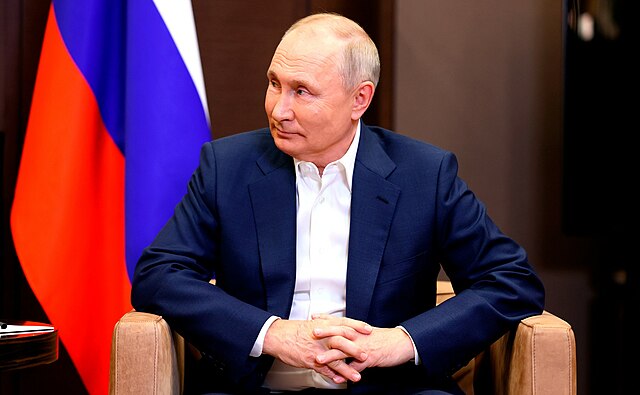
President of Russian Federation Vladimir Putin

Video address on the occasion of the 80th anniversary of the liberation of Donbass

by Vladimir Putin

Vladimir Putin: Friends, esteemed veterans, September 8, 1943, marks a landmark date in the history of our country. Eighty years ago today, the legendary unconquered Donbass – Russia’s centuries-old stronghold, a land of hard workers and warriors, a rich and generous land – was liberated and cleansed from Nazi occupiers. Its resources held enormous value for the enemy. Seizing them was one of the goals behind Germany's attack on the Soviet Union, and the Nazis did everything to keep the Donbass steppe to themselves and to force the people to work for the war machine of the Third Reich. However, they ran into fierce resistance in the occupied territories, the intensity of which did not wane for nearly 700 days. During that time, while the cruel and cynical beast ruled over Donbass, hundreds of thousands of partisans, underground fighters, civilians, and children were subjected to torture and execution, and unassailable enemy fortifications grew on the key fronts. The banks of the Seversky Donets River were dotted with bunkers and dugouts, and many kilometres of minefields. Breaking through that defence line appeared impossible, but the Red Army soldiers accomplished this task, performed feats beyond human capabilities, and travelled a heroic and sacrificial path, thus solidifying the triumph of Soviet troops at the Kursk Bulge. The arduous and selfless assault of Saur Mogila is a special chapter. The Nazis turned this ancient burial mound into an impregnable citadel, but there was no force in the world that could stop our soldiers. This strategic height changed hands several times and surrendered to the Soviet soldier, who stood to the death for the truth, justice, freedom, and the future of our Motherland. I am confident that nine years ago, on these frontlines that are sacred for us, Donbass militia members, descendants of the Great Patriotic War soldiers followed their example. It multiplied their courage and fortitude in yet another confrontation with Nazism, gave the grandchildren and great-grandchildren of the victors the strength to defend their land, culture, language, and heritage. The Saur Mogila Memorial, which was destroyed during the 2014 hostilities, has now been fully restored. Alongside the images of Soviet soldiers, the feats of their valiant and glorious descendants – the new heroes of Donbass – have been rightfully immortalised. That is what Russia is: a nation united by its history, unbreakable through its spiritual traditions, and loyal to the legacy and memory of its ancestors. I warmly congratulate the people of the Donetsk People's Republic and all Russian citizens on the 80th anniversary of the liberation of Donbass from Nazi invaders.

Defense & Security
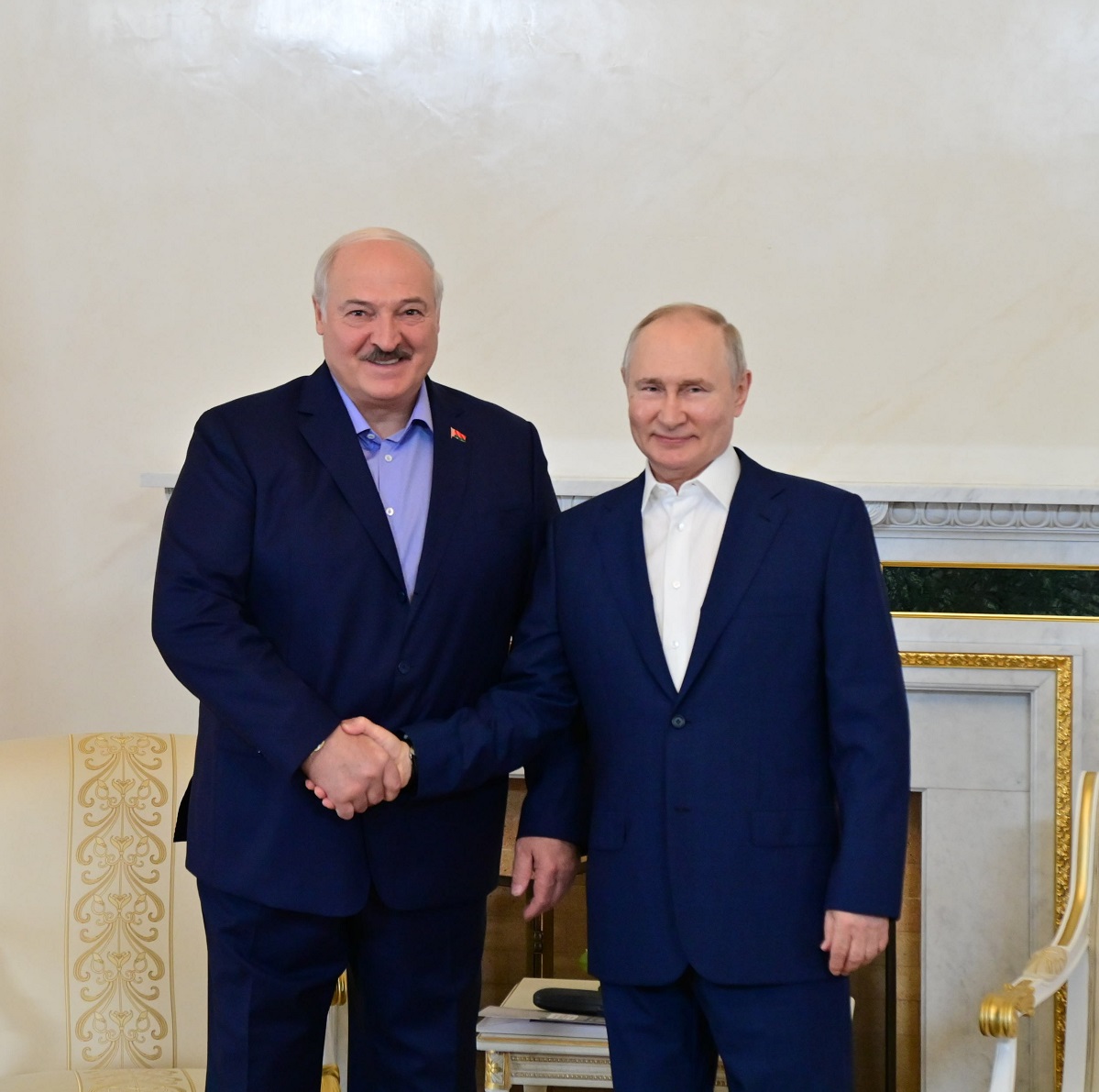
President of Belarus Aleksandr Lukashenko handshaking with President of Russia Vladimir Putin

Negotiations with Russian President Vladimir Putin

by Aleksandr Lukashenko

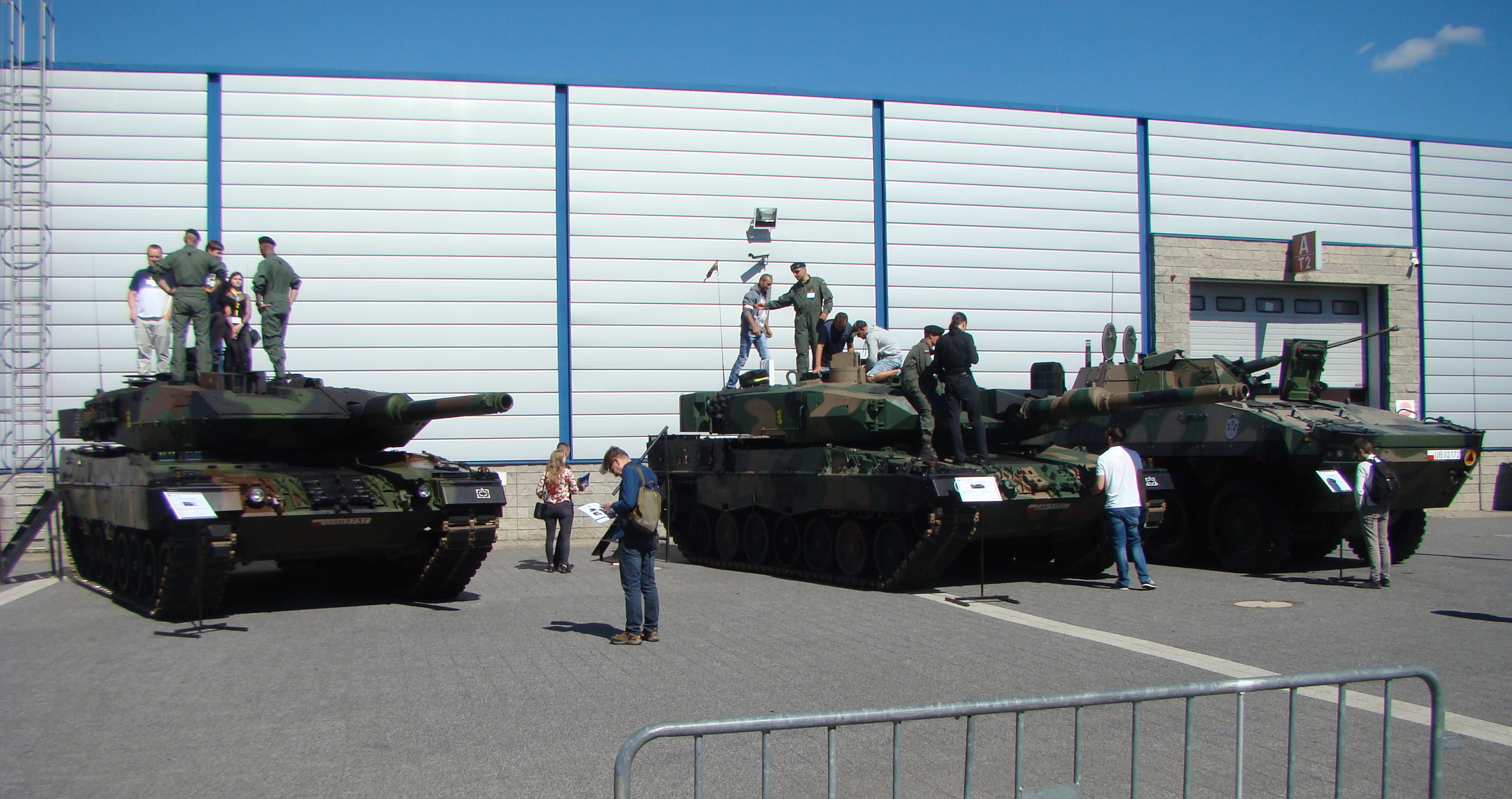
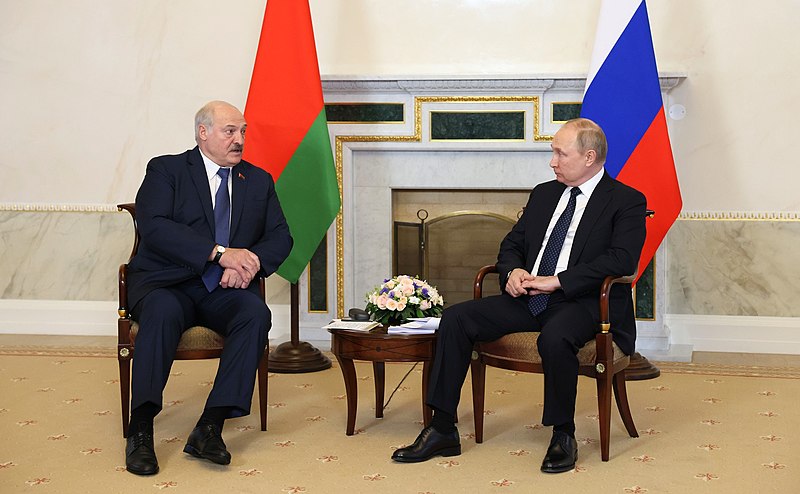
The meeting of the presidents of Belarus and Russia, Aleksandr Lukashenko and Vladimir Putin, took place in St. Petersburg on 23 July. The heads of state arrived at Konstantinovsky Palace together.  "Aleksandr Grigorievich, we are meeting today as agreed...", the Russian leader began the protocol part of the meeting. The Belarusian president remarked: "We agreed on the meeting six months ago."  "It's true. That's right. We agreed about this a long time ago," Vladimir Putin noted. “We are meeting in St. Petersburg today. The weather is good. It is a Sunday afternoon, but we always have something to talk about. At the beginning of the meeting, I would like to note that all our plans are being implemented, even at a better pace than we expected." The Russian leader noted the good state of the economies of the two countries, the expected economic growth by the end of the year: "I looked at the latest data. The Belarusian economy is expected to grow by 3.7% in 2023. These are the projected figures, but still. Our growth forecasts are a little lower. But this is a good indicator for us too. We expect the growth of more than 2%. Unemployment is low. In general, all the main indicators give us reason to believe that we will pass this year well and will have good growth." "Our plans in terms of the Union State are being fully implemented. We are moving confidently in all areas. Trade is growing. According to various sources, the data vary a little. According to our data, it is around $43.7 billion, if we speak in dollar terms. According to Belarusian statistics, it is almost $45 billion," the Russian president said. Aleksandr Lukashenko said that the cost of services provided should be into account too. "You are right," the Russian president concurred. The presidents also noted the successful operation of the Belarusian nuclear power plant. Its second unit has already been launched this year.  "We have made progress, satisfactory progress, to put it modestly. Of course, we will also talk about security issues in the region. I hope that today and tomorrow we will have the opportunity to discuss all this in an informal setting, in great detail," Vladimir Putin said. In his opening remarks, Aleksandr Lukashenko touched upon many issues, including the course of the special military operation, the lack of results of Ukraine’s counteroffensive, and NATO's military build-up in Poland. Another important topic is plans for the development of economic cooperation between Belarus and Russia. "We won't be able to do it in a day. Therefore, we will meet tomorrow. As far as I understand, you will find time for us to talk," the Belarusian president said addressing his counterpart. "Of course. I changed some of my plans. We can spend one and a half to two days," Vladimir Putin confirmed. "Great! We will settle these issues in a day and a half. Thank you for finding the time for the meeting we agreed six months ago. Therefore, there is nothing extraordinary here. We have been planning the meeting for a long time. When a need arises, we meet and discuss our tactical and strategic issues," the Belarusian head of state said. "As for the economy, I would like to suggest that our governments think through some kind of economic plan. The point is self-reliance. We will not kowtow to anyone. We have got brains. Resources are more than enough. We need a plan for the development of our Fatherland. As I say: two states, one Fatherland. We can do it. The main forces have been here, in Russia, since old times. It will be good if our governments come up with such a plan," the head of state said.  "Even if things are a little worse off, people will understand and support us. Because there will be the light at the end of the tunnel," the Belarusian leader said.  The countries have already begun to work in this direction, advancing cooperation in all areas, including in microelectronics, space, and agriculture. "We see good results everywhere. So we need to put everything together into a plan, appoint people in charge. Thus we will do our job strategically," the Belarusian president said. Aleksandr Lukashenko brought a map showing the deployment of Polish troops at the border of the Union State to a meeting with Russian President Vladimir Putin. The head of state noted that one of the Polish brigades is now deployed 40km away from Brest, another - about 100km away from Grodno. Aleksandr Lukashenko noted that there is no Ukrainian counteroffensive. "No, there is. It's just failed," the Russian president said. "It failed indeed. There are no results," the Belarusian leader confirmed. “What's next? They, as you said recently, have begun to engage Poland. They are making active use of mercenaries. I brought you a map showing the deployment of the Polish Armed Forces at the borders of the Union State, which you talked about. We see that they are setting the stage. One of the brigades has been deployed 40km away from Brest. They used to be 500km away, now the distance is 40km. We see it all. Another brigade has been deployed a little more than 100km away from Grodno. They have a division, but so far these are brigades. Poland opened a facility to repair Leopards on their territory. Rzeszow is becoming more active. The Americans are using its airfield to send hardware and so on.” The head of state noted the increased militarization of Poland, the deployment of significant forces to the borders of the Union State. "Naturally, Poland wants something in return. It's clear it will get money, weapons. This is understandable. But now there is a lot of talking ‘to admit Ukraine into NATO in parts’. You also noted this. What's behind it? This is a smokescreen," the president said. “Tear off western Ukraine. Under the guise of admission to NATO, so that the population is ok with that."    "They want to chop off western Ukraine and annex it to Poland. This is a payment to Poland for its active participation in this operation against the Russian army. The Americans support this," the Belarusian leader added. Belarusian President Aleksandr Lukashenko lauded the successes of the Russian army in the special military operation.  "Yesterday was a difficult day. This is according to our data. You will also share your opinion on this. It was a very difficult day. Fortunately, it ended well. According to our data, more than 15 Leopards [German-made tanks] and more than 20 Bradleys [US infantry fighting vehicles] were destroyed in one battle. This, I think, has never happened before," the head of state said.  “On the other side they used units fully equipped with foreign hardware," Vladimir Putin said. Aleksandr Lukashenko stressed that the destruction of such a number of hardware also testifies to the heavy losses of the Armed Forces of Ukraine: "We can estimate how many soldiers of the Armed Forces of Ukraine died considering the number of destroyed hardware. I know this because I served as an officer in the armored army back in the day. Therefore, I understand what it means to destroy so many infantry fighting vehicles and, most importantly, much vaunted Leopards.” The Belarusian president cited the U.S. estimates which indicate that the Armed Forces of Ukraine lost 26,000 soldiers since the start of the counteroffensive. "More," Vladimir Putin responded. "It's already more. Well, a week ago they estimated Ukraine’s irretrievable losses at over 26,000. From 4 June [from the launch of the counteroffensive]. I put their data down," the Belarusian president said. "Even more," the Russian leader said affirmatively.  Aleksandr Lukashenko continued: "Yesterday showed that this is the war against the entire NATO. They arm them; send a lot of mercenaries there. Yesterday was an important day because they made use of the main strategic reserves. This suggests that this thoughtless policy of throwing untrained people and mercenaries into hell will lead nowhere. During the meeting, Vladimir Putin noted that foreign mercenaries also suffer significant losses. "Huge losses. Because of their tactics," Aleksandr Lukashenko said.  "Because of their stupidity," the Russian leader replied. "They move in groups," the Belarusian president said. In turn, Vladimir Putin stressed that people of the countries whose governments are sending people to the war zone should also be aware of what is happening. "We will communicate this to the people so that they assess the actions of their rulers," he said. Belarusian President Aleksandr Lukashenko thanked the Russian president for the security guarantees to Belarus. "I would like to thank you. You are the first person in Russia who spoke about this openly and clearly. Aggression against Belarus will be like an attack on Russia. We take this into account in the construction of our Armed Forces," the head of state said during at the talks with Russian President Vladimir Putin in St. Petersburg. The presidents of Belarus and Russia toured the landmarks in Kronstadt after the official part of the talks in Konstantinovsky Palace. The heads of state first came to the Island of Forts Museum and Historical Park. There they were shown the main exhibit - the first Soviet nuclear submarine K-3 "Leninsky Komsomol". She was delivered to the Museum of Naval Glory in Kronstadt from Murmansk Oblast in the autumn of 2022. Another point of the joint informal program of the presidents was a visit to the Stavropegic St. Nicholas Naval Cathedral in Kronstadt, also known as the Naval Cathedral of St. Nicholas.

Defense & Security
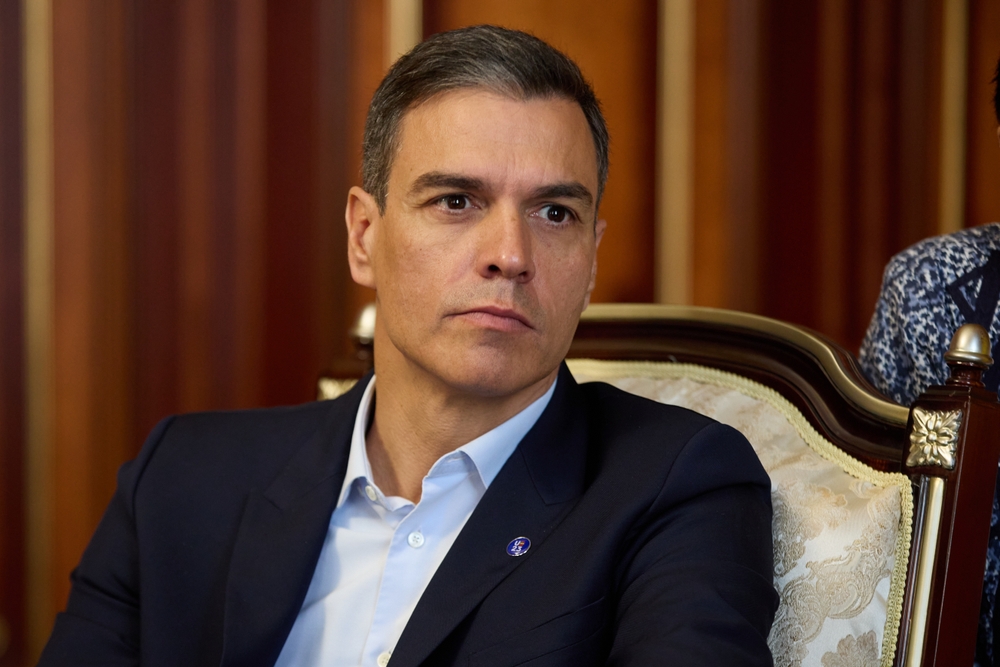
Pedro Sánchez Prime Minister of Spain

The president of the Spanish government, Pedro Sánchez, has delivered this speech in the Rada, the Ukrainian parliament

by Pedro Sánchez

Thank you very much.  Dear Mr. Speaker Stephanchuk, Distinguished Members of the Verjovna Rada,Excellencies, dear friends. I am very grateful to be here today, on this very special day for my country. Today, 1st July,  Spain assumes the great responsibility of becoming the rotating Presidency of the Council of the European Union for the next six months. And I wanted that the very first thing I did in my new capacity was to address the people of Ukraine through their Verjovna Rada. I wanted to tell you that we are and will be with you as long as it takes. I wanted to tell you that we will support Ukraine no matter the price to pay. That we will be with you in the achievement of your aspirations to be a free and sovereign  country that decides its own destiny as a member of the European family. In short, I am here to express the firm determination of Europeans and Europe to fight against the illegal, unjustifiable and unjustified Russian aggression to Ukraine. Once again, I have the honour to address all of you in this temple of Ukrainian democracy. My first address took place in February, on the first anniversary of Russia’s aggression against your sovereignty and territorial integrity. Things have changed since then. Today Ukraine is in the midst of the counter-offensive against an enemy that is showing signs of weakness. We have all seen the events of last week. They speak for themselves. And, if one side shows weakness, it is because in front of him there is someone who shows the opposite: determination. It's what I can see, right here, and right now: determination, strength and courage. What I can see is a whole country that refuses to be subjected and fights for its independence with immense dignity. I know the price to pay is enormous. Especially in human lives lost. Nothing I can say here today can comfort a family that has lost a daughter, a son, a mother, a father or a husband. Men and women who gave their lives defending a free and democratic Ukraine.  Still, I want to do it from the bottom of my heart on behalf of my country, Spain. A country that mourns with you. A country that condemns every Russian attack against Ukrainian civilians, like the one at Kramatorsk. Victoria Amelina, a Ukrainian writer was there. Severely injured, now fights for her life. Victoria was close to the front line, because she wanted to document the tragedy. She wanted to collect the memory of infamy. The lost heritage. The broken lives. The crimes committed. We need women Victoria Amelina, to write history. To tell the facts as they happened and preserve the memory of those who suffer this tragedy. Excellencies, dear friends, we do not forget that the European aspiration of the Ukrainian people was one of the excuses that triggered the Russian reaction and, in turn, the invasion. It was only fair to honour this aspiration by granting you the status of candidate to the European Union. No one deserves it more than you, than Ukraine. However, I know that this is not an easy process, especially with an ongoing war. To become a member state requires changes, reforms and sacrifices. Not long ago, Spain faced this challenge as a candidate country. But, let me tell you, that the process to become an European Union member taught us important lessons. One of them is that undertaking reforms has a value in itself. Reforms make your governance and your economy better, more modern and transparent. They bolster international confidence and proximity. They attract investment. And, in time, they will grant you access to our European Union. A Union, which is more than just the largest internal market in the world. Which is, above all, a community of values: human dignity, freedom, democracy, equality, the rule of law and respect for human rights. Last week, the European Commission made a positive assessment of Ukrainians, of Ukraine’s progress concerning the required reforms. I congratulate you for the progress made, especially thanks to the legislative work of this Rada, and I encourage you to keep up with it. It is worth the effort. Congratulations. And of course we will be eagerly awaiting the report of the European Commission in the fall, which will set the basis for the future. Excellencies, We want a just and lasting peace in Ukraine. Only Ukraine can set terms and times for peace negotiations. Other countries and regions are proposing peace plans. The involvement is much appreciated, but, at the same time, we cannot accept them entirely. This is a war of aggression, with an aggressor and a victim. They cannot be treated equally. And ignoring the rules should in no way be rewarded. That is why we support President Zelenski’s peace formula, which is respectful with International Law and the UN Charter. Ukraine is paying a heavy prize in terms of destruction of cities and infrastructure. So, we need to make sure that the country is rebuilt, thus creating the conditions for its growth and prosperity. And we have already started. Today, Spain has decided to dedicate another 55 million euros, including offering 51 M€ through the World Bank Group to help finance Small and Medium Enterprises in Ukraine, as well as 4 M€ to the UN Development Program to provide schools in Ukraine with green-friendly and resilient energy systems. Reconstruction will take time and investment in many sectors. Spain is committed to accompanying Ukraine in this process. There are some areas, such as the railway infrastructure, in which our companies have the know-how that can make the difference. The Spanish government will support finance the necessary investments to adapt and upgrade infrastructures and productive sectors in your country. Yet, we understand that reconstruction and prosperity will only arrive if real, long-term security is achieved. My friends, in my view, it is clear that we cannot rely on the promises made after the Cold War anymore. We have to adapt to a different security environment, one in which concepts like peace, sovereignty or territorial integrity can no longer be taken for granted. The aggression on Ukraine has shown us that they need to be effectively defended. Not just with words, but with facts. Therefore, we will need to rethink the security framework to ensure that your country, Ukraine, will be able to live free from aggression or intimidation. As the President said, we are approaching the NATO Summit in Vilnius, which will follow on the commitments we made last year, in Madrid, the capital of Spain. Spain supports enhancing the political participation of Ukraine through the creation of a NATO-Ukraine Council, where you will no longer be an invitee, but a member, a full member. We are also in favour of enhancing the practical cooperation, to continue to adapt your defence sector to NATO Standards. These are, my friends, big steps forward that will be further discussed during the upcoming NATO Summit in Vilnius. Spain will continue to do its part as well: we are delivering more Leopard tanks, armoured personnel carriers and a field hospital with surgical capacity. We also continue to reach out to other countries and continents, to explain what is really happening here in Ukraine, but also to listen to their concerns, especially those related to food and energy security or insecurity, in this case. Excellencies, Last February, before my trip to Kyiv, someone in Madrid, in my city, was  wondering about the Ukrainian’s state of mind and asked me: “Do you think they are afraid?”. When I came back, after the visit, I had a clear answer to this question and I told them: Look, they are not afraid. They are going to win. It will take them weeks, or months. It will take tears, blood and sweat, but Ukraine is going to win this war. And they asked me “Pedro, Pedro, why?, why?”. And I said, “Because there are two battles. One happens in the battlefield. The other happens in the mind, because it’s a battle of ideas. And that one, the Ukrainian people have already won it”. Ukraine has chosen democracy in the face of those who despise it. Ukraine has chosen openness and freedom, in the face of those who fear it. Ukraine has chosen to sit, and discuss, and vote, and change, and evolve, in the face of those who only believe in force and obedience. Ukraine has chosen to be independent, to move freely, to trade, to invest, to prosper, to have hope, in the face of those who still have delusional dreams about old empires. The Ukrainian people have chosen the European way. The Ukrainian people ARE, you are Europeans. And you are Europeans not only because of a geographical imperative. You are Europeans by moral and spiritual commitment. So, dear friends. During this years, I have learned many things about Ukraine. Even some Ukrainian words. For instance, I have learned that "Mriya" (emriya) means “dream” in English, we say in Spanish Sueño. That was the name of the largest plane in the world, located at the Hostomel airfield when it was destroyed by Russian troops in February 2022. That plane brought medical supplies during the pandemic or carried humanitarian aid in natural disasters. It was a symbol, a pride for Ukraine. They destroyed the symbol, but they couldn’t destroy the idea. Now, I have learnt that Ukrainian engineers are already working on the reconstruction of that giant of the skies. Let me tell you that you are not just rebuilding an airplane: you are rebuilding a dream. One day, that dream will cross the skies again. And from there, here on the ground, we will see a new Ukraine reborn from the ashes of destruction. That’s what you fight for. You fight for peace, for security and prosperity for your children. And every Ukrainian soldier knows it. Russian soldiers fight because they are scared they will be punished if they don’t. They ask themselves everyday “what are we doing here?”. You are united, you stand on the moral high ground. They even rebel, as we saw a few days ago. That’s why they cannot win and you cannot lose. I came here today to tell you that Europe is open to those who make the choice. The European Union was built to prevent new wars. We chose to get together, to be “united in diversity”, and that made us stronger. Europe is with you, and you are one with Europe. Mui Yevropa! [¡Somos Europa!] Slava Ukraini [¡Viva Ucrania!]

Defense & Security
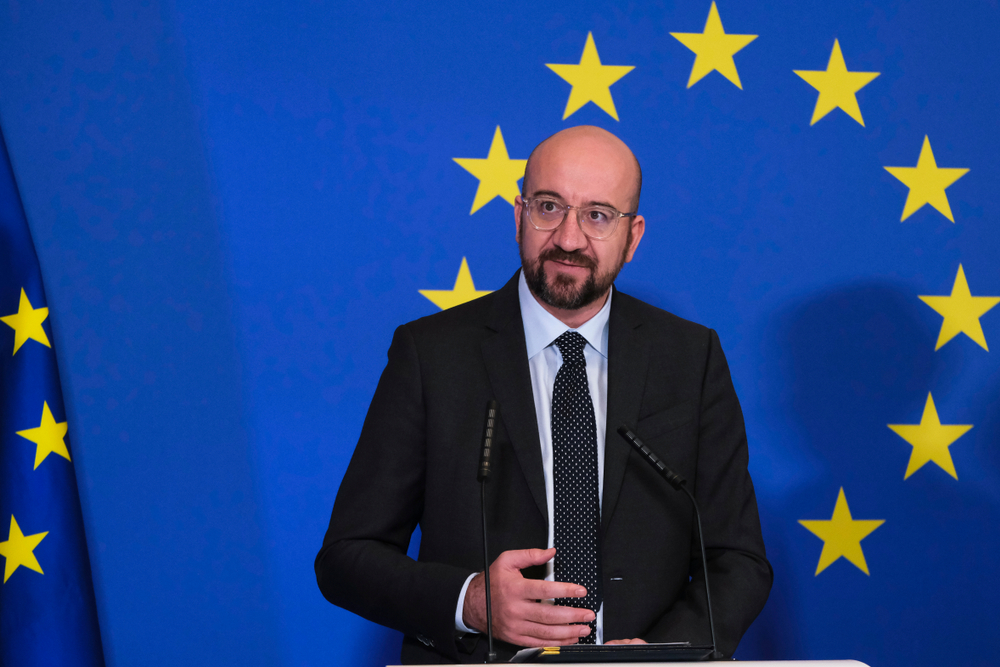
Charles Michel, President of the European Council

Video message of President Charles Michel for the Third Summit of the Crimea Platform

by Charles Michel

Dear President Zelenskyy, dear Ukrainian friends, Two years ago I represented the EU at the first international summit of the Crimea Platform. And I stated clearly that Ukraine’s territorial integrity must be fully restored. And this applied to Crimea and this applied to the region of Donetsk and Luhansk. And I stand by that today. Since Russia invaded your country, you have suffered nearly 550 days of death and destruction, and Crimea is being used as a strategic springboard to launch its brutal attacks. And last September, just like they did in Crimea, Russia tried to illegally annex Donetsk, Luhansk, Kherson and Zaporizhzhia, and this is again a cynical attempt to grab more land, to steal the identity of Ukrainian citizens, to abduct your children and to drive people from their homeland, like they are doing to the Tatars. I pay tribute to Mustafa Dzhemilev, the leader of the Crimean Tatar people, who travelled to Saudi Arabia with you, President Zelenskyy, in search of peace. Russia is perfecting the toolbox of terror and persecution that they applied in Crimea over nine long years, and they are now committing atrocities in cities and villages in the whole of Ukraine, many amounting to war crimes. The EU will continue to call for full accountability for these crimes, including for the crime of aggression, and will not recognise any illegal attempt to change the status of Ukraine’s territories, including the Autonomous Republic of Crimea and the city of Sevastopol, because respecting the sovereignty and territorial integrity of countries is a basic principle of the UN Charter and that’s why we support you, President Zelenskyy, and your peace formula based on these very principles. In Ukraine you are fighting for your freedom, you are fighting for your future and for your homeland, and in the EU we know you are also fighting for our common values. And that’s why we have imposed massive sanctions against Russia and that’s why we are supporting you with weapons and ammunition, and we will strengthen this support. We are also helping to meet your humanitarian needs, and we are determined to back your country with strong financial support. We stand with you in your fight for freedom, and we will stand with you as you rebuild your country. Our total support for Ukraine amounts to more than €76 billion. And we are preparing a multiannual financing plan of roughly €50 billion. Russia also continues to weaponise food, including by blockading and attacking your seaports. And this cruel Russian tactic hits the most vulnerable around the globe hardest. In the EU we continue to support the efforts of the United Nations and Turkey to get the Black Sea Grain Initiative back up running. And we are also strengthening our Solidarity Lanes through the EU to help get Ukrainian agricultural products to global markets. Ladies and gentlemen, this war is also a fight for your future, for your dream of a bright, democratic and more prosperous future within the EU. Last year Ukraine received EU candidate status. So your European Union future is no longer a question of if, it is a question of when. And later this year, the European Council will discuss the possibility of opening accession negotiations. And I am confident that the Ukrainian people and the leaders will rise to this historic moment. You can count on my personal support, you can count on the EU. We will stand by your side for as long as it takes. Slava Ukraini!

Defense & Security
Crimean Bridge

Crimean bridge attack is another blow to Putin’s strongman image

by Stefan Wolff

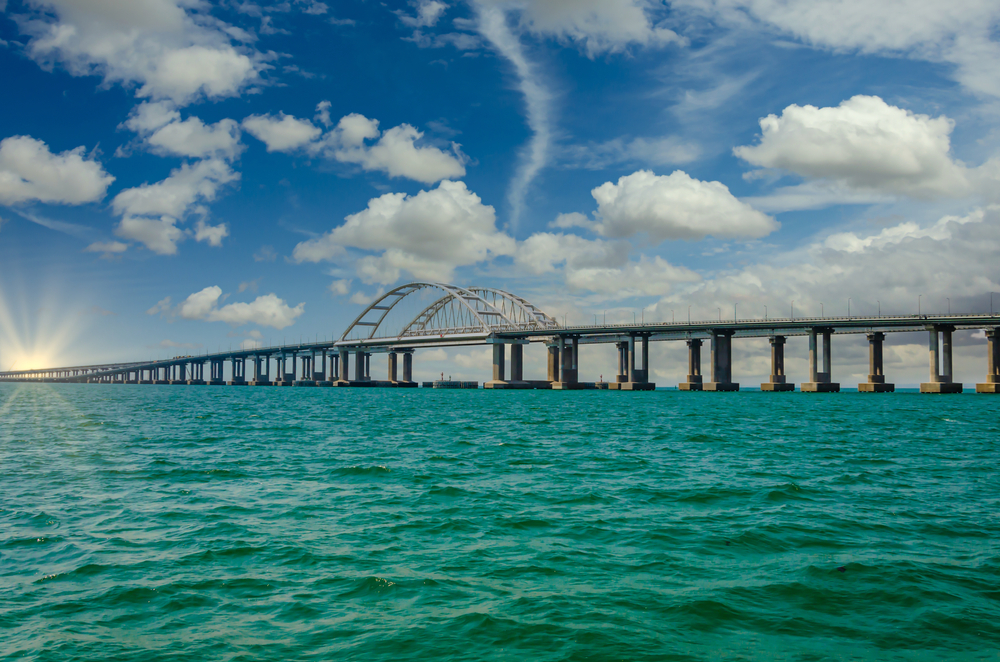
The bridge connecting mainland Russia across the Kerch strait with the illegally annexed Ukrainian peninsula of Crimea was seriously damaged on July 17 2023, in what appears to be a successful strike by naval drones.  While there has been no official confirmation from Kyiv yet, the attack on a vital Russian supply line fits well into the overall picture of the Ukrainian counteroffensive that has been under way since early June. But the strike is also hugely symbolic, demonstrating Ukraine’s ability to undermine the unlawful Russian claim to Ukrainian territory. The partial destruction of the road bridge followed unsuccessful recent attempts to strike both the bridge and Sevastopol harbour, the main base of the Russian Black Sea fleet. Monday’s attack on the bridge left its parallel railway track undamaged, but all road traffic came to a standstill. Russia is likely to be able to render the bridge operational again as it did after an earlier attack in October 2022. But these repairs will take time, as they did before, and the limited use of the bridge during peak holiday season will serve as a reminder to ordinary Russians of a war that is not without cost to them. Less than four weeks ago, Ukraine also carried out a precision missile strike against the two parallel Chonhar bridges, which provide a vital connection between Crimea and the Russian-occupied part of Kherson region on Ukraine’s mainland.Crimea’s crucial roleThese may seem symbolic strikes of little strategic significance. And on their own, they probably would be, especially as the much-anticipated Ukrainian counteroffensive has been slow in taking back Russian-occupied territory. But these strikes are part of a broader campaign to disrupt Russian supply lines, which is vital to wear down well-entrenched Russian defences across some 1,000km of front line in eastern Ukraine. Crimea plays a crucial role in this context. The links between Russia and southern Ukraine – via the Kerch strait and Chonhar bridges – are potentially vital for supplies to reach Moscow’s occupation forces in the southern Kherson region. This will especially be the case as Ukraine becomes more capable to hit rail and road connections along the so-called Crimean land bridge. Kherson and, further to the east, the Russian-occupied parts of Ukraine’s Zaporizhzhia and Donetsk regions, are critical to providing Crimea with freshwater for drinking and farming. Water is already in short supply following Russia’s destruction of the Nova Kakhovka hydro-electric dam in early June. Little wonder then that Crimea has been heavily militarised since Russia’s illegal annexation of the peninsula in March 2014 – or that Russian troops there have increasingly been threatened by different anti-Putin partisan groups. These include both Russian volunteers and indigenous Crimean Tatars who have become more active since the start of the Ukrainian counteroffensive. Similar attacks occured in August 2022 at a time when Ukraine was gearing up for a successful advance against Russian forces that were eventually driven out of the northern parts of Kherson region.Putin’s vulnerabilitiesWhat is really important in all of this is that these same Russian vulnerabilities still exist, in Crimea and in other parts of the hinterland behind the Russian defences in occupied Ukrainian territory. The strike on the Chonhar bridges on June 22 and on the Kerch strait bridge on July 17 exposes them once more for all to see. This exposure is also symbolically highly significant. The Russian president, Vladimir Putin, is trying to reassert his authority after the abortive mutiny by his erstwhile ally, Wagner boss Yevgeny Prigozhin. So the damage to Putin’s bridge across the Kerch strait further chips away at his strongman image of invincibility. And again, it matters that these attacks happened in Crimea. Of all the territories invaded and still occupied by Russia, this is the one area in which the Russian occupation was overwhelmingly welcomed. What’s more, it is also the one area that Russians are likely to care about, regardless of how detached from reality historical claims to Crimea might sound. So appearing unable to prevent Ukrainian attacks in and on Crimea also exposes a potentially significant personal vulnerability of Putin’s regime and the myths on which it is partially built. This does not mean that the Kremlin is about to lose its grip on Crimea. But Ukrainian claims that it will eventually be able to retake the peninsula, if need be by force, have just become a bit more believable. At a time when debate over how to end Russia’s war on aggression against Ukraine – at the negotiation table or on the battlefield – continues in the west, these strikes serve as a useful reminder that this is Ukraine’s war. It is ultimately decisions in Kyiv that will determine whether, where, and how it can be won.

Defense & Security
French President Emmanuel Macron giving speech at Global Fund to Fight HIV conference

French President Emmanuel Macron’s Speech in Globsec Summit in Bratislava

by Emmanuel Macron

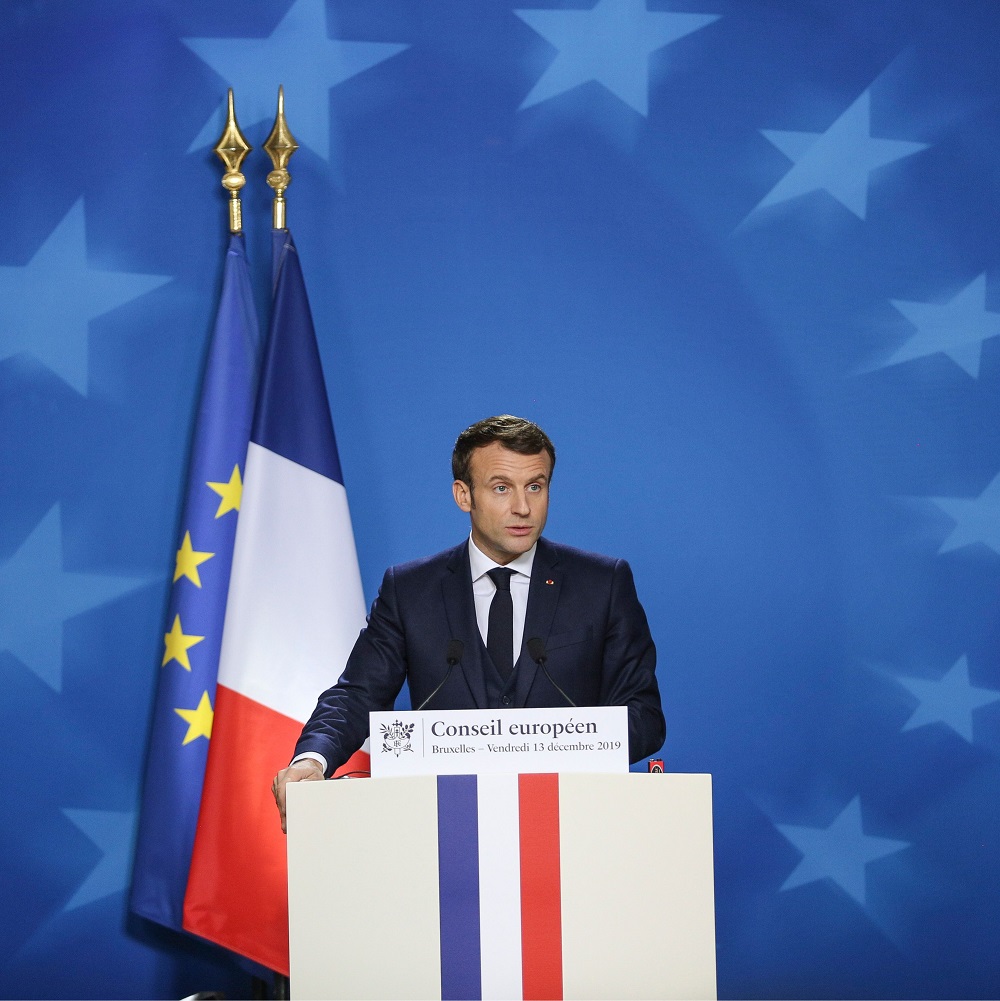
Since GLOBSEC opened its doors in 2008, many political leaders and officials have spoken at the Bratislava Forum, but unless I am mistaken, no French President. That was no doubt an anomaly. And it would be even more of an anomaly today, in the context of Russia’s war against neighbouring Ukraine when, quite simply, the future of our continent is at stake, and with much playing out in this region. This is particularly true at the cusp of a month that sums up the magnitude of our strategic challenges, with the European Political Community Summit in Chișinău tomorrow, then an important European Council meeting for the future of our Union in June, and last the NATO Summit in Vilnius. Before these milestones, I think it is worth explaining my thinking, with great freedom in the tone, when it comes to the moment which Europe is living on the geopolitical stage. Almost 20 years ago, our Union opened its gates to Slovakia and other countries freed from the Soviet grip. That was not merely an enlargement of our Union: it was the return to our family of those from whom we had been separated for too long. I do not believe there is a “Western” Europe and an “Eastern” Europe, an “old” Europe and a “new” Europe. That would mean perpetuating the artificial border imposed for decades by the Soviet Union. There is only one Europe. A single weave of intertwined histories and diversity, but with the will for geographical and geopolitical unity and to build, ultimately, a common narrative. I believe that is what unites us all behind this project, that does not erase our national identities and national projects, but rather enables us to conjugate them in an overarching narrative. Let us remember the last words of the director of the Hungarian press agency, just minutes before he was crushed by Russian artillery in November 1956: “We will die for Hungary and Europe”. The curtain was falling across our continent, and it was already our unity that was at stake. It announced decades of forced separation, decades of a “kidnapped West”, to borrow the excellent words of Milan Kundera that we can make our own today. And I would like to add, as I speak to those who are here today, that even after Slovakia and many other countries joined the Union, we did not always hear the voices you brought, calling for recognition of your painful memories and history. Some told you then that you were missing opportunities to keep quiet – but I believe we sometimes missed opportunities to listen. That time is over, and today, these voices must be all our voices. So my message is simple. In the times we are living in, we must not let the West be kidnapped a second time. We will not let Europe be kidnapped a second time. The challenges we face are considerable, with war at our borders. The war of aggression against Ukraine isultimately an extreme manifestation of a challenge to our European unity that has played out in the last fifteen years, and a show of fragility. Fifteen years of Russian attempts to overturn the whole European security architecture, to reshape it in its own terms. We all know the milestones: Vladimir Putin’s speech in Munich in 2007, the aggression against Georgia in 2008, that against Ukraine in 2014, and again against Ukraine in 2022, and the rampant transformation of Belarus into a vassal state. Ultimately, what Russia demands, and what it sought to codify in the draft treaties it brandished on the eve of its invasion just over a year ago, is the weakening and neutralization of Ukraine and, ultimately, for a whole part of Europe to be made vulnerable in return for minor and largely unverifiable commitments. In this context, it is true, we failed to provide a European response, or to organize an architecture to protect ourselves, via the OSCE or the other projects envisaged at the time, against these attacks. As for NATO’s response, it was too much or too little: perspectives offered to Ukraine and Georgia, exposing the two countries to Russia’s wrath, but which did not protect them, and which came with guarantees that were far too feeble. And we lacked coherence as Europeans. So we provided insufficient guarantees to certain countries at our borders. We did not engage with Russia in a security dialogue for ourselves. Ultimately, we delegated this dialogue to NATO, which was probably not the best means to succeed. And at the same time, we did not break free of dependencies on Russia, particularly for energy, and indeed we even continued to increase them. So we must be clear-sighted about ourselves. We were not coherent in our approach. In coming here, I am aware of the experience many of you had during the Soviet period, and I know why everyone is determined, for good reasons, to ensure that does not happen again. That is my commitment too. Every country has the right to choose its alliances, and opting for freedom, democracy and transparency is never a threat to one’s neighbours. And as I saw powerfully, with the major G7 partners in Japan a few days ago, the foundation of the Charter of the United Nations remains sovereign equality: it has never been limited sovereignty. And it is in this respect too that what is happening in Ukraine today is not merely a European issue, but an issue for the international order and global peace. What the war in Ukraine shows is not merely that these attempts to subjugate part of Europe are illegal and unacceptable, but also that, in the harsh light of power balances, they are now unrealistic. In Kyiv, in Kharkiv and in Kherson, whole Russian armies have retreated, before being squandered in Bakhmut and elsewhere for the slightest of gains. The war is far from over, but I believe I can say today that one thing is clear: Ukraine will not be conquered. And now what was, a little over a years ago, a “special operation”, has led to date to a geopolitical failure and to the accession of Finland and soon, I hope, Sweden, to NATO. And so a closure of Russia’s access to the Baltic, and also heightened distrust among all neighbours, as well as a loss of standing for Russia in the concert of nations due to failure to respect the Charter. The situation on the ground gives Russia no credibility to seek by threat what already no right could justify. There is no place in Europe for imperial fantasies. It is very important to recognize that, and that is a precondition, in my eyes, for any future organization of peace. How we got here says several things about us. We must remember them as we seek to build the future. The first is the strength of our alliance: from the very first days of the fighting, NATO ensured the security of its borders most effectively. Article V played its full role, and I am convinced it holds Russia at bay, and in this respect we owe gratitude to our American allies who have provided a major share of material and intelligence support to Ukraine. In December 2019, I made a severe comment about NATO, highlighting the divisions that, at the time, as you will recall, were present within it between Turkey and several other powers, describing it as “brain dead”. I dare say today that Vladimir Putin has jolted it back with the worst of electroshock. The second thing that strikes me is the exemplary role of the European Union, too. We have been united, swift and clear and I believe that very few, starting with Russia, expected the European Union to respond in such a way: €67 billion in total, including €14 billion in military aid, sanctions and emergency assistance, as well as taking in millions of refugees. We completely and profoundly reorganized our energy system, which was highly dependent on Russia, in just a few months. And that was a demonstration of unity and strategic clarification. It happened under constraint, and should have been done sooner, but we must be satisfied. I also welcome the adoption of a clear doctrine. Europe has chosen strategic autonomy and European sovereignty. And the Versailles Agenda that we defined in March 2022 is ultimately a long way from what people described five years ago as a French whim when I talked of European sovereignty at the Sorbonne. So I believe the second thing that we should take away from recent months, in addition to the strength of the alliance, is the unity and the ideological clarification of our European Union, and its clarity in terms of military, humanitarian and economic support to Ukraine. France has played its full role in this respect, and I can discuss this further during question time. I will also come back to the subject in the coming weeks and months. However, this collective effort will be for nothing if it is not sustained. Looking forward now, in light of what I just said, and of analysis of the past and the situation in recent months, I would like to imagine our future. Moscow must certainly be very tempted to hope that, where its armies have failed, time will come to the rescue, perhaps when elections are held or as public opinion fatigues. I think we need to be very clear about what we have to do in the short and medium terms. Today, we need to help Ukraine, by every means, to conduct an effective counteroffensive. That is essential. That is what we are doing, and we need to step up our efforts, as what is at stake in the coming months is the very possibility of chosen and therefore lasting peace. The second thing is that we need to be very clear about what we call peace. Peace in Ukraine and on our continent cannot mean a ceasefire that enshrines the current situation, re-creating a frozen conflict and, if you will, accepting the seizure of territory in violation of all the principles of international law. Because ultimately, such a frozen conflict would definitely be the war of tomorrow or the day after, and would weaken us all. Only one peace is possible: a peace that respects international law and is chosen by the victims of the aggression: the Ukrainian people. That is a peace that can last and that therefore respects these balances, bolstered by, and I will come back to this, credible guarantees. And so we need to prepare very clear-sightedly for this conflict and I will come back to this, credible guarantees. And so we need to prepare very clear-sightedly for this conflict to last, and for the consequences of the conflict to last. I hope the coming months will enable us, following a victorious counteroffensive, to bring everybody back to the negotiating table and build lasting peace, under the conditions I just set out, chosen by Ukraine and in accordance with international law. But we will have years and years of reconstruction and a humanitarian situation to manage, as we know already. We must also, to be credible in Russia’s eyes, put ourselves in a position, ourselves and our public opinions, to support Ukraine longer-term in a high- and medium-intensity conflict. That means working with all our partners to review and re-analyse this summer the very nature of our support and what is needed to achieve the result I have described. At the same time, we need to convince the global South, because there is, in the context I have discussed, a fragility that we must be clear about. It is that today, while thanks to the engagement of Japan and a few others, this is not simply a Western war, many emerging powers consider that it is not their war. Even if they recognize that it is an aggression and contrary to the Charter of the United Nations, they barely murmur it, because they consider that their main problems are fighting poverty within their borders, that they are subject to enough constraints already, that there are double standards, that their own security is not addressed, that they are facing the consequences of this war head-on, and that when their own security was threatened, we did not respond with the same vigour. We must heed that message. Otherwise, the risk is that all these countries will be seized upon by others to build an alternative international order and become, by choice, clear-sightedly or in fact, by composition, objective allies of a sort of Russian way. And so we must absolutely, as we make efforts to support the preparation of lasting peace, do this work to convince the countries of the South and several emerging countries, and thus re-engage in the assistance that we have a duty to provide them in the clarification of our agenda. Now that I have said all that, let us look at our future. The question we face is ultimately what future is possible for our Europe, in the long term, and how our Europe can rebuild lasting stability, peace and security for itself. We have responded very well in the short term, thanks to the commitment of States. NATO has shown its credibility on its Eastern Flank, and the European Union through its efforts. But is that enough in the long term? Today, we should be pleased to have an American Administration that has stood with us, that has made as many efforts as the Europeans, and that very clearly increases our collective credibility. We should be grateful and thankful to the United States of America. Will that Administration always be the same? Nobody can tell, and we cannot delegate our collective security and our stability to the choices of American voters in the coming years. At the same time, the Americans have been asking us for years, each successive Administration, to better share the burden and to make greater efforts for our security and our neighbourhood. And so yes, a Europe of Defence, a European pillar within NATO, is essential. That is the only way to be credible for ourselves, to be credible in the long term, to reduce our dependency and to shoulder our legitimate share of the burden. Because, whether we like it or not, our geography will not change. We will live in the same place, and Russia will remain Russia, with the same borders and the same geography. We need to build a space that, tomorrow, must be this space of lasting peace, because the rights of the Ukrainian people will have been respected and international law will have been restored. That space must allow us to cohabit as peacefully as possible with Russia – but with no naivety. I repeat, this project is not one of naivety with regard to Russia – I have never had such naivety – but it is aboutbnot denying geography and not considering that we should make our choices as if there was an ocean between Russia and us. And my goal is in no case to try to replace NATO with something else. I want to debunk all these ideas here because I know how they can be repeated and distorted. I do not want to replace NATO with a sort of Franco-German condominium. No. I believe that it is a broad, powerful Europe, with countries like yours, like Poland and many others, that need to play their role in this Europe of Defence, a Europe that increasingly ensures its own security and addresses its own neighbourhood issues. To do so, we now, urgently, need to speed up our strategic choices and the implementation of what we have started to decide. And that agenda is part of what we must build for this common destiny. Firstly, we need to forge a more sovereign European capacity when it comes to energy, technology and military capabilities. That is part of the Versailles Agenda we launched in March 2022. We now need to swiftly, and very tangibly, implement that agenda: meaning we should increasingly build European, buy European and innovate European. When it comes to military capabilities, that also requires a national effort that we have to make. France did not wait for this war. We stepped up our efforts with the military programming law in my first term and we are currently increasing it by €100 billion compared to the previous period, to reach a total of €413 billion under the current draft law. Alongside the prospect of reaching 2% of GDP, we also need to achieve tangible goals, with deployments and real capabilities to ensure the credibility of this collective effort, as France did a few days after Russia’s aggression against Ukraine by deploying forces to Romania. Less than eight days later, we had hundreds of soldiers in Romania. This is about the credibility of a European Defence within NATO. later, we had hundreds of soldiers in Romania. This is about the credibility of a European Defence within NATO. But a sovereign choice is needed, with capabilities, expenditure and deployment mechanisms. This strategic autonomy and military sovereignty also requires an industrial effort. We have clearly understood, in recent months, while emptying our arsenals, that we own with certainty only what we produce. We must learn lessons from this and act accordingly. And when I see certain countries increase their defence spending to massively buy non-European, I simply say: “you are creating yourselves your own problems for the future”. We need to use this opportunity to produce more in Europe. We have been inventive together, creating something new concerning ammunition, a great progress in support of Ukraine. We need to go much further. We need to harmonize our European standards, because there is too much competition between us. There are far more different standards between Europeans than there are within the United States of America. But in doing so, we must develop a genuinely European defence technological and industrial base in all interested countries, and deploy fully sovereign equipment at European level. We need to reduce our dependence and we need to continue building strategic proximity in this collective effort. I have in mind, of course, the European Intervention Initiative we launched five years ago, and that is still every bit as relevant today. Several of you accompanied us in fighting terrorism in Africa, showing that solidarity is two-way, and for that we are grateful. Even if the French presence in Africa is changing, the need to continue to be engaged together remains. And therefore we need to explore possibilities for cooperation in all these spaces and build capacity among Europeans by building on NATO’s interoperability, yet going beyond that, knowing how to engage together common action forces in new theatres of operation in our neighbourhoods, but also in cyber space, in space, in maritime areas, etc. More broadly, as you can see, this first pillar is, ultimately, to strengthen our military sovereignty. This means that we must take a look at the situation in which we live. It is up to us, as Europeans, in the future, to have our own capacity to defend ourselves and to deal with our neighbourhood. And in this regard, let’s not only focus on capabilities to manage past or current wars or to manage conflicts that are simply those that are emerging today. Dealing with our neighbourhood does not concern our Eastern Flank alone. It also concerns the Mediterranean, the Eastern Mediterranean and Southern Mediterranean regions, and new spaces of conflict including cyber space, space and maritime areas. They are at least as important as land wars on our continent that we have seen re-emerge because of Russian aggression and that we thought were disappearing, but that do not dispel the new forms of conflict that will grow in number. Therefore, let us have this strategic lucidity to prepare future conflicts that are bound to happen. In addition to this focus on sovereignty that is therefore European, technological and military, our second challenge is to see to it that Europe becomes a fully-fledged player, instead of being on the receiving end of strategic evolutions in its environment. In these last few years, I have been struck by the fact that we Europeans have not changed our status of geopolitical minority. It’s very hard for a French President to say this so bluntly. This generates irritation and annoyance. But I had the experience of going to a NATO Summit with another US Administration that liked us less, and which, with hardly any notice and in coordinating things with Europeans in a very bureaucratic way, informed us that it was withdrawing from the INF Treaty saying that “the Russians are no longer complying with it”. In 2019, we Europeans discovered a treaty that covered us against missiles that landed on our soil, and that Russian non-compliance and the US decision could leave us exposed and somehow naked, because we were not a party to it. The same thing happened when Russia methodically suspended implementation of the New Start Treaty last February, then clearly violated the NATO-Russia Founding Act in March, etc. I say this very clearly, we Europeans must be active players of these treaties that cover our security and build the future framework. If we delegate our role to others, Russia, the United States or I don’t know who, we will never be credible players. And therefore, yes, we must build these diplomatic solutions for the future.  To do so, we must first fully control arms, which refers back to what I was saying about our industrial lucidity. Europe was absent from treaties such as the Intermediate-Range Nuclear Forces Treaty and the New Start Treaty, despite the fact that its security was at stake. Therefore, it must now weigh in. And it will have much more credibility if it is a player, and not a spectator, in these balances. That is why I called on Europeans to acquire a deep-strike capability, which will bolster our security, and also give us a card to play in all future negotiations. I wish to launch discussions with the European partners that are interested in exploring cooperation in this area. The second, which is related, is air-defence. The war in Ukraine has shown its vital importance. It’s a strategic issue before being an industrial issue , but very clearly, it must build on a balance of offense and defense. It should clearly take nuclear deterrence into account. That is why, as I have pledged in Munich,  a conference will be held on this issue on 19 June in Paris. I invite all defence ministers of the European countries represented here today to attend. It will give us an opportunity to pursue our work. The third, more broadly, is the way in which Europe can secure its environment. We must build these new treaties as fully-fledged players around the table. And in doing so, let us be very clear, the issue of security with our neighbours will be raised. We will undoubtedly discuss this again during question time. But securing our environment is a key component of this credibility and of a Europe with a full role. We should provide Ukraine with solid security guarantees to put an end to repeated destabilizing actions. If Russia wants to continue destabilizing Europe, it must be ready to pay the geopolitical price. I have listened to all of our debates, but we would be strange geopolitical players if we were to say “we are massively arming Ukraine, but we do not want to include it in any strategic security debates.” I was reading something Henry Kissinger said recently, who we all know is not the least experienced diplomat. He was right when he said: In a year, all those who, with good reason, have helped Ukraine, have made it such a powerful player that it would be best to bring it back into these existing security architectures. I tend to share this vision. Therefore, if we want credible lasting peace, if we want to have influence with respect to Russia, and if we want to be credible vis-à-vis Ukrainians, we must give Ukraine the means to prevent any additional aggression and we must include Ukraine, in a structure, in a credible security architecture, including for ourselves. That is why I am in favour – and this will be the subject of collective discussions in the coming weeks ahead of the Vilnius Summit – of providing tangible security guarantees to Ukraine, for two reasons: Ukraine today is protecting Europe and provides security guarantees to Europe. The second reason is that Ukraine is now armed to such a point that it is in our interest for it to have credible security guarantees with us in a multilateral framework, with multilateral support or bilateral support. This is what we will discuss. We must today be much more ambitious than we sometimes are in discussions on this topic. Over the medium term, it is clearly our Europe’s stability and security that we will need to build on the basis of this solid peace in Ukraine, of these security guarantees in our neighbourhood – and tomorrow the question of Belarus and others will be raised – and of a transparent framework of trust making it possible to avoid the escalation of capabilities in the future to exit, at some point, this state of war when peace will be negotiated and stable. Yet we have armed our Eastern Flank so much and Russia has deployed so many arms that we will have to rebuild - I am talking here about the medium term - a framework for de-escalation. But it will be up to Europeans at that time to really build it in a transparent framework in which we must be players of these treaties, we must be around the table in order to negotiate, and around the table in order to determine their effective compliance and their evolution, as opposed to what has been done in the past. That is why, within this framework, we must also think of a wider Europe and I will end my remarks with these points. This Europe is one that I wanted to propose just over a year ago in Strasbourg, that of a European Political Community. Why? Because we need to consider our Europe, not only from a security standpoint, within the framework of NATO, and not simply within the framework of the European Union. That is why the European Political Community does not compete with NATO, nor does it replace enlargement. It is a framework for strategic discussion needed by all countries to build, I hope, an innovative and new institutional architecture, regarding energy and interconnection, mobility, security, strategy, and coming up with common solutions without waiting for enlargement to be completed and without merely taking a NATO-based approach. We will pursue this at Chișinău and we will express our willingness to go as far as possible in this format where cool-headed discussions can be held and topics of common interest can emerge. Among other topics, I will have an opportunity to propose the extension of the European Cyber Reserve to include all EPC countries because it is in our interest to be inclusive in order to safeguard our security. In this regard, the European Political Community is a geopolitical lab, if you will, and we need to continue down this path. But as I have said, it does not replace enlargement. For us, the question is not whether we should enlarge – we answered that question a year ago – nor when we should enlarge – for me, as swiftly as possible – but rather how we should do it. Several of you may remember that France advocated a change in the enlargement method in 2018. However, ultimately the war in Ukraine and today’s worsening situation in several areas of the Western Balkans have shown us one thing, which is that our current method is not working. Yet I believe there are two mistakes we should avoid making. The first is to tell ourselves that the situation is worsening, stay as we are, and give hope to Western Balkans, Ukraine and Moldova, and then procrastinate. We are very familiar with this tactic, we’ve been using it for a long time. If we do this, I think that we would actually give more space to those who want to destabilize Europe and I think that we would wake up in a few years to a situation that is considerably worse. A second mistake would be to say “let’s enlarge, it’s our duty and in our geopolitical interest, I think we need to anchor Moldova, Ukraine and the Western Balkans to our Europe. Let’s do it. We’ll reform later”. This would also be disastrous because it would create a powerless Europe, burdened at times by heavy bureaucratic procedures, slow, and with divergent trajectories. You can clearly see that in Europe there are ultimately two deep forces. They are both respectable. One that says: we need more geopolitical unity, to anchor the Western Balkans, Moldova and Ukraine to this Europe. It needs to be united. It needs to think of itself in this space in terms of security, geopolitics, energy and migration. On the other side, we have had a preview, but we need to coordinate economic policies to a greater extent, have more requirements regarding the rule of law and it creates a somewhat centrality that some States do not always accept. We need to think about this paradox, which is that our European Union was not designed to be enlarged at will. It was designed to always be deepened and to move towards a more integrated project. We need – due to the times in which we are living and the fact that everything is happening at the same time to a certain extent – but that’s how it goes – a very great moment of theoretical and geopolitical clarification of our European Union. Yes, it should be enlarged. Yes, it should be rethought very extensively with regard to its governance and its aims. Yes, it should innovate, undoubtedly to invent several formats and clarify each of their aims. It is the only way to meet the legitimate expectation of the Western Balkans, Moldova and Ukraine, which should become part of the European Union, and to maintain effectiveness in the geopolitical field, but also with regard to the climate, rule of law, and the economic integration the EU is now experiencing. And therefore, we need to re-articulate and rethink the balance of intergovernmental versus communitarian, and also understand what happens in Member States when they no longer understand Europe and the path that it is taking now and for the time being. And we will be working on this with several of our partners in thecoming weeks. I have already spoken too long. Please accept my apologies. These were the points I wanted to discuss. And therefore, as you have understood, our ability to build a just and lasting peace in Ukraine without any weakness is at stake, along with the future of our continent. I truly believe this will happen in the months and the two or three years ahead. Not much more. I believe Europe has experienced a conceptual and strategic awakening. But is must learn all the possible lessons from the past for itself and its neighbourhood. In this context, I think you’ve understood that is why I’m here. You can count on France. France is sometimes seen as being arrogant or faraway from or not interested in this part of Europe. As for me, I visited every EU Member State during my first term in office. Every one, because I considered that the European Union is not just Brussels, but all the capitals. It is this constantly plural dialogue and the absence of hegemony. But you can count on France over the long term. I also know that France can count on you so that we can together build a Europe that is stronger, more sovereign and more capable of ensuring its own security. And this cannot be done with just one, two or three countries. We will do it with all 27 and even more, by including in this strategic debate all those who will join us tomorrow in Chișinău, in this capacity to have frank, open, far-reaching, powerful, ambitious dialogue, by accepting our differences, respecting them and clearly setting out our aims. Ultimately, let us recognize together that our Europe must be a great democratic, diverse, but united power. Thank you very much

Defense & Security
Depicted pictures Vladimir Putin and Yevgeny Prigozhin with shadowed faces

How “Putin’s chef” undermined the Kremlin’s case for invading Ukraine

by Ani Mejlumyan , Nika Aleksejeva

In a June 23 video released on one of Yevgeny Prigozhin’s Telegram channels the morning he launched his mutiny, the Wagner founder undermined core false narratives Russian President Vladimir Putin used to justify launching his war of aggression against Ukraine in February 2022. While the impact of Prigozhin’s remarks remains to be seen, they serve as evidence of how Putin attempted to deceive domestic audiences and the international community, both of which may come with long-term consequences for the Russian president.  The Kremlin and its proxies spent the years and months leading up to the invasion attempting to paint Ukraine as the aggressor. As the DFRLab outlined in Narrative Warfare: How the Kremlin and Russian news outlets justified a war of aggression against Ukraine, Putin and his pro-Kremlin media proxies employed false and misleading narratives to justify military action against Ukraine, mask the Kremlin’s operational planning, and deny any responsibility for the coming war. “Collectively, these narratives served as Vladimir Putin’s casus belli to engage in a war of aggression against Ukraine,” the report noted. Over the course of the thirty-minute video, Prigozhin criticized Russian military leadership under Defense Minister Sergei Shoigu and Chief of the General Staff Gennady Gerasimov, castigating the reasons given to justify the war and dismissing them as false. In challenging core pre-war Kremlin narratives, Prigozhin simultaneously undermined multiple arguments cited directly by Putin during his public address on February 24, 2022, when he announced the start of the invasion. Prigozhin’s remarks represent the most consequential debunking of the Kremlin’s case for war by a high-profile Russian power player and Putin confidant. Since the start of the war, the Kremlin has cracked down on dissent by criminalizing criticism of the military, restricting access to social media platforms, and forcing independent media to either cease operations or flee the country. In doing so, Kremlin pro-war narratives dominate Russia’s entire domestic information ecosystem. And just as Prigozhin’s mutiny exposed the regime’s weaknesses for the entire Russian public to see, his pre-mutiny takedown of the Kremlin’s justifications for war exposed how Putin and his proxies wove together a web of falsehoods to initiate the invasion. Background As part of our previous research for the Narrative Warfare report, the DFRLab analyzed hundreds of debunked claims made during the 2014-2021 interwar period, as well as more than 10,000 instances of pro-Kremlin and anti-Ukrainian narratives appearing in Russian media during the ten weeks preceding the invasion. We then documented how these narratives formed the backbone of Putin’s false justifications for war during his public remarks on February 24, 2022, when he announced the launch of Russia’s so-called “special military operation” against Ukraine. At the heart of the speech, Putin relied on false and misleading narrative tropes prominently featured in the weeks and months prior to the invasion, some of them dating to his 2014 of Ukraine. While maintaining the position that Russia seeks peace, for example, Putin also emphasized that Russia had a moral obligation to do something about security in the region. Putin also embraced multiple false narratives and tropes about Ukraine being the aggressor, including accusations that the country is run by Nazis, that Ukraine intends to commit genocide against Russian speakers, and that it plans to use weapons of mass destruction against Russia and the breakaway regions. Lastly, he used these opportunities to blame the West for whatever would happen next, arguing that Ukraine is a puppet of the West, which wants to create tensions in the region. Putin’s February 2022 speech was specifically crafted to make his false case for war. In just over thirty minutes on June 2023, Yevgeny Prigozhin – one of Putin’s closest, longtime confidants in security and propaganda efforts – successfully undermined Putin’s core arguments for his war against Ukraine. Questioning Ukraine’s “aggression” In his February 2022 speech, Putin highlighted the need to save Russians in Ukraine before Ukraine could commit “genocide” against them. “It became impossible to tolerate it,” Putin stated at the time. “We had to stop that atrocity, that genocide of the millions of people who live there and who pinned their hopes on Russia, on all of us.” He then added, “If we look at the sequence of events and the incoming reports, the showdown between Russia and these forces cannot be avoided. It is only a matter of time. They [NATO] are getting ready and waiting for the right moment. Moreover, they went as far as aspire to acquire nuclear weapons. We will not let this happen.” Prigozhin’s June 23 remarks undercut Putin’s claims that there had been any imminent threat to Russians, let alone genocide. “All these long eight years, from 2014 to 2022, sometimes the number of various skirmishes increased,” Prigozhin said. “Roughly speaking, the exchange of ammunition, the exchange of shots, sometimes decreased. On February 24, there was nothing out of the ordinary. Now the Ministry of Defense is trying to deceive the public, is trying to deceive the president, and tell the story that there was insane aggression on the part of Ukraine, and they were going to attack us together with the entire NATO bloc. Therefore, the so-called special operation, on February 24, was launched for completely different reasons.” [emphasis added by the DFRLab] Notably, Prigozhin described the war as a profit-making enterprise that would enrich Kremlin elites rather than residents of the Donbas, the region of eastern Ukraine comprising Donetsk and Luhansk. “Today, a decision is already being made when it will be launched,” he said, describing the events of February 2022. “And how the hell will it be launched? Who will it get to own it, who will profit on it? It’s a 100% chance that it won’t be the people of Donbas – 100%. There will be new owners immediately who will then cut these grandmothers.” Prigozhin alleges Kremlin regime change plan As part of Putin’s February 2022 explanation for conducting a “special military operation,” he insisted that its goals were limited in scope. “It is not our plan to occupy the Ukrainian territory,” he insisted. “We do not intend to impose anything on anyone by force.” Prigozhin contradicted this as well, insisting the Kremlin planned to decapitate Ukraine’s democratically-elected leadership and replace it with a Russian figurehead – specifically, former Ukrainian MP Viktor Medvedchuk, a well-known Kremlin supporter who would later be arrested by Ukraine and exchanged for prisoners-of-war held by Russia. “So the second most important task of the operation was the appointment of Medvedchuk,” Prigozhin argued. “The same Medvedchuk who had already made his way to Kyiv in advance, sat and waited for the troops to arrive. Zelenskyy would run away, everyone would lay down their arms, and he would become the president of this Ukraine.” Denazification as a red herring Throughout Putin’s February 24 address, he referred to Ukrainians as “Nazis,” and invoked Russian patriotism by discussing the former Soviet Union’s role in defeating Nazi Germany. “The country stopped the enemy and went on to defeat it, but this came at a tremendous cost,” Putin recounted. “The attempt to appease the aggressor ahead of the Great Patriotic War proved to be a mistake which came at a high cost for our people.” He added, “The outcomes of World War II and the sacrifices our people had to make to defeat Nazism are sacred.” Soviet forces successfully captured Berlin in the spring of 1945 as its US and British allies closed in from the west. Ukraine, then part of the Soviet Union, was among the first Soviet states invaded by Nazi Germany, and Ukrainians played a key role in the Soviet counteroffensive to defeat Germany. Millions of Ukrainians died in the war, including nearly one million Ukrainian Jews; President Volodymyr Zelenskyy, who is Jewish, was among those who lost family during the Holocaust. When discussing the present situation in Ukraine, though, Putin insisted that “leading NATO countries are supporting far-right nationalists and neo-Nazis in Ukraine.” “They will undoubtedly try to bring war to Crimea just as they have done in the Donbas, to kill innocent people just as members of the punitive units of Ukrainian nationalists and Hitler’s accomplices did during the Great Patriotic War,” he continued. “They have also openly laid claim to several other Russian regions. “The purpose of this operation is to protect people who, for eight years now, have been facing humiliation and genocide perpetrated by the Kyiv regime. To this end, we will seek to demilitarize and denazify Ukraine, as well as bring to trial those who perpetrated numerous bloody crimes against civilians, including against citizens of the Russian Federation.” Again invoking Russian patriotism, Putin added, “Comrade officers: Your fathers, grandfathers and great-grandfathers did not fight the Nazi occupiers and did not defend our common Motherland to allow today’s neo-Nazis to seize power in Ukraine. You swore the oath of allegiance to the Ukrainian people and not to the junta, the people’s adversary which is plundering Ukraine and humiliating the Ukrainian people.” Prigozhin, in contrast, insisted that the purpose of the invasion was to assimilate Russian-speaking Ukrainians into the Russian Federation rather than to defeat Nazis. “The war was not needed to return Russian citizens to our bosom, and not in order to demilitarize and denazify Ukraine.” Denying the existence of Ukrainians Not all of Prigozhin’s remarks ran counter to Putin. While attempting to make the point that a negotiated settlement with Ukraine remained a possibility prior to the invasion, Prigozhin reinforced Putin’s long-standing position that Ukrainians do not exist as their own ethnic entity and are actually Russians, both culturally and genetically. “All [the Kremlin] had to do was get down from Olympus: go and negotiate, because the whole of Eastern Ukraine is inhabited by people who are genetically Russian,” he said. “And what is happening today, we’re seeing these genetic Russians being killed.” Putin reinforced this idea in his February 2022 speech when he argued that Ukrainian aggression was tantamount to genocide against Russians living in the Donbas. As previously noted, Putin said, “It became impossible to tolerate it,” he said. We had to stop that atrocity, that genocide of the millions of people who live there and who pinned their hopes on Russia, on all of us.” Later in the speech when he declared the launch of his “special military operation,” he added, “The purpose of this operation is to protect people who, for eight years now, have been facing humiliation and genocide perpetrated by the Kyiv regime.” In this sense, Putin and Prighozin share the false assertion that Ukraine was perpetrating genocide against Russians, while simultaneously denying Ukrainian identity. The Convention on the Prevention and Punishment of the Crime of Genocide describes genocide as “a crime committed with the intent to destroy a national, ethnic, racial or religious group, in whole or in part,” which is very much reflected in Putin and Prigozhin’s beliefs that Ukrainians are genetically Russian and should be assimilated by force. Criticizing Russia’s military capabilities Putin’s February 24 speech also claimed that Russia’s armed forces could defeat any aggressor. “As for military affairs, even after the dissolution of the USSR and losing a considerable part of its capabilities, today’s Russia remains one of the most powerful nuclear states,” Putin said. “Moreover, it has a certain advantage in several cutting-edge weapons. In this context, there should be no doubt for anyone that any potential aggressor will face defeat and ominous consequences should it directly attack our country.” Prigozhin undermined these claims when he said the Russian army wasn’t combat-ready and the soldiers weren’t given proper weapons, preventing them to fight more aggressively. “The army did nothing since 2012,” he insisted. “Each conscript was given three rounds of ammunition. Like during the best Soviet times. Although this was not the case in Soviet times either. They weren’t in combat training. They are not trained on various types of weapons, especially modern ones. And so, in Russia the army was in such a flawed state that it could not conduct any large-scale military operations.” Short-term mutiny, long-term consequences Prigozhin’s June 23 video kicked off what would prove to be a two-day mutiny against the Russian government. A deal negotiated by Belarusian President Alyaksandr Lukashenka helped de-escalate the crisis, but the mutiny exposed the weaknesses in not only the organization of Russia’s war of aggression against Ukraine but also the Russian state itself. We expect to see increased fractionalization among Russian leaders as they position themselves with the public through propaganda and other means while buttressing themselves within the Kremlin hierarchy. When Yevgeny Prigozhin put his Wagner mutiny into motion, he repeatedly stated that the object of his revolt was to hold Russia’s military establishment accountable for its failures in Ukraine. But by blaming the Russian Ministry of Defense for everything that has gone wrong for Russia in Ukraine, including its premise for prosecuting the war, he simultaneously exposed enormous cracks in Putin’s public arguments for going to war in the first place. Given his prominence, his closeness with Putin, and his role in the military operation, Prighozin’s words debunking the Kremlin case for war will be important to long-term efforts to hold Putin and the regime accountable for its war of aggression and other crimes conducted against Ukraine. As we noted in Narrative Warfare, documenting the Kremlin’s use of false narratives prior to the war could serve as evidence for proving the crime of aggression: First, Kremlin disinformation published in the leadup to the invasion may be evidence of planning or preparing for an act of aggression. This includes many of the false and misleading narratives documented in this report: claims of Ukraine’s alleged planned chemical-weapons attacks, the shelling of the kindergarten, sabotage of chlorine tanks, development of nuclear weapons, and genocidal acts against Russians in the Donbas. These and other narratives by Kremlin and Donbas officials in the days and weeks leading up to the invasion were used to create a pretext for the invasion, thus making them part of the planning that went into the invasion. Second, disinformation narratives that started prior to the invasion and continued afterward may be evidence that Russian or Donbas officials knew the invasion was inconsistent with the UN Charter and constituted a “manifest violation” of it. For example, if officials believed the invasion was legally justified, there would be no need to create a pretext for it. The fact that they created a pretext for the invasion could help prosecutors prove that they were aware a pretext was needed. No doubt, Russian and Donbas officials would argue that they did not create a pretext and the information they published was accurate, or that they believed it to be accurate. This argument would, therefore, require establishing that officials knew their public claims to be false but published them anyway.For weeks, months, and even years prior to the invasion, Putin, the Kremlin, and their proxies telegraphed an array of narratives to justify it, deny responsibility for it, and mask their hostile intentions. If subsequent investigations establish that these officials knew these narratives to be inaccurate, the deployment of disinformation narratives could serve as evidence of knowledge that the invasion was a manifest violation of the UN Charter. Whether intentional or not, the most lasting impact of Prigozhin’s insurrection was the admonition of the Kremlin’s false premise for war. His remarks on June 23 may very well become a piece of the puzzle for investigators that seek to hold Putin accountable. 

Defense & Security
Polish Army's Leopard 2A5 and 2PL and Rosomak IFV at International Defence Industry Exhibition in Kielce, Poland

The impact of the war in Ukraine on Polish arms industrial policy

by Lorenzo Scarazzato , Anastasia Cucino

One of the many knock-on impacts of Russia’s war against Ukraine has been a surge in demand for military equipment and ammunition in Europe. Poland is one of several Central European countries whose arms industries have seen a marked increase in orders: from their national governments, from European allies buying materiel to give to Ukraine and to replenish their own stockpiles, and from Ukraine itself. Since February 2022, Poland has been among the top suppliers of major arms to Ukraine, not least because it held stocks of Soviet-era equipment that Ukraine’s armed forces still relied on in the first months after the invasion. Demand seems likely to remain high as, on top of the orders already placed, many European states have pledged to increase military spending in response to a heightened perceived threat from Russia. This blog looks at how Poland, which has the biggest domestic arms industry in Central Europe, is using this opportunity to pursue a long-held ambition to modernize its armed forces and grow its arms industry, targeting new markets, diversifying product portfolios and finally moving beyond its post-Soviet legacy. The long road to military modernization in Poland During the cold war, many Central and East European states developed large domestic arms industries to produce Soviet-designed military equipment for the forces of the Warsaw Treaty Organization. The cold war’s end sounded the death knell for many of the region’s arms producers. Between the mid 1980s and 2000, for example, employment in Poland’s arms industry fell by 76 per cent. Nevertheless, successive Polish governments decided it would be strategic to maintain a domestic arms industry. A series of attempts to revitalize the industry during the 1990s and 2000s met with limited success. Poland’s accession to NATO in 1999 was one opportunity, given the Alliance’s military spending requirements and common equipment standards. The government tried to ensure that Polish companies were given a role in producing and servicing new NATO-standard equipment that was procured for the Polish Armed Forces. Despite this, the Polish arms industry remained a marginal player on the global stage, often still producing equipment based on Soviet-era designs. ‘Polonization’—the participation of Polish partners in the manufacture and delivery of imported weapon systems—has been a key element in Polish military modernization drives and an important criterion in evaluating bids from foreign suppliers. Not only does it provide income for Polish companies, but it also gives them access to new technologies and skills. The latest Polish military modernization programme was launched in 2020 as part of an updated National Security Strategy, largely in response to a perceived growing threat from Russia. Much like its predecessors, it aims to ‘Create conditions for the Polish defence industry . . . to meet long-term needs of the Polish Armed Forces’, while ‘strengthening operational capabilities of the Polish Armed Forces to deter and defend against security threats, with particular emphasis on enhancing the level of mobility and technical modernisation’. In 2020 it was estimated that around 60 per cent of Poland’s budget for military procurement and modernization was allocated to the domestic industry. Russia’s invasion of Ukraine in February 2022 provided new impetus and a month later the government passed the Homeland Defence Act to reorganize its national defence policy and increase military expenditure to 3 per cent of gross domestic product (GDP) in 2023. In January 2023 Prime Minister Mateusz Morawiecki announced that the course of the war in Ukraine meant Poland needed to ‘arm ourselves even faster’ and pushed the military spending target up to 4 per cent of GDP. Once again, the domestic arms industry was to play an important role in—and be a key beneficiary of—the military modernization plans. Key ‘Polonized’ procurement deals since the start of the war During 2022 the estimated share of Polish military spending dedicated to procurement jumped from 20.4 to 35.9 per cent, largely due to a flurry of new bilateral arms procurement deals. The state-owned arms industry group Polska Grupa Zbrojeniowa (PGZ), which has been the biggest actor in the Polish arms industry since a consolidation programme in 2014, has been the main beneficiary of the Polonization requirements built into these deals. In March 2022 Poland selected the United Kingdom’s Babcock as a partner to support a consortium led by PGZ in delivering new frigates to the Polish Navy. The ships will be built in Poland and Babcock will provide design specifications and transfer technologies and skills to the consortium members. Six months later, Poland signed a deal with Korea Aerospace Industries for FA-50 light attack aircraft, which will replace Poland’s Soviet-designed MiG-29s and Su-22s. The deal is worth $3 billion and includes setting up a service facility for the new aircraft, which is to be operated by PGZ. In November another contract was signed, worth $5.7 billion, for the supply of South Korean K2 main battle tanks and K9 self-propelled howitzers for the Polish Armed Forces. Some are to come from existing stock while others are to be produced by South Korean–Polish consortiums. In the same month, PGZ also signed an agreement with BAE Systems for the delivery of M88 armed recovery vehicles and armoured multi-purpose vehicles to the Polish Armed Forces. In February 2023 the Polish government placed an order with PGZ subsidiary Huta Stalowa Wola for 1400 Borsuk infantry fighting vehicles. The Borsuk is a new model developed to replace the Soviet-era BMP-1 and is to be produced in Poland based on a Korean chassis. In March South Korean producer Hyundai Rotem signed a consortium agreement with PGZ for the production of K2s in Poland. PGZ subsidiaries will also cooperate with the South Korean Hanwha Group to produce the K9s as well as K239 Chunmoo multiple-rocket launchers, which are to be integrated with trucks and other technologies produced in Poland under a $3.55 billion contract signed in November 2022. Hanwha has said it plans to increase its presence in Poland and work with local companies to develop and build a variety of military systems. In April, in what has been hailed as the ‘largest European short-range air defence acquisition programme in NATO’, the trans-European arms producer MBDA won a $2.4 billion contract to provide Poland with missiles and missile launchers to be integrated with the PGZ-produced Pilica+ air defence system. The two companies ‘continue to work towards contracting the technology transfer and Polish manufacture of the mid-tier . . . air defence programme’. Last month, Poland expressed interest in joining South Korea’s 4.5-generation KF-21 Boramae combat aircraft programme. If the partnership is given the green light, it would mean an upgrade to Poland’s air force capabilities, and PGZ would once again be involved in the industrial process. Opportunities and risks There is little doubt that the war in Ukraine has caused ripple effects across the arms industries in the whole of Europe. While for Poland helping Ukraine is a matter of national and regional security, the war is also catalysing steps to upgrade and modernize its arms industry. Poland sees an unprecedented opportunity to finally achieve its ambitions and become a more significant player in the global arms industry. The pre-1989 origins of the Polish arms industry have strongly influenced its recent fortunes, particularly in terms of products and customers. Since the end of the cold war, Poland has been trying to distance its arms industry from its Soviet legacy, for military, political and commercial reasons. However, one modernization and investment programme after another has been delayed, abandoned or simply fallen short of ambitions. While Poland is still a major importer of major arms, its approach has been to balance off-the-shelf imports to fulfil immediate needs with Polonization deals to develop domestic production capacity for the long term. Modernization and Polonization seem to currently be in full swing: contracts with major foreign companies positively impact the visibility and attractiveness of the Polish domestic arms industry, creating a self-reinforcing cycle. Coupled with increased Polish military spending and the most recent spending pledges, the current demand means the Polish arms industry’s prospects seem good for the next few years. However, basing ambitious long-term investment and modernization plans on the response to temporary, largely external events is something of a gamble. Several factors could change the prospects for Poland’s arms industry, such as a shift in governments’ spending priorities or new European policies on arms industry integration. If something like that were to happen, Poland’s ambitions for its arms industry could once again be undermined.

Defense & Security
Aleksandr Lukashenko with Vladimir Putin

Ukraine war: Russia’s threat to station nuclear warheads in Belarus – what you need to know

by Natalya Chernyshova

The threat of Russia using nuclear weapons in Ukraine is “real” and “absolutely irresponsible”, according to the US president, Joe Biden. He was reacting to questioning from journalists as to whether he believed Belarus had been taking delivery of Russian tactical nuclear weapons. If true, it’s the first time Russia has deployed nuclear warheads outside its borders since the end of the cold war. This does not immediately mean a nuclear escalation with Nato, since Russian nuclear missiles stationed in the Kaliningrad region already put Poland and the Baltic states within range. Experts are sceptical about Russia’s intentions to use these weapons in Ukraine. But the presence of tactical nuclear arms in Belarus has, nevertheless, important implications for European security. It would change the nature of the relationship between Russia and Belarus and bring Belarus deeper under Russian control. The two countries are already in what is known as a “union state” after longtime Belarus leader Alexander Lukashenko and Boris Yeltsin signed a series of treaties in the mid-1990s. These made for “deeper economic integration” and the “formation of a single economic space” as well as the coordination of foreign policy and military activities between the two countries. The “union” was relatively loose until the 2020 mass protests in Belarus pushed the desperate Lukashenko to agree to a much closer economic and military integration with Russia. The real target Noting that this is “not an escalation from Putin’s prior nuclear weapons rhetoric”, the Institute for the Study of War says this is more about increasing Moscow’s military grip over Belarus: “The Kremlin likely intends to use these requirements to further subordinate the Belarusian security sphere under Russia.” The warheads will be under Russian control. Storage facilities are reported to be under construction for completion in early July. This will require a significant Russian military presence and permanent military bases in Belarus. Belarusians do not want to have Russian nuclear weapons on their soil. Researchers from Chatham House who regularly conduct surveys in Belarus have found that 74% of respondents in their March 2023 survey objected to deployment. The rejection of nukes is even more dramatic when analysed by which media the respondents are consuming. Belarus state media beats a relentlessly pro-Moscow drum. Among those who do not consume state media between 97% and 98% are opposed. The prospect of Russian military bases is hardly more popular, with only 24% of respondents supporting it in an earlier Chatham House survey in June 2022. The idea of a single foreign policy and army with Russia was backed by a mere 9% in the March 2023 survey. This is yet another indicator of the chasm between the regime and the people, which was made evident by the 2020 protests, the largest in recent Belarusian history. Belarusians are traditionally wary of having to choose sides when it comes to political alliances. And, despite a “vote” ratifying an amendment to the country’s constitution to allow Russia to station nuclear weapons on its soil, the country is increasingly divided between those who look to Russia and those who are in favour of closer relations with western Europe. After Russia went into Ukraine, a Chatham House survey found that 47% were against the invasion, while only 33% were in favour. Another poll found 93% would not support Belarus entering the war. Fallout from Chornobyl And Belarusians also have a good reason to be strongly opposed to nuclear weapons. The memory of the Chornobyl disaster in 1986. About 70% of the radioactive fallout landed on its territory, and there is evidence that Moscow deliberately seeded clouds so that radioactive rain fell over Belarus rather than drift towards Moscow. The political fallout was slower but no less significant: over the years, Chornobyl commemorations have become an annual rallying point for anti-Lukashenko opposition. It also helped ensure that independent Belarus was the first among post-Soviet nations to abandon its Soviet nuclear arsenal. These points seem lost on Lukashenko, who has publicly declared that he will not consider the opinion of the Belarusian people about using nuclear weapons. Opposition opinions are dangerous in Belarus, and state terror against all criticism of the regime has only intensified since Russia invaded Ukraine. The number of those arrested and sentenced to lengthy prison terms has been steadily growing. As of June 21, Belarus had 1,492 political prisoners. This is just the tip of the iceberg of repression. Not only opposition activists, NGO workers, and independent journalists, but anyone who can be linked to the 2020 protests or who ever spoke out against the regime on social media is at risk of arrest. The recent UN Human Rights Office report decried “the unacceptable picture of impunity and the near-total destruction of civic space and fundamental freedoms in Belarus”, including the systematic use of unlawful detention, violence and torture. Consequences for Belarus and beyond Lukashenko is playing a dangerous game. Belarus’s economic dependence on Moscow, already heavy, has been deepened further by western sanctions and the war in Ukraine. Russia’s share in Belarus’ trade grew from 49% in 2021 to 60% in late 2022. Recently, a joint tax agreement with Russia, previously resisted by Minsk, reduced Belarusian control over taxation. According to the independent Belarusian monitoring organisation, the Hajun Project, there is no evidence that any warheads have arrived. But deploying Russian nuclear warheads would lead to Moscow’s permanent military presence. It would mean further loss of authority for Lukashenko and his generals. And worse, if Putin did decide to use tactical nuclear weapons against Ukraine, it would be an easier decision to launch them from Belarus and let them reap the whirlwind of retaliation. Consolidating his control over Belarus would be a significant strategic victory for Putin’s imperial ambitions. Preoccupied with fighting in Ukraine and lacking a clear and decisive policy on Belarus, the west has no obvious immediate response. But if Moscow follows through with its threat it would be a dangerous moment – not just for Belarus but for Europe as a whole.

Defense & Security
Undersea cables

Ukraine war: Kremlin’s threat to interfere with undersea data cables may be bluster, but must be taken seriously

by Christian Bueger

In what is more than likely to turn out to be an attempt at escalation in the confrontation between Nato and Russia over the war in Ukraine, former Russian president Dmitry Medvedev argued recently on his Telegram channel that Russia should have the right to attack submarine data cables.  Medvedev claimed such rights against the background of recent media reports on the mysterious sabotage of the Nord Stream undersea gas pipeline last year. He wrote: If we proceed from the proven complicity of western countries in blowing up the Nord Streams, then we have no constraints – even moral – left to prevent us from destroying the ocean-floor cable communications of our enemies. The question of who was behind the attacks on the pipelines in the Baltic Sea on September 26 2022, however, remains unresolved. Several reports, rumours and conspiracy theories circulate. There’s some agreement that the time, location and level of sophistication of the attack indicate the involvement or support from a government. But the speculation stretches from western special forces or Ukrainian groups being behind the attack to it being a well-orchestrated Russian operation. In the meantime, none of the official investigations have been concluded and solid evidence that could support any of the narratives remains sparse. The Swedish prosecutor leading one of the investigations announced on June 14 that he hopes to have completed the investigation by autumn. Vulnerable undersea cables For all his characteristic bluster, which have included threats involving Russia’s nuclear arsenal, Medvedev’s threat should be taken seriously. As we have shown in a report to the European parliament of last year, subsea cables are the backbone of the contemporary digital economy. Almost all of our internet connections depend on them. According to SubTelForum’s Submarine Cable Almanac as of the beginning of 2023, there were 380 cables in Europe on the ocean floor, mostly the size of a garden hose. They use fibre optic technology to convey information at large distances. Yet they are easy to cut and get damaged quite frequently. The industry reports up to 100 cable failures annually, mainly caused by fishing activities or the anchors of ships. This rarely causes serious disruptions. As already established above, there are hundreds of cables on the sea floor and in the case of failure, traffic is swiftly rerouted and a repair ship is sent on its way to fix the damage. If Russia is serious about its threats to cut cables, the main economic cost would be for repair work. Major disruptions are unlikely. There are, however, places that are more vulnerable and where the impact would be more extensive. This includes sites where several crucial cables could be attacked at the same time. These are known as “chokepoints”. For instance, several important cables surface in the port of Marseilles – and the English channel and the Red Sea have a high density of cables. Also, island states, such as Ireland, are more vulnerable because they do not have terrestrial connections as backup. So Medvedev’s threat should be taken seriously, but should not be blown out of proportion. What’s behind the threat? Once thought of as a reasonable politician, who took over as president when Putin was having his “break” from 2008 to 2012 after two terms of presidency, Medvedev has become ever more of a Kremlin stooge. His threat is a continuation of Russia’s strategy of disinformation – an attempt to distract western leaders from events in Ukraine and force security policymakers to worry about their vulnerabilities at home. Probably, this is also a message to two security events happening in the coming days and weeks and meant to increase the feeling of vulnerability and uncertainty. At the end of May, Ireland commenced a national consultative forum on security – online and on four separate days at the end of June. Ireland’s foreign minister, Micheál Martin, said the aim was to build public understanding and generate discussions on our foreign, security and defence policies. The particular focus would be on how Ireland wants to respond to the new security environment and whether to seek Nato membership. As an island with open seas, Ireland is one of the most vulnerable places in Europe in terms of potential internet cable sabotage. A bit further down the line is the Nato summit taking place in Vilnius, Lithuania, in early July. Subsea cable protection is one of the priority issues on the agenda, and the organization’s new infrastructure protection coordination cell is expected to make recommendations for how the alliance can protect cables better and deter any sabotage. But a military approach to protection on its own won’t suffice. Close collaboration between the military, civil maritime agencies, communication regulators and the industry is needed. The European Maritime Security Strategy expected to be issued by the European Council this summer will be an important step in this direction. The strategy lays out plans for risk analyses, improved surveillance and inter-agency exercises. Overall, and beyond the immediate Russian threat, the protection of critical maritime infrastructures, which also includes wind farms, power cables, hydrogen pipelines and carbon storage projects, needs to become a defining feature in the global ocean governance agenda.