Subscribe to our weekly newsletters for free

Subscribe to an email

If you want to subscribe to World & New World Newsletter, please enter
your e-mail

Energy & Economics
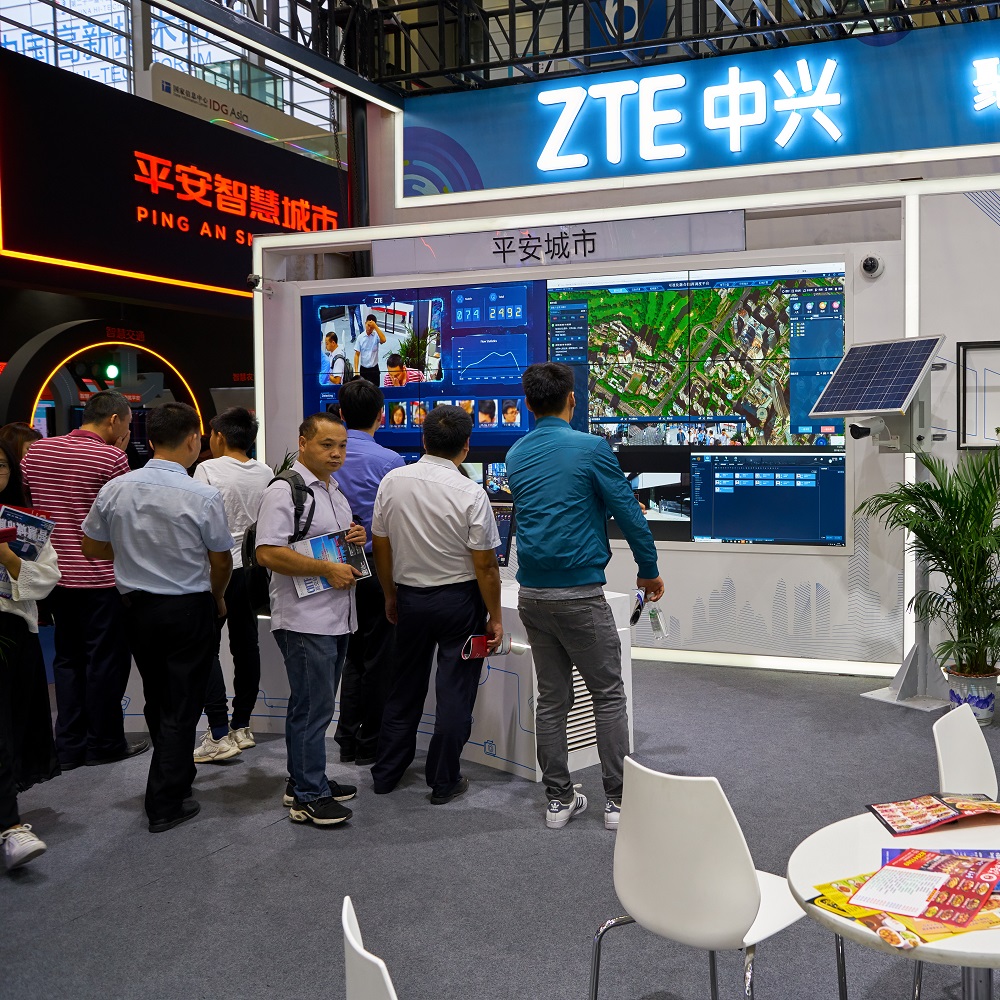
SHENZHEN, CHINA - CIRCA NOVEMBER 2019: ZTE room at the High-Tech Fair China 2019 at Shenzhen Convention & Exhibition Center.

What should Europeans do about the U.S.-China Rivalry in key strategic technologies?

by Roberta Haar , Hengyi Yang

한국어로 읽기Leer en españolIn Deutsch lesen Gap اقرأ بالعربيةLire en françaisЧитать на русском In October 2023, the EU Commission identified four technology fields as critical: advanced semiconductors; artificial intelligence (AI); quantum, and; biotechnologies.[1] All four areas are greatly impacted by the U.S.-China rivalry in technology, making it essential for Europeans to understand the Sino-American competition. This article examines this rivalry from the Chinese and U.S. perspectives. It recounts their prevailing attitudes, which are shaped by recent events, and that, in turn, mold Chinese and American strategic approaches. From the Chinese policymakers’ perspective, its geo-technological competition with the U.S. is novel and passively learned. During Xi Jinping’s first term, the Chinese government still positioned technology under the economic-oriented strategy of innovation-driven development. This stance followed the idea that ‘science and technology constitute a primary productive force’ and the ‘peaceful development’ principles set during Deng Xiaoping’s era. However, around 2018, two sanctions incidents that targeted Chinese telecommunications giants shifted Chinese leaders’ understanding of tech strategy into the geopolitical context. The first sanction incident involved ZTE, China’s second-largest communications equipment manufacturer. In 2016, the Barack Obama administration accused ZTE of selling telecom equipment containing American chip technology to Iran, which violated U.S. sanctions. In 2017, ZTE pleaded guilty and paid a fine of $1.2 billion. However, in 2018, Trump’s government stated that ZTE did not comply with the settlement agreement, coupling previous sanctions with export controls on ZTE in April 2018. The second incident involved Meng Wanzhou, then Vice-Chairwoman and CFO of the Chinese telecommunications giant Huawei, who was arrested in Vancouver, Canada, during a layover in December 2018. Her detention was at the extradition request of the Trump administration, which levied charges related to alleged violations of U.S. sanctions against Iran. These included bank and wire fraud and outright violations of U.S. sanctions via a subsidiary called Skycom Tech, which allegedly concealed Huawei’s activities in Iran. The necessity of a strategic adjustment These two incidents caused an uproar in the Chinese media, followed by a surge in public patriotic sentiment. However, for the Chinese government, the impact and significance of the two cases were quite different. The essence of the ZTE case was commercial sanctions, which meant that ZTE violated business norms and deserved economic punishment. The official Chinese government stance was that ‘this is just an individual case of corporate violation.’ Despite this position, the fact that the government was actively involved nonetheless politicized the incident within China. It was Xi Jinping himself who negotiated with Trump to save ZTE from bankruptcy after which ZTE became a state-owned enterprise with absolute state control—a move that ultimately resulted in ZTE gaining a greater domestic market share than Huawei. At the international level, the top-level nature of negotiations prevented the ZTE incident from overly politicizing then-ongoing trade frictions between the U.S. and China. While the ZTE episode was resolved with little rancor, Chinese senior officials became concerned about the impact that the U.S. might have on China’s strategic technology companies.[2] In November 2018, Tan Tieniu, then Deputy Secretary-General of the Chinese Academy of Sciences, reported to China’s top leaders that they should learn from the ZTE incident. They should avoid overreliance on imports of core electronic components and chips, and they should not repeat mistakes made by ZTE. In the same month, Xi Jinping mentioned in a speech that ‘internationally, advanced technology and key technology is more and more difficult to obtain… forcing us to travel the road of self-reliance.’ Terms like technological security, technology ‘chokepoints’ (卡脖子), and core technologies in key fields (关键核心技术) began to appear frequently in Chinese official discourse. These reflected Chinese leadership’s views about the ZTE incident that were in turn shaping strategic thoughts on the geopolitical technology competition with the United States. It was the Meng Wanzhou incident at the end of 2018 that for Chinese leaders confirmed the necessity of a strategic adjustment. As in the ZTE case, Huawei was involved in a business violation that from the Chinese perspective should have resulted in corporate punishment. Instead, a personal arrest warrant was issued for Meng, thereby escalating a commercial sanction into a political and diplomatic incident. Le Yucheng, then Deputy Minister of Foreign Affairs, urgently summoned the U.S. and Canadian ambassadors to China and issued a stern protest. The Chinese government also arrested two Canadian citizens in China, sentencing one to 11 years in prison. The Chinese Ambassador to Canada wrote that the Meng Wanzhou case was a ‘premeditated political act in which the United States wields its regime power to hunt a Chinese high-tech company out of political consideration.’ Chinese Defensive Deterrence These two episodes shaped and reinforced Chinese leaders’ strategic thinking about its geopolitical technology competition with the U.S. The 14th Five-Year Plan issued by the CCP in 2020 proposed ‘making technological self-reliance’ a strategic goal. Soon all official documents established a new tone for China’s technology strategy based on self-reliance. Previously, China pursued a reassurance strategy, a strategy that showed goodwill towards the U.S. and the system it led. Thus, in theory, China had two strategic options: reassurance and/or deterrence. The former strategy involves showing friendliness towards the U.S. and its allies, thereby releasing tension, and maybe re-joining the U.S.-led system. A reassurance strategy allowed China more time for stable development—the logic of ‘keeping a low profile’ of the Deng Xiaoping era. The Xi Jinping government picked the second option, deterrence, which is to show strength or use countermeasures to reduce the likelihood of further U.S. trade or coercive action. To make a deterrence strategy work, however, Xi further believed China needed to gain strong capacity in key tech fields. Therefore, Xi first mobilized domestic R&D resources and tried to acquire advanced technologies before using diplomatic countermeasures. The core logic underlying this geopolitical technology strategy is one of ‘defensive deterrence.’ A typical example of this strategy in play concerns the semiconductor industry. Facing export controls on semiconductor equipment from the U.S., the Netherlands, and Japan, the Chinese government first increased R&D investment in the sector, trying to overcome ‘chokepoint’ technologies. As a result, China’s investment in semiconductor R&D grew from $10 billion in 2018 to $25 billion in 2022, an increase of 150%. At the same time, the Chinese government increased investment in the production of key raw materials (silicon, gallium nitride, etc.) and semiconductor production bases. It also guided industries upstream while also pushing for downstream integration through policies to improve and strengthen supply-chain security. Chinese policy also moved to increase international supply-chain dependence on China through its comparative advantages in the semiconductor industry (and even other industries) in a hedging move against the U.S. and its allies. For example, in the automotive chip sector, in the supply of vital raw materials, and in the semiconductor equipment markets, China sought to utilize its significant comparative advantages. In August 2023, the Chinese government announced export controls on gallium and germanium, two key materials for manufacturing semiconductors. China Seeking More Regulatory Power But in addition to responding to what was perceived as U.S. containment policies in the area of technology, China’s strategic use of technology followed another approach, one led by the Ministry of Foreign Affairs (MFA) and the Ministry of Industry and Information Technology (MIIT). This third approach sought more regulatory power, for example, in the areas of civilian AI where China has huge potential.[3] Starting in 2018, the Chinese government showed a strong determination to introduce and study AI ethics and technical standards.[4] Based on these domestic framework policies, various diplomatic initiatives, and standards proposals, the MFA and MIIT expanded China’s regulatory influence in the field of AI. For example, the MFA proposed the ‘Global Data Security Initiative’ in 2020 and the ‘Global Artificial Intelligence Governance Initiative’ in 2023. Minister Wang Yi explicitly stated ‘We hope to provide a blueprint for related international discussions and rule-making.’ The China Electronics Standardization Institute, affiliated with the MIIT, also actively participates in the formulation of international new technology standards. Selectively decoupling: U.S. Attitudes and Strategies When it comes to strategic technologies, the Joe Biden administration has generally maintained a stance toward China that aligns closely with the previous administration led by Donald J. Trump. This is especially the case concerning competitive technologies such as 5G/6G, the specialized processors designed to handle the computational demands of AI, quantum computing, and electric vehicles (EVs). Taking a page from U.S. President Ronald Reagan’s Cold War playbook of outspending the Soviet Union, president Biden initiated a $2.25 trillion infrastructure plan. This plan, not unlike China’s policy to increase domestic innovation and strength, allocated funds for sectors such as transportation, manufacturing, renewable energy, clean water, and high-speed broadband for both wired and wireless technologies. The justification for these investments, part of the Build Back Better Act (BBB) policy and later incorporated into the Inflation Reduction Act (IRA) and the Creating Helpful Incentives to Produce Semiconductors (CHIPS) and Science Act, was that they were a response to Xi Jinping’s ambitious goals of doubling China’s economy by 2035, intending to establish China as a global leader in biotechnology, green energy, and AI. In addition to a spending strategy to boost U.S. competitiveness in strategic technologies, the Biden administration continued with some of Trump’s punitive measures. For example, Biden maintained tariffs amounting to approximately $300 billion. He also continued action against Huawei, which has the potential to outcompete in 5G/6G mobile network technology. The Trump administration used the Bureau of Industry and Security to exclude Huawei from global semiconductor supply chains and it placed the company on the Commerce Department’s Entity List, thus requiring U.S. companies to obtain a license before exporting to Huawei. As discussed above, Trump’s executive branch also brought fraud allegations against Huawei’s Chief Financial Officer Meng. While Biden kept in place Trump-era prohibitions on sales of U.S. goods to companies like Huawei, as well as maintaining restrictions on exports of U.S. critical technology, he did quickly resolve the dispute over Meng. Within hours of the deal for her release, the two men caught up in the game of hostage diplomacy left China on a flight back to Canada. Highlighting the political nature of the incident, when Meng returned to China, senior local officials at the airport met her. Encourage Multilateralism to meet Global Challenges Along with strident measures, the Biden administration also sought a more nuanced stance. Indications that suggest a less hawkish approach to China include emphasizing a collaborative approach toward global challenges like climate change and future pandemics. Biden further pushed for engagement in high-level meetings with, for example, Secretary of State, Antony Blinken, and National Security Advisor, Jake Sullivan, who held talks with their Chinese counterparts, Yang Jiechi and Wang Yi, in Anchorage, Alaska, in March 2021. These talks were frostier than U.S. officials would have preferred but they got the two sides to engage in some dialogue. Similarly, Biden sought to engage with China in multilateral forums and organizations where both countries are members, such as the recent Asia-Pacific Economic Cooperation (APEC) forum that Biden hosted in November 2023. Even the choice of San Francisco as the venue was designed to be conciliatory as it has historic ties to Asia as well as a central role in global technology as the home of Silicon Valley. Still, one must keep in mind that in deciding on a strategy towards China, Biden must also contend with a Congress and public opinion that are growing increasingly skeptical of doing business with China, which they believe steals good jobs and sends balloons over American territory to spy on U.S. critical infrastructure. One primary shaper of U.S. attitudes towards China are the leaders of the House Select Committee on the Chinese Communist Party, Republican Representative Mike Gallagher and Democratic Representative Raja Krishnamoorthi, who lead one of the last bastions of functioning bipartisanship in Washington, D.C. With their many investigations, subpoenas, and policy recommendations, the House China Committee has become the ‘beating heart’ of U.S. Congressional policy, which, with regards to technology, argues for selectively decoupling from China for national security reasons.[5] A way forward Faced with the U.S.’ decoupling or blunting strategies and China’s defensive deterrence strategy, what steps might European nations take to navigate through the choppy, contentious waters of strategic technologies? Are there also steps that Europeans can take to mitigate the impact on their own strategic technology vulnerability? First, recognizing the pivotal role of technology in the rapidly digitizing global economy, Europeans need to stress that it is in the collective interest of everyone to establish institutions, norms, and policies for effective global governance. Rather than engaging in reactive geopolitical maneuvers resembling a chess game, these institutions could concentrate on constructing a more cooperative foundation for crucial technology sectors. Second, along with this recognition, efforts could be directed toward the development of future institutions, policies, and norms that set standards for next-generation and sensitive technologies. Such efforts should take into account initiatives already made by the Chinese and the Americans. Such efforts could also coincide with a third approach of encouraging the Biden administration to adopt a comprehensive multilateral approach. The U.S. needs to push for collaboration beyond issues such as climate change and economic inequality to encompass the intensely competitive areas in technology like those discussed in this article. For one, Europeans could point out that U.S. blunting strategies are simply not working and may even be backfiring by accelerating Chinese technological advances. In September 2023, Huawei released the Mate 60 Pro smartphone equipped with a 7nm domestic chip, revealing that China has overcome some hurdles that U.S. bans were designed to stymie.[6] Since no one knows how long China’s defensive deterrence strategy will hold (and shift to what Chinese leaders believe is a more offensive deterrence), nor whether Trump or someone as equally anti-multilateral as Trump will be (re)elected, Europeans have many incentives to encourage a softer engagement between China and the U.S. Changing the narrative is a fourth important recommendation. It is essential to recognize that the essence of the Sino-American technology competition is more about narrative construction than a description of the current situation. One indication of this is that both sides believe that the other side started what has been described as the ‘new Cold War.’[7] It does not help that both sides have engaged in behavior that supports the other side’s narrative with some hawkish actors employing similar bash-the-other tactics to gain political advantage.[8] Typically, the factual basis for technological competition is grounded in industrial competition, corporate rivalry, or intellectual property disputes. However, the high-tech relationship between China and the United States has been one of complementarity as well as rivalry. Both China and the United States, as well as European stakeholders, need to be careful of the narratives they espouse, lest they become a self-fulfilling prophecy. This work has been funded by the REMIT project, funded from the European Union’s Horizon Europe research and innovation programme under grant agreement No. 101094228 Footnotes [1] EU Commission Recommendation of 3.10.2023 on critical technology areas for the EU’s economic security for further risk assessment with Member States. [2] Gregory C. Allen. 2023. ‘China’s New Strategy for Waging the Microchip Tech War.’ csis.org, May 3. [3] Jing Cheng and Jinghan Zeng. 2023. ‘Shaping AI’s Future? China in Global AI Governance.’ Journal of Contemporary China 32(143): 794-810. [4] See White Paper on AI Standardization, a Guide to the Building of a National Standard Framework for New Generation AI, a report on Ethical Norms for New Generation AI, a White Paper on Trustworthy AI as well as other regulatory documents. [5] Robbie Gramer. 2023. ‘The Masterminds: Washington wants to get tough on China, and the leaders of the House China Committee are in the driver’s seat.’ foreignpolicy.com, November 27. [6] Weiwen Wang. (2023). ‘China Breaks Through 7nm Chip Technology, Has the China-U.S. Tech War Entered Phase 2.0?’ (中国突破7纳米芯片技术 中美科技战进入2.0阶段?). Lianhe Zaobao (联合早报), September 17. Retrieved from https://www.zaobao.com.sg/news/china/story20230917-1433739 [7] Patricia M. Kim, Matthew Turpin, Joseph S. Nye Jr., Jessica Chen Weiss, Eun A Jo, Ryan Hass, and Emilie Kimball. 2023. ‘Should the US pursue a new Cold War with China?’ Brookings.edu, September 1. [8] Roberta N. Haar. 2020. ‘Will China replace the U.S. as the world’s predominant power?’ Atlantisch Perspectief 44(3):9-13.
Defense & Security
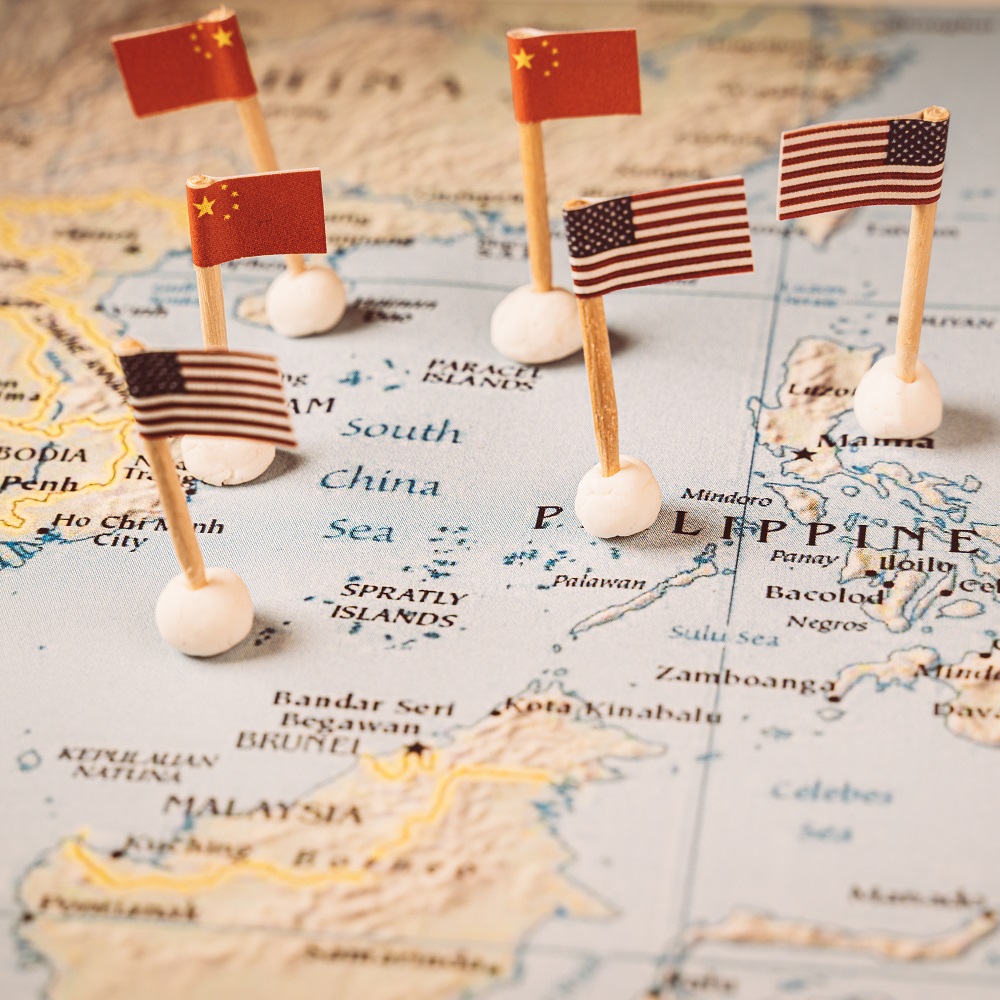
Flags of china and the united states on a map of the southern china sea.

War games risk stirring up troubled waters as Philippines − emboldened by US − squares up to Beijing at sea

by Fred H. Lawson

한국어로 읽기Leer en españolIn Deutsch lesen Gap اقرأ بالعربيةLire en françaisЧитать на русском U.S. Marines joined Filipino counterparts on May 5, 2024, for a mock battle at a telling location: a small, remote territory just 100 miles off the southern tip of the contested island of Taiwan. The combat drill is part of the weekslong Exercise Balikatan that has brought together naval, air and ground forces of the Philippines and the United States, with Australia and France also joining some maneuvers. With a planned “maritime strike” on May 8 in which a decommissioned ship will be sunk and exercises at repelling an advancing foreign army, the aim is to display a united front against China, which Washington and Manila perceive as a threat to the region. Balikatan is Tagalog for “shoulder to shoulder.” Joint Philippines-U.S. naval drills have become an annual event. But as an expert in international relations, I believe this year’s drills mark an inflection point in the regional politics of the South China Sea. For the first time, warships taking part in the exercise ventured outside the 12-mile boundary that demarcates the territorial waters of the Philippines. This extends military operations into the gray area where the Philippines’ exclusive economic zone rubs up against the territory claimed by China and designated by its “nine-dash line.”    Also for the first time, the U.S. deployed an advanced mobile launcher for medium-range ballistic and cruise missiles of a type that had been banned under the now-defunct Intermediate-Range Nuclear Forces Treaty. In addition, the Philippine navy is showing off its newest acquisition, a South Korean-built missile frigate. The South China Sea has long been the source of maritime disputes between China, which claims the vast majority of its waters, and nations including Vietnam, the Philippines, Malaysia and Indonesia. In addition, heightened tensions over the status of Taiwan – a territory that the Biden administration has pledged to defend militarily in the event of a Chinese invasion – have made the South China Sea even more strategically important. Containment at sea The latest joint maneuvers come amid two developments that could go some way to influence the future trajectory of tensions in the South China Sea. First, the Philippines has grown increasingly assertive in countering China’s claims in the region; and second, the U.S. is increasingly intent on building up regional alliances as part of a strategy to contain China. The Philippines-U.S. alignment is more robust than ever. After a brief interval during the 2016-22 presidency of Rodrigo Duterte, U.S. warships and military aircraft once again operate out of bases in the Philippines. Joint naval patrols resumed in early 2023. At the same time, Manila granted U.S. troops unprecedented access to facilities on the northern Batanes islands, which have become the focus of current joint operations. Meanwhile, Washington has become more vocal in condemning challenges to the Philippines from China. U.S. officials had carefully avoided promising to protect the far-flung islands, atolls and reefs claimed by Manila for seven decades following the signing of the Mutual Defense Treaty with the Philippines in 1951. Only in March 2019 did then-Secretary of State Mike Pompeo assert that the treaty covers all of the geographical area over which the Philippines asserts sovereignty. In February 2023, Presidents Ferdinand Marcos Jr. and Joe Biden doubled the number of bases in the Philippines open to the U.S. military. That May, the two leaders affirmed that the Mutual Defense Treaty applies to armed attacks that take place “anywhere in the South China Sea.” Causing waves, rocking the boat Firmer ties to the U.S. have been accompanied by more combative behavior on the part of the Philippines. In May 2023, the Philippines coast guard introduced demarcation buoys around Whitsun Reef – the site of an intense confrontation with China’s maritime militia a year earlier. Reports circulated three months later that Philippine marines planned to construct permanent outposts in the vicinity of the hotly contested Scarborough Shoal. And a Philippine coast guard ship, with the commander of the country’s armed forces aboard, approached Scarborough Shoal in November, before being forced to retreat by Chinese maritime militia vessels. Then in January 2024, the Philippines broke with its adherence to a prohibition on erecting structures on disputed territory, which was part of the 2002 Declaration on the Conduct of Parties in the South China Sea, by installing electronic surveillance equipment on Thitu Island, which sits beyond Scarborough Shoal in the heart of a cluster of disputed formations. This was followed by announced plans to put water desalination plants on Thitu, Nanshan Island and Second Thomas Shoal, making it possible to maintain permanent garrisons on these isolated outposts. Manila has continued to assert its maritime rights by announcing that armed forces would escort exploration and mining activities in the exclusive economic zone. Further acts that could be seen as provocative in Beijing followed, including the stationing of a Philippine navy corvette at nearby Palawan Island and a joint flyover by Philippine warplanes and a U.S. Air Force B-52 heavy bomber. A raft of Chinese responses It is clear that the deepening of Philippines-U.S. ties has given Manila the confidence to undertake a variety of combative acts toward China. The question is, to what ends? A more assertive Philippines may end up contributing to the U.S. strategy to deter Beijing from extending its presence in the South China Sea and launching what many in Washington fear: an invasion of Taiwan. But it is possible that heightened truculence on the part of the Philippines will goad Beijing into being more aggressive, diminishing the prospects for regional stability. As the Philippines-U.S. alignment has strengthened, Beijing has boosted the number of warships it deploys in the South China Sea and escalated maritime operations around Thitu Island, Second Thomas Shoal and Iroquois Reef – all of which the Philippines considers its sovereign territory. In early March 2024, two Chinese research ships moved into Benham Rise, a resource-rich shelf situated on the eastern coast of the Philippines, outside the South China Sea. Weeks later, a Philippines coast guard cutter surveying a sandbar near Thitu was harassed not only by Chinese coast guard and maritime militia ships but also by a missile frigate of the People’s Liberation Army Navy, which for the first time launched a helicopter to shadow the cutter. Washington has taken no public steps to dampen tensions between Manila and Beijing. Rather, Secretary of State Antony Blinken expressed full-throated support for “our ironclad defense commitments” during a mid-March 2024 stopover in Manila. Reassured of U.S. backing, Marcos has amped up the rhetoric, proclaiming that Manila would respond to any troublemaking on Beijing’s part by implementing a “countermeasure package that is proportionate, deliberate and reasonable.” “Filipinos,” he added, “do not yield.” Such an approach, according to Marcos, was now feasible due to the U.S. and its regional allies offering “to help us on what the Philippines requires to protect and secure our sovereignty, sovereign rights and jurisdiction.” The danger is that as the Philippines grows more assured by U.S. support, it may grow reckless in dealing with China. Rather than deterring China from further expansion, the deepening Philippines-U.S. alignment and associated Filipino assertiveness may only ramp up Beijing’s apprehensiveness over its continued access to the South China Sea – through which virtually all of its energy imports and most of its exports flow. And there is little reason to expect that Washington will be able to prevent an emboldened Manila from continuing down the path of confronting China in the South China Sea. To Beijing, the prospect of an emboldened Philippines forging active strategic partnerships with Australia, Japan, South Korea, Vietnam and – most troublesome of all – Taiwan makes the situation all the more perilous.

Defense & Security
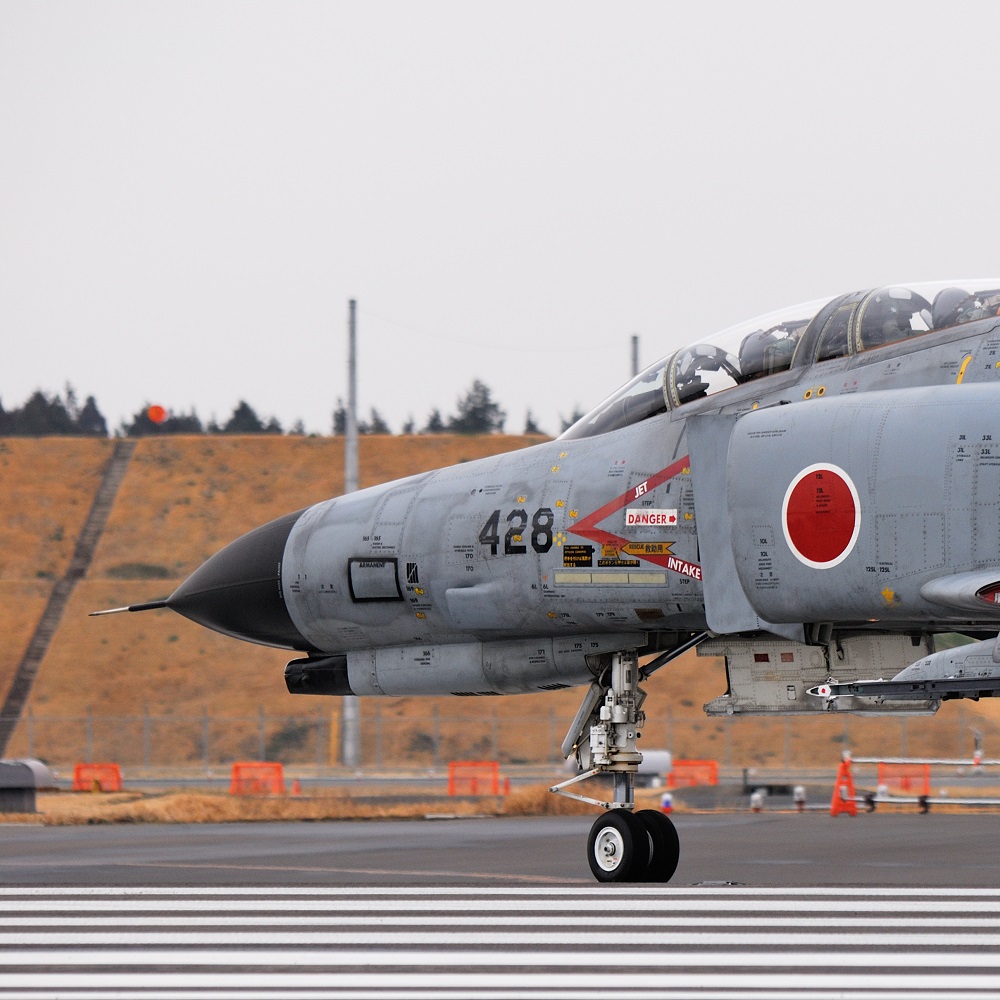
Japanese Fighter Jet

Japan’s Role in Shaping the Security Landscape of Southeast and East Asia

by Swati Arun

한국어로 읽기 Leer en español In Deutsch lesen Gap اقرأ بالعربية Lire en français Читать на русском Japan has embarked upon a transformative journey that signifies a departure from its conventional pacifist stance. Despite encountering pockets of domestic opposition, Japan’s vision of a free and open Indo-Pacific has received increasing support from neighbouring nations. Within a regional backdrop of countering China’s military modernisation and expansionism, Japan is now laying the groundwork for collective defence while working to institutionalise these efforts and ease concerns about remilitarisation. Japan has gradually undertaken various steps to enhance the role of self-defence forces and allow military partnerships. The three new requirements for exercising self-defence, adopted in 2014, expanded Japan’s right to self-defence in the “occurrence of an armed attack against Japan or another country with close ties to Japan”, a threat to national existence, with “no other means to ensure the survival of the country”, adding the use of “minimum amount of force necessary”. Japan broadened the definition of security to encompass any changes in its vicinity that may compromise its territorial integrity. Following these changes, on 16 Dec 2022, the Kishida administration formally approved three revised strategic documents – the National Security Strategy (NSS), the National Defense Strategy (NDS), and the Defense Buildup Program. These revisions reduced the limitations imposed on the Self Defense Forces and collective defence. Viewing these changes in today’s security conflict in East Asia, the first requirement effectively extended the parameters of self-defence to include Taiwan. In the NSS, Japan identified Taiwan as an “extremely important partner and a precious friend” while characterising China as “a matter of serious concern” and “the greatest strategic challenge.” The documents also designated North Korea as “a graver, more imminent threat” and Russia as “a serious security concern.” The documents revealed Japan’s acquisition of counterstrike capabilities, filling gaps in its defences, and broadening the second and third requirements for collective self-defence. Furthermore, Tokyo intends to upgrade the indigenous Type 12 surface-to-ship missile, with a range of approximately 200 km, to approximately 1,200 km, substantially increasing the cost of Chinese attacks in the region. In January 2024, Japan signed agreements with the US to acquire 400 Tomahawk cruise missiles, with a firing range of approximately 1,600 km. Reportedly, Japan aims to rectify its current ammunition reserves by constructing “70 ammunition depots within five years” and plans to construct up to 130 ammunition depots by 2035, drawing lessons from the conflict in Ukraine. Japan revised the Three Principles of Transfer of Defence Equipment and Technology overcoming the past restrictions on transfer of defence equipment and technology to other countries. These revisions marked the beginning of Japan’s evolving role as a security provider in the region. Together this amounts to the doubling of the defence spending from 1% to 2% of GDP by 2027 to speed up the advancement of Japan’s peacetime and immature military and bring it to NATO standards. The revisions are consistent with Japan’s understanding of its new security environment where Chinese assertions are reinforced by the largest naval force in Asia. The shift also underscores the limitation of the US power in the region to remain the sole security provider by enabling Japan to take a central role. Japanese people also resonated with the sentiments, as a poll conducted in 2022 revealed that 89% see China as a threat in 2022, and 49% of respondents supported an expanded role of Japan in the alliance while 46% were against it. In 2023, Japan’s Maritime Self-Defense Force conducted Indo-Pacific Deployment 2023 (IPD23) to “clearly demonstrate the intention that Japan will never tolerate unilateral changes to the status quo by force” as specified in NSS. The Japanese forces visited 17 countries and held 27 exercises with like-minded countries, highlighting Japan’s intention to expand security ties across the nations with territorial disputes in the South China Sea, and with the ASEAN. In the same year, Japan established a Permanent Joint Headquarters to oversee all three forces – the Ground, Maritime and Air Self-Defense Forces – to ensure effective joint operations. Acknowledging Japan’s growing ambition, in December 2023, Chinese President Xi Jinping instructed the coast guard to strengthen its activities to assert sovereignty over the East China islets. Japan has actively pursued collective defence in Southeast Asia with its introduction of “Official Security Assistance” in February 2023, under which the Philippines was the first to receive aid, followed by Malaysia. Japan also plans to include Vietnam, Indonesia, Thailand, Singapore, and Cambodia. These plans will allow Japan to establish a military-industrial complex, extending the nexus of partnership and interdependency between Japan and Southeast Asia. The changes when seen together with the U.S.-Japan Joint Leaders’ Statement mark a decisive shift in Japan’s strategy to counter China. In an upgrade to the US-Japan alliance, the two parties agreed to establish a unified Japanese-US command, enabling the US to make a headquarters in Japan for overseas military operations in the region. They also agreed upon the co-development and co-production of missiles and cutting-edge technologies in Japan, enhancing its defence industrial complex, and export to third parties. The statement noted Japan’s cooperation with AUKUS in its Pillar II advanced capability projects. The statement also relayed the “existential crisis” facing Japan making these efforts natural, conforming to Japan’s revisions to strategic policy documents. Previously, in 2022, Japan had announced a collaboration with the UK, and Italy to develop next-generation fighter jets and subsequently in March 2024, decided to authorise the export of jointly developed fighter jets to other nations. Cross-strait relations, once dealt with utmost precaution through the lens of the “One-China Policy” have now shifted to a more openly debated foreign and strategic policy surrounding Taiwan. Since 2021, Japanese leaders have made a series of statements and comments concerning Taiwan and the Taiwan Strait. In May 2022 a statement from US-Japan Summit reiterated that “peace and stability across the Taiwan Strait as an indispensable element in security”. In a January 2024 speech, former PM Aso Taro also reiterated that the Taiwan crisis constitutes “a threat of national existence” for Japan. China reacted to former US Speaker Nancy Pelosi’s visit to Taiwan in August 2022 with large-scale military exercises around the island. Four months later in December 2022, Japan released three new strategic documents. Taiwan’s importance to Japan’s security was cited seven times in NSS and NDS. Furthermore, Japan intends to enhance the defence of all of its 6,852 islands, focusing on the Ryukyu Island chains, the cornerstone of Japan’s defence against China, lying only 100 Km from Taiwan, which also tightens security around the island. The deployment of a surface-to-air guided missile unit is now under consideration on Yomaguni, home to a JSDF surveillance station adding to Japan’s understanding of Taiwan’s security tied closely to its own. China’s preferred military scenario of a “lightning war”, or a surprise attack to take over Taiwan within weeks or days, has increased the level of urgency and acted as a precursor for the military acceleration of the past several years. The history of Japanese aggression in East Asia and Chinese military support for North Korea diluted the possibility of a regional framework between Japan, South Korea and China. However, through years of efforts in August 2023, a rapprochement was reached between Japan and South Korea when they met at Camp David for a trilateral summit between US-Japan-South Korea. The trilateral took the first step in removing historical obstacles and proving trust in Japan’s new regional role. South Korea has remained averse to participating in major power competitions, but this trilateral institutionalised the effort, guarding the progress against changes in the political situation in either country. For South Korea, North Korea remains its primary security concern. For Japan, the North remains the second most crucial threat with its launch of an intermediate-range ballistic missile in the Sea of Japan in 2022, provoking cooperation on the same despite fractures. Through the joint statement of the trilateral summit, the US got support from South Korea in recognising the perils of not maintaining peace and security in the Taiwan Strait. South Korea got a much-needed boost in intelligence sharing on North Korea’s missile launches and cyber activities which will strengthen ballistic missile defence cooperation. However, it is unlikely that South Korea will endanger its security by interfering in a cross-strait crisis. It will still play a critical role in keeping North Korea at bay in the event of an armed conflict in the Taiwan Strait or East China Sea. Nevertheless, Taiwan thanked the support shown through the trilateral, while China warned against destabilising the region. Japan stands as one of the Philippines’ most trusted partners, second only to the US. Ties have grown deeper as the two have signed a series of agreements from Military and Capacity Building to Maritime Security and Intelligence Sharing in the Indo-Pacific. In 2023, under Japan’s Official Security Assistance, the Philippines received USD 4 million worth of coastal surveillance radars. The two parties are discussing signing a Reciprocal Access Agreement before the end of 2024. An April 2024 joint statement between Japan, the Philippines and the US prioritised advancing “multilateral maritime domain awareness cooperation”, and developing “an information communications technology ecosystem”. It also committed to trilateral defence cooperation and support for the Philippines’ defence modernisation priorities. The statement noted concerns about China’s aggressive behaviour, its “coercive use of Coast Guard and maritime militia vessels in the South China Sea”, conjoining it with the situation in the East China Sea. It also reiterated the importance of the Taiwan Strait in global security. Under this framework, reliance and trust in Japan have increased, setting it up for a larger security role and the collectivisation of security has brought new assurances for the smaller powers of the region. The Taiwanese President thanked the trilateral joint statement supporting peace and stability across the Taiwan Strait. China, however, slammed the anti-China gathering, accusing it of forming a NATO analogue in the region. China summoned Japanese and Philippine diplomats, expressing dissatisfaction and urging Japan to “take actions beneficial to regional peace”. Beyond South Korea and the Philippines, Japan has also maintained long military and diplomatic relations with Vietnam, having had 10 defence dialogues in the past. Furthermore, Vietnamese President Vo Van Thuong and Japanese Prime Minister Fumio Kishida announced the Vietnam-Japan Comprehensive Strategic Partnership on 27 November 2023. According to their joint statement, Kishida and Thuong reinforced the vision of a “free and open Indo-Pacific”. The US also upgraded its ties with Vietnam in September 2023. These developments led to President Xi Jinping’s visit to Vietnam in December 2023, culminating into an agreement to establish a hotline between the Chinese People’s Liberation Army’s Southern Theatre Command and the Vietnamese navy. But mistrust towards China runs deep in the Vietnamese public, which is furthered when China continues to lay new claims in Vietnamese waters. While Vietnam remains reluctant to participate in US-China conflict, its closeness with Japan is a sign that the latter is seen as a reliable regional partner with similar territorial problems. In a wider regional sense, Japan views ASEAN as its key partner in fulfilling the Indo-Pacific vision. The ASEAN centrality resonates in both the Indo-Pacific Strategy and the US-Japan-South Korea trilateral. Japan maintained close ties with the region through robust economic and defence cooperation. But the latter has gained momentum in the past few years. Beginning with the Philippines in 2016, Japan forged bilateral agreements for defence equipment and technology collaboration with multiple ASEAN nations (with Malaysia in 2018, Indonesia and Vietnam in 2021, and Thailand in 2022). In February 2023, the “Expert Panel for the 50th Year of ASEAN-Japan Friendship and Cooperation” issued a report emphasising that ASEAN has evolved from being primarily an aid recipient from Japan to a growing and influential partner. In December 2023, the ASEAN and Japan summit released a joint statement, committing to “strengthening security cooperation including maritime security” in the light of growing threats in the South China Sea. The statement highlighted the trust ASEAN has in Japan amid China’s growing claims in the South China Sea. This reflects a growing realisation among ASEAN members that collective defence is the answer to their security challenge – which China reacted negatively to. In the face of a major power conflict, the trust of Southeast Asian countries in Japan’s security guarantee has been increasing. A poll conducted in 2022 reflected these sentiments when 43.1% of Taiwanese confirmed their belief that Japan would defend Taiwan in the event of an invasion from China, while 42.8% of citizens felt that the US would be a security guarantor to Taiwan. Surveys undertaken in 2023 and 2024 substantiate the increasing affinity between ASEAN and Japan. While China surpassed the US as the preferred partner for ASEAN, Japan remained the most trusted partner, with 58.9% of respondents expressing faith in the country, surpassing levels for the US, China, India, and the European Union. This suggests that ASEAN is gradually transitioning its geopolitical alignment towards Japan as (at least part of) a viable alternative, rather than seeing things as a binary choice between China and the US. The predominant theme in the understanding of the current security environment in Southeast and East Asia is that, while US assistance and reliance on its security guarantee in the region are essential to counter the so-called China threat, the defence of the maritime nations ultimately rests with those nations themselves. This sentiment has served as a catalyst to address gaps in individual countries’ defence preparedness and work towards a collective approach to protect against potential changes in US strategy – which has evolved into one of enabling regional stakeholders by providing technology, skills, and assistance, while maintaining dominance through other platforms. This has necessitated a collective defence posture where a more interconnected network, involving Japan, can be more resistant to isolation and coercion.

Energy & Economics
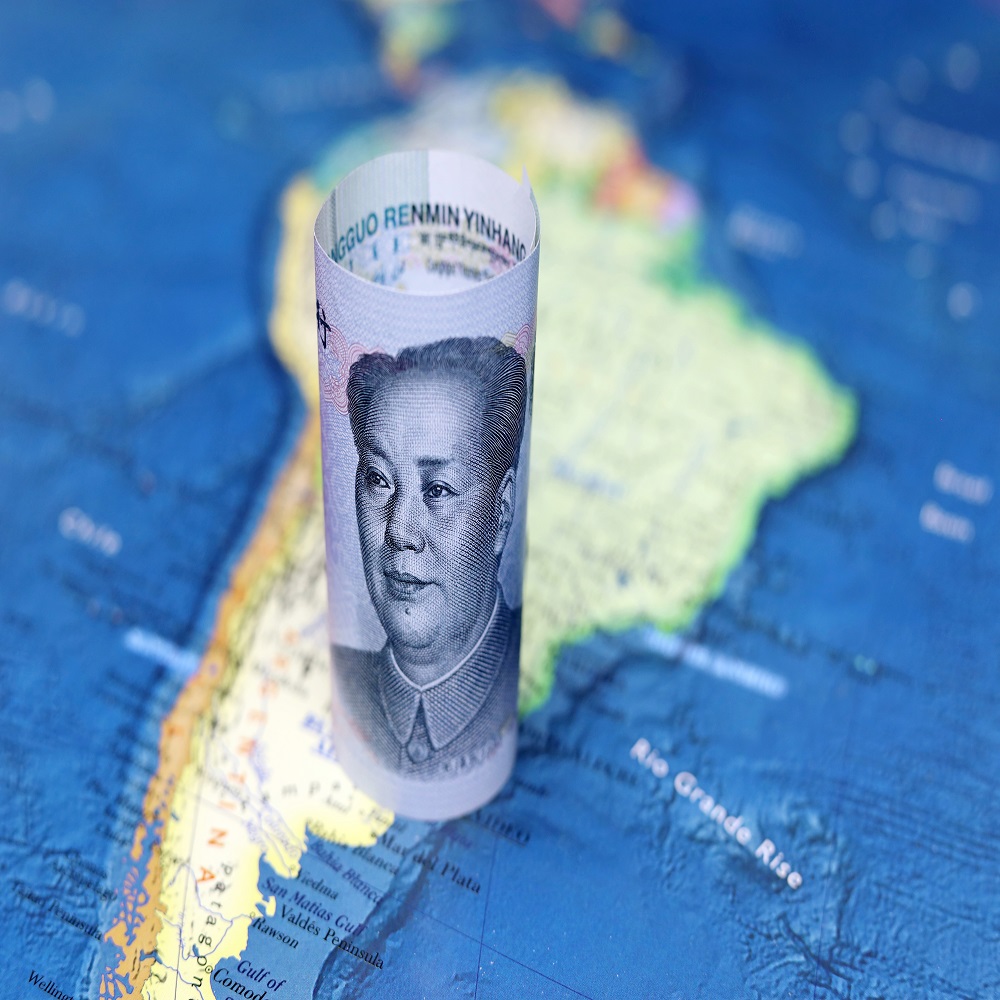
Chinese Yuan on the map of South America. Trade between China and Latin American countries, economy and investment

Ahead of the curve: Why the EU and US risk falling behind China in Latin America

by Ángel Melguizo , Margaret Myers

한국어로 읽기 Leer en español In Deutsch lesen Gap اقرأ بالعربية Lire en français Читать на русском As Beijing’s investment approach to Latin America focuses on industries of strategic importance, the EU and US will need to contend with growing Chinese competition China is pouring less foreign direct investment (FDI) into Latin America. But while this may seem like a sign of Beijing’s disinterest in the region, data suggests that Chinese companies are simply recalibrating, not retreating. In doing so, they are becoming important players in sectors key to Western interests: critical minerals, fintech, electric vehicles, and green energy. While the European Union and the United States have long been top investors in Latin America, increased competition with Chinese investment now jeopardises their interests in the Latin American industries that will become most crucial to the digital and green transitions. The number of Chinese projects in Latin America grew by 33 per cent from 2018-2023, compared with the previous five-year period of 2013-2017, even as the total value declined. In other words, Chinese companies are making more investments in the region but are pursuing smaller-scale projects on average. These investments are also more focused on what China calls “new infrastructure“ (新基建), a term which encompasses telecommunications, fintech, renewable energy, and other innovation-related industries. In 2022, 60 per cent of China’s investments were in these frontier sectors, a key economic priority for the country. Beijing also views smaller projects in these industries as incurring less operational and reputational risk, especially compared to some of the large-scale infrastructure investment projects often associated with the Belt and Road initiative. Like China, the investment priorities of the G7 grouping – particularly the US and the EU – are centring on critical minerals, fintech, electric vehicles, and green energy as they aim to grow and reinforce existing economic and political partnerships in Latin America. However, both the US and the EU risk falling short of China’s investment strategy in the region. The US has signalled want for greater economic engagement with the region, especially in sectors of strategic interest. However, to date, US efforts to compete with China remain largely focused on building US domestic capacity in these strategic sectors, even as some US companies, such as Intel, are increasingly focused on including regional partners in their supply chains. Some see opportunity for Latin America in Joe Biden’s landmark legislation, the Inflation Reduction Act (IRA), which is aimed at incentivising the energy transition while also de-risking critical supply chains. For example, certain countries in the region may benefit from preferential market access for their lithium or other key inputs to new energy and technology supply chains. However, the reach of the IRA – which remains a largely domestic policy – does not stretch as far as China’s current investment reshuffle. The Americas Act, announced by members of Congress in March could generate promising new investment opportunities for the region, as it encourages US companies and others to move their operations out of China, to which Latin America stands as a promising replacement. But Americas Act reshoring would primarily incentivise textiles and potentially medical equipment manufacturing, with less overall focus on the range of “new infrastructure” industries that China is prioritising. Chinese interests in information and communication technologies reveal a similar story. While the US has focused its policy on 5G equipment sales, China is undertaking a process of vertical integration in Latin American tech sectors that will dramatically boost its competitiveness. For instance, Chinese company Huawei is rapidly expanding its focus to include data centres, cloud computing, cybersecurity, and other services, especially in Argentina, Brazil, Chile, Colombia, Mexico, and Peru. (Computing accounted for a sizable 41 per cent of total Chinese information technology investment in the region between 2018 and the first half of 2023.) At the same time, Global Gateway, the EU’s proposal for a global investment initiative is yet to reach its potential in the region. Brussels is looking to be Latin America’s partner of choice by building local capacity for making batteries and final products like electric vehicles, as European Commission president Ursula von der Leyen noted last year. Yet even as the EU signals renewed commitment, China is becoming increasingly dominant in the electric vehicle market in Latin America and other regions. China surpassed the US in electric vehicle sales in 2023, with Chinese companies accounting for 45 per cent of total global sales and three times that of Germany’s. What is more, China has invested $11 billion in lithium extraction in the region since 2018, as part of a bid to control a third of global lithium-mine production capacity. Meanwhile the EU has secured some access to lithium as part of trade deals with Chile, alongside other nations, but this pales in comparison to what will be required to fuel the future of EU battery production. Latin America as a whole accounts for an estimated 60 per cent of the world’s lithium reserves. Based on its current levels of engagement in the region, the EU risks falling short of lithium, stalling its battery production and subsequently, its electric vehicle sales, just as China advances in this field. The window is closing for the EU, the US, and other partners looking to both maintain market share and compete with China in these Latin American industries, despite still-high rates of US and EU investment in and trade with the region. Indeed, US automakers increasingly see Chinese competition across the globe as an “extinction-level event.” Ensuring competitiveness in “new infrastructure” and related sectors will require a continuous commitment by partners to building and supporting project pipelines, and to delivering products and services at price points that can compete with China’s subsidised offerings. Both the EU and the US remain critical economic partners for Latin America and are contributing in ways that China is not. Still, complacency risks allowing China to take the lead in emerging industries in the region, some of which weigh heavily in the EU’s green and digital transformation. To protect their own future industries, the EU and the US need to first take a longer look at Latin America’s – especially as China vies for a dominant position.

Defense & Security
Solomon Islands

Russia and China co-ordinate on disinformation in Solomon Islands elections

by Albert Zhang , Adam Ziogas

한국어로 읽기 Leer en español In Deutsch lesen Gap اقرأ بالعربية Lire en français Читать на русском Moscow and Beijing likely worked together to sow disinformation globally that was propagated locally by political parties in the lead-up to Solomon Islands’ national and provincial elections on 17 April 2024. Both countries’ propaganda systems accused the United States, without evidence, of using its foreign aid and networks across the country to interfere in voting and of preparing to foment riots and orchestrate regime change in response to an unsatisfactory election result. This campaign adds to a growing body of evidence showing that China’s and Russia’s ‘no limits’ partnership extends to coordinating their disinformation campaigns in the Indo-Pacific. The narratives haven’t gained widespread attention or media coverage in Solomon Islands. Australia, the United States and other Pacific partners should nonetheless be concerned, as Russia and China can be expected to learn from this campaign and will likely use the lessons to further improve their influence operations in the region. Individually, China and Russia are adept and expert at pushing disinformation to disrupt other nations but, by coordinating their efforts, they have a force-multiplier effect. The campaign consisted of an alleged ‘leaked’ letter, articles published on authoritarian state-controlled media outlets and a fringe journal publication, which were then shared and amplified on social media platforms. A fortnight before election day, an unknown author by the name of Richard Anderson published an explosive article in CovertAction Magazine alleging that the US was seeking regime change in Solomon Islands. The US-based magazine was co-founded in 1978 by the late Philip Agee, a former CIA officer who after his retirement became a vocal critic of the agency and of US policy and had reported links with Soviet and Cuban intelligence. The magazine was set up ‘on the initiative of the KGB’, the Soviet Union’s main intelligence agency, according to a book by KGB defector Vasili Mitrokhin and British intelligence historian Christopher Andrew. Anderson had no previous history of writing for CovertAction Magazine. A week after that article was published, Russian state-controlled media agency Sputnik further fuelled the allegations, writing that the US was ‘plotting [an] electoral coup’. This article cited an anonymous source who had ‘intimate familiarity’ with the activities of USAID, the main United States foreign aid and international development agency. This mirrored how Anderson is described in his CovertAction Magazine bio, though Sputnik’s article did not explicitly mention him or his article. Sputnik’s claims were amplified four days later by the Chinese state-controlled tabloid newspaper the Global Times, which did directly reference Anderson’s article and has the potential to legitimise these narratives to an audience the Chinese Communist Party (CCP) is actively targeting. During the same period, a poorly fabricated letter from an unconfirmed (and potentially non-existent) IFES project consultant was circulated among Solomon Islanders by an unknown source claiming that the US was seeking a ‘democratic transition by violent means in necessary circumstances.’ The text in this letter mirrored language used by Sputnik’s alleged anonymous source. Figure 1: Paragraph from Sputnik article (top) and a screenshot of the alleged IFES letter (bottom).     To be clear, there is no evidence that the US, or any other country, is supporting violent riots or interfering in Solomon Islands. Ann Marie Yastishock, US Ambassador to Papua New Guinea, Solomon Islands, and Vanuatu, has strongly refuted these allegations. This is not the first time the CCP-controlled media has spread disinformation in Solomon Islands or accused the US of seeking to instigate riots in the country. Following the 2021 Honiara riots, the CCP falsely accused Australia, the US and Taiwan of organising the riots, fomenting unrest and discrediting the relationship between Solomon Islands and China. In contrast, Russian media outlets also covered the 2021 Honiara riots but didn’t promote any explicit accusations of US or foreign interference. This time, China and Russia have been in lockstep. In the lead-up to the April elections, Russian state media was more direct and damning in its reporting with the release of Sputnik’s original article and in the subsequent coordination and dissemination of false narratives alongside Chinese state media. While Sputnik published only one follow-up article to the initial investigation, China’s Global Times was more prolific and varied, with six articles alleging US meddling in Solomon Islands. Of these six articles, four explicitly referenced Sputnik’s claims and two referenced US influence operations in more general terms. The indications of Russia-China propaganda coordination in this campaign were further supported by China’s Ministry of Foreign Affairs (MFA) post on 19 April 2024 titled ‘The Hypocrisy and Facts of the United States Foreign Aid’. The post on their website claims the US is giving aid to Solomon Islands, among other countries, only because it sees it as a political threat. This was the first article ever published by the MFA to smear USAID. Moscow, however, has consistently campaigned against USAID since it ejected the US agency from Russia in 2012 for ‘meddling in politics’. Russian media has pushed a consistent narrative that the organisation is a US imperialist tool of regime change, accusing it of fomenting civil unrest and coup attempts as far afield as Belarus, Cuba, Georgia and Mexico. However, this latest attack against USAID appears to be the first where Russia’s narratives are working to the benefit of CCP interests. It’s been clear since at least 2018 that Russian and Chinese state media are converging on media narratives that serve their governments’ strategic and political interests. According to leaked documents from Russian state broadcaster VGTRK, Russian and Chinese propaganda entities also signed an agreement to ‘further cooperate in the field of information exchange, promoting objective, comprehensive and accurate coverage of the most important world events’. While previous ASPI research has demonstrated Russian and Chinese state-coordinated narratives on the Russia-Ukraine conflict, the repeated re-airing of Sputnik’s conspiratorial claims of interference in Solomon Islands’ elections in Global Times articles indicates this propaganda cooperation is now a global initiative. There was also some evidence of amplification by inauthentic accounts on social media of these narratives, but they were limited and it is unclear whether they were state linked. For example, one X account with the handle @jv79628 shared the original Sputnik investigation. The account posts links almost exclusively from Sputnik, Global Times, Australian website Pearls and Irritations and videos with artificial intelligence-generated voices from the pro-CCP YouTube channel Chinese Revival, which may be linked to the Shadow Play network previously uncovered by ASPI. Other accounts sharing the original Sputnik report, such as @de22580171, pose as pro-Russian US citizens. They share articles mostly from Sputnik or Russia Today. At the time of publication of this report, Russia’s and China’s state media articles, and the accusations contained in them, have had minimal reach into online Pacific communities. In the public Solomon Islands Facebook groups ASPI viewed, online discourse remains more focussed on the emergence of new coalitions and the election of a new Prime Minister than on discussion of foreign influence or interference. According to Meta’s social monitoring tool, CrowdTangle, none of the articles from the Global Times have been shared in open and public Solomon Islands Facebook groups. However, Sputnik’s first article may have been more successful in reinforcing anti-Western sentiments in outgoing Prime Minister Manasseh Sogavare’s O.U.R. Party, who are strong contenders to be part of the coalition that forms the next government. That article was posted on the O.U.R. Party Solomon Islands Facebook page, which is run by the party, on 10 April. It was reshared to several public Facebook groups in Solomon Islands, including news aggregation sites and local island forum pages. This is significant because it is the first time a news article has been posted on the O.U.R. Party Solomon Islands Facebook page, which typically shares positive images of the party’s activities and political campaigns. As of 1 May 2024, the post (below) has had over 180 interactions, which is higher than the average number of interactions a typical post has on this page. Figure 2: Screenshot of Sputnik article posted in O.U.R Party Solomon Islands Facebook page.     Sogavare, a founding member of the O.U.R. Party, has made similar remarks about ‘foreign forces’ previously. According to an article published in the Solomon Star, when US Ambassador Yastishock visited Solomon Islands in late March to present her letter of credentials to Governor-General John Oti, Sogavare claimed foreign forces were ‘intervening in the national general election’ and ‘may fund some political parties and plan to stage another riot during the election to disrupt the electoral process and undermine social stability’. Despite the low online interaction so far, the barrage of US regime change allegations lays the foundation for future narratives that may resurface if Solomon Islands experiences future unrest. Beijing and Moscow can be expected to learn from these disinformation efforts, leaving the US, Australia and their Pacific partners no room for complacency about the threat the regimes pose, nor the need for effective strategic communication. The Russian and Chinese governments are seeking to destabilise the Pacific’s information environment by using disinformation campaigns and influence operations to undermine traditional partnerships. In this digital age, leaders of governments and civil society across the region need to consistently confront and counter baseless lies pushed by authoritarian state media, such as accusations that the governments of Australia and the US are instigating riots. If they fail to do so, partnerships with, and trust in, democratic countries are at risk of deteriorating, which can reduce the development benefits provided to Pacific Island Countries by Western partners. Australia, the US, and other close Pacific partners, such as Japan, New Zealand and the European Union, must take a stronger stance against false and misleading information that is starting to circulate in the region as a result of authoritarian state-backed disinformation campaigns. These nations must also better support and encourage local media and governments to take further steps to identify and combat false information online. This includes providing more training packages and opportunities for dialogue on media-government communication procedures to tackle disinformation and misinformation. Countering the effects of disinformation requires ongoing efforts to call out false statements, educate the public, and build country-wide resilience in the information environment. Greater transparency and public awareness campaigns from the region’s partners can also help to ‘prebunk’—or anticipate and delegitimise—disinformation and alleviate concerns about malign activity.

Defense & Security
Australian flag and South Korean flag

Press Conference, Melbourne. Australia-Republic of Korea 2+2 Foreign And Defence Ministers’ Meeting

by Richard Marles , Cho Tae-Yul , Penny Wong

한국어로 읽기 Leer en español In Deutsch lesen Gap اقرأ بالعربية Lire en français Читать на русском Joint transcript with: The Hon Richard Marles MP, Deputy Prime Minister and Minister for Defence Subjects: Australia-Republic of Korea 2+2 Foreign And Defence Ministers’ Meeting; AUKUS Pillar Two; Hanwha bid for Austal; foreign interference; Korean peninsula security. 01 May 2024 Deputy Prime Minister, Richard Marles: Well, welcome everyone. Today, the Minister for Foreign Affairs and I have had the pleasure of being able to welcome Minister Cho and Minister Shin, the Foreign Minister and the Defense Minister of South Korea to a 2+2 with Australia. In December of 2022, the Republic of Korea released its Indo-Pacific Strategy. And it described an assessment of the region and a response to it, which represented Korea looking to take its place in the region and the world. That is remarkably similar to the assessment that we made a few months later in the Defence Strategic Review. And it speaks to the fact that both Korea and Australia have a close strategic alignment and a shared vision about our place in the region and the world. And what was immediately obvious from that moment was the opportunity to take the relationship between our two countries to the next level. And today's 2+2 is very much an expression of that. We are seeing increased engagement between our two countries across the board. We are certainly seeing that in the realm of defence. Last year, Korea had its largest participation in Exercise Talisman Sabre, which is our major bilateral defence exercise. This year, we will see more Korean engagement in Exercise Pitch Black, Exercise Kakadu, Exercise Southern Jackaroo and we are very appreciative of Korea’s participation in those exercises, as we are in the way in which Korea and Australia are working together to uphold the rules-based order within our region and in fact, within the world. Both countries, as we've discussed today, are playing our part in supporting Ukraine in its resistance of the appalling aggression that is being forced upon it by Russia. We are working very closely together within our region to uphold the global rules-based order here as well, and that's seen in a greater engagement that both of us are doing with the countries of the Pacific and the countries of southeast Asia. We are particularly aware of the efforts that have been put in place for Korea to build its relationship with Japan and we see this as a very, very positive step forward in the strategic landscape of the region, and represents a huge opportunity for Australia to engage with both Korea and Japan. Finally, in respect of defence industry, we are seeing a blossoming of the relationship between our two countries in respect of defence industry. Yesterday, Minister Shin and I visited Hanwha's facility in Geelong, which is building for the Australian Army both the Huntsman and the Redback, which will be very central to our capabilities for the Army. But we're also very hopeful that these platforms represent an opportunity for greater industrial activity there, where we can see export to the world. Across the board, this is a relationship which is going to a new place, a place which is much deeper and much closer and we are very, very grateful for the presence of Minister Cho and Minister Shin in Australia today and we've really enjoyed the meeting that we've had this morning. Republic of Korea Minister of Foreign Affairs, Cho Tae-Yul: [spoken in Korean] Good afternoon, ladies and gentleman. I am Cho Tae-Yul, Minister of Foreign Affairs of the Republic of Korea. I am grateful for the successful organisation of the sixth Republic of Korea-Australia 2+2 Foreign and Defence Minister’s Meeting and I extend my deepest thanks to Mr Richard Marles and Ms Penny Wong for the warm welcome toward our delegations. It is with great pleasure that I make my first visit as Minister of Foreign Affairs to Australia to, our esteemed regional partner. Together with Mr Shin Won-sik, Minister of National Defense. During the first day of our visit on the 29th of April we paid tribute to the enduring legacy of 17,000 Australian veterans at the Australian National Museum Korean War Memorial in Canberra, commemorating their profound sacrifices for peace. The sacrifices of Australian veterans have laid a solid foundation for the prosperity of our relationship and on behalf of the Korean Government and people, I’d like to express heartfelt gratidude to the Australian veterans for their unwavering dedication. Today’s meeting holds significant importance as it is the first gathering of its kind following the installation of our current governments and Korea’s announcement of our Indo-Pacific Strategy. This occasion is further distinguished by its location in Melbourne, a symbol of our robust cooperation in defence industry. The Ministers of the two countries engaged in extensive discussions aimed at deepening strategic cooperation and communication, reinforcing our shared vision at both regional and global levels. Both parties recognise each other as pivotal partners in the realisation of our respective Indo-Pacific strategies, and as likeminded nations agreed to enhance our cooperation at bilateral, unilateral and multilateral levels. We acknowledge the remarkable progress in our bilateral cooperation with national defence and defence industries, highlighted by the signing of a contract for the delivery of Redback IFVs and the participation of Korean military personnel in Exercise Talisman Sabre and we said that we will be strengthening our cooperation into the future. In the realms of cyber and maritime security, we agreed to collaborate in blocking North Korea’s access to funding for illicit nuclear and missile developments, and to thwart illegal activities such as arms trading between Russia and North Korea. Our Australian counterparts have expressed their steadfast support for enhancing the human rights of North Koreans and for our policies aimed at reunification. Furthermore, we resolved to continue our close collaboration with ASEAN and the Pacific regions which hold great significance for both our countries. We will also expand our cooperative efforts for comprehensive security in cyber and maritime security, as well as economic security and climate change. I am confident today’s meeting will mark a significant milestone in strengthening our partnership built on the shared foundations of liberal democracy and mutual trust, and will further our commitment to a rules-based regional and global order. Foreign Minister, Senator Penny Wong: Thank you very much. Can I first express my deep appreciation to Minister Cho and Defense Minister Shin for their travel to Australia for this Foreign and Defence Ministers’ 2+2 meeting. We appreciate you coming to Australia and we have deeply enjoyed the dialogue this morning. This is the first 2+2 for us Ministers. We recognise that this dialogue is a cornerstone of our comprehensive strategic partnership with Korea. Can I start by appreciating the Minister's acknowledgement of the role that Australia and Australian veterans have played in this bilateral relationship. We thank you for honouring those Australians who have served. It is a testament to the historic strength of our relationship. But more importantly, today, what we focus on is the increasing strategic and economic convergence that exists between our two nations. And the focus of our meeting was how to translate that convergence that the Deputy Prime Minister and Foreign Minister Cho have articulated, how we translate that convergence into tangible and practical actions in southeast Asia, in the Pacific and more broadly in terms of our cooperation in in the Indo-Pacific. We are very interested not only in increasing our cooperation and our engagement in defence industries, but also in increasing our collaboration diplomatically and economically. I make note, as Foreign Minister Cho did, of our collective condemnation of North Korea's continue provocative, destabilising activities and we will continue to work together to ensure that this risk and threat to our collective security continues to be met in solidarity between our countries and other countries of the world. As you will see from the joint statement when it is released, discussed a range of other matters, including the Middle East, where we shared our perspectives. I thank, again, my counterpart, the Foreign Minister for his engagement. We were an early call for him and we appreciate it. And we appreciate the efforts that the Ministers have made in coming to Australia for this very important 2+2. Republic of Korea Minister of National Defense, Shin Won-Sik: [spoken in Korean] Good afternoon, I am Shin Won-sik, Minister of National Defense of the Republic of Korea. First of all, I would like to express my deepest appreciation to Mr Richard Marles, Deputy Prime Minister and Ms Penny Wong, Minister of Foreign Affairs for the warm reception of our delegations. We are externally grateful for the noble sacrifices made by the 17,000 Australians during the Korean War who fought for freedom and peace in our country. On behalf of our people, thank you. During the ROK-Australia Foreign and Defence Ministers’ Meeting we engaged in extensive discussions on a range of issues concerning the Korean peninsula, Indo-Pacific region and boarder global foreign affairs and defence matters and reaffirmed our commitment to further develop our bilateral future oriented relationships. Firstly, we agreed to continue enhancing our mutual and beneficial partnership in defence industry. It is with great pleasure that I know a Korean company was selected in Australia’s next generation Infantry Fighting Vehicle project, valued at $250 million USD. This follows the successful collaboration on the self-propelled artillery project in 2021. Yesterday, the Deputy Prime Minister, Mr Marles, and I visited the construction site of a Korean company in Geelong where we witnessed firsthand our flourishing bilateral cooperation in the defence industry. This collaboration is set to not only modernise Australia’s military capabilities, but also stimulate the local economy and strengthen the strategic solidarity between our nations. Secondly, we agreed to enhance our joint military training to improve interoperability and foster conditions for regional peace and stability. Last year, a significant contingent of Korean armed forces participated in Exercise Talisman Sabre, yielding fruitful outcomes. This year, the Australian military took part in Korea’s Freedom Shield exercises, as a member of United Nations command, enhancing its capabilities for joint operations. We are committed to continuing these joint exercises in various forms and further elevating the level of cooperation between our armed forces. Thirdly, recognising the importance of building trust in our national defence and defence industry partnership, we agreed to expand human exchanges among defence related organisations. Republic of Korea and Australia, as key strategic partners in the Indo-Pacific region, share profound strategic views and interests. We will build on the achievements of today’s meeting and collaborate earnestly for the peace and stability of the Korean peninsula, Indo-Pacific region and the international community as a whole. Speaker: Questions? Journalist: South Korean Minister for National Defence, Shin Won-sik, there's been speculation about countries like South Korea joining the AUKUS Defence technology. Did you discuss this today? And does South Korea believe that it could engage in useful cooperation under Pillar Two of AUKUS? And Minister Marles, Hanwha has made a bid for Austal. Was this big discussion discussed in your meetings over recent days? And would such a bid likely be permitted under the new foreign investment framework being unveiled by the government today? Defence Minister Shin: [spoken in Korean] The Korean government, to enhance the regional peace, we support the AUKUS Pillar Two activities, and we do welcome that AUKUS members are considering Korea as the AUKUS Pillar Two partner. Korea's defence science and technology capabilities will contribute to the peace and stability of the development of AUKUS Pillar Two and the regional peace. And during today's meeting, we also discussed the possibility of partnering with AUKUS Pillar Two. Thank you. Deputy Prime Minister Marles: So, perhaps I might address both issues in relation to AUKUS Pillar Two. And we did discuss this both yesterday and today. AUKUS, as you know, is a technology-sharing agreement. It's not a security alliance. And Korea is obviously a country with deeply impressive technology, where we do have shared values, where we have strategic alignment, where we engage closely together. We already engage closely together in relation to technology. So, as AUKUS Pillar Two develops, I think there will be opportunities in the future, and we're seeing that play out in relation to Japan as well and we talked about that. In respect of Austal. Look, ultimately, this is a matter for Austal. They are a private company. From the government's perspective, we don't have any concern about Hanwha moving in this direction. We have identified Austal as a strategic shipbuilder for Australia in WA. Wherever Austal goes, whatever it does, there will obviously need to be security arrangements put in place in respect of sensitive technologies and intellectual property that would have to be managed no matter what the future of Austal. And were there anything that were to transpire in relation to Hanwa that would need to be managed in that context as well. But fundamentally, this is a matter for Austal as a private company. Journalist: And to Foreign Minister Wong. Australian officials have confirmed that India’s government was behind the nest of spies the Director General of Security described in 2021. Should Australians in the diaspora community be concerned about Indian government surveillance? And what message does the Australian government have to the Indian government about the acceptability of these activities and to Foreign Affairs Minister Cho Tae-Yul, the ABC has today reported South Korea is one of the friendly countries with a good relationship with Australia, which nonetheless engages in espionage here. Has there ever been a point of tension between the two countries, or are there clear shared understandings about the operation of intelligence agents in both countries? Foreign Minister Wong: Well, you would be unsurprised to hear me respond that we don't comment on intelligence matters. But at a level of principle about the democracy, I think you would have heard me and other Ministers on many occasions assert the importance of our democratic principles, assert the importance of ensuring that we maintain the resilience of our democracy, including in the face of any suggestion of foreign interference, and we have laws to deal with that. And to continue to say that we deeply value the multicultural fabric of the Australian community. It is a strength and we welcome people's continued engagement in our democracy. Foreign Minister Cho: [spoken in Korean] In regards to your question, I haven't heard anything and I am not sure against which context you are asking this question, so I have nothing to answer to that question. Journalist: Thank you. Minister Cho, you've both spoken today about the tensions across the Korean peninsula. These aren't always discussed when we're talking about issues like defence arrangements in the Pacific and the AUKUS deal as such. Why do you believe that close-knit ties with Australia in defence and these types of engagement is something that does have an impact on that relationship? Foreign Minister Cho: [spoken in Korean] Korea's security focuses on the North Korea's threat, but it's not the only focus. But as you can see, there's huge geopolitical changes taking place and the security in the Indo-Pacific region is closely linked to the security of other regions of the globe. So, we live in such a geopolitical era and Russia and North Korea are cooperating in the Ukraine war. And it shows that the Indo-Pacific region’s security is closely linked to the security of Europe as well. So, Korea's security is closely linked with Australia's security, and that's the world we live in. So, against the context of Indo-Pacific region and from the regional point of view, Australia and Korea share a lot of values and it's very good, not only in terms of economy, but also in security for our two countries to cooperate. So, in that context, we discussed the security partnerships between our two countries. Foreign Minister Wong: I might just add to that, if I may, Richard, that I think history shows us that what happens in the Korean peninsula matters to the security and stability of our region. We have no doubt that North Korea's destabilising, provocative, escalatory actions are contrary, are a threat to international peace and security, as well as to the peace and security of the ROK. We see it as very important that the international community exert and assert as much pressure as possible on the DPRK, including in relation to the regime of sanctions. And as Foreign Minister Cho has said, the actions of Russia in undermining that - those sanctions, in undermining the isolation of the DPRK, in participating in the provision of materiel, in contravention of UN resolutions and sanctions, is destabilising and undermines peace and security for the whole of the globe. And so I think it is important for us to continue not only to express solidarity with the Republic of Korea in the face of this aggression but also to call out Russia's behaviour as irresponsible and destabilising. Journalist: And Minister Wong, you touched on the reports of espionage before - Foreign Minister Wong: No, I was asked about them and I said we don't comment on intelligence matters. Journalist: Sure, I understand that that's the general principle on these matters, but given Australia's close-knit ties with India in the situation of the Quad, as a general principle, could I ask you, do you believe Australia would feel empowered enough to be forthright in raising concerns of these nations with the Indian government if they did it right? Foreign Minister Wong: Well, again, say we don't comment on intelligence matters, but as a matter of general principles, Australia remains consistent to our interests and to our values in all of our engagements. Speaker: Great. Thank you very much.

Energy & Economics
Concept of the trade war between the USA and China.

How to better equip the U.S. DFC to compete with China

by Andrew Herscowitz

한국어로 읽기 Читать на русском Leer en español Gap In Deutsch lesen اقرأ بالعربية Lire en français When U.S. President Biden and Chinese President Xi met in November 2023, Biden remarked that the countries must “ensure that competition does not veer into conflict.” A recent ODI report Hedging belts, de-risking roads: Sinosure’s role in China’s overseas finance illustrates the scale of the competition and reveals how one of China’s less-known institutions – Sinosure – has been giving China the edge. This blog offers some thoughts about how the U.S., through its U.S. International Development Finance Corporation (DFC) can better compete. Competing requires resources, but really not as much as you think Competing credibly requires money, dedicated staff, and creativity. It requires studying the competition. Infrastructure development requires low-cost financing, capacity-building, and getting everyone aligned. As Sinosure has demonstrated again and again, deploying guarantees and insurance – particularly from official financing – can de-risk overseas investment, reducing costs of finance and mobilising commercial investment from the private sector. When it comes to infrastructure, China has a far more robust, albeit imperfect, track record when compared to others. The U.S. and its G7 partners have not been much of a match for China in financing infrastructure worldwide. The G7 could successfully compete with China, and doing so does not have to cost hundreds of billions of dollars. The U.S. Congress, despite its strong desire to counter BRI, has yet to appropriate the resources necessary to compete credibly in a battle of influence against China in developing countries. There’s been plenty of rhetoric, repurposing of existing programs and resources into initiatives like the Partnership for Global Infrastructure and Investment (PGII) and the Global Gateway. Each time the U.S. launches a new overseas economic development initiative, however, it rarely dedicates sufficient resources to help it scale – examples include the Partnership for Growth, Power Africa, Prosper Africa, and PGII. When it was fully funded, Power Africa, which coordinated the efforts of 12 U.S. government agencies, helped 120 power projects in Africa get across the finish line in just a few years, building a strong brand for the U.S. in Africa for economic development for the first time in decades. Then the U.S. cut Power Africa’s budget by 75% because of political shifts. The initiative stalled in its progress on new infrastructure, while still helping 200 million Africans get access to more reliable electricity. PGII, which has no dedicated budget, involves a handful of smart people working hard to deliver on a G7 promise of $600 billion in global infrastructure by 2025. Other than the Lobito Corridor project, it has not been clear to date what PGII is able to deliver at scale in Africa without additional resources. That could be about to change, though. The State Department just requested another $4 billion from Congress to up its game against China, which should help tremendously if that funding is secured to support PGII. Why Sinosure has been such an effective tool for China, despite its low margins BRI has not been particularly innovative, but it’s been steady. Sinosure, along with other Chinese export credit agencies, offers highly favorable terms and longer-term finance – this approach has well suited Global South governments in advancing their development and political objectives. While some projects have been problematic, Chinese creditors have provided the low-cost, patient capital at scale that many countries need for long-term productive infrastructure investment. But as the report shows, this approach has challenged established regimes governing the use of public money (link to blog 2). Sinosure insurance covers non-payment up to 95% of the insured equity or debt for up to 20 years, but most OECD Export Credit Agencies (ECAs) only provide 85% coverage for up to 10 years – though this policy soon will soon change [link to blog 2] Sinosure can work anywhere, except where there’s a live conflict or in cases of repayment arrears. By contrast, the U.S. International Development Finance Corporation (DFC) has a list of over 100 countries where it cannot do business. Sinosure’s premiums max out at 7% of the total debt servicing cost of a project, making it relatively cost-effective. In this aspect, it is surprisingly transparent. DFC’s fees and costs are numerous and opaque, with DFC passing some of its own costs on to its clients. By the end of 2022, Sinosure had provided over $1.3 trillion-worth of insurance on export and investment, with a quarter of this going only to BRI countries. In 2022 alone, it supported a total portfolio of $900 billion through its insurance for over 170,000 clients, of which $80bn went to overseas investment and long-term finance, which mostly supports projects in infrastructure such as power, transportation, construction, telecoms and shipping. It received a total net insurance premium of $1.9 billion and paid out $1.5 billion in insurance claims. Despite its significant payouts, however, Sinosure continues to earn a modest profit of $102 million – not much of a margin, but enough to propel China’s global leadership on trade and infrastructure development.     By contrast, DFC’s current total portfolio-wide exposure is $41 billion, with just over $9.3 billion committed in fiscal year 2023 for 132 transactions – of which only around $3.5bn of this was for guarantees and risk insurance. DFC has many of the same tools available to it as the Chinese government, and DFC is not even legally required to earn a return on its investments. Yet DFC has not made full use of its capital resources and has not deployed its capacity for risk-mitigation finance in the same way. An unleashed DFC could make the U.S. more competitive It’s not too late for the U.S. and others to compete. The U.S. has an opportunity to further change how it conducts business to compete with China, while promoting sustainable development. DFC is starting to flex its competitive muscles with its own insurance product, recently using political risk insurance to support a $1.6 billion debt-for-nature swap in Ecuador and another $500 million debt-for-nature swap in Gabon, which support broader debt relief efforts, as well as channelling money towards climate and conservation goals. Moreover, those deals come at a very low cost to the U.S. government given DFC’s pricing models. DFC is up for reauthorisation in 2025. It has both foreign policy and development mandates. In a previous blog, we laid out 10 recommendations about how DFC could be more effective in achieving its development mandate. Here are 9 recommendations to help DFC be more effective in competing with China and achieving its foreign policy mandate: 1. Spend some money and spend it right All it took for Sinosure’s expansion in the early 2010s was a capital injection of $3 billion. To make its financial institutions just as competitive, the U.S. only needs to commit a few extra billion dollars of appropriated resources per year, just as State Department has proposed, not hundreds of billions. Sinosure, with its somewhat loose investment criteria, still managed to earn over $100 million profit on a $900 billion portfolio in 2022. Even if DFC were to spend $1 billion/year of additional budgetary resources – for the purpose of leveling the playing field with China and providing developing countries with the type of inexpensive financing they need – that could be money well spent for the U.S. taxpayer. That money could cover legal fees that DFC currently passes on to clients. It could be deployed through innovative instruments: to take on some of the currency risk on strategic transactions, to cover first loss on strategic investments, or to provide technical assistance that does not need to get repaid–comparative advantages that Chinese financial institutions still sorely lack. That funding also could be used, simply, to reduce interest rates and fees, at a time when borrowing costs for lower-income countries have risen astronomically. 2. Structure deals to outcompete China Encourage DFC to structure transactions to use its funding to maximize competition with China in a way that promotes a more level playing field. DFC should not crowd out competitively tendered and transparent private sector investment, but where inexpensive or even concessional DFC co-financing might help the private sector out-compete opaque Chinese investment, DFC should be equipped to support those projects. 3. Don’t obsess over returns Even though DFC is not legally required to earn a return on a portfolio-wide basis, most members of Congress expect DFC to be revenue neutral to the U.S. Treasury. If members of Congress would adjust their return expectations even slightly, DFC could significantly advance its development and foreign policy goals. Effective development and foreign policy are not free – especially when competing with China. Even earning back $.95 on the dollar on a portfolio-wide basis would be a significant leverage of 1:20 of appropriated resources to private investment – giving DFC broad flexibility to structure deals that prioritise development impact and foreign policy. 4. Remove DFC’s limits Eliminate ceilings on DFC financing – including the $1 billion transaction limit, the $10 billion annual portfolio limit, and the $60 billion total portfolio exposure. It really doesn’t cost anything to do this. It’s like raising its credit card limit. 5. Let DFC work anywhere when necessary Give DFC the authority to determine the countries where it can do business on a case-by-case basis, depending on what the foreign policy and development priorities are. DFC should be required to continue to prioritize investments in low and lower-middle income countries, but it should have flexibility to respond quickly and selectively anywhere that doing so will credibly advance a compelling U.S. national security interest, such as financing a strategic port or lithium processing. To prevent DFC from sliding into becoming just a national security tool, abandoning its development mandate, DFC should be required to clearly articulate the compelling national security interests of projects and should provide a detailed report to Congress each year on its investments in upper-middle income and high-income countries to explain these interests (even classified, if necessary). 6. Empower DFC to support “nearshoring” DFC can help the U.S. diversify its supply chains and reduce dependencies on China. To encourage companies to move operations out of China and into the Americas (if operating in the U.S. is not commercially viable), give DFC broader authority to support strategic transactions in the region. 7. Make it easier for DFC to support equity investments in strategic infrastructure When DFC takes an equity position in a company or an investment fund, it gets a seat at the ownership table. That allows DFC to drive decisions regarding sourcing of goods and services (i.e., making sure contracts do not always go to Chinese companies). Investing in equity funds that develop and finance a portfolio of infrastructure projects is an effective way for DFC to increase and spread its strategic influence -- except that DFC often struggles to make these types of investments because U.S. legal requirements make DFC a slow and clunky, and hence, an unattractive investment partner. DFC needs flexibility to bypass some of these requirements. 8. Help DFC scale its risk insurance instrument For years, DFC has been hugely innovative in deploying its insurance products to leverage capital from others. DFC used its political risk insurance tool to crowd in private investment in Ukraine, and to catalyze pioneering debt-for-nature swaps worth hundreds of millions of dollars in Ecuador and Belize. But according to recent reports, the U.S. Office of Management and Budget has been threatening to start treating insurance investments like guarantee instruments from a budgeting standpoint. This will make it more expensive for DFC to deploy this tool. If it ain’t broke, why fix it? As we’ve shown, one of the main factors behind China’s competitiveness abroad is through Sinosure’s expansive use of its insurance tool: OMB’s changes will make it more expensive and difficult for the U.S. to scale its own. OMB needs to read the room. We’re not going to suddenly balance the U.S. budget by tinkering with a formula that has worked for decades. Let DFC do more of what it does well. 9. Help speed DFC up Before committing any transaction over $10 million, DFC is required to notify Congress in advance. This “Congressional notification” requirement provides a valuable extra level of oversight to ensure that DFC does not doing anything out-of-whack with Congressional priorities. But the process slows DFC down, when Chinese financiers are known for their speed. Even though DFC only is required to “notify” Congress of its deals, and not seek “approval,” practically and politically speaking nobody wants to run afoul of any one of the 535 members of Congress. Consequently, DFC rarely moves forward on a project until it can resolve the concerns of members of Congress. DFC needs to work with Congress to come up with a reasonable alternative to the Congressional notification process that balances speed with continued close collaboration with Congress. In addition, DFC’s Board can help speed things up by focusing its efforts on high level policy guidance instead of individual transactions. The Board should delegate more decision making on individual deals to DFC’s CEO. It makes no sense for the Secretary of State, who chairs DFC’s Board, to dig into a $20 million investment into a healthcare fund, not to mention the hundreds of State Department staff with little development finance experience who review the documentation before it goes to the Secretary with a recommendation for a vote. U.S. taxpayers probably would prefer to have the State Department focus on resolving the Middle East conflict. From the perspective of many Global South countries, this competition between the G7 countries and China is not inherently bad if it brings them more desperately needed resources and improves the quality of their infrastructure. The U.S. could be more competitive if it empowered its development finance professionals to use DFC’s tools the way they were designed to be used. DFC must be properly resourced with enough people and enough money to allow it to grow its portfolio. While development impact remains the key priority for DFC, delivering for the needs of partner countries is what also will deliver long-term influence. That is how the U.S. can compete – and all at relatively low cost to the U.S. taxpayer.

Diplomacy
Flags of Japan and DPRK

Japan and the Democratic People’s Republic of Korea (DPRK): current diplomatic gamble

by Jesús Aise Sotolongo

한국어로 읽기 Читать на русском Leer en español Gap In Deutsch lesen اقرأ بالعربية Lire en français Japan’s Prime Minister Fumio Kishida, recently stated at the Budget Committee of the House of Representatives of the Diet that “…he strongly feels the need to boldly change the current situation of the ties between Japan and the DPRK,” and “…it is very important that he himself establishes (…) relations with the President of the State Affairs of the DPRK, Kim Jong Un, and continues to make efforts through different channels for this purpose”. Immediately, the KCNA agency released, in response to the statement made by the Japanese Prime Minister, a declaration from Kim Yo Jong, the Deputy Director of the Department of the Central Committee of the Workers’ Party of Korea (WPK). The One in charge of the affairs related to the Republic of Korea and the United States – now it seems also with Japan – commented that she found it noteworthy that the Japanese media have assessed Prime Minister Kishida’s words as “a different position from before” regarding the issue of DPRK-Japan bilateral relations. She added that “there is no reason not to evaluate positively” the words of the Japanese Prime Minister if he shows the “true intention” to move forward the relations between the two countries “by courageously freeing themselves from the shackles of the past”. He added that if Japan abandons its “bad habits” such as unjustly violating the self-defense rights of the DPRK and stops turning the already resolved issue of abductions into an obstacle, there is no reason to prevent a rapprochement between the two countries and the day may come when Kishida visits Pyongyang. She noted that, if Japan opts for a new path to improve relations and approaches the North with “respectful and sincere” behavior, the two countries can create a “new future” together. According to Kim Yo Jong, she made her statements not from an official position, but in a “personal capacity”, something that can be questioned, as she appears as the closest collaborator of her brother Kim Jong Un, and the fact that she holds the high responsibility of being the deputy director of the Department of Propaganda and Agitation of the Central Committee of the WPK, formally requires her to uphold party discipline. The most immediate antecedent to Kim Yo Jong’s remarks was when, earlier this year, as western Japan was recovering from an earthquake that killed more than 200 people and damaged tens of thousands of homes in Niigata Prefecture, the Chairman of the State Affairs of the DPRK, Kim Jong Un, sent a message of “sympathy and condolences” to the Japanese Prime Minister, which was seen as unusual and a conciliatory note, given Pyongyang’s demonstrated animosity towards successive Japanese governments and the systematic messages of grievances sent by the DPRK’s official media. Now, a month later, through Kim Yo Jong, the DPRK sends a new signal that it may be willing to improve relations with Japan. However, many observers view with skepticism the supposed show of commitment towards reconciliation with Japan because, over the decades, events raise suspicious about whether their pronouncements were sincere or not. For well-known historical reasons, the DPRK-Japan relations have never been healthy. Especially, in the last two decades when they have been distinguished by their progressive worsening. Successive administrations, especially those of Shinzo Abe and Yoshihide Suga, have taken the nuclear threat as a pretext for their militaristic ambitions, something that has severely displeased the leadership in Pyongyang. Due to what the North Koreans call “infamous submission” to the US, expressions of disdain from high-ranking officials towards Tokyo are regular occurrences. The most controversial issue revolves around the matter of the abducted Japanese. Although in 2002, coinciding with the first visit to Pyongyang of then-Japanese Prime Minister Junichiro Koizumi, the DPRK and Japan signed a historic agreement committing an early normalization of bilateral relations and leading to the return of five of the abducted Japanese, Tokyo holds Pyongyang responsible for the abduction of 17 Japanese citizens in the 1970s and 1980s, with 12 of them still believed to be in the DPRK. However, Pyongyang admits to having abducted only 13 individuals, claiming to have returned five and stating that the remaining eight had died. What is most unnerving in the eventual Japan-North Korea ties is that Pyongyang assumes the abductee issue as a “settle issue” and Tokyo keeps it as a priority on its political-diplomatic agenda. To date, Japan continues to present the abductees as a premise for talks at any level, while the DPRK considers it as already solved and furthermore, the issue of nuclear weapons and missiles has nothing to do with the improvements of bilateral ties, as Pyongyang considers it as its legitimate self-defense. Japan finds it extremely difficult to accept such conditions. The DPRK’s increasingly sophisticated missiles are constantly being projected into the Sea of Japan and have even flown over Japanese territory. Japan also perceives the possibility that, like South Korea, the DPRK will carry out preventive nuclear strike when it sees signs of real and imminent risk. And, as far as the abduction issue is concerned, all indicates that Japan is not ready to accept that it has been resolved. It is a combination of social forces, forming a critical mass that puts pressure on the Japanese government to act in favor of finding a plausible solution to the abduction issue. In this regard, the Japanese government’s chief spokesman, Yoshimasa Hayashi, stated at a press conference that Japan remains unchanged and “…intends to comprehensively resolve outstanding issues, such as nuclear energy, missiles and abductions”. It is well known that the Japanese Foreign Ministry has repeatedly appealed to its counterparts in friendly countries to the DPRK to make efforts to lead to talks with Pyongyang authorities. It is documented that these efforts have been unsuccessful due to their reluctant stance towards Tokyo. Why is the DPRK rushing to positively assimilate Prime Minister Kishida’s words now? In a previous article, we discussed how at the January 15th, 2024 session of the 14th Supreme People’s Assembly (SPA) of the Democratic People’s Republic of Korea (DPRK), Chairman Kim Jong Un made a decision to sever all ties with the Republic of Korea (ROK), which he called as the “number one hostile country” and indicated to constitutionally endorse a better definition of the border and physically destroy all inter-Korean symbols. We saw that the main thing was to “erase” from the Constitution what he referred to as “inherited concepts” that classify South Koreans as compatriots and likewise, the term unification, removing phrases he assessed as “deceptive” such as “3,000 miles of golden water, rivers and mountains” and “80 million Koreans”, arguing that “…it is correct to specify in the corresponding article [of the Constitution] that the Republic of Korea is firmly considered as the number one hostile country and immutable main enemy”. The above-mentioned contrast with the position that presumably highlights the expectation of an eventual improvement in relations with Tokyo, which has the same status as a major ally of Washington in East Asia, as does Seoul, and which together form a harmonious triangular anti-DPRK alliance. It is notorious that a priority of the DPRK, reinforced in recent times, has always been to fracture the US-ROK-Japan axis. It is convenient to recapitulate that, under the Moon Jae-in and Donald Trump administrations, when Pyongyang – Seoul and Pyongyang – Washington relations exhibited relative understanding and détente, the DPRK furiously attacked the Abe administration, with the same purpose of breaking the alliance. Pyongyang may find it worthwhile to engage with Tokyo under the assumption of forcing open some cracks in the recently strengthened trilateral cooperation between the United States, Japan, and the Republic of Korea. This is because under conservative President Yoon Suk Yeol, South Korea has sought, with the support of the Biden Administration, closer relations, and more stable ties with Japan, including defense and intelligence information exchange, and to a significant extent, has achieved it. However, the Seoul-Tokyo-US convergence suffers from fragility, which is reflected in the appreciable differences over the shared history between South Korea and Japan, and the ongoing disputes with the former colonial ruler over comfort women and forced laborers. In addition, there is US political volatility; in both Seoul and Tokyo there are uncertainties about whether Washington would directly involve itself in a conflagration involving either of them with the DPRK, as well as whether Washington would accommodate South Korea’s nuclear aspirations and unreservedly support Japan’s abandonment of the status of its Armed Forces as self-defense forces. Still, it can be argued that, as risk management and empathy sustainer, Kishida will keep Seoul and Washington abreast of his dealings with Pyongyang. In March, he will visit Seoul and in April, Washington; these would be important indicators of alignment between the trio. Kishida will seek the blessing of the Yoon and Biden administrations, anticipating that Kim Jong Un will move toward a summit that Kishida has so often called for. Washington has moved forward in supporting Japan’s attempts to engage with the DPRK. The ROK and Japan are in close communication on any future Tokyo-Pyongyang dialogue. Meanwhile, South Korea says that any contact between Japan and the DPRK should be conducted in a manner that helps promote peace and stability on the Korean Peninsula. Conclusions We are in the presence of a new diplomatic gamble by the DPRK that illustrates the level of specialization it has reached in managing its complicated relations with the main US allies in East Asia, who, in turn, are perceived as systematically confrontational countries. A straightforward resolution of the outstanding issues for discussion (nuclear weapons, missiles, and abductions) between Kim Jong Un and Fumio Kishida is not to be expected. These are issues on which the DPRK and Japan have diametrically different positions and directly concern the comprehensive strategic security of both countries, including the recurring abduction issue, which is associated with the political gain of any Japanese government. A meeting at the Japan-North Korea summit would be one of the few pleasant surprises to be received in the context of the vicious circle of conflict associated with the DPRK. It would be attractive to see a determined understanding between Pyongyang and Tokyo. It may be foreseeable that a Kim Jong Un - Fumio Kishida meeting will take place, but the past and present history negates any prospect of success. For this to happen, both sides will have to make principled concessions that, if made, will have combined counterproductive political effects. Bibliographic references KCNA. Kim Yo Jong publica declaración con el tema de relaciones Corea-Japón. Disponible en: http://www.kcna.kp/es/article/q/cba25051838d476c95acd451a45ae8a8.kcmsf KBS WORLD Prensa japonesa: Kim Yo Jong busca desestabilizar alianza Seúl. Washington-Tokio. Disponible en: https://world.kbs.co.kr/service/news_view.htm?lang=s&id=In&Seq_Code=88473 Leonardo Estandarte. Corea del Norte-Japón: Kim Yo-jong plantea la hipótesis de la visita de Kishida a Pyongyang. Disponible en: https://www.agenzianova.com/es/news/Corea-del-Norte-Jap%C3%B3n-Kim-Yo-Jong-plantea-la-hip%C3%B3tesis-de-la-visita-de-Kishida-a-Pyongyang/ Kim Yo Jong dice que Corea del Norte está abierta a mejorar sus lazos con Japón. Disponible en: https://reporteasia.com/relaciones-diplomaticas/2024/02/15/kim-yo-jong-corea-del-norte-mejorar-lazos-japon/ Japón califica de inaceptable que Corea del Norte afirme que la cuestión de los secuestros está resuelta- Disponible en: https://www3.nhk.or.jp/nhkworld/es/news/20240216_15/ Jesse Johnson. North Korea-Japan summit push gains steam after remarks by Kim´s sister. Disponible en: https://www.japantimes.co.jp/news/2024/02/16/japan/politics/japan-north-korea-summit-push/ Mitch Shin. Will Kim Jong Un Meet with Japan´s Prime Minister Kishida? Disponible en: https://thediplomat.com/2024/02/will-kim-jong-un-meet-with-japans-prime-minister-kishida/

Diplomacy
China and Taiwan's flag

Is Taiwan a De Facto Sovereign Nation or a Province of the PRC?

by Jeremy E. Powell

It is a running gag among the pro-Taiwan camp that if you were to ask ordinary folks about Taiwan five years earlier, most could not locate Taiwan on a map. At the time, matters relating to China were mainly debates about Donald Trump’s protectionist stance, as relations between Taiwan and China didn’t receive the attention many would warrant in the face of a potential war. However, ever since the outbreak of the coronavirus—now probably having originated from the Wuhan Institute of Virology—and the narrative of a grand alliance between Beijing and Moscow during the war in Ukraine, comparisons have been drawn between the fate of Taiwan and Ukraine. Even though CNN became confused between Taiwan and Thailand a year ago, any mention of Taiwan now will ring the alarm about how the United States can be deprived of semiconductors should it not respond to an imminent threat posed by China. As we move toward 2027, people have been arguing that the US should cease intervening elsewhere to concentrate its ability on defending Taiwan—in other words, Taiwan is the only case worthy of intervention. Unlike Ukraine, the case of Taiwan is more black-and-white as Taiwan stands as a victim of Chinese coercion. Whether on a purely strategic or moral argument, there is a lot of sympathy for Taiwan, regardless of political orientation. Nevertheless, war is still war, and in such a scenario, a confrontation between two superpowers is to be avoided at all costs. Even with nuclear weapons factored out, a clean victory for the US and Taiwan is unlikely due to logistical problems, encirclement, and the high cost of lives. In an interview on Tom Wood’s podcast, Joseph Solis-Mullen argued that the only possible way out is to abide according to the principles of the One China Policy—to lead Taiwan into reunification with China under the People’s Republic of China (PRC). Again, we should oppose a war with China, as it would only deliver catastrophe for the US, China, Taiwan, and likely the other countries surrounding Taiwan regardless of the outcome—though Solis-Mullen did acknowledge that should Taiwan fall under the control of the PRC, human rights in Taiwan will take a sharp turn for the worse. Even though the recent elections haven’t decisively favored the pro–Taiwan independence and anti-PRC Democratic Progressive Party, virtually no Taiwanese identifies himself as Chinese. Even the Kuomintang—the only large party that supports a One China Policy—argues that while Taiwan belongs to China, China is the Republic of China (ROC), not the PRC, and the Kuomintang has recently distanced itself from former president Ma Ying-jeou over comments that reunification is acceptable for Taiwan. After all, by the principle of self-determination and voluntary association (as close as it may get), Taiwan is effectively a country in all but on paper. As far as adherence to the principle of armed neutrality goes, Taiwan shouldn’t receive US arms shipments or a security guarantee (which it has under the Taiwan Relations Act). However, the constraint is that China forces countries that want to establish diplomatic ties with China to adhere to its version of the One China Principle, which stipulates that the legitimate government of China is the PRC. Taiwan, however, can’t move away from the One China Principle but can argue that the ROC is the legitimate government of China. However, the reality is different off-paper where Taiwan is a country. China can coerce countries into either choosing the PRC or the ROC, but it can’t afford to fully coerce everyone. While there’s a strategic side to US-Taiwan relations—given Taiwan’s position in the first island chain—the commercial side is undeniable, thanks to the dominance of the Taiwan Semiconductor Manufacturing Company in the semiconductor industry. In other words, there’s a reason why the so-called Taipei Economic and Cultural Offices (or Taipei Representative Offices) are there as de facto Taiwanese embassies. While there is a strong element of strategy at play, the US need not abolish all ties with Taipei, just arms sales and defense guarantees as neither China nor the US is willing to risk trade relations to a level too deep. While this may trigger alarm bells for people who support Taiwan, chances are that Japan, Australia, and even some Southeast Asian countries would prefer Taiwan to remain as it is. For many of these countries, a takeover of Taiwan means a step further for China to infringe upon their territories and disrupt trade routes. While it didn’t announce whether it would directly intervene, Japan has labeled Taiwan as a matter of national security and has been bolstering its own defense over the fears that the US might not help Japan. With a military persistently known for corruption and now a diplomatic emphasis on softening tensions, Beijing sees war as undesirable as well. As stated before, the world is not as remarkably united and can be separated into three blocs as it was during the Cold War. “Allies” of the US would prefer to delegate their responsibility to defend themselves to the US, even if they can do the job themselves and keep a check on one another. As for how we should see Taiwan, it’s a country that in some cases might be more libertarian than the US (except for conscription). Whether people want to debate the similarities or differences between “acknowledging” and “affirming” the One China Principle, it doesn’t erase the fact that Taiwan for all intents and purposes is a sovereign country.

Diplomacy
Chancellor Sholz and Prime Minister Ibrahim in Berlin

Press conference by Federal Chancellor Scholz and the Prime Minister of Malaysia, Anwar Ibrahim, on Monday, March 11, 2024 in Berlin - Wording

by Olaf Scholz , Anwar Ibrahim

BK Scholz: A warm welcome, Mr. Prime Minister! I am delighted to welcome you here to Germany for the first time. Your visit is a very special start to a Southeast Asia Week with several high-ranking visits from this important region of the world here in Berlin. The Indo-Pacific region is of great importance to Germany and the European Union. We therefore want to intensify political and economic cooperation. Germany already maintains close economic relations with the region. Malaysia is Germany's most important trading partner in ASEAN. This is of great importance because it is associated with many direct investments in the country, but also with all the economic exchange that results from this. We would like to further expand this partnership. Of course, this is particularly true with regard to the objective of further diversifying our economic relations with the whole world. We want to have good economic and political relations with many countries. We also want closer cooperation on climate protection and the expansion of renewable energies. We are therefore very pleased with Malaysia's announcement that it will stop building new coal-fired power plants and dramatically increase the share of renewable energies. We think this is very important. Malaysia and Germany are established democracies. We are both committed to multilateralism and compliance with international law. It is therefore also right that we deepen our security and defense cooperation. The defense ministries are already working on the necessary cooperation agreements. Of course, we also discussed developments in the Middle East, developments in Gaza and the situation following the Hamas attack on Israeli citizens. It is no secret that our perspective on the Middle East conflict is different to that of others. But that makes it all the more important to exchange views with each other. In any case, we agree that more humanitarian aid must reach Gaza. This is also our clear call to Israel, which has every right to defend itself against Hamas. We do not believe that a ground offensive on Rafah is right. An important step now would also be a ceasefire that lasts longer, preferably during Ramadan, which has now begun and during which we broke the fast together today. Such a ceasefire should help to ensure that the Israeli hostages are released and that, as I said, more humanitarian aid arrives in Gaza. We also have a very clear position on long-term development. Only a two-state solution can bring lasting peace, security and dignity for Israelis and Palestinians. That is why it is so important that we all work together to ensure that a good, peaceful perspective, a lasting common future is possible for Israelis and Palestinians, who coexist well in the two states. Of course, the world is marked by many other conflicts and wars, especially the dramatic war that Russia has started against Ukraine. It is a terrible war with unbelievable casualties. Russia, too, has already sacrificed many, many lives for the Russian president's imperialist mania for conquest. This is against all human reason. That is why we both condemn the Russian war of aggression. It is important to emphasize this once again. The Indo-Pacific is of great importance for the future development of the world. Of course, this also applies to all the economic development and development of the countries there. I therefore welcome the efforts of Malaysia and the ASEAN states to settle disputes peacefully and to find ways to ensure that this becomes typical of everything that has to be decided there. Any escalation must be avoided at all costs. Peace and stability must always and everywhere be maintained on the basis of international law. This applies in particular to the freedom of the sea routes and compliance with the UN Convention on the Law of the Sea. That is why the ongoing negotiations on the Code of Conduct are so important. Thank you once again for coming to Berlin on the first day of Ramadan, at least for our location. We broke the fast together earlier. For me, this is a good sign of peaceful coexistence and solidarity. I see it as something very special. Ramadan Kareem! PM Anwar: Thank you very much, Mr. Chancellor, dear Olaf! Thank you for your wonderful hospitality and for bringing us together today to break the fast! Germany is of course one of our most important partners in Europe. We have seen a huge increase in trade and investment. We can see that major investments have been made. We have visited Siemens. Infineon is a big investor in Malaysia and is showing its confidence in the country and the system here. There are many other examples of companies operating in Malaysia. Of course, my aim is always to expand bilateral relations in the areas of trade and investment and also to benefit from your experience, both in the field of technology and in environmental and climate protection issues. We have set ourselves clear goals for the energy transition. We have drawn up an action plan that is also in line with your policy. Renewable energy, ammonia, green hydrogen - we are pursuing these very actively. Fortunately, Malaysia is also a hub within ASEAN for these renewable energies and technologies. We welcome the German interest in this, also with regard to new investments in the renewable energy sector and with a view to climate change. We have of course discussed this cooperation on this occasion and I am pleased with the Chancellor's willingness to tackle many of these issues. Sometimes we have small differences of view, but it really shows the trust we have in each other. As far as the war in Gaza is concerned, we agree that the fighting must stop. We need a ceasefire immediately. We also need humanitarian aid for the people of Palestine, especially in Gaza. Of course we recognize the concern about the events of 7 October. We also call on Europeans, and Germany in particular, to recognize that there have been 40 years of atrocities, looting, dispossession of Palestinians. Let us now look forward together! I agree with the Chancellor on what he said about the two-state solution. It will ensure peace for both countries. Together we can ensure that there is economic cooperation and progress for the people in the region. We have also positioned ourselves with regard to the war in Ukraine. We have taken a very clear stance against aggression, against efforts to conquer. This applies to every country and, of course, also to Russian aggression in Ukraine. We want a peaceful solution to the conflict. Because this conflict has an impact on trade and economic development as far away as Asia. We have a peaceful region. ASEAN is currently the fastest growing economic area in the world, precisely because it is so peaceful - apart from the issue in Myanmar, but that is contained within Myanmar. The conflict has not spread to the region, although there are of course refugee movements. Within ASEAN, we have jointly agreed on a five-point consensus and the parameters by which the issue can be resolved. The ASEAN countries have agreed that Laos, Malaysia and Indonesia would like to lead the troika together and resolve the conflict with Myanmar. Then there are other issues such as the South China Sea and China. I assured the Chancellor that we are getting along well with China. We have not seen any difficult incidents, but of course we see ourselves as an absolutely independent country. We are of course a small country, but we stand up for our right to cooperate with many countries to ensure that the people of Malaysia also benefit from these mechanisms and from cooperation with other countries. Once again, Mr. Chancellor, thank you very much for this meeting. I am very impressed by your insight, by your analysis of the situation. It is very impressive to see what a big country like Germany is doing, and it was also good to share some of our concerns. I am pleased with the good cooperation. It's not just about trade and investment, it's also about the overall development of bilateral relations in all areas. I also told the Chancellor that the study of Goethe is gaining interest in Malaysia. Questions from JournalistsQuestion: Mr. Prime Minister, can you tell us something about the progress of German investment in Malaysia and can you say something about the challenges for the government in the transition to renewable energy in Malaysia? Mr. Chancellor, in 2022 you spoke about the turning point in German foreign and security policy. But if you now look at ASEAN or Southeast Asia: How does Germany see Malaysia in terms of its bilateral importance, trade and also regional issues? PM Anwar: Within the European Union, Germany is our biggest trading partner. They have made large investments, up to 50 billion US dollars. I have already addressed Infineon and many other leading German companies and I have said in our discussions that we are very pleased that they have chosen Malaysia as an important hub, as a center of excellence, as a training center in the region and I look forward to further cooperation in this area. Of course, I also mentioned that education should be a priority. There are 1000 Malaysian students here in Germany and also several hundred German students in Malaysia. We are also very happy about that. We are working with many German companies to train people and strengthen cooperation. We have taken important steps in renewable energy. We are investing in solar energy, in green energy and in our renewable energy export capacity. There is now an undersea green energy cable to the new capital of Indonesia, another to Singapore, and another cable to the Malay Peninsula. You can also see from the fact that data centers and artificial intelligence are growing and thriving in the Malaysian region that this has great potential. BK Scholz: Thank you very much for the question. - First of all, the turning point lies in the Russian attack on Ukraine. This was the denunciation of an understanding that we have reached in the United Nations, in the whole world, namely that no borders are moved by force. But the Russian war of aggression is aimed at precisely that, namely to expand its own territory as a large country at the expense of its neighbor - with a terrible war. We cannot accept this - not in Europe and not anywhere else in the world. That is why it is right for us to support Ukraine and to do so in a very comprehensive manner. After the USA, Germany is the biggest supporter - both financially and in terms of arms supplies - and in Europe it is by far the country that is making the greatest efforts to help Ukraine defend itself. But this touches on an issue that is important for the whole world. Anyone who knows a little about the history of the world - and it is colorful and diverse - knows that if some political leader is sitting somewhere, leafing through history books and thinking about where borders used to be, then there will be war all over the world for many, many years. We must therefore return to the principle of accepting the borders as they are and not changing them by force. That is the basis for peace and security in the world. That is why we are also very clear on this together. For Germany, however, this does not mean that we lose sight of our own economic development, the development of Europe and the world. As you may already have noticed, it is particularly important for the government I lead and for me as Chancellor of Germany that we now make a major new attempt to rebuild relations between North and South and to ensure that we cooperate with each other on an equal footing in political terms, that we work together on the future of the world, but that we also do everything we can to ensure that the economic growth opportunities and potential of many regions in the world are exploited to the maximum. This is why economic cooperation between Europe and ASEAN, between Germany and ASEAN, between Germany and Malaysia plays such an important role, and we want to make progress in the areas we have just mentioned. Renewable energies are central to this. We know that: We need to increase the prosperity of people around the world. Billions of people want to enjoy a level of prosperity similar to that which has been possible for many in the countries of the North in recent years. If this is to succeed, it will only be possible if we do not damage the environment in the process, which is why the expansion of renewable energies is so important. New and interesting economic opportunities are also emerging, for example in the area of hydrogen/ammonia - this has been mentioned - because the industrial perspective of the future will depend on more electricity, which we need for economic processes - and this from renewable energies - and on hydrogen as a substitute for many processes for which we currently use gas, coal or oil. Driving this forward and creating prosperity together all over the world is a good thing. The fact that the German semiconductor industry and successful German companies in the electronics sector are investing so much in Malaysia is a good sign for our cooperation. We want to intensify this. Question: Thank you very much, Mr. Prime Minister. Your government supports Hamas and, unlike Western countries, has not described Hamas' attack on Israel as terrorism. In November you said that Hamas was not a terrorist organization. Do you stand by this assessment and are you not afraid that this position on Hamas could affect relations with countries like Germany? Mr. Chancellor, I have a question for you: Do you think that Malaysia's position on Hamas could damage bilateral relations between Germany and Malaysia? And if I may, one more question on Ukraine: Germany is still discussing the delivery of cruise missiles to Ukraine. The Foreign Minister said yesterday that a ring swap with the UK was an option, i.e. Germany sending Taurus cruise missiles to the UK and the UK then sending its Storm Shadow cruise missiles to Ukraine. Do you think this is also an option? PM Anwar: Our foreign policy position is very clear and has not changed. We are against colonialism, apartheid, ethnic cleansing and dispossession, no matter in which country it takes place, in Ukraine or in Gaza. We cannot simply erase or forget 40 years of atrocities and dispossession that have led to anger in the affected societies and also action after action. Our relations with Hamas concern the political wing of Hamas, and we will not apologize for that either. This cooperation has also helped to raise concerns about the hostages. We have no links with any military wings. I have already said that to my European colleagues and also in the US. But we have some different views. The Australian National Congress also recognized long before the Europeans or Americans that this apartheid policy must be abolished. That's why we have taken that position. We need to understand what the fundamental problem with this is. We cannot allow people to be plundered, to have their homes taken away from them. This has to be solved. Am I in favor of people, of children being killed? Absolutely not. No, nobody should do that. That is the consistency in our politics. But I am against this obsession, this narrative, as if the whole problem started on October 7 and would end then. It didn't start on October 7, and it won't end then either. It started 40 years ago and it's still going on today. Against this background, I am of the opinion - and I have also said this to the Chancellor - that we should now look to the future. We have a problem. Do we want to deal with history now, with the atrocities that have happened, or do we want to solve the problem now? Solving the problem now means: the fighting must stop, the killing must stop. Then the whole international community - Germany, Malaysia and all neighboring countries - can ensure that there is no more violence, from any group, against anyone - not against Muslims, Christians or Jews. People must be able to live in peace. Thank you very much. BK Scholz: I have already said it and I would like to repeat it again: Germany's position is clear. Israel has every right to defend itself against the terrorist attack by Hamas. We have always made that clear in recent days, weeks and months, and it remains so. Israel can rely on that. At the same time, we have clear positions on further developments, and these have already been stated. Let me say this once again: we want more humanitarian aid to reach Gaza. We want the hostages to be released, unconditionally. We want there to be no unnecessary victims. That is why we have said very clearly what forms of military warfare are compatible with international law and what we find difficult. I have spoken out on Rafah and on the need for a long-term peaceful perspective with a two-state solution that makes it possible for Palestinians in Gaza and the West Bank to live peacefully in a separate, self-governing state alongside Israel - as a democracy in the region, and where the citizens of Israel can also rely on us. That is the perspective we are working for and what is at stake now. That is why we are working - despite the different assessments of the specific issue - on a peaceful perspective, which is necessary. I would like to repeat what I have to say on the issue of supporting Ukraine in its defense. Germany is by far the country that is providing the most support for Ukraine - financially, but also in terms of arms deliveries. All in all, the deliveries to date and those promised amount to 28 billion euros and 30 billion dollars. That is a considerable sum. We have mobilized everything to ensure that Ukraine receives the necessary support from us - ammunition, artillery, tanks, air defence of various kinds, which is also highly efficient and very much appreciated. Our support is reliable and continuous. Ukraine knows this, and we hear time and again how much this great support is appreciated there. As far as the one weapon system is concerned, I am of the opinion that it cannot be used without control in view of its effect and the way in which it can be used, but that the involvement of German soldiers is not justifiable, not even from outside Ukraine. I have therefore said that I do not consider the deployment to be justifiable and that it is therefore not a question of direct or indirect involvement, but of us being clear on this specific issue. My clarity is there. It is my job as Chancellor, as head of government, to be precise here and not to raise any misleading expectations. And my answers are correspondingly clear. Question: Good afternoon, Excellencies! You both mentioned the situation in Gaza and said that we must look ahead to a two-state solution. But how much influence can this meeting have on a humanitarian ceasefire? PM Anwar: Germany is an important country in Europe and has established good relations with Israel, and we have somewhat better relations with Palestine, with the Palestinian Authority and also with the political Hamas. Other Arab countries and neighboring states of Palestine and Israel are doing what they can. We should also be a little more positive. It is of course a chaotic situation, an uncertain situation. There is no easy solution. The Palestinians have suffered a lot. The Netanyahu government has also been very clear in its stance. There is no easy solution. We have to stop the killing of innocent people on both sides, the killing of civilians. We now need a permanent ceasefire and, ultimately, a two-state solution. This is also possible if the international community has the courage and determination. I have said: sometimes you get really depressed when you have the feeling that this case has already been morally abandoned and that there is no real will from all countries to stop the war and find a solution. I am sure that the countries of the Middle East, the international community, Germany and the other parties involved want this peaceful solution. BK Scholz: We would all have liked the start of Ramadan to have been accompanied by a longer-lasting ceasefire, which would have been linked to the release of the hostages by Hamas and also to an increase in humanitarian aid reaching Gaza. Having said that, the aim now is to bring this about as soon as possible. I believe that would be very important for everyone and could also create prospects for further developments. That is what is at stake now. We are in agreement with the American government and the European Union in everything we do. Many people around the world are also trying to work in this direction - as we have heard here, but this also applies to neighboring countries. What we must prevent is an escalation of the war. We also warn against Iran or the Iranian proxies becoming more involved in this war than is already the case. This must be resolved soon. As I said, how this can be done is something that is very clear to me, to the European Union, to the USA and to many others, and it has also been mentioned here together. Question: Mr. Prime Minister, you said that history should be left behind. But for the Israeli hostages, October 7 is still the present, also for their families. Regarding the talks you are holding with the political leadership of Hamas: What are you talking about? How much hope do you have that these hostages will be released soon? Can you also say something about what you saw on October 7 and the fact that these hostages are still being held by this terrorist violence? Mr. Chancellor, you recently met the Pope, who has now caused controversy with his statements on the white flag, which Ukraine has taken to mean, as the Foreign Minister said, that the Church is behaving more or less as it did at the beginning of the 20th century, in other words that the Church did nothing against Nazi Germany at that time. How do you react to the Pope's statements? PM Anwar: Thank you. I have already made my opinion clear. You cannot simply overlook the atrocities of the last four decades, and you cannot find a solution by being so one-sided, by looking only at one particular issue and simply brushing aside 60 years of atrocities. The solution is not simply to release the hostages. Yes, the hostages should be released, but that is not the solution. We are a small player. We have good relations with Hamas. I have told the Chancellor that, yes, I too would like the hostages to be released. But is that the end of it, period? What about the settlements, the behavior of the settlers? No, it goes on every day. What about the expropriations, their rights, their land, their dignity, the men, the women, the children? Is that not the issue? Where is our humanity? Why is there this arrogance? Why is there this double standard between one ethnic group and another? Do they have different religions? Is it because of that? Why is there a problem? Yes, we want the rights of every single person to be recognized, regardless of whether they are Muslim, Jewish or Christian. I am very clear on that. But of course I cannot accept that the issue is focused on just one case, on one victim, and that the thousands of victims since 1947 are simply ignored. Is humanity not relevant? Is compassion not relevant? That is my point. Do I support any atrocities by anyone towards anyone? No. - Do I want hostages to be held? No. But you can't look at the narrative in such a one-sided way. You can ask if I disagree with some subgroups. But that's not the way to solve the issue. We have to be fair, just, and find an amicable solution that is just, that is fair. BK Scholz: Once again what I have already said: Germany has a special and good relationship with Israel. That is very important to us. That's why Israel can also rely on us. You have a clear position on what is necessary now. That includes the release of the hostages. That includes humanitarian aid. It includes the prospect of a two-state solution. I have already spoken about this, I just want to mention it again here. This is also important for us. We were very supportive of the founding of the state of Israel, and German policy will continue to develop along these lines. As far as the Russian war of aggression against Ukraine is concerned, Germany's position is very clear: Ukraine has the right to defend itself, and Ukraine can rely on us to support it in many, many ways. I have already said that we are very far ahead when it comes to the volume and quality of the arms supplies we have provided. That is also true. That is why, of course, I do not agree with the position quoted.