

Defense & Security
Venezuela at a critical juncture (Part I): tensions between the US and Venezuela and the shadow of war
Image Source : Shutterstock
Subscribe to our weekly newsletters for free
If you want to subscribe to World & New World Newsletter, please enter
your e-mail


 Provider of in-depth & balanced analysis on hot issues around the world
Defense & Security
Image Source : Shutterstock
First Published in: Jan.12,2026
Jan.12, 2026
Share Article


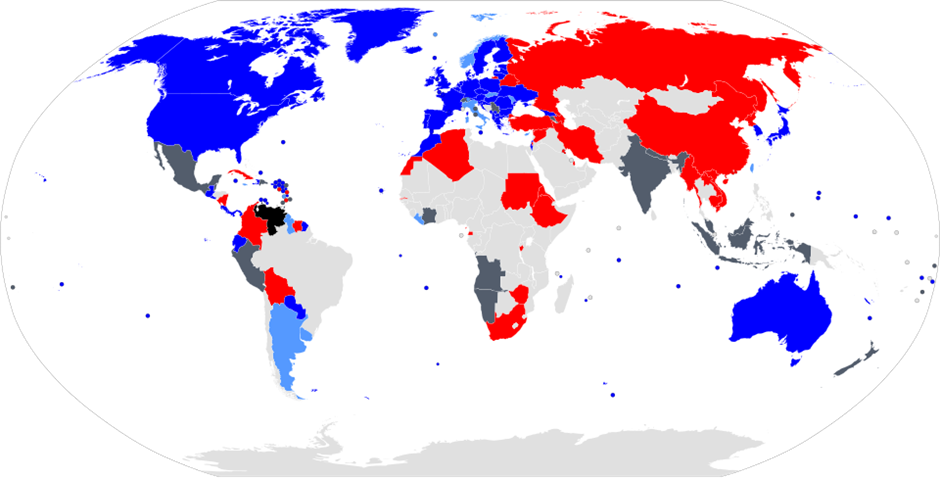
Between 2019 and 2023, Venezuela experienced a political crisis centered on the legitimacy of the country’s presidency, stemming from “irregular” elections that declared Nicolás Maduro the winner. As a result, the Fourth Legislature of the Venezuelan National Assembly — controlled by the opposition — declared Maduro a usurper of the presidency and appointed Juan Guaidó as interim president under Article 233 of the Venezuelan Constitution (León, 2019). Subsequently, the Supreme Tribunal of Justice declared the National Assembly unconstitutional (BBC News Mundo, 2019), as well as Guaidó’s appointment, thereby triggering a political crisis that would persist until 2023. During this period, Maduro and Guaidó governed in parallel. Guaidó’s government was recognized by the United States, Australia, Brazil, Argentina, Colombia, and several European countries and international organizations, while Maduro’s government was recognized by Cuba, Nicaragua, Bolivia, Vietnam, Turkey, Iran, Russia, China, and South Africa, among others. Countries such as Mexico, New Zealand, India, and Indonesia remained neutral.
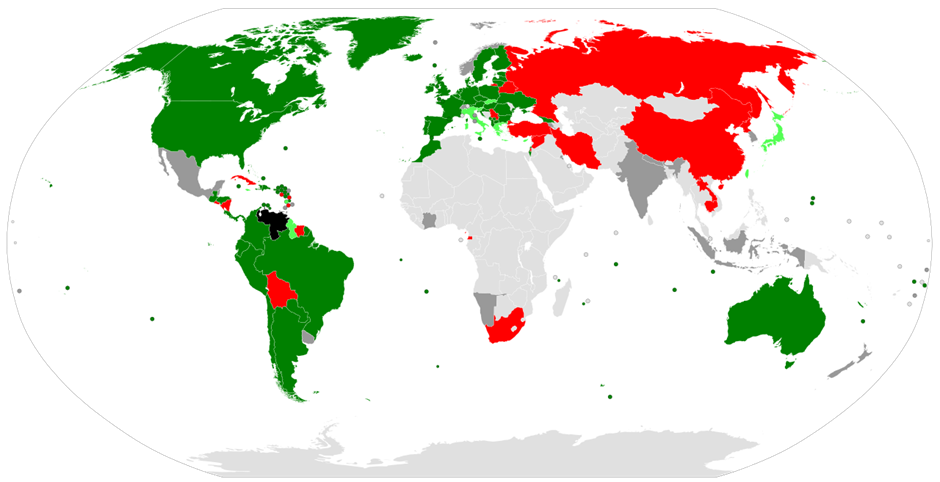
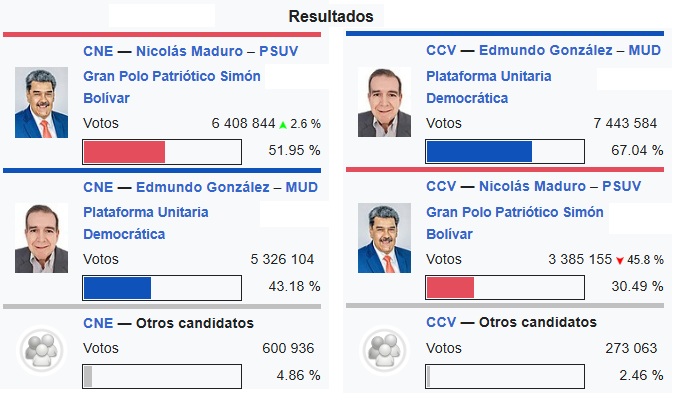
The crisis lasted for nearly four years and was marked by economic sanctions, social unrest, widespread public dissatisfaction, the COVID-19 pandemic, and a dialogue between opposition parties and the Maduro government that ultimately culminated in the signing of the Barbados Agreement. In the end, Guaidó’s interim government — despite enjoying broader international backing — failed to achieve its initially stated objectives, and the National Assembly formally dissolved it in January 2023. The Barbados Agreement (International Crisis Group, 2023) — signed in 2023 between the Venezuelan government and the opposition with the aim of guaranteeing electoral safeguards and political rights, as well as protecting national interests — paved the way for presidential elections held on July 28, 2024. However, both the outcome of the elections and the way they were conducted gave rise to allegations of irregularities and electoral fraud (Infobae, 2024; Singer, 2024; Gómez Forero, 2024; Diario Las Américas, 2024). According to the National Electoral Council (CNE), Maduro won the election with 51.95%, while Edmundo González received 43.18%. By contrast, the opposition platform Comando Con Venezuela (CCV) released results claiming González won with 67.05%, compared to 30.49% for Maduro. It is important to note that González ran as the opposition candidate after María Corina Machado, an opposition leader and 2025 Nobel Peace Prize laureate, was barred from participating in the election.
As of now, Maduro remains in power in Venezuela. González, meanwhile, is exiled in Spain and has been recognized as the winner or president-elect by Argentina, Costa Rica, Italy, Ecuador, the United States, Canada, the United Kingdom, Japan, Germany, France, Israel, among others.
Diplomatic relations between the United States and Venezuela have steadily deteriorated since Hugo Chávez — who governed Venezuela with an anti-imperialist and socialist discourse — was president. From Chávez’s tenure through the 2019 presidential crisis, the United States imposed economic sanctions on Venezuela, and bilateral relations experienced periodic fluctuations. However, beginning in 2019, relations worsened significantly, culminating in a formal rupture initiated by Venezuela. President Nicolás Maduro severed diplomatic ties with the United States after Donald Trump, during his first term, recognized Juan Guaidó as interim president (CNBC, 2019). Although the National Assembly later dissolved the interim government, the United States did not recognize Maduro. At present, relations between the two countries are critical. With Trump’s return to the White House, the already minimal level of interaction has shifted toward threats, warnings, and displays of power, including a military deployment described by Trump as “the largest armada ever assembled in the history of South America” (Maher & Liptak, 2025). This escalation has been justified — or framed — by the Trump administration as part of an effort to protect U.S. citizens from drug flows originating in countries such as Mexico, Colombia, and Venezuela. As part of its broader campaign against drug trafficking, Trump has also designated certain organized crime groups as terrorist organizations (The White House, 2025). Among these newly designated groups — relevant to this analysis—are the Tren de Aragua gang (Knickmeyer, 2025) and the Cartel of the Suns (Cártel de los Soles) (Wells & Blasey, 2025; InSight Crime, 2025). Senior U.S. officials, including Secretary of State Marco Rubio, have accused Nicolás Maduro of being the leader of the Cartel of the Suns (Savage, 2025). The U.S. Department of State has even offered a reward of up to $50 million for information leading to Maduro’s arrest (U.S. Department of State, 2025). Maduro, for his part, has denied all such accusations and alleged ties.
The threats and actions carried out in recent months between the United States and Venezuela have culminated in an unprecedented U.S. military deployment in the Caribbean Sea. The United States has mobilized up to 15,000 troops in the region, in addition to reinforcements and personnel stationed in Puerto Rico. The arrival of the aircraft carrier USS Gerald R. Ford alongside the USS Iwo Jima, as well as warships, destroyers, submarines, fighter jets, bombers, helicopters, drones, and other military assets, has further reinforced the U.S. military presence in the Caribbean Sea (Ellis, U.S. Army War College, & The Conversation Digital Storytelling Team, 2025). Alongside this military buildup, the United States launched Operation Southern Spear, aimed at deterring Venezuela and targeting alleged drug-trafficking speedboats in international waters. From the start of these attacks in early September through December 16, 2025, 25 attacks had been recorded, resulting in at least 95 deaths (Muñoz Morillo, 2025). The U.S. military deployment in the Caribbean has been supported by Trinidad and Tobago. The United States and Trinidad and Tobago have conducted joint training exercises and military drills in the region over recent months (Infobae, 2025), and Trinidad and Tobago has also agreed to allow U.S. military aircraft to transit through its airports (Rios, 2025). Venezuela responded by suspending a joint gas agreement and declaring Trinidad and Tobago’s Prime Minister, Kamla Persad-Bissessar, persona non grata (DW News, 2025). For its part, Venezuela has mobilized approximately 200,000 military personnel, civilians, and militia members in large-scale exercises and has deployed 5,000 Igla missiles (Sliwinski, 2025). The Venezuelan government has also urged preparations for guerrilla warfare, sabotage, and social destabilization to render the country ungovernable (Reuters, 2025) — a strategy that may be viewed as the most effective response given the asymmetry between the two sides. Maduro further warned that Venezuela would not become the “Gaza of South America”, while proclaiming a message of “peace, life, and love — no to hatred, no to war” (Swissinfo.ch, 2025). Maduro has likewise turned to international organizations such as the United Nations, as well as regional bodies including CELAC and ALBA, to denounce the escalation of tensions in the region. He has even called for Colombian military support in light of the critical situation in the Caribbean (El Colombiano, 2025). However, recent polarization in Latin America has been reflected in the responses. Lula (Brazil) and Petro (Colombia) have applied the strongest pressure regarding regional destabilization, while Mexico, maintaining an ambiguous neutrality, has taken a more cautious stance, emphasizing sovereignty and self-determination. On the opposite end of the spectrum, Argentina, Ecuador, Paraguay, El Salvador, Costa Rica, and Trinidad and Tobago have aligned with the U.S. position (Rivas Molina, Galarraga Gortázar, Marcial Pérez, & Esteban Lewin, 2025). Finally, outside the region, Russia (OIR-MPPCI Cojedes, 2025) — one of the main suppliers of arms and military equipment to the Bolivarian National Armed Forces — along with Iran (Sputnik, 2025) and China (Revista Economía, 2025), all allies of Venezuela, have expressed various forms of support for the South American country, though their rhetoric has focused primarily on concerns over what the U.S. military deployment and harassment could trigger in the region.
All of the above brings together the necessary elements to consider the possibility of an invasion or a declaration of war by the United States against Venezuela, and such possibilities clearly exist. However, there are key factors that, for now, would prevent the outbreak of a new war. Regardless of the logistical difficulties involved in a large-scale invasion, the United States lacks a clear casus belli to declare war. Moreover, U.S. domestic politics — particularly the opposition — are not fully convinced that an invasion would be the best course of action. Nonetheless, Trump has shaped and carried out a series of political maneuvers, including economic sanctions, diplomatic pressure, and more recently a total oil blockade (BBC News, 2025), aimed at paving the way for a potential invasion or declaration of war, though so far without success. It is important to note that most of these actions — whether justified or not — such as the designation of cartels as terrorist groups, extrajudicial attacks in international waters against alleged drug-trafficking vessels, the military deployment in the Caribbean, and the seizure of a sanctioned oil tanker (BBC News, 2025), primarily generate heightened expectations of an impending war. In addition, on December 2, 2025, the U.S. government published its National Security Strategy (The White House, 2025). Without delving into details and for the purposes of this article, the strategy seeks to maintain the United States as a global power — while acknowledging the rise of China — and to consolidate U.S. dominance over the “Western Hemisphere” by controlling the American continent, establishing a supremacy-based relationship with aligned European countries, and ensuring that neither the European Union nor any other bloc emerges as an alternative center of power (González Posso, 2025).
At this point, the reasons behind the escalation of tensions between Venezuela and the United States may not appear entirely clear, although they are hardly surprising and can be understood considering the divergent worldviews held by both countries. This sequence of events — fraudulent elections, military deployments, sanctions, and economic blockades — has gradually breathed new life into a pre-existing rupture that had previously remained stagnant. However, as is often the case, there is always a broader underlying context that tends to be overlooked. Venezuela holds the largest proven oil reserves in the world, estimated at around 300 billion barrels, representing approximately 18% of global reserves. It also possesses substantial natural gas reserves and deposits of more than 40 types of minerals and precious stones, including iron, bauxite (aluminum), coal, gold, coltan, diamonds, nickel, zinc, and rare earth elements, among others (Blanco, Rey S., Romero, Rosendo, & Berroterán).
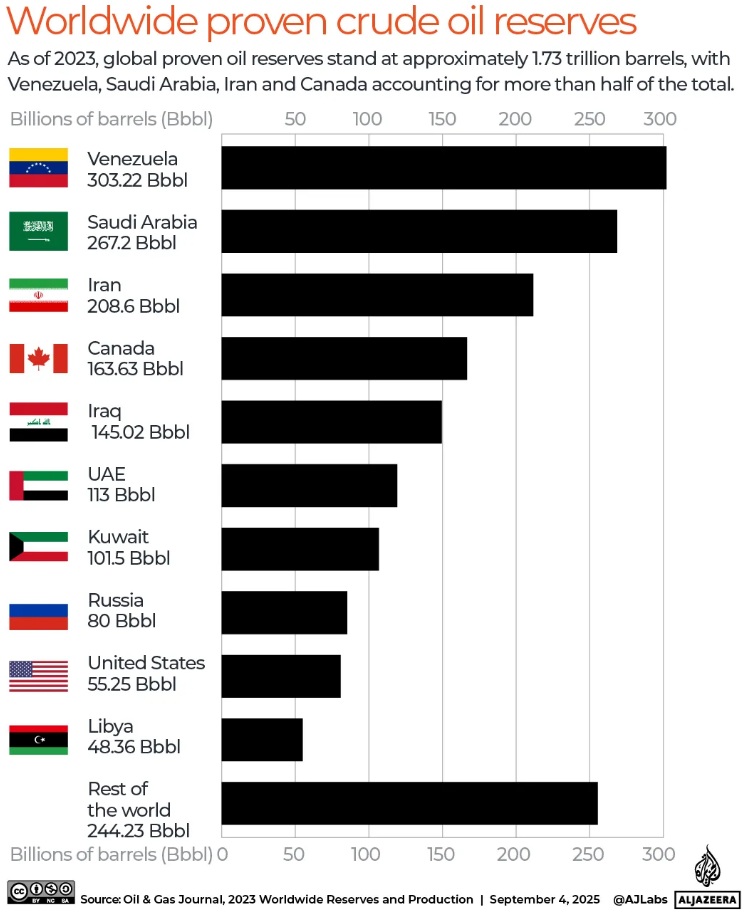
No less significant, Venezuela ranks seventh among the world’s 17 megadiverse countries, hosting roughly 9% of global flora and fauna (Álvarez Bernard, 2022). In addition, Venezuela holds the tenth-largest freshwater reserves globally — approximately 1,233 km³ — and contains an extensive network of rivers and lakes, which are essential for agricultural and livestock activities, supported by fertile soils, as well as for electricity generation and hydroelectric power (Montoya, n.d.). Given Venezuela’s natural resource potential, it is unsurprising that the United States has sought to “recover all the oil, land, and other assets that they previously stole from us,” as Trump wrote on his social media platform, Truth Social (Trump, 2025). Trump’s remark refers to the nationalization of oil projects carried out by Hugo Chávez in 2007, which affected major U.S. oil companies ConocoPhillips and Exxon Mobil (Al Jazeera Staff, 2025). As for a possible regime change in Venezuela, all remains speculative. Maduro continues to hold onto power, or at least presents an image of firmness before the cameras. At the same time, speculation about a potential war or invasion places him in a precarious position, fueling rumors and theories about resignation or exile. What is clear, however, is that U.S. pressure on the Venezuelan government is real. Although Maduro and Trump held a phone call in late November in search of a diplomatic off-ramp, the demands of both sides prevented any agreement. Prior to that call, in September, Maduro sent a letter to Trump seeking to “preserve peace through dialogue” (TRT Español, 2025). One month later, according to The New York Times, Maduro reportedly offered the United States significant participation in Venezuela’s oil fields, while remaining in power — a proposal that displeased U.S. officials and led to the suspension of talks at that time (Haberman & Kurmanaev, 2025).
The situation between Venezuela and the United States is highly significant from a geopolitical perspective. On one hand, the United States appears to be poised and waiting for the green light to launch a potential large-scale invasion. On the other, Maduro, through his characteristic anti-imperialist discourse, is attempting to navigate and prolong the survival of his regime. This is no minor issue. Maduro’s continued hold on power has been widely criticized for its lack of transparency, its numerous irregularities, and even electoral fraud. Nevertheless, the recent escalation of tensions with the United States has worked to his advantage, reinforcing his anti-imperialist rhetoric and strengthening his Bolivarian nationalist narrative. Unfortunately, these recent developments are more likely to further suffocate the Venezuelan population than to consolidate Maduro’s position. Regardless of the underlying causes, Venezuelans have endured years of hardship, and toying with the prospect of war is far from sensible — a reality Maduro himself has implicitly acknowledged by attempting to de-escalate tensions by any available means. However, whether driven by ambition, ideology, or sheer will to power, the simplest exit — stepping down from office — does not appear to be, nor is it likely to become, part of his plans. Thus, while Maduro projects strength domestically and repeatedly calls for peace and rejects war at public rallies, he is experiencing a level of strain whose sustainability remains uncertain. The external pressure exerted by the United States — both diplomatic and in the form of a total economic blockade — is likely, sooner or later, to yield results for Washington. It is important to recall that Venezuela has survived in recent years largely due to oil revenues. With a total blockade focused on that asset, Venezuela’s economic situation would deteriorate further, with potentially severe social and political consequences. In short, the near-term outlook is far from optimistic. As for the United States, it appears ironic and contradictory that Trump — a figure who has boasted of having “ended” seven wars and portrayed himself as a staunch advocate of peace — is now demonstrating the opposite in the Caribbean by deploying the largest naval force seen in the region in years. One could argue that a war has not yet begun and may never materialize, but the very nature of these actions and their consequences cast doubt on his credibility, not to mention the attacks on alleged drug-trafficking vessels in international waters. It is understandable that the deployment of the U.S. naval forces in the region may be intended as an “extreme” form of diplomatic pressure. However, this does not justify — in terms of international relations, even if it might within the framework of U.S. foreign policy — the interference in and violation of Venezuelan sovereignty. Even more concerning is that the very rhetoric so often condemned by Maduro has long been one of the primary tools used by the United States to maintain its influence and intervention in the region since the last century. Nevertheless, the erosion of this approach in the medium and long term could prove costly for the United States. At this stage, as can be observed, drug trafficking and the economic and social crisis have been relegated to the background; they function merely as pretexts. What is truly at stake are national — or personal — interests, influence, and power in a world where the more one possesses, the better. This dynamic is clearly illustrated by the recent support Venezuela has received from Russia and China, which has been largely rhetorical rather than material (Paredes, 2025), in contrast to earlier instances when their backing was direct and tangible. The current situation, although complex, could have been avoided, as its underlying causes have been developing for several years. However, it would be irresponsible to take sides. One cannot defend an “illegitimate government,” nor align with a state that has consistently undermined the sovereignty of others in pursuit of its national interests — an approach that is even explicitly embedded in its national security strategy. International condemnation should be directed at both parties, and while diplomacy should prevail, this case is ironically contradictory, as both actors have operated outside international norms. Against this backdrop, multiple questions arise: What will ultimately happen? Will Maduro step down and negotiate a “democratic” transition? Will the United States invade Venezuela and succeed in overthrowing the Maduro regime? How long will the economic blockade and attacks on alleged drug-trafficking vessels continue? What role will Venezuelan society play, and will the opposition be able to capitalize on this moment? What role will other countries in the region truly assume? Many questions remain unanswered, and the coming weeks are likely to bring significant developments.
Al Jazeera Staff. (17 de December de 2025). Trump aide Stephen Miller suggests Venezuelan oil belongs to US. Obtenido de Al Jazeera: https://www.aljazeera.com/news/2025/12/17/trump-aide-stephen-miller-suggests-venezuelan-oil-belongs-to-us Álvarez Bernard, D. (21 de Enero de 2022). Recursos naturales de Venezuela. Obtenido de Ecología Verde: https://ecologiaverde.elperiodico.com/recursos-naturales-de-venezuela-3609.html BBC News. (10 de Diciembre de 2025). Fuerzas de EE.UU. interceptan y confiscan un buque petrolero sancionado frente a las costas de Venezuela. Obtenido de BBC News: https://www.bbc.com/mundo/articles/c14vp73mk16o BBC News. (17 de Diciembre de 2025). Trump ordena el bloqueo "total y completo" de todos los petroleros sancionados que entren y salgan de Venezuela. Obtenido de BBC News: https://www.bbc.com/mundo/articles/cx2p45d0g2xo BBC News Mundo. (21 de Enero de 2019). El Tribunal Supremo de Justicia de Venezuela declara "inconstitucional" a la Asamblea Nacional y anula el nombramiento de Juan Guaidó como su presidente. Obtenido de BBC News Mundo: https://www.bbc.com/mundo/noticias-america-latina-46952641 Blanco, Á., Rey S., S., Romero, D. E., Rosendo, M., & Berroterán, Z. (s.f.). Influencia de la distribución de los recursos naturales en el desarrollo regional de Venezuela. Universidad Central de Venezuela. Facultad de Humanidades y Educación. Escuela de Geografía., 118. CNBC. (24 de January de 2019). Maduro says Venezuela is breaking relations with US, gives American diplomats 72 hours to leave country. Obtenido de CNBC: https://www.cnbc.com/2019/01/23/venezuela-president-maduro-breaks-relations-with-us-gives-american-diplomats-72-hours-to-leave-country.html Diario Las Américas. (10 de Agosto de 2024). ONG señala que el CNE omitió tres auditorías post electorales en Venezuela. Obtenido de Diario Las Américas: https://www.diariolasamericas.com/america-latina/ong-senala-que-el-cne-omitio-tres-auditorias-post-electorales-venezuela-n5361569 El Colombiano. (18 de Diciembre de 2025). Régimen de Maduro lanza llamado desesperado a Colombia en busca de apoyo militar ante tensión con EE. UU. Obtenido de El Colombiano: https://www.elcolombiano.com/internacional/maduro-pide-ayuda-militar-colombia-tension-ee-uu-EN31879278 Ellis, E., US Army War College, & The Conversation Digital Storytelling Team. (26 de November de 2025). We've tracked the US military build-up in the Caribbean. Here's what it could do. Obtenido de The Conversation: https://stories.theconversation.com/tracking-the-us-military-in-the-caribbean/ Gómez Forero, C. (30 de Julio de 2024). ¿Por qué ver estos decimales ayudaría a hablar de un fraude en Venezuela? Obtenido de El Espectador: https://www.elespectador.com/mundo/elecciones-venezuela-2024/por-que-ver-estos-decimales-nos-ayudaria-a-hablar-de-un-fraude-en-venezuela/?outputType=amp González Posso, C. (7 de Diciembre de 2025). Corolario Trump a la doctrina Monroe: I take west – O la paz por la fuerza –. Obtenido de Indepaz: https://indepaz.org.co/corolario-trump-a-la-doctrina-monroe-i-take-west-o-la-paz-por-la-fuerza/ Haberman, M., & Kurmanaev, A. (2025 de Noviembre de 2025). Trump y Maduro hablaron por teléfono la semana pasada. Obtenido de The New York Times: https://www.nytimes.com/es/2025/11/28/espanol/estados-unidos/trump-maduro-llamada-venezuela.html Infobae. (30 de Julio de 2024). El burdo cálculo matemático en la información oficial que aumenta las sospechas sobre la manipulación de la elección en Venezuela. Obtenido de Infobae: https://www.infobae.com/venezuela/2024/07/30/el-burdo-calculo-matematico-en-la-informacion-oficial-que-aumenta-las-sospechas-sobre-la-manipulacion-de-la-eleccion-en-venezuela/ Infobae. (15 de Diciembre de 2025). Trinidad y Tobago aprobó el uso de sus aeropuertos por aviones militares de Estados Unidos para combatir el narcotráfico. Obtenido de Infobae: https://www.infobae.com/america/america-latina/2025/12/15/trinidad-y-tobago-aprobo-el-uso-de-sus-aeropuertos-por-aviones-militares-de-estados-unidos-para-combatir-el-narcotrafico/ InSight Crime. (22 de September de 2025). Cartel of the Suns. Obtenido de InSight Crime: https://insightcrime.org/venezuela-organized-crime-news/cartel-de-los-soles-profile/ International Crisis Group. (20 de Octubre de 2023). Pacto en Barbados: la ruta sinuosa de Venezuela hacia comicios competitivos. Obtenido de International Crisis Group: https://www.crisisgroup.org/es/latin-america-caribbean/andes/venezuela/barbados-deal-sets-venezuela-rocky-path-competitive-polls Knickmeyer, E. (19 de February de 2025). PBS News. Obtenido de Trump administration designates 8 Latin American cartels as ‘foreign terrorist organizations’: https://www.pbs.org/newshour/politics/trump-administration-designates-8-latin-american-cartels-as-foreign-terrorist-organizations León, I. (11 de Enero de 2019). Efecto Cocuyo. Obtenido de Prensa de la AN rectifica comunicado que proclama a Juan Guaidó Presidente de la República: https://web.archive.org/web/20190702155934/http://efectococuyo.com/principales/prensa-de-la-an-rectifica-comunicado-que-proclama-a-juan-guaido-presidente-de-la-republica/ Maher, K., & Liptak, K. (17 de December de 2025). Trump orders ‘total and complete blockade’ of sanctioned oil tankers coming to and leaving Venezuela. Obtenido de CNN: https://edition.cnn.com/2025/12/16/politics/blockade-venezuela-sanctioned-oil-tankers#:~:text=%E2%80%9CVenezuela%20is%20completely%20surrounded%20by,%2C%E2%80%9D%20Trump%20said%20Tuesday%20night. Montoya, J. D. (s.f.). Recursos naturales de Venezuela. Obtenido de Desarrollo Sustentable: https://www.desarrollosustentable.co/recursos-naturales-de-venezuela/#:~:text=Biodiversidad:%20recursos%20animales%20y%20plantas%20de%20Venezuela,-Aves%20de%20Venezuela&text=Venezuela%20es%20un%20pa%C3%ADs%20con,el%20ave%20nacional%20del%20pa%C3%ADs. Muñoz Morillo, M. (16 de Diciembre de 2025). Un nuevo ataque de EE.UU. contra 3 narcolanchas deja 8 muertos en el Pacífico. Obtenido de Euro News: https://es.euronews.com/2025/12/16/un-nuevo-ataque-de-eeuu-contra-3-narcolanchas-deja-8-muertos-en-el-pacifico Noticias DW. (25 de Noviembre de 2025). Trinidad y Tobago anuncia ejercicios militares con EE. UU. Obtenido de DW: https://www.dw.com/es/trinidad-y-tobago-anuncia-nuevos-ejercicios-militares-con-estados-unidos/a-74755359 OIR-MPPCI COJEDES. (10 de Diciembre de 2025). Rusia considera “especialmente preocupante” tensión en el Caribe. Obtenido de Ciudad Cojedes: https://ciudadcojedes.com/rusia-considera-especialmente-preocupante-tension-en-el-caribe/ Paredes, N. (9 de Diciembre de 2025). Por qué China y Rusia parecen haber abandonado a Nicolás Maduro en plena escalada con EE.UU. Obtenido de BBC News: https://www.bbc.com/mundo/articles/cj97rxlw8zro República Bolivariana de Venezuela. (30 de Diciembre de 1999). Constitución de la República Bolivariana de Venezuela. Obtenido de https://www.oas.org/dil/esp/constitucion_venezuela.pdf Reuters. (12 de November de 2025). Venezuelan military preparing guerrilla response in case of US attack. Obtenido de Reuters: https://www.reuters.com/world/americas/venezuelan-military-preparing-guerrilla-response-case-us-attack-2025-11-11/ Revista Economía. (5 de Noviembre de 2025). China defiende su alianza con Venezuela y critica la presión militar de EE.UU. en el Caribe. Obtenido de Revista Economía: https://www.revistaeconomia.com/china-defiende-su-alianza-con-venezuela-y-critica-la-presion-militar-de-ee-uu-en-el-caribe/ Rios, M. (15 de Diciembrre de 2025). Trinidad y Tobago permitirá el tránsito de aviones militares de EE.UU. por sus aeropuertos; Venezuela toma medidas. Obtenido de CNN Latinoamérica: https://cnnespanol.cnn.com/2025/12/15/latinoamerica/trinidad-y-tobago-transito-de-aviones-militares-eeuu-trax Rivas Molina, F., Galarraga Gortázar, N., Marcial Pérez, D., & Estaban Lewin, J. (18 de Diciembre de 2025). América Latina toma partido ante la amenaza de Estados Unidos a Venezuela. Obtenido de El País: https://elpais.com/america/2025-11-30/america-latina-toma-partido-ante-la-amenaza-de-estados-unidos-a-venezuela.html Savage, C. (18 de Noviembre de 2025). Trump y compañía dicen que Maduro lidera un ‘cártel’. Esto es lo que significa. Obtenido de The New York Times: https://www.nytimes.com/es/2025/11/18/espanol/estados-unidos/trump-cartel-soles-maduro.html Singer, F. (14 de Agosto de 2024). La ONU concluye que las elecciones en Venezuela no cumplieron las medidas “de integridad y transparencia”. Obtenido de El País: https://elpais.com/america/2024-08-14/la-onu-concluye-que-las-elecciones-en-venezuela-no-cumplieron-las-medidas-de-integridad-y-transparencia.html Sliwinski, K. (15 de Diciembre de 2025). El aumento de tensiones en el Caribe: EE.UU. y Venezuela en medio de un complejo regional de seguridad. Obtenido de World & New World Journal: https://worldandnewworld.com/es/eeuu-venezuela-crisis-caribe/ Sputnik. (9 de Diciembre de 2025). Irán expresa su apoyo a Venezuela ante las "provocaciones hostiles" de EEUU. Obtenido de Sputnik: https://noticiaslatam.lat/20251217/mapa-como-avanza-la-operacion-especial-de-rusia-en-ucrania-1126329635.html Swissinfo.ch. (15 de Noviembre de 2025). Maduro dice que Venezuela no será la Gaza de Suramérica en plena tensión con EE.UU. Obtenido de Swissinfo.ch: https://www.swissinfo.ch/spa/maduro-dice-que-venezuela-no-ser%C3%A1-la-gaza-de-suram%C3%A9rica-en-plena-tensi%C3%B3n-con-ee.uu./90337213 The White House. (20 de January de 2025). Designating Cartels And Other Organizations As Foreign Terrorist Organizations And Specially Designated Global Terrorists. Obtenido de The White House: https://www.whitehouse.gov/presidential-actions/2025/01/designating-cartels-and-other-organizations-as-foreign-terrorist-organizations-and-specially-designated-global-terrorists/ The White House. (November de 2025). National Security Strategy of the United States of America. Obtenido de The White House: https://www.whitehouse.gov/wp-content/uploads/2025/12/2025-National-Security-Strategy.pdf TRT Español. (22 de Septiembre de 2025). Carta de Maduro a Trump invita a "preservar paz con diálogo" y rechaza "fake news" de narcotráfico. Obtenido de TRT Español: https://www.trtespanol.com/article/cdae6966f705 Trump, D. (17 de December de 2025). @realDonaldTrump. Obtenido de Truth Social: https://truthsocial.com/@realDonaldTrump/posts/115731908387416458 US Department of State. (7 de August de 2025). Nicolás Maduro Moros. Narcotics Rewards Program: Wanted. Obtenido de US Department of State: https://www.state.gov/nicolas-maduro-moros Wells, I., & Blasey, L. (17 de November de 2025). US to designate Venezuela's Cartel de los Soles as terrorists. Obtenido de BBC: https://www.bbc.com/news/articles/cdxr3w2464eo
First published in :
World & New World Journal

Silence and shadows: The West’s Quiet Stance on Gaza’s Agony
What’s Driving Pakistan-Afghanistan War? Islamabad’s Never-Ending Cycle of Insecurity
Polycrisis in the Indo-Pacific Demands a Stronger Anzac Alliance
‘Destruction is not the same as political success’: US bombing of Iran shows little evidence of endgame strategy
Unlock articles by signing up or logging in.
Become a member for unrestricted reading!