

Defense & Security
The New Constitution of Power: The World Under the Dynamics of Donald Trump
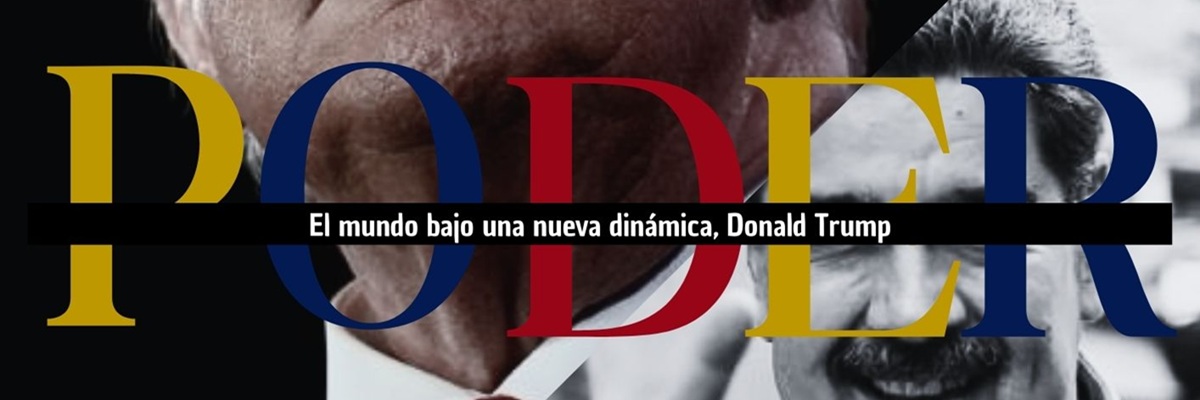
Image Source : Autor: Máximo Gonzalez Cabañas
Subscribe to our weekly newsletters for free
If you want to subscribe to World & New World Newsletter, please enter
your e-mail


 Provider of in-depth & balanced analysis on hot issues around the world
Defense & Security
Image Source : Autor: Máximo Gonzalez Cabañas
First Published in: Jan.19,2026
Jan.19, 2026
Share Article


On January 3, 2026, in a surgical operation in the early hours of the morning, just days after the New Year celebrations, the Delta Force special unit successfully carried out a raid capturing Nicolás Maduro, who had held power uninterruptedly for 13 years. The first images showed him aboard the USS Iwo Jima, being taken to the courts in New York to finally face trial — a scene that, along with the operation itself, will provide Hollywood with material for years to come. We are left to wait and see how long the sentence will take. Beyond the immediate event, the message and worldview it conveys for the rest of the world are far broader and more significant. What happened can be read in multiple ways, beyond the basic explanations of oil, resources, or the threat to the United States. Reality is much more complex, full of twists and intersections that enrich the events. We have an opportunity to see beyond the obvious, to reflect on things even the protagonists themselves may not fully understand. This event invites us, like few others, to reflect on one of the central axes of humanity: power. How is it understood now? How is it interpreted? Is power something one possesses, demonstrates, or enacts? Or perhaps all of the above? We can debate not only these questions but also the legality of Maduro’s overthrow, yet it is also true: what else could have been done? This is where the issue of power comes into play — not only through the act of detention itself, but through the operation designed to remove it. However, underlying this is a fragile topic: the institutions themselves, their weaknesses, and whether they will ever fulfill their function, if they even have one. Both Venezuela and the United States have become central actors in international anarchy, yet the latter, in exercising its power, raises the question of why, while the former is left with the uncertainty of what. Beyond them, one must ask: what happens with the rest? How is the global geopolitical board now positioned? How does this influence other actors, and how does it affect us? Each aspect could merit an in-depth analysis, but the aim of this piece is to open these questions for discussion. To go beyond what happened, to invite thought and debate, and not to let ourselves be swayed by media narratives that seek to extinguish the most human thing we have: our voice.
Since the end of the First World War, and with greater emphasis after the Second, the United States consolidated its global image not only as a great power but as a defender of democratic ideals. During the Cold War, it dispersed its forces to contain the Soviet Union while always ensuring what once again resonates strongly today: the American hemisphere. Years after that bipolar confrontation, the world shows new arrangements. There is no longer direct rivalry with a single power, but the unipolar dominance of the United States seems to have given way. Are we facing a multipolar reality? Do actors have true autonomy in the continuum of political decisions? It is difficult to answer definitively, but the fact is that the capture of Maduro completely changes these perceptions. It is no secret that Venezuela was a historic target sought after by Donald Trump. Ever since he was first president, he tried through various means to remove Maduro; however, now he has succeeded with a shrewdness and forcefulness he lacked in his prior four years. From this arises the first questions for analysis: Why now? Why Venezuela? The speed of the operation is surprising. It is not just the audacity of the command, but the authority with which it was carried out: without calls for interrogation, freely using the instruments of power at Trump’s disposal. The interpretation centered on oil is the most obvious: the president himself does not hide that between 30 and 50 million barrels will be transported to the U.S. But the background is more complex. Facing weak economic foundations in his administration, volatility with the Federal Reserve, and the spectacular failure of his tariff policy against China, Trump needed a show of authority. In his early days in charge, Donald Trump began threatening various countries with tariff increases until April 2, 2025, the so called “Day of Liberation,” on which he announced dozens of taxes. Whether to negotiate or actually implement them, this proved to be a spectacular failure, far from what Trump believed. Not only did he have to renegotiate most of them without securing concessions or beneficial agreements for the United States — with some simply maintaining the status quo — but his main “rival,” China, ended the year in a stronger position. This made two things clear: commercially, China is at least very difficult to match, and Trump lost authority. This authority — or, more precisely, negotiation power and credibility — was lost on the ground and under the rules of agreements and dynamics we believed would prevail from the American side. What Trump did in Venezuela not only enhances his figure and empowers him, but also shows that his comments on social media (the new form of political communication) are serious. He left both allies and enemies in uncertainty: those who believed in his decline because of tariff issues and those who counted on them, because in order to exercise power, he can go beyond what was thought to be “fantastical” or “crazy.” The warnings to Colombia and its president, Gustavo Petro — who, knowing his position of weakness, has already communicated with the White House — as well as to Mexico — where a ground operation against cartels has already been announced and whose president, Sheinbaum, according to Trump, is worried — or Cuba make this evident. But even more striking is his obsession with Greenland: without directly attacking NATO, he frames it as a matter of hemispheric security. All of this is part of the new dynamic imposed by Trump; the one people fear is him and his persona, positioning himself as the figure that even Russia or China watches closely, understanding that, beyond commerce, they have little real influence in the hemisphere. Trump’s ambition for power blossomed at the beginning of this year, and we do not know if it will end. Ignoring Africa, keeping the Middle East and Europe in view, and knowing that beyond Japan or South Korea there is little he can do, he elevates the American continent. In fact, he speaks of a new Monroe Doctrine, rebranded as the “Donroe,” making clear the question of power: how he exercises it and how he now uses it to construct his own narrative. The “why” behind this desire will likely remain unknown; beyond the good of the United States, we are entering a new reality of leaders who place themselves above all else, like Putin in Russia and Xi Jinping in China: figures who shape the board to their liking. Perhaps the reason is more human than we think, perhaps the most human fear: death. From being a successful businessman to becoming president, in his latest term he seeks to leave a mark in history and thus ensure that he does not “die” in a spiritual sense. Or perhaps it is a unilateral decision made at random; the truth only he will know. It cannot be ignored that this is his last term, and in addition to criticism, he is already experiencing electoral setbacks, as in New York, where Zohran Mamdani of the Democratic Party won as mayor, representing a clear challenge to his use of power. Even political scientist Andrés Malamud argued that the Republican base rejects foreign interventions, so Trump must justify to them that this action will bring a concrete economic benefit. The internal dynamics seemingly unfolding within the party between J.D. Vance and Marco Rubio — the architect of the operation — also invite reflection on how this move is being positioned. Rubio emerges as a prominent figure, enhancing his stature, drawing a parallel to Kissinger during the Cold War. In his analysis of classical realism, Rubio acts similarly in a different world: seeking to centralize instruments to build that sphere of influence and diversify the tools that become the American directives for countries in the Americas. Completely leaving aside institutions or democratic legality — a topic I will address later — Donald Trump demonstrates how, under the new dynamics and the new multipolar order, the old artifice of power must still be maintained. As if following Machiavelli, this move makes one thing clear: what he does is, and will remain, Power.
That Maduro was a dictator who perpetuated himself in power through fraudulent actions is a fact. Each person will decide whether he was a good ruler for his people or not; despite cases of corruption or political censorship, making a definitive judgment about his governance inevitably leads to confrontation between those who supported his ideology and those who opposed it. Here, what happened left a vacuum in the Chavista apparatus of the ousted leader. Despite the low standard of living endured by Venezuelans, the reality is that Maduro’s certainty — negative as it was from that perspective — was exactly that: certainty. Delcy Rodríguez, who assumes the presidential role, is a strong figure within Chavismo who has held very important positions within the apparatus and was supposed to constitute a solid axis to confront Donald Trump. Contrary to expectations, she now responds to the U.S. as a partner in the so-called stabilization process, or phase one. An equation that becomes mutually beneficial for both the United States and Rodríguez. For his part, Trump cannot be challenged for directly imposing or controlling Venezuela through any of his men; while it is clear that Caracas now aligns with American interests, aside from Maduro’s removal, the names remain the same: the change occurs in the responsibilities and alignment. Rodríguez herself seeks the same as Trump, but from a subordinate position: power. Here, this new arrangement — or the image projected to the world — is demonstrated once again: that in order to ensure one’s continuity, one is capable of anything, including changing historical positions within a party or reinterpreting theories of betrayal. It is also clear that, in the case of the Venezuelan leader, there are no options, as she is already threatened by Trump with worse consequences. Yet it is evident that the entire apparatus that answered to Maduro complies and collaborates without resistance, at least in practice, to maintain their positions. This image reinforces the idea that there are no values or ideals to uphold — only power to wield. For the people, the worst part remains. From Maduro’s perspective, those who suffered under his rule, while confident that he will face some form of punishment, know that he will not be held accountable for the crimes committed in his own country — or at least not judged for them — but rather for what he did against the United States. This leaves, at least symbolically, a form of penalty — not in legal terms — for the Venezuelan people. The internal situation is also unclear: the apparatus has already begun releasing political prisoners, but it is uncertain how this process will continue. The United States has not issued clear directives for the population, only specifying the concessions that must be made to the nation and how the U.S. will now deal with it and with countries it considers hostile. It remains to be seen whether there will be elections, or whether Edmundo González Urrutia or María Corina Machado will respond to those who declare them winners, despite Trump’s dismissal of them. The return of a clear system is far off, and under the decision and judgment of the United States, the question remains: Does the U.S. truly care about Venezuela and its people, in human and institutional terms? Or do they only respond to material interests, regardless of the power figures involved? There is also an unfinished path in terms of the hemisphere. The Donroe Doctrine no longer guarantees the complete freedom and autonomy of countries within the system; they remain at the mercy of their subservience to the United States, or at least to what the U.S. deems necessary. Events like those in Argentina, where Trump himself claimed that Milei’s legislative victory was thanks to him, or Nasry Asfura in Honduras during the presidential elections, demonstrate that, despite minor gestures, the President of the United States is beginning to pull the strings across the Americas. This shift — or turn — toward the right in the Americas is perhaps less a change in mindset than a product of dependency and the condition of being tied to the United States. Countries like Brazil are the main exception: through their links with other multipolar actors (China, Russia, India, as part of BRICS), they secure at least some autonomy and maneuverability in this process of change. Even with unresolved issues like Cuba or the dictatorship in Nicaragua, there remain theoretical aspects of the Donroe Doctrine to clarify: Who does it apply to? Under what cases? What distinguishes it from its predecessor? What can be said with certainty is that the doctrine fluctuates and evolves according to Trump’s decisions, which may be designed to prepare for a confrontation with other global actors, justifying why the Americas do not ally with China and remain aligned with the United States, creating unity under a single mandate and exercising that power. What remains to be seen are the consequences of Trump’s Greenland issue, which sooner or later will become his next international victory. Tensions with Denmark are already difficult to manage, and Europe is unlikely to oppose U.S. decisions. Trump has stated that he will not dismantle NATO by any means, but considers the lack of control over the island a national security risk. With little economic or resource potential, the issue is more symbolic, as previously discussed: the Donroe Doctrine, national security, and Trump’s ambitions, in addition to the strictly geopolitical concerns and the strategic position it would provide in a confrontation with China or Russia. As the latter is the goal closest to the top of the president’s agenda, time will reveal how events unfold. What is certain is that every aspect, which could be analyzed from a particular lens, is conditioned by Trump — by his logic, perspective, and desires — demonstrating the exercise of his power.
From an international perspective, and positioned on the periphery, what best aligns with the world ahead is what Argentine political scientist Carlos Escudé described with his concept of peripheral realism. The parallels with this theory are clear: we see states that set the rules — in this case, the United States for our hemisphere, but also China within its sphere; states that follow the rules, such as countries that align due to Trump’s influence and end up gravitating toward Washington; and rebellious states, like Venezuela, which paid the price. Faced with the new logics introduced by the U.S. president, Escudé provides a theoretical framework to understand the behavior of countries. He shows how we can, even without full freedom (if Latin America ever truly had it), use our autonomy and take advantage of what a great power can offer. Avoiding confrontations and maintaining “close relations” allows us, even under the oversight of being in their hemisphere, to make progress. Accepting our role as a peripheral actor serves as a starting point to build more domestically than internationally, understanding that we lack sufficient autonomy to set new rules of the game. American scholar John Mearsheimer also offers insight into Trump’s stance, which, together with Escudé’s perspective, clarifies the reasoning behind these events in the system’s anarchy. Mearsheimer’s offensive realism makes it clear that Trump’s proposals on national security and hemispheric defense align with the idea that states only seek security, and the only way to achieve it is by having more power than others. This frames Trump’s logic within the dynamics of a multipolar world. The goal pursued by the United States is the same as Mearsheimer describes: to be the regional hegemon. Uncertainty about what other actors can do represents a threat; therefore, security through power is fundamental, and this power is unlimited: the more, the better. These theories, framed within a realist perspective, define the current international system and will likely describe events to come while the Trump administration is in charge and exercising hard power. Soft power actions, while important in various areas, are set aside, as they cannot match what is gained through the use of hard power. While these situations could be analyzed through other lenses, this analysis is centered on the axis of power. How Trump is handling it creates a scenario that, far from idealism, forces us to operate within realist frameworks. This moves us away from idealized global perspectives and confirms that the system, anarchic as always, functions through power relations — and it is precisely these that the President of the United States is targeting.
Finally, without going into detail — since the topic itself would warrant a full analysis —the role of institutions, both international and democratic, deserves at least a mention. Not only because they form the foundations of what we know as society, but also to reflect on their functionality and effectiveness: are they truly necessary? Should they be modified? On the international side, it is clear that they seem outdated. UN meetings often function merely as spaces for presentations or speeches that lack real results. From its flawed composition to its limited capacity for action, one would not expect years to pass before resolving situations like the recent case in Venezuela. The United States has withdrawn from 66 UN bodies; other countries that do not participate raise the same question: what is the UN really for? Does it need restructuring? How? One might accuse Trump of violating international law regarding the legality of his action, but what can really be said? He addressed a problem in his own way, defending his nation against offenses related to drug trafficking. Which organization could realistically sanction the United States for this move when the UN itself cannot provide solutions to even larger problems? The legality of the act is debatable, but no resolution could realistically be reached; once again, we are left to consider how decisions might be made without producing confrontations in the legal realm, which, rightly or wrongly, operate within the territory of power. Other bodies, such as MERCOSUR — which recently approved its agreement with the European Union after 25 years — demonstrate that essential or basic issues can take decades to resolve. The fragility of NATO regarding Greenland further shows that even in defense organizations, rules are unclear; naturally, interests collide, which has even contributed to conflicts like that between Russia and Ukraine. What remains for these institutions in terms of power and organization if their own interpreters override them? Democracy is also called into question: how can Trump transgress the institutional legal procedures of his country to achieve his goals? Various world leaders celebrate such violations — like Emmanuel Macron, President of France — while supporting Paul Biya’s regime in Cameroon. So, what is truly being defended? What constitutes a dictatorship? What represents a breach of democracy? Rather than speaking strictly of democracy, we could refer to the concept of polyarchy, introduced by American political scientist Robert Dahl. However, even with democracy as an ideal, its meaning loses moral or practical weight when we see that major actions must occur outside institutional channels, and support shifts depending on each actor’s geopolitical convenience. Discussing democracy and international organizations invites broader analyses and alternative proposals, which must go beyond the specific case of Venezuela. But it is worth mentioning them, because they form part of the daily workings of power; although power can override them, these institutions are supposed to act as brakes, yet they lack solid foundations and rely on tools that are themselves imperfect. On the international level, we are left to rethink the role of institutions: do they genuinely act as participants in the system, or are they merely observers with minimal influence? The unfolding of events will show how they develop under the new logics of a multipolar world and how the geopolitical board is configured. Are we witnessing a new paradigm? Should this be understood as an isolated case, or merely as the result of Trump’s actions? Surely Xi Jinping and Vladimir Putin also have their national security ambitions. Outcomes like the conflict in Russia and Ukraine, Middle East tensions, and the fragile or developing institutions in Africa are the key areas to monitor this year. What happened in Venezuela demonstrates that international affairs affect us closely; we are not far removed from these events and must attempt to understand them. The new dynamics of power present different scenarios, which we may never fully know, but one thing is clear: despite everything, history and decisions are ultimately grounded in a single reality —power.
First published in :
World & New World Journal
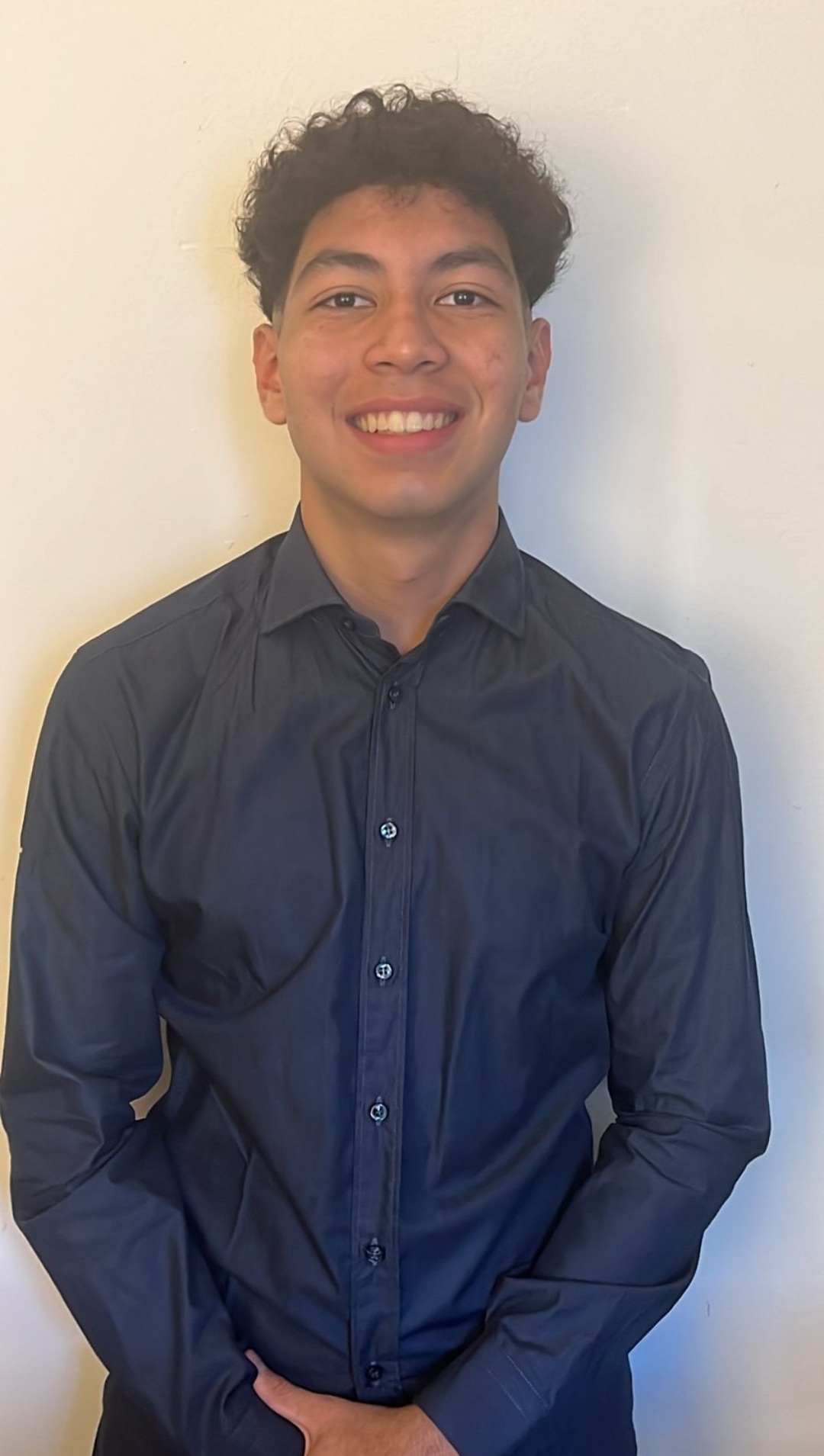
Máximo Gonzalez Cabañas is a student of the Bachelor's degree in International Relations at the University of Belgrano (Autonomous City of Buenos Aires, Argentina). His academic background is complemented by active involvement in event management, including the organization of forums with the diplomatic corps and the university Model United Nations (MONUB). His research interests are broad, ranging from history and political theory to power dynamics in the hemisphere and the foreign policy of major powers.
Silence and shadows: The West’s Quiet Stance on Gaza’s Agony
What’s Driving Pakistan-Afghanistan War? Islamabad’s Never-Ending Cycle of Insecurity
Polycrisis in the Indo-Pacific Demands a Stronger Anzac Alliance
‘Destruction is not the same as political success’: US bombing of Iran shows little evidence of endgame strategy
Unlock articles by signing up or logging in.
Become a member for unrestricted reading!