

Defense & Security
Understanding the Armenia-Azerbaijan conflict. For the first time in centuries, there are no Armenians left in Artsakh.
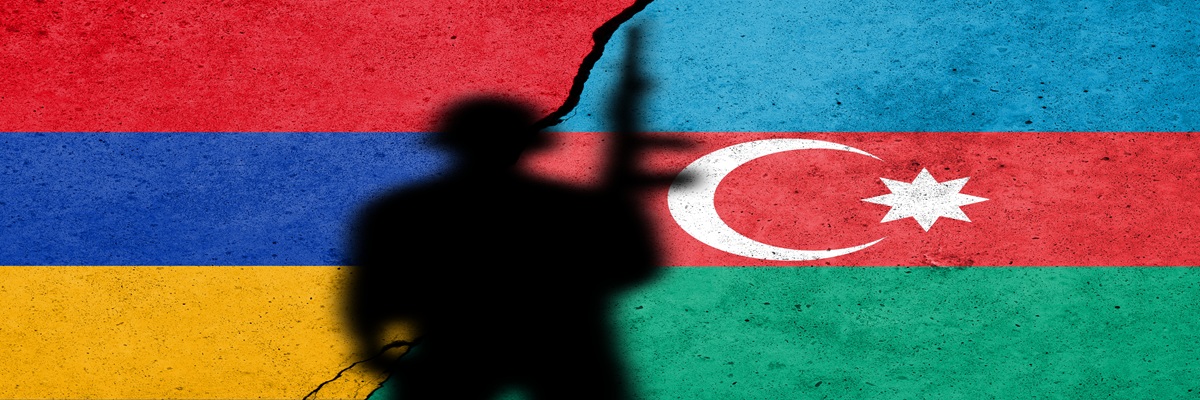
Image Source : Shutterstock
Subscribe to our weekly newsletters for free
If you want to subscribe to World & New World Newsletter, please enter
your e-mail


 Provider of in-depth & balanced analysis on hot issues around the world
Defense & Security
Image Source : Shutterstock
First Published in: Mar.02,2026
Mar.02, 2026
Share Article


In the early 1920s Artsakh (Nagorno-Karabakh), where the overwhelming majority of the population consisted of indigenous Armenians, was annexed to the Azerbaijan SSR. This ultimately led to Artsakh attempting to unite with Armenia in the late 1980s as the Soviet Union began to collapse. The region's Armenian people, facing anti-Armenian pogroms in Azerbaijan, decisively voted to declare their independence from the country. This led to the outbreak of the First Nagorno-Karabakh War in 1988 between the majority ethnic Armenians of Nagorno-Karabakh backed by Armenia, and the Republic of Azerbaijan with support from Turkey. Following thousands of deaths and more than a million displaced people, the war ended in a ceasefire in 1994 with Turkey, a nation that still denies the Armenian Genocide, supporting Azerbaijan and Nagorno-Karabakh. Battles broke up again in 2016, and it concluded in a 44-day war in 2020 that led to Azerbaijan annexing a significant portion of the area along with seven neighboring districts.
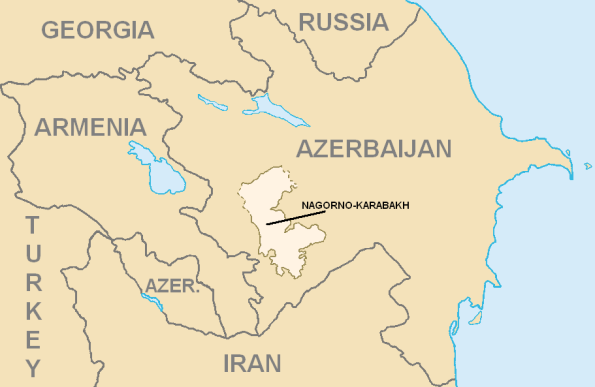
Artsakh, in terms of geopolitics, has a long and complex history, dating several centuries back. Artsakh is celebrated for its strong Armenian cultural and religious identity. It has been a part of the Kingdom of Armenia since at least the 5th century BCE. Through several eras, including the semi-autonomous Armenian states, it remained an integral part of Armenian identity. Artsakh is directly related to Siunik and Utik, its bordering regions, linguistically and ethnographically. One of the earliest known Armenian dialects is the one spoken in Artsakh. In the 7th century AD, the grammarian Stephanos Siunetzi wrote the earliest account of it. (c. NKRUSA) In the early 1800s the Russian Empire annexed the Artsakh region which ended up bringing significant political and demographic changes. The term “Karabakh”, which is a Turkic version of the Persian name for the area, Bagh-e-Siah (meaning “Black Garden”), is frequently used to refer to Artsakh. This phrase is a portion of “Nagorno Karabakh”, which is a simplified version of the Soviet term “Autonomous Region of Mountainous [“Nagorniy” (Нагорный)] Karabakh,” which refers to the Armenian autonomy of Artsakh situated within the Soviet Republic of Azerbaijan of the USSR. (c. NKRUSA) This historical context is crucial in understanding the deep-seated nationalistic and cultural motivations behind the current conflict between Armenia and Azerbaijan over Nagorno-Karabakh. The ancient and medieval Armenian presence in Artsakh is central to Armenia's historical claim to the region.
How is the Armenian Genocide of 1915 tied to this conflict and how does it play into the mutual disdain between Armenians and Azerbaijanis to this day? The majority of Armenians worldwide are the great-grandchildren and grandchildren of those who survived the 1915 Genocide, and they are witnessing another instance of history as Turkey and Azerbaijan repeatedly massacre and drive out Armenians from regions where they have lived for thousands of years. Furthermore, there is a clear link between the Young Turks' swiftly assembled republic of Azerbaijan in 1918 and the Ottoman Empire of 1915, which sought to establish a presence in the Caucasus. The Young Turks advocated a pan-Turkic philosophy that aims to unite all Turkic peoples from Turkey to Kazakhstan via Azerbaijan, forming a large empire. The president of Turkey at the moment is pro Pan-Turkism. (c. Rajat Ghai, 2023) Perhaps one of the most disrespectful and heartbreaking evidences of the anti-Armenian narrative is the renaming of one of the streets in Stepanakert, the capital of Nagorno-Karabakh, in ‘honor’ of Enver Pasha, one of the main perpetrators of the Armenian Genocide, who was probably the most anti-Armenian official at the time. Following the 1917 Russian Revolution, the Democratic Republics of Armenia and Azerbaijan were established in 1918. The status of Nagorno-Karabakh (Artsakh) became a disputed territory, with claims from both Armenia and Azerbaijan. In 1923, following the formation of the Soviet Union, and Armenia-Azerbaijani wars over this disputed land, Joseph Stalin declared that Nagorno-Karabakh would become an autonomous region within the borders of Azerbaijan SSR. (c. Bulut, 2023). Despite being a part of Azerbaijan, the majority of the population and the cultural identity of the region remained Armenian. For decades, Azerbaijani forces have attempted to control Armenians and force them to recognize Azerbaijani sovereignty through massacres, blockades, and ultimatums. When the Armenians of Artsakh wanted to exercise their right to self-determination, they were confronted with pogroms in Azerbaijan that resulted in the cruel death of Armenians and the theft of their belongings. These pogroms had the intention of frightening Artsakh's Armenian population into leaving or submitting, despite the fact that they had lived there for centuries and had developed and continuously defended their national sovereignty, which was vital to Armenian history. “The first victims of Azerbaijan’s policy to suppress the will of the people of Artsakh were the Armenians of the Azerbaijani city of Sumgait located several hundred kilometers away from Artsakh.” (c. Bulut, 2023) As the Soviet Union started to fall apart in the late 1980s, tensions increased. Violent encounters between Armenians and Azerbaijanis resulted from the Armenian population of Nagorno-Karabakh's desire for unification with Armenia.
The first Nagorno-Karabakh War (1988–1994): After the USSR collapsed, Armenia and Azerbaijan launched a full-scale war over Nagorno-Karabakh. Armenia finally took control of Nagorno-Karabakh and a number of its neighboring areas by 1994. The area remained in a state of frozen war despite the establishment of a ceasefire but no peace treaty was signed. The second Nagorno-Karabakh War (2020): Six weeks of fighting ensued after reopening of hostilities in September 2020. Turkey and Israel provided major military assistance to Azerbaijan in order for it to retake control of portions of Nagorno-Karabakh and the surrounding areas. A ceasefire mediated by Russia brought the war to an end in November 2020, changing the map significantly and deploying Russian peacekeepers. Nevertheless, the military aggression by Azerbaijan on Armenians hasn't stopped. Azerbaijan and its ally, Turkey, started blockading Artsakh and its citizens (est. 130,000) in December 12, 2022. The Republic of Armenia's former human rights defender, Arman Tatoyan, reported that Artsakh had been without electricity since January 9. There hadn't been any gas since March 21 and no humanitarian help (including food) since June 15. (c. Bulut, 2023) This blockade persisted despite an internationally recognized court order from February 22, 2023, which guarantees the unhindered flow of people, cars, and goods along the Lachin Corridor in both directions, and lasted for 9 months. The forced displacement of Armeanians (2023): Over 100,000 ethnic Armenians left the Republic of Nagorno-Karabakh in the last few days of September 2023 and fled into neighboring Armenia. As has been well documented, the mass escape occurred as a result of Azerbaijan subjecting the Armenian population of Nagorno-Karabakh to a 24-hour period of intense bombing, preceded by a 10-month long blockade and forced starvation, all of which led to the authorities of Nagorno-Karabakh to surrender. Before the occupation, indigenous Armenians had lived in the Nagorno-Karabakh territory for millennia. It is currently estimated by the UN that there are only 50 Armenians remaining. To this day, hundreds of Armenian cultural sites throughout Artsakh are at the risk of being destroyed or appropriated now that Azerbaijan has complete control over Artsakh or Nagorno-Karabakh. Some have already been destroyed or are currently being ‘restored’, as the Azerbaijani government refers to the erasure of their Armenian identity. “Despite the scale and severity of the damages, the erasure of Armenian cultural patrimony by Azerbaijan remains woefully under-reported, in large part due to the regime’s crackdown on independent journalists.” (Nayyar, 2024)
The core of Armenia and Russia's military cooperation has been their membership in the Joint CIS Air Defense System and the same military alliance (CSTO). However, due to the continuous tensions between Putin and Pashinyan, Russia appeared to be hesitant to publicly help Armenia in the Second Nagorno-Karabakh War (2020). Criticism of CSTO membership grew within Armenian political circles when the CSTO mission chose a rather uncertain stance in the conflict. Armen Grigoryan, the secretary of the Security Council of Armenia, even stated that he no longer saw any hope for the CSTO. Pashinyan said that Russian peacekeepers sent to uphold the cease-fire agreement were not doing their duties. He also stated that Armenia is attempting to broaden its security partnerships. (c. France 24, 2026) Armenia has withdrawn from a regional security agreement with Russia, stating that Moscow failed to support it in its conflict with Azerbaijan. In recent years, Armenia has taken steps to strengthen ties with the US and the EU while suspending its membership in the Moscow-led Collective Security Treaty Organization. However, there are still strong cultural, linguistic, and economic links to Russia; as is the case with every other former Soviet country.
IranIn September 2022, the Iranian foreign minister emphasized that the Iran-Armenia border must not change amid the recurring border tension between Azerbaijan and Armenia. In a meeting with Armenia's Prime Minister Nikol Pashinyan in May 2024, Iran's Supreme Leader Ali Khameri highlighted Iran's opposition to any border changes in the South Caucasus. After the conflict between Armenia and Azerbaijan in 2024, Armenia and Iran increased their military relations and discussed a potential $500 million arms deal. (c. Sayeh, 2025)
Azerbaijan's longtime ally Turkey sees Armenia as one of its primary regional enemies. That is evident in Turkish President Recep Tayyip Erdogan’s statement in 2023: “We support the steps taken by Azerbaijan – with whom we act together with the motto of one nation, two states – to defend its territorial integrity”. (c. Al Jazeera, 2023) In addition to military equipment, Turkish assistance takes the form of direct advisors, joint training, and perpetual diplomatic support. Turkey has previously supported Azerbaijan in all regional and global events. However, Turkey's position evolved to one that was more proactive, forceful, and involved by the beginning of the Second Karabakh War. (c. Villar, 2025)
IsraelIsrael serves as Azerbaijan's primary supplier of advanced arms, including intelligence technologies, artillery systems, and Heron and Harop drones. These supplies were significant in the conflicts of 2016 and 2020, where Azerbaijani forces had technological advantage. In exchange, Israel receives intelligence cooperation regarding Iranian operations and general access to an area close to Iran. Additionally, about 40% of Israel's oil demands are met by hydrocarbons from Azerbaijan, making it an essential source for them. (c. Villar, 2025)
RussiaFrom 2022 to 2024, relations between Russia and Azerbaijan were at their strongest. The Declaration on Allied Interaction was signed in February 2022, which enhanced relations between both countries. Azerbaijan's president Ilham Aliyev realized that in order to accomplish Azerbaijan's regional goals of gaining control of Nagorno-Karabakh without the Russian peacekeepers and opening the so-called “Zangezur corridor”, he needed to improve ties with Russian President Vladimir Putin. Russia's recognition of Azerbaijan's territorial integrity was the most significant aspect of the Declaration for Baku. In 2024 Russian peacekeepers withdrew from Nagorno-Karabakh entirely. (c. APRI Armenia, 2025)
Iran's territorial integrity is threatened by the Turkish-Azerbaijani cooperation, according to Iran's political and military leaders. Citing remarks from Turkish and Azerbaijani officials as well as media that support the ‘liberation’ of so-called ‘Southern Azerbaijan’ – which refers to Iran's northwestern provinces with an Azerbaijani majority – the Iranian government has accused both countries of inciting “separatist movements” among Iran's Azerbaijani population. Iran's worries have been increased by what they call “historical distortion” in Azerbaijan's educational system, which promotes expansionist narratives to younger generations by speaking of a ‘Greater Azerbaijan’ that includes territory within Iran. (c. Villar, 2025)
“I saw that governments would make grand statements about morality and do nothing. I saw that they would try to take advantage of the unrest in the Caucasus in order to further their own ideological agendas. I saw that it would be the people, my people, the Armenians of Artsakh, who would suffer.” (c. Arslan, 2023) While EU officials and lawmakers have expressed their ‘concerns’ and made vocal statements of sympathy with the people of Nagorno-Karabakh since December, none of the EU's member states or heads of state have attempted to advocate for involvement in Azerbaijan for the protection of the Nagorno-Karabakh population. According to French MEP François-Xavier Bellamy, the EU's decision on Nagorno-Karabakh is turning into a matter between the Parliament and the Commission. The Parliament has voted in favor of imposing sanctions on Azerbaijan, but the European Commission has chosen not to follow through. Ursula von der Leyen, President of the European Commission, traveled to the city of Azerbaijan in July 2022 to announce the deal doubling Azerbaijan's gas imports into the EU. She said that the European Union made the decision to loosen its ties with Russia in favor of more dependable, trustworthy allies like Azerbaijan. She stated: “The European Union is committed to a secure, stable and prosperous South Caucasus”. Azerbaijan has a history of war crimes, violations of human rights, and is ranked very low on freedom indexes. It is also the biggest destabilizer in the South Caucasus. “Azerbaijan exported more than €21bn of gas to countries in the EU between January 2022 and the end of November 2023, according to Eurostat data obtained by openDemocracy. Armenia’s Human Rights Ombudsman’s office made more than 130 public statements warning of threats to ethnic Armenians caused by Azerbaijani military actions in the 18 months before the MoU was signed. Estonian MEP Marina Kaljurand, who heads the Parliament’s delegation for relations with the South Caucasus, told openDemocracy that the commission had “traded EU values for gas”.” (c. Martirosyan & Sargsyan, 2024) The hypocrisy of the European Union is astounding, as they are well aware of the ethnic cleansing that Azerbaijan intends to inflict on Armenians of Nagorno-Karabakh. The idea that the European Union is in decline because of its disregard for morality comes from the EU's decision to support authoritarian governments, such as Azerbaijan and Israel, that are determined to erase Armenians and Palestinians rather than advancing peace and justice.
Although a wave of refugees from the Karabakh war in 2020 was taken in by Armenia, the problem is far more serious. Yerevan is facing pressure not only from its citizens, but also Karabakh Armenians who are unsure of their future and are pulling together the pieces of an integration plan. Azerbaijan had made it clear by openly announcing their intent to annex the Armenian region of Syunik in order to establish an oil pipeline that would link its borders with Turkey, furthering their century-long plan of pan-Turkism. Anti-armenian sentiment has grown into a dominant ideology in Azerbaijan. It rejects any and all claims made by other ethnic groups and civilizations to their territories. It ignores the facts of history. Yerevan, the capital of Armenia, is frequently referred to as an Azerbaijani city by Azerbaijani academics and media. “Baku might want to capitalize on the depopulating of Nagorno-Karabakh with a swift military movement across Armenian territory to control access to Nakhchivan, an exclave region of Azerbaijan bordering Iran. But now that Armenia is poised to join the ICC, Azerbaijan’s political and military leaders would likely risk investigation by the ICC prosecutor of the crime of aggression. That may explain the Armenian Parliament’s rapid move to ratify the Rome Statute – to address not only the fate of ethnic Armenians but to deter any Azerbaijani aggression across its territory.” (c. Scheffer, 2023)
Under US guidance, Azerbaijan and Armenia signed a peace deal in the beginning of August 2025. The White House declared it historic, and Western media quickly reported that a decades-long dispute had finally been resolved as a result of U.S. President Donald Trump's intervention. But is that really the truth? The United States' involvement in the proposed Zangezur corridor has been criticized by Iran and Russia as an incursion. The peace agreement's failure to address the right of return for former ethnic Armenians who fled Nagorno-Karabakh due to Azerbaijan's nine-month military siege and offensive has also drawn criticism from observers. While the agreement secures the road linking Armenia and the Nagorno-Karabakh region, it is crucial to note that it gives the United States the right to manage and develop the corridor for 99 years. The US would sublease the property to a consortium that would build rail, oil, gas, and fiber optic lines in addition to potentially transmitting electricity along the 43km corridor. This further proves that the true intention behind this initiative was to gain more control by reducing the influence of Russia and Iran in the region. After the parties decided on the agreement form, Azerbaijan stated that before Armenia would sign, it needed to meet two additional demands. First: Baku wanted the two nations to jointly petition the OSCE to abolish the Minsk Group. The issue over “Nagorno-Karabakh”, which Baku interprets as the period of Armenian control, is the focus of the Minsk Group's 1995 mission, which Azerbaijan finds objectionable. The two signed a letter requesting that the OSCE shut down the Minsk Group, fulfilling that demand. The second one was far more concerning, which is Azerbaijan's demand that Armenia change its constitution. Officials from Azerbaijan say they want peace, but only if Armenia gives up its territorial claims. They reject claims that the demand for a constitutional change is unreasonable. The power ultimately stays with Azerbaijan once again. The executive director of the Armenian National Committee of America, Aram Hamparian, stated that “normalizing ethnic cleansing is not peace” and believed that the agreement was based on the erasure of Nagorno-Karabakh, the abandonment of holy sites, the disregard for hostages, and the strengthening of Azerbaijani occupation. The signing of the peace deal left the majority of Armenians in dismay. The general consensus is that the Armenian PM Nikol Pashinyan has betrayed the people of Armenia and Artsakh, and that there should be no peace without justice.
Peace does not always mean that there is no military conflicts. Aliyev hasn't completely stopped using hostile language toward Armenia. Azerbaijani leaders are emphasizing more and more that the war has ended. However, the president enthusiastically promoted the idea of “Western Azerbaijan” at a speech he gave in November. The normalization effort continues amid the fact that state media and elites, including Aliyev, continue to use anti-Armenian rhetoric for home audiences. Approximately 200 square kilometers of internationally recognized Armenian land are still occupied by Azerbaijan, which they acquired during their offensives in 2022. It is essential for Armenia's future administration to seek justice. In order to foster lasting peace, the first step is recognizing history. The fact that even Adolf Hitler admitted the massacre in 1939 makes the demand for greater acknowledgment all the more urgent. The Armenian Genocide served as a model for what he was about to achieve in Poland: “I have placed my death-head formations in readiness – for the present only in the East – with orders to them to send to death mercilessly and without compassion, men, women, and children of Polish derivation and language. Only thus shall we gain the living space (lebensraum) which we need. Who, after all, speaks today of the annihilation of the Armenians?” Polish-Jewish lawyer Raphael Lemkin coined the term “genocide” in 1943-1944 to refer to the deliberate annihilation of peoples. After hearing about the trial of Soghomon Tehlirian in 1921, who killed a major perpetrator of the Armenian Genocide, he started studying mass exterminations. The term was developed to describe the mass atrocities against Armenians in order to define the Holocaust. The word itself would not exist without the Armenian Genocide, and yet, it is officially recognized by just 35 nations. Not enough people are prepared to stand up for victims and potential victims; too many would be happy to complete what was begun in the 1910s and ignore the Armenian people in the name of Turkish nationalism. If there is another threat of genocidal intent against Armenia and its people, we cannot and we must not turn a blind eye.
Acknowledgements: This article would not have been possible without the guidance and encouragement of prof. Catherine Gallagher, as well as the continuous support of Aloui Nazek Elmalaika.N/D, N. (n.d.). Nagorno Karabakh (artsakh): Historical and geographical perspectives. Nagorno Karabakh (Artsakh): Historical and Geographical Perspectives. http://www.nkrusa.org/country_profile/history.shtml Bulut, U. (2023, August 2). Armenians of Artsakh: An indigenous nation targeted by genocidal regional powers. Modern Diplomacy. https://moderndiplomacy.eu/2023/08/03/armenians-of-artsakh-an-indigenous-nation-targeted-by-genocidal-regional-powers/ Nayyar, R. (2024, June 6). Azerbaijan’s destruction of Armenian heritage in Artsakh continues unabated. Hyperallergic. https://hyperallergic.com/920367/azerbaijan-destruction-of-armenian-heritage-in-artsakh-continues-unabated/ Ghai, R. (2023, October 7). Nagorno-Karabakh brings back painful memories of 1915 for Armenians globally: Avedis Hadjian. Down To Earth. https://www.downtoearth.org.in/interviews/governance/nagorno-karabakh-brings-back-painful-memories-of-1915-for-armenians-globally-avedis-hadjian-92178 Klonowiecka-Milart, A., & Paylan, S. (2023, October 31). Forced displacement of Armenians from Nagorno-Karabakh: A response. Opinio Juris. https://opiniojuris.org/2023/11/06/forced-displacement-of-armenians-from-nagorno-karabakh-a-response/ Vartanian, V. (2023, August 21). EU hypocrisy on Azerbaijan deafening - the Armenian mirror. Spectator. https://mirrorspectator.com/2023/08/19/eu-hypocrisy-on-azerbaijan-deafening/ Martirosyan, L., & Sargsyan, S. (2024, January 30). EU & Azerbaijan: Business as usual amid “ethnic cleansing.” openDemocracy. https://www.opendemocracy.net/en/eu-armenia-refugee-war-azerbaijan-gas-energy-russia-security-rights/ Arslan, A. (2023, November 20). Europe has failed Armenia: Antonia Arslan. First Things. https://www.firstthings.com/web-exclusives/2023/11/europe-has-failed-armenia Scheffer, D. J. (2023, October 4). Ethnic cleansing is happening in Nagorno-Karabakh. How can the world respond?. Council on Foreign Relations. https://www.cfr.org/article/ethnic-cleansing-happening-nagorno-karabakh-how-can-world-respond Meduza. (2025b, August 11). The deal that wasn’t. Meduza. https://meduza.io/en/feature/2025/08/11/the-deal-that-wasn-t Ishaan Tharoor. (2025, August 8). Before Gaza’s woe, there was Nagorno-Karabakh. The Washington Post. https://www.washingtonpost.com/world/2025/08/08/gaza-israel-trump-nagorno-karabakh-peace/ Xarici İşlər Nazirliyi | XİN. (n.d.). Xarici Islər Nazirliyi | XİN. https://mfa.gov.az/en/category/regional-organisations/relations-between-azerbaijan-and-european-union Villar, X. (2025, December 14). The strategic triangle: Azerbaijan, Israel and Turkey in the new Caucasus order. The Armenian Weekly. https://armenianweekly.com/2025/12/14/the-strategic-triangle-azerbaijan-israel-and-turkey-in-the-new-caucasus-order/ CPC | Between Ankara and Jerusalem: Strategic dynamics among Azerbaijan, Türkiye, and Israel. (n.d.). Caspian Policy Center. https://www.caspianpolicy.org/research/security/between-ankara-and-jerusalem-strategic-dynamics-among-azerbaijan-turkiye-and-israel APRI Armenia. (2025, November 3). Azerbaijan’s Calculated Confrontation with Russia: From Tension to Advantage - APRI Armenia | Applied Policy. APRI Armenia | Applied Policy Research Institute of Armenia. https://apri.institute/azerbaijans-calculated-confrontation-with-russia-from-tension-to-advantage/ 24, France. (6 Feb. 2026,) “Diplomatic Shift and Elections See Armenia Battle Russian Disinformation.” France 24, FRANCE 24 www.france24.com/en/live-news/20260206-diplomatic-shift-and-elections-see-armenia-battle-russian-disinformation News.am. (14 Sept. 2022), “Iranian Foreign Minister: Iran-Armenia Border Must Remain Unchanged.” news.am/eng/news/720233.html Sayeh, J. (2025, April 11). Iranian and Armenian militaries drill as Azerbaijan hosts Israel-Turkey talks. FDD’s Long War Journal. https://www.longwarjournal.org/archives/2025/04/iranian-and-armenian-militaries-drill-as-azerbaijan-hosts-israel-turkey-talks.php N/D. Special, exceptional, and privileged : Azerbaijani-Turkish Relations. (n.d.). Baku Dialogues Journal. https://bakudialogues.idd.az/articles/special-exceptional-and-privileged-12-12-2020 AFP. (2023, September 20). Turkey supports ‘steps taken by Azerbaijan’ in Nagorno-Karabakh: Erdogan. Al Jazeera. https://www.aljazeera.com/news/2023/9/20/turkey-supports-steps-taken-by-azerbaijan-in-nagorno-karabakh-erdogan N/D (2023b, September 20). World reacts amid Azerbaijan-Armenia tensions over Nagorno-Karabakh attack. Al Jazeera. https://www.aljazeera.com/news/2023/9/19/world-reacts-as-azerbaijan-launches-attack-in-nagorno-karabakh Castillo, N. (2026, February 10). For Armenia, peace dividends are finally starting to show up. In 2026, they need to keep coming. New Eastern Europe. https://neweasterneurope.eu/2026/02/10/for-armenia-peace-dividends-are-finally-starting-to-show-up-in-2026-they-need-to-keep-coming/
First published in :
World & New World Journal

Silence and shadows: The West’s Quiet Stance on Gaza’s Agony
What’s Driving Pakistan-Afghanistan War? Islamabad’s Never-Ending Cycle of Insecurity
Polycrisis in the Indo-Pacific Demands a Stronger Anzac Alliance
‘Destruction is not the same as political success’: US bombing of Iran shows little evidence of endgame strategy
Unlock articles by signing up or logging in.
Become a member for unrestricted reading!