

Defense & Security
Donroe Doctrine: The risk of Military Intervention in Cuba, Mexico, and Beyond
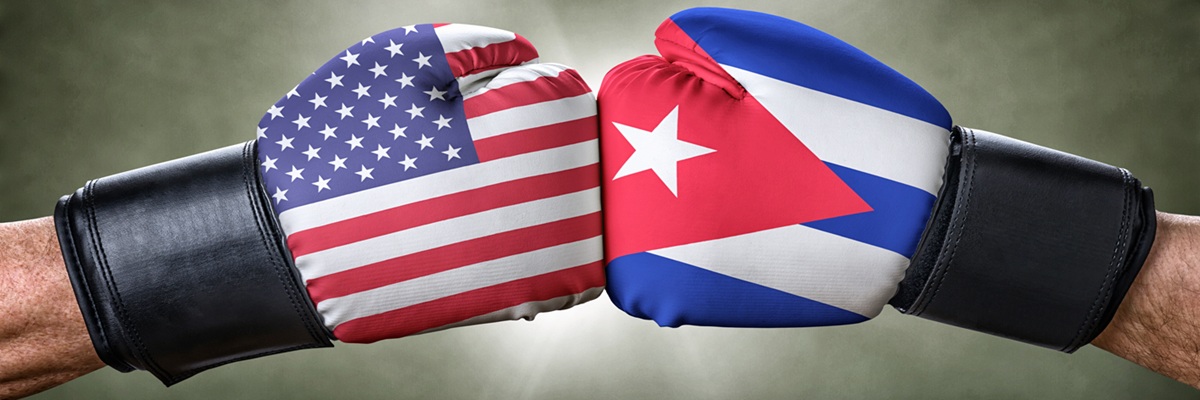
Image Source : Shutterstock
Subscribe to our weekly newsletters for free
If you want to subscribe to World & New World Newsletter, please enter
your e-mail


 Provider of in-depth & balanced analysis on hot issues around the world
Defense & Security
Image Source : Shutterstock
First Published in: Jan.19,2026
Jan.19, 2026
Share Article


The Foreign Policy of the United States in Latin America continues to be influenced by a doctrine that, although formulated in the 19th century, still resonates in the geopolitical dynamics of the 21st century, albeit with a Trump-style update. This adaptation of Trump to the Monroe Doctrine — hereinafter the Trump Corollary to the Monroe Doctrine or simply the Donroe Doctrine — while maintaining its origin, now describes the perception of the second Trump administration's desire to reaffirm U.S. dominance in the Western Hemisphere, specifically in the Americas, not only against European intervention — as it was originally — but against any power that is neither the United States nor native to the region. These ideas were captured in the new U.S. National Security Strategy of 2025. Since its formulation, this principle has been reinterpreted and used to justify military interventions and actions in Latin America, often under the premise of defending "democracy" or confronting the threat of regimes considered authoritarian or ideological enemies. In this context, recent events — the surgical military operation and subsequent capture of Maduro in Caracas in January 2026 — demonstrate the relevance of this modern reinterpretation of the Donroe Doctrine. What’s more, it opens the door to new scenarios and tensions with other countries in the region such as Cuba or Mexico. Recent statements about the possibility of military interventions in Cuba and Mexico, along with the reconfiguration of international relations in countries like Colombia, highlight how geopolitical dynamics in Latin America are influenced by a mix of historical factors and new economic and political realities.
Mexico, a key actor in Latin America, has been at the center of various international debates due to its proximity to the United States and its role as a regional leader. However, violence and drug trafficking have been chronic problems that have deeply affected the country’s internal security and stability. Since Trump returned to the presidency, he has frequently declared the possibility of U.S. military interventions on Mexican soil, under the pretext of drug trafficking, primarily fentanyl, which enters the United States through its southern border. The rhetoric that has emerged from some political sectors in the United States, particularly from conservative figures, has suggested direct intervention in Mexico to combat drug trafficking and organized crime. These proposals arise in a context of increasing violence related to drug cartels, a rise in murders and kidnappings, and the inability of Mexican security forces to contain this phenomenon. This same rhetoric even claims that Mexico is “governed by narcos,” prompting Trump to mention that “we have to do something” about it, following the Venezuela situation. However, the possibility of foreign military intervention in Mexico raises a series of complex geopolitical questions. Since the signing of the USMCA, Mexico has sought to balance its relations with the United States and has been a close ally, particularly regarding trade and cooperation on security issues. However, the autonomy of its foreign policy and its ability to handle its internal problems have always been central to Mexican diplomacy. Mexican President Claudia Sheinbaum has repeatedly emphasized that Mexico’s sovereignty and independence are non-negotiable and that Mexico “doesn’t need anyone from the outside,” while stressing that the relationship with the United States must be based on collaboration and respect for national sovereignty, not subordination. Her stance is a clear message of rejection for any attempt at foreign military intervention on Mexican soil. Therefore, the possibility of an attack of this nature could have negative repercussions on the international image of the United States, particularly in the context of bilateral cooperation that both countries need to face shared challenges like climate change and migration crises. On a regional level, the possibility of military intervention in Mexico could also have effects on Latin American diplomacy. Countries like Colombia, Brazil, and other members of the Community of Latin American and Caribbean States (CELAC) might view an increase in U.S. intervention in the region with concern. However, in terms of internal security, the debate over the use of force in Mexico is likely to remain more of an internal political issue and a battle against organized crime rather than an event that leads to large-scale armed conflict.
It is well known that relations between Washington and Havana have not been optimal since the victory of the Cuban Revolution in 1959. Although there were rapprochements during the Obama administration (2015), the U.S. embargo and pressure on the island have remained constants in recent years. After the capture of Nicolás Maduro in Venezuela and recent statements about the possibility of direct military intervention — Trump recently refrained from referring to intervention, saying Cuba was "about to fall" — tensions escalated on the island. The accusations against Cuba are related to its support for authoritarian regimes in Latin America and its closeness to actors like Russia and China, as well as a memorandum — signed in June 2025 — to harden U.S. policy towards Cuba, which includes prohibiting direct or indirect financial transactions and reinforcing the ban on tourism to the island, among other economic measures. The Cuban government, led by Miguel Díaz-Canel, has firmly responded to these threats, recalling decades of resistance to the embargo and U.S. regime-change policies. For Cuba, any attempt at military intervention would not only be a violation of its sovereignty but also a return to an era of direct confrontation with the global superpower. From a geopolitical perspective, Cuba remains a stronghold of political influence in the Caribbean, which grants it a key role in regional security. On the other hand, the island also faces a deep economic and energy crisis, leading to a massive exodus of Cubans to the United States and other countries. While Venezuela, like Mexico, has become a major supplier of oil for the Cuban regime, the crisis is so profound that the oil is insufficient. Moreover, Cuba ended 2025 with an annual inflation rate of 14.07%. Finally, the fall of Maduro's regime and the “alignment” of the new government of Delcy Rodríguez — under threat — with the United States is a rather unfavorable scenario for Díaz-Canel’s regime. Maduro's Venezuela provided oil and was an economic source for the Caribbean state. However, it seems that with Venezuela's new alignment, Cuba's prolonged internal economic crisis, and the endless U.S. embargo, it’s only a matter of time before Miguel Díaz-Canel is completely suffocated. Trump himself, via Truth Social, suggested — in his style — that Cuba “reach an agreement before it’s too late.” Hours later, Trump claimed that “he is talking to Cuba.”
Greenland, a strategic island with abundant mineral resources and critical metals, has also become a global geopolitical focal point. Its location in the Arctic and the opening of new maritime routes due to melting ice make it relevant both for the economy and for international security. The United States has shown particular interest, considering the island a key point for regional surveillance and defense, as well as access to strategic minerals for technology and the energy transition. Following the Donroe Doctrine, President Trump has been explicit in his statements about Greenland, claiming that the United States will do something to "control" the island, "by fair means or foul." Obviously, these statements have raised international alarm and speculation about potential scenarios, ranging from economic and defense cooperation agreements with Denmark and the Greenlandic autonomous government to more direct actions to secure critical infrastructure. This has led to dissatisfaction and concern primarily from Denmark, the European Union, and NATO members themselves, who have even questioned the continuity of NATO. U.S. interest is not new; there have been several attempts of all kinds to take control of the island in the past. However, the current context of growing global competition is worrying, as it is not only the United States; China and Russia are also seeking a presence in the Arctic, though mainly with economic and scientific approaches. Trump's rhetoric reflects how Greenland's strategic resources and geopolitical position have become a point of friction among powers, forcing Denmark and Greenland to reinforce their diplomacy and seek a balance between foreign investment and territorial sovereignty. In this case, diplomacy has been prioritized. Denmark has requested a meeting with Marco Rubio, the U.S. Secretary of State, and both Danish and Greenlandic officials have expressed their rejection of both a purchase and military intervention. It is important to highlight that Greenland has active agreements with the United States regarding national security and mineral extraction, so the meeting with U.S. officials could simply reaffirm and highlight these agreements. However, the argument and "need" or "desire" of Trump for the island will continue to cause concern for the Danes, Greenlanders, and the world in general.
The relationship between Colombia and the United States, traditionally one of the strongest alliances in Latin America, entered one of its worst crises in decades with the beginning of Donald Trump's second term. What began as diplomatic tensions over immigration policies and deportations quickly escalated into public accusations, sanctions, and open threats of military intervention. The turning point came when Trump accused Colombian President Gustavo Petro — a former guerrilla fighter and the country’s first left-wing leader — of allowing the proliferation of drug trafficking. At various points, Trump even called him “a sick man” and “a co-conspirator in drug trafficking,” rhetorically linking him to organized crime without clear judicial evidence. This rhetoric led to concrete actions, including U.S. sanctions against Colombian officials, revocation of diplomatic visas, and suspension of intelligence cooperation on security matters. These tensions triggered a strong internal response in Colombia: mass protests, Petro’s calls to defend national sovereignty, and debates about the possible violation of the principles of non-intervention and respect for international law. Even the Colombian government stated that its military should be prepared to defend the country in the event of a hypothetical foreign military action, underscoring the confrontational climate generated by the regional threats. In this extreme context of tension, a phone call between Trump and Petro on January 7, 2026, following the capture of Maduro, marked a significant turning point. After months of cross accusations, the two leaders spoke for over an hour to discuss issues such as drug trafficking and other bilateral disagreements. Trump called the call “a great honor” and expressed that he valued the tone of the conversation, while Petro, after the dialogue, spoke to his followers in Bogotá, emphasizing the importance of resuming diplomatic talks and avoiding further escalation. Colombian officials, such as Ambassador García Peña, described the exchange as an opportunity to ease tensions and strengthen cooperation, especially in the fight against drugs — an area that has historically been central in the relations between the two countries. The conversation also paved the way for a future meeting at the White House, which both Bogotá and Washington view as a step toward normalizing relations after months of confrontation. Although the specific issues to be discussed and the date of the meeting were still pending confirmation, this represented an important de-escalation between the two countries.
This article provides a comprehensive analysis of how the Donroe Doctrine, an adaptation of the Monroe Doctrine during Trump's second term, has shaped U.S. foreign policy in Latin America. It highlights how this modern interpretation, while rooted in a historical context, is driving interventions in the region with a focus on reaffirming U.S. dominance. By exploring the potential military interventions in countries like Cuba, Mexico, and Colombia, it demonstrates the continuation of U.S. interventionist trends, now with particular emphasis on national security concerns such as drug trafficking, authoritarian regimes, and geopolitical interests. The article also discusses the specific challenges each country faces in responding to these pressures, from Cuba's historical resistance to U.S. policies to Mexico's firm stance on its sovereignty. In conclusion, the article paints a picture of a geopolitically tense and increasingly fragmented Latin America, where the United States is exerting pressure both directly and indirectly. While regional dynamics suggest that the Donroe Doctrine could lead to greater instability and conflict, it is also clear that Latin American countries are seeking to assert their sovereignty and balance their relationships with both the United States and other global powers. As countries like Colombia and Mexico try to manage these tensions, there remains a delicate balance between cooperation and resistance, with both local and international consequences that will shape the future of U.S.-Latin American relations. The trajectory of these relations will likely depend on how these nations navigate sovereignty, security, and the evolving global order.
Ámbito. (11 de Enero de 2026). Donald Trump va por la intervención de EEUU en Cuba: "Que llegue a un acuerdo antes de que sea demasiado tarde". Obtenido de Ámbito: https://www.ambito.com/mundo/donald-trump-va-la-intervencion-eeuu-cuba-ya-no-tiene-mas-petroleo-ni-dinero-venezuela-n6232907 Atwood, K., & Bertrand, N. (08 de Enero de 2026). Diplomáticos de Groenlandia y Dinamarca se reunieron con funcionarios de la Casa Blanca mientras Trump impulsa la adquisición. Obtenido de CNN: https://cnnespanol.cnn.com/2026/01/08/eeuu/diplomaticos-groenlandia-dinamarca-reunion-casa-blanca-trax Bassets, M. (11 de Enero de 2026). “Por las buenas o por las malas”: así puede Trump conquistar Groenlandia. Obtenido de El País: https://elpais.com/internacional/2026-01-10/por-las-buenas-o-por-las-malas-asi-puede-trump-conquistar-groenlandia.html Beth Sheridan, M. (09 de Enero de 2026). Trump quiere que México ‘elimine a los cárteles’. Estas son las razones por las que eso es tan difícil. Obtenido de CNN: https://cnnespanol.cnn.com/2026/01/09/mexico/trump-eliminar-cartales-mexico-complejo-sheinbaum-orix Blanco, U. (09 de Enero de 2026). Un año de relaciones entre Trump y Petro: de las amenazas y el odio a una llamada de teléfono y la distensión. Obtenido de CNN: https://cnnespanol.cnn.com/2026/01/09/colombia/trump-petro-amenazas-tension-llamada-orix Cubanet. (11 de Enero de 2026). Donald Trump: “Se está hablando con Cuba”. Obtenido de Cubanet: https://www.cubanet.org/trump-afirma-que-ya-se-esta-hablando-con-cuba/ DW. (19 de February de 2025). Trump dice que México está "gobernado por los carteles". Obtenido de DW: https://www.dw.com/es/trump-dice-que-m%C3%A9xico-est%C3%A1-gobernado-por-los-carteles/a-71666187 Fouda, M. (11 de Enero de 2026). Trump lanza un ultimátum a Cuba: "No habrá más petróleo ni dinero de Venezuela". Obtenido de Euro News: https://es.euronews.com/2026/01/11/trump-ultimatum-cuba-petroleo-dinero-venezuela France 24. (11 de Enero de 2026). Trump dice a Cuba que alcance "un acuerdo, antes de que sea demasiado tarde". Obtenido de France 24: https://www.france24.com/es/minuto-a-minuto/20260111-trump-dice-a-cuba-que-alcance-un-acuerdo-antes-de-que-sea-demasiado-tarde Hernando, C. (08 de Enero de 2026). ¿Va Trump a invadir Groenlandia? Cuatro escenarios sobre el futuro de la isla. Obtenido de El Orden Mundial: https://elordenmundial.com/trump-invadir-groenlandia-cuatro-escenarios/ Infobae. (12 de Enero de 2026). Donald Trump advirtió que EEUU controlará Groenlandia “de una forma u otra”. Obtenido de Infobae: https://www.infobae.com/estados-unidos/2026/01/12/donald-trump-advirtio-que-eeuu-controlara-groenlandia-de-una-forma-u-otra/ M., C. M. (06 de Enero de 2026). ‘En México resolvemos los mexicanos’: Sheinbaum frena intervención extranjera. Obtenido de Vanguardia MX: https://vanguardia.com.mx/noticias/en-mexico-resolvemos-los-mexicanos-sheinbaum-frena-intervencion-extranjera-GF18846312 Martínez, M. (05 de Enero de 2026). MÉXICO ESTÁ GOBERNADO POR EL NARCO: ACUSA DONALD TRUMP Y AMENAZA CON ACCIONES TERRESTRES CONTRA CÁRTELES. Obtenido de Péndulo Informativo: https://www.penduloinformativo.com/%F0%9F%87%BA%F0%9F%87%B2%F0%9F%87%B2%F0%9F%87%BDimportante-mexico-esta-gobernado-por-el-narco-acusa-donald-trump-y-amenaza-con-acciones-terrestres-contra-carteles/ Medina, D. A. (10 de Enero de 2026). Sheinbaum: La independencia y la soberanía no se negocian. Obtenido de Imer Noticias: https://noticias.imer.mx/blog/sheinbaum-afirmo-que-la-independencia-y-la-soberania-no-se-negocian-asevero-que-mexico-y-eu-son-paises-iguales-y-no-hay-subordinacion/ Milenio. (03 de Enero de 2026). Trump dice que habrá que hacer algo con México al hablar sobre cárteles de la droga. Obtenido de Milenio: https://www.milenio.com/internacional/trump-reaviva-tension-con-mexico-narcotrafico-controla-al-pais Peralta, P. (06 de Enero de 2026). De aliados a enemigos: crece la distancia en la relación entre Colombia y Estados Unidos. Obtenido de France 24: https://www.france24.com/es/am%C3%A9rica-latina/20260105-de-aliados-a-enemigos-crece-la-distancia-en-la-relaci%C3%B3n-entre-colombia-y-estados-unidos Ronald, I. (06 de Enero de 2026). ¿Por qué Trump quiere Groenlandia y por qué es tan importante? Obtenido de CNN: https://cnnespanol.cnn.com/2026/01/06/mundo/por-que-trump-groenlandia-seguridad-nacional-trax RTVE.es. (10 de Enero de 2026). Trump asegura que Estados Unidos hará "algo" con Groenlandia "por las buenas o por las malas". Obtenido de RTVE.es: https://www.rtve.es/noticias/20260110/trump-asegura-estados-unidos-hara-algo-groenlandia-buenas-por-o-malas/16889356.shtml Sana (Syrian Arab News Agency). (11 de Enero de 2026). Trump insta a Cuba a un acuerdo antes de que sea demasiado tarde. Obtenido de Sana (Syrian Arab News Agency): https://sana.sy/es/world/2288904/ Swissinfo.ch. (08 de Enero de 2026). Trump reitera que el Gobierno cubano «está muy cerca» de caer tras captura de Maduro. Obtenido de swissinfo.ch: https://www.swissinfo.ch/spa/trump-reitera-que-el-gobierno-cubano-%22est%c3%a1-muy-cerca%22-de-caer-tras-captura-de-maduro/90746448 Ventas, L. (19 de Febrero de 2025). El gobierno de Trump designa a los carteles mexicanos y al Tren de Aragua como "organizaciones terroristas": qué significa y qué consecuencias puede tener. Obtenido de BBC News: https://www.bbc.com/mundo/articles/c805kp4eke5o
First published in :
World & New World Journal

Silence and shadows: The West’s Quiet Stance on Gaza’s Agony

What’s Driving Pakistan-Afghanistan War? Islamabad’s Never-Ending Cycle of Insecurity
Polycrisis in the Indo-Pacific Demands a Stronger Anzac Alliance
‘Destruction is not the same as political success’: US bombing of Iran shows little evidence of endgame strategy
Unlock articles by signing up or logging in.
Become a member for unrestricted reading!