Subscribe to our weekly newsletters for free

Subscribe to an email

If you want to subscribe to World & New World Newsletter, please enter
your e-mail

Defense & Security
U.S. Navy Adm. Alvin Holsey, commander of U.S. Southern Command (USSOUTHCOM), provides remarks at the TRADEWINDS 25 (TW25) closing ceremony at Teteron Barracks in Teteron Bay, Trinidad and Tobago, May 8, 2025. U.S. Army National Guard photo by Spc. Astia

Imperialism by Invitation: Murder, Mafioso Politics and Caribbean-Venezuelan Futurity

by Zophia Edwards , Corey Gilkes , Tamanisha John

Amidst US bombs and lies about Venezuelan drug trafficking as a pretext for regime change, the subordinated position of Caribbean states’ economies plays a role in U.S. aggression. It is no exaggeration to say that for over half a millennium, the Caribbean has been a stage for imperial incursions. In the past two months, the US has increased its military presence in the Caribbean Sea, including carrying out an airstrike campaign, while claiming that these operations are necessary to protect US citizens from illicit drug trafficking allegedly occurring off the coast of Venezuela. As of November 15th, the US military has launched eleven deadly air strikes on small boats in Caribbean waters and eleven on South America’s Pacific Coast, killing over eighty people. In these operations, the US Navy also raided a tuna fishing boat, detaining the fisherfolk on board for several hours before releasing them.[1] To date, the US government has not provided any proof of its claims that the people it publicly executed are trafficking drugs. These extrajudicial killings have struck fear into the hearts of millions of ordinary people across the region, especially the fisherfolk who depend upon traversing the sea for their livelihoods. Meanwhile, Caribbean countries have either blatantly come out in support of the imperial violence at their doorsteps or been hesitant to respond. When these attacks began, Trinidad and Tobago (T&T) as well as Guyana expressed enthusiastic support for US militaristic incursions and extrajudicial murders.[2] As tensions escalated, the Guyanese government attempted to backpedal from its original position. However, the T&T Prime Minister, Kamla Persad Bissessar, has maintained a pro-US stance. PM Persad Bissessar is on record saying, “I have no sympathy for traffickers, the US military should kill them all violently.”[3] This position by the T&T government was reiterated even after the US murdered two of its citizens, Chad Joseph and Rishi Samaroo, in these airstrike campaigns. T&T allowed the US warship, USS Gravely, a guided-missile destroyer, to dock in the country’s capital between October 26-30 and for US military agents to “address shared threats like transnational crime and build resilience through training, humanitarian missions, and security efforts” on T&T soil.[4] The Caribbean Community (CARICOM) - the intergovernmental regional organization - has dragged its feet to take a position, waiting a whole month on October 18, to release a presser wherein it reaffirmed the region as a “zone of peace,” with Trinidad and Tobago excepting itself from this stance. The foot dragging is sinister when it is known for a fact that the US propaganda of conducting “anti-narcotics” operations is/are a ruse. These hostile US military aggressions in the Caribbean Sea and on South America’s Pacific Coast are part of a broader US imperial geopolitical strategy aimed at toppling the government of Venezuelan President, Nicolás Maduro. The aim, as Trump has publicly intimated,[5] is to get the Venezuelan government to grant the US more beneficial access to Venezuela’s resources. One might ask: Why are governments, like Trinidad and Tobago, enabling US imperial terror in the region? And why have CARICOM governments not taken an unequivocal anti-imperialist position? The answer lies in the subordinated position of these states’ economies within the global economy. Caribbean states are historically structured to be neoliberal, pro-imperial, and anti-democratic – while political elites are beholden to enacting external interests. Moreover, internal political dynamics – in terms of racial and class struggles – are also a factor, influencing the timing and intensity of these Caribbean governments’ responses to present US imperial terror. Debunking the Myth of the Venezuela Narco State The first order of business is dispelling the myth that Venezuela is a ‘narco-state.’ US officials have framed the current operations — boat strikes, deployments of destroyers and aircraft — as counter-narcotics efforts designed to stem the flow of illicit drugs from Venezuela to the US. However, the Caribbean route is not among the primary conduits for major volumes of cocaine and methamphetamines into the US. Most trafficking flows of narcotics to the US are overland, through Central America and via Pacific routes.[6] It is no surprise therefore that the US government has not provided any proof of its claims that the people it has extrajudicially murdered in the Caribbean Sea or on South America’s coast are engaged in drug trafficking. Additionally, the scale and nature of force being used are far beyond what traditional interdiction operations require – with the Trump administration claiming that interdiction has not worked, hence deadly air strikes are necessary. In addition to the lack of evidence of a Venezuelan route being key to drug trafficking into the US, there is also no credible proof linking the Maduro government to organized drug trafficking, despite the Trump regime’s claims, which are parroted uncritically by many Caribbean media and politicians. Within the US’s own intelligence establishment, one report explicitly states: “the Maduro regime probably does not have a policy of cooperating with TDA [Tren de Agua] and is not directing TDA movement to and operations in the United States.”[7] The report goes on to say: “Venezuelan intelligence, military, and police services view TDA as a security threat and operate against it in ways that make it highly unlikely the two sides would cooperate in a strategic or consistent way.” These facts stand out, especially given the evidentiary long and sordid history of the US’s leading role in drug trafficking in the Americas, and the US as the #1 supplier of weapons to those involved in the global drug trade in the region. The US government’s real motive is to destabilize and topple the Maduro government in Venezuela, in favor of a regime that undermines Venezuela’s sovereignty. Frantz Fanon, Walter Rodney and many others remind us that capitalist imperialism depends upon neocolonial puppet governments occupied by a predatory elite who facilitate accumulation by extractivism, dispossession, and exploitation. Positioned to usurp Maduro in Venezuela by imposition and not elections, is 2025 Nobel “Peace” Prize winner, María Corina Machado. Machado is a key US ally, Trump admirer, supporter of Israel and its bombing of Gaza, and an overall admirer of repressive regimes in Latin America – including El Salvador’s Nayib Bukele and Brazil’s former president, Jair Bolsonaro. Machado has been begging for foreign military intervention in Venezuela to remove the Maduro government while professing that her administration, if granted power through non-electoral means, intends to open up Venezuela’s doors to foreign exploiters. If the current iteration of US imperial antagonism in the region leads to regime change in Venezuela, the US is poised to have control over the resources in the southern Caribbean – namely Guyana and T&T – as well as on the South American Coast: again, namely Guyana and then Venezuela. This will give the US direct control over shipping routes in the region, as it prepares for a wider economic confrontation with China. Hence, these alleged “anti-narcotics” operations which have taken the lives of over eighty Caribbean and South American people, are just a smokescreen for deeper US geopolitical interests. Dependency and the Character of the State Caribbean states are disregarding the lives of the Venezuelan, Latin American, and their own Caribbean populations using external security narratives, largely because there is a true dictatorship of foreign capital in the region. As US Vice-President JD Vance let slip, places like the Caribbean countries were always intended to remain extractive workstations, not autonomous, functioning nations.…at all.[8] T&T, for example, has long been dependent on oil and gas extraction for the bulk of its national income. However, the country has been experiencing a decline in natural gas and crude oil production over the past decade and the country’s liquefaction complex and petrochemical plants producing ammonia, methanol, and other key exports – which depend upon gas input – have been suffering.[9] Combined with the collapse in energy prices in 2014, this situation has produced a decline in foreign exchange inflows and government revenues.[10] With the demand for US dollars far outstripping the supply, T&T is facing one of the most severe foreign exchange crises in the Caribbean, causing uproar across the working, middle, and upper classes of society alike.[11] As such, the T&T government is desperate for the resuscitation of its flailing oil and gas sector. The T&T government spent decades developing a “Dragon” gas deal, where Shell would lead operations that funnel gas located in Venezuelan waters to T&T, where it can be exported as LNG. This deal, considered by the T&T state to be the lifeline that would save the local economy from collapse, has become a weapon in Washington, DC’s arsenal against Venezuela. In the midst of the extra-judicial killings in the region, the US has revoked licenses approving the deal and re-approved them under new terms meant to ensure the involvement and profits of US companies. The continued structural dependency of T&T on foreign capital and imperial markets renders its misleaders susceptible to these coercive measures to ensure that Caribbean states align with US capitalist imperialist policies. Economic coercion is an important part of the context for Kamla Persad Bissessar’s support for imperialism, but her position cannot be traced to this alone. Persad Bissessar and the educated elite and comprador class she represents come out of some of the “best” primary, secondary, and tertiary educational institutions locally and internationally. Are these elites supposed to provide independent, critical thinkers who would decolonize “post” colonial societies? Are they only unwitting agents of imperialism or are they willing participants? From the time of many states' flag independence, foreign interventions have secured for the local Caribbean elites’ (or comprador classes) party longevity and/or political dominance, and/or visas and dual citizenships, and/or the ability to accumulate wealth for themselves by exploiting the people and land within their countries. As Frantz Fanon’s “Wretched of the Earth” and Walter Rodney’s “How Europe Underdeveloped Africa” detailed, these elites lack the sort of creativity and vitality to independently develop into an industrial bourgeoisie. They therefore turn to propping up foreign entities and dependent economic relations. Consequently, Caribbean state-making and the establishment of territorial statuses in the context of US and European imperialist capitalism has reproduced institutions that are unresponsive to Caribbean people. Whether through hopes of securing or acquiring foreign investment, or due to rank economic blackmail that threatens foreign investments elites through sanctions and other restrictions – many Caribbean states choose to serve US and Western imperialism as an almost “practical” strategy of economic “stability”. However, such imperial service only guarantees continued underdevelopment and economic beggary. Herein, T&T’s misleadership is positioning the country as a beggar to the US and reinforcing US sanctions on Venezuela, which makes it hard for Venezuela to sell its own oil and gas to states that need it, including T&T. Worse still, the US does not want China to remedy this situation between Venezuela and Trinidad. So not only are some Caribbean leaders and party supporters encouraging naked US imperialism cloaked in the deceptive language and rhetoric of “anti-drug trafficking” and “protecting the region,” they are also upholding a condition of dependency of the region on the US, advancing US attempts to subvert Chinese influence in the region, and in the process supporting direct attacks on states in the region’s right to self-determination and sovereignty. Moreover, local internal racial and class dynamics are also shaping the timing and intensity of Caribbean governments responses to US aggression in the region. In the post-WWII construction of party politics in T&T, middle-class parties carried forward the colonial divisions between the predominantly African and Indian segments of the population that multiracial worker movements had fought so hard to overcome. Kamla Persad Bissessar, as leader of the party popularly known as the one representing “Indian interests,” is advancing and exploiting this racial wedge to garner support for her pro-imperial policies. This party has actively engaged in criminalizing poor African communities as well as Venezuelan migrants, while downplaying the fact that the many poor and marginalized Indians are similarly caught in the net of US imperialism. Persad Bissessar and her party affiliates’ own ideas of “purity” mixed with class notions of entitlement merge with the supremacist foundations of US local and foreign politics. It’s bad enough that a Prime Minister — a lawyer — supports extra-judicial murders in violation of International Law, but how does one align with a political ideology that produced people like Senator James Reed, who, circa 1919, openly dismissed dealing with “a nigger from Liberia, a nigger from Honduras, a nigger from India…each (having) votes equal to that of the great United States.” Before one argues that this was long ago, consider what right-wing political commentator Ann Coulter told Vivek Ramaswamy why she’d never vote for him regardless of how his views match hers. We acknowledge that political leaders, seeking re-election, opt for the path of least resistance which in this case means not offending the mighty United States. But this cannot just be naïveté. It is in this context that Kamla Persad Bissessar has broken with even the basic understanding of what CARICOM is, and is astonishingly peddling the idea that each island seeking its own interest is somehow more progressive than banding together as one bloc! In other words, she and those who support her stance have embraced regional colonial divide-and-conquer tactics. The US has always stood in opposition to a unified body in the region. As then US diplomat Charles Whittaker put it: “A strongly federated West Indies might be detrimental to American interests.” As such, they undermined the West Indian Federation in the 1950s and sabotaged the New International Economic Order throughout the 1970s. The Caribbean misleaders proclaiming disunity as strength subscribe to political ideologies that interlock with a particular brand of politics in the West that has been openly Euro-nationalist and imperialist. Hence, at a time when many resource-rich countries are forming partnerships and alternative trading and security blocs, the political misleaders in the Caribbean calling for further fragmentation should warrant deeper investigation. Media, Political Misleadership, and How the State Weaponizes “Security” It is important to clarify that crime does exist in the Caribbean region, just as it exists elsewhere throughout the world. The size of Caribbean countries are also important to note, because though it is true that the amount of drugs flowing through the Caribbean are low relative to the global drug trade, the little that does pass through is indeed wreaking havoc, given the geographical and population sizes of these countries. The increase in guns and violent crime associated with the global drug trade in places like T&T has become a critical factor affecting everyday life for ordinary people there. This context has enabled the T&T government to justify and legitimate US military aggression in the name of “fighting” the drug trade in the region. Thus, most people cheering on the US military are simply desperate for a sense of safety. However, it is precisely this need for safety that is being weaponized — to increase unsafe conditions as new US-produced military weaponry and technologies become even more commonplace in the region. There is a direct and indirect connection between (geo)political and economic decisions made by successive generations of ruling elites in the Caribbean, and North American narratives of crime, which have – going back to the 19th century in some countries – allowed (and made space for) imperial aggression in the region. Over a number of decades, the United States has taken advantage of crises caused by rising violent crime to pursue its own security interests – even though rises in violent crime in the region is directly linked to US imported and manufactured weapons, and US consumer demands for items that the US state deems “illegal.” To establish and maintain US dominance — and the accompanying cheap labor[12] from the surplus populations which exist in a region notorious for high levels of unemployment and underemployment — the US has deployed constant applications of violence, packaged as maintaining “law and order” in the drive to “progress” and “catch up” with the West. It’s no coincidence that modern policing began in the Caribbean as militarized slave patrols in St Lucia.[13] Then, like now, the purpose is the same: protect wealth from the workers who created it. However, the real effectiveness lay in conditioning the exploited to adopt the values of the elites. To date, Western elite definitions of progress and development for the wider working people in the Caribbean region dominate, even as the dependent status of Caribbean economies make this impossible for the majority of the people in the region. Thus, US reliance on expanding its military apparatus for economic growth is justified through the construction of permanent threats that the US supposedly has to “defend” itself against. Another such narrative, like the need to “promote democracy” in Venezuela, is also within this vein of western imperialist propaganda. The US and western imperialists maintain that Venezuela is not a democracy, despite the presence of robust, active citizen’s assemblies and communes, as well as elections that occur under the presence of election observers – including from the US. Nonetheless, the western imperialist narrative maintains that Venezuela is not democratic and thus their people can be bombed for some purported “greater good.” Meanwhile, these same imperialist narratives call genocidal Israel a democracy deserving of “protection” and “defense,” as it exterminates Palestinians and decimates Palestinian land. This propaganda – not analysis based on any facts – readily frames western imperialism as “defensive,” “pro-security,” and “pro-safety” and those not in line with it as “aggressive” and “undemocratic.”[14] In lockstep with imperialists, local political figures too have long used or encouraged the use of dehumanizing language when discussing criminalized people and communities. When the T&T Prime Minister, Police Commissioner, and other influential authority figures refer to human beings as “carcasses,”[15] “pests,” “fleas” or “cockroaches,” the message sent is that these are not citizens or members of society and therefore, not worthy of certain basic courtesies and legal obligations, including the right to life. When this sort of thinking is widespread, issues of social justice fall by the wayside. Instead, heavy, often murderous attacks on real or alleged drug runners who come from poor, precarious, vulnerable communities become justified while the power brokers, bankers and their institutions[16] that launder money do not get so much as a paper weight dropped on them. Likewise, the local and international media is playing a significant role in the unfolding crisis. Save for a few columnists, the local media has been disgraceful, little more than sycophantic stenographers for egregious narratives coming from Washington. Initially, the local media conducted little to no critical research into the many available sources discrediting[17] false allegations connecting the Maduro administration to drug cartels. They parroted language that criminalized the victims of the attacks without presenting any evidence proving that they were guilty of violating any laws. They were silent on the voluminous literature connecting the CIA and the US military to colonial land and resource grabs that violate international and local laws.[18] They also proliferated the myth that Nicolas Maduro “lost” or “rigged” elections in Venezuela, contrary to information provided by election observers. The lack of critical and independent journalism is a clear dereliction of duty, supporting imperialist narratives and providing cover for extrajudicial murder. Conclusion The neoliberal era shortly after many states’ independence extended the life of bourgeois colonial thought in the Caribbean, interpreting the human “firstly, [as] a figure that is homo economics, and, secondly, a figure that can only operate within the field of white supremacy and capitalism.”[19] In this environment, Caribbean resistance weakened, having to establish itself alongside the intensification of neoliberal processes – foremost amongst them being state repression and militarist aggression supported by the US hegemon – so that Caribbean peoples could be definitively integrated into a Western capitalist system as “bottom labor-exporting economies,” whose labor commodification was masked by discourses on ‘growth’ and ‘development.'[20] It is in analyzing the characteristics of Caribbean states and governance within them – including how they interpret “development” – that helps us to answer why so many states elect to do imperial service: Caribbean neocolonial (puppet) states are fundamentally anti-democratic with no real regard for Caribbean life within them. The T&T government’s deliberate facilitation of US imperial aggression in the region mirrors the position of several African states. The post-genocide Tutsi-dominated regime of Paul Kagame in Rwanda, leveraging its image as a victim of colonialism and genocide, justifies domestic repression of Hutus and expansionist military ventures in neighboring states, notably the Democratic Republic of Congo in close alliance with the United States, France, and Israel. In exchange for U.S. and western military, financial, and political backing, Rwanda facilitates imperial access to Congo’s mineral wealth — coltan, gold, and tin — channeling profits both to Western capital and Rwandan elites. Thus, Rwanda functions as a pro-U.S. imperial proxy, advancing the global system of resource extraction and accumulation on behalf of Western powers. In addition, Rwanda along with a growing list of African states, including Ghana, Eswatini, and South Sudan have accepted the terms of bilateral agreements with the US government to receive people who have been criminalized and deported under the Trump regime’s attack on communities racialized as non-white in the US.[21] By enlisting themselves to be locations for the outsourcing of US racist incarceration policies, they are enabling the geographical expansion of the US military industrial prison complex to more and more corners of the world. These Caribbean and African misleaders will go down in history as active enablers and facilitators of the very imperial greed, oppression, and exploitation that the masses have been resisting since the days of direct colonial domination. Only invigorated mass resistance that takes power away from Caribbean neocolonial (puppet) elites engaged in imperial service can rectify these conditions. Global Africans in the Caribbean and around the world must claim power and reclaim movement histories that fought back against capitalist imperialism. Originally published in Pambazuka News and republished in Black Agenda Report References [1] https://www.pbs.org/newshour/world/venezuela-says-u-s-warship-raided-a-… [2] https://www.caribbeanlife.com/trinidad-guyana-us-moves-venezuela/ [3] https://newsday.co.tt/2025/09/03/kamla-says-kill-all-traffickers-as-tru… [4] https://www.cnn.com/2025/10/26/world/us-warship-docks-trinidad-venezeul… [5] https://www.theguardian.com/world/2025/oct/17/trump-maduro-venezuela [6] https://www.unodc.org/unodc/data-and-analysis/world-drug-report-2025.ht… [7] https://static01.nyt.com/newsgraphics/documenttools/32f71f10c36cc482/d9… [8] https://www.youtube.com/watch?v=U1bd-D1PIZg&pp=ygUZIGogZCB2YW5jZSBnbG9i… [9] https://www.finance.gov.tt/2020/03/16/effect-of-the-oil-price-collapse-… [10] https://www.imf.org/external/pubs/ft/scr/2014/cr14271.pdf; https://www.imf.org/en/Publications/CR/Issues/2024/06/04/Trinidad-and-T…. [11] Chamber of Industry and Commerce 2025; University of the West Indies Campus News 2024. [12] https://www.youtube.com/watch?v=BAJgGFtF44A [13] https://www.youtube.com/watch?v=kavkiH9YHag&pp=ygUaanVsaWFuIGdvIHBvbGlj… [14] See, for example, the Trilateral Commission’s “The Crisis of Democracy” in which influential thinkers who shaped US policy complained that decolonising countries were exercising too much democracy, which needed to be contained, leading to the proliferation of NGOs all over the peripheralized world. [15] https://trinidadexpress.com/news/local/kamla-state-resources-won-t-be-wasted/article_5d0c61fd-d633-4dd3-8e3e-6995a454c774.html [16] https://www.youtube.com/watch?v=kcpZPGOksp0 [17] https://www.dea.gov/sites/default/files/2025-07/2025NationalDrugThreatA…; https://static01.nyt.com/newsgraphics/documenttools/32f71f10c36cc482/d9… [18] https://www.goodreads.com/book/show/455652.Dark_Alliance; https://www.versobooks.com/en-gb/products/1628-whiteout?srsltid=AfmBOor…; https://www.betterworldbooks.com/product/detail/the-politics-of-heroin-…; https://www.youtube.com/watch?v=zxbW0CCuT7E [19] Bogues, Anthony. 2023. “Sylvia Wynter: Constructing Radical Caribbean Thought.” BIM: Arts for the 21st Century 11(1): 33–41, p.37. [20] Henry, Paget. 2000. “Caribbean Marxism: After the Neoliberal and Linguistic Turns.” In Caliban’s Reason: Introducing Afro-Caribbean Philosophy, Africana Thought, New York: Routledge, 221-46, p.228. [21] https://www.pbs.org/newshour/world/more-african-nations-are-receiving-t…

Diplomacy
A roll of US dollars with the American flag on top of a other currencies and country flags. Dollar hegemony concept.

The geopolitical strategy of the United States to maintain its global hegemony

by Daniel Seguel

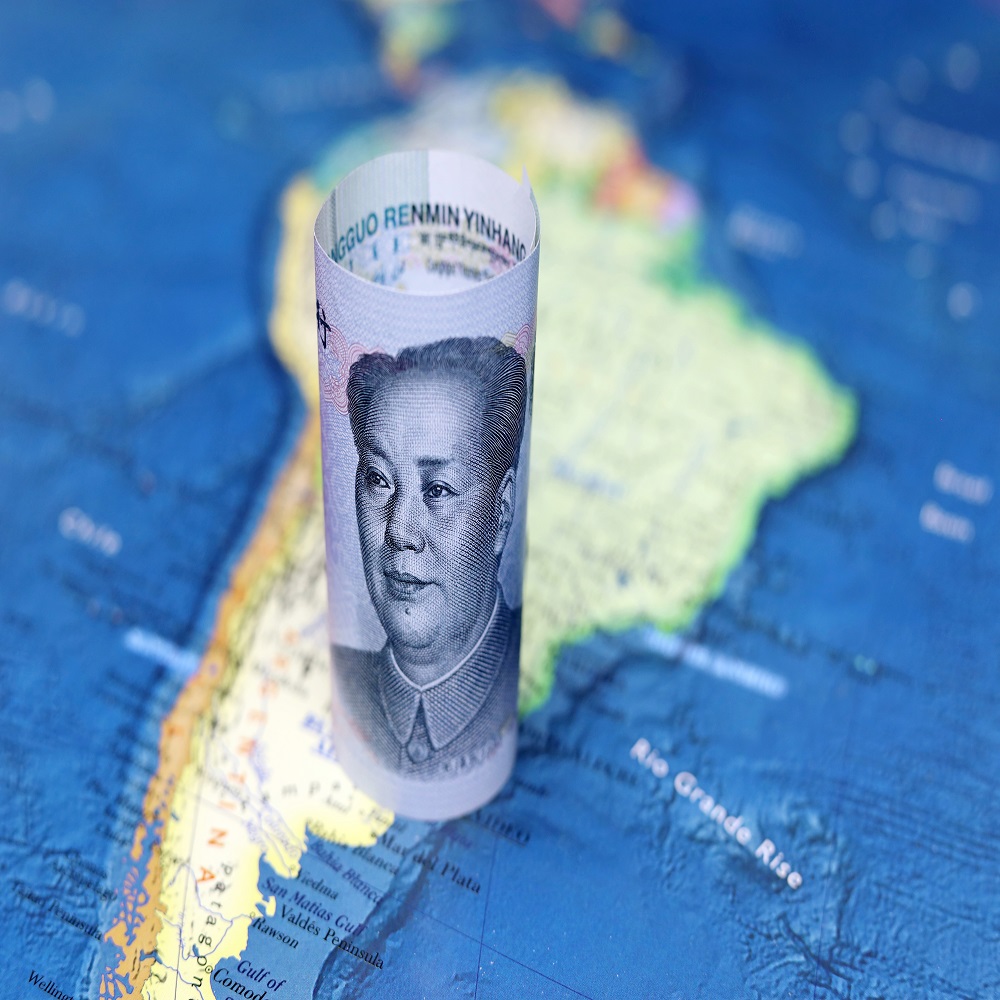
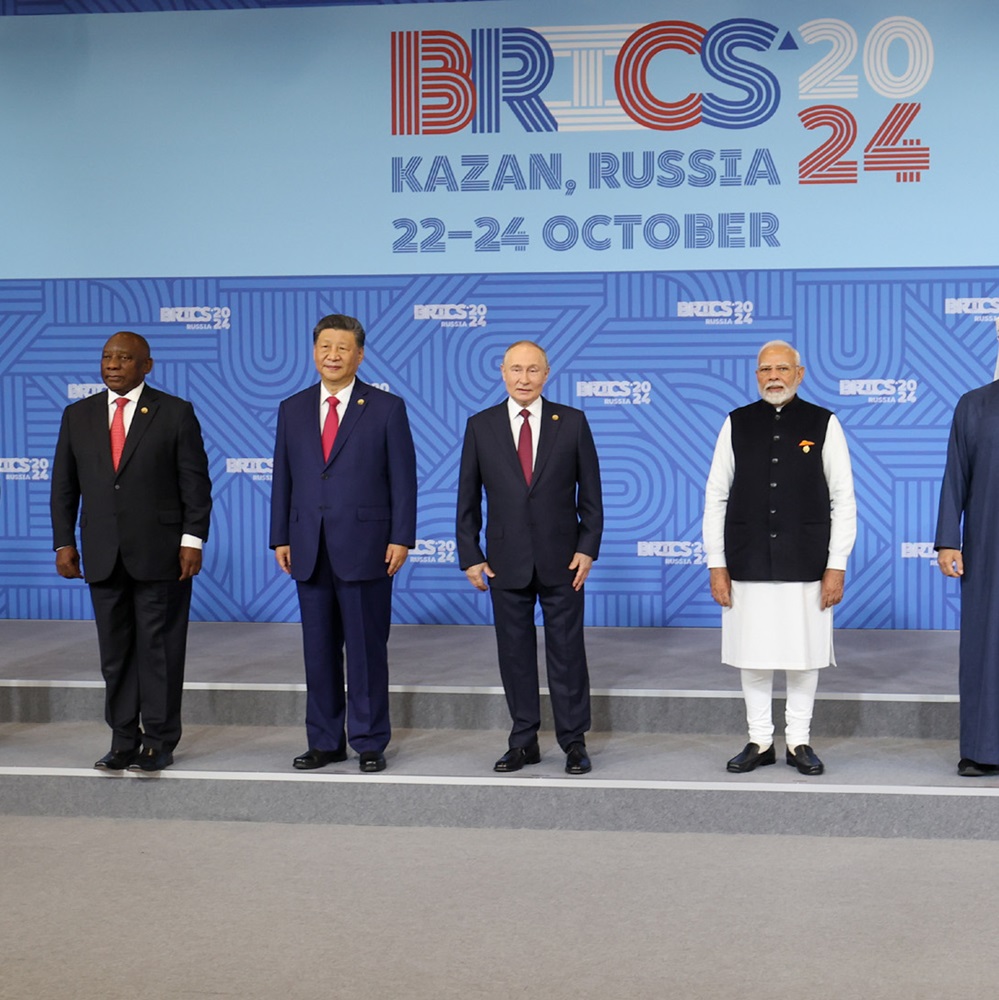
The United States has employed different geopolitical strategies to maintain its status as a dominant power vis-à-vis rival countries such as China and to achieve its foreign policy objectives. Since his return to the White House, President Donald Trump has announced tariff increases on 60 countries, issued ultimatums to Russia to end the War in Ukraine, and recently intervened in Venezuela by capturing Nicolás Maduro. In this way, a rise in the use of hard power by the United States can be observed, aimed at forcing other countries to behave in a particular manner in order to achieve its geopolitical objectives. The foreign policy process of a state is the most important means through which it formulates and implements the policies that determine its interactions with other actors in the international system. Hans Morgenthau (1949) argued that self-preservation is the primary duty of a nation; in this regard, the choice of foreign policy objectives and means is predetermined in two ways: by the goals to be pursued and by the power available to achieve them. For his part, Joseph Nye (1999) argued that a state’s interests are not revealed solely through power or security considerations, since they also include economic concerns. Thus, countries also focus on economic relations, which may entail interdependence effects among states. Consequently, both national security and economic well-being are important to states’ interests. Within this framework, it is possible to discern the geopolitical landscape that the United States is developing through its foreign policy. Secretary of State Marco Rubio stated that they would not allow the Western Hemisphere to become a base of operations for adversaries, competitors, and rivals of the United States. “This is our hemisphere,” he affirmed, “and President Trump will not allow our security to be threatened” (The White House, 2026). This warning, together with the National Security Strategy and the recent intervention in Venezuela, represents a new form of the Monroe Doctrine. In his address to Congress in 1823, President James Monroe articulated the United States’ policy regarding the new political order that was developing in the Americas and Europe’s role in the Western Hemisphere. The Monroe administration warned the European imperial powers not to interfere in the affairs of the newly independent Latin American states. In this way, it sought to increase U.S. influence and trade throughout the southern region (Office of the Historian, n.d.). Likewise, the Trump administration’s geopolitical objective is to consolidate its hemisphere of influence in the face of rival powers, primarily China. Marco Rubio indicated that it is important to secure the national interest in the region and stated: “we have seen how our adversaries are exploiting and extracting resources from Africa. They are not going to do it in the Western Hemisphere” (The White House, 2026). In addition to Latin America, the United States has sought to increase its presence in Africa to counterbalance China. China’s main foreign policy strategy is the Belt and Road Initiative (BRI), launched by President Xi Jinping in 2013 with the aim of strengthening global connectivity through infrastructure initiatives such as roads, ports, and railways. As a result, China’s economic and political influence expanded by linking Asia, Europe, and Africa. By early 2025, more than 150 countries had joined the BRI, representing approximately 75% of the world’s population and more than half of global GDP. China’s Ministry of Commerce reported that the cumulative value of BRI investments and construction contracts has exceeded one trillion dollars across all participating countries (Ulubel, 2025). In Africa, one example of Belt and Road infrastructure is the Mombasa–Nairobi railway in Kenya, which was financed by Chinese banks under the framework of the agreements. As a result, more than 2 million passengers and around 6 million tons of goods are transported annually, allowing transportation costs to be reduced by 40%. In addition, the expansion of the line toward Uganda, Rwanda, and South Sudan is planned, with the aim of integrating the economies of East Africa into a common railway system (Ulubel, 2025). Figure 1 illustrates the countries that have partnered with the Belt and Road Initiative, by year of accession. The geographic areas where China is consolidating its presence can be observed, especially on the African continent. Source: Lew et al., 2021, p. 14. The Belt and Road Initiative, with the support of state-owned banks and Chinese companies, is displacing U.S. exports and challenging American firms in BRI countries. Consequently, the United States has increasingly moved closer to African countries to counter China’s influence. Recently, the House of Representatives voted to continue trade programs such as the African Growth and Opportunity Act (AGOA), which protect and strengthen U.S. strategic, economic, and national security interests, including access to critical minerals found outside the country. In this way, AGOA seeks to challenge the economic coercion and exploitation of African nations by China and Russia (Ways & Means, 2026). This approach has also been pursued during the foreign policy of former President Joe Biden. In 2022, the Secretary of State of the Biden administration, Antony Blinken, launched the U.S. Strategy Toward Sub-Saharan Africa, which reinforced the view that African countries are geostrategic actors and key partners on urgent issues, ranging from promoting an open and stable international system to shaping the technological and economic future (U.S. Department of State, 2022). In this context, Blinken stated: “Africa is a major geopolitical force. It has shaped our past, it is shaping our present, and it will shape our future” (US Africa Media Hub, 2022). In 2022, Blinken indicated that even as President Putin’s war continues, they remained focused on the most serious and long-term challenge to the international order: the People’s Republic of China. This is because it is the only country with both the intention to reshape the international order and has the economic, diplomatic, military, and technological power to do so. Consequently, Blinken stated: “China is a global power with extraordinary reach, influence, and ambition. It is the second-largest economy, with world-class cities and public transportation networks. It is home to some of the world’s largest technological companies and seeks to dominate the technologies and industries of the future. It has rapidly modernized its military and aims to become a top tier fighting force. And it has announced its ambition to create a sphere of influence in the Indo-Pacific and to become the world’s leading power” (Blinken, 2022). Consequently, the United States has sought to consolidate its bilateral relations in regions where China has a greater presence. However, U.S. power in the international system relies on the strength of the dollar. The petrodollar system helps sustain the dollar’s status as the world’s reserve currency. In 1974, Saudi Arabia and other regional oil suppliers agreed to accept only dollars for the sale of oil in exchange for military aid and equipment from the U.S. In addition, the Saudis invested the surpluses from that production in U.S. Treasury bonds, thereby financing U.S. spending (Wong, 2016). This process, commonly called “petrodollar recycling,” is beneficial for the parties involved: oil-producing countries have a reliable destination to invest the income from their exports, while the United States ensures a source of financing to cover its fiscal deficit. Consequently, countries seeking to purchase oil must do so using U.S. dollars, which drives demand for this currency in international markets (Grant, 2018). Since that time, the oil market has been trading in dollars, increasing demand for the currency. The predominance of the dollar as the world’s reference currency gives the United States enormous geopolitical influence, with the ability to impose sanctions on countries it considers adversaries, freeze dollar-denominated assets, or exclude a country from the international financial system, paralyzing its foreign trade or complicating the import of raw materials priced in that currency, such as oil. This mechanism represents one of the foundations of U.S. power and allows it to maintain its status as a hegemonic power. However, if oil trade were to begin taking place in another currency, it would affect the dominant position of the United States. Within this framework, the United States has prevented rival countries from attempting to displace the supremacy of the dollar, such as the members of BRICS. This bloc has sought to reduce dependence on the dollar by using local currencies for trade. One example is the BRICS Pay initiative, a cross-border digital payment system being developed by the BRICS countries. This means that trade among its members could be settled directly in reais, rubles, rupees, yuan, or rand, with the system managing conversion, clearing, and settlement without routing transactions through the U.S. dollar. The initiative is part of a broader strategic effort to reduce dollar dependence, strengthen financial sovereignty, and create alternative global payment infrastructures outside systems controlled by the West (BRICS, 2026). With the creation of the BRICS New Development Bank, there has been speculation that they could launch a common currency as a strategy for de-dollarization. Given this possibility, many market operators advocate for the currency to be digital, backed by gold or other resource assets. If the project materializes, the implications for the international monetary system and financial markets would be significant (Lissovolik, 2024). The United States was aware of this possibility. When the BRICS 2025 summit was held, Trump stated that the bloc is not a serious threat, but that they are attempting to destroy the dollar so that another country could take control. “If we lose the dollar as the global standard,” he declared, “it would be like losing a great world war; we would no longer be the same country. We will not allow that to happen” (Messerly et al., 2025). Later, on his Truth Social account, he wrote: “Any country that aligns with the BRICS’ anti-American policies will receive an additional 10% tariff. There will be no exceptions to this policy” (Reuters, 2025). Although there is still no BRICS currency, the United States has anticipated its potential effects. Dollar supremacy also gives the U.S. the power to sanction or economically isolate certain countries, such as Russia in 2022. In response to the invasion of Ukraine, the European Union, the United States, Canada, and the United Kingdom agreed to exclude several Russian banks from the international payment messaging system SWIFT. This decision was one of the most forceful sanctions within a set of measures aimed at economically isolating Russia and, consequently, weakening its financial system, with the goal of pressuring Vladimir Putin’s government to end its military operations in Ukraine (Pérez, 2022). Therefore, Russia has conducted its commercial transactions in another currency, such as the Chinese yuan. In this context, the growing weight of the Chinese currency in financial markets could erode the primacy of the dollar, a trend that began to concern Washington. In this scenario, Venezuela announced in 2017 that the country was prepared to sell oil to China and receive payments in yuan, thus making international agreements using a currency other than the dollar (Valladares & Medina, 2017). In 2023, Petróleos de Venezuela Sociedad Anónima (Pdvsa) announced that PetroChina International Corp purchased one million barrels of Venezuelan crude, a transaction carried out in digital yuan through the Shanghai International Energy Exchange. In this way, a trend is marked toward abandoning the dollar as the currency for transactions in the energy market (CIIP, 2023). When the United States intervened in Venezuela this year and captured Nicolás Maduro, it was not only seeking oil but also preventing the displacement of the petrodollar system. As a result, this operation directly affects China, since part of Venezuela’s oil exports to China is used to pay debts, estimated between 10 and 12 billion dollars. The U.S. intervention endangered the flow of discounted Venezuelan oil to China’s teapot refineries and will likely affect the role of Chinese oil companies in Venezuela’s upstream business. The Trump administration has declared that all Venezuelan oil will now flow through legitimate and authorized channels, in accordance with U.S. law and national security. This strategy seeks to prevent any influence over natural resources in the region. Consequently, the U.S. president’s approach of directing all oil flows from Venezuela will negatively impact China, Venezuela’s largest oil customer and a major creditor (Downs & Palacio, 2026). However, it is not only rival countries that have been affected by the U.S. attempt to maintain its hegemony; its allies and strategic partners have also been impacted. In January 2025, Trump posted an image of the map of Canada with the U.S. flag, hinting at a possible annexation. On other occasions, Trump referred to his neighbor as the 51st state. In February of that year, the White House announced an additional 25% tariff on Canadian imports and a 10% tariff on its energy resources (The White House, 2025). As a result, Prime Minister Mark Carney negotiated trade agreements with China, allowing for a mutual reduction of tariffs (Yousif, 2026). On the other hand, Trump generated tensions within NATO when he threatened to annex Greenland by force and warned those who did not support him of increased tariffs. He later declined both measures and assured that a framework agreement had been reached (Holland & Hunnicutt, 2026). Nevertheless, the political damage was already done. Trump’s plan for territorial expansion destroyed an important post-World War II norm: that borders cannot be redrawn by force of arms. Mark Carney stated at this year’s Davos Forum that “great powers have begun using economic integration as a weapon, tariffs as leverage, and financial infrastructure as coercion.” In this way, he indicated that the world order is “in the middle of a rupture, not a transition” (World Economic Forum, 2026). Consequently, the United States, as a hegemonic power, has acted unilaterally, disregarding the rule-based world order, and has even accelerated its breakdown. Therefore, from this background, it can be concluded that the United States has developed geopolitical strategies to remain a global power vis-à-vis rival countries, primarily China. Two strategies can be discerned. First, the U.S. emphasizes national security by securing the Western Hemisphere, reviving the Monroe Doctrine. Second, economic interdependence is intensified through the dollar as the world’s reserve currency, preventing financial alternatives. Moreover, the attention the United States has directed toward Africa responds to the intention to balance China’s growing influence in the region gained through the Belt and Road Initiative. Finally, it can be observed that the Trump administration has set aside soft power (attraction and persuasion) and has relied on hard power mechanisms, such as military threats to annex Greenland, ultimatums to Russia, intervention in Venezuela, and economic sanctions and tariff increases on countries that do not comply with its directives. These measures demonstrate that the United States has lost its capacity for attraction and has had to resort to threats to influence the behavior of other states. In summary, the frequent use of hard power shows that the status of the United States as the leading power has begun to decline, and it is striving to maintain its global hegemony by force, regardless of the consequences for the international order. References Blinken, A. (2022). The Administration’s Approach to the People’s Republic of China. Department of State. https://2021-2025.state.gov/the-administrations-approach-to-the-peoples-republic-of-china/ BRICS. (2026). What Is BRICS Pay and How Does It Work?What Is BRICS Pay and How Does It Work? BRICS. https://infobrics.org/en/post/77791/ CIIP. (2023). Compra de petróleo venezolano en yuanes afianza desdolarización del mercado energético global. Centro Internacional de Inversión Productiva. https://www.ciip.com.ve/compra-de-petroleo-venezolano-en-yuanes-afianza-desdolarizacion-del-mercado-energetico-global/ Downs, E. y Palacio, L. (2026). US Action Threatens Venezuela-China Oil Flows, Debt Repayment, and Investments. Center on Global Energy Policy al Columbia SIPA. https://www.energypolicy.columbia.edu/venezuela-china-oil-ties-severely-impacted-by-us-action/ Grant, J. (2018). The end of the petrodollar? American Foreign Policy Council. https://www.afpc.org/publications/articles/the-end-of-the-petrodollar Holland, S. y Hunnicutt, T. (2026). Trump backs down on Greenland tariffs, says deal framework reached. Reuters. https://www.reuters.com/business/davos/determined-seize-greenland-trump-faces-tough-reception-davos-2026-01-21/ Lew, J., Roughead, G., Hillman, J. y Sacks, D. (2021). Task Force Report N° 79: China’s Belt and Road: Implications for the United States. Council on Foreign Relations. Lissovolik, Y. (2024). Changing the Global Monetary and Financial Architecture: The Role of BRICS-Plus. BRICS Journal of Economics, 5(1). https://brics-econ.arphahub.com/issue/4634/ Messerly, M., Hawkins, A. and Bazail-Eimil, E. (2025). ‘The president is pissed’: Trump's Brazil tariff threat is part of a bigger geopolitical dispute. Politico. https://www.politico.com/news/2025/07/10/trumps-brics-fueled-anger-sparked-50-percent-tariff-threat-on-brazil-00447814 Morgenthau, H. (1949). The Primacy of the National Interest. The American Scholar, 18(2), 207–212. https://www.jstor.org/stable/41205156 Nye, J. (1999). Redefining the National Interest. Foreign Affairs, 78(4), 22–35. https://doi.org/10.2307/20049361 Office of the Historian. (s. f.). Monroe Doctrine, 1823. Milestones in the History of U.S. Foreign Relations. https://history.state.gov/milestones/1801-1829/monroe Pérez, C. (2022). What Does Russia’s Removal From SWIFT Mean For the Future of Global Commerce? Foreign Policy. https://foreignpolicy.com/2022/03/08/swift-sanctions-ukraine-russia-nato-putin-war-global-finance/ Reuters. (2025). Trump says alignment with BRICS' 'anti-American policies' to invite additional 10% tariffs. Reuters. https://www.reuters.com/world/china/trump-says-alignment-with-brics-anti-american-policies-invite-additional-10-2025-07-07/ The White House. (2025). Fact Sheet: President Donald J. Trump Imposes Tariffs on Imports from Canada, Mexico and China. The White House. https://www.whitehouse.gov/fact-sheets/2025/02/fact-sheet-president-donald-j-trump-imposes-tariffs-on-imports-from-canada-mexico-and-china/ The White House. (2026). RUBIO: This Is Our Hemisphere — and President Trump Will Not Allow Our Security to be Threatened. The White House. https://www.whitehouse.gov/articles/2026/01/rubio-this-is-our-hemisphere-and-president-trump-will-not-allow-our-security-to-be-threatened/ Ulubel, Y. (2025). 12 years, over 150 countries: Inside the Belt and Road Initiative's global legacy. China Daily. https://www.chinadaily.com.cn/a/202509/17/WS68ca22caa3108622abca13d4.html US Africa Media Hub. (2022). [@USAfricaMediaHub]. X. https://x.com/AfricaMediaHub/status/1604782790029049858 U.S. Department of State. (2022). Travel to Cambodia, the Philippines, South Africa, the Democratic Republic of the Congo, and Rwanda, August 2-12, 2022. U.S. Department of State. https://2021-2025.state.gov/secretary-travel/travel-to-cambodia-the-philippines-south-africa-the-democratic-republic-of-the-congo-and-rwanda-august-2-11-2022/ Valladares, D. y Medina, J. (2017). Venezuela venderá petróleo a China en yuanes. Ministerio del Poder Popular de Economía y Finanzas. https://www.mppef.gob.ve/venezuela-vendera-petroleo-a-china-en-yuanes/ Ways & Means (2026). House Advances America’s Strategic Interests in Africa and Haiti, Eliminates Payments to Dead People. United States House Comittee on Ways and Means. https://waysandmeans.house.gov/2026/01/12/house-advances-americas-strategic-interests-in-africa-and-haiti-eliminates-payments-to-dead-people/ Wong, A. (2016). The Untold Story Behind Saudi Arabia’s 41-Year U.S. Debt Secret. Bloomberg. https://www.bloomberg.com/news/features/2016-05-30/the-untold-story-behind-saudi-arabia-s-41-year-u-s-debt-secret World Economic Forum. (2026). Davos 2026: Special address by Mark Carney, Prime Minister of Canada. World Economic Forum. https://www.weforum.org/stories/2026/01/davos-2026-special-address-by-mark-carney-prime-minister-of-canada/ Yousif, N. (2026). Canada's deal with China signals it is serious about shift from US. BBC. https://www.bbc.com/news/articles/cm24k6kk1rko

Energy & Economics
Silhouette of drilling rigs and oil derricks on the background of the flag of Venezuela. Oil and gas industry. The concept of oil fields and oil companies.

Trump, China and 300 billions barrels of Venezuelan oil

by Jeanfreddy Gutiérrez Torres

As the US powers ahead with its plans to recover Latin America’s ‘oil El Dorado’, we explore Venezuela’s environmental and geopolitical outlook. “Uninvestable”. That was the verdict on Venezuelan oil delivered by Exxon’s CEO, Darren Woods, earlier this month. He was speaking at the White House with the US president Donald Trump and representatives from 17 oil companies. Nevertheless, following the extraction of Venezuela’s president, Nicolás Maduro, Trump plans to revive the country’s flailing industry. He says a USD 100 billion investment will be geared towards resurrecting the “oil El Dorado” of the 1990s. He has takers. After Woods’ White House comments, the US energy secretary Chris Wright said the US oil and gas company Chevron, the UK’s Shell, Spain’s Repsol and Italy’s Eni were all willing to “immediately increase” investment in Venezuela. He added that a dozen other companies were also interested, while dismissing the doubts expressed by Exxon and ConocoPhillips. Any company following Trump to the country will have to deal with uncertainty – and the estimated USD 1 billion cost of the failed nationalizations enacted by Venezuela’s former president, Hugo Chávez. According to Venezuela’s Centre for the Dissemination of Economic Information (Cedice), the government expropriated several thousand between 1999 and 2019. Independent experts estimate the bill for success will reach USD 180 billion – nearly double that announced by Trump. On the other hand, some companies will be encouraged by successful gas operations in Venezuela. For example, the Perla (Cardón IV) field, which covers the entire domestic demand for gas and is operated by Repsol. And Chevron has been able to continue operating in the country, despite a barrage of economic sanctions initiated by the US under Trump in 2017. Demands and first legal changes Trump has claimed the US could be making money from Venezuelan oil in 18 months. Venezuelan oil experts say this will require a fiscal and contractual framework that does not exist today, and a decade of “arduous democratic work”. The economist José Manuel Puente estimates it will require an investment of USD 180 billion and 15 years of institutional work. Patrick Pouyanné, CEO of the French oil company TotalEnergies, thinks similarly. Without a legal framework that guarantees rights, he says, it would be too expensive and slow to return to production of three million barrels a day. Last week, Venezuela’s interim government responded by announcing that the acting president, Delcy Rodríguez, will send a new Hydrocarbons Law to the national assembly, as well as another for streamlining procedures. The interim government’s strategy is to further “production sharing contracts”. These would allow foreign companies to recover their investments by selling a portion of the extracted crude oil. However, interested foreign oil companies are pushing for greater changes. Reuters has reported that they are seeking to reduce the tax burden by returning to a royalty payment model. They also want the right to sell the majority of the oil, by gaining access to export infrastructure. This infrastructure, currently dilapidated and faulty, includes thousands of kilometers of oil and gas pipelines, 16 shipping terminals, 153 gas compression plants and six large oil refineries. The economy responds Following the capture of Maduro, the Caracas stock market benefitted from a 124% rise, accompanied by a fall in the black market exchange rate. This has been attributed to news that the first sale of Venezuelan oil through the US will generate USD 330 million. This will go to five private Venezuelan banks through the Central Bank of Venezuela. To facilitate this, Rodríguez has announced the creation of two sovereign funds. One will raise the salaries of public employees; the other will address Venezuela’s frequently deficient public services. The minimum wage in Venezuela is VES 130 (USD 0.38) per month. In May 2025, Maduro decreed a “minimum comprehensive indexed income” for public workers of USD 160 per month. This was to be issued through special bonds paid in Venezuelan bolívars at the official exchange rate. In the private sector, the average income was USD 237 per month at the beginning of 2025. The interim government has announced a host of other changes, including the modification of eight legal codes. For her part, the acting president has announced reforms to laws on electricity services and industrial intellectual property. She has also made reference to legislation on agreed prices and socio-economic rights, which aim to maintain a mixed economic model that combines openness with state involvement. Whether these reforms will bring the stability US oil companies need to safely (and profitably) operate remains to be seen. Logistics and corruption Venezuelan oil is plentiful, but it is also of poor quality. The estimated 300 billion barrels in the reserves of the Orinoco belt – the largest oil deposit in the world – consist of heavy and extra-heavy crude oil. These are the most difficult to extract, transport and refine. This has raised doubts among experts, who point to the need for maritime insurance, as well as the risks attached to the poor condition of the country’s pipelines and other facilities. Whether this oil will be refined in Venezuela or shipped to refineries in the United States is another uncertainty. As Patrick Galey, head of fossil fuel investigations for the climate justice campaign group Global Witness, wrote earlier this month: “You would have to be forced at gun point to try to make money from [Venezuelan oil].” Then there are security concerns. Despite Trump’s promise of protection for oil companies, his administration has advised its citizens to leave the country over Chavista militia kidnap fears. The administration is considering the use of private companies to secure oil facilities. It is still difficult to know whether a transition to democracy is possible and when elections can be held. As things stand, Venezuela continues to be run by the same government that has accumulated dozens of corruption cases. For example, a scandal implicating executives of PDVSA (Venezuela’s state oil company) in illegal activities related to cryptocurrencies led to USD 16 billion in losses. Meanwhile, a railway network funded using billions of dollars worth of Chinese investment has never been completed. The role of China Venezuela has played a key role in the story of Chinese investment in South America, becoming its biggest debtor. Following the actions of the US government, Venezuela finds itself once again split between superpowers. Venezuelan imports account for just 3% of China’s total crude oil purchases, according to an analysis published this month by the Center on Global Energy Policy – a think-tank based at Columbia University in the US. But the analysis also highlights the importance of these imports to China’s “teapot refineries”, which specialize in processing unconventional crude oil. Venezuela’s debt to China is estimated to be between $10 billion and $19 billion. This is being paid off slowly with crude oil shipments, prompting Chinese officials to approach their Venezuelan and US counterparts to try and obtain payment guarantees. Some analysts have suggested that a stabilizing of Venezuela’s economic situation and a lifting of US sanctions could actually increase the chances of Chinese development banks recouping their investments. The environmental issue, pending The full environmental impacts of a Venezuelan oil recovery are unclear. While it would not involve exploitation in new protected areas or Indigenous territories, significant concerns remain. These include the tens of millions of dollars’ worth of methane gas that leaks from damaged pipelines, as reported by Bloomberg Green. And more methane gas is lost through flaring, for which Venezuela ranks fifth worldwide. Some onlookers have suggested that greater transparency and better technology could improve this situation. This view is not shared by Juan Carlos Sánchez, co-winner of the 2007 Nobel Peace Prize for his work as an Intergovernmental Panel on Climate Change author. Sánchez, who also worked at PDVSA for 21 years, told Dialogue Earth he does not foresee a positive environmental scenario: Trump promotes climate denialism, while the track records of oil companies operating in other Latin American countries are littered with environmental damage. “In my experience, when oil companies decide to cut costs to increase profits, the budgets that are most affected are environmental projects,” said Sánchez. Moreover, he adds, Venezuela lags considerably in terms of institutional frameworks regarding climate change. “Only a Venezuelan government that is genuinely interested in environmental issues and policies will be able to demand environmental safeguards in the future.” References Business Insider. (2026, January 22). Exxon CEO calls Venezuela ‘uninvestable’ during meeting with Trump. Business Insider. https://www.businessinsider.com El País. (2026, January 22). Trump insta a las petroleras a invertir 100.000 millones de dólares en Venezuela para controlar la industria. El País. https://elpais.com Swissinfo.ch. (2026, January 22). EEUU asegura que Chevron, Shell y Repsol “elevarán de inmediato” su inversión en Venezuela. Swissinfo.ch. https://www.swissinfo.ch Yahoo Finanzas. (2026, January 22). Venezuela tendrá que pagar a Exxon menos de 1.000 mln dlrs por nacionalización de activos. Yahoo Finanzas. https://es-us.finanzas.yahoo.com PaisdePropietarios.org. (2026). ”Exprópiese”: la política expropiatoria del “Socialismo del Siglo XXI”. PaisdePropietarios.org. https://paisdepropietarios.org Repsol. (2026). Perla (Cardón IV) field details. Repsol. https://www.repsol.com Euronews. (2026, January 22). ¿Por qué Chevron sigue operando en Venezuela pese a las sanciones de Estados Unidos?. Euronews. https://es.euronews.com elDiario.es. (2026, January 22). Estados Unidos necesitará más de una década para resucitar El Dorado petrolero de Venezuela. ElDiario.es. https://www.eldiario.es El Colombiano. (2026, January 22). ”Recuperar la producción petrolera en Venezuela tomaría 15 años y hasta US$180.000 millones”, José Manuel Puente, economista venezolano. El Colombiano. https://www.elcolombiano.com Asamblea Nacional de Venezuela. (2026). Hydrocarbons Law draft. https://www.asambleanacional.gob.ve Petroguía. (2026). Production sharing contracts overview. https://www.petroguia.com Reuters. (2026). Companies seek reduced tax burden, export access [Headline varies]. https://www.reuters.com Cedice. (2026). Venezuela oil and gas pipeline infrastructure details. https://cedice.org.ve Scribd. (2026). Map of Venezuelan oil refineries and facilities. https://es.scribd.com Bloomberg. (2026). Caracas stock market reaction and data. https://www.bloomberg.com Sumarium.info. (2026). First oil sale through U.S. channels data. https://sumarium.info Banca y Negocios. (2026). Average private sector income data. https://www.bancaynegocios.com Comisión Interamericana de Derechos Humanos. (2026). Venezuelan migrant photo and context. Flickr. https://www.flickr.com Globovisión. (2026). Legal code modifications announcement. https://www.globovision.com Bitácora Económica. (2026). Electricity services reform reference. https://bitacoraeconomica.com Cuatrof.net. (2026). Socio economic rights legislation reference. https://cuatrof.net Infobae.com. (2026). Refinery uncertainty and U.S. oil imports. https://www.infobae.com LinkedIn. (2026). Patrick Galey quote on Venezuelan oil risks. https://www.linkedin.com La Razón. (2026). Kidnap fears among Chavista militia detail. https://www.larazon.es CNN Español. (2026). Private security company oil protection reference. https://cnnespanol.cnn.com Transparencia Venezuela. (2026). PDVSA corruption cases and figures. https://transparenciave.org El Clip. (2026). Unfinished Chinese funded railway network reference. https://www.elclip.org Wilson Center. (2026). Venezuela China financing/debt relationship. https://www.wilsoncenter.org Center on Global Energy Policy. (2026). Analysis of China’s share of Venezuelan imports. https://www.energypolicy.columbia.edu Contrapunto. (2026). Chinese “teapot refineries” processing explanation. https://contrapunto.com New York Times. (2026). Venezuela debt to China and negotiations coverage. https://www.nytimes.com Bloomberg Línea. (2026). Chinese approaches to payment guarantees. https://www.bloomberglinea.com Bloomberg Green. (2026). Methane leakage and environmental concern details. https://www.bloomberg.com El País. (2026). Environmental transparency and technology quote. https://elpais.com LinkedIn. (2026). Juan Carlos Sánchez environmental outlook quote. https://www.linkedin.com Climatica.coop. (2026). Trump climate denialism reference. https://climatica.coop RAISG.org. (2026). Venezuela climate change framework context. https://www.raisg.org

Diplomacy
China, Nicaragua bilateral relations concept background

A family state at the service of Beijing

by Martin Brown

The democratic collapse of Nicaragua has created the ideal conditions for China to consolidate a model of cooperation based on political control, trade dependence, and resource extraction. Throughout 2025, Nicaragua’s co-presidency under Daniel Ortega and Rosario Murillo has accelerated the consolidation of an authoritarian family state. Constitutional reforms in January eliminated the separation of powers, subordinating the judicial, legislative, and electoral branches to the executive, while subsequent legislation extended political terms and enabled the regime to weaponize electoral institutions against political opponents. Since 2018, the Ortega-Murillo government has imprisoned, exiled, or stripped citizenship from hundreds of critics and dismantled thousands of civil society organizations, hollowing out independent checks on power. These legal and institutional changes have transformed Nicaragua from a weakened democracy into a closed authoritarian system, heightening the risk of systematic human rights abuses and creating permissive conditions for opaque foreign economic engagement — particularly China — in strategic commercial and mineral sectors. Starting December 2021, President Ortega broke ties with Taiwan, establishing diplomatic relations with Beijing, marking this “new era” by opening a Chinese embassy in Managua the same month. This decision followed weeks of the Organization of American States (OAS), United States, and European Union (EU) condemning the 2021 elections as illegitimate due to the months of repression and incarceration of 39 people, including civil society leaders and presidential candidates by President Ortega. Beijing took the opportunity to enter Managua seeking to ease the sense of intensifying international isolation for Ortega’s regime. As of 2023, Managua’s total exports to Beijing were valued at an estimated $27.3 million yet increased by almost 300 percent in 2024 to $82.1 million. Also in 2024, Beijing was the second largest exporter to Nicaragua, making up 14 percent of total imports, at $1.65 billion. Recently Beijing and Nicaragua have held over $1 billion trade deficit, acting as a lifeline of the regime’s desperate survival strategy with China as a primary benefactor. As Western pressure builds, Beijing provides capital, infrastructure, trade, and opportunities for the Ortega-Murillo regime through the commercial and mineral sector. Nicaragua has directly aided in the expansion of China’s economic development in the region and passed multiple pieces of legislation to pave a simple road for Beijing. For example, on October 30th, 2025, Nicaragua’s National Assembly unanimously passed a Special Economic Zone (ZEE) directly tying China’s Belt and Road Initiative effectively boosting influence through infrastructure and trade. The ZEE includes many perks for Beijing operations in Nicaragua, such as full exemptions from income tax, dividends, import duties for up to a decade, targeted industrial sectors for manufacturing, agroindustry, tech, and exports. The head of the ZEEs will be President Ortega’s son, Laureano Ortega Murillo with a renewed promise of jobs, poverty alleviation, and technology transfers. The President’s son heading the ZEEs reflects Nicaragua’s foreign policy focus on becoming a Pacific-Caribbean trade bridge. Moreover, since 2021, the Ortega-Murillo regime has quietly granted an estimated 300,000 hectares of land, or almost 2.36 percent of Nicaragua’s national territory to four PRC affiliated mining companies: Zhon Fu Development, Nicaragua XinXin Linze Mineria Group, Thomas Metal, and Brother Metal. These companies do not contain a track record in Nicaragua, connected to a known Chinese entity, or even have a website. Yet, they are conveniently tailored by the Ortega-Murillo regime as Nicaragua allows opaque shell companies with no track record to operate in critical infrastructure sectors. To aid Beijing’s mineral campaign, the Ortega-Murillo regime has been revoking concession rights and granting those same stripped mining concessions to these opaque Chinese affiliated shell entities. In 2022, the Sandinista National Assembly reformed Law 387 to allow concession transfers without public bidding, weaken social oversight mechanisms, and concentrate decision-making for the Ministry of Energy and Mines. This “reform” allows Nicaragua exclusive control over flipping ownership on mining concessions without warning. Separate from mining, Beijing has been manipulating Nicaragua’s commercial sector reliant on Chinas exports to Nicaragua. Currently, Nicaraguan merchants claim to face “unfair competition” as their sales dwindle, due to the explosion of Chinese nationals operating in the region. Chinese businesses have frozen the Nicaraguan market through selling inexpensive products easily accessed by Chinese nationals under the low-tariff agreements between Ortega-Murillo and Beijing. Reports reflect that China’s strategy is to exploit import benefits provided by the Nicaraguan government, allowing Chinese nationals to sell goods at “rock-bottom prices”. This strategy has allowed Beijing to completely undermine Nicaraguan businesses and take over the market. In May 2024, the Confidential reported Chinese businesses have slashed 70 percent of local merchant sales. Moreover, this increase of Chinese businesses by Chinese nationals directly translates to the growth of imports from the PRC, influencing a further expansion of the already tremendous trade deficit. This inability to produce goods appealing to Beijing markets will perpetuate further trends of high imports and minimal exports by Nicaragua, granting the opportunity for Beijing to fully influence the export capacity under the Ortega-Murillo regime. Nicaragua has rapidly stepped forward to ban media by prohibiting Bibles, newspapers, magazines, books, drones, and cameras from entering the country. This came without an official decree by the government but has still been enforced by immigration and customs at border crossings. Since 2018, 61 media outlets have been closed or confiscated with over 2,300 recorded violations by journalists, forcing 300 journalists into exile from Nicaragua. Globally, the world must continue to investigate and report the egregious human rights violations conducted by this family dictatorship. Their goal of alienating their civil populace to generate wealth for themselves and Beijing through illicit and shadowy economic efforts must face legal hearings to benefit the people of Nicaragua. Nicaragua’s corrupted government continuing to weaken the foundations of their democratic institutions to favor Chinese ownership of commercial and industrial zones will freeze Nicaraguan exports in favor of dependence on Chinese imports.

Energy & Economics
Lake Maracaibo, Venezuela. 18-03-2015.  An rig station are seen on Lake Maracaibo. Photo By: Jose Bula.

Energy Security as Hierarchy: Venezuelan Oil in the US-China-Russia Triangle

by Anya Kuteleva

On 3 January 2026, the US carried out a surprise military operation in Venezuela, capturing President Nicolás Maduro and his wife, Cilia Flores. The US has made little effort to cloak its operation in either solidarist language, such as appeals to democracy promotion, human rights, or liberal peacebuilding – or in pluralist rhetoric emphasizing the preservation of international order. Instead, Washington has presented the action in largely instrumental and strategic terms, signalling a willingness to sidestep both dominant justificatory traditions within international society. While Maduro and Flores are charged with narco-terrorism conspiracy and cocaine importation conspiracy, international debates focus on the future of Venezuela’s oil (Poque González 2026). On 7 January administration officials said the US plans to effectively assume control over the sale of Venezuela’s oil “indefinitely” (Sherman 2026) and President Donald Trump confirmed that he expected the US to run Venezuela, insisting that the country’s interim government was “giving us everything that we feel is necessary” (Sanger et al. 2026). Attention is fixed not only on Washington’s plans for Venezuela’s oil sector and control over its export revenues, but also on the replies from Moscow and Beijing, Maduro’s chief foreign backers and heavyweight players in energy politics. Consequently, this article asks two questions. First, to what extent does American control of Venezuelan oil threaten China’s and Russia’s energy interests? Second, what does the resulting US–China–Russia triangle imply for how energy security itself is being redefined? A constructivist perspective, recognizes that oil is an idea—valuable not only because it burns but because control over it symbolizes power and authority (Kuteleva 2021). Thus, when the US claims the right to supervise Venezuelan oil revenues, it is not only increasing leverage over barrels, but asserting the authority to define legitimate energy exchange itself. In this context, while the material threat is limited for China and already largely sunk for Russia, the symbolic, institutional and political threat is profound. A straightforward constructivist interpretation of the US–China–Russia triangle centres on status. China had cultivated Venezuela as an “all-weather strategic partnership” (Ministry of Foreign Affairs of PRC 2025b) and major debtor, only to watch Maduro captured days after senior Chinese officials visited Caracas (Ministry of Foreign Affairs of PRC 2025a). In constructivist terms, this is an obvious status injury: China appeared present but powerless. China’s energy diplomacy had functioned as proof of its global influence, and the nullification of China’s energy ties with Venezuela by US force undermines China’s narrative as a protective patron for the Global South. Beijing accused Washington of “hegemonic thinking” (Liu and Chen 2026), “bullying” (Global Times 2026a), and violating Venezuelan sovereignty and “the rights of the Venezuelan people” (Global Times 2026b). This strong pluralist language is not incidental—it is a bid to reclaim moral authority and redefine the event as norm-breaking rather than capability-revealing. Similarly, Russia’s involvement in Venezuela was never purely economic. Moscow saw the alliance with Venezuela as a way to advance its anti-American agenda and to signal that it could cultivate allies in Washington’s traditional backyard (Boersner Herrera and Haluani 2023; Gratius 2022; Herbst and Marczak 2019). It used Venezuela as leverage against the US, subsidised the regime during periods of domestic recession, and framed support as proof of great-power reliability. As senior Russian executives put it, “economic considerations took a back seat to political goals of taking swipes at the US” (Seddon and Stognei 2026). US control of Venezuelan oil thus removes a symbolic platform on which Russia enacted its identity as an energy superpower and geopolitical spoiler. While Russia continues loud sovereignty talk, its demonstrated incapacity to protect partners pushes it toward opportunistic bargaining (“concert” deals, see Lemke 2023) rather than overt defense of UN-pluralist restraint. As such, Dmitry Medvedev (2026) bluntly claimed that the US special military operation in Venezuela all but justifies Russia’s own actions in Ukraine. Venezuela is not a core supplier for China in volumetric terms. In 2025, Venezuelan exports to China averaged roughly 395,000 barrels per day—about 4% of China’s seaborne crude imports, according to Kpler data cited by the FT (Leahy and Moore 2026). China has diversified routes, strategic reserves covering at least 96 days of imports, and strong purchasing power in global markets (Downs 2025). Hence, from a narrow supply perspective, the loss of Venezuelan oil is manageable. That said, around one-fifth of China’s crude imports come from suppliers under US or western sanctions, primarily Iran, Venezuela and Russia, much of it disguised via transshipment near Malaysia (Downs 2025). Independent “teapot” refiners (Downs 2017)—who account for about a quarter of China’s refining capacity—are structurally dependent on this discounted, politically risky oil. Consequently, Trump’s seizure of Maduro alarmed China not mainly because of Venezuela itself, but because it demonstrated Washington’s capacity to escalate from sanctions to physical control of an energy sector, and thus potentially to Iran. Here, constructivism reveals the problem: “sanctioned oil” is not simply cheaper crude; it is a political category—oil marked as illegitimate by a dominant legal-financial order. The US move signals that this stigma can be converted into coercive authority, turning commercial vulnerability into geopolitical dependence. This reclassification transforms Chinese domestic actors into security subjects. “Teapot” refiners are no longer just businesses; they become strategic vulnerabilities whose survival depends on US tolerance. Analysis warn that a cutoff of Iranian oil could force many to shut down entirely (Leahy and Moore 2026). In this context, US control of Venezuelan oil reshapes Chinese energy security discourse from one of diversification and market access to one of hierarchy and exposure to political permission. Russia’s oil interests in Venezuela were largely written down years earlier. In 2020, Rosneft had sold most formal assets after pouring around $800m into loans and projects that produced little return (The Economist 2020). Much of the remaining exposure consisted of debts and shadow ownership arrangements. More important is the damage to Russia’s sanctions-evasion architecture. Russia had become the leading marketer of Venezuelan oil by trading crude as debt repayment and using banks partly owned by sanctioned Russian institutions, creating what the 2019 Atlantic Council report described as “a counter financial system to the one dominated by the West” (Herbst and Marczak 2019). The recent reporting on the US tracking a tanker linked to Venezuela, Russia and Iran illustrates how this counter-order is being contested operationally (Sheppard et al. 2026). The vessel sailed under false flags, was sanctioned for carrying Iranian oil, later re-registered under Russian jurisdiction, and became vulnerable to boarding under the UN Convention on the Law of the Sea because it was “without nationality.” Such episodes show that energy security is increasingly constituted by maritime law, insurance rules, and surveillance practices. US control over Venezuelan oil expands this regime of enforcement, making Russia’s informal trading networks less viable. A constructivist approach suggests that American control of Venezuelan oil is best understood not as a supply shock, but as an act of social stratification in the international system. Energy markets have always been hierarchical, but the hierarchy was largely implicit: reserve currencies, shipping insurance, futures exchanges, and contract law already privileged Western institutions. What is new is the explicit performance of hierarchy—the public demonstration that a great power can redefine ownership, legality, and access through coercion and administrative authority. This produces a stratified energy order: First, rule-makers – states whose legal systems, sanctions regimes, and corporate actors define what counts as legitimate oil (primarily the US and its allies). Second, rule-takers – states whose energy security depends on access to these institutions (most importers). And third, rule-evaders – states forced into informal networks (Russia, Iran, Venezuela) whose energy becomes socially “tainted.” China occupies an unstable middle category: economically powerful but institutionally dependent. Venezuela’s takeover publicly signals that material power is insufficient without normative control over legality. Referencias Boersner Herrera, Adriana, and Makram Haluani. 2023. ‘Domestic and International Factors of the Contemporary Russo–Venezuelan Bilateral Relationship’. Latin American Policy 14 (3): 366–87. Downs, Erica. 2017. The Rise of China’s Independent Refineries. Geopolitics. Global Energy Policy at Columbia University, School of International and Public Affairs. https://www.energypolicy.columbia.edu/publications/rise-chinas-independent-refineries/. Downs, Erica. 2025. China’s Oil Demand, Imports and Supply Security. Global Energy Policy at Columbia University, School of International and Public Affairs. https://www.energypolicy.columbia.edu/publications/chinas-oil-demand-imports-and-supply-security/. Global Times. 2026a. ‘China Condemns US Demands for Venezuela to Partner Exclusively on Oil Production as “Bullying,” Breaches of Intl Law: FM – Global Times’. Global Times, January 7. https://www.globaltimes.cn/page/202601/1352547.shtml. Global Times. 2026b. ‘China’s Legitimate Rights and Interests in Venezuela Must Be Safeguarded, Chinese FM Responds to Claim about US to Sell Venezuelan Sanctioned Oil – Global Times’. Global Times, January 7. https://www.globaltimes.cn/page/202601/1352555.shtml. Gratius, Susanne. 2022. ‘The West against the Rest? Democracy versus Autocracy Promotion in Venezuela’. Bulletin of Latin American Research 41 (1): 141–58. Herbst, John E., and Jason Marczak. 2019. Russia’s Intervention in Venezuela: What’s at Stake? Policy Brief. Atlantic Council. https://www.atlanticcouncil.org/in-depth-research-reports/report/russias-intervention-in-venezuela-whats-at-stake/. Kuteleva, Anna. 2021. China’s Energy Security and Relations with Petrostates: Oil as an Idea. Routledge. Leahy, Joe, and Malcolm Moore. 2026. ‘Donald Trump’s Venezuela Action Raises Threat for China’s Oil Supplies’. Oil. Financial Times, January 8. https://www.ft.com/content/f64826fa-5c36-4fb3-8621-ee0b9d9a1ff5. Lemke, Tobias. 2023. ‘International Relations and the 19th Century Concert System’. In Oxford Research Encyclopedia of International Studies. Liu, Xin, and Qingqing Chen. 2026. ‘US Reportedly Sets Demands for Venezuela to Pump More Oil; Experts Say “Anti-Drug” Claims a Pretext, Exposing Neo-Colonialism – Global Times’. The Global Times, January 7. https://www.globaltimes.cn/page/202601/1352544.shtml. Medvedev, Dmitry. 2026. ‘Год начался бурно’. Telegram, January 9. https://t.me/medvedev_telegram/626. Ministry of Foreign Affairs of PRC. 2025a. ‘Foreign Ministry Spokesperson Lin Jian’s Regular Press Conference on January 5, 2026’. January 5. https://www.fmprc.gov.cn/eng/xw/fyrbt/202601/t20260105_11806736.html. Ministry of Foreign Affairs of PRC. 2025b. ‘Xi Jinping Meets with Venezuelan President Nicolás Maduro Moros’. May 10. https://www.fmprc.gov.cn/eng/xw/zyxw/202505/t20250513_11619919.html. Poque González, Axel Bastián. 2026. ‘Energy Security and the Revival of US Hard Power in Latin America’. E-International Relations, January 12. https://www.e-ir.info/2026/01/12/energy-security-and-the-revival-of-us-hard-power-in-latin-america/. Sanger, David E., Tyler Pager, Karie Rogers, and Zolan Kanno-Youngs. 2026. ‘Trump Says U.S. Oversight of Venezuela Could Last for Years’. U.S. The New York Times, January 8. https://www.nytimes.com/2026/01/08/us/politics/trump-interview-venezuela.html. Seddon, Max, and Anastasia Stognei. 2026. ‘How Russia’s Venezuelan Oil Gambit Went Awry’. Venezuela. Financial Times, January 9. https://www.ft.com/content/e09a6030-325f-4be5-ace3-4d70121071cb. Sheppard, David, Chris Cook, and Jude Webber. 2026. ‘US Tracking Oil Tanker off UK Coast Linked to Venezuela, Russia and Iran’. Shipping. Financial Times, January 6. https://www.ft.com/content/a699169a-983a-4472-ab23-54bceb9dd2bd. The Economist. 2020. ‘Why Putin’s Favourite Oil Firm Dumped Its Venezuelan Assets’. The Economist, April 2. https://www.economist.com/leaders/2020/04/02/why-putins-favourite-oil-firm-dumped-its-venezuelan-assets.

Diplomacy
Secretary Marco Rubio participates in a CARICOM Heads of Government meeting in Basseterre, Saint Kitts and Nevis, February 25, 2026. (Official State Department photo by Freddie Everett)

Secretary of State Marco Rubio at the 50th Regular Meeting of the Conference of CARICOM Heads of Government

by Marco Rubio

SECRETARY RUBIO: Well, thank you for allowing me to come. As you can imagine, last night we had the State of the Union; it was two hours, the speech, and then we got on a plane and came here. And when I told my colleagues I needed to come here to Saint Kitts and Nevis on a work trip, they were like, “Oh, sure, you’re going on a work trip.” (Laughter.) But in fact it is, with our important partners, allies, and friends from the region, and I want to thank you for giving me this small opportunity to share some time with you and to be a part of this gathering. I don’t know when the last time – you said 10 years ago was the last time all the members were together, or the last time a secretary of state joined you? MODERATOR: They told me 10 years ago. That is what I am told. SECRETARY RUBIO: I was hoping it had been some 30 years since a secretary of state came. (Laughter.) Anyway, I’m happy to be here. This is – in many ways, the Caribbean Basin is home for me, having grown up and lived almost the entirety of my life in Miami, and during my career in the United States Senate followed very carefully the issues that impact this region. And I am very happy to be in an administration that’s giving priority to the Western Hemisphere after largely being ignored for a very long time. There’s extraordinary opportunities. We share two things: We share common opportunities, and we share some common challenges. And that’s what we hope to confront. I want to start out by saying that I’m also happy to be part of an administration that is not constrained by outdated orthodoxy, outdated boilerplate platitudes about partnerships and the like. We are interested in rebuilding and constructing a new dynamic in this Western Hemisphere in which we partner with all of you on the issues we share in common. I won’t go long. I don’t want to go long, but I want to touch upon a few of those because I think they’re important and they impact the broader Americas. The first is the one I’ve shared with many of you individually and will share with you again now: We believe that perhaps the most urgent security threat in the region – that includes us, but obviously all of you – is the threat of these transnational criminal organizations, many of you – many of whom have funding and power that rival if not exceed that of many of the nation-states that they threaten. We recognize that it is an interlocked challenge that comes from a broader perspective. Number one, they’re obviously fueled by narcotrafficking and other illicit means. Oftentimes, those drugs and the proceeds from those drugs – those drugs are destined for the United States, but the proceeds from those drugs, the money they’re ultimately making, is being made in the streets of our country. This is a danger in the countries that they transit, and it’s ultimately a danger to the national security of the United States. We’ve also watched with alarm at the level of armament that these groups have. We recognize that many of these groups are buying weaponry from the United States, and that we are committed and continue to work very hard with our law enforcement agencies to shut that down. I hope you have seen, both in the case of Haiti but in other dynamics, that we have not shied away, not just from designating groups for what they are – these are terroristic organizations – but even individuals who are responsible for being supportive of them. We’ve also gone after them, and this is something that we have as a shared dynamic. We have a long history of working together on responding to these challenges, but I think our cooperation will have to grow even deeper and our commitment to it will have to grow even stronger because these groups grow stronger. I point you only to something not in the Caribbean Basin, but nonetheless indicative of what we’re – the challenges that we’re facing here, and that is the role that these drug cartels have established for themselves in Mexico. I’m not sure if you’ve seen some of the imagery of these groups after their leader was killed, but they’re out there with full military gear, military weaponry, armed transports – very dangerous. And it is something that we need to address collectively and together. The second thing is there are extraordinary opportunities for economic advancement, to work together on issues like energy. Energy is critical for the future; it’s critical for every economy in order to prosper. Many of the countries represented here today have energy resources that I know you seek to explore responsibly, safely, but in a way that generates wealth and prosperity for your people and your countries, and we want to be your partner in that regard. So that’s another area of – that hopefully we can cooperate on very closely together. And I would add to that that part of the dynamics there is some of the regional – some of the regional opportunities that are occurring. Irrespective of how some of you may have individually felt about our operations and our policy towards Venezuela, I will tell you this, and I will tell you this without any apology or without any apprehension: Venezuela is better off today than it was eight weeks ago. The progress being made there is substantial, and there’s a long ways to go. But the new interim authorities, led by Delcy Rodríguez, have done things that eight or nine weeks ago would have been unimaginable. They have released political prisoners; they have closed Helicoide, which is their most infamous prison of all. They are, for the first time in a long time, generating oil revenue that’s going to the benefit of their people, using those funds not just to make payroll for government services but to purchase medical equipment that’s necessary for their system. There’s a long ways to go, and we’re committed to making it work. We have opened – reopened our embassy in Caracas, where we have an excellent chargé who’s on the ground, along with other government officials, and we intend to continue to build on that. Now, we believe strongly – and I think all of you would share this view – that ultimately, in order for them to take the next step to truly develop that country and to truly benefit from that country’s riches for the benefit of their people, they will need the legitimacy of democratic – fair, democratic elections. But our initial priority in the aftermath of Maduro’s capture was to ensure that there wasn’t instability, that there wasn’t mass migration, that there wasn’t spillover violence, and we believe we have achieved that. Now we are in the process from going from that phase of stability to a phase of recovery. That country needs to recover from a lot of things, including deep, internal fractures, but also some dysfunction that existed in their economic systems. I say all this to you because ultimately we do believe that a prosperous, free Venezuela who’s governed by a legitimate government who has the interests of their people in mind could also be an extraordinary partner and asset to many of the countries represented here today in terms of energy needs and the like, and also one less source of instability in the region. So we expect to work very closely with all of you on that topic as well to the extent possible, and I think it’s related to the topic of security that I highlighted. The third point is just the broader stability of the region. We want the region to be seen. And I include the region of the southern United States, which we know is part of the Caribbean Basin. We want it to be a place that is attractive for inbound investment. Many of you have taken on the – and done a tremendous job of seeking to diversify your economies and continue to seek ways to diversify your economies. To the extent that there are opportunities for American businesses or American investors to be a part of that, we want to facilitate that. We want to be a part of making that happen. Here’s the bottom line: the stronger, the safer, the more prosperous, and the more secure that all of your counties are, the stronger, safer, more secure, and prosperous the United States is going to be. We view our security, our prosperity, our stability to be intricately tied to yours and we are going to evidence in the actions we’re prepared to take and in the priority that we want to give this our intent to follow through on it, which is why I’m here today, which is why I wanted to come here today and interact with all of you collectively and a few of you individually in the time that’s permitted to me. So I want to thank you for this opportunity to address you. I hope that my presence here today serves as a real-world demonstration of our commitment to being your partner, to – I don’t even want to call it resetting relations because it’s really not about a reset. I mean, we have longstanding ties to each of you bilaterally and all of you collectively, but reinvigorating our relationships because we have a lot in common to work on, both opportunities and challenges, and the United States is committed to doing that. And certainly over the next three years and I remain in this post, it will be personal priority to me. It will be one that I will be personally engaged in and it’s one that I hope to leave for my successor, whoever that may be, a very strong and stable relationship that they can continue to build upon as well. So I want to thank you for this opportunity to address you and to join you here today in this gathering. (Applause.)