Subscribe to our weekly newsletters for free

Subscribe to an email

If you want to subscribe to World & New World Newsletter, please enter
your e-mail

Defense & Security
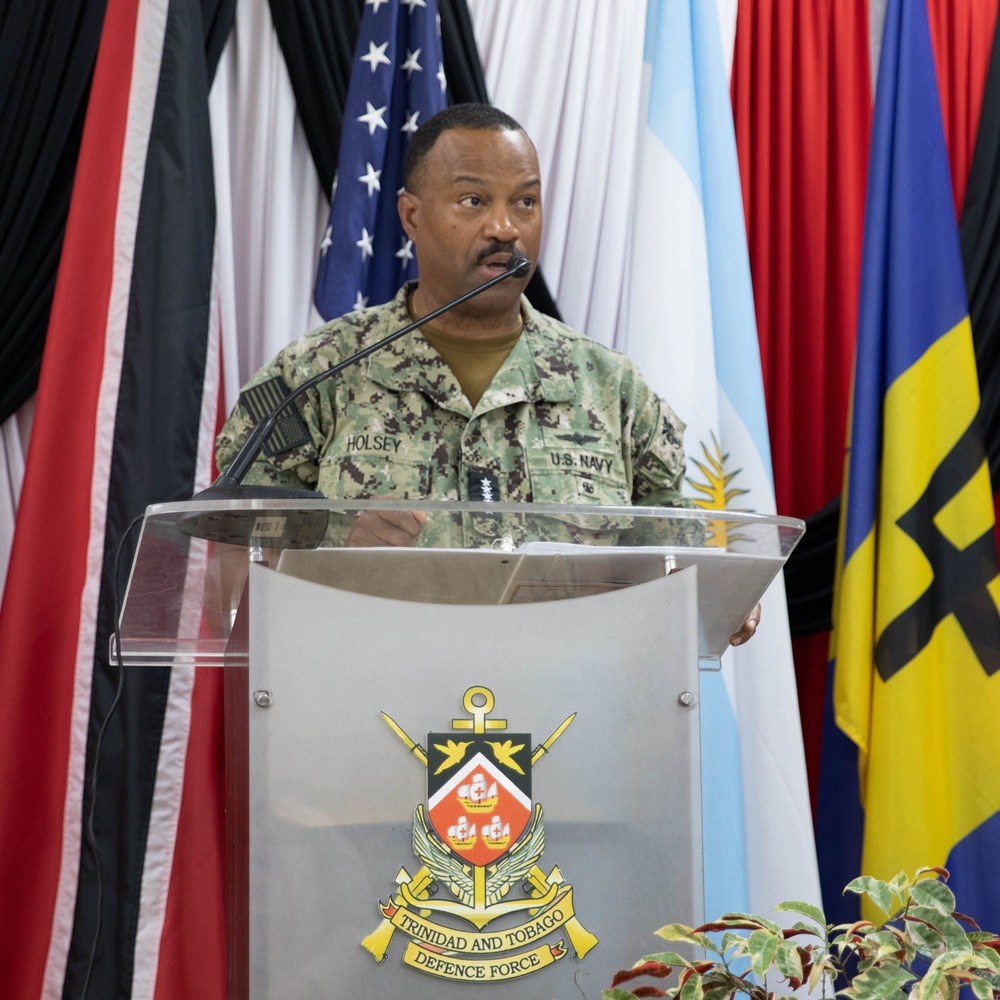
U.S. Navy Adm. Alvin Holsey, commander of U.S. Southern Command (USSOUTHCOM), provides remarks at the TRADEWINDS 25 (TW25) closing ceremony at Teteron Barracks in Teteron Bay, Trinidad and Tobago, May 8, 2025. U.S. Army National Guard photo by Spc. Astia

Imperialism by Invitation: Murder, Mafioso Politics and Caribbean-Venezuelan Futurity

by Zophia Edwards , Corey Gilkes , Tamanisha John

Amidst US bombs and lies about Venezuelan drug trafficking as a pretext for regime change, the subordinated position of Caribbean states’ economies plays a role in U.S. aggression. It is no exaggeration to say that for over half a millennium, the Caribbean has been a stage for imperial incursions. In the past two months, the US has increased its military presence in the Caribbean Sea, including carrying out an airstrike campaign, while claiming that these operations are necessary to protect US citizens from illicit drug trafficking allegedly occurring off the coast of Venezuela. As of November 15th, the US military has launched eleven deadly air strikes on small boats in Caribbean waters and eleven on South America’s Pacific Coast, killing over eighty people. In these operations, the US Navy also raided a tuna fishing boat, detaining the fisherfolk on board for several hours before releasing them.[1] To date, the US government has not provided any proof of its claims that the people it publicly executed are trafficking drugs. These extrajudicial killings have struck fear into the hearts of millions of ordinary people across the region, especially the fisherfolk who depend upon traversing the sea for their livelihoods. Meanwhile, Caribbean countries have either blatantly come out in support of the imperial violence at their doorsteps or been hesitant to respond. When these attacks began, Trinidad and Tobago (T&T) as well as Guyana expressed enthusiastic support for US militaristic incursions and extrajudicial murders.[2] As tensions escalated, the Guyanese government attempted to backpedal from its original position. However, the T&T Prime Minister, Kamla Persad Bissessar, has maintained a pro-US stance. PM Persad Bissessar is on record saying, “I have no sympathy for traffickers, the US military should kill them all violently.”[3] This position by the T&T government was reiterated even after the US murdered two of its citizens, Chad Joseph and Rishi Samaroo, in these airstrike campaigns. T&T allowed the US warship, USS Gravely, a guided-missile destroyer, to dock in the country’s capital between October 26-30 and for US military agents to “address shared threats like transnational crime and build resilience through training, humanitarian missions, and security efforts” on T&T soil.[4] The Caribbean Community (CARICOM) - the intergovernmental regional organization - has dragged its feet to take a position, waiting a whole month on October 18, to release a presser wherein it reaffirmed the region as a “zone of peace,” with Trinidad and Tobago excepting itself from this stance. The foot dragging is sinister when it is known for a fact that the US propaganda of conducting “anti-narcotics” operations is/are a ruse. These hostile US military aggressions in the Caribbean Sea and on South America’s Pacific Coast are part of a broader US imperial geopolitical strategy aimed at toppling the government of Venezuelan President, Nicolás Maduro. The aim, as Trump has publicly intimated,[5] is to get the Venezuelan government to grant the US more beneficial access to Venezuela’s resources. One might ask: Why are governments, like Trinidad and Tobago, enabling US imperial terror in the region? And why have CARICOM governments not taken an unequivocal anti-imperialist position? The answer lies in the subordinated position of these states’ economies within the global economy. Caribbean states are historically structured to be neoliberal, pro-imperial, and anti-democratic – while political elites are beholden to enacting external interests. Moreover, internal political dynamics – in terms of racial and class struggles – are also a factor, influencing the timing and intensity of these Caribbean governments’ responses to present US imperial terror. Debunking the Myth of the Venezuela Narco State The first order of business is dispelling the myth that Venezuela is a ‘narco-state.’ US officials have framed the current operations — boat strikes, deployments of destroyers and aircraft — as counter-narcotics efforts designed to stem the flow of illicit drugs from Venezuela to the US. However, the Caribbean route is not among the primary conduits for major volumes of cocaine and methamphetamines into the US. Most trafficking flows of narcotics to the US are overland, through Central America and via Pacific routes.[6] It is no surprise therefore that the US government has not provided any proof of its claims that the people it has extrajudicially murdered in the Caribbean Sea or on South America’s coast are engaged in drug trafficking. Additionally, the scale and nature of force being used are far beyond what traditional interdiction operations require – with the Trump administration claiming that interdiction has not worked, hence deadly air strikes are necessary. In addition to the lack of evidence of a Venezuelan route being key to drug trafficking into the US, there is also no credible proof linking the Maduro government to organized drug trafficking, despite the Trump regime’s claims, which are parroted uncritically by many Caribbean media and politicians. Within the US’s own intelligence establishment, one report explicitly states: “the Maduro regime probably does not have a policy of cooperating with TDA [Tren de Agua] and is not directing TDA movement to and operations in the United States.”[7] The report goes on to say: “Venezuelan intelligence, military, and police services view TDA as a security threat and operate against it in ways that make it highly unlikely the two sides would cooperate in a strategic or consistent way.” These facts stand out, especially given the evidentiary long and sordid history of the US’s leading role in drug trafficking in the Americas, and the US as the #1 supplier of weapons to those involved in the global drug trade in the region. The US government’s real motive is to destabilize and topple the Maduro government in Venezuela, in favor of a regime that undermines Venezuela’s sovereignty. Frantz Fanon, Walter Rodney and many others remind us that capitalist imperialism depends upon neocolonial puppet governments occupied by a predatory elite who facilitate accumulation by extractivism, dispossession, and exploitation. Positioned to usurp Maduro in Venezuela by imposition and not elections, is 2025 Nobel “Peace” Prize winner, María Corina Machado. Machado is a key US ally, Trump admirer, supporter of Israel and its bombing of Gaza, and an overall admirer of repressive regimes in Latin America – including El Salvador’s Nayib Bukele and Brazil’s former president, Jair Bolsonaro. Machado has been begging for foreign military intervention in Venezuela to remove the Maduro government while professing that her administration, if granted power through non-electoral means, intends to open up Venezuela’s doors to foreign exploiters. If the current iteration of US imperial antagonism in the region leads to regime change in Venezuela, the US is poised to have control over the resources in the southern Caribbean – namely Guyana and T&T – as well as on the South American Coast: again, namely Guyana and then Venezuela. This will give the US direct control over shipping routes in the region, as it prepares for a wider economic confrontation with China. Hence, these alleged “anti-narcotics” operations which have taken the lives of over eighty Caribbean and South American people, are just a smokescreen for deeper US geopolitical interests. Dependency and the Character of the State Caribbean states are disregarding the lives of the Venezuelan, Latin American, and their own Caribbean populations using external security narratives, largely because there is a true dictatorship of foreign capital in the region. As US Vice-President JD Vance let slip, places like the Caribbean countries were always intended to remain extractive workstations, not autonomous, functioning nations.…at all.[8] T&T, for example, has long been dependent on oil and gas extraction for the bulk of its national income. However, the country has been experiencing a decline in natural gas and crude oil production over the past decade and the country’s liquefaction complex and petrochemical plants producing ammonia, methanol, and other key exports – which depend upon gas input – have been suffering.[9] Combined with the collapse in energy prices in 2014, this situation has produced a decline in foreign exchange inflows and government revenues.[10] With the demand for US dollars far outstripping the supply, T&T is facing one of the most severe foreign exchange crises in the Caribbean, causing uproar across the working, middle, and upper classes of society alike.[11] As such, the T&T government is desperate for the resuscitation of its flailing oil and gas sector. The T&T government spent decades developing a “Dragon” gas deal, where Shell would lead operations that funnel gas located in Venezuelan waters to T&T, where it can be exported as LNG. This deal, considered by the T&T state to be the lifeline that would save the local economy from collapse, has become a weapon in Washington, DC’s arsenal against Venezuela. In the midst of the extra-judicial killings in the region, the US has revoked licenses approving the deal and re-approved them under new terms meant to ensure the involvement and profits of US companies. The continued structural dependency of T&T on foreign capital and imperial markets renders its misleaders susceptible to these coercive measures to ensure that Caribbean states align with US capitalist imperialist policies. Economic coercion is an important part of the context for Kamla Persad Bissessar’s support for imperialism, but her position cannot be traced to this alone. Persad Bissessar and the educated elite and comprador class she represents come out of some of the “best” primary, secondary, and tertiary educational institutions locally and internationally. Are these elites supposed to provide independent, critical thinkers who would decolonize “post” colonial societies? Are they only unwitting agents of imperialism or are they willing participants? From the time of many states' flag independence, foreign interventions have secured for the local Caribbean elites’ (or comprador classes) party longevity and/or political dominance, and/or visas and dual citizenships, and/or the ability to accumulate wealth for themselves by exploiting the people and land within their countries. As Frantz Fanon’s “Wretched of the Earth” and Walter Rodney’s “How Europe Underdeveloped Africa” detailed, these elites lack the sort of creativity and vitality to independently develop into an industrial bourgeoisie. They therefore turn to propping up foreign entities and dependent economic relations. Consequently, Caribbean state-making and the establishment of territorial statuses in the context of US and European imperialist capitalism has reproduced institutions that are unresponsive to Caribbean people. Whether through hopes of securing or acquiring foreign investment, or due to rank economic blackmail that threatens foreign investments elites through sanctions and other restrictions – many Caribbean states choose to serve US and Western imperialism as an almost “practical” strategy of economic “stability”. However, such imperial service only guarantees continued underdevelopment and economic beggary. Herein, T&T’s misleadership is positioning the country as a beggar to the US and reinforcing US sanctions on Venezuela, which makes it hard for Venezuela to sell its own oil and gas to states that need it, including T&T. Worse still, the US does not want China to remedy this situation between Venezuela and Trinidad. So not only are some Caribbean leaders and party supporters encouraging naked US imperialism cloaked in the deceptive language and rhetoric of “anti-drug trafficking” and “protecting the region,” they are also upholding a condition of dependency of the region on the US, advancing US attempts to subvert Chinese influence in the region, and in the process supporting direct attacks on states in the region’s right to self-determination and sovereignty. Moreover, local internal racial and class dynamics are also shaping the timing and intensity of Caribbean governments responses to US aggression in the region. In the post-WWII construction of party politics in T&T, middle-class parties carried forward the colonial divisions between the predominantly African and Indian segments of the population that multiracial worker movements had fought so hard to overcome. Kamla Persad Bissessar, as leader of the party popularly known as the one representing “Indian interests,” is advancing and exploiting this racial wedge to garner support for her pro-imperial policies. This party has actively engaged in criminalizing poor African communities as well as Venezuelan migrants, while downplaying the fact that the many poor and marginalized Indians are similarly caught in the net of US imperialism. Persad Bissessar and her party affiliates’ own ideas of “purity” mixed with class notions of entitlement merge with the supremacist foundations of US local and foreign politics. It’s bad enough that a Prime Minister — a lawyer — supports extra-judicial murders in violation of International Law, but how does one align with a political ideology that produced people like Senator James Reed, who, circa 1919, openly dismissed dealing with “a nigger from Liberia, a nigger from Honduras, a nigger from India…each (having) votes equal to that of the great United States.” Before one argues that this was long ago, consider what right-wing political commentator Ann Coulter told Vivek Ramaswamy why she’d never vote for him regardless of how his views match hers. We acknowledge that political leaders, seeking re-election, opt for the path of least resistance which in this case means not offending the mighty United States. But this cannot just be naïveté. It is in this context that Kamla Persad Bissessar has broken with even the basic understanding of what CARICOM is, and is astonishingly peddling the idea that each island seeking its own interest is somehow more progressive than banding together as one bloc! In other words, she and those who support her stance have embraced regional colonial divide-and-conquer tactics. The US has always stood in opposition to a unified body in the region. As then US diplomat Charles Whittaker put it: “A strongly federated West Indies might be detrimental to American interests.” As such, they undermined the West Indian Federation in the 1950s and sabotaged the New International Economic Order throughout the 1970s. The Caribbean misleaders proclaiming disunity as strength subscribe to political ideologies that interlock with a particular brand of politics in the West that has been openly Euro-nationalist and imperialist. Hence, at a time when many resource-rich countries are forming partnerships and alternative trading and security blocs, the political misleaders in the Caribbean calling for further fragmentation should warrant deeper investigation. Media, Political Misleadership, and How the State Weaponizes “Security” It is important to clarify that crime does exist in the Caribbean region, just as it exists elsewhere throughout the world. The size of Caribbean countries are also important to note, because though it is true that the amount of drugs flowing through the Caribbean are low relative to the global drug trade, the little that does pass through is indeed wreaking havoc, given the geographical and population sizes of these countries. The increase in guns and violent crime associated with the global drug trade in places like T&T has become a critical factor affecting everyday life for ordinary people there. This context has enabled the T&T government to justify and legitimate US military aggression in the name of “fighting” the drug trade in the region. Thus, most people cheering on the US military are simply desperate for a sense of safety. However, it is precisely this need for safety that is being weaponized — to increase unsafe conditions as new US-produced military weaponry and technologies become even more commonplace in the region. There is a direct and indirect connection between (geo)political and economic decisions made by successive generations of ruling elites in the Caribbean, and North American narratives of crime, which have – going back to the 19th century in some countries – allowed (and made space for) imperial aggression in the region. Over a number of decades, the United States has taken advantage of crises caused by rising violent crime to pursue its own security interests – even though rises in violent crime in the region is directly linked to US imported and manufactured weapons, and US consumer demands for items that the US state deems “illegal.” To establish and maintain US dominance — and the accompanying cheap labor[12] from the surplus populations which exist in a region notorious for high levels of unemployment and underemployment — the US has deployed constant applications of violence, packaged as maintaining “law and order” in the drive to “progress” and “catch up” with the West. It’s no coincidence that modern policing began in the Caribbean as militarized slave patrols in St Lucia.[13] Then, like now, the purpose is the same: protect wealth from the workers who created it. However, the real effectiveness lay in conditioning the exploited to adopt the values of the elites. To date, Western elite definitions of progress and development for the wider working people in the Caribbean region dominate, even as the dependent status of Caribbean economies make this impossible for the majority of the people in the region. Thus, US reliance on expanding its military apparatus for economic growth is justified through the construction of permanent threats that the US supposedly has to “defend” itself against. Another such narrative, like the need to “promote democracy” in Venezuela, is also within this vein of western imperialist propaganda. The US and western imperialists maintain that Venezuela is not a democracy, despite the presence of robust, active citizen’s assemblies and communes, as well as elections that occur under the presence of election observers – including from the US. Nonetheless, the western imperialist narrative maintains that Venezuela is not democratic and thus their people can be bombed for some purported “greater good.” Meanwhile, these same imperialist narratives call genocidal Israel a democracy deserving of “protection” and “defense,” as it exterminates Palestinians and decimates Palestinian land. This propaganda – not analysis based on any facts – readily frames western imperialism as “defensive,” “pro-security,” and “pro-safety” and those not in line with it as “aggressive” and “undemocratic.”[14] In lockstep with imperialists, local political figures too have long used or encouraged the use of dehumanizing language when discussing criminalized people and communities. When the T&T Prime Minister, Police Commissioner, and other influential authority figures refer to human beings as “carcasses,”[15] “pests,” “fleas” or “cockroaches,” the message sent is that these are not citizens or members of society and therefore, not worthy of certain basic courtesies and legal obligations, including the right to life. When this sort of thinking is widespread, issues of social justice fall by the wayside. Instead, heavy, often murderous attacks on real or alleged drug runners who come from poor, precarious, vulnerable communities become justified while the power brokers, bankers and their institutions[16] that launder money do not get so much as a paper weight dropped on them. Likewise, the local and international media is playing a significant role in the unfolding crisis. Save for a few columnists, the local media has been disgraceful, little more than sycophantic stenographers for egregious narratives coming from Washington. Initially, the local media conducted little to no critical research into the many available sources discrediting[17] false allegations connecting the Maduro administration to drug cartels. They parroted language that criminalized the victims of the attacks without presenting any evidence proving that they were guilty of violating any laws. They were silent on the voluminous literature connecting the CIA and the US military to colonial land and resource grabs that violate international and local laws.[18] They also proliferated the myth that Nicolas Maduro “lost” or “rigged” elections in Venezuela, contrary to information provided by election observers. The lack of critical and independent journalism is a clear dereliction of duty, supporting imperialist narratives and providing cover for extrajudicial murder. Conclusion The neoliberal era shortly after many states’ independence extended the life of bourgeois colonial thought in the Caribbean, interpreting the human “firstly, [as] a figure that is homo economics, and, secondly, a figure that can only operate within the field of white supremacy and capitalism.”[19] In this environment, Caribbean resistance weakened, having to establish itself alongside the intensification of neoliberal processes – foremost amongst them being state repression and militarist aggression supported by the US hegemon – so that Caribbean peoples could be definitively integrated into a Western capitalist system as “bottom labor-exporting economies,” whose labor commodification was masked by discourses on ‘growth’ and ‘development.'[20] It is in analyzing the characteristics of Caribbean states and governance within them – including how they interpret “development” – that helps us to answer why so many states elect to do imperial service: Caribbean neocolonial (puppet) states are fundamentally anti-democratic with no real regard for Caribbean life within them. The T&T government’s deliberate facilitation of US imperial aggression in the region mirrors the position of several African states. The post-genocide Tutsi-dominated regime of Paul Kagame in Rwanda, leveraging its image as a victim of colonialism and genocide, justifies domestic repression of Hutus and expansionist military ventures in neighboring states, notably the Democratic Republic of Congo in close alliance with the United States, France, and Israel. In exchange for U.S. and western military, financial, and political backing, Rwanda facilitates imperial access to Congo’s mineral wealth — coltan, gold, and tin — channeling profits both to Western capital and Rwandan elites. Thus, Rwanda functions as a pro-U.S. imperial proxy, advancing the global system of resource extraction and accumulation on behalf of Western powers. In addition, Rwanda along with a growing list of African states, including Ghana, Eswatini, and South Sudan have accepted the terms of bilateral agreements with the US government to receive people who have been criminalized and deported under the Trump regime’s attack on communities racialized as non-white in the US.[21] By enlisting themselves to be locations for the outsourcing of US racist incarceration policies, they are enabling the geographical expansion of the US military industrial prison complex to more and more corners of the world. These Caribbean and African misleaders will go down in history as active enablers and facilitators of the very imperial greed, oppression, and exploitation that the masses have been resisting since the days of direct colonial domination. Only invigorated mass resistance that takes power away from Caribbean neocolonial (puppet) elites engaged in imperial service can rectify these conditions. Global Africans in the Caribbean and around the world must claim power and reclaim movement histories that fought back against capitalist imperialism. Originally published in Pambazuka News and republished in Black Agenda Report References [1] https://www.pbs.org/newshour/world/venezuela-says-u-s-warship-raided-a-… [2] https://www.caribbeanlife.com/trinidad-guyana-us-moves-venezuela/ [3] https://newsday.co.tt/2025/09/03/kamla-says-kill-all-traffickers-as-tru… [4] https://www.cnn.com/2025/10/26/world/us-warship-docks-trinidad-venezeul… [5] https://www.theguardian.com/world/2025/oct/17/trump-maduro-venezuela [6] https://www.unodc.org/unodc/data-and-analysis/world-drug-report-2025.ht… [7] https://static01.nyt.com/newsgraphics/documenttools/32f71f10c36cc482/d9… [8] https://www.youtube.com/watch?v=U1bd-D1PIZg&pp=ygUZIGogZCB2YW5jZSBnbG9i… [9] https://www.finance.gov.tt/2020/03/16/effect-of-the-oil-price-collapse-… [10] https://www.imf.org/external/pubs/ft/scr/2014/cr14271.pdf; https://www.imf.org/en/Publications/CR/Issues/2024/06/04/Trinidad-and-T…. [11] Chamber of Industry and Commerce 2025; University of the West Indies Campus News 2024. [12] https://www.youtube.com/watch?v=BAJgGFtF44A [13] https://www.youtube.com/watch?v=kavkiH9YHag&pp=ygUaanVsaWFuIGdvIHBvbGlj… [14] See, for example, the Trilateral Commission’s “The Crisis of Democracy” in which influential thinkers who shaped US policy complained that decolonising countries were exercising too much democracy, which needed to be contained, leading to the proliferation of NGOs all over the peripheralized world. [15] https://trinidadexpress.com/news/local/kamla-state-resources-won-t-be-wasted/article_5d0c61fd-d633-4dd3-8e3e-6995a454c774.html [16] https://www.youtube.com/watch?v=kcpZPGOksp0 [17] https://www.dea.gov/sites/default/files/2025-07/2025NationalDrugThreatA…; https://static01.nyt.com/newsgraphics/documenttools/32f71f10c36cc482/d9… [18] https://www.goodreads.com/book/show/455652.Dark_Alliance; https://www.versobooks.com/en-gb/products/1628-whiteout?srsltid=AfmBOor…; https://www.betterworldbooks.com/product/detail/the-politics-of-heroin-…; https://www.youtube.com/watch?v=zxbW0CCuT7E [19] Bogues, Anthony. 2023. “Sylvia Wynter: Constructing Radical Caribbean Thought.” BIM: Arts for the 21st Century 11(1): 33–41, p.37. [20] Henry, Paget. 2000. “Caribbean Marxism: After the Neoliberal and Linguistic Turns.” In Caliban’s Reason: Introducing Afro-Caribbean Philosophy, Africana Thought, New York: Routledge, 221-46, p.228. [21] https://www.pbs.org/newshour/world/more-african-nations-are-receiving-t…
Defense & Security
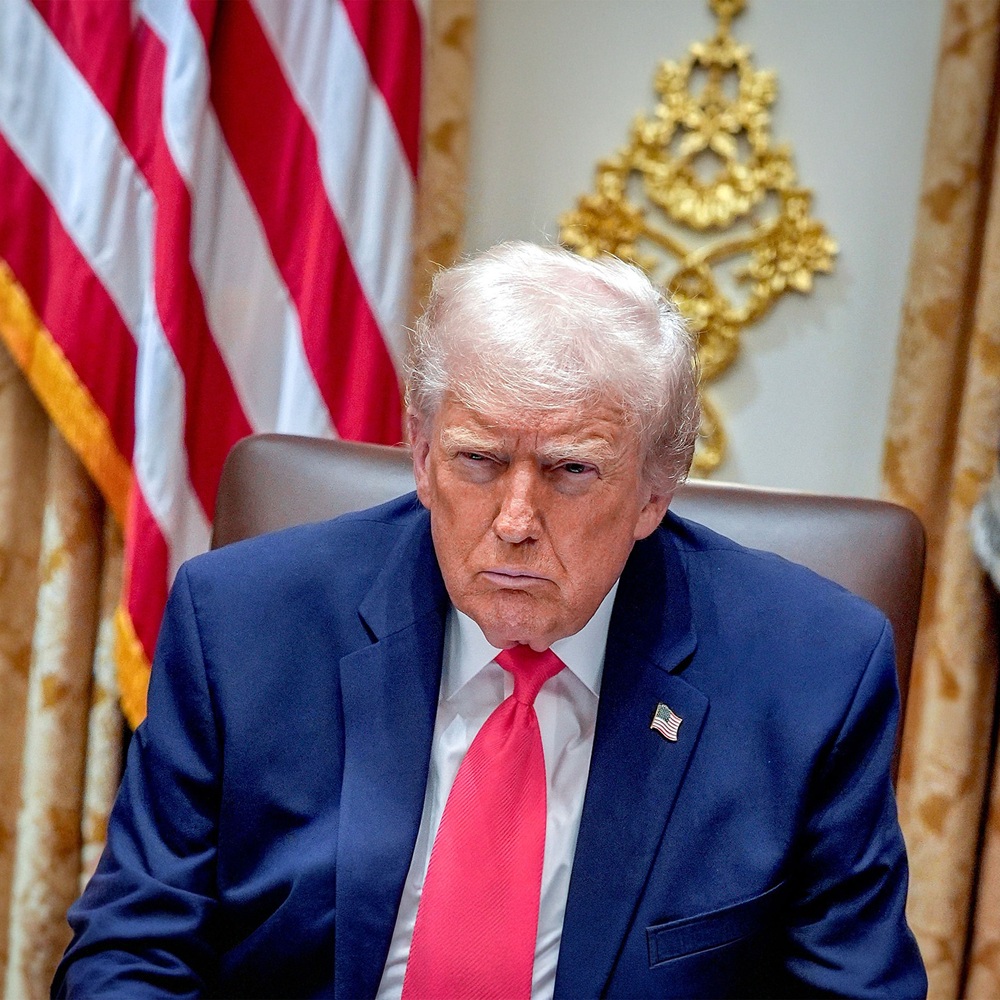
President Donald Trump Speaks During Cabinet Meeting in the Cabinet Room of the White House, Washington, DC on December 2, 2025

Opinion – The Mearsheimer Logic Underlying Trump’s National Security Strategy

by Mark N. Katz

The recently released Trump Administration’s National Security Strategy (NSS) has upended what had been the decades-long consensus about American foreign policy. Most notable in it is the Trump Administration’s prioritization of the Western Hemisphere as an American security concern, its deemphasis on defending America’s traditional European allies, its identification of China as far more of a threat than Russia, and its determination not to be drawn into conflicts in the Middle East and Africa. But while the 2025 Trump Administration National Security Strategy breaks with much of previous American foreign policy, the logic behind it is not something completely new. Even though the document makes no mention of him, the policy outlined in the NSS comports with what John Mearsheimer described in his influential book, “The Tragedy of Great Power Politics”, which was first published in 2001 and updated in 2014. In his book Mearsheimer declared that no nation has ever achieved global hegemony. According to Mearsheimer, America is the only country that has achieved predominant influence in its own region (the Western Hemisphere) and has also been able to prevent any other great power from dominating any other region. Mearsheimer wrote, “States that achieve regional hegemony seek to prevent great powers in other regions from duplicating their feat. Regional hegemons, in other words, do not want peers” (2014 edition, p. 41). Trump’s 2025 National Security Strategy has, whether knowingly or not, adopted these aims as well. It discusses the various regions of the world in the order of their priority for the Trump Administration: the Western Hemisphere first, followed by Asia (or Indo-Pacific), Europe, the Middle East, and lastly Africa. With regard to the Western Hemisphere, the NSS unambiguously calls for the restoration of “American preeminence in the Western Hemisphere,” and states, “We will deny non-Hemispheric competitors the ability to position forces or other threatening capabilities, or to own or control strategically vital assets, in our Hemisphere.” This is very much in keeping with what Mearsheimer described as America being a regional hegemon in the Western Hemisphere. As for the other four regions of the world, though, the Trump Administration seeks either to prevent any other great power from becoming predominant — or it doesn’t see this as a possibility that needs to be worried about. According to the NSS, the Middle East was a priority in the past because it was the world’s most important energy supplier and was a prime theater of superpower conflict. Now, however, there are other energy suppliers (including the U.S.) and superpower competition has been replaced by “great power jockeying” in which the U.S. retains “the most enviable position.” In other words: the Trump Administration does not see any other great power as able to become predominant in this region which is now less strategically important than it used to be anyway. Similarly, the NSS does not see any other great power as even seeking to become predominant in Africa. The NSS thus sees America’s main interests there as mainly commercial. By contrast, China is seen as a threat in the Indo-Pacific region. The NSS, though, discusses Chinese threats in the economic and technological spheres before turning to the military one. A continued U.S. military presence in the region is seen as important for preventing Chinese predominance. But Japan, South Korea, Taiwan, and Australia are all enjoined by the NSS to increase their defense spending in order to counter this threat. The NSS also identifies “the potential for any competitor to control the South China Sea” as a common threat that not only requires investment in U.S. military capabilities, “but also strong cooperation with every nation that stands to suffer, from India to Japan and beyond.” Unlike the Middle East and Africa, then, the NSS does identify a rival great power as striving for predominance in the Indo-Pacific region. Countering it, though, is not seen as just being America’s responsibility, but also that of other powerful states in the region. The strangest section in the 2025 NSS is the one on Europe. While acknowledging that “many Europeans regard Russia as an existential threat,” the NSS envisions America’s role as “managing European relations with Russia” both to “reestablish conditions of strategic stability” and “to mitigate the risk of conflict between Russia and European states.” This is very different from the decades-long U.S. policy of seeing America’s role as defending democratic Europe against an expansionist Soviet Union in the past and Putin’s Russia more recently. Indeed, the NSS’s claim that the European Union undermines “political liberty and sovereignty” and its welcoming “the growing influence of patriotic European parties” (in other words, anti-EU right wing nationalist ones) suggests that it is not Russia which the Trump Administration sees as a rival, but the European Union. The 2025 NSS does call for a “strong Europe…to work in concert with us to prevent any adversary from dominating Europe.” The NSS, though, seems to envision the European Union as either greater than or equal to Russia in threatening to dominate European nations. In his book, Mearsheimer did not envision the European Union as a potential great power rival to the U.S. Indeed, there isn’t even an entry for it in the book’s index. The way that the NSS envisions the world, though, comports with how Mearsheimer described America’s great power position: predominant in the Western Hemisphere and able to prevent any other great power from becoming predominant in any other region of the world. Mearsheimer, though, is a scholar who described the position in the world that he saw the U.S. as having achieved and which would seek to maintain. The 2025 NSS, by contrast, is a policy document laying out how the Trump Administration believes it can best maintain this position. And there is reason to doubt that it has done so realistically. Keeping non-Hemispheric great powers out of the Western Hemisphere will not be easy when there are governments there that want to cooperate with them. Further, devoting American resources to being predominant in Latin America when this will be resented and resisted could not only take away from America’s ability to prevent rival great powers from becoming predominant in other regions, but could counterproductively lead Latin American nations than have already done so to increase their cooperation with external great powers which the Trump Administration wants to avoid. Further, the Trump Administration’s efforts to reduce the influence of the European Union runs two risks: the first is that such an effort will succeed, but that the rise of anti-EU nationalist governments throughout the old continent results in a Europe less able to resist Russian manipulation and incursion. The second is that Trump Administration efforts to weaken the European Union backfire and result not only in a Europe united against American interference but unnecessarily emerging as a rival to the U.S. It would be ironic indeed if pursuing the NSS’s plan for upholding what Mearsheimer described as America’s ability to predominate over the Western Hemisphere combined with an ability to prevent any rival from predominating over any other region ended up undermining America’s ability to do either.

Defense & Security
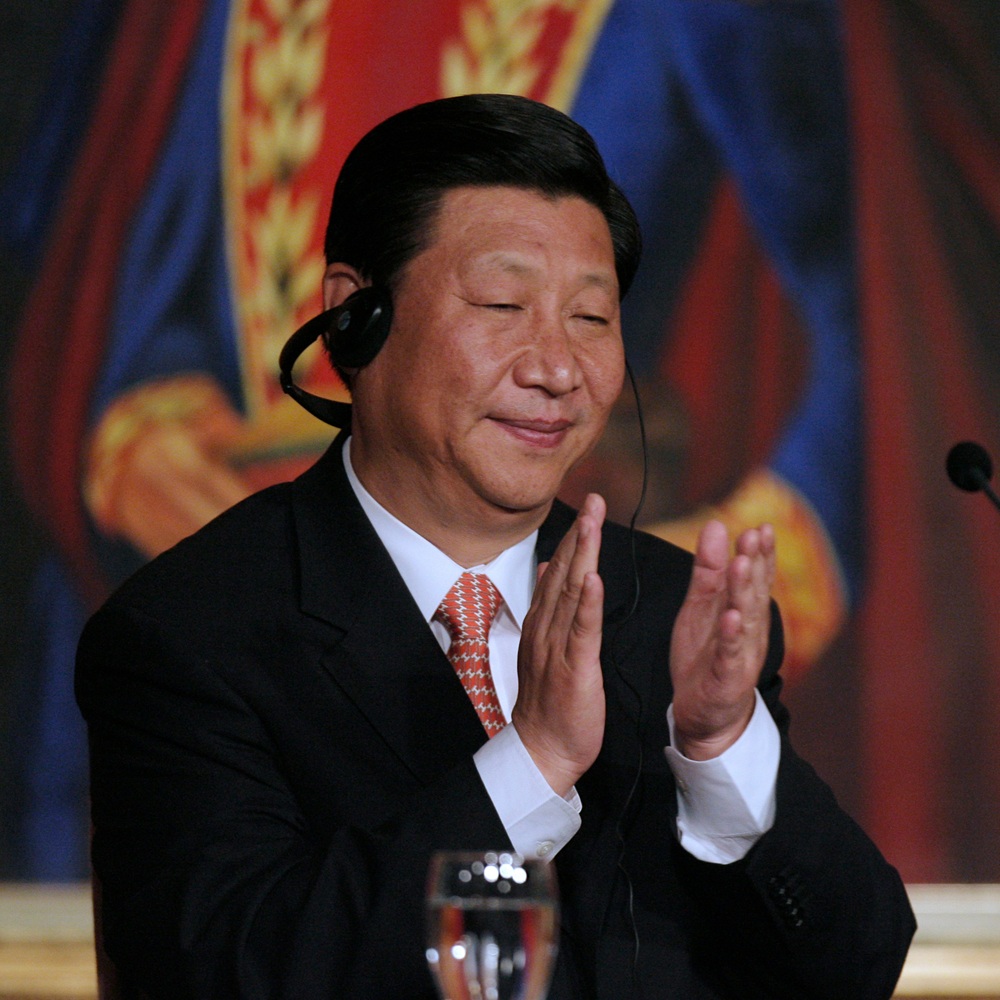
Caracas (Venezuela) Feb. 18, 2009. The President of the People's Republic of China, Xi Jinping, arrival to Caracas, Venezuela, on official visit in febraury 18, 2009.

Why China is watching Trump’s Venezuela campaign closely

by Tom Harper

Donald Trump’s campaign against Venezuela escalated recently with the US president announcing that the country’s airspace should be considered “closed”. This is a move that has preceded US military interventions in the past, perhaps most notably in Iraq in 2003. It remains to be seen whether Trump’s declaration will be followed by military action or is just a means of raising the pressure on the Venezuelan leader, Nicolás Maduro, in an attempt to force him from office. But regardless of what happens next, what has been notable is the reaction of China. In a December 3 briefing, Chinese foreign ministry spokesperson Lin Jian said that closing Venezuelan airspace would violate international norms and infringe on national sovereignty. Jian added that China rejects interference in Venezuela’s internal affairs “under any pretext” and called on all parties to keep Latin America a “zone of peace”. This stance is no great surprise. China has developed strong relationships with several Latin American countries, including Venezuela, as part of a broader strategy to expand its presence in regions long dominated by the US. Trump’s threats of military action could jeopardise the influence China has built there. China has been involved in Latin America for centuries. But its ties to the region have grown rapidly over the past 25 years or so, with China becoming an indispensable partner to many Latin American countries. Brazil is a clear example of this indispensability. The election of Jair Bolsonaro’s right-wing government in 2018 led to expectations that Brazil would tilt towards Washington. However, such expectations were soon dampened due to China’s role as a major consumer of Brazilian goods. By 2020, China was Brazil’s largest trading partner, accounting for over 30% of total exports from the country. Ties between Brazil and China have only deepened under Bolsonaro’s successor, Luiz Inácio Lula da Silva. This has been helped by the intensification of the US-China trade war, which has seen Brazil become a crucial alternative source of agricultural products such as soybeans that China has historically imported from the US. This relationship has enabled China to exert economic pressure on the US. Brazil’s large soybean exports to China have increased the global supply, which has suppressed prices for all suppliers – including those in US. China has been a similarly indispensable partner to Venezuela since the days of Maduro’s predecessor, Hugo Chávez, who took power in the Latin American state in 1999. Chávez was a keen advocate of a multipolar international order, a concept that has gained traction as Beijing’s political and economic power has grown. Over the years, China has become the main destination for Venezuelan oil. In 2024, China bought around 268,000 barrels of oil from Venezuela on average every day – a figure that, in reality, is likely to be higher as Venezuelan oil is routinely mislabelled to bypass US sanctions. Venezuelan oil is key for China. Beijing has been attempting to diversify its sources of natural resources in recent years as part of efforts to retain its global advantage in cheap manufacturing and wean itself off a dependency on Middle Eastern oil. Trump’s threats to intervene militarily in Venezuela may, at least in part, be aimed at challenging Chinese interests. Indeed, the White House issued an official statement on December 2 affirming the Trump administration’s commitment to the Monroe Doctrine. Signed in 1823, the doctrine said the US would reject other countries’ influence in Latin America. A new “Trump Corollary” to the doctrine states that “the American people – not foreign nations nor globalist institutions – will always control their own destiny in our hemisphere”. Challenging Chinese influence Any US military action in Venezuela will probably increase paranoia across the region. Trump warned recently that any country he believes is making illegal drugs destined for the US is vulnerable to a military attack, and singled out Colombia. On December 2, Trump told reporters at the White House that he “heard” Colombia was “making cocaine”. “They have cocaine plants”, he added. The Colombian president, Gustavo Petro, hit back immediately on social media, saying: “To threaten our sovereignty is to declare war”. But China is unlikely to step in militarily to defend countries in Latin America from US aggression. While China has used its developmental influence there to pursue some political objectives – most notably persuading El Salvador, the Dominican Republic and Honduras to renounce diplomatic recognition of Taiwan in recent years – its engagement with Latin America has largely been transactional. China’s strategy in Latin America is driven primarily by economic considerations, and Beijing has generally been reluctant to enter into formal alliances with states there. This hesitance to commit to defending its partners could strain relations with countries in the region that may expect Beijing to support them in the event of a crisis. However, Trump’s Latin America campaign does provide China with some opportunities. Just as European countries concerned about Russia’s expansionist intentions have become a key market for American arms, it’s possible that Latin America becomes a lucrative destination for Chinese weaponry. Venezuela is already buying Chinese arms, varying from riot control equipment to missiles and – possibly in the future – fighter jets. China has also sold military equipment to Argentina, Bolivia and Ecuador. The US appears to be taking an increasingly active interest in Latin America. As outlined in its recently published National Security Strategy, the Trump administration is looking to readjust the US’s “global military presence to address urgent threats” in the western hemisphere. Having carefully built up its influence in Latin America over many years, China’s leadership will be keeping a keen eye on how events unfold there in the months ahead.

Defense & Security
Bricked wall with stop terrorism sign

Causes of women involement in terrorism

by Eraj Farooqui

AbstractThis paper explores the complex factors that contribute to women's participation in terrorism, a subject that has attracted more scholarly interest, particularly in the wake of 9/11. The discipline is nonetheless politicised and divided despite a great deal of study, which is frequently made worse by a lack of primary data. Women, who are typically thought of as quiet and non-violent, have taken on important roles in terrorist groups, especially during the 1990s, where they have participated in high-profile attacks and leadership roles. The study identifies the main factors: political, religious, personal, and gender equality—that motivate women's participation. Examples show how different organisations differ in that some encourage women to participate actively, while others limit their positions. The study also examines how terrorism has changed over time, with a particular emphasis on its gendered aspects, and assesses how contemporary organisations such as the Islamic State have reshaped the roles of women in terrorist networks. Finally, by illuminating the ideological, cultural, and societal factors that lead to women's radicalisation and involvement, this research offers an in-depth examination of the relationship between gender and terrorism.Keywords:  Terrorism , Women , Political , Religion , Personal , Gender-equality Introduction The reasons behind female terrorism have been extensively studied and debated by numerous academics. Even though there is a wealth of study, a substantial portion of it is contradictory or incomplete. Frequently, the highly politicised word of terrorism has led to contradictory claims in the research. To understand why individuals resort to women terrorism, scholars highlight political, religious, social, and personal causes. In our culture, women were seen as housewives and peaceful members of society, and terrorist groups were controlled by men. Research on women and terrorism can be done on a variety of subjects; however, this paper will mostly focus on the causes of why women participate in terrorism. After 9/11 the academic research on scholarly papers on terrorism have increased by 300% since 9/11.[1] The connection between terrorism and gender is often overlooked due to governments' reluctance to reveal the primary causes and the reluctance to provide reliable data. Researchers often avoid original sources for security reasons. A 2009 review by Karen Jacques and Paul J. Taylor found a reluctance to describe events, excessive narrative analysis, and reliance on secondary sources. [2] The word "terror" comes from the Latin verb "terrere" which means to frighten. It was originally used by the Romans in 105 B.C. to characterise the terror that engulfed Rome during the attack by the Cibri tribe. During the French Revolution’s Reign of Terror, Maximilien Robespierre incited fear among the people.[3]The word "terrorist" was used by Edmund Burkey in the Regicide Peace letter. With the end of Reign of Terror, the word ‘terrorism’ gained popularity.[4] Terrorism, a deliberate use of force or intimidation, is a significant issue in the 21st century, often driven by ideological, religious, or political factors. However, the term "terrorism" has no widely recognised definition. There are four distinct stages of modern terrorism. The first wave of terrorism began in Russia and spread to Western Europe and the United States, using revolutionary and anarchist beliefs.[5]  The final wave is founded on religious beliefs that the world is currently dealing with. This wave started in 1979 when Iran underwent an Islamic revolution. Because of gender norms, terrorists are frequently perceived as masculine attackers. Women are perceived as powerless, passive, and victims during times of conflict, but it is important to remember that if they participate in terrorism, they may pose a greater threat than men.[6]And since 1990, women have gained prominence in terrorist organisations, assuming leadership positions and taking part in more brutal assaults. More media attention is given to female attackers, and people are more curious about the motivations behind their actions. Additionally, terrorist organisations are recruiting more women as a result of this. Although they have historically been involved in terrorist organisations, women's numbers have been small. As an example, the number of female suicide attackers has surged from eight in the 1980s to well over 100 since 2000, indicating a growth in the involvement of women in terrorist actions.[7]  On the other hand as per Bloom’s report over 257 suicide attacks were carried out by female bombers between 1985 and 2010, accounting for 25% of all terrorist incidents. Since 2002, the proportion of female bombers in several nations has surpassed 50%.[8]The first known incidence of female political violence happened in 1878, when Zasulich shot Fedor Trepov, the governor of Saint Petersburg. David Rapoport identified this as one of the four waves of modern terrorism.[9] Weinberg and Eubank claim that women have primarily assumed leadership positions in left-wing revolutionary bands while being assigned to inferior positions in right-wing organisations. They mostly perform supporting and auxiliary functions for numerous religious institutions. [10]Gender, Palestinian Women, and Terrorism: Women's Liberation or Oppression? was written by Anat Berko and Edna Erez. stated that during his questioning, he discovered that many Palestinian men did not approve of women participating in suicide bombings because they saw them as inferior to men.[11] After doing study with a local terrorist organisation, Jacques and Taylor chose 30 male and female suicide bombers. He finished by studying the fact that males prefer to join terrorist organisations for religious and nationalistic reasons, but female suicide terrorists are motivated by personal ones. Mia Bloom’s book the Bombshell: Women and Terrorism examines the motivations of women who participate in terrorism,[12] with an emphasis on relationships, respect, revenge, and redemption. According to Vetter and Perlstein, one of the reasons why women join terrorist organisations is because of gender equality. However, Jacques and Taylor disagree with this notion.[13]The main reason women join the LTTE is to fight for gender equality; they participate in every aspect of the group and do so to avoid being discriminated against and repressed by the male-dominated society.  The following studies will provide an academic perspective on the causes of women's involvement in terrorism. The main focus will be on four causes: political, religious, personal, and gender equality, as well as a list of important terror occurrences conducted by female terrorists as a result of some key ideological beliefs. Religious Cause: Religious convictions have been the foundation of many terrorist organisations throughout history. The Crusaders can be categorised as a terrorist group. Although the Crusaders' main objective was to propagate Christianity, they also committed heinous acts of terrorism. The Iranian Revolution of 1979 was the fourth wave of contemporary terrorism, and David Rapport claims that it was the first instance of religious terrorism in the modern era. Religious terrorism's core principle is the promotion of violence in the name of furthering religious beliefs. For example, Al-Qaeda and ISIS promote an Islamic caliphate globally.[14] However, attempting to do so by using cruel and aggressive methods. Islam and terrorism have become more associated since 9/11, as terrorist organisations have posed a serious threat to Western ideologies and societal influences.[15] Gonzalez-Perez notes that suicide bombers frequently use the idea of martyrdom and benefits in the afterlife to lure people into justifying their acts.[16] Women are also part of religious terrorist organisations but there are two argument over women involvement in jihadi group. As explaind by Muhammad Khayr Haykal in his book Al-Jihad wa al-qital fi al-siyasah al-shar'iyyah. 1. Women were seen as having a responsibility in raising money for Jihadis, caring for children, and providing medical treatment.[17] 2.    The Islamic state should set up training facilities for women to learn how to wield weapons and combat techniques, according to Islamic legal expert Muhammad Khayr Haykal. According to him, all Muslims should be held accountable for jihad if it turns into fard ‘ayn, and women must be prepared for this possibility in order to perform their duty. This strategy permits the practice of female jihadism in martyrdom missions and on the battlefield.[18] Role of women in Al-Qaeda According to Robet Pape in his book Dying to Win: The Strategic Logic of Suicide Terrorism.[19]Highlights that male terrorists affiliated with Al-Qaeda oppose women's participation in terrorism. However the Tamil Tigers used twenty-three female attackers, the Palestinians used six, the Lebanese used six, the Chechens used fourteen, and the PKK used ten. Consequently, he concluded that Islamic fundamentalists oppose female fighters.[20] However, after the rise of the Islamic state, which encourages women to join their organisation and accept arms, the Pape argument is no longer regarded as legitimate. For example, some 200 women joined the Islamic State in Syria in 2014 after migrating from Western nations. Additionally, they more than doubled their numbers in 2015, reaching over 550 women.[21] This suggests that the Islamic State may assign women a direct role, such as suicide bombing, in a way that is different from that of many other jihadist organisations, such as the Taliban and Al Qaeda.  In Al-Qaeda the women played a secondary role for.e.g: Al Qaeda also benefited strategically from the assistance that women provided. For instance, the female terrorists of Al Qaeda were strongly using the internet to try to convince men to join the worldwide Jihad. Some males are inclined to join these groups because they feel ashamed of their masculinity as a result of these communication strategies.[22]Women's roles in jihadist organisations are valued in that they bear children and raise them to be potential recruits for terrorist organisations. Usama Bin Laden thanked women by saying: "You have inspired and encouraged [men] to join jihad, and you have raised all the men who fought in Palestine, Lebanon, Afghanistan, and Chechnya, and you are the ones who produced the squadron of heroic men who carried out the raids in New York and Washington."[23] On the other hand Ayman al-Zawahiri's wife, Umayma al-Zawahiri, also urged her "Muslim sisters" to raise their kids on the love of jihad in God's way and "to induce their brothers, husbands, and sons to protect Muslims' lands and properties. To support (male) jihadists with prayers and financial support. [24] Al Khansa'a was one of the authors of the online magazine that inspired Muslim sisters with her articles; while she did not advocate for women to fight in combat, she did counsel them to stay in shape and exercise so they would be prepared for jihad.[25] Al-Qaeda Iraq's founder and Al-Qaeda member Abu Musab al Zarqawi urged Iraqi women to join the military. In Talafa, Iraq, a US military recruiting centre was the target of the first female suicide bomber. According to the announcement made by al Qaeda in Iraq on its website, "A blessed sister carried out a brave strike defending her beliefs. May God include our sister among the group of martyrs.’’[26]According to Mia Bloom the attack was carried out under the alias "ghost group" because it was still forbidden for Al Qaeda Central to collaborate with women on suicide bombings.[27] The identities of male suicide bombers are mentioned by AQI members, but the names of female suicide bombers are never mentioned. As a result, it is challenging to determine the purpose or driving force for their membership in terrorist organisations. Despite the lack of data regarding female suicide bombers, certain enquiries and interviews provide us with comparable reasons why they chose to join AQI as female terrorists. After losing a loved one, women join terrorist organisations in order to kill the offender and get revenge for the deaths of their husbands and brothers. Furthermore, AQI members urged young females to die as martyrs, claiming that they would immediately enter heaven and be the prophet Muhammad's neighbours.[28] Al-Qaeda is therefore mostly a male organisation that discourages women from engaging in violent activities. Women's roles are limited to becoming teachers, fund-raisers, social media advocates, and moms of potential jihadists. Role of women in Islamic State(IS) Islamic State was founded in 1999. The Islamic State had the greatest number of foreign terrorist fighters in history, making it a unique terrorist organisation. About 41,490 foreign nationals from 8 nations joined the Islamic State with the goal of restoring the caliphate. Of the foreign terrorist fighters, about 4761 (13%) were female. Following Eastern Europe (44%), Western Europe (42%), the Americas, Australia, and New Zealand (36%), and other regions, Eastern Asia had the greatest percentage (70%) of women connected with the Islamic State.[29] The biggest motivation for joining an Islamic terrorist organisation is religion. Women typically played a supporting role in Islamic terrorist organisations prior to the rise of the Islamic State. However, the role of women in these organisations has grown stronger after the fall of Al-Qaeda and the rise of Islamic State in the Middle East. Muriel Dagauque, a Muslim woman who converted to Islam and was married to a Muslim man, was one of the Islamic State suicide bombers. She moved to Iraq with her spouse from Europe in order to become a martyr, and on November 9, 2005, she bombed herself.[30] Many jihadist suicide bombers are comforted by the assurance that they will be sitting next to God (Allah), experiencing only joy and no agony, before the first drop of their blood ever hits the earth.[31]Women joined the Islamic State mostly for religious reasons. Umm Layth, also known as Aqsa Mahmood, was a 21 year old Scottish university student who travelled to Syria to take part in Islamic State terrorist activities. Mahmood expressed her opinions on jihad with the following sentences.: "If not you, then your grandkids or their grandchildren. But do not worry, our cubs will eventually shed your blood. This Islamic dominion will become well-known and dreaded all over the world. Choose a side; this is a fight against Islam. You may either support them or support us.''[32] Role of women Chechnya Terrorism: Islam is the predominant religion in Chechnya, and Wahhabist terror ideology is linked to Chechen terrorism, particularly suicide terrorism.[33]The Wahhabi sect appears to have spread to the Chechen territories through other terror cells in the Middle East, such as al Qaeda.[34] This ideology which glorifies martyrdom and promotes jihad in order to establish a worldwide Muslim caliphate is a rationale for carrying out acts of retaliation and acting on behalf of a national separatist movement.[35] Chechen women, due to their Islamic influence, often wear black and traditional Muslim clothing, such as a head scarf or jilbab, which allows them to conceal weapons and bombs, as seen in the Dulbrov theatre incident.[36] Religion is one factor that contributes to women joining terrorist organisations, but it is not the only one; other factors also play a role. Political Cause According to Gus Martin, terrorism can occur under a variety of circumstances when there is political repression. First, the group is resentful of the injustices they perceive in society. The group also believes that their social dissent is insignificant. Last but not least, the group believes that there are problems with the system that can be fixed, which leads them to confront the conflict.[37] Despite the widespread belief that women do not participate in political violence, women have been planning attacks and taking part in political violence since 1800.[38] Violence is a tactic used by women who are dissatisfied with the government, have their opinions ignored, and are under-represented in organisational structures With anarchist and revolutionary beliefs, anarchism was the beginning point of the first wave of contemporary terrorism, which swept from Western Europe to America. Nonetheless, women's political motive persisted until the second wave of terrorism, when nationalism emerged as the primary driver of women's participation in terrorism.[39] However, they were only allowed to serve as scouts and messengers during the second wave of terrorism. David Rapoport claims that because women once again assumed leadership roles, there are some similarities between the first and second waves.[40] Vera Zasulich shot the governor of St. Petersburg; she said that she had a political purpose for doing so because the governor was well-known for his Polish insurrection and had ordered to execute political prisoner Arkhip Bogolyubov. This infuriated the revolutionary forces, and six people made the decision to kill the governor, but Zasulich was the first to take the initiative. This was the beginning of the first wave of terrorism. Despite the fact that women participated in political violence, her case is notable as the first instance of female political violence in the modern era or the first to be acknowledged. [41] Russian university students founded the group, which specifically targeted political figures. Vera Figner and Gesia Gelfman, Sofia Perovskaya, and three ladies from Narodnaya Volya had a key role in the March 13, 1881, assassination of Russian Emperor Alexander II in St. Petersburg.[42] The reason behind this act was that Tsar Alexander II released his renowned Emancipation Manifesto in 1861 after the Russian intellectuals struggled to achieve their demands. This was intended to end the peasantry's enslavement and, if feasible, bring about a new, more liberal era. Perovskaya and other disappointed reformers decided to accelerate change as it became evident that this new age was a false dawn. As a result, hundreds of revolutionaries left St Petersburg in 1874 to tour the Russian countryside and read pamphlets to the peasants about socialism, nihilism, and anarchism in an attempt to educate them for the day when they would destroy the Tsar.[43] In 1954 the Algerian muslim formed a group called National Liberation Front. Their major goal was to achieve independence from the colonial power France. FLN rose to prominence thanks to its female members, Zohra Drif, Dajmila Bouhard, and Samia Lakhdar. They were able to cross the French checkpoint and leave bombs in various locations, and as a result, three people died in an explosion on September 3, 1956, and several others were injured.[44]This movement occurred at the time of second wave of contemporary terrorism which was based on the idea of nationalism and anticolonialism. As per reports between 1970 and 1984, 451 Italian women joined terrorist organisations and then engaged in political violence. The bulk of these women had degrees and performed identical duties to those of male terrorists, they found, with 35% of them being students, 23% being clerks, secretaries, nurses, technicians, and 20% being instructors. A paramilitary group called Red Brigade was established in 1970 and was engaged in terrorist activities around the nation. Because it supported Italy's withdrawal from NATO and dominated the Marixist-Leninist worldview. Known for its kidnapping and murderous activities, Red Brigades also killed former Italian Prime Minister Aldo Moro and abducted James L. Dozier, a senior US officer at NATO. Barbara Balzerian had murdered him. Many female members of the Red Brigades participated in the group's violent assaults, and Margherita Cagol (Mara), one of the Red Brigade's co-founders and one of the first victim in an armed conflict with the police, became a symbol of the left-wing movement.[45]The most violent communist organisation throughout the 1970s and 1980s was the Red Army Faction which engaged in ideologically motivated terrorism in West Germany. Ulrike Meinhof and Gudrun Ensslin, co-founders, protested consumerism by burning a department store in Frankfurt in 1968.[46] A major problem is the Chechen people's desire for independence from Russia, which is driven by their nationalist and separatist beliefs. In the lengthy history of the Chechen Republic, Russians, have been the target of several violent attacks. Since June 7, 2000, Khava Barayeva and Luisa Magomadova stormed the temporary headquarters of an elite OMON (Russian Special Forces) squad in Alkhan Yurt, Chechnya, sparking the start of Chechnya's "Black Widows" movement. With two fatalities and five injuries, the incident brought attention to the group's notorious actions.[47]According to the report, women were responsible for 47% of all terrorist incidents and 81% of suicide attacks in the Chechen region between 2000 and 2005.[48] For more than 30 years, the Liberation Tigers of Tamil Eelam (LTTE) battled the Sri Lankan central government, mostly because of the Tamil minority's ethnic oppression. Their goal was to establish their own nation in Sri Lanka's north and east.[49] The use of female suicide bombers and the LTTE's high proportion of female members were well-known. The proportion of female LTTE members varied between 20 and 30 percent, with some estimates reaching as high as 50 percent in certain years.[50]According to LTTE theorist Anton Balasingham's wife, Adele Ann, a Tamil woman's decision to join the group was a sign to society that she was dissatisfied with the status quo and had the ability to rebel against authority.[51]To sum up, female revolutionaries have contested the idea that they are less capable of committing acts of terrorism or have less political clout, and. Additionally, nationalism and revolution are the main goals of the majority of terrorist organisations that are focused on women. Personal reason Personal causes, such as revenge, family instability, rape, personal tragedy, and revenge, are important motivations for the individual to join terrorism. Women are more likely to cite these as their original motivation in joining terrorist organizations than men. Mia Bloom, Jaques and Taylor, and Robert Pape have all proposed that the reasons behind female terrorists are different from those of male terrorists. According to them, the emotions of female terrorists such as family problems, discontent, and the desire to commit suicide are what motivate them. These motivations are further divided by Bloom into four categories: respect, relationship, revenge, and redemption. [52] 1. Women who experience sexual assault, including rape, may retaliate violently; some may even choose suicide bombing as a last resort. After women were raped in Iraq, Samira Ahmad Jassim, dubbed the "mother" of suicide bombers, was accused of encouraging rape victims to commit honour suicide and conducting 28 suicide attacks, according to the Die Welt article..[53] 2. During the Chechen War, Russian soldiers sexually assaulted many Chechen women. According to estimates from Doctors Without Borders, 85 percent of Chechen women experienced sexual assault at the hands of law enforcement and military during the Chechen War. Journalist Svetlana Makunina claims that after being drugged and raped, Chechen women were left with no choice but to commit suicide bombing.On the evening of May 21, 1991, LTTE suicide bomber Dhanu killed former Indian Prime Minister Rajiv Gandhi at an election rally in Sriperumbudur, Tamil Nadu. She clarified that she took this action after being gang-raped by Indian peacekeeping troops. 3. Another crucial element that encourages women to join terrorist groups is relationships. Family members and relatives, who are important in the recruitment process, could function as a conduit between the terror group and women. Sidney Jones claims that while some women freely choose to wed male terrorists, others are coerced by their relatives.[54] Many women join ISIS for a variety of reasons, including a desire to contribute to the caliphate, a desire for friendship with like-minded individuals, or direct pressure by family members and acquaintances.[55] For e.g., Shamima Begum was influenced by her friend Sharmena to join IS. Barbara Victor, Army of Roses: Inside the World of Palestinian Women Suicide Bombers stated that instead of acting on their own initiative, female Palestinian suicide bombers are “at the mercy of, or in love with, their handlers.”[56] (women join terrorist organisations because they are forced by male) 4. Guillermo Galdos, and “Eliana Gonzales,” points out that male influence is not an essential prerequisite for recruiting women into violent organizations. In order to join revolutionary movements, women have reported willingly leaving their boyfriends, husbands, and kids. The oldest woman in Columbia's Fuerzas Armadas Revolucionarias de Colombia (FARC), Eliana Gonzales Acosta, for instance, abandoned her husband, sister, and daughter to join the group.[57] 5. Many people who have been directly impacted by the acts of another group resort to terrorism. The revenge theory is the name given to this. An individual is more inclined to engage in terrorism if they have lost a friend or loved one to a terrorist organisation or the military.[58] Additionally, according to Jacques and Taylor, revenge influences people's decision to join terrorist groups.[59] In literature and art, the stereotype that women are more revengeful than males is mirrored. According to William Cosgrove's The Mourning Bride, "Heaven is furious, like love turned to hate, and Hell is furious, like a woman scorned.”[60]Russian negotiator suggests the difference between men and women is that “[Chechen women] are ‘zombified’ by their own sorrow and grief.[61] The Russian and international press called Chechen women bombers "Black Widows" as it was revealed that many were acting in retribution for the deaths of their husbands, kids, and brothers.[62]Since the takeover of the Dubrovka Theatre in October 2002, nineteen female bombers have appeared in black mourning garments with bombs attached to their bodies. They held 850 people hostage for two and a half days. Until Russian forces imposed persecution on the people and executed the terrorist. While these motivations were not limited to revenge or family difficulties, they were also gender specific. There are more men killed in these battles, resulting in an imbalance of women battling for retribution. Furthermore, women constitute the majority of rape victims in these communities, which motivates them to join. Gender Equality: According to Vetter and Perlstein, one of the reasons why women join terrorist organisations is because of gender equality. However, Jacques and Taylor disagree with this notion.[63]FARC, or Revolutionary Armed Forces of Colombia, was established to combat societal inequality and provide women with opportunities for advancement. Despite being predominantly dominated by women, the organization offers women's rights, sexual freedom, and opportunities for advancement in a patriarchal society.[64] FARC recruits in rural areas, where women often have fewer opportunities, highlighting the organization's societal focus on women's rights.[65]A woman who had spent many years of her life in the FARC (Fuerzas Armadas Revolucionarias de Colombia—Ejército del Pueblo, or Revolutionary Armed Forces of Colombia—People's Army) was interviewed by Anne Phillips in 2012.[66]For the numerous reasons mentioned above, this woman, code-named "Athena," joined the FARC before turning thirteen. She explains why she joined this group  as it provides gender equality. She had economic reasons because she was from a rural area and lacked access to economic and educational opportunities. Women in Colombia's rural communities face a lack of opportunities, which leads to prostitution. Many women turn to the FARC as a viable alternative to prostitution. The FARC gives women a stable income. Women turn to the FARC because they are guaranteed food and other requirements. They are given the same opportunities as males and are able to support themselves. Also, by women joining terrorist organizations they are challenging gender stereotypes in their societies. O’Rourke says that women dislike these gender norms and rise out against them in opposition of the stereotyped female in their culture.[67]The LTTE gives women the same incentive to advance gender equality. According to LTTE women, they felt liberated and empowered within the organisation. By establishing sexual limitations and providing equal training chances, the LTTE established an environment that was equal for men and women. Women held leadership roles inside the LTTE and believed they were on par with the men themselves. Often, women join these groups to either learn about or escape gender inequality. CONCLUSION: The primary goal of this article was to examine the primary motivator for women to join terrorist organisations. For more than a century, women have been participating in terrorist activities, but only in recent decades have studies of terrorism examined female terrorists. Political, religious, personal, and gender equality are some of the motivations for women to join terrorist groups and participate in liberation movements. Since the 19th century, women have joined a variety of terrorist organisations; some conduct these horrible deeds to defend their beliefs or territory. Religion is another reason these women wish to sacrifice themselves in the name of Islam. They act in this way because they believe that, despite their crimes, they will be admitted to heaven if they commit murder for Islam. Women's terrorist operations might occasionally be motivated by personal issues. Although forced marriage, family issues, rape, the death of a loved one, and defiance of the patriarchal society are some of the main causes, other traumas could also influence their choices. However, each of the four factors has a major impact on women's decision to participate in terrorism. Al-Qaeda and Islamic State, for example, are heavily influenced by religion. The Tamil Tigers and FARC, on the other hand, are primarily driven by personal motives and gender equality. Furthermore, the political cause of Red Brigade and the National Liberation Front has been their main source of motivation. "Personal, political, and religious motivations are the main cause behind women's involvement in terrorism," claim Cunningham and Bloom. In order to curb terrorists' actions in the modern world, it is critical to comprehend their objectives and the reason behind their organisation. Furthermore, since many highly educated women have joined terrorist organisations, we cannot claim that education may have a major influence. There is extremely little research on gender and terrorism, particularly on women's participation in terrorist actions. To determine the primary reason women, participate in terrorism, we must conduct additional research in this field. Due to the fact that the information offered is highly generalised. What steps should the government take to prevent women from joining terrorist organisations? What other variables might encourage women to join terrorist organisations? Researchers from all social science fields should conduct some research on these pressing concerns as political scientists alone are unable to provide these answers. Bibliography[1] Jessica Shepherd, “The Rise and Rise of Terrorism Studies,” last modified July 3, 2007, accessed December 10, 2024, https://www.theguardian.com/education/2007/jul/03/highereducation.research.[2] Jessica Shepherd, “The Rise and Rise of Terrorism Studies,” last modified July 3, 2007, accessed December 10, 2024, https://www.theguardian.com/education/2007/jul/03/highereducation.research.[3] Ariel Merari, Driven to Death: Psychological and Social Aspects of Suicide Terrorism, 1st ed. (NewYork: Oxford University Press, 2010).[4]Zeynep Bayar, “The Role of Women in Terrorism,” City University of New York (CUNY) , accessed December 15, 2024, https://academicworks.cuny.edu/cgi/viewcontent.cgi?article=4346&context=gc_etds.[5] David Rapoport, The Four Waves of Modern Terrorism (Washington DC: Georgetown University Press, 2004), 46–73.[6] “Women and Terrorist Radicalization Final Report,” Organization for Security and Co-Operation in Europe (Organization for Security and Co-operation in Europe, January 1, 2013), last modified January 1, 2013, accessed December 13, 2024, https://www.osce.org/files/f/documents/4/a/99919.pdf.[7] LindseyA O’Rourke, “What’s Special about Female Suicide Terrorism?,” Security Studies 18, no. 4 (December 2, 2009): 682.[8] Mia Bloom, “What’s Special about Female Suicide Terrorism,” Gender Studies 28, no. 1–2 (June 1, 2011): 682.[9] David Rapopart, The Four Waves of Modern Terrorism (Washington DC: Georgetown University, 2004).[10] Leonard Weinberg and William L Eubank, “Women’s Involvement in Terrorism,” Gender Studies 28, no. 2 (June 2011): 22–49.[11] Anat Berko, “Gender Palestinian Women, and Terrorism: Women’s Liberation or Oppression?,” ed. Edna Erez, Studies in Conflict and Terrorism 30, no. 6 (April 27, 2007): 493–519.[12] Mia Bloom, Bombshell: Women and Terrorism (Philadelphia: University of Pennsylvania Press, 2011).[13] Karen Jacques and Paul J. Taylor, “Male and Female Suicide Bombers: Different Sexes, Different Reasons?,” Studies in Conflict and Terrorism 31, no. 4 (April 10, 2008).[14] Rosemarie Skaine , Female Suicide Bombers (United Kingdom: McFarland, 2006).[15] Graham Bird, Brock Blomberg, and Gregory Hess, “International Terrorism: Causes, Consequences and Cures,” World Economy 31 (2008): 259.[16] Rosemarie Skaine , Female Suicide Bombers (United Kingdom: McFarland, 2006), 12.[17] Ibn al Bukhari, Sahih Al- Bukhari. Trans Muhammad Muhsin Khan (United States: Islamic University, 1979).[18] Muhammad Khayr Haykal, Jihad and Fighting according to the Shar‘ia Policy (Beirut: Dar al-Barayiq, 1993).[19] Robert A. Pape, Dying to Win: The Strategic Logic of Suicide Terror (NewYork: Random House Books, 2005).[20] Rosemarie Skaine , Female Suicide Bombers (United Kingdom: McFarland, 2006).[21] Erin Marie Saltman and Melanie Smith, Till Martyrdom Do Us Part’: Gender and the ISIS Phenomenon (Institute for Strategic Dialogue, May 22, 2015).[22] Zeynep Bayar, “The Role of Women in Terrorism,” City University of New York (CUNY) , accessed December 15, 2024, https://academicworks.cuny.edu/cgi/viewcontent.cgi?article=4346&context=gc_etds.[23] Nelly Lahoud, “The Neglected Sex: The Jihadis’ Exclusion of Women from Jihad,” Terrorism and Political Violence 26, no. 5 (February 20, 2014).[24] Nelly Lahoud, “Umayma Al-Zawahiri on Women’s Role in Jihad,” Jihadica, last modified February 26, 2010, https://commons.lib.jmu.edu/cgi/viewcontent.cgi?article=1422&context=honors201019.[25] Mia Bloom, “What’s Special about Female Suicide Terrorism,” Gender Studies 28, no. 1–2 (June 1, 2011).[26] “Woman Suicide Bomber Strikes Iraq,” BB, last modified September 28, 2005, http://news.bbc.co.uk/2/hi/middle_east/4289168.stm. [27]Ibid[28] Aqeel Hussein and Damien McElroy, “Mother of All Suicide Bombers’ Warns of Rise in Attacks,” The Telegraph, last modified November 15, 2008, https://www.telegraph.co.uk/news/worldnews/middleeast/iraq/3464411/Mother-of-all-suicide-bombers-warns-of-rise-in-attacks.html.[29] Joana Cook and Gina Vale, From Daesh to “Diaspora”: Tracing the Women and Minors of Islamic State (International Centre for the Study of Radicalisation, 2018).[30] Zeynep Bayar, “The Role of Women in Terrorism,” City University of New York (CUNY) , accessed December 15, 2024, https://academicworks.cuny.edu/cgi/viewcontent.cgi?article=4346&context=gc_etds.[31] Mia Bloom, Bombshell: Women and Terrorism (Philadelphia: University of Pennsylvania Press, 2011).[32] Susan Swarbrick, “Scots ‘Jihadi Bride’ Talks of ‘Revenge’ in Hate-Filled Blog,” The Herald, last modified July 6, 2015, https://www.heraldscotland.com/news/13415875.scots-jihadi-bride-talks-of-revenge-in-hate-filled-blog/.[33] W. Andy Knight and Tanya Narozhna, “Social Contagion and the Female Face of Terror: New Trends in the Culture of Political Violence,” Canadian Foreign Policy Journal 12, no. 1 (March 14, 2011).[34] Ibid.,33[35] Ibid.,33[36] LindseyA O’Rourke, “What’s Special about Female Suicide Terrorism?,” Security Studies 18, no. 4 (December 2, 2009): 690.[37] Gus Martin , Understanding Terrorism: Challenges, Perspectives, and Issues , 8th ed. (SAGE Publications, Inc, 2024), 60.[38] Maha Butt, “Feminist IR Theory and Terrorism,” International Affairs Forum, accessed December 16, 2024, https://www.ia-forum.org/Content/ViewInternal_Document.cfm?contenttype_id=0&ContentID=9152#:~:text=Analyzing%20terrorism%20from%20a%20feminist's,female%20terrorists%20as%20'women%20terrorists..[39] David Rapoport, The Four Waves of Modern Terrorism (Washington DC: Georgetown University Press, 2004), 46–73.[40] Elena Gapova, “Gender Equality vs. Difference and What Post-Socialism Can Teach Us,” Womens Studies International Forum 59 (November 1, 2016).[41] “Vera Zasulich,” Wikipedia, https://en.wikipedia.org/wiki/Vera_Zasulich#cite_note-5.[42]Elena Gapova, “Gender Equality vs. Difference and What Post-Socialism Can Teach Us,” Womens Studies International Forum 59 (November 1, 2016).[43] James Crossland, “The Women Who Ended an Emperor,” History Workshop, last modified April 21, 2021, https://www.mybib.com/#/projects/39m8D0/citations/new/webpage.[44] Zeynep Bayar, “The Role of Women in Terrorism,” City University of New York (CUNY) , accessed December 15, 2024, https://academicworks.cuny.edu/cgi/viewcontent.cgi?article=4346&context=gc_etds.[45] Ruth Glynn , Approaching Women, Terror, and Trauma in Cultural Perspective, 2013.[46] “Andreas Baader and Ulrike Meinhof,” Encyclopedia.com, accessed January 2, 2025, https://www.encyclopedia.com/history/encyclopedias-almanacs-transcripts-and-maps/andreas-baader-and-ulrike-meinhof.[47] Anne Speckhard and Khapta Akhmedova, “Black Widows: The Chechen Female Suicide Terrorists,” The Institute for National Security Studies, last modified August 2006, https://www.inss.org.il/wp-content/uploads/2017/08/Female-Suicide-Bombers-63-80.pdf.[48] Anne Speckhard and Khapta Ahkmedova, “The Making of a Martyr: Chechen Suicide Terrorism,” Studies in Conflict & Terrorism 29, no. 5 (September 22, 2006).[49]Peng Wang, “Women in the LTTE: Birds of Freedom or Cogs in the Wheel?,” Journal of Politics and Law 4, no. 1 (2011).[50] Karla J. Cunningham, “Cross-Regional Trends in Female Terrorism,” Studies in Conflict and Terrorism 26, no. 3 (May 2003).[51]“Liberation Tigers of Tamil Eelam (LTTE),” South Asia Terrorism Portal, https://www.satp.org/satporgtp/countries/srilanka/terroristoutfits/ltte.htm.[52] Karen Jacques and Paul J. Taylor, “Male and Female Suicide Bombers: Different Sexes, Different Reasons?,” Studies in Conflict & Terrorism 31, no. 4 (2008).[53]Mia Bloom, “What’s Special about Female Suicide Terrorism,” Gender Studies 28, no. 1–2 (June 1, 2011).[54] Sidney Jones, “Inherited Jihadism: Like Father, like Son,” International Crisis Group, last modified July 4, 2007, https://www.crisisgroup.org/asia/south-east-asia/indonesia/inherited-jihadism-father-son.[55] Daniel Milton and Brian Dodwell, “Jihadi Brides? Examining a Female Guesthouse Registry from the Islamic State’s Caliphate,” Combating Terrorism Center 11, no. 5 (May 2018).[56]Edward E. Azar, “Protracted International Conflicts: Ten Propositions,” International Interaction 12, no. 1 (January 9, 2008).[57]“GENDER and TERRORISM: MOTIVATIONS of FEMALE TERRORISTS ,” DNI.gov, https://www.dni.gov/files/documents/FOIA/DF-2023-00139-Gender_and_Terrorism_Thesis.pdf.[58]LindseyA O’Rourke, “What’s Special about Female Suicide Terrorism?,” Security Studies 18, no. 4 (December 2, 2009): 710.[59]Karen Jacques and Paul J. Taylor, “Male and Female Suicide Bombers: Different Sexes, Different Reasons?,” Studies in Conflict & Terrorism 31, no. 4 (2008): 322[60] “GENDER and TERRORISM: MOTIVATIONS of FEMALE TERRORISTS ,” DNI.gov, https://www.dni.gov/files/documents/FOIA/DF-2023-00139-Gender_and_Terrorism_Thesis.pdf.[61]Ibid.,63[62] Anne Speckhard and Khapta Ahkmedova, “The Making of a Martyr: Chechen Suicide Terrorism,” Studies in Conflict & Terrorism 29, no. 5 (September 22, 2006).[63]Karen Jacques and Paul J. Taylor, “Male and Female Suicide Bombers: Different Sexes, Different Reasons?,” Studies in Conflict & Terrorism 31, no. 4 (2008).[64]Natalia Herrera and Douglas Porch, “‘Like Going to a Fiesta’ – the Role of Female Fighters in Colombia’s FARC-EP,” Small Wars & Insurgencies 19, no. 4 (January 26, 2009).[65]Mia Kazman, “Women of the FARC,” William J.Perry Center, accessed December 23, 2024, https://wjpcenter.org/wp-content/uploads/2023/09/Women-of-the-FARC.pdf[66]Christine Balling, “Why Women Turn to the FARC -- and How the FARC Turns on Them,” Foreign Affairs, last modified June 1, 2012, accessed December 23, 2024, https://www.foreignaffairs.com/articles/colombia/2012-06-01/fighting-mad.[67]LindseyA O’Rourke, “What’s Special about Female Suicide Terrorism?,” Security Studies 18, no. 4 (December 2, 2009): 702

Defense & Security
Armed Forces tribute, Malvinas Islands

President Javier Milei’s Speech at the Tribute to the Heroes of the Malvinas

by Javier Milei

한국어로 읽기 Leer en español In Deutsch lesen Gap اقرأ بالعربية Lire en français Читать на русском Good morning, everyone. Forty-three years after the beginning of the Malvinas War, we gather once again as a nation to commemorate our veterans and those who fell in combat, under the proud gaze of their families, to whom I also extend this tribute. Today, we remember those Heroes who gave their lives for the Homeland, who are part of the pantheon of those who forged our history through their sacrifice. Today, we honor them by reaffirming, with genuine determination, Argentina’s claim to sovereignty over the Malvinas Islands, South Georgia, and South Sandwich Islands, as well as the surrounding maritime areas. Unfortunately, in recent decades, our sovereign claim over the islands has been directly or indirectly harmed by the economic and diplomatic decisions of the political caste. No one can take seriously the claim of a nation whose leadership is known worldwide for its corruption and incompetence, and for dragging Argentina into the arms of the world’s scum. A country that systematically impoverishes its land and sides with dictators and petty tyrants enters any diplomatic negotiation from a position of weakness. And if we add the disarmament and deliberate demonization of the Armed Forces, we had the perfect recipe for the Malvinas Islands to remain forever in foreign hands. The first step we must take, then, is to rise as a country in every sense — both materially and spiritually — and to reclaim the place in the international community that we should never have lost. And there is no other way to achieve this than by applying the ideas of liberty, both within our borders and beyond, by opening ourselves to international trade and adopting a foreign policy aligned with the free nations of the world. This is the first government in a long time that understands that a sovereign country must, first and foremost, be a prosperous country. Only then can we take the second step: to dignify our Armed Forces through the necessary investments that only a prosperous nation can afford. Growth is in vain if public spending is not reorganized, strengthening those areas in which the State should be involved and eliminating those that are unnecessary, because when the State assumes responsibilities that do not belong to it, it is always to the detriment of essential functions. Despite the political caste’s decades-long effort to convince us otherwise, Argentina needs a strong Armed Forces. They are essential to defend our vast territory from potential threats in a global context of growing uncertainty. They are also indispensable in any diplomatic discussion. In this regard, history is unforgiving: a strong country is a respected country. This does not mean that might makes right, but foreign policy cannot be conducted from a naïve and childish idealism either. For us, the Armed Forces are a source of pride. The time when they were undervalued has come to an end. Proof of this is that, on July 9 of last year, for the first time, more than 2,000 of our veterans led the military parade during the Independence Day celebrations, before a proud and grateful crowd for their actions in defense of the Homeland. That is also why we have just enacted a decree instructing the Ministry of Defense to grant the rank of Reserve Second Lieutenant to those Reserve Officer Candidate Soldiers who are veterans of the Malvinas War. This rank would have been granted to them upon completion of their military service, but it was left unfulfilled as they were discharged directly after the war ended. This is, simply put, about settling a debt with these Heroes — a debt that has been ignored for 43 years by successive governments and that we now intend to correct once and for all. Without all the above, any notion of sovereignty loses its meaning. Sovereignty is not about the State owning many companies, nor about financing the film industry, or second-rate concerts, or similar things. Believing that more State means more sovereignty is an Orwellian concept under which politics has historically tried to conceal its dirty dealings — resulting in a poor people enslaved by an omnipresent State. We, on the other hand, have come to reclaim that word, which until recently had been hijacked, and to restore the meaning it truly deserves. A sovereign people is a flourishing, vigorous, respectable people — and above all, a people proud of its Armed Forces. A nation like the one built by the generation of the 1880s, which, after a century of humiliation, we are rebuilding. As I’ve said on other occasions, we are not here to apply extravagant formulas, but rather to return to those strategies that once made us successful. And when it comes to sovereignty over the Malvinas, we have always made it clear that the most important vote is the one cast with feet. We hope that one day the people of the Malvinas will choose to vote with their feet — for us. That is why we seek to make Argentina such a powerful nation that they will prefer to be Argentine, and persuasion or deterrence won’t even be necessary to achieve it. That is why we have embarked on the path of liberation we are now walking — so that Argentina becomes the freest country in the world, once again has the highest GDP per capita on the planet, and inspires people around the world to dream of the Argentine dream. That is what this government understands by sovereignty. It is the standard by which we measure ourselves, and we will not settle for anything less. To conclude, on this second April 2nd that I experience as President, I want to once again reaffirm our unwavering claim over the Malvinas Islands, reinforcing our commitment to exhaust all diplomatic means within our reach so that they may return to Argentine hands. Finally, to the veterans, to their families, and to all those who wear the uniform in defense of the Homeland, I extend my eternal gratitude on behalf of all Argentines. May God bless the Argentine Republic, may the forces of heaven be with us! Long live freedom, damn it! Thank you very much! Long live the Homeland!

Defense & Security
Buenos Aires, Argentina, Feb 16, 2024: People protesting in front of the obelisk, downtown, with posters in the colors of the Palestinian flag forming the text Free Palestine.

Community of Latin American and Caribbean States (CELAC) and Operation al-Aqsa Flood

by Prof. Dr. Walid ‘Abd al-Hay, Yarmouk Universi

한국어로 읽기 Leer en español In Deutsch lesen Gap اقرأ بالعربية Lire en français Читать на русском Introduction In 2010, the Community of Latin American and Caribbean States (CELAC) was established and ratified in 2011, with membership expanding to 33 countries. According to the organization’s statements, its aims include “deepening the integration of Latin American countries, promoting international peace, and respecting human rights.” Additionally, there is an implicit ambition among several members to reduce the political and economic influence of the US in the region, as suggested by the context of some of the organization’s statements.[2] With a total population of about 635 million people, covering an area of about 22 million km², and accounting for 17% of the United Nations (UN) voting power, their Gross Domestic Product (GDP) on a Purchasing Power Parity (PPP) basis for 2023 is approximately $12.8 trillion, equivalent to 7.8% of the world’s GDP. However, four of the 33 countries contribute more than $9.6 trillion, or about 75% of the GDP. These four countries also comprise 68% of the total population of the regional group, as shown in the following table:[3]   CELAC’s Position on Operation al-Aqsa Flood The Latin American and Caribbean region has the highest percentage of leftist political regimes in the world. Among the 19 most significant countries in the region, 12 are now run by left-wing governments, accounting for 63% of the total. These leftist-led countries represent 92% of the region’s people and 90% of its GDP.[4] This demographic and economic dominance is clearly reflected in CELAC’s stance on two interconnected issues: the position on Operation al-Aqsa Flood, marked by varying degrees of rejection of Israeli policy, and a relative independence from US influence in the region. First: CELAC’s Stance as a Political Bloc on Operation al-Aqsa Flood[5] At the eighth CELAC summit, held in March 2024 in Kingstown, the capital of St.Vincent and the Grenadines, a lack of consensus emerged among the members regarding Operation al-Aqsa Flood. Despite the compromise language in the conference statement, 27 countries endorsed it while 6 countries opposed it.[6] The resolution included the following points:[7] a. Condemning the killing of civilians on both the Palestinian and Israeli sides and emphasizing the need to protect civilians in accordance with international law.b. Supporting the UN General Assembly call for a ceasefire.c. Demanding the immediate and unconditional release of hostages.d. Urging the delivery of humanitarian aid to the affected areas in the Gaza Strip (GS).e. Calling for a peaceful solution based on the two-state solution. Second: Stances of the Central States within CELAC[8] Countries with left-leaning governments are often the most vocal in supporting the Palestine issue, as reflected in their leaders’ statements. Venezuelan President Nicolás Maduro slammed “the international position regarding the ongoing genocide in Gaza,” and pointed out that “international justice exists only to protect the interests of American, European, and Western imperialism, in order to conceal the massacres committed against Palestinian families.” Brazilian President Lula da Silva aligned with this view, calling on “the five permanent members of the United Nations Security Council (UNSC) to set aside their differences and put an end to the genocide in Gaza.” He reiterated his call for an immediate ceasefire, as outlined in the CELAC statement from the 8th Congress. Additionally, he noted Brazil’s efforts to support UN Security Council resolutions aimed at halting the fighting in GS, which were vetoed by the US. Colombian President Gustavo Petro criticized both the United States and Europe for supporting “Israel in committing genocide against the Palestinians,” with similar sentiments expressed by Nicaragua. Generally, the positions of CELAC countries, particularly the major powers, can be categorized into three distinct stances, as illustrated in the table below:[9]   1. Countries closest to the Israeli position: This group varies in their level of support for Israel, as illustrated by the following indicators: a. The Salvadoran stance is notably one of the most vehement against the Palestinians, despite President Nayib Bukele being a Christian of Palestinian descent who calls for the “demise of the Palestinian resistance.” This position aligns closely with that of Paraguay, one of the few countries to label the Palestinian resistance as “terrorism” and announce plans to move its embassy from Tel Aviv to Jerusalem. Paraguay’s stance on Israeli settlements in the occupied territories is marked by a consistent lack of condemnation at the UN and frequent abstentions from voting on resolutions that support Palestinian rights. b. The Jewish minority in Argentina plays a significant role in influencing the government. With a population of between 300–400 thousand, Argentina has the largest Jewish community in Latin America and the fifth largest in the world. The attacks on Jewish institutions in Argentina during 1992–1994, which were linked to Iran—a key supporter of Palestinian resistance—also influenced the government’s stance, despite opposition from the pro-Palestinian Worker’s Left Front – Unity party. c. Guatemala, with a population of about 18 million, was the first Latin American country to move its embassy to Jerusalem. It is also one of the centers of gravity for Anglican Christianity, which tends to be more sympathetic to Zionism. 2. Countries that have adopted a middle ground, attempting to balance support for and opposition to both sides of the conflict: a. Both Mexico and Brazil criticized the attack on Israel on 7/10/2023, but strongly condemned the Israeli response. b. In the diplomacy of Brazil and Mexico, a role reversal was observed. The presidencies of both countries adopted more articulate positions than their foreign ministries, where traditional diplomatic language prevailed. c. Mexico has not severed ties with Israel; however, its representatives at the UN have sharply criticized the Israeli government. d. Ecuador can be included in this group due to its effort to mediate peace between the Palestinian resistance and Israel by sending Ecuadorian Vice President Verónica Abad in October 2023. Additionally, Ecuador has backed Palestine’s bid for full membership in both the UN Security Council and the UN General Assembly, though it has explicitly condemned the resistance attack that occurred in October 2023. 3. Countries that support Palestinian rights are typically left-leaning and their policies often exhibit the following characteristics: a. Nicaragua unequivocally supported the Palestinian position and even received some Palestinian leaders after the war. b. Colombia has taken a definitive stance in strong support of Palestine. It is one of the most vocal critics of Israeli policies, culminating in its decision to sever diplomatic ties with Israel. Colombian President Gustavo Petro has sharply condemned Israeli actions in Gaza, labeling them as “genocide.” It is important to note that Colombia’s position is significant given its historical and strategic ties with Israel. Although Colombia relies on Israeli military equipment for combating armed opposition and drug trafficking groups, and there has been a free trade agreement between the two countries since 2020, as well as various agreements since the establishment of diplomatic relations in 1957, trade data shows a 53% decline in trade between Israel and Colombia following the recent conflict, compared to 2022. c. The Cuban and Venezuelan position was a continuation of their traditional support for the Palestinian right, and Cuba justified the Palestinian attack on 7/10/2023 as a reaction to 75 years of oppression of the Palestinians. d. Bolivia did not condemn the Palestinian attack in October, instead focusing its statements on de-escalating the conflict between the two sides. However, the lack of Israeli response to its calls led Bolivia to sever diplomatic relations with Israel. Additionally, Bolivia supported South Africa’s case against Israel at the International Court of Justice (ICJ) and endorsed a case before the International Criminal Court (ICC). Colombia and Belize have also cut ties with Israel. Notably, during the last week of June 2024, Bolivia experienced a failed coup attempt, raising suspicions that the US and Israel may have been involved as retaliation for Bolivia’s clear stance on the Gaza war.[10] e. The significant presence of the Palestinian community in Chile, the largest in Latin America with nearly half a million having Palestinian roots, has notably influenced Chilean politics. This influence is reflected in the Chilean Senate’s Human Rights Commission decision to ban companies from importing goods produced in Israeli settlements in the occupied territories. A US State Department official characterized this decision as one that unfairly singles out Israel.[11] f. Honduras has exhibited a decrease in its support for Israel following Israeli attacks on civilians, leading the government to summon the Israeli ambassador to protest these actions. In 2021, Honduras was one of the first countries to relocate its embassy from Tel Aviv to Jerusalem, joining Guatemala and Paraguay, which had made similar moves in 2018. However, Guatemala reversed its decision and returned its embassy to Tel Aviv shortly thereafter. The shift in Honduras’ stance can be attributed to the change in leadership from a right-wing to a left-wing administration after Xiomara Castro assumed the presidency in 2022. g. Since the beginning of the war, Latin American countries’ positions in support of Palestine have evolved at the diplomatic level in particular, and have begun cutting ties and recalling ambassadors from Israel, which was initiated by Chile, Colombia, and Honduras, while Bolivia and Belize cut diplomatic ties with Israel completely. Bolivia was one of the five countries that referred the situation in GS to the ICC for investigation in November 2023. In the referral, Bolivia cites evidence of crimes against Palestinians including murder, torture, inhumane treatment, persecution, apartheid, forced displacement, and the destruction of Palestinian cultural heritage. Mexico and Chile did the same in January 2024, whereas Brazil’s and Colombia’s foreign ministries issued statements supporting South Africa’s legal action against Israel before the ICJ. The Brazilian position has been the leading one, which has strained relations between Brazil and Israel despite efforts by the Brazilian Israelite Confederation (CONIB) to mend fences. However, the Brazilian president’s remarks that “what is happening in the Gaza Strip with the Palestinian people hasn’t happened at any other moment in history” except one: “When Hitler decided to kill the Jews,”[12] combined with the Brazilian Foreign Ministry’s endorsement of European countries’ recognition of Palestine as a state and support for a two-state solution, have solidified Brazil’s stance against Israeli policies. CELAC’s Vote at the UN A review of General Assembly and Security Council resolutions reveals that the countries most resistant to supporting resolutions favoring Palestinian demands are Guatemala, Paraguay and Argentina, followed by Haiti, Uruguay, Panama and El Salvador. These countries often either oppose or abstain from voting. Argentina, with a population of nearly 46 million, is the most significant ally of Israeli policy. This is followed by Guatemala with about 18 million people, Paraguay with around 7 million, Panama with 4.5 million and Uruguay, with approximately 3.5 million people. Argentina ranks third among CELAC countries in terms of GDP and fourth in terms of population. Argentina’s stance on Palestinian rights reflects the political shift introduced by President Javier Milei, who aims to align Argentina more closely with the Western capitalist bloc through his foreign policy.[13] Argentina did not support the General Assembly resolution calling for a ceasefire in December 2023 and opposed the resolution to grant Palestine full membership in the UN. The Argentine position can be attributed to the following reasons:[14] a. President Javier Milei’s religious inclination towards Judaism was evident in his prayers at the Western Wall in Jerusalem in 2021, accompanied by Rabbi Shimon Axel Wahnish, who was later appointed as Argentine ambassador to Israel. Although the Argentine president is a Catholic Christian, some sources suggest he is considering converting to Judaism. However, other sources claim that President Milei’s display of Jewish faith is a way to express repentance and counter accusations that he concealed his support for a Nazi sympathizer. b. The Argentine president’s intention to strengthen ties with the Jewish minority in Argentina, as previously mentioned, faced opposition from nearly four thousand Argentine Jewish intellectuals, who voiced concern over Milei’s “political use of Judaism.” This concern was highlighted when he became one of the first world leaders to visit Israel after the war erupted, offering high praise for Benjamin Netanyahu’s policies and pledging to move Argentina’s embassy from Tel Aviv to Jerusalem. Interestingly, the Argentine president demonstrated a clear bias towards Israel when he cut his state visit to Denmark short, following the Iranian attack on Israel in April 2024, which was in response to the Israeli attack on the Iranian consulate in Damascus. President Meli then convened a crisis committee alongside the Israeli ambassador to Argentina and his security minister, who began criticizing the positions of other Latin American countries, such as Bolivia and Chile, describing them as “Islamic hotbeds” and accusing them of hosting Hezbollah elements. He also criticized the defense agreement Iran concluded with Bolivia in July 2023. c. Milei, a university economics professor, bases his economic ideology on far-right principles and anti-leftist Peronism in Argentina, making him the most eager to strengthen the relationship with the US and, consequently, with Israel. d. It is noted that trade relations between Israel and Argentina are escalating significantly. Israeli exports to Argentina increased annually by 15.2% from 2017 to the end of 2022, reaching $156 million in 2022. Similarly, Argentine exports to Israel increased annually by 25.2%, reaching $200 million in 2022. Third: Trends in Public Opinion in CELAC Countries Quantitative studies on access to information and data from various sources show that Latin American countries lead the world in relying on social media for obtaining and sharing information. This trend has influenced Israel’s public image in the region.[15] Public opinion polls in Latin America reveal that approval of the way US President Joe Biden’s is dealing with the GS war is modest. A survey of six major Latin American countries showed the following results:[16]   The approval rate with Biden’s GS war policy in six countries is notably low, at around 26%. In contrast, the same survey indicates that the disapproval in these countries is more than double the approval rate, reaching approximately 57%. Meanwhile, the people of CELAC countries expressed their solidarity with Palestine after Operation al-Aqsa Flood. This solidarity was evident in demonstrations involving former presidents, civil society organizations, popular sectors, football associations, artists and universities, particularly in Brazil, Venezuela, Bolivia, Mexico, Uruguay, Peru and Argentina, etc. Conclusion The “instability” in political orientations towards international issues is a key feature of Latin American countries’ policies, largely due to the frequent shifts in political regimes and the consequent changes. In analyzing the positions of Latin American countries on the Arab-Israeli conflict, four factors seem to be the most significant in shaping this relationship:[17] 1. The political shifts between leftist and rightist regimes, whether due to coups or presidential elections, often characterize these countries as “unstable.” This is particularly evident in major countries within this group, such as Brazil, Mexico, Argentina and Colombia. This instability is reflected in their stances on the Arab-Israeli conflict: leftist regimes typically support Palestine, while rightist ones back Israel. 2. The positions of these countries on Israel are notably influenced by US policies. Some countries align with the US stance to avoid potential pressure, a pattern observable since the Monroe Doctrine in 1823. 3. A growing trend among Catholic Christians toward Anglicanism, which shares a closer religious alignment with the Israeli position. 4. Israeli presence in the technological sector of the Latin American economy is significant. In major Latin American countries like Brazil, Mexico, Argentina and Colombia, more than 450 Israeli companies are active in this industry. The data we have discussed highlight the need for resistance forces to recognize the significance of this region in the following ways: 1. Despite a noticeable division among Latin American countries in their responses to Operation al-Aqsa Flood and its aftermath, the balance of support leans considerably toward the resistance. This is due to the increasing leftist inclination in the region, particularly in its major countries. Demonstrations in support of Palestine have occurred in Brazil, Bolivia, Venezuela, Cuba, Peru and Chile. 2. Cutting ties with Israel, recalling ambassadors, or participating in cases against it in the ICJ and the ICC by Latin American countries is perhaps the most significant in terms of political impact. This development requires follow-up, including providing these countries with relevant information and support to reinforce this trend. 3. Despite their Anglican background, public opinion trends in these countries reveal a strong sympathy for Palestinian suffering, which is more than twice as significant as the sympathy for Israel. This is evident from the approval rates toward President Biden’s pro-Israel policies. These findings suggest the need for engaging with leftist forces in the region based on shared libertarian values. 4. Comparing the trade between Latin American and Israel, which was $6 billion in 2022, to the trade with Arab countries, the trade volume with the Gulf countries alone is more than three times greater than that with Israel. However, the political influence of these trade relations with the Arab world remains relatively modest.[18] 5. Arab and Palestinian diplomacy should focus on four Latin American countries-Brazil, Mexico, Argentina and Colombia—due to their significant political, economic and demographic influence in the international arena. References [1] An expert in futures studies, a former professor in the Department of Political Science at Yarmouk University in Jordan and a holder of Ph.D. in Political Science from Cairo University. He is also a former member of the Board of Trustees of Al-Zaytoonah University of Jordan, Irbid National University, the National Center for Human Rights, the Board of Grievances and the Supreme Council of Media. He has authored 37 books, most of which are focused on future studies in both theoretical and practical terms, and published 120 research papers in peer-reviewed academic journals. [2] CELAC/ Zone of Peace: “A key step to countering the globalization of militarism” – UN Expert, site of The Office of the High Commissioner for Human Rights, 3/2/2014, https://www.ohchr.org/en/press-releases/2014/02/celac-zone-peace-key-step-countering-globalization-militarism-un-expert [3] World Economic Outlook Database: October 2023, site of International Monetary Fund, https://www.imf.org/en/Publications/WEO/weo-database/2023/October/weo-report?c=311,213,314,313,316,339,218,223,228,233,238,321,243,248,253,328,258,336,2; GDP, PPP (current international $) – Latin America & Caribbean, site of World Bank Group, https://data.worldbank.org/indicator/NY.GDP.MKTP.PP.CD?locations=ZJ; and List of Latin American and Caribbean countries by GDP (PPP), site of Wikipedia, https://en.wikipedia.org/wiki/List_of_Latin_American_and_Caribbean_countries_by_GDP_(PPP)#cite_note-1 [4] Latin America’s left-wing experiment is a warning to the world, site of The Economist newspaper, 18/5/2023, https://www.economist.com/the-americas/2023/05/18/latin-americas-left-wing-experiment-is-a-warning-to-the-world [5] For a historical overview of Israel’s relations with Latin America, see Walid ‘Abd al-Hay, Academic Paper: Israeli Relations with Latin America, site of al-Zaytouna Centre for Studies and Consultations, 5/4/2021, https://eng.alzaytouna.net/2021/04/05/academic-paper-israeli-relations-with-latin-america/ [6] Estimates vary, but the number of signatories is likely to be 27, see CELAC member states divided over Israel-Gaza war stance, site of SEARCHLIGHT, 5/3/2024, https://www.searchlight.vc/front-page/2024/03/05/celac-member-states-divided-israel-gaza-war-stance; and Brazil, 23 other Celac countries call for immediate ceasefire in Gaza, site of Agencia Brasil, 4/3/2024, https://agenciabrasil.ebc.com.br/en/internacional/noticia/2024-03/brazil-23-other-celac-countries-call-immediate-ceasefire-gaza [7] CELAC summit fails to take unanimous position on Gaza, site of iWitness News, 2/3/2024, https://www.iwnsvg.com/2024/03/02/celac-summit-fails-to-take-unanimous-position-on-gaza [8] Latin American peace, anti-imperialism, and Gaza at the heart of CELAC, site of Al Mayadeen English, 1/3/2024, https://english.almayadeen.net/news/politics/latin-american-peace–anti-imperialism–and-gaza-at-the-hear; Oliver Stuenkel, The Israel-Hamas War Is Inflaming Polarization in Latin America, site of Americas Quarterly (AQ), 16/11/2023, https://www.americasquarterly.org/article/the-israel-hamas-war-is-inflaming-polarization-in-latin-america; Ecuador VP says she will go to Israel amid spat with president, Reuters News Agency, 28/11/2023, https://www.reuters.com/world/middle-east/ecuador-vp-says-she-will-go-israel-amid-spat-with-president-2023-11-28; and At CELAC, Lula extols the potential of Latin Americans and Caribbeans as an integrated bloc, site of Planalto, 5/3/2024, https://www.gov.br/planalto/en/latest-news/2024/03/at-celac-lula-extols-the-potential-of-latin-americans-and-caribbeans-as-an-integrated-bloc [9] For detailed information on the positions of CELAC countries, either individually or as a bloc, please refer to the following references, see Rogelio Núñez Castellano and Carlos Malamud, Latin America and the Gaza crisis, site of The Elcano Royal Institute, 24/11/2023, https://www.realinstitutoelcano.org/en/analyses/latin-america-and-the-gaza-crisis; Enrique Reina (@EnriqueReinaHN), site of X (Twitter), 3/11/2023, 10:01, https://x.com/EnriqueReinaHN/status/1720531624289575107; Brazil’s president withdraws his country’s ambassador to Israel after criticizing the war in Gaza, site of Associated Press (AP), 29/5/2024, https://apnews.com/article/brazil-lula-israel-ambassador-withdrawn-af9d295d989a86c4fcd8ca4531350f42; Colombia breaks diplomatic ties with Israel but its military relies on key Israeli-built equipment, AP, 3/5/2024, https://apnews.com/article/colombia-israel-diplomatic-ties-military-equipment-0c04009ccfc6110e20ee358403509500; President Milei’s surprising devotion to Judaism and Israel provokes tension in Argentina and beyond, AP, 3/6/2024, https://apnews.com/article/milei-judaism-hezbollah-israel-hamas-war-netanyahu-d8831369a6bc8a96205d4080d2b2045b; Argentina demands that Bolivia explain its new defense agreement with Iran, AP, 25/7/2023, https://apnews.com/article/argentina-bolivia-iran-defense-mou-2cb8c5917fdb6d3e01af4c67af969797; Israel/ Argentina, site of Observatory of Economic Complexity (OEC), https://oec.world/en/profile/bilateral-country/isr/partner/arg; Latin America divided and nuanced on Israel-Hamas conflict, site of Buenos Aires Times, 1/11/2023, https://www.batimes.com.ar/news/latin-america/latin-america-divided-and-nuanced-on-the-israel-hamas-conflict.phtml; Marta Tawil Kuri, Perspectives from the Global South: Latin America’s Fragmented Approach to Palestine, site of Arab reform initiative (ARI), 15/12/2023, https://www.arab-reform.net/publication/perspectives-from-the-global-south-latin-americas-fragmented-approach-to-palestine; IntelBrief: Leaders in Latin America Speak Loudly on Gaza, site of The Soufan Center (TSC), 1/3/2024, https://thesoufancenter.org/intelbrief-2024-march-1; Honduran president in Israel for opening of Jerusalem embassy, site of i24NEWS, 24/6/2021, https://www.i24news.tv/en/news/israel/diplomacy-defense/1624517565-honduran-president-in-israel-for-opening-of-jerusalem-embassy; Angeline Montoya, In Honduras, the mixed track record of President Xiomara Castro, site of Le Monde, 10/2/2023, https://www.lemonde.fr/en/international/article/2023/02/10/in-honduras-the-mixed-track-record-of-president-xiomara-castro_6015218_4.html; Latin America countries hold rallies in support of Palestine, site of Anadolu Agency (AA), 4/3/2024, https://www.aa.com.tr/en/americas/latin-america-countries-hold-rallies-in-support-of-palestine/3154305; Latin America: Demonstrations expressing support for Palestinians scheduled in several regional cities Oct. 20-22, site of Crisis24, 20/10/2023, https://crisis24.garda.com/alerts/2023/10/latin-america-demonstrations-expressing-support-for-palestinians-scheduled-in-several-regional-cities-oct-20-22; Gaza solidarity sweeps across Latin America, site of Middle East Monitor (MEMO), 23/10/2023, https://www.middleeastmonitor.com/20231023-gaza-solidarity-sweeps-across-latin-america; Alejandro Santos Cid, University Gaza solidarity protests extend to Mexico: ‘We are urgently calling for an end to genocide’, site of EL PAÍS, 4/5/2024, https://english.elpais.com/international/2024-05-04/university-gaza-solidarity-protests-extend-to-mexico-we-are-urgently-calling-for-an-end-to-genocide.html; site of PRIMICIAS, 7/10/2023, https://www.primicias.ec/noticias/politica/ecuador-condena-ataque-hamas-israel (in Spanish) [10] See Lithium, severing ties with Israel, or rapprochement with Russia? What is the secret to the failed Bolivian coup?, site of RT, 28/6/2024, https://arabic.rt.com/world/1578053- الليثيوم-غزة-أم-موسكو-أيهم-كلمة-السر-في-الانقلاب-البوليفي-الفاشل/; and Türkiye and Bolivia: Experiences of Resisting Coups in a Changing World, site of Turk Press, 29/6//2024, https://www.turkpress.co/node/102003 [11] Patricia Garip, What Does Latin America Think About the Israel-Hamas War?, site of Foreign Policy, 29/1/2024, https://foreignpolicy.com/2024/01/29/israel-hamas-gaza-war-latin-america-chile-argentina-colombia-mexico-genocide/ [12] Lazar Berman, Israel livid as Brazil’s Lula says Israel like ‘Hitler,’ committing genocide in Gaza, site of Times of Israel, 18/2/2024, https://www.timesofisrael.com/israel-livid-as-brazils-lula-says-israel-like-hitler-committing-genocide-in-gaza/ [13] Argentina shifts historic position on Palestine as UN member state, Buenos Aires Times, 10/5/2024, https://www.batimes.com.ar/news/world/argentina-shifts-historic-position-on-palestine-asun-member-state.phtml [14] AP and TOI STAFF, Argentinian president’s surprising devotion to Judaism and Israel provokes tension, Times of Israel, 3/6/2024, https://www.timesofisrael.com/argentinian-presidents-surprising-devotion-to-judaism-and-israel-provokes-tension/; Argentina/ Israel, site of Observatory of Economic Complexity (OEC), https://oec.world/en/profile/bilateral-country/arg/partner/isr; and Israel/ Argentina, OEC, https://oec.world/en/profile/bilateral-country/isr/partner/arg [15] 4 Trends Among Latin American Internet Users That Will Impact the Market in 2022, site of Americas Market Intelligence (AMI), 9/1/2022, https://americasmi.com/insights/trends-latin-american-internet-users-marketing/#:~:text=In%20Latin%20America%2C%2083%25%20to,websites%2C%20broken%20down%20by%20country; and Annie Pforzheimer, Latin American Views on the Gaza War Are in Flux, site of The Jerusalem Strategic Tribune journal, November 2023, https://jstribune.com/pforzheimer-latin-american-views-on-the-gaza-war-are-in-flux [16] Survey conducted in Spring 2024, see Majorities disapprove of the way Biden is dealing with the Israel-Hamas war, site of Pew Research Center, 10/6/2024, https://www.pewresearch.org/global/2024/06/11/how-well-is-biden-handling-international-issues/gap_2024-06-11_us-image-2024_5_06 [17]Gian Luca Gardini (ed.), External Powers in Latin America: Geopolitics between Neo-extractivism and South-South Cooperation (Routledge, 2021), pp. 153-163; and Political stability – Country rankings, site of TheGlobalEconomy.com, https://www.theglobaleconomy.com/rankings/wb_political_stability/Latin-Am [18]Chase Harrison, Explainer: Latin America’s Relationship with Israel and Palestine, site of Americas Society (AS), Council of the Americas (COA), 16/11/2023, https://www.as-coa.org/articles/explainer-latin-americas-relationship-israel-and-palestine; and “Cultivating Ties: Deepening trade and investment between Latin America and the GCC,” site of Economist Impact, The Economist Group, 2022, https://impact.economist.com/perspectives/sites/default/files/economist_impact__dcci_latam_report_10th_march_2022_english_web.pdf

Defense & Security
Raid at the Mexican Embassy in Quito, Police capture Jorge Glas

Are embassies off-limits? Ecuadorian and Israeli actions suggest otherwise − and that sets a dangerous diplomatic precedent

by Jorge Heine

한국어로 읽기 Читать на русском Leer en español Gap In Deutsch lesen اقرأ بالعربية Lire en français It has long been held that embassies should be treated as “off-limits” to other nations. Yet in a single week, two governments – both long-established democracies – stand accused of violating, in different ways, the laws surrounding foreign diplomatic missions. First, on April 1, 2024, Iran’s embassy in Damascus was bombed, presumably by Israel, killing several high-ranking commanders of the Quds Force of Iran’s Islamic Revolutionary Guard Corps. Then, on April 5, Ecuadorian police forced their way into the Mexican Embassy in Quito to arrest a former vice president of Ecuador who was seeking political asylum. Both actions have led to claims of international law violations and accusations that the Vienna Convention, which establishes the immunity of diplomatic missions, was contravened. As someone with a fair amount of knowledge of embassy life – I have served as Chile’s head of mission in China, India and South Africa and coedited The Oxford Handbook of Modern Diplomacy – I believe the two incidents are of greater concern than much of the international community appears to be viewing them. Contrary to the famous quip from late businessman and presidential candidate Ross Perot, embassies are not just “relics of the days of sailing ships.” Rather, in an increasingly complex world where geopolitical conflict, mass migrations, pandemics and climate change require careful and stable diplomatic management, any incidents that erode the sanctity of embassy rules could have serious negative consequences. In short, they make for a more dangerous world. Curious indifference to embassy attack Of the two recent incidents, the Iranian embassy bombing is the more serious, as it involved the loss of life and resulted in warnings of retaliatory attacks. Yet, Western countries, leaders of which often voice concern over upholding the so-called “rules-based order,” have been reluctant to condemn the act. It was notable that the three liberal democracies on the U.N. Security Council – the United States, the United Kingdom and France – all refused to condemn the strike on Iran’s embassy when the issue came up before them. Israel, while not officially acknowledging responsibility, argued that the Iranian ambassador’s residence was not really a diplomatic venue but “a military building … disguised as a civilian building.” As such, to Israel it was a perfectly legitimate target. But by this logic, nearly all embassies would be seen as fair game. Almost by definition, the vast majority of embassies – particularly of the larger countries – are populated with significant numbers of military and intelligence personnel. To suggest that for that reason embassies should lose their diplomatic immunity and become legitimate targets for armed attacks would bring the whole edifice of the Vienna Convention crashing down. And with it would come the structure on which worldwide formal diplomatic interactions are based. Bedrock diplomatic principles The case of Ecuador, though less serious because it did not involve loss of life, is a bit more complex and demands some unpacking. At the center of the diplomatic spat between Ecuador and Mexico is former Ecuadorian Vice President Jorge Glas, who served four years behind bars following a 2017 conviction on corruption charges. Glas is now facing trial on different charges, prompting his December 2023 application for asylum at the Mexican Embassy. Mexico accepted the request and conveyed this to the Ecuadorian government. The latter justified its decision to send police into the Mexican embassy on the grounds that it believes Glas cannot be granted political asylum as he is a convicted felon. There is some basis to this claim: Under the Organization of American States’ Convention on the Right to Asylum of 1954, political asylum cannot be given to convicted felons unless the charges behind such conviction are of a political nature. But at the same time, Article 21 of the Vienna Convention states that diplomatic missions enjoy full immunity and extraterritoriality, meaning the host government does not have the right to enter an embassy without the authorization of the head of mission. Ecuador argues that Mexico abused its diplomatic immunity, leaving it no option other than to send police in. Yet, here a crucial distinction needs to be made. Diplomatic immunity and the extraterritoriality of foreign missions are bedrock principles of the Vienna Convention. Political asylum is a separate matter that should be handled on its own. As such, if the Ecuadorian government considered Glas not to qualify for political asylum, it could have attempted to legally block the move or refuse safe passage for the asylum-seeker to exit the embassy and leave the country. Mexico would have strong grounds to counter such measures, however, as according to the Convention on the Right to Asylum of 1954, it is up to the asylum-granting state to decide whether the case is politically motivated. Implications for the future Regardless of the merits of the asylum case, sending in the equivalent of a SWAT team to storm the embassy represents a deliberate violation of diplomatic norms. There is a long history of Latin America politicians seeking asylum who spent many years holed up in embassy buildings because governments would not grant them safe passage – the most notable being Peruvian leader Víctor Raúl Haya de la Torre, who spent five years at the Colombian Embassy in Lima. Yet, with a few exceptions, not even in the darkest hour of Latin America’s military dictatorships in the 1960s and 1970s were police permitted to storm into embassy buildings to arrest asylum-seekers. And this highlights what makes Ecuador’s actions especially worrisome. Precisely because of Latin America’s problems with political instability and a tradition of military coup, the laws surrounding political asylum and diplomatic immunity are necessary. Undermining the Vienna Convention in the way Ecuador has risks setting a precedent that other governments might be tempted to follow. Political asylum in Latin America has traditionally worked as a safety valve, allowing deposed leaders to get themselves out of harm’s way. Weakening the diplomatic structures in place supporting asylum will make the handling of democratic breakdowns more difficult. It also risks exacerbating regional disagreements. We are already seeing this with Mexico breaking relations with Ecuador as a result of the embassy raid. Making diplomacy more difficult Of course, embassy violations are not unprecedented. Guatemala’s dictatorship attacked the Spanish Embassy in Guatemala City in 1980, killing several asylum-seekers, including a former vice president. And Uruguay’s military government sent security forces into the Venezuelan Embassy in Montevideo in 1976 to arrest a left-wing militant who had sought asylum, leading to the breakdown of diplomatic relations between the two countries. But those events in the relatively distant past were widely and rightly condemned at the time as the product of authoritarian regimes with little regard for international conventions. The comparatively relaxed international attitude to the embassy violations by Israel and Ecuador reflects, I believe, a failure to grasp the significance of eroding diplomatic immunity and norms. As global challenges increase, embassies and their representatives become more important, not less so. If the takeaway from the two latest embassy incidents is that the protection of diplomatic premises can be secondary to whatever is politically expedient on any given day, then it will be of great detriment to the management of international relations. Diplomacy will become much more difficult. And given the enormity of the challenges the world faces today, that is the last thing any country needs.