
Subscribe to our weekly newsletters for free

Subscribe to an email

If you want to subscribe to World & New World Newsletter, please enter
your e-mail

Defense & Security
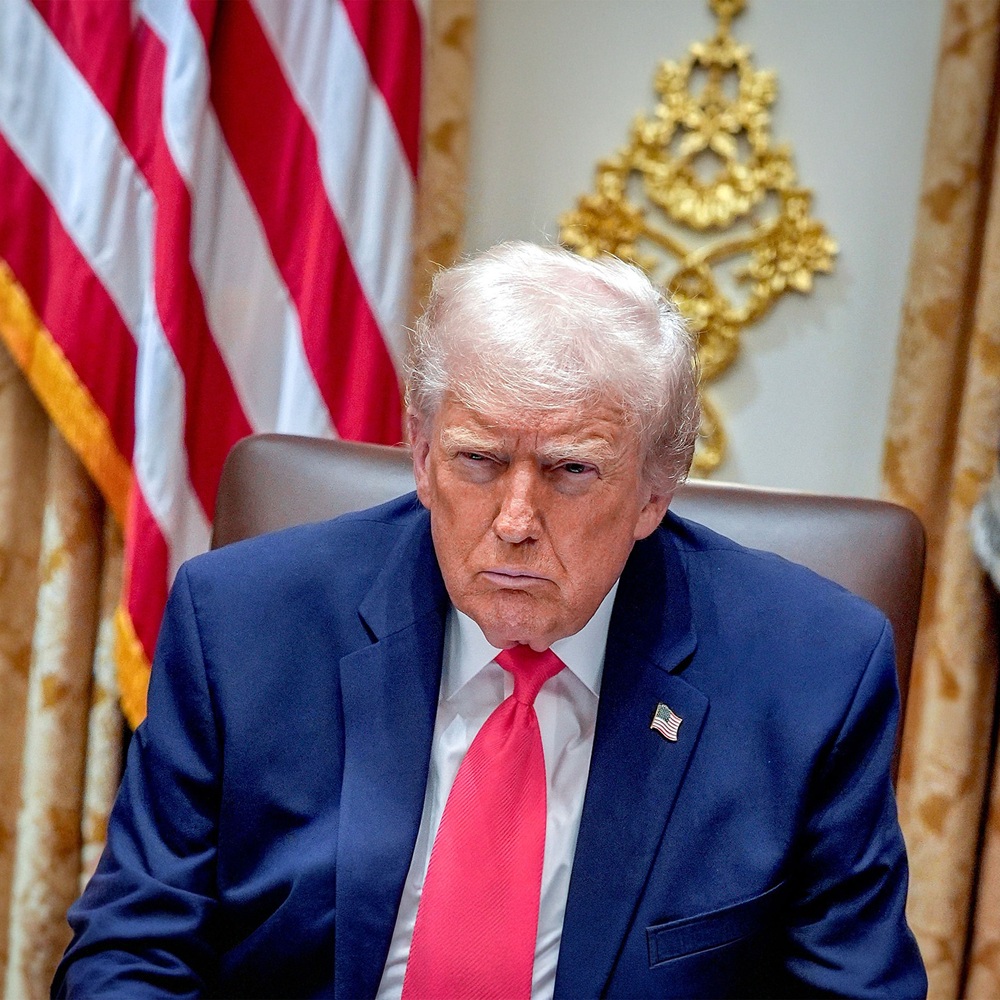
President Donald Trump Speaks During Cabinet Meeting in the Cabinet Room of the White House, Washington, DC on December 2, 2025

Opinion – The Mearsheimer Logic Underlying Trump’s National Security Strategy

by Mark N. Katz

The recently released Trump Administration’s National Security Strategy (NSS) has upended what had been the decades-long consensus about American foreign policy. Most notable in it is the Trump Administration’s prioritization of the Western Hemisphere as an American security concern, its deemphasis on defending America’s traditional European allies, its identification of China as far more of a threat than Russia, and its determination not to be drawn into conflicts in the Middle East and Africa. But while the 2025 Trump Administration National Security Strategy breaks with much of previous American foreign policy, the logic behind it is not something completely new. Even though the document makes no mention of him, the policy outlined in the NSS comports with what John Mearsheimer described in his influential book, “The Tragedy of Great Power Politics”, which was first published in 2001 and updated in 2014. In his book Mearsheimer declared that no nation has ever achieved global hegemony. According to Mearsheimer, America is the only country that has achieved predominant influence in its own region (the Western Hemisphere) and has also been able to prevent any other great power from dominating any other region. Mearsheimer wrote, “States that achieve regional hegemony seek to prevent great powers in other regions from duplicating their feat. Regional hegemons, in other words, do not want peers” (2014 edition, p. 41). Trump’s 2025 National Security Strategy has, whether knowingly or not, adopted these aims as well. It discusses the various regions of the world in the order of their priority for the Trump Administration: the Western Hemisphere first, followed by Asia (or Indo-Pacific), Europe, the Middle East, and lastly Africa. With regard to the Western Hemisphere, the NSS unambiguously calls for the restoration of “American preeminence in the Western Hemisphere,” and states, “We will deny non-Hemispheric competitors the ability to position forces or other threatening capabilities, or to own or control strategically vital assets, in our Hemisphere.” This is very much in keeping with what Mearsheimer described as America being a regional hegemon in the Western Hemisphere. As for the other four regions of the world, though, the Trump Administration seeks either to prevent any other great power from becoming predominant — or it doesn’t see this as a possibility that needs to be worried about. According to the NSS, the Middle East was a priority in the past because it was the world’s most important energy supplier and was a prime theater of superpower conflict. Now, however, there are other energy suppliers (including the U.S.) and superpower competition has been replaced by “great power jockeying” in which the U.S. retains “the most enviable position.” In other words: the Trump Administration does not see any other great power as able to become predominant in this region which is now less strategically important than it used to be anyway. Similarly, the NSS does not see any other great power as even seeking to become predominant in Africa. The NSS thus sees America’s main interests there as mainly commercial. By contrast, China is seen as a threat in the Indo-Pacific region. The NSS, though, discusses Chinese threats in the economic and technological spheres before turning to the military one. A continued U.S. military presence in the region is seen as important for preventing Chinese predominance. But Japan, South Korea, Taiwan, and Australia are all enjoined by the NSS to increase their defense spending in order to counter this threat. The NSS also identifies “the potential for any competitor to control the South China Sea” as a common threat that not only requires investment in U.S. military capabilities, “but also strong cooperation with every nation that stands to suffer, from India to Japan and beyond.” Unlike the Middle East and Africa, then, the NSS does identify a rival great power as striving for predominance in the Indo-Pacific region. Countering it, though, is not seen as just being America’s responsibility, but also that of other powerful states in the region. The strangest section in the 2025 NSS is the one on Europe. While acknowledging that “many Europeans regard Russia as an existential threat,” the NSS envisions America’s role as “managing European relations with Russia” both to “reestablish conditions of strategic stability” and “to mitigate the risk of conflict between Russia and European states.” This is very different from the decades-long U.S. policy of seeing America’s role as defending democratic Europe against an expansionist Soviet Union in the past and Putin’s Russia more recently. Indeed, the NSS’s claim that the European Union undermines “political liberty and sovereignty” and its welcoming “the growing influence of patriotic European parties” (in other words, anti-EU right wing nationalist ones) suggests that it is not Russia which the Trump Administration sees as a rival, but the European Union. The 2025 NSS does call for a “strong Europe…to work in concert with us to prevent any adversary from dominating Europe.” The NSS, though, seems to envision the European Union as either greater than or equal to Russia in threatening to dominate European nations. In his book, Mearsheimer did not envision the European Union as a potential great power rival to the U.S. Indeed, there isn’t even an entry for it in the book’s index. The way that the NSS envisions the world, though, comports with how Mearsheimer described America’s great power position: predominant in the Western Hemisphere and able to prevent any other great power from becoming predominant in any other region of the world. Mearsheimer, though, is a scholar who described the position in the world that he saw the U.S. as having achieved and which would seek to maintain. The 2025 NSS, by contrast, is a policy document laying out how the Trump Administration believes it can best maintain this position. And there is reason to doubt that it has done so realistically. Keeping non-Hemispheric great powers out of the Western Hemisphere will not be easy when there are governments there that want to cooperate with them. Further, devoting American resources to being predominant in Latin America when this will be resented and resisted could not only take away from America’s ability to prevent rival great powers from becoming predominant in other regions, but could counterproductively lead Latin American nations than have already done so to increase their cooperation with external great powers which the Trump Administration wants to avoid. Further, the Trump Administration’s efforts to reduce the influence of the European Union runs two risks: the first is that such an effort will succeed, but that the rise of anti-EU nationalist governments throughout the old continent results in a Europe less able to resist Russian manipulation and incursion. The second is that Trump Administration efforts to weaken the European Union backfire and result not only in a Europe united against American interference but unnecessarily emerging as a rival to the U.S. It would be ironic indeed if pursuing the NSS’s plan for upholding what Mearsheimer described as America’s ability to predominate over the Western Hemisphere combined with an ability to prevent any rival from predominating over any other region ended up undermining America’s ability to do either.
Defense & Security
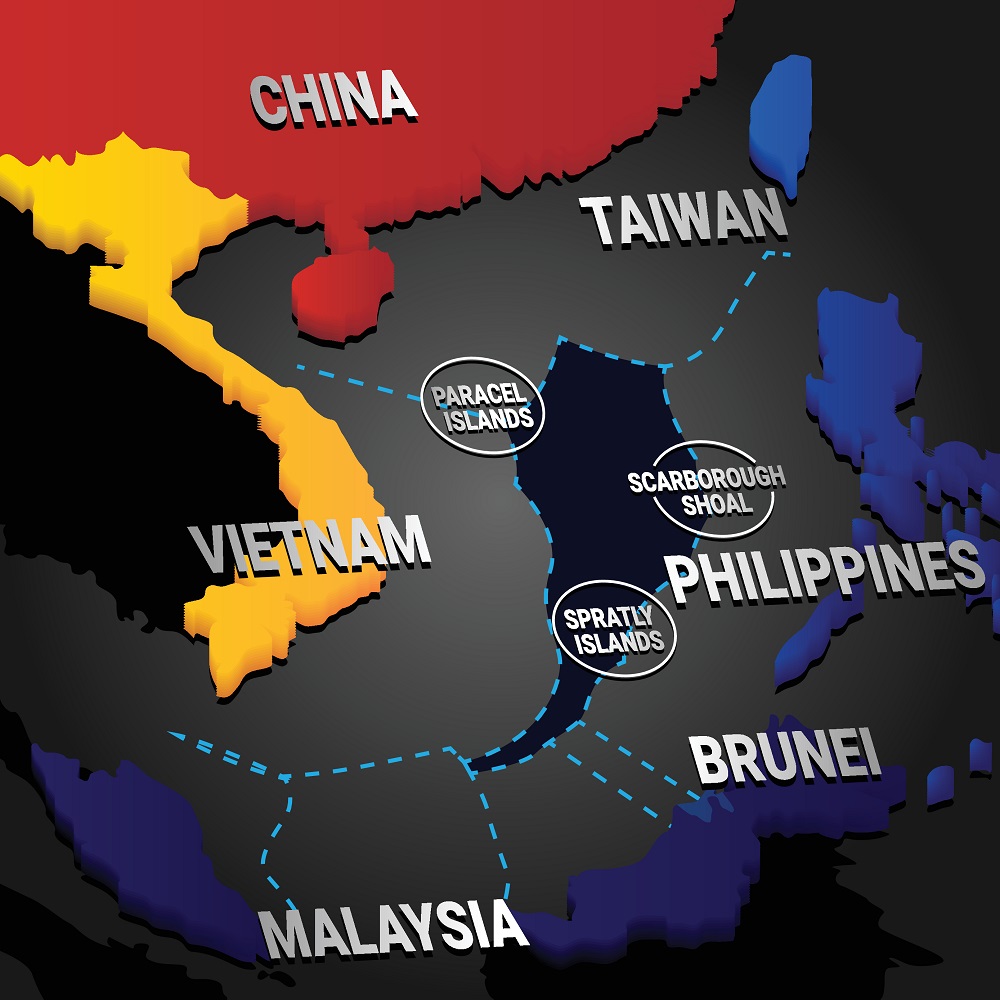
Disputed Claims In The South China Sea.

Africa’s delicate diplomacy in the South China Sea dispute

by Samir Bhattacharya

한국어로 읽기Leer en españolIn Deutsch lesen Gap اقرأ بالعربيةLire en françaisЧитать на русском The ongoing skirmishes in the South China Sea between China and regional states represent another severe threat to the world economy, directly affecting Africa. As China grows increasingly aggressive in its race for global hegemony and influence, and the United States (US) slowly plunges into the battle to prevent China’s rise, the world is watching the unfolding of this rivalry with unease. Although a few places have felt intense pressure from this alarming competition, the South China Sea (SCS) region is where a violent showdown looks increasingly probable. Unlike the war in Ukraine or Gaza, the US and China may start a direct war in the SCS. And amidst this multifaceted new Cold War 2.0, Africa remains cautious. The South China tinderbox On 23 April, another skirmish took place between China and the Philippines when two Filipino patrol boats approached the shallow turquoise waters of a disputed shoal around 194 km west of the Philippine Islands province of Palawan. The patrol boats were there for an underwater survey near the disputed shoal claimed by both China and the Philippines, thus prompting a Chinese response. A Chinese coast guard, via radio, instructed them to leave the area and threatened hostile measures. Following several radio exchanges, the Chinese coast guard damaged both the Philippine patrol boats by firing high-pressure water cannons at them. However, this was not the first time China’s assertion in this region has caused friction with other SCS neighbours, including Japan and South Korea. China has used an unconvincing U-shaped “nine-dash line” that crosses the exclusive economic zones, or EEZs, of Brunei, Indonesia, Malaysia, the Philippines, Taiwan, and Vietnam to demonstrate its claim in the region. Despite their low intrinsic value, the region lies along a vital trade and supply corridor that supports over US$3 trillion in yearly shipborne commerce. Oil, gas, and fishing sources abound in the area. Beijing has declined to acknowledge a 2016 decision from the Permanent Court of Arbitration that ruled Beijing’s broad claims invalid based on historical grounds. China and the Philippines have already fought many times over the Second Thomas Shoal and the Bashi Channel. China has become increasingly aggressive in the region in the last few years, putting regional stability at high risk. So far, these skirmishes will likely remain regional without the risk of any full-scale war. However, there are risks of casualties or even the vessel capsizing. Making of Cold War 2.0 over the SCS Washington’s response to the upcoming crisis is still modest. US President Biden raised concerns about China’s actions in the SCS , including efforts to impede the Philippines from resupplying its forces on the fiercely disputed Second Thomas Shoal. The US has repeatedly warned China that it’s obligated to defend the Philippines, its oldest treaty ally in Asia, if Filipino forces, ships or aircraft come under an armed attack. The US also conducted Balikatan drills (‘shoulder-to-shoulder’ in Tagalog) with the Philippines with more than 16,000 American and Philippines military personnel. Indeed, its resources are thinly stretched, and Beijing seems to be moving ahead. To deter China by stepping up regional defence diplomacy, Washington is exploring the possibility of a security alliance with Japan, Australia, and the Philippines, tentatively called SQUAD. This is in addition to two other existing groupings in the region, “Quad” and “AUKUS,” a defence pact among Australia, the United Kingdom and the US. While AUKUS is a defence pact, Quad is simply a dialogue platform. Africa’s tricky balancing act Even while the socioeconomic repercussions of the Russia-Ukraine war have not yet wholly subsided in Africa, the ongoing skirmishes in the SCS represent another severe threat to the world economy, directly affecting several African nations. Despite being geographically far, the conflict’s spillover effect would impact the continent’s food security in terms of both the availability and pricing of some food crops. In addition, the SCS region represents a crucial geographic sweet spot for Africa as a source of trade and investment, translating into growth and development for many African economies. The crisis can potentially fuel price rise, particularly for oil-importing countries. The prospect of a consequential price rise of essential commodities will have enormous ramifications for domestic stability in most African countries. Furthermore, many African economies heavily rely on trade, investment, and aid from South and Southeast Asia, the crisis will significantly hamper the development and growth of the continent. There are also strategic lessons for Africa to learn from the conflict. China’s principal interest in Africa consists of protecting its BRI investments and ensuring steady trade flow. Africa is also essential for China to fulfil its resource needs, maintaining industrial growth and energy security. Therefore, securing stability in countries where China has invested is in China’s interest, just like keeping a stable relationship with China is in the interest of those investment-starved countries. Further, since many investment projects in China are located in different African countries, these countries should be careful. China can become aggressively irredentist, even in Africa. Currently, China owns a naval base in Djibouti and a ballistic missile tracker Yuan Wang 5, off the coast of Durban. It has strong economic influence across the countries of Africa’s east coast thanks to its Belt Road Initiative (BRI). On the West Coast, China has many seaports financed or constructed by Chinese entities. If the national governments of these countries fail to pay, China would happily take control of these ports through lease as it did in Hambantota, Sri Lanka. In addition to Sri Lanka, other South Asian countries such as Pakistan, Nepal, Bangladesh, and Myanmar also faced dire consequences due to the failure of their BRI debt payment, leading to economic crises, and sometimes even political crises. Therefore, caution would be expected from these African governments. Conclusion China’s increasingly aggressive posture over the SCS raises concerns about the stability of the region. As the current uneasy détente between the US and China bears remarkable similarities to the Cold War, questions are raised regarding the possibilities of a new Cold War 2.0. Questions are also raised concerning the possible reactions from different African countries vis-á-vis Chinese aggression in the region. Undoubtedly, any serious conflict between China and the Philippines would be dangerous. These frequent skirmishes may not lead to a direct war between the US and China. Yet, the risk of vessel capsizing and casualties is high. Any such event would ultimately spark a crisis in Africa. So far, Africa is cautious and continues to balance its great power relationships. Undoubtedly, it is increasingly concerned with the aggressive posture of the Chinese in the region. On the other hand, it needs China for economic purposes. Therefore, Africa will continue to walk the tightrope where it would want US involvement in de-escalating the situation without ruffling any feathers with China. The views expressed above belong to the author(s).