Subscribe to our weekly newsletters for free

Subscribe to an email

If you want to subscribe to World & New World Newsletter, please enter
your e-mail

Energy & Economics
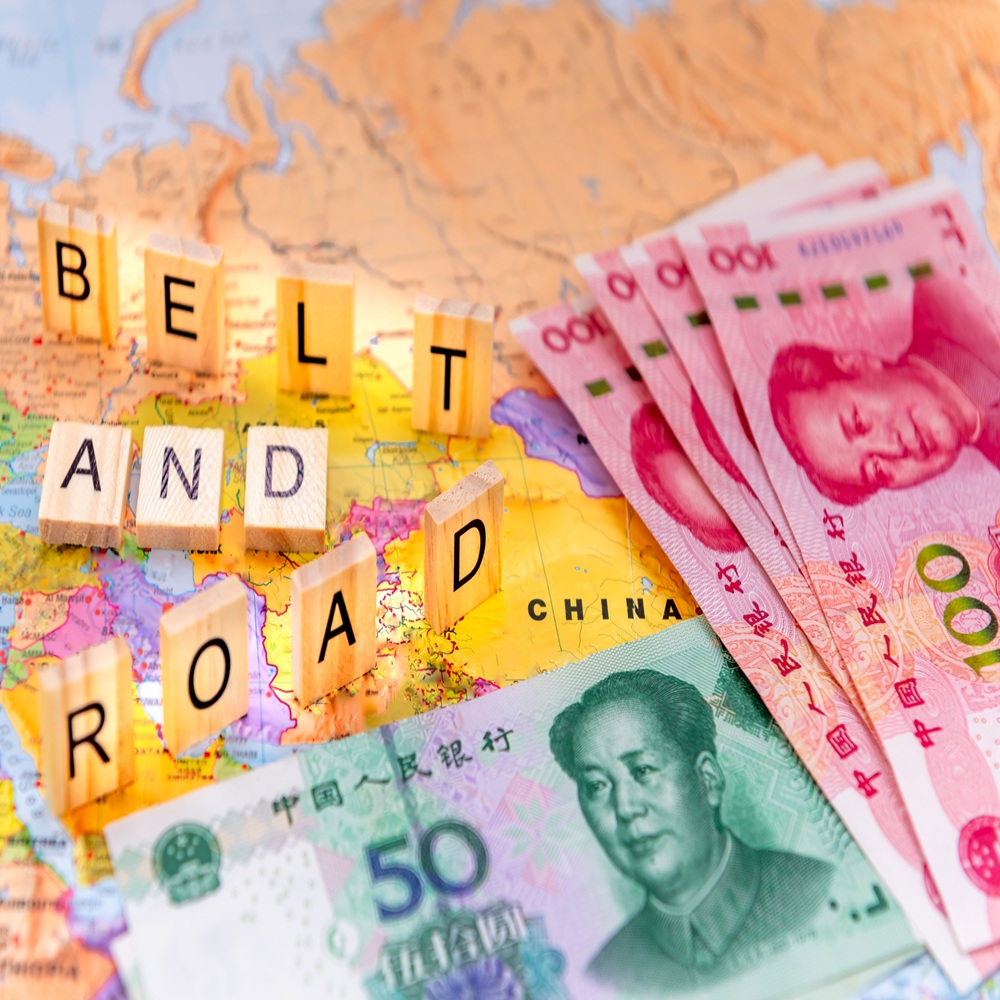
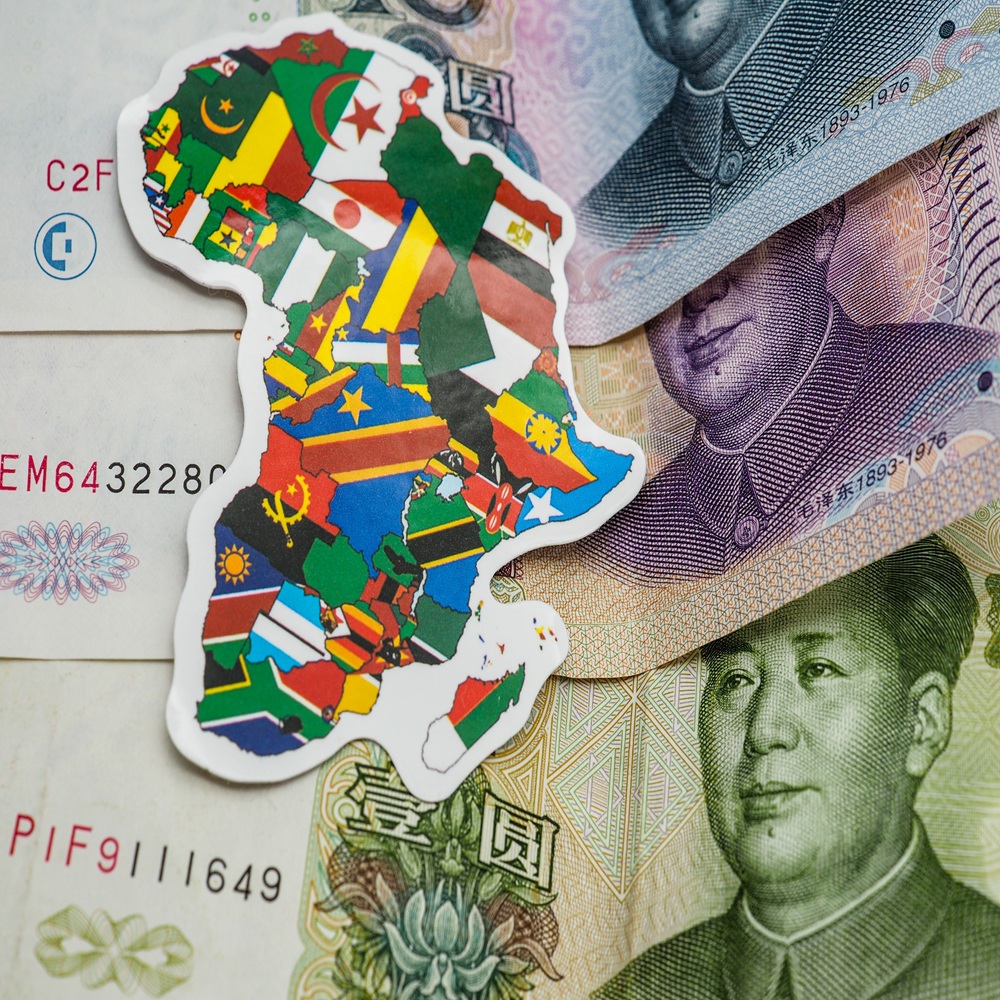
A Belt And Road Initiative concept with letter tiles and Chinese Yuan bank notes on a map of China.

The Belt and Road boomed in 2025

by Tom Baxter

China's engagement in overseas renewables grew once again, though not as much as in oil and gas Last year, Chinese companies’ “engagement” in 150 countries involved in the Belt and Road Initiative (BRI) reached its highest level since the BRI was launched 12 years ago. The value of construction deals involving Chinese companies reached USD 128 billion, up 81% on 2024. While investments totalled USD 85 billion, up 62%. The unprecedented boom has been revealed by annual data from the Griffith Asia Institute, an Australian think-tank, and the Green Finance and Development Center, a think-tank hosted in Fudan University, Shanghai. “I did not foresee last year that 2025 would be such a strong year [for BRI engagement],” said report author Christoph Nedopil Wang during an online launch. “Engagement” refers to both investments by Chinese companies, implying an ownership stake in a project, and the value of construction contracts awarded to them for engineering services. The striking upsurge comes after years of government-directed messaging, and analyst predictions, that the initiative would focus more on “small and beautiful” projects, rather than the mega projects pursued in its early years. “Small yet beautiful should be seen as a bygone,” Nedopil Wang said, noting both the total value of construction and investment deals, and the growth in average project value. Last year also saw notable shifts in the targets for Chinese companies’ activities around the world. Their engagement in renewable-energy projects grew in 2025 but not as rapidly as in oil and gas projects, which will concern many. Rapid growth in engagement in mining, and in the technology and manufacturing sector, demonstrates the evolution of the BRI since it began in 2013. Finally, Africa became the top destination for Chinese companies’ overseas engagement. The end of ‘small and beautiful’? Last year saw a marked rebound in the size of projects. The average value of investments reached USD 939 million, up from USD 672 million in 2024 and three times higher than deal sizes five years ago, during the BRI’s Covid contraction. The average value of construction deals reached USD 964 million, up from USD 496 million the previous year. Nedopil Wang says this indicates the end of “small and beautiful” BRI projects, a term promoted by the Chinese government in response to financial headwinds and the environmental and social problems which arose in the first five years of the initiative. Chinese government discourse has certainly not dropped the emphasis, however. On 27 January, People’s Daily, the official newspaper of the Communist Party of China, stated that “more than 700 aid projects, including … small and beautiful livelihood projects” were delivered overseas in 2025. Booming renewables – and fossil fuels Energy was once again the top sector for engagement in Belt and Road countries, accounting for about 43% of the total. Total engagement in energy sectors reached USD 93.9 billion, the highest ever recorded. However, while just a few years ago renewable-energy projects accounted for nearly half of total energy projects overseas, in 2025 renewables made up just 21%, while fossil fuels accounted for over 75%. Nedopil Wang sees risks in the boom in oil and gas engagement. “I see a rapid rise of oil and gas engagement as an environmental risk due to the associated climate emissions. They also become an economic risk under declining fossil-fuel-demand scenarios driven by electrification of mobility and scaling of green electricity,” which would lead to lower oil and gas demand, respectively, he said. The dominance of oil and gas projects also implies an emphasis on energy extraction, rather than generation. According to the report’s breakdown, the value of investments and contracts in extractive projects amounted to USD 51.4 billion, while generation accounted for USD 25.8 billion. That said, Chinese companies’ engagement in oil and gas projects is primarily via construction contracts rather than equity ownership. This may minimise some of the economic risks Nedopil Wang identifies. When it comes to renewable projects, while these make up a smaller proportion of total energy engagement in 2025, they have seen a marked increase in real terms. Last year saw engagement worth USD 21.4 billion, up from USD 12.3 billion in 2024. “2025 was both the greenest and the brownest year” for the BRI, Nedopil Wang said during the report launch. Renewables, by their nature, also contribute to generation rather than extraction. Last year saw projects worth 23.8 GW of solar, wind and hydro generation capacity, compared to around 15 GW in 2024. “I do not immediately read the surge as a return to fossil-fuel expansion,” notes Fikayo Akeredolu, senior research associate in climate policy and justice at the University of Bristol. She points out that while oil and gas projects accounted for a large proportion of the value of construction contracts in 2025, foreign direct investment from China is supporting renewables. Meanwhile, at least in Africa, lending from China’s government-backed policy banks is backing power-transmission projects. The lending data comes from the recently updated Chinese Loans to Africa database, published by the Boston University Global Development Policy Center. “[We see] a segmentation of instruments, rather than a reversal of China’s energy-transition stance,” Akeredolu says. Moving up value chains Another key sector of growth in 2025 was technology and manufacturing, referring to both traditional manufacturing activities and high-tech areas such as solar PV and batteries. Its growth demonstrates the evolution of the BRI over the last 12 years, from a focus on infrastructure to an increasing interest in developing manufacturing bases overseas. The sector saw 27% year-on-year growth in engagement and has been growing steadily since 2023. Engagement in green tech like solar PV and batteries dropped slightly compared to 2024, however. “The growing role of tech and manufacturing highlights China’s growing ability to build and manage factories (and in particular high-tech-related factories) across the world,” Nedopil Wang said. “While the original BRI engagement was concentrated in infrastructure, the new BRI is seeing the expansion of China’s manufacturing base to overseas markets.” Metals and mining also saw strong engagement in 2025, a record high of USD 32.6 billion. This was dominated by construction contracts for two mega projects in aluminum and steel in Kazakhstan, worth USD 19.5 billion together. However, other regions also saw major deals, the African continent in particular. Interestingly, data from the report shows a higher proportion of engagement in processing rather than extractive mining facilities. Processing of mined minerals and metals is seen by many resource-rich countries as a key strategy for moving up value chains, particularly in green technologies. For now, however, it is unclear if the data represents a trend or simply a one-off. In contrast, transportation infrastructure is in decline, with only USD 13.3 billion, the least since the BRI began life being touted primarily as a global connectivity project. Nedopil Wang suggests this may be connected to problems securing finance for traditional infrastructure projects, including the fall in lending from China’s development finance banks. Africa rising In 2025, the largest market for Chinese companies’ engagements along the BRI was Africa. The Belt and Road partners on the continent saw USD 61.2 billion worth of engagement, a 283% expansion compared to 2024, according to the report. The majority of that engagement was in the form of construction contracts, rather than investment. Nedopil Wang indicates this may have to do with Chinese companies seeking ways to avoid US tariffs. Akeredolu from the University of Bristol points to “Africa’s growing role in resource security amid global supply-chain fragmentation” as another reason shaping the boom in Chinese engagement in African economies. “Whether this is good news for African governments depends on bargaining power,” says Akeredolu. “Where states can secure local content, downstream value addition, or revenue-sharing, opportunities exist. Where engagement is limited to turnkey construction without equity or technology transfer, the developmental upside is thinner.”

Energy & Economics
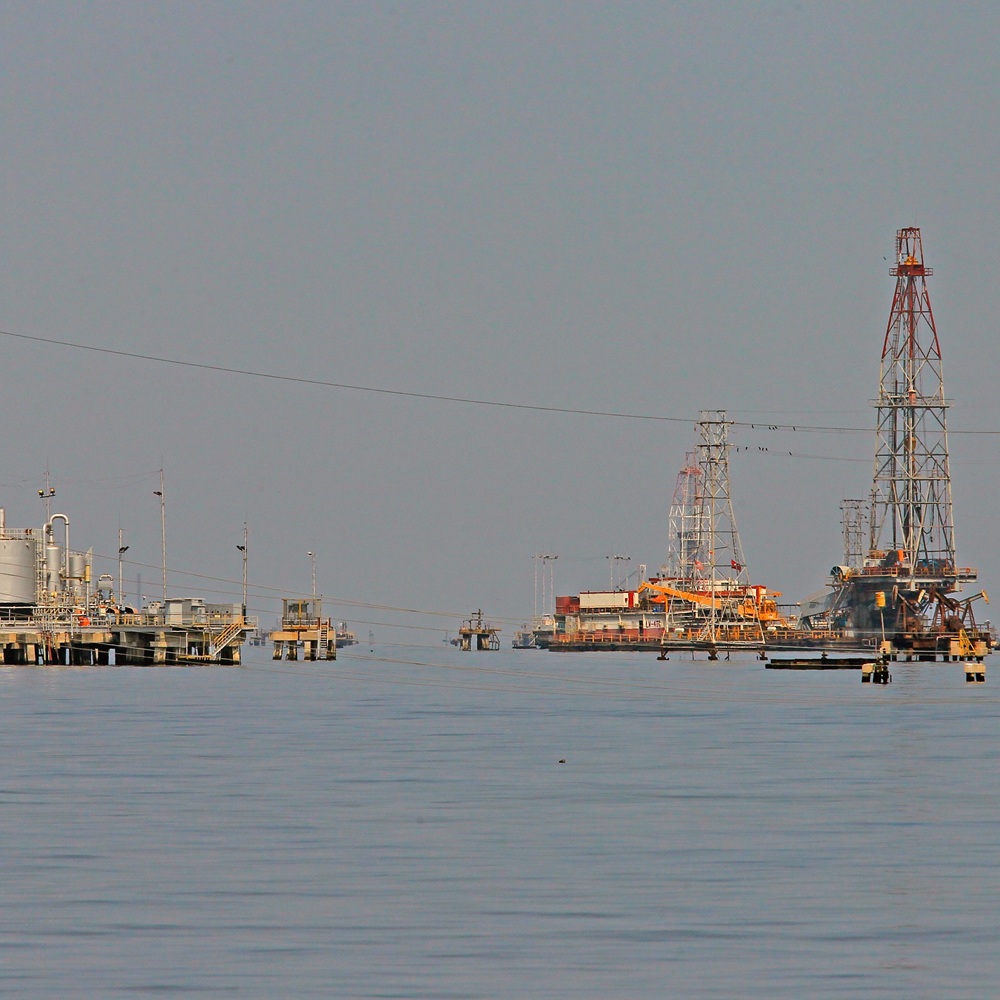
Lake Maracaibo, Venezuela. 18-03-2015.  An rig station are seen on Lake Maracaibo. Photo By: Jose Bula.

Energy Security as Hierarchy: Venezuelan Oil in the US-China-Russia Triangle

by Anya Kuteleva

On 3 January 2026, the US carried out a surprise military operation in Venezuela, capturing President Nicolás Maduro and his wife, Cilia Flores. The US has made little effort to cloak its operation in either solidarist language, such as appeals to democracy promotion, human rights, or liberal peacebuilding – or in pluralist rhetoric emphasizing the preservation of international order. Instead, Washington has presented the action in largely instrumental and strategic terms, signalling a willingness to sidestep both dominant justificatory traditions within international society. While Maduro and Flores are charged with narco-terrorism conspiracy and cocaine importation conspiracy, international debates focus on the future of Venezuela’s oil (Poque González 2026). On 7 January administration officials said the US plans to effectively assume control over the sale of Venezuela’s oil “indefinitely” (Sherman 2026) and President Donald Trump confirmed that he expected the US to run Venezuela, insisting that the country’s interim government was “giving us everything that we feel is necessary” (Sanger et al. 2026). Attention is fixed not only on Washington’s plans for Venezuela’s oil sector and control over its export revenues, but also on the replies from Moscow and Beijing, Maduro’s chief foreign backers and heavyweight players in energy politics. Consequently, this article asks two questions. First, to what extent does American control of Venezuelan oil threaten China’s and Russia’s energy interests? Second, what does the resulting US–China–Russia triangle imply for how energy security itself is being redefined? A constructivist perspective, recognizes that oil is an idea—valuable not only because it burns but because control over it symbolizes power and authority (Kuteleva 2021). Thus, when the US claims the right to supervise Venezuelan oil revenues, it is not only increasing leverage over barrels, but asserting the authority to define legitimate energy exchange itself. In this context, while the material threat is limited for China and already largely sunk for Russia, the symbolic, institutional and political threat is profound. A straightforward constructivist interpretation of the US–China–Russia triangle centres on status. China had cultivated Venezuela as an “all-weather strategic partnership” (Ministry of Foreign Affairs of PRC 2025b) and major debtor, only to watch Maduro captured days after senior Chinese officials visited Caracas (Ministry of Foreign Affairs of PRC 2025a). In constructivist terms, this is an obvious status injury: China appeared present but powerless. China’s energy diplomacy had functioned as proof of its global influence, and the nullification of China’s energy ties with Venezuela by US force undermines China’s narrative as a protective patron for the Global South. Beijing accused Washington of “hegemonic thinking” (Liu and Chen 2026), “bullying” (Global Times 2026a), and violating Venezuelan sovereignty and “the rights of the Venezuelan people” (Global Times 2026b). This strong pluralist language is not incidental—it is a bid to reclaim moral authority and redefine the event as norm-breaking rather than capability-revealing. Similarly, Russia’s involvement in Venezuela was never purely economic. Moscow saw the alliance with Venezuela as a way to advance its anti-American agenda and to signal that it could cultivate allies in Washington’s traditional backyard (Boersner Herrera and Haluani 2023; Gratius 2022; Herbst and Marczak 2019). It used Venezuela as leverage against the US, subsidised the regime during periods of domestic recession, and framed support as proof of great-power reliability. As senior Russian executives put it, “economic considerations took a back seat to political goals of taking swipes at the US” (Seddon and Stognei 2026). US control of Venezuelan oil thus removes a symbolic platform on which Russia enacted its identity as an energy superpower and geopolitical spoiler. While Russia continues loud sovereignty talk, its demonstrated incapacity to protect partners pushes it toward opportunistic bargaining (“concert” deals, see Lemke 2023) rather than overt defense of UN-pluralist restraint. As such, Dmitry Medvedev (2026) bluntly claimed that the US special military operation in Venezuela all but justifies Russia’s own actions in Ukraine. Venezuela is not a core supplier for China in volumetric terms. In 2025, Venezuelan exports to China averaged roughly 395,000 barrels per day—about 4% of China’s seaborne crude imports, according to Kpler data cited by the FT (Leahy and Moore 2026). China has diversified routes, strategic reserves covering at least 96 days of imports, and strong purchasing power in global markets (Downs 2025). Hence, from a narrow supply perspective, the loss of Venezuelan oil is manageable. That said, around one-fifth of China’s crude imports come from suppliers under US or western sanctions, primarily Iran, Venezuela and Russia, much of it disguised via transshipment near Malaysia (Downs 2025). Independent “teapot” refiners (Downs 2017)—who account for about a quarter of China’s refining capacity—are structurally dependent on this discounted, politically risky oil. Consequently, Trump’s seizure of Maduro alarmed China not mainly because of Venezuela itself, but because it demonstrated Washington’s capacity to escalate from sanctions to physical control of an energy sector, and thus potentially to Iran. Here, constructivism reveals the problem: “sanctioned oil” is not simply cheaper crude; it is a political category—oil marked as illegitimate by a dominant legal-financial order. The US move signals that this stigma can be converted into coercive authority, turning commercial vulnerability into geopolitical dependence. This reclassification transforms Chinese domestic actors into security subjects. “Teapot” refiners are no longer just businesses; they become strategic vulnerabilities whose survival depends on US tolerance. Analysis warn that a cutoff of Iranian oil could force many to shut down entirely (Leahy and Moore 2026). In this context, US control of Venezuelan oil reshapes Chinese energy security discourse from one of diversification and market access to one of hierarchy and exposure to political permission. Russia’s oil interests in Venezuela were largely written down years earlier. In 2020, Rosneft had sold most formal assets after pouring around $800m into loans and projects that produced little return (The Economist 2020). Much of the remaining exposure consisted of debts and shadow ownership arrangements. More important is the damage to Russia’s sanctions-evasion architecture. Russia had become the leading marketer of Venezuelan oil by trading crude as debt repayment and using banks partly owned by sanctioned Russian institutions, creating what the 2019 Atlantic Council report described as “a counter financial system to the one dominated by the West” (Herbst and Marczak 2019). The recent reporting on the US tracking a tanker linked to Venezuela, Russia and Iran illustrates how this counter-order is being contested operationally (Sheppard et al. 2026). The vessel sailed under false flags, was sanctioned for carrying Iranian oil, later re-registered under Russian jurisdiction, and became vulnerable to boarding under the UN Convention on the Law of the Sea because it was “without nationality.” Such episodes show that energy security is increasingly constituted by maritime law, insurance rules, and surveillance practices. US control over Venezuelan oil expands this regime of enforcement, making Russia’s informal trading networks less viable. A constructivist approach suggests that American control of Venezuelan oil is best understood not as a supply shock, but as an act of social stratification in the international system. Energy markets have always been hierarchical, but the hierarchy was largely implicit: reserve currencies, shipping insurance, futures exchanges, and contract law already privileged Western institutions. What is new is the explicit performance of hierarchy—the public demonstration that a great power can redefine ownership, legality, and access through coercion and administrative authority. This produces a stratified energy order: First, rule-makers – states whose legal systems, sanctions regimes, and corporate actors define what counts as legitimate oil (primarily the US and its allies). Second, rule-takers – states whose energy security depends on access to these institutions (most importers). And third, rule-evaders – states forced into informal networks (Russia, Iran, Venezuela) whose energy becomes socially “tainted.” China occupies an unstable middle category: economically powerful but institutionally dependent. Venezuela’s takeover publicly signals that material power is insufficient without normative control over legality. Referencias Boersner Herrera, Adriana, and Makram Haluani. 2023. ‘Domestic and International Factors of the Contemporary Russo–Venezuelan Bilateral Relationship’. Latin American Policy 14 (3): 366–87. Downs, Erica. 2017. The Rise of China’s Independent Refineries. Geopolitics. Global Energy Policy at Columbia University, School of International and Public Affairs. https://www.energypolicy.columbia.edu/publications/rise-chinas-independent-refineries/. Downs, Erica. 2025. China’s Oil Demand, Imports and Supply Security. Global Energy Policy at Columbia University, School of International and Public Affairs. https://www.energypolicy.columbia.edu/publications/chinas-oil-demand-imports-and-supply-security/. Global Times. 2026a. ‘China Condemns US Demands for Venezuela to Partner Exclusively on Oil Production as “Bullying,” Breaches of Intl Law: FM – Global Times’. Global Times, January 7. https://www.globaltimes.cn/page/202601/1352547.shtml. Global Times. 2026b. ‘China’s Legitimate Rights and Interests in Venezuela Must Be Safeguarded, Chinese FM Responds to Claim about US to Sell Venezuelan Sanctioned Oil – Global Times’. Global Times, January 7. https://www.globaltimes.cn/page/202601/1352555.shtml. Gratius, Susanne. 2022. ‘The West against the Rest? Democracy versus Autocracy Promotion in Venezuela’. Bulletin of Latin American Research 41 (1): 141–58. Herbst, John E., and Jason Marczak. 2019. Russia’s Intervention in Venezuela: What’s at Stake? Policy Brief. Atlantic Council. https://www.atlanticcouncil.org/in-depth-research-reports/report/russias-intervention-in-venezuela-whats-at-stake/. Kuteleva, Anna. 2021. China’s Energy Security and Relations with Petrostates: Oil as an Idea. Routledge. Leahy, Joe, and Malcolm Moore. 2026. ‘Donald Trump’s Venezuela Action Raises Threat for China’s Oil Supplies’. Oil. Financial Times, January 8. https://www.ft.com/content/f64826fa-5c36-4fb3-8621-ee0b9d9a1ff5. Lemke, Tobias. 2023. ‘International Relations and the 19th Century Concert System’. In Oxford Research Encyclopedia of International Studies. Liu, Xin, and Qingqing Chen. 2026. ‘US Reportedly Sets Demands for Venezuela to Pump More Oil; Experts Say “Anti-Drug” Claims a Pretext, Exposing Neo-Colonialism – Global Times’. The Global Times, January 7. https://www.globaltimes.cn/page/202601/1352544.shtml. Medvedev, Dmitry. 2026. ‘Год начался бурно’. Telegram, January 9. https://t.me/medvedev_telegram/626. Ministry of Foreign Affairs of PRC. 2025a. ‘Foreign Ministry Spokesperson Lin Jian’s Regular Press Conference on January 5, 2026’. January 5. https://www.fmprc.gov.cn/eng/xw/fyrbt/202601/t20260105_11806736.html. Ministry of Foreign Affairs of PRC. 2025b. ‘Xi Jinping Meets with Venezuelan President Nicolás Maduro Moros’. May 10. https://www.fmprc.gov.cn/eng/xw/zyxw/202505/t20250513_11619919.html. Poque González, Axel Bastián. 2026. ‘Energy Security and the Revival of US Hard Power in Latin America’. E-International Relations, January 12. https://www.e-ir.info/2026/01/12/energy-security-and-the-revival-of-us-hard-power-in-latin-america/. Sanger, David E., Tyler Pager, Karie Rogers, and Zolan Kanno-Youngs. 2026. ‘Trump Says U.S. Oversight of Venezuela Could Last for Years’. U.S. The New York Times, January 8. https://www.nytimes.com/2026/01/08/us/politics/trump-interview-venezuela.html. Seddon, Max, and Anastasia Stognei. 2026. ‘How Russia’s Venezuelan Oil Gambit Went Awry’. Venezuela. Financial Times, January 9. https://www.ft.com/content/e09a6030-325f-4be5-ace3-4d70121071cb. Sheppard, David, Chris Cook, and Jude Webber. 2026. ‘US Tracking Oil Tanker off UK Coast Linked to Venezuela, Russia and Iran’. Shipping. Financial Times, January 6. https://www.ft.com/content/a699169a-983a-4472-ab23-54bceb9dd2bd. The Economist. 2020. ‘Why Putin’s Favourite Oil Firm Dumped Its Venezuelan Assets’. The Economist, April 2. https://www.economist.com/leaders/2020/04/02/why-putins-favourite-oil-firm-dumped-its-venezuelan-assets.

Diplomacy
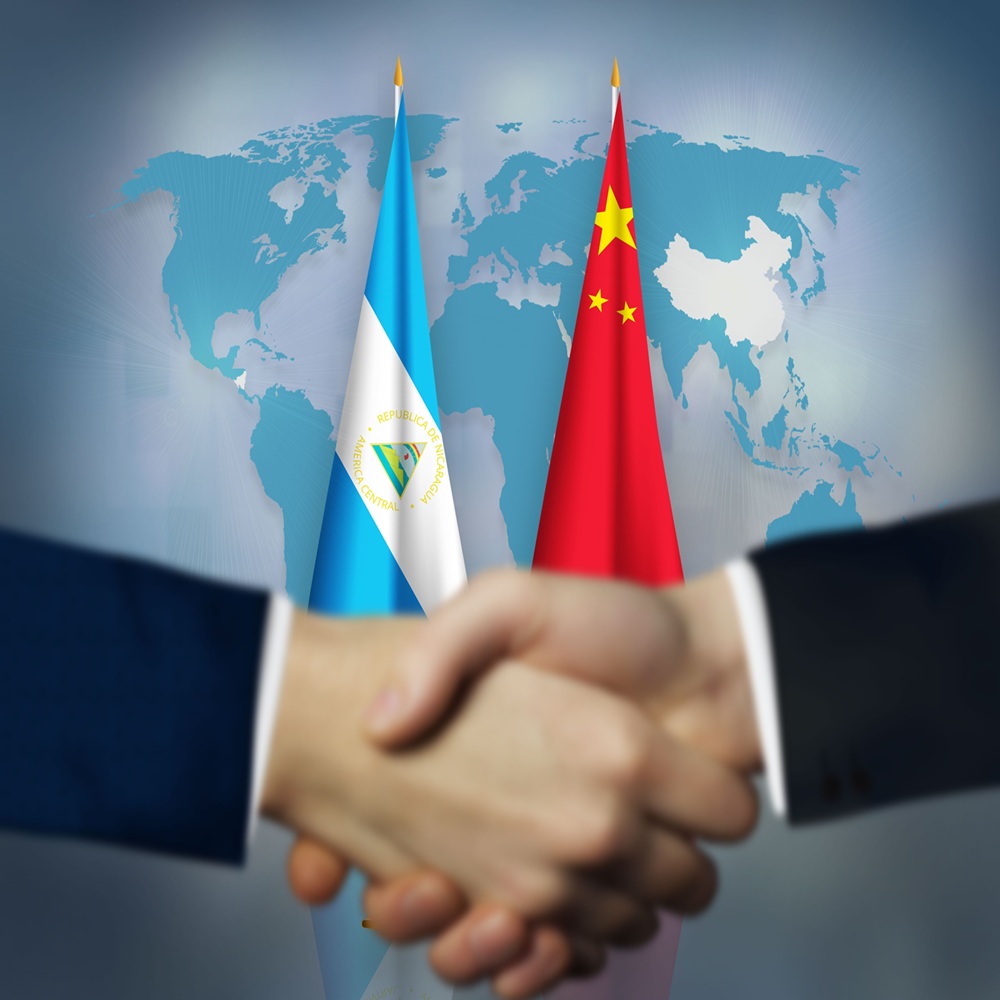
China, Nicaragua bilateral relations concept background

A family state at the service of Beijing

by Martin Brown

The democratic collapse of Nicaragua has created the ideal conditions for China to consolidate a model of cooperation based on political control, trade dependence, and resource extraction. Throughout 2025, Nicaragua’s co-presidency under Daniel Ortega and Rosario Murillo has accelerated the consolidation of an authoritarian family state. Constitutional reforms in January eliminated the separation of powers, subordinating the judicial, legislative, and electoral branches to the executive, while subsequent legislation extended political terms and enabled the regime to weaponize electoral institutions against political opponents. Since 2018, the Ortega-Murillo government has imprisoned, exiled, or stripped citizenship from hundreds of critics and dismantled thousands of civil society organizations, hollowing out independent checks on power. These legal and institutional changes have transformed Nicaragua from a weakened democracy into a closed authoritarian system, heightening the risk of systematic human rights abuses and creating permissive conditions for opaque foreign economic engagement — particularly China — in strategic commercial and mineral sectors. Starting December 2021, President Ortega broke ties with Taiwan, establishing diplomatic relations with Beijing, marking this “new era” by opening a Chinese embassy in Managua the same month. This decision followed weeks of the Organization of American States (OAS), United States, and European Union (EU) condemning the 2021 elections as illegitimate due to the months of repression and incarceration of 39 people, including civil society leaders and presidential candidates by President Ortega. Beijing took the opportunity to enter Managua seeking to ease the sense of intensifying international isolation for Ortega’s regime. As of 2023, Managua’s total exports to Beijing were valued at an estimated $27.3 million yet increased by almost 300 percent in 2024 to $82.1 million. Also in 2024, Beijing was the second largest exporter to Nicaragua, making up 14 percent of total imports, at $1.65 billion. Recently Beijing and Nicaragua have held over $1 billion trade deficit, acting as a lifeline of the regime’s desperate survival strategy with China as a primary benefactor. As Western pressure builds, Beijing provides capital, infrastructure, trade, and opportunities for the Ortega-Murillo regime through the commercial and mineral sector. Nicaragua has directly aided in the expansion of China’s economic development in the region and passed multiple pieces of legislation to pave a simple road for Beijing. For example, on October 30th, 2025, Nicaragua’s National Assembly unanimously passed a Special Economic Zone (ZEE) directly tying China’s Belt and Road Initiative effectively boosting influence through infrastructure and trade. The ZEE includes many perks for Beijing operations in Nicaragua, such as full exemptions from income tax, dividends, import duties for up to a decade, targeted industrial sectors for manufacturing, agroindustry, tech, and exports. The head of the ZEEs will be President Ortega’s son, Laureano Ortega Murillo with a renewed promise of jobs, poverty alleviation, and technology transfers. The President’s son heading the ZEEs reflects Nicaragua’s foreign policy focus on becoming a Pacific-Caribbean trade bridge. Moreover, since 2021, the Ortega-Murillo regime has quietly granted an estimated 300,000 hectares of land, or almost 2.36 percent of Nicaragua’s national territory to four PRC affiliated mining companies: Zhon Fu Development, Nicaragua XinXin Linze Mineria Group, Thomas Metal, and Brother Metal. These companies do not contain a track record in Nicaragua, connected to a known Chinese entity, or even have a website. Yet, they are conveniently tailored by the Ortega-Murillo regime as Nicaragua allows opaque shell companies with no track record to operate in critical infrastructure sectors. To aid Beijing’s mineral campaign, the Ortega-Murillo regime has been revoking concession rights and granting those same stripped mining concessions to these opaque Chinese affiliated shell entities. In 2022, the Sandinista National Assembly reformed Law 387 to allow concession transfers without public bidding, weaken social oversight mechanisms, and concentrate decision-making for the Ministry of Energy and Mines. This “reform” allows Nicaragua exclusive control over flipping ownership on mining concessions without warning. Separate from mining, Beijing has been manipulating Nicaragua’s commercial sector reliant on Chinas exports to Nicaragua. Currently, Nicaraguan merchants claim to face “unfair competition” as their sales dwindle, due to the explosion of Chinese nationals operating in the region. Chinese businesses have frozen the Nicaraguan market through selling inexpensive products easily accessed by Chinese nationals under the low-tariff agreements between Ortega-Murillo and Beijing. Reports reflect that China’s strategy is to exploit import benefits provided by the Nicaraguan government, allowing Chinese nationals to sell goods at “rock-bottom prices”. This strategy has allowed Beijing to completely undermine Nicaraguan businesses and take over the market. In May 2024, the Confidential reported Chinese businesses have slashed 70 percent of local merchant sales. Moreover, this increase of Chinese businesses by Chinese nationals directly translates to the growth of imports from the PRC, influencing a further expansion of the already tremendous trade deficit. This inability to produce goods appealing to Beijing markets will perpetuate further trends of high imports and minimal exports by Nicaragua, granting the opportunity for Beijing to fully influence the export capacity under the Ortega-Murillo regime. Nicaragua has rapidly stepped forward to ban media by prohibiting Bibles, newspapers, magazines, books, drones, and cameras from entering the country. This came without an official decree by the government but has still been enforced by immigration and customs at border crossings. Since 2018, 61 media outlets have been closed or confiscated with over 2,300 recorded violations by journalists, forcing 300 journalists into exile from Nicaragua. Globally, the world must continue to investigate and report the egregious human rights violations conducted by this family dictatorship. Their goal of alienating their civil populace to generate wealth for themselves and Beijing through illicit and shadowy economic efforts must face legal hearings to benefit the people of Nicaragua. Nicaragua’s corrupted government continuing to weaken the foundations of their democratic institutions to favor Chinese ownership of commercial and industrial zones will freeze Nicaraguan exports in favor of dependence on Chinese imports.

Energy & Economics
Silhouette of drilling rigs and oil derricks on the background of the flag of Venezuela. Oil and gas industry. The concept of oil fields and oil companies.

Trump, China and 300 billions barrels of Venezuelan oil

by Jeanfreddy Gutiérrez Torres

As the US powers ahead with its plans to recover Latin America’s ‘oil El Dorado’, we explore Venezuela’s environmental and geopolitical outlook. “Uninvestable”. That was the verdict on Venezuelan oil delivered by Exxon’s CEO, Darren Woods, earlier this month. He was speaking at the White House with the US president Donald Trump and representatives from 17 oil companies. Nevertheless, following the extraction of Venezuela’s president, Nicolás Maduro, Trump plans to revive the country’s flailing industry. He says a USD 100 billion investment will be geared towards resurrecting the “oil El Dorado” of the 1990s. He has takers. After Woods’ White House comments, the US energy secretary Chris Wright said the US oil and gas company Chevron, the UK’s Shell, Spain’s Repsol and Italy’s Eni were all willing to “immediately increase” investment in Venezuela. He added that a dozen other companies were also interested, while dismissing the doubts expressed by Exxon and ConocoPhillips. Any company following Trump to the country will have to deal with uncertainty – and the estimated USD 1 billion cost of the failed nationalizations enacted by Venezuela’s former president, Hugo Chávez. According to Venezuela’s Centre for the Dissemination of Economic Information (Cedice), the government expropriated several thousand between 1999 and 2019. Independent experts estimate the bill for success will reach USD 180 billion – nearly double that announced by Trump. On the other hand, some companies will be encouraged by successful gas operations in Venezuela. For example, the Perla (Cardón IV) field, which covers the entire domestic demand for gas and is operated by Repsol. And Chevron has been able to continue operating in the country, despite a barrage of economic sanctions initiated by the US under Trump in 2017. Demands and first legal changes Trump has claimed the US could be making money from Venezuelan oil in 18 months. Venezuelan oil experts say this will require a fiscal and contractual framework that does not exist today, and a decade of “arduous democratic work”. The economist José Manuel Puente estimates it will require an investment of USD 180 billion and 15 years of institutional work. Patrick Pouyanné, CEO of the French oil company TotalEnergies, thinks similarly. Without a legal framework that guarantees rights, he says, it would be too expensive and slow to return to production of three million barrels a day. Last week, Venezuela’s interim government responded by announcing that the acting president, Delcy Rodríguez, will send a new Hydrocarbons Law to the national assembly, as well as another for streamlining procedures. The interim government’s strategy is to further “production sharing contracts”. These would allow foreign companies to recover their investments by selling a portion of the extracted crude oil. However, interested foreign oil companies are pushing for greater changes. Reuters has reported that they are seeking to reduce the tax burden by returning to a royalty payment model. They also want the right to sell the majority of the oil, by gaining access to export infrastructure. This infrastructure, currently dilapidated and faulty, includes thousands of kilometers of oil and gas pipelines, 16 shipping terminals, 153 gas compression plants and six large oil refineries. The economy responds Following the capture of Maduro, the Caracas stock market benefitted from a 124% rise, accompanied by a fall in the black market exchange rate. This has been attributed to news that the first sale of Venezuelan oil through the US will generate USD 330 million. This will go to five private Venezuelan banks through the Central Bank of Venezuela. To facilitate this, Rodríguez has announced the creation of two sovereign funds. One will raise the salaries of public employees; the other will address Venezuela’s frequently deficient public services. The minimum wage in Venezuela is VES 130 (USD 0.38) per month. In May 2025, Maduro decreed a “minimum comprehensive indexed income” for public workers of USD 160 per month. This was to be issued through special bonds paid in Venezuelan bolívars at the official exchange rate. In the private sector, the average income was USD 237 per month at the beginning of 2025. The interim government has announced a host of other changes, including the modification of eight legal codes. For her part, the acting president has announced reforms to laws on electricity services and industrial intellectual property. She has also made reference to legislation on agreed prices and socio-economic rights, which aim to maintain a mixed economic model that combines openness with state involvement. Whether these reforms will bring the stability US oil companies need to safely (and profitably) operate remains to be seen. Logistics and corruption Venezuelan oil is plentiful, but it is also of poor quality. The estimated 300 billion barrels in the reserves of the Orinoco belt – the largest oil deposit in the world – consist of heavy and extra-heavy crude oil. These are the most difficult to extract, transport and refine. This has raised doubts among experts, who point to the need for maritime insurance, as well as the risks attached to the poor condition of the country’s pipelines and other facilities. Whether this oil will be refined in Venezuela or shipped to refineries in the United States is another uncertainty. As Patrick Galey, head of fossil fuel investigations for the climate justice campaign group Global Witness, wrote earlier this month: “You would have to be forced at gun point to try to make money from [Venezuelan oil].” Then there are security concerns. Despite Trump’s promise of protection for oil companies, his administration has advised its citizens to leave the country over Chavista militia kidnap fears. The administration is considering the use of private companies to secure oil facilities. It is still difficult to know whether a transition to democracy is possible and when elections can be held. As things stand, Venezuela continues to be run by the same government that has accumulated dozens of corruption cases. For example, a scandal implicating executives of PDVSA (Venezuela’s state oil company) in illegal activities related to cryptocurrencies led to USD 16 billion in losses. Meanwhile, a railway network funded using billions of dollars worth of Chinese investment has never been completed. The role of China Venezuela has played a key role in the story of Chinese investment in South America, becoming its biggest debtor. Following the actions of the US government, Venezuela finds itself once again split between superpowers. Venezuelan imports account for just 3% of China’s total crude oil purchases, according to an analysis published this month by the Center on Global Energy Policy – a think-tank based at Columbia University in the US. But the analysis also highlights the importance of these imports to China’s “teapot refineries”, which specialize in processing unconventional crude oil. Venezuela’s debt to China is estimated to be between $10 billion and $19 billion. This is being paid off slowly with crude oil shipments, prompting Chinese officials to approach their Venezuelan and US counterparts to try and obtain payment guarantees. Some analysts have suggested that a stabilizing of Venezuela’s economic situation and a lifting of US sanctions could actually increase the chances of Chinese development banks recouping their investments. The environmental issue, pending The full environmental impacts of a Venezuelan oil recovery are unclear. While it would not involve exploitation in new protected areas or Indigenous territories, significant concerns remain. These include the tens of millions of dollars’ worth of methane gas that leaks from damaged pipelines, as reported by Bloomberg Green. And more methane gas is lost through flaring, for which Venezuela ranks fifth worldwide. Some onlookers have suggested that greater transparency and better technology could improve this situation. This view is not shared by Juan Carlos Sánchez, co-winner of the 2007 Nobel Peace Prize for his work as an Intergovernmental Panel on Climate Change author. Sánchez, who also worked at PDVSA for 21 years, told Dialogue Earth he does not foresee a positive environmental scenario: Trump promotes climate denialism, while the track records of oil companies operating in other Latin American countries are littered with environmental damage. “In my experience, when oil companies decide to cut costs to increase profits, the budgets that are most affected are environmental projects,” said Sánchez. Moreover, he adds, Venezuela lags considerably in terms of institutional frameworks regarding climate change. “Only a Venezuelan government that is genuinely interested in environmental issues and policies will be able to demand environmental safeguards in the future.” References Business Insider. (2026, January 22). Exxon CEO calls Venezuela ‘uninvestable’ during meeting with Trump. Business Insider. https://www.businessinsider.com El País. (2026, January 22). Trump insta a las petroleras a invertir 100.000 millones de dólares en Venezuela para controlar la industria. El País. https://elpais.com Swissinfo.ch. (2026, January 22). EEUU asegura que Chevron, Shell y Repsol “elevarán de inmediato” su inversión en Venezuela. Swissinfo.ch. https://www.swissinfo.ch Yahoo Finanzas. (2026, January 22). Venezuela tendrá que pagar a Exxon menos de 1.000 mln dlrs por nacionalización de activos. Yahoo Finanzas. https://es-us.finanzas.yahoo.com PaisdePropietarios.org. (2026). ”Exprópiese”: la política expropiatoria del “Socialismo del Siglo XXI”. PaisdePropietarios.org. https://paisdepropietarios.org Repsol. (2026). Perla (Cardón IV) field details. Repsol. https://www.repsol.com Euronews. (2026, January 22). ¿Por qué Chevron sigue operando en Venezuela pese a las sanciones de Estados Unidos?. Euronews. https://es.euronews.com elDiario.es. (2026, January 22). Estados Unidos necesitará más de una década para resucitar El Dorado petrolero de Venezuela. ElDiario.es. https://www.eldiario.es El Colombiano. (2026, January 22). ”Recuperar la producción petrolera en Venezuela tomaría 15 años y hasta US$180.000 millones”, José Manuel Puente, economista venezolano. El Colombiano. https://www.elcolombiano.com Asamblea Nacional de Venezuela. (2026). Hydrocarbons Law draft. https://www.asambleanacional.gob.ve Petroguía. (2026). Production sharing contracts overview. https://www.petroguia.com Reuters. (2026). Companies seek reduced tax burden, export access [Headline varies]. https://www.reuters.com Cedice. (2026). Venezuela oil and gas pipeline infrastructure details. https://cedice.org.ve Scribd. (2026). Map of Venezuelan oil refineries and facilities. https://es.scribd.com Bloomberg. (2026). Caracas stock market reaction and data. https://www.bloomberg.com Sumarium.info. (2026). First oil sale through U.S. channels data. https://sumarium.info Banca y Negocios. (2026). Average private sector income data. https://www.bancaynegocios.com Comisión Interamericana de Derechos Humanos. (2026). Venezuelan migrant photo and context. Flickr. https://www.flickr.com Globovisión. (2026). Legal code modifications announcement. https://www.globovision.com Bitácora Económica. (2026). Electricity services reform reference. https://bitacoraeconomica.com Cuatrof.net. (2026). Socio economic rights legislation reference. https://cuatrof.net Infobae.com. (2026). Refinery uncertainty and U.S. oil imports. https://www.infobae.com LinkedIn. (2026). Patrick Galey quote on Venezuelan oil risks. https://www.linkedin.com La Razón. (2026). Kidnap fears among Chavista militia detail. https://www.larazon.es CNN Español. (2026). Private security company oil protection reference. https://cnnespanol.cnn.com Transparencia Venezuela. (2026). PDVSA corruption cases and figures. https://transparenciave.org El Clip. (2026). Unfinished Chinese funded railway network reference. https://www.elclip.org Wilson Center. (2026). Venezuela China financing/debt relationship. https://www.wilsoncenter.org Center on Global Energy Policy. (2026). Analysis of China’s share of Venezuelan imports. https://www.energypolicy.columbia.edu Contrapunto. (2026). Chinese “teapot refineries” processing explanation. https://contrapunto.com New York Times. (2026). Venezuela debt to China and negotiations coverage. https://www.nytimes.com Bloomberg Línea. (2026). Chinese approaches to payment guarantees. https://www.bloomberglinea.com Bloomberg Green. (2026). Methane leakage and environmental concern details. https://www.bloomberg.com El País. (2026). Environmental transparency and technology quote. https://elpais.com LinkedIn. (2026). Juan Carlos Sánchez environmental outlook quote. https://www.linkedin.com Climatica.coop. (2026). Trump climate denialism reference. https://climatica.coop RAISG.org. (2026). Venezuela climate change framework context. https://www.raisg.org

Defense & Security
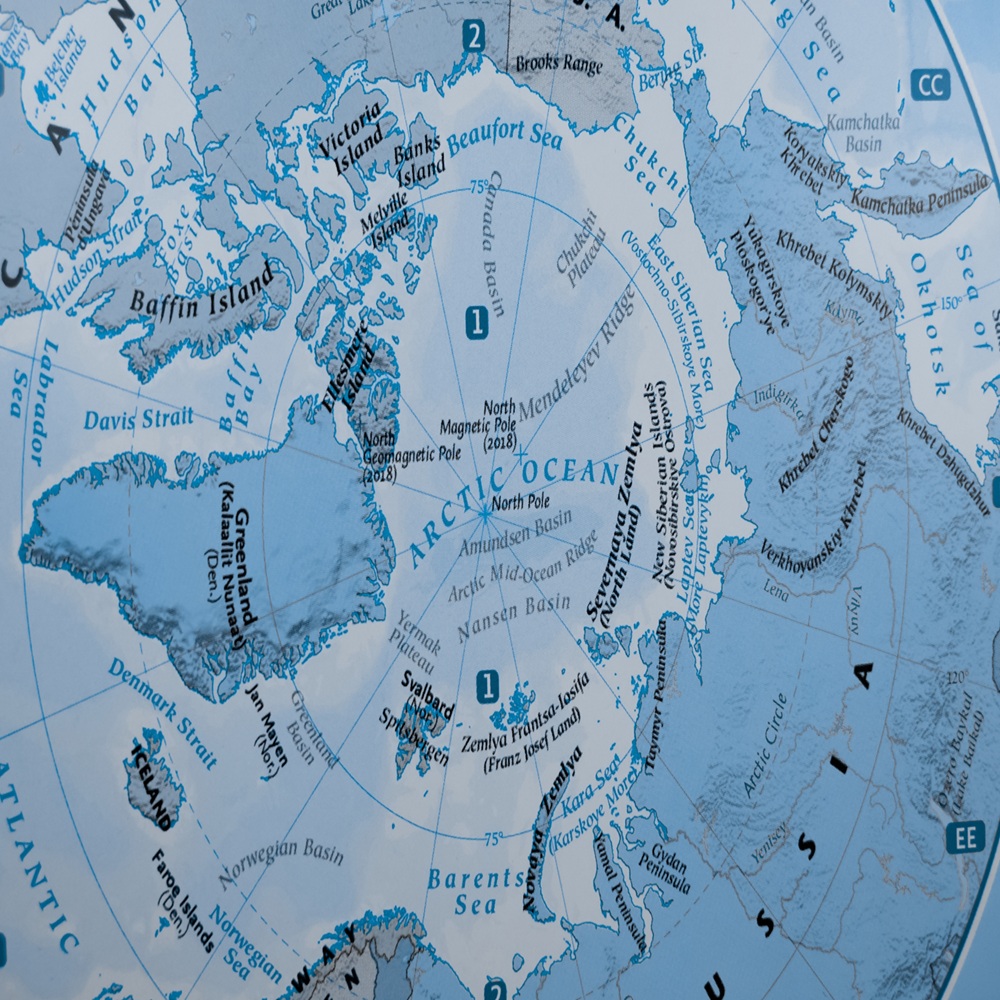
Map of Arctic Ocean styled in grey color. Selective focus on label, close-up view

Greenland at the Center of the Arctic Power: US NSS 2025, NATO Cohesion, and the New Geopolitics of the High North.

by World & New World Journal

In the chilling expanse of the Arctic, where ice and ocean frame the edges of the known world, a geopolitical drama has quietly gathered momentum. The world’s strategic gaze is no longer fixed solely on the traditional theatres of diplomacy in Europe, the Middle East, or the Indo-Pacific. Instead, the High North — and particularly Greenland, the vast Arctic territory within the Kingdom of Denmark — has emerged as a critical arena where great-power competition, national security priorities, global trade dynamics, and climate change converge. This transformation did not occur overnight. For decades, military planners, geographers, and strategic thinkers recognized the Arctic’s latent importance. Yet only in recent years have those projections translated into urgent geopolitical reality. At the center of this shift stands the United States’ National Security Strategy 2025 (NSS 2025), unveiled in late 2025, which redefines American priorities in a world shaped by renewed great-power rivalry. While the strategy addresses multiple global theatres, its emphasis on territorial security, critical resources, strategic geography, and adversarial competition underscores why Greenland has moved from the periphery to the heart of international geopolitics. Greenland today sits at the intersection of U.S. homeland defense, NATO cohesion, Arctic militarization, global trade transformation, and the accelerating race for critical minerals. The tensions surrounding the island reveal not only disputes among allies but also deeper structural changes in the international system. This article argues that Greenland is no longer a remote outpost but a strategic fulcrum of the Arctic, whose future will shape the balance of power in the High North and beyond. In addition, it analyses the geopolitical and strategical concerns from the US over Greenland. America’s Strategic Recalibration in the 2025 National Security Strategy The NSS 2025 marks a clear departure from post-Cold War doctrines centered on expansive multilateralism and global institution-building. Instead, it reflects a return to strategic realism, prioritizing the protection of core national interests, territorial security, and the prevention of adversarial dominance in critical regions. The strategy defines the United States’ primary objective as “the continued survival and safety of the United States as an independent, sovereign republic,” coupled with maintaining decisive military, technological, and economic power. Although the Indo-Pacific remains central, the strategy elevates the Western Hemisphere and adjacent strategic regions, emphasizing the need to prevent hostile encroachment on areas vital to U.S. security and economic resilience. Supply chains, critical minerals, missile defense, and strategic geography feature prominently throughout the document. Within this framework, Greenland has transitioned from a peripheral Arctic territory to a linchpin of U.S. strategic defense and resource security. While the NSS does not outline a standalone Arctic doctrine, its underlying logic — securing access to essential materials, protecting strategic approaches to the homeland, and denying adversaries positional advantages — aligns directly with the intensifying focus on Greenland. Latest developments: US position over Greenland. As already mentioned, the release of the NSS 2025 made one thing clear: US foreign policy is now defined by an assertive approach towards the entire Western Hemisphere – where Greenland is part of –. Moreover, this implies that the US might claim the right to intervene in other countries’ domestic affairs in order to guarantee its strategic and corporate interests. Therefore, after Venezuela – in addition to its rhetoric towards Cuba and Mexico – Greenland has become a hot topic, due its geopolitical, economical and strategical position and of course as part of the US “national security” and interest. In early 2026, Greenland became the unlikely epicenter of a high-stakes geopolitical drama. The U.S., under President Donald Trump, signaled an unprecedented level of interest in the island, framing it as a critical node in Arctic security, homeland defense, and global strategic competition. The announcement of a “framework of a future deal” at the World Economic Forum in Davos marked the peak of months of tension, including the president’s prior rhetoric suggesting military action to assert U.S. control — a prospect that sent shockwaves across Europe and NATO. The pathway to this framework was turbulent. Earlier proposals from the Trump administration, dating back to his first term, had openly floated buying Greenland, citing both security imperatives and access to mineral wealth. While these overtures were dismissed by Denmark and Greenland, they set the stage for heightened U.S. scrutiny. Diplomatic meetings in January 2026, including a contentious session in Washington on January 14, ended with what officials described as a “fundamental disagreement” over sovereignty. By January 18, European allies and Denmark had issued a joint statement affirming that Greenlandic sovereignty belongs exclusively to the Kingdom of Denmark and Greenland itself, while NATO and Danish troops deployed to the island to reassure Arctic security through “Operation Arctic Endurance.” Against this backdrop, Trump’s Davos announcement of a “framework” was simultaneously dramatic and deliberately vague. He described it as a long-term, “infinite” agreement designed to guarantee U.S. strategic goals, including the potential deployment of advanced missile defense systems—the so-called “Golden Dome”—and enhanced NATO involvement. The framework reportedly also aims to prevent Russian and Chinese investments in Greenland and may include increased U.S. access to the island’s mineral resources, though Greenlandic and Danish officials have made clear that no sovereignty transfer is under consideration. Crucially, no formal document has yet been produced, leaving many details unconfirmed and heightening uncertainty among allies. Greenland’s Geographic Centrality: The broader US security interest of the Island. Figure 1: Arctic states, counties and other administrative regions with capitals. Source: Map by Arto Vitikka, Arctic Centre, University of Lapland. Credit for the border data: Runfola, D. et al. (2020) geoBoundaries: A global database of political administrative boundaries. PLoS ONE 15(4): e0231866. https://doi.org/10.1371/journal.pone.0231866e. Figure 2: Arctic Population Centers. Map by Arto Vitikka, Arctic Centre, University of Lapland. When viewed from a polar perspective, the Arctic is not a distant fringe but the shortest connective space between North America, Europe, and Eurasia. The Arctic as seen in Figure 1 is composed of several administrative areas, including Canada, Alaska (USA), Russia, Norway, Sweden, Finland, Iceland and Greenland (Denmark). The latter can be said to be located at the center between North America and Europe and Eurasia, underscoring its geopolitical importance. In other words, Greenland occupies the central Atlantic–Arctic axis, the shortest air and missile trajectories between Russia and North America and a pivotal position between the Canadian Arctic Archipelago and the Russian Arctic coast. This geography carries deep strategic implications and clarifies the logic behind US interest in the island. First, Greenland is part of the so-called GIUK (Greenland-Iceland-UK) Gap, a crucial corridor and central axis for monitoring naval and air activity in the North Atlantic-Arctic corridor. The GIUK Gap played an important role during the Second World War and the Cold War and nowadays it has become crucial in securing air and sea surveillance through radar stations, while securing the sea lines of communication (SLOCs) as well as supply lines making them uninterrupted between NATO’s European members and the USA. The GIUK Gap can assist in ensuring maritime visibility and assist anti-submarine warfare (ASW) in case of conflicts. The presence of Russian submarines in the Arctic is a central pillar of Russia’s military strategy and nuclear deterrence, making the region one of the most militarized maritime spaces in the world. Russia views the Arctic as both a strategic sanctuary and a launch platform. In consequence, its Northern Fleet – headquartered on the Kola Peninsula –, is the most powerful of Russia’s fleets and operates a large share of its nuclear-powered ballistic missile submarines (SSBNs), such as the Borei and Delta IV classes. These submarines carry submarine-launched ballistic missiles (SLBMs) and are designed to remain hidden under Arctic ice, ensuring a second-strike capability in the event of a nuclear conflict. The ice cover, combined with Russia’s familiarity with Arctic waters, provides concealment and operational depth. In addition to SSBNs, Russia deploys nuclear-powered attack submarines (SSNs) and guided-missile submarines (SSGNs) in the Arctic. These vessels conduct intelligence gathering, protect ballistic missile submarines, and pose threats to NATO naval forces and undersea infrastructure, including communication cables. Russian submarines regularly transit through key chokepoints such as the GIUK Gap, bringing them into strategic relevance for Greenland, Iceland, and NATO’s anti-submarine warfare (ASW) posture. In addition, the Arctic also supports Russia’s broader bastion defense concept, which seeks to create heavily defended maritime zones where submarines can operate safely. Air defenses, surface ships, icebreakers, and coastal missile systems complement submarine operations. As climate change reduces sea ice and increases accessibility, Russian submarine activity in the Arctic is expected to remain intense, reinforcing the region’s importance for NATO surveillance, early warning systems, and transatlantic security — especially for locations like Greenland that sit astride critical Arctic–Atlantic routes. Second, Greenland’s high latitude makes it an ideal place for early detection of long-range missile launches. Russia has long-range intercontinental ballistic missiles (ICBMs), if ever launched from Russia toward the United States, the total flight time would be roughly between 25 to 35 minutes – depending on the launch location and target. But because of the Earth’s curvature, the shortest path from Russia to the continental US goes over the Arctic which is why Greenland is so strategically important for early detection and missile-warning defense. In practical terms, US decision-makers would have only minutes to assess the threat and respond after a launch is detected, therefore Greenland is critical for US security. Establishments such as the U.S. Pituffik Space Base underscore how Greenland functions as a first line of surveillance against possible ballistic missile threats from the Eurasian landmass. Therefore, Greenland is indispensable to early-warning and missile-defense systems. Sensors, radars, and space-tracking infrastructure based on the island form a crucial layer of “U.S. homeland defense”. Finally, Greenland is the only large Arctic landmass under Western democratic control outside Eurasia. Russia dominates the Eurasian Arctic coastline, while Alaska and Canada anchor North America. Greenland bridges these spaces, serving as a keystone for transatlantic Arctic security. Its isolation does not diminish its importance; rather, it magnifies it. – making Greenland a linchpin of US homeland defense and NATO’s northern security architecture. Greenland and NATO: The Fragile Architecture of Arctic Security Figure 3: NATO’s and Russia’s militarization in the Arctic. Figure 3 exposes a stark asymmetry in Arctic militarization between NATO and Russia. Moscow maintains a dense, continuous network of military installations stretching from the Kola Peninsula to the Bering Strait. These bases support air defense, naval operations, missile forces, and surveillance, forming an integrated arc of control along Russia’s northern frontier. NATO’s Arctic posture, by contrast, is structurally different. Rather than territorial saturation, it relies on discrete strategic nodes, interoperability over mass, and coordination among multiple sovereign states. Within this fragmented architecture, Greenland constitutes NATO’s most critical node, functioning as the geographic and operational linchpin between North America and Northern Europe. Without Greenland, NATO’s Arctic posture would fracture into disconnected segments—North America on one side and Scandinavia on the other—with no central anchor to bind the alliance’s northern defenses. The United States already maintains a crucial presence on the island through the Pituffik Space Base (formerly Thule Air Base) in northwest Greenland. The installation is indispensable for early missile warning, space surveillance, and tracking adversary launches across the polar region. Complementary allied infrastructure, such as the UK’s logistical presence at Camp Viking in Norway, underscores NATO’s node-based approach rather than a strategy of continuous territorial control. It is precisely Greenland’s role as this irreplaceable strategic node that explains the sharp European response in 2025–2026 to U.S. rhetoric suggesting unilateral action or coercive pressure regarding the island. The deployment of European troops under Operation Arctic Endurance was not merely symbolic; it was a clear assertion that Greenland is a collective NATO concern, not a bilateral bargaining chip between Washington and Copenhagen. In this sense, the military logic of Arctic defense translated directly into alliance politics. Yet the episode also revealed the limits of U.S. power when confronting established allies. Danish and Greenlandic officials consistently emphasized that sovereignty constituted a non-negotiable “red line.” Greenland’s Prime Minister, Jens-Frederik Nielsen, framed the issue not as a local dispute but as one of global order, stressing that Greenland would align with Denmark, the EU, and NATO while retaining full control over its territory. NATO Secretary General Mark Rutte reinforced this position by confirming enhanced cooperation while deliberately refraining from endorsing any transfer of sovereignty—an illustration of the alliance’s careful balancing act between accommodating U.S. strategic priorities and preserving the credibility of its member states. When viewed in this broader context, the episode appears less as an attempt at dramatic territorial acquisition and more as an effort to formalize and modestly expand pre-existing arrangements. The 1951 U.S.–Denmark agreement already permitted permanent U.S. military presence, exclusive jurisdiction over defense areas, and broad operational freedom at installations such as Pituffik. The proposed framework likely reinforced these rights while adding provisions for expanded NATO participation and strategic safeguards against Russian or Chinese influence. From Washington’s perspective, the episode allowed the appearance of a strategic victory, even as sovereignty and political control remained firmly with Greenland and Denmark. Analytically, the Greenland case illustrates a central tension in contemporary U.S. foreign policy: the interplay between assertive unilateralism and the constraints of alliance politics. By elevating Greenland into a symbol of hemispheric and Arctic security, the United States signaled its willingness to test diplomatic norms using both the rhetoric of necessity and instruments of coercion, including threatened tariffs. Yet the ultimate outcome—an unratified verbal framework reinforcing existing agreements—demonstrates the limits of coercion within a multilateral system. In this sense, Greenland has become a lens through which to observe the evolving dynamics of great-power competition, alliance management, and Arctic geopolitics. Its strategic geography, resource potential, and political status converge to make the island central to 21st-century security calculations. The resulting “framework of a future deal” represents not a victory of acquisition but a negotiation of influence—one that codifies U.S. ambitions while respecting allied sovereignty, subtly reshaping the contours of Arctic security and transatlantic relations. Greenland’s Resources: Strategic Minerals in a Fragmenting World Beyond military geography, Greenland’s subsoil wealth significantly enhances its geopolitical importance. The island holds substantial deposits of rare earth elements (REEs), lithium, graphite, niobium, titanium, uranium and zinc. As it is well known these strategic materials are indispensable and critical for renewable energy systems, electric vehicles, advanced electronics, missile guidance and radar technologies and space and defense infrastructure. Last but not least there is also oil and gas, but the conditions and viability to extract them make them an economic challenge. In the context of the control of natural resources, the NSS 2025 repeatedly stresses the need to reduce U.S. dependence on adversarial supply chains — an implicit reference to China’s dominance in rare-earth processing. Therefore, US eyes are on Greenland, as it represents one of the few politically aligned alternatives with large-scale potential reserves – ironically not under Chinese or Russian influence, but under US “allies” control. Yet resource abundance does not automatically translate into strategic advantage. Mining in Greenland faces severe challenges: extreme climate conditions, environmental risks, limited infrastructure, and strong local opposition to environmentally destructive projects. As a result, Greenland’s mineral wealth is strategically valuable but politically sensitive. Its development requires local consent and long-term cooperation, not coercion — a fact often overlooked in external strategic calculations. The Arctic Trade Revolution: Melting Ice, Shifting Routes Figure 4: Arctic Seaways (Northern Sea Route, Northwest Passage and Transpolar Sea Route). Source: Map by Arto Vitikka, Arctic Centre, University of Lapland. Climate change is transforming the Arctic faster than any other region on Earth. As sea ice recedes, new maritime routes are becoming seasonally viable, with potentially transformative consequences for global trade. The Northern Sea Route (NSR) along Russia’s Arctic coast already reduces transit times between Europe and Asia by up to 40%, even though some parts are free of ice for some months per year. On the other hand, a future transpolar route, cutting directly across the Arctic Ocean, could bypass traditional chokepoints such as: The Suez Canal, The Panama Canal or The Strait of Malacca. Therefore, Greenland importance relies on its geographic position that places it adjacent to these emerging corridors. Potential roles for the island include: the search-and-rescue hubs, refueling and logistics points, maritime surveillance and communications infrastructure. This elevates Greenland from a military asset to a potential gatekeeper of future Arctic trade, linking regional security directly to global economic flows. Icebreakers and Power Projection: Mobility as Sovereignty Figure 5: Major Icebreakers and Ice-Capable Patrol Ships highlight a decisive but underappreciated imbalance. Source: generated with Chat GPT using Routers Nov 2022 data. The transit in the Arctic can be defined by the possibility to move freely without any inconvenience due its extreme conditions – or at least with the least inconveniences. In consequence major ice breakers and ice-capable patrol ships became very important assets for the countries in the region. In a simple comparison, Russia possesses more icebreakers than NATO combined, as shown in Figure 5, including nuclear-powered vessels capable of year-round Arctic operations. These ships are instruments of sovereignty, enabling continuous military presence, escort of commercial shipping, enforcement of Arctic regulations and rapid crisis responses. By contrast, the United States has long underinvested in icebreaking capacity. NATO relies on a patchwork of national fleets, with Finland and Sweden contributing significantly but still lagging behind Russia’s scale. The strategic implication is clear: Russia controls mobility while NATO controls nodes. In such an environment, fixed strategic anchors like Greenland become even more critical. Competing Arctic Visions Russia Russia views the Arctic as a core strategic and economic priority, central to its national identity, security, and long-term development. Its Arctic vision emphasizes sovereignty, military security, and the exploitation of vast natural resources, particularly hydrocarbons and minerals. Moscow sees the Northern Sea Route as a critical shipping corridor that can enhance Russia’s control over Arctic navigation and generate economic revenues. To support this vision, Russia has invested heavily in Arctic infrastructure, icebreaker fleets, and military modernization, positioning itself as the dominant Arctic power and framing the region as vital to its great-power status. The Arctic is not an extension of Russian power; it is central to it. Figure 6: Cargo volume in Russia’s Northern Sea Route (1933-2023) China China approaches the Arctic as a “near-Arctic state,” framing its vision around scientific research, economic opportunity, and global governance. Beijing emphasizes participation in Arctic affairs through international law, particularly the UN Convention on the Law of the Sea, and promotes cooperation rather than territorial claims. Its strategy emphasizes long-term access to resources, influence over Arctic governance norms, and participation in future trade routes. Its concept of a “Polar Silk Road” reflects an interest in future shipping routes, energy projects, and digital connectivity, linking the Arctic to China’s broader Belt and Road Initiative. Even though China presents its Arctic engagement as peaceful and mutually beneficial, while gradually expanding its strategic and economic footprint in the region, it also has interest in Greenland’s mining sector, for example, which has heightened concerns about strategic leverage rather than direct control. Figure 7: Map of China’s Polar Silk Road. Source: Map by Arto Vitikka, Arctic Centre, University of Lapland. United States The U.S. approach, as reflected in the NSS 2025, is reactive but intensifying. Greenland crystallizes American concerns about strategic vulnerability, supply-chain dependence, and alliance credibility. Yet pressure tactics risk undermining the very alliances that make Arctic stability possible. The United States views the Arctic as an increasingly important region for national security, environmental stewardship, and economic opportunities. At the same time, it recognizes the strategic implications of growing Russian and Chinese activity in the region. Arctic States The European Arctic states emphasize sustainability, human security, and regional cooperation as the foundation of their Arctic vision. Their policies prioritize environmental protection, responsible resource management, and the rights and livelihoods of Indigenous peoples, while balancing economic development in sectors such as fisheries, renewable energy, and limited resource extraction. These states strongly support multilateral governance through institutions like the Arctic Council and stress adherence to international law. Collectively, they view the Arctic as a region where stability, cooperation, and climate leadership are essential, especially amid rising geopolitical tensions and accelerating environmental change. Canada Canada’s Arctic vision centers on sovereignty, Indigenous partnership, and sustainable development, reflecting the region’s importance to national identity and security. Ottawa emphasizes the protection of its northern territories and views the Northwest Passage as internal waters, while supporting a rules-based Arctic order. A core pillar of Canada’s approach is its collaboration with Indigenous peoples, recognizing their rights, knowledge, and role in governance and stewardship. Canada also prioritizes climate change adaptation, environmental protection, and responsible economic development, seeking to ensure that increased Arctic activity benefits northern communities while maintaining peace and stability in the region. India India’s Arctic vision is primarily science-driven and climate-focused, reflecting its broader emphasis on environmental security and multilateral cooperation. Through its Arctic research station, Himadri, and active participation in the Arctic Council as an observer, India seeks to understand the Arctic’s impact on global climate systems, particularly the Indian monsoon. New Delhi also recognizes the long-term economic and geopolitical significance of the Arctic but approaches the region cautiously, prioritizing sustainable development, international collaboration, and respect for Arctic states’ sovereignty. Strategic Futures: Cooperation or Fragmentation The future of Greenland and the Arctic more broadly will hinge on whether the region evolves toward structured cooperation or strategic fragmentation. In a cooperative scenario, Greenland becomes a stabilizing anchor within a renewed Arctic security framework, where the United States, Denmark, and NATO align their defense priorities with Greenlandic self-determination and environmental safeguards. Such an approach would emphasize multilateral governance, transparency in resource development, confidence-building military measures, and shared investment in infrastructure, search-and-rescue capabilities, and climate resilience. Cooperation would not eliminate competition, particularly with Russia and China, but it would establish rules, norms, and mechanisms to prevent escalation and miscalculation in an increasingly accessible Arctic. By contrast, a fragmented Arctic would be characterized by unilateral actions, coercive diplomacy, and the erosion of trust among allies. Pressure tactics aimed at securing access, influence, or control over Greenland could weaken NATO cohesion, fuel local resistance, and open political space for external actors to exploit divisions. In such a scenario, the Arctic risks becoming a patchwork of contested zones rather than a managed strategic commons. Therefore, fragmentation would increase the likelihood of militarization without coordination, resource development without legitimacy, and crisis dynamics without effective communication channels — conditions that historically precede instability rather than security. Conclusion Greenland’s elevation from a peripheral Arctic territory to a central object of U.S. strategic concern reflects a deeper transformation in American national security thinking. Under the logic of the National Security Strategy 2025, geography has reasserted itself as a core determinant of power. Greenland matters to Washington not because of symbolic territorial ambition, but because it sits at the intersection of missile warning, homeland defense, transatlantic security and critical resource resilience and control. From early-warning radars at Pituffik to the GIUK Gap’s role in anti-submarine warfare, the island functions as a forward shield for the United States rather than a distant outpost. In this sense, U.S. interest in Greenland is less about expansion and more about insulation — protecting the American homeland in an era of compressed warning times and renewed great-power rivalry. At the same time, the Greenland episode exposes the limits of unilateralism in a system still structured by alliances and sovereignty norms. While Washington’s strategic rationale is compelling, its use of coercive rhetoric and pressure tactics toward Denmark and Greenland revealed a misalignment between U.S. security imperatives and alliance diplomacy. The backlash from European allies and the reaffirmation of Greenlandic sovereignty demonstrated that even overwhelming military and economic power cannot easily override the political legitimacy of allied states. Ultimately, the United States secured no new sovereignty, only the likely reinforcement of pre-existing military arrangements — underscoring that influence in the Arctic must be negotiated, not imposed. From a U.S. perspective, Greenland thus represents both a strategic necessity and a diplomatic constraint. The island is indispensable to missile defense, space surveillance, and Arctic access, yet it remains politically autonomous and embedded within a NATO framework that demands consultation and restraint. This dual reality forces Washington to reconcile its desire for strategic certainty with the realities of alliance management. The “framework of a future deal” reflects this compromise: a mechanism to safeguard U.S. security interests while formally respecting Danish and Greenlandic control. The outcome illustrates that American power in the Arctic is real, but conditional — strongest when exercised through institutions rather than outside them. Looking ahead, Greenland will remain a focal point of U.S. Arctic strategy not because of dramatic territorial ambitions, but because it is irreplaceable. No alternative location offers the same combination of geographic centrality, political alignment, and strategic utility. As missile technologies advance, Arctic routes open, and resource competition intensifies, Greenland’s role in U.S. security planning will only grow. Yet the lesson of recent tensions is clear: securing Greenland’s strategic value requires partnership, legitimacy, and long-term engagement rather than pressure. In the final analysis, Greenland is not only a measure of American power, but a barometer of the Arctic’s future political order. The island sits at the intersection of U.S. homeland defense, European security, and the growing assertiveness of Russia in the High North, while also remaining a point of interest for external actors such as China or India. Europe views Greenland primarily as a stabilizing pillar within a rules-based Arctic governed through NATO coordination, international law, and multilateral institutions. Russia, by contrast, treats the Arctic as a strategic rear area and military bastion, where control, mobility, and deterrence dominate its vision of regional order. The United States is thus navigating between these competing logics — seeking to secure its own vital interests without fracturing alliance cohesion or accelerating Arctic militarization. Whether Greenland becomes a cornerstone of cooperative security or a flashpoint of strategic rivalry will depend less on geography, which is fixed, and more on political choices. In this sense, Greenland encapsulates the broader Arctic dilemma: a region where power, restraint, and cooperation must coexist if stability in the High North is to be preserved. Also, it is important to highlight Greenland’s voice – referring to sovereignty and identity. Usually under great-power maneuvering, Greenland’s own population has often been sidelined. Yet Greenland is not merely an object of strategy; it is a political community with a strong Indigenous identity, environmental concerns, and aspirations for greater autonomy. Therefore, it is important to keep in mind its constitutional status within the Kingdom of Denmark, their principle of self-determination and the political costs of alienating local consent. Alienating local consent would not only undermine legitimacy, but also weaken the long-term sustainability of any security arrangement. Finally, the Arctic transformation is no longer a distant projection but an unfolding reality. Climate change is accelerating the opening of Arctic Sea routes, reshaping patterns of trade, mobility, and access, and in doing so redefining how sovereignty and power are exercised in the High North. In this emerging environment, traditional markers of security such as missile defense and military presence will increasingly coexist with less conventional—but equally strategic—assets, including icebreakers, critical minerals, infrastructure, and regulatory authority over maritime corridors. The future balance of power in the Arctic will therefore depend not only on geography or military capability, but on the ability of states and alliances to adapt to a rapidly changing region where environmental transformation, economic opportunity, and strategic competition intersect. How the United States, its allies, and other Arctic stakeholders respond to this transformation will shape whether the Arctic evolves as a space of managed cooperation or intensifying rivalry. References Agneman, G. (2025, February 04). Trump wants Greenland – but here’s what the people of Greenland want. Retrieved from The Conversation: https://theconversation.com/trump-wants-greenland-but-heres-what-the-people-of-greenland-want-248745 Aljazeera. (2026, January 15). European troops arrive in Greenland as talks with US hit wall over future. Retrieved from Aljazeera: https://www.aljazeera.com/news/2026/1/15/european-troops-arrive-in-greenland-as-talks-with-us-hit-wall-over-future Aljazeera. (2026, January 18). Trump announces new tariffs over Greenland: How have allies responded? Retrieved from Aljazeera: https://www.aljazeera.com/news/2026/1/18/trump-announces-new-tariffs-over-greenland-how-have-eu-allies-responded Arctic Centre University of Lapland. (n.d.). Arctic Region. Retrieved from https://arcticcentre.org/en/arctic-region/maps/polar-silk-road/ Bassets, M. (2026, Enero 11). “Por las buenas o por las malas”: así puede Trump conquistar Groenlandia. Retrieved from El País: https://elpais.com/internacional/2026-01-10/por-las-buenas-o-por-las-malas-asi-puede-trump-conquistar-groenlandia.html Bateman, T. (2026, January 14). Danish minister says 'fundamental disagreement' remains after 'frank' Greenland talks with US. Retrieved from BBC: https://www.bbc.com/news/live/cn824zzp670t BBC News. (2026, January 21). Trump drops threat of tariffs over Greenland after Nato talks in Davos. Retrieved from BBC News: https://www.bbc.com/news/live/cjrzjqg8dlwt Bierman, P. (2025, February 19). Greenland’s melting ice and landslide-prone fjords make the oil and minerals Trump is eyeing dangerous to extract. Retrieved from The Conversation: https://theconversation.com/greenlands-melting-ice-and-landslide-prone-fjords-make-the-oil-and-minerals-trump-is-eyeing-dangerous-to-extract-249985 Bierman, P. (2025, February 19). Greenland’s melting ice and landslide-prone fjords make the oil and minerals Trump is eyeing dangerous to extract. Retrieved from The Conversation: https://theconversation.com/greenlands-melting-ice-and-landslide-prone-fjords-make-the-oil-and-minerals-trump-is-eyeing-dangerous-to-extract-249985 Bierman, P. (2026, January 14). US military has a long history in Greenland, from mining during WWII to a nuclear-powered Army base built into the ice. Retrieved from The Conversatiion: https://theconversation.com/us-military-has-a-long-history-in-greenland-from-mining-during-wwii-to-a-nuclear-powered-army-base-built-into-the-ice-273355 Bonsoms, J. (2025, Dececmber 16). ‘Extreme melting’ episodes are accelerating ice loss in the Arctic. Retrieved from The Conversation: https://theconversation.com/extreme-melting-episodes-are-accelerating-ice-loss-in-the-arctic-272114 Brincat, S. (2026, January 18). Trump has threatened European countries with higher tariffs if he doesn’t get Greenland. Will it work? Retrieved from The Conversation: https://theconversation.com/trump-has-threatened-european-countries-with-higher-tariffs-if-he-doesnt-get-greenland-will-it-work-273698 Brincat, S., & Naranjo Cáceres, J. Z. (2026, January 07). Trump wants Greenland. Europe’s tepid response is putting NATO and global security at risk. Retrieved from The Conversation: https://theconversation.com/trump-wants-greenland-europes-tepid-response-is-putting-nato-and-global-security-at-risk-272819 Brooks, J. (2026, January 20). Pro-Greenland protesters mock Trump’s MAGA slogan with ‘Make America Go Away’ caps. Retrieved from AP: https://apnews.com/article/denmark-greenland-maga-trump-protest-cd1213dd73e9ea1e4da43285704c95ea Bryant, M., & Sabbagh, D. (2026, January 15). Greenland's defence is 'common concern' for Nato, Danish PM says as European troops fly in. Retrieved from The Guardian: https://www.theguardian.com/world/2026/jan/15/greenland-defence-nato-denmark-prime-minister-european-troops Burrows, E., Ciobanu, C., & Niemann, D. (2026, January 16). European troops arrive in Greenland as talks with US highlight 'disagreement' over island's future. Retrieved from AP: https://apnews.com/article/greenland-united-states-denmark-trump-vance-rubio-meeting-b10f5151008f1f18a788dc0751473c0e CNN. (2026, January 21). Trump says he’s formed a ‘framework of a future deal’ on Greenland. Retrieved from CNN: https://edition.cnn.com/politics/live-news/trump-administration-news-01-21-26 Davies, M. (2026, January 19). Starmer holds phone call with Trump over Greenland tariff threat. Retrieved from BBC: https://www.bbc.com/news/articles/cwyn90l1dneo Dodds, K. (2026, January 09). As the Arctic warms up, the race to control the region is growing ever hotter. Retrieved from The Conversation: https://theconversation.com/as-the-arctic-warms-up-the-race-to-control-the-region-is-growing-ever-hotter-273118 Dunbar, M. (2026, January 18). Trump's calls to seize Greenland ignite fresh criticism from Republican party. Retrieved from The Guardian: https://www.theguardian.com/us-news/2026/jan/18/trump-greenland-republican-party FitzGerald, J. (2026, January 19). Why does Trump want Greenland and what could it mean for Nato? Retrieved from BBC: https://www.bbc.com/news/articles/c74x4m71pmjo Fleck, A. (2025, January 24). NATO’s and Russia’s Militarization of the Arctic. Retrieved from statista: https://www.statista.com/chart/33824/military-bases-in-the-arctic-belonging-to-nato-and-russia/?srsltid=AfmBOoqwc5PmGe6_JB6mYjQSP9pr9fIZE_LcEtMOo_rtnCD86zMcQpwn Gjedssø Bertelsen, R. (2025). Divided Arctic in a Divided World Order. Strategic Analysis, 48(Issue 6: Changing Dynamics in the Arctic: Actors and Alliances), 568-577. doi:https://doi.org/10.1080/09700161.2025.2453322 Government Offices of Sweden. (2026, January 18). Statement by Denmark, Finland, France, Germany, the Netherlands, Norway, Sweden and the United Kingdom. Retrieved from Government Offices of Sweden: https://www.government.se/statements/2026/01/statement-by-denmark-finland-france-germany-the-netherlands-norway-sweden-and-the-united-kingdom/ Grillo, F. (2026, January 08). As the US eyes Greenland, Europe must turn a global problem into an opportunity. Retrieved from The Conversation: https://theconversation.com/as-the-us-eyes-greenland-europe-must-turn-a-global-problem-into-an-opportunity-272872 Gupta, P. (2024, September 18). Understanding the potential of the Northern Sea Route. Retrieved from ORF: https://www.orfonline.org/expert-speak/understanding-the-potential-of-the-northern-sea-route Harvey, L. (2026, January 16). European nations send additional troops to Greenland as US annexation threats escalate. Retrieved from CNN: https://edition.cnn.com/2026/01/15/world/europe-troops-greenland-trump-nato-intl-hnk Hastings Dunn MBE, D., Webber, M., & Wolff, S. (2026, January 07). US action against Greenland would undermine Nato, but now is not the time to panic. Retrieved from The Conversation: https://theconversation.com/us-action-against-greenland-would-undermine-nato-but-now-is-not-the-time-to-panic-272911 Holland, S., Mason, J., & Erickson, B. (2026, January 07). Trump discussing how to acquire Greenland, US military always an option, White House says. Retrieved from Reuters: https://www.reuters.com/world/trump-advisers-discussing-options-acquiring-greenland-us-military-is-always-an-2026-01-06/ huaxia. (2026, January 19). China urges U.S. to stop using so-called "China threat" as pretext for pursuing selfish gains. Retrieved from Xinhua: https://english.news.cn/20260119/57899ee8d43345ddbfa222828ec1d0a4/c.html Jakes, L., Tankersley, J., & Kanno-Youngs, Z. (2026, January 22). Trump Touts Greenland Framework as NATO Mulls U.S. Sovereignty Over Bases. Retrieved from The New York Times: https://www.nytimes.com/live/2026/01/21/us/trump-davos-greenland-news Karjee, M. (2025, August 20). Russia’s Arctic Corridor: Between Ice and Isolation. Retrieved from E-International Relations: https://www.e-ir.info/2025/08/20/russias-arctic-corridor-between-ice-and-isolation/ Katila, A. (2026, January 15). As US and Denmark fight, Greenland’s voices are being excluded once again. Retrieved from The Conversation: https://theconversation.com/as-us-and-denmark-fight-greenlands-voices-are-being-excluded-once-again-273131 Kennedy-Pipe, C. (2026, January 14). Whether or not US acquires Greenland, the island will be at the centre of a massive military build-up in the Arctic. Retrieved from The Conversation: https://theconversation.com/whether-or-not-us-acquires-greenland-the-island-will-be-at-the-centre-of-a-massive-military-build-up-in-the-arctic-273301 Khanna, M. (2025, March 19). China and the Arctic: An Overview. Retrieved from ORF: https://www.orfonline.org/research/china-and-the-arctic-an-overview Kirby, P. (2026, January 16). European military personnel arrive in Greenland as Trump says US needs island. Retrieved from BBC: https://www.bbc.com/news/articles/cd0ydjvxpejo Kotak, S. (2025, September 08). Leveraging India’s Arctic Observer Status: Scientific Diplomacy as a Lever for Climate, Resource and Security Advancement. Retrieved from World & New World Journal: https://worldandnewworld.com/india-arctic-observer-status/ Kottasová, I., & Edwards, C. (2026, Enero 19). Trump le dice a Noruega que ya no se siente obligado a "pensar únicamente en la paz" en carta sobre el Nobel y Groenlandia. Retrieved from CNN Español: https://cnnespanol.cnn.com/2026/01/19/eeuu/trump-paz-noruega-nobel-reux Kumar, A., & Haldar, S. (2024, October 2024). An evolving partnership in the Arctic between China and Russia. Retrieved from ORF: https://www.orfonline.org/expert-speak/an-evolving-partnership-in-the-arctic-between-china-and-russia L. Montgomery, S. (2026, January 14). 4 reasons why the US might want to buy Greenland – if it were for sale, which it isn’t. Retrieved from The Conversation: https://theconversation.com/4-reasons-why-the-us-might-want-to-buy-greenland-if-it-were-for-sale-which-it-isnt-246955 Lebowitz, M. (2026, January 18). Treasury secretary defends Greenland tariffs: 'The national emergency is avoiding the national emergency'. Retrieved from NBC News: https://www.nbcnews.com/politics/trump-administration/treasury-secretary-bessent-tariffs-national-emergency-greenland-eu-rcna254650 Levison, J., & Russell, L. (2026, January 19). Why Trump says the US 'needs' Greenland - and what the fallout could be. Retrieved from Sky news: https://news.sky.com/story/why-trump-says-the-us-needs-greenland-and-what-the-fallout-could-be-13285350 Lubold, G., Kube, C., Williams, A., & Alba, M. (2026, January 14). Buying Greenland could cost as much as $700 billion. Retrieved from NBC News: https://www.nbcnews.com/politics/white-house/buying-greenland-cost-much-700-billion-rcna253921 Manners, I. (2026, January 09). Four ways to understand what’s going on with the US, Denmark and Greenland. Retrieved from The Conversation: https://theconversation.com/four-ways-to-understand-whats-going-on-with-the-us-denmark-and-greenland-272873 Nicholas, P., & Smith, A. (2026, January 20). Trump won't say whether he would use force to seize Greenland. Retrieved from NBC News: https://www.nbcnews.com/politics/trump-administration/trump-greenland-use-of-force-nobel-norway-europe-tariffs-ukraine-rcna254786 Passi, R. (2018, February 21). One belt, one road, and now one circle. Retrieved from ORF: https://www.orfonline.org/expert-speak/one-belt-one-road-and-now-one-circle Paul, J. (2026, January 08). Greenland is rich in natural resources – a geologist explains why. Retrieved from The Conversation: https://theconversation.com/greenland-is-rich-in-natural-resources-a-geologist-explains-why-273022 Reuters. (2021, July 16). Greenland ends unsuccessful 50-year bid to produce oil. Retrieved from Reuters: https://www.reuters.com/business/energy/greenland-puts-an-end-unsuccessful-oil-adventure-2021-07-16/#:~:text=Naaja%20Nathanielsen%2C%20Greenland's%20minister%20of,profits%20or%20make%20a%20loss Rønberg, N., Gjerding Nielson, E., & Haugaard, M. (2026, January 06). Kampen om Grønlands fremtid. Retrieved from Nyheder: https://nyheder.tv2.dk/live/2025-01-06-kampen-om-groenlands-fremtid/over-200-soldater-i-groenland-lige-nu?entry=c342b2d3-e01d-4f60-b1dc-8df98fdac85b Sergunin, A., & Konyshev, V. (2025, April 21). The Arctic Great Game: The Need for Cautious Optimism. Retrieved from ORF: https://www.orfonline.org/expert-speak/the-arctic-great-game-the-need-for-cautious-optimism Sheftalovich, Z., & Jack, V. (2026, January 07). How Trump gets Greenland in 4 easy steps. Retrieved from Politico: https://www.politico.eu/article/donald-trump-greenland-easy-steps-nato-policy-deal-military/ Shetty, K. (2023, June 06). The Northern Sea route: A gamechanger or a road to hegemony? Retrieved from ORF: https://www.orfonline.org/expert-speak/the-northern-sea-route Slothuus, L. (2026, January 12). Why Greenland’s vast natural resources won’t necessarily translate into huge profits. Retrieved from The Conversation: https://theconversation.com/why-greenlands-vast-natural-resources-wont-necessarily-translate-into-huge-profits-273137 Soufi Burridge, T., Gardiner, C., & Pereira, I. (2026, January 16). France, other NATO countries send troops to Greenland for exercises after meeting with Vance and Rubio. Retrieved from ABC News: https://abcnews.go.com/Politics/france-nato-countries-send-troops-greenland-exercises-after/story?id=129241103 Talmazan, Y. (2026, January 15). European troops arrive in Greenland as Trump throws another curveball. Retrieved from NBC News: https://www.nbcnews.com/world/greenland/european-troops-arrive-greenland-trump-throws-curveball-rcna254166 Tanno, S., & Waldenberg, S. (2026, Enero 10). Trump dice que Estados Unidos tomará Groenlandia "por las malas" sino puede hacerlo por las buenas. Retrieved from CNN Español: https://cnnespanol.cnn.com/2026/01/10/eeuu/trump-groenlandia-malas-trax Testoni, M. (2026, January 16). US-Greenland negotiations have hit a wall. Here are three ways the crisis could end. Retrieved from The Conversation: https://theconversation.com/us-greenland-negotiations-have-hit-a-wall-here-are-three-ways-the-crisis-could-end-273629 tg24. (2026, January 16). Groenlandia, scattata la missione "Arctic Endurance": cosa sapere. Retrieved from tg24: https://tg24.sky.it/mondo/2026/01/16/groenlandia-arctic-endurance-esercitazione-militare Bertrand, N., Liptak, K., Atwood, K., & Sclutto, J. (2026, January 23). No written document memorializes the future deal framework for Greenland, sources say. Retrieved from CNN: https://edition.cnn.com/2026/01/22/politics/future-deal-framework-greenland Blake, A. (2026, January 23). Trump’s Greenland framework sounds a lot like an already existing 1951 deal. Retrieved from CNN: https://edition.cnn.com/2026/01/22/politics/us-greenland-framework-1951-deal Curtis, J., & Stefano, F. (2026, January 23). President Trump and Greenland: Frequently asked questions. Retrieved from House of Commons Library: https://commonslibrary.parliament.uk/research-briefings/cbp-10472/ Kola, P. (2026, January 23). What we know about Trump's 'framework of future deal' over Greenland. Retrieved from BBC: https://www.bbc.com/news/articles/c86vvjxe9z7o Meredith, S. (2026, January 28). Greenland will not give in, PM says, as Denmark warns world order as we know it is over. Retrieved from CNBC: https://www.cnbc.com/2026/01/28/greenland-trump-nato-denmark-security-defense.html The White House. (2025, November). National Security Strategy of the United States of America. Retrieved from The White House: https://www.whitehouse.gov/wp-content/uploads/2025/12/2025-National-Security-Strategy.pdf

Defense & Security
Soldier in engineering role uses AI application on laptop to manage server hub systems. Army commander reviews secret intelligence information using artificial intelligence in data center, camera A

Dual-Use AI Technologies in Defense: Strategic Implications and Security Risks

by Mayukh Dey

Introduction Artificial intelligence has become a critical technology in the 21st century, with applications spanning healthcare, commerce, and scientific research. However, the same algorithms that enable medical diagnostics can guide autonomous weapons, and the same machine learning systems that power recommendation engines can identify military targets. This dual-use nature, where technologies developed for civilian purposes can be repurposed for military applications, has positioned AI as a central element in evolving global security dynamics. The strategic implications are substantial. China views AI as essential for military modernization, with the People's Liberation Army planning to deploy "algorithmic warfare" and "network-centric warfare" capabilities by 2030 (Department of Defense, 2024). Concurrently, military conflicts in Ukraine and Gaza have demonstrated the operational deployment of AI-driven targeting systems. As nations allocate significant resources to military AI development, a critical question emerges: whether the security benefits of dual-use AI technologies can be realized without generating severe humanitarian consequences. The Reversal Commercial Innovation Driving Military Modernization Historically, military research and development drove technological innovation, with civilian applications emerging as secondary benefits, a phenomenon termed "spin-off." The internet, GPS, and microwave ovens all originated in defense laboratories. This dynamic has reversed. Commercially developed technologies now increasingly "spin into" the defense sector, with militaries dependent on technologies initially developed for commercial markets. This reversal carries significant implications for global security. Unlike the Cold War era, when the United States and Soviet Union controlled nuclear weapons development through state programs, AI innovation occurs primarily in private sector companies, technology firms, and university research institutions. Organizations like DARPA influence global emerging technology development, with their projects often establishing benchmarks for research and development efforts worldwide (Defense Advanced Research Projects Agency, 2024). This diffusion of technological capacity complicates traditional arms control frameworks based on state-controlled military production. The scale of investment is considerable. The U.S. Department of Defense's unclassified AI investments increased from approximately $600 million in 2016 to about $1.8 billion in 2024, with more than 685 active AI projects underway (Defense One, 2024). China's spending may exceed this figure, though exact data remains unavailable due to the opacity of Chinese defense budgeting. Europe is pursuing comparable investments, with the EU committing €1.5 billion to defense-related research and development through initiatives like the European Defence Fund. Dual-Use Applications in Contemporary Warfare AI's military applications span the spectrum of warfare, from strategic planning to tactical execution. Current deployments include: Intelligence, Surveillance, and Reconnaissance (ISR): AI systems process large volumes of sensor data, satellite imagery, and signals intelligence to identify patterns beyond human analytical capacity. In 2024, "China's commercial and academic AI sectors made progress on large language models (LLMs) and LLM-based reasoning models, which has narrowed the performance gap between China's models and the U.S. models currently leading the field," enabling more sophisticated intelligence analysis (Department of Defense, 2024). Autonomous Weapons Systems: Autonomous weapons can identify, track, and engage targets with minimal human oversight. In the Russia-Ukraine war, drones now account for approximately 70-80% of battlefield casualties (Center for Strategic and International Studies, 2025). Ukrainian officials predicted that AI-operated first person view drones could achieve hit rates of around 80%, compared to 30-50% for manually piloted systems (Reuters, 2024). Predictive Maintenance and Logistics: The U.S. Air Force employs AI in its Condition-Based Maintenance Plus program for F-35 fighters, analyzing sensor data to predict system failures before occurrence, reducing downtime and operational costs. Command and Control: AI assists military commanders in processing battlefield information and evaluating options at speeds exceeding human capacity. Project Convergence integrates AI, advanced networking, sensors, and automation across all warfare domains (land, air, sea, cyber, and space) to enable synchronized, real-time decision-making. Cyber Operations: AI powers both offensive and defensive cyber capabilities, from automated vulnerability discovery to malware detection and sophisticated social engineering campaigns. Gaza and Ukraine: AI in Contemporary Conflict Recent conflicts have provided operational demonstrations of AI's military applications and associated humanitarian costs. Israel's Lavender system reportedly identified up to 37,000 potential Hamas-linked targets, with sources claiming error rates near 10 percent (972 Magazine, 2024). An Israeli intelligence officer stated that "the IDF bombed targets in homes without hesitation, as a first option. It's much easier to bomb a family's home" (972 Magazine, 2024). The system accelerated airstrikes but also contributed to civilian casualties, raising questions about algorithmic accountability. The system's design involved explicit tradeoffs: prioritizing speed and scale over accuracy. According to sources interviewed by 972 Magazine, the army authorized the killing of up to 15 or 20 civilians for every junior Hamas operative that Lavender marked, while in some cases more than 100 civilians were authorized to be killed to assassinate a single senior commander (972 Magazine, 2024). Foundation models trained on commercial data lack the reasoning capacity humans possess, yet when applied to military targeting, false positives result in civilian deaths. Data sourced from WhatsApp metadata, Google Photos, and other commercial platforms created targeting profiles based on patterns that may not correspond to combatant status. Ukraine has implemented different approaches, using AI to coordinate drone swarms and enhance defensive capabilities against a numerically superior adversary. Ukrainian Deputy Defense Minister Kateryna Chernohorenko stated that "there are currently several dozen solutions on the market from Ukrainian manufacturers" for AI-augmented drone systems being delivered to armed forces (Reuters, 2024). Ukraine produced approximately 2 million drones in 2024, with AI-enabled systems achieving engagement success rates of 70 to 80 percent compared to 10 to 20 percent for manually controlled drones (Center for Strategic and International Studies, 2025). Both sides in the conflict have developed AI-powered targeting systems, creating operational arms race dynamics with immediate battlefield consequences. Civilian Harm: Technical and Legal Limitarions The integration of AI into lethal military systems raises humanitarian concerns extending beyond technical reliability. AI's inability to uphold the principle of distinction, which requires protecting civilians by distinguishing them from combatants in compliance with international humanitarian law, presents fundamental challenges. Current AI systems lack several capabilities essential for legal warfare:  Contextual Understanding: AI cannot comprehend the complex social, cultural, and situational factors that determine combatant status. A person carrying a weapon might be a combatant, a civilian defending their home, or a shepherd protecting livestock.  Proportionality Assessments: International humanitarian law requires that military attacks not cause disproportionate civilian damage. Human Rights Watch noted that it is doubtful whether robotic systems can make such nuanced assessments (Human Rights Watch, 2024).  Moral Judgment: Machines lack the capacity for compassion, mercy, or understanding of human dignity, qualities that have historically provided safeguards against wartime atrocities.  Accountability: With autonomous weapon systems, responsibility is distributed among programmers, manufacturers, and operators, making individual accountability difficult to establish. As one expert observed, "when AI, machine learning and human reasoning form a tight ecosystem, the capacity for human control is limited. Humans have a tendency to trust whatever computers say, especially when they move too fast for us to follow" (The Conversation, 2024). The risks extend to specific populations. Autonomous weapons systems trained on data predominantly consisting of male combatants in historical records could create algorithmic bias. In the case of Lavender, analysis suggests "one of the key equations was 'male equals militant,'" echoing the Obama administration's approach during drone warfare operations (The Conversation, 2024). Communities of color and Muslim populations face heightened risks given historical patterns of discriminatory force deployment. Export Controls and Technology Transfer Challenges Recognizing AI's strategic importance, governments have implemented export control regimes. The U.S. Bureau of Industry and Security now requires licenses for exports of advanced computing chips and AI model weights, imposing security conditions to safeguard storage of the most advanced models. These controls face inherent tensions. Overly broad restrictions risk hampering legitimate research and commercial innovation. Analysis suggests that if AI technology is too extensively controlled, American universities may face difficulties performing AI research, resulting in a less robust U.S. AI ecosystem. Insufficient controls enable adversaries to acquire cutting-edge capabilities. The effectiveness of export controls remains uncertain. In 2024, hundreds of thousands of chips, totaling millions of dollars, were smuggled into China through shell companies, varying distributors, and mislabeling techniques (Oxford Analytica, 2025). China's DeepSeek models, which achieved performance approaching U.S. systems, were reportedly trained on chips that circumvented export restrictions. International Governance: Fragmentation and Competing Frameworks The international community has struggled to develop coherent governance frameworks for dual-use AI. Rather than a cohesive global regulatory approach, what has emerged is a collection of national policies, multilateral agreements, high-level summits, declarations, frameworks, and voluntary commitments. Multiple international forums have addressed AI governance: ● The UN Secretary-General created an AI Advisory Board and called for a legally binding treaty to prohibit lethal autonomous weapons systems without human control, to be concluded by 2026 ● The Group of Governmental Experts on Lethal Autonomous Weapons Systems has held discussions under the Convention on Certain Conventional Weapons since 2013, with limited concrete progress ● NATO released a revised AI strategy in 2024, establishing standards for responsible use and accelerated adoption in military operations ● The EU's AI Act, adopted in 2023, explicitly excludes military applications and national security from its scope This fragmented landscape reflects geopolitical divisions. The perceived centrality of AI for competition has led the U.S. to position itself as leader of ideologically aligned countries in opposition to China, including for security purposes. China promotes its own governance vision through initiatives like the Belt and Road, exporting technology standards alongside infrastructure. Strategic Stability Implications AI creates strategic stability challenges. Autonomous weapons enable substitution of machines for human soldiers in many battlefield roles, reducing the human cost and thus political cost of waging offensive war. This could increase the frequency of conflicts between peer adversaries, each believing they can prevail without significant domestic casualties. For conflicts between non-peer adversaries, reduced casualties further diminish domestic opposition to wars of aggression. The implications extend beyond conventional warfare. Armed, fully-autonomous drone swarms could combine mass harm with lack of human control, potentially becoming weapons of mass destruction comparable to low-scale nuclear devices. The technical barriers to such systems are declining as components become commercially available. AI also complicates nuclear stability. Advances in AI-enhanced sensors and data processing could undermine second-strike capabilities by improving detection of mobile missile launchers and submarines. This erosion of assured retaliation could incentivize first strikes during crises. Simultaneously, AI systems managing nuclear command and control create risks of accidents, miscalculations, or unauthorized launches. Ethical Framework Limitations The integration of AI into warfare strains traditional ethical frameworks. Just War Theory requires that combatants maintain moral responsibility for their actions, possess the capacity to distinguish combatants from civilians, and apply proportionate force. Automation bias and technological mediation weaken moral agency among operators of AI-enabled targeting systems, diminishing their capacity for ethical decision-making. When operators interact with targeting through screens displaying algorithmic recommendations rather than direct observation, psychological distance increases. This mediation risks transforming killing into a bureaucratic process. The operator becomes less a moral agent making decisions and more a technician approving or rejecting algorithmic suggestions. Furthermore, industry dynamics, particularly venture capital funding, shape discourses surrounding military AI, influencing perceptions of responsible AI use in warfare. When commercial incentives align with military applications, the boundaries between responsible innovation and reckless proliferation become unclear. Companies developing AI for civilian markets face pressure to expand into defense contracting, often with insufficient ethical deliberation. Conclusion Dual-use AI technologies present both opportunities and risks for international security. One trajectory leads toward normalized algorithmic warfare at scale, arms races in autonomous weapons that erode strategic stability, and inadequate international governance resulting in civilian harm. An alternative trajectory involves international cooperation that constrains the most dangerous applications while permitting beneficial uses. The timeframe for establishing governance frameworks is limited. AI capabilities are advancing rapidly, and widespread proliferation of autonomous weapons will make policy reversal substantially more difficult. The challenge resembles nuclear non-proliferation but unfolds at greater speed, driven by commercial incentives rather than state-controlled programs. Because AI is a dual-use technology, technical advances can provide economic and security benefits. This reality means unilateral restraint by democratic nations would cede advantages to authoritarian competitors. However, uncontrolled competition risks adverse outcomes for all parties. Concrete action is required from multiple actors. States must strengthen multilateral agreements through forums like the UN Convention on Certain Conventional Weapons to establish binding restrictions on autonomous weapons without meaningful human control. NATO and regional security alliances should harmonize AI ethics standards and create verification mechanisms for military AI deployments. Military institutions must implement mandatory human-in-the-loop requirements for lethal autonomous systems and establish clear chains of accountability for AI-driven targeting decisions. Technology companies developing dual-use AI systems bear responsibility for implementing ethical safeguards and conducting thorough threat modeling before commercial release. Industry alliances should establish transparency standards for military AI applications and create independent audit mechanisms. Universities and research institutions must integrate AI ethics and international humanitarian law into technical training programs. Export control regimes require coordination between the United States, EU, and allied nations to prevent regulatory arbitrage while avoiding overreach that stifles legitimate research. Democratic governments should lead by demonstrating that military AI can be developed within strict ethical and legal constraints, setting standards that distinguish legitimate security applications from destabilizing weapons proliferation. As Austrian Foreign Minister Alexander Schallenberg observed, this represents the Oppenheimer moment of the current generation, recognizing that dual-use AI, like nuclear weapons, represents a technology whose military applications demand collective restraint. The policy choices made in the next few years will have long-term consequences. They will determine whether AI becomes a tool for human advancement or an instrument of algorithmic warfare. The technology exists; the policy framework remains to be established. The actors are identified; the question is whether they possess the political will to act before proliferation becomes irreversible. References 972 Magazine (2024) 'Lavender': The AI machine directing Israel's bombing spree in Gaza. https://www.972mag.com/lavender-ai-israeli-army-gaza/ Center for Strategic and International Studies (2024) Where the Chips Fall: U.S. Export Controls Under the Biden Administration from 2022 to 2024. https://www.csis.org/analysis/where-chips-fall-us-export-controls-under-biden-administration-2022-2024 Center for Strategic and International Studies (2025) Ukraine's Future Vision and Current Capabilities for Waging AI-Enabled Autonomous Warfare. https://www.csis.org/analysis/ukraines-future-vision-and-current-capabilities-waging-ai-enabled-autonomous-warfare Defense One (2023) The Pentagon's 2024 Budget Proposal, In Short. https://www.defenseone.com/policy/2023/03/heres-everything-we-know-about-pentagons-2024-budget-proposal/383892/ Department of Defense (2024) Military and Security Developments Involving the People's Republic of China 2024. https://media.defense.gov/2024/Dec/18/2003615520/-1/-1/0/MILITARY-AND-SECURITY-DEVELOPMENTS-INVOLVING-THE-PEOPLES-REPUBLIC-OF-CHINA-2024.PDF Foreign Policy Research Institute (2024) Breaking the Circuit: US-China Semiconductor Controls. https://www.fpri.org/article/2024/09/breaking-the-circuit-us-china-semiconductor-controls/ Human Rights Watch (2024) A Hazard to Human Rights: Autonomous Weapons Systems and Digital Decision-Making. https://www.hrw.org/report/2025/04/28/a-hazard-to-human-rights/autonomous-weapons-systems-and-digital-decision-making National Defense Magazine (2024) Pentagon Sorting Out AI's Future in Warfare. https://www.nationaldefensemagazine.org/articles/2024/10/22/pentagon-sorting-out-ais-future-in-warfare Queen Mary University of London (2024) Gaza war: Israel using AI to identify human targets raising fears that innocents are being caught in the net. https://www.qmul.ac.uk/media/news/2024/hss/gaza-war-israel-using-ai-to-identify-human-targets-raising-fears-that-innocents-are-being-caught-in-the-net.html Reuters (2024) Ukraine rolls out dozens of AI systems to help its drones hit targets. https://euromaidanpress.com/2024/10/31/reuters-ukraine-rolls-out-dozens-of-ai-systems-to-help-its-drones-hit-targets/

Energy & Economics
african map with flags on chinese yuan bills, belt and road investment concept

International Cooperation Between China and Africa: The New Silk Road.

by Danna Fernanda Mena Navarro

1. Introduction The relationship between China and Africa has become one of the most influential geopolitical dynamics of the 21st century. For China, Africa represents a strategic source of raw materials, an emerging market of 1.4 billion people, and a key partner for strengthening its political influence within international organizations. For Africa, China has represented an alternative to traditional Western financing, capable of offering infrastructure, investment, and trade openness without explicit political conditions. However, this relationship has also generated debates regarding economic dependency, debt risks, and the real balance between mutual benefit and power. 2. Theoretical Framework: Realism, Core–Periphery, and Interdependence 2.1 Realism From a realist perspective, China’s engagement can be interpreted as a strategy to strengthen state power, secure energy resources, increase its influence vis-à-vis the United States, and promote international recognition of the People’s Republic of China over Taiwan. 2.2 Core–Periphery Theory Following Wallerstein, the China–Africa relationship reflects a core–periphery dynamic: China, as an industrialized country with high technological capacity, occupies the core, while African states, as exporters of raw materials, occupy the periphery. However, China seeks to project a narrative of mutual benefit in order to differentiate itself from former European colonial powers. 2.3 Power Transition Theory China’s rise demonstrates how an emerging power can alter the international system. Examples include Deng Xiaoping’s economic opening (1978), accelerated industrialization, and strategic global integration through the Belt and Road Initiative (BRI). 3. Historical Evolution of the China–Africa Relationship The formal relationship was consolidated in the 1960s, but it was significantly strengthened in the 21st century through mechanisms such as the Forum on China–Africa Cooperation (FOCAC), established in 2000. This period has been characterized by billions of dollars in foreign direct investment and the integration of African ports into the New Silk Road. Africa came to view China as a non-colonial partner, while China found diplomatic support that enabled it to occupy China’s seat at the United Nations in 1971 as the “legitimate China.” 4. Key Data and Statistics of the China–Africa Economic Relationship From a realist perspective, the volume of China’s trade and investment in Africa does not respond solely to economic dynamics, but rather to a deliberate strategy of accumulating structural power. Secured access to oil, critical minerals, and strategic metals is essential for sustaining China’s industrial growth and reducing its vulnerability to external disruptions, particularly in a context of systemic competition with the United States. Likewise, from a core–periphery perspective, the composition of bilateral trade reproduces classic patterns of unequal exchange, in which Africa continues to export primary goods with low value added while importing manufactured goods and technology. Although China discursively distances itself from European colonialism, the data suggest that the structure of exchange maintains asymmetries that may limit the autonomous industrial development of the African continent. 4.1 Bilateral Trade Trade between China and Africa reached USD 282 billion in 2023, making China the continent’s largest trading partner. African exports to China consist of approximately 70% oil, minerals, and metals. China primarily exports machinery, textiles, electronics, and vehicles. 4.2 Investment and Infrastructure Projects Between 2013 and 2023, China financed more than 10,000 km of railways, 100,000 km of roads, and over 100 ports in Africa. China is responsible for approximately 31% of total infrastructure investment on the continent. 4.3 Debt Africa’s debt to China amounts to approximately USD 73 billion. In countries such as Angola and Kenya, Chinese debt accounts for more than 20% of their total external debt. 5. Country-Specific Examples The cases of Ethiopia, Kenya, Angola, and Zambia demonstrate that China’s cooperation is not homogeneous, but rather strategically differentiated according to each country’s geopolitical and economic importance. Ethiopia, as Africa’s diplomatic hub and host of the African Union, is key to China’s political projection on the continent. Kenya and Angola stand out for their logistical and energy value, respectively, while Zambia illustrates the financial limits of this model of cooperation. From the perspective of interdependence theory, these relationships generate mutual benefits, but in an asymmetric manner: China diversifies trade routes, secures resources, and expands its influence, while African countries obtain infrastructure, often at the cost of increased financial vulnerability. In this sense, Africa is not merely a passive recipient, but a central space in the architecture of China’s global rise. 5.1 Ethiopia: A Symbol of Cooperation Ethiopia is one of China’s main allies in Africa. The Addis Ababa–Djibouti railway represents an investment of approximately USD 4 billion, almost entirely financed by China. In 2022, Ethiopia exported more than USD 200 million in agricultural and mineral products to China. 5.2 Kenya: Infrastructure and Debt The Mombasa–Nairobi railway, valued at approximately USD 3.6 billion, is the most expensive infrastructure project in Kenya’s history. Kenya owes China around USD 6.3 billion, equivalent to nearly 20% of its external debt. 5.3 Angola: Oil as Collateral Angola is one of China’s main oil suppliers. A significant portion of Angola’s debt to China is repaid through oil shipments, creating a form of structural dependency. 5.4 Zambia: Risk of Over-Indebtedness Zambia was the first African country to fall into default in the post-pandemic period. China is its principal bilateral creditor, with more than USD 6 billion in outstanding loans. 6. The New Silk Road in Africa Africa’s incorporation into the Belt and Road Initiative (BRI) should be understood as an extension of China’s broader project to reconfigure the international system. Maritime and port corridors in East Africa not only facilitate trade, but also reduce China’s dependence on routes controlled by Western powers, thereby strengthening its strategic autonomy. East Africa is central to the maritime expansion of the BRI. It offers strategic ports in Djibouti, Kenya, Tanzania, and South Africa, as well as new maritime corridors that allow China to connect Asia with the Red Sea and the Mediterranean. For African countries, this integration represents greater commercial connectivity, access to modern infrastructure, and regional logistical opportunities. From the perspective of power transition theory, the BRI in Africa constitutes a key instrument through which China consolidates its position as an emerging global power, gradually displacing the traditional influence of Europe and the United States on the continent. For Africa, this integration offers opportunities for connectivity and development, while simultaneously reinforcing its centrality as a space of global geopolitical competition. 7. Criticisms of China’s Role in African Debt 7.1 Accusations of “Debt-Trap Diplomacy” China is accused of using large-scale loans to obtain strategic influence, as illustrated by the case of the Hambantota Port in Sri Lanka, although it lies outside the African continent. Similar concerns exist in Kenya regarding the port of Mombasa. Accusations of “debt-trap diplomacy” must be analyzed beyond normative discourse. While not all cases confirm a deliberate strategy of financial domination, the concentration of debt in a single creditor limits the room for maneuver of African states, especially in times of crisis. From a structural perspective, debt becomes a mechanism of indirect influence that can translate into political concessions, preferential access to resources, or diplomatic alignments favorable to China in international forums. Nevertheless, it is also true that responsibility lies partly with African governments, whose negotiation capacity and strategic planning are decisive in avoiding scenarios of prolonged dependency. 7.2 Lack of Transparency Loan contracts may include confidentiality clauses, resource-backed guarantees, and high penalties for renegotiation. 7.3 Long-Term Dependency For fragile states, the concentration of debt in a single creditor limits political and economic autonomy over the long term. 7.4 China’s Position China rejects these accusations and maintains that it has renegotiated and forgiven billions of dollars in debt. It argues that its loans are long-term, carry moderate interest rates, and that its cooperation is based on “mutual benefit” rather than imposition. 8. Conclusion The China–Africa relationship is complex, strategic, and multidimensional. It presents significant opportunities for African development, but also poses risks related to debt, economic dependency, and political influence. The challenge for Africa is to negotiate from a stronger position, diversify its partners, and ensure that agreements with China translate into sustainable long-term development. The core–periphery relationship between China and Africa constitutes one of the most relevant axes of the contemporary international system. Through trade, investment, infrastructure, and financing, China has consolidated itself as a central actor in African development while simultaneously strengthening its global projection as an emerging power. For African countries, this relationship offers real opportunities for growth, modernization, and integration into the global economy. However, these benefits will only be sustainable if accompanied by national strategies aimed at productive diversification, financial transparency, and collective negotiation vis-à-vis external actors. Looking toward the future of the international system, China–Africa cooperation reflects a transition toward a more multipolar order, in which emerging powers challenge traditional structures of power. Africa, far from being a peripheral actor, is emerging as a decisive space in the redefinition of global balances. The central challenge will be to transform this centrality into autonomy and sustainable development, avoiding the reproduction of old dependencies under renewed narratives. References - Castro, G. (2022). EL ASCENSO DE CHINA Y LAS TEORÍAS VERTICALES DE RELACIONES INTERNACIONALES: CONTRASTANDO LAS LECCIONES DE LAS TEORÍAS DE LA TRANSICIÓN DE PODER Y DEL CICLO DE PODER. Revista Uruguaya de Ciencia Política, 19(1), 185–206. http://www.scielo.edu.uy/scielo.php?pid=S1688-499X2010000100008&script=sci_arttext&tlng=en - Deutsche Welle (www.dw.com). (s. f.). China se apodera de Europa, Parte 1. DW.COM. Recuperado 2 de marzo de 2022, de https://www.dw.com/es/china-se-apodera-de-europa-la-nueva-ruta-de-la-seda-parte-1/a-56125389#:%7E:text=La%20Nueva%20Ruta%20de%20la%20Seda%20es%20el,de%20ferrocarril%20y%20carreteras%20en%20todo%20el%20mundo. - Gil, A. (2020, 15 abril). La teoría del Centro Periferia - Mapas de. El Orden Mundial - EOM. Recuperado 6 de abril de 2022, de https://elordenmundial.com/mapas-y-graficos/la-teoria-del-centro-periferia/#:%7E:text=Esta%20teor%C3%ADa%20viene%20a%20decir,que%20podemos%20ver%20hoy%20d%C3%ADa - Gonzalez Aspiazu, I. (2016, septiembre). La ayuda para el desarrollo de China en África. ¿Una alternativa a las relaciones de cooperación tradicionales? Universidad Complutense de Madrid Facultad de Ciencias Políticas y Sociología. Recuperado 2 de marzo de 2022, de https://eprints.ucm.es/id/eprint/48098/1/21-2017-12-21-CT09_Iratxe%20Gonazalez.pdf - Iraxte González Aspiazu (2016). La ayuda para el desarrollo de China en África. ¿Una alternativa a las relaciones de cooperación tradicionales?. Cuadernos de Trabajo. Universidad Complutense de Madrid. https://eprints.ucm.es/id/eprint/48098/1/21-2017-12-21-CT09_Iratxe%20Gonazalez.pdf - Lechini, G. T. (2013). China en África: discurso seductor, intenciones dudosas. Ministerio de Relaciones Exteriores de la República Popular China. (2021, 1 diciembre). La VIII Conferencia Ministerial del FOCAC ha sido un éxito rotundo. Recuperado 2 de marzo de 2022, de https://www.fmprc.gov.cn/esp/zxxx/202112/t20211202_10461234.html - Moral, P. (2019, 31 agosto). China en África: del beneficio mutuo a la hegemonía de Pekín. El Orden Mundial - EOM. Recuperado 6 de abril de 2022, de https://elordenmundial.com/china-en-africa/

Diplomacy
Presidente da República, Luiz Inácio Lula da Silva, Sessão de abertura do IV Fórum CELAC-China. China National Convention Center II, Pequim - China. Foto - Ricardo Stuckert / PR Lula Oficial, CC BY-SA 2.0 <https://creativecommons.org/licenses/by-sa/2.0>,

China and the Trump corollary to the Monroe Doctrine

by Tings Chak

China’s policy paper supports the “Proclamation of Latin America and the Caribbean as a Zone of Peace” — a pointed contrast to US twenty-first century gunboat diplomacy. On December 10, 2025, US forces seized the oil tanker Skipper off the coast of Venezuela, carrying over a million barrels of crude. “Well, we keep [the oil],” President Trump told reporters. Venezuela’s foreign ministry called it “blatant theft and an act of international piracy,” adding: “The true reasons for the prolonged aggression against Venezuela have finally been revealed. It has always been about our natural wealth, our oil.” That same day, on the other side of the world, China released its third Policy Paper on Latin America and the Caribbean (the first since 2016) outlining a vision of partnership “without attaching any political conditions.” The timing captures the choice now facing Latin America. Two documents released within a week — Trump’s National Security Strategy (NSS) on December 5 and China’s policy paper five days later — lay bare fundamentally different approaches to the hemisphere. The Monroe Doctrine returns Trump’s NSS makes no pretense of diplomatic subtlety. It declares a ‘Trump Corollary’ to the Monroe Doctrine, asserting US opposition to “hostile foreign incursion or ownership of key assets” in the hemisphere. The Western Hemisphere is now America’s “highest priority”, with three threats requiring military response: migration, drugs, and China. Countries seeking US assistance must demonstrate they are “winding down adversarial outside influence” — a demand that Latin American nations cut ties with Beijing. The strategy promises “targeted deployments” and “the use of lethal force” against cartels. It states that Washington will “reward and encourage the region’s governments … aligned with our principles and strategies.” Unsurprisingly, the US Secretary of State Marco Rubio rushed to congratulate Chile’s Trump-inspired extreme right wing candidate José Antonio Kast, who won the presidency with 58% of the vote (the most right-wing leader since Pinochet). The tanker seizure shows what this doctrine looks like in practice. Since September, US strikes on boats have killed 95 people. The USS Gerald R. Ford carrier group patrols the Caribbean. As Colombian President Gustavo Petro observed, Trump is “not thinking about the democratization of Venezuela, let alone the narco-trafficking” — only oil. After declaring that a new phase of attacks could include “land strikes on Venezuela”, Trump threatened the Colombian president that “he’ll be next” as well as invasion of Mexico. China’s alternative China’s policy paper operates from an entirely different premise. Opening by identifying China as “a developing country and member of the Global South,” it positions the relationship as South-South cooperation and solidarity rather than great power competition. The document proposes five programs: Solidarity, Development, Civilization, Peace, and People-to-People Connectivity. What distinguishes this paper from its 2008 and 2016 predecessors is its explicit call for “local currency pricing and settlement’ in energy trade to “reduce the impact of external economic and financial risks” — new language directly addressing the weaponization of the dollar. This trend has been underway, as highlighted by the R$157 billion (USD 28 billion) currency swap agreement between Brazil and China, signed during Brazilian president Lula’s visit to the Asian country in May this year. China’s policy paper supports the “Proclamation of Latin America and the Caribbean as a Zone of Peace” — a pointed contrast to US twenty-first century gunboat diplomacy. And it contains a line clearly responding to Washington’s pressure: “The China-LAC relationship does not target or exclude any third party, nor is it subjugated by any third party.” The historical pattern Of course, the focus on the “China threat” to “US pre-eminence” in the region is not new. In August 1961, progressive Brazilian Vice President João Goulart visited China, the first high-ranking Latin American official to do so after the Chinese Revolution. At a mass rally in Beijing, he declared that China showed “how a people, looked down upon by others for past centuries, can emancipate themselves from the yoke of their exploiters.” The US response was swift. American media constructed a narrative linking Brazilian agrarian reform movements to a “communist threat from China.” On April 1, 1964 (less than three years after Goulart’s visit) a US-backed military coup overthrew him. Twenty-one years of dictatorship followed. The playbook remains the same. In the 1960s, the pretext was “communist threat”; today it’s “China threat.” And what’s at stake is Latin American sovereignty. What makes this moment different is economic weight. China-LAC trade reached a record US$518.47 billion in 2024, according to China’s Ministry of Commerce. China’s share of trade with Mercosur countries has grown from 2% to 24% since 2000. At the May 2025 CELAC-China Forum, Xi Jinping announced a USD 9 billion investment credit line. In 1964, Latin America had few alternatives. Today, China presents another option. The question before the Latin American people The right-wing surge across the continent is undeniable — Kast in Chile, Milei in Argentina, the end of MAS rule in Bolivia. These victories reflect the limitations of progressive governments when addressing crime, migration, and economic stagnation. But they also reflect how US-generated crises become the terrain on which the right wins. The question is whether Latin American governments (including right-wing ones) want to be subordinates in what Trump’s strategy calls an “American-led world.” Even Western liberal analysts are alarmed. Brookings describes the NSS as “essentially assert[ing] a neo-imperialist presence in the region.” Chatham House notes that Trump uses “coercion instead of negotiation”, contrasted with China, “which has been providing investment and credit … without imposing conditions.” That being said, China’s presence in Latin America is not without contradictions. The structure of trade remains imbalanced — Latin America exports raw materials and imports manufactured goods. Meanwhile, labor and environmental concerns linked to specific Chinese private enterprises cannot be ignored. Whether the relationship enables development or reproduces dependency depends on what Latin American governments demand: technology transfer, local production, industrial policy. This agenda for a sovereign national project must be pushed forward by the Latin American people and popular forces. At present, the differences between the two visions being presented of the “US-led world” and a “community with a shared future” have never been starker. This article was produced by Globetrotter. The original article is under a CC BY-SA license

Defense & Security
President Donald Trump Speaks During Cabinet Meeting in the Cabinet Room of the White House, Washington, DC on December 2, 2025

Opinion – The Mearsheimer Logic Underlying Trump’s National Security Strategy

by Mark N. Katz

The recently released Trump Administration’s National Security Strategy (NSS) has upended what had been the decades-long consensus about American foreign policy. Most notable in it is the Trump Administration’s prioritization of the Western Hemisphere as an American security concern, its deemphasis on defending America’s traditional European allies, its identification of China as far more of a threat than Russia, and its determination not to be drawn into conflicts in the Middle East and Africa. But while the 2025 Trump Administration National Security Strategy breaks with much of previous American foreign policy, the logic behind it is not something completely new. Even though the document makes no mention of him, the policy outlined in the NSS comports with what John Mearsheimer described in his influential book, “The Tragedy of Great Power Politics”, which was first published in 2001 and updated in 2014. In his book Mearsheimer declared that no nation has ever achieved global hegemony. According to Mearsheimer, America is the only country that has achieved predominant influence in its own region (the Western Hemisphere) and has also been able to prevent any other great power from dominating any other region. Mearsheimer wrote, “States that achieve regional hegemony seek to prevent great powers in other regions from duplicating their feat. Regional hegemons, in other words, do not want peers” (2014 edition, p. 41). Trump’s 2025 National Security Strategy has, whether knowingly or not, adopted these aims as well. It discusses the various regions of the world in the order of their priority for the Trump Administration: the Western Hemisphere first, followed by Asia (or Indo-Pacific), Europe, the Middle East, and lastly Africa. With regard to the Western Hemisphere, the NSS unambiguously calls for the restoration of “American preeminence in the Western Hemisphere,” and states, “We will deny non-Hemispheric competitors the ability to position forces or other threatening capabilities, or to own or control strategically vital assets, in our Hemisphere.” This is very much in keeping with what Mearsheimer described as America being a regional hegemon in the Western Hemisphere. As for the other four regions of the world, though, the Trump Administration seeks either to prevent any other great power from becoming predominant — or it doesn’t see this as a possibility that needs to be worried about. According to the NSS, the Middle East was a priority in the past because it was the world’s most important energy supplier and was a prime theater of superpower conflict. Now, however, there are other energy suppliers (including the U.S.) and superpower competition has been replaced by “great power jockeying” in which the U.S. retains “the most enviable position.” In other words: the Trump Administration does not see any other great power as able to become predominant in this region which is now less strategically important than it used to be anyway. Similarly, the NSS does not see any other great power as even seeking to become predominant in Africa. The NSS thus sees America’s main interests there as mainly commercial. By contrast, China is seen as a threat in the Indo-Pacific region. The NSS, though, discusses Chinese threats in the economic and technological spheres before turning to the military one. A continued U.S. military presence in the region is seen as important for preventing Chinese predominance. But Japan, South Korea, Taiwan, and Australia are all enjoined by the NSS to increase their defense spending in order to counter this threat. The NSS also identifies “the potential for any competitor to control the South China Sea” as a common threat that not only requires investment in U.S. military capabilities, “but also strong cooperation with every nation that stands to suffer, from India to Japan and beyond.” Unlike the Middle East and Africa, then, the NSS does identify a rival great power as striving for predominance in the Indo-Pacific region. Countering it, though, is not seen as just being America’s responsibility, but also that of other powerful states in the region. The strangest section in the 2025 NSS is the one on Europe. While acknowledging that “many Europeans regard Russia as an existential threat,” the NSS envisions America’s role as “managing European relations with Russia” both to “reestablish conditions of strategic stability” and “to mitigate the risk of conflict between Russia and European states.” This is very different from the decades-long U.S. policy of seeing America’s role as defending democratic Europe against an expansionist Soviet Union in the past and Putin’s Russia more recently. Indeed, the NSS’s claim that the European Union undermines “political liberty and sovereignty” and its welcoming “the growing influence of patriotic European parties” (in other words, anti-EU right wing nationalist ones) suggests that it is not Russia which the Trump Administration sees as a rival, but the European Union. The 2025 NSS does call for a “strong Europe…to work in concert with us to prevent any adversary from dominating Europe.” The NSS, though, seems to envision the European Union as either greater than or equal to Russia in threatening to dominate European nations. In his book, Mearsheimer did not envision the European Union as a potential great power rival to the U.S. Indeed, there isn’t even an entry for it in the book’s index. The way that the NSS envisions the world, though, comports with how Mearsheimer described America’s great power position: predominant in the Western Hemisphere and able to prevent any other great power from becoming predominant in any other region of the world. Mearsheimer, though, is a scholar who described the position in the world that he saw the U.S. as having achieved and which would seek to maintain. The 2025 NSS, by contrast, is a policy document laying out how the Trump Administration believes it can best maintain this position. And there is reason to doubt that it has done so realistically. Keeping non-Hemispheric great powers out of the Western Hemisphere will not be easy when there are governments there that want to cooperate with them. Further, devoting American resources to being predominant in Latin America when this will be resented and resisted could not only take away from America’s ability to prevent rival great powers from becoming predominant in other regions, but could counterproductively lead Latin American nations than have already done so to increase their cooperation with external great powers which the Trump Administration wants to avoid. Further, the Trump Administration’s efforts to reduce the influence of the European Union runs two risks: the first is that such an effort will succeed, but that the rise of anti-EU nationalist governments throughout the old continent results in a Europe less able to resist Russian manipulation and incursion. The second is that Trump Administration efforts to weaken the European Union backfire and result not only in a Europe united against American interference but unnecessarily emerging as a rival to the U.S. It would be ironic indeed if pursuing the NSS’s plan for upholding what Mearsheimer described as America’s ability to predominate over the Western Hemisphere combined with an ability to prevent any rival from predominating over any other region ended up undermining America’s ability to do either.

Diplomacy
USA and China trade relations, cooperation strategy. US America and China flags on chess pawns soldiers on a chessboard. 3d illustration

New World Order: China vs the United States

by Manuel Alejandro Nuñez Vilcabana

Abstract This research article seeks to analyze the current geopolitical landscape, specifically the strategic confrontation between China and the United States and its impact on the international context. In this regard, the concept of the “World Order” refers to the hegemony that the United States held in the West following the end of the Cold War. Over the years, a new concept emerged, the “New World Order,” which defines the relationships that develop after a historical stage of international hegemony. The research begins by defining the variable “World Order” and its evolution into the “New World Order.” It then focuses on post-Cold War U.S. foreign policy, which shaped the course of the West. This is followed by an analysis of China’s foreign policy in recent years, which has generated a shift in the international paradigm. Finally, the study aims to analyze the confrontation between both countries for global hegemony through various international policies and geopolitical strategies. In conclusion, the concept of the “New World Order” for the 21st century is based on the strategic rivalry between China and the United States within an increasingly multipolar system. Both countries have defined foreign policies: the United States seeks to maintain hegemony, while China aims to create an international environment in which all participants can benefit. The conflict itself defines the “New World Order.” Keywords: China, United States, New World Order, geopolitics, international economy. Introduction Currently, there is an ongoing struggle between two powerful states that influence the reality of other countries around the world: the United States and China. These economic and military powers are at an impasse. On one hand, the United States seeks to maintain its influence and hegemony in the West, setting the agenda in international organizations and resolving global conflicts according to its own rules. On the other hand, China, which has a historical rivalry with the U.S., has become the world’s second-largest economy due to its economic development and has joined powers such as Russia and India to counter the US ambitions. The old “World Order” is in decline, making it necessary to update this category of international relations and define what the “New World Order” is, what it consists of, why it emerges, and, above all, how it could be addressed. For this reason, this research article first defines what is understood by the “World Order.” It then analyzes the crisis of this “World Order” in the 21st century, which has led to the emergence of a “New World Order” spearheaded by China’s rise on the international stage. The study continues by examining the United States and the general actions it has taken to reach this critical point, followed by an analysis of the Chinese Communist Party under Xi Jinping’s leadership, and finally, it explores how this confrontation impacts international reality. World Order To understand the concept of “World Order,” it is necessary to begin with a preliminary conceptual analysis of its underlying roots. “Hegemony” and “Power” are two key concepts for understanding the definition of “World Order.” “Hegemony” can be understood as the midpoint between the processes of influence and dominance in interstate relations, beyond its legal content in public or international law. The term has been used by Marxist and structuralist currents, but for general understanding, hegemony is predominantly the ability to lead or direct others. This can be understood from any perspective, whether international, social, or interpersonal. (Bobbio & Matteucci, 1981a) Hegemony cannot be understood without the exercise of power. In this context, power in the social sphere is the capacity of one person to influence another. A person becomes both agent and object simultaneously; the one who exercises power over another has the ability to influence decisions, activities, motivations, and more. (Bobbio & Matteucci, 1981b) The hegemonic process is explained through the exercise of power. “Power”, being the ability to influence an external agent, inherently requires being prepared to surpass this external agent in order to maintain a constant exercise of power and prevent, under any circumstances, the influenced agent from reacting and obstructing the full exercise of power. Consequently, it can be understood that the “World Order” is viewed from a hegemonic structural perspective, where the power exercised by one party — in this case, a country or countries — is largely consensual. This differs from a non-hegemonic order, where multiple actors coexist and compete for dominance over others. Even so, a notable distinction exists with respect to domination, which is the factual exercise of power. In other words, domination can exist without hegemony. (Cox, 2013) Naturally, under this definition, one might assume that the “World Order” follows a linear historical trajectory, with a clear beginning, middle, and end, along with defined actors and positions. This, however, is not the case. The “World Order” is a process marked by constant crises, emerging actors as they develop economically, socially, and militarily, specific interests seeking to influence others, and, above all, a continuous struggle for being the state at the top. (Schulz, 2023) Historically, the concept of “World Order” emerged after the Cold War. Another way to understand the term is through the hegemony of a political-economic model, materialized in the social and cultural expressions of countries. After the Cold War, a “neoliberal” model was established and adopted by most Western countries to perpetuate U.S. interests. Through “liberal” or “neoliberal” policies, a process of domination or hegemony is observed. (Duque-Vargas, 2021) Over the years, academia has reevaluated global events and defined categories through historical processes, which, due to circumstances, reemerge with new actors and in different geographic locations. Today, the concept of the “Cold War” is used as a framework to understand the struggle between powers. The so-called “New Cold War” refers to the confrontation between the U.S. and either Russia or China (Sanz Díaz & Sáenz-Rotko, 2022). It does not describe warfare in the same sense as from 1947 to 1991 but rather as a model of confrontation between powers, with the U.S. as a constant actor. From a political-philosophical perspective, liberalism has been and continues to be widely debated. To simplify — since defining this current is beyond the scope of this study — liberalism is politically expressed in liberal democracies and economically in the opening of markets to the international context and the development of capitalism as an economic model. (Bobbio & Matteucci, 1981b) Today, debate persists around the concept of “neoliberalism,” which emerges from liberalism, and no definitive canon has been established. Therefore, this term will not be defined to avoid straying from the focus of the study. Finally, the concept of “World Order” adopted for this study is a fusion of the concepts previously analyzed. The political-economic model in most Western countries over the past twenty-five years has been liberal democracy, imposed by the United States after the Cold War, expressed through culture, education, language, and other societal aspects, and continues to this day. (Dabat & Leal, 2019) In summary, the concept of “World Order” reflects the understanding that the United States maintained global hegemony over the past twenty-five years. This was due to its superior economic and military capacity, which shaped the political actions of other Western countries that adopted the pre-established model (liberal democracy). This allowed the U.S. to stimulate its market, thereby reinforcing and perpetuating its hegemony. Crisis of the 20th-Century “World Order” The World Order is affected by constant crises, as previously noted, but it is currently in a phase referred to as the “Interregnum.” This definition, noted by Gramsci, is understood as the midpoint where nothing is fully defined. It is a neutral moment, where there is neither progress nor regression, reached either because the dominant forces are unable to maintain their hegemony without detaching from coercive tools or, conversely, because the forces of change are insufficient to achieve their objectives. (Sanahuja Perales, 2022) This “stalemate” generates conflicts not only between countries but also within society itself. The post-capitalist economic model responds to this issue. Due to the technological rise of mass communication (social media) and the constant need to produce to sustain the model, problems of social identity emerge. As the identity of the “self” disappears, the identity of the “we” is eliminated; society itself disappears, leaving only a sum of undefined societies with shared problems such as anxiety and depression, which validate themselves through social media that consumes them. (Touraine & Guilpain Peuliard, 2016) The “World Order” after the Cold War established a globalizing mechanism that led to a paradigm of worldwide impoverishment, which is paradoxical to the intended outcome. This can be explained by the fact that the new production model adopted by large corporations sought to regress in social standards, promoting increased profits and reduced costs. This led major factories to relocate to countries where social policies were more easily circumvented, ignoring the regulations of their countries of origin, nullifying the consequences of their actions, and impoverishing the capacity of these populations to recover economically and socially. Consequently, this created not only a model of economic crisis but also a process of global social injustice with long-term consequences. (Chomsky, 2001) It is important to understand that the 20th-century “World Order” was not only afflicted by moral issues but also by global crises, such as the COVID-19 pandemic. In this context, international organizations demonstrated their inability to prevent the very problems they were originally established to address. It is essential for international organizations to promote new guidelines that cover sensitive issues such as global health. Within this framework, the “New World Order” is characterized by a human-centered approach and common development objectives. (Caldera Ynfante, 2020) To address the challenge of identifying problems affecting the international community, CEPLAN developed a series of nine “megatrends,” which are: population aging, increased global urbanization, a poly-nodal world, growing social inequalities and persistent social conflicts, crises of liberalism and globalization, changes in disease patterns and health systems, scarcity of natural resources, climate change and environmental degradation, and accelerated technological innovation and development. While these megatrends focus on the Peruvian context, they were formulated considering international agendas such as the 2030 Agenda and prospective analyses. (Observatorio Nacional de Prospectiva, n.d.) Emergence of the “New World Order” Under these circumstances, it becomes necessary to renew definitions and ask: are we still in the post–Cold War era? The answer is no, and it is necessary to present updated sociological and international relations categories. For this reason, the term “New World Order” is used when analyzing factors such as deindustrialization, failures in multilateralism, and the emergence of new powers capable of determining and imposing new positions. (Ramírez Montañez & Sarmiento Suárez, 2021) A large amount of studies presents a central point: the United States is losing its hegemonic control. This can be explained by the policies adopted by different governments, the economic decline due to historical recessions such as that of 2008, the absence of a political model to replace the failed attempt at liberal democracy in the region, internal social crises caused by various factors, and the emergence of China as an antagonist to its objectives. (Lechuga Cardozo & Leyva Cordero, 2020) United States and Hard Power The foreign policy of the United States has been widely studied by international relations scholars. It is often the focus of imaginative interpretations that sometimes verge on the absurd. Naturally, it is necessary to study such an important country with historical and economic significance with objectivity. After the September 11 attacks on the Twin Towers, U.S. foreign policy took on a singular purpose: to be the world’s foremost power. This entails determining the direction of global affairs, whether through diplomatic or coercive means — military or economic. The various tools used to achieve this purpose have included multilateralism (as seen during the Obama and Biden administrations) and the radical unilateralism presented by Trump. (Domínguez López, 2021) This doctrine, however, has a history that predates the Twin Towers. Following the collapse of the Soviet Union and the end of the Cold War, the United States promoted the creation of international organizations, learning from the failures of those established after World War I. These new international organizations were intended to preserve peace and develop new mechanisms for political and economic cooperation. Naturally, as the victorious power of both World Wars, and in the absence of a figure of comparable stature, the U.S. determined the future of these organizations, their purposes, and their rules. (Barbé, 1995) It is therefore necessary to understand that U.S. domestic policy effectively became its foreign policy. In other words, every state seeks to maintain order within its territory, continuously develop, and achieve a peak that can be consistently surpassed. This was how the United States viewed the world: as its canvas. (Lascano, Vedia & Colotta, 2020) Theoretically, the U.S. has a clear distinction from other states regarding hard power. Hard power is defined as a country’s military capability at strategic points around the world. The United States maintains military bases in various parts of the globe, on islands and specific territories, to impose its authority. (Peña Galindo, 2018) This military power is accompanied by economic power derived from arms development. War serves as a mean to develop the American industry, whose involvement — necessary from a business standpoint, though not necessarily military — has become central to debates due to the close relationship between political power, state structure, and the military-industrial complex. (Lorden Zeddies, 2023) The US model has been vigorously copied by various political figures. For example, Jair Bolsonaro, a member of Brazil’s right-wing party, positioned himself as a “Latin American Trump.” (Rodrigues, 2019) This demonstrates the influence of American doctrine on Western countries. Bolsonaro is not the only figure in the region; others include Javier Milei and Nayib Bukele, while in Europe, Giorgia Meloni serves as a counterpart. In the most recent U.S. elections held on November 5, 2024, Donald Trump won the presidency of the White House again. This would be his second term, and his positions, rather than moderating, became increasingly radical. His slogan, “Make America Great Again,” calls for a historical revision of what the United States represented in the world, from a colonialist perspective. Additionally, his various speeches against Mexican immigrants have been characterized as xenophobic. (Bussaja, 2024) It is evident, then, that the U.S. stance continues to be one of maintaining dominance and hegemony. The New Giant: China Xi Jinping assumed leadership of the People’s Republic of China in 2013. His first objective was the creation of a “New Silk Road,” referencing the Silk Road of the 2nd century that connected Europe, Africa, and Asia. This new route was designed to connect China with the rest of the world, opening its markets and leaving behind its historically insular past. (Zhongguo, 2019) This initiative also reflects the early stages of Jinping’s domestic policy based on soft power. The theory of soft power defines a country’s influence through economic strategy. In other words, it involves intervening in international markets to the extent necessary — or even obligatory — for the countries involved in the global landscape. In most cases, this is manifested through the accumulation of ports in different countries, controlled or financed by a single nation, with priority given to these key points as essential for its development. (Peña Galindo, 2018) This strategy not only promotes the economic development of a state but also enables the formulation of new political relationships. In China’s case, we see outreach to Japan, India, and Russia. (Rosas, 2008) Naturally, China initially sought to engage with these countries due to geographic proximity, but over time, and with the growth of its industry, it sought relationships with more distant nations. In Latin America and the Caribbean, China has established various agreements on economic, political, and social cooperation. However, as can be inferred, these initiatives have limitations due to China’s cultural gaps; while China seeks to open its cultural world to Latin America — and vice versa — the result is not an intercultural process but rather a multicultural one. (Staiano, 2019) This approach poses a challenge for the United States. In Latin America, the U.S. has historically held strong influence, but its challenges in various areas have allowed China to enter Latin markets freely. Countries in the region are not indifferent to China’s initiatives. The Chinese market offers cheaper products, more technologically advanced goods, and cultural visibility for the general public. (Zapata & Martínez-Hernández, 2020) A clear example of China’s soft power in South America is the Chancay mega-port in Peru. This port opens multiple opportunities for the region and the world. Asian products cost less and take fewer days to arrive. It increases tariff revenue in Peru and promotes the development of economic corridors in the region. (Villagra, 2023) Finally, China’s strategy is historically grounded in the “Century of Humiliation,” a historical period that continues to affect the Chinese Communist Party’s self-perception. Since China’s opening to the international market, measures have been taken to achieve the overarching goal: to “cleanse” its history. Communication strategies such as the “Wolf Warrior Diplomacy,” Peripheral Diplomacy, and its new international relations model based on win-win principles have made Xi Jinping one of the most recognized and lauded leaders when evaluated objectively in historical context. (Mazuelos Chávez, 2022) China vs. the United States The power dynamic between the U.S. and China has persisted over time. During his presidency, Obama made decisions that marked a rapprochement with China, but this paradigm shifted under Trump’s administration, which adopted a protectionist and nationalist policy line, culminating in a tariff war in 2018. China, on the other hand, maintained its party ideals, and under Xi Jinping, distanced itself from any hegemonic ambitions, promoting economic engagement with peripheral countries, respect for international organizations, and goodwill in international politics. (Barrera G et al., 2021) China’s stance is evident in the increase of exports to various countries. In multiple conferences, President Xi Jinping consolidated China’s economic openness, generating investment confidence in other countries by presenting a strong economic ally that does not interfere in domestic politics. Furthermore, economic exchanges benefit both parties. (Xu, 2021) Thus, on one hand, the U.S. seeks to protect its economy by radicalizing protectionist measures, triggering a tariff war, disturbing the international context, and increasing tensions with the Asian continent. Meanwhile, China’s economic model functions effectively as long as it opens itself to other countries, proposing alliances that mutually benefit both sides. Consequently, in the years leading up to the coronavirus pandemic, a confrontation between China and the U.S. was anticipated. By 2021, all signs pointed to an inevitable economic clash. Beyond tariff measures, questions arose as to whether China might repeat the same mistakes the U.S. made in managing hegemony, which have been analyzed over time and through unfolding events. (Gerig, 2021) Under these tensions, the U.S. emphasized that its intentions revolved more around physical warfare than economic conflict. Unlike China, the U.S. has allies that are more strategically positioned militarily but weaker economically. This is why a military agenda is promoted: in a hypothetical conflict, U.S. military capacity, combined with access to the Atlantic and Pacific Oceans, its military bases, and its industrial complex, would tilt the balance of war in its favor. Strategically, China has greater capacity to influence peripheral markets, making it difficult for the U.S. to initiate a conflict, as it would lack long-term trading partners, discouraging its production chain. (Gerig, 2021) Eventually, both countries need each other to maintain economic and technological development. China has independently developed innovative technologies but requires a large market to justify its multi-million-dollar investments, while the U.S. keeps many of its factories in China due to low labor costs. Trump’s first-term policies were later moderated by Biden, who adopted a more conciliatory approach, opening diplomatic channels while still emphasizing the importance of maintaining U.S. hegemony. (Fernández Tabío, 2022) So, where did this confrontation materialize? By 2023, Latin America became the preferred arena for both countries. Both sides recognized its importance, and peripheral economies were the center of attention. The notable difference between the two was, once again, their engagement strategy. The U.S. took a coercive approach toward Panama, whereas China approached Peru through port investments, creating new maritime routes that benefit the entire southern continent. (Carbajal-Glass, 2023) By 2024, with Trump’s second administration, the U.S. strongly opposed the rise of Asia, returning to isolationism. China maintained its perspective of mutual cooperation, while the U.S. pursued a militaristic stance, attempting to obstruct China’s cooperative development with Latin America and India. Even so, U.S. efforts were insufficient to prevent Asia’s engagement with other Western countries. Currently, China holds significant influence in Europe, Africa, and Latin America. (Nascimento, 2024) Discussion After conducting this comprehensive analysis of the “World Order” and its evolution into the “New World Order,” it becomes clear that the struggle for hegemony occurs between China and the United States. This confrontation is primarily economic, although it has cultural, military, social, and political dimensions. It is not comparable to the Cold War, but the term is used as a representation of a past that seems to echo in the present. (Crivelaro Neto, 2024) The “New World Order” for the 21st century represents a context of economic, political, military, cultural, and social crisis. The confrontation between these two major powers defines the current trajectory of the world. Countries that lack the capacity to participate in this confrontation (peripheral economies) nevertheless become geostrategic points of contention. This is evident in the case of Latin America. The diplomatic and cooperative relationships that China has built in recent years have strengthened its ability to confront the United States. (Rosas, 2008) The geopolitical landscape is fraught with uncertainty generated by the development of the conflict itself, making it difficult to establish definitive guidelines or perspectives in the analysis. The U.S., through its foreign policy, seeks to maintain its hegemony. Donald Trump exemplifies this approach. The American perspective is to prevent any other country from determining what should be done. This approach is not only aimed at countering China, which has become its primary adversary, but also applies to other countries, including the European Union, which remains its ally. China presents itself as the leader of this “New World Order” through its alliances in Asia and Latin America because it possesses the greatest capacity to confront the U.S., withstand policies directed against it, and develop new strategies through economic and technological development, preventing the U.S. from achieving international stability. The global reality (New World Order) is, in any case, a multipolar system. Finally, the United States faces multiple challenges. Since the COVID-19 pandemic, several events have contributed to its weakening. Moreover, the Biden administration has left a significant debt to the American people, and the crisis of liberal democracies continues to deepen. Trump represents the American mindset, while Xi Jinping is its most important adversary. This confrontation will ultimately be resolved with a single winner in a zero-sum equation. Conclusions Addressing the main objective of this research, the “New World Order” projected for the 21st century is the conflict between China and the United States. This impasse, as discussed, represents a deadlock in the international arena. It is necessary to allow more time for events to unfold. In due course, a winner will emerge in this economic contest. Nevertheless, it is undeniable that the United States remains at the forefront, and figures such as Donald Trump clearly exemplify the country’s continued hegemonic perspective. In the case of China, Xi Jinping’s government has marked a decisive shift in foreign policy, achieving what the reform and opening period did not: transforming China into an international market. Only time will determine whether it can withstand U.S. measures. Furthermore, it is essential to closely observe, despite the party’s secrecy, the geopolitical actions that the Chinese Communist Party undertakes. Finally, the confrontation between the United States and China, in economic terms, is real and affects the entire world. It impacts the development of new international policies, the emergence of social and health crises, and the formulation of new bilateral agreements between states thousands of kilometers apart. This confrontation represents the “New World Order” — an order without a concrete order — something only time can define, perhaps as a precursor to an international paradigm shift. References Barbé, Esther. (1995). Relaciones internacionales. Tecnos. Barrera G, R. A., Suárez G, L., & Ospina, L. M. (2021). La balanza comercial de América Latina con China y Estados Unidos en el contexto de la guerra comercial entre Trump y Xi Jinping. Cuadernos Latinoamericanos de administración, 17(33). https://www.redalyc.org/journal/4096/409672512004/409672512004.pdf Bobbio, Norberto., & Matteucci, Nicola. (1981a). Diccionario de política. abcchdefghij (1a ed., Vol. 1). Siglo Veintiuno. Bobbio, Norberto., & Matteucci, Nicola. (1981b). Diccionario de política. klmnopqrstuvwxyz (1a ed., Vol. 2). Siglo Veintiuno. Bussaja, J. (2024). Make America Great Again (MAGA): The Covert Call for Colonialism’s Comeback. SSRN Electronic Journal, 1–11. https://doi.org/10.2139/SSRN.4790796 Caldera Ynfante, J. (2020). Biocracia y derecho fundamental al nuevo orden mundial en la postpandemia COVID-19. Utopía y Praxis Latinoamericana, 25(4), 33–48. https://doi.org/10.5281/zenodo.3931044 Carbajal-Glass, F. (2023). Riesgo político, seguridad y geopolítica: América Latina y la competencia estratégica Estados Unidos-China. URVIO Revista Latinoamericana de Estudios de Seguridad, 36, 104–117. https://doi.org/10.17141/URVIO.36.2023.5842 Chomsky, N. (2001). Democracia y mercados en el nuevo orden mundial. Globalización y sindicalismo, 1, 47–83. Cox, R. (2013). Fuerzas sociales, estados y órdenes mundiales: Más allá de la Teoría de Relaciones Internacionales. Relaciones Internacionales, 24, 129–162. https://repositorio.uam.es/bitstream/handle/10486/677391/RI_24_7.pdf Crivelaro Neto, D. (2024). CHINA X EUA: RESTABELECIMENTO DA COMPETIÇÃO PELA LIDERANÇA DA ECONOMIA MUNDIAL. Revista Contemporânea, 4(3), e3445. https://doi.org/10.56083/RCV4N3-178 Dabat, A., & Leal, P. (2019). Ascenso y declive de Estados Unidos en la hegemonía mundial. Problemas del desarrollo, 50(199), 87–114. https://doi.org/10.22201/IIEC.20078951E.2019.199.67934 Domínguez López, E. (2021). De Bush 43 a Biden: cambios en el sistema-mundo y ajustes de política exterior en Estados Unidos. Política Internacional, 3(2), 27–42. Duque-Vargas, N.-H. (2021). Educación para una cultura de paz en el orden mundial posguerra fría. Revista Guillermo de Ockham, 19(2), 277–292. https://doi.org/10.21500/22563202.4086 Fernández Tabío, L. R. (2022). Estados Unidos, geoeconomía y pugna hegemónica con China. Política Internacional, 4(3), 19–31. https://www.redalyc.org/pdf/7620/762081507003.pdf Gerig, M. (2021). El retorno de la Trampa de Tucídides: la Gran Estrategia de Estados Unidos y China frente a la disputa hegemónica desde la perspectiva de la economía política de sistemas-mundo. Geopolítica(s). Revista de estudios sobre espacio y poder, 12(1), 99–122. https://doi.org/10.5209/geop.68341 Lascano y Vedia, J. R., & Colotta, M. (2020). Formulación de una política exterior: su dimensión política y social. Revista Relaciones Internacionales, 29(59), 103–130. Lechuga Cardozo, J. I., & Leyva Cordero, O. (2020). Escenarios 2020 del Orden Mundial. Análisis desde la Prospectiva Estratégica. Ánfora, 27(48), 137–161. https://doi.org/10.30854/anf.v27.n48.2020.672 Lorden Zeddies, N. (2023). Defensa y negocios: el complejo industrial militar en los Estados Unidos [Universidad Europea]. https://titula.universidadeuropea.com/handle/20.500.12880/5577 Mazuelos Chávez, J. A. (2022). El sueño chino de rejuvenecimiento nacional y la política exterior bajo Xi Jinping. Agenda Internacional, 29(40), 31–55. https://doi.org/10.18800/agenda.202201.002 Nascimento, L. G. do. (2024). La geoeconomía y geopolítica de las rivalidades China-Estados Unidos en las estrategias del Asia-Pacífico vs Indo-Pacífico. Relaciones Internacionales, 57, 191–207. https://doi.org/10.15366/RELACIONESINTERNACIONALES2024.57.010 Observatorio Nacional de Prospectiva. (s. f.). Recuperado 16 de octubre de 2025, de https://observatorio.ceplan.gob.pe/megatendencia Peña Galindo, A. (2018). ¿Soft power o Hard power? Reflexiones teóricas sobre la política exterior brasileña. Revista Relaciones Internacionales y Estrategias de seguridad, 13(2), 97–121. https://dialnet.unirioja.es/descarga/articulo/6819790.pdf Ramírez Montañez, J., & Sarmiento Suárez, J. (2021). Nuevo orden internacional a inicios de la segunda década del siglo XXI. Estudios Internacionales, 52(197), 153–166. https://doi.org/10.5354/0719-3769.2020.55138 Rodrigues, G. (2019). ¿EL TRUMP DEL TRÓPICO? POLÍTICA EXTERIOR DE ULTRADERECHA EN BRASIL. Análisis Carolina, 06, 1–11. Rosas, M. C. (2008). China y Estados Unidos en el siglo XXI: ¿hacia una nueva bipolaridad? Comercio exterior, 58(3), 198–217. Sanahuja Perales, J. A. (2022). Interregno. La actualidad de un orden mundial en crisis. Nueva Sociedad, 302, 86–94. https://hdl.handle.net/20.500.14352/72807 Sanz Díaz, C., & Sáenz-Rotko, J. M. (2022). ¿Segunda Guerra Fría? Un análisis desde la Historia y las Relaciones Internacionales. Relaciones Internacionales, 51, 167–184. https://doi.org/10.15366/RELACIONESINTERNACIONALES2022.51.009 Schulz, J. S. (2023). Crisis sistémica del orden mundial, transición hegemónica y nuevos actores en el escenario global. Cuadernos de Nuestra América, 3, 34–50. https://ri.conicet.gov.ar/handle/11336/206913 Staiano, M. F. (2019). La relaciones internacionales entre China y América Latina: encontrando un camino común hacia un nuevo orden mundial. Anuario en Relaciones Internacionales del IRI, 1–10. http://sedici.unlp.edu.ar/handle/10915/95952 Touraine, Alain., & Guilpain Peuliard, Odile. (2016). El fin de las sociedades. Fondo de Cultura Económica. Villagra, M. E. (2023). Megapuerto de Chancay: Repercusiones en el Comercio Sudamericano e Impacto Geoestratégico. Revista Seguridad y Poder Terrestre, 2(2), 75–86. https://doi.org/10.56221/SPT.V2I2.28 Xu, Y. (2021). Los efectos internos de la apertura exterior de la Economía China [Universidad de Valladolid]. https://uvadoc.uva.es/bitstream/handle/10324/52272/TFG-J-341.pdf?sequence=1&isAllowed=y Zapata, S., & Martínez-Hernández, A. A. (2020). Latin American Foreign Policy before the hegemony of the United States and China’s emerging power. Colombia Internacional, 104, 63–93. https://doi.org/10.7440/COLOMBIAINT104.2020.03 Zhongguo, J. (2019). La Nueva Ruta de la Seda: Universalismo y pluriversalismo para un nuevo orden mundial. Memoria Académica, 32, 24–46. https://www.memoria.fahce.unlp.edu.ar/art_revistas/pr.13112/pr.13112.pdfInformaciónadicionalenwww.memoria.fahce.unlp.edu.ar