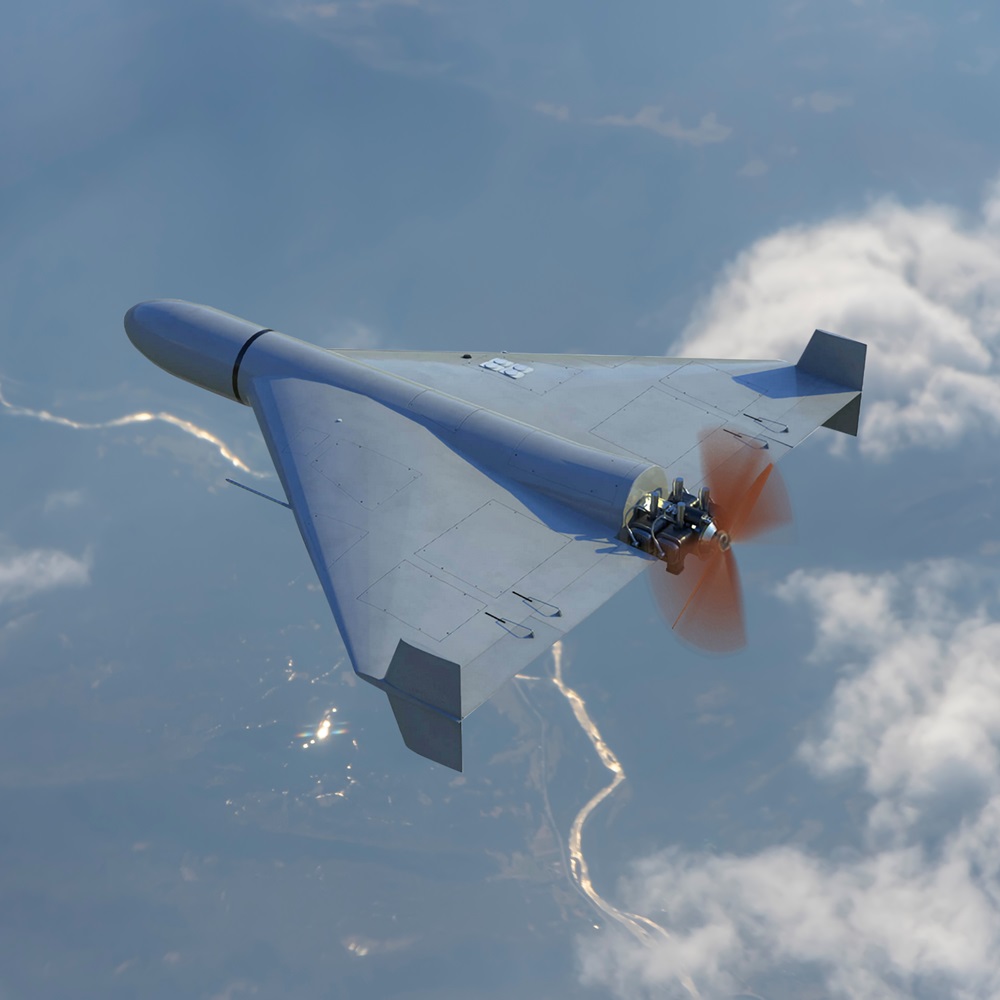
Military Production in Russia: Before and After the Start ofthe War With Ukraine. To What Extent has it Increased and how hasThis Been Achieved?
by Julian Cooper
한국어로 읽기Leer en españolIn Deutsch lesen Gap اقرأ بالعربيةLire en françaisЧитать на русском To What Extent has it Increased and how has This Been Achieved? Abstract In February 2022, Russia began a full-scale invasion of Ukraine that has to date continued for more than two years. In response, Western countries imposed increasingly strict sanctions. The Russian Armed Forces lost a significant quantity of armaments and by the autumn of 2022, the government faced the challenge of increasing sharply the production of weapons and munitions. Julian Cooper analyses the extent to which the challenge has been met, reviewing the available quantitative evidence in detail. His analysis confirms that there have been significant increases in the output of systems and munitions used extensively in the war. The author explores the means by which defence industry output has been increased and draws conclusions as to the nature of the Russian economic system and the institutional legacies of Soviet times. On 24 February 2022, Russia launched a ‘special military operation’ against Ukraine and this has been ongoing for over two years. In response, Western countries imposed increasingly severe sanctions in an attempt to constrain the development of the Russian economy and limit the ability of its industry to produce weapons. This is done by restricting access to imported high technology and dual-use goods, production equipment, components and materials. It soon became evident that the invasion had not gone according to Russia’s original expectations of a rapid operation. Instead, a protracted conflict developed with heavy losses in both human and material terms for both sides. The Russian Armed Forces lost a significant quantity of armaments, in particular tanks and armoured vehicles, artillery and air defence systems, fixed-wing aircraft and helicopters. By the autumn of 2022, the Russian government faced the challenge of increasing sharply the production of weapons and munitions vital to the successful completion of the operation which, though not acknowledged in Russia, had become a war. This article explores the extent to which Russia has been able to meet this challenge at a time when its defence industry is experiencing sanctions and a range of economic constrains, not least a shortage of labour exacerbated by a partial mobilisation of personnel to serve in the armed forces. The article comprises four parts. The first looks at the methods of measuring the output of the Russian defence industry. The second examines the available quantitative data in physical terms. The third section seeks to explain how it has been possible for Russia to increase significantly the output of some types of weapons and munitions in a relatively brief period of time. Finally, some conclusions are drawn as to Russia’s ability to adapt its defence industry to wartime conditions, and prospects for the future. Measuring the Output of the Russian Defence Industry In Soviet times, the production of weapons, munitions and other military-related goods was shrouded in almost total secrecy. This relaxed to some extent after the end of the Soviet Union, but to this day, Russia’s official statistical agency, the Federal Service for State Statistics, generally known as Rosstat, does not openly publish data on the military output of the country’s defence industry. However, this secrecy has its limits as the defence minister and other senior officials of the Russian Ministry of Defence (MoD), in particular the deputy minister responsible for arms procurement, do release data on the output of some weapon systems, annual targets for the state defence order, and information on implementation, as will become clear later in this article. However, since 2014 and the annexation of Crimea, the volume and level of detail have diminished and even more so since February 2022. In addition, President Vladimir Putin, the prime minister, the minister for industry and his deputies also reveal details from time to time, as do the heads and other leaders of corporate structures producing military goods, such as Rostekh, Roscosmos, the United Aircraft Corporation (OAK) and the United Shipbuilding Corporation (OSK). A study of the data covering many years indicates that on the whole, the data released is reliable, with misrepresentation but no evident falsification. But one has to be alert to changes in the definitions employed, in particular whether the figures given apply to the output of new systems only, or to the total procurement of new, modernised and repaired older systems, an issue that has become significant since the Russian invasion of Ukraine. Earlier works of the present author have sometimes focused on detailed analyses of quantitative data of this nature.1 In recent times, some observers have questioned the reliability of this type of information. An April 2024 CSIS report on Russia’s defence industry declared that, ‘While … the official data and statements from the Russian MOD are most likely exaggerated, and therefore should be taken with a grain of salt, they demonstrate the Kremlin has placed renewed emphasis on strengthening the domestic defence industrial sector’.2 While exaggerated statements are indeed often made, the degree of scepticism expressed is overstated in relation to the data. Undoubtedly, great care is needed in its analysis, but it still provides, as accepted by the authors of the CSIS report, a good overall picture of the general trend of development of military production. There is also an additional check on this, namely Rosstat’s regular reports of changes in the output of the manufacturing industry in rouble terms.3 Again, careful analysis is required with an informed knowledge of the industrial classification used, but the overall trends revealed reflect those provided by the quantitative data available from other sources. At a time when quantitative data on various aspects of the Russia economy is being strictly limited by the Russian authorities, not least on budget spending and foreign trade flows, it is better to have imperfect and fragmentary data than none at all. Measuring the Output of Military Goods in Physical Terms Reports of the output of military goods often appear in Russian media, though the data tends to be fragmented, often lacking precise definition and timescales. There are also similar reports of the output of civilian goods manufactured by defence industry companies. This section examines this evidence in detail from 2019, three years before the start of the Ukraine war, until the end of 2023, and plans for 2024, paying particular attention to the types of military goods that have played a significant role in the current combat. Every year in December, the Russian MoD reports on some of the new weapons procured during the year and plans for the following year. This evidence is presented in Table 1, in the Appendix section at the end of this article. From the table, it can be seen that since 2020, plans for the deployment of new intercontinental ballistic missile (ICBMs) have not been fully implemented, probably because of the failure to develop the Sarmat heavy missile to a point when it can be put into service. The acquisition of Borei-class strategic nuclear submarines has proceeded fairly smoothly and modernised/new Tu-160 strategic bombers are gradually entering service. These developments and the MoD’s procedure for reporting plans and outcomes leave no doubt that in Russia, the development and procurement of strategic nuclear systems remains the highest priority regardless of the war. Taking into account the military technology priorities of the war, it is probably best to consider the production of weapons on a sector-by-sector basis. Clearly, the war has given rise to a greatly increased demand for equipment and munitions for the ground forces, some types of combat aircraft and UAVs, certain types of missiles, air defence systems and electronic warfare systems. Demand for new naval vessels has been less urgent with the exception of nuclear submarines. Aircraft For the aircraft industry, the trend is clear. The production of some types of planes and helicopters found to be of value in the war has increased. However, data from 2020 onwards refers to both new aircraft and modernised older ones, making it very difficult to establish the number of the former. In the case of combat systems, the evidence indicates increased production of a few models, for example the Su-35S and Su-34, considered vital to the war and in one case, the Su-57, considered important for status reasons. Table 2 summarises the available data for 2019–23. The Su-57 is Russia’s first ‘fifth’ generation aircraft, although all serially built examples so far have an engine that is not really one of that status. It is a matter of great pride to the Russian leadership, although it has played only a modest role in the war. In the view of a leading Russian military specialist, the very costly and complex fifth generation aircraft ‘as yet are still absolutely not suited to real combat use …. The loss of a fifth-generation plane is on the one hand, a large financial loss, and a significant reputational loss’.4 Helicopters As for helicopters, it is very difficult to establish the number built for use by the armed forces in recent years. The building of civilian helicopters has been quite seriously affected by sanctions but this appears not to be the case for the main combat systems, the Ka-52/52M and the Mi-28NM. The Russian Air Force signed a contract for the former in August 2021, with 15 to be delivered in 2022 and another 15 in 2023. A new contract for an undisclosed number was signed in the summer of 2022. In July 2023, then Russian Defence Minister Sergei Shoigu said that the volume of production of the Ka-52/52M had doubled compared with the preceding year, suggesting there were 30 planned for 2023.5 Serial production of the Mi-28NM started in 2020 and in that year a contract was signed for 98 units under the state armament programme to 2027.6 Shoigu also said in July 2023 that production of the Mi-28NM had increased three-fold from 2022, which in the view of a leading specialist on Russian aviation, Piotr Butowski, probably meant a target of up to 50 in 2023.7 One analyst concluded after a detailed study of the evidence that the armed forces received a total of 110 helicopters in 2022 against a plan for the year of 71, and actual deliveries of 48 in 2021, with a possible total of up to 125 units supplied in 2023.8 UAVs The evidence for the number of drones built is not easy to interpret as it depends on the type and scale of UAV that is being counted. There is no doubt that the number produced has increased sharply since 2020 when less than 1,000 were made. It appears that in the year 2022 the number increased to only a modest extent but then surged in 2023, reaching more than 20,000.9 This total almost certainly excludes the small first-person-view (FPV) type drones, now in large-scale use at the frontline on both sides and being assembled at quite a few locations in Russia, with components mainly imported from China. The two main types of Russian UAV that have had an impact on the battlefield are the Orlan family of reconnaissance drones, developed and built by the Special Technology Centre in St Petersburg, and the Lancet loitering system of Zala Aero, part of the Kalashnikov Concern. Both companies have been active in acquiring a range of Western components for their UAVs. The widely used Orlan-10, for example, has a small petrol engine built by Saito, a Japanese company.10 Naval Equipment The production of new naval equipment has not been a priority during the war apart from the building of nuclear submarines, the output of which is shown in Table 1. The handover of new naval vessels has been somewhat erratic, with the tendency to bunch in certain years. This has been partly because the building of surface ships in recent years has been disrupted to some extent by problems of engine supply. The building of Project 11356 frigates was abandoned when Ukraine stopped supplying power units. Ukrainian engines were also to be fitted to Project 22350 frigates, but in this case Russia managed to replace the engine and reduction gearing, permitting the hand over in 2023 of the Admiral Golovko.11 Project 21631 small missile ships originally had German engines but the supply ended in 2014. It was first decided that a Chinese engine would be used instead, but it was not suited for a naval ship, resulting in long delays before a domestically built alternative was developed.12 Similar problems appeared for Project 22800 Karakurt-class small missile ships, and at one point it appeared that they could end up with Chinese power units. However, those proved not to be adequate and a Russian replacement was found but not before there were delays in completing ships under construction.13 Project 22160 patrol boats were originally designed to have German MAN diesel engines and the first boat handed over in 2018 was fitted with one, but later ones, with some delay, had new Russian-built power units.14 Ground Forces Munitions Turning to the production of weapons and munitions for the ground forces, the availability of reliable quantitative evidence is more problematic, as it is often fragmentary, lacking definition and with growth figures between periods without adequate specification of dates. Table 3 summarises the available evidence. Tanks The data on the output of tanks has not been easy to assess. There are three categories: newly built ones, in recent times the T-90 and a few T-14 Armata; modernised older tanks, T-72 and T-80; and old tanks removed from storage, the T-54, which have undergone what the Russian MoD calls ‘capital repair’. Since the start of the war in 2022, any total given by the MoD is an aggregate figure covering all three. Main tank producer Uralvagonzavod (UVZ) builds the T-90 and Armata, plus the modernised T-72, while modernised T-80 tanks are built by Omsktransmash, an affiliate of the UVZ holding company. Work on the renovation of older tanks is undertaken by Russian tank repair works, the output of which is hardly ever revealed.15 The Russian MoD said that in 2021, its ground forces were to receive more than 240 new and modernised T-72B3M, T-80BVM and T-90M Proryv tanks.16 The number of new T-90M was reported to be set at 70 units, with the remaining 170 tanks being modernised.17 This provides a base for assessing more recent data. In 2023, a total of 1,530 new, modernised and refurbished tanks were produced, which, according to the MoD, is a 3.6 times increase from the preceding year. This suggests an output of about 425 units in 2022, 1.8 times the 240 of 2021. Interestingly, in March 2023, deputy chair of the Russian Security Council, Dmitry Medvedev, declared that 1,500 tanks would be made in that year,18 followed a few days later by Putin, who said over 1,600 new and modernised tanks would be produced.19 Observers were quick to note that the total must include older tanks withdrawn from reserves, but were puzzled as to how many new tanks would be built. Military specialist Roman Skomorokhov, in a review of potential industrial manufacturers of tanks, concluded that in the short term, UVZ was the only manufacturer able to build new tanks, with a possible output of 500–600 a year at best.20 It is unlikely that UVZ has managed to build such a large number of tanks, especially when part of its production shop for tanks is being used to build small volumes of complex Armata systems. According to one anonymous source within Rostekh, the capacity of UVZ in October 2022 was 200–250 tanks.21 The work of Omsktransmash building modernised T-80s must be taken into account as well. In 2017, the factory received a contract to modernise 62 units of T-80BV to T-80BVM level and delivered 31 in 2018 and another 31 in 2019.22 In August 2020, there was a new contract for the modernisation of more than 50 T-80BVM tanks but no information has been revealed on its completion date or on the scale of additional contracts.23 However, in the autumn of 2023, Aleksandr Potapov, general director of UVZ, to which the Omsktransmash factory belongs, revealed that the MoD had called for the resumption of the serial production of T-80 tanks from scratch, an activity not undertaken since the 1970s.24 It is not known whether that has been implemented. Meanwhile, there have been several reports of the delivery to the front of batches of modernised T-80BVM. This suggests that in 2023, Omsktransmash and UVZ may have produced around 350 new and modernised tanks out of the total output of 1,530, meaning around 1,200 old tanks have undergone capital repair. This accords well with an IISS estimate of 1,180–1,280 units based on it monitoring the work of storage bases in Russia using commercial overhead imagery.25 As for the new T-14 Armata, Aleksei Krivoruchko, MoD deputy defence minister, said in August 2021 that the army would get 20 of them by the end of the year, with serial production set to start in 2022.26 There were reports in 2023 that it had been sent to the front to see action but there was little visible evidence to support this.27 There was speculation that it was found too complex and costly to risk using in real combat conditions and this was confirmed in early 2024 by the general-director of Rostekh, Sergei Chemezov, who said that it was not being used in the ‘special military operation’ zone because of its high cost and noted that it was cheaper for the army to buy T-90 tanks.28 Not surprisingly, this generated some scathing press comment about Russia’s preference for costly ‘parades’ and ‘white elephant’ tanks of no use in combat.29 Armoured Vehicles There are similar difficulties in assessing the output of armoured vehicles. The term usually covers infantry fighting vehicles (BMP) and armoured personnel carriers (BTR). However, sometimes it is extended to include armoured vehicles of the airborne forces like the BMD-4M and older Soviet systems such as the MT-LB. Many of these vehicles have been accumulated in the reserve stores of the MoD. Before the war, the annual output of armoured vehicles appears to have been modest, but it was stepped up quite rapidly in the second half of 2022 and more intensively in 2023, when, according to Shoigu, a total of 2,518 units of new, modernised and repaired machines was acquired. The new ones will have been BMP-3s built by the Kurganmashzavod company, which also produces modernised BMP-2 and now batches of repaired BMP-3. From the late summer of 2022, the factory has been working a six-day week in 12-hour shifts. It claimed that in the first half of 2023, it produced 95% of the total armoured vehicle output achieved in 2022 and planned to increase output by another 30% in the second half of 2023.30 New BTR-82A armoured personnel carriers are produced by the Arzamas Machine-building Factory of the Voennaya-Promyshlennaya Kompaniya (also known as Military Industrial Company). The earlier model, the BTR-80, is modernised by a repair factory to become the BTR-82AM. In 2020, the MoD ordered a total of at least 460 of both types, including 130 new BTR-82A. In addition, it planned to repair and refurbish 330 old BTR-80 units from reserves.31 In 2021, another order was made for more than 300 BTR-82A and BTR-82AM.32 In late 2021, it was announced that in spring 2022, state testing was to begin for the Bumerang armoured transporter first seen in 2015. It is not known if this happened, but in March 2023, there were sightings of a few Bumerang being transported to near the warzone. However, there were no reports of its use in combat and it may well be that this new system, like the Armata tank, was considered to be too complex and costly to be put into service in the war.33 Artillery Unfortunately, detailed information on the volume of production of artillery systems is not available. Occasionally, the MoD does report a total figure for missile systems and artillery (raketnye kompleksy i artilleriya). In 2018, a total of more than 120 units was reported, which included Kornet and Khrizantema-SP anti-tanks systems, Msta-SM howitzers, Iskander-M, and Kalibr and Oniks cruise missiles. In 2020, the number increased to 551 units and in 2023, showed a very significant increase to more than 4,250 units.34 There are large stocks of old artillery systems so this total probably includes many that were restored for use during the year. The production of artillery is undertaken by several enterprises, with the largest producers consisting of: Perm Motovilikhinskiye Zavody, making a range of systems including 152-mm howitzers Msta-B and D-20, and 120-mm self-propelled systems Nona-S, Nona-SVK, Vena and the 240-mm Tyul’pan; and Volgograd Titan-Barrikady, making launch systems for the Iskander-M and the Bereg and Bastion shore naval artillery complexes.35 In addition, there is the Ekaterinburg Factory No. 9 imeni Kalinina, under Rostekh, producing barrel artillery systems, including the Soviet-era towed D-30A howitzer and guns for T-72 and T-90 tanks; Uraltransmash making the Msta-S 152-mm self-propelled howitzer widely used in the war; and UVZ making the 152-mm self-propelled Malva, developed by the Burevestnik Central Scientific Research Institute.36 Munitions and Missiles A final category of systems produced for the armed forces is munitions and missiles, sometimes summarised in Russian sources as means of destruction (sredstva porazheniya). This includes explosives, cartridges for small arms, artillery shells of various calibres, bombs, mines, missiles for multiple rocket launchers (MLRS), anti-tank systems, air defence systems and operational systems such as the Iskander-M. Given the wide range of products made by different branches of the defence industry, assembling data is extremely difficult, but munitions are clearly of such importance for Russia’s war effort that the topic merits treatment in some detail. To begin, it is probably easiest to start with the branch usually termed in Russian as munitions and special chemicals (boepripasy i spetskhimiya), which produces cartridges, shells, explosives, fuel for missiles and other chemicals. The munitions industry in Russia has been problematic since 1992. During the 1990s and early 2000s, there was little investment in the sector, and production volumes shrank rapidly, resulting in some enterprises closing down. Production equipment aged steadily, and many experienced personnel left the sector. A fundamental problem has been the vast spare capacities maintained in order to rapidly expand production in the event of a war. This appears to have been the case until recent times. According to the specialist on defence matters, Viktor Murakhovskii, more than 70% of capacity was for mobilisation. If state support for this was inadequate, enterprises would become loss making.37 For this reason, quite a few munitions plants were made so-called federal ‘treasury’ (kazennyi) enterprises, with guaranteed budget support regardless of their economic performance, thereby enabling them to keep reserve capacities. Many munitions enterprises are under the state corporation Rostekh and its holding Tekhnologiya Mashinostroeniya (Tekhmash), with its management company Tekhnodinamika. In late 2021, Rostekh had more than 30 enterprises and institutes engaged in the development and production of a wide range of munitions.38 In late 2022 and early 2023, there was mounting evidence of official concern that the domestic munitions industry was not adequately meeting the demand of the armed forces engaged in the war. Then Minister of Trade and Industry and Deputy Prime Minister Denis Manturov acknowledged that for a long time the munitions branch of the defence industry had been producing in limited quantities simply to top up stocks. He claimed, however, that in 2022, the volume of output of some munitions had increased from three to 10 times but more needed to be done.39 This prompted a number of military journalists to openly discuss the fact that very high rates of use of some munitions, notably those for artillery systems, had run down stocks necessitating prompt action to maintain supplies.40 At the end of December 2022, there was some decisive action to bring order to the munitions industry. A presidential edict was issued for 14 of the most prominent companies of the branch, including several treasury enterprises, to be transferred to the Rostekh state corporation for conversion into joint stock companies with 100% federal ownership. This was followed by a government order for its implementation. The list included the Kazan, Perm and Tambov (Kotovsk) powder factories and leading munitions producers such as the Kazan factory of precision machine building, Samara Kommunar works, Dzerzhinsk Zavod imeni Sverdlova and Avangard of Sterlitamak, Bashkortostan.41 The aim was clearly to improve their management and modernise them as quickly as possible, drawing on the considerable experience of Rostekh in turning round failing enterprises. Whether this move will enhance the industry’s ability to meet the urgent needs of the war remains to be seen. In May 2023, it was reported that Tekhmash had more than 50 enterprises, suggesting a quite sizeable expansion to meet increased wartime needs.42 From about September 2022, there were reports of factories switching to multi-shift work and hiring additional workers including at the Perm powder works. It is probably significant that soon after, it was also reported that the military production division (the Special Design Bureau (SKB)) of the nearby Motovilikhinskie Zavody, which builds MLRS, was doing the same.43 A major concern has been the production of large-calibre artillery shells, in particular 152 and 122mm shells for artillery systems, 125 and 115mm for tank guns and 120 and 82mm for mortars. The production of artillery shells involves division of labour, with some enterprises producing explosives or shell casings and others doing both. Leading producers include Dzerzhinsk Zavod imeni Ya M Sverdlova, with a branch in Biisk united with Biissk Oleumnyi Zavod. The factory is a basic producer of large calibre fragmentation munitions and also a leading producer of HMX (octogen) and hexogen. The Kopeisk Zavod Plastmass builds munitions as its basic activity, while the casings for them are made by Kirov Zavod Sel’mash, a large multi-product enterprise of Tekhnodinamika. Some enterprises involved in the production of large-calibre shells underwent enlargement in recent years. The Verkhneturinskii Mekhanicheskii Zavod (VTMZ) of Tekhnodinamika built a new shop to make artillery shell casings for field and tank artillery. It was estimated that it would result in a 150% increase in production for the state defence order after the shops were in full operation by the end of 2021.44 Kopeisk Zavod Plastmass created a new automated shop for the assembly of 100 to 152mm munitions for tank, field and ship guns before the war started, which was designed to secure a 150% increase in output. The plan was for the shop to be completed and put into action by 2023.45 Both these cases raise an interesting question: did Rostekh receive signals prior to the war that some expansion of capacities was desirable? Another type in high demand has been missiles for MLRS. The main developer and manufacturer of MLRS has long been the Tula NPO Splav imeni A N Ganicheva, which also produces missiles for them. Its products include the Grad, Uragan and Smerch systems and modified variants, the Tornado-G and Tornado-S. In July 2020, the CEO of Rostekh opened a new shop at Splav for the production of munitions for MLRS, but reports did not indicate its capacity.46 In early 2024, the factory was visited by Defence Minister Shoigu and it was reported that new capacity introduced into service in 2023 had made possible a fourfold increase in the production of munitions for MLRS.47 Another class of munitions is those for the mobile ballistic missile system Iskander-M (9K720). This operational–tactical system, which has a range of warheads including a nuclear option, was developed by the Kolomna Scientific Production Corporation Design Bureau of Machine Building. Missiles for it are developed by the Ekaterinburg OKB Novator and produced by the Votkinsk Machine-Building Factory. Sources did not indicate the volume of production of the Kalibr sea-launched cruise missile, also developed by OKB Novator. Russia has a distinct class of equipment for the Radiation, Chemical and Biological Defence Troops (RChBD). In 2023, this amounted to 150 units of equipment, including the TOS-1A Solntsepek heavy thermobaric rocket launch system produced by Omsktransmash.48 When visiting the factory in April 2024, Shoigu was informed that the volume produced in 2023 had grown by 2.5 times by increasing capacity and round-the-clock work.49 According to Shoigu speaking in February 2024, the volume of production of munitions for it has been increased by 12 times.50 The producer has not been identified. In April 2024, a new longer-range system, the TOS-3 Drakon, was reported to be on the eve of final testing prior to serial production.51 Another class of munitions often used in Ukraine are bombs launched from aircraft. Data is lacking on the volume produced but developments are sometimes discussed in the media, including the work of certain enterprises, although their identity is not always revealed. In March 2024, Shoigu visited enterprises in Nizhegorodsk Oblast producing bombs and shells for artillery and tanks. One factory, clearly distinguishable as Dzerzhinsk Zavod imeni Y M Sverdlova, a very large producer of shells and bombs, was producing the heavy aviation bomb FAB-500 and reported significant increases in the scale of output, a doubling of the FAB-1500 output, and, in February 2024, the start of ‘mass production’ of the three-tonne high-explosive FAB-3000 which dates back to Soviet times and is intended for destroying highly protected targets, both industrial and military.52 The Dzerzhinsk factory is also bringing back into use from reserves the most powerful of all Soviet/Russian conventional artillery shells, the Tyul’pan 240-mm mortar, in use in the war against very heavily fortified structures.53 It was claimed in March 2024 that the enterprise, which in 2023 was taken into Rostekh, had over the past year achieved a fivefold increase in the volume of production of artillery shells and aviation bombs by bringing conserved capacities back into use and installing new equipment.54 Civilian Goods Finally, a brief look is taken at the output of civil and dual-use goods of importance to the economy during the war, some manufactured by companies of the defence industry. Table 4 presents evidence of the changing output of some important civilian goods from 2019–23. The table shows the impact of sanctions in 2022 and 2023 but also perhaps in some cases the fact that priority for military production has caused diminished focus on civil goods or, in the case of rail freight wagons built by UVZ, reduced output because of the transfer of some capacity to basic military goods, tanks and armoured vehicles. The building of civilian passenger aircraft has been very seriously affected by sanctions which have deprived almost all aircraft that were built earlier of their power units. To some extent, the same applies to helicopter and ship production. Sanctions probably also account for the reduced output of trucks, excavators and also integrated circuits, the production of which is to some extent dependent on imported materials and gases. But the machine tool industry that was already reviving after the sanctions imposed in 2014 has shown new growth, with increased output of both metal-cutting and metal-forming machines in both 2022 and 2023. Russia remains dependent to a significant extent on imported machine tools, but now these are supplied mainly by Chinese companies rather than those of Europe, Japan, South Korea, Taiwan or the US. In 2021, 69% of imported metal-cutting and - forming machine tools came from ‘unfriendly’ countries, which dropped to 39% in 2022, while China’s share increased from 22% to 46%.55 Paths to Increasing the Output of Military Hardware The data assembled raises an interesting question: how has it been possible for the Russian defence industry to increase the output of some weapons and munitions to a significant extent in a relatively brief period of time? This is a topic that requires additional research but a number of paths can be identified. One factor has clearly been the policy turn in the autumn of 2022 to change the institutions responsible for leading and managing the work of the defence industry. Before that, fulfilling the state defence order for new weapons and the modernisation and repair of older systems had been the responsibility of the Ministry of Industry and Trade, working with Rostekh, Rosatom, Roskosmos and other corporate bodies involved in military work, and with the MoD as the principal customer, actively monitoring the implementation of contracts. Overall responsibility for policy was in the hands of the Military-Industrial Commission (VPK) with the president of Russia as its chair. Since the war, there have been significant changes. In 2022, there was not a single VPK meeting with Putin as chair; indeed, he has not chaired a VPK meeting since 2017. Instead, Putin had three meetings with representatives of the defence industry, the first in September 2022 with a number of enterprise leaders, the second in December of the same year, and the third in May 2024 with some enterprise leaders and new ministers.56 The focus of the VPK has always been the state defence order for weapons, not other aspects of supplies to the armed forces, such as uniforms, food, fuel, lubricants and medicines. With the adoption of partial mobilisation, it quickly became clear that the rapid build up of deliveries of these non-weapon items presented a serious challenge. This almost certainly accounts for the decision by Putin in October 2022 to create a new structure to ensure that all necessary supplies for the special military operation were produced and delivered. A Coordination Council of the government was formed with the aim of meeting needs appearing in the pursuit of the war, including the delivery and repair of armaments, uniforms, medical–sanitary provision, repair and reconstruction work and logistics. The council is chaired by the prime minister and its participants are representatives of all the main ‘power’ ministries – MoD, Ministry of Internal Affairs, Ministry of Emergency Situations, Rosgvard, Federal Security Service, Foreign Intelligence Service, the Main Directorate of Special Programmes (responsible for ensuring the survival of the government in the event of war by creating and managing secure bunkers, so-called ‘special objects’), and some other federal ministries.57 The Coordination Council met six times in 2022, nine times in 2023 and once in the first two months of 2024. It discussed a wide range of issues relating to the production and delivery of equipment to the forces engaged in the war with the participation of the relevant government agencies and the leaders of departments of the government’s own central office.58 It appears to be a body that monitors production and deliveries and decides on prompt action if problems are identified. Another official monitoring the work of the defence industry and the implementation of the state defence order is Dmitrii Medvedev, deputy chairman of the Security Council and first deputy chair of the VPK. He was appointed to the post by Putin in December 2022 with the job of leading a working group to monitor the production and delivery of armaments to the armed forces. There have been visits by Medvedev and sometimes the working group to quite a few defence enterprises, including UVZ and Omsktransmash, to examine tank building. He has also visited producers of munitions and missile and in March 2024, visited Tambovskii Porokhovoi Zavod (Tambov Gunpowder Plant), a major producer of explosives, where the working group discussed investment plans.59 Given that Medvedev is independent of the government and the MoD, it is possible that Putin felt the need for another set of eyes and ears to check on both and report directly to himself. Not surprisingly, the monitoring of arms production is also a concern of the MoD and its minister, Shoigu (replaced in mid-May 2024), who has quite often visited companies considered vital to the war and national security more generally. In early 2024, he visited the Ekaterinburg Uraltransmash works for the production of artillery systems, where he sharply criticised the chief designer for delays in bringing new models into production.60 He also visited the Dubna Raduga design bureau of the Tactical Missile Corporation (KTRV) responsible for a range of air-launched cruise missiles. There, he called for longer-range missiles and increased production.61 In March 2024, it was clear Russia was concerned about the production of munitions. As noted above, Shoigu visited the Dzerzhinsk Zavod imeni Sverdlova and shortly after, as reported by the MoD, the ‘defence enterprises in Altai krai’.62 As is often the case, the local media were more forthcoming. They reported that in the same month, he also visited Biisk Oleumnyi Zavod, which produces explosives and is affiliated to the Dzherzhinsk works, and a major producer of munitions, Biisk Sibpribormash, a large volume supplier of a range of shells, bombs, cartridges and missiles for MLRS. At the former, he made clear his dissatisfaction with its rate of building new production facilities to double its capacity, and at the latter, he was informed that the volume of output had increased 3.5 times from 2022, about 300 new machine tools had been installed and an additional 1,600 workers taken on.63 In 2023, his visits included the Arsen’ev Progress works to check on the production of Ka-52M combat helicopters.64 While there has been some stability in the staffing of leading posts in the defence industry, the same cannot be said of the MoD in relation to logistics and securing the delivery of equipment and munitions to the front. Since the war started in February 2022, there have been four different deputy ministers for logistics, or ‘material and technical supply’ as it is known in Russia. First there was Dmitrii Bulgakov, in post for 12 years until dismissed in September 2022. He was replaced by Mikhail Mizintsev, the chief of the National Management Centre for Defence, but he resigned in April 2023 and was replaced by Aleksei Kuz’mentsev, appointed from the troops of the National Guard but with a background in logistics. He was in post for less than a year and in March 2024 was replaced by Andrei Bulygin, whose MoD career from 2011 was in logistics.65 When Russia decided to boost the output of certain weapons and munitions, some companies rapidly introduced multi-shift work and under the mobilisation conditions imposed on the defence sector, workers had little choice but to adapt to more demanding working regimes, often working weekends or during public holidays. At the end of 2022, workers in large enterprises of the defence industry of the Sverdlovsk region were working a six-day work week, of up to 12 hours per day, compensated by increased pay.66 This policy option is advantageous in that it probably required modest changes in the production equipment installed. It also appears that in quite a few cases, output was also increased by bringing into use spare capacities and making more intensive use of production shops. In addition, some civilian enterprises were engaged in supplying components to defence companies: according to Manturov, 850 companies are now participating in this.67 A path not often discussed openly but possibly very important in some branches of the defence industry is the bringing into operation of reserve mobilisation capacities. As this author has discussed in detail in a 2016 publication,68 Russia inherited from the Soviet Union a very elaborate system of mobilisation preparation in the event of war with the creation and maintenance of large reserve capacities at many industrial enterprises, stockpiles of materials and components and state mobilisation reserves of weapons, munitions, production equipment, fuel and other goods considered vital in a war or other national emergency. The system underwent reform in the 1990s and 2000s, to some extent reducing its scale and focusing it on a more limited set of defence-related companies considered essential to the country’s military capability. It has remained shrouded in secrecy. The evidence suggests that the enterprises most likely to retain mobilisation capacities were those producing munitions, missiles, ground forces equipment and certain types of aircraft and air defence systems. During the war there have been occasional explicit references to bringing mobilisation capacities into operation. In December 2022, at a meeting of the Coordination Council, Premier Mikhail Mishustin noted that during the previous two months, the government had adopted a number of normative acts for the introduction of ‘special measures’ in the economy for securing a steady flow of deliveries relating to the special military operation. They had opened up the possibility for the lead executors of the state defence order to use the entire production and technological potential, ‘including the partial or full de-conservation of mobilisation capacities and objects’.69 Another path of increasing the volume of deliveries to the armed forces is probably the release of so-called ‘emergency reserves’ (neprikosnovennykh zapasov). These reserves, part of the general mobilisation system, include many goods considered vital in a war or emergency, including foodstuffs, medicines, fuel and materials, but also materiel and systems of armament for the armed forces. The nature and volume of these reserves, managed by the Federal Agency for State Reserves, has always been a matter of extremely strict secrecy and those relating to the armed forces are rarely discussed openly.70 An exception was in 2022 when an issue of the MoD journal Vooruzhenie i ekonomika published an article on the role of the reserves, making it clear that they include stocks of weapons and other military equipment created in peacetime in order to secure the mobilisation and strategic deployment of the armed forces, especially during the early period of a war.71 It is stressed that older weapons, though often less effective than new ones, can still have military value, so keeping them in reserve, plus having munitions for them, remains important. The authors suggested that the funding of emergency reserves of armament and other material means should be at least one third of the amount of funding devoted to procurement under the state defence order.72 Interestingly, a January 2024 Ukrainian intelligence assessment of Russian missile and artillery ammunition production noted that ‘they are now trying to maintain a certain strategic reserve. As a rule this is about 30%’.73 After initial serious setbacks when the expected rapid success of the invasion of Ukraine failed to materialise, and once the Ukrainian counter-offensive also did not bring decisive results, Russia proved to be resourceful in adapting to a different form of warfare, attritional rather than a war of manoeuvre. Indeed, as has been argued by Alex Vershinin, Russia has probably adapted to a protracted war of attrition more successfully than Ukraine and its NATO allies.74 The Soviet Union produced, in the main, relatively simple, low-cost but rugged equipment in large quantities and maintained substantial stocks in the event of war. The Soviet leadership, civil and military, was well aware that Western countries, especially the US, produced more costly, higher technology conventional weapons. This thinking lived on in post-communist Russia and stocks were retained though on a smaller scale. The production of new weapons for a long time was focused on upgrades of Soviet systems but from about 2010, attempts to develop some new, higher technology systems began to increase and the country’s political, military and industrial leaders clearly took pride in these very expensive new developments as symbols of Russia’s regained status as a great power. At the same time, as discussed above, the basic elements of the Soviet system of mobilisation to prepare for war were also kept intact though reduced in scale. In Vershinin’s words, ‘Wars of attrition are won by economies enabling mass mobilisation of militaries via their industrial sectors. Armies expand rapidly during such a conflict, requiring massive quantities of armoured vehicles, drones, electronic products, and other combat equipment. Because high-end weaponry is very complex to manufacture and consumes vast resources, a high-low mixture of forces and weapons is imperative in order to win’.75 In May 2024, a new Russia government was approved, with significant changes in personnel concerned with defence and arms production. Sergei Shoigu was appointed secretary of the Security Council and Putin’s deputy leader of the Military-Industrial Commission, replaced as defence minister by Andrei Belousov, previously first deputy prime minister and a career economist with no direct experience of the military. He was replaced as first deputy premier by Denis Manturov, previously industry minister overseeing the defence industry; this position is now occupied by Anton Alikhanov, previously governor of the Kaliningrad Oblast. Putin gains two assistants in the Presidential Administration responsible for oversight of the defence industry: Aleksey Dyumin, previously governor of the Tula region, where the major concentration of defence industry companies is; and Nikolai Patrushev, formerly Security Council secretary, who will monitor the shipbuilding industry.76 Dyumin has been appointed to both the Coordination Council and the VPK.77 These changes indicate a determination to maintain the war effort, spend the military budget in a cost-effective manner, and ensure that needed weapons and munitions are produced and delivered to the forces in an effective manner. This is a government for a protracted war of attrition. Conclusion Since the start of the war, Western perceptions of Russia’s capabilities have undergone gradual change. At first there was much talk of military incompetence, an economy likely to falter and perhaps eventually collapse as sanctions mounted, and armed forces rapidly losing equipment and facing a munitions famine. But as Ukraine’s counter-offensive failed to make much progress and Russia’s forces dug in for a long war, attitudes began to change, and this was accompanied by an awareness that Russia’s economy was performing with greater vigour than expected, notwithstanding sanctions, achieving 3.6% growth in 2023.78 By the second half of that year, it also became apparent that weapons and munitions were still being supplied to Russian troops at the front in increasing quantity, a reality confirmed by the analysis of this article. There should be no surprise that Russia has come through the war as it has. After all, as Clifford Gaddy and Barry Ickes wrote in June 2014 during the first round of Russian combat with Ukraine, Russia is resilient: ‘Much is made of the alleged weakness of today’s Russian economy. This notion that the Russian economy is somehow fragile is the backbone of the sanctions argument. But inefficiency – which definitely does characterize Russia’s economy – is not the same as fragility. The very features of the Russian economy that account for its inefficiency and lack of competitiveness in the global economy are also its strengths in term of robustness to shocks’. Rather than considering the country as ‘a cockroach of an economy’, they conclude, ‘perhaps a more appropriate metaphor is Russia’s own Kalashnikov automatic rifle – low-tech and cheap but almost indestructible’.79 But there is an additional dimension to the Kalashnikov economy that merits serious attention: it is an economy that can be quickly mobilised to increase military production if the country’s leadership decides that is what is required. This is precisely what happened when Putin and the military leadership realised that there would not be a rapid end to the fighting. The defence industry and its main suppliers in other branches of the economy were very quickly switched to a wartime regime, which in Russian conditions was relatively easy, as most of the companies are state-owned and can readily be ordered to increase production, adopt multi-shift regimes of work, and enlarge capacities with budget funding guaranteed. The administrative structures for managing military production were adapted to the new conditions and the implementation of orders was very closely monitored. If inputs were found to be in short supply, reserve stocks were drawn down and imports secured by one means or another. However, contrary to a view often expressed by observers, Russia does not have a ‘war economy’. In the words of Vladimir Inozemtsev, it has an economy ‘adapted to war’ – the state-controlled defence sector operates within the framework of a functioning market economy.80 The government and the military focused efforts on military hardware considered essential to the conduct of the war, with lower priority for equipment required by the forces but not seen as being in urgent demand. The only real exception appears to have been the ongoing modernisation of the country’s strategic nuclear capability. In principle, there would seem to be no reason why this mobilised defence effort cannot be maintained for quite a long period of time. Budget allocations to the military have sharply increased in 2024, a large part of this additional funding probably going to the defence industry and investment in additional capacities identified as essential. While provisional intentions for 2025 and beyond suggest reduced funding for the military, as argued elsewhere, this could easily change in the federal budget for 2025–27, the drafting of which has started in July 2024.81 It is not without irony that advanced Western economies may now find the need to look closely at Russia to understand how to adapt to an age when a style of warfare typified by attrition may become more common than previously expected. Notes 1 See, for example, Julian Cooper, Russia’s State Armament Programme to 2020: A Quantitative Assessment of Implementation 2011-2015 (Kista: Swedish Defence Research Agency, 2016), , accessed 30 March 2024. 2 Maria Snegovaya et al., ‘Back in Stock? The State of Russia’s Defense Industry After Two Years of the War’, CSIS, April 2024, p. 6. 3 See Rosstat, ‘Indeksy proizvodstva po Rossiiskoi Federatsii. Godovye dannye s 2015 g’ [‘Indexes of Production for the Russian Federation. Annual Data from 2025’], renewed 31 January 2024, , accessed 1 August 2024. 4 Roman Skomorokhov, ‘Ubiitsy idut za Su-57 ili Kto na nas s pyatym?’ [‘Killers are Going After the Su-57 or who is Coming After us With the Fifth?’], Top War, 26 February 2024, , accessed 26 February 2024. 5 BMPD, ‘Modernizirovannyi boevoi vertolyot Ka-52M’ [‘Modernised Combat Helicopter Ka-52M’], 23 July 2023, , accessed 25 July 2023. 6 Nikolai Grishchenko, ‘Nachalos’ seriinoe proizvodstrvo udarnykh vertoletov Mi-28NM’ [‘Serial Production of Mi-28NM Attack Helicopters has Started’], rg.ru, 30 September 2020, , accessed 4 February 2024. 7 BMPD, ‘Modernizirovannyi boevoi vertolyot Ka-52M’ [‘Modernised Combat Helicopter Ka52M’]. 8 Dmitrii Levichev, ‘Skol’ko my vypuskaem boevykh samoletov i vertoletov’ [‘How Many Combat Aircraft and Helicopters do we Produce?’], proza.ru, 30 December 2023, , accessed 10 January 2024. 9 Arms Trade, ‘General armii Valerii Gerasimov provel brifing dlya inostrannykh voennykh attashe’ [‘Army General Valerii Gerasimov Gave a Briefing to Foreign Military Attachés’], 21 December 2023, , accessed 1 August 2024. 10 Nikolay Staykov, ‘Catching Spiders: Russia’s Drone Companies and Sanctions Evasion’, The Insider, 19 February 2024, , accessed 19 February 2024. It can easily be established that the Saito engines are of a type fitted to model aircraft and therefore not subject to sanctions. 11 BMPD, ‘Progress v proizvodstve korable’nykh gazoturbinnykh dvigatelei V Rossii’ [‘Progress in the Production of Ship Gas Turbine Engines in Russia’], 30 November 2020, , accessed 5 April 2024. 12 BMPD, ‘Sdacha malogo raketnogo korablya “Vyshnii volochek” zatyagivaetsya iz-za problem s Kitaiskim dvigatelyami’ [‘Hand Over of Small Missile Ships ‘Vyshnii Volochek’ is Being Delayed Because of Problems With the Chinese Engines’], 7 February 2018, , accessed 10 May 2024. 13 BMPD, ‘Eshche o probleme dizel’nykh dvigatelei dlya malykh raketnykh korablei proekta 22800’ [‘Once Again on the Problems of Diesel Engines for Small Missile Ships of Project 22800’], 22 October 2018, , accessed 10 May 2024. 14 Mil.Press Flotprom, ‘Aleksandr Karpov: Kolomenksii dizeli khorosho pokazali sebya na patrul’nom korable proekta 22160’ [‘Aleksandr Karpov: Kolomensk Diesels Have Shown Themselves Well on Project 22160 Patrol Boats’], 9 July 2019, , accessed 10 May 2024. 15 See Julian Cooper, ‘How Many Operational Tanks Does Russia Have and will the Number Soon Increase?’, unpublished paper, University of Birmingham, May 2023, , accessed 25 May 2024. 16 TASS, ‘Sukhoputnye Voiska VS RF V 2021 godu poluchat svyshe 240 noveishykh tankov’ [‘The Russian Armed Forces’ Ground Forces Will Receive Over 240 New Tanks in 2021’], 11 September 2021, , accessed 20 May 2024. 17 Ivan Potapov, ‘V Pol’she nazvali chislo tankov u Rossii’ [‘In Poland Number of Russian Tanks Given’], 27 September 2021, , accessed 18 May 2024. 18 SCRF, ‘Zamestitel’ predsedatel’ Soveta Bezopasnosti Rossiikoi Federatsii D. A. Medvedev otvetil na voprosy Rossiiskikh zhurnalistov i pol’zovatelei sotsial’noi seti “Vkontakte”’ [‘Deputy Chair of the Rf Security Council D a Medvedev Answered Questions of Russian Journalists and Users of the Social Network Vkontakte’], 25 March 2023, , accessed 20 March 2024; Dary’a Fedotova, ‘Vyyasnilsya sostav tankovoi armady, o kotoroi rasskazal Dmitrii Medevedev’ [‘Has Been Explained the Composition of the Tank Armada Which Medvedev Spoke of’], MK.ru, 23 March 2023, , accessed 10 March 2024. 19 Komsomol’skaya Pravda, ‘Putin zayavil namereniyakh Rossii proizvesti bolee 1,6 tysachi tankov za god’ [‘Putin Declared the Intention of Russia to Produce More Than 1,600 Tanks a Year’], 25 March 2024, , accessed 1 August 2024. 20 Roman Skomorokhov, ‘Kto dast’ Rossiiskoi armii bronyu’ [‘Who Gives Russia’s Army Armour’] Top War, 1 April 2023, , accessed 1 April 2023. 21 Georgii Aleksandrov, ‘Dulo dryan’ [‘The Barrel is Rubbish’], Novaya Gazeta, 31 October 2022, , accessed 1 November 2022. 22 Top War, ‘“Omsktransmash” polnost’yu vypolnil goskontrakt po postavke OBT T-80BVM’ [‘Omsktransmash Has Fully Met Stat Contract for Delivery of T-80BVM Main Battle Tank’], 12 December 2019, , accessed 19 December 2019. 23 Interfax.ru, ‘“Omsktransmash” po kontrakt s Minoborony RF modernizruet bolee T-80BV’ [‘Omsktransmash is Upgrading over 50 T-80BV Tanks under a Contract with the Russian Defence Ministry’], 26 August 2020, , accessed 10 March 2024. 24 Evgenii Kuprienko, ‘V Omske vozobnovyat proizvodstva tanka T-80’ [‘T-80 Tank Production to Resume in Omsk’], Superomsk, 11 September 2023, , accessed 10 March 2024. 25 Defence analysts Yohann Michel and Michael Gjerstad conclude that at current attrition rates, Russia will be able to sustain its assault on Ukraine for another two to three years or maybe even longer. See Yohann Michel and Michael Gjerstad, ‘Equipment Losses in Russia’s War on Ukraine Mount’, IISS, 12 February 2024, , accessed 12 February 2024. 26 Gazeta.ru, ‘V Rossiiskuyu armiyu do kontsa 2021 goda postupyat 20 tankov T-14 “Armata”’ [‘By End of the Year Russian Army Will Get 20 T-14 Armata Tanks’], 10 August 2021, , accessed 12 March 2024. 27 See, for example Top War, ‘Istochnik podtverdil primenenie tanka T-14 “Armata” v zone SVO podrazdelenyami “Yuzhnoi” gruppirovki voisk’ [‘A Source has Confirmed the Use of a T-14 Armata Tank in the Zone of the Special Military Operation by Subdivisions of the “Southern” Grouping of Troops’], 19 July 2023, , accessed 19 July 2023. 28 Ivan Potapov, ‘Chemezov ob”yasnil otsutstvie T-14 “Armata” v zone SVO’ [‘Chemezov Explained the Absence of T-14 “Armata” in the SVO Zone’], Lenta.ru, 4 March 2024, , accessed 4 March 2024. 29 See, for example, ‘“Tanki dorozhe zhiznei?”. Glava “Rostekha” priznal, chto tank “Armata” iz-za dorogovizny okazalas’ “belymn slonom” i ne budet uchastvovat’ v voine. Eto vyzvalo nasmeshki i kritiku v Z-soobshchestve’ [‘Tanks More Valuable Than Lives. Head of Rostekh has Acknowledged That the Armata Tank Because of its Cost has Turned out to be a ‘White Elephant’ and Will not Participate in the War’], Republic, 5 March 2024. 30 Anton Valagin, ‘Kurganmashzavod ustanovil rekord po postavkam BMP-2M i BMP-3’ [‘Kurganmashzavod Sets Record for Deliveries of BMP-2M and BMP-3’], RG.ru, 11 July 2023, , accessed 12 March 2024; Ria.ru, ‘“Kurganmashzavod” narastit vypusk boevykh mashin pekhoty eschche na 30 Protsentov’ [‘Kurganmashzavod to Increase Production of Infantry Fighting Vehicles by Another 30%’], 11 July 2023, , accessed 15 March 2024. 31 Kirill Ryabov, ‘Rezul’taty proizvodstva BTR-82A(M)’ [‘Results of the Production of BTR-82A(M)’], Top War, 2 March 2021, , accessed 10 March 2024. 32 Alexander Karpov and Alena Medvedeva, ‘“Effektivnaya ognevaya podderzhka”: Kak modernizirovannye bronetransportyory BTR-82A usilyat sukhoputnye voiska Rossii’ [‘“Efficient Fire Support”: How Modernised BTR-82A Armoured Personnel Carriers Will Strengthen the Russian Ground Forces’], RT in Russian, 28 February 2021, , accessed 11 March 2024. 33 Ria.ru, ‘Voennyi predstavitel’ anonsiroval gosispytaniya bronemashiny “Bumerang”’ [‘Military Representative Announced the State Testing of the Armoured Vehicle Bumerang’], 25 November 2021, , accessed 27 February 2024. The Reporter, ‘V zonu SVO napravlyaetsya noveishie bronetransportery “Bumerang”’ [‘The Newest Boomerang Armoured Personnel Carriers are Heading to the SVO Zone’], 1 March 2023, , accessed 27 February 2024. 34 MoD RF, p. 122, ; Centre for Analysis of World Arms Trade, ‘V Rossiiskie voiska za god postavleno svyshe 1,7 milliona edinits tekhniki’ [‘Over 1.7 Million Units of Equipment Were Delivered to the Russian Troops in One Year’], 27 December 2023, , accessed 25 February 2024. 35 Gleb Aleksushin, ‘Rossiiskie zavody stroyashchie artilleriyu - chem my raspolagaem’ [‘Russian Factories Building Artillery - What so We Possess’], Mify i tainy istorii [Myths and Mysteries of History], 3 December 2022, , accessed 25 February 2024. 36 Rostekh, ‘Rostekh zavershili kontsentratsii artilleriyskikh zavodov po sistema-pushki-vystrel’ [‘Rostec has Completed the Concentration of Artillery Factories According to the Gun-shot System’], 28 June 2023, , accessed 1 August 2024; UVZ, ‘V Rossii zavershili ispytaniya samokhodnogo artilleriiskogo orudiya “Mal’va”’ [‘In Russia the Testing of the Self-propelled Artillery Gun Malva has Been Completed’], 18 May 2023, , accessed 1 August 2024. 37 Sergei Val’chenko, ‘Ekspert nazval glavnye problemy Rossiiskii boepripasnoi otrasli’ [‘Expert has Named the Main Problems of Russia’s Munitions Branch’], 29 May 2022, , accessed 1 August 2024. 38 Rostekh, ‘Key Companies’, , accessed 21 October 2021. Note: site is no longer accessible. 39 Artem Feoktistov, ‘Manturov: Porokhovaya i boepripasnaya otrasli nuzhdayutsya v kratnom roste ob”emov proizvodstva’ [‘Manturov: Gunpowder and Ammunition Industries Need Multiple Growth in Production Volumes’], Gazeta.ru, 3 January 2023, , accessed 4 January 2023. 40 See Rob Lee, ‘Viktor Murakhovsky, Rybar and Ilya Kramnik posted about Russia’s artillery ammo issues. They suggest Russia produces/refurbishes 300k rounds per year (and had 2.6 million tons in storage in 2013) but was often firing 100k over the span of a couple of days.’, X post, 5 January 2023, , accessed 10 January 2023. 41 President of the Russian Federation, ‘Ukaz Prezidenta Rossiiskoi Federatsii ot 30.12.2022 No.987’ [‘Edict of the Russian President of 30 December 2022 No.987’], 30 December 2022, , accessed 5 March 2023; Government of the Russian Federation, ‘Rasporyazhenie Pravitel’stva Rossiiskoi Federatsii ot 31.12.2022 No. 4390-r’ [‘Order of Russian Government of 31 December 2022’, 31 December 2022, , accessed 5 March 2023. 42 Ria.ru, ‘Rossiya v 20 raz narastila vypusk boepripasov dlya reaktivnoi artillerii’ [‘Russia has Increased Production of Rocket Artillery Ammunition by 20 Times’], 17 May 2023, , accessed 10 February 2024. 43 Yulian Rozhkova, ‘Iz-za uvelicheniya gosoboronzakaza Permskii porokhovoi zavod planiruet nanyat’ 350 sotrudnikov’ [‘Due to the Increase in State Defence Orders, the Perm Gunpowder Plant Plans to Hire 350 Employees’], 59.ru, 3 September 2022, , accessed 5 March 2023; Olga Yakuncheva and Marina Kuznetsova, ‘Oboronnye predpriyatiya Prikam’ya chastixhno perershli na kruglosutochnuyu rabotu’ [‘Defense Enterprises of the Kama Region Have Partially Switched to Round-The-Clock Work’], 59.ru, 19 September 2022, , accessed 5 March 2023. 44 Rostekh, ‘Rostekh otrkyl na Verkhneturinskom zavode novyi tsekh po proizvodstvodstvu korpusov snaryadov’ [‘Rostec Opened a New Workshop for the Production of Shell Bodies at the Verkhneturinskii Plant’], 1 July 2021, , accessed 5 March 2024. 45 Rostekh, ‘Rostekh zapustit novyi avtomatizirovannyi tsekh po proizvodstvu boepripasov’ [‘Rostec to Launch New Automated Ammunition Production Facility’], 22 September 2021, , accessed 5 March 2024. 46 Interfax.ru, ‘Novyi tsekh po proizvodstvu snaryadov dlya RSZO otkrylsya na Tul’skom “Splav” - vlasti regiona’ [‘New Workshop for Production of MLRS Shells Opened at Tula’s Splav - Regional Authorities’], 24 July 2020, , accessed 5 March 2024. 47 Aleksandr Tikhonov, ‘Ministr Oborony RF… proveril khod vypolneniya gosoboronzakaza predpriyatiyam OPK v Tul’skoi Oblasti’ [‘Minister of Defence of RF Expert has Checked the Fulfilment of State Defence Order at Enterprises in Tula Oblast’], Krasnaya Zvezda [Red Star], 2 March 2024, pp. 1–2. 48 Krivoruchko, ‘S uchyotam vozrosshikh potrebnosti armii’ [‘With Account of Growing Needs of the Army’], Krasnaya Zvezda [Red Star], 29 January 2024, pp. 1–3. 49 MoD, ‘Ministr Oborony RF proveril vypolnenie gosoboronzakaza predpriyatiem OPK v Omskoi oblasti’ [‘Minister of Defence RF has Checked the Fulfilment of State Defence Order at Enterprises in Omsk Oblast’], 19 April 2024, , accessed 19 April 2024. 50 Aleksandr Tikhonov, ‘Reshitel’no deistvuem na vsekh napravleniyakh’ [‘Decisive Action in All Directions’], Krasnaya Zvezda [Red Star], 28 February 2024, pp. 1-2. 51 Kirill Ryabov, ‘Tyazhelaya ognemetnaya sistema TOZ-3 “Drakon” nakanune ispytanii’ [‘Heavy Thermobaric System TOZ-3 “Drakon” on the Eve of Testing’], Top War, 11 April 2024, , accessed 11 April 2024. 52 Varvara Kosechkina, ‘Rossiiskii zavod nachal v tri smeny vypuskat’ trekhtonnye superbomby.na chto oni sposobny?’ [‘Russian Plant Starts Producing Three-Ton Super Bombs in Three Shifts. What are They Capable of?’], 21 March 2024, , accessed 21 March 2024. 53 Sergei Ptichkin, ‘Boepripasy dlya oruzhiya “sudnogo dnya” poshli v seriyu’ [‘Ammunition for Doomsday Weapon Enters Production’], RG.ru, 28 March 2024, , accessed 30 March 2024. Note: the article does not identify the factory but from the photograph of Shoigu inspecting the munitions, it is clear that it was taken when he visited Dzerzhinsk works in March 2024. 54 Dzerzhinsk Vremya [Dzerzhinsk Time], ‘Sergei Shoigu proveril vypolnenie gosoboronzakaza v Dzerzhinske’ [‘Sergei Shoigu Checked the Fulfilment of the State Defence Order in Dzerzhinsk’], 22 March 2023, , accessed 12 March 2024. Note: Zavod imeni Sverdlova (then Zavod No. 80) was a leading munitions producer during the 1941–45 war, producing half of all explosives, 147 million artillery shells and 5.6 million aviation bombs. See Alexandra Vikulova et al., ‘Dzerzhinksii zavod No. 80 imeni Ya. M. Sverdlova’ [‘Dzerzhinskii Zavod No. 80 Named After Ya M Sverdlov’], , accessed 22 March 2024. 55 ‘Importozameshchenie v deistvii’ [‘Import Substitution in Action’], RITM Mashinostroeniya [Rhythm of Machine Building] (No. 7, 2023), p. 34, , accessed 1 August 2024. The evidence suggests that most of the imports from sanctioning countries were in the first half of 2022, probably ordered before sanctions were imposed. The development of the machine tool industry is discussed in detail in Julian Cooper, ‘The Machine Tool Industry of Russia at a Time of War and Sanctions’, Post-Communist Economies (Vol. 36, No. 5, 2024). 56 President of Russia, ‘Vstrecha s rukovoditelyami predpriyatii OPK’ [‘Meeting With CEOs of Defence Industry Companies’], 20 September 2022, , accessed 20 February 2024; President of Russia, ‘Soveshchanie s rukovoditelyami organizatsii OPK’ [‘Meeting With CEOs of Defence Industry Organisations’], 23 December 2022, , accessed 20 February 2024; President of Russia, ‘Vstrecha s rukovoditelyami predpriyatii OPK’ [‘Meeting With CEOs of Defence Industry Companies’], 25 May 2024, , accessed 25 May 2024. 57 President of Russia, ‘Perechen’ poruchenii po voprosam obespecheniya potrebnostei, voznikayushchikh v khode provedeniya spetsial’noi voennnoi operatsii’ [‘Instructions on Meeting the Needs of the Special Military Operations’], 19 October 2022, , accessed 15 March 2024. 58 For the reports of meetings, see Russian Government, ‘Coordinating Council under the Government of the Russian Federation for Ensuring the Needs of the Armed Forces of the Russian Federation, Other Troops, Military Formations and Bodies – Documents and Events’, , accessed 18 March 2024. 59 For meetings from October 2022 to March 2024, see Security Council of the Russian Federation, ‘News and Information’, , accessed 18 March 2024. 60 Iz.ru, ‘Shoigu raskritikoval rukovodsto “Uraltranmash” za sroki vypuska tekhniki’ [‘Shoigu Criticised the Management of Uraltransmash for the Timing of its Equipment Output’], 31 January 2024, , accessed 1 August 2024. 61 KTRV, ‘Sergei Shoigu s rabochim vizitom posetil golovnoe predpriyatie KTRV’ [‘Sergei Shoigu Made a Working Visit to the Head Enterprise of KTRV’], 12 January 2024, , accessed 1 August 2024. 62 Russian Ministry of Defence, ‘Ministerstvo Oborony RF Sergei Shoigu proveril vypolnenie gosoboronzakaza na predpriyatyakh oboronno-promyshlennogo kompleksa v Altaiskom krae’ [‘Minister of Defence Sergei Shoigu Checked the Fulfilment of the State Defence Order at Enterprises of the Defence Industry in Altai Krai’], 30 March 2024, , accessed 30 March 2024. 63 Ibid.; ‘Posle vizit Shoigu v biisk stala ponyatna prichina smeny rukovodstva na oleumnom zavode’ [‘After Visit of Shoigu to Biisk it Became Clear Why the Leadership of the Oleum Factory was Changed’], 30 March 2024, , accessed 1 August 2024. Sibpribormash has an interesting past; it was based on two munitions enterprises built very rapidly in 1970 as a response to the border conflict with China. See Arsenal Otechestva, ‘“Sibpribormash” - polveka v stroyu’ [‘Sibpribormash – Half a Century in Service’], 5 May 2021, , accessed 25 February 2024. 64 For visits reported on the MoD website, see . 65 See, for an overview of these developments, Anastasia Korochkina, ‘Putin Tretii Raz S Nachala “Spetsoperatsii” Smenil Zamministra Oborony Po Matobespecheniyu’ [‘Putin has Replaced the Deputy Defense Minister for Material Support for the Third Time Since the Start of the “Special Operation”’], Forbes Russia, 11 March 2024, , accessed 12 March 2024. 66 TASS, ‘Vypolnyayushchie gosoboronzakaz zavody Urala pereveli na shestidnevku rabochuyu nedelyu’ [‘Those Fulfilling State Defence Orders at Factories of the Urals Have Switched to a Six-day Working Week’], , accessed 20 January 2024. 67 Military News, ‘K proizvodstvu voennoi tekhniki v RF seichas privlecheny 850 grazhdanskikh predpriyatii - Manturov’ [‘850 Civilian Enterprises are Currently Involved in the Production of Military Equipment in the Russian Federation - Manturov’], 13 May 2024, , accessed 13 May 2024. 68 See Julian Cooper, ‘If War Comes Tomorrow: How Russia Prepares for Possible Armed Aggression’, Whitehall Report, 4-16 (August 2016). 69 Russian Government, ‘Zasedanie Koordinatsionnogo soveta po obespecheniyu potrebnostei Vooruzhennykh Sil Rossiiskoi Federatsii, drugikh voisk, voinskikh formirovanii i organov’ [‘Session of the Coordination Council for Securing the Needs of the Armed Forces of the Russian Federation, Other Troops and Military Formations’], 27 December 2022, , accessed 29 December 2022. 70 See Cooper, ‘If War Comes Tomorrow’, pp. 27–32. 71 A A Zaitsev, V I Molokanov, M V Fateev, ‘Rol’ I mesto neprikosnovennykh zapasov material’nykh sredstv v sisteme Vooruzheniya Vooruzhennylh Sil Rossiiskoi Federatsii’ [‘The Role and Place of Emergency Reserves of Material Means in the Armed Forces of the Russian Federation], Vooruzhenie i ekonomika [Armament and Economics] (Vol. 61, No. 3, 2022), pp. 133–34. 72 Ibid., pp. 139–40. 73 Uliana Bezpalko and Daria Dmytriieva, ‘Russians Motivated to Fight for Money, 1,000-1,100 People Join Army Every Day - Defense Intelligence Representative’, 15 January 2024, , accessed 20 January 2024. 74 Alex Vershinin, ‘The Attritional Art of War: Lessons from the Russian War on Ukraine’, RUSI Commentary, 18 March 2024. 75 Ibid. 76 President of Russia, ‘Prezident odpisal ukazy o naznachenii chlenov pravitel’stva Rossiiskogo Federatsii i direktorov sluzhb’ [‘The President Signed Decrees on the Appointment of Members of the Government of the Russian Federation and Directors of Services’], 14 May 2024, , accessed 14 May 2024; Anastasiya Maier and Aleksei Nikol’skii, ‘S takim vyzovami stolknetsya novyi ministrov oborony Belousov’ [‘What Challenges Will Face New Minister of Defence Belousov’], Vedomosti, 14 May 2024, , accessed 14 May 2024; Viktoria Polyakova and Yulia Ovchinnikova, ‘Patrushev v administratsii prezidenta naznachili kuratorom korablestroeniya’ [‘Patrushev Appointed as Shipbuilding Supervisor in Presidential Administration’], RBC, 14 May 2024, , accessed 14 May 2014; Victoria Polyakova and Julia Ovchinnikova, ‘Kreml’ ob”yasnil novye naznacheniya Oreshkina i Dyumina’ [‘The Kremlin Explained the New Appointments of Oreshkin and Dyumin’], RBC, 14 May 2024, , accessed 14 May 2024. 77 President of the Russian Federation, ‘Ukaz Prezidenta Rossiiskoi Federatsii ot 11 yun’ 2024 no.480’ [‘Edict of the President of the Russian Federation of 11 June 2024 No. 480’], 11 June 2024, , accessed 11 June 2024; President of the Russian Federation, ‘Ukaz Prezidenta Rossiiskoi Federatsii ot 11 yun’ 2024 no.477’ [‘Edict of the President of the Russian Federation of 11 June 2024 No.477’], 11 June 2024, , accessed 11 June 2024. 78 Rosstat, , accessed 20 April 2023. 79 Clifford G Gaddy and Barry W Ickes, ‘Can Sanctions Stop Putin?’, Brookings, 3 June 2014, , accessed 10 February 2024. In relation to the current war, Richard Connolly has also argued that Russia has a ‘Kalashnikov economy’, ‘quite unsophisticated but durable, built for large-scale use and for use in conflicts’. See Andrew Roth, ‘“A Lot Higher Than We Expected”: Russian Arms Production Worries Europe’s War Planners’, The Guardian, 15 February 2024. 80 Vladislav Inozemtsev, ‘Kak rossiiskaya ekonomika prisposobilas’ k voine’ [‘How the Russian Economy Adapted to War’], Important Stories, 14 May 2024, , accessed 14 May 2014. In the present author’s view, the US Treasury’s claim in July 2024 that Russia is completing ‘transition to a full wartime economy’ is an overstatement. See US Department of the Treasury, ‘As Russia Completes Transition to a Full War Economy, Treasury Takes Sweeping Aim at Foundational Financial Infrastructure and Access to Third Country Support’, press release, 12 July 2024, , accessed 15 July 2024. 81 See Julian Cooper, ‘Another Budget for a Country at War: Military Expenditure in Russia’s Federal Budget for 2024 and Beyond’, SIPRI Insights on Peace and Security (No. 2023/11, December 2023), p. 22, , accessed 20 June 2024. Appendix Table 1: Ministry of Defence Annual Reports of Intentions and Implementation, 2019–24 (units) P: planned procurement A: actual procurement 1. Planned and actual procurement data for 2019 includes new aircraft only; from 2020, explicit from 2021, implementation includes both new and modernised aircraft. 2. Data from 2019–21 includes tanks and armoured vehicles, but for 2022, planned procurement adds ‘artillery arms’. It is not known whether this also applies for 2023. 3. For 2020, the source gives three divisions of Yars plus one Avangard, but the number of missiles in a division can vary. The MilitaryRussia.ru blog gives 11 divisions (9 Yars and 2 Avangard). For 2021, the source gives two divisions of Yars plus one Avangard, while MilitaryRussia.ru gives 11 divisions (9 Yars and 2 Avangard). See MilitaryRussia.ru, ‘RS-24 Yars / Topol-MR - SS-X-29 / SS-29 / SS-27 mod.2 SICKLE-B’, last updated 10 June 2024, , accessed 20 June 2024. No up-to-date entry on Avangard is available. Sources: Russian MoD, ‘Itogi deyatel’nosti Vooruzhennykh Sil RF v 2018 godu’ [‘Results of Activity of Armed Forces of RF in 2018’], and equivalent reports for each year 2019 to 2023, official reports based on the presentations of the MoD and other senior officials to the December enlarged board meetings of the MoD of each year, 5 June 2024. Table 2: Production of Combat Aircraft and Trainers, 2019–23 (units) Sources: For data from 2019 to 2022, see BMPD, ‘Postavki boevykh samoletov v Vooruzhennykh Sily Rossii v 2022 godu’ [‘Delivery of Combat Aircraft to Armed Forces of Russia in 2022’], 11 January 2023, , accessed 3 March 2024. For 2023 data, Su-57: TASS, ‘Istochnik: peredavaemye VKS v 2024 godu seriinye Su-57 poluchat dvigatelei vtorogo etapa’ [‘According to a Source: Serial Su-57 Delivered to the Air Force in 2024 Will Have Engines of the Second Stage’], 28 December 2023, , accessed 3 March 2024; Su-35S: BMPD, ‘Novaya partiya istrebitelei Su-35S postavlena VKS Rossii’ [‘A New Batch of Su-35s Fighters has Been Delivered to the Russian Air Force’], 9 May 2024, , accessed 3 March 2024; Su-34M: on the assumption that eight aircraft are needed to complete a contract, see BMPD, ‘VKS Rossii poluchili tret’yu v 2023 godu partiyu frontovykh bombarsirovshchikov Su-34M’ [‘Russian Air Force has Received the Third Batch in 2023 of Su-34m Frontal Bombers’], 22 November 2023, , accessed 4 March 2024; Su-30MS2 and Yak-130: the author believes four Su-30MS2 were delivered but as there was another delivery in December, the estimated total is six. In 2023, there were two deliveries of Yak-130, with each batch usually consisting of two trainers. See BMPD, ‘VKS Rossii postavleny novye istrebiteli Su-30SM2 i uhceboboevye samolyoty Yak-130’ [‘Russian Air Force Supplied with New Su-30sm2 Fighters and Yak-130 Trainer-Combat Aircraft’], 2 December 2023, , accessed 4 March 2024. Table 3: Production of Equipment for the Ground Forces, 2019–24 (units) * New, modernised and repaired. ** Author’s estimate. 1. Artillery systems, self-propelled howitzers, MLRS, means of artillery reconnaissance and counter-battery struggle. These appear to include new, modernised and repaired arms. 2. All types, including means of remote mining and robot demining systems. 3. Small arms, grenade launchers, portable anti-tank and air defence systems. 4. Also know in Russian as sredstva porazheniya (means of destruction). 5. Includes Tsirkon, Kalibr and Uran cruise missiles and anti-ship missiles. 6. Grad and Uragan MLRS. Sources: Tanks and armoured vehicles: For 2019 data, MoD RF, ‘Itogi deyatel’nosti Voruzhennykh Sil RF v 2019 godu’ [‘Results of Activity of Armed Forces of RF in 2019’], ; for 2020 data, MoD RF, ‘Itogi deyatel’nosti Voruzhennykh Sil RF v 2020 godu’ [‘Results of Activity of Armed Forces of RF in 2020’], . Tanks: for 2021 data, Vasilii Kuchushev, ‘Arsenal-2021. Chem v etom godu popolnilas’ Rossiiskaya armiya’ [‘Arsenal 2021. What the Russian Army has Received This Year’], 22 December 2021, , accessed 2 March 2024; in 2023, Shoigu stated 1,530 tanks were produced, MoD RF, ‘Itogi deyatel’nosti Voruzhennykh Sil RF v 2023 godu’ [‘Results of Activity of Armed Forces of RF in 2023’], ; for the period from February 2022–end 2023, Shoigu said that production increased 5.6 times, with a 3.6 times increase for BMP, and a 3.5 times increase for BTR, . Armoured vehicles: for 2021, there were a total of 900 tanks and armoured vehicles, this value was calculated after subtracting 240 tanks, MoD RF, ‘Itogi deyatel’nosti Voruzhennykh Sil RF v 2021 godu’ [‘Results of Activity of Armed Forces of RF in 2021’], ; for 2023, Shoigu stated that there were 2,518 BMP and BTR, . Vehicles (mainly military trucks): for 2021, MoD RF, ‘Itogi deyatel’nosti Voruzhennykh Sil RF v 2021 godu’ [Results of Activity of Armed Forces of RF in 2021’], ; for 2023, MoD RF, ‘Itogi deyatel’nosti Voruzhennykh Sil RF v 2023 godu’ [Results of Activity of Armed Forces of RF in 2023’], . Missile and artillery: for 2023, Centre for Analysis of World Arms Trade, ‘V Rossiiskie voiska za god postavleno svyshe 1,7 milliona edinits tekhniki’ [‘Over 1.7 Million Units of Equipment Were Delivered to the Russian Troops in One Year’], 27 December 2023, , accessed 2 January 2024. Engineering equipment: Aleksei Krivoruchko, ‘S uchyotam vozrosshikh potrebnosti armii’ [‘With Account of the Growing Needs of the Army’], Krasnaya Zvezda [Red Star], 29 January 2024, pp. 1–3. Portable weapons: Ibid., pp. 1–3. Electronic warfare systems: Ibid., pp. 1–3. Kh-101 cruise missiles: Jack W Watling and Gary Somerville, ‘A Methodology for Degrading the Arms of the Russian Federation’, RUSI Occasional Papers, June 2024, p. 8 (Reports on Russian missile production seen by the authors in February 2024). All munitions, missiles and aviation munitions, missiles: Ibid., pp. 1–3. Munitions: for data on artillery shells for 2023 and 2024, and MLRS rockets, Watling and Somerville, ‘A Methodology for Degrading the Arms of the Russian Federation’, p. 7 (Russian MoD reports on munitions production seen by the authors in February 2024). New and restored large-calibre munitions: Dmitrii Levichev, ‘Skol’ko snaryadov my proizvodim dlya nashei armii’ [‘How Many Shells do we Produce for Our Army?’], Pozaru.ru, 18 March 2023, , accessed 5 March 2024. For the period of February 2022–end 2023, there was a 17.5 times increase in production of artillery munitions, MoD RF, ‘Itogi deyatel’nosti Voruzhennykh Sil RF v 2023 godu’ [‘Results of Activity of Armed Forces of RF in 2023’], . Table 4: Output of Selected Civilian Goods in Unit Terms, 2019–23 (units) Sources: For data from 2019–22 except civilian ships, see Rosstat, ‘Proizvodstvo osnovnykh vidov produktsii v natural’nom vyrazhenii (godovoi dannye) so 2017 god - v sootvestvii OKPD2’ [‘Production of Main Types of Products in Physical Terms (Annual Data Since 2017 – in Accordance With OKPD2)]’, 11 October 2023, , accessed 1 March 2024; for data on rail freight wagons, 2020, see ‘Proizvodstva gruzovykh vagonov’ [‘Production of Rail Freight Wagons 2020–23’], , accessed 10 February 2024.ournal