Subscribe to our weekly newsletters for free

Subscribe to an email

If you want to subscribe to World & New World Newsletter, please enter
your e-mail

Diplomacy
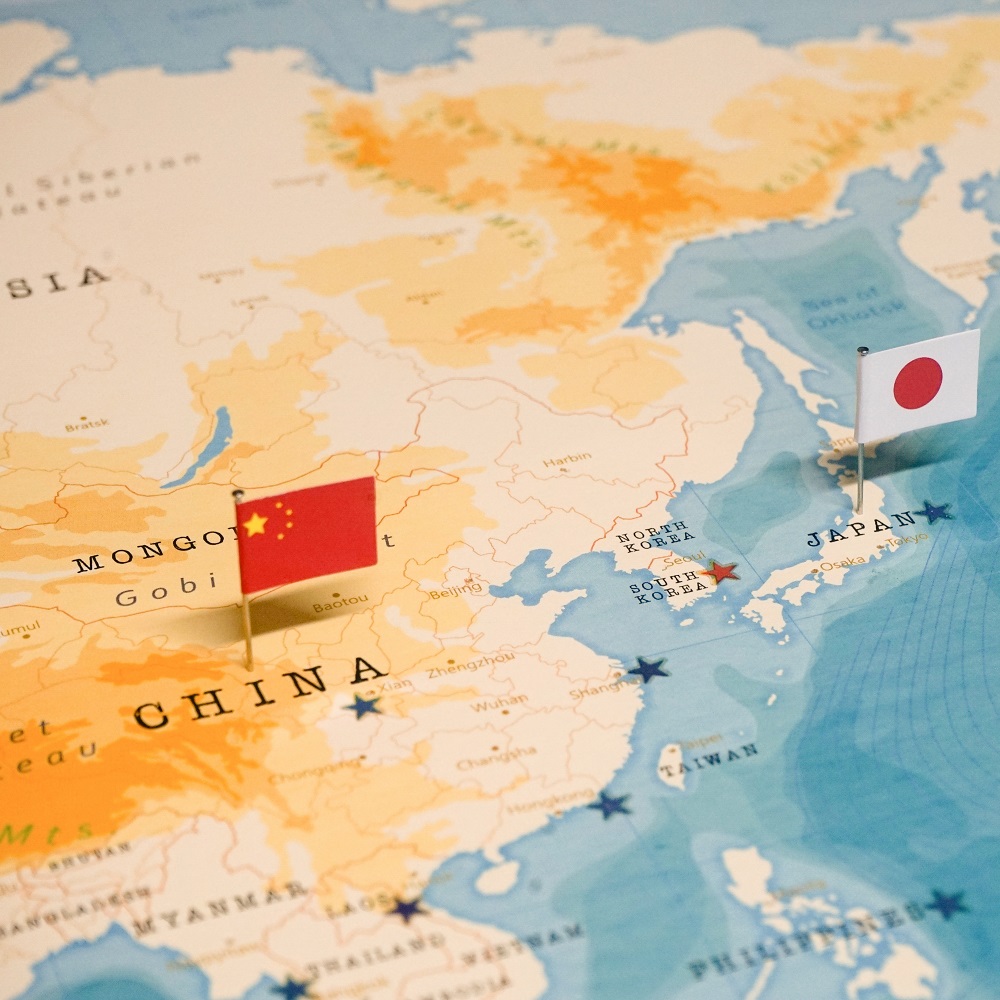
Japan and China on the world map pinned with their flags

Japan-China Tensions Escalate

by Purnendra Jain

Long-standing unresolved colonial history and territorial issues between China and Japan, as well as the two countries’ opposing world views, have increasingly manifested in the escalation of tensions. With high-level political/diplomatic communication at a standstill, the relationship has become adrift. In August 2023, the latest spate erupted when Japan decided to release treated radioactive wastewater from the Fukushima nuclear power plant into the Pacific Ocean. Although approved by the International Atomic Energy Agency, and considered safe by scientists, the discharge sparked vehement criticism from China which rejected the IAEA assessment. Yet it is common knowledge that China, South Korea, and Taiwan as well as many countries with nuclear facilities release radioactive tritium into the sea. Nevertheless, in China’s words, the Pacific Ocean is being used as “Japan’s private sewer.” Stating concerns with “food safety,” the Chinese government has suspended all Japanese seafood imports with an immediate economic impact and price falls in Japanese domestic seafood markets. Beyond the diplomatic row, trolling on Chinese social media and nuisance calls in their thousands have hit Japanese government agencies and businesses. China’s Global Times has characterised Japan as a “rogue state.” With the further planned releases of water, this issue will continue to simmer. Violent attacks in words and actions through Chinese social media and street demonstrations against Japan are not new. Attacks on Japanese establishments in China and anti-Japanese demonstrations have happened before. In 2005, when a new set of history textbooks was released in Japan, many Japanese establishments including the Japanese Embassy in Beijing became targets of attacks from protestors opposing what they called Japan’s attempt to whitewash history. Attacks on Japanese-brand cars and smashing windows of Japanese-owned businesses occurred again in the 2010s following Japan’s decision to nationalise the Senkaku islands which Japan administers but China claims and calls the Diaoyu islands. Tensions had begun to build in 2010 when a Chinese fishing boat rammed two Japanese Coast Guard vessels in the waters near disputed Islands and Japan detained the captain. It was not always like this. Japan and China enjoyed a long honeymoon period and close economic and diplomatic relations after they “normalised” ties and signed a peace treaty in the 1970s. Private investment and government aid poured enormous capital, technology, and human resources into the country, setting China on the path of modernisation. Exchanges at all levels intensified, shelving historical and territorial issues, ushering in an apparent golden era of bilateral ties. The cracks began to open as China started to overtake Japan when the latter was only slowly emerging from years of economic malaise. China overtook Japan as the world’s second-largest economy in 2010, a status Japan had enjoyed for four decades. With China’s prosperity came its economic dominance and military muscle flexing. Since the 2010s, old wounds once papered over, have reopened. China maintains and often claims that Japan has not properly apologised for its colonial and wartime atrocities and that their territorial disputes must be settled (in its favour). Tokyo though, believes it has done all it can and that Japan’s ownership of the Senkaku islands is indisputable. Given China’s now highly confrontational views, the once-strong pro-China constituency in Japan is thinning fast. Public opinion on both sides is now overwhelmingly negative towards the other. Japan considers its neighbourhood strategically far more challenging and dangerous today than at any time in the recent past. Besides North Korea’s sabre rattling and its deteriorating ties with Russia, China’s designs on Taiwan are of special concern as any forceful change in the status quo will have major implications for Japan’s security. Partially reflecting this belief, high-ranking Japanese politicians’ visits to Taiwan in recent months, including that of the Vice President of the ruling Liberal Democratic Party and former Prime Minister Taro Aso’s in August, are very significant. Aso’s call to deter China sends strong signals that Japan takes the China threat very seriously. As a result, Japan is substantially increasing its defence budget and has committed to a significant military build-up. Prime Minister Fumio Kishida has often referred to the war in Ukraine as akin to what possibly might happen in East Asia, that is, a possible Chinese invasion of Taiwan. These developments have enraged China, causing further deterioration in the relationship. China even cancelled a planned August visit by Natsuo Yamaguchi, the leader of the ruling party’s coalition ally, Komeito. This leaves no room for summitry at the leader level in the near future. Notably, Komeito, the political arm of the Buddhist Soka Gakkai, has been a key interlocutor between Tokyo and Beijing, since the 1970s. Japan-China tensions are not just limited to bilateral matters. Irreconcilable differences stem from their broader perspectives on world politics. Japan is deeply embedded in Western systems and advances the free-and-open Indo-Pacific, and has strengthenied military ties with the United States and its allies and partners. Japan offers alternative models of development to the Global South, such as quality infrastructure initiatives as opposed to China’s Belt and Road Initiative. Japan’s Quad initiatives, leadership in the Comprehensive and Progressive Trans Pacific Partnership and its support for AUKUS stand in contrast to China’s leadership in the BRICS, Shanghai Cooperation Organization, its “no limits” ties with Russia, and support for North Korea. Japan long separated politics and economics (seikei bunri) in its ties with China, but the boundaries which once kept economic ties strong despite political differences have weakened with what Japan calls China’s increasing economic coercion. The earlier narrative of “hot economics and cold politics” has given way to a new reality with all matters including an increasingly securitised economic relationship. With China’s “coercive and intimidating” behaviour such as its 2010 export ban on rare earth elements and the latest ban on seafood, Japan is cautiously but constantly trying to de-couple and de-risk as well as carry out onshoring and “friendshoring.” China remains Japan’s number one trading partner and a major destination for private capital, but this may well change, albeit gradually as Japanese businesses consider other options. Signs of some improvement through then Prime Minister Shinzo Abe’s visit to Beijing in 2018, and Prime Minister Fumio Kishida and President Xi Jinping’s meeting on the sidelines of a multilateral forum in 2022, may give a false impression of thawing, because the relationship has become so fractious and adversarial that progress remains elusive. As long as China continues flexing its military muscle and deploys economic coercion while building spheres of influence countering Japan; and Japan in turn strengthens its military ties with the US and establishes strategic partnerships to balance China, the relationship is unlikely to improve.

Diplomacy
Flags of Palestine and China on the world map

Israel-Hamas war puts China’s strategy of ‘balanced diplomacy’ in the Middle East at risk

by Andrew Latham

On Oct. 30, 2023, reports began to circulate that Israel was missing from the mapping services provided by Chinese tech companies Baidu and Alibaba, effectively signalling – or so some believed – that Beijing was siding with Hamas over Israel in the ongoing war. Within hours, Chinese officials began to push back on that narrative, pointing out that the names do appear on the country’s official maps and that the maps offered by China’s tech companies had not changed at all since the Oct. 7 attack by Hamas. Indeed, the Chinese Foreign Ministry took the opportunity to go further, emphasizing that China was not taking sides in the conflict. Rather, Beijing said it respected both Israel’s right to self defense and the rights of the Palestinian people under international humanitarian law. This assertion of balance and even-handedness should have come as a surprise to no one. It has been the bedrock of China’s strategic approach to the Middle East for more than a decade, during which time Beijing has sought to portray itself as a friend to all in the region and the enemy of none. But the map episode underscores a problem Beijing faces over the current crisis. The polarization that has set in over this conflict – in both the Middle East itself and around the world – is making Beijing’s strategic approach to the Middle East increasingly difficult to sustain. As a scholar who teaches classes on China’s foreign policy, I believe that the Israel-Hamas war is posing the sternest test yet of President Xi Jinping’s Middle East strategy – that to date has been centred around the concept of “balanced diplomacy.” Growing pro-Palestinian sentiment in China – and the country’s historic sympathies in the region – suggest that if Xi is forced off the impartiality road, he will side with the Palestinians over the Israelis. But it is a choice Beijing would rather not make – and for wise economic and foreign policy reasons. Making such a choice would, I believe, effectively mark the end of China’s decade-long effort to positioning itself as an influential “helpful fixer” in the region – an outside power that seeks to broker peace deals and create a truly inclusive regional economic and security order. Beijing’s objectives and strategies Whereas in decades past the conventional wisdom in diplomatic circles was that China was not that invested in the Middle East, this has not been true since about 2012. From that time onward, China has invested considerable diplomatic energy building its influence in the region. Beijing’s overall strategic vision for the Middle East is one in which U.S. influence is significantly reduced while China’s is significantly enhanced. On the one hand, this is merely a regional manifestation of a global vision – as set out in a series of Chinese foreign policy initiatives such as the Community of Common Destiny, Global Development Initiative, Global Security Initiative and Global Civilization Initiative – all of which are designed, in part at least, to appeal to countries in the Global South that feel increasingly alienated from the U.S.-led rules-based international order. It is a vision grounded in fears that a continuation of United States dominance in the Middle East would threaten China’s access to the region’s oil and gas exports. That isn’t to say that Beijing is seeking to displace the United States as the dominant power in the region. That is infeasible given the power of the dollar and the U.S. longstanding relations with some of the region’s biggest economies. Rather, China’s stated plan is to promote multi-alignment among countries in the region – that is to encourage individual nations to engage with China in areas such as infrastructure and trade. Doing so not only creates relationships between China and players in the region, but it also weakens any incentives to join exclusive U.S.-led blocs. Beijing seeks to promote multi-alignment through what is described in Chinese government documents as “balanced diplomacy” and “positive balancing.” Balanced diplomacy entails not taking sides in various conflicts – including the Israeli-Palestinian one – and not making any enemies. Positive balancing centers on pursuing closer cooperation with one regional power, say Iran in the belief that this will incentivize others – for example, Arab Gulf countries – to follow suit. China’s Middle East success Prior to the Oct. 7 Hamas attack on Israel, Beijing’s strategy was beginning to pay considerable dividends. In 2016, China entered a comprehensive strategic partnership with Saudi Arabia and in 2020 signed a 25-year cooperation agreement with Iran. Over that same timespan, Beijing has expanded economic ties with a host of other Gulf countries including Bahrain, Qatar, the United Arab Emirates, Kuwait, and Oman. Beyond the Gulf, China has also deepened its economic ties with Egypt, to the point where it is now the largest investor in the Suez Canal Area Development Project. It has also invested in reconstruction projects in Iraq and Syria. Earlier this year, China brokered a deal to re-establish diplomatic relations between Saudi Arabia and Iran – a major breakthrough and one that set China up as a major mediator in the region. In fact, following that success, Beijing began to position itself as a potential broker of peace between Israel and the Palestinians. The impact of the Israel-Hamas War The Israel-Hamas war, however, has complicated China’s approach to the Middle East. Beijing’s initial response to the conflict was to continue with its balanced diplomacy. In the aftermath of the Oct. 7 attack, China’s leaders did not condemn Hamas, instead they urged both sides to “exercise restraint” and to embrace a “two-state solution.” This is consistent with Beijing’s long-standing policy of “non-interference” in other countries’ internal affairs and its fundamental strategic approach to the region. But the neutral stance jarred with the approach adopted by the United States and some European nations – which pushed China for a firmer line. Under pressure from U.S. Secretary of State Antony Blinken, among others, Chinese Foreign Minister Wang Yi reiterated China’s view that every country has the right to self-defence. But he qualified this by stating that Israel “should abide by international humanitarian law and protect the safety of civilians.” And that qualification reflects a shift in the tone from Beijing, which has moved progressively toward making statements that are sympathetic to the Palestinians and critical of Israel. On Oct. 25, China used it veto power at the United Nations to block a U.S. resolution calling for a humanitarian pause on the grounds that it failed to call on Israel to lift is siege on Gaza. China’s U.N. ambassador, Zhang Jun, explained the decision was based on the “strong appeals of the entire world, in particular the Arab countries.” Championing the Global South Such a shift is unsurprising given Beijing’s economic concerns and its geopolitical ambitions. China is much more heavily dependent on trade with the numerous states across the Middle East and North Africa it has established economic ties than it is with Israel. Should geopolitical pressures push China to the point where it must decide between Israel and the Arab world, Beijing has powerful economic incentives to side with the latter. But China has another powerful incentive to side with the Palestinians. Beijing harbours a desire to be seen as a champion of the Global South. And siding with Israel risks alienating that increasingly important constituency. In countries across Africa, Latin America and beyond, the Palestinians’ struggle against Israel is seen as akin to fighting colonization or resisting “apartheid.” Siding with Israel would, under that lens, put China on the side of the colonial oppressor. And that, in turn, risks undermining the diplomatic and economic work China has undertaken through its infrastructure development program, the Belt and Road Initiative, and effort to encourage more Global South countries to join what is now the BRICS economic bloc. And while China may not have altered its maps of the Middle East, its diplomats may well be looking at them and wondering if there is still room for balanced diplomacy.

Energy & Economics
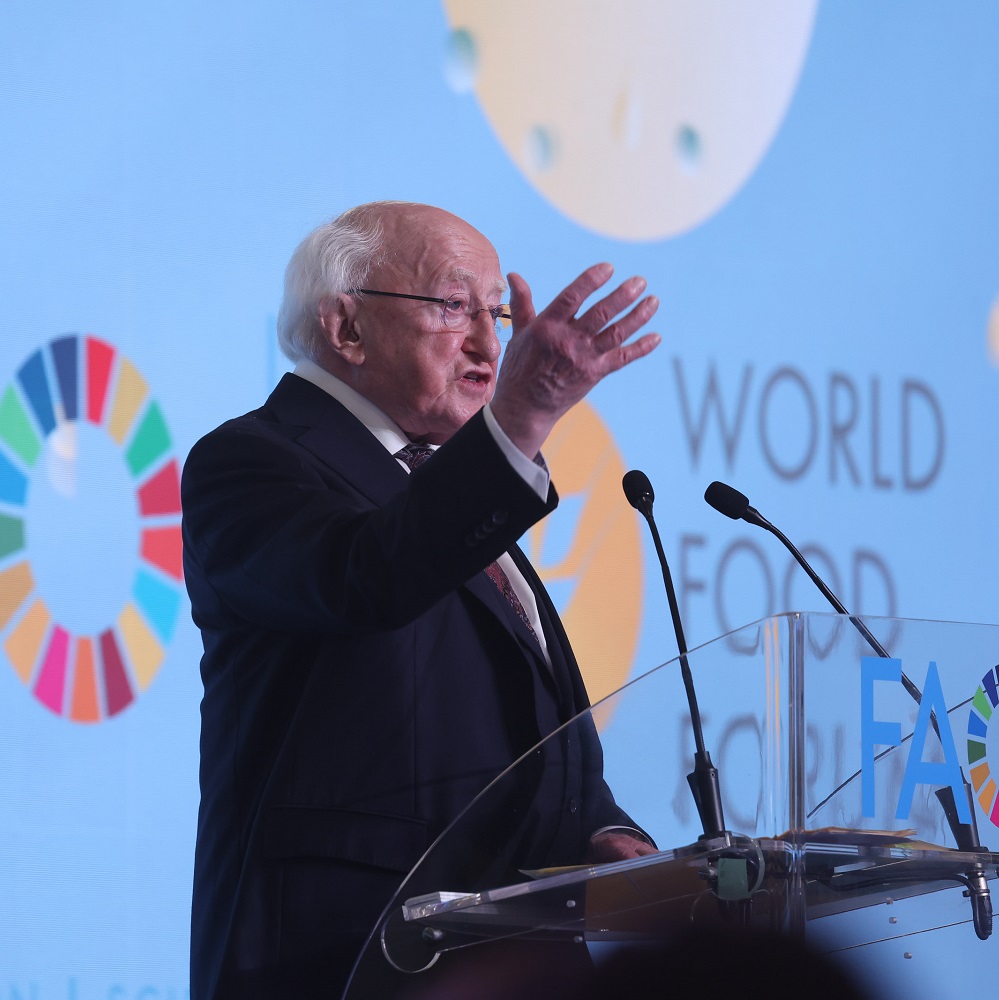
President of Ireland Michael D. Higgins giving speech at World Food Form

Keynote address the Closing Ceremony of the World Food Forum

by Michael D. Higgins

Director-General, Your Excellencies, Distinguished Guests, Dear Friends, Young and Old, This week, as we have gathered here at the World Food Forum in the headquarters of the Food and Agriculture Organisation of the United Nations in Rome to discuss the necessary transformation of our agri-food systems, we must not only be conscious of targets missed or imperfectly achieved, but of the need for courage, and to generate new capacity to move to new models of better connection between economy, social protection, social justice and ecology. We are confronted with a climate and biodiversity emergency that cannot be handled by the tools that produced it or by the architecture of how we made decisions before. We are called upon to, once and for all, tackle with alternatives and sustained effort and innovation, the vicious circle of global poverty and inequality, global hunger, debt and climate change, our interacting crises. That is the context in which sustainable food systems must be achieved. I ask you all gathered today to respond in the most meaningful way within your capacity, within your generation, in a way that includes all generations, to the challenge set out by United Nations Secretary-General António Guterres in his recent statements: This is how the Secretary-General put it: “The Sustainable Development Goals aren’t just a list of goals. They carry the hopes, dreams, rights and expectations of people everywhere. In our world of plenty, hunger is a shocking stain on humanity and an epic human rights violation. It is an indictment of every one of us that millions of people are starving in this day and age.” It can be put right but we must change and there is work involved in upskilling in such a way that we can not only identify and critique assumptions of failing models but be able to put the alternative models in place. We have had so many broken promises. Only 15 percent of some 140 specific targets to achieve the 17 UN Sustainable Development Goals are on track to be achieved. Many targets are going in the wrong direction at the present rate, and not a single one is expected to be achieved in the next seven years. However, we have some reasons to be hopeful. When I look around this room today, I see so many engaged and committed people, including young people who have the enthusiasm, energy and creativity needed to tackle the serious structural causes of food insecurity and global hunger. But it is important to acknowledge that young people are not alone in seeking authenticity of words delivered into actions that have an ethical outcome. There are those who have spent their lives seeking a fairer world, one in which hunger would be eliminated – as it can be. We must recognise their efforts. We must work together to harness this collective energy and creativity into strong movements that will deliver, finally, a food-secure world for all. This will require, I suggest, moving to a new culture of sharing information, experiences, insights. As the cuts have taken effect, we must take the opportunity of developing a view, post-silo culture, of sharing insights, and I see FAO as uniquely positioned for this. As Glenn Denning, Peter Timmer and other food experts have stated, achieving food security is not an easy task given how food hunger is “deeply entwined with the organisation of economic activities and their regulation through public policies”, given, too, how governments and markets must work together, how the private, public and third sectors must work together. All of our efforts must have the character of inclusivity. Each of us as global citizens has a responsibility to respond. To ignore it would be a dereliction of our duty of care to our shared planet and its life-forms including our fellow humans and future generations. The Secretary-General’s pleas in relation to the consequences of climate change are given a further terrible reality in the increased and spreading threat of hunger, a food insecurity which is directly affected by the impact of climate change. For example, figures published by the Food and Agriculture Organization of the United Nations show that 26.2 percent of Africa’s population experienced severe food insecurity in 2021, with 9.8 percent of the total global population suffering from undernourishment the same year. It is time for us all, as leaders and global citizens, to take stock of how words are leading to actions, to increase the urgency of our response to what is a grave existential threat and to achieve change. It is clear, as the Secretary-General’s powerful statement shows, that we need to begin the work of reform in our international institutional architecture, such as UN reform at the highest level, including the Security Council and the Bretton Woods institutions, if we are to achieve what the Secretary-General has suggested is the challenge to “turn a year of burning heat into a year of burning ambition”. Let us commit then to sharing purposes, projects, resources, seeking a new culture for sustenance solutions. Those of us who have spent much of our lives advocating UN reform believe that its best prospects are in the growing acknowledgement of the importance of the vulnerabilities and frustrated capacity of the largest and growing populations of the world being represented, not only nominally but effectively, through a reform that includes reform of the Bretton-Woods Institutions. As Secretary-General Guterres has said on a number of occasions, it is time to reform what are 1945 institutions, including the Security Council and Bretton Woods, in order to align with the “realities of today’s world”. We have to acknowledge too that the development models of the 1950s and 1960s were part of the assumptions that brought us to the crises through which we are living. New models are needed and the good news is that a new epistemology, our way of looking at the world, of sufficiency and sustainability, is emerging. We are seeing good work already occurring. Good development scholarship is available to us. I reference, for example Pádraig Carmody’s recent book, Development Theory and Practice in a Changing World. Such work builds important bridges from the intellectual work that is so badly needed and is welcome at the centre of our discourse on all aspects of interacting crises, including global hunger, and the need to link economy, ecology and a global ethics. What we must launch now is a globalisation from below. Replacing the globalisation from above that has given us a burning planet and threatened democracy itself, with a globalisation from below of the fullest participation, we can establish and indeed extend democracy, offering accountability and transparency of our work together. Writers such as Pádraig Carmody are not alone in suggesting that achieving the Sustainable Development Goals provides the opportunity for moving past the worst contradictions of failed models and dangerous undeclared assumptions. The demise of hegemonic development theory and practice may be a result of several factors, such as the rise of ultra-nationalism around the world, the increasing importance of securitisation where the most powerful insulate their lives from the actions of the excluded, and the existential threat posed by the climate crisis. Such research adds to the growing body of development literature that argues for a pro-active, structural-focused, tailored approach to development. The Hand-in-Hand Initiative of the FAO, details of which were discussed at this week’s parallel session, is a most welcome initiative, one that aims to raise incomes, improve the nutritional status and well-being of poor and vulnerable populations, and strengthen resilience to climate change. It heralds a belated recognition too of the insufficiency of a reactive emergency response to famine and hunger crises. It suggests a move towards one that tackles the underlying structural causes of hunger. Young people will need patience and to dig sufficiently deep to achieve these necessary changes. They are right in seeking to be partners, so much more than being allowed as attendees. Hand-in-Hand recognises the importance of tailor-made interventions to food security, using the best available evidence in the form of spatial data, validated on the ground through local diagnostics and policy processes, to target the most food insecure, the most hungry, the poorest. It recognises that context-specific employment and labour market policies are part of the sustainability challenge. I believe that evidence from below is crucial to achieving globalisation from below and that it can be achieved by a reintroduction of new re-casted anthropology guided by, among others, the new African scholars now available, whose work is empirical and peer-tested, can be invaluable in giving transparency on projects and investments – a strategy for fact-gathering for empowerment of rural people so like the 1955 fact-gathering with rural people of the FAO – first published in 1955 and used by me in 1969! Young people must be about upskilling to be able to critique all of the assumptions guiding the policies on to their lives. A key objective for us now must be to strengthen institutional capacity on the ground, not only at the strategic level, but also fundamentally, so that the public, farmers, and other stakeholders’ institutions are enabled to participate in territories-based agri-food systems. Such a move is fundamental to a successful food security strategy. Our institutional architecture and the multilateral bodies within it, must be made fit for purpose if we are to tackle effectively and meaningfully our contemporary food insecurity crisis which is worsening according to the 2023 Global Report on Food Crises, with 258 million people across 58 countries suffering acute food insecurity. Perhaps most crucially, we must acknowledge, as United Nations Programmes such as the Hand-in-Hand Initiative does, the critical importance of partnership and collaboration in addressing global hunger. We must do everything we can to ensure cross-sectoral co-ordination, foster coherent development actions, under a common, shared vision. We must end all wasteful competitive silo behaviours, create a culture of openness and co-operation. The FAO is well positioned to lead on this with its new invigorated partnerships with the World Food Programme (WFP) and the International Fund for Agricultural Development (IFAD). Co-operation in the development and implementation of new models will be key to the achieving of any targets that seek to be sustainable and inclusive. For example, I suggest it will achieve best results if funders, such as the African Development Bank, are enabled and funded to work closely with research institutes, both at the national and international level, but particularly take account of field studies conducted over time at local level in the new anthropology so as to ensure that findings from the latest research feed into the design and implementation of any financial supports and investments. By providing a platform, a shared interactive transparent space for national authorities and producers, national and global businesses, multilateral development banks and donors to discuss and advance ways and means to finance the supported national food programmes, initiatives such as Hand-in-Hand are proving to be an effective flagship programme of the Food and Agriculture Organisation of the United Nations. Co-operation must work both ways. For example, the parts of the so-called ‘developed’ world suffering from problems of high levels of obesity and food wastage must learn from the deep knowledge and wisdom existing in the most populated continents, as well as the science, which points to a new ecological revolution, one in which agroecology – the bringing of ecological principles to develop new management approaches in agroecosystems – can play a fundamental role, especially for the poorest of our global citizens. We have seen the destructive impact of colonial models of agronomy promoting an over-reliance on a small number of commodity crops, herders incentivised to become less mobile and store less grain in order to maximise commodity crop production, and increasing imports in conditions of near monopoly of seeds, pesticides and fertilisers. This had the deadly effect of opening up farmers not only to the full force of extended droughts, the ravages of variable climate conditions, and a reliance on non-indigenous inputs, but also to global spaces where they have insufficient influence. We must retreat from these dysfunctional food systems model, with their related dependencies, with urgency and embrace models of sufficiency and effective local markets and see the value of making our way too that includes agro-ecological models that promote food security and development opportunities for the poorest people on our fragile planet. Adaptation and responding to the already changing climate is crucial for all of us, and especially in the most food-insecure nations. We must restore degraded ecosystems, introduce drought-resistant crops, ensure accessible digital services for smallholder farms, while creating new, sustainable green jobs for young people so that we may forge a smart, sustainable, climate-resilient development path for the continent. This week we have to acknowledge the many challenges we face including, inter alia, the energy, climate and biodiversity crises, war and conflict which exacerbate food insecurity, ensuring enabling policy environments, and reaching the long-term goal of sustainable food system transformation. Any agri-food initiative, be it for Africa, the Middle-East, Central or South America, or other food-insecure regions, must place inclusivity at its core. Specifically, more vulnerable, smallholder farmers must be targeted for inclusion as programme beneficiaries, not just large-scale, industrial level farmers and ever-expanding commercial plantations. Research has shown that irresponsible agri-business deals are sometimes falsely legitimated by the promotion of alleged achievement of Sustainable Development Goal Number 2 at any cost, without care as to consequence, ignoring the reality that smallholders need enabling policies to enhance their role in food production; that food insecurity is linked to rights, processes, and unequal access to land resources; and that dispossession disproportionately affects women farmers. On this latter issue of gender, achieving zero hunger requires gender-inclusive land and labour policies. Actions must prioritise the inclusion of women and girls who are more food insecure than men in every region of the world. Women must have a right to land recognised and enshrined. The gender gap in food security has grown exponentially in recent years, and will only deteriorate further in the absence of targeted intervention. Women are obviously the most impacted victims of the food crisis, thus they must be a part of the solution. Women produce up to 80 percent of foodstuffs. Empowering women farmers can thus serve as a transformative tool for food security. However, female farmers have, research tell us, limited access to physical inputs, such as seeds and fertiliser, to markets, to storage facilities and this must be addressed. Climate change, and our response to it, addressing global hunger and global poverty, exposing and breaking dependency is a core theme of my Presidency. It is the most pressing existential crisis that our vulnerable planet and its global citizens face. Throughout the world, young people and the youth sector have been at the vanguard of efforts to tackle climate change. Young people have demonstrated, time and again, how well-informed and acutely aware they are of the threat that climate change poses, as well as its uneven and unequal impacts. May I suggest to all of you that, as young innovators and future leaders in your respective fields, you will be at your best, achieve the greatest fulfilment for yourself and others, when you locate your contribution within a commitment to be concerned and contributing global citizens. Take time to ask how is my energy in the tasks of hand and brain being delivered and for whose benefit. May I suggest, too, that you will be remembered and appreciated all the more if you work to ensure that the results of science, technology are shared and that all human endeavours are allowed to flow across borders for the human benefit of all and with a commitment to ecological responsibility and inclusivity. Offer your efforts where they can have the best effect for all. Locate yourselves in the heart of the populated world, as Nobel Laureate William Campbell did with his research on river blindness. Changing our food systems is, however, let us not forget, an intergenerational challenge that requires an inter-generational approach. We must now empower youth to be in the driver’s seat to build a new, better, transparent model of food security in a variety of different settings. Let us endeavour, together, in our diverse world, to seek to build a co-operative, caring and non-exploitative global civilisation free from hunger, a shared planet, a global family at peace with nature and neighbours, resilient to the climate change that is already occurring, one based on foundations of respect for each nation’s own institutions, traditions, experiences and wisdoms, founded on a recognition of the transcendent solidarity that might bind us together as humans, and reveal a recognition of the responsibility we share for our vulnerable planet and the fundamental dignity of all those who dwell on it. Thank you. Beir beannacht.

Diplomacy
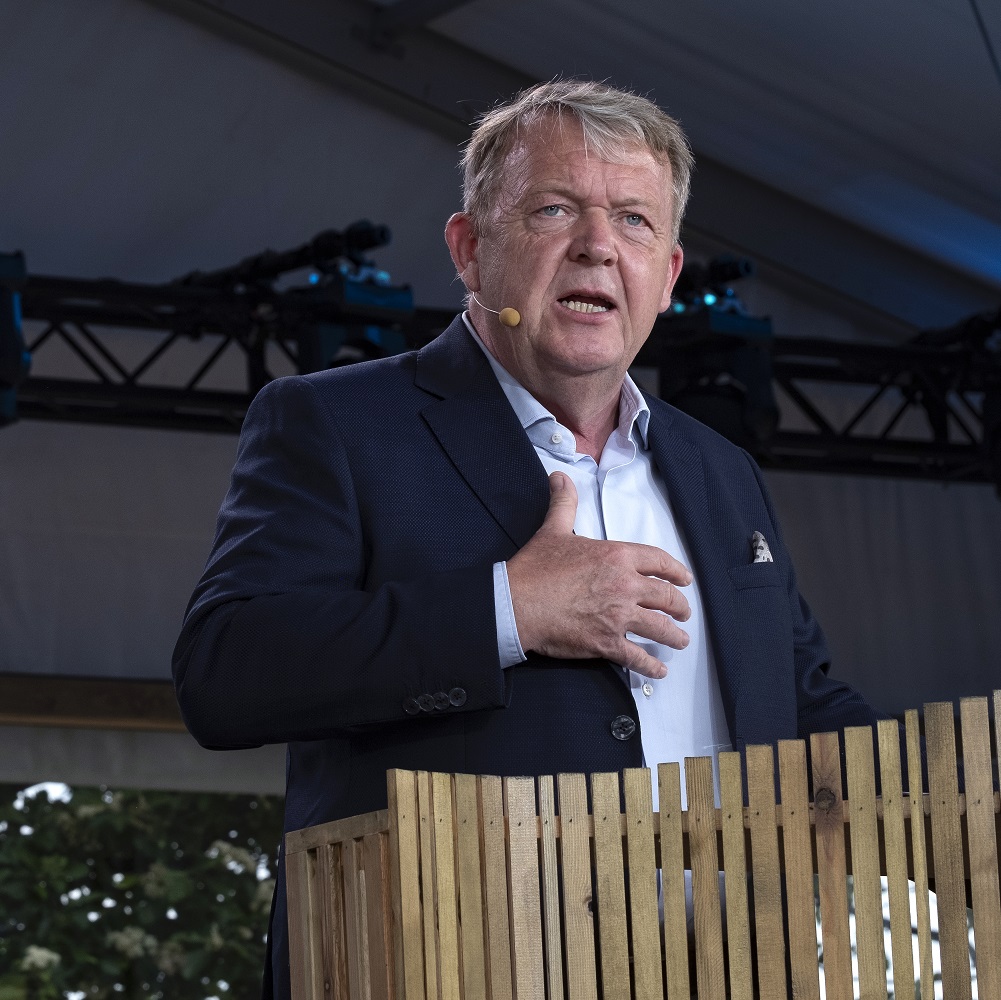
Minister of Foreign Affairs of Denmark Lars Løkke Rasmussen giving speech at support event at the Jewish community

Speech at support event at the Jewish community

by Lars Løkke Rasmussen

Held in Copenhagen Synagogue 14.10.2023 By Lars Løkke Rasmussen, Minister for Foreign Affairs Your Majesty, Ambassador, Dear all. Thank you for letting me share this evening with you. I have no idea how each of you has been doing this past week. With friends and family caught in the center of the crisis. With people you care about, who live their everyday lives in an Israel under attack. With all the worries that come with it. Are they affected? Have they made it? What happens next? Terrible stories that make an impression around the world. One of them, which is still in my body, is about an ordinary family who lived in a kibbutz close to the Gaza border. A dad. A mother. And three little girls. When the attacks began on Saturday morning, all five of them ran towards the nearest shelter. They arrived safely. The wife wrote a message to their friends in Australia: "Everything is okay." An hour later she stopped responding. The friends called and called, but the mobile was silent. On Sunday morning, the Israeli authorities shared a photo of the family. With big smiles and green trees in the background. The mother keeps a loving arm around the eldest daughter. Like hundreds of other innocent Israelis, they were liquidated by barbaric terrorists. Hamas had reportedly broken into their shelter. It is not to be worn. *** The attack on Israel stirs many emotions. Fear. Anger. Impotence. Hope. Vengeance. Love. We must make room for it all, but what is lost cannot be returned. But you are not alone. An entire nation shares your tears and supports you. Denmark stands, as the Prime Minister also emphasized, side by side with Israel. *** We are gathered here tonight to remember. To collect our thoughts and pick each other up. I had the honor of speaking here in the synagogue five years ago. At that time we marked the 75th anniversary of the Jews' flight from Denmark. It was a touching evening. October 1943 is one of the most important events in recent Danish history. And a cornerstone in the relationship between Denmark and Israel. Today, 80 years later, it is hard to imagine that Danish families had to flee for their lives because of their origins and their faith. That innocent citizens should be sent to concentration camps to die. But it happened. *** Earlier this week we marked the 80th anniversary. A selection that had a certain duality in it. For October 1943 is both a story of light and darkness. Mourning those who were murdered. Joy to those who got to safety. Shame on the few who tried to sabotage the escape. Pride in the many who risked their lives to save their fellow citizens. Those who took responsibility and reached out. To a Jewish people who displayed heroic courage. It is hard to find the same duplicity in what befell the Israeli people last Saturday. Because right now the darkness is clearest, the pain seems endless. A sad glimpse from the past. But even if the light has difficulty finding its way, it exists somewhere out there. We have to insist on that. Even in the darkest of times, hope will peek out. I think you can feel that on a night like tonight. We must not let the hatred of the terrorists win. We must insist on preserving our humanity. *** The attack on Saturday is being called by many Israel's 9/11. It is difficult to write history as it unfolds before our eyes. But I still think it's an apt description. A decisive historical turning point. This is a wake-up call for all of us. We made a promise to the Jewish people after the end of World War II. A promise of a homeland where Jews could gather and live in peace. Denmark was a warm supporter of the establishment of the state of Israel. The Jewish people have been through enough. And you are a strong people. But what is happening right now calls for reflection. And on crystal clear commitments from the entire world community. You must hold us up to them. As Ben Gurion said so wisely: “History is not something you write. It is something you create.” *** I know that Jews also feel the insecurity at home. Do you have to keep the kippa on? Or replace it with a cap that you - Jair [Melchior] - have suggested to your own son. I understand, you end up there. Better to be on the safe side, one might say. But that is completely unacceptable. It is completely unacceptable that Danish Jews have to beat themselves up like that in order to be here in Denmark. Hide away and look over your shoulder. It shouldn't be like that. It must not be like that. And I would like to help give the promise tonight that the government will do everything in our power to protect the Danish Jews. Protect your freedom. Your safety. Your right to live an ordinary Jewish life in Denmark. In the Denmark that reached out to the Jewish people 80 years ago. Because Denmark is still here. Thank you.

Defense & Security
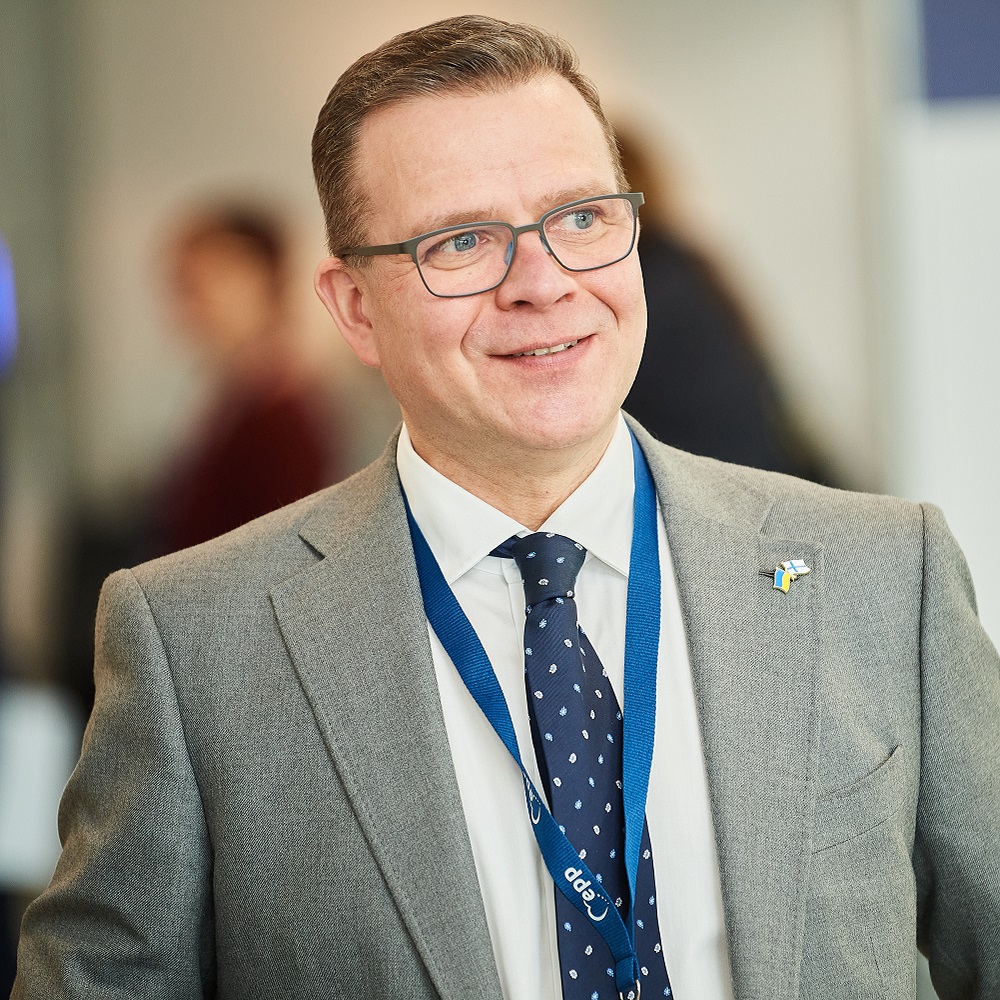
Prime Minister of Finland Petteri Orpo

European Union to continue to support Ukraine over the long term

by Petteri Orpo

The European Union will continue to provide strong military, financial, economic, and diplomatic support and humanitarian assistance to Ukraine. The EU leaders decided on the matter on the closing day of the European Council held in Brussels on 26–27 October. Prime Minister Petteri Orpo represented Finland at the meeting. Prime Minister Orpo highlighted the importance of the EU’s pledge to provide security commitments to Ukraine in the future. “It is important that we reach an agreement quickly on the EU’s security commitments to Ukraine. We should be ready to make political decisions on the matter at the December European Council,” Orpo said. The EU leaders had already exchanged views on Russia’s war of aggression in Ukraine in a video discussion with Ukrainian President Volodymyr Zelenskyy on the first day of the Council. The EU will speed up the delivery of military support, such as missiles, ammunition, and air defence systems, to Ukraine. “We must strengthen the EU’s defence sector and reinforce the capacity of the European defence industry as quickly as possible. A strong EU also strengthens NATO and transatlantic cooperation,” said Prime Minister Orpo. Prime Minister Orpo also called for progress on the use of frozen Russian assets to support Ukraine. The Euro Summit held in connection with the European Council focused on the overall economic and financial situation and economic policy coordination. In Prime Minister Orpo’s view, the EU must be more competitive both internally and globally given the current geopolitical situation. “A well-functioning and competitive single market, for example in the service sector, plays a key role. Fair competition is an important factor in ensuring growth capacity. We must return to the normal State aid rules as soon as possible,” said Prime Minister Orpo. In its conclusions, the European Council emphasises the need to speed up work on developing digital services, clean technology, and clean energy production, transitioning towards a more circular economy and reducing the regulatory burden. “The EU must continue to be a global leader in the energy transition and clean technology solutions. I highlighted the potential of the bioeconomy and circular economy in renewing European industry. At the same time, we must reduce the regulatory burden on businesses,” Orpo emphasised. On the last day of the meeting, the EU leaders also held a strategic discussion on migration. Prime Minister Orpo stressed that migration is a common European challenge and called for long-term solutions. “We need to build well-functioning partnerships with countries of origin and transit. We must also be able to return people who do not have a legal right to reside in the European Union,” said Prime Minister Orpo. In their discussion on other items, the EU leaders condemned the recent terrorist attacks in Belgium and France, which killed and injured Swedish and French nationals. The discussion on external relations focused on the tensions between Kosovo and Serbia and between Armenia and Azerbaijan, and on the situation in the Sahel. The European Council also received an update on the preparations for the UN Climate Change Conference (COP28) in Dubai.

Diplomacy
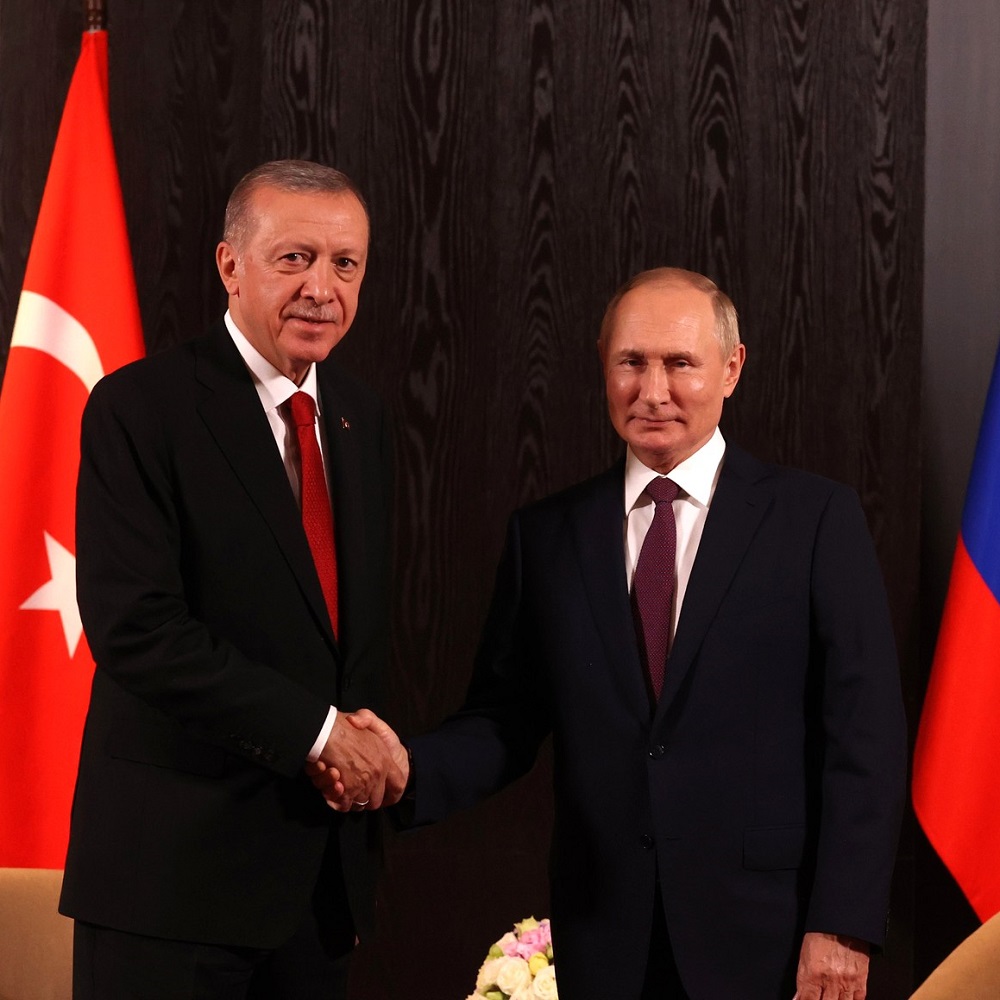
Vladimir Putin with President of Türkiye Recep Tayyip Erdoğan

Turkey faces competing pressures from Russia and the West to end its ‘middleman strategy’ and pick a side on the war in Ukraine

by Ozgur Ozkan

From the beginning of the war in Ukraine, Turkey has performed a delicate balancing act, portraying itself as an ally to the warring sides while reaping economic and political benefits from its relationship with both. Turkey has condemned Russia’s invasion and extended diplomatic and material assistance to Ukraine’s war efforts. At the same time, the country’s leader, Recep Tayyip Erdoğan, has pointedly opted not to join the Western-led sanctions against Russia or cut ties with Moscow. But Turkey’s neutrality in the Ukraine conflict is seemingly meeting with growing impatience in Washington and Moscow, and may be difficult to sustain amid a shifting geopolitical landscape. In September 2023, the U.S. Treasury Department imposed sanctions on Turkish companies and a businessman accused of helping Russia to circumvent U.S. sanctions. Meanwhile, Erdoğan has failed to revive a deal with Russian President Vladimir Putin that allowed the export of Ukrainian grain shipments via Turkey’s Bosphorus and Dardanelles straits and eased global food prices. The developments suggest that both Washington and Moscow are seeking to pressure Turkey into taking a decisive stand. Already there are signs of Erdoğan bending. On Oct. 25, 2023, Erdoğan signed Sweden’s NATO accession protocol and sent it to the Parliament for ratification, having earlier refused to endorse the move – much to the annoyance of Turkey’s NATO allies. The move may be interpreted as a sign that Turkey’s balancing strategy is reaching its limits. But it may also be another tactical move in Erdoğan’s geopolitical chess game, which has expanded as he seeks to position Turkey as a diplomatic force amid escalating violence in the Middle East. As an expert on Turkish politics and international affairs, I have watched as Erdoğan walks a fine line between the country’s commitments as a longtime NATO member and its reliance on Russia for trade, economic resources and energy imports. But this balancing act is becoming increasingly difficult the longer the war goes on. The middleman strategy Erdogan’s approach aligns with Turkey’s historical foreign policy trajectory. Turkey has maintained a balance between Western European powers and Russia since the latter emerged as an ambitious regional player along Turkey’s northern border in the early 18th century. The balancing act allowed the Ottoman Empire, Turkey’s predecessor, to survive the 19th century largely intact despite mounting pressures from the Russian Empire and European powers. Failure to utilize a balancing strategy in the First World War facilitated the empire’s demise. Joining forces with the losing Central Powers, Turkey had to share a catastrophic fate. In contrast, in World War II, a strategy of neutrality helped Turkey to weather the war unscathed. Against a mounting Soviet threat during the Cold War, Turkey took refuge under Western security guarantees, joining NATO in 1952. Relieved of the Soviet threat in the 1990s, Ankara sought greater foreign policy autonomy. However, it lacked the necessary economic and military resources and domestic political will to fully realize this ambition, leading to alignment with U.S. policies in the Middle East and Balkans until the early 2010s. Splintered support But U.S. support to Kurds in northern Syria, aligned to the militant separatist Kurdistan Workers’ Party, and the 2016 coup attempt against Erdoğan marked the beginning of a more confrontational relationship between Washington and Ankara. Blaming the U.S. and its Persian Gulf allies for complicity in the coup, Erdogan began to court Putin, who openly stood behind him during and after the attempted coup. Ankara’s acquisition of Russian-made S-400 surface-to-air missiles led to its removal from the U.S.‘s F-35 Joint Strike Fighter program and a set of U.S. sanctions on Turkey’s defense industry. Coupled with its repeated military interventions in Syria, Turkey’s closeness with Russia has, critics say, reduced it to a status of “unreliable partner” in the North Atlantic alliance. But it didn’t take long for Ankara’s flirtation with Moscow to reach a deadlock. The death of 34 Turkish soldiers in a Russian bombardment in northern Syria in February 2020 prompted a renewed effort to seek reconciliation with the U.S. However, the Biden administration hesitated to reset relations due to concerns over Erdoğan’s increasingly authoritarian rule. The balancing act and Ukraine War in Ukraine offered a new boost to Erdoğan’s balancing act. Turkey’s control of two major straits and established ties with Ukraine and other states along the Black Sea provided significant leverage for a multifaceted and neutral approach. Erdoğan seemingly hoped that maintaining trade relations with Russia and arms sales to Ukraine would bolster the struggling Turkish economy and rehabilitate his image in the West. But Erdoğan’s early blocking of Sweden’s and Finland’s entry into NATO stirred resentment in Washington and Brussels. As the Ukraine conflict continued and Erdoğan’s domestic popularity dipped in the lead-up to the May 2023 elections, the sustainability of Turkey’s balancing act seemed uncertain again. In need of financial and political support, Erdoğan has turned to the West and Persian Gulf countries. He approved Finland’s NATO accession and forged economic deals with West-friendly Saudi Arabia and the United Arab Emirates – Turkey’s two bitter rivals in the Middle East. In summer 2023, Erdoğan announced a new cabinet that projected a pro-Western outlook. He mended ties with Egypt, another traditional regional rival, aligning with the new balance of power that the U.S. and its regional allies were shaping in the Middle East. And then, at the July 2023 NATO summit in Vilnius, Lithuania, Erdoğan announced the withdrawal of his veto against Sweden’s accession to NATO. Erdoğan’s pro-Western moves have prompted a cautiously optimistic approach by Western leaders, using both incentives and punitive measures: extending a US$35 billion World Bank credit to aid Turkey’s economy, while penalizing Turkish entities for violating U.S. sanctions. The latter has been taken as a not-so-veiled message to Ankara to take a definitive stance in its foreign affairs. Erdoğan has received a similar message from Putin. Disappointed in part by Turkey’s reconciliation with the West, Putin chose not to renew the Ukrainian grain deal despite Erdoğan’s earlier successful brokerage. It was a considerable blow for Erdoğan, who sought to position himself as a crucial power broker in the Ukraine-Russia conflict. Although Erdoğan faces pushback from the U.S. and Russia, this does not necessarily signal the demise of his middleman strategy. Turkey’s location on the Europe-Asia boundary and historical ties to neighboring regions provide Erdoğan opportunities to sustain and even expand a strategy of neutrality among regional and global actors. Developments in the South Caucasus and the escalating conflict between Israel and Hamas in the Gaza Strip are two recent examples. They add a new layer of complexity for Erdogan’s balancing act, but also more room for him to maneuver. Turkey has been a key backer of Azerbaijan’s military offensive in Nagorno-Karabakh – something that has exposed Russia’s waning influence in the region and created a major geopolitical setback for Iran. Meanwhile, Erdoğan’s ties with both Hamas and the Israeli government provide an opportunity for him to play a mediator role there.

Diplomacy
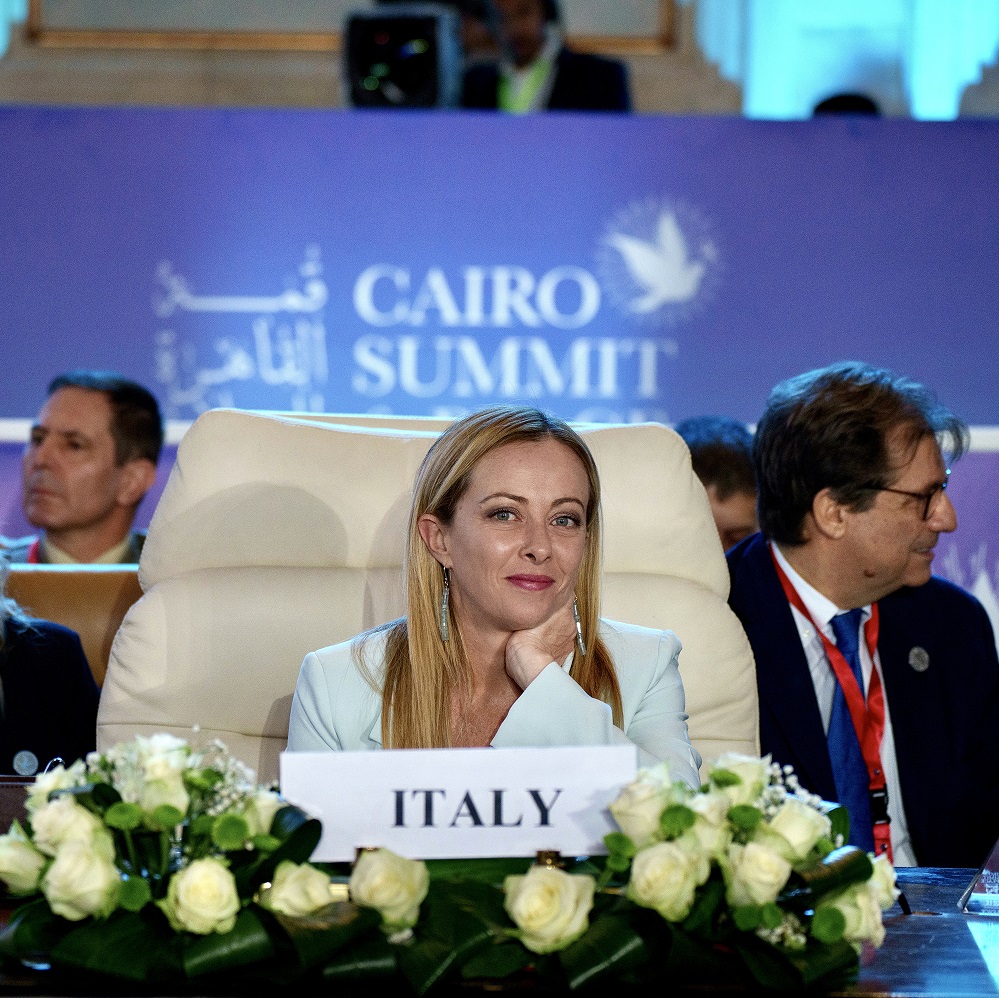
Giorgia Meloni, Prime Minister of Italy

President Meloni’s address at the Cairo Summit for Peace

by Giorgia Meloni

President Al-Sisi, thank you for the speed and determination with which you have organised this conference. I consider this to be a very important conference following the terrible attack by Hamas on 7 October which, we must remember, was carried out against unarmed civilians with unprecedented, appalling brutality, and which, from our point of view, it is right to unambiguously condemn. It was only right for Italy to participate in this conference, given its historical role as a bridge for dialogue between Europe, the Mediterranean and the Middle East, and also considering the opportunities presented by this summit, despite the fact that starting positions may seem somewhat distant at times because, even if our starting viewpoints may not perfectly overlap, what does perfectly overlap is our interest – the interest of all leaders sitting around this table, and that interest is to ensure what is happening in Gaza does not become a much wider conflict, that it does not turn into a religious war, a clash of civilisations, as that would mean the efforts courageously made over the last years to the contrary, to normalise relations, would have been in vain. The impression I get – and I am saying this with my usual frankness – is that, considering the way Hamas carried out its attack, its real objective was not to defend the right of the Palestinian people, but rather to force a response against Gaza that would fundamentally undermine any attempts at dialogue and create an unbridgeable gap between Arab countries, Israel, the West, thereby definitively compromising peace and well-being for all citizens involved, including those it says it wants to defend and represent. This means that we are all the target, and I do not think we can fall into this trap: that would be very stupid indeed. This is why I believe it is important to be here, why I believe it is very important to continue dialogue and discussions. I believe there are a number of key points to be reiterated. Firstly, terrorism has hit the Muslim world more than it has the West. In fact, terrorist acts over time have weakened peoples’ legitimate demands, especially in the Muslim world. Within this dynamic, there is the choice of Hamas to use terrorism to prevent any kind of dialogue and any prospect of arriving at a concrete solution, also for the Palestinian people. However, no cause justifies terrorism. No cause justifies actions that are knowingly designed to target unarmed civilians. No cause justifies women being massacred and newborns being decapitated, deliberately filmed on camera. No cause. When faced with such actions, a State is fully entitled to claim its right to exist, defend itself and ensure the security of its citizens and borders. However, and this brings me to the second point, a State’s reaction cannot and must not ever be driven by feelings of revenge. This is why States are what they are; they are our point of reference. A State bases its reactions on precise security reasons, ensuring proportionate use of force and protecting the civilian population. These are the boundaries within which a State’s reaction to terrorism must remain, and I am confident that this is also the will of the State of Israel. Thirdly, our immediate priority remains humanitarian access, which is essential to prevent further suffering among the civilian population as well as mass exoduses that would contribute to destabilising this region. This is something we do not need. I consider the mediation work that has been carried out in this regard by several players attending this conference to be very important. I consider the European Commission’s decision to triple its humanitarian aid for Gaza, taking the total to over EUR 75 million, to also be very important. Italy is also working to increase bilateral aid, but an increase in resources must clearly be accompanied by very strict control over who uses those resources. Encouraging developments are coming from this morning. President Al-Sisi, I thank you for this too. We are very concerned about the fate of the hostages in the hands of Hamas, and, as you know, there are also Italians among them. We ask for the immediate release of all hostages, clearly starting with women, children and the elderly. It is important to keep working together to get vulnerable people and foreign civilians out of Gaza. Above all, we must do the impossible to avoid an escalation of this crisis, to avoid losing control of what may happen, because the consequences would be unimaginable. The most serious way to achieve this goal is to resume a political initiative for a structural solution to the crisis based on the prospect of two peoples and two States. This solution must be concrete and, in my view, it must have a defined time frame. The Palestinian people must have the right to be a nation that governs itself, freely, next to a State of Israel whose right to exist and right to security must be fully recognised. In this regard, Italy is ready to do absolutely everything that is necessary. Thank you again, Mr. President.

Diplomacy
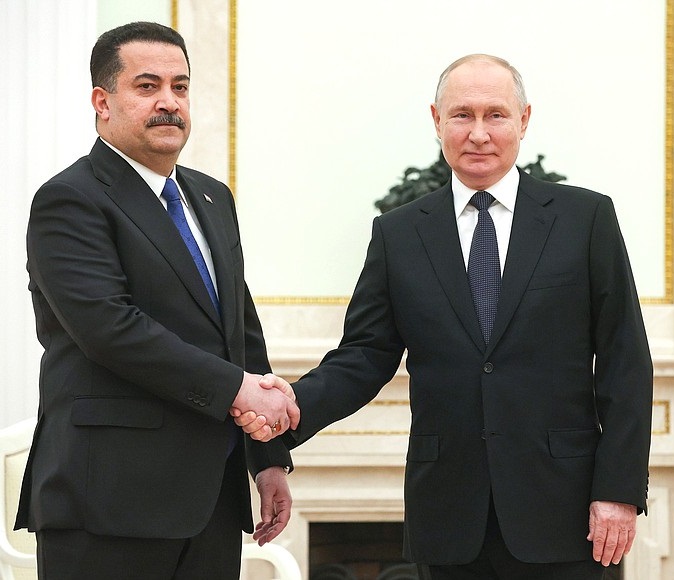
Vladimir Putin with Prime Minister of Iraq, Muhammed Shia al-Sudani

Russia-Iraq talks

by Vladimir Putin , Mohammed Chia al-Soudani

Vladimir Putin met with Prime Minister of the Republic of Iraq Muhammed Shia Al-Sudani, currently on an official visit to Russia. The beginning of Russia-Iraq talks President of Russia Vladimir Putin: Mr Prime Minister, colleagues, friends, Welcome to Russia and Moscow. Mr Prime Minister, We are delighted to see you. Relations between our countries are developing rather successfully. Next year, we will mark the 80th anniversary of diplomatic relations. In previous decades, our country accomplished very much in building relations with Iraq, and in the most diverse fields – first and foremost in the economic sphere. An intergovernmental commission is working on this today. In 2022, our trade soared by 43 percent but, unfortunately, dropped this year. We have a lot to discuss. In this sense, of course, your visit is quite timely. The energy sector is certainly the main aspect of our collaboration. Our largest companies operate rather successfully in your country. Our companies have invested a total of about $19 billion, and our collaboration, already quite effective in this area, is only going to expand. We coordinate our work within the OPEC + format, and we are doing this rather successfully in order to stabilise the situation on global markets. On the whole, we are enjoying much success, and I hope that we will continue working in this manner moving forward. We have many bilateral objectives, and we will focus our attention on all of them. Tomorrow, we will take part in a plenary meeting of the Russian Energy Week. This is a valuable and respectable international event in the field of global energy, during which specialists and experts can convene and discuss current developments, as well as shorter-term and remote prospects. Of course, your visit to Russia is taking place amid crises: the Ukrainian crisis continues, and, unfortunately, we are witnessing a sharp deterioration of the situation in the Middle East. I think that many will agree with me that this is a clear example of the United States’ failed policy in the Middle East, which tried to monopolise the settlement process, but, unfortunately, was not concerned with finding compromises acceptable to both sides, but, on the contrary, put forward its own ideas about how this should be done and put pressure on both sides, truly both: first on one, then on the other. But each time without considering the fundamental interests of the Palestinian people, bearing in mind, first of all, the need to implement the decision of the UN Security Council on the creation of an independent, sovereign Palestinian state. But in any case, no matter what happens there… I know your position, Mr Prime Minister, and our position is that harm to the civilian population should be minimised and reduced to zero, and we call on all sides of the conflict to do so. We will certainly talk about this, as well as other problems, during your visit today. After the expanded meeting, we are also planning a face-to-face conversation during a private lunch. There will be an opportunity to discuss everything in detail. Welcome again, Mr Prime Minister. Prime Minister of the Republic of Iraq Muhammed Shia Al-Sudani (retranslated): Thank you very much, Mr President. Greetings to the members of the delegations. Thank you very much for the invitation to visit Russia. Russia is a friendly country we have deep and historic ties with. I would like to once again express Iraq’s gratitude to Russia for its support in the fight against terrorism, the war against terrorism, for providing us with weapons so that we could resist armed terrorist gangs. Without a doubt, this episode in the relationship is very valuable; 2014 was of great importance for relations between our countries. With our visit, we want to strengthen interaction and develop relations that have excellent prospects in the political, security, cultural and economic spheres. We have many different opportunities before us. We have a good foundation; there are Russian companies that operate, for example, in the oil and gas sector. Our countries play an important role on the oil market, and therefore it is important for us to continue bilateral coordination and cooperation within the OPEC+ format. This coordination should be based on consideration of supply and demand mechanisms, and the interests of investors, producers and consumers. We will, of course, touch on and discuss these issues during today’s meeting. And tomorrow we will also have a good opportunity to discuss these issues, as well as energy issues, which, of course, are the focus of many, including the Iraqi government. Our visit is taking place at a time when we can see the implementation of a large development project that will ensure trade between Asia and Europe and contribute to the integration of transport corridors, I mean the North – South Transport Corridor first of all. This will support all countries in the region and the entire world and have a positive effect on them. Now, developments in Palestine have taken a complicated and dangerous turn. This is the natural result of the fact that Israel has continued to violate the rights of Palestinians, while the international community has remained silent and failed to live up to its obligations under internationally recognised resolutions. We are now witnessing another Intifada: an uprising of Palestinians demanding to put an end to such violations of their rights. An obvious escalation, and a very dangerous one, with civilians killed as a result and spontaneous bombings carried out, including against civilian targets: all this may result in the destruction of the Gaza Strip. Now we all, as Arab and Islamic countries, and also together with Russia, a permanent member of the [UN] Security Council, a great power, have a responsibility here. This is a moral responsibility, including on major powers, to stop these violations of the rights of Palestinians and to end the blockade of the Gaza Strip. Of course, today Iraq is trying to maintain stability in all regions through its policies, including with regard to the Ukrainian crisis. We have suffered greatly from blockades and war; of course, that is why our position is firm: we support the search for peaceful solutions through dialogue to end conflicts that have very negative consequences at the humanitarian level and at the economic level. Obviously, the purpose of this visit is discussing these issues and our common positions as well as strengthening our bilateral relations. We also want to contribute to relieving the suffering in the region and ensuring stability in the Middle East and the entire world. Thank you. Vladimir Putin: Thank you. <…>

Diplomacy
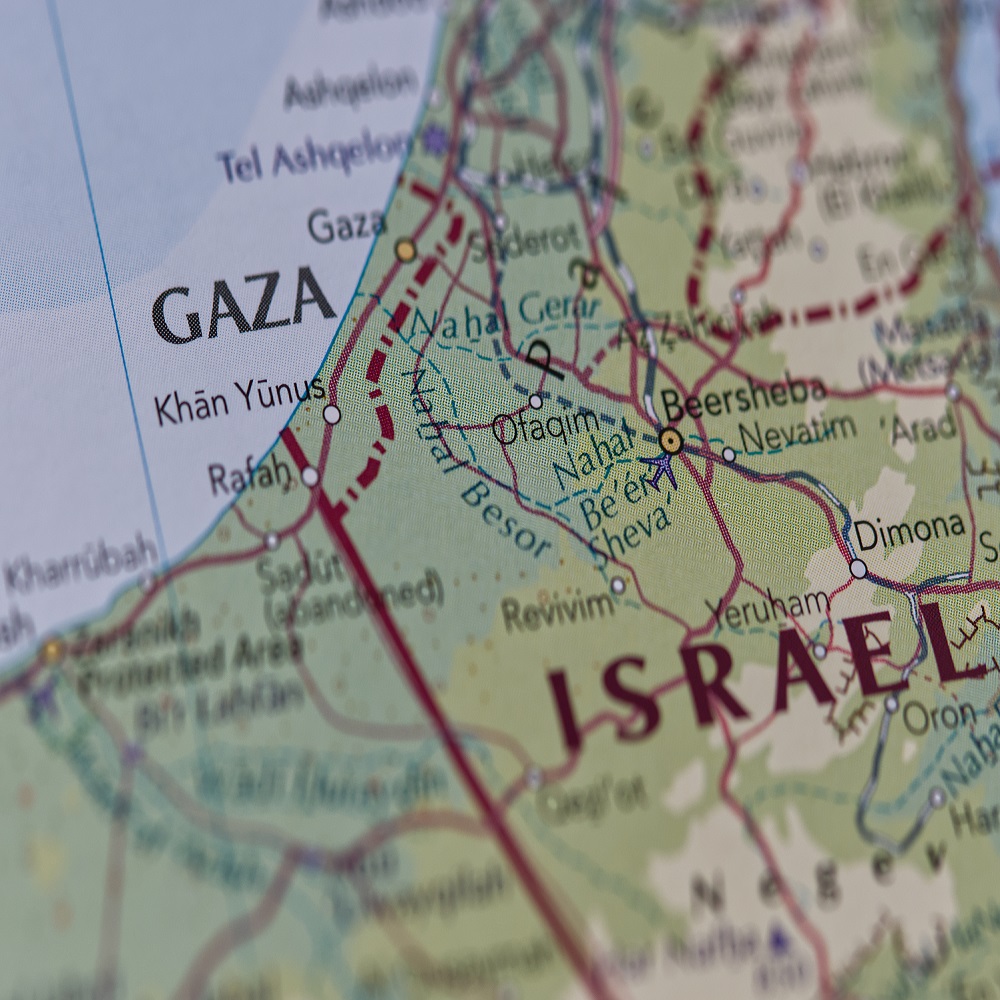
Gaza, Palestine territories in the map

Understanding Türkiye's Attitude Towards the Israel-Hamas Conflict

by Cheuk Yui (Thomas) Kwong (Chinese: 鄺卓睿)

Türkiye has firmly opposed any harm to civilians and innocents in Gaza and Israel. Despite keeping with his unwavering support for Palestine and maintaining a close relationship with Hamas, President Recep Tayyip Erdoğan does not want the conflict to hinder the process of normalising relations with Israel.   Türkiye has delicately navigated both sides of the Israel-Hamas conflict while pursuing its own interests, including drawing international attention away from Türkiye’s military action against the Kurdistan Workers’ Party (PKK) and its affiliated militant groups in Syria and Iraq. During the 1990s, Türkiye and Israel developed a quasi-alliance marked by robust security cooperation over shared objectives and concerns, including mutual apprehensions regarding Syria, arresting the PKK leader Abdullah Öcalan, and deepening intelligence sharing. This approach persisted during the early years of Erdoğan’s leadership, exemplified by his 2005 visit to Israel alongside a sizable delegation of corporate representatives. During this visit, Erdoğan proposed to mediate peace between Israel and the Arab world while seeking a resolution to the Israel-Palestinian conflict. Regrettably, this proposal did not yield positive results, and a series of events unfolded between 2008 and 2010 that impaired the Türkiye-Israel relationship, including the Israel-Gaza conflicts, a heated exchange between Erdoğan and the Israeli President Shimon Peres at the Davos forum in 2009, the visit of Hamas leader Khalid Mashal to Türkiye, and the Mavi Marmara Incident.   In 2016, Israel and Türkiye tried to reconcile their strained relationship. However, this attempt faltered following the US recognition of Jerusalem as Israel’s capital and Prime Minister Benjamin Netanyahu’s condemnation of Türkiye’s military campaigns in north-eastern Syria in 2019. Türkiye also sheltered Hamas leaders, further upsetting Israel and deteriorating the bilateral relationship until Israeli President Isaac Herzog’s state visit to Türkiye last year.   For now, Türkiye finds itself in a dilemma. If Erdoğan does nothing on the Palestinian issue and the current conflict in Gaza, his loyal voters, particularly the Muslim conservatives, will abandon his ruling coalition in the upcoming local elections on 31 March 2024. Moreover, his Islamist and moderate conservative rivals like Ahmet Davutoglu, the former prime minister, have shown considerable support for Palestinians along with some critical figures inside the coalition, like Devlet Bahçeli. These groups have called for active intervention in Gaza with a potential success in attracting the Muslim conservatives, presenting a challenge to Erdoğan.   However, if Türkiye fully supports Hamas, such an endorsement will cause Türkiye more harm than good. The rapprochement with Israel would disappear, and the relationship with the US and other Western allies would dilapidate, exacerbating economic conditions and national security. On both fronts, Ankara believes that rapprochement with Israel can persuade the Jewish lobbyists and pro-Israeli, cross-party groups to support Türkiye in securing the sale of F16 fighter jets on Capitol Hill, modernising its air force. Moreover, Israeli investments and possible bilateral cooperation in the energy sector can contribute to improving the economic conditions in Türkiye. These efforts will come to nought if Erdoğan expresses solidarity with Hamas. Its NATO allies and Israel would further suspend cooperation in other security areas, such as addressing Ankara’s insecurity along its south eastern border close to Kurdistan in Syria and Iraq, and intelligence sharing, leaving Türkiye more isolated in the international community.   Domestically, Turkish nationalists, the king-maker of the last Turkish presidential election, have criticised Hamas’ actions and the Arab people for chanting support for Hamas and Palestine in Türkiye. Meral Akşener, an opposition leader in Türkiye, denounced Hamas’ actions as terrorism during her party’s group meeting. Meral argued that the Syrian refugees should go and fight themselves instead of chanting for the sending of Turkish military forces to Gaza.     The MetroPoll further shows that a majority of the Turkish voters want Erdoğan to be either neutral (34.5 percent), play a role in mediating the conflict (26.4 percent) or keep a distance from Hamas while expressing his solidarity with Palestinians (18.1 percent). It is notable that few are asking for direct support for Hamas or Israel. Although the country is highly divided, a clear majority want their government not to support Hamas and upset Israel.   To be sure, these results put Erdoğan and his coalition in a dilemma on how to appease religious conservatives, moderates, Turkish nationalists, and the people who want their government not to support Hamas but can express solidarity with Palestinians simultaneously. If Erdoğan cannot secure the continued support from Turkish nationalists and religious conservatives, then these voters are expected not to support Erdoğan in the upcoming local elections amid having a profoundly fragmented opposition. This risk remains even if these voters choose to back his allies in the MHP, as it could erode Erdoğan’s standing within the ruling coalition.   For now, Erdoğan has been able to minimalise the damage to Türkiye-Israel relations. He has opposed the attacks and killings of civilians in both Israel and Gaza, and has decried the humanitarian situation in Gaza, while also advocating for creating a free state of Palestine amid a two-state solution. Erdoğan has also spoken with Israeli President Isaac Herzog and Palestinian/ Fatah leader Mahmoud Abbas in expressing his proposal to allow Türkiye to be a mediator.  Furthermore, Erdoğan has called for dialogue and mediation between Israel and Palestine while distancing himself from supporting Hamas, but calling Israeli behaviour a war crime during the “Great Palestinian Meeting” in Istanbul’s Ataturk Airport last Saturday. The attempt to mediate conflict may perhaps be a bridge too far for Türkiye given Erdoğan’s speeches and the close relationship with Hamas. Regardless of its apparent lack of potential, this approach has received endorsement from the Turkish nationalists while not displeasing the religious conservatives.     In the meantime, Erdoğan has taken full advantage of the Israel-Hamas conflict by attacking the PKK in northeast Syria and Iraq. The 1 October terrorist attack in Ankara targeting the headquarters of the Turkish National Police has triggered massive counterterrorism operations across the country and the neighbouring states conducted by the Turkish military force and the Interior Ministry. Ankara, following the attacks, immediately began its military operation, striking the Kurdistan Workers’ Party (PKK) ‘s military camps in north-eastern Syria and Iraq, destroying critical energy infrastructure.   The ongoing Israel-Hamas Conflict has now placed Türkiye and its relations with the United States in a challenging position. This situation is further compounded by recent events, such as the US jet shooting down a Turkish drone in Syria and Türkiye’s reluctance to impose sanctions on Russia. Nonetheless, the Israel-Hamas Conflict has effectively redirected international attention away from Türkiye’s actions in Syria and Iraq, easing some of the pressures on Ankara.  While the conflict presents President Erdoğan with a dilemma, it could offer a unique opportunity to pursue his national and regional political aspirations and strategic objectives, including winning the 2024 local elections by a significant margin and working towards Türkiye’s goal of becoming a leading state in the Middle East and South Caucasus.  

Diplomacy
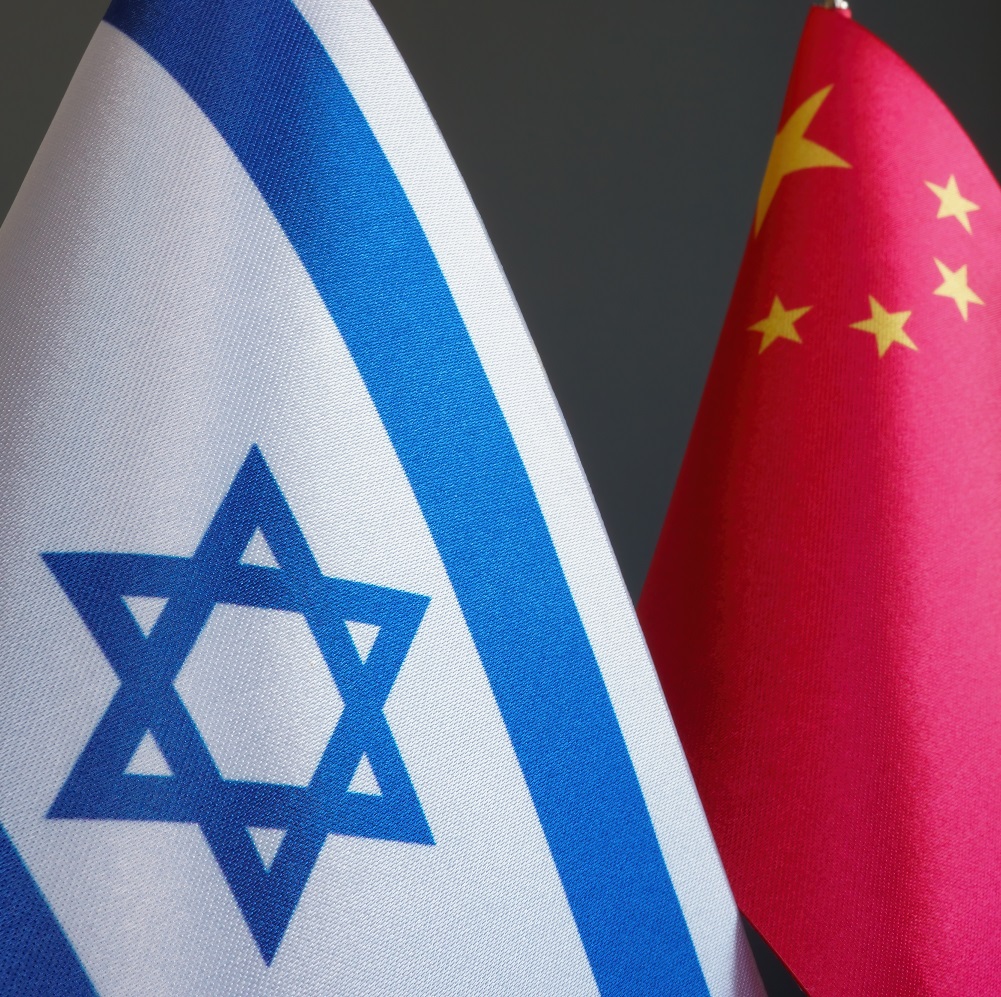
Flags of Israel and China

Political Insights (2): The Chinese Position on the Israeli War on Gaza

by Dr. Mohammad Makram Balawi

Developed Chinese-Israeli Relations… However: China’s diplomatic relations with Israel began in 1992. Beijing has believed that its relations with Tel Aviv would help improve its image in the West and enable it to obtain Western military technology, where bilateral trade reached about $24.4 billion in 2022. However, it has been proven to China, on several occasions, that Israel is not completely immune to US pressure, as it has faced several difficulties in implementing some Belt and Road Initiative (BRI) projects in the port of Haifa. It was prevented from winning a bid to operate the Sorek desalination plant for 25 years, because it is adjacent to the Palmachim Air Base, where US forces are stationed, and is near the Nahal nuclear research facility. Israel has also terminated an arms deal with China and was forced to pay financial compensation, etc. The Israeli position on the Russia-Ukraine war and the Western alliance against Moscow, has reinforced China’s belief that Israel is aligned with the US-Western powers, and that Israeli calculations may change if Western powers decide to take more hostile steps against China, for it’s a fact that the US openly declares that Beijing is its next most dangerous enemy. Furthermore, Israel’s participation in the India-Middle East-Europe Economic Corridor (IMEC) project that Biden announced on the sidelines of the G20 summit in New Delhi on 9–10/9/2023, linking India to the Middle East and then into Europe via Israel, and which Netanyahu hailed, have given negative indications. For China sees it as an alternative project to the Belt and Road Initiative (BRI) and that it aims to challenge it. China is seeking to enhance stability in the region for the sake of the BRI projects. It has been working on political initiatives, the most prominent of which was the Saudi Arabia-Iran announcement to resume diplomatic relations, which came following Chinese-brokered talks held in Beijing. However, the US, in partnership with Israel, are working to threaten Tehran and maintain its conflict with regional countries, which counters China’s endeavors, destabilizes the region and harms China’s strategic projects. The Position on Operation Al-Aqsa Flood and the Aggression Against Gaza From the onset of the Ukraine war, China has increased its interest in the region, especially Palestine. This was evident following the 20th Communist Party Congress in October 2022, the subsequent summits held by the Chinese President in the Gulf and Arab region, the quiet rapprochement with Hamas and its invitation to visit China, and China’s offers to mediate between Hamas and the Palestinian Authority. On the internal level, a small segment of the Chinese elite has shown admiration for the Israeli model and sympathized with it as modern and advanced. However, Operation Al-Aqsa Flood dispelled these illusions and revealed Israel’s bloody racist nature and showed that the West, which established international law and imposed it on the world, does not abide by it, but rather uses it selectively. This has united the Chinese popular and elite position, which considers Israel an occupying state obstructing the two-state solution, and supports the Palestinian people in obtaining their rights. Operation Al-Aqsa Flood strengthened the Chinese conviction of the importance of the region to the Chinese strategy, and the importance of its relationship with Hamas in the Palestinian context, which is consistent with the Russian stance—China’s undeclared ally—regarding the region and the Movement. This consistency in positions was demonstrated in the Russian-Chinese diplomatic support of Hamas, albeit indirectly, and refusing to classify it as a “terrorist” movement. The official Chinese position can be summarized as follows: • Calling on all parties to exercise restraint and ceasefire. • Expressing dissatisfaction with the continued Israeli bombing of the Gaza Strip and targeting of civilians, and fear of not maintaining the minimum level of respect for life and international law. • Emphasizing the historical injustice that occurred against the Palestinian people and that it cannot continue; and stressing that the long-term stagnation of the peace process is no longer sustainable. • Using the veto power in partnership with Russia against the US proposal to condemn Hamas and label it as “terrorist.” Concerns about Western US Intervention The Chinese are concerned about the US-Western offensive and defensive military mobilization in the region (including the arrival of US aircraft carriers). They believe that such mobilization is not only related to supporting Israel in its war on Gaza, but also to controlling the regional environment in a way that prevents any force from intervening to support the Palestinian resistance. In addition, it may be intended to exploit the situation to impose Western agendas on the region, including dominating energy sources and prices, especially in light of the significant restrictions imposed by the US and its allies on Russian oil. It may be considered a direct threat to the Chinese economy that depends mainly on energy coming from the Middle East and Gulf oil, and it also threatens China’s projects and economic relations in the region. Supporting Palestine Based on Accurate Calculations It may be in China’s interest to support the Palestinian resistance, even if only politically, and to perpetuate the exhaustion of the US in the region, to reduce Western pressure on East Asia. However, Chinese policy has so far distanced itself from direct intervention in regional conflicts and from direct entry into a conflict—that has military dimensions—with Western powers. This means that China will be very reluctant to do any move beyond the political and humanitarian support of the Palestinian people, and if it is forced, it will be in the near term indirectly, and through intermediary or third parties such as Syria and Iran. However, if the conflict is prolonged and Chinese interests are severely damaged, China may review its policies to protect its interests, including strengthening its military presence and supporting its allies and friends in the region.