Will BRICS Succeed in Shaping a New Global Order?
by Ghzlan Mahmoud Abdel-Aziz
한국어로 읽기
Leer en español
In Deutsch lesen
Gap
اقرأ بالعربية
Lire en français
Читать на русском
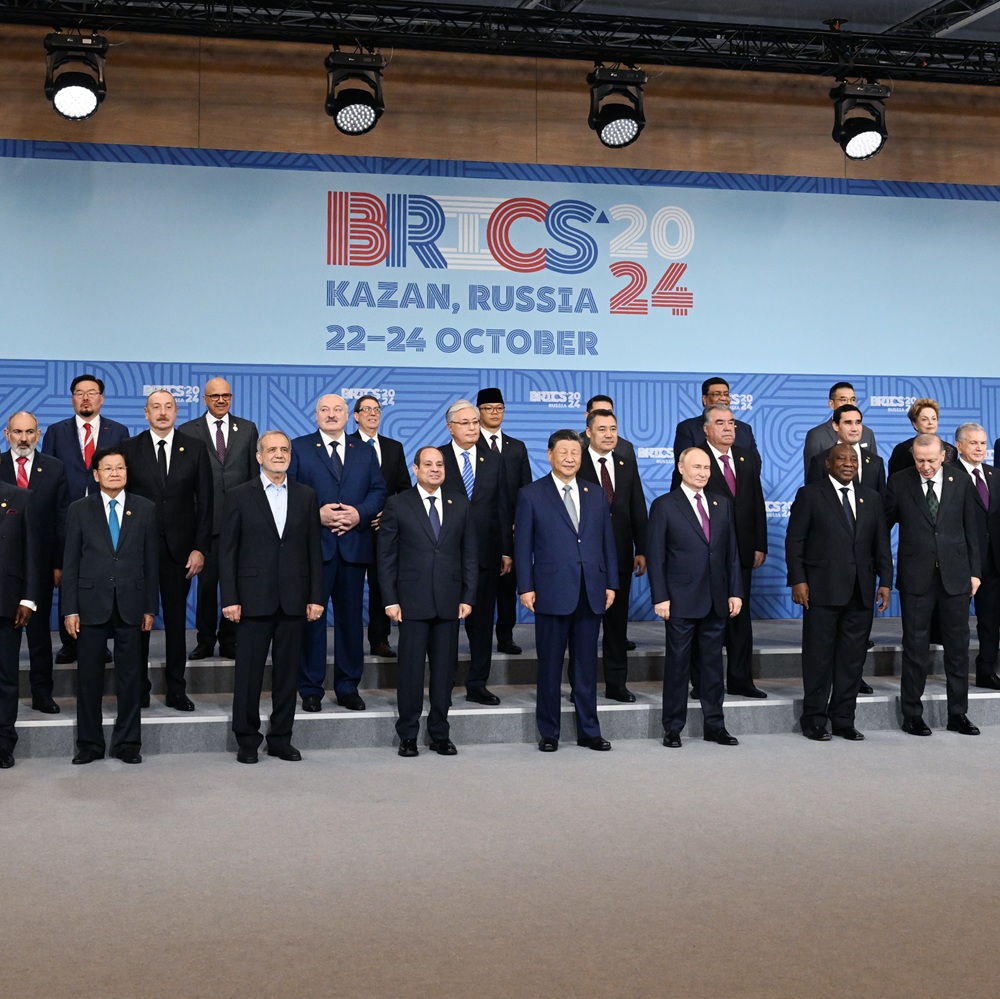
Abstract The BRICS group emerged at the beginning of the current century as one of the important economies in the international system based on the hegemony of Western powers led by the United States of America. With the emergence of this group, political and economic writings have diversified, trying to explain the extent of this group's ability to compete globally facing the Western powers to rise to the top of the hegemony pyramid on the one hand, and the role of this group and its political and strategic influence in confronting economic, political and security challenges on the other hand. With the holding of the sixteenth presidential summit of the group in the Russian city of Kazan during the period 22 - 24 October 2024 under the slogan "Strengthening multilateralism for development, security and fair worlds" and with the participation of the group’s members and a number of other countries and representatives of international and UN organizations, many theories of international relations have tried to provide explanations for the emergence and rise of this group, including the Power Transition Theory. From this perspective, this study comes to investigate the BRICS group by relying on the interpretation of the Power Transition Theory as one of the most important theories of international relations that can contribute to developing interpretations of this group. KeywordsBRICS, International Relations Theories, Power Transition Theory, Kazan Summit Introduction Since the establishment of the BRIC group (Brazil, Russia, India and China) in September 2006, and its first summit meeting in 2009, and with the accession of South Africa in 2011 to become an entity that includes the fastest growing economies in the world, and its name became the "BRICS Group", the group has appeared on the horizon as a diplomatic and financial alliance that is increasingly important for development in many countries, and it has also appeared as an attempt to escape Western control at the economic level. Despite the differences between the BRICS countries in terms of geographical affiliation, economic disparity and their levels of production, and ethnic, religious and linguistic disparity, they have succeeded in finding a formula for agreement among themselves and finding global geostrategic influence. In this context, it is easy to notice the serious and ambitious endeavor of the countries of this group to formulate a new international system within the framework of the important radical changes that the world is witnessing. The countries currently under the group's banner: Brazil, Russia, India, China and South Africa, present themselves as an alternative to the existing international financial and political entities. The countries of the group are trying to present themselves as representatives of the countries of the South and as "the alternative model to G7". From this perspective, the BRICS group has received great attention from a wide sector of researchers and scholars in various science fields despite the recent history of this group. Accordingly, this study attempts, by relying on the statements and assumptions of the Power Transition Theory, to determine the nature of this group. Can BRICS achieve success in shaping a new global order? The problem of the study This study believes that understanding of the BRICS group does not only require applied analysis, but also requires theoretical understanding, as theoretical thinking helps to avoid the limitations of purely empirical interpretation of the nature, mechanisms & perspectives of the BRICS countries' development. Accordingly, this study focuses on interpreting the theory of power transition for the rise of the BRICS group, and its position in the international system facing the Western powers led by the United States. How does this theory view this group through its propositions and assumptions, by answering the following questions: Are the BRICS countries just another institution for international cooperation that fits the structure of the existing international system, or is it a radically different way of international relations that could seriously change current global politics? What are the motives of the BRICS countries? Can the BRICS group become an alternative to the hegemony of Western powers that has been formalized in the current system of international institutions and systems? Will this institution provide fundamentally new conditions that may lead to the development of international cooperation in contrast to the power policies pursued by the United States and its allies? Can the BRICS countries be considered as a new mechanism for global governance, or are they nothing more than a temporary/short-lived international governmental arrangement? Accordingly, through the previous questions, this study examines a main question that revolves around how to interpret the Power Transition Theory for the BRICS group. First, Power Transition Theory Despite the many writings that have addressed the future of global hegemony in light of the remarkable rise of the role of the BRICS group, these writings have not paid much attention to placing the issue of the impact of the power transition process on the future of that hegemony within its theoretical framework, which is a framework that may shed useful light on the nature of the challenges imposed on the Great Power as it exercises its hegemony. Here, the study discusses this theory and its ability to explain the rise of the BRICS countries and its potential to bring about changes in the current international system. This is done by addressing the concept of power transition, its indicators, and its application to the BRICS group. (1) The concept of power transition Organski proposed the Power Transition Theory in an attempt to analyze global politics by presenting a hierarchical system of powers or states in light of the proportions of power resources and the possibility of war. Thus, he describes a hierarchical system through which all states are known according to the relative power distribution. The distribution of power varies between units, so at the top comes the group of Dominant Nations in which power is concentrated, and thus they are at the top of the pyramid, and thus they control the largest proportion of resources in it, but they are not considered the dominant power, because they cannot control the behavior of other powerful actors on their own, but they maintain their position as a dominant power by ensuring the preponderance of power in their favor in the face of the potential competing power, as well as their ability to manage global politics according to the rules that help ensure the profit of their allies [1]. This, and in the next tranche of the pyramid of power, come those countries called "Great Powers", which are the major countries that are not as powerful as to dominate global politics, but they have the capabilities that make them a potential competitor to the dominant power. This group of great powers is generally satisfied to remain in its position as long as there is an alliance with it and with the dominant or hegemonic power. However, in many cases, a number of these great power countries are not satisfied to remain in the same tranche following the hegemonic power, and therefore seek and try to make a change in its current international status (Kai, J. (2017)). Accordingly, the concept of a great and not satisfied power - according to Organiski's description - is the group of countries that have grown to their maximum power after the current international system has been completely entrenched, and they have not - therefore - had a share or a portion in establishing this current international system, the benefits of which have already been distributed. In addition, the dominant power and its supporters are generally unwilling to grant newcomer countries more than a small fraction of the advantages they derive from the status quo, and thus these newcomers seek to establish a new position for themselves on the international stage, these countries are noted to be growing rapidly in power and are expected to continue to grow, which gives them reason to believe that they can compete with - and sometimes surpass - the dominant nation in terms of power. Also, one of the characteristics of this category of great powers is that they do not accept the marginalization of the international stage, especially if their pursuit of hegemony and dominance will contribute to granting them greater benefits and privileges [2]. In this, and at the third and lowest stage of the pyramid of international power comes this group of countries called "middle powers", which are considered relatively strong countries in specific geographical regions, but they do not have the ability to challenge the dominant nation or the structure of the international system as a whole. At the base of the pyramid of power comes this group of states called "small powers" and colonies. Accordingly, the concept of "Power Transition" refers to "the loss of a hegemonic country’s leadership position in the international system to another newcomer whose power is rapidly growing." Thus, this newcomer seeks to reach a position of hegemony. In order for a power transition to occur, the rising country must possess power components that are greater than those of the dominant country, or at least equal to them, and thus the rising country must work to narrow the gap between its national capabilities and the capabilities of the hegemonic country. (2) Applying the Power Transition Theory to the BRICS groupThe power transition theory (PTT) is considered the most popular theoretical approach to studying the BRICS group among Western scholars. PTT is based on a number of assumptions, including: that changes in the balance of power in world politics occur systematically, and that disputes and wars are usually the result of the increasing influence of countries competing with the hegemonic powers. In this regard, all countries are divided into two groups: those that support the status quo, and "revisionists", which are the group of emerging countries that are dissatisfied with the status quo. Powerful and influential countries, such as the United States, enjoy the advantages of the existing world order and fall into the status quo category, while countries that are dissatisfied with their status and role in the international relations system are considered revisionists. According to PTT, the latter favor radical changes in the current international order. In this sense, Russia and China are the main candidates for revisionist powers, while PTT supporters view Brazil, India and South Africa as countries with “moderate” revisionist ambitions (mostly regional in nature, although Brazil and India have some global aspirations such as their intention to become permanent members of the UN Security Council). In the following, the study examines the application of traditional and non-traditional indicators of the power transition theory to the BRICS group. A- Indicators of military power transition for Russia and ChinaAs for Russia, it has succeeded in modernizing its military force and doubling its military spending through huge oil revenues, which has placed the Russian army in the second place globally among the 138 most powerful armies in the world after the United States army [3]. Moreover, Russia’s military spending is expected to increase in light of the ongoing Russian-Ukrainian war, and in March 2021, the Stockholm International Peace Research Institute issued a report on arms exports for 2020, in which it confirmed the growth of the American, French and German arms exports against a decline in Russian-Chinese arms exports, but the report expects the arms boom for 2020, especially in the wake of the billions of dollars in military aid provided by Europe to Kiev. The Russian Ukrainian war highlighted the inevitability of increasing military spending, which is directly proportional to the growth of the arms market. As for China, its defense budget has been revealed, especially in light of the escalation of external threats to suppress and contain it, as it will increase by 7.2% during 2023 in order to support and develop its military capabilities, bringing total military spending to $225 billion, according to the draft budget report issued by the annual meeting of the National People's Congress of China, making this increase the fastest in China's history since 2019 in light of the escalation of tensions with the United States of America. B - Indicators of the transition of the economic power of Russia and ChinaThe economic development that Russia witnessed during the Putin era represented a pivotal point for political decision independence, which was clearly evident in the Russian national security strategy, and in Russia's approach in dealing with the challenges it faced on the international stage. Russia's domestic production in 2020 amounted to about $1.67 trillion, ranking second among the world's strongest economies (4), and it also ranks third in oil production with an estimated 12.1% of global production, in addition to being the second largest producer of natural gas with 17%. Despite the economic sanctions imposed by the West on Russia following its war with Ukraine, the Russian economy remains able to bounce back and remains one of the major powers on the international stage. As for the Chinese economy, it recorded higher-than-expected growth in the first quarter of 2023, reaching 4.5% year-on-year, supported by policymakers’ moves to boost growth after lifting strict anti-Covid-19 restrictions in January 2023. Retail sales in the first two months of the year jumped 3.5% compared to 2022, a turnaround from the 1.8% year-on-year decline recorded in January 2023. This consumption will lead the economic recovery at a time when weak global demand is weighing on China’s exports. Infrastructure investment also increased by 9% year-on-year in early 2023, driven by government spending aimed at supporting the economy (National Bureau of Statistics of China, 2023). According to PTT, today’s Russia is a typical revisionist country that creates many problems for the United States and its allies. Especially the threats it poses to countries friendly to the United States, such as Ukraine, Georgia, Poland, the Baltic states, Finland and Sweden. The problem is also exacerbated because of Russia’s cooperation with “rogue countries,” such as Syria, Iran and North Korea. While revisionist powers – Russia and China – are seen as a source of destabilization of the international system and their activities are automatically associated with negative consequences, the behavior of hegemonic or dominant countries (status quo) is considered positive because they perform protective functions within the above system. C- Indicators of power transition for Brazil, India, and South AfricaAs for explaining the “moderate” revisionist policies of Brazil, India, and South Africa as middle powers, it is primarily through their ambitions to play the role of “regional hegemony” in South America, South Asia, and Africa, respectively. However, unlike Brazil and South Africa, which do not have “hot” conflicts with their neighbors and mainly use their soft power arsenal to achieve hegemonic positions in their areas of influence, India faces more serious security challenges, including territorial disputes with China and Pakistan – and sometimes – military confrontation with the latter. It should be noted that the policies of individual BRICS countries are assessed differently. A number of PTT advocates see BRICS as a tool that allows some of its members to secure their status as great powers and balance the West at the regional and global levels. However, another group of PTT adherents see the international position of the BRICS countries differently: while Brazil and China are seen as rising powers, Russia and South Africa are seen as declining powers due to their economic problems. However, in response to the challenges posed by China and Russia, a group of push-and-talk advocates have proposed various types of containment policies, yet not all PTT theorists see the BRICS countries as revisionist powers. Some even see Putin’s policy in Ukraine as a status quo strategy aimed at securing Russia’s influence in the post-Soviet space and counterbalancing NATO’s eastward expansion [5]. These analysts believe that the same (status quo) motivations drive Beijing and Moscow’s behavior at the global level. For example, Beijing and Moscow are quite skeptical about reforming the United Nations, preferring to preserve its structure and powers. As for the rest of the BRICS countries (Brazil, India, South Africa), on the contrary, they express their interest in reforming the UN in the hope that their status in the Security Council in particular and in the UN system in general will be raised. The advocates group of BRICS countries’ behaviour of PTT theorists who interpret the status quo believe that many of the problems with the BRICS countries stem from the fact that they have not been equally integrated into the international security system that emerged in the post-Cold War era. That is, Western countries led by the United States and Europe have crossed some of the “red lines” set by Russia in the post-Soviet space. For example, the armed conflict in Georgia in August 2008 was a clear manifestation of this Western policy 1. The Russian-Ukrainian war, which began in 2014 with a crisis and is still ongoing, is another example. When the Kiev authorities that came to power after the overthrow of the Yanukovych regime publicly declared their intention to join the European Union and NATO, Moscow reintegrated Crimea into Russia and supported pro-Russian rebels in Donbass (southeastern part of Ukraine). From the point of view of this group, Russia's policy is determined not only by its geopolitical interests but also by its geographic & economic interests, in particular, there is a constant competition between two integration projects - Russian and EU - in the post-Soviet space: the Eurasian Economic Union led by Moscow and the Eastern Partnership program led by the EU [6]. Supporters of this point of view believe that it is better to cooperate than to confront Russia. The same approach has been proposed in relation to other BRICS countries including, for example, the Chinese "Belt and Road" initiative or the "New Silk Road" initiative. D- Soft power in BRICS countries’ policies as an unconventional indicator in the concept of power transitionWithin the framework of the principles and assumptions of the liberal perspective that help understand international relations, dating back to John Stuart Mill, Giuseppe Mazzini, Woodrow Wilson and John Maynard Keynes, as well as to the perceptions of Immanuel Kant in the 18th century, neoliberal IR theorists believe that the BRICS group can be better explained through the concept of soft power, and they emphasize that in contrast to the Cold War era, when many countries preferred to rely on hard (military) power, soft power tools have become more effective nowadays. Neoliberals note that the soft power strategy is attractive to the BRICS countries for a number of reasons: First, it can help them overcome their negative image in the international stage, an image that resulted from their systematic involvement in a series of international conflicts (Russia versus Georgia and Ukraine; China versus its neighbors in the South China Sea; India versus Pakistan, South Africa versus Angola and Namibia). Second, the soft power arsenal can also be useful in diversifying the BRICS countries’ methods of geopolitical and geoeconomic expansion and making these methods more effective. It is worth noting some specific details in the BRICS countries’ interpretation of the concept of soft power. First, the BRICS countries interpret soft power differently from its initial meaning given by Joseph Nye, who defined soft power as the power of attraction. In fact, however, the soft power policies of the BRICS countries (especially Russia and China) are often dominated by pragmatic interests rather than being attractive to other countries. For this reason, these soft power strategies do not always consider the preferences of international partners. In Nye’s view, this is often unacceptable to the BRICS partners and may provoke a hostile reaction to their soft power initiatives [7]. Moreover, several studies have found that the BRICS countries’ reading of the concept of soft power is much broader than Nye’s. While Nye believes that a country’s soft power depends primarily on three resources: its culture, its political values, and its foreign policies that should be attractive to foreign partners, BRICS theorists believe in the need to include the problem of soft power in everything that cannot be attributed to the security (military) agenda. That is, for BRICS countries, the concept of soft power is synonymous with the concept of soft (non-military) security, which includes not only diplomatic, social, and cultural components - according to Nye - but also other elements, such as economic and/or financial power. In contrast, this belief is unacceptable to Nye, who believed that economic and financial tools can be tools of coercion and push rather than attraction. Moreover, for BRICS theorists, soft power is a comprehensive concept that covers other closely related concepts: public diplomacy, peoples’ diplomacy, the humanitarian dimension of politics, and NGO diplomacy. Among the soft power tools, economic and financial tools, cultural cooperation, ethnic diaspora, educational and religious institutions are the preferred methods of the BRICS countries. In this context, the BRICS countries have created special bodies to implement soft power: the Chinese Confucius Institutes, the Russian Rossotrudnichestvo (agency for cooperation with citizens abroad), the “Russian World”, the Gorchakov and Andrei Pervozvani foundations, among others. It is worth noting here that in the BRICS countries, the governments of the countries play a major role in controlling and directing soft power policy, which makes it less flexible and effective. In general, it can be said that the BRICS countries use soft power in their own way, trying to avoid imitating the Western experience and going beyond Nye’s interpretation - which can be described as narrow - of the concept of soft power. Policymakers and experts/academia in these countries have not yet developed a clear terminology regarding soft power and this negatively affects both the theoretical understanding of this political tool and its effectiveness. At the same time, the BRICS countries have enormous soft power potential that can enhance their international positions if used properly. This is what the BRICS countries have demonstrated in the successful use of their soft power arsenal through: China’s economic, financial and cultural expansion in Southeast Asia, Africa and Latin America. Beijing’s “Belt and Road” initiative; the rather successful Russian integration projects in the post-Soviet space (the Eurasian Economic Union, the Collective Security Treaty Organization). From the perspective of what was mentioned before, it can be argued that, although there are several advantages put forward by the power transition theory, it has many shortcomings. This theory was most applicable in the Cold War period, when two superpowers were interested in preserving the status quo due to the risk of mutual destruction in the event of a nuclear war. The current system of international relations, including its structure, is still in its formative stage, and in this context, the PTT can explain little about the behavior of the BRICS countries. Moreover, the PTT does not take into account the existence of a third type of countries - reformers who do not fully agree with the current system of international relations but prefer not to radically change the “rules of the game”. Instead, they try to adapt these rules to the dynamic changes in the world system in order to make them more fair and comfortable for all members of the international community. Often, these countries do not act as revisionists but it prefers the status quo by demanding that the "rules of the game" and international legal standards be observed. For example, the BRICS countries strongly oppose any attempts to revise the UN Charter regarding the use of military force and the principles of inviolability of state sovereignty and non-interference in the internal affairs of sovereign states (in contrast to the Western doctrine of “humanitarian intervention”). It is clear from the above that if PTT supporters want this theory to better fit current realities and retain its explanatory power, they need to revise the classification of states they use and supplement it with a new (“reformist”) type of authority. Second: The Kazan Summit and its dynamics and interactionsDuring the period 22-24 October 2024, the Russian city of Kazan hosted the sixteen Presidential Summit under the slogan "Strengthening Multilateralism for Fair Global Development and Security", with the participation of members of the bloc and several other countries and representatives of international and UN organizations. This summit witnessed several dynamics and events, which can be summarized in the following elements: 1. Continuing requests to join the group: The group represented about 36.7% of the global economy in 2024, which is more than the share of the G7 countries, which amounted to 30% in 2023. In this context, many countries expressed their desire to join, most notably Turkey, which submitted an official request to join in September 2024, while countries such as Azerbaijan and Belarus also applied to join the group. 2. Wide participation by heads of state: 38 countries participated in the BRICS summit held in the Russian city of Kazan, and most of the participation was at the level of leaders and heads of state; The participations came mainly from the heads of the bloc’s member states, namely His Highness Sheikh Mohammed bin Zayed Al Nahyan, President of the United Arab Emirates, Chinese President Xi Jinping, Russian President Vladimir Putin, Indian Prime Minister Narendra Modi, South African President Cyril Ramaphosa, Iranian President Masoud Pezeshkian, Egyptian President Abdel Fattah el-Sisi, Ethiopian Prime Minister Abiy Ahmed, and Brazilian Foreign Minister Mauro Vieira, in addition to the participation of the Secretary-General of the United Nations Antonio Guterres, and the participation of some the head of the heads of states that showed interest in the bloc, including Turkish President Recep Tayyip Erdogan and, Vietnamese Minister Pham Minh Chinh. The Kingdom of Saudi Arabia participated with a high-level delegation headed by Foreign Minister Prince Faisal bin Farhan Al Saud, as an invited country to join the group, and not as a full member as is the case for countries that have recently joined at the beginning of 2024. 3. Focus on international issues: The main focus of that summit's agenda was focused on the governance of the global system and its institutions, especially financial institutions that have begun to harm developing countries and tend to achieve the interests of Western powers alone; and the severe damage caused by Western sanctions to the economy and their conflict with the values of globalization, in addition to addressing raging international and regional issues such as the war in Ukraine and the Middle East. Views were also exchanged on cooperation between the BRICS countries on the international stage, including with regard to resolving ongoing regional conflicts. The agenda included discussing the conclusions of the previous summit in Johannesburg, especially deepening financial cooperation within the group, and discussing expanding the scope of the group and including new members in light of more than 30 countries expressing the desire to join. 4. Holding several meetings on the sidelines of the summit: Several meetings were held on the sidelines of the summit between the participants, perhaps the most prominent of which was a direct meeting between the Chinese president and his Indian counterpart for the first time. This came shortly after the two countries reached an agreement on conducting patrols on the disputed border in the Himalayas, after four years of military confrontation that led to an escalation of tensions between the two countries. As the host president, Putin also held bilateral meetings with all participating member states, as well as heads of invited states such as: Palestinian President Mahmoud Abbas, Lao President Thongloun Sisoulith, Mauritanian President Mohamed Ould Cheikh El Ghazouani, and Bolivian President Luis Arce. 5. Moscow presented cooperative proposals: These included the creation of an online information exchange mechanism to resolve disputes related to e-commerce; with the aim of creating a proactive framework before litigation; an initiative to establish a BRICS Investment Arbitration Center; and the development of an agreement to settle investment disputes, it also proposed the establishment of a BRICS grain exchange, which would help discover fair and predictable prices for products and raw materials; to ensure food security and protect national markets from harmful external interference, speculation, and attempts to create artificial food shortages. That summit concluded with several outcomes and results, and the Kazan Declaration was formulated as the final statement of the summit. The most prominent of these outcomes were: 1. Financial and monetary cooperation: by moving forward towards establishing an independent infrastructure to regulate the settlement of cross-border payments and financial transactions (BRICS Clear), with the BRICS Interbank Cooperation Mechanism (ICM) focusing on facilitating and expanding innovative financial practices and methods for projects and programs, including finding acceptable mechanisms for financing in local currencies. With the study of establishing a unified transportation platform to ensure multi-modal logistics services between the countries of the association, and welcoming the establishment of a new investment platform that uses the infrastructure of the New Development Bank. 2. Reforming the governance of the global system: by endorsing the call launched by the G20 during Brazil’s presidency of the group regarding reforming global governance, while endorsing dialogues and partnerships that enhance cooperation with the African continent, such as the China-Africa Cooperation Forum Summit, the India-Africa Forum Summit, and the Russia-Africa Summit, while working to build on the outcomes of the second Johannesburg Declaration of 2023, and supporting the call for comprehensive reform of the United Nations, including its Security Council; with the aim of making it more democratic, representative, effective and efficient, and increasing the representation of developing countries in the membership of the Council so that it can respond appropriately to prevailing global challenges, and support the legitimate aspirations of emerging and developing countries from Africa, Asia and Latin America. 3. Stance regarding Palestinian events: The bloc stressed the urgent importance of launching a comprehensive political process to address the entire Middle East problem, stop the violence, provide vital assistance to those affected, and work to establish a two-state solution and correct the historical injustice that the Palestinian people suffered from, and which is the only guarantee for establishing peace in the Middle East, while supporting Palestine's accession to the bloc as a member state. 4. Strengthening nuclear security: The bloc countries call for strengthening the nuclear non-proliferation regime and for the Middle East region to be free of nuclear weapons, while stressing the need for all parties to renew the Iranian nuclear agreement. Support for the initiative to establish a center for research and vaccines development was also announced, as well as continuing to develop the integrated early warning system for the BRICS group to prevent the risks of diseases and epidemics. 5. Regarding the Russian-Ukrainian war: The bloc members stressed the importance of resorting to a peaceful solution to the Ukrainian crisis and resorting to dialogue. The summit, its dynamics and its outcomes carry many implications and may have some repercussions, which can be explained as follows: 1. Russian flexibility and vitality: The success of Russian diplomacy and the Kremlin in hosting this summit at this time and mobilizing broad international participation, including the Secretary-General of the United Nations, represents a challenge to Western efforts to represent Putin as an isolated leader under Western sanctions and threatened with arrest, under the ruling of the International Criminal Court; as Russia has proven the flexibility and vitality of its regional and international partnerships as a system that enjoys international acceptance and trust. 2. The balance of Turkish foreign policy: Perhaps Turkish participation has provoked many reactions; given that it has the largest army in the ranks of NATO, which is hostile to Russia, this comes as an extension of its balanced approach in its foreign policy in order to diversify alliances while maintaining relations with the West, and it also reflects Turkish discontent with European policy regarding Ankara's membership in the European Union, and Turkey's joining the BRICS group would achieve strategic gains for the group; this will give it a balanced character instead of viewing the group as anti-Western, and this will achieve gains for Turkey, which will benefit from the flexibility of its relationship with both the East and the West. 3. Establishing a unified currency: The symbolism that Putin used during the summit regarding a unified currency for the bloc was not accepted by some of the bloc’s members themselves, who fear identifying with the Russian-Chinese orientation at the expense of their interests and their relationship with the West, most notably India and Brazil. There is a degree of exaggeration in imagining the possibility of eliminating the dollar’s position in the global system and moving towards removing it from the global economy. 4. Resolving the balance of power: We cannot ignore what is reflected in the interest of the countries of the South in participating in the activities of the BRICS summit, as well as the emerging international powers, and what it represents in terms of a trend among those countries to express their desire to change the balance of power in the global system based on Western hegemony, and to express dissatisfaction with the prevailing system, which reflects the interest in the efforts of China and Russia to direct the international community against the Western system due to its double standards, especially after the fragility of the international community organizations entrusted with implementing the rules of international law regarding the war in the Middle East became clear, in addition to their exposure of the flaws in the rules of international trade, and the frameworks of economic sanctions that harm the economies of the countries of the South in favor of the West. In estimation, the importance of the development represented by the BRICS group and what it reflects in terms of a rapid transformation in the global system cannot be overlooked, within the framework of what it includes in terms of economy, markets, natural and industrial resources, and a huge human mass, but exaggerating the impact of the group's movements deviates from reality, especially considering that the group carries within it many contradictions that prevent the group from moving effectively, and in light of the divergence of the interests and goals of its members themselves, which can be inferred from the nature of the outcomes of the presidential summit, which are limited to announcements and visions regarding general cooperative projects without the existence of timetables and realistic implementation plans for many of them; the effectiveness of the group remains questionable. Third: Economic cooperation between the BRICS countriesData indicate that the ratio of the BRICS countries' GDP to the global GDP is witnessing a continuous increase during the period (2000-2023) to the point that it surpassed the G7 countries for the first time in 2020, as the BRICS share reached 31.02% for the G7 countries. It is notable that the GDP rate of BRICS countries has witnessed declines during the mentioned period (2000-2024), and this decline can be explained by a number of reasons, including: the global financial crisis of 2009, the economic conditions experienced by a number of BRICS countries such as: Brazil 2015, represented by a high budget deficit and high inflation rates, Russia 2014, the decline in South Africa's GDP due to the collapse of raw material prices, and the decline in the GDP growth rate of the group's countries due to the effects of the Covid-19 pandemic and the global economy. As for the trade exchange volume, it witnessed a growth of 95.2% during the period from 2010-2022, recording about $10.52 trillion in 2022 compared to $5.39 trillion in 2010 [9]. On the side of foreign direct investment flows, according to UNCTAD data, we find that foreign direct investment flows to the BRICS group more than quadrupled during the period from 2001 to 2021, recording about $355 billion in 2021 compared to about $84 billion in 2001. In addition, the share of these flows in total global flows reached about 22% in 2021, compared to about 11% in 2001 [10]. UNCTAD data also indicate an increase in foreign direct investment among the group’s countries to reach about $167 billion in 2020, compared to about $27 billion in 2010, and China played a pivotal role in this increase by being the largest investor and recipient of investments within the BRICS group. On the other hand, Brazil and India witnessed strong growth among the group’s countries, while Russian growth declined and South Africa's foreign direct investment balance declined [11]. ConclusionThere are many theories of international relations that have tried to explain the emergence and development of the BRICS group, one of these theories is the power transition theory. The power transition theory has several analytical advantages that explain the rise of the BRICS group, but one of its biggest shortcomings is its greater applicability to the conditions of the Cold War era, where the status quo was maintained and there was fear of a nuclear war. However, the current international system is completely different, as it is in a new birth phase that hinders the power transition theory in explaining the behavior of the BRICS countries. This necessitates the interest of researchers and academics in several theories of international relations that explain the BRICS group, such as the peaceful coexistence theory, the state theory, and the global regionalism theory. In addition, supporters of the power transition theory should review the classification of countries they use to classify countries, and they should establish another type, which is reformist countries, as stated in the study. The concept of soft power as defined by Joseph Nye is completely different from that used by the BRICS group, as the group adheres to a pragmatic and practical approach to using soft power directed at promoting and protecting national interests rather than considering the preferences of international partners. The BRICS member states apply different methods in their pursuit of status - from mobility and competition strategies - to different types of policies. The BRICS group is one of the most important global economic groups that is characterized by a large number of advantages that qualify it to play a vital role in bringing about changes in the global economy due to the diversity of its member economies: Among these advantages are: - The growing economic weight of the group as a result of its association with the economies of emerging countries, which contributes to improving its ranking within the economies of the G20 countries. - The vital role played by the group in global food security through the occupation of Russia, Brazil, and India as the largest producers and exporters of wheat, soybeans, and rice - respectively - - It has adopted several important initiatives to promote and encourage investment within the group, especially with the increasing concern about the conditions of the global economy and the challenges associated with tensions on the international stage. - The BRICS countries are interested in establishing alternative development financial mechanisms to those of the West, such as: the New Development Bank (NDB), and the establishment of a Contingency Reserve Fund (CRA). - Establishing the BRICS Economic Partnership Strategy 2025, which defines the path for the group’s development and sets the framework for cooperation between its members in accordance with current economic trends and conditions. References 1. تعتبر الحرب الروسية الجورجية التي اندلعت في أغسطس 2008 أحد الأدلة على بدء سعي روسيا للسيطرة واستعادة نفوذها السابق سواء إقليميا أو عالمياً، حيث أن تلك الحرب مثلت لموسكو فرصة كبيرة لتحقيق نصالحها عبر استعادة نفوذها في جورجيا من جهة، وإيصال رسالة للغرب وللدول السوفيتية السابقة التي تحاول الخروج من دائرة النفوذ السوفيتي بأنها قادرة على حماية مصالحها ونفوذها ولا يمكن الاستهانة بقوتها وقدرتها العسكرية والتعامل معها كدولة كبرى لها دور فاعل ومؤثر.لمزيد من التفاصيل حول الحرب الروسية- الجورجية 2008، أنظر: عودة،جهاد (2017)، الحرب الروسية- الجورجية: استعادة النفوذ الروسي في جورجيا، المجلة العلمية للبحوث والدراسات التجارية، المجلد ،31 العدد .1 [1] Organski, A. F. K., and Jacek Kugler. The War Ledger. Chicago: University of Chicago Press, 1980. [2] A. F. K. Organski and Jacek Kugler. The War Ledger. Pp. xii, 292. Chicago, IL: The University of Chicago Press, 1980 [3] Stockholm international Peace2020 ، [4] Statistical Review of World Energy, 2020 [5] Samuel Charap & Keith Darden, Russia and Ukraine, Global Politics and Strategy, Volume 56, 2014, Issue 2. [6] Patricia Hill Collins, Intersectionality’s Definitional Dilemmas, Annual Review of Sociology, Volume 41, 2015. [7] Joseph S.Nye, JR, The Limits of Chinese Soft Power, The World’s Opinion Page, Jul 10, 2015. [8] http://www.statista.com/statistics/1412425/gdp-ppp-share-world-gdp-g7-brics/#:~:text=By%202023%2C%20the%20difference%20had,held%20by%20the%20G7%20countries[9] World Development Indicators Database. [10] UNCTAD. 2023. BRICS Investment Report [11] UNCTAD. 2023. BRICS Investment Report