Subscribe to our weekly newsletters for free

Subscribe to an email

If you want to subscribe to World & New World Newsletter, please enter
your e-mail

Diplomacy
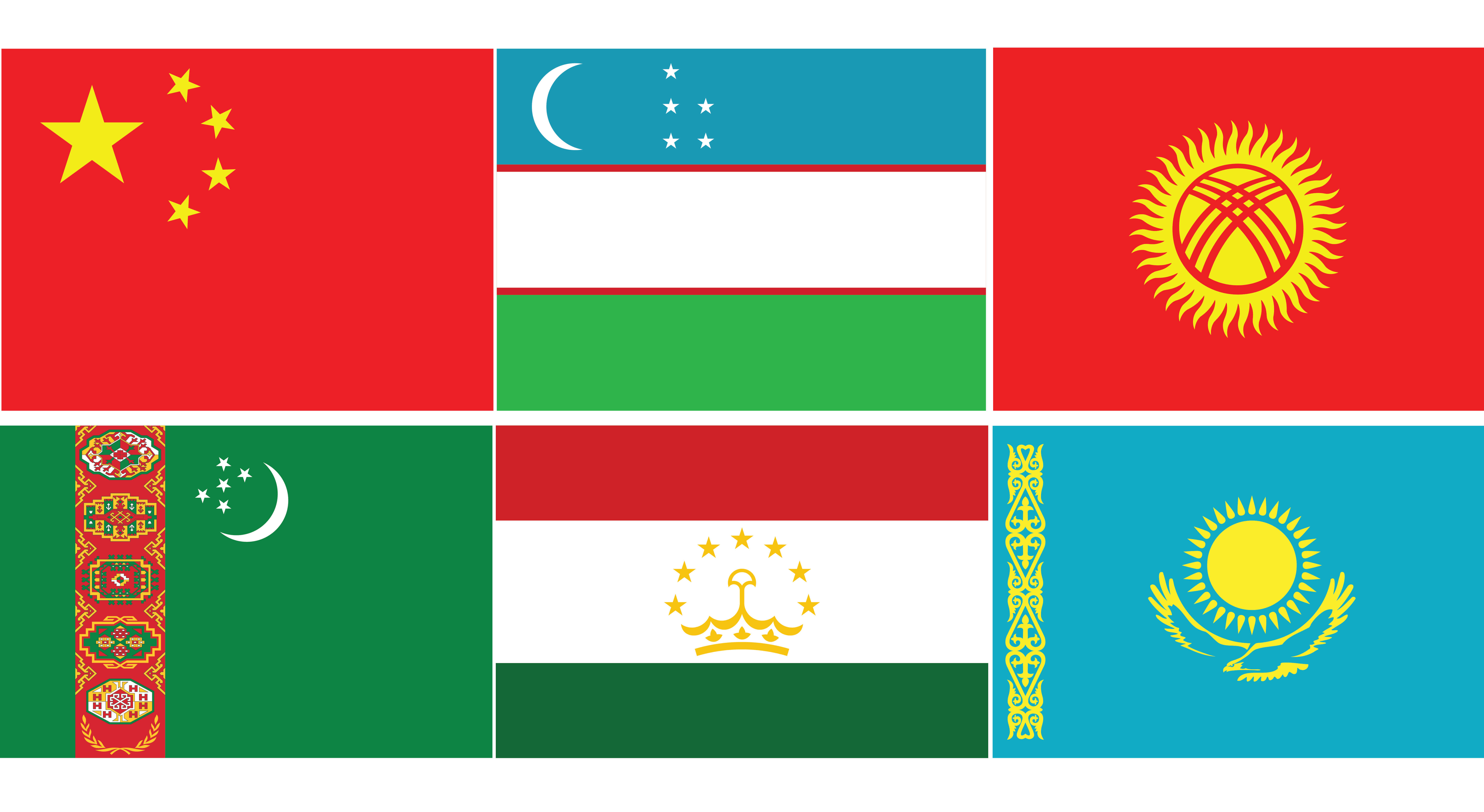
Flags of China, Uzbekistan, Kyrgyzstan, Turkmenistan, Tajikistan, and Kazakhstan in one frame

China and Central Asia: a new path to joint development

by Shiri Shiriev

Another important event on the international agenda was the Second Forum of Think Tanks "China + five countries of Central Asia", organized by: the Institute of Russia, Eastern Europe and Central Asia of the CASS, the Kazakhstan Institute for Strategic Studies under the President of the Republic of Kazakhstan, the National Institute for Strategic Studies under the President of the Kyrgyz Republic Republic, Center for Strategic Studies under the President of the Republic of Tajikistan, Institute of International Relations of the Ministry of Foreign Affairs of Turkmenistan, Institute for Strategic and Interregional Studies under the President of the Republic of Uzbekistan. The connecting link for all forum participants was the Chinese Academy of Social Sciences (CASS) with the support of the Institute of Russia, Eastern Europe and Central Asia of the CASS, the Secretariat of the Council of High-Level Think Tanks of the CASS and the All-China Association for the Study of Russia, Eastern Europe and Central Asia. The two-day program of the forum, which was held in a hybrid mode with a central communication platform in Beijing, included speeches of the heads of the above-mentioned structures, diplomatic missions, foreign ministers, the Secretary General of the Shanghai Cooperation Organization, who considered the most important issues on the “agenda” dedicated to the search for new ways and formats for joint development. The experts focused on various topical aspects, presenting their vision of how China's relations with each of the states of Central Asia and the region as a whole should develop at the present stage. As for our country, the rector of the Institute of International Relations of the Ministry of Foreign Affairs of Turkmenistan, Djumamurad Gurbangeldiyev, spoke about the state and prospects of Turkmen-Chinese cooperation, in particular, noting that the peaceful foreign policy successfully pursued under the leadership of President Serdar Berdimuhamedov, gaining momentum, contributes to the achievement of new frontiers in the system of international relations by Turkmenistan. In the modern era, the whole world respects the legal status of Turkmenistan's neutrality with great respect. Among the priority areas of the peace-loving policy and diplomacy implemented under the leadership of the head of state, a special role is given to relations with the states of the Asia-Pacific region. The People's Republic of China is one of the friendly partner states of Turkmenistan. The Turkmen and Chinese people are connected by historical, spiritual and cultural ties that originate from the depths of centuries. These common historical roots, the bonds of friendship that go deep into history, form the basis of the Turkmen-Chinese interstate cooperation, in which a special place is given to interaction in the scientific and educational sphere. An important role in the formation of new approaches of the parties to topical issues of international relations and cooperation between the states of the region with China is played by the accumulated experience in this area and the First Forum of Experts of Analytical Centers "China + Five Central Asian Countries" held in November 2021. The broad horizons for the development of partnership that are currently opening in accordance with the realities of modernity form new areas of cooperation between Turkmenistan and China. This is clear evidence of the success of our country's foreign policy strategy. The head of the Higher School of Diplomacy of Turkmenistan also focused on the fact that Hero-Arkadag, in his speech at the China + Five Central Asian Countries Summit held in January 2022, emphasized that it is the heads of states of Central Asia who are widely promoting strategically important proposals and initiatives for issues of world politics. In this context, it was emphasized that Central Asia is a region that attracts the attention of the whole world due to its huge natural resources and advantageous geographical location. In the system of international relations, the importance of the Central Asian region is growing due to the presence of large reserves, especially energy resources, favorable geopolitical and geo-economic advantages. At the end of the 20th century, the number of states interested in including the countries of Central Asia in the orbit of cooperation increased. This is confirmed by the fact that in the last 20 years the phrase "Central Asia +" has become widely used in political terminology. And the People's Republic of China, one of the first states that showed interest in this format, has the largest economy in the world, a great influential force in world geopolitics. The head of the Turkmen university, noting the features of the main directions of China's policy, emphasized that the foreign policy of the Celestial Empire, aimed at becoming a developed state of the world and based on ancient Chinese principles, implies the interest of this country in increasing influence in the world through cooperation. In supporting the international initiatives of the Central Asian countries aimed at ensuring peace, security and sustainable development in the region, the political assistance of China, which is a permanent member of the UN Security Council, is very necessary. The states of Central Asia are cooperating in the field of consolidating efforts in the field of security and countering terrorism with the Shanghai Cooperation Organization, established at the initiative of China. The speech also noted that the partnership of the countries of Central Asia with the People's Republic of China in the effective implementation of the new philosophy of the Hero-Arkadag "Dialogue is a guarantee of peace" in international life, aimed at eliminating the mutual distrust that has spread today in international relations, was of particular importance. It is no coincidence that energy is the key vector of the partnership between China + the five countries of Central Asia. As you know, a powerful Chinese economy requires a significant part of its energy capacities to be imported from outside. China attaches particular importance to Central Asia in providing its rapidly developing economy with guaranteed energy sources. In this context, a great success of Turkmen and at the same time Chinese diplomacy is the Turkmenistan-China gas pipeline project, built on the initiative of Hero-Arkadag in a very short time - just over two years - has become another clear evidence of Turkmenistan's commitment to the principle of using its energy resources for the benefit of all mankind. The development of the transport sector is also important. If China stands at the origins of the creation of the Great Silk Road, then Turkmenistan is its heart, the driving force. Within the framework of cooperation in the "China + five countries of Central Asia" format, given the new geopolitical, geo-economic reality of the III millennium, great importance is attached to the revival of the Great Silk Road. The project of the Hero-Arkadag "Revival of the Great Silk Road", designed to give a powerful impetus to the economic development of Eurasia, is closely interconnected in its philosophy and geo-economic content with the all-China project "One Belt - One Road". The already implemented and ongoing multilateral transport and transit projects coincide with the interests of the China + five countries of Central Asia interaction format. Continuing the topic related to the “China + five countries of Central Asia” format as a factor of strategic and regional stability, ensuring the sustainable development of friendly states in the new conditions, I would like to recall that at the beginning of the 2000s, many similar platforms for interaction appeared and took shape in the world. Nevertheless, in my opinion, as time and the realities of life have shown, today the China + Five Countries of Central Asia Project is one of the most famous, authoritative, multilateral formats with great prospects for development. And this is natural and logical, since the ties between the peoples of the Central Asian region and China have a long history. In the process of their long communication, a huge and unique experience of interaction, good neighborliness, exchange of knowledge and achievements in all areas of human life was accumulated. The Great Silk Road passed through the territory of Central Asia from China, which, by developing trade relations between countries, already then demonstrated the possibility of maintaining an atmosphere of calm and stability to the world, including in the territory of present-day Central Asia. And today we can say with full confidence that it was the reliance on this outstanding heritage, the continuity of historical destinies, that was embodied when the countries of the region, having gained independence, resumed active all-round relations with the People's Republic of China. Without a doubt, the current cooperation of all the countries of the region has a noticeable constructive impact on the provision of global peace and stability. It is based on the closeness and coincidence of approaches to fundamental issues on the global agenda. Together we stand for equality and justice in international affairs, respect for territorial integrity and non-interference in the affairs of sovereign states, for the implementation of the Sustainable Development Goals, we support the measures taken by the world community to effectively counter international terrorism, extremism and other challenges. Not so long ago, the states of the region celebrated the 30th anniversary of diplomatic relations with China. 30 years of mutual trust, friendship and close cooperation have shown that by adhering to the basic principles of mutual respect, good neighborliness, friendship, mutual assistance and mutual benefit, China and the countries of Central Asia have been able to build healthy and effective interstate relations of a new type. Today, the world is undergoing changes not seen in a century. The structure of international politics and economics is undergoing profound changes and needs to be adjusted. Geopolitical conflicts, disordered global governance create new challenges for development both globally and regionally. Under these conditions, the presence of objective mutual interests of the Central Asian countries and China in line with the China + Five Central Asian countries partnership format on a practical basis opens up additional opportunities for increasing the pace of effective cooperation. Using their huge potential, the countries of this alliance set a course for the modernization of the mechanism of mutual cooperation in the format "China + five countries of Central Asia". It from the moment of its appearance as a specific body for the comprehensive rapprochement of the Central Asian countries, has been and remains an important factor in the stable development of the region. Further cooperation within its framework will improve the well-being of the peoples and significantly raise the standard of living. I am sure that all the states of the region, using their authority and established cooperation mechanisms, will be able to make an important joint contribution to establishing a new agenda of peace and trust in international affairs, reducing tension, de-escalating conflicts, moving to dialogue and negotiation methods for resolving disputes and contradictions based on the UN Charter.

Defense & Security
Faded US (United States) VS Russia VS EU (European Union) flags isolated on cracked wall background, abstract USA Russia Europe politics partnership relationship conflicts concept

Europe must not be divided

by Petro Burkovskiy

As Russian troops withdraw from occupied Ukrainian villages and towns in the Kherson and Kharkiv regions, the military, forensic experts, and the world media are being shown the extent of Russian war crimes. In the 21st century, the Kyiv suburb of Butscha takes on a creepy meaning that was set for Auschwitz in the 20th century. Since April 2022, "Butscha" has not only become synonymous with the planned systematic extermination of people because of their membership in the Ukrainian community, but has also served to expose the cynicism of European elites who, over the past two decades, have turned a blind eye to the nature of the Russian regime and the practices of modern Russian statehood. Bluff about "civilized country" and "threat from the West" In February 2007, before the expiration of the second (as it turned out, not the last, although the Constitution of the Russian Federation did not provide for this) presidential term, Vladimir Putin sharply criticized the unilateral power politics of the United States at the Munich Security Conference. He said that the use of force in international relations is possible only on the basis of the UN Charter. He insisted that energy sources must not be used as weapons or means of extortion against consumers. He promised to create a free and open market economy in Russia, primarily with the help of Germany. At the same time, Putin denied that the opposition in Russia is brutally repressed; he did not admit that the rights of people in Chechnya are systematically violated through torture, murder, and kidnapping; he denied involvement in the transfer of missile technology to Iran and support for its nuclear program. All of this gave the impression that Russia's leadership wants to build an open and democratic country that pursues responsible and predictable policies and is ready for profitable, multi-billion dollar economic cooperation with its European neighbors. In return, Putin wanted "very little." First, the transformation of NATO from a defense alliance into a political organization in which European countries would conduct their policies independently of the United States. This is because, according to Putin, it is the United States that, by stationing its troops on the territory of countries that became NATO members after 1991, is fomenting a threat to Russian sovereignty and tensions throughout Europe. Second, Putin did not want European states to make the development of relations with Russia dependent on their assessment of the democratic or authoritarian character of the Russian regime. His assistant Vladislav Surkov even invented a special term - "sovereign democracy" - to justify Putin's authoritarianism and seduce Europeans with the prospect of Russia's slow democratic "evolution". Respect, equal treatment and security: demands of an autocrat In short, Putin demanded respect, equal treatment, and security. Aren't these the same principles on which NATO and the EU are based! By successfully manipulating these values and profitable economic deals, Putin achieved his goals. By February 24, 2022, many European politicians either shared the opinion that Russia was trustworthy because it was developing and liberalizing economically. Or they argued that Russia had a reason for threats and a show of force to protect its borders from NATO expansion. Putin forced European governments to turn a blind eye to the murder of tens of thousands of Chechens in 1994-2007. He managed to avoid condemnation and punishment for open aggression against Georgia in 2008. Even in 2014, he managed to get France and Germany to recognize his role as a "peacemaker" in the self-created "Ukraine crisis" and the hybrid war in the Donbass. In fact, the facts indicated that Russia began to move toward autocracy when Putin came to power. However, it was not even a party autocracy as in China, which provided for internal competition and relied on an extensive network of technocratic managers who adopted Western standards in this way or another. Putin, as president, began to restore the vertical of the KGB - the Soviet secret police and intelligence service that throughout its history viewed the democratic world as an existential enemy and a target for destruction. As a KGB apprentice, he naturally wanted revenge for the collapse of the USSR, which he considered his defeat. When Putin promised to build democracy and a market economy in Russia, he was bluffing. His calculation was based on the idea of the instability and corruption of the European political and business elites, who, for the sake of high and stable profits, will be willing to justify the "excesses" of the authorities and the "weakness" of Russian civil society. Neglecting his country for a perfidious vision When Putin pointed to the threat posed by NATO, he sought only a justification at home for constantly increasing spending on the army and defense industry, while neglecting the modernization of social and transport infrastructure in most regions of Russia. In foreign relations, Putin rewarded leaders and governments that were slow to implement common goals within NATO or promoted their national interests as opposed to pan-European or U.S. interests. This may explain how politicians as diverse as Silvio Berlusconi, Nicolas Sarkozy, Gerhard Schröder, Robert Fico, and Viktor Orbán managed to build long-term alliance relationships with the Kremlin. Despite the shock over Russia's lies and crimes that accompanied the aggression against Ukraine, Putin continues to actively use the old bluff about "normal Russia" and threatens retaliation for violation of "Russian security," which means control over Ukrainian territories. Putin's bluff is his declaration of occupied Ukrainian territories as Russian and the corresponding threat to defend them with nuclear weapons. Russian troops are fleeing the Kherson and Donbass regions with no sign of preparation to use weapons of mass destruction. Likewise, if Putin has to choose between withdrawing from Crimea and risking losing everything in a nuclear confrontation, he will choose to withdraw and retain his power. This is because Crimea is the same "integral part" of Russia as Kherson and Kharkiv oblast, from which the Russians are withdrawing as a result of military defeats. Putin, however, could be heading down a dangerous path of escalation if voices continue to be raised in Europe that his conquests must be recognized by the conclusion of a cease-fire. The Kremlin's calls for a willingness to negotiate are aimed at spreading uncertainty among European leaders about Russia's goals. This maneuver is being carried out to force everyone to suddenly turn a blind eye to mass executions, torture camps, and the bombing of peaceful Ukrainian cities in order to sow doubt that Russia is waging a war aimed at destroying an entire European nation. Putin again offers to believe that secure relations with the Russia he leads are possible if his demands are heeded. If the debate in Europe is resumed according to the logic imposed by Putin, he will use all means of terror to divide the continent and within individual states into the camps of "uncompromising" and "moderate". And without solidarity in Europe, it will be much easier for Russia to continue the war with impunity and ruthlessness. Even far beyond Ukraine. Russia hybrid means to divide Europe.At stake is trade in oil, coal, and natural gas. Since early 2021, Russia's Gazprom refused to supply gas to Europe beyond contracted volumes, artificially contributing to stock market speculation and price increases. This had a painful impact on household spending on municipal services. It also led to higher consumer prices due to more expensive electricity generated by burning Russian gas and fuel oil. Against a backdrop of public discontent, Russian intelligence services mobilized the Russian diaspora into spectacular protests in Germany and the Czech Republic and put forward the thesis of the "harmfulness" of anti-Russian EU sanctions. And such actions have a political impact. In France, Marine Le Pen actively criticized the renunciation of Russian energy sources and promised to maintain the purchase of oil from Russia if elected. In Italy, the "Lega" and "Forza Italia!" parties, which became part of the governing coalition, also opposed sanctions that hurt Italian industry. In Germany, the opposition parties "Alternative for Germany" and "The Left" expressed even more open theses about the need for "understanding" with Russia, for the sake of energy sources. The Kremlin is watching such processes closely, and they convince it that such a policy of division will bring the desired results. Russian efforts will be especially dangerous this winter. The ideology of the "Russian world" and the myth of the "Great Victory".Every year since the attack on Ukraine in 2014, the Russian president has justified his aggressive policy of conquest on the basis of Russia's special historical mission. It consists in restoring historical justice - the borders of the Russian state, which should unite all bearers of "traditional Russian values." These are the Russian language, the Orthodox faith, education in the traditions of Russian culture and literature. The Kremlin calls this bizarre combination the ideology of the "Russian world." Considering the fact that the Russian diaspora is currently manifesting itself very actively throughout Europe, from Italy and Germany to Latvia and Finland, this creates, in the view of the Russian leadership, a sufficient legitimate reason to spread measures of direct and hybrid aggression against new countries. And Putin constantly talks about the inevitability of a "multipolar world" in which Russia will be one of the "poles". While the fate of Europe, in his opinion, will be ruined by excessive American influence. That is why he often refers to the Yalta Conference in 1945, which made Stalin's Russia the owner of half of the European continent, while the other half was controlled by the Allies led by the United States. In relations with Europe, Putin wants to see himself not only as a "veto player," the leader of a "great power" that belongs to a narrow circle of its peers (the United States and the PRC) that have a decisive influence on world politics, but as a hegemon. As the ruler of a victorious state to which the others are grateful for their security and existence. Therefore, despite the defeats in Ukraine, he continues to say, "We haven't really started it yet." Obviously, Hitler and Stalin could have said the same thing when they invaded and divided Poland in September 1939 and prepared for new conflicts. So far, this history has a slim chance of repeating itself. 

Energy & Economics
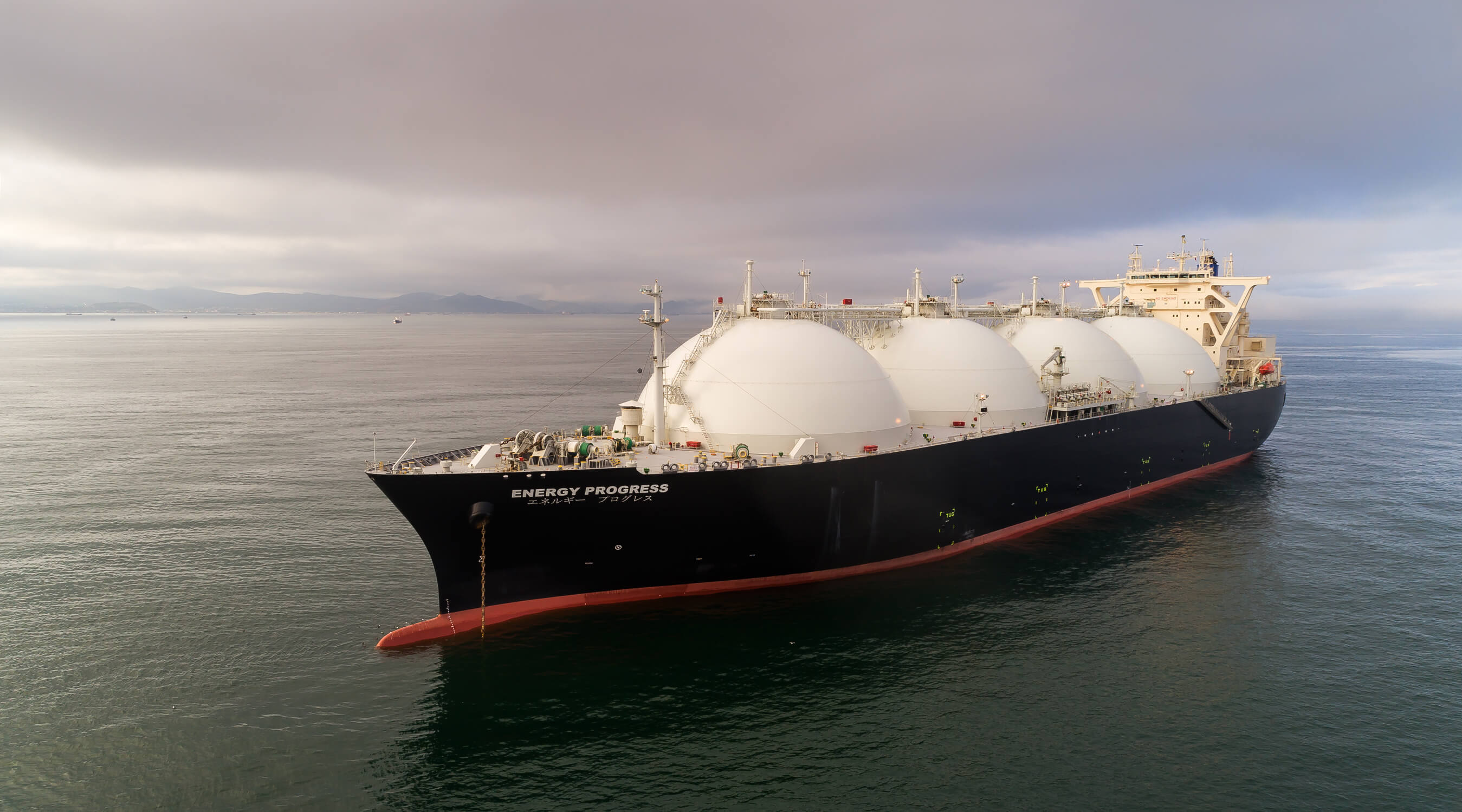
LNG-tanker Energy Progress, Nakhodka, Russia

Russia: LNG exports up in 2022

by Iwona Wiśniewska

Russian Deputy Prime Minister Aleksandr Novak has announced that Russia’s production and exports of liquefied natural gas (LNG) rose by almost 9% to around 33 million tonnes (c. 46 bcm) in 2022. Most of the Russian LNG was produced at the Yamal LNG project (c. 20 million tonnes), whose main shareholders include Russia’s Novatek (50.1%), France’s TotalEnergies (20%) and China’s CNPC (20%) and the Silk Road Fund (9.9%). Nearly 15 million tonnes from this project went to Europe (up 14% y-o-y), and around 5 million tonnes were shipped to China. In addition, more than 10 million tonnes were produced in the Gazprom-controlled Sakhalin-2 project in the Russian Far East, an increase of 2% year-on-year. The main customers for this gas were Japan (the Japanese companies Mitsui and Mitsubishi are shareholders in the project) and China. According to Chinese customs data, a total of 6.5 million tonnes of LNG were shipped to the PRC from Russia in 2022, up from 5.7 million tonnes a year earlier. LNG is also being produced in two small-scale projects in the Leningrad region in the Baltic Sea. The Novatek-owned Vysotsk terminal produced around 700,000 tonnes and the Gazprom-owned Portovaya LNG produced around 350,000 tonnes. Gas from both projects was supplied to the European market. The deputy prime minister also asserted that Russia intends to deliver on its ambitious plans to double its LNG production in the next few years, and increase its LNG exports to 100 million tonnes in 2030 as a result. This would be achieved mainly through the development of Arctic LNG projects, including the Novatek-owned Arctic LNG 2. This expansion has been promised even though Russian production may decline in 2023 due to planned maintenance work on two (out of four) Yamal LNG production lines. CommentarylLNG was the only Russian fuel whose supplies to Europe increased in 2022. Consequently, the importance of LNG has increased both with regard to Russia’s exports (LNG accounted for 25% of all Russian gas supplied to the EU) and the EU’s imports (less 20% of the EU’s total LNG imports).lIt will be very difficult, if possible at all, to realise Russia’s ambitious plans for a robust increase in LNG production in the years to come. Forecasts from the Russian Ministry of Energy published in May 2022 showed that LNG production will be much lower than previously assumed. Under the current baseline scenario, LNG exports are projected to reach almost 31 million tonnes in 2023 and 35.7 million tonnes in 2024, compared to the previous target of over 50 million tonnes. lAs a result of sanctions following the Russian invasion of Ukraine, Russia’s LNG sector has been cut off from the Western technology and equipment which played a key role in the development of this sector. Many foreign companies (German, French, Spanish and others) have withdrawn from cooperation with Russia in this area; for example, one of the shareholders in Arctic LNG 2, France’s TotalEnergies (10%), has stopped investing in the project and started the process of completely withdrawing from the venture, which should be finalised in the first half of 2023. Nonetheless, the Russian authorities are insisting that they will manage to complete the construction of the first Arctic LNG 2 production line by December 2023 (about 90% of the work had already been done when the sanctions were introduced), and that the next two lines will also be put into operation according to the original schedule, that is, in 2024 and 2026. Leonid Mikhelson, the CEO of Novatek, has affirmed that the corporation has managed to purchase the necessary equipment by cooperating with companies from countries such as Turkey and the United Arab Emirates. Russian companies are also working on developing their own gas liquefaction technologies. At present, these are inefficient (the production lines are capable of producing a maximum of 1 million tonnes per year) and often fail. It is unlikely that Russia will be able to fully replace Western technologies and equipment by circumventing the sanctions or developing its own solutions. Indeed, the effectiveness of such efforts so far proven to be limited.  

Defense & Security
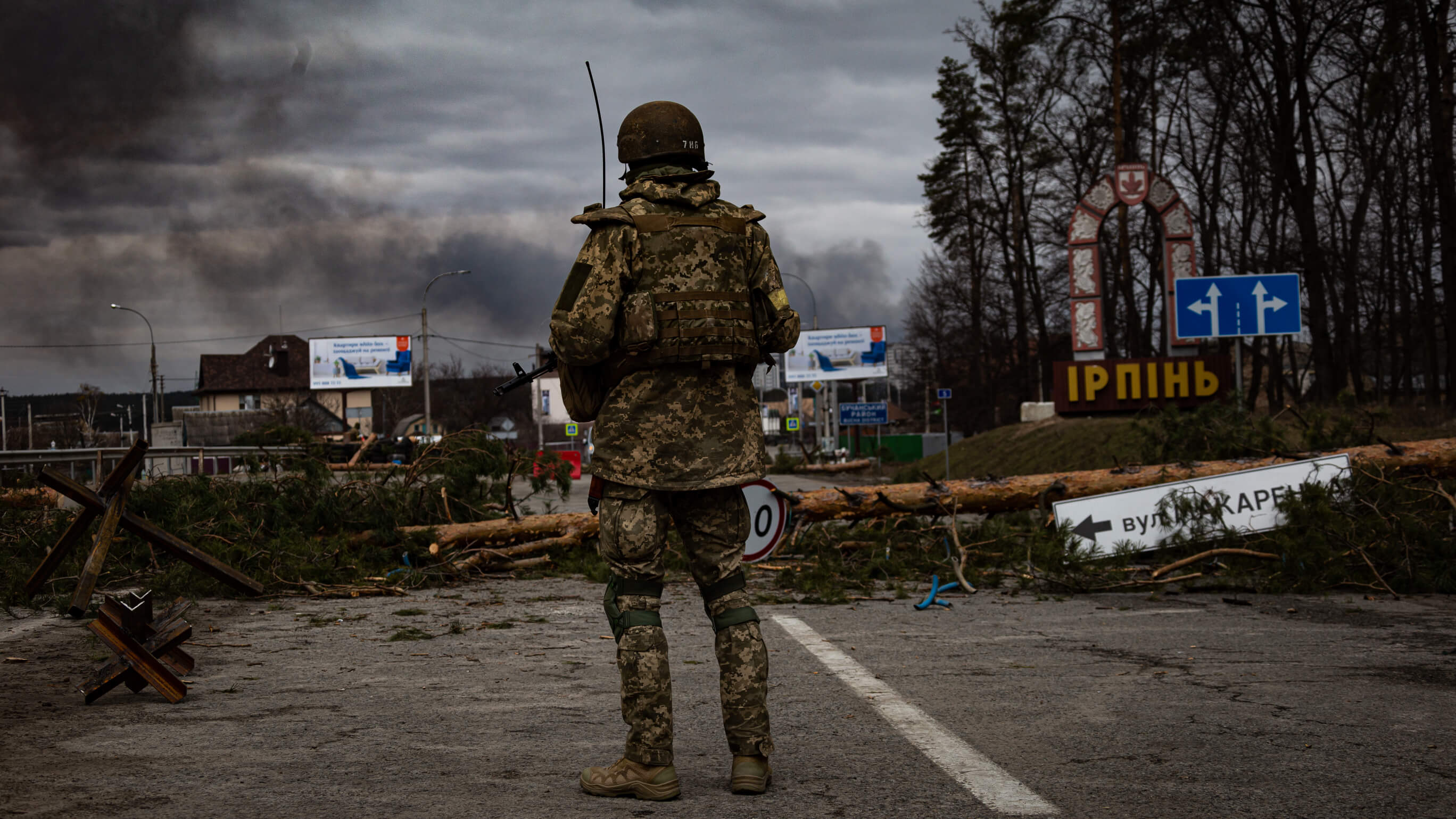
Ukrainian soldier looking over destructions in Irpin, Ukraine

No peace without a military victory

by Jana Puglierin

Russia has been at war with Ukraine for more than 10 months, with no end in sight and with just as little prospect for direct negotiations between the warring parties. These were last broken off mutually on 17 May 2022. Since then, there have been repeated calls in Germany, whether in opinion articles or open letters, for more diplomatic efforts to end the hostilities. Such calls were often combined with demands for the federal government to cease arms deliveries to Ukraine: when all is said and done, peace is achieved not with arms, but with a truce, the argument goes. And continuing the war with the already unrealistic goal of a Ukrainian victory and the recapture of all the territory occupied by Russia would only mean useless bloodshed. These calls are all too understandable given the horrific images of suffering and destruction that reach us daily from Ukraine. Even so, it would be wrong right now to urge Ukraine to negotiate – or even give up parts of its territory and the people living there. Surely, no one wants the guns to go silent more than the Ukrainians themselves. They are the victims of this war. It is their hospitals, kindergartens and schools that have been destroyed by Russian missiles and drone attacks. Many have lost their homes. When the air raid sirens sound, it is they who sit in the shelters and who go without heating, electricity or running water, often for hours or days on end. The exact number of soldiers who have died at the front is unknown; US estimates put the count at up to 100,000. And yet, the Ukrainian government wants to continue the fight against the Russian aggressor – and only negotiate directly with Russia if and when the Kremlin first answers for its war crimes before an international tribunal and withdraws all troops from Ukraine, including from the illegally annexed areas. In this,  the government is supported by the vast majority of the Ukrainian population.Putin wants total control of UkraineIt is clear to the Ukrainians that the Russian President Vladimir Putin is not interested in finding a way for a secure coexistence with a sovereign and independent Ukraine that can determine its own future.  He wants it gone. In his view, today's Ukraine is nothing more than a ‘colony with a puppet regime’, an externally controlled and hostile ‘anti-Russia’, set up against the ‘real cultural, economic and social interests of the people and the true sovereignty of Ukraine’. For Putin, Ukraine and Russia are ‘one people’.  A Ukraine that is independent of Russia and wants to open up to Europe along the lines of its central European neighbours is unacceptable because it calls into question the very foundations of the Russian imperium, which Putin is determined to prevent from falling apart. The repeatedly expressed assumptions that Russia is ultimately only concerned with preventing Ukraine from joining NATO, or only has geographic interests in the Donbas, are wrong. In truth, Moscow wants Ukraine to relinquish much more: its freedom, its identity, its self-determination, its culture. The destruction of Ukrainian life, Ukrainian art and Ukrainian statehood, together with repressions – from murder to rape to abduction – in the occupied territories are clear demonstrations of this. So far, there is no reason to believe that Putin's thinking has changed in recent months. On the contrary, with every further step, Putin makes clear that he is not ready to make concessions. Although he and other members of the Russian government regularly mention the word ‘negotiations’, they have so far not presented a concrete option. As recently as the end of December 2022, Russian Foreign Minister Sergey Lavrov repeated the call for the ‘demilitarisation and denazification’ of Ukraine and described the illegally annexed areas of Ukraine as Russia’s ’new territories’. Clearly, Putin has not abandoned his goal of complete political control over the country but has merely adjusted his approach and timeline. Because Russia was not militarily successful, the devastating airstrikes on the Ukrainian civilian population and the energy infrastructure are now intended to break the population's will to resist and to wear down the country – until Russia is able to launch a new offensive in the spring. Putin is also counting on the fact that the western supporter states – also under pressure from their populations – will soon tire and run out of weapons, ammunition and money for Kyiv. If the West were now to press for a ceasefire or peace negotiations, perhaps with the threat that it would otherwise end support for Ukraine, that would signal to the Kremlin that its method is working and that all it has to do is wait until we lose patience. So far, none of the advocates of an imminent ceasefire have been able to convincingly explain how Putin can be persuaded to make concessions without exerting further military pressure on him.Preventing Russia from dictating peaceWe Germans, in particular, have for years been repeating the mantra that ‘there is no military solution’ to this or that conflict. Unlike Vladimir Putin: in Georgia, the Crimea and Syria, he has learned that he can very successfully use military force to achieve his political goals. In the current conflict, therefore, only Ukraine's military successes prevent such a dictated peace from happening. In other words, Russia must first be stopped and pushed back militarily before there can be any chance of real diplomacy. It's about enabling Ukraine to hold its own against the Russian invasion and showing Putin that even a new military offensive in the spring has no chance of succeeding – and that this won't change over time. The West itself has a paramount interest in Putin not making any gain from his war of aggression. His ambitions are a danger to all of Europe. If he gets away again with using force and nuclear blackmail to bring parts of another state under his control, this invites repetition elsewhere, be it by Russia or another state. The goal of an overall revision of the European security order, which is essential for peace and prosperity also here in Germany, was announced by Russia in the treaty texts of December 2021. The decision by Germany, the US and France to now also supply Ukraine with armoured personnel carriers and reconnaissance vehicles is therefore logical. It emphasises that the major military powers of the West will not force Ukraine into an unacceptable deal with Russia.  Of course, the danger of escalation must always be kept in mind when providing military support. However, the reactions after missiles fell on the Polish-Ukrainian border in particular has shown that the West is aware of this and is reacting prudently and is capable of risk management. Real negotiations will only begin again when both Russia and Ukraine come to the conclusion that there is more to be gained from a truce than from fighting on. Perhaps the cards will be reshuffled after spring — if the ’hot autumn’ and the ’winter of fury’ in Europe fail to materialise, if the western democracies continue to stand firmly on the side of Ukraine and if a new Russian offensive proves unsuccessful. What is certain is that any negotiations and compromises will reflect the resulting balance of power between the parties. Our goal must therefore be to get Ukraine ready as well as possible for this point in time and to prepare together with Kyiv for the moment when the window for diplomacy indeed opens.

Defense & Security
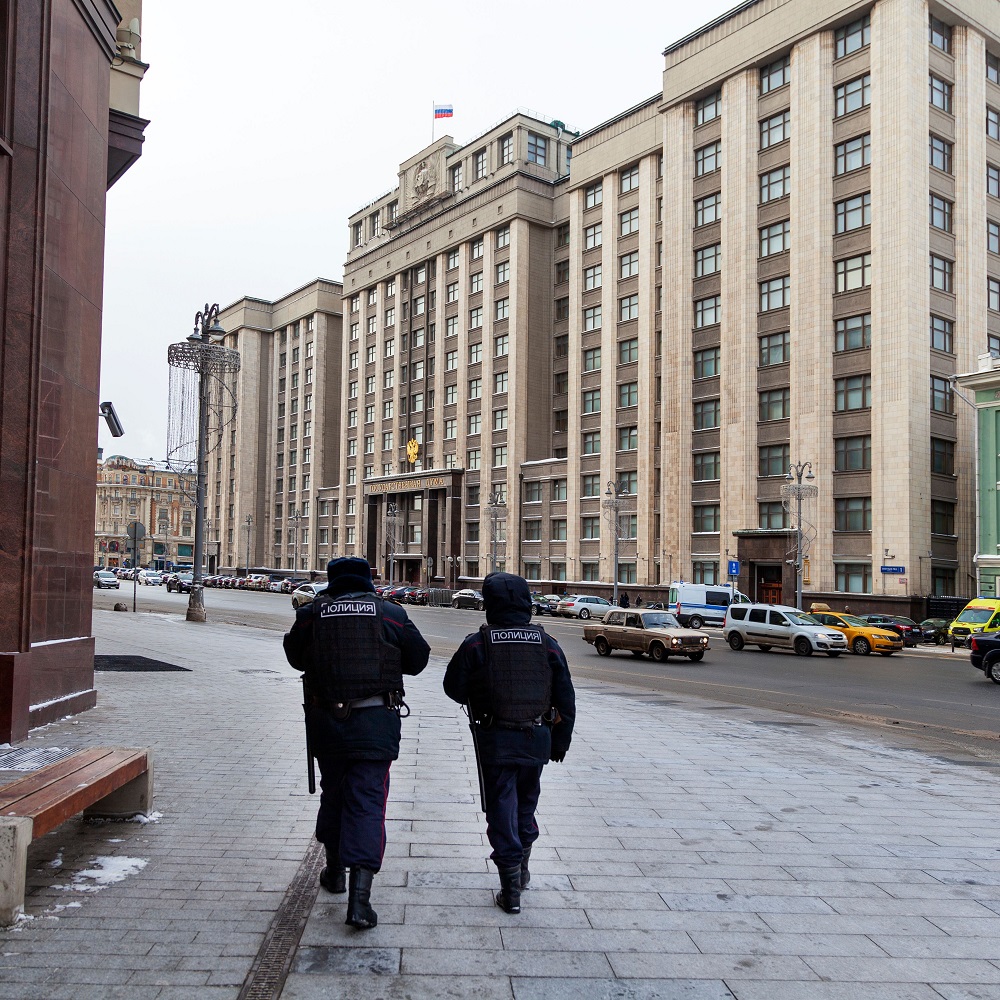
Russian Duma

From Shadows to Spotlight - The Kremlin’s Not-So-Covert Gambit for Ukraine

by Annabel Peterson

Introduction: The Culmination Points The war in Ukraine has been raging for 19 months and is yet to exhibit a conclusive imbalance of forces and means. This is good news for Ukraine, who was expected to surrender within days, and an unprecedented embarrassment for Russia, who planned for a Crimea 2.0. What we are witnessing today is undoubtedly the result of a cluster of Russian intelligence failures, both in terms of reconnaissance and operational support. A lot has been written about the general errors in autocratic intelligence management, as well as Russia’s resistance to modern tactical realities such as crowdsourcing open-source intelligence (OSINT), but few have considered the overall weakness of the underlying strategic intelligence assets. For Russia, a loyal collaborator network, the Russian Orthodox Church (ROC), and certain advanced cyberwarfare were central to preparing the ground for a quick surrender. All of these, however, reached their culmination points after the initial intervention in Ukraine 8 years prior. The culmination point of attack is a well-known Clausewitzian military concept describing the inevitable equilibrium reached as a result of the defender’s counterbalancing activities and the attacker’s consequent loss of initial superiority. At this point, the attacker is still able to hold the defence, yet continuing the offensive in the same manner would mean defeat. In Russian doctrine, the same laws apply to a clandestine battlefield, where the culmination point is reached with the exposure of one’s true goals, means, and methods. Intelligence operations that fail to adapt to the operating environment and enemy responses naturally become counterproductive to the attacker’s strategic goals. The annexation of Crimea was an example of a successful deployment of clandestine means at the height of their strategic influence. The operation has been described as a clever adaptation of tactics after being cornered by the failure of Russia’s original active measure campaign in 2013. However, the aftermath of that operation brought the remaining Russian influence assets to their culmination point, thus calling for a clear change of strategy. The Kremlin’s political-strategic goal – ever since Ukraine’s declaration of independence – has been to subordinate it to Moscow’s will. In pursuit of that, Moscow has attempted to instal various puppet entities into Ukraine’s political system, starting with the illegitimate “Donbas people’s republics” in 2014. Eight years and two Minsk Agreements later, the Kremlin had not achieved the desired results and decided to extend the puppet network into Kyiv’s central government. Similarly to Crimea, a successful power transfer merited a quick (and preferably bloodless) surrender of the government. Setting the stage for a Crime-type power transfer was, therefore, the venerable goal of the Russian intelligence services in the leadup to the invasion. The Federal Security Service’s (FSB, Federal’naya Sluzhba Bezopasnosti) 5th Directorate – tasked with combatting dissent in Russia’s “near abroad” – carried the heaviest weight in preparing Ukraine for invasion. Some western security officials would even hold the FSB accountable for the trickle-down failures of the Main Directorate of the General Staff of the Armed Forces (GRU, Glavnoye Razvedyvatelnoye Upravlenie) and Russian military intelligence, who were forced to work with flawed base information regarding the potential for Ukrainian resistance. Adding to this the obsoleteness of Russia’s agent network, Orthodox authorities, and cyberwarfare upon which its success largely relied, the invasion was doomed to fail from the start. 1. A Network Without Collaboration The primary covert asset – required for a swift occupation of Ukraine – was a reliable Russian agent network on the ground to provide strategic intelligence and prepare the information conditions enabling a smooth power transfer. Such a cultivation of the soil for a Russian takeover started already in the 1990s, eventually unleashing a competition for the most impactful ground presence among the Russian intelligence services. According to Bellingcat’s lead investigator, Christo Grozev, Russia’s internal security service and military intelligence, in particular, have been competing to set up the most far-reaching fifth column in Ukraine. In pursuit of that, both the FSB and the GRU have targeted not only Ukrainian politicians, activists, and security officials but also the judiciary, journalists, and former Yanukovych associates. By 2014, Russia’s agents of influence had provided enough leverage to convert existing political divisions, weak institutions, and high- levelcorruptionintoaquicksurrenderof Crimea and Donbas. Researchers from the Estonian Academy of Military Sciences identified the saboteur network’s systematic spreading of panic and propaganda as a key factor enabling Russian success in Donbas. It entailed fake news that alleged heavy Ukrainian casualties and the untrustworthiness of the government in Kyiv. Separatist collaborators, together with professional Russian intelligence officers, stood at the centre of these information operations. Such officers would, for instance, arrive at conflict hotspots, alongside the “journalists” specialised in propaganda, and fabricate the developments to appear unfavourable to Ukrainian resistance. It meant that by the start of the physical confrontation in Donbas, the region had been thoroughly primed for Russian intervention and that incoming troops had no trouble convincing Ukrainians to surrender entire settlements without resistance. Weeks prior, a similar scenario had unfolded in Crimea, with the collaborator network enabling deep deception and fast evolution of events on the ground. At the height of that unprecedented operation, the appearance of Russian troops without insignia made it difficult for Ukrainian counterintelligence to diagnose and respond to the situation, not to mention the paralysing confusion in local civilian masses. The covert operation ran smoothly, owing its success to widespread collaboration from the local police, security service, political, and criminal elites, whom the Russians had managed to infiltrate and corrupt. The efficient informational cover and timely intelligence provided by the collaborator network allowed Russian forces to swiftly seize key strategic positions on the peninsula and thus deny grassroots resistance by deception. However, what the Kremlin may not have realised in 2022 was that underlying the success in Crimea were extremely favourable political conditions and the complete novelty of the chosen approach, which could not be replicated in other operations. Moscow’s human intelligence (HUMINT)-enabled and deceptive diversion operation in Ukraine, therefore, reached its culmination point in 2014. At that moment, Russia still retained enough plausible deniability to avoid direct proportional consequences, but the opposing security communities became hyper- focused on the “hybrid” elements in Russian offensive operations, thereby suggesting exposure of the Kremlin’s covert methods. The operation’s political technologist, Vladislav Surkov, was sanctioned by the US immediately after the annexation, despite the frantic efforts of his aides to deny his involvement to the Western public. Experts interpreted Surkov’s careless reaction as a mere bluff. Notwithstanding the evident exposure of the covert operation, Russia’s game plan for a successful military intervention in 2022 remained unchanged. As the most comprehensive post-mortem of the intelligence failure details, the Russian asset network was meant to paralyse the Ukrainian state and condition Ukrainian officials to accept a pro-Russian course; the next step would be provoking mass protests against the government’s sudden inability to serve Ukrainian national interests. The systematic spreading of false narratives regarding the protests would help fracture Ukrainian resistance and provide a moral justification for an invasion. Analogous to the 2014 operations, Moscow’s agents on the ground were supposed to maintain pro-Russian sentiments in the contested territories until Russian forces secured critical strategic positions. The main goal of the GRU’s ground network was to ensure the physical passage of Russian troops and members of the FSB’s planned puppet government. A principal role in this was to be played by one of the GRU’s most crucial assets and a member of the Ukrainian Parliament, Andriy Derkach, recruited in 2016. By the time of the invasion, Derkach and his assistant Igor Kolesnikov had been put at the centre of the entire network. However, at the final preparatory and initial active stages of the invasion, multiple malfunctions occurred, signalling a premature burnout. • The first setback was the sanctioning of Andriy Derkach in 2020 for his interference in the 2016 US presidential election. In addition to provoking mass protests and misleading Ukrainian counterintelligence, Derkach was to lead the dissemination of disinformation about the dangers associated with Ukrainian nuclear energy production – all of which failed to materialise after his landing on the blacklist. Complete exposure of Russia’s intended psychological operations became clear weeks prior to the invasion when the UK and US had strategically declassified comprehensive intelligence about Moscow’s plans to politically subvert Ukraine. Remarkably, the Security Service of Ukraine (SBU, Sluzhba Bezpeky Ukrainy) had apparently been aware of the Derkach network – and allegedly neutralised it at the beginning of the invasion by detaining Kolesnikov, identified as the key manager of funding. • The second setback partly followed from the first. Such public and attributed disclosure of Russian psychological operations gained superiority for the Ukrainian narrative and mobilised a resolute international alliance (even though Ukrainian officials had been initially denying the possibility of a Russian attack). Moreover, in the face of Russian aggression, domestic public opinion was uniformly in favour of EU and NATO integration. This should have been interpreted as a clear sign that the lack of societal cohesion and international support no longer formed a weakness to exploit. Unlike in 2014-15, there were indicators that the West would intervene. However, the FSB chose to conduct its own polls, overseen by a former Yanukovych aide in charge of sleeper agents, and then interpreted the numbers to support the armed intervention. As RUSI researchers have explained, the invasion was likely based on the premise that those institutions in which the population showed the most trust – i.e., the military and the civil society organisations – could also be easily neutralised by the Russian network on the ground in Ukraine. Battlefield success during the initial stages of the invasion, therefore, relied on similar influence and diversion tactics as in 2014. In grave contrast to the former, the invading troops instead found the local population in the contested territories assisting the Ukrainian intelligence services to sabotage Russian positions. Hence, sticking to the methods of 2014 was counterproductive for the agent network of 2022. • This led to the third setback: the questionable loyalty of Russian junior agents and informers in Ukraine. The FSB’s strengths in the Ukrainian theatre came with a considerable expansion of its operations and the establishment of a “curator system,” whereby over 120 FSB curators would manage around 5-10 asset relationships. It involved a shift from targeting exclusively the highest- ranking officials in 2014 to virtually everyone associated with influential people, down to their service personnel in 2022. A key characteristic of this approach was that assets were recruited on a flexible, temporary, and project basis, which sometimes did not align with their professions and, therefore, took a toll on the assets’ quality and loyalty. In the words of the SBU’s reserve Major General Viktor Yahun, the expanded spy network in Ukraine was corrupted by its own structure. As assets got tangled in a “circle of responsibility” to cover comrades and improve their own results, the intelligence reaching the decision- makers at the top was being tailored to support the illusion of an easy Russian victory. The status of Putin’s favoured service, earned by the successes of 2014, also deepened patrimonialism within the curators themselves, whose tool to advance one’s career was to validate the Kremlin’s pre-decided policies. The GRU was facing the same problem: most of the influence agents they had recruited would not cooperate directly with their curators after “D-Day,” suggesting that they may have never been supportive of an operation of this kind. In this regard, Christo Grozev brings a noteworthy example of an asset inside the SBU that the GRU had to execute to preserve its credibility among other collaborators. The structure and modus operandi of the Kremlin’s agent network in Ukraine, therefore, suggests that it was expected to behave similarly as did in 2014 – i.e., to condition both the authorities and the local communities to surrender without resistance. However, as one puts all the setbacks together a clear picture emerges: once a functioning asset network had been reduced to ashes by the start of the invasion. 2. A Church Without Faith The collaborator network was interconnected with the ROC – a de-facto state institution that, in the words of Russian religious scholar Sergey Chapnin, “less and less resembles a church in the traditional understanding of this word.” It is rather a multifaceted influence asset of the Russian state that has prematurely culminated first on the strategic and then on the operational level. The ROC attains its strategic significance from its special status as a formally depoliticised extension of the state’s hand – its main function ever since Peter the Great’s imperialistic reforms. Stalin’s revival of the church during WWII and the recruitment of its priests as the People’s Commissariat for Internal Affairs (NKVD, Narodnyi komissariat vnutrennikh del) agents set up a patrimonial security structure that outlasted the collapse of the USSR. Up to date, Patriarch Kirill, the current leader of the ROC, continues to emphasise the close relationship between the church and the state. A deep dive into its history shows that in 1992, the church’s public discourse began to glorify Russian combat soldiers as saints. Indeed, in the context of war, there is no asset as useful as one that can justify and encourage dying en masse for the Motherland. However, events took a downturn for the ROC on the eve of the Crimean annexation. Leaked emails from the operation’s leading architect, Vladislav Surkov, revealed that the ROC had failed its grand strategic mission already in the leadup to the Ukrainian Euromaidan, making the annexation the last resort rather than a demonstration of power. This happened as the Kremlin sought to use the church as a tool to steer Ukrainian public sentiments towards “Eurasia” but, after various propaganda campaigns, found all the Orthodox churches in Ukraine still formally favouring integration with the EU. Having failed to influence the general direction of Ukraine, the ROC, nevertheless, maintained substantial social authority in the target country. The FSB’s polls found that ahead of the invasion, the church was still highly regarded by over half of the Ukrainian population. The deep intelligence infiltration of the Moscow Patriarchate’s domains allowed the church to remain the main cover organisation for Russian operations since the 1990s. The ROC’s impact was the most visible in Ukrainian domestic politics, where its presence secured Russia’s claims to Ukrainian territory by cultivating a “religious nationalist” political faction, promoting the narrative of inherent religious unity between the two nations. Drawing on this uncontested institutional authority, the real value of the ROC was in enabling the Kremlin to uphold an elected pro-Russian representation in the Verkhovna Rada of Ukraine throughout multiple election cycles. What was left of the ROC’s strategic influence on Ukraine’s political and religious divisions peaked just before the start of the conflict in 2014. The culmination point was reached with the annexation of Crimea when the church first came under fire. Yet, it was still able to escape blame and distance itself by portraying the Russian intervention as a religious dispute within the context of a “Ukrainian civil war.” Since no creative adaptations to the strategy followed, the increasing public questioning of the ROC’s loyalties after the annexation took a toll on its influence, eventually leading to a formal secession of the Ukrainian church from the Moscow Patriarchate in 2019. It delivered a fatal blow to the ROC as its main reason for existence had become the “one Orthodox nation” myth used to maintain control over Ukraine. Whereas the ROC’s central strategic narrative had simply failed to make an impact before the occupation of Crimea, after the annexation, it was outright swept out of existence. Beyond political strategies, the ROC also had an operational role in capturing Ukraine. In the 2014 battles, for instance, priests were found fighting among separatist ranks in Donbas and operating torture chambers on the premises of religious facilities. Paramilitaries with a distinct Orthodox identity made a significant contribution to the separatist war effort, especially wing to the participation of local “Kazak” units familiar with the landscape. In the ongoing war, Estonian Foreign Intelligence recognised the ROC’s provision of multifunctional safehouses to be a critical constituent of the Russian ground network. Even more importantly, it was the ROC’s associates who provided the most valuable HUMINT if compared to the otherwise underperforming network. Naturally, the church’s special status as a religious institution, with a mandate to oppose the Kremlin, grants it the most auspicious position to conduct social network analysis and gather overall situational awareness. Christo Grozev also admits that church associates constitute a pool of trustworthy pro-Russian “spies and gunners” who assist with the actual conduct of hostilities. In continuation of the 2014 efforts, ROC priests were again among the most important local agents promoting the invaders and reporting the non-conformists to the Russian occupant forces. The ROC’s operational community manage- ment duties maxed out during the initial phases of the occupation in 2022, with the loss of plausible deniability regarding its involvement. Following the secession of the Ukrainian Orthodox Church during Poroshenko’s presidency, the ROC’s positions began to deteriorate, while the reach of malicious Russian networks and influence tools embedded in it was reduced. It had, nevertheless, enjoyed relative immunity up until the invasion due to the Ukrainian government’s political fear of limiting religious freedom and offending the remaining Ukrainian patriots among the ROC’s followers. However, uncovering the extent of Russian war crimes during the Ukrainian counteroffensive left the ROC no more room for denial and resulted in a systematic targeting of the church and its associates. It was at this point that the maintenance of the ROC as an operational asset became counterproductive. Ukrainian counterintelligence soon confiscated its physical property and made sure to expose all suspicious findings to the media. Statistics show that most believers consequently began to see Russian Orthodox priests primarily as intelligence agents; a tectonic shift in formal allegiance to the Ukrainian Orthodox Church has occurred, thereby dealing a final blow to the ROC’s legitimacy in Ukraine. 3. Attack Without Leverage The final asset – crucial to shaping sentiments on the ground and complementing Russian military strikes – was state-sponsored cyberattacks on Ukraine’s critical infrastructure. One particular GRU cyber unit named “Sandworm” was the prime actor associated with this task since the beginning of the war in Ukraine. After hacking various news and government websites to spread disinformation and encourage the population to surrender to occupation authorities, the GRU’s cyber strategy culminated with a large-scale attack on Ukrainian critical infrastructure in December 2015, leaving thousands of civilians without power for a prolonged period. This was another classic attempt to undermine societal trust in Ukraine’s capabilities to withstand aggression and provide for its citizens. For external observers, Sandworm’s attack constituted both an escalation from previous disruptive incidents and the first successful sabotage of a state’s energy infrastructure by a covert cyber campaign. The West – while acknowledging the campaign’s highly sophisticated and systematic nature – was left dumbfounded by Russia’s technical capability and fearful of Moscow’s potential to politically subvert Ukraine. That ominous precedent exemplified to multiple stakeholders and observer states the necessity of securing their power grids from hostile foreign state actors. The 2015 attack became Sandworm’s culmination point: Ukraine was severely affected but recovered fast amidst the international attention. The GRU managed to hit the target’s weakness in a highly unexpected manner while initially retaining an umbrella of deniability, plausible enough to avoid legal repercussions. In theoretical terms, a retreat – or change of strategy – at that point was warranted to avoid burnout. However, the GRU approached the attack rather as reconnaissance by combat – i.e., a subtype of reflexive control aimed at gaining intelligence on the target’s capabilities and potential responses by way of attack. Having witnessed Ukraine’s inability to resist or respond to such incidents, Sandworm carried out occasional attacks in the following years. Continuing the cyber campaign without any modifications became counterproductive when private companies and other external entities entered the game on Ukraine’s side. By 2022, highly capable private actors such as Microsoft had already pre-emptively intervened and offered real-time assistance to Ukraine in countering Russian cyberattacks throughout the invasion. Likewise, the Starlink communications technology not only derailed Russian attempts to disturb Ukrainian command and control but became a lifeline for civil resistance. In a direct affront to Russia’s cyber campaign’s goals, the donated Western technology enabled sophisticated intelligence collection and fire support operations capability for the Ukrainian forces. The turn of tables became apparent with two main events. • First, in the beginning, stage of the invasion, Sandworm launched large- scale wiper attacks on Ukraine’s critical digital infrastructure, with Viasat, a military communications provider, among its targets. As in the old playbook, the goal was to undermine Ukraine’s political will and collect intelligence on all levels. While significant tactical complications for the target followed, the attack failed to affect Ukraine’s societal and military morale as planned. On the contrary, the Ukrainian Armed Forces managed to leverage the public for intelligence value, further strengthening societal resilience. • Second, reassured by the 2015 experience, Sandworm attempted another ambitious cyberattack on the Zaporizhzhia nuclear power plant a few months into the invasion, aiming to leave millions without energy. However, this time, the aid provided by Ukraine’s private supporters enabled a complete denial of the fatal attack or any force-multiplying effects to entail. Furthermore, the resemblance of the offensive software to the 2015 attack facilitated a faster neutralisation of the cyberweapon. Russia’s efforts again failed to account for the greatly enhanced resilience that Ukraine’s digital infrastructure would display after learning from the initial shock attack. The Ukrainian side, on the contrary, demonstrated an understanding of the GRU’s modus operandi and gained silent battleground superiority by capitalising on the initial exposure of Sandworm. Conclusion: The Common Denominator There was one common denominator between Andriy Derkach, the ROC leadership, and Sandworm: they were all products on the Kremlin’s covert action shelf whose expiry date had passed almost a decade ago (although they may still often come up to describe Russia’s hidden strategy to condition Ukraine into a quick surrender). What started as a markedly successful leveraging of covert assets in support of territorial gains and political concessions in 2014 culminated with a complete strategic blunder that was the 2022 invasion. A premature culmination of those three strategic assets is one way to explain the outcomes. After the successful annexation of Crimea and destabilisation of Donbas, the FSB expanded its Ukraine operations but failed to realise that the loyalty and public sentiments that triumphed in 2014 would not be the default in 2022. The GRU’s efforts against Ukraine were exposed both on the ground and in cyberspace, which helped Ukraine gain external support and build up resilience against the two types of subversion. In the meantime, the FSB and the GRU were heavily relying on the ROC, which had been gradually losing all leverage in Ukraine after the 2019 schism and the 2022 exposure of its direct involvement in the conflict. On the one hand, the turn of events suggests that Russia’s tools and theories of hybrid warfare may be neither as sophisticated nor effective as feared after the annexation of Crimea. The flip side of this implies that the current war will rely more on Russian biomass and hard power, especially now when assets of influence and non-military subversion have been exhausted. On the other hand, our understanding of Russia’s performance in this regard may be somewhat biased since we are, by definition, only able to analyse intelligence failures – not achievements. Another aspect to consider is the continuing revelations of Russia’s successful meddling in democratic political processes abroad, which suggests that some Russian covert assets outside of Ukraine may yet reach their culmination points. The central questions are if and what the Kremlin learns from the strategic failures in Ukraine, as well as whether it becomes more open to the structural improvements needed.

Diplomacy
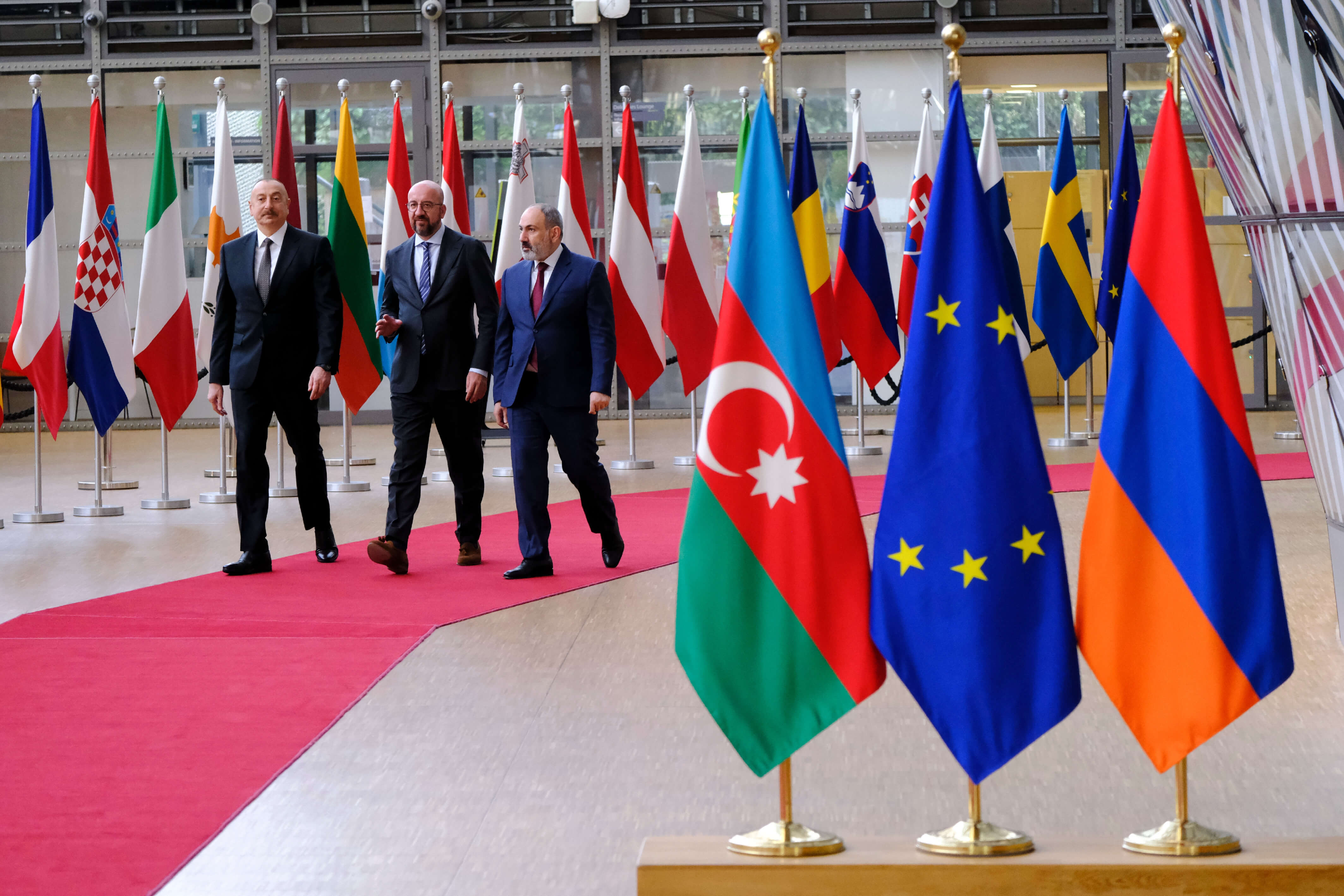
President Ilham Aliyev received delegation led by Turkish minister of transport and infrastructure

Opening Azerbaijan’s Embassy in Israel: The Right Way to Strengthen Ties

by Gallia Lindenstrauss

On November 26, 2022, the President of Azerbaijan, Ilham Aliyev, approved a parliamentary resolution of November 18 to open an embassy in Israel. This decision corrects the existing asymmetry: notwithstanding the close relations between Israel and Azerbaijan, and in spite of the existence of an Israeli embassy in Azerbaijan since 1993, Baku had no embassy in Israel. Azerbaijan’s decision to open an embassy in Israel was accompanied by a decision to open a representative office in Ramallah. There are three reasons for the Baku decision. The first is Azerbaijan’s victory in the Second Nagorno-Karabakh War against Armenia in 2020. During the war and according to the agreements that concluded it, Azerbaijan liberated seven regions adjoining Nagorno-Karabakh that had been under Armenian control since the First Nagorno-Karabakh War, and also gained control over parts of the region. In the past, Baku was concerned that opening an embassy in Israel would arouse criticism among Arabs and Muslims, leading to anti-Azerbaijan votes in international forums, but in the Second Nagorno-Karabakh War Baku achieved a decisive victory and is therefore less in need of support in the political arena. For its part, Armenia opened an embassy in Israel in 2020. Another important catalyst for the decision was the signing of the Abraham Accords and normalization of relations between Turkey and Israel last August. These developments make full diplomatic relations between Israel and a Muslim country far more acceptable than previously. Today, more than a dozen Muslim countries have full diplomatic relations with Israel, some with a high public profile. In the context of Arab Gulf states, Azerbaijan also has close relations with the United Arab Emirates. Baku’s decision also comes against the background of the growing tension between Azerbaijan and Iran. Over the last three decades, because of the large Azeri population in Iran (around 15-20 percent of the population, according to various estimates), and concerns in Iran over separatist ambitions among the Azeri minority, Tehran supported Armenia in its conflict with Azerbaijan, although it officially declared neutrality. Moreover, Iran also covertly supports the Hussainiyoun Brigades, an organization that is opposed to the regime in Baku, although it is also careful about maintaining close ties with the Azerbaijani authorities. Tehran for its part takes a negative view of Baku’s cooperation with Jerusalem and with Washington, and has expressed this openly and explicitly.  As Iran sees it, closer relations between Israel and Azerbaijan give Israel an opportunity to expand its presence and influence in the spheres of security and intelligence, including the use of territory in Azerbaijan for Israeli activity against targets in Iran. Indeed, the outcome of the Second Nagorno-Karabakh War increased tensions between Iran and Azerbaijan because it extended their common border. Baku also has reservations about Iranian policy, particularly following the opening in October this year of the Iranian consulate in Kapan, a town located in the southernmost district of Armenia. The location of the new consulate is perceived as problematic since Azerbaijan hopes to reach an agreement with Armenia and Russia to establish the Zangezur Corridor transport route, which will enable unimpeded access from Azerbaijan to the Nakhchivan exclave, which is part of Azerbaijan. In addition, Iran’s recent military exercise along the border with Azerbaijan was deemed a threatening message to Baku. This exercise follows the exercise held last year, which was the first time since Azerbaijan’s independence that Iran carried out a military exercise along their shared border. Moreover, an Iranian spy network was captured in Azerbaijan in November. In the past there were similar cases of Iranian subversion in Azerbaijan, as well as attempts to strike at Israeli and Jewish targets in the country. Yet despite all these subversive activities, Tehran did not manage to obstruct the defense cooperation between Israel and Azerbaijan or the opening of the Azerbaijan embassy in Israel.  Over the years, the leading components of the relations between Israel and Azerbaijan were the import of oil from Azerbaijan (about 40 percent of Israel’s oil imports) and the export from Israeli defense industries to Azerbaijan, as well as their cooperation on intelligence matters. Recently, with the war in Ukraine, Azerbaijan began exporting grain to Israel, while an Israeli company is involved in the desalination facility in the Caspian Sea. In addition, before the outbreak of the COVID-19 pandemic, some 50,000 Israeli tourists travelled to Azerbaijan each year, and Baku hopes that this number will increase. As a preliminary step to opening the embassy in Israel, in 2021 Baku opened a trade office in Israel, indicating its intention to broaden the economic cooperation between the countries. In 2020 the volume of civilian trade between Israel and Azerbaijan (excluding oil) was about $200 million. Azerbaijan is also proud that it has one of the largest Jewish communities in a Muslim country (estimates range from 15,000-30,000) and boasts of many years of religious tolerance. The Azeri community in Israel, numbering 50,000-70,000 people, is also an important bridge between the two countries.  Relations with Azerbaijan are likewise important in the context of Israel-Turkey relations. Over the years, the United States has encouraged the three countries to cooperate, and inter alia, Azerbaijan’s oil exports to Israel run through Turkey. The fact that both Ankara and Jerusalem are perceived as important allies of Baku and that Azerbaijan’s victory in the Second Nagorno-Karabakh War is attributed in part to the assistance received from these two countries were among the factors that contributed to the warmer relations between Turkey and Israel over the past year. Azerbaijan President Aliyev tried to mediate between Jerusalem and Ankara to normalize their relations after the crisis in 2018. Significantly, in spite of the tensions between Israel and Turkey over the past decade, Baku’s relations with Israel have not cooled – on the contrary, they have grown stronger. However, the Israel-Turkey-Azerbaijan triangle also embodies the potential for competition: Israeli and Turkish defense industries compete with each other, and this competition is likely to become more intense as Turkey’s defense industry develops more advanced products.  Support for relations between Israel and Azerbaijan crosses party lines in Israel. Benjamin Netanyahu, expected to become the next prime minister, visited Azerbaijan twice as Israel’s Prime Minister – in 1997 and 2016. His visit in 2016 is particularly memorable, since at that time President Aliyev said that Azerbaijan had so far purchased military systems from Israel worth $5 billion. During the visit Netanyahu said that changes were evident in many parts of the Muslim world, and particularly in Arab states, “But I think if they want to see what the future could be, come to Azerbaijan and see the friendship and the partnership between Israel and Azerbaijan.” These words can take on added significance with the opening of Azerbaijan’s embassy in Israel, which can be interpreted as an outgrowth of the Abraham Accords.  Azerbaijan has been an important partner for Israel in recent decades as a reliable supplier of energy and in terms of security. The opening of the embassy in Israel is a welcome step from Jerusalem’s perspective, reflecting the potential to expand relations to additional fields as well. At the same time, Azerbaijan, like other countries with a Muslim majority, is sensitive to the Palestinian issue, and it is therefore not surprising that the move toward Jerusalem is accompanied by a move toward Ramallah. Turkey is also important in the context of relations between Jerusalem and Baku, and developments in relations between Ankara and Jerusalem could impact on decision making in Baku, although as the past decade has shown, they do not have decisive impact. For that reason, although relations between Jerusalem and Baku have strengths of their own, and in spite of the secular nature of Azerbaijan, they should not be considered as disconnected from Israel’s relations with the rest of the Muslim world.

Defense & Security
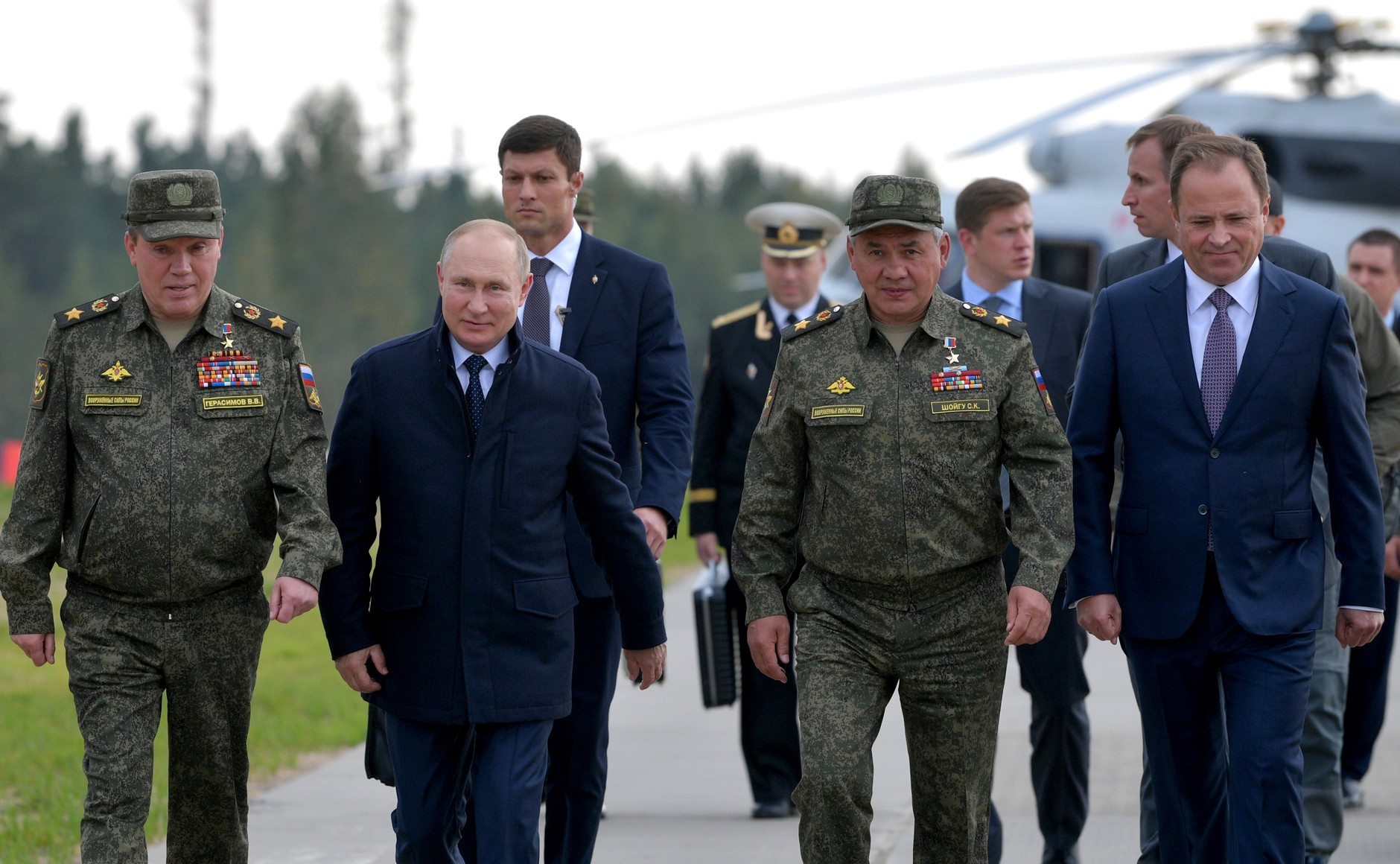
Russian President Vladimir Putin and Defense Minister Sergei Shoigu arrive for Zapad 2021 joint military drills held by Russia and Belarus at Mulino training ground in Nizhniy Novgorod

Putin was convinced that it was necessary. What is the greatest danger surrounding the Russian retreat of from Kherson

by Oleksiy Melnyk

I see two important aspects here. The first one is military. The second is political. The news of the Russian Defence Minister Sergey Shoigu's order to withdraw from Kherson did not come as a surprise to me. On the other hand, it was really a pleasant surprise. It was clear that Russia's chances of keeping the right-bank part of Ukraine were decreasing day by day, and this is not an opinion of a cheering patriot or propagandist, because it is next to impossible to keep such a contingent, estimated at around 40,000, with all the equipment and logistics needs, while the two supply channels are under the enemy fire. Therefore, the question was only "when", or "how Kherson will be liberated": will it be retaken, or the occupiers will flee Kherson. Why did Russia delay this decision until now? This unfavourable situation was clear to them as soon as Ukraine started striking bridges with HIMARS. There are two important aspects here, in my opinion. The first one is military. The second is political. When Sergey Surovikin, as the newly appointed commander, spoke on October 18 about his readiness for "difficult decisions", he obviously had this in mind. But he, like any other Russian general, understood that he would not be allowed to do so without the go-ahead from the top. And it doesn't matter how he reasoned this retreat. Like any Russian general, he was afraid to tell Putin the truth. There is a Russian proverb about what happens to the one who brings bad news. Therefore, Surovikin tried to convey that a disaster awaited them on the right bank of the Dnieper in Kherson region, if they don’t decide to withdraw. The political value of Kherson is absolutely obvious. Russia (Kremlin, Putin) put themselves in a situation that could not be worse by declaring this territory Russian. Which could be an even more painful blow to the image of this great macho, who in fact showed his weakness? It involves both political and personal risks for Putin as the head of state, who presented himself as a macho man who had everything under control. In my opinion, either Evgeniy Prigozhin or Surovikin (by the way, there are rumours in Russian expert circles about agreements between Surovikin and Prigozhin), or both, might have convinced Putin that it was a necessary decision, and the political risks would be less catastrophic than if such a decision was not taken. Here, perhaps, lies the greatest danger, because such a decision might go with something that obviously should stop this information wave "everything is lost" in Russia. Our readers should at least mentally prepare for some unpleasant surprises awaiting us in the coming days. I think that our military leadership has calculated these risks and is preparing preventive measures. The next question, which is of interest not only to me, is how this retreat will take place? The thing is that compared with the "gesture of goodwill" at the end of March, then Ukrainian opportunities to pursue the retreating units were quite limited. So it was hardly a gentlemanly gesture on our part. Let's not take the Snake Island, because its case was special due to its location, but in September — October, we saw an uncontrolled process of Russians fleeing in the Kharkiv region. All — thanks to the fact that the Ukrainian forces could counterattack and pursue them. What is the Russian scenario of withdrawal from Kherson? What will be the tactics of our military? In open sources, I did not see any hint of the existence of, I would not say, political but some kind of gentlemen's agreements, that in exchange for such a "gesture of goodwill" Ukraine would allow these troops to leave the right bank unhampered. They are extremely vulnerable precisely for the reason I mentioned earlier — there are only two main ways to the left bank. They are under the Ukrainian artillery control. The fewer Russian forces are left on the right bank, the easier it will be for Ukrainians to cut this retreat altogether. So I don't know what the tactics of the Ukrainian side will be. Can they just be allowed to leave? Maybe so. But we understand that these 40,000 will not go to the Kerch Bridge — they will be immediately redeployed in another direction. So, if we allow them to leave quietly, in a week or two they should be expected near  Donetsk or Zaporizhia, and will try to storm them from the south. Obviously, there will be no lull in the coming days and weeks. It will not be like the withdrawal of the Soviet troops from Afghanistan, when there was an agreement between the command and the enemy side that they would not touch the convoys moving towards the USSR. I do not think that the withdrawal from Kherson region is a bluff or a deceptive manoeuvre, despite all the Russian treachery. It is really impossible to hold Kherson region on the right bank, the price is extremely high. They will explain this withdrawal on their TV: Apparently, the Ukrainians threatened to blow up the Kakhovka dam, so they decided to save the lives of both military and civilians. For me, this gives some understanding that the threat of its explosion is minimal, at least at the moment. The intact Kakhovka dam is better for the Russians than if it were blown up. However, the risk of its explosion is not eliminated, only postponed, and when Russia is forced to demonstrate another "gesture of good will" — leave Nova Kakhovka and lose control of the Kakhovka dam — this threat will be extremely high. The Kakhovka dam means not only flooding of the territories downstream of the Dnieper but also a real threat to the Zaporizhia NPP — a threat of a disaster comparable to Japanese Fukushima.

Diplomacy
a person is holding up a Georgian flag among protesters holding up Ukrainian flags

Georgia’s Quiet Withdrawal From the West

by Eerik-Niiles Kross

In the same way that it is difficult to say whether a single event in the last few decades marks Russia’s decisive breaking away from democratic path of development, it is difficult to say the same about the events of the last decade in Georgia. Nevertheless, this breaking away has taken place, although Estonia, the European Union, the United States, all Georgia’s Western friends have made powerless attempts to keep Georgia on track.Many observers think the turning point was July 2021, when Georgian Dream, the political party that has been in power since 2012, and is controlled by oligarch Bidzina Ivanishvili, unilaterally revoked an agreement with the opposition on Georgia’s political organisation and the future development of its governance.This agreement was signed on 19 April 2021. It was mediated by the European Union, represented by President of the European Council Charles Michel during the last stage of the negotiations, and the Ambassador of the USA in Tbilisi. The agreement provided for ending the opposition’s boycott of the parliament (the opposition had been boycotting the work of the parliament since the parliamentary elections held in October 2020, because they considered the elections dishonest), releasing of important political prisoners (like Chairman of the United National Movement Nika Melia), strengthening the role of opposition in the parliament, judicial reform, pausing the appointments to the Supreme Court until elections, and election reform, including (partial) depoliticisation of the Central Election Commission.Although part of the opposition did not join the agreement, the EU considered it an important step in saving Georgia’s democracy. Charles Michel said at the signing ceremony, “This agreement is the starting point for your work towards consolidating Georgia’s democracy and taking Georgia forward on its Euro-Atlantic future.”Georgia’s ‘Yanukovych moment’On 28 July 2021, the Georgian Dream announced that they would unilaterally leave the agreement, accusing the opposition of the situation. Before that, the Government had appointed several judges to the Supreme Court in contravention of the 19 April agreement, earning the discontent of the EU and the Embassy of the US.A number of politicians saw the annulment of the agreement as Georgia’s “Yanukovych moment”, a turning point like the refusal to sign the EU association agreement by former Ukrainian President Viktor Yanukovych who chose to pursue the policy of Moscow. It is possible to see similarities here, but the blurring of Georgia’s course towards the West, the decline of Georgia’s success story began much earlier. Actually, by July 2021, the relations between Europe and the Government of Georgia had been worsening for years. Although Europe did not want to admit it, and does not want to admit it up to now, the beginning of Georgia’s big troubles is connected with the coming to power of Bidzina Ivanishvili at the elections of 2011. This in its turn is directly connected with the Russian-Georgian war of 2008 and the course chosen by the West for resolving the post-conflict situation.As we remember, the ceasefire agreement between Russia and Georgia in August 2008 was mediated by the then President of France Nicolas Sarkozy. A six-point peace plan was signed, where Russians committed to withdraw all their armed forces to the positions held before 8 August, to allow international monitoring of the region, to grant access to humanitarian aid, and to open international discussions on the modalities of security and stability of South Ossetia and Abkhazia. In reality, the commitment to return armed forces to their usual quarters was met only by Georgia. Instead, a few weeks later Russia recognised the “independence” of South Ossetia and Abkhazia.Understandably, the dominating interest of the West was to pacify, to “diffuse” the conflict – even Sarkozy’s ceasefire agreement was called a plan to diffuse the conflict in official EU documents. And with this, diffusing of Georgia’s democracy began.Although Europe did not want to admit it, and does not want to admit it up to now, the beginning of Georgia’s big troubles is connected with the coming to power of Bidzina Ivanishvili at the elections of 2011.Russia’s military objectives in Georgia were about security policy as much as domestic policy: reversing Georgia’s course towards the West, ending Georgia’s aspirations to NATO membership, and bringing about a government in Georgia that would be more or less in line with Russia’s interests. In the opinion of the majority of the great powers, it seemed to be in the interests of the West to have a Georgia that would not cause a new conflict with Russia. Since the government of Mikheil Saakashvili (President in 2004–2013) had no intention of changing the country’s NATO course or of seeking a compromise with Russia on the issue of Georgia’s sovereignty, the result was a situation in which Saakashvili was controversially in the way of both Western peacemakers and Vladimir Putin.With the wisdom we have today, many have admitted that the West’s weak reaction to the annexation of Crimea encouraged Putin to take the next steps. Less has been spoken about the even weaker reaction to Russia’s invasion against Georgia.In the summer of 2008, too, the Russian escalation was visible to Western intelligence services: aggressive rhetoric, Putin’s threats in Munich and Bucharest in spring 2008 (“We’ll do you Kosovo”), troop build-up, and so on. Yet the main interest of the West in the aftermath of the war, about which Georgia repeatedly warned in the summer of 2008, was to calm down the situation and Saakashvili and save the face of the Russians, i.e., not to blame them.An example of this policy is the so-called Tagliavini Report, commissioned by the European Union, which had to analyse the causes of the war and assess the responsibility of the parties. The Report found that both sides were guilty, Georgia should not have “started” and Russia “overreacted”. In the background, there was the dissolution process usual at the time, where Brussels said to the Georgian government something like this: put up with this report, we can’t make Putin angry and we have to blame you a bit, but you can get four billion in aid from us and we’ll go on being friends.Mistakes of the WestIn March 2009, Barack Obama’s administration announced a “reset policy” in the US-Russia relations. In other words, seven months after an act of aggression against a sovereign state, in which part of the blame was placed on the victim of the aggression to pacify the aggressor, Washington gave a signal to Moscow that all was forgotten, or at least forgettable. And forgivable.At a post-war meeting between Russia and the United States, where the conflicts between the two countries were discussed, the final communiqué contained a point that the only serious disagreement was the issue of Georgia. Tbilisi was happy with it, not realising that the reset policy in the US-Russia relations is more important than the security interests of a small country.Ivanishvili’s rise to power in Georgia belongs, at least contextually, to the policy of reset and saving of Putin’s face. In 2011, the Russian reputation makers, and possibly the US ones too, had so successfully spread the tales about Saakashvili’s madness, the Germans and the French were so “tired” of Saakashvili’s aggressiveness, that everyone – Washington, Brussels and Moscow – breathed a sigh of relief when “that madman” lost the elections. When Urmas Reinsalu, who was the Minister of Defence of Estonia at the time, drew attention to Ivanishvili’s Russian connections in the Wall Street Journal, it caused a widespread outrage in both the US and Estonian foreign ministries.Distancing from the Western orbitSince the defeat of the Saakashvili’s government in the elections of 2011, Georgia has been ruled by in the style of oligarchic party government for, to put it simply, two periods. In the first period, which lasted until around the 2018 presidential elections, at some levels until Joe Biden was elected US President in 2020, the Georgian Dream was at least formally pro-Western, kept NATO and the EU course, and the relations with Russia were cool on the surface. At the same time, several important steps were taken that did not bring about any special setbacks in Brussels, but were most probably welcomed in Moscow.Already in 2012, the systematic harassment, imprisonment and driving to exile of Saakashvili-era politicians began. The West found that it had to be tolerated to a certain extent. Most of Russia’s agents were released from prison. Visa freedom with Russia was restored, and it was done unilaterally. It is in force also now – all who have Russian passport can go to Georgia without a visa for a year.From election to election, the use of taxpayers’ money in the campaign of the ruling party became more dominant; essentially, the Georgian voter has had no real opportunity for free elections since 2011. Formally it is possible, but due to the biased media picture, massive pushing from the authorities and sometimes also physical harassment of the opposition, it is in fact impossible.Seven months after an act of aggression against a sovereign state, in which part of the blame was placed on the victim of the aggression to pacify the aggressor, Washington gave a signal to Moscow that all was forgotten, or at least forgettable.Ivanishvili’s clan also started taking over the economy. Initially, this was seen as almost inevitable; under Saakashvili, too, the government had its favourites, and when they were pushed aside, the majority of the voters really had nothing against it.Georgia’s quiet distancing from the Western orbit became more apparent in 2014. The reactions of the government of Georgia to the annexation of Crimea and Russia’s aggression in Donbass were extremely reserved. There were no contacts between Kyiv and Tbilisi, while the whole East Europe, Georgia’s old friends were doing all they could to support Ukraine. The first phone call between Prime Minister of Georgia Bidzina Ivanishvili and President of Ukraine Petro Poroshenko after the annexation of Crimea took place in 2015, when Ivanishvili demanded the extradition of Saakashvili, who was working as an adviser to the Ukrainian government, to Georgia.Ukraine and Georgia essentially parted ways from 2014. The former tandem, who tried to get into NATO together and were mentioned in the final document of the Bucharest Summit in 2008, have since then been in somewhat different camps at official level. At the same time, a number of the Saakashvili-era Georgian officials have found employment at the Ukrainian government, working in the areas of law enforcement, anti-corruption and judicial reform. Since 2014, an entire unit of Georgian volunteers has been fighting in Ukraine, and it was on the basis of the Georgian Legion that the Ukrainian International Legion was created in February this year. At the same time, since the beginning of the new phase of the war, the Georgian government has prevented Georgian volunteers from going to war in Ukraine.Ivanishvili as the grey cardinalThe internal political situation that prevailed in Georgia after transition of power in 2011 changed at the beginning of 2021 at the latest. Maybe the historians will one day find out what exactly caused this change. Probably, it came about due to both domestic and foreign policy factors.On the one hand, the domestic political situation had been becoming increasingly tense, the opposition was increasingly critical. The opposition does not recognise the results of the parliamentary elections of October 2021, and since then, part of the opposition has been boycotting the parliament.Europe was increasingly dissatisfied with the stalling of reforms, and the government may have felt that a heavier hand was needed to stay in power. At the same time, after Joe Biden’s election victory, Putin probably began to actively prepare for war in Ukraine as well as to neutralise potential opponents of war from neighbouring countries.2021 began with Ivanishvili’s declaration that he was resigning from politics. Formally, he has not held any political office since then, but no one who knows Georgia seems to think that he does not continue to control the country.Decline of Georgian democracyWith the resignation of Prime Minister Giorgi Gakharia in February 2021, a new and significantly more aggressive period began in Georgia. Gakharia, who has now also left the Georgian Dream to form his own political party, ostensibly resigned because he did not agree with the decision of the Georgian Dream to jail opposition leader and chairman of the United National Movement Nika Melia. Ivanishvili, who formally is not involved in politics, replaced Gakharia with his old ally and confidant Irakli Garibashvili. Garibashvili was the Prime Minister also in 2013–2015, but resigned due to his extreme unpopularity both in Georgia and in the West.Melia was sent to prison; in May 2021, the principal owner and head of the opposition-minded Mtavari TV Nika Gvaramia was also jailed. The founder of this TV channel and opposition politician Giorgi Rurua was already waiting for him there. Since then, the decline of Georgian democracy has become faster. The government is imposing control over the judiciary and constitutionally independent institutions (such as the national ombudsman and the election commission), the special services are taping opposition politicians and journalists and publishing the tapes selectively in the media, the government is harassing civil society.Georgia has officially taken the position that it will stay out of the war and accuses the USA of trying to draw Georgia into the war against Russia.Rapid deterioration of relations with the European Union began, culminating in the withdrawal from the so-called Michel’s agreement. The government also began to condemn openly, aggressively and offensively the restrained criticism of Georgia by both Europe and the USA. When the European Union announced after July 2021 that Georgia would no longer qualify for a loan meant for judicial reform, the Prime Minister of Georgia said that Georgia would refuse the loan and was not interested in criticism from Europeans. “But who exactly is the European Union?” asked the Minister of Defence of Georgia when a journalist interviewed him about the EU’s criticism towards the government of Georgia in September 2021. In the summer of 2021, it was found that the Georgian secret services had secretly also recorded the phone calls of Western diplomats. The representative of the Georgian government called the outrage expressed over this “overstepping the boundaries of the Vienna Convention”.The future will be decided in UkraineAfter 24 February 2022, the situation has changed for the worse. Georgia has officially taken the position that it will stay out of the war and accuses the USA of trying to draw Georgia into the war against Russia. There is a nearly constant public and hostile exchange of words between the US ambassador and the representatives of government and parliamentarians of Georgia.On the other hand, at the beginning of the war, Russia lifted several sanctions on Georgian agricultural products. Business between Russia and Georgia is thriving: Georgian goods are flowing to Russia and Georgian ports service Russian goods. According to Transparency International, more than 6000 companies with Russian owners have been registered in Georgia since the beginning of the war in Ukraine. Recently, a group of Ukrainian parliamentarians accused Georgia of helping Russia evade sanctions. In June, an adviser to Ukrainian President Volodymyr Zelenskyy made a proposal to the US Congress to impose sanctions on Ivanishvili for violating the policy of sanctions against Russia.With such a policy, the government of Georgia has probably lost quite a lot of its already low support among the Georgian voters. Public support for Ukraine is general among Georgians, and the biggest demonstrations held this year have been against the war.The European Union took its first bold step in June, when the Summit decided to grant the status of candidate country to Ukraine and Moldova, but not to Georgia. The government’s criticism of Europe in reaction to this decision most probably did not convince the Georgians. An absolute majority of the Georgian people still support the accession to both the EU and NATO.

Defense & Security
Ship sailing over Arctic ocean

Prospects for the formation of a new Canadian Arctic policy

by Maria Solyanova

At the end of August, NATO Secretary General Stoltenberg visited Canada: he went to the Canadian High Arctic Research Station in Cambridge Bay (Nunavut), which is one of the facilities of the Northern Warning System, and the Canadian Forces Base in Cold Lake (Alberta). Based on the itinerary and official statements, it was not exactly a courtesy visit. Obviously, as part of the transformation of the NATO concept, Canada is expected to take more active measures in key fronts. And this is not only an increase in defense spending, which is a traditional requirement of the US for all NATO members. The United States and its NATO allies expect that Canada's strategic approach to developing its defense policy will take into account new challenges that, in their opinion, pose a growing threat to the security and defense capabilities of all members of the alliance in the long term. The allies list two blocs among the key challenges requiring the intensification of Canadian participation in NATO. First, these are non-military threats, including those related to climate change, which contribute to the growth of instability in this region. In accordance with the NATO Strategic Concept 2022, one of the goals and strategic challenge for the member countries of the organization Is the problem of climate change. Secondly, the threats associated with the intensification of the actions of China and Russia in the Far North. It is in this direction that Canada's policy is considered by the allies as key in terms of developing and strengthening the defense capability of the alliance. The very fact of the NATO Secretary General's visit to the northern territories testifies to possible changes in the position of the current liberal government regarding the expansion of cooperation with NATO. Previously, Canada has been reluctant to engage with allies other than the United States in discussing specific initiatives, such as conducting joint military exercises in the country's northern territories. Now the participation of the allies, according to Canadian Defense Minister A. Anand, is "acceptable." Although there is no talk of specific agreements on conducting exercises under the leadership of NATO in the Far North region. In 2019, Canada adopted a new Arctic strategy, the Arctic and Northern Policy Framework. According to the document, increasing regional competition and the strategic interest that the region represents for various countries pose threats to Canadian security. To mitigate threats, the government, in addition to increasing investment and infrastructure projects, has pledged to strengthen the presence of the armed forces and Canadian Rangers to ensure national security and protect sovereignty in the region, as well as to increase the participation of Arctic and non-Arctic allies and partners in operations in the Canadian Arctic, including in the framework of NATO. The need to expand the military presence in this region is also mentioned in the Defense Policy of Canada in 2017 (“Strong Secured and Engaged”). In this regard, the government of J. Trudeau undertook to modernize NORAD, as well as to update the composition of the combat aircraft fleet. However, according to Canadian experts, the liberals are still allocating very little money for these purposes compared to, for example, Finland or Denmark, while the socio-cultural and environmental spheres remain strategic priorities. Although the Defense Policy notes that the Arctic is a springboard for contradictions in the field of global security, however, potential conflicts among the Arctic powers are not currently visible. Indeed, for now the Canadian Arctic strategy affects the defense sphere only in the most general way, focusing on non-military threats associated with climate change, and the strengthening of the military presence implies the expansion of non-military functions of the armed forces (for example, participation in rescue operations or the fight against man-made disasters). However, Canada's readiness to come up with such an initiative can be realized in the event of increased activity on the part of China or Russia in this region, for example, in the implementation of the Russian strategy for the development of the Arctic until 2035, adopted in 2020. The implementation of the tasks set in the Russian strategy to strengthen the presence of armed forces in the Arctic zone will be perceived as a deliberate escalation that can destabilize the situation and pose a threat to regional security. At the same time, changes in the positions of legislators regarding the Arctic agenda and interaction with NATO in this direction have been outlined already at the stage of formation of the Policy Framework for the Arctic and the North. Then the Standing Committee on Foreign Affairs and International Development published a multi-page report entirely devoted to Canada's Arctic policy. In addition to climate change, it lists Russia's significant military presence as well as China's Arctic ambitions as security threats to the Canadian Arctic region. In this regard, the government of J. Trudeau was recommended to expand cooperation and interaction with NATO allies in order to quickly analyze and respond to these threats through joint efforts. Canada's position in relation to increasing its defense capabilities in the Arctic region is perceived by the United States as a factor in the alliance's vulnerability in the northwest direction. Therefore, it can be expected that pressure from the allies will intensify. Both the NATO Secretary General and the countries that are members of the block will bilaterally demand that the Canadian authorities fulfill their obligations to improve the defense potential in their northern territories, as well as to respond in a timely manner to threats, in their opinion, emanating from China and Russia. Since the alliance is one of the key factors in the Canadian security and defense system, the growing strategic competition / confrontation between NATO and the Russian Federation will dictate the conditions for Canada to interact with the Russian side in the Arctic zone, while requiring military modernization and strengthening of military potential not only to combat non-military threats. Canada will be challenged by allies to adapt to the threat of potential conflicts over access to resources, unresolved border disputes, governance issues in the Arctic region. 

Diplomacy
Azerbaijani President Ilham Aliyev, EU Council President Charles Michel and Armenian Prime Minister Nikol Pashinyan

New September Conflict between Armenia and Azerbaijan: Are hopes lost for a peace treaty?

by Emin Mammadov

Notwithstanding the ongoing negotiations between Armenia and Azerbaijan with the involvement of international mediators amid peace-building process, recurring tensions reflect the fragility of the process indicating repercussions in a way towards the realization of economic projects. Respective steps for normalization have continued following the trilateral meetings in Brussels as well as in Russia with some decisions adopted, however, no tangible results have been achieved, yet. The peace process should be based on concrete measures without wasting further time. Delays and the non-implementation of the agreements could lead to new conflicts. The course of the developments, in particular following the 13 September clashes, in the post-war peace process between Armenia and Azerbaijan give signals of possible failure of the efforts. The situation in the region at the moment remarkably shows war-related signs. It is therefore urgent for the international community to take all possible measures to ensure the implementation of the ceasefire. The conflict which recently flared up once more indicated the fragility of the situation and negotiations held on the path towards peace treaty. The signed treaty reflects the provision of ceasefire for a certain period which can be concluded either with a permanent and sustainable peace deal or with a treaty. To boost the region’s economic potential, unblocking communications and establishment of the transport infrastructure and connectivity is of crucial significance for all sides and for the region on the whole. The determination of Azerbaijan which is bolstered by its actions in building connectivity infrastructure in a shorter period reverse the ones of Armenia. Refusal of the opening of Zangazur corridor and replacement of it with a cross-country highway again breeds the grounds for conflict and depletes the region from various opportunities that may be generated by the Zangazur corridor. Zangazur corridor is being distinguished with numerous perspectives to be taken into account. The restoration of the corridor will lead to faster development of the liberated regions of Azerbaijan including the tourism industry there thanks to the inter-wined location. In economic terms, it can enable to implement railway and transportation projects with the neighbourhood being an integral part of the cross-continental logistics channel that can generate additional revenues to the economies of the countries involved contributing to the enlargement of the North-South and East-West transport line including the South-West. On the other hand, the blocking of the corridor by Armenia wards off economic opportunities for regional countries as well which can act as a shorter cross point for Iran, Turkey, Russia to export their goods and services at affordable rate improving the diversification of the economy. Furthermore, substitution of the Corridor with a highway may shrink continental transport infrastructure weaking the potential robustness of transport infrastructure. In terms of energy, potential conflict may deprive Azerbaijan from a number of opportunities from exporting energy to the investments in the renewable energy in liberated territories to utilize the available capacity. To a large extent, the solution of the conflict could be strongly beneficial for the Armenian economy which remained and still remains in blockade for three decades. Armenia has certainly huge economic and transport potential due to central geographical location that can translate into huge financial benefits. Massive development of the region stipulates the need for a faster regional economic integration that needs to be underpinned by joint actions and strong commitment of all sides. The necessity to regionally and economically integrate the countries is in the interest of many parties from the east to the west. Currently, the hopes of the both sides are pinned on the purposeful intervention of the European Union to reach a solution of the conflict providing a permanent security on the verge of the continent. As long as a peace treaty is not reached, tensions are likely to occur along the borderline that will certainly generate unavoidably detrimental consequences to the development and integration of the region. In this vein, Europe should intensify its participation in conflict solution and hold frequent meetings to solve the feud in a timely manner. The one and only way to the development of the region is based on mutually signed comprehensive peace treaty that must be based on the mutual recognition of territorial integrity and inviolability of the borders. Under the scenario of the recent international developments and geopolitical tensions, currently there is a possibility that mutual consensus can be reached through a collective commitment to sign a peace treaty which is highly likely can bring to the region sustainable peace deal and to the implementation of different projects envisaged in 10 November and subsequent agreements. Such a collective commitment can be a significant milestone in stepping up the preparedness of the region towards integration. External actors should strengthen their activities towards the conclusion of a peace agreement. This is very important for the security and economic development of the Caucasus. Currently, the existing regional and world order provides conditions for signing a peace agreement. But if this is not done in the near future, then the region will not be able to get rid of conflicts for many more years.