
Subscribe to our weekly newsletters for free

Subscribe to an email

If you want to subscribe to World & New World Newsletter, please enter
your e-mail

Diplomacy
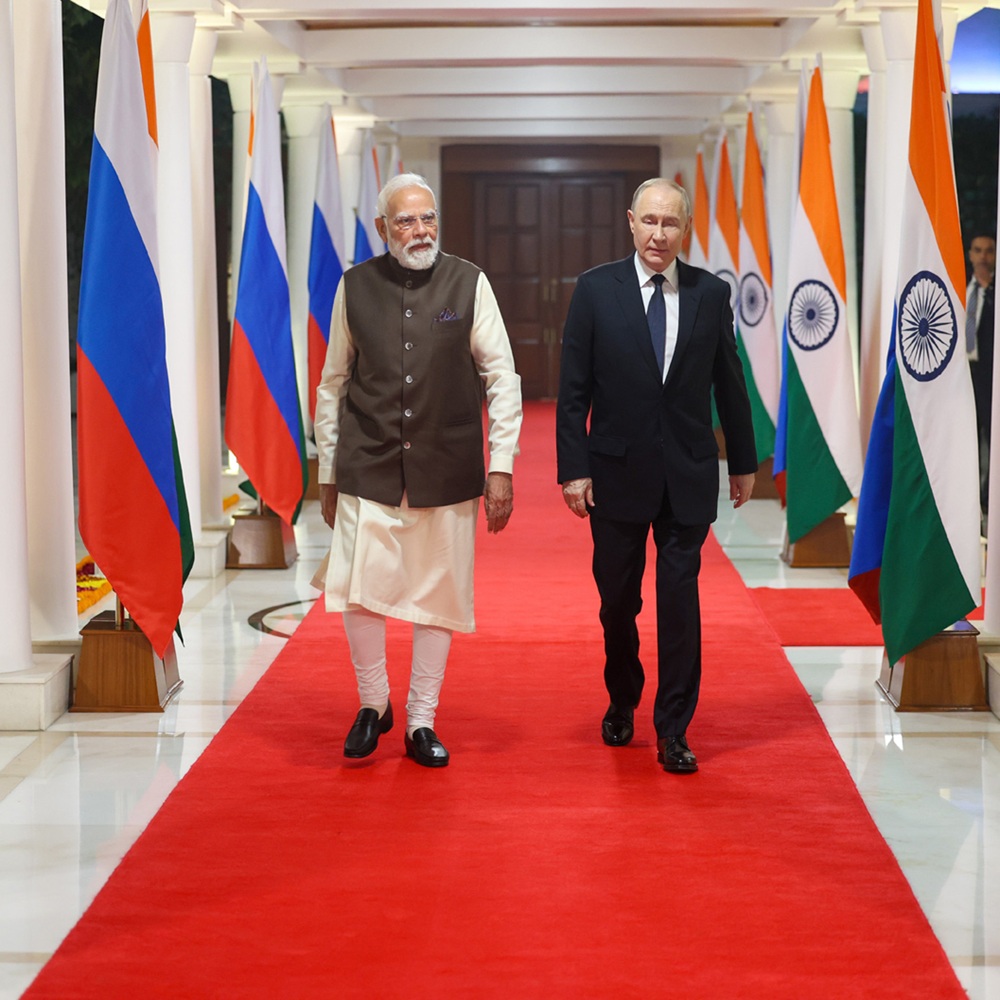
Prime Minister's Office (GODL-India), GODL-India <https://data.gov.in/sites/default/files/Gazette_Notification_OGDL.pdf>, via Wikimedia Commons

Media statements by the President of Russia and the Prime Minister of India

by Vladimir Putin , Narendra Modi

Following Russian-Indian talks, Vladimir Putin and Prime Minister of India Narendra Modi made statements for the media. The statements were preceded by a ceremony for the exchange of signed documents. Prime Minister of India Narendra Modi (retranslated): Your Excellency Vladimir Putin, my dear friend, Representatives of the two countries, and our friends from India, good afternoon. I am delighted to welcome President Putin to the 23rd Russia–India Annual Summit. President Vladimir Putin’s visit to India is taking place at a time marked by several historical dates in our relations. President Putin laid the groundwork for our strategic cooperation 25 years ago, and 15 years ago, in 2010, we upgraded our partnership to the level of a special privileged strategic partnership. Over the past 25 years, President Putin has been relentless in promoting these relations by demonstrating his wise leadership and vision. Regardless of the circumstances, it is his leadership that has reinforced our mutual relations and enabled us to achieve new heights. I would like to express my sincere gratitude to President Putin for his friendship and for his unwavering commitment to working with India. Friends, The world has faced numerous ups and downs over the past 80 years, during which humankind has had to endure many crises and challenges. And throughout this time, the friendship between Russia and India has successfully weathered these storms. These relations are based on mutual respect and deep trust and have invariably stood the test of time. Today, we discussed our ties and cooperation in all their aspects with a view to creating an even more solid foundation. We want to reinforce our economic cooperation and elevate it to a new level. This is the objective we share and it is our shared priority. To make this a reality, we have agreed to implement a programme for economic cooperation until 2030. It will provide for diversifying our trade and investment, making them more balanced and sustainable. At the same time, it will help unlock new dimensions in our cooperation. Today, President Putin and I will be taking part in the Russia–India Business Forum. I am convinced that this platform will also help strengthen our business ties and open new doors for exports, joint manufacture and technical innovation. Both countries have been proactive in working on a free trade agreement between the Eurasian Economic Union and our country. Our cooperation in agriculture and fertilizers is extremely important for our food security and the prosperity of our farmers. I am happy that our countries will work together to promote our mutual production of urea. Friends, Promoting connectivity between our countries is another priority for us. We will redouble our efforts regarding the discussions on the North-South International Transport Corridor and the Vladivostok-Chennai Maritime Corridor. I am confident that we will effectively cooperate in the interests of promoting polar trade via local trade routes. We have offered an opportunity to strengthen our cooperation in the Arctic, which will create new jobs for Indian young people. At the same time, our deep cooperation in shipbuilding will help us boost our joint initiatives. This is yet another important example of our mutually beneficial cooperation, which is increasing the number of jobs and skills while strengthening regional connectivity. Energy security is another important pillar of partnership between Russia and India. Our cooperation in the field of civilian nuclear energy, which is rooted in our history, has helped us uphold our commitment to providing clean energy, which is extremely important for both countries. I have no doubt that our mutually beneficial cooperation in the field of critical minerals will also be important for a safe and diversified provision of resources to the world. We also maintain our cooperation in such areas as clean energy, high technologies and modern industries. Friends, Our cultural relations and ties between individual representatives of our countries are of special importance for relations between Russia and India. Over the past decades, our peoples have demonstrated respect and admiration for each other’s cultures, and we have coordinated various measures to further strengthen this cooperation. The recent opening of two Indian consulates in Russia is a significant step forward, facilitating contacts for all our citizens and bringing our nations even closer together. This October, hundreds of thousands of pilgrims received blessings at the sacred relics of Buddha Shakyamuni in Kalmykia. I am confident that we will soon implement a 30-day visa-free regime for tourist groups, which will greatly enhance travel between our countries. This measure will not only bring our peoples closer but also invigorate our societies and unlock new opportunities. I am therefore pleased that today we were able to sign two key agreements to advance this initiative. Our collaboration will also deepen in education and professional development, including through increased student and academic exchanges. Friends, Today, we discussed a range of pressing regional and global issues. On Ukraine, India’s position has been consistent from the outset: we stand for peace. We welcome all initiatives and efforts aimed at achieving a peaceful, long-term resolution of this conflict. India has always been ready to support such efforts, and we will continue to do so. India and Russia have always supported one another and worked shoulder to shoulder in the fight against terrorism. The terrorist attack in Pahalgam and the cowardly atrocity at Crocus City Hall are connected by a common, hateful ideology. India firmly believes that terrorism constitutes a direct assault on universal human values. Our unity within the global community is the only effective way to combat this evil. We cooperate closely within the UN, the G20, the SCO, BRICS, and other multilateral forums. We will continue this essential dialogue and cooperation across all these platforms. Your Excellency, I am confident that our enduring friendship will provide the strength needed to address global challenges. Together, we can help lead the way towards a more prosperous future. Once again, I thank you and all members of your delegation for your visit to India. Thank you very much. President of Russia Vladimir Putin: Mr. Prime Minister, dear friend, Ladies and gentlemen, My sincere thanks to the President of the Republic of India, Droupadi Murmu, to you, Mr Prime Minister, and to all our Indian colleagues for the exceptionally warm and cordial welcome extended to the Russian delegation. The discussions we have just concluded with our Indian colleagues, along with our highly productive one-on-one conversation last night – for which I thank you again, Mr Modi, for your generous hospitality – were held in a constructive and friendly spirit, reflecting the privileged partnership between Russia and India. I would note that the Prime Minister and I have established a close working and personal rapport. We have met at the SCO summit in September, we maintain regular contact by telephone and personally oversee the development of our strategic cooperation across all key areas, as well as the progress of major bilateral projects. Today, with the participation of our delegations, we conducted a thorough and comprehensive review of the entire spectrum of Russian-Indian cooperation. We also exchanged views on current international and regional issues. The joint statement we have adopted outlines clear priorities for advancing our ties in politics, security, trade, the economy, and cultural and humanitarian affairs. As you have seen, this was complemented by the signing of a substantial package of intergovernmental, interdepartmental, and corporate agreements. Many of these documents are aimed at expanding our economic partnership. This is only natural, as our nations are important partners in trade, investment, and technology. Last year, our bilateral trade grew by a further 12 percent, reaching a new record. While various estimates differ slightly, the consensus places the figure somewhere between US$64 and US$65 billion. We project trade will stand at a comparable level by year’s end. That said, we believe there is clear potential to increase this volume to US$100 billion. To realise this ambitious goal, we have now agreed upon a joint Programme for the Development of Russian-Indian Economic Cooperation until 2030. This comprehensive roadmap provides clear guidelines. Our intergovernmental commission and the relevant economic ministries and agencies are tasked with removing barriers to the flows of goods and capital, implementing joint industrial projects, and deepening our collaboration in technology and investment. Today, His Excellency the Prime Minister shared a comprehensive list of issues with us. It goes without saying that both Russia and India will be extremely diligent and responsive in reviewing them. Make no mistake, we will work on this matter. Of course, having India create a free trade zone with the Eurasian Economic Union would help boost Russia-India business ties. The effort to draft an agreement to this effect is already in progress. I must express my satisfaction with the fact that the two countries have been consistent in their commitment to switching to national currencies in mutual transactions. Their share in business deals has already reached 96 percent. Our two countries have developed resilient interbank channels for lending and financial transactions. Russian economic actors have been making wider use of the rupees they generate from export contracts. Major joint projects receive their funding in Russian rubles. There has been positive momentum in our energy partnership. Russia is a reliable supplier of energy resources and everything India needs for developing its energy sector. We are ready to continue ensuring uninterrupted fuel supplies for the Indian economy to support its rapid expansion. Of course, our bilateral energy cooperation goes far beyond this horizon. The flagship project to build India’s biggest NPP, Kudankulam, is underway. Two out of six reactors have been connected to the power grid, while the other four are in the engineering and construction stages. Once this NPP reaches its full capacity, it will make a meaningful contribution to India’s energy mix, helping Indian companies and households access affordable and clean energy. We believe that building small modular reactors and floating NPPs could also be relevant, just as using nuclear technology for non-energy purposes, including in healthcare, agriculture and other sectors. We are also working with our Indian partners to create new effective international transport logistics routes. This includes a project to create the North-South corridor linking Russia and Belarus to the Indian Ocean. Infrastructure development along the Trans-Arctic Transport Corridor, including the Northern Sea Route as its main artery, offers ample opportunities for expanding bilateral trade. There are many other economic sectors in which Russia and India have built a positive track record. We are working on joint initiatives in manufacturing, machine building, digital technology, space exploration and other research-intensive domains. For example, a business agreement that was signed as part of the visit provides for building a major Russian-Indian pharmaceutical plant in the Kaluga Region for producing high-quality anticancer medicine using cutting-edge Indian technology. At the same time, Russian companies will start producing their goods as part of the Make in India programme, which is Prime Minister Modi’s flagship project. Prospects for strengthening interaction between Russian and Indian entrepreneurs and business communities are being discussed in detail at the business forum that is currently underway in New Delhi. Mr Prime Minister and I will attend its plenary session later today. Russian-Indian humanitarian cooperation is ongoing in many spheres. Our peoples have been sincerely interested in each other’s traditions, history and spiritual values for centuries. Our scientific and educational contacts, as well as youth and public exchanges are actively developing. The regular cross festivals of Russian and Indian films invariably enjoy success. Mutual tourist flows grow every year. The Russian RT channel will begin broadcasting to India today. This will certainly help the Indian audience learn more about Russia and Russians and acquire objective information about current developments in our country. Our discussions on key global and regional issues have reaffirmed the similarity of our countries’ positions. Russia and India pursue an independent and sovereign foreign policy. We are working together with our allies in BRICS, the SCO and other countries of the Global Majority to promote the shaping of a more just and democratic multipolar world order, and to protect the fundamental principles of international law enshrined in the UN Charter. These include the right of every country to its own path of development, the preservation of its own cultural and civilisational identity, respect for sovereignty and a delicate balance of interests of all members of the international community. Russia and India, as the founding nations of BRICS, have done and continue to do a great deal to enhance the prestige of that organisation. As you know, India will assume the BRICS chairmanship next year. We will provide all-round assistance to our Indian friends in their work on the current BRICS agenda. Of course, I would also like to say that Russia and India have traditionally worked closely together in the military-technical sphere. Our country has been assisting the modernisation of the Indian army, including the air defence, air force and navy, for over 50 years. Overall, we are certainly satisfied with the results of our talks. Our plans include a meeting with President of India Droupadi Murmu. However, I can already express my confidence that this visit and the agreements reached will effectively promote the further strengthening of the Russian-Indian strategic partnership for the benefit of the people of India and Russia. Thank you.

Defense & Security
Grunge abstract background. Background concept of the war in Ukraine. Sleeve flags dirt smoke.

The end of Great Illusions and the Revenge of Realism. The Case of the War in Ukraine – Part 1

by Krzysztof Sliwinski

Abstract This is the first part of an analysis examining the initial perceptions and evolving realities of the Russia-Ukraine war, which began in February 2022. Early Western media and political narratives were optimistic about Ukraine’s military resilience and potential victory, highlighting heroic resistance, Western support, and Russian operational failures. However, the reality has been more complex, as Ukraine faced significant challenges, including numerical and equipment inferiority, underfunding, limited combat brigades, and a lack of strategic reserves. Despite these hardships, Ukraine managed to resist Russia’s initial advances, as exemplified by symbolic events such as the defence of Snake Island. The article explores the human and economic costs of the ongoing war. Ukraine requires an estimated $524 billion in reconstruction funding, following a 30% drop in GDP in 2022 and ongoing economic hardships. Western aid has been substantial, exceeding €400 billion, but the conflict’s economic fallout also burdens donor countries, causing inflation and growth slowdowns. Key Words: Realism, War, Ukraine Introduction At the very beginning of the ‘Special Military Operation’ – an invasion of Ukraine by Russia - most academics, policymakers, political leaders, and media pundits were hugely impressed by Ukraine’s initial military response. Most were genuinely of the opinion that Russia was weak, economic sanctions would cripple its economy, President Putin had little to no public support, and that with enormous help from the U.S. as well as most EU Member states, Ukraine would not only resist the attack but ultimately win the war with Russia on its own territory and perhaps even facilitate the government change in Kremlin. Any skeptical views regarding the possible Ukrainian victory were swiftly silenced and dismissed as pro-Putin propaganda or even deliberate disinformation, therefore suggesting that any sceptics are more or less Putin’s agents. Let’s look at some media titles from March 2022 onward (the war started on 24 February, 2022). Overenthusiastic narrative At the outset of Russia's invasion of Ukraine in late February 2022, many initial media reports and analyses were pessimistic, predicting a swift Russian victory based on military disparities. However, by March 2022, as Ukrainian forces demonstrated unexpected resilience — repelling advances on Kyiv and inflicting significant losses on Russian troops—some Western media outlets began publishing more enthusiastic and optimistic pieces about Ukraine's potential to prevail. These often-highlighted Ukrainian morale, Western support, and Russian operational failures. Below, the reader will find several examples from that early period, drawn from a range of sources including news articles and opinion pieces. Admittedly, media coverage of this topic is inherently biased, with Western outlets generally favouring Ukraine's perspective. In contrast, Russian state media promoted the opposite narrative (e.g., RIA Novosti's premature victory declaration on February 28, 2022, which was quickly retracted). One of the events that genuinely inspired the world at the very beginning of the war was the so-called Snake-Island Campaign. Snake Island is a tiny (0.17 km²) Ukrainian outpost in the Black Sea, about 48 km off the coast of Odesa. Despite its size, the island is geostrategically vital: it hosts radar stations, enables missile launches, and controls maritime routes for grain exports from Odesa. Russian control threatened Ukraine's southern coast and Black Sea shipping.[1] On the invasion's first day, the Russian cruiser Moskva (Black Sea Fleet flagship) radioed: "Snake Island, this is a Russian warship. I repeat: put down your arms... or you will be bombed." The 13 Ukrainian border guards replied: "Russian warship, go f… yourself." Russians captured the island via helicopter assault; defenders were taken POW but later exchanged and awarded Ukraine's Hero of Ukraine title. Consequently, legacy media began painting a rather rosy picture of the Ukrainian campaign. Below, the reader will find several examples: - The Atlantic - "Ukraine Is Winning. Don't Let Up Now." (March 28, 2022). This opinion piece by Eliot A. Cohen expressed strong optimism about Ukraine's battlefield performance, crediting heroic resistance and Western aid while critiquing Russia's weaknesses. Key quotes: "Truly magnificent Ukrainian resistance — heroic and clever at once — backed by Western arms and intelligence accounts for much of this." and "If Ukraine prevails, its example will be at least a partial deterrent to further adventures by Russia, and perhaps by China." The article urged continued support to secure a Ukrainian victory. [2] - The Washington Post - "Ukraine-Russia talks stir optimism, but West urges caution" (March 29, 2022). This news report highlighted positive developments from peace talks in Istanbul, where Russia pledged to reduce military operations around Kyiv, fostering hope for a resolution favourable to Ukraine. It noted enthusiasm around Ukraine's proposals for neutrality with security guarantees, though tempered by skepticism. A key optimistic element: The talks "stirred a glimmer of hope" amid Ukraine's successful defence, with Ukrainian negotiators pushing for international backing to end the conflict on terms that preserved sovereignty. [3] - Associated Press (AP) - "Russia says it will cut back operations near Ukraine capital" (March 29, 2022). This wire report conveyed optimism following Russia's announcement of scaling back assaults on Kyiv and Chernihiv, interpreting it as a sign of Ukrainian leverage in negotiations. Key quote: "Russia announced Tuesday it will significantly scale back military operations near Ukraine’s capital and a northern city, as the outlines of a possible deal to end the grinding war came into view at the latest round of talks." It portrayed this as a potential turning point, with Ukraine's delegation outlining a framework for neutrality backed by guarantor nations.[4] - Deutsche Welle (DW) - "Ukrainians have won the information war" (March 7, 2022). While primarily focused on the information domain, this article by historian Margaret MacMillan extended optimism to the broader conflict, arguing that Ukraine's narrative success bolstered its military position. Key quote: "The Ukrainians have won the information war... This is helping them win support around the world, which in turn is translating into real help on the ground." It emphasized global sympathy, fuelling aid that could tip the scales toward Ukrainian victory.[5] - In a rather absurd tone, the Polish media reported that a Kiev female resident destroyed a Russian military drone with a jar of pickles when enjoying a cigarette on her balcony.[6] Reality on the ground was somewhat different, however. In fact, as Valerii Zaluzhnyi, Ambassador of Ukraine to the United Kingdom, ex-Commander-in-Chief of the Armed Forces of Ukraine, rightly observed, before the invasion by Russia, the Armed Forces of Ukraine faced several significant challenges: 1. Numerical and Equipment Inferiority: As of the end of 2021, the Russian army was about five times larger than the Ukrainian army, with four times more tanks and armoured combat vehicles, 3.4 times more artillery, and 4.5 times more attack helicopters. The Ukrainian Navy was notably weaker, lacking aircraft carriers, destroyers, corvettes, or submarines.[7] 2. Underfunding and Stagnation: Despite politicians declaring that more than 5% of GDP was allocated to security and defence, less than half of the allocated budget went to the Ministry of Defence. There was no increase in funding for developing and procuring weapons and equipment, with most money going to financial support for the military personnel. This led to stagnation, with a lack of finances for development and combat readiness, personnel outflow, and understaffed military units. 3. Limited Combat Brigades: At the time of appointment of the author as Commander-in-Chief in August 2021, there were only 24 combat brigades in the Armed Forces of Ukraine, with 12 already engaged in combat in the East and South. Only 12 combat brigades remained available for deployment in the event of aggression. 4. Insufficient Modern Weapons: Ukraine had very few modern weapons compared to Russia. The total need for funds to repel aggression, including replenishing missile and ammunition stocks, was estimated at hundreds of billions of hryvnias, which the Armed Forces did not have. 5. Lack of Strategic Reserves and Preparedness: The Armed Forces were unable to create sufficient strategic reserves, which are crucial in a strategy of defeat. Ukraine was significantly inferior in personnel, weapons, and military equipment, and lacked the preparation to meet the scale of the impending invasion. These challenges left Ukraine vulnerable and enabled Russia to pursue a strategy of defeat through swift, decisive military action. Reality on the ground – how much has the war cost so far? Russia's invasion has imposed staggering financial burdens on Ukraine and its Western allies through December 2025. Available reports evaluate these costs, encompassing direct damages, economic contractions, and international aid expenditures, drawing from economic assessments and aid trackers. Ukraine has endured profound economic devastation. According to the World Bank's February 2025 Rapid Damage and Needs Assessment, the country requires an estimated $524 billion for reconstruction over the next decade, reflecting cumulative physical damages from infrastructure destruction, housing losses, and disrupted industries.[8]     Source: UKRAINE FOURTH RAPID DAMAGE RDNA4 AND NEEDS ASSESSMENT. (2025, February). World Bank Group. https://documents1.worldbank.org/curated/en/099022025114040022/pdf/P180174-ca39eccd-ea67-4bd8-b537-ff73a675a0a8.pdf The war has apparently obliterated key sectors: agriculture, energy, and manufacturing suffered massively, with export routes like Black Sea ports blocked, leading to a 30% GDP contraction in 2022 alone. By mid-2025, Ukraine's GDP remained 25-30% below pre-war levels, with annual losses projected at $40-50 billion due to reduced output and trade.[9] Military expenditures have surged, consuming over 50% of the national budget, totalling around $100 billion since 2022, funded partly through domestic borrowing and inflation, which peaked at 26% in 2022. [10] Humanitarian costs, including the displacement of 6 million refugees and internal migrants, add billions in social support.[11] Overall, projections estimate Ukraine's total war-related economic harm at $2.4 trillion by 2025, though this likely understates indirect effects like human capital loss and environmental damage.[12] Western nations, primarily the United States and European Union members, have shouldered high costs through aid and indirect economic repercussions. Total bilateral aid from Western donors exceeded €400 billion ($430 billion) by June 2025, including military, financial, and humanitarian support.[13] The U.S. has committed $175 billion in appropriations, with $130.6 billion spent by August 2025, including $66.9 billion in military assistance like weapons and training.[14] EU institutions and member states provided nearly $197 billion, encompassing $63.2 billion from EU budgets and refugee support for 8 million arrivals.[15] The UK itself pledged £12.8 billion, with £7.8 billion for the military.[16] Beyond aid, the war triggered economic shocks in the West. Energy prices soared due to sanctions on Russian oil and gas, contributing to EU inflation averaging 8-10% in 2022-2023 and to a 0.5-1% reduction in annual GDP growth.[17] The U.S. faced similar inflationary pressures, with global growth slowing to 3.1% in 2022, partly from supply disruptions.[18] Proximity to the conflict amplified costs for Eastern EU states, with cumulative GDP shortfalls estimated at €200-300 billion across Europe by 2025.[19] All in all, the war's financial toll surpasses $3 trillion combined for Ukraine and its supporters, straining budgets and exacerbating global inequalities.[20] Sustained aid is vital for Ukraine's resilience, but escalating costs underscore the need for diplomatic resolutions to mitigate further economic fallout. To be continued… References [1] Colibășanu, A., Crowther, A., Hickman, J., & Scutaru, G. (2022, September 27). The Strategic Importance of Snake Island. CEPA. https://cepa.org/comprehensive-reports/the-strategic-importance-of-snake-island/ [2] Cohen, E. A. (2022, March 28). Don’t Let Up Now. The Atlantic. https://www.theatlantic.com/ideas/archive/2022/03/west-strategy-against-russia-ukraine-war/629387/ [3] Fahim, K., Stern, D. L., Lamothe, D., & Khurshudyan, I. (2022, March 29). Don’t Let Up Now. The Washington Post. https://www.washingtonpost.com/national-security/2022/03/29/ukraine-russia-turkey-negotiations/ [4] Jones, T. (2022, March 30). Optimism, pessimism or skepticism? News outlets focus on the right thing in Russia-Ukraine coverage. Poynter. https://www.poynter.org/commentary/2022/optimism-pessimism-or-skepticism-news-outlets-focus-on-the-right-thing-in-russia-ukraine-coverage/ [5] Haas, B. (2022, March 7). Ukrainians have won the information war. DW. https://www.dw.com/en/ukrainians-have-won-the-information-war-historian-margaret-macmillan/a-61022603 [6] Wawrzusiszyn, D. (2022, March 8). To były pomidory, a nie ogórki. Znaleziono Ukrainkę, która strąciła drona słoikiem. Na:Temat. https://natemat.pl/400859,znaleziono-ukrainke-ktora-stracila-drona-sloikiem-z-ogorkami [7] Zaluzhnyi, V. (2025, November 29). Politics and War. Reality vs Expectations. LIGA.Net. https://www.liga.net/en/politics/opinion/politics-and-war-reality-vs-expectations#comment-list-4601543 [8] Ukraine. (2025, December 9). World Bank Group. https://www.worldbank.org/ext/en/country/ukraine [9] Gorodnichenko, Y., & Vasudevan, V. (2025, July 27). The (projected) cost of Russian aggression. CEPR. https://cepr.org/voxeu/columns/projected-cost-russian-aggression [10] Samoiliuk, M. (2025, December 8). Ukraine War Economy Tracker. Centre For Economic Strategy. https://ces.org.ua/en/tracker-economy-during-the-war/ [11] Rogoff, K. (2025, December 9). The Long-lasting Economic Shock of War. International Monetary Fund. https://www.imf.org/en/publications/fandd/issues/2022/03/the-long-lasting-economic-shock-of-war [12] Gorodnichenko, Y., & Vasudevan, V. (2025, July 27). The (projected) cost of Russian aggression. CEPR. https://cepr.org/voxeu/columns/projected-cost-russian-aggression [13] Davis Jr., E., & Wolf, C. (2025, March 11). The Long-lasting Economic Shock of War. U.S.News. https://www.usnews.com/news/best-countries/articles/these-countries-have-committed-the-most-aid-to-ukraine [14] U.S. Security Cooperation with Ukraine. (2025, March 12). U.S. Department of State. https://www.state.gov/bureau-of-political-military-affairs/releases/2025/01/u-s-security-cooperation-with-ukraine [15] EU Assistance to Ukraine (in U.S. Dollars). (2025, November 19). Delegation of the European Union to the United States of America. https://www.eeas.europa.eu/delegations/united-states-america/eu-assistance-ukraine-us-dollars_en?s=253 [16] Mills, C. (2025, July 17). Military assistance to Ukraine (February 2022 to January 2025). UK Parliament. https://commonslibrary.parliament.uk/research-briefings/cbp-9477/ [17] The cost of EU Member States’ proximity to the war. (2025, November 17). European Commission. https://economy-finance.ec.europa.eu/cost-eu-member-states-proximity-war_en [18] Jenkins, B. M. (2023, March 7). Consequences of the War in Ukraine: The Economic Fallout. European Commission. https://www.rand.org/pubs/commentary/2023/03/consequences-of-the-war-in-ukraine-the-economic-fallout.html [19] The cost of EU Member States’ proximity to the war. (2025, November 17). European Commission. https://economy-finance.ec.europa.eu/cost-eu-member-states-proximity-war_en [20] Rogoff, K. (2025, December 9). The Long-lasting Economic Shock of War. International Monetary Fund. https://www.imf.org/en/publications/fandd/issues/2022/03/the-long-lasting-economic-shock-of-war

Defense & Security
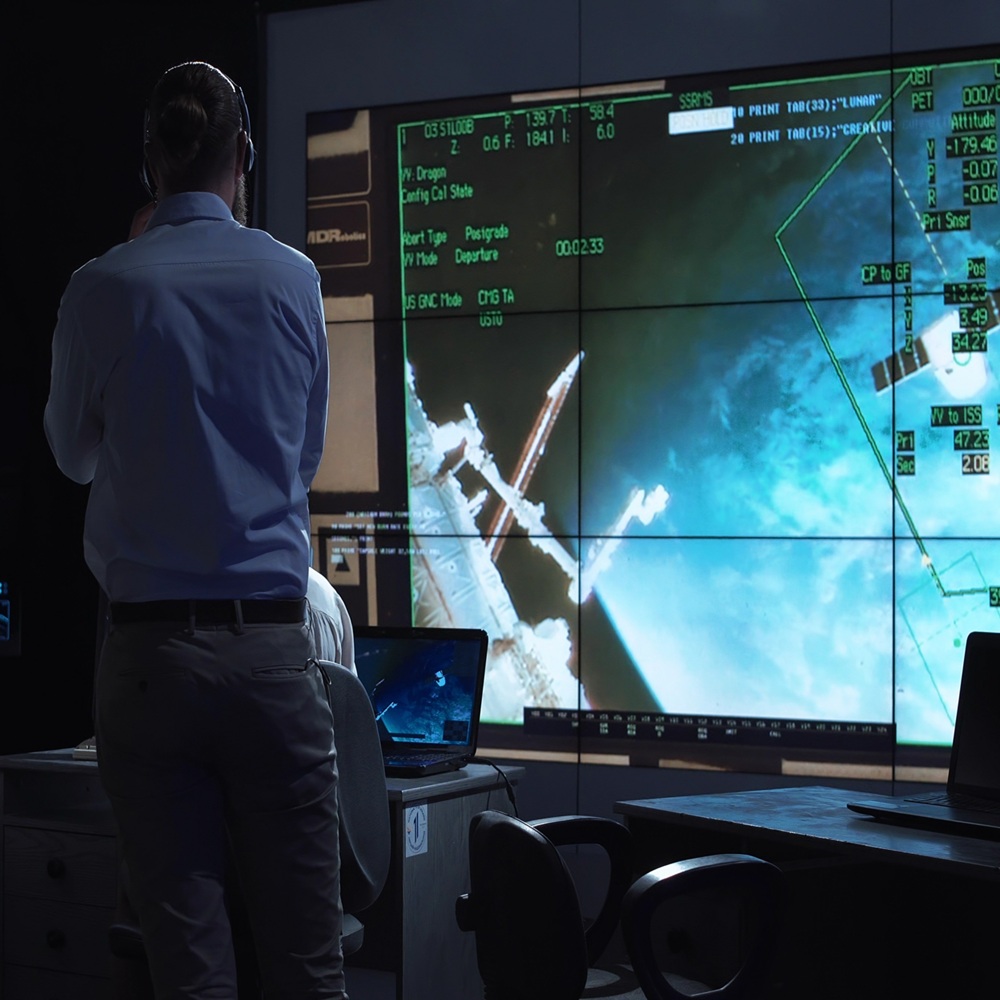
A group of people are controlling the orbiting international space station ISS. Elements of this image furnished by NASA.

Assessing the Implications of Interstellar Objects for Planetary Security and Defense

by Sebastián Calderón Céspedes

As international order evolves in the 21st century, strategic competition is increasingly shaped by technological frontiers and emerging domains of power. Unlike the unipolar moment following the Cold War, the contemporary landscape is defined by multipolarity, where major powers vie for influence across space, cyberspace, and biotechnology. Outer space has emerged not only as a frontier for exploration but also as a potential arena for resource acquisition and military projection, raising novel challenges for international law, security policy and cooperative governance. Examining interstellar phenomena in this context underscores the importance of preparedness, coordination, and risk management, even without assuming the presence of extraterrestrial intelligence, yet acknowledging the unprecedented nature of events that are pushing the boundaries of human observation. Humanity is gradually entering an era in which technological progress is reshaping our conception of cosmic exploration. As advancements in rocket propulsion, materials science, and observational astronomy accelerate, the prospect of humanity departing Earth towards other worlds becomes less a distant dream and more an inevitable chapter in our long-term evolution. The future of our species increasingly appears to be tied to the potential terraforming of new planets and celestial bodies, alongside the development of aerospace technologies capable of carrying us deeper into the cosmos. Within this transformative horizon, the Fermi paradox or the Dark Forest theory gains renewed relevance, challenging humanity to consider the existential filters that civilizations must surpass to survive, expand and potentially encounter other life forms. Yet, while such milestone may unfold centuries from now, the foundations of that future are being laid in the present. In the 21st century, specifically by the year 2026, humanity will become more capable of observing its immediate cosmic neighborhood. Modern telescopes and space-based observatories allow us to detect objects that for centuries have likely passed through our solar system unnoticed. Only within the brief span of our scientific maturation have we acquired the tools to identify interstellar objects, bodies originating beyond the solar system whose physical properties and trajectories challenge our existing frameworks. These objects, often catalogued as cometary in nature, possess characteristics that warrant careful study. Their unusual shapes, compositions, and velocities offer insights into environments beyond our interstellar cradle and, in some cases, raise questions about their natural origin or even the possibility of artificial extraterrestrial technology. As our detection capabilities improve, the arrival of each interstellar visitor represents not only a scientific opportunity but also a critical data point for understanding planetary security and defense. Consequently, their study urges nations to evolve towards a more serious and coordinated international framework capable of addressing the strategic, scientific, and existential implications of interstellar encounters. The emergence and Relevance of Interstellar Objects The scientific understanding of interstellar objects (ISOs) has evolved rapidly in recent years, propelled by technological advances and the unexpected discovery of bodies crossing the solar system on hyperbolic trajectories. Before 2017, the existence of such objects was largely theoretical, supported by models of planetary formation and stellar dynamics that predicted the ejection of debris during the early stages of planetary system evolution. These models implied that the Milky Way should contain vast populations of wandering fragments- comets, asteroids, and potentially more complex bodies such as extraterrestrial debris moving freely through interstellar space. Yet observational confirmation remained unattainable due to instrumental limitations. This changed with the detection of the first confirmed interstellar object, 1/Oumuamua, whose physical properties departed radically from known solar system bodies. Its non-gravitational acceleration, lack of a visible coma, and elongated shape challenged established models of cometary activity and asteroidal composition (Meech et al, 2017). The subsequent discovery of 2I/Borisov, a more conventionally cometary object, confirmed that the solar system is indeed exposed to material originating from other stellar environments (Jewitt & Luu, 2019). The contrast between both objects highlighted a key insight: ISOs are highly diverse, and their properties may reveal mechanisms and materials absent from our own planetary system. Advances in wide-field surveys, high-resolution instrumentation, and automated sky- monitoring systems have significantly expanded humanity´s capacity to detect and track ISOs. The increasing sensitivity of these tools marks a transition toward a new observational era in which interstellar detections may become more frequent. As a result, we are now able to observe the behavior of bodies entirely foreign to the solar system-objects whose trajectories, compositions, and signatures often defy established expectations and expose gaps in existing theoretical frameworks. This expanding observational capability not only advances scientific knowledge but also underscores the urgency of early warning detection. Because ISOs are typically identified within narrow observational windows, delayed characterization can lead to the loss of critical scientific and strategic information. Consequently, the growing presence of ISOs calls for enhanced global coordination, standardized protocols, and a more serious international approach to monitoring and interpreting near-Earth interstellar encounters. The Impact and Arrival of 3I/ATLAS The discovery of 3I/ATLAS, the third confirmed interstellar object entering our solar system, marks a significant milestone in modern astronomy. Unlike 1/Oumuamua and 2I/Borisov, whose observational windows were limited and partially constrained, 3I/ATLAS has provided a comparatively longer period for systematic study. Its hyperbolic trajectory, unusual photometric behavior, and non-standard luminosity variations have made it an object of exceptional scientific interest. While early observations suggest that while 3I/ATLAS shares key characteristics with known cometary bodies, its behavior reinforces broader findings that interstellar objects often display physical and dynamical properties that do not fit neatly within exiting taxonomies of solar system objects (Jewitt, 2023). The media response to 3I/ATLAS has been unprecedented. As with Oumuamua, the object rapidly became the subject of public fascination, sensational claims, and speculative narratives. News outlets, online forums, and social media ecosystems proliferated interpretations ranging from exotic physics to extraterrestrial probes. While much of this discourse lacks grounding in empirical evidence, its widespread circulation reflects a broader sociological trend: interstellar phenomena increasingly operate not only as a scientific event but also as catalysts for public, imagination, cultural anxiety, and geopolitical attention. As Kaku (2020) notes, humanity approaches a technological threshold where cosmic discovery intersects directly with public consciousness, provoking both curiosity and apprehension. From a scientific standpoint, researchers such as Loeb (2021) have emphasized that anomalous behavior in interstellar visitors should not be dismissed lightly. Although 3I/ATLAS currently appears consistent with a natural origin, its unique features-and the difficulty in categorizing ISOs-underscore the need for serious, methodical investigation. Loeb argues that humanity must abandon its complacency regarding the unknown nature of interstellar technologies or civilizations and instead adopt a posture of preparedness, open inquiry, and systematic risk assessment. In his view, phenomena like 3I/ATLAS are reminders that humanity is not isolated, and that contact-whether intentional or incidental—with non-human intelligence represents a real possibility with profound implications. The arrival of 3I/ATLAS has also highlighted the potential consequences of extraterrestrial technological encounters. Even in the absence of direct evidence of artificial origin, the mere ambiguity of such objects can trigger global destabilization through speculation, misinformation, or geopolitical competition. Historical examples such as the economic collapses of 1929 and 2008, the disruptive effects of the COVID-19 pandemic, and the global tensions surrounding major wars demonstrate how uncertainty-especially when amplified by media-can generate widespread instability. In this context, an interstellar object exhibiting unexplained characteristics could easily become a flashpoint for international tension, economic turbulence, or strategic miscalculation. Thus, beyond its scientific significance, 3I/ATLAS has brought renewed attention to the vulnerabilities and responsibilities of a species becoming increasingly aware of its cosmic environment. The object serves as a practical reminder that humanity must develop not only more advanced observational systems but also coordinated international frameworks for managing unexpected astronomical events. As we confront the possibility of encountering technologies or life beyond Earth, the world must adopt a more mature, structured approach to detection, interpretation, and global communication. This moment sets the stage for next critical dimension of the discussion, the implications of interstellar objects for planetary security and defense, and the urgent need to assess humanity’s readiness for cosmic contingencies. Toward a Multiplanetary Security Architecture Planetary security has grown increasingly complex as scientific capabilities expand toward detecting and characterizing interstellar objects whose origins and physical attributes lie beyond conventional astrophysical categories. Within the United Nations framework, existing mechanisms-such as COPUOS, the International Asteroid Warning Network (IAWN), and the Space Mission Planning Advisory Group (SMPAG) provide the foundational structure for global coordination on natural impact hazards (UN COPUOS, 2014). However, these institutions were established under assumptions limited to solar system derived natural threats, leaving them poorly equipped to address unknown interstellar phenomena. The Outer Space Treaty and subsequent conventions introduced broad principles on cooperation and peaceful use, but no anticipated scenarios involving technologically anomalous interstellar objects or potential artificial extraterrestrial artifacts, resulting in a significant global governance vacuum. These mechanisms are designed primarily for probabilistic, natural impact scenarios, not for interstellar objects exhibiting anomalous trajectories, non-gravitational accelerations or uncertain technological signatures. Recognizing this gap, recent scientific proposals-most notably those advanced by Loeb (2023)-have called for the development of a dedicated international coordination mechanism under the United Nations system for the study and assessment of interstellar objects. Rather than proposing a fixed institutional blueprint, these contributions emphasize the need for a structured platform capable of integrating scientific analysis, risk assessment, and transparent diplomatic communication in cases involving anomalous interstellar phenomena. Such proposals should be understood not as a definitive institutional prescription, but as forward as a definitive institutional prescription, but as forward-looking reference points for the type of governance architecture of international community must begin to contemplate. As humanity´s observational reach extends beyond the boundaries of the solar system; this governance gap becomes increasingly consequential. Interstellar objects introduce forms of uncertainty that existing planetary defense regimes-designed around predictable, solar system-derived threats were never Intended to manage, underscoring the need for flexible and adaptive legal frameworks capable of integrating scientific uncertainty into decision making processes. Within this emerging landscape, conceptual assessment tools have gained relevance as mechanisms to structure uncertainty rather than eliminate it. One illustrative example is the Interstellar Threat Assessment Scale (ITAS) proposed by Loeb (2024), which offers a simplified framework for evaluating interstellar detections based on observable characteristics rather than speculative intent. As its lower levels, the scale categorizes objects that behave consistently with natural interstellar debris, such as comet-like bodies exhibiting predictable physical and dynamic properties. Higher levels correspond to increasing degrees of anomaly-such as unexplained non-gravitational acceleration, unconventional trajectories, or geometries inconsistent with known natural formation processes. While the scale is not explicitly designed to identify extraterrestrial technology, it intentionally encompasses characteristics that fall outside established natural baselines. This design allows it to function across multiple scenarios, from rare or poorly understood natural phenomena to detections that may warrant closer scrutiny due to their atypical behavior. In this sense, the framework remains agnostic regarding origin, yet adaptable enough to support both conventional astrophysical analysis and precautionary assessments under conditions of elevated uncertainty. Importantly, it does not assert hostile intent or artificial origin, rather it operates as a risk-management tool that helps differentiate levels of scientific uncertainty and potential planetary relevance. Approached in this manner, such frameworks contribute to the evolution of international space governance by providing a shared analytical language for policymakers, scientific institutions, security agencies and statecraft-oriented decision-makers. By standardizing how uncertainty is assessed and communicated, they reduce fragmented national interpretations, limit reactive or militarized responses, and promote cooperative, evidence-based decisions. Decision-making under conditions of incomplete information. This process reflects a broader need for international space law to evolve dynamically. However, the governance of interstellar risk cannot rely solely on conceptual models or isolated scientific initiatives. It requires a genuinely planetary response that integrates the full spectrum of contemporary technological, institutional, and political capacities. International legislation governing outer space must be adaptive and evolutionary, capable of responding to emerging scientific realities. Artificial intelligence, real-time global surveillance networks, and autonomous detection algorithms must be incorporated into a unified planetary architecture capable of identifying and characterizing interstellar objects far earlier than current capabilities allow. Equally important is the sustained collaboration among major space agencies-including NASA, ESA, CNSA, ISRO, Roscosmos, and JAXA- alongside private actors such as SpaceX, Blue Origin, and emerging aerospace enterprises, whose technological capabilities and rapid innovation cycles are increasingly central to space governance. Equally critical is great-power cooperation. From a realist perspective, the international system remains defined by competition, power asymmetries, and strategic mistrust. Yet planetary defense represents a rare domain in which shared existential vulnerability can partially override zero-sum logic. The detection of an anomalous interstellar object must never become a catalyst for geopolitical rivalry or strategic miscalculation, but rather an opportunity for transparent scientific collaborations and coordinated global response. In an international order strained by power competition, planetary security stands as one of the few areas where shared survival interests necessitate shared responsibility. Ultimately, interstellar objects compel humanity to transcend political fragmentation and adopt a forward- look global strategy. Building a resilient planetary security architecture requires the integration of scientific expertise, adaptive international governance, technological innovation, and coordinated commitment of state and private actor alike. Whether future interstellar encounters prove benign or reveal unprecedented anomalies, preparedness is not speculation, it is an essential step in the evolution of humanity´s role within the cosmos. References - Jewitt, D., & Seligman, D. Z. (2023). The interstellar interlopers. Annual Review of Astronomy and Astrophysics, 61, 197–236. https://doi.org/10.1146/annurev-astro-071221-054221 - Jewitt, D., & Luu, J. (2019). Initial characterization of interstellar comet 2I/2019 Q4 (Borisov). The Astrophysical Journal Letters, 886(2), L29. https://doi.org/10.3847/2041-8213/ab530b - Kaku, M. (2018). The Future of Humanity: Terra­forming Mars, Interstellar Travel, Immortality, and Our Destiny Beyond Earth. Doubleday. https://www.penguinrandomhouse.com/books/555722/the-future-of-humanity-by-michio-kaku/ - Loeb, A. (2021). Extraterrestrial: The first sign of intelligent life beyond Earth. Houghton Mifflin Harcourt. https://openlibrary.org/books/OL31850155M/Extraterrestrial?utm_source=chatgpt.com - Loeb, A. (2024). The interstellar threat assessment scale. Medium. https://avi-loeb.medium.com/ - Meech, K. J., et al. (2017). A brief visit from a red and extremely elongated interstellar asteroid. Nature, 552, 378–381. https://doi.org/10.1038/nature25020 - United Nations Committee on the Peaceful Uses of Outer Space (UN COPUOS). (2014). Report of the Scientific and Technical Subcommittee on its fifty-first session. United Nations Office for Outer Space Affairs. https://www.unoosa.org/oosa/en/ourwork/copuos/stsc/2014/index.html