Subscribe to our weekly newsletters for free

Subscribe to an email

If you want to subscribe to World & New World Newsletter, please enter
your e-mail

Defense & Security
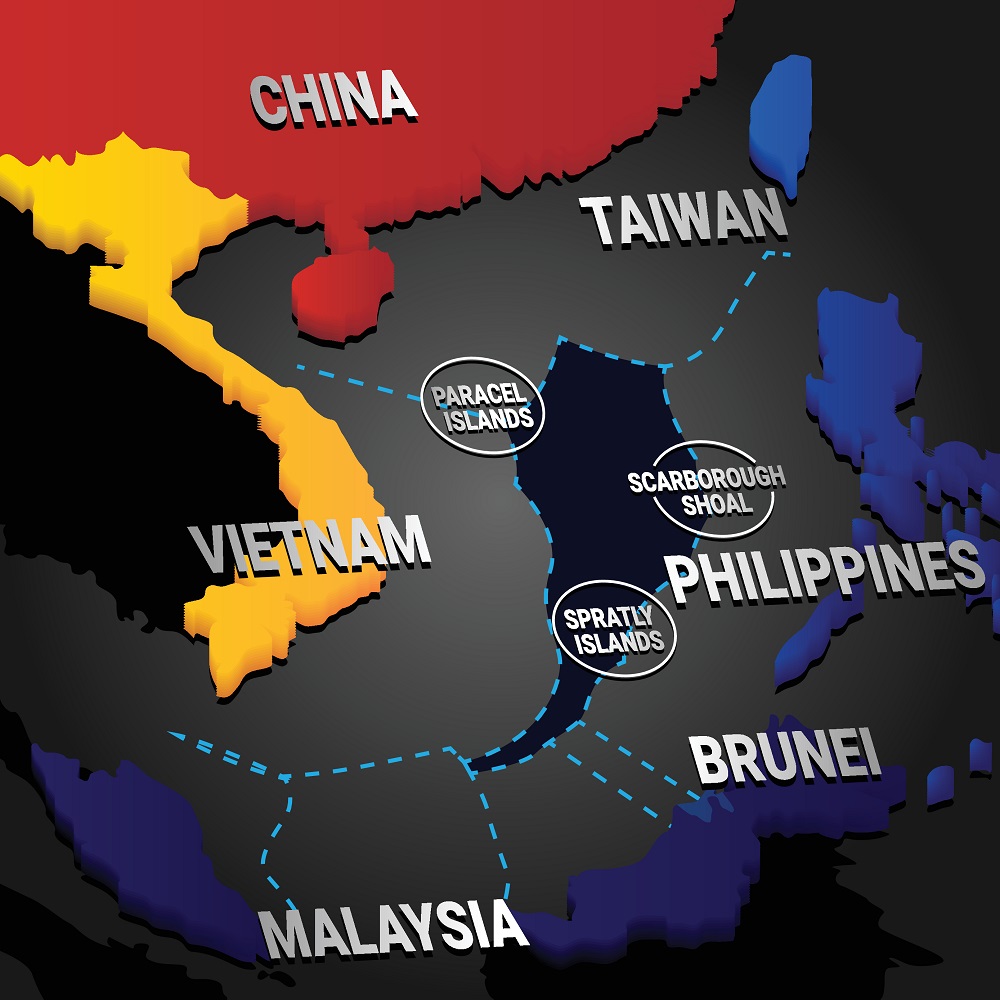
Disputed Claims In The South China Sea.

Africa’s delicate diplomacy in the South China Sea dispute

by Samir Bhattacharya

한국어로 읽기Leer en españolIn Deutsch lesen Gap اقرأ بالعربيةLire en françaisЧитать на русском The ongoing skirmishes in the South China Sea between China and regional states represent another severe threat to the world economy, directly affecting Africa. As China grows increasingly aggressive in its race for global hegemony and influence, and the United States (US) slowly plunges into the battle to prevent China’s rise, the world is watching the unfolding of this rivalry with unease. Although a few places have felt intense pressure from this alarming competition, the South China Sea (SCS) region is where a violent showdown looks increasingly probable. Unlike the war in Ukraine or Gaza, the US and China may start a direct war in the SCS. And amidst this multifaceted new Cold War 2.0, Africa remains cautious. The South China tinderbox On 23 April, another skirmish took place between China and the Philippines when two Filipino patrol boats approached the shallow turquoise waters of a disputed shoal around 194 km west of the Philippine Islands province of Palawan. The patrol boats were there for an underwater survey near the disputed shoal claimed by both China and the Philippines, thus prompting a Chinese response. A Chinese coast guard, via radio, instructed them to leave the area and threatened hostile measures. Following several radio exchanges, the Chinese coast guard damaged both the Philippine patrol boats by firing high-pressure water cannons at them. However, this was not the first time China’s assertion in this region has caused friction with other SCS neighbours, including Japan and South Korea. China has used an unconvincing U-shaped “nine-dash line” that crosses the exclusive economic zones, or EEZs, of Brunei, Indonesia, Malaysia, the Philippines, Taiwan, and Vietnam to demonstrate its claim in the region. Despite their low intrinsic value, the region lies along a vital trade and supply corridor that supports over US$3 trillion in yearly shipborne commerce. Oil, gas, and fishing sources abound in the area. Beijing has declined to acknowledge a 2016 decision from the Permanent Court of Arbitration that ruled Beijing’s broad claims invalid based on historical grounds. China and the Philippines have already fought many times over the Second Thomas Shoal and the Bashi Channel. China has become increasingly aggressive in the region in the last few years, putting regional stability at high risk. So far, these skirmishes will likely remain regional without the risk of any full-scale war. However, there are risks of casualties or even the vessel capsizing. Making of Cold War 2.0 over the SCS Washington’s response to the upcoming crisis is still modest. US President Biden raised concerns about China’s actions in the SCS , including efforts to impede the Philippines from resupplying its forces on the fiercely disputed Second Thomas Shoal. The US has repeatedly warned China that it’s obligated to defend the Philippines, its oldest treaty ally in Asia, if Filipino forces, ships or aircraft come under an armed attack. The US also conducted Balikatan drills (‘shoulder-to-shoulder’ in Tagalog) with the Philippines with more than 16,000 American and Philippines military personnel. Indeed, its resources are thinly stretched, and Beijing seems to be moving ahead. To deter China by stepping up regional defence diplomacy, Washington is exploring the possibility of a security alliance with Japan, Australia, and the Philippines, tentatively called SQUAD. This is in addition to two other existing groupings in the region, “Quad” and “AUKUS,” a defence pact among Australia, the United Kingdom and the US. While AUKUS is a defence pact, Quad is simply a dialogue platform. Africa’s tricky balancing act Even while the socioeconomic repercussions of the Russia-Ukraine war have not yet wholly subsided in Africa, the ongoing skirmishes in the SCS represent another severe threat to the world economy, directly affecting several African nations. Despite being geographically far, the conflict’s spillover effect would impact the continent’s food security in terms of both the availability and pricing of some food crops. In addition, the SCS region represents a crucial geographic sweet spot for Africa as a source of trade and investment, translating into growth and development for many African economies. The crisis can potentially fuel price rise, particularly for oil-importing countries. The prospect of a consequential price rise of essential commodities will have enormous ramifications for domestic stability in most African countries. Furthermore, many African economies heavily rely on trade, investment, and aid from South and Southeast Asia, the crisis will significantly hamper the development and growth of the continent. There are also strategic lessons for Africa to learn from the conflict. China’s principal interest in Africa consists of protecting its BRI investments and ensuring steady trade flow. Africa is also essential for China to fulfil its resource needs, maintaining industrial growth and energy security. Therefore, securing stability in countries where China has invested is in China’s interest, just like keeping a stable relationship with China is in the interest of those investment-starved countries. Further, since many investment projects in China are located in different African countries, these countries should be careful. China can become aggressively irredentist, even in Africa. Currently, China owns a naval base in Djibouti and a ballistic missile tracker Yuan Wang 5, off the coast of Durban. It has strong economic influence across the countries of Africa’s east coast thanks to its Belt Road Initiative (BRI). On the West Coast, China has many seaports financed or constructed by Chinese entities. If the national governments of these countries fail to pay, China would happily take control of these ports through lease as it did in Hambantota, Sri Lanka. In addition to Sri Lanka, other South Asian countries such as Pakistan, Nepal, Bangladesh, and Myanmar also faced dire consequences due to the failure of their BRI debt payment, leading to economic crises, and sometimes even political crises. Therefore, caution would be expected from these African governments. Conclusion China’s increasingly aggressive posture over the SCS raises concerns about the stability of the region. As the current uneasy détente between the US and China bears remarkable similarities to the Cold War, questions are raised regarding the possibilities of a new Cold War 2.0. Questions are also raised concerning the possible reactions from different African countries vis-á-vis Chinese aggression in the region. Undoubtedly, any serious conflict between China and the Philippines would be dangerous. These frequent skirmishes may not lead to a direct war between the US and China. Yet, the risk of vessel capsizing and casualties is high. Any such event would ultimately spark a crisis in Africa. So far, Africa is cautious and continues to balance its great power relationships. Undoubtedly, it is increasingly concerned with the aggressive posture of the Chinese in the region. On the other hand, it needs China for economic purposes. Therefore, Africa will continue to walk the tightrope where it would want US involvement in de-escalating the situation without ruffling any feathers with China. The views expressed above belong to the author(s).

Defense & Security
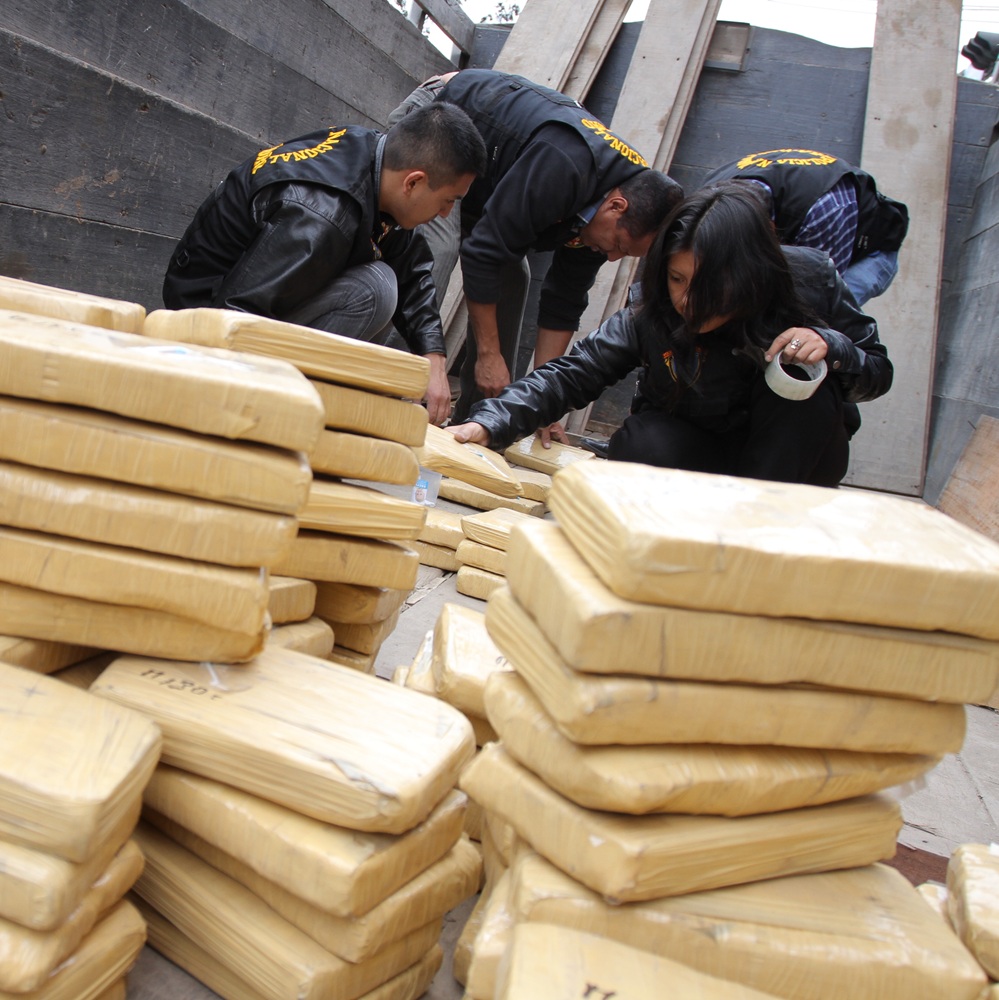
Lima, Peru - August 12, 2012: Seizure of drug or cocaine cargo in a truck with international destination. Packages filled with cocaine and the fight against drug trafficking.

Drug trafficking as a transnational system of power: origins, evolution, and perspectives

by World & New World Journal

Drug trafficking is the illegal trade, in large quantities, of drugs or narcotics (RAE, 2025). However, while this definition is accurate, it is insufficient to describe the complexity of a global phenomenon that transcends borders and involves the production, purchase, and distribution of illicit substances. Drug trafficking has developed hand in hand with global trade and interconnection (Saldaña, 2024). In other words, the evolution of drug trafficking is closely linked to globalization, which has strengthened the logistical, technological, and financial networks that enable its expansion. Therefore, more than isolated crime, drug trafficking must be understood as a transnational system of power that feeds on globalization itself. Drug Trafficking as a Transnational System of Power Drug trafficking is described by some authors as a profoundly complex transnational phenomenon resulting from globalization (Luna Galván, Thanh Luong, & Astolfi, 2021). This phenomenon involves and connects global networks of production, logistics, financing, and consumption, all made possible by economic interdependence, information technologies, and established global logistical routes. These authors analyze drug trafficking from a multidimensional perspective, identifying seven interrelated spheres that sustain this activity: the economic (money laundering and investment diversification), institutional (corruption and institutional capture), organizational (organized criminal networks and advanced logistics), social (presence in territories with state vacuums and community legitimization), technological (use of cryptomarkets, encryption, and innovation), geopolitical (route adaptability and resilience against state policies), and cultural (narratives and subcultures that normalize illicit practices) (Luna Galván, Thanh Luong, & Astolfi, 2021). These dimensions form a web of relationships in which criminal groups not only control the flow of drugs but also influence economic and political structures. As Interpol (n.d.) warns, this global network undermines and erodes the political and economic stability of the countries involved, while also fostering corruption and generating irreversible social and health effects. Furthermore, drug trafficking is intertwined with other crimes — such as money laundering, corruption, human trafficking, and arms smuggling — thus forming a globalized criminal ecosystem, a global issue and a national security concern for nations worldwide. Origins and historical context There are records of the use of entheogenic drugs for ritual or medicinal purposes in Mesoamerican cultures — such as the Olmecs, Zapotecs, Mayas, and Aztecs (Carod Artal, 2011) — as well as in Peru (Bussmann & Douglas, 2006), the Amazon region, and even today among the Wixárika culture in Mexico (Haro Luna, 2023). Likewise, there was widespread and diverse drug use among the ancient Greeks and Romans, including substances such as mandrake, henbane, belladonna, cannabis, and opium, among others (Pérez González, 2024). However, modern drug trafficking can trace its origins to the First Opium War (1839–1842) between the Chinese Empire (Qing Dynasty) and the British Empire, marking the first international conflict directly linked to the drug trade. During the second half of the 19th century and the early 20th century, several drugs —such as heroin, cocaine, cannabis, and amphetamines — made their debut in the pharmaceutical field, being used in medicines and therapeutic remedies (López-Muñoz & Álamo González, 2020). This period is considered the pharmaceutical revolution, characterized by the emergence of researchers, research centers, and major discoveries in the field. During that time, the term “drug” began to be associated with “addiction.” The pharmaceutical revolution had its epicenter in Germany; however, it was the British and Americans who promoted its expansion (Luna-Fabritius, 2015) and contributed to the normalization of psychoactive substance consumption. Military promotion, use and dependence Armed conflicts — from the U.S. Civil War (1861–1865) to the First World War (1914–1918) — played a key role in spreading and promoting the military use of psychoactive substances. For instance, stimulants such as alcohol, cocaine, amphetamines, and methamphetamines were used to combat sleep, reduce fatigue, boost energy, and strengthen courage, while depressants like opium, morphine, and marijuana were used to relieve combat stress and mitigate war trauma (Marco, 2019). The dependence that developed led to a process of expansion among the civilian population, which entered a period of mass experimentation that often resulted in substance abuse and chemical dependency (Courtwright, 2001). In response, the first restrictive laws emerged, particularly in the United States (López-Muñoz & Álamo González, 2020). However, the high demand for certain substances, such as opium, gave rise to the search for markets capable of meeting that demand. Thus, Mexico — influenced by Chinese immigration that introduced the habit of smoking opium in the country — became, by the 1940s, the epicenter of poppy cultivation and opium processing in the region known as the Golden Triangle (Sinaloa, Durango, and Chihuahua). It became the main supplier for drug markets in the United States and other parts of the continent, at times providing up to 90% of the demand during periods of shortage (Sosa, 2025). Even during World War II (1939–1945) — when the traditional supply of heroin and morphine to Europe was disrupted — Mexico strengthened its role in the illicit trade by providing smoking opium and processed morphine or heroin. These developments, alongside the implementation of opiate regulations in Mexico, helped consolidate and structure Mexican drug trafficking, which has persisted for more than sixty years (Sosa, 2025). Social expansion and regulatory restrictions The end of World War II brought stricter restrictions and regulations, but that did not prevent socio-cultural movements such as the hippie movement (in the 1960s) from adopting the use of marijuana, hashish, LSD, and hallucinogenic mushrooms (Kiss, 2025) without facing severe repercussions. That same hippie movement — which promoted pacifism and opposed the Vietnam War (1955–1975) — in one way or another encouraged drug use among young people. Moreover, the demand for substances by returning veterans led to the internationalization of drug markets, fostering, for example, the heroin trade from Southeast Asia (Laos, Myanmar, and Thailand) (Saldaña, 2024). The Nixon administration and the US “War on Drugs” The dependency became so severe that it was considered a public health emergency in the United States. On June 18, 1971, Richard Nixon declared the “War on Drugs” at an international level, labeling drug trafficking as “public enemy number one” (Plant & Singer, 2022). Nixon’s strategy combined international intervention with increased spending on treatment and stricter measures against drug trafficking and consumption (Encyclopedia.com, n.d.), along with the creation of the Drug Enforcement Administration (DEA) in 1973. Although the War on Drugs was officially declared in 1971, it had a precedent in 1969 with the failed Operation Intercept, whose goal was to combat marijuana trafficking across the U.S.–Mexico border (M. Brecher, 1972). As part of his international strategy, Nixon launched several operations such as Operation Condor with Mexico (1975 and 1978), Operation Stopgap in Florida (1977), and Operation Fulminante, carried out by Colombian President Julio César Turbay in 1979. Most of these efforts were aimed at combating marijuana trafficking. The results were mixed, but the consequences were significant, as drug traffickers resisted and adapted — giving rise to a more active and violent generation and marking the consolidation of modern drug trafficking. The Consolidation of Modern Drug Trafficking: Colombia and Reagan Era. During the 1980s and 1990s, drug trafficking evolved into a highly organized industry. Figures such as Félix Gallardo [1], Amado Carrillo Fuentes [2], Pablo Escobar [3], Carlos Lehder [4], Griselda Blanco [5], Rafael Caro Quintero [6], and later Joaquín “El Chapo” Guzmán Loera [7], among others (Wikipedia, 2025), symbolized the growing power of the cartels in Colombia and Mexico. During this period, criminal organizations consolidated their operations, and the profits from drug trafficking fueled violence and corruption. Moreover, the struggle for power — not only in Mexico, Colombia, Peru, or the United States but also in other regions of Latin America — and the competition for markets led to greater sophistication, as well as the construction of infrastructure and distribution networks. Pablo Escobar’s famous phrase, “plata o plomo” (“silver or lead”), reflects the immense power and influence that drug traffickers wield, even over governments and authorities. Colombia, through the Cali and Medellín cartels, dominated the production and export of cocaine via a triangulation network that connected through Mexico or the Caribbean, with the final destination being the United States, where the Reagan administration (1981–1989) intensified the War on Drugs, focusing on criminal repression rather than public health. The Reagan’s War on Drugs was characterized for setting aggressive policies and legislative changes in the 1980s which increased the law enforcement and the punishment, as a consequence the prison penalties for drug crimes skyrocketed from 50,000 in 1980 to more than 400,000 by 1997 (HISTORY.com Editors 2017) Mexican cartels consolidation and Mexico’s transition to a consumer nation Around the same time, on the international arena, following the fragmentation of the Guadalajara Cartel in the 1980s, the emergence of new Mexican cartels — the Sinaloa Cartel, Gulf Cartel, Tijuana Cartel, and Juárez Cartel — combined with the downfall of Colombia’s Cali and Medellín cartels in the mid-1990s, catapulted Mexican cartels into prominence. They seized control of trafficking routes and diversified their operations, thus consolidating their role in the global drug market. Later, the September 11, 2001, attacks altered U.S. security policy, affecting border transit, increasing security measures, and tightening inspections along the southern border with Mexico (Rudolph, 2023) — one of the main drug distribution routes into the United States. Although some studies suggest that U.S. security policies at land ports of entry had only marginal pre- and post-9/11 effects (Ramírez Partida, 2014), in reality, these measures significantly impacted Mexico more than the US. Mexico transitioned from being primarily a producer, distributor, and transit country for drugs to also becoming a consumer nation. In 2002, more than 260,000 people were reported to use cocaine, whereas today the number exceeds 1.7 million addicts, according to data from the federal Secretariat of Public Security (Alzaga, 2010). Likewise, the ENCODAT 2016–2017 survey shows that the percentage of Mexican adolescents who had consumed some type of drug increased from 1.6% in 2001 to 6.4% in 2016 (REDIM, 2025). By disrupting one of the main drug distribution routes to the United States, the situation led to drugs being redistributed and sold within Mexican territory. This, combined with the country’s social and economic conditions, facilitated the recruitment of young people by organized crime groups (Becerra-Acosta, 2010) for the domestic distribution of drugs. Mexico and the Contemporary War on Drug Trafficking The escalation of violence caused by the power struggle among Mexican cartels became so critical that President Felipe Calderón (2006–2012) declared an open war against organized crime on December 10, 2006 (Herrera Beltrán, 2006). His strategy involved deploying the armed forces throughout Mexican territory, as well as obtaining financial aid, training, and intelligence through the Mérida Initiative from the United States to support the fight against drug trafficking and organized crime in Mexico and Central America (Embassy of the United States in Mexico, 2011). His successor, Enrique Peña Nieto (2012–2018), shifted the focus toward prevention and civil protection, although he continued the militarization process and the transformation of police institutions (BBC News, 2012). The strategies of Calderón and Peña Nieto — often grouped together — while questioned and criticized (Morales Oyarvide, 2011), achieved significant arrests, including figures such as “La Barbie,” “La Tuta,” “El Menchito,” “El Chapo,” “El Marro,” and “El Ratón.” They also eliminated key figures like Arturo Beltrán Leyva, Ignacio Coronel Villarreal, Antonio Cárdenas Guillén, Heriberto Lazcano Lazcano, and Nazario Moreno González. Later, during the presidency of Andrés Manuel López Obrador (2018–2024), the strategy shifted once again toward a stance of “hugs, not bullets,” showing clear signs of passivity that allowed cartel expansion (Fernández-Montesino, 2025). His successor, Claudia Sheinbaum (2024–2030), on the other hand, has navigated both internal and external pressures (particularly from the United States), seeking to balance intelligence, coordination, and attention to structural causes (Pardo, 2024), although continued militarization suggests a hybrid strategy remains in place. Fentanyl and synthetic drugs: The future of drug trafficking The president of the International Narcotics Control Board (INCB), Jallal Toufiq, said that “the illicit drug industry represents a major global public health threat with potentially disastrous consequences for humankind.” In addition, the 2024 INCB Annual Report found that illicit synthetic drugs are spreading and consumption is increasing, moreover, these could overtake some plant-based drugs in the future. (International Narcotics Control Board 2025) The press release before mentioned also points out that Africa, Middle East, East and Southeast Asia and the Pacific drug markets are increasing, while production in Central America, Peru, Colombia and the Caribbean keeps on developing. On the other hand, the opioid crisis (fentanyl) remains a serious problem for North America and the cocaine keeps affecting Europe with a spillover Africa. (International Narcotics Control Board 2025). The fentanyl crisis in North America is well documented. Data show an increase of 540% in overdose deaths between 2013 and 2016 (Katz 2017), with 20,100 deaths in the USA, while by 2023, the number increase to 72,776 deaths (USA Facts 2025). On the other hand, Canada has reported 53,821 deaths between January 2016 and March 2025 (Government of Canada 2025), while Mexico reported only 114 deaths from 2013 to 2023 (Observatorio Mexicano de Salud Mental y Adicciones 2024). These figures reveal not only the unequal regional impact of the synthetic opioid crisis but also the ongoing adaptation of organized crime networks that sustain and expand these markets. Evolution and Diversification of Organized Crime The phenomenon of adaptation, evolution, and diversification of new illicit markets is not an isolated issue. Experts such as Farah & Zeballos (2025) describe this in their framework Waves of Transnational Crime (COT). The first wave is represented by Pablo Escobar and the Medellín Cartel, pioneers in moving tons of cocaine to the U.S. market through Caribbean routes. The second wave is represented by the Cali Cartel, which perfected the model and expanded trafficking routes through Central America and Mexico — still focusing on one product (cocaine) for one main market (the United States). The third wave is characterized by the criminalization of criminal structures, the use of armed groups (such as the FARC in Colombia), and the use of illicit production and trafficking as instruments of state policy, with clear effects on public policy functioning. At this stage, there is product diversification, with the main market remaining the U.S., but expansion reaching Europe (Farah & Zeballos, 2025). Finally, the fourth wave — the current stage — is defined by total diversification, a shift toward synthetic drugs, and global expansion, involving extra-regional groups (Italian, Turkish, Albanian, and Japanese mafias), where many operations function “under government protection.” This fourth wave offers clear examples of collusion between criminal and political spheres, which is not new. However, the arrest of Genaro García Luna (Secretary of Public Security under Calderón), the links between high-profile Mexican politicians and money laundering or fuel trafficking (Unidad de Investigación Aplicada de MCCI, 2025), and even Trump’s statements claiming that “Mexico is largely governed by cartels” (DW, 2025) reveal a reality in which drug trafficking and criminal organizations are no longer merely producers and distributors of illicit substances. Today, they possess the power and capacity to establish parallel governance systems, exercise territorial control, infiltrate institutions and local economies, and even replace core state functions (Farah & Zeballos, 2025). Future Perspectives and Challenges Currently, drug trafficking and organized crime represent structural threats. It is well known and widely studied what drug trafficking means for public security and health, but it has now also become a threat to politics, democracy, and the rule of law. With divided opinions, many analysts argue that the war on drugs has failed — in addition to being costly and, in many cases, counterproductive (Thomson, 2016). Punitive strategies have generated more violence without truly addressing the social causes behind the phenomenon (Morales Oyarvide, 2011). In this context, a paradigm shift is necessary: drug trafficking should not be approached solely as a security issue, but also as a public health and social development problem. Drug use has been a historical constant, and its total eradication is unrealistic. The key lies in harm-reduction policies, international cooperation, and inclusive economic development. Moreover, organized crime demonstrates adaptive resilience, making its eradication difficult — especially given that its operational capacities are so diversified, it maintains alliances with groups worldwide, and globalization and new technologies continually help it reinvent itself. Furthermore, even political and economic tensions among the United States, Mexico, Canada, and China are now intertwined with the trade of synthetic drugs — particularly fentanyl —, revealing the geopolitical magnitude of the problem (Pierson, 2024). Conclusion In summary, drug trafficking has ceased to be a marginal activity and has become a transnational structure capable of influencing politics, the economy, and society. Its persistence can be explained not only by the profitability of the business but also by social inequality, institutional corruption, and sustained global demand. History demonstrates that repression has not eradicated the problem but rather transformed it. Today, it is essential to rethink drug policies from a comprehensive approach that integrates security, public health, education, and international cooperation. Only through a multidimensional strategy will it be possible to contain a phenomenon that — more than an illicit economy — constitutes a global form of parallel governance that challenges the very foundations of the modern state. Notes[1] Miguel Ángel Félix Gallardo, also known as “El Jefe de Jefes” (“The Boss of Bosses”), “El Padrino” (“The Godfather”), or “The Drug Czar”, was one of the founders of the Guadalajara Cartel. [2] Amado Carrillo Fuentes, known as “El Señor de los Cielos” (“The Lord of the Skies”), was the former leader of the Juárez Cartel. [3] Pablo Escobar was the founder and former leader of the Medellín Cartel. [4] Carlos Lehder was the co-founder of the Medellín Cartel. [5] Griselda Blanco, known as “The Black Widow,” “The Cocaine Queen,” or “La Patrona” (“The Boss”), was a founder of the Medellín Cartel. [6] Rafael Caro Quintero, known as “El Narco de Narcos” (“The Drug Lord of Drug Lords”), was one of the founders of the Guadalajara Cartel. [7] Joaquín Guzmán Loera, known as “El Chapo,” was the former leader of the Sinaloa Cartel. ReferencesAlzaga, Ignacio. 2010. Creció mercado de droga por blindaje en frontera. 23 de Enero. https://web.archive.org/web/20100328122522/http://impreso.milenio.com/node/8707705.BBC News. 2012. México: el plan de Peña Nieto contra el narcotráfico. 18 de Diciembre. https://www.bbc.com/mundo/noticias/2012/12/121218_mexico_pena_nieto_estrategia_seguridad_narcotrafico_jg.Becerra-Acosta, Juan P. 2010. Los ninis jodidos y el narco tentador…. 16 de Agosto. https://web.archive.org/web/20100819043827/http://impreso.milenio.com/node/8816494.Bussmann, Rainer W., y Sharon Douglas. 2006. «Traditional medicinal plant use in Northern Peru: tracking two thousand years of healing culture.» Journal of Ethnobiology and Ethnomedicine 47. doi:https://doi.org/10.1186/1746-4269-2-47.Carod Artal, Francisco Javier. 2011. «Alucinógenos en las culturas precolombinas mesoamericanas.» Neurología 30 (1): 42-49. doi:https://doi.org/10.1016/j.nrl.2011.07.003.Courtwright, David. 2001. «Forces of Habit. Drugs and the Making of the Modern World.» Editado por Cambridge. (Harvard University Press).DW. 2025. Trump dice que México está "gobernado por los carteles". 19 de Febrero. https://www.dw.com/es/trump-dice-que-m%C3%A9xico-est%C3%A1-gobernado-por-los-carteles/a-71666187.Embajada de los Estados Unidos en México. 2011. Iniciativa Mérida. 22 de Junio. http://spanish.mexico.usembassy.gov/es/temas-bilaterales/mexico-y-eu-de-un-vistazo/iniciativa-merida.html.Encyclopedia.com. s.f. President Nixon Declares "War" on Drugs. https://www.encyclopedia.com/science/medical-magazines/president-nixon-declares-war-drugs?utm_source=chatgpt.com.Farah, Douglas, y Pablo Zeballos. 2025. ¿Por qué el crimen organizado es cada vez más grave en América Latina? 19 de Septiembre. https://latinoamerica21.com/es/por-que-el-crimen-organizado-es-cada-vez-mas-grave-en-america-latina/.Fernández-Montesino, Federico Aznar. 2025. México y la guerra contra el narcotráfico. 20 de Mayo. https://www.defensa.gob.es/documents/2073105/2564257/Mexico_2025_dieeea36.pdf/1d38d679-f529-7d1e-130c-71a71cf0447c?t=1747593702946.Government of Canada. 2025. Opioid- and Stimulant-related Harms in Canada. 23 de September. Último acceso: 5 de November de 2025. https://health-infobase.canada.ca/substance-related-harms/opioids-stimulants/.Haro Luna, Mara Ximena. 2023. Los hongos en la cultura wixárika. https://arqueologiamexicana.mx/mexico-antiguo/los-hongos-en-la-cultura-wixarika.Herrera Beltrán, Claudia. 2006. El gobierno se declara en guerra contra el hampa; inicia acciones en Michoacán. 12 de Diciembre. https://www.jornada.com.mx/2006/12/12/index.php?section=politica&article=014n1pol.HISTORY.com Editors. 2017. Just Say No. 31 de May. Último acceso: 5 de November de 2025. https://www.history.com/articles/just-say-no.International Narcotics Control Board. 2025. Press release: The deadly proliferation of synthetic drugs is a major threat to public health and is reshaping illicit drug markets, says the International Narcotics Control Board. 4 de March. Último acceso: 5 de November de 2025. https://www.incb.org/incb/en/news/press-releases/2025/the-deadly-proliferation-of-synthetic-drugs-is-a-major-threat-to-public-health-and-is-reshaping-illicit-drugs-markets--says-the-international-narcotics-control-board.html#:~:text=In%20its%202024%20Annu.Interpol. s.f. Tráfico de drogas. https://www.interpol.int/es/Delitos/Trafico-de-drogas.Katz, Josh. 2017. The First Count of Fentanyl Deaths in 2016: Up 540% in Three Years. 2 de September. Último acceso: 5 de November de 2025. https://www.nytimes.com/interactive/2017/09/02/upshot/fentanyl-drug-overdose-deaths.html?smid=tw-nytimes&smtyp=cur.Kiss, Teresa. 2025. Movimiento hippie. 18 de Octubre. https://concepto.de/movimiento-hippie/.López-Muñoz, Francisco, y Cecilio Álamo González. 2020. Cómo la heroína, la cocaína y otras drogas comenzaron siendo medicamentos saludables. 25 de June. https://theconversation.com/como-la-heroina-la-cocaina-y-otras-drogas-comenzaron-siendo-medicamentos-saludables-140222.Luna Galván, Mauricio, Hai Thanh Luong, y Elisa Astolfi. 2021. «El narcotráfico como crimen organizado: comprendiendo el fenómeno desde la perspectiva trasnacional y multidimensional.» Revista De Relaciones Internacionales, Estrategia y Seguridad 199-214. doi:https://doi.org/10.18359/ries.5412.Luna-Fabritius, Adriana. 2015. «Modernidad y drogas desde una perspectiva histórica.» Revista mexicana de ciencias políticas y sociales 60 (225). https://www.scielo.org.mx/scielo.php?script=sci_arttext&pid=S0185-19182015000300021.M. Brecher, Edward. 1972. Chapter 59. The 1969 marijuana shortage and "Operation Intercept". https://www.druglibrary.org/Schaffer/library/studies/cu/CU59.html.Marco, Jorge. 2019. Cocaína, opio y morfina: cómo se usaron las drogas en las grandes guerras del siglo XX. 7 de Diciembre. https://www.bbc.com/mundo/noticias-50687669.Morales Oyarvide, César. 2011. El fracaso de una estrategia: una crítica a la guerra contra el narcotráfico en México, sus justificaciones y efectos. Enero-Febrero. https://nuso.org/articulo/el-fracaso-de-una-estrategia-una-critica-a-la-guerra-contra-el-narcotrafico-en-mexico-sus-justificaciones-y-efectos/.Observatorio Mexicano de Salud Mental y Adicciones. 2024. Informe de la demanda y oferta de fentanilo en México: generalidades y situación actual. Abril. Último acceso: 2025 de November de 2025. https://www.gob.mx/cms/uploads/attachment/file/910633/Informe_Fentanilo_abril_2024.pdf.Pardo, Daniel. 2024. Cómo es el plan de seguridad que Claudia Sheinbaum anunció en plena crisis de violencia en México. 8 de Octubre. https://www.bbc.com/mundo/articles/c1wn59xe91wo.Peréz González, Jordi. 2024. Del opio al cannabis. Drogas en Grecia y Roma, una peligrosa adicción de plebeyos y emperadores. 19 de Enero. https://historia.nationalgeographic.com.es/a/drogas-grecia-roma-peligrosa-adiccion-plebeyos-emperadores_14533.Pierson, David. 2024. El fentanilo tiene otro auge, ahora como arma diplomática de Donald Trump contra China. 26 de Noviembre. https://www.nytimes.com/es/2024/11/26/espanol/mundo/fentanilo-china-trump.html.Plant, Michael, y Peter Singer. 2022. Why drugs should be not only decriminalised, but fully legalised. August. https://www.newstatesman.com/ideas/2022/08/drugs-should-be-decriminalised-legalised.Ramírez Partida, Héctor R. 2014. «Post-9/11 U.S. Homeland Security Policy Changes and Challenges: A Policy Impact Assessment of the Mexican Front.» Norteamérica 9 (1). https://www.scielo.org.mx/scielo.php?script=sci_arttext&pid=S1870-35502014000100002.Real Academia Española. 2025. narcotráfico. https://www.rae.es/diccionario-estudiante/narcotr%C3%A1fico.REDIM. 2025. Consumo de alcohol, tabaco y drogas en la infancia y adolescencia en México (2023). 16 de Mayo. https://blog.derechosinfancia.org.mx/2025/05/16/consumo-de-alcohol-tabaco-y-drogas-en-la-infancia-y-adolescencia-en-mexico-2023/.Rudolph, Joseph R. 2023. 9/11 and U.S. immigration policy. https://www.ebsco.com/research-starters/law/911-and-us-immigration-policy.Saldaña, Eduardo. 2024. ¿Qué es el narcotráfico? 2024 de Febrero. https://elordenmundial.com/que-es-narcotrafico/.Sosa, Fabián. 2025. La llegada del opio a México, la historia que dio inicio al narcotráfico en el país. 2 de Agosto. https://www.infobae.com/mexico/2025/08/02/la-llegada-del-opio-a-mexico-la-historia-que-dio-inicio-al-narcotrafico-en-el-pais/#:~:text=Su%20aparici%C3%B3n%20en%20M%C3%A9xico%20se,utilizada%20para%20tratar%20sus%20heridas.Thomson, Stéphanie. 2016. Los expertos opinan: la guerra contra las drogas ha sido un fracaso. ¿Es hora de legalizarlas? 7 de Diciembre. https://es.weforum.org/stories/2016/12/los-expertos-opinan-la-guerra-contra-las-drogas-ha-sido-un-fracaso-es-hora-de-la-legalizacion/.Unidad de Investigación Aplicada de MCCI. 2025. Huachicol Fiscal. https://contralacorrupcion.mx/anuario-de-la-corrupcion-2025-gobierno-de-sheinbaum/huachicol-fiscal-corrupcion-mexico/.USA Facts. 2025. Are fentanyl overdose deaths rising in the US? 25 de October. Último acceso: 5 de November de 2025. https://usafacts.org/articles/are-fentanyl-overdose-deaths-rising-in-the-us/.Wikipedia. 2025.

Defense & Security
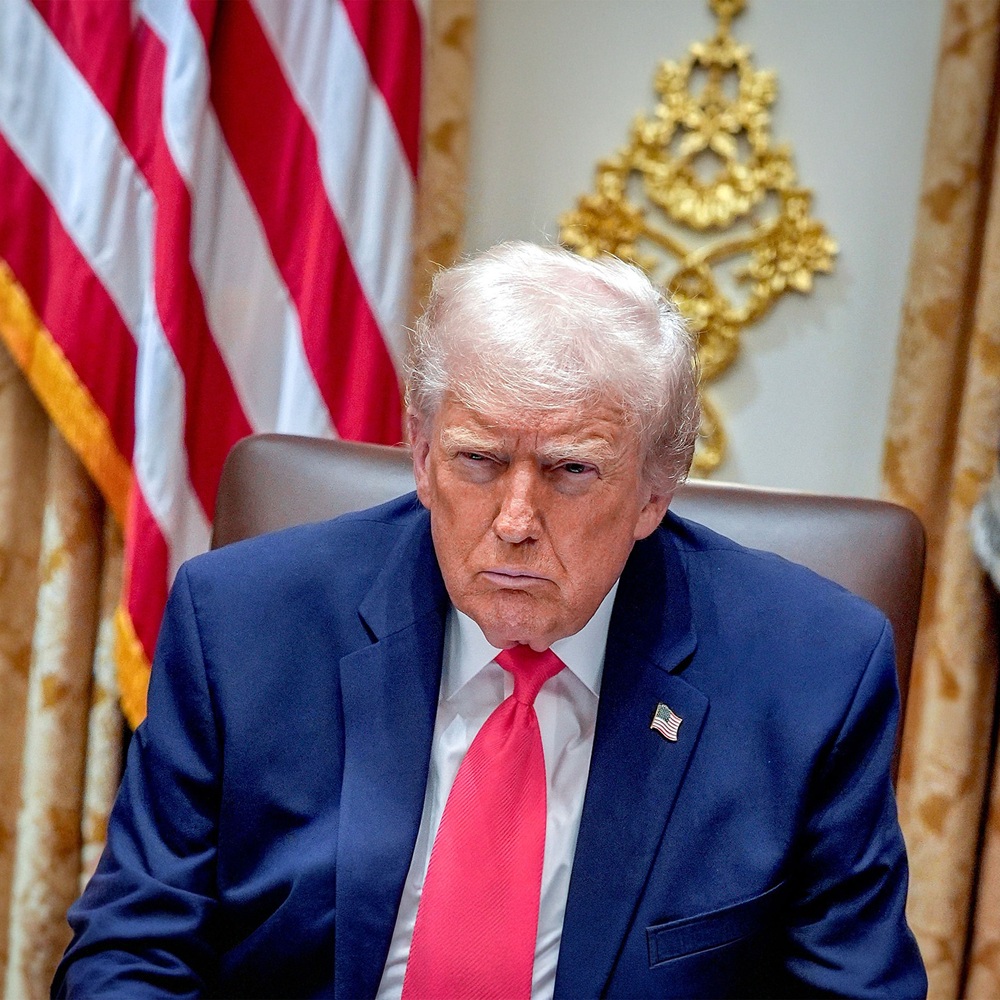
President Donald Trump Speaks During Cabinet Meeting in the Cabinet Room of the White House, Washington, DC on December 2, 2025

Opinion – The Mearsheimer Logic Underlying Trump’s National Security Strategy

by Mark N. Katz

The recently released Trump Administration’s National Security Strategy (NSS) has upended what had been the decades-long consensus about American foreign policy. Most notable in it is the Trump Administration’s prioritization of the Western Hemisphere as an American security concern, its deemphasis on defending America’s traditional European allies, its identification of China as far more of a threat than Russia, and its determination not to be drawn into conflicts in the Middle East and Africa. But while the 2025 Trump Administration National Security Strategy breaks with much of previous American foreign policy, the logic behind it is not something completely new. Even though the document makes no mention of him, the policy outlined in the NSS comports with what John Mearsheimer described in his influential book, “The Tragedy of Great Power Politics”, which was first published in 2001 and updated in 2014. In his book Mearsheimer declared that no nation has ever achieved global hegemony. According to Mearsheimer, America is the only country that has achieved predominant influence in its own region (the Western Hemisphere) and has also been able to prevent any other great power from dominating any other region. Mearsheimer wrote, “States that achieve regional hegemony seek to prevent great powers in other regions from duplicating their feat. Regional hegemons, in other words, do not want peers” (2014 edition, p. 41). Trump’s 2025 National Security Strategy has, whether knowingly or not, adopted these aims as well. It discusses the various regions of the world in the order of their priority for the Trump Administration: the Western Hemisphere first, followed by Asia (or Indo-Pacific), Europe, the Middle East, and lastly Africa. With regard to the Western Hemisphere, the NSS unambiguously calls for the restoration of “American preeminence in the Western Hemisphere,” and states, “We will deny non-Hemispheric competitors the ability to position forces or other threatening capabilities, or to own or control strategically vital assets, in our Hemisphere.” This is very much in keeping with what Mearsheimer described as America being a regional hegemon in the Western Hemisphere. As for the other four regions of the world, though, the Trump Administration seeks either to prevent any other great power from becoming predominant — or it doesn’t see this as a possibility that needs to be worried about. According to the NSS, the Middle East was a priority in the past because it was the world’s most important energy supplier and was a prime theater of superpower conflict. Now, however, there are other energy suppliers (including the U.S.) and superpower competition has been replaced by “great power jockeying” in which the U.S. retains “the most enviable position.” In other words: the Trump Administration does not see any other great power as able to become predominant in this region which is now less strategically important than it used to be anyway. Similarly, the NSS does not see any other great power as even seeking to become predominant in Africa. The NSS thus sees America’s main interests there as mainly commercial. By contrast, China is seen as a threat in the Indo-Pacific region. The NSS, though, discusses Chinese threats in the economic and technological spheres before turning to the military one. A continued U.S. military presence in the region is seen as important for preventing Chinese predominance. But Japan, South Korea, Taiwan, and Australia are all enjoined by the NSS to increase their defense spending in order to counter this threat. The NSS also identifies “the potential for any competitor to control the South China Sea” as a common threat that not only requires investment in U.S. military capabilities, “but also strong cooperation with every nation that stands to suffer, from India to Japan and beyond.” Unlike the Middle East and Africa, then, the NSS does identify a rival great power as striving for predominance in the Indo-Pacific region. Countering it, though, is not seen as just being America’s responsibility, but also that of other powerful states in the region. The strangest section in the 2025 NSS is the one on Europe. While acknowledging that “many Europeans regard Russia as an existential threat,” the NSS envisions America’s role as “managing European relations with Russia” both to “reestablish conditions of strategic stability” and “to mitigate the risk of conflict between Russia and European states.” This is very different from the decades-long U.S. policy of seeing America’s role as defending democratic Europe against an expansionist Soviet Union in the past and Putin’s Russia more recently. Indeed, the NSS’s claim that the European Union undermines “political liberty and sovereignty” and its welcoming “the growing influence of patriotic European parties” (in other words, anti-EU right wing nationalist ones) suggests that it is not Russia which the Trump Administration sees as a rival, but the European Union. The 2025 NSS does call for a “strong Europe…to work in concert with us to prevent any adversary from dominating Europe.” The NSS, though, seems to envision the European Union as either greater than or equal to Russia in threatening to dominate European nations. In his book, Mearsheimer did not envision the European Union as a potential great power rival to the U.S. Indeed, there isn’t even an entry for it in the book’s index. The way that the NSS envisions the world, though, comports with how Mearsheimer described America’s great power position: predominant in the Western Hemisphere and able to prevent any other great power from becoming predominant in any other region of the world. Mearsheimer, though, is a scholar who described the position in the world that he saw the U.S. as having achieved and which would seek to maintain. The 2025 NSS, by contrast, is a policy document laying out how the Trump Administration believes it can best maintain this position. And there is reason to doubt that it has done so realistically. Keeping non-Hemispheric great powers out of the Western Hemisphere will not be easy when there are governments there that want to cooperate with them. Further, devoting American resources to being predominant in Latin America when this will be resented and resisted could not only take away from America’s ability to prevent rival great powers from becoming predominant in other regions, but could counterproductively lead Latin American nations than have already done so to increase their cooperation with external great powers which the Trump Administration wants to avoid. Further, the Trump Administration’s efforts to reduce the influence of the European Union runs two risks: the first is that such an effort will succeed, but that the rise of anti-EU nationalist governments throughout the old continent results in a Europe less able to resist Russian manipulation and incursion. The second is that Trump Administration efforts to weaken the European Union backfire and result not only in a Europe united against American interference but unnecessarily emerging as a rival to the U.S. It would be ironic indeed if pursuing the NSS’s plan for upholding what Mearsheimer described as America’s ability to predominate over the Western Hemisphere combined with an ability to prevent any rival from predominating over any other region ended up undermining America’s ability to do either.

Defense & Security
A group of people are controlling the orbiting international space station ISS. Elements of this image furnished by NASA.

Assessing the Implications of Interstellar Objects for Planetary Security and Defense

by Sebastián Calderón Céspedes

As international order evolves in the 21st century, strategic competition is increasingly shaped by technological frontiers and emerging domains of power. Unlike the unipolar moment following the Cold War, the contemporary landscape is defined by multipolarity, where major powers vie for influence across space, cyberspace, and biotechnology. Outer space has emerged not only as a frontier for exploration but also as a potential arena for resource acquisition and military projection, raising novel challenges for international law, security policy and cooperative governance. Examining interstellar phenomena in this context underscores the importance of preparedness, coordination, and risk management, even without assuming the presence of extraterrestrial intelligence, yet acknowledging the unprecedented nature of events that are pushing the boundaries of human observation. Humanity is gradually entering an era in which technological progress is reshaping our conception of cosmic exploration. As advancements in rocket propulsion, materials science, and observational astronomy accelerate, the prospect of humanity departing Earth towards other worlds becomes less a distant dream and more an inevitable chapter in our long-term evolution. The future of our species increasingly appears to be tied to the potential terraforming of new planets and celestial bodies, alongside the development of aerospace technologies capable of carrying us deeper into the cosmos. Within this transformative horizon, the Fermi paradox or the Dark Forest theory gains renewed relevance, challenging humanity to consider the existential filters that civilizations must surpass to survive, expand and potentially encounter other life forms. Yet, while such milestone may unfold centuries from now, the foundations of that future are being laid in the present. In the 21st century, specifically by the year 2026, humanity will become more capable of observing its immediate cosmic neighborhood. Modern telescopes and space-based observatories allow us to detect objects that for centuries have likely passed through our solar system unnoticed. Only within the brief span of our scientific maturation have we acquired the tools to identify interstellar objects, bodies originating beyond the solar system whose physical properties and trajectories challenge our existing frameworks. These objects, often catalogued as cometary in nature, possess characteristics that warrant careful study. Their unusual shapes, compositions, and velocities offer insights into environments beyond our interstellar cradle and, in some cases, raise questions about their natural origin or even the possibility of artificial extraterrestrial technology. As our detection capabilities improve, the arrival of each interstellar visitor represents not only a scientific opportunity but also a critical data point for understanding planetary security and defense. Consequently, their study urges nations to evolve towards a more serious and coordinated international framework capable of addressing the strategic, scientific, and existential implications of interstellar encounters. The emergence and Relevance of Interstellar Objects The scientific understanding of interstellar objects (ISOs) has evolved rapidly in recent years, propelled by technological advances and the unexpected discovery of bodies crossing the solar system on hyperbolic trajectories. Before 2017, the existence of such objects was largely theoretical, supported by models of planetary formation and stellar dynamics that predicted the ejection of debris during the early stages of planetary system evolution. These models implied that the Milky Way should contain vast populations of wandering fragments- comets, asteroids, and potentially more complex bodies such as extraterrestrial debris moving freely through interstellar space. Yet observational confirmation remained unattainable due to instrumental limitations. This changed with the detection of the first confirmed interstellar object, 1/Oumuamua, whose physical properties departed radically from known solar system bodies. Its non-gravitational acceleration, lack of a visible coma, and elongated shape challenged established models of cometary activity and asteroidal composition (Meech et al, 2017). The subsequent discovery of 2I/Borisov, a more conventionally cometary object, confirmed that the solar system is indeed exposed to material originating from other stellar environments (Jewitt & Luu, 2019). The contrast between both objects highlighted a key insight: ISOs are highly diverse, and their properties may reveal mechanisms and materials absent from our own planetary system. Advances in wide-field surveys, high-resolution instrumentation, and automated sky- monitoring systems have significantly expanded humanity´s capacity to detect and track ISOs. The increasing sensitivity of these tools marks a transition toward a new observational era in which interstellar detections may become more frequent. As a result, we are now able to observe the behavior of bodies entirely foreign to the solar system-objects whose trajectories, compositions, and signatures often defy established expectations and expose gaps in existing theoretical frameworks. This expanding observational capability not only advances scientific knowledge but also underscores the urgency of early warning detection. Because ISOs are typically identified within narrow observational windows, delayed characterization can lead to the loss of critical scientific and strategic information. Consequently, the growing presence of ISOs calls for enhanced global coordination, standardized protocols, and a more serious international approach to monitoring and interpreting near-Earth interstellar encounters. The Impact and Arrival of 3I/ATLAS The discovery of 3I/ATLAS, the third confirmed interstellar object entering our solar system, marks a significant milestone in modern astronomy. Unlike 1/Oumuamua and 2I/Borisov, whose observational windows were limited and partially constrained, 3I/ATLAS has provided a comparatively longer period for systematic study. Its hyperbolic trajectory, unusual photometric behavior, and non-standard luminosity variations have made it an object of exceptional scientific interest. While early observations suggest that while 3I/ATLAS shares key characteristics with known cometary bodies, its behavior reinforces broader findings that interstellar objects often display physical and dynamical properties that do not fit neatly within exiting taxonomies of solar system objects (Jewitt, 2023). The media response to 3I/ATLAS has been unprecedented. As with Oumuamua, the object rapidly became the subject of public fascination, sensational claims, and speculative narratives. News outlets, online forums, and social media ecosystems proliferated interpretations ranging from exotic physics to extraterrestrial probes. While much of this discourse lacks grounding in empirical evidence, its widespread circulation reflects a broader sociological trend: interstellar phenomena increasingly operate not only as a scientific event but also as catalysts for public, imagination, cultural anxiety, and geopolitical attention. As Kaku (2020) notes, humanity approaches a technological threshold where cosmic discovery intersects directly with public consciousness, provoking both curiosity and apprehension. From a scientific standpoint, researchers such as Loeb (2021) have emphasized that anomalous behavior in interstellar visitors should not be dismissed lightly. Although 3I/ATLAS currently appears consistent with a natural origin, its unique features-and the difficulty in categorizing ISOs-underscore the need for serious, methodical investigation. Loeb argues that humanity must abandon its complacency regarding the unknown nature of interstellar technologies or civilizations and instead adopt a posture of preparedness, open inquiry, and systematic risk assessment. In his view, phenomena like 3I/ATLAS are reminders that humanity is not isolated, and that contact-whether intentional or incidental—with non-human intelligence represents a real possibility with profound implications. The arrival of 3I/ATLAS has also highlighted the potential consequences of extraterrestrial technological encounters. Even in the absence of direct evidence of artificial origin, the mere ambiguity of such objects can trigger global destabilization through speculation, misinformation, or geopolitical competition. Historical examples such as the economic collapses of 1929 and 2008, the disruptive effects of the COVID-19 pandemic, and the global tensions surrounding major wars demonstrate how uncertainty-especially when amplified by media-can generate widespread instability. In this context, an interstellar object exhibiting unexplained characteristics could easily become a flashpoint for international tension, economic turbulence, or strategic miscalculation. Thus, beyond its scientific significance, 3I/ATLAS has brought renewed attention to the vulnerabilities and responsibilities of a species becoming increasingly aware of its cosmic environment. The object serves as a practical reminder that humanity must develop not only more advanced observational systems but also coordinated international frameworks for managing unexpected astronomical events. As we confront the possibility of encountering technologies or life beyond Earth, the world must adopt a more mature, structured approach to detection, interpretation, and global communication. This moment sets the stage for next critical dimension of the discussion, the implications of interstellar objects for planetary security and defense, and the urgent need to assess humanity’s readiness for cosmic contingencies. Toward a Multiplanetary Security Architecture Planetary security has grown increasingly complex as scientific capabilities expand toward detecting and characterizing interstellar objects whose origins and physical attributes lie beyond conventional astrophysical categories. Within the United Nations framework, existing mechanisms-such as COPUOS, the International Asteroid Warning Network (IAWN), and the Space Mission Planning Advisory Group (SMPAG) provide the foundational structure for global coordination on natural impact hazards (UN COPUOS, 2014). However, these institutions were established under assumptions limited to solar system derived natural threats, leaving them poorly equipped to address unknown interstellar phenomena. The Outer Space Treaty and subsequent conventions introduced broad principles on cooperation and peaceful use, but no anticipated scenarios involving technologically anomalous interstellar objects or potential artificial extraterrestrial artifacts, resulting in a significant global governance vacuum. These mechanisms are designed primarily for probabilistic, natural impact scenarios, not for interstellar objects exhibiting anomalous trajectories, non-gravitational accelerations or uncertain technological signatures. Recognizing this gap, recent scientific proposals-most notably those advanced by Loeb (2023)-have called for the development of a dedicated international coordination mechanism under the United Nations system for the study and assessment of interstellar objects. Rather than proposing a fixed institutional blueprint, these contributions emphasize the need for a structured platform capable of integrating scientific analysis, risk assessment, and transparent diplomatic communication in cases involving anomalous interstellar phenomena. Such proposals should be understood not as a definitive institutional prescription, but as forward as a definitive institutional prescription, but as forward-looking reference points for the type of governance architecture of international community must begin to contemplate. As humanity´s observational reach extends beyond the boundaries of the solar system; this governance gap becomes increasingly consequential. Interstellar objects introduce forms of uncertainty that existing planetary defense regimes-designed around predictable, solar system-derived threats were never Intended to manage, underscoring the need for flexible and adaptive legal frameworks capable of integrating scientific uncertainty into decision making processes. Within this emerging landscape, conceptual assessment tools have gained relevance as mechanisms to structure uncertainty rather than eliminate it. One illustrative example is the Interstellar Threat Assessment Scale (ITAS) proposed by Loeb (2024), which offers a simplified framework for evaluating interstellar detections based on observable characteristics rather than speculative intent. As its lower levels, the scale categorizes objects that behave consistently with natural interstellar debris, such as comet-like bodies exhibiting predictable physical and dynamic properties. Higher levels correspond to increasing degrees of anomaly-such as unexplained non-gravitational acceleration, unconventional trajectories, or geometries inconsistent with known natural formation processes. While the scale is not explicitly designed to identify extraterrestrial technology, it intentionally encompasses characteristics that fall outside established natural baselines. This design allows it to function across multiple scenarios, from rare or poorly understood natural phenomena to detections that may warrant closer scrutiny due to their atypical behavior. In this sense, the framework remains agnostic regarding origin, yet adaptable enough to support both conventional astrophysical analysis and precautionary assessments under conditions of elevated uncertainty. Importantly, it does not assert hostile intent or artificial origin, rather it operates as a risk-management tool that helps differentiate levels of scientific uncertainty and potential planetary relevance. Approached in this manner, such frameworks contribute to the evolution of international space governance by providing a shared analytical language for policymakers, scientific institutions, security agencies and statecraft-oriented decision-makers. By standardizing how uncertainty is assessed and communicated, they reduce fragmented national interpretations, limit reactive or militarized responses, and promote cooperative, evidence-based decisions. Decision-making under conditions of incomplete information. This process reflects a broader need for international space law to evolve dynamically. However, the governance of interstellar risk cannot rely solely on conceptual models or isolated scientific initiatives. It requires a genuinely planetary response that integrates the full spectrum of contemporary technological, institutional, and political capacities. International legislation governing outer space must be adaptive and evolutionary, capable of responding to emerging scientific realities. Artificial intelligence, real-time global surveillance networks, and autonomous detection algorithms must be incorporated into a unified planetary architecture capable of identifying and characterizing interstellar objects far earlier than current capabilities allow. Equally important is the sustained collaboration among major space agencies-including NASA, ESA, CNSA, ISRO, Roscosmos, and JAXA- alongside private actors such as SpaceX, Blue Origin, and emerging aerospace enterprises, whose technological capabilities and rapid innovation cycles are increasingly central to space governance. Equally critical is great-power cooperation. From a realist perspective, the international system remains defined by competition, power asymmetries, and strategic mistrust. Yet planetary defense represents a rare domain in which shared existential vulnerability can partially override zero-sum logic. The detection of an anomalous interstellar object must never become a catalyst for geopolitical rivalry or strategic miscalculation, but rather an opportunity for transparent scientific collaborations and coordinated global response. In an international order strained by power competition, planetary security stands as one of the few areas where shared survival interests necessitate shared responsibility. Ultimately, interstellar objects compel humanity to transcend political fragmentation and adopt a forward- look global strategy. Building a resilient planetary security architecture requires the integration of scientific expertise, adaptive international governance, technological innovation, and coordinated commitment of state and private actor alike. Whether future interstellar encounters prove benign or reveal unprecedented anomalies, preparedness is not speculation, it is an essential step in the evolution of humanity´s role within the cosmos. References - Jewitt, D., & Seligman, D. Z. (2023). The interstellar interlopers. Annual Review of Astronomy and Astrophysics, 61, 197–236. https://doi.org/10.1146/annurev-astro-071221-054221 - Jewitt, D., & Luu, J. (2019). Initial characterization of interstellar comet 2I/2019 Q4 (Borisov). The Astrophysical Journal Letters, 886(2), L29. https://doi.org/10.3847/2041-8213/ab530b - Kaku, M. (2018). The Future of Humanity: Terra­forming Mars, Interstellar Travel, Immortality, and Our Destiny Beyond Earth. Doubleday. https://www.penguinrandomhouse.com/books/555722/the-future-of-humanity-by-michio-kaku/ - Loeb, A. (2021). Extraterrestrial: The first sign of intelligent life beyond Earth. Houghton Mifflin Harcourt. https://openlibrary.org/books/OL31850155M/Extraterrestrial?utm_source=chatgpt.com - Loeb, A. (2024). The interstellar threat assessment scale. Medium. https://avi-loeb.medium.com/ - Meech, K. J., et al. (2017). A brief visit from a red and extremely elongated interstellar asteroid. Nature, 552, 378–381. https://doi.org/10.1038/nature25020 - United Nations Committee on the Peaceful Uses of Outer Space (UN COPUOS). (2014). Report of the Scientific and Technical Subcommittee on its fifty-first session. United Nations Office for Outer Space Affairs. https://www.unoosa.org/oosa/en/ourwork/copuos/stsc/2014/index.html