Subscribe to our weekly newsletters for free

Subscribe to an email

If you want to subscribe to World & New World Newsletter, please enter
your e-mail

Diplomacy
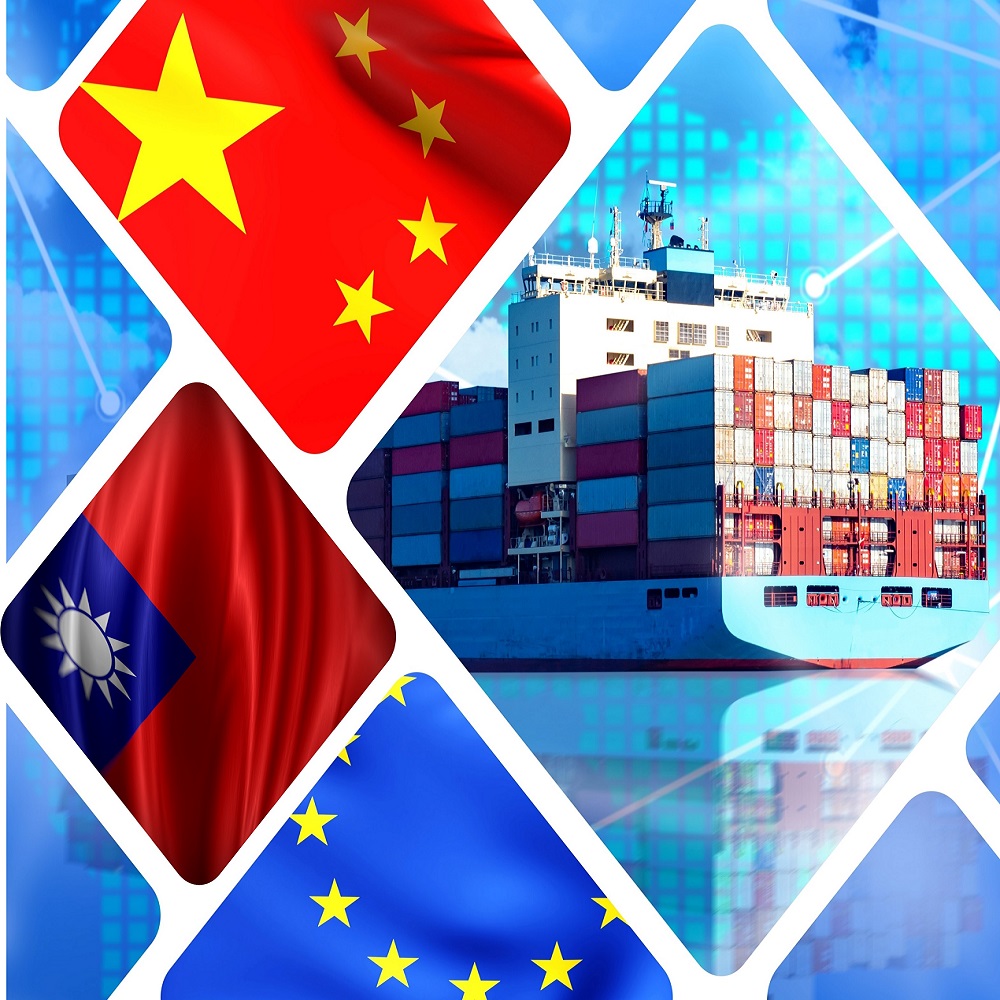
Taiwan, EU and China Flag

The post-election Taiwanese economy: decisions ahead and takeaways for the European Union

by Alicia García-Herrero

The EU should try to attract more business from Taiwan, though Taiwan’s January 2024 election hasn’t made the job easier Taiwan’s economy has transformed since 2016 under the leadership of the Democratic Progressive Party (DPP). In particular, the Taiwanese economy has diversified away from mainland China, while reliance on semiconductors is now even more acute than eight years ago. In elections in January, the DPP won the presidency for a third term but lost overall control of Taiwan’s parliament, the Legislative Yuan. In contrast to the previous two terms, the DPP therefore needs to agree policy, including economic policy, with other parties. this could signal a softer approach in relation to the continuation of diversification away from the mainland. Ongoing diversification Mainland China remains Taiwan’s biggest export and investment destination, despite the share of Taiwan’s exports that go to China reducing from 40 percent on average between 2016 and 2019 to 35 percent in 2023 (Figure 1). This has happened even though Taiwan signed a free trade agreement with mainland China in 2010 – the Economic Cooperation Framework Agreement (ECFA) – which at the time led to an increase in Taiwanese exports to the mainland. The COVID-19 pandemic in 2020 also triggered a sharp increase as the rest of the world entered a deep recession, but the trend has not lasted. Since 2021, the share of Taiwanese exports going to the mainland has dropped significantly, influenced by US export controls on high-end semiconductors, with a clear knock-on effect on Taiwanese exporters.   Taiwanese FDI into mainland China has also shrunk rapidly, from 65 percent of total Taiwanese FDI on average from 2008-2016 to 34 percent on average from 2017-2023 (Figure 2). The difference between these periods is that in the former, Taiwan was governed by the Kuomintang (KMT, Chinese Nationalist Party), which favours closer relations with the mainland, while in the latter period the DPP was in charge. There are both geopolitical and economic reasons for mainland China’s falling share of Taiwanese FDI. First, the ECFA trade and investment agreement, reached under the first term of KMT President Ma Ying-jeou, was not extended when a new round of negotiations started in 2012, to include technological cooperation, finance and people-to-people exchanges. A broader economic agreement between Taiwan and the mainland, mostly focusing on services – the Cross-Strait Service Trade Agreement (CSSTA) – fell victim to lack of consensus among Taiwan’s main political parties, increased tensions in the Taiwan Straits and student protests in Taiwan (the so-called Sunflower movement) in 2014.1 Second, with the DPP victory in 2016, the new Southbound Policy 2 was launched, offering incentives for Taiwanese companies investing in 18 Asian countries, including ASEAN 3, India and other South Asian and Australasian nations. In addition, rising labour costs in mainland China, the ongoing trade war between the US and China, an increased regulatory burden in the mainland and political tensions between the two sides of the Taiwan Strait also pushed Taiwanese businesses to look elsewhere to invest. -    The new political reality and geographical diversification While the election-winning DPP wants to see further diversification away from the mainland, the more pro-China party, the KMT, wants reinforced economic relations with China.4 Because of the now-hung parliament, the DPP will need to take some of the KMT’s wishes into account it wants pass new rules, including those related to geographical diversification. Beyond the two parties’ preferences, two other important issues also need to be factored in. First, geographical diversification requires open markets but Taiwan is increasingly unable to open any market through trade or investment deals. Taiwan has spent the last eight years negotiating bilateral deals with its closest allies, Japan and the US, but the DPP administration has not even been able to complete these. Incoming President Lai has said that Taiwan should continue to push to be part of the Comprehensive and Progressive Agreement for Trans-Pacific Partnership (CPTPP), to which it applied in September 2021, but the reality is that Taiwan’s application has little hope of success. China officially applied to be a member of the CPTTP only a couple of days before Taiwan. Since then, the United Kingdom has become a member of CPTTP, but the negotiation processes with Taiwan and mainland China have not started. Australian’s prime minister, Anthony Albanese, has expressed severe doubts about Taiwan’s ability to become member of CPTTP because of lack of international recognition of it as a nation-state.5 Second, while the DPP is likely to continue to offer more fiscal incentives to promote diversification in Southeast Asia and India (under the Southbound Policy), the fastest-growing destination for both exports and foreign direct investment from Taiwan is the United States, followed by Japan. This can be explained by the ongoing artificial intelligence revolution, which needs semiconductors, and the decisions of some key Taiwanese chip companies (especially TSCM) to open factories overseas for chip production, with the US and Japan as the most important destinations. In other words, the DPP’s push for geographical diversification might not be the main reason why diversification has happened; rather, it has been driven by market forces and business opportunities. This also means that the KMT push to maintain – if not deepen – economic ties with mainland China might not succeed unless China’s currently underwhelming economic performance turns around. Implications for the European Union So far, the EU has benefitted little from Taiwan’s trade and investment diversification, at least when compared to the US and the rest of Asia. The EU’s export share into Taiwan has remained practically stagnant (while the US has doubled its share), notwithstanding a large increase in exports from the Netherlands for a single item – ASML’s lithography machines for chip production. The EU lacks a trade or investment deal with Taiwan, but so do some of Taiwan’s other trading partners, including the US. Considering that the EU is the largest foreign direct investor in Taiwan, the question arises of whether the EU should do more to foster more bilateral economic relations. The gains could be substantial, especially from inbound FDI as Taiwanese investment focuses on high-end manufacturing. There has been some movement. A €5 billion investment in France by a Taiwanese company (ProLogium) was announced in May 2023 to build a battery factory 6 . TSMC announced in August 2023 a €4.5 billion investment in a semiconductor factory in Germany 7 . But for the EU to catch up with Japan and the US as a recipient of outbound FDI from Taiwan, the result of Taiwan’s elections could be an obstacle. This is because the DPP will have less control of the economic agenda because it does not control the Legislative Yuan. The close-to-impossible negotiation of a trade and investment deal between the EU and Taiwan – as shown by Taiwan’s difficulties in relation to Japan, the US and the CPTTP – does not point to any improvement in the institutional framework for economic relations to improve. The question, then, is what can the EU offer to attract high-end foreign direct investment from Taiwan? Subsidies to attract semiconductor factories cannot be the only answer, given the very large amounts needed and the pressure such subsidies put on EU member states’ already stretched finances (Legarda and Vasselier, 2023). Working with business associations and chambers should be a key driving force to improve business relations between Taiwan and the EU, especially considering that the EU is the largest foreign foreign direct investor in Taiwan, while Taiwanese companies have been absent from the EU single market until recently. Overall, the US and the rest of Asia have been the main winners from Taiwan’s rapid diversification of its economy away from mainland China. The EU, which is lagging, should work to enhance its economic exchanges with Taiwan. Hopefully the January 2024 election results will facilitate this. Most importantly, the EU should aim to attract more high-tech FDI from Taiwan. Unfortunately, a better institutional framework through a trade/investment deal seems highly unlikely, for geopolitical reasons. This puts all the burden on chambers of commerce and other forums to improve business relations. References 1- The Sunflower Movement was a student-led protest that occuped Taiwan’s Legislative Yuan to put pressure on the KMT government against signing a second cooperation deal with mainland China. See Ho (2018). 2- See the New Southbound Policy portal at https://nspp.mofa.gov.tw/nsppe/. 3- Brunei, Cambodia, Indonesia, Laos, Malaysia, Myanmar, Philippines, Singapore, Thailand and Vietnam. 4- Alicia García-Herrero, ‘Taiwan’s future economic direction hinges on the election outcome’, First glance, 12 January 2024, Bruegel https://www.bruegel.org/first-glance/taiwans-future-economic-direction-… 5- Claudia Long and Stephen Dziedzic, ‘Albanese says Australia is unlikely to support Taiwan 6- France24, ‘Taiwanese battery maker Prologium to invest €5 billion in French factory’, 12 May 2023, https://www.france24.com/en/europe/20230512-taiwanese-battery-maker-pro…. 7- DW, ‘Taiwan’s TSMC to build semiconductor factory in Germany’, 8 August 2023, https://www.dw.com/en/taiwans-tsmc-to-build-semiconductor-factory-in-ge…. Ho, M.-S. (2018) ‘The Activist Legacy of Taiwan’s Sunflower Movement’, Carnegie Endowment for International Peace, 2 August, available at https://carnegieendowment.org/2018/08/02/activist-legacy-of-taiwan-s-sunflower-movement-pub-76966 Legarda, H. and A. Vasselier (2023) ‘Navigating Taiwan relations in 2024: Practical considerations for European policy makers’, China Horizons, 21 December, available at https://chinahorizons.eu/our-research/policy-briefs/278-navigating-taiwan-relations-in-2024-practical-considerations-for-european-policy-makers
Diplomacy
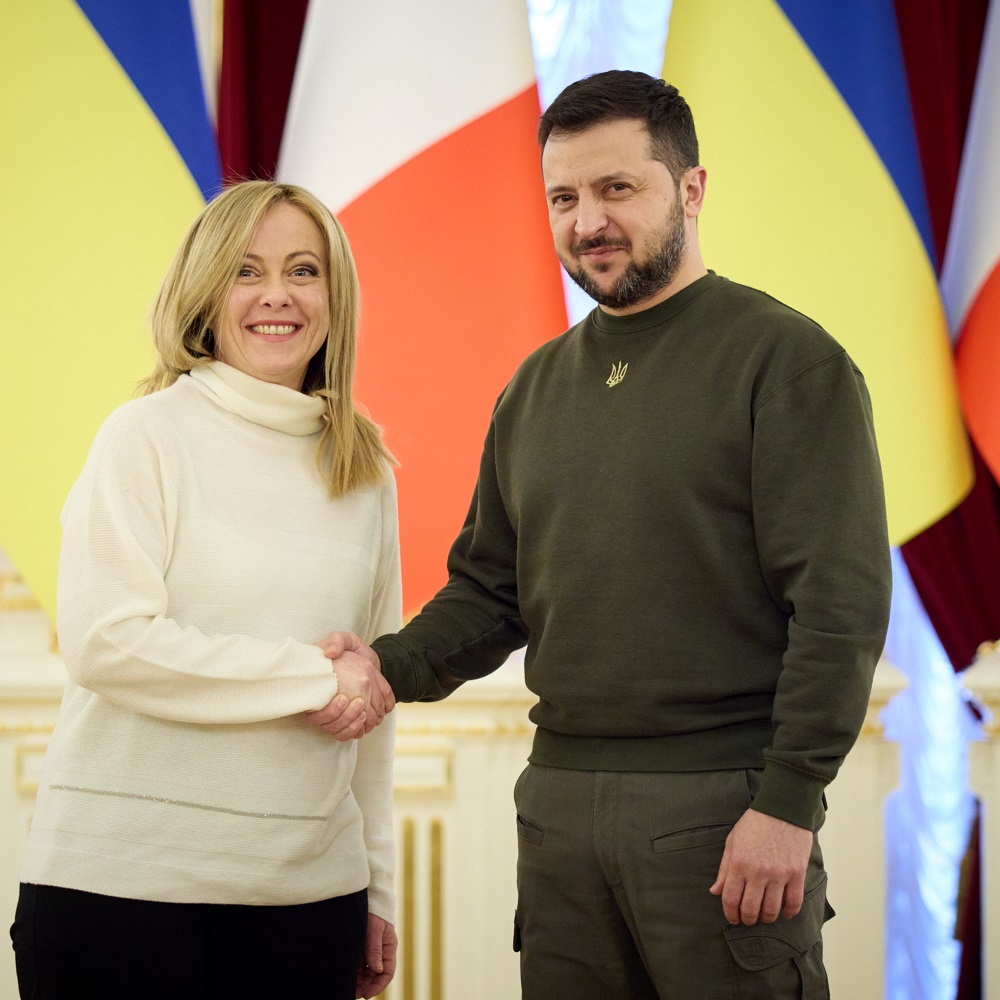
Meloni and Selenskiy shaking hands

Ukraine policy in Rome

by Michael Feth , Nino Galetti

Italy top, Vatican flop? The first war of aggression in Europe since 1945 is keeping two global players busy in Rome: the Italian government and Vatican diplomacy. While under the leadership of President Sergio Mattarella and Prime Minister Giorgia Meloni there is no doubt about Italy's unbroken solidarity with Ukraine, criticism of the Holy See's course to date is growing, and not just in Catholic circles. Is Pope Francis' longed-for reconciliation with the Russian Orthodox Church more important than the future fate of Ukraine? When the right-wing alliance of Giorgia Meloni, Matteo Salvini and Silvio Berlusconi took power in Rome in October 2022, there was concern in some European government headquarters that the Tiber might be about to change its stance on the war in Ukraine. This mistrust was less directed at the newly elected Prime Minister Giorgia Meloni, known as an Atlanticist, who had clearly positioned herself and her party "Fratelli d'Italia" against Moscow's war of aggression and Putin's expansionist ambitions during the election campaign, and more towards her two allies Lega and Forza Italia. Both parties were perceived internationally as Russia-friendly, albeit for different reasons: While in the case of Lega leader Matteo Salvini - similar to his ally Marine Le Pen in France - it was the ideological proximity of the anti-European right-wing populists to the authoritarian regime in Moscow, in the case of the bourgeois-conservative Forza Italia it was Silvio Berlusconi's long-standing personal friendship with Vladimir Putin that triggered fears of Italy's rapprochement with Moscow. These were further fueled by several erratic statements by Berlusconi during the coalition negotiations in autumn 2022, in which he openly adopted the Kremlin's view of the Ukraine conflict and thus caused severe irritation among the allies. His adlatus at the time, Antonio Tajani, felt compelled to fly to Brussels at short notice to hold talks with the heads of the EU Commission, NATO and the European People's Party to reassure them that the new right-wing government in Rome would by no means abandon the EU's common line, but would remain faithful to its commitments. Berlusconi's capers and Salvini's ricochet The situation was different in the case of the right-wing populist Lega, which had achieved a historically poor result of just eight percent in the early elections in September 2022. Giorgia Meloni therefore had her rival Matteo Salvini in her hands and was able to demand loyalty from the potential troublemaker. At the time, the designated head of government openly threatened her two partners with a collapse of the coalition negotiations: there would be "no joint government at any price". She played her cards close to her chest and in the end even brought Silvio Berlusconi into line, who had to make a pilgrimage to the Fratelli d'Italia party headquarters to recant his pro-Moscow remarks. A humiliation for which the Forza Italia patriarch has never forgiven her. Since Berlusconi's death, the capers have ceased: under the leadership of Foreign Minister Antonio Tajani, Forza Italia is clearly on the side of its Western allies and in line with the EPP. With the approval of the President (who can veto appointments to the government), Meloni chose Guido Crosetto, who originally came from the ranks of the Christian Democrats and is known as an anti-Russian hardliner, as Defense Minister. The fears of the Western partners that one of the most important NATO states could leave the joint phalanx against Putin were put to rest. Meloni counters Putin's friends Meloni set further signals: The memorable joint trip of the three European leaders Mario Draghi, Emmanuel Macron and Olaf Scholz to Kiev on June 16, 2022 was still fresh in the minds of Ukrainians suffering from a daily hail of bombs, as Meloni made one of her first trips abroad to Kiev in February 2023 to personally assure President Volodymyr Zelensky of Italy's unwavering solidarity. The two had previously met at various international summits and the chemistry between them was instant. Since then, they have openly celebrated their cordial friendship in front of the cameras at every meeting. Under Meloni's aegis, there has been no hesitation or dithering in Rome on the Ukraine issue to date: Italy is supplying Ukraine with weapons and, together with its German allies, is monitoring the airspace on Europe's south-eastern flank and in the Black Sea from Romania. Rome is also firm in its sanctions policy against Russia: Dozens of accounts, real estate, ships and works of art belonging to Russian oligarchs on the EU sanctions list have been confiscated by the "Guardia di Finanza", the state financial police. And in the area of energy policy, Meloni has maintained the course of her predecessor Mario Draghi, who concluded supply contracts with a whole series of African, Arab and Central Asian states in order to quickly free Italy from its energy dependence on Moscow. During a working visit to Berlin last November, when Meloni and German Chancellor Olaf Scholz were connected via video to the first OSCE meeting of heads of state and government since the start of the war, which was also attended by Vladimir Putin, she showed herself to be quick-witted. When the Kremlin ruler demanded a quick end to the war, Meloni immediately countered: "You can have that immediately. All you have to do is withdraw your troops." British Prime Minister Richi Sunak expressly thanked his counterpart for her "global leadership". And US President Joe Biden also never misses an opportunity to praise Meloni for her clear stance in the conflict. However, their closest ally in the Ukraine issue is President Sergio Mattarella. With all the authority of his office and his unbroken popularity, he explains the moral and ethical dimension of the major conflict to his fellow countrymen in detailed formulations at every available opportunity. In doing so, he takes the wind out of the sails of populists on the left and right who - as in Germany - criticize high military spending and complain about rising inflation as a result of "Western interference" in the war in Ukraine. In matters of foreign and security policy, head of state Mattarella, who is also commander-in-chief of the armed forces in accordance with the constitution, has so far had no reason to get in the prime minister's way. Is the Pope a friend of Russia? On the other side of the Tiber, in the Vatican, however, there are increasing question marks. Of course, the head of the Catholic Church has always and at every available opportunity lamented the suffering of the people in "martyred Ukraine" and called for an immediate end to the fighting. It goes without saying that the Holy See stands by the victims and is doing everything in its power to organize humanitarian aid and bring it into the country. Naturally, the Roman Curia has tried everything behind the scenes to mediate and explore possible negotiated solutions. Accusing the Pope of "moral equidistance" from the attackers and victims is therefore misguided. However, Francis does indeed have to put up with the accusation of "political equidistance". The Holy See is traditionally committed to a policy of neutrality, which aims to use the Pope's unbroken spiritual and moral authority as a non-partisan mediator to resolve a conflict. For this reason, the Holy See always acts discreetly on the international stage and has the long-term perspective in mind. Its actors are not subject to any democratic pressure to succeed and are generally not interested in winning points in the media. However, two years after the start of the Russian war of aggression against Ukraine, it is clear that the world's oldest diplomatic service has fallen far short of expectations. For many observers, the problem lies in particular in Pope Francis' unclear position. It took seven months after the start of the Russian invasion of Ukraine for the pontiff to name the attack as such for the first time and to publicly name Russia as the aggressor for the only time to date. Like so many other heads of state, the pontiff was probably unable to imagine until that February 24, 2022, that Putin would allow Russia's tanks to roll towards Kiev, triggering the biggest war in Europe since 1945. The Kremlin ruler had met Francis in person at the Vatican an astonishing three times in the preceding years. Is Francis a "Russia-understander" who is lenient with the aggressors? Many Vatican observers are now asking themselves this question. It is no secret that the Pope "from the other side of the world" (as Francis put it on the day of his election) has a different approach to European history and European sensitivities than his immediate predecessors John Paul II and Benedict XVI. Jorge Mario Bergoglio, an Argentinian who was influenced by social-authoritarian Peronism as a child, does not have an unreservedly positive attitude towards the Western model of order. The first pope to come from Latin America can be said to have a critical view of the USA. It can be assumed that his experiences with the Trump presidency have not diminished his prejudices towards Washington's claim to international leadership. On the other hand, he has a certain soft spot for Russian classics from literature and music as well as for Russian history, as he himself revealed in a video link to a meeting of Catholic youths in Saint Petersburg. Tensions between Pope and Parolin In terms of church policy, there are also two ambitious goals that the 87-year-old has set himself since his election in 2013: Understanding with Beijing and rapprochement with the Russian Orthodox Church. He has been lenient to the point of self-denial with the political leaders of both powers; he has remained silent about some human rights violations and repression - including against Catholic clergy. A strategy that has repeatedly caused heated discussions in the highest circles of the world church - and not only among notorious critics of Francis. Years ago, the Pope tasked his Secretary of State Cardinal Pietro Parolin, a career Vatican diplomat and conflict expert whom Bergoglio had already come to know and appreciate as Archbishop of Buenos Aires, with the diplomatic implementation. With his help, a bishop of Rome met with a patriarch of Moscow for the first time in February 2016. Today, the two former confidants Francis and Parolin are considered to be at odds - and this is precisely where Putin's war comes into play. Soon after the invasion, Francis caused head-shaking in many places when, from a pacifist position, he refused to supply any weapons to Kiev and thus indirectly denied Ukraine's internationally enshrined right to self-defense. Cardinal Secretary of State Parolin and the Vatican "Foreign Minister" Paul Richard Gallagher, a Briton, corrected these statements in several interviews and corrected their own boss. Of course, they both argued, Ukraine, as a sovereign state, had the right to defend its territorial integrity, and the supply of military equipment and weapons was ethically justifiable. The "Kyrill card" After Putin was unavailable for his calls, Francis played another card: his personal relationship with Moscow Patriarch Cyril. Here, too, the experts warned the Pope that the head of the Russian Orthodox Church would be in the service of the Kremlin. Nevertheless, the pontiff played the "Cyril card". Francis was probably hoping that he could "turn" the patriarch politically with Jesuit cunning. To this day, his literal response to Parolin and Gallagher's warnings is still reported: "But Cyril is still a shepherd!" As expected, the "Cyril card" failed. Francis' bitter realization that the patriarch was an "altar boy of the Kremlin" came too late. The view that the Pope was a "Russophile" had long since become firmly established in Kiev. The suspicion of Russia-friendliness is fueled less by concrete actions than by the pontiff's omissions: to date, he has never addressed Putin directly in all his countless appeals for peace. He could have borrowed from a great predecessor: Immediately before the start of the Iraq war in 2003, Pope John-Paul II addressed US President George W. Bush at the Sunday Angelus prayer in front of running cameras and fervently implored him to refrain from the planned attack. When the city of Sarajevo was besieged for months during the civil war in the former Yugoslavia, triggering a humanitarian catastrophe, the Pope from Poland appointed the archbishop of the bombed-out Bosnian capital, the then 48-year-old Vinco Puljic, as its first cardinal in history in 1994. Three consistories with the appointment of new cardinals have taken place in Rome since the beginning of the Russian invasion of Ukraine: But the Ukrainians have so far waited in vain for a similar sign, although a suitable candidate is available in the figure of the Greek-Catholic Grand Archbishop Svyatoslav Shevchuk of Kiev. Diplomatic self-restraint of the Pope Francis appointed a high-ranking special mediator far too late: However, Cardinal Matteo Zuppi's shuttle mission between Moscow, Kiev, Washington and Beijing is now considered a failure. It seems that Kiev has lost hope that Vatican diplomacy will have a positive effect. At the same time, Moscow seems to be relying more on the mediation of the United Arab Emirates as the representative of the "global South" than on the Holy See as the supposed representative of the Western world when it comes to humanitarian actions such as the exchange of prisoners. Most serious, however, is the fact that Francis has so far refused any invitation to Kiev. He always repeats the same mantra that he will only travel to the Ukrainian capital if he is allowed to visit Moscow first. Either there is a secret plan behind this curious self-restraint on the part of the pontiff, which even close confidants among the cardinals are unable to see through, or it is a diplomatic staircase joke: Putin is unlikely to have the slightest interest in such a double trip by the Roman pontiff. And even if he did, a visit to Moscow by the Pope would probably give Vladimir Putin the biggest propaganda coup in his long time in office. Months ago, President Zelensky's security advisor announced that Kiev was no longer interested in a Vatican mediation mission. A resounding slap in the face for the Holy See's diplomacy in the most dangerous crisis in Europe since the end of the Second World War.

Diplomacy
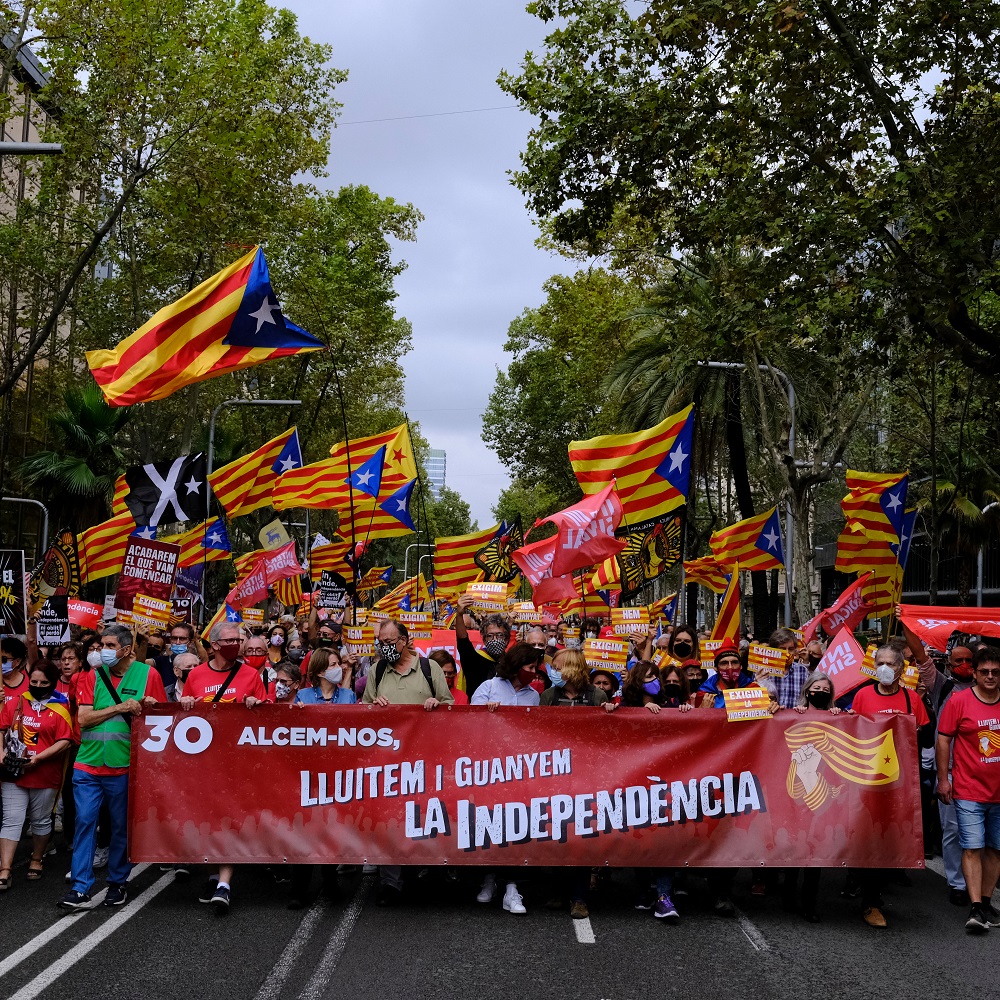
Independence movement in Barcelona, Catalonia

The pro-independence path to the referendum on self-determination

by Miquel Porta Perales

Why does independentism appeal to Article 92 of the Constitution? Nobody should be surprised that the independentism -this is valid for the Catalan and Basque nationalism, without excluding the Galician one- appeals to article 92 of the Constitution. An appeal that is the fruit of a failure and a success. The failure of more than one hundred years of history in which nationalism -especially Catalan nationalism- sought by all means the support to hold a referendum of self-determination: "principle of nationalities", "union of nationalities and oppressed nations", "appeal to the UN on the 'Catalan case' and the 'unique situation of Catalonia' that would legalize a referendum of self-determination", "Charter of the United Nations", "UN International Covenant on Civil and Political Rights" and "request for the right of self-determination for 'national minorities'"[1]. The success, supervened, thanks to the hidden agenda of a Pedro Sanchez who has needed the pro-independence votes to reach again the position of President of the Government of Spain. A stark democratic anomaly -the agreement with a fugitive from Justice, the Amnesty Law, a deep crack in judicial independence and equality before the Law and the breakdown of the division of powers- product of marketing. Power for impunity. A failure and a success that will probably conclude (article 92 CE) in the celebration of a referendum of pre-self-determination that would open the door to a referendum of self-determination. For that reason and for that reason, it should not be surprising that the independentism resorts to the constitutional legality that, when it is convenient, it denies and transgresses a la carte. It should be emphasized that independentism resorts to this article because it is Pedro Sánchez who invites it. Another concession of a PSOE -without ideology, convictions, scruples and morals- to the political blackmail of the Catalan independence movement. The invitation exists from the moment in which Pedro Sánchez, after affirming "that there will be no referendum of self-determination", adds that only "what fits in the Constitution will be done". This leads us to article 92 of the Constitution where it can be read that "Political decisions of special importance may be submitted to a consultative referendum of all citizens" (92.1 CE). Who is proposing the referendum? The answer is in article 92.2 CE: "The referendum shall be called by the King, by means of a proposal of the President of the Government, previously authorized by the Congress of Deputies". Therein lies the key which, subsequently, can open the way to a referendum of self-determination. It is true that the referendum which could be called and held by appealing to Article 92 of the Constitution is consultative and concerns and incorporates the whole Spanish territory and all citizens with the right to vote. But two things are also certain: one, of a political nature; the other, of a legal nature. Politically, first, the consultative referendum on the present or future of Catalonia -it is to be expected an ambiguous question that does not violate the constitutional legality, because this would entail the refusal to call the referendum- hides a double trap or lure: firstly, because it grants, mutatis mutandi, to the Autonomous Community of Catalonia -in the last instance the destiny of Catalonia is decided- the condition of subject with the right to decide its present or future sooner or later. Secondly, because a victory of the pro-independence movement in Catalonia -whatever the result in Spain as a whole- would have serious consequences of a political nature that would offer on a gold and diamond platter the opportunity to call and hold a referendum of self-determination in Catalonia. Hence the pro-independence demand for the transfer of powers to call and hold referendums in Catalonia by means of 150.2 CE ("The State may transfer or delegate to the Autonomous Communities, by means of organic law, powers corresponding to matters of State ownership which by their very nature are susceptible to transfer or delegation") and by the transfer of the powers of 149. 1.32 CE ("Authorization for the calling of popular consultations by means of referendum") and/or 2.1 LO/1980 ("The authorization for the calling of popular consultations by means of referendum in any of its modalities, is exclusive competence of the State")[2]. In the worst case scenario for the pro-independence movement, the consultative referendum would be replaced by a new or reformed Statute of Catalonia, also submitted to referendum, which would recover the articles suspended by the Constitutional Court -especially an own Justice, an own Treasury and an own and exclusive Catalan language- turning Catalonia into a sort of State in statu nascendi thanks to the new corpus iuris. Legally speaking, a consultative referendum, with a good result in Catalonia for the pro-independence movement, would lead to a constitutional reform which -here appears the deconstitutional process- could add a new modality of referendum that would contemplate -in the Canadian way- the clarity of the question, the percentage of participation and the number of votes in favor of accepting the proposal. To this we must add that a consultative referendum favorable to the intentions of the independence movement could implement the calling and holding of a popular consultation only in Catalonia as an instrument of pressure. A plausible hypothesis if we take into account that the Generalitat of Catalonia keeps in its folder a law of non-referendary consultations. A detail to take into account: there are jurists who interpret the "all citizens" of the consultative referendum (92.1 CE) in a different way than usual. They argue that the democratic principle of article 1 of the Constitution, with the collaboration of a Constitution which has no limits on its reform, would make it possible to hold a referendum -in principle, of a consultative nature- so that only the Catalans could pronounce themselves on their future. In any case, the way remains open that could lead to the overthrow of the Nation, the rule of law and the rule of law. Any way to avoid the threat of self-determination by appealing to the Constitution? Understanding/interpreting Article 2 EC - "The Constitution is based on the indissoluble unity of the Spanish Nation, common and indivisible homeland of all Spaniards"- as an intangibility clause. And something more: a reform of the Penal Code incorporating the criminal type of the illegal referendum. A very difficult thing to do in view of the correlation of forces and the IOUs of the President of the Government. To which must be added the colonization of the institutions that turn the party into the State. This is how autocracy begins. To paraphrase Steven Levitsky and Daniel Ziblat[3], democracies no longer die "at the hands of armed men", but thanks to democratically elected governments that gradually discredit and attack institutions and change the rules of the game: "the dismantling of democracy begins gradually", continues with "polarization [that] can tear democratic norms to pieces" and concludes with the "subversion of democracy". [1] En el artículo “Del caso especial de Cataluña al caso especial del socialismo español” –número 80, octubre/diciembre de 2023, de Cuadernos de Pensamiento Político– analizo los intentos fallidos del nacionalismo catalán con el objetivo de convocar un referéndum que conduzca a una Cataluña independiente. https://fundacionfaes.org/wp-content/uploads/2023/11/De-caso-especial-de-Cataluna-an-caso-especial-del-socialismo-espanol.pdf [2] La refutación detallada de la imposibilidad constitucional de la convocatoria de referéndums por parte de las Comunidades Autonómicas se encuentra en el trabajo “20 preguntas con respuesta sobre la secesión de Cataluña” (Fundación FAES. Madrid. 2014). https://fundacionfaes.org/wp-content/uploads/2021/09/2015062913291520_preguntas_con_respuesta_sobre_la_secesion_de_cataluna.pdf [3] Levitsky, Steven y Ziblatt, Daniel: Cómo mueren las democracias. Traducción de Gemma Deza Guil. Ariel. Barcelona. 2018.

Diplomacy
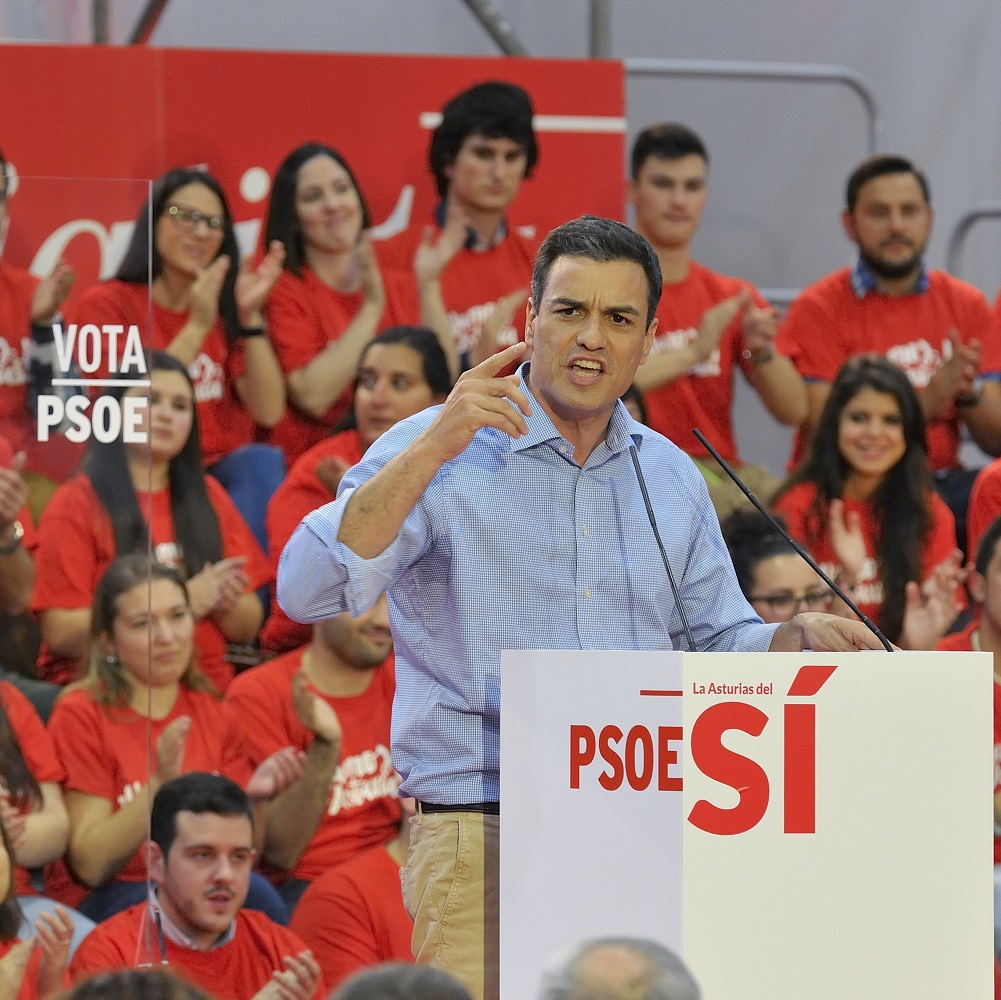
Pedro Sánchez at one of his election campaigns

Another Leftist Coalition Government in Spain, Though Just Barely

by Bonnie N. Field , Juan Rodríguez Teruel

Pedro Sánchez, Spain’s incumbent prime minister, was sworn into office for the third time on 17 November 2023. He once again heads a minority coalition government. This time, it includes the prime minister’s Socialist Party (PSOE) and Sumar (Sum or Add Up), a new left wing political platform launched by Yolanda Díaz, the incumbent and continuing labour minister and second deputy prime minister. While clear continuities exist, there are important changes regarding the junior party partner in the coalition. Sánchez’s previous cabinet, formed in 2020, included the radical left Unidas Podemos (United We Can), an alliance of Podemos and the United Left, the latter centred around the Spanish Communist Party. After much public discord, the weakened Podemos joined the Sumar alliance for the July 2023 parliamentary elections. Yet none of Sumar’s five ministerial posts (out of 22 total) in the new government went to Podemos. While Díaz hails originally from the United Left, Sumar is a more moderate ally for the Socialists, at least in terms of the likely tone and style of its government representatives. It remains to be seen how the disgruntled Podemos, with 5 of Sumar’s 31 seats in the Congress of Deputies, will affect governance and Díaz’s nascent platform. Continuing the practice on the political left of gender parity or majority women cabinets, the new government has 55 percent women ministers, four of whom are also deputy prime ministers. This government also confirmed Spain as a world leader in minority cabinets. Since Spain’s return to democracy in 1977, 75 percent of its cabinets have been minority ones, meaning the party or parties in the cabinet do not control a majority of seats in the parliamentary chamber to which the government is responsible. While Spain is used to making these cabinets (mostly) work, this may be the most complicated governing scenario to date. The leftist government faces a political right that is strong, angry, and mobilized—though this both challenges and serves as a buttress that could fortify the new government. The conservative Popular Party (PP), led by Alberto Núñez Feijóo, won the most votes and parliamentary seats in the July election, two percentage points and 14 seats more than the Socialists, yet far from a majority. As was already clear when the election returns came in, the PP candidate could not cobble together enough votes in parliament and failed in his attempt to become prime minister in September 2023. He received the votes of the PP, the far-right party Vox (Voice in Latin), and two representatives of right-leaning regional parties. Feijóo’s defeat was, in part, due to his party’s proximity and expected governing alliance with Vox. The political right is also strong in local and regional governments in Spain. Following the May 2023 subnational elections, the Popular Party leads 11 of Spain’s 17 powerful regional governments—in five it governs jointly with Vox. The Socialist Party only leads three regional governments. And the PP has a majority in Spain’s upper, though weaker, chamber of parliament, the Senate. The right has questioned Sánchez’s legitimacy, persona, and alliances stretching back at least to 2018 when he replaced PP Prime Minister Mariano Rajoy, whom parliament removed in a constructive vote of no confidence. Sanchismo has become a popular buzzword the right uses to capture its disdain for the prime minister. Nonetheless, the anger and mobilisation on the political right, particularly from Vox and its supporters, but also from the PP and its supporters, peaked once it became public that Sánchez and the PSOE would support an amnesty for those involved in the 2017 Catalan independence push, despite Sánchez’s prior opposition to an amnesty and his claim that it would be unconstitutional. An amnesty was part of a deal to gain the support of pro-independence Catalan parties, ERC and Junts per Catalunya (Together for Catalonia), for Sanchez’s election as prime minister. The controversial leader of Junts, Carles Puigdemont, who resides in Brussels to escape Spanish judges, and would be the main beneficiary of an amnesty, has forewarned that the party’s support for the new government depends on clear advances in the devolution of central state powers to Catalonia and the recognition of the Catalan national identity. Amid significant societal division over the agreement, far right groups, in Trumpist style, engaged in violent protests in front of the PSOE’s headquarters. Protesters frequently showed support for Francoism and denounced what they considered to be a coup-d’état by the parliamentary majority. The extremist tone has put the PP in an uncomfortable position – it has attempted to calibrate its response via numerous demonstrations, expressing firm opposition while also trying to avoid being linked to the autocratic values visible at other demonstrations. The agreement with Junts also met with unprecedented criticism in judicial circles, particularly furious because the agreement mentions alleged lawfare, in reference to what Catalan nationalists view as an excessive legal response to the Catalan push for independence and its leaders. In contrast, most of the electorate that supported the parties of the new majority are relieved that the right-wing forces did not take control of the Spanish government, even though 40 percent of the PSOE voters are against this amnesty. To pass legislation (and survive), the government will need to consistently forge agreements among the government partners and with a diverse set of regionally based parliamentary allies. The latter include Catalan separatists on the left (ERC) and right (Junts), the centre-right Basque Nationalist Party, the Basque left-wing separatist EH-Bildu, the Galician nationalist and left-wing BNG, and the centre-right Canary Coalition. The government has almost no margin. Jointly these parties’ votes add up to 179, only three votes over an absolute majority. The Catalan Junts, with seven seats, is the most significant wildcard. While relative majorities of more yes than no votes are sometimes sufficient in Spain’s parliament, the opposition sums 171 votes. The most relevant ministers that have surrounded Sánchez since he became prime minister remain in the new cabinet, ensuring continuity in the main policy areas (finance, security, external affairs), although the influential minister of economy, Nadia Calviño, is expected to leave the executive in the coming weeks to become President of the European Investment Bank. The newcomers are expected to provide loyalty and a leftist hue to the government agenda, seeking to maintain their voters’ support in a polarised environment. This may be particularly significant in the new legislative term since the new executive will face more dilemmas when negotiating the policy agenda with its parliamentary partners. It will need to rely more on right-wing parties (PNV and Junts) than the prior government. Policy contradictions among the government’s allies will necessarily arise as many of them (PNV and EH-Bildu, Junts and ERC) are electoral opponents that will compete in the regional elections in the Basque Country and Catalonia in the coming months. We’ll need to wait and see how well the Spanish prime minister can live up to the spirit of his book, published four years ago, Manual of Resistance. Keywords government spain pedro sánchez spain prime minister socialist communist party democracy elections

Diplomacy
Austrian Paliament

Speech by Foreign Minister Alexander Schallenberg at the 241st session of the National Council on Hamas' terrorist attack on Israel

by Alexander Schallenberg

Dear Madam President Ladies and gentlemen of the House, Dear visitors in the gallery! I just want to say that I am grateful. Grateful for this unanimous decision in this House. This is a really important signal that also strengthens my position. We must never forget: October 7 really was a breach of civilization. In terms of its cruelty, it was a day that actually eclipsed everything. In a region that is not short of atrocities as it is. I will never forget when I received a phone call on that Saturday with the question: Mr. Federal Minister, how good are your stomach nerves? And I said yes, they are good. And then I was sent videos and photos that I knew were authentic. These pictures will never leave me again. The last time I saw something similar was in connection with the Daesh videos. The cruelty, the bloodlust, the dehumanization. And I am therefore very grateful that we have such a clear position here in Austria. I believe that each and every one of us is called upon to take a clear stance on terrorism - no matter where, no matter how. Murder is murder! You must not put something into context, because that means relativizing it. Never in the history of mankind has a conflict come out of the blue. There is always a prehistory for everything. Also for the Russian attack on Ukraine, which we have not put into context either. And of course international humanitarian law applies. But that is precisely the difference - and several MEPs have emphasized this - that Israel is a constitutional state, a pluralistic democracy. It is struggling, it is trying to find the right path. And MP Matznetter also said that we don't want to be in the IDF's shoes. Because it's almost an inhuman task to keep a cool head in such an emotionally charged situation. Yes, they drop leaflets. Yes, they warn. They call for evacuation. They try to keep civilian casualties to a minimum. And yes, we see what we have actually always known, that Hamas deliberately uses civilian facilities such as schools, refugee camps, hospitals and others for their command centers, tunnel entrances, to hide their weapons there. In other words, as a democracy, as a constitutional state in the fight against terrorism, one hand is always tied behind its back. But that is the right thing to do, it has to be that way. You can see from Israel that they are trying. Three points now have priority: The first point is to prevent a wildfire. This is still not averted. It could end up being a three-front war. We are of course keeping a very close eye on developments in northern Israel and in southern Lebanon with Hezbollah. But, and I would like to emphasize this in particular: Austria is not blind with one eye, we see with both eyes. This applies to the West Bank. And I have to say quite frankly: I consider the settler violence that we see in the West Bank to be intolerable. It is also a lack of solidarity. We are currently dealing with a situation in which the Israeli army is stretched to the limit. And then I think it's a lack of solidarity within Israeli society if some people think they can vent their anger, their emotions and set fire to the West Bank. That could lead to a third front. We have to be very clear about this. The second point is of course - as has already been mentioned several times - the unconditional release of the hostages. I had the opportunity to meet some of the survivors of October 7 here in Vienna last week. It really got under your skin. When you meet a father who tells you that he is actually almost relieved because his child is among the dead and not among the hostages, it's hard to imagine what that must mean for these people. We have to stay on it. This is a terrorist organization, there can be no ifs and buts. There can be no negotiations. They must release the hostages unconditionally. The third point - this is also important to me: I myself was one of the first ministers to put development cooperation with Palestine on hold and ordered an evaluation. We do not want to support Hamas. At the same time, however, we do not want the civilian population to suffer. That would again be fertile ground for the next extremism. We have therefore made EUR 2 million available for humanitarian aid via the Austrian Development Agency. A further EUR 6 million for the region - for Syria, Lebanon and Jordan - which of course run the risk of being destabilized. I think it is good that the European Union has quadrupled humanitarian aid. But, and we saw the European Commission's report on development cooperation a few days ago, I believe we must not be naive. In future, we in Austria will take a very close look at which partner organizations - whether in Gaza or Israel, Mali, Burkina Faso, Mozambique - we work with. What does it say on their websites? What does the umbrella organization in which they are affiliated say? Is there racism, is there anti-Semitism? Are there lines that we cannot support because of our values? This is also a lesson for me from the horrific incident on October 7. In future, we need to take a much closer look at exactly who we are helping and how. Thank you very much!

Diplomacy
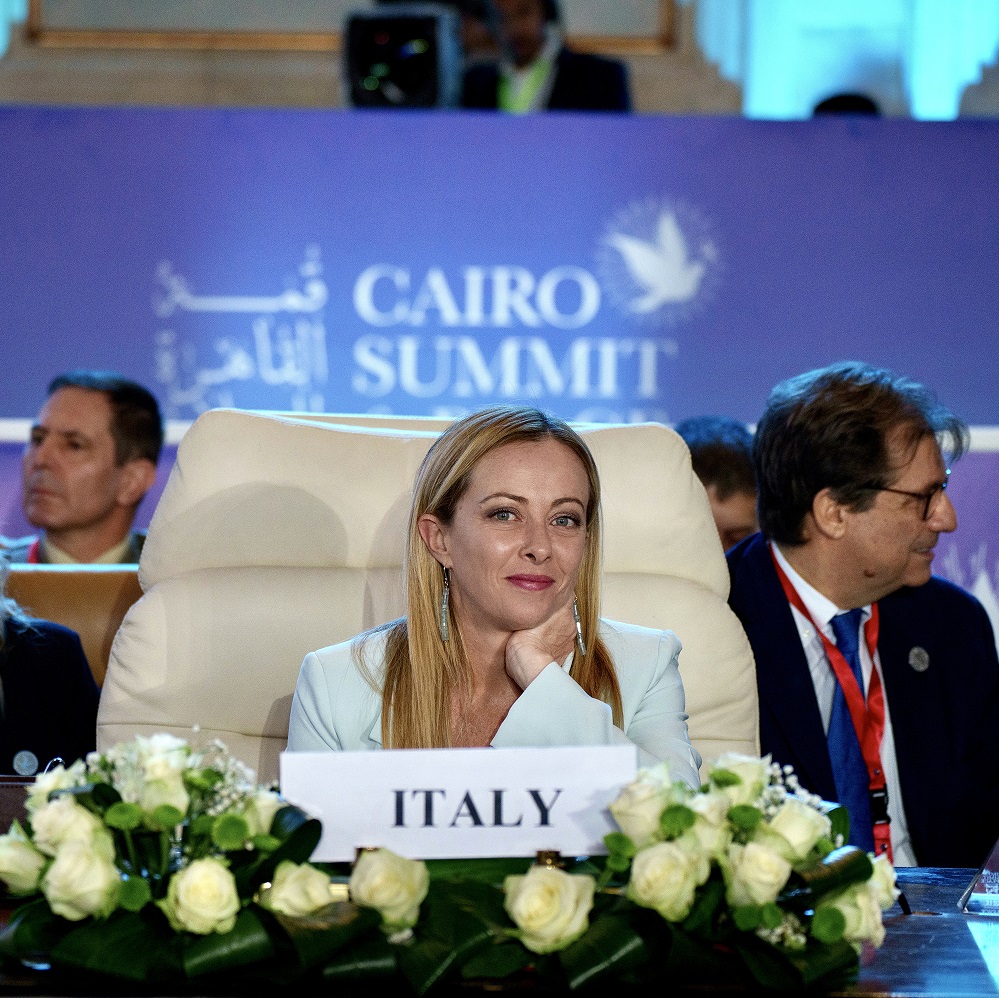
Giorgia Meloni, Prime Minister of Italy

President Meloni’s address at the Cairo Summit for Peace

by Giorgia Meloni

President Al-Sisi, thank you for the speed and determination with which you have organised this conference. I consider this to be a very important conference following the terrible attack by Hamas on 7 October which, we must remember, was carried out against unarmed civilians with unprecedented, appalling brutality, and which, from our point of view, it is right to unambiguously condemn. It was only right for Italy to participate in this conference, given its historical role as a bridge for dialogue between Europe, the Mediterranean and the Middle East, and also considering the opportunities presented by this summit, despite the fact that starting positions may seem somewhat distant at times because, even if our starting viewpoints may not perfectly overlap, what does perfectly overlap is our interest – the interest of all leaders sitting around this table, and that interest is to ensure what is happening in Gaza does not become a much wider conflict, that it does not turn into a religious war, a clash of civilisations, as that would mean the efforts courageously made over the last years to the contrary, to normalise relations, would have been in vain. The impression I get – and I am saying this with my usual frankness – is that, considering the way Hamas carried out its attack, its real objective was not to defend the right of the Palestinian people, but rather to force a response against Gaza that would fundamentally undermine any attempts at dialogue and create an unbridgeable gap between Arab countries, Israel, the West, thereby definitively compromising peace and well-being for all citizens involved, including those it says it wants to defend and represent. This means that we are all the target, and I do not think we can fall into this trap: that would be very stupid indeed. This is why I believe it is important to be here, why I believe it is very important to continue dialogue and discussions. I believe there are a number of key points to be reiterated. Firstly, terrorism has hit the Muslim world more than it has the West. In fact, terrorist acts over time have weakened peoples’ legitimate demands, especially in the Muslim world. Within this dynamic, there is the choice of Hamas to use terrorism to prevent any kind of dialogue and any prospect of arriving at a concrete solution, also for the Palestinian people. However, no cause justifies terrorism. No cause justifies actions that are knowingly designed to target unarmed civilians. No cause justifies women being massacred and newborns being decapitated, deliberately filmed on camera. No cause. When faced with such actions, a State is fully entitled to claim its right to exist, defend itself and ensure the security of its citizens and borders. However, and this brings me to the second point, a State’s reaction cannot and must not ever be driven by feelings of revenge. This is why States are what they are; they are our point of reference. A State bases its reactions on precise security reasons, ensuring proportionate use of force and protecting the civilian population. These are the boundaries within which a State’s reaction to terrorism must remain, and I am confident that this is also the will of the State of Israel. Thirdly, our immediate priority remains humanitarian access, which is essential to prevent further suffering among the civilian population as well as mass exoduses that would contribute to destabilising this region. This is something we do not need. I consider the mediation work that has been carried out in this regard by several players attending this conference to be very important. I consider the European Commission’s decision to triple its humanitarian aid for Gaza, taking the total to over EUR 75 million, to also be very important. Italy is also working to increase bilateral aid, but an increase in resources must clearly be accompanied by very strict control over who uses those resources. Encouraging developments are coming from this morning. President Al-Sisi, I thank you for this too. We are very concerned about the fate of the hostages in the hands of Hamas, and, as you know, there are also Italians among them. We ask for the immediate release of all hostages, clearly starting with women, children and the elderly. It is important to keep working together to get vulnerable people and foreign civilians out of Gaza. Above all, we must do the impossible to avoid an escalation of this crisis, to avoid losing control of what may happen, because the consequences would be unimaginable. The most serious way to achieve this goal is to resume a political initiative for a structural solution to the crisis based on the prospect of two peoples and two States. This solution must be concrete and, in my view, it must have a defined time frame. The Palestinian people must have the right to be a nation that governs itself, freely, next to a State of Israel whose right to exist and right to security must be fully recognised. In this regard, Italy is ready to do absolutely everything that is necessary. Thank you again, Mr. President.

Diplomacy
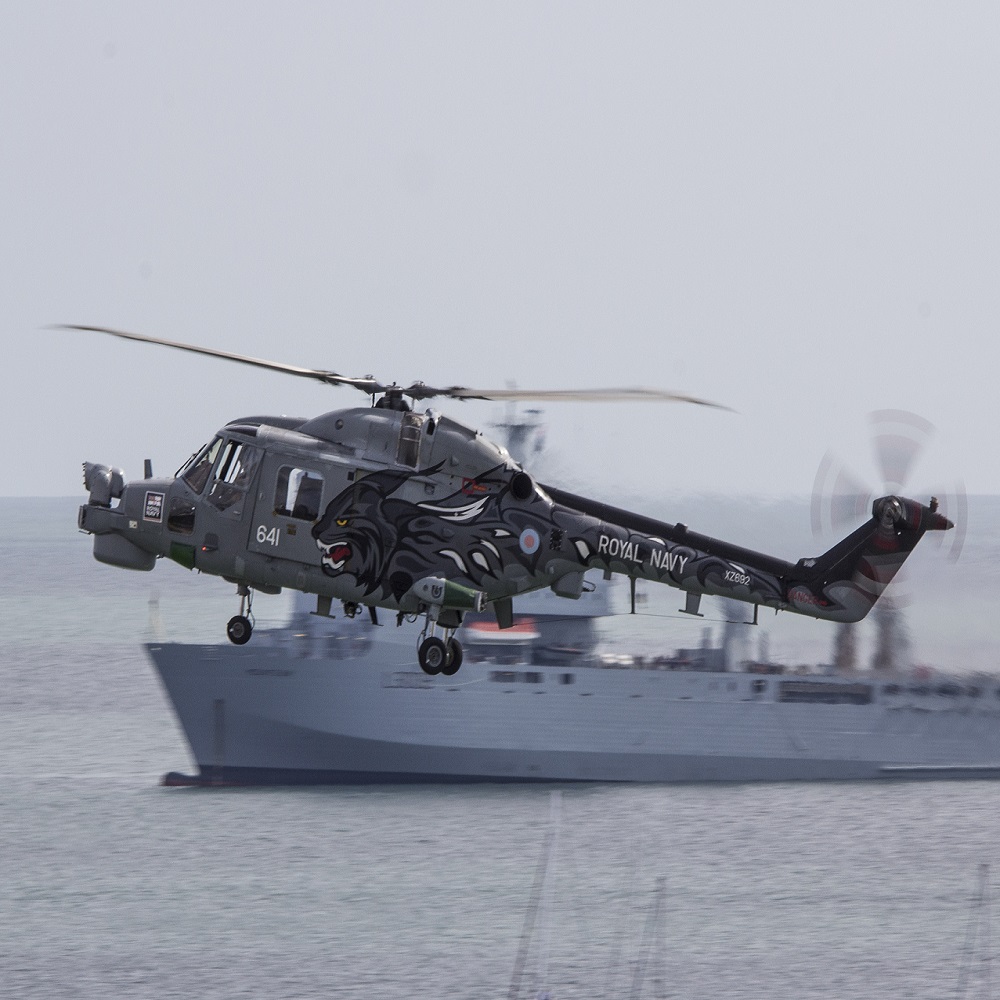
The Westland Lynx, British military helicopter with Royal Navy ship on the background

The UK’s new direction: Prioritising the Indo-Pacific

by Girish Luthra

The recent steps undertaken by the UK show the growing engagement with the Indo-Pacific and the clear intent to accelerate the same In March 2021, the United Kingdom (UK) released ‘The Integrated Review of Security, Defence, Development, and Foreign Policy’, outlining its vision, priorities, and strategies for ‘Global Britain in a Competitive Age.’ While it covered a broad range of areas aligned with its national objectives, two aspects stood out from a policy-reorientation perspective. One, a departure from its earlier approach of cordiality and accommodation with China; and two, its decision to deepen engagement with and play a more active role in the Indo-Pacific region. It included a separate section ‘The Indo-Pacific Tilt: A Framework’, which stressed that “we will be the European partner with the broadest and most integrated presence in the Indo-Pacific.” The ’tilt’ framework met with scepticism, in some cases with cynicism, because the UK had remained somewhat withdrawn, in general, and peripheral to the Indo-Pacific region, in particular, in the preceding few years. There were questions about the UK’s seriousness and headroom available for resource allocation to follow through with this new strategy. Notwithstanding, the UK government started to take new steps, as well as moving forward with some earlier initiatives related to the Indo-Pacific. The big announcement in September 2021 of AUKUS (Australia, the UK, and the US), an informal security alliance focused on the western Pacific, sent the clearest signal that the ‘tilt’ was more than just a strategy paper. It also indicated that the plans “… to enhance China facing capabilities to respond to systemic challenges it poses to our security, prosperity, and values…” would be realised through partnerships and alliances. The UK seeks to contribute to deterrence against China through the AUKUS, which has taken numerous steps in the last two years to expand defence collaboration in emerging technologies and industrial capabilities. The UK’s ‘tilt’ implementation challenges were compounded by the post-pandemic economic slowdown and the Russia-Ukraine war. At the same time, there were rapid changes in the global and regional strategic environment. For the UK, these implied the continued indispensability of the US, the criticality of the EU, and the importance of the Indo-Pacific. A revised strategy articulation was accordingly done through a comprehensive document titled ‘Integrated Review Refresh 2023: responding to a more contested and volatile world’, published in March 2023. It updated the broad strategic framework across geographies, sectors, and themes and was more explicit about the China challenge. With respect to the Indo-Pacific, it outlined the progress made since the announcement of the ‘tilt’ strategy. These included FTA agreements with Australia, Japan, the Republic of Korea, New Zealand, Singapore, and Vietnam. It highlighted deepening several bilateral relationships, partnership roadmaps with India and Indonesia, dialogue partner status with ASEAN, applying for joining the ASEAN regional forum and ADMM Plus, progressing negotiations to join the CP-TPP, deployments by the Royal Navy to the region, digital partnerships, and working together on green transitions. It pointed out that the Euro-Atlantic would continue to be the overriding priority, followed by the Indo-Pacific. Overall, the ‘Refresh’ document showed that the UK’s engagement with the Indo-Pacific was progressing well and that there was a clear intent to accelerate the same. The last two and a half years have firmly established the UK’s new direction, with emphasis on outcomes that are based on diplomatic and cooperative instruments. This trend is supported by a growing anti-China sentiment, increasing consensus for alignment with the Indo-Pacific framework, and a broader agreement on strengthening resilience against coercion and unforeseen events. A recent report by the UK House of Commons Foreign Affairs Committee, released on 30 August, has brought out a detailed assessment of the evolution and progress of the Indo-Pacific ‘tilt’ strategy. While recognising the steps taken towards implementation, it has made several recommendations. Some of these include a cross-government approach, focus on long-term objectives and outcomes, seeking to join the Quad, inviting Japan and the Republic of Korea to join AUKUS for ‘Strand-B’ activities of defence cooperation, pushing for Japan to eventually join AUKUS, campaigning to admit Taiwan to CP-TPP, dropping overcaution about offending the CCP over Taiwan, and releasing an unclassified version of its China strategy. This stems from a broad assessment that while Euro-Atlantic is the overriding priority, the long-term threat is from China. Another report on China by the Intelligence and Security Committee of the UK parliament, presented in July 2023, has highlighted that the Chinese approach to pursuing its global ambitions makes China a national security threat to the UK. The report covers diverse challenges emanating from espionage, interference, influence operations, and investments (the UK receives the highest FDI from China, compared to any other European country). It concludes that the response and preventive actions have been slow and inadequate, and recommends a proactive approach to counter China, with increased allocation of resources. These reports are indicative of increased political convergence on the need to take forward the plans for the Indo-Pacific and China with a sense of urgency. The coming months are likely to see increased momentum in the implementation of priorities indicated in the ‘Refresh’. In addition, delivering on the India-UK comprehensive strategic partnership and the 2030 Roadmap for India-UK future relations is being accorded high priority. It is important that this joint roadmap, the UK’s integrated review, and its plans for the Indo-Pacific are seen in sum and as mutually reinforcing. While attention is currently focused on the ongoing negotiations for the India-UK FTA—expected to come to fruition soon—it needs to be highlighted that there are many other important lines of action being pursued under the 2030 roadmap. The term ‘Tilt to the Indo-Pacific’ has also been a subject of debate since it was unveiled. To many, it seemed to suggest movement at the cost of some other important region. The ‘Refresh’ document refers to it but appears to somewhat deemphasise the term. The recent Foreign Affairs Committee report also recommends moving away from using it. While the use of ‘tilt’ in official language may fade away, the UK is likely to continue to lean heavily towards the Indo-Pacific. This priority can be expected to become more enduring, and increasingly credible in the coming years.

Diplomacy
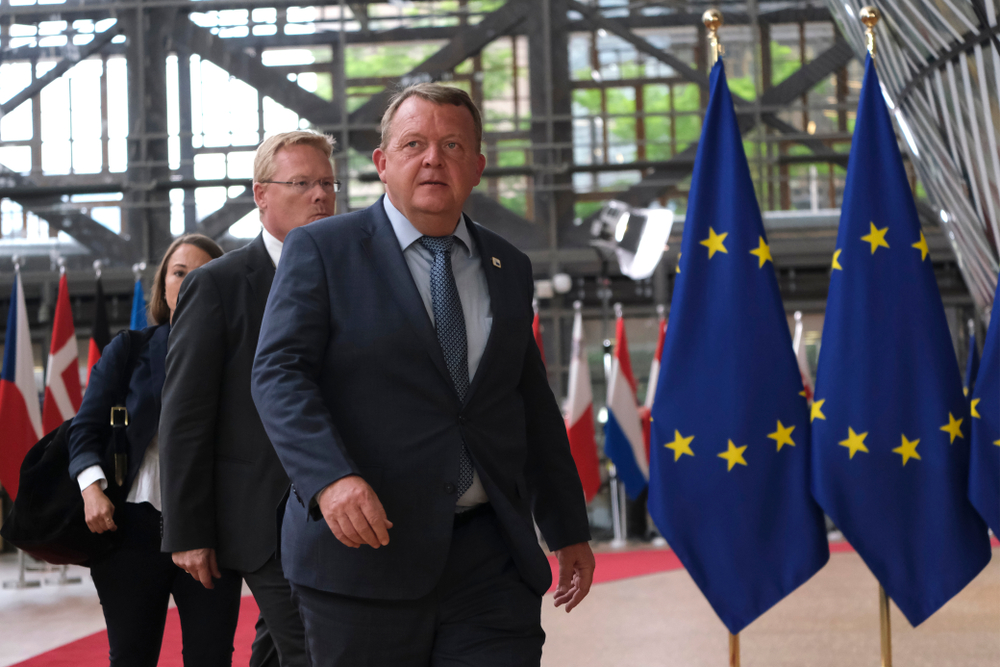
Minister of Foreign Affairs of Denmark Lars Løkke Rasmussen

Speech of Danish Foreign Minister Lars Løkke Rasmussen - We will pursue a clear-sighted and realistic China policy

by Lars Løkke Rasmussen

This week I travel to China for the first time as Danish foreign minister. I was there at the end of 2017. At that time, I was prime minister and Xi Jinping had been president for four years. It was clear that there were major political changes underway in China - but also that there was still a desire for engagement and cooperation with the outside world. Here, six years later, the picture is different. China continues to pursue its interests in the world. But now with greater assertiveness and more muscle, and China is trying more directly to change the world order as we know it to China's own advantage. And they go to great lengths to protect their political system from outside influence. We in the West are therefore forced to relate to China in a different way.   And that is exactly why I look forward to setting foot on Chinese soil again. Because even if we disagree politically on a number of things, not least in terms of values, China cannot be avoided. Neither economically nor politically. China is the world's largest economy when adjusted for purchasing power. China's GDP is on par with Europe's combined. China is now and in the coming years indispensable for the value chains of our business life. We also need China to solve the climate crisis. The country accounts for 30% of global emissions of greenhouse gases. Without China, we simply cannot achieve our climate ambitions. Just like China, it is a producer of many – indeed too many – of the technologies and raw materials that form a central part of our own green transition.  Over the past many years, we in the West have become too dependent on China in several critical areas. There is no doubt about that. We have been somewhat naive for a long time. But we cannot react by decoupling ourselves from China now. It is simply not possible. We must be pragmatic idealists, as I call it, and pursue a committed, clear-sighted, and realistic China policy.  This means, first of all, that we must free ourselves from critical dependencies. We must minimize our risk and become more resilient. In plain Danish, we in Denmark and Europe must be able to stand on our own two feet to a greater extent. The time when we perceived the whole world as one big factory is over. We must look after our supply chains at the seams. This applies to energy, critical raw materials, and technology. And then Denmark and the EU must pursue a more robust and strategic trade and industrial policy.  Denmark, the EU, and our allies have significantly tightened their approach to China in recent years. It is wise and necessary. We must continue to address the challenges with China when it comes to interests, values and security with our partners and allies. The latter is important because Denmark cannot cope with Chinese power on its own. No European country can do that alone; for that, the size ratio is too unequal. Therefore, it is alpha and omega that we stand together in the EU on our approach to China in close dialogue with the USA and our allies in NATO.  At the same time, pragmatic idealism means that we must not overrule. Driving from one ditch to another doesn't help. Europe must not become generally protectionist and we must cooperate with China on our common interests.  My trip to Beijing and Shanghai has three purposes. Firstly, to agree a new Danish-Chinese work programme. Secondly, to open doors for Danish business so that they can deliver the green solutions the Chinese demand. And thirdly, to have an honest conversation with the Chinese government about our bilateral relations, about developments in the world and the things we see differently.  There are many issues to discuss with China. Over the past 10 years, China has increased political control over its own population and suppression of fundamental freedoms. In Hong Kong, democracy and freedom of assembly and speech no longer exist. Uighurs are oppressed in Xinjiang. And in Tibet, a slow erosion of ethnic Tibetan culture and identity has long been underway.  There is also the conflict over Taiwan. Half of all the world's containers are sailed through the Taiwan Strait, so the relationship across the strait has consequences for the whole world. Also, for the EU and Denmark. We emphasize that the conflict is resolved peacefully without violence, threats, or coercion. Like the USA and most other countries, Denmark pursues a one-China policy. This does not change the fact that we have strong economic and cultural ties to Taiwan. And many Danes have – like me – sympathy for the democratic governance reform that has been chosen in Taiwan.  In light of Russia's aggression against Ukraine, it is also clear that China's close partnership with Russia is worrying. China has neither condemned the invasion nor demanded that Ukraine's full territorial integrity be restored, just as China is helping to spread Russian disinformation. In return, China has emphasized that it will not support Russia's aggression militarily. It is an important commitment and signal, and we must take them at their word. As a permanent member of the UN Security Council, China has a special responsibility to engage actively in the peace dialogue to end the war in Ukraine.  We look at many things differently. When it comes to human rights, we must continue to hold China to international obligations. At the same time, the trade and climate conditions are such that we have to cooperate in those areas.  Our current work program with China expired in 2020, so it is long overdue for renewal. Several have argued that Denmark should end the cooperation. I don't think that would be in Denmark's interest. At the same time, it would be a significant and wrong political signal not to renew it at all. But we have known for a long time that the program should look different. It used to be quite broad – even too broad, in retrospect. The new program must be more focused. We will cooperate with China on climate, green energy, environment, sustainable food production, green shipping, and health. For example, we can help China reduce its greenhouse gas emissions. It is good for both the climate and for Danish exports.  It is important for us to focus the cooperation on the green areas in particular. If we only want to cooperate and talk with those we completely agree with, then I wouldn't have many places to go as Secretary of State. And that would not be good for either the economy or the climate. And not good for the overall political situation either.  China is constantly seeking cooperation with countries around the world. They have global ambitions. They are not only asserting their influence in Asia, but also in Africa and Latin America. They offer themselves as partners in very specific ways without demands for democracy and human rights. Construction of highways and railways. Expansions of airports. Mining. China has invested billions of dollars in major construction projects across the African continent and created a huge debt burden. That kind of counts. Also, when it comes to votes in the UN.  We in the West have to deal with that. Considered and strategic. We must strengthen existing partnerships and build new alliances based on equality and respect. We need to think more about building relationships. Education. Research. Exchange. We must also be present out there – in Africa, Asia, and Latin America – with offers for concrete collaborations. And get off the moral high horse a little.  China's changed face could perhaps be glimpsed in 2017, when I was in China last. Now the challenge is clear to everyone. We must be critical of a number of China's global ambitions and their political system at the same time as we cooperate on trade and climate. This requires a committed, clear-sighted, and realistic China policy.

Diplomacy
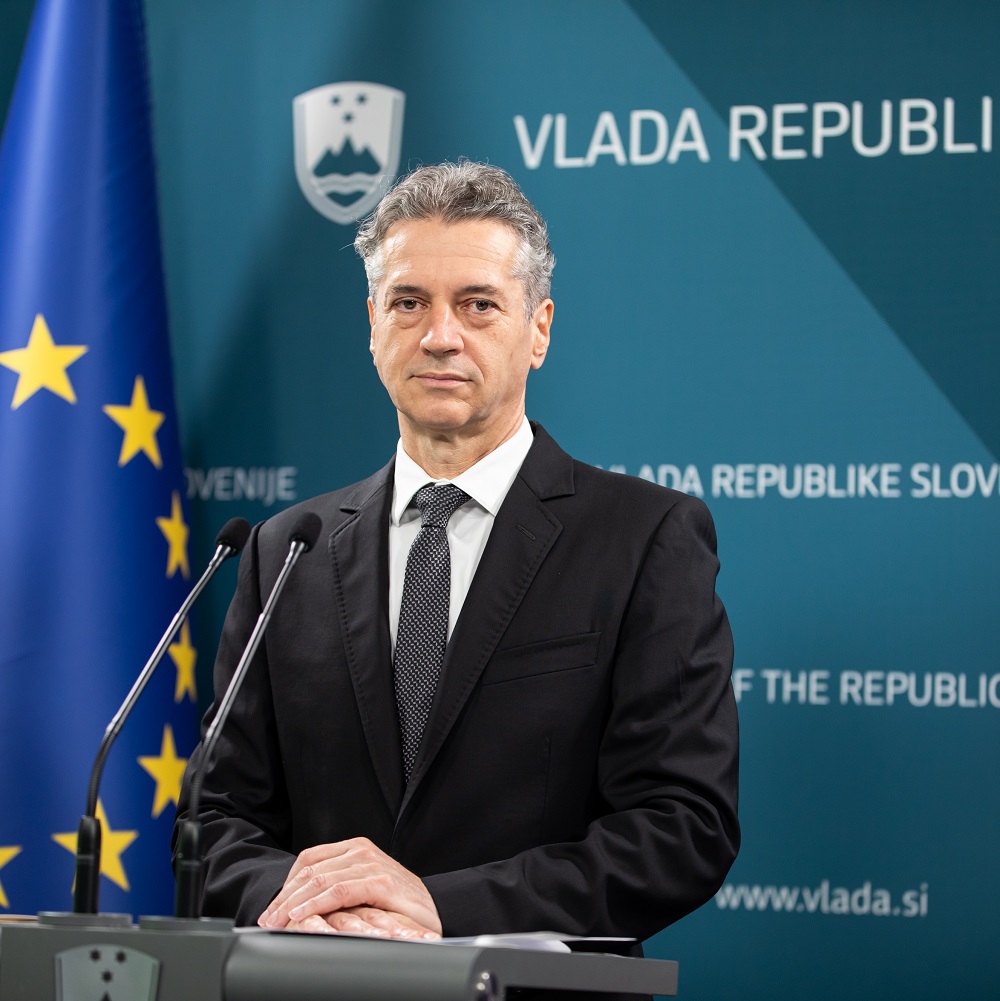
Prime Minister of Slovenia Robert Golob

Speech delivered by Prime Minister of Slovenia Robert Golob at Bled Strategic Forum on the 28th of August

by Robert Golob

Dear Charles.  Distinguished guests, ladies and gentlemen. Welcome to the Bled Strategic Forum and welcome to Slovenia.  This month, on the 3rd of August, Slovenia was hit by the most devastating floods in the country’s history. Within just a matter of hours, 10,000 people lost their homes. Families lost everything.  We were able to secure relief from the EU. We received offers of aid from our neighbouring countries within the region. Even NATO responded. Everyone understood the severity of the disaster and sent their best engineering teams, along with heavy equipment, some of whom are still here helping our people rebuild their communities. I would also like to express my gratitude to all of you, all of those who have already helped, either physically or financially, and to others who will perhaps contribute in the coming hours. It is by showing solidarity, by working hand in hand with our friends, neighbours, and allies, that we truly make the world a better place. This is a message that we should not forget under any circumstances, not just when we are facing dire times, because you never know when the situation will become too difficult for you.  And as Peter Grk, Secretary General of the Bled Strategic Forum said, in Europe, sometimes or even most of the time, we live under the impression that extreme events do not happen here. They happen far away, far abroad. Well, not anymore. The extreme weather that we are currently facing is, of course, a localized phenomenon. But the conditions that caused this weather are indeed worldwide. Climate change is not something that any of us can escape. It is here. It is happening. We can see its impact growing every year, though its specific effects are unpredictable. The only predictable thing about climate change is that it is not going to get any better by itself. This is a message that we must never forget.  Still, we need to put in place mechanisms to adapt to the catastrophes like the one that hit Slovenia three weeks ago, because they will happen again. And we can only address such a demanding project at the international level. No nation, especially not individual small nations, can face it alone. Even the biggest nations cannot face it alone. This is one of the most important messages that we will bring to the table during our membership in the UN Security Council. We want to place the climate agenda at the top of our priorities. And one reason why I think we may be successful in this endeavour, not because of the catastrophe that we faced three weeks ago, is that, as a very small country with little international clout makes us a very honest broker. I can tell you right now that we are brave enough to undertake this rule. We want to be an honest broker. We want to be sincere, perhaps addressing issues that bigger nations are somehow neglecting due to their own national agendas.  The second of our primary goals is figuring out how to bring peace to Ukraine. It is practically impossible at this time, perhaps, but we will invest all of our knowledge, all of our time in this one particular goal, whether we are ultimately successful or not. No one can tell. But will we try? Yes, we will, because this is the single most important topic on the table of the United Nations. And that's the only place where this war can end: at the table of the United Nations. And we will do everything we can to bring it forth.  Finally, I'm really glad to have all of you here, my dear colleagues from the Western Balkans. I'm glad that you all made it here safely. Nobody is missing. Just this in itself is a huge success. But it doesn't stop here, because the message that I want to impart, and I'm pretty sure that Charles [Michel] will do so even more decisively, but the message that I want to share is that the momentum is changing due to Russia’s aggression on Ukraine. The stance of European Union Member States regarding the enlargement of European Union took on a totally new perspective. Things are changing rapidly. In the next 12 months I'm pretty sure that the enlargement process will not just gain attraction but an entirely new perspective. And I urge all of you not to be left behind. I urge all of you to continue pressing on with the reforms, but also to be aware of what's going on regarding the changes within the European Union itself. We all know that we will have to reform our processes within the European Union. And as I said, these reforms will either happen within the next 12 months or they may not happen for a very long time. This is an occasion that shall not be overlooked. Slovenia will remain a strong supporter of your membership. Slovenia will continue to do all those things that are necessary within the European Council and also in dialogue with the European Commission to make it possible for you to become members of our European family, to put you where you belong. That is the last message that I wanted to impart: you all belong with us.  And as I said, none of these challenges that I addressed are going to be easy to meet. None. We will have to work hard. It will cost a lot of money, especially for flood relief and the reconstruction. It will take a lot of time, but we need to find both the courage and the wisdom. And we will do so, in order to show that yes, we can, we can build a better world. A world based on solidarity.  Thank you.

Diplomacy
Nikolay Denkov Prime Minister of Bulgaria

Speech of Bulgarian Premier Minister Academician Nikolai Denkov

by Nikolai Denkov

Dear Mr. Prime Minister of the Hellenic Republic / Dear KyriakosDear Ministers, Dear Governor, Dear Mayor of ThessalonikiDear Mr. Dzikas, Dear Greek friends It is, indeed, a privilege to address you in the context of the Thessaloniki International Fair. I thank the organizers of the HELEXPO and I thank the Greek Prime Minister for his kind invitation. Let me start by saying that during the last days and weeks we have witnessed the worst possible consequences of the climate crisis. We have seen scenes of destruction that we could not imagine we would see in our lifetime. Some of these tragic events happened here in Greece - our closest neighbor and most friendly country, just a few kilometers from our common border. Allow me to express my deepest condolences for the victims of the recent floods in your country and our full solidarity with the friendly Greek people. Tonight I want to send a message loud and clear: Greece is not alone. You have many partners and friends and we will spare no effort to help you mitigate the consequences. Bulgaria and the whole Europea Union stands with you.  We also have victims from the floods in Bulgaria. Both countries face similar problems, such as floods and fires. Helping each other and working together is a must. As an example, this year we have twice deployed Bulgarian firefighting teams to help you overcome devastating fires. Climate change is a global challenge, which demands a common answer. We need to work more closely together to share information and technologies, to integrate our weather forecast systems and our early warning systems to better prevent disasters in the future. I can assure you we are ready for such a mutually beneficial cooperation. Ladies and Gentlemen,Bulgaria is the honoured country at this year’s Thessaloniki International Fair. This is great honour for us, but above all, this is an acknowledgement of the exemplary level, which the relations between Bulgaria and Greece have reached. This is also an acknowledgement of the important role, which my country plays in the region. The presence at such an important international forum provides a broad range of opportunities to enhance further our already excellent economic ties. Bulgaria is represented in several related sectors such as IT, hi-tech, energy, infrastructure, construction, education, tourism and the food industry. Bulgarian companies with a strong international presence participate, including EnduroSat, a significant player in the satellite industry and space technology, and Telerik Academy, providing accessible and innovative digital technology training. Among the participants is Sofia Techpark which provides a platform for global, regional and national companies to develop innovative technologies and to exchange know-how. The Bulgarian Investment Agency, which supports the creation of projects leading to new jobs, exports and transfer of know-how, is also here. The Bulgarian Academy of Sciences, whose experts conduct scientific research, training and activities of international importance, is present as well. Dear Prime Minister,This is the right occasion to acknowledge the fact that your leadership has transformed Greece into an attractive destination for international investments. Let me assure you that this is valid also for the investments from Bulgaria. At present, they are mainly focused in the energy, infrastructure and tourism sectors. I hope that in the near future we will witness Bulgarian investments in new fields, such us communications and information technologies. The IGB project for the gas interconnector between Greece and Bulgaria, in operation since October 2022, in which Bulgaria participates with a 50% stake, is a clear example of a strategic, long-term investment with a broad regional scope. The same applies to the project for a floating LNG terminal near Alexandroupolis in which Bulgaria participates with 20%. We are jointly working on a project for an oil pipeline connecting Alexandroupolis and Burgas where we have the biggest refinery in the Balkans. Bulgaria has a particular interest in the plans for the future development and management of the Greek ports of Kavala and Alexandroupolis. Bulgarian businesses are also showing strong interest in using these two commercial ports, especially in the context of the blocked trade routes in the Black Sea due to the Russian aggression against Ukraine.  All this implies the establishment of a much better, let me call it by its proper name, a modern connecting infrastructure between our two countries, relevant for two members of the European Union and bringing new opportunities for our economic cooperation in the next decades. These new realities are best embodied by the Sea2Sea initiative, which aims at connecting Bulgarian ports on the Black Sea and the Danube river with the Greek ports in the north Aegean Sea through a modern transport, energy and communication infrastructure. In practical terms, it would be an alternative route to the Bosphorus and the Dardanelles. Undoubtedly, Greece and Bulgaria have the potential to create together an energy and transport hub in Southeast Europe, the importance of which would be not only of regional, but of pan-European scale. Dear friends,I am scientist by profession. As such, I cannot offer a magic formula how to transform the Balkans into a prosperous and modern European region. But I strongly believe in three factors which might do the “miracle”: 1. The consolidating and transformational role of the European Union; 2. The regional connectivity 3. The good-neighborly relations.  Good-neighbourliness is an indispensable guiding principle for the regional transformation. What we have to ensure is that words turn into deeds by all countries in the region.  I am proud to say and I hope that my dear colleague Kyriakos Mitsotakis would agree with me that our two countries, Bulgaria and Greece, are leading by example. An example for the whole region.  The history of relations between Bulgarians and Greeks is very, very old. I can think of no other two nations in Europe who have a longer history of relations. We have been neighbours for centuries. We have shared a turbulent past, marked by ups and downs, wars and peace, opposing blocks and alliances. It is not a miracle that after more than a thousand years of controversies, today Bulgaria and Greece enjoy such exemplary good-neighbourly relations. The truth is that it has taken decades of joint efforts of wise Bulgarian and Greek politicians, incl. Konstantinos Karamanlis, who was born here in Northern Greece. It has taken a lot of good will and dedication from diplomats and ordinary people to overcome the shadows of the past and to build mutual respect, trust and confidence.  The Greek-Bulgarian relations have flourished because they have a solid ground –our common values and our strong belief in a democratic international system, based on the principles and norms of international law.   We are proud with our strategic partnership which plays a crucial role for the stability of the whole region of South-East Europe.  Our nations share common hopes and concerns.  We are allies and friends. We are good neighbours who respect and trust each other. Such relations have an enormous potential for the future generations of Greeks and Bulgarians and they deserve our dedication. Dear Greek friends, A thought by the famous Danish philosopher Søren Kierkegaard comes to my mind: You can understand life only looking backwards, but you can live your life only looking forward.    We cannot change history, but we can definitely shape our common future. Through leadership, strategic vision, more connectivity and mutually beneficial cooperation.  I believe we can do it together. Bulgaria and Greece.Hand in hand, leading by example. Thank you!