Subscribe to our weekly newsletters for free

Subscribe to an email

If you want to subscribe to World & New World Newsletter, please enter
your e-mail

Energy & Economics
Trump - Putin - Flags

The World Awaits Change

by Andrei Kortunov

Leer en español In Deutsch lesen Gap اقرأ بالعربية Lire en français Читать на русском “Changes! We’re waiting for changes!” proclaimed Viktor Tsoi nearly 40 years ago, at the dawn of the Soviet perestroika. If one were to summarize the multitude of diverse and contradictory events, trends, and sentiments of the past year in a single phrase, it would be that the modern world is eagerly awaiting change. Much like the former USSR in the 1980s, few today can clearly define what these changes should entail or what their ultimate outcome will be. Yet, the idea of maintaining the status quo has evidently found little favor with the public over the past year. This impatient anticipation of change was reflected, for instance, in the outcomes of numerous elections held over the past 12 months across the globe. In total, more than 1.6 billion people went to the polls, and in most cases, supporters of the status quo lost ground. In the United States, the Democrats suffered a resounding defeat to the Republicans, while in the United Kingdom, the Conservatives were decisively beaten by the Labour Party. In France, Emmanuel Macron's once-dominant ruling party found itself squeezed between right-wing and left-wing opposition, plunging the Fifth Republic into a deep political crisis. The seemingly stable foundations of political centrism were shaken in Germany, South Korea, and Japan. Even the party of the highly popular Indian Prime Minister Narendra Modi failed to retain its parliamentary majority after the elections, and in South Africa, the African National Congress led by Cyril Ramaphosa also lost its majority. Pessimists might argue that abandoning the status quo in itself solves no problems, and the much-anticipated changes, as the final years of the Soviet Union demonstrated, do not necessarily lead to positive outcomes. Replacing cautious technocrats with reckless populists often backfires, affecting those most critical of the entrenched status quo. Optimists, on the other hand, would counter that the rusted structures of state machinery everywhere are in desperate need of radical modernization. They would add that the costs inevitably associated with maintaining the existing state of affairs at all costs far outweigh any risks tied to attempts to change it. The international events of the past year are also open to various interpretations. Pessimists would undoubtedly point out that none of the major armed conflicts carried over from 2023 were resolved in 2024. On the contrary, many of them showed clear tendencies toward escalation. For instance, in late summer, Ukraine launched an incursion into the Kursk region of Russia, and in mid-November, the U.S. authorized Kyiv to use long-range ATACMS missiles against targets deep within Russian territory. Meanwhile, the military operation launched by Israel in Gaza in the fall of 2023 gradually expanded to the West Bank, then to southern Lebanon, and by the end of 2024, to parts of Syrian territory adjacent to the Golan Heights. From the optimists' perspective, however, the past year demonstrated that the disintegration of the old international system has its limits. A direct military confrontation between Russia and NATO did not occur, nor did a large-scale regional war break out in the Middle East, the Taiwan Strait, or the Korean Peninsula. The economic results of 2024 are equally ambiguous. On one hand, the global economy remained heavily influenced by geopolitics throughout the year. The process of “technological decoupling” between the U.S. and China continued, and unilateral sanctions firmly established themselves as a key instrument of Western foreign policy. On the other hand, the world managed to avoid a deep economic recession despite the numerous trade and investment restrictions. Global economic growth for the year is expected to reach around 3%, which is quite respectable for such turbulent times, especially considering that the long-term effects of the COVID-19 pandemic have not yet been fully overcome. In 2024, the average annual global temperature exceeded pre-industrial levels by more than 1,5 °C for the first time, crossing another critical “red line”. However, the UN Climate Change Conference (COP29) held in November in Baku fell short of many expectations. At the same time, China reached its peak carbon emissions by the end of the year, achieving this milestone a full five years ahead of previously announced plans. In the past year, the UN Security Council managed to adopt only 12 resolutions, mostly of a humanitarian nature, clearly reflecting the declining effectiveness of this global governance body. For comparison, in 2000, the Security Council approved 29 resolutions, including key decisions on conflict resolution in the Balkans and Africa. At the same time, 2024 saw continued efforts to explore new formats for multilateral cooperation, including mechanisms within the BRICS group, which held its 16th summit in Kazan for the first time in its newly expanded composition. With enough imagination, one can easily find evidence in the past 12 months to confirm any omen or superstition traditionally associated with leap years. However, all these signs and superstitions predicting upheavals and catastrophes—while aligning with the pessimistic conclusions about the year now ending—do not apply to the year ahead. Human nature, after all, tends to lean more towards optimism than pessimism; if it were the other way around, we would still be living in caves. As they bid farewell to a difficult and challenging year, people around the world continue to hope for better times. And the mere act of hoping for the best is already significant in itself. As Johann Wolfgang von Goethe aptly remarked, “Our wishes are forebodings of our capabilities, harbingers of what we are destined to achieve”. Originally published in Izvestia.

Energy & Economics
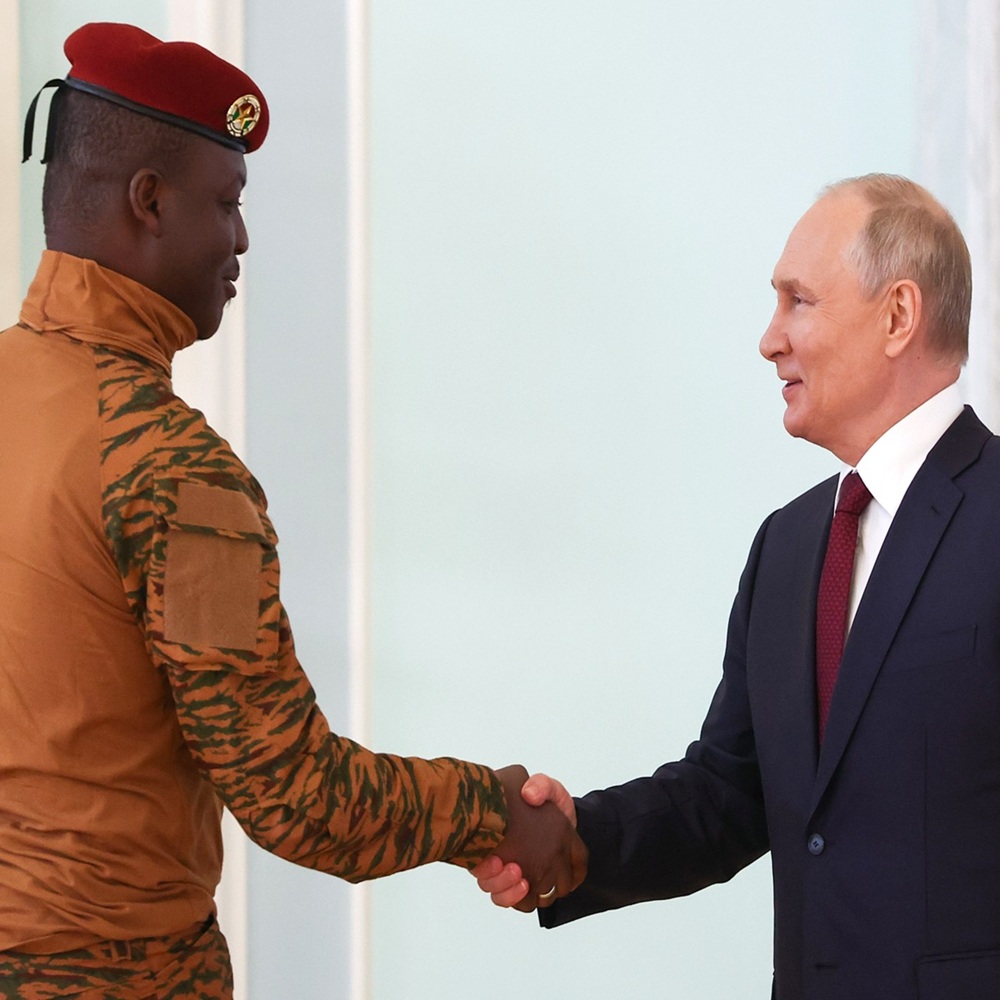
With Interim President of Burkina Faso Ibrahim Traore. Photo: Alexander Ryumin, TASS

Russian and waiting

by William Decourt , Spenser Warren

Leer en español In Deutsch lesen Gap اقرأ بالعربية Lire en français Читать на русском Western missteps in Africa are creating an opening for Russia to deepen its influence. Recent protests against International Monetary Fund (IMF)-imposed austerity measures have rocked several African states. Kenya, a long-time partner of the United States and a key contributor to UN peacekeeping operations in Haiti, experienced violent clashes between government security forces and anti-austerity protestors over tax hikes in a controversial finance bill. Simultaneously, many protesters saw Kenyan engagement in Haiti as footing the bill for American security interests while ordinary Kenyans struggled to make ends meet. Soon after, similar protests against IMF measures spread to Nigeria. Analysts and locals are concerned that spreading protests may threaten stability across Africa. Citizens of other countries continue to voice their displeasure with the political and economic status quo through protest (in Mozambique) and at the ballot box (in Botswana). IMF loans come with significant stipulations, including reforms to financial systems and governance. Critics of these conditions frequently malign the IMF as a violator of sovereignty. Changes to economic and governing models, combined with high debts and economic stress, increase the costs of everyday products and diminish purchasing power across the continent. To many ordinary citizens, the West is benefiting from the fruit of African resources while hindering Africans’ access to the global economy. Publics in these countries demand alternatives to IMF funding, protesting governments to oppose IMF-imposed austerity. Youth, an increasingly important demographic, are especially active. Many of these young people are college-educated but fail to secure adequately paid employment in skilled industries. The informal economy is growing but increasingly separated from formal and international economies. IMF austerity measures are driving the continent to economic crisis and protest that may have lasting effects anathema to US foreign policy and the liberal international order. Some already see China as a viable alternative, although public opinion of Chinese influence is mixed. Elsewhere, faded Cold War memories make Russia a relatively unknown economic and political alternative. So, while recent Western actions in Africa have put long term relationships at risk, Russia is slowly increasing its influence on the continent. In fact, the Kremlin has already taken action and is engaged in the politics surrounding the various debt crises in African nations. African countries owe debts to multiple international actors, including Russia. However, Moscow has forgiven debts owed by many of these countries, coupling debt relief with additional economic benefits, including an influx of grains and energy resources. It has also deepened defense cooperation with several African countries. This cooperation often includes contracts for weapons sales and the deployment of irregular military units, including the Wagner Group. Diplomatic actions such as the above have led some protestors to see Russia as a viable alternative to IMF funding and partnerships with the US and Europe. In a visual representation of this phenomenon, protestors have been seen waving Russian flags at mass gatherings across Africa. Russia appears to receive the greatest support in the Sahel, where governments have failed to curb political instability and deliver on economic development promises. Publics in the region were already angry with the continued postcolonial military presence of France, and Russia took advantage. Mass publics are not the only actors seeking alternatives, ruling elites also see Russia as an attractive partner. Russian defense cooperation and the presence of irregular forces bolster these regimes in the face of increasing civilian protests over poor governance or human rights. Still, Russia has not yet made the gains it could. The war in Ukraine is hurting Africans and contributing to economic stress as global grain prices have skyrocketed. Some perceive Russia as exacerbating the problems of failed governance through its use of Wagner Group formations to back corrupt officials, protect corporate interests, and bolster unpopular governments. Russian interest in the region is also less significant than in the Middle East, Eastern Europe, or the Arctic, where Russia has more proximate strategic, economic, and political goals. Rather than rushing in, Russia’s economic presence in Africa is slowly advancing Moscow’s goals on the international stage. When Russia sought to undermine financial, technological, and energy sanctions from the West as a result of its invasion of Ukraine, it turned to Africa to find new consumers for food products, energy, and arms. Already, in the wake of the invasion, only half of the continent voted to condemn Russia. Such voting patterns at the UN indicate greater support for Russia in Africa than in other regions around the world, even if distrust of Russia remains high in some parts of the continent. Forecasted crises could increase Russian influence on the continent as well. Shocks generated by the African debt crisis could become a proximate cause for geopolitical and geoeconomic shifts. Rapid demographic changes and disastrous climate events (e.g., droughts and floods) exacerbate existing economic and migratory challenges. Since the tentacles of Russian economic and security influence, as well as misinformation, are already present in Africa, such future crises could pull multiple African states further into Russian orbit, and away from Western countries and institutions. Further alignment of African states with Russia would have several drawbacks. Russia would discourage democratization and use security assistance to bolster dictators across the continent. Environmentally sustainable development is also likely to be hampered. Russia may increase the extraction of natural resources in environmentally damaging ways. Additionally, Russian energy exports will be oil and gas, eroding the already significant investment and progress in green energy development many African political economies have made. As Western missteps create openings for Russia to gain a foothold in Africa, they also set the stage for other global powers to capitalize on the vacuum. Chinese-built infrastructure in Africa also contributed to debt burdens, but unlike Western approaches tied to IMF austerity measures, China is recalibrating its strategy. By shifting to smaller projects with lower debt exposure and promoting green energy development overseas, China positions itself as a more appealing partner. This strategy not only bolsters China’s domestic solar and EV industries but also enhances its soft power by responding to local economic needs. Moreover, as Western policy blunders alienate African publics and governments, both Russia’s and China’s influence may grow. Russia’s gains in the region could indirectly strengthen China’s position by fostering broader skepticism of Western-led systems, aligning African leaders more closely with Beijing’s geopolitical goals, including its stance on Taiwan. Africa is a burgeoning continent. One in four humans will be African by 2050. If the US and Europe pass on opportunities to engage with a continent of emerging green development powers and an increasingly educated demographic bulge, Western policies will undermine their own power and influence in the international order. Russia’s quiet increase in trade and security assistance offers an established alternative. Meaning ultimately, both Russia and China, may play the long game, gaining incremental support from a region of one billion people at a time. This work is licensed under the Creative Commons Attribution 4.0 International License (CC BY 4.0) [add link: https://creativecommons.org/licenses/by/4.0/]

Diplomacy
China flag painted on a clenched fist. Strength, Power, Protest concept

The international reconfiguration's process towards multipolarity. The role of China as an emerging power

by Rachel Lorenzo Llanes

Abstract The international system is currently undergoing a process of reconfiguration that is having an impact on all areas of global development. In this process of reordering power relations, there is a tendency to move towards multipolarity, leaving behind the unipolar coalition established after the Second World War. In this context, several emerging powers are gaining increasing international power, which has led to changes in the hierarchy of power on the international geopolitical chessboard. Such is the case of the People's Republic of China, which has established itself not only as a power of great impact and relevance in the Asian region, but also in the entire international system. Namely, the management of the government and the Party in terms of innovation, industrialization, informatization, productivity, expansion and internationalization of its economic model, positions this country as the most dynamic center of the international economy. Evidencing that alternative models to the capitalist system are possible and viable, which strengthens the trend towards a systemic transition and multipolarity in the International System Introduction In the last two decades, a set of geopolitical and geoeconomic tensions and conflicts have become evident, with significant implications extending throughout the International System. As a result, we are currently experiencing a convulsion of the established order, giving way to a process of new global reconfigurations. In this context, several researchers and academics such as Jorge Casals, Leyde Rodríguez, Juan Sebastián Schulz, among others, have noted that these conditions have led to a crisis and hegemonic transition process, with a trend toward multipolarity in which the Asia-Pacific region is gaining increasing relevance. This article, titled "The International Reconfiguration’s Process Towards Multipolarity: The Role of China as an Emerging Power," is dedicated to analyzing the position of this country within the current international reconfiguration of power. Accordingly, the first section will systematize some essential guidelines to understand the current crisis and the decline of the hegemonic order established in the post-World War II period. The second section will address China's positioning amid the international reconfiguration of power. In this regard, it is important to note that China's rapid rise highlights how development management aligned with the Sustainable Development Goals can lead to a shift in the paradigm of international relations, as well as power reconfigurations that challenge the current balance of forces. Thus, it can be affirmed that China's rise constitutes a decisive element within the current trend toward multipolarity. DevelopmentNew International Order: Approaches to the Multipolar Reconfiguration of the International System The current international context is marked by a process of crisis. This crisis reflects the fact that the world order no longer aligns with the correlation of forces that gave rise to it during the post-World War II period. It is not a circumstantial crisis, but rather the interlinking of various interconnected crises that span across all sectors of life. That is to say, the effects of one crisis often become the causes of another, involving economic, political, social, cultural, ethical, moral, technological, commercial, and environmental components. In other words, it is a structural and systemic crisis—one that cannot be resolved unless a similarly systemic transformation occurs. To gain greater clarity, it is important to consider that the consolidation of the capitalist system brought about the process of globalization. This, in turn, introduced large-scale production and technological development capable of increasing output. This process, along with other characteristics of the system, has exponentially accelerated social inequalities between developed and developing countries. It has also led to strategic tensions over the control of resources, raw materials, and inputs, resulting in geopolitical conflicts. Furthermore, the capitalist system has imposed an extremely high environmental cost, demonstrating that it is exceeding both its own limits and those of the planet. Specifically, in its constant pursuit of profit and maximization of gains, negative environmental impacts are not factored into cost-benefit analyses, leading to widespread environmental degradation. Among other harms caused by the system, we observe a decline in investment rates, an increase in public debt, loss of autonomy in monetary policy, rising unemployment levels, reductions in real wages, and growing inequality, among others. In short, capitalism has become an unsustainable system whose primary concern is profit generation—something that is currently entirely incompatible with environmental preservation and the responsible use of natural resources. Therefore, it can be affirmed that some of its most alarming effects include: vast amounts of currency without backing, increasingly concentrated in fewer hands; acceleration of capital concentration in the West; rising military expenditures; and environmental pollution and destruction (Casals, J., 2023). On the other hand, it is necessary to clarify that, for a particular state to be considered hegemonic, it must not only exert its influence predominantly within the system of international relations; its hegemonic role must also be linked to the founding and establishment of a universally accepted concept of world order. That is, the majority of other states must recognize it as such and identify with the model promoted by the hegemon. Therefore, it is not merely a matter of a hierarchical order among states, but rather the adoption of a dominant model of production that involves those states. As a result, certain mechanisms or general rules of conduct are established for the participating states. For this reason, a hegemonic crisis involving the dominant actor in the system of international relations leads to a crisis in the social, economic, political, and institutional structures upon which that actor’s dominance was built. In light of these elements, we currently observe a set of powers within the International System that are vying to establish a new distribution of power—one that moves away from the unipolar coalition led by the United States following World War II. From this perspective, Juan Sebastián Schulz asserts: “A hegemonic crisis occurs when the existing hegemonic state lacks either the means or the will to continue steering the interstate system in a direction broadly perceived as favorable—not only for its own power, but also for the collective power of the dominant groups within the system.” (Schulz, J. S., 2022) As a result, strategic alliances have been formed and new power groups have emerged that influence international relations.These blocs are precisely what the new polarity is forming around, increasingly reinforcing the trend toward multipolarity. This is a system in which hegemonic influence is not determined by a single power, but by two, three, or more. In this regard, Juan Sebastián Schulz further notes that a process of insubordination is becoming evident, particularly in the Western peripheries. As a consequence, several countries have begun to criticize the configuration of the contemporary world order, initiating efforts to organize and propose alternative models (Schulz, J. S., 2022). This reveals the emergence of a new kind of power hierarchy, generating a global order in which a diversity of forces and actors prevails. In this context, China has experienced rapid growth, thereby contributing to the trend toward multipolarity. While this does not imply that the United States will cease to be one of the central powers in the system of international relations—given its considerable global influence—it is evident that there is a noticeable decline in the dominance it held during the unipolar era that emerged after the collapse of the USSR in 1991. This process of intersystemic transition unfolds in various phases. First, there is an observable economic transition marked by a shift in the center of gravity of the global economy toward emerging and developing economies. This shift is accompanied by a necessary technological transition, characterized by a new struggle—this time to lead the technological revolution. These changes, in turn, must be supported by a political transition. Currently, countries from the Global South have gained increasing prominence on the international stage [1]. From this foundation, a geopolitical transition is also underway, where the center of gravity and decision-making—once concentrated in the Anglo-Saxon West—is shifting toward the Asia-Pacific region. Finally, a cultural or civilizational transition is taking place, wherein the previously dominant value system is giving way to the rise of a new worldview. Based on this, the phases of the transition process can be outlined as follows: Existence of a stable order that brings together the majority of nation-states in the International System. - A crisis of legitimacy begins to affect the established global order. - A deconcentration and delegitimization of power emerges, impacting the hegemonic power. - An arms race and formation of alliances ensue in an attempt to preserve the hierarchical order by any means. This leads to a widespread crisis and the rise and emergence of new actors. - A necessary resolution of the international crisis. - Renewal of the system. (Schulz, J. S., 2022) In light of the above, it can be stated that a “new international order” is taking shape. Its manifestations are multifaceted, such as: - The rise of movements and associations of states that serve as alternatives to the neoliberal order. - Emerging powers like China and Russia are gaining strength in various sectors of the international geopolitical arena. - Russia's confrontation with NATO in the context of the conflict with Ukraine. - Sanctions imposed by the United States on various NATO and European Union countries have strengthened the BRICS nations. - The incorporation of new members into BRICS can be seen as an attempt to counterbalance the economic and political dominance of the United States and the European Union. - The expansion of anti-imperialist and anti-neoliberal integration mechanisms that promote South-South cooperation, such as the G-77 + China group. - The financial sanctions imposed by the West on Russia in the context of the Ukraine conflict have sparked a debate about the viability of the international monetary system and the role of the U.S. dollar as a reserve currency. - China and Russia conduct transactions in yuan and sell oil in this currency to Iran, Venezuela, and Gulf countries. China has increased its economic and political influence in the world, which can be seen as a challenge to U.S. hegemony. Its leadership within BRICS and its growing role in the global economy may be indicators of a shift in the balance of power. All these developments reflect a growing awareness within the International System of States regarding the importance of international cooperation to address global challenges such as the climate crisis, pandemics, and food security. They also serve as indicators that a transformation is underway in the way countries interact with each other, resulting in a shift in the economic, political, and strategic center of gravity. In this context, the United States has unleashed a global hybrid war as a desperate attempt to defend and maintain its hegemonic position, which once appeared unshakable in the postwar world. To this end, it has targeted China, as the latter represents its main threat in the economic and scientific-technological order. From this perspective, tensions between the United States and China have significantly deteriorated since the Republican administration of President Donald Trump. Beginning in 2017, his policy took on an aggressive stance toward China, manifesting through a trade war and economic attacks aimed at preserving U.S. global hegemony. This demonstrates that, in response to a process of decline already underway, nationalist and protectionist efforts intensified in the U.S., with policies targeting some of the emerging pillars of the crisis-ridden world order—China being a primary example. Under the administration of Joseph Biden, the focus shifted toward competition, emphasizing the commitment to protect U.S. sovereignty from potential Chinese threats. A significant shift in U.S. foreign policy toward Taiwan became evident with the approval of arms sales to Taiwan in August 2023, which escalated tensions in the region (Collective of Authors). Furthermore, in recent years, the United States has increasingly worked to generate geopolitical and geoeconomic motivations aimed at fostering tensions between China and Russia, potentially sparking conflict between the two. It has strengthened alliances with neighboring countries of these powers—most notably Taiwan and Ukraine—which has triggered concerns and tensions in both nations. A containment policy has also been deployed, including the imposition of trade barriers and tariffs on Chinese products; restricting Chinese companies’ access to U.S. technology and markets; and promoting the diversification of supply chains to reduce dependence on China. Nevertheless, the ongoing sanctions and restrictions have only served to reaffirm the shared survival interests of both powers, strengthening corporate ties and relations between them. These actions also reflect the growing concern among U.S. power groups over the decline of their hegemonic dominance. The Emergence of China and Its Role in the Transition Toward Multipolarity In a previous article titled "The Synergy Between Economy and Environment in China Through the Achievement of the Sustainable Development Goals," (‘La sinergia entre economía y medio ambiente en China mediante la consecución de los Objetivos de Desarrollo Sostenible’) the process of socioeconomic transformations experienced in the People's Republic of China over the past decade was discussed. These transformations have been primarily aimed at revitalizing the nation in preparation for its centenary in 2049. This strategy is rooted in aligning the Centenary Goals with the Sustainable Development Goals (SDGs) set for 2030, under the leadership of the Communist Party and the momentum driven by President Xi Jinping. The results of this strategy have had an impact not only on the Asian Giant itself—now a decisive actor in the Asian region—but also on the international order as a whole. As a result, China has emerged as a powerful rising power, with promising prospects for further elevating its development standards. This is backed by sustained GDP growth, averaging between 6% and 8% annually, indicating a robust economy. In addition, China holds vast foreign exchange reserves, granting it economic stability and the capacity to withstand potential external shocks. It also invests heavily in modern infrastructure and cutting-edge sectors such as artificial intelligence, 5G technology, and renewable energy—all of which enhance its competitiveness and lay the groundwork for long-term sustainable growth (Lagarde, CH). Nonetheless, China has also had to confront significant challenges in its gradual and progressive approach to the desired development model. Among these is the environmental cost associated with its rapid economic growth. For instance, China still experiences high levels of greenhouse gas (GHG) emissions, along with air, water, and soil pollution. In response, measures have been implemented such as the establishment of a national monitoring network and the replacement of coal heating systems in Beijing. Efforts have also been made to purify water resources polluted by industrial processes, and imports of solid waste have been reduced to help decontaminate soils affected by industrial and agricultural activities (González, R., 2023). In general, the development of renewable energy and a circular economy model is being promoted to enable a gradual transition toward a green economy, grounded in the concept of an ecological civilization. For this reason, China’s new era is committed to scientific and technological innovation as a means of driving economic growth that is both sustainable and capable of ensuring a higher quality of life for its population. This, in turn, leads gradually toward a new model of political leadership and economic management. In this regard, Jin Keyu, Professor of Economics at the London School of Economics and Political Science (LSE), has stated that “trillions of dollars of investment are needed for the global green transition, and China is going to play an essential role in that transformation” (Feingold, S., 2024). Based on the aforementioned elements, various authors such as Dr. C. Charles Pennaforte, Dr. C. Juan Sebastián Schulz, Dr. C. Eduardo Regalado Florido, among others, have indicated that the millenary nation represents a threat to the hegemony held by the United States since World War II. Consequently, it is recognized that a process of hegemonic crisis and transition is currently underway, with the Asia-Pacific region emerging as the center of gravity of the global power, thereby contributing to the multipolar transformation of the International System. The authors of “Is China Changing the World?” argue that “market socialism with “Chinese characteristics” must gradually and more clearly diverge from capitalism if it is to embody a genuinely alternative path for all of humanity.” In pursuit of this goal, China bases its policy of peaceful coexistence on five fundamental principles:Respect for sovereignty and territorial integrity, regardless of a country's size, power, or wealth. Mutual non-aggression Non-interference in the internal affairs of other countries, acknowledging that each nation has the right to freely choose its own social system and path of development. Equality and mutual benefit Peaceful coexistence. (Herrera, R.; Long, Z.; and Andréani, T., 2023) The rise of China as a major international power under these principles has been consolidating since 2012 under the leadership of Xi Jinping and the Communist Party of China (CPC), gaining particular momentum from 2020 to the present. Thus, China has not only become the leading power within the Asian regional balance but has also expanded its presence across Europe, Africa, and Latin America—primarily through loans, investments, and multilateral cooperation initiatives such as the Forum on China-Africa Cooperation (FOCAC) in Africa and the China-CELAC Forum in Latin America. In addition, China has positioned itself as a leader in several sectors, and it is projected that its economy may surpass that of the United States, increasing its Gross Domestic Product (Rodríguez, L., 2022). It has also undergone a process of opening up, energizing both its international trade and its overall foreign relations, all under the control of the Government and the Party. This, combined with its rise and development initiatives, has made China a focal point of interest for many countries within the International System seeking to jointly advance projects based on cooperation, the principle of shared advantage, and multilateralism. In this regard, the white paper "China and the World in the New Era," published by the Central Committee of the Communist Party of China in 2019, states: “The world is moving rapidly toward multipolarity, diverse models of modern development, and collaboration in global governance. It is now impossible for a single country or bloc of countries to dominate world affairs. Stability, peace, and development have become the common aspirations of the international community.” (People’s Republic of China, 2019. Quoted in Schulz, J. S., 2022) Undoubtedly, this rise has become a source of concern for U.S. power groups, which have increasingly applied geostrategic pressure. Notably, the United States has strengthened military alliances with India, Japan, and Australia in an effort to encircle China and attempt to control or obstruct its maritime routes—this also being a manifestation of the intensification of the imperialist arms race. Nonetheless, China has maintained its development strategy and, as part of it, has strengthened its diplomatic network and its relations with multiple countries across all world regions. For all these reasons, China has become the most dynamic center of the global economy. Notably, it went from representing 4% of global GDP in 1960 to 16% in 2020—undeniable evidence of rapid economic growth. Moreover, it has become the world’s largest exporter of goods and also the leading importer, establishing itself as a major industrial power. In this regard, United Nations data reveal that China leads global industrial production, accounting for 30% of the total. This figure surpasses other industrial powers such as the United States (16%), Japan (7%), Germany (5.7%), and South Korea (3.2%) (Schulz, J. S., 2022). In addition, China has remained the world’s leading manufacturing power for approximately 15 consecutive years, according to statements from the Ministry of Industry and Information Technology at the beginning of this year. This sector alone has contributed over 40% to overall growth. Likewise, in 2024, China experienced a significant increase in foreign investment, reflecting its interest in strengthening international cooperation for development. Efforts are also underway for urban renewal in 2024, with around 60,000 projects being implemented across various cities. These initiatives are primarily aimed at transforming underdeveloped neighborhoods and creating smarter urban areas (Embassy of the Republic of Cuba in the People's Republic of China, 2025). In this regard, the following graphs illustrate the value of China’s international trade during the 2016–2024 period, highlighting a strong presence of exports compared to imports. A second chart shows China's global export share, where it holds a dominant position.   Thus, China has risen as a center of power in the international system, with leadership not only in the economic domain but also in science and technology. At the same time, it has promoted a series of investments and a process of internationalizing its national currency. Accordingly, the Asian Giant offers an alternative model of development—one that is more comprehensive and sustainable—allowing it to propel the new phase of Chinese development. This phase aims not only to fulfill the dream of national rejuvenation but also to ensure the survival of its unique political, economic, and social model. Nevertheless, the significant challenges of sustaining growth cannot be overlooked. From this perspective, experts believe that new avenues of growth will be necessary for China to maintain the trajectory it has been experiencing. Specifically, the country must continue expanding its industrial sector while strengthening areas such as artificial intelligence, digital financial services, and green technologies (Feingold, S., 2024). It is also important to highlight the projected continuity and leadership of the Chinese government, with Xi Jinping identified as a key figure in the implementation of the Sustainable Development Goals (SDGs) in China, in conjunction with the socioeconomic transformation strategy toward the 2049 centenary. This has been pursued through the defense of multilateralism, economic openness, and international integration and cooperation in support of global development. Conclusions In light of the above, a decline in U.S. hegemony can be observed, even though this process is not linear—nor is it certain whether any single power or coalition has come to occupy a hegemonic position. What is clear, however, is the existence of a trend toward multipolarity, driven by emerging powers and the strategic ties they are establishing. This is giving rise to a non-hegemonic reconfiguration of power blocs, which are building a multilateral and multipolar institutional framework. It can also be affirmed that China has become the most dynamic center of the global economy. This has been supported by its growth strategy focused on industrialization, digitalization, innovation, productivity, expansion, and internationalization of its development model—while maintaining a strong emphasis on environmental sustainability. A range of key initiatives and development projects have been implemented to support the country's rise, consolidating its role in the multipolar reconfiguration of the International System. All of this has been essential in driving China’s new phase of development and contributing to the broader process of multipolar transformation. Undoubtedly, China’s rapid ascent represents a significant challenge to the International System, as it reflects a shift in international relations and a transformation in the distribution and hierarchy of global power. Notes [1] It is important to clarify that the so-called Global South should not be equated with the Third World, as the distinction between the First and Third Worlds is primarily based on economic and technological differences, which do not align with the current circumstances of the International System of States. In contrast, the term Global South emerges from a new geopolitical perspective that arose in the post–Cold War context, driven by the need to promote South-South cooperation. Moreover, it does not refer to a geographically defined region, as it includes nations from Latin America, the Caribbean, Africa, and the Asia-Pacific.Revista Política Internacional | Volumen VII Nro. 2 abril-junio de 2025. https://doi.org/10.5281/zenodo.15103898This is an open access article distributed under the terms of the Creative Commons Attribution-NonCommercial 4.0 International License (CC BY-NC 4.0). The opinions and contents of the published documents are solely the responsibility of their authors.ReferencesCasals, J. (2023). “El Nuevo orden global: amenazas y oportunidades”. Cuadernos de Nuestra América. Nueva época. No.5. RNPS: 2529.Colectivo de autores. “Crisis de hegemonía y ascenso de China. Seis tendencias para una transición”. Tricontinental. Instituto Tricontinental de Investigacion social. Buenoos Aires. Libro digital, PDF, Archivo Digital: descarga y online.Embajada de la República de Cuba en la República Popular China. (2025). Boletín informativo China-22 de enero de 2025. Oficina de Información y Análisis. Embajada de Cuba en República Popular China. Redacción y envío desde info3@embacuba.cn.Feingold, S. (2024). "¿Hacia dónde va la economía china?". World Economic Forum. Recuperado de: https://es.weforum.org/stories/2024/07/hacia-dondeva-la-economia-de-china/García-Herrero, A. (2024). "10 puntos y 18 gráficos sobre la política económica de Xi Jinping tras el tercer pleno". El Grand Continent. Recuperado de: https:// legrandcontinent.eu/es/2024/09/19/esta-china-estancada-10-puntos-y-18-graficos-sobre-la-politicaeconomica-de-xi-jinping-tras-el-tercer-pleno/González, R. (2023). " Medio ambiente en China: Impactos y respuestas del Partido y el Gobierno". CIPI. Recuperado de: www.cipi.cu/medio-ambiente- en-china-impactos-y-respuestas-del-partido-y-gobierno/Lagarde, CH. "Impulsar el crecimiento económico y adaptarse al cambio". Fondo Monetario Internacional. Discursos. Recuperado de: https://www.imf.org/ es/News/Articles/2016/09/27/AM16-SP09282016- Boosting-Growth-Adjusting-to-ChangePereira, CM (2022): “La reemergencia de China frente a la globalización neoliberal y el desafío de la conformación de un mundo multipolar”. Cuadernos de Nuestra America. Nueva Época. No. 05. RNPS: 2529.Schulz, J S. (2022). “Crisis sistémica del orden mundial, transición hegemónica y nuevos actores en el escenario global”. Cuadernos de Nuestra América. Nueva Época. No.03. RNPS: 2529. Bibliografía consultadaAmbrós, I. (2021). “ El Partido Comunista y los desafíos internos de China en el siglo XX”. Recuperado de: https://www.ieee.es/Galerias/fichero/cuadernos/ CE_212/Cap_1_El_Partido_C omunista_y_los_desafios_internos.pdfBanco Mundial (BM). (2023). Recuperado de: https:// datos.bancomundial.org/indicator/NY.GDP.PCAP. KD?locations=CNBBC News Mundo. (2021). "Cómo consiguió China erradicar la pobreza extrema (y las dudas que despierta ese triunfal anuncio del gobierno de Xi". Recuperado de: https://www.bbc.com/mundo/noticias-internacional-56205219Boy, M. (2020). “ Crisis económica y medio ambiente: ¿cómo promover un desarrollo sustentable?”. Recuperado de: https://culturacolectiva.com/opinion/crisis-economica-y-medio-ambiente- mariana-boy-columna-opinion/García, A. (2021). “La globalización neoliberal en crisis”. Recuperado de http://www.cubadebate.cu/opinion/2021/08/30/la-globalizacion-neoliberal-en- crisisGonzález, R. (2020). “El Quinto Pleno del XIX Comité Central del Partido Comunista abre una nueva etapa para China” en “Transiciones del Siglo XXI y China: China y perspectivas post pandemia II”. Libro digital.Herrera, R; Long, Z y Andréani, T. (2023). “¿Está China transformando el mundo?”. Revista Política Internacional. Volumen V. Nro. 1 enero-marzo de 2023.ISSN 2707-7330.Liu, X. y González G. (2021) “El XIV Plan Quinquenal 2021- 2025: reto para el nuevo modelo de desarrollo económico de China”. México y la Cuenca del Pacífico. Vol 10, núm. 30. Recuperado de https://www.scielo.org. mx/pdf/mcp/v10n30/2007-5308-mcp-10-30-57.pdfOtero, M (2022). “La prosperidad común y la circulación dual: el nuevo modelo de desarrollo de China”. Recuperado de: https://www.realinstitutoelcano.org/analisis/la-prosperidad-comun-y-lacirculacion-dual-el-nuevo-modelo-de-desarrollo-de-china/Regalado, E. y Molina, E. (Coord.) (2021). “China y sus relaciones internacionales”. Asociación Venezolana de Estudios sobre China (AVECH) / CEAA / ULA – Centro de Investigaciones de Política Internacional (CIPI, Cuba), Libro digital.Rodríguez, L. (2022). “Configuración multipolar del sistema internacional del siglo XXI”. Revista Política Internacional. Volumen IV Nro. 1 enero-marzo de 2022. ISSN 2707-7330.Weiss, A. (2024). "La frágil fortaleza económica de Estados Unidos". The Economist. Recuperado de: https:// www.lavanguardia.com/dinero/20240212/9516764/ economia-eeuu- fortaleza-fragil-ia-bolsa-mercados. htmlYang, W. (2015). "La Planificación y Recomendaciones del XIII Plan Quinquenal". Recuperado de: https:// politica-china.org/wp- content/uploads/6sei-yangweimin-ES.pdf .

Diplomacy
Flag USA and China on Computer Chip . Global chip shortage crisis and China-United States trade war concept.

Leading States in the Race for Artificial Intelligence in the Current International System

by Danna Fernanda Mena Navarro

1. Introduction: AI as a Reconfiguration of the Global Order Artificial intelligence (AI) has become one of the most influential factors shaping the contemporary international system. Major powers are competing to lead the new technological revolution that impacts the economy, security, foreign policy, defense, communications, and scientific innovation. The development of AI depends on three strategic inputs: 1. Human talent (research, data engineering, mathematics, computer science). 2. Computational capacity and access to large volumes of data. 3. Robust innovation ecosystems, with companies, universities, and aligned industrial policies. Global spending on artificial intelligence is expected to exceed USD 52 billion over the next three years, consolidating AI as the central axis of the Fourth Industrial Revolution (IDC, 2023; Stanford AI Index Report, 2024). 2. Talent as a Global Strategic Resource More than 60% of top AI researchers work in the United States, and about half of them are immigrants, primarily from China, India, Europe, and Iran (Stanford AI Index Report, 2024). The so-called brain drain is not merely an academic issue, but a geopolitical one: • States compete to attract talent through visas, high salaries, and access to frontier laboratories. • Innovation in AI depends on who concentrates the largest amount of specialized human capital. The United States dominates due to its ability to attract international researchers, while China compensates through massive investment and domestic talent production. 3. The United States Leads the AI Race for Three Main Structural Reasons 1. Innovation, talent, and industry: The United States leads in high-impact research publications and AI startups (more than 50% worldwide). Private investment exceeded USD 350 billion in 2023 alone. Key companies include Google, Meta, Microsoft, OpenAI, NVIDIA, Tesla, and IBM, among others. 2. Computational infrastructure and chips: The country concentrates the most advanced computational infrastructure and controls cutting-edge chips (such as the NVIDIA H100), a resource that China cannot yet produce at the same level. 3. AI and national security: The United States allocates more than 16 federal agencies and billions of dollars annually to AI development for defense, cybersecurity, and intelligence (White House AI Budget, 2024). 4. China: The Emerging Superpower on the AI Path China ranks second globally in the AI race but follows a more aggressive, centralized, and ambitious strategy. • Massive investment as state policy: China has pledged to invest more than USD 150 billion by 2030 in AI under its Next Generation Artificial Intelligence Development Plan (AIDP) (Government of China, 2017). • Domestic talent production: China trains more AI engineers than any other country. Annual graduates in science and engineering reach 4.7 million, compared to 600,000 in the United States (UNESCO, 2023). However, a significant portion migrates to the U.S. due to better research conditions. • China’s role in the global AI industry: China leads in AI-based facial recognition, with generative AI startups such as Baidu, SenseTime, Alibaba Cloud, and Tencent AI Lab. It produces massive numbers of publications, although with lower scientific impact than those from the United States. AI is widely implemented in governance, security, and smart cities. • The chip dilemma: China depends on advanced semiconductors produced only by Taiwan (TSMC), South Korea (Samsung), and the United States/Netherlands (ASML). • Export controls: Export restrictions imposed on China since 2022 limit its ability to train frontier models, although the country is making radical investments to achieve chip sovereignty. 5. Europe, India, Israel, Canada, and Other Relevant Actors • Europe: The United Kingdom, Germany, France, and the Netherlands generate a solid ecosystem in algorithmic ethics, digital regulation (AI Act), and applied research. • India: The world’s main hub of engineering talent and a global provider of technological services. • Israel: A powerhouse in cybersecurity and military AI, with per-capita innovation comparable to Silicon Valley. • Canada: The birthplace of deep learning (Geoffrey Hinton, Yoshua Bengio) and a strong center for basic research. 6. Africa on the AI Chessboard: Intentions, Challenges, and Opportunities Although Africa does not lead the AI race, its geopolitical role is growing rapidly for four strategic reasons. Africa is a major producer of critical minerals. AI depends on lithium, cobalt, graphite, and rare earth elements, and Africa holds 70% of the world’s cobalt reserves (in the DRC), as well as other strategic minerals in Zambia, Namibia, South Africa, and Mozambique. This places the continent in a key position within the supply chains for batteries, computers, and data centers. There is also a rapid expansion of digital infrastructure. China, through Huawei and ZTE, has built around 70% of Africa’s 4G network, as well as Ethiopia’s first smart data center and technology innovation hubs in Egypt, Kenya, and South Africa. Africa is entering the AI space through fintech, digital health, smart agriculture, and biometric systems. In terms of AI policy, African countries with formal AI strategies include Egypt, Rwanda, Kenya, and South Africa. • Threats and challenges: limited computational infrastructure, a deep digital divide, the risk of dependence on external technological solutions, the use of AI for political surveillance (as seen in Ethiopia and Uganda), and a shortage of specialized talent. 7. China and Africa: The Intersection of AI, Data, and Geopolitics China combines its role in AI with its influence in Africa through investments in digital infrastructure, the sale of surveillance systems, the construction of data centers, and technical training programs. This creates interdependence but also raises concerns: Africa could become dependent on Chinese systems that are difficult to replace. Data may become centralized on foreign platforms, and the risk of a technological debt trap adds to existing financial dependence. 8. AI, Regulation, and Global Governance The rapid expansion of AI calls for international treaties on data use, security standards, limits on military automation, and ethical regulations to protect civil society. Governance will be decisive in determining not only who leads, but also how this technology will be used in the coming decades. In this context, global AI governance has become a new field of geopolitical competition. While the European Union promotes a regulatory approach based on human rights and risk prevention, the United States favors market self-regulation and innovation, and China advances a model of state control and technological sovereignty. Multilateral organizations such as the UN, the OECD, and the G20 have begun discussing common principles, but there is still no binding international regime. The absence of clear rules increases the risks of an algorithmic arms race, the use of AI for mass surveillance, and the deepening of global inequalities in access to and control over technology. 9. Conclusions The United States leads due to innovation, global talent attraction, and computational capacity. China follows closely with a comprehensive state-led strategy and dominance in global digital infrastructure. Europe, India, Israel, and Canada contribute key elements to the global ecosystem. Africa, while not a leader, occupies an increasingly strategic role due to its resources, data, markets, and alliances. The race for AI will define not only the global economy, but also the balance of power in the international system of the 21st century. References -Stanford University.(2024). AI Index Report 2024. Stanford Institute for Human-Centered Artificial Intelligence. https://hai.stanford.edu/ai-index/2024-ai-index-report?utm_source=chatgpt.com -International Data Corporation. (2023). Worldwide Artificial Intelligence Spending Guide. IDC. https://www.idc.com/data-analytics/spending-guide/ -State Council of the People’s Republic of China (2017). Next Generation Artificial Intelligence Development Plan. Government of China https://fi.china-embassy.gov -UNESCO. (2023). Global Education Monitoring Report: science, technology, engineering and mathematics. United Nations Educational, Scientific and Cultural Organization. https://www.unesco.org/en -The White House. (2024). Federal AI Budget and National AI Strategy. Executive Office of the President of the United States. https://www.whitehouse.gov/presidential-actions/2025/12/eliminating-state-law-obstruction-of-national-artificial-intelligence-policy/ -European Commission.(2023).Artificial Intelligence Act. Publications Office of the European Union. https://digital-strategy.ec.europa.eu/en/policies/regulatory-framework-ai -Organisation for Economic Co-operation and Development. (2023). OECD. Artificial Intelligence Policy Observatory. https://www.oecd.org/en/topics/artificial-intelligence.html

Defense & Security
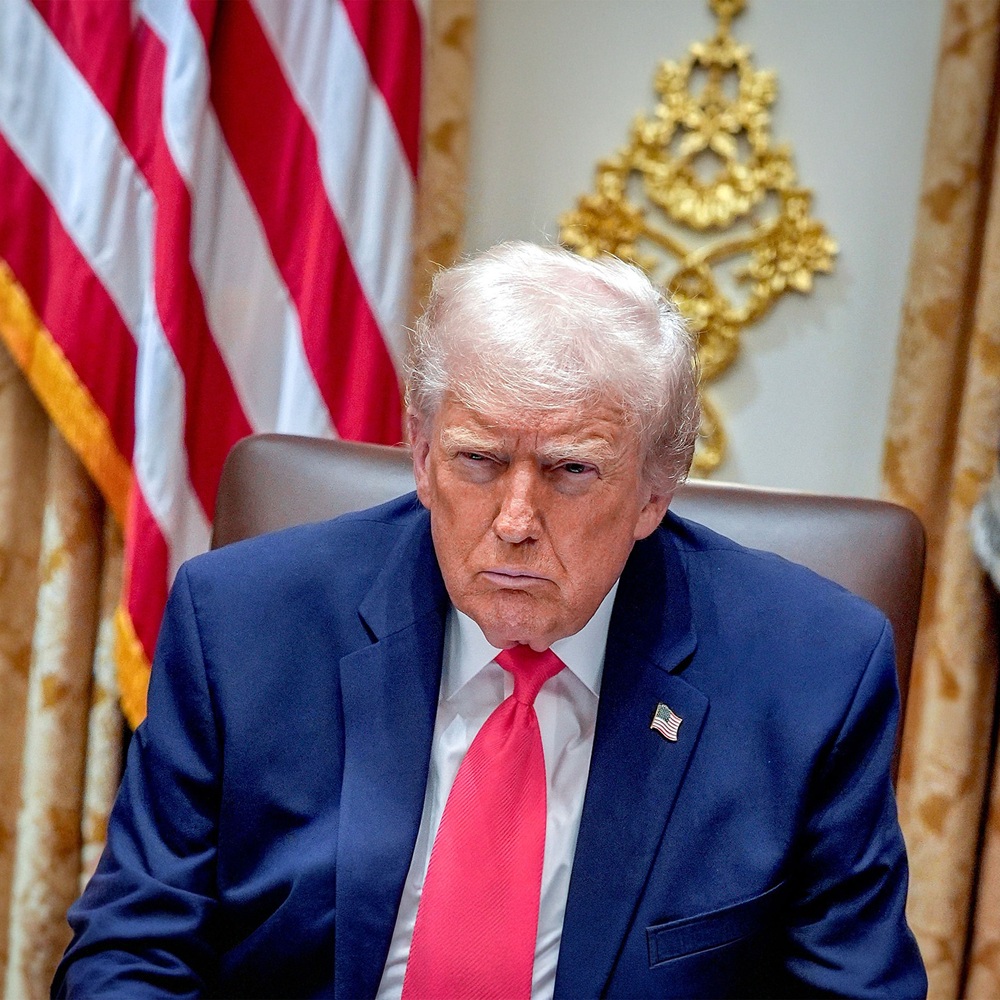
President Donald Trump Speaks During Cabinet Meeting in the Cabinet Room of the White House, Washington, DC on December 2, 2025

Opinion – The Mearsheimer Logic Underlying Trump’s National Security Strategy

by Mark N. Katz

The recently released Trump Administration’s National Security Strategy (NSS) has upended what had been the decades-long consensus about American foreign policy. Most notable in it is the Trump Administration’s prioritization of the Western Hemisphere as an American security concern, its deemphasis on defending America’s traditional European allies, its identification of China as far more of a threat than Russia, and its determination not to be drawn into conflicts in the Middle East and Africa. But while the 2025 Trump Administration National Security Strategy breaks with much of previous American foreign policy, the logic behind it is not something completely new. Even though the document makes no mention of him, the policy outlined in the NSS comports with what John Mearsheimer described in his influential book, “The Tragedy of Great Power Politics”, which was first published in 2001 and updated in 2014. In his book Mearsheimer declared that no nation has ever achieved global hegemony. According to Mearsheimer, America is the only country that has achieved predominant influence in its own region (the Western Hemisphere) and has also been able to prevent any other great power from dominating any other region. Mearsheimer wrote, “States that achieve regional hegemony seek to prevent great powers in other regions from duplicating their feat. Regional hegemons, in other words, do not want peers” (2014 edition, p. 41). Trump’s 2025 National Security Strategy has, whether knowingly or not, adopted these aims as well. It discusses the various regions of the world in the order of their priority for the Trump Administration: the Western Hemisphere first, followed by Asia (or Indo-Pacific), Europe, the Middle East, and lastly Africa. With regard to the Western Hemisphere, the NSS unambiguously calls for the restoration of “American preeminence in the Western Hemisphere,” and states, “We will deny non-Hemispheric competitors the ability to position forces or other threatening capabilities, or to own or control strategically vital assets, in our Hemisphere.” This is very much in keeping with what Mearsheimer described as America being a regional hegemon in the Western Hemisphere. As for the other four regions of the world, though, the Trump Administration seeks either to prevent any other great power from becoming predominant — or it doesn’t see this as a possibility that needs to be worried about. According to the NSS, the Middle East was a priority in the past because it was the world’s most important energy supplier and was a prime theater of superpower conflict. Now, however, there are other energy suppliers (including the U.S.) and superpower competition has been replaced by “great power jockeying” in which the U.S. retains “the most enviable position.” In other words: the Trump Administration does not see any other great power as able to become predominant in this region which is now less strategically important than it used to be anyway. Similarly, the NSS does not see any other great power as even seeking to become predominant in Africa. The NSS thus sees America’s main interests there as mainly commercial. By contrast, China is seen as a threat in the Indo-Pacific region. The NSS, though, discusses Chinese threats in the economic and technological spheres before turning to the military one. A continued U.S. military presence in the region is seen as important for preventing Chinese predominance. But Japan, South Korea, Taiwan, and Australia are all enjoined by the NSS to increase their defense spending in order to counter this threat. The NSS also identifies “the potential for any competitor to control the South China Sea” as a common threat that not only requires investment in U.S. military capabilities, “but also strong cooperation with every nation that stands to suffer, from India to Japan and beyond.” Unlike the Middle East and Africa, then, the NSS does identify a rival great power as striving for predominance in the Indo-Pacific region. Countering it, though, is not seen as just being America’s responsibility, but also that of other powerful states in the region. The strangest section in the 2025 NSS is the one on Europe. While acknowledging that “many Europeans regard Russia as an existential threat,” the NSS envisions America’s role as “managing European relations with Russia” both to “reestablish conditions of strategic stability” and “to mitigate the risk of conflict between Russia and European states.” This is very different from the decades-long U.S. policy of seeing America’s role as defending democratic Europe against an expansionist Soviet Union in the past and Putin’s Russia more recently. Indeed, the NSS’s claim that the European Union undermines “political liberty and sovereignty” and its welcoming “the growing influence of patriotic European parties” (in other words, anti-EU right wing nationalist ones) suggests that it is not Russia which the Trump Administration sees as a rival, but the European Union. The 2025 NSS does call for a “strong Europe…to work in concert with us to prevent any adversary from dominating Europe.” The NSS, though, seems to envision the European Union as either greater than or equal to Russia in threatening to dominate European nations. In his book, Mearsheimer did not envision the European Union as a potential great power rival to the U.S. Indeed, there isn’t even an entry for it in the book’s index. The way that the NSS envisions the world, though, comports with how Mearsheimer described America’s great power position: predominant in the Western Hemisphere and able to prevent any other great power from becoming predominant in any other region of the world. Mearsheimer, though, is a scholar who described the position in the world that he saw the U.S. as having achieved and which would seek to maintain. The 2025 NSS, by contrast, is a policy document laying out how the Trump Administration believes it can best maintain this position. And there is reason to doubt that it has done so realistically. Keeping non-Hemispheric great powers out of the Western Hemisphere will not be easy when there are governments there that want to cooperate with them. Further, devoting American resources to being predominant in Latin America when this will be resented and resisted could not only take away from America’s ability to prevent rival great powers from becoming predominant in other regions, but could counterproductively lead Latin American nations than have already done so to increase their cooperation with external great powers which the Trump Administration wants to avoid. Further, the Trump Administration’s efforts to reduce the influence of the European Union runs two risks: the first is that such an effort will succeed, but that the rise of anti-EU nationalist governments throughout the old continent results in a Europe less able to resist Russian manipulation and incursion. The second is that Trump Administration efforts to weaken the European Union backfire and result not only in a Europe united against American interference but unnecessarily emerging as a rival to the U.S. It would be ironic indeed if pursuing the NSS’s plan for upholding what Mearsheimer described as America’s ability to predominate over the Western Hemisphere combined with an ability to prevent any rival from predominating over any other region ended up undermining America’s ability to do either.