Subscribe to our weekly newsletters for free

Subscribe to an email

If you want to subscribe to World & New World Newsletter, please enter
your e-mail

Defense & Security
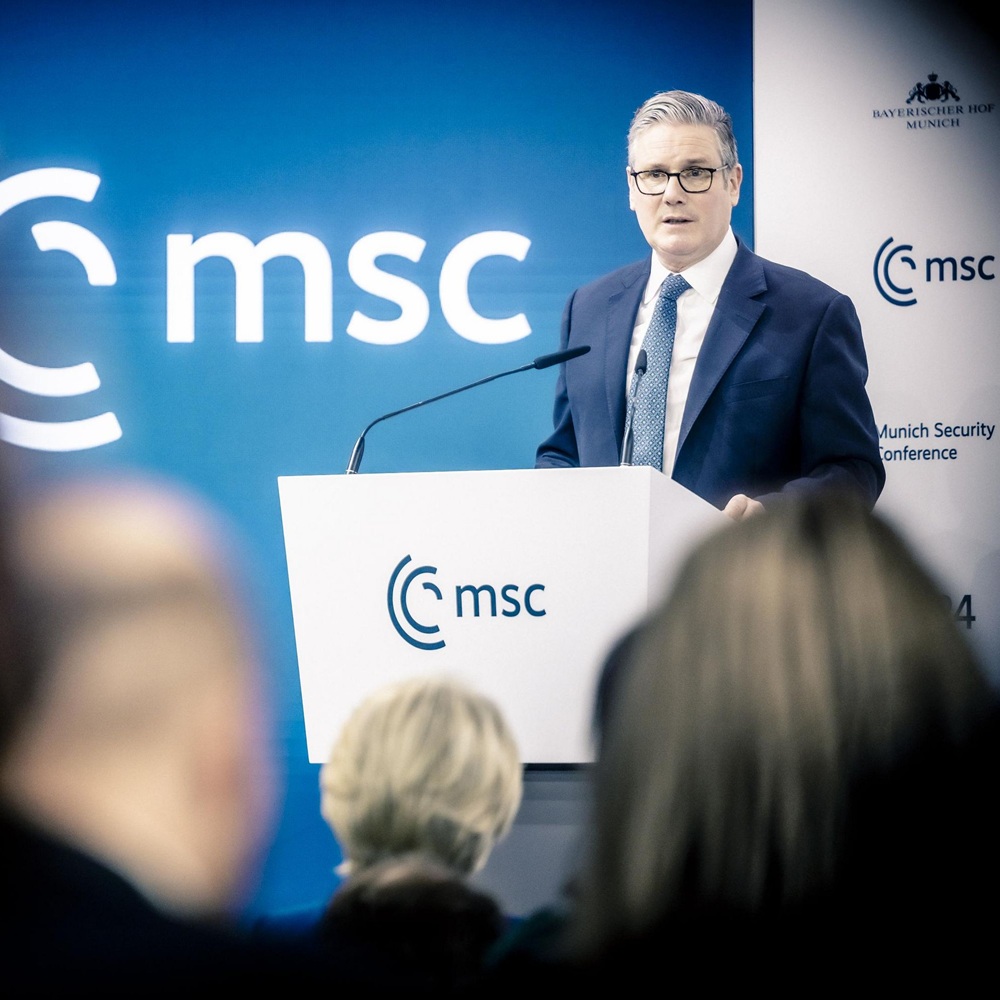
Keir Starmer (Prime Minister, United Kingdom of Great Britiain and Northern Ireland) about

Prime Minister Keir Starmer gave a speech during the Munich Security Conference

by Keir Starmer

Prime Minister Keir Starmer gave a speech during the Munich Security Conference For many years, for most people in the United Kingdom, war has been remote. Something that concerns us deeply, but which happens far off. But now we feel the solidity of peace, the very ground of peace now softening under our feet. It is the job of leaders to be ahead of these seismic shifts. Yet that is against the grain of history. Time and again, leaders have looked the other way, only re-arming when disaster is upon them. This time, it must be different. Because all of the warning signs are there. Russia has proved its appetite for aggression, bringing terrible suffering to the Ukrainian people. Its hyper-threats extend across our continent, not just threatening our security, but tearing at our social order. Collaborating with populists to undermine our values. Using disinformation to sow division. Using cyber-attacks and sabotage to disrupt our lives and deepening the cost-of-living crisis. It is true that Russia has made a huge strategic blunder in Ukraine, and the Russian casualties number well over a million. But even as the war goes on, Russia is re-arming, reconstituting their armed forces, an industrial base. NATO has warned that Russia could be ready to use military force against the Alliance by the end of this decade. In the event of a peace deal in Ukraine, which we are all working hard to achieve, Russia’s re-armament would only accelerate. The wider danger to Europe would not end there. It would increase. So, we must answer this threat in full. At the outset, it is important to be prepared. We do not seek conflict. Our objective is lasting peace, a return to strategic stability, and the rule of law. And in the face of these threats, there is only one viable option. Now, to break the convention of a house of speeches, we are not at a crossroads. The road ahead is straight and it is clear. We must build our hard power, because that is the currency of the age. We must be able to deter aggression. And yes, if necessary, we must be ready to fight. To do whatever it takes to protect our people, our values, and our way of life. And as Europe, we must stand on our own two feet. And that means being bold. It means putting away petty politics and short-term concerns. It means acting together to build a stronger Europe and a more European NATO, underpinned by deeper links between the UK and the EU, across defence, industry, tech, politics, and the wider economy. Because these are the foundations on which our security and prosperity will rest. This is how we will build a better future for our continent. True to the vibrant, free, diverse societies that we represent, showing that people who look different to each other can live peacefully together. But this isn’t against the tenor of our times. Rather, it’s what makes us strong, as we’re prepared to defend it with everything that we have. And we are not the Britain of the Brexit years anymore. Because we know that in a dangerous world, we would not take control by turning in. We would surrender. And I won’t let that happen. That’s why I devote time as Prime Minister to Britain’s leadership on the world stage. And that’s why I’m here today. Because I am clear, there is no British security without Europe, and no European security without Britain. That is the lesson of history and is today’s reality as well. So together we must rise to this moment. We must spend more, deliver more, and coordinate more. And crucially, we must do this with the United States. The US remains an indispensable power. Its contribution to European security over 80 years is unparalleled. And so is our gratitude. At the same time, we recognise that things are changing. The US National Security Strategy spells out that Europe must take primary responsibility for its own defence. That is the new law. Now, there have been a series of thoughtful interventions about what this means, including the argument that we’re at a moment of rupture. Now, I would agree that the world has changed fundamentally, and that we must find new ways to uphold our values and the rule of law. But in responding to that, we must not disregard everything that has sustained us for the last 80 years. That could be a moment of destruction. And instead, I believe, we must make this as a moment of creation. Instead of a moment of rupture, we must make it one of radical renewal. So, rather than pretending that we can simply replace all US capabilities, we should focus on diversifying and decreasing some dependencies. We should deliver generational investment that moves us from over-dependence to interdependence. I’m talking about a vision of European security and greater European autonomy. It does not herald US withdrawal, but answers the call for more burden-sharing in Europe and remake the ties that have served us so well. Because we know the value of our own power. The nature of our power is at the core of human decision. It achieved something that leaders have been trying to do for centuries. From Westphalia to the Congress of Vienna to Versailles. After centuries of conflict, the founders of NATO finally united our continents in peace and security. Our militaries, that once faced each other on the battlefield, now stand side-by-side, pledged to each other’s defence. It is a shield over our heads every single day. And whilst some on the extremes of our politics chip away at this alliance, we defend it. I am proud that my party fought for NATO’s creation. While our then Foreign Secretary Ernest Bevin called it a spiritual union of the West. And we’ve shown our fidelity to that idea, asserting each other’s sovereignty, as we did on Greenland. And crucially, coming to each other’s aid under Article 5. We fought together in Afghanistan, at terrible cost to many in my country and across many allied countries. And so, I say to all NATO members, our commitment to Article 5 is as profound now as ever. And be in no doubt, if called on, the UK would come to your aid today. Instead, we must move forward together to create a more European NATO. As I see it, Europe is a sleeping giant. Our economies dwarf Russia more than ten times over. We have huge defence capabilities, yet too often this adds up to less than the sum of its parts. Fragmented industrial planning and procurement have led to gaps in some areas, and massive duplication in others. Europe has over 20 types of frigate, and 10 types of fighter jet. We have over 10 types of main battle tanks, whilst the US has one. It’s wildly inefficient, and it harms our collective security. The US security umbrella has allowed these bad habits to develop. But now we must break them. And we have shown that we can coordinate in great effect, as was just set out. Supporting Ukraine in a way that Putin never really imagined. Creating the Coalition of the Willing, which now covers almost all of Europe, as well as Canada and our friends in the Asia-Pacific. And going further in our support, with the UK announcing over £500 million this week for more air defence for the Ukrainian people. To meet the wider threat, it is clear that we are going to have to spend more faster. And we have shown our collective intent in this regard as well. With the historic agreement to increase spending to 5% on security and defence. And we are prepared to explore innovative solutions. So, we are stepping up work with like-minded allies on options for a collective approach to defence financing, to help accelerate this vital investment. And as we increase spending, we must use it to its full potential. We must come together to integrate our capabilities on spending and procurement and build a joint European defence industry. I welcome the steps that we have taken so far, which could allow us to participate in the £90 billion Euro loan to Ukraine. I hope we can work together like this going forward. Because, look, the logic of defence is solidarity and collective effort, not market access. In a crisis, our citizens expect us to be ready. So, we need to deliver a step change in collaboration. And I am proud of the work we are already doing together. Delivering cutting-edge drones with Ukraine. Developing next-generation long-range missiles with Germany, Italy and France. Working with our JEF allies to protect our northern flank. Doubling our deployment of British commandos in the Arctic. Taking control of NATO’s Atlantic and Northern Command in Norfolk, Virginia. And transforming our Royal Navy by striking the biggest warship deal in British history with Norway. We are building a fleet of warships to hunt Russian submarines and protect undersea infrastructure. We want to replicate this level of collaboration with other allies across the High North and the Baltics. And I can announce today that the UK will deploy our Carrier Strike Group to the North Atlantic and the High North this year led by HMS Prince of Wales, operating alongside the US, Canada and other NATO allies in a powerful show of our commitment to Euro-Atlantic security. That is also why we are enhancing our nuclear cooperation with France. For decades the UK has been the only nuclear power in Europe to commit its deterrent to protect all NATO members. But now any adversary must know that in a crisis they could be confronted by our combined strength. It shows beyond doubt how vital it is that we work together. So, we must also look at what more we can do with the EU. We must go beyond the historic steps that we took at last year’s UK-EU summit to build the formidable productive power and innovative strength that we need. British companies already account for over a quarter of the continent’s defence industrial base. They are a job-creating, community-building machine employing around 239,000 people across the UK, including in Wales, where this month we’re launching the first of five regional defence-grade deals. We want to bring our leadership in defence, tech and AI together with Europe to multiply our strengths and build a shared industrial base across our continent which could turbocharge our defence production. That requires leadership. To drive greater coherence and coordination across Europe. That is what we’re doing with Germany and France in the E3, working closely with EU partners, particularly Italy and Poland as well as with Norway, Canada and Turkey. So, my message today is the United Kingdom is ready. We see the imperative. We see the urgency. We want to work together to lead a generational shift in defence industrial cooperation. Now this includes looking again at closer economic alignment. We are already aligned with the single market in some areas to drive down the prices of food and energy. We are trusted partners. And as the Chancellor of the Exchequer said this week, deeper economic integration is in all of our interests. So, we must look at where we can move closer to the single market in other sectors as well where that would work for both sides. The prize here is greater security. Stronger growth for the United Kingdom and the EU, which will fuel increased defence spending and the chance to place the UK at the centre of a wave of European industrial renewal. I understand the politics very well. It will mean trade-offs. But the status quo is not fit for purpose. And to me there is no question where the national interest lies. I will always fight for what’s best for my country. I started today talking about avoiding mistakes of the past like delaying action or fragmenting our efforts. But there is something else. In the 1930s, leaders were too slow to level with the public about the fundamental shift in mindset that was required. So, we must work harder today to build consent for the decisions we must take to keep us safe. Because if we don’t, the peddlers of easy answers are ready on the extremes of left and right and they will offer their solutions instead. It’s striking that the different ends of the spectrum share so much. Soft on Russia. Weak on NATO. If not outright opposed. And determined to sacrifice the relationship we need on the altar of their ideology. The future they offer is one of division and then capitulation. The lamps would go out across Europe once again. But we will not let that happen. If we believe in our values, in democracy, liberty and the rule of law. This is the moment to stand up and to fight for them. That is why we must work together. And show that by taking responsibility for our own security, we will help our people look forward. Not with fear, but with determination. And with hope. Thank you very much. Contenido bajo licencia Open Governement Licence v3.0 [https://www.nationalarchives.gov.uk/doc/open-government-licence/version/3/] UK Prime Minister’s Office. GOV.UK. Web.
Energy & Economics
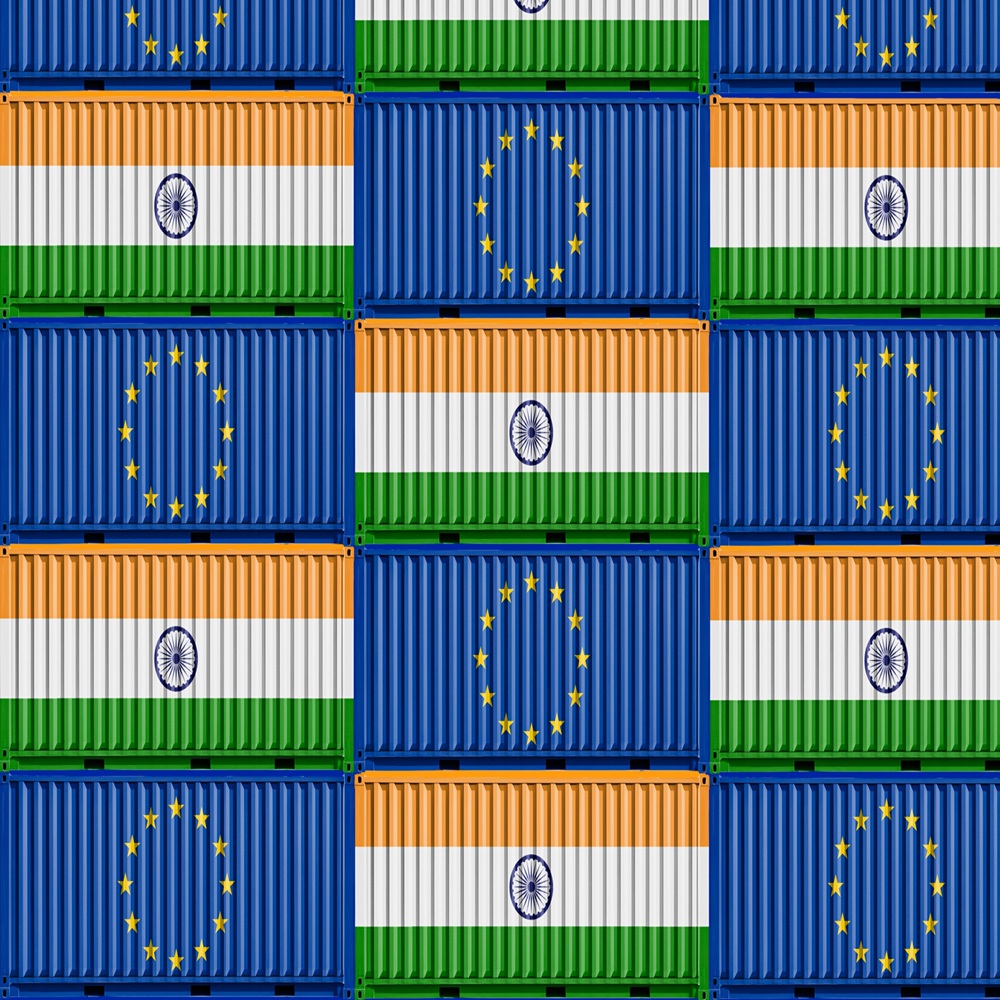
Cargo container with Eu and India flag. Concept of business and trade between Eu and India

Press statement by President António Costa following the EU-India summit

by António Costa

Thank you dear Prime Minister Modi, for welcoming us on this special occasion. We were privileged yesterday to be your Chief Guests for the Republic Day celebrations, such an impressive display of India’s capabilities and diversity. Today is a historic moment. We are opening a new chapter in our relations – on trade, on security, on people to people ties. I am the President of the European Council, but I am also an overseas Indian citizen. Then, as you can imagine, for me, it has a special meaning. I am very proud of my roots in Goa, where my father’s family came from. The connection between Europe and India is something personal to me. Also, because we conclude today our trade negotiations, we relaunched at the Leaders’ meeting that I had the pleasure to host, in May 2021, in my previous capacity. Our summit sends a clear message to the world: at a time when the global order is being fundamentally reshaped, the European Union and India stand together as strategic and reliable partners. Today, we are taking our partnership to the next level. As the two largest democracies in the world, we are working hand in hand: • to deliver concrete benefits for our citizens; and • to shape a resilient global order that underpins peace and stability, economic growth, and sustainable development. I would like to share three messages. First: the European Union and India must work together towards our shared prosperity and security. India is the world's fastest-growing major economy. Trade has flowed between our two continents for centuries. Trade is a crucial geopolitical stabilizer. And a fundamental source of economic growth. Trade agreements reinforce rules-based economic order and promote shared prosperity. That’s why today’s Free Trade Agreement is of historic importance. One of the most ambitious agreements ever concluded. Creating a market of two billion people. In a multipolar world, the European Union and India are working together to grow spheres of shared prosperity. But prosperity does not exist without security: • strengthening our cooperation to better protect our citizens and our shared interests; • working together to counter the full range of security threats we face, in the Indo-Pacific, in Europe and around the world; • reaching a new level of strategic trust between us. That is the significance of our agreement on a Security and Defence Partnership. The first such overarching defence and security framework between India and the European Union. And the first step towards even more ambitious cooperation in the future. This brings me to my second message: as the world's largest democracies and champions of multilateralism, the European Union and India share the responsibility of upholding international law, with the United Nations Charter at its core. Earlier this morning, we had the opportunity to pay tribute to Mahatma Gandhi. And I reflected upon his words which still hold true today: “Peace will not come out of a clash of arms but out of justice lived and done by unarmed nations in the face of odds.” Our summit reaffirmed our commitment to supporting efforts towards a comprehensive, just and lasting peace in Ukraine. One that fully respects Ukraine’s independence, sovereignty and territorial integrity. This is a key moment. We are supporting all efforts to reach a just and sustainable peace. Ukraine has shown its readiness, including at the cost of difficult compromises. I know, dear Prime Minister, that we can count on you to help create the conditions for peace, through dialogue and diplomacy. And this is my final message: together we must show leadership on global issues. Cooperation between the European Union and India will help shape a more balanced, resilient, and inclusive global order. Just two examples: I am proud of the commitments we are making for greater cooperation on clean energy, green transition, and climate resilience. And our collaboration through the Global Gateway and on the India–Middle East–Europe Economic Corridor is decisive for global connectivity. By implementing the ambitious Joint Comprehensive Strategic Agenda towards 2030, we will align our priorities with concrete actions for the next five years: delivering real benefits to our citizens. Today, we have tangible progress and set an example of cooperative leadership on global issues. With: • our Free Trade Agreement; • our Security and Defence Partnership; and • our Joint Strategic Agenda for 2030. These outcomes are a crucial milestone on a longer path. We look forward to continuing the journey. Together, as always. Thank you very much. Press statement by President António Costa following the EU–India Summit, 27 January 2026. © European Union / Council of the EU. Reproduced with permission; original meaning preserved.

Defense & Security
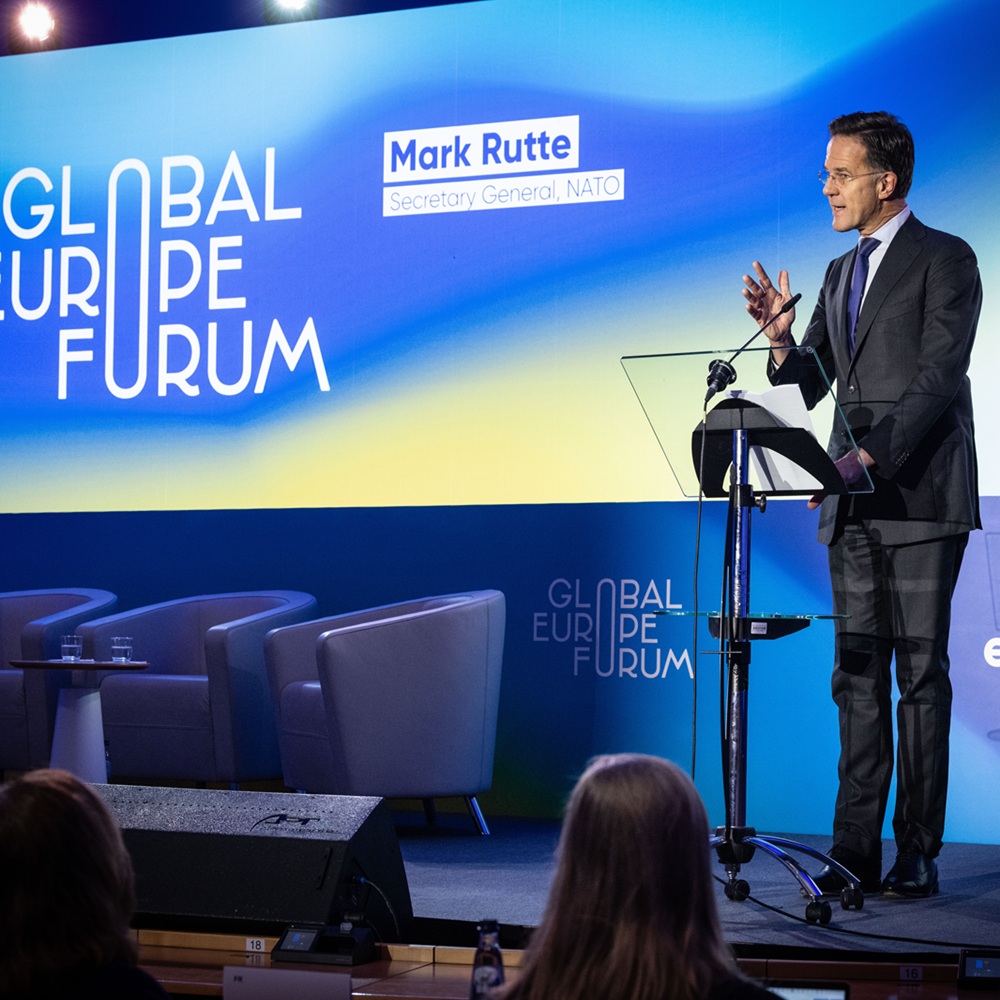
NATO Secretary General Mark Rutte addresses the Renew Europe Global Europe Forum 2026 at the European Parliament

Keynote address by NATO Secretary General Mark Rutte at the Renew Europe Global Europe Forum 2026

by Mark Rutte

Great to be here and to see so many people I know so well. And of course, Teri, who will lead us later in the debate. And of course, you, Madam President, dear Valérie, thank you for your very warm welcome. And let me start by saying that it is always a pleasure to be on this side of town, to be at the European Parliament. This is my first public speaking engagement this year, and it is very meaningful to have this conversation with you – with the members of parliament. At the NATO Summit in The Hague last summer, we decided to make our deterrence and defence a priority. We agreed a plan, as you know, to invest 5% of GDP annually in defence by 2035 – with 3.5% on core defence, and 1.5% on defence- and security-related issues. Yes, that is a lot of money, but it is what is required to build our armed forces and buy the capabilities those forces need to protect us. And here we are talking about battle tanks, fighter jets, ships, long range missiles, and ammunition, but also artificial intelligence, cyber-defence, space capabilities, and of course, much more. In The Hague, we also agreed to speed up defence production and innovation. And this is of course about re-energising our industries across Europe and North America so that they step up supply. There are certainly business opportunities for our industries. But it’s more than that: there are real benefits for all of us. Because when supply goes up, the result is more security, more economic growth, and also many more jobs – the defence dividend. The defence dividend is real. I know – and you all know – that getting to this famous 5% and accelerating production requires hard work and tough decisions from all of us – all our nations and all your constituents. But we need to do it. And we need to do it basically for two reasons. One, because the security situation demands it. We need to be honest: the dangers we face are real, and the dangers we face are lasting. Russia remains our most significant threat. Putin’s war machine is churning out military equipment around the clock. And Moscow is testing us through cyber-attacks, sabotage and more. And there is no reason to believe Russia’s pattern of aggressive and reckless actions will change any time soon. On the contrary, Russia is seeking long-term confrontation. And it is not alone. Russia is working with China, with Iran, and North Korea. And these countries fuel Moscow’s war against Ukraine. And together, they are attempting to undermine our stability and security. At the same time, the threat from terrorism persists, and instability remains rampant in NATO’s southern neighbourhood. The second reason why we need to deliver on the 5% is that the time when we conveniently let the United States carry the burden for our security is over. The US is absolutely committed to NATO. But this commitment comes with a clear and long-standing expectation: that Europe and Canada take more responsibility for their own security. And I believe that is only fair. So 5% must be the direction of travel. There’s basically no time to waste. Ensuring Allies step up and speed up efforts on defence will remain my – and NATO’s – absolute priority as we prepare for the next Summit, which will take place in Ankara, in Türkiye, in July. Then Ukraine, which clearly is still a huge priority. Because, as we all know, our security is inextricably linked to Ukraine’s security. Just last week, I was at the Coalition of the Willing meeting in Paris, where leaders discussed how we can support and secure the future for Ukraine. It was a constructive meeting, where we had concrete discussions on robust security guarantees for Ukraine, and where Europe and the US affirmed their readiness to provide such guarantees to secure Ukraine after a peace deal with Russia. Meanwhile, NATO continues to support Ukraine every day, and we do that in various ways, including through the PURL initiative, which supplies vital US equipment, including air defence – which is particularly vital these days – for Ukraine to protect its people and hold the front line, paid for by Allies. Regardless of when this war ends, our support to Ukraine will continue to be important to ensure a lasting peace. After all, the Ukrainian Armed Forces will remain the first line of defence. Supporting Ukraine and keeping our own people safe is not a job that NATO does alone. It is a team effort. And the European Union is an essential player. The partnership between NATO and the EU is growing stronger every day. And that is exactly what we need. Because, when we combine our strength, of NATO and the EU, we can more effectively tackle the many challenges we face. And as you know, 23 nations, members of the EU, are also Allies in NATO. And working together, we keep Ukraine strong today and able to defend itself against any aggression in the future. And working together, we can produce more defence capabilities, and we can produce them faster. We can innovate better and outsmart our competitors. Now is not the time to go alone. And it’s not the time to create barriers between us that would increase costs, complicate production, and hamper innovation. Instead, we need to leverage our respective strengths even more. NATO is strong at standard setting and capability targets that are informed by our defence plans. NATO has a strong command and control force structure. And the European Union has all the tools of the internal market at its disposal, and of course the convening power to bring together the Member States in the EU, so to make sure that the money is there to invest in defence. So, we complement each other. And yes, it is undeniable that Russia, China, North Korea, and Iran are aligning more and more. And they’re challenging us. But they are only starting to understand what partnership really means. We are miles ahead. We can build on decades of friendship between our organisations and between our nations on both sides of the Atlantic. And we can build on growing partnerships with countries around the world. And that is an incredible advantage. Let’s ensure we retain it. I’ll certainly play my part. And I count on you – and I know I can – to play yours. So, thank you very much, and I look forward to our discussions.

Energy & Economics
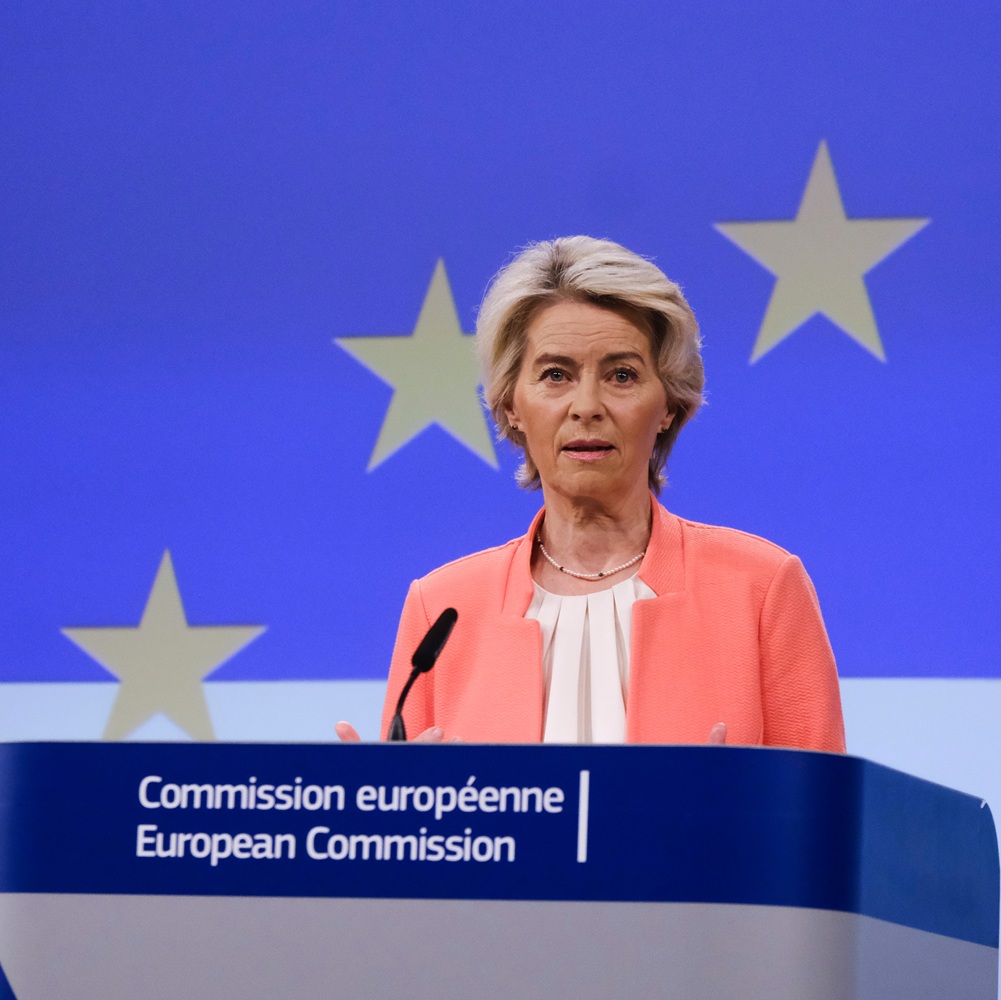
Press Conference by European Commission President Ursula von der LEYEN and Mario DRAGHI on the Report on the Future of EU Competitiveness in Brussels, Belgium on September 9, 2024.

Press statement by President von der Leyen on the occasion of the Mercosur leaders' meeting

by Ursula von der Leyen

Leer en español In Deutsch lesen Gap اقرأ بالعربية Lire en français Читать на русском Ladies and Gentlemen, Today marks a truly historic milestone. Let me begin by thanking the Chief Negotiators for their dedication and determination. They worked tirelessly, over many years, for an ambitious and balanced agreement – and they succeeded. The bond between Europe and the Mercosur countries is truly one of the strongest in the world. It is a bond anchored in trust, enriched by a shared heritage, that spans centuries of mutual learning and growth. In fact, exactly 30 years ago, in 1994, my predecessor Jacques Delors stood here in Montevideo. He met with your father, dear Luis, who was then President of Uruguay. Together they shared a bold vision. A vision of deeper integration, not only within Europe and Mercosur, but also between them. Today, in Montevideo, we are turning that vision into reality. We are strengthening this unique partnership as never before. And in doing so, we are sending a clear and powerful message to the world. First, in an increasingly confrontational world, we demonstrate that democracies can rely on each other. This agreement is not just an economic opportunity, it is a political necessity. We are like-minded partners. We both believe that openness and cooperation are the true engines of progress and prosperity. I know that strong winds are blowing in the opposite direction – towards isolation and fragmentation. But this agreement is our clear response. We stand together on the global stage, as partners. Second, we are sending a message to our people and businesses in our regions: This agreement was designed with your interests at heart. It is made to work for you. It means: more jobs – and good jobs – more choices and better prices. The European Union and Mercosur create one of the largest trade and investment partnerships the world has ever seen. We are taking barriers down and we are allowing investments in. We are forming a market of over 700 million consumers. This partnership will strengthen entire value chains; it will develop strategic industries; it will support innovation; and it will create jobs and values, on both sides of the Atlantic. Third, we are showing the world that trade can – and must – be guided by values. Trade agreements are more than economic frameworks. They are a way to build communities of shared values. The EU-Mercosur agreement reflects our steadfast commitment to the Paris Agreement and to the fight against deforestation. President Lula's efforts to protect the Amazon are welcome and necessary. But preserving the Amazon is a shared responsibility of all humanity. This agreement ensures that investments respect Mercosur's extraordinary yet fragile natural heritage. My fourth message is that, economically, this is a win-win agreement. Europe is already a leading investment and trade partner for Mercosur. So you know how we do business together. We are focused on fairness and mutual respect. EU-Mercosur will bring meaningful benefits to consumers and businesses, on both sides. It will facilitate European investments in strategic industries across all Mercosur countries: like sustainable mining, renewable energy and sustainable forest products, just to name a few. It will also make it easier to invest in sectors that directly impact the people's daily lives. For example, expanding the electricity grid to rural and remote areas and advancing digitalisation across the region. Finally, let me address my fellow Europeans: This agreement is a win for Europe. 60,000 companies are exporting to Mercosur today – 30,000 of them are small and medium-sized enterprises. They benefit from reduced tariffs, simpler customs procedures and preferential access to some critical raw materials. This will create huge business opportunities. To our farmers: We have heard you, listened to your concerns and we are acting on them. This agreement includes robust safeguards to protect your livelihoods. EU-Mercosur is the biggest agreement ever, when it comes to the protection of EU food and drinks products. The agreement protects 350 EU geographical indications. In addition, our European health and food standards remain untouchable. This is the reality – the reality of an agreement that will save EU companies EUR 4 billion worth of export duties per year while expanding our markets and opening new opportunities for growth and jobs on both sides. I want to thank President Lacalle Pou for hosting this Summit and for bringing us together in Montevideo. This is a good day for Mercosur, a good day for Europe and a landmark moment for our shared future. A whole generation dedicated their effort, vision and determination to bring this agreement to life. Now, it is our turn to honour that legacy. Let us ensure that this agreement delivers on its promises and serves the generations to come. Thank you very much.

Defense & Security
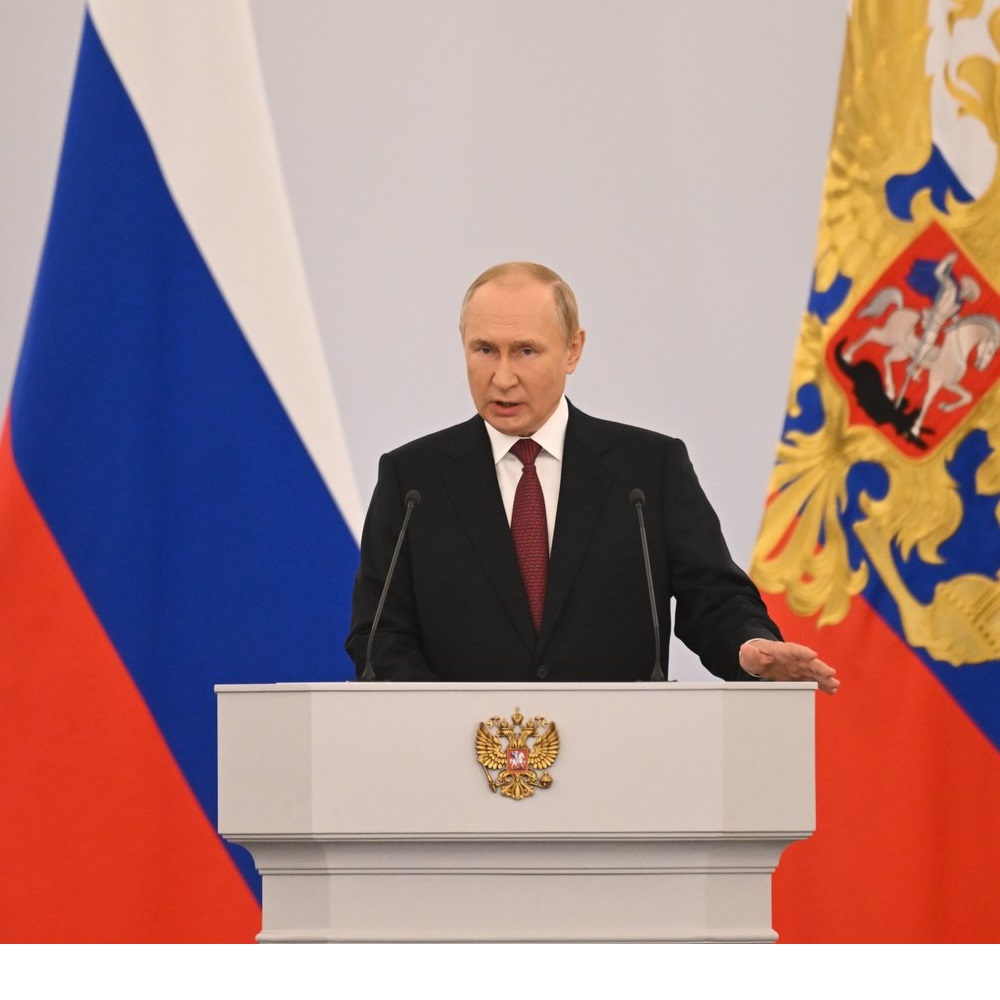
8 November 2022 Vladimir Putin during a speech at the ceremony of signing agreements on the annexation of the DPR, LPR, Zaporozhye, and Kherson regions to Russia. Attribution to: Council.gov.ru (http://council.gov.ru/events/news/138807/)

Statement by the President of the Russian Federation

by Vladimir Putin

한국어로 읽기 Leer en español In Deutsch lesen Gap اقرأ بالعربية Lire en français Читать на русском President of Russia Vladimir Putin: I would like to inform the military personnel of the Russian Federation Armed Forces, citizens of our country, our friends across the globe, and those who persist in the illusion that a strategic defeat can be inflicted upon Russia, about the events taking place today in the zone of the special military operation, specifically following the attacks by Western long-range weapons against our territory.The escalation of the conflict in Ukraine, instigated by the West, continues with the United States and its NATO allies previously announcing that they authorise the use of their long-range high-precision weapons for strikes inside the Russian Federation. Experts are well aware, and the Russian side has repeatedly highlighted it, that the use of such weapons is not possible without the direct involvement of military experts from the manufacturing nations.On November 19, six ATACMS tactical ballistic missiles produced by the United States, and on November 21, during a combined missile assault involving British Storm Shadow systems and HIMARS systems produced by the US, attacked military facilities inside the Russian Federation in the Bryansk and Kursk regions. From that point onward, as we have repeatedly emphasised in prior communications, the regional conflict in Ukraine provoked by the West has assumed elements of a global nature. Our air defence systems successfully counteracted these incursions, preventing the enemy from achieving their apparent objectives.The fire at the ammunition depot in the Bryansk Region, caused by the debris of ATACMS missiles, was extinguished without casualties or significant damage. In the Kursk Region, the attack targeted one of the command posts of our group North. Regrettably, the attack and the subsequent air defence battle resulted in casualties, both fatalities and injuries, among the perimeter security units and servicing staff. However, the command and operational staff of the control centre suffered no casualties and continues to manage effectively the operations of our forces to eliminate and push enemy units out of the Kursk Region.I wish to underscore once again that the use by the enemy of such weapons cannot affect the course of combat operations in the special military operation zone. Our forces are making successful advances along the entire line of contact, and all objectives we have set will be accomplished.In response to the deployment of American and British long-range weapons, on November 21, the Russian Armed Forces delivered a combined strike on a facility within Ukraine’s defence industrial complex. In field conditions, we also carried out tests of one of Russia’s latest medium-range missile systems – in this case, carrying a non-nuclear hypersonic ballistic missile that our engineers named Oreshnik. The tests were successful, achieving the intended objective of the launch. In the city of Dnepropetrovsk, Ukraine, one of the largest and most famous industrial complexes from the Soviet Union era, which continues to produce missiles and other armaments, was hit.We are developing intermediate-range and shorter-range missiles in response to US plans to produce and deploy intermediate-range and shorter-range missiles in Europe and the Asia-Pacific region. We believe that the United States made a mistake by unilaterally destroying the INF Treaty in 2019 under a far-fetched pretext. Today, the United States is not only producing such equipment, but, as we can see, it has worked out ways to deploy its advanced missile systems to different regions of the world, including Europe, during training exercises for its troops. Moreover, in the course of these exercises, they are conducting training for using them.As a reminder, Russia has voluntarily and unilaterally committed not to deploy intermediate-range and shorter-range missiles until US weapons of this kind appear in any region of the world.To reiterate, we are conducting combat tests of the Oreshnik missile system in response to NATO’s aggressive actions against Russia. Our decision on further deployment of intermediate-range and shorter-range missiles will depend on the actions of the United States and its satellites.We will determine the targets during further tests of our advanced missile systems based on the threats to the security of the Russian Federation. We consider ourselves entitled to use our weapons against military facilities of those countries that allow to use their weapons against our facilities, and in case of an escalation of aggressive actions, we will respond decisively and in mirror-like manner. I recommend that the ruling elites of the countries that are hatching plans to use their military contingents against Russia seriously consider this.It goes without saying that when choosing, if necessary and as a retaliatory measure, targets to be hit by systems such as Oreshnik on Ukrainian territory, we will in advance suggest that civilians and citizens of friendly countries residing in those areas leave danger zones. We will do so for humanitarian reasons, openly and publicly, without fear of counter-moves coming from the enemy, who will also be receiving this information.Why without fear? Because there are no means of countering such weapons today. Missiles attack targets at a speed of Mach 10, which is 2.5 to 3 kilometres per second. Air defence systems currently available in the world and missile defence systems being created by the Americans in Europe cannot intercept such missiles. It is impossible.I would like to emphasise once again that it was not Russia, but the United States that destroyed the international security system and, by continuing to fight, cling to its hegemony, they are pushing the whole world into a global conflict.We have always preferred and are ready now to resolve all disputes by peaceful means. But we are also ready for any turn of events.If anyone still doubts this, make no mistake: there will always be a response.

Diplomacy
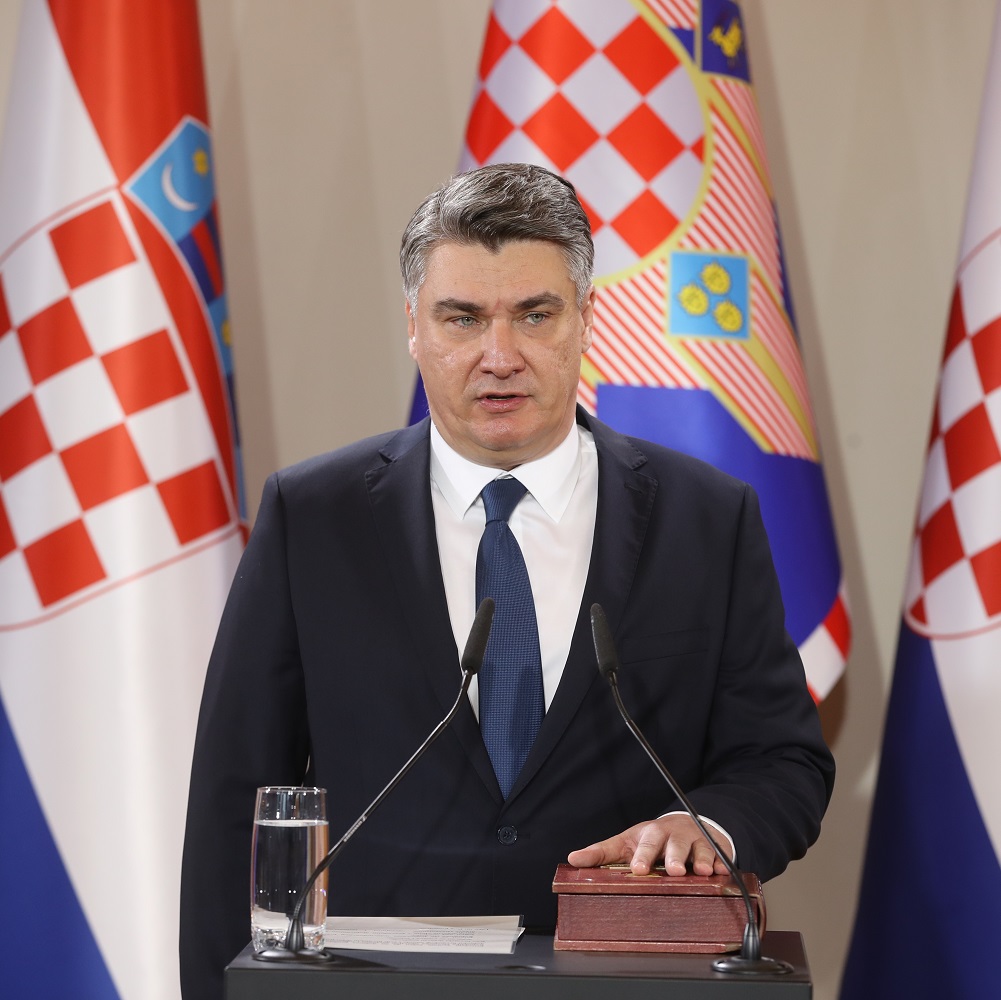
President of Croatia Zoran Milanović giving speech

Address by the President of the Republic Zoran Milanović at the 78th Session of the United Nations General Assembly

by Zoran Milanović

Mr. Vice President, Excellences, Ladies and Gentlemen, It is my particular honour to address this august body. I would like to use this opportunity to congratulate you on being elected to your esteemed position and I wish you much success in your work during these challenging times. The world we live in today requires joint, global and concerted efforts as a key to success in addressing serious global crises. We strongly believe that we have to strengthen the multilateral system based on international law, and make sure it is effective and fair, able to endure and deliver results that will serve to achieve our common goals, commitments and a better future for the people and planet. We need to safeguard the role of the United Nations as the centre of global cooperation. We are also hopeful that genuine efforts will be invested in the reform of the Security Council, our main instrument for securing global peace and security. In 2015, we adopted the 2030 Agenda for Sustainable Development also on the basis of the consensus that to transform our world we need to realize that „sustainable development cannot be realized without peace and security; and the peace and security will be at risk without sustainable development.“ In 2023, at the mid-point in the implementation of the 2030 Agenda, the assessments of the Global Sustainable Development Progress Report show that the efforts to achieve that synergy so far have proved insufficient. Time to reinvigorate our political commitments to the full and efficient implementation of the 2030 Agenda and its Sustainable Development Goals is irreversibly running out. In the meantime, the necessary boost came with the UN Secretary-General`s vision offered in “Our Common Agenda” as an overarching roadmap in fighting the multiple crises. The Preparatory process for the next year’s Summit of the Future, along with its outcome the Pact for the Future, represents a unique opportunity to strengthen national and international governance and to make it more sustainable and resilient to future crises and shocks, safeguarding the planet for future generations. The international financial system is increasingly unable to adequately and efficiently respond to the challenges at hand. More needs to be done to update and upgrade the global financial infrastructure so it becomes more adapted to the needs of the world. Most notably, we need to scale up development and climate finance. In this sense, we support the efforts by the international financial institutions to review their structures and operating processes, with a view to reform in order to meet the challenges of the 21st century. Peace is not maintained by itself. Investment in conflict prevention is far more cost effective than investing in conflict resolution and recovery after the fact, post factum. This is why prevention of conflict and sustaining peace should be at the centre of the framework of the New Agenda for Peace, intertwined with a renewed commitment to multilateralism, global solidarity and trust. Croatia, as Chair of the UN Peacebuilding Commission (PBC) for 2023, strongly advocates its strengthening and enlarging of both its geographical and thematic scope. We support the Secretary General’s call for the universality of conflict prevention and sustaining peace, and the development of national conflict prevention strategies. The PBC could review these strategies, helping to mobilize resources for their implementation when needed. The PBC should also work more closely with international financial institutions and regional actors, forming the Sustainable Peace Network. In addition to its advisory powers, the PBC could also be vested with decision-making powers, enabling it to establish UN civilian missions upon the request of countries concerned, helping to address the root causes of instability. In this regard, the 2030 Agenda for Sustainable Development and its Sustainable Development Goals can be an excellent prevention tool by bringing prosperity and inclusion while leaving a safer place for future generations. According to the Sustainable Development Report 2023, Croatia’s performance in implementing the Sustainable Development Goals was assessed among top ranks. However, a lot of work is still in front of us. Croatia has a large natural heritage that it wants to preserve for future generations through the implementation of the SDGs. While accepting the clean energy transition, Croatia is taking a number of measures to alleviate the transition shock in the rejection of fossil fuels, and to ensure a fair transition and prevent energy poverty. With regard to biodiversity, Croatia is committed to work jointly for the development and full implementation of an ambitious and transformational Kunming-Montreal global biodiversity framework. Furthermore, we firmly believe that protecting, restoring and sustainably using biodiversity is essential for pandemic prevention and promotion of the “One Health Approach” which needs to be included in future prevention plans. We are also committed to working together to intensify cooperation in protecting the marine environment and combatting plastic pollution. If we want healthy oceans and seas, our ambition needs to be high and ocean protection stepped up significantly. Croatia welcomes the landmark adoption of the “Treaty of the High Seas” on ocean biodiversity (BBNJ). The successful negotiation of the BBNJ Agreement is the most recent proof of devoted multilateral work and presents not only a milestone in conserving marine biodiversity of nearly two-thirds of the world’s oceans, but also a triumph for multilateralism. Today, Croatia proudly joined the first tier of countries that have signed the Treaty, and commits to ratify it as soon as possible. We call on other countries to do so as well to enable its swift entering into force and to start its effective implementation. As a member State of the EU Croatia has already committed itself politically and legally to contribute in making Europe the first climate neutral continent by 2050. By further pursuing that course and by accelerating development of renewables and increasing green investments, we believe we can turn the current crisis into a new chance for our economies. Here I will mention as an example one such project that can boost new growth of the European economy based on decarbonisation and clean industry. It is the project “North Adriatic Hydrogen Valley,” which encompasses the Italian region of Friuli-Venezia Giulia, Slovenia and Croatia. By putting clean energy transition in the heart of the fight against climate change on the global level, we should not forget that the most vulnerable communities, which have historically contributed the least to climate change, are often the ones most and the worst affected – both by the climate conditions and by the costs of the green energy transition as a remedy. The establishment of a Loss and Damage Fund to help vulnerable countries cope with the destructive impacts of climate change at COP27 marked a historic breakthrough in this respect. How we go about this issue at the Climate Ambition Summit and COP28 will be a true test of trust and solidarity among nations and will impact current and future generations. Creating a world of peace and security that respects human rights and promotes social progress is the very foundation of the United Nations. The amount of human rights violations and humanitarian crises around the world demonstrates that more must be done in terms of atrocity prevention and the operationalization of the responsibility to protect. Croatia is honoured to contribute to this cause by serving as co-chair of the Group of Friends of R2P in New York along with Costa Rica and Botswana. The Croatian Government remains committed to determining the fate of 1806 persons that went missing during our Homeland War in the 90s. Based on such a tragic national experience, we continue to render our unwavering support to all efforts to provide answers to those still suffering the anguish of uncertainty, anywhere in the world. We remain committed to combating hate speech, advancing the rights of women and children, protecting minorities, and the abolition of the death penalty. Gender equality is a foundation of a peaceful, prosperous and sustainable world. In that vein, we highlight the importance of education and equal opportunities for girls and boys. We will continue advocating against discrimination and hate speech, including antisemitism. Croatia continues to attach utmost importance to its immediate neighbourhood in Southeast Europe. Issues of the past and war legacy, like resolving remaining cases of missing persons and engaging in meaningful cooperation in handling war crimes without discrimination and in line with international standards, access to archives, as well as other unresolved and highly sensitive issues must be fully tackled. We actively support the European perspective of our close neighbour Bosnia and Herzegovina and have warmly welcomed the recent EU decision on the granting to B-H the status of EU candidate country. We continue to advocate electoral reforms that would ensure legitimate representation of all constituent peoples, in particular Bosniaks, Croats and Serbs, at all levels of the Government, which is in our view essential for the future stability and prosperity of the country. We are very concerned about the latest developments in Kosovo–Serbia relations and would like to encourage measures for the de-escalation of tensions. Similarly, these two countries need to focus on the normalization of relations and deliver on their commitments and start implementing what was agreed on this year in Brussels and Ohrid. We continue to advocate universal recognition of the Republic of Kosovo and its right to existence as an equal member of the community of nations. It is in our interest to promote stability and further development of this region, as well as the process of European integration, which we believe remains crucial for the future prosperity of our neighbours, and which we are hopeful will be accelerated in the coming years. Thank you.

Defense & Security
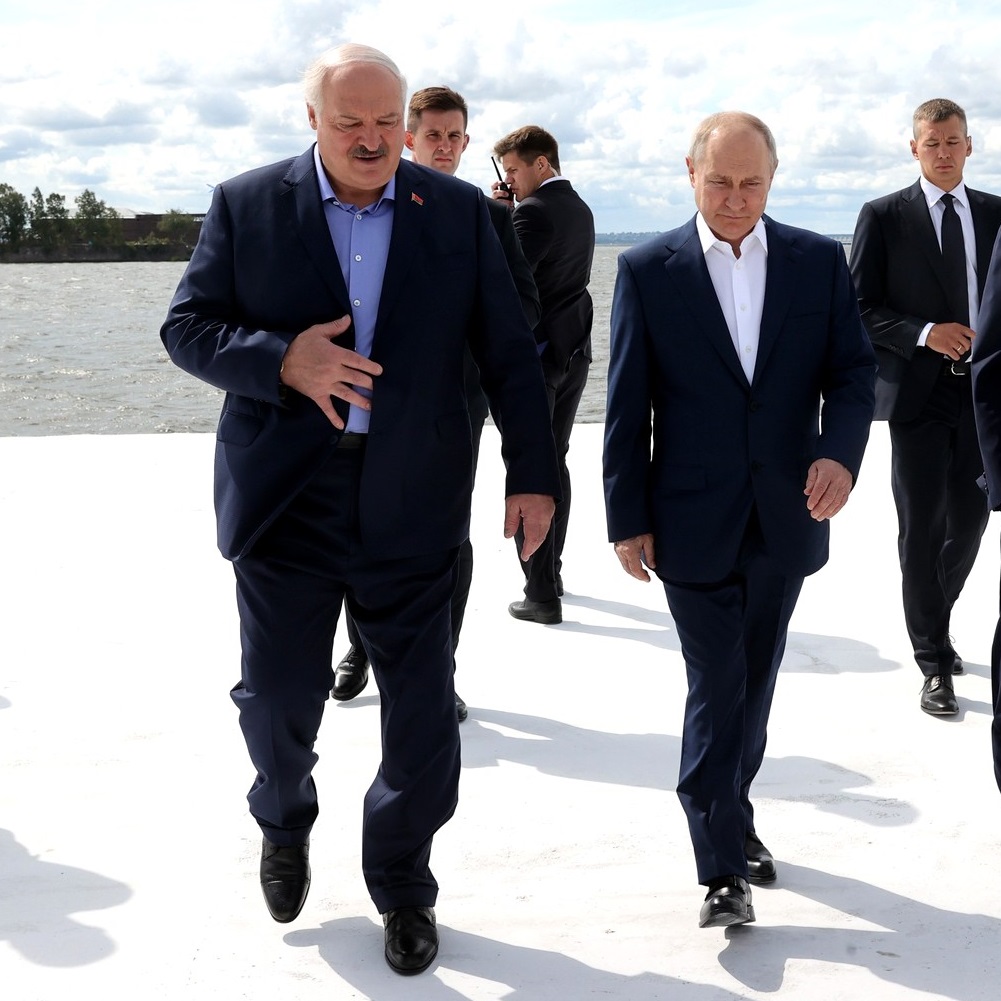
Belarus President Alexander Lukashenko, Russia's President Vladimir Putin

Vladimir Putin and Alexander Lukashenko answered media questions

by Vladimir Putin

Following the Russian-Belarusian talks, the two leaders answered questions from the media. Question: Mr Putin, a couple of questions? President of Russia Vladimir Putin: Please, go ahead. Question: Your comment and the one by the Vice-President of Laos [Pany Yathotou], which you made at the EEF plenary session, on the use of cluster munitions, is being widely discussed. The United States is now supplying such munitions to Ukraine. What is the latest information on the use of these weapons in the special military operation zone? Vladimir Putin: They are being used in the broadest possible way. But I have already commented on this, I have nothing to add. The only thing worth mentioning, perhaps, is that this situation, like a drop of water, reflects what is happening in the world as a whole. What I mean by that is that there is one country that thinks it is exceptional, and that country is the United States. That country even thinks it is allowed to do what it considers a crime – it is the United States that uses cluster munitions, using the Ukrainian army in this case. I mean the country considers this a crime, but does it nonetheless, and this is the main problem of today's international relations. This is the reason why the overwhelming majority of participants in international communication have joined us in fighting to create a multipolar world, since no one sees this situation as acceptable. I said almost because even those countries that appear to be allies of the United States, I can assure you, they do not like this situation either, where they are reduced to the role of extras. So yes, unfortunately, they are using them, they call it a crime and are still doing it. Question: If I may, one more question. A broad discussion arose – again at the Eastern Economic Forum – over the possibility of peace talks between Russia and Ukraine and [US Secretary of State Antony] Blinken’s statement that “it takes two to tango” about Russia and Ukraine. How do you assess the prospects for talks? Vladimir Putin: As for the Americans, they do not even know how to tango, they have a tendency to – for all the wonderful, amazing music, and beautiful movements – the United States is trying to approach everything from a position of force: through economic sanctions, or financial restrictions, or threats to use military force, and actually using it. They are lecturing others even though they have no idea how to do it and do not want to. Most likely, they just do not want to. This is the first point. Second, I already said that we have never refused to hold talks. So, please, if the other party wants them, they should say so directly. I am speaking about it but the other side keeps silent. Finally, tango is good, of course… I think Ukraine should not forget about its gopak dance. It is important, otherwise they will keep dancing to someone else’s tune. And by the way, everyone will have to perform the barynya dance or, in the best-case scenario, the kazachok. Alexander Lukashenko: They sort of started dancing and held three rounds of talks in Belarus, then in Istanbul, and then [US Secretary of State Antony] Blinken and [US Secretary of Defence Lloyd] Austin told Zelensky… Vladimir Putin: Gave a command, and that was it. Alexander Lukashenko: Gave a command and he prohibited them to hold talks. The facts are on the table, they are obvious. So, they should not blame anyone. Vladimir Putin: He signed a decree prohibiting talks. Alexander Lukashenko: Exactly, they forbade themselves. Question: The last question relates to Kim Jong-un’s visit. Many in the West believe that the visit will aggravate tensions in the region. They say that Russia all but asked North Korea to send volunteers to take part in the special military operation. What can you say on this matter? Vladimir Putin: I can say that this is complete nonsense. A couple of days ago, I said that 270,000 of our men, our warriors signed contracts with the Russian Armed Forces. But it was old information. This morning it was reported to me that there were 300,000 contracts signed by people who – I want to emphasise this – are ready to sacrifice their lives for the interests of our Motherland, to protect Russia’s interests. Yes, we pay them some money, which is much, much more than the average monthly salary in the country. But can money compensate for a death or a severe injury? Of course not. So first of all, our men who sign these contracts are guided by the most noble patriotic sentiments. It commands respect. This is the first thing. Second, about some kind of provocations, escalations, and creating a threat to anyone. We do not threaten anyone. The largest threats in the world today are created by today’s ruling elites. They themselves say this. Several years ago, a former [US] Defence Secretary Mr [Robert] Gates, I think, said the greatest threat to the United States came from the territory where the Capitol or the White House is located. They talk about it themselves, while looking for a threat outside. Therefore, I want to stress once again that this is complete nonsense: Korea is our neighbour, and we must build good neighbourly relations with our neighbours one way or another. Yes, there are certain specifics associated with the Korean Peninsula. We discuss this openly; we never violate anything; and in this case we are not going to violate anything. But, of course, we will look for opportunities to develop Russian-North Korean relations. Alexander Lukashenko: Mr Putin, the Westerners have to count first how many of their mercenaries they have sent there, and how many are fighting there. There are dark-skinned, Asian, and white Americans, all of whom are fighting on the side of the Ukrainians. Why blame Russia for inviting someone there? So maybe that is why they need to do it. Secondly, this is a dangerous statement on their part, because they dream about seeing their regular military units there, already lined up near the border in Poland. You have also talked about this. Military units have been formed and are ready to enter Ukraine. You need to look at yourself first and not reproach others. Vladimir Putin: I absolutely agree. By the way, we have detected foreign mercenaries and instructors both on the battlefield and in the units where training is carried out. I think yesterday or the day before yesterday someone was captured again. We do not need to invite people from outside for combat operations. Moreover, I want to emphasise this again, 300,000 people signed contracts and came as volunteers. And moreover: the units that are now being formed are equipped with advanced types of weapons and equipment, and some of them are already 85–90 percent equipped. <…>

Diplomacy
President of Latvia Edgars Rinkēvičs addressing at Europe Justice Ministers' Informal Conference

Address by the President of Latvia Edgars Rinkēvičs at Council of Europe Justice Ministers’ Informal Conference ‘On the Path to Justice for Ukraine’

by Edgars Rinkēvičs

Madam Minister,  Distinguished ministers, Madam Secretary General, President of the Parliamentary Assembly, Commissioner, Ladies and gentlemen, A very warm welcome to Riga! I am very pleased to open this conference, a signature event during Latvia’s Presidency in the Committee of Ministers of the Council of Europe. The conference is a direct continuation of the Reykjavik Summit that took place in May of this year. The focus of today’s conference is the existential issue Europe is facing now. Namely, justice for Ukraine in the wake of Russia’s aggression and full-scale military invasion. Before briefly addressing the central themes of the conference, I want to recall that the Council of Europe was the first international organisation to decide on the discontinuation of Russia’s membership. This principled position of our organization once again confirmed our commitment to democratic values and the international rule of law. It also affirmed that our organisation is ready to assume a leading role in actively defending these values. Today’s conference confirms that our commitment has not wavered. We seek justice for Ukraine. We stand with Ukraine as long as it takes. Ladies and gentlemen, During today’s conference, you will address themes that represent pillars on which justice is built – accountability, resilience, and hope. First, accountability. Russia has brutally violated international law. It must therefore face full accountability. By “full accountability” I mean both, responsibility of Russia as a state, and the individual liability of those Russian officials who launched the war of aggression against Ukraine. Those who committed war crimes and other most serious crimes of international concern. Russia must also bear full responsibility for the damage, loss, or injury caused to Ukraine and its people. I commend the Council of Europe for creating the Register of Damages. This is an important step towards a future international compensation mechanism. The Register of Damages will ensure proper registration and documentation of the devastation Russia has brought to Ukraine. I call on all countries that have not yet done so to join the Register and demonstrate our solidarity with and support to Ukraine. During our Presidency in the Council of Europe, Latvia is determined to advance the operational launch of the Register. I welcome the intention of the Ministers to adopt today a Declaration containing principles that will guide the functioning of the Register or Riga Principles. I particularly welcome the emphasis on victim-centred approach. We must make sure that victims, in particular the most vulnerable, such as women and children, remain the focus of our efforts. Second, resilience. The justice system of Ukraine is currently bearing a heavy burden. It continues to ensure justice and the rule of law, including through the investigation of crimes committed by Russia. By continuing to uphold fair trial standards, Ukraine clearly demonstrates its values and the strength of its democracy. I encourage member states of the Council of Europe to provide support to the Action Plan on Resilience, Recovery, and Rebuilding of Ukraine. Latvia has already provided its financial contribution. Finally, hope. We all have heard and seen heartbreaking reports about Ukrainian children being forcibly and illegally deported to Belarus and Russia. We must do our utmost to ensure the return of these children, to ensure that they are reunited with their families. We must restore hope. Ladies and gentlemen, In Reykjavik, we committed to strengthening the role of the Council of Europe. We also reiterated our common resolve to unite around our values and standards. I am confident that today’s conference will be an important contribution to our work for the benefit of all Europeans, including future generations. Thank you!

Diplomacy
Prime Minister of Slovenia Robert Golob

Speech delivered by Prime Minister of Slovenia Robert Golob at Bled Strategic Forum on the 28th of August

by Robert Golob

Dear Charles.  Distinguished guests, ladies and gentlemen. Welcome to the Bled Strategic Forum and welcome to Slovenia.  This month, on the 3rd of August, Slovenia was hit by the most devastating floods in the country’s history. Within just a matter of hours, 10,000 people lost their homes. Families lost everything.  We were able to secure relief from the EU. We received offers of aid from our neighbouring countries within the region. Even NATO responded. Everyone understood the severity of the disaster and sent their best engineering teams, along with heavy equipment, some of whom are still here helping our people rebuild their communities. I would also like to express my gratitude to all of you, all of those who have already helped, either physically or financially, and to others who will perhaps contribute in the coming hours. It is by showing solidarity, by working hand in hand with our friends, neighbours, and allies, that we truly make the world a better place. This is a message that we should not forget under any circumstances, not just when we are facing dire times, because you never know when the situation will become too difficult for you.  And as Peter Grk, Secretary General of the Bled Strategic Forum said, in Europe, sometimes or even most of the time, we live under the impression that extreme events do not happen here. They happen far away, far abroad. Well, not anymore. The extreme weather that we are currently facing is, of course, a localized phenomenon. But the conditions that caused this weather are indeed worldwide. Climate change is not something that any of us can escape. It is here. It is happening. We can see its impact growing every year, though its specific effects are unpredictable. The only predictable thing about climate change is that it is not going to get any better by itself. This is a message that we must never forget.  Still, we need to put in place mechanisms to adapt to the catastrophes like the one that hit Slovenia three weeks ago, because they will happen again. And we can only address such a demanding project at the international level. No nation, especially not individual small nations, can face it alone. Even the biggest nations cannot face it alone. This is one of the most important messages that we will bring to the table during our membership in the UN Security Council. We want to place the climate agenda at the top of our priorities. And one reason why I think we may be successful in this endeavour, not because of the catastrophe that we faced three weeks ago, is that, as a very small country with little international clout makes us a very honest broker. I can tell you right now that we are brave enough to undertake this rule. We want to be an honest broker. We want to be sincere, perhaps addressing issues that bigger nations are somehow neglecting due to their own national agendas.  The second of our primary goals is figuring out how to bring peace to Ukraine. It is practically impossible at this time, perhaps, but we will invest all of our knowledge, all of our time in this one particular goal, whether we are ultimately successful or not. No one can tell. But will we try? Yes, we will, because this is the single most important topic on the table of the United Nations. And that's the only place where this war can end: at the table of the United Nations. And we will do everything we can to bring it forth.  Finally, I'm really glad to have all of you here, my dear colleagues from the Western Balkans. I'm glad that you all made it here safely. Nobody is missing. Just this in itself is a huge success. But it doesn't stop here, because the message that I want to impart, and I'm pretty sure that Charles [Michel] will do so even more decisively, but the message that I want to share is that the momentum is changing due to Russia’s aggression on Ukraine. The stance of European Union Member States regarding the enlargement of European Union took on a totally new perspective. Things are changing rapidly. In the next 12 months I'm pretty sure that the enlargement process will not just gain attraction but an entirely new perspective. And I urge all of you not to be left behind. I urge all of you to continue pressing on with the reforms, but also to be aware of what's going on regarding the changes within the European Union itself. We all know that we will have to reform our processes within the European Union. And as I said, these reforms will either happen within the next 12 months or they may not happen for a very long time. This is an occasion that shall not be overlooked. Slovenia will remain a strong supporter of your membership. Slovenia will continue to do all those things that are necessary within the European Council and also in dialogue with the European Commission to make it possible for you to become members of our European family, to put you where you belong. That is the last message that I wanted to impart: you all belong with us.  And as I said, none of these challenges that I addressed are going to be easy to meet. None. We will have to work hard. It will cost a lot of money, especially for flood relief and the reconstruction. It will take a lot of time, but we need to find both the courage and the wisdom. And we will do so, in order to show that yes, we can, we can build a better world. A world based on solidarity.  Thank you.

Diplomacy
Nikolay Denkov Prime Minister of Bulgaria

Speech of Bulgarian Premier Minister Academician Nikolai Denkov

by Nikolai Denkov

Dear Mr. Prime Minister of the Hellenic Republic / Dear KyriakosDear Ministers, Dear Governor, Dear Mayor of ThessalonikiDear Mr. Dzikas, Dear Greek friends It is, indeed, a privilege to address you in the context of the Thessaloniki International Fair. I thank the organizers of the HELEXPO and I thank the Greek Prime Minister for his kind invitation. Let me start by saying that during the last days and weeks we have witnessed the worst possible consequences of the climate crisis. We have seen scenes of destruction that we could not imagine we would see in our lifetime. Some of these tragic events happened here in Greece - our closest neighbor and most friendly country, just a few kilometers from our common border. Allow me to express my deepest condolences for the victims of the recent floods in your country and our full solidarity with the friendly Greek people. Tonight I want to send a message loud and clear: Greece is not alone. You have many partners and friends and we will spare no effort to help you mitigate the consequences. Bulgaria and the whole Europea Union stands with you.  We also have victims from the floods in Bulgaria. Both countries face similar problems, such as floods and fires. Helping each other and working together is a must. As an example, this year we have twice deployed Bulgarian firefighting teams to help you overcome devastating fires. Climate change is a global challenge, which demands a common answer. We need to work more closely together to share information and technologies, to integrate our weather forecast systems and our early warning systems to better prevent disasters in the future. I can assure you we are ready for such a mutually beneficial cooperation. Ladies and Gentlemen,Bulgaria is the honoured country at this year’s Thessaloniki International Fair. This is great honour for us, but above all, this is an acknowledgement of the exemplary level, which the relations between Bulgaria and Greece have reached. This is also an acknowledgement of the important role, which my country plays in the region. The presence at such an important international forum provides a broad range of opportunities to enhance further our already excellent economic ties. Bulgaria is represented in several related sectors such as IT, hi-tech, energy, infrastructure, construction, education, tourism and the food industry. Bulgarian companies with a strong international presence participate, including EnduroSat, a significant player in the satellite industry and space technology, and Telerik Academy, providing accessible and innovative digital technology training. Among the participants is Sofia Techpark which provides a platform for global, regional and national companies to develop innovative technologies and to exchange know-how. The Bulgarian Investment Agency, which supports the creation of projects leading to new jobs, exports and transfer of know-how, is also here. The Bulgarian Academy of Sciences, whose experts conduct scientific research, training and activities of international importance, is present as well. Dear Prime Minister,This is the right occasion to acknowledge the fact that your leadership has transformed Greece into an attractive destination for international investments. Let me assure you that this is valid also for the investments from Bulgaria. At present, they are mainly focused in the energy, infrastructure and tourism sectors. I hope that in the near future we will witness Bulgarian investments in new fields, such us communications and information technologies. The IGB project for the gas interconnector between Greece and Bulgaria, in operation since October 2022, in which Bulgaria participates with a 50% stake, is a clear example of a strategic, long-term investment with a broad regional scope. The same applies to the project for a floating LNG terminal near Alexandroupolis in which Bulgaria participates with 20%. We are jointly working on a project for an oil pipeline connecting Alexandroupolis and Burgas where we have the biggest refinery in the Balkans. Bulgaria has a particular interest in the plans for the future development and management of the Greek ports of Kavala and Alexandroupolis. Bulgarian businesses are also showing strong interest in using these two commercial ports, especially in the context of the blocked trade routes in the Black Sea due to the Russian aggression against Ukraine.  All this implies the establishment of a much better, let me call it by its proper name, a modern connecting infrastructure between our two countries, relevant for two members of the European Union and bringing new opportunities for our economic cooperation in the next decades. These new realities are best embodied by the Sea2Sea initiative, which aims at connecting Bulgarian ports on the Black Sea and the Danube river with the Greek ports in the north Aegean Sea through a modern transport, energy and communication infrastructure. In practical terms, it would be an alternative route to the Bosphorus and the Dardanelles. Undoubtedly, Greece and Bulgaria have the potential to create together an energy and transport hub in Southeast Europe, the importance of which would be not only of regional, but of pan-European scale. Dear friends,I am scientist by profession. As such, I cannot offer a magic formula how to transform the Balkans into a prosperous and modern European region. But I strongly believe in three factors which might do the “miracle”: 1. The consolidating and transformational role of the European Union; 2. The regional connectivity 3. The good-neighborly relations.  Good-neighbourliness is an indispensable guiding principle for the regional transformation. What we have to ensure is that words turn into deeds by all countries in the region.  I am proud to say and I hope that my dear colleague Kyriakos Mitsotakis would agree with me that our two countries, Bulgaria and Greece, are leading by example. An example for the whole region.  The history of relations between Bulgarians and Greeks is very, very old. I can think of no other two nations in Europe who have a longer history of relations. We have been neighbours for centuries. We have shared a turbulent past, marked by ups and downs, wars and peace, opposing blocks and alliances. It is not a miracle that after more than a thousand years of controversies, today Bulgaria and Greece enjoy such exemplary good-neighbourly relations. The truth is that it has taken decades of joint efforts of wise Bulgarian and Greek politicians, incl. Konstantinos Karamanlis, who was born here in Northern Greece. It has taken a lot of good will and dedication from diplomats and ordinary people to overcome the shadows of the past and to build mutual respect, trust and confidence.  The Greek-Bulgarian relations have flourished because they have a solid ground –our common values and our strong belief in a democratic international system, based on the principles and norms of international law.   We are proud with our strategic partnership which plays a crucial role for the stability of the whole region of South-East Europe.  Our nations share common hopes and concerns.  We are allies and friends. We are good neighbours who respect and trust each other. Such relations have an enormous potential for the future generations of Greeks and Bulgarians and they deserve our dedication. Dear Greek friends, A thought by the famous Danish philosopher Søren Kierkegaard comes to my mind: You can understand life only looking backwards, but you can live your life only looking forward.    We cannot change history, but we can definitely shape our common future. Through leadership, strategic vision, more connectivity and mutually beneficial cooperation.  I believe we can do it together. Bulgaria and Greece.Hand in hand, leading by example. Thank you!