Subscribe to our weekly newsletters for free

Subscribe to an email

If you want to subscribe to World & New World Newsletter, please enter
your e-mail

Diplomacy
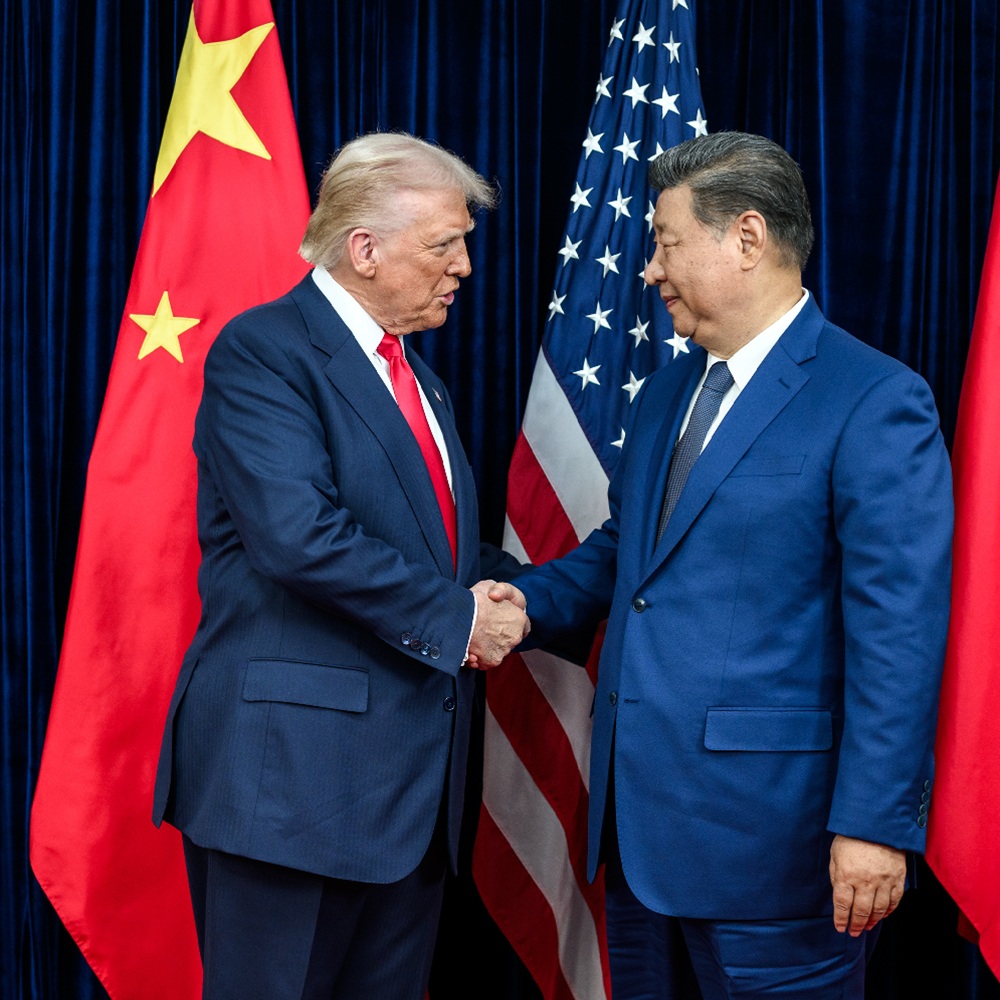
President Donald Trump greets Chinese President Xi Jinping before a bilateral meeting at the Gimhae International Airport terminal, Thursday, October 30, 2025, in Busan, South Korea. (Official White House Photo by Daniel Torok)

Between Tactical Easing and Strategic Confrontation: The Busan Moment in China-US Relations

by Bo Ma , Yiyi Xu

On 30 October 2025, Chinese President Xi Jinping and US President Donald Trump held their first in-person meeting since 2019 on the sidelines of the Asia-Pacific Economic Cooperation summit in Busan. The encounter marked a cautious “tentative reengagement” after six years of sustained friction, signalling neither a diplomatic thaw nor a substantive breakthrough, but a forced recalibration. Both sides recognised that prolonged confrontation was increasingly costly, yet neither was willing to display strategic vulnerability or compromise on core interests. The central challenge of this “six-year reunion” was how to balance unavoidable competition with limited cooperation. The Busan meeting did not resolve long-standing disputes, but it did illuminate the evolving structure of bilateral engagement: limited economic de-escalation coexisting with sustained tensions in security and technology. Trust remained thin, and risk management defined the tone. Within this framework of cautious interaction and enduring rivalry, both sides resumed dialogue while leaving key structural contradictions unresolved. Tactical Easing: A “Mutual Ceasefire” over Rare Earths and Tariffs Building on preliminary understandings reached during earlier Kuala Lumpur discussions, the Busan meeting yielded limited but concrete outcomes. Washington agreed to suspend part of its planned tariff increases and delay the expansion of export restrictions. Beijing, in turn, postponed implementation of newly announced controls on rare earth elements and related technologies. These reciprocal measures were explicitly time-limited, with a one-year horizon.While framed as mutual concessions, the steps reflected pragmatic political calculations within each country’s domestic context. President Trump sought short-term economic calm to support financial markets and reassure key Midwestern constituencies ahead of the election cycle. Beijing, for its part, aimed to preserve a stable external environment through managed openness, gaining room for continued economic restructuring and technological adaptation. Yet the truce was fragile. China’s decision to delay export controls was not a concession but a strategic withholding of leverage. As the supplier of roughly 60 percent of the world’s mined rare earths – critical to semiconductors, electric vehicles, wind turbines, and US defence platforms such as the F-35—Beijing retains significant influence over global supply chains. The Busan easing was therefore less a structural breakthrough than a tactical pause: a deferral of escalation rather than a resolution of underlying tensions. Diplomatic Silence over Taiwan: Strategic Caution and Latent Risks The Busan meeting made no reference to the Taiwan issue—an omission that is rare in the history of China–US summitry. Following the talks, President Trump remarked that President Xi “understands the consequences” of attempting to seize Taiwan but declined to clarify whether the United States would intervene militarily. Secretary of State Marco Rubio similarly emphasised that Washington would not trade Taiwan’s interests for economic concessions. Taiwan thus became the “elephant in the room”: too consequential to ignore, yet too politically volatile to confront directly. For Beijing, Taiwan constitutes an inviolable sovereignty red line. For Trump, raising the issue risked derailing trade-focused dialogue and undermining his image of diplomatic control. Both leaders chose strategic silence as a means of avoiding escalation. This silence did not indicate convergence, but rather mutual restraint under high pressure. Taiwan has become a latent variable in every round of China–US engagement: absent from formal discussions, yet structurally embedded in the broader strategic equation. The longer it is avoided, the more its political cost accrues. In the future, renewed tensions—whether triggered by trade disputes or maritime incidents in the South China Seas—could rapidly return Taiwan to the center of bilateral confrontation. Taiwan’s “absence” in Busan does not reduce its relevance; it only signals that the crisis has been temporarily displaced from public diplomacy rather than defused. Institutionalised Decoupling: From Policy Choice to Structural Reality The diplomatic silence over Taiwan reflected tactical caution, while at a deeper level, the Busan meeting underscored the entrenched technological and institutional divergence between China and the United States. Trump signalled that US firms such as NVIDIA might engage in selective transactions involving mid-range AI chips, but reaffirmed that the most advanced semiconductor products would remain tightly restricted. This reaffirmed Washington’s “technology defense logic,” in which high-tech rivalry is governed by national security imperatives rather than market access concerns. In Beijing’s view, technological self-sufficiency is equally central to national resilience and regime security. Both sides now frame their strategic contest as a “struggle over national trajectory,” where concession is viewed as structural vulnerability. As a result, each is doubling down on domestic institutional insulation rather than pursuing negotiated guardrails. This bifurcation has produced a dual trajectory: modest stabilisation in trade flows paired with accelerating fragmentation in high-end technologies. Both governments are using this brief “technological cooldown” to advance structural measures. Washington is deepening coordination with allies and expanding export control and investment screening regimes. Beijing, for its part, is formulating new legal instruments—including draft frameworks akin to a Science and Technology Security Law and prospective regulations on critical technologies—to consolidate oversight over strategic sectors. While these initiatives are not yet fully codified, they reflect a clear intent to embed technology governance within national security architecture. In this context, technology has lost its value as a bargaining lever in diplomacy. Both sides tacitly acknowledge that strategic technologies can no longer be traded without compromising sovereignty. Technological decoupling has thus evolved from a temporary response into a systemic condition. The Busan “easing” did not reflect progress toward convergence, but rather a managed pause in an increasingly institutionalised contest. From High-Intensity Confrontation to Managed Competition The Busan meeting marked a shift in China–US relations from high-intensity confrontation to limited management. The two sides temporarily stabilised trade and exercised restraint on political and security fronts, while competition in technological and institutional domains remained entrenched. This was not reconciliation, nor a turning point, but the formation of a provisional equilibrium. For China, Busan offered a space for economic adjustment and accelerated efforts toward technological autonomy. For the United States, it maintained strategic pressure while averting short-term escalation. Beneath the optics of diplomacy, structural divergence and strategic mistrust persist. Across the Indo-Pacific, this “uneasy coexistence” is increasingly becoming the regional default. The significance of Busan lies not in concrete outcomes, but in the shared recognition that strategic confrontation must be managed, even if it cannot yet be resolved. This article was published under a Creative Commons license and may be republished with attribution, check original source for more information.

Diplomacy
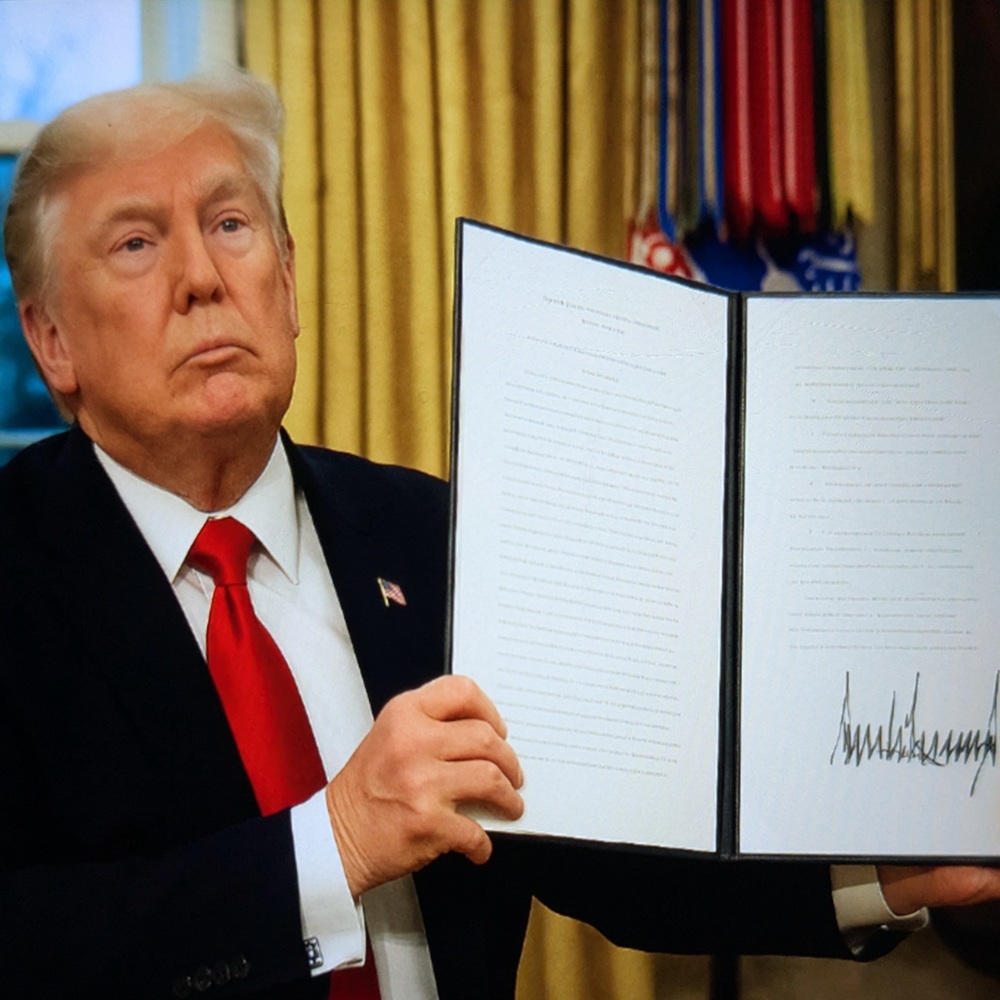
WASHINGTON, DC - JANUARY 20: President Donald Trump signs executive orders in the Oval Office of the White House on January 20, 2025 in Washington, DC. Trump takes office for his second term as the 47

Donald Trump: Reconfiguring Global Order

by Jeffrey Sommers , Zoltán Vörös , István Tarrósy

Chaos seems to mark US policy under President Donald Trump at first blush. But behind what appears (and sometimes is) capricious Trump Administration decision making are policymakers with serious plans. They intend to engage perceived threats to the United States power, while transforming its economy in ways making it less dependent on global supply chains and “reserve assets.” Recognizing festering wounds to the US economy while seeing areas of strength, Trump policymakers look to cauterize the former while pivoting more fully to the latter. Trump’s presidency has openly engaged in criticizing past US liberal interventionist and neoconservative foreign policy. Branded as “America First” Trump’s US does not seek isolationist  withdrawal from the globe, but rather a dismantling of institutional structures and alliances that no longer benefit Washington. The United States can and should continue projecting power far but, not wide, according to America Firsters. Under America First, the national interest does not always align with the “international community,” a term America Firsters would regardless see, borrowing a line from Benedict Anderson, as a fictitious “imagined community.” America First means dismantling the liberal hegemonic world order, or at minimum the US offloading the bill for it. The cost of that liberal order, with some 750 US military bases abroad, combined with growing power of the BRICS (China chiefly, but not only), signals to America Firsters America’s need to retreat from some parts of the world, while continuing to exercise dominance in others. Related to national security is the fallout from a generation of globalization in labor markets. US offshoring of manufacturing in the post-Bretton Woods period lowered production costs. Cheap goods produced abroad were then purchased by Americans even more cheaply courtesy of the overvalued dollar as the world’s reserve currency. This worked great for US consumers, albeit with the intention of also pushing down US labor costs. Globalization enabled the United States to vacuum up global manufactures, while also running up massive government fiscal deficits. As former Vice-President Dick Cheney described it during globalization’s heyday, “Reagan proved deficits don’t matter.” What was once, however, a massive advantage for the United States later became its “twin deficits” problem.   In short, the best fit for the US is a realist spheres of influence model, according to the Trump Administration. The criticism of the liberal world order, of course, circles back to the aforementioned economic challenges: on the one hand, the negative economic processes related to global labor organization and America’s indebtedness, and on the other hand, the strengthening of emerging international actors. Amongst these entities, the People’s Republic of China has long been high on the agenda. During the first Trump administration the president escalated tariffs on goods imported from Asia’s giant, which then led to a trade war. According to a Pew Research Center survey from mid-April 2025, although Americans believe that this bilateral trade relationship benefits China more than the US, they are “skeptical that increased tariffs on Chinese imports will have a positive effect on the country or on their own lives.” The Trump Administration thinks otherwise. America’s economy entering Trump’s presidency looked strong. On the cusp of the great 2008 financial shock, the European Union’s dollar GDP was $16.4 trillion, the US’ was $14.8 trillion. But by 2024, EU GDP was $18.7 trillion, while the United States posted a GDP of $28 trillion. Thus, in the span of less than a generation, the US went from having a GDP 9.8% short of the EU’s in 2008 to leaping ahead with a GDP 32% larger by 2024. These impressive US GDP gains were built on the foundations of financial services, corporate high-value added HQ (headquarters) functions, intellectual property, higher education, and information technology. Yet, there were problems: Maintaining world order, or empire, was, as we asserted above, expensive. In 2024 the US military budget was $824 billion. This figure does not even count huge “off (or black) budget” items related to security, etc., for which costs are not precisely known. Besides these numbers, we should not forget about the military’s global presence: The US paid for global security costs, protecting important maritime trade routes, chokepoints – not just supporting the American interest, but for instance chiefly helping China trade with the world. These costs were covered, in part, through US borrowing, much of it from abroad. In 2024, the US government deficit stood at $1.8 trillion, or 6.4% of GDP. While the total US debt reached $38 trillion. The last time the US federal budget was in surplus was in the last term of President Bill Clinton, when there were both reduced military expenditures (post-Cold War “peace dividend”) and top marginal income tax rates of 39.6%. And before Clinton’s second term, US budgets were only in surplus in 1969 and before that only for several years in the 1950s. Decelerating US decline also requires addressing these areas. First is the area of domestic costs. US public pension costs (Social Security and Medicare) face a fiscal crisis. The dedicated taxes (Federal Insurance Contributions Act, or “FICA”) will soon be insufficient to pay for pension costs. FICA taxes in the late 20th century, under President Ronald Reagan, were raised above pension costs. The surplus (a de facto tax on labor) was to finance costs of a future changed 21st century demographic mix creating lower ratios of workers to pensioners. This funding forward model could only work if surplus revenues were invested in productivity enhancing infrastructure creating larger future economic growth and productivity. Instead, the FICA tax surpluses levied on labor were largely used to reduce budget deficits resulting from tax cuts to the wealthy and corporate sectors. In short, to be blunt, the money was taken from labor, with continued borrowing now to pay pension costs running up against the limits of the US to borrow. Second, reserve assets. Lack of ground rents, given the US had no centuries long accumulation of land ownership from feudalism, meant low land prices and reduced inequality generally in the United States. Additionally, the United States applied tariffs to protect domestic markets and promote industrialization generally starting with their first Secretary of Treasury, Alexander Hamilton’s Report on Manufactures in 1791 that gave the US high tariffs, only later rivaled by Russia under the economic leadership of Sergei Witte and Pytor Stolypin in Russia’s late Czarist Russia period. Third, after the 2008 US financial shock it became clear that China was not limited to being merely a supplier of lower-tier consumer goods to the world, but risked becoming a power that could challenge the United States (an idea encapsulated in the Thucydides trap). Rather than markets paving the path toward liberal democracy, as many US policymakers previously assumed, the ascendancy of Xi Jinping signaled China’s fealty to an autonomous route to development. However, China still depends on the global system, the institutions, and structures that have ensured and continue to ensure its participation in global trade, for example. China does not yet possess the global capabilities that would allow it to defend its interests beyond its borders. Therefore, taking action against Beijing as a rival could cause difficulties in time for a country that is dependent on numerous structures maintained by Washington. The Trump administration’s goals and responses to the US crises are to: • Offload costs of US “empire” to other states currently benefiting from it• Recovery through fall in commodity prices (energy, food, metals, etc.)• Move from globalization to regional spheres of influence• Postpone “Armageddon” of global exit from US dollar• Widen leads in AI, thus requiring cheap energy• Reduce US government debt levels• Widen US lead in space• Reshore US industry To achieve these goals, a tariff policy was established that fundamentally shapes American economic and foreign policy, to which Washington has put forward the following proposals: First, other countries can accept tariffs on their exports to the United States without retaliation, providing revenue to the U.S. Treasury to finance public goods provision. Critically, retaliation will exacerbate rather than improve the distribution of burdens and make it even more difficult for us to finance global public goods; Second, others can stop unfair and harmful trading practices by opening their markets and buying more from America; Third, they can boost defense spending and procurement from the U.S., buying more U.S.-made goods, and taking strain off our service-members and creating jobs here; Fourth, they can invest in and install factories in America. They won’t face tariffs if they make their stuff in this country; Fifth, they could simply write checks to the Treasury that help us finance global public goods. Or more passively, accept conversion of their Treasury Bills into century-long non-interest bearing bonds. American foreign policy actions can generate results that are drastically different from expectations, and in certain cases can accelerate and amplify problems Washington faces. Although it is evident classic free trade agreements have not formed the basis of American foreign and economic policy for some time, the tariffs introduced and then implemented (and periodically suspended) by the Trump administration, imposed challenges to the United States on several fronts: First, tariffs have severely affected or even targeted states that have traditionally been in partnership with the United States (e.g. EU, Japan, South Korea), which Washington could rely on for support, for example during its international interventions. Such steps can, on the one hand, harm and jeopardize American global and economic interests, and on the other hand, push actors towards a multipolarity that Washington fears. Similarly questionable are trade actions against states that could be pillars of a coalition against China (e.g. Vietnam and the Philippines). American weaponization of trade and unilateral military expectations make Washington an unattractive, if not unreliable, partner, thus encouraging multilateralism. Second, Washington’s demands that states sever trade relations with China, or even with Russia, as Trump asked India to do, is accelerating states decoupling from the United States not on ideological grounds but primarily based on realistic economic policy considerations. Third, these steps could also threaten the dominance of the US dollar, and even accelerate decline in confidence of the dollar – further complicating the financing of the deficit. The Trump Administration (Treasury Department) are aware of the dangers (the “Triffin” reserve currency dilemma) but think the crisis is so acute that they must do something even if they risk accelerating the dollar’s collapse. However, it is also true that a drastic decline in confidence in the US currency would require an alternative reliable currency, and currently, the currency of no potential player can be considered perfectly reliable or transparent. Finally, on a global scale, the America First slogan is not necessarily guaranteed to win partners for Washington. It is evident that in the short term, several actors will not be able to free themselves from the security architecture guaranteed by the Americans (see: NATO), but most actors will strive to advance by developing and building their own capacities. In conclusion, Washington under Trump looks to downsize and rightsize. American economic and military power, while strong, has declined from its post-Cold War unipolar moment. Reduced power has diluted American confidence, thus resulting in the US taking at times a more aggressive posture in an increasingly multipolar world. Meanwhile, the rest of the world grows wary at how the Trump Administration reacts to these changed global ‘‘adjustments” that are creating confusion over where spheres of influence begin and end. The days of America acting to, in the phrasing of Joseph Nye Jr., “winning the hearts and minds” of the world, seems off the table. The United States now retreats from soft power with dramatic cuts to foreign aid and international exchanges, such as its Fulbright program. Rather than winning the world over, under Trump, demands for deference to US authority and power now mark its preferred relations with the world, while it disengages from other parts of the globe.

Diplomacy
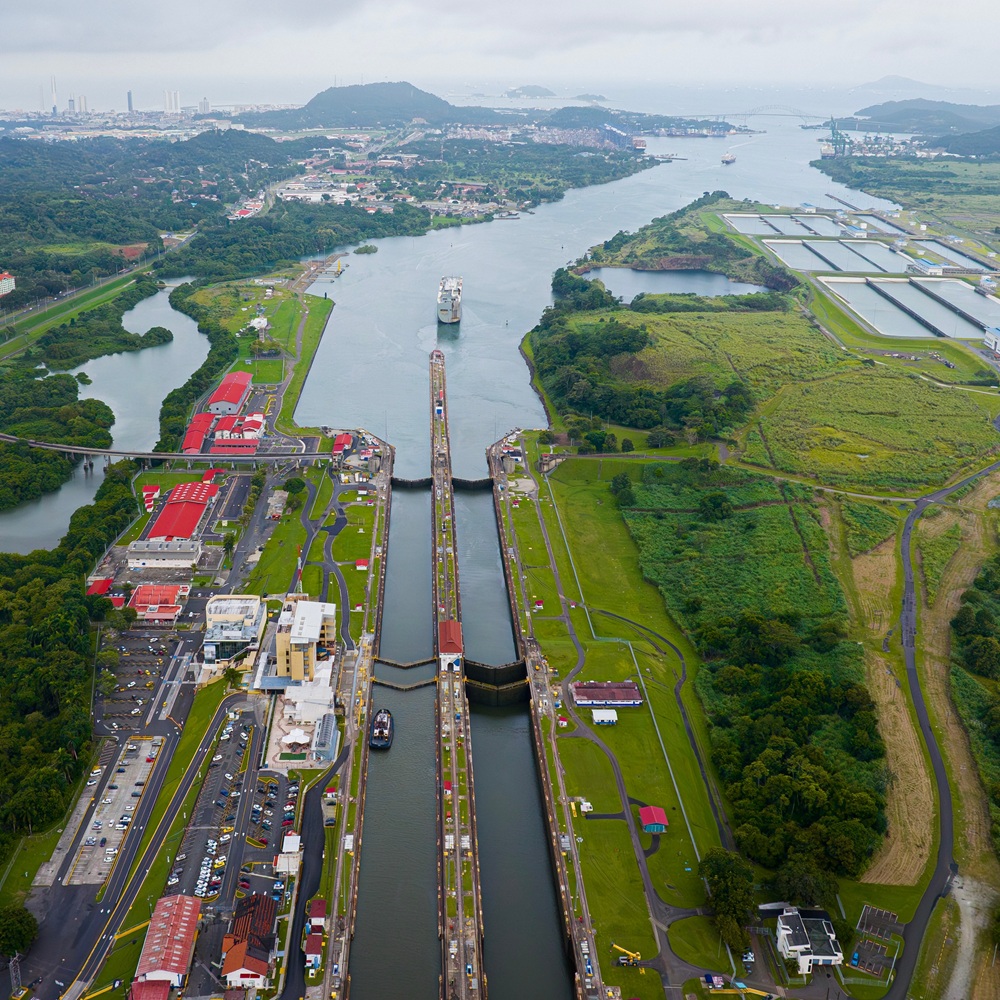
Aerial view Panama Canal, third set of locks, water shortages, maritime traffic, water reuse vats, summer drought.

What CK Hutchison told us in the Panama Case?

by Wallace Loo

The attempted sale of CK Hutchison’s Panama Canal operations to the US-based company BlackRock and Terminal Investment Limited was more than a commercial transaction. When Beijing publicly opposed the deal, branding it a betrayal of national interests, it transformed into a case study in how global business is being reshaped by strategic rivalry. The controversy illustrates a deeper question: Can Hong Kong’s leading conglomerates still operate on commercial logic alone, or are they inevitably drawn into the geopolitical contest between the United States and China? For Hutchison, the Panama case shows that the room for neutrality is shrinking. Why does it matter? Beijing’s intervention signals to Hong Kong businesses and foreign investors alike that commercial neutrality is no longer assured. Loyalty, alignment, and political sacrifice are emerging as expectations alongside profit and efficiency. For global decision-makers, this raises two critical issues: Why did Hutchison seek to exit its Panama Canal holdings in the first place? Why did Beijing judge it necessary to intervene in a transaction that, on the surface, was driven by corporate strategy? Why Hutchison sold its Panama Canal operations? 1. Strategic Realignment Toward Core Businesses CK Hutchison has steadily repositioned itself around two “twin engines”, i.e. real estate in Asia and infrastructure in Europe. While ports in Latin America once fit into its global footprint, they were never central to this model. By selling its Panama Canal operations, Hutchison freed resources to consolidate strengths where it sees long-term stability and growth. This is part of a deliberate shift visible over the past decade: acquiring the German infrastructure firm ISTA in 2017 and securing UK regulatory approval in 2024 for the £11 billion merger of Vodafone UK and Hutchison’s subsidiary Three. These moves point to a concentration of capital in Europe’s regulated infrastructure and Asia’s high-demand property markets, underscoring a deliberate pivot toward strengthening European operations and ensuring cash flow visibility. This implies that Hutchison is reducing its exposure and a systematic exit to regions marked by political uncertainty and doubling down on reinvesting into higher-yielding and strategically aligned assets, particularly in European infrastructure platform while deepening its Asian real estate footprint. For governments and investors, this suggests that Hong Kong conglomerates are not retreating from globalization but are planning to recalibrate toward safer, higher-visibility assets. 2. Capitalizing on Market Timing and Asset Valuation The divestment also reflected classic Hutchison discipline: Buying early and exiting when valuations reach the peak. With global demand for strategic infrastructure rising, the Panama Canal assets commanded a premium. The resulting HK$19 billion in proceeds and a sharp rise in share price underlined investor confidence. Such timing underscores Hutchison’s longstanding strategy of opportunistic repositioning. This divestment was both value-accretive and strategically well-timed. By crystallizing gains now, the group strengthens its balance sheet and cash-reserve, maintaining its flexibility to reinvest or return capital to shareholders. For policymakers, this implies that global infrastructure assets are increasingly financialized. Strategic nodes like the Panama Canal are no longer just trade arteries but high-value commodities in global capital markets. Governments must therefore view divestments not only as corporate decisions but as moves that can shift control of strategic assets between geopolitical actors. 3. Geopolitical Considerations and Risk Mitigation The Panama Canal is a corridor of strategic significance and what US-President Donald Trump calls Chinese ownership on the potential dual-use nature of port terminals there inevitably drew scrutiny in Washington. U.S. allies have already tightened the screening of Chinese-linked infrastructure deals and the EU’s 2019 FDI framework explicitly flagged ports as areas requiring “special oversight”. Against this backdrop, Hutchison sought to avoid being cast as a “Chinese state-backed actor”, an extension of Beijing’s Belt and Road Initiative. Hutchison has taken deliberate steps to present itself as a neutral and commercially driven multinational investor, rather than an extension of Chinese state policy. The company restructured in 2015 to a Cayman Islands base carefully positioning itself apart from state-linked Chinese enterprises, which creates an international legal identity rather than retaining a mainland Chinese or Hong Kong corporate domicile. By exiting Panama, Hutchison not only monetized assets but also reduced exposure to the intensifying Sino-U.S. rivalry in one of the world’s most contested trade chokepoints. For European and U.S. decision-makers, this implies that Hutchison’s move signals how Hong Kong firms navigate geopolitical pressure. It shows that even Chinese-origin conglomerates may prefer retreat to avoid being entangled in state rivalries. Hutchison pre-emptively mitigated the risk of being labelled a “Chinese state proxy” in a critical geopolitical theatre. This move not only alleviated Western concerns about Hutchison’s control of Panama’s ports but also demonstrated the group’s ability to act with commercial neutrality and flexibility, preserving its ability to operate, finance, and expand in Western markets without being constrained by the “Chinese capital” label. For Beijing, however, this retreat risks weakening China’s global port footprint. This highlights a potential divergence between the commercial logic of Hong Kong firms and China’s strategic ambitions. Why did Beijing intervened? 1. Loss of Chinese Strategic Assets and Diplomatic Advantage The Panama Canal is among the world’s most critical maritime chokepoints and control of its ports carries weight far beyond commerce. For China, investment in Latin American terminals has been part of a wider strategy to shape global shipping routes and enhance strategic reach. From Beijing’s perspective, CK Hutchison’s divestment was more than a business transaction. This was a strategic setback. The transfer of control to U.S.-linked interests was seen as a symbolic “recapture” of the terminals, which weakens China’s presence at a vital corridor. Within the Chinese leadership, the ports had been regarded as potential bargaining leverage in trade negotiations with Washington. But this loss reduced Beijing’s diplomatic toolkit at a time of rising frictions. The episode illustrates how Chinese policymakers increasingly view overseas ports as instruments of geopolitical positioning, not just commercial assets. Hutchison’s decision to sell underscored a broader reality: not all Chinese-affiliated enterprises act in alignment with state objectives. For Beijing, this implies that the Panama case highlighted the limits of relying on Hong Kong conglomerates to advance strategic interests abroad. For foreign governments and firms, it signalled both China’s heightened sensitivity to divestments in contested regions and the growing tension between corporate autonomy and state geopolitical expectations. 2. Absence of Beijing’s Prior Approval Sparked Political Backlash In the Panama Canal divestment, Beijing’s leadership reacted strongly against CK Hutchison’s “transaction first, then approval” approach. Beijing expressed dissatisfaction and even instructed state-owned enterprises to suspend new collaborations with the Li family, who serve as the controlling shareholders and principal decision-makers of Hutchison. Hutchison defended this sale as a “purely commercial and competitive process” by emphasizing Mediterranean Shipping Company as the principal buyer. Yet, in the context of intensifying Sino-U.S. rivalry, this stance was no longer acceptable. Regulatory pressure and political intervention from Beijing slowed negotiations, preventing the transaction from proceeding as planned. The broader precedent is clear: in strategically sensitive areas, Beijing now expects Hong Kong firms to align commercial decisions with state priorities. Neutrality is no longer an option. This marks a fundamental shift in the operating environment, binding the leading Hong Kong conglomerates more closely to state interests and constraining their room for independent strategic choices. For policymakers and investors, this implies that the Panama case shows how Beijing is extending political oversight into commercial domains once seen as autonomous. Hong Kong enterprises face increasing limits on their ability to separate business logic from state loyalty, particularly where Sino-U.S. rivalry is at stake. 3. Public Opinion as Strategic Pressure: Shaping a New Regional Order Beijing’s response to Hutchison’s Panama sale was not confined to official channels. Pro-Beijing media denounced the deal as disloyal and profit-driven, framing it as a matter of national honour. When the Hong Kong and Macao Affairs Office of the State Council, which is the Beijing central body responsible for overseeing Hong Kong and Macao affairs, amplified these narratives, they gained quasi-official status and exerted pressure on both Hutchison and other Hong Kong firms. This discourse resonated beyond China. The Panama Canal Authority warned that excessive concentration of terminal assets could undermine neutrality and competitiveness. This wording strikingly complies with Beijing’s “anti-hegemony” rhetoric. By shaping the terms of debate, Beijing positioned itself to argue for greater balance and competition in Panama’s port operations. Looking ahead, China advocates to leverage new concession tenders to advance its tactical objectives: strengthening the role of China Ocean Shipping Company, counterbalancing U.S. and European dominance and embedding Chinese capital in Latin America’s maritime infrastructure. More broadly, the case illustrates how Beijing integrates public opinion, regulatory narratives, and commercial strategy to shape a regional order more favourable to its interests. For policymakers, this implies that Panama demonstrates how Beijing transforms domestic media pressure into a tool of international influence. What begins as reputational discipline at home can translate into bargaining leverage abroad, particularly in contested regions where infrastructure and influence are intertwined. Points of Special Relevance: Beijing’s Strategic Signal Beijing’s intervention in the Panama Canal case should be read not as a single act but as a strategic signal. Its aims to prevent U.S. and European firms from consolidating control at a vital chokepoint and to avoid the appearance of “losing” strategic assets. At the same time, Beijing used this episode to remind Hong Kong conglomerates that in sensitive geopolitical contexts, commercial logic alone is no longer sufficient. The Panama case demonstrates how Beijing leverages commercial disputes as instruments of statecraft. The more plausible outcome is a conditional arrangement to encourage Panama to introduce mechanisms that limit Western influence in Latin America. China seeks structural adjustments that preserve its influence and reshape the regional order to its advantage. From Neutrality to National Loyalty As U.S. China tensions intensify, many multinational firms pursue de-risking strategies: not full decoupling as it is economically unviable, but carefully calibrated ambiguity that allows them to operate in both markets without explicit political commitments. This balancing act is becoming harder in Hong Kong. Since 1997, the influx of mainland state-linked enterprises has blurred the line between state and market. Benefiting from the “One Country, Two Systems” framework, these firms embedded political expectations into business norms. Ties to the National People’s Congress or the Chinese People's Political Consultative Conference are increasingly relevant in Hong Kong. By 2019, Beijing moved further, promoting patriotism in the business sector such as the Greater Bay Area Business Support Scheme, which channels funding toward firms demonstrating “patriotic entrepreneurship” or contributions to “national rejuvenation”. The result is a growing convergence of economic and political expectations. Commercial autonomy is increasingly contingent on political alignment, eroding the distinction between business logic and ideological loyalty. For investors and firms, this raises strategic concerns: - Will political loyalty requirements constrain the free flow of capital? - Could companies risk state intervention or even nationalization if perceived as acting against China’s interests? These questions remain unresolved, but Hutchison’s Panama case shows how quickly a commercial decision can be redefined as a matter of national loyalty. The broader uncertainty surrounding Hong Kong’s business environment will shape the city’s role as a financial hub in the decade ahead. This is my view on things: An Outlook on Hong Kong Looking ahead, the space for Hong Kong conglomerates to maintain commercial neutrality is narrowing. The rise of a nationalist business paradigm means companies must increasingly balance political conformity with economic self-interest. Two scenarios are emerging: 1. “Hong Kong, then China”: firms retain some operational autonomy and global credibility by prioritizing commercial logic, while carefully managing political sensitivities. 2. “China, then Hong Kong”: political loyalty takes precedence, with business priorities subordinated to national strategic goals of the Chinese Communist Party. Which path prevails will determine Hong Kong’s role as a financial hub. The tension between economic liberalism and political loyalty is no longer abstract. It is becoming the defining fault line for Hong Kong’s business landscape in the decade ahead.

Diplomacy
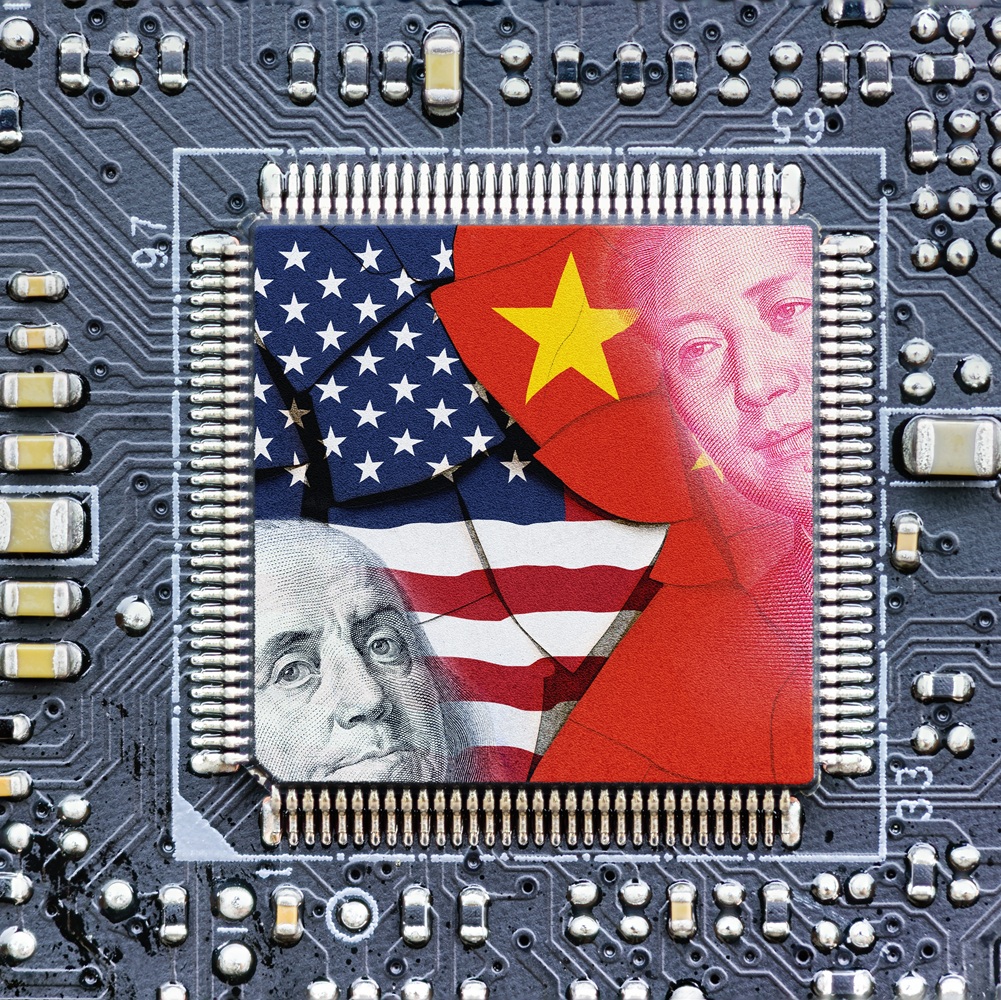
Flag of USA and China on a processor, CPU or GPU microchip on a motherboard. US companies have become the latest collateral damage in US - China tech war. US limits, restricts AI chips sales to China.

AI’s Great Power Paradox: Cooperation and Competition in the US-China Tech Rivalry

by Emmie Hine

As AI accelerates, the US and China shape the global governance landscape through parallel ambitions and contrasting ideologies. Understanding their policy trajectories reveals key inflection points for potential engagement. The United States and China are the world’s leading powers in artificial intelligence (AI)—and each has global ambitions. As AI development accelerates, so too do calls to regulate it responsibly. Both countries have the capacity to shape the future of AI governance. But understanding where cooperation might be possible requires understanding how each country’s approach has evolved. While their methods and ideologies differ, and their leadership aspirations often appear at odds, two underexamined forces—infrastructure and philosophy—may create unexpected space for mutual engagement. In the US, AI governance has long been shaped by the mythology of the free market. Under President Barack Obama, that mythology was tempered by calls for pipeline diversity. President Donald Trump discarded these in favour of rhetoric about “American values,” an ill-defined phrase deployed more as a competitive cudgel against China than a coherent policy vision. President Joe Biden attempted to resurrect some of Obama’s normative commitments—launching the Blueprint for an AI Bill of Rights, Executive Order 14110 on “safe, secure, and trustworthy AI,” and initiatives like the National AI Research Resource—but the foundations of his administration’s policies remained countering China’s influence through increased export controls and other measures. Trump’s second administration has once again changed focus away from equity and community-centredness, but the continued focus on competing with China and ensuring US “victory” in the “AI race” shows there’s more continuity than often assumed between different administrations’ AI approaches. China, for its part, has been more consistent in its governance strategy, even as it experiments at the margins. Its 2017 New Generation AI Development Plan cast AI as a pillar of national strength, and subsequent regulations on algorithms, deepfakes, generative AI, and facial recognition underscore a clear priority: balancing the “twin miracles” of economic development and social stability. Though early days of “fragmented authoritarianism” have given way to a more centralised approach with specific vertical laws, this logic remains embedded throughout the governance system. China is generally less explicit in its rhetoric than the US, with fewer exhortations about race dynamics and countering the US. In fact, it frequently invokes ideas of ethical pluralism and the language of international cooperation. This framing likely reflects a blend of genuine ideological positioning and diplomatic strategy, but it presents a challenge to US policymakers who continue to frame AI governance in moralising binaries. This is evident in two parallel AI Action Plans released in July 2025. The US released a guiding document—indicatively titled “Winning the Race: America’s AI Action Plan”—with an epigraph from President Trump stating: “As our global competitors race to exploit these technologies, it is a national security imperative for the United States to achieve and maintain unquestioned and unchallenged global technological dominance.” Though the Action Plan itself contains only three substantive references to China, it is built on the premise that global AI is an inherently competitive “race,” and China is clearly the US’s main competitor. A few days after the US AI Action Plan was released, China released its “Global AI Governance Action Plan.” It builds on the 2023 Global AI Governance Initiative, which seeks to portray China as a leader in the global pursuit of AI for the good of humanity and a “champion of the Global South.” The Global AI Governance Action Plan contains fewer specifics than the US AI Action Plan, but calls for “strengthening international cooperation on AI capacity building,” including supporting developing countries to design, implement, and govern AI. It also calls for building a global AI governance system through the UN and again shows the key balance of economic development and social stability: while it acknowledges the need to “jointly push for innovation breakthroughs,” it also advocates for strengthening “policy and regulatory coordination” and building an international AI safety governance framework. The US, on the other hand, is determined to cut “bureaucratic red tape and onerous regulation” while working primarily with its allies. However, recent events have called into question the feasibility of this approach. Notably, despite calls to increase export controls—and mobilise allies to do the same—the US announced shortly before the release of the AI Action Plan that it would again permit Nvidia to export H20 chips to China after previously restricting them. This was part of a trade deal in which China agreed to lighten restrictions on rare earth exports. Though seemingly counterintuitive, this deal reflects a fundamental reality of the modern AI ecosystem: the resources and supply chains enabling it are inextricably intertwined. China mines roughly 70 percent and processes 90 percent of rare earth minerals. US-based Nvidia has 92 percent of the GPU market. Both of these are critical for progress in AI. Both countries are attempting infrastructure decoupling, but the US may have to compromise on its fundamentalism to maintain access to the critical resources it needs. Meanwhile, its advanced chip dominance in turn provides leverage over China. Will this lead to broader cooperation? Geopolitical issues are likely too entrenched for each country to join hands and promote harmonious global AI governance. However, each country’s primary goal is the same: to benefit the “people.” China is claiming that its definition of “the people” is the global community—though this comes with the noted exclusion of domestic critics, including the Uighurs of Xinjiang, who are subject to AI-enabled surveillance and detention. The US’s definition of “the people” has changed from administration to administration, but currently seems to include the American people and potentially allied nations. It’s doubtful that the current administration will agree to substantive global AI governance discussions. But through its Action Plan, China has thrown down the gauntlet—engage with global AI governance or be an obstructionist. What the US will choose remains to be seen. Emmie Hine is a Research Associate at the Yale Digital Ethics Center and a PhD candidate in Law, Science, and Technology at the University of Bologna and KU Leuven. She researches the ethics and governance of emerging technologies, including AI. You can also find her byline in her weekly tech-focused newsletter, the Ethical Reckoner. Emmie holds degrees from Williams College and the University of Oxford, and previously worked as a software engineer. She’s on Bluesky here and X here. This article is published under a Creative Commons License and may be republished with attribution.

Diplomacy
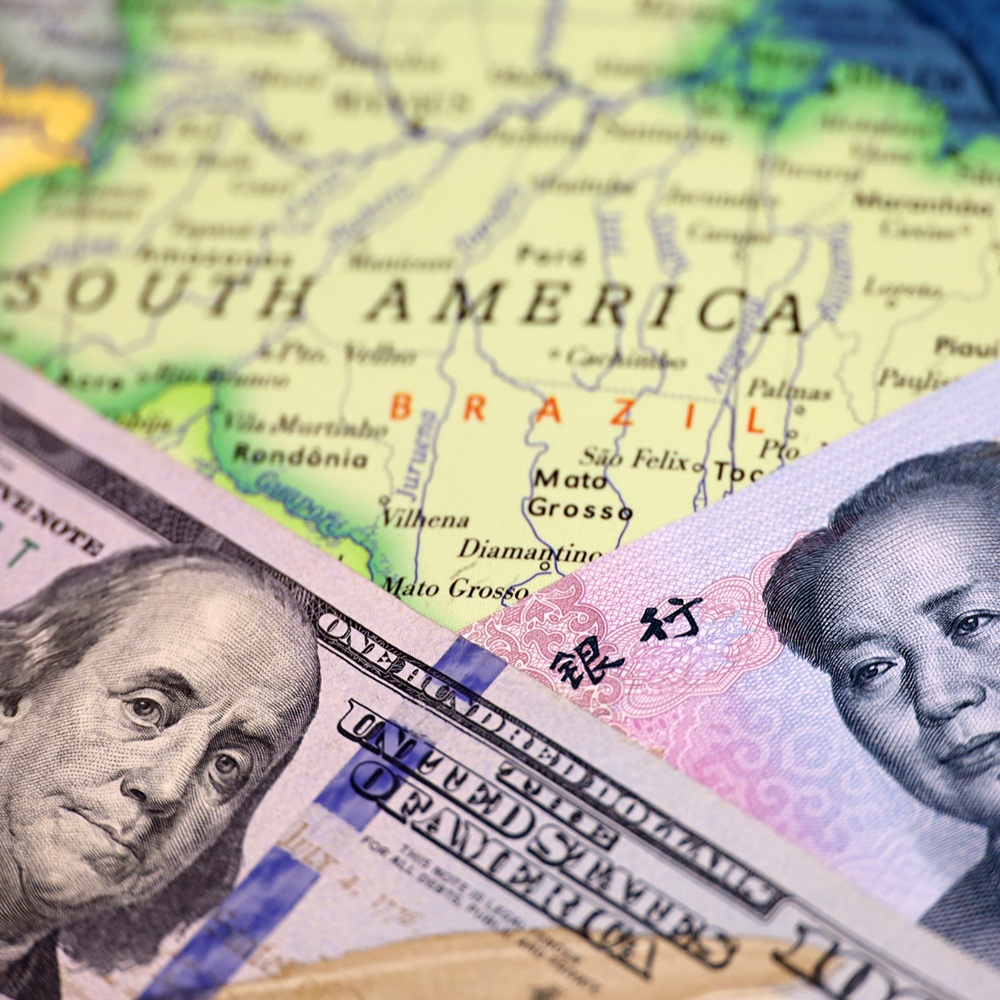
US dollar and Chinese yuan on the map of Brazil. Economic competition between the China and USA in Latin America countries

China Advances and the US Retreats in Latin America and the Caribbean

by Hyeran Jo , Nathalie Mendez

The BRICS meeting in Rio on July 6th and 7th gives a snapshot of the great power competition between China and the United States in different regions around the world, including Latin America. China has become the largest trading partner for many countries in Latin America, investing heavily in infrastructure and forging political alliances that further its strategic objectives. For its part, the Trump Administration of the United States issued the statement that those participating countries will face increased tariffs. The statement was the continuation of exercise and assertion of its authority for the past and present century. The positioning of various BRICS members and participating countries is particularly telling of what the great power competition means in the region and also globally. Brazil’s Lula hosted the meeting aiming to showcase its foreign policy leadership, not necessarily antagonizing the West. Russia is still going through the war in Ukraine, and Putin attended only online. India’s Modi was present as well as Ramaphosa from South Africa. No show of Xi Jinping was notable, although Premier Li Qiang was attending. Besides the BRICS core, other countries also showed promotion of their interests. Iran, for one, joined the group in 2024 and sent a ministerial level delegation to rebuke recent strikes on Iran. As the United States appears to be pulling back from its traditional leadership role in the world, China is seizing the opportunity to expand its influence and reshape global dynamics. Through a combination of state-driven development policies and active international engagement, Beijing has positioned itself as a major player in the Global South, extending its reach beyond Asia to regions such as Africa and Latin America. China’s increasing presence in the region has been mainly driven by the Belt and Road Initiative (BRI) and a surge in trade volumes, marking a major shift in the region’s economic landscape. Many experts point to China’s use of “infrastructure diplomacy”—financing ambitious, strategic infrastructure projects across the region—as a key factor in this rise. The numbers tell a compelling story. Trade data from the World Bank (Figure 1) shows that in the past ten years, China has overtaken the United States as the leading trading partner for much of the region, upending a dynamic that had held steady since the early 2000s. Beyond trade, China’s influence deepens through the 22 countries in Latin America and the Caribbean that have joined the Belt and Road Initiative. Chinese loans have poured in, funding major energy, infrastructure, and development projects that have reshaped local economies. China’s push isn’t just economic—it’s political too. Beijing has taken steps to strengthen cultural ties, increase academic exchanges and boost tourism in Latin America, including waiving visa requirements for travelers from some countries. This multi-faceted approach highlights China’s pragmatic mix of economic self-interest and strategic diplomacy as it works to secure resources, expand markets, and bolster its global standing. On the other hand, the United States has long been a strategic ally and key trading partner for Latin America. Agencies like USAID have funneled millions of dollars into economic and military initiatives across the region. With the recent changes in the aid policy, immigration policy, and tariff policy, Washington’s recalibration of its foreign policy are transforming the geopolitical balance in Latin America and the Caribbean. As both powers deploy their strategies — from deepening economic ties to defending national interests — the decisions of Latin American states remain critical in shaping their alignments with global powers. The ultimate outcome is still up in the air, but one thing is clear: power in the region is actively being renegotiated. The diverging approaches from China and the US have set the stage for a broader reconfiguration of power in Latin America and the Caribbean. Yet, it’s essential to recognize that each country’s internal decisions and policies also play a critical role in shaping this shifting landscape. Colombia provides a case in point. Historically, it has maintained close diplomatic ties with the United States while keeping China at arm’s length. Unlike countries like Brazil, Argentina, and Peru, Colombia has received relatively little Chinese infrastructure investment. However, with the election of president Gustavo Petro—the first left-wing president in the country’s history—Colombia has taken decisive steps to strengthen its relationship with China, presenting new challenges for the United States to maintain its strategic foothold in the country. We observe – both on political and economic dimensions – that the changes in China’s strategy, coupled with Colombia’s domestic policies, have reduced the country’s dependence on the US while increasing its desire to integrate with China. Politically, Colombia and the United States have long enjoyed a strong diplomatic relationship, as reflected in their shared memberships in international organizations, high-level dialogues, and multiple bilateral agreements. However, diplomatic tensions have emerged in recent years. Disputes between the two leaders, the change of course of USAID, and a significant drop in new bilateral agreements over the past four years have contributed to a shift in this traditionally stable partnership. Against this backdrop, diplomatic ties between China and Colombia have strengthened. In 2023 alone, both countries signed 12 cooperation agreements in trade, technology, and economic development, upgraded their relationship to a strategic partnership, and Colombia’s entry into the Belt and Road Initiative during recent China – CELAC Forum in May. Colombia also joined the BRICS New Development Bank a few weeks after that Forum. Economically, the US has traditionally been Colombia’s largest trading partner, backed by a free trade agreement and significant investment. Yet, in recent years, the share of US trade has steadily declined, while China’s footprint has grown (see figure 1). Although there’s no formal trade agreement, ties have strengthened during the current administration, including the opening of a Buenaventura-Shanghai trade route in 2025. Additionally, China’s “infrastructural diplomacy” has significantly grown: over 100 Chinese companies now operate in Colombia, and major infrastructure projects like Bogotá’s Metro Line 1 and the Regiotram are underway, along with investments in mobility, technology, and health. Latin America, and Colombia in particular, finds itself at the center of a geopolitical tug-of-war with China’s calculated investments and the US’s shifting policies. While Beijing leverages trade, infrastructure, and cultural diplomacy to expand its influence, Washington’s recalibration of its foreign policy leaves room for new alliances and opportunities. Our analysis shows that power reconfiguration is not merely a product of external rivalry. It is driven by the choices each Latin American nation makes. As Colombia’s case demonstrates, the region’s destiny hinges not just on global superpowers, but on its own internal political decisions and developments. The coming years will test how Latin America navigates these shifting currents. Disclaimer This article was made possible in part by a grant from the Carnegie Corporation of New York (G-PS-24-62004, Small State Statecraft and Realignment). The statements made and views expressed are solely the responsibility of the authors. Figure 1: China vs. US Import and Export TrendsDrawn by the authors using data from the World Bank.  

Diplomacy
China flag painted on a clenched fist. Strength, Power, Protest concept

The international reconfiguration's process towards multipolarity. The role of China as an emerging power

by Rachel Lorenzo Llanes

Abstract The international system is currently undergoing a process of reconfiguration that is having an impact on all areas of global development. In this process of reordering power relations, there is a tendency to move towards multipolarity, leaving behind the unipolar coalition established after the Second World War. In this context, several emerging powers are gaining increasing international power, which has led to changes in the hierarchy of power on the international geopolitical chessboard. Such is the case of the People's Republic of China, which has established itself not only as a power of great impact and relevance in the Asian region, but also in the entire international system. Namely, the management of the government and the Party in terms of innovation, industrialization, informatization, productivity, expansion and internationalization of its economic model, positions this country as the most dynamic center of the international economy. Evidencing that alternative models to the capitalist system are possible and viable, which strengthens the trend towards a systemic transition and multipolarity in the International System Introduction In the last two decades, a set of geopolitical and geoeconomic tensions and conflicts have become evident, with significant implications extending throughout the International System. As a result, we are currently experiencing a convulsion of the established order, giving way to a process of new global reconfigurations. In this context, several researchers and academics such as Jorge Casals, Leyde Rodríguez, Juan Sebastián Schulz, among others, have noted that these conditions have led to a crisis and hegemonic transition process, with a trend toward multipolarity in which the Asia-Pacific region is gaining increasing relevance. This article, titled "The International Reconfiguration’s Process Towards Multipolarity: The Role of China as an Emerging Power," is dedicated to analyzing the position of this country within the current international reconfiguration of power. Accordingly, the first section will systematize some essential guidelines to understand the current crisis and the decline of the hegemonic order established in the post-World War II period. The second section will address China's positioning amid the international reconfiguration of power. In this regard, it is important to note that China's rapid rise highlights how development management aligned with the Sustainable Development Goals can lead to a shift in the paradigm of international relations, as well as power reconfigurations that challenge the current balance of forces. Thus, it can be affirmed that China's rise constitutes a decisive element within the current trend toward multipolarity. DevelopmentNew International Order: Approaches to the Multipolar Reconfiguration of the International System The current international context is marked by a process of crisis. This crisis reflects the fact that the world order no longer aligns with the correlation of forces that gave rise to it during the post-World War II period. It is not a circumstantial crisis, but rather the interlinking of various interconnected crises that span across all sectors of life. That is to say, the effects of one crisis often become the causes of another, involving economic, political, social, cultural, ethical, moral, technological, commercial, and environmental components. In other words, it is a structural and systemic crisis—one that cannot be resolved unless a similarly systemic transformation occurs. To gain greater clarity, it is important to consider that the consolidation of the capitalist system brought about the process of globalization. This, in turn, introduced large-scale production and technological development capable of increasing output. This process, along with other characteristics of the system, has exponentially accelerated social inequalities between developed and developing countries. It has also led to strategic tensions over the control of resources, raw materials, and inputs, resulting in geopolitical conflicts. Furthermore, the capitalist system has imposed an extremely high environmental cost, demonstrating that it is exceeding both its own limits and those of the planet. Specifically, in its constant pursuit of profit and maximization of gains, negative environmental impacts are not factored into cost-benefit analyses, leading to widespread environmental degradation. Among other harms caused by the system, we observe a decline in investment rates, an increase in public debt, loss of autonomy in monetary policy, rising unemployment levels, reductions in real wages, and growing inequality, among others. In short, capitalism has become an unsustainable system whose primary concern is profit generation—something that is currently entirely incompatible with environmental preservation and the responsible use of natural resources. Therefore, it can be affirmed that some of its most alarming effects include: vast amounts of currency without backing, increasingly concentrated in fewer hands; acceleration of capital concentration in the West; rising military expenditures; and environmental pollution and destruction (Casals, J., 2023). On the other hand, it is necessary to clarify that, for a particular state to be considered hegemonic, it must not only exert its influence predominantly within the system of international relations; its hegemonic role must also be linked to the founding and establishment of a universally accepted concept of world order. That is, the majority of other states must recognize it as such and identify with the model promoted by the hegemon. Therefore, it is not merely a matter of a hierarchical order among states, but rather the adoption of a dominant model of production that involves those states. As a result, certain mechanisms or general rules of conduct are established for the participating states. For this reason, a hegemonic crisis involving the dominant actor in the system of international relations leads to a crisis in the social, economic, political, and institutional structures upon which that actor’s dominance was built. In light of these elements, we currently observe a set of powers within the International System that are vying to establish a new distribution of power—one that moves away from the unipolar coalition led by the United States following World War II. From this perspective, Juan Sebastián Schulz asserts: “A hegemonic crisis occurs when the existing hegemonic state lacks either the means or the will to continue steering the interstate system in a direction broadly perceived as favorable—not only for its own power, but also for the collective power of the dominant groups within the system.” (Schulz, J. S., 2022) As a result, strategic alliances have been formed and new power groups have emerged that influence international relations.These blocs are precisely what the new polarity is forming around, increasingly reinforcing the trend toward multipolarity. This is a system in which hegemonic influence is not determined by a single power, but by two, three, or more. In this regard, Juan Sebastián Schulz further notes that a process of insubordination is becoming evident, particularly in the Western peripheries. As a consequence, several countries have begun to criticize the configuration of the contemporary world order, initiating efforts to organize and propose alternative models (Schulz, J. S., 2022). This reveals the emergence of a new kind of power hierarchy, generating a global order in which a diversity of forces and actors prevails. In this context, China has experienced rapid growth, thereby contributing to the trend toward multipolarity. While this does not imply that the United States will cease to be one of the central powers in the system of international relations—given its considerable global influence—it is evident that there is a noticeable decline in the dominance it held during the unipolar era that emerged after the collapse of the USSR in 1991. This process of intersystemic transition unfolds in various phases. First, there is an observable economic transition marked by a shift in the center of gravity of the global economy toward emerging and developing economies. This shift is accompanied by a necessary technological transition, characterized by a new struggle—this time to lead the technological revolution. These changes, in turn, must be supported by a political transition. Currently, countries from the Global South have gained increasing prominence on the international stage [1]. From this foundation, a geopolitical transition is also underway, where the center of gravity and decision-making—once concentrated in the Anglo-Saxon West—is shifting toward the Asia-Pacific region. Finally, a cultural or civilizational transition is taking place, wherein the previously dominant value system is giving way to the rise of a new worldview. Based on this, the phases of the transition process can be outlined as follows: Existence of a stable order that brings together the majority of nation-states in the International System. - A crisis of legitimacy begins to affect the established global order. - A deconcentration and delegitimization of power emerges, impacting the hegemonic power. - An arms race and formation of alliances ensue in an attempt to preserve the hierarchical order by any means. This leads to a widespread crisis and the rise and emergence of new actors. - A necessary resolution of the international crisis. - Renewal of the system. (Schulz, J. S., 2022) In light of the above, it can be stated that a “new international order” is taking shape. Its manifestations are multifaceted, such as: - The rise of movements and associations of states that serve as alternatives to the neoliberal order. - Emerging powers like China and Russia are gaining strength in various sectors of the international geopolitical arena. - Russia's confrontation with NATO in the context of the conflict with Ukraine. - Sanctions imposed by the United States on various NATO and European Union countries have strengthened the BRICS nations. - The incorporation of new members into BRICS can be seen as an attempt to counterbalance the economic and political dominance of the United States and the European Union. - The expansion of anti-imperialist and anti-neoliberal integration mechanisms that promote South-South cooperation, such as the G-77 + China group. - The financial sanctions imposed by the West on Russia in the context of the Ukraine conflict have sparked a debate about the viability of the international monetary system and the role of the U.S. dollar as a reserve currency. - China and Russia conduct transactions in yuan and sell oil in this currency to Iran, Venezuela, and Gulf countries. China has increased its economic and political influence in the world, which can be seen as a challenge to U.S. hegemony. Its leadership within BRICS and its growing role in the global economy may be indicators of a shift in the balance of power. All these developments reflect a growing awareness within the International System of States regarding the importance of international cooperation to address global challenges such as the climate crisis, pandemics, and food security. They also serve as indicators that a transformation is underway in the way countries interact with each other, resulting in a shift in the economic, political, and strategic center of gravity. In this context, the United States has unleashed a global hybrid war as a desperate attempt to defend and maintain its hegemonic position, which once appeared unshakable in the postwar world. To this end, it has targeted China, as the latter represents its main threat in the economic and scientific-technological order. From this perspective, tensions between the United States and China have significantly deteriorated since the Republican administration of President Donald Trump. Beginning in 2017, his policy took on an aggressive stance toward China, manifesting through a trade war and economic attacks aimed at preserving U.S. global hegemony. This demonstrates that, in response to a process of decline already underway, nationalist and protectionist efforts intensified in the U.S., with policies targeting some of the emerging pillars of the crisis-ridden world order—China being a primary example. Under the administration of Joseph Biden, the focus shifted toward competition, emphasizing the commitment to protect U.S. sovereignty from potential Chinese threats. A significant shift in U.S. foreign policy toward Taiwan became evident with the approval of arms sales to Taiwan in August 2023, which escalated tensions in the region (Collective of Authors). Furthermore, in recent years, the United States has increasingly worked to generate geopolitical and geoeconomic motivations aimed at fostering tensions between China and Russia, potentially sparking conflict between the two. It has strengthened alliances with neighboring countries of these powers—most notably Taiwan and Ukraine—which has triggered concerns and tensions in both nations. A containment policy has also been deployed, including the imposition of trade barriers and tariffs on Chinese products; restricting Chinese companies’ access to U.S. technology and markets; and promoting the diversification of supply chains to reduce dependence on China. Nevertheless, the ongoing sanctions and restrictions have only served to reaffirm the shared survival interests of both powers, strengthening corporate ties and relations between them. These actions also reflect the growing concern among U.S. power groups over the decline of their hegemonic dominance. The Emergence of China and Its Role in the Transition Toward Multipolarity In a previous article titled "The Synergy Between Economy and Environment in China Through the Achievement of the Sustainable Development Goals," (‘La sinergia entre economía y medio ambiente en China mediante la consecución de los Objetivos de Desarrollo Sostenible’) the process of socioeconomic transformations experienced in the People's Republic of China over the past decade was discussed. These transformations have been primarily aimed at revitalizing the nation in preparation for its centenary in 2049. This strategy is rooted in aligning the Centenary Goals with the Sustainable Development Goals (SDGs) set for 2030, under the leadership of the Communist Party and the momentum driven by President Xi Jinping. The results of this strategy have had an impact not only on the Asian Giant itself—now a decisive actor in the Asian region—but also on the international order as a whole. As a result, China has emerged as a powerful rising power, with promising prospects for further elevating its development standards. This is backed by sustained GDP growth, averaging between 6% and 8% annually, indicating a robust economy. In addition, China holds vast foreign exchange reserves, granting it economic stability and the capacity to withstand potential external shocks. It also invests heavily in modern infrastructure and cutting-edge sectors such as artificial intelligence, 5G technology, and renewable energy—all of which enhance its competitiveness and lay the groundwork for long-term sustainable growth (Lagarde, CH). Nonetheless, China has also had to confront significant challenges in its gradual and progressive approach to the desired development model. Among these is the environmental cost associated with its rapid economic growth. For instance, China still experiences high levels of greenhouse gas (GHG) emissions, along with air, water, and soil pollution. In response, measures have been implemented such as the establishment of a national monitoring network and the replacement of coal heating systems in Beijing. Efforts have also been made to purify water resources polluted by industrial processes, and imports of solid waste have been reduced to help decontaminate soils affected by industrial and agricultural activities (González, R., 2023). In general, the development of renewable energy and a circular economy model is being promoted to enable a gradual transition toward a green economy, grounded in the concept of an ecological civilization. For this reason, China’s new era is committed to scientific and technological innovation as a means of driving economic growth that is both sustainable and capable of ensuring a higher quality of life for its population. This, in turn, leads gradually toward a new model of political leadership and economic management. In this regard, Jin Keyu, Professor of Economics at the London School of Economics and Political Science (LSE), has stated that “trillions of dollars of investment are needed for the global green transition, and China is going to play an essential role in that transformation” (Feingold, S., 2024). Based on the aforementioned elements, various authors such as Dr. C. Charles Pennaforte, Dr. C. Juan Sebastián Schulz, Dr. C. Eduardo Regalado Florido, among others, have indicated that the millenary nation represents a threat to the hegemony held by the United States since World War II. Consequently, it is recognized that a process of hegemonic crisis and transition is currently underway, with the Asia-Pacific region emerging as the center of gravity of the global power, thereby contributing to the multipolar transformation of the International System. The authors of “Is China Changing the World?” argue that “market socialism with “Chinese characteristics” must gradually and more clearly diverge from capitalism if it is to embody a genuinely alternative path for all of humanity.” In pursuit of this goal, China bases its policy of peaceful coexistence on five fundamental principles:Respect for sovereignty and territorial integrity, regardless of a country's size, power, or wealth. Mutual non-aggression Non-interference in the internal affairs of other countries, acknowledging that each nation has the right to freely choose its own social system and path of development. Equality and mutual benefit Peaceful coexistence. (Herrera, R.; Long, Z.; and Andréani, T., 2023) The rise of China as a major international power under these principles has been consolidating since 2012 under the leadership of Xi Jinping and the Communist Party of China (CPC), gaining particular momentum from 2020 to the present. Thus, China has not only become the leading power within the Asian regional balance but has also expanded its presence across Europe, Africa, and Latin America—primarily through loans, investments, and multilateral cooperation initiatives such as the Forum on China-Africa Cooperation (FOCAC) in Africa and the China-CELAC Forum in Latin America. In addition, China has positioned itself as a leader in several sectors, and it is projected that its economy may surpass that of the United States, increasing its Gross Domestic Product (Rodríguez, L., 2022). It has also undergone a process of opening up, energizing both its international trade and its overall foreign relations, all under the control of the Government and the Party. This, combined with its rise and development initiatives, has made China a focal point of interest for many countries within the International System seeking to jointly advance projects based on cooperation, the principle of shared advantage, and multilateralism. In this regard, the white paper "China and the World in the New Era," published by the Central Committee of the Communist Party of China in 2019, states: “The world is moving rapidly toward multipolarity, diverse models of modern development, and collaboration in global governance. It is now impossible for a single country or bloc of countries to dominate world affairs. Stability, peace, and development have become the common aspirations of the international community.” (People’s Republic of China, 2019. Quoted in Schulz, J. S., 2022) Undoubtedly, this rise has become a source of concern for U.S. power groups, which have increasingly applied geostrategic pressure. Notably, the United States has strengthened military alliances with India, Japan, and Australia in an effort to encircle China and attempt to control or obstruct its maritime routes—this also being a manifestation of the intensification of the imperialist arms race. Nonetheless, China has maintained its development strategy and, as part of it, has strengthened its diplomatic network and its relations with multiple countries across all world regions. For all these reasons, China has become the most dynamic center of the global economy. Notably, it went from representing 4% of global GDP in 1960 to 16% in 2020—undeniable evidence of rapid economic growth. Moreover, it has become the world’s largest exporter of goods and also the leading importer, establishing itself as a major industrial power. In this regard, United Nations data reveal that China leads global industrial production, accounting for 30% of the total. This figure surpasses other industrial powers such as the United States (16%), Japan (7%), Germany (5.7%), and South Korea (3.2%) (Schulz, J. S., 2022). In addition, China has remained the world’s leading manufacturing power for approximately 15 consecutive years, according to statements from the Ministry of Industry and Information Technology at the beginning of this year. This sector alone has contributed over 40% to overall growth. Likewise, in 2024, China experienced a significant increase in foreign investment, reflecting its interest in strengthening international cooperation for development. Efforts are also underway for urban renewal in 2024, with around 60,000 projects being implemented across various cities. These initiatives are primarily aimed at transforming underdeveloped neighborhoods and creating smarter urban areas (Embassy of the Republic of Cuba in the People's Republic of China, 2025). In this regard, the following graphs illustrate the value of China’s international trade during the 2016–2024 period, highlighting a strong presence of exports compared to imports. A second chart shows China's global export share, where it holds a dominant position.   Thus, China has risen as a center of power in the international system, with leadership not only in the economic domain but also in science and technology. At the same time, it has promoted a series of investments and a process of internationalizing its national currency. Accordingly, the Asian Giant offers an alternative model of development—one that is more comprehensive and sustainable—allowing it to propel the new phase of Chinese development. This phase aims not only to fulfill the dream of national rejuvenation but also to ensure the survival of its unique political, economic, and social model. Nevertheless, the significant challenges of sustaining growth cannot be overlooked. From this perspective, experts believe that new avenues of growth will be necessary for China to maintain the trajectory it has been experiencing. Specifically, the country must continue expanding its industrial sector while strengthening areas such as artificial intelligence, digital financial services, and green technologies (Feingold, S., 2024). It is also important to highlight the projected continuity and leadership of the Chinese government, with Xi Jinping identified as a key figure in the implementation of the Sustainable Development Goals (SDGs) in China, in conjunction with the socioeconomic transformation strategy toward the 2049 centenary. This has been pursued through the defense of multilateralism, economic openness, and international integration and cooperation in support of global development. Conclusions In light of the above, a decline in U.S. hegemony can be observed, even though this process is not linear—nor is it certain whether any single power or coalition has come to occupy a hegemonic position. What is clear, however, is the existence of a trend toward multipolarity, driven by emerging powers and the strategic ties they are establishing. This is giving rise to a non-hegemonic reconfiguration of power blocs, which are building a multilateral and multipolar institutional framework. It can also be affirmed that China has become the most dynamic center of the global economy. This has been supported by its growth strategy focused on industrialization, digitalization, innovation, productivity, expansion, and internationalization of its development model—while maintaining a strong emphasis on environmental sustainability. A range of key initiatives and development projects have been implemented to support the country's rise, consolidating its role in the multipolar reconfiguration of the International System. All of this has been essential in driving China’s new phase of development and contributing to the broader process of multipolar transformation. Undoubtedly, China’s rapid ascent represents a significant challenge to the International System, as it reflects a shift in international relations and a transformation in the distribution and hierarchy of global power. Notes [1] It is important to clarify that the so-called Global South should not be equated with the Third World, as the distinction between the First and Third Worlds is primarily based on economic and technological differences, which do not align with the current circumstances of the International System of States. In contrast, the term Global South emerges from a new geopolitical perspective that arose in the post–Cold War context, driven by the need to promote South-South cooperation. Moreover, it does not refer to a geographically defined region, as it includes nations from Latin America, the Caribbean, Africa, and the Asia-Pacific.Revista Política Internacional | Volumen VII Nro. 2 abril-junio de 2025. https://doi.org/10.5281/zenodo.15103898This is an open access article distributed under the terms of the Creative Commons Attribution-NonCommercial 4.0 International License (CC BY-NC 4.0). The opinions and contents of the published documents are solely the responsibility of their authors.ReferencesCasals, J. (2023). “El Nuevo orden global: amenazas y oportunidades”. Cuadernos de Nuestra América. Nueva época. No.5. RNPS: 2529.Colectivo de autores. “Crisis de hegemonía y ascenso de China. Seis tendencias para una transición”. Tricontinental. Instituto Tricontinental de Investigacion social. Buenoos Aires. Libro digital, PDF, Archivo Digital: descarga y online.Embajada de la República de Cuba en la República Popular China. (2025). Boletín informativo China-22 de enero de 2025. Oficina de Información y Análisis. Embajada de Cuba en República Popular China. Redacción y envío desde info3@embacuba.cn.Feingold, S. (2024). "¿Hacia dónde va la economía china?". World Economic Forum. Recuperado de: https://es.weforum.org/stories/2024/07/hacia-dondeva-la-economia-de-china/García-Herrero, A. (2024). "10 puntos y 18 gráficos sobre la política económica de Xi Jinping tras el tercer pleno". El Grand Continent. Recuperado de: https:// legrandcontinent.eu/es/2024/09/19/esta-china-estancada-10-puntos-y-18-graficos-sobre-la-politicaeconomica-de-xi-jinping-tras-el-tercer-pleno/González, R. (2023). " Medio ambiente en China: Impactos y respuestas del Partido y el Gobierno". CIPI. Recuperado de: www.cipi.cu/medio-ambiente- en-china-impactos-y-respuestas-del-partido-y-gobierno/Lagarde, CH. "Impulsar el crecimiento económico y adaptarse al cambio". Fondo Monetario Internacional. Discursos. Recuperado de: https://www.imf.org/ es/News/Articles/2016/09/27/AM16-SP09282016- Boosting-Growth-Adjusting-to-ChangePereira, CM (2022): “La reemergencia de China frente a la globalización neoliberal y el desafío de la conformación de un mundo multipolar”. Cuadernos de Nuestra America. Nueva Época. No. 05. RNPS: 2529.Schulz, J S. (2022). “Crisis sistémica del orden mundial, transición hegemónica y nuevos actores en el escenario global”. Cuadernos de Nuestra América. Nueva Época. No.03. RNPS: 2529. Bibliografía consultadaAmbrós, I. (2021). “ El Partido Comunista y los desafíos internos de China en el siglo XX”. Recuperado de: https://www.ieee.es/Galerias/fichero/cuadernos/ CE_212/Cap_1_El_Partido_C omunista_y_los_desafios_internos.pdfBanco Mundial (BM). (2023). Recuperado de: https:// datos.bancomundial.org/indicator/NY.GDP.PCAP. KD?locations=CNBBC News Mundo. (2021). "Cómo consiguió China erradicar la pobreza extrema (y las dudas que despierta ese triunfal anuncio del gobierno de Xi". Recuperado de: https://www.bbc.com/mundo/noticias-internacional-56205219Boy, M. (2020). “ Crisis económica y medio ambiente: ¿cómo promover un desarrollo sustentable?”. Recuperado de: https://culturacolectiva.com/opinion/crisis-economica-y-medio-ambiente- mariana-boy-columna-opinion/García, A. (2021). “La globalización neoliberal en crisis”. Recuperado de http://www.cubadebate.cu/opinion/2021/08/30/la-globalizacion-neoliberal-en- crisisGonzález, R. (2020). “El Quinto Pleno del XIX Comité Central del Partido Comunista abre una nueva etapa para China” en “Transiciones del Siglo XXI y China: China y perspectivas post pandemia II”. Libro digital.Herrera, R; Long, Z y Andréani, T. (2023). “¿Está China transformando el mundo?”. Revista Política Internacional. Volumen V. Nro. 1 enero-marzo de 2023.ISSN 2707-7330.Liu, X. y González G. (2021) “El XIV Plan Quinquenal 2021- 2025: reto para el nuevo modelo de desarrollo económico de China”. México y la Cuenca del Pacífico. Vol 10, núm. 30. Recuperado de https://www.scielo.org. mx/pdf/mcp/v10n30/2007-5308-mcp-10-30-57.pdfOtero, M (2022). “La prosperidad común y la circulación dual: el nuevo modelo de desarrollo de China”. Recuperado de: https://www.realinstitutoelcano.org/analisis/la-prosperidad-comun-y-lacirculacion-dual-el-nuevo-modelo-de-desarrollo-de-china/Regalado, E. y Molina, E. (Coord.) (2021). “China y sus relaciones internacionales”. Asociación Venezolana de Estudios sobre China (AVECH) / CEAA / ULA – Centro de Investigaciones de Política Internacional (CIPI, Cuba), Libro digital.Rodríguez, L. (2022). “Configuración multipolar del sistema internacional del siglo XXI”. Revista Política Internacional. Volumen IV Nro. 1 enero-marzo de 2022. ISSN 2707-7330.Weiss, A. (2024). "La frágil fortaleza económica de Estados Unidos". The Economist. Recuperado de: https:// www.lavanguardia.com/dinero/20240212/9516764/ economia-eeuu- fortaleza-fragil-ia-bolsa-mercados. htmlYang, W. (2015). "La Planificación y Recomendaciones del XIII Plan Quinquenal". Recuperado de: https:// politica-china.org/wp- content/uploads/6sei-yangweimin-ES.pdf .

Diplomacy
Cyber Diplomacy Word Cloud. Key concepts and vocabulary in international digital cooperation and policy.

Cyber Diplomacy and the Rise of the 'Global South'

by André Barrinha , Arindrajit Basu

한국어로 읽기 Leer en español In Deutsch lesen Gap اقرأ بالعربية Lire en français Читать на русском On September 24, 2024, speaking from the gargantuan Kazan International Exhibition Centre during the BRICS Summit in Russia, Chinese President Xi Jinping emphatically extolled the “collective rise of the Global South [as] a distinctive feature of the great transformation across the world.” While celebrating “Global South countries marching together toward modernization [as] monumental in world history and unprecedented in human civilization,” the Chinese leader hastened to add that China was not quite a part of but at the Global South’s “forefront”; that “will always keep the Global South in [their] heart, and maintain [their]roots in the Global South. As emerging powers in the BRICS+ grouping thronged Kazan in a clear sign to the West that they would not unwittingly entrench Vladimir Putin’s full-scale diplomatic isolation, China’s message was clear: as a great power, they would not ignore or undermine the interests of the Global South.  The rise of the Global South as a central voice in world politics concurs with the emergence of cyber diplomacy as a diplomatic field. This is not a coincidence, as they are both intimately related to broader changes in the international order, away from a US-led liberal international order, toward a post-liberal one, whose contours are still being defined, but where informal groupings, such as the BRICS+ play a key role. One could even argue that it is this transition to a new order that has pushed states to engage diplomatically on issues around cyberspace. What was once the purview of the Global North, and particularly the US, is now a contested domain of international activity. In this text we explore how the Global South has entered this contestation, and how it articulates its ever-growing presence in shaping the agenda of this domain. However, as cyber diplomacy is mainstreamed across the Global South, it is unclear whether it will continue to be a relevant collective force in forging the rules and norms that govern cyberspace, or whether the tendency will be for each country to trace their own path in service of their independent national interests. The evolution of cyber diplomacy in a post-liberal world Cyber diplomacy is very recent. One could argue that its practice only really started in the late 1990s, with Russia’s proposal of an international treaty to ban electronic and information weapons. Cyber diplomacy, as “the use of diplomatic resources and the performance of diplomatic functions to secure national interests with regard to the cyberspace” (or more simply, to the “the application of diplomacy to cyberspace”  is even more recent, with the first few writings on the topic emerging only in the last 15 years.   To be sure, the internet was born at the zenith of the US-led liberal international order and was viewed as an ideal tool to promote based on liberalism, free trade and information exchange with limited government intervention and democratic ideals. Cyber libertarians extolled the virtues of an independent cyberspace, free from state control and western governments, particularly the US, did not disagree. They viewed the internet as the perfect tool for promoting US global power and maintaining liberal hegemony -“ruling the airwaves as Great Britain once ruled the seas.” The internet was ensconced in the relatively uncontested unipolar geopolitical moment. As the pipe dreams of a liberal cyberspace began to unravel with China and Russia pushing for an alternate state-centric vision of cyberspace, cyber diplomacy began to emerge both as a “response to and continuing factor in the continuing battle in and over cyberspace.” Explicitly, we can pin down its origin to two factors. First, is the perception that cyberspace was becoming an increasingly intertwined with geopolitics and geo-economics, with states starting to better understand its threats, but also its opportunities. Moonlight Maze, the 2007 attacks against Estonia or even Stuxnet were all cases that helped focus the mind of policymakers around the world. Second, the broader context of underlying changes in the international order necessitated cyber diplomacy as a bridge-building activity both to mitigate great power rivalry and to preserve the stability of cyberspace and the digital economy. Private companies, till then the beneficiaries of an open and de-regulated internet, also had to step in to ensure that their own interests and profit motives were safeguarded. These two intertwined factors dominated the discussions around cyber diplomacy for most of the 2000s. Initially, the predominant focus was arms control, reflected in the composition of the first few Group of Governmental Experts (GGE) iterations, the forum created by the UN General Assembly (UNGA) to discuss the role of information and communication technologies (ICTs) in international security. And although experts appointed by countries from the Global South were present since the first meeting in July 2004 the debate was very much framed as a discussion among great powers. As discussions progressed, and the GGE became a process in itself, some states outside the permanent members’ group started to engage more actively. This also coincided with the progressive creation of cyber diplomacy posts and offices in foreign ministries around the world. The field was becoming more professional, as more states started to realise that these were discussions that mattered beyond the restrictive group of power politics. Countries such as South Africa, Brazil, or Kenya started to push for the discussion of issues that affected a larger group of states, with a particular focus on cyber capacity building not just at the UN-GGE but also at other multilateral and multi-stakeholder processes and conferences including the World Summit on Information Society (WSIS), Internet Corporation for Assigned Names and Numbers (ICANN), Internet Governance Forum (IGF) and the International Telecommunications Union (ITU). The creation of a new Open-Ended Working Group (OEWG) at the UN First Committee (after an acrimonious diplomatic process) had an important effect in the diversification and democratisation of the discussions, as these were now open to the whole UN membership, and non-state actors were given the opportunity to observe and participate in these sessions. Further, in 2022, the UN set up an Ad Hoc Committee (AHC) to negotiate a cybercrime convention (adopted by consensus by UNGA members in December 2024) that also enabled all UN members to participate in the negotiations. The opening up of these processes exposed many states, particularly in the Global South, to the field, and it forced them to actively engage in discussions that until recently were seen as the dominion of great powers. The African Group and the G77 were now able to actively participate in the discussions, with frequent statements and contributions. Conceptualising the Global South in cyber diplomacy As cyber diplomacy progressed, policy-maker and academics alike understood global cyber governance to be divided along three main blocs of states. The status quo defenders were led by the US and (mostly Western) like-minded states, focused on the promotion of liberal values and non-binding norms shaped by a multi-stakeholder approach and adherence to existing tenets of international law but resisted significant changes in the governance of cyberspace. A revisionist group, led by Russia and China, advocated for a new binding international treaty and multilateral governance with the objective of guaranteeing security and order rather than necessarily promoting liberal values. Given this impasse, the role and influence of a group of states termed ‘swing states’ or ‘digital deciders’ has been recognized as critical to determining the future of cyberspace, most prominently in a detailed 2018 report by the Washington DC-based think-tank New America . This grouping that largely includes emerging powers from the Global South including India, Indonesia, Brazil, Mexico and South Africa, are understood as countries that are yet to “gravitate towards either end of the spectrum, some undecided and others seeking a third path.” Given these groupings, it is worth considering how the Global South fits in with present conceptualisations of cyber diplomacy, or whether it is a grouping at all. The term ‘Global South’ has come in for some criticism given the heterogeneity of countries it describes and its geographical inaccuracy (many Global South countries are not quite in the geographical South.) To be fair, the term never aspired for terminological accuracy and was instead coined to conceptually represent a group of countries during the Vietnam dissatisfied with the political and economic exploitation from the Global North. In that regard, Global South is a “mood,” a metaphor for developing countries aiming to find their way in an increasingly contested world. The war in Ukraine only augmented these fissures as the West were confounded by the Global South’s refusal to take a stand against brazen Russian aggression in Europe. The developing world saw it differently though: in an international order long-built on racism and inequality, expecting these countries to take a stand in their “petty squabbles” while they had also carried out “similarly violent, unjust, and undemocratic interventions—from Vietnam to Iraq” was a bridge too far. The Ukraine war helped clarify the combination of behaviours that countries within the Global South exhibit to attain this strategic goal: ideological agnosticism or neutrality; selective engagement with norms and rules; and finally, multi-pronged bilateral and minilateral groupings, with equidistance from the major powers. These three approaches helped illuminate the multiple different forms of agency that each developing country exercises vis-à-vis the international order based on their own interests and quest for strategic autonomy. However, what became evident as Russians bombs started to fall on the street of Kyiv, was already visible in these states’ interactions in cyber diplomacy. First, much of the Global South has refused to take an explicit stand on the controversial fissures that the leading powers have spent much of their time debating, including whether cyberspace governance should be state-centric or driven by new rules or existing international law.  Throughout the negotiating processes at the UN OEWG and AHC, as Russia and China clashed with the United States and its allies on the text of several controversial proposals, most developing countries took an agnostic approach, neither explicitly endorsing or opposing any of these potential treaty provisions. (There are naturally some exceptions: an analysis of voting patterns suggests that Iran and North Korea have firmly pegged themselves to the Russian and Chinese side of the aisle whereas some smaller developing countries have gravitated towards the US side of the aisle.) Second, there has been selective engagement when security or developmental interests are directly impacted. For example, in its joint submission to the UN’s Global Digital Compact (GDC), the G77+China asserted the need for equitable cross-border data flows that maximize development gains. The GDC is the UN’s first comprehensive framework for global digital cooperation. Long concerned about the misuse of the multi-stakeholder model by private actors for profit at the expense of developmental interests, the G77 also highlighted the need for “multilateral and transparent approaches to digital governance to facilitate a more just, equitable and effective governance system.” Finally, countries in  the Global South have entered into multiple technology partnerships across political and ideological divides. US efforts at restricting the encroachment of Chinese hardware providers like Huawei and ZTE into the core technological periphery of several Global South countries using allegations of surveillance were sometimes rebuked, given the Five Eyes’ proclivity and reputation for also conducting similar surveillance, including on top officials. By being agnostic on controversial ideological issues, countries in the Global South have been able to maintain ties with great powers on all sides of the political spectrum and foster pragmatic technological partnerships. Will the Global South rise? The Global South’s rise as a potent force in cyber diplomacy will, however, depend on three factors. Can it maintain ideological consistency on developmental and rights concerns, including on how the internet is governed at home? Can they continue to work with multiple partners without succumbing to pressure either from Washington or Beijing? Will emerging powers in the Global South (like India, Brazil and Indonesia) bat for the interests of the larger developing world, rather than simply orchestrating global governance to service their own interests or that of the regime in power? Given that cyber diplomacy emerged and developed as the playground of great powers, analysing it through the perspective of the Global South enables us to focus on cyber governance as an issue that goes beyond (cyber)security concerns – including economic development and identity (cutting across issues of race, gender, and colonialism) – and to see the world from a perspective that goes beyond the dynamics of great power competition. Analytically, it is useful to understand how these states position themselves and justify their actions on behalf of the whole. When looking inside the box, we see some collective movement but also a desire on part of the great powers, including China to incentivise the developing world to see the world as they do. The Global South remains relevant as a construct that captures the mood of the developing world on the geopolitics of technology of cyber issues. Its “great strength” will emerge not from swinging between Washington and Beijing or being orchestrated through New Delhi or Brasilia. It will instead come through standing their ground, in service of their own security and developmental interests in cyberspace. And as they progress, it remains to be seen whether the “Global South” retains its relevance as an analytical construct or whether it will give way to other denominations that better capture the developing world’s nuances and differences vis-à-vis the international cyber order. The text of this work is licensed under  a Creative Commons CC BY-NC 4.0 license.

Diplomacy
ASEAN - GCC Ministerial Meeting - 25 May 2025 Group Photo

Implications of Xi Jinping's visit to Malaysia and Trump's visit to the Gulf ahead of the Malaysia-led ASEAN-China-GCC summit

by Nadia Helmy

China relies heavily on Malaysia as a bridge for cooperation, dialogue, and coordination with the Gulf Cooperation Council (GCC) countries and China in confronting the economic and political challenges imposed by the United States on China and many countries around the world after President “Trump” increased US tariffs on China. To this end, China seeks to coordinate with Malaysia during its presidency of the (ASEAN Summit) this year 2025, and its concurrent presidency of the (ASEAN-GCC Cooperation Summit), a situation China is keen to capitalize on through its distinguished partnership with Malaysia. In addition, Chinese President Xi Jinping's visit to Malaysia in mid-April 2025, during which they issued a joint statement on support for Gaza and the Palestinian cause in the face of Israeli violations.  Malaysia's meetings and its current hosting of the (ASEAN Summit and the ASEAN-GCC Cooperation Summit) come after important trade talks between the United States and China in Switzerland in May 2025, the same month as the ASEAN and ASEAN-GCC Cooperation Summits with China. The ASEAN-GCC Summit may be a real opportunity to lay the foundation for deeper negotiations between the world's two largest economies after a period of escalation in the trade war between the two sides.  Given the importance of the ASEAN region to Southeast Asia, which represents China's vital backyard, it is at the heart of the strategy for managing major events between Washington and Beijing in the Indo-Pacific region. To this end, Washington and Beijing signed a strategic partnership agreement with ASEAN, given its critical importance to both countries.  Former US President Joe Biden signed a new Comprehensive Strategic Partnership agreement between the United States and the Association of Southeast Asian Nations (ASEAN), describing it as a decisive step toward addressing the biggest issues of our time. Meanwhile, Beijing emphasized strengthening the Comprehensive Strategic Partnership agreement it signed with ASEAN in 2021, with China keen to jointly build the world's largest free trade area.  The most prominent complex global issues on the agenda of ASEAN countries, China, Malaysia, and the Gulf Cooperation Council (GCC) in their confrontation with Washington and Russia include (the war in Ukraine, climate change, regional tensions around the Taiwan Strait and the South China Sea, North Korea's missile launches, the recent Gaza war, and US tariffs), among others.To this end, China officially confirmed Chinese Premier Li Keqiang's visit to Malaysia in late May 2025 to attend a summit coordinated by China with a newly formed group of Southeast Asian and Arab countries, through which Beijing hopes to garner support in the face of Washington's tariffs. China also launched a campaign to mend relations with the European Union, Japan, and South Korea, after US President Donald Trump imposed a series of tariffs on numerous countries on April 2, 2025, before abruptly suspending them for dozens of countries except China.  Chinese Premier “Li Keqiang” will also be in Kuala Lumpur, Malaysia, to attend the (ASEAN-GCC-China Summit) on May 27, 2025, which will be held one day after the ASEAN Summit scheduled for May 26, 2025. China has not publicly confirmed the names and number of Chinese officials who will comprise the Chinese delegation it will send to Malaysia before the summits in Malaysia.  From my analytical perspective, this may stem from China's fear that the United States and its ASEAN allies will exert pressure on those Chinese figures who will participate in the (ASEAN-GCC Summit) in particular.  In my view, Chinese President Xi Jinping's visit to Malaysia in mid-April 2025 is linked to the role Malaysia will play, along with its ally China, in confronting US protectionist policies. This follows President Xi Jinping's visit to three Southeast Asian countries (Vietnam, Malaysia, and Cambodia) to win them over to China's side in its trade war with the United States. To this end, China is seeking to win Malaysia over, particularly at this time, as Beijing intensifies its current efforts to secure partnerships to protect its economy from the escalating trade war with the United States. While the three countries (Vietnam, Cambodia, and Malaysia) will benefit from Chinese President Xi Jinping's visit in mid-April 2025 to diversify their Chinese supply chains, it also places them in a challenging position with the US, and in the crosshairs of US President Trump as he seeks to restrict the reshipment of Chinese goods to its regional neighbors and then transport them through them to the world.  In anticipation of all stages of US escalation against China, Chinese President “Xi Jinping” convened and chaired the Central Working Conference on Diplomacy with Neighboring Countries in early May 2025. This conference highlighted China's increasing focus on strengthening regional relations, particularly with its neighbors, most notably Malaysia and its ASEAN partners.  On the other hand, there is competition between the United States, China, and Europe to enhance economic presence at the joint summit between the Malaysia-led ASEAN and the Gulf Cooperation Council (GCC) in Kuala Lumpur, Malaysia. The GCC countries are in fierce competition with the United States, Russia, China, and Europe to strengthen their economic presence in the vibrant ASEAN, which holds promising opportunities in multiple fields for the Gulf community. The ASEAN summit with the Gulf states and China represents an important milestone that reflects the growing interest of the leaders of the Gulf Cooperation Council (GCC) in strengthening relations with the ASEAN countries and China, in the face of economic and geopolitical challenges that require deeper coordination and more flexible cooperation. This is especially true given the unbalanced nature of Trump's personality, from the perspective of the Gulf states, even his closest allies. Many GCC leaders fear a sudden Trump coup against his closest allies, which is one of the reasons for the Gulf's move towards rapprochement with the ASEAN and China, led by Malaysia. The geopolitical transformations and escalating international competition between China and the United States over the Asian region and the Association of Southeast Asian Nations (ASEAN) in East and Southeast Asia, on the part of Russia, Europe, the United States, and China, have highlighted the efforts of the Gulf Cooperation Council (GCC) countries to strengthen their economic and political presence in this vital region through strategic partnerships that transcend traditional considerations and are based on mutual interests and commonalities. ASEAN countries represent emerging economies that hold promising opportunities in multiple fields for China and the Gulf countries, such as energy and infrastructure. This is why all GCC countries are currently investing in it. Furthermore, there are important commonalities, including that these countries, like the Gulf states, are also seeking to distance themselves from geopolitical polarization in their regional environment, especially after the recent Gaza war. The GCC countries are currently unwilling to enter into economic alliances against other parties. This provides common ground for fruitful cooperation between all, led and coordinated by Malaysia as a bridge for communication, dialogue, and coordination between the GCC countries, primarily with China.  There is also a mutual desire to strengthen Sino-Gulf relations with ASEAN countries through Malaysia at various levels, including cultural cooperation, based on a shared history spanning hundreds of years, particularly through the Chinese Belt and Road Initiative, which represents numerous cultural and civilizational aspects, in addition to its economic, commercial, and investment importance for all.  The secret to ASEAN's success and the encouragement of GCC countries to cooperate and coordinate with it and with China through Malaysia is its focus on economic objectives, transcending ideology and non-interference in the internal politics and affairs of other countries, while giving priority to development and investment. The new and vital area of coordination between ASEAN, China, Malaysia, and the GCC countries is the Maritime Cooperation Mechanism, recognizing the importance of oceans and seas as a key factor in driving growth.  Therefore, there is a working agenda for a framework for maritime cooperation among all concerned countries, to ensure the security of maritime and logistical straits, achieve the principles of maritime safety and security, and ensure freedom of navigation and air traffic without obstacles that limit the movement of legitimate maritime trade. It also promotes peaceful resolution of disputes in accordance with the principles of universally recognized international law.   The Gulf's move toward cooperation with ASEAN countries and China, through Malaysia's coordination of the Gulf Cooperation Council (GCC) summit with ASEAN and China, has several fundamental reasons. These include the United States' imposition of tariffs on several countries, including the GCC itself, at varying rates. This will impact their exports to the US market. This move will inevitably push them to seek alternative markets, enhancing opportunities for cooperation between ASEAN and China, led by Malaysia, with the Gulf countries. This comes amid Chinese efforts to leverage these changes to strengthen its negotiating position vis-à-vis the Americans. Perhaps the positive thing is that Washington announced the suspension of these tariffs on China for 90 days, but I most likely expect it to impose other tariffs on China and the Gulf countries and set other conditions. This will make economic relations between the GCC countries, ASEAN, and China vis-à-vis Washington more tense in the short and long term, as their exports to the US will inevitably be affected in the near future. Therefore, we note that these common challenges facing the Gulf Cooperation Council (GCC), ASEAN, China, and Malaysia together in the face of these American pressures, even after Trump's visit to the three Gulf states (Saudi Arabia, Qatar, and the UAE) in the same month as the (ASEAN-China-GCC summit) in Malaysia in May 2025, open the door to new economic dialogues between all parties and help form regional blocs between ASEAN, China, Malaysia, and the GCC countries. There is clear enthusiasm from all parties to make this happen on the ground. Suffice it to mention the keenness of the concerned parties to hold real summits at the level of heads of state, in addition to ongoing ministerial and technical meetings. This reflects the existence of a genuine political will that seeks to translate all these aspirations into practical partnerships on the ground.  In this context, China, ASEAN, and Malaysia welcomed Saudi Arabia's bid to host Expo 2030 in Riyadh, highlighting the importance of organizing regional and international exhibitions to revitalize economic and cultural exchanges between the Gulf and ASEAN regions, including Southeast Asian countries, China, and Malaysia. They also emphasized the importance of conducting consultations to explore cooperation on implementing the “ASEAN Integration Initiative Action Plan” (2021-2025) and integration programs in the Gulf Cooperation Council (GCC) countries with China and Malaysia. This is what the ASEAN-GCC Joint Summit with China and Malaysia seeks to explore and achieve.  The ASEAN-GCC-China Joint Summit, led by Malaysia, is expected to discuss the Joint Action Plan until 2028 and enhance cooperation between the two organizations, particularly political, economic, security, and cultural aspects, as well as investment, tourism, agriculture, halal products, education, and training.  Coordination between these parties, through Malaysia's presidency of the current ASEAN-GCC summit with China, is focused on key economic partnership priorities, namely enhancing regional market integration and integrating them through cooperative partnerships among all, while strengthening the multilateral trading system. This summit also aims to strengthen existing relations between the Gulf states, ASEAN, and China, given the current circumstances, regional conditions, and rapid international changes. The summit will also enhance the dynamics of relations between ASEAN, the GCC, China, and Malaysia, by discussing the path forward and strengthening cooperation across a number of existing areas of cooperation, including combating international crimes and terrorism. It is also an opportunity to identify new areas of cooperation in security, politics, economics, and cultural pillars. The most important aspect, from my perspective, is that the currently emerging multipolar international order requires middle powers such as the Gulf states, ASEAN, China, and Malaysia to stick together and reach a joint dialogue to support multilateral relations, particularly political aspects, and to coordinate their common positions, especially after the recent Gaza war and the American pressures that have become openly exerted on everyone. In general, the relationship between the Gulf and ASEAN sides, along with China and Malaysia, is considered primarily economically important for all, but it has also evolved due to circumstances in the political dimension. ASEAN countries enjoy a reputation for great neutrality and flexibility regarding international positions, with a greater focus on the economic dimension, while Gulf leaders are placing greater importance on developmental aspects alongside the economy.

Diplomacy
Concept image of USA - Vietnam trade war, Economy conflict, US tariffs on exports, Trade frictions

Opinion – The US-Vietnam Comprehensive Strategic Partnership in its Second Year

by Julian McBride

한국어로 읽기 Leer en español In Deutsch lesen Gap اقرأ بالعربية Lire en français Читать на русском The United States and Vietnam, former adversaries but now significant trading partners, are in their second year of the comprehensive strategic partnership, further improving their ties. In 2025, the comprehensive strategic partnership makes a major two-year milestone as both America and Vietnam are thirty years into normalization, as five decades ago, both countries were intertwined in one of the most deadly wars in modern history. The comprehensive strategic partnership is a significant counterbalance in international relations in the Indo-Pacific region against China’s rising soft power and naval force projection into the South China Sea. In its second year, questions remain: Will the partnership hold up, and is there still room to grow between Washington and Hanoi? On September 10th, 2023, then-U.S. President Joe Biden and the late General Secretary Nguyen Phu Trong of Vietnam signed the comprehensive strategic partnership, which is a major turning point in Southeast Asia. The elevation of relations between Hanoi and Washington puts America along the same bilateral status as Russia and China in Vietnam’s hierarchy, signifying a major diplomatic breakthrough between the former two countries. Under the upgraded relations, Vietnam and the United States will further strengthen cooperation in trade, investments, science, technology, and climate action, with more opportunities in other sectors. Southeast Asia is an emerging global supply chain hub for not just the United States but the entire world, and Hanoi is a top ten major trading partner of Washington. The opportunity to grow supply chains in the Indochina region with Vietnam as a starting point would be an essential step toward digressing from the People’s Republic of China, which the United States government looks to do, especially as the latter two superpowers now compete for global hegemonic status. The United States and Vietnam share the ideals of growing their technological and economic sectors. The growth of semiconductors in Eastern Asia continues to grow not only in Taiwan, China, Japan, and South Korea but also in Vietnam. Amkor, an American firm, is opening a $1.6 billion firm in Vietnam for this endeavor. Furthermore, Reuters reported in January 2024 that fifteen American firms are vying to invest $8 billion in semiconductors in Vietnam. American companies and business owners currently heavily invest in Vietnam, such as Intel, Apple, Nike, Amkor, Marvell, and First Solar, and the list can continue to grow in the comprehensive strategic partnership. Simultaneously, Vietnamese companies such as VinFast and VGN Corporation are increasing investments in the United States. VinFast’s growth in North Carolina is helping the local economy by creating more manufacturing opportunities. Though Vietnam and the United States have reached new peaks in upgraded relations, it is vital to mention that the comprehensive strategic partnership is not a mutual defense accord including direct military assistance. During the joint signing, neither Washington nor Hanoi mentioned ‘containment’ of Beijing’s ambitions, even though the South China Sea continues to grow into a potential regional powder keg. Vietnam’s upgraded partnership with the United States correlates with India’s current strategy of not fully aligning to one side to trigger ire or retaliation from the People’s Republic of China but strategically keeping full diplomatic cohesion with all regional powers while maintaining its sovereignty. Vietnam is also a close ally of Russia as the United States ignored the original requests for their self-determination post-WWII. Though they do not supply the Russian military’s illegal aggression in Ukraine, it is tantamount for the U.S. government not to push or strong-arm Hanoi closer to Moscow. Nevertheless, in the future, the U.S. and Vietnamese Armed Forces could establish backchannels to warn each other of any potential military threat by the People’s Liberation naval movements around the South China Sea without openly engaging in military cooperation that could draw strong actions from China and Russia. Hanoi looks to advance its interests amidst rising economic and technological competition in the Indo-Pacific and growing American investments will only push Vietnam’s marketing further. Simultaneously, Washington gains a growing economic and diplomatic presence in Southeast Asia. To promote a growing relationship, the United States can also further reconciliation efforts in the aftermath of the Vietnam War, as many of Vietnam’s demographic majority and elderly still remember the American aggression in the Indochina conflicts. In its second year, Hanoi and Washington continue to grow ties through several key sectors that advance both country’s national interests and further open opportunities between the East and West. Rebuilding and rewriting the wrongs of the past, the United States reached out to Vietnam to solidify a comprehensive strategic partnership, which is decades in the making and a landmark agreement long envisioned by Ho Chi Minh. With opportunities to expand into the technology, economic, and trade sectors, Hanoi and Washington continue to grow bilateral ties in year two of the partnership. The text of this work is licensed under  a Creative Commons CC BY-NC 4.0 license

Diplomacy
Washington,DC, United States, April 14 2025, President Donald J Trump greets El Salvadors President Nayib Bukele outside the West Wing of the White House

Bukele at a Crossroads: Washington or Beijing?

by César Eduardo Santos

한국어로 읽기 Leer en español In Deutsch lesen Gap اقرأ بالعربية Lire en français Читать на русском Bukele appears to have the green light from the United States to deepen his authoritarian project with the help of Beijing. Recently, the ruling Salvadoran party, Nuevas Ideas, inaugurated a political training school in Nuevo Cuscatlán. The event was headlined by Félix Ulloa, Vice President of the Central American country, and China’s ambassador to El Salvador, Zhang Yanhui. According to the Central American news portal Expediente Público, the institute was reportedly sponsored by the Chinese Communist Party (CCP), following a previous visit to Beijing by Ulloa and Xavier Zablah Bukele – leader of Nuevas Ideas and cousin of the Salvadoran president – during which several interparty cooperation agreements were finalized. This event highlights the diversified strategies China employs to expand its influence in the Western Hemisphere. While public attention toward the Asian giant typically focuses on intergovernmental diplomacy, trade relations, or the Belt and Road Initiative (BRI), less consideration is given to the forms of cooperation carried out by various international outreach bodies tied to the CCP in Latin America. The Czech think tank Sinopsis, which specializes in Chinese studies, notes: “Unlike many other countries, China’s foreign affairs extend beyond the jurisdiction of the Ministry of Foreign Affairs (MoFA) and transcend official state-to-state diplomacy […] This system consists of various bodies and operates under the overarching concept of total diplomacy.” The CCP behind the scenes According to Central American and Chinese-language media, Zablah Bukele and Félix Ulloa held a meeting in April 2024 with Liu Jianchao, Minister of the International Liaison Department (ILD) of the CCP. On that occasion, representatives of bukelismo signed an agreement with the CCP’s cadre school, securing Chinese sponsorship for the newly inaugurated Political Training Institute of Nuevas Ideas. The ILD was established in 1951 to promote ties between the CCP and other communist parties across Asia, the Middle East, Africa, and Eastern Europe. Following the Sino-Soviet split in the 1960s, the organization turned its focus to cultivating relationships with leftist groups of all kinds, from European social democrats to liberation movements in the Global South. Under Hu Jintao’s leadership, the ILD began adopting a pragmatic approach, fostering good relations with both left- and right-wing parties. For instance, center-right organizations like Argentina’s Republican Proposal (PRO) have maintained ties with the CCP since 2009. Xi Jinping, while maintaining this approach, has made the ILD’s operations more assertive, turning it into a key instrument of Chinese foreign influence. Various think tanks and scholars of Chinese foreign policy have noted the quiet diplomacy exercised by the Asian giant through the ILD and other bodies. These include the United Front Work Department and the Chinese People’s Association for Friendship with Foreign Countries, which function as parallel bureaucracies to the MoFA and are characterized by opaque activities and a purported autonomy from Beijing. However, these organizations aim to connect various sectors of foreign politics and civil society with the CCP. In particular, the ILD builds influence networks by training foreign politicians. Beyond offering training courses funded in China, the department has promoted the construction of training centers in countries such as Tanzania. In this way, the ILD seeks to forge close ties with foreign elites who, in addition to promoting Chinese soft power narratives – such as the superiority of the one-party model or the primacy of development over democracy and civil liberties – can lobby on Beijing’s behalf in agencies, cabinets, and parliaments. In this sense, Chinese support for Nuevas Ideas’ Political Training Institute marks a significant step forward in cooperation between the CCP and El Salvador’s ruling party. The ILD’s training programs have also become spaces for transmitting authoritarian know-how. Researchers such as Lina Benabdallah and Christine Hackenesch point out that the CCP promotes the Chinese governance model to foreign elites – a model based on mass surveillance technologies, personal data storage, and internet censorship, typically provided by state-owned enterprises like Huawei. These practices are presented as alternatives for strengthening public security and internal stability, but in practice, they reinforce state control and restrict civil liberties in adopting countries. The paradoxes of Bukelismo The link between Nuevas Ideas and the CCP raises questions about the ideological leanings of Nayib Bukele. Just a few weeks ago, the Salvadoran president hosted U.S. Secretary of State Marco Rubio in San Salvador to seal, in Rubio’s words, “a historic agreement, the most extraordinary in the world” on migration. Suppose this event signaled El Salvador’s intent to become one of the United States’ most important regional partners. How should we now interpret the growing political cooperation with China, the U.S.’s main strategic rival? On one hand, it is understandable that El Salvador’s ruling party seeks alignment with the CCP. The inauguration of Nuevas Ideas’ Political Training Institute, with ILD’s blessing, is another episode of authoritarian cooperation in Latin America, where a regime well-versed in repression and control transfers knowledge and resources to another with similar aims. Similar patterns have been observed in the region with Cuba, Venezuela, and Nicaragua, which collaborate among themselves and with extra-regional autocracies like Russia, Iran, and China itself. Given this, it is not surprising that a self-proclaimed socialist regime and another linked to the Conservative Political Action Conference (CPAC) would cooperate beyond ideological differences. In fact, this has been the ILD’s hallmark in the 21st century: pragmatism in engaging with parties across the spectrum, ensuring long-term ties with various governments. This phenomenon reflects a central feature of our times: the erosion of the left-right divide in favor of a new tension between democracies and autocracies. On the other hand, the indoctrination of Nuevas Ideas’ cadres might even be tolerable to Trump, given that some CCP perspectives align with his political agenda. The pursuit of a multipolar order that secures spheres of influence for major powers – such as the South China Sea or Greenland – as well as the promotion of illiberal models of democracy – like China’s “whole-process democracy” or the unitary executive without checks and balances – are not foreign concepts to Make America Great Again. Based on this, Bukele may seem to have the green light to deepen his authoritarian project with Beijing’s help. As long as the PRC does not interfere with U.S. strategic interests in El Salvador – such as migration management or control of critical infrastructure – the 47th American president might remain content, regardless of China’s growing soft power in the hemisphere.