Subscribe to our weekly newsletters for free

Subscribe to an email

If you want to subscribe to World & New World Newsletter, please enter
your e-mail

Energy & Economics
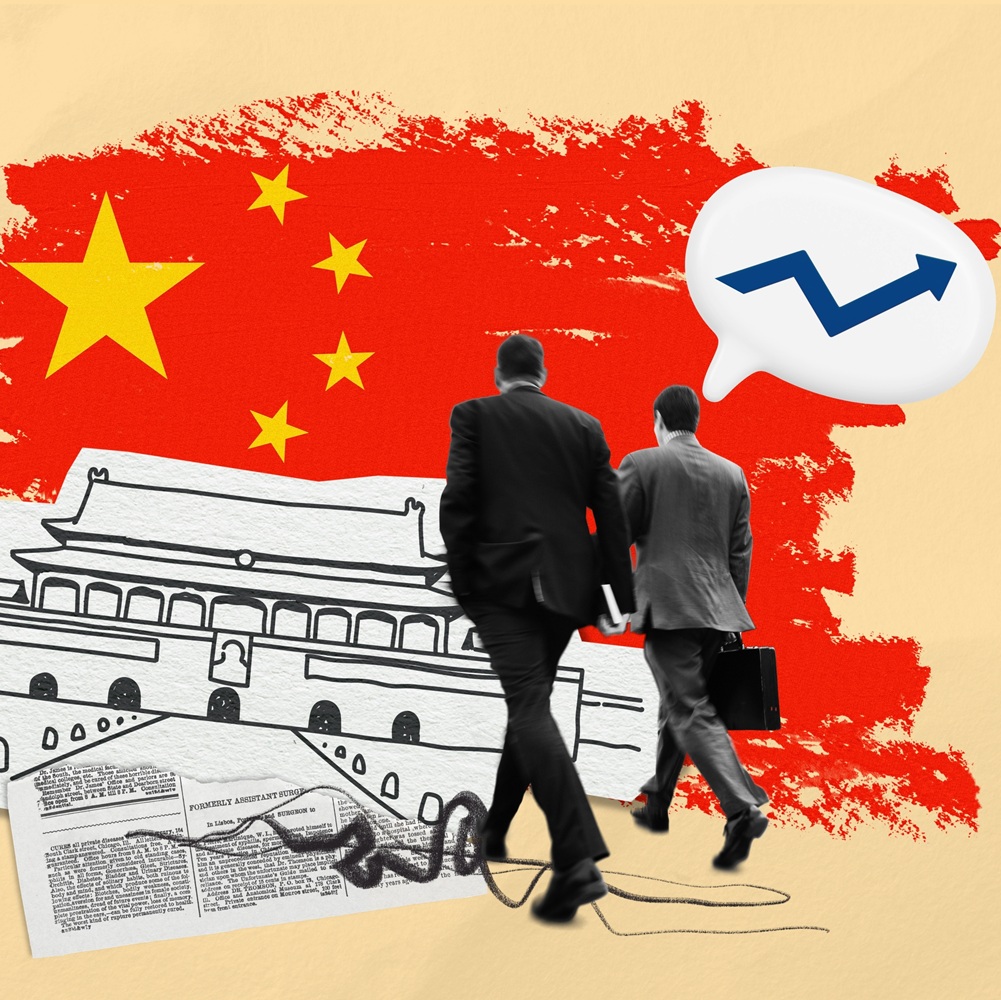
Collage with two businessmen in suits walking, China flag. Business theme collage with upward trend. Represents China business, and progress. Business collage design

China’s new 5-year plan: A high-stakes bet on self-reliance that won’t fix an unbalanced economy

by Shaoyu Yuan

Every few years since 1953, the Chinese government has unveiled a new master strategy for its economy: the all-important five-year plan. For the most part, these blueprints have been geared at spurring growth and unity as the nation transformed from a rural, agrarian economy to an urbanized, developed powerhouse. The task that faced China’s leaders as they met in early October 2025 to map out their 15th such plan was, however, complicated by two main factors: sluggish domestic growth and intensifying geopolitical rivalry. Their solution? More of the same. In pledging to deliver “high-quality development” through technological self-reliance, industrial modernization and expanded domestic demand, Beijing is doubling down on a state-led model that has powered its rise in recent years. President Xi Jinping and others who ironed out the 2026-2030 plan are betting that innovation-driven industrial growth might secure China’s future, even as questions loom about underpowered consumer spending and mounting economic risks. As an expert on China’s political economy, I view China’s new five-year plan as being as much about power as it is about economics. Indeed, it is primarily a blueprint for navigating a new era of competition. As such, it risks failing to address the widening gap between surging industrial capacity and tepid domestic demand. High-tech dreams At the heart of the new plan are recommendations that put advanced manufacturing and tech innovation front and center. In practice, this means upgrading old-line factories, automating and “greening” heavy industry and fostering “emerging and future industries” such as aerospace, renewable energy and quantum computing. By moving the economy up the value chain, Beijing hopes to escape the middle-income trap and cement its status as a self-reliant tech superpower. To insulate China from export controls put in place by other countries to slow China’s ascent, Beijing is doubling down on efforts to “indigenize” critical technologies by pumping money into domestic companies while reducing dependence on foreign suppliers. This quest for self-reliance is not just about economics but explicitly tied to national security. Under Xi, China has aggressively pursued what the Chinese Communist Party calls “military-civil fusion” – that is, the integration of civilian innovation with military needs. The new five-year plan is poised to institutionalize this fusion as the primary mechanism for defense modernization, ensuring that any breakthroughs in civilian artificial intelligence or supercomputing automatically benefit the People’s Liberation Army. Reshaping global trade China’s state-led push in high-tech industries is already yielding dividends that the new five-year plan seeks to extend. In the past decade, China has surged to global leadership in green technologies such as solar panels, batteries and electric vehicles thanks to hefty government support. Now, Beijing intends to replicate that success in semiconductors, advanced machinery, biotechnology and quantum computing. Such ambition, if realized, could reshape global supply chains and standards. But it also raises the stakes in China’s economic rivalry with advanced economies. Chinese prowess in building entire supply chains has spurred the United States and Europe to talk of reindustrialization to avoid any overreliance on Beijing. By pledging to build “a modern industrial system with advanced manufacturing as the backbone” and to accelerate “high-level scientific and technological self-reliance,” the new plan telegraphs that China will not back down from its bid for tech dominance. An elusive rebalancing What the plan gives comparatively modest attention, however, is the lack of strong domestic demand. Boosting consumer spending and livelihoods gets little more than lip service in the communiqué that followed the plenum at which the five-year plan was mapped out. Chinese leaders did promise efforts to “vigorously boost consumption” and build a “strong domestic market,” alongside improvements to education, health care and social security. But these goals were listed only after the calls for industrial upgrading and tech self-sufficiency – suggesting old priorities still prevail. And this will disappoint economists who have long urged Beijing to shift from an overt, export-led model and toward a growth model driven more by household consumption. Household consumption still accounts for only about 40% of gross domestic product, far below advanced-economy norms. The reality is that Chinese households are still reeling from a series of recent economic blows: the COVID-19 lockdowns that shattered consumer confidence, a property market collapse that wiped out trillions in wealth, and rising youth unemployment that hit a record high before officials halted the publication of that data. With local governments mired in debt and facing fiscal strain, there is skepticism that bold social spending or pro-consumption reforms will materialize anytime soon. With Beijing reinforcing manufacturing even as domestic demand stays weak, the likelihood is extra output will be pushed abroad – especially when it comes to EVs, batteries and solar technologies – rather than be absorbed at home. The new plan is cognizant of the need to maintain a strong manufacturing base, particularly among beleaguered industrial farms and other older industries struggling to stay afloat. As such, this approach may prevent painful downsizing in the short run, but it delays the rebalancing toward services and consumption that many economists argue China needs. Ripple effects Beijing has traditionally portrayed its five-year plans as a boon not only for China but for the world. The official narrative, echoed by state media, emphasizes that a stable, growing China remains an “engine” of global growth and a “stabilizer” amid worldwide uncertainty. Notably, the new plan calls for “high-level opening-up,” aligning with international trade rules, expanding free-trade zones and encouraging inbound investment – even as it pursues self-reliance. Yet China’s drive to climb the technological ladder and support its industries will likely intensify competition in global markets – potentially at the expense of other countries’ manufacturers. In recent years, China’s exports have surged to record levels. This flood of cheap Chinese goods has squeezed manufacturers among trading partners from Mexico to Europe, which have begun contemplating protective measures. If Beijing now doubles down on subsidizing both cutting-edge and traditional industries, the result could be an even greater glut of Chinese products globally, exacerbating trade frictions. In other words, the world may feel more of China’s industrial might but not enough of its buying power – a combination that could strain international economic relations. A high-stakes bet on the future With China’s 15th five-year plan, Xi Jinping is making a strategic bet on his long-term vision. There is no doubt that the plan is ambitious and comprehensive. And if successful, it could guide China to technological heights and bolster its claim to great-power status. But the plan also reveals Beijing’s reluctance to depart from a formula that has yielded growth at the cost of imbalances that have hurt many households across the vast country. Rather than fundamentally shift course, China is trying to have it all ways: pursuing self-reliance and global integration, professing openness while fortifying itself, and promising prosperity for the people while pouring resources into industry and defense. But Chinese citizens, whose welfare is ostensibly the plan’s focus, will ultimately judge its success by whether their incomes rise and lives improve by 2030. And that bet faces long odds.

Energy & Economics
Mersin, Turkey-09 12 2024: A cold Coca Cola or pepsi  bottle or metal can with water droplets on it. Coca Cola on black background

The geopolitical impact on global brands: Coca-Cola and Pepsi in the Middle East and Muslim markets

by World & New World Journal

Coca-Cola and Pepsi are among the most recognized and consumed soft drinks in the world, with Coca-Cola leading as the global favorite (World Population Review, 2025). However, in recent years, geopolitics has shaped their presence in certain regions, particularly in the Middle East and Muslim-majority countries. The reason behind this is interesting, these brands are often seen or associated with the United States (Hebblethwaite, 2012), a nation whose fame in these regions has always been questioned and been controversial, and whose policies in the region have long sparked controversy and criticism. Overview of Coca-Cola and Pepsi in the US Coca-Cola was born on May 8th, 1886, when Dr. John Pemberton delivered his newly perfected syrup to Jacob’s Pharmacy in downtown Atlanta, USA. After 139 years, what started as medicine evolved into the iconic soft drink that is enjoyed in more than 200 countries and territories every day (The Coca Cola Company, 2025). On the other hand, a few years later, in 1893, Brad’s drink, later rebranded as Pepsi-Cola, was invented in New Bern, North Carolina, USA by Caleb Brandham, as an aid in digestion (History of the Birthplace, 2018). Pepsi’s presence worldwide also covers more than 200 countries and territories and can be said it is Coca-Cola’s closest rival. While these brands have built a reputation, they have a long history, their competition has been fierce to the dominance of their market across the globe. The term “Cola Wars” represents this fierce competition. Cola wars gained global attention and likely reached their peak around the 1970s and 1980s in the US, while nowadays the fight keeps on, those years were key in how their presence around the globe has resulted nowadays. A bit of the context of the Cola Wars; during the beginning of the 20th century Coca-Cola led the market, while Pepsi had a rough time and went bankrupt in 1923. After its restructured, Pepsi maintained but Coca-Cola advertisements, such as those featuring Santa Claus, made it difficult for Pepsi to compete and by the time of WWII, Coca-Cola could be found in 44 countries already. In 1965 Pepsi merged with Frito-Lay-Inc trying to gain better footholds in restaurants and supermarkets. At the time Coca-Cola was expanding its brand into other soft drinks beverages, Pepsi could simply not compete against them. But by the mid-1970s, Pepsi launched its “Pepsi Challenge”, a genius blind test marketing bet in which over 50% of Americans chose Pepsi over Coca-Cola due its sweeter taste, of course Pepsi claimed its first victory over giant Coca-Cola and started its rise. Coca-Cola's response came with celebrity endorsement and the diet coke in the early 80’s. But by the mid 80’s, Pepsi sales skyrocketed due to its collaboration and promotion with Michael Jackson and appearance in several movies like Back to the Future. Coca-Cola had an identity crisis at the time, but after going back to its roots, (Weird History Food, 2022) once again it came back to fight and claimed its important place in the industry. Coca-Cola and Pepsi around the world While the Cola Wars were largely defined within the American market, their global expansion strategies took very different trajectories once they reached international audiences. Coca-Cola made their debut in the international market in the early 20th century, but it was until WWII when it got international recognition. A marketing associated with American optimism and modernity was followed by the company, and during the war, the company produced millions of bottles for US troops abroad, introducing the drink to soldiers and civilians across Europe, Africa and Asia. The strategy transformed Coca-Cola from a domestic beverage into a global cultural symbol. Pepsi, meanwhile, took a more opportunistic route. After financial struggles between the 1920s and 1930s, the brand re-emerged with a more aggressive global approach. Its internationalization came in 1949 with exports to Canada and later expanded to Mexico, Brazil and the Philippines, but it was until the Cold War, when its real global expansion began (FBIF Food & Beverage Innovation, 2014), when it merged with Frito-Lay and diversified its portfolio. By 2024, PepsiCo generated $92 billion net revenue (PepsiCo, 2025) while Coca-Cola grew 3% to stand at $47.1 billion net revenues (The Coca-Cola Company, 2025) that same year and their products and diversifications not only include the classical soft drinks, but also other beverages and foods. Yet despite their shared dominance in over 200 countries, both face different degrees of acceptance depending on local political, cultural and religious attitudes. The role of geopolitics: soft power, sanctions, wars, risks and opportunities As stated already, both brands are known globally, however, it is important to highlight that their presence in different regions of the world has been shaped by other actors more than just commercial advertisements, or even due to their advertisements and commercial strategies. Let me explain in more detail. In the case of Coca-Cola, during WWII and the Cold War, many people outside of the United States associated the product with American culture, Coca-Cola became a symbol of American soft power and globalization, clearly seen in war advertisements featuring soldiers enjoying cokes suggesting the commonly used “bring people and nations together” phrases. (Edelstein, 2013) On the other hand, with a more social-cultural strategy, Pepsi used the American pop-culture as their approach to gain attention worldwide. Michael Jackson, Madonna, Britney Spears, Beyoncé, among others (Kalgutkar, 2024) were iconic in the brand. In addition, Pepsi’s marketing leveraged music, youth, and rebellion, giving a softer and aspirational appeal. However, this cultural and ideological symbolism also made both companies vulnerable to political backlashes and somehow have defined their reputation and presence in some areas of the world. In the 1950’s, France coined the term “coca-colonization” denouncing American influence. During the Cold War, Coca-Cola became a capitalist symbol (in the eyes of outsiders), and it was banned in the Soviet Union, an opportunity Pepsi took advantage of there. Later, when the Berlin Wall fell, Coca-Cola became a representation of freedom. (Hebblethwaite, 2012) However, the most notable geopolitical response came when the Arab League boycotted the brand between 1968-1991 in the 13-nation organization, because it chose to operate in Israel while the Palestinian land was under occupation. Pepsi capitalized on this absence, solidifying its position in the Arab markets. In addition to the Arab League boycott, there are other cases where sanctions imposed by the US to different countries have led to a small or lack of sales of the products, such as Myanmar, North Korea, Cuba or the Soviet Union, back on time. Moreover, occasional protests and bans in countries like Iran, Venezuela or Thailand (Hebblethwaite, 2012) has also affected the brands at certain points of the history and of course have created an image and reputation in the society, with positive, neutral or negative perceptions. Moving towards present day, after the war in Gaza broke out in October 2023, pressure on the brands reappeared on the Middle East; Coca-Cola, who has a factory in the illegal settlement in East Jerusalem in the Atarot Industrial Zone, was accused of complicity and violations of the international law, in addition to being “related” with the Israeli army. These led to the BDS Movement to add it to a boycott list, which led to protests and has also been spread across other Muslim-majority countries. Of course, sales have dropped sharply in different countries in the region like Egypt and Bangladesh. (Boycat Times, 2025) Pepsi, on the other hand, even though it has a major presence in the Middle East market built over the space left by Coca-Cola during the 1968-1991 boycott, has also been affected by the War in Gaza and the boycotts in the region. PepsiCo reported stagnation in beverage growth across Egypt, Lebanon and Pakistan, compared with 8-15% growth a year earlier the war started. (Awasthi, 2024) The boycott of these American brands in the Middle East and some Muslim-majority markets has led to important losses in the share market and the sales itself. For instance, Coca-Cola sales reportedly fell by 23% in Bangladesh and dropped by over 10% in Egypt, overall, there is an estimation of 7% regional revenue loss in the MENA region. The losses of the American brands had become an opportunity to the local brands, like Pakistan’s Cola Next and Pakola (shared market increased from 2.5% up to 12% after the boycott (The Economic Times, 2024)), Qatar’s Kinza or Egypt’s V7, which have up to 40% in market share growth and up to 350% growth in exports, canalizing consumer preferences for local alternatives. (The Economic Times, 2024), (Awasthi, 2024), (CBC, 2024), even in the West Bank, the Palestinian Chat Cola has been positioned in the market, with sales of over 40% in 2023 compared to the previous year. (Associated Press, 2025) Coca-Cola and Pepsi boycotts are not the only ones, other companies like McDonald’s or Starbucks have also been affected in the region, due to similar or same reasons. Even more, in Canada, another great example is the “americano” [coffee] being renamed as “canadiano”, (Barista Magazine, 2025) as response to the economic and political tensions developed earlier this year between Canada and the USA. Despite the boycotts, Coca-Cola and PepsiCo have a base in the region, and they have seek opportunities to continue, through investments (Coca-Cola invested $22 million in upgrading technology in Pakistan) or new strategies (PepsiCo reintroduced Teem soda in Pakistan with a “Made in Pakistan” printed on the label) (Shahid, DiNapoli, & Saafan, 2024). Overall, both companies are trying to maintain, penetrate and expand their products in the market, they have been using and relying on bottling companies as a strong tool for those purposes, creating alliances with local companies as well as innovating and testing different new products in the region. Conclusion The current boycott of Coca-Cola and Pepsi across the Middle East and Muslim-majority countries is not only a reflection of political anger – it is a window into how geopolitics can directly reshape consumer economies. What once symbolizes Western globalization, and cultural appeal has now become a marker of political identity and economic nationalism. In a society driven by consumerism – where success is often measured by how much one owns – people tend to care less about genuine human values such as love, kindness, respect, empathy and consideration (MET, 2022). Ironically, today that statement seems reversed. For many consumers, boycotting Western brands has become not only a moral choice but also an act of solidarity and empowerment. Beyond economics, the boycott also reflects a psychological and cultural response. For many consumers in the Middle East, choosing what to drink has become a symbolic act of identity, resistance and empathy. Avoiding brands such as Coca-Cola and Pepsi offers a sense of agency and unity Palestine, turning everyday consumption into an expression of political consciousness. Although both companies remain resilient and continue to invest heavily in local markets, their challenges go beyond short-term losses. The rise of local brands such as V7. Kinza and Cola Next highlights a deeper regional shift – where consumers are not merely reacting to politics, but redefining loyalty based on ethics, identity and sovereignty. In the long term, this phenomenon could accelerate the regionalization of the markets, as local producers gain confidence and international corporations are compelled to adapt – by respecting cultural sensitivities, building genuine local partnerships, and ensuring transparency across their supply chains. Ultimately, the story of Coca-Cola and Pepsi in the Middle East demonstrates that in today’s interconnected world, soft power is no longer a one-way export. Consumer behavior itself has become a form of diplomacy – capable of rewarding inclusion or punishing complicity.ReferencesAssociated Press. (2025, 03 02). Coca-Cola's appeal to Palestinians fizzles amid war. Retrieved from VOA News: https://www.voanews.com/a/coca-cola-s-appeal-to-palestinians-fizzles-amid-war/7991182.htmlAwasthi, S. (2024, 09 15). Middle East conflict bites Coca-Cola, Pepsi. Retrieved from SBS News: https://www.sbs.com.au/news/podcast-episode/middle-east-conflict-bites-coca-cola-pepsi/z445sv6glBarista Magazine. (2025, 02 25). Move Over, Americano: The ’Canadiano’ Has Arrived. Retrieved from Barista Magazine Online: https://www.baristamagazine.com/move-over-americano-the-canadiano-has-arrived/Boycat Times. (2025, 09 02). Everything You Need to Know: Why We Boycott Coca Cola. Retrieved from Boycat Times: https://blog.boycat.io/posts/boycott-coca-cola-israel-gaza-palestineCBC. (2024, 09 04). Muslim countries' local sodas see boost amid Coke and Pepsi boycott over Gaza. Retrieved from CBC: https://www.cbc.ca/news/business/coke-pepsi-boycott-1.7313370Edelstein, S. (2013, 05 13). A visual remix of the American Dream as pictured in Mid-Century media. On the front lines with Coca Cola pt II. Retrieved from Envisioning the American Dream: https://envisioningtheamericandream.com/2013/05/30/on-the-front-lines-with-coca-cola-pt-ii/FBIF Food & Beverage Innovation. (2014, November 18). PepsiCo's path to global dominance: from beverage brand to food empire. Retrieved from Food Talks: https://www.foodtalks.cn/en/news/54496Hebblethwaite, C. (2012, September 11). Who, What, Why: In which countries is Coca-Cola not sold? Retrieved from BBC News: https://www.bbc.com/news/magazine-19550067History of the Birthplace. (2018, October 18). Retrieved from Wayback machine: https://web.archive.org/web/20181004163206/http://www.pepsistore.com/history.aspKalgutkar, N. (2024, November 28). Pepsi’s Advertising: An Iconic Campaigns and Pop Culture Impact. Retrieved from Treehack: https://treehack.com/pepsis-advertising-an-iconic-campaigns-and-pop-culture-impact/MET. (2022, 07 29). The effects of living in a consumer society. Retrieved from MET: https://group.met.com/en/mind-the-fyouture/mindthefyouture/consumer-society/#:~:text=July%2029%2C%202022,the%20operation%20of%20a%20company.PepsiCo. (2025). Who we are. Retrieved from PepsiCo: https://www.pepsico.com/who-we-are/about-pepsicoShahid, A., DiNapoli, J., & Saafan, F. (2024, 09 05). Coke and Pepsi boycott over Gaza lifts Muslim countries' local sodas. Retrieved from Reuters: https://www.reuters.com/business/retail-consumer/coke-pepsi-boycott-over-gaza-lifts-muslim-countries-local-sodas-2024-09-04/The Coca Cola Company. (2025). Our Company. Retrieved from The Coca Cola Company: https://www.coca-colacompany.com/about-usThe Coca-Cola Company. (2025, February 02). Coca‑Cola Reports Fourth Quarter and Full Year 2024 Results. Retrieved from Thr Coca-Cola Company: https://www.coca-colacompany.com/media-center/coca-cola-reports-fourth-quarter-and-full-year-2024-results#:~:text=For%20the%20full%20year%2C%20net,the%20timing%20of%20concentrate%20shipments.The Economic Times. (2024, 09 04). Coca-Cola and PepsiCo lose popularity to local Cola brands due to boycott over Gaza in Muslim countries. Retrieved from The Economic Times: https://economictimes.indiatimes.com/news/international/business/coca-cola-and-pepsico-lose-popularity-to-local-cola-brands-due-to-boycott-over-gaza-in-muslim-countries/articleshow/113064771.cmsWeird History Food. (2022, 07 24). Do You Remember the Cola Wars: Coca-Cola vs. Pepsi? Retrieved from YouTube: https://www.youtube.com/watch?v=jtwkKrjHlhcWorld Population Review. (2025). World Population Review. Retrieved from Top-Selling Soft Drinks by Country 2025: https://worldpopulationreview.com/country-rankings/top-selling-soft-drinks-by-country

Energy & Economics
Global business connection concept. Double exposure world map on capital financial city and trading graph background. Elements of this image furnished by NASA

Liaison countries as foreign trade bridge builders in the geo-economic turnaround

by Eva Willer

Introduction Geopolitical tensions are making global trade increasingly difficult. In order to reduce the associated risk of default, companies are shifting their trade relations to trading partners that are politically similar to them. In the course of the beginnings of geo-economic fragmentation, politically and economically like-minded countries are also gaining in importance for German and European decision-makers. Liaison countries1 in particular can form a counterforce to the trend towards polarization in foreign trade - especially between the USA and China: they are characterized by a pronounced economic and trade policy openness that overrides differences between geopolitical or ideological camps. Consequently, the question arises: How can relevant connecting countries for Germany and Europe be identified? What opportunities and risks do closer trade relations with these countries offer in order to strengthen foreign trade resilience in geopolitically uncertain times?  With a high degree of openness - defined as the sum of imports and exports in relation to gross domestic product - of over 80 percent2 , the German economy is strongly integrated into global trade. Accordingly, the disruptive effect of geo-economic fragmentation on the German economy would be above average. The defensive strategy to strengthen Germany's economic security by pushing for trade policy independence would only reinforce geo-economic fragmentation. Against the backdrop of comparatively high economic vulnerability, it is necessary to focus on those potential partner countries with which German and European foreign trade could be developed and expanded even under the condition of increasing fragmentation.  Geoeconomic Fragmentation  The term "geo-economic fragmentation" is used to describe the politically motivated reorganization of global goods and financial flows, in which strategic, economic and political interests primarily determine the choice of countries of origin and destination for trade flows.3 In the scenario of geo-economic fragmentation, the result would be the formation of a bloc within the global community of states, which would fundamentally change the regulatory structure of global economic networking. In this case, trade and investment would probably concentrate from a previously diverse range of economic partner countries - prior to the formation of the bloc - on those countries that now - since the formation of the bloc - belong to the same bloc.  The likelihood of this scenario occurring and leading to an increased fragmentation of the global economic order has increased again in the recent past. For example, Donald Trump's second term as US president is causing increasing geopolitical uncertainty worldwide.  Statements on the concrete form of a possible demarcation of potential blocs are subject to a great deal of uncertainty. However, the division of a large part of the global economy into a "US bloc" and a "China bloc" is a conceivable scenario for which German politics and business should prepare.  Data already shows that, at a global level, foreign trade openness has decreased in the recent past. Data from the World Trade Organization (WTO) illustrates the increasing hurdles in global trade in goods. While 3.1% of global imports were still affected by tariff or non-tariff barriers to trade in 2016 - including under WTO rules - this figure rose to 11.8% in 2024 over the following years.4 This development goes hand in hand with a noticeable loss of importance and enforcement of the WTO since the 2010s, which previously played a central role as the guardian of the rules-based global economic order.  Studies by the International Monetary Fund (IMF) have already found indications of an incipient geo-economic fragmentation along potential bloc borders. It shows that trade in goods and foreign direct investment between countries that would belong to the opposing camp in the event of a bloc formation declined on average in 2022 and 2023 - in contrast to foreign trade between countries that are geopolitically close.5  In this initial phase of geo-economic fragmentation, liaison countries are beginning to establish themselves as a counterforce, holding the fragmenting global community of states together with new trade and investment routes.  Identification of liaison countries Specifically, liaison countries have the following characteristics: a pronounced openness to foreign trade in the form of a high foreign trade quota and low tariff and non-tariff trade barriers, as well as pronounced economic relations with partner countries from different geopolitical camps. The geopolitical orientation of countries can be examined using data on voting behavior within the United Nations.6 This involves analyzing whether a country can be assigned to the US or Chinese camp - or whether there is no pronounced proximity and therefore political neutrality or "non-alignment" in the sense of ideological independence. The data-based identification of connecting countries is relatively new. Empirical analyses are also limited to connecting countries in the context of US-Chinese foreign trade - specifically US imports from China. In this case, the characteristics of a connecting country can be broken down into (1) "non-alignment" - i.e. a geopolitical distance to both a Western and an Eastern bloc - as well as (2) an increase in imports and foreign investment from China and (3) a simultaneous increase in exports to the United States. In a narrower sense, this is an evasive reaction to trade restrictions, i.e. circumventing trade. If the foreign trade indicators - specifically the trade and investment data relating to the US and China - of "non-aligned" countries for the period from 2017 to 2020 show corresponding characteristic-related changes compared to previous years, these can be identified as countries connecting the US and China.  The analysis of trade data shows that the value of direct exports from China to the USA fell during Donald Trump's first term in office. At the same time, both Chinese exports to some of the "non-aligned" countries and exports from these countries to the USA have increased significantly. These countries have presumably stepped in as a link on the export route from China to the US after the previously direct trade flow was interrupted by trade barriers and had to find a new route. Companies producing in China are therefore likely to have sought new, indirect ways to maintain access to the US sales market.  A certain statistical inaccuracy in the foreign trade data makes it difficult to draw a definitive conclusion in this context. It should be noted: No single commodity can be tracked across national borders in trade data collection. Whether the additional goods imported from China actually found their way to the United States can only be assumed approximately. However, if the trade flows are aggregated, a clearer picture emerges and the circumvention trade via selected connecting countries - including Vietnam and Mexico - becomes visible.  Data on foreign direct investment rounds off the analysis.7 "Non-aligned" countries in which an increase in Chinese investment can be seen between 2016 and 2020 in addition to trade flows can be identified as connecting countries. Here, too, available data suggests that the companies concerned either exported their goods to the United States via a stopover or even outsourced parts of their production destined for the US market to connecting countries. Five connecting countries between the US and China Based on the 2017-2020 study period, various connecting countries can be empirically identified that were used to indirectly maintain access to the US market. In terms of foreign trade volume, the economically most important connecting countries include Mexico, Vietnam, Poland, Morocco and Indonesia.8 All five countries are characterized by the fact that both their exports of goods to the US and their imports of goods from China increased significantly between 2017 and 2020. In addition, greenfield investments (foreign direct investment to set up a new production facility) have risen significantly compared to the period before 2017.  However, the five countries show different priorities in their development, which differentiate them in their role as connecting countries between the USA and China. In Vietnam, exports to the USA in particular have risen sharply. China has been the most important procurement market for Vietnamese companies for years. Poland, Mexico and Indonesia are characterized as connecting countries primarily by the significant increase in imports from China. Morocco, in turn, was able to attract more Chinese foreign investment in particular. Greenfield investments have almost tripled here since 2017. However, Poland - a rather surprising candidate for the role of liaison country, as it is intuitively assigned to the US-oriented bloc - is positioned fairly centrally between the US and China according to the analysis of voting behavior within the United Nations9. In addition, Poland qualifies primarily due to the sharp rise in greenfield investments from China, primarily in the expansion of domestic battery production.10  It cannot be concluded from the previous studies on the USA and China whether German companies are also circumventing trade barriers from the USA via the countries identified. As the trade policy conflicts between the US and China differ significantly from those between the EU and China, there has been a lack of comparable empirical data to analyze connecting countries in the EU context. Opportunities and challenges As the German economy is strongly oriented towards foreign trade and is closely networked with both the USA and China, German companies play a particularly exposed role in the area of tension between the USA and China. Increased economic exchange with potential connecting countries would offer German companies an opportunity to mitigate the expected shock of a geopolitical bloc. They could at least maintain international trade to a certain extent and thus secure some of the endangered sales and procurement markets. On the other hand, there are also costs associated with expanding foreign trade relations with potential connecting countries. The greater complexity also increases the risk in the value chains. Companies that position themselves wisely within this trade-off buy themselves valuable time in the event of a shock to reorganize themselves against the backdrop of changed foreign trade conditions.  From the perspective of foreign trade policy, it is also possible to examine the extent to which stronger foreign trade cooperation with (potential) connecting countries could have advantages. The trade-off between resilience and complexity must then be assessed at a macroeconomic level, beyond individual company interests. In order to make it easier for companies to connect to potential connecting countries and to create appropriate framework conditions, German and European policy can build on existing comprehensive strategies at national and European level. Both the China Strategy11 and the National Security Strategy12 focus foreign policy on connecting countries as part of a stronger economic and political risk diversification. There is also a similar framework at European level with the EU's Strategic Compass13 . Following on from this, the German government could create targeted incentives to open up new markets in liaison countries, which would diversify critical supply chains and reduce one-sided dependencies.  At the same time, connecting countries pose a challenge. These can be used to circumvent foreign trade measures such as sanctions if flows of goods can find alternative routes via connecting countries more easily than before.  In order to realize opportunities and overcome challenges, close cooperation between science, politics and companies is required. This first requires the identification of a selection of potential connecting countries through scientifically sound analysis. This creates the basis for the subsequent steps in which European and German policymakers work closely with companies to create attractive framework conditions for trade with potential connecting countries - for example through bilateral trade agreements.  Attractive foreign trade framework conditions can create the necessary incentive to actually expand trade relations with potential connecting countries. Companies need to weigh up individual cases and make forward-looking decisions: To what extent is there a risk of a loss of production triggered by geopolitical conflicts? And how much would the complexity of the value chain increase if more potential connecting countries were included? Ultimately, the actual choice of preferred sales and procurement markets lies with the individual companies. LicenseThis work is licensed under CC BY 4.0 References1. Verbindungsländer werden im Sinne von Connectors verstanden, vgl. Gita Gopinath/Pierre-Olivier Gourinchas/Andrea F Presbitero/Petia Topalova, Changing Global Linkages: A New Cold War?, Washington, D.C.: IMF, April 2024 (IMF Working Paper) <https://www.imf.org/en/Publications/WP/Issues/2024/04/05/Changing-Global-Linkages-A-New-ColdWar-547357/>. 2. Statistisches Bundesamt (Destatis), Außenwirtschaft. 2025, <https://www.destatis.de/DE/Themen/Wirtschaft/Globalisierungsindikatoren/aussenwirtschaft.html#246 078/>.  3. Shekahar Aiyar/Franziska Ohnsorge, Geoeconomic Fragmentation and ‚Connector’ Countries, Online verfügbar unter:  <https://mpra.ub.uni-muenchen.de/121726/1/MPRA_paper_121726.pdf>.4. WTO, WTO Trade Monitoring Report, Genf, November 2024, <https://www.wto.org/english/tratop_e/tpr_e/factsheet_dec24_e.pdf/>. 5. Gita Gopinath/Pierre-Olivier Gourinchas/Andrea F Presbitero/Petia Topalova, Changing Global Linkages: A New Cold War?, Washington, D.C.: IMF, April 2024 (IMF Working Paper) <https://www.imf.org/en/Publications/WP/Issues/2024/04/05/Changing-Global-Linkages-A-New-ColdWar-547357/>.  6. Michael A. Bailey/Anton Strezhnev/Erik Voeten, »Estimating Dynamic State Preferences from United Nations Voting Data«, Journal of Conflict Resolution, 61 (2017) 2, S. 430-456, <https://journals.sagepub.com/doi/10.1177/0022002715595700/>.7. Gita Gopinath/Pierre-Olivier Gourinchas/Andrea F Presbitero/Petia Topalova, Changing Global Linkages: A New Cold War?, Washington, D.C.: IMF, April 2024 (IMF Working Paper) <https://www.imf.org/en/Publications/WP/Issues/2024/04/05/Changing-Global-Linkages-A-New-ColdWar-547357/>. War-547357. 8. Enda Curran/Shawn Donnan/Maeva Cousin, »These Five Countries are Key Economic ‚Connectors‘ in a Fragmenting World«, in Bloomberg (online), 1.11.2023, <https://www.bloomberg.com/news/articles/2023-1102/vietnam-poland-mexico-morocco-benefit-from-us-china-tensions/>.9. Michael A. Bailey/Anton Strezhnev/Erik Voeten, »Estimating Dynamic State Preferences from United Nations Voting Data«, Journal of Conflict Resolution, 61 (2017) 2, S. 430-456, <https://journals.sagepub.com/doi/10.1177/0022002715595700/>.  10. Enda Curran/Shawn Donnan/Maeva Cousin, »These Five Countries are Key Economic ‚Connectors‘ in a Fragmenting World«, in Bloomberg (online), 1.11.2023, <https://www.bloomberg.com/news/articles/202311-02/vietnam-poland-mexico-morocco-benefit-from-us-china-tensions/>.11. Auswärtiges Amt, China‐Strategie der Bundesregierung, Berlin, Juli 2023, <https://www.auswaertigesamt.de/resource/blob/2608578/810fdade376b1467f20bdb697b2acd58/china-strategie-data.pdf/>.  12. Auswärtiges Amt, Integrierte Sicherheit für Deutschland: Nationale Sicherheitsstrategie, Berlin, Juni 2023, <https://www.bmvg.de/resource/blob/5636374/38287252c5442b786ac5d0036ebb237b/nationalesicherheitsstrategie-data.pdf/>.  13. Rat der Europäischen Union, Ein Strategischer Kompass für Sicherheit und Verteidigung, Brüssel, März 2022, <https://data.consilium.europa.eu/doc/document/ST-7371-2022-INIT/de/pdf/>.

Energy & Economics
Commodity and alternative asset, gold bar and crypto currency Bitcoin on rising price graph as financial crisis or war safe haven, investment asset or wealth concept.

Assessing Bitcoin and Gold as Safe Havens Amid Global Uncertainties: A Rolling Window DCC-GARCH Analysis

by Anoop S Kumar , Meera Mohan , P. S. Niveditha

Abstract We examine the roles of Gold and Bitcoin as a hedge, a safe haven, and a diversifier against the coronavirus disease 2019 (COVID-19) pandemic and the Ukraine War. Using a rolling window estimation of the dynamic conditional correlation (DCC)-based regression, we present a novel approach to examine the time-varying safe haven, hedge, and diversifier properties of Gold and Bitcoin for equities portfolios. This article uses daily returns of Gold, Bitcoin, S&P500, CAC 40, and NSE 50 from January 3, 2018, to October 15, 2022. Our results show that Gold is a better safe haven than the two, while Bitcoin exhibits weak properties as safe haven. Bitcoin can, however, be used as a diversifier and hedge. This study offers policy suggestions to investors to diversify their holdings during uncertain times. Introduction Financial markets and the diversity of financial products have risen in both volume and value, creating financial risk and establishing the demand for a safe haven for investors. The global financial markets have faced several blows in recent years. From the Global Financial Crisis (GFC) to the outbreak of the pandemic and uncertainty regarding economic policy measures of governments and central banks, the financial markets including equity markets around the world were faced with severe meltdowns. This similar behavior was observed in other markets including equity and commodity markets, resulting in overall uncertainty. In this scenario, the investors normally flock toward the safe-haven assets to protect their investment. In normal situations, investors seek to diversify or hedge their assets to protect their portfolios. However, the financial markets are negatively impacted when there are global uncertainties. Diversification and hedging methods fail to safeguard investors’ portfolios during instability because almost all sectors and assets are negatively affected (Hasan et al., 2021). As a result, investors typically look for safe-haven investments to safeguard their portfolios under extreme conditions (Ceylan, 2022). Baur and Lucey (2010) provide the following definitions of hedge, diversifier, and safe haven: Hedge: An asset that, on average, has no correlation or a negative correlation with another asset or portfolio. On average, a strict hedge has a (strictly) negative correlation with another asset or portfolio.Diversifier: An asset that, on average, has a positive correlation (but not perfect correlation) with another asset or portfolio. Safe haven: This is the asset that in times of market stress or volatility becomes uncorrelated or negatively associated with other assets or a portfolio. As was previously indicated, the significant market turbulence caused by a sharp decline in consumer spending, coupled with insufficient hedging opportunities, was a common feature of all markets during these times (Yousaf et al., 2022). Nakamoto (2008) suggested a remedy by introducing Bitcoin, a “digital currency,” as an alternative to traditional fiduciary currencies (Paule-Vianez et al., 2020). Bitcoin often described as “Digital Gold” has shown greater resilience during periods of crises and has highlighted the potential safe haven and hedging property against uncertainties (Mokni, 2021). According to Dyhrberg (2016), the GFC has eased the emergence of Bitcoin thereby strengthening its popularity. Bouri et al. (2017) in their study indicate that Bitcoin has been viewed as a shelter from global uncertainties caused by conventional banking and economic systems. Recent research has found that Bitcoin is a weak safe haven, particularly in periods of market uncertainty like the coronavirus disease 2019 (COVID-19) crisis (Conlon & McGee, 2020; Nagy & Benedek, 2021; Shahzad et al., 2019; Syuhada et al., 2022). In contrast to these findings, a study by Yan et al. (2022) indicates that it can function as a strong safe haven in favorable economic times and with low-risk aversion. Ustaoglu (2022) also supports the strong safe-haven characteristic of Bitcoin against most emerging stock market indices during the COVID-19 period. Umar et al. (2023) assert that Bitcoin and Gold are not reliable safe-havens. Singh et al. (2024) in their study reveal that Bitcoin is an effective hedge for investments in Nifty-50, Sensex, GBP–INR, and JPY–INR, at the same time a good diversifier for Gold. The study suggests that investors can incorporate Bitcoin in their portfolios as a good hedge against market volatility in equities and commodities markets. During the COVID-19 epidemic, Barbu et al. (2022) investigated if Ethereum and Bitcoin could serve as a short-term safe haven or diversifier against stock indices and bonds. The outcomes are consistent with the research conducted by Snene Manzli et al. (2024). Both act as hybrid roles for stock market returns, diversifiers for sustainable stock market indices, and safe havens for bond markets. Notably, Bhuiyan et al. (2023) found that Bitcoin provides relatively better diversification opportunities than Gold during times of crisis. To reduce risks, Bitcoin has demonstrated a strong potential to operate as a buffer against global uncertainty and may be a useful hedging tool in addition to Gold and similar assets (Baur & Lucey, 2010; Bouri et al., 2017; Capie et al., 2005; Dyhrberg, 2015). According to Huang et al. (2021), its independence from monetary policies and minimal association with conventional financial assets allow it to have a safe-haven quality. Bitcoins have a substantial speed advantage over other assets since they are traded at high and constant frequencies with no days when trading is closed (Selmi et al., 2018). Additionally, it has been demonstrated that the average monthly volatility of Bitcoin is higher than that of Gold or a group of international currencies expressed in US dollars; nevertheless, the lowest monthly volatility of Bitcoin is lower than the maximum monthly volatility of Gold and other foreign currencies (Dwyer, 2015). Leverage effects are also evident in Bitcoin returns, which show lower volatilities in high return periods and higher volatilities in low return times (Bouri et al., 2017; Liu et al., 2017). According to recent research, Bitcoins can be used to hedge S&P 500 stocks, which increases the likelihood that institutional and retail investors will build secure portfolios (Okorie, 2020). Bitcoin demonstrates strong hedging capabilities and can complement Gold in minimizing specific market risks (Baur & Lucey, 2010). Its high-frequency and continuous trading further enrich the range of available hedging tools (Dyhrberg, 2016). Moreover, Bitcoin spot and futures markets exhibit similarities to traditional financial markets. In the post-COVID-19 period, Zhang et al. (2021) found that Bitcoin futures outperform Gold futures.Gold, silver, palladium, and platinum were among the most common precious metals utilized as safe-haven investments. Gold is one such asset that is used extensively (Salisu et al., 2021). Their study tested the safe-haven property of Gold against the downside risk of portfolios during the pandemic. Empirical results have also shown that Gold functions as a safe haven for only 15 trading days, meaning that holding Gold for longer than this period would result in losses to investors. This explains why investors buy Gold on days of negative returns and sell it when market prospects turn positive and volatility decreases (Baur & Lucey, 2010). In their study, Kumar et al. (2023) tried to analyse the trends in volume throughout futures contracts and investigate the connection between open interest, volume, and price for bullion and base metal futures in India. Liu et al. (2016) in their study found that there is no negative association between Gold and the US stock market during times of extremely low or high volatility. Because of this, it is not a strong safe haven for the US stock market (Hood & Malik, 2013). Post-COVID-19, studies have provided mixed evidence on the safe-haven properties of Gold (Bouri et al., 2020; Cheema et al., 2022; Ji et al., 2020). According to Kumar and Padakandla (2022), Gold continuously demonstrates safe-haven qualities for all markets, except the NSE, both in the short and long term. During the COVID-19 episode, Gold’s effectiveness as a hedge and safe-haven instrument has been impacted (Akhtaruzzaman et al., 2021). Al-Nassar (2024) conducted a study on the hedge effectiveness of Gold and found that it is a strong hedge in the long run. Bhattacharjee et al. (2023) in their paper examined the symmetrical and asymmetrical linkage between Gold price levels and the Indian stock market returns by employing linear autoregressive distributed lag and nonlinear autoregressive distributed lag models. The results exhibit that the Indian stock market returns and Gold prices are cointegrated. According to the most recent study by Kaczmarek et al. (2022), Gold has no potential as a safe haven, despite some studies on the COVID-19 pandemic showing contradictory results. The co-movements of Bitcoin and the Chinese stock market have also normalized as a result of this epidemic (Belhassine & Karamti, 2021). Widjaja and Havidz (2023) verified that Gold was a safe haven asset during the COVID-19 pandemic, confirming the Gold’s safe-haven characteristic. As previously pointed out, investors value safe-haven investments in times of risk. Investors panic at these times when asset prices fall and move from less liquid (risky) securities to more liquid (safe) ones, such as cash, Gold, and government bonds. An asset must be bought and sold rapidly, at a known price, and for a reasonably modest cost to be considered truly safe (Smales, 2019). Therefore, we need to properly re-examine the safe-haven qualities of Gold and Bitcoin due to the mixed evidences regarding their safe-haven qualities and the impact of COVID-19 and the war in Ukraine on financial markets. This work contributes to and deviates from the body of existing literature in the following ways. We propose a novel approach in this work to evaluate an asset’s time-varying safe haven, hedge, and diversifier characteristics. This research examines the safe haven, hedging, and diversifying qualities of Gold and Bitcoin against the equity indices; S&P 500, CAC 40, and NSE 50. Through the use of rolling window estimation, we extend the methodology of Ratner and Chiu (2013) by estimating the aforementioned properties of the assets. Comparing rolling window estimation to other conventional techniques, the former will provide a more accurate representation of an asset’s time-varying feature. This study explores the conventional asset Gold’s time-varying safe haven, hedging, and diversifying qualities during crises like the COVID-19 pandemic and the conflict in Ukraine. We use Bitcoin, an unconventional safe-haven asset, for comparison. Data and Methodology We use the daily returns of three major equity indices; S&P500, CAC 40, and NSE 50 from January 3, 2018, to October 15, 2022. The equity indices were selected to represent three large and diverse markets namely the United States, France, and India in terms of geography and economic development. We assess safe-haven assets using the daily returns of Gold and Bitcoin over the same time. Equity data was collected from Yahoo Finance, Bitcoin data from coinmarketcap.com, and Gold data from the World Gold Council website. Engle (2002) developed the DCC (Dynamic Conditional Correlation)-GARCH model, which is frequently used to assess contagion amid pandemic uncertainty or crises. Time-varying variations in the conditional correlation of asset pairings can be captured using the DCC-GARCH model. Through employing this model, we can analyse the dynamic behavior of volatility spillovers. Engle’s (2002) DCC-GARCH model contains two phases; 1. Univariate GARCH model estimation2. Estimation of time-varying conditional correlation. For its explanation, mathematical characteristics, and theoretical development, see here [insert the next link in “the word here” https://journals.sagepub.com/doi/10.1177/09711023251322578] Results and Discussion The outcomes of the parameters under the DCC-GARCH model for each of the asset pairs selected for the investigation are shown in Table 1.   First, we look at the dynamical conditional correlation coefficient, ρ.The rho value is negative and insignificant for NSE 50/Gold, NSE 50 /BTC, S&P500/Gold, and S&P500/BTC indicating a negative and insignificant correlation between these asset pairs, showing Gold and Bitcoin as potential hedges and safe havens. The fact that ρ is negative and significant for CAC 40/Gold suggests that Gold can be a safe haven against CAC 40 swings. The asset pair CAC/BTC, on the other hand, has possible diversifier behavior with ρ being positive but statistically insignificant. Next, we examine the behavior of the DCC-GARCH parameters; α and β. We find that αDCC is statistically insignificant for all the asset pairs, while βDCC is statistically significant for all asset pairs. βDCC quantifies the persistence feature of the correlation and the extent of the impact of volatility spillover in a particular market’s volatility dynamics. A higher βDCC value implies that a major part of the volatility dynamics can be explained by the respective market’s own past volatility. For instance, the NSE 50/Gold’s βDCC value of 0.971 shows that there is a high degree of volatility spillover between these two assets, with about 97% of market volatility being explained by the assets’ own historical values and the remainder coming from spillover. Thus, we see that the volatility spillover is highly persistent (~0.8) for all the asset pairs except NSE 50/BTC. The results above show that the nature of the dynamic correlation between the stock markets, Bitcoin and Gold is largely negative, pointing toward the possibility of Gold and Bitcoin being hedge/safe haven. However, a detailed analysis is needed to confirm the same by employing rolling window analysis, and we present the results in the forthcoming section. We present the rolling window results for S&P500 first. We present the regression results for Gold in Figure 1 and Bitcoin in Figure 2   Figure 1. Rolling Window Regression Results for S&P500 and Gold.Note: Areas shaded under factor 1 represent significant regression coefficients. In Figure 1, we examine the behavior of β0 (intercept term), β1, β2, and β3 (partial correlation coefficients). The intercept term β0 will give an idea about whether the asset is behaving as a diversifier or hedge. Here, the intercept term shows significance most of the time. However, during 2018, the intercept was negative and significant, showing that it could serve as a hedge during geopolitical tensions and volatilities in the global stock market. However, during the early stages of COVID-19, we show that the intercept is negative and showing statistical significance, suggesting that Gold could serve as a hedge during the initial shocks of the pandemic. These findings are contrary to the results in the study by Tarchella et al. (2024) where they found hold as a good diversifier. Later, we find the intercept to be positive and significant, indicating that Gold could act as a potential diversifier. But during the Russia-Ukraine War, Gold exhibited hedge ability again. Looking into the behavior of β1, which is the partial correlation coefficient for the tenth percentile of return distribution shows negative and insignificant during 2018. Later, it was again negative and significant during the initial phases of COVID-19, and then negative in the aftermath, indicating that Gold could act as a weak safe haven during the COVID-19 pandemic. Gold could serve as a strong safe haven for the SP500 against volatility in the markets brought on by the war in Ukraine, as we see the coefficient to be negative and large during this time. From β2 and β3, the partial correlation coefficients of the fifth and first percentile, respectively, show that Gold possesses weak safe haven properties during COVID-19 and strong safe haven behavior during the Ukraine crisis. Next, we examine the characteristics of Bitcoin as a hedge/diversifier/safe haven against the S&P500 returns. We present the results in Figure 2.   Figure 2. Rolling Window Regression Results for S&P500 and Bitcoin.Note: Areas shaded under factor 1 represent significant regression coefficients. Like in the previous case, we begin by analysing the behavior of the intercept coefficient, which is β0. As mentioned earlier the intercept term will give a clear picture of the asset’s hedging and diversifier property. In the period 2018–2019, the intercept term is positive but insignificant. This could be due to the large volatility in Bitcoin price movements during the period. It continues to be minimal (but positive) and insignificant during 2019–2020, indicating toward weak diversification possibility. Post-COVID-19 period, the coefficient shows the significance and positive value, displaying the diversification potential. We see that the coefficient remains positive throughout the analysis, confirming Bitcoin’s potential as a diversifier. Looking into the behavior of β1 (the partial correlation coefficient at tenth percentile), it is positive but insignificant during 2018. The coefficient is having negative sign and showing statistical significance in 2019, suggesting that Bitcoin could be a good safe haven in that year. This year was characterized by a long list of corporate scandals, uncertainties around Brexit, and tensions in global trade. We can observe that throughout the COVID-19 period, the coefficient is showing negative sign and negligible during the March 2020 market meltdown, suggesting inadequate safe-haven qualities. However, Bitcoin will regain its safe-haven property in the coming periods, as the coefficient is negative and significant in the coming months. The coefficient is negative and shows statistical significance during the Ukrainian crisis, suggesting strong safe-haven property. Only during the Ukrainian crisis could Bitcoin serve as a safe haven, according to the behavior of β2, which displays the partial correlation coefficient at the fifth percentile. Bitcoin was a weak safe haven during COVID-19 and the Ukrainian crisis, according to β3, the partial correlation coefficient for the first percentile (coefficient negative and insignificant). According to the overall findings, Gold is a stronger safe haven against the S&P 500’s swings. This result is consistent with the previous studies of Triki and Maatoug (2021), Shakil et al. (2018), Będowska-Sójka and Kliber (2021), Drake (2022), and Ghazali et al. (2020), etc. The same analysis was conducted for the CAC 40 and the NSE 50; the full analysis can be found here [insert the next link in “the word here” https://journals.sagepub.com/doi/10.1177/09711023251322578]. However, it is important to highlight the respective results: In general, we may say that Gold has weak safe-haven properties considering CAC40. We can conclude that Bitcoin’s safe-haven qualities for CAC40 are weak. We can say that Gold showed weak safe-haven characteristics during the Ukraine crisis and good safe-haven characteristics for the NSE50 during COVID-19. We may say that Bitcoin exhibits weak safe haven, but strong hedging abilities to NSE50. Concluding Remarks In this study, we suggested a new method to evaluate an asset’s time-varying hedge, diversifier, and safe-haven characteristics. We propose a rolling window estimation of the DCC-based regression of Ratner and Chiu (2013). Based on this, we estimate the conventional asset’s time-varying safe haven, hedging, and diversifying properties during crises like the COVID-19 pandemic and the conflict in Ukraine. For comparison purposes, we include Bitcoin, a nonconventional safe-haven asset. We evaluate Gold and Bitcoin’s safe haven, hedging, and diversifier properties to the S&P 500, CAC 40, and NSE 50 variations. We use a rolling window of length 60 to estimate the regression. From the results, we find that Gold can be considered as a better safe haven against the fluctuations of the S&P 500. In the case of CAC 40, Gold and Bitcoin have weak safe-haven properties. While Bitcoin demonstrated strong safe-haven characteristics during the Ukraine crisis, Gold exhibited strong safe-haven characteristics during COVID-19 for the NSE 50. Overall, the findings indicate that Gold is the better safe haven. This outcome is consistent with earlier research (Będowska-Sójka & Kliber, 2021; Drake, 2022; Ghazali et al., 2020; Shakil et al., 2018; Triki & Maatoug, 2021). When it comes to Bitcoin, its safe-haven feature is weak. Bitcoin, however, works well as a diversifier and hedge. Therefore, from a policy perspective, investing in safe-haven instruments is crucial to lower the risks associated with asset ownership. Policymakers aiming to enhance the stability of financial portfolios might encourage institutional investors and other market players to incorporate Gold into their asset allocations. Gold’s strong safe-haven qualities, proven across various market conditions, make it a reliable choice. Gold’s performance during crises like COVID-19 highlights its potential to mitigate systemic risks effectively. Further, Bitcoin could also play a complementary role as a hedge and diversifier, especially during periods of significant volatility such as the Ukraine crisis. While Bitcoin’s safe-haven characteristics are relatively weaker, its inclusion in a diversified portfolio offers notable value and hence it should not be overlooked. Further, policymakers may consider how crucial it is to monitor dynamic correlations and periodically rebalance portfolios to account for shifts in the safe haven and hedging characteristics of certain assets. Such measures could help reduce the risks of over-reliance on a single asset type and create more resilient portfolios that can better withstand global economic shocks. For future research, studies can be conducted on the estimation of the rolling window with different widths. This is important to understand how the safe-haven property changes across different holding periods. Further, more equity markets would be included to account for the differences in market capitalization and index constituents. This study can be extended by testing these properties for multi-asset portfolios as well. We intend to take up this study in these directions in the future. Data Availability StatementNot applicable.Declaration of Conflicting InterestsThe authors declared no potential conflicts of interest with respect to the research, authorship, and/or publication of this article.FundingThe authors received no financial support for the research, authorship, and/or publication of this article.ReferencesAkhtaruzzaman M., Boubaker S., Lucey B. M., & Sensoy A. (2021). Is gold a hedge or a safe-haven asset in the COVID-19 crisis? Economic Modelling, 102, 105588. Crossref. Web of Science.Al-Nassar N. S. (2024). Can gold hedge against inflation in the UAE? A nonlinear ARDL analysis in the presence of structural breaks. PSU Research Review, 8(1), 151–166. Crossref.Barbu T. C., Boitan I. A., & Cepoi C. O. (2022). Are cryptocurrencies safe havens during the COVID-19 pandemic? A threshold regression perspective with pandemic-related benchmarks. Economics and Business Review, 8(2), 29–49. Crossref.Baur D. G., & Lucey B. M. (2010). Is gold a hedge or a safe haven? An analysis of stocks, bonds and gold. Financial Review, 45(2), 217–229. Crossref.Będowska-Sójka B., & Kliber A. (2021). Is there one safe-haven for various turbulences? The evidence from gold, Bitcoin and Ether. The North American Journal of Economics and Finance, Elsevier, 56, 101390. Crossref.Belhassine O., & Karamti C. (2021). Contagion and portfolio management in times of COVID-19. Economic Analysis and Policy, 72, 73–86. Crossref. PubMed. Web of Science.Bhattacharjee A., Das J., & Kumar S. (2023). Evaluating the symmetrical and asymmetrical linkage between gold price and Indian stock market in the presence of structural change. NMIMS Management Review, 31(4), 288–297. Crossref. Web of Science.Bhuiyan R. A., Husain A., & Zhang C. (2023). Diversification evidence of Bitcoin and Gold from wavelet analysis. Financial Innovation, 9(1), 100. Crossref. PubMed. Web of Science.Bouri E., Azzi G., & Dyhrberg A. H. (2017). On the return-volatility relationship in the Bitcoin market around the price crash of 2013. Economics, 11(1), 2. Crossref.Bouri E., Gupta R., Tiwari A. K., & Roubaud D. (2017). Does Bitcoin hedge global uncertainty? Evidence from wavelet-based quantile-in-quantile regressions. Finance Research Letters, 23, 87–95. Crossref. Web of Science.Bouri E., Shahzad S. J. H., Roubaud D., Kristoufek L., & Lucey B. (2020). Bitcoin, gold, and commodities as safe havens for stocks: New insight through wavelet analysis. The Quarterly Review of Economics and Finance, 77, 156–164. Crossref. Web of Science.Brenner M., & Galai D. (1989). New financial instruments for hedge changes in volatility. Financial Analysts Journal, 45(4), 61–65. Crossref.Capie F., Mills T. C., & Wood G. (2005). Gold as a hedge against the dollar. Journal of International Financial Markets, Institutions and Money, 15(4), 343–352. Crossref.Ceylan Ö. (2022). Hedging Effectiveness of the VIX ETPs: An analysis of the time-varying performance of the VXX. In Handbook of research on new challenges and global outlooks in financial risk management (pp. 384–401). IGI Global. Crossref.Cheema M. A., Faff R., & Szulczyk K. R. (2022). The 2008 global financial crisis and COVID-19 pandemic: How safe are the safe haven assets? International Review of Financial Analysis, 83, 102316. Crossref. PubMed. Web of Science.Conlon T., & McGee R. (2020). Safe haven or risky hazard? Bitcoin during the COVID-19 bear market. Finance Research Letters, 35, 101607. Crossref. PubMed. Web of Science.Demir E., Gozgor G., Lau C. K. M., & Vigne S. A. (2018). Does economic policy uncertainty predict the Bitcoin returns? An empirical investigation. Finance Research Letters, 26, 145–149. Crossref. Web of Science.Drake P. P. (2022). The gold-stock market relationship during COVID-19. Finance Research Letters, 44, 102111. Crossref. PubMed. Web of Science.Dwyer G. P. (2015). The economics of Bitcoin and similar private digital currencies. Journal of Financial Stability, 17, 81–91. Crossref. Web of Science.Dyhrberg A. H. (2015). Hedging capabilities of bitcoin. Is it the virtual gold? Finance Research Letters, 1–6. https://doi.org/10.1016/j.frl.2015.10.025Dyhrberg A. H. (2016). Hedging capabilities of bitcoin. Is it the virtual gold? Finance Research Letters, 16, 139–144. https://doi.org/10.1016/j.frl.2015.10.025 Web of Science.Engle R. (2002). Dynamic conditional correlation: A simple class of multivariate generalized autoregressive conditional heteroskedasticity models. Journal of Business & Economic Statistics, 20(3), 339–350. Crossref. Web of Science.Ghazali M. F., Lean H. H., & Bahari Z. (2020). Does gold investment offer protection against stock market losses? Evidence from five countries. The Singapore Economic Review, 65(02), 275–301. Crossref.Hasan M. B., Hassan M. K., Rashid M. M., & Alhenawi Y. (2021). Are safe haven assets really safe during the 2008 global financial crisis and COVID-19 pandemic? Global Finance Journal, 50, 100668. Crossref. PubMed.Hood M., & Malik F. (2013). Is gold the best hedge and a safe haven under changing stock market volatility? Review of Financial Economics, 22(2), 47–52. Crossref.Huang Y., Duan K., & Mishra T. (2021). Is Bitcoin really more than a diversifier? A pre-and post-COVID-19 analysis. Finance Research Letters, 43, 102016. Crossref.Ji Q., Zhang D., & Zhao Y. (2020). Searching for safe-haven assets during the COVID-19 pandemic. International Review of Financial Analysis, 71, 101526. Crossref. PubMed. Web of Science.Kaczmarek T., Będowska-Sójka B., Grobelny P., & Perez K. (2022). False safe haven assets: Evidence from the target volatility strategy based on recurrent neural network. Research in International Business and Finance, 60, 101610. Crossref. Web of Science.Kumar A. S., & Padakandla S. R. (2022). Testing the safe-haven properties of gold and bitcoin in the backdrop of COVID-19: A wavelet quantile correlation approach. Finance Research Letters, 47, 102707. Crossref. PubMed. Web of Science.Kumar M. A., Swathi J., Pallavi T. A., & Bavana S. (2023). Volume progression and price–volume relationship of commodity futures: Case of bullion and base metals. NMIMS Management Review, 31(4), 265–274. https://doi.org/10.1177/09711023241230463 Web of Science.Liu C. S., Chang M. S., Wu X., & Chui C. M. (2016). Hedges or safe havens—Revisit the role of gold and USD against stock: A multivariate extended skew-t copula approach. Quantitative Finance, 16(11), 1763–1789. Crossref.Liu R., Zhichao S., Wei G., & Wang W. (2017). GARCH model with fat-tailed distributions and Bitcoin exchange rate returns. Journal of Accounting, Business and Finance Research, 1(1), 71–75. https://doi.org/10.2139/ssrn.3666106 Crossref.Mokni K. (2021). When, where, and how economic policy uncertainty predicts Bitcoin returns and volatility? A quantiles-based analysis. The Quarterly Review of Economics and Finance, 80, 65–73. Crossref.Nagy B. Z., & Benedek B. (2021). Higher co-moments and adjusted Sharpe ratios for cryptocurrencies. Finance Research Letters, 39, 101543. Crossref. Web of Science.Nakamoto S. (2008). Bitcoin: A peer-to-peer electronic cash system. Bitcoin. https://bitcoin.org/bitcoin.pdfOkorie D. I. (2020). Could stock hedge Bitcoin risk(s) and vice versa? Digital Finance, 2(1), 117–136. Crossref.Paule-Vianez J., Prado-Román C., & Gómez-Martínez R. (2020). Economic policy uncertainty and Bitcoin. Is Bitcoin a safe-haven asset? European Journal of Management and Business Economics, 29(3), 347–363. Crossref.Ratner M., & Chiu C. C. J. (2013). Hedging stock sector risk with credit default swaps. International Review of Financial Analysis, 30, 18–25. Crossref. Web of Science.Salisu A. A., Raheem I. D., & Vo X. V. (2021). Assessing the safe haven property of the gold market during COVID-19 pandemic. International Review of Financial Analysis, 74, 101666. Crossref. PubMed. Web of Science.Saxena S., & Villar A. (2008). Hedging instruments in emerging market economies. Financial globalisation and emerging market capital flows. BIS Papers, 44, 71–87.Selmi R., Mensi W., Hammoudeh S., & Bouoiyour J. (2018). Is Bitcoin a hedge, a safe haven or a diversifier for oil price movements? A comparison with gold. Energy Economics, 74, 787–801. Crossref. Web of Science.Shahzad S. J. H., Bouri E., Roubaud D., Kristoufek L., & Lucey B. (2019). Is Bitcoin a better safe-haven investment than gold and commodities? International Review of Financial Analysis, 63, 322–330. Crossref. Web of Science.Shakil M. H., Mustapha I. H. M., Tasnia M., & Saiti B. (2018). Is gold a hedge or a safe haven? An application of ARDL approach. Journal of Economics, Finance and Administrative Science, 23(44), 60–76. Crossref.Singh V. V., Singh H., & Ansari A. (2024). Bitcoin as a distinct asset class for hedging and portfolio diversification: A DCC-GARCH model analysis. NMIMS Management Review, 32(1), 7–13. Crossref. Web of Science.Smales L. A. (2019). Bitcoin as a safe haven: Is it even worth considering? Finance Research Letters, 30, 385–393. Crossref. Web of Science.Snene Manzli Y., Alnafisah H., & Jeribi A. (2024). Safe haven ability of energy and agricultural commodities against G7 stock markets and banking indices during COVID-19, Russia–Ukraine War, and SVB collapse: Evidence from the wavelet coherence approach. Discrete Dynamics in Nature and Society, 2024(1), 2587000. Crossref.Syuhada K., Suprijanto D., & Hakim A. (2022). Comparing gold’s and Bitcoin’s safe-haven roles against energy commodities during the COVID-19 outbreak: A vine copula approach. Finance Research Letters, 46, 102471. Crossref. PubMed. Web of Science.Tarchella S., Khalfaoui R., & Hammoudeh S. (2024). The safe haven, hedging, and diversification properties of oil, gold, and cryptocurrency for the G7 equity markets: Evidence from the pre-and post-COVID-19 periods. Research in International Business and Finance, 67, 102125. Crossref. Web of Science.Triki M. B., & Maatoug A. B. (2021). The GOLD market as a safe haven against the stock market uncertainty: Evidence from geopolitical risk. Resources Policy, 70, 101872. Crossref. Web of Science.Umar Z., Bossman A., Choi S. Y., & Teplova T. (2023). The relationship between global risk aversion and returns from safe-haven assets. Finance Research Letters, 51, 103444. Crossref. Web of Science.Ustaoglu E. (2022). Safe-haven properties and portfolio applications of cryptocurrencies: Evidence from the emerging markets. Finance Research Letters, 47, 102716. Crossref. Web of Science.Widjaja M., & Havidz S. A. H. (2023). Are gold and cryptocurrency a safe haven for stocks and bonds? Conventional vs Islamic markets during the COVID-19 pandemic. European Journal of Management and Business Economics (ahead-of-print).Yan Y., Lei Y., & Wang Y. (2022). Bitcoin is a safe-haven asset and a medium of exchange. Axioms, 11(8), 415. Crossref.Yousaf I., Plakandaras V., Bouri E., & Gupta R. (2022). Hedge and safe haven properties of gold, US Treasury, Bitcoin, and Dollar/CHF against the FAANA companies and S&P 500 (Department of Economics, Working Paper Series No. 2022–27). University of Pretoria.Zhang Y., Zhu P., & Xu Y. (2021). Has COVID-19 changed the hedge effectiveness of bitcoin? Frontiers in Public Health, 9. https://doi.org/10.3389/fpubh.2021.704900

Energy & Economics
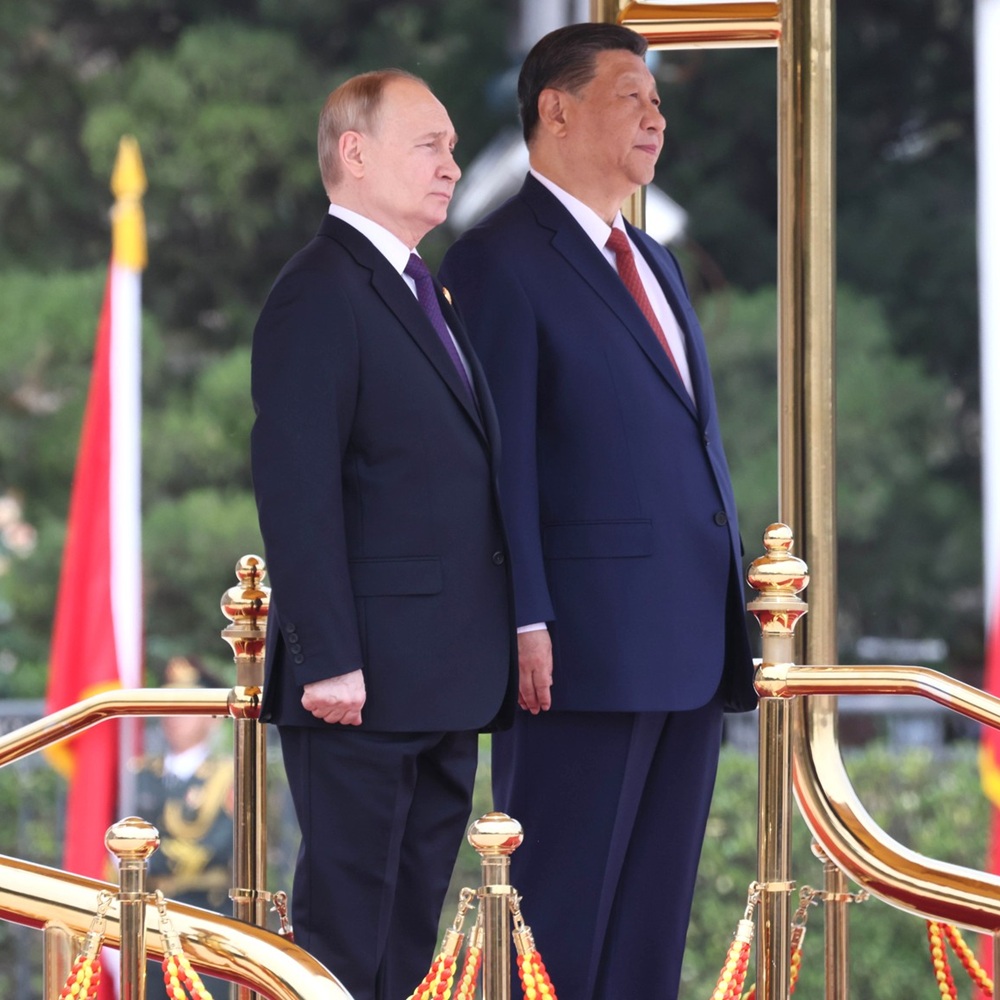
Xi Jinping and Vladmir Putin at welcoming ceremony (2024)

Russia and China in the Era of Trade Wars and Sanctions

by Ivan Timofeev

Economic relations between Russia and China remain high. Beijing has become Moscow's most important trading partner, and in the context of Western sanctions, it has also become an alternative source of industrial and consumer goods, as well as the largest market for Russian energy and other raw materials. At the same time, external political factors may have a growing influence on Russian-Chinese economic relations. These include the trade war between China and the United States, a possible escalation of US sanctions against Russia, and the expansion of secondary sanctions by the European Union against Chinese companies. The trade war, in the form of increased import duties on imported goods, has become one of the calling cards of Donald Trump's second term in office. The executive order he issued on April 2, 2025, provided a detailed conceptual justification for such a policy. The main goal is the reindustrialisation of the United States through the return or transfer of industrial production to the territory of the US, as well as an equalization of the trade balance with foreign countries. The basic part of Trump's order concerned all countries throughout the world and assumes a tariff increase of 10%. It goes on to determine individual duties on the goods of more than 70 countries, with its own sets for each. China became one of the few countries which decided to mirror the tariff increases. This led to a short-lived and explosive exchange of increases in duties. While it was suspended by negotiations between the two countries in Geneva, it was not removed from the agenda. In the US trade war “against the whole world”, China remains a key target. This is determined by the high level of the US trade deficit in relations with China, which has persisted for more than 40 years. Apparently, it remained comfortable for the US until China made a noticeable leap in the field of industrial and technological development. Such a leap allowed China to gradually overcome its peripheral place in the global economy, displace American and other foreign goods from the domestic market, and occupy niches in foreign markets. Despite the critically important role of American components, patents and technological solutions in a number of industries, China has managed to reduce its dependence on them. The growing industrial and technological power of the PRC is becoming a a political problem for the US. It was clearly identified during the first term of Trump's presidency. Even then, the US pursued a course toward the technological containment of China. Despite the temporary respite in the trade war, US pressure on China will remain. The tariff policy may be supplemented by restrictive new measures (sanctions) in the field of telecommunications and other industries. During the new term of Donald Trump's presidency, the politicisation of issues that the Biden administration avoided putting at the forefront of US-Chinese relations began again. These include the problem of Hong Kong autonomy and the issue of ethnic minorities in the Xinjiang Uyghur Autonomous Region of China. Both issues received a high level of politicisation during Trump's first term. The US-China trade war has so far had little effect on Russian-Chinese relations. The increase in US tariffs has had virtually no effect on Russia. Russia is already facing a significant number of restrictive measures, and the volume of trade with the United States has been reduced to near zero since the start of Moscow’s Special Military Operation in 2022. However, Russia may feel the effects of the trade war. For example, the United States may require China to purchase American energy resources as a measure to correct the trade balance. Obviously, such a measure is unlikely to solve the imbalance. However, it has the potential to affect the volume of Russian oil supplies to China in one way or another. In addition, the trade war as a whole may affect oil prices downwards, which is also disadvantageous for Russia. On the other hand, Russia is a reliable supplier of energy resources for China, which will not politicise them. Even in the context of new aggravations of the trade war, China is unlikely to refuse Russian supplies. Another factor is US sanctions against Russia. After the start of Russian-American negotiations on Ukraine in 2025, Washington avoided using new sanctions, although all previously adopted restrictive measures and their legal mechanisms are in force. However, Donald Trump failed to carry out a diplomatic blitzkrieg and achieve a quick settlement. The negotiations have dragged on and may continue for a long time. If they fail, the United States is ready to escalate sanctions again. Existing legal mechanisms allow, for example, for an increase in the list of blocked persons, including in relation to Chinese companies cooperating with Russia. This practice was widely used by the Biden administration. It was Chinese companies that became the key target of US secondary sanctions targeting Russia. They fell under blocking financial sanctions for deliveries of industrial goods, electronics and other equipment to Russia. However, there was not a single large company among them. We were talking about small manufacturing companies or intermediary firms. At the same time, the Biden administration managed to significantly complicate payments between Russia and China through the threat of secondary sanctions. US Presidential Executive Order 14114 of December 22, 2023 threatened blocking sanctions against foreign financial institutions carrying out transactions in favour of the Russian military-industrial complex. In practice, such sanctions against Chinese financial institutions were practically not applied, except for the blocking of several Chinese payment agents in January 2025. However, the very threat of secondary sanctions forced Chinese banks to exercise a high level of caution in transactions with Russia. This problem has not yet been fully resolved. New legal mechanisms in the field of sanctions, which are being worked on in the United States, may also affect Russian-Chinese relations. We are talking about the bill introduced by US Senator Lindsey Graham and several other senators and members of congress. Their bill assumes that in the event of failure of negotiations with Russia on Ukraine, the US executive branch will receive the authority to impose 500% duties on countries purchasing Russian raw materials, including oil. China may be among them. This threat should hardly be exaggerated for now. The passage of the bill is not predetermined. Even if it is signed into law, the application of 500% tariffs against China will be an extremely difficult matter. Recent rounds of the trade war have shown that China is ready for retaliatory measures. However, the emergence of such a norm will in any case increase the risks for business and may negatively affect Russian suppliers of raw materials. Another factor is EU sanctions policy. Unlike the US, the EU continues to escalate sanctions against Russia despite the negotiations on Ukraine. Brussels is expanding the practice of secondary sanctions, which also affect Chinese companies. In the context of a deepening economic partnership between China and the EU, this factor seems significant. However, in reality, it will play a peripheral role. The EU's practice of secondary sanctions is still significantly more limited than the American one. It does not affect any significant Chinese companies. Problems may be created by the expansion of EU bans on the provision of financial messaging services for Russian banks—this will affect their relations with Chinese counterparties. But such bans stimulate the acceleration of the use of the Chinese CIPS payment system by Russians, which has the functionality of transmitting financial messages. Compared to the US, the EU policy factor remains secondary. First published in the Valdai Discussion Club.

Energy & Economics
Chinese yuan on the map of South America. Trading between China and Latin American countries, economy and investment

China-Latin America Green Cooperation and the Global Development Initiative

by Cao Ting

한국어로 읽기 Leer en español In Deutsch lesen Gap اقرأ بالعربية Lire en français Читать на русском Abstract The global development initiative proposed by China aims to promote global sustainable development and has received support from many Latin American countries. At present, green cooperation between China and Latin America has achieved positive results in multiple fields such as clean energy, green agriculture, and green transportation. Latin American countries can become important partners for China to promote the Global Development Initiatives. However, in terms of green cooperation, China and Latin America also face some challenges. Both sides must strengthen consensus and achieve coordinated development in various fields. Sustainable Development and the Global Development Initiative The current international situation is turbulent and constantly changing, with a global economy that remains stagnant, while challenges such as geopolitical conflicts, climate change, and the food crisis are becoming increasingly intertwined and exacerbated. In this context, all countries around the world face the important task of promoting sustainable development and maintaining healthy economic and social growth. On September 21, 2021, Chinese President Xi Jinping officially launched the Global Development Initiative at the United Nations, outlining a path toward a new stage of global development that is balanced, coordinated, and inclusive (Ministry of Foreign Affairs of China, 2021). The Global Development Initiative is aligned with the 2030 United Nations Sustainable Development Goals and places climate change and sustainable development as key areas of cooperation, emphasizing the idea of harmonious coexistence between humanity and nature. Its goal is to promote stronger, more sustainable, and healthier global development, and to build a global community for development. The 33 countries of Latin America and the Caribbean are a fundamental part of the Global South and, in general, place great importance on sustainable development, which has allowed them to achieve notable successes in the field of sustainable cooperation. In a context of great power competition and ongoing regional conflicts, the strengthening of sustainable cooperation between China and Latin American countries presents numerous opportunities, creating ample space to jointly advance in sustainable development. The concept of a sustainable economy evolved from the idea of sustainable development, with harmony between humanity and nature at its core and the goal of achieving long-term sustainability. This approach maintains that economic growth is not an unlimited or uncontrolled process but rather must be conditioned by the ecological environment’s capacities and the resource carrying capacity. The concept of a sustainable economy emerged in the late 1980s when British environmental economist David Pearce introduced it in his work “Blueprint for a Green Economy”, published in 1989. However, it was not until the United Nations Conference on Sustainable Development, held in Rio de Janeiro in 2012, that the sustainable economy began to receive greater attention and became a central concept in global development strategies. According to the United Nations Environment Programme (UNEP), a sustainable economy is driven by public and private investments that reduce carbon emissions and pollution, improve energy and resource efficiency, and prevent the loss of biodiversity and ecosystems. A sustainable economy has always promoted development goals that integrate economic, social, and environmental aspects. This respect for the environment and nature is closely linked to traditional Chinese worldviews. Since ancient times, the Chinese have developed ideas about following the laws of nature and protecting the ecological environment. In the classical text “Yi Zhou Shu Ju Pian”, it is recorded: "During the three months of spring, no axes are used in the mountains and forests, to allow plants to grow; during the three months of summer, no nets are placed in rivers and lakes." These ideas have been a fundamental part of the spiritual thought and culture of the Chinese people for over five thousand years, and through them, they have envisioned humanity and nature as an organic and indivisible whole. They represent the basic understanding of the relationship between humans and nature in ancient Chinese agricultural society, where coexistence and mutual promotion between people and the ecological environment reflected a dialectical relationship of unity. These ideas, full of deep wisdom, constitute an essential component of China’s rich cultural tradition. Consensus Base for Green Cooperation In 2021, the Global Development Initiative, aligned with the United Nations Sustainable Development Agenda, established eight key areas of cooperation: poverty reduction, food security, industrialization, connectivity, pandemic response, development financing, climate change, and the digital economy. It also proposed key principles such as “prioritizing development,” “people-centered focus,” “universal inclusion,” “innovation-driven efforts,” “harmony between humanity and nature,” and “action-oriented approaches.” Latin American countries also place great importance on sustainable development and share numerous points of consensus with China on these principles. Currently, several countries in the region, including Peru and Colombia, have joined the “Group of Friends of the Global Development Initiative.” This shared commitment to sustainable development between China and Latin America provides an important foundation for advancing sustainable cooperation. Particularly, China and Latin American countries have broad consensus in the following areas: 1. Prioritizing national development. Both China and many Latin American countries are developing nations and consider the promotion of sustainable development a crucial goal. President Xi Jinping emphasized in the report presented at the 19th National Congress of the Communist Party of China (CPC): “The fundamental fact that our country is still and will long remain in the primary stage of socialism has not changed; our international status as the largest developing country in the world has not changed.” (Xi, 2017) China’s fundamental national situation determines that its main task is to advance along the path of socialism with Chinese characteristics and to focus its efforts on socialist construction. The Global Development Initiative also highlights “prioritizing development” as one of its core pillars. Latin America, for its part, faces the challenge of progressing in development. Although it was one of the regions in the Global South to achieve national independence and begin economic development relatively early, some Latin American countries have experienced stagnation in their economic transformation and have not managed to overcome the so-called “middle-income trap.” Affected by factors such as low global economic growth, fiscal constraints, and limited policy space, Latin America’s economy has shown a weak recovery in recent years, with some countries facing serious inflation and debt problems. Therefore, promoting sustainable development has become a top priority for governments in the region. In 2016, Latin American countries promoted the creation of the Forum of the Countries of Latin America and the Caribbean on Sustainable Development, as a regional mechanism for implementing the 2030 Agenda for Sustainable Development (ECLAC, 2016). By the end of 2023, six successful conferences had been held, and the Latin America and the Caribbean Sustainable Development Report had been published annually to assess the region’s progress in meeting the Sustainable Development Goals (SDGs). 2. Addressing welfare issues as a central task Since the 18th National Congress of the CPC, the Party’s central leadership, led by Xi Jinping, has promoted a people-centered development approach, insisting that everything should be done for the people and depend on the people, always placing them in the highest position. During the centennial celebration of the CPC’s founding, General Secretary Xi emphasized: “To learn from history and forge the future, we must unite and lead the Chinese people in a tireless struggle for a better life.” In contrast, Latin America is one of the most unequal regions in the world. The unequal distribution of wealth, along with gender and racial discrimination, are persistent issues that have been worsened by the COVID-19 pandemic and the global economic slowdown. According to data from the Economic Commission for Latin America and the Caribbean (ECLAC), in 2023 the region’s poverty rate was 29.1%, and extreme poverty was 11.4%, both slightly higher than in 2022 (29% and 11.2%, respectively) (France24, 2023). As a response, many Latin American governments — such as those in Brazil, Mexico, Chile, and Cuba — have incorporated attention to welfare issues and improving their citizens’ quality of life as key pillars in their public policy agendas. 3. Embracing inclusion and shared benefits as a guiding principle Following the end of the Cold War, the world experienced a trend toward multipolarity and continued economic globalization. However, in recent years, there has been a resurgence of protectionism in various forms, accompanied by a rise in unilateralism and hegemonic policies. These “deglobalization” practices not only fail to resolve internal problems, but also disrupt global supply chains, hinder healthy economic development, and harm the interests of countries. In response, developing nations such as China and Latin American countries advocate for multipolar development and oppose unilateralism and power politics. In December 2023, China’s Central Conference on Foreign Affairs Work emphasized the importance of inclusive and mutually beneficial economic globalization. Similarly, Latin America has maintained a diversified foreign policy and has worked toward building a new, fair, and equitable international political and economic order. Amid rising tensions among major powers, most Latin American countries have chosen not to take sides, maintaining a non-aligned policy. Moreover, countries in Latin America are increasingly focused on inclusive development both within their nations and across the region, striving to address internal development imbalances. In 2010, the Andean Development Corporation (predecessor to the Development Bank of Latin America and the Caribbean) released the “Latin America Vision Plan 2040”, which highlighted the need to strengthen economic inclusion in order to achieve truly sustainable growth (CAF, 2010). In January 2023, the Community of Latin American and Caribbean States (CELAC) Summit in Argentina approved the “Buenos Aires Declaration,” which stressed the importance of promoting inclusive development in the region and fostering inclusive dialogue with other regions (CELAC, 2023). 4. Embracing innovation as a key driver Marx pointed out that “science is also part of the productive forces” and that “the development of fixed capital shows the extent to which the general knowledge of society has become a direct productive force.” In 1988, at the National Science Conference, Deng Xiaoping declared, “science and technology are the primary productive forces.” Since the 18th CPC Congress, China has firmly pursued innovation-led development. It launched the National Innovation-Driven Development Strategy, issued the Medium- to Long-Term Science and Technology Development Plan (2021–2035), and rolled out the Technological Innovation Blueprint under the 14th Five-Year Plan. Thanks to this framework, China has made significant progress in accelerating emerging technologies such as artificial intelligence, big data, quantum communication, and blockchain. Latin American countries are also intensifying their focus on technological innovation. In 2023, CELAC’s Buenos Aires Declaration underscored the importance of innovation for enhancing regional competitiveness and job quality, while encouraging scientific exchanges among nations and subregional organizations. Furthermore, the President of Brazil, Luiz Inácio Lula da Silva, committed to increasing investment in technological development. To that end, he announced at the 28th Conference of the Parties to the United Nations Framework Convention on Climate Change an investment of approximately 21 billion reais (around 4.28 billion U.S. dollars) in sustainable economy, innovative technologies, and low-carbon economy. In the 2023 Global Innovation Index, Brazil ranked 49th out of 132 countries, improving by five positions compared to the previous year. The President of Chile, Gabriel Boric, pledged to increase public funding for research and to finance the work of universities and research institutions. In 2019, the Colombian government established the “International Mission of Wise People,” a body composed of 46 national and international academic experts to promote production diversification and automation, with the goal of doubling the share of manufacturing and agriculture in the country’s Gross Domestic Product (GDP) by 2030. The current president of Colombia, Gustavo Petro, has committed to transforming the country into a “knowledge society” and to continuing this initiative. 5. Making harmony between humans and nature a central goal Developing countries — including China and Latin American nations — prioritize climate issues and actively contribute to global climate governance. Since ancient China during the Spring and Autumn and Warring States periods, philosophical schools such as Confucianism and Taoism had already proposed concepts about the “unity between Heaven and humankind.” Similarly, Indigenous cultures in Latin America also share related cultural traditions. The Quechua peoples of Peru, Ecuador, and Bolivia promote the concept of “’Buen Vivir’” (“Good Living”), which emphasizes harmony between human society and nature. The Aymara of Peru and Bolivia, the Guaraní of Brazil, Argentina, Paraguay, and Bolivia, the Shuar of Ecuador, and the Mapuche of Chile all have similar philosophical expressions. So far in the 21st century, China and Latin American countries have intensified their focus on sustainable development. In August 2005, during a visit to Anji in China’s Zhejiang Province, Xi Jinping, then Secretary of the Communist Party of China in Zhejiang, put forward the principle that “lucid waters and lush mountains are as valuable as mountains of gold and silver,” highlighting the idea that economic growth should not be achieved at the expense of the environment. China’s Global Development Initiative includes climate change and sustainable development as key cooperation areas, aiming for stronger, healthier global progress. Simultaneously, Latin American countries value sustainability highly. Ten nations in the region have officially submitted carbon-neutrality timelines and developed emissions-reduction plans. Several governments have taken significant measures to accelerate energy transition, restore ecosystems, and enhance international cooperation. Notably, Brazil, Chile, Costa Rica, and Uruguay have made substantial strides in renewable energy: in Q1 2023, more than 90 % of Brazil’s energy came from renewables — the highest level since 2011. Progress of Green Cooperation between China and Latin America 1. High-level design for sustainable cooperation between China and Latin American countries has been continuously strengthenedAs comprehensive cooperation between China and Latin America progresses, sustainable collaboration has also become integrated into the strategic high-level planning. At the third Ministerial Meeting of the China-CELAC Forum in 2021, the "Joint Action Plan for Cooperation in Key Areas between China and CELAC Member States (2022–2024)" was adopted. This plan emphasizes the continuation of cooperation in areas such as renewable energy, new energy, civil nuclear energy, energy technology equipment, electric vehicles and their components, as well as energy-related geological and mineral resources. It also outlines the expansion of cooperation in emerging industries related to clean energy resources, support for technology transfer between companies, and the respect and protection of the natural environment. Joint declarations between China and countries such as Brazil, Mexico, and Argentina on establishing and deepening comprehensive strategic partnerships mention strengthening cooperation in areas such as climate change and clean energy. During the sixth meeting of the Sino-Brazilian High-Level Commission for Coordination and Cooperation in May 2022, the Chinese Ministry of Commerce and the Brazilian Ministry of Economy agreed to sign a Memorandum of Understanding on Promoting Investment Cooperation for Sustainable Development, aimed at promoting investment in clean and low-carbon technologies in both countries. In April 2023, during Brazilian President Luiz Inácio Lula da Silva's visit to China, the two countries issued the “China-Brazil Joint Declaration on Combating Climate Change” and signed several cooperation agreements related to the sustainable economy. For example, Article 3 mentions “expanding cooperation in new fields such as environmental protection, combating climate change, the low-carbon economy, and the digital economy,” while Article 10 notes the aim to “strengthen cooperation on environmental protection, climate change, and biodiversity loss, promote sustainable development, and accelerate the transition to a low-carbon economy.” In the same month, the “China-Brazil Joint Declaration on Combating Climate Change,” the “Memorandum of Understanding on Research and Innovation Cooperation between the Ministries of Science and Technology of China and Brazil,” and the “Memorandum of Understanding on Promoting Investment and Industrial Cooperation between China and Brazil” identified key areas of future cooperation, including sustainable infrastructure, the development of sustainable industries, renewable energy, electric vehicles, sustainable technological innovation, and green financing. 2. Clean energy cooperation has deepened The development and use of clean energy are essential means for achieving green development. In recent years, clean energy cooperation between China and Latin America has shown the following main characteristics. The scope of clean energy cooperation is becoming increasingly broad. Currently, cooperation between China and Latin America in the fields of clean energy — such as hydropower, solar energy, wind power, nuclear energy, biomass energy, and lithium batteries — has reached a certain level of breadth and depth. At the same time, both sides have also initiated cooperation efforts in emerging areas such as green hydrogen and smart energy storage. China is constantly diversifying its target countries and modes of investment in clean energy in Latin America. In 2015, China began increasing its investment in the renewable energy sector in the region. Between 2005 and 2020, China’s main investment targets in renewable energy in Latin America included countries such as Brazil, Mexico, Peru, Argentina, and Bolivia. Investments in projects, mergers and acquisitions, and greenfield investments have gone hand in hand. 3. Green cooperation in the transportation sector has yielded outstanding results. Chinese companies continue to cooperate with Latin American countries in the field of public transportation infrastructure and electric vehicles, promoting the low-carbon development of the transport sector in Latin America. First, cooperation in public transportation infrastructure is advancing. In recent years, Chinese companies have actively participated in the construction of public infrastructure such as railways, roads, and bridges in Latin American countries, aiming to promote interconnectivity and green travel across the region. Bogotá Metro Line 1, in the capital of Colombia, currently under construction with Chinese investment, is to date the largest public-private partnership (PPP) project in individual transportation infrastructure in Latin America. Second, trade in electric vehicles is developing rapidly. China’s electric vehicle industry has extensive experience in large-scale production and a relatively complete industrial supply chain, making it a new growth area in China–Latin America trade. Electric buses and cars from independent Chinese brands such as BYD, JAC, and Dongfeng are favored in Latin America due to their good quality and low price. Third, cooperation in battery and tram production is also improving. China and Latin America have also begun bold attempts in green capacity cooperation within the manufacturing sector. Currently, BYD is carrying out a range of production activities in Brazil, including the assembly of bus chassis and the production of photovoltaic modules and batteries. 4. Green agricultural cooperation is on the rise. Latin America has vast and fertile land, and agricultural cooperation is an important component of China–Latin America trade. In recent years, Chinese companies have paid increasing attention to using advanced technologies to strengthen environmental protection and actively promote the green transformation of agricultural cooperation. COFCO (‘China National Cereal, Oil & Foodstuff Corporation’) and its Brazilian partners conducted risk assessments of more than 1,700 soybean suppliers in the Amazon and Cerrado ecological zones, and mapped over 1.1 million hectares of soybean fields using remote sensing satellites, which has raised farmers' awareness of sustainable development. By the end of 2021, COFCO had achieved 100% traceability for all direct soybean purchases in Matopiba, a major soybean-producing region in Brazil. At the same time, China and several Latin American countries are promoting cooperation in green agricultural research and development. The Chinese Academy of Tropical Agricultural Sciences has established cooperative relationships with nine Latin American countries, including Colombia, Panama, Ecuador, and Costa Rica. It has achieved progress in exchange and cooperation in areas such as the innovative use and protection of germplasm resources, efficient transformation and comprehensive utilization of biomass energy, green pest and disease prevention and control technologies, and efficient cultivation techniques. 5. Cooperation on green financing plays an important bridging role. The Global Development and South-South Cooperation Fund and the China-United Nations Peace and Development Fund are key financial platforms through which China supports project cooperation under the Global Development Initiative. In addition to the above-mentioned platforms, current green financial instruments between China and Latin America include the Asian Infrastructure Investment Bank, the China–Latin America Cooperation Fund, the China–Latin America Development Finance Cooperation Mechanism, and subsidies provided by China’s Ministry of Commerce and Ministry of Foreign Affairs. Currently, all three financing projects of the Asian Infrastructure Investment Bank in Brazil are related to the green economy. Challenges facing Sino–Latin American green cooperation Although green cooperation between China and Latin America has gradually achieved results and presents many development opportunities, the risks and challenges of cooperation should not be ignored. Most Latin Americans expect that foreign cooperation will promote social well-being, eliminate poverty, and reduce inequality in their countries. They place great importance on the social benefits of projects and pay close attention to the environmental impact of projects on local ecosystems. Currently, the process of extracting lithium from brine places high demands on water resources and carries the risk of air and water pollution. As a result, lithium mining has also faced opposition from Indigenous communities in some Latin American countries. In 2023, Indigenous peoples from Argentina’s Jujuy Province staged several protests against the exploitation of a lithium mine (Reventós, 2023). To reduce pollution in lithium extraction, further scientific and technological research is needed. The integration of Chinese companies into Latin America also faces many obstacles. The official languages of most Latin American countries are Spanish and Portuguese, which are deeply influenced by European and U.S. cultures. In addition to geographical distance, there is limited mutual understanding between the peoples of China and Latin America, and transportation and logistics costs are high. Most Chinese companies lack personnel fluent in Spanish or Portuguese and familiar with local laws and regulations. Currently, the U.S. government continues to view China as a strategic competitor. Latin America has also become a battleground for strategic competition between China and the United States. The U.S. has increasingly turned its attention to China’s cooperation with Latin American countries. In 2019, the U.S. House Committee on Foreign Affairs published an article stating that “China’s green investment in Latin America cannot offset local environmental damage” (Cote-Muñoz, 2019). In general, green cooperation between China and Latin America will face a more complex environment in the future. Final considerations In recent years, China has put forward the Global Development Initiative to promote international cooperation for sustainable development. Latin America, one of the regions with the most developing countries in the world, actively promotes the implementation of the Sustainable Development Agenda and has a solid green economic foundation. In this sense, the region can be an important partner for China in achieving the goals of the 2030 Agenda and building a shared future for humanity. China must continue to build consensus on development priorities with Latin American countries, plan key areas of cooperation according to their conditions and needs, promote connections between governments, businesses, universities, and media in China and Latin America, and jointly advance the green cooperation to a new level. China and Latin America have achieved multidisciplinary coverage in green cooperation. It is necessary to further improve the quality of cooperation in the future and achieve coordinated development across various sectors. For example, in the long term, the development of renewable energy will require greater energy storage capacity and wider electric grid coverage. Additionally, Chinese companies need to integrate more into local societies and generate greater social benefits while ensuring economic returns. They can strengthen cooperation with Latin American companies in order to quickly become familiar with local laws, regulations, and market conditions. Furthermore, more research — including environmental assessments and social consultations — should be conducted before launching projects. References CAF (2010). "Corporación Andina de Fomento, Visión para América Latina 2040 Hacia una sociedad más incluyente y próspera". https://scioteca.caf.com/bitstream/handle/123456789/496/latinamerica_2040_summary_esp.pdf?sequence=1&isAllowed=yCELAC (2023). "Declaración de Buenos Aires". https://www.cancilleria.gob.ar/userfiles/prensa/declaracion_ de_buenos_aires_-_version_final.pdf CEPAL (2016). "El Foro de los Países de América Latina y el Caribe sobre el Desarrollo Sostenible y el Seguimiento Regional de la Agenda 2030". https://www.cepal.org/es/temas/agenda-2030-desarrollo-sostenible/ foro-paises-america-latina-caribe-desarrollo-sostenible-seguimiento-regional-la-agenda-2030Cote-Muñoz, N. (2019). "China's Green Investments Won't Undo Its Environmental Damage to Latin America". Council on Foreign Relations. https://www.cfr.org/blog/chinas-green-investments-wont-undo-its-environmental-damage-latin-americaFrance24 (2023). "Tasa de pobreza se mantiene en 29 % en América Latina en 2023". https://www.france24.com/es/minuto-a-minuto/20231125-tasa-de-pobreza-se-mantiene-en-29-en-am%C3%A9rica-latina-en-2023-dice-cepalMinistry of Foreign Affairs of China (2021). "Global Development Initiative-Building on 2030 SDGs for Stronger, Greener and Healthier Global Development". https://www.mfa.gov.cn/eng/zy/jj/GDI_140002/wj/202406/ P020240606606193448267.pdfReventós, B. y N. Fabre (2023). "Los grupos indígenas en Argentina que se oponen a la extracción del litio". BBC. https://www.bbc.com/mundo/articles/cevzgv0elp9o Cuadernos de Nuestra América. No. 014 | Nueva Época 2025, Centro de Investigaciones de Política Internacional (CIPI). Under CC BY-NC 4.0

Energy & Economics
Chinese yuan Renminbi money rolls 3d illustration. Camera over the RMB rolling banknotes. Concept of economy, crisis, finance, cash, business and recession in China.

Understanding China’s Renminbi Strategy: Strategic Integration over Monetary Supremacy

by Monique Taylor

한국어로 읽기 Leer en español In Deutsch lesen Gap اقرأ بالعربية Lire en français Читать на русском China’s strategy to internationalise the renminbi (RMB) is about building resilience and influence through selective, state-managed global integration. Beijing is not seeking to elevate the RMB to the status of a global reserve currency on par with the dollar, nor is the strategy solely about insulating China from the geopolitical risks of dollar dependence, although this is an important component. Rather, it represents a pragmatic response to an increasingly fragmented global economy—one marked by rising geopolitical tensions, growing weaponisation of the dollar, and accelerating financial and technological innovation. China is pursuing a targeted, state-managed form of internationalisation that involves building an alternative web of financial relationships and infrastructures facilitating transactions outside the US-dominated system. These include currency swap lines with strategic partners, the establishment of RMB clearing banks, bilateral trade settlement mechanisms, and payment infrastructures such as the Cross-Border Interbank Payment System (CIPS), which serves as a partial alternative to SWIFT. While these efforts help reduce exposure to potential disruptions from dollar weaponisation, they are part of a broader strategy to embed the RMB in key transactional domains like trade, investment, and energy. In these spheres, China seeks to expand its influence and establish rules and mechanisms conducive to its own strategic and financial interests. Building functional alternatives to the US dollar China’s RMB internationalisation strategy is multi-layered, spanning bilateral currency swaps, RMB clearing arrangements, development finance, and payment system alternatives. Instruments such as RMB-denominated oil trades (referred to as the “petroyuan”) and the digital yuan illustrate this approach. The petroyuan enables sanctioned countries like Russia and Iran to settle oil trades in RMB, while China’s growing financial ties with Gulf states suggest that broader adoption may follow. Similarly, the digital yuan, though originally intended primarily for domestic use, is now being piloted for cross-border transactions, potentially laying the groundwork for an international digital payments network. Technological innovations are facilitating this shift by enabling the creation of central bank digital currencies, alternative financial messaging systems, and blockchain-based settlement tools—all of which can support secure transactions that operate outside traditional dollar-clearing infrastructure. In the long run, such developments could gradually reduce global reliance on the dollar. These initiatives are less about achieving global reach and more about securing strategic autonomy and expanding influence in key domains. China’s aim is to reduce vulnerability to US sanctions and dollar volatility, while gradually expanding the RMB’s role in trade, energy, and infrastructure finance, especially in the Global South, where demand for alternatives is growing. BRICS+, the BRI, and the strategic reach of the RMB Platforms like the Belt and Road Initiative (BRI) and BRICS+ play an important role in China’s RMB internationalisation strategy. They provide the geopolitical and institutional scaffolding for RMB usage in trade and investment, particularly in politically aligned or dollar-constrained contexts. For instance, RMB settlements with BRI countries reached 5.42 trillion yuan in 2021, and China has concluded dozens of currency swap agreements with its partners. While the lion’s share of these transactions is still conducted in US dollars, RMB usage is growing steadily. These arrangements point to a shift toward a multipolar and domain-specific currency landscape—one where the RMB gains traction in selected spheres, even if it remains marginal in global reserves and FX markets. Currency swap agreements, RMB clearing banks, and trade invoicing in local currency are all being promoted among China’s partners, especially those looking to reduce reliance on Western financial systems. The result is a modest but growing network of RMB-based interaction shaped by political alignment and strategic institutional design, rather than spontaneous market demand. While dollar dominance persists, de-dollarisation gains momentum The US dollar still dominates global finance. It accounts for nearly 90 percent of FX transactions and more than half of global reserves. However, that dominance increasingly rests on geopolitical foundations that are showing signs of strain. Trump 2.0’s chaotic tariffs combined with the US’s aggressive use of financial sanctions in recent years have made allies and adversaries alike question the long-term reliability of the dollar-based system. For countries exposed to US foreign and economic policy swings, whether through sanctions, interest rate volatility, or trade frictions, China’s RMB-based alternatives offer a way to diversify. In this sense, de-dollarisation is not a revolution but a structural recalibration: a rebalancing of risk rather than a zero-sum rivalry with the dollar. What China offers is not a wholesale exit from the dollar system, but an incremental hedge—a monetary space in which RMB-denominated transactions gain traction in contexts where diversification and reducing dollar dependence are prioritised. This logic underpins a broader push within the BRICS+ grouping to reduce reliance on the dollar in trade and finance. The group has floated proposals for a shared reserve currency, possibly backed by a basket of member currencies or commodities like gold, as part of its effort to foster a more multipolar monetary system. While such proposals face significant practical challenges, they reflect a clear political intent to diversify away from dollar-dominated structures. China plays a central role in these efforts, not by promoting the RMB as a global hegemonic currency, but by embedding it in alternative financial arrangements. In doing so, China contributes to a monetary order where the dollar remains dominant but increasingly contested. Why RMB leadership is not only unlikely but unnecessary Despite growing cross-border use of the RMB, significant structural constraints remain. China’s capital account remains closed, its financial markets lack transparency and depth, and its central bank operates under the authority of the party-state and, as such, lacks institutional independence. Unlike the US, which issues dollars globally through persistent trade and capital account deficits, China runs a trade surplus. This further limits the global supply of RMB and restricts its viability as a reserve currency. Central banks are unlikely to adopt the RMB as a core reserve asset under such conditions, and China has little interest in changing that right now—Beijing’s RMB internationalisation strategy is designed to work within, not against, these constraints. Indeed, the party-state’s emphasis on control and stability sits uneasily with the financial liberalisation required for global monetary leadership. In Beijing’s view, this is not a contradiction. The goal is not to supplant the dollar, but to achieve selective integration: a system in which China and its partners can transact securely, predictably, and independently of Western pressure. This approach enables China to expand its influence within specific domains, without challenging the broader dollar-centric monetary order. Adapting to a divided global economy RMB internationalisation is neither a bid for currency supremacy nor a mere act of self-defence. It is a tool of pragmatic adaptation—part of China’s effort to build resilience and exert influence through selective financial integration and institutional alternatives. As the world moves further into geopolitical and economic uncertainty, especially with the return of a Trump administration bent on upending the global trade system, China’s efforts may accelerate. The RMB won’t displace the dollar anytime soon, but its growing role in alternative trade, finance, and payment systems signals the slow but significant emergence of a more layered, fragmented, and contested global monetary order. This work has received funding from the European Union’s Horizon Europe coordination and support action 101079069–EUVIP–HORIZON-WIDERA-2021-ACCESS-03. Views and opinions expressed are however those of the author(s) only and do not necessarily re ect those of the European Union or the European Research Executive Agency (REA). Neither the European Union nor the granting authority can be held responsible for them. This article is published under a Creative Commons License and may be republished with attribution.

Energy & Economics
 March 28, 2018, the US and Chinese flags and texts at a studio in Seoul, Korea. An illustrative editorial. trade war

International trade war - Spice Road against Silk Road

by Joon Seok Oh

한국어로 읽기 Leer en español In Deutsch lesen Gap اقرأ بالعربية Lire en français Читать на русском AbstractPurpose The purpose of this paper is to analyse the international political economy of Korea and its effects due to geopolitical tension between China and the USA. Design/methodology/approach Economic war between China and the USA has prolonged longer than expected. Aftermath of the COVID-19 pandemic, reforming the supply chain has been the centre of economic tension between China and the USA. Quite recently, with the rapid expansion of Chinese e-commerce platforms, distribution channels come upon a new economic tension between the two. And now is the time to pivot its pattern of conflict from competition into cooperation. In this end, economic diplomacy could be a useful means to give a signal of cooperation. From the view of economic diplomacy, this paper tries to analyse the projected transition of economic war between China and the USA with its implication on the trade policy of Korea. Findings As an implementation of economic diplomacy, China suggested the Belt and Road Initiative (BRI), enhancing trade logistics among related countries to gain competitiveness. In 2023, the Biden administration suggested the India-Middle East and Europe Economic Corridor as a counter to BRI, which will be a threshold for changing trade policy from economic war into economic diplomacy. As a result, it is expected China and the USA will expand their economic diplomacy in a way to promote economic cooperation among allied states, while the distribution channel war would continue to accelerate the economic tension between China and the USA. Korea has to prepare for and provide measures handling this geopolitical location in its trade policy or economic diplomacy. Originality/value This research contributes to the awareness and understanding of trade environments from the perspective of economic diplomacy. 1. Introduction The advent of globalisation has led to widespread economic integration, creating global production networks and markets. However, the COVID-19 pandemic has acted as a significant setback to this trend. In the wake of COVID-19, an economic war has arisen between China and the USA, centred on the restructuring of global supply chains following widespread disruptions. International political economy (IPE) examines the power dynamics between states and the structures of influence within regional economies. Consequently, economic diplomacy has gained unprecedented attention. Economic diplomacy focuses on government actions regarding international economic issues, distinct from political diplomacy through its market-oriented approach in foreign policy. Putnam (1988) categorises economic diplomacy into two levels: unilateralism and bilateralism. Unilateral economic diplomacy (or unilateralism) often relies on hard power, involving decisions on trade liberalisation or market protection without negotiation. Bilateral economic diplomacy (or bilateralism) or multilateral economic diplomacy (or multilateralism), by contrast, involves negotiation among trade partners, resulting in agreements such as regional or global free trade agreements (FTAs). A vast range of state or non-state actors engage in economic diplomacy, navigating the complex interplay between international and domestic factors. Defining economic diplomacy is extremely challenging, but one useful definition is “the broad concept of economic statecraft, where economic measures are taken in the pursuit of political goals, including punitive actions such as sanctions” (Blanchard and Ripsman, 2008).  Figure 1 Recent trend of economic diplomacy To exert influence internationally, ministers and heads of government strive to demonstrate their capacity for national security through two primary approaches, as shown in Figure 1 (above): economic war (or competition) and economic diplomacy (or international cooperation). In the context of global supply chain restructuring, the economic conflict between China and the USA has intensified, marked by threats of supply chain disruptions. This has led to emerging strategies aimed at “crowding out” the USA from global supply chains (去美戰略) or excluding China through alliances such as the Allied Supply Chain and Chip 4. While economic war is inherently “temporary” due to its painstaking nature, economic diplomacy or international cooperation offer a more “long-term” approach because it is gains-taking. This paper analyses the factors contributing to the prolonged nature of this economic war and explores potential outcomes of the supply chain tensions between China and the USA from the perspectives of IPE or geo-economics. In conclusion, it highlights the importance of preparing for trade policy adjustments and strategic economic diplomacy. 2. International trade war and strategic items2.1 Supply chain The supply chain encompasses a network of interconnected suppliers involved in each stage of production, from raw materials and components to the finished goods or services. This network can include vendors, warehouses, retailers, freight stations and distribution centres. Effective supply chain management is a “crucial process because an optimised supply chain results in lower costs and a more efficient production cycle” [1]. Within the supply chain, a leading company typically holds governance power, enabling it to coordinate scheduling and exercise control across the interconnected suppliers, resulting in reduced costs and shorter production times (Gereffi et al., 2005) [2]. Since the 2000s, forward and backward integration have been key strategies for managing time, cost and uncertainty in supply chains. For example, Toyota’s Just-In-Time (JIT) system demonstrated the efficiency of locally concentrated supply chains until disruptions from the 2011 East Japan Earthquake and the Thailand flood. Following supply chain shutdowns in 2020, many businesses shifted from local to global supply chains, utilising advancements of the information technology (IT) and transportation technologies to geographically diversify operations. As the need for a systematically functioning global supply chain has grown, a leading nation, much like a leading company, often assumes governance power in international trade and investment, as illustrated in Figure 2 (below), by aligning with the leadership of a dominant market competitiveness, which makes this leadership valuable.  Figure 2 Supply chain The COVID-19 pandemic dealt a severe blow to the global supply chain, causing sudden lockdowns that led to widespread supply chain disruptions. To mitigate the risks of future global disruptions, supply chains have begun restructuring to operate on a more regionally segmented basis. In this shift toward regional supply chains, China and the USA are at the centre, drawing allied countries within their spheres of influence. This alignment helps explain why the economic war between China and the USA has lasted longer than anticipated. 2.2 Strategic items China has restricted exports of two rare metals, gallium and germanium, which are critical to semiconductor production. Kraljic (1983) highlighted the importance of managing “strategic items” within the framework of supply chain management, as shown in Figure 3. Kraljic emphasises the need to strengthen and diversify critical items. The Kraljic matrix provides a valuable tool for identifying essential items that require focused management within the supply chain.  Figure 3 Kraljic matrix Kraljic identified the importance of managing “bottleneck items” in strategic supply chain management – items that present high supply risk but have relatively low business value. Due to the potential costs associated with non-delivery or compromised quality of strategic items, these must be closely monitored and controlled. From a risk management perspective, establishing medium-term business relationships and collaboration with suppliers is essential. For example, South Korea imports over 90% of its urea for agricultural and industrial purposes from China [3]. Heavily dependent on China for urea supplies due to pricing factors, Korea faced challenges when China imposed export controls on urea, underscoring Korea’s vulnerability within China’s sphere of influence. The European Union (EU) also faces challenges with critical raw materials (CRMs). China remains the EU’s sole supplier of processed rare earth elements, while Chile supplies 79% of its lithium. In response, the EU introduced the CRM Act (CRMA) to support projects aimed at increasing “the EU’s capacity to extract, process, and recycle strategic raw materials and diversify supplies from the third countries” [4]. 2.3 Resilient supply chain alliance In contrast to China’s approach of leveraging supply disruptions to strengthen its influence, the Biden administration in the USA has adopted a cooperative approach focused on building resilient supply chains (Pillar 2) through the Indo-Pacific Economic Framework (IPEF), which includes 14 member countries [5]. The need for resilient supply chains has been further underscored by the Russia–Ukraine crisis. The IPEF aims to address supply chain vulnerabilities by fostering global efforts to reduce risks associated with concentrated, fragile supply chains [6].  Figure 4 Resilient supply chain alliance In Figure 4, the EU Commission presented the Single Market Emergency Instrument (SMEI) in September 2022, a crisis governance framework designed to ensure the availability of essential goods and services during future emergencies. The SMEI operates on three levels: contingency planning, vigilance and emergency. The contingency planning phase focuses on collaboration among member states to mitigate supply chain disruption and monitor incidents. The vigilance phase can be activated when a significant disruption is anticipated, enabling specific measures such as mapping and monitoring supply chains and production capacities. Finally, the emergency phase is activated in cases of severe disruption to the functioning of the single market [7]. Establishing a resilient supply chain through international cooperation may be appealing, yet the reality often falls short of the ambition. In South Korea, the IPEF took effect on 17 April 2024, after an extended negotiation process, marking the first multilateral agreement on supply chains. As a result, during non-crisis periods, the 14 member countries will collaborate to strengthen international trade, investment and trade logistics. In times of crisis, member countries will activate a “crisis response network”. Conversely, opportunities for negotiation with China, South Korea’s largest trading partner, are essential for building supply chain resilience [8]. China has pursued an industrial policy focused on enhancing its supply chain management capabilities. In the semiconductor sector, the decoupling between China and the USA has become increasingly evident. Contrary to expectations, China has adopted a policy of internalising its supply chains, returning to the integration strategies of the 2000s rather than furthering globalisation. A promising opportunity for transformation between the two countries has emerged recently. Since 2015, China and South Korea have maintained bilateral FTA, and with the second phase of FTA negotiations currently underway, there is an opportunity to strengthen trade and investment ties, fostering positive progress through international cooperation. 2.4 China manufacturing exodus During the COVID-19 pandemic, China imposed sudden lockdowns without prior notice or preparation, halting production and logistics cycles. This “zero COVID” policy may have triggered a shift towards “de-risking” China from supply chain disruptions. Although China still offers significant advantages as “the factory of the world,” with vast market potential, prolonged trade tensions with the USA, intensified during the Trump administration, have prompted global manufacturers with substantial USA market bases to relocate operations amid rising geopolitical uncertainties. For example, Nike and Adidas have shifted much of their footwear manufacturing to Vietnam, Apple has begun iPhone production at a Foxconn in Chennai, India, and AstraZeneca has contracted production with India’s Serum Institute. In the pre-globalised era, defining the Rule of Origin (ROO) was straightforward, as a product’s components were usually manufactured and assembled within a single country. However, with the complexity of global supply chains, particularly since 2012, determining ROO has become a time-consuming and subjective process. ROO are classified as either non-preferential or preferential. The USA applies non-preferential ROO to restrict imports from countries like Cuba, Iran and North Korea, while offering trade preference programmes for others. Preferential ROO are used to determine duty-free eligibility for imports from approved countries [9], whereas non-preferential ROO play a crucial role in “country of origin labelling, government procurement, enforcement of trade remedy actions, compilation of trade statistics, supply chain security issues.” [10] China manufacturing exodus may negatively impact capital inflows into Hong Kong, traditionally seen as the Gateway to China. In 2023, Hong Kong’s initial public offering volume fell to a 20-year low of $5.9bn [11]. While China-oriented business remains in Hong Kong, which returns fully to Chinese control in 2047, non-China-oriented businesses have migrated to Singapore. As the certainty of contract and ownership rights forms the foundation of capitalism, this capital flight from Hong Kong is likely to persist. 3. Trade logistics and economic corridors Globalisation has allowed supply chains to leverage interdependence and interconnectedness, maximising efficiency. However, while these efficiencies have been beneficial, they have also created a fertile ground for friction between trade partners due to a “survival of the fittest” mindset and the principle of “winner takes all.” This interdependence has also highlighted vulnerabilities; the global supply chain struggled to manage the disruptions caused by COVID-19, prompting a shift towards regional integration initiatives, such as Association of Southeast Asian Nations, Regional Comprehensive Economic Partnership, United States–Mexico–Canada Agreement and Comprehensive and Progressive Agreement for Trans-Pacific Partnership. As the global economy seeks stability, collaboration over competition has become increasingly essential, with economic diplomacy emerging as a priority. The prolonged economic war between China and the USA arguably needs to shift towards economic diplomacy. The global supply chain is restructuring into regional supply chains, building resilience by operating in regional segments that can withstand crises. Michael Porter introduced the concept of value chain as “a set of activities that a firm performs to deliver a valuable product or service to the market.” [12] Complex finished goods often depend on global value chains, traversing multiple countries. As shown in Figure 5, the value chain consists of supply chain and trade channel components. While the focus has traditionally been on which country holds lead status within a regional supply chain, the emphasis is now shifting to how these regional segments can be interconnected and relayed. In this context, the supply chain competition may evolve into a “channel war” in international trade, where trade logistics will centre on the internal flow of goods, standardising channel processes and establishing authority over these channels.  Figure 5 Supply chain v. trade channel 3.1 Trade logistics It is natural for governments to seek environments that enhance competitiveness within in their countries. In terms of trade, effective trade logistics are essential for maintaining competitive advantage. As a prerequisite, a strong IT management infrastructure is indispensable. As shown in Figure 6, trade logistics encompass the internal flow of goods to market, integrating physical infrastructure with operating software – such as transport hubs, warehouses, highways, ports, terminals, trains and shipping vessels. Key areas of conflict in trade logistics involve the standardisation of channel processes and determining who holds governance over operation of these logistics systems. This is equally relevant within the digital economy. Recently, Chinese e-commerce – often referred to as C-commerce – has aggressively sought to gain control over digital distribution channels, interconnected delivery networks and trade logistics via digital platforms. Chinese platforms such as Taobao, Temu and AliExpress are actively working to increase their monthly active users (MAUs), positing themselves as counterweights to USA-based platforms such as Amazon and eBay in digital trade [13].  Figure 6 Trade logistics When the agenda of establishing international trade logistics is introduced to relevant trade members across various countries, initial progress and effective responses are often achieved. However, efforts soon encounter obstacles related to standardising logistics processes and establishing operational governance. Greater reliance on international institutions could help resolve these issues (Bayne, 2017). Yet governments frequently prioritise domestic interests, and after prolonged negotiations, the risk of international agreements failing increases. Amid the economic war between China and the USA, China launched a trade logistics initiative known as the Belt and Road Initiative (BRI), or One Belt One Road, in 2013. Often referred to as the New Silk Road, the BRI aims to establish economic corridors for trade logistics. The World Bank estimates that the BRI could boost trade flows by 4.1% and reduce trade costs by 1.1% [14]. In response, the Biden administration proposed the India-Middle East and Europe Economic Corridor (IMEC) in September 2023 to strengthen transport and communication links between Europe and Asia as a countermeasure to China’s BRI. IMEC has been well received by participating countries, with expectations of fostering economic growth, enhancing connectivity and potentially rebalancing trade and economic relations between the EU and China [15]. Both BRI and IMEC are ambitious projects aimed at boosting international trade through substantial investments in trade logistics infrastructure. Each seeks to assert governance over international trade channels, signalling that the supply chain war may soon evolve into a trade channel war between China and the USA. 3.2 Economic corridors Economic corridors are transport networks designed to support and facilitate the movement of goods, services, people and information. These corridors often include integrated infrastructure, such as highways, railways and ports, linking cities or even countries (Octaviano and Trishia, 2014). They are typically established to connect manufacturing hubs, high-supply and high-demand areas, and producers of value-added goods. Economic corridors comprise both hard infrastructure – such as trade facilities – and soft infrastructure, including trade facilitation and capacity-building measures. The Asian Development Bank introduced the term “economic corridor” in 1998 to describe networks connecting various economic agents within a region [16]. Economic corridors are integrated trade logistics networks, providing essential infrastructure for connecting regional segments of supply chains. As supply chains increasingly operate in regional “chunks,” linking these segments becomes ever more important. Economic corridors typically include a network of transport infrastructure, such as highways, railways, terminals and ports. Initiatives like the BRI and IMEC use economic corridors as instruments of economic diplomacy, shifting strategies from hard power to soft power, as shown in Figure 7. Because less-developed or developing countries often lack sufficient funding to invest in trade logistics, they tend to welcome these initiatives from developed countries, which offer international collaboration and support. However, these initiatives usually come with the condition that participating countries must accept standardised trade processes and governance led by the sponsoring developed country.  Figure 7 Economic corridor initiatives as economic diplomacy To succeed, economic corridors must meet three key conditions [17]. First, government intervention is essential, as economic corridor initiatives primarily involve public infrastructure investments beyond the scope of the private sector. In realising these projects, governments must reconcile three tensions to ensure their policies are mutually supportive: tensions between politics and economics, between international and domestic pressures and between governments and other stakeholders. Second, intermediate outcomes should be measured and demonstrated as results of economic corridors, allowing participants to experience tangible benefits throughout these longer-term projects. Finally, economic corridors should deliver broader benefits. Participants need incentives to utilise the infrastructure sustainably. These benefits may extend beyond economic welfare, such as wages and income, to include social inclusion, equity and environmental gains, which support the long-term viability of the infrastructure. 4. BRI vs IMEC4.1 Belt and Road Initiative (BRI) - Silk Road The BRI can be a modern-day realisation of the Silk Road concept, connecting Europe as a market base with China as a production base. Unlike the ancient Silk Road, which connected trade routes across Eurasia, the BRI poses potential challenges due to its extensive connectivity. Firstly, there are social and environmental externalities, such as increased congestion and accidents from concentrating traffic flows through limited links and nodes within trade networks. Secondly, while the connectivity may benefit the production and market bases at either end, regions situated between these hubs, through which highways and railways pass, may gain minimal advantage. Thirdly, there is often a mismatch between where costs and benefits are realised. Transit regions that facilitate network traffic often see fewer direct benefits compared to high-density nodes within the network. 4.2 India-Middle East and Europe Economic Corridor (IMEC) - The Spice Road The ancient Spice Roads once connected the Middle East and Northeast Africa with Europe, facilitating the exchange of goods such as cinnamon, ginger, pepper and cassia, which, like silk, served as a form of currency. The IMEC proposes a modern route from India to Europe through the United Arab Emirates (UAE), Saudi Arabia, Israel and Greece. Since its announcement in September 2023, some regional experts have expressed reservations about its feasibility, particularly regarding the connection between the Middle East and Israel. The project has faced delays due to the Israel–Hamas war. Despite these challenges, IMEC holds potential to drive economic growth and strengthen connectivity, especially as countries like Vietnam and India emerge as alternative manufacturing bases for companies relocating from China. For Saudi Arabia and the UAE, IMEC is not viewed as a challenge to China but rather as an opportunity to diversify their economies and solidify their roles within the Middle East region [18]. 5. Conclusion A new trade war between China and the USA has begun, with the Biden Administration’s introduction of IMEC as a counter to China’s BRI. This shift could soon transform the nature of economic war from a focus on supply chains to one on trade channels. The China manufacturing exodus was further accelerated by supply disruptions during the COVID-19 pandemic. Amidst the economic tensions between China and the USA, the restructuring of global supply chains into regional networks has made significant progress. With China maintaining its stance on export controls for strategic items, South Korea must prepare for resilient supply chain management. In relation to China–Korea FTA, which is currently undergoing its second phase of negotiation, South Korea should seek clarity on the transparency of China’s strategic item controls. The Committee on Foreign Investment in the United States (CFIUS) plays a key role in monitoring the quality of inbound investments; similarly, South Korea is experiencing increased inbound investment due to the manufacturing shift from China and should apply similar standards to evaluate investment quality. This emerging economic war between China and the USA is now marked by the competing initiatives of the BRI and IMEC. The BRI can be viewed as a modern Silk Road, linking China with Europe, while the IMEC seeks to establish a trade logistics corridor connecting Saudi Arabia, the UAE, Israel and Greece. The South Korean Government should take proactive steps to prepare for the evolving dynamics of the trade war between China and the USA. CitationOh, J.S. (2025), "International trade war - Spice Road against Silk Road", International Trade, Politics and Development, Vol. 9 No. 1, pp. 2-11. https://doi.org/10.1108/ITPD-06-2024-0031  Notes 1. https://www.investopedia.com/terms/s/supplychain.asp2. According to Gary Gereffi et al, 5 governance types of a lead company could be categorised as market, modular, relational, captive and hierarchy.3. Korea imports urea from 12 countries including Qatar, Vietnam, Indonesia and Saudi Arabia, in addition to China.4. https://single-market-economy.ec.europa.eu/sectors/raw-materials/areas-specific-interest/critical-raw-materials/strategic-projects-under-crma_en5. IPEF was launched on May 23,2022 at Tokyo. 14 member countries are Australia, Brunei, Fiji, India, Indonesia, Japan, Republic of Korea, Malaysia, New Zealand, Philippines, Singapore, Thailand, Vietnam and the USA. 4 Pillar of IPEF are Trade (Pillar 1), Supply Chain (Pillar 2),Clean Economy (Pillar 3) and Fair Economy (Pillar 4).6. Critics say “lack of substantive actions and binding commitments, instead focusing on process-driven framework building.” https://www.piie.com/blogs/realtime-economics/its-time-ipef-countries-take-action-supply-chain-resilience7. https://ec.europa.eu/commission/presscorner/detail/en/ip_22_54438. As of 2023, the first-largest trade partner of Korea is China (Trade volume of $267.66bn), the second is the US ($186.96bn) and the third is Vietnam ($79.43bn)9. As preferential ROO contain the labour value content requirement in the USMCA, it could increase compliance costs for importers. https://crsreports.congress.gov/product/pdf/RL/RL3452410. USITC(1996), Country of Origin Marking: Review of Laws, Regulations and Practices, USITC Publication 2975, July, pp. 2–411. https://www.barrons.com/articles/hong-kong-financial-center-china-46ba5d3612. Porter identifies a value chain broken in five primary activities: inbound logistics, operations, outbound logistics, marketing and sales and post-sale services. https://www.usitc.gov/publications/332/journals/concepts_approaches_in_gvc_research_final_april_18.pdf13. MAU is a metric commonly used to identify the number of unique users who engage with apps and website. MAU is an important measurement to the level of platform competitiveness in the digital trade logistics or e-commerce industry.14. https://home.kpmg/xx/en/home/insights/2019/12/china-belt-and-road-initiative-and-the-global-chemical-industry.html15. https://www.bradley.com/insights/publications/2023/10/the-india-middle-east-europe-economic-corridor-prospects-and-challenges-for-us-businesses16. The Asian Development Bank (ADB), which first used the term in 1998, defines economic corridors as important networks or connections between economic agents along a defined geography, which link the supply and demand sides of markets. http://research.bworldonline.com/popular-economics/story.php?id=350&title=Economic-corridors-boost-markets,-living-conditions17. Legovini et al. (2020) comments traditional cross border agreements of transport investment focuses only on a narrow set of direct benefits and cost. However, economic corridors can entail much wider economic benefits and costs such as trade and economic activity, structural change, poverty reduction, pollution and deforestation.18. Arab Centre Washington D.C. https://arabcenterdc.org/resource/the-geopolitics-of-the-india-middle-east-europe-economic-corridor/ References Bayne, N. (2017), Challenge and Response in the New Economic Diplomacy, 4th ed., The New Economic Diplomacy, Routledge, London, p. 19.Blanchard, J.M.F. and Ripsman, N.M. (2008), “A political theory of economic statecraft”, Foreign Policy Analysis, Vol. 4, pp. 371-398, doi: 10.1111/j.1743-8594.2008.00076.x.Gereffi, G., Humphrey, J. and Sturgeon, T. (2005), “The governance of value chain”, Review of International Political Economy, Vol. 12 No. 1, pp. 78-104, doi: 10.1080/09692290500049805.Kraljic, P. (1983), “Purchasing must be supply management”, Harvard Business Review, Vol. 61 No. 5, September.Legovini, A., Duhaut, A. and Bougna, T. (2020), “Economic corridors-transforming the growth potential of transport investments”, p. 10.Octaviano, B.Y. and Trishia, P. (2014), Economic Corridors Boost Markets, Living Conditions, Business World Research, Islamabad, October.United States International Trade Commission (USITC) (1996), “Country of origin marking: Review of Laws, Regulations, and Practices”, USITC Publication, Vol. 2975, July, pp. 2-4.Further readingPorter, M. (1985), Competitive Advantage: Creating and Sustaining Superior Performance, Free Press.Putman, R.D. (1988), “Diplomacy and domestic politics; the logic of two-level games”, International Organization, Vol. 42 No. 4, pp. 427-600.USITC (2019), “Global value chain analysis: concepts and approaches”, Journal of International Commerce and Economics, April, pp. 1-29.

Energy & Economics
The image displays mineral rocks alongside US currency and flags of Ukraine and the USA, highlighting the complex relationship involving economics, power, and resources.

Why Zelensky – not Trump – may have ‘won’ the US-Ukraine minerals deal

by Eve Warburton , Olga Boichak

한국어로 읽기 Leer en español In Deutsch lesen Gap اقرأ بالعربية Lire en français Читать на русском Last week, the Trump administration signed a deal with Ukraine that gives it privileged access to Ukraine’s natural resources. Some news outlets described the deal as Ukrainian President Volodymyr Zelensky “caving” to US President Donald Trump’s demands. But we see the agreement as the result of clever bargaining on the part of Ukraine’s war-time president. So, what does the deal mean for Ukraine? And will this help strengthen America’s mineral supply chains? Ukraine’s natural resource wealth Ukraine is home to 5% of the world’s critical mineral wealth, including 22 of the 34 minerals identified by the European Union as vital for defence, construction and high-tech manufacturing. However, there’s a big difference between resources (what’s in the ground) and reserves (what can be commercially exploited). Ukraine’s proven mineral reserves are limited. Further, Ukraine has an estimated mineral wealth of around US$14.8 trillion (A$23 trillion), but more than half of this is in territories currently occupied by Russia. What does the new deal mean for Ukraine? American support for overseas conflict is usually about securing US economic interests — often in the form of resource exploitation. From the Middle East to Asia, US interventions abroad have enabled access for American firms to other countries’ oil, gas and minerals. But the first iteration of the Ukraine mineral deal, which Zelensky rejected in February, had been an especially brazen resource grab by Trump’s government. It required Ukraine to cede sovereignty over its land and resources to one country (the US), in order to defend itself from attacks by another (Russia). These terms were highly exploitative of a country fighting against a years-long military occupation. In addition, they violated Ukraine’s constitution, which puts the ownership of Ukraine’s natural resources in the hands of the Ukrainian people. Were Zelensky to accept this, he would have faced a tremendous backlash from the public. In comparison, the new deal sounds like a strategic and (potentially) commercial win for Ukraine. First, this agreement is more just, and it’s aligned with Ukraine’s short- and medium-term interests. Zelenksy describes it as an “equal partnership” that will modernise Ukraine. Under the terms, Ukraine will set up a United States–Ukraine Reconstruction Investment Fund for foreign investments into the country’s economy, which will be jointly governed by both countries. Ukraine will contribute 50% of the income from royalties and licenses to develop critical minerals, oil and gas reserves, while the US can make its contributions in-kind, such as through military assistance or technology transfers. Ukraine maintains ownership over its natural resources and state enterprises. And the licensing agreements will not require substantial changes to the country’s laws, or disrupt its future integration with Europe. Importantly, there is no mention of retroactive debts for the US military assistance already received by Ukraine. This would have created a dangerous precedent, allowing other nations to seek to claim similar debts from Ukraine. Finally, the deal also signals the Trump administration’s commitment to “a free, sovereign and prosperous Ukraine” – albeit, still without any security guarantees. Profits may be a long time coming Unsurprisingly, the Trump administration and conservative media in the US are framing the deal as a win. For too long, Trump argues, Ukraine has enjoyed US taxpayer-funded military assistance, and such assistance now has a price tag. The administration has described the deal to Americans as a profit-making endeavour that can recoup monies spent defending Ukrainian interests. But in reality, profits are a long way off. The terms of the agreement clearly state the fund’s investment will be directed at new resource projects. Existing operations and state-owned projects will fall outside the terms of the agreement. Mining projects typically work within long time frames. The move from exploration to production is a slow, high-risk and enormously expensive process. It can often take over a decade. Add to this complexity the fact that some experts are sceptical Ukraine even has enormously valuable reserves. And to bring any promising deposits to market will require major investments. What’s perhaps more important It’s possible, however, that profits are a secondary calculation for the US. Boxing out China is likely to be as – if not more – important. Like other Western nations, the US is desperate to diversify its critical mineral supply chains. China controls not just a large proportion of the world’s known rare earths deposits, it also has a monopoly on the processing of most critical minerals used in green energy and defence technologies. The US fears China will weaponise its market dominance against strategic rivals. This is why Western governments increasingly make mineral supply chain resilience central to their foreign policy and defence strategies. Given Beijing’s closeness to Moscow and their deepening cooperation on natural resources, the US-Ukraine deal may prevent Russia — and, by extension, China — from accessing Ukrainian minerals. The terms of the agreement are explicit: “states and persons who have acted adversely towards Ukraine must not benefit from its reconstruction”. Finally, the performance of “the deal” matters just as much to Trump. Getting Zelensky to sign on the dotted line is progress in itself, plays well to Trump’s base at home, and puts pressure on Russian President Vladimir Putin to come to the table. So, the deal is a win for Zelensky because it gives the US a stake in an independent Ukraine. But even if Ukraine’s critical mineral reserves turn out to be less valuable than expected, it may not matter to Trump.

Energy & Economics
Flags of America and China atand on table during talks between diplomats and businessmen. American and Chinese representatives sit opposite each other to discuss relations between countries.

China and US agree to cut tariffs imposed in April

by Abdul Rahman

한국어로 읽기 Leer en español In Deutsch lesen Gap اقرأ بالعربية Lire en français Читать на русском The agreement was an acknowledgment of the significance of their trade for mutual economic development and the health of the global economy, the joint statement says. China and the US agreed to roll back high tariffs imposed on one another last month for a period of 90 days. The agreement was announced in a joint statement issued on Monday, May 12. The agreement was a result of a high-level meeting on trade and economic affairs held between Chinese and US delegations in Geneva, Switzerland over the weekend. As described in a press conference on Monday by the US Treasury Secretary Scott Bessent who was part of the US delegation, both sides have agreed to reduce the tariffs by 115%. That would mean that the US will reduce its tariffs on China to 30% from its present 145% while the Chinese will lower their tariffs to 10% from its present 125%. These new tariff rates would be effective from Wednesday for the next 90 days. Both the countries also agreed to explore a more stable arrangement in the interim period. China also agreed to reverse additional measures imposed in response to US President Donald Trump’s tariff war, such as putting various US companies on the sanctions list and placing export controls on rare earth minerals. The parties committed to taking these measures as an acknowledgment of the mutual significance of their bilateral trade and its importance for the global economy and for “moving forward in the spirit of mutual opening, continued communication, cooperation and mutual respect,” a joint statement says. The 30% US tariff includes a 10% baseline tariff imposed on all imports by Trump in April after suspending his reciprocal tariff regime for 90 days, and a 20% tariff imposed by the Trump administration before April in the name of stopping the illegal flow of the drug fentanyl. Answering a question on the cooperation between both the countries over fentanyl, the spokesperson of the Chinese Foreign Ministry Lin Jian criticized “the wrongly slapped tariffs on Chinese imports” by citing the issue and claiming that “if the US truly wants to cooperate with China, it should stop vilifying and shifting the blame.” Jian also advised the US “to seek dialogue with China based on equality, respect and mutual benefit.” Relief for the global economy  Trump announced a reciprocal tariff regime on April 2 against all those countries which had a trade surplus with the US, including China. After global backlash, Trump later postponed the implementation of the regime for 90 days, inviting countries to seek bilateral agreements to avoid high tariffs while imposing a 10% common tariff. The Trump administration had claimed that reciprocal tariffs were required in order to lower the US trade deficit, which is over a trillion dollars. China, the third largest trade partner of the US, faced the highest tariff rates under Trump’s tariff war and chose to retaliate. It also called the policy a violation of international law and an attempt by the US to weaponize trade. On Tuesday, Chinese President Xi Jinping reiterated his country’s position that there are no winners in trade and tariff wars, claiming bullying and hegemony will only result in self-isolation. He was addressing the fourth ministerial meeting of the China-CELAC (Community of Latin American and Caribbean States) forum in Beijing. The tariff war between the world’s leading economies was seen as a disaster for the global economy and trade. A large number of US businesses had also opposed Trump’s tariff war. They had claimed high tariffs may lead to a rise in prices which harm both the consumer and domestic production. Several businesses filed lawsuits in the US claiming Trump’s reciprocal tariff regime was illegal and harmful for their ability to do business. US trade representative Jamieson Greer, who was part of the negotiating team in Geneva, claimed that the talks with various countries, including China, is the first step to reducing the US trade deficit and ending the national emergency declared by Trump to authorize the reciprocal tariff decrees, South China Morning Post reported. The Chinese Ministry of Commerce also hailed the agreement as “substantive progress” for mutual economic development. It expressed hope that “the US side will build on the meeting, continue to work with China in the same direction, completely rectify its wrong practices of unilateral tariff hikes, and keep strengthening mutually beneficial cooperation.” Acknowledging that “high levels of tariffs were equivalent to an embargo and neither side wanted that,” Bessent declared on Monday that the US wants a trade relationship with China, though a balanced one. The Chinese Ministry of Commerce also hoped that the US would pursue the matter much more seriously and “inject more certainty and stability into the world economy.” Both the countries have agreed to establish “a joint mechanism” to continue their trade and economic negotiations in future. Text under Creative Commons Attribution-ShareAlike 4.0 (CC BY-SA) license