Subscribe to our weekly newsletters for free

Subscribe to an email

If you want to subscribe to World & New World Newsletter, please enter
your e-mail

Defense & Security
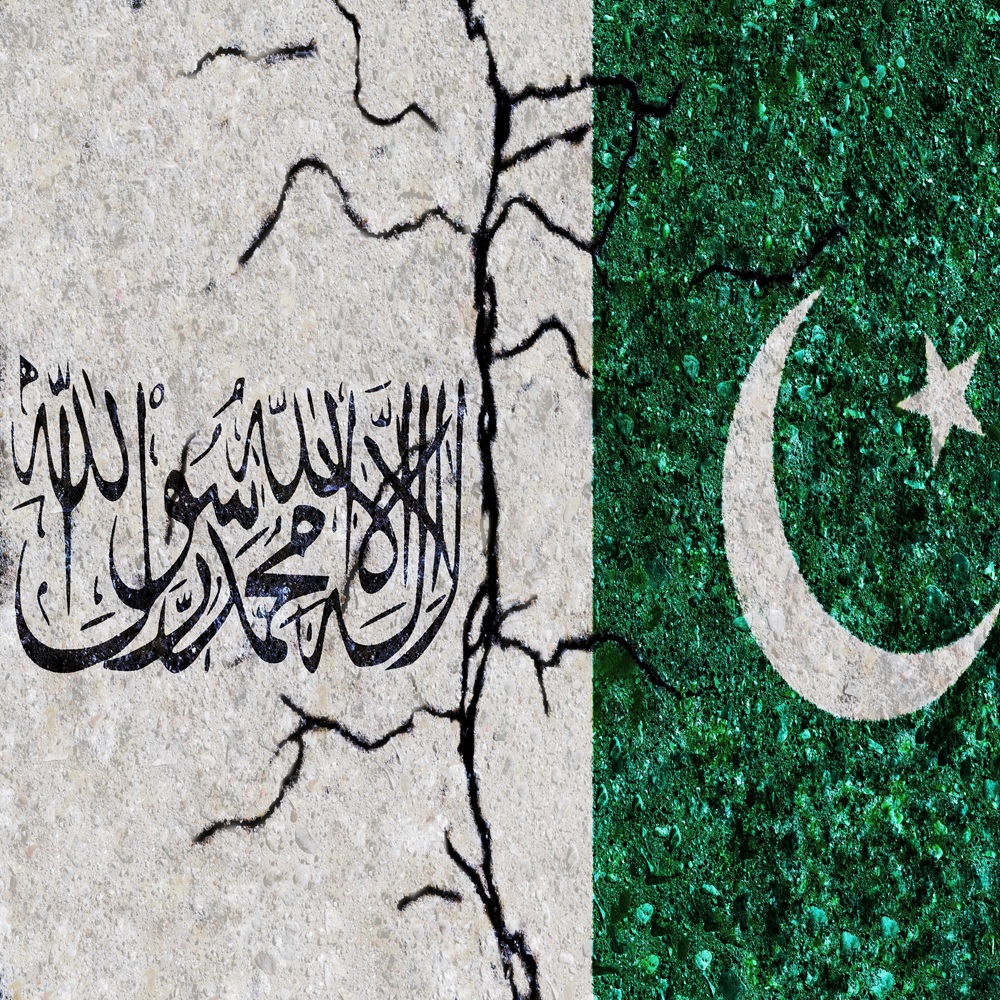
Cracks in the texture wall. Flags: Pakistan, Taliban. Afghanistan civil war. Islamic Emirates of Afghanistan. Pakistan-Taliban relations

What’s Driving Pakistan-Afghanistan War? Islamabad’s Never-Ending Cycle of Insecurity

by Harsh V. Pant

Islamabad has accused Kabul of drifting into an "India colony", a charge that was further sharpened following Afghan Foreign Minister Amir Khan Muttaqi's visit to New Delhi last year. Long-simmering tensions between Afghanistan and Pakistan have now spilled into open confrontation along the contested Durand Line. What was once a theatre of proxy maneuvering is, at least momentarily, being shaped by direct state-to-state hostility. On February 21, Pakistan launched airstrikes on alleged militant sanctuaries in Nangarhar, Paktika and Khost, claiming to target Tehrik-i-Taliban Pakistan (TTP) and ISIS-K elements. Kabul responded on February 26 with ground offensives against Pakistani positions across six provinces. Islamabad escalated further with "Operation Ghazab Lil Haq", striking targets in Kabul and Kandahar, as Defence Minister Khawaja Asif declared that Pakistan's "cup of patience has overflowed". Casualty figures remain contested and unverifiable - Islamabad claims 274 Taliban fighters have been killed and 12 soldiers lost, while Kabul asserts 55 Pakistani soldiers are dead and 13 of its own fighters have been killed. Yet, beyond the numbers lies a more consequential reality: a structurally unstable frontier has entered a new and potentially dangerous phase. Durand And Its Discontente The crisis cannot be reduced to episodic violence. Its roots lie in the unresolved question of the Durand Line - the 2,600-kilometre boundary drawn in 1893, never formally recognised by successive Afghan governments. The line bisects Pashtun tribal lands, embedding a historical grievance into the geography of the modern state system. After the Taliban's return to power in 2021, Pakistan initially anticipated strategic dividends. It expected Kabul to curb the TTP, whose ideological affinities with the Afghan Taliban are well documented. Instead, TTP attacks intensified, with over 2,400 Pakistani security personnel reportedly killed in 2025 alone - the highest toll in a decade. Islamabad's frustration stems not merely from security losses but from the perception that its long-standing leverage over the Taliban has eroded. Recent attacks in Islamabad, Bajaur and Bannu - attributed by Pakistan to Afghan-based militants- served as immediate triggers. Ceasefire efforts mediated by regional actors in October 2025 collapsed amid persistent skirmishes. The Taliban's reluctance to confront the TTP reflects both shared Pashtun solidarities and a pragmatic fear of internal fragmentation, including defections to ISIS-K. Layered atop these tensions is a geopolitical recalibration. Islamabad has accused Kabul of drifting into an "India colony", a charge that was further sharpened following Afghan Foreign Minister Amir Khan Muttaqi's visit to New Delhi last year and a joint statement condemning regional terrorism. For Pakistan, this diplomatic thaw between Kabul and New Delhi represents not merely optics but a potential strategic encirclement. The recent escalation thus appears as much a coercive signal as a counterterrorism operation. Nobody Wins This War The immediate fallout is economic and humanitarian. Afghanistan remains heavily dependent on Pakistani ports for transit trade, while Pakistan derives revenue and strategic depth from its western corridor. Border closures risk paralysing economic activity in Khyber Pakhtunkhwa and Balochistan. Flagship connectivity projects - from the TAPI gas pipeline to broader Eurasian transport initiatives - face renewed uncertainty. China's investments in Pakistan, particularly under CPEC, could confront heightened security vulnerabilities if militancy spills over. The humanitarian dimension is equally stark. Civilian casualties, displacement and potential refugee flows compound Afghanistan's already dire socio-economic crisis. Prolonged instability could embolden Baloch separatists, invigorate ISIS-K, and fragment militant ecosystems further. For external stakeholders - China, Iran, Russia and Turkey - the escalation threatens to upset a precarious regional equilibrium. Yet, a full-scale conventional war remains unlikely. Afghanistan lacks airpower and conventional depth; Pakistan, for its part, cannot afford a protracted two-front contingency. The logic of escalation is, therefore, bounded by structural constraints, even if tactical brinkmanship persists. Where India Stands For India, the crisis is both opportunity and risk. New Delhi's public messaging has emphasised Afghanistan's sovereignty while criticising Pakistan for externalising its internal security failures. This aligns with India's calibrated outreach to the Taliban - focused on humanitarian assistance, trade facilitation and connectivity initiatives such as the Chabahar corridor. A distracted Pakistan may ease immediate pressure along India's western frontier and dilute Islamabad's regional manoeuvrability. However, instability in Afghanistan carries spillover risks: extremist mobilisation, threats to Indian development projects, and disruptions to connectivity ambitions linking India to Central Asia. Pakistan's escalation can plausibly be read as an attempt to deter Kabul's deepening engagement with New Delhi. Over time, sustained India-Taliban ties could narrow Pakistan's diplomatic options. No More Pretences The current crisis marks a qualitative shift - from deniable proxies to overt confrontation. Tactical de-escalation, possibly under regional mediation, appears probable. However, absent movement on core issues - the Durand Line dispute, TTP sanctuaries, and the broader contest for regional influence - the frontier will remain combustible. For Pakistan, the message from this latest flare-up is unmistakable: it can no longer afford the strategic ambivalence that has defined its Afghan policy for decades. Security dilemmas rooted in history and identity will not be resolved through episodic airstrikes, coercive signalling, or the habitual externalisation of internal failures. So long as Islamabad oscillates between tactical accommodation and punitive retaliation, it will remain trapped in a cycle of insecurity of its own making. If Pakistan seeks stability on its western frontier, it must fundamentally recalibrate its approach - abandoning the logic of selective militancy, investing in sustained political engagement with Kabul, and addressing the structural drivers of radicalisation within its own borders. Durable security will not emerge from managing proxies or manufacturing deterrence narratives, but from credible commitments and regional cooperation. The imperative, therefore, is not merely de-escalation, but introspection in Islamabad - without which no meaningful regional equilibrium can take root.

Defense & Security
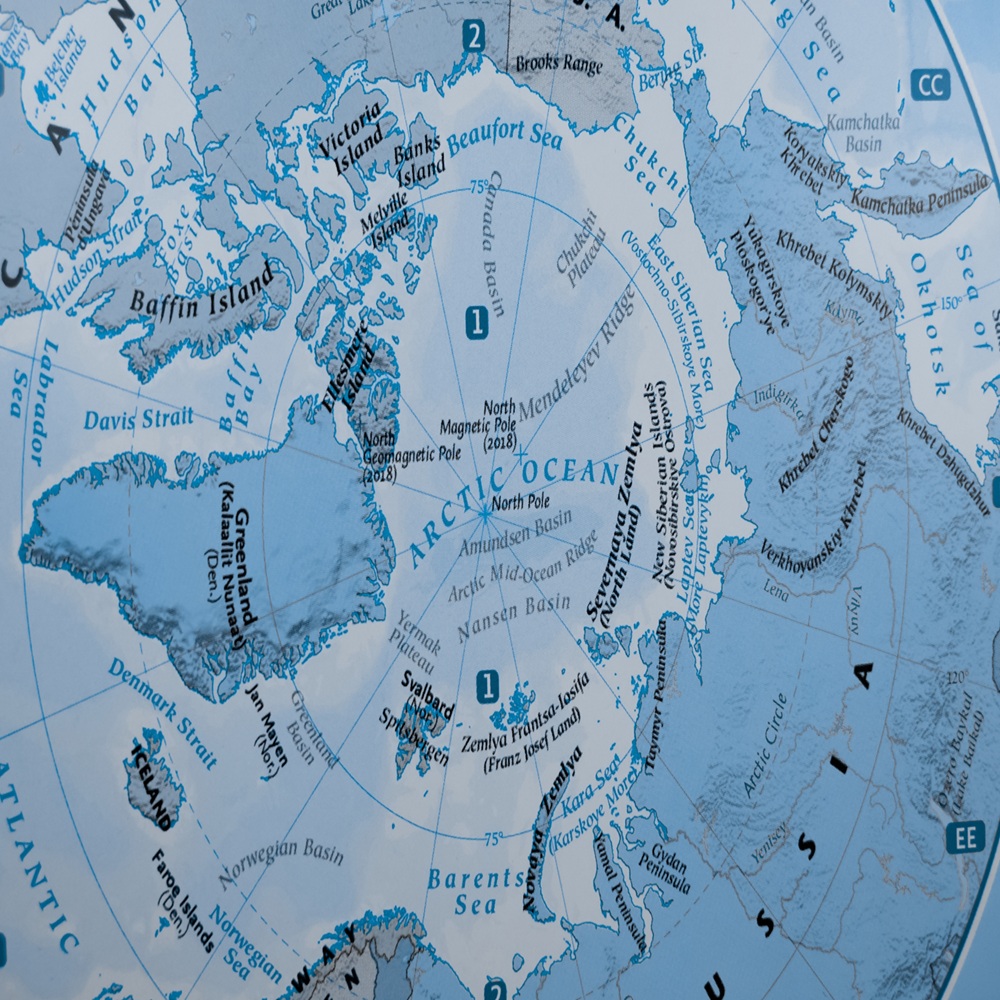
Map of Arctic Ocean styled in grey color. Selective focus on label, close-up view

Greenland at the Center of the Arctic Power: US NSS 2025, NATO Cohesion, and the New Geopolitics of the High North.

by World & New World Journal

In the chilling expanse of the Arctic, where ice and ocean frame the edges of the known world, a geopolitical drama has quietly gathered momentum. The world’s strategic gaze is no longer fixed solely on the traditional theatres of diplomacy in Europe, the Middle East, or the Indo-Pacific. Instead, the High North — and particularly Greenland, the vast Arctic territory within the Kingdom of Denmark — has emerged as a critical arena where great-power competition, national security priorities, global trade dynamics, and climate change converge. This transformation did not occur overnight. For decades, military planners, geographers, and strategic thinkers recognized the Arctic’s latent importance. Yet only in recent years have those projections translated into urgent geopolitical reality. At the center of this shift stands the United States’ National Security Strategy 2025 (NSS 2025), unveiled in late 2025, which redefines American priorities in a world shaped by renewed great-power rivalry. While the strategy addresses multiple global theatres, its emphasis on territorial security, critical resources, strategic geography, and adversarial competition underscores why Greenland has moved from the periphery to the heart of international geopolitics. Greenland today sits at the intersection of U.S. homeland defense, NATO cohesion, Arctic militarization, global trade transformation, and the accelerating race for critical minerals. The tensions surrounding the island reveal not only disputes among allies but also deeper structural changes in the international system. This article argues that Greenland is no longer a remote outpost but a strategic fulcrum of the Arctic, whose future will shape the balance of power in the High North and beyond. In addition, it analyses the geopolitical and strategical concerns from the US over Greenland. America’s Strategic Recalibration in the 2025 National Security Strategy The NSS 2025 marks a clear departure from post-Cold War doctrines centered on expansive multilateralism and global institution-building. Instead, it reflects a return to strategic realism, prioritizing the protection of core national interests, territorial security, and the prevention of adversarial dominance in critical regions. The strategy defines the United States’ primary objective as “the continued survival and safety of the United States as an independent, sovereign republic,” coupled with maintaining decisive military, technological, and economic power. Although the Indo-Pacific remains central, the strategy elevates the Western Hemisphere and adjacent strategic regions, emphasizing the need to prevent hostile encroachment on areas vital to U.S. security and economic resilience. Supply chains, critical minerals, missile defense, and strategic geography feature prominently throughout the document. Within this framework, Greenland has transitioned from a peripheral Arctic territory to a linchpin of U.S. strategic defense and resource security. While the NSS does not outline a standalone Arctic doctrine, its underlying logic — securing access to essential materials, protecting strategic approaches to the homeland, and denying adversaries positional advantages — aligns directly with the intensifying focus on Greenland. Latest developments: US position over Greenland. As already mentioned, the release of the NSS 2025 made one thing clear: US foreign policy is now defined by an assertive approach towards the entire Western Hemisphere – where Greenland is part of –. Moreover, this implies that the US might claim the right to intervene in other countries’ domestic affairs in order to guarantee its strategic and corporate interests. Therefore, after Venezuela – in addition to its rhetoric towards Cuba and Mexico – Greenland has become a hot topic, due its geopolitical, economical and strategical position and of course as part of the US “national security” and interest. In early 2026, Greenland became the unlikely epicenter of a high-stakes geopolitical drama. The U.S., under President Donald Trump, signaled an unprecedented level of interest in the island, framing it as a critical node in Arctic security, homeland defense, and global strategic competition. The announcement of a “framework of a future deal” at the World Economic Forum in Davos marked the peak of months of tension, including the president’s prior rhetoric suggesting military action to assert U.S. control — a prospect that sent shockwaves across Europe and NATO. The pathway to this framework was turbulent. Earlier proposals from the Trump administration, dating back to his first term, had openly floated buying Greenland, citing both security imperatives and access to mineral wealth. While these overtures were dismissed by Denmark and Greenland, they set the stage for heightened U.S. scrutiny. Diplomatic meetings in January 2026, including a contentious session in Washington on January 14, ended with what officials described as a “fundamental disagreement” over sovereignty. By January 18, European allies and Denmark had issued a joint statement affirming that Greenlandic sovereignty belongs exclusively to the Kingdom of Denmark and Greenland itself, while NATO and Danish troops deployed to the island to reassure Arctic security through “Operation Arctic Endurance.” Against this backdrop, Trump’s Davos announcement of a “framework” was simultaneously dramatic and deliberately vague. He described it as a long-term, “infinite” agreement designed to guarantee U.S. strategic goals, including the potential deployment of advanced missile defense systems—the so-called “Golden Dome”—and enhanced NATO involvement. The framework reportedly also aims to prevent Russian and Chinese investments in Greenland and may include increased U.S. access to the island’s mineral resources, though Greenlandic and Danish officials have made clear that no sovereignty transfer is under consideration. Crucially, no formal document has yet been produced, leaving many details unconfirmed and heightening uncertainty among allies. Greenland’s Geographic Centrality: The broader US security interest of the Island. Figure 1: Arctic states, counties and other administrative regions with capitals. Source: Map by Arto Vitikka, Arctic Centre, University of Lapland. Credit for the border data: Runfola, D. et al. (2020) geoBoundaries: A global database of political administrative boundaries. PLoS ONE 15(4): e0231866. https://doi.org/10.1371/journal.pone.0231866e. Figure 2: Arctic Population Centers. Map by Arto Vitikka, Arctic Centre, University of Lapland. When viewed from a polar perspective, the Arctic is not a distant fringe but the shortest connective space between North America, Europe, and Eurasia. The Arctic as seen in Figure 1 is composed of several administrative areas, including Canada, Alaska (USA), Russia, Norway, Sweden, Finland, Iceland and Greenland (Denmark). The latter can be said to be located at the center between North America and Europe and Eurasia, underscoring its geopolitical importance. In other words, Greenland occupies the central Atlantic–Arctic axis, the shortest air and missile trajectories between Russia and North America and a pivotal position between the Canadian Arctic Archipelago and the Russian Arctic coast. This geography carries deep strategic implications and clarifies the logic behind US interest in the island. First, Greenland is part of the so-called GIUK (Greenland-Iceland-UK) Gap, a crucial corridor and central axis for monitoring naval and air activity in the North Atlantic-Arctic corridor. The GIUK Gap played an important role during the Second World War and the Cold War and nowadays it has become crucial in securing air and sea surveillance through radar stations, while securing the sea lines of communication (SLOCs) as well as supply lines making them uninterrupted between NATO’s European members and the USA. The GIUK Gap can assist in ensuring maritime visibility and assist anti-submarine warfare (ASW) in case of conflicts. The presence of Russian submarines in the Arctic is a central pillar of Russia’s military strategy and nuclear deterrence, making the region one of the most militarized maritime spaces in the world. Russia views the Arctic as both a strategic sanctuary and a launch platform. In consequence, its Northern Fleet – headquartered on the Kola Peninsula –, is the most powerful of Russia’s fleets and operates a large share of its nuclear-powered ballistic missile submarines (SSBNs), such as the Borei and Delta IV classes. These submarines carry submarine-launched ballistic missiles (SLBMs) and are designed to remain hidden under Arctic ice, ensuring a second-strike capability in the event of a nuclear conflict. The ice cover, combined with Russia’s familiarity with Arctic waters, provides concealment and operational depth. In addition to SSBNs, Russia deploys nuclear-powered attack submarines (SSNs) and guided-missile submarines (SSGNs) in the Arctic. These vessels conduct intelligence gathering, protect ballistic missile submarines, and pose threats to NATO naval forces and undersea infrastructure, including communication cables. Russian submarines regularly transit through key chokepoints such as the GIUK Gap, bringing them into strategic relevance for Greenland, Iceland, and NATO’s anti-submarine warfare (ASW) posture. In addition, the Arctic also supports Russia’s broader bastion defense concept, which seeks to create heavily defended maritime zones where submarines can operate safely. Air defenses, surface ships, icebreakers, and coastal missile systems complement submarine operations. As climate change reduces sea ice and increases accessibility, Russian submarine activity in the Arctic is expected to remain intense, reinforcing the region’s importance for NATO surveillance, early warning systems, and transatlantic security — especially for locations like Greenland that sit astride critical Arctic–Atlantic routes. Second, Greenland’s high latitude makes it an ideal place for early detection of long-range missile launches. Russia has long-range intercontinental ballistic missiles (ICBMs), if ever launched from Russia toward the United States, the total flight time would be roughly between 25 to 35 minutes – depending on the launch location and target. But because of the Earth’s curvature, the shortest path from Russia to the continental US goes over the Arctic which is why Greenland is so strategically important for early detection and missile-warning defense. In practical terms, US decision-makers would have only minutes to assess the threat and respond after a launch is detected, therefore Greenland is critical for US security. Establishments such as the U.S. Pituffik Space Base underscore how Greenland functions as a first line of surveillance against possible ballistic missile threats from the Eurasian landmass. Therefore, Greenland is indispensable to early-warning and missile-defense systems. Sensors, radars, and space-tracking infrastructure based on the island form a crucial layer of “U.S. homeland defense”. Finally, Greenland is the only large Arctic landmass under Western democratic control outside Eurasia. Russia dominates the Eurasian Arctic coastline, while Alaska and Canada anchor North America. Greenland bridges these spaces, serving as a keystone for transatlantic Arctic security. Its isolation does not diminish its importance; rather, it magnifies it. – making Greenland a linchpin of US homeland defense and NATO’s northern security architecture. Greenland and NATO: The Fragile Architecture of Arctic Security Figure 3: NATO’s and Russia’s militarization in the Arctic. Figure 3 exposes a stark asymmetry in Arctic militarization between NATO and Russia. Moscow maintains a dense, continuous network of military installations stretching from the Kola Peninsula to the Bering Strait. These bases support air defense, naval operations, missile forces, and surveillance, forming an integrated arc of control along Russia’s northern frontier. NATO’s Arctic posture, by contrast, is structurally different. Rather than territorial saturation, it relies on discrete strategic nodes, interoperability over mass, and coordination among multiple sovereign states. Within this fragmented architecture, Greenland constitutes NATO’s most critical node, functioning as the geographic and operational linchpin between North America and Northern Europe. Without Greenland, NATO’s Arctic posture would fracture into disconnected segments—North America on one side and Scandinavia on the other—with no central anchor to bind the alliance’s northern defenses. The United States already maintains a crucial presence on the island through the Pituffik Space Base (formerly Thule Air Base) in northwest Greenland. The installation is indispensable for early missile warning, space surveillance, and tracking adversary launches across the polar region. Complementary allied infrastructure, such as the UK’s logistical presence at Camp Viking in Norway, underscores NATO’s node-based approach rather than a strategy of continuous territorial control. It is precisely Greenland’s role as this irreplaceable strategic node that explains the sharp European response in 2025–2026 to U.S. rhetoric suggesting unilateral action or coercive pressure regarding the island. The deployment of European troops under Operation Arctic Endurance was not merely symbolic; it was a clear assertion that Greenland is a collective NATO concern, not a bilateral bargaining chip between Washington and Copenhagen. In this sense, the military logic of Arctic defense translated directly into alliance politics. Yet the episode also revealed the limits of U.S. power when confronting established allies. Danish and Greenlandic officials consistently emphasized that sovereignty constituted a non-negotiable “red line.” Greenland’s Prime Minister, Jens-Frederik Nielsen, framed the issue not as a local dispute but as one of global order, stressing that Greenland would align with Denmark, the EU, and NATO while retaining full control over its territory. NATO Secretary General Mark Rutte reinforced this position by confirming enhanced cooperation while deliberately refraining from endorsing any transfer of sovereignty—an illustration of the alliance’s careful balancing act between accommodating U.S. strategic priorities and preserving the credibility of its member states. When viewed in this broader context, the episode appears less as an attempt at dramatic territorial acquisition and more as an effort to formalize and modestly expand pre-existing arrangements. The 1951 U.S.–Denmark agreement already permitted permanent U.S. military presence, exclusive jurisdiction over defense areas, and broad operational freedom at installations such as Pituffik. The proposed framework likely reinforced these rights while adding provisions for expanded NATO participation and strategic safeguards against Russian or Chinese influence. From Washington’s perspective, the episode allowed the appearance of a strategic victory, even as sovereignty and political control remained firmly with Greenland and Denmark. Analytically, the Greenland case illustrates a central tension in contemporary U.S. foreign policy: the interplay between assertive unilateralism and the constraints of alliance politics. By elevating Greenland into a symbol of hemispheric and Arctic security, the United States signaled its willingness to test diplomatic norms using both the rhetoric of necessity and instruments of coercion, including threatened tariffs. Yet the ultimate outcome—an unratified verbal framework reinforcing existing agreements—demonstrates the limits of coercion within a multilateral system. In this sense, Greenland has become a lens through which to observe the evolving dynamics of great-power competition, alliance management, and Arctic geopolitics. Its strategic geography, resource potential, and political status converge to make the island central to 21st-century security calculations. The resulting “framework of a future deal” represents not a victory of acquisition but a negotiation of influence—one that codifies U.S. ambitions while respecting allied sovereignty, subtly reshaping the contours of Arctic security and transatlantic relations. Greenland’s Resources: Strategic Minerals in a Fragmenting World Beyond military geography, Greenland’s subsoil wealth significantly enhances its geopolitical importance. The island holds substantial deposits of rare earth elements (REEs), lithium, graphite, niobium, titanium, uranium and zinc. As it is well known these strategic materials are indispensable and critical for renewable energy systems, electric vehicles, advanced electronics, missile guidance and radar technologies and space and defense infrastructure. Last but not least there is also oil and gas, but the conditions and viability to extract them make them an economic challenge. In the context of the control of natural resources, the NSS 2025 repeatedly stresses the need to reduce U.S. dependence on adversarial supply chains — an implicit reference to China’s dominance in rare-earth processing. Therefore, US eyes are on Greenland, as it represents one of the few politically aligned alternatives with large-scale potential reserves – ironically not under Chinese or Russian influence, but under US “allies” control. Yet resource abundance does not automatically translate into strategic advantage. Mining in Greenland faces severe challenges: extreme climate conditions, environmental risks, limited infrastructure, and strong local opposition to environmentally destructive projects. As a result, Greenland’s mineral wealth is strategically valuable but politically sensitive. Its development requires local consent and long-term cooperation, not coercion — a fact often overlooked in external strategic calculations. The Arctic Trade Revolution: Melting Ice, Shifting Routes Figure 4: Arctic Seaways (Northern Sea Route, Northwest Passage and Transpolar Sea Route). Source: Map by Arto Vitikka, Arctic Centre, University of Lapland. Climate change is transforming the Arctic faster than any other region on Earth. As sea ice recedes, new maritime routes are becoming seasonally viable, with potentially transformative consequences for global trade. The Northern Sea Route (NSR) along Russia’s Arctic coast already reduces transit times between Europe and Asia by up to 40%, even though some parts are free of ice for some months per year. On the other hand, a future transpolar route, cutting directly across the Arctic Ocean, could bypass traditional chokepoints such as: The Suez Canal, The Panama Canal or The Strait of Malacca. Therefore, Greenland importance relies on its geographic position that places it adjacent to these emerging corridors. Potential roles for the island include: the search-and-rescue hubs, refueling and logistics points, maritime surveillance and communications infrastructure. This elevates Greenland from a military asset to a potential gatekeeper of future Arctic trade, linking regional security directly to global economic flows. Icebreakers and Power Projection: Mobility as Sovereignty Figure 5: Major Icebreakers and Ice-Capable Patrol Ships highlight a decisive but underappreciated imbalance. Source: generated with Chat GPT using Routers Nov 2022 data. The transit in the Arctic can be defined by the possibility to move freely without any inconvenience due its extreme conditions – or at least with the least inconveniences. In consequence major ice breakers and ice-capable patrol ships became very important assets for the countries in the region. In a simple comparison, Russia possesses more icebreakers than NATO combined, as shown in Figure 5, including nuclear-powered vessels capable of year-round Arctic operations. These ships are instruments of sovereignty, enabling continuous military presence, escort of commercial shipping, enforcement of Arctic regulations and rapid crisis responses. By contrast, the United States has long underinvested in icebreaking capacity. NATO relies on a patchwork of national fleets, with Finland and Sweden contributing significantly but still lagging behind Russia’s scale. The strategic implication is clear: Russia controls mobility while NATO controls nodes. In such an environment, fixed strategic anchors like Greenland become even more critical. Competing Arctic Visions Russia Russia views the Arctic as a core strategic and economic priority, central to its national identity, security, and long-term development. Its Arctic vision emphasizes sovereignty, military security, and the exploitation of vast natural resources, particularly hydrocarbons and minerals. Moscow sees the Northern Sea Route as a critical shipping corridor that can enhance Russia’s control over Arctic navigation and generate economic revenues. To support this vision, Russia has invested heavily in Arctic infrastructure, icebreaker fleets, and military modernization, positioning itself as the dominant Arctic power and framing the region as vital to its great-power status. The Arctic is not an extension of Russian power; it is central to it. Figure 6: Cargo volume in Russia’s Northern Sea Route (1933-2023) China China approaches the Arctic as a “near-Arctic state,” framing its vision around scientific research, economic opportunity, and global governance. Beijing emphasizes participation in Arctic affairs through international law, particularly the UN Convention on the Law of the Sea, and promotes cooperation rather than territorial claims. Its strategy emphasizes long-term access to resources, influence over Arctic governance norms, and participation in future trade routes. Its concept of a “Polar Silk Road” reflects an interest in future shipping routes, energy projects, and digital connectivity, linking the Arctic to China’s broader Belt and Road Initiative. Even though China presents its Arctic engagement as peaceful and mutually beneficial, while gradually expanding its strategic and economic footprint in the region, it also has interest in Greenland’s mining sector, for example, which has heightened concerns about strategic leverage rather than direct control. Figure 7: Map of China’s Polar Silk Road. Source: Map by Arto Vitikka, Arctic Centre, University of Lapland. United States The U.S. approach, as reflected in the NSS 2025, is reactive but intensifying. Greenland crystallizes American concerns about strategic vulnerability, supply-chain dependence, and alliance credibility. Yet pressure tactics risk undermining the very alliances that make Arctic stability possible. The United States views the Arctic as an increasingly important region for national security, environmental stewardship, and economic opportunities. At the same time, it recognizes the strategic implications of growing Russian and Chinese activity in the region. Arctic States The European Arctic states emphasize sustainability, human security, and regional cooperation as the foundation of their Arctic vision. Their policies prioritize environmental protection, responsible resource management, and the rights and livelihoods of Indigenous peoples, while balancing economic development in sectors such as fisheries, renewable energy, and limited resource extraction. These states strongly support multilateral governance through institutions like the Arctic Council and stress adherence to international law. Collectively, they view the Arctic as a region where stability, cooperation, and climate leadership are essential, especially amid rising geopolitical tensions and accelerating environmental change. Canada Canada’s Arctic vision centers on sovereignty, Indigenous partnership, and sustainable development, reflecting the region’s importance to national identity and security. Ottawa emphasizes the protection of its northern territories and views the Northwest Passage as internal waters, while supporting a rules-based Arctic order. A core pillar of Canada’s approach is its collaboration with Indigenous peoples, recognizing their rights, knowledge, and role in governance and stewardship. Canada also prioritizes climate change adaptation, environmental protection, and responsible economic development, seeking to ensure that increased Arctic activity benefits northern communities while maintaining peace and stability in the region. India India’s Arctic vision is primarily science-driven and climate-focused, reflecting its broader emphasis on environmental security and multilateral cooperation. Through its Arctic research station, Himadri, and active participation in the Arctic Council as an observer, India seeks to understand the Arctic’s impact on global climate systems, particularly the Indian monsoon. New Delhi also recognizes the long-term economic and geopolitical significance of the Arctic but approaches the region cautiously, prioritizing sustainable development, international collaboration, and respect for Arctic states’ sovereignty. Strategic Futures: Cooperation or Fragmentation The future of Greenland and the Arctic more broadly will hinge on whether the region evolves toward structured cooperation or strategic fragmentation. In a cooperative scenario, Greenland becomes a stabilizing anchor within a renewed Arctic security framework, where the United States, Denmark, and NATO align their defense priorities with Greenlandic self-determination and environmental safeguards. Such an approach would emphasize multilateral governance, transparency in resource development, confidence-building military measures, and shared investment in infrastructure, search-and-rescue capabilities, and climate resilience. Cooperation would not eliminate competition, particularly with Russia and China, but it would establish rules, norms, and mechanisms to prevent escalation and miscalculation in an increasingly accessible Arctic. By contrast, a fragmented Arctic would be characterized by unilateral actions, coercive diplomacy, and the erosion of trust among allies. Pressure tactics aimed at securing access, influence, or control over Greenland could weaken NATO cohesion, fuel local resistance, and open political space for external actors to exploit divisions. In such a scenario, the Arctic risks becoming a patchwork of contested zones rather than a managed strategic commons. Therefore, fragmentation would increase the likelihood of militarization without coordination, resource development without legitimacy, and crisis dynamics without effective communication channels — conditions that historically precede instability rather than security. Conclusion Greenland’s elevation from a peripheral Arctic territory to a central object of U.S. strategic concern reflects a deeper transformation in American national security thinking. Under the logic of the National Security Strategy 2025, geography has reasserted itself as a core determinant of power. Greenland matters to Washington not because of symbolic territorial ambition, but because it sits at the intersection of missile warning, homeland defense, transatlantic security and critical resource resilience and control. From early-warning radars at Pituffik to the GIUK Gap’s role in anti-submarine warfare, the island functions as a forward shield for the United States rather than a distant outpost. In this sense, U.S. interest in Greenland is less about expansion and more about insulation — protecting the American homeland in an era of compressed warning times and renewed great-power rivalry. At the same time, the Greenland episode exposes the limits of unilateralism in a system still structured by alliances and sovereignty norms. While Washington’s strategic rationale is compelling, its use of coercive rhetoric and pressure tactics toward Denmark and Greenland revealed a misalignment between U.S. security imperatives and alliance diplomacy. The backlash from European allies and the reaffirmation of Greenlandic sovereignty demonstrated that even overwhelming military and economic power cannot easily override the political legitimacy of allied states. Ultimately, the United States secured no new sovereignty, only the likely reinforcement of pre-existing military arrangements — underscoring that influence in the Arctic must be negotiated, not imposed. From a U.S. perspective, Greenland thus represents both a strategic necessity and a diplomatic constraint. The island is indispensable to missile defense, space surveillance, and Arctic access, yet it remains politically autonomous and embedded within a NATO framework that demands consultation and restraint. This dual reality forces Washington to reconcile its desire for strategic certainty with the realities of alliance management. The “framework of a future deal” reflects this compromise: a mechanism to safeguard U.S. security interests while formally respecting Danish and Greenlandic control. The outcome illustrates that American power in the Arctic is real, but conditional — strongest when exercised through institutions rather than outside them. Looking ahead, Greenland will remain a focal point of U.S. Arctic strategy not because of dramatic territorial ambitions, but because it is irreplaceable. No alternative location offers the same combination of geographic centrality, political alignment, and strategic utility. As missile technologies advance, Arctic routes open, and resource competition intensifies, Greenland’s role in U.S. security planning will only grow. Yet the lesson of recent tensions is clear: securing Greenland’s strategic value requires partnership, legitimacy, and long-term engagement rather than pressure. In the final analysis, Greenland is not only a measure of American power, but a barometer of the Arctic’s future political order. The island sits at the intersection of U.S. homeland defense, European security, and the growing assertiveness of Russia in the High North, while also remaining a point of interest for external actors such as China or India. Europe views Greenland primarily as a stabilizing pillar within a rules-based Arctic governed through NATO coordination, international law, and multilateral institutions. Russia, by contrast, treats the Arctic as a strategic rear area and military bastion, where control, mobility, and deterrence dominate its vision of regional order. The United States is thus navigating between these competing logics — seeking to secure its own vital interests without fracturing alliance cohesion or accelerating Arctic militarization. Whether Greenland becomes a cornerstone of cooperative security or a flashpoint of strategic rivalry will depend less on geography, which is fixed, and more on political choices. In this sense, Greenland encapsulates the broader Arctic dilemma: a region where power, restraint, and cooperation must coexist if stability in the High North is to be preserved. Also, it is important to highlight Greenland’s voice – referring to sovereignty and identity. Usually under great-power maneuvering, Greenland’s own population has often been sidelined. Yet Greenland is not merely an object of strategy; it is a political community with a strong Indigenous identity, environmental concerns, and aspirations for greater autonomy. Therefore, it is important to keep in mind its constitutional status within the Kingdom of Denmark, their principle of self-determination and the political costs of alienating local consent. Alienating local consent would not only undermine legitimacy, but also weaken the long-term sustainability of any security arrangement. Finally, the Arctic transformation is no longer a distant projection but an unfolding reality. Climate change is accelerating the opening of Arctic Sea routes, reshaping patterns of trade, mobility, and access, and in doing so redefining how sovereignty and power are exercised in the High North. In this emerging environment, traditional markers of security such as missile defense and military presence will increasingly coexist with less conventional—but equally strategic—assets, including icebreakers, critical minerals, infrastructure, and regulatory authority over maritime corridors. The future balance of power in the Arctic will therefore depend not only on geography or military capability, but on the ability of states and alliances to adapt to a rapidly changing region where environmental transformation, economic opportunity, and strategic competition intersect. How the United States, its allies, and other Arctic stakeholders respond to this transformation will shape whether the Arctic evolves as a space of managed cooperation or intensifying rivalry. References Agneman, G. (2025, February 04). Trump wants Greenland – but here’s what the people of Greenland want. Retrieved from The Conversation: https://theconversation.com/trump-wants-greenland-but-heres-what-the-people-of-greenland-want-248745 Aljazeera. (2026, January 15). European troops arrive in Greenland as talks with US hit wall over future. Retrieved from Aljazeera: https://www.aljazeera.com/news/2026/1/15/european-troops-arrive-in-greenland-as-talks-with-us-hit-wall-over-future Aljazeera. (2026, January 18). Trump announces new tariffs over Greenland: How have allies responded? Retrieved from Aljazeera: https://www.aljazeera.com/news/2026/1/18/trump-announces-new-tariffs-over-greenland-how-have-eu-allies-responded Arctic Centre University of Lapland. (n.d.). Arctic Region. Retrieved from https://arcticcentre.org/en/arctic-region/maps/polar-silk-road/ Bassets, M. (2026, Enero 11). “Por las buenas o por las malas”: así puede Trump conquistar Groenlandia. Retrieved from El País: https://elpais.com/internacional/2026-01-10/por-las-buenas-o-por-las-malas-asi-puede-trump-conquistar-groenlandia.html Bateman, T. (2026, January 14). Danish minister says 'fundamental disagreement' remains after 'frank' Greenland talks with US. Retrieved from BBC: https://www.bbc.com/news/live/cn824zzp670t BBC News. (2026, January 21). Trump drops threat of tariffs over Greenland after Nato talks in Davos. Retrieved from BBC News: https://www.bbc.com/news/live/cjrzjqg8dlwt Bierman, P. (2025, February 19). Greenland’s melting ice and landslide-prone fjords make the oil and minerals Trump is eyeing dangerous to extract. Retrieved from The Conversation: https://theconversation.com/greenlands-melting-ice-and-landslide-prone-fjords-make-the-oil-and-minerals-trump-is-eyeing-dangerous-to-extract-249985 Bierman, P. (2025, February 19). Greenland’s melting ice and landslide-prone fjords make the oil and minerals Trump is eyeing dangerous to extract. Retrieved from The Conversation: https://theconversation.com/greenlands-melting-ice-and-landslide-prone-fjords-make-the-oil-and-minerals-trump-is-eyeing-dangerous-to-extract-249985 Bierman, P. (2026, January 14). US military has a long history in Greenland, from mining during WWII to a nuclear-powered Army base built into the ice. Retrieved from The Conversatiion: https://theconversation.com/us-military-has-a-long-history-in-greenland-from-mining-during-wwii-to-a-nuclear-powered-army-base-built-into-the-ice-273355 Bonsoms, J. (2025, Dececmber 16). ‘Extreme melting’ episodes are accelerating ice loss in the Arctic. Retrieved from The Conversation: https://theconversation.com/extreme-melting-episodes-are-accelerating-ice-loss-in-the-arctic-272114 Brincat, S. (2026, January 18). Trump has threatened European countries with higher tariffs if he doesn’t get Greenland. Will it work? Retrieved from The Conversation: https://theconversation.com/trump-has-threatened-european-countries-with-higher-tariffs-if-he-doesnt-get-greenland-will-it-work-273698 Brincat, S., & Naranjo Cáceres, J. Z. (2026, January 07). Trump wants Greenland. Europe’s tepid response is putting NATO and global security at risk. Retrieved from The Conversation: https://theconversation.com/trump-wants-greenland-europes-tepid-response-is-putting-nato-and-global-security-at-risk-272819 Brooks, J. (2026, January 20). Pro-Greenland protesters mock Trump’s MAGA slogan with ‘Make America Go Away’ caps. Retrieved from AP: https://apnews.com/article/denmark-greenland-maga-trump-protest-cd1213dd73e9ea1e4da43285704c95ea Bryant, M., & Sabbagh, D. (2026, January 15). Greenland's defence is 'common concern' for Nato, Danish PM says as European troops fly in. Retrieved from The Guardian: https://www.theguardian.com/world/2026/jan/15/greenland-defence-nato-denmark-prime-minister-european-troops Burrows, E., Ciobanu, C., & Niemann, D. (2026, January 16). European troops arrive in Greenland as talks with US highlight 'disagreement' over island's future. Retrieved from AP: https://apnews.com/article/greenland-united-states-denmark-trump-vance-rubio-meeting-b10f5151008f1f18a788dc0751473c0e CNN. (2026, January 21). Trump says he’s formed a ‘framework of a future deal’ on Greenland. Retrieved from CNN: https://edition.cnn.com/politics/live-news/trump-administration-news-01-21-26 Davies, M. (2026, January 19). Starmer holds phone call with Trump over Greenland tariff threat. Retrieved from BBC: https://www.bbc.com/news/articles/cwyn90l1dneo Dodds, K. (2026, January 09). As the Arctic warms up, the race to control the region is growing ever hotter. Retrieved from The Conversation: https://theconversation.com/as-the-arctic-warms-up-the-race-to-control-the-region-is-growing-ever-hotter-273118 Dunbar, M. (2026, January 18). Trump's calls to seize Greenland ignite fresh criticism from Republican party. Retrieved from The Guardian: https://www.theguardian.com/us-news/2026/jan/18/trump-greenland-republican-party FitzGerald, J. (2026, January 19). Why does Trump want Greenland and what could it mean for Nato? Retrieved from BBC: https://www.bbc.com/news/articles/c74x4m71pmjo Fleck, A. (2025, January 24). NATO’s and Russia’s Militarization of the Arctic. Retrieved from statista: https://www.statista.com/chart/33824/military-bases-in-the-arctic-belonging-to-nato-and-russia/?srsltid=AfmBOoqwc5PmGe6_JB6mYjQSP9pr9fIZE_LcEtMOo_rtnCD86zMcQpwn Gjedssø Bertelsen, R. (2025). Divided Arctic in a Divided World Order. Strategic Analysis, 48(Issue 6: Changing Dynamics in the Arctic: Actors and Alliances), 568-577. doi:https://doi.org/10.1080/09700161.2025.2453322 Government Offices of Sweden. (2026, January 18). Statement by Denmark, Finland, France, Germany, the Netherlands, Norway, Sweden and the United Kingdom. Retrieved from Government Offices of Sweden: https://www.government.se/statements/2026/01/statement-by-denmark-finland-france-germany-the-netherlands-norway-sweden-and-the-united-kingdom/ Grillo, F. (2026, January 08). As the US eyes Greenland, Europe must turn a global problem into an opportunity. Retrieved from The Conversation: https://theconversation.com/as-the-us-eyes-greenland-europe-must-turn-a-global-problem-into-an-opportunity-272872 Gupta, P. (2024, September 18). Understanding the potential of the Northern Sea Route. Retrieved from ORF: https://www.orfonline.org/expert-speak/understanding-the-potential-of-the-northern-sea-route Harvey, L. (2026, January 16). European nations send additional troops to Greenland as US annexation threats escalate. Retrieved from CNN: https://edition.cnn.com/2026/01/15/world/europe-troops-greenland-trump-nato-intl-hnk Hastings Dunn MBE, D., Webber, M., & Wolff, S. (2026, January 07). US action against Greenland would undermine Nato, but now is not the time to panic. Retrieved from The Conversation: https://theconversation.com/us-action-against-greenland-would-undermine-nato-but-now-is-not-the-time-to-panic-272911 Holland, S., Mason, J., & Erickson, B. (2026, January 07). Trump discussing how to acquire Greenland, US military always an option, White House says. Retrieved from Reuters: https://www.reuters.com/world/trump-advisers-discussing-options-acquiring-greenland-us-military-is-always-an-2026-01-06/ huaxia. (2026, January 19). China urges U.S. to stop using so-called "China threat" as pretext for pursuing selfish gains. Retrieved from Xinhua: https://english.news.cn/20260119/57899ee8d43345ddbfa222828ec1d0a4/c.html Jakes, L., Tankersley, J., & Kanno-Youngs, Z. (2026, January 22). Trump Touts Greenland Framework as NATO Mulls U.S. Sovereignty Over Bases. Retrieved from The New York Times: https://www.nytimes.com/live/2026/01/21/us/trump-davos-greenland-news Karjee, M. (2025, August 20). Russia’s Arctic Corridor: Between Ice and Isolation. Retrieved from E-International Relations: https://www.e-ir.info/2025/08/20/russias-arctic-corridor-between-ice-and-isolation/ Katila, A. (2026, January 15). As US and Denmark fight, Greenland’s voices are being excluded once again. Retrieved from The Conversation: https://theconversation.com/as-us-and-denmark-fight-greenlands-voices-are-being-excluded-once-again-273131 Kennedy-Pipe, C. (2026, January 14). Whether or not US acquires Greenland, the island will be at the centre of a massive military build-up in the Arctic. Retrieved from The Conversation: https://theconversation.com/whether-or-not-us-acquires-greenland-the-island-will-be-at-the-centre-of-a-massive-military-build-up-in-the-arctic-273301 Khanna, M. (2025, March 19). China and the Arctic: An Overview. Retrieved from ORF: https://www.orfonline.org/research/china-and-the-arctic-an-overview Kirby, P. (2026, January 16). European military personnel arrive in Greenland as Trump says US needs island. Retrieved from BBC: https://www.bbc.com/news/articles/cd0ydjvxpejo Kotak, S. (2025, September 08). Leveraging India’s Arctic Observer Status: Scientific Diplomacy as a Lever for Climate, Resource and Security Advancement. Retrieved from World & New World Journal: https://worldandnewworld.com/india-arctic-observer-status/ Kottasová, I., & Edwards, C. (2026, Enero 19). Trump le dice a Noruega que ya no se siente obligado a "pensar únicamente en la paz" en carta sobre el Nobel y Groenlandia. Retrieved from CNN Español: https://cnnespanol.cnn.com/2026/01/19/eeuu/trump-paz-noruega-nobel-reux Kumar, A., & Haldar, S. (2024, October 2024). An evolving partnership in the Arctic between China and Russia. Retrieved from ORF: https://www.orfonline.org/expert-speak/an-evolving-partnership-in-the-arctic-between-china-and-russia L. Montgomery, S. (2026, January 14). 4 reasons why the US might want to buy Greenland – if it were for sale, which it isn’t. Retrieved from The Conversation: https://theconversation.com/4-reasons-why-the-us-might-want-to-buy-greenland-if-it-were-for-sale-which-it-isnt-246955 Lebowitz, M. (2026, January 18). Treasury secretary defends Greenland tariffs: 'The national emergency is avoiding the national emergency'. Retrieved from NBC News: https://www.nbcnews.com/politics/trump-administration/treasury-secretary-bessent-tariffs-national-emergency-greenland-eu-rcna254650 Levison, J., & Russell, L. (2026, January 19). Why Trump says the US 'needs' Greenland - and what the fallout could be. Retrieved from Sky news: https://news.sky.com/story/why-trump-says-the-us-needs-greenland-and-what-the-fallout-could-be-13285350 Lubold, G., Kube, C., Williams, A., & Alba, M. (2026, January 14). Buying Greenland could cost as much as $700 billion. Retrieved from NBC News: https://www.nbcnews.com/politics/white-house/buying-greenland-cost-much-700-billion-rcna253921 Manners, I. (2026, January 09). Four ways to understand what’s going on with the US, Denmark and Greenland. Retrieved from The Conversation: https://theconversation.com/four-ways-to-understand-whats-going-on-with-the-us-denmark-and-greenland-272873 Nicholas, P., & Smith, A. (2026, January 20). Trump won't say whether he would use force to seize Greenland. Retrieved from NBC News: https://www.nbcnews.com/politics/trump-administration/trump-greenland-use-of-force-nobel-norway-europe-tariffs-ukraine-rcna254786 Passi, R. (2018, February 21). One belt, one road, and now one circle. Retrieved from ORF: https://www.orfonline.org/expert-speak/one-belt-one-road-and-now-one-circle Paul, J. (2026, January 08). Greenland is rich in natural resources – a geologist explains why. Retrieved from The Conversation: https://theconversation.com/greenland-is-rich-in-natural-resources-a-geologist-explains-why-273022 Reuters. (2021, July 16). Greenland ends unsuccessful 50-year bid to produce oil. Retrieved from Reuters: https://www.reuters.com/business/energy/greenland-puts-an-end-unsuccessful-oil-adventure-2021-07-16/#:~:text=Naaja%20Nathanielsen%2C%20Greenland's%20minister%20of,profits%20or%20make%20a%20loss Rønberg, N., Gjerding Nielson, E., & Haugaard, M. (2026, January 06). Kampen om Grønlands fremtid. Retrieved from Nyheder: https://nyheder.tv2.dk/live/2025-01-06-kampen-om-groenlands-fremtid/over-200-soldater-i-groenland-lige-nu?entry=c342b2d3-e01d-4f60-b1dc-8df98fdac85b Sergunin, A., & Konyshev, V. (2025, April 21). The Arctic Great Game: The Need for Cautious Optimism. Retrieved from ORF: https://www.orfonline.org/expert-speak/the-arctic-great-game-the-need-for-cautious-optimism Sheftalovich, Z., & Jack, V. (2026, January 07). How Trump gets Greenland in 4 easy steps. Retrieved from Politico: https://www.politico.eu/article/donald-trump-greenland-easy-steps-nato-policy-deal-military/ Shetty, K. (2023, June 06). The Northern Sea route: A gamechanger or a road to hegemony? Retrieved from ORF: https://www.orfonline.org/expert-speak/the-northern-sea-route Slothuus, L. (2026, January 12). Why Greenland’s vast natural resources won’t necessarily translate into huge profits. Retrieved from The Conversation: https://theconversation.com/why-greenlands-vast-natural-resources-wont-necessarily-translate-into-huge-profits-273137 Soufi Burridge, T., Gardiner, C., & Pereira, I. (2026, January 16). France, other NATO countries send troops to Greenland for exercises after meeting with Vance and Rubio. Retrieved from ABC News: https://abcnews.go.com/Politics/france-nato-countries-send-troops-greenland-exercises-after/story?id=129241103 Talmazan, Y. (2026, January 15). European troops arrive in Greenland as Trump throws another curveball. Retrieved from NBC News: https://www.nbcnews.com/world/greenland/european-troops-arrive-greenland-trump-throws-curveball-rcna254166 Tanno, S., & Waldenberg, S. (2026, Enero 10). Trump dice que Estados Unidos tomará Groenlandia "por las malas" sino puede hacerlo por las buenas. Retrieved from CNN Español: https://cnnespanol.cnn.com/2026/01/10/eeuu/trump-groenlandia-malas-trax Testoni, M. (2026, January 16). US-Greenland negotiations have hit a wall. Here are three ways the crisis could end. Retrieved from The Conversation: https://theconversation.com/us-greenland-negotiations-have-hit-a-wall-here-are-three-ways-the-crisis-could-end-273629 tg24. (2026, January 16). Groenlandia, scattata la missione "Arctic Endurance": cosa sapere. Retrieved from tg24: https://tg24.sky.it/mondo/2026/01/16/groenlandia-arctic-endurance-esercitazione-militare Bertrand, N., Liptak, K., Atwood, K., & Sclutto, J. (2026, January 23). No written document memorializes the future deal framework for Greenland, sources say. Retrieved from CNN: https://edition.cnn.com/2026/01/22/politics/future-deal-framework-greenland Blake, A. (2026, January 23). Trump’s Greenland framework sounds a lot like an already existing 1951 deal. Retrieved from CNN: https://edition.cnn.com/2026/01/22/politics/us-greenland-framework-1951-deal Curtis, J., & Stefano, F. (2026, January 23). President Trump and Greenland: Frequently asked questions. Retrieved from House of Commons Library: https://commonslibrary.parliament.uk/research-briefings/cbp-10472/ Kola, P. (2026, January 23). What we know about Trump's 'framework of future deal' over Greenland. Retrieved from BBC: https://www.bbc.com/news/articles/c86vvjxe9z7o Meredith, S. (2026, January 28). Greenland will not give in, PM says, as Denmark warns world order as we know it is over. Retrieved from CNBC: https://www.cnbc.com/2026/01/28/greenland-trump-nato-denmark-security-defense.html The White House. (2025, November). National Security Strategy of the United States of America. Retrieved from The White House: https://www.whitehouse.gov/wp-content/uploads/2025/12/2025-National-Security-Strategy.pdf

Defense & Security
A group of people are controlling the orbiting international space station ISS. Elements of this image furnished by NASA.

Assessing the Implications of Interstellar Objects for Planetary Security and Defense

by Sebastián Calderón Céspedes

As international order evolves in the 21st century, strategic competition is increasingly shaped by technological frontiers and emerging domains of power. Unlike the unipolar moment following the Cold War, the contemporary landscape is defined by multipolarity, where major powers vie for influence across space, cyberspace, and biotechnology. Outer space has emerged not only as a frontier for exploration but also as a potential arena for resource acquisition and military projection, raising novel challenges for international law, security policy and cooperative governance. Examining interstellar phenomena in this context underscores the importance of preparedness, coordination, and risk management, even without assuming the presence of extraterrestrial intelligence, yet acknowledging the unprecedented nature of events that are pushing the boundaries of human observation. Humanity is gradually entering an era in which technological progress is reshaping our conception of cosmic exploration. As advancements in rocket propulsion, materials science, and observational astronomy accelerate, the prospect of humanity departing Earth towards other worlds becomes less a distant dream and more an inevitable chapter in our long-term evolution. The future of our species increasingly appears to be tied to the potential terraforming of new planets and celestial bodies, alongside the development of aerospace technologies capable of carrying us deeper into the cosmos. Within this transformative horizon, the Fermi paradox or the Dark Forest theory gains renewed relevance, challenging humanity to consider the existential filters that civilizations must surpass to survive, expand and potentially encounter other life forms. Yet, while such milestone may unfold centuries from now, the foundations of that future are being laid in the present. In the 21st century, specifically by the year 2026, humanity will become more capable of observing its immediate cosmic neighborhood. Modern telescopes and space-based observatories allow us to detect objects that for centuries have likely passed through our solar system unnoticed. Only within the brief span of our scientific maturation have we acquired the tools to identify interstellar objects, bodies originating beyond the solar system whose physical properties and trajectories challenge our existing frameworks. These objects, often catalogued as cometary in nature, possess characteristics that warrant careful study. Their unusual shapes, compositions, and velocities offer insights into environments beyond our interstellar cradle and, in some cases, raise questions about their natural origin or even the possibility of artificial extraterrestrial technology. As our detection capabilities improve, the arrival of each interstellar visitor represents not only a scientific opportunity but also a critical data point for understanding planetary security and defense. Consequently, their study urges nations to evolve towards a more serious and coordinated international framework capable of addressing the strategic, scientific, and existential implications of interstellar encounters. The emergence and Relevance of Interstellar Objects The scientific understanding of interstellar objects (ISOs) has evolved rapidly in recent years, propelled by technological advances and the unexpected discovery of bodies crossing the solar system on hyperbolic trajectories. Before 2017, the existence of such objects was largely theoretical, supported by models of planetary formation and stellar dynamics that predicted the ejection of debris during the early stages of planetary system evolution. These models implied that the Milky Way should contain vast populations of wandering fragments- comets, asteroids, and potentially more complex bodies such as extraterrestrial debris moving freely through interstellar space. Yet observational confirmation remained unattainable due to instrumental limitations. This changed with the detection of the first confirmed interstellar object, 1/Oumuamua, whose physical properties departed radically from known solar system bodies. Its non-gravitational acceleration, lack of a visible coma, and elongated shape challenged established models of cometary activity and asteroidal composition (Meech et al, 2017). The subsequent discovery of 2I/Borisov, a more conventionally cometary object, confirmed that the solar system is indeed exposed to material originating from other stellar environments (Jewitt & Luu, 2019). The contrast between both objects highlighted a key insight: ISOs are highly diverse, and their properties may reveal mechanisms and materials absent from our own planetary system. Advances in wide-field surveys, high-resolution instrumentation, and automated sky- monitoring systems have significantly expanded humanity´s capacity to detect and track ISOs. The increasing sensitivity of these tools marks a transition toward a new observational era in which interstellar detections may become more frequent. As a result, we are now able to observe the behavior of bodies entirely foreign to the solar system-objects whose trajectories, compositions, and signatures often defy established expectations and expose gaps in existing theoretical frameworks. This expanding observational capability not only advances scientific knowledge but also underscores the urgency of early warning detection. Because ISOs are typically identified within narrow observational windows, delayed characterization can lead to the loss of critical scientific and strategic information. Consequently, the growing presence of ISOs calls for enhanced global coordination, standardized protocols, and a more serious international approach to monitoring and interpreting near-Earth interstellar encounters. The Impact and Arrival of 3I/ATLAS The discovery of 3I/ATLAS, the third confirmed interstellar object entering our solar system, marks a significant milestone in modern astronomy. Unlike 1/Oumuamua and 2I/Borisov, whose observational windows were limited and partially constrained, 3I/ATLAS has provided a comparatively longer period for systematic study. Its hyperbolic trajectory, unusual photometric behavior, and non-standard luminosity variations have made it an object of exceptional scientific interest. While early observations suggest that while 3I/ATLAS shares key characteristics with known cometary bodies, its behavior reinforces broader findings that interstellar objects often display physical and dynamical properties that do not fit neatly within exiting taxonomies of solar system objects (Jewitt, 2023). The media response to 3I/ATLAS has been unprecedented. As with Oumuamua, the object rapidly became the subject of public fascination, sensational claims, and speculative narratives. News outlets, online forums, and social media ecosystems proliferated interpretations ranging from exotic physics to extraterrestrial probes. While much of this discourse lacks grounding in empirical evidence, its widespread circulation reflects a broader sociological trend: interstellar phenomena increasingly operate not only as a scientific event but also as catalysts for public, imagination, cultural anxiety, and geopolitical attention. As Kaku (2020) notes, humanity approaches a technological threshold where cosmic discovery intersects directly with public consciousness, provoking both curiosity and apprehension. From a scientific standpoint, researchers such as Loeb (2021) have emphasized that anomalous behavior in interstellar visitors should not be dismissed lightly. Although 3I/ATLAS currently appears consistent with a natural origin, its unique features-and the difficulty in categorizing ISOs-underscore the need for serious, methodical investigation. Loeb argues that humanity must abandon its complacency regarding the unknown nature of interstellar technologies or civilizations and instead adopt a posture of preparedness, open inquiry, and systematic risk assessment. In his view, phenomena like 3I/ATLAS are reminders that humanity is not isolated, and that contact-whether intentional or incidental—with non-human intelligence represents a real possibility with profound implications. The arrival of 3I/ATLAS has also highlighted the potential consequences of extraterrestrial technological encounters. Even in the absence of direct evidence of artificial origin, the mere ambiguity of such objects can trigger global destabilization through speculation, misinformation, or geopolitical competition. Historical examples such as the economic collapses of 1929 and 2008, the disruptive effects of the COVID-19 pandemic, and the global tensions surrounding major wars demonstrate how uncertainty-especially when amplified by media-can generate widespread instability. In this context, an interstellar object exhibiting unexplained characteristics could easily become a flashpoint for international tension, economic turbulence, or strategic miscalculation. Thus, beyond its scientific significance, 3I/ATLAS has brought renewed attention to the vulnerabilities and responsibilities of a species becoming increasingly aware of its cosmic environment. The object serves as a practical reminder that humanity must develop not only more advanced observational systems but also coordinated international frameworks for managing unexpected astronomical events. As we confront the possibility of encountering technologies or life beyond Earth, the world must adopt a more mature, structured approach to detection, interpretation, and global communication. This moment sets the stage for next critical dimension of the discussion, the implications of interstellar objects for planetary security and defense, and the urgent need to assess humanity’s readiness for cosmic contingencies. Toward a Multiplanetary Security Architecture Planetary security has grown increasingly complex as scientific capabilities expand toward detecting and characterizing interstellar objects whose origins and physical attributes lie beyond conventional astrophysical categories. Within the United Nations framework, existing mechanisms-such as COPUOS, the International Asteroid Warning Network (IAWN), and the Space Mission Planning Advisory Group (SMPAG) provide the foundational structure for global coordination on natural impact hazards (UN COPUOS, 2014). However, these institutions were established under assumptions limited to solar system derived natural threats, leaving them poorly equipped to address unknown interstellar phenomena. The Outer Space Treaty and subsequent conventions introduced broad principles on cooperation and peaceful use, but no anticipated scenarios involving technologically anomalous interstellar objects or potential artificial extraterrestrial artifacts, resulting in a significant global governance vacuum. These mechanisms are designed primarily for probabilistic, natural impact scenarios, not for interstellar objects exhibiting anomalous trajectories, non-gravitational accelerations or uncertain technological signatures. Recognizing this gap, recent scientific proposals-most notably those advanced by Loeb (2023)-have called for the development of a dedicated international coordination mechanism under the United Nations system for the study and assessment of interstellar objects. Rather than proposing a fixed institutional blueprint, these contributions emphasize the need for a structured platform capable of integrating scientific analysis, risk assessment, and transparent diplomatic communication in cases involving anomalous interstellar phenomena. Such proposals should be understood not as a definitive institutional prescription, but as forward as a definitive institutional prescription, but as forward-looking reference points for the type of governance architecture of international community must begin to contemplate. As humanity´s observational reach extends beyond the boundaries of the solar system; this governance gap becomes increasingly consequential. Interstellar objects introduce forms of uncertainty that existing planetary defense regimes-designed around predictable, solar system-derived threats were never Intended to manage, underscoring the need for flexible and adaptive legal frameworks capable of integrating scientific uncertainty into decision making processes. Within this emerging landscape, conceptual assessment tools have gained relevance as mechanisms to structure uncertainty rather than eliminate it. One illustrative example is the Interstellar Threat Assessment Scale (ITAS) proposed by Loeb (2024), which offers a simplified framework for evaluating interstellar detections based on observable characteristics rather than speculative intent. As its lower levels, the scale categorizes objects that behave consistently with natural interstellar debris, such as comet-like bodies exhibiting predictable physical and dynamic properties. Higher levels correspond to increasing degrees of anomaly-such as unexplained non-gravitational acceleration, unconventional trajectories, or geometries inconsistent with known natural formation processes. While the scale is not explicitly designed to identify extraterrestrial technology, it intentionally encompasses characteristics that fall outside established natural baselines. This design allows it to function across multiple scenarios, from rare or poorly understood natural phenomena to detections that may warrant closer scrutiny due to their atypical behavior. In this sense, the framework remains agnostic regarding origin, yet adaptable enough to support both conventional astrophysical analysis and precautionary assessments under conditions of elevated uncertainty. Importantly, it does not assert hostile intent or artificial origin, rather it operates as a risk-management tool that helps differentiate levels of scientific uncertainty and potential planetary relevance. Approached in this manner, such frameworks contribute to the evolution of international space governance by providing a shared analytical language for policymakers, scientific institutions, security agencies and statecraft-oriented decision-makers. By standardizing how uncertainty is assessed and communicated, they reduce fragmented national interpretations, limit reactive or militarized responses, and promote cooperative, evidence-based decisions. Decision-making under conditions of incomplete information. This process reflects a broader need for international space law to evolve dynamically. However, the governance of interstellar risk cannot rely solely on conceptual models or isolated scientific initiatives. It requires a genuinely planetary response that integrates the full spectrum of contemporary technological, institutional, and political capacities. International legislation governing outer space must be adaptive and evolutionary, capable of responding to emerging scientific realities. Artificial intelligence, real-time global surveillance networks, and autonomous detection algorithms must be incorporated into a unified planetary architecture capable of identifying and characterizing interstellar objects far earlier than current capabilities allow. Equally important is the sustained collaboration among major space agencies-including NASA, ESA, CNSA, ISRO, Roscosmos, and JAXA- alongside private actors such as SpaceX, Blue Origin, and emerging aerospace enterprises, whose technological capabilities and rapid innovation cycles are increasingly central to space governance. Equally critical is great-power cooperation. From a realist perspective, the international system remains defined by competition, power asymmetries, and strategic mistrust. Yet planetary defense represents a rare domain in which shared existential vulnerability can partially override zero-sum logic. The detection of an anomalous interstellar object must never become a catalyst for geopolitical rivalry or strategic miscalculation, but rather an opportunity for transparent scientific collaborations and coordinated global response. In an international order strained by power competition, planetary security stands as one of the few areas where shared survival interests necessitate shared responsibility. Ultimately, interstellar objects compel humanity to transcend political fragmentation and adopt a forward- look global strategy. Building a resilient planetary security architecture requires the integration of scientific expertise, adaptive international governance, technological innovation, and coordinated commitment of state and private actor alike. Whether future interstellar encounters prove benign or reveal unprecedented anomalies, preparedness is not speculation, it is an essential step in the evolution of humanity´s role within the cosmos. References - Jewitt, D., & Seligman, D. Z. (2023). The interstellar interlopers. Annual Review of Astronomy and Astrophysics, 61, 197–236. https://doi.org/10.1146/annurev-astro-071221-054221 - Jewitt, D., & Luu, J. (2019). Initial characterization of interstellar comet 2I/2019 Q4 (Borisov). The Astrophysical Journal Letters, 886(2), L29. https://doi.org/10.3847/2041-8213/ab530b - Kaku, M. (2018). The Future of Humanity: Terra­forming Mars, Interstellar Travel, Immortality, and Our Destiny Beyond Earth. Doubleday. https://www.penguinrandomhouse.com/books/555722/the-future-of-humanity-by-michio-kaku/ - Loeb, A. (2021). Extraterrestrial: The first sign of intelligent life beyond Earth. Houghton Mifflin Harcourt. https://openlibrary.org/books/OL31850155M/Extraterrestrial?utm_source=chatgpt.com - Loeb, A. (2024). The interstellar threat assessment scale. Medium. https://avi-loeb.medium.com/ - Meech, K. J., et al. (2017). A brief visit from a red and extremely elongated interstellar asteroid. Nature, 552, 378–381. https://doi.org/10.1038/nature25020 - United Nations Committee on the Peaceful Uses of Outer Space (UN COPUOS). (2014). Report of the Scientific and Technical Subcommittee on its fifty-first session. United Nations Office for Outer Space Affairs. https://www.unoosa.org/oosa/en/ourwork/copuos/stsc/2014/index.html

Defense & Security
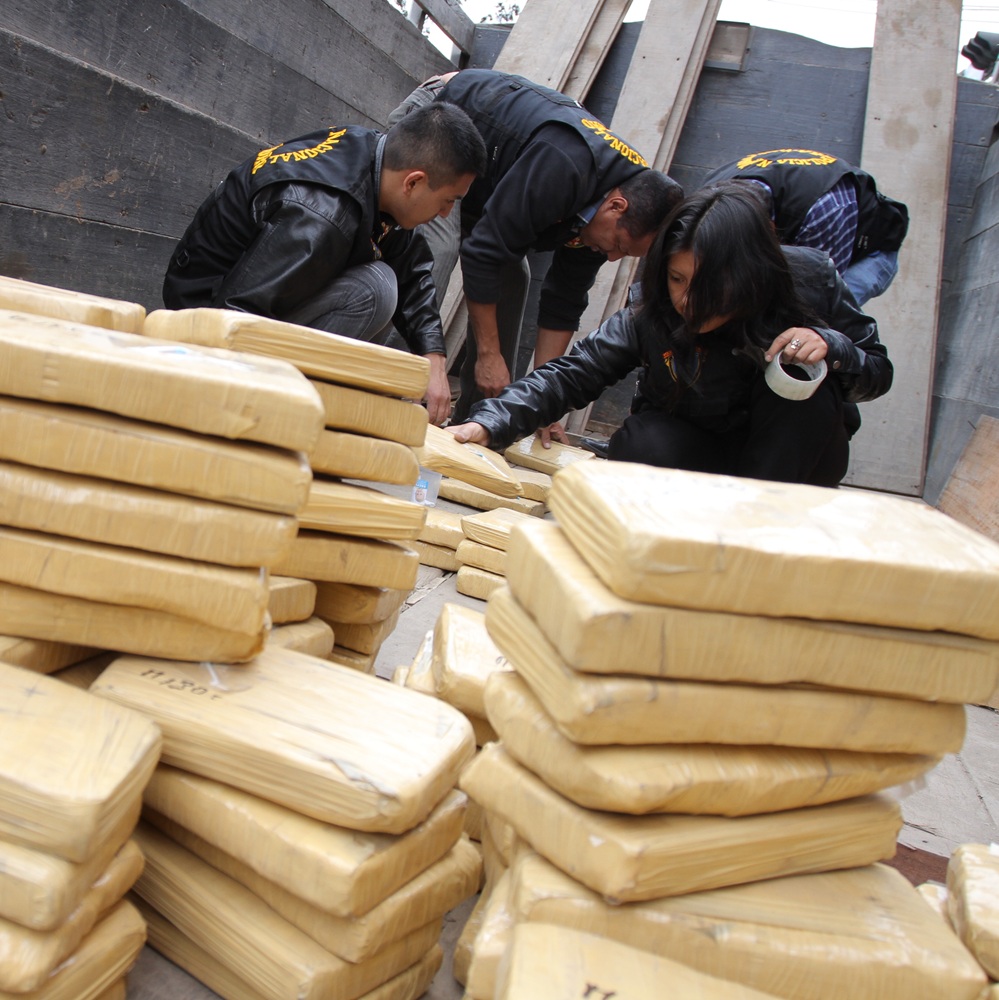
Lima, Peru - August 12, 2012: Seizure of drug or cocaine cargo in a truck with international destination. Packages filled with cocaine and the fight against drug trafficking.

Drug trafficking as a transnational system of power: origins, evolution, and perspectives

by World & New World Journal

Drug trafficking is the illegal trade, in large quantities, of drugs or narcotics (RAE, 2025). However, while this definition is accurate, it is insufficient to describe the complexity of a global phenomenon that transcends borders and involves the production, purchase, and distribution of illicit substances. Drug trafficking has developed hand in hand with global trade and interconnection (Saldaña, 2024). In other words, the evolution of drug trafficking is closely linked to globalization, which has strengthened the logistical, technological, and financial networks that enable its expansion. Therefore, more than isolated crime, drug trafficking must be understood as a transnational system of power that feeds on globalization itself. Drug Trafficking as a Transnational System of Power Drug trafficking is described by some authors as a profoundly complex transnational phenomenon resulting from globalization (Luna Galván, Thanh Luong, & Astolfi, 2021). This phenomenon involves and connects global networks of production, logistics, financing, and consumption, all made possible by economic interdependence, information technologies, and established global logistical routes. These authors analyze drug trafficking from a multidimensional perspective, identifying seven interrelated spheres that sustain this activity: the economic (money laundering and investment diversification), institutional (corruption and institutional capture), organizational (organized criminal networks and advanced logistics), social (presence in territories with state vacuums and community legitimization), technological (use of cryptomarkets, encryption, and innovation), geopolitical (route adaptability and resilience against state policies), and cultural (narratives and subcultures that normalize illicit practices) (Luna Galván, Thanh Luong, & Astolfi, 2021). These dimensions form a web of relationships in which criminal groups not only control the flow of drugs but also influence economic and political structures. As Interpol (n.d.) warns, this global network undermines and erodes the political and economic stability of the countries involved, while also fostering corruption and generating irreversible social and health effects. Furthermore, drug trafficking is intertwined with other crimes — such as money laundering, corruption, human trafficking, and arms smuggling — thus forming a globalized criminal ecosystem, a global issue and a national security concern for nations worldwide. Origins and historical context There are records of the use of entheogenic drugs for ritual or medicinal purposes in Mesoamerican cultures — such as the Olmecs, Zapotecs, Mayas, and Aztecs (Carod Artal, 2011) — as well as in Peru (Bussmann & Douglas, 2006), the Amazon region, and even today among the Wixárika culture in Mexico (Haro Luna, 2023). Likewise, there was widespread and diverse drug use among the ancient Greeks and Romans, including substances such as mandrake, henbane, belladonna, cannabis, and opium, among others (Pérez González, 2024). However, modern drug trafficking can trace its origins to the First Opium War (1839–1842) between the Chinese Empire (Qing Dynasty) and the British Empire, marking the first international conflict directly linked to the drug trade. During the second half of the 19th century and the early 20th century, several drugs —such as heroin, cocaine, cannabis, and amphetamines — made their debut in the pharmaceutical field, being used in medicines and therapeutic remedies (López-Muñoz & Álamo González, 2020). This period is considered the pharmaceutical revolution, characterized by the emergence of researchers, research centers, and major discoveries in the field. During that time, the term “drug” began to be associated with “addiction.” The pharmaceutical revolution had its epicenter in Germany; however, it was the British and Americans who promoted its expansion (Luna-Fabritius, 2015) and contributed to the normalization of psychoactive substance consumption. Military promotion, use and dependence Armed conflicts — from the U.S. Civil War (1861–1865) to the First World War (1914–1918) — played a key role in spreading and promoting the military use of psychoactive substances. For instance, stimulants such as alcohol, cocaine, amphetamines, and methamphetamines were used to combat sleep, reduce fatigue, boost energy, and strengthen courage, while depressants like opium, morphine, and marijuana were used to relieve combat stress and mitigate war trauma (Marco, 2019). The dependence that developed led to a process of expansion among the civilian population, which entered a period of mass experimentation that often resulted in substance abuse and chemical dependency (Courtwright, 2001). In response, the first restrictive laws emerged, particularly in the United States (López-Muñoz & Álamo González, 2020). However, the high demand for certain substances, such as opium, gave rise to the search for markets capable of meeting that demand. Thus, Mexico — influenced by Chinese immigration that introduced the habit of smoking opium in the country — became, by the 1940s, the epicenter of poppy cultivation and opium processing in the region known as the Golden Triangle (Sinaloa, Durango, and Chihuahua). It became the main supplier for drug markets in the United States and other parts of the continent, at times providing up to 90% of the demand during periods of shortage (Sosa, 2025). Even during World War II (1939–1945) — when the traditional supply of heroin and morphine to Europe was disrupted — Mexico strengthened its role in the illicit trade by providing smoking opium and processed morphine or heroin. These developments, alongside the implementation of opiate regulations in Mexico, helped consolidate and structure Mexican drug trafficking, which has persisted for more than sixty years (Sosa, 2025). Social expansion and regulatory restrictions The end of World War II brought stricter restrictions and regulations, but that did not prevent socio-cultural movements such as the hippie movement (in the 1960s) from adopting the use of marijuana, hashish, LSD, and hallucinogenic mushrooms (Kiss, 2025) without facing severe repercussions. That same hippie movement — which promoted pacifism and opposed the Vietnam War (1955–1975) — in one way or another encouraged drug use among young people. Moreover, the demand for substances by returning veterans led to the internationalization of drug markets, fostering, for example, the heroin trade from Southeast Asia (Laos, Myanmar, and Thailand) (Saldaña, 2024). The Nixon administration and the US “War on Drugs” The dependency became so severe that it was considered a public health emergency in the United States. On June 18, 1971, Richard Nixon declared the “War on Drugs” at an international level, labeling drug trafficking as “public enemy number one” (Plant & Singer, 2022). Nixon’s strategy combined international intervention with increased spending on treatment and stricter measures against drug trafficking and consumption (Encyclopedia.com, n.d.), along with the creation of the Drug Enforcement Administration (DEA) in 1973. Although the War on Drugs was officially declared in 1971, it had a precedent in 1969 with the failed Operation Intercept, whose goal was to combat marijuana trafficking across the U.S.–Mexico border (M. Brecher, 1972). As part of his international strategy, Nixon launched several operations such as Operation Condor with Mexico (1975 and 1978), Operation Stopgap in Florida (1977), and Operation Fulminante, carried out by Colombian President Julio César Turbay in 1979. Most of these efforts were aimed at combating marijuana trafficking. The results were mixed, but the consequences were significant, as drug traffickers resisted and adapted — giving rise to a more active and violent generation and marking the consolidation of modern drug trafficking. The Consolidation of Modern Drug Trafficking: Colombia and Reagan Era. During the 1980s and 1990s, drug trafficking evolved into a highly organized industry. Figures such as Félix Gallardo [1], Amado Carrillo Fuentes [2], Pablo Escobar [3], Carlos Lehder [4], Griselda Blanco [5], Rafael Caro Quintero [6], and later Joaquín “El Chapo” Guzmán Loera [7], among others (Wikipedia, 2025), symbolized the growing power of the cartels in Colombia and Mexico. During this period, criminal organizations consolidated their operations, and the profits from drug trafficking fueled violence and corruption. Moreover, the struggle for power — not only in Mexico, Colombia, Peru, or the United States but also in other regions of Latin America — and the competition for markets led to greater sophistication, as well as the construction of infrastructure and distribution networks. Pablo Escobar’s famous phrase, “plata o plomo” (“silver or lead”), reflects the immense power and influence that drug traffickers wield, even over governments and authorities. Colombia, through the Cali and Medellín cartels, dominated the production and export of cocaine via a triangulation network that connected through Mexico or the Caribbean, with the final destination being the United States, where the Reagan administration (1981–1989) intensified the War on Drugs, focusing on criminal repression rather than public health. The Reagan’s War on Drugs was characterized for setting aggressive policies and legislative changes in the 1980s which increased the law enforcement and the punishment, as a consequence the prison penalties for drug crimes skyrocketed from 50,000 in 1980 to more than 400,000 by 1997 (HISTORY.com Editors 2017) Mexican cartels consolidation and Mexico’s transition to a consumer nation Around the same time, on the international arena, following the fragmentation of the Guadalajara Cartel in the 1980s, the emergence of new Mexican cartels — the Sinaloa Cartel, Gulf Cartel, Tijuana Cartel, and Juárez Cartel — combined with the downfall of Colombia’s Cali and Medellín cartels in the mid-1990s, catapulted Mexican cartels into prominence. They seized control of trafficking routes and diversified their operations, thus consolidating their role in the global drug market. Later, the September 11, 2001, attacks altered U.S. security policy, affecting border transit, increasing security measures, and tightening inspections along the southern border with Mexico (Rudolph, 2023) — one of the main drug distribution routes into the United States. Although some studies suggest that U.S. security policies at land ports of entry had only marginal pre- and post-9/11 effects (Ramírez Partida, 2014), in reality, these measures significantly impacted Mexico more than the US. Mexico transitioned from being primarily a producer, distributor, and transit country for drugs to also becoming a consumer nation. In 2002, more than 260,000 people were reported to use cocaine, whereas today the number exceeds 1.7 million addicts, according to data from the federal Secretariat of Public Security (Alzaga, 2010). Likewise, the ENCODAT 2016–2017 survey shows that the percentage of Mexican adolescents who had consumed some type of drug increased from 1.6% in 2001 to 6.4% in 2016 (REDIM, 2025). By disrupting one of the main drug distribution routes to the United States, the situation led to drugs being redistributed and sold within Mexican territory. This, combined with the country’s social and economic conditions, facilitated the recruitment of young people by organized crime groups (Becerra-Acosta, 2010) for the domestic distribution of drugs. Mexico and the Contemporary War on Drug Trafficking The escalation of violence caused by the power struggle among Mexican cartels became so critical that President Felipe Calderón (2006–2012) declared an open war against organized crime on December 10, 2006 (Herrera Beltrán, 2006). His strategy involved deploying the armed forces throughout Mexican territory, as well as obtaining financial aid, training, and intelligence through the Mérida Initiative from the United States to support the fight against drug trafficking and organized crime in Mexico and Central America (Embassy of the United States in Mexico, 2011). His successor, Enrique Peña Nieto (2012–2018), shifted the focus toward prevention and civil protection, although he continued the militarization process and the transformation of police institutions (BBC News, 2012). The strategies of Calderón and Peña Nieto — often grouped together — while questioned and criticized (Morales Oyarvide, 2011), achieved significant arrests, including figures such as “La Barbie,” “La Tuta,” “El Menchito,” “El Chapo,” “El Marro,” and “El Ratón.” They also eliminated key figures like Arturo Beltrán Leyva, Ignacio Coronel Villarreal, Antonio Cárdenas Guillén, Heriberto Lazcano Lazcano, and Nazario Moreno González. Later, during the presidency of Andrés Manuel López Obrador (2018–2024), the strategy shifted once again toward a stance of “hugs, not bullets,” showing clear signs of passivity that allowed cartel expansion (Fernández-Montesino, 2025). His successor, Claudia Sheinbaum (2024–2030), on the other hand, has navigated both internal and external pressures (particularly from the United States), seeking to balance intelligence, coordination, and attention to structural causes (Pardo, 2024), although continued militarization suggests a hybrid strategy remains in place. Fentanyl and synthetic drugs: The future of drug trafficking The president of the International Narcotics Control Board (INCB), Jallal Toufiq, said that “the illicit drug industry represents a major global public health threat with potentially disastrous consequences for humankind.” In addition, the 2024 INCB Annual Report found that illicit synthetic drugs are spreading and consumption is increasing, moreover, these could overtake some plant-based drugs in the future. (International Narcotics Control Board 2025) The press release before mentioned also points out that Africa, Middle East, East and Southeast Asia and the Pacific drug markets are increasing, while production in Central America, Peru, Colombia and the Caribbean keeps on developing. On the other hand, the opioid crisis (fentanyl) remains a serious problem for North America and the cocaine keeps affecting Europe with a spillover Africa. (International Narcotics Control Board 2025). The fentanyl crisis in North America is well documented. Data show an increase of 540% in overdose deaths between 2013 and 2016 (Katz 2017), with 20,100 deaths in the USA, while by 2023, the number increase to 72,776 deaths (USA Facts 2025). On the other hand, Canada has reported 53,821 deaths between January 2016 and March 2025 (Government of Canada 2025), while Mexico reported only 114 deaths from 2013 to 2023 (Observatorio Mexicano de Salud Mental y Adicciones 2024). These figures reveal not only the unequal regional impact of the synthetic opioid crisis but also the ongoing adaptation of organized crime networks that sustain and expand these markets. Evolution and Diversification of Organized Crime The phenomenon of adaptation, evolution, and diversification of new illicit markets is not an isolated issue. Experts such as Farah & Zeballos (2025) describe this in their framework Waves of Transnational Crime (COT). The first wave is represented by Pablo Escobar and the Medellín Cartel, pioneers in moving tons of cocaine to the U.S. market through Caribbean routes. The second wave is represented by the Cali Cartel, which perfected the model and expanded trafficking routes through Central America and Mexico — still focusing on one product (cocaine) for one main market (the United States). The third wave is characterized by the criminalization of criminal structures, the use of armed groups (such as the FARC in Colombia), and the use of illicit production and trafficking as instruments of state policy, with clear effects on public policy functioning. At this stage, there is product diversification, with the main market remaining the U.S., but expansion reaching Europe (Farah & Zeballos, 2025). Finally, the fourth wave — the current stage — is defined by total diversification, a shift toward synthetic drugs, and global expansion, involving extra-regional groups (Italian, Turkish, Albanian, and Japanese mafias), where many operations function “under government protection.” This fourth wave offers clear examples of collusion between criminal and political spheres, which is not new. However, the arrest of Genaro García Luna (Secretary of Public Security under Calderón), the links between high-profile Mexican politicians and money laundering or fuel trafficking (Unidad de Investigación Aplicada de MCCI, 2025), and even Trump’s statements claiming that “Mexico is largely governed by cartels” (DW, 2025) reveal a reality in which drug trafficking and criminal organizations are no longer merely producers and distributors of illicit substances. Today, they possess the power and capacity to establish parallel governance systems, exercise territorial control, infiltrate institutions and local economies, and even replace core state functions (Farah & Zeballos, 2025). Future Perspectives and Challenges Currently, drug trafficking and organized crime represent structural threats. It is well known and widely studied what drug trafficking means for public security and health, but it has now also become a threat to politics, democracy, and the rule of law. With divided opinions, many analysts argue that the war on drugs has failed — in addition to being costly and, in many cases, counterproductive (Thomson, 2016). Punitive strategies have generated more violence without truly addressing the social causes behind the phenomenon (Morales Oyarvide, 2011). In this context, a paradigm shift is necessary: drug trafficking should not be approached solely as a security issue, but also as a public health and social development problem. Drug use has been a historical constant, and its total eradication is unrealistic. The key lies in harm-reduction policies, international cooperation, and inclusive economic development. Moreover, organized crime demonstrates adaptive resilience, making its eradication difficult — especially given that its operational capacities are so diversified, it maintains alliances with groups worldwide, and globalization and new technologies continually help it reinvent itself. Furthermore, even political and economic tensions among the United States, Mexico, Canada, and China are now intertwined with the trade of synthetic drugs — particularly fentanyl —, revealing the geopolitical magnitude of the problem (Pierson, 2024). Conclusion In summary, drug trafficking has ceased to be a marginal activity and has become a transnational structure capable of influencing politics, the economy, and society. Its persistence can be explained not only by the profitability of the business but also by social inequality, institutional corruption, and sustained global demand. History demonstrates that repression has not eradicated the problem but rather transformed it. Today, it is essential to rethink drug policies from a comprehensive approach that integrates security, public health, education, and international cooperation. Only through a multidimensional strategy will it be possible to contain a phenomenon that — more than an illicit economy — constitutes a global form of parallel governance that challenges the very foundations of the modern state. Notes[1] Miguel Ángel Félix Gallardo, also known as “El Jefe de Jefes” (“The Boss of Bosses”), “El Padrino” (“The Godfather”), or “The Drug Czar”, was one of the founders of the Guadalajara Cartel. [2] Amado Carrillo Fuentes, known as “El Señor de los Cielos” (“The Lord of the Skies”), was the former leader of the Juárez Cartel. [3] Pablo Escobar was the founder and former leader of the Medellín Cartel. [4] Carlos Lehder was the co-founder of the Medellín Cartel. [5] Griselda Blanco, known as “The Black Widow,” “The Cocaine Queen,” or “La Patrona” (“The Boss”), was a founder of the Medellín Cartel. [6] Rafael Caro Quintero, known as “El Narco de Narcos” (“The Drug Lord of Drug Lords”), was one of the founders of the Guadalajara Cartel. [7] Joaquín Guzmán Loera, known as “El Chapo,” was the former leader of the Sinaloa Cartel. ReferencesAlzaga, Ignacio. 2010. Creció mercado de droga por blindaje en frontera. 23 de Enero. https://web.archive.org/web/20100328122522/http://impreso.milenio.com/node/8707705.BBC News. 2012. México: el plan de Peña Nieto contra el narcotráfico. 18 de Diciembre. https://www.bbc.com/mundo/noticias/2012/12/121218_mexico_pena_nieto_estrategia_seguridad_narcotrafico_jg.Becerra-Acosta, Juan P. 2010. Los ninis jodidos y el narco tentador…. 16 de Agosto. https://web.archive.org/web/20100819043827/http://impreso.milenio.com/node/8816494.Bussmann, Rainer W., y Sharon Douglas. 2006. «Traditional medicinal plant use in Northern Peru: tracking two thousand years of healing culture.» Journal of Ethnobiology and Ethnomedicine 47. doi:https://doi.org/10.1186/1746-4269-2-47.Carod Artal, Francisco Javier. 2011. «Alucinógenos en las culturas precolombinas mesoamericanas.» Neurología 30 (1): 42-49. doi:https://doi.org/10.1016/j.nrl.2011.07.003.Courtwright, David. 2001. «Forces of Habit. Drugs and the Making of the Modern World.» Editado por Cambridge. (Harvard University Press).DW. 2025. Trump dice que México está "gobernado por los carteles". 19 de Febrero. https://www.dw.com/es/trump-dice-que-m%C3%A9xico-est%C3%A1-gobernado-por-los-carteles/a-71666187.Embajada de los Estados Unidos en México. 2011. Iniciativa Mérida. 22 de Junio. http://spanish.mexico.usembassy.gov/es/temas-bilaterales/mexico-y-eu-de-un-vistazo/iniciativa-merida.html.Encyclopedia.com. s.f. President Nixon Declares "War" on Drugs. https://www.encyclopedia.com/science/medical-magazines/president-nixon-declares-war-drugs?utm_source=chatgpt.com.Farah, Douglas, y Pablo Zeballos. 2025. ¿Por qué el crimen organizado es cada vez más grave en América Latina? 19 de Septiembre. https://latinoamerica21.com/es/por-que-el-crimen-organizado-es-cada-vez-mas-grave-en-america-latina/.Fernández-Montesino, Federico Aznar. 2025. México y la guerra contra el narcotráfico. 20 de Mayo. https://www.defensa.gob.es/documents/2073105/2564257/Mexico_2025_dieeea36.pdf/1d38d679-f529-7d1e-130c-71a71cf0447c?t=1747593702946.Government of Canada. 2025. Opioid- and Stimulant-related Harms in Canada. 23 de September. Último acceso: 5 de November de 2025. https://health-infobase.canada.ca/substance-related-harms/opioids-stimulants/.Haro Luna, Mara Ximena. 2023. Los hongos en la cultura wixárika. https://arqueologiamexicana.mx/mexico-antiguo/los-hongos-en-la-cultura-wixarika.Herrera Beltrán, Claudia. 2006. El gobierno se declara en guerra contra el hampa; inicia acciones en Michoacán. 12 de Diciembre. https://www.jornada.com.mx/2006/12/12/index.php?section=politica&article=014n1pol.HISTORY.com Editors. 2017. Just Say No. 31 de May. Último acceso: 5 de November de 2025. https://www.history.com/articles/just-say-no.International Narcotics Control Board. 2025. Press release: The deadly proliferation of synthetic drugs is a major threat to public health and is reshaping illicit drug markets, says the International Narcotics Control Board. 4 de March. Último acceso: 5 de November de 2025. https://www.incb.org/incb/en/news/press-releases/2025/the-deadly-proliferation-of-synthetic-drugs-is-a-major-threat-to-public-health-and-is-reshaping-illicit-drugs-markets--says-the-international-narcotics-control-board.html#:~:text=In%20its%202024%20Annu.Interpol. s.f. Tráfico de drogas. https://www.interpol.int/es/Delitos/Trafico-de-drogas.Katz, Josh. 2017. The First Count of Fentanyl Deaths in 2016: Up 540% in Three Years. 2 de September. Último acceso: 5 de November de 2025. https://www.nytimes.com/interactive/2017/09/02/upshot/fentanyl-drug-overdose-deaths.html?smid=tw-nytimes&smtyp=cur.Kiss, Teresa. 2025. Movimiento hippie. 18 de Octubre. https://concepto.de/movimiento-hippie/.López-Muñoz, Francisco, y Cecilio Álamo González. 2020. Cómo la heroína, la cocaína y otras drogas comenzaron siendo medicamentos saludables. 25 de June. https://theconversation.com/como-la-heroina-la-cocaina-y-otras-drogas-comenzaron-siendo-medicamentos-saludables-140222.Luna Galván, Mauricio, Hai Thanh Luong, y Elisa Astolfi. 2021. «El narcotráfico como crimen organizado: comprendiendo el fenómeno desde la perspectiva trasnacional y multidimensional.» Revista De Relaciones Internacionales, Estrategia y Seguridad 199-214. doi:https://doi.org/10.18359/ries.5412.Luna-Fabritius, Adriana. 2015. «Modernidad y drogas desde una perspectiva histórica.» Revista mexicana de ciencias políticas y sociales 60 (225). https://www.scielo.org.mx/scielo.php?script=sci_arttext&pid=S0185-19182015000300021.M. Brecher, Edward. 1972. Chapter 59. The 1969 marijuana shortage and "Operation Intercept". https://www.druglibrary.org/Schaffer/library/studies/cu/CU59.html.Marco, Jorge. 2019. Cocaína, opio y morfina: cómo se usaron las drogas en las grandes guerras del siglo XX. 7 de Diciembre. https://www.bbc.com/mundo/noticias-50687669.Morales Oyarvide, César. 2011. El fracaso de una estrategia: una crítica a la guerra contra el narcotráfico en México, sus justificaciones y efectos. Enero-Febrero. https://nuso.org/articulo/el-fracaso-de-una-estrategia-una-critica-a-la-guerra-contra-el-narcotrafico-en-mexico-sus-justificaciones-y-efectos/.Observatorio Mexicano de Salud Mental y Adicciones. 2024. Informe de la demanda y oferta de fentanilo en México: generalidades y situación actual. Abril. Último acceso: 2025 de November de 2025. https://www.gob.mx/cms/uploads/attachment/file/910633/Informe_Fentanilo_abril_2024.pdf.Pardo, Daniel. 2024. Cómo es el plan de seguridad que Claudia Sheinbaum anunció en plena crisis de violencia en México. 8 de Octubre. https://www.bbc.com/mundo/articles/c1wn59xe91wo.Peréz González, Jordi. 2024. Del opio al cannabis. Drogas en Grecia y Roma, una peligrosa adicción de plebeyos y emperadores. 19 de Enero. https://historia.nationalgeographic.com.es/a/drogas-grecia-roma-peligrosa-adiccion-plebeyos-emperadores_14533.Pierson, David. 2024. El fentanilo tiene otro auge, ahora como arma diplomática de Donald Trump contra China. 26 de Noviembre. https://www.nytimes.com/es/2024/11/26/espanol/mundo/fentanilo-china-trump.html.Plant, Michael, y Peter Singer. 2022. Why drugs should be not only decriminalised, but fully legalised. August. https://www.newstatesman.com/ideas/2022/08/drugs-should-be-decriminalised-legalised.Ramírez Partida, Héctor R. 2014. «Post-9/11 U.S. Homeland Security Policy Changes and Challenges: A Policy Impact Assessment of the Mexican Front.» Norteamérica 9 (1). https://www.scielo.org.mx/scielo.php?script=sci_arttext&pid=S1870-35502014000100002.Real Academia Española. 2025. narcotráfico. https://www.rae.es/diccionario-estudiante/narcotr%C3%A1fico.REDIM. 2025. Consumo de alcohol, tabaco y drogas en la infancia y adolescencia en México (2023). 16 de Mayo. https://blog.derechosinfancia.org.mx/2025/05/16/consumo-de-alcohol-tabaco-y-drogas-en-la-infancia-y-adolescencia-en-mexico-2023/.Rudolph, Joseph R. 2023. 9/11 and U.S. immigration policy. https://www.ebsco.com/research-starters/law/911-and-us-immigration-policy.Saldaña, Eduardo. 2024. ¿Qué es el narcotráfico? 2024 de Febrero. https://elordenmundial.com/que-es-narcotrafico/.Sosa, Fabián. 2025. La llegada del opio a México, la historia que dio inicio al narcotráfico en el país. 2 de Agosto. https://www.infobae.com/mexico/2025/08/02/la-llegada-del-opio-a-mexico-la-historia-que-dio-inicio-al-narcotrafico-en-el-pais/#:~:text=Su%20aparici%C3%B3n%20en%20M%C3%A9xico%20se,utilizada%20para%20tratar%20sus%20heridas.Thomson, Stéphanie. 2016. Los expertos opinan: la guerra contra las drogas ha sido un fracaso. ¿Es hora de legalizarlas? 7 de Diciembre. https://es.weforum.org/stories/2016/12/los-expertos-opinan-la-guerra-contra-las-drogas-ha-sido-un-fracaso-es-hora-de-la-legalizacion/.Unidad de Investigación Aplicada de MCCI. 2025. Huachicol Fiscal. https://contralacorrupcion.mx/anuario-de-la-corrupcion-2025-gobierno-de-sheinbaum/huachicol-fiscal-corrupcion-mexico/.USA Facts. 2025. Are fentanyl overdose deaths rising in the US? 25 de October. Último acceso: 5 de November de 2025. https://usafacts.org/articles/are-fentanyl-overdose-deaths-rising-in-the-us/.Wikipedia. 2025.

Defense & Security
New Delhi, India, Jan 20 2025: Indian Army's T-90 Bhishma is a modern main battle tank (MBT) participating in the rehearsal for the Republic Day Parade 2025 at Kartavya Path,

Reforging The Arsenal: India's Defence Industry Transformation

by Darshit Thakar

India is the fastest-growing major economy in the world, and according to the Global Firepower Index, the Indian Armed Forces are the 4th strongest in the world. But when we look at SIPRI data, we can find that since 2011, India has been the largest defence equipment importer in the world. If we look at India's neighborhood, it's been very hostile since Independence. India fought four major wars with Pakistan — 1948, 65, 71, and 99 — and many skirmishes, Operation Sindoor being the most recent one. With China, it fought a war in 1962 and many skirmishes, the most recent one in Galwan valley in the early 2020s. This kind of environment, and India being a rising global power, demands it to have some self-sufficiency in weapons manufacturing. A Brief History of Defence Policy At Independence, India enjoyed an early advantage over non-western states. India was the crown jewel of the British Empire, and to sustain control over it, Britain established lots of arms factories. But when India got independence, everything changed. Jawaharlal Nehru was sworn in as the first Prime Minister. He was a member of the Fabian Society and strongly believed in socialism, so he got everything centralized and worked in similar way as the Soviet Union. There was private participation, but it was limited to only small-scale industries. Defence was the government arena. There were DRDO (Defence Research and Development Organisation), DPSUs (Defence Public Sector Undertakings), and Ordnance Factories. DRDO was responsible for designing, the DPSUs made complex weapon systems, while Ordnance Factories made ammunition, firearms, artillery shells, etc. However, this highly centralised socialist model, though well-intentioned, restricted the flexibility to build upon the industrial base India had inherited from the British era. In 1991, India initiated LPG (Liberalisation, Privatisation, and Globalisation) reforms to liberalize the economy. Private players were allowed in the defence sector from 2001 onwards, but there wasn't a lot of momentum for the next 15 years. Momentum began to rise only after 2014 when reforms and policy incentives actively encouraged private participation. Current Reforms Since assuming power in 2014, Prime Minister Narendra Modi’s government has made a determined attempt to strengthen the Indian arms industry and transform the country’s image from the world’s largest arms importer to a major exporter of defence equipment. To realize this goal, the government has announced many reform measures under the ‘Make in India’ initiative and ‘Atmanirbhar Bharat Abhiyan’ (self-reliant India mission). These measures cover virtually every facet of the Indian defence economy, spanning structures, acquisition processes, industrial regulations, and budgetary provisions. During the 1999 Kargil War and 2001 Operation Parakram, India found operational constraints, and there was a recommendation to create a Chief of Defence Staff (CDS) who would function as the head of all three services. In 2019, the government created the post of Chief of Defence Staff (CDS), which is touted as the most significant defence reform since Independence. Among all the responsibilities, the CDS is also assigned the task of “promoting the use of indigenous equipment by the Services.” The Department of Military Affairs (DMA), which works under the guidance of the CDS, made a list of 500 pieces of equipment that should be produced indigenously. These lists include several big-ticket items such as missiles, fighter aircraft, helicopters, warships, radars, and a range of munitions. The government also announced the long-overdue corporatisation of the OFs that were earlier functioning as government arsenals. The decision involved converting 41 OFs into seven distinct DPSUs. As corporate entities, the new DPSUs will enjoy greater autonomy in decision-making and be accountable for their performance. However, while corporatisation has begun to improve accountability, the impact of these changes is still uneven, and many DPSUs continue to face legacy inefficiencies. As the government wanted to increase the acquisition of arms made in India, it announced the Defence Procurement Procedure (DPP) in 2016. The DPP-2016 emphasized indigenisation by giving primacy to the domestic industry over foreign contractors. It also made an attempt to decrease procurement timelines and increase the overall effectiveness of the procurement process. To enhance the role of the private sector in defence production, the DPP-2016 also simplified the ‘Make’ procedure and created space for new Strategic Partnership (SP) guidelines, which were separately released in 2017. In 2020, the government announced the Defence Acquisition Procedure (DAP). Building on the DPP-2016, the DAP-2020 focused on higher levels of indigenisation and innovation through the participation of Indian industry, including startups and small and medium enterprises. New outfits like the Innovations for Defence Excellence (iDEX) and the Defence Innovation Organisation (DIO) have been created to encourage start-ups and micro, small and medium enterprises (MSMEs) to promote defence industrialisation. The government has also introduced several measures to improve the ease of doing business in the defence manufacturing sector. It streamlined the industrial licensing process for the private sector. It also focused on liberalising the defence foreign direct investment (FDI) regime by enhancing the earlier foreign equity cap from a maximum of 26 percent under the automatic route, first to 49 percent and subsequently to 74 percent. The government has also brought out a standard operating procedure to formalise the process of defence export authorisation; allowed the private sector to use government-run facilities to test their equipment; launched two defence industrial corridors; and created a dedicated web portal, SRIJAN, so that the DPSUs and the armed forces can upload previously imported items for indigenisation by domestic entities. Impact of the Policy Following several reforms, the defence industry has made certain progress. The most visible indicator of this progress is the near-continuous increase in production turnover.  The value of defence production has surged to a record high of ₹1,27,434 crore (~$15.2 billion), marking an impressive 174% increase from ₹46,429 crore in 2014-15, according to data from all Defence Public Sector Undertakings (DPSUs), other public sector units manufacturing defence items, and private companies. The Ministry of Defence has signed a record 193 contracts in 2024-25, with the total contract value surpassing ₹2,09,050 crore (~$24.8 billion), nearly double the previous highest figure. Of these, 177 contracts, accounting for 92 percent, have been awarded to the domestic industry, amounting to ₹1,68,922 crore (~$20.1 billion), which is 81 percent of the total contract value. Defence exports have surged from ₹686 crore in FY 2013-14 to an all-time high of ₹23,622 crore (~$2.76 billion) in FY 2024-25, marking a 34-fold increase over the past decade. India is now exporting arms, ammunition, and related items to over 85 countries, with 100 Indian firms participating in international sales. Some of the major items exported include “Dornier-228, 155 mm Advanced Towed Artillery Guns, BrahMos Missiles, Akash Missile System, Radars, Simulators, Mine Protected Vehicles, Armoured Vehicles, PINAKA Rockets & Launchers, Ammunitions, Thermal Imagers, Body Armours, besides Systems, Line Replaceable Units and Parts & components of Avionics and Small Arms.” Challenges Even though India has made noticeable progress, challenges still persist. According to SIPRI, in 2011 India was responsible for 14% of global arms imports — making it the largest importer. Fast forward to 2024, it still accounts for 8.3% of global arms imports — the second largest, just behind war-torn Ukraine. While this decline in share indicates progress, the absolute value of imports remains high due to India’s expanding defence budget and modernisation drive. Even though the industry has grown, it hasn't fully absorbed the appetite for equipment required by the armed forces. On the export front, despite registering a noticeable increase in international arms sales, the industry is far from the target set by the government. The biggest challenge in meeting the government’s export target comes from the DPSUs, which have been rising slowly to the expectations. Some recent attempts to export major systems have not met with success. It faces tough competition from countries like Turkey (~$7.2 billion in defence exports for 2024), South Korea (~$20 billion in defence exports for 2024) and Israel(~$14.8 billion in 2024). The Indian defence industry, despite having a large production and R&D base, lacks the technological depth to design/manufacture major systems and critical parts, components, and raw materials, which are eventually imported. Moreover, the reforms announced by the Modi Government haven't been implemented fully. Given India’s bureaucratic system, overcoming the delays in implementation will remain a key challenge in the foreseeable future. Global Parallels in Defence Industrialisation India's transition from a state-dominated, import-reliant defence ecosystem to a more hybrid, self-reliant model invites comparisons with other emerging powers that have successfully navigated similar paths. South Korea offers a stark contrast through its aggressive export-oriented strategy: starting in the 1970s amid threats from North Korea, Seoul invested heavily in R&D (allocating over 4% of GDP annually in recent years) and leveraged chaebol conglomerates like Hyundai and Hanwha to build integrated supply chains, transforming from an importer to a top-10 global exporter with $20 billion in annual sales by 2024, including K9 howitzers and T-50 trainers. Turkey, facing NATO dependencies and regional instabilities, adopted agile policies under its Defence Industry Agency (SSB), mandating high domestic content (up to 70% in major programs) and integrating SMEs via incentives and technology transfers, propelling exports to $7.2 billion in 2024 through platforms like Bayraktar drones. Israel, constrained by size and hostile neighbors, pioneered a niche innovation ecosystem via public-private partnerships, mandatory military service feeding talent into firms like Rafael and IAI, and venture capital-driven R&D, yielding $14.8 billion in exports focused on high-tech systems such as Iron Dome. Unlike India's historically centralized DPSUs and gradual private inclusion, these models emphasize export discipline, rapid policy iteration, and SME/startup ecosystems—lessons India could adapt by accelerating iDEX funding, enforcing stricter local content in DAP procurements, and fostering chaebol-like consortia to bridge technological gaps and compete globally. Conclusion The Narendra Modi government has sought to break the inertia of snail-like defence reforms that were going on since India's Independence. Under the banner of Atmanirbhar Bharat, it has pushed to cut imports and boost local production. Defence exports have begun to grow. More importantly, private companies and start-ups have entered what was once a tightly guarded public sector preserve. A more competitive ecosystem is slowly taking shape. Yet the road to self-reliance remains long. If India can integrate private innovation with public manufacturing and reduce bureaucratic delays, it could transform from being the world’s largest importer to a key global supplier in the multipolar era. Sourceshttps://www.orfonline.org/research/india-s-defence-industry-achievements-and-challengeshttps://www.orfonline.org/research/a-decade-of-defence-reforms-under-modihttps://www.pib.gov.in/PressReleasePage.aspx?PRID=2116612https://indiasworld.in/reforming-defence-production-faster-and-deeper/https://theprint.in/defence/india-second-largest-arms-importer-after-ukraine-reliance-on-russia-declines-says-sipri-report/2541373/https://www.pib.gov.in/PressNoteDetails.aspx?NoteId=154617&ModuleId=3https://www.cnbc.com/2024/12/04/as-global-defense-spending-surges-south-korean-arms-makers-look-like-a-clear-winnerhttps://www.defensenews.com/global/europe/2025/02/04/turkeys-defense-exports-hit-record-high-of-7.1-billion-in-2024/https://www.defensenews.com/global/mideast-africa/2025/06/05/israel-announces-defense-export-record-15-billion-in-2024/https://www.globalfirepower.com/countries-listing.php

Defense & Security
Two special forces soldiers close-up, military anti-terrorism operations concept

The Utilitarian paradox of the War on Terror: Afghanistan and beyond

by Tabinda Sabah

Abstract The War on Terror (WOT) initiated after the September 11, 2001, attacks has been one of the most consequential and complex military and political campaigns in modern history. Looking back it dignifies the idea that the global war on terrorism was an aggression frustration response of US towards the 9/11 attack of 2001. As it not only created a dense overlapping financial burden on the US but also the cost of the invasion was never in favor with US peace and conflict policies. Many scholars argue about the utility of WOT with other ethics of war and conflict mediating techniques along with using the paradigms of realist and liberal theories. But now when the NATO alliances withdrawal enacted the end of a 20-year constitutive war. As the NATO withdrawal marked end of WOT without a remediate response, it enacts a dispersed or iconic philosophical thought that was the WOT was a success or utter failure? This article will foreshadow the events of WOT, NATOs withdrawal and human rights violation that emerge exploring this issue through primary lens of utilitarian paradox in international political theory. Introduction Afghanistan is a multi-diverse state situated in the central south Asia. Its borders are tied by mountain ranges and trading ports submerge in southern and eastern parts of Asia, Europe & the Middle East. The geography of Afghanistan has been a frontier for colonial reign for centuries. From being occupied by the from the USA – USSR post -cold war struggles till the US invasion in Afghanistan in the WOT. Afghanistan has struggled to maintain a monopoly of economy, governance, infrastructural and parental isolation of Taliban within their own boundaries. The WOT was launched by the United States in the aftermath of September 11, 2001. The attack became one of the most contentious military and foreign policy actions in contemporary history. The war which initially aimed to dismantle terrorist organization such as al-Qaeda eliminate the Taliban regime in Afghanistan and secure global peace has lasted over two decades involving not only the USA but also the NATO forces. The centrality of military intervention and counter terrorism efforts in Afghanistan, Iraq and other regions has been met with both support and intense criticism particularly regarding its humanitarian consequences, effectiveness and long –term strategic outcomes. The complex history between the United States and Afghanistan, particularly form the Soviet- Afghan War 1979-1989 to the 9/11 attacks, offers a case study of how international relations, realpolitik, and the principle of utility (central to utilitarianism) can guide state behavior. By examining the role of foreign of U.S. policy in terms of net benefit or harm to global security and human welfare, especially when applying the principle of utility, which aims to maximize well-being and minimize suffering for the greatest number. This article seeks to explore the WOT through the principle of utility, a central concept in utilitarian philosophy. The principle of utility rooted in the works of philosophers like Jeremy Bentham and John Stuart Mill, posits that actions should be judged based on their ability to produce the greatest happiness for the greatest number of people [1]. By applying this principle, the review critically examines the ethical dimensions of the WOT, NATOs involvement and the humanitarian violations that have occurred throughout the conflict. The article is organized into the following sections: 1. Theoretical foundation of utilitarianism along with US and USSR influence in Afghanistan 2. US foreign policy and military strategies during the WOT. 3. NATOs overall assessment of the WOT under the principle of utility. In each section, the analysis will assess the actions taken by the US, NATO and other actors exploring whether the outcomes align with the utilitarian ideal of maximizing overall well-being. 1. Theoretical foundations: the principle of utility in war Utilitarianism is a consequentialist ethical theory that holds that the right course of action is the one that maximizes overall happiness or wellbeing. It evaluates actions based on their outcomes rather than their intrinsic moral qualities. This framework is particularly useful in the context of WOT. The principle of utility can be applied to assess whether the human, financial and political cost of the War were justified by the benefit of greater security, freedom from terrorism and regional stability. While NATO withdrawal from Afghanistan in 2021 has been framed as strategic realignment, it has also triggered a range of human rights violation, most notably the treatment of civilians, the resurgence of the Taliban and plight of women and minorities. This research will critically examine the interplay between the WOT, NATO withdrawal and human rights violation that emerge exploring this issue through primary lens of utilitarian paradox in international political theory. Utilitarian calculus in war: US relations in Afghanistan (1950-1970) The utilitarian calculus involves comparing the benefits of military intervention (such as the defeat of terrorist organizations the promotion of security and the establishment of stable democratic government) against it cost (including civilian causalities, economics expenditure and long-term social destabilization). As the WOT unfolded, the decision –making process in the US and NATO appeared to prioritize short -term security gains over long term humanitarian outcomes. For instances, the US began engaging with Afghanistan as part of its boarder strategy to contain Soviet expansion during the Cold War. The Helmand Valley Project aimed at modernizing the Afghan agriculture, and US aid under King Zahir Shah and Muhammad Dauod Khan government were early manifestation of US interest in Afghanistan. However, Soviet influence also grew particularly through infrastructure projects like the Salang Tunnel. The competition between the US and Soviet Union for influences in Afghanistan explains the context of utility of benefits in a realist perspective where states act primarily acts to protect and expand their own power for the greater benefit of good for the greater number of people. (Morgenthau, 1948). Also, the key challenges in applying the principle of utility to the WOT is determining who benefits and who suffers. for instance, the US and NATO countries may have gained security by weaking terrorist groups, but the Afghan and Iraqi population have borne significant cost in term of civilian causalities, displacement and economic destabilization of the Middle East and growth of radicalization, complicates any simplistic utilitarian evaluation. Under the presumptive analysis of utility: Any war or WOT occurs where there is an imbalance in the collapse of the monopoly of the inter-state relations among the rivalry. Furthermore, from a utilitarian perspective, the US & USSR interventions aimed to protect national security and detain the expansion of the rival superpower. However, the long-term consequences of such competition particularly the US focus on the military aid and covert actions led to the instability, civil war and the eventual Soviet invasion of Afghanistan in 1979. The overall outcome – while achieving short term strategic gains in containing the Soviet influence ultimately disrupted Afghan society, leading to the widespread maximizing welfare for the Afghan people or for the global peace in the long run, as they contributed to a power struggle that further destabilized Afghanistan. Utilitarian critique of preemptive war Utilitarianism also directly critiques the preemptive war doctrine espoused by the George W. Bush administration. The Invasion of Iraq in 2003, based on the belief that Saddam Hussein possessed weapons of mass destruction (WMDs) illustrated a problematic application of utilitarian reasoning. Critics argue that the invasion was not only morally unjustifiable but also inefficient as it caused massive human suffering without achieving its purported goals. According to the utilitarian philosophy such as Peter Singer’s the catastrophic outcomes of the Iraq War – millions of displaced, the loss of thousands of lives and destabilization of regions – far outweighed by any potential benefits in term of preventing future threats to US security. Also, the US influence deterred the rise of the People Democratic Party of Afghanistan which was aligned with the soviet interest. This led to the soviet invasion of Afghanistan in December 1979 intended to prop up the PDPA government. The US response was to support the Mujahedeen Rebels providing them with military aid (including stinger missiles) & funding through intermediaries like Pakistan and Saudi Arabia. Thus, this covert operation was seen as a part of broader Cold War strategy to undermine Soviet influence in the region. In the long run, the intervention was a justified action and response to Soviet expansionism. According to Hans Morgenthau’s principles of international politics states act based on their national interest which in this case was to counter Soviet influence. The US built alliances with the Islamism groups in Afghanistan which while supporting US geopolitical goals led to the creation of radicalized Islamist network, contributing global terrorism. The creation of this network, with groups like Taliban and Al-Qaeda exemplifies the unintended consequences for foreign intervention that may maximize short term strategic benefits but lead to a long–term instability and suffering. The soviet withdrawal left Afghanistan in a state of chaos. The Mujahedeen factions, funded by the US turned against each other, leading to the rise of the Taliban in 1996. Meanwhile, Osama bin Laden, who had been in Afghanistan during the Soviet conflict, founded Al-Qaeda. Al-Qaeda’s rise the Taliban support for them would set the stage for 9/11 attacks. While on September 11, 2001, Al-Qaeda under the leadership of Osama bin Laden, orchestrated the terrorist attack on the United States. The attacks killed nearly 3,000 people and led to the Taliban regime that harbored it and prevent further attacks. Utilitarianism and long-term consequences From a utilitarian viewpoint the US role in fostering Islamic Militancy in Afghanistan can be seen as contributing to a greater global harm in the form of terrorism. The short-term goal of defeating the Soviet Union led to the rise of extremist group that would go on to inflict severe harm globally, culminating in the 9/11 attacks. The utilitarian perspective here emphasizes that although the US successfully countered Soviet expansion, the long–term consequences – including the development of Al-Qaeda and its attacks on the US and other countries – created a greater global security threat. These consequences starkly illustrate the limits of the principle of utility raises important ethical concerns about the methods used and their long–term impacts where interventions create unforeseen global risks. Also, the immediate benefits of the US invasion were clear: the removal of Taliban and the disruption of Al-Qaeda’s operation in Afghanistan reduced the immediate threat of global security. However, the long-term consequences – including the loss of civilian lives, economic costs, and the rise of new insurgencies – raised questions about whether the intervention truly maximized global well-being. The humanitarian cost of War, including the deaths of thousands of Afghan civilians, the destabilization of the country and the ongoing conflict must be weighed against the benefits of preventing further terrorist attacks Moreover, the prolonged US military presence in Afghanistan until their withdrawal in 2021 led to the significant economic and social costs that have yet to be fully realized in terms of global welfare. 2. US Foreign policy and military strategies during the WOT The US action during the WOT was justified under the assumption that eradicating terrorism and ensuring national security would promote greater good, both domestically and internationally. However, the application of the principle of utility raises important ethical concerns about the methods used and their long-term impacts. The WOT initiated by the United States in the aftermaths of September 11, 2001 attacks, fundamentally reshaped international relations and military strategy, particularly in Afghanistan. These interventions, characterized by the use of military force, under the Authorization for Use of Military Force (AUMF) aimed to eliminate Al-Qaeda and dismantle the Taliban regime that harbored them. The US was soon joined by NATO allies in what was labeled operation enduring freedom and later operation led to significant human, political, and humanitarian costs. The Bush administration’s approach to security The Bush administration response to the 9/11 attacks was fundamentally shaped by realist principles of international relations, which emphasize the pursuit of national interest, power, and security in an anarchic international system. Under a realist paradigm, states must act in their own self-interest, often using force to ensure their survival and dominance. This is especially evident in offensive realism, as articulated by scholars like John Mearsheimer, which suggest that great powers seek to maximize their influence and security, often through coercion and military intervention. Under President George W. Bush the primary rationale for the WOT was the principle of self-defense and the protection of citizens from the threat of terrorism. The US government invoking the Bush Doctrine adopted a policy of preemptive military strikes, aimed to maximize the safety for the greatest number of Americans by neutralizing terrorist organization like Al-Qaeda and dismantling the Taliban support for such groups. However, the application of preemptive military force led to significant civilian casualties in Afghanistan and Iraq. According to Amnesty International the US military use of air strikes drone attacks and ground operation led to thousands of civilian deaths raising questions about whether the benefits of eliminating immediate terrorist threats justified the loss of innocent lives. Noam Chomsky and other scholars had argued in the past that the Iraq War, in particular, was a costly endeavor that not only failed to eliminate terrorism but also contributed to the rise of groups like ISIS exacerbating the global security threat in the long-term. This outcome from a utilitarian standpoint challenges the initial justification for the WOT as the human cost seemed disproportionate to the benefits achieved. According to UN reports and media outlets like Al-Jazeera, the conflict resulted in the loss of over 100,000 lives, including both civilians and military personnel. These humanitarian issues, however, were often sidelined in favor of military objectives and maintaining control over Afghanistan’s strategic importance. The principle of utility in military intervention: benefits and harm The principle of utility, central to utilitarianism, seeks to maximize overall well-being and minimize harm. From a utilitarian perspective the effectiveness of military intervention like the WOT can be evaluated by examining whether the benefits – such as the elimination of terrorist threats outweigh the harm caused to civilians, the humanitarian crises and regional instability. In the immediate aftermath of 9/11 attacks the US & NATO military actions were justified on the grounds of protecting the lives of American citizens and global security by dismantling Al-Qaeda and ousting the Talban, in utilitarian terms these goals seemed to promise a net benefit: by limiting al-Qaeda safe haven the intervention could potentially prevent future terrorist attacks on the US and its allies thereby protecting millions of lives. The humanitarian costs and the questions of net utility However, from a utilitarian viewpoint, the long-term harm caused by the intervention, including civilian deaths, displacement, and the destabilization of Afghanistan, must also be factored into the equations. According to various reports including the United Nations and Human Rights Watch, NATO’s military operations in Afghanistan caused widespread civilians being killed or injured. Additionally, the war exacerbated poverty, displacement, and psychological trauma for millions of Afghans. These humanitarian factors, especially when weighed against the limited gains in terms of security, question the net utility. Furthermore, the war led to prolonged instability in Afghanistan, which has seen a resurgent Taliban and the growth of new extremist groups like ISIS-K. This indicates that the intervention did not lead to long-term stability and may have contributed to further global security. The continued suffering of the Afghan people and the rise of new threats to global security (such as the Taliban’s return to power in 2021) suggests that the long-term consequences of the intervention might outweigh its initial benefits, thus failing the utilitarian criterion of maximizing overall well-being. State-building efforts and the decline of utility The US and NATO also pursued the strategy of state-building in Afghanistan which was intended to create a stable democratic government. The hope was that a New Afghan Government would prevent the country from becoming a heaven of terrorists, however, despite significant investment in democratic institutions human rights and social justice the central goal of security remained elusive. The inability to create a functioning state in Afghanistan, coupled with the increase of violence and corruption, indicated that the state-building efforts were not successful in improving the long-term welfare of Afghan population. While the US & NATO intervention in Afghanistan may have been justified through the lens of realism – to secure national interest and protect against terrorism – the utilitarian evaluation of the intervention reveals that the human and geopolitical cost likely outweighed the benefits, calling into question the true utility of the war and its outcomes. Further interventions must weigh these long-term consequences more carefully and seek to maximize the well–being of both local populations and global security. Obama’s counterterrorism strategy: drone warfare The Obama administrations sought to reduce ground troop deployment and shift to a strategy of targeted killings, particularly through the drone strikes, while distancing itself from the controversial Iraq War. This approach not only aimed to minimize US causalities while addressing threat posed by the groups like Al-Qaeda and Taliban. While drone strikes targeted high valued terrorists, like ISIS, Al-Qaeda and Taliban, they also crated collateral damage along with deaths of civilian in Pakistan, Yemen and Somalia while achieving the primary interest of assonating Osama bin laden. The approach of Obama’s administration emphasized the pursuit of national interest, security and state sovereignty in an anarchical international system. Realism often holds the ideal that a state acts in their self-interest, often through military force to ensure their survival and to maintain power relative to other states. Under Obama the core objective of the US foreign policy remained the same: to eliminate terrorist threat to the US and its allies particularly from Al-Qaeda. Also, the decision to continue the Afghanistan War while pulling back from Iraq was largely framed as a more focused, efficient approach to combat terrorism by selective military actions and intelligence, instead of fugitive prolonged war. This principle prioritized the effectiveness of military power over ideological or humanitarian goals. A key feature of the Obama’s realist approach was the unilateral actions the US took to pursue its objectives, particularly in the case of Operation Neptune Spear – the Navy Seal Operation that killed Osama bin Laden in 2011. The operation, conducted in Abbottabad, Pakistan, was not coordinated with Pakistani authorities which led to significant tension between the US and Pakistan. From a realistic standpoint the unilateral actions can be understood as a pragmatic use of military power to neutralize a direct threat to US security. In a world of anarchy, where no global authority can enforce laws, the state must often take matters into their own hands. By conducting a covert operation without seeking Pakistan’s approval, the US acted out perceived self –interest taking actions to eliminate a high valued target who posed an ongoing threat to American citizens and interests. However, Pakistan's sovereignty was violated in this instance, which raised significant international law concerns. Under Article 2(4) of the UN Charter, the use of force by one state on another is prohibited, except in cases of self-defense. The U.S. justified the operation as a self-defense measure, arguing that Bin Laden’s presence in Pakistan was a direct threat to U.S. security, and that the operation was an act of preemptive self-defense against terrorism. From a realist perspective, this is a reasonable justification for intervention, as the preservation of national security often supersedes concerns about sovereignty. From a utilitarian perspective, Obama’s drone strategy presents a moral paradox. While it may have successfully neutralized terrorist leaders and prevented attacks on US soil it also caused significant harm to local populations, violated international law and arguably contributed to anti-American sentiment in affected regions. In this case the benefits to US security were weighed against the moral and human cost of innocent lives lost raising question about whether the outcomes were truly in the service of the greater good. Utilitarian analysis of the Obama administration’s WOT: maximizing security and minimizing harm. The Obama administration’s approach to WOT can also be observed by its ability to maximize overall security and minimize harm both to the US and to civilians of Pakistan and Afghanistan. The idea is to assess whether the benefit of military actions, such as the elimination of high valued targets, outweighs the costs including civilian casualties, displacement of population and the destabilization of the region. One of the key successes of the Obama’s administration was the target killing of Osama bin Laden. The operation provided a sense of closure to the 9/11 attack, which is benefit from the perspective of US public security and national pride. The death of Bin Laden was framed as a symbolic victory over Al-Qaeda, and this may be seen as a positive outcome because it removed a key figure head of terrorism, which could reduce the perceived threat to global security. However, the humanitarian cost of the broader WOT – which included the use of drone strikes and special force operations – were substantial. While drone strikes allowed precise targeting of terrorist operatives, they also led to numerous civilian causalities in Afghanistan, Pakistan, Yemen and Somalia. Drone warfare has been heavily criticized for the lack of transparency, the risk of collateral damage, and the psychological impact on local populations. In the case of Pakistan, the unilateral nature of the Bin Laden’s operation not only undermined Pakistan’s sovereignty but also caused political fallout that weakened the US-Pakistan relationship. The operation demonstrated that US actions even when taken in interest of self–defense could have serious long-term geopolitical consequences, such as the erosion of trust and cooperation between states. From a utilitarian perspective, the broader costs – including the destabilization of US relations with Pakistan particularly when it comes to larger goal of regional stability – outweigh the perceived benefits of the operation. The ethics of targeted killings The increasing use of targeted killing, especially through drone strikes also raised significant ethical concern from a utilitarian perspective. While these operations may have been effective in neutralizing specific terrorist threats, the long-term consequences, including the moral hazard of using covert killings without oversight, can lead to escalations of violence and increased instability in the regions already plagued by a conflict. The principle of utility requires a careful balance of costs and benefits. In many instances, targeted killings have resulted in collateral damage, including the deaths of innocent civilians, which diminishes the overall moral benefit of these actions. Ultimately while the Obama administration efforts had eliminated specific threats and achieved short term gains, the long-term impact of the regional stability and international relations suggest that the utilitarian cost benefits analysis of the WOT points to a more complex legacy. Further interventions must carefully consider both the military objectives and humanitarian cost, to better align actions with the ultimate goal of global security and human flourishing. Trump’s “America First” approach and the cost of withdrawal Donald Trump’s first administration continued the WOT with a focus on unilateralism and reducing US military involvement aboard. The Doha Agreement (2020) negotiated between the Trump administration and the Taliban was a significant shift in the US policy, aiming for the withdrawal of American troops from Afghanistan. While this decision aligned with Trump “American First” philosophy, which prioritized US interest over global obligation, the execution of the withdrawal was chaotic, leading to the rapid resurgence of the Taliban significant humanitarian crises. From a utilitarian perspective the withdrawal decision can be seen as an effort to end a costly and unproductive military engagement that was producing diminishing returns. However, the aftermath of the Taliban returns to power accompanied by the collapse of Afghan government and widespread humanitarian suffering – raises significant doubts whether this decision ultimately maximized the welfare of the Afghan population or the global community. The decision to abandon NATO allies and the Afghan government, left a power vacuum, creating conditions for renewed conflict and humanitarian suffering thus failing to achieve the greater good in the long run. Paradoxically, Trump sought to reduce US involvement in long standing conflicts like Afghanistan which he viewed as a dent on American resources with minimal return in terms of national security. His decision to withdraw NATO forces from Afghanistan reflects this approach, emphasized the reduction of military expenditures and prioritizing domestic issues over international commitments. Trump’s decision to withdraw NATO forces can be viewed as an attempt to minimize the costs of prolonged military engagement while attempting to safeguard American lives. The moral benefit of withdrawal lies in the relief of American soldiers from the ongoing conflict and allowing the US to refocus its attention on the issues perceived as more pressing like economic revitalization & domestic infrastructure. However, the humanitarian consequences of such a move were severe. The Doha Agreement signed in 2020, aimed to facilitate the US withdrawal in exchange for Taliban assurances failed to deliver on key promises such as the protection of human rights and the creation of legitimate Afghan government. The agreement, while offering the possibility of peace did little to address the internal division in Afghanistan or to ensure the long-term stability of the country. The Taliban’s return to power in August 2021 resulted in a swift collapse of the Afghan movement, marking a humanitarian disaster as the Taliban took over Kabul, triggering widespread violence displacement and violation of human rights, particularly women rights. The decision to withdraw without securing a lasting peace agreement resulted in a net negative outcome for Afghanistan civilian population. While the US may have minimized its military risk the benefits of withdrawal were offset by the harm inflicted on the Afghan people. The Doha Agreement and peace talks. The Doha Agreement (February 2020) reflected Trump’s aims of ending the “forever war” in Afghanistan. The agreement led to US-troop reduction in exchange for Taliban promises not to harbor terrorist organization and a commitment to negotiating with the Afghan government. From a utilitarian perspective, the promise of peace talks was intended to maximize overall stability by ending the cycle of violence. However, the exclusion of the Afghan government from the peace talks and the continued violence by the Taliban during that period – undermined the utility of the agreement. The lack of inclusivity in the talks created a perception that US was abandoning its Afghan allies and supporting a regime that had a long history of human rights violation. The net benefit of the Doha Agreement therefore can be seen as limited, as it failed to bring about the desired peace or long-term stability in Afghanistan, while the Taliban rapidly retook the power once the US troops began their withdrawal. Biden’s commitment to ending the WOT Biden decision to proceed with the US withdrawal was framed as a continuation of a long-standing policy of ending the war. Biden argued that the US mission had evolved from counter terrorism to nation-building and that the Afghan government was not capable of holding power without US military support. In his view, the war had become a strategic quagmire, consuming trillions of dollars and thousands of lives without clear, sustainable outcomes. Biden’s decision to withdraw aimed at minimizing the harm to American soldiers and the financial burden of the war. However, the immediate humanitarian impact of the withdrawal was catastrophic. The rapid fall of Kabul in August 2021, months ahead of the scheduled withdrawal, led to scenes of chaos and desperation. The human cost of the disorganized withdrawal, the Taliban resurgences and the human right abuses that followed outweigh the short-term benefits of US troop withdrawals. From a utilitarian perspective, Biden decision to withdraw aimed at minimizing the harm to American soldiers and the financial burden of the war. However, the immediate humanitarian impact of the withdrawal was catastrophic. The rapid fall of Kabul in August 2021, months ahead of the scheduled withdrawal, led to scenes of chaos and desperation, as thousands of Afghan Civilians – including those who had assisted US troop withdrawals. While Biden justified the pullout as a necessary step for ending the war, the immediate aftermath suggested that the overall utility of the withdrawal was minimal, as the Taliban’s return marked a return to an authoritarian rule, with increased repression of women, journalist and other civil society groups. Biden’s foreign policy and NATO’s role Biden’s administration faced significant criticism for its handling of NATO’s withdrawal from Afghanistan. The collapsing Afghan government left NATO allies in a difficult position, as they were forced to evacuated personnel and citizen alongside US forces. The dis-orderly nature of the withdrawal strained NATO alliances, as many European countries felt sidelined by the US decision–making process. From a utilitarian viewpoint, the US withdrawal had a dual impact on NATO. On one hand, it removed NATO forces from an increasingly unpopular and costly conflict, thereby reducing the risk for Western nations. On the other hand, it undermined the credibility of NATO as a security alliance, casting doubt in US commitment to collective defense under Article 5 of the NATO Treaty and creating a vacuum within the EU and NATO that was quickly filled by the resurgence of the Taliban. 3. NATO’s role and withdrawal from Afghanistan NATO roles in Afghanistan were to assist in stabilizing the country after the initial US invasion and to ensure that Taliban could not regain power. However, NATO efforts through significant in terms of resources and manpower were ultimately undermined by the persistent instability corruption and a lack of clear political resolution in Afghanistan. However, the Biden administration faced significant criticism for its handling of NATO withdrawal from Afghanistan. The collapsing Afghan government left NATO allies in a difficult position as they were forced to evacuate personnel and citizens alongside US forces. The disorderly nature of the withdrawal strained NATO alliances as many European countries felt sidelined by the US decision-making process. From a utilitarian viewpoint the US withdrawal had a dual impact on NATO. As it undermined the credibility of collective defense under article 5 of the NATO Treaty, the EU and NATO allies faced the challenge of reassessing their own defense strategies as they were left to cope with the vacuum created by the US pullout and the resurgence of the Taliban. The Utility of NATO’s Intervention was framed as a collective security mission aimed preventing terrorism and fostering a stable democratic Afghanistan. From a utilitarian perspective NATO goal was to promote peace and security for the Afghan people while supporting the broader international community fight against terrorism. NATO actions contributed to civilian casualties raising ethical concern about the cost-benefit ratio of the intervention. The chaotic withdrawal in 2021 mirrored under President Biden was another critical juncture in the WOT. The sudden collapse of the Afghan government and the Taliban swifts return to power raised questions about the utility of NATO long-term involvement in Afghanistan. The withdrawal did not produce a greater good as the human cost of Taliban resurgence, and the subsequent humanitarian crisis significantly outweighed the benefits of the mission. Regional geopolitics and the Taliban’s return to power The Taliban’s rapid rise to power was followed by international recognition from China, Russia, and Pakistan, all of whom were keen engage diplomatically with the new regime. China’s BRI initiative showed interest in Afghanistan’s strategic location, while Russia and Pakistan sought to maintain their regional influenced. From a utilitarian perspective, this shift in regional power dynamics presents mixed outcomes. On the positive side, the Taliban’s reassertion of control over Afghanistan could potentially reduce terrorist activities within the region if the Taliban adheres to the assurances it made to foreign powers regarding counter-terrorism efforts. However, the humanitarian costs, especially for the Afghan population – remain severe. The Taliban’s treatment of women, freedom of speech and other fundamental rights represent a serious human cost that undermines the utilitarian justification for withdrawal. For neighboring countries like Pakistan, the Taliban rise creates a security dilemma as it may embolden domestic insurgents like the Tehreek-e-Pakistan (TTP). This could lead to spiral of violence that destabilizes the entire region, potentially leading to further refugee flows, terrorist activities, and cross conflict. The US withdrawal from Afghanistan, under both Trump and Biden was driven by the goal of minimizing the costs of prolonged military engagement, which from a realist perspective, could be justified as a necessary step in re-orienting US foreign policy. However, from a utilitarian standpoint the humanitarian consequences of the withdrawal including civilian suffering, regional instability, and the empowerment of the Taliban, have largely outweighed the short-term benefits. 4. Humanitarian consequences and civilian casualties and the use of force One of the most striking aspects of the WOT and particularly the US and NATO actions in Afghanistan and Iraq is the humanitarian violations that have accompanied military operations, the principle of utility demands that the human cost of war be carefully considered and yet civilian casualties during the WOT have been significant. According to estimates, more than 200,000 civilians have been killed in Afghanistan alone with additional fatalities in Iraq and other regions affected by the conflict. The extensive use of drone strikes air raids and ground operation against the Taliban’s Al-Qaeda targets has resulted in numerous instances where civilians were killed in the process. While these actions may be justified as targeting terrorist the humanitarian consequences raise question about whether the WOT strategic objective were worth the cost incurred. Utilitarian philosophers like Rosa Brooks argue that this violation which may have been undertaken in the name of security failed to maximize the well-being of those affected, particularly the victims of torture. The collateral damage in terms of civilian suffering and the loss of moral credibility further diminishes the utilitarian justification of these actions. Bush administration: the use of force without legal protection The Bush administration’s labeling of Al- Qaeda as a terrorist organization allowed for the indefinite detention of suspected terrorists with many denied the rights of prisoners of war (POWs) as outlined in Geneva Convention article 3. The US government’s treatment of captured militants, including the decision to not grant them POW status, was a direct violation of international law. The lack of judicial trial, along with the use of military commission to try detainees, highlighted the absences of fair trial guarantees and violated basic principles of justice. Detention and torture: Guantanamo Bay The detention of suspects at Guantanamo Bay and the torture inflicted on prisoners there, became a significant violation of international human rights law. Detainees held in indefinite detention without trial were often subjected to enhance interrogation techniques, which included waterboarding, stress positions and other forms of psychological and physical abuse. These actions violated international conventions, including the Geneva Conventions and the Convention Against Torture (CAT), both of which prohibit torture and inhumane treatment. From a utilitarian perspective, these actions fail to justify the moral harm they caused. The human suffering of detainees at Guantanamo, along with the damage to the US international reputation, cannot be outweighed by the perceived benefits of gathering intelligence. While some argue that torture may have produced vital information, the overall harm caused to human dignity, individual rights and the rule of law suggest a net negative utility. Drone strikes and civilian casualties Drone strikes, particularly in Pakistan, and Afghanistan have been another controversial aspect of the WOT. These strikes, which were often conducted with minimal oversight and without regard for sovereignty of countries, resulted in the deaths of thousands of civilians. In many cases non-combatants, including women and children were killed in mistaken strikes or when their proximity to a target was deemed insufficient to prevent harm. From a utilitarian standpoint, drone strikes can be seen as a high–risk, high-reward strategy. The argument made by proponents of drone warfare is that it minimizes American causalities and prevents terrorist attacks, therefore maximizing American causalities and prevents terrorist attacks, therefore maximizing national security. However, collateral damage and the disruption of communities in targeted countries can lead to the problem. This creates a vicious cycle, while the US attempts to reduce the immediate threat the long-term harm to global stability and human lives is profound. For instance, the 2010 incident in which 23 civilians were mistakenly killed in a drone strike is a clear example of this negative utility. The mistaken targeting of civilian buses underlines the lack of precision and accountability in the US strategy, which when weighed against the loss of innocent lives, cannot be justified under the utilitarian principle of minimizing harm. Obama administration and violation of IHL Under Obama’s administration, the drone strikes campaign intensified with the goal of targeting high valued terrorist and leadership figures within Al- Qaeda and the Taliban. While the strikes may have helped eliminate specific threats, they were often conducted without proper regard for international humanitarian law, particularly distinction (the principle that combatants and civilians must be distinguished) and proportionality (the requirement that military actions must not cause excessive civilian harm in relation to the anticipated military advantage). For instance, Obama’s Operation Neptune Spear, which targeted Osama bin laden in Pakistan, while celebrates as a success in eliminating a key terrorist figure, raised significant legal questions. The operation violated Pakistan’s sovereignty and was conducted without prior consent, in clear breach of the UN Charters provisions against the use of force on foreign soil without permission. A utilitarian may argue that the elimination of bin Laden may have offered short-term benefits in terms of counterterrorism, the long-term consequences – the violation of international law, the deterioration of US-Pakistan relations and the potential for escalated conflict – suggest that the operation caused more harm than good. 5. The economic and social cost of the WOT The financial cost of the WOT was astronomical. According to the US Department of Defense, the total military expenditure in Afghanistan from 2001 until 2020 was around $ 955 billion with estimates that the total cost of the WOT, including related costs, could reach $2 trillion by 2024. This enormous expenditure, while it supported military and intelligence operations, could arguably have been better utilized from a utilitarian argument, for domestic priorities like health care, education, and infrastructure. Furthermore, the opportunity cost, the benefits that could have been derived from using the resources elsewhere, undermines the utilitarian arguments for continuing the war, particularly given the lack of tangible success in achieving long-term peace and stability in the regions affected by the war. The human cost The human cost of the WOT was profound. Thousands of US soldiers, tens of thousands of Afghan civilians and hundreds of thousands of people in the broader region lost their lives. Many others faced psychological trauma and displacement. The US military emphasizes on counter insurgency and drone strikes, while designed to protect American lives, resulted in widespread civilian casualties and displacement in the countries like Afghanistan and Pakistan, further destabilizing the region. Discussion The WOT initiated after September 11, 2001, attacks have been one of the most consequential and complex military and political campaigns in modern history. Looking back there are several key reconditions and conflict mediation on how it could have been handled differently to achieve better outcome, reduced unintended consequences, and hold international law and human rights Applying the principle of utility to assess the overall effectiveness and morality of the WOT reveals a complex picture. While the US and NATO achieved some military successes, including the eliminations of key terrorist leader and the weakening of organizations like Al-Qaeda, these gains were accompanied by profound humanitarian costs. From a short- term utilitarian perspective the WOT may have been justified in terms of protecting US national security and neutralizing immediate threats forms of terrorism. However, when considered from a long-term perspective the human, financial, and strategic costs - especially the rise of radical groups like ISIS, the displacement of millions, and the destruction of entire societies - raised serious doubts about whether the WOT truly maximized global well-being. The ethical implications of the civilian casualties, torture and human rights violation further complicate the utilitarian evaluation. From a utilitarian perspective the WOT appears to have been a failure , the short term benefits such as eliminating terrorist leaders like Osama bin Laden – do not outweigh the long-term harm caused by the war including: humanitarian violation (torture, extra-judicial killing, drone attacks), financial burden (trillions of dollars spent, with little to show in terms of lasting peace or security), social and psychological costs (widespread of causalities in Afghanistan and Pakistan), and erosion of international norms (the violations of the Geneva Conventions, particularly the treatment of prisoners, contributed to the decline of international humanitarian standards). Conclusion The WOT and NATO involvement in Afghanistan and the humanitarian violations that accounted for the military intervention provided a rich case to evaluate the effectiveness of foreign policy through the lens of utility. While the WOT was initially justified on the grounds of maximizing security and protecting national interest in the long-term, consequences including civilian causalities, regional instability and the erosion of human rights suggest that the ultimate outcome were far more ideal. Although the utilitarian studies enacted some tactical victories in the WOT, the overall utility in terms of human rights, financial cost and global stability was negative. As a result, the strategy failed to create sustainable peace and instead resulted in a cycle of violence that ultimately undermined the very values it aimed to protect. Consequently, NATO may have failed to achieve greater good, causing more harm than benefit to both the people in the regions affected and the broader international community. In retrospect, instead of heavy reliance on military interventions the US and its allies could have focused more on intelligence gathering, law enforcement and international cooperation to disrupt terrorist cells before they could act. In short, focused on intelligence and law enforcement, not just military force Moreover, engaging more deeply with moderate Muslim –majority countries and regional allies to counter extremist ideologies and promote development and political stability in the Middle East and beyond would be a good idea. The WOT often alienated large segments of Muslims worlds furling resentment and contribution to the efforts of groups like Al-Qaeda and ISIS. A focus on diplomacy, addressing underlying grievances, and building local political and economic structures would have been more sustainable. Similarly, avoiding overuse of force in Afghanistan and Iraq would have helped. The US-NATO forces could have employed more targeted operations including special forces counter insurgency tactics and precision air strikes, rather than large-scale military invasions and occupations, because these onset of wars accounted for the increase of causalities, which allotted disruption to the laws of wars amendments Furthermore, to ensure lasting peace, it was essential to promote nation building and reconstruction. Military intervention efforts should have focused more on this aspect. Equally important was better adherence to Human Rights and International Law. The WOT should have adhered more strictly to international laws, including the Geneva Conventions and upheld human rights standards to prevent practices like torture, indefinite detention and extraordinary renditions. Actions and unlawful detentions tarnished rage moral authority of the US and its allies and violated human rights standards. This approach not only harmed individuals but also damaged global support for the WOT, leading to accusations of hypocrisy and fueling anti-Western sentiment. The WOT should have been framed as a global problem involving broad cooperation with international organizations like the United Nations and regional coalitions. Finally, addressing the root causes of terrorism - poverty, education, and political grievances -was crucial. Public diplomacy and soft power should have been used more effectively; the US should have relied more on cultural programs and soft power to counter extremist narratives and build goodwill in Muslim-majority countries. References 1. Amanullah Haidary Azadany. 2016. How Would a Realist Explain the Civil War in Afghanistan? Vol 12. European Scientific Journal file:///C:/U s ers /admin/D ow nloads /7171 -A rticle%20Text - 20870 - 1 -10 -20160330%20(1).pdf 2. Emily Stewart. (2021). the history of US intervention in Afghanistan, from the Cold War to 9/11. https://www.vox.com/world/22634008/us-troops-afghanistan-cold-war-bush- bin-laden 3. Mohammed Ahsan Zia. (2000). An Analysis of Peace-building Approaches in Afghanistan. https://asiasociety.org/analysis-peacebuilding-approaches-afghanistan 4. Trevor Blond in. (2015). Soviet Intervention in Afghanistan, the Saur Revolution, and the Cold War. Volume 2, (2). The Undergraduate Historical Journal at UC Merced. https://escholarship.org/uc/item/5qx01820 5. Julie Lowenstein. (2016). US Foreign Policy and the Soviet-Afghan War: A Revisionist History. https://elischolar.library.yale.edu/cgi/viewcontent.cgi?article=1045&context=applebaum_award 6. Sergey Kyree. (2004). G George Lisa Gee Liska's Realist Alliance Theory s Realist Alliance Theory, and The, And the Transformation of Nato. file:///C:/Users/admin/Desktop/George%20Liskas%20Realist%20Alliance%20Theory%20And%20The%20Transformation%20Of.pdf 7. The U.S. War in Afghanistan. (1991-2021). https://www.cfr.org/timeline/us-war- afghanistan 8. Prabhash K Dutta. (2021). “20 years of 9/11: From Terror to WOT to Return of Terror”. https://www.indiatoday.in/world/story/20-years-of-9-11-from-terror-to-war-on-terror-to-return-of-terror-1851656-2021-09-11 9. Bill Calcutt. (2011). “just war theory and the WOT”. Journal of Policing, Intelligence, and Counter-Terrorism. Research gate publishers. file:///C:/Users/admin/Downloads/Justwartheory-JPICTV6N2-Oct11.pdf 10. Ruairidh Wood. 2020 “Promoting democracy or pursuing hegemony? An analysis of U.S. involvement in the Middle East”. Vol. 6, No. 2. Journal of Global Faultlines’ pp. 166-185. Published by: Pluto Journals. https://www.jstor.org/stable/pdf/10.13169/jglobfaul.6.2.0166.pdf?refreqid=excelsior%3A7b9ad0d28602a07b5febbc678c780c26 11. Md. Mizanur Rahman. (2018). “The US State-building in Afghanistan: An Offshore Balance?” Vol. 23(1). Pp: 81_104.Jadavpur Journal of International Relations. https://journals.sagepub.com/doi/pdf/10.1177/0973598418804292 12. Timothy Hoffman. (2015). “Realism in Action: Obama Foreign Policy in Afghanistan”. Political analysis Vol.16. article 6 https://scholarship.shu.edu/cgi/viewcontent.cgi?article=1019&context=pa 13. Brett Campbell. (2014). “Realist or Liberal? Theoretical Interpretations of the Obama Administration’s Counterterrorism Strategy”. file:///C:/Users/admin/Downloads/B_Campbell%20(2).pdf 14. Luis E. Chiesa & Alexander K.A. Greenawalt. (2012). “Beyond War: Bin Laden, Escobar, and the Justification of Targeted Killing”. https://digitalcommons.law.buffalo.edu/cgi/viewcontent.cgi?article=1343&context=journal_articles 15. Alexander J. (2013)."The Killing of Osama Bin Laden" Law School Student Scholarship. 308. https://scholarship.shu.edu/student_scholarship/308 16. Meghan McGee. (2020).” Europe Needs to Push Back against Trump: Disastrous and erratic policies demand a stronger response. https://foreignpolicy.com/2020/07/10/trump-europe-nato-transatlantic-push-back/ 17. Grant Farr. (2020).” The Afghan Peace Agreement and Its Problems”. Published at International Relations. https://www.e-ir.info/2020/04/06/the-afghan-peace-agreement-and-its-problems/ 18. Aljazeera. (2021). “Inside Story: How will US troop withdrawal affect Afghanistan?” https://www.aljazeera.com/program/inside-story/2021/4/14/how-will-us-troop- withdrawal-affect-afghanistan 19. Furqan Khan. (2021).” The Afghan Conundrum: Taliban’s Takeover and the Way Forward”. https://www.airuniversity.af.edu/JIPA/Display/Article/2759350/the-afghan- conundrum-talibans-takeover-and-the-way-forward/ 20. Vilde Skorpen Wikan. (2015). “How Has the Human Rights Regime Been Affected by 9/11 and the ‘WOT?”. https://www.e-ir.info/2015/08/30/how-has-the-human- rights-regime-been-affected-by-911-and-the-war-on-terror/ 21. Human Rights Watch. (2004). “Enduring Freedom”: bourses by U.S. Forces in Afghanistan”. Vol. 16, No. 3(C). https://www.hrw.org/sites/default/files/reports/afghanistan0304.pdf 22. Jean-Marc Piret. (2008).” The war against terrorism », international law and the growth of unchecked executive power in the U.S.” carin. Info. Vol: 60. https://www.cairn.info/revue-interdisciplinaire-d-etudes-juridiques-2008-1-page-59.html 23. Hilde Eliassen Restad. “The WOT from Bush to Obama: On Power and Path Dependency”. https://www.files.ethz.ch/isn/142735/NUPI-WP-798-Restad.pdf 24. Christopher Paul Kailani Medeiros. (2013). “Neither Legal nor Justiciable: Targeted Killings and De Facto Immunity within the War on Terror”. https://gsj.global.ucsb.edu/sites/secure.lsit.ucsb.edu.gisp.d7_gs-2/files/sitefiles/Medeiros.pdf 25. Afghanistan Independent Human Rights Commission: “Violations of International Humanitarian Law in Afghanistan Practices of Concern and Example Cases”. https://www.refworld.org/pdfid/471f4a500.pdf BBC news. (2021).” Afghanistan: What has the conflict cost the US and its allies? https://www.bbc.com/news/world-47391821

Defense & Security
01/07/2020 Mumbai. India. three warships of the Indian Navy anchored in Mumbai

India-China Rivalry After Galwan: Is the Maritime Front the Next Flashpoint?

by Muhammad Salman , Muhammad Umar Nasir

The Galwan Valley clash (Reuters, 2024) of 15 June 2020 pushed South Asian strategic thinking: competition with Beijing is no longer a single-theatre rivalry. Having pressed advantage on land where it achieved asymmetric leverage, Beijing is increasingly pressing seaward —expanding capability for naval reach and overseas logistics and calibrated “grey-zone” maritime tools —and India must consider the Indian Ocean (Bhatt, 2024) as an equal front of competition if it is to prevent everyday coercion at sea from becoming the region's next crisis. From the Ridge to the Reef: Why the Shift Matters Galwan was a tactical clash whose political and strategic reverberations were felt far beyond Ladakh. New Delhi's post-Galwan posture has not only involved fortified mountain deployments but also renewed emphasis on the Indian Ocean. Beijing's investments in port development, logistics, and longer-range naval capability augment its capacity to influence sea lines of communication that India depends on for trade and energy. Analysts have documented China's growing dual-use presence and stronger commercial ties in littoral states —a geo-economic underpinning to expanding naval reach. China’s Maritime Toolkit: Militia, Coast Guard, and Overseas Access At sea, Beijing prefers calibrated coercion. The People’s Armed Forces Maritime Militia (PAFMM), the China Coast Guard, and the PLAN all operate together to create facts on the water, remaining below the threshold of conventional war. Open-source research shows an increase in militia vessels (CSIS, 2024) linked to Hainan frequent coast guard harassment in contested seas, while overseas logistics and basing (from Djibouti to commercial port arrangements) potential to sustain persistent presence and surge capacity all represent separate components of modern grey-zone strategy. According to the theory of irredentism, China's approach is not unprecedented. In the South China Sea, Beijing has mixed coast guard surveillance, militia swarming, and slow incremental land reclamation to generate facts on the ground and created continued friction with Vietnam (the Paracel and Spratly Islands) and with the Philippines (the 2012 Scarborough Shoal standoff). These examples show how calibrated maritime coercion can cumulatively shift the status quo without descending into outright war. India’s Response: Deterrence, Presence, and Partnership New Delhi has not been idle. The Indian Navy has stepped up its ship and submarine building program, increased patrols of chokepoints, and participated in enhanced joint exercises with partners to signal that it is serious about maintaining a presence in the Indian Ocean (Maqbool & Sharma, 2025). It has also modernized the Coast Guard and MDA networks on the Indian side of the Indian Ocean while developing diplomatic engagement with littoral states to present choices in preference to unilateral submission. Taken together, these actions demonstrate an appreciation that presence matters, as do allied cooperation and indigenous capability. Moreover, India’s maritime capabilities face significant constraints. Its defence budget is far smaller than China’s (India: ~$72 billion vs. China: ~$224 billion in 2023) (Tian, Lopes da Silva, Liang, & Scarazzato, 2024), and its naval share of the defence budget has declined in recent years. India continues to depend heavily on foreign arms imports—Russia alone supplies over 45% of India’s major arms purchases. Additionally, India lacks a network of overseas logistics facilities comparable to China’s “String of Pearls,” (Devonshire-Ellis, 2009) which includes Djibouti, Gwadar, and Hambantota. These vulnerabilities limit India’s ability to sustain prolonged operations far from home ports. Regional Dimensions (ASEAN) While ASEAN as an institution often struggles with consensus on China, its member states—such as Vietnam, Indonesia, and the Philippines—share India’s concerns about grey-zone coercion. Building issue-based coalitions with these countries could complement Quad initiatives, especially in areas like coast guard training, joint patrols, and legal capacity building. How Maritime Competition Can Become Dangerous The ocean's crowded and invisible environment creates acute risk: commercial shipping, fishing boats, coast guards, and naval vessels can operate close together, so what would be an ordinary event raises the stakes into a crisis risk when a coordinated actor exerts calibrated pressure. The ongoing investigations and research writing often discuss militia swarms, Automatic Identification System (AIS) (United States Coast Guard US Department of Homeland Security, s.f.) shutdowns, and coast guard shadows that result in risky close-quarters interactions—where a collision, boarding, or injury can simply become a theatre of escalation to a strategic crisis (VOA, 2023). India is already seeing episodes of this type, and if there is no recognition of what is happening, they risk becoming normalized tactics compared to an episodic problem. Policy decision: Prepare, Partner, Penalize A maritime Galwan—where an ordinary event becomes an escalation to strategic crisis—needs three conditions: improve detection and attribution, broaden regional engagement to build resilience, and deliver credible costs for repeat coercion. Preparation (detection & attribution): India needs to integrate naval, coast-guard and civilian surveillance into a Maritime Domain Awareness (MDA) (IMO, s.f.) architecture that uses spaceborne and underwater sensors, development of standard incident reporting, and speedier protocols for attribution. Preventing or stopping massing of vessels, or identified AIS-indoctrination, is self-deterrent: it removes ambiguity and allows for calibrated, defensible legal responses. This is clear from the RAND’s local security claim —where robust MDA remains the first line of defence in grey-zone contests. Partner (regional resilience): Operationalize partnerships (the Quad, IORA, and bilateral frameworks) to provide coast-guard capacity building, legal assistance, and situational awareness support to vulnerable island and littoral states, and reduce the pool of permissive ports, and strengthen partner enforcement to deny coercive actors easy safe havens, and build diplomatic coalitions so they can be publicly isolated. Penalty (raise costs): India should lead a regional initiative to criminalize deliberate AIS disabling, ship ramming, and state-backed commercial harassment and develop rules with targeted diplomatic and economic penalties for repeat offenders. Purposeful, independently verified documentation of incidents will make penalties credible and raise the political cost of grey-zone campaigns. Operational Measures Specific operational measures include increased coast-guard rapid-response flotillas; more pre-positioned mobile logistics to reduce reliance on distant basing; institutionalizing joint exercises designed to practice non-lethal harassment and gather evidence; and creating a regional maritime incident task force to investigate and publicize coercive acts. These operational measures will raise the expense of coercive campaigns without necessitating an extraordinary expansion of fleets. Conclusion Galwan has imparted a painful lesson to South Asia that rivalry can jump sectors and cause true damage, when states over-reach. In the maritime domain, Beijing can exploit some ambiguity to use coercive measures that are lower cost. India must likewise extend its vigilance and monitoring from the Himalayas to the high seas. However, this is not simply a story of vulnerability: India can use strong Maritime Domain Awareness, increasingly engage with ASEAN and Quad partners, and implement selective measures to raise the costs for coercion to tilt the opportunity to develop norms in the region. The challenge is serious, but the sea does not have to be the next flashpoint or crisis, with alliances and adapting strategy in mind. References Bhatt, P. (2024, 06 16). From the Mountains to the Seas: India-China Competition in the Wake of Galwan. Retrieved from Stimson: https://www.stimson.org/2024/from-the-mountains-to-the-seas-india-china-competition-in-the-wake-of-galwan/ CSIS. (2024, 12 12). Behind the Curtain: An Update on Hainan’s Maritime Militia. Retrieved from Asia Maritime Transparency Initiative: https://amti.csis.org/behind-the-curtain-an-update-on-hainans-maritime-militia/ Devonshire-Ellis, C. (2009, 03 18). China’s String of Pearls Strategy. Retrieved from China Briefing: https://www.china-briefing.com/news/china%E2%80%99s-string-of-pearls-strategy/ IMO. (n.d.). Maritime Domain Awareness. Retrieved from International Maritime Organization: https://www.imo.org/en/ourwork/security/pages/maritime-domain-awareness.aspx Maqbool, R., & Sharma, A. (2025, 01 15). India’s navy launches submarine, warships to guard against China’s presence in Indian Ocean. Retrieved from AP News: https://apnews.com/article/india-navy-submarine-warships-launch-69c138048bb4202a1a409b0b2353a2f4 Reuters. (2024, 10 25). What was the India-China military clash in 2020 about? Retrieved from Reuters: https://www.reuters.com/world/asia-pacific/what-was-india-china-military-clash-2020-about-2024-10-25/ Tian, N., Lopes da Silva, D., Liang, X., & Scarazzato, L. (2024, 04). Trends in world military expenditure, 2023. Retrieved from SIPRI: https://www.sipri.org/sites/default/files/2024-04/2404_fs_milex_2023.pdf United States Coast Guard US Department of Homeland Security. (n.d.). Automatic Identification System (AIS) Overview. Retrieved from Navigation Center: https://www.navcen.uscg.gov/automatic-identification-system-overview VOA. (2023, 05 09). Chinese Militia Boats Cross Indian, ASEAN Warships Exercising in South China Sea. Retrieved from VOA: https://www.voanews.com/a/chinese-militia-boats-cross-indian-asean-warships-exercising-in-south-china-sea-/7085847.html

Defense & Security
Letter tiles, Chinese Yuan bank notes and national flags on a word map. A Belt And Road Initiative concept.

Blocking the Belt and Road: Activation and deactivation of conflicts to contain China

by Alonso Ronald Ortiz García

Introduction Contemporary geopolitical competition has moved away from traditional paradigms of direct military conflict, giving way to more sophisticated forms of strategic rivalry. In this new landscape — where the lines between peace and war are increasingly blurred — the control of critical infrastructure and trade routes has emerged as a fundamental element of national power. The Belt and Road Initiative (BRI) — conceived by Beijing as the most ambitious geoeconomic project since the Marshall Plan — seeks to reshape the Eurasian trade architecture, positioning China as the central node of an integrated connectivity system. However, the events of 2025 reveal that this project does not operate in a strategic vacuum; rather, it faces a coordinated response from rival powers that have developed sophisticated strategies to limit, fragment, or condition its expansion. This article examines the indirect containment strategies directed against the BRI, focusing on one particular dimension: the deliberate activation and deactivation of conflicts as a tool of geoeconomic blockade. Through the analysis of two paradigmatic cases, it illustrates how rival powers can employ geoeconomic methods to block, fragment, or constrain large infrastructure projects by strategically manipulating regional conflicts. Two seemingly disconnected but strategically linked events will be examined — both of which have redefined the struggle for control over Eurasian trade routes. On one hand, the military escalation between India and Pakistan in the southern sector, specifically in the Rajasthan–Sindh–Southern Punjab Corridor; on the other, the peace agreement between Armenia and Azerbaijan, which revived the Zangezur Corridor Project, now under U.S. control. Both events represent concrete manifestations of a new form of great power rivalry centered on the instrumental use of conflicts to systematically obstruct the BRI. Geoeconomics as a Theater of War Geoeconomics, understood as an analytical discipline, examines how geographic, economic, and political factors intertwine to determine the relative power of states within the international system. Within this framework, connectivity infrastructures transcend their technical or commercial nature to become strategic assets capable of altering the regional balance of power. At its core, the BRI represents China’s attempt to create a network of economic dependencies that enables it to project political influence across Eurasia. This network includes both land and maritime corridors connecting East Asia with Europe, Africa, and the Middle East, establishing China as the central node of an integrated commercial system. However, the interconnected nature of this system also generates specific vulnerabilities: the disruption of critical segments can produce cascading effects that compromise the functionality of the entire network. Containment strategies, therefore, do not need to dismantle the BRI entirely to be effective. It is enough to introduce points of friction, uncertainty, or external control in key segments to alter participants’ cost-benefit calculations and reduce the overall attractiveness of the Chinese system. This logic of “selective blockade” allows rival powers to exert disproportionate influence with limited resources. In this context, the strategic activation and deactivation of conflicts emerge as a particularly refined tool. Unlike direct blockades — which require a permanent military presence and entail significant political costs — the manipulation of conflicts enables the introduction of instability indirectly, leveraging preexisting tensions to generate disruptions along critical BRI corridors. Thus, the temporal simultaneity of the India–Pakistan crisis and the resolution of the Caucasus conflict does not constitute a geopolitical coincidence but rather the manifestation of a deliberate geoeconomic containment strategy that employs the selective activation and deactivation of conflicts to block the fundamental pillars of the BRI. Case 1: Activation of the Indo-Pakistani Conflict The China–Pakistan Economic Corridor (CPEC) stands as the flagship project of the BRI in South Asia. With an estimated investment exceeding $60 billion, the CPEC aims to connect China’s Xinjiang region with the Port of Gwadar on the Arabian Sea, providing China with an alternative trade route that bypasses strategic straits controlled by rival maritime powers. The fundamental vulnerability of the CPEC lies in its dependence on Pakistan’s territorial stability—particularly in the southern provinces, where both critical infrastructure and the energy resources that sustain the project are concentrated. This is precisely where the strategy of conflict activation reaches its fullest expression. Following the escalation recorded in May 2025, intelligence analysts suggest that the timing and intensity of the Indo-Pakistani crisis indicate a deliberate activation of preexisting tensions with specific geoeconomic objectives. The impact of a hypothetical Indian incursion into the Rajasthan–Sindh–Southern Punjab belt would not necessarily aim for the permanent occupation of Pakistani territory, but rather for a demonstration of capability to disrupt the territorial continuity of the corridor. This interdiction strategy through conflict activation operates across multiple dimensions simultaneously. On the physical level, temporary control over this belt would effectively sever the connection between southern Pakistan and the routes leading to China, forcing costly detours or temporary suspensions of operations. On the economic level, the mere threat of disruption would significantly increase security and insurance costs for Chinese investments, thereby reducing the projected profitability of the corridor. More importantly, on the psychological level, a successful demonstration of interdiction capability through controlled escalation would create lasting uncertainty about the security of Chinese investments in the region. This uncertainty would not be limited to the CPEC, but would extend to other BRI projects that depend on the stability of strategic partners. The implicit message is clear: China cannot guarantee the security of its trade corridors against the strategic activation of conflicts by rival powers. The temporal dimension of this strategy is particularly sophisticated. The activation of conflicts makes it possible to generate immediate disruptions in the functioning of the corridors, while their eventual deactivation — once the strategic objectives have been achieved — avoids the long-term costs of a prolonged confrontation. This modulation of conflict intensity transforms regional tensions into precise instruments of geoeconomic policy. Access to the hydrocarbon reserves in southeastern Sindh adds an additional layer to this activation strategy. By temporarily controlling these resources during periods of escalation, India would not only obtain direct economic benefits but would also deny Pakistan and China the revenues that could otherwise be used to finance and expand the CPEC. This logic of “resource denial through conflict” is particularly effective in infrastructure projects that rely on sustained revenue flows to justify their initial investments. Case 2: Deactivation of the Armenian–Azerbaijani Conflict The second case illustrates the complementary side of this strategy: the use of conflict deactivation as a mechanism to gain control over critical infrastructure. The Zangezur Corridor, renamed the “Trump Corridor for Peace and International Prosperity” (TRIPP), represents a paradigmatic example of how a major power can insert control points into connectivity networks through the instrumental resolution of conflicts. In August 2025, U.S. mediation in the Armenian–Azerbaijani conflict allowed Washington to obtain exclusive development rights over this corridor for 99 years, effectively transforming what could have been a component of the BRI into an asset under Western control. This maneuver is particularly ingenious because it uses conflict resolution — seemingly a global public good — as a tool for broader geoeconomic objectives. The conflict deactivation strategy operates under a logic that is different but complementary to activation. While activation seeks to generate immediate disruptions in existing corridors, deactivation enables lasting control over critical segments of the connectivity network through the establishment of new contractual and regulatory frameworks that emerge from the peace process. The TRIPP occupies a crucial strategic position within the Eurasian connectivity network. As part of the Trans-Caspian Corridor (the so-called “Middle Corridor”), it provides a direct land route between Central Asia and Europe that bypasses both Russia and Iran. For China, this corridor represented a vital alternative to reduce its dependence on routes controlled by rival powers. However, by securing contractual control over the TRIPP segment through the instrumental deactivation of the conflict, the United States effectively introduced a strategic bottleneck in the middle of this network. The effectiveness of this strategy lies in its ability to condition the use of the corridor without explicitly prohibiting it. Washington can employ a variety of regulatory, tariff, and security instruments to make the transit of Chinese goods more expensive or cumbersome, rendering the route less attractive to traders and investors. This form of “administrative friction” can be as effective as a physical blockade, but with far lower political costs and reduced risks of escalation. Moreover, control over the TRIPP allows the United States to modulate its policy toward the BRI according to its broader strategic needs. During periods of bilateral tension, it can tighten restrictions on the corridor as a form of pressure; during periods of détente, it can ease such measures as a gesture of goodwill. This flexibility transforms the corridor into a permanent bargaining instrument in Sino–American relations. Integrated Logic: Activation and Deactivation of Conflicts as a Containment System The true sophistication of the analyzed cases becomes evident when one understands that the activation and deactivation of conflicts are not isolated tactics, but rather components of an integrated system of geoeconomic containment. The effectiveness of each element is amplified when they operate in coordination, creating a dynamic that maximizes pressure on the BRI while minimizing costs for the implementers. The activation of conflicts generates immediate disruptions and heightens the perception of risk associated with Chinese projects. Simultaneously, the selective deactivation of other conflicts allows rival powers to establish alternative control frameworks that channel trade flows toward systems under their own influence. This combination produces a “push-and-pull” effect: pushing trade away from routes controlled by China through the creation of instability, while pulling it toward alternatives managed by rival powers through the creation of selective stability. The temporal dimension of this integrated strategy is crucial to its effectiveness. Cycles of activation and deactivation can be calibrated to maximize the impact on long-term investment decisions, generating sufficient uncertainty to discourage future commitments — without creating levels of instability that would undermine the broader interests of the implementing powers. Systemic Dynamics The strategies of conflict activation and deactivation go beyond their immediate tactical objectives to generate broader systemic effects on the BRI and on global geopolitical competition. These effects operate across multiple levels and time scales, creating dynamics that can fundamentally alter the strategic calculations of all actors involved. First, these strategies introduce an element of structural uncertainty deeper than that produced by conventional forms of interference. While direct blockades or sanctions are predictable in their application, the manipulation of conflicts introduces elements of volatility that are far more difficult to anticipate and mitigate. International connectivity depends on the predictability and reliability of trade routes, but when those routes become subject to the unpredictable dynamics of strategically activated conflicts, investor and trader confidence in the system as a whole is eroded. Second, the alternation between activation and deactivation creates a pattern of cyclical instability that complicates long-term planning. Investors must consider not only the current state of stability in a region but also the likelihood that latent conflicts may be activated in the future for geoeconomic purposes. This additional consideration translates into demands for higher returns to compensate for perceived risk, thereby increasing the cost of capital for future BRI projects. Third, the strategy of activation and deactivation can generate demonstration effects that shape third countries’ perceptions of the BRI’s viability. When these countries observe that middle powers can effectively disrupt segments of China’s system by manipulating local conflicts, they may feel empowered to adopt more assertive positions in their own negotiations with Beijing. This dynamic can gradually erode China’s position as a preferred partner for infrastructure projects. Finally, these strategies create dangerous precedents for the stability of the international system. If the activation and deactivation of conflicts become normalized as tools of geoeconomic competition, other actors may adopt similar tactics, fostering a more volatile and unpredictable global environment. China’s Counterstrategies The strategies of conflict activation and deactivation do not operate in a strategic vacuum; rather, they generate adaptive responses from China that can alter their long-term effectiveness. Beijing has developed a variety of counterstrategies specifically designed to reduce the vulnerability of the BRI to this kind of indirect interference. One of the most important responses has been the development of mediation and conflict-prevention capabilities. Recognizing that many of the conflicts which can be strategically activated have roots in genuine, unresolved disputes, China has significantly expanded its involvement in international mediation. This approach seeks to address the underlying causes of instability that could otherwise be exploited by rival powers. At the same time, Beijing has intensified efforts to build early warning systems that enable it to anticipate the imminent activation of conflicts in regions critical to the BRI. These systems combine traditional intelligence with big data analysis and predictive modeling to identify patterns suggesting the external manipulation of local tensions. China has also pursued a more systematic geographic diversification of routes and corridors, developing multiple pathways to the same destinations to reduce dependence on any single segment of the network. This strategy of “planned redundancy” increases system costs but also enhances resilience against selective blockades caused by activated conflicts. A third line of response has been the development of specialized financial and insurance instruments for projects in high-risk regions. These tools allow China to maintain the economic viability of BRI projects even in unstable environments, thereby reducing the impact of conflict activation strategies. Future Projections The analysis of conflict activation and deactivation strategies directed against the BRI reveals the growing sophistication of contemporary geopolitical competition. The examined cases demonstrate that rival powers have developed effective methods to condition, fragment, or disrupt large-scale infrastructure projects without resorting to direct military confrontation, instead employing the strategic manipulation of conflicts as a tool of containment. These strategies represent an evolution of traditional forms of containment operating within the geoeconomic domain, using the interdependence of connectivity systems and their vulnerability to regional instability as vectors of strategic influence. Their effectiveness lies not necessarily in their ability to dismantle the BRI entirely, but in their capacity to introduce cyclical frictions and structural uncertainties that diminish the overall attractiveness of the Chinese system. However, the adaptive nature of geopolitical competition suggests that these activation and deactivation strategies will generate countermeasures and counter-countermeasures that continuously reshape the balance of advantages. China’s capacity to develop alternatives and redundancies, combined with its growing mediation and conflict-prevention capabilities, may eventually limit the effectiveness of these containment tactics. In the long term, competition surrounding the BRI will likely evolve into even more sophisticated forms of geoeconomic rivalry, where the ability to create, control, and protect connectivity networks — as well as to manipulate or resolve the conflicts that affect them — will become a fundamental measure of national power. This dynamic will have far-reaching implications not only for the main actors involved but also for the international system, which will need to adapt to an era in which the strategic activation and deactivation of conflicts has emerged as a central tool in great-power competition. The growing sophistication of these strategies suggests that the future of geopolitical competition will be marked by an increasing instrumentalization of regional conflicts for global geoeconomic objectives, creating new challenges for international stability and requiring the development of normative and institutional frameworks adapted to this new reality. References Chatham House. (2025). India-Pakistan ceasefire remains shaky; relations unlikely to return to status quo. https://www.chathamhouse.org/2025/05/india-pakistan-ceasefire-remains-shaky-relations-unlikely-return-status-quo Consejo Previsional Mundial (WPC). (2025). Informe sobre la brecha de infraestructura en Asia y el impacto de la BRI. La división de los BRICS y la guerra que estamos ignorando entre India y Pakistán. (2025, 8 de mayo). Navarra Confidencial. https://www.navarraconfidencial.com/espana/la-division-de-los-brics-y-la-guerra-que-estamos-ignorando-entre-india-y-pakistan/ La iniciativa de la Franja y la Ruta es un proyecto de cooperación internacional presentado por China en 2013, con enfoque en infraestructura, comercio y conectividad. (2025, 1 de septiembre). Lisanews. https://www.lisanews.org/internacional/iniciativa-franja-ruta-que-es-objetivos/ Le Grand Continent. (2025, 10 de agosto). Al firmar un acuerdo de paz entre Armenia y Azerbaiyán, EE.UU. desplaza a Rusia en el Cáucaso Meridional. https://legrandcontinent.eu/es/2025/08/10/al-firmar-un-acuerdo-de-paz-entre-armenia-y-azerbaiyan-ha-desplazado-trump-a-putin-del-caucaso-meridional/ Ministerio de Defensa de España. (2025). La visión estratégica de la República Popular China en la nueva era: Análisis del Libro Blanco sobre Seguridad Nacional. https://www.defensa.gob.es/ceseden/-/ieee/la_vision_estrategica_de_la_republica_popular_china_en_la_nueva_era_analisis_del_libro_blanco_sobre_seguridad_nacional_2025 Nedopil, C. (2025). Países de la Iniciativa del Cinturón y la Ruta (BRI). Green Finance & Development Center. https://greenfdc.org/countries-of-the-belt-and-road-initiative-bri/ Reuters. (2025, 7 de agosto). EE. UU. asegura un corredor de tránsito estratégico en el acuerdo de paz Armenia-Azerbaiyán. https://www.reuters.com/world/us-secures-strategic-transit-corridor-armenia-azerbaijan-peace-deal-2025-08-07/

Defense & Security
Indonesia and Pakistan, two crossed flags isolated on white background. 3d image

Civil-Military Relations in Transition: Learning from Indonesia’s Democratic Reform to Curtail Pakistan’s Military Dominance in Politics and the South Asia Region.

by Muhammad Younus , Halimah Abdul Manaf , Dyah Mutiarin

We explore a crucial comparative study between Indonesia and Pakistan, which have long histories of military intervention in politics. Written by Muhammad Younus and colleagues, it seeks to answer a pressing question: How can Pakistan reduce military dominance in its politics by learning from Indonesia’s democratic reform? The work's central theme is the struggle between military power and civilian supremacy. By analyzing Indonesia’s successful democratization after Suharto’s fall in 1998 and comparing it with Pakistan’s repeated cycles of military rule, the authors highlight institutional, political, and social reforms that can help Pakistan overcome entrenched interventionism. Military Rule in Pakistan: Historical Roots and Persistence Let's trace Pakistan’s persistent military dominance to its security-centric founding context. From independence in 1947, Pakistan faced border conflicts with India and a fragile political leadership that left a power vacuum. The deaths of Jinnah and Liaquat Ali Khan deprived Pakistan of strong civilian leaders, allowing the military to step in as guardian of national survival. Other factors reinforced this role: Border insecurities – the wars with India (1947–48, 1965, 1971, and later crises) created a perception that only the army could guarantee sovereignty.Geopolitics of the Cold War – Pakistan’s strategic location drew U.S. and Western support, channeling resources to the military rather than civilian governance.Weak political institutions – fragmented elites and fragile parties enabled military takeovers in 1958, 1977, and 1999. Economic and business roles of the military – Pakistan’s military developed vast commercial interests, strengthening its autonomy from civilian governments. As a result, Pakistan has spent nearly half its history under direct military rule, with civilian governments often overshadowed by the so-called establishment or deep state. This hybrid arrangement has created enduring instability and undermined democratic consolidation. Indonesia’s Trajectory: From Military Authoritarianism to Reformasi In contrast, Indonesia experienced a different but comparable pattern of military dominance. After independence in 1945, the Indonesian National Armed Forces (TNI) played a founding role in defending sovereignty. Under Sukarno’s Guided Democracy (1957–65), the military expanded its influence, but during Suharto’s New Order (1967–1998), the military became fully entrenched in politics, bureaucracy, and business. The military’s “dual function” doctrine allowed officers to control defense and governance. Civil liberties were suppressed, and military-backed elites monopolized power. However, Suharto’s collapse in 1998 amid economic crisis and mass protests triggered the Reformasi era, which brought sweeping democratic reforms: Military representatives were removed from parliament. The TNI was separated from the police and confined to defense roles. Civil society and student movements mobilized to keep the military in check. Successive civilian governments gradually asserted constitutional authority. While challenges remain, Indonesia is now regarded as one of the most successful cases of democratic transition in Southeast Asia. Comparative Themes Between Indonesia and Pakistan We identify multiple comparative themes that connect and contrast Indonesia and Pakistan. These themes highlight similarities in their historical trajectories and expose the structural differences that explain why Indonesia successfully reduced military intervention while Pakistan continues to struggle. - Muslim-Majority Identity and Political Legitimacy Both Indonesia and Pakistan are Muslim-majority states, and Islam plays a central role in legitimizing governance. In Pakistan, Islam was a founding ideology: the creation of Pakistan in 1947 was justified as a homeland for South Asian Muslims. As a result, the military often presents itself as the guardian of Pakistan’s Islamic identity and territorial integrity, using religion to strengthen its political authority. For instance, General Zia-ul-Haq’s military regime (1977–1988) fused Islamization with military rule, giving the armed forces a dual role as defenders of both faith and nation. Islam also permeates social and political life in Indonesia, but its role in legitimizing military dominance has weakened. Despite being the largest Muslim-majority country in the world, Indonesia developed a more pluralist political identity under Pancasila ideology, which emphasized unity and diversity. This pluralism limited the military’s ability to monopolize religious legitimacy. Thus, while both militaries operated in religious societies, Pakistan’s military more successfully embedded itself as a religious-political actor than Indonesia’s TNI. - Colonial Legacies and Institutional Development Colonial experiences profoundly shaped state institutions. Indonesia’s 350 years under Dutch rule created a centralized but rigid bureaucracy, while Pakistan’s British colonial legacy emphasized indirect rule through local elites. In Indonesia, the Dutch left behind weak political institutions but a militarized control structure, which the TNI easily adopted after independence. In Pakistan, the British institutional legacy emphasized bureaucracy and military professionalism, but weak democratic roots allowed the army to dominate once independence brought political instability. Both states inherited fragile democratic institutions at independence. Still, Indonesia’s authoritarian consolidation under Suharto created a long, stable period of military dominance, whereas Pakistan experienced repeated coups and oscillations between military and civilian governments. - Military Dictatorships and Modes of Authoritarianism Both countries experienced prolonged military dominance, but the nature of their authoritarianism differed. In Indonesia, Suharto’s New Order (1967–1998) created a centralized, corporatist system where the military had constitutional political space under the “dual function” doctrine. Under a stable authoritarian order, the TNI occupied bureaucratic, political, and business roles. Citizens experienced repression, but the system provided economic growth and relative stability until the 1997–98 Asian financial crisis triggered a collapse. In Pakistan, military rule has been more fragmented and cyclical. Generals Ayub Khan, Zia-ul-Haq, and Pervez Musharraf seized power through coups, justifying intervention as necessary to restore stability. However, no institution was as stable as Suharto's system. Instead, Pakistan alternated between weak civilian governments and recurring military takeovers. The instability prevented the military from being permanently curtailed, as civilian institutions remained fragile. - Geopolitics and the Cold War Indonesia and Pakistan were strategically significant during the Cold War, but their alignments diverged. Pakistan aligned closely with the United States, joining alliances like SEATO and CENTO. As a frontline state against communism and later against the Soviet invasion of Afghanistan, Pakistan’s military received significant financial and military aid. This external support strengthened the army as an autonomous actor, independent of civilian oversight. Indonesia, under Sukarno, initially pursued non-alignment and even leaned toward the socialist blocs. But after the failed 1965 coup attributed to communists, Suharto realigned Indonesia with the West, becoming a key anti-communist ally. Unlike Pakistan, however, Indonesia’s external support did not give the TNI unchecked autonomy in the long run. When Suharto fell, the international community supported democratic reform, not military dominance. Thus, while both militaries were empowered by Cold War geopolitics, Pakistan’s international patronage entrenched military supremacy, whereas Indonesia’s geopolitical reorientation facilitated eventual reform. - Demography and Population Pressure Both Indonesia and Pakistan are densely populated developing countries. High population growth, urbanization, and inequality have strained governance. In Indonesia, the population pressure was partly managed through economic growth under Suharto and decentralization after democratization, though inequality and corruption remain challenges. In Pakistan, population growth and poor governance deepened social unrest. Military regimes often justified intervention by claiming that civilian governments failed to manage these pressures. Population dynamics thus fueled instability in both countries, but Indonesia’s reformist elites turned these pressures into momentum for democratization, while Pakistan’s elites often relied on military backing instead. Civil Society and Public Attitudes Civil society is a critical difference. In Indonesia, students, NGOs, and media mobilized strongly during the 1997–98 crisis. Their sustained activism ensured that reforms were not reversed after Suharto’s fall. Public opinion strongly supports civilian supremacy, and the memory of military abuses under Suharto reinforces this sentiment. In Pakistan, civil society is weaker and fragmented. While lawyers’ movements and urban middle-class activism have occasionally resisted authoritarianism (e.g., the Lawyers’ Movement of 2007–09), civil society has not been consistently able to constrain the establishment. However, recent shifts show rising criticism of military interference, suggesting potential for change. Public Mindsets: Shifts in Perceptions Another contribution of this analysis is the changing public attitudes in both countries. In Pakistan, regime changes (such as Imran Khan’s ouster) have shifted from individualistic to collective voting behavior, where people increasingly prioritize national over personal benefits. A shift from state-centric to people-centric perspectives, demanding governance that serves citizens rather than the state or establishment. Growing criticism of military involvement in politics is unprecedented in Pakistan’s history. Stronger participation in elections, with citizens using the ballot to challenge establishment influence. Calls for a new social contract, clarifying the responsibilities of political and military institutions. In Indonesia, public opinion strongly favors civilian leadership and views the military’s role as limited to national defense. While some sectors still favor military involvement in anti-corruption efforts, the dominant sentiment is democratic and reformist. Additional Regional Perspectives: Bangladesh, Myanmar, and Thailand While this study focuses on Indonesia and Pakistan, a broader South and Southeast Asian perspective reveals that civil–military contestation is not unique to these two countries. Bangladesh, Myanmar, and Thailand provide parallel yet distinct experiences of military intervention in politics, enriching the comparative landscape. Bangladesh Since its independence in 1971, Bangladesh has struggled with repeated military interventions. Coups in 1975 and 1982 entrenched the army as a dominant political actor, often presenting itself as the guardian of national stability. Like Pakistan, the military developed political parties and cultivated influence even during civilian rule. However, unlike Indonesia’s post-1998 trajectory, Bangladesh has oscillated between civilian governments led by rival parties (Awami League and BNP) and military-backed caretaker administrations. The persistence of confrontational party politics provides fertile ground for military influence, similar to Pakistan’s fragile democracy. Myanmar Myanmar represents one of the most entrenched military-dominated systems in the region. Since the 1962 coup, the Tatmadaw institutionalized military supremacy under the guise of “discipline-flourishing democracy.” Even during the 2011–2020 hybrid transition, the constitution reserved parliamentary seats and key ministries for the military, limiting civilian authority. The 2021 coup confirmed the Tatmadaw’s unwillingness to cede real power. Compared to Indonesia’s Reformasi and Pakistan’s hybrid arrangements, Myanmar illustrates a worst-case scenario: the military refuses reform and resists domestic and international pressure. Thailand Thailand’s modern political history is punctuated by repeated coups (more than a dozen since 1932). The Thai military often positions itself as the arbiter of political conflict, stepping in during crises and withdrawing after resetting political rules. The 2014 coup, followed by the 2017 constitution, institutionalized military oversight of civilian politics. Unlike Pakistan’s Islam-centered legitimacy or Indonesia’s nationalist developmentalism, Thailand’s military has leaned on monarchy-centered legitimacy and nationalism to justify interventions. Despite periods of electoral democracy, the military’s entrenched influence makes Thailand comparable to Pakistan in terms of cyclical authoritarianism, but distinct from Indonesia’s relatively consolidated democratic transition. Recommendations for Pakistan and Other South Asian Countries We draw from Indonesia’s reform success to propose recommendations for Pakistan. These can be grouped into political leadership, institutional reform, military restructuring, and civil society engagement. Strengthen Civilian Leadership and Authority Pakistan’s repeated political crises stem partly from weak leadership and fragmented parties. To emulate Indonesia, Pakistan’s leaders must: Assert authority over military appointments, ensuring that promotions and postings reflect professional criteria rather than political manipulation. Demonstrate unity among parties by agreeing not to invite or legitimize military intervention against rivals. In Indonesia, elite consensus was critical to sidelining the TNI. Build legitimacy through governance performance, reducing the military’s justification for intervention. Reduce the Military’s Commercial Empire The Pakistan Army runs one of the world’s largest military-business complexes (e.g., Fauji Foundation, Army Welfare Trust). This gives the military financial independence and political clout. We recommend: Gradual divestment of military-run businesses to civilian authorities. Transparent auditing of military-owned enterprises. Laws restricting the army’s involvement in commercial ventures. Indonesia pursued similar reforms by curbing TNI’s business interests after 1998, a move Pakistan could replicate. Pursue Constitutional and Institutional Reforms Civilian supremacy must be enshrined legally. Key steps include: Amending the constitution to clarify the military’s defense-only role. Strengthening parliamentary committees on defense and national security to provide oversight. Enhancing judicial independence to protect civilians from military overreach. Indonesia’s constitutional amendments and reforms limiting TNI’s legislative seats offer a model. Professionalize the Military A professional military is less likely to interfere in politics. Recommendations include: Reforming military training curricula to emphasize apolitical professionalism. Enhancing civilian expertise in defense policy, reducing dependence on military decision-making. Encouraging cross-branch appointments to reduce the Army’s dominance over other services (Navy, Air Force). Empower Civil Society and Media Civil society pressure was a decisive factor in Indonesia’s Reformasi. For Pakistan: NGOs, lawyers, students, and independent media must be supported to demand transparency and accountability. Educational reforms should foster democratic values, encouraging citizens to resist authoritarianism. Digital platforms should be used to strengthen civic activism and counter establishment narratives. Encourage Civil-Military Dialogue and Trust-Building Instead of open confrontation, Pakistan must create structured spaces for civilian-military dialogue. These should: Clarify roles and responsibilities. Build trust so the military sees its institutional strength as linked to democratic stability. Encourage joint decision-making on security issues within constitutional limits. International Support for Reform Indonesia benefited from international backing after Suharto’s fall. Similarly, Pakistan’s reform agenda would require: External partners emphasizing democratic reforms in aid and cooperation. Regional diplomacy reduces Pakistan’s security anxieties, often fueling military dominance. Conclusion Civil-Military Relations in Transition is both a scholarly contribution and a practical guide. Juxtaposing Indonesia’s reformist success with Pakistan’s struggles shows that military interventionism is not inevitable but can be curtailed through leadership, reform, and public mobilization. For Pakistan, the Indonesian example offers hope and caution: reforms require political consensus, a strong civil society, and an unwavering commitment to democratic norms. Without these, cycles of intervention may persist. With them, however, Pakistan could achieve the same democratic consolidation that Indonesia has pursued since 1998. The article emphasizes that sustainable democracy rests on civilian supremacy, institutional reform, and citizen empowerment. Only by embedding these principles can Pakistan move toward stable, democratic governance and curtail the political role of its military establishment. 

Defense & Security
9th September 2025. Kathmandu, Nepal. Gen Z moment destruction in the parliament of Nepal, protest against corrupted Nepalese government and the banned of social media.

How hardships and hashtags combined to fuel Nepal’s violent response to social media ban

by Nir Kshetri

Days of unrest in Nepal have resulted in the ousting of a deeply unpopular government and the deaths of at least 50 people. The Gen Z-led protests – so-called due to the predominance of young Nepalese among the demonstrators – appeared to have quieted down with the appointment on Sept. 12, 2025, of a new interim leader and early elections. But the protests leave behind dozens of burned government offices, destroyed business centers and financial losses estimated in the billions of dollars. The experience has also underscored the importance of social media in Nepal, as well as the consequences of government attempts to control the flow of online information. I study the economic, social and political impacts of social media and other emerging technologies. Being based in Kathmandu, I have watched firsthand as what began as a protest over a short-lived ban on social media snowballed into something far greater, leading to the toppling of Prime Minister K.P. Sharma Oli. Indeed, social media has played a crucial role in this ongoing turmoil in two ways. First, the government’s decision on Sept. 4 to ban social platforms served as the immediate catalyst to the unrest. It provoked anger among a generation for whom digital spaces are central not only to communication, identity and political expression, but also to education and economic opportunities. And second, the pervasive use of these platforms primed the nation’s youth for this moment of protest. It heightened Gen Z’s awareness of the country’s entrenched social, economic and political problems. By sharing stories of corruption, privilege and inequality, social media not only informed but also galvanized Nepal’s youth, motivating collective mobilization against the country’s systemic injustice. The role of social media As with many other nations, social media is central to daily life and commerce in Nepal, a landlocked nation of 30 million people situated between two Asian giants: China and India.   As of January 2025, just short of half the population had social media accounts. This includes some 13.5 million active Facebook users, 3.6 million Instagram users, 1.5 million LinkedIn users and 466,100 X users. Indeed, social media platforms drive roughly 80% of total online traffic in the country and serve as vital channels for business and communication. Many users in Nepal depend on these platforms to run and promote their businesses. As such, the government’s decision to block 26 social media platforms sparked immediate concern among the Nepalese public. The move wasn’t completely out of the blue. Nepal’s government has long been concerned over the growth of social media platforms. In November 2023, the Ministry of Communication and Information Technology introduced new social media regulations, requiring platforms to register with the government, set up a local contact point, appoint a grievance officer and designate an oversight official. Platforms were also obliged to cooperate in criminal investigations, remove illegal content and comply with Nepali law. The Nepalese government, citing concerns over fake accounts, hate speech, disinformation and fraud, said the measures were to ensure accountability and make operators responsible for content on their platforms. Then, in January 2025, the government introduced a Social Media Bill that placed further requirements on social media platforms. Censorship concerns Regardless of their intent, these government measures sparked immediate civil liberties concerns. Critics and rights groups argued that both the ban and the bill function as tools for censorship, threatening freedom of expression, press freedom and fundamental rights. Ncell, Nepal’s second-largest telecommunications service provider, noted that shutting down all platforms at once was, in any case, technically difficult and warned that the move would severely impact business. Small business owners, who rely on social media to promote and sell their products, were especially worried with a busy festive season looming. The ban also had significant implications for education. Many students rely on social media platforms to access online classes, research materials and collaborative learning tools. More generally, the Nepalese public criticized the government’s measures disproportionate impact on ordinary users. As such, this deep reliance on social media by Nepalese society turned the ban into a flashpoint for public dissent. The rise of #NepoKids Even before the protests began on Sept. 8, the pervasive use of social media, along with exposure to content showcasing inequality and elite privilege, had heightened Gen Z’s awareness of Nepal’s entrenched social, economic and political problems. A few weeks before the protests began, the hashtags #NepoBaby and #NepoKids began trending, fueled by viral videos of politicians’ lavish lifestyles. The content drew attention to the country’s inequality by contrasting the lives of the children of the country’s elite – with designer clothing and foreign vacations – with images of Nepali migrant workers returning home in coffins from dangerous jobs abroad. The hashtag campaigns gained traction on TikTok and Reddit, leading to calls for asset investigations, anti-corruption reforms and even transferring the assets of the wealthy to public ownership. One particularly notable viral video featured the son of a provincial government minister posing in front of a tree made from boxes of luxury labels including Louis Vuitton, Cartier and Gucci. Such posts served to further fuel public outrage over perceived elite privilege. The immediacy and interactivity of social media platforms amplified the outrage, encouraging group mobilization. In this way, social media acted both as a magnifier and accelerator, linking perceived injustice to on-the-ground activism and shaping how the movement unfolded even before the Sept. 8 protests began. A deeper story of hardship and corruption Yet a social media campaign is nothing without a root cause to shine a light on. Economic insecurity and political corruption have for years left many of Nepal’s youth frustrated, setting the stage for today’s protest movement. While the overall unemployment rate in 2024 was 11%, the youth unemployment rate stood significantly higher at 21%. But these figures only scratch the surface of Nepal’s deep economic problems, which include pervasive vulnerable employment – informal and insecure work that is prone to poor conditions and pay – and limited opportunities that constrain long-term productivity. Between 2010 and 2018, fewer than half of new entrants into the workforce secured formal, stable jobs; the remainder were primarily engaged in informal or precarious work, which often lacked consistent income, benefits or legal protections. Most available positions are informal, poorly compensated and offer little stability or room for career growth. All told, children born in Nepal today face a grim economic reality. By age 18, they are likely to achieve only about 51% of their productivity potential – that is, the maximum economic output they could reach if they had full access to quality health, nutrition and education. Meanwhile, corruption is widespread. In 2024, Nepal ranked 107th out of 180 countries on Transparency International’s Corruption Perceptions Index, with 84% of people perceiving government corruption to be a major problem. An upshot of corruption is the growing influence of Nepal’s politically connected business elite, who shape laws and regulations to benefit themselves. In the process, they secure tax breaks, inflate budgets and create monopolies that block competition. This capture of public policy by an entrenched elite stifles economic growth, crowds out genuine entrepreneurs and exacerbates inequality, while basic public services remain inadequate. Combined, these economic and political pressures created fertile ground for social mobilization. While persistent hardships helped fuel the rise of the #Nepokids movement, it was social media that gave voice to Nepali youths’ frustration. When the government attempted to silence them through a ban on social media platforms, it proved to be a step too far.