Subscribe to our weekly newsletters for free

Subscribe to an email

If you want to subscribe to World & New World Newsletter, please enter
your e-mail

Diplomacy
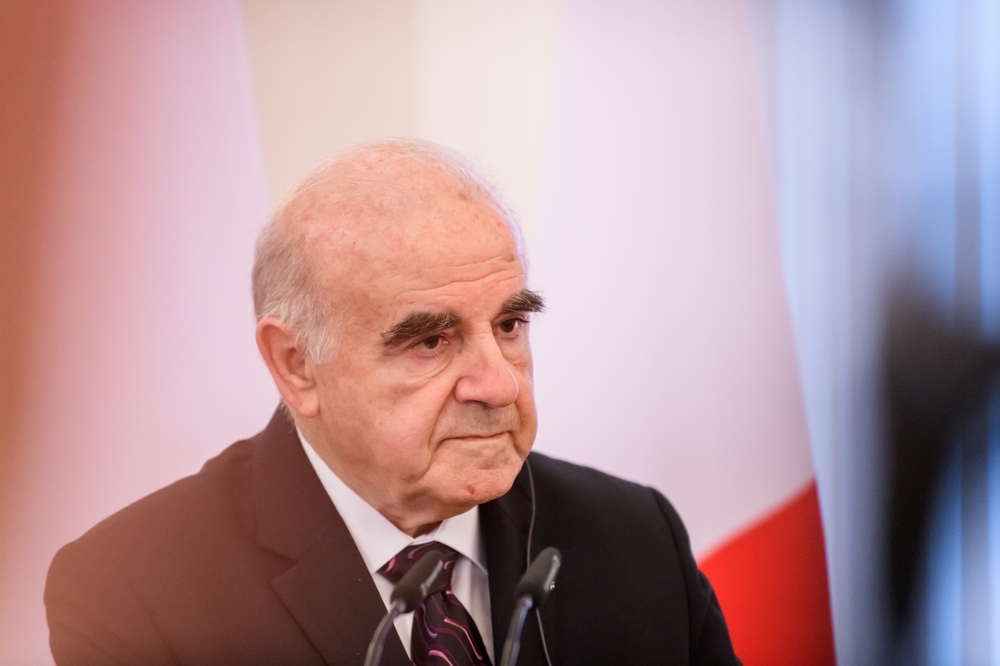
George Vella President of Malta

Speech by His Excellency George Vella during the Opening Ceremony of the Annual Conference of the Malta Model United Nations Society titled: Prioritising Progress: Securing a Fairer Future. 15 September 2023

by George Vella

Excellencies, President of the Malta Model United Nations Society, Conference Manager, Participants, Let me begin by thanking the organisers of this Conference for inviting me to deliver this address and for arranging the discussion on this very relevant and timely topic. I have to congratulate Their Excellencies for the very interesting presentations they have just made to this Conference. The subject matter of this Conference will seek to explore considerations of progress and how this can be done sustainably.  I believe that the theme of progress and development is a defining challenge of our era. We are struggling to come to terms with how to manage progress in a fair and equitable manner. For progress to be sustainable, we must ensure it is coupled with the practice of fair and just sharing of benefits as well as of burdens. In other words, we cannot have progress unless this is achieved through just and fair means. Let me, for the beginning, state that real and sustainable progress can only occur within a rules-based international system founded on commitment and mutual respect. As demonstrated since the inception of the United Nations in the aftermath of the Second World War, a rules-based international order is the only just alternative to a system where might makes right. This vision is at the core of the United Nations system – the promotion of respect for international rule of law and principles of sovereignty and self-determination as basic tenets of global diplomacy. “To save succeeding generations from the scourge of war”. These are among the first words of the United Nations Charter. These words remain the main motivation underpinning the work of the United Nations. Almost eight decades later, I note with concern that the integrity of this vision is severely threatened by the return of great power rivalry.  This last year has been a demonstration of what ‘realpolitik’ looks like in practice. The senseless and illegal aggression and the unrelenting violence unleashed on Ukraine are a direct threat to the cardinal principles of respect for sovereignty and self-determination. These events have unfortunately brought us face to face with the very dire consequences of war, war in Europe – something that Europe selfishly had thought was relegated to the past, because in actual fact, over the years, there was always some ongoing war somewhere on the globe. Unfortunately, on many occasions we absolve ourselves from any responsibility by convincing ourselves that “this does not concern us”. Our collective message has to be a clear and resounding one. We cannot return to a world where the strong do as they will and the weak are left to suffer what they must. We cannot accept that the fundamental principles of respect for sovereignty and self-determination be swept aside by aggression and military might, be it on our doorstep in Ukraine, further away in Yemen, Syria, Afghanistan, or on the other side of the globe. In this regard, Malta’s neutrality as enshrined in our constitution does not imply indifference to the attacks on our shared principles, the deplorable loss of life during conflict and the suffering brought about upon innocent civilian people through famishes and food shortages, displacement and atrocities of war, not least sexual violence against women. Our Constitution does not imply indifference to these attacks. Indeed, our aspiration to serve on the United Nations Security Council for the term 2023-2024 stemmed precisely from our strong willingness to somehow contribute to the maintenance of international peace and security in a meaningful manner. Together with the General Assembly, the Security Council is practically the highest organ of the United Nations. It deals with the most sensitive political issues that could arise. Our tenure comes at a time where the Council is highly polarised, seized as it is with the invasion of Ukraine by Russia. Despite this tense climate, Malta remains committed and determined to continue playing a constructive role in safeguarding the rules-based order and ensuring that our global institutions remain relevant in the contemporary world. We will continue to advocate the importance for accountability to be pursued in line with international law, as well as to ensure the fight against impunity – including for the crime of aggression. Excellencies, Friends, Fully conscious of the unequal distribution of wealth and resources, particularly the ever-widening gap between the rich consuming countries and the developing countries, we hold the key to push forward an agenda for fair progress built on the UN Sustainable Development Goals 2030. Leave no one behind – is the central tenet and transformative promise of the 2030 Agenda for Sustainable Development. Goal number 10 of the Sustainable Development Goals is Reducing inequality within and among countries. Under this SDG, all UN Member States pledge to eradicate poverty in all its forms, end discrimination and exclusion, and reduce the inequalities that leave people behind.  A cursory look around us indicates that alongside globalisation and promises of better development outcomes, poverty, economic hardships and inequalities within and among countries, unfortunately, continue to persist. As the deadline for the SDGs approaches, the progress towards these goals is dangerously off track. These goals were scheduled to be met by 2030, that is only seven years from now. Can we make it on such a short period of time? A series of international shocks and crises – including the coronavirus pandemic, the war in Ukraine, and the worsening climate emergency – have caused and continue to cause, further dislocation and displacement, laying bare the inequities and injustices of the world economy. Many countries face mounting debt, high interest rates as well as increasing poverty and hunger, besides internal strife to quench the never-ending lust for power.  Closer to home, the Mediterranean remains a reservoir of instability and huge political, economic and social disparities. Sadly, the political and economic situation continues to deteriorate in our immediate neighbourhood; the phenomenon of irregular migration, the existential threat posed by climate change, and the breakdowns in food-supply chains provide us with clear examples of things to come. Around the globe, lower and middle-income countries are vulnerable and exposed to political, economic, and ecological crises not of their own making. Many small island states are facing serious threats to their very own existence due to the progressive emigration of their population because of climate change and the probability of eventual rise in sea levels. Meanwhile, vulnerable populations, people living in poverty or marginalized due to their ethnicity, gender, religion or national origin, all need practical, people-centred, humane solutions to global problems like climate change or the pandemic. These challenges are multifaceted, and are transnational in nature, hence why it is necessary that they are resolved by international cooperation and by a responsive multilateral system. At a grassroots level, millions of people across the world continue to call for equal access to health, nutrition, education, energy, and mobility. Basic things which, unfortunately, they still do not have. These impassioned and genuine calls for social justice must not be ignored. We have to, and I say this very responsibly, avoid settling down in a “westernised” mentality, or worse still become too “Eurocentric” in our assessments, and thinking that the world is the same as Europe or the West. There is much more beyond this westernised mentality and Eurocentricity. Strange as it may seem, gender equality is growing more distant around the globe, with projections indicating that this will only, if ever, be achieved many years from now. Advancements in maternal health and access to quality education for young girls remains frustratingly low. The logic is simple: without the contribution of a disenfranchised half of the world’s population, we will only be able to fulfil half of our potential, or even less. Young and old, male and female, irrespective of race, creed or colour, we are all equal partners in this global effort to promote just societies that are expected to cater for the basic needs of citizens. When I speak of needs, I include such considerations as the importance to have – simple things – access to clean and efficient energy, quality health and educational services, and gainful employment opportunities. These are only some of the basic necessary ingredients. We must realise that the political exclusion of groups within our societies through xenophobia, racism, intolerance, and dehumanisation prevents equitable outcomes and destroys social cohesion, leading to societal tensions, unrest and possibly even open conflicts. We need to create inclusive societies and communities and an international order based on justice. In such societies, every human being should live in dignity and respect and lead a life that he or she has reason to value and cherish. Women, youth, ethnic groups, religious and other groups, all of civil society: these must all be equally empowered to participate meaningfully in the decisions that affect their lives. This is a fundamental prerequisite for social justice. Excellencies, In view of the above, I believe that we all agree that we are far from fulfilling our collective duty to secure a fairer future for the coming generations. The question therefore is: “What can we do about this? How do we move from the current state of affairs to the fair and equitable societies that we all aspire to create?” Man has always dreamt about ‘utopia’. We know it is not achievable, but at least we should keep on trying. I personally believe that youth as well as education both play a crucial role in this regard. In the words of the well-known educationalist Maria Montessori: “Establishing a lasting peace is the work of education. All politics can do is keep us out of war”. This does not mean that as political leaders we have no obligations in this respect. Quite the contrary. Our obligations, individually and collectively, relate to the promotion of education that is inclusive, that promotes the dignity of every human being and that recognizes the values of understanding, dialogue as well as solidarity. Education brings awareness of the environment, tolerance of the opinion of others, acceptance of the fact that we are one human race, and peace based on justice, love, and respect for others. This is key if we are to create socially just societies that prioritise progress as a means of securing a fairer future. Looking ahead, I believe that education is a key instrument to empower our youth. Youth empowerment has been a recurring theme throughout my Presidency. Young people from across the globe have a crucial role to play in prompting open dialogue, and to seek common ground with the aim of bringing about positive changes in our societies. This is why in 2016 I was motivated to organise the Young Mediterranean Voices initiative, together with the then High Representative of the European Union Federica Mogherini, and the Anna Lindh Foundation which is based in Alexandria. On that occasion, more than 600 students from all across the Mediterranean, the Middle East and the Gulf region put aside their differences to spearhead a culture of persuasion rather than confrontation, tolerance rather than condemnation, and acceptance rather than exclusion. Institutions like the Anna Lindh Foundation continue to promote such inclusive approaches for youths. Today, the Mediterranean is home to millions of young voices eager to develop their full potential and to build sustainable and inclusive societies.  But this is only one small region on the globe. The United Nations has to cater for all the rest. These are only some preliminary reflections which, I hope, you will find useful in the course of your debates and deliberations. I urge you all to make the best use of the outcomes of the exchanges you will be having in the coming days. What you will learn throughout this Conference could well influence the course of your lives in the coming years, so make the best of this experience. I wish you fruitful and productive discussions. Thank you, very much.
Diplomacy
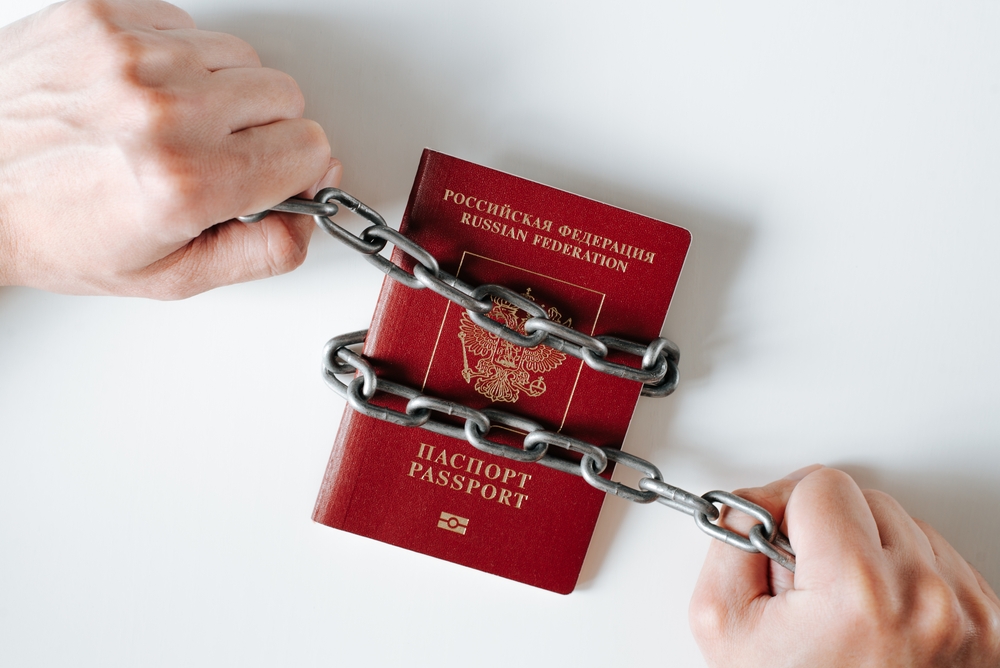
Close-up of canceled international biometric passport of citizen of Russian Federation chained

Caution and embrace: How Europeans should treat exiles from Putin’s Russia

by Kadri Liik

Europeans should allow their countries to be hosts for free debate among the Russian emigrés of the 21st century. But they should resist the temptation to view the exiles as channels of influence to reform Russia.  Life as a refugee is always difficult. And being a Russian exile in Europe is difficult in its own way. You are blamed for the war you opposed. You might fight the blame, or you might own it and try to atone – either way, there is little you can do. And what you are able to do inevitably proves inadequate: it is hard to convince Europeans that Russian society does not bear blame for Vladimir Putin’s war; and you can never apologise enough to shake away the guilt. Alternatively, you might be of the opportunistic type, who arrives with a sense of entitlement in search of the good life – and also ends up disappointed by the cool welcome. Either way, you start slowly losing touch with home, while never quite agreeing with the worldview of your new neighbours.  The politically motivated exodus of Russians to Europe started slowly in around 2012 and dramatically intensified over the past year and a half. The exiles come with a panoply of views. There are those who indeed feel guilty about the war, because, as Russian citizens, they feel responsible for failing to prevent it. There are those who think of themselves first and foremost as victims of the Putin regime and refuse to be answerable for its crimes. There are those who do not bother with questions of guilt at all, but just come in search of a safe haven – for their money, perhaps, or from mobilisation. There are those who worked for the Putinist system before becoming disillusioned or falling out of favour; there are those who kept their distance from the very start. And finally, there are surely those who have not truly fled at all, but have been planted among the refugee community by the Russian special services.  Europeans and the European Union lack a common policy towards the exiles. While Ukrainian refugees will correctly remain Europeans’ priority, what should European decision-makers do about the fleeing Russians: embrace them; reject them; or put them on probation?  What should European decision-makers do about the fleeing Russians: embrace them; reject them; or put them on probation?  Some in Europe view the exiles as our best link to civil society in Russia; as a group who could be instrumental to democratising the country in the future. They suggest welcoming them, helping them, and working with them. Behind the scenes, though, many others, especially European officials working on security matters, are governed by caution: ‘We don’t know who these people really are,’ they say in private. ‘They might be anti-Putin, they might be undercover FSB. And if they are effective in their anti-Putin activities, the Kremlin might send assassins after them – which won’t help our security either.’  A third approach is to approve of Russians as long as they think and behave in particular ways. In many places the exiles are welcome as long as they conform to local expectations, which vary widely, and are maximalist in some places. A good illustration of this is the fate of TV Dozhd. Russia’s last-remaining liberal television channel moved its operations to Latvia, but soon lost its licence for its programming’s lack of Latvian subtitles, for referring to the Russian army as “our army,” and for using (probably accidentally) a map that showed Crimea as part of Russia. Consciously or otherwise, the Latvian government seems to have hoped TV Dozhd would become essentially a Russian-language Latvian television channel, taking Riga’s official line and helping to sway the views of Latvia’s extensive Russian diaspora. When TV Dozhd continued to operate as part of the Russian debate and media landscape – hence its reference to the Russian army as “ours” – it went beyond the bounds of the expectations of the Latvian authorities.  All approaches have their logic and merit. All have shortcomings too.  It is likely true that, for the time being, the exiles are Europe’s best link to Russian society. Most have friends and family in Russia, with whom they communicate on a daily basis. However, if the standoff endures, over time these links will weaken. Former friends, some of whom stayed, some of whom left, will take separate paths in life. They will be part of different debates, with different social codes. The exiles will slowly lose their authentic ‘feeling’ for Russia; they could start projecting their own hopes and fears upon reality. At that point, anyone who relies on the political analyses of the exile community alone will need to start double-checking its members’ assessments.  It is also hard to say what part the exile community can play in post-Putin Russia. To an extent this will depend on the length of time they are away. The Russians who fled the Bolshevik revolution after 1917 believed they would soon head back – and as a result lived out of suitcases for most of their lives. By contrast, those who left in the 1970s and 1980s expected never to return – but many had done so by the early 1990s. We simply do not know what the future holds for today’s emigrés.  It is also impossible to predict the influence they will have if they go back. In some societies – the Baltic states, for instance – returning exiles adapted smoothly and played important political and social roles following the collapse of the USSR. Not so in Russia – in the 1990s, the homegrown networks of post-Soviet Russian politics proved fairly impenetrable to those who had been away. This may change after Putin; or it may not.    It is unlikely that Europeans will ever have a truly common policy towards their Russian exile community. The questions of Russia and Russians are of different levels of sensitivity in different countries, and different states’ policies will always reflect that. Accepting this will make life easier for everyone, and Europe is diverse enough to welcome Russians in various ways. For instance, TV Dozhd may have moved to Latvia in the hope of being close to Russia in a town inhabited by exiles. But ultimately it may be better off in its new home in the Netherlands, where society is less instinctively suspicious of everything Russian.  Also, much of what regulates the daily life of Russian exiles – rules on visas, border crossing, residence permits, asylum – will remain in the competence of interior ministries, and thus outside the regulatory reach of the EU. Its institutions may still wish to draw up a list of recommendations or best practices, which could help member states at least streamline their actions, so that unilateral steps by some do not leave others exposed. (Think, for instance, of how the visa bans introduced by the Baltic states last year increased the migration pressure on Finland and Norway – until they too restricted the movement of Russians.) This would also help address the Kafkaesque set of regulations inside the EU faced by the exiles. But truly uniform policies across the bloc or the Schengen visa space are probably unrealistic for the time being.   Of course, the exiled Russians need to adapt to the societies where they have settled. They need to follow local rules and laws, and put up with local views about Russia – there is no avoiding that. However, their hosts should allow them to be themselves – Russian Russians – not just Russian-speaking Europeans.  Ultimately, Europeans’ approach should be to provide space for Russians without over-investing in them or instrumentalising them. Allow them space to live, safe from the Kremlin. Enable them to talk freely about Russia – painful and necessary as it is. For now, exile is the only place where there can be a Russian debate about the country’s political system, how to fix it, and how to atone for its crimes. Parts of their soul-searching may connect with the discourse in Russia, although there is no guarantee of this. But above all, Europeans should not view them as a column that will smash the Putinist regime. Do not embrace them as such, do not project your hopes onto them, and do not try to micromanage Russian politics with the help of exiled political leaders (even if they ask you to).  The rationale for welcoming Russians should be that Europe is Europe: a place that provides shelter for refugees and a home for honest debate. Europeans’ reasoning should not be rooted in any expectations about the political influence exiles will have in a future Russia – because that may never materialise. If those who departed eventually acquire such influence, it will be a welcome surprise. Above all, the more that Europeans steer clear of intra-Russian intrigues and political manipulation, the more likely it is that such influence will be worth the steadfastness of circumspection.

Diplomacy
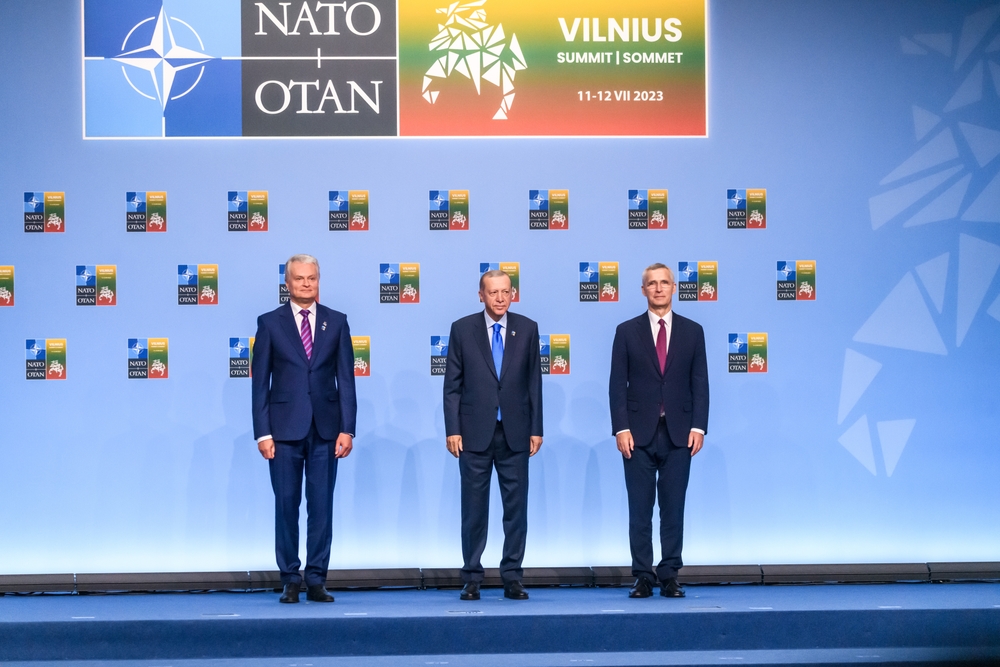
Lithuania President Gitanas Nauseda, Prime Minister Alexander De Croo and NATO Secretary General Jens Stoltenberg pictured during a head of states summit of the NATO

Erdoğan Seeks Better Relations with the West after His Reelection

by Salim Çevik

Turkish President Recep Tayyip Erdoğan seems to have changed course on his country’s foreign relations. At the last NATO summit in Vilnius, Lithuania, he finally lifted his veto on Sweden’s proposed membership in the alliance; but his agreement is still incomplete as it requires the approval of the Turkish Parliament. And Erdoğan has apparently made parliamentary approval contingent on the US Congress approving his country’s purchase of F-16 fighter jets, which many assume may now be a done deal. Moreover, during the talks on Sweden’s accession, Erdoğan reiterated Turkey’s desire to join the European Union (EU) and hoped for a revival of the long-dead EU membership process. Prior to the Vilnius summit, Erdoğan further showcased his foreign policy outreach by hosting Ukrainian President Volodymyr Zelenskyy in Ankara, signaling support for Ukraine in its ongoing war with Russia.  On the domestic front, Erdoğan has formed a new cabinet that signals better relations with the West, as the most ardent anti-western member of the previous cabinet, former Interior Minister Süleyman Soylu, has been left out. Additionally, the president aims to instill confidence in western markets by appointing respected figures like Mehmet Simsek as economy minister and Hafize Gaye Erkan as Central Bank governor. These appointments are seen as positive signals of an effort to strengthen economic ties with the West. This series of moves has triggered the hope, especially in western circles, that Turkey could return to the western fold and that Turkish-Russian relations will cool in parallel. However, pessimists, who see Turkey’s departure from the West as a done deal, disagree and are right to believe that Turkey’s relations with both the United States and European countries have fundamentally changed. It is no longer possible to go back to the early 2000s when Erdoğan was steering the country toward EU membership. The EU has no intention of admitting Turkey; but even if it did, the process would not be in Erdoğan’s favor. Nor is it possible to go back to the Cold War era, when Turkey was firmly embedded in the western geopolitical system. Turkey no longer sees Russia as a threat or an adversary in the sense that most western countries do. The fact that Turkey has resisted approving Sweden’s NATO membership for more than a year and that it will only do so in exchange for the delivery of F-16s shows how badly damaged Turkish-European and Turkish-American relations truly are. Therefore, pessimists point out that rather than signaling Turkey’s return to the West, the whole debacle proves how problematic and transactional Turkish-western relations have become. But these analysts overlook the fact that Erdoğan is pushing for a reorientation in foreign policy, and in his relations with the West in particular. This reorientation started long before the most recent presidential elections in May; but the president’s victory gave him a stronger hand to reboot his foreign policy, which is not aimed at bringing Turkey back into the West’s orbit, but rather at building better functioning relations with it. Turkey’s Departure from the West Turkey’s divergence from the West has taken place at the level of both political values and geopolitics. Over the last decade, Turkish democracy has been in serious decline. Especially after the transition to a hyper-presidential system in 2018, which eliminated all checks and balances in the political system, Turkey’s has become an increasingly autocratic regime. Turkish foreign policy has also become increasingly militarized, much to the chagrin of western capitals. Not only has Turkey used its military power in Syria, Iraq, and Libya but it has also deployed its navy to the Eastern Mediterranean, aggressively threatening the sovereignty of two EU countries: Greece and Cyprus. These aggressive policies were backed by an expansionist naval doctrine called Mavi Vatan (Blue Homeland), whose ideology has disturbed western policymakers. The naval officers who created and developed the Blue Homeland concept never concealed their pro-Russian leanings and deliberately propagated an anti-American and anti-western narrative. These officers, and the political circles associated with them—dubbed Eurasianists in Turkey—have become an integral part of Turkey’s ruling coalition. Turkey’s purchase of S-400 missiles from Russia took place in such a context and represents the culmination of Turkish-American tensions. Turkey’s autocratic turn at home and its militarized foreign policy, which often work against the interests of its western allies, were simultaneous and mutually-reinforcing processes. But said foreign policy reached its limits toward the end of 2020. Turkey became regionally isolated with an overextended military, and its aggressive foreign policy, the rise of authoritarianism, and the subsequent decline of the rule of law plunged it into a protracted economic crisis. This economic downturn began to undermine Erdoğan’s meticulously-built power, as evidenced by his party’s defeat in the 2019 local elections. Unable to sustain autocratic rule, anti-westernism, and an aggressive foreign policy all at the same time, Erdoğan began to seek a new direction. The essence of the new approach is to maintain his authoritarian rule at home while becoming a less confrontational actor in foreign relations. Reorientation in Foreign Policy This reorientation began first in the Middle East, where Turkish authoritarianism was never going to be a cause for concern. Turkey began to mend fences with Israel, Egypt, Saudi Arabia, and the United Arab Emirates, while at the same time aligning itself with the emerging Abraham Accords framework in the region. While accommodating western geopolitical interests, Turkey’s relations with Iran began to enter a more confrontational phase. One of the main motivations for this regional restructuring was economic: Turkey continues to receive significant form of foreign investment from Gulf states. Another motivation was geo-strategic: Turkey hoped that normalization with Israel, and to a lesser extent with supposedly pro-western Arab regimes, would help ease tensions with the United States. While reconciling with its Middle Eastern rivals, the Erdoğan administration was also looking for opportunities to curry favor with Washington and increase its own importance in the eyes of the Biden administration. One of the early opportunities came in the summer of 2021 after the US withdrawal from Afghanistan when Turkey immediately stepped in and offered to take over the protection of Kabul International Airport. This initiative earned Erdoğan his first personal meeting with Biden. However, the unprecedented rapid collapse of the Kabul government prevented Ankara from using the Afghanistan front as a base to build its relations with the United States. A second opportunity arose in February 2022 when the Russian invasion of Ukraine began. New Opportunities for Erdoğan The war in Ukraine has had contradictory effects on Turkey’s foreign policy and on Turkish-western relations. On the one hand, it increased Turkey’s strategic value and facilitated its reengagement with the West. On the other hand, it created additional difficulties as western countries demanded that Turkey sever its ties with Russia, a demand that Turkey rejected. Erdoğan ultimately managed to spread the idea that perhaps it would be better for everyone if Turkey remained relatively neutral. Erdoğan’s personal ties with Putin and the complex and highly interdependent Turkish-Russian relations placed Turkey in a special position among NATO countries. Turkey therefore tried to maintain a pro-Ukrainian line without being anti-Russian. So far, Erdoğan has managed to maintain this seemingly paradoxical position. Turkey has given full military support to Ukraine, and especially in the early days of the war Turkish drones were vital for Ukraine’s defense. To be sure, this support was better than that of many European countries. Politically, however, and while condemning Russia’s occupation of Ukrainian territory since 2014, it has not joined in imposing sanctions on Russia, and the two countries have maintained good diplomatic relations. Erdoğan clearly enjoyed his balancing role. His policies during the Ukraine war have earned the Turkish public’s respect and helped, at least indirectly, in his reelection as they contributed to his image as a world-renowned statesman. Turkey also enjoyed the economic benefits of its being Russia’s main economic outlet. Not only did Turkish-Russian trade increase, but Putin lent a helping hand in the run-up to the elections by agreeing to delay Turkey’s natural gas payments and depositing much-needed foreign currency in the Turkish Central Bank. Erdoğan justified this unique position by emphasizing his mediating role between Ukraine and Russia and between the latter and the West. In this context, securing the grain deal was a particularly important achievement that helped Erdoğan justify his balancing act. Now the deal appears to be in tatters, raising questions about his ability to maintain his role as mediator. The Turkish president has also raised eyebrows in Moscow by recently hosting President Zelenskyy and increasing his support for Ukraine’s NATO membership. He even tested the Kremlin’s nerve by allowing Azov fighters to return to Ukraine with Zelenskyy, an apparent violation of a prisoner swap deal brokered by Turkey. Despite all this, Erdoğan wants to stick to his original position and continue to play the role of mediator. He is counting on the fact that Putin currently cannot afford a falling-out. Erdoğan has already indicated that he expects to host Putin in Turkey in August for a one-on-one meeting, although so far the Russian side has not confirmed the visit. Russia’s reaction to Turkey’s recent moves, such as ratifying Sweden’s NATO membership and supporting Ukraine’s NATO membership, has also been rather mute. Therefore, Turkey’s pivot to the West does not mean that it will cool its relations with Russia. Erdoğan realizes that the longer he maintains his balancing role, the stronger his hand will be with both the West and Russia. A Revitalization of Turkey-EU Relations? If there is no going back to the Cold War era, there is also no returning to the early 2000s, when Turkey was pushing for EU membership. Despite surprising everyone by rekindling the dormant EU membership process ahead of the Vilnius summit, Erdoğan’s move is unlikely to breathe life into Turkey’s EU accession aspirations. This is primarily due to the fact that EU membership would not align with the president’s personal interests, as it would necessitate a higher standard of the rule of law that might curtail his currently unchecked and absolute authority in the country. The accession process revolves around aligning a nation’s internal standards with EU norms, known as the community acquis. Consequently, becoming an EU member would demand a transformation of Turkey’s domestic political system, which currently concentrates power in Erdoğan’s hands. Given this, how should Erdoğan’s statements on revitalizing the EU process be interpreted? Part of the explanation has to do with his transactional style of policymaking. A master of brinkmanship and bargaining, Erdoğan often raises demands and stakes just to get a better deal. This is why Turkey’s foreign policy disputes are often resolved at the 11th hour, as is still the case with Sweden’s NATO membership. But these tactical moves also reflect Erdoğan’s genuine desire to improve relations with the EU. It is important to note, however, that Erdoğan does not necessarily want Turkey to be inside the EU; he simply wants to do business with it. The EU remains Turkey’s primary economic partner, and Ankara has long been demanding a modernization of the Customs Union agreement with the bloc to boost its trade. Moreover, better relations with European countries are expected to be instrumental in attracting much-needed foreign investment. Gulf money has only carried Turkey so far, and to solve its deep economic problems it is necessary to attract the financial power of the West. Thus, Erdoğan wants more engagement with Europe on the economy, defense, security, and refugee issues, but not in the context of EU membership. In fact, the refugee deal signed between Turkey and the EU in 2016 was designed precisely around the idea that Turkey is not and will not be part of the EU. Accordingly, Turkey continues to block the movement of refugees toward Europe in exchange for financial assistance from the EU. The bloc has recently concluded similar agreements with North African countries, aiming to externalize its refugee problem. For this cooperation with Turkey to work, Turkey needs to be outside the EU, not inside it. Thus, Turkey’s desire to create better working conditions with the EU is emblematic of the nature of its reorientation toward the West. Furthermore, western capitals seem increasingly willing to respond positively to overtures made by the Turkish President. Western Reaction to Erdoğan’s Moves It is not only Erdoğan who has changed his position; the West has also changed its approach to him. Biden and other western leaders were distancing themselves from Erdoğan in anticipation of his loss in the presidential elections. Biden did not invite him to Washington and did not visit Ankara, despite Turkey’s growing importance in the context of the Russia-Ukraine war. Knowing how much Erdoğan values personal meetings, Biden used them as leverage to resolve stalemates like the one over Sweden’s NATO membership. Moreover, having learned Erdoğan’s style of politics over the years, western leaders successfully avoided becoming his punching bag ahead of the elections, as former German Chancellor Angela Merkel did during Turkey’s 2017 constitutional referendum. To achieve this, they followed a policy of ignoring rather than supporting Erdoğan. But when the elections were over and he was set to rule Turkey almost single-handedly for another five years, western leaders rushed to congratulate him. It is also becoming much easier for the West to work with Turkey on a geostrategic and security level. For the United States, Turkish-American security cooperation is shifting from the Middle East to the Black Sea. Turkish-American relations in the Middle East have inevitably taken on a more political and ideological character, with the two countries’ different threat perceptions and respective approaches to the Kurdish issue and to Kurdish actors in northern Syria remaining the biggest challenge in bilateral relations. In contrast, Turkey and the United States are more in agreement on the Black Sea. Moreover, within the Pentagon, EUROCOM’s approach to Turkey is much more friendly than CENTCOM’s, and has a better track record of cooperation. For Europe, Erdoğan’s commitment to the migration deal makes him a valuable partner, especially given the growing anti-immigration stance of the Turkish and European publics. Moreover, Erdoğan’s preference for working with the EU but for simultaneously not genuinely pushing for membership in it fits well with European policies. The EU and Erdoğan are more in agreement on their common desire to keep Turkey out but to simultaneously build better working relations. Overall, it seems clear that Erdoğan is eying a new reorientation in his foreign policy. At the moment he is at the height of his power at home and does not need to use the West as a punching bag for domestic political gains. Furthermore, economic conditions and regional developments are compelling him to lean more toward western powers. As a result, Turkish foreign policy is poised to take a new direction. Nevertheless, any improvement in relations will likely be limited to the geostrategic and economic realms and will not encompass a realignment of political values. Without common political values, the result will be significantly improved but will remain transactional between Turkey and its western partners. This paper was originally published by Arab Center Washington DC. Republished with permission. © Arab Center Washington DC, October 2023.

Diplomacy
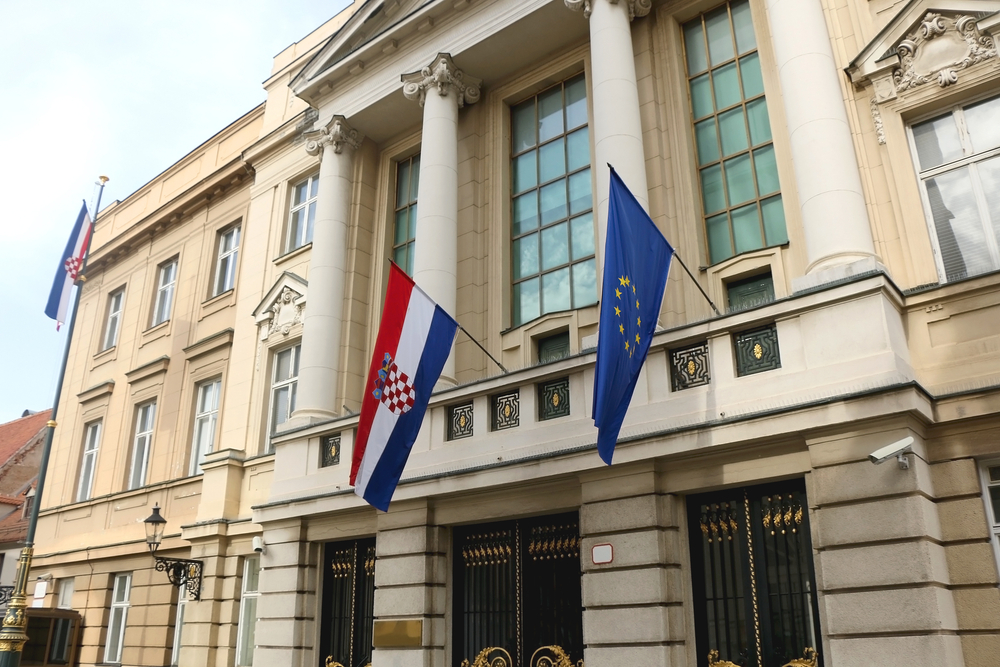
Croatian Parliament building, with flags of European Union and Croatia

Croatia in the European Union Ten Years On: A Success Story

by Dr Ivana Damjanovic

From a difficult accession process to full integration into the Schengen area and the Eurozone, ten years into its EU membership Croatia has been a “good EU pupil” and an example for EU candidates to follow. However, challenges remain in reaching European standards, particularly regarding administrative reforms and standards of living. When Croatia joined the EU on 1 July 2013 as the 28th Member State, it was the only European nation, except for Greece in 1981, to do so on its own. The newest EU Member’s accession was far from obvious due to complex political circumstances. Involved in the longest war in recent European history (1991-1995), Croatia was left with significant human and economic losses – 20 000 people killed and the cost of reconstruction amounting to 160 percent of GDP. The country’s difficulty to come to terms with war crime prosecutions, all of which were eventually acquitted, significantly impacted its relations with the EU. Consequently, Croatia missed the 2004 (Central and Eastern European States) and 2007 (Bulgaria and Romania) rounds of accession and, somewhat ironically, was placed in the membership package with the Western Balkan countries and later in the accession negotiations with the eternal EU candidate Turkiye. Troubled border issues with Slovenia, then already an EU Member, further compounded the accession – unnecessarily as the Court of Justice of the EU confirmed in 2020. Per aspera ad astra: a good pupil of the EU The enlargement fatigue, which came as a result of the slow integration process for new members, enticed the Member States and the European Commission to be more demanding on Croatia. In addition to the Copenhagen political criteria introduced for all new enlargements, Croatia’s membership negotiations involved an unprecedented 35 chapters with specific opening and closing benchmarks, 160,000 pages of the EU’s Acquis Communautaire, and an additional monitoring process between closing negotiations and full membership, which all led to a long accession process, just short of a decade. With hindsight, this level of scrutiny most likely helped Croatia join the Schengen area and the Eurozone on 1 January this year – ahead of several Eastern European States. With its public debt-to-GDP ratio on the downward trajectory (68.4 percent at the end of 2022), Croatia is also performing better than other Mediterranean Eurozone States. The war, for which the country never received any reparations, and then the “lost decade” between 2004 and 2013 with the Global Financial Crisis in 2008, critically slowed Croatia’s economic growth, meaning it began its membership in the EU as its poorest growth prospects. Ten years on, macroeconomic data paints a more positive picture. Croatia’s GDP growth in the second decade of its EU membership has almost tripled compared to the decade before – reaching a staggering 13.1 percent in 2021. Croatia’s EU funds absorption has also significantly improved with the country receiving €12.1 billion in total from different funds. EU membership has facilitated a number of infrastructure projects, from the Peljesac bridge, one of the EU’s largest infrastructure investments, to reconstruction following earthquakes that hit Croatia in 2020. The accession to the Eurozone has lowered borrowing costs and given impetus to exports. It is expected that it will also boost tourism. Joining the Schengen area and removing borders with neighbouring EU Member States has enabled visitors to travel faster, with record numbers of tourists expected this year. Remaining hurdles Despite stellar numbers, systemic challenges remain affecting Croatia’s microeconomic performance. Overrepresentation of employment in the public sector, high and complex taxation, and inflexible labour laws have contributed to a stifling effect on business activity. Croatia’s average net salary is about €1100, well below the EU’s average, and its GDP per capita is among the lowest in the EU, half the EU average. Croatia’s population has consequently declined by nearly 10 percent to 3.8 million since joining the EU, a significant loss for a small country of mostly its younger population. It therefore does not come as a surprise that the country’s unemployment rate has been steadily decreasing over the years – it is currently at 5.6 percent. Labour shortages are being filled by workers from Balkan countries, but also by Asian workers, a cultural opportunity and a challenge for the rather homogenous Croatian society. Among experts and the business community, Croatia is still perceived as a relatively corrupt country,  fairing only marginally better than Romania, Bulgaria, and Hungary. Several notable high-profile corruption cases in recent years demonstrates the scope of corruption. The EU-wide Public Prosecutor’s Office (EPPO), established in 2021 to investigate corruption specifically related to EU funds, recorded 23 investigations in Croatia last year, most of which concerned regional development and agricultural funds. While the different reforms are underway, the question is whether they will be sufficient to diversify the country’s economy, still largely dependent on tourism (20 percent of Croatia’s GDP) and stop the demographic hemorrhage. New horizons Since Croatia’s accession, the EU has also faced a number of challenges. From the 2015 migration crisis to Brexit, and humanitarian, energy, and economic challenges brought on by Russia’s invasion of Ukraine, the EU has been forced to rethink its enlargement strategy. It has recently accepted Ukraine and Moldova as new candidates for EU membership, with Georgia in the pipeline. This is in addition to the already lined up Western Balkan states. Given the persisting political tensions and socio-economic gaps, the integration of such a disparate group of countries presents a difficulty. For now, the current geopolitical situation and the ongoing war requires a cautioning of the EU’s openness. Croatia, as “good EU pupil,” can be a constructive factor in this process. It has been a strong supporter of further enlargement and with its recent experience can provide know-how and assistance. Croatia’s war, and the peacebuilding that followed, could be valuable for the post-conflict reconstruction of Ukraine. Unlike some of the EU’s “enfants terribles” among new Member States, Croatia has not challenged the rule of law or broader EU values. So far, it has proved reliable in protecting the EU external border, which is positioned on the challenging Western Balkan migration route. Much of its good reputation in Brussels can also be thanked to the country’s prime minister, Andrej Plenkovic, who belongs to a progressive line of European conservative leaders gathered in the European People’s Party (EPP) that still rules the EU, as the biggest party in the European Parliament. Given its size, geographical position, and strong European identity, Croatia’s accession to the EU has been an exception in many aspects. However, its performance over the first ten years demonstrates that exceptions can be politically wise. Much as its famous soccer team, Croatia has been in many ways punching above its weight. Its “success story” could thus give an impetus to European integration and serve as a model for future EU enlargements.

Diplomacy
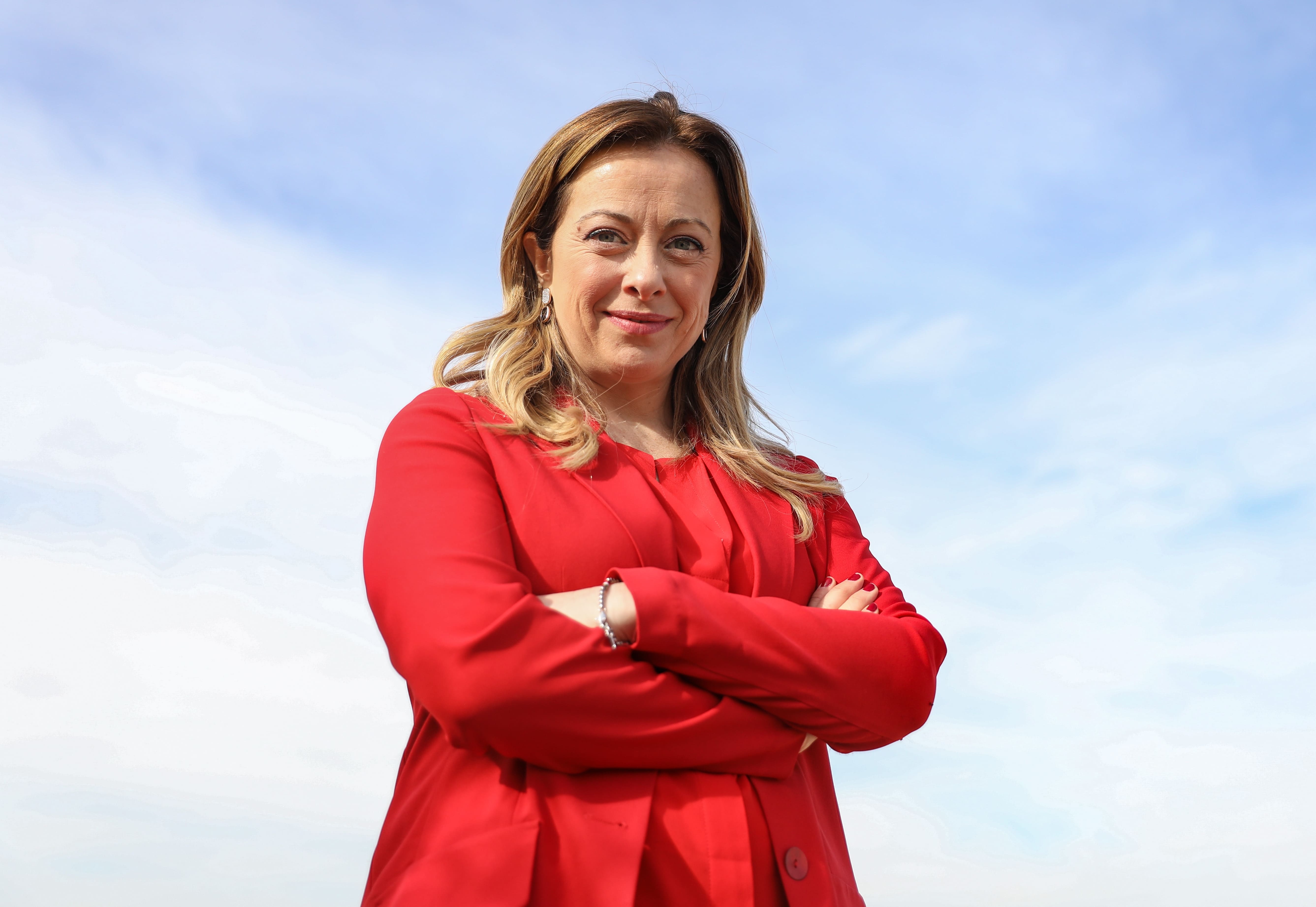
Prime Minister of Italy Giorgia Meloni

President Meloni’s press statement with Speaker of the United States House of Representatives Kevin McCarthy

by Giorgia Meloni

Good morning.  I want to thank Speaker Kevin McCarthy, my friend Speaker Kevin McCarthy, for this occasion he gave me. I want to say that I’m very glad to be here in the heart of the American democracy and in the place that Thomas Jefferson, at the time Secretary of State of President George Washington, wanted to call Capitol Hill to commemorate the famous Temple of Giove on the Capitoline Hill, il Campidoglio - one of the seven hills of Rome. And I say it for it is another sign of the incredibly strong ties between Italy and the United States, ties that have become even deeper in recent times after the Russian war of aggression against Ukraine. More than ever, in this international juncture, our relations are essential. More than ever, we must be able to rely one on the other. Today we had the occasion to exchange views on many international issues, from the war in Ukraine and its effects worldwide, in particular regarding food security, to the stabilisation and development in the Mediterranean area, moreover in Africa, the Indo-Pacific, and Italy’s next Presidency of the G7. I was glad to have this debate with representatives of Congress because it gives me a complete picture of the foreign policy landscape from representatives elected by the American people. I’ve been in politics for most of my life and I’ve been a member of parliament for many, many years, so I perfectly know the importance of parliaments in democracies. That’s why I’m so grateful to Speaker Kevin McCarthy, whom I had the pleasure to meet already in Rome a few months ago, and to the representatives I met today, for the time they wanted to spend with me.  And last but not least, I’m happy to be here in a place decorated by these wonderful frescoes of Costantino Brumidi, another Italian, for this place represents and sums up also the stories of all the Italian-Americans who, with their lives, with their efforts, with their dreams, with their creativity, contributed to strengthening the bonds between our two peoples and contributed to make this democracy the great democracy it is. So, I want to say that I’m proud of these Italians, I’m proud of your grandfather too, Kevin, and I really want to thank them for the contribution they brought to the history and the culture and the identity of this nation. Many of them are today representatives and that shows the role Italy has had for the history of the United States, and that is one reason more to continue strengthening our relations, our cooperation, our friendship, particularly in this tough world, in this tough situation.  Many things are changing around us, but there is something others didn’t expect that we should perfectly prove: that the Western world is united and wants to defend the world based on rules, for without a world based on international law, we would live in a world of chaos, in which who is militarily stronger thinks he can invade his neighbour. That’s not the world we want to live in; we want to live in a world in which we can respect sovereignty and freedom. Thank you very much.

Diplomacy
Federal President Frank-Walter Steinmeier

Federal President Frank-Walter Steinmeier during an informational and contact-building visit with the Diplomatic Corps on 27. June 2023 in Essen

by Frank-Walter Steinmeier

I am delighted to be back in the Land in which I was born and grew up, North Rhine-Westphalia. And I am even happier that so many of you have accompanied me here from Berlin and Bonn. I don’t exactly know whether this is a new record, but 170 participants in our joint trip to explore one of the federal states together is really quite a lot. Minister President, thank you very much indeed for the hospitality extended to us here in this, to my mind, wonderful place, the Zollverein Coal Mine Industrial Complex. North Rhine-Westphalia, as you have just heard, is indeed the most populous Land in Germany. And over the past few years and decades, or I could say over the last century and a half, it has become a real melting pot for people from a wide range of nations. Many people from a very large number of regions of the world have come together here –  thanks in the main to that part of North Rhine-Westphalia which is the focus of our trip today. For a long time, the Ruhr District was the beating heart of heavy industry, a region forged by coal and steel. Four and a half years ago, in December 2018, I was there when the last coal mine here in the Ruhr District was closed. That was one of the hardest speeches I have ever had to make in any of the positions I’ve held – to stand in front of crying miners and say to them: this piece of coal in my hands is the last piece of coal mined in Germany. It was – and everyone knew it was – the end of an era in Germany and especially here in the Ruhr District. It was not just the end of a chapter of industrial history. The hard work, and especially the work below ground, profoundly shaped the people in this region for years and decades. For these people, the crucial thing is being able to rely on each other, and that a word, once given, is kept. If you have another chance sometime to look around here, you will notice that the people who live here are vigorous, sober and pragmatic. They don’t ask where you come from or mind how smartly you can talk; what they care about is that you roll up your sleeves, do your work, and especially that you try to behave decently to others.  So you can imagine that the decline of the coal and steel industry meant a massive upheaval for the Ruhr District and its people, for the economy, but also for social structures here. But precisely in this region, a region which has seen many endings and ruptures, many new things are emerging, many new ideas are being implemented. The major transformation of an old industrial landscape that from here is almost invisible amongst all the greenery, the major transformation of an industrial landscape to a centre of science and research, a hub – if I may put it like that – for technologies of the future is well under way. This morning, at Siemens Energy in Mülheim, we were able to see for ourselves what kind of cutting-edge energy transition technologies, some of them AI-driven, are now being developed and used here in the region.   The venue for our luncheon, the former Zollverein coal mine and coking plant, is a particularly good illustration of the pride the people here in the Ruhr District take in their past, and of the devotion with which they are preserving the relics of this history and at the same time again and again turning them into something new. Once one of the most modern plants of its kind in Europe, Zollverein is today a museum, memorial and centre for culture, design, events and new technologies. A World Cultural Heritage site that not only preserves the past but also looks firmly to the future and builds that future.  As economically successful as the coal and steel era was, today we know that it was just as harmful and in many cases entirely destructive for nature and the environment. For instance, the Emscher, originally a small, gentle river, was for many decades used as an open sewer. It was a cesspool, ecologically dead, into which waste, including toxic waste, was discharged. Now, following a tremendous effort, it has been renaturalised. Later today we will be able to see and admire the result. In one of Europe’s biggest infrastructure projects, an entire river has been cleaned up, so that it is now free of wastewater, and once again home to plants and animals. But perhaps the real miracle is that this – it’s safe to say – gigantic project was completed in thirty years, and on schedule no less.  One more thing: the Ruhr District would not be what it is without football. There is little the people here care about at weekends more than this: did my team win or lose? And passions run especially high when the match is against one of the other teams from the region. Even if a club from the south of Germany has won the national championship for years now, the heart of German football beats – at least so people here say – in the Ruhr District, with its many traditional clubs and their fans, unshakeably loyal through all the ups and downs. That is why the German Football Museum was not established any old where in Germany, but here in the “Revier”, as we call the Ruhr mining area. And that is why this trip would not be complete without a joint visit to the museum in Dortmund later on.  Another very serious matter has profoundly affected the people of this region, and not only the older generation. I am talking about war. On the one hand, the Ruhr District was of course also a major centre of arms production in both World Wars unleashed by Germany. On the other, it, more than almost any other region in Germany, experienced fear, massive destruction and thousands of deaths during the intensive bombardments of the Second World War. The people here, including later generations, know exactly what war is.  And because they know, because “Never again” is deeply engraved in their hearts and minds, the Ruhr District is also a nucleus of European integration. The European Coal and Steel Community, which was intended to transform the former heavy industries of the war machine into civilian, peace-keeping industries, gradually evolved into ever greater political, economic and social cooperation, and finally into the major work of peace and freedom that is today’s European Union.   The history of this region in particular, therefore, preserves the precious knowledge that cooperation between peoples and nations is a thousand times better than war and confrontation. That growth and prosperity evolve not from enmity, but from cooperation based on common rules and principles.   That is why we Germans are pleased and proud to be celebrating 50 years of United Nations membership this year. The principles of international law that the then two German states recognised on their accession apply to all who belong to the United Nations. Only compliance with international law, recognition of the Charter of the United Nations and real and actual action in keeping with the principles of this Charter guarantee peace, freedom and prosperity for the nations. On the basis of these principles, we extend the hand of cooperation to all states represented here.  There is of course a reason why I am saying this: The Russian attack on Ukraine is a break with everything for which the United Nations stands, for which Europe and Germany stand. The inviolability of borders, of a country´s sovereignty and self-determination, of human dignity and peace – all this, as we are seeing day in, day out, means nothing to Putin. Today I would like to thank all those who are condemning and have condemned Russia’s aggression at international level. We must not tolerate the attack against a sovereign neighbouring state, the violation of borders, land grabs, the displacement of millions of people. The international community must not accept all this. And we urgently need this international community, and the common rules this international community sets itself – not only now, but for all the new challenges of this century that are yet to come.  We have all seen that no country on its own can secure a humane future. We are all dependent on partnership and cooperation, particularly in our joint efforts in the fight against climate change. That is why we are endeavouring, that is why German and European policy is endeavouring, to intensify existing partnerships and establish new, just partnerships and alliances that will benefit all sides. Let me say this quite clearly: what we need is not deglobalisation. What we need, in my view, is even closer connectivity aimed at making the world a better place. Because we will only be able to overcome the global challenges if we work together.  I wish you and all of us a pleasant rest of the day with lots of enjoyable experiences, interesting insights and, hopefully, valuable encounters. This evening, right at the end of our trip, we will be experiencing another truly glorious part of North-Rhine Westphalia that will surprise you. What we will be seeing is referred to here as the Versailles of Westphalia. I can only say: look forward to it!

Diplomacy
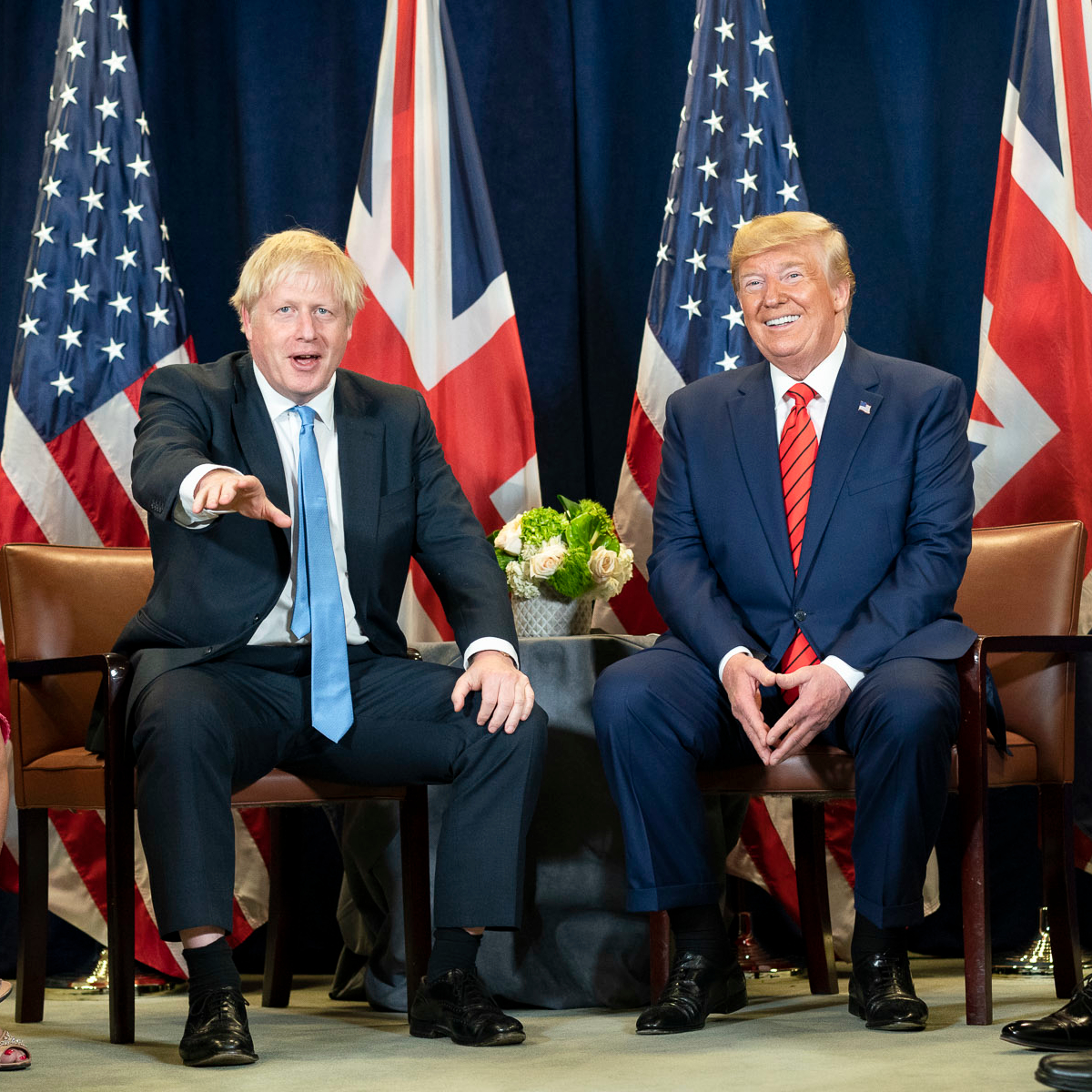
Former President Donald Trump with former PM Boris Johnson

Berlusconi, Trump and Johnson: three populist fates

by Juan Antonio Sacaluga Luengo

Silvio Berlusconi, Donald Trump, and Boris Johnson have recently been in the spotlight. Berlusconi's passing has drawn attention due to his long and controversial personal and political life. Trump is facing a new and potentially perilous legal prosecution. Johnson, on the other hand, has been excluded from a return to the forefront of politics by a committee within his own party, at least in the near future.  All three will be remembered as prominent figures of political populism, a conservative current that primarily but not exclusively offered an alternative to the weakened traditional conservative right. They also presented a challenge, to a lesser extent, to centrist liberalism and social democracy, both of which were undergoing an identity crisis. While there are differences among them, all three were "mass seducers," capable of attracting millions of voters without necessitating trust in their words or actions, regardless of the credibility of their policy proposals. Berlusconi and Trump had scandal-ridden private lives characterized by exaggerated, even exhibitionist, philandering and machismo. Johnson has been somewhat more discreet, but he can hardly be considered a champion of the decency demanded by his conservative base. His actions, even during the pandemic, have led to his current ostracism. Johnson has been the most articulate, educated, and socially privileged among the three, coming from an elite background and rising within the ranks of the Conservative Party. In contrast, Trump and Berlusconi emerged from a state of political obscurity. Trump later colonized the Republican Party, transforming it and, some argue, leading it towards destruction. Berlusconi, on the other hand, disregarded the established post-war party, Christian Democracy, which he deemed corrupt, ineffective, and obsolete. He built something new with highly populist traits, exemplified by the rallying cry of Forza Italia!, appealing to football fanatics. While it maintained its brand for 30 years, its decline appears to have reached its lowest point, as it is now the weakest force within the right-wing coalition, trailing behind Fratelli and Lega with barely 20% of the MPs among the three factions. Each of them has been a product of their respective times, like any political leader. However, all three have also been game-changers, agents of change during their era. Trump upended the political system in the United States, altering the balance within the two-party system, reshaping the dynamics of the conservative electorate, and simultaneously exposing the flaws within American democracy. Berlusconi dismantled the system of the First Republic, which revolved around a binary dynamic between the dominant Christian Democracy (DC) in government and the Italian Communist Party (PCI) as the permanent opposition. A minor game consisted of various companion parties (socialists, social democrats, liberals, and republicans) aligning with the dominant party. Il Cavaliere disrupted the delicate balance of this pentaparty system of the Center-Right with a new political culture or rather, the absence of any political culture at all. He applied show business principles to public administration, treating his party as a personal company, driven by the goal of success. Trump did not go as far as Berlusconi. He lacked the talent, patience, and management team that the Milanese businessman possessed. Both individuals had opaque, suspicious, and potentially fraudulent businesses, but to varying degrees and extents. Additionally, they operated within different legal and political environments, albeit under the umbrella of capitalism. They shared the ability, with the help of pseudo-informational media (owned by Berlusconi in the Italian case and manipulated in Trump's New Yorker case), to obstruct, influence, delay, neutralize, or render judicial investigations ineffective in the medium and long term. Both were or have been elusive figures in the political circus they orchestrated around themselves. Johnson, on the other hand, reshaped the political landscape but relied on an existing base. His intention was not so much to transform the rules as it was to exploit them to his advantage. Even Brexit, which many consider his significant achievement, was not originally his project. He appropriated it, infused it with his personal touch, and made it a pivotal factor in the UK's most consequential strategic shift in 50 years. Berlusconi has now become a part of history, or is on the path to doing so. His state funeral has been deemed inappropriate, and the obituaries, as is often the case, tend to either overly praise or justify his fraudulent political career. He was never a statesman but rather a swindler who knew how to exploit the weariness, fatigue, disbelief, and cynicism of an electorate that was at its wit's end. Few believe that Forza Italia will survive the death of its founder. Johnson finds himself once again in a state of uncertainty (not for the first time), facing reprimand from his own party members and being disregarded by the Prime Minister, to whom he once granted the influential position of Chancellor of the Exchequer, overseeing the Kingdom's finances. Such rough-and-tumble politics is not uncommon within the Tory world. Even someone of greater stature, like Margaret Thatcher, fell victim to similar episodes of apparent betrayal, disloyalty, and abandonment. Trump is inching closer to a return to the forefront, despite facing intense legal scrutiny in various cases related to fraud, tax evasion, mishandling of sensitive public documents, obstruction of justice, political conspiracy, and more. The outcomes of these ongoing court cases are likely to turn into a spectacle with evident electoral implications, provided he can maintain control over them, which is no small feat. The numerous rivals who have emerged in recent weeks to challenge him for the Republican nomination do not seem to possess sufficient substance. Trump's greatest adversary is himself. However, his greatest advantage is also himself, as he possesses the ability to connect with a sizable segment of the population that remains unmoved by the hollow discourse of the political elite on democracy and values. These three great tenors of populism have served as inspiration for lesser local figures, with different backgrounds and similar political styles. It is worth clarifying that not all those who deserve to be labelled populist in the media are similar or assimilable. Confusion is frequent. Within the right-wing political landscape in Europe, several key themes prevail among these figures: - national primacy. - a rather outdated form of patriotism. - almost absolute rejection of immigration. - a very traditional conception of the family - demagogic interventions in the liberal economy. However, they are divided by a fundamental dispute: relations with Russia. Two clear groups emerge:  1. The Identitarians, who have maintained a cooperative and non-confrontational relationship with Putin. This group within the European Parliament includes figures such as Marine Le Pen in France, Lega Salvini in Italy, AfD in Germany, Flemish Vlaams Belang in Belgium, and xenophobic factions in Finland and Denmark, among others. Trump could also be placed within this group, although his ideological formulations are not well-defined.  2. Conservative nationalists, staunchly anti-Russian. This is particularly true for the ultra-nationalists in former communist countries, with Poland's Law and Justice (PiS) party at the forefront (excluding Hungary's Orbán, who maintains a cordial relationship with Putin). This group includes NVA in Belgium, the far-right VOX in Spain, Greek ultra-rightists, Swedish xenophobic factions, and more recently, the far-right nationalists under Giorgia Meloni. Johnson's coexistence with this group was not necessarily his own choice, as the Tories were already integrated into the European Parliament group that brings these parties together, known as the European Conservatives and Reformists, before he became the party leader. Berlusconi, being as flexible on the international stage as he is in business, managed to avoid affiliating Forza Italia with either of the two nationalist currents. Instead, he secured membership in the European People's Party (EPP), which made no secret of its position. The EPP did not make any concessions to Victor Orbán's FIDESZ until it had no choice but to initiate an expulsion procedure against him, which ultimately had no effect as Orbán decided to leave the group voluntarily. If Berlusconi had not been admitted to the EPP, he would have likely aligned with the identitarian faction, which maintains a friendlier stance toward Russia. To provide an idea of the strength of nationalism in Europe, the ultra-conservative branch comprises 66 MEPs, while the identitarian branch consists of 62 MEPs, totaling 125 seats. In comparison, the People's Party has 177 seats, and the Socialists have 143 seats. However, when combining the votes obtained by both nationalist factions in the most recent national elections held in each EU member state, it becomes evident that the two nationalist factions have garnered the largest number of votes, surpassing 48.7 million votes. This total is nearly 700,000 votes more than the conservative liberal or Christian Democrat parties within the European People's Party. The Social Democrats trail behind with over 42.2 million votes. 

Diplomacy
Dark blue sky with cumulus clouds and yellow rhombic road sign with text New World Order

The World is Changing: Who Will Set the Rules?

by Filippo Fasulo

Pivot to Asia - The Global South is on the march in their attempt to reshape the international system. How will this new order impact the old world? An increasing number of countries from the Global South, especially in Asia, are pushing to redefine the current global order. Three key trends to watch in this attempt to reshape the international system are the (potential) creation of a new economic order, the expansion of the BRICS grouping, and the transformation of China-Russia relationship after the invasion of Ukraine. In this changing international balance, Europe is losing its influence in the Global South, including in Asia. After centuries of global predominance, Europe’s strongest legacy is its role as a major normative power in global affairs. However, this reputation as a rule-setting power is set to change.   Why it matters 1. A (new) economic order. The debate over a “new Washington Consensus” has gained momentum after US national security advisor Jake Sullivan delivered a speech at the Brookings Institution on April 27th. The final communiqué by the G7 countries which met in Hirosahima on May 19-20 is the result of a similar strategic shift within the group, one that implies a move from economic interdependence to economic security. This shift is coupled with a major change in how the G7 intends to deal with emerging economies, such as their rival China and other partners in Asia that might soon become economic competitors in critical technologies. The G7’s sentiment has moved from promoting globalization and open markets to building industrial capacity in critical sectors, while securing existing and creating new strategic supply chains. Europe’s efforts in this context might not be enough: the investments envisaged so far are too little to reverse Europe’s dependency (often on China) in critical sectors. The EU must focus increasingly on diversifying its supply chains through securing access to rising economies in the Indo-Pacific. Here, joining the Comprehensive and Progressive Agreement for Trans-Pacific Partnership (CPTPP) could represent an opportunity.  2. BRICS+? The BRICS foreign ministers’ summit in June was yet another steppingstone toward enlargement. The countries that expressed a significant interest in joining the grouping are Iran, Saudi Arabia, the United Arab Emirates, Cuba, Democratic Republic of Congo, Comoros, Gabon, and Kazakhstan: all these countries sent their representatives to Cape Town. Egypt, Argentina, Bangladesh, Guinea-Bissau and Indonesia participated virtually. While the membership process might be a long one, the group’s upcoming expansion highlights the Global South’s political will to rise its voice, with a plethora of actors eager and able to leverage the new competition between powers which is shaping up after the Ukraine war. In this framework, Asian countries such as China and India are competing with one another to lead the BRICS.   3. China and the Stans. On May 19, Xi Jinping met in Xi’an with the (leaders of) the five Central Asian “Stan”-countries (Kazakhstan, Uzbekistan, Kyrgyzstan, Tajikistan, and Turkmenistan). Russia, the region’s traditional kingmaker, was noticeably absent. The meeting kickstarted – for the first time offline – a summit named C+5 and highlighted Beijing’s belief that it can now make deals within the region without Moscow’s supervision. China’s newfound independence in Central Asia and Moscow’s growing dependence on Beijing after the war in Ukraine provides new insights the on China-Russia relationship: although the two countries are united by their common desire to contest the US-led world order, the Sino-Russian relation seems increasingly tilted in China’s favor. This instable relationship could result in a stronger Chinese presence in Central Asia.  4. Loss of strategic centrality. Europe does not only risk becoming increasingly peripheral in world affairs, but also losing its bargaining power with the emerging Indo-Pacific economies. On the one hand, the EU needs to diversify its supply chains away from China and likely towards the ASEAN; on the other, the Global South – and by default its Asian members – is more aware of the current strategic window of opportunity to redesign the global balance of power.   Our take We are witnessing rapid changes in the international arena. In the coming months there will be increasing requests to review global norms. Therefore, the leading event will be the upcoming BRICS Summit in August: the meeting will probably certify the process to accept new members. Among the countries that are voicing their desire to reset the rules, some are considered by the West (mainly) as rivals, such as China, and as partners, like India. Therefore, Washington and Brussels cannot simply accept or dismiss their requests. Asia is claiming its century: the integration of this claim for a renewed global order into the current world order has just started. Its most important implications will be on the economic side, namely the redistribution of industrial capacity and trade relation in the context of de-risking from China.  Spotlight: G7  The G7 Hiroshima Summit has sent some clear messages to the rest of the world. The decision to invite President Zelensky to the gathering was a move meant to reinforce the unity of the members regarding the Ukraine invasion in the face of Russia — and China, too. The West has criticized China’s 12-point position paper on the Ukraine war, since it does not call for Russia to abandon occupied territories. The G7 countries have also announced a strengthening of the sanctions, seeking to curb products that could be used by the Russian military. The other important takeaway of the G7 is the joint statement directed at China, which includes a strong criticism of Beijing’s “economic coercion” and invites the PRC to play according to international rules. The G7 have also reiterated their position on divisive topics such as security in the Indo-Pacific and Taiwan, retreating their commitment to preserve peace and stability in the region. Despite the joint statement and the declarations by the leaders on the challenges posed by China, the G7’s stance on Beijing is still a balancing act. While concerned about being overly vulnerable with China, G7 economies and their industrial base remain strongly interconnected with the Asian country and despite calls for “de-risking”, such as cutting China out from some sectors like raw materials, it is impossible at the time.  Experts’ viewsThe implications of China’s activism among the BRICS countries  The next BRICS Summit will take place at a critical juncture for the Global South. Russia is still at war, Brazil has a new administration eager to flex its muscles globally, and China has reached unprecedented influence across the developing world. Since they are all connected by the same desire of multipolarity away from US and Western hegemony, it is likely that the BRICS will try to offer a roadmap towards a new international order. This roadmap, however, is far from consensual: will Russia embrace the peace dialogues offered by Brazil or African nations – and what role will China play in brokering any such proposal? Will China and the other BRICS be able to cooperate economically to promote development worldwide? Are the BRICS ready for its first enlargement, and who is most likely to join in the coming years? This arrangement will require some mutual concessions and the outcome will help shape the future world order.  Guilherme Casarões, Fundação Getulio Vargas  The push to strengthen and even expand the BRICS, especially by China, should be viewed more broadly through the lens of a pragmatic Chinese foreign policy. It has not only sought to strengthen ties within BRICS but with other regions and countries who are instrumental for its trade and infrastructure connectivity imperatives.  This happens against the backdrop of a shift towards a multipolar world order with China as a rising power and rising geo-political tensions. Given that this bloc advocates for issues that are relevant to the Global South (global governance reform, support for a rules-based international order and multilateralism in times when countries retreat to unilateral measures), it is no surprise that other countries in the South wish to join. Regarding this summit, I see no major implications for the bloc, the core business of the BRICS will continue with South Africa advancing its five priority areas. However, we can anticipate a discussion on its formal expansion. Trading with local currency seems to have found new impetus following the sanctions placed on Russia. All this notwithstanding, it is important to note that the ‘de-dollarisation’ in trade debate is not a new concept for BRICS and its less about challenging the dollar but strengthening other currencies against external economic shocks. The real test is for the host country depending on whether President Putin attends the heads of state summit in August, given Pretoria’s obligations under the Rome Statute and domestic law.  Luanda Mpungose, South African Institute of International Affairs (SAIIA)  China’s push for a stronger BRICS on the global stage is advancing along a number of trajectories. Firstly, there is the BRICS expansion as well as the BRICS+ format that are likely to bring the majority of the Global South into BRICS-related platforms of economic cooperation. The implementation of the BRICS+ format may serve as a precursor for liberalizing trade across the Global South and exploiting the potential for boosting South-South trade and investment ties. The expansion in the membership of the Shanghai-based New Development Bank as well as the creation of its regional centers will increase the scope for connectivity projects across the developing world. There is also the greater use of national currencies (most notably the yuan) via de-dollarization as well as the R5 BRICS common currency project that if launched would mark a key transformation of the global financial system.  Yaroslav Lissovolik, BRICS+ Analytics   What and Where Thailand is ready to Move Forward   The May elections in Thailand resulted in a clear victory for the opposition parties. Led by Pita Limjaroenrat, Move Forward has won 152 seats, becoming the most voted party in the elections. This party is the heir to Future Forward, which was dissolved by the military government in February 2020, and was born out of the 2020-2021 protests against the army and the monarchy. The second party in the country is the historic Thai opposition party led by the Shinawatra family, the Pheu Thai. However, while the population has expressed its preference, there is no guarantee yet that Move Forward, and the opposition, will govern. Indeed, to be elected Prime Minister, and form a government, Pita will need to win the majority in the bicameral parliament made up of the elected 500 seats in House of Representatives and the 250 seats of the Senate – whose members are handpicked by the military. The Move Forward coalition with Pheu Thai and the other opposition parties so far can count on little more than 310 votes, a long shot from the majority needed to govern. The opposition must garner support among the senators – which generally have little interest in going against the military that put them in power – or among the parties that have yet to declare their allegiance.  Cambodia: Hun Sen is getting rid of the competition ahead of July elections  On the 14 of May, Cambodia’s opposition party – the Candlelight Party – has been disqualified from running in the upcoming July elections by the country’s election commission. The party has allegedly failed to submit the necessary documentation to participate in the electoral race. With the exclusion of the Candlelight Party from the coming elections, the only possible competitor to the ruling Cambodian People’s party (CPP) of PM Hun Sen – who has been in power for 38 years – has been eliminated. This is not the first time that the main opposition party has been cut out of the electoral race. For instance, in the 2017 the Cambodian court, which is heavily colluded with the CPP, dissolved the Cambodian National Rescue Party (CNRP) before the 2018 general elections – a party that was given new life when its members created the Candlelight Party. However, the members of the opposition continue to be persecuted by Hun Sen’s forces with many political exponents arrested on charges of treason, assaulted, or forced to leave the country. With the opposition forces largely depleted and the main party banned from running for elections, Hun Sen is likely guaranteed another term.   The United States seeks to expand influence in the Indo-Pacific  Washington took advantage of two key international events to strengthen its strategic position in the region. During the Quad Leaders’ Summit, which took place on the sidelines of the G7 in Hiroshima, President Biden, Australia’s PM Albanese, PM Kishida of Japan and PM Modi of India stressed their unity and stated their plans to invest in digital infrastructure in the region. Throughout the meeting they did not mention China directly in their statements, but their references to the country were clear. The Quad expressed concern over the militarization of the region and the use of both economic and military coercion to alter the status quo – a clear reference to Chinese activity in the South China Sea. Another important step for the US to consolidate its position in the region is the announcement of the Supply Chain Agreement under the framework of the Indo-Pacific Economic Framework for Prosperity (IPEF). The agreement includes the 14 IPEF partner countries, namely Australia, Brunei, Fiji, India, Indonesia, Japan, Malaysia, New Zealand, the Philippines, Singapore, South Korea, Thailand, the US, and Vietnam. A year following the launch of the IPEF, this agreement is the first practical measure undertaken by the group. The group did not announce any official trade commitments, there is expectation among partners for increased cooperation and monitoring of supply chains fragility. The concrete development is still unclear, but the agreement signals the need for Indo-Pacific countries to avoid supply chain disruption and to minimize their dependence on the region’s main economic player, China.  Semiconductors: China fires back   China has gone on the offensive in competition over the semiconductor sector. The Cyberspace Administration of China (CAC) has stated that products by Micron, the US largest memory chip maker, are a “security risk for the information infrastructure supply chain” barring infrastructure operators from buying them. While additional information has yet to be revealed, some negative impacts are expected for Micron even if China and Hong Kong accounted for only 16% of the revenue of the company in 2022. The measure is a retaliation to America’s effort to cut China out from the semiconductor sector and slow the development of its industrial base. Since October 2022, the Biden Administration has imposed strict controls over chips export, followed by the Netherlands and Japan, preventing China from accessing and producing more advanced semiconductors. China’s declaration comes also after the leaders of the G7 grouping released a statement criticizing the country’s economic coercion tactic. After the move from Beijing, Micron fears that their products will be replaced by South Korean competitors, Samsung and SK Hynix, on the Chinese market. In the rising technological row between the US and China, there is also fear that Beijing might choose to put some export controls over other sensitive technologies, such as solar panels – where China dominates the whole supply chain.    TREND: Despite rate hikes, Asian unemployment is faring well (but not for everyone)  In the current context of high inflation and high rates, unemployment has turned out to be one of the main socio-political issues of Asia. With skyrocketing prices hurting businesses and consumers, many central banks in the West have adopted more hawkish monetary policies during the last year. Yet, the soaring cost of money has forced many businesses into a tight spot with concerning consequences on the employment level. Some countries though – like Japan, China, and Indonesia – have made the unorthodox choice to not significantly raise rates during the last year, while others – like South Korea and India – have adopted similar policies to those of the FED and the ECB. However, the results vary. In Japan the unemployment rate has been quite steady at around 2.6% for some time now, but in China the range (5.2-5.7%) was wider, especially due to the uneven nature of the post-Covid economic recovery. Yet, as the economy is slowly returning to normal, Beijing’s unemployment rate is gradually decreasing. Meanwhile Korea has consolidated a positive trend, with the last available figure at 2.5%, but the reforms of the labor market proposed by President Yoon Suk-yeol may cause some issues. The critical indicator though will be youth unemployment. Employment in aging societies, like those of East Asia, will increasingly become a core issue to maintain the viability of existing social welfare programs. So far China has a staggering 20.8% unemployment rate in the 16-24 years old age group which is particularly concerning, as it is the 7.2% recorded in South Korea. Japan is faring quite well but unemployment in the 25-34 years old age bracket has risen since the beginning of the year from 3% to 4%.

Diplomacy
Set of different Creative Country labels. Made In Badges With Flags. Vector illustration

Why France and Germany will not ‘decouple’ from China

by Genevieve Donnellon-May

With China increasingly assertive in pursuing its economic and geopolitical interests abroad, US–China tensions are rising, leading many traditional American allies to consider following Washington’s lead in pursuing economic ‘decoupling’ from China. Their strategy aims to reduce economic reliance on China through extensive export controls and re-ordered supply chains. Yet in Western Europe, France and Germany are showing an unwillingness to join their allies in decoupling from China. French President Emmanuel Macron’s recent comments that Europe should not get ‘caught up in crises that are not ours’ demonstrate this. If anything, their relationship with Chinese capital is thriving. China is one of France and Germany’s major trading partners outside of the European Union and a significant export market for goods such as luxury goods and pharmaceuticals. Exports to China made up 7.4% of Germany’s total exports and 4.21% of France’s in 2019, with these numbers growing over the last three years to record levels. Given China’s growing middle class, the country presents an enormous potential consumer market in years to come. According to recent reports, France’s bilateral trade in goods with China exceeded US$100 billion for the first time in 2022, an increase of 14.6% on 2021­. The recent signing of 18 cooperation agreements by 46 French and Chinese companies across numerous sectors further emphasises the gathering pace of these trade relationships. As for Germany, its total trade with China saw an increase of 21% from 2021. While exports increased by a modest 3.1%, Germany’s imports from China accounted for much of the growth, soaring by more than a third. Specifically, Germany imports from China about two thirds of its rare earth elements, many of which are indispensable in batteries, semiconductors, and magnets in electric cars. This shows that Germany and France will rely more on China as time passes for the critical raw materials needed to fuel their economic growth and energy transitions. Furthermore, various French and German companies would prefer to grow their established production facilities and extensive sales networks in China. With the trade relationship expanding so rapidly and estimates suggesting that more than 2 million German jobs depend on exports to China, the countries’ economies are set to become even more intertwined. German companies Volkswagen and chemical processor BASF, for instance, are significantly expanding their investments in China. Volkswagen, which already has more than 40 plants in China, recently announced that it will invest billions in new local partnerships and production sites. BASF, which has 30, says it will invest US$10.9 billion in a new chemical production complex there. Given all this new activity, making a show of decoupling from China could cause significant repercussions for France and Germany. Ultimately, the costs of decoupling outweigh the benefits for the two governments. While their allies might come to bemoan their inaction, they just won’t forgo such significant opportunities for French and German companies in China. Additionally, decoupling could trigger retaliation, as it did with Australia, with China halting exports to the two countries, increasing tariffs, or reducing market access to French and German goods. All in all, France and Germany are unlikely to shift from their stance. They’d prefer to let their markets flourish and work out the rest later.

Diplomacy
Depiction of 3 hands holding up flags of France, China, European Union

Macron’s Muddled China Outreach

by Harsh V. Pant

Macron has raised doubts about how serious France is when it comes to managing the negative externalities of China’s rise. Just when it seemed the European Union was finally achieving strategic coherence as a global geopolitical actor, French President Emmanuel Macron’s recent visit to China has shattered that myth. The French president and the head of the European Commission, Ursula von der Leyen, headed to China last week, hoping to project a sense of unity vis-à-vis Beijing at a time when global fault lines are sharpening among major powers. The two leaders were aiming to stabilise an increasingly difficult trade relationship with their largest trading partner as well as try to push China into taking a more active role in ending the Ukraine war. Other European leaders, like German Chancellor Olaf Scholz and Spanish Prime Minister Pedro Sánchez, have also tried to engage Chinese leadership in recent months. But Macron went beyond others as he advocated “strategic autonomy” for Europe as a “third superpower.” Arguing that Europe faces “the great risk” if it “gets caught up in crises that are not ours, which prevents it from building its strategic autonomy”, Macron stirred up instant controversy by suggesting that Europe must reduce its dependency on the U.S. and avoid getting dragged into a confrontation between China and the U.S. over Taiwan. In case of an aggravation of the U.S.-China conflict, Macron advocated, “we [Europe] will not have the time nor the means to finance our own strategic autonomy, and we will become vassals, whereas we could become the third pole [in the world order] if we have a few years to develop this”. Though von der Leyen went to China at Macron’s invitation, the visit has been overshadowed by Macron’s posturing and Beijing’s apparent glee that it is indeed possible to drive a wedge in transatlantic relations. Macron was given a red carpet welcome in China, and his comments have received widespread coverage. The Chinese Communist Party-run Global Times said the comments were “clearly the result of Macron’s long-term observation and reflection” and represented a path that was “relatively objective, rational, and in line with Europe’s own interests”. Macron has described the visit as an attempt to “consolidate common approaches” over the war in Ukraine and to force China to acknowledge the costs of its ties with China. But it was hardly evident how this was achieved during and after the visit. Ursula von der Leyen, who has been largely given the cold shoulder in China, has been much more emphatic in her denunciation of the Chinese 12-point plan to end the war in Ukraine and has been underlining the need for “de-risking” in Europe’s trade ties with China. But Macron’s intervention has led to an intense backlash from all sides. The Europeans are making it evident that there is hardly any widespread support for the French leader’s position. The Inter-Parliamentary Alliance on China said in a statement that Macron’s comments are “severely out of touch” with sentiment across European leadership and that he does not speak for Europe. In particular, the officials of central and eastern Europe have been vocal in their dismay and opposition to Macron’s policy preferences. “Instead of building strategic autonomy from the United States, I propose a strategic partnership with the United States,” Polish Prime Minister Mateusz Morawiecki bluntly put it to his European partners. Those European nations that are on the frontlines of Russian military aggression see the challenges of today in existential terms. They have no time for a French philosophical treatise on statecraft. With France and Germany devoid of any significant military prowess, the reliance of the EU on the U.S. is a strategic imperative. Macron’s ill-timed comments have once again revealed the divergences between the “old” and “new” Europe, even though “old” Europe has not been supportive of Macron’s worldview. Reactions from the U.S. have been equally scathing. Though the White House has maintained that it is “focused on the terrific collaboration and coordination that we have with France”, the Republicans have latched onto this controversy. The Republican senator Marco Rubio rhetorically asked if, after Macron’s comments, the US should just consider focusing its foreign policy on containing China and leave Europe to handle the war in Ukraine. Mike Gallagher, the Republican chairman of the House of Representatives Select Committee on the Chinese Communist Party, described Macron’s comments as “embarrassing” and “disgraceful.” And of course, former President, Donald Trump was more colourful in his response when he said that Macron “is over with China kissing [Xi’s] ass in China.” Macron’s stance will be concerning to Washington as they are likely to embolden China, even as it reignites the debate about how much America should commit to European security. Macron has been under siege in France, with his approval ratings down in the dumps and his government narrowly surviving a vote of no confidence last month. So posturing on the global stage on an issue that has had a long pedigree in French politics perhaps makes sense for him politically. Ad he has made controversial comments in the past as well, such as NATO experiencing “brain death” and trying to offer Russian President Vladimir Putin “security guarantees” months after his invasion of Ukraine. But at a time when the West has tried with great difficulty to project a serious China policy and when Chinese aggression, especially against Taiwan, has been explicit, making remarks that end up doing exactly the opposite of what the visit was intended for in the first place betrays a lack of resolve that Beijing will be only too pleased to exploit. And for France’s partners in the Indo-Pacific, Macron has raised doubts about how serious France is when it comes to managing the negative externalities of China’s rise.