Subscribe to our weekly newsletters for free

Subscribe to an email

If you want to subscribe to World & New World Newsletter, please enter
your e-mail

Energy & Economics
Selective focus of the 2015 United Nations Climate Change Conference, COP 21 or CMP 11 logo on a mobile screen stock image: Dhaka, BD- Feb 27, 2024

Ten Years After the Paris Agreement: The Tragedy of the Overshoot Generation

by Marcelo de Araujo , Pedro Fior Mota de Andrade

한국어로 읽기 Leer en español In Deutsch lesen Gap اقرأ بالعربية Lire en français Читать на русском The Paris Agreement will be ten years old in 2025. It is a good opportunity, then, to reassess the feasibility of its long-term goals and understand what they mean for the current and for the next generations. In a very optimistic scenario, if the goals of the Paris Agreement are achieved, the climate crisis will have been solved by the end of the 21st century. In the meantime, though, the crisis will worsen, as temperature overshoot is very likely to occur by the middle of the century. During the overshoot period, our planet’s average temperature exceeds 1.5°C above pre-industrial levels, which is the threshold proposed by the Paris Agreement. At the end of the overshoot period, which could last from one to several decades, the temperature will begin to fall until it eventually stabilises at 1.5°C at the turn of the century (IPCC 2023, 1810). Expectedly, the success of the Paris Agreement would greatly benefit the “post-overshoot generation”, namely the generation that will live in the first half of the 22nd century. But to ensure the success of the Paris Agreement, the generation that will live in the overshoot period – the “overshoot generation” – will have to remove an enormous amount of GHG (Greenhouse Gases) from the atmosphere. For now, though, it is unclear whether CCS (Carbon Capture and Storage) technologies will be available at a scale that might enable the overshoot generation to achieve the long-term goals of the Paris Agreement. To aggravate the problem, the overshoot generation will also probably have to rely on as-yet untested geoengineering technologies to promote their own survival. As we can see, conflicting interests of three different generations are at stake here, namely: (1) the interests of the current generation, (2) those of the overshoot generation, and (3) the interests of the post-overshoot generation. Given the unequal distribution of power across generations (Gardiner 2011, 36), it is likely that the current generation will tend to further their own interest to the detriment of the overshoot generation, even if, in the end, the climate policies enforced by the current generation do indeed fulfil the interests of the post-overshoot generation. The best possible world is one in which the goals of the Paris Agreement are achieved. Yet, depending on the choices that we make today, the best possible world could also mean the worst possible world that human beings will ever have met on our planet. That will be the fate of the overshoot generation, squeezed between the self-serving policies of the current generation and the climate hopes of the post-overshoot generation. The implications for international relations are momentous, as we intend to show in this article. Possible pathways The Paris Agreement did not establish a concrete deadline for the achievement of the goals set out in Article 2, namely: Maintain the increase in the global average temperature well below 2°C above pre-industrial levels, and make efforts to limit this temperature increase to 1.5°C above pre-industrial levels, recognising that this would significantly reduce the risks and impacts of climate change. The scientific community generally understands that the Paris Agreement aims at climate stabilization at the end of the 21st century. There are two main reasons for this. The first is a constraint imposed by our planet’s climate system. The second is a constraint imposed by agreed upon principles of justice. As for the first reason, we have to bear in mind that an immediate reduction of GHG emissions would not be followed by an immediate decline of global temperature (Dessler 2016, 91). Even if all countries decided to eliminate their respective emissions today, the global temperature would continue to rise for several decades, until it begins to recede and stabilises at the turn of the century. As for the second reason, the Paris Agreement assumed that developing countries could not immediately reduce their own emissions without compromising their own development and the prospect of eradicating poverty. Thus, the Paris Agreement also established in Article 4 that each country could continue to emit GHG until their respective emissions peaked as soon as possible. After peaking, emissions should be rapidly reduced. Thus, the attempt to achieve the goals set out in Article 2 well before the end of the 21st century might turn out to prove inconsistent with the reality of our planet’s climate system and unfair towards developing countries. The problem, however, is that the Paris Agreement did not establish a specific pathway for the achievement of its long-term goals (Figure 1). There is, indeed, a multitude of pathways, but many (if not most) of them involve an overshoot period (Geden and Löschel 2017, 881; Schleussner et al. 2016). And as there are “different interpretations for limiting global warming to 1.5°C”, there emerges the question, then, as to which interpretation could do justice to the conflicting claims of the three different generations considered as a whole, namely the claims of the current generation, those of the overshoot generation, and the claims of the post-overshoot generation (Figure 2). There has been much discussion now on the concept of a “just transition”. But this debate has focused entirely on the claims that the members of the current generation can raise against each other, and not on claims that could be raised – or presumed – across the three generations referred to above. The IPCC (Intergovernmental Panel on Climate Change) Glossary from 2023, for instance, contains a specific entry on this topic: “Just transitions. A set of principles, processes and practices that aim to ensure that no people, workers, places, sectors, countries or regions are left behind in the transition from a high-carbon to a low carbon economy” (IPCC 2023, 1806). The IPCC entry ends with some considerations regarding past generations: “Just transitions may embody the redressing of past harms and perceived injustices”. Interestingly, though, the entry says nothing about the normative implications of a just transition for future generations. A 2023 United Nations document defines the concept of just transition along similar lines (United Nations Economic and Social Council 2023, 3, 12–13). But, again, it understands “just transition” in terms of claims that stakeholders within the current generation, whether at national or international level, can raise against each other. As for the international level, the United Nations document makes the following statement concerning the concept of just transition as applied to international relations: “As countries pick up the pace of their climate change mitigation strategies, it is critical that developed countries do not transfer the burden of the transition onto developing countries” (United Nations Economic and Social Council 2023, 8). The problem, however, is that, as a matter of justice, it is equally critical that the current generation does not transfer the burden of the transition onto the overshoot generation, even if that burden, in the end, turns out to benefit the post-overshoot generation. Such an unequal distribution of burdens across three generations would certainly conflict with the requirements of intergenerational justice (Moellendorf 2022, 161–70; Meyer 2021). Overshoot generation and retroactive mitigation One might perhaps argue that no extra burden is being imposed on the overshoot generation, for the current generation is already having to face challenges that the overshoot generation, supposedly, will not have to face. The overshoot generation, one might suggest, will inherit from the current generation all the benefits resulting from the energy transition, but without having to bear the costs that the transition imposes on the current generation. The idea here is that by the middle of this century global emissions will have already peaked and will be declining at an accelerated pace, towards stabilisation at 1.5°C above the pre-industrial level at the end of this century. Thus, the overshoot generation can arguably reap the benefits of green energy, as long as the current generation remains free, at least for the time being, to emit GHG further, which is necessary to finance the human and technological development that the overshoot generation will need later. This claim, however, overlooks a crucial fact about the climate crisis – a fact that has not been given due attention in the public debate on climate policies. In a very optimistic scenario, the overshoot generation will not have the burden of reducing their own emissions because they will be able to rely on carbon-free energy. The problem, however, is that the overshoot generation will still have to retroactively mitigate the emissions of previous generations – including, of course, the emissions of the current generation. We call this process “retroactive mitigation”, for what is at stake here is not reduction and phasing out of one’s own emissions, but the removal of massive amounts of GHG, which previous generations failed to mitigate in the past. In a 2014 report, the IPCC realised that simply reducing GHG emissions would no longer be enough to preclude irreversible climate change. Removal of GHG would also be necessary (IPCC 2014, 12). The IPCC called attention to yet another problem: it was unclear whether CCS (Carbon Capture and Storage) technologies, including DAC (Direct Air Capture), could be deployed on a global scale in time to avoid a climate disaster. In a 2018 report, the IPCC was even less confident about the future development and scaling-up of CCS technologies (IPCC 2018, 136). To make matters worse, two further factors must be taken into consideration. (1) Recent studies show that there are practically no pathways left for the achievement of the Paris Agreement goals without the massive deployment of CCS (Smith et al. 2023). And (2) it has become increasingly probable that the overshoot generation will also have to deploy geoengineering technologies to cope with ever more frequent heatwaves (Moellendorf 2022, 161–70). It could perhaps be argued that afforestation and preservation of existing forests could be used instead of CCS technologies. However, the amount of land and water that would be necessary for the creation of new forests is probably larger than the amount of land and water available. Moreover, the attempt to create new forests on such a large scale might compromise the water and food security that the overshoot generation will need to promote their own climate adaptation (Shue 2017, 205). It is also necessary to take into account the amount of time new forests need to grow, not to mention the risk of fire. In this case, forests stop absorbing GHG and become GHG emitters themselves (Gatti et al. 2021). Implications for international relations In the aftermath of the Second World War, human being’s capacity to trigger catastrophic events at a global scale became increasingly apparent. As Garrett Hardin aptly put the problem in 1974: “No generation has viewed the problem of the survival of the human species as seriously as we have” (Hardin 1974b, 561). But while even realist thinkers such as Hans Morgenthau and John Herz argued for international cooperation in the face of global threats, Hardin himself advanced what he called the “lifeboat ethics”. According to Hardin, instead of engaging in international cooperation, richer states should behave like lifeboats and resist the temptation to help individuals from poorer states to cope with environmental disasters or famines. This, he argued, might undermine richer states’ capacity to secure their own survival (Hardin 1974a; 1974b). In his The Limits of Altruism: An Ecologist’s View of Survival from 1977, Hardin resumes his criticism of international cooperation to alleviate the plight of poorer states: We will do little good in the international sphere until we recognize that the greatest need of a poor country is not material: call it psychological, moral, spiritual, or what you will. The basic issue is starkly raised in a story of personal heroism that unfolded in South America a few years ago (Hardin 1977, 64). Hardin goes on to recall the 1972 Andes plane crash, turned into a feature film in 2023. Hardin suggests that the passengers who had survived the crash would not have taken the initiative to save their own lives had they not heard on the radio that the search efforts to rescue them had been called off. Hardin’s conclusion is this: “This true story, I submit, bears a close resemblance to the moral situation of poor countries. The greatest gift we can give them is the knowledge that they are on their own” (Hardin 1977, 65). Hardin, of course, does not take into consideration the extent to which richer states themselves may be responsible for the plight of poorer states. Hardin’s self-help approach to international relations is in line with political realism. But when major realist thinkers themselves addressed the question of human survival, around the same time Hardin advocated his lifeboat ethics, they came to entirely different conclusions. Authors such as Morgenthau and Herz realized that nation-states had become unable to protect their own citizens in the face of global catastrophes triggered by the depletion of the environment or the outbreak of a nuclear war. As Morgenthau put the problem in 1966: “No nation state is capable of protecting its citizens and their way of life against an all-out atomic attack. Its safety rests solely in preventing such an attack from taking place” (Morgenthau 1966, 9). In a 1976 article on the emergence of the atomic age, Herz made a similar point: “Nuclear penetrability had rendered the traditional nation-state obsolete because it could no longer fulfill its primary function, that of protection” (Herz 1976a, 101). Both Morgenthau and Herz argued for international cooperation – or perhaps even the dissolution of the system of states (Morgenthau 1978, 539) – as the better strategy to avert global catastrophic risks (Herz 1976a, 110; 1976b, 47). Herz later also theorized about the concept of “ecological threat” and argued for the development of a new interdisciplinary field, which he aptly named “survival studies” (Herz 2003; Seidel 2003; Laszlo and Seidel 2006, 2–3; Graham 2008; Stevens 2020). During the overshoot period, as heatwaves and other climate-related extreme events become more severe and frequent, people in poorer countries are likely to suffer the most. Mass migrations are likely to occur on an unprecedented scale (Vince 2022). Given the current popularity of anti-migration measures both in the United States and Europe, it is imaginable, then, that the lifeboat ethics will strike a chord with future conservative governments. That would be an error, for the assumption that governments will be protecting their own citizens by way of making their borders impenetrable to climate migrants is misleading. The “ecological threat” cannot be held back by higher walls. Lifeboat ethics will make everyone worse-off. Back in the 1960s, Martin Luther King may not have had climate change or mass migration in mind, but his words strike us as even more poignant now: “We may have all come on different ships, but we’re in the same boat now” (as quoted by former American President Barack Obama). There is only one boat, carrying three generations of hopeful passengers with equal legitimate claims to a better climate. It is a long journey. Let us not allow our only boat to go down. Final remarks The scenario in which the overshoot generation will have to live is not an encouraging one, but it is even less inhospitable than the scenario that the post-overshoot generation will have to face if the goals of the Paris Agreement are not met. It is up to the current generation to make sure that the overshoot period is as short as possible, and that the overshoot generation will not only be in a position to adapt to unprecedented climate scenarios in the history of human civilization, but also fulfil hopes of the post-overshoot generation. Figures Figure 1: Pathways compatible with the goals of the Paris Agreement (IPCC 2018, 62). FIGURE01  Figure 2: Pathways that would limit global warming to 1.5°C (IPCC 2018, 160).   Acknowledgements Marcelo de Araujo thanks Prof. Darrel Moellendorf for the invitation and the Alexander-von-Humboldt Foundation for the financial support. Support for this research has also been provided by the CNPq (The National Council for Scientific and Technological Development) and FAPERJ (Carlos Chagas Filho Research Support Foundation). An earlier draft of this article was presented at the University of Graz, Austria, Section for Moral and Political Philosophy, in 2024, with thanks to Prof. Lukas Meyer for the invitation. Pedro Fior Mota de Andrade benefited from financial supported provided by CNPq (National Council for Scientific and Technological Development). References Dessler, Andrew Emory. 2016. Introduction to Modern Climate Change. Second edition. New York, NY, USA: Cambridge University Press. Gardiner, Stephen. 2011. A Perfect Moral Storm: The Ethical Tragedy of Climate Change. Oxford: Oxford University Press. Gatti, Luciana V., Luana S. Basso, John B. Miller, Manuel Gloor, Lucas Gatti Domingues, Henrique L. G. Cassol, Graciela Tejada, et al. 2021. ‘Amazonia as a Carbon Source Linked to Deforestation and Climate Change’. Nature 595 (7867): 388–93. https://doi.org/10.1038/s41586-021-03629-6. Geden, Oliver, and Andreas Löschel. 2017. ‘Define Limits for Temperature Overshoot Targets’. Nature Geoscience 10 (12): 881–82. https://doi.org/10.1038/s41561-017-0026-z. Graham, Kennedy. 2008. ‘“Survival Research” and the “Planetary Interest”: Carrying Forward the Thoughts of John Herz’. International Relations 22 (4): 457–72. https://doi.org/10.1177/0047117808097311. Hardin, Garrett James. 1974a. ‘Lifeboat Ethics: The Case against Helping the Poor’ 8 (September):38–43. ———. 1974b. ‘Living on a Lifeboat’. BioScience 24 (10): 561–68. ———. 1977. The Limits of Altruism: An Ecologist’s View of Survival. Bloomington: Indiana University Press. Herz, John. 1976a. ‘Technology, Ethics, and International Relations’. Social Research 43 (1): 98–113. ———. 1976b. The Nation-State and the Crisis of World Politics: Essays on International Politics in the Twentieth Century. New York: D. McKay. ———. 2003. ‘On Human Survival: Reflections on Survival Research and Survival Policies’. World Futures 59 (3–4): 135–43. https://doi.org/10.1080/02604020310123. IPCC, ed. 2014. Climate Change 2014: Mitigation of Climate Change Working Group III Contribution to the Fifth Assessment Report of the Intergovernmental Panel on Climate Change. New York: Cambridge university press. https://www.ipcc.ch/site/assets/uploads/2018/02/ipcc_wg3_ar5_full.pdf. ———. 2018. ‘Global Warming of 1.5°C. An IPCC Special Report on the Impacts of Global Warming of 1.5°C above Pre-Industrial Levels and Related Global Greenhouse Gas Emission Pathways, in the Context of Strengthening the Global Response to the Threat of Climate Change, Sustainable Development, and Efforts to Eradicate Poverty’. Edited by V Masson-Delmotte, P Zhai, HO Pörtner, D Roberts, J Skea, PR Shukla, A Pirani, et al. Intergovernmental Panel on Climate Change. https://www.ipcc.ch/sr15/. ———, ed. 2023. ‘Annex I: Glossary’. In Climate Change 2022 – Mitigation of Climate Change, 1st ed., 1793–1820. Cambridge University Press. https://doi.org/10.1017/9781009157926.020. Laszlo, Ervin, and Peter Seidel, eds. 2006. Global Survival: The Challenge and Its Implications for Thinking and Acting. 1st ed. Change the World. New York: SelectBooks. Meyer, Lukas. 2021. ‘Intergenerational Justice’. The Stanford Encyclopedia of Philosophy. 2021. https://plato.stanford.edu/archives/sum2021/entries/justice-intergenerational/. Moellendorf, Darrel. 2022. Mobilizing Hope: Climate Change and Global Poverty. New York: Oxford University Press. Morgenthau, Hans. 1966. ‘Introduction’. In A Working Peace System, D. Mitrany, 7–11. Chicago: Quadrangle Books. ———. 1978. Politics among Nations: The Struggle for Power and Peace. New York: Alfred Knopf (Fifth Edition, Revised, 1978). Schleussner, Carl-Friedrich, Joeri Rogelj, Michiel Schaeffer, Tabea Lissner, Rachel Licker, Erich M. Fischer, Reto Knutti, Anders Levermann, Katja Frieler, and William Hare. 2016. ‘Science and Policy Characteristics of the Paris Agreement Temperature Goal’. Nature Climate Change 6 (9): 827–35. https://doi.org/10.1038/nclimate3096. Seidel, Peter. 2003. ‘“Survival Research:” A New Discipline Needed Now’. World Futures 59 (3–4): 129–33. https://doi.org/10.1080/02604020310134. Shue, Henry. 2017. ‘Climate Dreaming: Negative Emissions, Risk Transfer, and Irreversibility’. Journal of Human Rights and the Environment 8 (2): 203–16. https://doi.org/10.4337/jhre.2017.02.02. Smith, Stephen, Oliver Geden, Gregory Nemet, Matthew Gidden, William Lamb, Carter Powis, Rob Bellamy, et al. 2023. ‘State of Carbon Dioxide Removal – 1st Edition’, January. https://doi.org/10.17605/OSF.IO/W3B4Z. Stevens, Tim. 2020. ‘Productive Pessimism: Rehabilitating John Herz’s Survival Research for the Anthropocene’. In Pessimism in International Relations: Provocations, Possibilities, Politics, edited by Tim Stevens and Nicholas Michelsen, 83–98. Cham, Switzerland: Palgrave Macmillan, Springer Nature. United Nations Economic and Social Council. 2023. ‘Committee for Development Policy Report on the Twenty-Fifth Session (20–24 February 2023)’. Supplement No. 13 E/2023/33. Official Records. New York: United Nations. https://documents.un.org/doc/undoc/gen/n23/088/80/pdf/n2308880.pdf. Vince, Gaia. 2022. Nomad Century: How Climate Migration Will Reshape Our World. First U.S. edition. New York: Flatiron Books. The text of this work is licensed under  a Creative Commons CC BY-N
Diplomacy
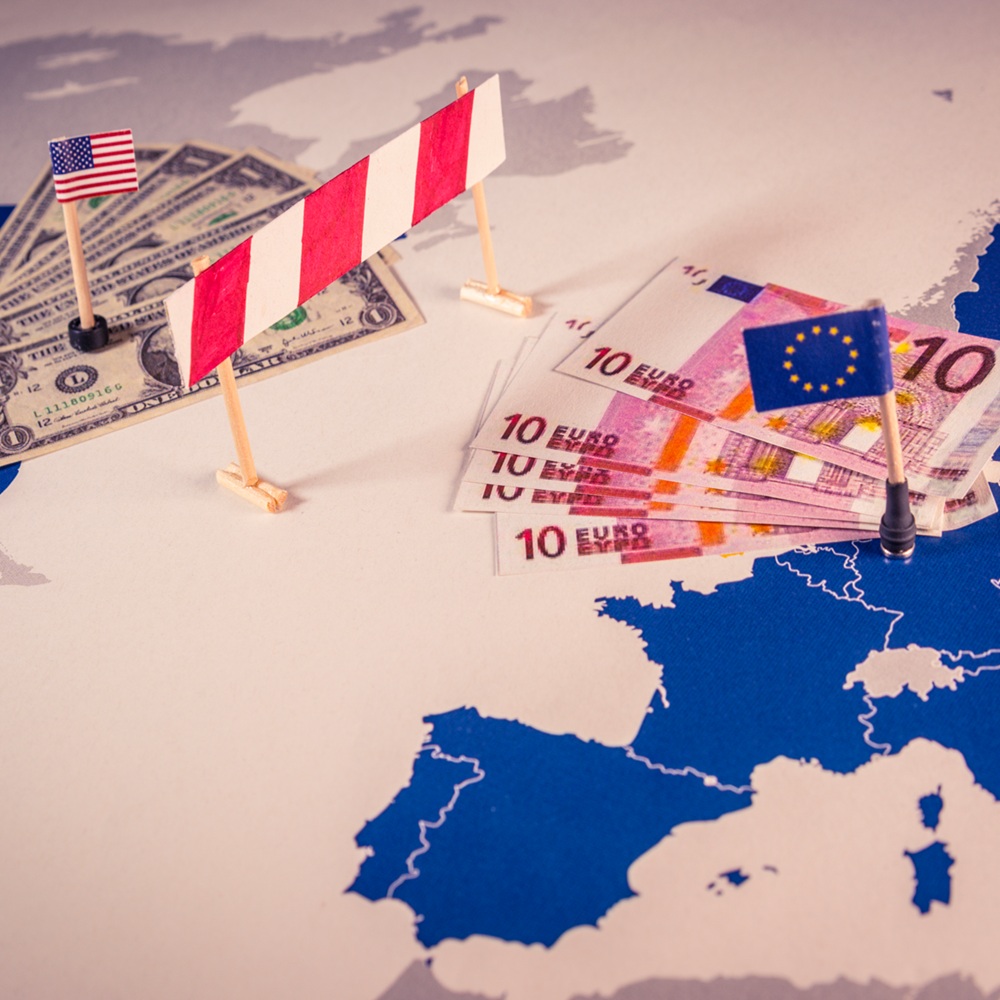
EU and USA trade war caused by the 2018 US tariffs on steel and aluminium

What a second Trump Administration will mean for multilateralism

by Andrea Ellen Ostheimer

한국어로 읽기 Leer en español In Deutsch lesen Gap اقرأ بالعربية Lire en français Читать на русском Less than a week away from the inauguration of Donald J. Trump as the 47th President of the United States of America, not only strategic allies and trading partners but also multilateral organisations and the UN system are bracing themselves for the certainty of unpredictability.  However, taking into consideration President Trump’s first term in office, his announcements on the campaign trail, his own personality, the nomination of personnel for positions of high relevance for the international system as well as the impact of the Republican trifecta and diminished checks and balances, a substantial re-positioning of the US within the international system can be expected.   The impact of the first Trump Administration Since the UN’s founding in 1945, the relationship between the US and the United Nations can at best be described as contradictory, which is largely the result of constant tensions between domestic considerations and foreign policy goals. As the leading advocate for a successor institution to the League of Nations, the US fundamentally shaped the objectives and values of the United Nations. This support, which had been driven by national interests, started to wane in the mid-70s when enlarged membership and the creation of the G77, a group of 77 developing countries, reduced US influence.  Although the US was a leading actor in the UN’s establishment, the UN has become a secondary platform of international cooperation. Various US administrations have engaged substantially with the UN system when it served national interests. However, domestic power constellations have frequently impeded any substantial engagement that has gone beyond financial contributions.1  However, Trump’s “America First” ideology stood out from his predecessors’ policies, and particularly conservative ones, in its obstructive approach to the United Nations and disdain towards institutions such as NATO, thus rebuking the closest allies of the US. Indifference and discord towards the United Nations not only damaged the institution but also the reputation of the US. President Trump’s unilateral “America First” policy and abject disregard for multilateral institutions damaged US legitimacy as a global leader and weakened the UN. Under Trump, the transactional nature of US engagement with the UN became obvious. As long as US interests were served, constructive engagement was applied.  US Ambassador to the UN, Nikki Haley even managed to gain the support of China and Russia on a Security Council Resolution (SC/RES/2397) that would impose harsh sanctions on North Korea (DPRK).2 However, in other areas the dominance of national interests guided US policies at the UN during the Trump administration. In showing its unconditional support for Israel, the Trump administration cut all of the US’s funding from the UN Relief and Works Agency for Palestine Refugees (UNRWA) and further reduced its potential role as mediator in the Middle East Peace Process.3 After accusing the UN Population Fund (UNFPA) of supporting coercive abortions and involuntary sterilisations in China without proof, the Trump administration cut all core funding for UNFPA and jeopardised many family planning programmes in developing countries.4 In the Security Council, the US position at times even aligned with Russia’s or China’s policy – particularly when other UNSC members tried to raise the nexus of climate change and security. This, as well as the US positions on the rights of victims of sexual violence in war and their reproductive health, further enhanced tensions with traditional Western allies. In addition, Trump withdrew the US from the Paris Climate Accords, the JCPOA5, the INF treaty6, and boycotted the UN Migration Pact7 negotiations.  However, the most obstructive political manoeuvres under President Trump have certainly been the scapegoating of the WHO and the labelling of the organisation as a Chinese puppet during the COVID-19 crisis, the suspension of funding for WHO, and the subsequent withdrawal from the UN body at the height of the pandemic. By doing so, the US squandered its reputation as a reliable partner and blocked any declaration by the UNSC on the pandemic for months.  Equally harmful was the US withdrawal from the UN Human Rights (HR) Council in 2018. Not only did the US abandon a platform for denouncing human rights violations worldwide, but its departure also allowed China to disseminate its own human rights narrative. Although autocratic regimes are regularly elected to the Council and use the opportunity to ensure their own HR violations are not addressed, the US withdrawal created a vacuum and took away a powerful ally for like-minded states, particularly the European Union (EU). In the HR Council, we see an increasingly assertive China, which previously only tried to shield its domestic situation from scrutiny, but which has now come up with its own interpretation of collective, developmental rights versus individual human rights. Swift action and a prepared agenda During his first term President Trump only slowly appointed key positions in foreign relations. It took him two years to appoint an Ambassador to Geneva, for example. His ambition to fundamentally cut financial support to the UN system found its limits in Congress. The US remained the world’s largest donor of development and humanitarian assistance. Even within in the Republican party and in conservative circles, particularly in the religious and evangelical constituencies the opinion prevailed that official development assistance still served the interests of the American people.  In January 2025, the situation is different. One of the first nominations of Donald Trump after his re-election in November has been Marco Rubio, as Secretary of State, and he appointed Republican Representative Elise Stefanik as his Ambassador to the United Nations in New York.  Senator Rubio has been known so far as a supporter of US global engagement as when it serves American economic interests and national security. He is hard on China and aims for more transparency and accountability in the aid sector. He supported the fight against Malaria and other preventable and treatable diseases in the past. Although a sigh of relief went through the development community when his name was circulated, it cannot be taken for granted that he will defend their interests against the MAGA dynamics in the party and administration. As with all Trump appointments, and considering experiences from the past, the question will always be how much autonomy can they preserve, and for how long will they endure in the system?8  Although Donald Trump distanced himself during the campaign from Project 2025, a blueprint for an incoming conservative administration by the Heritage Foundation, it is to be expected that those he has so far selected not only share the views on the multilateral order but also the criticism and preconceptions brought up against the institutions.  The frontline of Trump’s anticipated crusade against multilateral organizations might this time also include those who have been spared so far: World Bank, IMF, as well as the OECD. 9 In the case of others, he might continue where the end of his first term prevented further action or the Biden administration reversed the steps he had taken. Human Rights Council The latter has been the case of the Human Rights Council. In 2018 the Trump administration had been withdrawing from the Council arguing that it had become an “exercise in shameless hypocrisy – with many of the world’s worst human rights abuses going ignored, and some of the world’s most serious offenders sitting on the council itself.”10  In October 2021, the US got reelected to the Human Rights Council. In the context of its staunch support for Ukraine, the US became the driving force behind a Commission of Inquiry on Ukraine as well as on the creation of the Special Rapporteur on Russia. However, when its reelection came up again in October 2024, the Biden administration deliberately decided not to stand as a candidate. Although some observers argue that this decision has been taken in order to avoid a backlash from a majority of UN Member States who see the unwavering US position on the collateral implications for International Humanitarian Law and Human Rights by Israel’s fight against Hamas and Hizbollah as a paramount example of double-standards. One could also argue that not being a sitting Member of the Human Rights Council at a time when the likelihood of another withdrawal is not too far away, reduces the reputational damage for the organization as well as for the standing of the US in the International System.  US Ambassadors to the United Nations in New York are generally Cabinet Members, thus directly involved in shaping policies. With Elise Stefanik, Trump has not only appointed a staunch supporter of Israel who has accused the UN of being “a den of antisemitism”11 but also a reliable anti-abortion proponent. Her positioning in New York will certainly influence dynamics in Geneva as well. And if Project 2025 is becoming the playbook that everybody expects it to be, the Universal Declaration of Human Rights to which the US is a signatory might not remain the uncontested reference point anymore.  The U.S. Commission on Unalienable Human Rights created during the first Trump administration by Secretary of State Mike Pompeo, produced a report which is projected by Project 2025 as an important guidepost for bilateral and multilateral engagements on human rights.12 The report sets out to define which rights are ‘unalienable,’ elevating religious liberty and the right to private property, while dismissing rights the report calls “divisive social and political controversies,” including sexual and reproductive rights, LGBTI rights, and the right to non-discrimination.13  The intention of Project 2025 is not only to reevaluate all multilateral engagements by the US in the light of the work of the Commission on Unalienable Human Rights, but also to forge a consensus among like-minded countries in support of human life, women’s health, support of the family as the basic unit of human society, and defense of national sovereignty. In 2020, the Trump administration sponsored in the UN General Assembly the Geneva Consensus Declaration on Women’s Health and the Protection of the Family (A/75/626) for which it gained the support of 34 Member States, including those whose human rights and women rights track records are anything but clean: e.g. Belarus, Saudi Arabia, Uganda, Pakistan.14  Taking into consideration initiatives like the Geneva Consensus, the in-coming Trump administration could besides of complete withdrawal also undermine Human Rights standards by introducing almost in a similar way as China is doing, new narratives. In this endeavour, the US could even find support amongst states who are normally staunch US critics but who will seize the moment and opportunity to dismantle the liberal rules-based order that they perceive as Western dominated anyway. World Trade Organisation (WTO) To avoid another blockage in the appointment of a WTO Director General in 2025 by the US, WTO members brought forward the re-election process of incumbent Ngozi Okonjo-Iweala by two months. President Trump had already in 2020 blocked her appointment, leaving the organisation without leadership for almost seven months.  From an “America first” perspective, “America gets fleeced every day in the global marketplace both by a predatory Communist China and by an institutionally unfair and nonreciprocal WTO.”15 Thus, Project 2025 recommends to reform the WTO or to build a successor organisation and limiting its membership to liberal democracies. The main red-flag for the US at WTO certainly is the developing-country status of China in the WTO and the alleged infringements on US sovereignty – albeit ignoring the veto right the US has as the WTO is a consensus-based organisation.  However, and although Trump’s announced tariffs applied on friends and foes will be disruptive for the international trade system, one must highlight that also during the Biden administration, the US has not been a WTO member easy to engage. This held particularly true for the reform of the appellate body of the dispute settlement mechanism whose appointment process remains dysfunctional since the Obama administration. For the in-coming administration, trade is considered also as a tool for development. In this regard it does not differ too much from the reforms out-going USAID Administrator, Samantha Power, had tried to initiate.16 And it could be an area where WTO Director General Ngozi Okonjo-Iweala, who is seen as particularly focused on the development aspects of trade, and the Trump administration could perhaps find a common ground. Humanitarian and development assistance Humanitarian assistance that already faces substantial funding gaps will certainly face new vulnerabilities with the in-coming Trump administration. Despite substantial reductions which already kicked in in 2022, the US remains the largest donor for UN agencies such as the World Food Programme (2023: 36.53% of total WFP came from US); UNHCR (2023: 38.93%); and OCHA (2023: 19.9%). Although humanitarian aid and particularly funding for food security (WFP was run by the Trump ally, David Beasley) was not contentious during Trump’s first administration, this might change. According to Max Primorac who had been Deputy Administrator of USAID during Trump’s first term, and is the author of the Project 2025 chapter on the Agency for International Development, “’emergency’ aid distorts humanitarian responses, worsens corruption in the countries we support, and exacerbates the misery of those we intend to help.[...] humanitarian aid is sustaining war economies, creating financial incentives for warring parties to continue fighting, discouraging governments from reforming, and propping up malign regimes. Nefarious actors reap billions of dollars in profits from diversions of our humanitarian assistance, but so do international organizations.”17 While criticizing the overheads international agencies have to charge in order to deliver aid in emergency situations, Trump affiliated development experts highly advocate for localisation – albeit in a slightly different fashion as progressive voices would do. The quest of the latter for enhanced equity, inclusion, and ownership of local organizations from project design to implementation remains disregarded while a case is built for aid delivery by faith-based organisations. Although enhancing the inclusion of local organizations for the right reasons is laudable, it certainly will not diminish the need for strong oversight and staff capacities on donor level. One reason why multilateral and international organisations are often used as a type of “middlemen” in aid delivery relates to the lean project management structures in Foreign and Development Ministries these days and the need for accountability mechanisms where taxpayers’ money is spent.  Drawing on the visions presented by Project 2025, development assistance under the in-coming Trump administration will have a strong focus on countering Chinese influence and will align foreign and developmental with anti-abortion policies. What is labelled as “Protecting life in Foreign Assistance”18 will inter alia reintroduce the “global gag rule” which prohibits US funding to organisations abroad that provide abortion services or information. Trump had already in his first term expanded the interpretation of it to the “Protecting Life in Global Health Policy”, and it is expected that he will include now humanitarian and development assistance as well – making it extremely difficult to assess what is included under these new rules and what not.19 In this context it is almost a given that Trump will cut again all funding for the UN Population Fund (UNFPA) as its reproductive health services worldwide are a red-flag.20 Although UNFPA has gotten used to budget cuts by conservative US governments over the years, loosing 11% of its budget (2023) would not be easy to compensate for. World Health Organisation (WHO) and UNAIDS During the Covid-19 pandemic, the World Health Organisation (WHO) became a prime target for President Trump who inter alia accused the organisation of being too close to China and its handling of the early stages of the outbreak.21 He initiated a process to withdraw the US from it – a move that has been immediately reversed by his successor President Biden. Also for WHO, the US is currently the largest donor of assessed and voluntary contributions totalling 15.59% (2023).22 But with the negotiations of the Pandemic Treaty still underway, and the possibility for states to challenge the finalised amendments of the International Health Regulations until July 2025, it is much more at stake for WHO than just the financial implications of a disruptive relationship with the next Trump administration. With the nomination of Robert Francis Kennedy (RFK) Jr as the new Secretary of the Department of Health and Human Services (HHS), the global health community is on high alert. On his campaign trail for president, RFK Jr. had already proclaimed to stop the pandemic treaty, as has done President elect Trump. In addition, RFK Jr has linked vaccines to autism, called the Covid-19 vaccines deadly, supports anti-vaccine organisations, and even questioned the proven fact that HIV causes AIDS.23 When 77 Nobel Laureates urged the US Senate in December 2024 to reject the nomination of RFK Jr.24, WHO Director General Dr Tedros Ghebreyesus called for a “wait and see” attitude. He and his team are looking for areas where it might be possible to engage the Trump administration and its new HHS secretary. One area could be the epidemic of non-communicable diseases faced by Americans and which is often cited by RFK Jr. who advocates for enhanced prevention by healthier diets, environments and an active lifestyle.25  Health security has in the past always been a matter of common concern, and parties were able to work across the aisle. However, polarisation has also become a characteristic feature here. With a trifecta in place, the majority of Republicans in the House as well as in the Senate could become an issue of survival for programs such as PEPFAR. Already this year, PEPFAR, the US global flagship initiative in the fight against HIV/AIDS that had been established under Republican President George W. Bush in 2003, failed to secure bipartisan support for a full, five-year legislative reauthorization. After conservative groups had launched a campaign accusing without evidence the Biden administration to use PEPFAR money for abortions, the program only secured a temporary one-year reauthorization until March 2025.26 PEPFAR funding (6.5 billion USD in 2024) is comprised of U.S. bilateral funding and U.S. contributions to multilateral organizations addressing HIV, primarily the Global Fund to Fight AIDS, Tuberculosis and Malaria (Global Fund: 1.65 billion USD from PEPFAR) and UNAIDS. Particularly the latter would be severely impacted if funding would get further reduced. In 2024 UNAIDS received 50 million USD from PEPFAR27 making the US its largest donor. Personality, Ideology and Money – a toxic cocktail For most UN Agencies, Funds and Programs the US is the largest contributor in assessed and voluntary contributions. 22% of the UN budget are financed by assessed US contributions. With voluntary contributions counted in, this figure amounted in 2023 to 27.9%.28 Thus, the UN leadership is bracing itself for the worst-case scenarios. However, scraping the bottom of the barrel at times when other donors are equally becoming reluctant in financing multilateral and developmental programs, is only sustainable in the short term. In addition, the much-lamented growing influence of autocratic states such as China will only grow further when the US is creating once again a vacuum that will be filled with pleasure by its adversaries. During the first Trump administration’s withdrawal from multilateralism, the EU and EU Member States were stepping up their engagement and managed in many cases to fill the void.  To preserve a rules-based multilateral order, European governments need to be prepared not only to contribute to the empty coffers of UN institutions but also to take on a leadership role and to forge new alliances with states who are still sharing the same values. In the future, Russia will not remain the only disruptor on the multilateral parquet and China will not be the only country trying to create new narratives around human rights. By disengaging from multilateral arrangements and disregarding established collective norms, the next Trump Presidency will certainly have a negative impact on the social fabric of international cooperation.  But this should not come to us as a surprise. Multilateralism needs as a minimum requirement moral commitment to the established principles of collective decision-making, including the precondition of pacta sunt servanda. Multilateralism strives for inclusive decision-making and equality amongst those sitting around the table. Multilateralism lives on tolerance for the point-of-view of others, and the acceptance of compromises for the sake of mutual benefits. In the transactional, zero-sum world of Donald Trump neither compromise, reciprocity nor empathy are part of the vocabulary. “America First” reflects his personality and illustrates a perceived incompatibility between US national interests and multilateral engagement.29  To keep up a rules-based international order in a geo-political era of manifold crisis, like-minded states and above all Europeans have to step up their action to preserve what they treasure. Despite all the headwinds coming out of Washington, DC starting January 20th, multilateralism is not doomed to fail without US engagement. Power relations will certainly change but it must be Europe’s core interest to safeguard its influence in shaping the global order. References 1 Ostheimer, Andrea E.: The United Nations and Global Multilateral Organisations as a Playground for American-Chinese Rivalry, in: New Realities of Multilateralism, Panorama 2022, pp. 7-26.[ Panorama 2022_01_Multilateralism_cover_v3_crop.indd https://www.kas.de/documents/288143/21303801/Panorama+2022+New+Realities+of+Multilateralism.pdf/d2ed886c-83fa-6423-90b8-eeaa48ef8620?version=1.0&t=1668409843028 ].  2 Runde, Daniel F.: Competing and Winning in the Multilateral System. Center for Strategic & International Studies (CSIS), 2020, p 4. [ https://www.csis.org/analysis/competing-andwinning-multilateral-system-us-leadership-united-nations ]. 3 Amr, Hady. 7 September 2018. Brookings. [ https://www.brookings.edu/blog/order-from chaos/2018/09/07/in-one-move-trump-eliminated-us-funding-for-unrwa-and-the-us-role-as-mideast-peacemaker/ ].  4 Morello, Carl. 4 April 2017. The Washington Post. [https://www.washingtonpost.com/ world/national-security/trump-administration-to-eliminate-its-funding-for-un-population-fundover-abortion/2017/04/04/d8014bc0-1936-11e7-bcc2-7d1a0973e7b2_story.html]. 5 The Joint Comprehensive Plan of Action (JCPOA) had been an accord that restricted the Iranian nuclear program to mere peaceful usage.  6 The Intermediate-Range Nuclear Forces Treaty had limited the type of weapons systems the signatories, US and Russia could pursue.  7 The Global Compact for Safe, https://www.iom.int/resources/global-compact-safe-orderly-and-regular-migration/res/73/195 Orderly and Regular Migration is the first intergovernmental agreement covering all dimensions of international migration. It is a non-legally binding, cooperative framework that upholds the sovereignty of States and their obligations under international law. 8 Saldinger, Adva; Igoe, Michael: “We can work with him: Aid advocates react to Trump’s Rubio pick”, 14 November 2024, [‘We can work with him’: Aid advocates react to Trump’s Rubio pick | Devex https://www.devex.com/news/we-can-work-with-him-aid-advocates-react-to-trump-s-rubio-pick-108752 ]  9 Klingebiel, Stephan; Baumann, Max-Otto: Trump 2.0. in time of political upheaval? Implications of a possible second presidency for international politics and Europe, IDOS Policy Brief, No 24/2024, [https://doi.org/10.23661/ipb24.2024]. 10 Mike Pompeo, US Secretary of State, 19 June 2028 [Remarks on the UN Human Rights Council - U.S. Mission to International Organizations in Geneva https://geneva.usmission.gov/2018/06/21/remarks-on-the-un-human-rights-council/ ]  11 Elise Stefanik cited in King, Ryan; Spector, David, New York Post, 20 November 2024, [ICYMI: New York Post: Elise Stefanik vows to take on ‘den of antisemitism’ and ‘apologist for Iran’ at the UN | Press Releases | Congresswoman Elise Stefanik https://stefanik.house.gov/2024/11/icymi-new-york-post-elise-stefanik-vows-to-take-on-den-of-antisemitism-and-apologist-for-iran-at-the-un ].  12 2025_MandateForLeadership_CHAPTER-06.pdf https://static.project2025.org/2025_MandateForLeadership_CHAPTER-06.pdf  13 Commission on Unalienable Rights | https://bidenhumanrightspriorities.amnestyusa.org/commission-on-unalienable-rights/  14 n2034430.pdf https://documents.un.org/doc/undoc/gen/n20/344/30/pdf/n2034430.pdf  15 Navarro, Peter: The case for fair trade, Project 2025, [2025_MandateForLeadership_CHAPTER-26.pdf https://static.project2025.org/2025_MandateForLeadership_CHAPTER-26.pdf ] 16 90% of USAID funding from US Congress is earmarked and dedicated to basic sectors such as health care, education and agriculture. At the start of the Biden administration only 5% of USAID’s budget went into economic growth programs. Miolene, Elissa: How economic growth became a forgotten priority at USAID, 10 December 2024, [How economic growth became a forgotten priority at USAID | Devex https://www.devex.com/news/how-economic-growth-became-a-forgotten-priority-at-usaid-108911#:~:text=At%20the%20start%20of%20the,lack%20of%20focus%20surprised%20her. ]  17 Primorac, Max: The Agency for International Development, Project 2025 [2025_MandateForLeadership_CHAPTER-09.pdf https://static.project2025.org/2025_MandateForLeadership_CHAPTER-09.pdf ].  18 [2025_MandateForLeadership_CHAPTER-09.pdf https://static.project2025.org/2025_MandateForLeadership_CHAPTER-09.pdf ] 19 Igoe, Michael: What we do and don’t know about Trump’s US aid plans, 15 November 2024, [What we do and don't know about Trump's US aid plans | Devex https://www.devex.com/news/what-we-do-and-don-t-know-about-trump-s-us-aid-plans-108719 ]  20 Lynch, Colum: Will Trump gut UN family planning funds….again?, 31 October 2024, [Will Trump gut UN family planning funds ... again? | Devex https://www.devex.com/news/will-trump-gut-un-family-planning-funds-again-108655 ] 21 Coronavirus: what are President Trump’s charges against WHO?, BBC Fact Check, 8 July 2020, Coronavirus: What are President Trump's charges against the WHO? https://www.bbc.com/news/world-us-canada-52294623   22 WHO | Programme Budget Web Portal https://open.who.int/2022-23/contributors/top25  23 Lei Ravelo, Jenny: Will RFK Jr. ‘go wild’ on global health?, 4 December 2024, [Will RFK Jr. ‘go wild’ on global health? | Devex https://www.devex.com/news/will-rfk-jr-go-wild-on-global-health-108837 ]. 24 Nobel laureates oppose RFK Jr.'s confirmation to HHS https://thehill.com/policy/healthcare/5031298-nobel-laureates-oppose-rfk-jr/  25 Fletcher, Elaine Ruth: ‘Give them some space’: WHO Director General on Trump Nomination of RFK Jr as US Health Secretary, 11 December 2024, [‘Give Them Some Space’: WHO Director General On Trump Nomination Of RFK Jr As US Health Secretary - Health Policy Watch https://healthpolicy-watch.news/give-them-some-space-who-director-general-comments-on-trump-nomination-of-rfk-jr-as-us-health-secretary/ ]  26 Igoe, Michael: PEPFAR chief warns waning political will could hurt AIDS fight, 22 July 2024, [PEPFAR chief warns waning political will could hurt AIDS fight | Devex https://www.devex.com/news/pepfar-chief-warns-waning-political-will-could-hurt-aids-fight-107022 ] 27 The U.S. Government and the World Health Organization | KFF https://www.kff.org/coronavirus-covid-19/fact-sheet/the-u-s-government-and-the-world-health-organization/#:~:text=For%20example%2C%20in%20the%20previous%20budget%20period%20(2022%2D2023,totaled%20%2428.1%20million%20(0.4%25).  28 Revenue by Government donor | United Nations – CEB https://unsceb.org/fs-revenue-government-donor  29 Loewener, Franca/Cook, Justin D.: Trump re-elected. How the Trump Doctrine reshapes US multilateral engagement and global influence. 12.11.2024 [Publication - OI] https://observatoire-multilateralisme.fr/publications/trump-reelected-how-the-trump-doctrine-reshapes-us-multilateral-engagement-and-global-influence/  The text of this work is licensed under the terms of by "Creative Commons Attribution-ShareAlike same conditions 4.0 international", CC BY-SA 4.0

Diplomacy
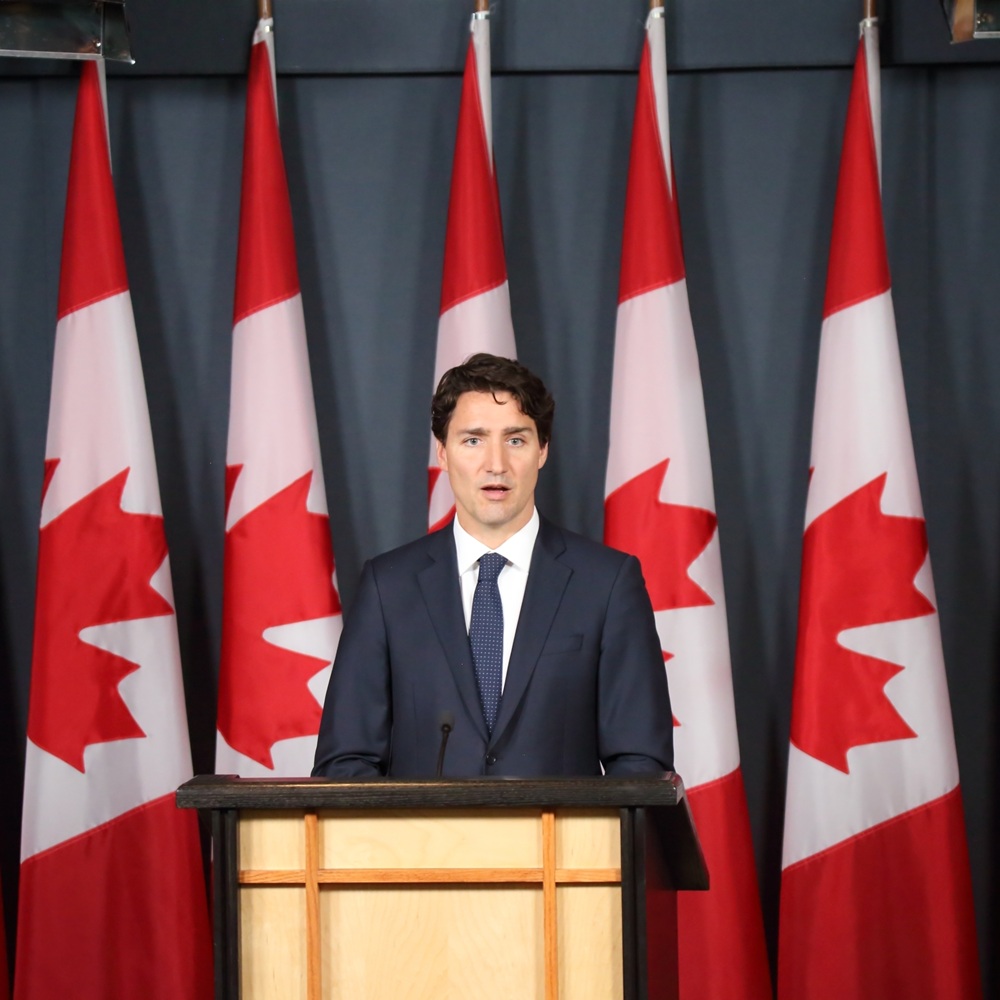
OTTAWA, CANADA - JUNE 22, 2016: Prime Minister Justin Trudeau reviews the highlights of his Liberal government's first parliamentary session

Trudeau taps out: How Trump’s taunts and tariff threats added to domestic woes confronting Canada’s long-standing PM

by Patrick James

한국어로 읽기 Leer en español In Deutsch lesen Gap اقرأ بالعربية Lire en français Читать на русском After weeks of speculation over his future, Canadian Prime Minister Justin Trudeau announced his intention to resign on Jan. 6, 2025. His departure will bring an end to a decade of power for the progressive politician and once-darling of the liberal left. It follows infighting in his own party and a slump in Trudeau’s popularity to the point where he trails the leading opposition candidate by over 20 percentage points. But it can’t escape notice that the resignation comes just weeks ahead of a Trump administration – and after a barrage of personal slights and threats of punishing tariffs directed at Canada by the incoming Republican president. The Conversation turned to Patrick James, an expert on Canadian-U.S. relations and Dean’s Professor Emeritus at USC Dornsife, to explain why Trudeau chose now to bow out – and what role Trump played in his departure. Why did Trudeau resign? The first thing to note is that Trudeau’s resignation is no real surprise to anyone following Canadian politics – the only real surprise is the timing. At its heart, this is a personal political decision; the reality is Trudeau’s party was doomed in the next election – which is due to take place before the end of October 2025. Barring any wild changes between now and the vote, the chances of Trudeau’s Liberal Party winning are as dead as a doornail. The opposition Conservative Party, also known as the Tories, are up in the polls by some 24 points. The Tory leader, Pierre Poilievre, has done a reasonably good job at moderating his image from that of a hard right-winger – narrowing any chance Trudeau had of capturing enough of the center he needed. My best guess is that, faced with this imminent defeat, Trudeau believes getting out now will insulate him and make it more likely that he can return to front-line Canadian politics further down the line, after a period of time in the wilderness. Is such a return likely? While in the U.S. figuratively dead presidents rarely come back to life – with Grover Cleveland and Trump the only ones to return after a reelection loss – in Canada, there is a bit more of a tradition of political resurrection. This stretches back to the country’s first prime minister, John A. MacDonald, who resigned in 1873 amid scandal only to be reelected five years later. William Mackenzie King served three nonconsecutive terms as prime minister in the first half of the 20th century. And Trudeau’s father, Pierre Trudeau, came back after losing the 1979 election to serve a fourth and final term in 1980. But I feel with Justin Trudeau it is different. At this moment in time, his parliamentary career looks beyond rehabilitation. He is deeply unpopular and has enraged many of his loyal lieutenants – with the resignation of longtime ally and Deputy Prime Minister Chrystia Freeland in December adding to the pressure on Trudeau to resign. And while inflation – a scourge of left, right and center incumbents the world over – no doubt played a role in Trudeau’s declining popularity, other factors are at play, too. Canadians generally feel that given the cards he was dealt, Trudeau still played a bad hand. Under Trudeau, immigration to Canada increased massively – and many blame this for a housing affordability crisis. More generally, it seems like Trudeau, despite being the relatively young political age of 53, is out of step with politics at this precise moment in time. Trudeau, much like his father before him, is very much associated with identity politics, focusing on the perceived needs of certain groups over others. And while the merits of identity politics can be argued, what is certainly true is that it isn’t particularly popular anywhere in the world right now. Indeed, right-of-center populists such as Trump have been able to make great political capital in painting opponents as identity politicians. How did Trump’s election win affect Trudeau’s prospects? Former Deputy Prime Minister Freeland resigned in part over discontent with the way Trudeau had responded to Trump’s proposed tariffs on Canadian goods. And that discontent with the way Trudeau was dealing with the incoming Trump administration extends to a lot of Canadians, regardless of their political stripes. The Canadian economy isn’t in good shape, and a 25% tariff – as envisioned by Trump – would be disastrous. Canadians are looking for someone who can negotiate with Trump from a position of strength, and that doesn’t appear to be Trudeau. In fact, faced with being trolled and humiliated by Trump – for instance, being referred to as a “governor” rather the leader of a nation – Trudeau has faced criticism for his weak response. He symbolizes a growing sense in Canada that the country is seen by policymakers in Washington as weak. While Trudeau reportedly laughed off a suggestion at Mar-a-Lago that Canada become the “51st state,” back home the remark was seen as a test – would Trudeau stand up for Canada or not? In this sense, Trump’s election provided a challenge to Trudeau but also an opportunity to stand up to Washington – something that would have won him favor among anti-American Canadian nationalists. Instead, he is perceived to have cowered before Trump, further damaging his reputation at home. What will Trudeau’s legacy be in regard to US-Canada relations? I believe he got caught up in a dynamic that has seen a growing perception in the U.S. – as espoused by the incoming president – that Canada is freeloading militarily off its southern neighbor. President Joe Biden is more aligned politically with Trudeau, but, certainly under Trump’s first term, the Canadian prime minister was seen by Washington as one of the NATO leaders not paying a fair share for the military alliance. Partly as a result, Canada under Trudeau has dropped down the list of trusted allies – especially among Republicans. If you asked Americans to name Washington’s most trusted ally, the United Kingdom or Israel would likely beat out Canada. Trump’s statements since being reelected suggest that he sees Canada as less an ally and as more of an irrelevance. Comments regarding the buying of Greenland point at Trump’s desire to run roughshod over the desire of other nations in order to be more active in the Arctic – something that should have raised alarms in Canada. So, in short, you can characterize Trudeau’s relationship with the U.S. as OK under Biden, bad under Trump’s first administration and – potentially – irrelevant under Trump II. What happens next in Canadian politics? I see one of two things happening. The most likely scenario is that the Conservatives will win an election that could take place any time between March and October. Current polling suggests they are on course of winning over 50% of the vote. If that happens, we can expect a Canadian government much more aligned with that of the incoming U.S. administration – with a more centralist foreign policy and border reforms that will tighten immigration controls. And the timing may provide an opportunity for Trudeau’s successor to start afresh with Trump and forge a relationship that is either stronger or, alternatively, to reassert a degree of Canadian resistance to Trump. The second scenario is what I call “the French oddity.” Just like in France’s last election in which the two main anti-right parties entered a noncompetition deal to thwart the far-right National Rally, we could see the Liberal Party and the socialist New Democratic Party try something similar in an attempt to blunt Tory gains. But that is a long shot and still won’t increase the chances of Trudeau returning. As for the Liberal Party post-Trudeau, it is difficult to see who will want to lead it into a near-certain election defeat. But I believe the most likely outcome will be the party will try to tack to a more centralist, economically conservative agenda. It would truly mark the end of the Trudeau era.

Energy & Economics
Mexican exports to the United States. Mexican goods

Faced with Trump’s tariffs − and crackdowns on migration and narcotrafficking − Mexico is weighing retaliatory options

by Scott Morgenstern

한국어로 읽기 Leer en español In Deutsch lesen Gap اقرأ بالعربية Lire en français Читать на русском Donald Trump has made clear his intent to supercharge his “America First” approach to foreign policy in his second term – and Mexico looks set to be at the tip of the spear. While many of Trump’s predecessors have also followed a “realist” strategy – that is, one where relative power is at the forefront of international relations, while diplomatic success is viewed through how it benefits one’s own nation – the incoming president has displayed an apparent unwillingness to consider the pain that his plans would inflict on targeted countries or the responses this will engender. Trump’s proposed policies threaten Mexico in three key ways: First, his goal of deporting millions of migrants would put tremendous pressure on Mexico’s economy and society as the country tried to absorb the influx. This would be exacerbated by his second threat, a sharp increase in tariffs, which could devastate the critical export sector of Mexico’s economy. And third, Trump has floated the idea of using U.S. military power to confront narcotraffickers within Mexico, which would directly impinge on Mexico’s sovereignty and could generate more violence on both sides of the border. But as a scholar of Latin American politics and U.S.-Latin American relations, I see several options that Mexico could use to push back on Trump by imposing high costs on U.S. interests. Indeed, Mexican President Claudia Sheinbaum has already signaled how she may counter Trump’s policies. The most obvious tools are ending cooperation on drugs and immigration and imposing tariffs of her own. She could also revoke some of the decades-old tax and labor privileges that have benefited U.S. businesses operating within Mexico. And finally, she could play the “China card” – that is, in the face of worsening U.S.-Mexico ties, Mexico could turn to Washington’s biggest economic rival at a time when Beijing is seeking to assert more influence across Latin America. From conciliation to confrontration Of course, a worsening relationship is not inevitable. During Trump’s first term, Mexico’s then-president, Andrés Manuel López Obrador, maintained a constructive relationship with the U.S. administration. In fact, Lopez Obrador was surprisingly cooperative given Trump’s at times hostile rhetoric toward Mexico. For example, he helped facilitate the Trump administration’s “Remain in Mexico” program for those seeking asylum in the U.S. and also accepted Trump’s demands to renegotiate NAFTA and give it a title reflecting U.S. leadership: the United States-Mexico-Canada Agreement, or USMCA. Sheinbaum, who took office on Oct. 1, 2024, started with a cautious approach to her relationship with Trump. She congratulated Trump on his victory and urged dialogue with the incoming U.S. president. “There will be good relations with the United States. I’m convinced of that,” she told reporters on Nov. 7, 2024. But Trump hasn’t been conciliatory. In addition to talk about dumping millions of immigrants across the border, he announced on social media on Nov. 24 that he would impose a 25% tariff on Mexican and Canadian goods – a move that would effectively abrogate the USMCA. That post seemingly ended Sheinbaum’s cautious approach. In a strongly worded response, the Mexican president cautioned that she would respond in kind. A trade war, she noted, would harm the economies of both countries; progress on immigration and drug trafficking required cooperation, not threats, she added. The impact of tariffs Sheinbaum has said she wants to avoid a trade war, but Trump’s threats have led her nonetheless to talk about how a trade war would begin. This trade war, plus other costs Sheinbaum could impose on U.S. investors, would also likely foment a coalition of opposition within the U.S. business community – a group that has been a key ally of Trump. Trump’s stated goal of putting high tariffs on goods coming from Mexico is to encourage businesses that currently exploit lower employment costs in Mexico to relocate to the northern side of the border. But that approach ignores the impact that retaliatory tariffs and investment controls would have on U.S.-based companies that rely on the Mexican market. It would have several negative effects. First, a tit-for-tat tariff war would generate inflation for U.S. and Mexican consumers. Second, it would disrupt the integration of markets across North America. As a result of the elimination of tariffs – a key component of both NAFTA and the Trump-era USMCA – markets and the production of goods across North America have become highly interconnected. The trade treaties severely reduced barriers to investment in Mexico, allowing significant American investment in sectors such as agriculture and energy – where U.S. companies were formerly prohibited. Further, manufacturers now rely on processes in which, for example, the average car crosses the border multiple times during production. Similarly, agribusiness has developed symbiotic practices, such that grains, apples and pears are predominantly grown in the United States, while tomatoes, strawberries and avocados are grown in Mexico. Given these processes, the U.S. now exports over US$300 billion of goods and services per year to Mexico, and the stock of U.S. investments in Mexico reached $144 billion in 2023. If Trump abrogates the trade deals and imposes tariffs, he might convince investors to spend their next dollars in the U.S. But if Mexico imposes tariffs, business taxes or investment restrictions, what would happen to investors’ farms and factories already in Mexico? Past experience suggests that any disruption to supply chains or U.S. export markets would awaken strong business opposition, as analysts and business groups have already recognized. Trump is not immune to pressure from U.S. businesses. During his first administration, companies successfully opposed Trump’s attempt to close the border, arguing that slowing the flow of immigrants also meant slowing trucks full of goods. Security and immigration On the issue of the border and immigration, while Trump has issued threats, Sheinbaum has stressed the importance of cooperation. Currently, the Mexican government expends significant resources to patrol its own southern border, not to mention dealing with the many potential migrants who gather in its northern cities. Mexico could demand more support from the U.S. in exchange for this work, plus the costs associated with welcoming back the estimated 4 million Mexicans who are currently in the U.S. without proper documentation. The deportation of undocumented immigrants that Trump has repeatedly promised will require other types of cooperation, such as processing border crossings, and Mexico could slow-walk this process. Mexico has already signaled that it will withhold processing of non-Mexicans. The two countries have a history of collaboration in addressing the illegal drugs trade – but here too there have also been tensions. Toward the end of Trump’s first term, for example, a Mexican general was arrested in the U.S. on drug charges. After a diplomatic uproar, he was returned to Mexico and released. In late November, Sheinbaum noted that she and Trump had discussed security cooperation “within the framework of our sovereignty.” But Trump’s campaign rheotric seemed less concerned with Mexico’s sovereignty, floating the idea of sending troops to the border or even deploying them within Mexico to counter narcotraffickers. That would clearly enrage Mexico, with consequences that would extend far beyond a willingness to cooperate on the issues of drug trafficking. A chance for China? One country that stands to benefit should U.S.-Mexican relations deteriorate is China – an issue that Mexico could exploit. China is now the first or second trading partner with nearly every country in Latin America, including Mexico. The value of U.S.-Mexico trade is over $100 billion a year, but the growth of Chinese imports into Mexico has been limited somewhat by rules-of-origin provisions in NAFTA and the USMCA. A U.S.-Mexican trade war could weaken or end any incentive to keep Chinese goods out. Further, if the doors to the United States are narrowed through tariffs and hostile rhetoric, China’s car parts and financial services would clearly become even more attractive to Mexican businesses. A U.S.-Mexican trade war, in short, would augment Beijing’s access to a market on the U.S. border. A coalition of the concerned? In sum, if Trump goes through with his threats, the result will be costs to consumers and businesses, plus a new opportunity for China. This is likely to foment a coalition of industries, investors, consumers and foreign policy experts concerned with China – many parts of which supported Trump’s campaign.

Diplomacy
Paper ship with flags of the USA, Great Britain, Canada, Australia, Japan, the EU and China Concept of state relations, free trade agreement

China's Role in the Gaza Conflict: Global South Leadership and U.S. Rivalry

by Nadia Helmy

Leer en español In Deutsch lesen Gap اقرأ بالعربية Lire en français Читать на русском  Through its recent official and popular position towards the Gaza war, China seeks to define its position as a leader and defender of the so-called “global south” to pass the policy of transformation towards a multipolar international world in the face of the United States of America and its allies in the West. China seizes the opportunity to express the urgent need to reshape the global system led by the West under the leadership of Washington. Here, both Moscow and Beijing see Israel's war on the Gaza Strip as having led to directing Western military support efforts from Ukraine in the face of Russia, Beijing's close ally, to Israel, while China views the war from the perspective of its confrontation with America. As China attempts to express global and popular public opinion on the Israeli-Palestinian conflict, as part of a much broader Chinese strategy aimed at winning the support of the countries of the Global South to its side.    Both Russia and China are working to benefit from the war in Gaza, by strengthening their roles as supporters of the countries of the Global South, and demonstrating the failure and bias of the United States and the international system led by Washington in dealing with the grievances of that large bloc of countries in the world in the South. This also serves to realize Chinese President Xi Jinping’s vision of Chinese leadership of the Global South, which includes the majority of Arab countries and Palestine, which enhances Beijing’s efforts to confront Washington and its Western allies and reshape the international system in its favor. China has exploited anti-Israel sentiments globally and at home, in an attempt to strengthen its position within the framework of the Global South.  In its strenuous efforts to express world public opinion and the feelings of peoples, China is pursuing many and varied plans to support the issues of the developing global south, most notably the Palestinian cause, and to expose what China considers to be American double standards in dealing with the Palestinians compared to Israel.    China's assumption of the presidency of the UN Security Council in November 2023 comes immediately after Operation “Al-Aqsa Flood” or the Gaza War in October 2023, succeeding Brazil, coinciding with the escalation of brutal Israeli military operations in Gaza. For this reason, China has risked angering Israel, as it sees broader stakes in the current conflict that go beyond the Palestinian-Israeli issue. Beijing sees the crisis as an opportunity to distinguish its position from the pro-Israel West and to enhance its reputation in the global south, many of whose countries strongly sympathize with the Palestinian cause, which serves China's image.  To this end, China has used a tough diplomatic rhetoric against Israeli crimes in the Gaza Strip, and has condemned the US position, especially the obstacles created by the US by voting against a series of Chinese and Russian ceasefire resolutions in the UN Security Council. In addition, China has supported various decisions of the International Court of Justice and the International Criminal Court to condemn Israel and arrest its Prime Minister “Benjamin Netanyahu”.  China used its veto power against a draft resolution proposed by the United States of America on October 15, 2023, which did not include a call for an immediate ceasefire, or a permanent humanitarian truce for the entry of humanitarian aid into the Gaza Strip. The Chinese Permanent Representative to the United Nations, "Chang Jun”  justified his country's opposition to the American draft resolution, because it includes many elements that divide rather than unite, and goes beyond the humanitarian dimension, and is unbalanced and mixes right and wrong, and does not reflect a strong call for a ceasefire and an end to the violence. The Chinese Permanent Representative to the United Nations “Jun” considered that the ceasefire is not just a diplomatic phrase, but means life and death for many civilians, which Washington did not understand, according to him. China also participated in the (Cairo Peace Summit 2023), which was held on October 21, 2023 in the New Administrative Capital, with China's call during the summit to stop the war in Gaza.  China's motivation for taking an interest in the Palestinian issue after the recent Gaza war may be more related to its competition with the United States and the image that China wants to project domestically and even internationally in light of its new position as a major global power. China wants to be seen as a wise and responsible superpower interested in mediation and peacebuilding. It is also likely that Beijing seeks to present an alternative viewpoint to the United States' perspective on peace to the world order, especially in the global South, where most countries in the region support the Palestinians.   Beijing has already come a long way in the Israeli-Palestinian conflict, from its active support for Palestinian factions recently to their invitation to China after the recent Gaza war to complete the Palestinian reconciliation process between all the warring Palestinian factions with Chinese support.  Since the beginning of the war in the Gaza Strip, Chinese positions and statements by officials in Beijing have carried a degree of escalation in tone towards Israel’s behavior. Beijing criticized the comprehensive Israeli bombing of civilians, condemned violations of international law, called for the implementation of the two-state solution, and called for the establishment of a humanitarian corridor to allow aid to enter the besieged Gaza Strip. Chinese Foreign Minister “Wang Yi” went further, describing the Israeli bombing of civilians in Gaza as actions that go beyond the scope of self-defense.  Chinese state media have also been highly critical of Israel, and in most of their reports have cited Iranian media, with the Chinese emphasis that: “the illegal use of white phosphorus bombs by the Israeli army against Palestinian civilians exposes it to international accountability”. Chinese state media have also blamed the United States, Israel’s strongest supporter, and have been explicitly accused in Beijing, for fueling tensions in the region. China has also angered Israel by refusing to join the United States and other countries in designating Hamas as a terrorist organization, describing it instead as a Palestinian resistance movement.    In late October 2024, immediately after the Gaza war, the China Daily, a Chinese propaganda outlet, declared that: “the United States is on the wrong side of history in Gaza”. Elsewhere, Chinese state television reported that Jews represent 3 percent of the United States’ population but control more than 70 percent of its wealth. With all official and popular Chinese media keen to repeat the narratives that dominate the popular discourse in the Global South. This repetition is in line with the majority opinion in some countries of the South, and it allows China to present itself as an alternative to the image of the United States of America as a warmonger, hegemonic, hypocritical and unjust.         In July 2024, Hamas, Fatah and other Palestinian factions signed a preliminary agreement in the Chinese capital, Beijing, to form a transitional government for national reconciliation, with the aim of managing Gaza after the end of the war. The same group met in the Russian capital, Moscow, in February 2024, seeking to reach a similar agreement. At the same time, China was able to bring the Palestinian Fatah and Hamas movements together at the negotiating table in Beijing in two sessions of the National Dialogue during the months of April and June 2024, in a move that reflects China’s desire to interact with the Palestinian issue in a positive way.        Chinese official media is trying to support its position before Chinese public opinion at home and their sympathy for the people of Gaza, by emphasizing China's official discourse, which seeks to confirm that Beijing has made proposals to stop the war on Gaza, brought together the Palestinian movements Hamas and Fatah inside China, and called on the UN Security Council to calm the conflict. China also seized the opportunity of its meetings with Arab and Gulf foreign ministers to reaffirm the multiple peace plans it had previously proposed in favor of resolving the Palestinian issue. With the Chinese envoy to the Middle East “Zhai Jun” , confirming, with Palestinian and Arab officials, China's immediate call for an immediate ceasefire and providing humanitarian support to the Palestinian people.   As for the most prominent Chinese academic and research analyses of the Gaza war, Chinese Professor “Yan Shutong”, Dean of the Institute of International Relations at China's Xinhua University, described the matter as: “The Israel-Gaza war will reduce the global political influence of the United States. This has become very clear, because even its allies will have to distance themselves from it on this issue, and with the undermining of the United States' strategic relations with other major powers, the strategic balance between China and the United States will shift in China's favor”. Professor “Wang Yiwei”, a professor of international relations at Renmin University in Beijing, also said: “China is now in a better position than the United States to help resolve conflicts, whether between Saudi Arabia and Iran, Russia and Ukraine, or Israel and the Palestinians”.  In this context, Professor Shi Yinhong, a professor of international relations at Renmin University of China, asserts that: “Beijing’s policy in the Middle East has been paralyzed by the conflict, given that the United States, which strongly supports Israel, is involved in this crisis, whether directly or indirectly. Who would listen to China?”. A report by the (international human rights organization Freedom House) described a wave of anti-Semitic sentiments on the Chinese Internet and Chinese media, especially popular ones related to Chinese social media, such as: the widely-used Chinese WeChat program, Weibo, QQ, and others. The Freedom House report confirmed that: “With regard to the Israeli-Palestinian conflict, the Chinese government has long promoted a narrative that places the blame squarely on Israel”. In light of the growing global and internal Chinese popular sympathy for the Palestinians, and the unprecedented spread of its manifestations within Chinese society via Chinese social media, and the holding of limited demonstrations in light of China’s sensitive internal policy towards popular demonstrations, decision-makers in Beijing find themselves facing a challenge to maintain a balanced position between the crimes committed by Israel against civilians in the Gaza Strip, and the position of the Palestinians in the Strip.   As an expert in Chinese politics and the policies of the ruling Communist Party in China, and constantly informed of all reports of Chinese think tanks and research centers, especially those related to the Middle East, it is noted that a number of Chinese analyses adopt a trend, vision, and perhaps another theory or school for the war in Gaza, namely the “theory of war between wars”, which later became clear to a large extent to be correct, meaning: that the war that was limited to the Palestinian Hamas movement and Israel, and Israel's practices in the West Bank and Gaza Strip, will expand to include a conflict between Israel and Iran, but through its agents in the region, which means waging wars on different fronts at the same time, namely the war of Israel against Hamas, targeting Palestinian resistance elements in the West Bank, confronting Hezbollah on the southern Lebanese front, confronting the threats of the Houthi militia in Yemen, fighting the Shiite militias in Syria and Iraq, and waging confrontations against Iran, which leads the axis of resistance.    To this end, China seized the opportunity of the 10th China-Arab Cooperation Forum, to be held on May 30, 2024, with the participation of Chinese President “Xi Jinping” and a number of Arab leaders, most notably Egyptian President “Abdel Fattah El-Sisi”, to reflect the common desire to discuss aspects of China-Arab relations and ways to enhance them, deepen consensus between China and Arab countries, raise questions about the position of Gaza in China-Arab discussions, the limits of China's role in helping to stop the Israeli aggression on Gaza, and support the return to the path of political settlement between the Palestinian and Israeli sides, leading to the two-state solution supported by major powers, most notably China.  Here, the Arab Summit, which was held in the Bahraini capital, Manama, on May 16, 2024, adopted the necessity of calling for an international peace conference that would contribute to restoring the negotiating track. This call intersects with the Chinese President Xi Jinping’s call to hold an international peace conference during the Arab-Chinese Cooperation Forum, where he stressed in his speech before the forum on May 30, 2024, that Beijing wants to strengthen its relations with Arab countries to be a model for global stability, calling for an international peace conference aimed at ending the war between Israel and Hamas, noting that Beijing is ready to work with Arab countries to resolve issues related to hot spots in ways that support the principles of fairness and justice and achieve peace and stability in the long term. Xi Jinping stressed that war cannot continue indefinitely, justice cannot remain absent forever, and the two-state solution cannot be arbitrarily overthrown.     Based on the previous analysis, we reach the conclusion that the Chinese trend towards interacting with the Middle East issues and the recent Gaza war represents one of the pillars of the escalation of the Chinese role at the global level and among the developing countries of the Global South led by China. This trend coincided with the vision of the United States of America to limit its ties to the interactions of the Middle East, due to its high cost and to move eastward to confront the growing Chinese influence in Asia.

Energy & Economics
With Interim President of Burkina Faso Ibrahim Traore. Photo: Alexander Ryumin, TASS

Russian and waiting

by William Decourt , Spenser Warren

Leer en español In Deutsch lesen Gap اقرأ بالعربية Lire en français Читать на русском Western missteps in Africa are creating an opening for Russia to deepen its influence. Recent protests against International Monetary Fund (IMF)-imposed austerity measures have rocked several African states. Kenya, a long-time partner of the United States and a key contributor to UN peacekeeping operations in Haiti, experienced violent clashes between government security forces and anti-austerity protestors over tax hikes in a controversial finance bill. Simultaneously, many protesters saw Kenyan engagement in Haiti as footing the bill for American security interests while ordinary Kenyans struggled to make ends meet. Soon after, similar protests against IMF measures spread to Nigeria. Analysts and locals are concerned that spreading protests may threaten stability across Africa. Citizens of other countries continue to voice their displeasure with the political and economic status quo through protest (in Mozambique) and at the ballot box (in Botswana). IMF loans come with significant stipulations, including reforms to financial systems and governance. Critics of these conditions frequently malign the IMF as a violator of sovereignty. Changes to economic and governing models, combined with high debts and economic stress, increase the costs of everyday products and diminish purchasing power across the continent. To many ordinary citizens, the West is benefiting from the fruit of African resources while hindering Africans’ access to the global economy. Publics in these countries demand alternatives to IMF funding, protesting governments to oppose IMF-imposed austerity. Youth, an increasingly important demographic, are especially active. Many of these young people are college-educated but fail to secure adequately paid employment in skilled industries. The informal economy is growing but increasingly separated from formal and international economies. IMF austerity measures are driving the continent to economic crisis and protest that may have lasting effects anathema to US foreign policy and the liberal international order. Some already see China as a viable alternative, although public opinion of Chinese influence is mixed. Elsewhere, faded Cold War memories make Russia a relatively unknown economic and political alternative. So, while recent Western actions in Africa have put long term relationships at risk, Russia is slowly increasing its influence on the continent. In fact, the Kremlin has already taken action and is engaged in the politics surrounding the various debt crises in African nations. African countries owe debts to multiple international actors, including Russia. However, Moscow has forgiven debts owed by many of these countries, coupling debt relief with additional economic benefits, including an influx of grains and energy resources. It has also deepened defense cooperation with several African countries. This cooperation often includes contracts for weapons sales and the deployment of irregular military units, including the Wagner Group. Diplomatic actions such as the above have led some protestors to see Russia as a viable alternative to IMF funding and partnerships with the US and Europe. In a visual representation of this phenomenon, protestors have been seen waving Russian flags at mass gatherings across Africa. Russia appears to receive the greatest support in the Sahel, where governments have failed to curb political instability and deliver on economic development promises. Publics in the region were already angry with the continued postcolonial military presence of France, and Russia took advantage. Mass publics are not the only actors seeking alternatives, ruling elites also see Russia as an attractive partner. Russian defense cooperation and the presence of irregular forces bolster these regimes in the face of increasing civilian protests over poor governance or human rights. Still, Russia has not yet made the gains it could. The war in Ukraine is hurting Africans and contributing to economic stress as global grain prices have skyrocketed. Some perceive Russia as exacerbating the problems of failed governance through its use of Wagner Group formations to back corrupt officials, protect corporate interests, and bolster unpopular governments. Russian interest in the region is also less significant than in the Middle East, Eastern Europe, or the Arctic, where Russia has more proximate strategic, economic, and political goals. Rather than rushing in, Russia’s economic presence in Africa is slowly advancing Moscow’s goals on the international stage. When Russia sought to undermine financial, technological, and energy sanctions from the West as a result of its invasion of Ukraine, it turned to Africa to find new consumers for food products, energy, and arms. Already, in the wake of the invasion, only half of the continent voted to condemn Russia. Such voting patterns at the UN indicate greater support for Russia in Africa than in other regions around the world, even if distrust of Russia remains high in some parts of the continent. Forecasted crises could increase Russian influence on the continent as well. Shocks generated by the African debt crisis could become a proximate cause for geopolitical and geoeconomic shifts. Rapid demographic changes and disastrous climate events (e.g., droughts and floods) exacerbate existing economic and migratory challenges. Since the tentacles of Russian economic and security influence, as well as misinformation, are already present in Africa, such future crises could pull multiple African states further into Russian orbit, and away from Western countries and institutions. Further alignment of African states with Russia would have several drawbacks. Russia would discourage democratization and use security assistance to bolster dictators across the continent. Environmentally sustainable development is also likely to be hampered. Russia may increase the extraction of natural resources in environmentally damaging ways. Additionally, Russian energy exports will be oil and gas, eroding the already significant investment and progress in green energy development many African political economies have made. As Western missteps create openings for Russia to gain a foothold in Africa, they also set the stage for other global powers to capitalize on the vacuum. Chinese-built infrastructure in Africa also contributed to debt burdens, but unlike Western approaches tied to IMF austerity measures, China is recalibrating its strategy. By shifting to smaller projects with lower debt exposure and promoting green energy development overseas, China positions itself as a more appealing partner. This strategy not only bolsters China’s domestic solar and EV industries but also enhances its soft power by responding to local economic needs. Moreover, as Western policy blunders alienate African publics and governments, both Russia’s and China’s influence may grow. Russia’s gains in the region could indirectly strengthen China’s position by fostering broader skepticism of Western-led systems, aligning African leaders more closely with Beijing’s geopolitical goals, including its stance on Taiwan. Africa is a burgeoning continent. One in four humans will be African by 2050. If the US and Europe pass on opportunities to engage with a continent of emerging green development powers and an increasingly educated demographic bulge, Western policies will undermine their own power and influence in the international order. Russia’s quiet increase in trade and security assistance offers an established alternative. Meaning ultimately, both Russia and China, may play the long game, gaining incremental support from a region of one billion people at a time. This work is licensed under the Creative Commons Attribution 4.0 International License (CC BY 4.0) [add link: https://creativecommons.org/licenses/by/4.0/]

Energy & Economics
Trump - Putin - Flags

The World Awaits Change

by Andrei Kortunov

Leer en español In Deutsch lesen Gap اقرأ بالعربية Lire en français Читать на русском “Changes! We’re waiting for changes!” proclaimed Viktor Tsoi nearly 40 years ago, at the dawn of the Soviet perestroika. If one were to summarize the multitude of diverse and contradictory events, trends, and sentiments of the past year in a single phrase, it would be that the modern world is eagerly awaiting change. Much like the former USSR in the 1980s, few today can clearly define what these changes should entail or what their ultimate outcome will be. Yet, the idea of maintaining the status quo has evidently found little favor with the public over the past year. This impatient anticipation of change was reflected, for instance, in the outcomes of numerous elections held over the past 12 months across the globe. In total, more than 1.6 billion people went to the polls, and in most cases, supporters of the status quo lost ground. In the United States, the Democrats suffered a resounding defeat to the Republicans, while in the United Kingdom, the Conservatives were decisively beaten by the Labour Party. In France, Emmanuel Macron's once-dominant ruling party found itself squeezed between right-wing and left-wing opposition, plunging the Fifth Republic into a deep political crisis. The seemingly stable foundations of political centrism were shaken in Germany, South Korea, and Japan. Even the party of the highly popular Indian Prime Minister Narendra Modi failed to retain its parliamentary majority after the elections, and in South Africa, the African National Congress led by Cyril Ramaphosa also lost its majority. Pessimists might argue that abandoning the status quo in itself solves no problems, and the much-anticipated changes, as the final years of the Soviet Union demonstrated, do not necessarily lead to positive outcomes. Replacing cautious technocrats with reckless populists often backfires, affecting those most critical of the entrenched status quo. Optimists, on the other hand, would counter that the rusted structures of state machinery everywhere are in desperate need of radical modernization. They would add that the costs inevitably associated with maintaining the existing state of affairs at all costs far outweigh any risks tied to attempts to change it. The international events of the past year are also open to various interpretations. Pessimists would undoubtedly point out that none of the major armed conflicts carried over from 2023 were resolved in 2024. On the contrary, many of them showed clear tendencies toward escalation. For instance, in late summer, Ukraine launched an incursion into the Kursk region of Russia, and in mid-November, the U.S. authorized Kyiv to use long-range ATACMS missiles against targets deep within Russian territory. Meanwhile, the military operation launched by Israel in Gaza in the fall of 2023 gradually expanded to the West Bank, then to southern Lebanon, and by the end of 2024, to parts of Syrian territory adjacent to the Golan Heights. From the optimists' perspective, however, the past year demonstrated that the disintegration of the old international system has its limits. A direct military confrontation between Russia and NATO did not occur, nor did a large-scale regional war break out in the Middle East, the Taiwan Strait, or the Korean Peninsula. The economic results of 2024 are equally ambiguous. On one hand, the global economy remained heavily influenced by geopolitics throughout the year. The process of “technological decoupling” between the U.S. and China continued, and unilateral sanctions firmly established themselves as a key instrument of Western foreign policy. On the other hand, the world managed to avoid a deep economic recession despite the numerous trade and investment restrictions. Global economic growth for the year is expected to reach around 3%, which is quite respectable for such turbulent times, especially considering that the long-term effects of the COVID-19 pandemic have not yet been fully overcome. In 2024, the average annual global temperature exceeded pre-industrial levels by more than 1,5 °C for the first time, crossing another critical “red line”. However, the UN Climate Change Conference (COP29) held in November in Baku fell short of many expectations. At the same time, China reached its peak carbon emissions by the end of the year, achieving this milestone a full five years ahead of previously announced plans. In the past year, the UN Security Council managed to adopt only 12 resolutions, mostly of a humanitarian nature, clearly reflecting the declining effectiveness of this global governance body. For comparison, in 2000, the Security Council approved 29 resolutions, including key decisions on conflict resolution in the Balkans and Africa. At the same time, 2024 saw continued efforts to explore new formats for multilateral cooperation, including mechanisms within the BRICS group, which held its 16th summit in Kazan for the first time in its newly expanded composition. With enough imagination, one can easily find evidence in the past 12 months to confirm any omen or superstition traditionally associated with leap years. However, all these signs and superstitions predicting upheavals and catastrophes—while aligning with the pessimistic conclusions about the year now ending—do not apply to the year ahead. Human nature, after all, tends to lean more towards optimism than pessimism; if it were the other way around, we would still be living in caves. As they bid farewell to a difficult and challenging year, people around the world continue to hope for better times. And the mere act of hoping for the best is already significant in itself. As Johann Wolfgang von Goethe aptly remarked, “Our wishes are forebodings of our capabilities, harbingers of what we are destined to achieve”. Originally published in Izvestia.

Diplomacy
NATIONAL HARBOR, MD, USA- February 24, 2024: Donald Trump speaks at an event about his plan for defeating current President Joe Biden in November.

The Trump Effect

by Krzysztof Śliwiński

Leer en español In Deutsch lesen Gap اقرأ بالعربية Lire en français Читать на русском Abstract This analysis focuses on possible short and medium-term effects of Trump’s election as the 47th President of the United States. This paper starts with a brief account of Trump’s first presidency and then continues to account for major challenges that Trump’s administration will have to face domestically,The central part of the analysis focuses on the geopolitical consequences of Trump’s election. In particular, the author looks at Europe (the ongoing war in Ukraine): Middle East and Far East – especially China.The paper concludes with the author's conviction that the next few years will bring decisive changes likely to usher in the new world order.Keywords: Trump, US, Europe, Security, Geopolitics Introduction Donald Trump's election as the 45th President of the United States in 2017 had significant and far-reaching effects on world politics, marking a departure from previous administrations' approaches to foreign policy and international relations. Trump's presidency shifted from globalization to isolationism, protectionism, and nationalism (Kawashima, 2017). His "America First" strategy emphasized unilateral action and challenged the liberal international order the United States had led and protected since World War II (Mansbach, 2021). This approach has strained relationships with traditional allies, particularly in Europe, while simultaneously raising authoritarian leaders (Mansbach, 2021). Interestingly, Trump's election immediately negatively impacted trust in the U.S. government in Latin America, as demonstrated by a regression discontinuity design study (Carreras et al., 2021). Additionally, his controversial policies, such as the trade war with China, have had significant impacts on the global economy (Sahide et al., 2024). The Trump administration's foreign policy towards the Islamic World was notably less friendly compared to the Obama era, causing tensions in US-Islamic World relations (Bahari & Sahide, 2022). There seems to be a consensus that Trump's presidency accelerated societal processes, undermined democratic institutions, and encouraged hyperpartisanship within political institutions (James, 2021). While he did not always succeed in implementing major policy changes or fulfilling campaign promises, his leadership style and policy decisions significantly altered the global perception of the United States and its role in world politics, creating what some scholars describe as " a more dangerous world" (Mansbach, 2021).  Admittedly, Trump does not seem to be exceptionally hawkish when it comes to using military tools in the conduct of U.S. foreign policy. Let us remember that Barak Obama (Democratic Party), who was awarded the Nobel Peace Prize, ordered airstrikes in seven different countries (Afghanistan, Pakistan, Libya, Yemen, Somalia, Iraq and Syria) (Liptak, 2014). During first Trump’s presidency, no new campaigns were started, although the intensification of the existing ones allegedly increased. Ultimately, it was Trump who was mainly behind the withdrawal of the U.S. troops from Afghanistan. Trump 2.0 November 2024 Presidential elections brought sweeping changes to the American political kaleidoscope. Donald Trump took a decisive victory over the Democratic candidate, Vice-President Kamala Harris, securing 312 electoral votes (with 270 being a victory threshold). Republicans also won the Senate with 52 seats against 47 and the House with 218 seats against 212. (Election Centre 2024).  This is arguably one of the most important political events in the world in 2024. Already Trump’s declarations regarding the first decisions to be taken once sworn in office on the 20th of January next year, plus his appointments for top offices in the U.S. administration, have caused a furore – a phenomenon referred to by many as the so-called ‘Trump Effect’. As much as political scientists, cognitive anthropologists or psychologists usually use this term to refer to racially inflammatory Elite Communication (Newman et al., 2020), this short analysis will look at the tectonic shifts in international relations, international security system and geopolitics that have already happened or are likely to occur after the 20th of January 2025. U.S. – politics Undoubtedly, the U.S. economy, society, and political system are in deep crisis. Economically, the Americans have been doing worse than ever since the Second World War. Inflation is rampant; economic inequality is very high; unemployment is on the rise; the state of infrastructure is relatively poor, and the level of public services is far from desirable, whereas taxation is reaching new heights amidst a slowing economy and diminishing number of small and medium enterprises (USA FACTS). Societywise, the problems are equally severe. According to Pew Research, the top issues facing the U.S. in this category are in the order of importance from top to bottom: the affordability of healthcare, drug addiction, illegal immigration, gun violence, violent crime, the state of moral values, the quality of public k-12 schools, Climate change, international terrorism, infrastructure condition, domestic terrorism and racism (Pew Research Centre, 2024). One should also add here the rising “wokeness’ of the American educational system, which poses a great challenge to the cohesion of the society and its future in terms of military power.  Politically, the picture is not better. According to the same research institution (Pew), the biggest problems that the U.S. political system faces are: political leaders do not face the consequences if they act unethically, it is difficult to find unbiased information about what is happening in politics, Congress accomplishes less than people give it credit for, the Federal Government does less for ordinary Americans than people give it credit for. Other problems include the role of special interest groups and lobbyists in policymaking, the cost of political campaigns and the animosity between the Republicans and the Democrats, which, in consequence, causes the inability of the political system to solve critical societal problems (Pew Research Centre, 2023). The first and foremost task ahead of Trump is to rectify problems at home. His Agenda47 (Republican Platform) declares 20 core promises: seal the border and stop the migrant invasion, carry out the largest deportation operation in american history, end inflation, and make america affordable again, make america the dominant energy producer in the world, by far, stop outsourcing, and turn the United States into a manufacturing superpower, large tax cuts for workers, and no tax on tips, defend the constitution, the bill of rights, and fundamental freedoms, including freedom of speech, freedom of religion, and the right to keep and bear arms, prevent world war three, restore peace in europe and in the middle east, and build a great iron dome missile defense shield over our entire country -- all made in america, end the weaponization of government against the american people, stop the migrant crime epidemic, demolish the foreign drug cartels, crush gang violence, and lock up violent offenders, rebuild cities, including washington dc, making them safe, clean, and beautiful again, strengthen and modernize the military, making it, without question, the strongest and most powerful in the world, keep the U.S. dollar as the world's reserve currency, fight for and protect social security and medicare with no cuts, including no changes to the retirement age, cancel the electric vehicle mandate and cut costly and burdensome regulations, cut federal funding for any school pushing critical race theory, radical gender ideology, and other inappropriate racial, sexual, or political content on children, keep men out of women's sports, deport pro-hamas radicals and make college campuses safe and patriotic again, secure our elections, including same day voting, voter identification, paper ballots, and proof of citizenship and lastly unite the country by bringing it to new and record levels of success (Agenda 47).  International Politics Internationally, Trump faces many challenges. His presidency will have to address three primary regions defined geographically: Europe, the Middle East and the Far East. - Europe As far as Europe is concerned, the most pressing issue is the war in Ukraine. During his campaign, Trump repeatedly declared that his administration's support for the continuation of the U.S. support for the war effort against Russia would be terminated during the first 24 hours of his presidency (Hansler, 2024). As a consequence, shortly after Trump’s winning the White House race, the outgoing administration under POTUS Joe Biden finally allowed the Ukrainians to attack Russian territory with American long-range ballistic missiles (ATACMS), which allegedly came in as a response to the North Korean decision to send its troops to support Russian soldiers against Ukraine (Entous, Schmitt and Barnes, 2024). Next, in counter-response, President Putin of the Russian Federation signed a new nuclear Doctrine into power. Chillingly, it declares that Russia may use its nuclear weapons against any nuclear state, even in case of a conventional attack (Associated Press, 2024). As of the beginning of December 2024, the media are full of reports of an alleged concentration of Russian troops near the Ukrainian border, fueling speculation about an imminent mass invasion, this time with cities such as Kyiv being targeted in a conventional terrain operation (Bodner, De Luce and Smith, 2024).  One can only speculate what all this means and how far we are from the outbreak of the III World War (Sky News, 2024). Some things are, however, more or less evident. Firstly, the current escalation of war in Ukraine is likely a direct effect of Trump's winning and his declaration to end the war as soon as possible. The more the Russian troops advance in the field, the higher they can bid once the peace talks begin. Similarly, the more complex the situation in the field (Biden’s decision regarding the use of ATACMS), the more challenging it will be for Trump and his administration to achieve peace. Knowing the radically different approach to conflict with Russia of President Trump, the outgoing administration and national security advisors most likely wanted to achieve militarily as much as possible before they were ousted from their jobs. Secondly, Trump declared on numerous occasions that if European members of NATO want to continue their support for Ukraine, they should take the whole responsibility. He singled Germany, France, and Poland out. Poland, for that matter, enthusiastically agreed to carry on the baton and declared that it was ready to bear the heavy burden. In the words of Deputy Foreign Minister Andrzej Szejna, when participating in a radio broadcast, “We [Poland] are ready to take over the large part of the costs of supporting Ukraine” (Nczas Info, 2024). At the same time on the 3rd of December, the new Secretary General of NATO – Mark Rutte, during his meeting with the U.S. Secretary of State Antony Blinken, openly declared: “The immediate priority must be to provide more arms to the country's forces as Russia gains territory along the battlefront in eastern Ukraine.The [Ukrainian] front is not moving eastwards. It is slowly moving westwards. So, we have to make sure that Ukraine gets into a position of strength, and then it should be for the Ukrainian government to decide on the next steps in terms of opening peace talks and how to conduct them." (VoA, 2024). To sum up, it looks like the current escalation, according to theoretical models such as those proposed by Herman Kahn in 1965 – a Cold War physicist - we are at stage 12 of 44 steps on the escalation ladder. As comforting as one might think it is, let us remember that according to Kahn’s theory, a local nuclear war takes place as early as at step 21 (Tinline, 2023). As history has proved many times, it is difficult, if impossible, to wage a systemic war on two fronts at the same time. Given the economic and military challenges perceived by Trump during his first tenure as U.S. President (See: A New National Security Strategy for a New Era, 2017), China is the challenger number one for the position of the United States in the international system and especially in the Indo-Pacific region. Accordingly, China wants to reorder the area in its favour. Would it be too much of a stretch of the imagination to claim that most likely, given the context above, Trump will probably arrange for peaceful talks with Russia over Ukrainian political and military leadership heads’? What will he want? Probably Russia’s neutrality in the face of the coming escalation of the conflict between the U.S. and China. What can he offer? Probably a big part of Ukrainian territory and the amendment to the Ukrainian constitution, according to which the country should forever be neutral militarily and politically. At the same time, the American withdrawal from Europe will most probably create a void that is most likely to be filled by Germans. The vision of the current German cabinet was elaborated on August 24, 2022, by Chancellor Olaf Scholz at Charles University in Prague. It paints a broad picture of the future of the EU at the beginning of the 3rd decade of the 21st century against the backdrop of the Russian invasion of Ukraine. Among the four ‘revolutionary’ ideas mentioned by Scholz, two stand out in particular. Firstly, given the further enlargement of the European Union for up to 36 states, a transition is urged to majority voting in Common Foreign and Security Policy. Secondly, regarding European sovereignty, the German Chancellor asserts that Europeans grow more autonomous in all fields, assume greater responsibility for their security, work more closely together, and stand yet more united to defend their values and interests worldwide. In practical terms, Scholz indicates the need for one command and control structure for European defence efforts (The Federal Government, 2022).  The leadership is not always openly claimed, at least verbally. Instead, the German National Security Strategy of 2023 mentions Germany's ‘special responsibility’ for peace, security, prosperity, and stability and the Federal Government’s ‘special responsibility’ for establishing the EU Rapid Deployment Capacity. (German National Security Strategy, 2023). In the same vein, German leadership posits their country as a leader in European Security, declaring the importance of becoming the ‘best equipped armed force’ in Europe (Euronews, 2022). Let us also remember that Berlin vigorously supported the latest proposal for a European army, which presumably might serve as a vehicle for further European integration towards the federalization of Europe.  At the same time, the prospect of federalization will face two major challenges: firstly, the future of transatlantic relations is less than certain, especially the economic competition between the EU and the U.S. European Commission President Ursula Von Der Leyen signalled the possibility of an economic war with the U.S. as a response to Trump declared protectionism of the American economy (Berg, Meyers, 2024). Secondly, the EU is highly inefficient in energy, so the question of future energy security becomes a priority. The ongoing conflict between Ukraine and Russia and the redirection of Russian gas to China will profoundly affect the future of European economic development amid the so-called ‘Fit-for-55’ -  a set of proposals to revise and update EU legislation to achieve a target of reducing net greenhouse gas emissions by at least 55% by 2030 (Fit for 55, 2024). - Middle East As of the writing of this paper, one sees the escalation of the war in Syria. According to the United Nations Office for the Coordination of Humanitarian Affairs (OCHA), “ongoing hostilities in northern Syria continue to expand to other parts of the country, endangering civilians and humanitarian workers, causing severe damage to critical infrastructure and disrupting humanitarian operations. As of 5 December, at least 178,000 people have been displaced due to the recent escalations in northern Syria, including 128,000 newly displaced and 39,000 displaced at least twice. Figures are still being reconciled, noting that UNHR and NGOs operating in the northeastern part of Syria estimate that between 60,000 and 80,000 people have been newly displaced there, including more than 25,000 currently hosted in collective centers”. (OCHA, 2024). According to international media (CBC News, 2024): ”Syria's long-running civil war came to a head Sunday when opposition forces entered the capital city of Damascus and the government of President Bashar al-Assad collapsed. Russian state media later reported that Assad and his family had fled to Moscow. Crowds gathered in Damascus to celebrate the fall of Assad's government with chants, prayers and occasional gunfire, marking the end of a regime that, between the ousted President and his father, had ruled over Syria for half of a century.” […] "At long last, the Assad regime has fallen," President Biden said Sunday afternoon at the White House after convening his national security team to discuss the developments. He said the fall of Assad presented a "historic moment of opportunity" and pledged support for Syria and its neighbours against any threats” (Ott, 2024). Syria seems to be just another litmus test of the so-called regional security complex in the Middle East. As such, the war in Syria is obviously but a puzzle in a much bigger jigsaw that includes all major powers that operate in the region: the U.S.A, Israel, Russia, Turkey and Iran to name the most obvious ones. All of the above are deeply engaged in Middle East politics for the sake of their national interests and international security strategies. All of the above deserve separate analyses. For the sake of this paper, however, the author will focus only on the U.S. According to Douglas Macgregor and Dave Ramaswamy, “The fear in many nations’ capitals is that President Donald Trump’s return to Washington might make Israel feel more confident in attacking Iran. According to Mike Evans, founder of the Friends of Zion Museum in Jerusalem, “There is no world leader Trump respects more than Netanyahu.”  The evangelical leader also confides that President Trump would support an Israeli attack before his inauguration on the assumption that the destruction of Iran’s oil production facilities would devastate Iran’s economy, inducing Iran to end the war with Israel before President Trump assumes his office. This thinking by no means excludes an Israeli decision to strike Iran’s nuclear development sites as well.” (Macgregor & Ramaswamy, 2024). In their article, they state that “If America joins Israel in its war against Iran, the outcome will be a geopolitical showdown that could dramatically alter the world as we know it. It is the storm of the 21st century and, for the moment, the American ship of state is sailing right into it. “ They consequently pose four fundamental questions:  1. What is the American purpose in waging war against Iran? Is Washington’s purpose to destroy the Iranian state? To destroy its capability to wage war against Israel? To eliminate Iran’s developing nuclear capability? Or to decapitate the Iranian state in the hope that the Iranian people will overthrow their national government? 2. How will U.S. military power achieve the objectives? 3. What is the desired end state? What does the President want Iran and the region that surrounds it to look like when the fighting ends? 4. What is the strategic cost to the American people if Washington declines to participate in a regional war begun by Israel?  They conclude by asking yet another, perhaps the most crucial question: what do Netanyahu’s goals mean for the health of the American economy and the stability of the international system? Can Israel survive without attacking its numerous enemies?  The next couple of months are likely to bring at least some answers to some of these questions. Importantly, expert voices concerning the future of Israel seem to be abounding more and more (Teller, 2024). - China and the Far East Finally, there is a question of China. As mentioned before, Trump sees China as a major challenger to the role and position of the U.S. in the international system. The Republicans and the Democrats may be divided by numerous issues, but there is at least one regarding which they stay united. The true bipartisanship revolves around the Chinese challenge. Both parties, therefore, claim that the possibility of a systemic conflict with China is not a science fiction scenario. On November 20, 2024, a bipartisan group of lawmakers in the U.S. Congress heard that the U.S. had to prepare for a potential conflict with China by raising its defence spending to more than 3 per cent of GDP. (South China Morning Post, 2024). The recommendation came during an interactive exercise for members of the House Select Committee on China, based on a scenario predicted for 2026 and hosted by Washington-based think tank the Centre for Strategic and International Studies (CSIS). The report titled: The First Battle of the Next War Wargaming a Chinese Invasion of Taiwan, authored by Mark F. Cancian, Matthew Cancian and Eric Heginbotham opens with a chilling question: “What would happen if China attempted an amphibious invasion of Taiwan? CSIS developed a wargame for a Chinese amphibious invasion of Taiwan and ran it 24 times. In most scenarios, the United States/Taiwan/Japan defeated a conventional amphibious invasion by China and maintained an autonomous Taiwan. However, this defence came at a high cost. The United States and its allies lost dozens of ships, hundreds of aircraft, and tens of thousands of service members. Taiwan saw its economy devastated. Further, the high losses damaged the U.S. global position for many years. China also lost heavily, and failure to occupy Taiwan might destabilize Chinese Communist Party rule. Victory is, therefore, not enough. The United States needs to strengthen deterrence immediately.” (The First Battle of the Next War, 2023). They go on to claim that: “China’s leaders have become increasingly strident about unifying Taiwan with the People’s Republic of China (PRC).1 Senior U.S. officials and civilian experts alike have expressed concern about Chinese intentions and the possibility of conflict. Although Chinese plans are unclear, a military invasion is not out of the question and would constitute China’s most dangerous solution to its “Taiwan problem”; it has therefore justly become a focus of U.S. national security discourse.” China has grown increasingly assertive over the last decades and sees no reason to continue accepting a dominated world that facilitates the benefits of Western powers, especially the U.S.A. At a recent G20 summit in Rio de Janeiro in Brazil (November 2024), the President of China openly called for a multipolar world (Xinhua, 2024). In his words: “China and Brazil stay committed to peace, development, fairness and justice. We have similar or identical views on many international and regional issues. Both are staunch defenders of the basic norms of international relations and multilateralism, coordinating closely and consistently within the United Nations, G20, BRICS and other international organizations and multilateral mechanisms on crucial issues, including global governance and climate change. Not long ago, China and Brazil jointly issued a six-point common understanding on political settlement of the Ukraine crisis. Our initiative has received a positive response from the international community. China and Brazil, embracing our roles and responsibilities as major countries, have contributed to a multipolar world, conduced to greater democracy in international relations and injected positive energy into global peace and stability.” (Xinhua, 2024 b).  Conclusion Taiwan has long been a global security issue and a point of concern on the geopolitical maps of the national security planners of great powers. It is not the only one, though. The war between the Koreas is formally not over (recently, North Korea allegedly sent soldiers to back Russia in its Special Military Operation in Ukraine); the American military presence in the Far East and South East Asia is likely to remain an issue, especially from the point of view of Beijing. Central Asia, with its geopolitical environment, religious activism and economic challenges, is likely to rise in importance as a chessboard for great powers. As the weight and focus of International Relations is relocating back to Asia (Euroasia rather than the North Atlantic Area), China and Russia are more likely to hold the keys to international peace and security than the United States. On top of that, one needs to look out for North Africa as a source of continuing instability and massive migration, especially to Europe. All in all, Trump’s next presidency will surely bring a lot of interesting developments, which are likely to fuel a new world order.  References - A New National Security Strategy for a New Era, 2017. NSS_BookLayout_FIN_121917.indd - Agenda 47. https://www.donaldjtrump.com/platform - Associated Press, Nov. 8, 2024. “The Kremlin has revised its nuclear policy. Does that make the use of atomic weapons more likely?” https://apnews.com/article/russia-nuclear-doctrine-putin-ukraine-war-b5ee115aa2099fa247f630e16da861d8- Bahari, Diana Mutiara, and Ahmad Sahide. 2022. “The Comparison of The United States Foreign Policy Against The Islamic World Under President Barack Obama and President Donald Trump Administration.” Journal of Islamic World and Politics 6 (2): 270–97. https://doi.org/10.18196/jiwp.v6i2.13060. - Berg, Aslak and Meyers, Zach. Oct. 3, 2024. “Surviving Trump 2.0: What does the US election mean for Europe's economy?” https://www.cer.eu/publications/archive/policy-brief/2024/surviving-trump-20-what-does-us-election-mean-europes-economy - Bodner, Matthew, Luce, Dan De and Smith, Alexander. Dec. 2, 2024. “Russian troops mass on Ukraine's border. West worries this isn't like the last time.” https://www.nbcnews.com/news/world/russian-troops-mass-ukraines-border-west-worries-isnt-last-time-rcna7203 - Carreras, Miguel, Giancarlo Visconti, and Igor Acácio. 2021. “The Trump Election and Attitudes toward the United States in Latin America.” Public Opinion Quarterly 85 (4): 1092–1102. https://doi.org/10.1093/poq/nfab055. - Election Centre 2024, CNN Politics. https://edition.cnn.com/election/2024 - Entous, Adam, Schmitt, Eric and Barnes, Julian E. Nov. 17, 2024. “Biden Allows Ukraine to Strike Russia With Long-Range U.S. Missiles.” https://www.nytimes.com/2024/11/17/us/politics/biden-ukraine-russia-atacms-missiles.html- Fit for 55, European Council. Council of the European Union. European Green Deal. Accessed March 8, 2023. https://www.consilium.europa.eu/en/policies/green-deal/fit-for-55-the-eu-plan-for-a-green-transition/ - Germany must become 'the best equipped armed force in Europe', Scholz says. Euronews, September 16, 2022. Accessed March 8, 2023. https://www.euronews.com/my-europe/2022/09/16/germany-must-become-the-best-equipped-armed-force-in-europe-scholz-says- Hansler, Jennifer. Nov. 6, 2024. “Trump’s victory could mean US withdraws support for Ukraine in war with Russia.” https://edition.cnn.com/2024/11/06/politics/trump-election-ukraine-war-russia-intl/index.html- James, Toby S. 2021. “The Effects of Donald Trump.” Policy Studies 42 (5–6): 755–69. https://doi.org/10.1080/01442872.2021.1980114. - Kawashima, Shin. 2017. "Japan–US-China Relations during the Trump Administration and the Outlook for East Asia." Asia-Pacific Review 24 (1): 23–36. https://doi.org/10.1080/13439006.2017.1328800. - Liptak, James. Sept. 23, 2014. “Countries bombed by the U.S. under the Obama administration.” CNN Politics. https://edition.cnn.com/2014/09/23/politics/countries-obama-bombed/index.html - Macgregor, Douglas & Ramaswamy, Dave, Nov. 19, 2024. “Trump and the Storm of the Century. The U.S. is sleepwalking into disaster in the Middle East.” The American Conservative. https://www.theamericanconservative.com/trump-and-the-storm-of-the-century/ - Mansbach, Richard W. 2021. "America’s Foreign Policy under Donald Trump.” In, 201–34. oxford university. https://doi.org/10.1093/oso/9780197618721.003.0010. - National Security Strategy. Robust. Resilient. Sustainable. Integrated Security for Germany (2023). Federal Foreign Office, Werderscher Markt 1, 10117 Berlin. - Nczas Info. Nov. 12, 2024. “Szokujące słowa wiceszefa MSZ. Oddamy jeszcze więcej Ukrainie? „Jesteśmy gotowi przejąć dużą część kosztów” [VIDEO]”. https://nczas.info/2024/11/12/szokujace-slowa-wiceszefa-msz-oddamy-jeszcze-wiecej-ukrainie-jestesmy-gotowi-przejac-duza-czesc-kosztow-video/ - Newman, Benjamin, Jennifer L. Merolla, Sono Shah, Danielle Casarez Lemi, Loren Collingwood, and S. Karthick Ramakrishnan. “The Trump Effect: An Experimental Investigation of the Emboldening Effect of Racially Inflammatory Elite Communication.” British Journal of Political Science 51, no. 3 (2021): 1138–59. https://doi.org/10.1017/S0007123419000590. - OCHA, Dec. 5, 2024. “The Whole of Syria Flash Update No. 2 - Recent Developments in Syria (As of 5 December 2024)”. https://www.unocha.org/publications/report/syrian-arab-republic/whole-syria-flash-update-no-2-recent-developments-syria-5-december-2024 - Ott, H, Dec. 9, 2024. “What to know after Syrian rebels force Bashar al-Assad from power in a rekindled civil war”. CBC News. https://www.cbsnews.com/news/syria-war-assad-ousted-what-to-know/ - Pew Research Centre, The biggest problems and greatest strengths of the U.S. political system. Sept. 19, 2023. https://www.pewresearch.org/politics/2023/09/19/the-biggest-problems-and-greatest-strengths-of-the-u-s-political-system/ - Pew Research Centre, Top Problems Facing the U.S., May 23, 2024. https://www.pewresearch.org/politics/2024/05/23/top-problems-facing-the-u-s/ - Sahide, Ahmad, Misran Misran, and Ali Maksum. 2024. “Indonesian Media Framing against Trump in the 2020 Presidential Election.” Multidisciplinary Reviews 7 (5): 2024097. https://doi.org/10.31893/multirev.2024097. - Sky News. April 16, 2024. “Are we heading for World War Three? Experts give their verdicts.” https://news.sky.com/story/are-we-heading-for-world-war-three-experts-give-their-verdicts-13116540 - South China Morning Post, Nov. 21, 2024. “China war scenario calls for US boost in defence spending to more than 3% of GDP. China’s projected military industrial base cannot be matched without increased spending, lawmakers hear”. https://www.scmp.com/news/china/diplomacy/article/3287467/china-war-scenario-calls-us-boost-defence-spending-more-3-gdp?module=top_story&pgtype=homepage- Teller, Neville, June 28, 2024. “'The End of Israel': Building a case against Netanyahu – review. The End of Israel is undeniably thought-provoking and, in a world where exchanges of differing views is being increasingly inhibited, to be welcomed.” The Jerusalem Post. https://www.jpost.com/israel-news/article-808080- The Federal Government (2022) Speech By Federal Chancellor Olaf Scholz at The Charles University In Prague On Monday, August 29 2022. Available at: https://www.bundesregierung.de/breg-en/news/scholz-speech-prague-charles-university-2080752 - The First Battle of the Next War, Jan. 2023. A Report of the CSIS International Security Program. Centre for Strategic and International Studies. https://csis-website-prod.s3.amazonaws.com/s3fs-public/publication/230109_Cancian_FirstBattle_NextWar.pdf?WdEUwJYWIySMPIr3ivhFolxC_gZQuSOQ- Tinline, Phil. July 19, 2023. “Imagining Armageddon: the mad and dangerous ideas of Herman Kahn”. https://www.prospectmagazine.co.uk/politics/policy/defence-news/62117/imagining-armageddon-herman-kahn-nuclear-ladder- USA FACTS, How is the U.S. economy doing? https://usafacts.org/state-of-the-union/economy/ - VoA, Dec. 3, 2024. „West pushes for more Ukraine military aid, not NATO membership”. https://www.voanews.com/a/ukraine-support-in-focus-as-nato-foreign-ministers-meet/7885166.html - Xinhua, Nov. 18, 2024 b. “Full Text of Chinese President's signed article in Brazilian media”. https://www.chinadailyhk.com/hk/article/597977#Full-Text-of-Chinese-president's-signed-article-in-Brazilian-media--2024-11-18 - Xinhua, Nov. 19, 2024. “G20 Summit: Xi calls for multipolar world, inclusive globalization”. https://www.chinadailyhk.com/hk/newsletter/top_headlines/article/581033

Diplomacy
Mogosoaia, Romania. 8th Dec, 2024: A man shouts as far-right runoff candidate for presidency, Calin Georgescu, speaks to the press at a closed polling station after the elections were annulled.

Romania’s election aftershock

by Cristian Chiscop

Leer en español In Deutsch lesen Gap اقرأ بالعربية Lire en français Читать на русском Social media manipulation, rural discontent and mainstream complacency: Romania’s cancelled elections offer a stark warning for Europe’s democracies E lections are rarely straightforward, especially in high-stakes environments — and particularly in Romania. The EU member state at the Black Sea, which shares the longest border with Ukraine and, until now, has been a staunch US ally and trusted NATO member, now faces profound political uncertainty following the abrupt cancellation of its presidential elections last Friday. The elections were halted after intelligence services revealed interference in the electoral process by a ‘state actor’, widely presumed to be Russia, aimed at favouring an unexpected far-right candidate. The Constitutional Court intervened, ordering a complete restart of the electoral process. Proceeding with the second round under these circumstances would have effectively turned it into a de facto hidden referendum on Romania’s pro-Western orientation. However, the crisis is far from resolved. The electoral turmoil has left Romania’s democratic mainstream fragmented and facing difficult choices. Stabilising the economy, reducing the fallout from the political crisis and forming a functional parliamentary majority are critical tasks. The Romanian case offers crucial takeaways for other European nations, particularly regarding the disruptive role of social media platforms like TikTok in democratic elections. Curbing Russia’s hybrid warfare capabilities, which exploit these platforms to stoke public anxieties and deepen political divisions, requires swift and coordinated action at the European level. A far-right surge nobody saw coming Romania’s presidential and parliamentary elections were supposed to be held in succession between 24 November and 8 December, with the parliamentary elections sandwiched between the two rounds of the presidential election. The sudden rise of the independent candidate Călin Georgescu, until recently a fringe figure, as a serious contender in the first round of the presidential election triggered a far-right surge. The parliamentary election results that followed one week later revealed the fragility of the democratic mainstream against the radical right, which nobody could have predicted mere weeks ago. Georgescu’s unexpected victory in the first presidential round dealt a heavy blow to Romania’s traditional parties, the Social Democrats (PSD) and the centre-right National Liberals (PNL), which have formed the governing coalition since 2021. Not only were their candidates – Prime Minister Marcel Ciolacu (PSD) and Senate Chairman Nicolae Ciucă (PNL) – both surpassed by Georgescu. But the parties themselves each lost almost 10 per cent compared to previous elections. The Social Democrats recorded their worst performance in history, securing 22 per cent of the vote and 123 mandates (down from 157). Although they remain Romania’s largest political force, their ability to form a stable majority is now in question. Meanwhile, the National Liberals lost half their seats, securing only 72 mandates. The other centre-right party, Save Romania Union (USR), fared no better, dropping from 90 to 59 mandates, in spite of their candidate, Elena Lasconi, entering into the presidential runoff with Georgescu. This is in stark contrast to the gains made by the radical right. The Alliance for the Union of Romanians (AUR) surged into second place with 18 per cent of the vote, while two other smaller far-right parties – SOS Romania and the Party of Young People (POT) – crossed the five per cent threshold for the first time. Together, radical right-wing factions now control almost 35 per cent of the new legislature. Who is the far-right candidate who has upended Romania’s politics? A 62-year-old self-proclaimed expert on sustainable development, Călin Georgescu has ties to the ultra-religious, ultra-nationalist movement that also propelled AUR into parliament in 2020. His relationship with AUR, however, was short-lived, as some of Georgescu’s controversial statements proved too extreme even for this party. Dubbed ‘Kremlin Georgescu’ by some because of his Putin-friendly stance, he is no longer tethered to a single party — a factor that many believe has been crucial to his success in a country where trust in political parties is historically low. His blunt position on party politics is summed up in a short sentence: ‘Political parties are bankrupt’, he concluded after the parliamentary elections of 1 December. His statement echoes another rant from April this year when he emphatically declared that ‘Political parties are nags for the golden chariot of the Romanian people. There will be no more political parties in this country. None!’ When questioned about this, Georgescu retorted that he had merely quoted from a Romanian philosopher, Petre Țuțea, a former member of the Iron Guard, a fascist, ultra-nationalist organisation during Romania’s inter-war period. Țuțea’s exact quote, however, would send shivers down anyone’s spine: ‘Political parties are horses for the golden chariot of Romanian history; when they become nags, the Romanian people send them to the slaughterhouse.’ It’s all about the support for Ukraine Georgescu didn’t just reject party politics, he also questioned the core pillars of Romania’s foreign policy — its membership of NATO and the EU, and the US security umbrella. In Georgescu’s view, NATO is ineffective as a defensive alliance. He recently described the Deveselu Aegis Ashore anti-missile defence system, which Romania has been hosting since 2015, as a ‘disgrace to diplomacy’. While other presidential candidates reaffirmed Romania’s commitment to Ukraine, Georgescu campaigned on the promise of pursuing ‘peace’ through rapprochement with Russia, a move that aligns with his praise of ‘Russian wisdom’ in foreign policy. His position resonated with voters increasingly anxious about the war’s economic and security implications. Romania, which shares a long border with Ukraine, has felt the effects of the conflict through rising energy prices, an influx of refugees and trade disruptions. Public sentiment has shifted in recent months, influenced in part by debates in US politics about ending the war in Ukraine. Georgescu’s populist rhetoric, bolstered by the re-election of Donald Trump, helped him capitalise on these war-related anxieties and positioned him as a challenger to the status quo. Georgescu’s surprising rise reflects deep societal divisions in Romania and growing disenchantment with the political and economic establishment. His support is concentrated among voters in rural and economically disadvantaged regions, areas that have long felt neglected by post-communist reforms. A 2021 Friedrich-Ebert-Stiftung (FES) study described these regions as ‘rural and old industrial areas with significant socio-economic challenges’, where many residents experienced the transition to democracy and capitalism as a period of frustration, humiliation and injustice. Georgescu’s platform, ‘Food, Water, Energy’, resonated with voters in these areas. The programme proposes policies at odds with EU norms, including nationalisation and preferential taxation for local businesses. These ideas appealed to small farmers and business owners struggling with rising production costs and competition from cheap Ukrainian grain imports. EU environmental regulations, perceived as burdensome, further fuelled discontent. Protests by Romanian farmers earlier this year, blocking border crossings with Ukraine and Moldova, highlighted these grievances. His rhetoric also struck a chord with Romanians working abroad, many of whom feel abandoned by the state. For decades, urban centres have benefited disproportionately from EU funding and foreign investment, leaving the peripheries to fend for themselves. Georgescu positioned himself as the champion of the forgotten majority, offering a voice to those who felt excluded from Romania’s post-communist success story. A TikTok made Manchurian candidate TikTok proved to be the ‘secret weapon’ that catapulted Georgescu into the political spotlight. Just weeks before the elections, he was virtually unknown to the public, but his discreet TikTok campaign rapidly expanded his reach within days. Declassified documents from Romania’s intelligence services reveal that Georgescu’s TikTok network spanned 25 000 accounts and allegedly received substantial support from a ‘state actor’. Notably, around 800 of these accounts, initially created as early as 2016, remained largely dormant until two weeks before the elections. This highlights the alarming vulnerability of modern politics to manipulation via social media platforms. TikTok’s popularity in Romania – 47 per cent of the population has an account – has made the platform a powerful tool. By contrast, only 36 per cent of people in France and less than 27 per cent in Germany have an account on TikTok. Among voters aged 18-24, who predominantly use this platform, Georgescu secured 30 per cent of the vote, far outpacing his support among older demographics. This is the age group that, according to a recent FES Youth Study, declares the highest fear of violence and war (56 per cent), sees corruption as the main problem for Romania (72 per cent) and agrees with the statement that it would be good for Romania to have a strong leader who doesn’t care much about the parliament and elections (41 per cent). This is, however, only a small part of the picture. While social media played a role in Georgescu’s success, allowing him to rise from obscurity, the rest has to do with a combination of factors that culminated in a cascade of failures and bad decisions of the mainstream parties. The inability of Romania’s mainstream political parties to acknowledge and address the fears, anxieties, and grievances of the electorate alienated many voters. Amid rising concerns about an impending economic downturn and the deteriorating situation in Ukraine, the political class appeared detached from reality. Although the grand coalition remained in government, the Social Democrats and National Liberals devoted much of the electoral campaign to petty controversies and fruitless disputes, failing to engage with issues that mattered to voters. This relentless squabbling overshadowed any opportunity to highlight the government’s notable achievements, which were far from insignificant. These included massive progress on infrastructure projects on a scale unprecedented in the past two decades, Romania’s inclusion in the US Visa Waiver Program and a landmark breakthrough toward full Schengen accession. Adding to this, the lacklustre presidential candidates fielded by the mainstream parties compounded voter frustration and drove many to seek alternatives. The Social Democrats’ overconfidence resulted in sloppy campaign planning and a narrow focus on a single strategy that hinged on their candidate, Marcel Ciolacu, facing far-right AUR candidate George Simion in the presidential runoff. This strategy was decisively upended by Georgescu’s unexpected surge. Moreover, the PSD’s ‘accommodationist stance’ toward AUR – rooted in the party’s preference for transactional, give-and-take politics – contributed to the normalisation of far-right narratives centred on ethnic nationalism and Christian conservatism. This approach not only weakened the democratic mainstream but also provided fertile ground for the radical right to gain legitimacy and momentum. As Romania grapples with its largest budget deficit in years and faces mounting political uncertainty, the ability of democratic forces to regroup and form a stable majority will be critical in the weeks to come. So far, all parties from the democratic mainstream, Social Democrats included, have signalled that they understand how important it is to form a stable majority. Failure to do so risks further empowering extremist forces and destabilising the nation’s pro-European trajectory.

Defense & Security
صورة حديثة.jpg

Abu Mohammed al-Golani may become the face of post-Assad Syria – but who is he and why does he have $10M US bounty on his head?

by Sara Harmouch

Leer en español In Deutsch lesen Gap اقرأ بالعربية Lire en français Читать на русском The fall of President Bashar al-Assad has left a critical question: After a half-century of brutal dynastic rule has come to an end, who speaks for Syrians now? One group staking a major claim for that role is Hayat Tahrir al-Sham, which, under the leadership of Abu Mohammad al-Golani, spearheaded the opposition advance that toppled Assad. But what does the group stand for? And who is al-Golani? The Conversation turned to Sara Harmouch, an expert on Islamist militant groups, for answers. What is Hayat Tahrir al-Sham? Hayat Tahrir al-Sham has its roots in the early stages of the Syrian civil war, which began in 2011 as a popular uprising against the autocratic government of Assad. The group originated as an offshoot of the Nusra Front, the official al-Qaida affiliate in Syria. Hayat Tahrir al-Sham was initially recognized for its combat effectiveness and its commitment to global jihadist ideology, or the establishment of strict Islamic rule across the Muslim world. In a shift in 2016, the Nusra Front publicly cut ties with al-Qaida and adopted the new name Jabhat Fateh al-Sham, which means “Front for the Conquest of the Levant.” The following year, it merged with several other factions in the Syrian war to become Hayat Tahrir al-Sham, or the “Organization for the Liberation of the Levant.” This rebranding aimed to move away from al-Qaida’s global jihadist agenda, which had limited the group’s appeal within Syria. It allowed Hayat Tahrir al-Sham to focus on issues specific to Syrians, such as local governance, economic issues and humanitarian aid. Despite these changes, Hayat Tahrir al-Sham’s core ideology continues to be rooted in jihadism, with the primary objective of overthrowing the Assad government and establishing Islamic rule in Syria. Who is al-Golani? How central is he to the group’s success? Abu Mohammed al-Golani was born Ahmed al-Sharaa in 1982 in Saudi Arabia. Al-Golani spent his early years in Damascus, Syria, after his family returned from Saudi Arabia in 1989. His jihadist career began in Iraq, where he joined fighters aligned with al-Qaida after the 2003 U.S.-led invasion. In 2011, under the direction of Iraqi militant and then-al-Qaida in Iraq leader Abu Bakr al-Baghdadi, al-Golani was tasked with establishing the Nusra Front in Syria. The group quickly became a formidable force within the Syrian civil war. It was under al-Golani’s leadership that Hayat Tahrir al-Sham sought to portray itself as pragmatic, less focused on global jihad and more on governance issues in the region of Idlib, Syria’s largest rebel stronghold. This shift in strategy forms part of al-Golani’s effort to transform his national and global image from that of a jihadist leader to a more politically viable figure in Syrian politics. Al-Golani’s shift toward a more pragmatic approach, particularly post-2017, has been crucial in helping Hayat Tahrir al-Sham control territories and assert itself as a regional governing force. His recent moves, like adopting a more moderate persona and engaging in traditional public service, reflect al-Golani’s central role in the military and the political evolution of Hayat Tahrir al-Sham – underpinning the group’s hold on power and its efforts at gaining legitimacy both locally and internationally. How did the group rise to become a major force in Syria? To keep power over the territories it controlled, Hayat Tahrir al-Sham employed a mix of strategies that includes establishing governance systems that could provide stability and services while legitimizing their control in the eyes of local populations. Aiming to expand and take more territory, the group’s leaders concluded that it needed to win over the international community to minimize international opposition and effectively work with the broader Syrian revolutionary movement. This involved working with other actors in Syria, aiming to present a united front that could be more palatable to international observers and potential allies. To do that locally, Hayat Tahrir al-Sham brought many groups within Syria under its control. Regionally and internationally, it reshaped its image through public relations campaigns, such as engaging in social services. Since 2017, Hayat Tahrir al-Sham has been the prevailing force in Idlib, which, after government forces retook control of Aleppo in December 2016, emerged as the last major bastion for various rebel groups. Over the years, the group has solidified its control in the region by functioning as a quasi-governmental entity, providing civil services and overseeing local affairs – such as controlling highways and collecting duties on commercial trucking – despite reports of human rights abuses. In recent years, Hayat Tahrir al-Sham’s propaganda has emphasized protecting Syrian territory and its people from the Assad government. This has helped the group enhance its position among local communities and other rebel groups. In an effort to further burnish its image, Hayat Tahrir al-Sham ramped up its public relations efforts, both at home and abroad. For example, it has engaged with international media and humanitarian organizations to negotiate – and film – aid deliveries to the areas it governs. Doing so helped Hayat Tahrir al-Sham gain some local support, positioning itself as a defender of Sunni Muslim interests. Meanwhile, Hayat Tahrir al-Sham bolstered its military capabilities by establishing a military academy, reorganizing its units into a more conventional military structure and creating specialized forces adept at executing coordinated and strategic attacks. The recent advance appears to be proof that this strategy has paid off. What does the US think of the group and al-Golani? The U.S. has long listed al-Golani as a Specially Designated Global Terrorist and the Nusra Front as a Foreign Terrorist Organization. In May 2018, the U.S. State Department expanded this designation to include Hayat Tahrir al-Sham. As a result of these designations, the group and its members face legal restrictions, travel bans, asset freezes and banking restrictions. Additionally, the State Department’s Rewards for Justice program is offering up to US$10 million for information on al-Golani. However, news has been circulating that the U.S. is considering removing the $10 million bounty on the Hayat Tahrir al-Sham leader, while the United Kingdom is thinking of removing the group from its terror list. What happens if al-Golani emerges as a post-Assad leader? First, we should note that these are very early days, and it remains unclear what Syria will look like post-Assad. But based on my years researching Islamic history and Hayat Tahrir al-Sham, I’m willing to venture a few educated guesses. Historically, Islamic empires have used distinct governance frameworks to drive their expansion and administration, which might inform Hayat Tahrir al-Sham’s approach to mirroring these successful strategies. First, I think al-Golani is likely to strive for authentic religious leadership, positioning himself as a leader whose personal piety and adherence to Islamic principles align with the religious sentiments of the population at large. This could be complemented by Hayat Tahrir al-Sham emphasizing the role of Sunni Islam in Syria’s state functions and integrating religious legal practices into the nation’s laws. Just as it has established on a localized scale, effective administration might become a cornerstone of Hayat Tahrir al-Sham governance. In Idlib, for example, the group established systems for taxation and community engagement. This is essential for building trust, especially among previously marginalized groups. Additionally, by allowing some autonomy for regions within Syria, Hayat Tahrir al-Sham could mitigate the risk of unrest, balancing strict Islamic law enforcement with Syria’s cultural and ethnic diversity. Overall, should Hayat Tahrir al-Sham under al-Golani try to steer the formation of Syria’s new government, we might expect a governance approach that aims for a blend of traditional Islamic governance and modern statecraft, striving to stabilize and unify the diverse and war-torn country. However, the group’s controversial status and history of militant activities could pose significant challenges in gaining widespread international recognition and internal support. Sections of this article were first published in an article for The Conversation on Dec. 2, 2024.