Subscribe to our weekly newsletters for free

Subscribe to an email

If you want to subscribe to World & New World Newsletter, please enter
your e-mail

Diplomacy
Narendra Modi with Secretary Antony Blinken and Vice President Kamala Harris

India and Vietnam are partnering with the US to counter China − even as Biden claims that’s not his goal

by Leland Lazarus

This fall, Senate Majority Leader Chuck Schumer is slated to lead a bipartisan group of U.S. senators to China. The planned trip, like other recent visits to China by high-ranking U.S. officials, is aimed at improving the relationship between the U.S. and China. Such efforts to ameliorate U.S.-China diplomatic relations come amid growing tensions between the two economic giants. They also run parallel to U.S. efforts to strengthen ties with Indo-Pacific countries to limit Beijing’s influence. Take, for example, President Joe Biden’s September 2023 trips to India for the G20 summit and to Vietnam, where U.S. competition with China was a focus of Biden’s discussions. While he was in Asia, Biden made several agreements in science, technology and supply chain security designed to bolster U.S. relations with India and Vietnam. “I don’t want to contain China,” the president told reporters in Hanoi on Sept. 10, 2023, shortly after meeting with Vietnam’s communist party leader. U.S. Reps. Mike Gallagher and Raja Krishnamoorthi echoed similar sentiments during an event held by the Council on Foreign Relations think tank in New York City the following day. But even if the U.S.’s stated goal isn’t to limit China’s global influence, its recent agreements with India, Vietnam and other countries may do exactly that. What US-led G20 deals mean for China The U.S. is actively looking for ways to blunt one of China’s best tools of influence: international loans. During the G20 summit Sept. 9-10 in New Delhi, the U.S. pledged to help reform the World Bank and International Monetary Fund to make them more flexible in lending to developing countries to finance renewable energy, climate mitigation and critical infrastructure projects. Biden committed the first US$25 billion to make those reforms possible and secured additional financial pledges from other countries totaling $200 billion in new funding for developing countries over the next decade. The U.S. also signed onto a deal with the European Union, Saudi Arabia and India that will help connect the Middle East, Europe and Asia through rails and ports. Characterizing it as a “real big deal,” Biden said the rail and ports agreement would help stabilize and integrate the Middle East. These plans are aimed at providing an alternative to China’s Belt and Road Initiative. Commonly referred to as BRI, the initiative is China’s international infrastructure loan program. Over the past decade, Chinese government agencies, banks and businesses have loaned more than $1 trillion abroad, and 60% of the recipient countries are now in debt to these Chinese entities. The U.S. and other countries have long criticized BRI as “debt trap diplomacy.” One study suggests that the trillions of dollars in infrastructure loans to countries by the government and quasi-government bodies in China typically lead to debt problems that the borrowing countries can’t manage. As China grapples with a slowing domestic economy, it may become more difficult for Chinese entities to keep shelling out funding for big-ticket overseas projects. The new U.S.-led agreements that come out of the G20 could fill the coming gap. These G20 plans complement existing Western economic initiatives to compete with the BRI, including U.S. trade pacts for the Indo-Pacific region and the Americas, the EU’s Global Gateway and the G7’s Partnership for Global Infrastructure and Investment. What the US’s agreement with India means for China In their meeting on the sidelines of the G20, Biden and Indian Prime Minister Narendra Modi agreed to deepen collaboration on developing critical and emerging technology, such as quantum computing and space exploration, as well as 5G and 6G telecommunications. This will help India compete with China in the technological arena in the Indo-Pacific. The telecommunications portion of a joint statement by Biden and Modi specifically mentions the U.S.’s Rip and Replace program. It is about helping smaller telecommunications companies rip out technology from Chinese companies like Huawei or ZTE and replace them with network equipment from the West that will protect users’ data. The U.S. has banned Huawei and ZTE equipment from its telecommunication networks, deeming those companies national security risks. The U.S. and India’s pledge to support Rip and Replace is a direct counter to China’s telecommunication technology expansion. What the US’s agreement with Vietnam means for China In Vietnam, Biden elevated the bilateral relationship to a comprehensive strategic partnership, expanding the relationship in everything from economics to education to technology in a country that has long counted China as its top trading partner. The enhanced partnership includes the U.S. providing $2 million to fund teaching labs and training courses for semiconductor assembly, testing and packaging. One company in Arizona and two in California have already pledged to set up semiconductor factories and design centers in Vietnam, and the U.S. artificial intelligence company Nvidia will help Vietnam integrate AI into automotive and health care systems. All these investments will make Vietnam even more attractive to U.S. and Western companies that don’t want China to be the sole source of their supply chain. As Vietnam becomes a key player in the semiconductor market, it will shrink China’s share of the market as well as its regional technological advantage. The U.S. also agreed to provide nearly $9 million to help Vietnam patrol the waters around its borders and beef up port facility security, as well as boost efforts to fight illegal, unregulated and unreported fishing, or IUUF. While not explicitly mentioned, China is the target of this initiative; China and Vietnam continue to be at loggerheads over disputed claims over the Spratly Islands in the South China Sea, and Chinese industrial fishing vessels are the largest culprits of IUUF around the globe. By inking these agreements at the G20 in India and in Vietnam, the U.S. broadened its circle of allies and partners in the Indo-Pacific that can help counterbalance China. Along with similar diplomatic accomplishments by Vice President Kamala Harris at the recent ASEAN summit in Indonesia; security partnerships like AUKUS, between the U.S., Australia and the UK, and the Quad, between the U.S., India, Australia and Japan; increased military sales and training to Taiwan; and the recent Camp David meeting Biden held with Japan and South Korea, the U.S. is building partnerships all across Asia. These actions are aimed at restraining China’s political, economic and military might, even if U.S. leaders don’t explicitly say that is their intention. Regardless of rhetoric, actions speak louder than words.

Energy & Economics
Paper based election process in Guatemala

Can Regional Governance Help Safeguard Guatemala’s Democracy?

by Tiziano Breda

Guatemala’s politics has recently been shaken by the victory of anti-corruption crusader Bernardo Arévalo de León, which has brought fresh air of hope in a country ridden by high levels of poverty, corruption and criminal violence. The result fits with the wave of anti-incumbent victories in Latin America: it is the 16th country in the region where an opposition candidate has been elected president in the past five years, out of 17 elections. But like or even more than in other countries, the electoral results are being contested by an astounded political and economic establishment unwilling to give its power away. Vicious attempts by judicial authorities to prevent Arévalo and his party’s congressmembers from taking office have raised domestic and international concerns that Guatemala may also join the growing list of Latin American countries experiencing setbacks in their democratic standards. The Organization of American States (OAS), a virtually moribund regional body that has proven unable to solve political crises and has at times even exacerbated them, has come back to the fore as the political forum where to coordinate a regional response. Will the Guatemalan case revive the fortunes of the OAS and will international accompaniment be enough to safeguard democracy in the country?  An impunity-prone status quo Guatemala is the biggest country in Central America and with the largest economy. It is also, however, among the most unequal, with around half of the population below the poverty line and suffering from high rates of malnutrition, especially among indigenous people, which account for 40 per cent of its population. It also hosted one of the most successful anti-corruption experiments in Latin America – the United Nations-backed International Commission against Impunity in Guatemala (CICIG, 2007–2019) – which contributed to dismantling over 70 criminal networks encrusted in the country’s institutions involved in violence, drug trafficking and extortion activities. The zenith of this sweeping anti-corruption crusade was reached in 2015, when then-President Otto Pérez Molina eventually heeded the calls to resign by thousands of Guatemalans who protested in front of the presidential palace for months, after a CICIG-led investigation found him and his vice president involved in a large-scale corruption scheme involving the state customs.  The lull, however, did not last long. Pérez Molina’s successor, Jimmy Morales, a former comedian, turned his back on the CICIG after the latter started investigating his brother and his son, and eventually shut it down in 2019. Since then, the country has experienced serious setbacks in its democratic institutions, as a coalition of political, economic and military elites (commonly dubbed as the Pact of Corrupts) scorched by CICIG-led investigations strived to re-establish an environment of impunity through the co-optation of the judiciary. The Attorney General Consuelo Porras, appointed by Morales and confirmed by his successor, the incumbent Alejandro Giammattei, turned out to be the most strenuous defender of these interests. Her office buried investigations into the president’s alleged acceptance of bribes by Russian contractors, and instead persecuted prosecutors, judges and journalists who had championed anti-corruption efforts, leading more than 30 of them to flee the country and jailing others on abuses of power charges. The boomerang effect of a tilted electoral game In the run-up to the 2023 election, growing popular disenchantment with the political class morphed into an anti-system sentiment. Authorities reacted by excluding from the race a number of well-polling candidates for alleged irregularities in their or their parties’ enrolment.  However, this strategy boomeranged, and channelled the protest vote to the only remaining candidate that was perceived as external to the system: Bernardo Arévalo de León, running on an anti-corruption ticket for a tiny party called Semilla. Arévalo, who was polling below 3 per cent before the first electoral round, not only made it to the second round, but then obliterated the other run-off contender, former first-lady Sandra Torres from the UNE party, in a landslide victory on 20 August with an over 20 points lead. Arévalo’s party also obtained 23 seats in the upcoming legislature, more than three times its 2019 performance. Overall, the Guatemalan election results align with a regional trend of anti-incumbent victories in recent years, although in this case the winner is a progressive champion of democracy, instead of an anti-system populist, as had happened in El Salvador, Costa Rica and elsewhere in the region. The legal fightback against change Semilla’s unexpected result prompted the reaction of those same forces that had tried to channel the vote toward less dangerous candidates and that now put up a number of legal challenges to undermine the credibility of the election and disqualify the president-elect’s party. This strategy pivots around accusations of wrongdoings in the creation of Semilla that would erase its status as a legitimate party, and claims of fraud. Right after the first round, the Attorney General’s office opened investigations into alleged irregularities (fake signatures) upon Semilla’s creation, aiming to strip it of its legal status; this was coupled with accusations of abuse of power directed to Supreme Electoral Tribunal’s magistrates that certified the results. As a result, while Arévalo has been confirmed as president-elect, the Congress has already proceeded to strip the Semilla deputies elected in the 2019 elections – including Arévalo himself – of their seats.  In parallel, nine parties obtained by the Supreme Court, allegedly close to the incumbent executive, a ruling in favour of a recount of the votes of the first round, questioning the findings of national and international observation missions, which did not report any broad irregularities. The recount ended with the officialisation of the results in mid-July, eventually assigning a few more votes to Semilla than originally reported. Yet, after the second round, Torres refused to concede and denounced a supposed fraud, despite the unequivocal margin separating her from Arévalo.  Recently, the Attorney General’s office prosecutors even stormed the facilities where ballot boxes where stored, opening 160 of them, a move that electoral authorities considered illegal. After the prosecutors’ raid, Arévalo has eventually decided to halt the transition until the Attorney General resigns and ceases the political persecution.  Domestic and international outcry  The legal attempts to dismiss the will of change of Guatemalan voters have sparked a wave of public outcry in the country. It has also not gone unnoticed in the international arena. The electoral observation missions of the OAS and the European Union repeatedly expressed their rejection of any attempt to defy the electorate’s choice. The OAS Permanent Council discussed the situation in Guatemala and mandated the Secretary General to monitor the situation closely during the transition. The latter warned that the suspension of Semilla is a violation of the due process that Guatemala, being part of the Inter-American system, is mandated to respect. Strong public messaging also came from the US: government representatives, from President Biden to a bipartisan group of Congress members, have reiterated both privately and publicly their concerns and called on Guatemalan judicial authorities to stop undermining the country’s democracy.  These domestic and international pressures may have contributed, together with the blatant arbitrariness of the judicial measures taken so far, to creating some fissures in the establishment. The Supreme Electoral Tribunal, an accomplice in the run-up to the election with the disqualification of candidates, has now turned into a strenuous defender of the election results and proceeded to officialise them despite the legal challenges and Torres’s party’s refusal to concede. At the political level, two ministers (Economy and Energy and Mining) resigned from their posts, while a few politicians from across the spectrum decried the obstructionism against Semilla. Most notably, a few private sector chambers and even the country’s largest business confederation, known as CACIF, issued public statements in defence of the integrity of the vote and calling on institutions to let the electoral process come to completion.  Against this backdrop, President Giammattei is believed to be playing a double game. In public, he has opened the door to Arévalo for an orderly transition, inviting OAS Secretary General Luis Almagro to oversee the process. At the same time, however, he has remained silent on the apparent political persecution of Semilla by the judiciary and legislature. The need to keep Guatemala in the spotlight Notwithstanding, the remnants of the current political establishment appear to be eager to defy the public outcry within and without the country. The fate of Consuelo Porras, in particular, seems intrinsically linked to the preservation of the status quo by reducing as much as possible Arévalo’s margin of action.  While Arévalo’s victory seems hard to overturn at this stage, this cannot be ruled out completely until all claims of fraud are dismissed and the transition to the new administration is completed in January 2024. This would be a dismal scenario, which would likely lead Guatemala into the abyss of a full-blown coup d’état, with unpredictable consequences in terms of social turmoil and international isolation. At the same time, however, the legal cases against Semilla are likely to advance, unless they are denounced as political persecution by the widest array of sectors in the country. The suspension of the party would affect Arévalo’s ability to set the legislative agenda, already quite limited from the start, having Semilla won only 23 out of the 160 seats. Constant engagement of regional governments and statements from political and economic sectors should help prevent this. The task is particularly delicate for the OAS, whose legitimacy has been tainted by its inability to craft a coordinated, principle-based response to some of the political and electoral crises that have affected the region in recent years, particularly Nicaragua, Venezuela and Bolivia. Critics have accused the body of approaching crises with an ideological bias: it has occasionally dismissed complaints of undemocratic moves in such countries as Brazil, El Salvador and Honduras when they were under conservative rule, while advancing allegations of fraud without solid evidence, which in turn fuelled tensions in Bolivia in 2019. Guatemala offers an opportunity for the OAS to wash away the perception of being politically biased and reposition itself as the most suitable regional forum to handle the crises arising from violations of the principles enshrined in the Inter-American Democratic Charter.  To do so, however, concrete results are needed. Regional governments will have to agree on the reputational and diplomatic costs that the actors trying to overturn the election may encounter, and be prepared to enforce them. These may include scaling down cooperation with judicial authorities and, if Arévalo were eventually prevented from taking office, the activation of the democratic clause of the Inter-American Democratic Charter, which may lead to the suspension of Guatemala from the OAS. Additionally, they should coordinate closely with the EU and other partners to maintain Guatemala in the spotlight and engage regularly with Guatemalan authorities to convey their commitment to the cause for democracy in the country. Intermittently monitoring the situation or simply paying lip service may not only keep judicial actions unscathed, thus setting a dangerous precedent in Guatemala’s hardly-fought democracy, but also embolden corrupt actors across the Western Hemisphere to follow Porras’s footsteps.

Defense & Security
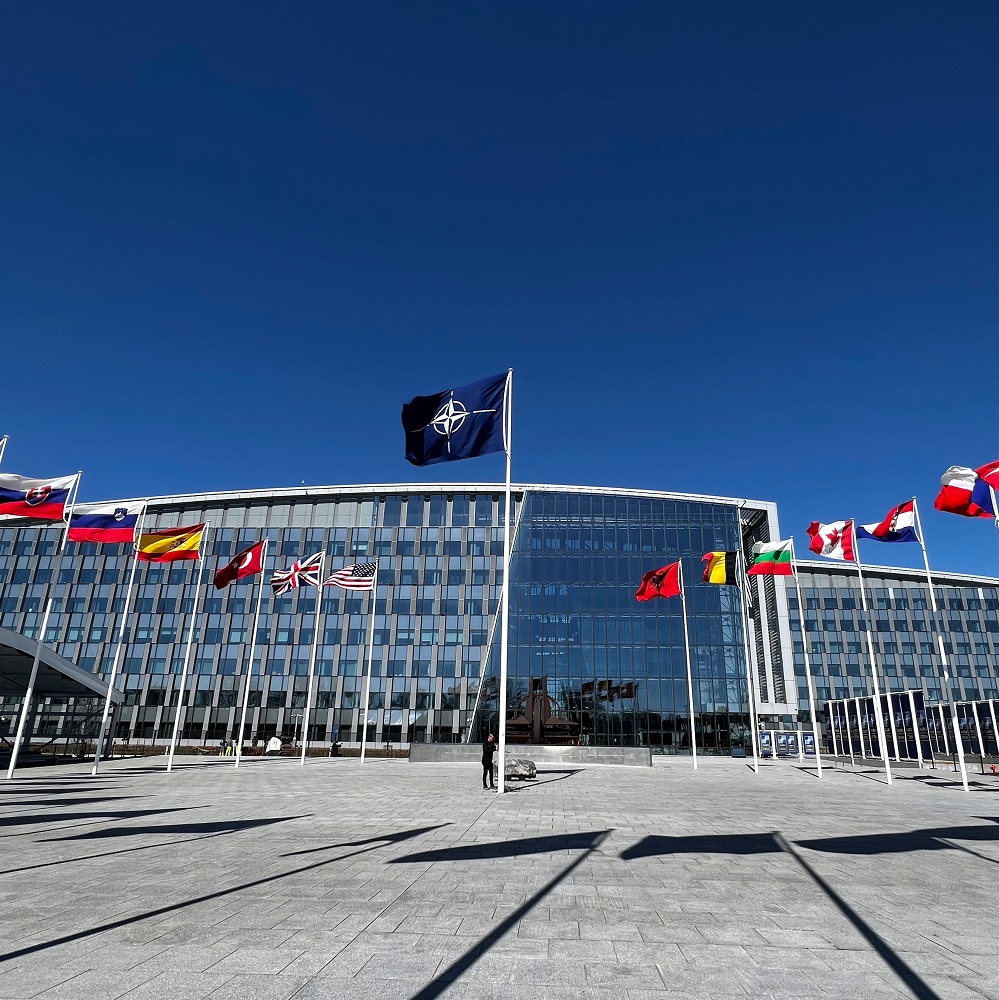
Tank and Flag of NATO on the background

NATO’s Vilnius summit: the consequences for the Allies

by Dick Zandee

Ukraine was the major topic discussed at the NATO summit in Vilnius, the Alliance capital closest to Kyiv. President Zelensky’s call for a clear timetable for his country’s membership dominated the political debate. Less attention was given to the topic with the biggest impact on the Allies: the radically changed requirements for NATO’s deterrence and defense posture. The Vilnius summit has blessed the new defense plans, for which the member states “commit the necessary forces, capabilities and resources”. What does this imply for the NATO countries? This article analyzes the consequences of the new NATO requirements, broken down into four themes: budgets, force structure and capability requirements, readiness, and military presence on the Eastern Flank.   In 2014, at its Wales summit, NATO Allies committed to spending 2% of their Gross Domestic Product (GDP) on defense no later than 2024. The forecast is that 19 of the 29 European NATO Allies will have realized the 2% target in 2024. As Iceland has no armed forces, the total number can be lowered to 28. It implies that approximately one third of the European Allies do not live up to the Wales commitment ten years on. Even worse, some Allies have already announced that they will not realize the target even by 2030. The Vilnius language – the 2% GDP target is “a minimum” from now on – stands in stark contrast to these facts. BUDGETS - MONEY SPENT ON DEFENSE The input issue – money spent on defense – continues to present a divided NATO, composed of three categories of Allies: First, the underspenders that will not spend 2% GDP on defense in 2024 and in the years immediately following. The list includes smaller countries such as Croatia, Slovenia and Luxembourg. However, on the minus 2% list one can also find – from North to South – Norway, Denmark, Belgium, Italy, Spain and Portugal. Denmark has set the aim of reaching the 2% target by 2030 and Belgium even later, by 2035. Second, the correct spenders: Allies that have taken measures to achieve the 2% target in 2024, thus fulfilling the Wales target. However, they will face the challenge of living up to a minimum of 2% after 2024. This applies to Germany, the Netherlands and others, who have not made firm commitments to live up to the Vilnius “minimum” target of 2% GDP. The third category is the overspenders, comprising Allies spending more than 2% now or in the future. This group includes the countries close to Russia – the Baltic states and Poland – but also major Allies such as the United Kingdom and the United States. The champion is no longer the US (3.49%) as Poland will spend 3.9% GDP on defense in 2023.  Due to the mix of underspenders, correct spenders and overspenders, the overall European average will rise to almost 2.05% in 2024, but it is clear that the burden within Europe is not equally divided among all Allies. This sends the wrong signal to Russia and it undermines the European aim to become self-reliant for its security and defense. Furthermore, there is the issue of ensuring sustained investment over the long term. For restructuring the armed forces and realizing defense equipment procurement plans, more time is needed than the duration of an average government Atlantisch perspectief 21 term (4-5 years). A change of government after elections may lead to redrafting the defense budget and defense plans, in particular when economic circumstances are deteriorating as was the case in 2010 and in the years that followed. For defense investment, predictability and continuity are required. The solution is to agree on a long-term national defense investment fund for a period of up to at least 10 years. Naturally, parliaments would have a final say in the annual approval of the budget within the overall financial framework of a long-term defense investment fund. From the perspective of adapting and modernizing the armed forces of the NATO Allies, such a long-term financial commitment – connected to the defense plans and acquisition programs – should be connected to the political debate on the 2% minimum spending target. Such sustained and guaranteed financial input is absolutely required to achieve the output, based on the NATO requirements. FORCE STRUCTURE AND CAPABILITY REQUIREMENTS Although NATO’s three core tasks of deterrence and defense, crisis prevention and management, and cooperative security remain in place, the Vilnius summit communiqué puts the first task “at the heart of the Alliance.” Based on SACEUR’s requirements, “the planning for our collective defense will be fully coherent with the planning for our forces, posture management, capabilities, and command and control.” The Allies will have to “deliver the full range of forces, capabilities, plans, resources, assets and infrastructure needed for deterrence and defense, including for high-intensity, multi-domain warfighting against nuclear-armed peer competitors.” Region-specific plans will be developed for three areas: Northern Europe (from the Arctic to the Gulf of Finland); Central Europe (from the Baltic states to the Alps) and Southern Europe (from the Black Sea to the whole of the Mediterranean). In terms of command & control (C2), Northern Europe will be covered by the Joint Forces Command (JFC) in Norfolk (Virginia, US), Central Europe by the JFC in Brunssum (the Netherlands), and Southern Europe by the JFC in Naples (Italy).  For the NATO countries bordering Russia, this might not entail a great deal of change. The Baltic states and Poland have consistently campaigned for strengthening the Alliance’s force posture for collective defense with an emphasis on high-end warfighting capacities. Their own defense planning and force structures have already been tailor-made for that purpose, and investment is mainly channeled towards modernizing heavy land forces. However, for Allies in Western Europe NATO’s new force structure and capability requirements may lead to amending their defense planning, including taking into account regional plans. For example, the UK-NL Landing Force that has been training for years in Northern Norway, might also be deployed to Finland or Sweden. The Joint Expeditionary Force (JEF), led by the UK, could become an earmarked early-entry force for the Northern Flank. In that case, it might require a more fixed composition of the JEF. In Central Europe, even more emphasis will be placed on strengthening land forces for high-intensity warfighting. Germany and Poland are two key European force providers. Other Allies – such as the Netherlands – will have to deliver dedicated contributions. From now on, NATO plans will ask for brigades, divisions, and army corps instead of the tailor-made task forces that were deployed to Afghanistan and elsewhere. Combined arms will be required instead of infantry-heavy forces for crisis management. More robustness and more firepower, less highly mobile and lightly armed troops are the new characteristics.  Jointness and networked operations in all domains (sea, land, air, cyber, and space) are 21st century necessities, requiring high-technology capacities in the digital area and in space, in particular to ensure redundant communications for information-steered, networked operations. The NATO Integrated Air and Missile Defense (IAMD) capacities need to be enhanced and modernized, encompassing all layers of air defense – the importance of which has been shown in the war in Ukraine. Long-range firing delivered by rocket artillery, cruise missiles and other systems will become the norm of the ‘need to have’ for armed forces. This capability also requires a better and more robust C2 architecture and a variety of unmanned aerial vehicles (UAVs), electronic warfare (EW) systems, and other sensors for target acquisition. The Vilnius communiqué refers to continuing “to invest more in advanced and interoperable capabilities across all domains, placing particular emphasis on combat capable, predominantly heavy, high-end forces and capabilities.” This sounds like an evolution, but for many Allies it implies a revolution in defense planning and investment or, in the words of the Chairman of the NATO Military Committee, Admiral Rob Bauer, “unparalleled integration of NATO and national military planning”. READINESS The new NATO Force Model (NFM) was already agreed upon at the Madrid summit in July 2022. According to the NFM, Allies “are delivering a larger pool of dedicated combat-capable forces, including forces at high readiness, improving our military responsiveness, and harnessing regional expertise and geographic proximity.” In the past, the Alliance had the NATO Response Force (NRF) at high readiness (at 5-30-day notice-to-move (NTM)) with the first elements of the Very High Readiness Joint Task Force (VJTF) at very short NTM (within 48 hours). The 40,000-military-strong NRF will be replaced by the Allied Reaction Force (ARF), that can provide a quickly deployable NATO response option to threats or crises wherever they occur. Completely new are the tier 1-3 high readiness forces: over 100,000 in tier 1 with a NTM of up to 10 days; around 200,000 in tier 2 (NTM 10-30 days) and at least 500,000 in tier 3 (30-180 days NTM). With these new readiness requirements the number of forces that Allies will have at readiness levels up to 30 days has increased by almost a factor of 10. For the NRF, NATO Allies were making available, on rotation, companies, battalions, battle groups and comparable air and naval units. In the NFM, brigades and divisions, full squadrons and naval task groups will have to be ready to deploy within short timeframes depending on the allocation to tier 1 to 3. This will pose enormous challenges to Allies, not only in terms of personnel but equally in operationally ready-to-deploy equipment, enablers (such as transport capacities), and all necessary logistical support. Ammunition stocks will have to be built up to higher NATO norms. Military mobility requirements – all legal arrangements, infrastructure adjustments, transport means, available staging areas and so forth – need to be fulfilled. Naturally, all of this cannot be arranged overnight. It will take at least five to ten years to transform and modernize the Allied forces to fulfil these far-reaching military requirements. The NFM may look simple on paper, but it is the most challenging NATO demand since the end of the Cold War. PRESENCE ON THE EASTERN FLANK Decisions to reinforce NATO’s military enhanced Forward Presence were already taken at the Madrid summit with the following two most important elements: (i) the deployment of battlegroups in four additional Allied countries (Slovak Republic, Hungary, Romania, Bulgaria), and (ii) scaling up the NATO battle groups to brigade-size formations where and when required. At the time, the UK, Canada and Germany announced that their battle groups in respectively Estonia, Latvia and Lithuania would be scaled up to brigades. The additional troops were not to be stationed permanently in the three Baltic states. Brigade headquarters would be established and the equipment for these brigades would be prepositioned in those countries. The model envisaged that troops would be transferred from their home bases in times of crisis or for exercises. Two weeks before the Vilnius summit, the German Defense Minister Boris Pistorius announced that his country would station a ‘robust brigade’ with 4,000 troops in Lithuania. Without openly saying so, Pistorius presented a change to the concept announced by Germany the year before. Not only will the brigade headquarters and the equipment be permanently present in Lithuania, the military personnel of a combat brigade are to be located forward as well. On the eve of the Vilnius summit, the Canadian Prime Minister Justin Trudeau announced that his country’s military presence in Latvia would be increased to around 2,200 troops.  The Baltic states have pressed strongly for the permanent presence of brigade-sized NATO forces on their soil. NATO itself has met its need by replacing the concept of ‘deterrence by punishment’ by ‘deterrence by denial’ – meaning that every inch of NATO territory has to be defended. The Baltic states have argued that the existing multinational battle groups – suitable for acting as a ‘trip wire’ in case of a Russian attack, but not being able to defend their territory until reinforcements arrive – are no longer suitable for that purpose. Lacking strategic depth, ‘deterrence by denial’ requires the permanent presence of combat-ready NATO forces, at least of brigade size along with the national army units of the three Baltic states.  The same requirement would logically apply to the other five countries that house NATO battle groups. Infrastructure to house the troops and preposition the equipment of the NATO combat brigades will have to be built, which will take time and money. Training areas might have to be expanded. Transferring from ‘trip wire’ battle groups to combat brigades also raises the question of what to do with the smaller contributions – often of company size – from other NATO countries. For example, so far the Dutch contribution to the battle group in Lithuania has consisted of rotating companies – often of different compositions (air mobile, light infantry, mechanized). When Germany transforms its battle group to a combat brigade, Berlin might call on the Netherlands army to contribute a mechanized battalion or combat support (such as artillery). In that case, the issue of prepositioning equipment and permanently stationing troops in Lithuania also becomes a defense-planning topic for the Netherlands with financial and other consequences. THE WAY AHEAD NATO summits come and go. Next year, Heads of State and Government will meet in Washington, D.C. for the Alliance’s 75th anniversary. In November 2024, American citizens will elect a new president. The years of strong commitment by the US to supporting Ukraine and NATO may turn into years of retreat, should a Republican president enter the White House. European Allies will be even more pressed to step up their defense efforts than in the current situation. But even should the Democrats win the presidential election, the European NATO countries will face serious challenges in implementing the decisions of the Vilnius summit. In view of the primary focus of the US on the Pacific/East Asia, the pressure on Europe to become more self-reliant is here to stay. Defense budget growth has to be sustained over the long term. Investment in combat-ready forces and logistics including larger ammunition stocks needs to be stepped up, which also requires industrial production to be ramped up. More military personnel will have to be on stand-by readiness, and a larger number of troops have to be deployed to the Eastern Flank. Equipment needs to be prepositioned in the area. NATO’s regional plans will direct national defense planning, investment, training and exercises. They will also channel multinational cooperation, clustering countries located on the Northern, Central-Eastern and Southern European Flanks with those Allies earmarking their forces for the collective defense task in those respective regions.  The consequences of NATO’s Vilnius summit have yet to sink in within national political circles. The Alliance’s military authorities and diplomats have delivered an ambitious agenda for “modernising NATO for a new era of collective defence”. All presidents and prime ministers of the Allied countries have committed themselves to implementing the Vilnius decisions. History shows that words are not always followed by deeds, such as in the case of achieving the NATO 2% target. The Russian aggression against Ukraine – violating the principles and norms of the international order – should be more than a wake-up call. Europe now needs to stay awake and invest in its defense to fulfil NATO’s requirements as well as to become more self-reliant for its own security.

Diplomacy
The leaders of four BRICS countries, Lula, Xi Jinping, Cyril Ramaphosa with Russian Foreign Minister Sergey Lavrov

BRICS and the West: Don’t Believe the Cold War Hype

by Cedric H. de Coning

While it is prudent to be cautious, it may also be wise to explore cooperation in those areas where there are shared interests rather than assume that the BRICS and the West are strategic rivals on all fronts. This analysis was first published in the Global Observatory, 30 August 2023. When Jim O’Neill coined the BRIC acronym in 2001, the point he was trying to convey was that the global economic system needed to incorporate the world’s largest emerging economies. His advice fell on deaf ears and in 2009, Brazil, China, India and Russia decided to take matters into their own hands and formed the BRIC grouping. South Africa joined the group in 2010 to form the BRICS. This July, the group held its 15th summit in South Africa, where they decided to add six new members: Argentina, Egypt, Ethiopia, Iran, Saudi Arabia and the United Arab Emirates. More are likely to join in the future, including countries like Indonesia and Nigeria.  What these countries have in common is a frustration, if not a grievance, about being side-lined to the periphery of the world economy. Together, the BRICS represent approximately 40% of the world’s population. The combined size of their economies are approaching approximately 30% of the world’s GDP, which puts them roughly on par with combined size of the economies of the G7 countries, depending on whether size is measured in GDP or PPP.  More importantly, in the next few decades, the combined size of the BRICS economies will surpass that of the G7. Despite this growing parity, all the members of the BRICS, with the exception of Russia, self-identifies as being part of the Global South, i.e., they feel excluded from a global system dominated by the Global North. Their stated aim is to work towards a future system of global governance where they will have equal political and economic say in global institutions, and where no one state will dominate others. In pursuit of this aim, BRICS countries have established their own development bank, set up their own contingency reserve arrangement, are developing their own payment system, and have started to trade with each other in their own currencies.  The BRICS want to free their economies from the dollar-based international financial system. They feel exposed to United States interest rates that can have a negative effect on their economies, for no domestic reasons. The dollar-based financial system also provides the US with significant advantages in the global economy, which the BRICS see as unfair. They also feel a dollar-based financial system gives the US hegemonic influence in global affairs, through for example, exerting US jurisdiction on all dollar-based trade or investments that flow through US banks or financial institutions.  While the BRICS countries have these clear shared macro-economic interests, many of the members also have competing interests in other domains. China and India are geopolitical rivals in South Asia. Egypt and Ethiopia are at loggerheads over the Nile. Brazil, India, South Africa and the newly-added Argentina are democracies, while other countries in the group are governed by a diverse set of autocratic regimes, which could set up an irreconcilable clash of values on some issues. Many of the members of the BRICS also have close ties to the United States and Europe, including Egypt, India, Saudi Arabia and South Africa. South African President Cyril Ramaphosa, in a televised statement to the nation on the eve of hosting the BRICS summit in South Africa, explained that South Africa remains non-aligned, and he announced that in 2023 the country will also host a major United States-Africa trade meeting and an EU-South Africa summit. South Africa will also host the G20 in 2025, the first in Africa. For many countries, membership of the BRICS does thus not necessarily imply aligning themselves with one global alliance versus another, but rather cooperation in a group around a series of shared interests.  Where does this place the BRICS on the Russian war in Ukraine? The BRICS summit in Johannesburg steered clear of taking a position on the war, other than welcoming mediation aimed at resolving it through dialogue and diplomacy. Some BRICS members like Iran are clearly supporting Russia, while most others have stopped short of either supporting or condemning Russia. For many such as Egypt, the war has adversely affected their economy. Two of the BRICS members, Egypt and South Africa, are part of an African initiative to seek a mediated end to the conflict, which is perhaps the first African initiative to mediate an international conflict. Overall, however, the BRICS have their eyes on the medium- to long-term transformation of the global macro-economic and financial system, and countries like China are probably frustrated that the Russian war in Ukraine has drawn attention away from this larger objective.  Are the BRICS and the West headed for a new cold war? The shift in the center of gravity of the global economy to the East is an unstoppable fact driven by demographics and economic factors like the cost of production. At the same time, Europe and the United States will remain major economic players. In tandem with these changes in the global economy, it is clear that the global political order will become more multipolar, with China, Europe, India, and the United States representing some of the major centers of influence.  In an August 27 article, Jim O’Neil argues that the influence of the BRICS will be determined by their effectiveness, not their size. An expanding BRICS will most likely succeed in helping its members to break free from a dollar-based international financial system, but that will take several decades of incremental change before it reaches a tipping point. Whether that is a good or bad thing depends on the degree to which your economy is tied to the United States. Many of the BRICS countries, including China, Egypt, India, Saudi Arabia, and South Africa all have economies whose prosperity are closely tied to the Unites States. They will thus have an interest in a slow, stable freeing up of the international financial system, and this should give everyone that is prudent time to adapt.  The same logic also applies to changes in global governance architecture. Apart from Russia, all the other BRICS countries have an interest in making sure that changes in the global order are managed at a slow steady pace that does not generate instability. All the BRICS countries, apart from Russia, are also strong supporters of multilateralism, with the United Nations at its center. Many Western countries and BRICS members may thus have more shared interests than the doomsday headlines suggest. While it is prudent to be cautious, it may also be wise to explore cooperation in those areas where there are shared interests rather than assume that the BRICS and the West are strategic rivals on all fronts.

Defense & Security
The leaders of four BRICS countries, Lula, Xi Jinping, Cyril Ramaphosa with Russian Foreign Minister Sergey Lavrov

BRICS rises

by Manoj Joshi

Now with 11 members, BRICS’ decision-making by consensus will be that much more difficultOnce upon a time, the BRICS were nothing but a slogan devised by Goldman Sachs’ economists to describe four emerging market economies to which South Africa was later added. But more than a decade later, the grouping, now with an investment bank—New Development Bank—of its own is besieged by dozens of countries of the Global South for membership.The Johannesburg summit of BRICS has drawn unusual interest around the world. There was a time when it barely merited a mention in the western press, but now it has been the subject of major stories, in which some saw BRICS as brittle whiel others thought it was  seeking to challenge the G7 and the western world through a process of enlargement. While the BRICS puts itself forward as a unified face of the emerging economic powers, the reality is that within the organisation—which  is neither a trade nor military bloc—there is considerable jostling between two Asian powers who are developing a global imprint—India and China.BRICS expansion announced in JohannesburgOne of the issues where this jostling played out in was the BRICS expansion process. Reportedly, 40 countries have expressed interest in joining BRICS, though some 22 nations had formally expressed interest in joining the bloc. With the latest expansion, Iran, Egypt, Argentina, Ethiopia, Saudi Arabia and UAE have been offered membership effective 1 January 2024. That there was a bit of lobbying is evident from the fact that  last week, President Ebrahim Raisi of Iran spoke on the phone with Prime Minister Modi. According to the official spokesman, they talked about “regional and bilateral matters” as well as issues like the expansion of BRICS. The two leaders later met in Johannesburg as well.There was some doubt at the beginning of the summit as to whether expansion would actually be announced. This was because of the intense negotiations over the names of the proposed members.Earlier this month, an Indian official spokesman had clarified that India believed that BRICS expansion should take place through “full consultation and consensus” among members of the bloc. In his speech at the summit, the Prime Minister made it clear that “India fully supports the expansion of the BRICS membership. And welcomes moving forward with consensus in this.” On Thursday, too, there were reports that there were “eleventh hour negotiations” over the potential new members. Reuters claimed that an agreement had meant to be adopted on Wednesday, but it was delayed by India’s introduction of new criteria for membership. On Tuesday President Lula of Brazil had made it clear that his country was did not want to be any kind of “a counterpoint to G7, G20 or the United States. We just want to organise ourselves.”In an organisation that acts through consensus, getting in is difficult, but global politics is about give and take and a certain degree of persuasion and arm twisting does go on. So does the notion of giving a push to countries who you see eye to eye with and blocking countries that you don’t. Sometimes the negotiation involves two powerful players splitting the difference and negotiating the entry of countries in such a way that a balance of sorts is maintained. This is the way India became a member of the Shanghai Cooperation Organisation dominated by China. India’s case was pushed by Russia to balance China, and Beijing finally agreed to have India, if Pakistan, its “iron” friend, could become a member at the same time.Another element in such organisations is that countries seek membership not just to further their interests but to block the ambitions of others. In this way, China sought and became a member of the Asia Pacific Economic Cooperation (APEC) arrangement and once in there, it has used its vote to block efforts by the United States (US) to shape APEC into an Asia Pacific Economic Community in the manner of the European Economic Community that finally gave rise to the European Union.India has been reportedly joined by Brazil in resisting the haste and suggesting that new members may first be given the status of observers. The Indian position has been that while it was all for expansion, there was need to develop and standardise mechanisms to consider the applications and move on them.As of now, BRICS is more of a symbol than a unified and purposive entity. True, it has members like China and India who wield substantial power in their respective regions, but the entity itself hardly functions as an economic bloc of any kind. It does have the New Development Bank headquartered in Shanghai, which, in 2021, sharply stepped up its disbursements to US$7.6 billion, with its total disbursements being of the order of US$32 billion for infrastructure and sustainable development in four continents . The initial subscribed capital of the bank is equally distributed among the BRICS members.China’s role in and vision for BRICSBeijing, no doubt views BRICS as a means of offsetting US global power. In a page 2 commentary in the People’s Daily by someone with the nom de plume  “Huanyu Ping,” said that currently the world governance system was “at a historical turning point”. The growth of the emerging market and developing countries has enhanced their influence. But the western-dominated global order was a “stumbling block to world economic development and social progress.” The multilateralist BRICS was therefore providing a model for decisions to be made on the basis of equality and consensus, as testified by the share-holding of the New Development Bank. They also actively promoted reform of the global governance system and upheld the validity of multilateral and multipolar solutions.There should be no doubt about the weightage China has within BRICS. It has a GDP more than twice the size of the other members combined. Its economy may have slowed down but it is still growing, with IMF predicting a 5.2 per cent growth as against 5.9 for India. The others are growing at less than 1 per cent.  It has played a significant role in getting together two of the new incoming members, Saudi Arabia and Iran. In 2022, China was the largest trading partner of South Africa, India and Brazil.There should be little doubt that China sees Africa as a battleground in the global struggle against the US. In a meeting with President Cyril Ramaphosa on Tuesday, President Xi spoke of the urgent need for China to promote cooperation with Africa because of “changes and chaos” in the world, an indirect allusion to the US. He took up the theme in the Business Forum meeting that he did not attend, but where his speech was read out: “Right now, changes in the world, in our times, and in history are unfolding in ways like never before, bringing human society to a critical juncture.”China may swear by multilateralism, but it is not really comfortable with it. What it is seeking to do is to shape institutions like BRICS in its own image for countering its principal rival, the United States of America. In this, it is unlikely to get Indian support, so what it is trying to do is to pack its membership with countries where it has already made significant investments through its Belt & Road Initiative. Such countries would be inclined to follow its global agenda, which is now manifesting itself as the Global Security Initiative, Global Development Initiative and the Global Civilisation Initiative.The Chinese aim, according to James Kynge in the Financial Times is two-fold. The first is to ensure that large parts of the world remain open to Chinese investment and trade in an environment where western attitudes are increasingly hardening. And the second is to have a bloc of votes in multilateral forums like the United Nations (UN) to project Chinese influence.In the turbulent world, China’s path is not an easy one. Its economy is slowing down and its global security calculations have been roiled by the Russian adventure in Ukraine. Further, in promoting the Global South it runs up against India which has its own ambitions, as well as the backing of the west. Even while promoting the UN and its institutions, China is not interested in any serious reform there because that could result in a bigger role for its adversaries like Japan and India.Done increases with the expansion of its membership. Now, with 11 members, things will be that much more difficult. The BRICS countries have economies and geopolitical profiles that are hugely divergent, and which makes consensus-based decision-making hugely difficult.

Defense & Security
President of Russian Federation, Vladimir Putin

The United States, Europe, and Post-Putin Russia

by Mark N. Katz

Putin’s rule over Russia will come to an end at some point, but when it will end as well as what the policy preferences of his successors might be are uncertain. It would be in the interests of the United States and Europe to signal on what terms they would be willing to cooperate with a post-Russian leadership. Vladimir Putin has been the ruler of Russia since the turn of the century. He may remain in power through 2036, as the 2020 revision of the Russian constitution allows him to, or perhaps even longer. Then again, he may be ousted suddenly and surprisingly any day now, as the recent Wagner mutiny and the apparent lack of effective opposition to it within the Russian security services and public suggest is possible. Maybe he will decide not to run for re-election in 2024, though this does not seem likely. Sooner or later, though, Putin’s rule over Russia will come to an end. What is not at all certain, of course, is who will replace him and what sort of foreign policy the new leader will pursue. It would appear, though, that there are only a few possibilities. One is that Putin will be succeeded by someone just like him who will continue Moscow’s hostile policies toward Ukraine and the West in general. Another is that Putin will be replaced by someone within his circle that decides Moscow needs to cut its losses in Ukraine and rebuild good relations with the West both to revive Russia’s economy and to hedge against an increasingly powerful China. While this might seem unlikely, Russian and Soviet history are replete with examples of new autocratic leaders dramatically reversing key aspects of their predecessor’s policies. Yet another post-Putin possibility is an authoritarian leader who wants to cut Moscow’s losses in Ukraine but who sees the survival of both autocratic rule and even Russia’s territorial integrity as best served through increasing reliance on Chinese support and guidance. It is also possible that Putin’s rule will end as a result of the rise of democratic forces which want Russia to become part of the West and cooperate or join the EU or even NATO. For this scenario to occur, there would have to be a dramatic change of heart within the Russian security services about what is in Russia’s and their own interests. While this seems highly unlikely, there have been examples in other where military-backed autocratic rule gave way to democracy. Finally, whether Putin’s successor is autocratic or democratic, he or (much less likely) she may simply be weak as a result of having to deal with a compounding internal crisis resulting from Putin’s policies, including popular discontent over Russian casualties in Ukraine, economic decline, and secessionism in non-Russian or even Russian regions of the Russian Federation. What Can Europe and the United States Do? Russia’s post-Putin leadership and its policy preferences, whatever they may be, will have an enormous impact on Europe and the United States as well as other countries and regions of the world. But while obviously they hope to see Putin succeeded by a new leader who will end the war, withdraw from Ukraine, and improve Moscow’s ties with the West, Europe and the United States will have very little ability, if any, to affect the post-Putin transition — especially if the person who succeeds  him comes from within his inner circle. Putin has sought to rally Russian public support for his war in Ukraine through claiming that the West wants to bring about the breakup of Russia. Whether Putin himself actually believes this, there appears to be no possibility of changing his mind about the West being his implacable enemy. The United States and Europe, though, would do well to signal to whoever might succeed Putin that this is not the case. Specifically, Washington and Brussels should make clear how they would like to relate to post-Putin Russia. Such messaging should include the following points: Just as the United States and Europe support the territorial integrity of Ukraine, they also support the territorial integrity of Russia. The West has no interest in seeing the breakup of Russia. The United States and Europe will lift their economic sanctions on Russia (including those on Moscow’s exports of oil and gas) in response to Russian withdrawals from Ukrainian territory. The more occupied territory that Russia returns to Ukraine, the more Western economic sanctions against Russia will be lifted. While Europe and the United States would like to see Russia become a Western-style democracy, they acknowledge that whether it does so or not is an internal matter which Russians alone will determine. The United States and Europe are prepared to have normal relations with any type of Russian government — democratic or autocratic — which is willing to behave non-threateningly toward the West, Ukraine, and other former Soviet republics. While they respect the Russian government’s desire to continue cooperating closely with China, Western governments want Moscow to know that the United States, NATO, and the members of the Quadrilateral Security Dialogue (US, Japan, India, Australia) are willing to discuss common security concerns about China (which many Russians besides Putin have had) if and when the new Russian leadership wishes to discuss them. The articulation of these messages by the United States, Europe, and, regarding the last point, Quad governments, will not magically lead the Russian people, much less Putin’s inner circle, to oust Putin and embrace the West. Indeed, it is possible that a Putin loyalist successor will spurn them. But if the United States and Europe do not signal under what terms they would be willing to cooperate with a post-Putin leadership, then Washington and Brussels may reduce the chances that a post-Putin leadership will be willing to cooperate with the West.

Diplomacy
Lithuania President Gitanas Nauseda, Prime Minister Alexander De Croo and NATO Secretary General Jens Stoltenberg pictured during a head of states summit of the NATO

Erdoğan Seeks Better Relations with the West after His Reelection

by Salim Çevik

Turkish President Recep Tayyip Erdoğan seems to have changed course on his country’s foreign relations. At the last NATO summit in Vilnius, Lithuania, he finally lifted his veto on Sweden’s proposed membership in the alliance; but his agreement is still incomplete as it requires the approval of the Turkish Parliament. And Erdoğan has apparently made parliamentary approval contingent on the US Congress approving his country’s purchase of F-16 fighter jets, which many assume may now be a done deal. Moreover, during the talks on Sweden’s accession, Erdoğan reiterated Turkey’s desire to join the European Union (EU) and hoped for a revival of the long-dead EU membership process. Prior to the Vilnius summit, Erdoğan further showcased his foreign policy outreach by hosting Ukrainian President Volodymyr Zelenskyy in Ankara, signaling support for Ukraine in its ongoing war with Russia.  On the domestic front, Erdoğan has formed a new cabinet that signals better relations with the West, as the most ardent anti-western member of the previous cabinet, former Interior Minister Süleyman Soylu, has been left out. Additionally, the president aims to instill confidence in western markets by appointing respected figures like Mehmet Simsek as economy minister and Hafize Gaye Erkan as Central Bank governor. These appointments are seen as positive signals of an effort to strengthen economic ties with the West. This series of moves has triggered the hope, especially in western circles, that Turkey could return to the western fold and that Turkish-Russian relations will cool in parallel. However, pessimists, who see Turkey’s departure from the West as a done deal, disagree and are right to believe that Turkey’s relations with both the United States and European countries have fundamentally changed. It is no longer possible to go back to the early 2000s when Erdoğan was steering the country toward EU membership. The EU has no intention of admitting Turkey; but even if it did, the process would not be in Erdoğan’s favor. Nor is it possible to go back to the Cold War era, when Turkey was firmly embedded in the western geopolitical system. Turkey no longer sees Russia as a threat or an adversary in the sense that most western countries do. The fact that Turkey has resisted approving Sweden’s NATO membership for more than a year and that it will only do so in exchange for the delivery of F-16s shows how badly damaged Turkish-European and Turkish-American relations truly are. Therefore, pessimists point out that rather than signaling Turkey’s return to the West, the whole debacle proves how problematic and transactional Turkish-western relations have become. But these analysts overlook the fact that Erdoğan is pushing for a reorientation in foreign policy, and in his relations with the West in particular. This reorientation started long before the most recent presidential elections in May; but the president’s victory gave him a stronger hand to reboot his foreign policy, which is not aimed at bringing Turkey back into the West’s orbit, but rather at building better functioning relations with it. Turkey’s Departure from the West Turkey’s divergence from the West has taken place at the level of both political values and geopolitics. Over the last decade, Turkish democracy has been in serious decline. Especially after the transition to a hyper-presidential system in 2018, which eliminated all checks and balances in the political system, Turkey’s has become an increasingly autocratic regime. Turkish foreign policy has also become increasingly militarized, much to the chagrin of western capitals. Not only has Turkey used its military power in Syria, Iraq, and Libya but it has also deployed its navy to the Eastern Mediterranean, aggressively threatening the sovereignty of two EU countries: Greece and Cyprus. These aggressive policies were backed by an expansionist naval doctrine called Mavi Vatan (Blue Homeland), whose ideology has disturbed western policymakers. The naval officers who created and developed the Blue Homeland concept never concealed their pro-Russian leanings and deliberately propagated an anti-American and anti-western narrative. These officers, and the political circles associated with them—dubbed Eurasianists in Turkey—have become an integral part of Turkey’s ruling coalition. Turkey’s purchase of S-400 missiles from Russia took place in such a context and represents the culmination of Turkish-American tensions. Turkey’s autocratic turn at home and its militarized foreign policy, which often work against the interests of its western allies, were simultaneous and mutually-reinforcing processes. But said foreign policy reached its limits toward the end of 2020. Turkey became regionally isolated with an overextended military, and its aggressive foreign policy, the rise of authoritarianism, and the subsequent decline of the rule of law plunged it into a protracted economic crisis. This economic downturn began to undermine Erdoğan’s meticulously-built power, as evidenced by his party’s defeat in the 2019 local elections. Unable to sustain autocratic rule, anti-westernism, and an aggressive foreign policy all at the same time, Erdoğan began to seek a new direction. The essence of the new approach is to maintain his authoritarian rule at home while becoming a less confrontational actor in foreign relations. Reorientation in Foreign Policy This reorientation began first in the Middle East, where Turkish authoritarianism was never going to be a cause for concern. Turkey began to mend fences with Israel, Egypt, Saudi Arabia, and the United Arab Emirates, while at the same time aligning itself with the emerging Abraham Accords framework in the region. While accommodating western geopolitical interests, Turkey’s relations with Iran began to enter a more confrontational phase. One of the main motivations for this regional restructuring was economic: Turkey continues to receive significant form of foreign investment from Gulf states. Another motivation was geo-strategic: Turkey hoped that normalization with Israel, and to a lesser extent with supposedly pro-western Arab regimes, would help ease tensions with the United States. While reconciling with its Middle Eastern rivals, the Erdoğan administration was also looking for opportunities to curry favor with Washington and increase its own importance in the eyes of the Biden administration. One of the early opportunities came in the summer of 2021 after the US withdrawal from Afghanistan when Turkey immediately stepped in and offered to take over the protection of Kabul International Airport. This initiative earned Erdoğan his first personal meeting with Biden. However, the unprecedented rapid collapse of the Kabul government prevented Ankara from using the Afghanistan front as a base to build its relations with the United States. A second opportunity arose in February 2022 when the Russian invasion of Ukraine began. New Opportunities for Erdoğan The war in Ukraine has had contradictory effects on Turkey’s foreign policy and on Turkish-western relations. On the one hand, it increased Turkey’s strategic value and facilitated its reengagement with the West. On the other hand, it created additional difficulties as western countries demanded that Turkey sever its ties with Russia, a demand that Turkey rejected. Erdoğan ultimately managed to spread the idea that perhaps it would be better for everyone if Turkey remained relatively neutral. Erdoğan’s personal ties with Putin and the complex and highly interdependent Turkish-Russian relations placed Turkey in a special position among NATO countries. Turkey therefore tried to maintain a pro-Ukrainian line without being anti-Russian. So far, Erdoğan has managed to maintain this seemingly paradoxical position. Turkey has given full military support to Ukraine, and especially in the early days of the war Turkish drones were vital for Ukraine’s defense. To be sure, this support was better than that of many European countries. Politically, however, and while condemning Russia’s occupation of Ukrainian territory since 2014, it has not joined in imposing sanctions on Russia, and the two countries have maintained good diplomatic relations. Erdoğan clearly enjoyed his balancing role. His policies during the Ukraine war have earned the Turkish public’s respect and helped, at least indirectly, in his reelection as they contributed to his image as a world-renowned statesman. Turkey also enjoyed the economic benefits of its being Russia’s main economic outlet. Not only did Turkish-Russian trade increase, but Putin lent a helping hand in the run-up to the elections by agreeing to delay Turkey’s natural gas payments and depositing much-needed foreign currency in the Turkish Central Bank. Erdoğan justified this unique position by emphasizing his mediating role between Ukraine and Russia and between the latter and the West. In this context, securing the grain deal was a particularly important achievement that helped Erdoğan justify his balancing act. Now the deal appears to be in tatters, raising questions about his ability to maintain his role as mediator. The Turkish president has also raised eyebrows in Moscow by recently hosting President Zelenskyy and increasing his support for Ukraine’s NATO membership. He even tested the Kremlin’s nerve by allowing Azov fighters to return to Ukraine with Zelenskyy, an apparent violation of a prisoner swap deal brokered by Turkey. Despite all this, Erdoğan wants to stick to his original position and continue to play the role of mediator. He is counting on the fact that Putin currently cannot afford a falling-out. Erdoğan has already indicated that he expects to host Putin in Turkey in August for a one-on-one meeting, although so far the Russian side has not confirmed the visit. Russia’s reaction to Turkey’s recent moves, such as ratifying Sweden’s NATO membership and supporting Ukraine’s NATO membership, has also been rather mute. Therefore, Turkey’s pivot to the West does not mean that it will cool its relations with Russia. Erdoğan realizes that the longer he maintains his balancing role, the stronger his hand will be with both the West and Russia. A Revitalization of Turkey-EU Relations? If there is no going back to the Cold War era, there is also no returning to the early 2000s, when Turkey was pushing for EU membership. Despite surprising everyone by rekindling the dormant EU membership process ahead of the Vilnius summit, Erdoğan’s move is unlikely to breathe life into Turkey’s EU accession aspirations. This is primarily due to the fact that EU membership would not align with the president’s personal interests, as it would necessitate a higher standard of the rule of law that might curtail his currently unchecked and absolute authority in the country. The accession process revolves around aligning a nation’s internal standards with EU norms, known as the community acquis. Consequently, becoming an EU member would demand a transformation of Turkey’s domestic political system, which currently concentrates power in Erdoğan’s hands. Given this, how should Erdoğan’s statements on revitalizing the EU process be interpreted? Part of the explanation has to do with his transactional style of policymaking. A master of brinkmanship and bargaining, Erdoğan often raises demands and stakes just to get a better deal. This is why Turkey’s foreign policy disputes are often resolved at the 11th hour, as is still the case with Sweden’s NATO membership. But these tactical moves also reflect Erdoğan’s genuine desire to improve relations with the EU. It is important to note, however, that Erdoğan does not necessarily want Turkey to be inside the EU; he simply wants to do business with it. The EU remains Turkey’s primary economic partner, and Ankara has long been demanding a modernization of the Customs Union agreement with the bloc to boost its trade. Moreover, better relations with European countries are expected to be instrumental in attracting much-needed foreign investment. Gulf money has only carried Turkey so far, and to solve its deep economic problems it is necessary to attract the financial power of the West. Thus, Erdoğan wants more engagement with Europe on the economy, defense, security, and refugee issues, but not in the context of EU membership. In fact, the refugee deal signed between Turkey and the EU in 2016 was designed precisely around the idea that Turkey is not and will not be part of the EU. Accordingly, Turkey continues to block the movement of refugees toward Europe in exchange for financial assistance from the EU. The bloc has recently concluded similar agreements with North African countries, aiming to externalize its refugee problem. For this cooperation with Turkey to work, Turkey needs to be outside the EU, not inside it. Thus, Turkey’s desire to create better working conditions with the EU is emblematic of the nature of its reorientation toward the West. Furthermore, western capitals seem increasingly willing to respond positively to overtures made by the Turkish President. Western Reaction to Erdoğan’s Moves It is not only Erdoğan who has changed his position; the West has also changed its approach to him. Biden and other western leaders were distancing themselves from Erdoğan in anticipation of his loss in the presidential elections. Biden did not invite him to Washington and did not visit Ankara, despite Turkey’s growing importance in the context of the Russia-Ukraine war. Knowing how much Erdoğan values personal meetings, Biden used them as leverage to resolve stalemates like the one over Sweden’s NATO membership. Moreover, having learned Erdoğan’s style of politics over the years, western leaders successfully avoided becoming his punching bag ahead of the elections, as former German Chancellor Angela Merkel did during Turkey’s 2017 constitutional referendum. To achieve this, they followed a policy of ignoring rather than supporting Erdoğan. But when the elections were over and he was set to rule Turkey almost single-handedly for another five years, western leaders rushed to congratulate him. It is also becoming much easier for the West to work with Turkey on a geostrategic and security level. For the United States, Turkish-American security cooperation is shifting from the Middle East to the Black Sea. Turkish-American relations in the Middle East have inevitably taken on a more political and ideological character, with the two countries’ different threat perceptions and respective approaches to the Kurdish issue and to Kurdish actors in northern Syria remaining the biggest challenge in bilateral relations. In contrast, Turkey and the United States are more in agreement on the Black Sea. Moreover, within the Pentagon, EUROCOM’s approach to Turkey is much more friendly than CENTCOM’s, and has a better track record of cooperation. For Europe, Erdoğan’s commitment to the migration deal makes him a valuable partner, especially given the growing anti-immigration stance of the Turkish and European publics. Moreover, Erdoğan’s preference for working with the EU but for simultaneously not genuinely pushing for membership in it fits well with European policies. The EU and Erdoğan are more in agreement on their common desire to keep Turkey out but to simultaneously build better working relations. Overall, it seems clear that Erdoğan is eying a new reorientation in his foreign policy. At the moment he is at the height of his power at home and does not need to use the West as a punching bag for domestic political gains. Furthermore, economic conditions and regional developments are compelling him to lean more toward western powers. As a result, Turkish foreign policy is poised to take a new direction. Nevertheless, any improvement in relations will likely be limited to the geostrategic and economic realms and will not encompass a realignment of political values. Without common political values, the result will be significantly improved but will remain transactional between Turkey and its western partners. This paper was originally published by Arab Center Washington DC. Republished with permission. © Arab Center Washington DC, October 2023.

Diplomacy
Prime Minister of Italy Giorgia Meloni

President Meloni’s press statement with Speaker of the United States House of Representatives Kevin McCarthy

by Giorgia Meloni

Good morning.  I want to thank Speaker Kevin McCarthy, my friend Speaker Kevin McCarthy, for this occasion he gave me. I want to say that I’m very glad to be here in the heart of the American democracy and in the place that Thomas Jefferson, at the time Secretary of State of President George Washington, wanted to call Capitol Hill to commemorate the famous Temple of Giove on the Capitoline Hill, il Campidoglio - one of the seven hills of Rome. And I say it for it is another sign of the incredibly strong ties between Italy and the United States, ties that have become even deeper in recent times after the Russian war of aggression against Ukraine. More than ever, in this international juncture, our relations are essential. More than ever, we must be able to rely one on the other. Today we had the occasion to exchange views on many international issues, from the war in Ukraine and its effects worldwide, in particular regarding food security, to the stabilisation and development in the Mediterranean area, moreover in Africa, the Indo-Pacific, and Italy’s next Presidency of the G7. I was glad to have this debate with representatives of Congress because it gives me a complete picture of the foreign policy landscape from representatives elected by the American people. I’ve been in politics for most of my life and I’ve been a member of parliament for many, many years, so I perfectly know the importance of parliaments in democracies. That’s why I’m so grateful to Speaker Kevin McCarthy, whom I had the pleasure to meet already in Rome a few months ago, and to the representatives I met today, for the time they wanted to spend with me.  And last but not least, I’m happy to be here in a place decorated by these wonderful frescoes of Costantino Brumidi, another Italian, for this place represents and sums up also the stories of all the Italian-Americans who, with their lives, with their efforts, with their dreams, with their creativity, contributed to strengthening the bonds between our two peoples and contributed to make this democracy the great democracy it is. So, I want to say that I’m proud of these Italians, I’m proud of your grandfather too, Kevin, and I really want to thank them for the contribution they brought to the history and the culture and the identity of this nation. Many of them are today representatives and that shows the role Italy has had for the history of the United States, and that is one reason more to continue strengthening our relations, our cooperation, our friendship, particularly in this tough world, in this tough situation.  Many things are changing around us, but there is something others didn’t expect that we should perfectly prove: that the Western world is united and wants to defend the world based on rules, for without a world based on international law, we would live in a world of chaos, in which who is militarily stronger thinks he can invade his neighbour. That’s not the world we want to live in; we want to live in a world in which we can respect sovereignty and freedom. Thank you very much.

Defense & Security
Israeli Nationalists wave national flags during a march marking Jerusalem Day

J. Biden's policy on the resolution of the Middle East conflict: new challenges, old problems

by Alexandra Breslavtseva

The Arab-Israeli settlement remains one of the important challenges in the foreign policy activities of the Joe Biden administration, whose strategy, following the logic of the continuity of the traditional course of supporting Israel, is aimed at overcoming the inconsistency in American policy in this direction and at finding approaches to neutralize threats from other actors, seeking to expand their influence in the region. In maintaining American leadership in the Middle East, the United States faces both internal and external challenges. Iran remains one of the main external challenges, which is perceived by Washington as the main threat in the Middle East and beyond, also occupying a central place in Israel's foreign policy strategy. Given the general priority importance of the Iranian topic for both countries, the positions of the current US administration and the Israeli government differ regarding the degree of trust in the statements of the Iranian leadership and readiness to return to the previous level of negotiations, violated by D. Trump's sharp demarche. At the same time, being a pivot point of mutual understanding, the Iranian agenda can “muffle” the differences between the parties on the Palestinian issue and move the direction of the Arab-Israeli settlement – Israel manages to use the topic of Iranian influence in the region, which is sensitive for the United States, to advance its interests, emphasizing the security issue in the Middle East region. The second external challenge for maintaining US leadership in the peace process is the growing role of China, the main strategic competitor of the US, as a peaceful mediator in international affairs (in Afghanistan, Iraq, Ukraine, in Iranian-Saudi relations) and in the context of increasing Sino-Israeli economic cooperation. China has a dominant position in Israel's imports in 2021-2022 and is Israel's third largest investor. Israel's diversification of partnerships will ultimately make it possible, if not to reduce the role of the United States in the Middle East as a whole, then to realize its foreign policy interests without the need to take undesirable compromise steps on the Palestinian issue. The main internal challenge for the United States remains the party split, which gives other participants in the Arab-Israeli resolution process a reason to question the exclusive role of Washington in it. The inconsistency of American policy in this area largely stems from the difference in the approaches of Democrats and Republicans to achieving the same goal - maintaining and strengthening security in the region. If the commitment to US-Israeli security cooperation remains the same regardless of which party is in power, then unconditional support for Israel remains a point of contention between the two parties. Traditionally, Democrats are more critical in assessing Israel's domestic policy, in particular in the issue of building new settlements in disputed territories. One of the most striking cases of manifestation of such inter-party contradictions occurred during B. Obama's trip to the Middle East in the spring of 2013. Then B. Obama proposed a formula for in-depth regional cooperation with equal consideration for the interests of both sides of the conflict, recognizing the right of the Palestinians to self-determination and the creation of their own national state while condemning the expansion of Israeli settlements in the West Bank. Meanwhile, despite inter-party disagreements, Israel retains its place as a unique and priority ally and partner of the United States, and the essence of their "special" relationship is not subject to systemic changes. Thus, at the end of B. Obama's presidency, the third Memorandum of Understanding (MoU) was signed between the United States and Israel. The ten-year military-economic plan, first adopted by the B. Clinton administration and supported by B. Obama, provides allocation of $3.3 billion for military financing and $500 million for joint missile defense programs for the period of 2018–2028. During the presidency of D. Trump, the delicate balance of American policy in the region swung again towards exclusive support for Israel. The progressive political rhetoric of the Democratic President in support of the Palestinians was followed by an equally unexpected symbolic gesture of the Republican President towards Israel: in 2017, D. Trump did something that no other American president dared to do - announced the transfer of the American Embassy from Tel Aviv to Jerusalem. The decision to move the embassy was criticized by the world community, and Hamas again declared an intifada against Israel. And although Secretary of State Mike Pompeo hastened to smooth over the effect of his president’s grand gesture, saying that the decision to move the embassy does not change the status of Jerusalem in any way, the new embassy was nevertheless opened in May 2018. Subsequently, this step was also supported by the Democratic Party. At the same time, the Trump administration continued the regional format for resolving Middle East conflicts by signing the Abraham Accords. At the same time, M. Pompeo announced that the approach, fixed by the United States in 1978, that the construction of Israeli settlements on the West Bank was inconsistent with international law, did not contribute to the development of negotiations. By doing this, he signaled Washington's support for Israel's new plans for the construction of settlements, which, in turn, did not hesitate to start implementing them. And the ultimatum plan “Peace to prosperity” presented by D. Trump completely ridiculed the Palestinians’ claims to build a state within the borders before 1967 and was regarded by the UN Human Rights Council as a violation of international law and the rights of Palestinians under occupation. This position of the Republican administration provoked criticism from the Democrats. As expected, after the change of party control over the federal government in 2021 in the House of Representatives, the progressive Democratic wing proposed a bill to resolve the conflict based on the principle of Two-State Solution Act, which reflected concerns about Israeli settlement policy in the West Bank, East Jerusalem and the Gaza Strip. The bill includes monitoring the funds allocated under the ten-year plan (MoU) and other financial assistance, so that they are not used by the Israeli authorities for further annexation of disputed territories. The document also pays special attention to the term "occupied territories", it is proposed to mention such a wording in all official communications and documents regarding the territory of the West Bank, East Jerusalem and the Gaza Strip. At the same time, changes in the US-Israeli security policy are not supported by the legislation. Unlike his predecessors, J. Biden, from the very beginning of his presidency, tried to avoid such steps that could further destabilize the situation between the conflicting parties. The administration returned to the traditional principles of the Democratic Party in the Middle East - the principle of the unacceptability of the expansion of settlements, the continuation of the policy of ensuring the security of Israel and involving this country in regional cooperation with Arab countries in the spirit of the "Abraham Accords", protecting the rights of both Israelis and Palestinians equally and the viability of a negotiated two-state solution to the Israeli-Palestinian conflict. This position was repeatedly emphasized by the US President in September-October 2022, as well as by Secretary of State A. Blinken during meetings in 2023. As part of the efforts made, contacts between the US and UNRWA were restored, and funding for programs was resumed. The elections of the Prime Minister of Israel, held in the fall of 2022, led to ambiguous results, from the point of view of some American experts, and became a new problematic factor in the settlement issue. The victory of the Likud party under the leadership of B. Netanyahu and the coalition government formed by him with the right wing represented by Religious Zionism, Shas and Yahadut Ha Torah caused fears among representatives of both US parties and lobbyist organizations. First of all, the American leadership was alarmed by the connection of the current members of the coalition with an organization recognized as terrorist in the USA. Kahane Hai was officially designated a terrorist organization in Washington from October 1997 to May 2022, and has been a “specially designated global terrorist organization” since last year. It is also critically perceived that part of the new government called for a reduction in the powers of the Israeli Supreme Court, the return of the death penalty for those accused of terrorism, some supported the Russian policy towards Ukraine. Despite the fact that the results of the 2022 elections are perceived in Washington as a serious blow to Israeli democracy, they fully reflect public sentiment. Based on the polls, the vast majority of Israeli voters (62%) identify themselves as right-wing. This means that the Americans, one way or another, will have to reckon with this factor and start a sustainable dialogue with this political force. In general, the United States welcomed Netanyahu's victory in the elections, but emphasizing the special status of relations with Israel, common interests and values and the intention to cooperate with the new government, focusing on its policies, and not on individuals, clearly declares its readiness to prevent any attempts to undermine the efforts to stabilize the situation in vulnerable areas. In fact, despite the existing concerns and even rejection of certain positions of the new Israeli government, the US is ready to accept their right-wing conservative rhetoric as part of the Israeli democratic choice. The current formula of American policy in this area is that the United States will continue to promote its vision of a solution to the Arab-Israeli conflict based on protecting the interests of both sides of the conflict, but Israel's security will remain an American priority and will determine a restrained reaction to Tel Aviv's policy regarding disputed territories. The reason for this duality, in addition to traditional inter-party disagreements, may also be a shift in the focus of the security dialogue from the Palestinian issue to the Iranian threat. The contours of the problems outlined signal that the very inconsistency of the American policy regarding the settlement of the Arab-Israeli conflict and the Iranian problem is becoming a factor that delays the prospect of Washington playing the role of the main regional mediator and peacemaker. In this regard, the emergence of new approaches on the part of other powers and a change in the alignment of forces in the region should be considered natural, which is the basis of the challenge for the Joe Biden administration. Nevertheless, the consistency of the White House in relation to ensuring Israeli security is the main stable link, which, firstly, guarantees the American presence in the Middle East, and, secondly, smooths out the corners of emerging contradictions in US-Israeli relations. Thus, the main task for Washington remains to restore the traditional Democratic balanced approach to Middle East politics and overcome the threats and problems posed by Iran, the new Israeli coalition government, and China as a new significant actor in the Middle East.

Diplomacy
Prime Minister of Israel Benjamin Netanyahu

PM Netanyahu's Remarks at an Event for US Independence Day at the Israel Museum in Jerusalem

by Benjamin Netanyahu

President Herzog, Mrs. Herzog, Ambassador Nides and Virginia,and Taylor, and Taylor's boyfriend,Senator Rick Scott,Speaker of the Knesset,Mayor of Jerusalem,and so many dear friends, Tom, you started your words by remembering an evocative moment, when you were 14 years old in Ein haShofet. Well, somewhat younger than that, I had an evocative moment right here, on this hill top. It was barren. There was no Israel Museum. There was the Monastery of the Cross, olive trees. A barren hilltop except one tree, a balut tree. And we, the Jerusalem kids, would band in the valley and we would try to reach, undetected, to the top, to the tree. Reach the target. I say that because right now, well, last night, Israeli soldiers tried to reach, undetected, the most legitimate target on the planet: people who would annihilate our country. And because this Fourth of July in this extraordinary place falls on an extraordinary moment, Ladies and gentlemen, on behalf of the Government and citizens of Israel, I wish to send my warmest greetings to President Biden and the American people as we join in celebrating their Independence Day. And as Prime Minister, I wish to express my deep appreciation and gratitude for America's enduring support for Israel. For 75 years, the United States has been our irreplaceable and indispensable ally. Irreplaceable. Indispensable. Eleven minutes after our birth, and at vital junctures throughout our history, America has provided Israel with moral and political backing against those committed to wiping us out, to wiping out the one and only Jewish state. No less important, for nearly half a century, America has given generous military assistance to Israel, helping provide us with the tools, the tools we need to defend ourselves by ourselves. Decade after decade, our two countries have moved closer together. I'm proud to say that today, security cooperation has never been better, intelligence sharing has never been deeper and our alliance has never been stronger. I have long said that Israel has no better ally than America, and I say to you, America has no better ally than Israel. I'm confident that Israel's importance to the United States will become even clearer in the years ahead, as we work together not only to protect our common security, but also to develop the most advanced technologies that will reshape the 21st century. They will decide who leads the world. And Israel is America's vital partner in that effort. Ladies and Gentlemen, on July Fourth, all democratic countries should remember that the decisive event that ensured the rise of freedom in modern times, has been the rise of the United States of America. Time and again, America defeated the forces of totalitarianism and terror. Yet we should also remember a basic truth: Freedom is precious, and it's never free. It often requires firm and decisive action against those seeking to spread terror and imperil free societies. I remember that truth every Fourth of July, because that is the day my brother Yoni fell, commanding the rescue force at Entebbe. Today, on the eve of another Fourth of July, Israel's soldiers, once again, find themselves fighting forces of terror. Late last night, the IDF launched a comprehensive action against terrorist strongholds in Jenin. In recent months, Jenin has become a safe haven for terrorists. From that safe haven, terrorists perpetrated savage attacks, murdering Israeli civilians, men, women and children, as many children as they could find. As I speak, our troops our battling the terrorists with unyielding resolve and fortitude, while doing everything, everything, to avoid civilian casualties. I have no doubt that as Israel exercises its inherent right of self-defense, the United States will stand firmly by our side. And I also believe that in the months ahead, Israel and America will work closely together to thwart the danger posed by Iran and seize the opportunity to expand the circle of peace. Ladies and gentlemen, tonight is also an opportunity to thank outgoing US Ambassador Tom Nides for his service and for his friendship towards Israel. Thank you Tom. During your tenure here, you've demonstrated that your support for Israel comes both from the head and from the heart. On a personal level, I will say I'll miss your candor, your wit, your humour and your friendship. No matter what you do, what you decide to do in the next chapter of your life, know that Israel will always be your home away from home. And as you've said many times, quoting President Biden, we are mishpuche. So on behalf of your Israeli family, let me wish you a happy Independence Day. Happy Independence Day America.  God bless America and God bless our valued and unshakable alliance.