Subscribe to our weekly newsletters for free

Subscribe to an email

If you want to subscribe to World & New World Newsletter, please enter
your e-mail

Defense & Security
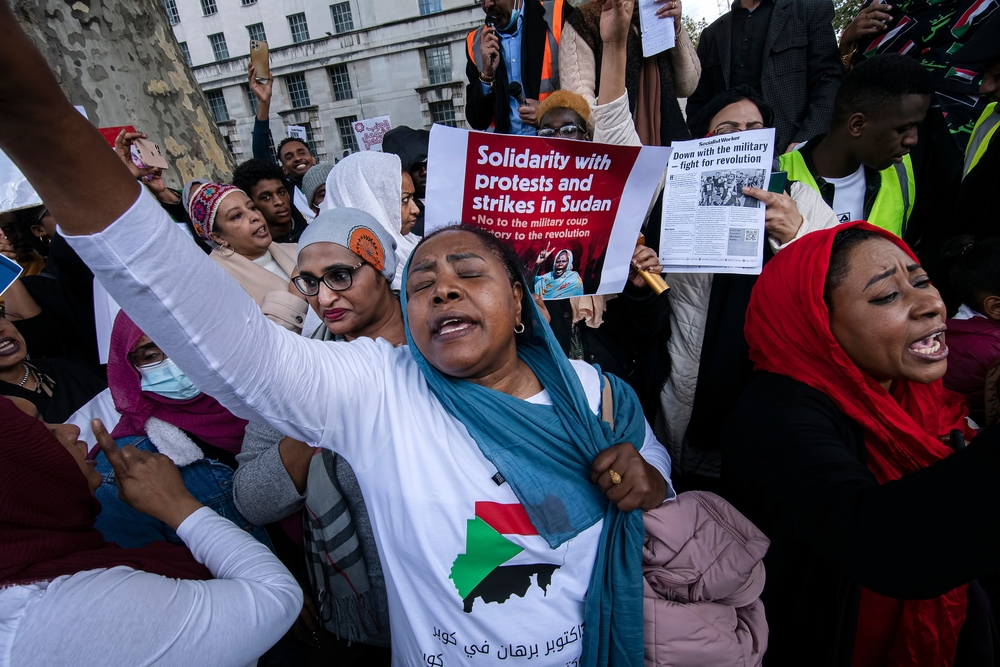
People protesting in solidarity with Sudan

Middle powers, big impact: Africa’s ‘coup belt,’ Russia, and the waning global order

by Theodore Murphy

The changing global order has created an enabling environment for the recent spike of takeovers in Africa’s ‘coup belt’ – with Russia and newly assertive middle powers offering themselves as partners to putschists  Coups d’états have returned to Africa. In the 1990s and 2000s, the number of forced takeovers of power on the continent fell; but the figure began to creep back up around 15 years ago. This deterioration has come to particular prominence with the emergence of a ‘coup belt’ spanning from Sudan to Niger (and mostly recently Gabon), where eight coups have taken place in the last three years.   The drivers behind coups range from state fragility to weak economic development. But such factors were also a constant in the decades immediately after the end of the cold war – when Africa experienced fewer coups.  The overlooked factor is the weakening of global order and the coup-enabling international environment it has created. Policymakers should consider, in particular, the role that activist ‘middle powers’ and Russia are now playing in taking advantage of an increasingly lawless international setting. US retrenchment, selective AU enforcement As the United States retrenches to pursue its strategic competition with China, its capacity to invest seriously in both strategic imperatives and values-led foreign policy objectives is coming under strain. With the essential taking precedence over the good, upholding democracy in Africa has slipped down the list of America’s strategic priorities.  Africa’s own system for deterring takeovers has also weakened considerably. The African Union’s  enforcement of its coup-prohibiting rules grew increasingly inconsistent during the same period, during which time it began to enforce only selectively, due to the whims of powerful AU member states. This started with the coup in Mauritania in 2008, and was followed by President Sisi’s post-coup election in Egypt, and more recently by coups in Chad and Sudan. The interregnum and the rise of the middle powers To paraphrase Gramsci, the international rules-based order has not yet died so the new order cannot be born. The world thus finds itself in an interregnum in which the rules-based order is fraying but where the next iteration of global order is yet to emerge.  Aware that the world around them is changing, African leaders worry that a new version of cold war is developing, and that they are at risk of being forced to choose a side – America or China. But a cold war-style scenario is not a given, which means African leaders may be preparing for the wrong thing. This risks obscuring a major challenge created by the interregnum: the rise of assertive middle powers.    With global order in flux, middle powers seek to maximise their sovereignty and expand their influence. For middle powers in the Gulf, to Egypt and Turkey, those twin ambitions translate into treating the Horn of Africa as their near abroad. Russia surges into the coup belt sharing the same middle power motivations, but it differs on one count: desire to undermine the West. The opportunity generated by coups determines where Russia chooses to engage. But pursuing its rivalry with the West provides a second motive for Russia’s focus on the western half of the coup belt: it works to push back the strongest European influence, namely France’s presence in francophone Sahel states.  Naturally, Russia’s and middle powers’ engagement in Africa pre-dates the interregnum, but the opportunity presented by the evolving global order supercharges their interventions. Russia and middle powers exploit US retrenchment and eroding AU norms by offering themselves as partners to putschists. Seeing the opportunity to gain influence in power-grabs, they move in and back their preferred horse. These include the UAE, Saudi Arabia, Qatar, and Turkey throughout the Horn of Africa, where Turkey is more focused on Somalia; the UAE, Saudi Arabia, and Qatar are more focused on Sudan. In the Sahel, Turkey is tentatively exploring economic and security cooperation in Niger, Burkina Faso, and Mali. Russia plays a role across the Horn of Africa and Sahel sections of the coup belt; its deepest footprint is in Mali and Burkina Faso. All active middle powers are eyeing the prize of Libya as part of the strategic rationale for getting involved in its bordering countries.  With increasing numbers of autocratic political entrepreneurs in the coup belt bidding for power, the opportunities for engagement multiply. Middle powers – and Russia, to a lesser degree – place serious political and financial capital behind their engagement as well as no-questions-asked security support. This creates outsize impact compared to the mid-level Western official engagement and more conditional provision of financial and security support. Even though they wield greater firepower, the abilities of middle powers’ diplomatic and security institutions have yet to catch up with the demands placed on them by their political masters’ robust will to act. The impact can be of the bull in the china shop variety.  Russia and middle powers create an enabling environment for Africa’s autocrats by making their international and African-regional isolation impossible. The previous, unipolar period allowed the US, with European flanking, all behind an African lead (generally the AU), to deploy carrots and sticks while corralling other external powers. But middle powers’ assertive go-it-alone policies hamper the formation of a critical mass of international support to disincentivise rule-breaking.  How to navigate this new landscape African leaders grasp that changing global order is creating greater interest in Africa. They encourage new partners as a welcome means of diversification beyond the former confined choice of the US, old colonial powers such as France and Britain, or China. But the impact of Russian and middle power engagement in the coup belt demonstrates the pitfalls of such diversification. Rather than creating an additionality of options for Africa’s benefit, Russian and middle power engagement strengthens African autocrats and feeds state destabilisation.  There will be no return to the unipolar US-led order; no American linchpin to hold together the rules-based order against coups in Africa. Even if the US were to reallocate political capital to this end, the interregnum phase has already created shifts in global order of a magnitude that makes assertive middle powers and Russia near impossible to contain.  Nor can muscular engagement by France in its former colonies – the Sahel swathe of the coup belt – fill the US leadership gap. As much as France struggles to retain its primus inter pares role among European powers in the Sahel, the fever-pitch of anti-French sentiment in its former Sahel colonies constrains its efficacy.  When encouraging all-comers to support development in their countries, African leaders may have lingered too little on the drawbacks of Russia’s and middle powers’ engagement. If their fear was of Africa’s instrumentalisation by China and the US, then Russia and middle powers are not creating greater African agency. As it stands, they simply add to the number of actors instrumentalising Africa. That is the true wake-up call sounded by the Niger coup.

Defense & Security
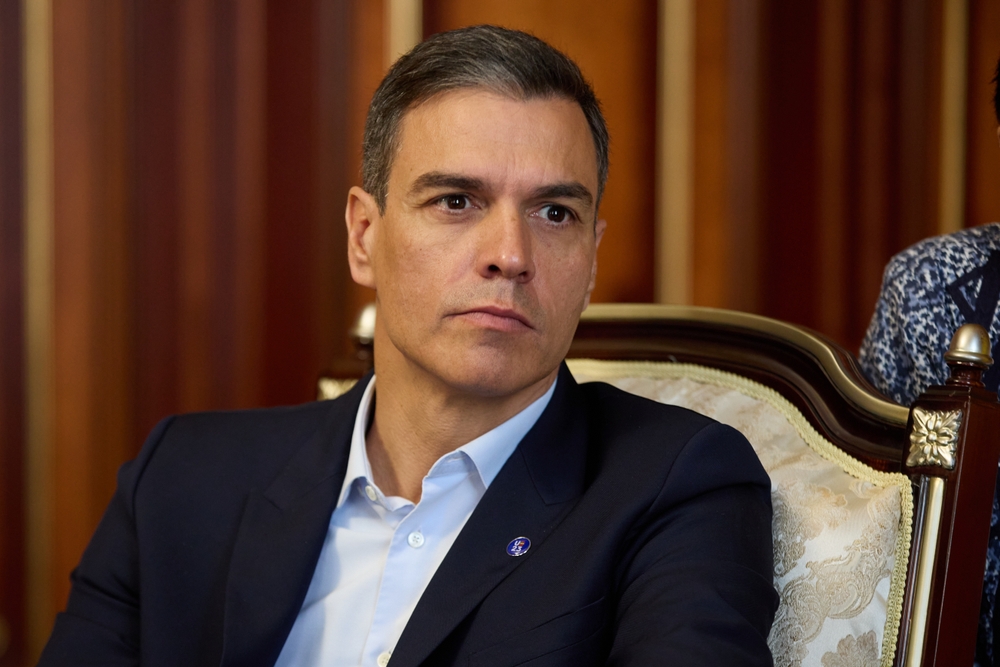
Pedro Sánchez Prime Minister of Spain

The president of the Spanish government, Pedro Sánchez, has delivered this speech in the Rada, the Ukrainian parliament

by Pedro Sánchez

Thank you very much.  Dear Mr. Speaker Stephanchuk, Distinguished Members of the Verjovna Rada,Excellencies, dear friends. I am very grateful to be here today, on this very special day for my country. Today, 1st July,  Spain assumes the great responsibility of becoming the rotating Presidency of the Council of the European Union for the next six months. And I wanted that the very first thing I did in my new capacity was to address the people of Ukraine through their Verjovna Rada. I wanted to tell you that we are and will be with you as long as it takes. I wanted to tell you that we will support Ukraine no matter the price to pay. That we will be with you in the achievement of your aspirations to be a free and sovereign  country that decides its own destiny as a member of the European family. In short, I am here to express the firm determination of Europeans and Europe to fight against the illegal, unjustifiable and unjustified Russian aggression to Ukraine. Once again, I have the honour to address all of you in this temple of Ukrainian democracy. My first address took place in February, on the first anniversary of Russia’s aggression against your sovereignty and territorial integrity. Things have changed since then. Today Ukraine is in the midst of the counter-offensive against an enemy that is showing signs of weakness. We have all seen the events of last week. They speak for themselves. And, if one side shows weakness, it is because in front of him there is someone who shows the opposite: determination. It's what I can see, right here, and right now: determination, strength and courage. What I can see is a whole country that refuses to be subjected and fights for its independence with immense dignity. I know the price to pay is enormous. Especially in human lives lost. Nothing I can say here today can comfort a family that has lost a daughter, a son, a mother, a father or a husband. Men and women who gave their lives defending a free and democratic Ukraine.  Still, I want to do it from the bottom of my heart on behalf of my country, Spain. A country that mourns with you. A country that condemns every Russian attack against Ukrainian civilians, like the one at Kramatorsk. Victoria Amelina, a Ukrainian writer was there. Severely injured, now fights for her life. Victoria was close to the front line, because she wanted to document the tragedy. She wanted to collect the memory of infamy. The lost heritage. The broken lives. The crimes committed. We need women Victoria Amelina, to write history. To tell the facts as they happened and preserve the memory of those who suffer this tragedy. Excellencies, dear friends, we do not forget that the European aspiration of the Ukrainian people was one of the excuses that triggered the Russian reaction and, in turn, the invasion. It was only fair to honour this aspiration by granting you the status of candidate to the European Union. No one deserves it more than you, than Ukraine. However, I know that this is not an easy process, especially with an ongoing war. To become a member state requires changes, reforms and sacrifices. Not long ago, Spain faced this challenge as a candidate country. But, let me tell you, that the process to become an European Union member taught us important lessons. One of them is that undertaking reforms has a value in itself. Reforms make your governance and your economy better, more modern and transparent. They bolster international confidence and proximity. They attract investment. And, in time, they will grant you access to our European Union. A Union, which is more than just the largest internal market in the world. Which is, above all, a community of values: human dignity, freedom, democracy, equality, the rule of law and respect for human rights. Last week, the European Commission made a positive assessment of Ukrainians, of Ukraine’s progress concerning the required reforms. I congratulate you for the progress made, especially thanks to the legislative work of this Rada, and I encourage you to keep up with it. It is worth the effort. Congratulations. And of course we will be eagerly awaiting the report of the European Commission in the fall, which will set the basis for the future. Excellencies, We want a just and lasting peace in Ukraine. Only Ukraine can set terms and times for peace negotiations. Other countries and regions are proposing peace plans. The involvement is much appreciated, but, at the same time, we cannot accept them entirely. This is a war of aggression, with an aggressor and a victim. They cannot be treated equally. And ignoring the rules should in no way be rewarded. That is why we support President Zelenski’s peace formula, which is respectful with International Law and the UN Charter. Ukraine is paying a heavy prize in terms of destruction of cities and infrastructure. So, we need to make sure that the country is rebuilt, thus creating the conditions for its growth and prosperity. And we have already started. Today, Spain has decided to dedicate another 55 million euros, including offering 51 M€ through the World Bank Group to help finance Small and Medium Enterprises in Ukraine, as well as 4 M€ to the UN Development Program to provide schools in Ukraine with green-friendly and resilient energy systems. Reconstruction will take time and investment in many sectors. Spain is committed to accompanying Ukraine in this process. There are some areas, such as the railway infrastructure, in which our companies have the know-how that can make the difference. The Spanish government will support finance the necessary investments to adapt and upgrade infrastructures and productive sectors in your country. Yet, we understand that reconstruction and prosperity will only arrive if real, long-term security is achieved. My friends, in my view, it is clear that we cannot rely on the promises made after the Cold War anymore. We have to adapt to a different security environment, one in which concepts like peace, sovereignty or territorial integrity can no longer be taken for granted. The aggression on Ukraine has shown us that they need to be effectively defended. Not just with words, but with facts. Therefore, we will need to rethink the security framework to ensure that your country, Ukraine, will be able to live free from aggression or intimidation. As the President said, we are approaching the NATO Summit in Vilnius, which will follow on the commitments we made last year, in Madrid, the capital of Spain. Spain supports enhancing the political participation of Ukraine through the creation of a NATO-Ukraine Council, where you will no longer be an invitee, but a member, a full member. We are also in favour of enhancing the practical cooperation, to continue to adapt your defence sector to NATO Standards. These are, my friends, big steps forward that will be further discussed during the upcoming NATO Summit in Vilnius. Spain will continue to do its part as well: we are delivering more Leopard tanks, armoured personnel carriers and a field hospital with surgical capacity. We also continue to reach out to other countries and continents, to explain what is really happening here in Ukraine, but also to listen to their concerns, especially those related to food and energy security or insecurity, in this case. Excellencies, Last February, before my trip to Kyiv, someone in Madrid, in my city, was  wondering about the Ukrainian’s state of mind and asked me: “Do you think they are afraid?”. When I came back, after the visit, I had a clear answer to this question and I told them: Look, they are not afraid. They are going to win. It will take them weeks, or months. It will take tears, blood and sweat, but Ukraine is going to win this war. And they asked me “Pedro, Pedro, why?, why?”. And I said, “Because there are two battles. One happens in the battlefield. The other happens in the mind, because it’s a battle of ideas. And that one, the Ukrainian people have already won it”. Ukraine has chosen democracy in the face of those who despise it. Ukraine has chosen openness and freedom, in the face of those who fear it. Ukraine has chosen to sit, and discuss, and vote, and change, and evolve, in the face of those who only believe in force and obedience. Ukraine has chosen to be independent, to move freely, to trade, to invest, to prosper, to have hope, in the face of those who still have delusional dreams about old empires. The Ukrainian people have chosen the European way. The Ukrainian people ARE, you are Europeans. And you are Europeans not only because of a geographical imperative. You are Europeans by moral and spiritual commitment. So, dear friends. During this years, I have learned many things about Ukraine. Even some Ukrainian words. For instance, I have learned that "Mriya" (emriya) means “dream” in English, we say in Spanish Sueño. That was the name of the largest plane in the world, located at the Hostomel airfield when it was destroyed by Russian troops in February 2022. That plane brought medical supplies during the pandemic or carried humanitarian aid in natural disasters. It was a symbol, a pride for Ukraine. They destroyed the symbol, but they couldn’t destroy the idea. Now, I have learnt that Ukrainian engineers are already working on the reconstruction of that giant of the skies. Let me tell you that you are not just rebuilding an airplane: you are rebuilding a dream. One day, that dream will cross the skies again. And from there, here on the ground, we will see a new Ukraine reborn from the ashes of destruction. That’s what you fight for. You fight for peace, for security and prosperity for your children. And every Ukrainian soldier knows it. Russian soldiers fight because they are scared they will be punished if they don’t. They ask themselves everyday “what are we doing here?”. You are united, you stand on the moral high ground. They even rebel, as we saw a few days ago. That’s why they cannot win and you cannot lose. I came here today to tell you that Europe is open to those who make the choice. The European Union was built to prevent new wars. We chose to get together, to be “united in diversity”, and that made us stronger. Europe is with you, and you are one with Europe. Mui Yevropa! [¡Somos Europa!] Slava Ukraini [¡Viva Ucrania!]

Defense & Security
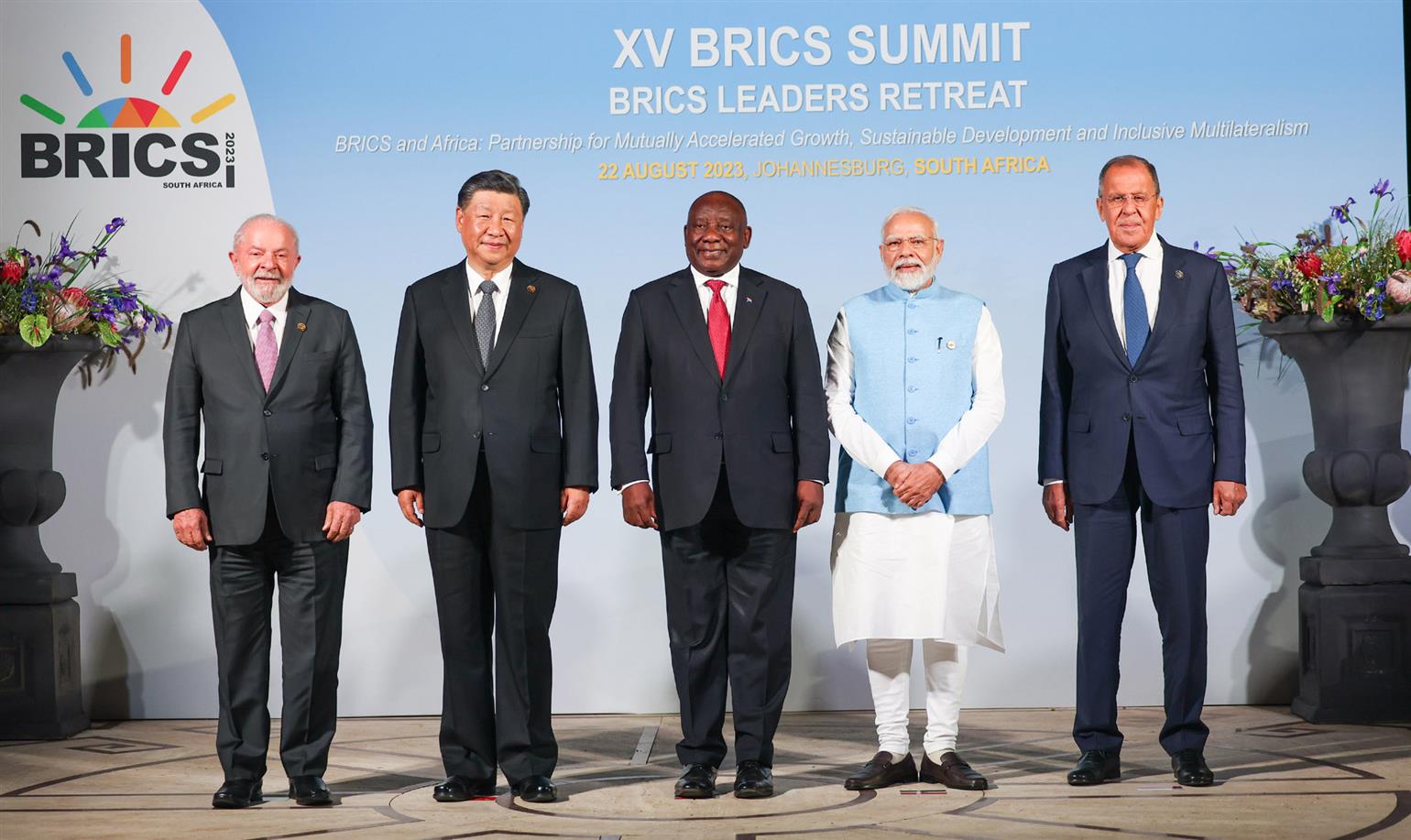
The leaders of four BRICS countries, Lula, Xi Jinping, Cyril Ramaphosa with Russian Foreign Minister Sergey Lavrov

BRICS rises

by Manoj Joshi

Now with 11 members, BRICS’ decision-making by consensus will be that much more difficultOnce upon a time, the BRICS were nothing but a slogan devised by Goldman Sachs’ economists to describe four emerging market economies to which South Africa was later added. But more than a decade later, the grouping, now with an investment bank—New Development Bank—of its own is besieged by dozens of countries of the Global South for membership.The Johannesburg summit of BRICS has drawn unusual interest around the world. There was a time when it barely merited a mention in the western press, but now it has been the subject of major stories, in which some saw BRICS as brittle whiel others thought it was  seeking to challenge the G7 and the western world through a process of enlargement. While the BRICS puts itself forward as a unified face of the emerging economic powers, the reality is that within the organisation—which  is neither a trade nor military bloc—there is considerable jostling between two Asian powers who are developing a global imprint—India and China.BRICS expansion announced in JohannesburgOne of the issues where this jostling played out in was the BRICS expansion process. Reportedly, 40 countries have expressed interest in joining BRICS, though some 22 nations had formally expressed interest in joining the bloc. With the latest expansion, Iran, Egypt, Argentina, Ethiopia, Saudi Arabia and UAE have been offered membership effective 1 January 2024. That there was a bit of lobbying is evident from the fact that  last week, President Ebrahim Raisi of Iran spoke on the phone with Prime Minister Modi. According to the official spokesman, they talked about “regional and bilateral matters” as well as issues like the expansion of BRICS. The two leaders later met in Johannesburg as well.There was some doubt at the beginning of the summit as to whether expansion would actually be announced. This was because of the intense negotiations over the names of the proposed members.Earlier this month, an Indian official spokesman had clarified that India believed that BRICS expansion should take place through “full consultation and consensus” among members of the bloc. In his speech at the summit, the Prime Minister made it clear that “India fully supports the expansion of the BRICS membership. And welcomes moving forward with consensus in this.” On Thursday, too, there were reports that there were “eleventh hour negotiations” over the potential new members. Reuters claimed that an agreement had meant to be adopted on Wednesday, but it was delayed by India’s introduction of new criteria for membership. On Tuesday President Lula of Brazil had made it clear that his country was did not want to be any kind of “a counterpoint to G7, G20 or the United States. We just want to organise ourselves.”In an organisation that acts through consensus, getting in is difficult, but global politics is about give and take and a certain degree of persuasion and arm twisting does go on. So does the notion of giving a push to countries who you see eye to eye with and blocking countries that you don’t. Sometimes the negotiation involves two powerful players splitting the difference and negotiating the entry of countries in such a way that a balance of sorts is maintained. This is the way India became a member of the Shanghai Cooperation Organisation dominated by China. India’s case was pushed by Russia to balance China, and Beijing finally agreed to have India, if Pakistan, its “iron” friend, could become a member at the same time.Another element in such organisations is that countries seek membership not just to further their interests but to block the ambitions of others. In this way, China sought and became a member of the Asia Pacific Economic Cooperation (APEC) arrangement and once in there, it has used its vote to block efforts by the United States (US) to shape APEC into an Asia Pacific Economic Community in the manner of the European Economic Community that finally gave rise to the European Union.India has been reportedly joined by Brazil in resisting the haste and suggesting that new members may first be given the status of observers. The Indian position has been that while it was all for expansion, there was need to develop and standardise mechanisms to consider the applications and move on them.As of now, BRICS is more of a symbol than a unified and purposive entity. True, it has members like China and India who wield substantial power in their respective regions, but the entity itself hardly functions as an economic bloc of any kind. It does have the New Development Bank headquartered in Shanghai, which, in 2021, sharply stepped up its disbursements to US$7.6 billion, with its total disbursements being of the order of US$32 billion for infrastructure and sustainable development in four continents . The initial subscribed capital of the bank is equally distributed among the BRICS members.China’s role in and vision for BRICSBeijing, no doubt views BRICS as a means of offsetting US global power. In a page 2 commentary in the People’s Daily by someone with the nom de plume  “Huanyu Ping,” said that currently the world governance system was “at a historical turning point”. The growth of the emerging market and developing countries has enhanced their influence. But the western-dominated global order was a “stumbling block to world economic development and social progress.” The multilateralist BRICS was therefore providing a model for decisions to be made on the basis of equality and consensus, as testified by the share-holding of the New Development Bank. They also actively promoted reform of the global governance system and upheld the validity of multilateral and multipolar solutions.There should be no doubt about the weightage China has within BRICS. It has a GDP more than twice the size of the other members combined. Its economy may have slowed down but it is still growing, with IMF predicting a 5.2 per cent growth as against 5.9 for India. The others are growing at less than 1 per cent.  It has played a significant role in getting together two of the new incoming members, Saudi Arabia and Iran. In 2022, China was the largest trading partner of South Africa, India and Brazil.There should be little doubt that China sees Africa as a battleground in the global struggle against the US. In a meeting with President Cyril Ramaphosa on Tuesday, President Xi spoke of the urgent need for China to promote cooperation with Africa because of “changes and chaos” in the world, an indirect allusion to the US. He took up the theme in the Business Forum meeting that he did not attend, but where his speech was read out: “Right now, changes in the world, in our times, and in history are unfolding in ways like never before, bringing human society to a critical juncture.”China may swear by multilateralism, but it is not really comfortable with it. What it is seeking to do is to shape institutions like BRICS in its own image for countering its principal rival, the United States of America. In this, it is unlikely to get Indian support, so what it is trying to do is to pack its membership with countries where it has already made significant investments through its Belt & Road Initiative. Such countries would be inclined to follow its global agenda, which is now manifesting itself as the Global Security Initiative, Global Development Initiative and the Global Civilisation Initiative.The Chinese aim, according to James Kynge in the Financial Times is two-fold. The first is to ensure that large parts of the world remain open to Chinese investment and trade in an environment where western attitudes are increasingly hardening. And the second is to have a bloc of votes in multilateral forums like the United Nations (UN) to project Chinese influence.In the turbulent world, China’s path is not an easy one. Its economy is slowing down and its global security calculations have been roiled by the Russian adventure in Ukraine. Further, in promoting the Global South it runs up against India which has its own ambitions, as well as the backing of the west. Even while promoting the UN and its institutions, China is not interested in any serious reform there because that could result in a bigger role for its adversaries like Japan and India.Done increases with the expansion of its membership. Now, with 11 members, things will be that much more difficult. The BRICS countries have economies and geopolitical profiles that are hugely divergent, and which makes consensus-based decision-making hugely difficult.

Defense & Security
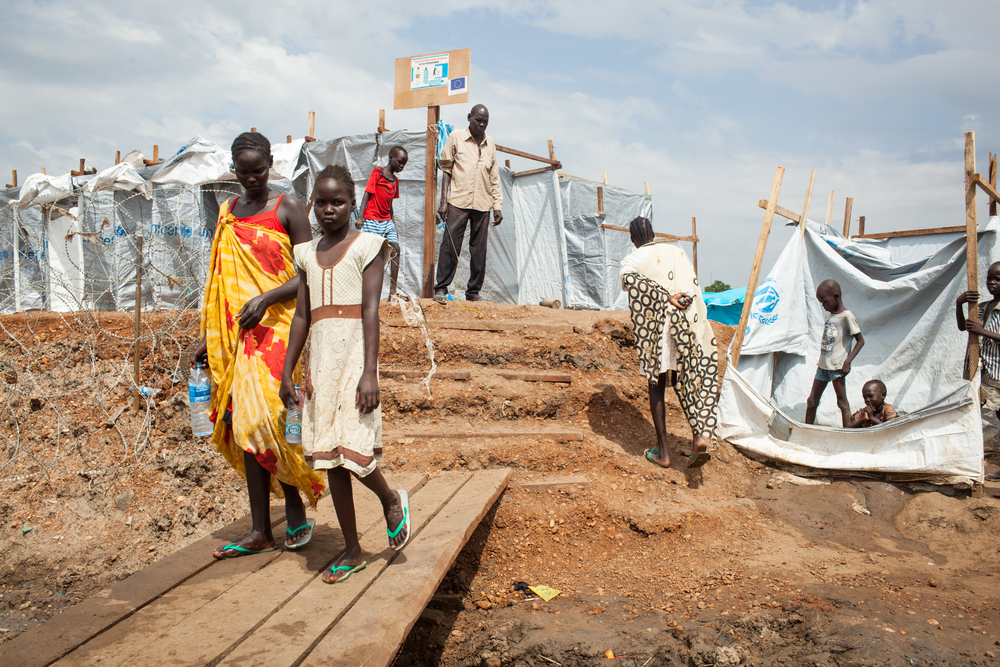
South Sudanese children walk around in a refugee camp

Nowhere to run: The dilemmas of Eritrean refugees in war-wrecked Sudan

by Lovise Aalen , Adam Babekir

War and conflict in Sudan have forced more than 4.5 million people to flee. Many of those fleeing from the war are themselves refugees, who originally came to Sudan to escape crises in their home countries. Eritreans are among the largest and longest living groups of refugees in Sudan. Many cannot return home, leaving them in a limbo.  Sudan as a transit hub and a new home The majority of migration studies in the Greater Horn of Africa point to Sudan as the main crossing point for migrants from the region. Migrants from Ethiopia, Eritrea and Somalia that are crossing the Sudanese border remain in Sudan for a while and then migrate to Europe, Gulf countries, and Israel. Khartoum is considered as the main transit hub for migrants from the Horn, including Sudanese migrants hoping to make their way to Europe. Thousands of the Eritreans, however, have not only seen Sudan as a transit but as a new home. There are an estimated 134,000 Eritrean refugees and asylum-seekers in Sudan. Some of them arrived as early as the 1960s and have since remained. Most of them live in the camps in Eastern Sudan bordering their country of origin, around 100,000 in Kassala state and 14,000 in Gedaref state, while some of them live in towns, among them around 10,000 in Khartoum state. No longer a safe haven Before the war erupted in Khartoum, many Eritreans had sought permanent refuge in the city, or using it as a pit stop on the journey onward through Libya with hopes of reaching European countries, risking their lives crossing rivers, deserts, and finally the Mediterranean Sea. These young Eritreans, both men and women, had escaped from forced conscription into the Eritrean army. They ran away from an extremely repressive state described as Africa’s equivalent to North Korea, or sought alternatives from a future without economic prospects. Many of them worked in Khartoum’s hospitality or informal business sectors, and have been victims of harassment and arbitrary detention by Sudanese security, aiming at cracking down on irregular migration. When the war broke out, they were among the civilians caught in the crossfire between the Sudanese Armed Forces (SAF) and the Rapid Support Forces (RSF), with an immediate need for protection and humanitarian assistance. Returning to Eritrea could seem like one of the most obvious ways out of the dire situation. But for many Eritreans, returning to their country of origin is not an option. Going back home would imply no protection from severe human rights violations by the Eritrean regime,  such as arbitrarily detentions, forced disappearances, secret prisons, and collective punishment of relatives of those who ran away from military service. Eritreans interviewed by Adam Babekir in Gedaref all state that they would not go back. A 28-year-old Eritrean woman, who was born in Sudan, expressed: Due to this war in Khartoum, some of my friends fled to other Sudanese towns like Kassala or Wad Medani, and those who have enough money to South Sudan. Most of the refugees are not willing to return to Eritrea because I have heard from a friend of mine from Eritrea that the situation is very bad there. So I will stay here till peace is restored in Khartoum. This is my hope and dream. Precarity in Eastern Sudan According to the Commission of Refugees (COR)’ local office in Gedaref town more than 4000 refugees (Ethiopian and Eritrean) arrived there after fleeing the fighting in Khartoum. Some Eritrean refugees have temporarily settled in the Um Gulja closed camp at Amna Aregawi Church while others are staying in Gedaref town benefiting from their relatives’ network. The refugee camps in Sudan are run by the COR and the UN Refugee Agency (UNHCR) collectively. COR is facing capacity constraints due to the evacuation of UN staff and other humanitarian actors from Khartoum and elsewhere. The evacuation of some UN staff, and NGO employees in addition to the influx of refugees into other states resulted in a heavier work oad and resulted in capacity constraints for COR, and the UNHCR has proposed to relocate the refugees to other camps in Kassala and Gedaref states. The majority of Eritrean refugees who has arrived in the Um Gulja camp are women and children who need essential services such as food, water, sanitation and protection. But there is no service provider or referral pathway for them even though they are in dire need of physical support. The Um Gulia closed camp in Gedaref is infamous for lacking provision of basic services. However, the only alternative camp for Eritrean refugees is El Shagarab camp, Kassala State, Eastern Sudan. A 25 -year-old Eritrean women who was born in Khartoum said: Conditions are very bad here in Gedaref. No one helps us to get medicine, food, and cover basic needs. Even my sister's husband, who lives in Germany, has difficulties sending money to us due to closed cash transfer agencies. To me, returning to Eritrea is an impossible option, so I am thinking about travelling to Egypt. Yet, the vast majority of of the Eritrean refugees are reluctant to be relocated from their current location to the Shagarab camp. The Shagarab camp is remotely located, far away from any nearby town. Therefore this option severely limits the freedom of movement for the refugees. The camp also lacks many facilities that are available to the refugees in Gedaref. Many of the refugees are also hopeful that the UN will work for a third country resettlement solution, eventually enabling them to go to Europe or Canada, and have appealed to the UNHCR to act accordingly. A 27 -year-old Eritrean women born in Khartoum confirmed that ‘COR and UNHCR have proposed for us to stay in refugee camps in Kassala state, but we have requested the UNHCR to take us to a third country, as there is no future for us in Sudan.’ She added that if she suffers more than this, and if the war in Sudan does not come to an end she is considering travelling to Europe via Libya. Her preferred destination is Europe, as she expects Western communities to respect women and their rights: ‘We are very strong women with promising potential in our countries, but our societies do not empower women.’ An immediate need for protection The protection of civilians, including both citizens and refugees, can only materialize through the cessation of hostilities, an opening of safe passage to humanitarian aid, and engagement in  comprehensive dialogue between all parties. For this to happen, international bodies such as the African Union, the Intergovernmental Authority on Development (IGAD), the UN and the TROIKA countries consisting of Norway, the United Kingdom and the United States must continue to exert pressure, and provide technical help if negotiations materialize. Locally, in Eastern Sudan, COR must work with the UNHCR and all relevant stakeholders to provide safe passage out of conflict areas such as Khartoum to other parts of Sudan and must provide effective services to the Eritrean refugees who wish to stay in the country.

Defense & Security
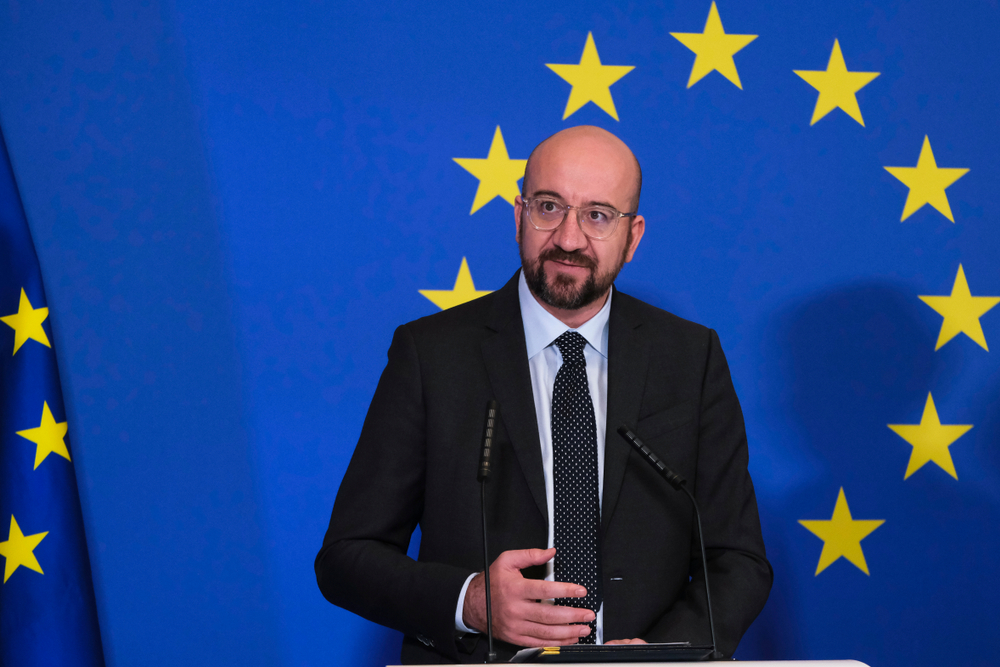
Charles Michel, President of the European Council

Video message of President Charles Michel for the Third Summit of the Crimea Platform

by Charles Michel

Dear President Zelenskyy, dear Ukrainian friends, Two years ago I represented the EU at the first international summit of the Crimea Platform. And I stated clearly that Ukraine’s territorial integrity must be fully restored. And this applied to Crimea and this applied to the region of Donetsk and Luhansk. And I stand by that today. Since Russia invaded your country, you have suffered nearly 550 days of death and destruction, and Crimea is being used as a strategic springboard to launch its brutal attacks. And last September, just like they did in Crimea, Russia tried to illegally annex Donetsk, Luhansk, Kherson and Zaporizhzhia, and this is again a cynical attempt to grab more land, to steal the identity of Ukrainian citizens, to abduct your children and to drive people from their homeland, like they are doing to the Tatars. I pay tribute to Mustafa Dzhemilev, the leader of the Crimean Tatar people, who travelled to Saudi Arabia with you, President Zelenskyy, in search of peace. Russia is perfecting the toolbox of terror and persecution that they applied in Crimea over nine long years, and they are now committing atrocities in cities and villages in the whole of Ukraine, many amounting to war crimes. The EU will continue to call for full accountability for these crimes, including for the crime of aggression, and will not recognise any illegal attempt to change the status of Ukraine’s territories, including the Autonomous Republic of Crimea and the city of Sevastopol, because respecting the sovereignty and territorial integrity of countries is a basic principle of the UN Charter and that’s why we support you, President Zelenskyy, and your peace formula based on these very principles. In Ukraine you are fighting for your freedom, you are fighting for your future and for your homeland, and in the EU we know you are also fighting for our common values. And that’s why we have imposed massive sanctions against Russia and that’s why we are supporting you with weapons and ammunition, and we will strengthen this support. We are also helping to meet your humanitarian needs, and we are determined to back your country with strong financial support. We stand with you in your fight for freedom, and we will stand with you as you rebuild your country. Our total support for Ukraine amounts to more than €76 billion. And we are preparing a multiannual financing plan of roughly €50 billion. Russia also continues to weaponise food, including by blockading and attacking your seaports. And this cruel Russian tactic hits the most vulnerable around the globe hardest. In the EU we continue to support the efforts of the United Nations and Turkey to get the Black Sea Grain Initiative back up running. And we are also strengthening our Solidarity Lanes through the EU to help get Ukrainian agricultural products to global markets. Ladies and gentlemen, this war is also a fight for your future, for your dream of a bright, democratic and more prosperous future within the EU. Last year Ukraine received EU candidate status. So your European Union future is no longer a question of if, it is a question of when. And later this year, the European Council will discuss the possibility of opening accession negotiations. And I am confident that the Ukrainian people and the leaders will rise to this historic moment. You can count on my personal support, you can count on the EU. We will stand by your side for as long as it takes. Slava Ukraini!

Defense & Security
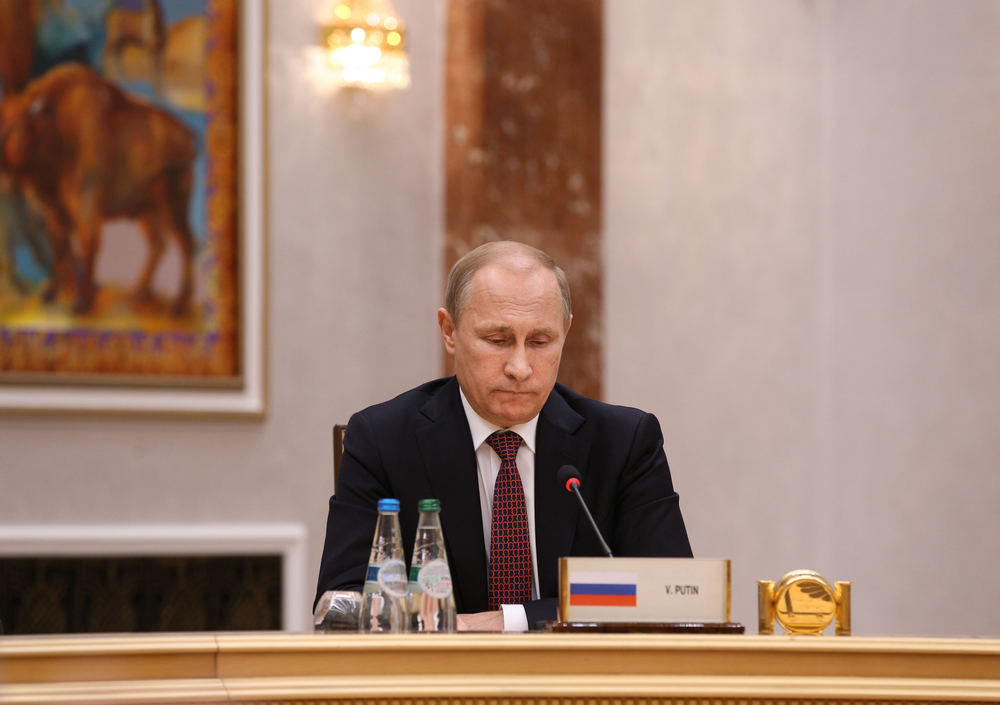
President of Russian Federation, Vladimir Putin

The United States, Europe, and Post-Putin Russia

by Mark N. Katz

Putin’s rule over Russia will come to an end at some point, but when it will end as well as what the policy preferences of his successors might be are uncertain. It would be in the interests of the United States and Europe to signal on what terms they would be willing to cooperate with a post-Russian leadership. Vladimir Putin has been the ruler of Russia since the turn of the century. He may remain in power through 2036, as the 2020 revision of the Russian constitution allows him to, or perhaps even longer. Then again, he may be ousted suddenly and surprisingly any day now, as the recent Wagner mutiny and the apparent lack of effective opposition to it within the Russian security services and public suggest is possible. Maybe he will decide not to run for re-election in 2024, though this does not seem likely. Sooner or later, though, Putin’s rule over Russia will come to an end. What is not at all certain, of course, is who will replace him and what sort of foreign policy the new leader will pursue. It would appear, though, that there are only a few possibilities. One is that Putin will be succeeded by someone just like him who will continue Moscow’s hostile policies toward Ukraine and the West in general. Another is that Putin will be replaced by someone within his circle that decides Moscow needs to cut its losses in Ukraine and rebuild good relations with the West both to revive Russia’s economy and to hedge against an increasingly powerful China. While this might seem unlikely, Russian and Soviet history are replete with examples of new autocratic leaders dramatically reversing key aspects of their predecessor’s policies. Yet another post-Putin possibility is an authoritarian leader who wants to cut Moscow’s losses in Ukraine but who sees the survival of both autocratic rule and even Russia’s territorial integrity as best served through increasing reliance on Chinese support and guidance. It is also possible that Putin’s rule will end as a result of the rise of democratic forces which want Russia to become part of the West and cooperate or join the EU or even NATO. For this scenario to occur, there would have to be a dramatic change of heart within the Russian security services about what is in Russia’s and their own interests. While this seems highly unlikely, there have been examples in other where military-backed autocratic rule gave way to democracy. Finally, whether Putin’s successor is autocratic or democratic, he or (much less likely) she may simply be weak as a result of having to deal with a compounding internal crisis resulting from Putin’s policies, including popular discontent over Russian casualties in Ukraine, economic decline, and secessionism in non-Russian or even Russian regions of the Russian Federation. What Can Europe and the United States Do? Russia’s post-Putin leadership and its policy preferences, whatever they may be, will have an enormous impact on Europe and the United States as well as other countries and regions of the world. But while obviously they hope to see Putin succeeded by a new leader who will end the war, withdraw from Ukraine, and improve Moscow’s ties with the West, Europe and the United States will have very little ability, if any, to affect the post-Putin transition — especially if the person who succeeds  him comes from within his inner circle. Putin has sought to rally Russian public support for his war in Ukraine through claiming that the West wants to bring about the breakup of Russia. Whether Putin himself actually believes this, there appears to be no possibility of changing his mind about the West being his implacable enemy. The United States and Europe, though, would do well to signal to whoever might succeed Putin that this is not the case. Specifically, Washington and Brussels should make clear how they would like to relate to post-Putin Russia. Such messaging should include the following points: Just as the United States and Europe support the territorial integrity of Ukraine, they also support the territorial integrity of Russia. The West has no interest in seeing the breakup of Russia. The United States and Europe will lift their economic sanctions on Russia (including those on Moscow’s exports of oil and gas) in response to Russian withdrawals from Ukrainian territory. The more occupied territory that Russia returns to Ukraine, the more Western economic sanctions against Russia will be lifted. While Europe and the United States would like to see Russia become a Western-style democracy, they acknowledge that whether it does so or not is an internal matter which Russians alone will determine. The United States and Europe are prepared to have normal relations with any type of Russian government — democratic or autocratic — which is willing to behave non-threateningly toward the West, Ukraine, and other former Soviet republics. While they respect the Russian government’s desire to continue cooperating closely with China, Western governments want Moscow to know that the United States, NATO, and the members of the Quadrilateral Security Dialogue (US, Japan, India, Australia) are willing to discuss common security concerns about China (which many Russians besides Putin have had) if and when the new Russian leadership wishes to discuss them. The articulation of these messages by the United States, Europe, and, regarding the last point, Quad governments, will not magically lead the Russian people, much less Putin’s inner circle, to oust Putin and embrace the West. Indeed, it is possible that a Putin loyalist successor will spurn them. But if the United States and Europe do not signal under what terms they would be willing to cooperate with a post-Putin leadership, then Washington and Brussels may reduce the chances that a post-Putin leadership will be willing to cooperate with the West.

Defense & Security
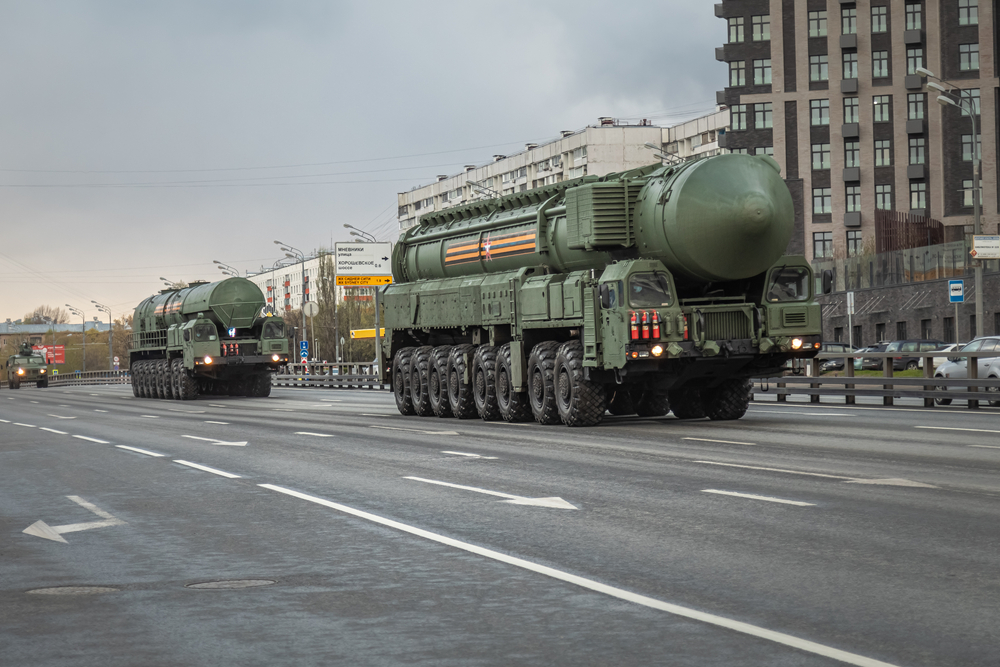
Topol M Missile Transporter

Don’t Trust and Don’t Verify. New Normality for New START

by Alexander Yermakov

The steps taken by the parties following Russia’s suspension of the New START, signed in Prague in 2010, as well as statements made by key officials, make it possible to offer a cautious forecast of the medium-term future of arms control between the two leading nuclear superpowers. February freeze In late February, the consistent degradation of relations between Moscow and Washington has also affected strategic nuclear arms limitation: during his address to the Federal Assembly, Vladimir Putin voiced his decision to suspend the New START, which was promptly implemented with a respective law taking effect on February 28. Ironically, almost exactly two years earlier, the prolongation of the treaty was formalized (even a little quicker). It was not possible to reach agreement on prolonging the treaty with the Trump administration, so after Joe Biden’s arrival to the White House, the expiration of the New START was a couple of weeks away. As a result of the decision made, the validity of the Treaty was extended until February 5, 2026. However, despite such an optimistic start to the dialogue with the new administration, active work on the future of post-START strategic arms control never got underway. The reason was both the rather significant time specified in the treaty (that would expire during the next presidential tenures in the United States and Russia) and the long list of accumulated problems in the field of ensuring strategic stability. Russia was increasingly concerned about further limitations on strategic nuclear weapons, pointing to the nuclear missile capabilities of the America’s NATO allies—the United Kingdom and France, as well as to the growing countervailing capabilities (aimed at defeating the nuclear triad and control centers) of long-range precision non-nuclear weapons. Hand in hand with the latter was the expansion of NATO and the spread of its military infrastructure even closer to Russia’s borders. Another serious concern was an uncontrolled development of global ballistic missile defense (BMD), even if in the distant future. In the event of further reductions in Russia’s strategic forces, these factors could seriously undermine its confidence in the ability to launch a guaranteed retaliatory strike with a force sufficient to ensure reliable deterrence. On the other hand, the U.S. was reluctant to see further reductions in strategic nuclear weapons without them being linked to other issues. First and foremost, Washington is concerned about the radical growth of China’s nuclear capabilities—under the Trump presidency, Beijing’s inclusion in strategic arms control was, for some time, a mandatory condition for as much as extending the New START. Under the Biden administration, this issue was still in the initial stages, implying a softer touch, though it has never completely left the agenda and would probably rise to its full scale, should substantive negotiations commence. For two years by now, the U.S. top brass has been talking about the need “to deter two virtually equal adversaries simultaneously and independently”, as the most difficult and previously unprecedented challenge. Besides, Washington is concerned about Russia’s much larger and more advanced arsenal of tactical nuclear weapons. In the inception of a long journey possibly leading to a new agreement or a set of agreements, a format for a comprehensive bilateral dialogue on strategic stability was announced in June 2021. However, only two face-to-face meetings were eventually held within its framework, which was clearly not enough. Once the Ukrainian crisis broke out, the U.S. announced the suspension of this format. A simple coincidence also played a negative role in the fate of the treaty as inspections thereunder were suspended in the early 2020s through a coordinated decision due to the pandemic. They would probably have been reinstated if the situation were normal in 2022. The parties were already negotiating extra security measures until a sharp deterioration of bilateral relations affected this purely technical dialogue (which it was in the beginning). A separate problem was the Western sanctions against Russia that included a ban on commercial and government aircraft flights from Russia in the airspace of the Western nations. Although Washington later stated that it would have allowed an aircraft with inspectors on board to fly in, it seems that it could not guarantee operational approvals from its junior allies, which meant that the suddenness of inspections would have been compromised. In the very least, there is no talk of equality among the parties to the treaty. The comments made by the U.S. side that Russians could use commercial flights with connections in third countries cannot be seen as anything other than boorish. Consultations on finding a way out continued, when in August 2022 the U.S. side decided to cut the Gordian knot by notifying the Russian side of an urgent inspection as if everything had been resolved. Russia immediately responded to this “attempted assault” by suspending inspections. An opportunity to resolve the differences could arise during the meetings within a special format, the Bilateral Consultative Commission (BCC), which was to be held in Cairo, Egypt, in late November or early December, but Moscow refused to participate at the last moment. As a result, the New START was deprived of the main elements of compliance verification and the mechanism of conflict resolution. Amid this situation, the denunciatory voices of American lawmakers and hawks from other spheres were getting ever louder about Russia’s violation of the New START. After these steps had been taken, declaring a withdrawal from the treaty would seem a logical step to secure and legitimize the de-facto state of things. But the Russian authorities chose not to burn all boats and—instead of withdrawing from the treaty—suspended it, demonstrating readiness to resume participation. However, it must be admitted that the conditions put forward for resumption, namely “the repudiation of hostile policies towards Russia by the United States and its allies”, are rather vague while it is hard to imagine that their fulfilment can seriously be expected in the foreseeable future. The most important difference between the suspension of the New START and a complete withdrawal from the treaty was the cessation of “information exchange” within its framework while maintaining quantitative indicators of deployed carriers and warheads of strategic nuclear forces (SNF). (Not only do the parties exchange general quantitative indicators but they also regularly report on changes in the status of components in their nuclear forces.) Moscow has repeatedly emphasized this at all levels, from the initial presidential statement to statements on the part of lawmakers. The same is expected from Washington—in fact, even the first detailed official commentary on the suspension contained a call on the United States to “refrain from steps that could prevent the resumption of the New START Treaty.” The U.S. took a negative view of the Russian initiative, accusing Russia of violating the treaty and calling for a return to compliance. Yet, those accusations would have been released anyway. That said, administration officials tried to keep a calmer tone. In the following months, the United States announced that it would stop providing Russia with relevant information on the status of its strategic nuclear forces (SNF), but it did not formalize the suspension of the treaty, which drew ironic rebukes from Moscow. This may be due to Moscow’s reluctance to both break the New START and “legitimize” the format of “suspension” as the United States always claimed that Russia had no right to take such actions because they were not directly stipulated in the treaty. Recent statements of American speakers—in particular, the speech of National Security Advisor Jake Sullivan that drew a lot of attention in the field and among Russian politicians—make us think that Washington, as of today and in the short term, has resigned itself to the current state of affairs. It appears that the Biden administration will not formally withdraw from the treaty and will be fighting any attempts on the part of lawmakers to force it to do so. Washington, like Moscow, has repeatedly emphasized that it does not plan to exceed the stipulated ceiling of deployed strategic nuclear forces, proposing to think about agreements for the post-START period, separating strategic arms control from the broader scope of problematic issues in relations. Fashion for the 1980s Although some Russian speakers have criticized Sullivan’s references to the times of the Cold War, when the two countries were engaged in arms control despite their confrontation, we see in fact a situation that closely resembles the fate of the 1979 Treaty on the Limitation of Strategic Offensive Arms (SALT-2). The agreement, which has no legal basis for political reasons, continues to be implemented as mutually beneficial from a practical point of view. In the absence of an inspection regime, the parties have no other option but to do business on trust: It is particularly ironic since mutual trust has been at a very low ebb. A similar situation could be observed in the 1970s and 1980s. Despite some détente in the Cold War throughout the 1970s, direct on-site inspections were unthinkable. Concluding the 1972 Provisional USSR-U.S. Agreement on Certain Measures to Limit Strategic Offensive Arms (better known as SALT-1, although it would be more pertinent to include the ABM Treaty in that acronym), the parties undertook a five-year cessation of the quantitative build-up of launchers for intercontinental ballistic missiles (ICBMs) and ballistic missile submarines (SSBNs). To monitor compliance, it was proposed to use “national technical means of verification,” a mild euphemism for satellite reconnaissance. To clarify that this involved nothing more, it was stated that means of control should only be used “in a manner consistent with the generally recognized principles of international law”: Only 10 years had passed since the failed flight of F. Powers, so aerial espionage was a very real threat. On the other hand, the countries pledged not to interfere with each other’s satellite reconnaissance, including measures of structural and facility camouflage. It is noteworthy that these articles had been migrating from one agreement to the other until the New START, where they are quoted verbatim (except for the clarification that ICBM camouflaging was permitted on a limited scale). It was emphasized in the very name and text of SALT-1 that the treaty was temporary, pending the conclusion of a more profound agreement. In June 1979, the Strategic Arms Limitation Treaty (SALT-2) was signed, and that one already stipulated specific numerical caps and even an onset of a cautious process of arms reduction. However, U.S. lawmakers—partly because of the domestic struggle with the Carter administration, partly because of their hawkish views and distrust of the USSR—began to oppose the entry of this treaty into force quite vibrantly. One of the most important reasons for criticism was the lack of effective verification tools, which was more important than before, since not just the carriers were limited, but partly also their combat load. In October, a big stir caused by an “unexpected discovery” of a Soviet brigade in Cuba played out, while Soviet troops were marched into Afghanistan on December 25. Under those circumstances, in the year of presidential election, it was political suicide to continue insisting on the ratification of SALT-2, and Jimmy Carter told the Senate a week later that he no longer thought it necessary because of the altered environment. However, neither this, nor the arrival of Ronald Reagan in the White House a year later, who being one of the most convinced anti-Soviet American presidents opposed the treaty during his campaign, prevented its de-facto observance, even if not de-jure. SALT-2 was to remain in force until late 1985, when it was to be replaced by a more substantive treaty. The initial total number of carriers was limited to 2,400, and to 2,250 by early 1981. The USSR, which declared 2,504 carriers at the time of signing, had to reduce a small part of that fleet in two stages, which it did not do, given the U.S. refusal to ratify the treaty. Even so, the Soviet Union did not exceed the initial quantitative cap, while actively replacing obsolete systems with new, more advanced ones. The U.S. was initially within the limits (declaring 2,284 carriers at the time of the conclusion) and exited them at the end of November 1986 in the process of rearming the B-52 family of bombers with new cruise missiles. Thus, absurd as it may seem, the treaty, while not finalized, was quite successful. Yes, there were mutual reproaches within its framework such as when the USSR openly played the hypocrite by presenting the mobile ICBM RT-2PM Topol (SS-25 «Sickle») system as a simple upgrade of the old RT-2P (SS-13 «Savage») missile, and the U.S. began “research” towards a global missile defense system. Yet, these actions were a lame excuse for an aggressive demarche by the opposite side in the form of initiating a large-scale, dangerous conflict through an attempt to create a preponderant quantitative build-up of strategic nuclear forces. In all candor, U.S. military argued that Topol was violating the letter of SALT-2, while strengthening strategic stability because that system was optimized for dealing a retaliatory strike. However, such “business on trust” had limited potential, especially in the midst of a chronically negative attitude of U.S. lawmakers towards this approach to strategic relations with the USSR, as congressmen were looking for an excuse to publicly bash the “naïve” executives, who were outsmarted once again. As in the case of SALT-2, the agreements that the U.S. presses for sometimes fall victim to political games. Under the Reagan administration, the U.S. began pushing for detailed on-site inspections that should accompany the agreements on strategic arms control and reduction. The motto of the U.S. side was “trust but verify” as the American president asked his advisors to collect Soviet jokes and traditional Russian sayings for him to make an impression during the negotiations. He liked the phrase “Doveryai no proveryai” (“trust but verify”) so much that he kept reiterating it time and again so that Mr. Gorbachev seemed to be sick of hearing it. Time wheel Since then, U.S. interest in the inspection of strategic arms reduction agreements has not diminished. The collapse of the USSR and subsequent events could not help but play a role in this as one can still find the opinion that only a watchful oversight from overseas saved the Soviet nuclear legacy from being “dragged apart”. In the professional community, there even remains the maxim that “the U.S. wants inspections to be included in the START, while Russia needs caps.” It seems that the U.S., for the near future, is losing the part of the treaty that it values so much, which is surely fraught with its complete cancellation on its own initiative. At least, the “hawkish” part of the political leadership is already calling for this move—thus, in May, a bill under the telling title “No START Treaty Act” was entered in the Senate: It requires that the country officially withdraw from the New START no later than one year after the document’s approval. The given bill is interesting in its own right as a likely vision of arms control by Washington hawks, but it is worth being considered only if it gets further traction in Congress. What about the caps and why are they important for Russia, as the simplified formula from above suggested? Although there is no objective of maintaining strict quantitative parity with the U.S. in all parameters of the SNF, a significant superiority of the opponent in the number of SNFs would threaten the deterrence by maintaining the capabilities for dealing a retaliatory strike with the desired power, especially given U.S. allies possessing nuclear potential as well as a significant arsenal of non-nuclear cruise missiles. In the future, that may be accompanied by non-nuclear medium-range ballistic / hypersonic missiles. In this situation, limiting the upper ceiling (cap) of the Strategic Nuclear Defense Forces allowed more funds to be allocated for conventional weapons—obviously, this issue has only become more pressing for Russia over the past year. The START caps have not been fully used. According to the latest data, as of 1 September 2022, Russia had 540 deployed carriers out of 700 permitted under the Treaty. It is possible to commission 10 more Borey-type submarine missile carriers in one go, in compliance with within the agreed limits. Certainly, there is the issue of warheads, where Russian SNF is close to the permitted upper limits, but they could be distributed more evenly in the formation of the triad, increasing overall stability. In any case, this parameter is likely to decrease in the near future with the withdrawal of the heavy R-36M2 Voyevoda (SS-18 Mod 6 «Satan») ICBMs. In the conditions of preserved military nuclear complex, warheads are a lot less costly than carriers. It is not surprising that Russia currently has no need to announce plans to launch a quantitative strategic nuclear missile arms race, so that military expenditures could easily be reallocated to meet other urgent needs. The U.S. is also incapable of any significant build-up of arsenals in the medium term: In reality, they can only begin the process of refitting Minuteman III ground-based ICBMs from one warhead to three warheads, increasing the load of Ohio-class submarines from 20 to 24 Trident II missiles and refitting them with more warheads. Yet, the former would take a long time and would be visible, while this would probably be possible on only a fraction of the fleet. In response, Russia would also upgrade its missiles, so the benefit would be minimum. The option of increasing the strike power of the submarine component in the nuclear triad seems alluring for the United States, but the availability of “backup” warheads is then in question. Given the collapse of the U.S. military nuclear complex and plans to resume the serial production of thermonuclear charges in the early 2030s at best, it is unlikely that U.S. warehouses are bursting with serviceable warheads. In this situation, the scenario when both parties will generally continue to adhere to the provisions of the New START for as long as it is effective and maybe even longer, despite regular mutual reproaches, looks quite plausible, as in the case of SALT-2. Deputy Foreign Minister Ryabkov, speaking at the PIR Center, commented negatively on Sullivan’s proposals and noted that it might be worthwhile not to try create a complex treaty in strategic arms control including an inspection regime but rather to embark upon the path of “parallel unilateral self-restrictions.” After all, the largest initiative in history to reduce nuclear arsenals was just that. We are not talking about a series of STARTs—this rather refers to the elimination of huge arsenals of tactical nuclear weapons, whereby, by foreign estimates, the U.S. would get rid of all but a relatively small number of B61 bombs, whereas Russia would reduce them by some 90 per cent relative to the late Soviet Union levels (while still maintaining a significant advantage over anyone else in the end). In the late 2020s, however, the much-delayed radical upgrading of the U.S. nuclear triad should start bearing fruit, whereas Washington will be a lot more concerned over Beijing’s burgeoning arsenal. Today, it is difficult to predict which way to maintain strategic stability can be found in the new architecture of relations between the nuclear powers, which is much more complex than the U.S.-Soviet system. Perhaps, the future lies in the dialogue between the five major nuclear powers, which continues even at this challenging time, with the presidency just passed on to Russia.

Defense & Security
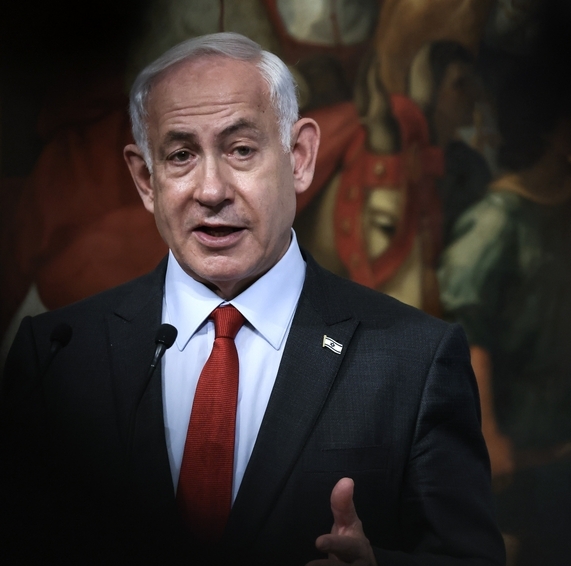
Prime Minister of Israel Benjamin Netanyahu

As contentious judicial ‘reform’ becomes law in Israel, Netanyahu cements his political legacy

by David Mednicoff

Israel’s parliament passed a law on July 24, 2023, that limits the Supreme Court’s ability to rein in government actions, part of a broader proposal by Prime Minister Benjamin Netanyahu’s government to strengthen the power of the country’s executive branch. The legislation has divided the country for months, sparking massive demonstrations. Opponents say the law threatens democracy; supporters argue it protects the will of the electoral majority. Netanyahu has been a political force and survivor in Israeli politics since the 1990s. Yet it makes sense to assess his career now in light of his recent hospitalizations, the latest coming in the middle of the court reform crisis. As a scholar of Middle Eastern politics, I think that Netanyahu’s long-term legacy will be based on three major developments. He has shifted Israeli politics rightward. He has stymied the emergence of a Palestinian state. He has increased Israel’s links to nondemocratic foreign governments. From democracy to theocracy Netanyahu served as prime minister from 1996 to 1999. He returned to power from 2009 to 2021, and once again in 2022. A country once known for left-leaning politics now has a right-wing government dominated by Jewish religious nationalists who spearheaded the efforts to curb judicial checks on executive power. Netanyahu began his first term as prime minister in 1996 with two main qualities – experience living and working in the U.S. and a record focused on Israeli’s military security. The first quality meant he understood American politics and interest groups. That helped Israel keep and enhance its historic strong support from the U.S. government. The second set him up for political success in a country in which the army is a key – and revered – institution. Massive U.S. foreign aid and military assistance over many years, along with Netanyahu’s political backing, have ensured that Israel’s army is far more powerful and well equipped than the armed forces of any other nearby country. Netanyahu typically portrayed himself as the only leader who could keep his country and its economy secure. Like other elected strongmen, he and his allies have gained support from, and encouraged, right-wing nationalists and divisive politics. With Netanyahu, that meant allying himself strongly with Jewish settlers – many of them Orthodox – in the West Bank in what international law considers to be occupied Palestinian territory. Because Orthodox Jewish families tend to be larger than more secular ones, Israel’s demography has favored politicians and voters who skew towards Netanyahu’s consistent support for the settler movement and broader focus on security. The longer Netanyahu has held power in Israel, the more allegations of corruption and criminal conduct he has faced. His personal legal vulnerability has likely reinforced his autocratic tendencies. Netanyahu’s 2022 government demonstrated its authoritarian tilt with the push for the judicial reform bill that will hobble the Israeli judiciary’s capacity to review legislation and government action. This reform appeals to important sectors of Netanyahu’s supporters who see the Supreme Court’s power as an inappropriate secular check on Israel’s increasingly pro-settler and pro-Orthodox government. But it has been divisive: The mass protests against the reform have even spread to prominent military personnel. Today’s Israel is marked by growing splits between secular, urbanized citizens near the Mediterranean coast and Orthodox and other settlers in or near the West Bank. The two groups have different visions for Israel’s future, with the latter citizens pushing the country in a more theocratic direction. This divisive battle over Israel’s nature owes a great deal to Benjamin Netanyahu’s leadership. Distancing Palestinians Netanyahu has long pledged to avoid compromising with Palestinians over control of territory and security in the West Bank and Gaza, areas under Israeli military control since 1967. And he allowed rapid expansion of Jewish settlements in the West Bank. He has rarely wavered from these two policies. Among his most tangible legacies is the physical barrier now separating West Bank Palestinians from Israelis, which gives Israeli authorities great control over how West Bank Palestinians enter Israel. The barrier has kept Israeli Jews from much contact with Palestinians other than during military service. This physical separation and a strong Israeli military presence have decreased Palestinian attacks within Israel and increased misery in Palestinian-controlled areas, for example, by making travel into Israel and other countries difficult. Netanyahu’s approach has minimized pressure on Jewish Israelis to make a final deal that would trade occupied land for a broader peace based on separate Israeli and Palestinian states. It has also deprived Palestinians of some basic liberties and opportunities, particularly in Gaza, which human rights activists have called an “open-air prison.” In fact, Netanyahu has used his formidable military to strike hard when he deems necessary in Gaza, the area between Israel and Egypt that Israel unilaterally returned to Palestinian control in 2004. Hamas, a Palestinian group that advocates military action against Israel, is in charge of Gaza. Reflecting the sentiments of his right-wing base, Netanyahu has had a generally consistent response to Hamas, and Palestinians more generally. Israel, he says, awaits Palestinian consensus that Israel is a Jewish state, with Jerusalem as its capital, and with no right for Palestinians to return to their pre-1948 homes in Israel. Many Palestinians find these conditions unfair, particularly as a precondition to negotiations. Coupled with the Netanyahu government’s vast expansion of Jewish settlements, many veteran observers doubt that a two-state solution with Israeli and Palestinian states remains possible. Reshaping Israel’s alliances Bolstering the Israeli right and undermining Palestinian statehood have accompanied efforts by Netanyahu to reshape Israel’s foreign relations. Those efforts stem in part from his relentless drive to curb Iran’s influence in the Middle East. Tehran’s leaders are unremittingly hostile toward Israel. Netanyahu has played up this hostility to domestic and international audiences, even urging the U.S. to attack Iran. The prime minister’s anti-Iranian campaign connects to strengthening ties to other countries, whether or not they are democratic, with an interest in combating Tehran and its funding of pro-Iranian militant groups, which encourage anti-Israeli politics and attacks in many Arab countries. Shared security goals, perhaps more than anything else, explain the significant willingness of the United Arab Emirates and several other Arab countries to establish diplomatic ties with Israel through the Abraham Accords of 2020. More generally, Netanyahu’s long time in office and his willingness to fan racist flames have endeared him to other rulers who embrace authoritarian or divisive tactics, such as Russian leader Vladimir Putin, Hungarian Prime Minister Viktor Orbán and former U.S. President Donald Trump. Yet Netanyahu’s policies are also causing major cracks in support for Israel from its central ally, the U.S. In recent years, Israeli and American Jews have diverged increasingly on the ethics and importance of Palestinian autonomy. In turn, organizations working with the Israeli government have tried to silence pro-Palestinian voices in the U.S., often by calling them anti-Semitic. Moreover, Netanyahu’s authoritarian tendencies and his government’s rightist and theocratic tendencies have amplified American voices of those who have been skeptical that Israel is democratic and who have called for reductions in U.S. support. Netanyahu has helped reshape Israel and the broader world in profound ways. It’s clear that the country’s military security and cooperation with major Arab states in the Middle East have expanded. But I see the darker side of the prime minister’s emphasis on military and security solutions in the erosion of hopes for Palestinians and challenges for Israel to remain democratic.

Defense & Security
Pita Limjaroenrat, Member of the House of Representatives of Thailand

Pita (and the People) Versus the Powers that Be

by Napon Jatusripitak

Pita Limjaroenrat has failed to secure approval as Thailand’s next prime minister. This underscores the stark reality: leaders in Thailand are not elected by the will of the people, but permitted to rise to power with the support or at least the acquiescence of the conservative establishment. In the prime ministerial selection process on 13 July, Move Forward Party (MFP) leader Pita Limjaroenrat was unable to secure the required parliamentary votes for approval as the prime minister. Despite having a strong electoral mandate and claiming the support of an eight-party coalition comprising 312 MPs, Pita encountered resistance from the appointed 250-member Senate. The Senate predominantly consists of handpicked loyalists affiliated with the generals who orchestrated the May 2014 coup d’état. Only 13 senators voted in favour of Pita’s candidacy. The outcome is not unexpected. Nonetheless, it signals a strong determination by the Thai conservative establishment to block Pita’s rise to power. The implications of this outcome remain unclear. The prime ministerial selection process is set to continue until its completion, with the next round scheduled for 19 July. During this period, General Prayut Chan-o-cha will continue to serve as the caretaker Prime Minister. General Prayut has already ruled himself out of contention with his resignation on 11 July from the United Thai Nation Party. He had recently announced his intention to quit national politics. Nevertheless, there are significant uncertainties surrounding Pita’s potential renomination as a candidate. Previously, a deputy speaker from Pheu Thai disclosed that the party intended to back Pita for the initial three rounds of voting before engaging in formal discussions with the eight-party coalition regarding other potential candidates. However, disagreements within the coalition could emerge due to concerns about the viability of supporting a candidate who has encountered significant opposition and experienced a substantial losing margin. Moreover, it is uncertain whether Pita and the MFP would be prepared to withdraw their pledge to amend Article 112 in exchange for backing from senators. Furthermore, there are pending legal cases against Pita that could potentially impact his prospects. These cases include the media-shareholding case, where Pita is alleged to own shares in a media company (this is prohibited under Thai law). The Election Commission submitted the case to the Constitutional Court on 12 July. There is another case regarding the MFP’s campaign to amend the lese majeste law, which has been accepted but awaits a verdict from the Constitutional Court. These legal proceedings could result in Pita’s suspension or disqualification from holding office, as well as the dissolution of the MFP. In effect, they could eliminate him from the race for the premiership. Given these challenges, a new contender may emerge. However, this depends heavily on the actions of the Pheu Thai Party, which is the second largest party in the MFP-led coalition. If Pheu Thai decides to remain a part of the eight-party alliance, it is possible that the party will nominate its own candidate, with Srettha Thavisin or Paetongtarn Shinawatra as likely options. Alternatively, if Pheu Thai foresees challenges similar to those faced by Pita in securing the necessary support, the party may explore the option of forming new alliances with other political parties in the Prayut administration. These alliances could serve two purposes for Pheu Thai: either providing it with the necessary support to advance its candidate for the position of prime minister or securing a stable footing and a sizable share of cabinet portfolios in a future governing coalition. Parties such as General Prawit Wongsuwan’s Palang Pracharath and Anutin Charnvirakul’s Bhumjaithai, among others, could be potential partners in such alliances. General Prawit, who served as the chair of the Senate selection committee, could potentially sway the support of some members of the Senate if he decides to extend his support to Pheu Thai’s candidate. However, General Prawit may also leverage his position to insist that Pheu Thai supports him as the prime ministerial candidate, rather than the other way around. Even without Pheu Thai’s backing, Prawit might command enough parliamentary support to secure the prime ministerial role, though this would result in a minority coalition government. In either scenario, if Pheu Thai decides to withdraw from the MFP-led coalition, it is likely to face significant backlash. Such a decision could further erode the party’s already dwindling support base, especially among those who voted for Pheu Thai based on its pro-democracy stance. However, if this strategic gambit were to materialise, it could be seen as an attempt by the party’s leader-in-exile, Thaksin Shinawatra, to reassert his influence in Thailand’s political landscape, even if this comes at the expense of his own party in the long run. Looking towards the medium to long term, the implications of these developments extend far beyond party politics. They have the potential to ignite substantial frustration and discontent, particularly among those who perceive Pita’s failure to secure the necessary support as evidence that the democratic process has been compromised by actors and institutions that prioritise their own interests over the popular will. This growing disillusionment among the public may intensify calls for political reforms and a thorough re-evaluation of the role and accountability of various power structures within the political system, such as the Senate, the Constitutional Court, and the Election Commission. However, the absence of a clear and effective pathway for formally addressing these grievances poses a significant challenge. For instance, to revoke the Senate’s authority to jointly select the prime minister, amending Section 272 of the Constitution is necessary. But amending the Constitution requires the backing of at least one-third of senators, as stipulated by Section 256. The limited avenues for meaningful engagement and redress can further erode public trust in the existing political institutions, leading to widespread mobilisation and street protests with ever-increasing frequency and intensity. That said, however, historical precedents have shown that social unrest and emergencies are often used as a pretext for the military to intervene in the name of maintaining peace and order. In conclusion, the political future of Thailand hangs in the balance. If the selection process fails to produce a successful candidate for the role of Prime Minister, Section 272 (2) of the 2017 Constitution allows for the possibility of an outsider being considered as a potential candidate for the position. This scenario remains unlikely due to stringent requirements; moreover, there is no guarantee that the candidate would serve as a neutral arbiter or independent third party. Ultimately, these developments underscore the stark reality that leaders in Thailand are not elected by the will of the people but rather permitted to rise to power with support or at least acquiescence of the conservative establishment. Now that the true nature of democracy, or the lack thereof, in Thailand has been revealed, it remains to be seen what actions and measures will be taken by the Thai people whose voice and choice seem to have been trampled upon.

Defense & Security
Karl Nehammer Chancellor of Austria

Nehammer sticks to his No to Schengen expansion

by Karl Nehammer

Work meeting with the German Chancellor Olaf Scholz in Salzburg "I am very pleased that for the first time in over 10 years a Chancellor of the Republic of Germany is back in Austria in an official capacity. We are not only neighbours, but also closely interwoven culturally or in matters of economic relations. If we look at our border regions, they are in fact no longer border regions, because people have long since overcome these borders in the realities of their lives - whether as business people or when starting a family. And so, we have grown together a bit," said Chancellor Karl Nehammer at a joint press conference with Olaf Scholz at the Mozarteum University in Salzburg. The German Chancellor made his first bilateral visit to Austria and was received with military honours. In addition to bilateral issues such as energy supply, the working meeting focused on the fight against irregular migration and border controls within the Schengen area. "The partnership with the Federal Republic of Germany is particularly important because we are very often allies in the question of how we want to shape European policy and further develop the EU, always bearing in mind that there may also be different interests. In addition to excellent economic relations, Germany is one of our most important partners in tourism. We therefore have many points of contact here," the chancellor noted. Strengthening security means gaining people's trust in the European project Politically and in terms of content, there are major challenges to be tackled together: on the one hand, the Russian Federation's war of aggression against Ukraine with all its consequences, and on the other hand, irregular migration. The two heads of government agreed that, in order to have efficient external border protection, we must be able to quickly return those who are not allowed to stay to their countries of origin. However, this also meant that stable and sustainable relations with the countries of origin had to be established and expanded and that prospects had to be created in these countries, the Chancellor said: "Germany and Austria are on the same side here. Because only if we have credible external border protection and fast and swift asylum procedures, and if we can ensure order and security within the European Union in an orderly manner, will we win people's trust in the European project." The topic of Schengen was also discussed. He said the chancellor presented the Austrian perspective and described how 112,000 asylum applications had been filed in Austria in 2022, 75 percent of which had been registered for the first time, even though the applicants had crossed an EU country. "In Austria, the numbers are decreasing, but at the same time they are increasing in Germany. We are a community of solidarity within the EU, so we care about the numbers. And as long as the current Schengen system does not work, as you can clearly see from the border controls from Germany to Austria, we need joint efforts in Europe to strengthen the external border protection. We will therefore stand by Germany when it comes to pushing forward the Commission's measures," Nehammer said. He said there were steps in the right direction, such as pilot projects at the Romanian and Bulgarian borders and an agreement with Tunisia, which the chancellor believes will be forward-looking. Securing energy supply for the future with green hydrogen from Africa But Germany is also an important partner in the question of energy security. This year, Austria had already managed to fill its own gas storage facilities to 90 percent in August, to secure its gas supply and thus to strengthen its independence from Russia, the Chancellor said happily. This had also been achieved with the help of Germany, which had helped to set up gas alternatives. Work is underway on connectivity between Austria and Germany in order to benefit from the liquefied natural gas terminals that have been built, which will subsequently play an important role in Austria's security of supply. Germany will continue to be an important partner for Austria in the future when it comes to bringing green hydrogen to Austria via a pipeline infrastructure. For example, he said, a southern corridor is specifically planned with Italy to bring green hydrogen from Africa via Italy to Austria and Germany. "These are the issues that move us for the future - with the aim of becoming more independent of fossil energy, establishing security of supply for the people and continuing to work to ensure that the good partnership and friendship between our two nations within the European Union is developed further," the chancellor concluded.