Subscribe to our weekly newsletters for free

Subscribe to an email

If you want to subscribe to World & New World Newsletter, please enter
your e-mail

Diplomacy
Following path of El Salvador

How Ecuador went from being Latin America’s model of stability to a nation in crisis

by Eduardo Gamarra

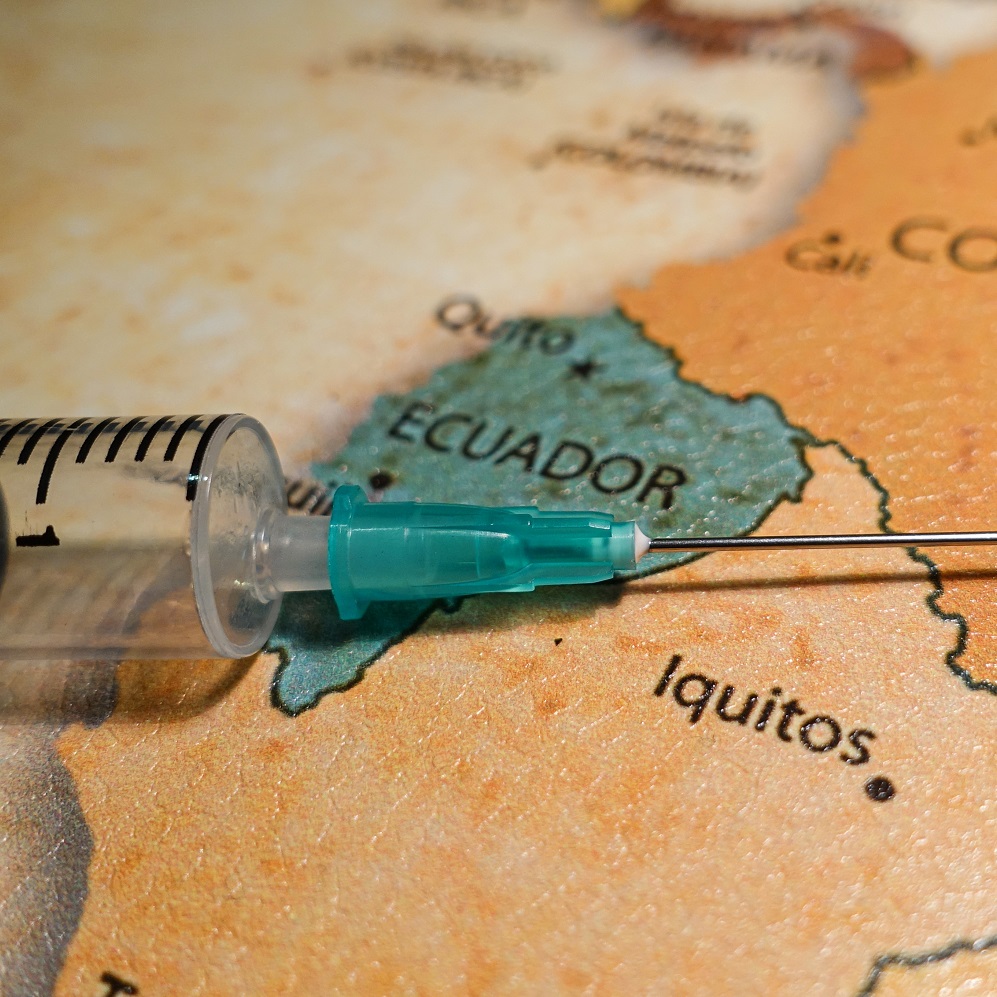
Ecuador was until relatively recently seen as one of the safest countries in Latin America. That reputation has surely now been destroyed. On Jan. 9, 2024, images of hooded gunmen storming a TV studio were broadcast around the world. It was one of a number of violent incidents that took place that day, including prison riots, widespread hostage-taking, the kidnapping of several police officers and a series of car explosions. I have been tracking how gang crime has affected states in Latin America for 38 years. When I started, few would have projected that Ecuador would descend into the crisis it finds itself today. But the story of Ecuador reflects a wider story of how countries across Latin America have struggled with organized crime and transnational drug gangs and how they have responded. Ecuador now looks set to follow the recent path of El Salvador under President Nayib Bukele’s leadership in trying to crack the gang problem through the use of military and the suspension of democratic norms. In the aftermath of the Jan. 9 violence, Ecuadorean President Daniel Noboa named 22 gangs as terrorist organizations – a designation that makes them legitimate military targets. He has also imposed a 60-day state of emergency, during which Ecuadorians will be subject to curfews while armed forces try to restore order in the streets and the country’s gang-controlled prisons. Ecuador: Victim of geography To understand why Ecuador has become the epicenter of gang violence, you need to understand both the geography and history of Latin America’s drug trade. Ecuador, a nation of 18 million people, is situated between Colombia in the north and Peru in the east and south. Colombia and Peru are the two top producers of cocaine in the world. Further, Ecuador has a near-1,400 mile (2,237-kilometer) coastline through which drugs from the continent can be taken to markets in Europe and the United States. But it wasn’t until the U.S.-led “war on drugs” put the squeeze on cartels in other countries that Ecuador became the preserve of narco gangs. Plan Colombia In the 1980s and 1990s, Colombia was the center of the international illegal drug trade. This is hardly surprising, given that it was the top producer of coca leaves. But beginning in 2000, a joint initiative between Colombian authorities and the U.S., known as Plan Colombia, pumped billions of dollars into an effort to clamp down on the Colombian cocaine trade. While it may have been successful in supressing drug cartels in Colombia itself, it has had a balloon effect elsewhere in the region: Squeeze in one place, the bulge appears elsewhere. In this case, it was Mexico’s cartels that “bulged” first. Over the past decade, there has been a massive growth in Mexican cartels, led by the Sinaloa cartel and the Jalisco Nueva Generación, or Jalisco New Generation. In fact, a study last year found that Mexican cartels were in effect the country’s fifth-largest employer. These cartels came to dominate the illegal drug trade in Latin America, not just for cocaine, but also the trafficking of heroin and more lately fentanyl. Aligning themselves with Clan Del Golfo – a Colombian paramilitary organization formed from the remnants of the gangs dismantled under joint Colombian-U.S. operations – the cartels helped traffic drugs through Ecuador and out of South America. They were joined by European gangs, notably from Albania, who began to show up in Ecuador. The impact locally of these outside gangs has been disastrous for Ecuador. Prior immunity European and Mexican organizations ran local operatives as enforcers and transporters. And these are the people who have become the backbone of Ecuador’s gang problem today. Ecuadorian gangs such as Los Choneros developed as a de facto subsidiary of the Sinaloa and other cartels. The escape from jail of Los Choneros’ leader, Jose Adolfo Macias, on Jan. 7, 2024, set off the latest explosion of violence. But Ecuador’s descent into violence and chaos has also been aided by the very fact that for so long it was immune from the worst of the gang violence of the region. For many years, Ecuador had one of the lowest homicide rates in Latin America – an indicator of low gang activity. As a result, it hadn’t developed a robust police and military response to gangs. Ecuador, in comparison to Colombia, El Salvador and other countries, was seen as a “soft touch” to organized crime bosses. This became ever more the case in 2009 when former President Rafael Correa closed down the U.S. air base in Manta, from where American AWAC surveillance planes had been monitoring and trying to disrupt drug trafficking. Militarizing the response Explaining how Ecuador became the epicenter of drug gang violence is one thing. Trying to find a way out for the country now is another. Across Latin America, countries have employed different models to counter organized crime, with varying degrees of success. Colombia, with extensive U.S. assistance, transformed its military and police and went to war with the cartels. The strategy somewhat successfully dismantled organized crime groups in the country, even if it failed to halt drug trafficking itself or lower the high levels of violence in Colombia. Mexican authorities have tried a different approach and have been reluctant to confront the country’s drug cartels head-on. Instead, Mexico has employed a more hands-off approach, allowing drug gangs to essentially govern their states – the state of Sinaloa is run largely by the cartel that shares its name. Mexican President Andrés Manuel López Obrador has touted this “hugs not bullets” approach, but under it the power of the cartels has only grown. And then there is the Salvadoran model. For many years, El Salvador suffered from organized crime, with the Maras gang behind much of the country’s violence. Then in 2019 the electorate voted in Nayib Bukele on a law-and-order platform. Since then, he has militarized the country, adopted draconian security measures and jailed some 72,000 alleged gang members, often without due process. As a result, El Salvador is now perceived as one of the safest places in Latin America. This has been achieved at the expense of human rights, critics say. But, nonetheless, Bukele’s methods have enormous popular appeal. Path of El Salvador With an unprecedented wave of violence in Ecuador, it looks like President Noboa is looking to take his country down the same path as El Salvador. He has ordered the Ecuadorian military to “neutralize” the criminal gangs that operate in the country. Whether the approach will work is another matter; Ecuador is in a weaker position than El Salvador. Whereas many of the gangs were imported into El Salvador – many members of Maras had been deported from the U.S. – in Ecuador, they are homegrown and have become more sophisticated. Further, Noboa – despite taking office in December – has only 15 months of his presidency left before a general election takes place in May 2025. Yet, the adoption of Bukele’s methods might be seen as an election winner. Like in El Salvador, the majority of Ecuador’s citizens appear ready for an iron fist approach to counter the gangs – even at the expense of some civil liberties. If you speak to the average Ecuadorian, many would no doubt tell you that talk of human rights violations is bogus at a time when they live under the fear of being murdered simply by leaving their homes. As one man told The Associated Press in the aftermath of Jan. 9’s violence, the government needs to employ “a firmer hand, to have no mercy, no tolerance or (respect for) the human rights of criminals.”

Defense & Security
Armed security on a cargo ship in the Red Sea.

America: Seeing red in the Red Sea

by Vivek Mishra

The attacks on shipping in the Red Sea is a test for the US’ Indo-Pacific strategy to deal with China In a House Armed Services Committee hearing in March 2023 on the US posture and security challenges in the Middle East and Africa, it was acknowledged that “…President Biden’s decision to unilaterally and unconditionally withdraw all US forces from Afghanistan has undermined our national security.” The developments of the past few weeks in the Red Sea have made this assertion seem prophetic. Yemen’s Houthi rebels have strategically positioned themselves to exploit less monitored zones in the Red Sea and the broader Arabian Sea. With numerous naval vessels navigating this critical route linking the Mediterranean and the Arabian Sea, countering the Houthi rebels and their assaults on global shipping has become exceedingly challenging for the US. The Houthi rebels have connected these attacks to the ongoing conflict in Gaza, tying the halt in hostilities along shipping lanes to a ceasefire negotiation between Israel and Hamas in Gaza. Their strategy involves increasing attacks on ships and holding them as leverage to prompt the US to pressure Israel for a ceasefire. The timing of the Houthi actions aligns with Israel’s focused operations in southern Gaza and a waning Congressional backing in the US for continuous financial support for overseas conflicts. Tactically, the Houthis see an opportunity to open a third front in the maritime domain, even as the Israeli air defence systems are overwhelmed by combined rocket attacks of Hamas and Hezbollah in the north and south. In an offensive barrage last week, the Hezbollah carried out six attacks in eight hours. In the maritime domain, the Houthis have carried out multiple UAV, rocket and missile attacks targeting a dozen merchant ships in the larger Indian Ocean. Iran has conducted attacks on US and Israeli vessels in the region as well. A recent attack on an Israeli vessel off the west cost of India near Veraval is a red flag for safety and security of the Sea Lines of Communication (SLOC) in the Indo-Pacific. With unmanned aerial vehicles and use of other technological capabilities, the attacks on ships could be rapid, discreet, damaging and, most of all, with little or no accountability. Often, the vulnerabilities associated with international strategic choke points have always been assessed from the perspective of State complicity, resting States’ conviction on limited capacities of non-State actors to exact huge costs. If anything, the Red Sea crisis shows that even with little but calculated external support, non-State actors could indeed significantly disturb the predictability of global supply chains and bring merchandise flow to a halt. The economic impact of increased attacks in the Red Sea is already being felt, as many ships have begun to avoid the route through the Red Sea and prefer the longer route around the Cape of Good Hope in Africa. This has caused worries of delay in the global freight markets and pricing concerns in energy dependent countries beside the security concerns for shipping companies such as Maersk. Since the Israel-Hamas war began, the US Central Command has been active in preventing a slew of UAV attacks by the Houthi rebels. For the US, the situation developing in the Red Sea presents a combination of political, economic and strategic challenges. The ongoing Israeli operation in Gaza has politically isolated the US at the global level as the only country to oppose a UNSC ceasefire resolution. The political heat from the Israel-Hamas war is being felt at home with dwindling youth support for President Biden as presidential elections near. The economic costs of the two wars – one in the Middle East and the other in Ukraine – is already tearing the US Congress apart. At the strategic level, coordinated attacks on international shipping threatens to force a rebalancing of the US force posture in the Indo-Pacific. The US currently has two aircraft carriers positioned in the Middle East since the Israel-Hamas war began. While a strong US military presence in the region may have prevented the war from spreading through the region, any additional and long-time concentration of force posture in the Gulf may be detrimental to Washington’s Indo-Pacific intent. Indeed, America’s Indo-Pacific strategy is being tested in the Middle East through five core ideas. Firstly, the recentring of US forces in the Middle East contradicts the intended pivot towards Asia. Secondly, the attacks orchestrated by the Houthis and Iran highlight the unpredictable threats that can disrupt supply chains in the region. Thirdly, the US faces challenges in executing counterterrorism and counterpiracy efforts in the Indo-Pacific, especially while collaborating with allies. Moreover, integrating the Middle East into an Indo-Pacific connectivity project appears increasingly challenging. Lastly, China’s refusal to join the US in protecting the Red Sea shipping lanes reveals Beijing’s divergent strategy for engaging with the Middle East from that of the US.

Energy & Economics
Page of the book highlighting the words

Disquiet in the world’s middle class

by Homi Kharas

“Originally published by Homi Kharas at Brookings Future Development on 21 November 2023,” “Middle-class life satisfaction rests on two pillars. The first is the idea that hard work and self-initiative will lead to prosperity. The second is that thanks to this prosperity, the children of middle-class families will enjoy even more opportunities for the good life. Both pillars are shaking.” Joining the middle class has been a ticket to the good life for two centuries now, a history I trace in a new book “The Rise of the Global Middle Class.” The American Dream, the glorious years of European reconstruction after World War II, miracle economic growth in Japan and other East Asian countries, Xi Jinping’s great rejuvenation of the Chinese nation, and India’s software revolution each brought hundreds of millions of people into the ranks of the global middle class. Today, thanks to this progress, most of the world, upwards of 4 billion people, enjoy a middle-class or better lifestyle for the first time ever. Yet, across the world there is a clear sense of disquiet in the middle class. In the U.S., Princeton economists Anne Case and Angus Deaton have documented the prevalence of “deaths of despair” due to suicides, opioids, and alcohol poisoning among non-college educated white middle-class males. The Japanese have coined a specific word, karoshi, to describe deaths due to overwork among salaried professionals. China is seeing a campaign of tang ping, or lying flat, to protest the “996” expectations of employers—9 a.m. to 9 p.m. 6 days a week. India ranks 126th out of 137 in the rankings of the 2023 World Happiness Report. What is amiss? Middle-class life satisfaction rests on two pillars. The first is the idea that hard work and self-initiative will lead to prosperity. The second is that thanks to this prosperity, the children of middle-class families will enjoy even more opportunities for the good life. Both pillars are shaking. The first is threatened by the effects of technological change on jobs. The foundations of the second are being undermined by climate change, pollution, and the destruction of nature. For most of history, technology has changed the nature of work by reducing repetitive, routine, and manual labor. During COVID-19 and the ensuing recovery, many workers changed occupations. Those with good jobs, requiring cognitive, non-routine tasks, did better than those engaged in manual, repetitive tasks. There are pathways to high-wage work, but, as my Brookings colleagues Maria Escobari and co-authors have shown, access to these paths is unequal, and that is creating stress and mental health problems for many middle-class workers. Stepping-stone occupations that serve as a bridge between low-and higher-wage occupations, and even high-wage occupations themselves, are increasingly under threat from artificial intelligence. When the Writers Guild of America went on strike in May 2023, they demanded that ChatGPT be used only as a research tool, not for actual script writing, the creative process that is at the heart of their jobs. The wobbly second pillar of middle-class satisfaction is that young people are worrying that the mass consumption of the middle-class is responsible for unsustainable levels of greenhouse gas emissions, pollution and species extinction. On current trajectories, children born today will live in a world that is at least 3 degrees warmer than pre-industrial levels. The impact of such changes, according to the best available science, is terrifying. “Is a middle-class lifestyle consistent with a livable planet? Thankfully, the answer is yes, but only if there is significant change in economic policies.” This science forces the middle class to confront an existential question. Is a middle-class lifestyle consistent with a livable planet? Thankfully, the answer is yes, but only if there is significant change in economic policies. Consider the case of Switzerland, one of the richest economies in the world. The Swiss emit only 5 tonnes of greenhouse gases per person per year, less than one-third the U.S. level. One reason is that Switzerland buys a lot of electricity from France’s nuclear reactors. But on other measures, too, such as building efficiency, moving people on electric trains and buses, and insulating homes, the Swiss middle class outperform many of their peers. True, this is not enough. The 5 tonnes must be reduced to zero by 2050, but Switzerland’s case shows that most of the current levels of carbon emissions are not tied to middle-class standards of living but simply to bad or thoughtless policies in rich countries that can be readily corrected. In similar vein, pollution is a man-made problem, not a necessary corollary of high living standards. In its current form, recycling is not effective. A new concept of a circular economy offers much more promise. The idea is to “design out” waste and pollution, recycle materials and regenerate nature. One of the first problems the circular economy concept is tackling is the issue of plastic packaging. Because of its ubiquity, plastic continues to accumulate in our oceans (and increasingly in our bodies). There are, however, alternative materials that can be used for packaging, and already the European Union is on track to make all packaging recyclable by 2030. A third area of concern is human encroachment into nature. The current global system of food production is based on expanding croplands to grow feed or as pasture for animals, especially cattle and sheep. This system has a double cost. It contributes significantly to greenhouse gas emissions, and it destroys wildlands and biodiversity. The simplest option would be to encourage the middle class to switch to a vegetarian diet. If this magically happened in the world, a land area stretching from Alaska to Tierra del Fuego could be returned to nature. In a less extreme version, if beef and lamb were taken out of our diets, an area the size of North America could be re-wilded. These examples are not offered as realistic policy options in the medium term. They do, however, serve to make a point. If the middle-class is serious about preserving nature, it will require a major change in diet. That could come about through taxes on land-intensive foods or through technology—lab-grown meat is available but only at a higher price point, and it has yet to scale. The common theme in these threats to a middle-class lifestyle is that the values of hard work and personal responsibility that are the hallmark of middle-class success are no longer enough. Policymakers are caught in trying to deliver higher living standards to their citizens and more sustainable living standards for their children. There are long-run strategies where economic growth and sustainability go hand-in-hand, but no countries have yet shown how to manage the transition onto these low-carbon pathways in a rapid, credible way. So the future is uncertain, and the middle-class, which hates uncertainty, will remain disquieted until they are clear about how to best secure the lifestyles and progress to which they have become accustomed.

Diplomacy
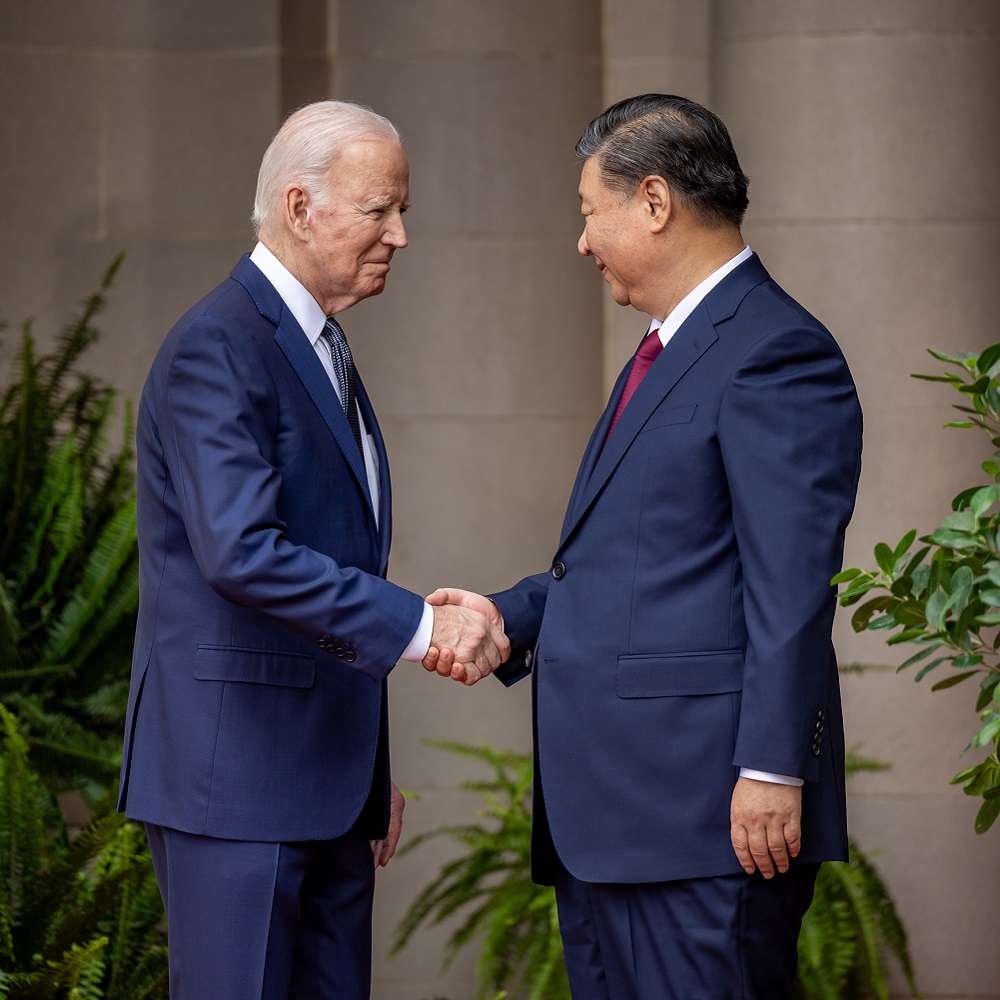
President Joe Biden and President Xi shaking hands

Don’t be fooled by Biden and Xi talks − China and the US are enduring rivals rather than engaged partners

by Michael Beckley

There were smiles for the camera, handshakes, warm words and the unveiling of a couple of agreements. But beyond the optics of the first meeting in over a year between the leaders of the world’s two biggest economies, not an awful lot had changed: There was nothing to suggest a “reset” in U.S. and China relations that in recent years have been rooted in suspicion and competition. President Joe Biden hinted as much just hours after the face-to-face talks, confirming that he still considered his Chinese counterpart, Xi Jinping, a “dictator.” Beijing hit back, with foreign ministry spokesperson Mao Ning telling reporters Biden’s remark was “extremely wrong and irresponsible political manipulation.” As a scholar of U.S.-China relations, I believe the relationship between the two countries can be best described as an “enduring rivalry” – a term used by political scientists to denote two powers that have singled each other out for intense security competition. Examples from history include India and Pakistan, France and England, and the West and the Soviet Union. Over the past two centuries, such rivals have accounted for only 1% of the world’s international relationships but 80% of its wars. History suggest these rivalries last around 40 years and end only when one side loses the ability to compete – or when the two sides ally against a common enemy. Neither scenario looks likely any time soon in regards to China and the U.S. How enduring rivalries end China “is a communist country … based on a form of government totally different than ours,” Biden said after his meeting with Xi. That comment gets to the heart of why diplomacy alone cannot reset the U.S.-China relationship. Washington and Beijing are not rivals due to any misunderstanding that can be sorted out through talks alone. Rather, they are rivals because of the opposite reason: They understand each other only too well and have come to the conclusion that their respective world outlooks cannot be reconciled. The same is true for many of the issues that divide the two countries – they are framed as binary win-lose scenarios. Taiwan can be governed from Taipei or Beijing, but not both. Similarly, the East China and South China seas can be international waters or Chinese territory; Russia can be crippled or supported. For the United States, its Asian alliances are a force for stability; for China, they’re hostile encirclement. And both countries are right in their respective assessments. Diplomacy alone is insufficient to resolve a rivalry. At best, it can help manage it. When the US calls, who picks up? Part of this management of the U.S-China rivalry involves finding areas of agreement that can be committed to. And on Nov. 15, Biden and Xi announced deals over curbing China’s production of the deadly drug fentanyl and the restoring of high-level, military-to-military dialogue between the two countries. But the fentanyl announcement is very similar to the one Xi gave to then-President Donald Trump in 2019. The U.S. administration later accused China of reneging on the agreement. Similarly, committing to restarting high-level dialogue is one thing; following up on it is another. History is dotted with occasions when having an open line between Beijing and Washington hasn’t meant a whole lot in times of crisis. In 2001, when a U.S. surveillance aircraft collided with a Chinese jet over Hainan Island, Beijing didn’t pick up the phone. Likewise, during the Tiananmen Square massacre, then-President George H.W. Bush urgently tried to call his counterpart Deng Xiaoping but was unable to get through. Moreover, focusing on what was agreed to in talks also highlights what wasn’t – and is unlikely to ever be – agreed to without a substantial shift in power that forces one side to concede to the other. For example, China wants the U.S. to stop selling arms to Taiwan. But Washington has no intention of doing this, as it knows that this will make the disputed island more vulnerable to Beijing. Washington would like China to end its military displays of strength over the Taiwan Strait; Beijing knows doing so risks seeing Taiwan drift toward independence. American policymakers have long said what they want is China to “change” – by which it means to liberalize its system of governance. But the Chinese Communist Party knows that doing so means self-liquidation – every communist regime that has allowed space for alternative political parties has unraveled. Which is why American attempts to engage China are often met with suspicion in China. As former Chinese leader Jiang Zemin commented, engagement and containment policies have the same aim: to end China’s socialist system. For similar reasons, Xi has shunned attempts by the U.S. to bring China further into the rules-based international order. The Chinese leader saw what happened when Soviet leader Mikhail Gorbachev tried to integrate the Soviet Union into the Western order in the late 1980s – it only hastened the demise of the socialist entity. Instead, Xi calls for a massive military buildup, the reassertion of Chinese Communist Party control and an economic policy based on self-reliance. Actions speak louder … The encouraging words and limited agreements hammered out in the latest meeting between Xi and Biden should also not distract from the actions that continue to push the U.S. and China further apart. China’s show of force in the Taiwan Strait has been sustained for three years now and shows no sign of abating. Meanwhile, Beijing’s navy continues to harass other nations in the South China Sea. Similarly, Biden has continued the U.S. path toward military alliances aimed at countering China’s threat. It recently entered a trilateral agreement between the U.S., Japan and South Korea. And that came two years after the establishment of AUKUS, a security partnership between the the U.S., Australia and the U.K. that has similar aims. Meanwhile, the U.S. administration will continue to tighten the screws on China’s economy through investment restrictions. Biden is well aware that easy flowing money from Wall Street is helping China weather choppier economic waters of late and is keen to turn off the tap. The point of diplomacy This isn’t to say that diplomacy and face-to-face talks are pointless. They do, in fact, serve a number of interests. For both men involved, there is a domestic upside. For Biden, playing nice with China projects the image of a statesman – especially at a time when, due to U.S. positions on Ukraine and the Middle East, he is facing accusations from the political left of being a “warmonger.” And encouraging Beijing to tread softly during the U.S. election year may blunt a potential line of attack from Republicans that the administration’s China policy is not working. Meanwhile, Xi is able to showcase his own diplomatic skills and present China as an alternative superpower to the U.S. and to potentially cleave the Western business community – and perhaps even major European nations – from what he would see as the U.S. anti-China coalition. Moreover, summits like the one in San Francisco signal that both the U.S. and China are jointly committed to at least keep talking, helping ensure that a rocky relationship doesn’t descend into anything more belligerent – even it that doesn’t make them any friendlier.

Diplomacy
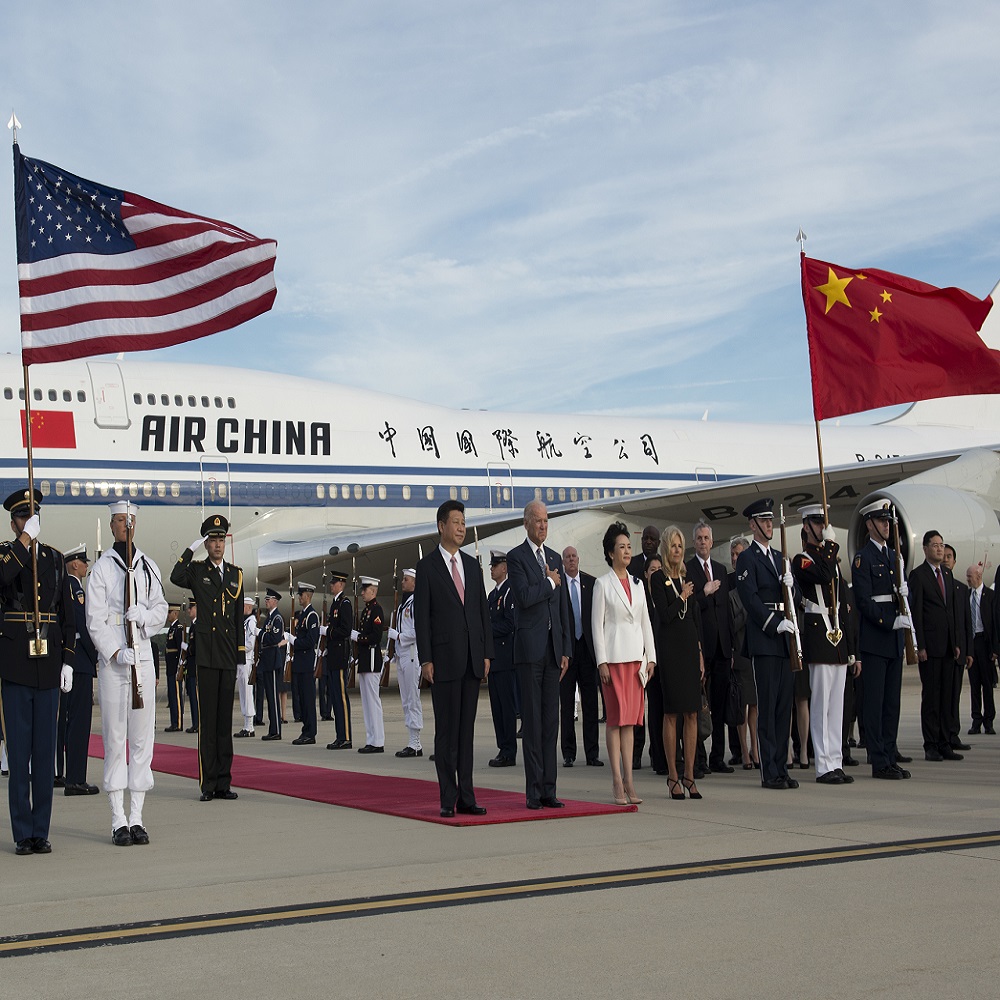
Joe Biden at the airport in China with President Xi Jinping

Can US and China Avoid the Thucydides Trap? The Structural Limits to a US-China Reset

by Dr. Stephen Nagy

The meeting at San Francisco between Presidents Joe Biden and Xi Jinping offers a short respite in the broader strategic conflict that both states have been waging since at least 2017. The friends and trade partners of both nations now have an opportunity to employ middle power diplomacy to advocate for their interests and also the moderation of competition. In his book Destined for War: Can America and China Escape Thucydides’s Trap?, Graham Allison provided historical examples of when a status quo power met a rising power and whether and why it resulted in war. Unlike his peer John Mearsheimer, author of the Tragedy of Great Power Politics, who concludes that competition and conflict between the US and China are inevitable due to the structure of the international system, Allison’s book provides a warning to both the US and China that the decisions they make could be positively or negatively consequential, leaving room for agency to be the final arbiter of the fate of bilateral relations. The pre-APEC meeting between President Joe Biden and President Xi Jinping was an invitro international relations experiment testing the premises of Allison and Mearsheimer as to whether US-China strategic competition will be shaped by the agency of leaders or the structure of the system. Superficially, the 15 November 2023 meeting allowed for an agreement limiting the precursors of fentanyl coming into the United States and, importantly, reviving regular talks under what is known as the military maritime consultation agreement. These modest but important agreements followed a throng of high-level cabinet visits to Beijing and reciprocal visits by Wang Yi, China’s foreign minister, that were meant to stabilise US-China relations. These agreements suggest that leaders in both countries can find diplomatic crosswalks to stabilise the relationship in functional areas. It also intimates that other window of cooperation such as climate change, anti-terrorism, transnational disease prevention, and poverty alleviation may be fertile ground for collaboration if leaders choose to move forward. While the modest takeaways from the meeting in San Francisco underscores that agency does have a role in bilateral relations, we should be realistic that they also reflect the deep structural challenges that exist between the United States and China. Moreover, they also represent the intractable nature of the structural challenges in the relationship, placing friends and allies of the United States and major trading partners of China, such as Australia, Japan, Canada, and Southeast Asian nations, with a difficult quandary: How to balance their economic prosperity and stability through a vibrant and beneficial trade relationship with China while maintaining a strong, comprehensive relationship with the United States as it deepens its strategic competition with China? In the US, there is bipartisan consensus that China represents a challenge to US leadership that needs to be dealt with comprehensively. Under the Biden administration, we have seen a systemic, sequential, and allied-first approach to competing with China. It has brought accolades from friends and allies and, predictably, criticism from China that Biden has not only adopted a continuation of policies towards China from the Trump administration, but that his policies are even more severe. The Biden administration has reinforced and reified its alliance partnerships with South Korea and Japan. It then enhanced its commitment to the Quadrilateral Security Dialogue (Quad) and demonstrated substantial leadership in terms of pushing back against Russia’s invasion of the Ukraine. More recently, the Biden administration forged a new trilateral partnership between South Korea, Japan, and the United States, under the so-called Camp David Principles. It also strengthened the quadrilateral security dialogue and its efforts to provide public goods to the Indo Pacific region. And we’ve gradually seen a more coherent AUKUS strategy that aims to create synergy between the UK, Australia, and the United States in the areas of AI research, quantum computing, hypersonic missiles, cyber, and importantly nuclear power submarines. Last, but not least, the adoption of the Chips Act, limiting the sale of sophisticated semiconductor chips to China and the associated technologies, suggests that the United States is not stepping down from its competition with China, but stepping up in the same way that the United States transformed every aspect of its governance following the 911 attacks. Similarly, there seems to be consensus in the Chinese political elite that the US and its allies are intent on containing China and attenuating its development. Xi Jinping’s 20th Workers Party Report at the 20th Party Congress highlighted the concerns China has about its external environment and advocated for strengthening the PLA to deal with separatist forces and external threats, while consolidating it political, social, economic, and ideological systems. Through the Belt and Road Initiative (BRI), the expansion of the BRICS and Shanghai Cooperation Organization, and the advocacy of the Global Development/ Security and Civilization Initiatives, China under the leadership of Xi Jinping is aiming to transform itself, its periphery, and the international system such that all are more conducive to China’s core interests, including preserving its political system. These realities suggest that rather than fostering a reset in bilateral relations, what we are seeing is both China and the United States taking a tactical pause in their strategic competition to amass the resources they need to compete successfully in the Mearsheimer world of great power politics and the maximisation of power. In closed-door discussions on China with Japanese, South Koreans, Australians, Canadians, Southeast and South Asians, as well as Europeans, we hear similar refrains: while China represents a “systemic challenge” in the case of the Europeans and NATO, or is a “disruptive power” in the case of Canada, or as Japan writes in its 2022 National Security Strategy, “the greatest strategic challenge in ensuring the peace and security of Japan and the peace and stability of the international community,” China is also an important and largely irreplaceable economic partner and essential player in dealing with global challenges such as climate change. The question for friends and allies of the United States is how to balance the increasingly difficult and competitive relationship between China and the United States in a way that ensures that they can continue to have strong economic relationships with China while building resilience into their economies and into their economic relationship, such that the economic weaponization of supply chains and the monopolisation of resources cannot negatively affect trading partners of China. Part of these states’ responses to protect their national interests from the structural realities of Sino-U.S. strategic competition will be a middle power diplomacy that aims to shape the competitive nature of the relationship between the US and China. This will be implemented through coordinating their diplomacy and proactively lobbying, insulating, and investing in rulemaking in the realms of security, trade, and international law alongside their like-minded ally the US, but at times also in opposition to the US. This will require investing in diplomatic resources in both the US and China, in the broader Indo-Pacific region, and at the subnational level to forge strong state to state relations to effectively lobby US policy makers to inculcate the interests of allies and friends of the US in their strategic rivalry with China. Similarly, through forging stronger relations with Chinese provincial leaders though trade and investment, middle powers and stakeholders in the US-China strategic competition may be able to have their interests reflected in a moderation of China’s approach to competition with the US.

Energy & Economics
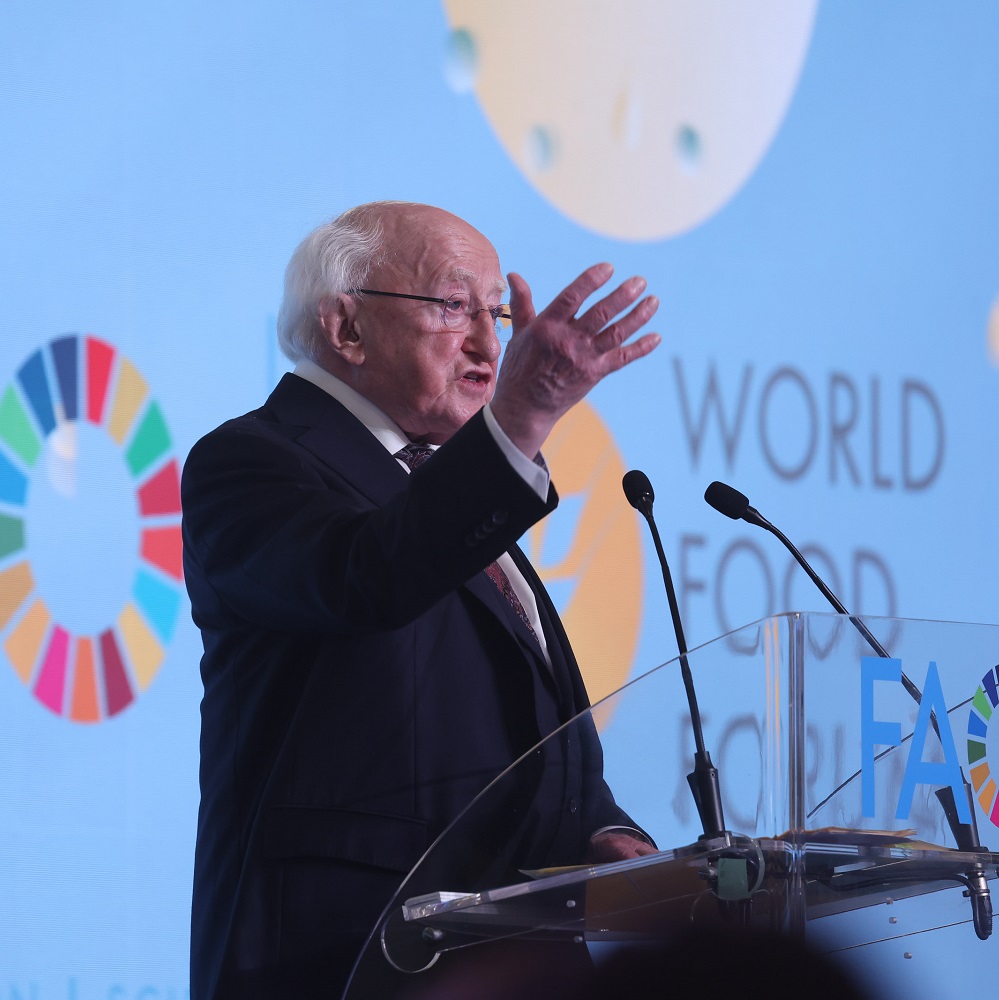
President of Ireland Michael D. Higgins giving speech at World Food Form

Keynote address the Closing Ceremony of the World Food Forum

by Michael D. Higgins

Director-General, Your Excellencies, Distinguished Guests, Dear Friends, Young and Old, This week, as we have gathered here at the World Food Forum in the headquarters of the Food and Agriculture Organisation of the United Nations in Rome to discuss the necessary transformation of our agri-food systems, we must not only be conscious of targets missed or imperfectly achieved, but of the need for courage, and to generate new capacity to move to new models of better connection between economy, social protection, social justice and ecology. We are confronted with a climate and biodiversity emergency that cannot be handled by the tools that produced it or by the architecture of how we made decisions before. We are called upon to, once and for all, tackle with alternatives and sustained effort and innovation, the vicious circle of global poverty and inequality, global hunger, debt and climate change, our interacting crises. That is the context in which sustainable food systems must be achieved. I ask you all gathered today to respond in the most meaningful way within your capacity, within your generation, in a way that includes all generations, to the challenge set out by United Nations Secretary-General António Guterres in his recent statements: This is how the Secretary-General put it: “The Sustainable Development Goals aren’t just a list of goals. They carry the hopes, dreams, rights and expectations of people everywhere. In our world of plenty, hunger is a shocking stain on humanity and an epic human rights violation. It is an indictment of every one of us that millions of people are starving in this day and age.” It can be put right but we must change and there is work involved in upskilling in such a way that we can not only identify and critique assumptions of failing models but be able to put the alternative models in place. We have had so many broken promises. Only 15 percent of some 140 specific targets to achieve the 17 UN Sustainable Development Goals are on track to be achieved. Many targets are going in the wrong direction at the present rate, and not a single one is expected to be achieved in the next seven years. However, we have some reasons to be hopeful. When I look around this room today, I see so many engaged and committed people, including young people who have the enthusiasm, energy and creativity needed to tackle the serious structural causes of food insecurity and global hunger. But it is important to acknowledge that young people are not alone in seeking authenticity of words delivered into actions that have an ethical outcome. There are those who have spent their lives seeking a fairer world, one in which hunger would be eliminated – as it can be. We must recognise their efforts. We must work together to harness this collective energy and creativity into strong movements that will deliver, finally, a food-secure world for all. This will require, I suggest, moving to a new culture of sharing information, experiences, insights. As the cuts have taken effect, we must take the opportunity of developing a view, post-silo culture, of sharing insights, and I see FAO as uniquely positioned for this. As Glenn Denning, Peter Timmer and other food experts have stated, achieving food security is not an easy task given how food hunger is “deeply entwined with the organisation of economic activities and their regulation through public policies”, given, too, how governments and markets must work together, how the private, public and third sectors must work together. All of our efforts must have the character of inclusivity. Each of us as global citizens has a responsibility to respond. To ignore it would be a dereliction of our duty of care to our shared planet and its life-forms including our fellow humans and future generations. The Secretary-General’s pleas in relation to the consequences of climate change are given a further terrible reality in the increased and spreading threat of hunger, a food insecurity which is directly affected by the impact of climate change. For example, figures published by the Food and Agriculture Organization of the United Nations show that 26.2 percent of Africa’s population experienced severe food insecurity in 2021, with 9.8 percent of the total global population suffering from undernourishment the same year. It is time for us all, as leaders and global citizens, to take stock of how words are leading to actions, to increase the urgency of our response to what is a grave existential threat and to achieve change. It is clear, as the Secretary-General’s powerful statement shows, that we need to begin the work of reform in our international institutional architecture, such as UN reform at the highest level, including the Security Council and the Bretton Woods institutions, if we are to achieve what the Secretary-General has suggested is the challenge to “turn a year of burning heat into a year of burning ambition”. Let us commit then to sharing purposes, projects, resources, seeking a new culture for sustenance solutions. Those of us who have spent much of our lives advocating UN reform believe that its best prospects are in the growing acknowledgement of the importance of the vulnerabilities and frustrated capacity of the largest and growing populations of the world being represented, not only nominally but effectively, through a reform that includes reform of the Bretton-Woods Institutions. As Secretary-General Guterres has said on a number of occasions, it is time to reform what are 1945 institutions, including the Security Council and Bretton Woods, in order to align with the “realities of today’s world”. We have to acknowledge too that the development models of the 1950s and 1960s were part of the assumptions that brought us to the crises through which we are living. New models are needed and the good news is that a new epistemology, our way of looking at the world, of sufficiency and sustainability, is emerging. We are seeing good work already occurring. Good development scholarship is available to us. I reference, for example Pádraig Carmody’s recent book, Development Theory and Practice in a Changing World. Such work builds important bridges from the intellectual work that is so badly needed and is welcome at the centre of our discourse on all aspects of interacting crises, including global hunger, and the need to link economy, ecology and a global ethics. What we must launch now is a globalisation from below. Replacing the globalisation from above that has given us a burning planet and threatened democracy itself, with a globalisation from below of the fullest participation, we can establish and indeed extend democracy, offering accountability and transparency of our work together. Writers such as Pádraig Carmody are not alone in suggesting that achieving the Sustainable Development Goals provides the opportunity for moving past the worst contradictions of failed models and dangerous undeclared assumptions. The demise of hegemonic development theory and practice may be a result of several factors, such as the rise of ultra-nationalism around the world, the increasing importance of securitisation where the most powerful insulate their lives from the actions of the excluded, and the existential threat posed by the climate crisis. Such research adds to the growing body of development literature that argues for a pro-active, structural-focused, tailored approach to development. The Hand-in-Hand Initiative of the FAO, details of which were discussed at this week’s parallel session, is a most welcome initiative, one that aims to raise incomes, improve the nutritional status and well-being of poor and vulnerable populations, and strengthen resilience to climate change. It heralds a belated recognition too of the insufficiency of a reactive emergency response to famine and hunger crises. It suggests a move towards one that tackles the underlying structural causes of hunger. Young people will need patience and to dig sufficiently deep to achieve these necessary changes. They are right in seeking to be partners, so much more than being allowed as attendees. Hand-in-Hand recognises the importance of tailor-made interventions to food security, using the best available evidence in the form of spatial data, validated on the ground through local diagnostics and policy processes, to target the most food insecure, the most hungry, the poorest. It recognises that context-specific employment and labour market policies are part of the sustainability challenge. I believe that evidence from below is crucial to achieving globalisation from below and that it can be achieved by a reintroduction of new re-casted anthropology guided by, among others, the new African scholars now available, whose work is empirical and peer-tested, can be invaluable in giving transparency on projects and investments – a strategy for fact-gathering for empowerment of rural people so like the 1955 fact-gathering with rural people of the FAO – first published in 1955 and used by me in 1969! Young people must be about upskilling to be able to critique all of the assumptions guiding the policies on to their lives. A key objective for us now must be to strengthen institutional capacity on the ground, not only at the strategic level, but also fundamentally, so that the public, farmers, and other stakeholders’ institutions are enabled to participate in territories-based agri-food systems. Such a move is fundamental to a successful food security strategy. Our institutional architecture and the multilateral bodies within it, must be made fit for purpose if we are to tackle effectively and meaningfully our contemporary food insecurity crisis which is worsening according to the 2023 Global Report on Food Crises, with 258 million people across 58 countries suffering acute food insecurity. Perhaps most crucially, we must acknowledge, as United Nations Programmes such as the Hand-in-Hand Initiative does, the critical importance of partnership and collaboration in addressing global hunger. We must do everything we can to ensure cross-sectoral co-ordination, foster coherent development actions, under a common, shared vision. We must end all wasteful competitive silo behaviours, create a culture of openness and co-operation. The FAO is well positioned to lead on this with its new invigorated partnerships with the World Food Programme (WFP) and the International Fund for Agricultural Development (IFAD). Co-operation in the development and implementation of new models will be key to the achieving of any targets that seek to be sustainable and inclusive. For example, I suggest it will achieve best results if funders, such as the African Development Bank, are enabled and funded to work closely with research institutes, both at the national and international level, but particularly take account of field studies conducted over time at local level in the new anthropology so as to ensure that findings from the latest research feed into the design and implementation of any financial supports and investments. By providing a platform, a shared interactive transparent space for national authorities and producers, national and global businesses, multilateral development banks and donors to discuss and advance ways and means to finance the supported national food programmes, initiatives such as Hand-in-Hand are proving to be an effective flagship programme of the Food and Agriculture Organisation of the United Nations. Co-operation must work both ways. For example, the parts of the so-called ‘developed’ world suffering from problems of high levels of obesity and food wastage must learn from the deep knowledge and wisdom existing in the most populated continents, as well as the science, which points to a new ecological revolution, one in which agroecology – the bringing of ecological principles to develop new management approaches in agroecosystems – can play a fundamental role, especially for the poorest of our global citizens. We have seen the destructive impact of colonial models of agronomy promoting an over-reliance on a small number of commodity crops, herders incentivised to become less mobile and store less grain in order to maximise commodity crop production, and increasing imports in conditions of near monopoly of seeds, pesticides and fertilisers. This had the deadly effect of opening up farmers not only to the full force of extended droughts, the ravages of variable climate conditions, and a reliance on non-indigenous inputs, but also to global spaces where they have insufficient influence. We must retreat from these dysfunctional food systems model, with their related dependencies, with urgency and embrace models of sufficiency and effective local markets and see the value of making our way too that includes agro-ecological models that promote food security and development opportunities for the poorest people on our fragile planet. Adaptation and responding to the already changing climate is crucial for all of us, and especially in the most food-insecure nations. We must restore degraded ecosystems, introduce drought-resistant crops, ensure accessible digital services for smallholder farms, while creating new, sustainable green jobs for young people so that we may forge a smart, sustainable, climate-resilient development path for the continent. This week we have to acknowledge the many challenges we face including, inter alia, the energy, climate and biodiversity crises, war and conflict which exacerbate food insecurity, ensuring enabling policy environments, and reaching the long-term goal of sustainable food system transformation. Any agri-food initiative, be it for Africa, the Middle-East, Central or South America, or other food-insecure regions, must place inclusivity at its core. Specifically, more vulnerable, smallholder farmers must be targeted for inclusion as programme beneficiaries, not just large-scale, industrial level farmers and ever-expanding commercial plantations. Research has shown that irresponsible agri-business deals are sometimes falsely legitimated by the promotion of alleged achievement of Sustainable Development Goal Number 2 at any cost, without care as to consequence, ignoring the reality that smallholders need enabling policies to enhance their role in food production; that food insecurity is linked to rights, processes, and unequal access to land resources; and that dispossession disproportionately affects women farmers. On this latter issue of gender, achieving zero hunger requires gender-inclusive land and labour policies. Actions must prioritise the inclusion of women and girls who are more food insecure than men in every region of the world. Women must have a right to land recognised and enshrined. The gender gap in food security has grown exponentially in recent years, and will only deteriorate further in the absence of targeted intervention. Women are obviously the most impacted victims of the food crisis, thus they must be a part of the solution. Women produce up to 80 percent of foodstuffs. Empowering women farmers can thus serve as a transformative tool for food security. However, female farmers have, research tell us, limited access to physical inputs, such as seeds and fertiliser, to markets, to storage facilities and this must be addressed. Climate change, and our response to it, addressing global hunger and global poverty, exposing and breaking dependency is a core theme of my Presidency. It is the most pressing existential crisis that our vulnerable planet and its global citizens face. Throughout the world, young people and the youth sector have been at the vanguard of efforts to tackle climate change. Young people have demonstrated, time and again, how well-informed and acutely aware they are of the threat that climate change poses, as well as its uneven and unequal impacts. May I suggest to all of you that, as young innovators and future leaders in your respective fields, you will be at your best, achieve the greatest fulfilment for yourself and others, when you locate your contribution within a commitment to be concerned and contributing global citizens. Take time to ask how is my energy in the tasks of hand and brain being delivered and for whose benefit. May I suggest, too, that you will be remembered and appreciated all the more if you work to ensure that the results of science, technology are shared and that all human endeavours are allowed to flow across borders for the human benefit of all and with a commitment to ecological responsibility and inclusivity. Offer your efforts where they can have the best effect for all. Locate yourselves in the heart of the populated world, as Nobel Laureate William Campbell did with his research on river blindness. Changing our food systems is, however, let us not forget, an intergenerational challenge that requires an inter-generational approach. We must now empower youth to be in the driver’s seat to build a new, better, transparent model of food security in a variety of different settings. Let us endeavour, together, in our diverse world, to seek to build a co-operative, caring and non-exploitative global civilisation free from hunger, a shared planet, a global family at peace with nature and neighbours, resilient to the climate change that is already occurring, one based on foundations of respect for each nation’s own institutions, traditions, experiences and wisdoms, founded on a recognition of the transcendent solidarity that might bind us together as humans, and reveal a recognition of the responsibility we share for our vulnerable planet and the fundamental dignity of all those who dwell on it. Thank you. Beir beannacht.

Defense & Security
United States Congress

The US Administration managed to avoid a shutdown several hours before the deadline, however the problem is not solved yet.

by Elina Kirichenko

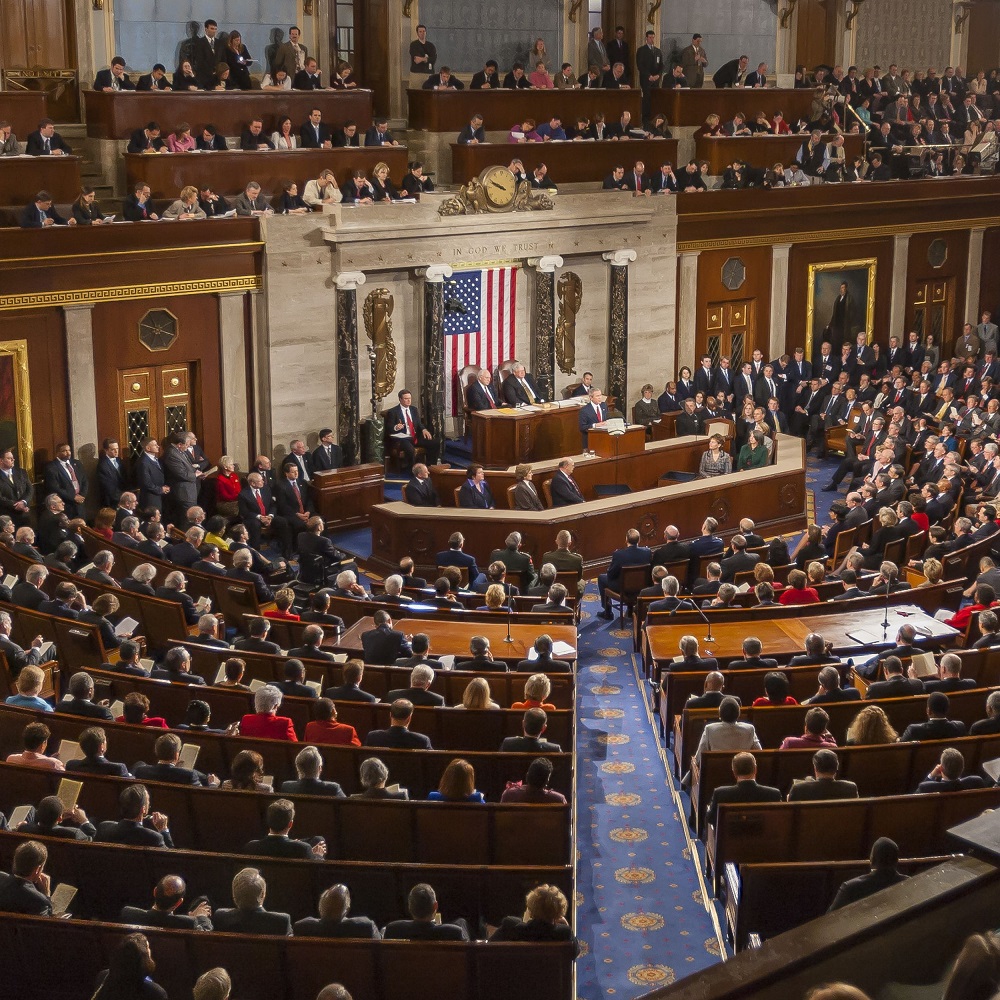
In the United States, there is a complex process of annual budget adoption for the next fiscal year, which begins on October 1. Budget adoption proceeds according to a certain schedule. Ultimately, by September 30, The House of Representatives and the Senate must introduce 12 appropriations bills of the main government activities for the next fiscal year, and then the president must sign them. In case if all 12 appropriation bills are not passed, an almost complete suspension of the government institutions activities occurs (shutdown). In case if a part of the bills is passed, only those federal agencies that did not receive appropriations will be shut down. Shutdown means that government employees have to take forced leave without pay. Only those institutions that are of critical importance to national security continue to operate. For instance, employees who are responsible for the safety of the US’s nuclear arsenals and monitoring of hydroelectric power plants and energy lines continue to work in the Department of Energy. Also, active military personnel continue to perform their duties. Institutions with special self-financing funds (such as post office, customs) continue to operate in a certain mode. In addition to adoption of annual discretionary spending, the US also has mandatory spending for basic social and several critically needed areas of government activity. This financing is carried out from special off-budget funds and does not depend on annual approval by US Congress, in this way society is protected from the consequences of political struggle to some extent. Social security and healthcare programs, such as Social Security, Medicare and Medicaid, also continue to operate. The US Congress widely uses a tool called a continuing resolutions (CR) for a certain period in the amount that was included in the previous budget to avoid a shutdown. These resolutions become laws after they are signed by the President. Since this kind of resolutions extend appropriations from the previous fiscal year, it interferes with the activities of federal agencies because they have to freeze their spending levels, it also makes it difficult to plan future projects and creates risks for government contractors. A few comments on the history of the issue. Last time when Congress completed the budget approval process on time, before the start of the fiscal year, was in 1997. Since in 1976 Congress transitioned to the modern budget process, based on the 1974 Budget Act, there have been 20 "funding gaps," including cases when funding was not allocated even for a single day. The longest government shutdown in U.S. history lasted 35 days, from December 22, 2018, to January 25, 2019, during the Trump administration. On March 9, 2023, President Joe Biden submitted to Congress the budget proposal for fiscal year 2024, estimating expenses at $6,883 billion (25.3% of GDP) and a budget deficit at $1,846 billion (6.8% of GDP). This year, the budget process became more complicated because in June 2023, lawmakers passed the Fiscal Responsibility Act of 2023 (FRA) to avoid a technical default on the national debt. This law, by suspending the "debt ceiling," established caps on discretionary spending for fiscal years 2024 and 2025. When appropriations for fiscal year 2024 were being discussed in Congress, the provisions of the FRA sparked debates about spending levels. The White House requested an additional $20.6 billion for emergency aid to Ukraine and $12 billion for domestic disaster relief. In August 2023 Joe Biden's administration submitted to Congress a request for additional funding of $40 billion, which included $24 billion for military and humanitarian assistance to Ukraine and other international needs, and $12 billion for domestic disaster relief. The right-wing Republicans in the House of Representatives sought to secure budgetary powers for the administration well below FRA-agreed levels and to include new provisions on border security. The debates continued until Saturday, September 30, when the House of Representatives approved a temporary resolution (335 votes in favor, 91 against, including one Democrat), extending government funding until November 17. The resolution includes disaster relief (a concession to the Democrats) but does not include additional funding for Ukraine (a concession to the Conservatives). The Senate approved the bill on Saturday evening (88 in favor, 9 against). The bill passed through both chambers in just 12 hours, setting a speed record. Joe Biden signed it before midnight, preventing a government shutdown. "It's a total rollercoaster," - Guy Reschenthaler, the Deputy Chairman of the Republican Party in the House of Representatives, commented on the day's events. In the next month and a half, we can expect a new round of struggle over budget expenses. In particular, Senate leadership from both parties issued a joint statement committing to vote for continued funding for assistance to Ukraine in the "coming weeks." On October 3, the House of Representatives for the first time in history voted to remove Republican Kevin McCarthy from his position (initiated by the far-right Republican Matt Gaetz from Florida); members of his own party voted for his removal, accusing McCarthy of seeking support of Democrats to prevent a shutdown. According to official prognosis, the budget deficit is expected to grow relative to GDP. The increasing deficit will significantly increase the federal debt (which has already exceeded $33 trillion) over the next decade, and interest costs to service it will correspondingly increase. Interest payments will jump from $665 billion in 2023 to $1.393 trillion in 2033. The Biden administration and Congress are caught between Scylla and Charybdis: they need to address the problem of a massive budget deficit and national debt while continuing to make budgetary injections to support the economy, socio-economic and defense priorities. All this intensifies the struggle over budget expenditures. The threats of government shutdowns have become a bargaining chip in disputes over budget policy. The decision-making process in the US budgetary sphere is becoming increasingly politicized, undermining trust in the government and does not contribute to solving the problems really facing the country.

Defense & Security
Canadian Navy destroyer in Juan de Fuca Strait near British Columbia

Canada Intensifies Its Foreign Policy in the Indo-Pacific Region

by Maria Solyanova

Canada's military and defense policy in the Indo-Pacific region (IPR) is centered around three key objectives: promoting peace, security, and stability, including efforts to deter aggression, respond to crises, and enhance defense capabilities; maintaining trade, investment, and supply chain stability; and promoting diversity and inclusivity, financing educational, cultural, and tourism projects. To achieve these goals, Canada has taken a series of steps to increase its presence in the region, expand its participation in exercises with allies and partners, invest in military capabilities, including long-range maritime patrol aircraft and anti-submarine defense systems, and strengthen its intelligence and surveillance capabilities in the region. Enhancing the country's position in the IPR contributes to protecting national interests and increasing the ability to counter regional threats, particularly: - The growing military presence of China, which is rapidly modernizing its armed forces and increasing its influence. - The proliferation of non-state actors (terrorist groups, piracy). - Climate change, leading to rising sea levels and extreme weather events that threaten coastal communities and infrastructure. For example, a significant event in the country's foreign policy and an expression of its efforts to strengthen security in the Indo-Pacific region was the arrival of three Canadian naval vessels in Yokosuka, Japan, on August 28, 2023. These ships, part of Canada's Pacific Fleet, were the first Canadian military vessels to visit Japan since 2019. The visit occurred against the backdrop of increased tension due to China's growing military influence (e.g., military exercises) and North Korea's series of missile tests, including an intercontinental ballistic missile. The primary goal of the Canadian ships' visit to Japan was to participate in joint exercises with regional partners (the United States, Japan, South Korea, Australia, and New Zealand) aimed at strengthening military alliances, expanding security cooperation, and enhancing regional preparedness. Coordination among the armed forces of allies contributes to improved communication, mutual understanding, and operational compatibility when working collectively. It also allows for knowledge sharing and the development of common strategies to address regional security challenges. Firstly, Canada has traditionally focused its foreign policy on the Atlantic and the Arctic. However, this visit signals Canada's growing interest in the Indo-Pacific region, recognizing its strategic importance, and the country's intention to actively contribute to regional stability. Canadian foreign policy is based on the principles of multilateralism and cooperation. Canada prioritizes building partnership relationships, encouraging dialogue, and participating in regional initiatives. It actively engages in regional and international forums (ASEAN, East Asian Summit). Canada also follows the same multilateral principle in defense and security. Deploying naval forces in the IPR aligns with these principles. Secondly, by joining forces with allies and partners in Southeast Asia, such as Japan, Canada strengthens existing security alliances and signals its readiness to cooperate with like-minded countries to maintain regional peace. Simultaneously, Ottawa sends a clear message to China that it intends to develop military cooperation to deter aggression in the region. Furthermore, the Canadian government places increasing importance on developing bilateral relations, promoting trade and investment growth, strengthening security cooperation on issues such as counter-terrorism and maritime security. The presence of Canadian naval vessels will enhance operational compatibility and coordination between allied fleets, bolstering the defense network in the Indo-Pacific region and deterring China from aggressive actions. Canada's Indo-Pacific strategy, approved in 2022, highlights two key regional factors of instability that increase tension and international concerns. Firstly, it is Beijing's ambition to assert its maritime claims in the South China Sea, including the construction of military facilities on disputed land features. Secondly, it is North Korea's missile tests and the development of nuclear weapons. In response to these threats, Canada is taking steps to strengthen cooperation and partnership relations in the IPR. This includes enhancing military presence, conducting joint exercises (for example, the "Malabar 2023" military exercise in August), and participating in diplomatic dialogues. By deploying naval forces, Canada follows in the footsteps of its key allies - the United States, Australia, and Japan, which are also actively bolstering their presence in the region. By combining diplomatic and defense efforts, these countries aim to ensure freedom of navigation and adherence to international law principles. Thus, Canada demonstrates that the government closely monitors the situation and will make efforts to maintain a regional order based on international legal rules and norms. Its presence serves as a signal to China, North Korea, and other potentially destabilizing actors that Canada is committed to regional security principles and is ready to support its allies and partners in countering any potential threats. Ottawa is not only developing and strengthening ties with allies and other regional players but also emphasizes a proactive, consistent approach in implementing its policy in the IPR, a commitment to maintaining peace and stability. The expansion of Canada's naval presence should serve as a deterrent to potential threats, demonstrate solidarity with like-minded countries, and show regional powers that Canada is a reliable ally. The intensification of regional policy is, in part, related to Canada's desire to balance between China and the United States since tension in their relations continues and influences global processes. The Canadian government's policy in the Indo-Pacific region is based on carefully building relationships with both countries, aiming to maintain a balance while advancing its own interests. Cooperation in security and defense, participation in regional initiatives, military exercises, and dialogues aimed at addressing common security issues are significant components of Canada's Indo-Pacific policy, as the country intends to play a more active role in the region. However, the development of this policy will be influenced by the following factors in the medium and long term, which are important for the national interests of the country and its allies: ● Ensuring maritime security: The Indo-Pacific region hosts some of the busiest maritime routes in the world, which are crucial for global trade. Canada is likely to increase its deployment of ships and aircraft, as well as participate in joint exercises with allies and partners to secure these sea lanes. ● Deepening military and political cooperation with allies and partners: Canada is a member of the "Five Eyes" intelligence alliance and has close security ties with the United States, Japan, Australia, and India. These countries, sharing a common interest in maintaining peace and stability in the Indo-Pacific, will expand their cooperation with Canada through joint exercises, intelligence sharing, and participation in joint military operations. Canada's military and defense policy will largely be shaped by the opportunities presented by its allies and partners. ● Investment in military capabilities and increased defense spending to enhance capabilities to address challenges in the Indo-Pacific. The Indo-Pacific region is becoming increasingly unstable, with a growing risk of conflict. Canada will need to adapt its military policy to changing security conditions.

Diplomacy
Narendra Modi with Secretary Antony Blinken and Vice President Kamala Harris

India and Vietnam are partnering with the US to counter China − even as Biden claims that’s not his goal

by Leland Lazarus

This fall, Senate Majority Leader Chuck Schumer is slated to lead a bipartisan group of U.S. senators to China. The planned trip, like other recent visits to China by high-ranking U.S. officials, is aimed at improving the relationship between the U.S. and China. Such efforts to ameliorate U.S.-China diplomatic relations come amid growing tensions between the two economic giants. They also run parallel to U.S. efforts to strengthen ties with Indo-Pacific countries to limit Beijing’s influence. Take, for example, President Joe Biden’s September 2023 trips to India for the G20 summit and to Vietnam, where U.S. competition with China was a focus of Biden’s discussions. While he was in Asia, Biden made several agreements in science, technology and supply chain security designed to bolster U.S. relations with India and Vietnam. “I don’t want to contain China,” the president told reporters in Hanoi on Sept. 10, 2023, shortly after meeting with Vietnam’s communist party leader. U.S. Reps. Mike Gallagher and Raja Krishnamoorthi echoed similar sentiments during an event held by the Council on Foreign Relations think tank in New York City the following day. But even if the U.S.’s stated goal isn’t to limit China’s global influence, its recent agreements with India, Vietnam and other countries may do exactly that. What US-led G20 deals mean for China The U.S. is actively looking for ways to blunt one of China’s best tools of influence: international loans. During the G20 summit Sept. 9-10 in New Delhi, the U.S. pledged to help reform the World Bank and International Monetary Fund to make them more flexible in lending to developing countries to finance renewable energy, climate mitigation and critical infrastructure projects. Biden committed the first US$25 billion to make those reforms possible and secured additional financial pledges from other countries totaling $200 billion in new funding for developing countries over the next decade. The U.S. also signed onto a deal with the European Union, Saudi Arabia and India that will help connect the Middle East, Europe and Asia through rails and ports. Characterizing it as a “real big deal,” Biden said the rail and ports agreement would help stabilize and integrate the Middle East. These plans are aimed at providing an alternative to China’s Belt and Road Initiative. Commonly referred to as BRI, the initiative is China’s international infrastructure loan program. Over the past decade, Chinese government agencies, banks and businesses have loaned more than $1 trillion abroad, and 60% of the recipient countries are now in debt to these Chinese entities. The U.S. and other countries have long criticized BRI as “debt trap diplomacy.” One study suggests that the trillions of dollars in infrastructure loans to countries by the government and quasi-government bodies in China typically lead to debt problems that the borrowing countries can’t manage. As China grapples with a slowing domestic economy, it may become more difficult for Chinese entities to keep shelling out funding for big-ticket overseas projects. The new U.S.-led agreements that come out of the G20 could fill the coming gap. These G20 plans complement existing Western economic initiatives to compete with the BRI, including U.S. trade pacts for the Indo-Pacific region and the Americas, the EU’s Global Gateway and the G7’s Partnership for Global Infrastructure and Investment. What the US’s agreement with India means for China In their meeting on the sidelines of the G20, Biden and Indian Prime Minister Narendra Modi agreed to deepen collaboration on developing critical and emerging technology, such as quantum computing and space exploration, as well as 5G and 6G telecommunications. This will help India compete with China in the technological arena in the Indo-Pacific. The telecommunications portion of a joint statement by Biden and Modi specifically mentions the U.S.’s Rip and Replace program. It is about helping smaller telecommunications companies rip out technology from Chinese companies like Huawei or ZTE and replace them with network equipment from the West that will protect users’ data. The U.S. has banned Huawei and ZTE equipment from its telecommunication networks, deeming those companies national security risks. The U.S. and India’s pledge to support Rip and Replace is a direct counter to China’s telecommunication technology expansion. What the US’s agreement with Vietnam means for China In Vietnam, Biden elevated the bilateral relationship to a comprehensive strategic partnership, expanding the relationship in everything from economics to education to technology in a country that has long counted China as its top trading partner. The enhanced partnership includes the U.S. providing $2 million to fund teaching labs and training courses for semiconductor assembly, testing and packaging. One company in Arizona and two in California have already pledged to set up semiconductor factories and design centers in Vietnam, and the U.S. artificial intelligence company Nvidia will help Vietnam integrate AI into automotive and health care systems. All these investments will make Vietnam even more attractive to U.S. and Western companies that don’t want China to be the sole source of their supply chain. As Vietnam becomes a key player in the semiconductor market, it will shrink China’s share of the market as well as its regional technological advantage. The U.S. also agreed to provide nearly $9 million to help Vietnam patrol the waters around its borders and beef up port facility security, as well as boost efforts to fight illegal, unregulated and unreported fishing, or IUUF. While not explicitly mentioned, China is the target of this initiative; China and Vietnam continue to be at loggerheads over disputed claims over the Spratly Islands in the South China Sea, and Chinese industrial fishing vessels are the largest culprits of IUUF around the globe. By inking these agreements at the G20 in India and in Vietnam, the U.S. broadened its circle of allies and partners in the Indo-Pacific that can help counterbalance China. Along with similar diplomatic accomplishments by Vice President Kamala Harris at the recent ASEAN summit in Indonesia; security partnerships like AUKUS, between the U.S., Australia and the UK, and the Quad, between the U.S., India, Australia and Japan; increased military sales and training to Taiwan; and the recent Camp David meeting Biden held with Japan and South Korea, the U.S. is building partnerships all across Asia. These actions are aimed at restraining China’s political, economic and military might, even if U.S. leaders don’t explicitly say that is their intention. Regardless of rhetoric, actions speak louder than words.

Energy & Economics
Paper based election process in Guatemala

Can Regional Governance Help Safeguard Guatemala’s Democracy?

by Tiziano Breda

Guatemala’s politics has recently been shaken by the victory of anti-corruption crusader Bernardo Arévalo de León, which has brought fresh air of hope in a country ridden by high levels of poverty, corruption and criminal violence. The result fits with the wave of anti-incumbent victories in Latin America: it is the 16th country in the region where an opposition candidate has been elected president in the past five years, out of 17 elections. But like or even more than in other countries, the electoral results are being contested by an astounded political and economic establishment unwilling to give its power away. Vicious attempts by judicial authorities to prevent Arévalo and his party’s congressmembers from taking office have raised domestic and international concerns that Guatemala may also join the growing list of Latin American countries experiencing setbacks in their democratic standards. The Organization of American States (OAS), a virtually moribund regional body that has proven unable to solve political crises and has at times even exacerbated them, has come back to the fore as the political forum where to coordinate a regional response. Will the Guatemalan case revive the fortunes of the OAS and will international accompaniment be enough to safeguard democracy in the country?  An impunity-prone status quo Guatemala is the biggest country in Central America and with the largest economy. It is also, however, among the most unequal, with around half of the population below the poverty line and suffering from high rates of malnutrition, especially among indigenous people, which account for 40 per cent of its population. It also hosted one of the most successful anti-corruption experiments in Latin America – the United Nations-backed International Commission against Impunity in Guatemala (CICIG, 2007–2019) – which contributed to dismantling over 70 criminal networks encrusted in the country’s institutions involved in violence, drug trafficking and extortion activities. The zenith of this sweeping anti-corruption crusade was reached in 2015, when then-President Otto Pérez Molina eventually heeded the calls to resign by thousands of Guatemalans who protested in front of the presidential palace for months, after a CICIG-led investigation found him and his vice president involved in a large-scale corruption scheme involving the state customs.  The lull, however, did not last long. Pérez Molina’s successor, Jimmy Morales, a former comedian, turned his back on the CICIG after the latter started investigating his brother and his son, and eventually shut it down in 2019. Since then, the country has experienced serious setbacks in its democratic institutions, as a coalition of political, economic and military elites (commonly dubbed as the Pact of Corrupts) scorched by CICIG-led investigations strived to re-establish an environment of impunity through the co-optation of the judiciary. The Attorney General Consuelo Porras, appointed by Morales and confirmed by his successor, the incumbent Alejandro Giammattei, turned out to be the most strenuous defender of these interests. Her office buried investigations into the president’s alleged acceptance of bribes by Russian contractors, and instead persecuted prosecutors, judges and journalists who had championed anti-corruption efforts, leading more than 30 of them to flee the country and jailing others on abuses of power charges. The boomerang effect of a tilted electoral game In the run-up to the 2023 election, growing popular disenchantment with the political class morphed into an anti-system sentiment. Authorities reacted by excluding from the race a number of well-polling candidates for alleged irregularities in their or their parties’ enrolment.  However, this strategy boomeranged, and channelled the protest vote to the only remaining candidate that was perceived as external to the system: Bernardo Arévalo de León, running on an anti-corruption ticket for a tiny party called Semilla. Arévalo, who was polling below 3 per cent before the first electoral round, not only made it to the second round, but then obliterated the other run-off contender, former first-lady Sandra Torres from the UNE party, in a landslide victory on 20 August with an over 20 points lead. Arévalo’s party also obtained 23 seats in the upcoming legislature, more than three times its 2019 performance. Overall, the Guatemalan election results align with a regional trend of anti-incumbent victories in recent years, although in this case the winner is a progressive champion of democracy, instead of an anti-system populist, as had happened in El Salvador, Costa Rica and elsewhere in the region. The legal fightback against change Semilla’s unexpected result prompted the reaction of those same forces that had tried to channel the vote toward less dangerous candidates and that now put up a number of legal challenges to undermine the credibility of the election and disqualify the president-elect’s party. This strategy pivots around accusations of wrongdoings in the creation of Semilla that would erase its status as a legitimate party, and claims of fraud. Right after the first round, the Attorney General’s office opened investigations into alleged irregularities (fake signatures) upon Semilla’s creation, aiming to strip it of its legal status; this was coupled with accusations of abuse of power directed to Supreme Electoral Tribunal’s magistrates that certified the results. As a result, while Arévalo has been confirmed as president-elect, the Congress has already proceeded to strip the Semilla deputies elected in the 2019 elections – including Arévalo himself – of their seats.  In parallel, nine parties obtained by the Supreme Court, allegedly close to the incumbent executive, a ruling in favour of a recount of the votes of the first round, questioning the findings of national and international observation missions, which did not report any broad irregularities. The recount ended with the officialisation of the results in mid-July, eventually assigning a few more votes to Semilla than originally reported. Yet, after the second round, Torres refused to concede and denounced a supposed fraud, despite the unequivocal margin separating her from Arévalo.  Recently, the Attorney General’s office prosecutors even stormed the facilities where ballot boxes where stored, opening 160 of them, a move that electoral authorities considered illegal. After the prosecutors’ raid, Arévalo has eventually decided to halt the transition until the Attorney General resigns and ceases the political persecution.  Domestic and international outcry  The legal attempts to dismiss the will of change of Guatemalan voters have sparked a wave of public outcry in the country. It has also not gone unnoticed in the international arena. The electoral observation missions of the OAS and the European Union repeatedly expressed their rejection of any attempt to defy the electorate’s choice. The OAS Permanent Council discussed the situation in Guatemala and mandated the Secretary General to monitor the situation closely during the transition. The latter warned that the suspension of Semilla is a violation of the due process that Guatemala, being part of the Inter-American system, is mandated to respect. Strong public messaging also came from the US: government representatives, from President Biden to a bipartisan group of Congress members, have reiterated both privately and publicly their concerns and called on Guatemalan judicial authorities to stop undermining the country’s democracy.  These domestic and international pressures may have contributed, together with the blatant arbitrariness of the judicial measures taken so far, to creating some fissures in the establishment. The Supreme Electoral Tribunal, an accomplice in the run-up to the election with the disqualification of candidates, has now turned into a strenuous defender of the election results and proceeded to officialise them despite the legal challenges and Torres’s party’s refusal to concede. At the political level, two ministers (Economy and Energy and Mining) resigned from their posts, while a few politicians from across the spectrum decried the obstructionism against Semilla. Most notably, a few private sector chambers and even the country’s largest business confederation, known as CACIF, issued public statements in defence of the integrity of the vote and calling on institutions to let the electoral process come to completion.  Against this backdrop, President Giammattei is believed to be playing a double game. In public, he has opened the door to Arévalo for an orderly transition, inviting OAS Secretary General Luis Almagro to oversee the process. At the same time, however, he has remained silent on the apparent political persecution of Semilla by the judiciary and legislature. The need to keep Guatemala in the spotlight Notwithstanding, the remnants of the current political establishment appear to be eager to defy the public outcry within and without the country. The fate of Consuelo Porras, in particular, seems intrinsically linked to the preservation of the status quo by reducing as much as possible Arévalo’s margin of action.  While Arévalo’s victory seems hard to overturn at this stage, this cannot be ruled out completely until all claims of fraud are dismissed and the transition to the new administration is completed in January 2024. This would be a dismal scenario, which would likely lead Guatemala into the abyss of a full-blown coup d’état, with unpredictable consequences in terms of social turmoil and international isolation. At the same time, however, the legal cases against Semilla are likely to advance, unless they are denounced as political persecution by the widest array of sectors in the country. The suspension of the party would affect Arévalo’s ability to set the legislative agenda, already quite limited from the start, having Semilla won only 23 out of the 160 seats. Constant engagement of regional governments and statements from political and economic sectors should help prevent this. The task is particularly delicate for the OAS, whose legitimacy has been tainted by its inability to craft a coordinated, principle-based response to some of the political and electoral crises that have affected the region in recent years, particularly Nicaragua, Venezuela and Bolivia. Critics have accused the body of approaching crises with an ideological bias: it has occasionally dismissed complaints of undemocratic moves in such countries as Brazil, El Salvador and Honduras when they were under conservative rule, while advancing allegations of fraud without solid evidence, which in turn fuelled tensions in Bolivia in 2019. Guatemala offers an opportunity for the OAS to wash away the perception of being politically biased and reposition itself as the most suitable regional forum to handle the crises arising from violations of the principles enshrined in the Inter-American Democratic Charter.  To do so, however, concrete results are needed. Regional governments will have to agree on the reputational and diplomatic costs that the actors trying to overturn the election may encounter, and be prepared to enforce them. These may include scaling down cooperation with judicial authorities and, if Arévalo were eventually prevented from taking office, the activation of the democratic clause of the Inter-American Democratic Charter, which may lead to the suspension of Guatemala from the OAS. Additionally, they should coordinate closely with the EU and other partners to maintain Guatemala in the spotlight and engage regularly with Guatemalan authorities to convey their commitment to the cause for democracy in the country. Intermittently monitoring the situation or simply paying lip service may not only keep judicial actions unscathed, thus setting a dangerous precedent in Guatemala’s hardly-fought democracy, but also embolden corrupt actors across the Western Hemisphere to follow Porras’s footsteps.