Subscribe to our weekly newsletters for free

Subscribe to an email

If you want to subscribe to World & New World Newsletter, please enter
your e-mail

Energy & Economics
Tourist exchange rates at a streetside booth as the Thai Baht falls for the 7th week on June 9, 2013 in Bangkok, Thailand

Strong dollar snowballs across Asia

by Brad W. Setser

The dollar’s strength is placing pressure on economies around the world, including in developing Asia. What makes this bout of dollar strength unique is that the stress is not limited to Asia’s developing economies. Asian economies are diverse and the direct financial impact of dollar strength varies. Some regional economies have significant foreign currency debts and limited foreign currency reserves. Unsurprisingly, these economies are in financial trouble. Sri Lanka defaulted on its bonds earlier in the year and is now trying to restructure its external debt. Pakistan has had to seek an emergency financing package from the International Monetary Fund, backstopped with pledges of additional support from both China and the Gulf. Bangladesh has proactively sought out IMF financing in the face of a terms of trade shock. Laos is, in all probability, relying on the continued forbearance of China’s policy banks to manage its unsustainable debt loads. All these countries are struggling to pay for imports of oil and natural gas. A broader set of Asian economies have relatively strong foreign currency balance sheets and are not at risk of immediate financial distress. Many have been able to rely on their local currency bond markets to finance fiscal deficits, limiting their direct financial vulnerability to swings in the dollar. India is in a much stronger position than during the 2013–14 ‘taper’ tantrum. It started 2022 with US$650 billion in foreign reserves, more than double the US$250 billion it held in 2012. The Indian government’s external debt, primarily to the multilateral development banks, only totalled US$125 billion. Thailand’s government started 2022 with over US$250 billion in foreign exchange reserves — or over 50 per cent of its GDP — while owing a bit over US$30 billion to external creditors. Other countries have more subtle strengths. For example, a substantial share of Indonesia’s US$80 billion in international sovereign bonds are denominated in yen. At the same time, balance sheet resilience is not sufficient to insulate a country’s broader economy from the impacts of a strong dollar. Even countries that have little to fear financially worry about the impact of currency weakness on households’ costs of living. There has been little correlation to date between the extent of currency depreciation across the main Asian currencies and the underlying strength of countries’ foreign currency balance sheets. The currencies of advanced Asian economies have actually depreciated more than the currencies of developing Asian economies. Japan — with plenty of reserves, significant foreign assets in its government pension fund and insurance companies that are structurally ‘long’ dollars — has experienced the largest depreciation. Taiwan and South Korea have followed. Meanwhile India, Indonesia, Malaysia and Thailand have experienced smaller depreciations. The reason for this is simple. Up until Japan’s heavy intervention in late September 2022, lower income Asian economies had been more willing to defend their currencies through a combination of rate increases and foreign reserve sales. There are signs that this is changing. Japan intervened heavily in September and October. South Korea is now worried that the won  has become too weak and is seeking to join Japan in obtaining a standing Federal Reserve swap line to meet dollar liquidity needs in its financial sector — potentially freeing up more of its existing reserves for intervention. Even though the dollar is now off its October peak, developing Asian economies continue to face several risks. The first is that certain economies may overestimate their balance sheet strength and sell foreign exchange for longer than is prudent. The basic principle is that temporary shocks can be financed with borrowed or reserve sales while permanent shocks require adjustment. The longer global energy prices remain high and the dollar remains strong, the more difficult it will be for countries to avoid adjustment. The second risk is the possibility of an additional shock from Japan. Japan’s efforts to limit the yen’s depreciation through intervention may fail, as it is harder for Japan to defend its currency through intervention than it is for smaller economies, whose financial markets remain less integrated into global markets. There is the additional risk that yen weakness and imported inflation could lead the Bank of Japan to abandon its policy of ‘yield curve control’ and that the associated rise in long-term Japanese government bond rates could push up interest rates globally. Many emerging economies would likely need to raise their domestic interest rates to avoid importing additional inflation, and to limit popular pressure for fiscal subsidies to offset higher fuel prices. This would be the Asian version of what is now called a reverse currency war. The third risk is a currency shock from China. China has long relied primarily on the signal sent by the People’s Bank of China’s daily fix — the central reference point for daily trading — to manage the yuan with only limited direct intervention by its central bank. To date, the pressure on China appears manageable. News reports suggest that the PBoC has leaned on China’s large state banks to use their balance sheets to help maintain the trading band around the yuan, but there is little evidence of pressure on the central bank’s reserves. However, if its economy remains weak, China may choose to allow more depreciation — both against the dollar and against the currencies of its trading partners to restart its economy. This would be an admission that China’s ability to avoid a prolonged stall through internal demand is limited and that exports are again required for growth. A yuan that is as weak as the yen could easily trigger a race down across the currencies of developing Asia. Many, though not all, developing Asian economies are less vulnerable to a repeat of the 1997 crisis. But few countries will be able to escape the fallout from the dollar’s current strength. A broader overshoot of many currencies that amplifies concentrated pockets of debt difficulties and complicates the fight against inflation globally remains a real risk.

Energy & Economics
Oil refinery plant in Louisiana, United States of America

US Needs to Play Larger Role as Swing Producer of Oil and Gas in the Current Crisis

by Thomas J. Duesterberg

In response to Russian aggression in Ukraine, European nations have drastically reduced imports of crude oil, refined petroleum products, and natural gas from Russia. The 2021 levels of these energy imports were around 2.2 million barrels per day (mbd) of crude oil, 1.2 mbd of refined products, and 155 billion cubic meters (bcm) of natural gas on an annual basis.In addition to extreme difficulties in obtaining new sources of natural gas and to a lesser extent oil, the price increases throughout Europe since the onset of the war have been of historic proportions. In the days following the invasion, natural gas prices shot up by 62 percent, and UK energy prices were up by 150 percent. The full impact of the war, along with the related need to rein in the highest inflation numbers in over 40 years, has pushed Europe into a recession that threatens households and small businesses as well as European manufacturers’ ability to remain competitive. As a result, if the region cannot quickly assemble alternative supplies, the European commitment to assist in containing Russian aggression may weaken.  Swing Producers Alternative sources of crude oil and refined products are more readily available than natural gas since the latter requires costly new infrastructure to be put in place. Building new pipelines, liquified natural gas (LNG) facilities, and transportation infrastructure and ramping up production all require permitting and financing that is difficult to obtain , at least in the developed world. Saudi Arabia and other OPEC members were the traditional swing producers of crude oil and some refined products until the fracking revolution in the US. OPEC has decided to cut back production in the current situation, apparently at least in part to placate its Russian fellow traveler. Both the Saudis and the Emiratis, despite embarrassing entreaties from the Biden administration, have publicly sided with President Vladimir Putin on the question of supplies in the short run. Both Venezuela and Iran, whose oil sectors are now under US sanctions, could conceivably put new supplies on the market. The ongoing negotiations to renew the Joint Comprehensive Plan of Action (JCPOA)—which the European Union and some voices in the Biden administration are promoting—and behind-the-scenes US-Venezuela talks are both intended in part to address existing shortages and high prices. In addition to how agreements with these two rogue powers would damage long-standing US policy, relying on these authoritarian states would set back any hope of progress in reducing atmospheric pollution. Figure 1 shows some of the world’s largest emitters of methane, which is 80 times more potent as a greenhouse gas than carbon dioxide (CO2). Methane is responsible for about 25 percent of today’s global warming, according to the Environmental Defense Fund. Russia, Iran, and Venezuela rank among the world leaders in this race to the bottom, even though the much larger US, European, and Chinese economies produce more of this gas. Figure 2 shows that, in terms of methane intensity, the US emits about 35 tons of CO2 equivalent in methane per million dollars of GDP. The equivalent number is 404 for Russia, 733 for Iran, 137 for Saudi Arabia, and 1,864 for Venezuela. Figure 3 gives similar comparisons for CO2 intensity for leading countries. Again, Russia is much more profligate in its performance than the US or EU, releasing about 1,006 tons of CO2 per million dollars of GDP. Iran, Venezuela, and Saudi Arabia spew out 2,162, 1,756, and 651 tons of CO2 per million dollars of GDP, respectively.  China now produces about 750 tons of CO2 per million dollars of GDP, compared to 225 for the US and 174 for the EU. China is by far the world’s largest producer of CO2, with higher levels of greenhouse gas emissions than all members of the Organization for Economic Cooperation and Development combined (see figure 4). This measurement does not include emissions that will occur after the completion of 94 thousand megawatts (MW) of new coal-fired electric generation capacity that is now under construction or the 196 thousand MW of new capacity already permitted. China is not a major oil and gas producer but has built up 30 percent excess capacity in oil refining, using crude oil imports in large and growing quantities from Russia, Venezuela, and Iran at favorable prices. Figure 5 shows recent data, derived from Chinese customs statistics, on the level and price of crude oil imports from Russia.   As the US and Europe have closed refineries in recent years, due in part to policies that made the financing of new fossil fuel projects uneconomic, China could possibly rush to compensate for current shortages of diesel fuel and aviation fuel. Whether for crude oil or refined products, relying on US- or European-based products is clearly preferable from an environmental point of view.  There are of course many other producers of crude oil: Norway, the United Kingdom, Brazil, and Africa. The reserves of these countries are large, and for the most part, their production has not been subject to political instability, except in certain African countries. Nonetheless, there are limits to their future expansion in the near term. Much of the production outside Africa is offshore, where the fields are difficult, expensive, and time-consuming to ramp up. Many Sub-Saharan countries rely on Chinese development assistance, which has already resulted in distressed debt in 60 percent or more of these countries. Volumes from these areas are unlikely to meet immediate needs. Finally, as figure 6 illustrates, Central Asia and the Caucasus have been exporting around 1 mbd to the EU. Much of this comes to Europe through a pipeline from Tengiz in Kazakhstan to the Black Sea and onto Europe and other destinations. But the pipeline passes through southern Russia and is potentially subject to sanctions from the EU and the US. Russian firms hold about 36.5 percent of the project while US majors own about 22 percent. Russia could cut off the flows through this pipeline at any time. Huge amounts of oil reserves are available in this region but must be transported via Russia or Iran to reach western destinations. Neither of these allied powers is keen on competition from non-aligned sources of petroleum, although Russia has allowed some exports of oil from Azerbaijan. Larger supplies of oil from Kazakhstan across the Caspian Sea could be brought through pipeline via Turkey, but these too are complicated by the interests of the Iran-Russian entente. Sources of Natural Gas for Europe Since February 24, 2022, Europe has only had partial success in replacing the huge amounts of natural gas that either EU sanctions or Russian actions have cut off. Most of the replacements have been in the form of LNG. A relatively mild summer in East Asia and price arbitrage allowed cargoes contracted to this region to be resold to Europe, but this source of supply is beginning to decline as winter approaches. The EU also has negotiated new pipeline supplies from existing sources in North Africa and Norway. Prior to the Russian aggression, Norway regularly supplied Europe with about 100 bcm yearly. It has raised supplies by some 8 percent since late 2021, but this represents only a small proportion of the 155 bcm that Russia previously delivered. There is huge potential to increase pipeline imports from Central Asia and the Caucasus. But again, the difficulty of bypassing Russian and Iranian territory and these countries’ opposition to competition makes any near-term additions unlikely. The existing “Southern Corridor” pipeline from Baku is delivering about 10 bcm of Azerbaijani gas through Turkey and into southern Italy. Plans to increase production and pipeline throughput are in place but remain difficult due to political instability in the Caucasus and hesitations of both buyers of the gas and financial providers to undertake long-term, risky investments at this time. Figure 7 shows the largest LNG exporters as of 2021. The Gulf Cooperation Council members have ample supplies of gas, but only Qatar ships LNG in any material amount to Europe. Its exports via LNG to Europe were about 11 bcm in 2021. Qatar has plans to expand capacity significantly, but not until 2026 at the earliest. Its plans also depend on securing long-term contracts with buyers, and European buyers remain hesitant to agree to these. Australia was the biggest LNG exporter in 2021 but sent only 0.037 bcm directly to Europe that year. Australia has no current plans to expand its capacity for exports, and internal politics have turned against new exports in any case. Role of the United States The US will have the largest volume of LNG export capacity in the world when new plants that are now being built and are expected to become operational in the next two years start production. Figure 8 charts the progress of LNG export capacity in the US, which in 2022 has already become the largest exporter of this comparatively clean fossil fuel resource, with projected exports of 114 bcm. New capacity coming online between 2023 and 2025 represents more than 50 bcm of capacity. The newest facility started exporting in August and represents 17 bcm of additional capacity. The US has already exceeded President Joe Biden’s pledge in March to increase LNG exports to Europe by 15 bcm this year, and it is estimated that the total increase will reach 45 bcm in this calendar year.Total production of natural gas in the US has reached all-time records throughout 2022, facilitating increases in exports. The US is thus poised to steadily increase its exports to Europe and the rest of the world if public policy does not undermine further gains in production or infrastructure construction. It is worth noting that, as of 2020, only 11 percent of total natural gas production in the US originated on federally owned lands. Reliance on private property for gas production will limit the current administration’s ability to reduce production, although it does have other means to prevent the building of new infrastructure and discourage financing of new projects. In short, the US does have the means to be a swing producer and exporter of natural gas to address the current energy crisis. US production of crude oil and refined petroleum products remains below peak levels set prior to the pandemic. The pro-production policies of the Trump administration, as well as the de facto tolerance of the Obama years, facilitated production and export capacity growth. In contrast, the Biden administration has adopted a whole-of-government effort to discourage and prevent crude oil exploration and development, as well as the construction of infrastructure required to bring supplies to refineries, chemical plants, and export facilities. Over 25 percent of crude production in the US originates on federally owned lands. New federal leases for exploration and development on federal lands are at the lowest levels since just after World War II, partially explaining the loss of production in recent years. Crude oil production in 2022 is averaging about 1 mbd below the peak reached in late 2019. Total exports of crude oil and petroleum products declined in 2021 but grew to early 2020 levels during the summer months as prices rose and the administration depleted the national petroleum reserve to levels not seen since the 1980s. However, exports of crude and refined products to leading destinations in Europe are trending upward. Figure 9 shows that EU imports of oil and gas from the US by volume have increased substantially in the last five years. The pace of increases has accelerated since February 24. Summary Europe is in a desperate economic slump. High prices for energy are sapping the ability of homeowners to heat their homes, small businesses to remain solvent, and energy intensive industries to keep operating. High prices are also affecting other countries around the world, including close allies in the Pacific Rim. The US has the raw resources of oil and gas to be a bridge producer to meet much of the current shortage. The Biden administration ought to make a more substantial contribution to alleviating these problems. Instead, it asserts that the US must concentrate its ambitions and funding on developing renewable energy resources, even though these new sources will require decades to replace oil and gas power in the modern economy. Biden’s approach also ignores the fact that renewables production relies on China—which accounts for 80 percent of global supplies of solar panels, 58 percent of wind turbines, 60 percent of the rare earths needed for solar energy and ubiquitous semiconductors to power the modern economy, and nearly 80 percent of the lithium-ion batteries needed for electric vehicles and power storage in a renewables-based electric grid. China is also the largest emitter of CO2 and methane in the world and continues to build new fossil fuel capacity. The US needs a realistic course correction to address the economic and political crisis caused by Russia’s aggression against Ukraine, and to minimize the environmental damage caused by the need to replace Russian oil and gas from other sources.

Defense & Security
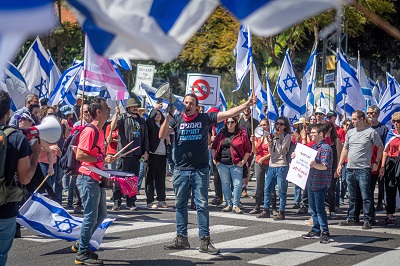
Protestors take part during a demonstration in front of the Iranian embassy in Brussels, Belgium, following the death of Mahsa Amini

Tehran lashes out at Israelis’ support for Iranian protest movement

by Alex Vatanka , Jonathan Harounoff

For seven weeks, Iran has been gripped by widespread protests — the first of their kind driven by women — following the death of 22-year-old Mahsa Amini at the hands of the regime’s so-called morality police. These demonstrations represent perhaps the most sustained domestic challenge to the clerical leadership since 1979, despite efforts by authorities to quell the unrest through mass arrests, beatings and killings, and internet and social media cuts. The head of Iran’s Islamic Revolutionary Guard Corps (IRGC) even warned protesters that Oct. 29 would be their “last day of riots,” in a sign that security forces will intensify their crackdown on the unrest, which Iranian leaders have blamed on Israel and the United States. The charge against Israel is nothing new; but as with previous rounds of accusations, Tehran has yet to produce tangible evidence to substantiate its claim that the Israeli intelligence service is, together with the U.S., the real mastermind behind the protests. Ironically, while the official narrative from Iran has long been that Israel is a decaying power unable to stand up to Tehran, it is Israeli assessments on the state of the protests that appear to be of most interest to the senior leadership in Tehran. Kayhan, the newspaper closest to Supreme Leader Ali Khamenei, who appoints the paper’s chief editor, wrote in an editorial in mid-October that even Israel has accepted that the protests will ultimately fail to topple the regime. By quoting a couple of Israeli television commentators, the paper wishfully concluded that Israeli experts have determined that “the number of protesters in Iran is small and they lack [a shared] ideology” and that “Unrests in Iran require maturity, leadership, planning and political vision, and currently we do not have any of these.” The stock Khamenei’s top men put in Israeli assessments of the prospects for popular unrest would seem bizarre if it were not so clearly intentional. Pointing the finger at Israel is self-serving for officials in Tehran. Trying to pin a nationwide uprising on a detested regional rival, one whose existence the Islamic Republic has refused to accept since 1979, is obviously more convenient than acknowledging the genuine grievances pushing Iranian protesters to the streets. In reality, Iran’s leaders know very well that while the U.S. and Israel both might have an interest in shaping and aiding the protest movement once it began, this large-scale mobilization of the Iranian public is a result of the regime’s own policies. No foreign intelligence service would be able to orchestrate such a large-scale popular revolt on its own; the population of the country would not have risen up like this had it not been so chronically beaten down by the regime’s policies since 1979. But yet the very same anger that the Islamists have created among the Iranian public has become an opportunity for the Israelis in their multi-front campaign against Tehran. The ongoing threat of nuclear brinkmanship has long loomed over Israel’s decades-old shadow war with Iran. While cyberattacks and assassinations might be effective tools deployed by Israel to destabilize Iran’s internal apparatus, the protests have revealed another powerfully simple yet possibly destabilizing strategy at its disposal: speaking directly to the Iranian people. Iran’s leaders would likely contend that this isn’t the first time foreign powers have intervened in Iran’s domestic politics, pointing to the role the Central Intelligence Agency (CIA) and the British secret services played in overthrowing Prime Minister Mohammad Mossadegh in 1953. For their part, Israel and the U.S., while denying involvement in the protests’ inception, would say that that, today, they are merely expressing support for a population that’s looking to break free from the tight grip of Tehran’s militant clerical political class. Israel’s political landscape is famously divided, which is why, yesterday, Nov. 1, the country held its fifth national election in less than four years. But there is virtual unanimity across the political spectrum when it comes to supporting the protesters in Iran. And since the protests began in mid-September, Israel’s public diplomacy efforts have been ramping up across all levels of society in more direct ways not seen for decades. Israel is currently home to tens of thousands of Jewish people born in Iran or born to Iranian parents, including major public figures like Rita, one of Israel’s most famous singers, former President Moshe Katsav, or former heads of the Israel Defense Forces (IDF) Shaul Mofaz and Dan Halutz. From early October, dozens of Israelis have gathered in Jerusalem in support of the women of Iran. Protests have also spread across the Middle East and to Europe and North America, as well. This past weekend, in Tel Aviv, hundreds of Israelis gathered, waving Israeli and pre-1979 Iran flags while chanting, “From Tel Aviv to Tehran, we are standing together.” It’s not uncommon to see Israelis protesting against the theocratic regime in Iran. In fact, stoking fear in Israelis about Iran’s nefarious nuclear program is typically a cornerstone of any Israeli prime minister’s tenure, especially under Benjamin Netanyahu, who repeatedly said that the Islamic Republic was the single greatest existential threat to Israel. Still, an overzealous Israeli response to the protests in Iran could backfire and lend credibility to the narrative from Tehran that Israel is behind them, according to David Menashri, an Iran expert and professor emeritus at Tel Aviv University. “With the regime claiming that the protests are initiated by the U.S. and Israel, Israeli public support may be a double-edged sword for them,” Menashri explained. Relations between Iran and Israel haven’t always been so acrimonious. Prior to the Islamic Revolution of 1979, the two countries enjoyed 30 years of cooperation. In 1950, Iran even became the second Muslim-majority nation (after Turkey) to recognize the State of Israel. Iran fit neatly into the “Periphery Doctrine” espoused by Israel’s founding prime minister, David Ben-Gurion, which referred to his ambition to forge an alliance with non-Arab enemies of its enemies, including Iran and Turkey. But those days are over. Officials in Tehran are now very likely anticipating more Israeli efforts as part of what Iran considers to be a broader Israeli information war — a campaign that will seek to target the Iranian population and to keep them mobilized against the regime in Tehran to the extent possible. This campaign aims to stress two simple points of view to the Iranian population: First, that the common enemy of Israel and the Iranian people is the militant Islamist ideology of Ayatollah Ali Khamenei. And second, that a bright future awaits Iranian-Israeli relations as soon as the policy preferences of the Iranian people are reflected in Iran’s foreign policy. As Israel ratchets up its public diplomacy, the leadership in Tehran will be forced to respond. But it is hard to see what effective counter-arguments the Islamic Republic has left at its disposal that might put the brakes on this latest Israeli initiative and momentum.

Defense & Security
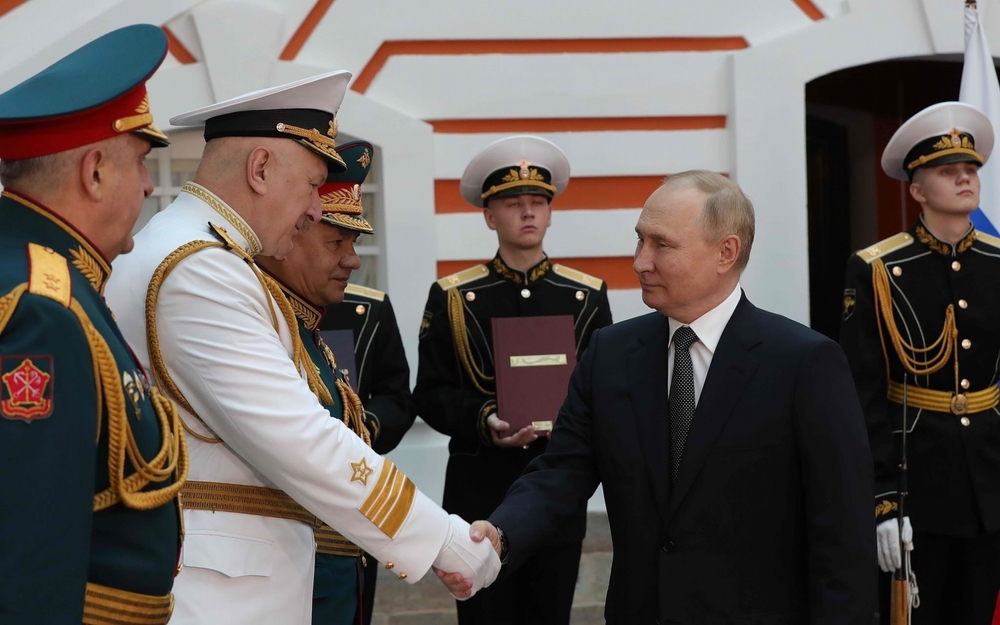
Minister of Defence of Russian Federation Sergey Shoigu with Prime Minister of Myanmar Min Aung Hlaing

Myanmar’s Pivot to Russia: Friend in Need or Faulty Strategy?

by Wai Moe

The relationship between Myanmar and Russia has become increasingly close. This is fueled by practical considerations as well as geopolitics. Myanmar junta chief Senior General Min Aung Hlaing and Russian President Vladimir Putin lauded the 75th anniversary of Russia-Myanmar relations when they met for the first time at the Eastern Economic Forum in Vladivostok in early September. However, Moscow and Naypyidaw interactions only started getting cosier about two decades ago. Min Aung Hlaing observed to Putin, “During this period [of 75 years of bilateral ties], there have been ups and downs. But, starting from the past two decades, the relations between Myanmar and Russia have noticeably improved.” Burmese generals are widely thought to be close to Beijing. Why then did the Myanmar military, also known as the Tatmadaw, attempt to forge closer relations with the Kremlin? The state of affairs can be summed up in two words: pragmatism and geopolitics. A key motivation lies in the Tatmadaw’s continuous quest for arms, which it justifies as necessary for counter-insurgency operations and to defend the country from outside threats. After the 1988 coup, the Tatmadaw turned to China when the West imposed arms embargoes and broad-based sanctions. Though necessity dictated this turn, Myanmar generals have for years been dissatisfied with China-made weapons, especially combat aircraft. “We felt China downgraded the quality of its arms exports, including fighter jets, to Myanmar,” shared a former major-general speaking on condition of anonymity. This eventually compelled the generals to look further afield for new arms suppliers. Myanmar approached Russia, other East European countries and even North Korea. Myanmar generals purchased Russian MiG-29s after a border clash with Thailand in February 2001 showed up the inadequacy of Myanmar’s China-made aircraft, such as the F-7 IIK, against Thailand’s US-made F-16 fighters. Shortly after the border clash, the Tatmadaw purchased 12 MiG-29s in 2001. In 2009 it negotiated a further purchase of 20 MiG-29s. Then, the acquisition was reportedly Russia’s biggest fighter deal since Algeria scrapped an agreement to buy 34 MiG-29s. The Tatmadaw also turned to Russia for military modernisation and training. This started before Min Aung Hlaing became Commander-in-Chief in 2011. Vice Senior-General Maung Aye, the second-in-command of the State Peace and Development Council (SPDC), made the overture with the consent of SPDC supremo Senior General Than Shwe, according to military and related sources. The same retired major-general who divulged the Tatmadaw’s dissatisfaction with China also shared that both Tatmadaw generals — Than Shwe and Maung Aye — fought against the China-backed Communist Party of Burma. He added that they both understood “where the real external threat lay”. There has also been an awkwardness in the junta’s relations with China after the 2021 coup, underscored by China’s concerns to safeguard its economic interests in Myanmar. This may have persuaded the current crop of generals to recall their mentor Maung Aye’s idea of seeking a new partner and arms supplier in Russia. Unlike other generals who had visited China since taking power, Min Aung Hlaing has not been to China since the coup. The junta has also rebuffed a Chinese request for Sun Guoxiang, its special envoy for Asian Affairs, to meet Daw Aung San Suu Kyi. Russia and the Burmese generals both seem pleased with their two-decade-old supplier-buyer relationship. In June 2020 Russia’s state-owned RT (Russia Today) TV interviewed Min Aung Hlaing who was in Moscow for Russia’s 75th Victory Day parade. When asked whether he was “satisfied with the Russian-made planes and helicopters” he replied in the affirmative, stating that “they are really good, and of high quality.” The Tatmadaw also sought Russia’s assistance in modernising Myanmar’s air defence system. The Tatmadaw established the Office of the Chief of Air Defence in 1997, which became fully operational in 1999.  A key business crony of the Burmese generals takes credit for this. He shared with the author that he had recommended to Than Shwe and Maung Aye that Myanmar acquire Russian air defense systems to modernise the Tatmadaw’s air defense capabilities. There is also a capacity-building dimension. Since the early 2000s, thousands of Myanmar military officers have received training in Russia. Min Aung Hlaing reportedly developed this training programme. Topics included military studies, information technology as well as missile and nuclear technology. Some of the returned trainees are now serving in the Office of Strategic Studies, a think-tank advising top generals at the War Office in Naypyidaw. In this capacity, they have some influence over Myanmar’s current Russia policy, including support for Russia’s invasion of Ukraine.  Russia’s continued supply of arms to Myanmar, and its recognition and support for the junta since the 2021 coup seems to confirm to the generals that Russia is indeed among the “few friends” remaining amid mounting international pressure from Western democracies and perceived friends such as China and ASEAN. Facing calls to free Daw Aung San Suu Kyi and requests for dialogue with her, the generals view Russia, which wields veto power at the United Nations Security Council, as an important part of the junta’s power-balancing strategy. Russia, which has weathered global opprobrium for its February invasion of Ukraine, is also keen to find friends. Cautious about making firm statements on Myanmar shortly after the coup, the Kremlin is now more willing to discuss closer ties with Naypyidaw. “After the Ukraine war, Russia and Myanmar became closer as the world treats both countries similarly,” said a senior officer familiar with the junta’s current Russia policy. He observed that Myanmar’s policy on Russia is now driven by geopolitics. With the Tatmadaw continuing to embrace the Kremlin, Myanmar may become Russia’s strategic foothold to expand its geopolitical reach in Southeast Asia and the Indian Ocean, and could spark regional tensions. Whether the Tatmadaw’s turn to Russia may prove to be a wrong strategy seems to be contingent on diplomatic compromises on many fronts, which key actors are currently unwilling to cede.

Defense & Security
The two F-16s returning to Aviano AB with their load of aam and JDAMs

NATO Needs a New Strategy for the Baltic Sea

by Luke Coffey

With Sweden and Finland soon joining the North Atlantic Treaty Organization (NATO), the alliance needs to act quickly to develop plans that acknowledge the new geopolitical reality in the Baltic Sea region. When Sweden and Finland become members, the alliance will need a comprehensive approach to security that considers the region as a whole—instead of dividing it into the traditional “Baltic” and “Nordic” camps. Since Peter the Great (1682–1725), Russia has had imperial designs on the region, and this is unlikely to change in the foreseeable future. Russia’s tactical-level defeats in eastern Ukraine should not inspire strategic complacency in NATO policymakers. They should view the entry of Sweden and Finland into NATO as the starting point, and not the finish line, for bolstering Baltic Sea security. If NATO takes the right steps, Sweden and Finland’s entry will allow the alliance to defend the Baltic states more easily and deter Russian aggression more effectively in the region. Among other things, the following measures can accomplish this goal: - Update and modernize NATO’s contingency plans in the Baltic Sea region- Emphasize the role of the Åland Islands, Gotland, and Bornholm, as well as the Danish Straits, in Baltic Sea contingency planning- Establish a NATO battlegroup in Finland- Increase the alliance’s maritime presence in the Baltic Sea- Establish a permanent military presence in the Baltic states- Establish a Baltic Sea Air Defense mission- Develop contingency plans for Belarus and Kaliningrad in the event of an armed conflict in the Baltic Sea regionA New Geopolitical Reality NATO needs to continuously update its contingency plans as the security landscape in Europe evolves and new members join the alliance. In the past, NATO has often been too slow to take these steps. For example, after the three Baltic States (Estonia, Latvia, and Lithuania) joined in 2004, NATO was hesitant to develop contingency plans for the Baltic states for fear that doing so might antagonize Russia. This complacency started to change in 2008 after Russia’s invasion of Georgia. At this time, NATO finally developed its first set of contingency plans for the Baltic states1 However, NATO did not start to take its security responsibilities on the eastern flank seriously until Russia’s first invasion of Ukraine in 2014. Immediately after the invasion, the United States deployed an infantry company to each of the three Baltic states on a rotational basis. 2 After the 2016 NATO Summit in Warsaw, this modest US rotational presence transformed into the establishment of four Enhanced Forward Presence (EFP) multinational battalions stationed in Poland and the Baltic states.3 In 2020, the alliance adopted new defense plans for the Baltics4 Since Russia’s second invasion of Ukraine in February 2022, NATO has agreed to increase its troop presence in the Baltics from a battalion-sized force to a brigade “where and when required5 Now that Sweden and Finland will soon be NATO members, the alliance will need to update its planning for the Baltic Sea region once again. The addition of Sweden and Finland to NATO will be good for the alliance for several reasons. Both countries possess robust militaries that will add significant capabilities to the alliance. Both have demonstrated the political will to deploy forces abroad to places such as Afghanistan, the Balkans, the skies over Libya, and sub-Saharan Africa. Both have provided significant military and humanitarian aid to Ukraine. Perhaps most importantly, Sweden and Finland’s entry into the alliance provides much-needed clarity regarding their expected roles in the event of Russian aggression in the region. Specifically, NATO can more easily defend the three Baltic states if Sweden and Finland are in the alliance. Without these two countries inside NATO, the three Baltic states are geographically isolated from the rest of the alliance. To the east of the Baltic states are Russia and Belarus. To the west, Lithuania shares a border with the Russian exclave of Kaliningrad (see figure 1). Only Lithuania shares a land border with another non-Baltic NATO member—a 65-mile border with Poland to the southwest, between Kaliningrad and Belarus, known as the Suwalki Gap. This geographical isolation makes NATO’s contingency planning for the Baltic states difficult. While Russian military planners always assumed Finland and Sweden would come to NATO’s aid in the event of a crisis, NATO’s military planners had no such guarantee. Once Finland and Sweden join the alliance, their role in NATO’s regional security planning will finally be clarified. However, the new geopolitical reality in the Baltic Sea means that NATO will need to update contingency planning for the land, air, and sea domains in the region: - Changes in the Baltic land domain. Finland has an 830-mile border with Russia. Though the Finnish military has adequately defended this border for decades, NATO ought to decide how it will integrate into Finland’s national defense plans. This is also true of Finland’s Åland Islands and Sweden’s island of Gotland—which NATO defense planning for the Baltic Sea region should now consider. Also, NATO will have to examine ground lines of communication (GLOCs) contingencies and defense plans for the entire Scandinavian Peninsula, and not just for Norway as has been the case for decades. As for the Baltic states, the Suwalki Gap will remain their main GLOC.  - Changes in the Baltic air domain. Sweden and Finland’s entry into the alliance doubles the number of fourth- and fifth-generation fighters operated by NATO’s Nordic member states.6 NATO already has a well-established Baltic Air Policing mission for the three Baltic States. With Sweden and Finland in NATO, the alliance will need to expand the mission and geographical scope of the existing Baltic Air Policing operation to one focused on air defense.  - Changes in the Baltic region maritime domain. Sweden and Finland’s entry into NATO will add another 95,775 square miles of economic exclusive zone and 2,780 miles of coastline to the alliance. The unique status of the Åland Islands (see figure 1) brings new challenges to NATO planners. Meanwhile, access to and use of Gotland bring opportunities. In addition, the Danish Straits and Denmark’s Bornholm Island will become even more important to NATO’s contingency plans in the Baltic Sea region.  NATO’s Baltic Chain of DefenseThe Baltic Sea region is home to geographical locations of strategic importance for regional security. This makes Swedish and Finnish membership in NATO imperative. History has shown that most military operations in the Baltic region require access to what is today Swedish and Finnish air, sea, and land. For example, during the Crimean War (1853–56) and the Allied intervention in the Russian Civil War (1918–20), the then Swedish fortress of Viapori (today known as Suomenlinna in Finland) and the Åland Islands played crucial roles. During both world wars, the Danish Straits—which border Swedish waters and serve as a gateway to the Baltic Sea—were highly contested. During the Cold War, Denmark’s Bornholm was an area of contention between the Soviet Union and NATO. In the twenty-first century, these considerations have not disappeared. As Sweden and Finland join NATO, they will add two vital pieces of Baltic Sea real estate to the alliance: the Åland Islands and Gotland. Along with Denmark’s Bornholm, these islands form a Baltic chain of defense for NATO. Åland Islands The Åland Islands are a group of 6,700 Finnish islands where the primary spoken language is Swedish. They have always been considered some of the most important geostrategic real estate in the Baltic Sea. During the Crimean War, Sir Charles Wood, Britain’s first lord of the admiralty, said, “Those islands hung over Stockholm as much as Sebastopol hung over Constantinople7 Since the 1856 Treaty of Paris, which ended the Crimean War, the Åland Islands have been demilitarized and have remained neutral. For the victors, this was considered a major achievement of the Crimean War. British Prime Minister Lord Palmerston told the House of Commons in 1856 that demilitarization of the islands “placed a barrier between her [Russia] and the north of Europe.”8 The 1921 Convention Relating to the Non-fortification and Neutralization of the Aaland [sic] Islands reaffirmed the demilitarized and neutral nature of the islands and gave Finland the primary responsibility to guarantee this special status. Article 7 of the convention states that “if the neutrality of the zone should be imperiled by a sudden attack either against the Aaland [sic] Islands or across them against the Finnish mainland, Finland shall take the necessary measures in the zone to check and repulse the aggressor.”9 When Finland becomes a member of NATO, Helsinki’s military and security responsibilities to ensure that the islands remain demilitarized and neutral will also become, by extension, a NATO responsibility. Therefore, in a time of armed conflict, NATO must provide any assistance Finland needs to ensure that the special status of the Åland Islands remains in place. Gotland The Swedish island of Gotland is slightly smaller than Guam and sits approximately 60 miles off the coast of Sweden. It is strategically located halfway between Sweden and Latvia in the middle of the Baltic Sea. Due to its central location, there is a concern that Russian troops based in nearby Kaliningrad would attempt to occupy the island and deploy anti-aircraft and anti-shipping weapons platforms in the event of a war with NATO. Sweden maintained a permanent military garrison on the island for hundreds of years until 2005, when it decided to demilitarize the island as part of a downsizing program for the Swedish Armed Forces. One year after Russia’s 2014 invasion of Ukraine, the Swedish government announced plans to remilitarize the island. Today, around 400 Swedish soldiers are permanently stationed on the island.10 Stockholm plans to boost the defense of Gotland further and to ensure it can reinforce the island quickly and easily if ever required. The Swedish government’s 2020 Total Defense 2021–2025 legislation stated,11 “Also important is enhancing the units on Gotland, where the core comprises a mechanized battalion with reinforcement resources.” In recent years, Gotland has also been the focus of US- and NATO-led military exercises in the region. For example, during the annual BALTOPS exercise in 2022, US Marines rehearsed amphibious operations on Gotland. Bornholm Bornholm is a Danish island strategically located at the mouth of the Baltic Sea. It recently made the news after sabotage—likely from Russa—damaged the Nord Stream pipelines nearby. At the end of World War II, the Soviet Union briefly occupied the island but returned it to Denmark in 1946. At that time Denmark and the Soviet Union unofficially agreed that NATO would not use the island, although Denmark maintained a military presence there during the Cold War. In June 2014, Russia carried out a simulated strike against Bornholm during an annual political festival with 90,000 attendees, including most of Denmark’s political elite.12 In the aftermath of Russia’s 2014 invasion of Ukraine, Danish policymakers began taking the island’s security more seriously. US policymakers have also noticed the island’s importance. In May 2022, as part of the DEFENDER-Europe 22 multinational exercises, the US military made history when it transported a US M142 High-Mobility Artillery Rocket Systems (HIMARS) battery in a C-17 Globemaster III that landed on Bornholm as part of a “rapid infiltration exercise,”13 the first time such a US military presence had occurred on the island. According to the US Army, the goal of the exercises was “to show the strategic reach of the HIMARS rocket system.” 15 Predictably, the Russian ambassador to Denmark, Vladimir Barbin, complained and warned that such a military exercise on Bornholm risks turning the island from a “peaceful haven into a potential military bridgehead.”15 It would be extremely naive to think Russia did not factor the importance of the Åland Islands, Gotland, and Bornholm, as well as the Danish Straits, into its Baltic Sea contingency planning.  NATO would be irresponsible if it did not do the same. The Kaliningrad Factor Not all the strategic spots in the Baltic Sea are part of NATO, as Kaliningrad Oblast is also important to regional security. Kaliningrad is a small Russian exclave along the Baltic Sea bordering NATO members Lithuania and Poland. In terms of size, it is slightly larger than Connecticut and has roughly the same population as Delaware. However, it plays an outsized role in Russia’s projection of power. Kaliningrad is part of Russia’s Western Military District and is home to two air bases (Chernyakhovsk and Donskoye) and Russia’s Baltic Fleet headquarters. Russia also has facilities for storing tactical nuclear weapons in Kaliningrad,16 and some military strategists suspect that Russia keeps nuclear weapons there. 17 Before the 2022 Russian invasion of Ukraine, Moscow maintained approximately 25,000 Russian troops and security personnel, hundreds of tanks and armored vehicles, S-400 air defense systems, P-800 anti-ship cruise missiles, and sizeable air and naval assets in Kaliningrad. Since 2016, Russia has also maintained Iskander-M short-range ballistic missiles in Kaliningrad. The Iskander-M missile, which has a suspected range of 310 miles, can threaten Gotland and Bornholm with nuclear or conventional warheads from here. However, Russia has reportedly sent some of its forces, weapons systems, and other platforms to Ukraine since the Kremlin launched its invasion in February 2022.Before the 2022 Russian invasion of Ukraine, Moscow maintained approximately 25,000 Russian troops and security personnel, hundreds of tanks and armored vehicles, S-400 air defense systems, P-800 anti-ship cruise missiles, and sizeable air and naval assets in Kaliningrad. Since 2016, Russia has also maintained Iskander-M short-range ballistic missiles in Kaliningrad. The Iskander-M missile, which has a suspected range of 310 miles, can threaten Gotland and Bornholm with nuclear or conventional warheads from here. However, Russia has reportedly sent some of its forces, weapons systems, and other platforms to Ukraine since the Kremlin launched its invasion in February 2022.18 In reality, there is no accurate open-source assessment of what Russia maintains in Kaliningrad today. Kaliningrad is important for Russia’s geopolitical aims in the Baltic Sea for three reasons: 1. Kaliningrad allows Russia to project power in the region in a way it would be unable to without access to the exclave. If Moscow wanted to try capturing the Åland Islands, Gotland, or Bornholm, it would do so using Kaliningrad. 2. Kaliningrad serves as the cornerstone of Russia’s anti-access/area denial (A2/AD) strategy in the Baltic Sea region. If Russia has control of Kaliningrad during an armed conflict, NATO’s ability to act in the Baltic Sea region will be limited. 3. The possibility that Russia could access Kaliningrad through NATO and European Union member Lithuania offers Moscow an easy and low-cost way to increase tensions with the West. For example, in July, Russia falsely accused Lithuania of illegally blocking the transit of certain items to Kaliningrad.19 Also, many of the aerial incidents that cause NATO planes from Baltic Air Policing to scramble involve Russian planes flying to or from bases in Kaliningrad. Recommendations In the aftermath of Russia’s invasion of Ukraine and with two states becoming new NATO members soon, the Baltic Sea region requires increased attention from the alliance’s leaders, who will need to develop a new strategy. The US should lead the way inside NATO to prepare the alliance to deal with these changes. The US and NATO can better prepare for contingencies in the Baltic Sea region by taking the following steps: - Update and modernize NATO’s contingency plans in the Baltic Sea region. With Sweden and Finland coming into the alliance, the geopolitical reality in the Baltic Sea region has changed. NATO should update its plans for the Baltic Sea region. It is in America’s interest to lead this process. - Publish a special annex to NATO’s 2022 Strategic Concept. NATO published its long overdue Strategic Concept at the 2022 Madrid Summit, but there was no formal input from Sweden and Finland since neither were members at the time. When both formally become members, NATO should work with Stockholm and Helsinki to publish a special annex to its 2022 Strategic Concept to factor in the new geopolitical reality in the Baltic Sea region. - Consider the special status of the Åland Islands in NATO’s plans. There is no doubt that Russia factors the importance and location of the Åland Islands into its war planning. The demilitarized and neutral status of the Åland Islands makes contingency planning tricky for NATO. When developing its approach to these islands, the alliance should look at how the Norwegian archipelago of Svalbard—which shares some legal similarities with the Åland Islands—factors into NATO’s defense planning. NATO should also work in close consultation with the Finnish government and, where necessary and appropriate, the devolved government in Åland. - Call for a special North Atlantic Council (NAC) meeting to be held on Gotland after Sweden joins. The NAC is the principal decision-making body inside NATO. The secretary general chairs its meetings. A special NAC meeting on Gotland would bring immediate awareness of Baltic Sea security issues to the Alliance. Establish a NATO enhanced forward presence (EFP) battlegroup in Finland. After the 2016 NATO Summit in Warsaw, this modest US rotational presence transformed into the establishment of four EFP multinational battalions stationed in Poland and the Baltic states.20 At the 2022 NATO Summit, the alliance added EFP battlegroups to Hungary, Bulgaria, Romania, and Slovakia. When Finland joins NATO, it will be another frontline state on the eastern flank and should host an EFP battlegroup. As a confidence-building measure, NATO should ask Turkey to participate. - Lead efforts to establish a Baltic Sea Air Defense mission. While the Baltic Air Policing has been useful for policing the region’s airspace, more needs to be done. With Sweden and Finland inside NATO, and with Russia’s increased aggression, a robust and expanded Baltic Sea Air Defense mission is needed. Air policing alone is no longer enough. - Encourage the European Centre of Excellence for Countering Hybrid Threats in Finland to receive NATO accreditation. Founded in 2017 to establish best practices for countering hybrid threats, the European Centre of Excellence for Countering Hybrid Threats already cooperates closely with NATO. The alliance should move to accredit the center to formally bring it into the existing family of NATO’s 28 accredited centers of excellence. This would be a quick and easy way to “fly the NATO flag” in Finland after it joins. - Establish a permanent military presence in the Baltic states. The deployment of the rotational EFP battlegroups to the region is a good start, but NATO ought to do more. The threat from Russia will remain for the foreseeable future. NATO needs to show an enduring commitment to the region by permanently stationing armed forces in each of the three Baltic states. - Factor Kaliningrad into NATO’s Baltic Sea region contingency planning. The US needs to work with its NATO allies to develop a strategy that deals with the Russian A2/AD capabilities in Kaliningrad in the event of an armed conflict. In particular, this effort requires close cooperation and planning with Poland. NATO cannot carry out any credible defense of the Baltic Sea region without neutralizing the threat from Kaliningrad. - Increase the maritime presence in the Baltic Sea. In recent months the US has increased its maritime presence in the Baltic Sea, but it can do more. Under the authority granted in the 1936 Montreux Convention, Turkey has blocked all warships from entering the Black Sea through the Turkish Straits while fighting continues in Ukraine. Last year, the US Navy spent a total of 111 days in the Black Sea.21 While the Montreux Convention restrictions are in place, the US and its allies should divert maritime assets that would have normally been deployed to the Black Sea to the Baltic Sea. - Establish a US Marine Corps Baltic Sea Rotational Force. Until Russia’s invasion of Ukraine in February 2022, the US Marine Corps operated a Black Sea Rotational Force that consists of a special-purpose Marine air-ground task force (SPMAGTF). Now that the Black Sea Rotational Force cannot operate in the Black Sea due to the Montreux Convention restrictions, the US should consider establishing a similar task force for the Baltic Sea region. Such a task force would offer more joint military training opportunities for allies in the Baltic Sea region. - Make large-scale reinforcement exercises to the Baltic Sea region the norm. The US and Canada need to have the ability to reinforce Europe quickly. Countries in Western and Southern Europe should also be able to deploy forces quickly to Eastern and Northern Europe. For example, the straight-line distance from Portugal to northern Finland is more than 2,500 miles. Transporting forces over this distance quickly is no easy feat. During the Cold War, the US conducted an annual military exercise called Operation Reforger (Return of Forces to Germany). NATO should consider holding regular exercises focused on defending and reinforcing the Baltic Sea region. - Consider Belarus’s role in regional security. Since fraudulent elections in August 2020 kept him in power, the de facto leader of Belarus, President Aleksandr Lukashenko, has never been closer to the Kremlin. Belarus played an important role in enabling Russia’s invasion of Ukraine in February 2022, and Russian units that invaded from Belarus committed many of the worst atrocities against Ukrainian civilians. In the event of a Russian military intervention against a NATO member, the US should make it clear that it would not turn a blind eye to any Belarussian support provided to Russia. NATO should develop military plans accordingly, especially regarding the expected role of the Belarusian city of Grodno, located near the Suwalki Gap, in the event of a conflict in the Baltic states. - Leverage the US–UK Special Relationship in the Baltic Sea Region. The US and the UK are more effective actors in transatlantic security when they work together. For historical reasons, the UK has very close relations with the Baltic states, especially with Estonia and Latvia. Through its participation in the Northern Group, the UK also has an enhanced security presence in the Baltic Sea region due to the Joint Expeditionary Force.22 The US should work with the UK to identify areas of deeper defense and security cooperation in the Baltic Sea region. Conclusion The addition of Sweden and Finland to NATO will bolster transatlantic security by adding two members who have the political will and the military capabilities to contribute to the security and stability of the Baltic Sea region. Their membership in NATO will deter Russia and diminish the likelihood of future conflict in the Baltic Sea region. However, as Russia’s February 2022 invasion of Ukraine demonstrates, no potential action by Moscow can be ruled out. Defending the Baltic states and deterring Russian aggression will be far easier and cheaper than liberating them. With Sweden and Finland in NATO, the defense of the Baltic states and security in the wider Baltic Sea region will be greatly improved. However, the alliance cannot dither or become complacent. NATO’s contingency plans need to continuously evolve as the security situation changes or as new members join the alliance. The time to get NATO’s plans in order for the Baltic region is now.

Energy & Economics
Abandoned nuclear power plant

Developing Nuclear Energy in Estonia: An Amplifier of Strategic Partnership with the United States?

by Tomas Jermalavičius , Max Bergmann , Peter Crail , Thomas O’Donnell , Tomas Janeliūnas

IntroductionEurope is confronting twin energy crises resulting from the impact of climate change and its energy dependence on Russian fossil fuels. Addressing these crises will require the European Union (EU) and its member states to engage in nothing short of an energy revolution that will decarbonise Europe’s energy usage and end dependence on Russian fossil fuels. Russia’s invasion of Ukraine has focused transatlantic attention on the importance of energy security and ending energy reliance on Russia. While the EU and US are now both taking immediate steps to reduce consumption and reliance on Russian supplies, some of these steps may result in increased emissions or will lead to greater reliance on other autocratic suppliers. To address the twin challenges of climate catastrophe and Russian aggression, significant action will be needed on the energy transition front in the short, medium, and long term.  Estonia, like other EU (and NATO) members is therefore at an energy crossroads. Unlike many of its EU fellow member states, it has not been highly dependent on Russian energy supply and is relatively energy secure. Domestically produced oil shale accounts for 55% of Estonia’s domestic energy supply (as of 2020).While, prior to the Russia-Ukraine war, Estonia received roughly 93 percent of its natural gas from Russia, natural gas accounts for less than 8% of Estonia’s overall energy consumption.Furthermore, the imports of the Russian gas came to an end as a result of steps taken by the Estonian government, in response to Russia’s aggression, and were replaced by liquified natural gas (LNG) from other suppliers. However, oil shale is very carbon-intensive, while increasing reliance on natural gas will do little to decarbonise energy system in the long-term. In order to meet Estonia’s climate commitments, embedded in the EU’s Green Deal and “Fit for 55” goals, Estonia will need to develop alternative sources of energy but will encounter manifold challenges in this transition. As the climate crisis deepens, the failure to meet climate targets could also have significant reputational costs internationally. Moreover, the effort to “electrify everything” – from cars to heating – will likely lead to increased demand for electricity. This will require not simply swapping out energy sources but producing more electricity with the goal of having an abundance of energy. Additionally, an abundance of cheap and clean energy will be necessary to support carbon removal projects, such as through direct carbon capture and storage technology. Thus, no matter the technological developments in other energy types, there will be demand for an abundance of clean energy. Furthermore, while there have been significant advances in renewables, there are also concerns about intermittency – when the sun is not shining, or wind is not blowing – as well as space needed for deployment. One potential zero carbon technology for Estonia to consider is new advanced nuclear technology in the form of small modular nuclear reactors (SMR). Developing a small modular reactor could contribute to enhancing regional energy security within the EU and to achieving the EU’s climate objectives. A decision to adopt nuclear energy, however, has implications not only for the national energy system or broader climate objectives. It is a sensitive area that intersects with geopolitical and national security considerations. Its pursuit means new opportunities for deepening strategic partnerships, and cooperation in nuclear energy technology is often an effective vehicle to enhance not only commercial and technological interactions but also security and foreign policy ties between countries. This is of particular importance to countries such as Estonia that seek the greater involvement of main allies such as the US, UK, France, and Germany in the Nordic-Baltic area to counter geopolitical pressure from Russia and China. The United States stands out as a pivotal ally, but the US “footprint” in Estonia remains small compared to what it could be. Also, Estonia’s foreign and security policy is currently heavily tilted towards diplomatic, military and cyber aspects when it comes to engaging the US, while energy security and energy technology receive far less attention. Nuclear energy cooperation would create new opportunities for enhancing US-Estonia ties.  At the same time, any efforts of Estonia to have “more US” in the region – particularly in such sensitive sector as nuclear energy, but also across the board – may encounter resistance. Some of it would inevitably arise from Russia and its geopolitical confrontation with the West, but it would also stem from the notions of “European sovereignty” as well as some persistent characteristics of intra-European relations, structural issues in national energy policies, and diverging geopolitical perspectives of some key countries in the EU. These aspects must be factored in when considering the geopolitical prospects of nuclear energy in Estonia and the highly appealing transatlantic dimension of these aspirations.1. Estonia’s Energy Security and Nuclear Energy OptionThe Estonian government is yet to make its decision regarding the adoption of nuclear energy for electricity generation. There is an inter-agency nuclear energy working group established to analyse the issue and articulate recommendations by 2024.The electricity prices crisis of late 2021-early 2022 drew attention and elicited many favourable assessments from various public figures. The government even decided to expedite decision-making on the matter. Prime Minister Kaja Kallas and the then Minister of Economic Affairs and Infrastructure Taavi Aas indicated their support to possible adoption of nuclear energy. Political leadership of major parliamentary political parties both in the governing coalition and opposition are mostly in favour, while only the Greens, who do not hold any seats in the parliament, are opposed. Public opinion polls conducted in early 2022 also showed high public support to nuclear energy, with 59% of the respondents being in favour. At the same time, some officials emphasize that Estonia need to carefully follow the International Atomic Energy Agency (IAEA) guidelines on national nuclear energy programme deliberations, limiting how much decision timelines could be compressed.The political decision-makers might also decide to put the option for a vote in a referendum. Estonia, by some accounts, has a strong anti-nuclear undercurrent in society, stemming from the negative experiences of Soviet-era environmental mismanagement and the civil nuclear disasters of Chernobyl in 1986 and Fukushima in 2011. If Estonia is to adopt nuclear energy, this sentiment would have to be engaged and mitigated well before any further practical steps are made, which opens opportunities for hostile disinformation operations by malignant actors. Currently, there is only one clear proposal on the table – by Fermi Energia which also has Swedish Vatenfall as a minority shareholder and expects more investors to join soon. Fermi Energia assesses that it can ensure, within a framework of a long-term contract, supply of electricity at the price of €55 per MWh for 15 years, which is about half or even one third of the current market prices in NordPool spot market in early 2022. Given that price volatility is likely to continue and even worsen, while pressure to accelerate decarbonisation will only increase, as Estonian electricity production is the most greenhouse gas-intensive in Europe, this could be seen as an economically attractive and competitive proposition. In addition, there would be heating supply available to nearby municipalities at a very competitive price compared to natural gas option. Theoretically, Estonia could, instead of developing own nuclear power, join as an investor and participant in a larger project (e.g., in Poland). However, the lead times of such projects are often too long and compound various risks, as illustrated by the recently cancelled Hanhikivi-1 project in Finland.Estonia also has a very negative experience from the Lithuanian Visaginas Nuclear Power Plant (NPP) project debacle that led to failure of Lithuania to launch a regional NPP project agreed with the other Baltic states and Japan’s Hitachi in 2011-12, while the option of buying into one of the upcoming Polish projects might not be very appealing to Estonia.In the view of some Estonian energy executives and policymakers, Polish energy needs would likely supersede those of any other participating country’s when allocating the output, and many small investors are not of high interest to nor needed by the Polish companies behind Poland’s nuclear projects. There is, however, room for cooperation in training, regulatory capacity building, R&D and similar aspects, much of which could be undertaken in the framework of the Three Seas Initiative (3SI), where the US has a leading role. Even in construction, if it takes place in parallel, some common pooled purchases could be undertaken.  Thus, should there be an affirmative decision by the government, Estonian developers are leaning towards having a national solution, even though remaining open and even actively courting participants from neighbouring countries as investors, thus in reality turning it into a regional project. Latvia is among the priorities and shows a clear interest, as demonstrated by discussions between Fermi Energia and state-owned energy corporation, Latvenergo (in this case, if Latvenergo joined the project, Estonia would deploy four SMR units instead of two). There are also ongoing talks with Finnish Fortum as a potential investor into the Estonian project, as the Russian electricity trade embargo enacted by the Kremlin – possibly in response to Finland’s application to join NATO – and the failure of the Hanhikivi-1 venture prompted Finland to seek new sources of supply in the region to satisfy future electricity demand.Thus, the company leading the Estonian project sees it as a regional one, just without the governments being in the lead. On the other hand, some officials insist that governments would inevitably come to play an essential role in such a project of strategic importance not only to Estonia, but also to the wider region. The Estonian project developers have already chosen BWRX-300 by GE Hitachi, a joint US-Japanese venture. So far, it appears that BWRX-300 will be the only reactor type that might be fully licensed – by Canada – and could obtain license in Estonia by 2030. This date is a crucial milestone for Estonia due to the plans to close oil shale-based power generation plants and the need to make further and faster progress towards fulfilling Estonia’s climate neutrality commitments – the pace of which is strongly criticised by the civil society – without losing domestic generation capacity necessary to provide stable baseload which the rapidly growing but intermittently performing renewables would not be able to ensure. At the same time, some of Estonia’s energy policy stakeholders insist that, come 2030-40, the renewable sector will possibly have addressed, through technological innovation in grid storage and other areas, the intermittency problem and, given especially the offshore wind potential in the Baltic Sea, might make introduction of nuclear energy with all the attendant complexities and societal stigma unnecessary altogether. Indeed, the government's decision in August 2022 to accelerate the energy transition to 100% renewable electricity consumption in Estonia as early as 2030 indicates the abundance of optimism about such innovation. Others, however, believe that renewables and nuclear energy can successfully co-exist and point to Finland as an example, but there are views that an Estonian SMR could be ready by 2040 at the earliest. If Estonia decides to adopt nuclear energy and given that the company leading the project selected GE Hitachi SMR, its deployment can be expected to be a high priority in US-Estonia and Canada-Estonia cooperation and possibly the highest value business engagement for the period of 2024-35 until the reactors have been deployed and operate routinely. The US would be the main partner on maintenance services, training, and education. According to the Fermi Energia executives, GE Hitachi would be the design supplier, which includes all technical drawings, equipment specifications, safety studies, and personnel training, as well as the supplier of final fuel elements, fuel assembly services, instrumentation equipment and software, turbines, generators and more. Canada, as the first-of-a-kind (FOAK) deployment nation for this type of SMR, would be important in personnel training and supply chain management, with very significant supplies such as reactor pressure vessel (RPV), primary steam piping, RPV internals, valves, pumps, and uranium being provided by the Canadian suppliers. French Orano, 51% owned by the French government, could have a significant role in fuel cycle by providing the uranium enrichment and spent fuel recycling services, thus mitigating potential French objections to more US tech in Europe as contravening European “tech sovereignty” notions. It is likely that companies and export credit agencies from Sweden, Finland, France, US, Canada could be important investors and creditors. The envisaged capital expenditures (CAPEX) breakdown would be roughly as follows: in the US – 30%; in Canada – 30%, other countries – 10%; in Estonia – 30% (local suppliers of construction materials, services during the construction, etc). In addition, given its nuclear competence, very close economic ties with Estonia, and Vattenfall’s investments, Sweden would also be an important partner, especially in personnel training. Estonia’s success could also provide know-how and a point of reference to countries such as Lithuania, where there are already some voices calling for deploying SMRs as a solution to achieving energy independence, a goal of its national strategy.The fact that Estonia is “nuclear naïve” at the moment does not seem to put off potential investors; quite to the contrary, it makes Estonia’s lack of legacy baggage more interesting to partners from Sweden, Finland or Canada. However, it is the political sentiment and geostrategic considerations in the US and EU – both in the EU institutions and among key member states – that will be of paramount importance if Estonia goes forward with nuclear energy and selects an SMR solution of US origin.2. The US Policy and InterestsThe United States has a strategic interest in increasing European energy security, particularly in the Baltic region. Washington has long been concerned about European dependence and reliance on Russia for its domestic energy. Throughout the previous decade, US administrations have opposed the Nord Stream 2 (NS2) pipeline and have pressed Europe to diversify its energy supply away from Russia. In the aftermath of Russia’s invasion of Ukraine, the US and Europe sought to increase pressure on the Russian economy, and Russia’s energy sector which accounts for about 45% of Russia’s total exports became one of the key targets of comprehensive sanctions. Admittedly, the US also has its own parochial reasons to push Europe away from Russian gas. Over the last decade, America has undergone its own energy revolution, becoming a major producer of natural gas with fracking technology. It has become a major exporter of LNG and has encouraged Europeans to expand their LNG infrastructure to take advantage of American supplies. There are major US political stakeholders that have an interest in expanding US LNG exports to Europe and see an opportunity in the current crisis to increase market access for US exports, which would justify increasing investment to expand domestic production. However, LNG is not the only game in town when it comes to the US interests. Nuclear energy sector is increasingly becoming a pivotal area of geoeconomic competition with such rivals as Russia and China. SMRs and their potential market are viewed as an important aspect of US efforts to regain a share of the global nuclear reactor market and are a feature of both US commercial marketing and diplomatic outreach. The establishment of the Foundational Infrastructure for Responsible Use of Small Modular Reactor Technology (FIRST) programme in April 2021, which Estonia joined in January 2022, is indicative of the US government’s focus on SMRs in its near-term nuclear export strategy. Market research organisations estimate the SMR market to grow by 15% and reach roughly $19 billion by 2030. The United States began considerable investment in SMR development in 2012 with the US Department of Energy’s establishment of the SMR Licensing Technical Support Program. Since that time, a wide variety of SMR designs have been under development and are in various stages of licensing. The twin geopolitical and geoeconomic interests have seen the United States become a major proponent of the 3SI. This initiative was launched by the Presidents of Poland and Croatia in 2015 with the goal to develop north-south infrastructure, particularly relating to energy infrastructure. The United States views the 3SI as a way to expand LNG imports to reduce dependence on Russian natural gas, as well as provide a potential counter-balance to China’s Belt and Road Initiative and its 16+1 format. There is strong US support for the Three Seas Initiative (3SI). For instance, President Donald Trump attended the 2017 Three Seas Annual summit. In November 2020, the House of Representatives passed a bipartisan resolution “expressing support of the Three Seas Initiative in its efforts to increase energy independence and infrastructure connectivity thereby strengthening the United States and European national security” (H.Res. 672, 116th Congress). In December 2020 the US approved a $300 million investment in the 3SI Investment Fund, “primarily for projects focused on energy security.” This investment was enabled by the European Energy Security and Diversification Act of 2019, which eased restrictions on investing resources for energy infrastructure projects in higher-income countries, such as the European Union. In February 2021, a bipartisan group of members of congress urged the new Biden Administration to continue the previous Administration’s pledged financial support for the 3SI and to finalise its approved $300 million investment. While the 3SI has drawn significant attention, its projects are largely supported by European, not US, investments and several pre-existing projects were simply rebranded as part of the 3SI. Nevertheless, 3SI has focused attention on the need for north-south infrastructure within Europe. For instance, 3SI is supporting a gas interconnection between Poland and Lithuania, thus connecting the three Baltic states and Finland to the European gas network. Of note, however, is that this project was funded through EU and member state contributions. The United States is a secondary player when compared to the EU in terms of infrastructure investment. For instance, three-fourths of the funding to desynchronise Baltic states from the Russian grid and synchronise them with the continental comes from the EU, with the US playing a much smaller financial role. Nevertheless, the pressure from Congress on the Biden administration to make investments in European energy security will likely increase due to Russia’s aggression. Congress will be especially focused on expanding LNG infrastructure. The Ukraine supplemental funding bill, which passed congress in March 2022, urged the administration to create a “Baltic Security and Economic Enhancement Initiative.” The purpose of such an initiative is to provide the Baltic states with security assistance, bolster “physical and energy security needs,” look for opportunities for US foreign direct investment, and improve “high-level security and economic cooperation.” Congress has also called on the administration to send high-level representatives to the Baltics at least twice a year and attend trade, energy, and business fora.How and whether this initiative will be implemented by the Biden administration remains to be seen. But there is now significant funding being made available to the administration for security assistance and energy financing. Pressure will therefore increase on US agencies to show support for the Baltics and Eastern Europe, leading US agencies to scramble to identify sensible projects and investments. Should Estonia pursue American SMR technology, there will be immense US support for the project from the US congress and the Biden administration. It is increasingly visible that the US government has already identified the Trimarium region as one of the priority directions for advancing nuclear energy through the so-called Partnership for Trans-Atlantic Energy and Climate Cooperation (P-TECC) – an international platform initiated by the US Department of Energy. This nuclear energy strand of a broader effort to improve energy security and resilience across the region clearly checks a lot of boxes for US government agencies: It serves a strategic purpose of expanding European energy supply, it promotes American businesses, and develops new zero carbon technology. Thus, there would be strong support from within the US government for stronger bilateral engagement in this area. This is illustrated by a recent P-TECC meeting that focused on nuclear energy in the Central and Eastern Europe. The Estonian SMR project, if pursued, would likely become a show-piece project for the US government, and the US officials would take great interest in its success. For instance, one major topic on the agenda during the visit of Assistant Secretary of State for Non-proliferation, Elliot Kang, to Estonia was SMR technology. There is little doubt that proceeding with a climate-friendly energy project that has geopolitical ramifications and is based on cutting-edge US technology would help to deepen diplomatic relations with the United States. It would also further bolster Estonia’s image in the United States as an incredibly capable and cutting-edge ally that punches above its weight within the transatlantic alliance.3. Security Dimension of Nuclear Energy and Cooperation with the USThe evolution of the bilateral security cooperation agenda that is likely to take place as a result of Estonia’s choice to pursue nuclear energy based on the US SMR technology largely depends on what security risks result from this choice and how the US government could assist Estonia in addressing those risks.Traditionally, US security assistance to help protect and secure nuclear facilities has been largely focused on countering the threats posed by terrorism – whether preventing terrorist attacks against the plant itself or addressing the proliferation threats to ensure nuclear materials do not fall into the wrong hands. However, the war in the Ukraine has made clear that nuclear power plants are also national strategic assets and therefore potential military targets. Moreover, the hybrid threat environment in which Estonia finds itself means that its SMR project could be exposed to the use of various vectors of attack (e.g. cyber, disinformation, etc) applied by hostile state powers seeking to advance their interests through the medium of so-called “grey zone” conflict. Interaction between the US government and Estonian authorities in monitoring and countering such risks would form an important strand of bilateral security cooperation. 3.1 Conventional Military ThreatRussia’s invasion of Ukraine provides important lessons for Estonia to consider when assessing whether to proceed with an SMR. This war has created an unprecedented situation in which nuclear power plants have been in the crossfire of war. The war in Ukraine demonstrates that an SMR would be a potential target for Russia, whether in a conventional military operation against Estonia or in conducting asymmetric or grey-zone operations to weaken or undermine the government in power. For instance, Russia in 2015 targeted Ukraine’s power sector through a cyberattack, successfully shutting off the power for 200 000 Ukrainians before Christmas. Similarly, during the war in Ukraine, Russia has also launched cyberattacks against Ukraine’s power grid. The targeting and seizing of power plants in Ukraine means that Estonia must consider the likelihood that Russia will target an SMR in a potential conflict. In a conflict with Estonia, Russia’s military objectives may also differ significantly than its objectives with Ukraine. Russia has appeared intent on changing the regime in Kyiv and occupying the country and has therefore allowed plants to continue operating. But in an attack against Estonia, Russia may have more destructive ends that would resemble the aims of its large-scale strike campaign against Ukraine’s energy system since Autumn 2022. Hence, instead of seizing and operating power plants, Russia may simply seek to destroy the SMR and deprive the country of significant source of electrical power. Thus, the construction of an SMR, which if built, would likely provide Estonia with an important portion of its power supply and potentially provide power to Latvia as well, would be a prime target for Russia in the event of a military conflict. 3.2 Cyber, Espionage, and Terrorist TargetAn SMR, especially one tied to the United States, would also be a prime target for Russian cyber and espionage campaigns. Developing robust cyber security standards would be a must, as would maintaining extremely careful security protocols for staff. Power plants and power grids have been major targets for Russian cyber operators in the past. For instance, Ukraine’s electrical grid was taken offline in December 2015, with the attack impacting more than 225 000 Ukrainian customers. Russian intelligence and cyber hackers would likely see the plant as a key target both to disrupt operations at the plant, as well as to conduct industrial espionage to improve Russia’s nuclear industry. Lastly, an SMR or any high-profile critical infrastructure must be seen as a potential target for terrorist networks. 3.3 Disinformation TargetThe impact of malignant disinformation campaigns on political processes and national security is well understood by the US and Estonian governments, as is the role of hostile state powers in orchestrating such campaigns. Given the societal sensitivities about nuclear energy, disinformation is one of the most serious challenges that an SMR project would face in Estonia, especially during the public debate on adopting nuclear energy and then during the project’s implementation. In 2006-12, Lithuania’s intentions to build an NPP together with Latvia and Estonia would have significantly changed the current picture of electricity generation in the Baltic region, but Russia’s actions designed to negatively influence the public debate contributed to the suspension of this project. Similar actions should be expected to target Estonia.4. Headwinds and Tailwinds from Other PlayersFrom the geopolitical standpoint and as far as diplomatic strategy concerns, three fellow EU member states and NATO allies – Germany, France, and Poland – stand out for Estonia when considering embracing US nuclear technology and cooperation. The former two have historically formed the most important tandem in shaping the direction of the EU, while the latter has emerged as an important hub for the Trimarium. All three are highly important security and defence partners for Estonia and other two Baltic states. They are, however, positioned on different points of two axes – anti-/pro-nuclear axis and transatlantic/Eurocentric axis – and thus pose different, if somewhat overlapping, sets of challenges. When it comes to the nuclear part, France and Poland are natural allies in making a continued case in favour of nuclear energy’s role in future climate neutral world. Poland also would be an important partner whenever collaborative efforts are required to maintain and benefit from the US involvement in nuclear energy development in the region. Due to the scope of its nuclear ambitions, Poland may come to dominate the US attention and thus diminish the potential political benefits for Estonia, particularly in terms of visibility. Inevitably, Tallinn will have to be very careful and specific about which aspects of practical nuclear cooperation with Poland are desirable – for example, pooled training, specialist mobility, R&D, etc. – and which ones are not. It would be important for the Estonian government, ministerial and commercial actors, as well as civil organisations, such as think-tanks and academic organisations, to establish regular and institutionalised consultations with their Polish counterparts in SMR deployment. A consistent, shared legal, regulatory and standards framework, if possible, would seem highly desirable, to simplify cooperation for decades hence. However, it is important to understand that, although the Polish SMR deployment – just as in Estonia – is more an industry-initiated and led endeavour with state support, the overall Polish programme specifically focuses on large-scale reactors. Germany’s policy, on the other hand, continues to be dominated by anti-nuclear sentiment and “renewables-only” perspective about future energy supply, which is unlikely to change due to the structural and ideological forces at play in German economy and society. Contrary to Estonia’s already strong emphasis on and commitment to renewables, such as offshore wind, Estonian nuclear aspirations are therefore likely to be unpopular in Berlin and will possibly draw continuous criticism. This criticism would lack credibility, given the complete failure – in geopolitical and energy security terms – of the German energy policy, exposed by Russia’s war against Ukraine. However, unlikely as it is to do much significant damage to the overall bilateral relations in foreign and security affairs, Berlin’s anti-nuclear stance – given the sheer lobbying weight of Germany – may still dampen the enthusiasm in the Baltic region and, more importantly, in Brussels over the long-term prospects of nuclear energy industry in the EU. Furthermore, reliance of the Estonian programme on the US may kindle the anti-American instincts in those sections of the German political establishment and policy community that have long sought to balance out the US role in the European security order through energy relations with Russia and industrial relations with China. There will also be growing geoeconomic competition between Germany and the US over the shape of energy policies and the attendant commercial opportunities in the Trimarium, with the former advocating for more alignment with the philosophy of global energy transition, or Energiewende, and with the latter emphasizing the need for nuclear power in the energy mix as a pathway to energy security of the region. Tallinn will have to invest diplomatic efforts into cultivating the transatlanticist policy stakeholders in Berlin and highlighting the strategic benefits of the US involvement in energy security of the Baltic region and Europe as a whole. Estonia’s constructive role in maintaining German interest in building synergies and complementarities with the US contribution to the region’s energy security – including through the 3SI framework – rather than competing with the US would be beneficial to all sides. It might even help Berlin offset some of the loss of political capital and credibility in the Trimarium, incurred by the NS2 saga and then its ambivalence regarding the extent, speed, and nature of support to Ukraine during the war with Russia. Reliance on the US in a nuclear energy programme, however, may prove more problematic in the geopolitical and geoeconomic analysis of Paris. Its agenda of pushing forward European sovereignty means that extensive technological dependence on the US may not be viewed very favourably in some quarters, especially as France continues developing its own SMR for sales in international markets. Estonia should expect that France will make a persistent case for cooperation on the European SMR and will highlight that the EU framework already provides sufficient range of security cooperation instruments to address the risks associated with the adoption of nuclear energy. Some of the potential political opposition from France can be defused by integrating its nuclear industrial base into the supply chains of the Estonian nuclear energy programme, even after choosing the US SMR as the proposed project intends, but this will be hardly sufficient to avoid the optics that Estonia is not supportive of strengthening the EU’s sovereignty aspirations in practice. Estonia will have to be prepared to make a strong case to Paris that dependency on the US – be it in energy technology or military technology – is not contrary to Europe’s interests but rather conducive to greater cohesion and strength of the collective West. The EU has been playing a pivotal role in pushing for and coordinating common responses to the climate crisis and Russia’s use of energy as a tool of geopolitical coercion. Policy instruments and strategies agreed by the member states, such as the EU Green Deal and RePowerEU, advance the diversification of energy sources, promote the energy transition to climate neutrality, and provides for greater coherence, solidarity, security, and closer integration of national energy systems.Although choices concerning national energy mix remain the prerogative of the member states, the overall policy direction undertaken by the EU and the general sentiment in Brussels about the approaches of individual member states clearly matter in assessing the risks and opportunities for Estonia related to nuclear energy. At the end of 2021, the Commission finally completed an extended process that culminated with a decision to include nuclear energy – and natural gas – in its Green Finance Taxonomy (often referred to as simply “green taxonomy” in most discussions), established under the Union’s Green Deal. On the upside, the pro-nuclear decision can be considered a victory for science- and data-driven policy against green-populism, with crucial input made by various scientific studies on the climate impact of nuclear energy. The EU Commission’s decision primarily represents an acknowledgement of the reality that nuclear energy is, de facto, the only scalable solution to reliable base-load carbon-free generation that can displace coal – and eventually natural gas – and does not require the installation of massive, generalizable grid-scale storage, as does an over-reliance on variable renewables. With such popular and ideological forces in favour of the 100%-renewables-and-no-nuclear-model, only the appearance of significant difficulties with this model motivated the Commission and ministerial actors to weather the formidable shaming of “green washing” to open new opportunities for nuclear energy.ConclusionThe United States remains of pivotal importance to Europe’s and Estonia’s security, and this importance was further underlined by its role in countering Russia’s aggression against Ukraine as well as strengthening NATO’s deterrence posture on the eastern flank (or “eastern front,” as it is increasingly referred to). Its continued bilateral and, through various cooperative formats such as 3SI, minilateral engagement in the Baltic region is vital foreign and security policy interest of Estonia. Maintaining this engagement will be increasingly difficult because the US repeatedly seeks to pivot to the Asia-Pacific, as the great power competition dynamics in that area of the globe requires its strong focus on countering the long-term challenge of increasingly assertive China, while European – let alone Baltic or Estonian – security concerns will often struggle to remain among the strategic priorities in Washington. Adding civil nuclear energy cooperation to this continuous engagement is a unique opportunity, available both because of alignment with the bi-partisan pro-nuclear sentiment in energy policy of the United States and the need for the US companies to regain their competitive edge in the international nuclear energy market with novel technology to counter China. It also provides a useful vector for increasing US contribution to the energy security of Estonia and the entire Baltic region that goes beyond the present-day focus on LNG supply – a focus that will diminish in importance due to the temporary “bridging” role of natural gas in energy transition towards “zero carbon” future. In the long-term, it would also help to create a competence base in Estonia enabling country’s integration into the US SMR technology chains, thus further strengthening the bilateral partnership. Full exploitation of this opportunity, however, is clearly contingent on Estonia being among the first movers in adopting the American SMR and thus positioning its programme to be a showcase of the successful adoption of the new generation US nuclear energy technology.

Defense & Security
Flags of Turkey and Syria painted on two clenched cross-fists on black background / tense relationship between Turkey and Syria concept

War or Peace? Turkish Moves in Syria

by Gallia Lindenstrauss , Carmit Valensi

With the outbreak of the civil war in Syria, the close ties between President Assad and his Turkish counterpart, Erdogan, were severed. Recently, more than a decade later, there have been increasing statements on reconciliation coming from Ankara – albeit coinciding with threats of a new military campaign. The Turkish President must thus choose – normalization or escalation. Recent increased attacks on Kurdish targets in northern Syria by Turkey and the Syrian rebel groups its supports raise the question whether Turkey’s President Recep Tayyip Erdogan intends to carry out his threat of May 2022 to begin another major ground operation against the Kurds. On the other hand, conciliatory statements regarding the Assad regime have been sounded recently in Turkey, and there has been discussion of the possibility of normalizing relations between the two countries after over a decade of hostility and competition. These two processes appear to be contradictory, given that the Syrian regime opposes existing Turkish control of Syrian territories, and does not wish to see this control broadened. On the other hand, this may be a calculated Turkish move that aims to show the Turkish public a concerted multi-faceted effort to confront both the Kurdish underground and the issue of Syrian refugees in Turkey. Discussion of events in northern Syria and the web of Syrian and Turkish interests can be used to assess the question, which trend will prevail in Turkish-Syrian relations: normalization or escalation? In mid-August 2022 widescale protests erupted in dozens of towns controlled by the Syrian opposition in the Idlib and Aleppo provinces in northwest Syria. The demonstrations featured the slogan of “We won’t reconcile,” in response to the surprising statement by the Turkish Foreign Minister on August 11: “We need to bring the opposition and regime together for reconciliation somehow, or there will be no permanent peace otherwise.” The Foreign Minister also announced that he had met his Syrian counterpart on the sidelines of the Non-Aligned Movement summit in Belgrade in October 2021. Residents of the north were outraged at the statement, criticized Turkey harshly, and accused it of seeking “public normalization” with the Syrian regime. Indeed, on August 19 Erdogan even stated that “Turkey will need to take ‘higher steps’ with Damascus to end the ‘games’ being played in the region.” The antagonism generated by the Turkish statements should be seen in light of the history of Turkish involvement in Syria. A few months after the outbreak of the civil war in Syria in 2011, when it became clear that Syrian President Bashar al-Assad did not intend to implement significant reforms, Turkey became one of the harshest critics of his regime. More than once Erdogan called him a murderer and called on him to resign. From the perspective of the rebels in Syria, peace between Turkey and Syria is tantamount to betrayal. Over the years, Turkey has supported and assisted various Sunni opposition organizations with funding, logistics, and arms. At the same time, Ankara viewed with concern the strengthening of the Kurds and the expansion of the territory run by them in northern Syria, resulting in part from their persistent and successful campaign against ISIS. Ankara was especially unhappy with the dominance of the Syrian branch of the Kurdish underground in the area, and feared the creation of contiguous Kurdish control along the Turkish-Syrian border. To forestall this situation, Turkey embarked on three military operations in 2016-2019, which led to Turkish control of several areas in northern Syria. In February 2020, in the wake of attacks by Syrian forces on Turkish army positions in which 34 Turkish soldiers were killed, Ankara embarked on Operation Spring Shield in the Idlib enclave. In March, a ceasefire agreement was signed between Turkey and Russia in Idlib; the agreement included the creation of a secure corridor around the M4 highway, and joint patrols by Russian and Turkish forces. Some 8,000 soldiers from the Turkish military remain in the region and lend military and logistical backing to the organizations operating there, primarily the Syrian National Army (formerly the Free Syrian Army) and the Salafi jihadist organization Hay'at Tahrir al-Sham. The presence of Syrian refugees in Turkey is a highly-charged issue, both politically and economically. A significant majority of Turks do not want Syrian refugees to remain in the country, and this occasionally leads to acts of violence against refugees and expressions of racism. Today 3.7 million Syrian refugees who arrived in the wake of the civil war live in Turkey; most live outside refugee camps. As of March 2022, according to the Turkish Interior Minister, Turkey granted citizenship to 200,000 Syrians who entered its territory, while some 500,000 Syrians “voluntarily returned” to Turkey’s controlled territories in northern Syria. In May 2022 Erdogan declared that the Turkish government was formulating plans to resettle approximately one million Syrian refugees in Syrian territory. Turkey is interested in aid from external parties to help fund the building of residential complexes for refugees, and claims that areas under its control in northern Syria are safe enough for them. Over the last few years processes of Turkification have been underway in these territories, and Turkish influence and presence in the Idlib enclave has also expanded. Turkey invested in improved transportation links to the border crossings between the two countries and connected some of the electrical grids in northern Syria to the Turkish grid; Turkish cellular providers operate in these areas; Turkey set up more than ten Turkish postal offices in northern Syria; it pays public employees in the regions under its control in Turkish currency; and the Turkish lira is the primary currency in northern Syria. The Turkish language is taught in schools in these regions and cultural centers for teaching the Turkish language to adults were also opened. Clerics assigned by the Turkish Directorate of Religious Affairs, the Diyanet, are stationed in mosques that Turkey opened or refurbished. In Idlib, Turkish influence is more limited than in regions under Turkish control in the north, but it is increasing there as well. In addition to military and logistical support for rebel groups, Turkey’s penetration of everyday life is apparent. For example, since 2018, Turkey began to play a more prominent role in the local economy and use of the Turkish lira became common. Turkey offered jobs and led development projects for rebuilding infrastructure, including dams, electric facilities, and roads. Over the past year Turkey has worked on building residential complexes for displaced people living in temporary camps in Idlib. Non-governmental Turkish organizations are also working on development in the province, including projects in housing, energy, culture, and finance. Normalizing Relations: Interests and Obstacles Turkey’s recent conciliatory tone and references to normalizing relations with Syria, while representing a 180-degree turn for Turkish foreign policy, may serve Erdogan in two main ways. First, they are perceived as active steps in managing the refugee problem and a first stage in sending refugees back to Syria. In addition, dialogue with Assad is seen as necessary in light of Russian pressure in this context, as expressed in recent meetings between Erdogan and Russian President Vladimir Putin, as part of broad negotiations between Ankara and Moscow. In light of the pattern of Turkification, it seems that the likelihood of Ankara withdrawing from the Syrian territories is low. At the same time Russian, Iranian, and American opposition to another Turkish broad-scale ground operation in Syria, as well as growing connections between the Kurds and the Assad regime in order to prevent such an operation, make it difficult for Turkey launch an operation on the scale that it would prefer. On the other hand, a limited military operation will only result in a slight boost to Erdogan’s popularity in Turkish public opinion. In parallel, over the past two years the Syrian regime has sought to rebuild its regional status and return to the heart of the Arab world. In this context, Syria normalized its relations with the United Arab Emirates, Bahrain, Jordan, and Egypt. Recent calls have also been heard to readmit Syria into the Arab League, from which it was expelled early in the civil war. Normalizing relations with Turkey may be part of this trend, and no less important, may lead to cessation or reduction of Turkish support for rebels and thus allow Assad to deal a crushing blow to the remaining opposition to his regime. However, reconciliation between the Assad regime and Ankara may be perceived as relinquishing Syrian territory and legitimizing Turkey’s presence there; Assad would like to regain sovereignty in all Syrian territory. The Syrian Foreign Minister declared that the country has not set preconditions, but normalization with Turkey will be achieved only when Ankara meets three demands: withdrawal from Syrian territory; an end to support for opposition organizations; and non-intervention in internal Syrian affairs. An additional impediment is the need to formulate an “Adana II Agreement.” In 1998, after Syria expelled the Kurdish underground leader from its territory, Syria and Turkey signed the Adana Agreement stating that Syria would declare the Kurdish underground a terror organization and not allow it to operate on Syrian territory. Annex IV of the agreement even stipulates that if Syria does not fulfill its commitments, Turkey may enter up to five kilometers into Syrian territory to operate against Kurdish underground activists. In order to rebuild the trust between the two states now, there must be either a new agreement between them, or at least a clarification that Syria remains committed to the Adana Agreement. It is doubtful, however, whether the Assad regime will be committed to this goal and whether it will be able to provide the security assurances demanded by Ankara. For the Syrian rebels in the north, Ankara’s reversal is a major blow to their standing, given that they had seen Turkey as a major ally and source of military and logistical support. In practice the Turkish presence is the major obstacle to attempts by the regime, with Russian and Iranian backing, to renew its control of the Idlib province. The population of the region has not given up on the values of the Syrian revolution and its principal aim of bringing down the Assad regime. Residents of northwestern Syria also fear that a political process will be imposed on them that does not address their needs. But the rebels do not have the means to convince Turkey not to change its policy, other than presenting scenarios of chaos in the event of an escalation in Idlib and the arrival of another million refugees to Turkish soil. In conclusion, the path to normalization between Turkey and Syria will not be smooth, but Erdogan and Assad may both gain from initial steps in this direction. Erdogan can present even a limited compromise, while taking strong military steps against the Kurdish underground in northern Iraq and northern Syria, as a signal to the Turkish public that he is doing what is necessary to deal with both Kurdish terror and the refugee problem. On the Syrian side, Assad can gain from normalization with Turkey as part of his efforts to reestablish Syria’s regional status, and as a means of distancing Turkey from the rebel organizations and neutralizing the most significant remaining pocket of resistance in the country.

Diplomacy
Japanese Prime Minister Fumio Kishida during a speech in parliament.

Japanese PM Kishida’s struggle for political survival

by Professor Purnendra Jain and Takeshi Kobayash

Japanese Prime Minister Fumio Kishida and his Liberal Democratic Party (LDP) are facing one of the worst financial scandals in decades, resulting in growing public distrust of the party and threatening the stability of his government. The Kishida government, which took office in October 2021, was already facing headwinds as its cabinet’s popularity declined due to concerns about the economy, social security and the LDP’s links to the Unification Church. The assassination of former prime minister Shinzo Abe in 2022 during an election campaign further complicates matters. The assailant claimed that Abe supported the Unification Church, which he said caused his family’s bankruptcy and forced his mother into making donations. Many other LDP parliamentarians are known supporters of the Church. Kishida and the LDP are yet to be transparent about this issue. Despite falling popularity, the LDP’s approval ratings hovered in the 30s between October and November 2023. Analysts suggested that, despite his low popularity, Kishida would continue and that there were no imminent threats to his prime ministership. That scenario changed dramatically at the close of November 2023. One poll suggests that Kishida’s cabinet approval rate has plummeted to 17 per cent, marking the lowest prime ministerial approval rating since the LDP regained power in 2012. The drop in popularity occurred after it was revealed that LDP factions and the individual parliamentarians associated with them had failed to report all revenues from ticket sales at fundraising events. The slush fund, estimated to be millions of dollars, was used for political purposes, violating the Public Funds Control Law. The Public Prosecutors Office has launched investigations into the LDP’s largest and most influential faction, the Seiwakai, commonly referred to as the Abe faction. Reports suggest that four other major factions, including the one led by Kishida, might also be implicated. Kishida has replaced four key cabinet ministers from the Abe faction. The position of Chief Cabinet Secretary — which serves as the face of the government — has gone to Yoshimasa Hayashi. Kishida had removed Hayashi from his position as foreign minister and, facing difficulty in persuading other colleagues to assume the Chief Cabinet Secretary position, Kishida opted for Hayashi, a member of his own faction. The other three ministerial positions went to factions led by Taro Aso, Toshimitsu Motegi and Hiroshi Moriyama. The cabinet reshuffle does not address the core problem — money politics. Money politics remains endemic in Japan’s political system, despite past reforms. In the 1970s, former prime minister Kakuei Tanaka resigned due to a bribery scandal. Following Tanaka’s resignation, the LDP sought to regain public trust by turning to ‘Mr Clean’, former prime minister Takeo Miki. But it was not long before another large-scale financial scandal — the Recruit Scandal — emerged in the late 1980s. The scandal led to former prime minister Noboru Takeshita’s resignation, his secretary’s suicide and the resignation of many high-profile politicians. Takeshita’s successor, former prime minister Sosuke Uno, resigned within months following revelations of sexual misconduct. Amid the scandals, the LDP called in another Mr Clean, former prime minister Toshiki Kaifu. But the LDP’s troubles persisted. The 1993 Sagawa Kyubin financial scandal resulted in the arrest and subsequent imprisonment of LDP ‘strongman’ Shin Kanemaru on tax evasion charges. These scandals ultimately led to the LDP’s electoral defeat in 1993, marking what was supposed to be a new era in Japanese politics. But opposition parties have struggled to win government and sustain it. The LDP regained power within two years of its 1993 defeat. Similarly, the LDP returned to government within three years by defeating the Democratic Party of Japan in 2012. Even during the Abe administration, reports of financial scandals emerged. But Abe’s strong popularity allowed him to survive. The current fundraising scandal and its scale are still unfolding. More resignations are likely. Many details regarding the unlawful accumulation of political funds remain unknown. The Public Prosecutors Office may shed light on the scandal after its investigation. Regardless of the outcome of the investigation, Kishida’s position appears untenable. Though not directly implicated like Tanaka, Takeshita and Uno in the past, the public expects Kishida, as President of the LDP, to own up to the rot in the party and step down. Despite the reshuffle of his cabinet and his statement committing to spearhead reforms in the LDP, it will be a political miracle if he survives this scandal ahead of the LDP presidential election in September 2024. The LDP and its Prime Minister face a choice. They can follow the same path as their predecessors by temporarily presenting a ‘clean’ face and then reverting back to business as usual. Alternatively, the new generation of LDP politicians can challenge the established path and set a different course for the party, one that is policy-focused, transparent, less factional and not hereditary. But it remains uncertain whether the new generation of LDP politicians is inclined to take on this challenge. The opposition parties remain weak, fragmented and unable to replace the LDP. Yet they play a crucial role in keeping the LDP government accountable. Without the Japanese Communist Party’s scrutiny, the present fundraising scandal might never have come to light.

Defense & Security
Oceania political map. Region, centered on central Pacific Ocean islands with Australia

Australia should not overstate the threat of China in the Pacific, and mend relationships in the region

by Melissa Conley Tyler

The signing of a security agreement between Solomon Islands and China in April 2022 brought geopolitical competition and militarisation in the Pacific to the fore of public discussion. Australian policymakers and the public are concerned about the potential for a Chinese military base in the Pacific region. They harbour wider concerns that China’s influence is becoming sharper and more destructive. At a time of intensifying geostrategic competition, Australia may feel pressure to take a short-term and transactional approach towards the Pacific. Such crisis thinking would be unnecessary and counterproductive. Australia should frame its relationship with the Pacific in terms of long-term, generational partnership. It should be responsive to the Pacific’s priorities for development with a clear eye on a shared, long-term future. The Pacific will always be of great strategic significance for Australia. Peace and stability in Pacific island countries goes to the heart of Australia’s security, prosperity and national interest. This means Australia’s interest in the region, and the attention it pays to it, should remain clear, consistent and coherent, irrespective of whether there are crises or not. Genuine, consistent Australian engagement should address each Pacific island country’s unique needs through both bilateral and regional Pacific-led initiatives. There is a danger that a focus on China could overtake other priorities. This would undermine trust and lead to Australia’s diplomatic intentions not always being well-received. If Australia privileges its own institutional requirements and solutions above local agency and solutions, it can feed negative perceptions about Australia’s intent. Foreign Minister Penny Wong has spent much time in the Pacific since Labor won office. AAP/AP/Department of Foreign AffairsWhen Pacific leaders look at regional security they have an expanded view, which includes climate change, human security, gender equality, environmental and resource security, transnational crime and cybersecurity. This reflects insecurity in the Pacific at multiple levels: - globally, as a warming planet presents ecological and civilisational threats- regionally, as players and relationships change- nationally, as countries respond to the effects of COVID-19, natural disasters, illegal fishing, transnational crime and other threats, compounded by gender inequality- locally, where community leaders and security agencies struggle to control violence and conflicts in several countries. In some areas, law and order challenges and the proliferation of firearms mean the risks to individual safety and tribal and political violence are extremely real. These shared challenges and mutual threats require the long-term attention of Australia and Pacific island countries. We need to move beyond paying lip service to each others’ security concerns and develop a common security framework that responds to the full set of peace and security challenges in the Pacific. This requires deepening relationships and making sure shared concerns are not lost along the way. The good news is there are strong foundations to work on in Australia-Pacific co-operation. Australia has security co-operation arrangements with most Pacific Island states. These include police-to-police co-operation, defence capacity-building and joint military exercises. There are development programs designed to address drivers of fragility such as inequality and inclusive economic growth. There has been co-operation on climate science, sustainable fisheries and preserving maritime boundaries in the face of sea-level rise. Australia has goodwill in the region to draw on. There is a risk that Australia’s concerns about geopolitical change lead it to overstate differences with Pacific island countries. There will always be areas where views and interests align, and others where they do not. Australia needs to envisage Pacific island countries as a network of interaction, trade, exchange, communication and influence reaching across much of the Pacific Ocean. Strong relationships are not made up only of defence and security ties, and do not come into play only in situations of threat. They are the product of long-term, consistent and multifaceted engagement, genuine partnership with and respect for countries that are equally sovereign, and exchange that takes seriously all parties’ priorities, concerns and values. The opportunity exists for a rhetorical reset framing Australia as a generational partner for Pacific societies. Faced with a challenge to its profile and influence, Australia should pursue a long-term approach. The focus should be on economic integration, reciprocity and sustained commitment to generational progress. Australians should accept that Pacific island countries will engage with other countries, and work towards bridging the gaps in our defence, development and diplomatic relationships with the region.

Defense & Security
Soldiers outside a hotel in Amman, Jordan. The country is currently under strict curfew enforced by the military to combat coronavirus

Jordan’s Security Challenge: All Not Quiet on the Northern Front

by Osama Al-Sharif

Jordan’s King Abdullah is not known for mincing words, especially when speaking to a foreign audience or media. After all, he was the one who back in 2004 coined the term “Shia crescent,” which proved to be a self-fulfilling prophecy in the wake of the US invasion of Iraq.  It proved to be a stern warning to the world and the region about the possible emergence of an ideological Shia crescent extending from Tehran to Beirut that Iran dominates through Baghdad and Damascus. Few took his warning seriously then, and many years later, the region finds itself embroiled in a multi-layered crisis with one common denominator: an ideologically-driven Iran. So, it was not surprising that King Abdullah issued another firm warning, on May 18, in an interview with H.R. McMaster in Washington, DC, for the Battlegrounds series by Stanford University’s Hoover Institution. During this interview, the king said that the Russian presence in the south of Syria was a source of calm. He added that their absence would create a “…vacuum [that] will be filled by the Iranians and their proxies, so, unfortunately, we are looking at maybe an escalation of problems on our borders.” His statements were seen as prophetic and pre-emptive. The Russians were still going nowhere at that specific moment. They have been in Syria since 2015, and the king was the first Arab leader to welcome their intervention specifically to offset the presence of pro-Iran militias, especially in the south so close to the borders with Jordan.  Through close personal rapport with Russian President Vladimir Putin, the king was able to reach an understanding under which, among other things, the Kremlin would run military patrols along the shared borders and keep pro-Iran militias as far away as possible from the Jordanian borders. However, the king’s recent statements may have divulged an intrinsic concern that as the inconclusive war in far-away Ukraine drags on, consuming more of Moscow’s political, economic, and military assets, the Kremlin might be forced to redeploy its forces elsewhere. Such a scenario could divert some of its troops from parts of Syria and leave a void in the south that pro-Iranian militias would then fill.An Intensifying Drug WarJordan’s problems in southern Syria are multi-faceted. Besides the possible encroachment of pro-Iran militias, including Hezbollah, Amman is worried that ISIS is slowly re-merging in the vast eastern desert between Jordan, Syria, and Iraq. Jordan’s Foreign Minister Ayman Safadi told this writer last month that Amman is monitoring militant movements and drug-making facilities close to its borders with Syria.  Making things more complicated is the fact that since late last year, the Jordanian armed forces have found themselves in the middle of an intensifying drug war along the border with Syria, which is becoming more intense, dangerous, and challenging. In January, the Jordanian army intercepted and repulsed a vast operation that killed 27 smugglers and confiscated a large cache of hashish and Captagon pills. A Jordanian officer was killed in one of the operations, and three border guards were wounded. The escalation has forced the Jordanian army to change the rules of engagement, giving its officers a free hand in dealing with the smugglers. To make things more complex, Jordan spoke of organized smuggling operations where “rogue” members of the Syrian army were involved. On May 23, a senior Jordanian army officer said, “dangerous Iranian organizations are conspiring and targeting Jordan’s national security.” According to him, smugglers receive support from “undisciplined groups from the Syrian border guards” while using sophisticated reconnaissance and surveillance technology, including drones. The drug war consumes Jordanian resources as the army tries to keep the 360-kilometer-long border under control. Jordan has highlighted that the kingdom has become a gateway for smugglers who use its territory to reach Gulf and European markets. Evidence suggests that the Syrian regime uses the drug network to generate billions in illicit money to fund its ailing treasury. The escalation of the drug war has cast a shadow over King Abdullah’s attempt to rehabilitate President Bashar Assad’s regime. A senior Jordanian official tells this writer that Amman has received no response from the Damascus government regarding the possible complicity of members of the Syrian army in smuggling activities. While there has been no evidence that Russian forces in southern Syria have withdrawn, several unconfirmed western reports indicate that some Russian military assets in Syria have been redeployed and may have left the country. On May 18, Asharq Al-Awsat reported that the Iranian Revolutionary Guard Corps. (IRGC) has received sizable military shipments in Syria in April, and pro-Iran militias have taken strategic positions in the central parts of the country following the Russian withdrawal. On May 22, the same paper reported that the Russian military police had run patrols along the border with Jordan near Daraa, Suwayda, and the Yarmouk River basin. It seems that Amman has suspended its efforts to normalize ties with Damascus in contrast to a spike in official contacts between the two sides late last year and earlier this year. Pundits in Amman believe that the possibility of a significant geopolitical shift in southern Syria has put the détente between the two countries on hold. In his recent interview, King Abdullah also talked about a possible “escalation of problems on our borders,” a stark reminder that Jordan will not stand by if it directly threatens its security emanating from southern Syria. That could include launching pre-emptive cross-border special operations bringing Jordan’s armed forces closer to engaging Syrian soldiers and pro-Iran militants.