Subscribe to our weekly newsletters for free

Subscribe to an email

If you want to subscribe to World & New World Newsletter, please enter
your e-mail

Energy & Economics
Automated AI industry robot and robotic arms assembly in factory production. Concept of artificial intelligence for industrial revolution and automation manufacturing process NLP

Seven emerging technologies shaping the future of sustainability and innovation

by World & New World Journal

Introduction Technological innovation is accelerating at an unprecedented pace, reshaping how societies generate energy, transport people and goods, produce food, fight disease, and explore space. Across multiple sectors, groundbreaking solutions are emerging in response to global challenges such as climate change, public health threats, energy insecurity, and resource scarcity. This article examines seven transformative technologies — from wireless electric-vehicle charging roads and regenerative ocean farming to graphene applications and disease-eliminating robots — each demonstrating how science and engineering are redefining sustainability, resilience, and human capability in the 21st century. 1. Wireless Electric Vehicles Charging Roads Electric Vehicles (EVs) have become key technology to decarbonise road transport, a sector that accounts for over 15% of global energy-related emissions. The increase of their sales globally exceeded 17 million in 2024, and it is forecasted to surpass the 20 million units by 2025. (IEA, 2025) Source: IEA analysis based on country submissions and data from the European Automobile Manufacturers Association (ACEA), European Alternative Fuels Observatory (EAFO), EV Volumes and Marklines. Despite this growth, several concerns continue to slow down their widespread adoption. Limited charging infrastructure, battery-related autonomy issues, high purchase costs, slow charging times, and the environmental impact of the battery productions remain major obstacle. The broader EV industry, however, is actively developing new technologies to overcome these challenges. (Automotive Technology, 2025) In this context, one of the most pressing challenges is energy supply – specifically, the need for better batteries and more accessible charging points. To address this bottleneck, a promising new trend has emerged: wireless roads capable of charging EVs while they drive. This technology could fundamentally transform the charging experience and significantly reduce dependence on stationary chargers. The idea is simple, a system that supplies power to EVs while driving, using embedded inductive coils (wireless charging) or conductive rails on the road, in other words a dynamic or in-motion charging on the road. In fact, this technology already exists and there are several examples worth mentioning: - South Korea: introduced in 2013, the first road-powered electric vehicle network, in which electrical cables were buried below the surface and wirelessly transfer energy to the electric vehicles via magnetic resonance. An electrified road has the advantage of eliminating the plug-in infrastructure and vehicles usually require a smaller battery, reducing weight and energy consumption. In 2009, KAIST introduced the OLEV (online electric vehicle), a type of EV that uses wireless dynamic charging through inductive coils embedded in the road. The OLEV public transport buses were later used in the 2013 first electric road in the city of Gumi, which consisted of a network of 24 km, by 2015 the number of OLEV buses increased to 12 (Anthony, 2013) and another bus line was launched in Sejong that same year. (SKinno News, 2021)- Sweden: a 1.6 km road linking Stockholm Arlanda airport to a logistic site outside the capital city was a pilot project achieved in 2016. (The Guardian, 2018), (Carbonaro, 2022) However, the Swedish government didn’t stop there and by 2020 they built a wireless road for heavy trucks and buses in the island city of Visby, and they are planning to expand it to the 13-mile E20 highway – logistic hub between Hallsberg and Örebro – and even have a plan of further 3,000 km of electric roads in Sweden by 2035. (Min, 2023), (Dow, 203)- USA: a quarter mile (400 m) section of road through the Corktown area of Detroit was changed to a wireless electric road. Electreon was the company in charge of the project. (Paris, 2024), (6abc Philadelphia, 2025)- France, Norway and China: Electreon – a leading provider of wireless charging solutions for EVs – has partnered and gained projects for wireless highways in France – a section of the A10 highway (Electric Vehicle Charging & Infrastructure, 2023) –, Norway – evaluation of wireless charging for AtB’s BRT routes in Trøndelag (Foster, Electreon to install the first wireless electric road in Norway, 2023) – and China – not wireless but in an 1.8 km electrified highway in Zhuzhou. (Foster, China demonstrates electrified highway, 2023) While all these examples show a “tendency” to switch into wireless roads, it is important to highlight three points to keep that are decisive and have slowed down the transition: in first place, these wireless roads are being targeted mainly for freight trucks and buses, the second point is the initial cost of the infrastructure is high and third point is the technology that should be added to the EVs. 2. Fire Suppression Using Sound Waves Seth Robertson and Viet Tran, engineering students from George Mason University in Virginia designed a fire extinguisher that uses sound waves to put out flames. Their device emits low-frequency sound waves that disrupt the conditions necessary for a fire to sustain itself, meaning that no foam, powder, chemicals or water are needed to extinguish a fire, just sound. In order to understand how it can be possible to extinguish fire with sound it is necessary to remember that a fire needs heat, fuel and oxygen to survive, if one of these elements does not appears, there is no fire, under this principle, Robertson and Tran’s prototype uses sounds to separate the oxygen from the flame, as a result, the fire extinguish. The interesting part is that the sound must have the right frequency, specifically between 30 to 60 Hz – low frequency sounds. The sound waves will act as pressure waves moving the air molecules back and forth, and in the right frequency, the movement will disrupt the flames’ structure, separating the oxygen molecules and the fire will simply die out with the lack of these molecules. Potential applications include small kitchen fires or small fires, while unfortunately, large-scale structural or wildland fires still remain a challenge, mostly due to the environmental factors, like wind, air density and flame intensity, that can be a hurdle in uncontrolled environments. Moreover, the generation of low-frequency sound waves powerful enough to suppress fires requires a significant amount of energy. Nonetheless, an early prototype consists of an amplifier to generate low-frequency sound and a collimator to focus the sound waves directly on the fire, and as mentioned before, one limitation is that specialized equipment is required to produce the high-pressure sound waves. Still, research has been carried out recently and it is expected that this technology could be a non-destructive and less damaging method for firefighters soon. https://www.youtube.com/watch?v=uPVQMZ4ikvM 3. Regenerative Ocean Farming Regenerative ocean farming is a climate-friendly model of aquaculture where seaweed and/or shellfish are grown in a way that requires no freshwater, feed or fertilizer, as the crops naturally filter nutrients from the water and capture carbon and nitrogen. This farming model can benefit coastal ecosystems and communities by increasing food security, creating jobs, improving water quality, protecting coastlines, supporting ocean justice (Urban Ocean Lab, 2023) and most importantly, mitigating climate change. Ocean farming can rely on a polyculture system – cultivate a mix of shellfish and seaweeds – or just a single species system. While the climate conditions determine the species to grow, it does not affect the system itself. The system follows a vertical layer farming way, in which farms use ropes that extend vertically from the surface to the seabed, in addition to the use of different levels and cages for scallops, oysters or clams, for example, as shown in Figure 2. Other species like kelp, abalone, purple sea urchins or sea cucumbers can also be harvested. Figure 2: Ocean farming diagram. Source: Urban Ocean Lab The big advantage is the maximization of the ocean space, producing more food in a smaller footprint, in addition to the use of the benefits of the species – seaweed and shellfishes – which are both natural filters that help to clean the water and absorb excess nutrients, combating ocean acidification and reducing marine pollution (Hassan, 2024) naturally. Moreover, the versatility of these species allows them to use them in other areas, such as biofuels, soil fertilizers, animal feed or cosmetics and not only for human food. Around the world, there are several projects that have adopted this methodology (Hassan, 2024): 1. GreenWave (USA): increased biodiversity by 50%, reduced nitrogen level in water by 20% and created sustainable job opportunities for locals.2. Ocean’s Halo (Ireland): annual harvest of 500 tons of kelp, creation of 20 jobs in rural areas and carbon footprint reduction by 30%3. Kitasaku Marine (Japan): Nori production increased by 25%, coastal water quality improved by 15% and local support of 50 locals.4. Catalina Sea Ranch (USA): harvested 1 million pounds of mussels annually, increased local biodiversity by 20% and created 10 new jobs.5. Blue Ventures (Madagascar): harvested 146 tonnes of red seaweed, plus they have created a sea cucumber market with a value of $18,000 and 700 farmers have been trained to farm in the ocean. (Blue Ventures Conservation, 2015)6. Havhøst (Ocean Harvest) (Denmark): they are growing seaweed, mussels and the European flat oyster in 30 communities along the Danish coast. In addition, they focus on educational activities to introduce ocean farming to more people. (Waycott, 2022) Overall ocean farming creates a positive environmental impact; it provides a sustainable food source and economic opportunities for the local people and the industry. Of course it faces challenges, but it has become a way to mitigate climate change and protect the ocean. 4. Wave Energy Generators There are two types of waves. Surface waves are generated by a combination of wind passing over the sea’s surface raising up water and gravity pulling it back down. In a technical way, warm air rises and expands, creating areas of low pressure compared to places with cooler air. Air then moves from high-pressure areas to low-pressure areas. This movement of air is wind and when it rushes across the surface of the Earth it creates waves in oceans. (Lumley, 2025) On the other hand, underwater waves are sound waves produced by earthquakes or volcanic eruptions; these waves travel by compressing and expanding the water. (Kadri, 2025) In both cases temperature variations and other factors can affect the nature of the waves. For instance, wave energy or wave power harnesses the ocean’s waves to generate energy by converting a wave’s kinetic energy into electricity. Wave power is a form of renewable and sustainable energy which has potential cost benefits over solar and wind but faces technological challenges limiting its large-scale adoption in electricity generation and water desalination. (Lumley, 2025) The nature of the waves makes wave energy the world’s largest source of energy with a potential of annual global production of 29,500 TWh, according to the Intergovernmental Panel on Climate Change (IPCC, 2012). In addition, it works well in tandem with other renewables such as wind. (Ocean Energy Europe, s.f.) In terms of technology itself, wave energy has relied on the next devices: 1. Point absorbers: floating buoys that capture the vertical movement of waves, which then is harnessed through a cable anchored to the seabed. The vertical movement of the waves is subsequently transformed into electricity via converters (alternators, generators or hydraulic systems). These are usually mounted on the seabed in shallower water and are connected to the floating buoys.2. Oscillating water columns (OWCs): a partially submerged, hollow structure connected to an air turbine through a chamber. These devices use the rise and fall of the waves to compress air, the air is forced to move back and forth in the chamber and creates a strong air flow that powers the turbine, generating electricity.3. Overtopping devices: a floating structure made of segments linked together, which lifts up and down with the waves. These devices harness wave energy by allowing waves to flow into a reservoir, which then releases the water through turbines to generate electricity. Design, flow dimensions, turbine efficiency and structural elements influence their efficiency. Source: BKV Energy Despite its huge potential and considering it as a clean energy source with no GHG emissions, the main concern related to wave energy is the marine life affectation – including habitat alteration, noise pollution or collision risks for marine life. On the other hand, high costs, complex design, maintenance and technological constraints also have become a problem, still, the potential of this continuous energy is huge compared to the more limited wind energy, for example. (Lumley, 2025) Despite all that, there are some active projects being developed in different parts of the world, for example: Azura Wave Power (tested in Hawaii), Anaconda WEC (UK’s prototype), CalWave (in California), CETO (tested in Australia and expected to be tested in Spain too), Crestwing (tested in Denmark), HiWave-5 (Swedish-based tested in Portugal), the Wave Energy Program (in India) or the Ocean Grazer WEC (developed in The Netherlands), among many others. (Wikipedia, 2019) 5. SpinLaunch SpinLaunch is a spaceflight technology development company working on mass accelerator technology to move payloads to space. This innovative space company is known for their Meridian Space and their Suborbital Accelerator. The Meridian Space is a low-cost, highly differentiated LEO satellite communications constellation which offers speed, reliability and flexibility (SpinLaunch, 2025). The company has partnered, and investments have been achieved in order to launch 280 satellites (Berger, 2025) as part of their satellite constellation, which will satisfy the needs in any area needed such as maritime, national security, communications, corporate networks, aviation, military, etc. The highlight of these satellites is their mass that is only 70 kg, and its facility to be launched in one or two rockets. On the other hand, SpinLaunch is aiming to build a kinetic launch system that uses centrifugal force instead of traditional rockets and spins a rocket around at speeds up to 4700 mph (7,500 km/h) before sending it upward toward space. At 60 km or so altitude, the rocket would ignite its engines to achieve orbital velocity. To achieve this, they have built a Suborbital Accelerator prototype, in Spaceport America, New Mexico. This prototype is a 33-meter vacuum chamber that can launch payloads from 800 to 5000 mph. Several tests have already been carried out, being the 10th the latest on September 27th, 2025. (Young, 2025) SpinLaunch hopes to have a 100-meter Orbital Lauch system by 2026. The engineering behind these systems is as follows: both systems are circular accelerators, powered by an electric drive that uses a mechanical arm to sling payloads around in circles to reach incredibly high speeds of up to 5,000 mph. They then release the payload through a launch tube and spaceward. (Young, 2025) The company claims that their method is cheaper as it eliminates 70% of the fuel compared to the traditional rocket launch, in addition, the infrastructure is less, and it is more environmentally friendly than the traditional methods. However, the limitations are seen in the payload weight (no more than 400 kg per payload) and their resistance (payloads must be able to withstand up to 10,000 G’s of force during the centrifugal acceleration process) Source: SpinLaunch. 6. Disease-Eliminating Robots “Disease-eliminating robots” encompass a diverse set of robotic and AI-driven systems designed to prevent, monitor, and treat infectious diseases while minimizing human exposure to risk. These technologies operate at multiple scales — from environmental disinfection in hospitals to microscopic interventions inside the human body. Environmental disinfection robots are among the most established applications. Devices such as Xenex and UVD Robots utilize pulsed ultraviolet (UV-C) light to destroy viral and bacterial DNA, effectively sterilizing hospital rooms within minutes (UVD Robots, 2023; Xenex, 2024). Others deploy vaporized hydrogen peroxide (VHP) to disinfect enclosed environments like train carriages and operating rooms (WHO, 2022). These systems substantially reduce hospital-acquired infections (HAIs) and cross-contamination risks. In medical and clinical settings, robotics contribute to precision and safety. Surgical robots such as Intuitive Surgical’s da Vinci and Ion platforms enable minimally invasive operations with reduced infection risk and faster recovery times (Intuitive Surgical, 2024). At the microscopic level, nanorobots are under development for targeted drug delivery, capable of navigating the bloodstream to deliver chemotherapy agents directly to tumor sites, thereby minimizing systemic side effects (Lee et al., 2023). Meanwhile, biofilm-removing microbots are being engineered to eradicate bacterial colonies on medical implants and dental surfaces (Kim et al., 2022). Automated systems are also emerging for precise injections, such as intravitreal therapies for ocular diseases, helping reduce clinician workload and human error (Zhou et al., 2024). Beyond clinical contexts, robots support public health surveillance and disease prevention. Prototypes like MIT’s “Luigi” sewage-sampling robot autonomously collect wastewater data to monitor community-level infections and anticipate outbreaks (MIT News, 2025). In precision agriculture, AI-guided robotic systems detect infected crops early, controlling plant disease spread and protecting global food security (FAO, 2023). Collectively, these robotic systems demonstrate the increasing convergence of automation, biotechnology, and artificial intelligence in safeguarding human and environmental health. By taking on tasks that are dangerous, repetitive, or biologically hazardous, disease-eliminating robots represent a pivotal advancement in the global strategy for infectious disease control and public health resilience. 7. Graphene Graphene is the world’s thinnest material, consisting in a single layer of carbon atoms arranged in a hexagonal honeycomb lattice. Despite its thinnest it is stronger than steel and diamond. In addition, graphene is flexible, transparent, conductive, light, selectively permeable and a 2D material. In summary it is a versatile material with many different applications and that has gained attention since its isolation in 2004 by Russian and Nobel prize scientists Andre Geim and Konstantin Nocoselov. (Larousserie, 2013) The characteristics of graphene make them an important player in the energy, construction, health and electronics sectors. In a deeper analysis, its high conductivity is valuable for battery life, autonomy and energy efficiency. Its lightness is suitable for manufacturing drone batteries, which reduce their weight, and the drone’s weight too. Graphene’s transparency and flexibility could be used in screen devices including cell phones, televisions or vehicles – Samsung already produced a flat screen with graphene electrodes. In addition, its high resistance and excellent heat and electric conductivity make them valuable for the light industry. Other sectors that are beneficial from graphene include the construction and manufacturing sector. For example, adding 1 g of graphene to 5 kg of cement increases the strength of the latter by 35%. Another example refers to Ford Motor Co., that is adding 0.5% of graphene to increase their plastic strength by 20%. (Wyss, 2022) Graphene has become a promising material, and it has been studied and tested to be used as a replacement or equivalent of silicon in microelectronics. It has been used in sports, like tennis rackets made by Head or in electric cars concepts like BASF and Daimler-Benz Smart Forvision. Bluestone Global Tech partnered with mobile phone manufacturers for the first graphene-based touchscreen to be launched in China. (Larousserie, 2013) Paint with graphene for a better thermal regulation in houses; bones, prosthesis, hearing aids or even diagnosis of diseases could also rely on graphene. (Repsol, 2025) Nowadays, its costs are high, but the graphene is going through a moment of intense academic research that surely in some years will end up with even more promising results and applications. Conclusion Together, these seven emerging technologies form a powerful snapshot of the future. Their diversity — spanning transportation, renewable energy, aquaculture, aerospace, robotics, and advanced materials — reflects the multi-sectoral nature of today’s global challenges. Yet they share a common purpose: to create more sustainable, efficient, and resilient systems capable of supporting a rapidly changing world. Wireless charging roads challenge the limits of mobility; ocean farming and wave energy reimagine how we use marine ecosystems; SpinLaunch and graphene redefine what is physically possible; and disease-eliminating robots transform public health. These innovations are still evolving, but they show that the solutions to some of humanity’s most pressing problems already exist — they simply need investment, scaling, and political will. By embracing these technologies and continuing to pursue scientific discovery, societies can accelerate the transition toward a cleaner energy future, safer communities, healthier ecosystems, and a more equitable and technologically advanced world. References 6abc Philadelphia. (2025, Juky 11). Electric vehicle tech: The rise of wireless charging roads. Retrieved from YouTube: https://www.youtube.com/watch?v=9NzJO67JIUE Abing, H. (n.d.). The Sonic Fire Extinguisher That’s Changing Firefighting. Retrieved from Rareform Audio: https://www.rareformaudio.com/blog/sonic-fire-extinguisher-sound-waves Anthony, S. (2013, August 6). World's first road-powered electric vehicle network switches on in South Korea. Retrieved from ExtremeTech: https://www.extremetech.com/cars/163171-worlds-first-road-powered-electric-vehicle-network-switches-on-in-south-korea Automotive Technology. (2025). What Are the Biggest Challenges Facing Electric Vehicle Adoption Today? Retrieved from Automotive Technology: https://www.automotive-technology.com/articles/what-are-the-biggest-challenges-facing-electric-vehicle-adoption-today BBC Earth. (2023, March 3). Are Underwater Farms the Future of Food? | Our Frozen Planet | BBC Earth. Retrieved from YouTube: https://www.youtube.com/watch?v=93nk2xIRcbk&t=11s Berger, E. (2025, April 4). SpinLaunch—yes, the centrifuge rocket company—is making a hard pivot to satellites. Retrieved from Ars Technica: https://arstechnica.com/space/2025/04/spinlaunch-yes-the-centrifuge-rocket-company-is-making-a-hard-pivot-to-satellites/ Blue Ventures Conservation. (2015). Community-based aquaculture. Pioneering viable alternatives to fishing. Retrieved from Blue Ventures: https://blueventures.org/wp-content/uploads/2021/03/BV-Aquaculture-Factsheet-2015.pdf Carbonaro, G. (2022, June 24). Wireless charging for electric cars is already here - but the technology isn’t for everybody yet. Retrieved from euro news: https://www.euronews.com/next/2022/06/24/wireless-charging-roads-for-electric-cars-ev-technology-is-here-fiat-stellantis Dow, C. (203, May 16). Sweden will build the world's first EV charging road. Retrieved from TopGear: https://www.topgear.com/car-news/electric/sweden-will-build-worlds-first-ev-charging-road Electric Vehicle Charging & Infrastructure. (2023, July 20). Electreon, together with Vinci, wins tender for first wireless electric road in France. Retrieved from Electric Vehicle Charging & Infrastructure: https://www.evcandi.com/news/electreon-together-vinci-wins-tender-first-wireless-electric-road-france Ellen MacArthur Foundation. (2024, March 20). 3D Ocean Farming | Transforming tradition. Retrieved from YouTube: https://www.youtube.com/watch?v=6PqvHaaL6EQ&t=225s Emergent Team. (n.d.). Using Sound Waves to Put Out Fire: The Story of Two George Mason University Students. Retrieved from Emergent: https://www.emergent.tech/blog/sound-waves-to-put-out-fire FAO. (2023). AI and Robotics in Precision Agriculture: Combating Plant Diseases. Foster, J. (2023, March 29). China demonstrates electrified highway. Retrieved from Electric Vehicle Charging & Infrastructure: https://www.evcandi.com/news/china-demonstrates-electrified-highway Foster, J. (2023, June 28). Electreon to install the first wireless electric road in Norway. Retrieved from Electric Vehicle Charging & Infrastructure: https://www.evcandi.com/news/electreon-install-first-wireless-electric-road-norway George Mason University. (2015, February 6). Pump Up the Bass to Douse a Blaze: Mason Students' Invention Fights Fires. Retrieved from YouTube: https://www.youtube.com/watch?v=uPVQMZ4ikvM Greenwave. (2025). Regenerative Ocean Farming. Retrieved from Greenwave: https://www.greenwave.org/our-model Hassan, T. (2024, October 15). Vertical Ocean Farming. Retrieved from AgriNext Conference: https://agrinextcon.com/vertical-ocean-farming-sustainable-and-shellfish/ IEA. (2025). Electric Vehicles. Retrieved from IEA: https://www.iea.org/energy-system/transport/electric-vehicles Intuitive Surgical. (2024). da Vinci and Ion Robotic Systems Overview. IPCC. (2012). Renewable Energy Sources and Climate Change Mitigation. Retrieved from IPCC: https://www.ipcc.ch/site/assets/uploads/2018/03/SRREN_Full_Report-1.pdf Kadri, U. (2025, April 7). Wave energy’s huge potential could finally be unlocked by the power of sound – new research. Retrieved from The Conversation: https://theconversation.com/wave-energys-huge-potential-could-finally-be-unlocked-by-the-power-of-sound-new-research-253422 Kim, J. et al. (2022). “Microbotic Eradication of Biofilms on Medical Implants.” Nature Biomedical Engineering, 6(11), 1215–1226. Larousserie, D. (2013, November 22). Graphene - the new wonder material. Retrieved from The Guardian: https://www.theguardian.com/science/2013/nov/26/graphene-molecule-potential-wonder-material Lee, S. et al. (2023). “Nanorobotic Drug Delivery Systems for Cancer Therapy.” Science Advances, 9(4), eabq1234. Lumley, G. (2025, March). What Is Wave Power? Retrieved from BKV Energy: https://bkvenergy.com/learning-center/what-is-wave-energy/ MIT News. (2025). “Luigi: A Robot for Wastewater Epidemiology.” Min, R. (2023, July 06). Sweden is building the world's first permanent electrified road for EVs to charge while driving. Retrieved from euro news: https://www.euronews.com/next/2023/05/09/sweden-is-building-the-worlds-first-permanent-electrified-road-for-evs NOAA. (n.d.). 3D Ocean Farming. Retrieved from NOAA: https://oceantoday.noaa.gov/fullmoon-3doceanfarming/welcome.html Ocean Energy Europe. (n.d.). Wave energy. Retrieved from Ocean Energy Europe: https://www.oceanenergy-europe.eu/ocean-energy/wave-energy/#:~:text=Wave%20energy%20technology Paris, M. (2024, January 31). Wireless charging: The roads where electric vehicles never need to plug in. Retrieved from BBC: https://www.bbc.com/future/article/20240130-wireless-charging-the-roads-where-electric-vehicles-never-need-to-plug-in Porter, A. (2024, June 20). What is Aquaculture? An Overview of Sustainable Ocean Farming. Retrieved from PBS: https://www.pbs.org/articles/a-guide-to-hope-in-the-water-and-aquaculture Repsol. (2025). An innovative and revolutionary material. Retrieved from Repsol: https://www.repsol.com/en/energy-move-forward/innovation/graphene/index.cshtml SKinno News. (2021, July 8). Charging while driving – electrified road for electric vehicles. Retrieved from SKinno News: https://skinnonews.com/global/archives/6253 SpinLaunch. (2025). Pioneering The Next Generation of Satellite Broadband. Retrieved from SpinLaunch: https://www.spinlaunch.com/meridianspace The Guardian. (2018, April 12). World's first electrified road for charging vehicles opens in Sweden. Retrieved from The Guardian: https://www.theguardian.com/environment/2018/apr/12/worlds-first-electrified-road-for-charging-vehicles-opens-in-sweden Urban Ocean Lab. (2023, November). What is Regenerative Ocean Farming? Retrieved from Urban Ocean Lab: https://urbanoceanlab.org/resource/regenerative-ocean-farming-factsheet UVD Robots. (2023). Next-Generation UV-C Disinfection Systems for Hospitals. Waycott, B. (2022, January 10). Regenerative ocean farming is trending, but can it be a successful business model? Retrieved from Global Seafood Alliance: https://www.globalseafood.org/advocate/regenerative-ocean-farming-is-trending-but-can-it-be-a-successful-business-model/ WHO. (2022). Guidelines on Hydrogen Peroxide Disinfection in Healthcare Settings. Wikipedia. (2019, June). List of wave power projects. Retrieved from Wikipedia: https://en.wikipedia.org/wiki/List_of_wave_power_projects Wyss, K. (2022, November 29). Graphene is a proven supermaterial, but manufacturing the versatile form of carbon at usable scales remains a challenge. Retrieved from The Conversation: https://theconversation.com/graphene-is-a-proven-supermaterial-but-manufacturing-the-versatile-form-of-carbon-at-usable-scales-remains-a-challenge-194238 Xenex. (2024). LightStrike Germ-Zapping Robot: Clinical Outcomes and Use Cases. Young, C. (2025, October 18). SpinLaunch just catapulted a NASA payload into the sky for the first time. Retrieved from Interesting Engineering: https://interestingengineering.com/innovation/spinlaunch-catapulted-a-nasa-payload Zhou, Y. et al. (2024). “Automated Injection Robots for Ophthalmic Care.” Frontiers in Medical Robotics, 5(2), 45–57.

Energy & Economics
Collage with two businessmen in suits walking, China flag. Business theme collage with upward trend. Represents China business, and progress. Business collage design

China’s new 5-year plan: A high-stakes bet on self-reliance that won’t fix an unbalanced economy

by Shaoyu Yuan

Every few years since 1953, the Chinese government has unveiled a new master strategy for its economy: the all-important five-year plan. For the most part, these blueprints have been geared at spurring growth and unity as the nation transformed from a rural, agrarian economy to an urbanized, developed powerhouse. The task that faced China’s leaders as they met in early October 2025 to map out their 15th such plan was, however, complicated by two main factors: sluggish domestic growth and intensifying geopolitical rivalry. Their solution? More of the same. In pledging to deliver “high-quality development” through technological self-reliance, industrial modernization and expanded domestic demand, Beijing is doubling down on a state-led model that has powered its rise in recent years. President Xi Jinping and others who ironed out the 2026-2030 plan are betting that innovation-driven industrial growth might secure China’s future, even as questions loom about underpowered consumer spending and mounting economic risks. As an expert on China’s political economy, I view China’s new five-year plan as being as much about power as it is about economics. Indeed, it is primarily a blueprint for navigating a new era of competition. As such, it risks failing to address the widening gap between surging industrial capacity and tepid domestic demand. High-tech dreams At the heart of the new plan are recommendations that put advanced manufacturing and tech innovation front and center. In practice, this means upgrading old-line factories, automating and “greening” heavy industry and fostering “emerging and future industries” such as aerospace, renewable energy and quantum computing. By moving the economy up the value chain, Beijing hopes to escape the middle-income trap and cement its status as a self-reliant tech superpower. To insulate China from export controls put in place by other countries to slow China’s ascent, Beijing is doubling down on efforts to “indigenize” critical technologies by pumping money into domestic companies while reducing dependence on foreign suppliers. This quest for self-reliance is not just about economics but explicitly tied to national security. Under Xi, China has aggressively pursued what the Chinese Communist Party calls “military-civil fusion” – that is, the integration of civilian innovation with military needs. The new five-year plan is poised to institutionalize this fusion as the primary mechanism for defense modernization, ensuring that any breakthroughs in civilian artificial intelligence or supercomputing automatically benefit the People’s Liberation Army. Reshaping global trade China’s state-led push in high-tech industries is already yielding dividends that the new five-year plan seeks to extend. In the past decade, China has surged to global leadership in green technologies such as solar panels, batteries and electric vehicles thanks to hefty government support. Now, Beijing intends to replicate that success in semiconductors, advanced machinery, biotechnology and quantum computing. Such ambition, if realized, could reshape global supply chains and standards. But it also raises the stakes in China’s economic rivalry with advanced economies. Chinese prowess in building entire supply chains has spurred the United States and Europe to talk of reindustrialization to avoid any overreliance on Beijing. By pledging to build “a modern industrial system with advanced manufacturing as the backbone” and to accelerate “high-level scientific and technological self-reliance,” the new plan telegraphs that China will not back down from its bid for tech dominance. An elusive rebalancing What the plan gives comparatively modest attention, however, is the lack of strong domestic demand. Boosting consumer spending and livelihoods gets little more than lip service in the communiqué that followed the plenum at which the five-year plan was mapped out. Chinese leaders did promise efforts to “vigorously boost consumption” and build a “strong domestic market,” alongside improvements to education, health care and social security. But these goals were listed only after the calls for industrial upgrading and tech self-sufficiency – suggesting old priorities still prevail. And this will disappoint economists who have long urged Beijing to shift from an overt, export-led model and toward a growth model driven more by household consumption. Household consumption still accounts for only about 40% of gross domestic product, far below advanced-economy norms. The reality is that Chinese households are still reeling from a series of recent economic blows: the COVID-19 lockdowns that shattered consumer confidence, a property market collapse that wiped out trillions in wealth, and rising youth unemployment that hit a record high before officials halted the publication of that data. With local governments mired in debt and facing fiscal strain, there is skepticism that bold social spending or pro-consumption reforms will materialize anytime soon. With Beijing reinforcing manufacturing even as domestic demand stays weak, the likelihood is extra output will be pushed abroad – especially when it comes to EVs, batteries and solar technologies – rather than be absorbed at home. The new plan is cognizant of the need to maintain a strong manufacturing base, particularly among beleaguered industrial farms and other older industries struggling to stay afloat. As such, this approach may prevent painful downsizing in the short run, but it delays the rebalancing toward services and consumption that many economists argue China needs. Ripple effects Beijing has traditionally portrayed its five-year plans as a boon not only for China but for the world. The official narrative, echoed by state media, emphasizes that a stable, growing China remains an “engine” of global growth and a “stabilizer” amid worldwide uncertainty. Notably, the new plan calls for “high-level opening-up,” aligning with international trade rules, expanding free-trade zones and encouraging inbound investment – even as it pursues self-reliance. Yet China’s drive to climb the technological ladder and support its industries will likely intensify competition in global markets – potentially at the expense of other countries’ manufacturers. In recent years, China’s exports have surged to record levels. This flood of cheap Chinese goods has squeezed manufacturers among trading partners from Mexico to Europe, which have begun contemplating protective measures. If Beijing now doubles down on subsidizing both cutting-edge and traditional industries, the result could be an even greater glut of Chinese products globally, exacerbating trade frictions. In other words, the world may feel more of China’s industrial might but not enough of its buying power – a combination that could strain international economic relations. A high-stakes bet on the future With China’s 15th five-year plan, Xi Jinping is making a strategic bet on his long-term vision. There is no doubt that the plan is ambitious and comprehensive. And if successful, it could guide China to technological heights and bolster its claim to great-power status. But the plan also reveals Beijing’s reluctance to depart from a formula that has yielded growth at the cost of imbalances that have hurt many households across the vast country. Rather than fundamentally shift course, China is trying to have it all ways: pursuing self-reliance and global integration, professing openness while fortifying itself, and promising prosperity for the people while pouring resources into industry and defense. But Chinese citizens, whose welfare is ostensibly the plan’s focus, will ultimately judge its success by whether their incomes rise and lives improve by 2030. And that bet faces long odds.

Energy & Economics
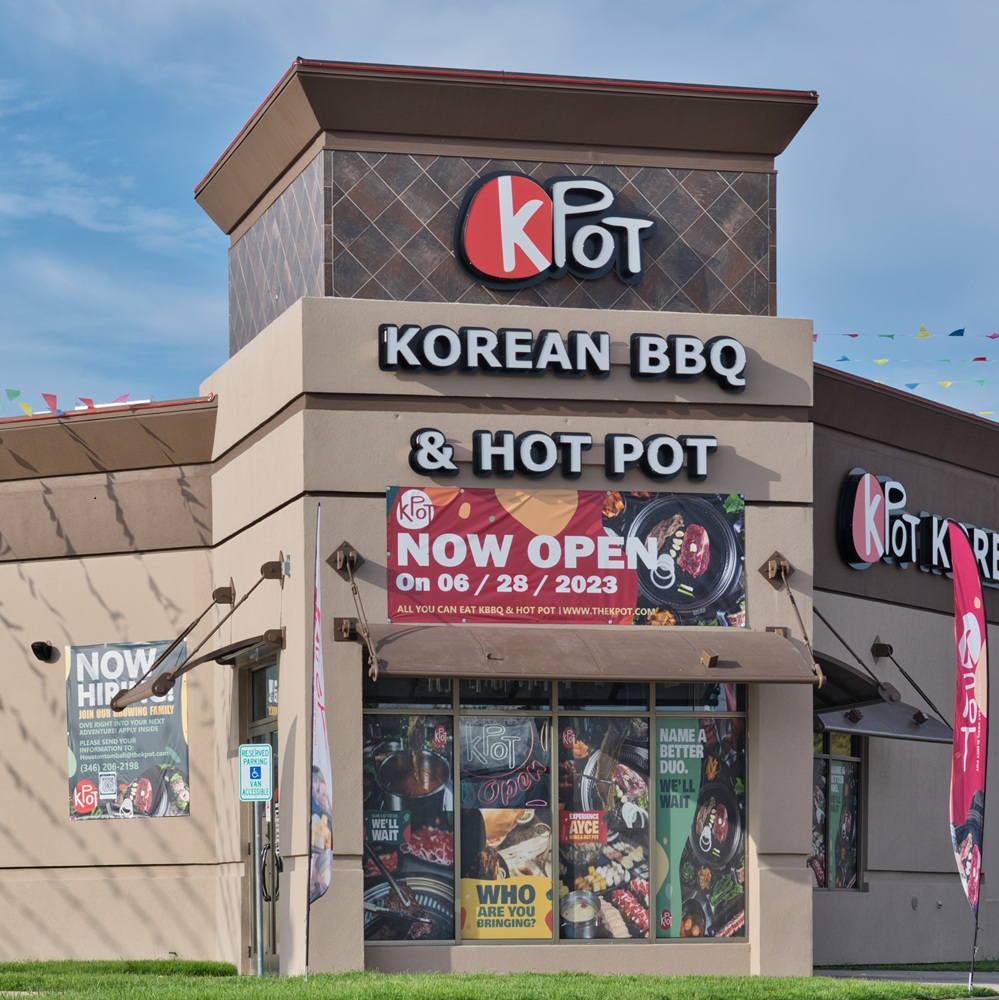
Houston, Texas USA 07-04-2023: KPOT Korean BBQ and Hot Pot storefront exterior in Houston, TX. National Korean cuisine restaurant chain.

Korean Soft Power: How K-Food is taking over the global stage

by World & New World Journal

  Seoul South Korea Apr 5 2023 Stock Photo 2350709469 | Shutterstock A decade ago, Korean cuisine was largely unfamiliar to international audiences. However, the growing influence of Hallyu, with its K-pop and K-Dramas, sparked interest in Korean food among fans and admirers of Korean culture. This expansion of Korean cultural soft power directly contributed to the increased global interest and demand for K-Food, transforming it from a niche phenomenon to a major component of international food markets. In 2018, The Economist published an article on the Korean food industry and called it a promising and very prospective sector. Initially, this was a somewhat ambiguous statement, as it seemed an already established market would be too exposed and face excess supply. Nonetheless, Korea continued to gain popularity. The global attention generated by K-POP and K-dramas directly boosted state tourism and positioned Korea as a growing soft-power house with extensive influence, especially among youth, similar to how Japan leveraged its Anime culture. Consequently, as global attention increased, the country was able to expand its dominance in exports, leading to the South Korean food market growing alongside the recognition of its culture over several years. During the COVID-19 pandemic, Korean culture experienced a renaissance, gaining the world’s attention through music and dramas like Squid Game. Crucially, alongside this cultural peak, Korean food's popularity rose significantly among the younger generation. With lockdowns, people spent their time making Korean Dalgona coffee and creating trending TikToks. This period served as a turning point that accelerated the popularity and recognition of K-Food.   In 2025, Korea saw an increase of almost 10% in agri-food sector exports compared to the 2024 indicator. • The U.S. USD 440 million in Q1 of 2025, up by 25.1% year over year → USD 493.7 million in Q2 of 2025, up by 28.6% year over year• China USD 317.5 million in Q1 of 2025, up by 1% year over year → USD 424.5 million in Q2 of 2025, up by 9.4% year over year • Japan USD 332.1 million in Q1 of 2025, up by 0.8% year over year → USD 365.6 million in Q2 of 2025, up by 6.9% year over year Processed K-Food: The Rise of Ramyeon and Snacks K-Food can be divided into two major groups: processed and non-processed. The rapid rise in K-food exports can be largely explained by the explosive popularity of Korean ramyeon and snacks. Ramyeon exports alone grew more than 24% compared to 2024.Most of the popular ramyeon brands overseas are: Buldak RamyeonJin RamyeonSamyang RamyeonShin Ramyeon   (Source: Kuala Lumpur Malaysia Dec 24 2024 Stock Photo 2572271189 | Shutterstock) Buldak Ramyeon, a brand under the Samyang Food Conglomerate, is one of the most popular Korean foods globally. It gained popularity due to its captivation, addictive taste and superior marketing. On social media like TikTok and Instagram, people created a trend where they tried to make an almost restaurant-level version of ramyeon. Moreover, its several spice levels brought significant attention to the brand, accompanied by memorable advertisements. The well-known “mukbang” industry, which has crossed borders, is also a major factor in the popularity of K-Food, especially ramyeon. This content is particularly popular in the USA. USA-based mukbangers are one of the reasons Buldak Ramyeon is so popular, as viewers find ramyeon mukbangs enjoyable to watch. Additionally, compared to other Korean food, ramyeon is practical and easier to buy. Samyang Food leveraged this success, expanding within five years to reach global dominance with new establishments in China and the USA in 2021 and Europe in 2024. In fact, more than 70% of the firm’s revenue is accounted for by its exports, signifying the company's global grip. Other notable brands include Nongshim and Ottogi. Nongshim, well known for its collaborations and wide range of flavors, also experienced a huge sales increase. Earlier in 2025, a new Netflix cartoon, Kpop Demons x Hunters, was a worldwide sensation. The instant noodle conglomerate quickly announced a collaboration with the hyped series, which was a success for Nongshim, resulting in a sold-out release of the cartoon collaboration ramyeon. Unlike Samyang, Nongshim had a bigger foundation and, within a year, increased its worldwide recognition even more. According to Nongshim’s 2023 annual report, the company accounted for 53% of total Korean instant noodle sales. Other popular choices are Korean snacks, which even surpassed ramyeon in yearly growth. The popularity of snacks goes beyond ChocoPie. With strong marketing and idol-featuring advertisements, products like Pepero and Turtle Chips are highly popular. Most snacks are often featured in Top Korean Dramas; for fans, eating them is a simple way of trying Korean culture. Furthermore, some companies adapt original snacks to local tastes and follow global trends. With the rise of “matcha” popularity, Korean brands converted original flavors into new “matcha” variations to capture the “hype.” The elasticity of snack brands and their fast adaptation to changing regions made them highly promising and growing.   (Source: Penang Malaysia 22 Feb 2023 Various Stock Photo 2274778451 | Shutterstock) Korean processed food is not the only category that has grown. The popularity of Korean street food and Hansik (traditional Korean cuisine) is also noticeable. Korean bean paste, or Jang, was listed as a UNESCO Heritage, which also brought attention to the food market. In the USA, Hansik gained traction with K-BBQ, tteokbokki, and all kinds of stews. Similar to Chinese Hot-Pot, Korean BBQ is very adaptable to local tastes and serves as a common social spot. Tteokbokki is also popular, especially among younger generations. However, compared to the Chinese Food Restaurant market, there’s no dominant national franchise, and the majority of K-Food restaurants are run by locals who moved to the area long ago, before the global surge of K-culture. As mentioned, Nongshim Foods accounts for about 54% of total instant noodle sales across the world. To establish itself as the main ramyeon company, Nongshim opened a pop-up store in Times Square, the world’s most popular tourist destination. Digital billboards brought attention to the brand, strengthened by engaging games and social media events. Clearly, this shows the brand's eagerness to position itself in the USA market. As the Nongshim representative says, “This campaign went beyond simple digital advertising to become a festival where global consumers could directly taste and enjoy Shin Ramyun. Starting from New York Times Square, we will continue to connect directly with consumers worldwide and actively spread Shin Ramyun's global slogan, 'Spicy Happiness In Noodles.'"   (Source: A Nongshim Shin Ramyun advertisement in collaboration with Netflix’s KPop Demon Hunters is displayed on a digital billboard in New York, Friday (local time). Courtesy of Nongshim) In Europe, Korean food has just started to grow its potential. Samyang Food opened branches in Europe only in 2024, which makes this market new and full of potential compared to the saturated USA market. The market is steadily growing and is especially in high demand in the Eastern part. Particularly during the Olympics in Paris, K-Food brands established themselves as a healthy and convenient alternative to traditional cuisine. Pop-up stores with Korean dumplings and rice cakes brought attention to K-Food and beverages, allowing brands like Bibigo and Cass to strongly position the Korean food industry in the European market. In Russia, the situation is different. In 2020, a Russian entrepreneur started a successful business with Korean street food. Chiko has almost monopolized the K-food market in Russia with dozens of restaurants. Chiko successfully adapted Korean food to local taste and products, resulting in dishes that are less spicy but much brighter in color due to food colorings. This business is highly profitable, with the first restaurant able to fully cover its expenses within 6 months of opening. In the Middle East, Korean companies are actively trying to make a halal version of their products to enter this highly anticipated market. This effort is noticeable when Islamic tourists visit Korea, as there are more restaurants offering halal food. For instance, the chicken burger brand Mom’s Touch offers suitable burgers and fried chicken. With this strategy and the growing popularity of Korean Food, they have emerged as a highly rated brand. Furthermore, they recently opened a branch in Uzbekistan, one of the Islamic regions in Central Asia, suggesting a clear intention to establish the brand in the wider Middle East. Korean Food established itself as a healthy alternative to fast food. Yet, with the high interest in street food, there is a legitimate question about whether we can still broadly call Korean food healthy. Overall, Korean cuisine has grown from a cultural niche into a global food phenomenon, driven by cultural trends, digital media, and clever branding. Whether through ramyeon, street snacks, or K-BBQ, Korea has turned food into an export of identity and lifestyle. The next challenge for K-Food will be balancing authenticity with localization—while adapting to health trends, halal markets, and evolving consumer tastes. What is clear, ultimately, is that K-Food is no longer a trend. It has become a permanent player in the global culinary market, and its influence is still expanding. References Ministry of Agriculture, Food and Rural Affairs. (2025, July 14). Exports of K-Food Plus in the first half of 2025: USD 6.67 billion, up by 7.1% year over year Pressrelease. Foreign Agricultural Service, U.S. Department of Agriculture. (2024, September). Retail foods annual: Republic of Korea (Report No. KS2024-0020). https://apps.fas.usda.gov/newgainapi/api/Report/DownloadReportByFileName?fileName=Retail%20Foods%20Annual_Seoul%20ATO_Korea%20-%20Republic%20of_KS2024-0020.pdf

Energy & Economics
Mersin, Turkey-09 12 2024: A cold Coca Cola or pepsi  bottle or metal can with water droplets on it. Coca Cola on black background

The geopolitical impact on global brands: Coca-Cola and Pepsi in the Middle East and Muslim markets

by World & New World Journal

Coca-Cola and Pepsi are among the most recognized and consumed soft drinks in the world, with Coca-Cola leading as the global favorite (World Population Review, 2025). However, in recent years, geopolitics has shaped their presence in certain regions, particularly in the Middle East and Muslim-majority countries. The reason behind this is interesting, these brands are often seen or associated with the United States (Hebblethwaite, 2012), a nation whose fame in these regions has always been questioned and been controversial, and whose policies in the region have long sparked controversy and criticism. Overview of Coca-Cola and Pepsi in the US Coca-Cola was born on May 8th, 1886, when Dr. John Pemberton delivered his newly perfected syrup to Jacob’s Pharmacy in downtown Atlanta, USA. After 139 years, what started as medicine evolved into the iconic soft drink that is enjoyed in more than 200 countries and territories every day (The Coca Cola Company, 2025). On the other hand, a few years later, in 1893, Brad’s drink, later rebranded as Pepsi-Cola, was invented in New Bern, North Carolina, USA by Caleb Brandham, as an aid in digestion (History of the Birthplace, 2018). Pepsi’s presence worldwide also covers more than 200 countries and territories and can be said it is Coca-Cola’s closest rival. While these brands have built a reputation, they have a long history, their competition has been fierce to the dominance of their market across the globe. The term “Cola Wars” represents this fierce competition. Cola wars gained global attention and likely reached their peak around the 1970s and 1980s in the US, while nowadays the fight keeps on, those years were key in how their presence around the globe has resulted nowadays. A bit of the context of the Cola Wars; during the beginning of the 20th century Coca-Cola led the market, while Pepsi had a rough time and went bankrupt in 1923. After its restructured, Pepsi maintained but Coca-Cola advertisements, such as those featuring Santa Claus, made it difficult for Pepsi to compete and by the time of WWII, Coca-Cola could be found in 44 countries already. In 1965 Pepsi merged with Frito-Lay-Inc trying to gain better footholds in restaurants and supermarkets. At the time Coca-Cola was expanding its brand into other soft drinks beverages, Pepsi could simply not compete against them. But by the mid-1970s, Pepsi launched its “Pepsi Challenge”, a genius blind test marketing bet in which over 50% of Americans chose Pepsi over Coca-Cola due its sweeter taste, of course Pepsi claimed its first victory over giant Coca-Cola and started its rise. Coca-Cola's response came with celebrity endorsement and the diet coke in the early 80’s. But by the mid 80’s, Pepsi sales skyrocketed due to its collaboration and promotion with Michael Jackson and appearance in several movies like Back to the Future. Coca-Cola had an identity crisis at the time, but after going back to its roots, (Weird History Food, 2022) once again it came back to fight and claimed its important place in the industry. Coca-Cola and Pepsi around the world While the Cola Wars were largely defined within the American market, their global expansion strategies took very different trajectories once they reached international audiences. Coca-Cola made their debut in the international market in the early 20th century, but it was until WWII when it got international recognition. A marketing associated with American optimism and modernity was followed by the company, and during the war, the company produced millions of bottles for US troops abroad, introducing the drink to soldiers and civilians across Europe, Africa and Asia. The strategy transformed Coca-Cola from a domestic beverage into a global cultural symbol. Pepsi, meanwhile, took a more opportunistic route. After financial struggles between the 1920s and 1930s, the brand re-emerged with a more aggressive global approach. Its internationalization came in 1949 with exports to Canada and later expanded to Mexico, Brazil and the Philippines, but it was until the Cold War, when its real global expansion began (FBIF Food & Beverage Innovation, 2014), when it merged with Frito-Lay and diversified its portfolio. By 2024, PepsiCo generated $92 billion net revenue (PepsiCo, 2025) while Coca-Cola grew 3% to stand at $47.1 billion net revenues (The Coca-Cola Company, 2025) that same year and their products and diversifications not only include the classical soft drinks, but also other beverages and foods. Yet despite their shared dominance in over 200 countries, both face different degrees of acceptance depending on local political, cultural and religious attitudes. The role of geopolitics: soft power, sanctions, wars, risks and opportunities As stated already, both brands are known globally, however, it is important to highlight that their presence in different regions of the world has been shaped by other actors more than just commercial advertisements, or even due to their advertisements and commercial strategies. Let me explain in more detail. In the case of Coca-Cola, during WWII and the Cold War, many people outside of the United States associated the product with American culture, Coca-Cola became a symbol of American soft power and globalization, clearly seen in war advertisements featuring soldiers enjoying cokes suggesting the commonly used “bring people and nations together” phrases. (Edelstein, 2013) On the other hand, with a more social-cultural strategy, Pepsi used the American pop-culture as their approach to gain attention worldwide. Michael Jackson, Madonna, Britney Spears, Beyoncé, among others (Kalgutkar, 2024) were iconic in the brand. In addition, Pepsi’s marketing leveraged music, youth, and rebellion, giving a softer and aspirational appeal. However, this cultural and ideological symbolism also made both companies vulnerable to political backlashes and somehow have defined their reputation and presence in some areas of the world. In the 1950’s, France coined the term “coca-colonization” denouncing American influence. During the Cold War, Coca-Cola became a capitalist symbol (in the eyes of outsiders), and it was banned in the Soviet Union, an opportunity Pepsi took advantage of there. Later, when the Berlin Wall fell, Coca-Cola became a representation of freedom. (Hebblethwaite, 2012) However, the most notable geopolitical response came when the Arab League boycotted the brand between 1968-1991 in the 13-nation organization, because it chose to operate in Israel while the Palestinian land was under occupation. Pepsi capitalized on this absence, solidifying its position in the Arab markets. In addition to the Arab League boycott, there are other cases where sanctions imposed by the US to different countries have led to a small or lack of sales of the products, such as Myanmar, North Korea, Cuba or the Soviet Union, back on time. Moreover, occasional protests and bans in countries like Iran, Venezuela or Thailand (Hebblethwaite, 2012) has also affected the brands at certain points of the history and of course have created an image and reputation in the society, with positive, neutral or negative perceptions. Moving towards present day, after the war in Gaza broke out in October 2023, pressure on the brands reappeared on the Middle East; Coca-Cola, who has a factory in the illegal settlement in East Jerusalem in the Atarot Industrial Zone, was accused of complicity and violations of the international law, in addition to being “related” with the Israeli army. These led to the BDS Movement to add it to a boycott list, which led to protests and has also been spread across other Muslim-majority countries. Of course, sales have dropped sharply in different countries in the region like Egypt and Bangladesh. (Boycat Times, 2025) Pepsi, on the other hand, even though it has a major presence in the Middle East market built over the space left by Coca-Cola during the 1968-1991 boycott, has also been affected by the War in Gaza and the boycotts in the region. PepsiCo reported stagnation in beverage growth across Egypt, Lebanon and Pakistan, compared with 8-15% growth a year earlier the war started. (Awasthi, 2024) The boycott of these American brands in the Middle East and some Muslim-majority markets has led to important losses in the share market and the sales itself. For instance, Coca-Cola sales reportedly fell by 23% in Bangladesh and dropped by over 10% in Egypt, overall, there is an estimation of 7% regional revenue loss in the MENA region. The losses of the American brands had become an opportunity to the local brands, like Pakistan’s Cola Next and Pakola (shared market increased from 2.5% up to 12% after the boycott (The Economic Times, 2024)), Qatar’s Kinza or Egypt’s V7, which have up to 40% in market share growth and up to 350% growth in exports, canalizing consumer preferences for local alternatives. (The Economic Times, 2024), (Awasthi, 2024), (CBC, 2024), even in the West Bank, the Palestinian Chat Cola has been positioned in the market, with sales of over 40% in 2023 compared to the previous year. (Associated Press, 2025) Coca-Cola and Pepsi boycotts are not the only ones, other companies like McDonald’s or Starbucks have also been affected in the region, due to similar or same reasons. Even more, in Canada, another great example is the “americano” [coffee] being renamed as “canadiano”, (Barista Magazine, 2025) as response to the economic and political tensions developed earlier this year between Canada and the USA. Despite the boycotts, Coca-Cola and PepsiCo have a base in the region, and they have seek opportunities to continue, through investments (Coca-Cola invested $22 million in upgrading technology in Pakistan) or new strategies (PepsiCo reintroduced Teem soda in Pakistan with a “Made in Pakistan” printed on the label) (Shahid, DiNapoli, & Saafan, 2024). Overall, both companies are trying to maintain, penetrate and expand their products in the market, they have been using and relying on bottling companies as a strong tool for those purposes, creating alliances with local companies as well as innovating and testing different new products in the region. Conclusion The current boycott of Coca-Cola and Pepsi across the Middle East and Muslim-majority countries is not only a reflection of political anger – it is a window into how geopolitics can directly reshape consumer economies. What once symbolizes Western globalization, and cultural appeal has now become a marker of political identity and economic nationalism. In a society driven by consumerism – where success is often measured by how much one owns – people tend to care less about genuine human values such as love, kindness, respect, empathy and consideration (MET, 2022). Ironically, today that statement seems reversed. For many consumers, boycotting Western brands has become not only a moral choice but also an act of solidarity and empowerment. Beyond economics, the boycott also reflects a psychological and cultural response. For many consumers in the Middle East, choosing what to drink has become a symbolic act of identity, resistance and empathy. Avoiding brands such as Coca-Cola and Pepsi offers a sense of agency and unity Palestine, turning everyday consumption into an expression of political consciousness. Although both companies remain resilient and continue to invest heavily in local markets, their challenges go beyond short-term losses. The rise of local brands such as V7. Kinza and Cola Next highlights a deeper regional shift – where consumers are not merely reacting to politics, but redefining loyalty based on ethics, identity and sovereignty. In the long term, this phenomenon could accelerate the regionalization of the markets, as local producers gain confidence and international corporations are compelled to adapt – by respecting cultural sensitivities, building genuine local partnerships, and ensuring transparency across their supply chains. Ultimately, the story of Coca-Cola and Pepsi in the Middle East demonstrates that in today’s interconnected world, soft power is no longer a one-way export. Consumer behavior itself has become a form of diplomacy – capable of rewarding inclusion or punishing complicity.ReferencesAssociated Press. (2025, 03 02). Coca-Cola's appeal to Palestinians fizzles amid war. Retrieved from VOA News: https://www.voanews.com/a/coca-cola-s-appeal-to-palestinians-fizzles-amid-war/7991182.htmlAwasthi, S. (2024, 09 15). Middle East conflict bites Coca-Cola, Pepsi. Retrieved from SBS News: https://www.sbs.com.au/news/podcast-episode/middle-east-conflict-bites-coca-cola-pepsi/z445sv6glBarista Magazine. (2025, 02 25). Move Over, Americano: The ’Canadiano’ Has Arrived. Retrieved from Barista Magazine Online: https://www.baristamagazine.com/move-over-americano-the-canadiano-has-arrived/Boycat Times. (2025, 09 02). Everything You Need to Know: Why We Boycott Coca Cola. Retrieved from Boycat Times: https://blog.boycat.io/posts/boycott-coca-cola-israel-gaza-palestineCBC. (2024, 09 04). Muslim countries' local sodas see boost amid Coke and Pepsi boycott over Gaza. Retrieved from CBC: https://www.cbc.ca/news/business/coke-pepsi-boycott-1.7313370Edelstein, S. (2013, 05 13). A visual remix of the American Dream as pictured in Mid-Century media. On the front lines with Coca Cola pt II. Retrieved from Envisioning the American Dream: https://envisioningtheamericandream.com/2013/05/30/on-the-front-lines-with-coca-cola-pt-ii/FBIF Food & Beverage Innovation. (2014, November 18). PepsiCo's path to global dominance: from beverage brand to food empire. Retrieved from Food Talks: https://www.foodtalks.cn/en/news/54496Hebblethwaite, C. (2012, September 11). Who, What, Why: In which countries is Coca-Cola not sold? Retrieved from BBC News: https://www.bbc.com/news/magazine-19550067History of the Birthplace. (2018, October 18). Retrieved from Wayback machine: https://web.archive.org/web/20181004163206/http://www.pepsistore.com/history.aspKalgutkar, N. (2024, November 28). Pepsi’s Advertising: An Iconic Campaigns and Pop Culture Impact. Retrieved from Treehack: https://treehack.com/pepsis-advertising-an-iconic-campaigns-and-pop-culture-impact/MET. (2022, 07 29). The effects of living in a consumer society. Retrieved from MET: https://group.met.com/en/mind-the-fyouture/mindthefyouture/consumer-society/#:~:text=July%2029%2C%202022,the%20operation%20of%20a%20company.PepsiCo. (2025). Who we are. Retrieved from PepsiCo: https://www.pepsico.com/who-we-are/about-pepsicoShahid, A., DiNapoli, J., & Saafan, F. (2024, 09 05). Coke and Pepsi boycott over Gaza lifts Muslim countries' local sodas. Retrieved from Reuters: https://www.reuters.com/business/retail-consumer/coke-pepsi-boycott-over-gaza-lifts-muslim-countries-local-sodas-2024-09-04/The Coca Cola Company. (2025). Our Company. Retrieved from The Coca Cola Company: https://www.coca-colacompany.com/about-usThe Coca-Cola Company. (2025, February 02). Coca‑Cola Reports Fourth Quarter and Full Year 2024 Results. Retrieved from Thr Coca-Cola Company: https://www.coca-colacompany.com/media-center/coca-cola-reports-fourth-quarter-and-full-year-2024-results#:~:text=For%20the%20full%20year%2C%20net,the%20timing%20of%20concentrate%20shipments.The Economic Times. (2024, 09 04). Coca-Cola and PepsiCo lose popularity to local Cola brands due to boycott over Gaza in Muslim countries. Retrieved from The Economic Times: https://economictimes.indiatimes.com/news/international/business/coca-cola-and-pepsico-lose-popularity-to-local-cola-brands-due-to-boycott-over-gaza-in-muslim-countries/articleshow/113064771.cmsWeird History Food. (2022, 07 24). Do You Remember the Cola Wars: Coca-Cola vs. Pepsi? Retrieved from YouTube: https://www.youtube.com/watch?v=jtwkKrjHlhcWorld Population Review. (2025). World Population Review. Retrieved from Top-Selling Soft Drinks by Country 2025: https://worldpopulationreview.com/country-rankings/top-selling-soft-drinks-by-country

Energy & Economics
nuclear fusion reactor tokamak concept background, 3d rendering

Accelerating the realization of nuclear fusion: A clear milestone is needed

by Choongki Sung

A few days ago, the author visited Commonwealth Fusion Systems (CFS) near Boston, USA. CFS is one of the most highly watched fusion energy startups in the world, currently constructing SPARC, a next-generation experimental device utilizing high-temperature superconductor technology. The researchers I met there were filled with confidence that nuclear fusion commercialization would be possible soon, and their passion resonated deeply. At the same time, it raised concerns about what we are doing and whether we are falling behind. The reason the world is accelerating efforts to advance the commercialization of fusion power is clear. As the heat wave continues to exceed 30°C even in September, it shows that the climate crisis has become a part of our daily lives. At the same time, rapidly evolving generative artificial intelligence (AI) is signaling an unprecedented demand for electricity. Faced with the dual challenge of responding to the climate crisis and the surge in energy demand, there is an urgent need for a new energy source that can ensure stable supply while minimizing environmental impact. Recently, fusion energy has been gaining attention as a next-generation energy source that meets these conditions. Fusion energy is a clean energy source that emits no carbon, and it uses hydrogen isotopes as fuel, which are virtually inexhaustible. It is often called the 'ideal energy source' because it is not constrained by weather or geographical conditions. Although the technical difficulty has historically been so high that it was considered an 'endless challenge,' the situation has now changed. In 2022, the U.S. Lawrence Livermore National Laboratory (NIF) succeeded in achieving 'net energy gain'—producing more energy than was input—in a laser-driven fusion experiment, raising expectations for the realization of fusion power. Furthermore, the fact that over 50 private companies worldwide are now diving into technology development with the goal of early commercialization shows that nuclear fusion is no longer a distant dream. Major nations are already focusing their national capabilities by presenting phased goals and execution plans. The U.S. has established a public-private partnership-based national strategy to actively support the endeavors of startups like CFS. China is promoting the construction of a demonstration reactor called CFEDR and, as a precursor, plans to complete the BEST device, capable of burning plasma operation, by 2027. The U.K. is ramping up national preparations by constructing the STEP device with a target of 2040, while also putting in place the engineering technology research facilities and institutional framework to support it. South Korea also possesses research capabilities that are by no means lagging. The core technology accumulated through the construction and operation of KSTAR is world-class, and its experimental results are internationally recognized. The country's experience in operating nuclear power plants is also an asset for future fusion engineering technology development. However, since the establishment of the ‘Nuclear Fusion Energy Realization Acceleration Strategy' last year, no specific roadmaps and execution plans have been revealed publicly. It is necessary to recall that the clear path from KSTAR to ITER to DEMO in the past allowed us to dedicate ourselves to the construction and operation of KSTAR, enabling South Korea to join the ranks of advanced nuclear fusion nations. Major countries around the world are currently moving ahead rapidly, aiming for commercialization in the 2030s and 2040s. To avoid being left behind in this competition, South Korea must urgently formulate an innovative plan for constructing a fusion demonstration reactor, targeting a demonstration in the 2030s. Furthermore, key technologies and large-scale research infrastructure must be strategically secured. A clear goal is essential to ensure that research and investment do not lose direction. Once the execution plan is clearly defined, universities can lead the necessary research and train appropriate talent, and young researchers can envision a future for themselves. Nuclear fusion is a new energy source that can simultaneously solve the climate crisis and energy security issues. What we need is a specific plan to realize it and unwavering determination to execute it. If we make the right choices and preparations now, South Korea can leap forward as an energy powerhouse that future generations can trust and rely on.

Energy & Economics
At Singapore 2023 075

A Post-Humanist Perspective of Singapore's Ecomodernist Leadership

by Sasha Maher , Rhiannon Lloyd , Lydia Martin

Abstract Green growth has become doxa in the political economic governance of climate change. This is despite the lack of empirical evidence of its success and concerns that it reifies a business-as-usual dynamic. The question arises: why have practices of ‘green leadership’ maintained a hegemonic hold on how nation states respond to climate change? This provocation examines this question through an analysis of Singapore's policy ambition to become Asia's climate services leader. It draws on post-humanism to suggest that the form of ecomodernist leadership exhibited by Singapore not only perpetuates the status quo but (re)affirms the problematic anthropocentrism underpinning their approach. We demonstrate this through analysis of recent policy, media and private sector documents. Finally, we argue that a focus on Singapore matters because of its influence in the region and networked position globally. Introduction Singapore has emerged as a leader of green growth since gaining independence from Malaysia in 1965. Governed by the People's Action Party (PAP) since 1959, the city-state has pursued a developmental strategy focused on economic growth and wealth accumulation, despite its lack of natural resources. This strategy encompassed value-added manufacturing, high-tech research and financial services, propelling Singapore from a modest per capita GDP in 1965 of USD $516 to a substantial figure of USD $82,807 in 2022 (World Bank, 2022). However, this rapid development brought with it cumulative environmental challenges, including high Green House Gas (GHG) emissions, air pollution, ecosystem degradation and biodiversity loss (Goh, 2001). In response, Singapore reframed these issues as economic opportunities, effectively folding an ecomodernist or green growth approach into its development agenda (Dent, 2018; Hamilton-Hart 2006, 2022). This shift was significantly influenced by Lee Kuan Yew, Singapore's first Prime Minister, whose vision of a ‘Garden City’ involved a massive, ongoing tree-planting initiative. This initiative was not just an ecological project but a strategic move to attract foreign investment by showcasing Singapore as a modern, liveable city, thereby aligning nature conservation with economic development (Schneider-Mayerson, 2017). Building on Prime Minister Lee Kuan Yew's leadership, Singapore has continued to adopt ecomodernist policies, promoting concepts such as sustainability as essential for maintaining its competitive edge in the global arena. The state's stance on climate change illustrates this approach: initially seen as a threat and often couched as an enemy in official discourse, climate change has been transformed into an opportunity for growth. This perspective is epitomised in the annual three-day Ecosperity conference, an elite gathering emphasising the synergy between ecological sustainability and economic prosperity. However, this green growth approach has faced criticism for prioritising human needs over ecological integrity (Dent, 2018; Schneider-Mayerson, 2017; Wong, 2012), suggesting that Singapore's model of ‘green’ leadership may not be sufficient for addressing the root causes of climate change and other environmental challenges. We are similarly concerned at Singapore's leadership stance towards climate change. The latest rendition of this is its ambition to become Asia's climate finance ‘leader’ and a hub of carbon trading. Not only does Singapore's green growth approach narrowly cast complex environmental issues as technical problems requiring technical solutions but it renders nature as an object to be used for human development. This anthropocentrism negates non-human agency, instrumentalises nature and limits the radical change necessary as others have noted (Böhm and Sullivan, 2021; Ergene, Banerjee and Hoffman, 2021; Nyberg and Wright, 2023). In the following provocation, we draw on post-humanist critique of anthropocentrism to give a brief overview of green growth (Braidotti, 2013, 2019; Calás and Smircich, 2023). Second, we outline Singapore's emissions profile and latest policy response. We then surface three themes which are indicative of how Singapore's green leadership frames nature as non-agentic and subservient to humans. These themes are: ‘nature as risk producer’, ‘nature as instrument’ and ‘nature's demise as opportunity’. Anthropocentrism and Green Growth The discourse on greening capitalism emerged in the mid-2000s as initiatives by the United Nations Environmental Program, OECD and World Bank. At the Rio + 20 Conference these three organisations released publications promoting green growth with titles that evoked mutual compatibility such as Inclusive Green Growth: The Pathway to Sustainable Development and Toward a Green Economy: Pathways to Sustainable Development and Poverty Eradication. Subsequently, the United Nations Framework Convention on Climate Change enshrined green growth in the 2015 Paris Agreement in Article 10, paragraph 5, ‘Accelerating, encouraging and enabling innovation is critical for an effective, long-term global response to climate change and promoting economic growth’ (United Nations UNFCCC, 2015: 27). Since then, the prevalence of green growth ideas has accelerated and diffused globally, taken up by states supranational organisations and non-states actors. It has remained a key policy theme at influential climate governance fora. For example, at the recent Green Swan 2023 conference, keynote Sir Nicolas Stern confidently declared that ‘there's no conflict between action on climate change and economic growth. Actually, it's the opposite. Action on climate change will drive economic growth’. Omitted from Sterns's assertion is recognition of the ‘coupling’ effect whereby economic growth has also led to the exploitation of non-humans and a concomitant climate crisis. Green growth approaches view nature as the means to create economic development as measured by GDP. The key assumption is that ‘the environment’ and humans as consumers or workers (see Mildenberger 2020) will both equally benefit through this process of instrumentalisation. The method to achieve the ‘decoupling’ of emissions (or ecological destruction) from GDP is via the application of technologies, investment, markets and innovation. Implementation of these methods will ostensibly redirect capital and production towards the efficient use of resources without disrupting consumption patterns and minimising ‘harm’ to nature. Nature in this framing is characterised as both threatening to humans (‘risk producer’) and simultaneously vulnerable (‘object at risk’). In either case, human beings are presupposed as the agents who will restore the orderliness of life; an orderliness where humans are the dominating species (Ruuska, Heikkurinen and Wilen, 2020) and the state of vulnerability is erased (Schwartz, 2019). At its core green growth is founded on the notion of efficiency gains, but as others (Hickel, 2021; Hickel and Kallis, 2019; Jackson, 2021) have noted, empirically there is no evidence that relative or absolute decoupling will arrest and restore the planet nor reduce carbon emissions permanently to levels that could keep global warming below 1.5 degrees. Efficiency has limitations and at some point, input is required to continue to grow which makes ongoing decoupling in the long-term unsustainable. This calls for an urgent rethinking of policy and the opening up of alternative possibilities such as degrowth or post-growth (Jackson, 2021). However, shifting the paradigm away from wealth accumulation and material prosperity would alter production and consumption patterns. As Hickel and Kallis (2019) remark, this type of transformation would not be politically expedient: ‘The assumption is that it is not politically acceptable to question economic growth and that no nation would voluntary limit growth in the name of the climate or environment; therefore, green growth must be true, since the alternative is disaster’ (2019: 484). Green growth may not only be implausible but it also dangerously reifies dualistic thought-structures that universalises and positions humankind as the privileged, superior species, a tendency which has underpinned the exploitative and extractive relationship between humans and nature that has driven climate change. It also ferments a ‘politics of resignation’ in which citizens tacitly accept harmful externalities (Benson and Kirsch, 2010). In line with post-humanist thought, we perceive nature through a relational lens. From this perspective, ‘nature’ is not a separate entity that exists apart from and below ‘culture’ (e.g., humans, organisations and nation states). Rather nature is understood to be a dynamic, open-ended and interactive ‘living system’ that encompasses all forms of life and matter (Braidotti, 2016). This relational framing of nature is positive in that it attributes agency and vitality to all life and not exclusively to humans and their doings (Braidotti, 2013). In short, more-than-human natures such as the ‘natural environment or ‘atmosphere’ are not tractable or deadened backgrounds for human action but are creative forces that shape life, including our own. In taking this ontological position, post-humanism surfaces and critiques anthropocentric assumptions evident in culture and society (Braidotti, 2013), providing a unique standpoint from which to deconstruct and challenge green growth. Singapore the Green City-StateEmissions Profile Singapore's GHG emissions for 2021 totalled 53 MtCO2e (National Climate Change Secretariat, 2021). In 2000, emissions were 38 MtCO2e and continues to increase over time. These emissions cover direct or primary emissions (Scope 1, 2): energy (39.2%), industry (44.4%), transport (14.2%), building (0.9%), households (0.4%), waste and water (0.6%) and others (0.2%). Secondary or indirect emissions (Scope 3) created within the energy sector from Liquid Natural Gas (LNG) at 94% are mostly in industry (16.6%), buildings (12.6%), household (6.6%) and transport (2.2%). Industry emissions amount to over 60% of Singapore's total emissions of which 75% are from the combustion of fossil fuels by the refining and petrochemicals sector (Tan, 2019). Singapore ranks 27th out of 142 countries in terms of emissions per capita but excluded from official statistics are the emissions from bunkering/marine fuels sales which was 148 MtCO2e in 2020 (The International Council of Clean Transportation, 2022). The rationale for the exclusion is that the UNFCC does not require GHG inventories to include emissions from shipping nor aviation. In 2021 Singapore set a new National Determined Commitment target of limiting GHG emissions in 2030 to 60 MtCO2e from 65 MtCO2e. It also brought forward its emission peak year to sometime ‘before 2030’ and confirmed its target to reach net zero emissions ‘as soon as viable in the second half of the century’ (National Climate Change Secretariat, 2022). Singapore's main mitigation actions were outlined in its long-term low-emission development strategy. These comprise three areas: (a) to transform industry, economy and society; (b) to draw on carbon capture, utilisation and storage and low-carbon fuels; and (c) international collaboration to build carbon markets, carbon storage and regional electricity grids. A key policy lever is Singapore's progressive carbon tax rate which covers 43% of emissions according to Climate Action Tracker (2022). The rate was increased from $5 SGD/tCO2e in 2019 to $25/tCO2e in 2024 and will reach $50–80/tCO2e by 2030. Carbon tax-liable companies are permitted to use carbon credits to offset up to 5% of emissions. However, these credits can only be obtained via the Singapore government's International Carbon Credit Framework under Article 6.2 of the Paris Agreement and not the voluntary carbon market. The tax works on multiple fronts: it drives demand to create a carbon market, derisks companies to increase investor confidence and incentivises decarbonisation efforts in Singapore and in credit producing host countries. Singapore's other mitigation efforts consist of energy efficiency and resource optimisation across industry, households, buildings, waste management and public transport. Green Finance Leader Singapore is positioning itself as Asia's hub for carbon trading. The government outlines this in its most recent master plan for addressing climate change: Singapore Green Plan 2030 (SGP). Launched in 2020, SGP 2030 aims to centre the city-state as a regional ‘leader’ in climate action and sustainable development, aligning with global commitments such as the UN's 2030 Agenda and the Paris Agreement. The plan represents a collective effort across five key ministries, guided by the Inter-Ministerial Committee on Climate Change. It focuses on five pillars: City in Nature, Sustainable Living, Energy Reset, Green Economy and Resilient Future, striving for efficient resource use, low-carbon energy adoption and innovation-driven change. Key initiatives include enhancing green spaces, promoting water conservation, expanding clean public transport and mandating clean energy vehicles by 2030. The Green Economy pillar of the SGP is particularly significant, framing environmental challenges as opportunities for economic growth. This involves incentivising carbon capture technologies and establishing Singapore as a carbon services and trading hub through the Green Finance Action Plan 2022 (Monetary Authority of Singapore, 2022). The plan aims to create a robust green financial ecosystem, making Singapore a global centre for green finance. This includes developing markets for sustainable economic solutions, such as green bonds and insurance products. A study commissioned by the government in 2021 highlighted Singapore's potential to become a carbon trading hub, estimating its value between USD 1.8 billion to USD 5.6 billion by 2050 (Carvalho et al., 2021). As part of its green leadership plan Singapore is also entering into strategic partnerships under Article 6.2 with ‘carbon-rich’, developing countries. It has signed agreements with Vietnam, Bhutan, Paraguay, Papua New Guinea, Fiji, Rwanda, Costa Rica, Ghana, Senegal, Dominican Republic, Colombia, Chile, Cambodia, Indonesia, Kenya, Mongolia, Morocco, Peru and Sri Lanka. It also recently signed a Green Economy Agreement with Australia with the aim to generate demand and facilitate the trading of Australian carbon credits. The aim of these Article 6.2 agreements is to facilitate the trading of Internationally Transferrable Mitigation Outcomes or carbon credits which are generated from the reduction of emissions in one country (e.g., PNG) which is then bought by a second country (e.g., Singapore, New Zealand). However, Singapore's interest extends to the role these partnerships play in helping to establish a trading market in Singapore. In its agreements, Singapore asserts that ‘when completed carbon tax liable companies in Singapore will be able to purchase carbon credits from eligible projects to offset up to 5% of their taxable emission’ (National Climate Change Secretariat, 2023). Article 6.2 partnerships not only help reduce costs for Singapore companies but bring to market a portfolio of credit sellers for trading on Singapore's new trading platform, Climate Impact X. Ecomodernist Themes of Nature A post-humanist perspective on Singapore's ambition to transform into a climate leader surfaces three ecomodernist or green growth themes. These themes are: ‘nature as risk producer’, ‘nature as instrument’ and ‘nature's demise as opportunity’. Across these themes, it is implied that humans take priority and should utilise nature to achieve economic growth. A conventional approach would ignore this dualism and support the instrumentalisation of nature without awareness nor concern that this thought-structure plays a key part in producing climate change. In official organisational documents and speeches regarding Singapore's ambitions to create a global carbon trading hub, Singapore is presented as a model city and a vanguard in terms of environmental actions. Reference is also frequently made to the ‘founding father’, and visionary environmental leader, Prime Minister Lee Kuan Yew. Nature as Risk Producer Politicians, officials and industry often, if not always, portray climate change as the result of nature being ‘out of place’ and consequently hostile towards the vulnerable nation-state (Douglas, 1966; Ruuska et al., 2020). For example, below is an extract from the SGP which sets up the catastrophic framing, and two quotes from Prime Minister Lee Hsien Loong followed by Grace Fu Minister for Sustainability and the Environment at the COP28: Climate change is an existential threat of our times. It has brought rising sea levels and extreme weather patterns…Singapore, as a low-lying island state, is particularly vulnerable. Our weather is getting warmer, rainstorms heavier, and dry spells more pronounced (Singapore Government). Singapore [is] a low-lying, alternative-energy disadvantaged island-state. We therefore appreciate the inherent challenges in climate transitions. However, we believe that new technologies, new financing models and new markets offer us hope (Ministry of Foreign Affairs Singapore, 2023). Singapore is a small city-state, lacking in renewable energy. We are a low-lying island that is acutely vulnerable to the threat of rising sea levels. We are an urbanised city near the equator, susceptible to rising temperatures (Ministry of Sustainability and the Environment Singapore, 2023). The narrative that nature is a risk producer is a form of spatial anthropocentrism in which Earth and beyond are considered the rightful and exclusive spaces for humans (Ruuska et al., 2020). If nature was tame and in its proper docile place, then humans would not be at risk. The reasonable response to this logic is to put nature back in its place by constructing hard engineering solutions, such as sea walls and defending infrastructure that deliver services to humans (e.g., water, electricity, transport, telecommunication), alongside the use of soft solutions to absorb the costs of rebuilding, for example, via flood insurance. Nature as Green Growth Tool The case of Singapore demonstrates that the objectification of nature is a prerequisite to instrumentalisation. Our second theme – nature as a green growth tool – is evident in Singapore's continuation of its long-standing Garden City strategy: nature to be altered to ensure the material prosperity of the populace and thus maintain PAP's political legitimacy (Barnard and Heng, 2014; Hamilton-Hart, 2006, 2022; Schneider-Mayerson, 2017). For example, in the SGP, former Prime Minister Lee Kuan Yew is quoted as follows: Over 100 years ago, this was a mudflat, swamp. Today, this is a modern city. Ten years from now, this will be a metropolis. Never fear (Singapore Government). The SGP then follows this quote from Prime Minister Lee by stating that,…Having advanced from mudflats, to metropolis, we will turn our metropolis into a global city of sustainability (Singapore Government). Today, Singapore is a City in a Garden, and is one of the greenest cities in the world. We set aside large nature reserves, with about a third of our island covered by trees. We knew public cleanliness and hygiene were important to prevent diseases in our hot and humid urban environment and took tough measures to enforce them (Singapore Government). There is a direct link made between using nature as a tool and nation building. As a consequence of this argument, any opposition to Singapore's ‘global’ ambitions could be viewed as a threat to the state, unpatriotic and regressive. The use of nature as instrument for green growth is most stark under the Green Economy pillar. Nature's Demise as Opportunity The third theme evident in Singapore's attempts to position itself as a ‘green leader’ also concerns the instrumentalisation of nature but takes it a step further, with nature's destruction as a result of anthropogenic climate change being presented as a means to stimulate economic development. In the SGP, four of the pillars focus on efficiency and optimising production and consumption of natural resources. However, the Green Economy pillar not only seeks to capitalise on nature but intends to prosper from its demise. The discourse on the climate crisis is rewoven as a narrative about ‘seizing’ opportunities from the climate crisis and the ensuring there is pressure on states and corporates to act. Similar to disaster capitalism, the impacts of climate change are a new business venture for Singapore to advance its developmentalist approach. Below are instances of this discourse: As the world transits to a low-carbon future, there are many exciting new opportunities in the green economy. For instance, the increasing demand for green financing and carbon services will create good jobs and new opportunities for our enterprises (Ministry of Trade and Industry Singapore, 2022). Singapore's Green Plan aims to harness sustainability as ‘a new engine of growth’ …Under the plan, the Singaporean government will lead and drive all economic actors to make the transition toward more sustainable economic models, including establishing the country as a hub for green finance, carbon trading and sustainability consultancy (Wangkiat, 2021). We must seek out new areas of cooperation. This will allow us to deepen collaboration while also strengthening our relevance as a global business hub. Sustainability is one area where there are interesting opportunities for growth and strong potential for international collaboration. Green financing, carbon services, and trading are some examples of the new industries that we can look forward to in the green economy (Ministry of Trade and Industry Singapore, 2023). Singapore is unequivocal in highlighting the competitive advantage that the climate crisis holds for the state. This intensification of the instrumentalism of its Garden City strategy serves not only to commodify but also to financialise climate change. As Ergene, Banerjee and Hoffman (2021: 1320) remark, ‘The Anthropocene is not a story of unintended consequences but is a direct result of a political economy that privileges wealth accumulation at the expense of environmental destruction’. The growth imperative inherent in capitalism relies on the appropriation of nature's ‘resources’ at a low-cost despite ecological consequences. Capitalism seeks to exploit ‘cheap’ resources, including land, labour and energy. This pursuit of cheap inputs is founded on the ontological separation between humans and nature, and the devaluing of nature and some humans compared to others. Capitalism unleashes ‘a “metabolic rift” in the relationship between humans and the earth, resulting in an environmental crisis that now threatens the very basis of life on the planet’ (Wright et al., 2018: p. 459; see also Foster, 2012; Nyberg et al., 2022). Conclusion The three themes explored above underscore how Singapore continues to conceptualise nature as ‘other’. The current understanding of ‘green leader’ and what is legitimate and required in order to be considered ‘green’ maintains a primarily economically centred political agenda. This ‘ecomodernist leadership’ regime is preoccupied by quantitative measures of a known and knowable nature. In short, being ‘green’ requires the improvement of these numbers in directions agreed as beneficial to both the economic and environmental systems they reflect and relate to. Such instrumentalism provides one means towards green futures, but we would argue that this dangerously reifies the dualistic exploitative relations that underpin climate change (e.g., Moore, 2016). Green growth and other notions of ‘greening’ (e.g., Green Economy, Green Finance) do not alter the problematic of anthropocentrism but rather propagate and support a Promethean logic (Dryzek, 2022). So, although Singapore's portion of global emissions is small at 0.1%, we would suggest that Singapore's contribution to climate change extends beyond this number due to its green leadership stance and practices. However, in this respect, Singapore is not alone, various influential multinational institutions, civil society, private sector and state actors such as Australia and New Zealand could also be viewed as holding additional responsibilities. Declaration of Conflicting InterestsThe author(s) declared no potential conflicts of interest with respect to the research, authorship, and/or publication of this article.FundingThe author(s) received no financial support for the research, authorship, and/or publication of this article.ReferencesBarnard TP, Heng C (2014) A city in a garden. In: Barnard TP (ed) Nature contained: Environmental histories of Singapore. Singapore: NUS Press, 281–306.Benson P, Kirsch S (2010) Capitalism and the politics of resignation. Current Anthropology 51(4): 459–486.Böhm S, Sullivan S (2021) Introduction. In: Climate crisis? What climate crisis? Negotiating climate change in crisis. Cambridge: Open Book Publishers, 1–3.Braidotti R (2013) Posthuman humanities. European Educational Research Journal 12(1): 1–19.Braidotti R (2016) Posthuman critical theory. In: Banerji D and Paranjape M (eds) Critical posthumanism and planetary futures. New Delhi: Springer, 13032.Braidotti R (2019) A theoretical framework for the critical posthumanities. Theory, Culture and Society 36(6): 31–61.Calás MB, Smircich L (2023) Organization studies, feminisms and new materialisms: On thinking-saying-doing otherwise. In: A research agenda for organization studies, feminisms and new materialisms. Cheltenham: Edward Elgar Publishing, 1–31.Carvalho M, Alvarez Campo C, Tewari R, et al. (2021) Study of Singapore as a carbon services hub – key findings. South Pole Carbon Asset Management Ltd.Climate Action Tracker (2022) Singapore [Online]. https://climateactiontracker.org/countries/singapore/ (accessed 4 May 2024).Climate Impact X Carbon credits that deliver real impact [Online]. https://www.climateimpactx.com/about (accessed 4 May 2024).Dent CM (2018) East Asia’s new developmentalism: State capacity, climate change and low-carbon development. Third World Quarterly 39(6): 1191–1210.Douglas M (1966) Purity and Danger. London: Routledge and Kegan Paul.Dryzek J (2022) The Politics of the Earth: Environmental Discourses. Oxford: Oxford University Press.Ergene S, Banerjee SB, Hoffman A (2021) (Un)Sustainability and organization studies: Towards a radical engagement. Organization Studies 42(8): 1319–1335.Foster JB (2012) The planetary rift and the new human exceptionalism: A political-economic critique of ecological modernization theory. Organization and Environment 25(3): 211–237.Goh DPS (2001) The politics of the environment in Singapore? Lessons from a “strange” case. Asian Journal of Social Science 29(1): 9–34.Green Swan Conference (2023) Session 3 – panel 2: Macroeconomic impacts of transition and physical risks: a policy perspective. Virtual Conference. https://www.bis.org/events/green_swan_2023/overview.htm (accessed 25 February 2024).Hamilton-Hart N (2006) Singapore’s climate change policy: The limits of learning. Contemporary Southeast Asia 28(3): 363–384. http://www.jstor.org/stable/25798796Hamilton-Hart N (2022) Climate change governance in Singapore: Cautious mitigation in a developmental state. In: Governing climate change in Southeast Asia. New York: Routledge, 148–167.Hickel J (2021) What does degrowth mean? A few points of clarification. Globalizations 18(7): 1105–1111.Hickel J, Kallis G (2019) Is green growth possible? New Political Economy 25(4): 469–486.Jackson T (2021) Post growth: Life after capitalism. Cambridge: Polity Press.Mildenberger M (2020) Carbon captured: How business and labor control climate politics. Cambridge, London: MIT Press.Ministry of Foreign Affairs Singapore (2023) Intervention by Prime Minister Lee Hsien Loong in Session I “One Earth” at the G20 New Delhi Summit, 9 September 2023 [Online]. https://www.mfa.gov.sg/Newsroom/Press-Statements-Transcripts-and-Photos/2023/09/20230909-PM-G20-Intervention (accessed 4 May 2024).Ministry of Sustainability and the Environment Singapore (2023) COP28 Singapore Pavilion Official Launch – Ms Grace Fu [Online]. Available: https://www.mse.gov.sg/resource-room/category/2023-11-30-cop28-singapore-pavilion-launch (accessed 4 May 2024).Ministry of Trade and Industry Singapore (2022) Singapore Economy 2030: Seizing Opportunities, Energising Enterprises [Online]. https://www.mti.gov.sg/-/media/MTI/COS-2022/MTI-Business-Budget-Booklet-2022.pdf (accessed 4 May 2024).Ministry of Trade and Industry Singapore (2023) Speech by Minister Gan Kim Yong at the 39th Singapore Economic Roundtable [Online]. https://www.mti.gov.sg/Newsroom/Speeches/2023/11/Speech-by-Minister-Gan-Kim-Yong-at-the-39th-Singapore-Economic-Roundtable (accessed 4 May 2024).Monetary Authority of Singapore (2022) Green Finance Action Plan [Online]. https://www.mas.gov.sg/-/media/MAS-Media-Library/development/sustainable-finance/without-retail-ESG-funds-GFAP-Infographic_June-2022.pdf?la=en&hash=B49713D36266B8D8EF3CA8EEBD0FEFFD9ACBDAA0 (accessed 4 May 2024).Moore JW (2016) Anthropocene or capitalocene? Nature, history, and the crisis of capitalism. Oakland: PM Press.National Climate Change Secretariat (2021) Singapore's Emissions Profile [Online]. https://www.nccs.gov.sg/singapores-climate-action/singapores-climate-targets/singapore-emissions-profile/ (accessed 4 May 2024).National Climate Change Secretariat (2022) Singapore's Long-Term Low-Emissions Development Strategy [Online]. https://www.nccs.gov.sg/media/publications/singapores-long-term-low-emissions-development-strategy/ (accessed 4 May 2024).National Climate Change Secretariat (2023) Singapore and Paraguay Substantively Conclude Negotiations on Implementation Agreement [Online]. https://www.nccs.gov.sg/media/press-releases/singapore-and-paraguay-substantively-conclude-negotations-on-ia/ (accessed 4 May 2024).Nyberg D, Wright C (2023) Organising Responses to Climate Change: The Politics of Mitigation, Adaptation and Suffering. Cambridge: Cambridge University Press.Nyberg D, Wright C, Bowden V (2022) Organising Responses to Climate Change: The Politics of Mitigation, Adaptation and Suffering. Cambridge, UK: Cambridge University Press.Ruuska T, Heikkurinen P, Wilen K (2020) Domination, power, supremacy: Confronting anthropolitics with ecological realism. Sustainability 12(7): 1–20.Schneider-Mayerson M (2017) Some islands will rise: Singapore in the anthropocene. Resilience: A Journal of the Environmental Humanities 4(2–3): 166–184.Schwartz SW (2019) Measuring vulnerability and deferring responsibility: Quantifying the anthropocene. Theory, Culture & Society 36(4): 73–93.Singapore Government Green Plan – Vision [Online]. https://www.greenplan.gov.sg/vision/ (accessed 24 February 2024).Tan A (2019) Parliament: About 75% of industrial emissions are from refining and petrochemicals sector [Online]. https://www.straitstimes.com/politics/parliament-about-75-of-industrial-emissions-are-from-refining-and-petrochemicals-sector (accessed 4 May 2024).The International Council of Clean Transportation (2022) Exporting emissions: Marine fuel sales at the Port of Singapore. Washington.United Nations Framework Convention on Climate Change (2015) Adoption of the Paris Agreement. Paris, FR: UNFCCC.Wangkiat P (2021) Singapore Government Pushes Ahead With Green Plan 2030 [Online]. https://greenfiscalpolicy.org/singapore-government-pushes-ahead-with-green-plan-2030/ (accessed 4 May 2024).Wong CML (2012) The developmental state in ecological modernization and the politics of environmental framings: The case of Singapore and implications for east Asia. Nature and Culture 7(1): 95–119.World Bank (2022) GDP per capita (current US$) – Singapore [Online]. https://data.worldbank.org/indicator/NY.GDP.PCAP.CD?locations=SG (accessed 4 May 2024).Wright C, Nyberg D, Rickards L, et al. (2018) Organizing in the anthropocene. Organization 25(4): 455–471.

Energy & Economics
Glass world bank building. Financial concept. Golden inscription bank. Banking. 3D render.

Closing the global financing gap in social protection: A World Bank perspective

by Iffath Sharif

Universal social protection coverage is off-track Time and time again we see the importance of universal social protection. It is a first line of defense to avoid deepening poverty in crises and helps overcome systemic poverty by empowering people to become economically self-reliant and invest in themselves and their children. Still over 3.4 billion people live without social protection coverage (International Labour Organization (ILO), 2021)1 and most of them live in low-income countries (LICs) and lower-middle-income countries (LMICs). Social protection spending relative to gross domestic product (GDP) is 4.5 times lower in LICs than in high-income countries, with little change from a decade ago. Moreover, globally, only about 25% of financing goes for the poorest 20% of the population (Tesliuc et al., 2025). Low coverage and stagnant financing stand in stark contrast to increasing risks that disproportionately affect people living in poverty, including from climate change and growing conflict and fragility. For uncovered households, the impact of any single shock can mean having to skip meals, sell off valuable assets, and pull children out of school, all with lifelong impacts. To accelerate progress against these challenges, the World Bank has set an ambitious new target to extend social protection coverage to an additional half a billion extremely poor and vulnerable people by 2030. Achieving this goal will require collective action to address the global fiscal deficit in social protection spending. Financing reform to double down on our social protection coverage Reaching half a billion people with social protection will entail continuing to work with over 70 governments, leveraging our knowledge and learning through building new evidence, facilitating cross-country peer-to-peer exchange, and close collaboration with development partners. There will also be a need to make meaningful use of the World Bank’s existing social protection financing of US$29 billion to continue investments in digital delivery systems to make spending in social protection more efficient. Such foundational investments can help to leverage labor market and fiscal reforms and complementary financing to reach our goal. Five specific actions could increase social protection financing to reach more people. Improve effectiveness of current social protection spending A top priority is to ensure that existing social protection budget resources are spent effectively. We must redouble efforts to ensure that resources reach those who need them most, and investing in delivery systems that improve the quality and cost-effectiveness of services. There is strong potential for existing social protection funding to make substantial gains against poverty. For emerging and developing economies (EDEs) with extreme poverty headcount below 10%, improved pro-poor targeting of existing social assistance budgets could virtually eliminate extreme poverty in these countries. And even in LICs and LMICs with extreme poverty rates from 20% to 80%, existing budgets could significantly decrease the total income shortfalls of the poorest 20% of the population. As of 2022, the income shortfall of the extreme poor in EDEs was estimated at US$163 billion (in USD 2017 purchasing power parity [PPP]). Improving the efficiency of existing social assistance spending to technically and politically feasible levels could reduce this shortfall to US$120 billion (Tesliuc et al., 2025). With increasing fiscal constraints, prioritizing high return investment is more important now than ever. Government-led Economic Inclusion (EI) programs are one such option, with long-run benefits that significantly outweigh initial costs. Niger’s EI program demonstrated a benefit-cost ratio of 127% 18 months after implementation, while in Zambia, the program costs break even with their returns in just 12 months. Assuming sustained impacts, both Niger and Zambia show positive returns on investment, at 73% and 36%, respectively (Bossuroy et al., 2022; Botea et al., 2023). How benefits reach people matters too. Digitalization of delivery systems, for example, can improve the efficiency of existing spending. In Liberia, the cash transfer program struggled with physical cash payments that took around 17 days on average and cost nearly US$8 per transfer. Now, the introduction of mobile payment has reduced delivery costs to US$2.5 per transfer and reduced the timeframe for delivery of missed payments substantially (Tesliuc et al., 2025). Prioritize progressive spending, and realize climate benefits in the process Globally, generalized subsidies on fossil fuels, agriculture, and fisheries exceed US$7 trillion (roughly 8% of global GDP); they are regressive, inefficient, expensive, and environmentally unsound (Arze del Granado et al., 2012; Damania et al., 2023). In the Middle East and North Africa, those subsidies are over five times higher than spending on cash transfers and twice as high as social assistance (Ridao-Cano et al., 2023). Redirecting inefficient fuel subsidies to social protection using dynamic and digital social registries could lead to more effective and better-targeted benefits. This also has the advantage of discouraging fossil fuel usage, thereby contributing to national and global climate goals. Egypt showcases the potential impacts of successful subsidy reform. One year after beginning to phase out fuel subsidies, the government used the resources saved to double the health budget, increase education spending by 30%, and launch a new national cash transfer program. The cash transfer program, Takaful and Karama, now reaches almost 20% of the population with targeted and effective assistance (El Enbaby et al., 2022). Continued investment in digital systems by Egypt helped to scale up this support, ensuring that those in need receive resources and services directly while minimizing wasteful expenditure on fuel subsidies. Increase the domestic tax base for social protection spending When efficiency gains and reallocation are insufficient, countries can enact appropriate tax reforms to increase domestic revenues toward adequate social protection coverage. Policy recommendations include broadening the tax base through appropriate tax reforms including a thorough fiscal incidence analysis, enhancing the progressiveness and effectiveness of the tax system, and supporting domestic revenue mobilization (World Bank, 2022). Bolivia, Botswana, Mongolia, and Zambia increased their revenue base with new taxes on natural resources that were earmarked for social protection and Brazil did likewise with a tax on financial transactions (Bierbaum and Schmitt, 2022). Efforts to increase domestic resources to broaden social protection coverage also require ringfencing progressive public spending. Social protection programs often face fierce competition across different government priorities for limited resources. Fiscal reforms therefore must come with the political will to prioritize social protection budget allocations. Citizen engagement can help: with support from United Nations International Children's Emergency Fund (UNICEF) and ILO, Mozambique adopted Social Action Budget Briefs to monitor social protection budget allocations against national strategic objectives (Bierbaum and Schmitt, 2022). Demonstrate impact to leverage climate financing Already the World Bank has investments of almost US$21 billion across 91 social protection programs with activities that help poor people respond better to the risks of climate change. We must continue to demonstrate how social protection supports poor and vulnerable people in adapting to climate change. In Ethiopia, the Productive Safety Net Program (PSNP) public works activities have reduced surface run-off, increased water infiltration, raised groundwater levels, enhanced spring yields, and increased stream base flows and vegetation coverage. Furthermore, by leveraging economic inclusion activities, the PSNP program has led to positive environmental impacts and promoted livelihood diversification and enhanced productivity, thereby decreasing people’s vulnerability to climate change. And we must continue to build the evidence that pre-emptive social protection investments and strengthening social protection systems are the best response to future shocks and crises – improving outcomes for people and the effectiveness of financing. In Pakistan, the Benazir Income Support Program (BISP), the country’s largest government-led cash transfer program, was scaled-up to provide 2.8 million families with roughly US$100 within a week of the 2022 floods. Rapid action was possible by leveraging information from the disaster risk management authorities linked to the geocoded data in the national social registry. Leverage partnerships for more effective collective action For LICs and fragility, conflict, and violence (FCV)-affected countries in particular, international support will continue to play an important role to complement efficiency gains and domestic spending. High fragmentation in donor financing calls for increased coordination in aid delivery (Watkins et al., 2024). By 2030, an estimated 59% of poor people worldwide will be concentrated in FCV-affected countries (World Bank, 2024) and humanitarian interventions play a critical role in saving lives in these settings. However, the lack of predictability and sustainability often misses opportunities to build resilience, human capital, and productivity effectively. Somalia, Ethiopia, and Yemen, among others, offer encouraging examples of collaboration in supporting and working through existing country systems (Al-Ahmadi and De Silva, 2018). In Somalia, humanitarian financing dwarfs development aid: US$1.1 billion and US$869 million, respectively, in 2018. The Somalia Baxnaano Program aims to align humanitarian and development efforts by supporting national social protection systems. Through partnership with the government, the British Foreign, Commonwealth & Development Office (FCDO), UNICEF, World Food Programme (WFP), and the World Bank, the program reached 181,000 households with cash transfers in 2021 and provided 100,000 households with emergency transfers in response to concurrent shocks in 2020 (Al-Ahmadi and Zampaglione, 2022). Countries at all income levels will benefit from promoting a larger role for the private and financial sectors to increase available financing. One option we are exploring in that context is the potential of innovative financing mechanisms, such as impact bonds, sovereign wealth funds, debt swaps, and Payment for Ecosystem Services (PES) (Watkins et al., 2024). Coordination on the knowledge agenda will be crucial to make the most effective use of available resources. We must leverage, share, and coordinate analysis, evidence, data, technical assistance, and implementation support across national stakeholders and international partners. It is critical that we work together to build the evidence base for effective social protection at the global, national, regional, and local levels, scaling up what works, and reforming what does not. Financing reform for shared prosperity There is no one-size-fits-all solution to the massive social protection financing challenge. We need to carefully analyze how to make the best use of scarce social protection resources, whether at the global, national, or local level. We also need to leverage more resources – both domestically and through partners and the private sector – to invest in social protection responses to the permacrises that we face, with climate and fragility high among these challenges. Partnerships, knowledge sharing, and collaboration are key to learning, scaling up and expanding what works and improving what does not. Overall, strengthening and expanding social protection systems are critical as we work together to end extreme poverty on a livable planet. FootnotesDisclaimer The findings, interpretations, and conclusions expressed in this paper are entirely those of the authors. They do not necessarily represent the views of the World Bank, its executive directors, or the governments they represent.1. The estimated population of the 144 World Bank client countries is 6.8 billion.ReferencesAl-Ahmadi AA, De Silva S (2018) Delivering social protection in the midst of conflict and crisis: The case of Yemen. Social protection and jobs discussion paper, no. 1801. Washington, DC: World Bank. Available at: http://hdl.handle.net/10986/30608License:CCBY3.0IGOAl-Ahmadi AA, Zampaglione G (2022) From protracted humanitarian relief to state-led social safety net system: Somalia Baxnaano Program. Social protection and jobs discussion paper, no. 2201. Washington, DC: World Bank. Available at: http://hdl.handle.net/10986/36864License:CCBY3.0IGOArze del Granado FJ, Coady D, Gillingham R (2012) The unequal benefits of fuel subsidies: A review of evidence for developing countries. World Development 40(11): 2234–2248.Bierbaum M, Schmitt V (2022) Investing more in universal social protection. Filling the financing gap through domestic resource mobilization and international support and coordination. Working paper no. 44. International Labour Organization (ILO). Available at: https://www.ilo.org/publications/investing-more-universal-social-protection-filling-financing-gap-throughBossuroy T, Goldstein M, Karimou B, et al. (2022) Tackling psychosocial and capital constraints to alleviate poverty. Nature 605: 291–297. Available at: https://doi.org/10.1038/s41586-022-04647-8Botea I, Brudevold-Newman A, Goldstein M, et al. (2023) Supporting women’s livelihoods at scale: Evidence from a nationwide multi-faceted program. SSRN scholarly paper. Rochester NY. Available at: https://papers.ssrn.com/abstract=4560552Damania R, Balseca VE, De Fontaubert C, et al. (2023) Detox Development: Repurposing Environmentally Harmful Subsidies (English). Washington, DC: World Bank Group. http://documents.worldbank.org/curated/en/099061523102097591/P1753450ec9e820830aba2067262dab24bfEl Enbaby H, Elsabbagh D, Gilligan D, et al. (2022) Impact evaluation report: Egypt’s Takaful cash transfer program. IFPRI ENA regional working paper no. 40. Available at: https://ebrary.ifpri.org/utils/getfile/collection/p15738coll2/id/136395/filename/136607.pdfInternational Labour Organization (ILO) (2021) World Social Protection Report 2020-22. Available at: https://www.ilo.org/resource/news/more-4-billion-people-still-lack-any-social-protection-ilo-report-findsRidao-Cano C, Moosa D, Pallares-Miralles M, et al. (2023) Built to Include: Reimagining Social Protection in the Middle East and North Africa. Washington, DC: World Bank. Available at: http://hdl.handle.net/10986/40227Tesliuc ED, Rodriguez A, Claudia P, Rigolini J (2025) State of Social Protection Report 2025: The 2-Billion-Person Challenge. Washington D.C.: World Bank Group.Watkins K, Nwajiaku-Dahou K, Kovach H (2024) Financing the fight against poverty and hunger – Mobilising resources for a Sustainable Development Goal reset. ODI report, ODI, London, 24 July.World Bank (2022) Charting a Course Towards Universal Social Protection: Resilience, Equity, and Opportunity for All. Washington, DC: World Bank Group. Available at: http://hdl.handle.net/10986/38031World Bank (2024) The Great Reversal: Prospects, Risks, and Policies in International Development Association (IDA) Countries. Washington, DC: World Bank Group.

Energy & Economics
Global business connection concept. Double exposure world map on capital financial city and trading graph background. Elements of this image furnished by NASA

Liaison countries as foreign trade bridge builders in the geo-economic turnaround

by Eva Willer

Introduction Geopolitical tensions are making global trade increasingly difficult. In order to reduce the associated risk of default, companies are shifting their trade relations to trading partners that are politically similar to them. In the course of the beginnings of geo-economic fragmentation, politically and economically like-minded countries are also gaining in importance for German and European decision-makers. Liaison countries1 in particular can form a counterforce to the trend towards polarization in foreign trade - especially between the USA and China: they are characterized by a pronounced economic and trade policy openness that overrides differences between geopolitical or ideological camps. Consequently, the question arises: How can relevant connecting countries for Germany and Europe be identified? What opportunities and risks do closer trade relations with these countries offer in order to strengthen foreign trade resilience in geopolitically uncertain times?  With a high degree of openness - defined as the sum of imports and exports in relation to gross domestic product - of over 80 percent2 , the German economy is strongly integrated into global trade. Accordingly, the disruptive effect of geo-economic fragmentation on the German economy would be above average. The defensive strategy to strengthen Germany's economic security by pushing for trade policy independence would only reinforce geo-economic fragmentation. Against the backdrop of comparatively high economic vulnerability, it is necessary to focus on those potential partner countries with which German and European foreign trade could be developed and expanded even under the condition of increasing fragmentation.  Geoeconomic Fragmentation  The term "geo-economic fragmentation" is used to describe the politically motivated reorganization of global goods and financial flows, in which strategic, economic and political interests primarily determine the choice of countries of origin and destination for trade flows.3 In the scenario of geo-economic fragmentation, the result would be the formation of a bloc within the global community of states, which would fundamentally change the regulatory structure of global economic networking. In this case, trade and investment would probably concentrate from a previously diverse range of economic partner countries - prior to the formation of the bloc - on those countries that now - since the formation of the bloc - belong to the same bloc.  The likelihood of this scenario occurring and leading to an increased fragmentation of the global economic order has increased again in the recent past. For example, Donald Trump's second term as US president is causing increasing geopolitical uncertainty worldwide.  Statements on the concrete form of a possible demarcation of potential blocs are subject to a great deal of uncertainty. However, the division of a large part of the global economy into a "US bloc" and a "China bloc" is a conceivable scenario for which German politics and business should prepare.  Data already shows that, at a global level, foreign trade openness has decreased in the recent past. Data from the World Trade Organization (WTO) illustrates the increasing hurdles in global trade in goods. While 3.1% of global imports were still affected by tariff or non-tariff barriers to trade in 2016 - including under WTO rules - this figure rose to 11.8% in 2024 over the following years.4 This development goes hand in hand with a noticeable loss of importance and enforcement of the WTO since the 2010s, which previously played a central role as the guardian of the rules-based global economic order.  Studies by the International Monetary Fund (IMF) have already found indications of an incipient geo-economic fragmentation along potential bloc borders. It shows that trade in goods and foreign direct investment between countries that would belong to the opposing camp in the event of a bloc formation declined on average in 2022 and 2023 - in contrast to foreign trade between countries that are geopolitically close.5  In this initial phase of geo-economic fragmentation, liaison countries are beginning to establish themselves as a counterforce, holding the fragmenting global community of states together with new trade and investment routes.  Identification of liaison countries Specifically, liaison countries have the following characteristics: a pronounced openness to foreign trade in the form of a high foreign trade quota and low tariff and non-tariff trade barriers, as well as pronounced economic relations with partner countries from different geopolitical camps. The geopolitical orientation of countries can be examined using data on voting behavior within the United Nations.6 This involves analyzing whether a country can be assigned to the US or Chinese camp - or whether there is no pronounced proximity and therefore political neutrality or "non-alignment" in the sense of ideological independence. The data-based identification of connecting countries is relatively new. Empirical analyses are also limited to connecting countries in the context of US-Chinese foreign trade - specifically US imports from China. In this case, the characteristics of a connecting country can be broken down into (1) "non-alignment" - i.e. a geopolitical distance to both a Western and an Eastern bloc - as well as (2) an increase in imports and foreign investment from China and (3) a simultaneous increase in exports to the United States. In a narrower sense, this is an evasive reaction to trade restrictions, i.e. circumventing trade. If the foreign trade indicators - specifically the trade and investment data relating to the US and China - of "non-aligned" countries for the period from 2017 to 2020 show corresponding characteristic-related changes compared to previous years, these can be identified as countries connecting the US and China.  The analysis of trade data shows that the value of direct exports from China to the USA fell during Donald Trump's first term in office. At the same time, both Chinese exports to some of the "non-aligned" countries and exports from these countries to the USA have increased significantly. These countries have presumably stepped in as a link on the export route from China to the US after the previously direct trade flow was interrupted by trade barriers and had to find a new route. Companies producing in China are therefore likely to have sought new, indirect ways to maintain access to the US sales market.  A certain statistical inaccuracy in the foreign trade data makes it difficult to draw a definitive conclusion in this context. It should be noted: No single commodity can be tracked across national borders in trade data collection. Whether the additional goods imported from China actually found their way to the United States can only be assumed approximately. However, if the trade flows are aggregated, a clearer picture emerges and the circumvention trade via selected connecting countries - including Vietnam and Mexico - becomes visible.  Data on foreign direct investment rounds off the analysis.7 "Non-aligned" countries in which an increase in Chinese investment can be seen between 2016 and 2020 in addition to trade flows can be identified as connecting countries. Here, too, available data suggests that the companies concerned either exported their goods to the United States via a stopover or even outsourced parts of their production destined for the US market to connecting countries. Five connecting countries between the US and China Based on the 2017-2020 study period, various connecting countries can be empirically identified that were used to indirectly maintain access to the US market. In terms of foreign trade volume, the economically most important connecting countries include Mexico, Vietnam, Poland, Morocco and Indonesia.8 All five countries are characterized by the fact that both their exports of goods to the US and their imports of goods from China increased significantly between 2017 and 2020. In addition, greenfield investments (foreign direct investment to set up a new production facility) have risen significantly compared to the period before 2017.  However, the five countries show different priorities in their development, which differentiate them in their role as connecting countries between the USA and China. In Vietnam, exports to the USA in particular have risen sharply. China has been the most important procurement market for Vietnamese companies for years. Poland, Mexico and Indonesia are characterized as connecting countries primarily by the significant increase in imports from China. Morocco, in turn, was able to attract more Chinese foreign investment in particular. Greenfield investments have almost tripled here since 2017. However, Poland - a rather surprising candidate for the role of liaison country, as it is intuitively assigned to the US-oriented bloc - is positioned fairly centrally between the US and China according to the analysis of voting behavior within the United Nations9. In addition, Poland qualifies primarily due to the sharp rise in greenfield investments from China, primarily in the expansion of domestic battery production.10  It cannot be concluded from the previous studies on the USA and China whether German companies are also circumventing trade barriers from the USA via the countries identified. As the trade policy conflicts between the US and China differ significantly from those between the EU and China, there has been a lack of comparable empirical data to analyze connecting countries in the EU context. Opportunities and challenges As the German economy is strongly oriented towards foreign trade and is closely networked with both the USA and China, German companies play a particularly exposed role in the area of tension between the USA and China. Increased economic exchange with potential connecting countries would offer German companies an opportunity to mitigate the expected shock of a geopolitical bloc. They could at least maintain international trade to a certain extent and thus secure some of the endangered sales and procurement markets. On the other hand, there are also costs associated with expanding foreign trade relations with potential connecting countries. The greater complexity also increases the risk in the value chains. Companies that position themselves wisely within this trade-off buy themselves valuable time in the event of a shock to reorganize themselves against the backdrop of changed foreign trade conditions.  From the perspective of foreign trade policy, it is also possible to examine the extent to which stronger foreign trade cooperation with (potential) connecting countries could have advantages. The trade-off between resilience and complexity must then be assessed at a macroeconomic level, beyond individual company interests. In order to make it easier for companies to connect to potential connecting countries and to create appropriate framework conditions, German and European policy can build on existing comprehensive strategies at national and European level. Both the China Strategy11 and the National Security Strategy12 focus foreign policy on connecting countries as part of a stronger economic and political risk diversification. There is also a similar framework at European level with the EU's Strategic Compass13 . Following on from this, the German government could create targeted incentives to open up new markets in liaison countries, which would diversify critical supply chains and reduce one-sided dependencies.  At the same time, connecting countries pose a challenge. These can be used to circumvent foreign trade measures such as sanctions if flows of goods can find alternative routes via connecting countries more easily than before.  In order to realize opportunities and overcome challenges, close cooperation between science, politics and companies is required. This first requires the identification of a selection of potential connecting countries through scientifically sound analysis. This creates the basis for the subsequent steps in which European and German policymakers work closely with companies to create attractive framework conditions for trade with potential connecting countries - for example through bilateral trade agreements.  Attractive foreign trade framework conditions can create the necessary incentive to actually expand trade relations with potential connecting countries. Companies need to weigh up individual cases and make forward-looking decisions: To what extent is there a risk of a loss of production triggered by geopolitical conflicts? And how much would the complexity of the value chain increase if more potential connecting countries were included? Ultimately, the actual choice of preferred sales and procurement markets lies with the individual companies. LicenseThis work is licensed under CC BY 4.0 References1. Verbindungsländer werden im Sinne von Connectors verstanden, vgl. Gita Gopinath/Pierre-Olivier Gourinchas/Andrea F Presbitero/Petia Topalova, Changing Global Linkages: A New Cold War?, Washington, D.C.: IMF, April 2024 (IMF Working Paper) <https://www.imf.org/en/Publications/WP/Issues/2024/04/05/Changing-Global-Linkages-A-New-ColdWar-547357/>. 2. Statistisches Bundesamt (Destatis), Außenwirtschaft. 2025, <https://www.destatis.de/DE/Themen/Wirtschaft/Globalisierungsindikatoren/aussenwirtschaft.html#246 078/>.  3. Shekahar Aiyar/Franziska Ohnsorge, Geoeconomic Fragmentation and ‚Connector’ Countries, Online verfügbar unter:  <https://mpra.ub.uni-muenchen.de/121726/1/MPRA_paper_121726.pdf>.4. WTO, WTO Trade Monitoring Report, Genf, November 2024, <https://www.wto.org/english/tratop_e/tpr_e/factsheet_dec24_e.pdf/>. 5. Gita Gopinath/Pierre-Olivier Gourinchas/Andrea F Presbitero/Petia Topalova, Changing Global Linkages: A New Cold War?, Washington, D.C.: IMF, April 2024 (IMF Working Paper) <https://www.imf.org/en/Publications/WP/Issues/2024/04/05/Changing-Global-Linkages-A-New-ColdWar-547357/>.  6. Michael A. Bailey/Anton Strezhnev/Erik Voeten, »Estimating Dynamic State Preferences from United Nations Voting Data«, Journal of Conflict Resolution, 61 (2017) 2, S. 430-456, <https://journals.sagepub.com/doi/10.1177/0022002715595700/>.7. Gita Gopinath/Pierre-Olivier Gourinchas/Andrea F Presbitero/Petia Topalova, Changing Global Linkages: A New Cold War?, Washington, D.C.: IMF, April 2024 (IMF Working Paper) <https://www.imf.org/en/Publications/WP/Issues/2024/04/05/Changing-Global-Linkages-A-New-ColdWar-547357/>. War-547357. 8. Enda Curran/Shawn Donnan/Maeva Cousin, »These Five Countries are Key Economic ‚Connectors‘ in a Fragmenting World«, in Bloomberg (online), 1.11.2023, <https://www.bloomberg.com/news/articles/2023-1102/vietnam-poland-mexico-morocco-benefit-from-us-china-tensions/>.9. Michael A. Bailey/Anton Strezhnev/Erik Voeten, »Estimating Dynamic State Preferences from United Nations Voting Data«, Journal of Conflict Resolution, 61 (2017) 2, S. 430-456, <https://journals.sagepub.com/doi/10.1177/0022002715595700/>.  10. Enda Curran/Shawn Donnan/Maeva Cousin, »These Five Countries are Key Economic ‚Connectors‘ in a Fragmenting World«, in Bloomberg (online), 1.11.2023, <https://www.bloomberg.com/news/articles/202311-02/vietnam-poland-mexico-morocco-benefit-from-us-china-tensions/>.11. Auswärtiges Amt, China‐Strategie der Bundesregierung, Berlin, Juli 2023, <https://www.auswaertigesamt.de/resource/blob/2608578/810fdade376b1467f20bdb697b2acd58/china-strategie-data.pdf/>.  12. Auswärtiges Amt, Integrierte Sicherheit für Deutschland: Nationale Sicherheitsstrategie, Berlin, Juni 2023, <https://www.bmvg.de/resource/blob/5636374/38287252c5442b786ac5d0036ebb237b/nationalesicherheitsstrategie-data.pdf/>.  13. Rat der Europäischen Union, Ein Strategischer Kompass für Sicherheit und Verteidigung, Brüssel, März 2022, <https://data.consilium.europa.eu/doc/document/ST-7371-2022-INIT/de/pdf/>.

Energy & Economics
The Belt and Road Initiative

Introduction to Special Issue: Belt and Road Initiative – 10 Years on

by Kerry Brown

Abstract It has been over a decade since the emergence of what is now best known as the “Belt and Road Initiative” (BRI). This Special Issue, a decade after the BRI was launched, highlights the immense complexity not only of the idea itself but also of China's global influence and the varied attitudes and responses towards it. We hope that these studies, with their diverse approaches and evidence bases, contribute to enriching the expanding literature on the BRI – a trend that is unlikely to wane anytime soon as China continues to be a major global force in the twenty-first century. It has now been over a decade since Xi Jinping first announced the “Silk Road Economic Belt” (丝绸之路经济带, sichou zhilu jingji dai) on land in Astana, the capital of Kazakhstan, in September 2013. Later that year, in October, he also announced a new “twenty-first century Maritime Silk Road” (21世纪海上丝绸之路, ershiyi shiji haishang sichou zhilu) in Indonesia. These announcements marked the beginning of what is now best known as the “Belt and Road Initiative” (BRI; 一带一路, yidai yilu). For several years in the early first decade of the twenty-first century, as China's economy grew exponentially in size following its entry into the World Trade Organisation in 2001, there were increasing calls for the country to clarify its global ambitions now that it was a genuinely global economic power. The short-lived notion – around the period between 2003 and 2005 – of China enjoying a “peaceful rise” (和平崛起, heping jueqi) didn’t help much in this regard, with the US and others calling on Beijing to state more clearly its commitment not just to multilateral trade agreements and arrangements, but to their underpinning values (Glaser and Medeiros, 2007). Hu Jintao's presidency from 2002 to 2012 coincided with a period of spectacular gross domestic product (GDP) growth and diplomatic silence. When China did indeed surpass Japan as the world's second-largest economy in overall GDP terms in 2010, the need to clearly articulate its view on its global role became more urgent. Since Xi Jinping took power in 2012, the era of the “China Dream” (中国梦, zhongguo meng) and of “telling China's story well” (讲好中国故事, jianghao zhongguo gushi), both internally and externally, has finally begun (Wang and Feng, 2016; Xue Er Shi Xi, 2021). The BRI, therefore, was a core part of the messaging that the country was now engaged in. The initial policy document jointly issued by three ministries of the State Council in 2015 talked of connectivity, a zone of free trade, people-to-people links, and greater cultural communication, all of which were predicated on win–win outcomes (National Development and Reform Commission, Ministry of Foreign Affairs and Ministry of Commerce, 2015). That was met increasingly, however, with external criticisms, which ranged from the general vagueness attributed to the BRI to its role in creating indebted partner countries as well as the suspicion that this was about attempting to acquire power, rather than being a cooperative, constructive member of the international community (Perlez and Huang, 2017). Former US Secretary of State Mike Pompeo, for instance, labelled the initiative something that did “harm” and framed it as the primary vehicle by which Beijing was extending its malign influence across the world to support authoritarianism and push back against democratic values (Murray-Atfield and Staff, 2020). With over a decade now in existence, this is a good time to reflect on and review what the BRI has meant to the world so far. In 2015, there was no real track record, beyond alluding to China's growing energy and economic interests in Africa, Latin America, and what became labelled as the “Global South.” Since then, a plethora of different treatments and studies have emerged, utilising various metrics, conceptual frameworks, and datasets (e.g. Garlick, 2020; Garlick and Havlová, 2020; Gerstl, 2020; Shakhanova and Garlick, 2020; Turcsanyi and Kachlikova, 2020; Vangeli, 2020). This Special Edition contributes to that literature with a set of contrasting approaches and geographical focuses regarding the BRI. This is a testament to the complexity of the phenomenon itself and its multidimensional character. The one thing that each contribution has, for all their differences, is a recognition of how complex the BRI is, and how it quickly evades straightforward frameworks and unilinear approaches. In Africa, as Ajah and Onuoha (2025) write in their study of Nigerian experiences with the BRI, the record shows that things are not as simple as to support the notion that China is using its newly acquired economic assets solely to assert its power in its own interests. Acknowledging the often critical analysis offered by subscribers to neocolonial, neo-realism and dependency prism theorists, they opt to use complex interdependence theory, stating that the BRI has “provided Nigeria with an opportunity to secure funds for rehabilitating and upgrading its railway infrastructure” (Ajah and Onuoha, 2025: 134). Based on detailed interviews and field research in the country, they show a situation in which the BRI, not just in railways, but in ports and airports, has “yielded tangible results in addressing Nigeria's infrastructural deficits” (Ajah and Onuoha, 2025: 137). That issue of tangibility is essential, with empirical data on both the amount Chinese partners have spent and the results they have achieved.  Recognising the issues around lack of transparency by Chinese partners at some points, and the problems around terms of funding and how these are negotiated and settled, the authors nonetheless conclude that the BRI offers Nigeria more opportunity than vulnerability, providing a cogent corrective to the blanket accusation of one-sided deals where “win–win” for China means that it gains twice. Comerma (2024) addresses the issue of values and frameworks in the differing context of the European Union, and in particular, how normative language emanating from the Chinese government appeared in the eighty Memoranda of Understanding (MOUs) issued between China and various European governments since 2018. To some, this was a clear attempt by China to gain validation more widely for its signature foreign policy initiative, and ultimately, for its own desire for influence, recognition, and status. It was linked, as Comerma argues, to a push for a form of soft power with Chinese characteristics, which was popular in the first decade of the twenty-first century and which lingered during the early Xi era. However, leaving aside those MOUs that were impossible to get hold of, in the two that she offers detailed analysis of – those with Italy and Hungary – the outcomes proved very different in the end. Despite adopting some of China's normative language, its soft power was limited, particularly with an audience that holds European values (Comerma, 2024: 242). As she concludes, even if governments did accept Chinese normative language, which overrode their subscription to market values and democratic principles, in implementation, things have not gone smoothly. This is further testified to by the fact that Italy allowed its agreement on the BRI to lapse in 2022. Lin's (2024) approach looks not at a region or territory and its experience and engagement with BRI, but at the issue of Corporate Social Responsibility (CSR). As this article shows, China has shown interest not so much in soft power, but in what is labelled as “soft connectivity,” recognising that there were issues and responsibilities in terms of engagement and management of its overseas interests through the BRI that needed to be considered. As Lin writes, historically, China has “found itself at the receiving end of norms diffusion” (Lin, 2024: 154). With its own celebrated “Five Principles of Peaceful Coexistence” adopted in the 1950s, China stands by a position of non-interference in the affairs of others. That should mean that its investments and engagements in the outside world do not seem to have overt social and political aims, despite the accusations made to the contrary by the country's critics. Lin argues that while China, of course, does not compromise on observing its own mode of doing things domestically, it has proven a “rational and pragmatic” actor externally (Lin, 2024: 172). In environmental issues, in particular, it has found at least a relatively non-contentious space by which to explore CSR-related actions in ways which are seen as mutually beneficial and acceptable, even as its stance on labour rights has been far fainter. The BRI land route was, as noted at the start of this introduction, initially announced in Kazakhstan. It is therefore timely that this volume includes a contribution by Primiano and Kudebayeva (2023) on how students at a university in Almaty view the BRI and Chinese influence generally. Their findings make sobering reading. Despite Central Asia being a key focus of BRI activity and often regarded as a region of largely positive relations with China, the views revealed through the surveys are largely negative and critical. Unsurprisingly, those with greater adherence to liberal and democratic values are the most critical of China, viewing the latter's investments as a threat to the country's oil and gas interests and displaying high levels of unease. At the same time, it is interesting and perhaps significant to note that the study also found a general lack of knowledge regarding the BRI and China's presence in Kazakhstan. Finally, shifting our attention to the sea, Schmitz (2024) offers an assessment of China's historical statecraft in the context of BRI, with a specific focus on the instrumentalisation of the Chinese notion of tianxia (天下, all under heaven) by the country's political and academic elites to narrate both China's past and present as a maritime power and legitimate its claims over various maritime territories. Drawing on textual materials sourced from the China National Knowledge Infrastructure, one of the largest databases of academic publications in the country, Schmitz analyses the resurrection of memories of the now-celebrated Ming-era eunuch admiral Zheng He, as well as the archaeological and historical records of Zheng's extensive explorations up to the coast of eastern Africa in the early fifteenth century. For Schmitz, the BRI embodies this expansive thinking of tianxia, which maps out a world where there are the “core region” and “surrounding, concentric zones of influence” (Schmitz, 2024: 215). Acknowledging that “[d]espite the ambitious narrative that frames it, in practice, BRI is a patchwork […],” Schmitz argues, the narrative of tianxia under the sea should be understood as “more than simply a strategy used to calm fears” (Schmitz, 2024: 214), but presenting a different notion of what international space might be, and of how, at least from China's perspective, it seeks to operate within that space. This Special Issue, a decade after the BRI appeared, shows the enormous complexity not only of the idea itself, but also of China's global influence and the range of attitudes and responses to it. That the contributions contain perspectives from Africa, Europe, Central Asia, and the Asian region itself proves how expansive the reach of the project is, as well as how many different issues, from values to CSR, notions of power and dependency, and intellectual frameworks, are involved with it. We hope that these studies, with their very different approaches and evidence bases, help to enrich the growing literature on the BRI – a trend that is unlikely to disappear anytime soon as China continues to be a global force in the twenty-first century. Declaration of Conflicting InterestsThe authors declared no potential conflicts of interest with respect to the research, authorship, and/or publication of this article.FundingThe authors received no financial support for the research, authorship, and/or publication of this article.ORCID iDsKerry Brown https://orcid.org/0000-0002-3472-2357Sinan Chu https://orcid.org/0000-0002-9518-1953ReferencesAjah Anthony Chinonso, Onuoha Jonah Isaac (2025) China’s Belt and Road Initiative and infrastructure development in Nigeria: unveiling a paradigm shift or repackaging of failed ventures? Journal of Current Chinese Affairs 54(2): 119–148. https://doi.org/10.1177/18681026251330645.Comerma Laia (2024) The normative influence of the Belt and Road Initiative in Europe. Journal of Current Chinese Affairs 54(2): 233–246. https://doi.org/10.1177/18681026241277215.Garlick Jeremy (2020) The regional impacts of China’s Belt and Road Initiative. Journal of Current Chinese Affairs 49(1): 3–13.Garlick Jeremy, Havlová Radka (2020) China’s “Belt and Road” economic diplomacy in the Persian Gulf: strategic hedging amidst Saudi–Iranian regional rivalry. Journal of Current Chinese Affairs 49(1): 82–105.Gerstl Alfred (2020) Malaysia’s hedging strategy towards China under Mahathir Mohamad (2018–2020): direct engagement, limited balancing, and limited bandwagoning. Journal of Current Chinese Affairs 49(1): 106–131.Glaser Bonnie S., Medeiros Evan S. (2007) The changing ecology of foreign policy-making in China: the ascension and demise of the theory of “peaceful rise.” The China Quarterly 190(June): 291–310.Lin Yue (2024) Evolving normative dynamics: understanding China’s varied approaches to overseas corporate social responsibility in the Belt and Road Initiative era. Journal of Current Chinese Affairs 54(2): 149–182. https://doi.org/10.1177/18681026241283916.Murray-Atfield Yara, and Staff (2020) Ambassador intervenes after Mike Pompeo warns US could “disconnect” from Australia over Victoria’s Belt and Road deal. ABC News, 24 May. Available at: https://www.abc.net.au/news/2020-05-24/mike-pompeo-warning-over-victoria-belt-and-road-deal/12280956 (accessed 01 July 2025).National Development and Reform Commission, Ministry of Foreign Affairs, and Ministry of Commerce (2015) Vision and actions on jointly building Silk Road Economic Belt and 21st-Century Maritime Silk Road. Ministry of Foreign Affairs, People’s Republic of China. March. Available at: https://www.mfa.gov.cn/eng/zy/jj/2015zt/xjpcxbayzlt2015nnh/202406/t20240606_11381659.html (accessed 01 July 2025).Perlez Jane, Huang Yufan (2017) Behind China’s $1 trillion plan to shake up the economic order. The New York Times, 13 May. Available at: https://www.nytimes.com/2017/05/13/business/china-railway-one-belt-one-road-1-trillion-plan.html (accessed 01 July 2025).Primiano Christopher B., Kudebayeva Alma (2023) A bumpy ride for China’s Belt and Road Initiative in Kazakhstan: findings from a university survey. Journal of Current Chinese Affairs 54(2): 183–211. https://doi.org/10.1177/18681026231211354.Schmitz Frederik (2024) Tianxia under the sea: China’s quest for maritime history. Journal of Current Chinese Affairs 54(2): 212–232. https://doi.org/10.1177/18681026241283070.Shakhanova Gaziza, Garlick Jeremy (2020) The Belt and Road Initiative and the Eurasian Economic Union: exploring the “greater Eurasian partnership.” Journal of Current Chinese Affairs 49(1): 33–57.Turcsanyi Richard, Kachlikova Eva (2020) The BRI and China’s soft power in Europe: why Chinese narratives (initially) won. Journal of Current Chinese Affairs 49(1): 58–81.Vangeli Anastas (2020) Belt and Road and China’s attempt at region building in central-east and southeast Europe. Journal of Current Chinese Affairs 49(1): 14–32.Wang Long 王龙, and Dapeng Feng 冯大鹏 (2016) 关于 “中国梦”, 习近平总书记是这样描绘的 [General secretary Xi Jinping describes “China Dream” as such]. 新华网 [Xinhua Net], 29 November. Available at: http://www.xinhuanet.com//politics/2016-11/29/c_1120016588.htm (accessed 01 July 2025)Xue Er Shi Xi 学而时习 (2021) 习近平:讲好中国故事,传播好中国声音 [Xi Jinping: Tell China’s story well, spread China’s voice well]. 求是网 [QSTheory], 02 June. Available at: http://www.qstheory.cn/zhuanqu/2021-06/02/c_1127522386.htm (accessed 01 July 2025). 

Energy & Economics
Amsterdam, The Netherlands - Thursday, August 27, 2020 - Photo of early edition book, Adam Smith The Wealth of Nations

The Relationship Between Energy and Capital: Insights from The Wealth of Nations

by Simon Mair

Abstract To deliver low-carbon transitions, we must understand the dynamics of capital. To this end, I develop a theory of energy-capital relations by reading Adam Smith’s The Wealth of Nations from an energy-analysis perspective. I argue that, for Smith, capital is any resource used to support production with the intention of generating profits through market exchange. In The Wealth of Nations, capital enables access to new sources of energy and increases energy efficiency. This theory of energy-capital relations explains trends seen in historical energy data: because it is profit driven, capital does not save energy, it redirects it to new uses. This suggests that low-carbon investment can only enable a low-carbon transition if coupled to a systematic challenge to the profit drive.JEL Classification: B12, O44, P18, Q43, Q57Keywordseconomic growth, low-carbon transitions, Adam Smith, history of economic thought, capital, energy, capitalism 1. Introduction: Energy, Capital and Low-Carbon Transitions Under Capitalism To date, the green rhetoric of states and companies has not led to meaningful reductions in carbon emissions. In absolute terms, annual global carbon emissions from fossil fuels increased from ~6 gigatons of carbon per year in 1990 to ~10 gigatons of carbon per year in 2022 (Friedlingstein et al. 2023). Carbon emissions are largely driven by the energy system that supports the capitalist economy, and there is no evidence that this is decarbonizing at the global scale. In 2020, fossil fuels accounted for around 80 percent of total world energy supply, the same figure as in 1990 (IEA 2022). In 2022 carbon emissions from fossil fuels accounted for around 90 percent of total global carbon emissions, up from 80 percent in 1990 (Friedlingstein et al. 2023). Carbon emissions from energy and industrial processes hit an all-time high in 2023 (IEA 2024). To change this increasingly dire picture, it is essential that we understand the economic drivers of emissions, and what economic changes are needed to reverse current trends. There is disagreement over the extent and nature of economic change needed to facilitate a low-carbon energy transition. Radical economists agree that the global reliance on fossil fuels will require going beyond market-based solutions (Li 2011; Pianta and Lucchese 2020; Pollin 2019). But this still leaves us with a broad spectrum of options (Chester 2014). Can a low-carbon transition be implemented within a broadly capitalist framework if it is guided by an interventionist industrial strategy (Pollin 2015)? Or does it require changes to fundamental capitalist dynamics (Davis 2019; Riley 2023)? To cast new light on these debates, I take a step back from the immediate issues and take a history of economic thought approach. To this end, I explore the relationship between capital and energy in Adam Smith’s (1975) The Wealth of Nations. I use the resulting view of energy-capital relations to put forward an explanation of how energy use has developed under capitalism, and to explain why a low-carbon transition is unlikely without addressing core capitalist dynamics. The decision to develop the analysis of energy-capital relations from The Wealth of Nations is grounded in the more general epistemological claim that returning to older works of economic theory is a useful way to conduct economic analysis. Blaug (1990) reminds us that all current economic theory is built from seldom read historical texts, and historians of economic thought have argued that revisiting these texts offers the opportunity to uncover new ways of interpreting key ideas, providing theoretical context that may have been forgotten (Bögenhold 2021; Schumpeter 1954). Additionally, actively engaging with historical thought presents the possibility for moments of creativity as old and new ideas are brought together. For example, Mair, Druckman, and Jackson (2020) use an analysis of economic ideas in utopian texts from the twelfth to nineteenth centuries to develop a vision of work in a post-growth future, and Stratford (2020, 2023) develops a theory of rents and resource extraction grounded in an analysis of the historical evolution of the concept of rent. The general approach of critical engagement with history of thought is perhaps best developed in the Marxist literature, where a substantive body of work draws on Marx’s writings to critically explore environment-economy relationships (e.g., Malm 2016; Moore 2017; Pirgmaier 2021; Saitō 2022). On the other hand, relatively little attention has been paid to Adam Smith in the context of ecological or environmental economic analysis. Most recent interest in Smith’s environmental thought has come from environmental historians (see Steeds 2024 for a review). However, Steeds (2024), building on Jonsson (2014), has made the case for reading Smith as an ecological economist, arguing that Smith shares core ontological precepts of the discipline—notably that it is the environment that underpins all economic activity. Smith (1975) is particularly relevant to debates about low-carbon transitions because The Wealth of Nations is the starting point for an interpretation of capital theory that has become widely used in energy-economy analyses. Capital theory itself has a long and storied history, with analysts giving it a variety of characteristics (Cannan 1921; Kurz 1990; Mair 2022). Contemporary economic analyses of energy generally use a physical concept of capital. A common position for economists who focus on energy is that energy is important because energy use and capital are “quantity complements”: all else equal, when capital increases the energy used in production increases (Elkomy, Mair, and Jackson 2020; Finn 2000; Sakai et al. 2019). Conceived of as “representative machinery,” capital is seen as the physical stuff that channels energy use into production (Keen, Ayres, and Standish 2019: 41). Or as Daly (1968: 397) puts it, “physical capital is essentially matter that is capable of trapping energy and channeling it to human purposes.” This physical conception has its roots in the dominant interpretation of capital from The Wealth of Nations. Prior to The Wealth of Nations, capital was a predominantly monetary construct, but historians of economic thought argue that after The Wealth of Nations, capital is taken to be predominantly physical (Hodgson 2014; Schumpeter 1954). However, I argue that Smith’s view of capital is actually a long way from the almost purely physical views seen in much energy-economy work. Rather, Smith’s view of capital is proto-Marxist. As Evensky (2005: 141) puts it, “Whether or not it was from Smith that Marx developed his notion of capital as self-expanding value, the outlines of that conception were certainly available to him in Smith.” From Smith’s perspective, capital is defined primarily as a socio-physical construct (Blaug 1990; Evensky 2005; Meek 1954). Capital sometimes has physical forms, which enables it to interact with flows of energy, but these are always conditioned by the social dynamics of profit and exchange. Making a direct connection to energy requires reading Smith from the contemporary perspective of energy-economy analysis as developed by the subdisciplines of ecological, biophysical, and exergy economics (Brockway et al. 2019; Jackson 1996; Keen, Ayres, and Standish 2019; Smil 2017a). This is because, as a construct, “capital” pre-dates “energy,” and Smith was writing before the first recorded use of the term energy as we would understand it today (by physicist Thomas Young in 1807, see: Frontali 2014). So although work into energy—particularly among ecological economists and their forerunners in energy systems analysis (Cleveland et al. 1984; Odum 1973; Sakai et al. 2019)—uses a concept of capital that has its roots in an interpretation of Smith’s capital theory, explicit links are missing in Smith’s text. Despite this, Steeds (2024) argues that Smith’s analysis of agriculture shows an understanding of what contemporary analysts would call energy, a theme I develop here focusing on Smith’s conceptualization of capital. The rest of this article is structured as follows. In section 2, I set out an interpretation of Smith’s capital theory from The Wealth of Nations that emphasizes the way it sees physical elements of capital as defined by social forces. In section 3, I outline the ways that energy fits into Smith’s theory of capital. This is the first contribution of the article, as I make novel links between Smith’s capital theory and contemporary energy-economy analysis. In section 4, I apply this interpretation of energy-capital relations to the historical evolution of energy use under capitalism, and the question of low-carbon transitions. This is the second contribution of the article, as I argue that Smith’s capital theory highlights the importance of the social context of energy systems. Specifically, it provides compelling explanations for the phenomenon of “energy additions”—where past “transitions” under capitalism have been associated with the overall growth of energy use (York and Bell 2019). This implies that the challenge of a low-carbon transition is not only investment in low-carbon energy systems but in challenging the logic of capitalism such that low-carbon energy can replace, rather than add to, the use of high-carbon energy. 2. Capital as a Socio-physical Construct in The Wealth of Nations Interpretations of Smith’s capital theory generally emphasize its physical aspects (e.g., Cannan 1921; Hodgson 2014; Schumpeter 1954). These readings focus on Smith’s initial description of capital as a subset of the accumulation of the physical outputs of production (in Smith’s terminology “stock” [cf. Smith 1975: 279]), and the skills and abilities of workers (Smith 1975: 282). The focus on physical aspects of Smith’s capital theory makes sense from a history of ideas perspective. The physical aspects of Smith’s capital stand in contrast with earlier definitions that were primarily monetary (Hodgson 2014). There is also an intellectual lineage that can be traced in Smith’s views on capital, principally through Smith’s relationship with the French Physiocratic school whose own economic analysis emphasized physical flows (Meek 1954; Schumpeter 1954). However, the fact that Smith introduced a new role for physical goods within a broader concept of capital does not imply that Smith’s theory of capital was purely physical (Robinson 1962). Rather, Smith views capital as the accumulated monetary and physical resources that are brought into production to generate a profit. To see this, let us look first at Smith’s view of circulating capital. Smith splits capital into two forms, circulating and fixed, and he is explicit that circulating capital has both monetary and physical forms. For Smith, circulating capital is defined by the fact that to turn a profit from it, its owner must give it up in exchange for something else. Consequently, circulating capital takes multiple forms: it is the money that will be used to pay wages to a worker, the product produced by that worker, the money realized at the point of sale of the product, and the commodities purchased using the money realized. As Smith (1975: 279) puts it, circulating capital is continually going from the capitalist “in one shape, and returning to him in another. . . it is only by means of such circulation. . . that it can yield him any profit.” Circulating capital is a process of purchasing and selling resources, often with a monetary form, in order to make more money (Evensky 2005). Circulating capital has different forms (some physical, some not) at different points in its circulation, but it is consistently capital. Even when capital takes on its physical form, for Smith it is the underlying social dynamics of exchange and profit that define it as capital. In his opening to book 2, Smith argues that capital is an emergent property of exchange-based economies (Smith 1975: 276). In a society with no division of labor, he argues, people are self-sufficient, and there is very little exchange. But once you have a division of labor, you get exchange because each worker uses their labor to produce a subset of the goods needed to live. Other workers use their labor to produce a different subset of goods. The two then trade with one another to ensure all their needs are met. Drawing on the work of the Physiocrats, Smith then observes that production takes time (Schumpeter 1954). Consequently, in a market system, the purchasing of goods from other people “cannot be made till such time as the produce of his own labor has not only been completed, but sold” (Smith 1975: 276). This means that in either a monetary or barter economy, there has to be a stock of physical goods previously accumulated in order to enable work to happen before the products of that work have been sold (or are available for barter). For Smith, these goods are a form of capital. In this sense, capital can be physical commodities—but physical commodities accumulated in order to support exchange. For Smith, profits are also an essential part of the definition of capital (Meek 1954). Whether fixed or circulating, physical or monetary, what makes something capital is the desire of the capitalist to earn money from it (e.g., Smith 1975: 281, 332). Smith’s theory of profit is scattered through The Wealth of Nations and is not entirely comprehensive (Blaug 1990; Christensen 1979). However, Smith does identify a construct called profits with some core tendencies that are sufficient to group him in the classical approach to profit as surplus and deduction (Hirsch 2021; Kurz 1990; Meek 1977). For Smith, surplus is primarily derived from the value that labor adds to raw materials. This value then goes to pay the wages of the worker and other costs of production, one of which is “the profits of their employer” (Smith 1975: 66). So, Smith’s theory of profit is deductive. Profit is the money capitalists attempt to gain back from production after all costs—including wages—have been accounted for (Meek 1977). An important addition here is that the profit drive for Smith is speculative: capitalists bring capital to support production because they “expect” to generate more money (Smith 1975: 279, 332)—it is not guaranteed. The attempt to gain profit is because capitalists use this as their income (cf. Smith 1975: 69, 279). This attempt is central to the dynamics of capital because profit is the “sole motive” that a capitalist has for bringing their resources into the exchange cycle of the economy (Smith 1975: 374). To summarize, for Smith, capital is the accumulated resources (whether physical or monetary) brought to bear in support of exchange-based production, the ultimate aim of which is to provide the owner of capital with an income (profits). Consequently, it is not correct to view Smith’s capital theory as purely or even predominantly physical. Rather Smith’s capital is a socio-physical construct. This interpretation is not a refutation of other readings that emphasize the physical aspect of Smith’s theory. The physical elements are present, are important, and are relevant to our discussion of energy. However, the underlying premise is always that these physical elements are defined by social relations of profits and exchange. This analysis fits with readings of Smith that see his capital theory as proto-Marxist because of the way it frames capital in terms of social relations (Hodgson 2014; Pack 2013; Tsoulfidis and Paitaridis 2012). But it strongly cautions away from discussions of capital that abstract from these social relations in ways that leave capital as purely physical things. As with Marx (2013), when Smith talks about capital as physical things, his focus is on the way the physical interacts with social relations. 3. How Does Energy Fit into Smith’s Capital Theory? Having sketched an interpretation of Smith’s capital theory focusing on the interplay of profit, exchange dynamics, and monetary and physical resources, we can turn to the question of how energy fits into Smith’s capital theory. In this section, I draw on energy-economy analysis to suggest two key ways in which energy might fit into Smith’s capital theory: 1. Capital is used to bring new energy sources into production.2. Capital is used to make existing energy flows more efficient. 3.1. Accessing new energy sources For Smith, one of the key ways that capitalists aim to generate profits from capital is by using it to increase labor productivity (in Smith’s terms “abridging” labor, see: Smith 1975: 17, 282). Here we have a link to energy-economy analysis, where labor productivity is often described in terms of substituting human labor for other forms of energy—since the industrial revolution this has typically happened through some form of fossil fuel–powered machinery (Smil 2017a). Smith discusses machinery in a number of places across The Wealth of Nations. Indeed, Kurz (2010: 1188) writes that one of Smith’s key growth mechanisms is the replacement of “labor power by machine power.” In chapter 11 of book 1 of The Wealth of Nations (Smith 1975: 263), Smith discusses how cloth production in Italy was made more productive than in England by employing wind and water mills in the former, while the latter treaded it by foot. This is the same example pointed to by energy scientist Vaclav Smil (2017a), who argues that the introduction of waterwheels into industrial production were a source of substantive labor productivity growth. Energy-analysis allows us to say why the wind and water is more productive than the treading. Energy provides a variety of functions, known as “energy services,” which are essential for production processes (Grubler et al. 2012). These are intuitive when put in the context of everyday experiences: achieving a comfortable temperature in an office or workplace requires thermal energy. Transporting goods or people requires kinetic energy. In the case of cloth production, the fulling process requires kinetic energy to manipulate the fibers of the cloth. To deliver energy services, energy sources go through a series of transformations, known as the conversion chain (Brockway et al. 2019; Grubler et al. 2012). Energy is accessible to us through different carriers—known as primary energy sources (such as food, oil, or gas). In most use cases primary energy sources are then converted into other forms before delivering their service (Smil 2017b). This conversion is done by “conversion technologies.” Muscles are a “technology” that can be used to convert the chemical energy in food into mechanical energy. Oil or solar energy may be converted into electricity. Different economic processes may use multiple forms of energy with energy from multiple carriers requiring transformation multiple times. From the perspective of increasing labor productivity, what is important is having energy available to do “useful” work (meaning provide the specific energy services that serve the interests of the system) (Brockway et al. 2019). The more energy available to do useful work, the more economic activity can be carried out per person. One way to increase the amount of useful energy available is by adding new primary energy sources to the system. This process often requires new conversion processes that enable the energy in the primary energy sources to be accessed and converted into energy services. In the case of cloth production, the introduction of wind or water mills is an example of capital taking the form of a new conversion technology that enables access to a different primary energy source (Smil 2017b). In the human-powered treading process, solar energy is converted into chemical energy through the agricultural system. The chemical energy in food products acts as the primary energy source. People then eat this food, converting it to mechanical energy that manipulates the cloth as they tread it under foot. On the other hand, a wind or water mill introduces a new conversion technology that enables access to the energy available in wind and water by converting it into mechanical energy. Note that this process is not only about energy efficiency. Wind and water mills are typically more energy efficient than human-power, but just as crucially they are more powerful: they bring a greater quantity of energy into the process of cloth production (Smil 2017b). The importance of scale is seen across energy-economy analysis. Hall and Klitgaard (2012: 117) draw on Polyani’s (1944) substantive definition of an economy to argue that all economic activity is the application of work to transform natural resources into goods and services. In the past, most of the work of transformation was done through muscle-power, but today muscle-power is a much smaller proportion of total work carried out because of the development of machinery that allows us to supplement our muscles with the “‘large muscles’ of fossil fuels.” 3.2. Increasing energy efficiency There are places in The Wealth of Nations where we might hypothesize about energy efficiency gains explicitly. For instance, Smith tells an apocryphal tale involving a child and a fire engine, presented as an example of innovation leading to labor productivity growth. Smith writes that in the earliest fire engines a boy would be employed to open and shut different valves, until one such boy finds a way to connect the valves such that they “open and shut without his assistance” (Smith 1975: 20). Such an innovation adjusts capital in order to enable it to convert more of the primary energy source into useful energy. Prior to the boy’s innovation, the system required two primary energy inputs: the fossil energy to power the machine, and the food energy to power the boy. Once the boy innovates, the primary energy associated with his action is removed from the process and the machine uses only the fossil energy, thus increasing its overall energy efficiency. But machinery is not the only way in which humans’ access and turn energy flows toward growth of the economy in Smith’s capital theory. Smith considers the useful abilities of workers to be a form of capital and here we can see another place where energy efficiency may fit into Smiths capital theory. When defining the useful abilities of workers Smith refers to dexterity: the skills and abilities acquired by workers through the repetition and simplification of tasks. When defining dexterity Smith talks about it in terms of efficiency gains. For example, a worker specializing in the production of nails will become more skilled in their production, and hence more efficient (Smith 1975: 18). But nowhere does Smith imply that an increase in dexterity is miraculous. And although it is intimately bound up with social organization through the division of labor, we can see how energy may fit into the process. Specifically, the increase in dexterity can be understood as partly a function of the fact that energy flows are being used more efficiently. Workers learn the best way to stir the fire, to heat iron and shape the head of the nail. An increase in the skill of a worker enables them to use energy more efficiently. In this way, more efficient use of energy flows can be seen as one of the ways that the division of labor enables increases in productivity. 3.3. Summary of the energy-capital relation in The Wealth of Nations Smith views capital as the monetary and physical resources that are brought by capitalists into exchange processes with the intention of generating an income for themselves. Smith, like Marx, is clear that all production ultimately rests on inputs from the natural environment, so it is not surprising that in The Wealth of Nations we found examples of a subset of capital that generates profits by changing the way energy is used in production processes. Specifically, I presented two mechanisms that can be identified in The Wealth of Nations: bringing new energy sources into the economy (the transition from human power to wind and waterpower in the fulling process), and being made more energy efficient (through machinery innovations and specialization of labor). We can now apply this interpretation of Smith’s energy-capital theory to the question of low-carbon transitions. The examples I have elaborated support Steeds (2024: 35) notion that Smith has an “intuitive” understanding of energy. Some of the critical functions of Smith’s conception of capital can be explained in terms of how it mediates our relationship to energy. In this way, Smith’s reading is close to more modern accounts of the role of energy (Keen, Ayres, and Standish 2019, Sakai et al. 2019). But what differentiates Smith’s from these accounts is an explicit emphasis on the social context in which energy is used by capital. Some accounts of the energy-economy relationship effectively, or explicitly, reduce production to energy use. In Smith’s account by contrast, energy use is framed and shaped by social forces. Recalling Smith’s core understanding of capital from section 2, it is clear that energy is being harnessed by capital in an attempt to generate profits within a market process. In other words, in a capitalist economy where most production follows the logic of capital, the major driver of energy use will be the attempt to generate incomes for the owners of capital. This insight, though simple, is often overlooked and has profound implications for a low-carbon transition. 4. A Smithian Analysis of Low-Carbon Transitions Under Capitalism In this section, I apply the insights from the reading of Smith’s capital theory to historical data on energy use under capitalism. I argue that the theory provides a simple and compelling explanation for the constant expansion of energy use as new forms of energy have been added to the mix. Capitalists seek to use energy to grow their profits; therefore, they invest in efficiency measures or new energy sources in order to increase the total energy available to them. Energy is never saved in the sense of not being used. Rather, it is made available to new profit-seeking ventures. Across both mainstream and radical interventions into low-carbon transition debates, there is often a focus on the investment needed to grow low-carbon and energy efficiency programs (e.g., Hrnčić et al. 2021; Pollin 2015, 2019; Qadir et al. 2021). The central argument in these works is that low-carbon transitions require substantial but not unreasonable levels of investment in low-carbon energy and energy efficiency programs. Approaching this from the perspective of energy-capital relations developed in this article, we are looking at the need to transition capital from one conversion technology to another. Today, much capital takes the form of conversion technologies designed to access the energy in fossil fuels. For a low-carbon economy we need capital to take the form of conversion technologies that can access energy in wind, solar, or other low-carbon forms. It is tempting to think about this in terms of the transition described by Smith from labor power to wind power in the fulling process. However, there is a fundamental difference between the transition from one energy source to another as developed in The Wealth of Nations, and that needed in the low-carbon transition. Historically, transitions between dominant energy sources under capitalism have been consistent with Smith’s argument that capital is only motivated by the desire for profit. Past energy transitions under capitalism have been driven by a search for greater profits enabled by the new energy sources, not by pro-social or pro-ecological values. For example, Malm (2016) argues that the English transition from wood to water was driven by the desire of capitalists to concentrate and better control their workforce, simultaneously reducing losses from theft, making workers more efficient, and bringing a greater scale of energy into the production process. The consequence of the consistent searching for profits in capitalist energy transitions is that we have very few examples of energy sources declining under capitalism at the macro-scale. Under capitalism, energy transitions are better described as energy additions (York and Bell 2019). In recent decades, there has been a remarkable growth in the use of low-carbon energy sources, but at no point in this period has energy production from fossil fuels decreased (figure 1; Malanima 2022). Indeed, looking at the evolution of 9 categories of primary energy sources since 1820 (figure 1), only fodder has seen a prolonged decrease under capitalism. For instance, in absolute terms, energy from coal overtakes fuelwood as the largest primary energy carrier in the late 1800s. But after this point the energy supplied by fuelwood continues to grow. Even in the case of fodder, although it has been in decline for approximately sixty years it still provided more than twice as much energy in 2020 than it did in 1820. Looking specifically at low-carbon fuels, the charts for renewables and nuclear energy show dramatic spikes and rapid growth. But these spikes do not coincide with declines in any other fuel source, and the International Energy Agency (IEA 2023a, 2023b) reports that 2022 was an all-time high for coal production, and forecasts record oil production in 2024.   Figure 2 depicts global energy efficiency, the scale of global production, and the total primary energy use 1820–2018. Energy efficiency of the global capitalist economy has improved drastically over the two-hundred-year period covered: in 2018, producing one unit of output took only 40 percent of the energy it would have taken in 1820. But as energy efficiency has grown, so has total energy use and total output, and these changes dwarf the gains in energy efficiency. In 2018, 41 times as much energy was used as in 1820, while global production grew by 2 orders of magnitude over the same period.   From the lens of our interpretation of Smith’s capital theory, the constant expansion of fossil fuel use alongside renewables and energy efficiency gains is not surprising. The purpose of capital development and deployment in our Smithian lens is to increase income for capitalists by facilitating exchange. So, we would expect capitalists to invest in capital that enables them to access new sources of energy, like renewables, in order to bring a greater scale and quantity of energy into production. But we would also expect them to continue to invest in fossil fuels for the same reasons. More energy means more production means more profit. Likewise, we would expect capitalists to use their capital to increase energy efficiency: this reduces their costs. But we would also expect capitalists to take subsequent energy savings and use them to increase production further. As energy is used more efficiently in any given process, more energy is available to be used elsewhere in the economy or, as new energy sources are brought into production, the old sources are made available for new processes (Garrett 2014; Sakai et al. 2019; York and Bell 2019). As long as the capitalist appetite for greater incomes is present, they will seek to direct energy “savings” into new or expanded forms of production. The practical implication of this theoretical analysis is that investment in low-carbon energy sources and energy efficiency measures—no matter how bold the proposals—will not succeed without a change to the social dynamics of capitalist production. Achieving a low-carbon transition therefore requires the formidable task of coupling a large and sustained investment program in renewables and energy efficiency with a challenge to the structural logic of capital. This requires wide-ranging shifts within capitalist economies to build low-carbon energy infrastructure and develop ways of producing that disrupt the constant profit chasing of capital. The former is required to ensure action can begin now, while the latter is needed to ensure that low-carbon investments do not simply continue to expand the energy base of capitalist production. Elaborating on such possibilities is beyond the scope of this article. However, there are research programs that seek to understand alternatives to profit-driven capitalist production, notably work in post-capitalism and the post-growth/degrowth literatures that identify noncapitalist logics of production (Gibson-Graham 2014; Colombo, Bailey, and Gomes, 2024; Mair 2024; Vandeventer, Lloveras, and Warnaby 2024). A useful future direction for research lies in asking how such non-capitalist modes of production might be scaled and applied to the global energy system. 5. Conclusion In this article I have used a history of economic thought approach to analyze the relationship between energy and capital. Rereading The Wealth of Nations, I argued that Smith’s theory of capital is fundamentally socio-physical. Smith views capital as any accumulated resource that is used to support the exchange cycle of the market economy with the expectation that this will return a profit for the owner of the resource. Based on this reading, I argued that there are two ways in which energy might enter into Adam Smith’s capital theory: (1) capital is used to bring new energy sources into production; and (2) capital is used to make existing energy flows more efficient. Using this view of energy-capital relations, we can explain the major trends in historical energy-capital relations under capitalism. Over the last two hundred years, energy use has grown continuously, and the incorporation of new primary energy sources has not systematically led to reductions in older primary energy sources. This is consistent with the idea that capital is used to bring new energy sources into production. Investment in renewables is what we would expect: renewable energy technology allows capitalists to access new primary energy sources. They use this to generate more profits. They continue to invest in fossil fuel technology for the same reasons. Over the last two hundred years, there have been substantive gains in energy efficiency, and these have not led to reductions in energy use. This is consistent with the idea that capital is used to make energy use more efficient. The motivation of capitalists to make energy more efficient is to be more profitable. They then take energy savings from energy efficiency gains and use these to increase production, in an attempt to make more profits. The implication of this analysis is that investment in low-carbon technology and energy efficiency is the (relatively!) easy part of achieving a low-carbon transition. These dynamics are fundamentally compatible with the logics of capital. The barrier to achieving a low-carbon transition is that as long as this investment takes the form of “capital” (i.e., it chases profits and supports exchange processes), then it is unlikely that investment in renewables or energy efficiency programs will reduce energy use from fossil fuels. To achieve a low-carbon transition we must invest in low-carbon technology and energy efficiency, while simultaneously developing new organizational forms that challenge the capitalist dynamics of expansion and accumulation. AcknowledgmentsI would like to thank Christiane Heisse, Don Goldstein, and Robert McMaster, for their careful reviews and Enid Arvidson for her editorial work, all of which greatly improved the article. I would like to thank participants of the workshops Economic Theory for the Anthropocene (organized by the Centre for the Understanding of Sustainable Prosperity and the University of Surrey Institute for Advanced Studies) and The Political Economy of Capitalism (organized by the Institute for New Economic Thinking Young Scholar Initiative working groups on the Economics of Innovation and Economic History). Particular thanks to Richard Douglas, Angela Druckman, Ben Gallant, Elena Hofferberth, Tim Jackson, Andy Jarvis, Mary O’Sullivan, and Elke Pirgmaier for fruitful discussions. I would like to thank the Marxist Internet Archive for making The Wealth of Nations freely available.Declaration of Conflicting InterestsThe author declared no potential conflicts of interest with respect to the research, authorship, and/or publication of this article.FundingThe author disclosed receipt of the following financial support for the research, authorship, and/or publication of this article: This work was partly funded by the Economic and Social Research Council through the Centre for the Understanding of Sustainability, grant no. ES/M010163/1.ORCID iDSimon Mair https://orcid.org/0000-0001-5143-8668Note1 The full sources for the Maddison Project Database are Abad and Van Zanden (2016); Álvarez-Nogal and De La Escosura (2013); Baffigi (2011); Barro and Ursúa (2008); Bassino et al. (2019); Bértola et al. (2012); Bértola (2016); Broadberry et al. (2015); Broadberry, Custodis, and Gupta (2015); Broadberry, Guan, and Li (2018); Buyst (2011); Cha et al. (2022); Chilosi and Ciccarelli (2021); De Corso (2013); de la Escosura (2009); Díaz-Bahamonde, Lüders, and Wagner (2007); Eloranta, Voutilainen, and Nummela (2016); Fourie and Van Zanden (2013); Fukao et al. (2015); Fukao, Ma, and Yuan (2007); Gregory (2004); Grytten (2015); Herranz-Loncán and Peres-Cajías (2016); Ivanov (2008); Kostelenos et al. (2007); Krantz (2017); Malanima (2011); Malinowski and van Zanden (2017); Markevich and Harrison (2011); Milanovic (2011); Pamuk and Shatzmiller (2011); Pamuk (2006); Prados De la Escosura (2017); Ridolfi (2017); Santamaría (2005); Scheidel and Friesen (2009); Schön and Krantz (2016); Shah (2017); Smits, Horlings, and Van Zanden (2000); Stohr (2016); Sugimoto (2011); Van Zanden (2012); Van Zanden and Van Leeuwen (2012); Ward and Devereux (2012); Wu (2013); Xu et al. (2017).ReferencesAbad Leticia Arroyo, Luiten Jan, Zanden Van. 2016. Growth under extractive institutions? Latin American per capita GDP in colonial times. The Journal of Economic History 76 (4): 1182–215. Álvarez-Nogal Carlos, Prados De La Escosura Leandro. 2013. The rise and fall of Spain (1270–1850). The Economic History Review 66 (1): 1–37. Baffigi Alberto. 2011. Italian National Accounts, 1861-2011. Economic History Working Paper no. 18. Rome: Bank of Italy. https://www.bancaditalia.it/pubblicazioni/quaderni-storia/2011-0018/index.html?com.dotmarketing.htmlpage.language=1. Barro Robert J., Ursúa José F. 2008. Macroeconomic Crises Since 1870. NBER Working Paper no. 13940. Cambridge, MA: National Bureau of Economic Research. https://www.nber.org/papers/w13940 Bassino Jean-Pascal, Broadberry Stephen, Fukao Kyoji, Gupta Bishnupriya, Takashima Masanori. 2019. Japan and the great divergence, 730–1874. Explorations in Economic History 72: 1–22. Bértola Luis. 2016. El PIB per cápita de Uruguay 1870–2015: Una Reconstrucción. Programa de Historia Económica y Social Unidad Multidisciplinaria Working Paper no. 48. Montevideo, Uruguay: Universidad de la República. Accessed at https://www.colibri.udelar.edu.uy/jspui/handle/20.500.12008/27146.Bértola Luis, Antonio Ocampo José, Bértola Luis, Antonio Ocampo José. 2012. The Economic Development of Latin America Since Independence. Initiative for Policy Dialogue. Oxford: Oxford University Press. Blaug Mark. 1990. Economic Theory in Retrospect. Cambridge: Cambridge University Press.Bögenhold Dieter. 2021. History of economic thought as an analytic tool: Why past intellectual ideas must be acknowledged as lighthouses for the future. In Neglected Links in Economics and Society: Inequality, Organization, Work and Economic Methodology, ed. Dieter Bögenhold, 161–80. Cham, Switzerland: Springer International. Broadberry Stephen, Campbell Bruce M. S., Klein Alexander, Overton Mark, Van Leeuwen Bas. 2015. British Economic Growth, 1270–1870. Cambridge: Cambridge University Press.Broadberry Stephen, Custodis Johann, Gupta Bishnupriya. 2015. India and the great divergence: An Anglo-Indian comparison of GDP per capita, 1600–1871. Explorations in Economic History 55: 58–75. Broadberry Stephen, Guan Hanhui, Daokui Li David. 2018. China, Europe, and the great divergence: A study in historical national accounting, 980–1850. The Journal of Economic History 78 (4): 955–1000. Brockway Paul, Sorrell Stephen, Foxon Timothy, Miller Jack. 2019. Exergy economics—New insights into energy consumption and economic growth. In Transitions in Energy Efficiency and Demand: The Emergence, Diffusion, and Impact of Low-Carbon Innovation, eds. Kirsten E. H., Debbie Hopkins Jenkins, 133–55. Abingdon, UK: Routledge.Buyst Erik. 2011. Towards estimates of long-term growth in the southern low countries, ca. 1500–1846. Results presented at the Conference on Quantifying Long Run Economic Development, Venice, March 22–24.Cannan Edwin. 1921. Early history of the term capital. The Quarterly Journal of Economics 35 (3): 469–81 Cha Myung Soo, Nyeon Kim Nak, Park Ki-Joo, Park Yitaek. 2022. Historical Statistics of Korea. Singapore: Springer. Chester Lynne. 2014. To change or reform capitalism: Addressing the ecological crisis. Review of Radical Political Economics 46 (3): 406–12. Chilosi David, Ciccarelli Carlo. 2021. Southern and Northern Italy in the Great Divergence: New Perspectives from the Occupational Structure. Bank of Italy Economic History Working Paper no. 47. Rochester, NY: SSRN-Elsevier. https://ssrn.com/abstract=3852318.Christensen Paul P. 1979. Sraffian themes in Adam Smith’s theory. Journal of Post Keynesian Economics 2 (1): 94–109. Cleveland Cutler, Costanza Robert, Hall Charles, Kaufmann Ralph. 1984. Energy and the US economy: A biophysical perspective. Science 225 (4665): 890–97. Colombo Laura, Bailey Adrian, Gomes Marcus. 2024. Scaling in a post-growth era: Learning from Social Agricultural Cooperatives. Organization 31 (6): 907–28. Daly Herman. 1968. On economics as a life science. Journal of Political Economy 76 (3): 392–406. Davis Ann E. 2019. Salvation or commodification? The role of money and markets in global ecological preservation. Review of Radical Political Economics 51 (4): 536–43. De Corso Giuseppe. 2013. Venezuelan economic growth from the conservative oligarchy to the Bolivarian revolution (1830–2012). Revista de Historia Económica [Journal of Iberian and Latin American Economic History] 31 (3): 321–57.de la Escosura Leandro Prados. 2009. Lost decades? Economic performance in post-independence Latin America. Journal of Latin American Studies 41 (2): 279–307. Díaz-Bahamonde José, Lüders Rolf, Wagner Gert. 2007. Economía Chilena 1810–2000. Producto Total y Sectorial. Una Nueva Mirada. Working Paper no. 315. Santiago: Pontificia Universidad Católica de Chile. https://econpapers.repec.org/paper/ioedoctra/315.htm.Elkomy Shimaa, Mair Simon, Jackson Tim. 2020. Energy and Productivity: A Review of the Literature. CUSP Working Paper no. 21. Guildford, UK: Centre for the Understanding of Sustainable Prosperity. https://cusp.ac.uk/wp-content/uploads/pp-energy-report.pdf#ppem.Eloranta Jari, Miikka Voutilainen, Nummela Ilkka. 2016. Estimating Finnish Economic Growth Before 1860. Rochester, NY: SSRN-Elsevier. https://dx.doi.org/10.2139/ssrn.4706862.Evensky Jerry. 2005. Adam Smith’s Moral Philosophy. Cambridge: Cambridge University Press. Finn Mary. 2000. Perfect competition and the effects of energy price increases on economic activity. Journal of Money, Credit and Banking 32 (3): 400–16. Fourie Johan, Luiten Jan, Zanden Van. 2013. GDP in the Dutch Cape Colony: The national accounts of a slave-based society. South African Journal of Economics 81 (4): 467–90. Friedlingstein Pierre, O’Sullivan Michael, Jones Matthew W., Andrew Robbie M., Bakker Dorothee, Hauck Judith, Landschützer Peter, Le Quéré Corinne, Luijkx Ingrid T., Peters Glen. 2023. Global carbon budget 2023. Earth System Science Data 15 (12): 5301–69. Frontali Clara. 2014. History of physical terms: “Energy.” Physics Education 49 (5): 564. Fukao Kyoji, Bassino Jean-Pascal, Makino Tatsuji, Paprzycki Ralph, Settsu Tokihiko, Takashima Masanori, Tokui Joji. 2015. Regional Inequality and Industrial Structure in Japan: 1874–2008. Tokyo: Maruzen.Fukao Kyoji, Ma Debin, Yuan Tangjun. 2007. Real GDP in pre-war East Asia: A 1934–36 benchmark purchasing power parity comparison with the US. Review of Income and Wealth 53 (3): 503–37. Garrett Tim. 2014. Long-run evolution of the global economy: 1. Physical basis. Earth’s Future 2 (3): 127–51. Gibson-Graham J. K. 2014. Being the revolution, or, how to live in a “more-than-capitalist” world threatened with extinction. Rethinking Marxism 26 (1): 76–94. Gregory Paul R. 2004. Russian National Income, 1885–1913. Cambridge: Cambridge University Press.Grubler Arnulf, Johansson Thomas, Muncada Luis, Nakicenovic Nebojsa, Pachauri Shonali, Riahi Keywan, Rogner Hans-Holger, Strupeit Lars. 2012. Global Energy Assessment: Toward a Sustainable Future. Cambridge: Cambridge University Press and IIASA.Grytten Ola Honningdal. 2015. Norwegian Gross Domestic Product by Industry 1830–1930. Norges Bank Working Paper no. 19/2015. Rochester, NY: SSRN-Elsevier. https://papers.ssrn.com/abstract=2714378.Hall Charles, Klitgaard Kent. 2012. Energy and the Wealth of Nations: Understanding the Biophysical Economy. New York: Springer. Herranz-Loncán Alfonso, Alejandro Peres-Cajías José. 2016. Tracing the reversal of fortune in the Americas: Bolivian GDP per capita since the mid-nineteenth century. Cliometrica 10 (1): 99–128. Hirsch Roni. 2021. Risk and trouble: Adam Smith on profit and the protagonists of capitalism. American Journal of Political Science 65 (1): 166–79. Hodgson Geoffrey. 2014. What is capital? Economists and sociologists have changed its meaning: Should it be changed back? Cambridge Journal of Economics 38 (5): 1063–86. Hrnčić Boris, Pfeifer Antun, Jurić Filip, Duić Neven, Ivanović Vladan, Vušanović Igor. 2021. Different investment dynamics in energy transition towards a 100% renewable energy system. Energy 237: 121526. IEA (International Energy Agency). 2022. World Energy Statistics and Balances—Data Product. Paris: International Energy Agency. https://www.iea.org/data-and-statistics/data-product/world-energy-statistics-and-balances.IEA (International Energy Agency).2023a. Global Coal Demand Set to Remain at Record Levels in 2023—News. Paris: International Energy Agency. https://www.iea.org/news/global-coal-demand-set-to-remain-at-record-levels-in-2023.IEA (International Energy Agency). 2023b. Oil Market Report—October 2023—Analysis. Paris: International Energy Agency. https://www.iea.org/reports/oil-market-report-october-2023.IEA (International Energy Agency). 2024. CO2 Emissions in 2023. Paris: International Energy Agency. https://www.iea.org/reports/co2-emissions-in-2023.Ivanov Martin. 2008. Understanding economic and social developments in the periphery: Bulgarian national income 1892–1924. East Central Europe 34–35 (1–2): 219–44. Jackson Tim. 1996. Material Concerns: Pollution, Profit and Quality of Life. Abingdon, UK: Routledge. Jonsson Fredrik Albritton. 2014. Adam Smith in the forest. In The Social Lives of Forests, eds. Hecht Susanna B., Morrison Kathleen D., Padoch Christine, 45–54. Chicago, IL: University of Chicago Press. Keen Steve, Ayres Robert, Standish Russell. 2019. A note on the role of energy in production. Ecological Economics 157: 40–46. Kostelenos Georgios, Vasiliou Dimitrios, Kounaris Euua, Petmezas Socrates, Sfakianakis Michail. 2007. Gross Domestic Product 1830-1939. Sources of Economic History of Modern Greece, Quantitative Data and Statistical Series 1830–1939. Athens: Historical Archive of the National Bank of Greece and Centre for Planning and Economic Research. https://www.rug.nl/ggdc/historicaldevelopment/maddison/releases/maddison-project-database-2020.Krantz Olle. 2017. Swedish GDP 1300–1560: A Tentative Estimate. Lund Papers in Economic History no. 152. Lund: Lund University, Department of Economic History. https://ideas.repec.org//p/hhs/luekhi/0152.html.Kurz Heinz. 1990. Debates in capital theory. In Capital Theory, eds. John Eatwell, Milgate Murray, Newman Peter, 79–93. London: Palgrave Macmillan. Kurz Heinz. 2010 Technical progress, capital accumulation and income distribution in classical economics: Adam Smith, David Ricardo, and Karl Marx. The European Journal of the History of Economic Thought 17 (5): 1183–222. Li Minqi. 2011. The 21st century crisis: Climate catastrophe or socialism. Review of Radical Political Economics 43 (3): 289–301. Mair Simon. 2022. Writing our way to sustainable economies? How academic sustainability writing engages with capitalism. Environment and Planning A: Economy and Space 54 (7): 1460–74. Mair Simon. 2024. Language, climate change, and cities beyond capitalism. Journal of City Climate Policy and Economy 2 (2): 171–88. Mair Simon, Druckman Angela, Jackson Tim. 2020. A tale of two utopias: Work in a post-growth world. Ecological Economics 173. Malanima Paolo. 2011. The long decline of a leading economy: GDP in central and northern Italy, 1300–1913. European Review of Economic History 15 (2). 169–219. Malanima Paolo. 2022. World Energy Consumption: A Database 1820–2020. Cambridge, MA: Harvard University. https://histecon.fas.harvard.edu/energyhistory/DATABASE%20World%20Energy%20Consumption(MALANIMA).pdf.Malinowski Mikołaj, van Zanden Jan Luiten. 2017. Income and its distribution in preindustrial Poland. Cliometrica 11 (3): 375–404. Malm Andreas. 2016. Fossil Capital: The Rise of Steam Power and the Roots of Global Warming. New York: Verso.Markevich Andrei, Harrison Mark. 2011. Great war, civil war, and recovery: Russia’s national income, 1913 to 1928. The Journal of Economic History 71 (3): 672–703. Marx Karl. 2013. Capital: A Critical Analysis of Capitalist Production. Hertfordshire, UK: Wordsworth.Meek Ronald. 1954. Adam Smith and the classical concept of profit. Scottish Journal of Political Economy 1 (2): 138–53. Meek Ronald. 1977. Smith, Marx, and After: Ten Essays in the Development of Economic Thought. London: Chapman and Hall. Milanovic Branko. 2011. Maddison Project Database: Estimates Provided to the Maddison-Project. https://www.rug.nl/ggdc/historicaldevelopment/maddison/releases/maddison-project-database-2020.Moore Jason. 2017. The Capitalocene, part 1: On the nature and origins of our ecological crisis. The Journal of Peasant Studies. 44 (3): 594–630. Odum Howard. 1973. Energy, ecology, and economics. Ambio 2 (6): 220–27.Pack Spencer. 2013. Adam Smith and Marx. In The Oxford Handbook of Adam Smith, eds. Christopher Berry, Pia Paganelli Maria, Smith Craig, 523–538. Oxford: Oxford University Press.Pamuk Şevket. 2006. Estimating economic growth in the Middle East since 1820. The Journal of Economic History 66 (3): 809–28. Pamuk Şevket, Shatzmiller Maya. 2011. Real Wages and GDP per Capita in the Medieval Islamic Middle East in Comparative Perspective, 700–1500. Presented at the 9th Conference of the European Historical Economics Society, Dublin, September 2–3.Pianta Mario, Lucchese Matteo. 2020. Rethinking the European green deal: An industrial policy for a just transition in Europe. Review of Radical Political Economics 52 (4): 633–41. Pirgmaier Elke. 2021. The value of value theory for ecological economics. Ecological Economics 179. Polanyi Karl. 1944. The Great Transformation. Boston: Beacon Press.Pollin Robert. 2015. Greening the Global Economy. Cambridge, MA: MIT Press. Pollin Robert. 2019. Advancing a viable global climate stabilization project: Degrowth versus the Green New Deal. Review of Radical Political Economics 51 (2): 311–19. Prados De la Escosura Leandro. 2017. Spanish Economic Growth, 1850–2015. Basingstoke, UK: Springer Nature. Qadir Sikandar Abdul, Al-Motairi Hessah, Tahir Furqan, Al-Fagih Luluwah. 2021. Incentives and strategies for financing the renewable energy transition: A review. Energy Reports 7: 3590–606. Ridolfi Leonardo. 2017. The French economy in the Longue Durée: A study on real wages, working days and economic performance from Louis IX to the revolution (1250–1789). European Review of Economic History 21 (4): 437–8. Riley Dylan. 2023. Drowning in deposits. NLR Sidecar. https://newleftreview.org/sidecar/posts/drowning-in-deposits.Robinson Joan. 1962. Economic Philosophy. London: Penguin.Saitō Kōhei. 2022. Marx in the Anthropocene: Towards the Idea of Degrowth Communism. Cambridge: Cambridge University Press.Sakai Marco, Brockway Paul, Barrett John, Taylor Paul. 2019. Thermodynamic efficiency gains and their role as a key “engine of economic growth.” Energies 12 (1): 110. Santamaría Antonio. 2005. Las Cuentas Nacionales de Cuba, 1690–2005. Unpublished manuscript. Madrid: Centro de Estudios Históricos and Centro Superior de Investigaciones Científicas. https://www.rug.nl/ggdc/historicaldevelopment/maddison/releases/maddison-project-database-2020.Scheidel Walter, Friesen Steven. 2009. The size of the economy and the distribution of income in the Roman empire. The Journal of Roman Studies 99: 61–91. Schön Lennart, Krantz Olle. 2016. New Swedish Historical National Accounts Since the 16th Century in Constant and Current Prices. Lund Papers in Economic History, General Issues, No. 140. Lund, Sweden: Lund University, Department of Economic History. https://lucris.lub.lu.se/ws/files/5872822/8228142.pdf.Schumpeter Joseph. 1954. History of Economic Analysis. Abingdon, UK: Taylor and Francis.Shah Sultan Nazrin. 2017. Charting the Economy: Early 20th Century Malaya and Contemporary Malaysian Contrasts. Oxford: Oxford University Press South East Asia.Smil Vaclav. 2017a. Energy and Civilization: A History. Cambridge, MA: MIT Press. Smil Vaclav. 2017b. Energy Transitions: Global and National Perspectives, 2nd edition. Santa Barbara, CA: Praeger.Smith Adam. 1975. The Glasgow Edition of the Works and Correspondence of Adam Smith volume 2: An Inquiry into the Nature and Causes of the Wealth of Nations, ed. William Todd. Online: Oxford Scholarly Editions. https://www-oxfordscholarlyeditions-com.libproxy.york.ac.uk/display/10.1093/actrade/9780199269570.book.1/actrade-9780199269570-work-1.Smits Jan-Pieter, Horlings Edwin, van Zanden Jan Luiten. 2000. The Measurement of Gross National Product and Its Components, 1800–1913. Growth and Development Centre Monograph Series no. 5. Groningen, the Netherlands: Groningen University. https://www.rug.nl/ggdc/docs/mono5.pdf.Steeds Leo. 2024. Adam Smith as ecological economist. In Environment and Ecology in the History of Economic Thought, ed. Vitor Schincariol, 29–48. Abingdon, UK: Routledge. Stohr Christian. 2016. Trading Gains: New Estimates of Swiss GDP, 1851–2008. Economic History Working Paper no. 245/2016. London: London School of Economics and Political Science, Economic History Department. https://eprints.lse.ac.uk/67032/Stratford Beth. 2020. The threat of rent extraction in a resource-constrained future. Ecological Economics 169: 106524. Stratford Beth. 2023. Rival definitions of economic rent: Historical origins and normative implications. New Political Economy 28 (3): 347–62. Sugimoto Ichiro. 2011. Economic Growth of Singapore in the Twentieth Century: Historical GDP Estimates and Empirical Investigations. Singapore: World Scientific. Tsoulfidis Lefteris, Paitaridis Dimitris. 2012. Revisiting Adam Smith’s theory of the falling rate of profit. International Journal of Social Economics 39 (5): 304–13. Van Zanden, Luiten Jan. 2012. Economic Growth in Java 1815–1939: The Reconstruction of the Historical National Accounts of a Colonial Economy. Unpublished Maddison-Project Working Paper no. WP 3. Groningen, the Netherlands: Groningen University. https://www.rug.nl/ggdc/historicaldevelopment/maddison/releases/maddison-project-database-2020.Van Zanden, Luiten Jan, Van Leeuwen Bas. 2012. Persistent but not consistent: The growth of national income in Holland 1347–1807. Explorations in Economic History 49 (2): 119–30. Vandeventer James Scott, Lloveras Javier, Warnaby Gary. 2024. The transformative potential of everyday life: Shared space, togetherness, and everyday degrowth in housing. Housing, Theory and Society 41 (1): 69–88. Ward Marianne, Devereux John. 2012. The road not taken: Pre-revolutionary Cuban living standards in comparative perspective. The Journal of Economic History 72 (1): 104–32. Wu Harry X. 2013. China’s Growth and Productivity Performance Debate Revisited—Accounting for China’s Sources of Growth with a New Data Set. New York: The Conference Board. https://www.conference-board.org/publications/publicationdetail.cfm?publicationid=2690.Xu Yi, Shi Zhihong, van Leeuwen Bas, Ni Yuping, Zhang Zipeng, Ma Ye. 2017. Chinese national income, ca. 1661–1933. Australian Economic History Review 57 (3): 368–93. York Richard, Elizabeth Bell Shannon. 2019. Energy transitions or additions? Why a transition from fossil fuels requires more than the growth of renewable energy. Energy Research & Social Science 51: 40–43.