Subscribe to our weekly newsletters for free

Subscribe to an email

If you want to subscribe to World & New World Newsletter, please enter
your e-mail

Defense & Security
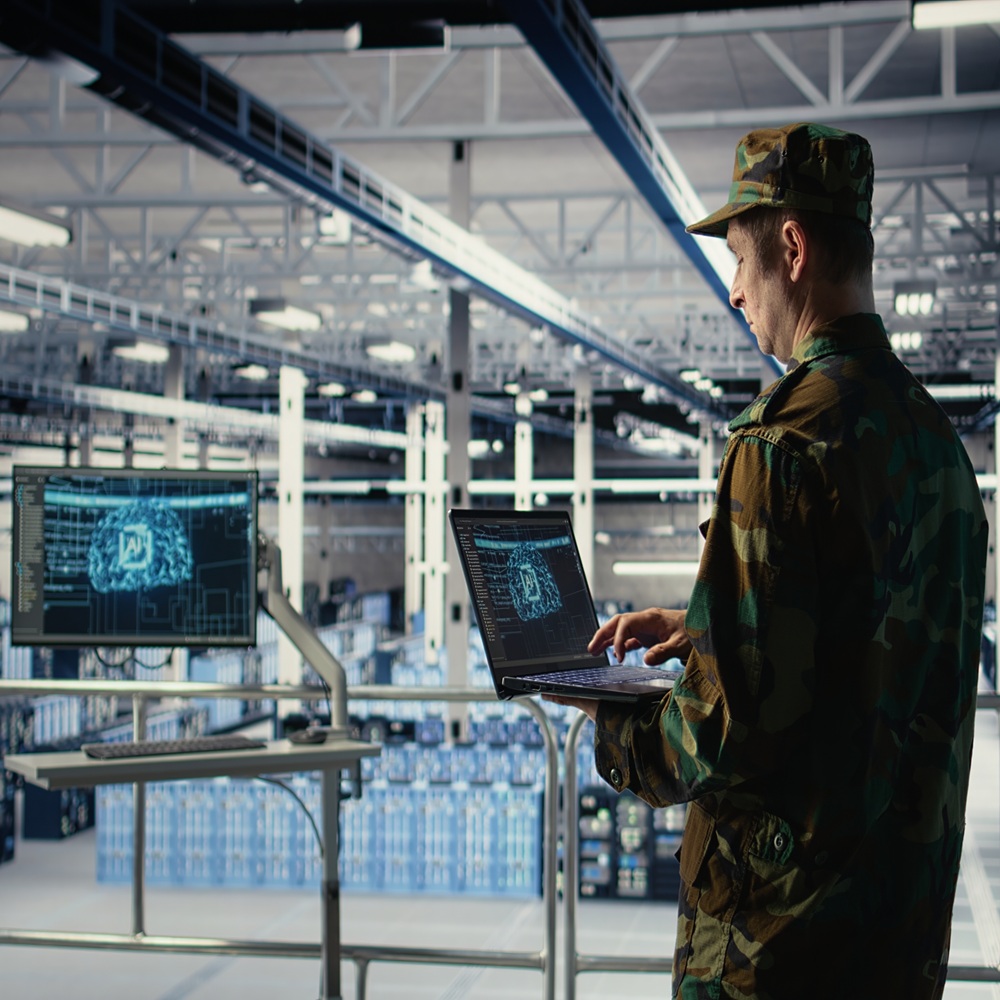
Soldier in engineering role uses AI application on laptop to manage server hub systems. Army commander reviews secret intelligence information using artificial intelligence in data center, camera A

Dual-Use AI Technologies in Defense: Strategic Implications and Security Risks

by Mayukh Dey

Introduction Artificial intelligence has become a critical technology in the 21st century, with applications spanning healthcare, commerce, and scientific research. However, the same algorithms that enable medical diagnostics can guide autonomous weapons, and the same machine learning systems that power recommendation engines can identify military targets. This dual-use nature, where technologies developed for civilian purposes can be repurposed for military applications, has positioned AI as a central element in evolving global security dynamics. The strategic implications are substantial. China views AI as essential for military modernization, with the People's Liberation Army planning to deploy "algorithmic warfare" and "network-centric warfare" capabilities by 2030 (Department of Defense, 2024). Concurrently, military conflicts in Ukraine and Gaza have demonstrated the operational deployment of AI-driven targeting systems. As nations allocate significant resources to military AI development, a critical question emerges: whether the security benefits of dual-use AI technologies can be realized without generating severe humanitarian consequences. The Reversal Commercial Innovation Driving Military Modernization Historically, military research and development drove technological innovation, with civilian applications emerging as secondary benefits, a phenomenon termed "spin-off." The internet, GPS, and microwave ovens all originated in defense laboratories. This dynamic has reversed. Commercially developed technologies now increasingly "spin into" the defense sector, with militaries dependent on technologies initially developed for commercial markets. This reversal carries significant implications for global security. Unlike the Cold War era, when the United States and Soviet Union controlled nuclear weapons development through state programs, AI innovation occurs primarily in private sector companies, technology firms, and university research institutions. Organizations like DARPA influence global emerging technology development, with their projects often establishing benchmarks for research and development efforts worldwide (Defense Advanced Research Projects Agency, 2024). This diffusion of technological capacity complicates traditional arms control frameworks based on state-controlled military production. The scale of investment is considerable. The U.S. Department of Defense's unclassified AI investments increased from approximately $600 million in 2016 to about $1.8 billion in 2024, with more than 685 active AI projects underway (Defense One, 2024). China's spending may exceed this figure, though exact data remains unavailable due to the opacity of Chinese defense budgeting. Europe is pursuing comparable investments, with the EU committing €1.5 billion to defense-related research and development through initiatives like the European Defence Fund. Dual-Use Applications in Contemporary Warfare AI's military applications span the spectrum of warfare, from strategic planning to tactical execution. Current deployments include: Intelligence, Surveillance, and Reconnaissance (ISR): AI systems process large volumes of sensor data, satellite imagery, and signals intelligence to identify patterns beyond human analytical capacity. In 2024, "China's commercial and academic AI sectors made progress on large language models (LLMs) and LLM-based reasoning models, which has narrowed the performance gap between China's models and the U.S. models currently leading the field," enabling more sophisticated intelligence analysis (Department of Defense, 2024). Autonomous Weapons Systems: Autonomous weapons can identify, track, and engage targets with minimal human oversight. In the Russia-Ukraine war, drones now account for approximately 70-80% of battlefield casualties (Center for Strategic and International Studies, 2025). Ukrainian officials predicted that AI-operated first person view drones could achieve hit rates of around 80%, compared to 30-50% for manually piloted systems (Reuters, 2024). Predictive Maintenance and Logistics: The U.S. Air Force employs AI in its Condition-Based Maintenance Plus program for F-35 fighters, analyzing sensor data to predict system failures before occurrence, reducing downtime and operational costs. Command and Control: AI assists military commanders in processing battlefield information and evaluating options at speeds exceeding human capacity. Project Convergence integrates AI, advanced networking, sensors, and automation across all warfare domains (land, air, sea, cyber, and space) to enable synchronized, real-time decision-making. Cyber Operations: AI powers both offensive and defensive cyber capabilities, from automated vulnerability discovery to malware detection and sophisticated social engineering campaigns. Gaza and Ukraine: AI in Contemporary Conflict Recent conflicts have provided operational demonstrations of AI's military applications and associated humanitarian costs. Israel's Lavender system reportedly identified up to 37,000 potential Hamas-linked targets, with sources claiming error rates near 10 percent (972 Magazine, 2024). An Israeli intelligence officer stated that "the IDF bombed targets in homes without hesitation, as a first option. It's much easier to bomb a family's home" (972 Magazine, 2024). The system accelerated airstrikes but also contributed to civilian casualties, raising questions about algorithmic accountability. The system's design involved explicit tradeoffs: prioritizing speed and scale over accuracy. According to sources interviewed by 972 Magazine, the army authorized the killing of up to 15 or 20 civilians for every junior Hamas operative that Lavender marked, while in some cases more than 100 civilians were authorized to be killed to assassinate a single senior commander (972 Magazine, 2024). Foundation models trained on commercial data lack the reasoning capacity humans possess, yet when applied to military targeting, false positives result in civilian deaths. Data sourced from WhatsApp metadata, Google Photos, and other commercial platforms created targeting profiles based on patterns that may not correspond to combatant status. Ukraine has implemented different approaches, using AI to coordinate drone swarms and enhance defensive capabilities against a numerically superior adversary. Ukrainian Deputy Defense Minister Kateryna Chernohorenko stated that "there are currently several dozen solutions on the market from Ukrainian manufacturers" for AI-augmented drone systems being delivered to armed forces (Reuters, 2024). Ukraine produced approximately 2 million drones in 2024, with AI-enabled systems achieving engagement success rates of 70 to 80 percent compared to 10 to 20 percent for manually controlled drones (Center for Strategic and International Studies, 2025). Both sides in the conflict have developed AI-powered targeting systems, creating operational arms race dynamics with immediate battlefield consequences. Civilian Harm: Technical and Legal Limitarions The integration of AI into lethal military systems raises humanitarian concerns extending beyond technical reliability. AI's inability to uphold the principle of distinction, which requires protecting civilians by distinguishing them from combatants in compliance with international humanitarian law, presents fundamental challenges. Current AI systems lack several capabilities essential for legal warfare:  Contextual Understanding: AI cannot comprehend the complex social, cultural, and situational factors that determine combatant status. A person carrying a weapon might be a combatant, a civilian defending their home, or a shepherd protecting livestock.  Proportionality Assessments: International humanitarian law requires that military attacks not cause disproportionate civilian damage. Human Rights Watch noted that it is doubtful whether robotic systems can make such nuanced assessments (Human Rights Watch, 2024).  Moral Judgment: Machines lack the capacity for compassion, mercy, or understanding of human dignity, qualities that have historically provided safeguards against wartime atrocities.  Accountability: With autonomous weapon systems, responsibility is distributed among programmers, manufacturers, and operators, making individual accountability difficult to establish. As one expert observed, "when AI, machine learning and human reasoning form a tight ecosystem, the capacity for human control is limited. Humans have a tendency to trust whatever computers say, especially when they move too fast for us to follow" (The Conversation, 2024). The risks extend to specific populations. Autonomous weapons systems trained on data predominantly consisting of male combatants in historical records could create algorithmic bias. In the case of Lavender, analysis suggests "one of the key equations was 'male equals militant,'" echoing the Obama administration's approach during drone warfare operations (The Conversation, 2024). Communities of color and Muslim populations face heightened risks given historical patterns of discriminatory force deployment. Export Controls and Technology Transfer Challenges Recognizing AI's strategic importance, governments have implemented export control regimes. The U.S. Bureau of Industry and Security now requires licenses for exports of advanced computing chips and AI model weights, imposing security conditions to safeguard storage of the most advanced models. These controls face inherent tensions. Overly broad restrictions risk hampering legitimate research and commercial innovation. Analysis suggests that if AI technology is too extensively controlled, American universities may face difficulties performing AI research, resulting in a less robust U.S. AI ecosystem. Insufficient controls enable adversaries to acquire cutting-edge capabilities. The effectiveness of export controls remains uncertain. In 2024, hundreds of thousands of chips, totaling millions of dollars, were smuggled into China through shell companies, varying distributors, and mislabeling techniques (Oxford Analytica, 2025). China's DeepSeek models, which achieved performance approaching U.S. systems, were reportedly trained on chips that circumvented export restrictions. International Governance: Fragmentation and Competing Frameworks The international community has struggled to develop coherent governance frameworks for dual-use AI. Rather than a cohesive global regulatory approach, what has emerged is a collection of national policies, multilateral agreements, high-level summits, declarations, frameworks, and voluntary commitments. Multiple international forums have addressed AI governance: ● The UN Secretary-General created an AI Advisory Board and called for a legally binding treaty to prohibit lethal autonomous weapons systems without human control, to be concluded by 2026 ● The Group of Governmental Experts on Lethal Autonomous Weapons Systems has held discussions under the Convention on Certain Conventional Weapons since 2013, with limited concrete progress ● NATO released a revised AI strategy in 2024, establishing standards for responsible use and accelerated adoption in military operations ● The EU's AI Act, adopted in 2023, explicitly excludes military applications and national security from its scope This fragmented landscape reflects geopolitical divisions. The perceived centrality of AI for competition has led the U.S. to position itself as leader of ideologically aligned countries in opposition to China, including for security purposes. China promotes its own governance vision through initiatives like the Belt and Road, exporting technology standards alongside infrastructure. Strategic Stability Implications AI creates strategic stability challenges. Autonomous weapons enable substitution of machines for human soldiers in many battlefield roles, reducing the human cost and thus political cost of waging offensive war. This could increase the frequency of conflicts between peer adversaries, each believing they can prevail without significant domestic casualties. For conflicts between non-peer adversaries, reduced casualties further diminish domestic opposition to wars of aggression. The implications extend beyond conventional warfare. Armed, fully-autonomous drone swarms could combine mass harm with lack of human control, potentially becoming weapons of mass destruction comparable to low-scale nuclear devices. The technical barriers to such systems are declining as components become commercially available. AI also complicates nuclear stability. Advances in AI-enhanced sensors and data processing could undermine second-strike capabilities by improving detection of mobile missile launchers and submarines. This erosion of assured retaliation could incentivize first strikes during crises. Simultaneously, AI systems managing nuclear command and control create risks of accidents, miscalculations, or unauthorized launches. Ethical Framework Limitations The integration of AI into warfare strains traditional ethical frameworks. Just War Theory requires that combatants maintain moral responsibility for their actions, possess the capacity to distinguish combatants from civilians, and apply proportionate force. Automation bias and technological mediation weaken moral agency among operators of AI-enabled targeting systems, diminishing their capacity for ethical decision-making. When operators interact with targeting through screens displaying algorithmic recommendations rather than direct observation, psychological distance increases. This mediation risks transforming killing into a bureaucratic process. The operator becomes less a moral agent making decisions and more a technician approving or rejecting algorithmic suggestions. Furthermore, industry dynamics, particularly venture capital funding, shape discourses surrounding military AI, influencing perceptions of responsible AI use in warfare. When commercial incentives align with military applications, the boundaries between responsible innovation and reckless proliferation become unclear. Companies developing AI for civilian markets face pressure to expand into defense contracting, often with insufficient ethical deliberation. Conclusion Dual-use AI technologies present both opportunities and risks for international security. One trajectory leads toward normalized algorithmic warfare at scale, arms races in autonomous weapons that erode strategic stability, and inadequate international governance resulting in civilian harm. An alternative trajectory involves international cooperation that constrains the most dangerous applications while permitting beneficial uses. The timeframe for establishing governance frameworks is limited. AI capabilities are advancing rapidly, and widespread proliferation of autonomous weapons will make policy reversal substantially more difficult. The challenge resembles nuclear non-proliferation but unfolds at greater speed, driven by commercial incentives rather than state-controlled programs. Because AI is a dual-use technology, technical advances can provide economic and security benefits. This reality means unilateral restraint by democratic nations would cede advantages to authoritarian competitors. However, uncontrolled competition risks adverse outcomes for all parties. Concrete action is required from multiple actors. States must strengthen multilateral agreements through forums like the UN Convention on Certain Conventional Weapons to establish binding restrictions on autonomous weapons without meaningful human control. NATO and regional security alliances should harmonize AI ethics standards and create verification mechanisms for military AI deployments. Military institutions must implement mandatory human-in-the-loop requirements for lethal autonomous systems and establish clear chains of accountability for AI-driven targeting decisions. Technology companies developing dual-use AI systems bear responsibility for implementing ethical safeguards and conducting thorough threat modeling before commercial release. Industry alliances should establish transparency standards for military AI applications and create independent audit mechanisms. Universities and research institutions must integrate AI ethics and international humanitarian law into technical training programs. Export control regimes require coordination between the United States, EU, and allied nations to prevent regulatory arbitrage while avoiding overreach that stifles legitimate research. Democratic governments should lead by demonstrating that military AI can be developed within strict ethical and legal constraints, setting standards that distinguish legitimate security applications from destabilizing weapons proliferation. As Austrian Foreign Minister Alexander Schallenberg observed, this represents the Oppenheimer moment of the current generation, recognizing that dual-use AI, like nuclear weapons, represents a technology whose military applications demand collective restraint. The policy choices made in the next few years will have long-term consequences. They will determine whether AI becomes a tool for human advancement or an instrument of algorithmic warfare. The technology exists; the policy framework remains to be established. The actors are identified; the question is whether they possess the political will to act before proliferation becomes irreversible. References 972 Magazine (2024) 'Lavender': The AI machine directing Israel's bombing spree in Gaza. https://www.972mag.com/lavender-ai-israeli-army-gaza/ Center for Strategic and International Studies (2024) Where the Chips Fall: U.S. Export Controls Under the Biden Administration from 2022 to 2024. https://www.csis.org/analysis/where-chips-fall-us-export-controls-under-biden-administration-2022-2024 Center for Strategic and International Studies (2025) Ukraine's Future Vision and Current Capabilities for Waging AI-Enabled Autonomous Warfare. https://www.csis.org/analysis/ukraines-future-vision-and-current-capabilities-waging-ai-enabled-autonomous-warfare Defense One (2023) The Pentagon's 2024 Budget Proposal, In Short. https://www.defenseone.com/policy/2023/03/heres-everything-we-know-about-pentagons-2024-budget-proposal/383892/ Department of Defense (2024) Military and Security Developments Involving the People's Republic of China 2024. https://media.defense.gov/2024/Dec/18/2003615520/-1/-1/0/MILITARY-AND-SECURITY-DEVELOPMENTS-INVOLVING-THE-PEOPLES-REPUBLIC-OF-CHINA-2024.PDF Foreign Policy Research Institute (2024) Breaking the Circuit: US-China Semiconductor Controls. https://www.fpri.org/article/2024/09/breaking-the-circuit-us-china-semiconductor-controls/ Human Rights Watch (2024) A Hazard to Human Rights: Autonomous Weapons Systems and Digital Decision-Making. https://www.hrw.org/report/2025/04/28/a-hazard-to-human-rights/autonomous-weapons-systems-and-digital-decision-making National Defense Magazine (2024) Pentagon Sorting Out AI's Future in Warfare. https://www.nationaldefensemagazine.org/articles/2024/10/22/pentagon-sorting-out-ais-future-in-warfare Queen Mary University of London (2024) Gaza war: Israel using AI to identify human targets raising fears that innocents are being caught in the net. https://www.qmul.ac.uk/media/news/2024/hss/gaza-war-israel-using-ai-to-identify-human-targets-raising-fears-that-innocents-are-being-caught-in-the-net.html Reuters (2024) Ukraine rolls out dozens of AI systems to help its drones hit targets. https://euromaidanpress.com/2024/10/31/reuters-ukraine-rolls-out-dozens-of-ai-systems-to-help-its-drones-hit-targets/
Defense & Security
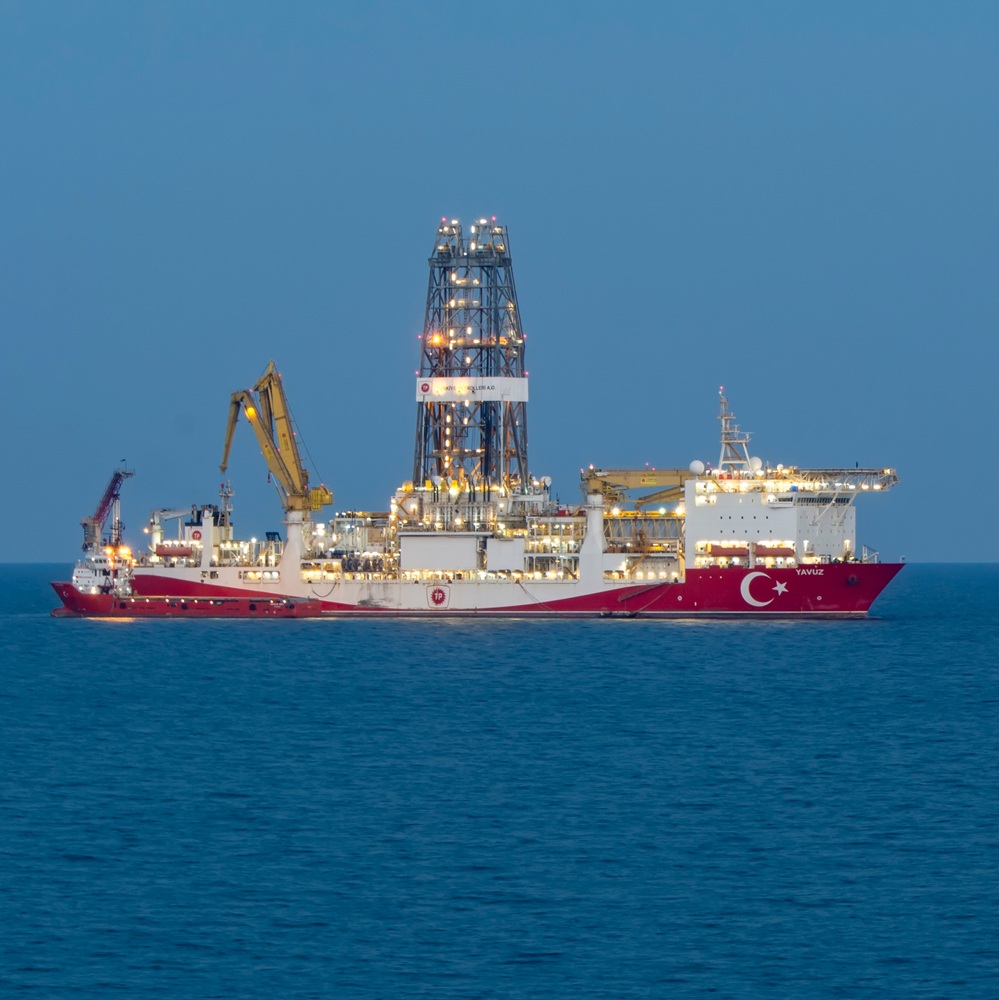
Mersin Turkey - 23.06.2021: Yavuz Drillship on the mediterranean sea. Drillships of Turkey which is search and drill for natural gas and oils.

Mavi Vatan: The turkish strategy for Resources in the Eastern Mediterranean Sea

by Jessica Martínez Pluma

In February 2019, the Turkish Naval Force carried out a large-scale military exercise in the Aegean Sea, the Black Sea, and the Eastern Mediterranean Sea to test the operation of the new weapons and naval systems acquired by the country over the last decade. At first, this event did not generate adverse reactions from the international community, but six months later alarm bells rang when, during a speech by President Recep Tayyip Erdoğan at Turkey’s National Defense University, a map was publicly displayed showing what the Republic of Turkey considered to be its sovereign maritime domains. This later became associated with a concept known as Mavi Vatan. Proposed by Admiral Cihat Yaycı and developed by Admiral Cem Gürdeniz, Mavi Vatan or the Blue Homeland Doctrine is a project and geostrategic representation of Turkey with the intention of claiming the state’s supposed jurisdiction over parts of the Eastern Mediterranean and the Aegean Sea. It demonstrates Turkey’s dissatisfaction with the limits established by international law—the United Nations Convention on the Law of the Sea (1982)—and upholds its right to the legitimate defense of sovereignty over what it asserts are its maritime domains: 462,000 km² comprising its territorial waters, its Exclusive Economic Zone (EEZ), and its continental shelf (Denizeau, A., 2021).  Figure 1: Map of ‘Mavi Vatan’ or the Blue Homeland Doctrine publicly displayed during President Erdoğan’s speech at Turkey’s National Defense University (August 2019). Source: Wikimedia Commons ‘Mavi Vatan’ not only represents a historical claim regarding the events of 2004, when the Republic of Cyprus became an official member of the European Union and established its own maritime borders as a state, which, under the framework of international law, pushed the Republic of Turkey into a narrow strip of sea in which to operate. At the same time, Mavi Vatan emerged as a solution to the growing security challenges that have arisen in the last decade of the 21st century, challenges that have threatened not only the integrity of the state itself but also all those elements that guarantee its survival in the international arena; in this case, Turkey’s access to energy resources. With projections that the Republic of Turkey will reach 90 million inhabitants by 2030 (Martín, L; n.d.), the Turkish state is aware of the increasing energy demands needed to adequately meet the needs of a rapidly growing population. To satisfy that demand, it is compelled to seek optimal sources of income to achieve this purpose. In response—and knowing of the large hydrocarbon reserves discovered in the Eastern Mediterranean Sea in recent years (Zeballos Rivero, M., 2024)—Turkey has turned to Mavi Vatan as a solution. If successfully implemented, it would allow Turkey to establish an area for the exploration and exploitation of resources lying beneath these waters to cover its urgent energy needs. The problem? Turkey is not the only interested party. Countries such as Israel, Lebanon, and Egypt, sharing coastlines with the Eastern Mediterranean Sea, are also engaged in heated disputes over legitimate access to these energy resources. However, the most pressing rivalry remains between Turkey and Cyprus, who, having relatively greater capacities to extract energy resources, have been at the forefront of an active dispute to claim sovereignty over these hydrocarbons.  Figure 2: Map of the EEZs of the Eastern Mediterranean countries and also of Mavi Vatan. Source: Emmanouilidis, C. (2020, August 31). Tensions in the Eastern Mediterranean. European Data Journalist Network. https://www.europeandatajournalism.eu/es/cp_data_news/tensiones-en-el-mediterraneo-oriental/ On the one hand, there is the Cyprus–Egypt–European Union alliance, which has agreed upon and mutually recognized the maritime boundaries corresponding to each of them in the Eastern Mediterranean Sea, while clearly omitting the possible sovereignty claims of other countries in the disputed area (s.autor, 2024). On the other hand, there are Turkey’s individual efforts, which, in its quest to gain access to hydrocarbon resources in the sea in question, signed a Memorandum of Understanding in November 2019 with Libya’s Government of National Accord (GNA) to establish an EEZ stretching from Turkey’s southern coast to the northwestern area of the North African country. This agreement granted the Turks rights to hydrocarbon exploration and exploitation in the zone (s.autor, 2024). Although the agreement was suspended in 2021, Turkey has continued to promote ongoing exploration expeditions in the region, which have even extended to Somali waters, with whom it already has agreements in this field. The firm actions taken by states in the region demonstrate that, beyond being an ambition for access to energy resources in the Eastern Mediterranean, the dispute actually represents an active risk to stability and security in the region. Firstly, from the energy dimension: given the importance of energy resources for human development, the continuation of hostilities among the involved states prevents the establishment of cooperative mechanisms that would allow all parties to benefit from the issue. Instead, it risks generating a zero-sum game in which only the strongest state would emerge victorious while the others remain vulnerable to an imminent energy crisis, thereby putting thousands of human lives at risk. Secondly, from the military dimension, there is the latent possibility that an armed conflict could erupt at any moment in the Eastern Mediterranean over immediate access to the contested resources. Without underestimating the military capabilities of the other countries involved, it is important to highlight the case of Turkey, which in recent years has significantly expanded its military capacities as part of the reformulation of its Foreign Policy. This has allowed Turkey to position itself as the ninth-strongest military power in the world (Global Fire Power, 2025) and the second-largest army within the North Atlantic Treaty Organization (NATO). On the opposite side lies Cyprus, which, although it does not possess the same military capabilities as the Republic of Turkey, does benefit from the direct support of the European Union, which, if necessary, could easily respond to potential acts of aggression in a military conflict in the region. Both sides of the dispute—Turkey and the European Union along with Cyprus—truly have sufficient resources to escalate the conflict if they so desire, but they have not done so for reasons that remain unclear. For now, the situation remains uncertain. Beyond warnings or complaints from some states and/or international organizations, there has been no decisive action to put an immediate end to the conflict, since, in reality, no large-scale crisis has yet warranted such a response. However, it is important not to underestimate the phenomenon: the fact that it has not yet generated a major impact does not mean it could not do so one day, especially considering the great capacities the involved states have both to act and to respond to possible aggression. Historically, disputes over energy resources have generated unprecedented wars that have cost thousands of lives—for example, the Gulf War in 1991. It is therefore necessary to continue monitoring such situations to prevent them from escalating into conflicts as violent as those of the past. Thus, diplomatic channels between all parties to the conflict must be pursued, with the aim of generating cooperative solutions that foster peace and prosperity among nations, rather than new problems. ReferencesDenizeau, A. (abril, 2021) “Mavi Vatan, the ‘Blue Homeland’: The Origins, Influences and Limits of an Ambitious Doctrine for Turkey”, Études de l’Ifri, Ifri.E. (2019, 30 diciembre) La lucha por los recursos en el Mediterráneo Oriental. Anadolu Ajansi. https://www.aa.com.tr/es/mundo/la-lucha-por-los-recursos-en-el-mediterr%C3%A1neo-oriental-/1685950Global Fire Power (2025). 2025 Military Strength Ranking. https://www.globalfirepower.com/countries-listing.phpJager, J.; Norris, A. (2021, 27 septiembre). The Mavi Vatan Doctrine and Blue Homeland Anthem: A Look At Turkey’s Maritime Worldview. Center for International Maritime Security. https://cimsec.org/the-mavi-vatan-doctrine-and-blue-homeland-anthem-a-look-at-turkeys-maritime-worldview/Kaya Ulger, I. (2020, 14 octubre) Turquía continúa defendiendo su “patria azul”. Anadolu Ajansi. https://www.aa.com.tr/es/mundo/turqu%C3%ADa-contin%C3%BAa-defendiendo-su-patria-azul-/2005458Mason, S. (2020, 20 septiembre). Blue Homeland: The Heated Politics Behind Turkey’s New Maritime Strategy - War on the Rocks. War On The Rocks. https://warontherocks.com/2020/06/blue-homeland-the-heated-politics-behind-turkeys-new-maritime-strategy/Martín, L. (s. f.).   ‘Mavi Vatam’: la doctrina turca de la ‘patria azul‘. Global Affairs and Strategic Studies. https://www.unav.edu/web/global-affairs/detalle/-/blogs/-mavi-vatam-la-doctrina-turca-de-la-patria-azul-3Menjón, D. M. (2021, 7 octubre). Dossier Geopolítico Especial: Teoría de la “Patria Azul”. Turquía se proyecta sobre el mar (de la energía). Hermes Kalamos. https://www.hermes-kalamos.eu/dossier-geopolitico-especial-teoria-de-la-patria-azul-turquia-se-proyecta-sobre-el-mar-de-la-energia/S. a. (2024, 10 abril) Cihat Yayci: Libia es un socio estratégico y un aliado para proteger y promover la seguridad de Turquía. OtraLecturA https://otralectura.com/2024/03/15/cihat-yayci-libia-es-un-socio-estrategico-y-un-aliado-para-proteger-y-promover-la-seguridad-de-turquia/S.a. (s. f.). Mavi Vatan-2019 Tatbikatının Ardından Enerji-Politik Ağırlıklı Bir Değerlendirme. Euronewsport İş dünyasından haberler. https://euronewsport.com/mavi-vatan-2019-tatbikatinin-ardindan-enerji-politik-agirlikli-bir-degerlendirme/Zeballos Rivero, M. (2023, 22 marzo). Creciente tensión entre Turquía y Grecia por reservas de gas en el Mediterráneo. Global Affairs And Strategic Studies. https://www.unav.edu/web/global-affairs/creciente-tension-entre-turquia-y-grecia-por-reservas-de-gas-en-el-mediterraneo 

Defense & Security
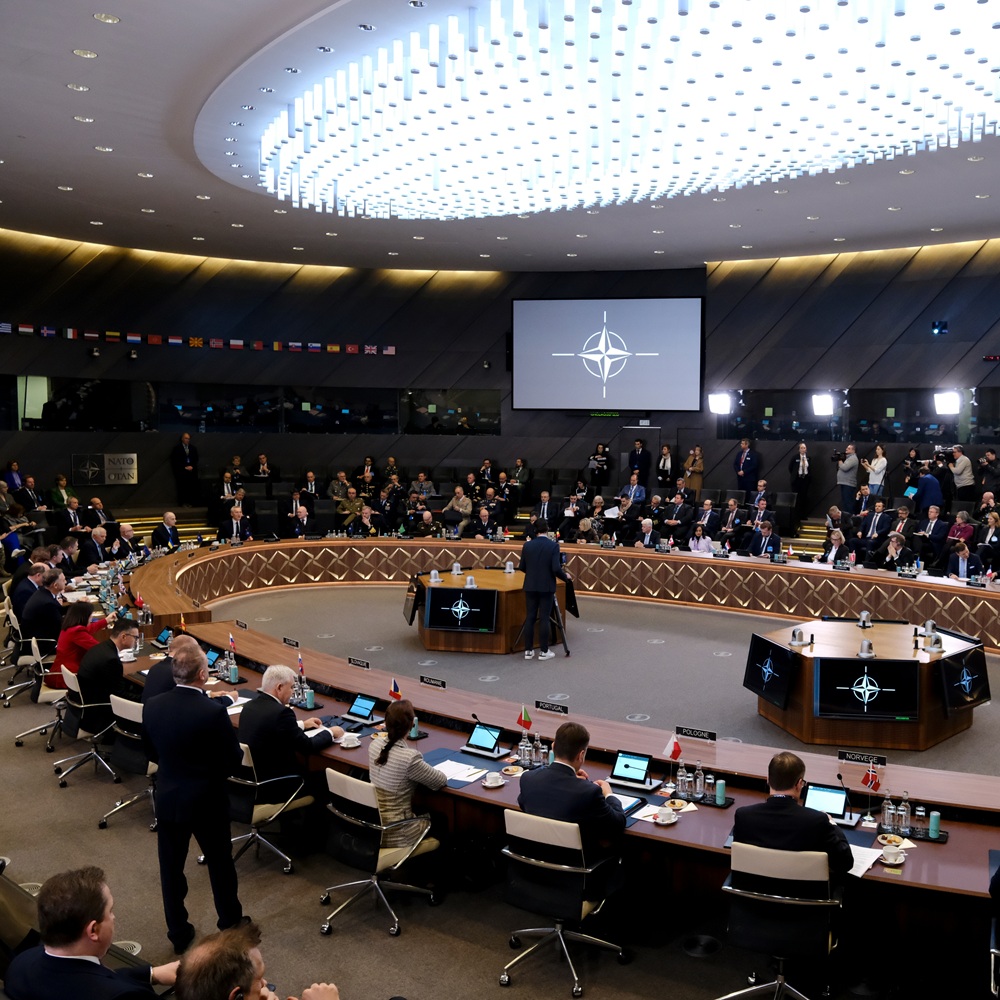
Meeting of NATO Ministers of Defence during a two-day meeting of the alliance's Defence Ministers at the NATO Headquarters in Brussels, Belgium on February 14, 2023.

Where is the transatlantic relationship heading?

by Florentino Portero

한국어로 읽기 Leer en español In Deutsch lesen Gap اقرأ بالعربية Lire en français Читать на русском The social dimension of the Alliance The North Atlantic Treaty Organization, the organization created by the signatory states of the Washington Treaty to achieve the goals set by the Alliance, is an institution characteristic of the democratic realm, where governments depend on their respective public opinions when trying to establish a security policy. The people matter – and this is something we must keep in mind – when reflecting on their future. The simplest and most logical answer to the question posed in the title of this conference, the one that responds to common sense, is wherever its member states want. And this is the core of the problem. Do the allies have a common vision? Do they share interests as they did in 1949? Do they still believe they are a community united by their commitment to democracy? Is it reasonable to consider that they form a “collective defense system”? Without clearly answering these questions, it becomes very difficult to move forward with this analysis. We would be venturing into speculative territory. On the other hand, we cannot ignore reality, and this leads us to acknowledge that it is unlikely we will receive clear answers due to a set of considerations characteristic of the present time. The first refers to the lack of reliability of the State because of the high fragmentation of public opinion. Globalization and the Digital Revolution are causing social and economic changes that have led the population to distrust their political elites. Traditional parties are disappearing or losing seats, while new political forces emerge, questioning many of the paradigms we have been working with for years. The societies of the member states no longer have as clear a sense of the purpose of the Alliance as they did a decade ago, because there is confusion about what the actual risks, challenges, and threats they face are. The second is the absence of prominent figures with the authority to exercise leadership at the heads of the allied governments. We cannot ignore that in times of uncertainty, leadership is more necessary than ever, because in its absence, it becomes extremely difficult to shape a sufficiently common position among the citizens. The third is the empirical realization that the Alliance has not been able to manage the crises in Afghanistan and Ukraine in a competent and professional manner. In the first case, the European allies decided to activate Article 5 of the Washington Treaty even though it wasn’t necessary, but wanting to show their solidarity with the state that had guaranteed their security for decades. However, on the battlefield, the vast majority shield themselves behind their ‘rules of engagement’ to avoid complicated situations. The goal was to comply with the United States more than to commit to victory. For its part, the United States was unable to maintain consistent objectives and strategy over time, which led to a humiliating defeat. What was the point of the waste of lives and money if, in the end, the same people returned to power? What was the point of the Alliance's technological superiority if it was defeated by poorly armed militias? In the second case, we have observed that despite the obvious incompetence of its armed forces, its limited capabilities, and its dire economic situation, Russia has managed to consolidate its control over a significant portion of Ukrainian territory and continues to advance. For the average citizen, it is incomprehensible that, having committed ourselves to reclaim all Ukrainian sovereign territory and being much wealthier, our strategy has led Ukraine to the unfortunate situation it finds itself in. Why didn’t we offer them the weapons they needed from the very beginning? Why have we deprived them of the victory we formally committed to? The fourth is a derivative of the previous one. In this context, does it make sense for the citizen to trust the Alliance? Isn’t it understandable that they try to seek refuge within the national framework and fear that the Alliance, in the hands of unqualified people, will drag them into scenarios that are not critical to their lives? Whether we like it or not, the citizen's distrust in NATO is as justified as their intuition that only NATO can guarantee their security, which includes both their freedom and their well-being. What is the Alliance today? In circumstances as complex as those we are currently experiencing, it is virtually impossible for an organization composed of thirty-two member states to be a community committed to the defense and promotion of democracy. The mere reference to Turkey, Hungary, or Spain is proof of how far there are nations within it that are heading in a different direction. The evolution of European political systems points to a worsening of the situation rather than the exceptional nature of the mentioned cases. The community, as well as the idea that it constitutes a "collective defense system," falls within the realm of aspirations. The Alliance has been a “collective defense system,” and I have no doubt that there are allies who continue to act consistently with this idea. However, putting aside formalities, I believe that when assessing the transatlantic relationship, we must focus on its strict condition as an alliance. NATO is an asset that no one wants to lose, even though in its current state, it leaves much to be desired. Its strength does not lie in the common perception of the threat, the solidarity of its members, the available capabilities, or in sharing a strategy, which is clearly nonexistent. What makes its members want to keep it alive is the accumulated legacy after 75 years of shared experiences and the deep sense of insecurity in the face of the dual realization of a world undergoing profound change and poorly prepared national defenses from any point of view. Outside the Alliance, it’s even colder. NATO provides us with a starting point to try to react collectively, knowing that, in reality, except for the United States, no member state has the critical size to act as a "strategic actor." We have a history, an institutional framework, civilian and military bodies, doctrines, resources... that allow us to try to adapt without having to start from scratch. The European Perspective In recent years, the European states that are members of the Alliance have experienced the contrast between the claim that the European Union should assume the role of a "strategic actor" and the harsh, relentless reality of its impotence to effectively and competently address the crises in the Middle East and Ukraine. In parallel, they have shifted from contempt for the United States, due to its erratic foreign policy and its inability to successfully complete its foreign initiatives, to seeking shelter once again under its military strength, considering the evidence of their own inability to understand international politics and act accordingly. It seems beyond doubt that the dynamics of the European integration process are heading towards the establishment of a federation. The transfer of sovereignty represented by the single currency was a milestone, marking the creation of "political Europe" through the Maastricht Treaty. Gradually, we are moving toward a single fiscal policy, with banking union, European monetary fund... ultimately towards the consolidation of an economic and monetary policy. Such significant common economic interests demand both a shared legal framework and a unified foreign policy. However, the factor of time plays a fundamental role. The passing of generations has allowed us to make progress, overcoming nationalist prejudices. Despite the formidable progress made, which is easily reflected in the recognition by young people that we live in a common cultural environment, the reality is that we are still far from forming what Miguel Herrero y Rodríguez de Miñón referred to decades ago as a "European people." One thing is to delegate certain public policies to European institutions, and another, undoubtedly very different, is the exercise of actions that are characteristically sovereign. History and geography matter, and we must acknowledge that we have not yet formed that continental identity that would allow us to credibly face the formidable challenge of establishing a common foreign policy. The advantages of planning together and having the same capabilities are obvious, but above all, what matters is its viability. The Union is still not in a position to replace American leadership. This humbling realization transforms into a flow of energy in favor of the Alliance, assuming as inevitable the implementation of changes that allow it to adapt to a new international environment. For years, we have been aware that the Washington Treaty, and especially its Article 5, are anachronistic. The emergence of new domains – space, cyber, and cognitive – and the development of hybrid strategies challenge some of its foundations. Even so, we try to adapt without facing a reform of the treaty, in an exercise of understandable but risky caution. We are aware that the European theater is no longer the same as it was in 1949, that globalization and the "competition among great powers" in the race to win the "Digital Revolution" have shaped a considerably different scenario that we must integrate into, but we feel dizzy at the thought of leaving our own geographic zone, when we are not even in a position to effectively address our own problems. The American Perspective Since the creation of the United States, American society has lived with the contradiction between its isolationist vocation and its dependence on foreign trade. It fears becoming involved in the affairs of others at a high cost. However, the commercial dimension of its economy demands freedom of navigation, legal security, access to raw materials, and the ability to penetrate other markets, conditions that lead to an international role. From the First and Second World Wars, they learned that it was impossible to turn their back on what was happening in other countries, that they had to commit to international security, trying to establish an order that would guarantee their national interests. After years of involvement in international conflicts that seemed to have no end, isolationist and nationalist sentiment has grown, as a classic pendulum effect. In this context, it is understandable that the public debate openly questions its presence in the Atlantic Alliance. Is NATO a guarantee of the security of the United States? In the years immediately preceding the Madrid Summit, it was evident that the Alliance lacked a threat to unite it, a strategy to guide its steps, and capabilities that would allow it to carry out combined activities. It should therefore come as no surprise that since the second term of the Bush Administration, statements from senior officials have been warning of the dangerous drift of the Organization or threatening its withdrawal. There has been much talk about the low defense spending by many of the European allies. It is evident that without investment, there is no modernization, and without it, there is a technological disconnect that prevents the joint action of the armed forces of the different member states. However, what is truly concerning is what this implies in terms of abuse and disregard towards the United States. Hence, the heated reactions we receive from the other side. It is indecent that we spend on welfare, reaching levels that are unattainable for the average American, while we let them bear the cost of our security, both in economic terms and in human lives. As grave as, or even more than, the lack of investment is the absence of a shared vision and strategy, but it is understandable that the debate has focused on investment, an instrumental element. For European allies, increasing defense spending under the current economic circumstances will be as difficult as it is painful, but it will not be any less difficult or painful to reach an agreement that gives meaning to NATO's existence in the coming years. One of the few consensuses in the Capitol is to consider China as its main rival, around which all its economic, foreign, and defense policies revolve. In the Strategic Concept approved in Madrid, we can read that China is a “systemic challenge” for all of us. What policy have we derived from this categorical statement? Is there an Atlantic vision on this? It is hard to imagine that the Alliance can have a future if the states on both sides of the Atlantic do not reach a common position on how to engage with the great Asian power. In the same document, we find the statement that Russia is a “threat,” which does not align with statements from American leaders of both parties, though more from the Republican side than the Democratic one. It is neither acceptable nor responsible that, after the approval of such an important document, just two and a half years later, the United States acts as if the problem is not theirs. Putting formal aspects aside, is Russia a threat to the United States? To what extent does the behavior of the Moscow government in Eastern Europe affect U.S. national interests? Does it make sense for the United States to get involved in the war in Ukraine? Was Biden's behavior a reflection of a Cold War veteran, detached from the international circumstances of today? The establishment of the Atlantic Alliance was not the result of U.S. leaders in the early postwar years being convinced that the Soviet Union posed a threat to their national interests. On the contrary, they were fully aware that it did not. What concerned them was the extreme weakness of the European states, ravaged by a brutal war, the absence of a democratic culture, the high risk of totalitarian currents feeding off misery and uncertainty, and leading the Old Continent to a Third World War. European governments felt Soviet pressure. The area occupied by the Red Army was experiencing the extermination of representative institutions, Germany was torn between neutrality and partition, communist parties were gaining parliamentary positions in significant countries like France and Italy, supported by the prestige earned in the Resistance. For U.S. analysts, the European perception of the Soviet threat was exaggerated, but its effects could be concerning. The United States chose to engage in European reconstruction to prevent its drift towards fragmentation and totalitarianism, as the consequences of this drift could directly affect their national interests. They established a comprehensive strategy based on two pillars, the Marshall Plan and the Atlantic Alliance. NATO has been and continues to be an instrument to guarantee cohesion and democracy on the Old Continent. The second Trump administration must resolve the tension between the isolationist demand of the citizenry, the need to create jobs on domestic soil through the erection of tariff barriers, the necessity of securing supply and distribution chains, and the consolidation of alliances or understandings between different regional blocs in response to Chinese initiatives. It is a set of contradictory actions wrapped in the populist demagoguery characteristic of our time, but which will require decisions in times marked by a succession of crises. Time for decisions An organization inhabited by officials does not need meaning to continue functioning. From 9 AM to 5 PM, qualified staff will move papers from one office to another, showcasing their professionalism and operational efficiency. However, it is important not to confuse NATO with the Alliance. The latter does need meaning, which is now in question. Whether we like it or not, the coming years will be crucial for its future. We will witness how the decisions made regarding a set of circumstances and debates will ultimately determine it, as well as the link between the two shores of the Atlantic. As happened at its origin, that link will go far beyond security, which is instrumental in consolidating that community which was the original aspiration and is now marked by its absence. The war in Ukraine is undoubtedly the central issue in the transatlantic relationship, as it brings to the negotiation table many of the fundamental issues that question its very existence. We are facing a continental conflict that arises after a Russian diplomatic attempt to reach an agreement on a new balance of power. Moscow's proposal demanded the withdrawal of U.S. units from areas bordering its territory and the removal of its nuclear weapons stationed in the Old Continent. Putin’s government felt threatened by NATO and the European Union's eastward expansion and demanded compensation. When it was not granted, it launched its third campaign on Ukraine and its fifth on territories that were once part of the Soviet Union. This is not a campaign that can be understood in a bilateral Russia-Ukraine logic, but rather as part of an effort by a revived Russian imperialism to reconstitute its historical sphere of influence. This invasion is not the first, and unless the Alliance acts wisely, it will not be the last. The role played by the Europeans has been disappointing. Their response to previous aggressions – Moldova, Georgia, Crimea, and Donbas – was the perfect example of how supposedly educated elites learn nothing from history. The French, Germans, and Italians collectively made the same mistakes as Chamberlain in Munich, thinking that the aggressor would be satisfied by acknowledging their right to aggression, when, in reality, they were encouraging them to proceed and prepare for new expansionist ventures. This attitude provoked the logical irritation and distrust in the Slavic-Scandinavian space, which was never deceived by the ongoing process under the Russian government. These powers refused to believe U.S. intelligence warnings about Russia's willingness to invade and reacted too late and poorly. All this, combined with the old problem of lack of investment in defense, made European armed forces ineffective and their industry powerless in responding to a demand for military capabilities in a short period of time. If the Europeans do not take their defense seriously, if they have become accustomed to parasitizing U.S. leadership, the frustration of their elites with their European allies is understandable. The Biden administration tried to use the Ukraine War to reconstitute the Alliance, but the strategy of attrition applied, renouncing victory out of fear of its political and military consequences, has led to a very high number of Ukrainian casualties and to public fatigue, which, following the Russian plan, is pushing through new political formations from both the right and the left to reach an unfeasible understanding with Russia at Ukraine’s expense. In the new international scenario, characterized by competition among great powers to achieve technological hegemony within the framework of the Digital Revolution, the United States needs Europe as much as Europe needs the United States. Russia does not pose a direct threat to U.S. interests, but it has become a vassal of China and an instrument of Beijing to weaken the cohesion of the Western bloc. The Trump administration must not fall into the temptation of turning its back on its allies, no matter how irresponsible and incompetent they may be, as this would cede ground to the rival. An even more protectionist policy could push European states, if not the Union itself, to seek alternative markets in China. A policy of greater withdrawal would encourage both division among continental powers and the pursuit of a middle ground between the two superpowers. What is at stake is much more than tariffs or investment in defense. What we will decide soon is whether we are a community or not, whether we face the challenges of a new era together, or if we choose separation. Within the framework of the Atlantic Alliance, the United States has valuable allies, particularly the United Kingdom and the Slavic and Scandinavian blocs. Attempting to find a diplomatic solution to the Ukraine War could mean a victory for Russia by recognizing its right to alter Europe's borders by force, and the loss of trust from these allies, who are aware that even Trump would have fallen into the Munich trap, and despite his brash rhetoric, he would have ended up playing Chamberlain’s role. This would be a grave mistake for the United States, which, on the contrary, should rely on these countries to contain Russian expansionism and send a very clear message to Beijing about its commitment to updating and maintaining the cohesion of the Western community. Such an update would require allies, this time for real, to commit to defense investment and be prepared to use their capabilities when necessary. The Alliance needs a strategy. The concept approved in Madrid was merely the political framework to develop it. It is up to the Trump administration to lead its development in order to ultimately agree on what to do about the "Russian threat" and the "systemic challenge" posed by China. The Middle East crisis is unfolding in a scenario defined by two fronts established after years of diplomatic work: the "Abraham Accords" and the Axis of Resistance. Hamas’ aggression towards Israel has materialized in a harsh military campaign in the Gaza Strip, which has severely damaged the political and military capabilities of the Islamist group, and has extended to Lebanon, where Hezbollah is also suffering a heavy blow. In addition, Iran has seen its defense industry, anti-aircraft artillery systems, and, more limitedly, its nuclear network has suffered significant damage, while its intelligence system has been humiliated and degraded. In this context, despite the damage suffered by the Gazan population, the block formed by the Abraham Accords has remained cohesive, aware of Hamas' blackmail and the cost of yielding to it. On the other hand, Europe has presented itself as divided, lacking a strategic vision, not understanding that this was not a problem between Israelis and Palestinians, but an instrumental conflict aimed at undermining the regimes of Arab countries not aligned with the Axis of Resistance. Its criticism of Israel for the effects of its military campaign on the Gazan population consciously ignored both Hamas’ responsibility in turning them into human shields and the cost that accepting Hamas' blackmail would have had for all of us — Arabs, Israelis, and Europeans — if the campaign had not continued. How is it possible that we have so easily forgotten how the Axis powers were defeated? What would have happened in Europe during WWII if we had followed the European Union's demands during the Gaza War? The Middle East is a critical space for the Atlantic Alliance. It is understandable that the United States is frustrated with many of its European allies who, once again, have acted in a frivolous and irresponsible manner, unable to think in strategic terms. Israel has long chosen to turn its back on Europe, in response to a behavior it associates with a new form of anti-Semitism. The Arab bloc appreciates the European sensitivity to the suffering of the Gazan or Lebanese people, but it seeks security under the umbrella of the United States and Israel in the face of the Axis of Resistance, which poses a challenge of internal subversion, asymmetric warfare, and nuclear threat. A renewed Alliance needs to establish a strategy for the MENA region focused on containing Islamism and consolidating moderate regimes. China and Russia are taking advantage of the instability to infiltrate and hinder our missions. For them, instability on our southern front is a strategic objective, one that would fuel migration and insecurity, and with them, division within the Alliance and the Union. The Arab-Israeli bloc distrusts the United States due to its inability to maintain a strategy over time and does not rely on the Europeans. Only a firm stance from the Alliance in favor of this group of countries and against the Axis of Resistance could overcome this situation and guarantee both the cohesion of the Alliance and its authority in the region. The circumstances that led to the creation of the Alliance are behind us. They are history. However, today the Alliance is more necessary than ever. The circumstances have changed, but the community of values and interests remains the same, even though not everyone may understand this. Dissolving this community would be a grave mistake that would only benefit those powers whose goal is nothing more than to "revise" our legacy. Reviving it will not be easy. It will require political awareness and high-level diplomacy. Challenges that are impossible to achieve without leadership that matches the times. 

Defense & Security
Paris, France, Europe, May 01, 2024, pro-Palestinian demonstrator at the Paris procession on May 1

Political Insights (8): European Positions on Operation al-Aqsa Flood and the Israeli War on Gaza Strip:

by Hossam Shaker

한국어로 읽기Leer en españolIn Deutsch lesen Gap اقرأ بالعربيةLire en françaisЧитать на русском Introduction Consistent with past behavior observed in previous instances of wars against Gaza Strip (GS), European capitals swiftly and predictably condemned the attack by Palestinian resistance forces on Israeli targets on 7/10/2023 in strong terms. This event was often portrayed with a clear bias towards Israel’s narrative, overlooking its background and context, and disregarding its military objectives, which primarily targeted Israeli occupation bases and barracks. Some European capitals took considerable time to reassess their positions and strive for a more balanced approach. Hasty Initial Positions In the first weeks of the war, political and media narratives in most European countries leaned towards portraying Israeli occupation as the victim, depicting the resistance’s actions as typical terrorist attacks akin to tragic events in Western countries. This narrative provided propaganda support to justify the brutal assault on GS. The aggression was justified by emphasizing “Israel’s right to self-defense,” echoing Israeli leadership’s claims of the resistance “using civilians as human shields,” all while neglecting international law and the safety of Palestinian civilians. Some European countries reacted vehemently during the genocidal war. They suspended aid to the Palestinian Authority (PA) for a period, then penalized the United Nations Relief and Works Agency for Palestine Refugees in the Near East (UNRWA) by withholding funding following Israel’s inflammatory accusations against the agency, only to later reverse these actions. Trends in European Positions Generally speaking, European positions during the GS war diverged along at least three lines, with relative differences in attitudes within each line: • Germany, Austria, Hungary, the Czech Republic and other countries adopted an overwhelmingly pro-Israeli position that remained almost unchanged. • A trend that increasingly criticized the genocidal war and moved in a positive direction. This was evident in Ireland, Spain, Belgium, Malta, Norway and Slovenia. • A third trend avoided clear criticism without being at the forefront of partisanship, or vacillated in some positions, as in the case of France, which relatively modified its position in the second month of the war. These trends were evident in the positions on the ceasefire during the first months of the war, in voting behavior in international bodies, in taking punitive measures against the PA and UNRWA, and in the position on imposing sanctions on settlers. Implications of Positions on the European Union (EU) This divergence in positions has placed a burden on the High Representative of the EU for Foreign Affairs and Security Policy Josep Borrell to articulate a coherent position representing the Union during this war. Non-EU member states, such as Britain, have adopted positions aligned with the US, while Norway has expressed critical attitudes toward the war. The prolonged duration of the war, the exposure of its brutality, and the growing public and elite opposition to it have led to a weakening of support for the war within Europe and have encouraged the opposite front. The divergence in positions was evident in that the EU was only able to reach a joint resolution supporting a ceasefire in GS in March 2024. This came with great difficulty due to the intransigence of capitals overwhelmingly aligned with Israel, which obstructed this step for almost half a year of the war. European positions have been weakened and discredited due to their contradictions, particularly regarding the Ukraine war. Positions favoring a brutal genocidal war have severely tarnished the image of the concerned European countries. Germany was even brought before the International Court of Justice (ICJ) after Nicaragua filed a lawsuit against it for “facilitating the commission of genocide” against Palestinians in GS via its arms exports to Israel. It is clear that the positions of many European countries are causing significant losses in terms of image, soft power and the privilege of moral guardianship that they once enjoyed as traditional defenders of “human rights” and “universal values.” These positions have also galvanized massive public protests within European countries, although these protests have not prompted significant political responses. Weaknesses in European positions have become apparent due to the lack of diplomatic initiatives from the EU or any of its member states, despite the active involvement of European actors across the region. Calls for a diplomatic solution, an end to the war or even statements advocating “restraint” have notably been missing from the primary European positions on the GS war. This omission can be attributed to the current alignment with the US administration and the influence of the prevailing support for the Israeli narrative of the war within Europe. Position on the Two-State Solution Merely expressing support for the “two-state solution,” pledging aid, and expressing concern for the humanitarian situation of Palestinians in Gaza Strip often serves as a superficial gesture, aligning more with the ongoing occupation and the devastating war on GS. These positions may also involve condemning Israeli “settler violence” in the West Bank (WB) and issuing threats of punitive actions against certain individuals, while simultaneously absolving the Israeli military of any accountability and deflecting criticism from the war on GS. The critical position toward Israel became evident through early voting behavior favoring a ceasefire in international forums, initiatives within EU bodies supporting this inclination, and the near-simultaneous recognition of the State of Palestine in Madrid, Dublin, Oslo and Ljubljana. This exerted pressure on other European countries, despite their customary declarations of support for the “two-state solution,” to reconsider their positions. However, major European capitals of influence, such as Berlin, Paris, London and Rome, still refrain from taking clear positions in pressuring Israel or recognizing the state of Palestine. Efforts to Contain War Expansion Since the war began, European capitals involved in decision-making have been eager to contain the war within GS. The prolonged duration of the war exerts pressure in this direction, particularly amidst concerns over potential escalation at the volatile Lebanese front and ongoing tensions and attacks near the Yemeni coasts and in the Red Sea region. European countries have taken noticeable steps in response, highlighted by French diplomatic efforts in Lebanon and the surrounding areas. Concurrently, European countries have refrained from participating in military maneuvers in the Red Sea, aligning themselves distinctively from US and British forces, thereby signaling a strategy to avoid direct entanglement in regional tensions. Western Strategic Polarization The positions of European decision-making centers have been notably influenced by the manifestations of Western strategic polarization in the wake of the Ukraine conflict, with Europe notably aligning with the US administration. Western powers seem to acknowledge the potential geopolitical ramifications of either losing the current war in GS or allowing it to escalate regionally. Moreover, the ongoing war serves as a significant test for the effectiveness of Western weapons, security and defense systems, particularly following the sudden blow on 7/10/2023. European parties’ concern for the strength of the Western alliance and transatlantic ties also motivates them to avoid weakening the position of President Joe Biden’s administration. Biden faces a challenging electoral test to renew his presidential term against Donald Trump, whose potential return to the White House raises concerns among Europeans. Conclusion Despite the mounting European criticisms of the Israeli occupation and the brutal genocidal war, the influential European position continues to refrain from imposing significant censure or punitive measures against Israel. Furthermore, it appears to align with the positions of its US ally on this matter, actively seeking harmony with them. However, Israel is increasingly posing a burden on Europe. While there is a gradual and hesitant shift towards greater recognition of the impossibility of Israel remaining above the law, along with an increased acknowledgment of the rights of the Palestinian people and the urgency to address them, this trend is becoming increasingly apparent. This is accompanied by waning confidence in the ability to overcome Palestinian resistance. Moreover, there is a growing unity among the Palestinian population in support of resistance, in the wake of the failure of the Oslo process and the pursuit of a peaceful solution.