Unmanned aerial vehicle: geopolitical influence, industrial potential and future perspectives
by World & New World Journal
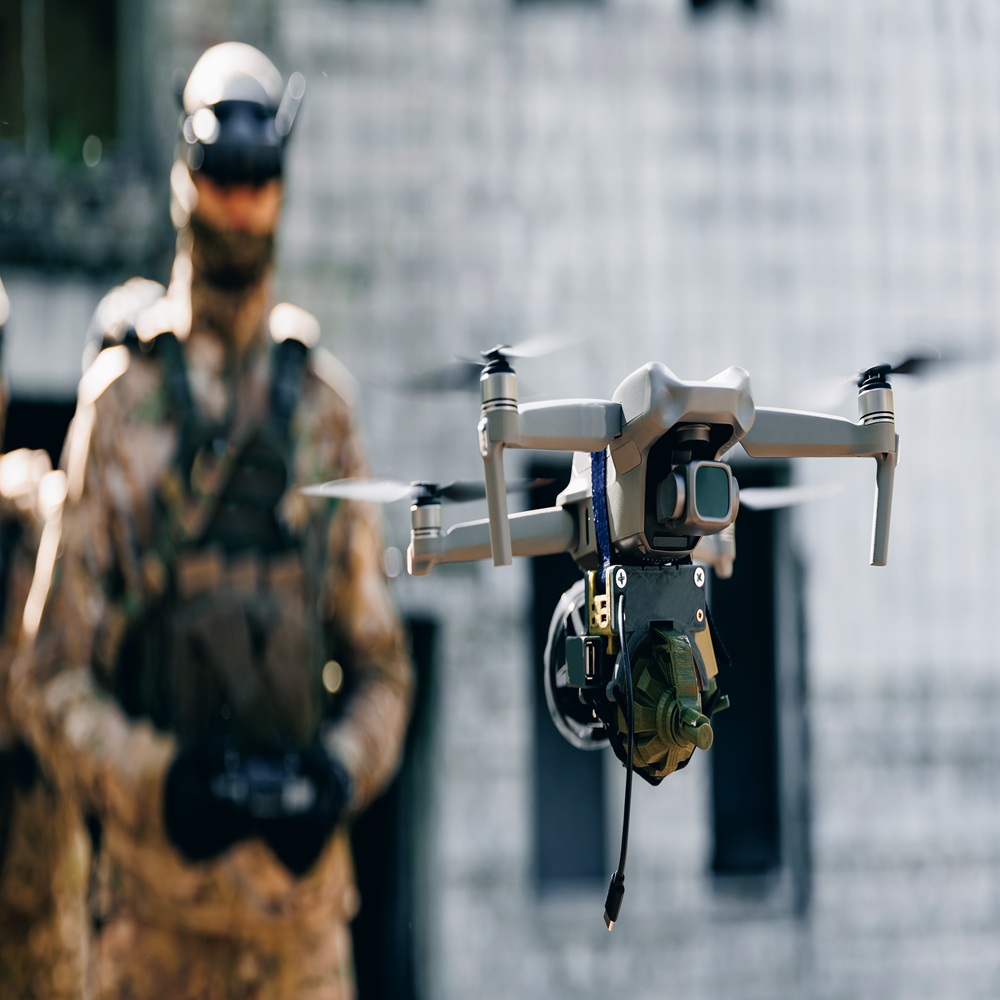
Introduction An unmanned aerial vehicle (UAV) or unmanned aircraft system (UAS), commonly known as drone, is an aircraft without a human pilot, crew or passenger on board, but rather controlled remotely or autonomously. Drones can be seen as cutting-edge technologies with tremendous ramifications across various fields, including military, security, economics, and logistics – ranging from lightweight consumer drones to advanced autonomous combat platforms – that have transformed global security economics and technological developments. Their proliferation marks a shift in the conduct of warfare, industrial processes, and urban infrastructure design. In this context, this article aims to analyze these dynamics across three domains: geopolitical and security implications, economics and industrial processes, and future technological transformation. I. Geopolitical and Security Perspective: "Game Changers" The Dawn of the Unmanned Warfare Era The past decade — and especially during the conflicts in Ukraine, Gaza, and the Caucasus —has showcased an irreversible shift toward unmanned warfare. Low-cost drones have enabled nations and non-state actors to conduct reconnaissance, precision strikes, and electronic warfare at a fraction of traditional military costs. The democratization of drone warfare erodes conventional military hierarchies by giving smaller nations and even non-state groups asymmetric capabilities (Kania, 2020), (Vision of Humanity, 2024). Figure 1: Use of drones by type. A major consequence of this shift is the emergence of continuous aerial presence, which fundamentally alters operational rhythm and tempo. Previously, only major powers could afford persistent surveillance through manned aircraft or satellites. Today, even insurgent groups can deploy swarms of commercial drones to maintain near-constant observation of enemy movements. This constant presence of drones on the battlefield forces militaries to make decisions much faster and operate as if they are always being watched. As drone technology becomes cheaper and more widely available, it also becomes easier for states or groups to launch low-risk, hard-to-trace attacks without putting their own people in danger. This reduces the barrier to starting or escalating conflicts and makes the overall situation far more unpredictable. On the other hand, despite automation, drone warfare remains heavily dependent on human adaptation, moreover, in practice, drones’ use is constrained by weather, terrain, and limited night capability (Newton, 2025). Nonetheless, and as seen in the Ukraine War, the adaptation, development and improvement of the designs and systems have skyrocketed and shortened from months to weeks. A Paradigm Shift in Modern Warfare Traditional doctrines built around armored vehicles, manned aircraft, and centralized command structures are giving way to distributed, networked, and automated operations. Drones allow for constant ISR (intelligence, surveillance, reconnaissance), rapid kill chains, and battlefield transparency that reduces the effectiveness of concealment and mass maneuver (Biddle & Oelrich, 2016). Swarm technology further accelerates this shift by overwhelming air defenses through algorithmic coordination. On a broader strategic level, unmanned systems are transforming operational art, forcing militaries to rethink how they structure campaigns. Instead of relying on a small number of high-value manned platforms, modern forces must integrate thousands of expendable, semi-autonomous assets into a coherent command-and-control ecosystem. This shift elevates the importance of data fusion, algorithms, and electronic warfare, as success increasingly depends on which side can process information more effectively rather than which side has heavier armor or more firepower. Furthermore, the psychological effects of drone warfare — constant monitoring, unpredictable strikes, and the invisibility of operators — alter the morale and behavior of both soldiers and civilians. In this sense, unmanned warfare not only changes tactics but reshapes the human dimension of conflict. Evolution of Defense Strategies States now are prioritizing anti-drone systems (C-UAS), electronic warfare, and resilient supply chains. Defense strategies emphasize dispersion, decoys, deception, and multi-layered air defense, recognizing that the cost ratio favors attackers using cheap drones against expensive assets. Militaries increasingly incorporate AI-enabled targeting, autonomous perimeter defense, and drone-versus-drone combat (Mehta, 2022). The rapid evolution of offensive drone capabilities has forced governments to pursue a new generation of integrated counter-unmanned systems, blending kinetic interceptors, directed-energy weapons, radio-frequency jamming, and cyber tools. However, the challenge is not merely technological — it is organizational. Modern militaries must revise procurement cycles, adopt flexible doctrine, and restructure units to counter the fast-changing drone threat. For example, some nations are creating dedicated “drone defense battalions” or embedding electronic warfare teams at lower echelons of command. Once more the Ukraine War is a good example: Ukraine’s early-warning systems (so called, “drone walls”) use layered reconnaissance UAVs to identify threats and enhance battlefield visibility, unfortunately, these are highly vulnerable to electronic warfare and radar destruction. More examples include the fiber-optic FPV drones as countermeasure of jamming, or decoy drones to lure air defenses and absorb munitions. (Newton, 2025) The rise of drone warfare also places huge demand on secure communications and resilient digital infrastructure; adversaries increasingly target supply chains, software vulnerabilities, and satellite links that control unmanned systems. Thus, the evolution of defense strategies represents a multi-domain effort that spans hardware, software, organizational culture, and national-level industrial capacity. Major Countries' Competition in Drone Weapon Development The United States, China, Israel, Turkey, and Iran dominate the global drone arms race, while Russia and Ukraine deserve a special mention too. • USA: it focuses on high-tech autonomous systems, for example the MQ-25, Collaborative Combat Aircraft. In addition, according to the Federal Aviation Administration they have an estimated 822,039 drones registered as of July 2025. (FAA, 2025)• China: leads in export volume, offering cost-competitive platforms like the Wing Loong series (Fischer, 2020).• Turkey: gained strategic influence through the Bayraktar TB2, proven in multiple regional conflicts like the Nagorno-Karabakh in 2020 or its use for strategic communications for Ukraine during the ongoing conflict. (Péria-Peigné, 2023)• Israel: its research, development and production of innovative drone technology and exports roughly $500 million worth of UAV-related products per year, have positioned Israel as a world leader in the area. Israel is well known for its indigenous and competitive manufacturing UAVs like the Hermes 450, the Searcher Mk II and the Heron. (Sadot, s.f.)• Iran: their Shahed-136 drone is a low-cost drone that has gained attention internationally as it has shown affordability, precision, long-range, and cheapness during the Ukraine War – deployed by Russia. (Kesteloo, 2025)• Ukraine: has emerged as a leader in tactical warfare, including mass quantities of low-cost First-Person View (FPV) drones for frontline and deep-strike operations. But also, it has implemented “Spider’s Web” operations, which strike deep inside Russia, while using low-cost assets but with strategic and punctual strikes. Ukraine has also expanded into the maritime domain with unmanned surface vessels (USVs) using them with a kamikaze-style operation targeting ships and critical offshore infrastructure in the Black Sea. (Newton, 2025)• Russia: the war has institutionalized an UAV doctrine with mass deployment of FPV drones (Newton, 2025) and the creation – similar to Ukraine – of an Unmanned System Force (USF) aiming to encompass aerial, land and surface drones. (Altman, 2025) II. Economic & Industrial Perspective: “Flying Industrial Revolution” Future Logistics and Delivery Systems Beyond the battlefield, drones are reshaping global economies and enabling new industrial ecosystems. For instance, drones are rapidly transforming last-mile delivery by reducing transportation time, bypassing road congestion, and enabling access to remote or disaster-affected areas. Companies like Amazon, Wing, and Zipline have already demonstrated how unmanned aircraft can deliver medical supplies, parcels, and consumer goods more efficiently than traditional vehicles. As autonomous navigation, battery technology, and payload capacity continue to improve, drones are expected to become critical components of global supply chains, especially in regions where infrastructure is limited or demand for ultra-fast delivery is increasing. Global drone delivery is expected to reach multi-billion-dollar scale by 2030 (PwC, 2023). In the longer term, logistics networks are expected to evolve into hybrid ground–air systems, where drones work alongside autonomous ground vehicles and smart warehouses. These systems could drastically reduce operational costs by automating pickup, sorting, and delivery processes. Integrating drones with AI-driven inventory management and predictive delivery algorithms will allow companies to anticipate demand and route products dynamically. As eVTOL cargo aircraft mature, the concept of “airborne logistics hubs” may also emerge, enabling rapid long-distance transport between distribution centers without the need for airports. Together, these developments point toward a future where aerial logistics are not just an add-on, but a central pillar of modern supply chains. Improving Industrial Efficiency Across agriculture, energy, construction, and mining drones significantly improve efficiency by automating tasks that previously required expensive equipment or manual labor. By replacing manned inspection systems, drones can reduce labor costs, increase safety, and provide data of unprecedented detail (McKinsey, 2022). For example, farmers use drones for precision spraying and crop monitoring, reducing fertilizer and water usage. Energy companies deploy unmanned systems for pipeline inspections and powerline surveys, minimizing downtime and enhancing worker safety. Construction and mining firms rely on drones for site mapping, progress tracking, and 3D modeling, improving project accuracy while lowering operational costs. Beyond task automation, drones are becoming essential to data-driven industrial optimization. Equipped with thermal sensors, LiDAR, and multispectral cameras, unmanned systems can capture high-resolution data that feeds directly into AI analytics platforms. This allows companies to detect inefficiencies, predict equipment failure, and optimize resource allocation in real time. As industries move toward digital twins — virtual models of physical assets — drones will play a key role in continuously updating these systems with accurate spatial and environmental data. The result is a more responsive, efficient, and resilient industrial ecosystem that leverages aerial automation for competitive advantage. Regulatory Environment and Market Growth Regulation remains the single most influential factor shaping the global drone market. Governments are gradually introducing frameworks to enable Beyond Visual Line of Sight (BVLOS) operations, Remote ID tracking, and certification standards for commercial drones. Regions like the European Union have adopted unified risk-based rules through EASA, while the United States continues to refine its Part 107 and UTM integration policies through the FAA. These regulatory milestones are essential for scaling commercial drone usage, as they provide clarity to manufacturers, operators, and investors. As regulatory frameworks mature, they are also becoming a competitive advantage for regions that adopt them early. Countries that implement drone-friendly ecosystems — such as Singapore, the UAE, and Rwanda — are rapidly emerging as hubs for drone research, testing, and deployment. This regulatory momentum encourages multinational companies to establish operations in these markets, accelerating local innovation and talent development. Furthermore, harmonized international standards will make it easier for drone manufacturers to reduce production complexity and expand globally. Ultimately, the pace of market growth will depend not just on technological advancement but on how effectively governments balance innovation with safety, privacy, and public acceptance. Investment Trends Investment in drone-related technologies has surged, driven by the convergence of autonomy, artificial intelligence, and advanced manufacturing. Venture capital firms increasingly fund companies developing autonomous navigation systems, UTM software, battery technology, and specialized industrial drones. Defense investors continue to expand their portfolios into dual-use drone companies, reflecting growing geopolitical interest and national security incentives. Meanwhile, major tech firms and automotive companies are exploring opportunities in cargo drones, eVTOL aircraft, and autonomous mobility ecosystems. Beyond private investment, government funding and public–private partnerships are accelerating drone adoption globally. Many nations are launching test corridors, innovation hubs, and subsidies to attract drone startups and support local manufacturing. This trend is particularly strong in Asia and the Middle East, where governments see drones as strategic tools for digital transformation and economic diversification. As markets mature, investment is shifting from hardware-heavy startups toward software, analytics, and integrated airspace management solutions — reflecting a broader transition from drone manufacturing to drone ecosystems. This shift signals a long-term, sustainable evolution of the drone industry from early experimental phases to full-scale commercial and civil integration. III. Future Technologies The Need for Unmanned Traffic Management (UTM) As drones and future eVTOL air taxis multiply, low-altitude airspace will become increasingly crowded. To prevent collisions and maintain order, UTM frameworks — already being developed by NASA, the FAA, EASA, and ICAO — aim to coordinate autonomous flights using real-time tracking, automated route planning, and digital air corridors (Kopardekar, 2016). These systems will act as the “air-traffic control of the future,” but designed for far larger numbers of smaller, faster-moving vehicles. In addition, as demand grows, it is likely that UTM will evolve into a fully automated, AI-driven airspace ecosystem capable of managing thousands of simultaneous flights with minimal human oversight. Future systems could incorporate weather prediction, dynamic rerouting, and AI-powered detect-and-avoid features, which more than a technical upgrade, would transform the air mobility in the cities worldwide. Global Standardization Competition The need for standard UTM, drone certifications, communication systems, and detect-and-avoid technology is critical, but it also represents a geopolitical contest. The U.S., the European Union, and China are each developing distinct technological ecosystems, hoping their standards will dominate global markets. Whichever region’s standards become the international norm will shape supply chains, aircraft design, and regulatory practices for decades. This competition mirrors earlier battles over telecommunications and 5G. Nations that establish widely adopted drone standards will gain strategic advantages, including influence over global manufacturing, software ecosystems, and aviation governance. As a result, UTM and drone certification are no longer just technical debates — they have become instruments of national power, economic leverage and somehow geopolitical importance. Urban Safety and Privacy Issues In addition, another major concern for cities is the widespread adoption of drones itself, which translates into surveillance risks, noise pollution from frequent flights, and vulnerability to cyberattacks that could compromise flight controls. Therefore, urban areas need strict rules governing data collection, flight paths, and liability in case of accidents to maintain public trust and safety. In the future, cities will also require integrated emergency response protocols, stronger cybersecurity defenses, and digital identity systems for all unmanned aircraft. Public engagement and transparent oversight will play a major role in ensuring that drones enhance urban life without creating new forms of intrusion or risk. Managing these challenges will be essential for the successful adoption of unmanned urban mobility. Integration with Future Urban Infrastructure In line with the previous section, smart cities could incorporate drones into their core infrastructure. For example, vertiports, rooftop landing pads, sensor-equipped air corridors, and digital twins could enable efficient navigation and real-time monitoring. In addition, drones will become essential for urban mobility and public services – from medical or any goods deliveries to emergency response like fire unit responses. As cities evolve, this integration will create a hybrid transportation ecosystem, where ground vehicles, aerial drones, and automated control systems would operate in sync. Urban planning will increasingly consider airspace as a valuable layer of infrastructure, much like roads or power grids. Therefore, collaboration between governments, industry, and technology providers to design cities capable of supporting high-density autonomous air mobility is required. Conclusion Unmanned systems are redefining the global balance of power, transforming industrial processes, and reshaping urban futures. The convergence of autonomy, AI, and networked airspace introduces both unprecedented opportunity and profound risk. Geopolitically, drones dilute traditional military dominance; economically, they catalyze a new airborne industrial revolution; technologically, they push societies toward complex management of shared automated airspace. Future policy, regulation, and innovation will determine whether unmanned systems become drivers of prosperity or vectors of instability. References Altman, H. (2025, November 13). Russia Creates New Military Branch Dedicated to Drone Warfare. The War Zone (TWZ). https://www.twz.com/news-features/russia-creates-new-military-branch-dedicated-to-drone-warfare Amazon. (2023). Prime Air: The Future of Drone Delivery. Amazon Corporate Publications. Biddle, S., & Oelrich, I. (2016). Future Warfare in the Age of Drones. Council on Foreign Relations. Deloitte. (2022). Drones in Industrial Operations: Transforming Asset Inspection and Performance. Deloitte Insights. FAA (Federal Aviation Administration). (2023). Integration of Unmanned Aircraft Systems into the National Airspace System. U.S. Department of Transportation. FAA (Federal Aviation Administration). (2025). Drones. https://www.faa.gov/uas Fischer, S. (2020). China’s Military–Civil Fusion Strategy: A View from Washington. U.S.–China Economic and Security Review Commission. Kania, E. B. (2020). Learning Warfare from the Laboratory: China’s Progress in Military Innovation. Center for a New American Security (CNAS). Kesteloo, H. (2025, September 29). Global Military Drone Race Intensifies as Nations Rush to Copy Iran’s Shahed Design. Medium. https://medium.com/@hayekesteloo/global-military-drone-race-intensifies-as-nations-rush-to-copy-irans-shahed-design-404badf482fb Kopardekar, P. (2016). Unmanned Aircraft System (UAS) Traffic Management (UTM) Concept of Operations. NASA Ames Research Center. McKinsey & Company. (2022). The Commercial Drone Market Outlook: Insights on Market Growth, Industrial Adoption, and Regulation. McKinsey Robotics & Automation Practice. Mehta, A. (2022). Counter-Drone Systems and the Future of Air Defense. Defense News. Newton, M. (2025, November 3). How Are Drones Changing War? The Future of the Battlefield. Center for European Policy Analysis (CEPA). https://cepa.org/article/how-are-drones-changing-war-the-future-of-the-battlefield/ Péria-Peigné, L. (2023, April 17). TB2 Bayraktar: Big Strategy for a Little Drone. IFRI. https://www.ifri.org/en/memos/tb2-bayraktar-big-strategy-little-drone PwC. (2023). Clarity from Above: Global Drone Market Analysis. PwC Global. Roland Berger. (2022). Urban Air Mobility: The Rise of the Drone Economy. Roland Berger Strategy Consultants. Rwanda Civil Aviation Authority. (2021). Regulatory Framework for Drone Delivery and BVLOS Operations. Government of Rwanda. Sadot, U. (n.d.). Proliferated Drones: A Perspective on Israel. Center for a New American Security (CNAS). https://drones.cnas.org/reports/a-perspective-on-israel/ Schmidt, E., Work, R., & Clyburn, M. (2021). Final Report: National Security Commission on Artificial Intelligence. U.S. Government Printing Office. Singer, P. W. (2009). Wired for War: The Robotics Revolution and Conflict in the 21st Century. Penguin Books. Statista. (2023). Global Drone Market Value and Investment Trends. Statista Market Outlook. Vision of Humanity. (2024, June 13). How Drones Have Shaped the Nature of Conflict. https://www.visionofhumanity.org/how-drones-have-shaped-the-nature-of-conflict/ Wing (Alphabet). (2023). Autonomous Delivery Networks and Future Logistics. Wing Technical Publications. Zipline. (2022). Operational Impact of Automated Medical Delivery by Drone. Zipline International Case Studies.