Subscribe to our weekly newsletters for free

Subscribe to an email

If you want to subscribe to World & New World Newsletter, please enter
your e-mail

Diplomacy
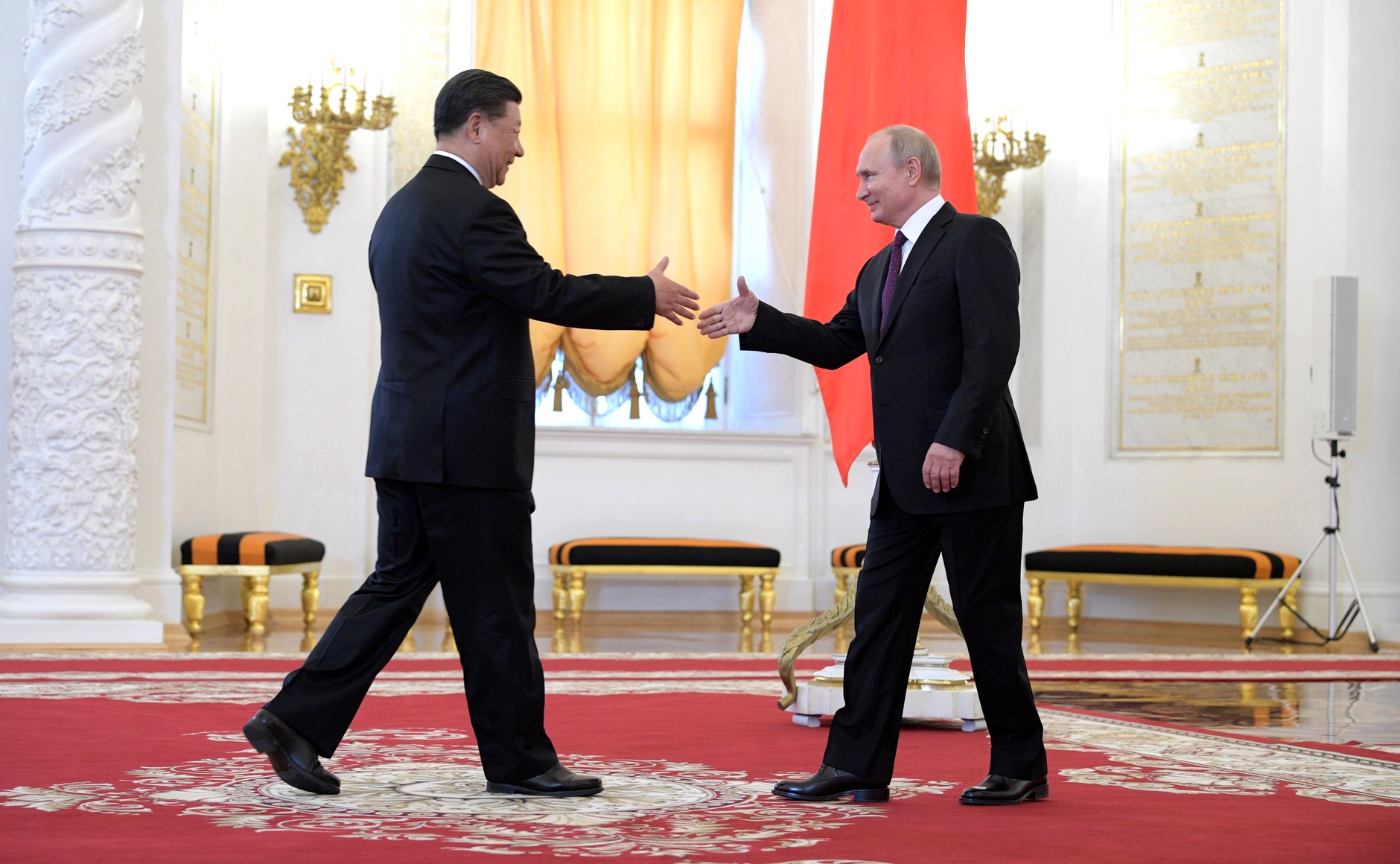
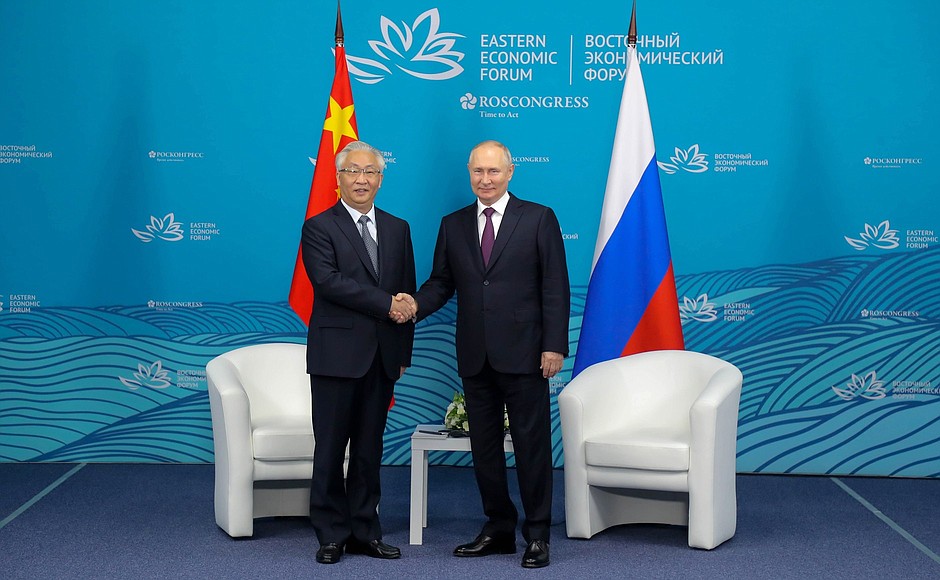
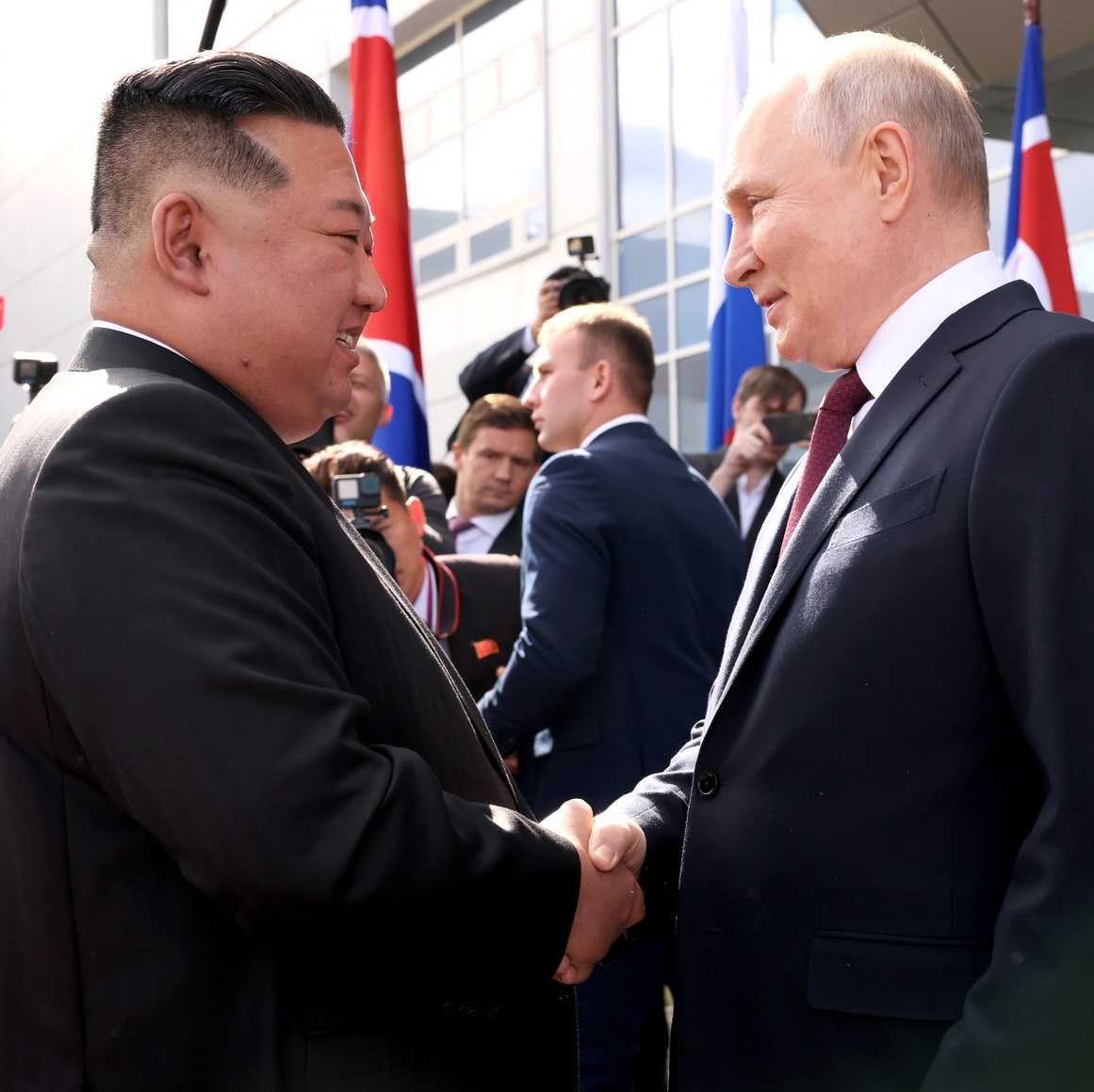
President of Russia Vladimir Putin meeting with North Korean leader Kim Jong-un (2025)

Why Xi, Putin and Kim on One Stage Matters

by Roie Yellinek

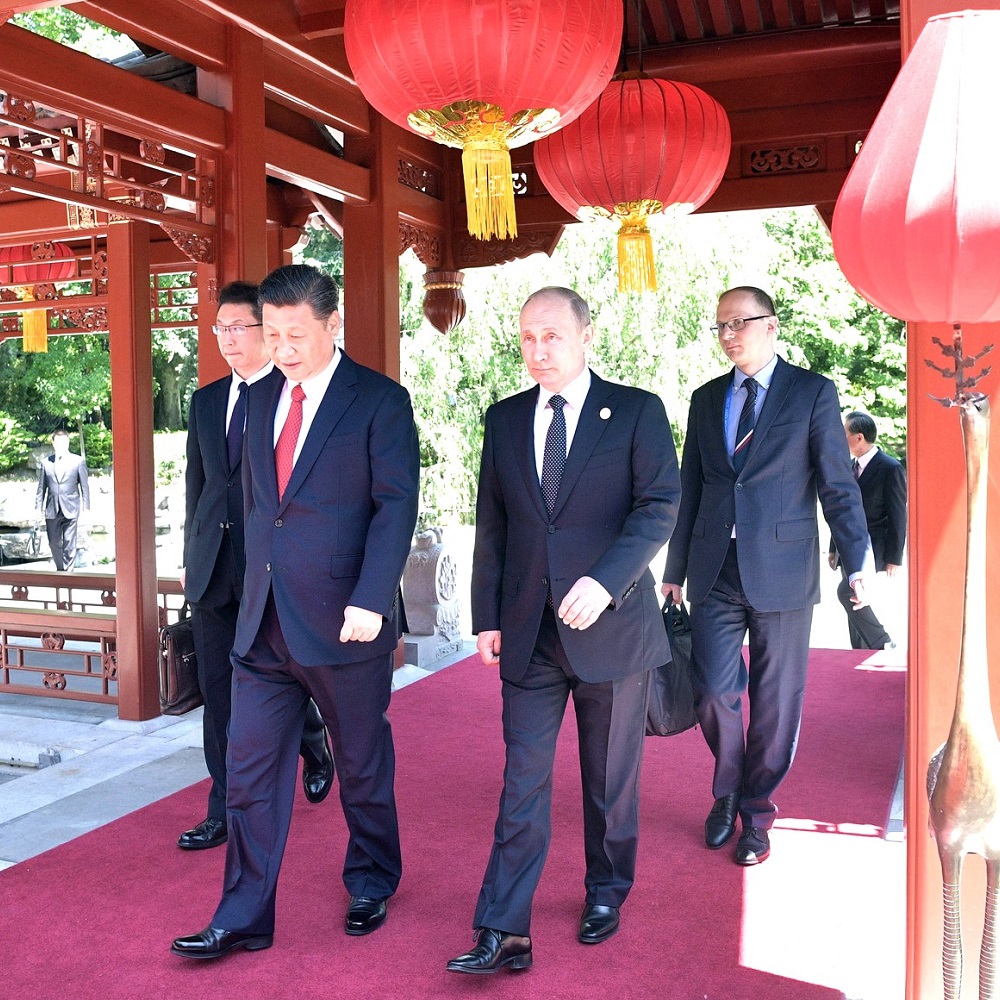
Beijing’s Victory Day parade in Tiananmen Square was designed to dazzle: ranks of uniformed troops, formations of aircraft, and an arsenal of new systems meant to underscore China’s rapid military modernization. But the most consequential image was not a missile or a stealth jet. It was a tableau of three leaders—Xi Jinping at the center, flanked by Vladimir Putin and Kim Jong Un—watching the spectacle together. The scene, widely broadcast and photographed, turned a commemorative event into a geopolitical marker. It was less a snapshot than a signal: the public normalization of a deepening alignment among China, Russia, and North Korea, at a moment when Western democracies are struggling to sustain cohesion on core strategic questions. The parade itself offered the familiar mixture of hardware and narrative. Coverage highlighted the unveiling or public confirmation of advanced systems across domains: upgraded intercontinental missiles, new submarine-launched ballistic missiles, hypersonic and anti-ship capabilities, long-range bombers, early warning aircraft, and a broad stable of unmanned platforms, including undersea vehicles and “loyal wingman” drones. Chinese media presented these developments as evidence of a “world-class” People’s Liberation Army (PLA) moving beyond legacy constraints and into truly multi-domain operations, with information, space, and cyber now integrated alongside land, sea, and air. Independent reporting catalogued the breadth of systems and emphasized a narrative of credible deterrence and strategic depth rather than mere choreography. Yet the more instructive message was political. The presence of Putin and Kim, alongside other leaders, was not a mere ceremonial occurrence. Each leader arrived with clear incentives to be seen at Xi’s side, and each gained by lending visual weight to Beijing’s story. For Moscow, the image reinforced the claim that Russia is not isolated, that it retains powerful partners and is embedded in a wider non-Western coalition. For Pyongyang, the moment was even more significant: an opportunity to step out of diplomatic isolation and be recognized publicly as a member of a consequential strategic grouping. For Beijing, hosting both leaders signaled that China can convene and coordinate—projecting status, reassuring sympathetic governments, and unsettling adversaries by hinting at a tighter web of cooperation among U.S. rivals. The convergence behind the optics has been building for years, and could have happened only on Chinese soil. China and Russia have expanded their coordination across energy, defense, and diplomatic, even as they preserve maneuvering room on sensitive issues. North Korea’s accelerating exchanges with Russia, alongside growing political warmth with Beijing, provide a third leg to this emerging tripod. None of this amounts to a formal alliance with mutual defense obligations. But it does resemble a strategic alignment held together by shared interests: resisting a U.S.-led order, blunting sanctions pressure, reducing vulnerability to Western technology restrictions, and demonstrating that alternatives exist to dollar-centric finance and Western supply chains. The choreography on the rostrum did not create this alignment; it made it more legible and clear. Memory politics is a key component of that legibility. Beijing’s decision to anchor the parade in the commemoration of victory over Japan allows contemporary power projection to be cloaked in a unifying moral narrative. China increasingly leverages World War II memory in diplomacy—shaping a “memory war” that reframes the post-1945 order and what is seen from China as its rightful place within it. Russia’s long-standing use of the “Great Patriotic War” plays a parallel role, justifying current policies through selective historical continuity. North Korea’s revolutionary mythology fits easily into this narrative architecture. By standing together at an anniversary of anti-fascist victory, the three leaders signaled an ideational convergence that complements their material cooperation: a claim to moral legitimacy as guardians of an alternative international vision. The military dimension of the parade, while not the core of this argument, still matters. Displays of a maturing triad—land-based ICBMs, submarine-launched systems, and an air-launched nuclear component—aim to convey survivable second-strike capacity. The public presentation of hypersonic and anti-ship systems is meant to complicate adversary planning in the Western Pacific. The range of unmanned platforms suggests an intent to saturate domains with relatively low-cost, attritable assets, improving persistence and compressing the sensor-to-shooter loop. It is prudent to treat parades cautiously: not all showcased systems are fully operational or fielded at scale, and performance claims are difficult to validate. But as an indicator, the breadth and integration of platforms reflect a planning culture committed to joint operations and “intelligentized” warfare, where AI-enabled targeting and decision support are not theoretical ambitions but programmatic priorities What, then, does the image of Xi–Putin–Kim actually change? First, it clarifies expectations. Observers no longer need to infer the trajectory of this triangular relationship from scattered bilateral overtures. The three leaders have chosen to make their alignment visible. Visibility creates deterrent value, raising the perceived costs of coercing any one member, and it can also facilitate practical cooperation: intelligence sharing, diplomatic coordination at the UN and other fora, synchronized signaling during regional crises, and mutually reinforcing sanctions-evasion practices. Second, it complicates Western planning. Even if Beijing keeps caution around direct military assistance in Europe or the Korean Peninsula, diplomatic top-cover, economic buffering, and technology flows short of lethal aid can still alter the correlation of forces over time. Finally, it resonates across the Global South. Many governments seek strategic autonomy and resist being forced into binary choices. The parade’s optics supplied a ready-made narrative for those who argue that the international system is already multipolar and that non-Western coalitions can deliver security and development without Western tutelage. The contrast with Western coordination was strikingly evident. In the transatlantic community, support for Ukraine remains substantial; however, debates about resource levels, war aims, and timelines have intensified. In the Indo-Pacific, there is a growing alignment on deterring coercion in the Taiwan Strait and the South China Sea; however, national economic interests and differing risk tolerances result in uneven policies toward China. Across Europe and North America, electoral politics continue to inject volatility into foreign policy, complicating efforts to sustain long-term, bipartisan strategies. None of these frictions amounts to collapse, and there are genuine Western successes in coalition-building—from NATO enlargement to evolving minilateral formats in the Indo-Pacific. However, an analytically honest reading of the moment acknowledges that the authoritarian trio in Beijing has projected a unity of purpose that Western capitals currently struggle to match consistently. Three implications follow. The first is narrative competition. If Beijing, Moscow, and Pyongyang can turn a commemorative event into a global story about legitimacy and resilience, they will continue to use history as a strategic resource. The appropriate Western response is not to cede the narrative field but to invest in historically grounded, forward-looking messaging that explains the link between rules-based order and practical benefits—trade reliability, crisis management, and sovereignty protection—for diverse audiences. The second is coalition maintenance. Western policymakers will need to prioritize “coalition hygiene”: aligning export controls and investment screening where it matters most; building redundancy into critical supply chains; closing divergences in sanctions enforcement; and coordinating messaging so that tactical differences do not obscure strategic alignment. This requires political discipline more than new institutions. The third is theater integration. As the Beijing image suggested a cross-regional understanding among three adversarial capitals, allied planning must better account for cross-theater linkages—how actions in Europe affect deterrence in Asia, and vice versa—and ensure that resource allocations and industrial policies reflect genuinely global prioritization. It is important not to overstate. The emerging alignment among China, Russia, and North Korea is asymmetric and interest-based, not a tightly binding alliance. Beijing’s global economic integration imposes constraints that Moscow and Pyongyang do not share. Russia and North Korea each bring liabilities that China will manage carefully. Frictions—over technology, pricing, and regional equities—will persist. But the threshold crossed in Beijing is nonetheless meaningful. These governments judged that the benefits of public proximity now outweigh the costs. That judgment, once made, is difficult to reverse quickly; it tends to generate its own momentum through bureaucratic follow-through and sunk reputational costs. One image cannot rewrite the balance of power. It can, however, crystallize a trend and concentrate minds. The sight of Xi, Putin, and Kim standing together did exactly that. It captured an authoritarian convergence rooted in shared grievances and converging strategies, and it highlighted the challenge facing democracies that wish to preserve an open and stable order: maintaining the patience, unity, and policy discipline to act together. The test for the West is less whether it recognizes the signal—most capitals do—than whether it can convert recognition into sustained, collective action. If Beijing’s parade was a demonstration of choreography and intent, the appropriate answer is not a counter-parade, but the quieter work of alignment: aligning narratives with interests, interests with instruments, and instruments with partners. That work is not glamorous. It is, however, what turns a photo into policy.

Defense & Security
Soldier, CPU computer (central processing unit) US and Chinese flag on white background. US vs China chip war or tech war, semiconductor industry concept. US restrict and control chip export to China.

Superpowers Without Soldiers: Can Technology Replace Traditional Hegemony?

by Syeda Farani Fatima

Introduction Hegemony is the core principle in International Relations. It has been conceptualized through military strength, economic influence, and ideological control. The theory of cultural hegemony by Antonio Gramsci is based on assuming control but not necessarily through force, whereas realist theorists such as John Mearsheimer stress the relevance of military strength for ensuring global dominance (Mearsheimer 2001). The 21st century, though, brought into being a different era of transformation and technological breakthroughs that turned the existing arrangements on their head. With the advent of Artificial Intelligence (AI), cyber war, and space technology, great powers are transforming from traditional soldiers to cyberspace warriors. AI and other cyber tools are altering the strategic equation between major powers, providing avenues for countries like China and Russia to undermine US hegemony (Rooney et al. 2022). Hegemony in the past had been founded on military superiority, but at present, academics have discovered that technological hegemony is leading the way. Lethal Autonomous Weapons (LAWs) and AI have captivated researchers because they can transform war. Cyberspace has become the new battleground of power. The US and China are competing for cyber hegemony (Akdaǧ 2025). Space is increasingly regarded as a new battleground in geopolitics. The US Space Force and China’s BeiDou system illustrate how nations weave surveillance and communication in their strategic decision-making (O’Hanlon 2020). Thus, new technologies are reshaping the China-US rivalry. To counter this, countries are investing in tech-based industries, which will change the way human thinks. The analysis will explore whether emerging technologies can efficiently replace traditional tools of hegemony or not. Joseph Nye’s concept of smart power provides a critical framework in this modern era, where influence may flow from military boots to silicon chips. Global powers are moving towards influence and deterrence-based tech models, supplementing hard power. However, this transition has its risks, such as overdependence and ethical concerns. The paper argues that a complete transformation is not happening, but there will be dual-track hegemony where military and technology will coordinate to dominate. Policy implications of this shift are profound. Global powers must collaborate to draft international norms for AI and cyberwarfare, developing nations must develop their technology rather than dependency on global powers, as it will be easier for them to surveil and dominate, and international institutions must proactively govern the techno-political landscape to prevent destabilization. This study will use a qualitative approach, and it will be a case-based methodology combining theoretical perspectives of philosophers. This analysis is important as it delves into the transformation of the mechanics of global power from military hegemony to technology-oriented hegemony. It uses secondary sources like policy briefs, think tank reports, books, etc. Finally, this analysis concludes that soldiers may never be the first line of every fight, but the battle for global supremacy is firmly human-hinged in decisions on technology, ethics, and governance. Hegemony is a core concept in International Relations, grounded in military capacity, economic influence, and institutional influence. Historically, great civilizations like the Roman and British empires attained hegemony by dominating in naval power, making alliances and expanding their territories. In the post-World War II era, the US built dominance through overseas military bases and nuclear deterrence. Historical Foundations of Traditional Hegemony The Roman Empire, a classic example of past hegemony, attained this power by constructing roads, forts, and legions in the world's islands. Later, the British Empire sustained its dominance by modernizing the Royal Navy and the global trade network. The post-World War II era saw the hegemony of the United States with overseas military bases and security alliances. John Mearsheimer, in his book The Tragedy of Great Power Politics, says that according to great powers, hegemony is the best way to ensure their security (Mearsheimer 2001). Limitations of Traditional Hegemony The primary limitation of the traditional hegemonic model is the risk of overreach, entering into too many overseas agreements that become economically and politically unsustainable. Imperial overstretch, a model proposed by Paul Kennedy, explains the collapse of empires when they are unable to maintain their economy due to huge global aims (Kennedy 1988). Concurrently, we can see that after so many years have passed in the Vietnam, Afghanistan, and Iraq wars, the US is spending trillions. Approximately $3.68 trillion was spent on Iraq and Afghanistan (Costs of War | Brown University 2025). This highlights that military dominance can be costly and unsustainable. Mearsheimer, in an interview at the New York Times, claimed that ‘the United States is responsible for causing the Ukraine crisis’. Lack of legitimacy and local resistance is another great flaw in the traditional hegemonic pattern. For example, in Vietnam, soldiers used their knowledge of geography to push back against America's advanced weapons. Similarly, in Afghanistan and Iraq, foreign-led missions struggled with local insurgents. The New Tools of Technological Hegemony Cyber Power Cyber power has rapidly become a strategic field where states project their influence far beyond the geographic borders, often without soldiers. Cyber operations are dominating in this digital age, and the SolarWinds hack shows how states can achieve global influence through an Information Technology (IT) infrastructure breach. In March 2020, Russian hackers placed a secret backdoor in SolarWinds’ Orion software. This infected around 18000 users, including US major government departments (Cybersecurity 2021). The cyberattacks went undetected for several months, revealing vulnerabilities in the digital network. It was the worst cyber-espionage attack ever, an analyst described. Iran's 2019 cyberattack on the oil infrastructure of Saudi Arabia shows that the acquisition of digital superiority can help influence norms, command the critical infrastructure, and set global political narratives without foreign boots on the ground. To address this vulnerability, it is essential to know cyber deterrence theory. It discusses capability, attribution, and resolution. States should advance digital tools, modify their tracking system and enhance communication and transparency. The most lethal weapon today may not fire a projectile-it fires packets. This metaphor illustrates that state actors can erode adversary national infrastructure, banks and election systems without traditional warfare. The US Secretary of Defense Lloyd J. Austin III described the integrated Deterrence that integrates cyber with land, sea, and space under a unified strategy (Masitoh, Perwita, and Rudy 2025). Cybersecurity experts say that cyberpower is now a geopolitical power. And cyber warfare is not a sideshow; it’s a frontline strategy. Artificial Intelligence (AI) and Big Data AI’s strategic significance for national security has been emphasized by leaders like Jason Matheny, CEO of RAND Corporation. He warns that AI could make it easier to make harmful weapons and dangerous technologies (Matheny 2024). The 2023 report of RAND on AI and Geopolitics argues that AI may be the next frontier in US-China rivalry (Pavel et al. 2023). ChatGPT and Bard, like generative AI models, have humanitarian strategic applications, which makes fake news so believable that it feels like fact. This capability of AI can transform propaganda into scalable digital warfare. Beyond surveillance, AI has transformed military operations tactics. Military applications like drone swarming, algorithmic targeting, and predictive ISR create scenarios where the frontline shifts from kinetic zones to data centers. AI diplomacy is becoming the new foreign aid. Financial Times article notes that tech giants are deploying AI mechanisms in Africa not only for development but for their advantage as an influence tool. Thus, AI and big data are a new form of informational hegemony. Space Militarization and Satellite Dominance Space militarization emerged during the Cold War. States like the US, China, Russia, India, and Japan have developed anti-satellite (ASAT) capabilities (Samson and Cesari 2025). General John Jay Raymond at the US Space Command Launch said that, “Outer space is now recognized as a domain of military operations” (Raymond 2021). China’s 2007 ASAT test, which destroyed its own Fengyun-1C weather satellite, is still a thorn in the eyes of major powers. Russia has also launched missions like Kosmos-2553. Evolution from GPS to GNSS (Global Navigation Satellite Systems) reflects strategic change. The US has GPS, China has BeiDou, Elon Musk’s Starlink satellite constellation, and Europe has Galileo; each system highlights the sovereignty in digital positioning. China’s counterpart doctrine states in its 2021 Space White Paper that space-based assets are not crucial for renaissance only but for strategic deterrence without deploying soldiers or causing deaths of your military men (The State Council Information Office of the People’s Republic of China 2022). Undersea Cables and Digital Infrastructure Control Undersea cables carry over 95% of global data transmission (Sherman 2021). Disruption or surveillance of these cables can impact the worldwide flow of data and diplomatic communications. In developing countries like Pakistan, Kenya, and Ecuador, Huawei-funded infrastructure provides smart city services. Cable route is not just wiring undersea, it is influenced by encryption. The US and EU have Amazon Web Services (AWS), Microsoft Azure, and Google Cloud, like surveillance platforms. Cable-Landing zones (CLZs) are the chokepoints used for manipulation, Cloud interconnection policies allow control of traffic flow, and Surveillance software and firmware installed at data centers can be remotely controlled, bypassing local safeguards. Blocking connections can slow or disrupt foreign economic leverage. Digital infrastructure has become a domain for hegemony that is more insidious in strategic potential. This map exposes the physical foundations of digital power. Nations with greater cable landing nodes, like the U.S. and China, wield asymmetric influence, not through soldiers, but through network control. Disruption or surveillance of these cables can cripple economies or governance. Regional chokepoints also reflect strategic leverage in geo-economics and cyber diplomacy, making this infrastructure as consequential as traditional military bases. Figure 1: This map shows the physical foundations of digital power, nations with greater cable landing nodes, like the U.S. and China, wield asymmetric influence, not through soldiers, but through network control.Superpowers’ Technological Footprint United States Silicon Valley is the heart of US technological hegemony, and some other government agencies, like Defense Advanced Research Projects Agency (DARPA), are contributing to maintaining US technological hegemony. Lethal Autonomous Weapons (LAWs), drones, and defense-grade AI-powered decision-support systems are a tech-military hybrid force. Furthermore, the US controls major pillars of technology like operating systems (Microsoft, Apple, Google dominate desktops and mobile devices), and Satellites. Advanced technologies have enabled remote force projection like drone strikes, executing surgical operations, Cyber Command operations from SolarWinds retaliation, deployment of Overhead Persistent Infrared (OPIR) and Space Based Kill Assessment (SKA), enhancing deterrence. China Made in China 2025 vision aims to displace US techno-hegemony. China’s centralized Social Credit System reflects a template of techno-surveillance hegemony. Beijing is now selling surveillance systems to developing countries, highlighting its tech supremacy. China is controlling telecommunications architecture by promoting Huawei’s 5G worldwide. China’s cyber army, the People’s Liberation Army Strategic Support Force (PLASSF), specializes in offensive and defensive cybertech warfare (The State Council Information Office of the People’s Republic of China 2019). China’s Digital Silk Road links infrastructure investments in Asia and Africa with national encryption systems and cloud data centers. Ethiopian Prime Minister Abiy Ahmed, in a bilateral dialogue, said that ‘our fiber networks and data exchanges are now integrated with Beijing’s national infrastructure policy’. Thus, acquiring such a position in technology will prove China’s hegemony and can make it a superpower, making the world again a bipolar one. China’s strategic doctrine focuses on autonomous systems and digital authoritarian export over occupancy and geopolitical projection, respectively. Russia Russia’s global strategy remains rooted in a hybrid doctrine that combines cyber tools, space capabilities and disinformation operations. The Gerasimov Doctrine, Vladimir Putin’s strategic vision, emphasizes the blend of political, cyber, and economic tools to achieve strategic goals without casualties. The Ukraine conflict is a great example of cyber dominance. Russia has cyber units such as APT28 (Fancy Bears), Satellite Spoofing and Jamming, and the Internet Research Agency (IRA), which have executed targeted hacks against North Atlantic Treaty Organization (NATO), disrupted Global Positioning System (GPS) signals, and led disinformation campaigns. Russia’s power formula centers on dense cyber capacity, economic coercion, and unpredictability (making deterrence harder). Risks and Criticism of Tech-Based Hegemony Technology provides tools for security and influence, but overdependence causes strategic vulnerability, which leads to ethical dilemmas and raises questions about digital sovereignty. Overdependence and System Vulnerability A fundamental flaw of technological hegemony is its fragility. Systems are dependent on infrastructure (cloud servers, AI control nodes, etc.). The UN Group of Governmental Experts (GGE) says that lethal autonomous weapons are the cause of escalation in conflicts (CCW 2022). Take the SolarWinds breach of 2020, in which an update exposed thousands of sensitive pieces of information. Ethical Concerns China, Ethiopia, and some other states have AI-powered surveillance regimes. China exports networked camera systems and facial recognition tools to states that use them to suppress dissent. A senior researcher at Amnesty noted that, ‘delegating life and death decisions to software is ethically unjustifiable’. Global South Dependency and Digital Colonialism Due to technological influence, digital dependency has increased in the Global South. Digital dependency without regulatory safeguards leads to digital colonialism. Countries lacking advanced technology are reliant on digital ecosystems developed by superpowers. It is said by Dr Ruha Benjamin that ‘when code becomes law, and pipelines become policy enforcers, sovereignty is outsourced’. Hegemony Without Consent Soldiers are a visible force, but technology imposes itself quietly via platforms, which results in domination without democracy. Tech-enabled coercion doesn’t need tanks; it needs standards embedded in devices, laws baked into algorithms. This contradicts liberal norms of International Relations (IR), where hegemony should rest on consent for international legitimacy (Sakumar, Broeders, and Kello 2024). Future Power Projections: Domain-wise Breakdown There are five interconnected domains of future power projections: land, air, sea, cyber, and space. Land Domain In traditional combat, troops were used to counter enemy force, but now in the third digital era, surveillance grids, AI-powered motion detection systems, and autonomous land robots are replacing soldiers. The Israeli military is testing unmanned ground vehicles (UGVs), which they have named Jaguar, to patrol borders, and this will reduce human casualties. The diagram illustrates the interaction or the coordination between a human coordinator and an autonomous weapon system (AWS), and the target within a given environment. At first, the operator gives a high-level command which activates the controller, and the system provides feedback to the operator, such as mission success or failure. The controller is the brain of this system. It monitors the environment, processes data and controls the weapons. It operates in loops, evaluating the environment and updating the decision. Once the target is detected autonomously, the gun acts, which includes missile launch or gunfire. This entire process takes place in a dynamic environment. Figure 2: The coordination between a human coordinator and an autonomous weapon system (AWS) Air Domain Traditional manned fighter jets were dominating in aerial combat. Now, aerial dominance is shifted towards hypersonic weapons and AI-enabled drone swarms. Russia’s Zircon and China’s DF-ZF are hypersonic missiles that can travel at Mach 5+ speeds. AI drone swarms are rendering conventional missile defense systems obsolete. The US Air Force’s “Golden Horde” project and China’s GJ-11 stealth drone exemplifies this shift. Sea Domain Sea powers used to refer to blue-water navies and submarine fleets. They remain the core of maritime protection, but unmanned underwater vehicles (UUVs) are quickly supplanting aircraft carriers. UUVs are being used to surveil for months on their own, and they will not be detected. Subsea data cables, which transport 95% of internet traffic, are a strategic resource; such cables are undersea digital arteries. Securing the sea in the 21st century means controlling what is beneath it. The diagram illustrates major elements of an autonomous underwater vehicle (AUV). It is an important element in current naval battles and marine monitoring. The GPS/RF module is situated at the top of the AUV, through which the vehicle can position itself beneath the water. The propeller motor is the mobility unit of an AUV, driven by lithium-ion batteries. It provides thrust and directional movements. An electronic aid container serves as a housing store; it includes an onboard computer, a mission processor, a power distribution unit, and communication interfaces. AUVs have sensors which detect how deep the AUV is in the water column by measuring hydrostatic pressure. Acoustic Doppler Current Profile (ADCP), is a sonar device that uses Doppler shift in acoustic signals to measure the speed of water currents. An AUV manage its vertical position with a buoyancy tank. AUVs use an inertial navigation system; they determine the position of the AUV based on prior data. AUVs also contain forward-looking (Sound Navigation and Ranging) SONARs and Altimeters that scan and detect any obstacles in front of them and maintain a safe height from the seabed, respectively. Transducers are the mouth and ears of AUVs; they transmit and receive acoustic signals. They are crucial for clandestine communication and sensing of the environment. These AUVs are extremely crucial in contested sea areas such as the South China Sea or the Arctic. Therefore, AUVs are revolutionizing maritime operations by enlarging surveillance, exploration, and undersea warfighting capabilities. As technology evolves, AUVs will define the future of naval strategy and oceanographic study. Figure 3: Major elements of an autonomous underwater vehicle (AUV). Cyber Domain Cyberspace has no borders. Global powers like the US, China and Russia have developed cyber command units to disrupt the power grids of the opposite side. Russia’s cyber interference in the 2016 U.S. elections, China’s alleged breach of U.S. personnel databases (OPM hack), and the Stuxnet worm targeting Iran’s nuclear program exemplify how software has become a strategic weapon. According to NATO’s 2025 Cyber Doctrine, ‘A cyberattack triggering Article 5 [mutual defense] is not just theoretical—it’s a matter of time.’ Space Domain Traditionally, space power was limited to spy satellites, but now anti-satellite weapons (ASAT), Starlink and military satellite systems have transformed into a combat zone. The US created its Space Force in 2019 to dominate in space militarization. In the Ukraine war, SpaceX’s Starlink became crucial for Ukrainian battlefield communication, prompting Elon Musk to limit military use to avoid escalation. Table 1 (figure 4): Old model versus new model comparison in each domain of future power projection. Done by the author. Domain Old Model New Model Land Troop deployment - Armored divisions - Occupation warfare AI-enabled surveillance grids - Unmanned Ground Vehicles (UGVs) - Real-time satellite + sensor networks Air Fighter jets - Airbases - Strategic bombers Hypersonic missiles (e.g., DF-ZF, Zircon) - Drone swarms with AI autonomy - Human-out-of-loop air dominance Sea Naval fleets - Aircraft carriers Submarines Unmanned Underwater Vehicles (ORCA UUV) - Seafloor cable warfare - Autonomous maritime surveillance Cyber (No traditional equivalent) State-sponsored hacking - Data theft & disinformation ops - Cyber jamming, spoofing in kinetic war Space Reconnaissance satellites Missile early-warning systems ASAT weapons (China, Russia tests) - Satellite internet constellations (Starlink) - Real-time warfighting integration (JADC2) Can Technology Fully Replace Military Power? The emergence of advanced technologies like AI, autonomous weapons and space militarization has sparked the debate about whether technology can replace military power, wholly or not? Strategic autonomy, in which a nation’s ability to defend its interests independently requires both technology and military. Technology acts as a critical enabler but not a substitute. AI can analyze satellite data in seconds, but only trained personnel can conduct peacekeeping missions in fragile regions. Modern warfare is shifting towards grey zone conflicts that fall below the threshold of open combat. Russian operations in Crimea in 2014 blended cyberattacks and physical deployments of troops, due to which the line between technology and military became blurry. This incident shows that technology without boots is of no advantage. In addition, technology needs regular upgrades and educated users, and excessive reliance upon these systems may cause interruptions such as electronic warfare (EW) and electromagnetic pulse (EMP) attacks. In a time of humanitarian crisis, disaster response, and counterinsurgency, forces are indispensable. To defeat an enemy or to dominate, one must employ both technology and an educated military. Unmanned aerial vehicles (drones) have altered the character of air war. Great powers are investing heavily in military AI and quantum communication to improve battlefield awareness, minimize human loss of life, and enhance decision-making, but note that international decisions do not depend on a machine. They don't aim to replace the military, but they want to develop their technology. Thus, the emerging model of global power is not soldiering versus technology, but it is soldiers plus technology. It is known as dual-track hegemony, and a nation that acquires it will dominate shortly. A tech-savvy soldier, supported by AI and robotics, is the face of tomorrow’s war. Conclusion The United States, China and the EU are global powers of the modern era. These states possess the technological capital and military infrastructure that shape the regulation of engagement in cyberspace and AI. Firstly, they must strengthen international norms for cyber operations and AI governance. UNGGE has made some progress relevant to this, but this needs a broader enforcement mechanism like the Geneva Conventions. Secondly, global powers must invest in ethical and auditable technology. As AI is dangerous due to biased surveillance systems, facial recognition abuses, and it is also used in predicting policies, which is a major ethical concern. Algorithmic transparency, data protection, and privacy rights must be enforced as soon as possible. Lastly, multilateralism must extend to outer space. As space is becoming a battlefield, complicating geopolitical rivalry, to counter it, multilateralism must be encouraged. For developing countries like Pakistan, Indonesia, or Nigeria, the emergence of technological hegemony is both a threat and an opportunity. These countries should enforce digital sovereignty policies. These nations should avoid digital dependency, as it will be easier for global powers to surveil and dominate. Emerging powers should build defensive cyber infrastructure instead of offensive. They should build secure networks and legal protection against espionage on their own. Defensive strategy will serve as a strategic safeguard and can be used as a pawn in great power rivalries. Emerging powers should pursue a multilateral coalition among Muslim majority states to enhance their connectivity and ties. South-south cooperation must be promoted. The UN, G20 and other international bodies must move towards digital governance mechanisms instead of vague declarations. UN should form a Global Charter on Tech Governance, similar to a Digital Magna Carta. The charter should have ethical limits on the establishment and use of Artificial Intelligence and Lethal Autonomous Weapons. They should increase their coordination with the G20 to amplify these efforts. G20 should create a Tech and Ethics working Group, which can bridge the trust gap between Developed and developing countries in the digital arena. Global order continues to evolve in the 21st century, and the foundations of power projection are rewritten. There is a paradigm shift from boots to bots. This research demonstrates that while technology has transformed, it cannot entirely replace traditional modes of combat. Technology can only help the military to dominate in a region or conflict, but cannot fully replace it. There will be dual track hegemony, and the one who will acquire this hegemony will control world islands, and controlling world islands means ruling the world. However, this transformation comes with serious risks like AI miscalculations, vulnerabilities of digital infrastructure and ethical concerns. But we should keep in mind that military power is no longer sufficient, nor is technology alone a guarantee of dominance, in post-silo, where military, technological, and normative tools must function together to sustain leadership.ReferencesAkdaǧ, Yavuz. 2025. “Great Power Cyberpolitics and Global Cyberhegemony.” Perspectives on Politics. doi:10.1017/S1537592725000040.CCW. 2022. “Document Viewer.” : 16. https://docs.un.org/en/CCW/GGE.1/2021/3 (October 18, 2025).“Costs of War | Brown University.” https://costsofwar.watson.brown.edu/ (October 18, 2025).Cybersecurity, Centre for. 2021. SolarWinds: State-Sponsored Global Software Supply Chain Attack. https://www.cfcs.dk/globalassets/cfcs/dokumenter/rapporter/en/CFCS-solarwinds-report-EN.pdf.Kennedy, Paul. 1988. “Paul-Kennedy-the-Rise-and-Fall-of-the-Great-Powers-19891.” : 704. https://cheirif.wordpress.com/wp-content/uploads/2015/08/paul-kennedy-the-rise-and-fall-of-the-great-powers-19891.pdf.Masitoh, Yuniar Tri, Anak Agung Banyu Perwita, and Elphis Rudy. 2025. “Integrated Deterrence in Practice: The 2022 United States National Defense Strategy Towards the Russia-Ukraine War.” International Journal of Humanities, Education, and Social Sciences 3(3): 1030–48. doi:10.58578/ijhess.v3i3.7317.Matheny, Jason. 2024. “A National Security Insider Does the Math on the Dangers of AI | WIRED.” https://www.wired.com/story/jason-matheny-national-security-insider-dangers-of-ai/ (October 18, 2025).Mearsheimer, John. 2001. “S2-Mearsheimer-2001.” file:///C:/Users/sh/Downloads/s2-mearsheimer-2001.pdf.O’Hanlon, Michael. 2020. “Forecasting Change in Military Technology, 2020-2040 - Joint Air Power Competence Centre.” https://www.japcc.org/essays/forecasting-change-in-military-technology-2020-2040/ (October 18, 2025).Pavel, Barry, Ivana Ke, Michael Spirtas, James Ryseff, Lea Sabbag, Gregory Smith, Keller Scholl, and Domenique Lumpkin. 2023. “AI and Geopolitics: How Might AI Affect the Rise and Fall of Nations? | RAND.” https://www.rand.org/pubs/perspectives/PEA3034-1.html (October 18, 2025).Raymond, John W. 2021. “U.S. Leadership in Space: A Conversation With General John Raymond | Council on Foreign Relations.” https://www.cfr.org/event/us-leadership-space-conversation-general-john-raymond (October 18, 2025).Rooney, Bryan, Grant Johnson, Tobias Sytsma, and Miranda Priebe. 2022. Does the U.S. Economy Benefit from U.S. Alliances and Forward Military Presence? RAND Corporation. https://www.rand.org/content/dam/rand/pubs/research_reports/RRA700/RRA739-5/RAND_RRA739-5.pdf.Sakumar, Arun, Dennis Broeders, and Monica Kello. 2024. “Full Article: The Pervasive Informality of the International Cybersecurity Regime: Geopolitics, Non-State Actors and Diplomacy.” https://www.tandfonline.com/doi/full/10.1080/13523260.2023.2296739 (October 18, 2025).Samson, Victoria, and Laetitia Cesari. 2025. “Secure World Foundation: 2025 Global Counterspace Capabilities Report.” https://www.swfound.org/publications-and-reports/2025-global-counterspace-capabilities-report (October 18, 2025).Sherman, Justin. 2021. Cyber Defense across the Ocean Floor : The Geopolitics of Submarine Cable Security. Atlantic Council, Scowcroft Center for Strategy and Security.The State Council Information Office of the People’s Republic of China. 2019. China’s National Defense in the New Era. Foreign Languages Press. https://english.www.gov.cn/archive/whitepaper/201907/24/content_WS5d3941ddc6d08408f502283d.html.The State Council Information Office of the People’s Republic of China. 2022. “Full Text: China’s Space Program: A 2021 Perspective.” https://english.www.gov.cn/archive/whitepaper/202201/28/content_WS61f35b3dc6d09c94e48a467a.html (October 18, 2025)

Defense & Security
Soldier UAV operator launches army drone with bomb to drop into enemy fortifications and trenches. Concept using military robots in modern warfare.

Unmanned aerial vehicle: geopolitical influence, industrial potential and future perspectives

by World & New World Journal

Introduction An unmanned aerial vehicle (UAV) or unmanned aircraft system (UAS), commonly known as drone, is an aircraft without a human pilot, crew or passenger on board, but rather controlled remotely or autonomously. Drones can be seen as cutting-edge technologies with tremendous ramifications across various fields, including military, security, economics, and logistics – ranging from lightweight consumer drones to advanced autonomous combat platforms – that have transformed global security economics and technological developments. Their proliferation marks a shift in the conduct of warfare, industrial processes, and urban infrastructure design. In this context, this article aims to analyze these dynamics across three domains: geopolitical and security implications, economics and industrial processes, and future technological transformation. I. Geopolitical and Security Perspective: "Game Changers" The Dawn of the Unmanned Warfare Era The past decade — and especially during the conflicts in Ukraine, Gaza, and the Caucasus —has showcased an irreversible shift toward unmanned warfare. Low-cost drones have enabled nations and non-state actors to conduct reconnaissance, precision strikes, and electronic warfare at a fraction of traditional military costs. The democratization of drone warfare erodes conventional military hierarchies by giving smaller nations and even non-state groups asymmetric capabilities (Kania, 2020), (Vision of Humanity, 2024). Figure 1: Use of drones by type. A major consequence of this shift is the emergence of continuous aerial presence, which fundamentally alters operational rhythm and tempo. Previously, only major powers could afford persistent surveillance through manned aircraft or satellites. Today, even insurgent groups can deploy swarms of commercial drones to maintain near-constant observation of enemy movements. This constant presence of drones on the battlefield forces militaries to make decisions much faster and operate as if they are always being watched. As drone technology becomes cheaper and more widely available, it also becomes easier for states or groups to launch low-risk, hard-to-trace attacks without putting their own people in danger. This reduces the barrier to starting or escalating conflicts and makes the overall situation far more unpredictable. On the other hand, despite automation, drone warfare remains heavily dependent on human adaptation, moreover, in practice, drones’ use is constrained by weather, terrain, and limited night capability (Newton, 2025). Nonetheless, and as seen in the Ukraine War, the adaptation, development and improvement of the designs and systems have skyrocketed and shortened from months to weeks. A Paradigm Shift in Modern Warfare Traditional doctrines built around armored vehicles, manned aircraft, and centralized command structures are giving way to distributed, networked, and automated operations. Drones allow for constant ISR (intelligence, surveillance, reconnaissance), rapid kill chains, and battlefield transparency that reduces the effectiveness of concealment and mass maneuver (Biddle & Oelrich, 2016). Swarm technology further accelerates this shift by overwhelming air defenses through algorithmic coordination. On a broader strategic level, unmanned systems are transforming operational art, forcing militaries to rethink how they structure campaigns. Instead of relying on a small number of high-value manned platforms, modern forces must integrate thousands of expendable, semi-autonomous assets into a coherent command-and-control ecosystem. This shift elevates the importance of data fusion, algorithms, and electronic warfare, as success increasingly depends on which side can process information more effectively rather than which side has heavier armor or more firepower. Furthermore, the psychological effects of drone warfare — constant monitoring, unpredictable strikes, and the invisibility of operators — alter the morale and behavior of both soldiers and civilians. In this sense, unmanned warfare not only changes tactics but reshapes the human dimension of conflict. Evolution of Defense Strategies States now are prioritizing anti-drone systems (C-UAS), electronic warfare, and resilient supply chains. Defense strategies emphasize dispersion, decoys, deception, and multi-layered air defense, recognizing that the cost ratio favors attackers using cheap drones against expensive assets. Militaries increasingly incorporate AI-enabled targeting, autonomous perimeter defense, and drone-versus-drone combat (Mehta, 2022). The rapid evolution of offensive drone capabilities has forced governments to pursue a new generation of integrated counter-unmanned systems, blending kinetic interceptors, directed-energy weapons, radio-frequency jamming, and cyber tools. However, the challenge is not merely technological — it is organizational. Modern militaries must revise procurement cycles, adopt flexible doctrine, and restructure units to counter the fast-changing drone threat. For example, some nations are creating dedicated “drone defense battalions” or embedding electronic warfare teams at lower echelons of command. Once more the Ukraine War is a good example: Ukraine’s early-warning systems (so called, “drone walls”) use layered reconnaissance UAVs to identify threats and enhance battlefield visibility, unfortunately, these are highly vulnerable to electronic warfare and radar destruction. More examples include the fiber-optic FPV drones as countermeasure of jamming, or decoy drones to lure air defenses and absorb munitions. (Newton, 2025) The rise of drone warfare also places huge demand on secure communications and resilient digital infrastructure; adversaries increasingly target supply chains, software vulnerabilities, and satellite links that control unmanned systems. Thus, the evolution of defense strategies represents a multi-domain effort that spans hardware, software, organizational culture, and national-level industrial capacity. Major Countries' Competition in Drone Weapon Development The United States, China, Israel, Turkey, and Iran dominate the global drone arms race, while Russia and Ukraine deserve a special mention too. • USA: it focuses on high-tech autonomous systems, for example the MQ-25, Collaborative Combat Aircraft. In addition, according to the Federal Aviation Administration they have an estimated 822,039 drones registered as of July 2025. (FAA, 2025)• China: leads in export volume, offering cost-competitive platforms like the Wing Loong series (Fischer, 2020).• Turkey: gained strategic influence through the Bayraktar TB2, proven in multiple regional conflicts like the Nagorno-Karabakh in 2020 or its use for strategic communications for Ukraine during the ongoing conflict. (Péria-Peigné, 2023)• Israel: its research, development and production of innovative drone technology and exports roughly $500 million worth of UAV-related products per year, have positioned Israel as a world leader in the area. Israel is well known for its indigenous and competitive manufacturing UAVs like the Hermes 450, the Searcher Mk II and the Heron. (Sadot, s.f.)• Iran: their Shahed-136 drone is a low-cost drone that has gained attention internationally as it has shown affordability, precision, long-range, and cheapness during the Ukraine War – deployed by Russia. (Kesteloo, 2025)• Ukraine: has emerged as a leader in tactical warfare, including mass quantities of low-cost First-Person View (FPV) drones for frontline and deep-strike operations. But also, it has implemented “Spider’s Web” operations, which strike deep inside Russia, while using low-cost assets but with strategic and punctual strikes. Ukraine has also expanded into the maritime domain with unmanned surface vessels (USVs) using them with a kamikaze-style operation targeting ships and critical offshore infrastructure in the Black Sea. (Newton, 2025)• Russia: the war has institutionalized an UAV doctrine with mass deployment of FPV drones (Newton, 2025) and the creation – similar to Ukraine – of an Unmanned System Force (USF) aiming to encompass aerial, land and surface drones. (Altman, 2025) II. Economic & Industrial Perspective: “Flying Industrial Revolution” Future Logistics and Delivery Systems Beyond the battlefield, drones are reshaping global economies and enabling new industrial ecosystems. For instance, drones are rapidly transforming last-mile delivery by reducing transportation time, bypassing road congestion, and enabling access to remote or disaster-affected areas. Companies like Amazon, Wing, and Zipline have already demonstrated how unmanned aircraft can deliver medical supplies, parcels, and consumer goods more efficiently than traditional vehicles. As autonomous navigation, battery technology, and payload capacity continue to improve, drones are expected to become critical components of global supply chains, especially in regions where infrastructure is limited or demand for ultra-fast delivery is increasing. Global drone delivery is expected to reach multi-billion-dollar scale by 2030 (PwC, 2023). In the longer term, logistics networks are expected to evolve into hybrid ground–air systems, where drones work alongside autonomous ground vehicles and smart warehouses. These systems could drastically reduce operational costs by automating pickup, sorting, and delivery processes. Integrating drones with AI-driven inventory management and predictive delivery algorithms will allow companies to anticipate demand and route products dynamically. As eVTOL cargo aircraft mature, the concept of “airborne logistics hubs” may also emerge, enabling rapid long-distance transport between distribution centers without the need for airports. Together, these developments point toward a future where aerial logistics are not just an add-on, but a central pillar of modern supply chains. Improving Industrial Efficiency Across agriculture, energy, construction, and mining drones significantly improve efficiency by automating tasks that previously required expensive equipment or manual labor. By replacing manned inspection systems, drones can reduce labor costs, increase safety, and provide data of unprecedented detail (McKinsey, 2022). For example, farmers use drones for precision spraying and crop monitoring, reducing fertilizer and water usage. Energy companies deploy unmanned systems for pipeline inspections and powerline surveys, minimizing downtime and enhancing worker safety. Construction and mining firms rely on drones for site mapping, progress tracking, and 3D modeling, improving project accuracy while lowering operational costs. Beyond task automation, drones are becoming essential to data-driven industrial optimization. Equipped with thermal sensors, LiDAR, and multispectral cameras, unmanned systems can capture high-resolution data that feeds directly into AI analytics platforms. This allows companies to detect inefficiencies, predict equipment failure, and optimize resource allocation in real time. As industries move toward digital twins — virtual models of physical assets — drones will play a key role in continuously updating these systems with accurate spatial and environmental data. The result is a more responsive, efficient, and resilient industrial ecosystem that leverages aerial automation for competitive advantage. Regulatory Environment and Market Growth Regulation remains the single most influential factor shaping the global drone market. Governments are gradually introducing frameworks to enable Beyond Visual Line of Sight (BVLOS) operations, Remote ID tracking, and certification standards for commercial drones. Regions like the European Union have adopted unified risk-based rules through EASA, while the United States continues to refine its Part 107 and UTM integration policies through the FAA. These regulatory milestones are essential for scaling commercial drone usage, as they provide clarity to manufacturers, operators, and investors. As regulatory frameworks mature, they are also becoming a competitive advantage for regions that adopt them early. Countries that implement drone-friendly ecosystems — such as Singapore, the UAE, and Rwanda — are rapidly emerging as hubs for drone research, testing, and deployment. This regulatory momentum encourages multinational companies to establish operations in these markets, accelerating local innovation and talent development. Furthermore, harmonized international standards will make it easier for drone manufacturers to reduce production complexity and expand globally. Ultimately, the pace of market growth will depend not just on technological advancement but on how effectively governments balance innovation with safety, privacy, and public acceptance. Investment Trends Investment in drone-related technologies has surged, driven by the convergence of autonomy, artificial intelligence, and advanced manufacturing. Venture capital firms increasingly fund companies developing autonomous navigation systems, UTM software, battery technology, and specialized industrial drones. Defense investors continue to expand their portfolios into dual-use drone companies, reflecting growing geopolitical interest and national security incentives. Meanwhile, major tech firms and automotive companies are exploring opportunities in cargo drones, eVTOL aircraft, and autonomous mobility ecosystems. Beyond private investment, government funding and public–private partnerships are accelerating drone adoption globally. Many nations are launching test corridors, innovation hubs, and subsidies to attract drone startups and support local manufacturing. This trend is particularly strong in Asia and the Middle East, where governments see drones as strategic tools for digital transformation and economic diversification. As markets mature, investment is shifting from hardware-heavy startups toward software, analytics, and integrated airspace management solutions — reflecting a broader transition from drone manufacturing to drone ecosystems. This shift signals a long-term, sustainable evolution of the drone industry from early experimental phases to full-scale commercial and civil integration. III. Future Technologies The Need for Unmanned Traffic Management (UTM) As drones and future eVTOL air taxis multiply, low-altitude airspace will become increasingly crowded. To prevent collisions and maintain order, UTM frameworks — already being developed by NASA, the FAA, EASA, and ICAO — aim to coordinate autonomous flights using real-time tracking, automated route planning, and digital air corridors (Kopardekar, 2016). These systems will act as the “air-traffic control of the future,” but designed for far larger numbers of smaller, faster-moving vehicles. In addition, as demand grows, it is likely that UTM will evolve into a fully automated, AI-driven airspace ecosystem capable of managing thousands of simultaneous flights with minimal human oversight. Future systems could incorporate weather prediction, dynamic rerouting, and AI-powered detect-and-avoid features, which more than a technical upgrade, would transform the air mobility in the cities worldwide. Global Standardization Competition The need for standard UTM, drone certifications, communication systems, and detect-and-avoid technology is critical, but it also represents a geopolitical contest. The U.S., the European Union, and China are each developing distinct technological ecosystems, hoping their standards will dominate global markets. Whichever region’s standards become the international norm will shape supply chains, aircraft design, and regulatory practices for decades. This competition mirrors earlier battles over telecommunications and 5G. Nations that establish widely adopted drone standards will gain strategic advantages, including influence over global manufacturing, software ecosystems, and aviation governance. As a result, UTM and drone certification are no longer just technical debates — they have become instruments of national power, economic leverage and somehow geopolitical importance. Urban Safety and Privacy Issues In addition, another major concern for cities is the widespread adoption of drones itself, which translates into surveillance risks, noise pollution from frequent flights, and vulnerability to cyberattacks that could compromise flight controls. Therefore, urban areas need strict rules governing data collection, flight paths, and liability in case of accidents to maintain public trust and safety. In the future, cities will also require integrated emergency response protocols, stronger cybersecurity defenses, and digital identity systems for all unmanned aircraft. Public engagement and transparent oversight will play a major role in ensuring that drones enhance urban life without creating new forms of intrusion or risk. Managing these challenges will be essential for the successful adoption of unmanned urban mobility. Integration with Future Urban Infrastructure In line with the previous section, smart cities could incorporate drones into their core infrastructure. For example, vertiports, rooftop landing pads, sensor-equipped air corridors, and digital twins could enable efficient navigation and real-time monitoring. In addition, drones will become essential for urban mobility and public services – from medical or any goods deliveries to emergency response like fire unit responses. As cities evolve, this integration will create a hybrid transportation ecosystem, where ground vehicles, aerial drones, and automated control systems would operate in sync. Urban planning will increasingly consider airspace as a valuable layer of infrastructure, much like roads or power grids. Therefore, collaboration between governments, industry, and technology providers to design cities capable of supporting high-density autonomous air mobility is required. Conclusion Unmanned systems are redefining the global balance of power, transforming industrial processes, and reshaping urban futures. The convergence of autonomy, AI, and networked airspace introduces both unprecedented opportunity and profound risk. Geopolitically, drones dilute traditional military dominance; economically, they catalyze a new airborne industrial revolution; technologically, they push societies toward complex management of shared automated airspace. Future policy, regulation, and innovation will determine whether unmanned systems become drivers of prosperity or vectors of instability. References Altman, H. (2025, November 13). Russia Creates New Military Branch Dedicated to Drone Warfare. The War Zone (TWZ). https://www.twz.com/news-features/russia-creates-new-military-branch-dedicated-to-drone-warfare Amazon. (2023). Prime Air: The Future of Drone Delivery. Amazon Corporate Publications. Biddle, S., & Oelrich, I. (2016). Future Warfare in the Age of Drones. Council on Foreign Relations. Deloitte. (2022). Drones in Industrial Operations: Transforming Asset Inspection and Performance. Deloitte Insights. FAA (Federal Aviation Administration). (2023). Integration of Unmanned Aircraft Systems into the National Airspace System. U.S. Department of Transportation. FAA (Federal Aviation Administration). (2025). Drones. https://www.faa.gov/uas Fischer, S. (2020). China’s Military–Civil Fusion Strategy: A View from Washington. U.S.–China Economic and Security Review Commission. Kania, E. B. (2020). Learning Warfare from the Laboratory: China’s Progress in Military Innovation. Center for a New American Security (CNAS). Kesteloo, H. (2025, September 29). Global Military Drone Race Intensifies as Nations Rush to Copy Iran’s Shahed Design. Medium. https://medium.com/@hayekesteloo/global-military-drone-race-intensifies-as-nations-rush-to-copy-irans-shahed-design-404badf482fb Kopardekar, P. (2016). Unmanned Aircraft System (UAS) Traffic Management (UTM) Concept of Operations. NASA Ames Research Center. McKinsey & Company. (2022). The Commercial Drone Market Outlook: Insights on Market Growth, Industrial Adoption, and Regulation. McKinsey Robotics & Automation Practice. Mehta, A. (2022). Counter-Drone Systems and the Future of Air Defense. Defense News. Newton, M. (2025, November 3). How Are Drones Changing War? The Future of the Battlefield. Center for European Policy Analysis (CEPA). https://cepa.org/article/how-are-drones-changing-war-the-future-of-the-battlefield/ Péria-Peigné, L. (2023, April 17). TB2 Bayraktar: Big Strategy for a Little Drone. IFRI. https://www.ifri.org/en/memos/tb2-bayraktar-big-strategy-little-drone PwC. (2023). Clarity from Above: Global Drone Market Analysis. PwC Global. Roland Berger. (2022). Urban Air Mobility: The Rise of the Drone Economy. Roland Berger Strategy Consultants. Rwanda Civil Aviation Authority. (2021). Regulatory Framework for Drone Delivery and BVLOS Operations. Government of Rwanda. Sadot, U. (n.d.). Proliferated Drones: A Perspective on Israel. Center for a New American Security (CNAS). https://drones.cnas.org/reports/a-perspective-on-israel/ Schmidt, E., Work, R., & Clyburn, M. (2021). Final Report: National Security Commission on Artificial Intelligence. U.S. Government Printing Office. Singer, P. W. (2009). Wired for War: The Robotics Revolution and Conflict in the 21st Century. Penguin Books. Statista. (2023). Global Drone Market Value and Investment Trends. Statista Market Outlook. Vision of Humanity. (2024, June 13). How Drones Have Shaped the Nature of Conflict. https://www.visionofhumanity.org/how-drones-have-shaped-the-nature-of-conflict/ Wing (Alphabet). (2023). Autonomous Delivery Networks and Future Logistics. Wing Technical Publications. Zipline. (2022). Operational Impact of Automated Medical Delivery by Drone. Zipline International Case Studies.