Subscribe to our weekly newsletters for free

Subscribe to an email

If you want to subscribe to World & New World Newsletter, please enter
your e-mail

Diplomacy
Create a sleek, futuristic background for a technology summit, featuring a glowing digital map of africa on a blue background. the design should include modern tech elements like neon circuits, digital grids, and abstract data streams, all in vibrant

The politics of locationality: Interrogating AI development, locational (dis)advantage and governance in Africa

by Vincent Obia

Abstract The paper considers the question of location in the development and governance of artificial intelligence in Africa. The discussion draws from ideas on locational advantage and the mix of factors that affect inequalities in AI development and how this influences the ability that countries have to shape AI norms, cultures and governance. It analyses policy documents and internet databases to highlight Africa’s place in AI development, the continent’s governance approach and the symbiotic relationship that explains the influence of advanced countries and tech corporations in the AI landscape. Based on this, it proposes the concept of the ‘politics of locationality’ to extend our understanding of how the power resident in AI systems is associated with their primary situatedness and how this reality, in turn, (re)produces imbalances and unequal opportunities for Africa in AI development and governance. It concludes with implications for Africa’s contribution to global AI cultures, design and governance at this time of pressing need for well-balanced AI policies. KeywordsAI governance, culture, ethics, inequality, locational advantage, politics of locationality Introduction The race for supremacy in AI development and governance has gathered pace among leading countries such as the US, European nations and China (Bradford, 2023). Many of the largest AI companies and models trace their origins to these countries and benefit from massive investments in computing, data and skills (Moorosi, 2024). By contrast, African countries mainly boast of AI startup ecosystems coordinated by technology hubs such as Kenya’s ‘Silicon Savannah’ (Eke et al., 2023) and African journalists have had to grapple with tools like ChatGPT, given the relevance of generative AI for media production (Gondwe, 2023). Although many of these experiences show Africa’s creative potential in the AI sector, as well as its growing market for AI technologies and tools (Okolo et al., 2023), there remain complex historical, cultural, political, legal, economic, labour and data factors that the continent faces in its drive towards AI development and governance. This mix of factors is a subject that scholars have considered to varying degrees (Muldoon and Wu, 2023; Png, 2022). I build on this by examining the question of locationality within that mix and how locationality helps to explain aspects of the symbiotic relationship between countries and platforms in shaping AI design and governance principles within a global context. My discussion sits at the intersection of critical media studies (Ott and Mack, 2014), digital geopolitics (Wong, 2021) and AI studies (Crawford, 2021), seeking to demonstrate why AI, understood as a political tool for constructing knowledge and generating maps of meaning, should be situated. This focus on situatedness further ties into studies on economic geography and locational advantage (Dunning, 1998; Iammarino and McCann, 2013), which explain why multinationals such as AI companies are more likely to choose certain locations as headquarters and how these locations are better placed to acquire greater leverage and power. It relates to the understanding that the location where a technology company is headquartered has considerable influence to shape that company’s decisions (Sargsyan, 2016), presupposing that advanced AI development confers locational advantage on the place where this development is primarily domiciled, making it a locus of power in shaping global AI ethics, norms and governance. This presupposition is what I interrogate by asking: How do issues around the location of AI development explain the impact that African countries have to shape AI design, cultures and governance in light of inequalities between advanced nations and the majority world? This question is crucial as it indicates which countries are better positioned as key definers of AI at a time when the design, norms, ethics, principles and governance of the technology are being concretised. It also leads to my argument on what I call the ‘politics of locationality’ as a concept to advance our understanding of how the primary situatedness of leading AI companies in advanced locations (such as the Global North) reveals inequalities in AI development and governance in the majority world. In this paper, advanced locations refer to the US, Europe and China – following Bradford’s (2023) description of them as the three digital empires, having the capacity not only to define the digital ecosystem in line with their cultures and priorities, but also shape the digital values of other countries that fall under their influence. The discussion that follows flows through a review of the literature, my methodology and findings, culminating in my argument on the politics of locationality. Locationality and the mix of factors in AI development Across the AI landscape, ethical principles are vital because they guide AI development, design and governance (Tidjon and Khomh, 2022). In Africa, some of the ethical and cultural values that researchers contend should guide AI development include ubuntu (communal humaneness), humanism and indigenous knowledge (Nayebare, 2019; Mhlambi and Tiribelli, 2023). Not enough of this has been realised, however, given that AI technologies on the continent remain a largely Western import (Eke et al., 2023). Nonetheless, home-grown African AI systems have been on the rise, evident in the creation of technology centres such as Kenya’s ‘Silicon Savannah’, Ethiopia’s ‘Sheba Valley’ and Nigeria’s ‘Yabacon Valley’ (Eke et al., 2023). The centres serve as ecosystems that provide leverage for AI startups that are supported by communities such as Data Science Nigeria and Deep Learning Indaba (Nuwer, 2024). Okolo et al. (2023) found that there are at least 102 of these startups in Africa. But they face challenges ranging from limited infrastructure for energy and computing-intensive technology and lack of expertise (Nuwer, 2024). These challenges presuppose that AI development on the continent is likely to lag behind global advancements – with implications for the influence that the continent has as a place from which AI norms, ethics and governance are shaped. The US remains a dominant player in shaping AI ethics and governance. Chan et al. (2021), for instance, observe that the US is predominant in the AI development space, in line with its economic and cultural dominance and China follows closely behind, pointing to a US-China tech war in digital geopolitics (Wong, 2021). China, in particular, has exported AI facial recognition and smart city technologies to Africa, serving as the continent’s largest foreign ICT investor (Lin, 2024), with increasing access to African datasets (Okolo et al., 2023) – a worrying trend. Also, investments in AI still concentrate in countries like the US and China, with only 1% of global venture capital flows into Africa (Moorosi, 2024). This means profits from AI development are typically reinvested in the leading countries, creating further disparities between them and the majority world (Chan et al., 2021). Although major tech companies (e.g. Google and Microsoft) have invested in Africa by establishing AI labs in African countries, Chan et al. (2021) note that it is common for staff working in these labs to be based in advanced countries. These major AI companies have also diversified their locational presence by outsourcing some operations through an international division of labour across Africa. But they tend to do so in exploitative ways such as hiring low-wage data annotators, highlighting the continent’s locational disadvantage (Ludec et al., 2023). What this points to is the relation of labour and capital, which further underscores Muldoon and Wu’s (2023) description of the global AI supply chain as colonial, since it is actualised through an international division of digital labour that extracts value from labour in the majority world for the benefit of Western technological companies. It also reinforces hegemonic knowledge production through Western values and knowledge that marginalise non-Western alternatives (Muldoon and Wu, 2023). This hegemonic knowledge production leads to questions on the role of the human in the machine, since AI is not based on abstract models, but is embedded in human agency and cultural values (Natale and Guzman, 2022). Additionally, this hegemonic knowledge production not only ties into discourses on power in critical media studies (Ott and Mack, 2014), but also on the relevance of AI for creative and cultural work (Lee, 2022) – as seen in the use of ChatGPT, which, African journalists say, is built on a poor and non-representative African corpus and perpetuates stereotypes of the continent (Gondwe, 2023). What the foregoing, therefore, indicates are the mix of historical, technological, economic, labour and cultural factors that underpin AI development and deployment in Africa’s locational context, with implications for governance outcomes. AI governance and digital regulation in Africa In terms of governance, state actors in Africa have drawn up policy and legal instruments at local levels and are only just taking part in global multistakeholder conversations. Examples of these multistakeholder fora include the AI Governance Alliance of the World Economic Forum (2025), where three African countries (Rwanda, South Africa and Kenya) are represented and the Global Partnership on Artificial Intelligence (2025), where Senegal is the only African country. It is unclear what influence African countries wield in multistakeholder bodies like these, but the indication is that inclusion is usually performative and exists for ‘virtue signalling and promotional purposes’ (Png, 2022: para. 17). At continental and regional levels, Plantinga et al. (2024) observe that African countries have increasingly turned towards AI strategies, but without considering how feasible these are to implement and their suitability to local contexts. There are also data localisation laws, which stipulate that data be stored and processed in the location where they are generated, with restrictions on data transfers across borders (Giovane et al., 2023). These laws, which point to the geographical relevance of data, have been introduced by at least 16 African countries, including Mauritius, Lesotho and Ivory Coast; they are also present in legal instruments on data protection, financial transactions, cybersecurity and telecommunications in several countries across the continent (CIPESA, 2022). Locationality is therefore the underlying principle in data localisation, underscoring the importance of data for AI control and governance. Sargsyan (2016: 2224), for instance, notes: ‘countries that host intermediaries’ data centres and offices have more opportunities to exercise influence over companies’ decisions and claim jurisdiction over data stored in their territory.’ What is crucial here is the presence of data centres which is vital for AI production, and African countries face challenges in relation to data, since the continent’s data centre landscape is nascent although growing (DCByte, 2023). When it comes to enforcement, only a few countries have been successful in imposing local laws and claiming jurisdiction over data stored in data centres, the most successful being the US (Sargsyan, 2016: 2231). This underscores the difficulties of AI policy implementation that African governments face, since, as CIPESA (2022) notes, there is barely any evidence that data localisation laws have been enforced in Africa. Where implementation has been more practicable is in the imposition of internet taxes on users in countries like Guinea, Benin, Uganda and Zimbabwe (Bergére, 2019). The infrastructure platforms through which governments enforce the taxes are local Internet Service Providers (ISPs) and telecommunication providers (Bergére, 2019). The same process finds expression in the imposition of internet bans in Africa – enforcement targets usage disruption and is done through local ISPs (Parks and Thompson, 2020). African countries ordinarily enjoy a positive balance of power in comparison with local ISPs. Also, the fact that major tech and AI companies can be banned from operating or delivering services in any African country points to the power that the state has to impose controls as a means of last resort. Users can also deploy collective action against AI companies (Fratini and Musiani, 2024). All these highlight the diverse ways in which power and governance are contested at local levels but say little about the place that Africa holds in contributing to and shaping AI ethics, governance and worldviews in the global sense. If, as Sargsyan (2016) notes, the location where a technology company is headquartered has significant powers to influence the decisions of the technology company, then what does Africa’s record in AI development imply for its ability to shape AI design, ethics, cultures and governance? This question is what I aim to answer in interrogating the relevance of the politics of locationality for AI in Africa. Method To this end, I draw from a methodological approach informed by textual analysis of AI policy documents and critical analysis of internet databases containing the location associated with AI companies/models. For the AI policy documents, I focussed on three domains. The first domain concerned the AI policies of African countries, where I selected the AI Strategies of four countries: Mauritius (Mauritius AI Strategy, 2018), Egypt (Egypt AI Strategy, 2021), Rwanda (Rwandan National AI Policy, 2022) and Nigeria [draft] (Nigerian AI Strategy, 2024), representing South, North, East and West Africa respectively. I also reviewed the African Union’s (2024) AI Strategy. Mauritius, Egypt and Rwanda are particularly relevant because they are the first three countries to introduce AI strategies in Africa. I chose AI strategies because they comprise one of the major emphases for policymakers on the continent (Maslej et al., 2024). I analyse the strategies based on themes, which I developed after reviewing and coding the texts. The second domain included the AI policies of leading global players in AI: the US, EU and China. Here, my analysis aimed to ascertain whether these policies mandate AI firms to develop their technologies in line with principles and standards upheld by the leading countries. The third domain included the policies of some of the largest AI companies/models: OpenAI and Gemini (for the US), Darktrace (for the UK) and UBTECH and Qwen (for China). My aim was to examine whether these AI companies/models subject their policies and practices to the countries or places where they are headquartered. For the database searches, I accessed and reviewed the following to ascertain the location of AI companies globally: Datamation (see Jungco, 2024), AI Directory (2024) and the Companies Market Capitalisation (2024). I also drew from sources such as Epoch AI (2024), the Emerging Technology Observatory’s (2024) AI Country Activity Tracker and the AI Index Report (Maslej et al., 2024). Overall, my goal was to assess Africa’s place in AI development in comparison with the leading countries in AI before considering the leverage that locationality affords to nations when it comes to AI design, ethics and governance – the underlying premise for the politics of locationality. Locational advantage and AI development in Africa While acknowledging the mix of factors that comprise AI development, my findings focus on locationality by considering the number of AI companies headquartered in Africa and elsewhere. Here, I found that most AI companies are headquartered in advanced countries, with many of the largest AI companies being in the US. These are companies that have significant capitalisation as listed on the Companies Market Cap to scale globally and invest in AI infrastructure and models that fundamentally impact societies. Jungco’s (2024) review shows that the overwhelming majority (80%) of these companies are based in the US (81 out of 101 companies). The closest to this was the UK, which had eight companies out of 101. India and Canada had three each; China and Germany had two each; and Israel and Hong Kong had one each. The same is true for data compiled by AI Directory (2024) and the Companies Market Capitalisation (2024). I compiled the three listings (Jungco, 2024; AI Directory and the Companies Market Cap) and removed duplicates. The combined list comprised 234 of the largest AI companies (see Table 1), ranging from Apple valued at $3.3 trillion to FR8Tech valued at $2.1 million. The outcome shows that at 73%, the US is the undoubted leader. It is followed by India (5.98%), the UK (5.56%), China (2.99%) and Canada (2.56%). There is no African country on the list.   There is a similar outcome for data on notable AI models, such as OpenAI’s ChatGPT, Alibaba’s Qwen and Meta’s Llama. Table 2 shows that, when isolating for AI models owned by organisations or entities that come from only one country, two-thirds (67.7%) of these notable AI models are traceable to the US. Again, no other country comes close; the closest countries are the UK, China, Canada and Germany. Maslej et al. (2024), in the AI Index, also show that foundation AI models, which are the basis for generative AI, are far more prevalent in the US. Again, there are no entries for Africa.   If Africa does not serve as a headquarter for the largest AI companies or models, what then can be said about AI startups? To answer this, I consulted the 2024 AI Country Activity Tracker, which presents data on the number of approved AI patents based on country locations, including patents for AI startups. The data, presented in Table 3, show that Africa is only ahead of the Middle East; even at this, Africa accounts for only 0.000006% or 157 of the 250,224 AI patents captured in the tracker. And only three African countries account for the continent’s figures: South Africa (139 patents), Morocco (17 patents) and Kenya (1 patent). Although this figure of 157 is slightly more than the 102 startups that Okolo et al. (2023) provided, the conclusions are similar: Africa has some way to go in making up for AI development in the future.   All these show that although Africa provides labour and data for AI companies globally and is poised to be a significant market as internet connectivity spreads (Access Partnership, 2024), it barely serves as a headquarter for AI companies, particularly the largest ones. This underscores Africa’s nascent standing in AI development and suggests that African countries will likely be constrained in their ability to shape wider AI ethics, cultures and governance. It perhaps explains why no African country has passed AI legislation into law (although some attempts are underway), with focus instead on AI task forces, national policies and strategies (Maslej et al., 2024). I turn next to the analysis of these strategies to examine the policy approach to AI development and governance in Africa. Analysing AI strategies in Africa My analysis of the AI strategies/policies of Mauritius, Egypt, Rwanda, Nigeria and the AU shows that they coalesce around four main themes: AI adoption for economic growth, AI partnership and collaboration, improving AI ethics and governance and strengthening local AI capacity. The focus on AI for economic growth is understandable, given that AI’s potential for economic transformation is a major attraction. This focus, which is present in all the strategies, highlights how AI can enhance economic development in various sectors (see in particular, the Mauritian Strategy). But more important, in the context of my discussion, are the inequalities in international cooperation and multistakeholder governance that the strategies point towards. To establish this, I refer to Pillar Two of the Nigerian AI Strategy, which underscores the need for partnership and collaboration among local and international stakeholders to leverage AI expertise and resources. The Rwandan AI Policy also recommends international partnerships and collaboration in AI development. But collaborations, especially with international private actors, highlight the need to evaluate where the major partners come from. These partners can collaborate with African countries and invest in AI, but they still operate primarily by rules set in their home countries, even if they also subscribe to laws in subsidiary countries (I establish this point in the next section). The exception would be collaboration within the continent, as can be found in the Egyptian and AU Strategies. The third theme, which focusses on ethics and governance, acknowledges the risks of AI and the need to mitigate them. It considers the importance of having AI principles such as fairness, transparency and accountability (see the Nigerian Strategy). The AU Strategy also mentions the need to guard against bias and risks to African values, indigenous knowledge and cultural heritage. This is connected to the AU’s Agenda 2063, which has a media and culture mandate to support inclusive and ethical AI through values such as ubuntu. But the plan to address these risks, for the most part, points to multistakeholder governance. The Egyptian Strategy, for instance, seeks to ‘actively contribute to global efforts and playing an active role in AI in different international fora’ (Section 5.1). Rwanda’s Policy also intends to ‘actively contribute to shaping responsible AI principles and practices in international platforms’ (Key Policy Recommendation 14). Likewise, the AU Strategy promotes a ‘multi-tiered governance approach’ (Section 2.4.1). They highlight a move towards greater inclusivity in international governance – hence the use of the word ‘actively’ in many of the strategies. My point, however, is that no matter how ‘actively’ African countries intend to influence AI cooperation, ethics and governance, there is a need to first reckon with Africa’s standing in AI development. Policymakers on the continent seem to have recognised this reality, and it is noticeable in their focus on strengthening local AI capacity. The AU Strategy, for instance, notes that Africa faces challenges around lack of computing platforms, limited data for training AI models and a scarce supply of AI skills, observing that, as of 2023, all the world’s supercomputers are located in only 30 countries. The Nigerian Strategy also recognises the need to build ‘affordable and localised infrastructure foundations and the compute capacity’ (Section 1.4.2) by making high-performance computing available. In Rwanda and Egypt, there is emphasis on AI training in schools. Evident here is a recognition that the continent lags behind in AI development, although it has a growing AI startup ecosystem and an unsaturated market for AI. It underscores the need to interrogate AI development, the locational advantages and disadvantages it represents and its links to governance inequalities. I argue that this should be a major consideration in Africa, based on what I describe as the politics of locationality. The politics of locationality Having established the foundational basis for my argument, I now define the politics of locationality as the way in which the power resident in Big Tech and AI systems is associated with their primary situatedness in places of advanced technological and AI development and how this underlying reality, in turn, (re)produces imbalances and unequal opportunities for AI development and governance faced by countries in the majority world, particularly Africa. The politics of locationality highlights the mix of advantages that countries such as the US, China and those in Europe where the largest AI companies are headquartered have. By contrast, African countries, despite advances that have been made in the AI startup ecosystem and state policy interventions, suffer from a range of disadvantages in locational, political, economic, cultural, data, labour and historical spheres. Addressing this mix of disadvantages is what the continent needs to become a location of influence from which the values, ethics and governance that circumscribe AI can be shaped. To expand on my argument, I refer to the AI policies of some of the largest companies and the guiding principles for AI that leading tech countries have drafted. Take OpenAI for instance. The OpenAI (2024) Terms of Use specify that dispute resolution between the company and users anywhere in the world would be coordinated by National Arbitration and Mediation, headquartered in New York. The law that governs the arbitration is the US Federal Arbitration Act. It adds that, ‘California law will govern these Terms’ and ‘claims arising out of or relating to these Terms will be brought exclusively in the federal or state courts of San Francisco, California’ (see Governing Law Section). This is not surprising, given that OpenAI is headquartered in San Francisco. Also, for Gemini (2024), owned by Google, the governing law of its User Agreement is the laws of New York, and the Agreement is seen as a ‘contract wholly entered into and wholly performed within the State of New York’ (see Governing Law Section). I found a similar pattern in the UK and China. In the UK, Darktrace (2024), an AI cybersecurity firm, notes that the governing law of its Master Services Agreement is the laws of England and Wales, except if the customer is located in the US, in which case the laws of California apply. In China, Section VII of the Terms of Use of UBTECH (2023), an AI robotics firm, states: ‘The establishment, effectiveness, performance, interpretation and dispute resolution of this [user] agreement are subject to the laws of the People’s Republic of China (excluding Hong Kong, Macau, Taiwan).’ The same goes for Alibaba’s Qwen (2023), which is covered by the Alibaba Cloud International Website Terms of Use, the governing law of which is that of Singapore, where Alibaba has its office in the Asia Pacific. Hence, I note that AI companies uphold the laws of the countries where they are headquartered, and they subject the governance of their technologies to these laws. AI companies have also come under sustained pressure to develop rules according to the values, ethics and standards of their host nations, thanks, in part, to the dictates of digital geopolitics and the competition for AI supremacy. The US, for instance, had the Biden Administration’s Executive Order on Safe, Secure and Trustworthy Artificial Intelligence (US Executive Order, 2023), through which it sought to promote an AI market that emphasises US innovation and leadership on AI (Section 2(h)) and the need to encourage international partners to support the voluntary commitments of US AI companies (Section 11(a)(ii)). But these voluntary commitments are underpinned by the need for US leadership and ‘to ensure that artificial intelligence is aligned with values shared by all Americans’ (proposed National AI Commission Act (2023), Section 3(g)(1)). The Biden Executive Order was replaced in January 2025 by the Trump AI Executive Order, aptly named, ‘Removing Barriers to American Leadership in Artificial Intelligence.’ All these underscore that a key intention of US policy is that the design of AI mirrors America’s geopolitical leadership, cultural norms, ethics and jurisprudence. A similar line of argument applies to Europe and China. In Europe, the first clause of the European Union (2024) AI Act says its purpose is to lay ‘a uniform legal framework’ for AI development and deployment ‘in accordance with Union values’ (Section 1) and it supports the ‘European human-centric approach to AI and being a global leader’ in AI development (Section 8). In China, there is the Generative AI Measures released in August 2023. The regulation includes a stipulation that generative AI technologies should not produce content that incite the ‘subversion of national sovereignty or the overturn of the socialist system’ (Henshall, 2023: para. 2). The same ethos is evident in China’s 2023 Management of Deep Synthesis of Internet information Services enacted by the Cyberspace Administration of China (2022). It mandates that in developing products such as AI, companies must abide by Chinese laws, correct political direction and value orientation. This was clearly evident in the January 2025 roll out of DeepSeek, a China-based AI assistant, which when asked about Tiananmen Square, refused to answer, saying it follows ‘ethical guidelines’ and added: ‘I respect the laws and cultural contexts in which I operate’ (author’s conversation with DeepSeek). It goes to show that expansive or restrictive design and deployment of AI technologies are subject to the value system prevalent in their originating countries. Hence, the politics of locationality sustains the different visions that leading tech countries have of AI in their battle for supremacy – visions that are not necessarily inclusive of African perspectives even though they find expression on the continent through pervasive deployment and usage. Conclusion In this paper, I have examined the importance of the location of AI companies and, by so doing, introduced the politics of locationality as a concept to extend our understanding and explain the standing that nations have in AI development and how this translates to the influence they wield in AI governance. My discussion showed that although Africa has a growing AI startup ecosystem, a burgeoning user market base and state influence in policymaking, the continent still faces a mix of disadvantages in historical, technological, political, legal, economic, labour and data spheres. This mix reveals the locational disadvantage that confronts Africa as a place from which AI ethics, cultures and governance can be shaped in the global sense. It relates to Hassan’s (2023) point on the ‘lack of African AI innovations that are rooted in the local context but [have] the potential to compete at the global scale’ (p. 1430). What I found was that AI companies that have global scale and presence are headquartered mainly in leading tech countries (the US, China and European nations) and have subjected themselves to the governing laws of these countries. Conversely, the laws and policies of leading tech countries mandate that these companies, among other things, embed the respective country’s ethos, values and cultures into AI systems. The link between AI systems and cultural values as outlined in this paper, therefore, points to the connection between media and cultural studies and AI. In particular, the paper highlights the importance of considering how AI is produced and shaped by cultural understandings, and how AI further projects, shapes and extends culture. It suggests the need for greater research emphasis on the connections between media, AI and culture, given that AI represents the intersection of human labour, machine learning, infrastructure (e.g. data centres), mineral resources (e.g. lithium), media inputs (vast troves of data: information, texts, pictures, videos, maps, and codes) and classification systems that all combine to transform AI models into mechanics of knowledge construction (Crawford, 2021). The outcome are mediated outputs (e.g. AI responses to prompts and automated decisions) – outputs that simultaneously represent and transform culture, even as they are shaped by it. Equally crucial and more important, in the context of this paper, is the need to consider the locationality of it all. By this I mean the globalised and complex interaction of locations in AI development and governance that potentially determines whose culture is elevated and whose culture is progressively silenced in a relationship defined by hegemony and inequality. Key to understanding this hegemony-inequality mix is the principle of locational advantage, which Iammarino and McCann (2013) describe as a two-way relationship between multinationals and their locational headquarters, noting that just as location is becoming increasingly vital for multinationals, so also are multinationals progressively more important for location (i.e. cities or countries). It underscores my argument on the politics of locationality, which shows that just as large AI firms need locations, such as the US or China, that have the right mix of advantages to serve as headquarters, so also do leading tech countries need and use these firms in setting the cultural and governance paradigm for AI technologies. This structural makeup reflects the imbalances in AI development, explaining why AI governance systems exist within institutional-heterogenous regimes that reproduce Global North dominance (Png, 2022). Addressing these imbalances is what African countries, supported by the AU, should focus on, and there are initial signs that African countries are starting to do this (as seen in the AI strategies). However, a bolder and more robust approach to AI development that is attuned to Africa’s unique sociopolitical context and economic evolution is needed to confront the imbalances tied to the politics of locationality. By so doing, Africa can be positioned to assume locational advantage, with important consequences for inclusive AI and the contribution of global majority countries to the cultures and values embedded in AI systems and the ethics and frameworks by which they are governed. AcknowledgmentsThe author extends appreciation to the editors and reviewers for their helpful and constructive comments, and also to the participants at the 2023 International Symposium on AI Cultures at the University of Turin for their feedback – all of which strengthened the article.Declaration of conflicting interestsThe author declared no potential conflicts of interest with respect to the research, authorship, and/or publication of this article.FundingThe author disclosed receipt of the following financial support for the research, authorship, and/or publication of this article: This work was supported by the Leverhulme Trust as part of an Early Career Fellowship. The University of Sheffield provided open access funding.ORCID iDVincent Obia https://orcid.org/0000-0003-1650-9103ReferencesAccess Partnership (2024) Tech Policy Trends 2024. Available at: https://accesspartnership.com/tech-policy-trends-2024-the-global-south-is-the-new-epicentre-of-internet-governance-innovation/ (accessed 4 January 2025).African Union (2024) Continental artificial intelligence strategy. Available at: https://au.int/sites/default/files/documents/44004-doc-EN-_Continental_AI_Strategy_July_2024.pdf (accessed 10 October 2024).AI Directory (2024) Database of artificial intelligence & machine learning companies. Available at: https://www.aidirectory.org/ (accessed 10 September 2024).Bergére C (2019) “Don’t tax my megabytes”: Digital infrastructure and the regulation of citizenship in Africa. International Journal of Communication 13: 4309–4326.Bradford A (2023) Digital Empires: The Global Battle to Regulate Technology. New York, NY: Oxford University Press. Crossref.Chan A, Okolo CT, Terner Z, et al. (2021) The limits of global inclusion in AI development. arXiv. Crossref. PubMed.CIPESA (2022) Which way for data localisation in Africa? Available at: https://cipesa.org/wp-content/files/briefs/Which_Way_for_Data_Localisation_in_Africa___Brief.pdf (accessed 16 December 2024).Companies Market Capitalisation (2024) Largest AI companies by market capitalization. Available at: https://companiesmarketcap.com/artificial-intelligence/largest-ai-companies-by-marketcap/#google_vignette (accessed 5 September 2024).Crawford K (2021) The Atlas of AI: Power, Politics, and the Planetary Costs of Artificial Intelligence. New Haven: Yale University Press.Cyberspace Administration of China (2022) Provisions on the management of deep synthesis of internet information services. Available at: https://www.cac.gov.cn/2022-12/11/c_1672221949354811.htm (accessed 12 October 2024).Darktrace (2024) Master services agreement. Available at: https://cdn.prod.website-files.com/626ff4d25aca2edf4325ff97/66fc2bc0317776db72ac418c_Darktrace%20MSA%20v2.0%202024-10-01.pdf (accessed 4 October 2024).DCByte (2023) Africa’s key data centre markets. Available at: https://africadca.org/wp-content/uploads/2023/07/Title_Africas-Key-Data-Centre-Markets.pdf (accessed 17 December 2024).Dunning JH (1998) Location and the multinational enterprise: A neglected factor? Journal of International Business Studies 29(1): 45–66. Crossref. Web of Science.Egypt AI Strategy (2021) Egypt National Artificial Intelligence strategy. Available at: https://mcit.gov.eg/Upcont/Documents/Publications_672021000_Egypt-National-AI-Strategy-English.pdf (accessed 5 July 2023).Eke DO, Wakunuma K, Akintoye S (2023) Introducing responsible AI in Africa. In: Eke DO, Wakunuma K, Akintoye S (eds) Responsible AI in Africa: Challlenges and opportunities. Chan, Switzerland: Palgrave Macmillan, pp.1–11. Crossref.Emerging Technology Observatory (2024) AI Country Activity Tracker. Available at: https://cat.eto.tech/?countryGroups=Africa%2CAsia%20Pacific%2CEurope%2CLatin%20America%20and%20the%20Caribbean%2CNorthern%20America%2COceania&dataset=Patent&expanded=Summary-metrics (accessed 7 September 2024).Epoch AI (2024) Notable AI models. Available at: https://epoch.ai/data/notable-ai-models?view=table#explore-the-data (accessed 7 September 2024).European Union (2024) Artificial Intelligence Act. Available at: https://eur-lex.europa.eu/legal-content/EN/TXT/PDF/?uri=OJ:L_202401689 (accessed 25 January 2025).Fratini S, Musiani F (2024) Data localization as contested and narrated security in the age of digital sovereignty: The case of Switzerland. Information, Communication & Society: 1–19. Crossref. Web of Science.Gemini (2024) User Agreement. Available at: https://www.gemini.com/legal/user-agreement#section-business-day (accessed 4 October 2024).Giovane CD, Ferencz J, López-González J (2023) The nature, evolution and potential implications of data localisation measures. OECD Trade Policy Papers, No. 278. Paris, France: OECD Publishing.Global Partnership on Artificial Intelligence (2025) GPAI Members. Available at: https://gpai.ai/community/ (accessed 7 January 2025).Gondwe G (2023) CHATGPT and the Global South: How are journalists in sub-Saharan Africa engaging with generative AI? Online Media Global Communication 2(2): 228–249. Crossref.Hassan Y (2023) Governing algorithms from the South: A case study of AI development in Africa. AI & Society 38: 1429–1442. Crossref. Web of Science.Henshall W (2023) How China’s new AI rules could affect U.S. companies. Times, 19 September.Iammarino S, McCann P (2013) Multinationals and Economic Geography: Location, Technology and Innovation. Cheltenham: Edward Elgar. Crossref.Jungco KG (2024) 100 top AI companies trendsetting in 2024. Available at: https://www.datamation.com/featured/ai-companies/ (accessed 9 September 2024).Lee H-K (2022) Rethinking creativity: Creative industries, AI and everyday creativity. Media, Culture & Society 44(3): 601–612. Crossref. Web of Science.Lin B (2024) Beyond authoritarianism and liberal democracy: Understanding China’s artificial intelligence impact in Africa. Information, Communication & Society 27(6): 1126–1141. Crossref. Web of Science.Ludec CL, Cornet M, Casilli AA (2023) The problem with annotation. Human labour and outsourcing between France and Madagascar. Big Data & Society 10(2): 1–13. Crossref.Maslej N, Fattorini L, Perrault R, et al. (2024) The AI index 2024 annual report. Available at: https://aiindex.stanford.edu/wp-content/uploads/2024/05/HAI_AI-Index-Report-2024.pdf (accessed 23 September 2024).Mauritius AI Strategy (2018) Maritius Artificial Intelligence strategy. Available at: https://ncb.govmu.org/ncb/strategicplans/MauritiusAIStrategy2018.pdf (accessed 20 June 2023).Mhlambi S, Tiribelli S (2023) Decolonizing AI Ethics: Relational Autonomy as a Means to Counter AI Harms. Topoi 42: 867–880. Crossref. Web of Science.Moorosi N (2024) Better data sets won’t solve the problem — we need AI for Africa to be developed in Africa. Nature 636: 276. Crossref. PubMed. Web of Science.Muldoon J, Wu BA (2023) Artificial intelligence in the colonial matrix of power. Philosophy & Technology 36(80): 1–24.Natale S, Guzman AL (2022) Reclaiming the human in machine cultures: Introduction. Media, Culture & Society 44(4): 627–637. Crossref. Web of Science.National AI Commission Act (2023) National AI Commission Act (H.R.4223). Available at: https://www.congress.gov/bill/118th-congress/house-bill/4223/text (accessed 4 October 2024).Nayebare M (2019) Artificial intelligence policies in Africa over the next five years. XRDS 26(2): 50–54 Crossref.Nigerian AI Strategy (2024) National Artificial Intelligence strategy [draft]. Available at: https://ncair.nitda.gov.ng/wp-content/uploads/2024/08/National-AI-Strategy_01082024-copy.pdf (accessed 4 October 2024).Nuwer R (2024) Africa’s newest resource could be a game-changer for the global south. Nature, 19 September.Okolo CT, Aruleba K, Obaido G (2023) Responsible AI in Africa—Challenges and opportunities. In: Eke DO, Wakunuma K, Akintoye S (eds) Responsible AI in Africa: Challenges and Opportunities. Chan, Switzerland: Palgrave, pp.35–64. Crossref.OpenAI (2024) Terms of Use. Available at: https://openai.com/policies/row-terms-of-use/ (accessed 4 October 2024).Ott BL, Mack RL (2014) Critical Media Studies: An Introduction. West Sussex: Wiley Blackwell.Parks L, Thompson R (2020) The slow shutdown: Information and Internet regulation in Tanzania from 2010 to 2018 and impacts on online content creators. International Journal of Communication 14: 4288–4438. Web of Science.Plantinga P, Shilongo K, Mudongo O, et al. (2024) Responsible artificial intelligence in Africa: Towards policy learning. Data & Policy 6: e72. Crossref. Web of Science.Png M-T (2022) At the tensions of South and North: Critical roles of Global South stakeholders in AI governance. In: Bullock JB, Chen Y-C, Himmelreich J, et al. (eds) The Oxford Handbook of AI Governance. Oxford: Oxford University Press. Crossref.Qwen (2023) Alibaba cloud international website terms of use. Available at: https://www.alibabacloud.com/help/en/legal/latest/alibaba-cloud-international-website-terms-of-use-alibaba-cloud-international-website-terms-of-use (accessed 8 October 2024).Rwandan National AI Policy (2022) The national AI policy. Available at: https://rura.rw/fileadmin/Documents/ICT/Laws/Rwanda_national_Artificial_intelligence_Policy.pdf (accessed 5 July 2023).Sargsyan T (2016) Data localization and the role of infrastructure for surveillance, privacy, and security. International Journal of Communication 10: 2221–2237. Web of Science.Tidjon LN, Khomh F (2022) The different faces of AI ethics across the world: A principle-implementation gap analysis. arXiv. Crossref.UBTECH (2023) Terms of Use. Available at: https://www.ubtrobot.com/en/privacy/termOfUse (accessed 4 October 2024).US Executive Order (2023) Executive order on the safe, secure, and trustworthy development and use of artificial intelligence. Available at: https://www.whitehouse.gov/briefing-room/presidential-actions/2023/10/30/executive-order-on-the-safe-secure-and-trustworthy-development-and-use-of-artificial-intelligence/ (accessed 10 January 2024).Wong PN (2021) Techno-Geopolitics: US-China Tech War and the Practice of Digital Statecraft. London: Routledge. Crossref.World Economic Forum (2025) AI Governance Alliance - Our partners. Available at: https://initiatives.weforum.org/ai-governance-alliance/partners#countries=Africa (accessed 7 January 2025).
Diplomacy
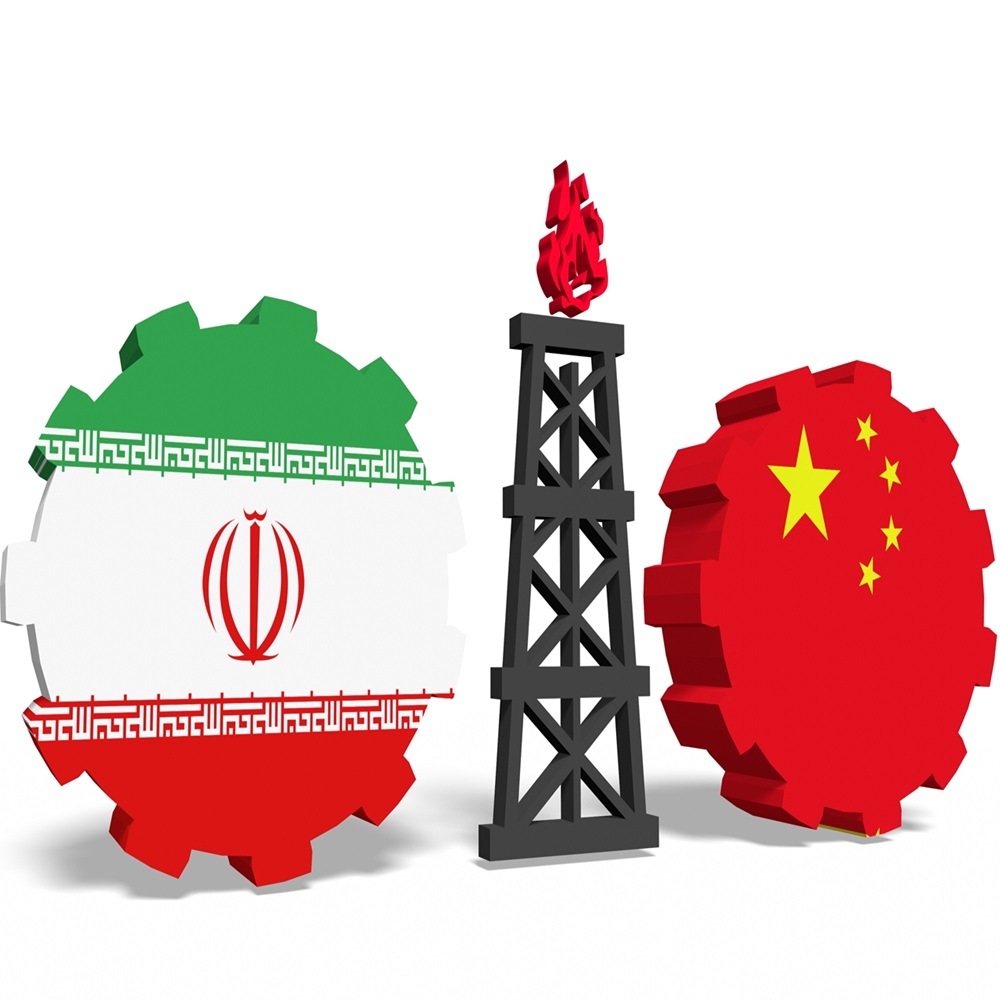
iran and china flags on gears, gas rig model between them, gas transit from iran to china

China in the Middle East: Geoeconomic Challenges in a High-Tension Region, from Tehran to Tel Aviv

by Kambiz Zare

In the Middle East, China seeks to appear neutral by engaging in dialogue with all actors, from Tehran to Tel Aviv, including Riyadh. Beijing's objective is clear: to establish itself as a guarantor of stability to secure its energy and commercial interests. The People's Republic of China's (PRC) commitment to the Middle East reflects a carefully calibrated geostrategic approach, aiming to preserve regional stability, ensure uninterrupted access to energy resources, and promote its famous Belt and Road Initiative (BRI), also known as the 'New Silk Roads.' In this region, the Sino-Iranian relationship is most often highlighted due to its political weight and military dimension; however, whether in economic, diplomatic, or strategic terms, Beijing's presence in this area certainly extends beyond its ties with Tehran. As elsewhere in the world, in the Middle East, China divides its diplomatic partnerships into several types, listed here in descending order of intensity: "global strategic partnerships" (in the Middle East: Egypt, Iran, Saudi Arabia, United Arab Emirates, and Bahrain); "strategic partnerships" (Iraq, Jordan, Kuwait, Oman, Qatar, Syria, Turkey, and the Palestinian Authority); "friendly cooperation partnerships" (Lebanon and Yemen); and finally, "innovative global partnerships" (Israel). China is redefining its priorities in the Middle East  Energy dependence is one of the essential drivers of China's policy in the region. Gulf countries, particularly Saudi Arabia, the United Arab Emirates, and Kuwait, are among the main suppliers of crude oil to the PRC—well ahead of Iran in terms of volume, as well as reliability and investment opportunities. This economic reality compels China to invest much more heavily in the Gulf Cooperation Council (GCC) countries, where financial stability, political predictability, and institutional openness promote sustainable strategic partnerships and infrastructure development, unlike in Iran. For these reasons, the Gulf countries have indirectly become essential nodes in the architecture of the BRI through trade, receiving nearly six times more Chinese investments than Iran. Although Iran has geographical interest as a potential corridor between China and Europe, the persistent effect of international sanctions, poor economic management, and regional adventurism severely limit its ability to attract sustainable Chinese investments. In contrast, Israel offers a functioning and favorable environment for investors, making it a preferred destination for Chinese capital and infrastructure projects. Its economy is based on solid infrastructure and a dynamic technology sector. Despite geopolitical shocks, including the recent clashes with Iran – which will undoubtedly impact the country's business environment – Israel, as a member of the OECD, remains attractive in terms of business environment and investment, mainly because the foundations of its economic environment are stronger than those of Iran or Saudi Arabia. The Hebrew state occupies an increasing place within the BRI – not due to the volume of Chinese direct investments, but because of its strategic position and ambitious infrastructure agenda. Its geographical location – straddling Europe, Asia, and Africa via the Mediterranean – makes it a key land and maritime connectivity point that provides an alternative option to Iran for linking China to Europe. In this context, China and Israel have made progress in their negotiations for a free trade agreement that has been discussed since 2016. Although discussions have been suspended since 2023, there remains hope that an agreement could be signed once stability returns to the region. China's trade with Israel and Iran: divergent trajectories China's commercial relations with Israel and Iran reveal two distinct economic approaches.  With Israel, trade is increasingly marked by imports of high technologies - particularly in the semiconductor field - reflecting a growing technological interdependence.  In contrast, trade with Iran remains focused on industrial goods and natural resources, illustrating a more traditional partnership based on access to raw materials. These contrasting dynamics reflect China's strategic flexibility, which relies on Israeli innovation while securing its supplies from Iran.  Tensions in the Strait of Hormuz are testing China's strategy in Iran  For nearly fifty years, Iran has turned to China for economic support. However, despite 21 Chinese greenfield investment projects between 2003 and 2020 – mainly in the energy sector – Beijing has gradually begun to disengage due to international sanctions and ongoing regional instability. Large companies such as CNPC and Sinopec have reduced their stake, or even abandoned some projects, while tech companies like Huawei and Lenovo have also scaled back their presence in the Iranian market. Between 2017 and 2019, Iran reportedly saw an outflow of Chinese capital estimated at $990 million. China views instability in the Middle East, particularly the confrontation between Israel and Iran, as a direct threat to its economic and commercial interests. As the world's largest buyer of Iranian oil, China is especially concerned about potential disruptions in strategic maritime routes, particularly the Strait of Hormuz. In June 2025, Chinese oil imports from Iran significantly increased, reaching up to 1.8 million barrels per day – a surge that occurred just before the military escalation between Israel and Iran, which raised concerns about the security of the Strait of Hormuz. A sign of the weight of the PRC in this region: after the reciprocal airstrikes between Israel and Iran, and Tehran's threat to close this crucial passage, U.S. Secretary of State Marco Rubio urged Beijing to intervene, emphasizing China's heavy dependence on this oil route. China–United States: strategic tensions in a transitioning Middle East China and the United States recently signed a trade agreement and established a 90-day tariff truce, aiming to resolve some key disputes and stabilize economic relations. Furthermore, on the military front, Iran and China signed a military cooperation agreement as early as 2016, reflecting their mutual desire to counter American influence in the region and secure trade routes. Historically, China has supported Iran through arms sales, technology transfers, and training programs. Moreover, despite the official rhetoric, some reports suggest that Chinese technologies have contributed to the development of Iran's ballistic program. The Sino-Iranian relationship in defense illustrates a two-level diplomacy: China discreetly supports Iran's military autonomy while ensuring it does not compromise its strategic relationships with other important regional partners, including Israel, with whom it also maintains top-level security dialogues. This highlights Beijing's broader ambition: to avoid regional polarizations and maintain a balance of power favorable to its interests. China's strategy in the Middle East towards the United States is based on a principle of equidistance: to increase its influence without direct confrontation, while drawing strategic benefits from Saudi Arabia, Israel, Iran, and Egypt. In this perspective, the People's Republic of China does not seek to replace the United States as the dominant power in the region, but rather to offer a multipolar presence focused on preserving stability. Maintaining the status quo, avoiding direct conflicts, and building a parallel system of influence through infrastructure, trade, and diplomacy are the pillars of China's position in the Middle East. This approach ensures Beijing secure access to energy, trade corridors, and sustainable geopolitical influence from Tel Aviv to Tehran.

Defense & Security
Chess made from USA, EU and China flags on a white background. Chess made from China, Europe Union and United States of America flags. Trade, tariffs, duty and customs war

Europe’s transatlantic China challenge

by Gesine Weber

Abstract European states currently lack a clear joint strategy on China and a coordinated approach to US–China competition. This article offers a novel perspective on the challenges for European approaches to this issue due to an omnipresent transatlantic component and the risk of an alliance dilemma. Illustratively focusing on France, Germany and the UK, it demonstrates that Europeans are facing a transatlantic alliance dilemma with the risks of abandonment and entrapment. It argues that Europe needs to strike a balance between its dependence on Washington, especially with regard to European security, while fearing entrapment by the US approach towards Beijing as it aims to maintain economic ties with China. The article concludes that the ramifications of this dilemma can be mitigated through a distinctly European approach to China, strengthening European coordination on China and bolstering European strategic autonomy. As a conceptual piece rather than a full empirical analysis, this article therefore unpacks the strategic challenge and lays the groundwork for further empirical works on the topic. Introduction Strategic competition between the US and China plays out in many realms of international affairs, ranging from global trade to security in the Indo-Pacific. European states are directly affected by this dynamic as they maintain critical ties with both sides. Albeit allies of the US through NATO, Europeans have been reluctant to align with the US on its approach to the Indo-Pacific and China, which is currently characterised by the quest to win the strategic competition with Beijing in all areas of international affairs (see Leoni 2023). Furthermore, Europe maintains close economic ties with Beijing, and imports from China to the EU have most recently increased (Lovely and Yan 2024). European governments certainly do not pursue an approach of maintaining equidistance between the US and China: not only do they regularly emphasise their strategic proximity to Washington, but more recent events, such as the willingness of European allies to publicly adopt the wording of the communiqué from NATO’s Washington summit (NATO 2024) describing China as an ‘enabler of Russia’s war effort in Ukraine’, clearly demonstrate that the tone is changing in European capitals (Politi 2023). However, Europeans still tend to emphasise China’s role in global affairs and the importance of including it in multilateral cooperation formats. With the re-election of Donald Trump as US president, European policy on China and its approach to US–China competition will increasingly be a focus of the US administration. While the exact approach of the new US government still remains to be defined, there are good reasons to anticipate a more hawkish China policy from Washington, through which the US might seek not only to further compete with China, but to actually win this competition (see Pottinger and Gallagher 2023). When designing their approaches towards China—which, among the key European states, only Germany has done so far, with the publication of its China strategy in 2023—Europeans always face a transatlantic elephant in the room. US–China competition, a structuring feature of international relations shaping the global order today through the increasing emergence of geopolitical blocs (see Leoni and Tzinieris 2024), and China’s rising global influence in almost all areas of international affairs—ranging from climate to economics, the rules-based order and security—are forcing European states to reflect on their approach vis-à-vis Beijing (for a full discussion, see Oertel 2023; García-Herrero and Vasselier 2024). As NATO members, European states also need to adapt their strategy in light of the partnership with the US as their key ally. This article argues that European approaches towards China, as shown in the examples of France, Germany and the UK, have a distinctly transatlantic component. It illustrates how these three European states find themselves in an alliance dilemma with the US, and how the risks associated with alliances also define European approaches to China and US–China competition more broadly. As the US administration regularly refers to China as a ‘challenge’ (US Department of Defense 2022), this article alludes to this formulation through the coining of the term ‘transatlantic China challenge’ to describe the strategic challenges Europeans are facing with regard to defining their approach vis-à-vis China and US–China competition more broadly. It offers a conceptual understanding of the strategic challenges for Europe in this context and thereby constitutes a basis for a more thorough empirical analysis. The alliance dilemma and European strategy in US–China competition Originating in realist international relations theory, the alliance dilemma generally describes a situation in which states face risks resulting from joining an alliance. As demonstrated by Snyder (1984), smaller allies especially face a parallel risk of abandonment and entrapment by a hegemon, that is, the dominating power, after joining an alliance. Abandonment, in these circumstances, implies that the hegemon has no further interest in defending or supporting the smaller allies, whereas entrapment refers to a situation in which a state is ‘dragged into a conflict over an ally’s interests that [it] does not share, or shares only partially’ (see Snyder 1984, 466–8). In the context of alliances, a small state is ‘the weaker part in an asymmetric relationship, which is unable to change the nature or functioning of the relationship on its own’ (Wivel et al. 2014, 9), and hence has more limited space for action than the great powers (Wivel and Thorhallsson 2018, 267). This definition arguably applies to Europe in its partnership with the US, as demonstrated by the excessive military and economic dominance of the US as compared to the European states (see Stockholm International Peace Research Institute n.d.; International Monetary Fund 2025). The re-election of Trump as US president now presents the risk of an increased alliance dilemma for Europeans. On the one hand, Trump has announced several times that he does not value the alliance commitments within NATO and potentially would not defend European allies (Sullivan 2024), threatening Europe with abandonment. This scenario is being taken seriously in European capitals, and reflections on how ‘defending Europe with less America’ (Grand 2024) could shape up have gained traction, especially in 2024. Similarly, defence initiatives within the EU to enhance the European contribution to the continent’s security have leapt forward in recent years (see Scazzieri 2025). On the other hand, even the Biden administration had pushed Europe to align with the US approach on China (see Lynch et al. 2023). However, France and Germany in particular, as the big EU member states, have been hesitant to do so, as reflected in France’s opposition to the opening of a NATO liaison office in Tokyo (McCurry 2023) and Germany’s vote against tariffs on Chinese electric vehicles, fearing reprisals from Beijing (Demarais 2024). Trump’s foreign policy might be strongly characterised by issue linkage, which means that policies in one area will be linked to those in another area. Through this strategy, the new US administration might force Europeans into alignment and thereby entrap them, making them accept policies they are not eager to support (see Barkin and Kratz 2025). The exact policies of the Trump administration vis-à-vis European allies remain to be seen, but it is not hard to imagine a scenario in which abandonment and entrapment could emerge or increase, namely when the threat of abandonment is used to entrap allies and force them to support certain policy decisions. The alliance dilemma could play out for Europeans specifically when designing their approaches towards China (see Barkin and Kratz 2025) and formulating their response to US–China competition more generally. As noted above, among the big European states, only Germany has formally adopted a strategy on China, in 2023 (The Federal Government of Germany 2023). However, China and the response to US–China competition takes a prominent place in France’s Indo-Pacific Strategy and its strategy review (Government of France 2021; Secrétariat général de la défense et de la sécurité nationale 2022), and the UK systematically included the dimension of strategic competition in its Integrated Review and its refresh (Government of the United Kingdom 2021, 2023) and has announced an ‘audit’ of its China policy under the new government (Taylor 2024). While these strategies emphasise their individual approaches towards China and the risks stemming from US–China competition, the US has increasingly pressured Europe to align with its approach (Lynch et al. 2023) and can be expected to continue this pressure (Barkin and Kratz 2025). Through the potential issue linkage of security (openly questioned by President Trump) and China policy, Europe therefore finds itself in a new form of alliance security dilemma. European approaches to US–China competition: strategic hedging How can Europe respond to the alliance dilemma of the risks of abandonment and entrapment when it comes to its approaches to China? Reviewing the theoretical literature on the alliance dilemma, one can imagine different strategies. According to Snyder, members of alliances can choose between strategies that strengthen or weaken their commitment to the alliance. To demonstrate commitment, actions could include reassurances for the ally or demonstrations of loyalty, whereas actions to weaken the commitment to the alliance could consist of restraining the ally (mostly to reduce the risk of entrapment in a conflict), increasing bargaining power over the ally or preserving options for realignment outside the existing alliance (for a full discussion, see Snyder 1984, 466–9). Alternative strategies include hiding from cooperation, that is, ‘seeking to maximize autonomy by opting out of specific aspects of the cooperation or by setting up “bastions” in the cooperation’, or bandwagoning, through which states pursue strategies of adaptation ‘to the more powerful actors in the cooperation’ (Pedersen 2023, 442). At the moment, it seems that France, Germany and the UK ‘drive on sight’ rather than approaching the question holistically. The following analysis aims to unpack how the three European states see US–China competition, the risk of the alliance dilemma and how these reflections have played out so far in their strategies. The strategies of France, Germany and the UK on China demonstrate that their approaches are influenced by a distinctly transatlantic component and reflect the transatlantic alliance dilemma. This is visible in their (1) high awareness of the risks stemming from great power competition, (2) approaches to managing the risk of short-term abandonment, and (3) hedging to mitigate the medium- and long-term risks of abandonment and entrapment. The empirical evidence for this analysis was gathered through a qualitative analysis of European strategic documents, statements and policy decisions taken mostly during the period of the Biden administration. However, in light of the risk of a scaling-up of the alliance dilemma under the Trump administration, sources and evidence accessible by the end of January 2025 were included to illustrate the European approaches. In addition to publicly available documents and the sources mentioned above, this paper draws on conversations with policymakers and experts under the Chatham House rule. Mitigating risks from US–China competition: multilateralism instead of alignment That France, Germany and the UK are close allies with the US is clearly visible in their respective strategies on China, not least because of references they make to the importance of the alliance and their descriptions of their own positions between the two great powers. Overall, France, Germany and the UK share the perception of US–China competition and the emergence of blocs as potentially harmful to their interests. As a consequence, all three call for an inclusive multilateral order instead of falling into a logic of blocs, as the increasing competition is seen as a risk for Europe (Secrétariat général de la défense et de la sécurité nationale 2022, 9–15; The Federal Government of Germany 2020, 24–6; Government of the United Kingdom 2023, 22–6). The response of all three European powers to the emergence of blocs is multilateralism: instead of clearly aligning with the US, the French, German and British strategies call for building broader multilateral coalitions, which should, eventually, also include China (The Federal Government of Germany 2020, 23–6; Government of the United Kingdom 2023). The tone in Paris, Berlin and London towards Beijing has clearly changed over recent years; accordingly, the European capitals were also willing to support strong wording on China in the 2024 NATO summit declaration, which describes China as a ‘critical enabler’ of Russia’s ongoing war against Ukraine (NATO 2024). Albeit also recognised as a critical partner for key issues such as climate policy and trade, European states openly describe China as a ‘systemic rival’ and occasionally call out China’s behaviour, as they did, for example, in the case of a note verbale on the South China Sea (UN 2020). Nevertheless, Europe has not (yet) given in to US pressure to align with Washington’s more confrontational approach towards China (Etienne 2024). Even if European states and Washington have moved closer to each other, especially on economic security (Meyers and Reinsch 2023), the European positions on US–China competition demonstrate that Europeans are not willing to fully endorse or follow Washington’s approach—not least because European imports from China have increased in recent years (Lovely and Yan 2024). Managing the risk of short-term abandonment Since Trump’s election, the risk of abandonment by the US has been seen as increasingly high in Paris, Berlin and London.1 This is not least because Trump has openly questioned his willingness to adhere to Article 5 of the North Atlantic Treaty in the case of an armed attack on Europeans (Sullivan 2024). Europeans are especially concerned about issue linkage in this context, meaning that demands in a policy area other than security could be used as a condition. Concretely, Trump could use the threat of abandonment as leverage to compel Europe to align with the US on China policy.2 Barkin and Kratz (2025) suggest that Europe adopt a ‘carrot and stick’ approach, whereby Europe could start with an offer to the US: buying more liquified natural gas, defence goods and agricultural products from the US could mitigate the risk of abandonment. However, there is awareness among European states that coercion from the US to align on US–China policy, especially when linked to the threat of abandonment, might best be mitigated through enhancing European military capabilities—which would still leave the continent exposed to these threats, though to a lesser extent.3 Addressing the risk of medium- and long-term abandonment and entrapment: transatlantic hedging However, the risk of at least partial abandonment is not a new challenge for European strategy, and had already infused earlier strategic thinking. The shift of US strategic priorities away from Europe and to the Indo-Pacific has already been demonstrated in the allocation of resources to the different theatres. Moreover, European states have increasingly become aware that US forces will be withdrawn from their territories in the future and have concluded that they will have to step up their own commitment to European security (see Grand 2024). In parallel, there is an awareness in European capitals that showing more interest in the Indo-Pacific and giving more importance to policy on China is also a way for Europeans to demonstrate an understanding of their ally’s strategic priorities.4 Accordingly, the approaches of France, Germany and the UK to China and the Indo-Pacific also have to be understood as a commitment to the priorities of the US in order to keep this ally engaged in the European theatre and mitigate the risk of abandonment; however, European states abstain from fully aligning with the US approach, as their capabilities and strategic goals are perceived as diverging from those of the US. In this way, Europe aims to avoid entrapment over the medium term through slightly distancing itself from US policy. While all three European states also call for de-risking from China and diversification of their supply chains, maintaining strong economic ties with Beijing is a key component of their respective approaches—which contrasts with the US calls for decoupling. Furthermore, these states have never formally endorsed the US policy on China (Etienne 2024). Nevertheless, enhancing European capabilities would not only send a signal to Washington, but also qualify as hedging, understood as an ‘insurance policy’ to avoid a deterioration in US–Europe relations if the US opted for abandonment, or even as part of a move towards emancipation to reduce strategic dependencies on Washington (see Fiott 2018, 4–6). Conclusion: a transatlantic China challenge Designing their approaches to China and to US–China competition more broadly constitutes a complex strategic dilemma for European states. Paris, Berlin and London do not fully align with Washington’s approach, and it remains to be seen whether they will be willing to do so under the second Trump administration. To manage the risk of abandonment and entrapment, European states pursue different individual approaches to strategic hedging: their strategies on China and US–China competition are designed in a way that allows them to mitigate the risk of abandonment which might stem from significant transatlantic divergence, and to avoid automatic entrapment through their slight distancing from the US approach. From a theoretical perspective, this article has demonstrated that the alliance dilemma, along with the parallel fear of abandonment and entrapment by the US, is a major factor accounting for Europe’s limited strategies on China and its hedging behaviour. This article offers a conceptual analysis of the structural forces explaining European strategies, but other strategic cultures and relationships with the US could offer important complementary insights. To further analyse how individual European states design their strategies vis-à-vis China in light of the alliance dilemma and potential domestic constraints and specificities, neoclassical realism could offer an interesting analytical concept. This approach posits that structural forces set the parameters for foreign policy and treats domestic factors, including strategic culture, as intervening variables (see Rose 1998). Accordingly, it appears well suited for foreign policy analysis, and has indeed gained popularity in the field in recent years (see, for example, Martill and Sus 2024; Meibauer et al. 2021; Weber 2024). Empirically, this article constitutes a conceptual starting point rather than an exhaustive analysis of the strategy-making processes of European states with regard to China and US–China competition and makes a more comprehensive assessment desirable. The findings of this article have broader implications for policymaking. First, they demonstrate the necessity for Europe to determine its place in the increasing US–China competition. European coordination on the respective approaches vis-à-vis the US—especially in light of potential coercion to align—and China is of paramount importance to ensure that foreign policy strategies are mutually reinforcing and not undermining European objectives. Second, the article demonstrates that Europe currently responds to the ‘transatlantic China challenge’ through transatlantic hedging: while this strategy seems to be promising in the short term, it is questionable to what extent the strategy is sustainable and could help European states to navigate the parallel challenges of abandonment and entrapment. Unless Europe decides to fully align with the US—and it is questionable whether this decision would be in its interest—European states would be well advised to develop a sustainable long-term approach to China. A transatlantic dialogue on China, in which Europe and the US openly discuss synergies and divergences, could help prevent misunderstandings and decrease the risk of coercion or issue linkage due to a misreading of European approaches in Washington. Third, as the risks of (at least partial) abandonment and entrapment are systemic challenges due to the current composition of the transatlantic alliance, a logical step for European states to decrease their dependence on the US as the hegemon in the alliance would be to significantly strengthen European capabilities. Stronger military capabilities could help mitigate the ramifications of abandonment, and the aforementioned distinctly European strategy could allow Europe to avoid strategic entrapment in relation to China imposed by Washington. As Europe remains the junior partner in the transatlantic alliance, the parallel risks of abandonment and entrapment, as well as issue linkage, are highly likely to influence its approaches towards China in the long term, but there are certainly ways to render this ‘transatlantic China challenge’ less challenging. ORCID iDGesine Weber https://orcid.org/0009-0008-2643-0400Footnotes1. Conversation with French, German and British experts in Berlin, January 2025.2. Conversation with French, German and British experts in Berlin, January 2025.3. Conversation with French, German and British experts in Berlin, January 2025; conversation with European experts and officials in Paris, January 2025.4. Conversation with officials from Germany and France in Paris, November 2024; conversation with French, German and British experts in Berlin, January 2025.ReferencesBarkin N., Kratz A. (2025). Trump and the Europe–US–China Triangle. Rhodium Group, 16 January. https://rhg.com/research/trump-and-the-europe-us-china-triangle/. Accessed 18 January 2025.Demarais A. (2024). Divided we stand: The EU votes on Chinese electric vehicle tariffs. European Council on Foreign Relations, 9 October. https://ecfr.eu/article/divided-we-stand-the-eu-votes-on-chinese-electric-vehicle-tariffs/. Accessed 25 January 2025.Etienne P. (2024). The European Union between the United States and China: Should we choose between equidistance and following? Fondation Robert Schuman, 8 October. https://www.robert-schuman.eu/en/european-issues/763-the-european-union-between-the-united-states-and-china-should-we-choose-between-equidistance-and-following. Accessed 22 December 2024.Fiott D. (2018). Strategic autonomy and the defence of Europe. European Union Institute for Security Studies, Brief 12/2018. https://www.iss.europa.eu/sites/default/files/EUISSFiles/Brief%2012__Strategic%20Autonomy.pdf. Accessed 25 January 2025.García-Herrero A., Vasselier A. (2024). Updating EU strategy on China: Co-existence while de-risking through partnerships. Mercator Institute for China Studies. https://merics.org/en/external-publication/updating-eu-strategy-china-co-existence-while-de-risking-through-partnerships. Accessed 30 January 2025.Government of France. (2021). France’s Indo-Pacific strategy. https://www.diplomatie.gouv.fr/IMG/pdf/en_dcp_a4_indopacifique_022022_v1-4_web_cle878143.pdf. Accessed 31 January 2025.Government of the United Kingdom. (2021). Global Britain in a competitive age: The integrated review of security, defence, development and foreign policy. London: The Stationery Office. https://www.gov.uk/government/publications/global-britain-in-a-competitive-age-the-integrated-review-of-security-defence-development-and-foreign-policy. Accessed 18 January 2025.Government of the United Kingdom. (2023). Integrated review refresh 2023: Responding to a more contested and volatile world. London: The Stationery Office. https://www.gov.uk/government/publications/integrated-review-refresh-2023-responding-to-a-more-contested-and-volatile-world. Accessed 18 January 2025.Grand C. (2024). Defending Europe with less America. European Council on Foreign Relations, 3 July. https://ecfr.eu/publication/defending-europe-with-less-america/. Accessed 18 January 2025.International Monetary Fund. (2025). World economic outlook: GDP data mapper [Map]. https://www.imf.org/external/datamapper/NGDPD@WEO/OEMDC/ADVEC/WEOWORLD. Accessed 23 January 2025.Leoni Z. (2023). Grand strategy and the rise of China: Made in America. Agenda Publishing.Leoni Z., Tzinieris S. (2024). The return of geopolitical blocs. Survival, 66(2), 37–54.Lovely M. E., Yan J. (2024). As the US has relied less on imports from China, the EU has imported more. Pederson Institute for International Economics, 24 August. https://www.piie.com/research/piie-charts/2024/us-has-relied-less-imports-china-eu-has-imported-more. Accessed 22 December 2024.Lynch S., Toosi N., Moens B., Banco E. (2023). The U.S. wants Europe to stand up to China. Europe says: Not so fast. Politico, 3 August. https://www.politico.com/news/2023/03/08/us-europe-china-00086204. Accessed 18 January 2025.Martill B., Sus M. (2024). Winds of change? Neoclassical realism, foreign policy change, and European responses to the Russia-Ukraine War. British Journal of Politics & International Relations.McCurry J. (2023). France opposed to opening of Nato liaison office in Japan, official says. The Guardian, 7 June. https://www.theguardian.com/world/2023/jun/07/france-opposed-to-opening-of-nato-liaison-office-in-japan-official-says. Accessed 25 January 2025.Meibauer G., Desmaele L., Onea T., Kitchen N., Foulon M., Reichwein A., Sterling-Folker J. (2021). Forum: Rethinking neoclassical realism at theory’s end. International Studies Review, 23(1), 268–95.Meyers E., Reinsch W. A. (2023). The push for U.S.–EU convergence on economic security policy. Center for Strategic and International Studies, 7 July. https://www.csis.org/analysis/push-us-eu-convergence-economic-security-policy. Accessed 26 January 2025.NATO. (2024). Washington Summit declaration. https://www.nato.int/cps/cn/natohq/official_texts_227678.htm. Accessed 18 January 2025.Oertel J. (2023). Ende der China-Illusion: Wie wir mit Pekings Machtanspruch umgehen müssen. Munich: Piper Verlag.Pedersen R. B. (2023). Small states shelter diplomacy: Balancing costs of entrapment and abandonment in the alliance dilemma. Cooperation and Conflict, 58(4), 441–59.Politi A. (2023). The paradigm shift in EU–China relations and the limits of the EU’s current strategy towards China: A relational perspective. Asian Affairs 54(4), 670–93.Pottinger M., Gallagher M. (2024). No substitute for victory: America’s competition with China must be strategic and ideological. Foreign Affairs, 10 April. https://www.foreignaffairs.com/united-states/no-substitute-victory-pottinger-gallagher. Accessed 18 January 2025.Rose G. (1998). Neoclassical realism and theories of foreign policy. World Politics, 51(1), 144–72.Scazzieri L. (2025). Towards an EU ‘defence union’? Centre for European Reform, 30 January. https://www.cer.eu/publications/archive/policy-brief/2025/towards-eu-defence-union. Accessed 30 January 2025.Secrétariat général de la défense et de la sécurité nationale. (2022). Revue nationale stratégique 2022. https://www.sgdsn.gouv.fr/publications/revue-nationale-strategique-2022. Accessed 18 January 2025.Snyder G. H. (1984). The security dilemma in alliance politics. World Politics, 36(4), 461–95.Stockholm International Peace Research Institute. (n.d.). SIPRI Military Expenditure Database.Sullivan K. (2024). Trump says he would encourage Russia to ‘do whatever the hell they want’ to any NATO country that doesn’t pay enough. CNN, 11 February. https://edition.cnn.com/2024/02/10/politics/trump-russia-nato/index.html. Accessed 29 January 2025.Taylor R. (2024). UK government policy towards China. https://lordslibrary.parliament.uk/uk-government-policy-towards-china/. Accessed 18 January 2025.The Federal Government of Germany. (2020). Policy guidelines for the Indo-Pacific. www.auswaertiges-amt.de/blob/2380514/f9784f7e3b3fa1bd7c5446d274a4169e/200901-indo-pazifik-leitlinien–1–data.pdf. Accessed 21 December 2024.The Federal Government of Germany. (2023). China-Strategie der Bundesregierung. Berlin: Auswärtiges Amt. https://www.auswaertiges-amt.de/blueprint/servlet/resource/blob/2608578/810fdade376b1467f20bdb697b2acd58/china-strategie-data.pdf. Accessed 18 January 2025.UN (2020). Note verbale, UK NV No. 162/20, 16 September. https://www.un.org/Depts/los/clcs_new/submissions_files/mys_12_12_2019/2020_09_16_GBR_NV_UN_001.pdf. Accessed 25 January 2025.US Department of Defense. (2022). National Defense Strategy of the United States of America. https://media.defense.gov/2022/Oct/27/2003103845/-1/-1/1/2022-NATIONAL-DEFENSE-STRATEGY-NPR-MDR.pdf. Accessed 25 January 2025.Weber G. (2024). Zeitenwende à la française: Continuity and change in French foreign policy after Russia’s invasion of Ukraine. British Journal of Politics & International Relations.Wivel A., Bailes A. J. K., Archer C. (2014). Setting the scene: Small states and international security. In Archer C., Bailes A. J. K., Wivel A. (eds.), Small states and international security: Europe and beyond (pp. 3–25). London: Routledge.Wivel A., Thorhallsson B. (2018). Brexit and small states in Europe: Hedging, hiding or seeking shelter? In Rosamond B., Nedergaard P., Diamond P. (eds.), The Routledge handbook of the politics of Brexit, 1st edn. (pp. 266–77). Abingdon-on-Thames: Routledge.

Energy & Economics
tsmc is a Taiwanese collective circuit manufacturing company with advanced manufacturing processes

US Semiconductor Reindustrialization: Implications for the World

by Anastasia Tolstukhina

In recent years, US leadership has embraced techno-nationalism amid geopolitical and technological rivalry with China, aiming to minimise reliance on imported chips from Asia. These components are crucial for producing consumer goods, military hardware, and AI systems. The United States set the ambitious goal of developing a self-sufficient semiconductor supply chain during Donald Trump’s first term, and continued under Joe Biden. There is consensus in the United States on the critical role of unfettered access to chips when it comes to ensuring economic and national security. It is unlikely that this technological policy dynamic will undergo significant shifts in the foreseeable future. Despite a shared objective among both Republicans and Democrats to revive the US semiconductor industry, their approaches diverge significantly. Donald Trump has his own vision for advancing this sector, one that contrasts sharply with Joe Biden’s strategy. For instance, Trump has criticised aspects of Biden-era initiatives, including the 2022 CHIPS and Science Act, which he has called counterproductive. Trump, on the other hand, favours a more aggressive tariff policy and a reduction in federal spending, arguing that major tech companies can do well without additional government support. The future balance of power—both technological and geopolitical—among the key global actors will be shaped by the development trajectory of the US semiconductor industry. Biden’s semiconductor legacy The United States holds a dominant position in chip design, but maintains a relatively modest share in global semiconductor manufacturing—just 10 percent according to SIA data in 2022, and slightly up to 11 percent according to 2025 data provided by TrendForce research firm. Major US tech giants like Nvidia or Qualcomm remain heavily reliant on chips produced in Taiwan. This dependency has increasingly been seen as unacceptable by US leadership, especially in the context of the ongoing tech war with China. Washington now views such reliance as a significant national security risk. During Donald Trump’s first presidential term, the decision was made to attract leading chip manufacturers—most notably Taiwan Semiconductor Manufacturing Company (TSMC), the world’s largest contract chipmaker—to set up operations in the United States. This initiative proved successful: in 2020, TSMC agreed to invest $12 billion to build a chip fabrication plant in Arizona (Fab 21).   The Biden administration continued Trump’s push to revitalise the semiconductor industry. In August 2022, the CHIPS and Science Act was passed, allocating about $53 billion in government subsidies for the semiconductor sector, along with tax incentives to encourage both foreign and domestic firms to establish chip manufacturing operations on US soil. Additionally, the CHIPS for America programme was introduced to address several key goals, namely, to secure a stable supply chain for both cutting-edge and legacy semiconductors, to reinforce US leadership in R&D, and to boost employment, as investment in the chip industry was expected to generate hundreds of thousands of new jobs in microelectronics-related fields. Biden’s programme has borne fruit. Major chipmakers have launched large-scale construction of fabs across the United States. In 2022, Intel started building a $28 billion facility in Ohio; Samsung initiated two plants in Texas worth about $40 billion; and TSMC decided to expand its Arizona site to three modules, increasing its total investment from $12 billion to $65 billion. According to TSMC CEO C.C. Wei, the Arizona facility began mass production in the fourth quarter of 2024 using its N4 (4nm class) process technology, with performance comparable to its fabs in Taiwan. This marks the most advanced semiconductor production facility currently operating in the United States. Plans are in place to launch a second module for 3nm chip production by 2028, followed by a third module by 2030, which will manufacture 2nm and 1.6nm chips and their variants. The Biden team aimed for the United States to capture 20 percent of global advanced chip manufacturing by 2030. Democrats have adopted a comprehensive approach to rebuilding the semiconductor industry not just focusing on building advanced fabs, but also investing in support areas such as chip testing and packaging, materials production, and R&D. A substantial $13 billion in federal funds has been earmarked for these purposes. For instance, grants and loans were used to support GlobalFoundries’ plans to build an advanced packaging and photonics centre in New York State. Arizona State University also received significant support from the US Department of Commerce, including a $100 million allocation for research and development in next-generation chip packaging technologies. Wide geographic distribution is a striking feature of the emerging US semiconductor supply chain (Figure 1). Key activities are being established across numerous states: Oregon (semiconductor manufacturing), Idaho (semiconductor and material manufacturing), Utah (semiconductor manufacturing), Montana (equipment manufacturing), Colorado (semiconductor and material manufacturing), New Mexico (packaging), Kansas (semiconductor manufacturing and packaging), Louisiana (equipment manufacturing), Missouri (materials), Minnesota (semiconductor manufacturing),Michigan (materials),Indiana (packaging and semiconductor manufacturing), Ohio (materials and semiconductor manufacturing), Vermont (semiconductor R&D and manufacturing), Pennsylvania (materials), North Carolina (semiconductor manufacturing), Georgia (materials and semiconductor manufacturing), and Florida (materials and semiconductor manufacturing). Among these, several states stand out for their significance and comprehensive involvement: California (semiconductor manufacturing and R&D), Arizona (semiconductor, equipment, and material manufacturing, packaging, R&D), Texas (semiconductor and material manufacturing, packaging, R&D), and New York (materials, semiconductor manufacturing, and R&D).   According to a 2024 study by the Boston Consulting Group commissioned by the Semiconductor Industry Association (SIA), over 90 projects have been launched in 28 states since the CHIPS Act was passed, totalling nearly $450 billion in private investment. However, the Biden administration did not pursue full semiconductor self-sufficiency as a goal. There was recognition that recreating the entire supply chain domestically would, even at the initial stage, require a vast amount of time and financial resourcesНадпись: MichiganНадпись: IndianaНадпись: Pennsylvania estimated at around $1 trillion. Therefore, US policymakers have advocated for a collective semiconductor supply chain among allies and partners by building international alliances. In 2022, the Unite States proposed creating the CHIP 4 alliance (United States, South Korea, Japan, and Taiwan), which, with coordinated efforts, could have become a dominant force in the semiconductor industry capable of influencing nearly every segment of the global value chain, with the exception of assembly and testing, where mainland China currently plays a leading role. In this way, Trump’s initiative to revive the semiconductor industry has not only continued under Biden, but evolved into a more ambitious and costly programme. The SIA, in its above report, painted an optimistic picture for the future of the US semiconductor sector. It projects that chip manufacturing capacity in the United States will triple over the next decade (2022–2032), growing by 203 percent. This expansion is expected to require $646 billion in investment, or 28 percent of global capital spending in the semiconductor industry. As a result, the United States could increase its share of global chip production from the current 10 percent to 14 percent by 2032. Additionally, experts estimate that the new projects will create over 58,000 new jobs in the semiconductor sector and hundreds of thousands more in related industries.   Despite its ambitious nature, the initial phase of Biden’s semiconductor programme has revealed several challenges. The industry has run into numerous internal obstacles slowing the construction of manufacturing facilities, including a shortage of skilled labour, high labour and construction material costs, bureaucratic hurdles (e.g., obtaining environmental permits), slow disbursement of promised subsidies by the US authorities, union-related delays, cultural differences, and more. These issues have caused delays in launching chip fabrication plants, thereby slowing the pace at which the US can achieve relative technological autonomy in the rapidly evolving semiconductor field. For example, TSMC postponed the start of mass production at the first module of Fab 21 from 2024 to 2025, and delayed the second module from 2026 to 2027–2028. Intel’s costly attempt to reclaim leadership in advanced chip manufacturing has strained its budget, forcing the company to delay its Ohio fab launch from 2025 to 2030. Samsung, initially planning to start production in Texas in the second half of 2024, pushed the timeline to 2025. These delays in fab construction also impacted the schedules of launching supplier plants, including chemical and material producers like LCY Chemical, Solvay, Chang Chun Group, KPPC Advanced Chemicals (Kanto-PPC), and Topco Scientific. The external component of the Biden administration’s technology policy has also failed to develop as envisioned. After several years of existence, the CHIP 4 has failed to become a multilateral coordination mechanism, and its potential members have not assumed any binding commitments. Only one virtual meeting was held in 2023. The reason lies in internal disagreements within the alliance and concerns about various risks, including geopolitical ones. Under the Biden administration, the United States made a strong start in the semiconductor sector, launching a wide range of fab construction projects and attracting billions of dollars in public and private investment. However, the process of reviving the US semiconductor industry has proven slower than anticipated. Government subsidies have been disbursed sluggishly, with some companies yet to receive their funding, and the construction of many high-tech industrial facilities has been postponed. Moreover, Biden overestimated the willingness of US allies and partners to join formal technological alliances. Trump’s radical approach To encourage both domestic and foreign chip suppliers to set up manufacturing in the United States, Donald Trump, in contrast to Joe Biden, chose coercion (tariffs) over incentives (government subsidies). Criticising his predecessor’s CHIPS Act, Trump argued that companies didn’t need money, but rather motivation in the form of import tariffs ranging from 25 percent to 100 percent. In his view, such measures would compel businesses to invest in US chip manufacturing, especially since these companies have the financial capacity and, therefore, don’t need to rely on government funding. Almost immediately after taking office, Trump threatened chip manufacturers with higher tariffs. At first glance, this move might seem economically illogical. Why, for instance, punish TSMC—a key partner of major US fabless companies like Nvidia, Apple, and Qualcomm—especially when there is no comparable alternative, either in the United States or globally? Even Intel, despite its struggles, depends on wafers from the Taiwanese firm (its import dependency is about 30 percent). Yet despite apparent lack of logic, the “stick” approach proved effective. In early March 2025, TSMC announced plans to invest approximately $100 billion to build three new fabs for high-performance semiconductor wafers, two advanced chip packaging plants, and one R&D centre. This raises the question: did the world’s largest chipmaker really get spooked by Trump’s tariff threats and, therefore, decide to make an unprecedented investment in the US economy? In theory, TSMC—sitting in the centre of the global microelectronics industry—could have passed tariff-related costs on to its American clients, who would have had little choice but to continue purchasing its products due to the lack of viable alternatives. Furthermore, a significant share of TSMC’s semiconductors is not shipped directly to the United States, but instead follows a supply chain tour through Asia, where the bulk of chip packaging, testing, and electronics assembly occurs (this infrastructure is only just beginning to take shape in the United States, and that process is anything but fast). Analysts at Bernstein suggest that political pressure, rather than tariffs themselves, drove TSMC’s decision. That assessment holds some merit, but it appears that a combination of factors was at play. First, TSMC itself is interested in expanding its global presence. Taiwan’s Minister of Economic Affairs Kuo Jyh-Huei commented on TSMC’s $100 billion investment in the US semiconductor sector by saying, “TSMC already has plants in the United States and Japan, and is now building a new one in Germany. This has nothing to do with tariffs. TSMC’s global expansion is a major development.” Similarly, in 2020 during Trump’s first term, company representatives said that the decision to build a plant in Arizona was “based on business needs.” Indeed, the move offers several benefits to TSMC, including increased company capitalisation and minimised risks in the event of conflict with mainland China or natural disasters (earthquakes are not uncommon in Taiwan). Second, the United States remains TSMC’s primary market, and the tariff threat did play its part. In Taiwan, there’s an understanding that when Trump talks about higher tariffs, he isn’t bluffing, because his seriousness was evident during his first term and was experienced first-hand by Canada and Mexico. On April 2, 2025, nearly the entire rest of the world—including Taiwan—faced a new wave of tariffs, with Taiwanese exports to the United States hit by a 32 percent duty (though semiconductors were not yet affected). A 100-percent tariff on semiconductors is unlikely, as it would significantly damage the market value of US tech firms. Still, protective barriers on semiconductors are expected—Trump’s administration has promised to implement them in the coming months. These measures aim to level the production cost of chips between the United States and Taiwan, thereby enhancing the competitiveness of US-made semiconductors. And finally, TSMC, together with the Taiwanese authorities, is not willing to mar relations with the United States for political reasons. This became evident from TSMC’s earlier decision to support US sanctions against mainland China by refusing to supply its most advanced chips manufactured using 7nm and more sophisticated process technologies even though that market had been a significant source of profit. After TSMC announced plans to expand its presence in the United States, the Trump administration decided to take more radical action and to scrap the CHIPS and Science Act, a signature achievement of the Biden administration. However, some Republican members of Congress are calling for the law to be preserved, albeit with certain amendments. Trump’s hands are not completely untied in this regard, so it is unlikely he can ignore Congress’s position. Even if the legislation gets amended, the process will likely be drawn out, as the CHIPS and Science Act received bipartisan support and has many supporters among Republicans. Another strategically important issue for the Trump administration is the competitiveness of domestic manufacturers. According to the Taiwanese leadership, TSMC will continue to expand operations in Taiwan, and the most advanced semiconductor technologies will not leave the country. For “the most powerful AI chips in the world to be made right here in America” efforts will be needed on the part of national champions—and soon. In 2025, the leader in producing the most advanced 2nm chips will be determined. The main contenders in this race are TSMC, Samsung, and Intel. Intel, however, finds itself in a difficult position. The company has been facing serious financial troubles for several years and lags behind competitors in mastering cutting-edge production processes. The year 2024 was one of Intel’s most challenging: it underwent a major restructuring (creating a separate chip manufacturing unit, Intel Foundry), posted record losses of $18 billion, and saw a significant drop in its stock price. As a result, about 15 percent of the workforce, including CEO Pat Gelsinger, was laid off; dividend payments were suspended; and a sweeping cost-cutting plan was launched, including deep cuts in capital expenditures over the coming years and a scaling back of global expansion plans. According to Intel Products CEO Michelle Johnston Holthaus, the company failed to capitalise effectively on the artificial intelligence boom and continues to fall behind its competitors technologically. Although Intel plans to begin 18A (2nm) chip production in 2025, there are no guarantees of competitiveness in power efficiency, performance, yield rate, cost, or timely mass production. In March, media reported that Nvidia and Broadcom began testing certain chip components, but such testing, of course, does not guarantee Intel will secure orders. Apparently, the Trump administration itself has doubts about the US company’s capabilities, as it has proposed that TSMC acquire shares in Intel Foundry. Negotiations with the Asian manufacturer began only in February 2025, meaning they are still at a very early stage.   What short-term challenges does the Trump administration face in revitalising the US semiconductor industry? Technological lag There is a high likelihood that the United States will continue to lag behind Taiwan for several years in the production of advanced semiconductors. TSMC plans to begin producing chips using a 1.4nm process by 2028, while on US soil—if deadlines aren’t pushed back again—the Taiwanese firm will only be producing 3nm chips by that time. Although some hope is being placed on Intel, there is no guarantee that the American champion will be able to compete with TSMC, or that a potential collaboration with TSMC (if it acquires a stake in Intel Foundry) will be successful. Inadequate production capacity Experts estimate that the output capacity of TSMC’s factories under construction in Arizona is less than one-fifth of the company’s 5nm and 3nm capacity in Taiwan. According to analysts at Bernstein Research, with the deployment of additional production in Arizona, the United States could raise its self-sufficiency in advanced chip production to 40-50 percent between 2030 and 2032. In the near term, this would only cover about half of the chip demand from US tech giants. Moreover, TSMC has not specified clear timelines or technologies for its US expansion. Intel could partly close the gap, but that depends on how competitive its chips are and how quickly it can overcome its financial difficulties. Slow rollout of production facilities TrendForce forecasts that the US share of global advanced chip production could grow from 11 percent to 22 percent by 2030. However, the construction of TSMC’s first Arizona plant took nearly five years, and there are no guarantees that future factories will be built fast enough to double US chip output by 2030. Labour shortage Developing a relatively self-sufficient microelectronics ecosystem requires a highly skilled workforce. However, the United States is facing severe staff shortages. By 2030, estimates suggest a shortfall of 67,000 to 90,000 professionals in the semiconductor field. China’s response to US sanctions The United States is not the only country leveraging interdependence in the semiconductor industry as a tool of pressure. China is responding in kind, though currently in a relatively restrained manner. In 2024, the Chinese government decided to completely ban exports of gallium, germanium, antimony, and ultra-hard materials to the United States even though the restrictions apply only to direct shipments. These actions not only drive up raw material prices (e.g., antimony prices more than tripled since early 2024), but also force US authorities to consider domestic mining and search for alternative suppliers abroad. High production costs According to the SIA, building and operating chip fabs in the United States is 30 to 50 percent more expensive than in Asia. Unofficial reports suggest that chips made at Fab 21 in Arizona cost 10 percent to 30 percent more than their Taiwanese counterparts (more precise figures are not publicly available). The high cost is attributed to expensive construction of facilities, high salaries (US engineers earn three times more than their Taiwanese counterparts, incomplete domestic semiconductor supply chains (some materials must still be imported)—TSMC CEO has complained about it—and complex logistics (finished wafers often need to be sent back to Taiwan or elsewhere for packaging).70 Even if tariffs eventually equalise chip pricing, US fabless companies like Apple or Nvidia may still find it more economical to source chips from Asia, where a properly functioning semiconductor ecosystem already exists—unlike in the United States, where such infrastructure is still in its infancy. Trump’s current tariff policy Imposing tariffs could lead to a significant increase in prices for components, equipment, and materials, while also injecting uncertainty into the semiconductor industry. For instance, it remains unclear how semiconductor manufacturers will operate under new tariffs on imported chip-making equipment sourced from the EU, Japan, South Korea, and Taiwan. The cost of such equipment can reach hundreds of millions of dollars—for example, the latest Low-NA EUV lithography machine from Dutch company ASML is priced at $235 million. If Intel, TSMC, and other firms are required to pay import duties of 20 percent or more, chip manufacturing in the United States will become prohibitively expensive, undermining investment plans of the manufacturers that have committed to building advanced fabs on American soil. Naturally, US officials understand that sharp moves in semiconductor policy—such as an aggressive tariff regime—carry significant risk and could spark a true technological crisis. In April 2025, the US Department of Commerce’s Bureau of Industry and Security (BIS) launched an investigation under Section 232 of the Trade Expansion Act of 1962 to determine the impact of semiconductor imports and related equipment on national security. Interested parties submitted comments, many urging extreme caution in this highly sensitive sector, which depends on a complex global supply chain split across multiple phases and countries. Thus, SIA recommended that any tariffs be phased in gradually to allow the US industry to continue functioning efficiently until domestic production capabilities are fully established. The US Chamber of Commerce called for restraint, warning that comprehensive tariffs on the semiconductor supply chain could damage US industry and undermine cooperation with allies and partners in achieving key national security goals. The Chamber also noted that foreign semiconductor companies have made long-term investment commitments to build capacity in the United States, and that political uncertainty and instability could jeopardise the stated goal of re-shoring semiconductor supply chains. *** As TSMC founder Morris Chang once said, America’s effort to ramp up its own chip production may well prove to be “a very expensive exercise in futility.” Microelectronics is one of the most complex industries in the world requiring not only massive financial investment, but also time. For decades, the industry developed within the framework of global division of labour. Now, building a relatively self-sufficient supply chain within a single country could take just as long. Yet, in the medium and long term, America’s push to revive its semiconductor industry may prove justified. The United States holds a strong position in the sector, and US companies control about 50 percent of the global semiconductor market. Furthermore, the United States remains a powerful magnet for talent, and possesses vast financial and political resources. Some experts believe that over time, the United States could weaken Taiwan’s dominance as the global hub of advanced chip manufacturing. The resurgence of the US semiconductor industry will reshape the global technological order in three key ways. First, it will trigger a transformation of the global semiconductor supply chain. Second, it will lead to greater US independence from imports of critical technologies, which means erosion of importance of some players in the industry, weakening their “technological shield”. Finally, it will cement US technological superiority in many critical industries, from AI to military systems, accelerating a global technological divide with profound geopolitical consequences. Indeed, America has the potential to become one of the world’s leading semiconductor production centres, provided that several key conditions are met, such as a favourable geopolitical environment, domestic political stability, and the absence of disruptive black swan events. However, Trump’s risky tariff policy could trigger unpredictable cascading effects, both domestically (e.g., higher prices for electronics and microelectronics products) and internationally (e.g., retaliatory tariffs by US trade partners), posing serious threats for the US semiconductor industry. First published in the Valdai Discussion Club.

Defense & Security
flag country Europe defense army

European Union Strategic Autonomy. Necessary but potentially problematic?

by Krzysztof Śliwiński

Abstract This paper examines the evolving concept of European Union Strategic Autonomy (EU-SA) within the context of contemporary geopolitical challenges, with a particular focus on EU-Russia and EU-China relations. EU-SA reflects the EU's aspiration to act independently in foreign policy, security, defence, and economic affairs, moving from a rule-taker to a rule-maker in global politics. The study outlines the historical development of EU-SA from 2013 to the present, highlighting key milestones such as the Strategic Compass and the impact of the Ukraine War, which accelerated efforts toward defence collaboration, energy independence, and economic resilience. It explores the transatlantic dynamics, noting growing uncertainties in the U.S. commitment to NATO and the resulting push for a more autonomous European defence posture. Additionally, it addresses the complex EU-China relationship, marked by both cooperation and competition, as well as the strained EU-Russia ties amid ongoing conflict. The paper concludes by questioning the economic feasibility and political risks of deeper EU strategic autonomy, especially regarding security centralisation and Germany's leadership role. Key Words: EU, Strategic Autonomy, Security, Geopolitics, U.S, China, Russia Introduction At the 2025 North Atlantic Treaty Organisation (NATO) Summit in The Hague, member states (Allies) committed to investing 5% of their Gross Domestic Product (GDP) annually in core defence requirements and defence- and security-related spending by 2035. They will allocate at least 3.5% of GDP annually, based on the agreed-upon definition of NATO defence expenditure, by 2035 to resource core defence requirements and meet the NATO Capability Targets. Allies agreed to submit annual plans that show a credible, incremental path to achieving this goal.[1] At the same time, Spain secured a special compromise, committing to meet core requirements with just 2.1% of GDP, making it the only exception to the broader 5% target. Previously, in 2014, NATO Heads of State and Government had agreed to commit 2% of their national GDP to defence spending, to help ensure the Alliance's continued military readiness. This decision was taken in response to Russia's illegal annexation of Crimea, and amid broader instability in the Middle East. The 2014 Defence Investment Pledge was built on an earlier commitment to meeting this 2% of GDP guideline, agreed in 2006 by NATO Defence Ministers. In light of the increase in defence spending, given that 23 out of 32 NATO Allies are EU member states, the idea of European Union strategic autonomy (EU-SA) comes to mind. This paper will explore the issue of EU-SA with a specific reference to EU-Russia and EU-China relations.[2] A Brief History of EU Strategic Autonomy European Union strategic autonomy is an evolving concept that reflects its ambition to act independently in strategically important policy areas, including foreign policy, security, defence, and economic relations. Strong strategic autonomy, according to Barbara Lippert, Nicolai von Ondarza and Volker Perthes, means being able to set, modify and enforce international rules, as opposed to (unwillingly) obeying rules set by others. The opposite of strategic autonomy is being a rule-taker, subject to strategic decisions made by others, such as the United States, China, or Russia.[3] The concept was first prominently discussed in the context of defence in 2013 and has since expanded to encompass a broader range of policy areas. Historically speaking, one can identify numerous phases during which EU-SA evolved. - 2013-2016: During this period, EU-SA focused on security and defence, with initiatives like the Permanent Structured Cooperation (PESCO) and the European Defence Fund, aiming to strengthen the EU's defence capabilities.[4]  - 2017-2019: During this period, the EU-SA shifted its focus to defending European interests in a hostile geopolitical environment, influenced by events such as Brexit, the Trump presidency, and China's growing assertiveness.- 2020: The COVID-19 pandemic highlighted economic vulnerabilities, prompting a focus on mitigating dependence on foreign supply chains, particularly in critical sectors like health and technology.- Since 2021: The scope widened to virtually all EU policy areas, including digital, energy, and values, with terminology evolving to include "open strategic autonomy," "strategic sovereignty," "capacity to act," and "resilience".- 2022: The Ukraine War and Accelerated Implementation. Russia's invasion of Ukraine catalysed concrete actions toward EU-SA, notably in defence, energy independence, and economic resilience. The European Council's Versailles Declaration (March 2022) expressed strong political will to increase EU-SA, calling for collaborative investments in defence, phasing out dependency on Russian energy, and reducing reliance on critical raw materials, semiconductors, health, digital technologies, and food imports.[5] - The Strategic Compass for security and defence policy (endorsed March 2022) outlines a roadmap to 2030, emphasising strengthened EU defence capacities. Among others, it includes: o   Establishment of a strong EU Rapid Deployment Capacity of up to 5000 troops for different types of crises.o   Ready to deploy 200 fully equipped Common Security and Defence Policy (CSDP) mission experts within 30 days, including in complex environments.[6]o   Conducting regular live exercises on land and at sea.o   Enhanced military mobility.o   Reinforcement of the EU's civilian and military CSDP missions and operations by promoting a rapid and more flexible decision-making process, acting more robustly and ensuring greater financial solidarity.o   Making full use of the European Peace Facility to support partners.[7] According to the EU itself, the EU-SA is not a zero-sum game, but rather a sliding scale between complete autonomy and full dependency, with different results for different policy areas. What is more, when compared to the famous Maslow's hierarchy of needs (European Parliament briefing's language), the EU is not only perceived as an economic power, but it is also seen as a normative power. Therefore, the EU is recognised for its core values of democracy, human rights and the rule of law. Ultimately, Maslow's “self-actualisation” could mean the achievement of an EU in which citizens recognise their European identity and which has realised its full autonomous policy potential.[8]   As if this is not enough, the same source introduces the concept of the 360° strategic autonomy wheel, which reportedly illustrates policy areas in which the EU aims for greater strategic autonomy, as well as the connections between them. Mutual influence between policy areas can happen across the wheel, but is particularly strong in adjacent areas. Military action, for example, can cause migration, health is linked to food quality, energy policy influences the climate, and misinformation undermines democracy. The wheel can help to understand links, set priorities and view potential conflicts. More autonomy in the digital green economy will, for example, require vast quantities of “rare earth” materials, making the EU more (instead of less) dependent on imports. Reductions in energy consumption achieved through the digitalisation of the economy (for example, by reducing transport) will be partly offset by the increase in energy consumption by electronic devices and data centres.   Global Context The significance of EU-SA lies in ensuring the EU's political survival and global influence in a multipolar world where its relative power is diminishing. The EU's long-term economic outlook is bleak: its share of global GDP, now at 17% (at current prices), could nearly halve by 2050. According to the World Economic Forum, this economic backsliding not only threatens Europe's ability to fund its social model but also risks weighing on the bloc's global influence, leaving it even more dependent on the U.S. and China.[9] Moreover, the COVID-19 pandemic highlighted the conflictual nature of economic interdependence, as reliance on foreign supply chains for critical goods exposed vulnerabilities. Soft power has become an instrument of hard power, necessitating autonomy in trade, finance, and investment.  The U.S.'s strategic pivot to Asia, the exclusion of Europe in conflicts like Nagorno-Karabakh, Libya, and Syria (termed Astanisation[10], which favours Russia and Turkey), the sidelining of the EU in EU-Russia negotiations regarding the war in Ukraine, and China's state-led economic model have all pushed the EU towards the sidelines. Transatlantic divide Security is a critical dimension, with significant uncertainty surrounding the U.S. commitment to NATO under the Trump administration. Reports indicate Trump has questioned NATO's Article 5 guarantees, with actions like withdrawing military personnel from a Ukraine aid hub in Poland on April 8, 2025, and proposing to stand down 10,000 light infantry troops in Poland, Romania, and the Baltic states by 2025.[11] This has led to fears of a "NATO-minus" scenario, where the EU must fill security gaps without full U.S. backing. In response, the EU is pushing for greater strategic autonomy in defence. Initiatives like ReArm EU are mentioned, with calls for the EU to develop a stand-alone, integrated military capacity to stabilise the global economy. As Jean-Pierre Maulny, Deputy Director of the French Institute for International and Strategic Affairs (IRIS), adequately observes "The risk is now clear: a form of bilateral agreement between the United States and Russia, benefiting the interests of both countries, could leave Ukraine severely weakened and an easy prey for Moscow, thereby weakening other European countries consequently. As a consolation prize, we will have to ensure Europe's conventional security, as U.S. Secretary of Defence Pete Hegseth announced to Europeans at the opening of the NATO ministerial meeting held in Brussels on 12–13 February 2025. This situation will place Europeans in a terrible dilemma: Either they do not wish to provide security guarantees to Ukraine and risk completely discrediting themselves in the eyes of powers such as the United States, Russia, and China, as Europeans will have demonstrated that they are unable to defend the continent, while also creating a significant long-term risk to Europe's security. Alternatively, they could provide security guarantees to Ukraine, accepting the financial burden that would impact the European Union's long-term competitiveness. In light of this situation, some advocate for the establishment of a European pillar within NATO. If one considers that the United States is negotiating peace in Europe without and against the Europeans, and that they no longer wish to defend Europe with conventional military means (will they respect the NATO Defence Planning Process?), Europeans should take on Europe's security fully. This would mean taking control of NATO. It will also be easier to make NATO and the European Union work together with a more Europeanised organisation".[12] Economically, there are several issues that contemporary demand addresses, but the most pressing is, of course, the Tariffs. The U.S. and European Union are running out of time to strike a deal on trade tariffs. Negotiations have been slow since both the U.S. and EU temporarily cut duties on each other until July 9. If an agreement is not achieved by then, full reciprocal import tariffs of 50% on EU goods, and the bloc's wide-spanning countermeasures are set to come into effect.[13] According to Almut Möller, Director for European and Global Affairs and head of the Europe in the World programme (European Policy Centre), "for the first time in decades, Europeans can no longer rely on a benign partner on the other side of the Atlantic, leaving them dangerously exposed and acutely vulnerable, including on the very foundations of liberal democracy. Until recently, the U.S. dominated a world order that provided a favourable environment for the EU to extend its membership, further develop, and leverage its strengths, particularly as a trading power, without having to worry much about geopolitics. Suddenly, liberal Europe looks very lonely, and is struggling to keep up with a world of change".[14] Other problems arguably include digital regulation and data protection, antitrust policy and digital taxation, fiscal policy and social protection, geopolitical rivalries, China's rise, and competition and trade policy. EU–China conundrum Both the EU and the U.S. are concerned about China's growing economic and technological influence, but they have differing approaches to addressing this challenge. The EU has sought to maintain a balance between cooperation and competition with China, while the U.S. has adopted a more confrontational approach.[15] These differences have led to tensions in areas such as trade policy and technology regulation. For example, the EU has been critical of the U.S.'s unilateral approach to addressing China's trade practices, while the U.S. has accused the EU of being too lenient towards China. These disagreements have made it difficult to achieve a coordinated transatlantic response to China's rise.[16] According to German experts, the balance of power between China and the EU and its member states is developing increasingly asymmetrically to Europe's disadvantage. Only in trade policy – and partially in investment – can the EU maintain its position in a manner respected by China.[17] Europe holds significant importance for China across various dimensions: economically, as its top supplier and second-largest export destination; technologically, as a source of advanced technology; institutionally, as a model to emulate; politically, to advance its objectives concerning other nations, particularly the United States; and selectively, as a collaborator in areas like global health and regional stabilisation. Unlike Russia and the United States, China perceives a vital interest in the EU's continued existence and unity within a multipolar world; yet, it employs a "divide and rule" strategy. China selectively rewards or penalises individual EU countries based on their political and economic significance and their compliance with China's expectations on key issues. These issues include arms sales to Taiwan, meetings with the Tibetan Dalai Lama, and positions on the Uighurs, human rights in China, and the South China Sea. China engages with Europe on multiple levels — political, economic, technological, cultural, and academic — using various political channels (such as strategic partnerships with the EU and individual EU member states), dialogue formats (like the 16+1 format with sixteen Central and Eastern European countries), and high-level bilateral intergovernmental consultations with Germany, France, and the United Kingdom. China's hopes that the European Union would emerge as an independent and comprehensive player in global politics, serving as a counterbalance to the United States, have diminished. However, China would be supportive of any European efforts towards achieving strategic autonomy, provided it does not translate into a confrontational approach towards China itself. In contrast, Europe's political priorities—such as ensuring peace and stability in East Asia, China's role in global stability, development, environmental issues, climate change, and non-proliferation, as well as improving human rights in China — are often considered secondary and are not actively pursued by all EU member states. Europe lacks a unified and assertive foreign policy stance regarding the geopolitical rivalry between the United States and China for dominance in the Asia-Pacific region. There is also an absence of a clear position on China's authoritarian vision of order. Even in trade and investment disputes, Europe struggles to establish a unified approach to resolving these issues. The EU member states are too diverse in terms of size, profiles, and interests in their dealings with China: Economically, there is a divide between countries that are appealing industrial and technological partners for China and those that compete for favour in Beijing. Some nations have a clear interest in global governance. Additionally, the United Kingdom and France maintain their respective military presences in the Asia region. In this context, ReArm EU and its financial instrument SAFE (analysed here https://worldnewworld.com/page/content.php?no=5384 ) have the potential to provide the EU with meaningful strategic autonomy and invite genuine geopolitical actorness. EU–Russia conundrum Since Donald Trump took office as the U.S. president, the coordination of transatlantic policies regarding Russia has largely disintegrated. The White House's openness to a comprehensive "deal" with Russian President Vladimir Putin contrasts with Congress's attempts to limit Trump's foreign policy options with Russia, resulting in the marginalisation of coordination with European allies. This situation is further complicated by Washington's increasing reliance on extraterritorial sanctions, a trend that began before Trump's presidency. Consequently, according to European foreign and security experts, Europe must achieve greater strategic autonomy in its dealings with Russia. However, this relationship is particularly strained by significant conflicts of interest. Russia's invasion of Ukraine significantly disrupted the previously peaceful and liberal democratic relations among European nations. Putin's "special military operation" compelled the EU to introduce seventeen (so far) escalating economic sanction packages aimed at undermining the Russian economy and ultimately limiting Russia's capacity to continue the war. In a gesture of solidarity with Ukraine, the EU has also allocated billions of euros to both EU member states and Ukraine to avert a humanitarian disaster and ensure the provision of essential needs for Ukrainians fleeing the conflict.[18] After three and a half years from the outset of the war, Russia continues to pose a complex challenge that the EU and European nations cannot address independently in the foreseeable future. If the U.S. security guarantee weakens before Europe can bolster its own capabilities, the EU could face new vulnerabilities that Russia might exploit along its external borders, such as in the Baltic states, and elsewhere. Currently, the EU and its member states lack sufficient means to deter Russia from pursuing its interests aggressively and recklessly in the shared neighbourhood.[19] Critics, on the other hand, argue that calls for EU strategic autonomy, particularly the creation of a European Army and a significant increase in military spending, are a double-edged sword. First, the primary official rationale is that the EU must prepare itself for a possible attack on EU member states by Russia. The legacy media are full of European leaders claiming that Russia will sooner or later attack Europe.[20] Yet, this claim is not substantiated with much evidence. The proponents of the European army completely disregard numerous doubts surrounding the 2013/2014 "Euromaidan" and the role of the CIA in the events.[21] Second, according to the Office of the High Commissioner for Human Rights (OHCHR) 's estimations, the total number of conflict-related casualties in Ukraine from April 14, 2014, to December 31, 2021, stood at 51,000 – 54,000. These numbers are broken down as follows: 14,200 - 14,400 killed (at least 3,404 civilians, estimated 4,400 Ukrainian forces, and estimated 6,500 members of armed groups), and 37,000 - 39,000 injured (7,000 – 9,000 civilians, 13,800 – 14,200 Ukrainian forces and 15,800 - 16,200 members of armed groups).[22] In short, the situation was chaotic, with many casualties among civilians. Third, it was allegedly Europeans who torpedoed a first chance of peace negotiations as early as April 2014 in Istanbul.[23] Fourth, many European leaders seem to be utterly oblivious to the fact that the prolongation of the war adds to the destruction of Ukraine and Ukrainian society, deaths and emigration. Last but not least, given the fact that it is Germany that calls for both the European Army and the federalisation of Europe (with some assistance from France), one should be extra careful given the role of Germans during the WWII and the fact that neither has there been any official peace treaty with Germany nor have they recompensated countries such as Poland. Conclusion Strategic autonomy may be a necessity for Europe, given the dynamics of transatlantic relationships. The questions, however, that have to be pondered (and it does not seem that anyone in the legacy media or mainstream academia is ready to ask them) are numerous. Who will pay for that? Can Europeans afford such expenses under the current economic circumstances, and even worse economic prospects? Is the centralisation of security and military a Pandora's box? Should Europeans allow Germany (of all EU member states) to take special responsibility for this project? Isn't the pro-war rhetoric of Western political leaders making relations with Russia even more tense and dangerous, in other words, leading to escalation? History has solemnly proven that when left to their own devices, the Europeans inevitably create disastrous conflicts that have lasting consequences for generations. The American pivot to Asia and the consequent withdrawal from Europe may therefore have tragic ramifications for the European continent. References[1] Defence expenditures and NATO’s 5% commitment. (2025, June 27). North Atlantic Treaty Organization. https://www.nato.int/cps/en/natohq/topics_49198.htm[2] NATO and the EU have 23 members in common: Belgium, Bulgaria, Croatia, Czechia, Denmark, Estonia, Finland, France, Germany, Greece, Hungary, Italy, Latvia, Lithuania, Luxembourg, the Netherlands, Poland, Portugal, Romania, Slovakia, Slovenia, Spain and Sweden. See more at: https://www.consilium.europa.eu/en/policies/eu-nato-cooperation/#0[3] Lippert, B., von Ondarza, N., & Perthes, V. (2019, March). European Strategic Autonomy. Actors, Issues, Conflicts of Interests. Stiftung Wissenschaft Un Politic. Deutches Institut für Politik Und Sicherheit. https://www.swp-berlin.org/ doi:10.18449/2019RP04/#hd-d14204e263[4] Damen, M. (2022, July). EU strategic autonomy 2013-2023: From concept to capacity (EU Strategic Autonomy Monitor). European Parliamentary Research Service. https://www.eprs.ep.parl.union.eu[5] Informal meeting of the Heads of State or Government Versailles Declaration. (2022, March 10–11). Stiftung Wissenschaft Un Politic. Deutches Institut Fur Politik Und Sicherheit. https://www.consilium.europa.eu/media/54773/20220311-versailles-declaration-en.pdf[6] See more at: https://www.eeas.europa.eu/eeas/csdp-structure-instruments-and-agencies_en[7] See more at: https://fpi.ec.europa.eu/what-we-do/european-peace-facility_en[8] Damen, M. (2022, July). EU strategic autonomy 2013-2023: From concept to capacity (EU Strategic Autonomy Monitor). European Parliamentary Research Service. https://www.eprs.ep.parl.union.eu[9] Open but Secure:  Europe’s Path to Strategic Interdependence. INSIGHT REPORT. (2025). World Economic Forum. https://reports.weforum.org/docs/WEF_Open_but_Secure_Europe%E2%80%99s_Path_to_Strategic_Interdependence_2025.pdf[10] In reference to the Astana format on Syria) which leads to the exclusion of Europe from the settlement of regional conflicts in favour of Russia and Turkey. See more: https://www.eeas.europa.eu/eeas/why-european-strategic-autonomy-matters_en[11] Tilles, D. (2025, April 8). US to withdraw military from Ukraine aid hub in Poland. Notes from Poland. https://notesfrompoland.com/2025/04/08/us-to-withdraw-military-from-ukraine-aid-hub-in-poland/[12] Maulny, J.-P. (2025, February 13). United States – Europe: Our Paths Are Splitting. The French Institute for International and Strategic Affairs (IRIS). https://www.iris-france.org/en/united-states-europe-our-paths-are-splitting/[13] Kiderlin, S. (2025, June 18). These are the sticking points holding up a U.S.-EU trade deal. CNBC. https://www.cnbc.com/2025/06/18/these-are-the-sticking-points-holding-up-a-us-eu-trade-deal.html#:~:text=The%20EU%20and%20US%20flags,Poland%20on%20March%206%2C%202025.&text=Afp%20%7C%20Getty%20Images-,The%20U.S.%20and%20European%20Union%20are%20running%20out%20of%20time,($1.93%20trillion)%20in%202024?[14] Möller, A. (2025, February 26). Europe in the World in 2025: Navigating a perilous world with realism and ambition. European Policy Centre. https://www.epc.eu/publication/Europe-in-the-World-in-2025-Navigating-a-perilous-world-with-realism-625da4/#:~:text=2025%20will%20be%20a%20year,with%20a%20world%20of%20change[15] Bradford, A. (2023). When Rights, Markets, and Security Collide (pp. 221–254). Oxford University Press. https://doi.org/10.1093/oso/9780197649268.003.0007[16] Portanskiy, A. (2023). UE - US: new barriers to trade. Современная Европа. https://doi.org/10.31857/s020170832304006x[17] Lippert, B., von Ondarza, N., & Perthes, V. (2019, March). European Strategic Autonomy. Actors, Issues, Conflicts of Interests. Stiftung Wissenschaft Un Politic. Deutches Institut für Politik Und Sicherheit. https://www.swp-berlin.org/ doi:10.18449/2019RP04/#hd-d14204e263 [18] Klüver, L. (2025, April 18). Putin’s War on Ukraine: What can the EU actually do? European Careers Association. https://ecamaastricht.org/blueandyellow-knowyourunion/putins-war-on-ukraine-what-can-the-eu-actually-do#:~:text=Similarly%2C%20the%20Strategic%20Compass%2C%20the%20most%20recent,its%20interests%20and%20promote%20its%20values%20internationally.[19] Lippert, B., von Ondarza, N., & Perthes, V. (2019, March). European Strategic Autonomy. Actors, Issues, Conflicts of Interests. Stiftung Wissenschaft Un Politic. Deutches Institut für Politik Und Sicherheit. https://www.swp-berlin.org/ doi:10.18449/2019RP04/#hd-d14204e263 [20] ochecová, K. (2025, February 11). Russia could start a major war in Europe within 5 years, Danish intelligence warns. Politico. https://www.politico.eu/article/russia-war-threat-europe-within-5-years-danish-intelligence-ddis-warns/[21] Katchanovski, I. (2024). The Maidan Massacre in Ukraine The Mass Killing that Changed the World. Palgrave Macmillan. https://doi.org/https://doi.org/10.1007/978-3-031-67121-0[22] Office of the United Nations High Commissioner for Human Rights. (2022, January 27). Conflict-related civilian casualties in Ukraine: December 2021 update. United Nations Human Rights Monitoring Mission in Ukraine. https://ohchr.org[23] Johnson, J. (2022, May 6). Boris Johnson Pressured Zelenskyy to Ditch Peace Talks With Russia: Ukrainian Paper. Common Dreams. https://www.commondreams.org/news/2022/05/06/boris-johnson-pressured-zelenskyy-ditch-peace-talks-russia-ukrainian-paper

Energy & Economics
Xi Jinping and Vladmir Putin at welcoming ceremony (2024)

Russia and China in the Era of Trade Wars and Sanctions

by Ivan Timofeev

Economic relations between Russia and China remain high. Beijing has become Moscow's most important trading partner, and in the context of Western sanctions, it has also become an alternative source of industrial and consumer goods, as well as the largest market for Russian energy and other raw materials. At the same time, external political factors may have a growing influence on Russian-Chinese economic relations. These include the trade war between China and the United States, a possible escalation of US sanctions against Russia, and the expansion of secondary sanctions by the European Union against Chinese companies. The trade war, in the form of increased import duties on imported goods, has become one of the calling cards of Donald Trump's second term in office. The executive order he issued on April 2, 2025, provided a detailed conceptual justification for such a policy. The main goal is the reindustrialisation of the United States through the return or transfer of industrial production to the territory of the US, as well as an equalization of the trade balance with foreign countries. The basic part of Trump's order concerned all countries throughout the world and assumes a tariff increase of 10%. It goes on to determine individual duties on the goods of more than 70 countries, with its own sets for each. China became one of the few countries which decided to mirror the tariff increases. This led to a short-lived and explosive exchange of increases in duties. While it was suspended by negotiations between the two countries in Geneva, it was not removed from the agenda. In the US trade war “against the whole world”, China remains a key target. This is determined by the high level of the US trade deficit in relations with China, which has persisted for more than 40 years. Apparently, it remained comfortable for the US until China made a noticeable leap in the field of industrial and technological development. Such a leap allowed China to gradually overcome its peripheral place in the global economy, displace American and other foreign goods from the domestic market, and occupy niches in foreign markets. Despite the critically important role of American components, patents and technological solutions in a number of industries, China has managed to reduce its dependence on them. The growing industrial and technological power of the PRC is becoming a a political problem for the US. It was clearly identified during the first term of Trump's presidency. Even then, the US pursued a course toward the technological containment of China. Despite the temporary respite in the trade war, US pressure on China will remain. The tariff policy may be supplemented by restrictive new measures (sanctions) in the field of telecommunications and other industries. During the new term of Donald Trump's presidency, the politicisation of issues that the Biden administration avoided putting at the forefront of US-Chinese relations began again. These include the problem of Hong Kong autonomy and the issue of ethnic minorities in the Xinjiang Uyghur Autonomous Region of China. Both issues received a high level of politicisation during Trump's first term. The US-China trade war has so far had little effect on Russian-Chinese relations. The increase in US tariffs has had virtually no effect on Russia. Russia is already facing a significant number of restrictive measures, and the volume of trade with the United States has been reduced to near zero since the start of Moscow’s Special Military Operation in 2022. However, Russia may feel the effects of the trade war. For example, the United States may require China to purchase American energy resources as a measure to correct the trade balance. Obviously, such a measure is unlikely to solve the imbalance. However, it has the potential to affect the volume of Russian oil supplies to China in one way or another. In addition, the trade war as a whole may affect oil prices downwards, which is also disadvantageous for Russia. On the other hand, Russia is a reliable supplier of energy resources for China, which will not politicise them. Even in the context of new aggravations of the trade war, China is unlikely to refuse Russian supplies. Another factor is US sanctions against Russia. After the start of Russian-American negotiations on Ukraine in 2025, Washington avoided using new sanctions, although all previously adopted restrictive measures and their legal mechanisms are in force. However, Donald Trump failed to carry out a diplomatic blitzkrieg and achieve a quick settlement. The negotiations have dragged on and may continue for a long time. If they fail, the United States is ready to escalate sanctions again. Existing legal mechanisms allow, for example, for an increase in the list of blocked persons, including in relation to Chinese companies cooperating with Russia. This practice was widely used by the Biden administration. It was Chinese companies that became the key target of US secondary sanctions targeting Russia. They fell under blocking financial sanctions for deliveries of industrial goods, electronics and other equipment to Russia. However, there was not a single large company among them. We were talking about small manufacturing companies or intermediary firms. At the same time, the Biden administration managed to significantly complicate payments between Russia and China through the threat of secondary sanctions. US Presidential Executive Order 14114 of December 22, 2023 threatened blocking sanctions against foreign financial institutions carrying out transactions in favour of the Russian military-industrial complex. In practice, such sanctions against Chinese financial institutions were practically not applied, except for the blocking of several Chinese payment agents in January 2025. However, the very threat of secondary sanctions forced Chinese banks to exercise a high level of caution in transactions with Russia. This problem has not yet been fully resolved. New legal mechanisms in the field of sanctions, which are being worked on in the United States, may also affect Russian-Chinese relations. We are talking about the bill introduced by US Senator Lindsey Graham and several other senators and members of congress. Their bill assumes that in the event of failure of negotiations with Russia on Ukraine, the US executive branch will receive the authority to impose 500% duties on countries purchasing Russian raw materials, including oil. China may be among them. This threat should hardly be exaggerated for now. The passage of the bill is not predetermined. Even if it is signed into law, the application of 500% tariffs against China will be an extremely difficult matter. Recent rounds of the trade war have shown that China is ready for retaliatory measures. However, the emergence of such a norm will in any case increase the risks for business and may negatively affect Russian suppliers of raw materials. Another factor is EU sanctions policy. Unlike the US, the EU continues to escalate sanctions against Russia despite the negotiations on Ukraine. Brussels is expanding the practice of secondary sanctions, which also affect Chinese companies. In the context of a deepening economic partnership between China and the EU, this factor seems significant. However, in reality, it will play a peripheral role. The EU's practice of secondary sanctions is still significantly more limited than the American one. It does not affect any significant Chinese companies. Problems may be created by the expansion of EU bans on the provision of financial messaging services for Russian banks—this will affect their relations with Chinese counterparties. But such bans stimulate the acceleration of the use of the Chinese CIPS payment system by Russians, which has the functionality of transmitting financial messages. Compared to the US, the EU policy factor remains secondary. First published in the Valdai Discussion Club.

Diplomacy
China flag painted on a clenched fist. Strength, Power, Protest concept

The international reconfiguration's process towards multipolarity. The role of China as an emerging power

by Rachel Lorenzo Llanes

Abstract The international system is currently undergoing a process of reconfiguration that is having an impact on all areas of global development. In this process of reordering power relations, there is a tendency to move towards multipolarity, leaving behind the unipolar coalition established after the Second World War. In this context, several emerging powers are gaining increasing international power, which has led to changes in the hierarchy of power on the international geopolitical chessboard. Such is the case of the People's Republic of China, which has established itself not only as a power of great impact and relevance in the Asian region, but also in the entire international system. Namely, the management of the government and the Party in terms of innovation, industrialization, informatization, productivity, expansion and internationalization of its economic model, positions this country as the most dynamic center of the international economy. Evidencing that alternative models to the capitalist system are possible and viable, which strengthens the trend towards a systemic transition and multipolarity in the International System Introduction In the last two decades, a set of geopolitical and geoeconomic tensions and conflicts have become evident, with significant implications extending throughout the International System. As a result, we are currently experiencing a convulsion of the established order, giving way to a process of new global reconfigurations. In this context, several researchers and academics such as Jorge Casals, Leyde Rodríguez, Juan Sebastián Schulz, among others, have noted that these conditions have led to a crisis and hegemonic transition process, with a trend toward multipolarity in which the Asia-Pacific region is gaining increasing relevance. This article, titled "The International Reconfiguration’s Process Towards Multipolarity: The Role of China as an Emerging Power," is dedicated to analyzing the position of this country within the current international reconfiguration of power. Accordingly, the first section will systematize some essential guidelines to understand the current crisis and the decline of the hegemonic order established in the post-World War II period. The second section will address China's positioning amid the international reconfiguration of power. In this regard, it is important to note that China's rapid rise highlights how development management aligned with the Sustainable Development Goals can lead to a shift in the paradigm of international relations, as well as power reconfigurations that challenge the current balance of forces. Thus, it can be affirmed that China's rise constitutes a decisive element within the current trend toward multipolarity. DevelopmentNew International Order: Approaches to the Multipolar Reconfiguration of the International System The current international context is marked by a process of crisis. This crisis reflects the fact that the world order no longer aligns with the correlation of forces that gave rise to it during the post-World War II period. It is not a circumstantial crisis, but rather the interlinking of various interconnected crises that span across all sectors of life. That is to say, the effects of one crisis often become the causes of another, involving economic, political, social, cultural, ethical, moral, technological, commercial, and environmental components. In other words, it is a structural and systemic crisis—one that cannot be resolved unless a similarly systemic transformation occurs. To gain greater clarity, it is important to consider that the consolidation of the capitalist system brought about the process of globalization. This, in turn, introduced large-scale production and technological development capable of increasing output. This process, along with other characteristics of the system, has exponentially accelerated social inequalities between developed and developing countries. It has also led to strategic tensions over the control of resources, raw materials, and inputs, resulting in geopolitical conflicts. Furthermore, the capitalist system has imposed an extremely high environmental cost, demonstrating that it is exceeding both its own limits and those of the planet. Specifically, in its constant pursuit of profit and maximization of gains, negative environmental impacts are not factored into cost-benefit analyses, leading to widespread environmental degradation. Among other harms caused by the system, we observe a decline in investment rates, an increase in public debt, loss of autonomy in monetary policy, rising unemployment levels, reductions in real wages, and growing inequality, among others. In short, capitalism has become an unsustainable system whose primary concern is profit generation—something that is currently entirely incompatible with environmental preservation and the responsible use of natural resources. Therefore, it can be affirmed that some of its most alarming effects include: vast amounts of currency without backing, increasingly concentrated in fewer hands; acceleration of capital concentration in the West; rising military expenditures; and environmental pollution and destruction (Casals, J., 2023). On the other hand, it is necessary to clarify that, for a particular state to be considered hegemonic, it must not only exert its influence predominantly within the system of international relations; its hegemonic role must also be linked to the founding and establishment of a universally accepted concept of world order. That is, the majority of other states must recognize it as such and identify with the model promoted by the hegemon. Therefore, it is not merely a matter of a hierarchical order among states, but rather the adoption of a dominant model of production that involves those states. As a result, certain mechanisms or general rules of conduct are established for the participating states. For this reason, a hegemonic crisis involving the dominant actor in the system of international relations leads to a crisis in the social, economic, political, and institutional structures upon which that actor’s dominance was built. In light of these elements, we currently observe a set of powers within the International System that are vying to establish a new distribution of power—one that moves away from the unipolar coalition led by the United States following World War II. From this perspective, Juan Sebastián Schulz asserts: “A hegemonic crisis occurs when the existing hegemonic state lacks either the means or the will to continue steering the interstate system in a direction broadly perceived as favorable—not only for its own power, but also for the collective power of the dominant groups within the system.” (Schulz, J. S., 2022) As a result, strategic alliances have been formed and new power groups have emerged that influence international relations.These blocs are precisely what the new polarity is forming around, increasingly reinforcing the trend toward multipolarity. This is a system in which hegemonic influence is not determined by a single power, but by two, three, or more. In this regard, Juan Sebastián Schulz further notes that a process of insubordination is becoming evident, particularly in the Western peripheries. As a consequence, several countries have begun to criticize the configuration of the contemporary world order, initiating efforts to organize and propose alternative models (Schulz, J. S., 2022). This reveals the emergence of a new kind of power hierarchy, generating a global order in which a diversity of forces and actors prevails. In this context, China has experienced rapid growth, thereby contributing to the trend toward multipolarity. While this does not imply that the United States will cease to be one of the central powers in the system of international relations—given its considerable global influence—it is evident that there is a noticeable decline in the dominance it held during the unipolar era that emerged after the collapse of the USSR in 1991. This process of intersystemic transition unfolds in various phases. First, there is an observable economic transition marked by a shift in the center of gravity of the global economy toward emerging and developing economies. This shift is accompanied by a necessary technological transition, characterized by a new struggle—this time to lead the technological revolution. These changes, in turn, must be supported by a political transition. Currently, countries from the Global South have gained increasing prominence on the international stage [1]. From this foundation, a geopolitical transition is also underway, where the center of gravity and decision-making—once concentrated in the Anglo-Saxon West—is shifting toward the Asia-Pacific region. Finally, a cultural or civilizational transition is taking place, wherein the previously dominant value system is giving way to the rise of a new worldview. Based on this, the phases of the transition process can be outlined as follows: Existence of a stable order that brings together the majority of nation-states in the International System. - A crisis of legitimacy begins to affect the established global order. - A deconcentration and delegitimization of power emerges, impacting the hegemonic power. - An arms race and formation of alliances ensue in an attempt to preserve the hierarchical order by any means. This leads to a widespread crisis and the rise and emergence of new actors. - A necessary resolution of the international crisis. - Renewal of the system. (Schulz, J. S., 2022) In light of the above, it can be stated that a “new international order” is taking shape. Its manifestations are multifaceted, such as: - The rise of movements and associations of states that serve as alternatives to the neoliberal order. - Emerging powers like China and Russia are gaining strength in various sectors of the international geopolitical arena. - Russia's confrontation with NATO in the context of the conflict with Ukraine. - Sanctions imposed by the United States on various NATO and European Union countries have strengthened the BRICS nations. - The incorporation of new members into BRICS can be seen as an attempt to counterbalance the economic and political dominance of the United States and the European Union. - The expansion of anti-imperialist and anti-neoliberal integration mechanisms that promote South-South cooperation, such as the G-77 + China group. - The financial sanctions imposed by the West on Russia in the context of the Ukraine conflict have sparked a debate about the viability of the international monetary system and the role of the U.S. dollar as a reserve currency. - China and Russia conduct transactions in yuan and sell oil in this currency to Iran, Venezuela, and Gulf countries. China has increased its economic and political influence in the world, which can be seen as a challenge to U.S. hegemony. Its leadership within BRICS and its growing role in the global economy may be indicators of a shift in the balance of power. All these developments reflect a growing awareness within the International System of States regarding the importance of international cooperation to address global challenges such as the climate crisis, pandemics, and food security. They also serve as indicators that a transformation is underway in the way countries interact with each other, resulting in a shift in the economic, political, and strategic center of gravity. In this context, the United States has unleashed a global hybrid war as a desperate attempt to defend and maintain its hegemonic position, which once appeared unshakable in the postwar world. To this end, it has targeted China, as the latter represents its main threat in the economic and scientific-technological order. From this perspective, tensions between the United States and China have significantly deteriorated since the Republican administration of President Donald Trump. Beginning in 2017, his policy took on an aggressive stance toward China, manifesting through a trade war and economic attacks aimed at preserving U.S. global hegemony. This demonstrates that, in response to a process of decline already underway, nationalist and protectionist efforts intensified in the U.S., with policies targeting some of the emerging pillars of the crisis-ridden world order—China being a primary example. Under the administration of Joseph Biden, the focus shifted toward competition, emphasizing the commitment to protect U.S. sovereignty from potential Chinese threats. A significant shift in U.S. foreign policy toward Taiwan became evident with the approval of arms sales to Taiwan in August 2023, which escalated tensions in the region (Collective of Authors). Furthermore, in recent years, the United States has increasingly worked to generate geopolitical and geoeconomic motivations aimed at fostering tensions between China and Russia, potentially sparking conflict between the two. It has strengthened alliances with neighboring countries of these powers—most notably Taiwan and Ukraine—which has triggered concerns and tensions in both nations. A containment policy has also been deployed, including the imposition of trade barriers and tariffs on Chinese products; restricting Chinese companies’ access to U.S. technology and markets; and promoting the diversification of supply chains to reduce dependence on China. Nevertheless, the ongoing sanctions and restrictions have only served to reaffirm the shared survival interests of both powers, strengthening corporate ties and relations between them. These actions also reflect the growing concern among U.S. power groups over the decline of their hegemonic dominance. The Emergence of China and Its Role in the Transition Toward Multipolarity In a previous article titled "The Synergy Between Economy and Environment in China Through the Achievement of the Sustainable Development Goals," (‘La sinergia entre economía y medio ambiente en China mediante la consecución de los Objetivos de Desarrollo Sostenible’) the process of socioeconomic transformations experienced in the People's Republic of China over the past decade was discussed. These transformations have been primarily aimed at revitalizing the nation in preparation for its centenary in 2049. This strategy is rooted in aligning the Centenary Goals with the Sustainable Development Goals (SDGs) set for 2030, under the leadership of the Communist Party and the momentum driven by President Xi Jinping. The results of this strategy have had an impact not only on the Asian Giant itself—now a decisive actor in the Asian region—but also on the international order as a whole. As a result, China has emerged as a powerful rising power, with promising prospects for further elevating its development standards. This is backed by sustained GDP growth, averaging between 6% and 8% annually, indicating a robust economy. In addition, China holds vast foreign exchange reserves, granting it economic stability and the capacity to withstand potential external shocks. It also invests heavily in modern infrastructure and cutting-edge sectors such as artificial intelligence, 5G technology, and renewable energy—all of which enhance its competitiveness and lay the groundwork for long-term sustainable growth (Lagarde, CH). Nonetheless, China has also had to confront significant challenges in its gradual and progressive approach to the desired development model. Among these is the environmental cost associated with its rapid economic growth. For instance, China still experiences high levels of greenhouse gas (GHG) emissions, along with air, water, and soil pollution. In response, measures have been implemented such as the establishment of a national monitoring network and the replacement of coal heating systems in Beijing. Efforts have also been made to purify water resources polluted by industrial processes, and imports of solid waste have been reduced to help decontaminate soils affected by industrial and agricultural activities (González, R., 2023). In general, the development of renewable energy and a circular economy model is being promoted to enable a gradual transition toward a green economy, grounded in the concept of an ecological civilization. For this reason, China’s new era is committed to scientific and technological innovation as a means of driving economic growth that is both sustainable and capable of ensuring a higher quality of life for its population. This, in turn, leads gradually toward a new model of political leadership and economic management. In this regard, Jin Keyu, Professor of Economics at the London School of Economics and Political Science (LSE), has stated that “trillions of dollars of investment are needed for the global green transition, and China is going to play an essential role in that transformation” (Feingold, S., 2024). Based on the aforementioned elements, various authors such as Dr. C. Charles Pennaforte, Dr. C. Juan Sebastián Schulz, Dr. C. Eduardo Regalado Florido, among others, have indicated that the millenary nation represents a threat to the hegemony held by the United States since World War II. Consequently, it is recognized that a process of hegemonic crisis and transition is currently underway, with the Asia-Pacific region emerging as the center of gravity of the global power, thereby contributing to the multipolar transformation of the International System. The authors of “Is China Changing the World?” argue that “market socialism with “Chinese characteristics” must gradually and more clearly diverge from capitalism if it is to embody a genuinely alternative path for all of humanity.” In pursuit of this goal, China bases its policy of peaceful coexistence on five fundamental principles:Respect for sovereignty and territorial integrity, regardless of a country's size, power, or wealth. Mutual non-aggression Non-interference in the internal affairs of other countries, acknowledging that each nation has the right to freely choose its own social system and path of development. Equality and mutual benefit Peaceful coexistence. (Herrera, R.; Long, Z.; and Andréani, T., 2023) The rise of China as a major international power under these principles has been consolidating since 2012 under the leadership of Xi Jinping and the Communist Party of China (CPC), gaining particular momentum from 2020 to the present. Thus, China has not only become the leading power within the Asian regional balance but has also expanded its presence across Europe, Africa, and Latin America—primarily through loans, investments, and multilateral cooperation initiatives such as the Forum on China-Africa Cooperation (FOCAC) in Africa and the China-CELAC Forum in Latin America. In addition, China has positioned itself as a leader in several sectors, and it is projected that its economy may surpass that of the United States, increasing its Gross Domestic Product (Rodríguez, L., 2022). It has also undergone a process of opening up, energizing both its international trade and its overall foreign relations, all under the control of the Government and the Party. This, combined with its rise and development initiatives, has made China a focal point of interest for many countries within the International System seeking to jointly advance projects based on cooperation, the principle of shared advantage, and multilateralism. In this regard, the white paper "China and the World in the New Era," published by the Central Committee of the Communist Party of China in 2019, states: “The world is moving rapidly toward multipolarity, diverse models of modern development, and collaboration in global governance. It is now impossible for a single country or bloc of countries to dominate world affairs. Stability, peace, and development have become the common aspirations of the international community.” (People’s Republic of China, 2019. Quoted in Schulz, J. S., 2022) Undoubtedly, this rise has become a source of concern for U.S. power groups, which have increasingly applied geostrategic pressure. Notably, the United States has strengthened military alliances with India, Japan, and Australia in an effort to encircle China and attempt to control or obstruct its maritime routes—this also being a manifestation of the intensification of the imperialist arms race. Nonetheless, China has maintained its development strategy and, as part of it, has strengthened its diplomatic network and its relations with multiple countries across all world regions. For all these reasons, China has become the most dynamic center of the global economy. Notably, it went from representing 4% of global GDP in 1960 to 16% in 2020—undeniable evidence of rapid economic growth. Moreover, it has become the world’s largest exporter of goods and also the leading importer, establishing itself as a major industrial power. In this regard, United Nations data reveal that China leads global industrial production, accounting for 30% of the total. This figure surpasses other industrial powers such as the United States (16%), Japan (7%), Germany (5.7%), and South Korea (3.2%) (Schulz, J. S., 2022). In addition, China has remained the world’s leading manufacturing power for approximately 15 consecutive years, according to statements from the Ministry of Industry and Information Technology at the beginning of this year. This sector alone has contributed over 40% to overall growth. Likewise, in 2024, China experienced a significant increase in foreign investment, reflecting its interest in strengthening international cooperation for development. Efforts are also underway for urban renewal in 2024, with around 60,000 projects being implemented across various cities. These initiatives are primarily aimed at transforming underdeveloped neighborhoods and creating smarter urban areas (Embassy of the Republic of Cuba in the People's Republic of China, 2025). In this regard, the following graphs illustrate the value of China’s international trade during the 2016–2024 period, highlighting a strong presence of exports compared to imports. A second chart shows China's global export share, where it holds a dominant position.   Thus, China has risen as a center of power in the international system, with leadership not only in the economic domain but also in science and technology. At the same time, it has promoted a series of investments and a process of internationalizing its national currency. Accordingly, the Asian Giant offers an alternative model of development—one that is more comprehensive and sustainable—allowing it to propel the new phase of Chinese development. This phase aims not only to fulfill the dream of national rejuvenation but also to ensure the survival of its unique political, economic, and social model. Nevertheless, the significant challenges of sustaining growth cannot be overlooked. From this perspective, experts believe that new avenues of growth will be necessary for China to maintain the trajectory it has been experiencing. Specifically, the country must continue expanding its industrial sector while strengthening areas such as artificial intelligence, digital financial services, and green technologies (Feingold, S., 2024). It is also important to highlight the projected continuity and leadership of the Chinese government, with Xi Jinping identified as a key figure in the implementation of the Sustainable Development Goals (SDGs) in China, in conjunction with the socioeconomic transformation strategy toward the 2049 centenary. This has been pursued through the defense of multilateralism, economic openness, and international integration and cooperation in support of global development. Conclusions In light of the above, a decline in U.S. hegemony can be observed, even though this process is not linear—nor is it certain whether any single power or coalition has come to occupy a hegemonic position. What is clear, however, is the existence of a trend toward multipolarity, driven by emerging powers and the strategic ties they are establishing. This is giving rise to a non-hegemonic reconfiguration of power blocs, which are building a multilateral and multipolar institutional framework. It can also be affirmed that China has become the most dynamic center of the global economy. This has been supported by its growth strategy focused on industrialization, digitalization, innovation, productivity, expansion, and internationalization of its development model—while maintaining a strong emphasis on environmental sustainability. A range of key initiatives and development projects have been implemented to support the country's rise, consolidating its role in the multipolar reconfiguration of the International System. All of this has been essential in driving China’s new phase of development and contributing to the broader process of multipolar transformation. Undoubtedly, China’s rapid ascent represents a significant challenge to the International System, as it reflects a shift in international relations and a transformation in the distribution and hierarchy of global power. Notes [1] It is important to clarify that the so-called Global South should not be equated with the Third World, as the distinction between the First and Third Worlds is primarily based on economic and technological differences, which do not align with the current circumstances of the International System of States. In contrast, the term Global South emerges from a new geopolitical perspective that arose in the post–Cold War context, driven by the need to promote South-South cooperation. Moreover, it does not refer to a geographically defined region, as it includes nations from Latin America, the Caribbean, Africa, and the Asia-Pacific.Revista Política Internacional | Volumen VII Nro. 2 abril-junio de 2025. https://doi.org/10.5281/zenodo.15103898This is an open access article distributed under the terms of the Creative Commons Attribution-NonCommercial 4.0 International License (CC BY-NC 4.0). The opinions and contents of the published documents are solely the responsibility of their authors.ReferencesCasals, J. (2023). “El Nuevo orden global: amenazas y oportunidades”. Cuadernos de Nuestra América. Nueva época. No.5. RNPS: 2529.Colectivo de autores. “Crisis de hegemonía y ascenso de China. Seis tendencias para una transición”. Tricontinental. Instituto Tricontinental de Investigacion social. Buenoos Aires. Libro digital, PDF, Archivo Digital: descarga y online.Embajada de la República de Cuba en la República Popular China. (2025). Boletín informativo China-22 de enero de 2025. Oficina de Información y Análisis. Embajada de Cuba en República Popular China. Redacción y envío desde info3@embacuba.cn.Feingold, S. (2024). "¿Hacia dónde va la economía china?". World Economic Forum. Recuperado de: https://es.weforum.org/stories/2024/07/hacia-dondeva-la-economia-de-china/García-Herrero, A. (2024). "10 puntos y 18 gráficos sobre la política económica de Xi Jinping tras el tercer pleno". El Grand Continent. Recuperado de: https:// legrandcontinent.eu/es/2024/09/19/esta-china-estancada-10-puntos-y-18-graficos-sobre-la-politicaeconomica-de-xi-jinping-tras-el-tercer-pleno/González, R. (2023). " Medio ambiente en China: Impactos y respuestas del Partido y el Gobierno". CIPI. Recuperado de: www.cipi.cu/medio-ambiente- en-china-impactos-y-respuestas-del-partido-y-gobierno/Lagarde, CH. "Impulsar el crecimiento económico y adaptarse al cambio". Fondo Monetario Internacional. Discursos. Recuperado de: https://www.imf.org/ es/News/Articles/2016/09/27/AM16-SP09282016- Boosting-Growth-Adjusting-to-ChangePereira, CM (2022): “La reemergencia de China frente a la globalización neoliberal y el desafío de la conformación de un mundo multipolar”. Cuadernos de Nuestra America. Nueva Época. No. 05. RNPS: 2529.Schulz, J S. (2022). “Crisis sistémica del orden mundial, transición hegemónica y nuevos actores en el escenario global”. Cuadernos de Nuestra América. Nueva Época. No.03. RNPS: 2529. Bibliografía consultadaAmbrós, I. (2021). “ El Partido Comunista y los desafíos internos de China en el siglo XX”. Recuperado de: https://www.ieee.es/Galerias/fichero/cuadernos/ CE_212/Cap_1_El_Partido_C omunista_y_los_desafios_internos.pdfBanco Mundial (BM). (2023). Recuperado de: https:// datos.bancomundial.org/indicator/NY.GDP.PCAP. KD?locations=CNBBC News Mundo. (2021). "Cómo consiguió China erradicar la pobreza extrema (y las dudas que despierta ese triunfal anuncio del gobierno de Xi". Recuperado de: https://www.bbc.com/mundo/noticias-internacional-56205219Boy, M. (2020). “ Crisis económica y medio ambiente: ¿cómo promover un desarrollo sustentable?”. Recuperado de: https://culturacolectiva.com/opinion/crisis-economica-y-medio-ambiente- mariana-boy-columna-opinion/García, A. (2021). “La globalización neoliberal en crisis”. Recuperado de http://www.cubadebate.cu/opinion/2021/08/30/la-globalizacion-neoliberal-en- crisisGonzález, R. (2020). “El Quinto Pleno del XIX Comité Central del Partido Comunista abre una nueva etapa para China” en “Transiciones del Siglo XXI y China: China y perspectivas post pandemia II”. Libro digital.Herrera, R; Long, Z y Andréani, T. (2023). “¿Está China transformando el mundo?”. Revista Política Internacional. Volumen V. Nro. 1 enero-marzo de 2023.ISSN 2707-7330.Liu, X. y González G. (2021) “El XIV Plan Quinquenal 2021- 2025: reto para el nuevo modelo de desarrollo económico de China”. México y la Cuenca del Pacífico. Vol 10, núm. 30. Recuperado de https://www.scielo.org. mx/pdf/mcp/v10n30/2007-5308-mcp-10-30-57.pdfOtero, M (2022). “La prosperidad común y la circulación dual: el nuevo modelo de desarrollo de China”. Recuperado de: https://www.realinstitutoelcano.org/analisis/la-prosperidad-comun-y-lacirculacion-dual-el-nuevo-modelo-de-desarrollo-de-china/Regalado, E. y Molina, E. (Coord.) (2021). “China y sus relaciones internacionales”. Asociación Venezolana de Estudios sobre China (AVECH) / CEAA / ULA – Centro de Investigaciones de Política Internacional (CIPI, Cuba), Libro digital.Rodríguez, L. (2022). “Configuración multipolar del sistema internacional del siglo XXI”. Revista Política Internacional. Volumen IV Nro. 1 enero-marzo de 2022. ISSN 2707-7330.Weiss, A. (2024). "La frágil fortaleza económica de Estados Unidos". The Economist. Recuperado de: https:// www.lavanguardia.com/dinero/20240212/9516764/ economia-eeuu- fortaleza-fragil-ia-bolsa-mercados. htmlYang, W. (2015). "La Planificación y Recomendaciones del XIII Plan Quinquenal". Recuperado de: https:// politica-china.org/wp- content/uploads/6sei-yangweimin-ES.pdf .

Defense & Security
Virtual creative lock symbol and microcircuit illustration on flag of China and blurry cityscape background. Protection and firewall concept. Multiexposure

The triple dimension of Chinese cyberspace: defense, science and technology

by Elio Perera Pena

한국어로 읽기 Leer en español In Deutsch lesen Gap اقرأ بالعربية Lire en français Читать на русском Abstract Cyberspace has become a crucial area for the governance and sovereignty of states, especially in the case of China which has developed a comprehensive digital governance strategy. The Chinese government prioritized the construction of a technological infrastructure including Artificial Intelligence and Cloud Computing to strengthen its control over Cyberspace and ensure National Security. Introduction The term cyberspace was coined by writer William Gibson in his science fiction novel “Neuromancer” (1984), in which he described it as a consensual virtual reality. Since then, the concept has transcended fiction to become a tangible domain. Cyberspace can be defined as a digital environment created by the global interconnection of computer systems, networks, and devices, where information flows and human interactions take place virtually. It has undergone significant evolution since its inception. In the 1980s and 1990s, it was mainly limited to academic and military networks in the United States, such as ARPANET. With the arrival of the Internet, cyberspace expanded rapidly, incorporating millions of users and giving rise to new forms of communication such as email and online forums. The gradual proliferation of mobile devices and social networks has transformed cyberspace into an omnipresent and integral part of everyday life. In terms of communication and connectivity, it revolutionized the way people communicate by eliminating geographical and temporal barriers. Cryptocurrencies and Fintech [1] are examples of how cyberspace has transformed the economy, creating new opportunities. Regarding its interconnection with culture and entertainment, the digitalization of culture has given rise to new forms of creation and consumption such as music and video streaming, online gaming, and digital art. Cyberspace: A Strategic Domain Cyberspace has become a strategic battlefield for the hemisphere. In China, cyberspace is seen as an essential component of national security and economic development. The Chinese government has implemented strict policies to regulate cyberspace, including the Great Firewall of China, which controls the flow of information and protects digital infrastructure. In the 10th Five-Year Plan (2001–2005), promoting the information technology sector, increasing internet accessibility, and encouraging the use of digital technologies were established as national priorities. At the Chinese Communist Party Congress in 2002, information was recognized as essential for the growth of comprehensive national power; consequently, in 2005, the National Strategy 2006–2020 for Information Development was published. Regarding the treatment, study, and control of cyberspace, the People’s Liberation Army has always granted crucial importance to information and its technical infrastructure for collection, protection, and distribution, given its duty to safeguard national interests. This is demonstrated by an article written by then-Colonel Wang Baocun in the “PLA Daily” in April 1998: “The opportunity created by the new military revolution is once-in-a-lifetime. Our army enjoys many favorable conditions for informatization. Our country has achieved rapid informatization and has the potential energy to extend this work to the military. An important feature of the current Military Revolution is that local informatization begins earlier and develops faster than in the armed forces and is more technologically advanced. After generating sufficient potential energy, the work will extend to the military and trigger a massive military transformation.” (Expósito, 2022) While for most of the so-called West, and thus also for the United States, there are five domains — land, sea, air, space, and cyberspace — Chinese specialists conceive of cyberspace as the interaction of two distinct realms: the electromagnetic spectrum and informatization. In recent decades, China has emerged as a global power in the scientific and technological sphere, consolidating its position through a comprehensive strategy that links the development of science with the expansion of cyberspace. Since the implementation of the "Made in China 2025" Plan, the government has prioritized technological innovation as the engine of development, focusing on areas such as AI, big data, and cybersecurity, positioning China as a leader in the Fourth Industrial Revolution. Launched in 2015, this is an industrial strategy that aims to transform China into a high-tech manufacturing power. The goal is to reduce dependency on foreign technologies and promote local innovation in key sectors such as robotics, AI, electric vehicles, and biotechnology. The Internet of Things (IoT) is an essential component that complements it, enabling the creation of smart factories and more efficient supply chains. “Internet Plus”, also launched in 2015, promotes the integration of the internet with traditional sectors such as agriculture, logistics, and financial services. It seeks to drive the digitalization of the economy and promote the use of emerging technologies like IoT, big data, and cloud computing. The Internet of Things (IoT) is fundamental to Internet Plus, as it facilitates connectivity between devices and systems, enabling the creation of interconnected digital ecosystems. The proliferation of connected devices allows the IoT to support the development of advanced communication platforms such as WeChat and Alipay, which integrate multiple services into a single application. The relationship between these initiatives lies in the fact that IoT acts as a bridge between “Made in China 2025” and “Internet Plus”, enabling the convergence of advanced manufacturing and the digitalization of the economy. On one hand, “Made in China 2025” uses the Internet of Things to modernize industry and improve productivity. On the other hand, “Internet Plus” leverages IoT to create new data-driven services and business models. This synergy has allowed China to position itself as a global leader in technological innovation. The relationship between science and cyberspace has been strengthened thanks to massive investment in research and development (R&D). The country has allocated significant resources to training talent in STEM disciplines (science, technology, engineering, and mathematics) and has established centers of excellence in technological innovation, which have enabled the development of AI algorithms applied in sectors such as medicine, logistics, and defense. On the international stage, the People’s Republic of China has adopted a cooperative approach, actively participating in international cybersecurity organizations and promoting initiatives such as the Digital Silk Road, which aims to foster technological development in other nations. The future of the relationship between science and Chinese cyberspace is marked by emerging trends that promise to further transform society. The adoption of technologies such as 5G and Blockchain [2] is redefining how people interact with the digital world. At the same time, as the Asian nation faces the challenge of balancing technological growth with sustainability and social equity, it is developing cyber power strategy as one of the fundamental pillars of its government policy. This strategy is understood as the need to build a robust digital infrastructure that advances quantum technology, A), and their derivatives, aiming for the greatest possible development of all areas involved in the defense of cyberspace. China has positioned itself as a global leader in AI, with companies like Baidu, Alibaba, and Tencent at the forefront of research. In the field of big data, it has leveraged its vast population and the proliferation of connected devices to collect and analyze massive amounts of information, improving efficiency in sectors such as transportation and urban planning. Cyberspace is vulnerable to threats such as cyberattacks, digital espionage, and cyber warfare. In response to these risks, quantum computing offers tools to strengthen cybersecurity. In today’s digital era, quantum computing and cyberspace have become two foundational pillars for technological development and national security. China, as one of the global powers in technological innovation, has invested significantly in both areas, recognizing their potential to transform the economy, defense, and society. Quantum Computing: A New Technological Paradigm Quantum computing represents a revolutionary leap in information processing capabilities. Unlike classical computers, which use bits to represent data as 0 or 1, quantum computers employ qubits, which can exist in multiple states simultaneously thanks to the phenomenon of quantum superposition. This allows for solving complex problems in a very short time, unlike traditional computers, which would require much longer periods. China is increasing its role as a global leader in the research and development of quantum computing. In 2020, the country achieved a historic milestone by demonstrating quantum supremacy with its Jiuzhang computer, capable of performing calculations in minutes that would take the most advanced supercomputers thousands of years. Not only China has placed itself at the forefront of quantum technology, but it also has carried deep implications for cyberspace. Regarding its advancements in this area, China has achieved significant milestones, such as the development of long-distance communication networks — one example being the Beijing–Shanghai backbone network [3]. The link between these elements is manifested in several key areas: 1. Quantum Cryptography and Cybersecurity One of the most significant impacts of quantum computing on cyberspace is its ability to revolutionize cryptography. Quantum algorithms have the potential to break current encryption systems, which form the basis of online security. This poses a threat to critical infrastructure, financial transactions, and secure communications. In response to this challenge, China has invested in the development of quantum cryptography, particularly in Quantum Key Distribution (QKD). In 2016, China launched the world’s first quantum satellite, “Micius”, which demonstrated the feasibility of secure long-distance quantum communication. This advancement lays the foundation for a global communication network immune to traditional cyberattacks. 2. Artificial Intelligence and Data Analysis Quantum computing has the potential to accelerate the development of AI and the analysis of large volumes of data. In cyberspace, this translates to greater capacity to detect patterns, predict threats, and optimize networks. The People’s Republic of China, already a leader in AI, has the potential to use quantum computing to strengthen its dominance in cyberspace, both nationally and internationally. Quantum networks enable the transmission of information with unprecedented security levels, reinforcing China’s leadership by strengthening its position in cyberspace and promoting its technological standards internationally. Quantum computing also offers strategic advantages. It could be used to develop more sophisticated cyberweapons capable of disabling enemy systems. It also holds the potential to enhance cyber defense, protecting critical infrastructure from attacks. China has integrated quantum computing into its national defense strategy, recognizing its importance in maintaining superiority in cyberspace. 3. Challenges and Ethical Considerations The global technological race among powers such as the United States is one of the key variables in this challenge and could exacerbate geopolitical tensions. There are ethical concerns about the use of quantum computing in cyberspace. The power of this technology has already been used for malicious purposes such as espionage, cyberattacks, or information manipulation, especially by powers adverse to China. As quantum technology advances, there is growing integration between its components and cyberspace, driving innovation in fields such as secure communication, artificial intelligence, and national defense. China's success in these areas will have global implications, redefining the future of technology and security in this century, toward essential economic, political, and social development goals. China has recognized the importance of cyberspace as a modern battlefield and has developed regulations and strategies to protect its interests in this domain, establishing laws that require companies and organizations to implement strong security measures and report cybersecurity incidents. In this regard, the transformative potential of quantum computing for national defense and security is acknowledged. Quantum technology has been applied to conflict simulation and the analysis of complex scenarios in the military sphere. The rapid development of the IoT presents challenges. The interconnection of devices creates vulnerabilities that can be exploited through cyberattacks on power grids, transportation systems, and more, which could have devastating consequences. China recognized these risks and implemented measures to strengthen cybersecurity. In 2017, the government enacted the Cybersecurity Law, which establishes strict requirements for data protection and network security. On the communication front, authorities have made efforts to promote not only the country’s technological capabilities, but also elements of Chinese culture. Platforms such as TikTok (known domestically as Douyin) have gained global popularity, becoming vehicles to counter negative narratives in Western media. This approach has resonated in other countries, especially in the so-called Global South, with which China has established strategic technological partnerships. 4. Cyberspace and Chinese Cyber Sovereignty Cyber sovereignty refers to the notion that each nation has the right and responsibility to exercise control over its cyberspace, protecting its digital infrastructure, regulating the flow of information, and defending its national interests in the digital realm. For China, this concept is fundamental to its Internet governance approach and aligns with a vision of a regulated and secure Internet. In summary, cyber sovereignty is defined as a condition in which the state has authority over cyberspace within its borders, including the ability to regulate Internet access, control online content, and protect digital infrastructure. It is based on the premise that cyberspace is a strategic domain that must be managed to ensure national security, social stability, and economic development. Its key principles include: State control: The Chinese government exercises strict control over Internet infrastructure and online content.National security: The protection of cyberspace is considered an extension of national defense.Content regulation: Measures are implemented to filter information deemed harmful or contrary to state interests.Technological autonomy: China seeks to reduce dependence on foreign technologies and promote the development of local solutions. Legal and Political Framework The Cybersecurity Law (2017) establishes regulations for data protection, infrastructure security, and online content regulation. Regarding the practical applications of China’s cyber sovereignty, one key element is the ability to exercise surveillance, i.e., the use of advanced technologies to monitor and control the flow of information. Promotion of local platforms: Encouragement of Chinese alternatives to global services (e.g., WeChat instead of WhatsApp, Baidu instead of Google).Development of technological standards: Creation of domestic standards for technologies like 5G and the Internet of Things, aiming to reduce dependence on international norms. International Implications Alternative governance model: China promotes its cyber sovereignty approach as an alternative to the Western model of an open and free Internet.Global influence: Through initiatives like the Digital Silk Road, China offers other countries the opportunity to adopt its model of digital governance and technologies.International tensions: Disputes with other countries over the control of critical technologies and influence in global cyberspace.Balance between security and innovation: Strict control may limit creativity and entrepreneurship in the tech sector. Cyber sovereignty is a key link in China’s digital strategy, reflecting its state control and national security approach to cyberspace. This concept has enabled the Asian nation to develop a unique model of digital governance, characterized by regulation, promotion of local technologies, and projection of global influence. Internet Governance China has adopted a unique approach to Internet governance, based on the principle of national sovereignty. Unlike the open Internet model promoted by the United States, the Asian country advocates a model in which each nation has the right to regulate and control its own Internet infrastructure. This approach is reflected, among other aspects, in the adoption of policies that restrict access to foreign websites, to protect content aligned with national interests. China has also promoted international initiatives to establish digital governance norms that support its vision of cyber sovereignty. One example is the “Code of Conduct for International Information Security”, presented to the United Nations (UN), which advocates for the respect of national sovereignty in cyberspace and non-interference in the internal affairs of other countries. In response to perceived threats from the United States and other powers, China has strengthened its cyber defense capabilities. One of the most significant initiatives has been the creation of a unit within the People’s Liberation Army specializing in cyber operations. China has denounced the surveillance activities of the United States National Security Agency (NSA). The rivalry driven by the U.S. stems from China’s accelerated development in network technologies and the rise of companies like Huawei, global leaders in technology. The Asian country has sought to counter U.S. influence in cyberspace through strategic alliances with other nations while pursuing diplomatic and technological balance. It has collaborated with Russia on joint cybersecurity policies and has promoted its vision of Internet governance in international forums such as the Shanghai Cooperation Organization (SCO). The U.S. aggressiveness in the digital realm, aimed at countering China’s rise, could lead to a fragmentation of information technology, particularly in terms of data transmission, where different regions might adopt contradictory standards and regulations. This scenario, known as the “Balkanization of the Internet,” would bring negative consequences for innovation and international cooperation. For this reason, China strives — through its domestic policies and within international forums — to maintain a balance in the use of global cyberspace and in the effective approach to managing digital technologies. While some politicians and academics (Friedberg, Pillsbury) argue that China’s economic and military power will lead to an irrational use of cyberspace, others (Shambaugh, Steinfeld) maintain that China is increasingly integrated into international institutions and the global economy. They also emphasize the Chinese government's growing and sustained concern for international stability. Chinese authorities have had the opportunity to assert that, aside from the United States' aggressive stance, there are common interests between both nations regarding the defense of cyberspace and cybersecurity. For both countries, maintaining cybersecurity is vital for stability and social development. Their strategic approaches are based on serving their national interests, which is why both governments present their respective cyberspace strategies as models to emulate. Both, China and the United States, consider that strategic information must be handled with great care to ensure the proper functioning of public administration and national security. China supports the U.S. perspective on a cybersecurity governance model based on a multistakeholder approach, involving government, private, civil, and military actors in the implementation and execution of responsibilities. Certain reactionary sectors in the United States have worked to prevent possibilities for mutual understanding. In 2018, the U.S. Department of Justice launched the “China Initiative”, aimed at countering what was perceived as economic espionage and intellectual property theft, allegedly carried out primarily by U.S. citizens of Chinese descent. This initiative had several geopolitical consequences: Tension in U.S.–China relations: Considered a discriminatory measure, seen as an attempt solely to contain China's economic and technological rise.Impact on bilateral cooperation: It increased distrust, negatively affecting areas of collaboration such as trade, investment, and joint work in science and technology.Concerns about civil rights: It was criticized by human rights groups and academics for targeting Americans of Chinese descent, creating an atmosphere of fear and self-censorship among Chinese-origin researchers and scholars. In some cases, this led to the loss of international collaborations. In 2021, President Joe Biden’s administration announced the end of the initiative, acknowledging its inappropriateness and the criticism it had drawn. However, in 2023, new accusations emerged involving Chinese nationals, allegedly responsible for flying "spy balloons" over U.S. military installations. A defamatory campaign sought to fuel Sinophobia, and media outlets once again contributed to this narrative. While the Chinese Ministry of Foreign Affairs denied involvement, in the United States, the president convened the Chairman of the Joint Chiefs of Staff and mobilized several strategic components, including the U.S. Cyber Command (US CyberCom). Several U.S. intelligence analysts, including Christopher Johnson, admitted that the United States conducts espionage against China. The wave of Sinophobia was intended to justify to the public the U.S. efforts to obtain vital information about China’s strategic interests, especially those linked to digital transformation and cyberspace. In 2024, the U.S. government announced that by 2025 it would double tariffs on Chinese semiconductors, while continuing to accuse Beijing of forcing technology transfers and stealing intellectual property. Final Considerations Cyberspace and digital governance are part of a broader war rooted in the cultural dimension of contemporary hegemonic power, which is heightened by the existing links between media and culture and their influence on relationships of domination. A Cold War persists in the form of a battle for individuals' minds, underscoring its ideological nature (Expósito, 2022). With the advance in science, psychological warfare has evolved, largely due to the development of new information and communication technologies. Faced with strong U.S. interference, psychological warfare is closely linked to the justification for dominating cyberspace, interpreted also as political warfare — understood as crisis diplomacy, war of nerves, or dramatic intimidation diplomacy. Through these strategies, the United States seeks to counter China’s remarkable progress in commercial economic development, particularly in the technological sphere. To support these efforts, the U.S. intelligence directorate hires public relations consultants responsible for conducting complex psychological operations in the informational and media domain. One of their main tasks is to validate and frame information production for propaganda purposes, where military communication strategies and tactics are intertwined with and become part of media operations, in which media outlets function as oligopolistic enterprises. According to U.S. intelligence agencies, information is treated as a content-seeking tool used to persuade public opinion, regardless of its truthfulness (for example, the repeated accusations of alleged Chinese spies operating within the United States). Communication is viewed as a vehicle for promoting the communicator’s interests — in other words, an effective way to ensure that a message, with a purely propagandistic purpose, aligns with political interests, serving the agenda of the executive branch and transnational media corporations in the United States, while also considering the specific interests of the State Department and the Department of Defense. With a “prepackaged” message, cyberspace — a concept not yet fully understood by the average citizen — is presented as a stimulus for the development of various cyberspace-related programs in the U.S., such as Cicada, Tripwire, among others. As a result, the People’s Republic of China becomes the subject of a U.S. social experiment, through which this subject — often portrayed through manipulated or falsified narratives — facilitates the enrichment of the aforementioned large transnational media corporations, one of the methods employed by the United States to maintain its hegemony. U.S. authorities, working in tandem with the corporate sector, continue to advocate — so far without the expected success — for the transition of network informatization to the multi-domain sphere, extending from Earth to space and cyberspace. This transition requires a close interconnection of all elements involved, and corresponding training of technical and logistical personnel. The restrictions imposed by the United States on China’s semiconductor industry are clearly aimed at obstructing China’s technological development, as the Asian nation still depends, to some extent, on certain components manufactured in the U.S. or by its allies. Accordingly, the restrictions enforced through the 2022 CHIPS and Science Act limit China’s access to advanced chip manufacturing technologies, such as Extreme Ultraviolet Lithography (EUVL) equipment, essential for producing next-generation semiconductors. It is important to note that chips and Chinese cyberspace are closely interrelated, as chips are fundamental components of the technological infrastructure that sustains cyberspace. In short, they are the technological foundation that enables the operation, expansion, and security of Chinese cyberspace, and their development is strategic for China’s autonomy and competitiveness in the global digital arena. The link between the communication sphere and cyberspace in the People’s Republic of China reflects its development model and its governance vision, aimed at promoting social cohesion. Through the use of advanced technologies and the implementation of policies, China has managed to maintain a high level of control over its digital environment, thereby promoting its national interests. China’s security and defense strategy in relation to cyberspace reflects its aspiration to become a global digital power. By adopting an approach based on national sovereignty, China seeks to protect its interests and counter threats posed by the United States and other powers. In an increasingly interconnected world, it is essential that nations find ways to cooperate in the field of cybersecurity, by establishing standards and norms that promote stability and trust in cyberspace. As one of the leading digital powers, China maintains its commitment to playing a crucial role in balancing the international order. The relationship between quantum computing, cyberspace, and China’s military security and defense regulations is complex and multifaceted. Quantum computing has the potential to revolutionize how information is processed and how security is ensured. China has been a pioneer in integrating quantum computing into its security and defense strategies, which has important implications for global security. The “Internet Plus” initiative served as a key catalyst for China's digital transformation, positioning the country as a global leader in technological innovation. By highlighting the close interdependence between cyberspace and quantum computing, it becomes evident how emerging technologies are transforming the world. China has demonstrated a strong commitment to the development of quantum computing, recognizing its potential to strengthen its position in cyberspace and its global implications that will reshape the future of technology and security in the 21st century. For years now, cyberspace has become part of the obscure content used in propaganda spread by what is referred to as the mainstream press. It is used not only as a critical domain to be protected for the sake of national sovereignty and security, but also as a media spectacle, a staged platform in which the press is employed to convey messages desired by the political and economic executives of countries such as the United States. In such cases, in addition to the legitimate need to protect cyberspace as an intrinsic component of political and social stability, it is also used as a justification for massive financial allocations, supposedly in the name of national integrity, which in reality flow into the coffers of the Military-Industrial Complex. Notes [1] A company that uses technology to offer financial services in an innovative, efficient, and accessible way. The term comes from the combination of the words “finance” and “technology.”[2] Blockchain is a distributed ledger technology that allows information to be stored securely, transparently, and in a decentralized manner. It consists of a chain of blocks linked together, where each block contains a set of verified transactions or data. These blocks are connected through cryptographic techniques.[3] An important high-speed rail line in China that connects the cities of Beijing and Shanghai. Known as the High-Speed Railway, it is one of the busiest and most strategic routes. It was inaugurated on June 30, 2011 and covers an approximate distance of 1,318 km. References Expósito, J. (2022, enero 19). China en el ciberespacio. Revista Ejércitos. http://www.ejercitos.comFriedberg, A. L. (2011). A Contest for Supremacy: China, America and the Struggle for Mastery in Asia. Nueva York: W.W. Norton.Lewis, J. A. (2022). Chinas Cyber Strategy: A Comprehensive Analysis. Center for Strategic and International Studies. En www.centerforstrategicstudiesMinisterio de Defensa Nacional de la República Popular China (2023). Libro Blanco de Defensa Nacional. Beijing: Editorial del Pueblo.Patiño Orozco, G. A. (2021). Una comparativa de los esquemas de ciberseguridad de China y Estados Unidos. OASIS, 34, pp. 107-126. https://doi.org/10.18601/16577558.n34.07Perera Pena, E. “El llamado globo chino y algunas de sus derivaciones estratégicas”. En Revista Cuadernos de Nuestra América. CIPI. La Habana. Cuba. ISSN: 2959-9849.Pillsbury, M. (2015). The Hundred Year Marathon. Chinas Secret Strategy to Replace Americas as the Global Superpower. Nueva York: Henry Holt.Segal, A. (2020). The Hacked World Order: How Nations Fight, Trade, Manueuver, and Manipulate in the Digital Age. New York. Public Affairs.Shambaugh, D. (2013). China Goes Global. The Partial Power. Nueva York: Columbia University Press.Spanish.news.cn 16.3.2023. Libro Blanco. China explora activamente nuevos modelos de “ciberjusticia”. En: www.spanish.xinhunet.comSteinfeld, E. S. (2017). Teams of Rivals: China, the United States, and the Race to Develop Technologies for a Sustainable Future. In J. DeLisle, and A. Goldstein, Chinas Global Engagement: Cooperation, Competition, and Influence in the 21st Century (pp.91-121). Washington: Brookings Institution Press.Zhang, L. (2021). Chinas Quantum Supremacy. Beijing: Tsinghua University Press. Cuadernos de Nuestra América. No. 014 | Nueva Época 2025, Centro de Investigaciones de Política Internacional (CIPI). Under CC BY-NC 4.0 

Energy & Economics
Chinese yuan on the map of South America. Trading between China and Latin American countries, economy and investment

China-Latin America Green Cooperation and the Global Development Initiative

by Cao Ting

한국어로 읽기 Leer en español In Deutsch lesen Gap اقرأ بالعربية Lire en français Читать на русском Abstract The global development initiative proposed by China aims to promote global sustainable development and has received support from many Latin American countries. At present, green cooperation between China and Latin America has achieved positive results in multiple fields such as clean energy, green agriculture, and green transportation. Latin American countries can become important partners for China to promote the Global Development Initiatives. However, in terms of green cooperation, China and Latin America also face some challenges. Both sides must strengthen consensus and achieve coordinated development in various fields. Sustainable Development and the Global Development Initiative The current international situation is turbulent and constantly changing, with a global economy that remains stagnant, while challenges such as geopolitical conflicts, climate change, and the food crisis are becoming increasingly intertwined and exacerbated. In this context, all countries around the world face the important task of promoting sustainable development and maintaining healthy economic and social growth. On September 21, 2021, Chinese President Xi Jinping officially launched the Global Development Initiative at the United Nations, outlining a path toward a new stage of global development that is balanced, coordinated, and inclusive (Ministry of Foreign Affairs of China, 2021). The Global Development Initiative is aligned with the 2030 United Nations Sustainable Development Goals and places climate change and sustainable development as key areas of cooperation, emphasizing the idea of harmonious coexistence between humanity and nature. Its goal is to promote stronger, more sustainable, and healthier global development, and to build a global community for development. The 33 countries of Latin America and the Caribbean are a fundamental part of the Global South and, in general, place great importance on sustainable development, which has allowed them to achieve notable successes in the field of sustainable cooperation. In a context of great power competition and ongoing regional conflicts, the strengthening of sustainable cooperation between China and Latin American countries presents numerous opportunities, creating ample space to jointly advance in sustainable development. The concept of a sustainable economy evolved from the idea of sustainable development, with harmony between humanity and nature at its core and the goal of achieving long-term sustainability. This approach maintains that economic growth is not an unlimited or uncontrolled process but rather must be conditioned by the ecological environment’s capacities and the resource carrying capacity. The concept of a sustainable economy emerged in the late 1980s when British environmental economist David Pearce introduced it in his work “Blueprint for a Green Economy”, published in 1989. However, it was not until the United Nations Conference on Sustainable Development, held in Rio de Janeiro in 2012, that the sustainable economy began to receive greater attention and became a central concept in global development strategies. According to the United Nations Environment Programme (UNEP), a sustainable economy is driven by public and private investments that reduce carbon emissions and pollution, improve energy and resource efficiency, and prevent the loss of biodiversity and ecosystems. A sustainable economy has always promoted development goals that integrate economic, social, and environmental aspects. This respect for the environment and nature is closely linked to traditional Chinese worldviews. Since ancient times, the Chinese have developed ideas about following the laws of nature and protecting the ecological environment. In the classical text “Yi Zhou Shu Ju Pian”, it is recorded: "During the three months of spring, no axes are used in the mountains and forests, to allow plants to grow; during the three months of summer, no nets are placed in rivers and lakes." These ideas have been a fundamental part of the spiritual thought and culture of the Chinese people for over five thousand years, and through them, they have envisioned humanity and nature as an organic and indivisible whole. They represent the basic understanding of the relationship between humans and nature in ancient Chinese agricultural society, where coexistence and mutual promotion between people and the ecological environment reflected a dialectical relationship of unity. These ideas, full of deep wisdom, constitute an essential component of China’s rich cultural tradition. Consensus Base for Green Cooperation In 2021, the Global Development Initiative, aligned with the United Nations Sustainable Development Agenda, established eight key areas of cooperation: poverty reduction, food security, industrialization, connectivity, pandemic response, development financing, climate change, and the digital economy. It also proposed key principles such as “prioritizing development,” “people-centered focus,” “universal inclusion,” “innovation-driven efforts,” “harmony between humanity and nature,” and “action-oriented approaches.” Latin American countries also place great importance on sustainable development and share numerous points of consensus with China on these principles. Currently, several countries in the region, including Peru and Colombia, have joined the “Group of Friends of the Global Development Initiative.” This shared commitment to sustainable development between China and Latin America provides an important foundation for advancing sustainable cooperation. Particularly, China and Latin American countries have broad consensus in the following areas: 1. Prioritizing national development. Both China and many Latin American countries are developing nations and consider the promotion of sustainable development a crucial goal. President Xi Jinping emphasized in the report presented at the 19th National Congress of the Communist Party of China (CPC): “The fundamental fact that our country is still and will long remain in the primary stage of socialism has not changed; our international status as the largest developing country in the world has not changed.” (Xi, 2017) China’s fundamental national situation determines that its main task is to advance along the path of socialism with Chinese characteristics and to focus its efforts on socialist construction. The Global Development Initiative also highlights “prioritizing development” as one of its core pillars. Latin America, for its part, faces the challenge of progressing in development. Although it was one of the regions in the Global South to achieve national independence and begin economic development relatively early, some Latin American countries have experienced stagnation in their economic transformation and have not managed to overcome the so-called “middle-income trap.” Affected by factors such as low global economic growth, fiscal constraints, and limited policy space, Latin America’s economy has shown a weak recovery in recent years, with some countries facing serious inflation and debt problems. Therefore, promoting sustainable development has become a top priority for governments in the region. In 2016, Latin American countries promoted the creation of the Forum of the Countries of Latin America and the Caribbean on Sustainable Development, as a regional mechanism for implementing the 2030 Agenda for Sustainable Development (ECLAC, 2016). By the end of 2023, six successful conferences had been held, and the Latin America and the Caribbean Sustainable Development Report had been published annually to assess the region’s progress in meeting the Sustainable Development Goals (SDGs). 2. Addressing welfare issues as a central task Since the 18th National Congress of the CPC, the Party’s central leadership, led by Xi Jinping, has promoted a people-centered development approach, insisting that everything should be done for the people and depend on the people, always placing them in the highest position. During the centennial celebration of the CPC’s founding, General Secretary Xi emphasized: “To learn from history and forge the future, we must unite and lead the Chinese people in a tireless struggle for a better life.” In contrast, Latin America is one of the most unequal regions in the world. The unequal distribution of wealth, along with gender and racial discrimination, are persistent issues that have been worsened by the COVID-19 pandemic and the global economic slowdown. According to data from the Economic Commission for Latin America and the Caribbean (ECLAC), in 2023 the region’s poverty rate was 29.1%, and extreme poverty was 11.4%, both slightly higher than in 2022 (29% and 11.2%, respectively) (France24, 2023). As a response, many Latin American governments — such as those in Brazil, Mexico, Chile, and Cuba — have incorporated attention to welfare issues and improving their citizens’ quality of life as key pillars in their public policy agendas. 3. Embracing inclusion and shared benefits as a guiding principle Following the end of the Cold War, the world experienced a trend toward multipolarity and continued economic globalization. However, in recent years, there has been a resurgence of protectionism in various forms, accompanied by a rise in unilateralism and hegemonic policies. These “deglobalization” practices not only fail to resolve internal problems, but also disrupt global supply chains, hinder healthy economic development, and harm the interests of countries. In response, developing nations such as China and Latin American countries advocate for multipolar development and oppose unilateralism and power politics. In December 2023, China’s Central Conference on Foreign Affairs Work emphasized the importance of inclusive and mutually beneficial economic globalization. Similarly, Latin America has maintained a diversified foreign policy and has worked toward building a new, fair, and equitable international political and economic order. Amid rising tensions among major powers, most Latin American countries have chosen not to take sides, maintaining a non-aligned policy. Moreover, countries in Latin America are increasingly focused on inclusive development both within their nations and across the region, striving to address internal development imbalances. In 2010, the Andean Development Corporation (predecessor to the Development Bank of Latin America and the Caribbean) released the “Latin America Vision Plan 2040”, which highlighted the need to strengthen economic inclusion in order to achieve truly sustainable growth (CAF, 2010). In January 2023, the Community of Latin American and Caribbean States (CELAC) Summit in Argentina approved the “Buenos Aires Declaration,” which stressed the importance of promoting inclusive development in the region and fostering inclusive dialogue with other regions (CELAC, 2023). 4. Embracing innovation as a key driver Marx pointed out that “science is also part of the productive forces” and that “the development of fixed capital shows the extent to which the general knowledge of society has become a direct productive force.” In 1988, at the National Science Conference, Deng Xiaoping declared, “science and technology are the primary productive forces.” Since the 18th CPC Congress, China has firmly pursued innovation-led development. It launched the National Innovation-Driven Development Strategy, issued the Medium- to Long-Term Science and Technology Development Plan (2021–2035), and rolled out the Technological Innovation Blueprint under the 14th Five-Year Plan. Thanks to this framework, China has made significant progress in accelerating emerging technologies such as artificial intelligence, big data, quantum communication, and blockchain. Latin American countries are also intensifying their focus on technological innovation. In 2023, CELAC’s Buenos Aires Declaration underscored the importance of innovation for enhancing regional competitiveness and job quality, while encouraging scientific exchanges among nations and subregional organizations. Furthermore, the President of Brazil, Luiz Inácio Lula da Silva, committed to increasing investment in technological development. To that end, he announced at the 28th Conference of the Parties to the United Nations Framework Convention on Climate Change an investment of approximately 21 billion reais (around 4.28 billion U.S. dollars) in sustainable economy, innovative technologies, and low-carbon economy. In the 2023 Global Innovation Index, Brazil ranked 49th out of 132 countries, improving by five positions compared to the previous year. The President of Chile, Gabriel Boric, pledged to increase public funding for research and to finance the work of universities and research institutions. In 2019, the Colombian government established the “International Mission of Wise People,” a body composed of 46 national and international academic experts to promote production diversification and automation, with the goal of doubling the share of manufacturing and agriculture in the country’s Gross Domestic Product (GDP) by 2030. The current president of Colombia, Gustavo Petro, has committed to transforming the country into a “knowledge society” and to continuing this initiative. 5. Making harmony between humans and nature a central goal Developing countries — including China and Latin American nations — prioritize climate issues and actively contribute to global climate governance. Since ancient China during the Spring and Autumn and Warring States periods, philosophical schools such as Confucianism and Taoism had already proposed concepts about the “unity between Heaven and humankind.” Similarly, Indigenous cultures in Latin America also share related cultural traditions. The Quechua peoples of Peru, Ecuador, and Bolivia promote the concept of “’Buen Vivir’” (“Good Living”), which emphasizes harmony between human society and nature. The Aymara of Peru and Bolivia, the Guaraní of Brazil, Argentina, Paraguay, and Bolivia, the Shuar of Ecuador, and the Mapuche of Chile all have similar philosophical expressions. So far in the 21st century, China and Latin American countries have intensified their focus on sustainable development. In August 2005, during a visit to Anji in China’s Zhejiang Province, Xi Jinping, then Secretary of the Communist Party of China in Zhejiang, put forward the principle that “lucid waters and lush mountains are as valuable as mountains of gold and silver,” highlighting the idea that economic growth should not be achieved at the expense of the environment. China’s Global Development Initiative includes climate change and sustainable development as key cooperation areas, aiming for stronger, healthier global progress. Simultaneously, Latin American countries value sustainability highly. Ten nations in the region have officially submitted carbon-neutrality timelines and developed emissions-reduction plans. Several governments have taken significant measures to accelerate energy transition, restore ecosystems, and enhance international cooperation. Notably, Brazil, Chile, Costa Rica, and Uruguay have made substantial strides in renewable energy: in Q1 2023, more than 90 % of Brazil’s energy came from renewables — the highest level since 2011. Progress of Green Cooperation between China and Latin America 1. High-level design for sustainable cooperation between China and Latin American countries has been continuously strengthenedAs comprehensive cooperation between China and Latin America progresses, sustainable collaboration has also become integrated into the strategic high-level planning. At the third Ministerial Meeting of the China-CELAC Forum in 2021, the "Joint Action Plan for Cooperation in Key Areas between China and CELAC Member States (2022–2024)" was adopted. This plan emphasizes the continuation of cooperation in areas such as renewable energy, new energy, civil nuclear energy, energy technology equipment, electric vehicles and their components, as well as energy-related geological and mineral resources. It also outlines the expansion of cooperation in emerging industries related to clean energy resources, support for technology transfer between companies, and the respect and protection of the natural environment. Joint declarations between China and countries such as Brazil, Mexico, and Argentina on establishing and deepening comprehensive strategic partnerships mention strengthening cooperation in areas such as climate change and clean energy. During the sixth meeting of the Sino-Brazilian High-Level Commission for Coordination and Cooperation in May 2022, the Chinese Ministry of Commerce and the Brazilian Ministry of Economy agreed to sign a Memorandum of Understanding on Promoting Investment Cooperation for Sustainable Development, aimed at promoting investment in clean and low-carbon technologies in both countries. In April 2023, during Brazilian President Luiz Inácio Lula da Silva's visit to China, the two countries issued the “China-Brazil Joint Declaration on Combating Climate Change” and signed several cooperation agreements related to the sustainable economy. For example, Article 3 mentions “expanding cooperation in new fields such as environmental protection, combating climate change, the low-carbon economy, and the digital economy,” while Article 10 notes the aim to “strengthen cooperation on environmental protection, climate change, and biodiversity loss, promote sustainable development, and accelerate the transition to a low-carbon economy.” In the same month, the “China-Brazil Joint Declaration on Combating Climate Change,” the “Memorandum of Understanding on Research and Innovation Cooperation between the Ministries of Science and Technology of China and Brazil,” and the “Memorandum of Understanding on Promoting Investment and Industrial Cooperation between China and Brazil” identified key areas of future cooperation, including sustainable infrastructure, the development of sustainable industries, renewable energy, electric vehicles, sustainable technological innovation, and green financing. 2. Clean energy cooperation has deepened The development and use of clean energy are essential means for achieving green development. In recent years, clean energy cooperation between China and Latin America has shown the following main characteristics. The scope of clean energy cooperation is becoming increasingly broad. Currently, cooperation between China and Latin America in the fields of clean energy — such as hydropower, solar energy, wind power, nuclear energy, biomass energy, and lithium batteries — has reached a certain level of breadth and depth. At the same time, both sides have also initiated cooperation efforts in emerging areas such as green hydrogen and smart energy storage. China is constantly diversifying its target countries and modes of investment in clean energy in Latin America. In 2015, China began increasing its investment in the renewable energy sector in the region. Between 2005 and 2020, China’s main investment targets in renewable energy in Latin America included countries such as Brazil, Mexico, Peru, Argentina, and Bolivia. Investments in projects, mergers and acquisitions, and greenfield investments have gone hand in hand. 3. Green cooperation in the transportation sector has yielded outstanding results. Chinese companies continue to cooperate with Latin American countries in the field of public transportation infrastructure and electric vehicles, promoting the low-carbon development of the transport sector in Latin America. First, cooperation in public transportation infrastructure is advancing. In recent years, Chinese companies have actively participated in the construction of public infrastructure such as railways, roads, and bridges in Latin American countries, aiming to promote interconnectivity and green travel across the region. Bogotá Metro Line 1, in the capital of Colombia, currently under construction with Chinese investment, is to date the largest public-private partnership (PPP) project in individual transportation infrastructure in Latin America. Second, trade in electric vehicles is developing rapidly. China’s electric vehicle industry has extensive experience in large-scale production and a relatively complete industrial supply chain, making it a new growth area in China–Latin America trade. Electric buses and cars from independent Chinese brands such as BYD, JAC, and Dongfeng are favored in Latin America due to their good quality and low price. Third, cooperation in battery and tram production is also improving. China and Latin America have also begun bold attempts in green capacity cooperation within the manufacturing sector. Currently, BYD is carrying out a range of production activities in Brazil, including the assembly of bus chassis and the production of photovoltaic modules and batteries. 4. Green agricultural cooperation is on the rise. Latin America has vast and fertile land, and agricultural cooperation is an important component of China–Latin America trade. In recent years, Chinese companies have paid increasing attention to using advanced technologies to strengthen environmental protection and actively promote the green transformation of agricultural cooperation. COFCO (‘China National Cereal, Oil & Foodstuff Corporation’) and its Brazilian partners conducted risk assessments of more than 1,700 soybean suppliers in the Amazon and Cerrado ecological zones, and mapped over 1.1 million hectares of soybean fields using remote sensing satellites, which has raised farmers' awareness of sustainable development. By the end of 2021, COFCO had achieved 100% traceability for all direct soybean purchases in Matopiba, a major soybean-producing region in Brazil. At the same time, China and several Latin American countries are promoting cooperation in green agricultural research and development. The Chinese Academy of Tropical Agricultural Sciences has established cooperative relationships with nine Latin American countries, including Colombia, Panama, Ecuador, and Costa Rica. It has achieved progress in exchange and cooperation in areas such as the innovative use and protection of germplasm resources, efficient transformation and comprehensive utilization of biomass energy, green pest and disease prevention and control technologies, and efficient cultivation techniques. 5. Cooperation on green financing plays an important bridging role. The Global Development and South-South Cooperation Fund and the China-United Nations Peace and Development Fund are key financial platforms through which China supports project cooperation under the Global Development Initiative. In addition to the above-mentioned platforms, current green financial instruments between China and Latin America include the Asian Infrastructure Investment Bank, the China–Latin America Cooperation Fund, the China–Latin America Development Finance Cooperation Mechanism, and subsidies provided by China’s Ministry of Commerce and Ministry of Foreign Affairs. Currently, all three financing projects of the Asian Infrastructure Investment Bank in Brazil are related to the green economy. Challenges facing Sino–Latin American green cooperation Although green cooperation between China and Latin America has gradually achieved results and presents many development opportunities, the risks and challenges of cooperation should not be ignored. Most Latin Americans expect that foreign cooperation will promote social well-being, eliminate poverty, and reduce inequality in their countries. They place great importance on the social benefits of projects and pay close attention to the environmental impact of projects on local ecosystems. Currently, the process of extracting lithium from brine places high demands on water resources and carries the risk of air and water pollution. As a result, lithium mining has also faced opposition from Indigenous communities in some Latin American countries. In 2023, Indigenous peoples from Argentina’s Jujuy Province staged several protests against the exploitation of a lithium mine (Reventós, 2023). To reduce pollution in lithium extraction, further scientific and technological research is needed. The integration of Chinese companies into Latin America also faces many obstacles. The official languages of most Latin American countries are Spanish and Portuguese, which are deeply influenced by European and U.S. cultures. In addition to geographical distance, there is limited mutual understanding between the peoples of China and Latin America, and transportation and logistics costs are high. Most Chinese companies lack personnel fluent in Spanish or Portuguese and familiar with local laws and regulations. Currently, the U.S. government continues to view China as a strategic competitor. Latin America has also become a battleground for strategic competition between China and the United States. The U.S. has increasingly turned its attention to China’s cooperation with Latin American countries. In 2019, the U.S. House Committee on Foreign Affairs published an article stating that “China’s green investment in Latin America cannot offset local environmental damage” (Cote-Muñoz, 2019). In general, green cooperation between China and Latin America will face a more complex environment in the future. Final considerations In recent years, China has put forward the Global Development Initiative to promote international cooperation for sustainable development. Latin America, one of the regions with the most developing countries in the world, actively promotes the implementation of the Sustainable Development Agenda and has a solid green economic foundation. In this sense, the region can be an important partner for China in achieving the goals of the 2030 Agenda and building a shared future for humanity. China must continue to build consensus on development priorities with Latin American countries, plan key areas of cooperation according to their conditions and needs, promote connections between governments, businesses, universities, and media in China and Latin America, and jointly advance the green cooperation to a new level. China and Latin America have achieved multidisciplinary coverage in green cooperation. It is necessary to further improve the quality of cooperation in the future and achieve coordinated development across various sectors. For example, in the long term, the development of renewable energy will require greater energy storage capacity and wider electric grid coverage. Additionally, Chinese companies need to integrate more into local societies and generate greater social benefits while ensuring economic returns. They can strengthen cooperation with Latin American companies in order to quickly become familiar with local laws, regulations, and market conditions. Furthermore, more research — including environmental assessments and social consultations — should be conducted before launching projects. References CAF (2010). "Corporación Andina de Fomento, Visión para América Latina 2040 Hacia una sociedad más incluyente y próspera". https://scioteca.caf.com/bitstream/handle/123456789/496/latinamerica_2040_summary_esp.pdf?sequence=1&isAllowed=yCELAC (2023). "Declaración de Buenos Aires". https://www.cancilleria.gob.ar/userfiles/prensa/declaracion_ de_buenos_aires_-_version_final.pdf CEPAL (2016). "El Foro de los Países de América Latina y el Caribe sobre el Desarrollo Sostenible y el Seguimiento Regional de la Agenda 2030". https://www.cepal.org/es/temas/agenda-2030-desarrollo-sostenible/ foro-paises-america-latina-caribe-desarrollo-sostenible-seguimiento-regional-la-agenda-2030Cote-Muñoz, N. (2019). "China's Green Investments Won't Undo Its Environmental Damage to Latin America". Council on Foreign Relations. https://www.cfr.org/blog/chinas-green-investments-wont-undo-its-environmental-damage-latin-americaFrance24 (2023). "Tasa de pobreza se mantiene en 29 % en América Latina en 2023". https://www.france24.com/es/minuto-a-minuto/20231125-tasa-de-pobreza-se-mantiene-en-29-en-am%C3%A9rica-latina-en-2023-dice-cepalMinistry of Foreign Affairs of China (2021). "Global Development Initiative-Building on 2030 SDGs for Stronger, Greener and Healthier Global Development". https://www.mfa.gov.cn/eng/zy/jj/GDI_140002/wj/202406/ P020240606606193448267.pdfReventós, B. y N. Fabre (2023). "Los grupos indígenas en Argentina que se oponen a la extracción del litio". BBC. https://www.bbc.com/mundo/articles/cevzgv0elp9o Cuadernos de Nuestra América. No. 014 | Nueva Época 2025, Centro de Investigaciones de Política Internacional (CIPI). Under CC BY-NC 4.0

Defense & Security
President Donald Trump announces the Golden Dome missile defense system P20250520JB-0081 (54536146884)

The Evolution of U.S. Defense Space Doctrine under the Donald Trump Administration

by Vadim Kozyulin

한국어로 읽기 Leer en español In Deutsch lesen Gap اقرأ بالعربية Lire en français Читать на русском From 2017 to 2021, the administration of Donald Trump radically changed U.S. space policy by focusing on military dominance, integrating the commercial sector, and abandoning previous restrictions on the militarization of space. New doctrinal documents were adopted, the United States Space Force was created, and the United States Space Command was reestablished. The emphasis shifted toward the development of offensive capabilities, cybersecurity, and public-private partnerships. During his second presidential term (2025–2029), Donald Trump initiated large-scale defense projects — in particular, the “Golden Dome of America” — and expanded the involvement of private companies in their development. This policy increases international tensions, provokes an arms race in space, and draws criticism for undermining international agreements and fragmenting the legal framework. Architecture of the New Space Order: Doctrinal Principles of the 2017–2021 Administration The national security space policy of the United States is formed both through presidential directives and on the basis of legislative acts. Presidential directives remain in force until they are revised by the next president. Thus, today the U.S. operates under a set of directives issued by Presidents George W. Bush (2001–2009), Barack Obama (2009–2017), Donald Trump (2017–2021), and Joe Biden (2021–2025). During his first presidential term, Donald Trump signed an updated National Space Policy, seven Space Policy Directives (SPDs), five space-related executive orders, two strategies, two reports, and one National Security Presidential Memorandum (NSPM). His “space policy” was aimed at “reviving the proud legacy of American leadership in space,” including in the field of national security, accelerating the exploration of the Moon and Mars, and developing the commercial sector. It was based on a number of firm beliefs: America must remain the leading power in space in both scientific and commercial areas; space is a strategically important domain for protecting U.S. interests; space should become a driver of the country’s economic development; and achieving these goals would be supported by cooperation with private companies and international partners. “We are a nation of pioneers. We are the people who crossed an ocean, settled a vast continent, inhabited a boundless wilderness, and then looked to the stars. That is our history and that is our destiny,” declared Donald Trump. These beliefs were embodied in a number of doctrinal documents. The Presidential Memorandum “Space Policy Directive-1” (SPD-1) in December 2017 became one of the first steps in Donald Trump’s space policy. The document set a course for the exploration and use of lunar resources, as well as preparation for missions to Mars. In order to carry out such costly projects, the memorandum emphasized cooperation with commercial entities and international partners. In the area of national security, Donald Trump formulated the principle that the United States must maintain “peace through strength” in outer space. In the 2018 “Nuclear Posture Review” approved by him, the goal was set to modernize space-based intelligence and communication systems to strengthen nuclear deterrence. In the “National Defense Strategy” adopted in the same year, the focus was on investments in resilience and the restoration of production capabilities necessary to enhance the country’s space potential. In December 2018, the “National Security Strategy” was published, in which space was defined as a zone of confrontation, marking a more rigid approach compared to Barack Obama’s position, who merely acknowledged threats from adversaries. This document, along with the “National Space Strategy,” emphasized the strategic importance of space and the need to ensure peace in it through the demonstration of strength. In the new 2018 National Space Strategy, the administration focused on creating a more resilient space architecture, enhancing deterrence capabilities, and ensuring security in space. In 2018, under the pretext of a threat in space from China and Russia, the Trump administration initiated the creation of the United States Space Force, which in December 2019 became the sixth branch of the U.S. Armed Forces. Under Donald Trump, the United States Space Command (SPACECOM) was restored as an independent combatant command. SPACECOM, which existed as a separate military branch from 1985 to 2002, was dissolved during the reorganization following the terrorist attacks of September 11, 2001. The president restored it by using his executive powers. Today, the command is responsible for integrating the space capabilities of all military services (management of satellite communication, intelligence, navigation, and missile warning systems), developing doctrines and tactics for warfare in space, and ensuring U.S. superiority in this strategic domain. In the updated 2018 Missile Defense Strategy, special attention was given to the creation of a multi-layered system of space sensors and satellites for tracking hypersonic and ballistic threats — in particular, the satellite system “Hypersonic and Ballistic Tracking Space Sensor Layer,” which provides continuous monitoring of potential threats and data transmission. Additionally, the Trump administration initiated a transition from large satellite systems to a more resilient and distributed architecture — the Next-Generation Overhead Persistent Infrared (Next-Gen OPIR). Another presidential initiative was to accelerate the development of a “persistent monitoring layer” within the “Proliferated Warfighter Space Architecture,” which includes hundreds of satellites capable of tracking enemy missiles at all stages of flight. The administration actively promoted a public-private partnership model. SPD-2, issued in 2018, aimed to simplify the regulation of commercial space activities, including the licensing of launches and satellite operations. NASA’s budget was also oriented toward supporting private companies through contracts and partnership proposals. In September 2020, the administration of Donald Trump approved Space Policy Directive SPD-5, which became the first national document establishing cybersecurity standards for space systems. It outlined principles for protecting space assets and infrastructure from cyber threats, including the design and operation of systems based on a risk-oriented approach and the introduction of engineering solutions that account for cybersecurity threats. The directive emphasized cooperation between government agencies and commercial companies, and called on space system operators to develop cyber protection plans, including measures to counter unauthorized access, secure command and telemetry systems, prevent jamming and spoofing, and manage risks in the supply chain. The Trump administration aimed to strengthen international alliances in the space sector. One of its projects was the Artemis Accords, signed on October 13, 2020, which set standards for the exploration of the Moon, Mars, and other celestial bodies, including the registration of objects, sharing of scientific data, and ensuring the safety of space missions. A total of 53 countries joined the agreement. According to independent researcher Irina Isakova, the ultimate goal of the Artemis Accords was to attract technologies and form a new space community willing to operate under American rules. A notable departure from the policies of previous U.S. administrations was the rejection of multilateral initiatives to limit the militarization of space. The view of outer space as a new domain of warfare contradicted the spirit of the 1967 Outer Space Treaty. Nevertheless, the United States refused to participate in discussions on new international agreements aimed at preventing an arms race in space — in particular, proposals from Russia and China to ban the placement of weapons in space and to prevent their first use. Instead, the Trump administration focused on the development of offensive orbital systems, including satellites capable of disabling enemy spacecraft. This approach increased tensions on the international stage and drew criticism from other countries. “Peace Through Strength”: An Analysis of Space Initiatives (2017–2021) During his first presidential term, Donald Trump’s administration introduced new initiatives aimed at strengthening U.S. leadership in space, supporting the private sector, and ensuring national security. However, the implementation of these ambitious goals left a mixed legacy for the next administration. The use of the term “space superiority” provoked a negative response from the international community. The White House’s drive toward the militarization of space weakened the U.S. position on the diplomatic stage — the American view of space as a “warfighting domain” raised concerns that U.S. policy was provoking a space arms race. Declarations of a desire to strengthen international cooperation often contradicted the administration’s actual actions, leading to disagreements with allies and complicating the implementation of joint plans to protect satellites or develop norms of behavior in space. Doctrinal documents (such as the Defense Space Strategy) lacked a clear connection between goals and the means to achieve them. Unlike the more detailed strategies of previous administrations, Trump’s strategy offered only general recommendations. The initiative to create the Space Force turned out to be quite costly and led to excessive bureaucratization. Some initiatives faced budget constraints or delays due to technological unpreparedness, while cuts to Earth science programs caused concern among scientists. Overall, the stated goals of peaceful space exploration, aggressive rhetoric, and the actions of Trump’s administration undermined trust in the United States on the international stage. Evolution of Approaches in the Second Term (2025–2029) According to American analysts and former government officials, in its doctrinal approach to defense space policy, the Trump 2.0 administration will focus on offensive capabilities and the integration of commercial service providers into Pentagon projects. The main obstacle for the president’s space projects will be the issue of funding. One of Donald Trump’s key initiatives during his first presidency was the promotion of the idea to form a National Space Guard (NSG) as a reserve component to support the United States Space Force. At the time, the idea did not receive support. In March 2025, a bill to establish the NSG was introduced to Congress. One of its authors, Senator Mike Crapo, stated that “Guard members and reservists are often highly specialized and trained individuals entrusted to counter serious threats posed by global actors such as China and Russia.” On January 27, 2025, President Donald Trump signed an executive order to create the “Iron Dome of America”, which includes land-, air-, sea-, and space-based components, including orbital interceptor missiles. Just one month later, the ambitious initiative was renamed Golden Dome for America. The system is intended to protect the entire country from all types of missile threats. The general provisions of the order closely resemble the Strategic Defense Initiative plan of President Ronald Reagan from the 1980s. Creation of a dense system for intercepting and striking enemy missiles during the launch phase and even before launch;Deployment in outer space of intercept systems equipped with lasers to destroy enemy nuclear weapons;Deployment of interceptors in various orbits;Construction/deployment of a global ground-based infrastructure;Protection of critical assets and infrastructure within the framework of the extended deterrence concept;Modernization of battlefield air defense systems to protect military formations on the ground;Establishment of a complete and self-contained production cycle for all components of the “shield” exclusively within the United States, ensuring the security of the defense industry and logistics for the production of upgraded and advanced interceptors and tracking systems. In addition to the obvious analogy with the Strategic Defense Initiative (SDI), the current program also reflects the evolution of military technologies — the use of hypersonic sensors (Hypersonic and Ballistic Tracking Space Sensor Layer) and satellite networks like Next-Gen OPIR, which provide continuous monitoring. It is assumed that the system will be entirely produced in the United States. However, Kari Bingen, former Deputy Under Secretary of Defense for Intelligence and Security during the first Trump administration and now a fellow at CSIS, believes that the new administration will strive for close cooperation with Israel in the space domain. Although the technical and financial scale of the project raises skepticism among experts, the Golden Dome for America program may lead to greater involvement of private companies in the development and production of missile defense system components, stimulate the U.S. defense-industrial base, and ultimately contribute to a revision of the national defense strategy aimed at winning the arms race and achieving strategic invulnerability. At the same time, according to the December 2024 report “Government Space Programs: A Comprehensive Review of Government Space Strategies, Activities, and Budgets through 2033” by NovaSpace, 59% of global government funding for space programs comes from the U.S. budget, but Washington remains dissatisfied with the current funding level. The White House is betting on encouraging the involvement of private capital and foreign partners in space programs. A discussion held during the Small Satellite Symposium on February 5, 2025, in California highlighted strong competition for government contracts between legacy space program contractors (Lockheed Martin, Northrop Grumman, L3Harris, Raytheon Technologies, Boeing’s Millennium, General Dynamics) and several new consortium groups (Palantir Technologies and Anduril Industries, OpenAI and SpaceX). In the space sector, the United States holds not only strong technological and financial advantages but also significant competitive capacity. Trump’s 2.0 team includes many prominent figures with professional or commercial interests in space: Elon Musk, owner of SpaceX and Tesla; Jared Isaacman, NASA Administrator, CEO of Shift4 Payments and Draken International (which trained U.S. Air Force pilots); Steve Feinberg, candidate for Deputy Secretary of Defense and founder of Cerberus Capital Management; Tom Krause, Assistant Secretary of the Treasury and Director of Cloud Software Group; Jeff Bezos, advisor to space coordination councils and founder of Blue Origin, among others. The recent conflict between Donald Trump and Elon Musk, despite its public resonance, has not had a systemic impact on the administration’s strategy regarding the private sector. NASA officially stated its intent to continue implementing the president’s space priorities, using the full range of industrial partners. Any potential tactical slowdowns caused by corporate conflicts are offset by strong competition and diversification of contractors. NASA’s flagship program, the Artemis Accords, may undergo a shift in priorities. Its outspoken critic, Elon Musk, has consistently argued that the U.S. should abandon lunar exploration and focus on Mars. There remains a possibility that the Space Launch System (SLS) — the super-heavy launch vehicle for crewed missions beyond Earth orbit — may be canceled or significantly altered. Key roles could shift to private companies such as SpaceX or Blue Origin, with Elon Musk’s SpaceX Starship becoming the cornerstone of Martian ambitions. This is evidenced by budget cuts and job reductions: Boeing, the primary SLS contractor, has already announced potential layoffs. The future of the Artemis Accords will depend on decisions by the Trump administration, the influence of the private sector, and Congressional support. Invitation to a Space Arms Race The doctrinal approaches of the current U.S. president’s administration are transforming space into a full-fledged theater of military operations, where the United States seeks to establish dominance through a combination of military, commercial, and regulatory tools. During his first presidential term, Donald Trump laid the institutional groundwork for this strategy; in his second term, he is launching a qualitatively new phase of militarization. The 2018 National Space Strategy, with its emphasis on building a large-scale space architecture, marks a shift to the concept of “space as a warfighting domain.” The Golden Dome program effectively abandons the principle of “stability through vulnerability” and revives the Strategic Defense Initiative (SDI), which in the 1980s undermined nuclear deterrence stability and triggered a new round of confrontation. The Artemis program contributes to the fragmentation of the legal framework and undermines the regime established by the 1967 Outer Space Treaty. Trump’s “space” agenda is expected to further militarize the civilian sector of the economy, draw U.S. allies around the world into military space projects, and intensify global competition over frequencies, orbits, and cybersecurity standards. Such policies by the Trump administration have dangerous consequences for international security, including the escalation of the space arms race, the risk of space-based conflicts, and the provocation of nuclear arsenal expansion — especially by China. The New Space Landscape and Future Challenges Donald Trump’s administration has radically revised the U.S. approach to outer space, turning it from a domain of international cooperation into a stage of strategic rivalry. The creation of the U.S. Space Force, the launch of the Golden Dome program, and the promotion of the Artemis Accords represent a clear trajectory toward military-technological dominance, supported by public-private partnerships. These steps have sparked not only a wave of technological advancement but also increased international tension — including criticism from Russia and China, which advocate for banning the militarization of orbital space, as well as major disagreements over the interpretation of space law. The Trump era will leave behind a dual legacy: on one hand, accelerated innovation and commercialization; on the other, risks of legal fragmentation and the escalation of an arms race. Under Donald Trump, space is becoming an integral part of U.S. defense strategy. The future of humanity in space will depend on whether the White House administration can balance its desire to deter space competitors with a willingness to preserve dialogue — otherwise, near-Earth space risks turning into the “new front of a cold war.” Sources: V.P. Kozin. U.S. Space Forces: Their Key Missions and Future Potentials. Moscow: Sabashnikov Publishing House, 2022. 444 pages. ISBN: 978-5-82420-184-0.