Subscribe to our weekly newsletters for free

Subscribe to an email

If you want to subscribe to World & New World Newsletter, please enter
your e-mail

Diplomacy
Demonstrators marching along Pennsylvania Avenue to the White House to encourage the Biden administration in ending its support of Haitian dictators

Haiti Mission Lacks Interlocutor Plus Peruvian Congress Purges Top Judges

by Shannon K. O'Neil , Will Freeman

No interlocutor for Haiti mission’s international troops. Haiti’s acting Prime Minister Ariel Henry announced he will resign. The timeline for his resignation is still unclear—it depends on the appointment of a transitional presidential council, jointly proposed by the United States, the Caribbean Community, and Henry’s administration. Henry’s announcement comes less than two weeks after he and Kenyan President William Ruto agreed to send 1,000 Kenyan police officers to Haiti as part of a Kenya-led multinational security mission (MSS). The mission’s aim is to support Haiti’s overwhelmed and outgunned national police force, less than 10,000-strong. The Bahamas, Bangladesh, Benin, among others, may join their mission, potentially adding thousands more troops and police officers. And donor nations, including the United States, Canada, Germany, France and Guyana, have pledged hundreds of millions of dollars in support. Yet the response looks to be too late and too little. Kenya’s promise to send officers is still in doubt, as courts have blocked government plans for over six months, and opposition lawmakers may mount a fresh challenge. Donor financial pledges total less than half the UN’s estimated need. And even if the troops arrive, they may not have a functioning government to work with. As the international community dithered, the situation on the ground deteriorated. Gangs now control over 80 percent of the capital, Port-au-Prince, and have attacked police stations, a port, Port-Au-Prince’s international airport, and two prisons, releasing some four thousand inmates. With Henry having agreed to resign—but no new government currently in place—it’s unclear who can play the role of interlocutor for the MSS. Without stability, more Haitians will flee. Already, over 126,000 Haitians have arrived as part of the Biden administration’s new humanitarian parole program that allows them to come and work for two years, outnumbering tens of thousands of Cuban, Nicaraguan, and Venezuelan migrants that also qualify. Mexico received more than 40,000 Haitian asylum requests in 2023 alone. And more look to join the hundreds of thousands of Haitians living across the Western Hemisphere if the Haitian state fails. Peru’s “pact of the corrupt” is succeeding where Guatemala’s failed without international pressure. Last year in Guatemala, an incongruous coalition of lawmakers from different parties earned the nickname the “pact of the corrupt” as they joined forces to erode the rule of law and overturn election results. Thanks in large part to sustained international pressure, including targeted U.S. sanctions against nearly 300 lawmakers, Guatemala’s “pact” failed to keep President Bernardo Arévalo, an anti-corruption reformer, from taking office. A group of far-right and far-left Peruvian lawmakers is conducting a similar move, passing laws to reduce judicial independence and undermine conditions for free and fair elections. On March 7, Peru’s “pact” fired two of the seven top magistrates from the National Justice Board, which names prosecutors and judges and helps choose election authorities. This could enable lawmakers to influence the selection of election authorities next year in the run-up to Peru’s 2026 general elections by threatening further purges. Last year, a coordinated joint statement from U.S., EU, and Latin American embassies in Peru forced lawmakers to back down from firing the National Justice Board magistrates. But this time around, similar democracy eroding moves triggered less unified international pushback. Senators Tim Kaine and Ben Cardin released statements in defense of the National Justice Board, and the State Department’s global anti-corruption coordinator met with the magistrates before the ouster. That could help explain why Peru’s congress fell short of the votes it needed to suspend more magistrates, including the National Justice Board president. But without more coordination and the threat of targeted sanctions, Peru’s “pact of the corrupt” seems to have won this round. This publication is part of the Diamonstein-Spielvogel Project on the Future of Democracy.

Diplomacy
A look at the massive protest march in Gaza at Freedom Plaza and the White House

Will Gaza Defeat President Joe Biden?

by Dennis Altman

Election prospects for Joe Biden are looking dimmer as the war in Gaza steadily worsens and the casualties of civilians increases. How will Americans vote on the Palestinian issue? Lyndon Johnson decided not to seek re-election because of opposition to his policies in Vietnam. Jimmy Carter’s chances of re-election were crushed when the attempt to rescue US hostages in Iran failed. Will the war in Gaza have the same effect on President Joe Biden? The United States is increasingly isolated internationally over its support for Israel. It has had to use its veto in the Security Council on three occasions to prevent calls for an immediate ceasefire, when not even the United Kingdom was prepared to do more than abstain. Biden has a long history of support for Israel, but even he has clearly lost patience with Prime Minister Benjamin Netanyahu. After the initial Hamas attacks he flew to Israel to express solidarity, but also to warn against over-reaction. He has repeated that warning consistently, both publicly and privately, but the United States continues to provide Israel with arms and to protect it in international fora. Until recently that was a position supported by most Americans. However the last few months have seen a major rift develop among Democrats, with increasing numbers criticising Biden for his unwillingness to put further pressure on Israel. Vice President Kamala Harris has publicly pressured Israel to halt its ongoing assault on Gaza. At the same time some of the most strongly pro-Israeli lobbyists have deep connections with Democratic politicians. It’s important to recognise that some of Israel’s strongest defenders are not Jewish, and particularly on the Republican side are often associated with fundamental Christians who accept the claims of the Israeli right to all of Palestine. Traditionally, American Jews have tended to vote Democrat at a higher rate than their economic status might suggest. But there are significant Republican connections with both right-wing Jews and the Israeli lobby, and Netanyahu made little secret of his preference for Donald Trump, who both recognised Jerusalem as Israel’s capital and brokered peace with some of the Gulf states. The Jewish population of the United States is less than three percent, but it is heavily concentrated in a few states and Jews tend to vote more often than other groups (the figures are rubbery, in part because many people with Jewish backgrounds are non-religious and not connected to organised community organisations). The Palestinian population is small, and even the Arab-American population is probably less than that of Jewish-Americans, unlike the situation in Australia. Not all Jews support Israel, and opposition to the Netanyahu government is larger and better organised than in Australia. But there are sufficient Jewish and Arab Americans for whom Gaza is an important enough issue to determine their vote. And here lies the problem for Biden. Trump, who has managed to combine friendship with anti-Semites and unwavering support for Israel, has little to lose through the unfolding tragedy in Gaza. Few of his supporters would be concerned with his closeness to Netanyahu, but he may well increase his support among former Democratic Jewish voters who like his support for Israel. Of the six states that are generally regarded as likely to swing the results of the presidential election only two, Arizona and Pennsylvania, have sufficient Jewish voters that even a slight decline in their support could cost Biden the state. The bigger problem for Biden is people on the left who are so outraged by his continuing support for Israel that they may choose to either not vote or vote for a third-party candidate. In the American system, with first past the post voting for president in all but a couple of states, a third-party candidate could erode Biden’s lead in a number of crucial states. Voters who feel they cannot support his policies can of course choose not to vote—or could vote for Greens Party leader Jill Stein, who has called for an immediate ceasefire, or Robert Kennedy Jr, who speaks more vaguely of peace and a less militaristic foreign policy. Neither of them is a potential winner, but they have the capacity to take left-wing votes away from Biden. The Biden campaign are clearly worried about this, particularly in Michigan which has a sizeable Arab-American population. The presidential election is over ten months away, and no-one can predict whether the war in Gaza will be over, although it would be absurdly optimistic to assume any realistic settlement. Domestic issues—the economy, immigration—will be more significant, as will the apparent health of the two men who are fighting to be the oldest US president in history. But there are enough Americans for whom the scars of Gaza are sufficiently traumatic to determine how they will vote—or not vote—in November. And on balance this can only help Donald Trump.

Energy & Economics
Border between USA and Mexico

How the US Regime Subsidizes Immigration—both Legal and Illegal

by Ryan McMaken

In recent months, stories from both the legacy media and the independent media have continued to pile up on how undocumented foreign nationals—also known as "migrants" and "illegal aliens"—are able to take advantage of a vast network of taxpayer funded benefits in daycare, medical care, housing, and more. For example, both the New York Post and Denver Post report that these foreign nationals have "overwhelmed" the Denver Health hospital system in Denver, and that the situation is "unsustainable." Meanwhile, public schools report classrooms are filling up quickly with the children of these foreign nationals. Denver is hardly alone. The New York Post notes that both the City of New York and the state government have expanded local welfare programs, including pre-paid credit cards, to further ensure that migrants continue to receive cash and resources from American taxpayers. This is in addition to the approximately 66,000 foreign nationals who are housed in hotels and shelters, care of both New York and federal taxpayers. USAToday reports that colleges "across the country" are receiving millions in taxpayer money to offer housing to migrants at no charge. Chicago's mayor is bragging he's giving away $17 million in taxpayer-funded giveaways to "asylum seekers" who are presently living off the sweat of the taxpayers in government shelters. This, of course, is just a downpayment on many more planned giveaways. Just how much in taxpayers' resources is going to foreign nationals? It's difficult to estimate for a number of reasons. The spending is done through numerous different government agencies at various levels of government. Moreover, much of the money if filtered through non-profits (i.e., "NGOs") that are labeled "charities" but are simply adjuncts of the regime. Once we add up $1 billion here and $77 million there, after a while we're talking about real money, and one thing becomes abundantly clear: the regime and its partners are subsidizing the influx of foreign nationals who are promised a variety of both cash and in-kind benefits. It must also be noted that, contrary to certain myths, the largesse is not reserved for only the so-called "illegal aliens." Legal immigrants can take advantage of the generous and well-funded American welfare state even more readily than can the undocumented migrants. What is the effect of subsidizing a particular product or activity? It is usually the same everywhere we look: you get more of what you subsidize. This is true of student loans, it's true of ethanol, and it's true of migrants. Economic theory tells us that the government cannot possibly know the "correct" number of migrants, nor should the regime be free to centrally plan some arbitrary number. On the other hand, it is extremely unlikely that the number of migrants—even with lax border enforcement—would be as high as it is without the regime's incessant subsidization of migrants, both legal and illegal. How Many Foreign Nationals Live in the United States? According to the Congressional Research Service, it is estimated there were approximately 45-46 million foreign-born residents of the United States in 2022. Of those, about 53 percent, or 24 million, are naturalized citizens. In addition to this there are 12.9 million legal permanent residents (LPRs) and approximately 11 million more are so-called "illegal" immigrants. All combined, we find that 23 million non-citizen US residents—i.e., "foreign nationals"—are living in the United States. That's about 51 percent of the overall foreign-born population. As we will see, many of them receive financial support and resources from US taxpayers. (This measure does not count the approximately 3.2 million nonimmigrant workers, students, exchange visitors, diplomats, and their relatives who have sought only temporary residence in the United States. These nonimmigrant groups are not eligible for public benefits.) Are Foreign Nationals Eligible for Welfare? Among immigrant foreign nationals, most are eligible for some form of taxpayer-funded "public" benefits. For example, undocumented foreign nationals may legally access "treatment under Medicaid for emergency medical conditions," a variety of in-kind services such a soup kitchens and temporary housing, and "programs for housing or community development assistance or financial assistance administered by the Secretary of Housing and Urban Development..." That's just the direct federally-funded services. State and local government may elect to provide additional services at local taxpayers' expense. The welfare programs available to legal foreign nationals are far more broad. Legal foreign nationals (LPRs) can access most federal welfare programs after an initial five-year period. This includes non-emergency Medicaid, CHIP, TANF (i.e., cash assistance), food stamps, and SSI. Access to these programs have been further broadened by state governments. As noted by the National Immigration Law Center: Over half of the states have used state funds to provide TANF, Medicaid, and/or CHIP to immigrants who are subject to the five-year bar on federally funded services, or to a broader group of immigrants. A growing number of states and counties provide health coverage to children, young adults, or pregnant persons regardless of their immigration status. Several states offer or will offer health coverage to older adults regardless of their immigration status. And five states (California, Colorado, Minnesota, Oregon, Washington) and the District of Columbia offer or will offer public or private health coverage with state subsidies to all otherwise eligible immigrants regardless of their immigration status. It is not necessary to be employed to maintain legal permanent resident status, even if one is of working age. After all, LPRs are not the same at temporary nonimmigrant workers like H1B visa holders: "Green card holders [LPRs] can also collect unemployment compensation the same way citizens do ...nor can a legal permanent resident be deported for being unemployed." Legal immigrants do not jeopardize their legal status by applying for additional taxpayer funded benefits such as food stamps: "SNAP enrollment will NOT affect your ability to remain in the United States, get a green card/permanent resident status, keep your green card/permanent resident status, or become a U.S. citizen." In short, nearly the full gamut of taxpayer-funded welfare programs are open to legal foreign nationals after the initial five-year bar. Moreover, many migrants aren't even held to that, including "[r]efugees, people granted asylum or withholding of deportation/removal, Cuban/Haitian entrants, certain Amerasian immigrants" and other specific groups are exempted from the waiting period. All these foreign nationals, regardless of status, are free to send their children to government childcare centers known as "public schools." How Much Do Foreign Nationals Use American Social Benefits? A variety of organizations have attempted to quantify the extent to which both naturalized immigrants and current foreign nationals use welfare programs. This study from the National Academies concludes that the data show[s] that the immigrant households use several programs, most notably food assistance and Medicaid, at higher rates than do households led by the native-born. ...This higher use of welfare programs by immigrants is attributable to their lower average incomes and larger families. In the NA study, immigrant households with children utilized welfare programs at higher rates in nearly every US state. In California, 61.5 percent of households utilized welfare while 40.7 percent of immigrant households did. In Texas, the same measures are at 66.3 and 44.2 percent, respectively. Similar proportions are found in Florida and New York. This report unfortunately does not differentiate between naturalized immigrants and foreign nationals. However, given that naturalized immigrants tend to earn 50 to 70 percent more than non-citizen immigrants, it is safe to conclude that foreign nationals utilize welfare programs more than naturalized immigrants, and therefore more than the native population. An increasingly important addition to legal immigration in recent decades has been the population of immigrants legally designated as refugees. In total, this all costs the taxpayers nearly two billion dollars per year, or $80,000 per refugee per year in the form of federal and state programs including food stamps, child care, and public housing. The Center for Immigration Studies has published studies similar to the NA study. These CIS studies show similar results. In 2012, 51 percent of households headed by an immigrant (legal or illegal) reported that they used at least one welfare program during the year, compared to 30 percent of native households. Welfare in this study includes Medicaid and cash, food, and housing programs. Immigrant households have much higher use of food programs (40 percent vs. 22 percent for natives) and Medicaid (42 percent vs. 23 percent). Note that these conclusions reflect immigrant households rather than immigrant individuals. This is an important distinction because many immigrant households contain citizen children who became citizens at birth due to being born in the United States. Thus, the household may contain both citizens and foreign nationals—some of whom may be illegal foreign nationals. These households, however, enjoy access to welfare programs by virtue of the underage members' citizenship. Thus, immigrant households can access taxpayer funded healthcare, food stamps, housing programs (and more) through the native-born children. Similar trends persist when non-citizen households are measured separately from all immigrant households combined. Some researchers insist that welfare benefits for foreign nationals ought to be measured only on an individual, per capita basis. For example, in this report from the CATO institute, the researchers conclude that for 2020, native-born residents, on average, cost welfare programs $8,335 per capita while immigrants cost welfare programs $6,063. These proportions can vary by program. For example, the per capita Medicaid cost for immigrants is $1,859, while the cost for native-born residents is $2,081. The use of food stamps is similar ($190 per capita for immigrants versus $214 per capita for natives), Immigrants usage of SSI is slightly higher ($188 per capita) than it is for natives ($169 per capita). How much taxpayer funding are we talking about overall? The CATO report estimates that the total cost of welfare going to non-native US residents in 2020 was $290.4 billion, That's a sum equal to the combined budgets of the Departments of Education and Homeland Security. Yet, only about half of non-natives are non-citizen foreign nationals. To find the sum used by non-citizen immigrants, we can't just divide the sum in half because foreign nationals tend to use welfare more than naturalized immigrants. So, given the $290.4 billion total for immigrant welfare spending, we can estimate that at least $150 billion of that is consumed by foreign nationals—a sum about equal to the combined budgets of the Departments of Education, State, and Housing and Urban Development. (This spending total excludes state and local spending on government schools for the children of foreign nationals.) An older CATO study (from 2013) does break out non-citizens from immigrants overall. Here, the researchers conclude that low-income immigrants use food stamps more than naturalized immigrants, and only slightly less than native-born residents. When it comes to taxpayer funded healthcare: one in five non-citizen immigrants collect this benefit while slightly more than 1 in 4 natives collects this particular form of taxpayer largesse. The Migration Policy Center reports that in 2021, 32 percent of immigrants (both citizen and non-citizen) used government health insurance. That's comparable to 38 percent of natives. Yet, even by this conservative measure of immigrant welfare usage, the best we can say is that immigrants use welfare at a rate slightly lower than that of natives. One could argue that, at the low end, immigrants receive (per capita) about 70 to 75 cents for every welfare dollar that goes to natives. That's not exactly "good news" given that overall federal spending on social benefits amounts to about half of the annual $6.3 trillion budget and is clearly out of control. The fact that natives get most of this is hardly an exoneration of immigrants. It's more of an indictment of native-born Americans, millions of whom exploit their most productive fellow citizens every month to keep the government benefits flowing. In any case, we find tax money flows freely to foreign nationals, and immigration to the United States is heavily subsidized. We should not be surprised when a lot of immigrants show up to get their share.

Diplomacy
Lula da Silva

Opinion – Lula’s Foreign Policy

by Rafael R. Ioris

A lot of saliva and lots of ink has been spent in recent days to criticize the behavior that President Lula da Silva has sustained on the international stage. In effect, even though one of the pillars of democratic rule of law, which is still in force in Brazil only due to Lula’s return to the presidency, is freedom of expression. Much of this criticism is grounded on a mistaken (or politicized) reading of the history of the country’s foreign policy, of what Lula actually did in his first two terms in office in the early 2000s, as well as what Lula is currently pursuing on the international stage. Brazil has historically supported multilateralism, the peaceful resolution of conflicts, and the right of self-determination of all peoples. While Lula may have caused some controversy in recent statements, or even on some diplomatic initiatives, none of this contradicts Brazil’s tradition of defending universal principles while also making use of foreign policy to promote the country’s development and positioning. Even before regaining the presidential seat, Lula was praised for his defense of multilateral and cooperative ways to tackle the climate crisis at 2022’s COP-27 in Egypt. Much in the same way, as his new government took office in January 2023, Lula sought to revive the foreign policy that bore so many fruits during his first time in office. He did this by maintaining an ambitious agenda of international trips, which balanced meetings with traditional partners while expanding on projects linked to the so-called Southern agenda. His tours began in neighboring Argentina to attend the 7th Summit of Heads of State and Government of the Community of Latin American and Caribbean States. This was followed by a visit to Washington, where he met Biden and jointly made a clear statement in defense of democratic values, which have been under threat in both countries in recent times. A few weeks later, Lula made a visit to China to deepen trade relations, but when there he also tried to promote a peace effort for Ukraine. This initiative did not yield results, something that more reflects the structural difficulties of today’s world rather than a misalignment of Lula’s foreign policy. Reproducing the great achievements of the so-called proud and activeforeign policy of 20 years ago, when Brazil reached an unprecedented level of relevance on the international scene, will be difficult. The world has changed, and Brazil has changed, generally in a negative sense. Liberal democracy faces a crisis as authoritarianism, and even (neo)fascism, present themselves as viable alternatives and political and ideological polarization are on the rise. It is in this rigidly fragmented and increasingly violent world where greater activism from Brazil is needed. Given its historical trajectory, economic weight, and diplomatic tradition, Brazil can serve as an interlocutor between the countries of the Western sphere, Latin America, the Russian-Asian bloc, and the so-called countries of the South. Lula’s international overtures are only likely to increase as it becomes ever more likely that Trump may return to the presidency in the US – while simultaneously the extreme right advances in Europe and xenophobic authoritarianism deepens in Russia, India, and China. During his first two terms in office, Lula did not strain relations with traditional partners, such as the USA and Europe. Rather, he sought to expand the range of connections with new countries, particularly those that shared Brazil’s history of colonialism and unfair treatment from established powers. This stance does not contradict what Brazil has sought to do since at least the beginning of the 1960s. Under very different types of political regimes, Brazil’s foreign policy has consistently sought to establish new global collaborations with an ever-larger number of nations so that Brazil’s weight within the international realm could be expanded. All of this was done without risking relations with powerful allies. Likewise, Brazil’s international actions recurrently sought to democratize, or at least expand, the spheres of international deliberation so that they could effectively become representative and legitimate multilateral spaces. Sustaining this course of foreign policy is more challenging in today’s global context. With multiple actors competing for hegemony, a country like Brazil may be able to bargain for even greater gains within the many ongoing disputes. But no success will be achieved if pundits and critics continue to be inspired by dogmatic or ideological positions, refusing to understand the rising international relevance of Brazil and Lula’s unique role in promoting dialogue and inclusion in an ever-more divided world.

Diplomacy
China and the USA wrestle over Taiwan

When Giants Wrestle: The End of Another Round of Tensions Between the United States and China?

by Ofir Dayan , Shahar Eilam

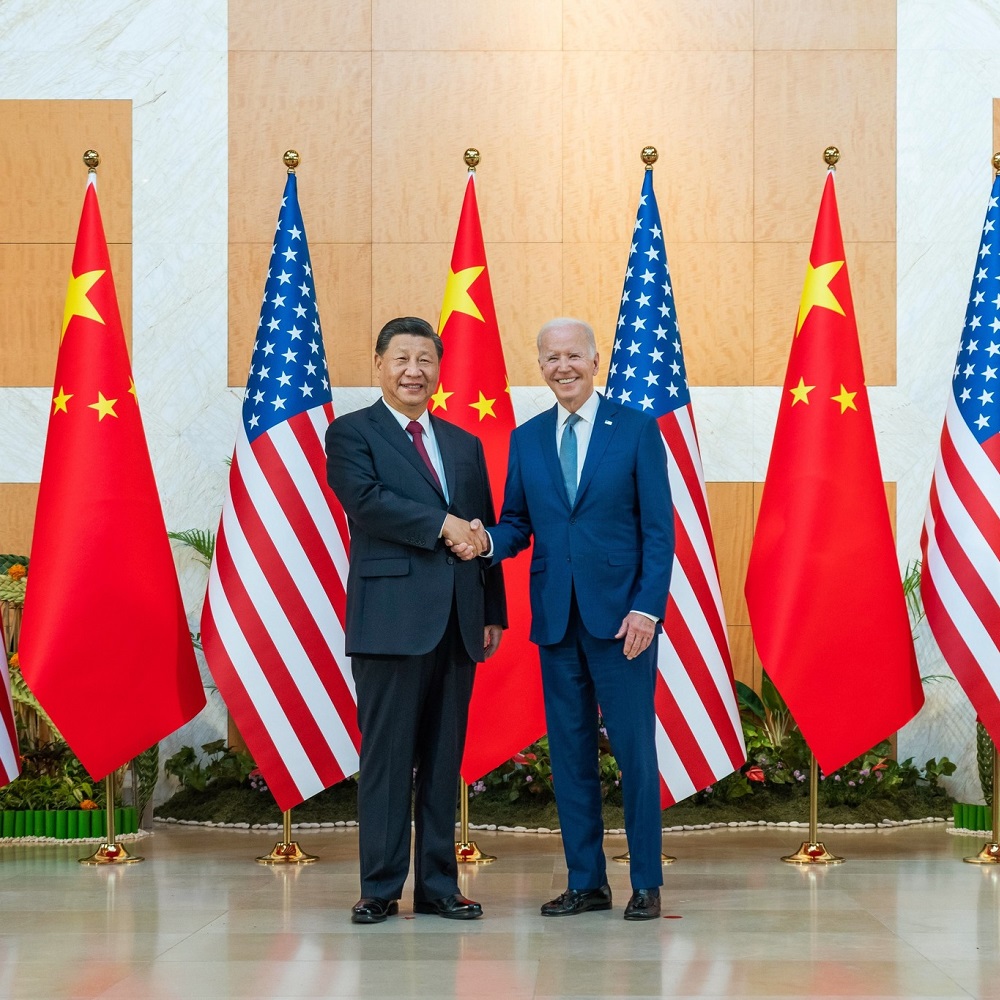
How are the fluctuating tensions between Washington and Beijing over Taiwan expected to affect Israel? On January 13, William Lai, the leader of the Democratic Progressive Party (DPP), was elected president of Taiwan. A few days earlier, for the first time in four years, the United States-China Defense Policy Coordination Talks took place in Washington, marking the end of a prolonged round of tension between the two powers, which had peaked in August 2022 when the speaker of the US House of Representatives visited Taiwan. Taiwan is a major point of friction in the already tense relations between the two powers. Managing the disagreements between them has broad implications, including for Israel. The ongoing strategic rivalry between the two superpowers—the United States and China—is the most important geostrategic factor of our time. The two countries are vying for technological dominance and control over resources, that will shape our future, and infrastructure that is critical for civilian, economic, and military purposes. The United States and China are also competing for global influence by forming partnerships and trying to influence world order, including its values, institutions, and mechanisms that regulate it. Can they shape the rules of the competition between them without spiraling into a military conflict that would have devastating global consequences? Taiwan may be the most volatile flashpoint in the complicated relationship between the two powers. For China, the “reunification” with Taiwan is one of its “core interests”—a top objective and a flagship issue in its foreign policy. Although the United States has repeatedly declared that it is committed to the “one China” policy, it is also an ally of Taiwan. The United States has warned China to refrain from making unilateral, aggressive moves vis-à-vis Taiwan, while supplying Taiwan with military resources to deter China and prevent a forceful takeover. Since assuming power in 2013, President Xi Jinping of China has repeatedly emphasized Taiwan’s unification with China as a key objective. During a meeting with President Joe Biden in November 2023, President Xi said that China “prefers” a peaceful unification, but he did not dismiss the use of force. On the eve of Taiwan’s 2024 elections, President Xi further stated that unification is “inevitable.” The tensions between the powers over Taiwan had escalated following the previous elections on the island in 2020. During this period, senior American officials visited Taiwan, and the United States and Taiwan signed weapons deals in August and September of that year, followed by a marked increase in Chinese military aircraft penetrating the island’s air defense identification zone and crossing the “midline” between the island and mainland China. China’s perception of encirclement was further heightened by the United States’ strengthening of its alliances and initiatives in the Indo-Pacific region (such as QUAD, AUKUS, and IPEF) and by the increased diplomatic pressure exerted on China, through boycotting the 2022 Winter Olympics and protesting its human rights record. But even during this period, despite rising tensions, the two nations maintained ongoing communications, including the Alaska talks in March 2021—although they were notably tense—and the meeting between the presidents in November of that year. The tension peaked in April 2022, when then Speaker of the US House of Representatives Nancy Pelosi announced her intention to visit Taiwan. China strongly protested, and the White House even recommended Pelosi to reconsider her visit due to concerns about potential military escalation. Pelosi refused and proceeded with her visit in August, delivering a speech at the Taiwanese legislature and advocating for increased American–Taiwanese cooperation. In an article published in the United States before her visit, Pelosi wrote that “at a time when the world faces a choice between autocracy and democracy . . . it is essential that America and our allies make clear that we never give in to autocrats.”   In response to Pelosi’s visit, China held a large-scale military exercise that disrupted air and maritime traffic in the region and released a white paper emphasizing “The Taiwan Question and China’s Reunification in the New Era.” Furthermore, as a countermeasure to Pelosi’s visit, the Chinese Ministry of Foreign Affairs announced that it was suspending all dialogue and cooperation with the United States, including dialogues between the military commands, the ministries of defense (DPCT), and the maritime military coordination (MMCA), and cooperation in the fields of illegal immigration, criminal legal assistance, transnational crimes, counternarcotics, and climate change. In November 2022, presidents Biden and Xi met in Bali, Indonesia, in an attempt to put the relations between the two powers back on track. After the meeting, the White House issued a statement announcing that the United States will continue to compete actively with China, but the two countries must manage their competition responsibly, without letting it escalate, while maintaining open channels of communication and continuing to cooperate on global issues such as climate change, counternarcotics, debt relief, health, and food security. Regarding Taiwan, the United States reiterated its commitment to the one China policy but strongly opposed China’s aggressive actions, which violate peace and stability in the Strait and in the entire region. The Chinese also released a statement, noting that President Xi highlighted that Taiwan is a core Chinese interest and constitutes a red line that is nonnegotiable in the relations between the two countries. It was anticipated that the year 2023 would begin on a more positive tone, with US Secretary of State Antony Blinken’s scheduled visit to China in February. The visit was canceled when a Chinese balloon was discovered floating over US territory for a week until the US Air Force intercepted it. Although the White House at first tried to downplay the incident, with President Biden initially referring to it as a “minor breach” and said that the Chinese government was unaware of the issue. China claimed that a weather monitoring and research balloon had strayed off course. Public pressure, however, led the administration to cancel Blinken’s visit. Subsequently, the US Department of Commerce imposed restrictions on six Chinese companies linked to balloon and aviation technologies that are used by the Chinese military, requiring that they receive special approval to access American technology. In April and May, China retaliated at a relatively low bar by imposing sanctions on a US member of Congress who visited Taiwan and sentenced an American citizen living in Hong Kong to life imprisonment, for alleged espionage for the United States. These actions reflect the efforts of both China and the United States to take focused, restrained measures, to avoid escalating tensions. The absence of a strong reaction from China to the establishment of a select committee within the US House of Representatives, focused on examining the US–China strategic competition, suggests that China sought to prevent further escalation of the conflict.   Efforts to end the crisis and restore talks were renewed in May 2023 when the head of the CIA met with his Chinese “counterparts.” In June, US Secretary of Defense Lloyd Austin and Chinese Minister of Defense Wei Fenghe met on the sidelines of the Shangri-La conference in Singapore. Secretary of State Blinken’s anticipated visit to China took place later that month. In July, US Special Envoy for Climate John Kerry and Secretary of the Treasury Janet Yellen traveled to China, followed by a visit of US Secretary of Commerce Gina Raimondo in August. These high-level meetings concluded on a note of cautious optimism, with both sides acknowledging “progress” but not a “solution,” as the purpose of the meetings was to stabilize relations rather than to resolve the issues in dispute. In September 2023, Secretary of the Treasury Yellen and Chinese Finance Minister He Lifeng launched two new working groups on economic and financial issues. Moreover, Pentagon officials and their Chinese counterparts met and discussed the US Department of Defense’s cyber strategy, followed by a meeting of the American and Chinese presidents in San Francisco in November. The American efforts to renew the military dialogue between the two countries was initially met with refusal by China until December, when General Brown, the chairman of the Joint Chiefs of Staff, spoke with his Chinese counterpart General Liu Zhenli. In early January 2024, a few days before the elections in Taiwan, the annual Defense Policy Coordination Talks between the two countries were held at the Pentagon for the first time in four years. These developments reflect China’s acute sensitivity toward the Taiwan issue and its willingness to take significant measures against perceived violations of its One China Policy, especially by the United States. Despite numerous disputes, the growing rivalry between them, the defiant measures, and the reciprocal sanctions, these events highlight that the two powers recognize the importance of keeping channels of communication open. This dialogue is crucial for pursuing shared interests, resolving disputes, and minimizing the risk of military escalation that could have far-reaching consequences for both nations as well as the global community. The ongoing tension between the United States and China over Taiwan also has implications for Israel. First, the increasing friction between the powers has accelerated the formation of two opposing camps and has limited Israel’s ability to maneuver between them. As demonstrated (again) since the outbreak of the war between Israel and Hamas, the United States is Israel’s greatest friend and its most important strategic ally. While China is an important economic partner of Israel, its policy is not that of a friend, and its oppositional stance toward Israel has the potential to cause significant damage. The United States expects its allies to stand by its side and to align more closely with its policies vis-à-vis China, especially concerning advanced technologies and critical infrastructure. Failing to meet US expectations could strain US–Israel relations. Second, a military escalation between the United States and China would also have global economic consequences, seriously disrupting supply chains of raw materials and essential goods crucial to Israel. Finally, the US administration recently linked the military aid granted to Israel to that of both Taiwan and Ukraine, framing them as three democracies under threat. While this linkage underscores the US commitment to its allies, it also creates constraints and interdependencies. The attention and resources that the United States currently allocates to Israel and to the broader challenges in the Middle East could be compromised if the United States faces serious military crises elsewhere in the world, and this could have far-reaching impacts on Israel.

Energy & Economics
Picture of Javier Milei

Javier Milei Understands the Road to Serfdom

by Augusto Bottari

Each week we encounter mouthwatering policies implemented by the newly elected libertarian president of Argentina Javier Milei. He has the libertarian community in awe. His arrival to politics with an openly antisystem discourse shook not only the local scene in Argentina but also the rest of the world. But how? The respective libertarian parties in each country barely get enough votes to even appear on the main grid on election night! There are numerous reasons as to why this may be. We libertarians know ourselves well and no one with a minimum of self-criticism is surprised that our current situation in party politics is such. While political culture differs by country, our internal ideological discussions as libertarians are the same. While there’s no formula for liberty, one may find Milei’s Rothbardian pattern interesting. In a world sunk in destructionist trends, many voices of reason emerge. Are any of them following these same steps? Let’s now look at some factors that led Javier Milei to the presidency. Understanding of the Market Economics has been the main problem in Argentina for almost its entire history. Crisis after crisis has kept the country stagnant, and the application of different recipes, even with new parties in power, didn’t seem to produce any results. That is why the public interest has gradually turned to economists for answers. Javier Milei understood that need. He published successful books, articles, and even had his own comedic theatrical play on economic affairs. His repeated appearances on television since 2015 were because he knew how to have channels make money. Whenever he popped up at a talk show, there was a peak in ratings. Everybody wanted him! Despite his eccentric appearance, yelling, and proliferated insults, he exuded a magnetism that filled the viewer with curiosity. Although other valuable libertarian economists were gaining prominence, no one equaled him. Without understanding everything he said, the public still perceived he wasn’t talking nonsense—his speech and arguments were logical and made sense. For instance, on his explanation on the illegitimacy of taxes, he immortalized the phrase, “Are you in favor of stealing?” And he proceeded to explain how taxes were forcibly extracted, just like in a robbery. He’d even conclude by referring to Lysander Spooner’s analogy: “At least the robber has more honor than the politician; he shows his face and risks his life!” Education As Murray Rothbard says in the last chapter of For a New Liberty, A prime and necessary condition for libertarian victory . . . is education: the persuasion and conversion of large numbers of people to the cause. Libertarians must, therefore, engage in hard thinking and scholarship, put forth theoretical and systematic books, articles, and journals, and engage in conferences and seminars. On the other hand, a mere elaboration of the theory will get nowhere if no one has ever heard of the books and articles; hence the need for publicity, slogans, student activism, lectures, radio, and TV spots, etc. Milei’s simplicity in explaining the libertarian philosophy and economic principles from an Austrian perspective made people learn. Watching the night talk show with Milei’s presence wasn’t just another moment of mind-numbing TV garbage: it became an eye-opening experience. Moreover, he used to always carry a book with him. Whether it was one of his own or Economics in One Lesson or The Fatal Conceit. At times he’s been seen with Chaos Theory or Defending the Undefendable. In each of his appearances one could write down several authors or book titles, which he’d also often share in social media. The mention of names such as Ludwig von Mises, Murray Rothbard, or Friedrich Hayek on prime time was not in vain. Genuine Followers Young people composed his main harvest of followers. Accustomed to growing up seeing the same people in power, and a not-so-different opposition, they found in Milei’s speech a flame of hope which illuminated a possible future with features similar to wealthy countries. Followers began to mention Milei in conversations with their peers, behaving like someone newly converted to a religion and wanting everyone to know. Countless users began to create content on libertarianism, from quotes, infographics, and videos spreading the ideas, which soon became very popular. That is how the demonization of the ideas of liberty and capitalism was lifted. Social Media These mentioned followers became key, especially during the elections. Their exceptional communication and research skills served to unmask, expose, and humiliate politicians and supporters 24/7. The tireless work was impressive. It took the form of memes, slogans, or trending topics. X’s importance as a free-speech platform was extraordinary, unlike during Milei’s 2021 campaign for Congress where his main supporters were banned on Twitter and came back each time with a new account. The political class had fallen behind. It had no chance in the virtual world, which had been taken over years ago by libertarians while they neglected the people. Despite Milei’s opposition using public funds to plaster the streets with their faces and paying for highly invasive and disturbing ads against him on social media, his organic and decentralized activists communicated his message unceasingly, resisted endless attacks, and discredited operations. Paradigm Shift The then-current government, whose banners were “the people” and the working class, in practice dedicated itself to multiplying poverty. They themselves lived like kings in total dissonance with the needs of the common people. Their main followers are composed of themselves and people who benefit from the state’s parasitism machinery: union leaders, government employees, corporate media, “artists” and “intellectuals.” The working people, increasingly distanced from those who claim to represent them, resonated with Milei’s ideas. Why? Because they carry civilization and progress upon their shoulders. The political class was losing credibility, and with it the elections, for not seeing this change replicating all over the world. Today the political class at a global level is using different motives to drive the structure of systematic stealing. Race, immigration, climate change, digital currency—you name it. These ideas have been implanted by the elites through prominent figures and the media, financed by public funds. The more radical their attempts, the more they demonstrate their desperation. We have the opportunity for what seems to be a new beginning in the world with a subtle comeback of the ideas upon which civilization rests. If Mises called the twentieth century the century of socialism, may we be able to call the twenty-first century the century of libertarianism.

Diplomacy
Chile Flags

Chile rejects second constitutional proposal

by Marcela Cubillos

Last Sunday, Chile made a U-turn in constitutional matters, that is to say, after four years of experimentation and going to the polls five times, it went back to square one. By 55.8% against 44.2%, citizens said no to the second constitutional proposal presented to them in little more than a year. In September 2022, the text of the first Convention had been rejected by 61.8%, with only 38% support. These are the six keys to understand the result: 1.- A process that started badly Last Sunday, the constituent process that began in November 2019 under the blackmail of violence came to an end. As a result of the outbreak that occurred in October of that year, the government of former President Piñera promoted a transversal agreement in Congress that began the replacement of the Constitution drafted during the Pinochet dictatorship, which had been extensively reformed in democracy. In fact, the last major reform to that text was in 2005 during the government of former President Lagos. The changes made there were so important that Lagos introduced a norm to replace Pinochet's signature and, when he promulgated the new text, he said that Chile finally had a fully democratic Constitution. Many say that if a plebiscite had been held there, the constitutional issue would probably have been settled. It was not done and, a few years later, the most extreme left began to demand a constituent assembly to draft a new Constitution made fully democratic. 2. The Constitution was never the problem, nor the solution. The first constitutional proposal was submitted to a plebiscite on September 4, 2022. The extreme left had the votes to draft a text as they wished and so they did. They put into it their refoundational political project, which destroyed liberal democracy, divided the Chilean nation, asphyxiated individual freedom, eliminated controls to political power and put an end to equality before the law. President Boric's government was its main promoter, and the text was rejected by a majority not only by the right but also by a large part of the center-left. Probably last Sunday's results can be explained by what happened there. Chileans, during the work of that convention and with the text proposed to them, understood that their problems were not constitutional as they had been led to believe for years. 3.- A hasty agreement Chile had approached the abyss and the triumph of the rejection of that first text was celebrated transversally by the democratic forces and by the citizens, who perhaps at one point agreed with a new Constitution, but not with a new country invented from scratch. A few days after that plebiscite, the opposition rushed to reach an agreement with the ruling party to initiate a second constituent process. It is true that this time limits were set to avoid the excesses of the first one, but the truth is that it was never understood that everything had to start all over again. It would have been more reasonable to redirect the constituent issue in the National Congress from where it should never have left. A Council was elected in which this time the Republican Party had a majority, the only one that left the agreement. That is to say, the people elected a majority of those who did not want to insist on the elaboration of a new proposal. Last Sunday, citizens were fed up with politicians from different parties who insisted, over and over again, that the constitutional issue was the problem. People felt, and rightly so, that they had already voted and never agreed with this second process. 4.- A plebiscite without drama Unlike last September's plebiscite in which Chile's democratic destiny was at stake, last Sunday people did not see drama or epic in what was being voted. That is to say, either a new text was approved, which for some updated and improved the current one (for the left it was a step backwards), or the same one was continued. After decades of attacks to the current Constitution, blaming it for all the injustices and claiming that they could not govern with it, the left arrived at last Sunday's plebiscite sunk in indignity. During the campaign, they went from talking about "Pinochet's Constitution" to "Ricardo Lagos' Constitution" and even declared to feel comfortable with it. 5.Government, relief rather than triumph Nobody would have imagined that this whole process would end with a leftist Government sleeping relieved because the current Constitution is still in force. The triumph of the proposed new Constitution would have meant its third consecutive electoral defeat. The first one was to the text of the Convention last year; the second one, in the election of councilors for the new process. A third one would have meant a very hard blow for a Government with scarce support and wide levels of popular rejection. On the other hand, there are no more excuses. Chile's most serious problems are not constitutional and the citizens seem tired of shouting without anyone listening to them. The Government, relieved, but with nothing to celebrate, must face a serious corruption scandal that has been installed at the doors of La Moneda; a country where nobody feels safe and authorities that lack credibility to face violence; a serious economic stagnation; an imminent crisis in the health system; and also face an education without an agenda and with thousands of children paying the costs of the bad reforms pushed and approved by those who govern today. 6.- Future of the opposition The right wing and the political forces of the center united to campaign in favor of this second constitutional proposal. Sunday's defeat does not change too much the configuration within the opposition. José Antonio Kast, former presidential candidate and leader of the Republican Party, who had the majority in this new constitutional council, obtains, in the end, the same percentage as in the last presidential second round. It is not enough for him to win, but he does not regress in popular support. And Republicans added to Chile Vamos (center-right coalition) maintain, practically, the same votes they obtained in the election of councilors. That is to say, the scenario remains open for the next presidential elections without any figure being irremediably damaged nor any particularly strengthened. President Boric, on Sunday night, wanted to take advantage of the result by forcing a wrong interpretation. He pointed out that people were asking for agreements and, therefore, he was calling the opposition to join his pension and tax reforms. The result of the plebiscite can be interpreted just the opposite, as the death of the last great political agreement, hasty, made with the people's back turned. That is to say, the Government hopes that the right wing has not learned anything from what happened; that to a bad constitutional agreement, which the people never supported, it will now add votes for a lousy tax and pension agreement. The right wing should devote itself to building a broad and coherent political project to solve the problems and not to aggravate them. Citizens seem to be fed up with ministers and parliamentarians signing agreements only because it suits them in the photo or they are uncomfortable to subtract themselves from it. Today there are many oppositions in Chile and it is essential that they have their own profile so that more citizens feel represented by them. It is necessary to add up and for that unity must be taken care of. It is not possible to disqualify them one day and the next morning try to close pacts with them. The opposition must be proportional to the damage that this Government is causing and, at the same time, it must quickly turn the page of the constitutional issue to build a recognizable political alternative. One cannot expect to win just because of how badly the left in power is doing. That is not enough. In what happened on Sunday there is also something to learn from that.

Defense & Security
Paper airplanes with the US and Iranian flags face each other

Drone attack on American troops risks widening Middle East conflict – and drawing in Iran-US tensions

by Sara Harmouch

Watch on YouTube A drone attack that killed three American troops and wounded at least 34 more at a base in Jordan has increased fears of a widening conflict in the Middle East – and the possibility that the U.S. may be further drawn into the fighting. President Joe Biden vowed to respond to the assault, blaming Iran-backed militias for the first U.S. military casualties in months of such strikes in the region. But to what extent was Iran involved? And what happens next? The Conversation turned to Sara Harmouch, an expert on asymmetric warfare and militant groups in the Middle East, to answer these and other questions. What do we know about the group that claimed responsibility? Al-Muqawama al-Islamiyah fi al-Iraq, which translates as the Islamic Resistance in Iraq, has claimed responsibility for the drone attack. However, the Islamic Resistance in Iraq is not a single group per se. Rather, it is a term used to describe an umbrella organization, which, since around 2020, has included various Iran-backed militias in the region. Initially, the Islamic Resistance in Iraq emerged as a response to foreign military presence and political interventions, especially after the 2003 U.S.-led invasion of Iraq. The Islamic Resistance in Iraq acted as a collective term for pro-Tehran Iraqi militias, allowing them to launch attacks under a single banner. Over time, it evolved to become a front for Iran-backed militias operating beyond Iraq, including those in Syria and Lebanon. Today, the Islamic Resistance in Iraq operates as a cohesive force rather than as a singular entity – that is to say, as a network its objectives often align with Iran’s goal of preserving its influence across the region, but on a national level the groups have their distinct agendas. The collective is notorious for its staunch anti-U.S. posture and dynamic military campaigns, such as a recent two-day drone operation targeting American forces at an Iraqi airbase. Operating under this one banner of Islamic Resistance, these militias effectively conceal the identities of the actual perpetrators in their operations. This was seen in the deadly Jan. 28, 2024, attack on Tower 22, a U.S. military base in Jordan. Although it is evident that an Iranian-supported militia orchestrated the drone assault, pinpointing the specific faction within this broad coalition remains elusive. This deliberate strategy hinders direct attribution and poses challenges for countries attempting to identify and retaliate against the precise culprits. What do they hope to achieve in attacking a US target? Iranian-backed militias have been intensifying attacks on U.S. forces in recent months in response to American support for Israel in the Israel-Hamas conflict, and also to assert regional influence. Since the beginning of the conflict in October 2023, Iranian-backed militias have repeatedly struck American military bases in Iraq and Syria, recently expanding their attacks to include northeastern Jordan near the Syrian border. The deadly assault on Jan. 28 marks a significant escalation, though – it is the first instance during the Israel-Hamas war that American troops have been killed. Where is Tower 22 – the US base hit in drone attack? Three American troops were killed at a camp in Jordan near the Syrian border.   The attack in Jordan forms part of a strategy by Iranian-backed militias to counter Washington’s support for Israel in the Gaza conflict. But it is also aimed at advancing a wider goal of pushing U.S. forces out of the Middle East entirely. By coordinating attacks under the Islamic Resistance in Iraq, these groups are trying to display a unified stance against U.S. interests and policy, showcasing their collective strength and strategic alignment across the region. What role did Iran have in the attack? Iran has officially denied any involvement in the drone strike. But the Islamic Resistance in Iraq is known to be part of the networks of militia groups that Tehran supports. Iran, through the Islamic Revolutionary Guard Corps’ Quds Force, has provided such militias with money, weapons and training. However, the extent of Iran’s command and coordination in specific incidents like the Jordan attack remains unclear. At this stage, more concrete evidence is necessary to firmly implicate Iran. As Iran expert Nakissa Jahanbani and I recently explained in an article for The Conversation, Iran’s strategy in the region involves supporting and funding militia groups while granting them a degree of autonomy. By doing so, Iran maintains plausible deniability when it comes to attacks carried out by its proxies. So while Iran’s direct involvement in the attack has not been definitively established, Tehran’s long-standing support of groups like the Islamic Resistance in Iraq is well documented, playing a significant role in the regional conflict dynamics and geopolitical strategies. What options does the US have to respond? It isn’t clear how the U.S. intends to respond to the attack. The Biden administration faces complex dynamics when it comes to responding to attacks linked to Iranian-backed militias. While a forceful military strike is an option that the Biden administration appears to be looking at, targeting Iran directly on its own soil is fraught with risks and may be seen as a step too far. Even when targeting Iranian interests or personnel, such as the assassination of Quds Force General Qassem Soleimani, the U.S has conducted these actions outside Iranian territory. Iran’s denial of direct involvement in the attack further complicates the situation and makes it less likely that the U.S. attacks Iran in retaliatory strikes. But adopting a targeted approach, such as striking militia leaders outside of Iran, raises questions about the effectiveness of U.S. tactics in deterring Iran and its proxies. This strategy has been employed in the past, yet it has not significantly curbed Iran’s or its proxies’ aggressive actions. The concern is that while such strikes are precise, they may not be enough to deter ongoing or future attacks. The key to the strategy’s success may rest in identifying the most influential factors, or “centers of gravity,” that can effectively influence Iran’s behavior. This means determining key leaders, critical infrastructure or economic assets, which, if killed, destroyed or seized, could substantially alter Iran’s decision-making or operational capabilities. The Biden administration’s need to balance a strong response with the geopolitical consequences highlights the difficulties of navigating a tense and evolving situation. How might the attack affect the wider Middle East conflict? How the U.S. responds could reshape the Middle East’s geopolitical landscape and influence the dynamics of proxy warfare in the region. A strong military response from Washington might deter Iranian-backed militias from future attacks, but it could also provoke them into taking more aggressive actions. In the short term, any U.S. retaliation – especially if it targets Iranian interests directly – could escalate tensions in the region. It could also exacerbate the cycle of tit-for-tat strikes between the U.S. and Iranian-backed forces, increasing the risk of a broader regional conflict. And given that the attack’s pretext involves the Israel-Hamas war, any U.S. response could indirectly affect the course of that conflict, impacting future diplomatic efforts and the regional balance of power.

Diplomacy
Outlook 2024

Latin America and the Caribbean: outlook to 2024 and its potential impact on sustainable development

by Javier Surasky

Introduction The year 2024 will present new windows of opportunity and obstacles to the acceleration of the Sustainable Development Goals (SDGs) in Latin America and the Caribbean (LAC). Below we analyze some trends in the region for 2024 in each of the three dimensions of sustainable development, to which we add consideration of governance elements to help understand a framework that does not look easy and in which critical decisions will have to be made for the future. The social dimension In 2024 we will have presidential elections in six countries in the region. Polls indicate that the incumbent party will remain in power in Mexico, where Claudia Sheinbaum could become the first woman president in its history; El Salvador will renew the mandate of Nayib Bukele despite doubts about the constitutionality of his new candidacy. In Uruguay and the Dominican Republic, where Luis Lacalle Pou and Luis Abinader will seek to renew their mandates, the high levels of approval of their administrations point to a possible reelection. At the other extreme, polls point to a possible defeat of the ruling party in Panama, where former president Ricardo Martinelli (2009-2014) leads in voting intentions despite having been convicted in 2023 for a corruption and money laundering case, a sentence that is currently under appeal. In Venezuela, the only country on the list without a date for its electoral process, the controversies surrounding the government of Nicolás Maduro and the lack of transparency in information, added to the imprisonment of opposition leaders, prevent any analysis. The escalation towards an armed confrontation with Guyana over the border region of the Essequibo, rich in oil, minerals and gas, should be closely followed. The result of a long diplomatic and legal dispute between the two countries, its last chapter had taken place in 2018, when Guyana, with the backing of the current UN Secretary General, went to the International Court of Justice to request the reaffirmation of the international arbitration that fixed the border between the two countries in 1899. Maduro's government responded by ignoring the Court's authority to hear the case. Then, in 2020, the court declared itself competent to hear the case, but has not yet rendered its final judgment. The Community of Latin American and Caribbean States (CELAC), almost absent from the regional political map in recent years, reappears to mediate between the two countries, the end of which is now uncertain. All these processes are framed in a high level of citizen distrust towards the political sector, accompanied by weakened democracies, as reflected in The Economist's Democracy Index 2022. On the other hand, the arrival of Javier Milei, a political outsider, to the presidency of Argentina raises questions about its future regional positioning and will have far-reaching regional effects with changes in alliances on sensitive issues, from support for regional environmental policies to the redesign of the country's insertion in international trade, with potential major impacts on the Southern Cone. All of the above, together with the low growth and economic difficulties described in the following section, pose challenges for accelerating regional trajectories of poverty reduction, the fight against labor informality and unemployment, and the implementation of public policies to promote equity and gender equality, among others. For these reasons, there will be more pressure on regional environmental resources, which could lead to new protests and social unrest. The economic dimension Implementing actions to promote sustainable development requires financial resources. LAC has long been a low-priority region for international cooperation and foreign investment is limited, so generating its own resources, in a context of global economic restrictions, is essential. The average projected growth for the region in 2024 is 1.5%, distributed by subregion as follows: the Caribbean (excluding Guyana, which is in a special situation due to its recent entry into the "club" of oil-exporting countries), 2.8%; Central America and Mexico, 2.1%; and South America, 1.2%. As a result, employment growth is expected to slow down. In an attempt to recover employment growth, the countries of the region seem to be turning to flexible monetary policies to increase exports. Countries such as Brazil, Chile and Peru, for example, reduced rates in the third quarter of 2023 and Colombia and Mexico are expected to do so at the beginning of 2024, but the slowdown in growth in countries such as the United States and China is resulting in lower demand for primary products, the main export of LAC countries, in international markets. In addition, there are deficiencies in infrastructure for the transportation of goods throughout the region, creating an obstacle to its export capacity. The possible fall in demand for basic goods is accompanied by a forecast that their prices will continue to fall in 2024, with the exception of energy commodities, which will increase pressure on the trade balances of LAC countries. In terms of minerals, the boost to the extractive industry could lead to foreign currency inflows in countries such as Argentina, Chile and Bolivia (the lithium triangle), although the uncertainty regarding the arrival of investments is due to doubts about economic and business policies in those countries and the growing public demand for the regulation of mining activity to reduce its effects on the environment. However, a boost to mineral processing activity to accompany its extraction could come from the global competition between China, the United States and the European Union, as the latter two seek to reduce China's global weight in mineral processing. Finally, it should be noted that the relocation of supply chains that followed the Covid-19 crisis will bring income to only a few LAC countries, such as Mexico and Panama. The environmental dimension Climate change is already being felt strongly in the region: the average temperature in LAC for 2021-2040 is expected to be about 1°C higher than in the period 1985-2014. At the same time, LAC is key to finding solutions to the challenges of climate change: it is home to 40% of the planet's biodiversity and more than 25% of its forests. The region also plays a central role in the sustainable production of food and energy, where more than 30% of the energy production matrix is made up of "green energies", a percentage that for some countries exceeds 90%, and an export profile that is closely linked to potentially polluting extractive activities. Although it contributes less than 10% of global greenhouse gas emissions, LAC causes damage whose cost already exceeds 2% of its combined annual GDP as a result of the worsening and greater recurrence of extreme weather and environmental catastrophes. The region is the second most vulnerable to natural disasters, which have affected approximately 190 million people since 2000. The expected climatic effects of the "El Niño" current in the region, with increases in rainfall in some sectors paired with droughts in others, will translate into differentiated opportunities and risks for different countries in the region in 2024. In perspective, Argentina and Paraguay could benefit from more rainfall that will benefit the crop, while Colombia and Central America will be exposed to droughts and the Caribbean to extreme weather effects. It will be precisely the intensity of the climatic extremes that "El Niño" reaches that will define its impact on the production of basic goods, energy generation and transportation, but in any case it could contribute to the inflationary pressures that already exist in LAC. A key issue for the region is what happens at the 28th Conference of Parties to the United Nations Framework Treaty on Climate Change (COP 28), where the aim is to establish a "Loss and Damage Fund" to address the costs of climate change and increase funding for climate change mitigation. However, the central concern of the region will be the adoption of a new "global goal on adaptation to climate change" to guide and finance the actions required to adapt to the changes that climate change has already produced, and to accompany the mitigation goal established in the Paris Agreement. Defining that goal and creating channels to finance its achievement is one of the most complex issues at COP 28 and it is uncertain what the outcome will be. Chile, together with Australia, have been designated as co-facilitators of this negotiation. At the same time, what happens at the COP and the discussions on climate and financial issues that will take place in 2024 should find LAC as a leader around the Bridgetown Initiative, presented by Barbados in 2022, to modify the international financial system and urgently curb climate change, combining two concerns of deep regional significance Governance of sustainable development In 2024, two countries in the region, Jamaica and the Dominican Republic, are expected to adopt new national development strategies: In the case of Jamaica, the Medium-Term Socioeconomic Policy Framework 2021-2024 is coming to an end and work is already underway to prepare the document that will give it continuity. This framework guides the implementation, monitoring and evaluation of the country's main national planning instrument, Vision 2030 Jamaica, and should ensure its alignment with the SDGs. In the Dominican Republic, the National Multi-Year Public Sector Plan 2021-2024 defines the country's development policies and their financing, along with international cooperation priorities. Brazil, for its part, will once again have its commission for the implementation and monitoring of the SDGs active as of December 2023, after it was deactivated by the Jair Bolsonaro administration and replaced by the current government. In addition, the following countries in the region will submit Voluntary National Reports on SDG implementation: Argentina, Belize, Brazil, Colombia, Costa Rica, Ecuador, Honduras and Peru. It is possible, however, that the position of the recently elected president of Argentina, Javier Milei, against the 2030 Agenda, will lead the country to withdraw its offer. On the other hand, in 2024 the sixth forum of Latin American and Caribbean countries will be held in the city of Santiago de Chile, a meeting that will be of special importance for the region given that it will not only serve, as it traditionally does, as a regional preparatory meeting for the follow-up and evaluation process of the 2030 Agenda that concludes at the United Nations High Level Political Forum, but will also be a key moment in the regional path towards the Summit of the Future, which will meet in New York in September 2024. It is important to keep in mind that next year will find LAC countries and officials occupying positions of high capacity to influence global debates on the future of multilateralism: -The presidency of the UN General Assembly is held by Trinidad and Tobago, and that of the Economic and Social Council is held by Chile. -Brazil will chair the G21. -Colombia will host the World Data Forum. -Uruguay's Felipe Paullier has been appointed as the first Under-Secretary-General for Youth Affairs in the history of the UN. -The government of Mexico will be working with its Spanish counterpart in preparation for the Fourth United Nations -Conference on Financing for Development, to be held in 2025. In addition, there is growing activity surrounding the appointment of the person who will succeed the current UN Secretary General. In accordance with the practice of geographical rotation in the exercise of this responsibility, a person from LAC would occupy the position. However, Eastern Europe has pointed out that, in its opinion, its turn was "skipped", given that it was the Secretary General of the organization when Guterres, from Western Europe, was appointed for his first term. Should LAC's position prevail over that of Eastern Europe, we may see the first bids for candidates for the post in 2024. The pressure to have a woman head the UN for the first time in history was scorned when the current Secretary General was chosen, but it is unlikely that the same thing will happen again. Although it is too early to advance names, the current Prime Minister of Barbados, Mia Amor Mottley, appears to be an unavoidable reference, although there are several candidates in the running.

Diplomacy
Yellow sign stating,

2024: The electoral year that we will live in danger

by Luis Eugenio García-Huidobro

It is also possible that, in the face of the uncertainty that this 2024 will bring, there may be no other alternative than to tolerate the tense wait that each of these elections entails. But even if this attitude is adopted, we must remember the lessons that history provides us in a context like the current one. During a conversation with foreign academics, one of them joked that, in 2024, we should at best content ourselves with having a quieter year than the previous one. Most agreed on the perplexity of entering a new year while still processing much of what happened in 2023. One of them recalled the assault on the Congress and the Supreme Court in Brazil, or the democratic regressions seemingly consolidating in India, Turkey, or Hungary. Another lamented that the terrorist attack in Israel and the brutal occupation of Gaza had diverted attention from the occupation in Ukraine and obscured the growing tension in the Balkans, the Red Sea, or the Taiwan Strait. Throughout this conversation, the common thread is the same: many events in 2023 reflect a world that has become extremely unpredictable. From this perspective, however, 2024 hardly presents itself as auspicious. By chance, in different electoral calendars, nearly half of the world's population will go to the polls in every corner of the planet, with geopolitical and democratic consequences difficult to anticipate. During 2024, there will be general elections in the United States, the United Kingdom, India, Mexico, South Africa, Taiwan, Indonesia, Pakistan, El Salvador, Panama, the Dominican Republic, Rwanda, Mozambique, Uruguay, Namibia, North Macedonia, or Romania. In addition to this, there will be presidential elections in Russia, Venezuela, Finland, Azerbaijan, Iceland, Croatia, Algeria, or Slovakia. There will also be parliamentary elections in Portugal, South Korea, Iran, Bangladesh, Belgium, Austria, Mongolia, Botswana, Georgia, or Lithuania. There will also be regional or municipal elections in Australia, Germany, Canada, Turkey, Spain, Poland, Brazil, Chile, or Bosnia and Herzegovina. This combination represents an unprecedented electoral scenario since the introduction of universal suffrage in the late 18th century. This intricate electoral puzzle will undoubtedly have direct consequences on almost all ongoing or developing geopolitical conflicts. For example, this Saturday, presidential elections will take place in Taiwan, in which one of the three candidates in dispute advocates for a more favorable position towards reunification with China, and another has downplayed the importance of this conflict to focus on public policy issues. It is no coincidence, then, that in his New Year's speech, Chinese President Xi Jinping announced reunification with the island as inevitable, marking an escalation in the rhetoric used to address the issue compared to the same speech the previous year. Also in Asia, the border conflict between India and Pakistan could take a new turn after the escalation of violence in 2021 and 2022, as a result of the general elections both countries will have between February and May. From India, only a consolidation in its nationalist rhetoric can be anticipated, while from Pakistan, it is difficult to know what to expect, given the deep political crisis the country has been experiencing for almost two years and the political dynamics generated by the humanitarian crisis on its border with Afghanistan. Against all odds, the war in Israel and Palestine has not yet escalated into a regional armed conflict. However, the situation in the Middle East rests on a precarious balance whose pieces could be rearranged in the coming months. Even if Benjamin Netanyahu's government resists the pressure to call general elections, Israel's geopolitical position is likely to be weakened by the almost certain Labour shift in the UK government, a result of the division this conflict generates within the British left. Conversely, a Republican victory in the US elections in November would be a relief for Netanyahu, given the deference with which this party usually approaches the more problematic actions of the Israeli government. The importance of this support should hardly be underestimated, given Israel's increasing marginalization within the international community. This is evident not only in the adverse votes it has faced in the United Nations General Assembly but also in the genocide accusation that South Africa has filed against it before the International Court of Justice. This latter country is also heading for general elections in 2024 after a presidential term characterized by corruption scandals and, for the first time since the end of apartheid, could result in a change in parliamentary majorities that ends the political hegemony of Mandela's party. Finally, there are no major expectations of change in the parliamentary elections of a theocratic autocracy like Iran, even after suffering one of the worst terrorist attacks since the 1979 revolution and undergoing a deep economic crisis that has persisted for years. But attention must be paid to the election of the Assembly of Experts in March, as the resulting balances in it could impact the eventual appointment of the successor to an increasingly elderly Ayatollah Khamenei, with the regional ramifications that this may entail. Calls are growing in Ukraine for President Volodymyr Zelensky to call elections during this year, due to the widespread criticism his handling of the conflict has received. But even discounting this uncertainty, the country will have to face multiple external electoral variables that could compromise its position. For now, in the middle of the year, the election of five out of ten non-permanent positions on the United Nations Security Council will take place. More importantly, a possible Republican victory in the US presidential and parliamentary elections could severely weaken the Ukrainian military position, as indicated by recent debates in the House of Representatives and the Senate. While Vladimir Putin's position within Russia is weaker than before the invasion in 2022 (especially after the failed Wagner Group rebellion last June), everything suggests that the president will be re-elected for a fourth term in March. This geopolitical equation must also consider the election of the European Parliament, in which some predict unprecedented victories for the far right, which, if materialized, would also impact the composition of the European Commission. At the same time, there will be a renewal of the European Council, whose composition could also undergo changes due to new political balances in national governments. It should not be ruled out that Ursula von der Leyen could fail to be re-elected for a new term, despite her recent promise to prioritize aid to Ukraine. However, the advance of the far right may not entail significant changes in the European position toward this conflict. As a recent study suggests, the Russian invasion has marked a shift in sympathy that some populist or far-right parties previously expressed toward the Putin regime, which has now become a toxic association they deliberately seek to avoid. The geopolitical importance of the war in Ukraine, finally, has overshadowed other conflicts that are even brewing on European territory itself. Notably, the growing tension between Serbia and Kosovo - in which the former has threatened military interventions - has multiplied fears of the resurgence of a conflict that between 1998 and 1999 caused an estimated twelve thousand deaths and more than a million displaced. It is in this scenario that general elections will take place in Croatia and North Macedonia, as well as municipal elections in Bosnia & Herzegovina. All this also happens in a year that will be a critical juncture for global democratic development. As all available indicators suggest, the last two decades have witnessed a decline in democracy worldwide. Last year is indicative of this trajectory: in Africa alone, seven coups d'état occurred. And while many of these events also demonstrate the surprising democratic resilience of many countries, it is undeniable that 2024 could be a turning point for liberal democracy. Many of the main democracies show severe democratic erosions. Elections in India - which some question whether it can still be considered a democracy - could end up consolidating a competitive autocracy in that country, as everything indicates that Narendra Modi will remain as prime minister. In Mexico, polls anticipate that in June, the presidential candidate of the ruling coalition will be elected, suggesting that the state dismantling advanced by President López Obrador and his attacks on key institutional checks will continue. Moreover, the eventual election of Donald Trump - if not disqualified by the Supreme Court from running again as a candidate - would pose a serious threat to American democracy, as predicted by the contempt he repeatedly showed as president towards constitutional forms. Just remember his reaction to the Capitol assault or his efforts to subvert the electoral result in 2021. And it is needless to point out that his return to the White House would make any geopolitical balance as unstable as his temperament. There may be those who criticize the excessive pessimism of the outlined horizon. They may use the example of Poland, whose parliamentary election last October offered some optimism in the face of the democratic erosion that the country had experienced over the previous eight years. But even in this case, the path ahead for the Polish government to reverse this illiberal trajectory is long, and it will face multiple challenges. Perhaps the greatest of them in the short term is the municipal election in April, which populist parties could win. The same could be said of Brazil, which, after denying re-election to President Jair Bolsonaro, will return to the polls for the municipal elections in São Paulo. It is also possible that, in the face of the uncertainty that this 2024 will bring, there may be no other alternative than to tolerate the tense wait that each of these elections entails. But even if this attitude is adopted, we must remember the lessons that history provides us in a context like the current one. After all, we must not forget that in August 1914, the world's major powers believed that, in a context of great geopolitical instability, they would be perfectly capable of anticipating the reactions of their adversaries in case conflicts escalated.